


Twins Video
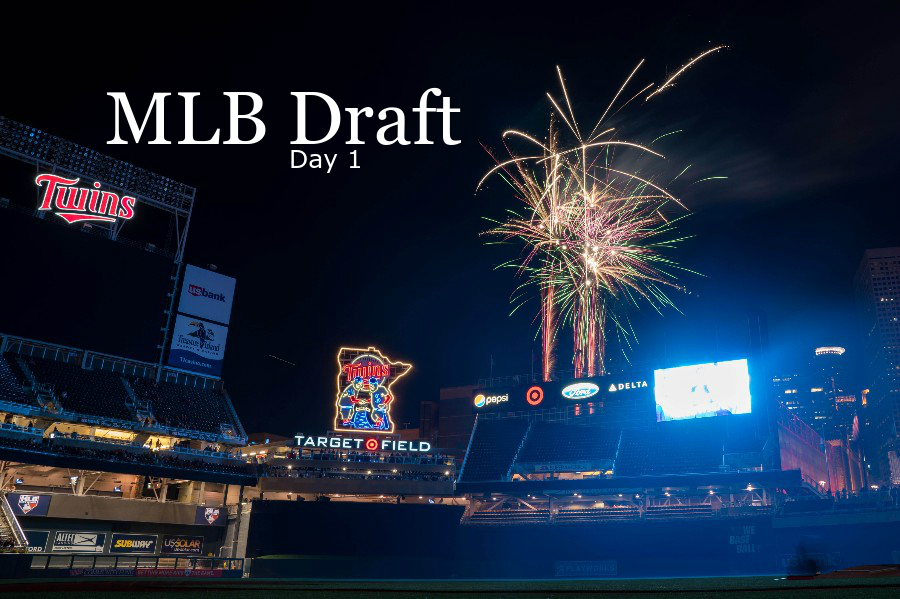
The 2018 MLB Draft starts Monday night, and is available to watch on MLB Network or MLB.com starting at 5 pm CT. Day 1 includes the first two rounds (including the comp picks), so 78 total players will be drafted. Rounds 3-10 continue Tuesday before the draft concludes Wednesday with rounds 11-40.
We'll get into some strategic moves the Twins may be considering a little later, but for now here is some additional pre-draft coverage from Twins Daily that you’ll want to check out:
2018 MLB Draft Top 50 Prospects: 1-10
2018 MLB Draft Top 50 Prospects: 11-20
2018 MLB Draft Top 50 Prospects: 21-30
2018 MLB Draft Top 50 Prospects: 31-40
2018 MLB Draft Top 50 Prospects: 41-50
2018 MLB Draft: Minnesota Connections
While many of you have followed the MLB Draft for years and know what to expect going in, I am sure there are some that are not as familiar with the draft process and how it works. So, here is a brief breakdown of some of the things you need to know before the draft.
The draft itself is made up of 40 rounds with a competitive balance round and a compensation round after both the first and second rounds. With the exception of the Competitive Balance picks, teams are not allowed to trade their draft picks. This means that that Twins, who have the 20th pick in the draft, will have the 20th pick in each subsequent round of the draft.
Another wrinkle to the MLB Draft is that each team is awarded a certain amount of money (referred to as a bonus pool) that they can use to pay out to their picks in the first ten rounds of the draft. A team’s total bonus pool is based on which picks they have in the first ten rounds, as each pick has a dollar value attached to it.
Teams can spend above or below that value for each pick, but the total value spent must remain below the total allotted amount or they will be assigned a penalty. If a team fails to sign one of their picks in the first ten rounds they lose the money that is attached to that pick. Also, if a team signs a player after round ten to a bonus of more than $100K, the extra amount comes out of their bonus pool.
Here is a breakdown of each pick that the Twins have in the first ten rounds and the bonus pool money assigned to that pick.
1st Round: 20th Overall - $3,120,000
2nd Round: 59th Overall - $1,140,600
4th Round: 124th Overall - $442,600
5th Round: 154th Overall - $330,400
6th Round: 184th Overall - $253,700
7th Round: 214th Overall - $198,700
8th Round: 244th Overall - $162,100
9th Round: 274th Overall - $146,500
10th Round: 304th Overall - $138,400
Total Bonus Pool: $5,933,000
You may have noticed that the Twins do not have a pick in round three. This is a result of the Lance Lynn signing this offseason as he had turned down a qualifying offer from the St. Louis Cardinals before the Twins signed him.
Additionally, the Twins initially had a pick in competitive balance round B (between rounds two and three). However, as part of the Phil Hughes trade from a week ago, that pick was sent to the San Diego Padres.
UPDATE 1, 8:20 AM CT
Here are links to some of the mock drafts that have been recently updated and the info on who the Twins are being projected to take at No. 20.
Jonathan Mayo and Jim Callis of MLB.com:
Eric Longenhagen and Kiley McDaniel of Fangraphs:
UPDATE 2, 9:25 AM CT
The Twins have just the 26th largest bonus pool to work with in this year’s draft. This means that they won’t have a lot of flexibility when making their picks in the first few rounds. This drastically changes their draft strategy from a year ago when the Twins had the largest bonus pool to work with among all 30 teams.
So, let’s take a look at a couple potential draft strategies that the Twins could employ this year.
The Portfolio Approach
The portfolio approach is a draft strategy that is based around the idea of trying to build depth from within your draft class by more evenly dispersing your bonus pool. The could mean that the Twins opt to pass on the best player available in the earlier rounds, and instead elect to draft a different player that they like whom will sign for a more economical dollar amount.
This was the strategy that the Twins went with last year, and they pulled it off beautifully. For all we know, Royce Lewis may have been the highest rated player on the Twins board going in, but he wasn’t thought of that way on the national stage before-hand. This allowed the Twins to sign Lewis for a full $1 million below his slot value. The Twins then saved another $450K when they drafted Landon Leach with the first pick in the second round.
These moves allowed the Twins to turn around and sign third round pick Blayne Enlow to a bonus of roughly $1.25 million above his slot value. Enlow was originally pegged as a first-round talent, but slipped in the draft when teams thought they would have difficulty signing him.
If the Twins wish to take a similar approach this year, it will most likely mean that they will try to focus on the college ranks, as these players are often easier to sign at or below their slot value, as opposed to top tier high school players who usually take a little bit more money to sign.
The Best Player Available Approach
Unlike the portfolio approach, the best player available approach is centered around taking the player you think is most talented with the first few picks in the draft, even if that means spending more than your slot value in order to sign him.
With the surplus of high school pitching that is available in the first round of this year’s draft, it’s quite possible that the highest rated player that the Twins have on their board when they make their selection at pick 20 is one of them.
While it’s entirely possible that the Twins could sign one of them to a bonus at or around their slot value, it will most likely take more than the $3.1 million they have in the first round to get him to pass on an opportunity to pitch in college where he could continue to build his stock.
If the Twins wish to go after one of these players, they will need to look to save money during some of their other picks in the first ten rounds. One of the more common ways that teams do this is by drafting college seniors as they can usually be signed at a bargain. This is because they don’t have the leverage of going back to college during the negotiation process.
While most teams don’t begin taking college seniors until their ninth and tenth round picks, the Twins could try to select a couple college seniors in rounds 5-7 when the savings on their bonus pool is greater.
UPDATE 3, 11:05 AM CT
Twins Daily draft guru Jeremy Nygaard has been busy molding young minds both on and off the basketball court, so he's had to take a step back in his coverage this year. Thankfully, he found some time this morning to share some thoughts on Twitter.
His prediction for the No. 20 pick is Canadian prep catcher Noah Naylor. Here's the string of Jeremy's Tweets below:
https://twitter.com/jeremynygaard/status/1003665404932132864?s=19
UPDATE 4, 12:57 PM CT
Perfect Game just released its most recent mock draft. Back on April 20, they were projecting the Twins would take high school right-hander Cole Winn out of California, then on May 10 they flipped to Ole Miss lefty Ryan Rolison. Their most recent mock prior to today was on May 24, where they had California high school shortstop Brice Turang going to Minnesota. They’ve got a new pick tabbed for the Twins in their final mock posted just a few minutes ago.
UPDATE 5, 2:55 PM CT
Baseball America just released its final mock draft, and has also now listed Kowar as the Twins' pick.




Recommended Comments
Create an account or sign in to comment
You need to be a member in order to leave a comment
Create an account
Sign up for a new account in our community. It's easy!
Register a new accountSign in
Already have an account? Sign in here.
Sign In Now