Jump to content
Twins Daily
  • Create Account

Recommended Posts

Posted

Luke Keaschall entered the 2026 season with plenty of expectations after an impressive rookie campaign. The young infielder hit .302/.382/.445 with a .827 OPS in 49 games during his debut season. He also demonstrated an ability to impact games with his speed, stealing 14 bases while looking like a potential long-term fixture near the top of Minnesota's lineup.

The Twins expected Keaschall to take another step forward in his first full major-league season. However, his sophomore campaign didn't exactly get off to an encouraging start. In fact, his first month at the plate was bad enough to make some wonder whether he was ready for an everyday role.

Despite those early struggles, Keaschall finished the season with a .282/.374/.407 line, 10 home runs, 52 RBI, and 20 stolen bases. He also accumulated 2.3 WAR across 152 games. So, did Keaschall quietly put together one of baseball's most underrated seasons (even MLB Network took notice)? 

Why His Season Was Underrated

Keaschall's first month made it difficult to appreciate just how productive he became over the remainder of the season. He hit .217/.267/.275 through his first 131 plate appearances, struggling to find consistent quality contact and looking nothing like the hitter Minnesota expected to see. However, something changed as the season progressed.

After getting through those early struggles, Keaschall became one of Minnesota's most dependable offensive players. He wasn't simply putting together an occasional good week. He developed into one of the most productive hitters in the American League. Beginning July 1, Keaschall hit .326/.426/.514 with a .940 OPS through August 30. Among qualified American League hitters during that stretch, he ranked fifth in batting average, second in on-base percentage, third in OPS, and fourth in wRC+ at 166.

Those aren't just impressive numbers for a young player trying to establish himself. Those are numbers that put him in the conversation with some of the best hitters in the league. His approach at the plate was another encouraging development. Keaschall consistently found ways to reach base, whether through hits, walks, or getting hit by pitches. He also maintained a manageable strikeout rate while providing some extra-base power.

For a Twins lineup that needed reliable offensive production, Keaschall became an important piece. His ability to get on base and create opportunities made him an appealing option near the top of the batting order. The final numbers also deserve more attention. A .374 on-base percentage and 120 OPS+ over a full season are excellent accomplishments for a 23-year-old playing his first full major-league campaign. He finished with 149 hits, 28 doubles, four triples, and 20 stolen bases.

Keaschall wasn't just a promising young player who flashed potential. He was a legitimate offensive contributor for most of the season.

Why His Season Wasn't Underrated

There are also legitimate reasons why Keaschall didn't receive more recognition for his 2026 campaign. First, that terrible opening month left a lasting impression. A .217 batting average and .542 OPS through his first 131 plate appearances aren't easily forgotten. Even after his significant turnaround, those early numbers dragged down his overall production and made his season look less impressive at first glance.

His defensive performance also created some complications. Keaschall struggled considerably while playing second base. He committed eight errors in 76 games at the position, and advanced defensive metrics painted an even less encouraging picture. Baseball Savant credited him with -7 Outs Above Average at second base.

Minnesota eventually began moving him around the diamond, giving him opportunities in right field and center field. While the transition provided another way to keep his bat in the lineup, it wasn't an immediate solution to his defensive shortcomings. His defensive metrics in the outfield were also below average with -4 OAA in center and -1 OAA in right field. Moving from the infield to the outfield requires different instincts, positioning, and responsibilities. Keaschall was still learning those adjustments while trying to establish himself as a consistent major-league hitter.

That creates an interesting evaluation of his season. Offensively, he was one of Minnesota's most productive players. Defensively, he remained a work in progress at multiple positions. When evaluating a player's overall value, those shortcomings matter. A strong offensive season doesn't completely erase defensive limitations, especially when a player doesn't have one obvious position where he can be trusted every day.

What Does This Mean for 2027 and Beyond?

Keaschall's 2026 season should give the Twins plenty of reasons to be encouraged about his future. Even with the disastrous opening month, he finished with a 120 OPS+ and demonstrated that he can be a productive everyday major-league hitter.

His ability to get on base, hit for average, steal bases, and provide some extra-base production gives Minnesota an intriguing offensive building block. At just 23 years old, there should still be room for him to develop additional power and become a more complete hitter.

The biggest question heading into 2027 might be where he plays defensively. Minnesota needs to determine whether Keaschall can become a reliable second baseman or if his long-term future is better suited to the outfield. The organization also needs to provide him with enough consistency at one position to allow him to develop defensively.

There is no reason to move away from Keaschall as an important part of the team's future. His bat is too valuable, and his production over the final several months demonstrated what he can become.

Was Keaschall's season one of the most underrated in baseball? There is a pretty good argument for it, particularly when considering how productive he was after his early-season struggles.

He wasn't a complete player, and his defensive shortcomings deserve attention. However, the Twins found a young hitter who can compete with some of the American League's best offensively. If Keaschall can carry that production into 2027 while becoming more comfortable defensively, Minnesota could have one of its most important building blocks for years to come.


Was Keaschall the most underrated Twin in 2026? Leave a comment and tart the discussion.


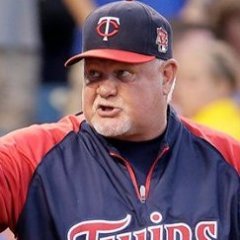
Image courtesy of Mark J. Rebilas, IMAGN IMAGES via Reuters Connect

View full article

Posted

Considering how athletic he is and his speed, I have too believe he will develop into an above average outfielder.  Considering his limited arm strength, the best spot is probably left field.  We all need to remember when he was moved to the outfield last summer he had played less outfield in his life than most MLB outfielders had by the junior or senior year of high school.

Posted

That post-June batting line is hard to ignore. And he meets the eye test too. His Plate Appearances are fun to watch.

There was some speculation last summer (by me and others) that his arm problems are the results of TJ surgery in 2024. Has this ever been verified? Or denied?

Posted
3 hours ago, SE23 said:

That post-June batting line is hard to ignore. 

Depends on whether the first half BABIP (.296) is the real Luke Keaschall or the second half BABIP (.344) is.

The first one is somewhere close to league average.  The second one is slightly higher than HoFer Joe Mauer maintained for his entire career.

It's not crazy talk to wonder if he can maintain a Hall of Famer's level with the bat, but it remains to be seen.

Posted

Many baseball personalities are big on Keaschal. Because he doesn't have a lot of HRs, some aren't as high. If he had a lot more HRs, most would ignore his defense shortcomings, I like Keaschal & he'll be better but IMO he isn't underrated. Only if his defense become much better will I consider him underrated.

Old-Timey Member
Posted

Now that he is 2 years removed from TJ surgery, LK might actually be able to fire a fastball from the warning track to a cutoff man. At 23 yrs old and going into his 2nd full season as an OF’r, he has lots of room for growth! By the time he hits his prime (25-31) yo, he will likely become a perennial allstar. .290ba, .390obp and .840 OPS. Not bad for a lead off guy that will continually mess with pitchers heads. 

Posted

If Luke can flirt with a 20/20 season while hitting close to .280 while playing average left field defense, I think the Twins would be very happy. I'm just worried we are staking our season on a LOT of youngsters. Keaschal, Jenkins, Rodriguez, Culpeper. I think we need a solid veteran for second or first base. 

Old-Timey Member
Posted
21 hours ago, ashbury said:

Depends on whether the first half BABIP (.296) is the real Luke Keaschall or the second half BABIP (.344) is.

The first one is somewhere close to league average.  The second one is slightly higher than HoFer Joe Mauer maintained for his entire career.

It's not crazy talk to wonder if he can maintain a Hall of Famer's level with the bat, but it remains to be seen.

Excellent information. I, for one, would be fine if I never read more analysis that picks only a given period of time that magically supports the author’s premise. I like LK but the early season struggles count just as much as the rest of the season. One of the many reasons why being a big leaguer is really difficult. 

Posted
34 minutes ago, Linus said:

Excellent information. I, for one, would be fine if I never read more analysis that picks only a given period of time that magically supports the author’s premise. I like LK but the early season struggles count just as much as the rest of the season. One of the many reasons why being a big leaguer is really difficult. 

BABIP is hardly the only tool to use, but it can be illuminating when surface stats lead to mixed messages. 

Joe Mauer.  Max Kepler.  Clayton Kershaw.  Ricky Nolasco.  Sometimes BABIP is as good a clue as I want, when puzzling over "this guy is GOOD" versus "this guy seems to have what it takes but never quite meets everyone's expectations."  BABIP is a skill, not luck, but it's a skill that fluctuates over a long season or even across multiple seasons, for reasons that I don't think anyone has offered a really good explanation.

You have to look at many factors under the surface to understand the results on the back of the bubblegum card.  Like anyone, when I find an explanation that suits me, I stop thinking.  😁

Posted

Keaschall has absolutely brutally bad defensive instincts. The Twins shifting him around the field certainly didn't help. It's not like the Twins didn't have a chance to watch Keaschall play ball at lower levels. He's been projected as a DH since his draft, and seeing it in person, I can understand why. That said, repetition, repetition, repetition. Somebody can either pound the fundamentals into him at a single position or the team can move him to DH and be done with it.

Regarding his bat, just using wOBA (weighted on base average) and xwOBA (expected wOBA) which is a metric that combines the way players reach on base in a weighted fashion on how likely that result is to generate runs, ajusted for league and park factors. It's like a really, really complicated, more advanced OPS, really. In general, I've found it to be of marginal value over OPS, but it's an easy metric to obtain from Fangraphs.


Example base formula from Fangraphs https://library.fangraphs.com/offense/woba/

image.png.0785fb24638d133801d849afd9d088b5.png

wOBA / xwOBA, rough meanings

< .270 = unplayble
.271-.285 = terrible
.286-.300 = bad
.301-.315 = below average
.316-.330 = average
.331-.345 = above average
.346-.360 = great
.361-.385 = excellent
.386+ = MVP level

Apr - .245 / .268
May - .354 / .293
Jun - .300 / .331
Jul - .402 / .330
Aug - .425 / .369
Sep - .387 / .352
2026 - .348 / .322

Overall, Keaschall's bat was average on the season. His actual results were higher than expected. The first two months of the year were abominable. At the plate and in the field. He was really terrible, but Keaschall was given the random long leash the Twins sometimes afford players, and that paid dividends as Keaschall turned a corner. He hit all pitches well enough while owning fastballs pretty universally. He forced pitchers to work in the zone, took walks instead of trying to force things and he rarely whiffed. It's a very sustainable, high level of production, if the first two months don't happen again.

If the Twins are somehow able to get Keaschall to stop slapping balls down with a stone glove, he has all the tools he needs to be good at 2B and he's a long term lockup for sure. If he has to be a DH, he needs to keep up that high level of production at the plate.

image.png

Posted
On 11/26/2026 at 11:01 AM, rdehring said:

Considering how athletic he is and his speed, I have too believe he will develop into an above average outfielder.  Considering his limited arm strength, the best spot is probably left field.  We all need to remember when he was moved to the outfield last summer he had played less outfield in his life than most MLB outfielders had by the junior or senior year of high school.

Funny thing about outs above or below average. A fast outfielder gets to the ball and at least has a chance to malw an error while a slow outfielder can't reach the ball and it becomes a clean base hit. 

Create an account or sign in to comment

You need to be a member in order to leave a comment

Create an account

Sign up for a new account in our community. It's easy!

Register a new account

Sign in

Already have an account? Sign in here.

Sign In Now
The Twins Daily Caretaker Fund

You all care about this site. The next step is caring for it. We’re asking you to caretake this site so it can remain the premier Twins community on the internet.

×
×
  • Create New...