Jump to content
Twins Daily
  • Create Account

Recommended Posts

Posted
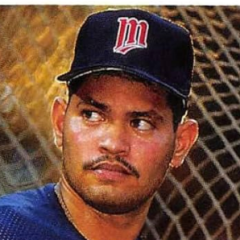
Image courtesy of © Lon Horwedel-Imagn Images

Minnesota Twins starting pitcher David Festa avoided a worst-case scenario last week, as reported by the Minnesota Star Tribune, when he received a Botox injection to relieve compression placed on the nerves in his neck causing thoracic outlet syndrome.

Thoracic outlet syndrome is a complex condition that comes in multiple varieties. All four share a common theme: something that runs from the neck to the hand is getting pinched. With the neurologic variation, it’s the nerves of the brachial plexus; with the arterial, it’s the main artery; veinous, the main vein; and complex, some combination of the above. Festa, by all accounts, is dealing with only the neurologic variation, and the Twins are calling it “very, very mild.”

Botox injections—so named for the botulinum toxin that serves as the medication's active ingredient—is a flaccid paralytic agent, meaning the injection causes the musculature it is injected into to not only relax, but also be unable to contract. The brachial plexus—a conduit of nerves that eventually branches out into the major nerves of the arm—leaves the neck and passes through a group of muscles called the scalenes and underneath the pectoralis minor of the shoulder, a small muscle located underneath the pectoralis major or “pecs.”

The scalenes and pectoralis minor often bulk up with repeated throwing, which can lead to compression of the brachial plexus; this is one of the reasons why thoracic outlet syndrome is more common in high-level pitchers compared to the general public. Flaccid paralysis of these muscles induced by a Botox injection should, theoretically, reduce the compression on the nerves and allow for Festa to resume baseball activities with time; a recent systematic review reported that roughly 50% of individuals with neurogenic thoracic outlet syndrome experienced reduced symptoms following a Botox injection. (Botox injections eventually wear off, so Festa’s muscles aren’t permanently paralyzed; this is also why people have to continually get Botox injections to relieve their forehead from wrinkles.)

In rare cases, individuals grow an extra bone in their neck that is similar to a rib. The rib may also compress the brachial plexus; the scalenes may or may not attach to the rib. In such cases, the rib is surgically removed and the scalenes are “released,” or have their attachment cut. Whether or not Festa has an extra rib is unknown, but statistically speaking, it’s unlikely.

Thoracic outlet syndrome has traditionally been known as a “diagnosis of exclusion,” meaning all other potential explanations for one’s symptoms are ruled out before one is given the label of thoracic outlet syndrome. As such, it often takes a long time for one to be treated correctly, increasing the likelihood of failed treatments and/or permanent nerve damage.

Luckily, Festa’s condition was diagnosed relatively quickly, and as such, it did not progress to the point where surgery was immediately on the table. If the injections and corresponding physical therapy prove effective, it’s not unreasonable to expect a normal offseason for Festa. The Twins appear to have dodged a bullet here.


View full article

Posted

Thank you Lucas for another amazing report. IF I'm reading this correctly, the muscle will relax, the nerve will then be free, and Festa should have normal feeling in his shoulder, if not more. 

Am I correct?

Does he need further injections, or does the initial injection and normal therapy take care of the issue?

I'm of the belief that his arm is better suited to bullpen work in the future to throw fewer innings more often, similar to Duran.  What say you?

Posted

Fascinating, you explained any doubts I had. A lot of red flags were raised when Festa was diagnosed with a fatigued arm so early in the season. I trust Paparesta if his advice was taken in the beginning. The rotation was fragile due to the many red flags throughout from the beginning. Those red flags should have been addressed more efficiently.

Posted

I think in general many mlb pitchers with TOS do not regain their previous level of performance. Matt Harvey, Phil Hughes, Stephen Strasburg, Josh Beckett are examples. 

Posted
Quote

Thoracic outlet syndrome has traditionally been known as a “diagnosis of exclusion,” meaning all other potential explanations for one’s symptoms are ruled out before one is given the label of thoracic outlet syndrome. As such, it often takes a long time for one to be treated correctly, increasing the likelihood of failed treatments and/or permanent nerve damage.

Interesting! Makes me wonder how many other ailments we see professional athletes deal with have a similar diagnosis structure? It certainly would explain the "why did it take them so long to figure this out?!?" aspect with some injury/treatment plans.

Really hope this works out well for Festa. This is a significant condition that in more serious versions has ended promising careers, and it's always a shame for a player to have a promising career get wiped out by injury.

I've been reluctant to consider Festa a rotation or even bullpen option for 2026 with this diagnosis, even with the revelation that it wasn't one of the more severe variants. This does make me look at it differently.

Posted
10 hours ago, Robert Gauthier said:

Botox is not a long-term solution,. I would think that maybe it’s being used for both diagnosis and short term treatment. Long-term Botox treatment leads to muscle atrophy. I can’t think that would be good for a pitcher.

Correct. It is a short-term solution with a diagnostic element. As I wrote, Botox eventually wears off, so the muscle will be able to function again. And you are correct, you don’t want to use Botox repeatedly for exactly why you said.

Posted
10 hours ago, DocBauer said:

Thank you Lucas for another amazing report. IF I'm reading this correctly, the muscle will relax, the nerve will then be free, and Festa should have normal feeling in his shoulder, if not more. 

Am I correct?

Does he need further injections, or does the initial injection and normal therapy take care of the issue?

I'm of the belief that his arm is better suited to bullpen work in the future to throw fewer innings more often, similar to Duran.  What say you?

The hope is that the injection and rehab will be sufficient. But as I wrote, success is only about 50%, so it’s no guarantee. However, because his symptoms were relatively mild and they seemingly caught it early, that increase the odds of success.

Posted
17 minutes ago, Lucas Seehafer PT said:

Correct. It is a short-term solution with a diagnostic element. As I wrote, Botox eventually wears off, so the muscle will be able to function again. And you are correct, you don’t want to use Botox repeatedly for exactly why you said.

What would be a common time period before it wears off and a new injection would be needed? 

Posted
11 hours ago, Robert Gauthier said:

Botox is not a long-term solution,. I would think that maybe it’s being used for both diagnosis and short term treatment. Long-term Botox treatment leads to muscle atrophy. I can’t think that would be good for a pitcher.

For the long term health of him as a person you'd think you'd want to avoid that.

But if the muscle isn't contracting due to the botox, I have to presume it is a muscle that is not used or needed to pitch.

Posted
41 minutes ago, IndianaTwin said:

What would be a common time period before it wears off and a new injection would be needed? 

Generally, Botox is effective for about 3-4 months but it can vary. I doubt they would do a second injection.

Twins Daily Contributor
Posted
33 minutes ago, Lucas Seehafer PT said:

Generally, Botox is effective for about 3-4 months but it can vary. I doubt they would do a second injection.

So the goal is for the compression relief to continue after the botox wears off? 

Would Festa be able to resume throwing during this 3-4 months?


Posted
1 hour ago, USAFChief said:

So the goal is for the compression relief to continue after the botox wears off? 

Would Festa be able to resume throwing during this 3-4 months?


Yes.

He will undoubtedly start throwing before the 4 months mark as that would essentially be February. 

I would imagine his treatment plan would look something like:
-0-6 weeks: No throwing, rehab, strength training, symptom management
-6 weeks to Spring Training: Gradually ramp up throwing based on symptoms, continue with rehab and strength training
-Spring Training to Regular season: Build pitching bulk and endurance
-Regular season: Good to go

That’s the hope, anyway.

Posted
1 hour ago, The Great Hambino said:

Very interesting stuff.

Have other MLB pitchers used botox to treat this?  How did things turn out for them?

Good question. Off the top of my head, I’m not aware of other pitchers getting Botox but that doesn’t mean it hasn’t happened.

Create an account or sign in to comment

You need to be a member in order to leave a comment

Create an account

Sign up for a new account in our community. It's easy!

Register a new account

Sign in

Already have an account? Sign in here.

Sign In Now
The Twins Daily Caretaker Fund

You all care about this site. The next step is caring for it. We’re asking you to caretake this site so it can remain the premier Twins community on the internet.

×
×
  • Create New...