



Nick Nelson
-
Posts
8,319 -
Joined
-
Last visited
-
Days Won
56
Content Type
Profiles
News
Minnesota Twins Videos
2026 Minnesota Twins Top Prospects Ranking
2022 Minnesota Twins Draft Picks
Minnesota Twins Free Agent & Trade Rumors, Notes, & Tidbits
Guides & Resources
2023 Minnesota Twins Draft Picks
The Minnesota Twins Players Project
2024 Minnesota Twins Draft Picks
2025 Minnesota Twins Draft Pick Tracker
2026 Minnesota Twins Draft Tracker: Picks & Bonuses
Forums
Blogs
Events
Store
Downloads
Gallery
Everything posted by Nick Nelson
-
 Minnesota's fifth starter has been hurt in camp and is behind schedule. With Anthony DeSclafani's status for the start of the season in doubt, it's worth mapping out the team's early schedule to get a read on how they might handle the rotation and delay a decision. Image courtesy of Jesse Johnson-USA TODAY Sports Anthony DeSclafani missed almost the entire second half last year with a flexor strain, which is often – but not always – a precursor to a more serious elbow injury or surgery. He received a platelet-rich plasma (PRP) and stem cell injections in August to boost healing, rehabbed during the offseason, and showed up to Twins camp reporting that he was 100 percent. However, the 33-year-old has been slowed this spring by renewed soreness in his elbow, putting him behind schedule in his build-up. It's natural for this development to set off alarms but DeSclafani downplayed the severity of the issue, and no imaging was done, which is telling. Hopefully just a hiccup. He threw a bullpen on Friday and told reporters he felt good. We should learn more on Monday or Tuesday. Even in a best-case scenario, DeSclafani might have a tough time building up adequately to be prepped for a normal start on April 2nd, when the Twins play their fifth game. Opening Day is suddenly only 18 days – or about three rotation turns – away, and DeSclafani has still seen zero game action this spring. If there are any setbacks or something more serious comes to light, the Twins will need to figure out another plan for the fifth starter role to start the season. (Hello, Louie Varland – having a great spring so far, for what it's worth.) If indeed this was a bump in the road, and DeSclafani is able to start getting into games and ramping up, the Twins will take whatever time they can buy before they need to call upon him in the regular season. Luckily, the early schedule is set up to accommodate them, at least for a bit. Here's a mapping of the first eight games of the season, and which pitchers I would expect to start them: March 28, @ KC: Pablo López March 29: Day off March 30, @ KC: Joe Ryan March 31, @ KC: Bailey Ober April 1: Day off April 2, @ MIL: Chris Paddack April 3, @ MIL: Pablo López (+1 day rest) April 4, vs CLE: Joe Ryan (standard rest) April 5: Day off April 6, vs CLE: Bailey Ober (+1 day rest) April 7, vs CLE: Chris Paddack (standard rest) April 8, vs LAD: ??? This is where things get interesting. Thanks to three days off mixed into the first two weeks, the Twins were able to easily skip the fifth starter the first time through the rotation. They could do so again here, because López is available on standard rest, as Ryan would be the following day. But at that point they'd need to make a call. After getting a break following the home opener, they play 12 straight days. One way or another, someone outside of the top four is going to be needed against Shohei Ohtani and the Los Angeles Dodgers. If it's DeSclafani, the Twins had better be confident he's primed for the task, having seen zero game action since last July. If it's Varland, we'd better hope his adjustments to cut down on homers prove to be effectual, because that's a lineup that will feast on mistakes. Another possibility, I suppose, is that the Twins could open the season with DeSclafani on the 15-day injured list, carry a long reliever (e.g. Brent Headrick or Matt Canterino) in his place, and then use that pitcher as the bulk guy in a bullpen game against Los Angeles. This would give Rocco Baldelli a very deep bullpen for the first stretch of games, and would give DeSclafani a full month from now to get himself up to game speed. He'd be eligible to be activated from the IL on April 12th, in time for his next turn in the rotation after skipping the first two. We'll know more soon about the plan for DeSclafani. If things are going to get back on track with him, as he indicated, then the Twins will be facing a timing crunch with the start of the season less than three weeks away. But there are strings they can pull to accommodate his delayed timeline and try to get him in a good place for his first start with the new club. How would you handle the opening stretch of the schedule? Would you show patience to stick with DeSclafani or go another direction? We'd love to hear your thoughts in the comments. View full article
 -
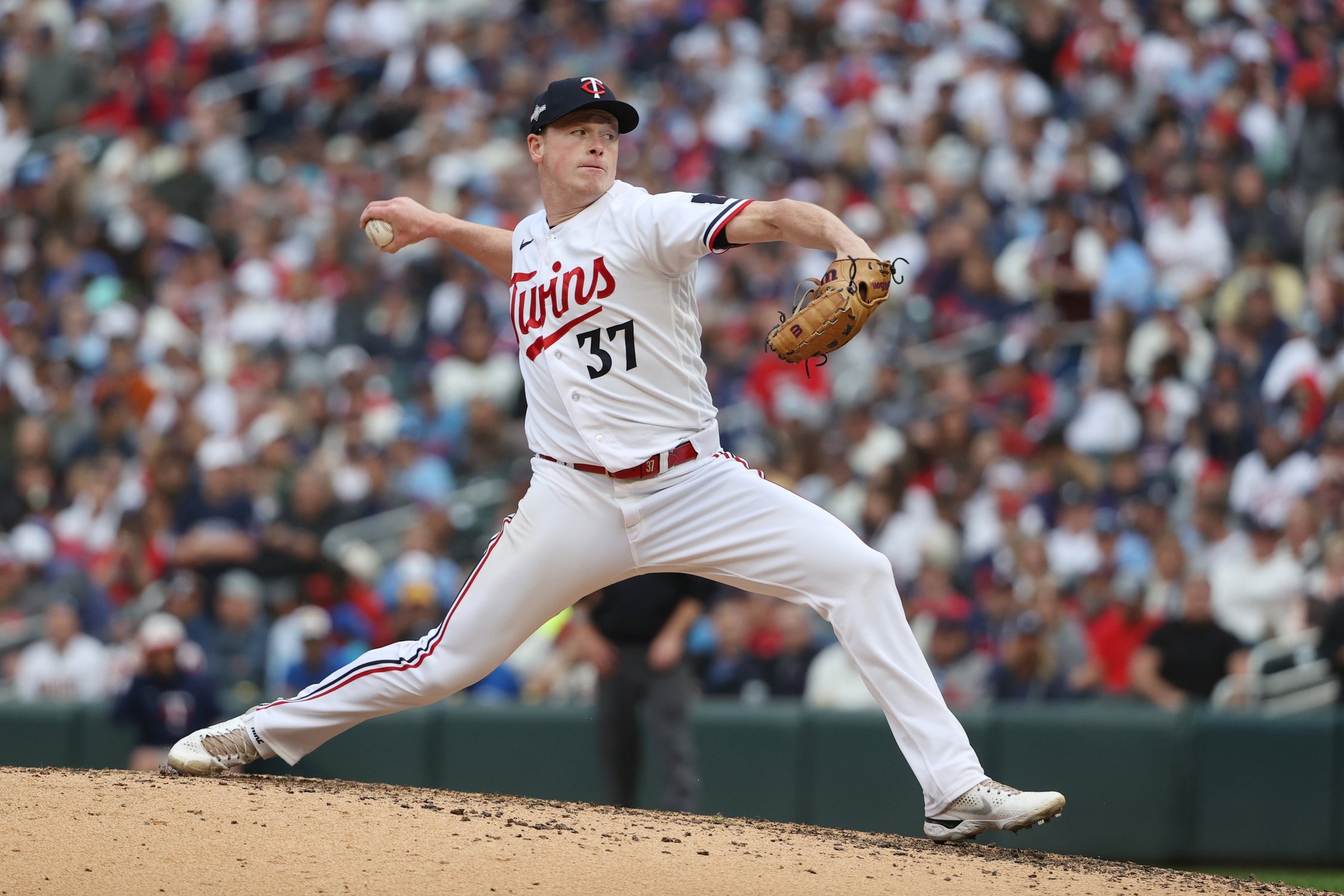 Anthony DeSclafani missed almost the entire second half last year with a flexor strain, which is often – but not always – a precursor to a more serious elbow injury or surgery. He received a platelet-rich plasma (PRP) and stem cell injections in August to boost healing, rehabbed during the offseason, and showed up to Twins camp reporting that he was 100 percent. However, the 33-year-old has been slowed this spring by renewed soreness in his elbow, putting him behind schedule in his build-up. It's natural for this development to set off alarms but DeSclafani downplayed the severity of the issue, and no imaging was done, which is telling. Hopefully just a hiccup. He threw a bullpen on Friday and told reporters he felt good. We should learn more on Monday or Tuesday. Even in a best-case scenario, DeSclafani might have a tough time building up adequately to be prepped for a normal start on April 2nd, when the Twins play their fifth game. Opening Day is suddenly only 18 days – or about three rotation turns – away, and DeSclafani has still seen zero game action this spring. If there are any setbacks or something more serious comes to light, the Twins will need to figure out another plan for the fifth starter role to start the season. (Hello, Louie Varland – having a great spring so far, for what it's worth.) If indeed this was a bump in the road, and DeSclafani is able to start getting into games and ramping up, the Twins will take whatever time they can buy before they need to call upon him in the regular season. Luckily, the early schedule is set up to accommodate them, at least for a bit. Here's a mapping of the first eight games of the season, and which pitchers I would expect to start them: March 28, @ KC: Pablo López March 29: Day off March 30, @ KC: Joe Ryan March 31, @ KC: Bailey Ober April 1: Day off April 2, @ MIL: Chris Paddack April 3, @ MIL: Pablo López (+1 day rest) April 4, vs CLE: Joe Ryan (standard rest) April 5: Day off April 6, vs CLE: Bailey Ober (+1 day rest) April 7, vs CLE: Chris Paddack (standard rest) April 8, vs LAD: ??? This is where things get interesting. Thanks to three days off mixed into the first two weeks, the Twins were able to easily skip the fifth starter the first time through the rotation. They could do so again here, because López is available on standard rest, as Ryan would be the following day. But at that point they'd need to make a call. After getting a break following the home opener, they play 12 straight days. One way or another, someone outside of the top four is going to be needed against Shohei Ohtani and the Los Angeles Dodgers. If it's DeSclafani, the Twins had better be confident he's primed for the task, having seen zero game action since last July. If it's Varland, we'd better hope his adjustments to cut down on homers prove to be effectual, because that's a lineup that will feast on mistakes. Another possibility, I suppose, is that the Twins could open the season with DeSclafani on the 15-day injured list, carry a long reliever (e.g. Brent Headrick or Matt Canterino) in his place, and then use that pitcher as the bulk guy in a bullpen game against Los Angeles. This would give Rocco Baldelli a very deep bullpen for the first stretch of games, and would give DeSclafani a full month from now to get himself up to game speed. He'd be eligible to be activated from the IL on April 12th, in time for his next turn in the rotation after skipping the first two. We'll know more soon about the plan for DeSclafani. If things are going to get back on track with him, as he indicated, then the Twins will be facing a timing crunch with the start of the season less than three weeks away. But there are strings they can pull to accommodate his delayed timeline and try to get him in a good place for his first start with the new club. How would you handle the opening stretch of the schedule? Would you show patience to stick with DeSclafani or go another direction? We'd love to hear your thoughts in the comments.
 -
The first season of Carlos Correa's mega-deal with the Twins was mostly underwhelming, but ended on a high note. Now he's looking to rebound into MVP-caliber form, while leading a team with clear World Series aspirations. Image courtesy of Jesse Johnson-USA TODAY Sports The Twins managed to win the AL Central and advance in the playoffs last year despite receiving a career-worst season (by far) from Carlos Correa, freshly signed to a franchise-record $200-million contract. Imagine what they're capable of this year, if he can return to something resembling his typical All-Star form. That's what the Twins are banking on from their $36 million man, whose salary accounts for more than a quarter of total payroll. Spending limitations prevented the front office from being able to add much around Correa and their young core this year, so the Twins will need him to elevate and earn the hefty paycheck on the field if they want to achieve their ambitious goals. TWINS SHORTSTOPS AT A GLANCE Starter: Carlos Correa Backup: Kyle Farmer Depth: Royce Lewis, Willi Castro Prospects: Brooks Lee, Danny De Andrade Twins fWAR Ranking Last Year: 15th out of 30 Twins fWAR Projection This Year: 6th out of 30 THE GOOD In a very disappointing 2023 campaign, Correa left a strong lasting impression, posting an .840 OPS in 15 September games and then starring for the Twins in October, where he batted .409 with three doubles and four RBIs in six games. Delivering when it counted most (along with his obvious leadership impact and dependable availability) made it feel like the team got no shortage of value from Correa, even as his on-field results suffered. While there were definitely concerning signs in his performance decline, Correa is still only 29 and was battling plantar fasciitis for much of the season, so there's reason to view 2023 as a blip, rather than a trend. He experienced similar offensive struggles in the abbreviated pandemic season, when he slashed .264/.326/.383, but bounced back with a career-high 6.2 fWAR in 2021. Minnesota is hoping he's got a similar turnaround in him now, at a critical moment. Early signs in camp are promising. Correa says he's now pain-free, after the foot issue lingered into the offseason. He reports that he worked on his mechanics during the winter to gain more confidence in his swing, which was evidently out of whack last year. At his best, Correa is clearly one of the best shortstops in baseball, and his impact goes well beyond what he provides on the field. Even a modest offensive rebound would make him a highly valuable overall asset to the team, while a return to his previous norm will likely put him in the MVP conversation. THE BAD It's convenient to pass off Correa's unprecedented struggles last year as entirely the byproduct of his plantar fasciitis, and to assume he'll put it all behind him now that the issue has (ostensibly) been resolved--maybe too convenient. Correa was originally diagnosed with the foot injury on May 24. At that point, he was slashing .213/.302/.396, which is nearly identical to his total line for the season (.230/.312/.399). April, when the shortstop was theoretically most healthy, was in fact his worst month. As the season progressed, Correa never managed to get going, grounding into a league-leading 30 double plays as he persistently failed to make authoritative contact. In particular, Correa struggled to crush fastballs, posting a -5 Run Value against them after being plus-17 in 2022. And while he made plenty of flashy plays in the field, his defensive metrics were more ordinary than elite, for a second consecutive campaign. It's difficult to parse how much of this can be attributed to aging, versus physical decline, versus randomness, versus the foot injury specifically. I guess we'll find out soon enough. But it's impossible for Correa's tumultuous free-agent journey prior to last season not to loom in one's mind, when it was followed by such poor performance in year one. THE BOTTOM LINE As he proved last year, it'll take a lot to force Minnesota's unofficial captain off the field. In the event he does get sidelined, Farmer is the top backup, having started 27 of the 28 games Correa missed last year, and Castro is back as secondary depth. In a career-worst year for Correa, the Twins still ranked in the middle of the major-league pack for shortstop production and snapped a 20-year postseason curse. Just think what they can do if he manages to prove that 2023 was, indeed, an outlier. Catch up on the rest of our position-by-position preview series: Twins 2024 Position Analysis: Catcher Twins 2024 Position Analysis: First Base Twins 2024 Position Analysis: Second Base Twins 2024 Position Analysis: Third Base View full article
-
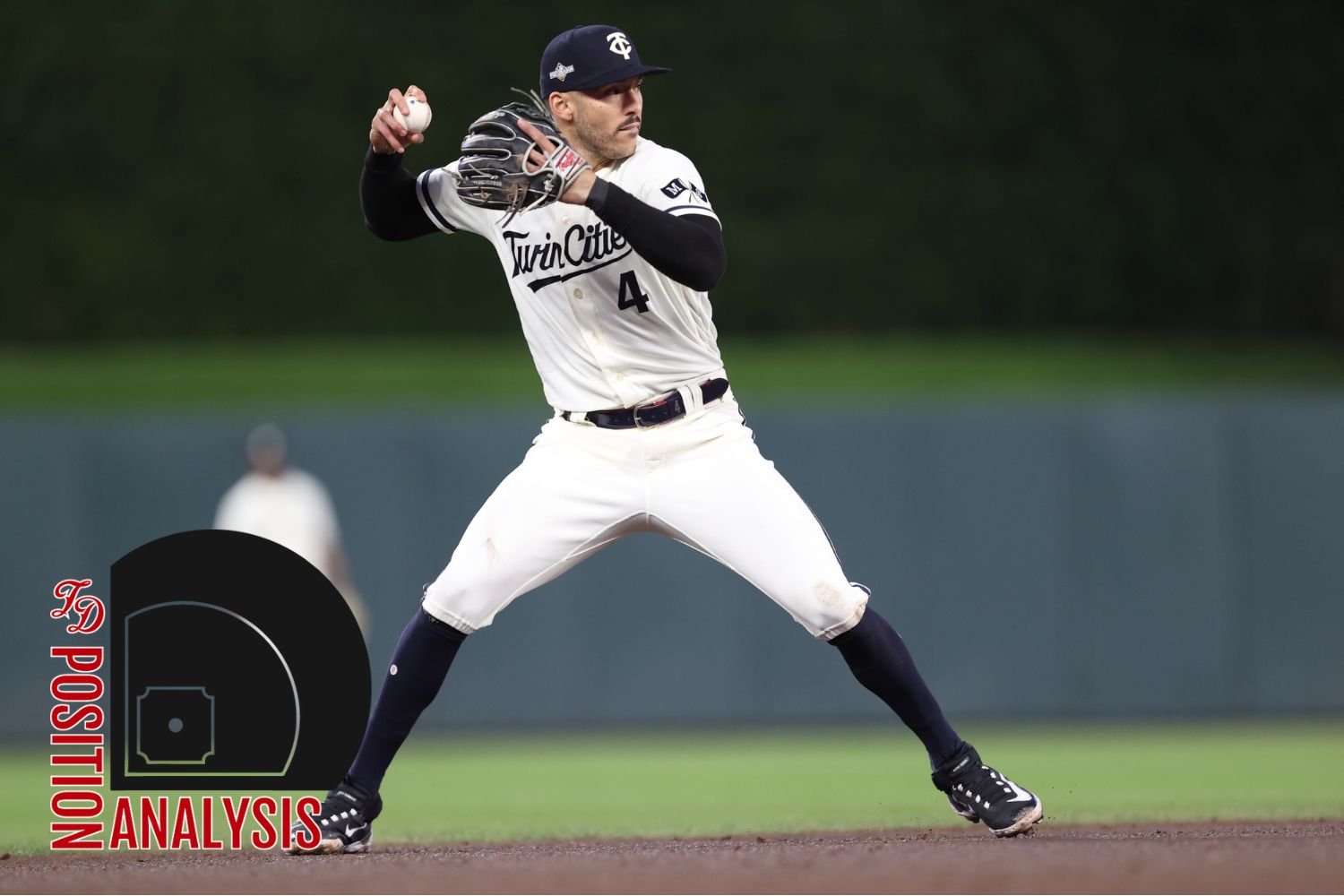 The Twins managed to win the AL Central and advance in the playoffs last year despite receiving a career-worst season (by far) from Carlos Correa, freshly signed to a franchise-record $200-million contract. Imagine what they're capable of this year, if he can return to something resembling his typical All-Star form. That's what the Twins are banking on from their $36 million man, whose salary accounts for more than a quarter of total payroll. Spending limitations prevented the front office from being able to add much around Correa and their young core this year, so the Twins will need him to elevate and earn the hefty paycheck on the field if they want to achieve their ambitious goals. TWINS SHORTSTOPS AT A GLANCE Starter: Carlos Correa Backup: Kyle Farmer Depth: Royce Lewis, Willi Castro Prospects: Brooks Lee, Danny De Andrade Twins fWAR Ranking Last Year: 15th out of 30 Twins fWAR Projection This Year: 6th out of 30 THE GOOD In a very disappointing 2023 campaign, Correa left a strong lasting impression, posting an .840 OPS in 15 September games and then starring for the Twins in October, where he batted .409 with three doubles and four RBIs in six games. Delivering when it counted most (along with his obvious leadership impact and dependable availability) made it feel like the team got no shortage of value from Correa, even as his on-field results suffered. While there were definitely concerning signs in his performance decline, Correa is still only 29 and was battling plantar fasciitis for much of the season, so there's reason to view 2023 as a blip, rather than a trend. He experienced similar offensive struggles in the abbreviated pandemic season, when he slashed .264/.326/.383, but bounced back with a career-high 6.2 fWAR in 2021. Minnesota is hoping he's got a similar turnaround in him now, at a critical moment. Early signs in camp are promising. Correa says he's now pain-free, after the foot issue lingered into the offseason. He reports that he worked on his mechanics during the winter to gain more confidence in his swing, which was evidently out of whack last year. At his best, Correa is clearly one of the best shortstops in baseball, and his impact goes well beyond what he provides on the field. Even a modest offensive rebound would make him a highly valuable overall asset to the team, while a return to his previous norm will likely put him in the MVP conversation. THE BAD It's convenient to pass off Correa's unprecedented struggles last year as entirely the byproduct of his plantar fasciitis, and to assume he'll put it all behind him now that the issue has (ostensibly) been resolved--maybe too convenient. Correa was originally diagnosed with the foot injury on May 24. At that point, he was slashing .213/.302/.396, which is nearly identical to his total line for the season (.230/.312/.399). April, when the shortstop was theoretically most healthy, was in fact his worst month. As the season progressed, Correa never managed to get going, grounding into a league-leading 30 double plays as he persistently failed to make authoritative contact. In particular, Correa struggled to crush fastballs, posting a -5 Run Value against them after being plus-17 in 2022. And while he made plenty of flashy plays in the field, his defensive metrics were more ordinary than elite, for a second consecutive campaign. It's difficult to parse how much of this can be attributed to aging, versus physical decline, versus randomness, versus the foot injury specifically. I guess we'll find out soon enough. But it's impossible for Correa's tumultuous free-agent journey prior to last season not to loom in one's mind, when it was followed by such poor performance in year one. THE BOTTOM LINE As he proved last year, it'll take a lot to force Minnesota's unofficial captain off the field. In the event he does get sidelined, Farmer is the top backup, having started 27 of the 28 games Correa missed last year, and Castro is back as secondary depth. In a career-worst year for Correa, the Twins still ranked in the middle of the major-league pack for shortstop production and snapped a 20-year postseason curse. Just think what they can do if he manages to prove that 2023 was, indeed, an outlier. Catch up on the rest of our position-by-position preview series: Twins 2024 Position Analysis: Catcher Twins 2024 Position Analysis: First Base Twins 2024 Position Analysis: Second Base Twins 2024 Position Analysis: Third Base
- 17 comments
-
- 8
-

-
- carlos correa
- kyle farmer
- (and 2 more)
-
At long last, Royce Lewis smashed onto the scene with an unforgettable rookie season, cementing his status by adding a sensational performance in the playoffs. The hype train is full steam ahead as Lewis looks to put his health troubles behind him and stay on track as a budding superstar. Image courtesy of Thomas Shea-USA TODAY Sports Third base is a tough position. It has a high offensive standard but also a considerable degree of defensive difficulty, requiring springy athleticism, quick reflexes and a strong arm. Players who can field the position well and produce at the plate – often former shortstops – are highly valued, and represent some of the league's biggest stars, from Jose Ramirez to Austin Riley, Alex Bregman, Manny Machado and beyond. Following an arduous journey for their former No. 1 overall pick, the Twins hope they now have a player capable of ranking among these heavyweights. Their true ceiling as a team this year largely hinges on it. TWINS THIRD BASEMEN AT A GLANCE Starter: Royce Lewis Backup: Kyle Farmer Depth: Willi Castro, José Miranda, Austin Martin Prospects: Brooks Lee, Danny De Andrade, Tanner Schobel Twins fWAR Ranking Last Year: 10th out of 30 Twins fWAR Projection This Year: 6th out of 30 THE GOOD It took a little longer than everyone hoped, but Lewis has finally arrived, looking very much like the franchise centerpiece that Minnesota envisioned when they drafted him first overall seven years ago. Well, maybe not specifically what they envisioned; the ultra-athletic Lewis always flashed star potential, but back when he was a wiry teenage shortstop with blazing speed we might not have pictured him as a buffed up slugger with 40-HR power. Since being drafted, Lewis has lost a bit of his high-end speed while maturing physically and enduring multiple major knee injuries. But he's still pretty fast, and he's added enough power to swap that in as a top-shelf skill. In just 70 big-league games, the 24-year-old has launched 17 home runs (including five grand slams) and slugged .549. That's not including the four postseason bombs that legitimized his breakout on the national stage. Despite his relatively small sample of play in recent years, Lewis's performance in 2023 was convincing for all who witnessed. MLB Network now has him ranked as a top 100 player in the game. Vegas has him on par with the likes of Carlos Correa, Marcus Semien and Jose Altuve in terms of MVP odds. The typically conservative FanGraphs system projects a 4-WAR season, which is All-Star level. Lewis was solid defensively in his first go at third base, and it should be noted: this really was his first go. Although he played some third in high school, Lewis had barely fielded the position in the minors before being thrust into it full-time as a big-league rookie. With experience under his belt and a full spring to sharpen up, I wouldn't be surprised to see the former shortstop elevate his defensive impact significantly at the hot corner. THE BAD Even if he continues to be a great player, and maybe even the team's best player, fans should brace for some level of regression following the ridiculous run we saw from Lewis last year. His .393 wOBA would've ranked ninth among qualified big-leaguers, between Juan Soto and Bryce Harper – an awfully high bar for his first full season. With that said, Lewis's name hardy feels out of place being mentioned alongside those greats, which says a lot. His emphatic showing last year erased almost all doubt regarding his ability. Availability, on the other hand, remains a question mark. His arrival in the majors was sidetracked by back-to-back ACL tears. Even after making his triumphant return last year, the third baseman was plagued by soft-tissue injuries, to the point where he nearly had to sit out the playoffs. All signs are positive health-wise in early spring, but the Twins have been conditioned to plan for the possibility of life without Lewis. In the event he becomes unavailable, third base loses much of its luster for the club, with Farmer and Castro as the veteran backups and Lee as the possible solution in a long-term scenario. Having a top prospect on deck as a fallback, in the event of another lengthy absence from Lewis, is a pretty good place to be. But as mentioned in the second base preview, expectations for Lee should be kept in check as a rookie. One wild-card in the deck here is Miranda. He was the team's Opening Day starter at third last year, but now his viability at the position feels very much in question. His defensive chops at third were never considered strong, and last year Miranda looked especially rough before he was shut down, but who knows how much the shoulder injury factored into that. If Lewis gets sidelined early in the season, and Alex Kirilloff and Carlos Santana are holding it down at first, Miranda could get one more chance to step back in at the hot corner. We'll need to see Miranda get any kind of action defensively this spring before that possibility comes into play, however. He continues to be limited to DH duty for now. THE BOTTOM LINE An intermingling of top prospects past and present, with Royce Lewis supplanting José Miranda and diverting the path of Brooks Lee. If Lewis gets sidelined again, Miranda is in the mix with Farmer, Castro and others as a short-term fill-in, with Lee lined up as a longer-term replacement if needed. There are contingencies in place should something go amiss with Lewis, but the team's potential really depends on him continuing to feature as the heart of the lineup as he did last season and in the playoffs. Now that he's finally entering a season healthy and experiencing a normal big-league camp, it really feels like the sky is the limit for Lewis and the Twins at third base. Catch up on the rest of our position-by-position preview series: Twins 2024 Position Analysis: Catcher Twins 2024 Position Analysis: First Base Twins 2024 Position Analysis: Second Base View full article
-
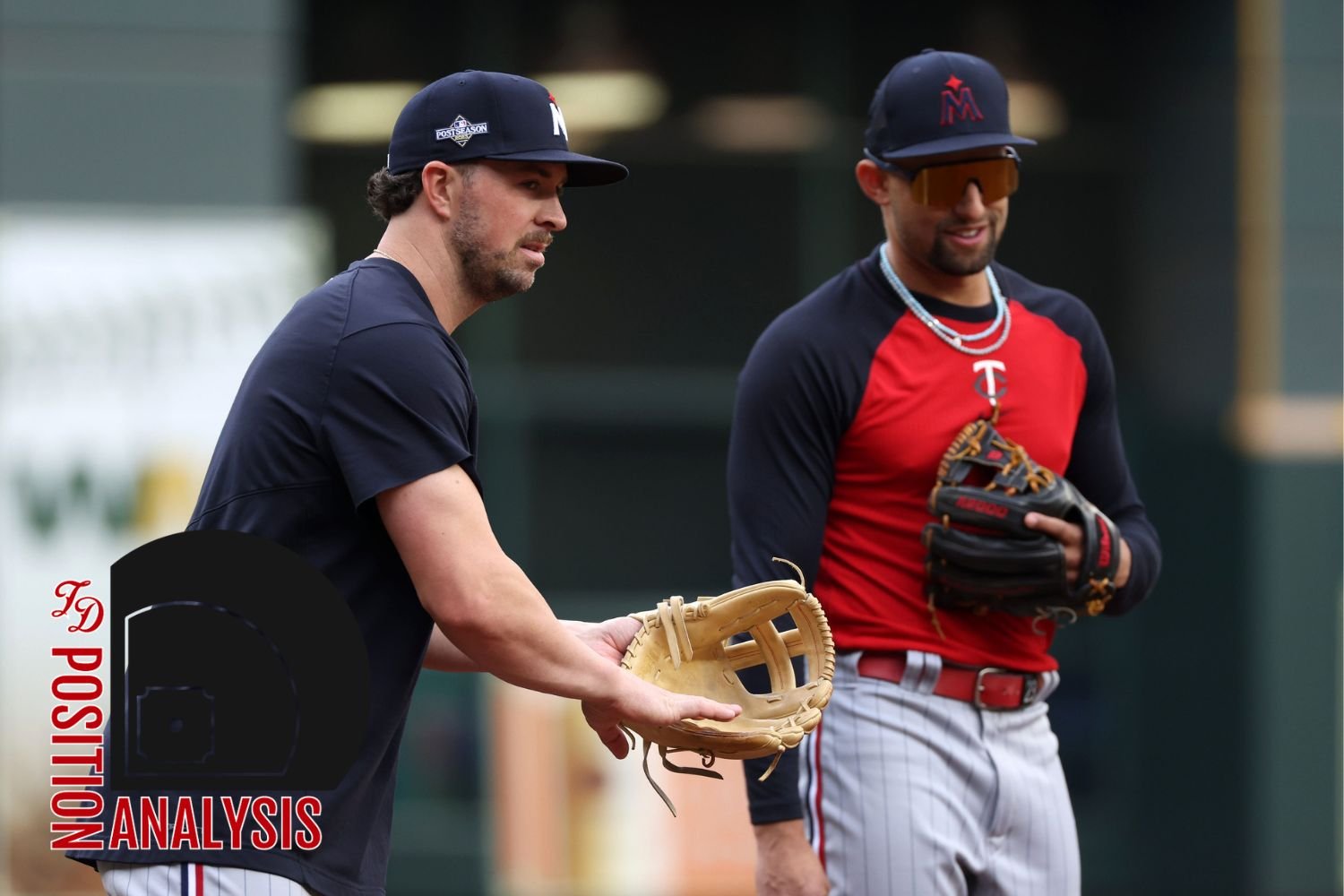 Third base is a tough position. It has a high offensive standard but also a considerable degree of defensive difficulty, requiring springy athleticism, quick reflexes and a strong arm. Players who can field the position well and produce at the plate – often former shortstops – are highly valued, and represent some of the league's biggest stars, from Jose Ramirez to Austin Riley, Alex Bregman, Manny Machado and beyond. Following an arduous journey for their former No. 1 overall pick, the Twins hope they now have a player capable of ranking among these heavyweights. Their true ceiling as a team this year largely hinges on it. TWINS THIRD BASEMEN AT A GLANCE Starter: Royce Lewis Backup: Kyle Farmer Depth: Willi Castro, José Miranda, Austin Martin Prospects: Brooks Lee, Danny De Andrade, Tanner Schobel Twins fWAR Ranking Last Year: 10th out of 30 Twins fWAR Projection This Year: 6th out of 30 THE GOOD It took a little longer than everyone hoped, but Lewis has finally arrived, looking very much like the franchise centerpiece that Minnesota envisioned when they drafted him first overall seven years ago. Well, maybe not specifically what they envisioned; the ultra-athletic Lewis always flashed star potential, but back when he was a wiry teenage shortstop with blazing speed we might not have pictured him as a buffed up slugger with 40-HR power. Since being drafted, Lewis has lost a bit of his high-end speed while maturing physically and enduring multiple major knee injuries. But he's still pretty fast, and he's added enough power to swap that in as a top-shelf skill. In just 70 big-league games, the 24-year-old has launched 17 home runs (including five grand slams) and slugged .549. That's not including the four postseason bombs that legitimized his breakout on the national stage. Despite his relatively small sample of play in recent years, Lewis's performance in 2023 was convincing for all who witnessed. MLB Network now has him ranked as a top 100 player in the game. Vegas has him on par with the likes of Carlos Correa, Marcus Semien and Jose Altuve in terms of MVP odds. The typically conservative FanGraphs system projects a 4-WAR season, which is All-Star level. Lewis was solid defensively in his first go at third base, and it should be noted: this really was his first go. Although he played some third in high school, Lewis had barely fielded the position in the minors before being thrust into it full-time as a big-league rookie. With experience under his belt and a full spring to sharpen up, I wouldn't be surprised to see the former shortstop elevate his defensive impact significantly at the hot corner. THE BAD Even if he continues to be a great player, and maybe even the team's best player, fans should brace for some level of regression following the ridiculous run we saw from Lewis last year. His .393 wOBA would've ranked ninth among qualified big-leaguers, between Juan Soto and Bryce Harper – an awfully high bar for his first full season. With that said, Lewis's name hardy feels out of place being mentioned alongside those greats, which says a lot. His emphatic showing last year erased almost all doubt regarding his ability. Availability, on the other hand, remains a question mark. His arrival in the majors was sidetracked by back-to-back ACL tears. Even after making his triumphant return last year, the third baseman was plagued by soft-tissue injuries, to the point where he nearly had to sit out the playoffs. All signs are positive health-wise in early spring, but the Twins have been conditioned to plan for the possibility of life without Lewis. In the event he becomes unavailable, third base loses much of its luster for the club, with Farmer and Castro as the veteran backups and Lee as the possible solution in a long-term scenario. Having a top prospect on deck as a fallback, in the event of another lengthy absence from Lewis, is a pretty good place to be. But as mentioned in the second base preview, expectations for Lee should be kept in check as a rookie. One wild-card in the deck here is Miranda. He was the team's Opening Day starter at third last year, but now his viability at the position feels very much in question. His defensive chops at third were never considered strong, and last year Miranda looked especially rough before he was shut down, but who knows how much the shoulder injury factored into that. If Lewis gets sidelined early in the season, and Alex Kirilloff and Carlos Santana are holding it down at first, Miranda could get one more chance to step back in at the hot corner. We'll need to see Miranda get any kind of action defensively this spring before that possibility comes into play, however. He continues to be limited to DH duty for now. THE BOTTOM LINE An intermingling of top prospects past and present, with Royce Lewis supplanting José Miranda and diverting the path of Brooks Lee. If Lewis gets sidelined again, Miranda is in the mix with Farmer, Castro and others as a short-term fill-in, with Lee lined up as a longer-term replacement if needed. There are contingencies in place should something go amiss with Lewis, but the team's potential really depends on him continuing to feature as the heart of the lineup as he did last season and in the playoffs. Now that he's finally entering a season healthy and experiencing a normal big-league camp, it really feels like the sky is the limit for Lewis and the Twins at third base. Catch up on the rest of our position-by-position preview series: Twins 2024 Position Analysis: Catcher Twins 2024 Position Analysis: First Base Twins 2024 Position Analysis: Second Base
- 42 comments
-
- 13
-
-
- royce lewis
- kyle farmer
- (and 3 more)
-
What's Left in Pitching Free Agency for the Twins?
Nick Nelson replied to Nick Nelson's topic in Twins Daily Front Page News
This sentiment is so odd to me when literally zero of the 30 major-league teams have any interest in signing Bauer.- 84 replies
-
- 6
-
-
- jake odorizzi
- rich hill
- (and 2 more)
-
What's Left in Pitching Free Agency for the Twins?
Nick Nelson replied to Nick Nelson's topic in Twins Daily Front Page News
I assumed people are aware of Clevinger's negative rep, which goes well beyond the domestic abuse allegations from last year. He's a clown, there are plenty of examples. Remember the time he screwed his team over by breaking COVID protocol? Remember the time he publicly ripped Jorge Polanco for being a PED user because he gave up a home run to him? Remember the time he almost started a brawl because he felt Dom Smith rounded the bases too slow on him? (It happened in his third-most recent start!) There you go. Evidence!- 84 replies
-
- 2
-
-
- jake odorizzi
- rich hill
- (and 2 more)
-
Minnesota's lone offseason rotation addition and their projected No. 5 starter is already facing health uncertainty. If the Twins are able find some coins under the couch cushion, could they make a late final addition to bolster the starting staff? Image courtesy of Orlando Ramirez, Brad Mills, Dan Hamilton-USA TODAY Sports The Twins haven't exactly had great luck in acquiring starters with known health concerns; Tyler Mahle and Chris Paddack being banner examples. So it wasn't terribly surprising to hear that Anthony DeSclafani, who missed the second half last year with an elbow injury, has experienced renewed soreness while throwing in camp, putting him behind schedule in his build-up. The Twins are saying they still expect DeSclafani to be ready for Opening Day. We'll see. But their starting pitching safety net is already starting to look shaky. Last year their rotation thrived in part because layers of depth enabled them to endure a major mid-season injury (Mahle) without missing a beat. If DeSclafani can't rebound, the Twins are burning that contingency already by elevating Louie Varland into the rotation, and the depth behind him is entirely unproven. Knowing how much this front office enjoys having those layers of experienced depth, and how pivotal this element was to the team's success last year, it's easy to see the appeal of adding another MLB starter with the season opener still three weeks away. Of course, there's a sticking point, because we also know the front office appears to be right up against an ownership-imposed spending cap. The good news (for them) is that supply seems to be outweighing demand at this late juncture of the offseason. Quite a few starters are still looking for jobs, and if they want to have any chance at building up to be ready at the start of the season, they need to get into camps ASAP. That might mean accepting low-dollar guarantees or even minor-league contracts. From MLB's free agent tracker, here's a list of noteworthy remaining names in free agency. I'm skipping Blake Snell and Jordan Montgomery, given that Joe Pohlad explicitly ruled out that type of signing, but with Scott Boras and the Twins you never know. I'm also skipping Trevor Bauer, because, nah. (If you feel inclined to bring his name up in the comments, please, don't. It's not happening.) Here are 11 names worth keeping an eye on in the remaining free agent pool. Zack Greinke: At last check he was still preparing to pitch this year, coming off an ugly age-39 season with the Royals. Twins came close to signing him ahead of the 2022 season. Michael Lorenzen: A clear-cut mid-rotation arm, but he did make the All-Star Game last year. Twins reportedly showed interest in him earlier in the offseason. Could they circle back? Mike Clevinger: Pitched pretty well for the White Sox last year and has Derek Falvey ties from Cleveland. But his stuff hasn't been the same since Tommy John surgery in 2021, and his personality probably doesn't fit the clubhouse vibe Falvey's trying to build. Rich Hill: Threw 146 innings last year at age 43, though his effectiveness waned. Has history with the Twins, for whom he was very effective in the shortened 2020 season. He might be a better candidate to keep an eye on as a midseason addition. As Hill admitted last October: “I have a pretty good gauge and a monitor on my body. And I think half a season is much more palatable than a full season.” Johnny Cueto: As of early February he was still looking for a gig. Might be open a minor-league contract at this point. Cueto was horrible last year but quite good for the White Sox in 2022 after signing a week into the season. Noah Syndergaard: Perhaps the most intriguing name on this list. Syndergaard is still only 31 and was a legit frontliner in the early stage of his career. The fact he's still available suggests teams aren't buying into a comeback (or he's stubborn on a high price tag) but on a low-risk deal he'd offer some exciting lighting-in-a-bottle upside. Jake Odorizzi: Coming off a missed season due to shoulder surgery, Odorizzi showcased his progress for teams recently and the Twins were among those in attendance. Like with Hill, there's history of a successful partnership here. Brad Keller: After a promising start to his career with the Royals, he's posted a 5.14 ERA in the past three seasons and struggled with major shoulder issues last year. But he's only 28 and should be available on a minors deal. Dallas Keuchel: Had some fun moments during his time with the Twins last year, although it required a lot of batted-ball luck, as he showed no remaining ability to induce whiffs. Keuchel continues to grind in efforts to keep his career going. Matthew Boyd and Vince Velasquez: I mention them because the Twins have a history of signing guys who are recovering from Tommy John surgery (i.e. Michael Pineda and Brock Stewart). Both Boyd and Velasquez underwent elbow surgery midway through 2023 and won't be available until the second half at the earliest. I'd love to hear your thoughts on the remaining free agent market. Do any of these names do anything for you on a low-stakes deal? Or are you comfortable enough with the starting pitching depth as is? View full article
-
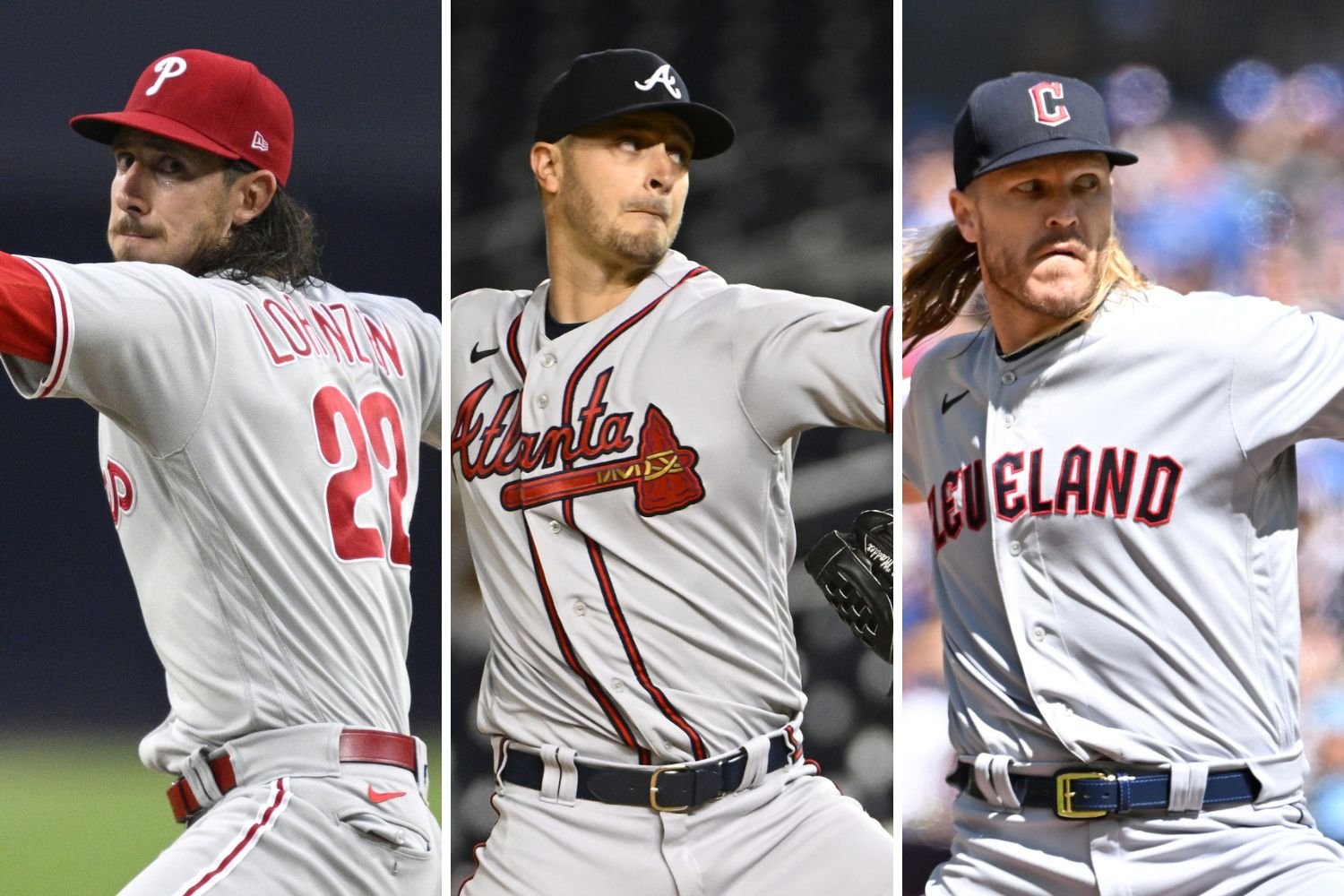 The Twins haven't exactly had great luck in acquiring starters with known health concerns; Tyler Mahle and Chris Paddack being banner examples. So it wasn't terribly surprising to hear that Anthony DeSclafani, who missed the second half last year with an elbow injury, has experienced renewed soreness while throwing in camp, putting him behind schedule in his build-up. The Twins are saying they still expect DeSclafani to be ready for Opening Day. We'll see. But their starting pitching safety net is already starting to look shaky. Last year their rotation thrived in part because layers of depth enabled them to endure a major mid-season injury (Mahle) without missing a beat. If DeSclafani can't rebound, the Twins are burning that contingency already by elevating Louie Varland into the rotation, and the depth behind him is entirely unproven. Knowing how much this front office enjoys having those layers of experienced depth, and how pivotal this element was to the team's success last year, it's easy to see the appeal of adding another MLB starter with the season opener still three weeks away. Of course, there's a sticking point, because we also know the front office appears to be right up against an ownership-imposed spending cap. The good news (for them) is that supply seems to be outweighing demand at this late juncture of the offseason. Quite a few starters are still looking for jobs, and if they want to have any chance at building up to be ready at the start of the season, they need to get into camps ASAP. That might mean accepting low-dollar guarantees or even minor-league contracts. From MLB's free agent tracker, here's a list of noteworthy remaining names in free agency. I'm skipping Blake Snell and Jordan Montgomery, given that Joe Pohlad explicitly ruled out that type of signing, but with Scott Boras and the Twins you never know. I'm also skipping Trevor Bauer, because, nah. (If you feel inclined to bring his name up in the comments, please, don't. It's not happening.) Here are 11 names worth keeping an eye on in the remaining free agent pool. Zack Greinke: At last check he was still preparing to pitch this year, coming off an ugly age-39 season with the Royals. Twins came close to signing him ahead of the 2022 season. Michael Lorenzen: A clear-cut mid-rotation arm, but he did make the All-Star Game last year. Twins reportedly showed interest in him earlier in the offseason. Could they circle back? Mike Clevinger: Pitched pretty well for the White Sox last year and has Derek Falvey ties from Cleveland. But his stuff hasn't been the same since Tommy John surgery in 2021, and his personality probably doesn't fit the clubhouse vibe Falvey's trying to build. Rich Hill: Threw 146 innings last year at age 43, though his effectiveness waned. Has history with the Twins, for whom he was very effective in the shortened 2020 season. He might be a better candidate to keep an eye on as a midseason addition. As Hill admitted last October: “I have a pretty good gauge and a monitor on my body. And I think half a season is much more palatable than a full season.” Johnny Cueto: As of early February he was still looking for a gig. Might be open a minor-league contract at this point. Cueto was horrible last year but quite good for the White Sox in 2022 after signing a week into the season. Noah Syndergaard: Perhaps the most intriguing name on this list. Syndergaard is still only 31 and was a legit frontliner in the early stage of his career. The fact he's still available suggests teams aren't buying into a comeback (or he's stubborn on a high price tag) but on a low-risk deal he'd offer some exciting lighting-in-a-bottle upside. Jake Odorizzi: Coming off a missed season due to shoulder surgery, Odorizzi showcased his progress for teams recently and the Twins were among those in attendance. Like with Hill, there's history of a successful partnership here. Brad Keller: After a promising start to his career with the Royals, he's posted a 5.14 ERA in the past three seasons and struggled with major shoulder issues last year. But he's only 28 and should be available on a minors deal. Dallas Keuchel: Had some fun moments during his time with the Twins last year, although it required a lot of batted-ball luck, as he showed no remaining ability to induce whiffs. Keuchel continues to grind in efforts to keep his career going. Matthew Boyd and Vince Velasquez: I mention them because the Twins have a history of signing guys who are recovering from Tommy John surgery (i.e. Michael Pineda and Brock Stewart). Both Boyd and Velasquez underwent elbow surgery midway through 2023 and won't be available until the second half at the earliest. I'd love to hear your thoughts on the remaining free agent market. Do any of these names do anything for you on a low-stakes deal? Or are you comfortable enough with the starting pitching depth as is?
- 84 comments
-
- 3
-
-
- jake odorizzi
- rich hill
- (and 2 more)
-
Twins 2024 Position Analysis: Second Base
Nick Nelson replied to Nick Nelson's topic in Twins Daily Front Page News
https://www.fangraphs.com/depthcharts.aspx?position=2B -
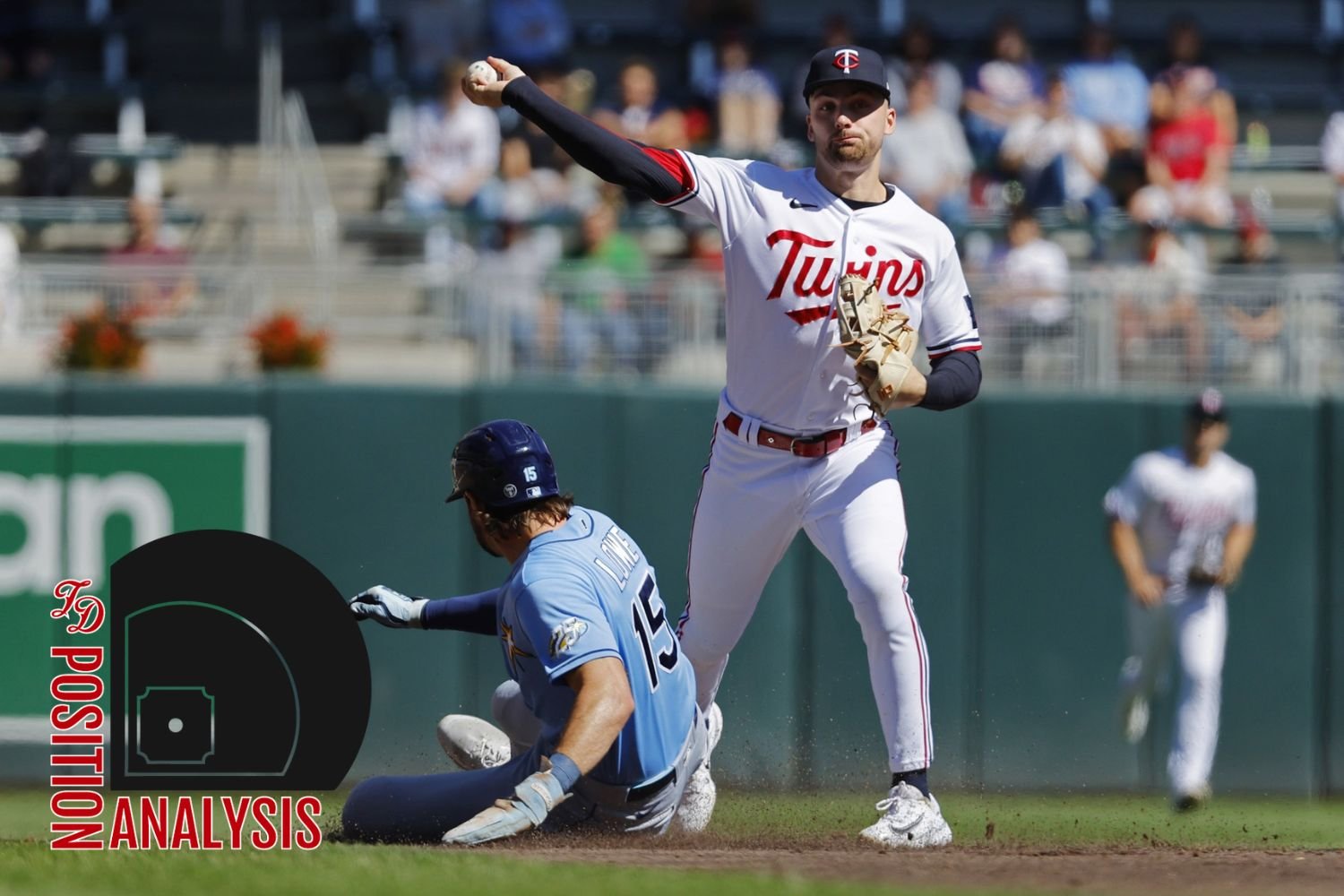 In 2022, the following three players combined to start 156 of 162 games for the Twins at second base: Jorge Polanco, Luis Arraez, Nick Gordon. One season later, all three holdovers from the previous regime are gone, as the front office embeds its own wave of talent in planning at second base. This position was among the defining strengths for the Twins offense in 2023, ranking second among American League teams in wOBA and fWAR, behind only the world champion Texas Rangers. Can they maintain that advantage this year? TWINS SECOND BASEMEN AT A GLANCE Starter: Edouard Julien Backup: Kyle Farmer Depth: Willi Castro, Austin Martin, Michael Helman Prospects: Brooks Lee, Tanner Schobel, Luke Keaschall Twins fWAR Ranking Last Year: 3rd out of 30 Twins fWAR Projection This Year: 14th out of 30 THE GOOD Julien is legit. That much is impossible to deny after he carried over his impeccable offensive track record to the major leagues. He ranked seventh in the AL Rookie of the Year voting by slashing .263/.381/.459 in 109 games during his first go with the Twins. Unfazed by the big lights of October, the newcomer even posted a 1.043 OPS in the playoffs. Regression always has to be considered a factor for sophomore big-leaguers coming off monster partial rookie seasons – especially one who rose out of relative obscurity like Julien. But it's getting harder and harder to doubt the former 18th-round draft pick; he literally produces everywhere. Aside from an elbow injury that sidelined him for a year, there have been no real lapses since he joined the pro ranks. Julien's signature skill – unparalleled discipline at plate – has proven viable at every level, keeping pitchers on the defensive. This isn't to say Julien is a perfect offensive player. He does strike out a lot and benefitted from a .371 BABIP as a rookie. He needs to be executing on his plan to punish pitches in the zone in order for his approach to fully pay off. But he's already shown enough power put himself on another tier of upside compared to Arraez, and Julien should be viewed as a top-of-the-lineup cornerstone in the same way Arraez was. At least, against right-handed pitching. As good as he is against righties, Julien is pretty much unplayable against left-handers. He slashed .196/.229/.217 versus southpaws as a rookie after posting a .649 OPS against them in the minors the previous year. So it's very handy to have Farmer on hand as a platoon-mate with a reliable veteran glove and .825 career OPS vs. LHP. This is a strong setup out of the gates. How long it remains in place will be dictated by health, Julien's glove, and how hard the prospects are pushing from below. Specifically, Lee is trending toward an MLB debut by midseason after wrapping up 2023 in Triple-A. With third base and shortstop now occupied indefinitely, second base currently looks like the best path for the switch-hitting top prospect, whose glove would almost surely be superior to Julien's. At that point, first base or designated hitter become possible destinations for the latter. Down the line, the Twins have a pair of other promising talents rising through their system, with Schobel and Keaschall drafted out of college in the second rounds of successive drafts. The two sit at No. 10 and 11 in Twins Daily's preseason prospect rankings as they prepare to conquer the high minors. In short, the pipeline is loaded at this position. THE BAD Minnesota's front office traded away a great deal of established quality in their overhaul at second base. Arraez is a star and Polanco was an extremely consistent producer when on the field. Even Gordon had shown an ability to deliver value in the majors. The Twins have shipped these veteran players out while investing their future at second largely in the unknown. Farmer is the most proven commodity of the current crop but he's a backup-caliber player, turning 34 this season. The Twins are obviously hoping Julien will carry the torch, and as mentioned there's plenty of reason to believe, but he's not without drop-off risk. Also, it wouldn't be shocking to see his shaky defense deemed untenable with further exposure, forcing him off the position. From there we are really putting a lot of faith in Lee. The Twins are propping up their No. 2 prospect as the heir apparent at second, with the left side of the infield now locked down by franchise players. It's important to remember, though, that even the most successful big-leaguers often experience a learning curve. Julien's immediate breakthrough last year was more the exception than the rule. FanGraphs projects a .245/.304/.379 slash line and .298 wOBA from Lee in the majors this season. It'd be an okay rookie year but underwhelming production from the primary starter at second, especially after Julien set the bar. I don't fault the Twins for trading players like Arraez, Polanco and Gordon proactively to get value for them while they can, but the downside of this plan is removing layers of depth and placing faith in inexperienced players, which has been a volatile proposition in the past. THE BOTTOM LINE With one of their top prospects knocking on the door behind their reigning top rookie, the Twins feature premier young talent at second base. Polanco leaves big shoes to fill as a two-way player who powered the top of the lineup, but between Julien, Lee, Schobel and Keaschall, there's a bright future ahead, while Farmer, Castro, Martin and others provide quality short-term depth. I feel very optimistic about this unit compared to the middling projection from FanGraphs. Catch up on the rest of our position-by-position preview series: Twins 2024 Position Analysis: Catcher Twins 2024 Position Analysis: First Base
- 68 comments
-
- 13
-
-
- edouard julien
- kyle farmer
- (and 1 more)
-
The Twins front office under Derek Falvey has gradually whittled away all of the quality talent they inherited in the middle infield, trading two All-Stars and a former top draft pick within the past year or so. And yet, as the organization charts a new future at second base, its prospect-driven outlook is as bright as ever. Image courtesy of Bruce Kluckhohn-USA TODAY Sports In 2022, the following three players combined to start 156 of 162 games for the Twins at second base: Jorge Polanco, Luis Arraez, Nick Gordon. One season later, all three holdovers from the previous regime are gone, as the front office embeds its own wave of talent in planning at second base. This position was among the defining strengths for the Twins offense in 2023, ranking second among American League teams in wOBA and fWAR, behind only the world champion Texas Rangers. Can they maintain that advantage this year? TWINS SECOND BASEMEN AT A GLANCE Starter: Edouard Julien Backup: Kyle Farmer Depth: Willi Castro, Austin Martin, Michael Helman Prospects: Brooks Lee, Tanner Schobel, Luke Keaschall Twins fWAR Ranking Last Year: 3rd out of 30 Twins fWAR Projection This Year: 14th out of 30 THE GOOD Julien is legit. That much is impossible to deny after he carried over his impeccable offensive track record to the major leagues. He ranked seventh in the AL Rookie of the Year voting by slashing .263/.381/.459 in 109 games during his first go with the Twins. Unfazed by the big lights of October, the newcomer even posted a 1.043 OPS in the playoffs. Regression always has to be considered a factor for sophomore big-leaguers coming off monster partial rookie seasons – especially one who rose out of relative obscurity like Julien. But it's getting harder and harder to doubt the former 18th-round draft pick; he literally produces everywhere. Aside from an elbow injury that sidelined him for a year, there have been no real lapses since he joined the pro ranks. Julien's signature skill – unparalleled discipline at plate – has proven viable at every level, keeping pitchers on the defensive. This isn't to say Julien is a perfect offensive player. He does strike out a lot and benefitted from a .371 BABIP as a rookie. He needs to be executing on his plan to punish pitches in the zone in order for his approach to fully pay off. But he's already shown enough power put himself on another tier of upside compared to Arraez, and Julien should be viewed as a top-of-the-lineup cornerstone in the same way Arraez was. At least, against right-handed pitching. As good as he is against righties, Julien is pretty much unplayable against left-handers. He slashed .196/.229/.217 versus southpaws as a rookie after posting a .649 OPS against them in the minors the previous year. So it's very handy to have Farmer on hand as a platoon-mate with a reliable veteran glove and .825 career OPS vs. LHP. This is a strong setup out of the gates. How long it remains in place will be dictated by health, Julien's glove, and how hard the prospects are pushing from below. Specifically, Lee is trending toward an MLB debut by midseason after wrapping up 2023 in Triple-A. With third base and shortstop now occupied indefinitely, second base currently looks like the best path for the switch-hitting top prospect, whose glove would almost surely be superior to Julien's. At that point, first base or designated hitter become possible destinations for the latter. Down the line, the Twins have a pair of other promising talents rising through their system, with Schobel and Keaschall drafted out of college in the second rounds of successive drafts. The two sit at No. 10 and 11 in Twins Daily's preseason prospect rankings as they prepare to conquer the high minors. In short, the pipeline is loaded at this position. THE BAD Minnesota's front office traded away a great deal of established quality in their overhaul at second base. Arraez is a star and Polanco was an extremely consistent producer when on the field. Even Gordon had shown an ability to deliver value in the majors. The Twins have shipped these veteran players out while investing their future at second largely in the unknown. Farmer is the most proven commodity of the current crop but he's a backup-caliber player, turning 34 this season. The Twins are obviously hoping Julien will carry the torch, and as mentioned there's plenty of reason to believe, but he's not without drop-off risk. Also, it wouldn't be shocking to see his shaky defense deemed untenable with further exposure, forcing him off the position. From there we are really putting a lot of faith in Lee. The Twins are propping up their No. 2 prospect as the heir apparent at second, with the left side of the infield now locked down by franchise players. It's important to remember, though, that even the most successful big-leaguers often experience a learning curve. Julien's immediate breakthrough last year was more the exception than the rule. FanGraphs projects a .245/.304/.379 slash line and .298 wOBA from Lee in the majors this season. It'd be an okay rookie year but underwhelming production from the primary starter at second, especially after Julien set the bar. I don't fault the Twins for trading players like Arraez, Polanco and Gordon proactively to get value for them while they can, but the downside of this plan is removing layers of depth and placing faith in inexperienced players, which has been a volatile proposition in the past. THE BOTTOM LINE With one of their top prospects knocking on the door behind their reigning top rookie, the Twins feature premier young talent at second base. Polanco leaves big shoes to fill as a two-way player who powered the top of the lineup, but between Julien, Lee, Schobel and Keaschall, there's a bright future ahead, while Farmer, Castro, Martin and others provide quality short-term depth. I feel very optimistic about this unit compared to the middling projection from FanGraphs. Catch up on the rest of our position-by-position preview series: Twins 2024 Position Analysis: Catcher Twins 2024 Position Analysis: First Base View full article
-
Twins 2024 Position Analysis: First Base
Nick Nelson replied to Nick Nelson's topic in Twins Daily Front Page News
Sure, but the point in question wasn't platooning everyone, it was about platooning Kirilloff and Miranda at first. I do think if both players rebound into form that'd be quite an effective setup. Santana was brought in because unfortunately it's not a setup the team can currently trust. In general lefty hitters like Julien and Wallner and Kirilloff are never going to be good against LHP no matter how many reps they get. Platooning is a smart strategy to maximize offensive production. Although I did really like John Foley's piece the other day on the limitations of overdoing it, which might tie to your point.- 80 replies
-
- 2
-
-
- carlos santana
- alex kirilloff
- (and 1 more)
-
Twins 2024 Position Analysis: First Base
Nick Nelson replied to Nick Nelson's topic in Twins Daily Front Page News
Lefties who hit lefties pretty much don't exist. If you want an RH masher at the position, it's best to have a platoon partner on hand. I see your point about the roster restrictiveness but with Kirilloff being able to play OF, Miranda being able to play some 3B and both being able to DH, I don't see it as too cumbersome in this case.- 80 replies
-
- 2
-
-
- carlos santana
- alex kirilloff
- (and 1 more)
-
On paper, first base looks like the biggest positional weakness for the Minnesota Twins heading into 2024. The likely Opening Day starter may leave much to be desired as a regular, but this position is teeming with matchup-based potential and sleeper upside. It could easily end up as one of the team's most productive sources of offense. Image courtesy of Kim Klement Neitzel-USA TODAY Sports Over nearly a two-decade stretch, first base was a position of steady continuity (and alliteration) for the Twins franchise, with Mientkiewicz giving way to Morneau and then Mauer. Miguel tried to carry the torch, but Sanó's tenure at first ended in 2022 after three seasons, and last year, the position felt a bit rudderless in the absence of all these Ms. No player started more than 64 games at first base in 2023, and we can probably expect a similarly wide distribution in the coming season. In fact, for Rocco Baldelli and the Twins, smartly rotating players through the position may hold the key to unlocking its potential. TWINS FIRST BASEMEN AT A GLANCE Starter: Carlos Santana Backup: Alex Kirilloff Depth: José Miranda, Edouard Julien, Kyle Farmer Prospects: Yunior Severino, Aaron Sabato Twins fWAR Ranking Last Year: 12th out of 30 Twins fWAR Projection This Year: 26th out of 30 THE GOOD The Twins have three primary players slotted into their first base mix heading into 2024: Santana, Kirilloff and Miranda. There's a nice balance to this blend: Experience and youth. Aggressiveness and patience. A lefty, a righty, and a switch-hitter. The addition of Santana was deemed necessary due to question marks surrounding the other two; he's a good fit in that he provides a stable floor without standing as a major barrier for Kirilloff or Miranda to break through. That is a possibility Minnesota's front office clearly wants to keep open, and for valid reason. Kirilloff can feature as the focal point in the lineup against righties when healthy and on his game. This is not so much theoretical as proven, albeit never in sustained fashion. The 26-year-old had his most productive burst yet last year, posting a 117 OPS+ in 88 games, but his campaign was once again derailed by injury and ended with surgery. This time it's a shoulder operation that he's looking to bounce back from while also still dealing with a twice-repaired wrist. Likewise, Miranda is coming back from his own shoulder procedure (scar tissue removal) that was deemed relatively minor. Unlike Kirilloff, Miranda experienced no success whatsoever in a lost 2023 season, slashing just .211/.263/.303 in 40 games with the Twins and failing to elevate his game much in the hitter-friendly confines of St. Paul. It was a hugely discouraging season, but not enough to fully dismiss all the promise he showed previously. Miranda starred in the minors during a breakthrough 2021 campaign and looked the part for much of his rookie year in '22. With Royce Lewis now entrenched at third, first base is Miranda's best opportunity to rebuild his value. If healthy and on the big-league roster he'd be favorably set up to do so, drawing at-bats against left-handed pitching in a platoon with the lefty-swinging Kirilloff. But the arrival of Santana likely means Miranda, still only 25, will need to wait his turn in the minors. Kirilloff and Miranda both feel like major wild-cards for the Twins and their offensive outlook this year. But it's nice that the club isn't entirely dependent on either, having acquired Santana as a veteran stopgap and contingency plan. While his bat is much diminished from its prime, Santana was still above-average last year at age 37 and his disciplined approach at the plate limits the chances of a total aging-related collapse. He also brings a high-quality glove, which the Twins have lacked at first base. THE BAD Although Santana remains a solid and slightly above-average hitter overall, his offense no longer stands out at his position the way it did during his prime in Cleveland. Last year his .323 wOBA ranked 17th out of 24 qualified first basemen, and unsurprisingly, projection systems are envisioning further decline from Santana, who turns 38 in April. ZiPS forecasts a .302 wOBA, which would've ranked third-worst at the positon last year. The hope is that Santana's role can be reduced and optimized, rotating strategically against left-handed pitching and maybe stepping aside at one point to make room for a fully-formed combo of Kirilloff and Miranda. But then, that was also the hope last year with Donovan Solano, and he wound up getting the third-most plate appearances on the team. As tantalizing it as it is to dream on Kirilloff and Miranda forming a mega-platoon, it's tough to trust either heading into this season. The uncertainty around both potential difference-makers puts the Twins in a bind, wanting to keep the gate open but at the same time needing to install a dependable short-term holding wall. With a limited budget, they landed on the aging Santana as their best bet. We'll see how it goes. Projections are not rosy; FanGraphs projects the Twins to rank second-worst in the American League at first base. THE BOTTOM LINE It's a big year for Kirilloff and Miranda. If either one can prove healthy and seize their potential over a sustained stretch, they are going have a shot at taking over this job. Santana is not a big impediment, which also speaks to his quality as a fill-in. I'll be curious to see how many appearances guys like Julien and Severino make at first this year. Giving prospect Brooks Lee a shot here would also be a possibility if things are clicking elsewhere in the infield. The roster is not exactly robust with reliable options but the Twins do have depth. Heading into the 2024 season, the future at first base still feels rudderless in many ways. The Twins are hoping one of their former top hitting prospects can re-emerge and establish himself as the next long-term solution. "M" alliteration accepted, but not required. Catch up on the rest of our position-by-position preview series: Twins 2024 Position Analysis: Catcher View full article
-
 Over nearly a two-decade stretch, first base was a position of steady continuity (and alliteration) for the Twins franchise, with Mientkiewicz giving way to Morneau and then Mauer. Miguel tried to carry the torch, but Sanó's tenure at first ended in 2022 after three seasons, and last year, the position felt a bit rudderless in the absence of all these Ms. No player started more than 64 games at first base in 2023, and we can probably expect a similarly wide distribution in the coming season. In fact, for Rocco Baldelli and the Twins, smartly rotating players through the position may hold the key to unlocking its potential. TWINS FIRST BASEMEN AT A GLANCE Starter: Carlos Santana Backup: Alex Kirilloff Depth: José Miranda, Edouard Julien, Kyle Farmer Prospects: Yunior Severino, Aaron Sabato Twins fWAR Ranking Last Year: 12th out of 30 Twins fWAR Projection This Year: 26th out of 30 THE GOOD The Twins have three primary players slotted into their first base mix heading into 2024: Santana, Kirilloff and Miranda. There's a nice balance to this blend: Experience and youth. Aggressiveness and patience. A lefty, a righty, and a switch-hitter. The addition of Santana was deemed necessary due to question marks surrounding the other two; he's a good fit in that he provides a stable floor without standing as a major barrier for Kirilloff or Miranda to break through. That is a possibility Minnesota's front office clearly wants to keep open, and for valid reason. Kirilloff can feature as the focal point in the lineup against righties when healthy and on his game. This is not so much theoretical as proven, albeit never in sustained fashion. The 26-year-old had his most productive burst yet last year, posting a 117 OPS+ in 88 games, but his campaign was once again derailed by injury and ended with surgery. This time it's a shoulder operation that he's looking to bounce back from while also still dealing with a twice-repaired wrist. Likewise, Miranda is coming back from his own shoulder procedure (scar tissue removal) that was deemed relatively minor. Unlike Kirilloff, Miranda experienced no success whatsoever in a lost 2023 season, slashing just .211/.263/.303 in 40 games with the Twins and failing to elevate his game much in the hitter-friendly confines of St. Paul. It was a hugely discouraging season, but not enough to fully dismiss all the promise he showed previously. Miranda starred in the minors during a breakthrough 2021 campaign and looked the part for much of his rookie year in '22. With Royce Lewis now entrenched at third, first base is Miranda's best opportunity to rebuild his value. If healthy and on the big-league roster he'd be favorably set up to do so, drawing at-bats against left-handed pitching in a platoon with the lefty-swinging Kirilloff. But the arrival of Santana likely means Miranda, still only 25, will need to wait his turn in the minors. Kirilloff and Miranda both feel like major wild-cards for the Twins and their offensive outlook this year. But it's nice that the club isn't entirely dependent on either, having acquired Santana as a veteran stopgap and contingency plan. While his bat is much diminished from its prime, Santana was still above-average last year at age 37 and his disciplined approach at the plate limits the chances of a total aging-related collapse. He also brings a high-quality glove, which the Twins have lacked at first base. THE BAD Although Santana remains a solid and slightly above-average hitter overall, his offense no longer stands out at his position the way it did during his prime in Cleveland. Last year his .323 wOBA ranked 17th out of 24 qualified first basemen, and unsurprisingly, projection systems are envisioning further decline from Santana, who turns 38 in April. ZiPS forecasts a .302 wOBA, which would've ranked third-worst at the positon last year. The hope is that Santana's role can be reduced and optimized, rotating strategically against left-handed pitching and maybe stepping aside at one point to make room for a fully-formed combo of Kirilloff and Miranda. But then, that was also the hope last year with Donovan Solano, and he wound up getting the third-most plate appearances on the team. As tantalizing it as it is to dream on Kirilloff and Miranda forming a mega-platoon, it's tough to trust either heading into this season. The uncertainty around both potential difference-makers puts the Twins in a bind, wanting to keep the gate open but at the same time needing to install a dependable short-term holding wall. With a limited budget, they landed on the aging Santana as their best bet. We'll see how it goes. Projections are not rosy; FanGraphs projects the Twins to rank second-worst in the American League at first base. THE BOTTOM LINE It's a big year for Kirilloff and Miranda. If either one can prove healthy and seize their potential over a sustained stretch, they are going have a shot at taking over this job. Santana is not a big impediment, which also speaks to his quality as a fill-in. I'll be curious to see how many appearances guys like Julien and Severino make at first this year. Giving prospect Brooks Lee a shot here would also be a possibility if things are clicking elsewhere in the infield. The roster is not exactly robust with reliable options but the Twins do have depth. Heading into the 2024 season, the future at first base still feels rudderless in many ways. The Twins are hoping one of their former top hitting prospects can re-emerge and establish himself as the next long-term solution. "M" alliteration accepted, but not required. Catch up on the rest of our position-by-position preview series: Twins 2024 Position Analysis: Catcher
- 80 comments
-
- 4
-
-
- carlos santana
- alex kirilloff
- (and 1 more)
-
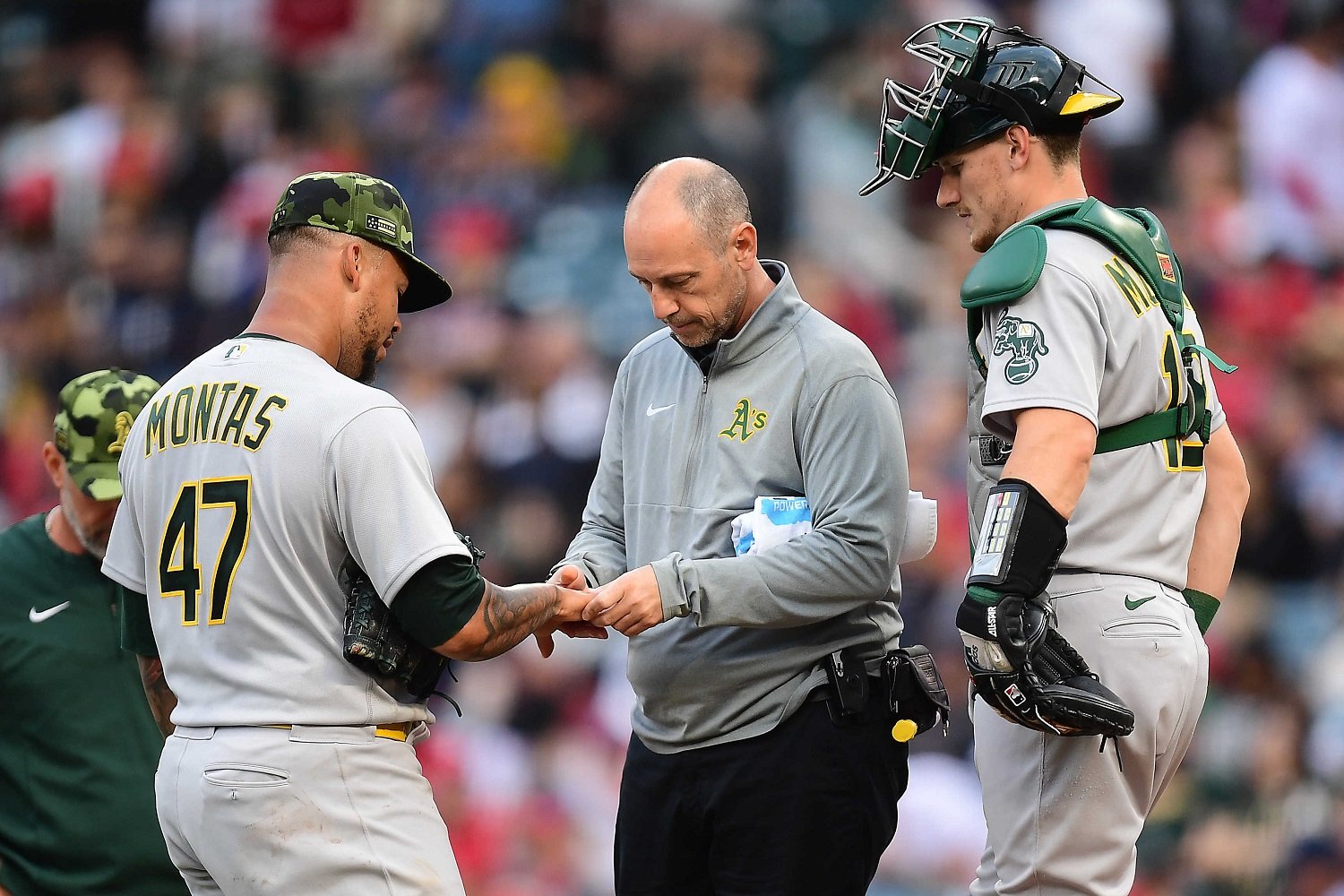 The Minnesota Twins had their eyes on Nick Paparesta long before they were able to finally pry their new head athletic trainer away from the Oakland Athletics in November of 2022. "The Twins requested permission to speak with Paparesta when they hired (Michael) Salazar three seasons ago," Dan Hayes wrote in The Athletic at the time, "only to learn he was happy in Oakland and under contract." So it was a fortuitous twist of fate that Paparesta's attitude had shifted once the Twins decided it was time for another change in direction, following three years with their second choice at the helm. While making clear they didn't fully attribute the calamitous health issues that plagued their team to Salazar, the Twins understandably wanted a fresh start. Injuries became an overriding theme of 2022. They were tired of it, as reflected by Rocco Baldelli's grumpy demeanor in fielding a litany of injury-related questions during virtually every press scrum in the second half. The characterization of Paparesta's impact from his own general manager with the A's, David Forst, certainly painted an appealing picture. "Before Nick got to Oakland, we did spend a lot of time talking about injuries, talking about our medical department, answering questions to the media about it," Forst said at the Winter Meetings, per Hayes. "When he came in with an objective process and sort of remade the staff ... I think the biggest compliment I can give is it’s an area I didn’t have to worry about.” No surprise, then, that when Minnesota got the chance to interview Paparesta following Salazar's dismissal, they hired him without delay. "It really stood out as someone we thought fit exactly what we were looking for,” Derek Falvey said. Looking back at Paparesta's first year on board, his addition seemingly delivered on everything the Twins wanted from it. This is best exemplified by a comparative look at the late-season lineups. In September of 2022, Baldelli found himself consistently running out lineups full of backups and minor-leaguers. His team slid from one game behind Cleveland on September 1st to finishing 14 games behind by year's end, collapsing under the weight of cascading, catastrophic injury woes. As Falvey and others accurately pointed out, you can't pin all of that on the head trainer. Injuries are primarily a function of luck and uncontrollable factors, no matter who's in charge. But there were some situations that were handled oddly, and no one could say it was close to being an area they "didn't have to worry about," so the desire to make a change was valid. Especially with the ability to bring in a name they coveted. Year one under Paparesta was by no means a picnic from a health perspective. The Twins still ranked among the league leaders in placements on the injured list and days lost to the IL. Much of that owed to challenges Paparesta inherited. But what really stands out is the way these challenges were managed and the way overall injury impact was mitigated. The Twins went 11-22 after September 1st in 2022 as they faded from relevance. After September 1st last year, they went 18-10 before charging into the playoffs with nearly every key player (save Byron Buxton) available to them. Reviewing the season as a whole, there were some remarkable accomplishments from a durability and recovery standpoint: The Twins used only two catchers all year long. They got 139 of their 162 starts (86%) from five starting pitchers, and needed only eight starters total (minus openers). All of their starters, save Tyler Mahle, were healthy in October. Carlos Correa made 580 plate appearances despite battling plantar fasciitis throughout the season. The Twins navigated tricky second-half health situations with other players like Brock Stewart, Royce Lewis, Jorge Polanco and others, in addition to Correa, but managed to have them all available and playing well when it counted most. Again, it's important to emphasize that a head trainer only has so much influence on these things. Much of it is indisputably based on random luck and happenstance. But it's really hard to look at the sum result here and not feel like Paparesta worked a borderline miracle with his mere presence. Baldelli certainly took notice. "Nick Paparesta was one of our best offseason pickups, along with all the players you can list," the manager raved to reporters at a season-ending presser in October. Baldelli and the Twins will need to hope that Paparesta's program can continue to pay dividends in year two, because the training wheels are set to come off. The club was equipped to absorb significant health setbacks from guys like Mahle and Buxton last year because of the immaculate built-in depth behind them. This time around, Louie Varland is the rotation's first line of defense instead of its second. And at least right now, there is no one like Michael A. Taylor padding the CF depth chart. With players like Sonny Gray, Jorge Polanco, Emilio Pagan and Nick Gordon departing, layers of depth have been stripped away from a roster that still boasts plenty of high-end talent, much of it unproven over the rigors of a full major-league season. Keeping most of that talent healthy and available -- especially in the rotation, which feels especially thin on contingencies going into this season -- will be essential to a successful season, and especially to setting themselves up for a deeper playoff run. That's a daunting proposition because it is largely out of anyone's control, and Twins fans have unfortunately been conditioned for pessimism on this front.. But after one season under Paparesta and the revamped training staff, it's easier to feel better about the things that can be controlled. He proved his prowess and then some in his first year as one of Minnesota's most underrated acquisitions. How are you feeling about the Twins' health outlook for the 2024 season? Are you confident their improved outcomes can continue under Paparesta's leadership? Which situations have you most concerned as spring training gets underway?
 -
The Twins made a change atop the training staff last offseason, and based on evidence, Nick Paparesta's hiring was a massive success. In stark contrast to the previous year, Minnesota's lineup was formidable and near full strength once October arrived. With fewer roster contingencies in place heading into 2024, the Twins are counting on continuing to experience better fortune on the injury front. Image courtesy of Gary A. Vasquez-USA TODAY Sports The Minnesota Twins had their eyes on Nick Paparesta long before they were able to finally pry their new head athletic trainer away from the Oakland Athletics in November of 2022. "The Twins requested permission to speak with Paparesta when they hired (Michael) Salazar three seasons ago," Dan Hayes wrote in The Athletic at the time, "only to learn he was happy in Oakland and under contract." So it was a fortuitous twist of fate that Paparesta's attitude had shifted once the Twins decided it was time for another change in direction, following three years with their second choice at the helm. While making clear they didn't fully attribute the calamitous health issues that plagued their team to Salazar, the Twins understandably wanted a fresh start. Injuries became an overriding theme of 2022. They were tired of it, as reflected by Rocco Baldelli's grumpy demeanor in fielding a litany of injury-related questions during virtually every press scrum in the second half. The characterization of Paparesta's impact from his own general manager with the A's, David Forst, certainly painted an appealing picture. "Before Nick got to Oakland, we did spend a lot of time talking about injuries, talking about our medical department, answering questions to the media about it," Forst said at the Winter Meetings, per Hayes. "When he came in with an objective process and sort of remade the staff ... I think the biggest compliment I can give is it’s an area I didn’t have to worry about.” No surprise, then, that when Minnesota got the chance to interview Paparesta following Salazar's dismissal, they hired him without delay. "It really stood out as someone we thought fit exactly what we were looking for,” Derek Falvey said. Looking back at Paparesta's first year on board, his addition seemingly delivered on everything the Twins wanted from it. This is best exemplified by a comparative look at the late-season lineups. In September of 2022, Baldelli found himself consistently running out lineups full of backups and minor-leaguers. His team slid from one game behind Cleveland on September 1st to finishing 14 games behind by year's end, collapsing under the weight of cascading, catastrophic injury woes. As Falvey and others accurately pointed out, you can't pin all of that on the head trainer. Injuries are primarily a function of luck and uncontrollable factors, no matter who's in charge. But there were some situations that were handled oddly, and no one could say it was close to being an area they "didn't have to worry about," so the desire to make a change was valid. Especially with the ability to bring in a name they coveted. Year one under Paparesta was by no means a picnic from a health perspective. The Twins still ranked among the league leaders in placements on the injured list and days lost to the IL. Much of that owed to challenges Paparesta inherited. But what really stands out is the way these challenges were managed and the way overall injury impact was mitigated. The Twins went 11-22 after September 1st in 2022 as they faded from relevance. After September 1st last year, they went 18-10 before charging into the playoffs with nearly every key player (save Byron Buxton) available to them. Reviewing the season as a whole, there were some remarkable accomplishments from a durability and recovery standpoint: The Twins used only two catchers all year long. They got 139 of their 162 starts (86%) from five starting pitchers, and needed only eight starters total (minus openers). All of their starters, save Tyler Mahle, were healthy in October. Carlos Correa made 580 plate appearances despite battling plantar fasciitis throughout the season. The Twins navigated tricky second-half health situations with other players like Brock Stewart, Royce Lewis, Jorge Polanco and others, in addition to Correa, but managed to have them all available and playing well when it counted most. Again, it's important to emphasize that a head trainer only has so much influence on these things. Much of it is indisputably based on random luck and happenstance. But it's really hard to look at the sum result here and not feel like Paparesta worked a borderline miracle with his mere presence. Baldelli certainly took notice. "Nick Paparesta was one of our best offseason pickups, along with all the players you can list," the manager raved to reporters at a season-ending presser in October. Baldelli and the Twins will need to hope that Paparesta's program can continue to pay dividends in year two, because the training wheels are set to come off. The club was equipped to absorb significant health setbacks from guys like Mahle and Buxton last year because of the immaculate built-in depth behind them. This time around, Louie Varland is the rotation's first line of defense instead of its second. And at least right now, there is no one like Michael A. Taylor padding the CF depth chart. With players like Sonny Gray, Jorge Polanco, Emilio Pagan and Nick Gordon departing, layers of depth have been stripped away from a roster that still boasts plenty of high-end talent, much of it unproven over the rigors of a full major-league season. Keeping most of that talent healthy and available -- especially in the rotation, which feels especially thin on contingencies going into this season -- will be essential to a successful season, and especially to setting themselves up for a deeper playoff run. That's a daunting proposition because it is largely out of anyone's control, and Twins fans have unfortunately been conditioned for pessimism on this front.. But after one season under Paparesta and the revamped training staff, it's easier to feel better about the things that can be controlled. He proved his prowess and then some in his first year as one of Minnesota's most underrated acquisitions. How are you feeling about the Twins' health outlook for the 2024 season? Are you confident their improved outcomes can continue under Paparesta's leadership? Which situations have you most concerned as spring training gets underway? View full article
-
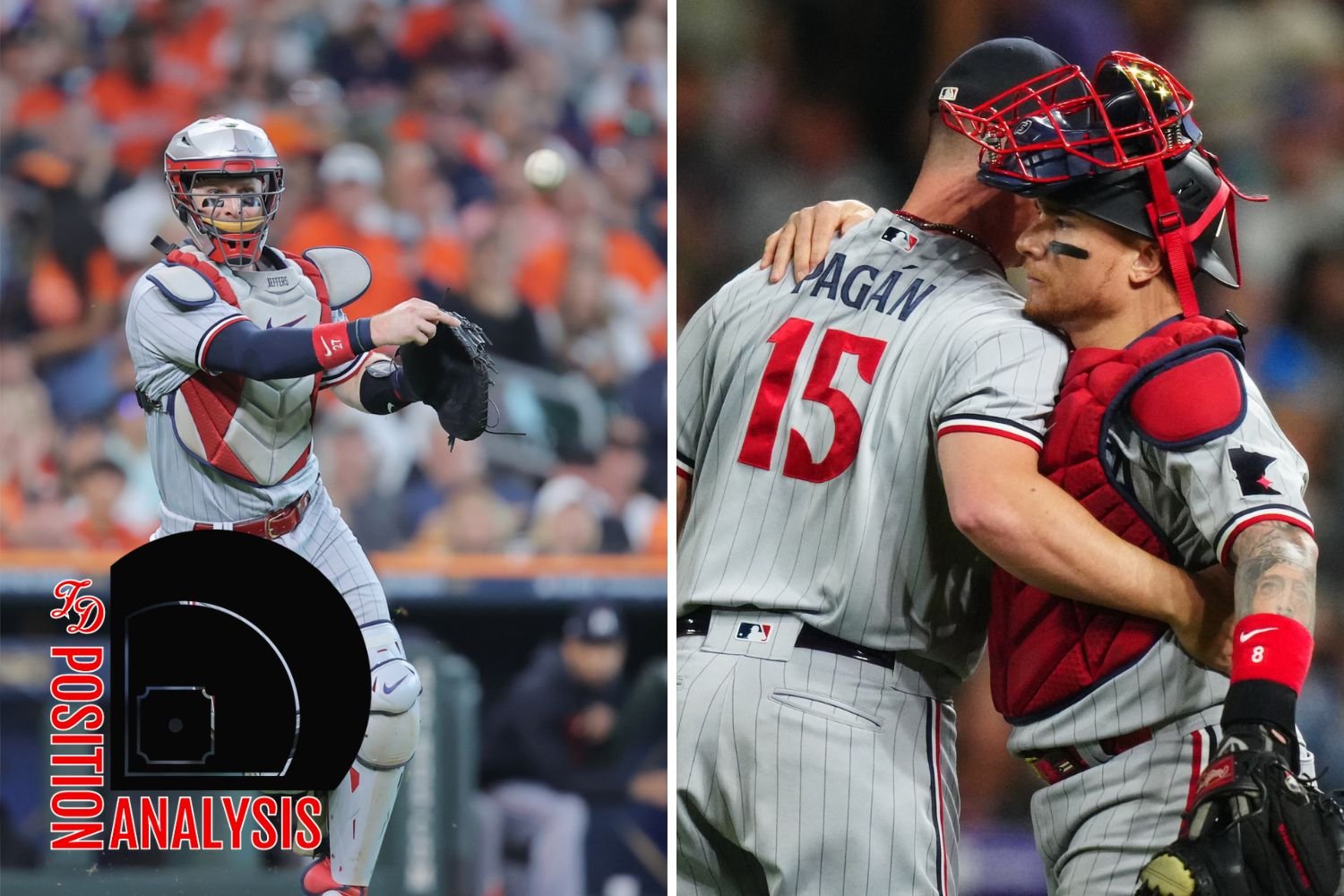 I'm a believer that catchers play a vital role in their team's run prevention success – one that is underrated by what current statistics can measure. There are certain aspects of calling a game, building rapport with pitchers, and withstanding the sheer rigor of major-league catching that are hard to quantify, but undoubtedly impactful. Last year, the Twins used only two catchers all season, and both have strong defensive reputations. This inarguably factored into the success of the pitching staff all year long, and now Minnesota will carry forward some continuity, with the same duo in line to return and split time here in 2024. TWINS CATCHERS AT A GLANCE Starter: Ryan Jeffers Backup: Christian Vázquez Depth: Jair Camargo, Brian O'Keefe (NRI), Patrick Winkel (NRI) Prospects: Camargo, Noah Cardenas, Ricardo Olivar Twins fWAR Ranking Last Year: 9th out of 30 Twins fWAR Projection This Year: 15th out of 30 THE GOOD Jeffers is coming off a breakthrough season that saw him emerge as arguably the league's biggest offensive threat at his position. His .858 OPS led all MLB catchers with 300 or more plate appearances, as he ranked second among Twins hitters in OBP (.369) and first in slugging (.490). Being able to insert a bat like this at the catcher position provides a massive competitive advantage, which is why Rocco Baldelli started Jeffers in every single playoff game last year. (It's also why Joe Mauer just went into the Hall of Fame on the first ballot.) The breakout season was a change of pace for Jeffers, following back-to-back disappointing campaigns. For the 26-year-old and the organization that so badly wanted to believe in him, this has been a long time coming. "I worked really hard to have the year I had last year, but I've still got to turn around and do it again. I don't have any doubts that I will be able to," Jeffers told Phil Miller of the Star Tribune. "It didn't feel like a fluke. It felt like I finally laid the groundwork of who I am as a ballplayer. It felt like it was an extremely repeatable type of season." The prolific power-hitting performance was rather convincing. Jeffers came through with monster home runs in crucial spots, including an unforgettable eighth-inning go-ahead blast against the Rangers that nearly incited a brawl. He drilled a 10th-inning homer in May that registered as the highest exit velocity by any Twins hitter in the Statcast era. Jeffers stepped up and did amazing things in big spots, which is the sign of a star. He also improved on what had been a glaring deficiency in his defensive game, throwing out a career-high 25% of base stealers--in a season in which the league's success rate on steals skyrocketed. Partnering with Jeffers behind the plate once again is Vázquez, who is entering the second season of a three-year, $30-million deal. In stark contrast to Jeffers, Vázquez provided no thump with the bat last year, slashing .223/.280/.318, for a meager 65 OPS+ that ranked as his worst since 2018. However, the veteran backstop graded out extremely well defensively, enabling him to produce 1.0 fWAR in 102 games. Even though the price tag might seem rough for a backup catcher, the Twins were wise to hold onto Vázquez for the depth and assurance he provides. Jeffers flashed a big ceiling, but he has a long history of injuries and lapses. Having a seasoned vet like Vázquez available is more than just a luxury. THE BAD Ever since Mauer moved to first base a decade ago, catcher has been a volatile position for the Twins, who've struggled to sustain much success there. Part of what made the Hall of Famer so special was his stability and consistency, which are brutally hard to maintain as a catcher. In the post-Mauer era, we've seen flashes – an All-Star first half from Kurt Suzuki, an explosive Bomba Squad contribution from Mitch Garver – but both those faded quickly. Is Jeffers destined for the same, following his own glimpse of greatness? He might feel confident his breakout season was "extremely repeatable," but FanGraphs has doubts, projecting Jeffers for 1.8 fWAR this year (down from 2.7) with a 70-point drop-off in wOBA. The 26-year-old has unfortunately earned his status as one of the biggest regression candidates on the team; he slashed just .203/.277/.384 between 2021-22, and last year his strikeout and walk rates remained static while his production was buoyed by a .359 BABIP. Unless he improves his contact rate or discipline, Jeffers will always be susceptible to the kinds of slumps that plagued him in the postseason, wherein he went 2-for-19. Even if he doesn't replicate his 134 OPS+ from last year (he won't), Jeffers can still be a valuable primary catcher with his power and defense, so long as he's healthy. It will be interesting to see how his fielding metrics grade out, as last year they were quite poor despite his improvements in controlling the run game. The sudden drop-off in framing effectiveness was especially striking. (Pun intended.) This a fine example of why I feel there's a disconnect between catching metrics and reality, because I doubt you'd find anyone with the Twins (or their opponents) who would consider Jeffers anything less than a very good defensive catcher. THE BOTTOM LINE Given all the extremes involved, I'd expect some regression to the mean across the board: Jeffers will likely be a little worse offensively, a little better defensively. Vázquez will probably experience the reverse. As long as both stay relatively healthy, it's hard to see the catcher position being any kind of real liability for the Twins. Their true upside here really depends on Jeffers. If he can find a way to sustain or even improve upon what he did in 2023, the Twins will boast one of the best catching units in baseball. On the flip, if Jeffers misses extended time – as he did in both of the previous two seasons – that upside pretty much evaporates with the step down to Vázquez, and then you're one injury away from reaching into some very untested depth. Their ideal scenario still involves using each player often. As Mauer prepares for enshrinement in the Hall of Fame, the Twins are hoping Jeffers is ready to solidify his standing (er, squatting?) as the franchise's best two-way catcher since. If he falls short, Minnesota's outlook at this position isn't so hot, with Vázquez turning 34 this year and no clear impact prospects on the way. Where would you rank the Twins' catcher situation within the AL Central? What about in the league as a whole? What developments do you expect behind the plate this year?
- 40 comments
-
- 9
-
-
- ryan jeffers
- christian vazquez
- (and 1 more)
-
Pairing one of the best offensive catchers in baseball with a highly experienced and steady veteran backup, the Twins boast a setup behind the plate that most teams envy. Our annual spring roster preview kicks off with a breakdown of Minnesota's outlook behind the plate. Image courtesy of Erik Williams and Ron Chenoy-USA TODAY Sports I'm a believer that catchers play a vital role in their team's run prevention success – one that is underrated by what current statistics can measure. There are certain aspects of calling a game, building rapport with pitchers, and withstanding the sheer rigor of major-league catching that are hard to quantify, but undoubtedly impactful. Last year, the Twins used only two catchers all season, and both have strong defensive reputations. This inarguably factored into the success of the pitching staff all year long, and now Minnesota will carry forward some continuity, with the same duo in line to return and split time here in 2024. TWINS CATCHERS AT A GLANCE Starter: Ryan Jeffers Backup: Christian Vázquez Depth: Jair Camargo, Brian O'Keefe (NRI), Patrick Winkel (NRI) Prospects: Camargo, Noah Cardenas, Ricardo Olivar Twins fWAR Ranking Last Year: 9th out of 30 Twins fWAR Projection This Year: 15th out of 30 THE GOOD Jeffers is coming off a breakthrough season that saw him emerge as arguably the league's biggest offensive threat at his position. His .858 OPS led all MLB catchers with 300 or more plate appearances, as he ranked second among Twins hitters in OBP (.369) and first in slugging (.490). Being able to insert a bat like this at the catcher position provides a massive competitive advantage, which is why Rocco Baldelli started Jeffers in every single playoff game last year. (It's also why Joe Mauer just went into the Hall of Fame on the first ballot.) The breakout season was a change of pace for Jeffers, following back-to-back disappointing campaigns. For the 26-year-old and the organization that so badly wanted to believe in him, this has been a long time coming. "I worked really hard to have the year I had last year, but I've still got to turn around and do it again. I don't have any doubts that I will be able to," Jeffers told Phil Miller of the Star Tribune. "It didn't feel like a fluke. It felt like I finally laid the groundwork of who I am as a ballplayer. It felt like it was an extremely repeatable type of season." The prolific power-hitting performance was rather convincing. Jeffers came through with monster home runs in crucial spots, including an unforgettable eighth-inning go-ahead blast against the Rangers that nearly incited a brawl. He drilled a 10th-inning homer in May that registered as the highest exit velocity by any Twins hitter in the Statcast era. Jeffers stepped up and did amazing things in big spots, which is the sign of a star. He also improved on what had been a glaring deficiency in his defensive game, throwing out a career-high 25% of base stealers--in a season in which the league's success rate on steals skyrocketed. Partnering with Jeffers behind the plate once again is Vázquez, who is entering the second season of a three-year, $30-million deal. In stark contrast to Jeffers, Vázquez provided no thump with the bat last year, slashing .223/.280/.318, for a meager 65 OPS+ that ranked as his worst since 2018. However, the veteran backstop graded out extremely well defensively, enabling him to produce 1.0 fWAR in 102 games. Even though the price tag might seem rough for a backup catcher, the Twins were wise to hold onto Vázquez for the depth and assurance he provides. Jeffers flashed a big ceiling, but he has a long history of injuries and lapses. Having a seasoned vet like Vázquez available is more than just a luxury. THE BAD Ever since Mauer moved to first base a decade ago, catcher has been a volatile position for the Twins, who've struggled to sustain much success there. Part of what made the Hall of Famer so special was his stability and consistency, which are brutally hard to maintain as a catcher. In the post-Mauer era, we've seen flashes – an All-Star first half from Kurt Suzuki, an explosive Bomba Squad contribution from Mitch Garver – but both those faded quickly. Is Jeffers destined for the same, following his own glimpse of greatness? He might feel confident his breakout season was "extremely repeatable," but FanGraphs has doubts, projecting Jeffers for 1.8 fWAR this year (down from 2.7) with a 70-point drop-off in wOBA. The 26-year-old has unfortunately earned his status as one of the biggest regression candidates on the team; he slashed just .203/.277/.384 between 2021-22, and last year his strikeout and walk rates remained static while his production was buoyed by a .359 BABIP. Unless he improves his contact rate or discipline, Jeffers will always be susceptible to the kinds of slumps that plagued him in the postseason, wherein he went 2-for-19. Even if he doesn't replicate his 134 OPS+ from last year (he won't), Jeffers can still be a valuable primary catcher with his power and defense, so long as he's healthy. It will be interesting to see how his fielding metrics grade out, as last year they were quite poor despite his improvements in controlling the run game. The sudden drop-off in framing effectiveness was especially striking. (Pun intended.) This a fine example of why I feel there's a disconnect between catching metrics and reality, because I doubt you'd find anyone with the Twins (or their opponents) who would consider Jeffers anything less than a very good defensive catcher. THE BOTTOM LINE Given all the extremes involved, I'd expect some regression to the mean across the board: Jeffers will likely be a little worse offensively, a little better defensively. Vázquez will probably experience the reverse. As long as both stay relatively healthy, it's hard to see the catcher position being any kind of real liability for the Twins. Their true upside here really depends on Jeffers. If he can find a way to sustain or even improve upon what he did in 2023, the Twins will boast one of the best catching units in baseball. On the flip, if Jeffers misses extended time – as he did in both of the previous two seasons – that upside pretty much evaporates with the step down to Vázquez, and then you're one injury away from reaching into some very untested depth. Their ideal scenario still involves using each player often. As Mauer prepares for enshrinement in the Hall of Fame, the Twins are hoping Jeffers is ready to solidify his standing (er, squatting?) as the franchise's best two-way catcher since. If he falls short, Minnesota's outlook at this position isn't so hot, with Vázquez turning 34 this year and no clear impact prospects on the way. Where would you rank the Twins' catcher situation within the AL Central? What about in the league as a whole? What developments do you expect behind the plate this year? View full article
- 40 replies
-
- 1
-
-
- ryan jeffers
- christian vazquez
- (and 1 more)
-
All Twins players have reported to camp, and so spring training is officially underway. As such, we have to ask, are the moves done? Is this the 2024 team in its final form? It seems like the answer is no, but the countdown to Opening Day is on as the front office continues to slow-play their hand. Image courtesy of © Jonah Hinebaugh/Naples Daily News/USA Today Network-Florida / USA TODAY NETWORK As Derek Falvey likes to remind us, the start of spring training does not mark an end point for the offseason. There's no window that expires in mid-February, and team-building efforts can extend all the way up to Opening Day. As major-league camps fire up across the league, with numerous free agents still unsigned and roster holes unfilled, there's no denying the validity of his point. Will one of those free agents end up in Minnesota? Could a late-breaking trade still be in the works? Let's catch up on the current state of affairs and then size up the remaining market. Building Up Bullpen Bulk Since last we checked in for a status update, the Twins have added two more relievers to their major-league bullpen mix: right-hander Jay Jackson and left-hander Steven Okert. The Twins signed Jackson to a one-year deal with a club option, while Okert was acquired via trade from the Marlins in exchange for Nick Gordon. The 36-year-old Jackson has followed a fascinating path, with stops in several different MLB organizations as well as Japan. Officially signed on the same day as Carlos Santana, Jackson adds another seasoned veteran to a clubhouse that's been stocking up on them. Okert, 32, also boosts the Twins' experience quotient in the bullpen. He's been a standout lefty reliever for the Marlins over the past three seasons. As things stand, the Twins have done very little to offset their losses in the rotation, with Anthony DeSclafani the sole addition to Minnesota's starting pitching mix. We'll see if that changes, because indeed the offseason is not over, but it's looking like the Twins may rely more on bulk innings from their deep bullpen this year to protect their starters and keep workloads in check, as opposed to replacing Sonny Gray with another horse at the front of the rotation. Still Searching for a Right-Handed Outfield Bat Falvey and the Twins have not been shy in asserting that they continue to pursue at least on more roster addition, hinting that another right-handed outfielder is in their sights. There are still a few options remaining on the free agent market, including a reunion with Michael A. Taylor, who remains unsigned coming off a solid season in Minnesota. Adam Duvall and Tommy Pham are other names out there, and beyond them, some lesser alternatives like Kiké Hernandez and Adam Engel who might be available on minors deals. Slim pickings unless the Twins can swing a trade, as they did last year to get Taylor. There's growing optimism that Byron Buxton will be a factor in center field this year, and Rocco Baldelli shared his intent to get Buxton out there early in Grapefruit League action, but I still find it hard to believe the Twins feel great about their depth behind him, knowing his history. Meanwhile, they currently lack even a token Kyle Garlick-level RH option to supplement their lefty-swinging depth. Something else has got to be coming, even if not an earth-shattering pickup. How much longer can they wait? Free Agency: The Boras Five The five biggest remaining names on the free agent board – Cody Bellinger, Blake Snell, Jordan Montgomery, Matt Chapman, and J.D. Martinez – are all Scott Boras clients. It's not the first time we've seen Boras hold strong with big-name players, even if it means negotiating into the spring. In fact, we saw a very similar scenario result in Carlos Correa's first contract with the Twins. On the surface, there are a number of reasons to think one of these impact players could wind up in Minnesota. There's the aforementioned team/agent history, the club's newly-secured TV revenue, and the fact that you don't have to squint hard to see a fit for any of the five, save Chapman. This is the kind of spot where Falvey's front office likes to strike with an unexpected big move that shakes up the roster and outlook. Some type of creative short-term deal would make sense given the elements involved. But, I must say, I'm sure not getting the vibe that Minnesota's decision-makers feel they have much of any financial flexibility to work with. There's been enough of a hold-up merely getting something across the finish line with one of these middling RH outfielders. I'd like to believe a stunner signing or significant trade is still in store, to give this sleepy offseason a late jolt of life. But my faith is waning... Roster and Payroll Projection: Feb 17th Little has changed over the past few weeks. Jackson and Okert joining the roster, with big-league deals and no minor-league options, puts them at the front of the line for bullpen spots. That leaves a handful – Josh Staumont, Jorge Alcalá, Kody Funderburk – and others vying for the final job. Right now I've got Staumont as the favorite, but it could well be that the Twins end up going with a length arm who can cover more innings. Does this roster look complete to you? I say no. At the very least I'd expect another outfielder to come aboard and nudge Trevor Larnach from his bench spot. But with spring training games getting started in one week, it's the group that Baldelli and the Twins are currently ready to bring to battle. View full article
-
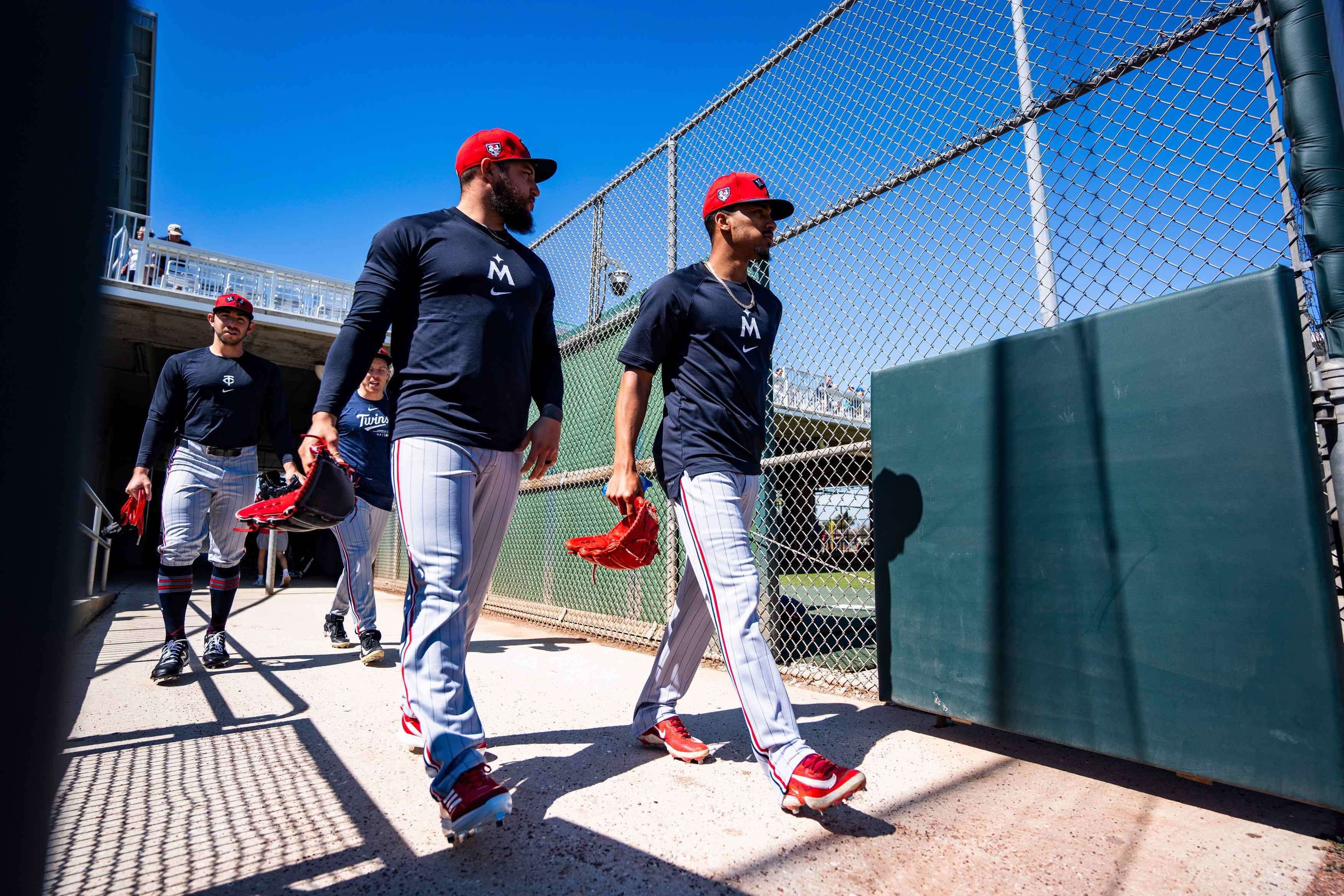 As Derek Falvey likes to remind us, the start of spring training does not mark an end point for the offseason. There's no window that expires in mid-February, and team-building efforts can extend all the way up to Opening Day. As major-league camps fire up across the league, with numerous free agents still unsigned and roster holes unfilled, there's no denying the validity of his point. Will one of those free agents end up in Minnesota? Could a late-breaking trade still be in the works? Let's catch up on the current state of affairs and then size up the remaining market. Building Up Bullpen Bulk Since last we checked in for a status update, the Twins have added two more relievers to their major-league bullpen mix: right-hander Jay Jackson and left-hander Steven Okert. The Twins signed Jackson to a one-year deal with a club option, while Okert was acquired via trade from the Marlins in exchange for Nick Gordon. The 36-year-old Jackson has followed a fascinating path, with stops in several different MLB organizations as well as Japan. Officially signed on the same day as Carlos Santana, Jackson adds another seasoned veteran to a clubhouse that's been stocking up on them. Okert, 32, also boosts the Twins' experience quotient in the bullpen. He's been a standout lefty reliever for the Marlins over the past three seasons. As things stand, the Twins have done very little to offset their losses in the rotation, with Anthony DeSclafani the sole addition to Minnesota's starting pitching mix. We'll see if that changes, because indeed the offseason is not over, but it's looking like the Twins may rely more on bulk innings from their deep bullpen this year to protect their starters and keep workloads in check, as opposed to replacing Sonny Gray with another horse at the front of the rotation. Still Searching for a Right-Handed Outfield Bat Falvey and the Twins have not been shy in asserting that they continue to pursue at least on more roster addition, hinting that another right-handed outfielder is in their sights. There are still a few options remaining on the free agent market, including a reunion with Michael A. Taylor, who remains unsigned coming off a solid season in Minnesota. Adam Duvall and Tommy Pham are other names out there, and beyond them, some lesser alternatives like Kiké Hernandez and Adam Engel who might be available on minors deals. Slim pickings unless the Twins can swing a trade, as they did last year to get Taylor. There's growing optimism that Byron Buxton will be a factor in center field this year, and Rocco Baldelli shared his intent to get Buxton out there early in Grapefruit League action, but I still find it hard to believe the Twins feel great about their depth behind him, knowing his history. Meanwhile, they currently lack even a token Kyle Garlick-level RH option to supplement their lefty-swinging depth. Something else has got to be coming, even if not an earth-shattering pickup. How much longer can they wait? Free Agency: The Boras Five The five biggest remaining names on the free agent board – Cody Bellinger, Blake Snell, Jordan Montgomery, Matt Chapman, and J.D. Martinez – are all Scott Boras clients. It's not the first time we've seen Boras hold strong with big-name players, even if it means negotiating into the spring. In fact, we saw a very similar scenario result in Carlos Correa's first contract with the Twins. On the surface, there are a number of reasons to think one of these impact players could wind up in Minnesota. There's the aforementioned team/agent history, the club's newly-secured TV revenue, and the fact that you don't have to squint hard to see a fit for any of the five, save Chapman. This is the kind of spot where Falvey's front office likes to strike with an unexpected big move that shakes up the roster and outlook. Some type of creative short-term deal would make sense given the elements involved. But, I must say, I'm sure not getting the vibe that Minnesota's decision-makers feel they have much of any financial flexibility to work with. There's been enough of a hold-up merely getting something across the finish line with one of these middling RH outfielders. I'd like to believe a stunner signing or significant trade is still in store, to give this sleepy offseason a late jolt of life. But my faith is waning... Roster and Payroll Projection: Feb 17th Little has changed over the past few weeks. Jackson and Okert joining the roster, with big-league deals and no minor-league options, puts them at the front of the line for bullpen spots. That leaves a handful – Josh Staumont, Jorge Alcalá, Kody Funderburk – and others vying for the final job. Right now I've got Staumont as the favorite, but it could well be that the Twins end up going with a length arm who can cover more innings. Does this roster look complete to you? I say no. At the very least I'd expect another outfielder to come aboard and nudge Trevor Larnach from his bench spot. But with spring training games getting started in one week, it's the group that Baldelli and the Twins are currently ready to bring to battle.
 -
One year after the starting rotation was their defining strength, the 2024 Minnesota Twins may find that the way to get the most out of their starters is to rely on them less. Image courtesy of Erik Williams-USA TODAY Sports The visionary pitch for Minnesota's front office, the grand formula for sustainable success, was always this: Tampa Bay North, but with more resources. The Twins' baseball ops department has been massively overhauled and built out during Derek Falvey's tenure, in an effort to keep pace with the league's best in operational excellence. Meanwhile, Falvey has also been given the financial flexibility to take some big swings that might not be possible in Tampa, or at his former organization in Cleveland--for instance, signing Carlos Correa to nine-digit deals in consecutive offseasons. Even if the Twins have more budgetary freedom than Tampa and Cleveland, clearly, it's not infinite, and they are feeling the crunch this offseason. With Correa's salary now accounting for more than a quarter of available payroll (per self-imposed restrictions), the Twins are challenged to maintain their pitching edge on a tight budget. This means that re-signing Sonny Gray was never a viable option. Nor was shopping in free agency to replace him. With the start of camp upon us, optimism that a major rotation addition will come via trade is waning. Unable to meaningfully offset their losses in the starting corps, the front office has conspicuously shifted its focus to stacking up bullpen depth this offseason. The recent Nick Gordon trade, which returned 32-year-old lefty Steven Okert, is just the latest in a long line of moves adding experienced depth to Minnesota's reliever pool, both on the 40-man roster and beyond it. Trades, major-league signings, minor-league signings, waiver claims: the front office has used every avenue to compile an impressive quantity of capable arms, adding onto what was a very effective unit by year's end in 2023. As a result, their bullpen projects as the best in the league. Preseason projections are only worth so much, but on paper, this looks like a new defining strength for the Twins. After watching relievers play such a pivotal role in the team's postseason success last October, that's not such a hard thing to believe. The Twins appear poised to lean into this strength, embracing a "quality innings are quality innings" mindset and a bullpen-heavy strategy, not unlike the one Tampa deployed successfully last year. The Rays led the American League in pitching fWAR and won 99 games while getting fewer innings from their starters than all but two AL teams. They relied on a deep, dependable bullpen to carry the load, and it worked out brilliantly for them. Zach Eflin led all Rays starters in 2023 with 178 innings pitched. No one else threw more than 120. I wouldn't expect the Twins to be quite that extreme this year, but it wouldn't shock me if the distribution is similar, with Pablo López the only starter routinely given the freedom to pitch past the fifth or sixth. For varying and overlapping reasons (health and effectiveness), it makes sense to use relatively quick hooks with the likes of Chris Paddack, Joe Ryan, Bailey Ober and Anthony DeSclafani. A well-stocked bullpen makes this possible, and even advisable. You might respond by saying, "Didn't we try this in 2022? That didn't work." Which is fair! But as I wrote at the time, it wasn't so much the premise that failed the Twins as the pieces they used to put it into practice. The team's Opening Day rotation in 2022 included Chris Archer and Dylan Bundy. The bullpen included Tyler Duffey, Emilio Pagán (bad version), Joe Smith, Jharel Cotton and Jhon Romero -- players who are all gone and mostly out of the league two years later. Perhaps the strategy wasn't bad; it's just that the players were. The Twins are much stronger in both departments from the jump this season. In dissecting the 2022 pitching experiment, I concluded that it suffered from four fatal flaws: The starters weren't good enough, or healthy enough, even in shortened starts. You've got to have at least one starter who can be the workhorse. Their bullpen wasn't built adequately to handle the burden. Losing your pitching coach mid-season doesn't help. As I look back at that list now, I find myself mentally checking those boxes for this year's team, with Pete Maki at the helm. It's a roster that is far more equipped to execute on the bullpen-forward strategy that helped the Rays thrive last year. Of course, this all depends on the relief corps actually coming together and performing like the Twins hope they will. That's a volatile proposition. I also believe they are leaving themselves too little margin for error in the rotation if they don't add another starter. But in general, as the vision for pitching success in 2024 comes into focus, I find it's one I can get behind, now that they actually have the personnel to see it through. View full article
-
Ride the Bullpen: Twins Set to Embrace Tampa's Successful Pitching Strategy
Nick Nelson posted an article in Twins
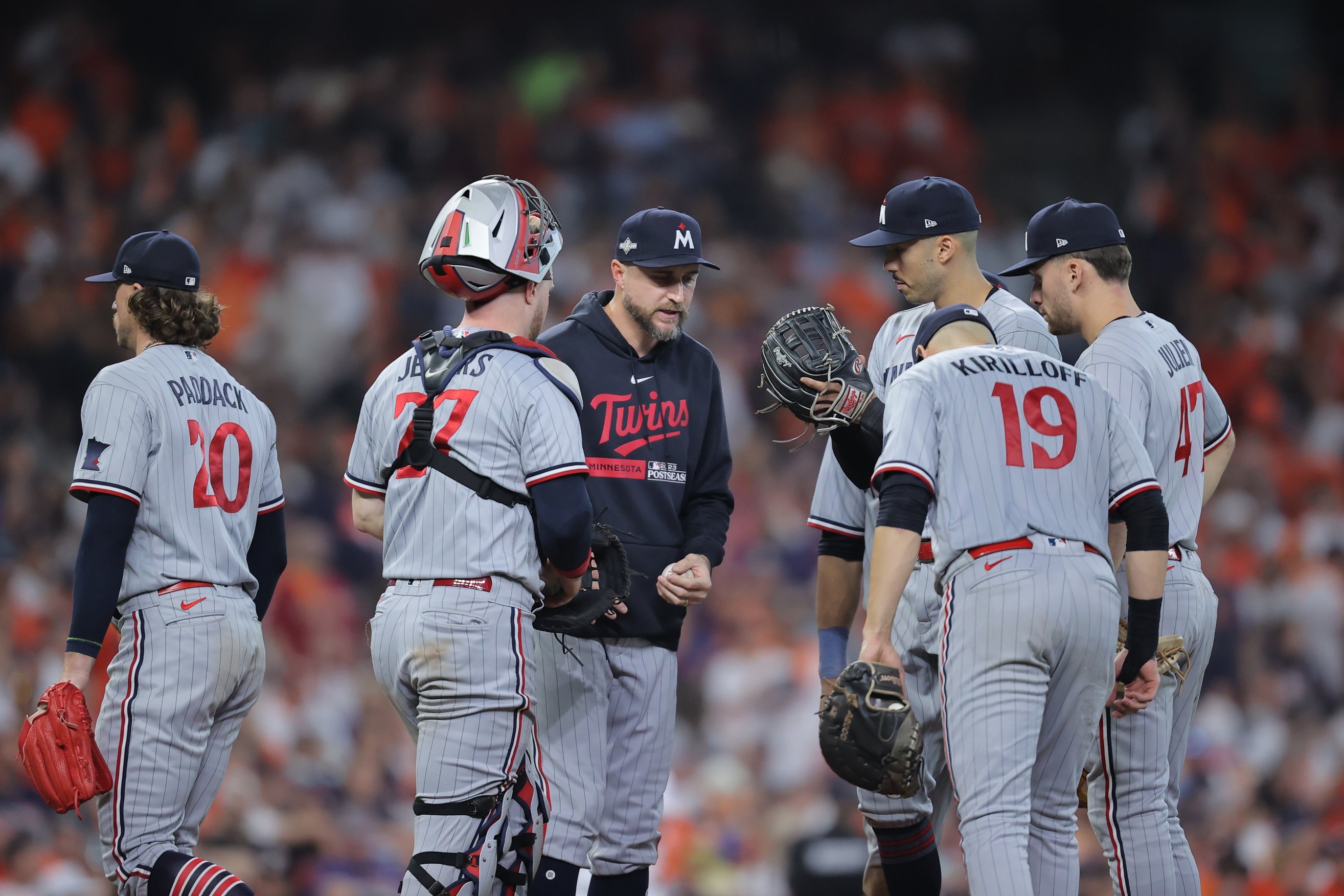 The visionary pitch for Minnesota's front office, the grand formula for sustainable success, was always this: Tampa Bay North, but with more resources. The Twins' baseball ops department has been massively overhauled and built out during Derek Falvey's tenure, in an effort to keep pace with the league's best in operational excellence. Meanwhile, Falvey has also been given the financial flexibility to take some big swings that might not be possible in Tampa, or at his former organization in Cleveland--for instance, signing Carlos Correa to nine-digit deals in consecutive offseasons. Even if the Twins have more budgetary freedom than Tampa and Cleveland, clearly, it's not infinite, and they are feeling the crunch this offseason. With Correa's salary now accounting for more than a quarter of available payroll (per self-imposed restrictions), the Twins are challenged to maintain their pitching edge on a tight budget. This means that re-signing Sonny Gray was never a viable option. Nor was shopping in free agency to replace him. With the start of camp upon us, optimism that a major rotation addition will come via trade is waning. Unable to meaningfully offset their losses in the starting corps, the front office has conspicuously shifted its focus to stacking up bullpen depth this offseason. The recent Nick Gordon trade, which returned 32-year-old lefty Steven Okert, is just the latest in a long line of moves adding experienced depth to Minnesota's reliever pool, both on the 40-man roster and beyond it. Trades, major-league signings, minor-league signings, waiver claims: the front office has used every avenue to compile an impressive quantity of capable arms, adding onto what was a very effective unit by year's end in 2023. As a result, their bullpen projects as the best in the league. Preseason projections are only worth so much, but on paper, this looks like a new defining strength for the Twins. After watching relievers play such a pivotal role in the team's postseason success last October, that's not such a hard thing to believe. The Twins appear poised to lean into this strength, embracing a "quality innings are quality innings" mindset and a bullpen-heavy strategy, not unlike the one Tampa deployed successfully last year. The Rays led the American League in pitching fWAR and won 99 games while getting fewer innings from their starters than all but two AL teams. They relied on a deep, dependable bullpen to carry the load, and it worked out brilliantly for them. Zach Eflin led all Rays starters in 2023 with 178 innings pitched. No one else threw more than 120. I wouldn't expect the Twins to be quite that extreme this year, but it wouldn't shock me if the distribution is similar, with Pablo López the only starter routinely given the freedom to pitch past the fifth or sixth. For varying and overlapping reasons (health and effectiveness), it makes sense to use relatively quick hooks with the likes of Chris Paddack, Joe Ryan, Bailey Ober and Anthony DeSclafani. A well-stocked bullpen makes this possible, and even advisable. You might respond by saying, "Didn't we try this in 2022? That didn't work." Which is fair! But as I wrote at the time, it wasn't so much the premise that failed the Twins as the pieces they used to put it into practice. The team's Opening Day rotation in 2022 included Chris Archer and Dylan Bundy. The bullpen included Tyler Duffey, Emilio Pagán (bad version), Joe Smith, Jharel Cotton and Jhon Romero -- players who are all gone and mostly out of the league two years later. Perhaps the strategy wasn't bad; it's just that the players were. The Twins are much stronger in both departments from the jump this season. In dissecting the 2022 pitching experiment, I concluded that it suffered from four fatal flaws: The starters weren't good enough, or healthy enough, even in shortened starts. You've got to have at least one starter who can be the workhorse. Their bullpen wasn't built adequately to handle the burden. Losing your pitching coach mid-season doesn't help. As I look back at that list now, I find myself mentally checking those boxes for this year's team, with Pete Maki at the helm. It's a roster that is far more equipped to execute on the bullpen-forward strategy that helped the Rays thrive last year. Of course, this all depends on the relief corps actually coming together and performing like the Twins hope they will. That's a volatile proposition. I also believe they are leaving themselves too little margin for error in the rotation if they don't add another starter. But in general, as the vision for pitching success in 2024 comes into focus, I find it's one I can get behind, now that they actually have the personnel to see it through.

