Nick Nelson
-
Posts
8,320 -
Joined
-
Last visited
-
Days Won
56
Content Type
Profiles
News
Minnesota Twins Videos
2026 Minnesota Twins Top Prospects Ranking
2022 Minnesota Twins Draft Picks
Minnesota Twins Free Agent & Trade Rumors, Notes, & Tidbits
Guides & Resources
2023 Minnesota Twins Draft Picks
The Minnesota Twins Players Project
2024 Minnesota Twins Draft Picks
2025 Minnesota Twins Draft Pick Tracker
2026 Minnesota Twins Draft Tracker: Picks & Bonuses
Forums
Blogs
Events
Store
Downloads
Gallery
Everything posted by Nick Nelson
-
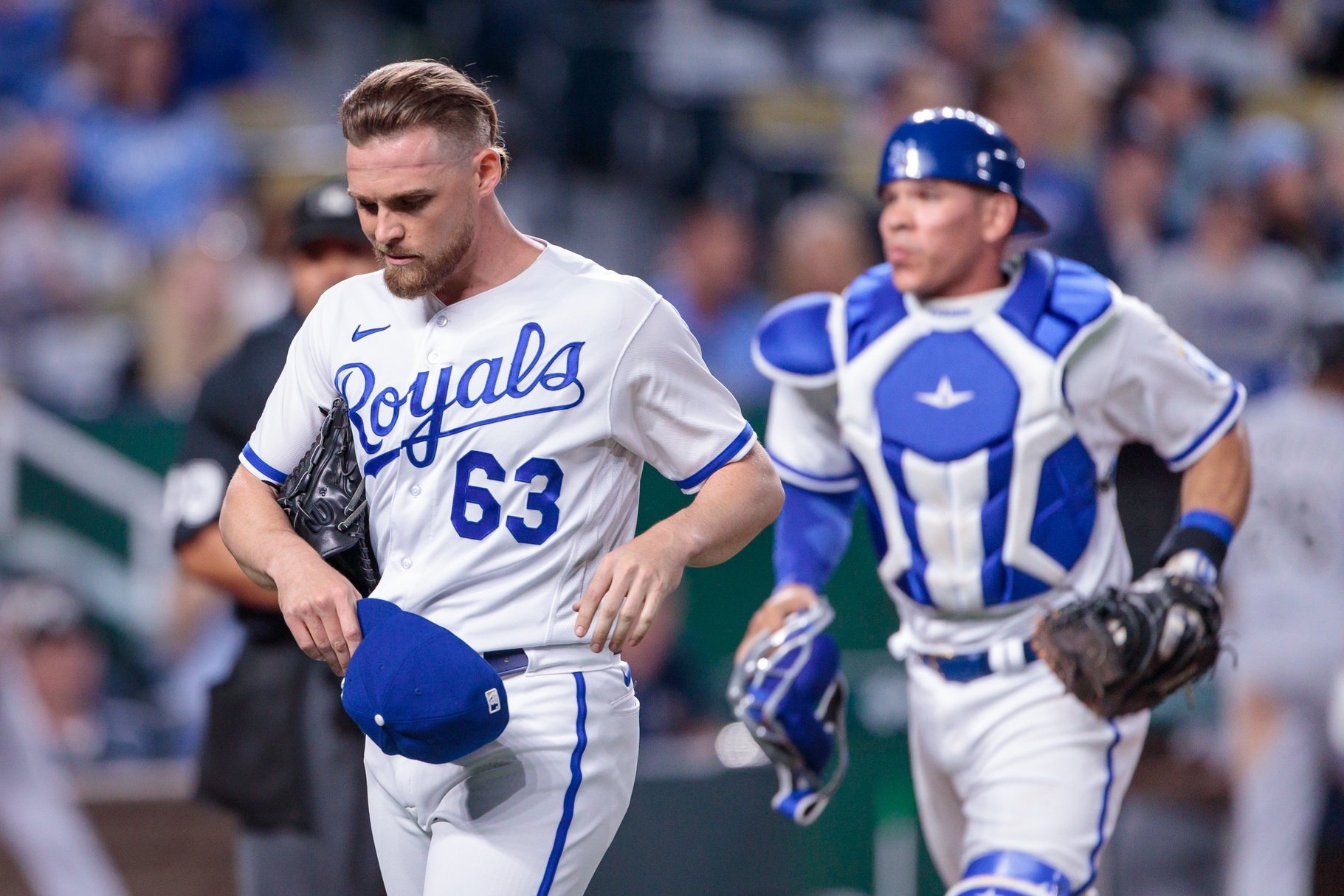
 The best stuff in the world doesn't do much for a pitcher if he can't throw it over the plate. The Twins are aware of this, but nevertheless, their offseason bullpen strategy seems focused on adding erratic yet electric arms. Image courtesy of William Purnell-USA TODAY Sports Even before they openly laid out their self-imposed payroll restrictions for this offseason, it was reasonable to guess that the Twins front office wasn't going to invest heavily in bullpen additions. Because... they never do. Two offseasons ago, they made one low-wattage addition to the relief corps on a major-league deal (Joe Smith). Last offseason, they made zero. When trying to acquire relief pitchers at a discount (or on a non-guaranteed contract, or off waivers), you're going to need to accept an added level of volatility beyond what the position already entails. The Twins are accustomed to this. They love to try their hand with talented yet flawed relievers discarded by other organizations, and it appears they're at it again this winter. Their three latest bullpen acquisitions share a clear and consistent profile: big arms with high-powered stuff and really significant control problems. It is apparent that the Twins and their coaches believe they can help these guys find the strike zone. First, there was the signing of righthander A.J. Alexy to a minor-league deal before the holidays. I wrote about this move to bring back a pitcher whom the club rostered for a few weeks the previous offseason, pondering what they saw in him. Alexy's struggles with walks last year were beyond extreme: he issued a staggering 41 free passes in 21 innings at Triple A. For his career, he has yielded 5.6 free passes per nine innings pitched in the minors and 26 walks in 30 major-league innings. Okay, a minor-league signing. A shot in the dark. The Twins have little to lose with what is seemingly a low-stakes longshot. Then, they signed former Royals reliever Josh Staumont to a major-league deal. Here, too, the risk was relatively minimal--his salary is barely over the minimum at $950,000--but he is now near the front of the line for an Opening Day bullpen spot, despite his own recent troubles with throwing strikes. The hard-throwing Staumont has always been a little wild, but at his best, he kept the walks somewhat in check and offset their negative impact with effectiveness elsewhere. From 2019 through 2021, the right-hander posted a 2.93 ERA in 110 innings, despite averaging 4.3 walks per nine frames. In the past two years, his control has spiraled and his results have tanked. In 57 ⅔ innings between 2022 and 2023, Staumont issued 42 walks (6.6 BB/9). In November, he was non-tendered by the lowly Royals, which is a striking vote of no-confidence from the organization that raised him. Minnesota's leadership evidently sees a path to getting him right. Most recently, we have Thursday's waiver claim: Ryan Jensen, who has captivated evaluators with his arm talent but been held back by--you guessed it--his control. The 26-year-old has yet to reach the majors, but has averaged 5.8 walks per nine innings in 215 minor-league innings. His struggles in this regard were especially profound last year, when he issued 54 walks in 64 ⅓ innings (7.6 BB/9) between Double A and Triple A. At the same time, he also notched 78 strikeouts, with only six homers allowed. Each of these relief pitchers has plainly evident upside that seems almost impossible to reach in their current state. It's an interesting direction for a team whose pitching staff thrived last year largely because of their strength in this area; Minnesota's 2.7 BB/9 rate ranked fourth in the majors. I'm very curious what their pitching brain trust has in mind for these hurlers. Notably, there is evidence in each case that mechanical tweaks could be part of the solution. Repeating his delivery has been a known focus for Alexy over the years. Staumont was sent to Triple A at the start of last season to work on "refining his mechanics and improving his pitch selection." “A lot of it was just kind of tweaking little things here and there, trying to make sure that we’re being as consistent as possible,” Staumont said at the time. Jensen also has been mechanically workshopped by his coaches to try and achieve better control of the strike zone. This included time spent on the development list in 2022 to try and shorten his arm stroke. "The primary focus right now is getting that delivery right. If he can do that and in turn be in the zone or at least around the zone more often, the stuff will certainly play," wrote The Athletic's Sahadev Sharma regarding Jensen prior to last season. It's an interesting gamble by the Twins, and it sets up a challenge for their staff in spring training. If coaches and technology can find a way to help even one of these three pitchers solve their overwhelming control problems, the Twins could really have something. But the Nuke LaLoosh profile is ubiquitous in baseball, and these oft-attempted projects generally have very low success rates. We'll see what the Twins have up their sleeves. View full article
 -
The Twins Seem Weirdly Confident They Can Help Wild Pitchers Throw Strikes
Nick Nelson posted an article in Twins
 Even before they openly laid out their self-imposed payroll restrictions for this offseason, it was reasonable to guess that the Twins front office wasn't going to invest heavily in bullpen additions. Because... they never do. Two offseasons ago, they made one low-wattage addition to the relief corps on a major-league deal (Joe Smith). Last offseason, they made zero. When trying to acquire relief pitchers at a discount (or on a non-guaranteed contract, or off waivers), you're going to need to accept an added level of volatility beyond what the position already entails. The Twins are accustomed to this. They love to try their hand with talented yet flawed relievers discarded by other organizations, and it appears they're at it again this winter. Their three latest bullpen acquisitions share a clear and consistent profile: big arms with high-powered stuff and really significant control problems. It is apparent that the Twins and their coaches believe they can help these guys find the strike zone. First, there was the signing of righthander A.J. Alexy to a minor-league deal before the holidays. I wrote about this move to bring back a pitcher whom the club rostered for a few weeks the previous offseason, pondering what they saw in him. Alexy's struggles with walks last year were beyond extreme: he issued a staggering 41 free passes in 21 innings at Triple A. For his career, he has yielded 5.6 free passes per nine innings pitched in the minors and 26 walks in 30 major-league innings. Okay, a minor-league signing. A shot in the dark. The Twins have little to lose with what is seemingly a low-stakes longshot. Then, they signed former Royals reliever Josh Staumont to a major-league deal. Here, too, the risk was relatively minimal--his salary is barely over the minimum at $950,000--but he is now near the front of the line for an Opening Day bullpen spot, despite his own recent troubles with throwing strikes. The hard-throwing Staumont has always been a little wild, but at his best, he kept the walks somewhat in check and offset their negative impact with effectiveness elsewhere. From 2019 through 2021, the right-hander posted a 2.93 ERA in 110 innings, despite averaging 4.3 walks per nine frames. In the past two years, his control has spiraled and his results have tanked. In 57 ⅔ innings between 2022 and 2023, Staumont issued 42 walks (6.6 BB/9). In November, he was non-tendered by the lowly Royals, which is a striking vote of no-confidence from the organization that raised him. Minnesota's leadership evidently sees a path to getting him right. Most recently, we have Thursday's waiver claim: Ryan Jensen, who has captivated evaluators with his arm talent but been held back by--you guessed it--his control. The 26-year-old has yet to reach the majors, but has averaged 5.8 walks per nine innings in 215 minor-league innings. His struggles in this regard were especially profound last year, when he issued 54 walks in 64 ⅓ innings (7.6 BB/9) between Double A and Triple A. At the same time, he also notched 78 strikeouts, with only six homers allowed. Each of these relief pitchers has plainly evident upside that seems almost impossible to reach in their current state. It's an interesting direction for a team whose pitching staff thrived last year largely because of their strength in this area; Minnesota's 2.7 BB/9 rate ranked fourth in the majors. I'm very curious what their pitching brain trust has in mind for these hurlers. Notably, there is evidence in each case that mechanical tweaks could be part of the solution. Repeating his delivery has been a known focus for Alexy over the years. Staumont was sent to Triple A at the start of last season to work on "refining his mechanics and improving his pitch selection." “A lot of it was just kind of tweaking little things here and there, trying to make sure that we’re being as consistent as possible,” Staumont said at the time. Jensen also has been mechanically workshopped by his coaches to try and achieve better control of the strike zone. This included time spent on the development list in 2022 to try and shorten his arm stroke. "The primary focus right now is getting that delivery right. If he can do that and in turn be in the zone or at least around the zone more often, the stuff will certainly play," wrote The Athletic's Sahadev Sharma regarding Jensen prior to last season. It's an interesting gamble by the Twins, and it sets up a challenge for their staff in spring training. If coaches and technology can find a way to help even one of these three pitchers solve their overwhelming control problems, the Twins could really have something. But the Nuke LaLoosh profile is ubiquitous in baseball, and these oft-attempted projects generally have very low success rates. We'll see what the Twins have up their sleeves.
- 22 comments
-
- 10
-

-

-
- aj alexy
- josh staumont
- (and 1 more)
-
The Top 20 Minnesota Twins Player Assets of 2024: Part 3 (6-10)
Nick Nelson posted an article in Twins
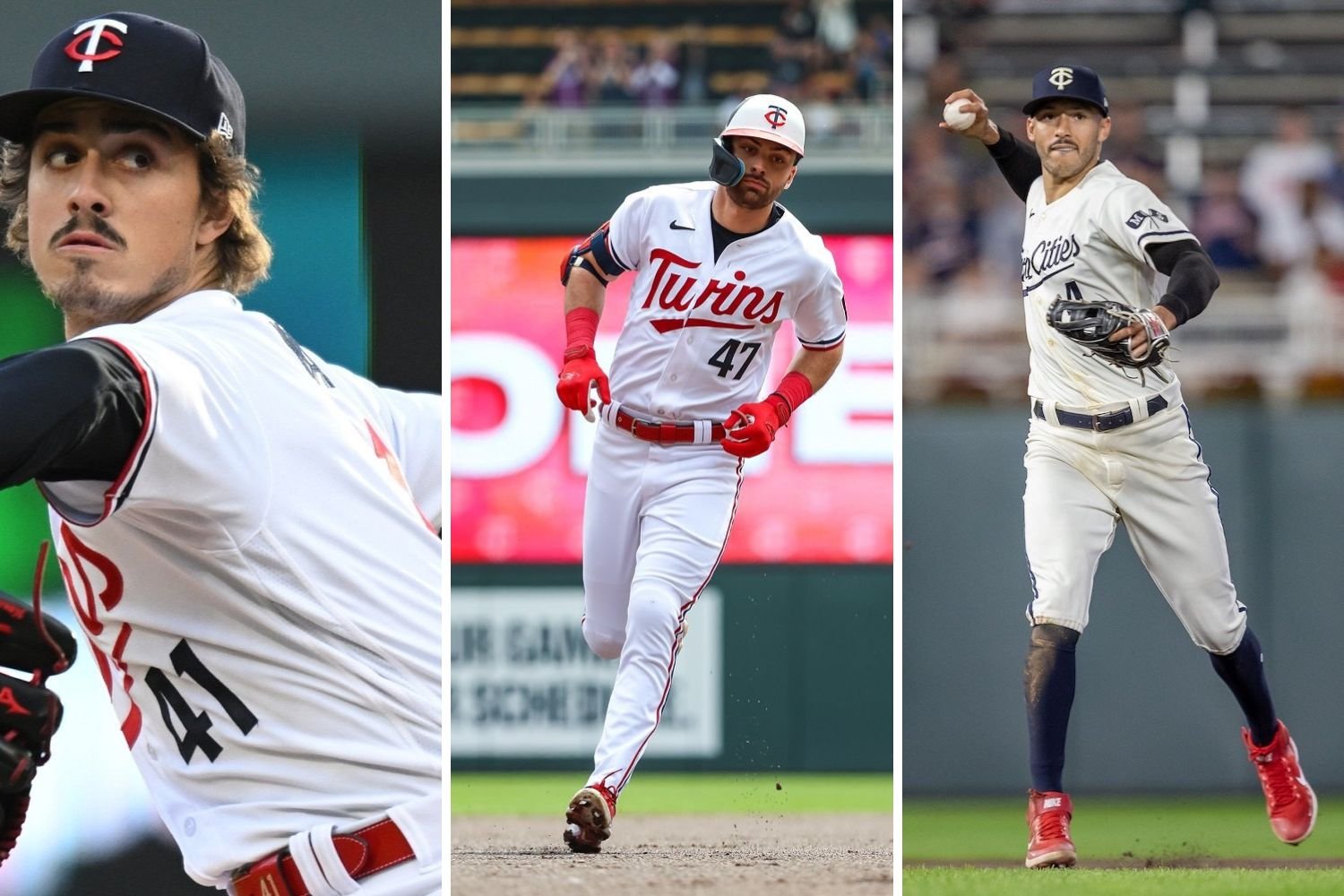 You can get a full explanation for the parameters used to develop this list in Tuesday's intro post, but the short version is this: We're addressing the question: Which current players in the organization are most indispensable to fulfilling the vision of building a champion? To rank Twins players and prospects, we account for age, contract, controllability, upside, and other factors. Here's where I landed with my selections for the list so far in Part 1 (16-20) and Part 2 (11-15): 20. Chris Paddack, RHP 19. Austin Martin, CF 18. Max Kepler, RF 17. Alex Kirilloff, 1B 16. David Festa, RHP 15. Louie Varland, RHP 14. Jorge Polanco, 2B 13. Marco Raya, RHP 12. Matt Wallner, RF 11. Jhoan Durán, RHP Read on to find my choices for for Nos. 6 through 10 on this year's list. 10. Joe Ryan, RHP 2023 Ranking: 4 It's difficult to know exactly how to evaluate Ryan's 2023 campaign. In the first half, he pitched like an All-Star. Then, he was completely awful for a six-week stretch while (we later learned) pitching through injury. After some time on the injured list, he pitched fairly well down the stretch, but not well enough to earn a major postseason role. So what is Ryan, going forward: a legitimate No. 2 or 3 starter, as he's appeared for much of his MLB career; or more of a back-end type, as his overall 2023 numbers (4.51 ERA, 4.13 FIP) suggest. At this point, I lean a little more toward the former, helping him remain in the top 10 on this list, and either way he'd rank somewhere in this range, as a proven, durable big-league starter with four remaining seasons of team control. 9. Emmanuel Rodriguez, CF 2023 Ranking: 10 Another very tricky player to rank, given the extreme boom-or-bust proposition that he entails. Ranked by TD (and most outlets) as the No. 3 prospect in the organization, Rodriguez starred at High-A Cedar Rapids last year, putting forth one of the Midwest League's finest offensive performances at age 20. In 99 games for the Kernels, he slashed .240/.400/.463 with 16 homers, 20 steals, and 92 walks, while playing center field regularly. Rodriguez's patience at the plate is virtually unheard-of, and he can hit the ball really hard when he connects. But the former top international signee also struggles with making contact to an extreme degree. It's difficult to succeed in the majors with that level of whiff in your profile. He's got the complementary ingredients to do so, however, and if E-Rod can find a way to become a little more aggressive and boost his bat-to-ball (without sacrificing the core qualities of his game), he's got superstar potential that is plain to see. 8. Edouard Julien, 2B 2023 Ranking: NR Coming into last season, the general attitude of prospect evaluators regarding Julien seemed to be: prove it. Yes, the Canadian infielder had made a name for himself with his uniquely patient plate approach and stellar production throughout the minors, but you weren't going to find the former 18th-round draft pick on any global top prospect rankings – despite his remarkable offensive campaign at Double-A in 2022 (.931 OPS, third-best in the Texas League). Julien did prove it. His offensive recipe was no fluke or novelty. After joining the Twins early in the season, he crushed right-handed pitchers to the tune of .274/.401/.497, with 16 homers, 15 doubles, and 62 walks in 360 plate appearances. His unrivaled eye and ability to jump on pitches in the zone give Julien, controlled through 2029, a pretty sustainable outlook. The lack of clear defensive fit or value is the only factor really holding him back at this point. 7. Bailey Ober, RHP 2023 Ranking: 7 Ober has always offered tantalizing potential when on the big-league mound: a 6-foot-9 giant with a live fastball, killer changeup, and excellent control. Durability has been his main adversary, but Ober finally (largely) overcame it in a breakthrough 2023 campaign that saw him post a 3.43 ERA in 145 innings, ranking third on the Twins staff in fWAR. Unlike Ryan's, Ober's performance leaves little doubt of his worthiness to be in the front half of an MLB rotation. He just needs to keep building up physically, staying strong and healthy through the entirety of a six-month season, which is the one hurdle he hasn't crossed. 6. Carlos Correa, SS 2023 Ranking: 2 A bizarre sequence of events led to the Twins landing Correa last offseason with a $200-million contract that was drastically lower than the price his market had set just weeks earlier. Naturally, it was tough to know how to factor in the ankle concerns that led to this drop, but as I saw it, the Twins were able acquire a superstar player on a relatively team-friendly deal through his remaining prime years. Thus, Correa ranked as the second-highest asset on this list when I updated it after he signed. I still hold those sentiments, to some extent, even with Correa coming off a career-worst season in which he exhibited some significant signs of breakdown. He still played great defense, stayed on the field, embraced his role as a leader in every regard, and – importantly – rounded into familiar form when it mattered most in October. I'm not saying the team couldn't possibly find better ways to use $36 million on next year's roster, especially if you believe Correa is destined to be more of an average-ish hitter going forward, but this is not the kind of talent you come across easily. That's it for today's installment! Join us tomorrow as we wrap up this year's countdown with our rankings No. 1 through 5. Between now and then, feel free to debate the order of the first 15 names revealed, and offer up any worthy players you think I missed. 20. Chris Paddack, RHP 19. Austin Martin, CF 18. Max Kepler, RF 17. Alex Kirilloff, 1B 16. David Festa, RHP 15. Louie Varland, RHP 14. Jorge Polanco, 2B 13. Marco Raya, RHP 12. Matt Wallner, RF 11. Jhoan Durán, RHP 10. Joe Ryan, RHP 9. Emmanuel Rodriguez, CF 8. Edouard Julien, 2B 7. Bailey Ober, RHP 6. Carlos Correa, SS
- 33 comments
-
- 9
-
-
- joe ryan
- emmanuel rodriguez
- (and 3 more)
-
Today we break into the top 10 in our rundown of Minnesota's organizational talent landscape. Read on to learn which players are among the most vital to the team's future fortunes. Image courtesy of Jeffrey Becker, Matt Krohn, Jesse Johnson-USA TODAY Sports You can get a full explanation for the parameters used to develop this list in Tuesday's intro post, but the short version is this: We're addressing the question: Which current players in the organization are most indispensable to fulfilling the vision of building a champion? To rank Twins players and prospects, we account for age, contract, controllability, upside, and other factors. Here's where I landed with my selections for the list so far in Part 1 (16-20) and Part 2 (11-15): 20. Chris Paddack, RHP 19. Austin Martin, CF 18. Max Kepler, RF 17. Alex Kirilloff, 1B 16. David Festa, RHP 15. Louie Varland, RHP 14. Jorge Polanco, 2B 13. Marco Raya, RHP 12. Matt Wallner, RF 11. Jhoan Durán, RHP Read on to find my choices for for Nos. 6 through 10 on this year's list. 10. Joe Ryan, RHP 2023 Ranking: 4 It's difficult to know exactly how to evaluate Ryan's 2023 campaign. In the first half, he pitched like an All-Star. Then, he was completely awful for a six-week stretch while (we later learned) pitching through injury. After some time on the injured list, he pitched fairly well down the stretch, but not well enough to earn a major postseason role. So what is Ryan, going forward: a legitimate No. 2 or 3 starter, as he's appeared for much of his MLB career; or more of a back-end type, as his overall 2023 numbers (4.51 ERA, 4.13 FIP) suggest. At this point, I lean a little more toward the former, helping him remain in the top 10 on this list, and either way he'd rank somewhere in this range, as a proven, durable big-league starter with four remaining seasons of team control. 9. Emmanuel Rodriguez, CF 2023 Ranking: 10 Another very tricky player to rank, given the extreme boom-or-bust proposition that he entails. Ranked by TD (and most outlets) as the No. 3 prospect in the organization, Rodriguez starred at High-A Cedar Rapids last year, putting forth one of the Midwest League's finest offensive performances at age 20. In 99 games for the Kernels, he slashed .240/.400/.463 with 16 homers, 20 steals, and 92 walks, while playing center field regularly. Rodriguez's patience at the plate is virtually unheard-of, and he can hit the ball really hard when he connects. But the former top international signee also struggles with making contact to an extreme degree. It's difficult to succeed in the majors with that level of whiff in your profile. He's got the complementary ingredients to do so, however, and if E-Rod can find a way to become a little more aggressive and boost his bat-to-ball (without sacrificing the core qualities of his game), he's got superstar potential that is plain to see. 8. Edouard Julien, 2B 2023 Ranking: NR Coming into last season, the general attitude of prospect evaluators regarding Julien seemed to be: prove it. Yes, the Canadian infielder had made a name for himself with his uniquely patient plate approach and stellar production throughout the minors, but you weren't going to find the former 18th-round draft pick on any global top prospect rankings – despite his remarkable offensive campaign at Double-A in 2022 (.931 OPS, third-best in the Texas League). Julien did prove it. His offensive recipe was no fluke or novelty. After joining the Twins early in the season, he crushed right-handed pitchers to the tune of .274/.401/.497, with 16 homers, 15 doubles, and 62 walks in 360 plate appearances. His unrivaled eye and ability to jump on pitches in the zone give Julien, controlled through 2029, a pretty sustainable outlook. The lack of clear defensive fit or value is the only factor really holding him back at this point. 7. Bailey Ober, RHP 2023 Ranking: 7 Ober has always offered tantalizing potential when on the big-league mound: a 6-foot-9 giant with a live fastball, killer changeup, and excellent control. Durability has been his main adversary, but Ober finally (largely) overcame it in a breakthrough 2023 campaign that saw him post a 3.43 ERA in 145 innings, ranking third on the Twins staff in fWAR. Unlike Ryan's, Ober's performance leaves little doubt of his worthiness to be in the front half of an MLB rotation. He just needs to keep building up physically, staying strong and healthy through the entirety of a six-month season, which is the one hurdle he hasn't crossed. 6. Carlos Correa, SS 2023 Ranking: 2 A bizarre sequence of events led to the Twins landing Correa last offseason with a $200-million contract that was drastically lower than the price his market had set just weeks earlier. Naturally, it was tough to know how to factor in the ankle concerns that led to this drop, but as I saw it, the Twins were able acquire a superstar player on a relatively team-friendly deal through his remaining prime years. Thus, Correa ranked as the second-highest asset on this list when I updated it after he signed. I still hold those sentiments, to some extent, even with Correa coming off a career-worst season in which he exhibited some significant signs of breakdown. He still played great defense, stayed on the field, embraced his role as a leader in every regard, and – importantly – rounded into familiar form when it mattered most in October. I'm not saying the team couldn't possibly find better ways to use $36 million on next year's roster, especially if you believe Correa is destined to be more of an average-ish hitter going forward, but this is not the kind of talent you come across easily. That's it for today's installment! Join us tomorrow as we wrap up this year's countdown with our rankings No. 1 through 5. Between now and then, feel free to debate the order of the first 15 names revealed, and offer up any worthy players you think I missed. 20. Chris Paddack, RHP 19. Austin Martin, CF 18. Max Kepler, RF 17. Alex Kirilloff, 1B 16. David Festa, RHP 15. Louie Varland, RHP 14. Jorge Polanco, 2B 13. Marco Raya, RHP 12. Matt Wallner, RF 11. Jhoan Durán, RHP 10. Joe Ryan, RHP 9. Emmanuel Rodriguez, CF 8. Edouard Julien, 2B 7. Bailey Ober, RHP 6. Carlos Correa, SS View full article
-
As we ring in a new year, let's a look back at 2023 and the most ringing contact that Twins hitters were able to produce. Image courtesy of Jesse Johnson-USA TODAY Sports As a team, the Twins produced some of the noisiest contact in the league last year. They ranked fifth in the majors in average exit velocity (89.4 MPH), thanks to the American's League's top barrel rate (6.4%). This was very much by design for an offense that made a point out of selling out for power, setting the all-time strikeout record in the process. Within that, there were some truly dazzling individual feats of bat-to-ball punishment. These were the five hardest-hit balls in play from Twins hitters in 2023, according to Statcast's exit velocity metric. 1. Ryan Jeffers, May 29th: 117.4 MPH (Home Run) The hardest-hit ball of the 2023 Twins season happened to come in an absolutely crucial spot, making this rocket off the bat of Jeffers one of the more special moments in the entire campaign. Opening a series against the Astros in Houston, the Twins blew an early lead by coughing up four runs in the seventh. They trailed by one in the ninth, when Royce Lewis (who'd hit a three-run homer earlier in the game) came through with a two-out RBI single. Jhoan Durán held the Astros scoreless in the bottom half, and up came Jeffers to lead off the 10th, with Max Kepler standing on second. On the very first pitch, Houston reliever Bryan Abreu left a hanger over the heart of the plate, and Jeffers was ready. He destroyed the ball for a game-winning home run, on the hardest-hit ball by any Twins hitter during the Statcast era (dating back to 2015). 2. Byron Buxton, August 1st: 116.9 MPH (Double) This one is kind of fun, for a couple reasons. I wrote recently about how Buxton's underlying metrics still showed the signs of an elite power hitter who can be a game-changer if he comes back with a healthier knee. Case in point: Buxton produced the second-highest exit velocity of any Twins hitter in 2023 – and the highest of his entire career – in the final game he played. In fact, it was his very last regular-season at-bat. In the eighth inning of their game against the Cardinals, Buxton faced left-hander John King. On a 2-1 count, he got a 94-MPH fastball down in the zone and ripped it into the left-center gap for a double that reached the wall in approximately two seconds. Buck left us with a lot of question marks in the wake of his tumultuous 2023 campaign, but one thing is clear: he can still mash with the best of 'em. 3. Matt Wallner, September 24th: 116.4 MPH (Double) The rookie wasted little time in showing off his premier power tool as a big-leaguer, producing more than a dozen drives that were clocked at 110+ MPH in a 76-game debut. His highest reading came on September 24th, against Angels reliever Jose Marte, a low-sailing line drive off an 0-1 changeup that whizzed past the right fielder and to the wall. 'Double' was a generous scoring choice here, but would you have wanted to be right fielder Jo Adell on this? MzVyUE5fWGw0TUFRPT1fRDFCUlVWVUJVQVVBQ3dNS1Z3QUFWRmNEQUFOV0JWUUFWbFpYQVFRTVZGQUdCd3BS.mp4 4. Ryan Jeffers, August 5th: 115.8 MPH (Home Run) Jeffers shows up again, with another laser-beam home run that cleared the playing field (barely) in an awful hurry. The catcher reached down for one below the knees from D-backs lefty Tyler Gilbert and yanked it into the flower bed atop the left field wall. Hopefully, seeing him twice in the top four here is helping to affirm in your mind what an incredibly strong, powerful hitter Jeffers is – a tremendous asset at the catcher position. 5. Byron Buxton, May 15th: 115.1 MPH (Double) Despite being limited to 85 games and exclusively DH duty by a bad knee that never really improved, Buxton delivered two of the five hardest hits from Twins players in the 2023 season. His raw power simply cannot be contained. Here, in the ninth inning of a mid-May thriller against the Dodgers, he lashed a game-tying RBI double back up the middle off Dodgers closer Evan Phillips. Yes, I said double back up the middle. Buxton's low liner whizzed past the left of second base and never slowed down on its way to the wall, giving the center fielder no chance to prevent an extra base given Buxton's wheels. When he's merely healthy enough to step onto the field, Byron Buxton is (still) good y'all! V3luRFBfWGw0TUFRPT1fVTFVQ1V3VldBd29BREFFQlVBQUFDQUJlQUFCVUJWZ0FBQVlHQXdVQkFWVmNDUWND.mp4 Do you have a favorite feat of batsman strength from the 2023 Twins? If it's not represented here, feel free to share yours in the comments. View full article
-
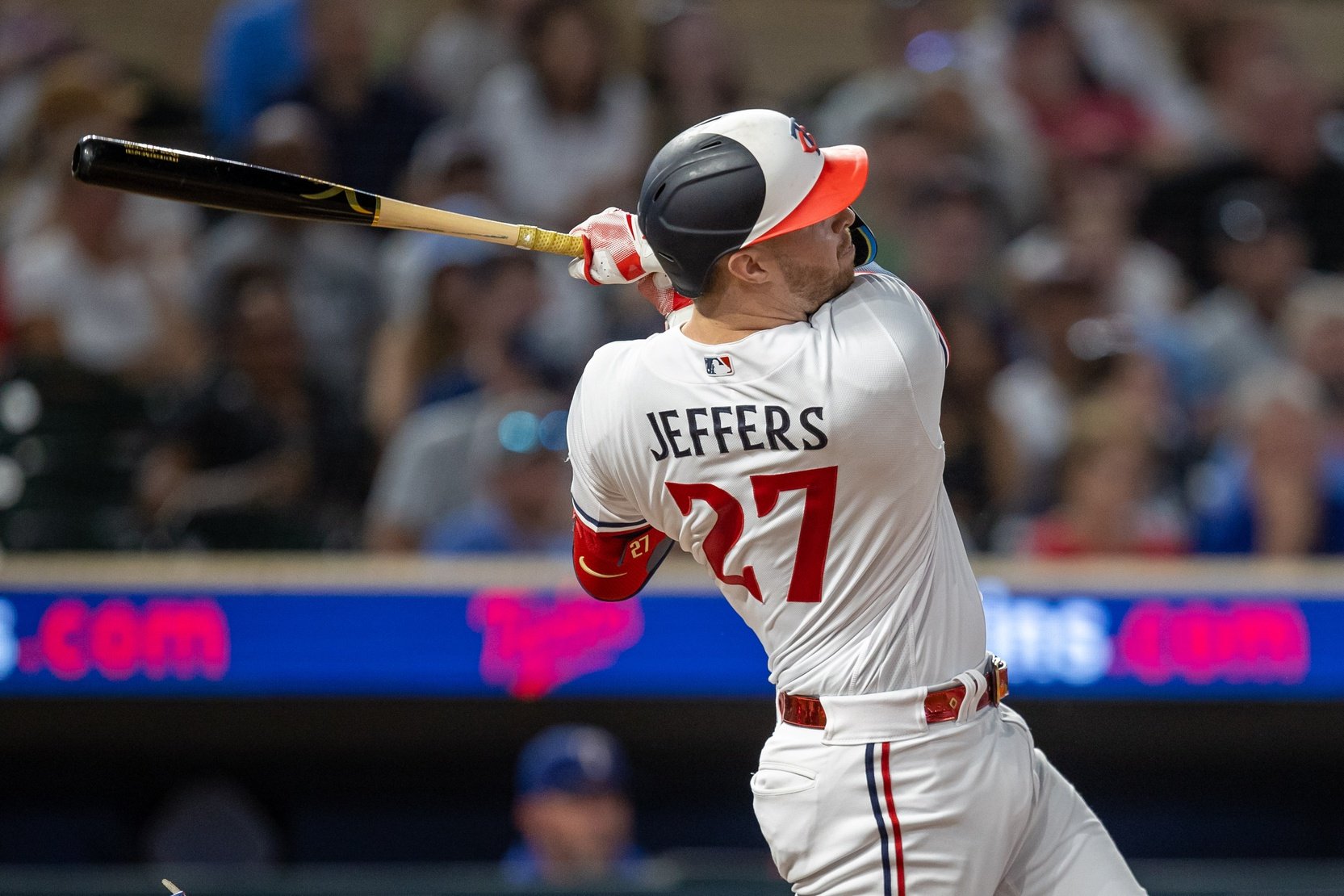 As a team, the Twins produced some of the noisiest contact in the league last year. They ranked fifth in the majors in average exit velocity (89.4 MPH), thanks to the American's League's top barrel rate (6.4%). This was very much by design for an offense that made a point out of selling out for power, setting the all-time strikeout record in the process. Within that, there were some truly dazzling individual feats of bat-to-ball punishment. These were the five hardest-hit balls in play from Twins hitters in 2023, according to Statcast's exit velocity metric. 1. Ryan Jeffers, May 29th: 117.4 MPH (Home Run) The hardest-hit ball of the 2023 Twins season happened to come in an absolutely crucial spot, making this rocket off the bat of Jeffers one of the more special moments in the entire campaign. Opening a series against the Astros in Houston, the Twins blew an early lead by coughing up four runs in the seventh. They trailed by one in the ninth, when Royce Lewis (who'd hit a three-run homer earlier in the game) came through with a two-out RBI single. Jhoan Durán held the Astros scoreless in the bottom half, and up came Jeffers to lead off the 10th, with Max Kepler standing on second. On the very first pitch, Houston reliever Bryan Abreu left a hanger over the heart of the plate, and Jeffers was ready. He destroyed the ball for a game-winning home run, on the hardest-hit ball by any Twins hitter during the Statcast era (dating back to 2015). 2. Byron Buxton, August 1st: 116.9 MPH (Double) This one is kind of fun, for a couple reasons. I wrote recently about how Buxton's underlying metrics still showed the signs of an elite power hitter who can be a game-changer if he comes back with a healthier knee. Case in point: Buxton produced the second-highest exit velocity of any Twins hitter in 2023 – and the highest of his entire career – in the final game he played. In fact, it was his very last regular-season at-bat. In the eighth inning of their game against the Cardinals, Buxton faced left-hander John King. On a 2-1 count, he got a 94-MPH fastball down in the zone and ripped it into the left-center gap for a double that reached the wall in approximately two seconds. Buck left us with a lot of question marks in the wake of his tumultuous 2023 campaign, but one thing is clear: he can still mash with the best of 'em. 3. Matt Wallner, September 24th: 116.4 MPH (Double) The rookie wasted little time in showing off his premier power tool as a big-leaguer, producing more than a dozen drives that were clocked at 110+ MPH in a 76-game debut. His highest reading came on September 24th, against Angels reliever Jose Marte, a low-sailing line drive off an 0-1 changeup that whizzed past the right fielder and to the wall. 'Double' was a generous scoring choice here, but would you have wanted to be right fielder Jo Adell on this? MzVyUE5fWGw0TUFRPT1fRDFCUlVWVUJVQVVBQ3dNS1Z3QUFWRmNEQUFOV0JWUUFWbFpYQVFRTVZGQUdCd3BS.mp4 4. Ryan Jeffers, August 5th: 115.8 MPH (Home Run) Jeffers shows up again, with another laser-beam home run that cleared the playing field (barely) in an awful hurry. The catcher reached down for one below the knees from D-backs lefty Tyler Gilbert and yanked it into the flower bed atop the left field wall. Hopefully, seeing him twice in the top four here is helping to affirm in your mind what an incredibly strong, powerful hitter Jeffers is – a tremendous asset at the catcher position. 5. Byron Buxton, May 15th: 115.1 MPH (Double) Despite being limited to 85 games and exclusively DH duty by a bad knee that never really improved, Buxton delivered two of the five hardest hits from Twins players in the 2023 season. His raw power simply cannot be contained. Here, in the ninth inning of a mid-May thriller against the Dodgers, he lashed a game-tying RBI double back up the middle off Dodgers closer Evan Phillips. Yes, I said double back up the middle. Buxton's low liner whizzed past the left of second base and never slowed down on its way to the wall, giving the center fielder no chance to prevent an extra base given Buxton's wheels. When he's merely healthy enough to step onto the field, Byron Buxton is (still) good y'all! V3luRFBfWGw0TUFRPT1fVTFVQ1V3VldBd29BREFFQlVBQUFDQUJlQUFCVUJWZ0FBQVlHQXdVQkFWVmNDUWND.mp4 Do you have a favorite feat of batsman strength from the 2023 Twins? If it's not represented here, feel free to share yours in the comments.
- 9 comments
-
- 4
-
-
- ryan jeffers
- byron buxton
- (and 1 more)
-
I think there's a warped perception of scarcity and relative value here. It's not just about players being good in their roles, it's about them giving you a competitive advantage. Duran is awesome! But the reality is that it isn't all that difficult to find dominant back-end relievers who can perform at roughly his level. Among MLB relievers, Duran ranked 52nd in WAR, 19th in ERA, 36th in FIP, and 21st in WPA. Jeffers was literally the best-hitting catcher in baseball. Lee and Jenkins are top 20 prospects in the game.
- 26 replies
-
- 3
-
-
-
- louis varland
- jorge polanco
- (and 3 more)
-
Definitely thought hard about ranking Duran higher, because I agree that he SEEMS like he should be higher. But if we take a step back and look at valuation more objectively ... ? As good as he was last year, Duran was worth 1.0 fWAR. Nearly identical to three other relievers - Jax, Stewart, Pagan. I'm not saying WAR is the be-all, end-all but that's pretty stark. In his rookie year, 1.5 fWAR. I love Duran obviously but I had a hard time convincing myself he's more irreplaceable than anyone in the top 10 (though of course they haven't been revealed yet so we can have those specific debates later this week).
- 26 replies
-
- 1
-
-
- louis varland
- jorge polanco
- (and 3 more)
-
The Top 20 Minnesota Twins Player Assets of 2024: Part 2 (11-15)
Nick Nelson posted an article in Twins
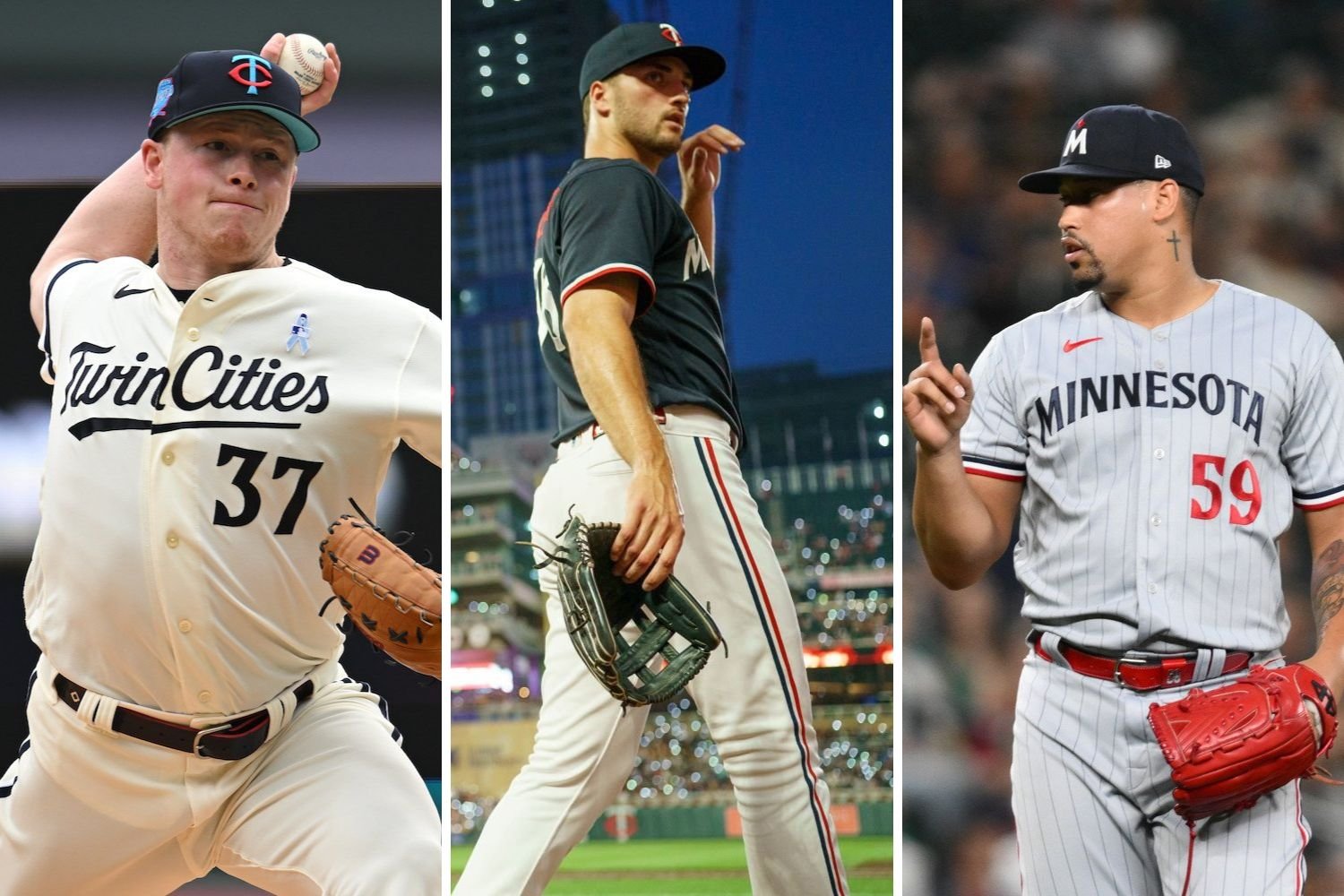 You can get a full explanation for the parameters used to develop this list in Tuesday's intro post, but the short version is this: We're answering the question: Which current players in the organization are most indispensable to fulfilling the vision of building a champion? To rank Twins players and prospects, I account for age, contract, controllability, upside, and more. Here's where I landed with my selections for the list so far in Part 1 (16-20): 20. Chris Paddack, RHP 19. Austin Martin, CF 18. Max Kepler, RF 17. Alex Kirilloff, 1B 16. David Festa, RHP And now, the choices for Nos. 11 through 15 on this year's list. 15. Louie Varland, RHP 2023 Ranking: 19 Varland is stuck in the middle, from a player-evaluation standpoint: is he a solid back-end starter option or a top-tier multi-inning relief weapon? He's shown the ability to do both so far, but it's possible we haven't seen all the 26-year-old has to offer. If he can channel any semblance of the pure dominance he flashed during his late relief stint in returning to a rotation role, Varland could quickly grow into a hugely valuable asset as a mid-rotation starter with five years of team control. But having the fallback option to act as a phenomenal bullpen arm helps elevate him in these rankings, as does his track record of excellent durability. 14. Jorge Polanco, 2B 2023 Ranking: 5 The long-tenured Twins infielder has been a staple near the top of these rankings ever since I started putting them together in 2018, ranking in the top seven every year and topping out at No. 1 in 2020. The consistent production he's been known for was back on display when he played last year, as Polanco posted a 115 OPS+ in the regular season and delivered a signature clutch homer in the ALDS. There are several factors contributing to his stark drop on this list. In part, it's because he's getting older (30) and his team control is dwindling, with only one team option remaining after 2024 (though his price tag continues to be very budget-friendly). There's also the emergence of abundant quality depth behind him on the second-base depth chart, with Edouard Julien, Brooks Lee and Royce Lewis all in that mix. Most of all though, it's the health concerns. Polanco played only 80 games in 2023, as he experienced a number of setbacks with his chronically problematic lower body. Even when playing, he often did not appear to have a good base underneath him. At this moment, it's just very hard to trust in his durability and longevity. 13. Marco Raya, RHP 2023 Ranking: NR When you're talking about baseball players as organizational assets, it is imperative to give starting pitching prospects who are highly regarded a significant boost because of how valuable quality, cost-controlled rotation fixtures are from a team-building standpoint. We all know how difficult and expensive it is to go out and find good MLB pitchers on the open market. Of course, the flip side is that pitching prospects tend to carry a higher share of burnout risk, and Raya has some of those volatile attributes. He's a high-school pitcher drafted late who has a small sample of pro experience (127 IP), and hasn't really been challenged from a workload standpoint. Still, Raya has done enough to mitigate a lot of the perceived risk by posting consistently stellar numbers in that sample and reaching Double A by the age of 20. Next year will tell us a lot about what we can realistically expect for his future role. 12. Matt Wallner, RF 2023 Ranking: 20 A year ago, Wallner was on the fringe of this list, despite earning Twins Minor League Player of the Year honors, because his skill set is so polarizing. Corner outfielders who hit for power with high strikeout rates walk a fine line: If you're going to stand out, your strengths need to be strong. Wallner flexed big-time as a rookie, leading to a dramatic rise in this year's rankings. Yes, Wallner struck out a considerable amount – 80 times in 250 plate appearances – but when he connected, he did massive damage. The outfielder rounded out his offensive game with a strong walk rate and a penchant for plunkings, to fuel a stellar .370 OBP. In this context, the strikeouts aren't that scary, as long as he can keep them relatively in check. With one of the best outfield arms in the game, Wallner already looks like prototypical long-term right fielder and mid-lineup slugger. He's under team control through 2029. 11. Jhoan Durán, RHP 2023 Ranking: 8 Durán is, without question, among the most valuable relief pitchers in the major leagues, with several remaining years of team control. Yet, he doesn't quite crack the top 10 of this list. It is a reflection of the reliever role and its fungibility relative to starters and everyday players--though obviously the Twins closer is anything but fungible. The big righthander has maximized his impact as a 65-inning bullpen weapon over the past two seasons, shaking off previous durability concerns to emerge as one of MLB's elite high-leverage arms. In 2023, Durán posted a 2.45 ERA, with 84 strikeouts and 46 hits allowed in 62 innings, cementing his rep nationally with a stellar showing in the playoffs. The Twins still control him for four more years. That's it for today's installment! Join us tomorrow as we break into the top 10 of our countdown with our picks for No. 6 through No. 10! In the meantime, which rankings so far jump out at you? 20. Chris Paddack, RHP 19. Austin Martin, CF 18. Max Kepler, RF 17. Alex Kirilloff, 1B 16. David Festa, RHP 15. Louie Varland, RHP 14. Jorge Polanco, 2B 13. Marco Raya, RHP 12. Matt Wallner, RF 11. Jhoan Durán, RHP
- 26 comments
-
- 8
-
-
- louis varland
- jorge polanco
- (and 3 more)
-
In the next installment of our annual countdown of the top 20 Twins player assets, we highlight our choices for the 11th- through 15th-most indispensable pieces in the franchise's championship vision heading into 2024. Image courtesy of Jeffrey Becker, Matt Blewett, Steven Bisig-USA TODAY Sports You can get a full explanation for the parameters used to develop this list in Tuesday's intro post, but the short version is this: We're answering the question: Which current players in the organization are most indispensable to fulfilling the vision of building a champion? To rank Twins players and prospects, I account for age, contract, controllability, upside, and more. Here's where I landed with my selections for the list so far in Part 1 (16-20): 20. Chris Paddack, RHP 19. Austin Martin, CF 18. Max Kepler, RF 17. Alex Kirilloff, 1B 16. David Festa, RHP And now, the choices for Nos. 11 through 15 on this year's list. 15. Louie Varland, RHP 2023 Ranking: 19 Varland is stuck in the middle, from a player-evaluation standpoint: is he a solid back-end starter option or a top-tier multi-inning relief weapon? He's shown the ability to do both so far, but it's possible we haven't seen all the 26-year-old has to offer. If he can channel any semblance of the pure dominance he flashed during his late relief stint in returning to a rotation role, Varland could quickly grow into a hugely valuable asset as a mid-rotation starter with five years of team control. But having the fallback option to act as a phenomenal bullpen arm helps elevate him in these rankings, as does his track record of excellent durability. 14. Jorge Polanco, 2B 2023 Ranking: 5 The long-tenured Twins infielder has been a staple near the top of these rankings ever since I started putting them together in 2018, ranking in the top seven every year and topping out at No. 1 in 2020. The consistent production he's been known for was back on display when he played last year, as Polanco posted a 115 OPS+ in the regular season and delivered a signature clutch homer in the ALDS. There are several factors contributing to his stark drop on this list. In part, it's because he's getting older (30) and his team control is dwindling, with only one team option remaining after 2024 (though his price tag continues to be very budget-friendly). There's also the emergence of abundant quality depth behind him on the second-base depth chart, with Edouard Julien, Brooks Lee and Royce Lewis all in that mix. Most of all though, it's the health concerns. Polanco played only 80 games in 2023, as he experienced a number of setbacks with his chronically problematic lower body. Even when playing, he often did not appear to have a good base underneath him. At this moment, it's just very hard to trust in his durability and longevity. 13. Marco Raya, RHP 2023 Ranking: NR When you're talking about baseball players as organizational assets, it is imperative to give starting pitching prospects who are highly regarded a significant boost because of how valuable quality, cost-controlled rotation fixtures are from a team-building standpoint. We all know how difficult and expensive it is to go out and find good MLB pitchers on the open market. Of course, the flip side is that pitching prospects tend to carry a higher share of burnout risk, and Raya has some of those volatile attributes. He's a high-school pitcher drafted late who has a small sample of pro experience (127 IP), and hasn't really been challenged from a workload standpoint. Still, Raya has done enough to mitigate a lot of the perceived risk by posting consistently stellar numbers in that sample and reaching Double A by the age of 20. Next year will tell us a lot about what we can realistically expect for his future role. 12. Matt Wallner, RF 2023 Ranking: 20 A year ago, Wallner was on the fringe of this list, despite earning Twins Minor League Player of the Year honors, because his skill set is so polarizing. Corner outfielders who hit for power with high strikeout rates walk a fine line: If you're going to stand out, your strengths need to be strong. Wallner flexed big-time as a rookie, leading to a dramatic rise in this year's rankings. Yes, Wallner struck out a considerable amount – 80 times in 250 plate appearances – but when he connected, he did massive damage. The outfielder rounded out his offensive game with a strong walk rate and a penchant for plunkings, to fuel a stellar .370 OBP. In this context, the strikeouts aren't that scary, as long as he can keep them relatively in check. With one of the best outfield arms in the game, Wallner already looks like prototypical long-term right fielder and mid-lineup slugger. He's under team control through 2029. 11. Jhoan Durán, RHP 2023 Ranking: 8 Durán is, without question, among the most valuable relief pitchers in the major leagues, with several remaining years of team control. Yet, he doesn't quite crack the top 10 of this list. It is a reflection of the reliever role and its fungibility relative to starters and everyday players--though obviously the Twins closer is anything but fungible. The big righthander has maximized his impact as a 65-inning bullpen weapon over the past two seasons, shaking off previous durability concerns to emerge as one of MLB's elite high-leverage arms. In 2023, Durán posted a 2.45 ERA, with 84 strikeouts and 46 hits allowed in 62 innings, cementing his rep nationally with a stellar showing in the playoffs. The Twins still control him for four more years. That's it for today's installment! Join us tomorrow as we break into the top 10 of our countdown with our picks for No. 6 through No. 10! In the meantime, which rankings so far jump out at you? 20. Chris Paddack, RHP 19. Austin Martin, CF 18. Max Kepler, RF 17. Alex Kirilloff, 1B 16. David Festa, RHP 15. Louie Varland, RHP 14. Jorge Polanco, 2B 13. Marco Raya, RHP 12. Matt Wallner, RF 11. Jhoan Durán, RHP View full article
-
In my opinion, yes and yes. He has the stuff and makeup. But it really comes down to whether he can wrangle his control.
- 18 replies
-
- 2
-
-
- chris paddack
- austin martin
- (and 3 more)
-
To reiterate, this is not strictly a ranking of trade value, as it's meant to present a more Twins-specific interpretation of value. Martin makes the list largely for scarcity reasons: he can fill a role that they need (backup/replacement for Buxton in CF with actual upside) and brings a skill set they somewhat lack (high-contact, high-speed, high OBP). At least that's how I'm looking at it. That said, if he wouldn't have had the late surge at Triple-A he probably would've missed the cut.
- 18 replies
-
- 2
-
-
- chris paddack
- austin martin
- (and 3 more)
-
With the arrival of a new year, it's time to update my annual rankings of the top 20 most valuable player assets in the Minnesota Twins organization. Read on for the first installment, in which we'll explain the exercise and profile my choices for Nos. 16 through 20. Image courtesy of Jesse Johnson, Nathan Ray Seebeck, Nick Wosika-USA TODAY Sports The idea of this exercise is to take stock of the organization's talent through the scope of team-building. The goal is to answer this question: Which current players in the organization are most indispensable to fulfilling the vision of building a champion? We account for age, contract, controllability, upside, etc. It's not strictly a ranking of trade value, because that would be more team-agnostic, whereas this list aims to capture a very Twins-specific point of view. As such, players at areas of scarcity (i.e. pitching) get elevated, while those at areas of abundance (i.e. lefty-swinging corner guys) get downgraded a bit. I always find compiling this list to be an interesting offseason pastime–one that brings to the surface unique conversations about Twins players, how we value them, and where the system's strengths and weaknesses truly lie. For an overview of the evolving Twins talent landscape, you can scan through the lists I've put together for the past six years. Top 20 Twins Assets: 2018 Top 20 Twins Assets: 2019 Top 20 Twins Assets: 2020 Top 20 Twins Assets: 2021 Top 20 Twins Assets: 2022 Top 20 Twins Assets: 2023 (Revised) Reviewing the 2023 list is especially interesting to look back at now, giving us a chance to directly compare how things have changed over a 12-month span that's seen dramatic rises, falls, additions and departures. In fact, there was so much seismic change immediately following the release of last year's rankings (Carlos Correa signing, Pablo López trade) that I felt compelled to release an update three weeks later. As we embark on a new year here in 2024, the Twins are once again navigating a slow offseason with late moves yet to come, although probably not at last year's scale. These rankings serve as a snapshot of where the organization currently stands. As we'll see, the overall caliber of player asset quality atop the organization is very healthy, even if a few key pieces have taken steps back. Today we kick off the list, with with Nos. 16 through 20, and over the course of this week we'll count down to No. 1. 20. Chris Paddack, RHP 2023 Ranking: NR The Twins signed Paddack to an extension last January that locks him down for the next two years at about $10 million total. That's a tremendous bargain for a veteran mid-rotation starter – with upside to be more – in his age-28 and age-29 seasons. Of course, Paddack has plenty of question marks, coming back from his second Tommy John surgery with fewer than 200 total innings pitched over the past four years. He's going to be facing workload limitations, and his game was not without flaws before he got hurt. All those factors keep him on the fringe of these rankings, but Paddack looked good enough in his late-season run out of the bullpen to make the list. 19. Austin Martin, CF 2023 Ranking: 14 Martin's spot on this list has fallen from fifth to 14th to 19th in three years with the organization, owing to a slew of injuries and middling performance in the upper minors. But the former top draft pick remains an athletic and dynamic player with up-the-middle defensive traits. He's a relentless on-base machine and showed signs of discovering a power stroke last year at Triple-A St. Paul. As the current best hope to replace Byron Buxton in center field, Martin is very consequential in the club's current plans. Added to the 40-man roster in November, he's got a big prove-it year in front of him at age 25. 18. Max Kepler, RF 2023 Ranking: NR Kepler is an interesting case in terms of player asset evaluation. On the one hand, he's a 30-year-old elite defensive right fielder coming off a resurgent second half at the plate that re-established him at the position's upper tier league-wide. On the other hand, he's under contract for only one more season. That season comes with a very reasonable $10-million price tag, which adds a lot of value in a market filled with unspectacular veterans requiring expensive, multi-year contracts. The possibility of a qualifying offer following next season if he can keep it rolling adds to Kepler's appeal. 17. Alex Kirilloff, 1B 2023 Ranking: 17 Fittingly, Kirilloff remains in the same place he was a year ago following a season that brought much of the same: glimmers of his immense natural upside and talent, before succumbing to another serious injury. When on the field, he posted a 117 OPS+ and routinely appeared as Rocco Baldelli's No. 3 or 4 hitter against righty pitchers. While he showed encouraging signs with his twice-repaired wrist, Kirilloff suffered a shoulder injury late in the season that limited him in September and the playoffs. That required surgery itself, though fortunately, the operation was deemed to be far less serious than feared. It's another health setback in a career full of them, and the first baseman now already finds himself in the arbitration window. But the Twins still control him for three more years, and Kirilloff's potential to have game-changing impact at the plate continues to be obvious. 16. David Festa, RHP 2023 Ranking: NR Pitching prospects are critical to any organization, helping sustain success for the big-league rotation while also serving as highly attractive trade chips. Festa offers a lot to like, whether you're projecting him as a (near) future Twins pitcher or viewing him through the lens of another front office. Turning 24 in spring training, Festa is a tall and wiry right-hander with good extension, good velocity and good secondary stuff. He's posted 3.30 ERA in 206 minor-league innings and reached Triple A last year. He repped the Twins in the 2023 Futures Game, part of a season in which he averaged 11.6 strikeouts per nine innings as a starter in the high minors. He still needs to get his control issues figured out, which is no insignificant hurdle, but all the pieces are otherwise in place for Festa to make an impact quickly. To recap, here is the first installment of this year's top 20 player assets list: 20. Chris Paddack, RHP 19. Austin Martin, CF 18. Max Kepler, RF 17. Alex Kirilloff, 1B 16. David Festa, RHP Check back tomorrow as we continue the countdown with our picks for No. 15 through No. 11! In the meantime, let us know what you think of the order of these five names. View full article
-
The Top 20 Minnesota Twins Player Assets of 2024: Part 1 (16-20)
Nick Nelson posted an article in Twins
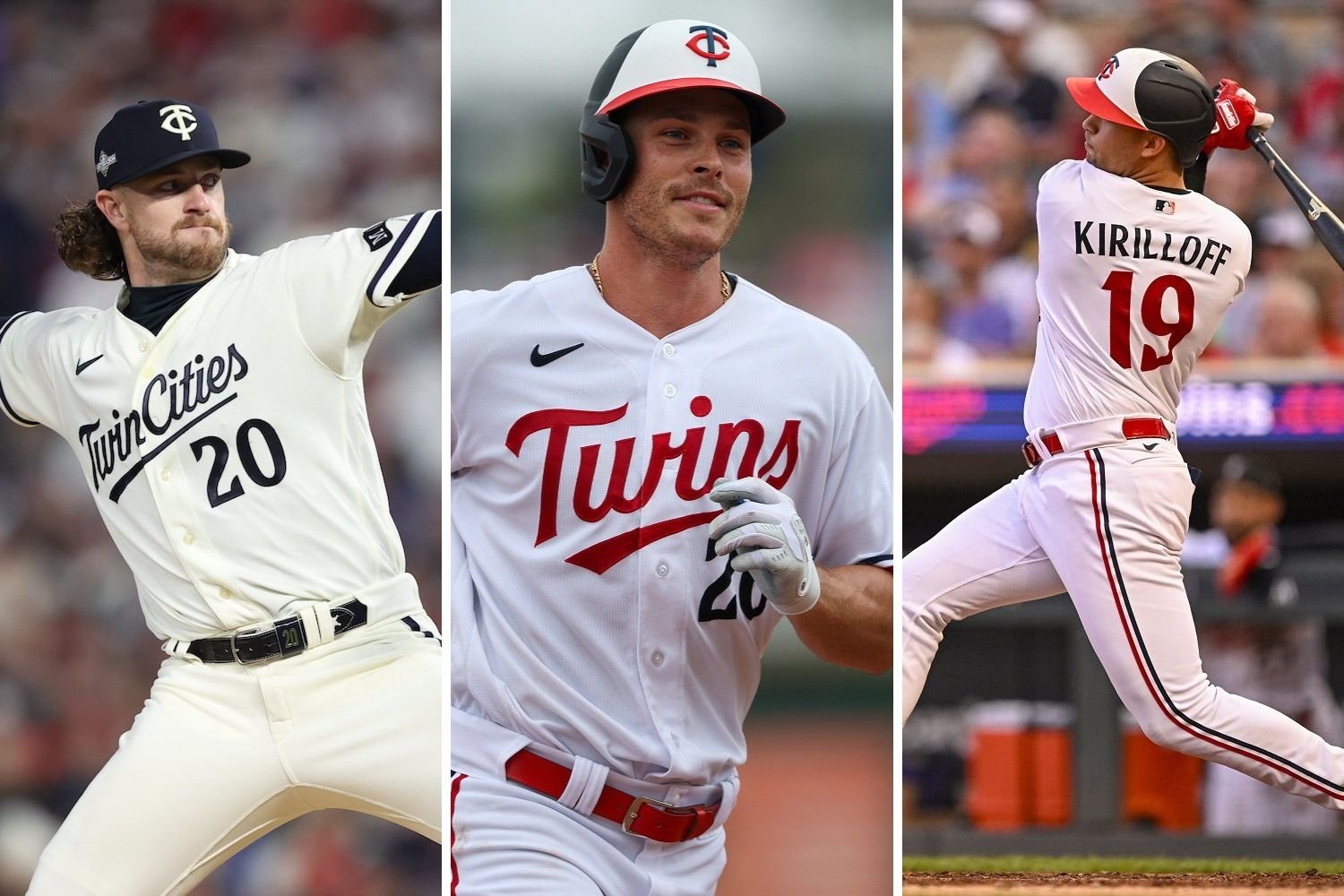 The idea of this exercise is to take stock of the organization's talent through the scope of team-building. The goal is to answer this question: Which current players in the organization are most indispensable to fulfilling the vision of building a champion? We account for age, contract, controllability, upside, etc. It's not strictly a ranking of trade value, because that would be more team-agnostic, whereas this list aims to capture a very Twins-specific point of view. As such, players at areas of scarcity (i.e. pitching) get elevated, while those at areas of abundance (i.e. lefty-swinging corner guys) get downgraded a bit. I always find compiling this list to be an interesting offseason pastime–one that brings to the surface unique conversations about Twins players, how we value them, and where the system's strengths and weaknesses truly lie. For an overview of the evolving Twins talent landscape, you can scan through the lists I've put together for the past six years. Top 20 Twins Assets: 2018 Top 20 Twins Assets: 2019 Top 20 Twins Assets: 2020 Top 20 Twins Assets: 2021 Top 20 Twins Assets: 2022 Top 20 Twins Assets: 2023 (Revised) Reviewing the 2023 list is especially interesting to look back at now, giving us a chance to directly compare how things have changed over a 12-month span that's seen dramatic rises, falls, additions and departures. In fact, there was so much seismic change immediately following the release of last year's rankings (Carlos Correa signing, Pablo López trade) that I felt compelled to release an update three weeks later. As we embark on a new year here in 2024, the Twins are once again navigating a slow offseason with late moves yet to come, although probably not at last year's scale. These rankings serve as a snapshot of where the organization currently stands. As we'll see, the overall caliber of player asset quality atop the organization is very healthy, even if a few key pieces have taken steps back. Today we kick off the list, with with Nos. 16 through 20, and over the course of this week we'll count down to No. 1. 20. Chris Paddack, RHP 2023 Ranking: NR The Twins signed Paddack to an extension last January that locks him down for the next two years at about $10 million total. That's a tremendous bargain for a veteran mid-rotation starter – with upside to be more – in his age-28 and age-29 seasons. Of course, Paddack has plenty of question marks, coming back from his second Tommy John surgery with fewer than 200 total innings pitched over the past four years. He's going to be facing workload limitations, and his game was not without flaws before he got hurt. All those factors keep him on the fringe of these rankings, but Paddack looked good enough in his late-season run out of the bullpen to make the list. 19. Austin Martin, CF 2023 Ranking: 14 Martin's spot on this list has fallen from fifth to 14th to 19th in three years with the organization, owing to a slew of injuries and middling performance in the upper minors. But the former top draft pick remains an athletic and dynamic player with up-the-middle defensive traits. He's a relentless on-base machine and showed signs of discovering a power stroke last year at Triple-A St. Paul. As the current best hope to replace Byron Buxton in center field, Martin is very consequential in the club's current plans. Added to the 40-man roster in November, he's got a big prove-it year in front of him at age 25. 18. Max Kepler, RF 2023 Ranking: NR Kepler is an interesting case in terms of player asset evaluation. On the one hand, he's a 30-year-old elite defensive right fielder coming off a resurgent second half at the plate that re-established him at the position's upper tier league-wide. On the other hand, he's under contract for only one more season. That season comes with a very reasonable $10-million price tag, which adds a lot of value in a market filled with unspectacular veterans requiring expensive, multi-year contracts. The possibility of a qualifying offer following next season if he can keep it rolling adds to Kepler's appeal. 17. Alex Kirilloff, 1B 2023 Ranking: 17 Fittingly, Kirilloff remains in the same place he was a year ago following a season that brought much of the same: glimmers of his immense natural upside and talent, before succumbing to another serious injury. When on the field, he posted a 117 OPS+ and routinely appeared as Rocco Baldelli's No. 3 or 4 hitter against righty pitchers. While he showed encouraging signs with his twice-repaired wrist, Kirilloff suffered a shoulder injury late in the season that limited him in September and the playoffs. That required surgery itself, though fortunately, the operation was deemed to be far less serious than feared. It's another health setback in a career full of them, and the first baseman now already finds himself in the arbitration window. But the Twins still control him for three more years, and Kirilloff's potential to have game-changing impact at the plate continues to be obvious. 16. David Festa, RHP 2023 Ranking: NR Pitching prospects are critical to any organization, helping sustain success for the big-league rotation while also serving as highly attractive trade chips. Festa offers a lot to like, whether you're projecting him as a (near) future Twins pitcher or viewing him through the lens of another front office. Turning 24 in spring training, Festa is a tall and wiry right-hander with good extension, good velocity and good secondary stuff. He's posted 3.30 ERA in 206 minor-league innings and reached Triple A last year. He repped the Twins in the 2023 Futures Game, part of a season in which he averaged 11.6 strikeouts per nine innings as a starter in the high minors. He still needs to get his control issues figured out, which is no insignificant hurdle, but all the pieces are otherwise in place for Festa to make an impact quickly. To recap, here is the first installment of this year's top 20 player assets list: 20. Chris Paddack, RHP 19. Austin Martin, CF 18. Max Kepler, RF 17. Alex Kirilloff, 1B 16. David Festa, RHP Check back tomorrow as we continue the countdown with our picks for No. 15 through No. 11! In the meantime, let us know what you think of the order of these five names.
- 18 comments
-
- 3
-
-
-
- chris paddack
- austin martin
- (and 3 more)
-
5 Positive Signs from Byron Buxton's 2023 Season
Nick Nelson replied to Nick Nelson's topic in Twins Daily Front Page News
I'll grant you this, but here's my take on it: doesn't matter how much playing DH diminished his value, looking forward, because the Twins aren't going to do that again. I'm quite confident that if he can't play the field in some capacity he's going to be on the injured list. If he puts up the same offensive production from 2023 as a (mostly) center fielder, he has value. His OPS last year (.731) was exactly average for an MLB CF. -
5 Positive Signs from Byron Buxton's 2023 Season
Nick Nelson replied to Nick Nelson's topic in Twins Daily Front Page News
I'm sorry to tell you but Byron Buxton and his outlook are extremely relevant to the 2024 Twins lol -
5 Positive Signs from Byron Buxton's 2023 Season
Nick Nelson replied to Nick Nelson's topic in Twins Daily Front Page News
You mean when they tried it for one game and he got hurt? Maybe they were right! -
We've talked enough about the negatives in a bleak, discouraging season that was full of them for the embattled Twins star. If you take a closer look, you can find some signs that showcase Byron Buxton's ability to be a difference-maker in 2024 and beyond. Image courtesy of Peter Aiken-USA TODAY Sports Like it or not, Byron Buxton is going to be part of the Twins' plans going forward. He's under contract for another five years, at a total cost of $75 million. Especially given their financial constraints, the front office would likely feel compelled to try and keep building around him, even if they didn't entirely believe in his ability to bounce back. Luckily, there are tangible reasons to believe he can do so. The Twins say they're feeling good about Buxton's health at this stage of the offseason, expressing their intention to plan around him as at least a part-time center fielder in 2024. He's a full year removed from his original knee surgery, and a follow-up procedure in October was intended to alleviate the lingering issues. It would hardly be strange for Buxton to return in a much better place physically when he arrives in spring training; we've seen it happen before. However, that leads us to another question: Even if relatively healthy ... is Buxton even that good anymore? What we saw in the past season casts some doubt, as he seemingly transformed into an all-or-nothing power hitter prone to massive slumps. Despite launching some majestic blasts, his overall production was below-average in 2023, as reflected by a 98 OPS+ in the 85 games he was able to play. He appeared exclusively as a designated hitter, delivering zero defensive value. There's no two ways about it: Buxton had a rough season and was more of a detriment than an asset to the Twins' division-winning efforts. Is the 30-year-old cooked? I think it's far too early to say that. Let's take a closer look at some of Buck's metrics from 2023, in search of silver linings to take forward. He was still hitting the ball as hard as ever. It was plain to see, last year, that Buxton's issues with his right leg--the backside engine of his powerful swing--were inhibiting him at the plate. Despite this, he managed to produce a lot of power, both in terms of production (17 HR and .203 ISO in 347 PA) and underlying measurements. Buxton's average exit velocity (91.5 MPH) was in the 84th percentile among MLB hitters. His Barrel rate was 90th-percentile, and his hard-hit rate in the 74th. Buxton actually produced the single hardest-hit ball of his entire career in 2023--a 116.9-MPH smash off Cardinals reliever John King on Aug. 1 that teleported to the warning track for a double. He also hit three home runs farther than 450 feet. Buxton's power has not really subsided due to injury, even as other elements of his game have deteriorated. He was also still really fast. Surprisingly, the speed also has not declined that much. It's fairly incredible, given how hobbled he was last year, but Buxton's sprint speed remained firmly in the elite tier at 29.5 feet per second, faster than 94 percent of all other major leaguers. This offers some reason for faith that (if he is able to get back out into center field) he can still track down just about anything out there. Not only that, but he was as good as ever on the bases. Buxton's enduring speed, combined with his underrated instincts and technique on the basepaths, helped him maintain this core aspect of his value: when he gets on base, he makes things happen. In addition to tracking sprint speed, Statcast also has a metric to measure baserunning value, derived mainly from the ability to take extra bases on batted balls. Running fast doesn't necessarily equate to effective baserunning; Amed Rosario, for example, was in the 34th percentile with negative baserunning value last year, despite his 95th-percentile sprint speed. Buxton has always rated as a good baserunner, but his 91st-percentile baserunning value in 2023 represented his highest ranking since 2017. Even with a bad knee, Buxton was still smart, aggressive, and fundamentally sound on the basepaths, inspiring hope that (with better health) he can keep offering an edge in this facet of the game. He developed some patience. This has been quite an interesting development, for a hitter who was once the league's least patient hitter. Buxton was always a pretty free swinger, reaching a new extreme in the pandemic season, when he drew two walks in 135 plate appearances. His 1.5% walk rate was the lowest in baseball. Since then, he has gradually increased his willingness to take a free pass, to the point where last year's career-high 10.1% rate was downright solid, ranking in the 71st percentile. I think it's safe to say that even in his healthier form, Buxton is likely to be a low-average power hitter, but he can provide much more balanced offensive value by drawing the occasional base on balls, to keep pitchers honest and put his aforementioned baserunning skills to greater use. Even in such a rough season, Buxton was not THAT bad. I'm not gonna hoist a 0.7 fWAR and .311 wOBA as numbers to be celebrated. They could aptly be described as mediocre. But for a guy who was playing in the worst physical state in which we will see him (hopefully), constantly bothered by knee pain to the point that he couldn't even take the field once defensively all year, mediocre offense is kind of... impressive? He was still better than replacement-level, and his final wOBA was only a few ticks below the .318 league average. Buxton's strengths remained strong enough last year that he was able to perform competently despite his severe impediments, because the core components of his game–the power, the speed, the sheer talent–remain intact. In a very bad year that we'd all like to forget, Buxton still showed what he's capable of. Now he needs to make sure everyone remembers who he really is. View full article
-
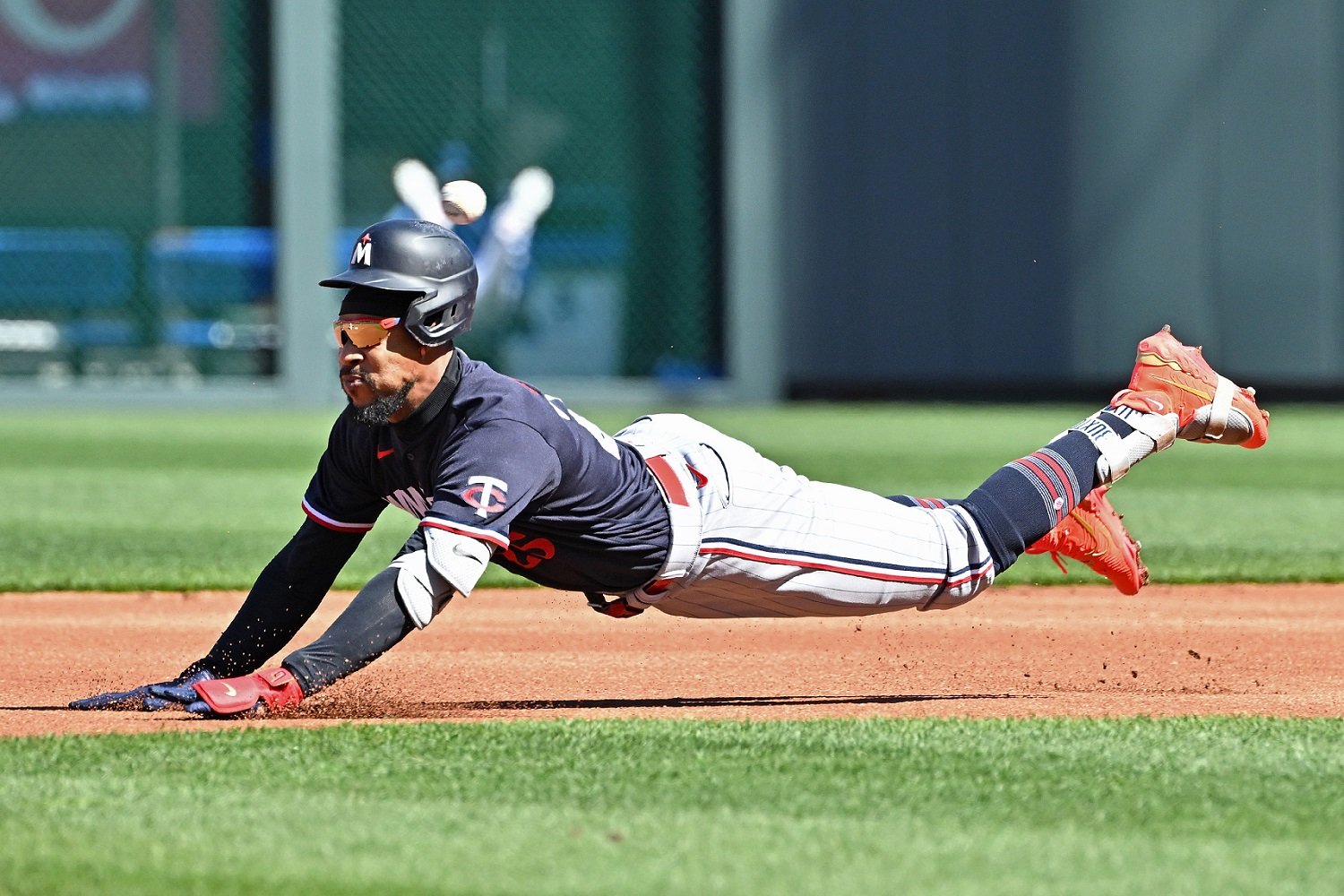 Like it or not, Byron Buxton is going to be part of the Twins' plans going forward. He's under contract for another five years, at a total cost of $75 million. Especially given their financial constraints, the front office would likely feel compelled to try and keep building around him, even if they didn't entirely believe in his ability to bounce back. Luckily, there are tangible reasons to believe he can do so. The Twins say they're feeling good about Buxton's health at this stage of the offseason, expressing their intention to plan around him as at least a part-time center fielder in 2024. He's a full year removed from his original knee surgery, and a follow-up procedure in October was intended to alleviate the lingering issues. It would hardly be strange for Buxton to return in a much better place physically when he arrives in spring training; we've seen it happen before. However, that leads us to another question: Even if relatively healthy ... is Buxton even that good anymore? What we saw in the past season casts some doubt, as he seemingly transformed into an all-or-nothing power hitter prone to massive slumps. Despite launching some majestic blasts, his overall production was below-average in 2023, as reflected by a 98 OPS+ in the 85 games he was able to play. He appeared exclusively as a designated hitter, delivering zero defensive value. There's no two ways about it: Buxton had a rough season and was more of a detriment than an asset to the Twins' division-winning efforts. Is the 30-year-old cooked? I think it's far too early to say that. Let's take a closer look at some of Buck's metrics from 2023, in search of silver linings to take forward. He was still hitting the ball as hard as ever. It was plain to see, last year, that Buxton's issues with his right leg--the backside engine of his powerful swing--were inhibiting him at the plate. Despite this, he managed to produce a lot of power, both in terms of production (17 HR and .203 ISO in 347 PA) and underlying measurements. Buxton's average exit velocity (91.5 MPH) was in the 84th percentile among MLB hitters. His Barrel rate was 90th-percentile, and his hard-hit rate in the 74th. Buxton actually produced the single hardest-hit ball of his entire career in 2023--a 116.9-MPH smash off Cardinals reliever John King on Aug. 1 that teleported to the warning track for a double. He also hit three home runs farther than 450 feet. Buxton's power has not really subsided due to injury, even as other elements of his game have deteriorated. He was also still really fast. Surprisingly, the speed also has not declined that much. It's fairly incredible, given how hobbled he was last year, but Buxton's sprint speed remained firmly in the elite tier at 29.5 feet per second, faster than 94 percent of all other major leaguers. This offers some reason for faith that (if he is able to get back out into center field) he can still track down just about anything out there. Not only that, but he was as good as ever on the bases. Buxton's enduring speed, combined with his underrated instincts and technique on the basepaths, helped him maintain this core aspect of his value: when he gets on base, he makes things happen. In addition to tracking sprint speed, Statcast also has a metric to measure baserunning value, derived mainly from the ability to take extra bases on batted balls. Running fast doesn't necessarily equate to effective baserunning; Amed Rosario, for example, was in the 34th percentile with negative baserunning value last year, despite his 95th-percentile sprint speed. Buxton has always rated as a good baserunner, but his 91st-percentile baserunning value in 2023 represented his highest ranking since 2017. Even with a bad knee, Buxton was still smart, aggressive, and fundamentally sound on the basepaths, inspiring hope that (with better health) he can keep offering an edge in this facet of the game. He developed some patience. This has been quite an interesting development, for a hitter who was once the league's least patient hitter. Buxton was always a pretty free swinger, reaching a new extreme in the pandemic season, when he drew two walks in 135 plate appearances. His 1.5% walk rate was the lowest in baseball. Since then, he has gradually increased his willingness to take a free pass, to the point where last year's career-high 10.1% rate was downright solid, ranking in the 71st percentile. I think it's safe to say that even in his healthier form, Buxton is likely to be a low-average power hitter, but he can provide much more balanced offensive value by drawing the occasional base on balls, to keep pitchers honest and put his aforementioned baserunning skills to greater use. Even in such a rough season, Buxton was not THAT bad. I'm not gonna hoist a 0.7 fWAR and .311 wOBA as numbers to be celebrated. They could aptly be described as mediocre. But for a guy who was playing in the worst physical state in which we will see him (hopefully), constantly bothered by knee pain to the point that he couldn't even take the field once defensively all year, mediocre offense is kind of... impressive? He was still better than replacement-level, and his final wOBA was only a few ticks below the .318 league average. Buxton's strengths remained strong enough last year that he was able to perform competently despite his severe impediments, because the core components of his game–the power, the speed, the sheer talent–remain intact. In a very bad year that we'd all like to forget, Buxton still showed what he's capable of. Now he needs to make sure everyone remembers who he really is.
 -
Well sorry to say the reality is that Buxton's under contract for another five years and $75 million so that's not an option.
- 64 replies
-
- 6
-
-
-
- max kepler
- byron buxton
- (and 1 more)
-
Given that he played 2200 innings in RF versus 200 in LF in the minors, it seems clear the Twins view it this way. Personally I think keeping the best arm in the major leagues out of RF is a bit wasteful. He's going to end up back there full-time, it's just a matter of when.
- 64 replies
-
- 6
-
-
- max kepler
- byron buxton
- (and 1 more)
-
And it doesn't even involve adding a player from the outside. What if Max Kepler agreed to give it a go in center field once again, for the good of the team (and his own impending free agency)? Image courtesy of Bruce Kluckhohn-USA TODAY Sports While finding a playoff-caliber starting pitcher to fill Sonny Gray's void is pretty clearly Priority Number One for the Twins this offseason, it's no secret that center field is also a key focus with the looming uncertainty around Byron Buxton and the departure of Michael A. Taylor via free agency. Many ideas and avenues have been shared for supplementing center field: signing a free agent (one down), making another trade, or simply relying on internal options like Austin Martin, Willi Castro and Nick Gordon. However, another option might be sitting right in front of the Twins, and it's arguably more appealing than all of the above. It's been a while since he's given it a go out there, but Max Kepler has proven in the past to be a very capable center fielder. He has logged more than 1,000 MLB innings in center, albeit with a bulk of them coming in 2018 and 2019 when he was the primary fill-in for an injured Buxton. Kepler made 97 starts in center field between those two seasons, but has made only 21 since then, including zero since 2021. He's ceased to be anything more than an emergency option out there. "The Twins have shied away from using Kepler in center field the past few seasons," according to The Athletic's Aaron Gleeman, "believing he wears down physically if asked to play there regularly and knowing that he prefers to stay in right field if possible." Okay, but, what if he changed his mind? At least just for one year, given how massively it would benefit the Twins as a team? There are reasons to think Kepler might be amenable to altering his stance here, but first, let's talk about how it would impact offseason planning. Right now, the Twins are known to be actively shopping Kepler, who has one year remaining under contract. They have depth behind him – namely breakout rookie Matt Wallner, who was clearly born to play right field – and also, shedding Kepler's $10 million salary could create flexibility to address other needs. Like ... center field. Well, you're going to be hard-pressed to find a better fit for what the Twins need better than Kepler at remotely that cost – if he's up for the task. With the club feeling tempered optimism around Buxton's recovery, the best-case scenario would have Kepler splitting time between right and center to regularly spell Buck, who'd may be ticketed for 80 defensive starts. Not a bad little platoon! If things don't work out as hoped with Buxton, Kepler likely gets leaned on more in center, but untested or lesser players like Martin, Gordon and Castro are counted on less, representing an improvement over the current scenario. Meanwhile, Kepler's time spent in center would open up right field for Wallner and his cannon arm, in turn creating opportunities in left for Larnach, Gordon, and maybe some wild cards. It's obviously a short-term solution, with Kepler under team control for only one more year. But that's all the Twins are really looking for at the moment. In so many ways, Kepler the center fielder for one year would be a godsend for the Twins. So then the question becomes twofold: Can he do it? Would he do it? Let's start with the first part because there is certainly an argument to be made that Kepler is simply not viable in center field anymore. It's a difficult one to disprove. His defensive metrics in center were more decent than great, which is about what you'd expect from an excellent right fielder sliding over, and he's a few years older than last time he played out there. At the same time, Kepler remains a really good, rangy right fielder, ranking in the 86th percentile for Outs Above Average in 2023. He's lost some speed but still has quick reactions and tight routes to hunt down balls all over the outfield. Even if he wouldn't be a standout in center field, it seems likely Max could still hold his own. Thus we arrive at our final and largest hurdle: would Max do it? Plenty of evidence suggests no. As Gleeman alluded, Kepler's preference to not play center field is no secret, and it's an area where management has clearly been willing to defer to the veteran. But for the impending free agent, there would be some clear upside in accepting this assignment. First of all, there's the whole narrative thing: Kepler set aside his preferences and did what his team needed, at a time where they were attempting to make a breakthrough push. What a teammate! What a competitor! More concretely, though, if Kepler can convince major-league front offices next year that center field is actually a valid tool in his repertoire – one that he's willing to use – his market figures to skyrocket. There's a huge difference between a right fielder who can post a 121 OPS+ versus a center fielder who can do so. Maybe Kepler's aversion to playing center field is strong enough to outweigh monetary gain. Maybe the Twins truly don't believe he's a quality option in center field anymore. But given how brilliantly this one simple move would solve a variety of problems facing the Twins this offseason, I think it's an option that merits discussion. What do you think? View full article
- 64 replies
-
- 1
-

-
- max kepler
- byron buxton
- (and 1 more)
-
One Move Could Solve Multiple Offseason Problems for the Twins
Nick Nelson posted an article in Twins
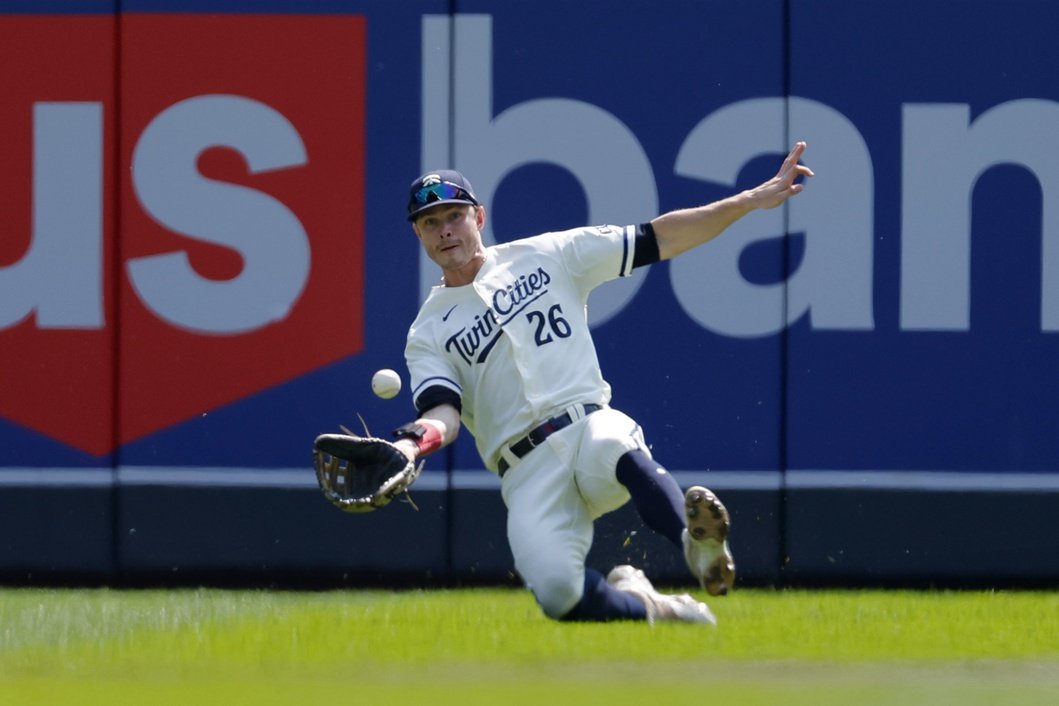 While finding a playoff-caliber starting pitcher to fill Sonny Gray's void is pretty clearly Priority Number One for the Twins this offseason, it's no secret that center field is also a key focus with the looming uncertainty around Byron Buxton and the departure of Michael A. Taylor via free agency. Many ideas and avenues have been shared for supplementing center field: signing a free agent (one down), making another trade, or simply relying on internal options like Austin Martin, Willi Castro and Nick Gordon. However, another option might be sitting right in front of the Twins, and it's arguably more appealing than all of the above. It's been a while since he's given it a go out there, but Max Kepler has proven in the past to be a very capable center fielder. He has logged more than 1,000 MLB innings in center, albeit with a bulk of them coming in 2018 and 2019 when he was the primary fill-in for an injured Buxton. Kepler made 97 starts in center field between those two seasons, but has made only 21 since then, including zero since 2021. He's ceased to be anything more than an emergency option out there. "The Twins have shied away from using Kepler in center field the past few seasons," according to The Athletic's Aaron Gleeman, "believing he wears down physically if asked to play there regularly and knowing that he prefers to stay in right field if possible." Okay, but, what if he changed his mind? At least just for one year, given how massively it would benefit the Twins as a team? There are reasons to think Kepler might be amenable to altering his stance here, but first, let's talk about how it would impact offseason planning. Right now, the Twins are known to be actively shopping Kepler, who has one year remaining under contract. They have depth behind him – namely breakout rookie Matt Wallner, who was clearly born to play right field – and also, shedding Kepler's $10 million salary could create flexibility to address other needs. Like ... center field. Well, you're going to be hard-pressed to find a better fit for what the Twins need better than Kepler at remotely that cost – if he's up for the task. With the club feeling tempered optimism around Buxton's recovery, the best-case scenario would have Kepler splitting time between right and center to regularly spell Buck, who'd may be ticketed for 80 defensive starts. Not a bad little platoon! If things don't work out as hoped with Buxton, Kepler likely gets leaned on more in center, but untested or lesser players like Martin, Gordon and Castro are counted on less, representing an improvement over the current scenario. Meanwhile, Kepler's time spent in center would open up right field for Wallner and his cannon arm, in turn creating opportunities in left for Larnach, Gordon, and maybe some wild cards. It's obviously a short-term solution, with Kepler under team control for only one more year. But that's all the Twins are really looking for at the moment. In so many ways, Kepler the center fielder for one year would be a godsend for the Twins. So then the question becomes twofold: Can he do it? Would he do it? Let's start with the first part because there is certainly an argument to be made that Kepler is simply not viable in center field anymore. It's a difficult one to disprove. His defensive metrics in center were more decent than great, which is about what you'd expect from an excellent right fielder sliding over, and he's a few years older than last time he played out there. At the same time, Kepler remains a really good, rangy right fielder, ranking in the 86th percentile for Outs Above Average in 2023. He's lost some speed but still has quick reactions and tight routes to hunt down balls all over the outfield. Even if he wouldn't be a standout in center field, it seems likely Max could still hold his own. Thus we arrive at our final and largest hurdle: would Max do it? Plenty of evidence suggests no. As Gleeman alluded, Kepler's preference to not play center field is no secret, and it's an area where management has clearly been willing to defer to the veteran. But for the impending free agent, there would be some clear upside in accepting this assignment. First of all, there's the whole narrative thing: Kepler set aside his preferences and did what his team needed, at a time where they were attempting to make a breakthrough push. What a teammate! What a competitor! More concretely, though, if Kepler can convince major-league front offices next year that center field is actually a valid tool in his repertoire – one that he's willing to use – his market figures to skyrocket. There's a huge difference between a right fielder who can post a 121 OPS+ versus a center fielder who can do so. Maybe Kepler's aversion to playing center field is strong enough to outweigh monetary gain. Maybe the Twins truly don't believe he's a quality option in center field anymore. But given how brilliantly this one simple move would solve a variety of problems facing the Twins this offseason, I think it's an option that merits discussion. What do you think?
- 64 comments
-
- 14
-
-
-
- max kepler
- byron buxton
- (and 1 more)
-
For a second consecutive offseason, the Minnesota Twins have acquired the enigmatic right-hander with hopes he can become another sneaky find in their bullpen at a time where they could use some inexpensive reinforcements. Image courtesy of Jerome Miron–USA Today Sports To say last week's signing of right-handed pitcher A.J. Alexy to a minor-league contract received little fanfare would be an understatement. As best I can tell, no beat writers so much as tweeted about the move, much less was there any formal team announcement. MLB Trade Rumors posted about the signing after noticing it listed in the transactions on Alexy's MLB player page. Still, if the name sounds familiar, it's because he spent a couple of weeks on Minnesota's 40-man roster last offseason. For that and a few other reasons, I think this pickup deserves a bit more examination than the standard flier on a minor-league arm. Last winter, Alexy experienced a bit of a whirlwind, illustrating the challenging nature of being a fringe MLB talent but also demonstrating the level of intrigue his arm offered in the eyes of MLB front offices. On December 9th, he was designated for assignment by the Texas Rangers, making room on the roster for free agent signing Andrew Heaney. On waivers, Alexy was quickly gobbled up, with the Washington Nationals claiming him four days later. There too Alexy became the odd man out, receiving a DFA when the Nats signed Dominic Smith on January 4th. At this point the Minnesota Twins made their move, acquiring Alexy on January 10th in exchange for a pitcher named Cristian Jimenez. While hardly a real prospect, the fact that Minnesota had to trade anyone for Alexy to extract him from waivers suggested there was some competition for him. Two weeks later, Alexy once again became the odd man out in a new org, waived by the Twins to make room for Michael A. Taylor when they traded for him on January 23rd. Back on waivers for a third time in six weeks, the righty was claimed this time by the Chicago White Sox, where he would end up spending most of his 2023 season. What a season it was. Not in a good way. Alexy made 16 appearances for Chicago's Triple-A affiliate in Charlotte, posting a 12.00 ERA while issuing an astonishing 41 walks in 21 innings. Yes, that's about two per inning on average. In his first outing for the Knights, he walked seven of 11 batters faced. In his last, on June 28th, he walked five of seven. At that point he was released before catching on with the independent Southern Maryland Blue Crabs, where he posted an 11.81 ERA in six appearances and was quickly released again. Unsurprisingly, Alexy was in much lower demand this offseason. But in spite of his complete derailment last year, the Twins aren't ready to get off the A.J. Alexy train. Last Tuesday the Twins signed the 25-year-old to a minor-league contract, bringing him into the fold without requiring a roster spot. It's unclear at this time if he'll get a spring training invite. While it may well turn into nothing, Alexy strikes me as being worth a deeper look, for a couple of key reasons: The front office has added him in consecutive offseasons, so clearly they see something in the right-hander. And as recently as last winter, they were far from alone. The Twins lost a key piece of their bullpen to free agency in Emilio Pagán; given their financial constraints and needs elsewhere, it's likely that under-the-radar and non-roster acquisitions like these will be counted on to help replenish and bolster the unit. So now that we've pretty clearly established what is NOT to like about Alexy, let's explore some of the qualities that potentially make him appealing to Minnesota's front office. What Do the Twins See in A.J. Alexy? Long ago, Alexy was viewed as a very promising pitching prospect. The Dodgers, who'd drafted him in the 11th round out of a Pennsylvania high school in 2016, traded him one year later alongside fellow minor-leaguers Willie Calhoun and Brendon Davis to acquire Yu Darvish from Texas at the deadline. At the time, Alexy was ranked as the No. 17 prospect in LA's system, described as having "an above-average fastball and curve," and "plenty of projection in his 6-foot-4, 195-pound frame." ("Projection" is a word that should make your Falvey Senses tingle.) For a time, it was beginning to look like Alexy might be the only member of that prospect package to pan out for Texas. In 2021 he enjoyed a breakthrough season in the high minors, posting a 1.66 ERA with 10.5 K/9 in 65 innings as a reliever between Double-A and Triple-A. "A.J. has battled injuries, but he's in a really good spot now," said Rangers Director of Minor League Operations Paul Kruger that summer. "He's under control with his delivery and has a good idea what he wants to do. I like how he's repeating what he's doing. There's a good feel for the breaking ball and fastball." Said Alexy at the time, "I am attacking the strike zone and I'll take my odds with the guys playing behind me." His words might feel a bit ironic in light of what we know now – since the 2021 season, Alexy has handed out 134 free passes in 152 ⅓ innings for a 7.9 BB/9 rate – but his performance and those quotes illustrate an important truth: at that point, they had it figured out. And when he was able to throw the ball where he wanted, Alexy was a pretty successful pitcher. The Rangers actually called him up late that season and gave him a chance to start, with Alexy delivering 11 innings of shutout, two-hit ball in his first two outings before things unraveled a bit in September. Here he is striking out Shohei Ohtani: In 2022, Alexy took a big step back, struggling to find stability as he moved from rotation to bullpen, minors to majors, role to role. The down year led to his tumultuous offseason, and then was followed by faith-shattering campaign in the White Sox system. At the same time, he's still only 25 years old, a little younger than Jhoan Durán, and the track record of success is there. Paul Kruger's quote above – "He's under control with his delivery ... I like how he's repeating what he's doing" – seems to suggest that there was a major focus on mechanics and consistency. Can the Twins circle back and find something that works? Coming off a spectacular year on the mound as a team, Pete Maki and Co. have earned some confidence in this regard. And clearly they are confident that Alexy is an arm they can still do something with. View full article
-
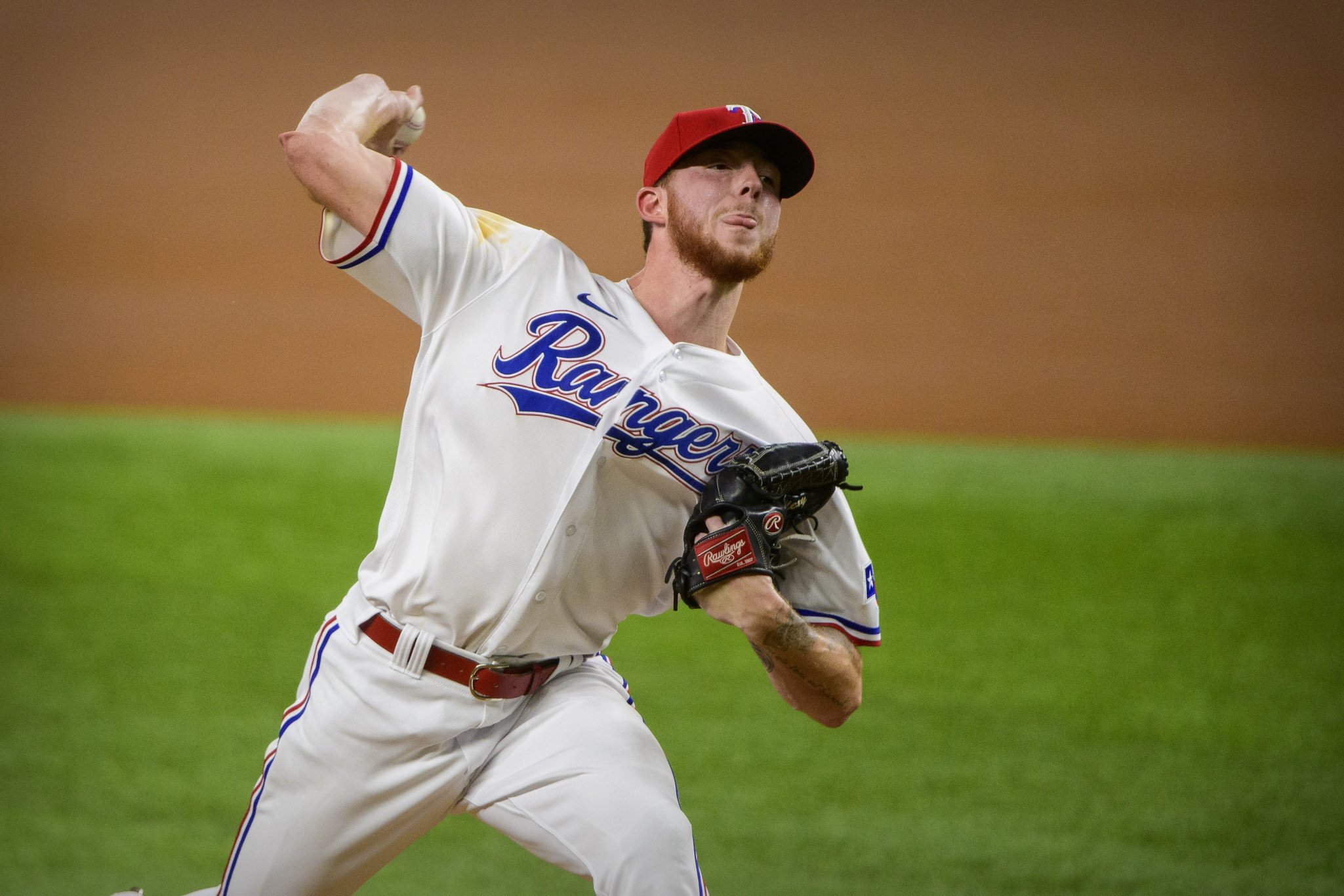 To say last week's signing of right-handed pitcher A.J. Alexy to a minor-league contract received little fanfare would be an understatement. As best I can tell, no beat writers so much as tweeted about the move, much less was there any formal team announcement. MLB Trade Rumors posted about the signing after noticing it listed in the transactions on Alexy's MLB player page. Still, if the name sounds familiar, it's because he spent a couple of weeks on Minnesota's 40-man roster last offseason. For that and a few other reasons, I think this pickup deserves a bit more examination than the standard flier on a minor-league arm. Last winter, Alexy experienced a bit of a whirlwind, illustrating the challenging nature of being a fringe MLB talent but also demonstrating the level of intrigue his arm offered in the eyes of MLB front offices. On December 9th, he was designated for assignment by the Texas Rangers, making room on the roster for free agent signing Andrew Heaney. On waivers, Alexy was quickly gobbled up, with the Washington Nationals claiming him four days later. There too Alexy became the odd man out, receiving a DFA when the Nats signed Dominic Smith on January 4th. At this point the Minnesota Twins made their move, acquiring Alexy on January 10th in exchange for a pitcher named Cristian Jimenez. While hardly a real prospect, the fact that Minnesota had to trade anyone for Alexy to extract him from waivers suggested there was some competition for him. Two weeks later, Alexy once again became the odd man out in a new org, waived by the Twins to make room for Michael A. Taylor when they traded for him on January 23rd. Back on waivers for a third time in six weeks, the righty was claimed this time by the Chicago White Sox, where he would end up spending most of his 2023 season. What a season it was. Not in a good way. Alexy made 16 appearances for Chicago's Triple-A affiliate in Charlotte, posting a 12.00 ERA while issuing an astonishing 41 walks in 21 innings. Yes, that's about two per inning on average. In his first outing for the Knights, he walked seven of 11 batters faced. In his last, on June 28th, he walked five of seven. At that point he was released before catching on with the independent Southern Maryland Blue Crabs, where he posted an 11.81 ERA in six appearances and was quickly released again. Unsurprisingly, Alexy was in much lower demand this offseason. But in spite of his complete derailment last year, the Twins aren't ready to get off the A.J. Alexy train. Last Tuesday the Twins signed the 25-year-old to a minor-league contract, bringing him into the fold without requiring a roster spot. It's unclear at this time if he'll get a spring training invite. While it may well turn into nothing, Alexy strikes me as being worth a deeper look, for a couple of key reasons: The front office has added him in consecutive offseasons, so clearly they see something in the right-hander. And as recently as last winter, they were far from alone. The Twins lost a key piece of their bullpen to free agency in Emilio Pagán; given their financial constraints and needs elsewhere, it's likely that under-the-radar and non-roster acquisitions like these will be counted on to help replenish and bolster the unit. So now that we've pretty clearly established what is NOT to like about Alexy, let's explore some of the qualities that potentially make him appealing to Minnesota's front office. What Do the Twins See in A.J. Alexy? Long ago, Alexy was viewed as a very promising pitching prospect. The Dodgers, who'd drafted him in the 11th round out of a Pennsylvania high school in 2016, traded him one year later alongside fellow minor-leaguers Willie Calhoun and Brendon Davis to acquire Yu Darvish from Texas at the deadline. At the time, Alexy was ranked as the No. 17 prospect in LA's system, described as having "an above-average fastball and curve," and "plenty of projection in his 6-foot-4, 195-pound frame." ("Projection" is a word that should make your Falvey Senses tingle.) For a time, it was beginning to look like Alexy might be the only member of that prospect package to pan out for Texas. In 2021 he enjoyed a breakthrough season in the high minors, posting a 1.66 ERA with 10.5 K/9 in 65 innings as a reliever between Double-A and Triple-A. "A.J. has battled injuries, but he's in a really good spot now," said Rangers Director of Minor League Operations Paul Kruger that summer. "He's under control with his delivery and has a good idea what he wants to do. I like how he's repeating what he's doing. There's a good feel for the breaking ball and fastball." Said Alexy at the time, "I am attacking the strike zone and I'll take my odds with the guys playing behind me." His words might feel a bit ironic in light of what we know now – since the 2021 season, Alexy has handed out 134 free passes in 152 ⅓ innings for a 7.9 BB/9 rate – but his performance and those quotes illustrate an important truth: at that point, they had it figured out. And when he was able to throw the ball where he wanted, Alexy was a pretty successful pitcher. The Rangers actually called him up late that season and gave him a chance to start, with Alexy delivering 11 innings of shutout, two-hit ball in his first two outings before things unraveled a bit in September. Here he is striking out Shohei Ohtani: In 2022, Alexy took a big step back, struggling to find stability as he moved from rotation to bullpen, minors to majors, role to role. The down year led to his tumultuous offseason, and then was followed by faith-shattering campaign in the White Sox system. At the same time, he's still only 25 years old, a little younger than Jhoan Durán, and the track record of success is there. Paul Kruger's quote above – "He's under control with his delivery ... I like how he's repeating what he's doing" – seems to suggest that there was a major focus on mechanics and consistency. Can the Twins circle back and find something that works? Coming off a spectacular year on the mound as a team, Pete Maki and Co. have earned some confidence in this regard. And clearly they are confident that Alexy is an arm they can still do something with.