



Nick Nelson
-
Posts
8,322 -
Joined
-
Last visited
-
Days Won
56
Content Type
Profiles
News
Minnesota Twins Videos
2026 Minnesota Twins Top Prospects Ranking
2022 Minnesota Twins Draft Picks
Minnesota Twins Free Agent & Trade Rumors, Notes, & Tidbits
Guides & Resources
2023 Minnesota Twins Draft Picks
The Minnesota Twins Players Project
2024 Minnesota Twins Draft Picks
2025 Minnesota Twins Draft Pick Tracker
2026 Minnesota Twins Draft Tracker: Picks & Bonuses
Forums
Blogs
Events
Store
Downloads
Gallery
Everything posted by Nick Nelson
-
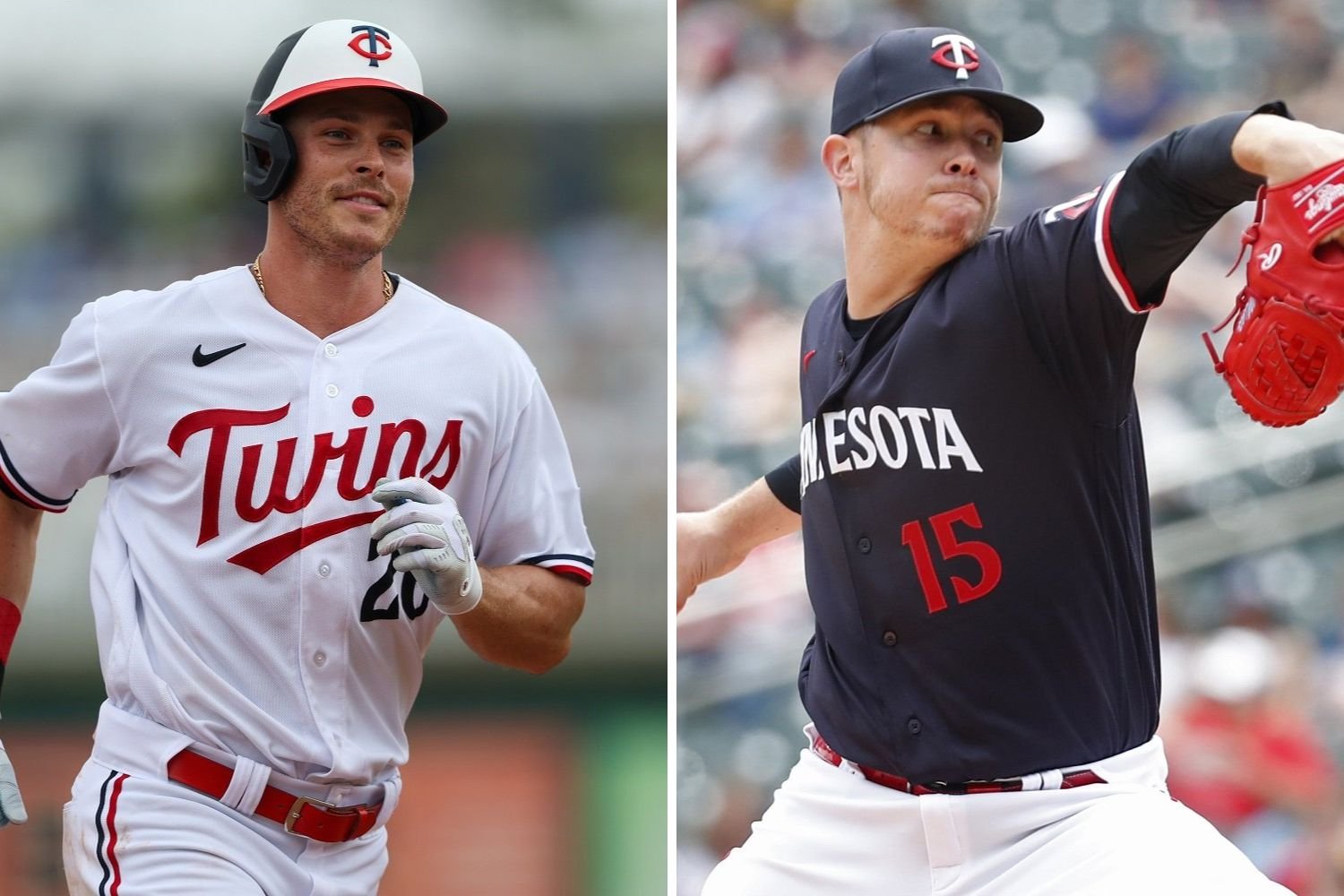
 The Houston Astros announced their ALDS roster on Saturday, and it includes only one left-handed pitcher: Game 2 (and 5?) starter Framber Valdez. This staff makeup sets the Minnesota Twins up to play to their considerable offensive strengths. Image courtesy of Matt Krohn, Matt Blewett, Jesse Johnson-USA TODAY Sports The Twins offense was revitalized in the second half of the season, improving from 24th in runs and 21st in wOBA before the All-Star break to fifth and third thereafter. It's no secret that a group of left-handed hitters led the charge in this turnaround. The additions of rookies Edouard Julien and Matt Wallner, along with the return of Alex Kirilloff and the awakening of veteran cleanup hitter Max Kepler, played primary roles in Minnesota's rise from ineffectual to elite over the course of the season. Of course, the flip side to having several left-handed batters powering your lineup is that you become susceptible to lefty pitching. We certainly saw that this year with the Twins, who finished fifth in wRC+ against RHP and 15th against LHP. Opposing managers often sought to exploit this weakness, turning to left-handed relievers early in games and trying to force Rocco Baldelli's hand into removing some of his best bats from the lineup for late-game scenarios. We saw this play out as recently as Game 2 of the ALWC, although swapping out Jose Berrios for Yusei Kikuchi in the fourth didn't work out so well for John Schneider and the Jays. Alas, the Astros will be unable to even attempt such a strategy, because they have not one single left-handed reliever in their ALDS bullpen. Julien, Wallner, Kirilloff and Kepler will be at no risk of being pulled out of a game based purely on match-up reasons. And while the presence of stellar southpaw starter Framber Valdez looms large, Houston's all-RHP bullpen will be ripe for pinch-hitting opportunities from the likes of Julien and Wallner. Now, it bears noting that Houston's righty relievers tend to be quite effective against left-handers, but still, I'll take these 2023 platoon splits against a right-handed hurler any day: Edouard Julien: .274/.401/.497 Matt Wallner: .281/.409/.561 Alex Kirilloff: .300/.373/.485 Max Kepler: .263/.335 /.497 The Twins got to this point, in large part, on the shoulders of their outstanding core of left-handed bats. Now those bats will have every chance to push Minnesota to the next stage. The offensive support will likely be needed against a Houston lineup full of premier hitters who are imposing in any match-up. View full article
- 7 replies
-
- 1
-

-
- matt wallner
- edouard julien
- (and 2 more)
-
These Ain't Your Older Brother's Houston Astros
Nick Nelson replied to Nick Nelson's topic in Twins Daily Front Page News
😂 the multitudes of fandom -
The old trope 'This ain't your grandfather's [whatever],' which muses on how things change over time, doesn't feel quite apt when describing the very recently unstoppable Houston Astros. So we'll use a more proximate hypothetical relation in driving at this basic point: Houston looks like a declining dynasty whose uber-impressive reign in the AL may be reaching its end. Image courtesy of Thomas Shea-USA TODAY Sports If the Minnesota Twins want to reach the ALCS, they're going to need to get past a team that's gotten there in six consecutive seasons. The Astros have flat-out dominated the American League, bookending their run of amazing success with World Series championships in 2017* and 2023. Houston also quickly dispatched Minnesota in the 2020 playoffs, on top of all that. You look at a franchise with these bona fides -- and a roster featuring names like Justin Verlander, Jose Altuve, Yordan Alvarez, Jose Abreu -- and it's easy to feel intimidated. Very understandable. I'm not saying the Astros are an unimposing match-up. But they ain't what they once were. And that leaves the door open for the Twins to dethrone the defending champs. Let's start with Justin Verlander, the Game 1 starter for Houston. He's been really good this year. And while he has been able to channel his legendary peak form on occasion, he hasn't done so very consistently and it's reflected in his decidedly human overall numbers. Verlander posted a 3.22 ERA in 27 starts this year. Very good, but also his highest ERA since 2017. His FIP (3.85) was JV's highest since 2008; his K-rate the lowest since 2015. The 40-year-old posted zero double-digit strikeout games this year after putting up four last year and 13 in 2019. (He missed 2020/21 with Tommy John surgery.) It seems silly to downplay a pitcher whose numbers were as good as Verlander's this year, even if they weren't quite to the level of a runaway Cy Young winner like in 2022. But it's helpful to separate the current version of Verlander from the one burned into many of our brains. He's not the same guy. That's a trend across much of this roster, which is noticeably less deep than usual with high-caliber performers. Framber Valdez remains excellent alongside Verlander, but no other starter on Houston's staff had a FIP below 4.37 (all five Twins starters did). The Houston bullpen is strong of course, but not as scary as it's been in the past; Ryan Pressly posted his highest ERA and home run rate, and his lowest strikeout rate, as an Astro. On the offensive side, Abreu is a player whose history and reputation definitely clash with on-field performance. Twins fans know him as a long-time iron man and elite run producer from his days with the White Sox. Houston signed him early in the offseason, envisioning him as an upgrade to their championship offense. Instead, Abreu was a massive disappointment in the first of a three-year, $60 million deal, putting forth the worst season of his career by a light year. Both FanGraphs and Baseball Reference pegged him as a sub-replacement level player. He didn't hit his first home run until the end of May, and finished with an 87 OPS+ that would've ranked 11th among qualified Twins hitters. It seemed as though the effects of aging avalanched upon Abreu suddenly and starkly at age 36, making this signing look like a rare colossal whiff for the Astros -- perhaps another indicator this once-invincible operation is losing its fastball. Aside from Abreu, Houston's lineup still features several legitimate superstar hitters coming off great seasons, including Altuve, Alvarez and Kyle Tucker. They ranked third among AL teams in OPS and runs scored. This offense needs to be taken very seriously, even if somewhat diminished from previous iterations. That's true of the Houston Astros as a team. But they are definitely diminished. Ninety wins in the AL West is nothing to scoff at but it's far below the standard set by Houston in recent full seasons, which have seen them win 106, 95, 107, 103, and 101 games dating back to 2017. Within that 90-72 record, there were some signs that could be considered troubling from their perspective. The Astros lost more games (43) than they won (42) against teams with a record above .500. They also had a losing record at home (39-42), where they'll host the first two games of the ALDS. Last year, by comparison, the Astros were 42-27 against winning teams and 55-26 at Minute Maid Park. Everywhere you look, you see the signs: this dynasty appears to be fading. The hallmarks of Houston's greatness are growing less abundant and radiant, and it's been apparent enough in the head-to-head matchups: Minnesota went 4-2 against the Astros this year, after going 0-6 against them last year. That doesn't mean Houston's going to be an easy assignment, or that the Twins necessarily should be favored in anyone's mind, but it does mean they're catching the Astros at a relatively good time. The door is open for the Twins to try and make a statement that the power balance in the American League is ready to shift. Vanquishing the Yankees would be nice, but when you think about it, there's no bigger statement possible than going into Houston and taking it to these defending champs and perennial finalists, while assuming their surrendered mantle in the ALCS. That opportunity is now in front of a power-hitting, power-pitching Twins team that -- by the way -- certainly ain't your grandfather's Minnesota Twins. View full article
-
 If the Minnesota Twins want to reach the ALCS, they're going to need to get past a team that's gotten there in six consecutive seasons. The Astros have flat-out dominated the American League, bookending their run of amazing success with World Series championships in 2017* and 2023. Houston also quickly dispatched Minnesota in the 2020 playoffs, on top of all that. You look at a franchise with these bona fides -- and a roster featuring names like Justin Verlander, Jose Altuve, Yordan Alvarez, Jose Abreu -- and it's easy to feel intimidated. Very understandable. I'm not saying the Astros are an unimposing match-up. But they ain't what they once were. And that leaves the door open for the Twins to dethrone the defending champs. Let's start with Justin Verlander, the Game 1 starter for Houston. He's been really good this year. And while he has been able to channel his legendary peak form on occasion, he hasn't done so very consistently and it's reflected in his decidedly human overall numbers. Verlander posted a 3.22 ERA in 27 starts this year. Very good, but also his highest ERA since 2017. His FIP (3.85) was JV's highest since 2008; his K-rate the lowest since 2015. The 40-year-old posted zero double-digit strikeout games this year after putting up four last year and 13 in 2019. (He missed 2020/21 with Tommy John surgery.) It seems silly to downplay a pitcher whose numbers were as good as Verlander's this year, even if they weren't quite to the level of a runaway Cy Young winner like in 2022. But it's helpful to separate the current version of Verlander from the one burned into many of our brains. He's not the same guy. That's a trend across much of this roster, which is noticeably less deep than usual with high-caliber performers. Framber Valdez remains excellent alongside Verlander, but no other starter on Houston's staff had a FIP below 4.37 (all five Twins starters did). The Houston bullpen is strong of course, but not as scary as it's been in the past; Ryan Pressly posted his highest ERA and home run rate, and his lowest strikeout rate, as an Astro. On the offensive side, Abreu is a player whose history and reputation definitely clash with on-field performance. Twins fans know him as a long-time iron man and elite run producer from his days with the White Sox. Houston signed him early in the offseason, envisioning him as an upgrade to their championship offense. Instead, Abreu was a massive disappointment in the first of a three-year, $60 million deal, putting forth the worst season of his career by a light year. Both FanGraphs and Baseball Reference pegged him as a sub-replacement level player. He didn't hit his first home run until the end of May, and finished with an 87 OPS+ that would've ranked 11th among qualified Twins hitters. It seemed as though the effects of aging avalanched upon Abreu suddenly and starkly at age 36, making this signing look like a rare colossal whiff for the Astros -- perhaps another indicator this once-invincible operation is losing its fastball. Aside from Abreu, Houston's lineup still features several legitimate superstar hitters coming off great seasons, including Altuve, Alvarez and Kyle Tucker. They ranked third among AL teams in OPS and runs scored. This offense needs to be taken very seriously, even if somewhat diminished from previous iterations. That's true of the Houston Astros as a team. But they are definitely diminished. Ninety wins in the AL West is nothing to scoff at but it's far below the standard set by Houston in recent full seasons, which have seen them win 106, 95, 107, 103, and 101 games dating back to 2017. Within that 90-72 record, there were some signs that could be considered troubling from their perspective. The Astros lost more games (43) than they won (42) against teams with a record above .500. They also had a losing record at home (39-42), where they'll host the first two games of the ALDS. Last year, by comparison, the Astros were 42-27 against winning teams and 55-26 at Minute Maid Park. Everywhere you look, you see the signs: this dynasty appears to be fading. The hallmarks of Houston's greatness are growing less abundant and radiant, and it's been apparent enough in the head-to-head matchups: Minnesota went 4-2 against the Astros this year, after going 0-6 against them last year. That doesn't mean Houston's going to be an easy assignment, or that the Twins necessarily should be favored in anyone's mind, but it does mean they're catching the Astros at a relatively good time. The door is open for the Twins to try and make a statement that the power balance in the American League is ready to shift. Vanquishing the Yankees would be nice, but when you think about it, there's no bigger statement possible than going into Houston and taking it to these defending champs and perennial finalists, while assuming their surrendered mantle in the ALCS. That opportunity is now in front of a power-hitting, power-pitching Twins team that -- by the way -- certainly ain't your grandfather's Minnesota Twins.
- 16 comments
-
- 11
-
-
Redemption was the story of the season for the Minnesota Twins front office, whose signature stubborn streak helped facilitate the end of an infamous (and equally stubborn) postseason losing streak. Image courtesy of Nathan Ray Seebeck and Bruce Kluckhohn, USA Today Sports Stubbornness is often framed as a bad thing: having or showing dogged determination not to change one's attitude or position on something, especially in spite of good arguments or reasons to do so. That's a pretty apt characterization of the Twins front office's general vibe over the past year or so, isn't it? They've been sticking to their guns, even when the heat is on and the criticism feels valid. It felt quite fair to wonder, at times, if these guys suffered from a problematic inability to admit when they were wrong. On the contrary: they have continually been redeemed for their resolve. There were good arguments to move on from Max Kepler and Emilio Pagán after last year, and even in the early part of this year. There were good arguments to add bullpen help at the trade deadline rather than standing still. There were good arguments for the Twins to move on from hitting coach David Popkins, or at least to significantly alter their offensive approach after the first half. In each of these cases, and more, the front office's dogged determination paid off. Kepler and Pagán both had excellent seasons, playing key roles in winning a division championship. They were exceptional in the second half as Minnesota separated from Cleveland and locked down a postseason berth. But what about once they got there? Following their fruitless deadline, it was difficult to envision a scenario where the Twins would yield a deep and trustworthy bullpen for the playoffs. But their plan of keeping space open for internal reinforcements worked perfectly: You couldn't have asked for better additions than Louie Varland, Brock Stewart and Chris Paddack via trades. These are high-octane arms who helped shut down Toronto and are now ready to play key roles in the ALDS. Around midseason, the constantly misfiring offense looked like an even bigger concern than the bullpen. The Twins lineup was repeatedly shooting blanks, threatening to negate the rotation's historic greatness. Fans and analysts everywhere were begging for some kind of shakeup from the ineffectual status quo – maybe making a change in hitting coach, like the Yankees did in early July. Ultimately, New York's gambit proved out as the epitome of a useless desperation move: they were even worse in the second half (.688 OPS) than the first (.710 OPS) after firing Dillon Lawson at the All-Star break. Meanwhile, the Twins remained committed to their inexperienced yet widely acclaimed young hitting instructor Popkins, who oversaw a massive turnaround from the first half (.709 OPS) to the second half (.808 OPS) for Minnesota's offense. These weren't just good decisions from the Twins front office. They were season-defining decisions made under challenging circumstances – much like the offseason trade for Game 1 winner Pablo López. The stubborn mentality seems to extend across every facet of this team: Rocco Baldelli sticking with Griffin Jax as his top setup man in the playoffs; the lineup's unrelenting willingness to push to two-strike counts; Jhoan Duran unleashing endless curveballs while everyone clamors for more heaters. And to be clear, this inclination is not ALWAYS a good thing. (Paging Joey Gallo.) But by and large, the Twins have been rewarded for holding strong and believing in their plan, their players. "The group in that room," as rallied by Falvey following his quiet deadline. Conviction has led the Twins to this point, and it's bringing them into the divisional round of the playoffs with an apparent sense of confidence and swagger. View full article
-
 Stubbornness is often framed as a bad thing: having or showing dogged determination not to change one's attitude or position on something, especially in spite of good arguments or reasons to do so. That's a pretty apt characterization of the Twins front office's general vibe over the past year or so, isn't it? They've been sticking to their guns, even when the heat is on and the criticism feels valid. It felt quite fair to wonder, at times, if these guys suffered from a problematic inability to admit when they were wrong. On the contrary: they have continually been redeemed for their resolve. There were good arguments to move on from Max Kepler and Emilio Pagán after last year, and even in the early part of this year. There were good arguments to add bullpen help at the trade deadline rather than standing still. There were good arguments for the Twins to move on from hitting coach David Popkins, or at least to significantly alter their offensive approach after the first half. In each of these cases, and more, the front office's dogged determination paid off. Kepler and Pagán both had excellent seasons, playing key roles in winning a division championship. They were exceptional in the second half as Minnesota separated from Cleveland and locked down a postseason berth. But what about once they got there? Following their fruitless deadline, it was difficult to envision a scenario where the Twins would yield a deep and trustworthy bullpen for the playoffs. But their plan of keeping space open for internal reinforcements worked perfectly: You couldn't have asked for better additions than Louie Varland, Brock Stewart and Chris Paddack via trades. These are high-octane arms who helped shut down Toronto and are now ready to play key roles in the ALDS. Around midseason, the constantly misfiring offense looked like an even bigger concern than the bullpen. The Twins lineup was repeatedly shooting blanks, threatening to negate the rotation's historic greatness. Fans and analysts everywhere were begging for some kind of shakeup from the ineffectual status quo – maybe making a change in hitting coach, like the Yankees did in early July. Ultimately, New York's gambit proved out as the epitome of a useless desperation move: they were even worse in the second half (.688 OPS) than the first (.710 OPS) after firing Dillon Lawson at the All-Star break. Meanwhile, the Twins remained committed to their inexperienced yet widely acclaimed young hitting instructor Popkins, who oversaw a massive turnaround from the first half (.709 OPS) to the second half (.808 OPS) for Minnesota's offense. These weren't just good decisions from the Twins front office. They were season-defining decisions made under challenging circumstances – much like the offseason trade for Game 1 winner Pablo López. The stubborn mentality seems to extend across every facet of this team: Rocco Baldelli sticking with Griffin Jax as his top setup man in the playoffs; the lineup's unrelenting willingness to push to two-strike counts; Jhoan Duran unleashing endless curveballs while everyone clamors for more heaters. And to be clear, this inclination is not ALWAYS a good thing. (Paging Joey Gallo.) But by and large, the Twins have been rewarded for holding strong and believing in their plan, their players. "The group in that room," as rallied by Falvey following his quiet deadline. Conviction has led the Twins to this point, and it's bringing them into the divisional round of the playoffs with an apparent sense of confidence and swagger.
- 38 comments
-
- 11
-
-

-
- emilio pagan
- max kepler
- (and 2 more)
-
0-18. It's a figure scorched into the minds of Minnesota sports fans – an inconceivable standard of failure that has sadly haunted our collective psyches for going on two decades. I'm not here to tell you the curse is going to end this year. I'm here to tell you it damn well should. Here are 18 reasons why: Image courtesy of Melissa Berman, Twins Daily 1. A best-of-three series, all at home, is a big advantage. I know it can be easy to dismiss, given how everything went for the Twins last time around (2020), but the new MLB playoff format fundamentally shifts the scales toward the higher seed in the Wild Card round matchup. Three games, all in one ballpark. Beyond the energy and backing of the local crowd, baseball's fabric is designed to favor the home team, providing the key advantage of batting last. Throughout MLB history, home teams have won 54% of their games. The Twins made hay at Target Field this year, where they went 46-33 (.582). 2. The Twins got to set themselves up; their opponents didn't. By virtue of clinching so early, the Twins have had the luxury of handling all of their players and planning with an eye toward the postseason. That is not true of the Blue Jays, who had to fight and claw through a tight wild-card race all the way down to the final day. Not only does this mean Toronto's key players have all been playing and pushing through the final week of the season, but it also impacts pitching layouts in significant ways. Twins starters and relievers are all rested up. 3. Sonny Gray is a DAWG. The last time the Twins had a playoff pitcher with a fWAR as high as Gray's this year (5.2) was Francisco Liriano in 2010 (5.6) and the last time before that was Johan Santana back in 2006 (6.7). Ranking third in the major leagues in ERA, Gray is an elite No. 1 starter who will arguably be the best starting pitcher from the AL in the postseason, based on performance. Beyond the numbers, Gray just seems like the kind of bulldog you want on the mound in a game with this kind of pressure and stakes. He's confident, competitive, and fierce. It's no surprise he's been extremely successful in postseasons past, with a 2.95 ERA in four career playoff starts. 4. It looks like Royce Lewis is giving it a go. Lewis is special, and he made that very clear as a rookie this year, putting forth a strong case for team MVP despite playing in just 58 total games. That'll happen when you hit .385/.452/.785 with runners in scoring position with a record-shattering four grand slams. Emanating pure Derek Jeter qualities, Lewis seems like a player who was built for the October spotlight. This makes it all the more gutting he suffered a hamstring injury just two weeks before the start of the playoffs, a development that threatens to hamper his effectiveness. But if any player has given reason to believe he can overcome adversity and deliver, it's Royce Lewis. 5. Carlos Correa is an all-time October producer. There is no individual player in the hunt with a more accomplished postseason track record than Correa. He is the active leader in postseason RBIs, and sixth all-time. He's slashed .272/.344/.505 with 18 homers in 79 playoff games. He won a World Series* in 2017. As we all know, Correa hasn't played up to his standards for most of this campaign, hobbled by a bad case of plantar fasciitis. But he's gotten a little rest ahead of October, which is historically where he's been most in the zone. This is what the Twins signed him for. 6. Jorge Polanco has the clutch factor. Correa's clutchness on the big stage is legendary, but Polanco has an overlooked reputation of his own in this regard. In his career, Polo has a .909 OPS with runners in scoring position – 190 points higher than with bases empty. He hit .300/.380/.467 this year in "high leverage" spots. Polanco's got the kind of makeup you want on the big stage, and he's a matchup-proof switch-hitter, effective from both sides. Assuming the ankle soreness that sidelined him in Colorado is not a major issue, Polanco is an underrated potential difference-maker for the offense. 7. Max Kepler is healthy and playing the best ball of his career. The only other time Kepler has approximated his production from this season was 2019. He was a force to be reckoned with that year, to be sure, but as you may recall Kepler was extremely banged up heading into the playoffs; he missed a bunch of time in September and only hit .171/.293/.200 with one extra-base hit that month. The right fielder's fruitless ALDS performance (0-for-10) was a mere continuation of that trend. This year we'd love to see Kepler continue his trend from the second half, where he's slashing .292/.364/.529. He appears fully healthy as the playoffs arise and he looks to improve upon his .056 lifetime average there. 8. Jhoan Duran instills fear in opposing hitters. We all know how important power arms near the back end of the bullpen are for postseason success. These are the moments that separate the greats – the true dominators who are able to handle the pressure and win pressure-packed match-ups. Duran hasn't been perfect this year but he's been damn good and he's got the kind of premium stuff that overpowers in the playoffs. He's also, importantly, been able to rest up a bit over the past couple of weeks. 9. Rocco Baldelli is a master tactician. People will probably dispute this one. Whatever. Baldelli navigated his team to an 87-season and easily clinched a division title despite receiving very little value from franchise cornerstones Correa and Byron Buxton. For all the complaints about his pitching staff management, Baldelli's team allowed the fewest runs in the American League. He has the best career winning percentage of any Twins manager since the 1970s. Say what you will about Rocco Baldelli: he's a winner. He hasn't been one in the playoffs, yet, but then, he's never had quite so many healthy and high-caliber tools at his disposal. 10. Donnie Barrels is lurking. Doesn't Donovan Solano just seem like the kind of guy who will delight us with a few unforgettable postseason moments? The veteran has been rock-solid for the Twins all year, consistently coming through with quality at-bats and key hits. When the moment is big, Solano answers the call. With RISP this year he hit .346/.490/.500 and in high-leverage situations, .303/.448/.434. 11. Willi Castro is a premier postseason bench weapon. The minor-league signing made a major impact for the Twins all year long thanks to his versatility, athleticism, solid switch-hitting bat, and elite base-stealing ability. These same qualities make him a dynamic asset off the bench for postseason play, flexibly capable of fulfilling a variety of important in-game functions. Castro leads a bench that is, on balance, an under-discussed strength for the postseason Twins, and far better equipped than past units. 12. Pablo Lopez is a strikeout machine. Strikeout pitchers tend to be more reliable performers in the playoffs – they are less susceptible to the whims of fate on batted balls – and Pablo's been one of the best in this regard. One of the best in baseball this year, and one of the best in Twins history. Lopez's 234 strikeouts this year rank him second in the American League and his 10.8 K/9 rate is tops for any Minnesota starter ever. When on his game, he's shown the ability to straight-up mow through opposing lineups, who are helpless against an arsenal with three different pitches registering 30%+ whiff rates. 13. Brock Stewart is back! Like a disappeared Avengers character, Stewart has returned just in time for the climactic end game, as the Twins welcome him back with open arms. Firing upper-90s filth with precision, the reinvented veteran reliever left opponents helpless during his splashy debut in May and June, rising near the top of the bullpen hierarchy. He out-pitched every Minnesota reliever, including Duran. Stewart was sidelined midseason by elbow soreness, and as he experienced multiple setbacks in his recovery, it looked like a return wasn't in the cards this year. But he made it, one week ahead of the playoffs. He adds critical high-leverage firepower in front of Duran. 14. Kenta Maeda is a proven postseason weapon. He gets overlooked with all the hype around Lopez and Gray, and even No. 3 starter Joe Ryan, but Maeda has more experience and success in the playoffs than any other pitcher on this team. He started Game 1 of the ALWC series for Minnesota in 2020, hurling five shutout innings, and was previously used by the Dodgers as a high-performing relief fixture during several deep postseason runs. Maeda heads into October looking very sharp, with a 2.82 ERA in his four September starts and a strong first relief outing. 15. Bullpen boasts multi-inning relievers who can shove. Relief pitchers who can reliably come in and pitch well over multiple innings – bridging from a short-ish start to the top arms in the bullpen – are incredibly valuable in the playoffs. Maeda figures to be one of at least three such candidates that Baldelli will have at his disposal. Louie Varland has looked spectacular since assuming this new role for the first time, bumping up the quality of his stuff and blowing hitters away with a 1.50 ERA and 17-to-1 K/BB rate in 12 relief innings. Chris Paddack has entered the fold with premium high-90s stuff, adding a third power/length hybrid to this suddenly deep relief corps. 16. The youth wave seems unfazed by pressure. It's too soon to say how the Twins' historic rookie hitting class will handle the big lights in October, but they've certainly handled the stakes of transitioning to the big leagues with aplomb, which bodes well. We've already covered Lewis, but Edouard Julien and Matt Wallner have also played huge roles in the offense's second-half surge, and will be counted on to spark the postseason lineup. They're gonna give right-handed pitchers nightmares. 17. Alex Kirilloff is a sleeping giant. He's not been talked about as much, with all the attention to Lewis and the rookies, but it's worth remembering that a healthy Kirilloff is perhaps the most talented hitter in this lineup. Right now he looks healthy. In his final 10 games, AK slugged three homers as appeared to dial in his power stroke at just the right time. 18. The Twins team heading into the playoffs is not the same one from the first half. The biggest reason people are inclined to dismiss the Twins, aside from the general postseason reputation the franchise has earned: they were an 87-win team out of a bad division. Good enough to make the playoffs, sure, but good enough to hang with the true juggernauts of the American League? Absolutely. Minnesota's underwhelming final record is heavily influenced by their perpetual mediocrity in the first half, and it's hardly pollyannaish to declare that it was a simply a different team back then. Since the All-Star break, they've played at a 96-win pace, with the best record of any AL team other than No. 1 seed Baltimore. The Twins, in their current form, should absolutely be viewed as one of the best teams in the league. Will they play up to that standard in the next two or three days? That remains to be seen. But there are a whole bunch of reasons to believe that this is the year Minnesota snaps its ignominious streak and doesn't stop there. I believe. We believe. Now let's go do it. View full article
- 23 replies
-
- 3
-
-

-
- sonny gray
- royce lewis
- (and 3 more)
-
 1. A best-of-three series, all at home, is a big advantage. I know it can be easy to dismiss, given how everything went for the Twins last time around (2020), but the new MLB playoff format fundamentally shifts the scales toward the higher seed in the Wild Card round matchup. Three games, all in one ballpark. Beyond the energy and backing of the local crowd, baseball's fabric is designed to favor the home team, providing the key advantage of batting last. Throughout MLB history, home teams have won 54% of their games. The Twins made hay at Target Field this year, where they went 46-33 (.582). 2. The Twins got to set themselves up; their opponents didn't. By virtue of clinching so early, the Twins have had the luxury of handling all of their players and planning with an eye toward the postseason. That is not true of the Blue Jays, who had to fight and claw through a tight wild-card race all the way down to the final day. Not only does this mean Toronto's key players have all been playing and pushing through the final week of the season, but it also impacts pitching layouts in significant ways. Twins starters and relievers are all rested up. 3. Sonny Gray is a DAWG. The last time the Twins had a playoff pitcher with a fWAR as high as Gray's this year (5.2) was Francisco Liriano in 2010 (5.6) and the last time before that was Johan Santana back in 2006 (6.7). Ranking third in the major leagues in ERA, Gray is an elite No. 1 starter who will arguably be the best starting pitcher from the AL in the postseason, based on performance. Beyond the numbers, Gray just seems like the kind of bulldog you want on the mound in a game with this kind of pressure and stakes. He's confident, competitive, and fierce. It's no surprise he's been extremely successful in postseasons past, with a 2.95 ERA in four career playoff starts. 4. It looks like Royce Lewis is giving it a go. Lewis is special, and he made that very clear as a rookie this year, putting forth a strong case for team MVP despite playing in just 58 total games. That'll happen when you hit .385/.452/.785 with runners in scoring position with a record-shattering four grand slams. Emanating pure Derek Jeter qualities, Lewis seems like a player who was built for the October spotlight. This makes it all the more gutting he suffered a hamstring injury just two weeks before the start of the playoffs, a development that threatens to hamper his effectiveness. But if any player has given reason to believe he can overcome adversity and deliver, it's Royce Lewis. 5. Carlos Correa is an all-time October producer. There is no individual player in the hunt with a more accomplished postseason track record than Correa. He is the active leader in postseason RBIs, and sixth all-time. He's slashed .272/.344/.505 with 18 homers in 79 playoff games. He won a World Series* in 2017. As we all know, Correa hasn't played up to his standards for most of this campaign, hobbled by a bad case of plantar fasciitis. But he's gotten a little rest ahead of October, which is historically where he's been most in the zone. This is what the Twins signed him for. 6. Jorge Polanco has the clutch factor. Correa's clutchness on the big stage is legendary, but Polanco has an overlooked reputation of his own in this regard. In his career, Polo has a .909 OPS with runners in scoring position – 190 points higher than with bases empty. He hit .300/.380/.467 this year in "high leverage" spots. Polanco's got the kind of makeup you want on the big stage, and he's a matchup-proof switch-hitter, effective from both sides. Assuming the ankle soreness that sidelined him in Colorado is not a major issue, Polanco is an underrated potential difference-maker for the offense. 7. Max Kepler is healthy and playing the best ball of his career. The only other time Kepler has approximated his production from this season was 2019. He was a force to be reckoned with that year, to be sure, but as you may recall Kepler was extremely banged up heading into the playoffs; he missed a bunch of time in September and only hit .171/.293/.200 with one extra-base hit that month. The right fielder's fruitless ALDS performance (0-for-10) was a mere continuation of that trend. This year we'd love to see Kepler continue his trend from the second half, where he's slashing .292/.364/.529. He appears fully healthy as the playoffs arise and he looks to improve upon his .056 lifetime average there. 8. Jhoan Duran instills fear in opposing hitters. We all know how important power arms near the back end of the bullpen are for postseason success. These are the moments that separate the greats – the true dominators who are able to handle the pressure and win pressure-packed match-ups. Duran hasn't been perfect this year but he's been damn good and he's got the kind of premium stuff that overpowers in the playoffs. He's also, importantly, been able to rest up a bit over the past couple of weeks. 9. Rocco Baldelli is a master tactician. People will probably dispute this one. Whatever. Baldelli navigated his team to an 87-season and easily clinched a division title despite receiving very little value from franchise cornerstones Correa and Byron Buxton. For all the complaints about his pitching staff management, Baldelli's team allowed the fewest runs in the American League. He has the best career winning percentage of any Twins manager since the 1970s. Say what you will about Rocco Baldelli: he's a winner. He hasn't been one in the playoffs, yet, but then, he's never had quite so many healthy and high-caliber tools at his disposal. 10. Donnie Barrels is lurking. Doesn't Donovan Solano just seem like the kind of guy who will delight us with a few unforgettable postseason moments? The veteran has been rock-solid for the Twins all year, consistently coming through with quality at-bats and key hits. When the moment is big, Solano answers the call. With RISP this year he hit .346/.490/.500 and in high-leverage situations, .303/.448/.434. 11. Willi Castro is a premier postseason bench weapon. The minor-league signing made a major impact for the Twins all year long thanks to his versatility, athleticism, solid switch-hitting bat, and elite base-stealing ability. These same qualities make him a dynamic asset off the bench for postseason play, flexibly capable of fulfilling a variety of important in-game functions. Castro leads a bench that is, on balance, an under-discussed strength for the postseason Twins, and far better equipped than past units. 12. Pablo Lopez is a strikeout machine. Strikeout pitchers tend to be more reliable performers in the playoffs – they are less susceptible to the whims of fate on batted balls – and Pablo's been one of the best in this regard. One of the best in baseball this year, and one of the best in Twins history. Lopez's 234 strikeouts this year rank him second in the American League and his 10.8 K/9 rate is tops for any Minnesota starter ever. When on his game, he's shown the ability to straight-up mow through opposing lineups, who are helpless against an arsenal with three different pitches registering 30%+ whiff rates. 13. Brock Stewart is back! Like a disappeared Avengers character, Stewart has returned just in time for the climactic end game, as the Twins welcome him back with open arms. Firing upper-90s filth with precision, the reinvented veteran reliever left opponents helpless during his splashy debut in May and June, rising near the top of the bullpen hierarchy. He out-pitched every Minnesota reliever, including Duran. Stewart was sidelined midseason by elbow soreness, and as he experienced multiple setbacks in his recovery, it looked like a return wasn't in the cards this year. But he made it, one week ahead of the playoffs. He adds critical high-leverage firepower in front of Duran. 14. Kenta Maeda is a proven postseason weapon. He gets overlooked with all the hype around Lopez and Gray, and even No. 3 starter Joe Ryan, but Maeda has more experience and success in the playoffs than any other pitcher on this team. He started Game 1 of the ALWC series for Minnesota in 2020, hurling five shutout innings, and was previously used by the Dodgers as a high-performing relief fixture during several deep postseason runs. Maeda heads into October looking very sharp, with a 2.82 ERA in his four September starts and a strong first relief outing. 15. Bullpen boasts multi-inning relievers who can shove. Relief pitchers who can reliably come in and pitch well over multiple innings – bridging from a short-ish start to the top arms in the bullpen – are incredibly valuable in the playoffs. Maeda figures to be one of at least three such candidates that Baldelli will have at his disposal. Louie Varland has looked spectacular since assuming this new role for the first time, bumping up the quality of his stuff and blowing hitters away with a 1.50 ERA and 17-to-1 K/BB rate in 12 relief innings. Chris Paddack has entered the fold with premium high-90s stuff, adding a third power/length hybrid to this suddenly deep relief corps. 16. The youth wave seems unfazed by pressure. It's too soon to say how the Twins' historic rookie hitting class will handle the big lights in October, but they've certainly handled the stakes of transitioning to the big leagues with aplomb, which bodes well. We've already covered Lewis, but Edouard Julien and Matt Wallner have also played huge roles in the offense's second-half surge, and will be counted on to spark the postseason lineup. They're gonna give right-handed pitchers nightmares. 17. Alex Kirilloff is a sleeping giant. He's not been talked about as much, with all the attention to Lewis and the rookies, but it's worth remembering that a healthy Kirilloff is perhaps the most talented hitter in this lineup. Right now he looks healthy. In his final 10 games, AK slugged three homers as appeared to dial in his power stroke at just the right time. 18. The Twins team heading into the playoffs is not the same one from the first half. The biggest reason people are inclined to dismiss the Twins, aside from the general postseason reputation the franchise has earned: they were an 87-win team out of a bad division. Good enough to make the playoffs, sure, but good enough to hang with the true juggernauts of the American League? Absolutely. Minnesota's underwhelming final record is heavily influenced by their perpetual mediocrity in the first half, and it's hardly pollyannaish to declare that it was a simply a different team back then. Since the All-Star break, they've played at a 96-win pace, with the best record of any AL team other than No. 1 seed Baltimore. The Twins, in their current form, should absolutely be viewed as one of the best teams in the league. Will they play up to that standard in the next two or three days? That remains to be seen. But there are a whole bunch of reasons to believe that this is the year Minnesota snaps its ignominious streak and doesn't stop there. I believe. We believe. Now let's go do it.
- 23 comments
-
- 12
-
-
-
- sonny gray
- royce lewis
- (and 3 more)
-
The Twins closed out their season against a pair of lousy teams, winning four of six despite being mostly focused on setting themselves up for a looming ALWC matchup against Toronto. Image courtesy of John Leyba-USA TODAY Sports Weekly Snapshot: Mon, 9/25 through Sun, 10/1 *** Record Last Week: 4-2 (Overall: 87-75) Run Differential Last Week: +17 (Overall: +119) Standing: 1st Place in AL Central (9.0 GA) Last Week's Game Results: Game 157 | MIN 11, OAK 3: Wallner's Early Slam Sets Blowout Tone Game 158 | MIN 6, OAK 4: Offense's Late Jolt Secures Series Win Game 159 | OAK 2, MIN 1: Another Disappearing Act for Lineup Game 160 | MIN 7, COL 6: Homers Fuel Comeback at Coors Field Game 161 | MIN 14, COL 6: More Bombs Lead to Blowout Win Game 162 | COL 3, MIN 2: Who Cares NEWS & NOTES Shortly following the return of Chris Paddack, the Twins activated Brock Stewart to join the bullpen as another potential postseason weapon. Dylan Floro was designated for assignment to make room. Ironically, at the same time as the front office's lone trade deadline acquisition was officially rendered a flop, their overall strategy of laying low is being redeemed by the late additions of several key internal arms, including Louie Varland, Paddack, and now Stewart. In two appearances after returning, Stewart threw 1 ⅔ innings and struck out three with no walks. He did give up four hits, but not much in the way of worrisome hard contact. As the pitching staff reaches its (almost) full form in the nick of time, the position player corps is trying to do the same, albeit with a number of question marks in play. The critical trio of Carlos Correa, Royce Lewis and Byron Buxton remain in flux – none traveled on the final road trip to Colorado as they work to overcome health issues and participate effectively in the playoffs. Based on how things have trended, I think it's fair to say Correa has a great chance to be in the lineup on Tuesday, Lewis has a pretty good chance, and Buxton ... is totally up in the air. Much will hinge on how these players look on Monday's workout day at Target Field. Finally, in a scary moment, Jorge Polanco came out of Friday's game against the Rockies with ankle soreness, but he says he'll be good to go on Tuesday. Monday might also be an important day for him. HIGHLIGHTS Max Kepler is finishing the season strong as he looks to break free from the shadow of a 1-for-18 playoff history at the plate. He's about to get his chance and Kepler is coming in hot. He put together a four-hit game on Thursday, then on Friday he doubled against a lefty and later drove in the winning run on a sac fly. Kepler added a three-run homer in Saturday's game. The right fielder is playing the best ball of his career, with the possible exception of 2019, but in that case he was extremely hobbled going into the playoffs, and struggled mightily in September. Seeing Kepler finish on the opposite note here in 2023 is a promising sign. Ryan Jeffers also continues to look excellent at the plate and is wrapping up his breakthrough campaign with a power surge. He homered twice in three starts last week after going deep twice in his previous four games, pushing his line for the season to .276/.369/.490. Even with his role as a part-time catcher, Jeffers has a solid argument as team MVP and he put a nice finishing touch on it. Another player who showed out at the end of the season: Trevor Larnach. He won't be on the playoff roster but Larnach made a statement in his late-season stint with the Twins, after spending nearly the entire second half in Triple-A (where he posted an .888 OPS). Larnach came through with a go-ahead RBI double against Oakland on Wednesday, and drilled a homer to aid Minnesota's comeback win on Friday, both as a pinch-hitter. He started on Saturday in Colorado and launched a grand slam that broke the game open. Larnach's presence heading into 2024 gives the Twins some intriguing offseason options in terms of selling high on Kepler or even Matt Wallner. One last player worth commending is Emilio Pagán, who closed out his resilient 2023 campaign on a high note, picking up the save on Friday night with a clean ninth and then following as the opener on Saturday with a scoreless first. Pagán's stellar September (11 IP, 13 K, 0.82 ERA) lowered his overall ERA on the season to 2.99, marking a stunning turnaround from last year's struggles. Despite his success this year, Pagán is not one of the team's top high-leverage options for the playoffs. But to make a deep run in October, strong bullpen depth is key. Having a guy like this available as your fourth or fifth option is the definition of strong bullpen depth. LOWLIGHTS Seemingly in line to start a potential Game 3 in the ALWC series, Joe Ryan did not put forth the most encouraging performance in his final regular-season tuneup. Granted, it was at Coors Field, but Ryan was knocked around on Friday night, allowing six earned runs on eight hits – including three home runs – over five innings against the Rockies. The home runs are especially alarming. When Ryan was in his midseason slump, pitching through an undisclosed groin injury, homers were his primary weakness, and this is the worst we've seen them flare up outside of that stretch. Again: the altitudinous environment needs to be factored, but Ryan is going to be facing power-laden lineups in the postseason. He's got to dial this in. The 27-year-old wrapped up his season by allowing 13 earned runs in 16 innings (7.31 ERA) in his final three starts. Naturally, he did so with a very impressive 21-to-4 K/BB ratio. LOOKING AHEAD Here come the Blue Jays! Target Field will host two or three playoff games this week, and it's going to be a lot of fun. Possibly heartbreaking. Either way I'm ready for the ride. For those of you who've followed along for the ride all season – by checking out, commenting on, or sharing these weekly recaps – I appreciate you! TUESDAY, 10/3: BLUE JAYS @ TWINS – TBD v. RHP Pablo Lopez WEDNESDAY,10/4: BLUE JAYS @ TWINS – TBD v. RHP Sonny Gray THURSDAY, 10/5 (if necessary): BLUE JAYS @ TWINS – TBD v. TBD View full article
-
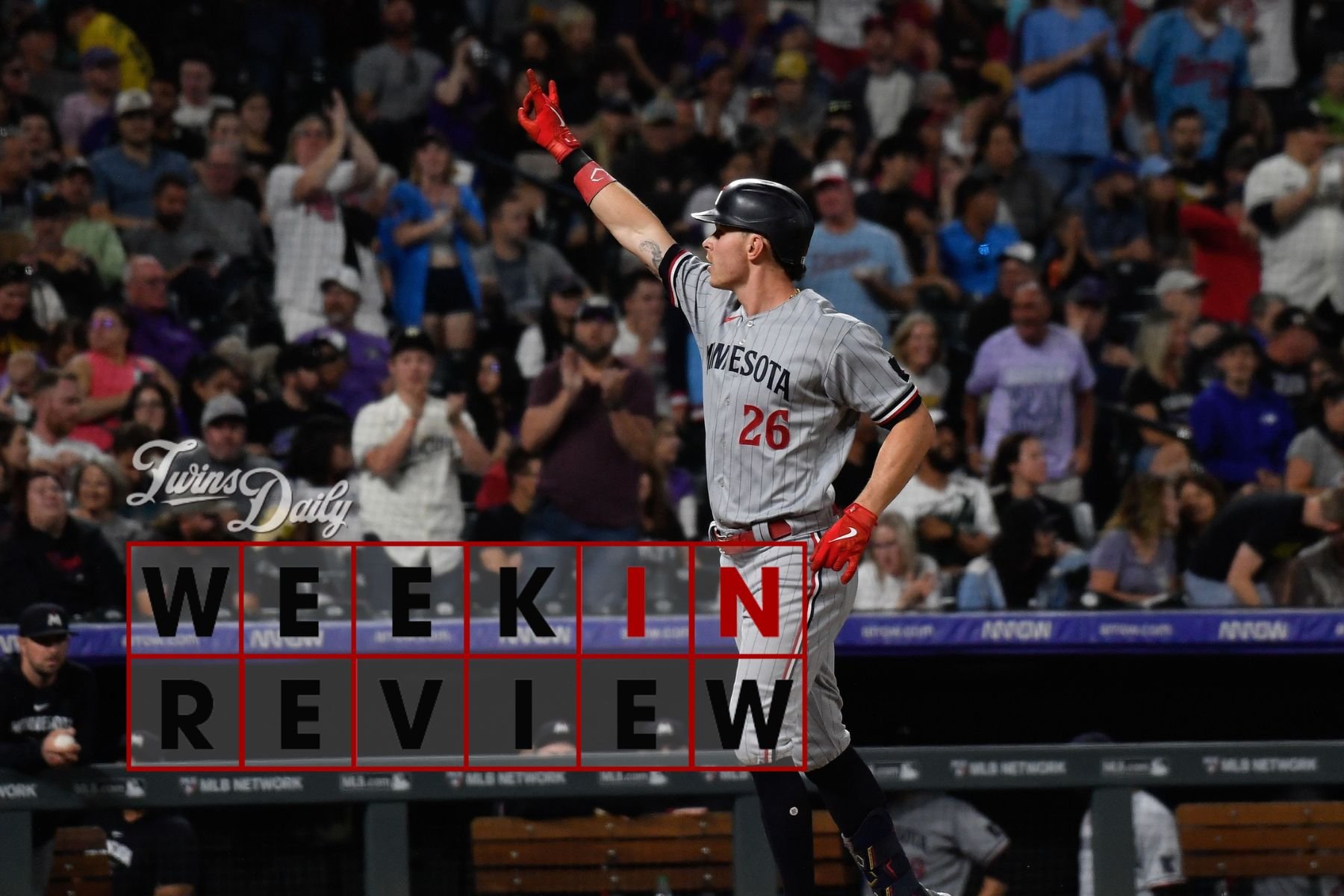 Weekly Snapshot: Mon, 9/25 through Sun, 10/1 *** Record Last Week: 4-2 (Overall: 87-75) Run Differential Last Week: +17 (Overall: +119) Standing: 1st Place in AL Central (9.0 GA) Last Week's Game Results: Game 157 | MIN 11, OAK 3: Wallner's Early Slam Sets Blowout Tone Game 158 | MIN 6, OAK 4: Offense's Late Jolt Secures Series Win Game 159 | OAK 2, MIN 1: Another Disappearing Act for Lineup Game 160 | MIN 7, COL 6: Homers Fuel Comeback at Coors Field Game 161 | MIN 14, COL 6: More Bombs Lead to Blowout Win Game 162 | COL 3, MIN 2: Who Cares NEWS & NOTES Shortly following the return of Chris Paddack, the Twins activated Brock Stewart to join the bullpen as another potential postseason weapon. Dylan Floro was designated for assignment to make room. Ironically, at the same time as the front office's lone trade deadline acquisition was officially rendered a flop, their overall strategy of laying low is being redeemed by the late additions of several key internal arms, including Louie Varland, Paddack, and now Stewart. In two appearances after returning, Stewart threw 1 ⅔ innings and struck out three with no walks. He did give up four hits, but not much in the way of worrisome hard contact. As the pitching staff reaches its (almost) full form in the nick of time, the position player corps is trying to do the same, albeit with a number of question marks in play. The critical trio of Carlos Correa, Royce Lewis and Byron Buxton remain in flux – none traveled on the final road trip to Colorado as they work to overcome health issues and participate effectively in the playoffs. Based on how things have trended, I think it's fair to say Correa has a great chance to be in the lineup on Tuesday, Lewis has a pretty good chance, and Buxton ... is totally up in the air. Much will hinge on how these players look on Monday's workout day at Target Field. Finally, in a scary moment, Jorge Polanco came out of Friday's game against the Rockies with ankle soreness, but he says he'll be good to go on Tuesday. Monday might also be an important day for him. HIGHLIGHTS Max Kepler is finishing the season strong as he looks to break free from the shadow of a 1-for-18 playoff history at the plate. He's about to get his chance and Kepler is coming in hot. He put together a four-hit game on Thursday, then on Friday he doubled against a lefty and later drove in the winning run on a sac fly. Kepler added a three-run homer in Saturday's game. The right fielder is playing the best ball of his career, with the possible exception of 2019, but in that case he was extremely hobbled going into the playoffs, and struggled mightily in September. Seeing Kepler finish on the opposite note here in 2023 is a promising sign. Ryan Jeffers also continues to look excellent at the plate and is wrapping up his breakthrough campaign with a power surge. He homered twice in three starts last week after going deep twice in his previous four games, pushing his line for the season to .276/.369/.490. Even with his role as a part-time catcher, Jeffers has a solid argument as team MVP and he put a nice finishing touch on it. Another player who showed out at the end of the season: Trevor Larnach. He won't be on the playoff roster but Larnach made a statement in his late-season stint with the Twins, after spending nearly the entire second half in Triple-A (where he posted an .888 OPS). Larnach came through with a go-ahead RBI double against Oakland on Wednesday, and drilled a homer to aid Minnesota's comeback win on Friday, both as a pinch-hitter. He started on Saturday in Colorado and launched a grand slam that broke the game open. Larnach's presence heading into 2024 gives the Twins some intriguing offseason options in terms of selling high on Kepler or even Matt Wallner. One last player worth commending is Emilio Pagán, who closed out his resilient 2023 campaign on a high note, picking up the save on Friday night with a clean ninth and then following as the opener on Saturday with a scoreless first. Pagán's stellar September (11 IP, 13 K, 0.82 ERA) lowered his overall ERA on the season to 2.99, marking a stunning turnaround from last year's struggles. Despite his success this year, Pagán is not one of the team's top high-leverage options for the playoffs. But to make a deep run in October, strong bullpen depth is key. Having a guy like this available as your fourth or fifth option is the definition of strong bullpen depth. LOWLIGHTS Seemingly in line to start a potential Game 3 in the ALWC series, Joe Ryan did not put forth the most encouraging performance in his final regular-season tuneup. Granted, it was at Coors Field, but Ryan was knocked around on Friday night, allowing six earned runs on eight hits – including three home runs – over five innings against the Rockies. The home runs are especially alarming. When Ryan was in his midseason slump, pitching through an undisclosed groin injury, homers were his primary weakness, and this is the worst we've seen them flare up outside of that stretch. Again: the altitudinous environment needs to be factored, but Ryan is going to be facing power-laden lineups in the postseason. He's got to dial this in. The 27-year-old wrapped up his season by allowing 13 earned runs in 16 innings (7.31 ERA) in his final three starts. Naturally, he did so with a very impressive 21-to-4 K/BB ratio. LOOKING AHEAD Here come the Blue Jays! Target Field will host two or three playoff games this week, and it's going to be a lot of fun. Possibly heartbreaking. Either way I'm ready for the ride. For those of you who've followed along for the ride all season – by checking out, commenting on, or sharing these weekly recaps – I appreciate you! TUESDAY, 10/3: BLUE JAYS @ TWINS – TBD v. RHP Pablo Lopez WEDNESDAY,10/4: BLUE JAYS @ TWINS – TBD v. RHP Sonny Gray THURSDAY, 10/5 (if necessary): BLUE JAYS @ TWINS – TBD v. TBD
- 26 comments
-
- 10
-
-
-
Sonny Gray has been, without question, one of the best pitchers in all of baseball. And yet the Twins have managed to lose a lot of his starts in spite of it. Image courtesy of Ken Blaze, USA Today Sports Twins Daily writers and contributors recently received their annual end-of-September request to fill out awards ballots for the concluding campaign. As always, the first question: Who was the Twins MVP this year? There have been times in the past where that question felt difficult to answer. This year presents an especially vexing conundrum. Royce Lewis probably made the biggest impact while on the field. But he only played 58 games. Max Kepler was probably the single most instrumental player in the offense's second-half resurgence. But he was also downright horrible in the first half. Edouard Julien, Ryan Jeffers and Willi Castro also have cases, but they are at best incomplete cases. The most straightforward and obvious answer, when you take all the narratives out of it, is Sonny Gray. Spoiler alert – he was at the top of my ballot. For me, it's as simple as this: Gray was the best performer on the team, and by a considerable margin. He easily led all Twins players in fWAR and bWAR, more than doubling any position player in either category. In fact, Gray ranked third in the major leagues according to both mainstream valuation metrics. His ERA is third-lowest in baseball, and he's been especially lights-out as the Twins have sewn it up down the stretch, with a 2.01 ERA and 2.72 FIP in 10 August/September starts. A pretty open-and-shut case, until you start asking yourself what "valuable" means. Because here's the thing: Despite his brilliance, the Twins have gone just 14-17 in Gray's starts. That's a .452 winning percentage compared to .552 in games where he didn't appear. Does that mean his performance was "less valuable"? Not at all, which is why I've never prescribed to this model of thinking in evaluating baseball's Most Valuable Player. The sport, by nature, limits the impact of individual contributions, making it all too easy for superlative performances to be offset and outweighed once the dust settles. Just ask Shohei Ohtani! I'm not breaking any new ground here, but the subject feels highly relevant as we look ahead to the Twins hosting a best-of-three Wild Card Series at Target Field, as they did three years ago when we saw the very same example play out. Facing a Houston Astros team that could very well be returning to Minneapolis next week, Kenta Maeda and Jose Berrios delivered the kinds of performances you almost ideally hope for from this year's stacked playoff rotation. They combined for 10 innings of one-run ball, doing all they could to set up the offense and bullpen for streak-shattering success. It wasn't enough. Successive afternoons saw the same script play out, with Minnesota's sleepy offense leaving the door wide open for late rallies by the Astros against the Twins bullpen. 4-1, 3-1. Within barely 24 hours, the whole ride was over. For that matter, it was the same story last time Target Field hosted a playoff game before that, one year earlier, when Jake Odorizzi tossed five solid innings against the Yankees in a 5-1 elimination loss. If you don't score, it doesn't matter how well you pitch. This cold truth has haunted the Twins in October, with just five total runs scored in their last four postseason games hosted at Target Field. Memories of such failure and futility were evoked on Saturday as the Twins, fresh off celebrating their clinched division title Friday night, wasted a stellar performance from Gray in a 1-0 loss. Under the circumstances it was nothing all that meaningful or worrisome, but given how many times we've seen a similar story play out with Gray this year – and with the Minnesota Twins in postseasons past – no one could be blamed for finding the experience a rather ominous follow-up to the climactic high point of the season. View full article
-
How the Twins' Best Player Reveals Their Biggest Postseason Concern
Nick Nelson posted an article in Twins
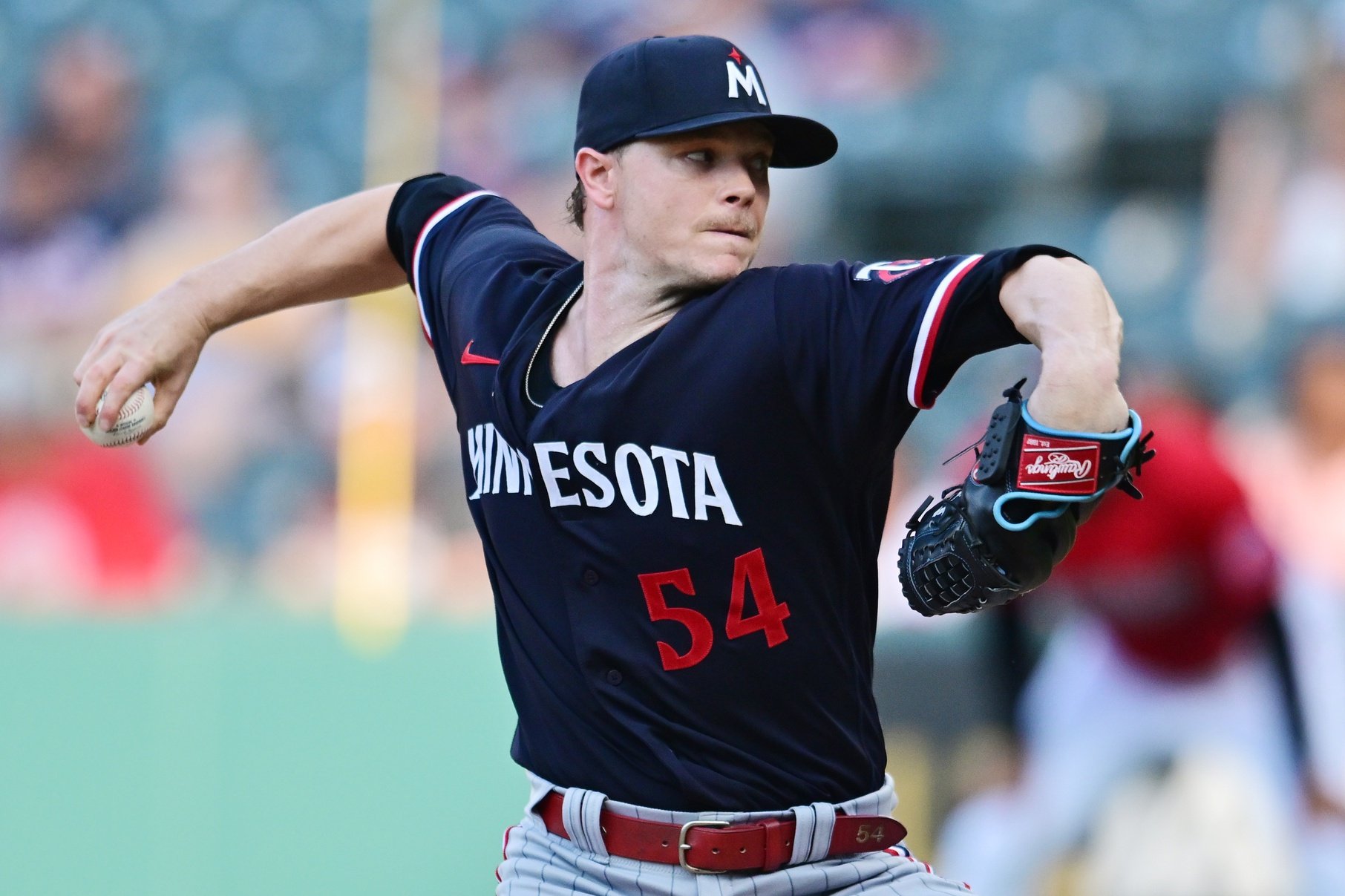 Twins Daily writers and contributors recently received their annual end-of-September request to fill out awards ballots for the concluding campaign. As always, the first question: Who was the Twins MVP this year? There have been times in the past where that question felt difficult to answer. This year presents an especially vexing conundrum. Royce Lewis probably made the biggest impact while on the field. But he only played 58 games. Max Kepler was probably the single most instrumental player in the offense's second-half resurgence. But he was also downright horrible in the first half. Edouard Julien, Ryan Jeffers and Willi Castro also have cases, but they are at best incomplete cases. The most straightforward and obvious answer, when you take all the narratives out of it, is Sonny Gray. Spoiler alert – he was at the top of my ballot. For me, it's as simple as this: Gray was the best performer on the team, and by a considerable margin. He easily led all Twins players in fWAR and bWAR, more than doubling any position player in either category. In fact, Gray ranked third in the major leagues according to both mainstream valuation metrics. His ERA is third-lowest in baseball, and he's been especially lights-out as the Twins have sewn it up down the stretch, with a 2.01 ERA and 2.72 FIP in 10 August/September starts. A pretty open-and-shut case, until you start asking yourself what "valuable" means. Because here's the thing: Despite his brilliance, the Twins have gone just 14-17 in Gray's starts. That's a .452 winning percentage compared to .552 in games where he didn't appear. Does that mean his performance was "less valuable"? Not at all, which is why I've never prescribed to this model of thinking in evaluating baseball's Most Valuable Player. The sport, by nature, limits the impact of individual contributions, making it all too easy for superlative performances to be offset and outweighed once the dust settles. Just ask Shohei Ohtani! I'm not breaking any new ground here, but the subject feels highly relevant as we look ahead to the Twins hosting a best-of-three Wild Card Series at Target Field, as they did three years ago when we saw the very same example play out. Facing a Houston Astros team that could very well be returning to Minneapolis next week, Kenta Maeda and Jose Berrios delivered the kinds of performances you almost ideally hope for from this year's stacked playoff rotation. They combined for 10 innings of one-run ball, doing all they could to set up the offense and bullpen for streak-shattering success. It wasn't enough. Successive afternoons saw the same script play out, with Minnesota's sleepy offense leaving the door wide open for late rallies by the Astros against the Twins bullpen. 4-1, 3-1. Within barely 24 hours, the whole ride was over. For that matter, it was the same story last time Target Field hosted a playoff game before that, one year earlier, when Jake Odorizzi tossed five solid innings against the Yankees in a 5-1 elimination loss. If you don't score, it doesn't matter how well you pitch. This cold truth has haunted the Twins in October, with just five total runs scored in their last four postseason games hosted at Target Field. Memories of such failure and futility were evoked on Saturday as the Twins, fresh off celebrating their clinched division title Friday night, wasted a stellar performance from Gray in a 1-0 loss. Under the circumstances it was nothing all that meaningful or worrisome, but given how many times we've seen a similar story play out with Gray this year – and with the Minnesota Twins in postseasons past – no one could be blamed for finding the experience a rather ominous follow-up to the climactic high point of the season.
 -
I didn't say or imply that? I said that the sum total of the Twins' rotation – 5 different pitchers who are healthy, and have essentially pitched like frontline starters all season when healthy – is a rare asset for the playoffs. I find the rotation's quality beyond the top 2 to be what differentiates them and literally said exactly those words in the article.
- 32 replies
-
- 2
-
-
- pablo lopez
- sonny gray
- (and 2 more)
-
The quality and depth of Minnesota's rotation this year gives them an advantage heading into the playoffs that few teams have ever enjoyed. And I'm not just talking about Twins teams. Rarely will you ever see a playoff-bound club this loaded with high-end starting pitching. Image courtesy of Michael McLoone, Ken Blaze, Matt Blewett, Kareem Elgazzar-USA TODAY Sports It's a common trope that pitching wins in the MLB playoffs. (Much like in football, defense wins champions.) The truth is that pitching helps, of course, but it's only half the battle. You've got to score runs to have a chance, as the Twins have learned the hard way numerous times – including their most recent postseason trip, in which they scored one run in each of their two losses against Houston. The Twins have reason to feel good about their playoff offense this year, especially if they can get Carlos Correa and Royce Lewis back. They've got even more reason to feel good about their pitching, thanks to a four-deep stable of high-quality starters who've all pitched at an All-Star level when healthy. Much has rightfully been made of the leading duo, Pablo López and Sonny Gray, who were on actual All-Stars in July and have both been pitching like bona fide aces ever since. No matter what stat or metric you want to use, these two have both been among the league's best starting pitchers this season. For example, Gray leads the AL in fWAR and López ranks sixth. Both are among the top 10 in ERA. These are elite, ace-caliber pitchers, and whichever team faces the Twins will need to win a game started by at least one of them. A tall order. There are some other playoff teams with impressive two-headed monsters in the rotation, though. Seattle has Luis Castillo and George Kirby. Toronto has Kevin Gausman and José Berríos. What really differentiates the Twins is their rotation prowess beyond their top two. Joe Ryan and Kenta Maeda might look on the surface like fairly standard No. 3 and No. 4 starter types on a playoff team, based on their aggregate numbers. However, I think we can fairly say their aggregate numbers do not tell the full story. On the season, Ryan is 11-10 with a 4.31 ERA in 28 starts. Nothing special, pretty much the epitome of an average starter. However, as fans who've been following the team all year know, Ryan revealed in early August that he'd been pitching through a groin injury, which he says first flared up weeks earlier ahead of a (brutal) start in Atlanta. He went on the injured list for about three weeks and returned near the end of August. Prior to the Atlanta start, Ryan was 8-4 with a 2.98 ERA and eight homers allowed in 15 starts. Since returning from the IL, he's 2-2 with a 3.81 ERA and four homers allowed in six starts. In between, while ostensibly being bothered by the injury, he was 1-4 with an 8.63 ERA and 17 home runs allowed in seven starts. Now I recognize it is often convenient for players to pin their struggles on a supposed injury in hindsight. But here, the explanation really checks out. Ryan was a radically different pitcher during the time he admittedly hid a physical issue from the team, and it shows clearly in the numbers. The home run totals are most conspicuous; Ryan gave up multiple homers five times during that seven-game span, and has done so only twice in his other 21 starts. If the real Joe Ryan is the one we saw during his 21 healthy starts – during which he posted a 3.16 ERA, 10.1 K/9 and 1.7 BB/9 with 12 home runs allowed in 124 innings – that's a legitimate frontline starter, and easily the best No. 3 any team could hope to boast this October, statistically. Despite all this, Ryan has hardly been viewed as a lock as Minnesota's third playoff starter ... because Maeda has been making such a strong case. Maeda was, of course, Minnesota's Game 1 starter last time they reached the playoffs, fresh off a Cy Young runner-up season. He came through brilliantly on that occasion, tossing five shutout innings against the Astros. It's been a long road since then. Maeda battled elbow soreness in 2021, underwent Tommy John surgery, missed all of 2022, and returned this year with a rough landing in April. Coming off an 18-month hiatus, Maeda's arm clearly wasn't quite ready for the rigors of live action. The Twins shut him down for a few weeks, brought him back in late June, and he's been a different pitcher ever since. In 16 starts since coming off the IL, Maeda is 6-3 with a 3.39 ERA, 10.4 K/9 and 2.4 BB/9. Again, that's frontline starter material, and not dissimilar to the type of performance we saw from the veteran right-hander in 2020. Any other year in history the Twins would be thrilled to start a guy like this in almost any playoff game – now the rotation is so strong one-through-three that Maeda is being prepped as a reliever, ready to provide multiple quality innings on call. (At least in the first round.) It's easy to feel confident in him for that role, given that Maeda has fulfilled it effectively in several postseasons past with the Dodgers. But it'd also be easy to feel confident in him as a third or fourth starter, and the Twins might need Maeda in that capacity if they advance. That's what is really exciting about the opportunity in front of this team. The Twins have a favorable situation in the ALWC round, where they can deploy those four – in front of a bullpen that's growing more formidable through season-ending additions – across three games at home. Once you get past the first round (novel concept, I know), Minnesota's rotation depth becomes a much more decisive competitive edge. If they want to, they can even add Bailey Ober, whose 3.66 ERA in 132 innings would make him a clear-cut No. 3 or even No. 2 starter on most playoff staffs. Starting pitching is without question the signature strength that propelled Minnesota to the playoffs this year, leading the American League in fWAR and ranking second in ERA. This strength offers the best reason to think they can not only snap their losing streak but make a fairly deep run. You just don't find playoff teams with this many starting pitching weapons very often. As the playoffs arrive, they're all clicking. View full article
-
Embarrassment of Pitches: Twins Have Arms to Carry Them in October
Nick Nelson posted an article in Twins
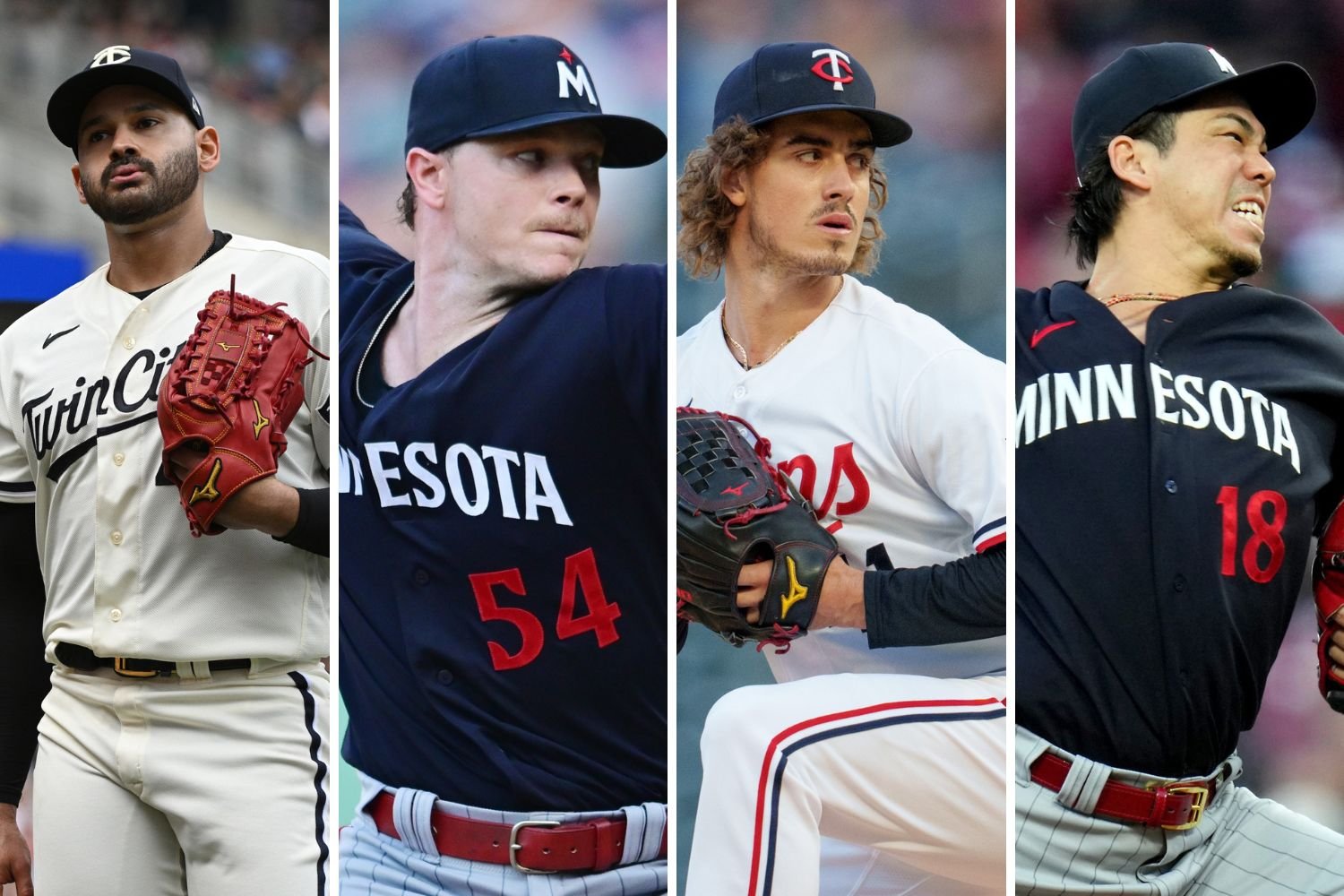 It's a common trope that pitching wins in the MLB playoffs. (Much like in football, defense wins champions.) The truth is that pitching helps, of course, but it's only half the battle. You've got to score runs to have a chance, as the Twins have learned the hard way numerous times – including their most recent postseason trip, in which they scored one run in each of their two losses against Houston. The Twins have reason to feel good about their playoff offense this year, especially if they can get Carlos Correa and Royce Lewis back. They've got even more reason to feel good about their pitching, thanks to a four-deep stable of high-quality starters who've all pitched at an All-Star level when healthy. Much has rightfully been made of the leading duo, Pablo López and Sonny Gray, who were on actual All-Stars in July and have both been pitching like bona fide aces ever since. No matter what stat or metric you want to use, these two have both been among the league's best starting pitchers this season. For example, Gray leads the AL in fWAR and López ranks sixth. Both are among the top 10 in ERA. These are elite, ace-caliber pitchers, and whichever team faces the Twins will need to win a game started by at least one of them. A tall order. There are some other playoff teams with impressive two-headed monsters in the rotation, though. Seattle has Luis Castillo and George Kirby. Toronto has Kevin Gausman and José Berríos. What really differentiates the Twins is their rotation prowess beyond their top two. Joe Ryan and Kenta Maeda might look on the surface like fairly standard No. 3 and No. 4 starter types on a playoff team, based on their aggregate numbers. However, I think we can fairly say their aggregate numbers do not tell the full story. On the season, Ryan is 11-10 with a 4.31 ERA in 28 starts. Nothing special, pretty much the epitome of an average starter. However, as fans who've been following the team all year know, Ryan revealed in early August that he'd been pitching through a groin injury, which he says first flared up weeks earlier ahead of a (brutal) start in Atlanta. He went on the injured list for about three weeks and returned near the end of August. Prior to the Atlanta start, Ryan was 8-4 with a 2.98 ERA and eight homers allowed in 15 starts. Since returning from the IL, he's 2-2 with a 3.81 ERA and four homers allowed in six starts. In between, while ostensibly being bothered by the injury, he was 1-4 with an 8.63 ERA and 17 home runs allowed in seven starts. Now I recognize it is often convenient for players to pin their struggles on a supposed injury in hindsight. But here, the explanation really checks out. Ryan was a radically different pitcher during the time he admittedly hid a physical issue from the team, and it shows clearly in the numbers. The home run totals are most conspicuous; Ryan gave up multiple homers five times during that seven-game span, and has done so only twice in his other 21 starts. If the real Joe Ryan is the one we saw during his 21 healthy starts – during which he posted a 3.16 ERA, 10.1 K/9 and 1.7 BB/9 with 12 home runs allowed in 124 innings – that's a legitimate frontline starter, and easily the best No. 3 any team could hope to boast this October, statistically. Despite all this, Ryan has hardly been viewed as a lock as Minnesota's third playoff starter ... because Maeda has been making such a strong case. Maeda was, of course, Minnesota's Game 1 starter last time they reached the playoffs, fresh off a Cy Young runner-up season. He came through brilliantly on that occasion, tossing five shutout innings against the Astros. It's been a long road since then. Maeda battled elbow soreness in 2021, underwent Tommy John surgery, missed all of 2022, and returned this year with a rough landing in April. Coming off an 18-month hiatus, Maeda's arm clearly wasn't quite ready for the rigors of live action. The Twins shut him down for a few weeks, brought him back in late June, and he's been a different pitcher ever since. In 16 starts since coming off the IL, Maeda is 6-3 with a 3.39 ERA, 10.4 K/9 and 2.4 BB/9. Again, that's frontline starter material, and not dissimilar to the type of performance we saw from the veteran right-hander in 2020. Any other year in history the Twins would be thrilled to start a guy like this in almost any playoff game – now the rotation is so strong one-through-three that Maeda is being prepped as a reliever, ready to provide multiple quality innings on call. (At least in the first round.) It's easy to feel confident in him for that role, given that Maeda has fulfilled it effectively in several postseasons past with the Dodgers. But it'd also be easy to feel confident in him as a third or fourth starter, and the Twins might need Maeda in that capacity if they advance. That's what is really exciting about the opportunity in front of this team. The Twins have a favorable situation in the ALWC round, where they can deploy those four – in front of a bullpen that's growing more formidable through season-ending additions – across three games at home. Once you get past the first round (novel concept, I know), Minnesota's rotation depth becomes a much more decisive competitive edge. If they want to, they can even add Bailey Ober, whose 3.66 ERA in 132 innings would make him a clear-cut No. 3 or even No. 2 starter on most playoff staffs. Starting pitching is without question the signature strength that propelled Minnesota to the playoffs this year, leading the American League in fWAR and ranking second in ERA. This strength offers the best reason to think they can not only snap their losing streak but make a fairly deep run. You just don't find playoff teams with this many starting pitching weapons very often. As the playoffs arrive, they're all clicking.
- 32 comments
-
- 5
-
-
- pablo lopez
- sonny gray
- (and 2 more)
-
The Twins officially put the American League Central on ice, but the celebration was a little subdued in the wake of some tough injury developments earlier in the week. Here's the latest on Royce Lewis, Carlos Correa, and your 2023 division champs. Image courtesy of Jordan Johnson-USA TODAY Sports Weekly Snapshot: Mon, 9/18 through Sun, 9/24 *** Record Last Week: 4-2 (Overall: 83-73) Run Differential Last Week: +12 (Overall: +102) Standing: 1st Place in AL Central (9.5 GA) Last Week's Game Results: Game 151 | CIN 7, MIN 3: Ryan Struggles, Correa Exits Early Game 152 | MIN 7, CIN 0: Twins Blow Out Reds But Lose Lewis Game 153 | MIN 5, CIN 3: Polanco and Castro Lead Comeback Win Game 154 | MIN 8, LAA 6: Twins Clinch AL Central Title at Home Game 155 | LAA 1, MIN 0: Hangover Lineup Looks Hungover Game 156 | MIN 9, LAA 3: Another Series Win Behind Jeffers, Kepler NEWS & NOTES It wouldn't be a successful Minnesota Twins regular season if it didn't include at least a couple of heartbreaking twists of fate that threaten to impede the team's effectiveness in the postseason. Last week was quite the double-whammy in this regard. Carlos Correa and Royce Lewis, who are arguably the two most important playoff bats for the Twins, exited early on successive nights in Cincinnati. First it was Correa coming out of Monday's game after planting his foot and feeling a sharp pain during a routine defensive play. Correa was soon placed on the injured list with an aggravation of the plantar fasciitis that's bothered him for much of the season. Trevor Larnach was recalled to take his place. On Tuesday, Lewis came up limping after an awkward swing at the plate, and was quickly removed from the game with a hamstring injury. The rookie phenom was visibly dejected and frustrated as he slowly walked off the field – a crushing moment. Correa is confident he'll be able to return for the playoffs, and his optimism seems to be shared by management. How effective he will be, and whether the foot issue will flare up again now that it's been aggravated? Those are separate questions. The outlook for Lewis is more ambiguous. He was diagnosed with a "Grade 1-plus" hamstring strain, which is viewed as somewhere between mild and moderate, with a recovery span in the two weeks-plus range. That puts Lewis in a tight spot, with the injury suffered exactly 14 days before Game 1 of the AL Wild Card Series. Will he make it back? We'll see. For now, Jordan Luplow replaces him on the active roster. Several rehabbing relievers are in line to return just ahead of the postseason. Chris Paddack became the first to break through when he was called up from Triple-A on Sunday. Josh Winder was optioned and Jovani Moran moved to the 60-day IL to make room. Paddack looked fantastic in the minors, piling up 15 strikeouts in 9 ⅔ innings between three levels, and now he'll look to fulfill a similar bullpen role as Louie Varland, bringing upper-90s heat over multiple innings. Paddack was set to appear in relief of Joe Ryan on Sunday, but a rain delay just before his appearance threw that plan out the window. Brock Stewart will presumably be following Paddack closely, with three hitless appearances in Triple-A under his belt. Jorge Alcala is also in the mix, and physically ready to return, though the Twins might be less inclined to make room for him given the differing levels of trust these relievers have earned. Alcala did have a dominant outing in St. Paul on Friday night, striking out four over two perfect frames, which gives him a bit more appeal. With the Triple-A season ending on Sunday, it's unclear what the future holds for Alcala, as well as other rehabbing players like Nick Gordon and Joey Gallo, for whom there are no apparent openings on the big-league roster. Barring an injury somewhere to make room, their seasons might all be finished. HIGHLIGHTS On Friday night, the Minnesota Twins clinched their first division championship in three years before a sizable crowd of fans in their home park. Their rejuvenated offense built a big lead against the woeful Angels, and the bullpen managed to hang on despite some turbulence to close it out. Thus, the party commenced. Outside of a sleepy hangover game on Saturday that saw the Twins get shut out by something called Kenny Rosenberg and a band of Angels relievers, Minnesota's lineup was again on top its game last week. It was nice to see some of the role-player veterans pulling much of the weight. Willi Castro continued his September surge by going 5-for-13 with two homers and a triple, plugging in at third base in Lewis' absence. Since returning from the injured list on September 3rd, Castro is batting .302 with a .951 OPS. Kyle Farmer is also enjoying a very strong final month and setting himself up for a key postseason role, with the availability of Lewis and (to a lesser extent) Correa in question. Farmer's OPS is solidly above .800 this month, and last week he went 8-for-23 with a pair of doubles, taking over as primary shortstop in Correa's absence. Even Christian Vázquez joined the fun, chipping in a pair of two-hit games and a walk in his three starts. He's been much better at the plate recently and continues to rate out extremely well defensively, giving the Twins a two-headed threat behind the plate that's an underrated ingredient in their success. You might not think of Castro, Farmer or Vázquez as key players for the postseason picture – very possibly none will be in the starting lineup for Game 1. But they're all going to be called upon at times, and in many cases, role players like these can make all the difference by coming through in those critical tailor-made moments. The Twins' rotation is looking ready for its big upcoming assignment as well. Sonny Gray spun six innings of one-run ball with eight strikeouts and no walks in what might he his last standard start of the regular season. He has a 1.96 ERA this month and looks very ready to take the ball in the playoffs, although it sounds as though he'll be doing so in Game 2 behind Pablo López, who delivered a quality start against Los Angeles on Friday. Rocco Baldelli was not as prepared to disclose the plan for beyond those first two games. My guess is that they'll go with Ryan (who has no experience relieving, let alone in the playoffs) piggybacked by Kenta Maeda (who has plenty of experience with both) following a time or two through the order. Sure enough, Baldelli expressed a plan to prime Maeda for such a role by appearing out of the bullpen in the final week. However those two are mixed in, they both gave the team a boost of confidence this past week. Maeda was splendid in Cincinnati on Tuesday, tossing five shutout innings with eight strikeouts. Ryan allowed three runs in six innings on Sunday while striking out 10 and walking none. LOWLIGHTS Without question, the biggest bummer of last week was watching both Correa and Lewis limp off the field with injuries on back-to-back nights. Just an incredible buzzkill at a time where the Twins were counting down toward a much-anticipated return to the postseason while mostly counting their blessings on the health front. These two players have so uniquely earned reputations for rising to the occasion. In Correa's case, it's a longstanding rep that is October-tested; he is the active MLB leader in postseason RBIs. In Lewis' case, the sample is small but convincing: he's on a 140-RBI full-season pace as a rookie, and has shown a remarkable penchant for coming through in key spots and with runners aboard. The prospect of playing without them, or with one or both in a highly limited state, is disheartening for a team that desperately needs to exorcize its postseason demons. Inexperience will be another key factor to watch as the Twins march their way toward the big stage. Are the younger and less experienced players who've helped propel the team to this point ready for the ultimate pressure cooker? Jhoan Duran was admittedly rattled by the stakes of trying to close out a clinching game in front of a packed stadium on Friday night. Attempting to protect a three-run lead against a horrible Angels team, Duran worked himself into a precarious situation, allowing a run and loading the bases before finally escaping on a nifty defensive play by Julien. Duran struggled to throw strikes, finding the zone with just 17 of his 34 pitches. It's okay to deal with some nerves in a spot like that – and perhaps a good thing that he went through the experience – but Duran's going to need to dial it in once the games start mattering more than ever. TRENDING STORYLINE What will become of Byron Buxton? The hobbled designated hitter has pushed himself hard to make it back for the playoffs, returning after a setback with his knee to make two starts for the Saints last week. There were plans for him to start back-to-back days over the weekend, but rain washed away the Saturday night game in St. Paul. Buxton's results at the plate were none too impressive during his latest two-game Triple-A stint – he was 1-for-8 with three strikeouts, though he reportedly produced some hard contact. That might be less meaningful than how his leg is feeling in the days ahead. I suspect the Twins will go out of their way to include Buck on the postseason roster, even if as a Kirk Gibson-esque long shot pinch-hitting threat, but the state of his body – or a forced decision between carrying him or someone more functionally useful like Lewis or Andrew Stevenson or a reliever – might override that desire. LOOKING AHEAD We're finally here: the last week of the season. The Twins have an extremely soft final landing pad, with a pair of last-place teams on the docket. The trip to Colorado's altitudinous environment just ahead of the postseason is a bit annoying; Baldelli has indicated the Twins might leave some players behind for that trip, which sounds like a good plan. Expect short tune-up starts from Lopez and Gray on Wednesday and Thursday, who will surely be among those staying in Minnesota over the weekend to prep for the playoffs. TUESDAY, 9/26: ATHLETICS @ TWINS – RHP Paul Blackburn v. RHP Bailey Ober WEDNESDAY, 9/27: ATHLETICS @ TWINS – RHP Joey Estes v. RHP Pablo Lopez THURSDAY, 9/28: ATHLETICS @ TWINS – RHP Luis Medina v. RHP Sonny Gray FRIDAY, 9/29: TWINS @ ROCKIES – TBD v. LHP Ty Blach SATURDAY, 9/30: TWINS @ ROCKIES – TBD v. RHP Chase Anderson SUNDAY, 10/1: TWINS @ ROCKIES – TBD v. TBD View full article
-
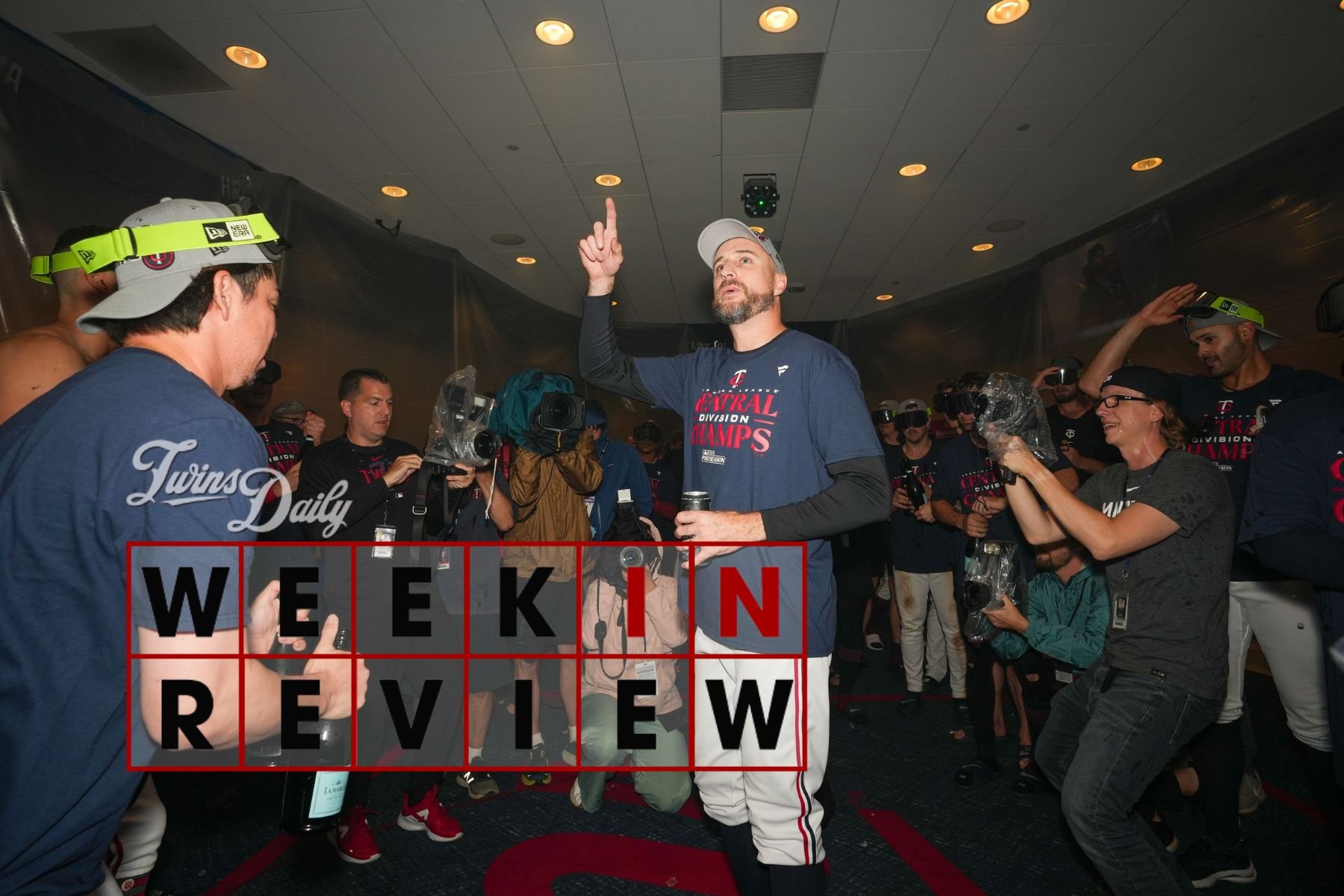 Weekly Snapshot: Mon, 9/18 through Sun, 9/24 *** Record Last Week: 4-2 (Overall: 83-73) Run Differential Last Week: +12 (Overall: +102) Standing: 1st Place in AL Central (9.5 GA) Last Week's Game Results: Game 151 | CIN 7, MIN 3: Ryan Struggles, Correa Exits Early Game 152 | MIN 7, CIN 0: Twins Blow Out Reds But Lose Lewis Game 153 | MIN 5, CIN 3: Polanco and Castro Lead Comeback Win Game 154 | MIN 8, LAA 6: Twins Clinch AL Central Title at Home Game 155 | LAA 1, MIN 0: Hangover Lineup Looks Hungover Game 156 | MIN 9, LAA 3: Another Series Win Behind Jeffers, Kepler NEWS & NOTES It wouldn't be a successful Minnesota Twins regular season if it didn't include at least a couple of heartbreaking twists of fate that threaten to impede the team's effectiveness in the postseason. Last week was quite the double-whammy in this regard. Carlos Correa and Royce Lewis, who are arguably the two most important playoff bats for the Twins, exited early on successive nights in Cincinnati. First it was Correa coming out of Monday's game after planting his foot and feeling a sharp pain during a routine defensive play. Correa was soon placed on the injured list with an aggravation of the plantar fasciitis that's bothered him for much of the season. Trevor Larnach was recalled to take his place. On Tuesday, Lewis came up limping after an awkward swing at the plate, and was quickly removed from the game with a hamstring injury. The rookie phenom was visibly dejected and frustrated as he slowly walked off the field – a crushing moment. Correa is confident he'll be able to return for the playoffs, and his optimism seems to be shared by management. How effective he will be, and whether the foot issue will flare up again now that it's been aggravated? Those are separate questions. The outlook for Lewis is more ambiguous. He was diagnosed with a "Grade 1-plus" hamstring strain, which is viewed as somewhere between mild and moderate, with a recovery span in the two weeks-plus range. That puts Lewis in a tight spot, with the injury suffered exactly 14 days before Game 1 of the AL Wild Card Series. Will he make it back? We'll see. For now, Jordan Luplow replaces him on the active roster. Several rehabbing relievers are in line to return just ahead of the postseason. Chris Paddack became the first to break through when he was called up from Triple-A on Sunday. Josh Winder was optioned and Jovani Moran moved to the 60-day IL to make room. Paddack looked fantastic in the minors, piling up 15 strikeouts in 9 ⅔ innings between three levels, and now he'll look to fulfill a similar bullpen role as Louie Varland, bringing upper-90s heat over multiple innings. Paddack was set to appear in relief of Joe Ryan on Sunday, but a rain delay just before his appearance threw that plan out the window. Brock Stewart will presumably be following Paddack closely, with three hitless appearances in Triple-A under his belt. Jorge Alcala is also in the mix, and physically ready to return, though the Twins might be less inclined to make room for him given the differing levels of trust these relievers have earned. Alcala did have a dominant outing in St. Paul on Friday night, striking out four over two perfect frames, which gives him a bit more appeal. With the Triple-A season ending on Sunday, it's unclear what the future holds for Alcala, as well as other rehabbing players like Nick Gordon and Joey Gallo, for whom there are no apparent openings on the big-league roster. Barring an injury somewhere to make room, their seasons might all be finished. HIGHLIGHTS On Friday night, the Minnesota Twins clinched their first division championship in three years before a sizable crowd of fans in their home park. Their rejuvenated offense built a big lead against the woeful Angels, and the bullpen managed to hang on despite some turbulence to close it out. Thus, the party commenced. Outside of a sleepy hangover game on Saturday that saw the Twins get shut out by something called Kenny Rosenberg and a band of Angels relievers, Minnesota's lineup was again on top its game last week. It was nice to see some of the role-player veterans pulling much of the weight. Willi Castro continued his September surge by going 5-for-13 with two homers and a triple, plugging in at third base in Lewis' absence. Since returning from the injured list on September 3rd, Castro is batting .302 with a .951 OPS. Kyle Farmer is also enjoying a very strong final month and setting himself up for a key postseason role, with the availability of Lewis and (to a lesser extent) Correa in question. Farmer's OPS is solidly above .800 this month, and last week he went 8-for-23 with a pair of doubles, taking over as primary shortstop in Correa's absence. Even Christian Vázquez joined the fun, chipping in a pair of two-hit games and a walk in his three starts. He's been much better at the plate recently and continues to rate out extremely well defensively, giving the Twins a two-headed threat behind the plate that's an underrated ingredient in their success. You might not think of Castro, Farmer or Vázquez as key players for the postseason picture – very possibly none will be in the starting lineup for Game 1. But they're all going to be called upon at times, and in many cases, role players like these can make all the difference by coming through in those critical tailor-made moments. The Twins' rotation is looking ready for its big upcoming assignment as well. Sonny Gray spun six innings of one-run ball with eight strikeouts and no walks in what might he his last standard start of the regular season. He has a 1.96 ERA this month and looks very ready to take the ball in the playoffs, although it sounds as though he'll be doing so in Game 2 behind Pablo López, who delivered a quality start against Los Angeles on Friday. Rocco Baldelli was not as prepared to disclose the plan for beyond those first two games. My guess is that they'll go with Ryan (who has no experience relieving, let alone in the playoffs) piggybacked by Kenta Maeda (who has plenty of experience with both) following a time or two through the order. Sure enough, Baldelli expressed a plan to prime Maeda for such a role by appearing out of the bullpen in the final week. However those two are mixed in, they both gave the team a boost of confidence this past week. Maeda was splendid in Cincinnati on Tuesday, tossing five shutout innings with eight strikeouts. Ryan allowed three runs in six innings on Sunday while striking out 10 and walking none. LOWLIGHTS Without question, the biggest bummer of last week was watching both Correa and Lewis limp off the field with injuries on back-to-back nights. Just an incredible buzzkill at a time where the Twins were counting down toward a much-anticipated return to the postseason while mostly counting their blessings on the health front. These two players have so uniquely earned reputations for rising to the occasion. In Correa's case, it's a longstanding rep that is October-tested; he is the active MLB leader in postseason RBIs. In Lewis' case, the sample is small but convincing: he's on a 140-RBI full-season pace as a rookie, and has shown a remarkable penchant for coming through in key spots and with runners aboard. The prospect of playing without them, or with one or both in a highly limited state, is disheartening for a team that desperately needs to exorcize its postseason demons. Inexperience will be another key factor to watch as the Twins march their way toward the big stage. Are the younger and less experienced players who've helped propel the team to this point ready for the ultimate pressure cooker? Jhoan Duran was admittedly rattled by the stakes of trying to close out a clinching game in front of a packed stadium on Friday night. Attempting to protect a three-run lead against a horrible Angels team, Duran worked himself into a precarious situation, allowing a run and loading the bases before finally escaping on a nifty defensive play by Julien. Duran struggled to throw strikes, finding the zone with just 17 of his 34 pitches. It's okay to deal with some nerves in a spot like that – and perhaps a good thing that he went through the experience – but Duran's going to need to dial it in once the games start mattering more than ever. TRENDING STORYLINE What will become of Byron Buxton? The hobbled designated hitter has pushed himself hard to make it back for the playoffs, returning after a setback with his knee to make two starts for the Saints last week. There were plans for him to start back-to-back days over the weekend, but rain washed away the Saturday night game in St. Paul. Buxton's results at the plate were none too impressive during his latest two-game Triple-A stint – he was 1-for-8 with three strikeouts, though he reportedly produced some hard contact. That might be less meaningful than how his leg is feeling in the days ahead. I suspect the Twins will go out of their way to include Buck on the postseason roster, even if as a Kirk Gibson-esque long shot pinch-hitting threat, but the state of his body – or a forced decision between carrying him or someone more functionally useful like Lewis or Andrew Stevenson or a reliever – might override that desire. LOOKING AHEAD We're finally here: the last week of the season. The Twins have an extremely soft final landing pad, with a pair of last-place teams on the docket. The trip to Colorado's altitudinous environment just ahead of the postseason is a bit annoying; Baldelli has indicated the Twins might leave some players behind for that trip, which sounds like a good plan. Expect short tune-up starts from Lopez and Gray on Wednesday and Thursday, who will surely be among those staying in Minnesota over the weekend to prep for the playoffs. TUESDAY, 9/26: ATHLETICS @ TWINS – RHP Paul Blackburn v. RHP Bailey Ober WEDNESDAY, 9/27: ATHLETICS @ TWINS – RHP Joey Estes v. RHP Pablo Lopez THURSDAY, 9/28: ATHLETICS @ TWINS – RHP Luis Medina v. RHP Sonny Gray FRIDAY, 9/29: TWINS @ ROCKIES – TBD v. LHP Ty Blach SATURDAY, 9/30: TWINS @ ROCKIES – TBD v. RHP Chase Anderson SUNDAY, 10/1: TWINS @ ROCKIES – TBD v. TBD
- 4 comments
-
- 9
-
-
- carlos correa
- royce lewis
- (and 2 more)
-
Just over a year ago, I watched the Minnesota Twins season unofficially sink before my eyes at Guaranteed Rate Field in Chicago. Twelve months and two weeks later, I returned to the same spot and witnessed not a funeral, but a coronation – one that illustrated how far the Twins have come since the bleak death march that was September 2022. Image courtesy of Kamil Krzaczynski-USA TODAY Sports By the time I made it to out to the ballpark to catch my first game in the series, the Twins had already taken firm control with back-to-back 10-2 victories on Thursday and Friday night. On Saturday, the brutal first inning from Pablo López barely even fazed me. The late comeback that fell short would've merely been icing on the cake. On Sunday, I returned to Guaranteed Rate Field and watched the Twins more properly exert their will on the lowly White Sox, clinching a series victory and lowering their magic number to six. It was a breezy, carefree experience – and suffice to say, a polar opposite of my emotional state as a fan in the same ballpark a year before. There were already a lot of negative trends and ominous signs in play for the team when I visited Chicago on Labor Day weekend of 2022. But the Twins were still, technically, very much in the AL Central race at the time, trailing Cleveland by just a game for the division lead. Already it was growing hard to believe in this hobbled Minnesota squad. On this particular night, September 3rd, they fielded a lineup with Jake Cave, Gary Sanchez and Gilberto Celestino comprising the bottom third of the order. Alas, I was in attendance, hoping to see some miracle signs from this beleaguered lineup and starting pitcher Tyler Mahle, who'd been acquired at the deadline with a sizable price tag. That's not what happened. Mahle gave up four runs in the first inning and came out after the second, his velocity once again dropping to alarming levels. It'd be his last appearance of the season for the Twins. This moment essentially made it clear to me that whatever faint glimmers of hope still existed had been snuffed out. I tweeted as much from the stands. The White Sox proceeded to stack 13 runs on the Twins that night – including six on Nick Gordon, who entered in the eighth – as their starter Dylan Cease carried a no-hitter into the ninth. I can't say I was still in the building when Luis Arraez singled with one out to go, but I was pleased to inform a few smug Sox fans on the train once I saw the notification on my phone. The bottom line and biggest takeaway from this past weekend is that it's damn nice to be on the other side. Setting aside the embittered rivalry, I do feel empathy for White Sox fans, who've been done dirty by the organization's rudderless management. Their short and fruitless contention window appears to have snapped shut, and unlike the Twins, it's tough to see an immediate path back. Mix in the ugly performance put forth by Justin Fields and the Bears on Sunday, and let's just say the collective vibe of Chicagoan sports fans was not great. It's a bummer. Attending these games and experiencing other ballparks and fanbases is much more fun when the games matter, the stands are full, and the local product is less depressing. One thing I always try to center in my writing – and if you've read my work, hopefully it's something that comes through – is a sense of perspective. No matter how you feel about the Twins, their leadership, the quality of their season, or their future ... it's simply undeniable that things are way better than they were a year ago, and better than they are for the rest of the teams in this division. My own sense of perspective got a jumpstart during my trip to Chicago, and I return home with a renewed appreciation and enthusiasm for what lies ahead. The season is winding down but the excitement is just beginning. View full article
-
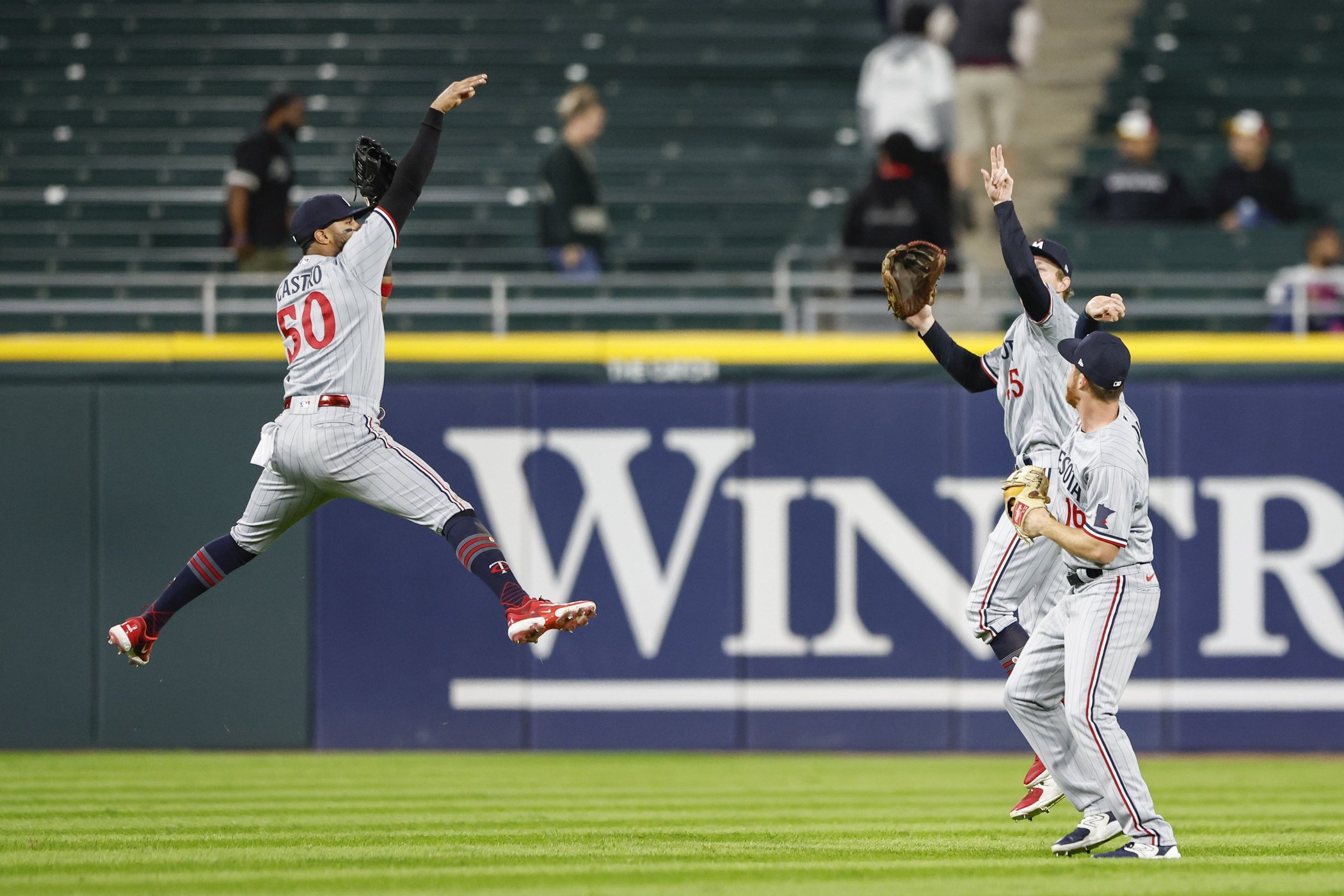 By the time I made it to out to the ballpark to catch my first game in the series, the Twins had already taken firm control with back-to-back 10-2 victories on Thursday and Friday night. On Saturday, the brutal first inning from Pablo López barely even fazed me. The late comeback that fell short would've merely been icing on the cake. On Sunday, I returned to Guaranteed Rate Field and watched the Twins more properly exert their will on the lowly White Sox, clinching a series victory and lowering their magic number to six. It was a breezy, carefree experience – and suffice to say, a polar opposite of my emotional state as a fan in the same ballpark a year before. There were already a lot of negative trends and ominous signs in play for the team when I visited Chicago on Labor Day weekend of 2022. But the Twins were still, technically, very much in the AL Central race at the time, trailing Cleveland by just a game for the division lead. Already it was growing hard to believe in this hobbled Minnesota squad. On this particular night, September 3rd, they fielded a lineup with Jake Cave, Gary Sanchez and Gilberto Celestino comprising the bottom third of the order. Alas, I was in attendance, hoping to see some miracle signs from this beleaguered lineup and starting pitcher Tyler Mahle, who'd been acquired at the deadline with a sizable price tag. That's not what happened. Mahle gave up four runs in the first inning and came out after the second, his velocity once again dropping to alarming levels. It'd be his last appearance of the season for the Twins. This moment essentially made it clear to me that whatever faint glimmers of hope still existed had been snuffed out. I tweeted as much from the stands. The White Sox proceeded to stack 13 runs on the Twins that night – including six on Nick Gordon, who entered in the eighth – as their starter Dylan Cease carried a no-hitter into the ninth. I can't say I was still in the building when Luis Arraez singled with one out to go, but I was pleased to inform a few smug Sox fans on the train once I saw the notification on my phone. The bottom line and biggest takeaway from this past weekend is that it's damn nice to be on the other side. Setting aside the embittered rivalry, I do feel empathy for White Sox fans, who've been done dirty by the organization's rudderless management. Their short and fruitless contention window appears to have snapped shut, and unlike the Twins, it's tough to see an immediate path back. Mix in the ugly performance put forth by Justin Fields and the Bears on Sunday, and let's just say the collective vibe of Chicagoan sports fans was not great. It's a bummer. Attending these games and experiencing other ballparks and fanbases is much more fun when the games matter, the stands are full, and the local product is less depressing. One thing I always try to center in my writing – and if you've read my work, hopefully it's something that comes through – is a sense of perspective. No matter how you feel about the Twins, their leadership, the quality of their season, or their future ... it's simply undeniable that things are way better than they were a year ago, and better than they are for the rest of the teams in this division. My own sense of perspective got a jumpstart during my trip to Chicago, and I return home with a renewed appreciation and enthusiasm for what lies ahead. The season is winding down but the excitement is just beginning.
 -
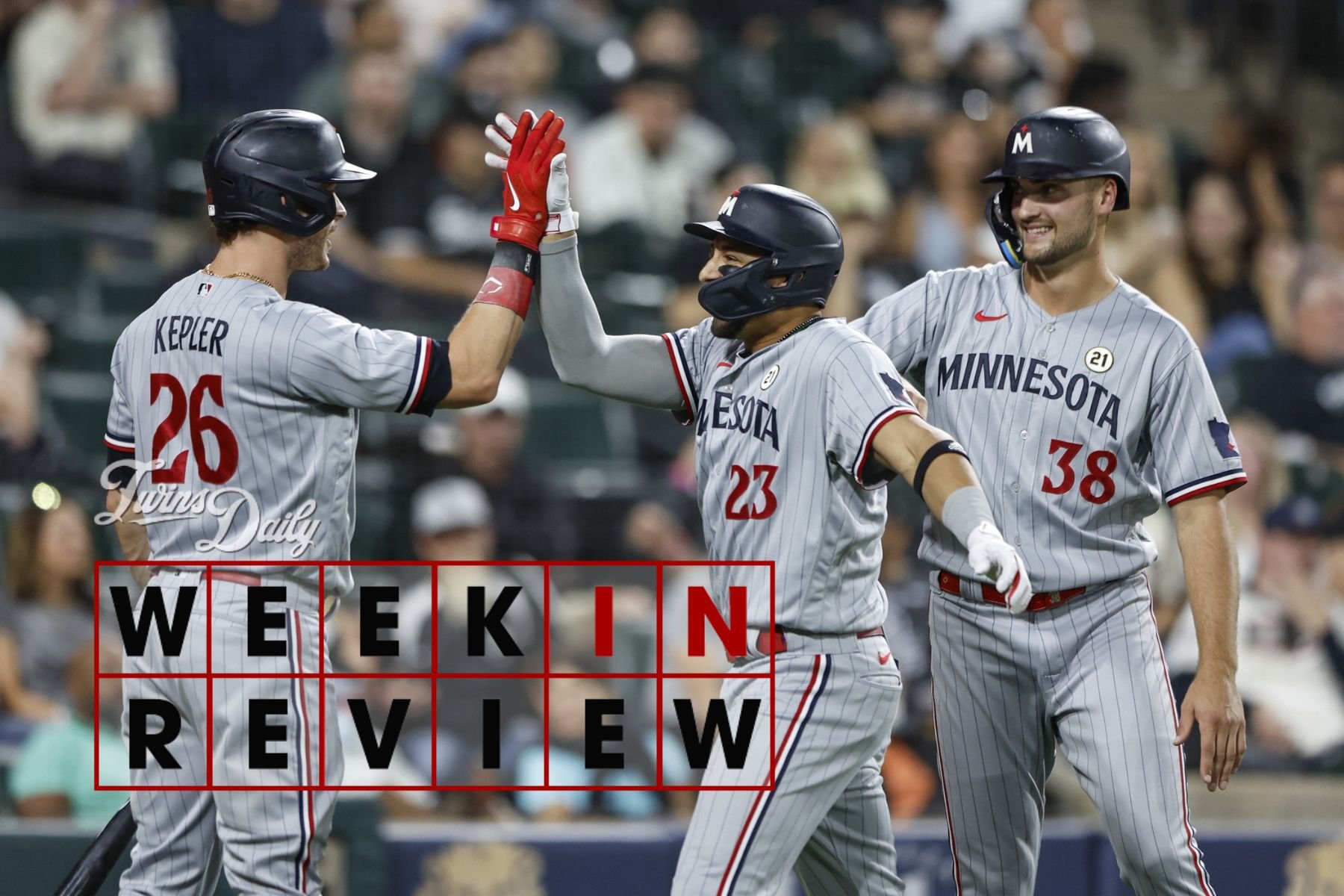 Weekly Snapshot: Mon, 9/11 through Sun, 9/17 *** Record Last Week: 4-3 (Overall: 79-71) Run Differential Last Week: +16 (Overall: +90) Standing: 1st Place in AL Central (7.0 GA) Last Week's Game Results: Game 144 | TB 7, MIN 4: Bullpen Struggles After Gray's Early Exit Game 145 | MIN 3, TB 2: Julien and Castro Homers Tilt Close Game Game 146 | TB 5, MIN 4: Twins Rally Back But Fall Short, Drop Series Game 147 | MIN 10, CWS 2: Bats Lift Off, Maeda Cruises in Chicago Game 148 | MIN 10, CWS 2: Another Lewis Slam Fuels Another Blowout Game 149 | CWS 7, MIN 6: Early Pablo Struggles Too Much to Overcome Game 150 | MIN 4, CWS 0: Twins Take Series from Sox in Easy Shutout NEWS & NOTES As he battled through a series of attempted ramp-ups and setbacks, it started to look as though a return to action was not in the cards for Brock Stewart this year. With just a couple of weeks left to go, he's aiming to upend that narrative at the most crucial time possible. Stewart initiated a rehab stint at Triple-A St. Paul on Friday and looked fantastic, striking out two on 12 pitches in an inning of work. With his fastball ripping in the upper-90s, Stewart looked very much like the dominant specimen we saw in the first half. I'm guessing the Twins will get Stewart one or two more appearances in the minors before recalling him and letting him loose a few times in the majors before season's end. Those who remember how incredibly clutch the 31-year-old was in high-leverage spots back in May and June need not be reminded what a game-changing impact Stewart's arrival could have on the relief corps for October. Chris Paddack also took another positive step in his rehab, throwing four innings in a start for Wichita on Tuesday. The stuff looked good as Paddack struck out six with no walks, though he did give up a pair of runs, including one on a solo homer. The same night as Stewart kicked off his rehab stint with the Saints, Nick Gordon did the same. This development is less impactful for the playoff picture – Gordon likely won't make the roster, barring something unexpected – but it's good to see him make it back on the field at the end of a lost season. Gordon is hitless through seven plate appearances with the Saints. Will Bailey Ober play in the postseason? That's an open question, but the tea leaves seem to be signaling against it, even though Ober has had a very good year and was solid in his return to action on Friday night. He hurled five innings of two-run ball with six strikeouts and no walks. With a bullpen role in October seeming unlikely, Ober might just by playing out the string for this season. HIGHLIGHTS We've officially run out of superlatives to describe Royce Lewis. What is even going on. Manager Rocco Baldelli was rightfully astonished after watching the rookie phenom launch his fourth grand slam of the season and fifth in his young career on Friday night. Lewis' propensity for delivering big hits in key spots has already earned him legendary status at age 24. For the week, Lewis went 7-for-25 with three home runs, 10 RBIs, and six walks; the developing discipline is especially promising. Joining the fun in a week that saw Minnesota's explosive offense post two double-digit totals and rally for several comebacks: Max Kepler was 8-for-24, hitting for the cycle across six games while driving in four runs. His three-strikeout game on Saturday was, notably, his first of the season. Shaking free from a slump that was clearly frustrating him, Matt Wallner got back on track in a big way, tallying nine hits in 19 ABs. His OPS is back up over .850 thanks to the big surge. Edouard Julien, too, shook free from a mini-slump – though in his case "slumping" still tends to involve getting on base 40% of the time. He did just that last week, drawing five walks in six games, but he also chipped in three homers and a double. Despite being clearly slowed by a hamstring issue, Julien started all seven games. Having all of these hitters clicking the way they are – along with Jorge Polanco (5-for-15 with a homer last week) and Carlos Correa (three doubles, a homer and five walks) – bodes very well for the club's postseason outlook. Key developments are priming the pitching staff for postseason success as well. Chief among them: the emergence of Louie Varland as a bulldog out of the pen. He made two multi-inning appearances last week and was lights-out in both, holding the Rays scoreless for 2 ⅓ and then tossing two more shutout innings against the White Sox. Unleashing upper-90s heat and a newly weaponized cutter, Varland was utterly dominant, striking out seven with zero walks. Meanwhile, Kenta Maeda made a case for his readiness to assume an important postseason role, tossing seven innings of two-run ball in Thursday's blowout win over the White Sox. The outing matched Maeda's longest of the year (July 4th vs. KC) and the eight strikeouts were his most in nine starts. Maeda is probably behind Joe Ryan in line for a playoff start, but his proven postseason track record – comprising mostly relief work – makes him an X-factor for October. LOWLIGHTS The heart of the Twins relief unit is looking strong, with Varland on his way to joining Jhoan Duran and Caleb Thielbar as reliable high-leverage fixtures. But the postseason rewards deep bullpens, and a tough offense like Toronto or Seattle is likely to test Minnesota beyond its trusted back-end horses. Thus the pressure is mounting on guys like Griffin Jax and Dylan Floro, whose on-field results have lagged badly behind their expected numbers. Jax had another tough week, coughing up a game-winning home run to Randy Arozarena on Wednesday at home, where he was tagged with his 10th loss of the season. The right-hander entered the All-Star break with a 2.92 ERA but is at 5.76 since, with 27 hits and five homers allowed in 24 innings. Floro had actually put together a nice string of outings since his nightmare meltdown in Milwaukee, but lapsed against the Rays last Monday, surrendering three runs in the fifth inning of an eventual three-run loss. In both cases, there are underlying metrics that inspire some level of faith. Jax has a 2.92 xERA on the season, compared to his 4.13 actual ERA. For Floro, it's 3.36 versus 4.97. But theoretical expected numbers don't mean much when they are consistently misaligned with results, and that's only more true in the playoffs. A solid stretch to close the season from either of these two would go a long way toward instilling piece of mind for Twins fans, and lessening the urgency for Stewart and/or Paddack to come back and work miracles. TRENDING STORYLINE In an article for the Star Tribune last week, Bobby Nightengale detailed Correa's painful battle with plantar fasciitis, which the shortstop said continues to affect him on a daily basis. "It's just tough to move around," Correa said in the piece. "Defense is not all hands. It's moving your feet and getting yourself in the right spot. It makes everything tougher, even just walking in the morning. It's just harder to move around, but at the same time, I have to finish plays." This has been noticeable in watching Correa miss some plays he characteristically makes at shortstop, though his bat does seem to be coming around. And while Nightengale's article affirms what we've consistently heard – a few days or even weeks off won't solve the problem – it does appear the Twins are making efforts to get Correa off his feet more with the division all but clinched. Correa had started 23 consecutive games before getting the day off on Wednesday, and Rocco Baldelli was committed enough to making it a true day off that he bypassed subbing Correa in a key late-game pinch hitting situation, turning instead of the vastly inferior Christian Vázquez. Correa also got Thursday off. He returned to play all three games over the weekend, going 3-for-11 with a double and three walks, but it would be no surprise to see him spelled frequently in the final two weeks. In fact I'd be surprised if he's not, and I hope the small respites can help Correa bring his A-game when it counts most. LOOKING AHEAD The Twins wrap up their midwest swing with a trip to Cincinnati that is solid (five games above .500) but out of contention. The Reds haven't announced starters for Monday or Tuesday yet, but Hunter Greene is slated to start on Wednesday, setting up a matchup between the No. 1 (Lewis) and No. 2 (Greene) overall picks in the 2017 draft. Minnesota returns home against the weekend to face the Angels, which should be an easy matchup except the Halos are throwing three left-handers. I'll be curious to see how much Baldelli tests his lefty hitters in that series, given the presumably low stakes. MONDAY, 9/18: TWINS @ REDS – RHP Joe Ryan v. TBD TUESDAY, 9/19: TWINS @ REDS – RHP Kenta Maeda v. TBD WEDNESDAY, 9/20: TWINS @ REDS – RHP Bailey Ober v. RHP Hunter Greene FRIDAY, 9/22: ANGELS @ TWINS – LHP Tyler Anderson v. RHP Pablo Lopez SATURDAY, 9/23: ANGELS @ TWINS – LHP Reid Detmers v. RHP Sonny Gray SUNDAY, 9/24: ANGELS @ TWINS – LHP Patrick Sandoval v. RHP Joe Ryan
- 21 comments
-
- 8
-
-
- royce lewis
- brock stewart
- (and 1 more)
-
With the AL Central in hand, the Twins are now focused on whittling down their magic number and taking steps toward reaching full strength (or as close as they can get) in time for the playoffs. Last week they made positive progress in both pursuits. Image courtesy of Kamil Krzaczynski-USA TODAY Sports Weekly Snapshot: Mon, 9/11 through Sun, 9/17 *** Record Last Week: 4-3 (Overall: 79-71) Run Differential Last Week: +16 (Overall: +90) Standing: 1st Place in AL Central (7.0 GA) Last Week's Game Results: Game 144 | TB 7, MIN 4: Bullpen Struggles After Gray's Early Exit Game 145 | MIN 3, TB 2: Julien and Castro Homers Tilt Close Game Game 146 | TB 5, MIN 4: Twins Rally Back But Fall Short, Drop Series Game 147 | MIN 10, CWS 2: Bats Lift Off, Maeda Cruises in Chicago Game 148 | MIN 10, CWS 2: Another Lewis Slam Fuels Another Blowout Game 149 | CWS 7, MIN 6: Early Pablo Struggles Too Much to Overcome Game 150 | MIN 4, CWS 0: Twins Take Series from Sox in Easy Shutout NEWS & NOTES As he battled through a series of attempted ramp-ups and setbacks, it started to look as though a return to action was not in the cards for Brock Stewart this year. With just a couple of weeks left to go, he's aiming to upend that narrative at the most crucial time possible. Stewart initiated a rehab stint at Triple-A St. Paul on Friday and looked fantastic, striking out two on 12 pitches in an inning of work. With his fastball ripping in the upper-90s, Stewart looked very much like the dominant specimen we saw in the first half. I'm guessing the Twins will get Stewart one or two more appearances in the minors before recalling him and letting him loose a few times in the majors before season's end. Those who remember how incredibly clutch the 31-year-old was in high-leverage spots back in May and June need not be reminded what a game-changing impact Stewart's arrival could have on the relief corps for October. Chris Paddack also took another positive step in his rehab, throwing four innings in a start for Wichita on Tuesday. The stuff looked good as Paddack struck out six with no walks, though he did give up a pair of runs, including one on a solo homer. The same night as Stewart kicked off his rehab stint with the Saints, Nick Gordon did the same. This development is less impactful for the playoff picture – Gordon likely won't make the roster, barring something unexpected – but it's good to see him make it back on the field at the end of a lost season. Gordon is hitless through seven plate appearances with the Saints. Will Bailey Ober play in the postseason? That's an open question, but the tea leaves seem to be signaling against it, even though Ober has had a very good year and was solid in his return to action on Friday night. He hurled five innings of two-run ball with six strikeouts and no walks. With a bullpen role in October seeming unlikely, Ober might just by playing out the string for this season. HIGHLIGHTS We've officially run out of superlatives to describe Royce Lewis. What is even going on. Manager Rocco Baldelli was rightfully astonished after watching the rookie phenom launch his fourth grand slam of the season and fifth in his young career on Friday night. Lewis' propensity for delivering big hits in key spots has already earned him legendary status at age 24. For the week, Lewis went 7-for-25 with three home runs, 10 RBIs, and six walks; the developing discipline is especially promising. Joining the fun in a week that saw Minnesota's explosive offense post two double-digit totals and rally for several comebacks: Max Kepler was 8-for-24, hitting for the cycle across six games while driving in four runs. His three-strikeout game on Saturday was, notably, his first of the season. Shaking free from a slump that was clearly frustrating him, Matt Wallner got back on track in a big way, tallying nine hits in 19 ABs. His OPS is back up over .850 thanks to the big surge. Edouard Julien, too, shook free from a mini-slump – though in his case "slumping" still tends to involve getting on base 40% of the time. He did just that last week, drawing five walks in six games, but he also chipped in three homers and a double. Despite being clearly slowed by a hamstring issue, Julien started all seven games. Having all of these hitters clicking the way they are – along with Jorge Polanco (5-for-15 with a homer last week) and Carlos Correa (three doubles, a homer and five walks) – bodes very well for the club's postseason outlook. Key developments are priming the pitching staff for postseason success as well. Chief among them: the emergence of Louie Varland as a bulldog out of the pen. He made two multi-inning appearances last week and was lights-out in both, holding the Rays scoreless for 2 ⅓ and then tossing two more shutout innings against the White Sox. Unleashing upper-90s heat and a newly weaponized cutter, Varland was utterly dominant, striking out seven with zero walks. Meanwhile, Kenta Maeda made a case for his readiness to assume an important postseason role, tossing seven innings of two-run ball in Thursday's blowout win over the White Sox. The outing matched Maeda's longest of the year (July 4th vs. KC) and the eight strikeouts were his most in nine starts. Maeda is probably behind Joe Ryan in line for a playoff start, but his proven postseason track record – comprising mostly relief work – makes him an X-factor for October. LOWLIGHTS The heart of the Twins relief unit is looking strong, with Varland on his way to joining Jhoan Duran and Caleb Thielbar as reliable high-leverage fixtures. But the postseason rewards deep bullpens, and a tough offense like Toronto or Seattle is likely to test Minnesota beyond its trusted back-end horses. Thus the pressure is mounting on guys like Griffin Jax and Dylan Floro, whose on-field results have lagged badly behind their expected numbers. Jax had another tough week, coughing up a game-winning home run to Randy Arozarena on Wednesday at home, where he was tagged with his 10th loss of the season. The right-hander entered the All-Star break with a 2.92 ERA but is at 5.76 since, with 27 hits and five homers allowed in 24 innings. Floro had actually put together a nice string of outings since his nightmare meltdown in Milwaukee, but lapsed against the Rays last Monday, surrendering three runs in the fifth inning of an eventual three-run loss. In both cases, there are underlying metrics that inspire some level of faith. Jax has a 2.92 xERA on the season, compared to his 4.13 actual ERA. For Floro, it's 3.36 versus 4.97. But theoretical expected numbers don't mean much when they are consistently misaligned with results, and that's only more true in the playoffs. A solid stretch to close the season from either of these two would go a long way toward instilling piece of mind for Twins fans, and lessening the urgency for Stewart and/or Paddack to come back and work miracles. TRENDING STORYLINE In an article for the Star Tribune last week, Bobby Nightengale detailed Correa's painful battle with plantar fasciitis, which the shortstop said continues to affect him on a daily basis. "It's just tough to move around," Correa said in the piece. "Defense is not all hands. It's moving your feet and getting yourself in the right spot. It makes everything tougher, even just walking in the morning. It's just harder to move around, but at the same time, I have to finish plays." This has been noticeable in watching Correa miss some plays he characteristically makes at shortstop, though his bat does seem to be coming around. And while Nightengale's article affirms what we've consistently heard – a few days or even weeks off won't solve the problem – it does appear the Twins are making efforts to get Correa off his feet more with the division all but clinched. Correa had started 23 consecutive games before getting the day off on Wednesday, and Rocco Baldelli was committed enough to making it a true day off that he bypassed subbing Correa in a key late-game pinch hitting situation, turning instead of the vastly inferior Christian Vázquez. Correa also got Thursday off. He returned to play all three games over the weekend, going 3-for-11 with a double and three walks, but it would be no surprise to see him spelled frequently in the final two weeks. In fact I'd be surprised if he's not, and I hope the small respites can help Correa bring his A-game when it counts most. LOOKING AHEAD The Twins wrap up their midwest swing with a trip to Cincinnati that is solid (five games above .500) but out of contention. The Reds haven't announced starters for Monday or Tuesday yet, but Hunter Greene is slated to start on Wednesday, setting up a matchup between the No. 1 (Lewis) and No. 2 (Greene) overall picks in the 2017 draft. Minnesota returns home against the weekend to face the Angels, which should be an easy matchup except the Halos are throwing three left-handers. I'll be curious to see how much Baldelli tests his lefty hitters in that series, given the presumably low stakes. MONDAY, 9/18: TWINS @ REDS – RHP Joe Ryan v. TBD TUESDAY, 9/19: TWINS @ REDS – RHP Kenta Maeda v. TBD WEDNESDAY, 9/20: TWINS @ REDS – RHP Bailey Ober v. RHP Hunter Greene FRIDAY, 9/22: ANGELS @ TWINS – LHP Tyler Anderson v. RHP Pablo Lopez SATURDAY, 9/23: ANGELS @ TWINS – LHP Reid Detmers v. RHP Sonny Gray SUNDAY, 9/24: ANGELS @ TWINS – LHP Patrick Sandoval v. RHP Joe Ryan View full article
-
"Shill." I called it a defensible decision, never even said at any point it's what I would've done. Y'all are so extreme lol. At most leaving Julien in there would've given them a fractionally better chance at avoiding an out, like from 15% chance to 10%, and you're acting like they flat-out lost the game because of it. Vazquez's numbers against RH this year are still better than Julien's against LHP. And if you wanna talk bigger samples, Vazquez vs RH last year (nearly identical to his career): .258/.307/.360. That's respectable. I know you want to frame him as the worst hitter in the history of the universe because he's having a bad year, but again, all these extremes and hyperboles don't really lend to interesting or productive discussion. Vazquez is going to play in the postseason, like it or not. There's value in giving him those high-stakes looks too.
-
Good point that I hadn't considered. Also as we all know, Julien is hobbled by his hamstring right now. If it's a coin-flip decision I think Rocco probably opts to pull him and get him off his feet.
-
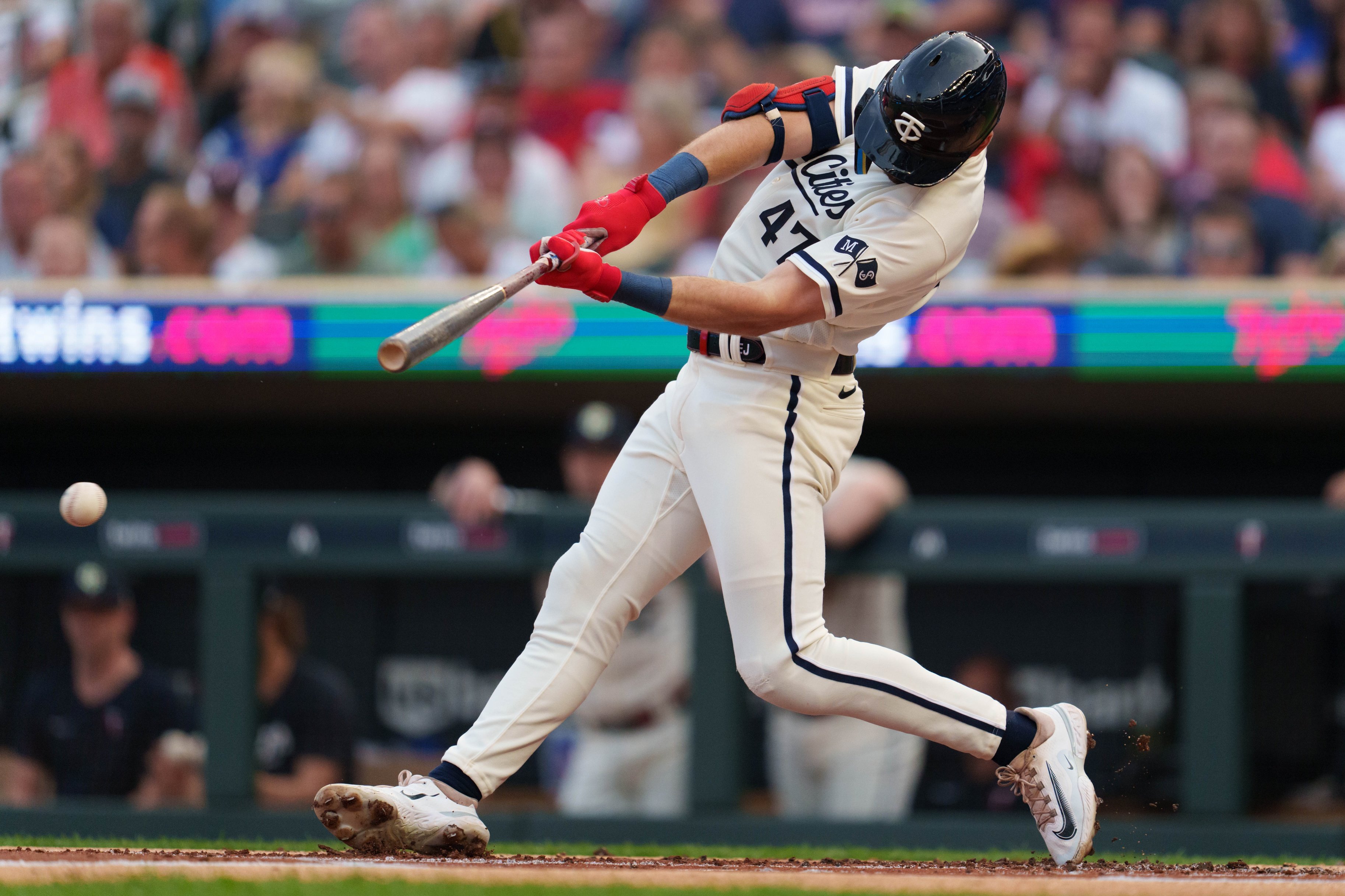 On March 4th, while I was covering spring training in Florida for Twins Daily, I traveled to Port North to watch the Twins play the Braves. It was not a terribly eventful or noteworthy game, even by March exhibition standards. As a writer covering the action, there are times where you have to really strain to figure out a meaningful or worthwhile line of questioning for the postgame session. This was one of them. Watching the 7-5 Atlanta victory play out, one thing did catch my attention: No. 2 hitter Edouard Julien, who'd been the talk of camp with his outstanding offensive performance, went 0-for-3 at the plate, striking out twice against lefty starter Max Fried. As I sat in the press box, I looked up Julien's 2022 splits in the minors and was somewhat taken aback, given his resounding overall success. As effective as the 23-year-old was against right-handed pitching at Double-A, posting an utterly preposterous .332/.465/.566 slash line, he was almost equally bad against lefties, against whom he slashed .210/.373/.276 with one double, two home runs, and six RBIs in 134 plate appearances. While it's certainly not abnormal for left-handed hitters to be much worse against same-sided pitchers, that struck me as a rather extreme platoon split – especially for such a reputedly smart and adaptable hitter as Julien. After the game, I asked Rocco Baldelli what he made of the disparity, and how he felt the prospect might evolve against southpaws. I'll share his full response below, since it's kind of interesting to go back and read now: "Well, very few people come into this game – even the people who do compete well, left-on-left – very few come into the game, in the minors leagues and even at the big-league level, strong in that area," Baldelli said. "I mean, I can't think of really very many people at all. So, not surprising to see a young left-handed hitter, even a talented one, struggle a little bit with that. But, guys that make good adjustments at the plate, you give chances to make good adjustments at the plate going forward. He's one of our best young talents at the plate in this organization. So I'll give him an opportunity to do that, he's still very young in his career." Badelli continued: "As much as anything, we always want the world for every player. If he can learn how to go out and have a good competitive at-bat against left-handers, find a way to get on base, try to find a way to help us win a game ... these are things that we need from our guys when we send them out there in these left-on-left situations. I think he probably does an okay job of that, even though he probably hasn't put up anywhere near the same kind of numbers as he has against right-handed pitching. But if he can go out there and get on base against left-handed pitching? That's great too, that's a good place to start." Although Rocco answered the question at length, the main takeaway I gleaned from his response was, "Yeah, lefty hitters have a tough time against lefty pitchers. That's baseball. What are you gonna do." I filed it away and sort of forgot about it. As we've watched Julien's impressive rookie year in the majors play out though, it's becoming clear that his platoon challenges are rather glaring. The occasional walks that kept his production against left-handers afloat in Double-A have dried up against major-league pitchers who refuse to let him off the hook. In 42 plate appearances against LHP as a Twin, Julien has slashed .214/.214/.238 with one extra-base hit (a double), 13 strikeouts, and ZERO walks. That's right, not one free pass from perhaps the most patient hitter I've ever witnessed. In this context, it becomes easier to understand why Baldelli made the move he did late in Wednesday's game against the Rays, pulling Julien against a lefty reliever in favor of Christian Vazquez. It's true that Vazquez has been a terrible hitter this year and it's hard to imagine him offering an upgrade in any situation, but he did in this one. Even after Tampa manager Kevin Cash countered by bringnig in a right-hander to face Vazquez, it was still a more favorable match-up than using Julien against a southpaw, against whom the numbers tell us he would've had no chance. The thing that stands out about Julien's numbers against lefties, other than how bad they are, is how small the sample is. Only 12% of the infielder's plate appearances have come against LHP, showing how far Baldelli and the Twins have gone out of their way to shield him. (Max Kepler, for comparison, has made 20% of his PAs against lefties.) This isn't especially surprising, knowing the manager's penchant for playing to the platoon advantage: we're talking about a guy who kept the eventual batting champ, Luis Arraez, out of the Opening Day lineup at home in 2022 because they Twins were facing a lefty. One can also argue Julien's usage has been key to his tremendously successful rookie campaign. His OPS sits at .834 overall despite those left-on-left struggles, illustrating the way he's been maximized as an offensive weapon. But it's also fair to wonder if Julien will have any real path to improve this aspect of his game while receiving so few in-game chances to work on it. As Baldelli said back in spring, "Guys that make good adjustments at the plate, you give chances to make good adjustments at the plate going forward. He's one of our best young talents at the plate in this organization. So I'll give him an opportunity to do that, he's still very young in his career." So far, Julien hasn't really gotten those opportunities. The numbers spell out why. I think there's a lot of validity to the approach Minnesota is taking with him; even if have hope that Julien will eventually grow in this regard, he is clearly overmatched right now and it's tough to try and let him fight through it for a division-winning team with an eye toward the playoffs. On Wednesday afternoon, I heard a number of fans arguing, "Why not just let Julien hit there, he'll never learn if he doesn't get chances." And I get that. But one successful plate appearance against lefties, unlikely as it might have been, wasn't going to build enough confidence for the Twins to let the 24-year-old take any key postseason ABs in such spots. That simply cannot happen. It's a limiting factor in Julien's otherwise impeccable offensive game. Eventually, maybe it can improve over time. But for now, Baldelli and the Twins are wise to ensure these matchups do not take place. Hopefully by the time meaningful games swing back around in October, they'll have a better option on hand than Vázquez to step in.
 -
The Twins pinch-hit Christian Vázquez for Edouard Julien with the tying run on second base in the ninth inning on Wednesday. It didn't work, but the numbers tell us it was a very defensible decision. That's a big problem. Image courtesy of Matt Blewett-USA TODAY Sports On March 4th, while I was covering spring training in Florida for Twins Daily, I traveled to Port North to watch the Twins play the Braves. It was not a terribly eventful or noteworthy game, even by March exhibition standards. As a writer covering the action, there are times where you have to really strain to figure out a meaningful or worthwhile line of questioning for the postgame session. This was one of them. Watching the 7-5 Atlanta victory play out, one thing did catch my attention: No. 2 hitter Edouard Julien, who'd been the talk of camp with his outstanding offensive performance, went 0-for-3 at the plate, striking out twice against lefty starter Max Fried. As I sat in the press box, I looked up Julien's 2022 splits in the minors and was somewhat taken aback, given his resounding overall success. As effective as the 23-year-old was against right-handed pitching at Double-A, posting an utterly preposterous .332/.465/.566 slash line, he was almost equally bad against lefties, against whom he slashed .210/.373/.276 with one double, two home runs, and six RBIs in 134 plate appearances. While it's certainly not abnormal for left-handed hitters to be much worse against same-sided pitchers, that struck me as a rather extreme platoon split – especially for such a reputedly smart and adaptable hitter as Julien. After the game, I asked Rocco Baldelli what he made of the disparity, and how he felt the prospect might evolve against southpaws. I'll share his full response below, since it's kind of interesting to go back and read now: "Well, very few people come into this game – even the people who do compete well, left-on-left – very few come into the game, in the minors leagues and even at the big-league level, strong in that area," Baldelli said. "I mean, I can't think of really very many people at all. So, not surprising to see a young left-handed hitter, even a talented one, struggle a little bit with that. But, guys that make good adjustments at the plate, you give chances to make good adjustments at the plate going forward. He's one of our best young talents at the plate in this organization. So I'll give him an opportunity to do that, he's still very young in his career." Badelli continued: "As much as anything, we always want the world for every player. If he can learn how to go out and have a good competitive at-bat against left-handers, find a way to get on base, try to find a way to help us win a game ... these are things that we need from our guys when we send them out there in these left-on-left situations. I think he probably does an okay job of that, even though he probably hasn't put up anywhere near the same kind of numbers as he has against right-handed pitching. But if he can go out there and get on base against left-handed pitching? That's great too, that's a good place to start." Although Rocco answered the question at length, the main takeaway I gleaned from his response was, "Yeah, lefty hitters have a tough time against lefty pitchers. That's baseball. What are you gonna do." I filed it away and sort of forgot about it. As we've watched Julien's impressive rookie year in the majors play out though, it's becoming clear that his platoon challenges are rather glaring. The occasional walks that kept his production against left-handers afloat in Double-A have dried up against major-league pitchers who refuse to let him off the hook. In 42 plate appearances against LHP as a Twin, Julien has slashed .214/.214/.238 with one extra-base hit (a double), 13 strikeouts, and ZERO walks. That's right, not one free pass from perhaps the most patient hitter I've ever witnessed. In this context, it becomes easier to understand why Baldelli made the move he did late in Wednesday's game against the Rays, pulling Julien against a lefty reliever in favor of Christian Vazquez. It's true that Vazquez has been a terrible hitter this year and it's hard to imagine him offering an upgrade in any situation, but he did in this one. Even after Tampa manager Kevin Cash countered by bringnig in a right-hander to face Vazquez, it was still a more favorable match-up than using Julien against a southpaw, against whom the numbers tell us he would've had no chance. The thing that stands out about Julien's numbers against lefties, other than how bad they are, is how small the sample is. Only 12% of the infielder's plate appearances have come against LHP, showing how far Baldelli and the Twins have gone out of their way to shield him. (Max Kepler, for comparison, has made 20% of his PAs against lefties.) This isn't especially surprising, knowing the manager's penchant for playing to the platoon advantage: we're talking about a guy who kept the eventual batting champ, Luis Arraez, out of the Opening Day lineup at home in 2022 because they Twins were facing a lefty. One can also argue Julien's usage has been key to his tremendously successful rookie campaign. His OPS sits at .834 overall despite those left-on-left struggles, illustrating the way he's been maximized as an offensive weapon. But it's also fair to wonder if Julien will have any real path to improve this aspect of his game while receiving so few in-game chances to work on it. As Baldelli said back in spring, "Guys that make good adjustments at the plate, you give chances to make good adjustments at the plate going forward. He's one of our best young talents at the plate in this organization. So I'll give him an opportunity to do that, he's still very young in his career." So far, Julien hasn't really gotten those opportunities. The numbers spell out why. I think there's a lot of validity to the approach Minnesota is taking with him; even if have hope that Julien will eventually grow in this regard, he is clearly overmatched right now and it's tough to try and let him fight through it for a division-winning team with an eye toward the playoffs. On Wednesday afternoon, I heard a number of fans arguing, "Why not just let Julien hit there, he'll never learn if he doesn't get chances." And I get that. But one successful plate appearance against lefties, unlikely as it might have been, wasn't going to build enough confidence for the Twins to let the 24-year-old take any key postseason ABs in such spots. That simply cannot happen. It's a limiting factor in Julien's otherwise impeccable offensive game. Eventually, maybe it can improve over time. But for now, Baldelli and the Twins are wise to ensure these matchups do not take place. Hopefully by the time meaningful games swing back around in October, they'll have a better option on hand than Vázquez to step in. View full article


