



Nick Nelson
-
Posts
8,320 -
Joined
-
Last visited
-
Days Won
56
Content Type
Profiles
News
Minnesota Twins Videos
2026 Minnesota Twins Top Prospects Ranking
2022 Minnesota Twins Draft Picks
Minnesota Twins Free Agent & Trade Rumors, Notes, & Tidbits
Guides & Resources
2023 Minnesota Twins Draft Picks
The Minnesota Twins Players Project
2024 Minnesota Twins Draft Picks
2025 Minnesota Twins Draft Pick Tracker
2026 Minnesota Twins Draft Tracker: Picks & Bonuses
Forums
Blogs
Events
Store
Downloads
Gallery
Everything posted by Nick Nelson
-

Can Twins Rookies Avoid the Regression Bug?
Nick Nelson replied to Nick Nelson's topic in Twins Daily Front Page News
There's no rule. But if all three stay healthy and produce at the same level or better next year you are legitimately looking at a trio of MVP candidates. Julien, Lewis and Wallner all had a wOBA of .369 or better. The number of qualified MLB hitters who had a wOBA of .369 or better this year is 14. It does serve to underscore the upside of this offense in 2024.- 38 replies
-
- 5
-

-
- edouard julien
- royce lewis
- (and 1 more)
-
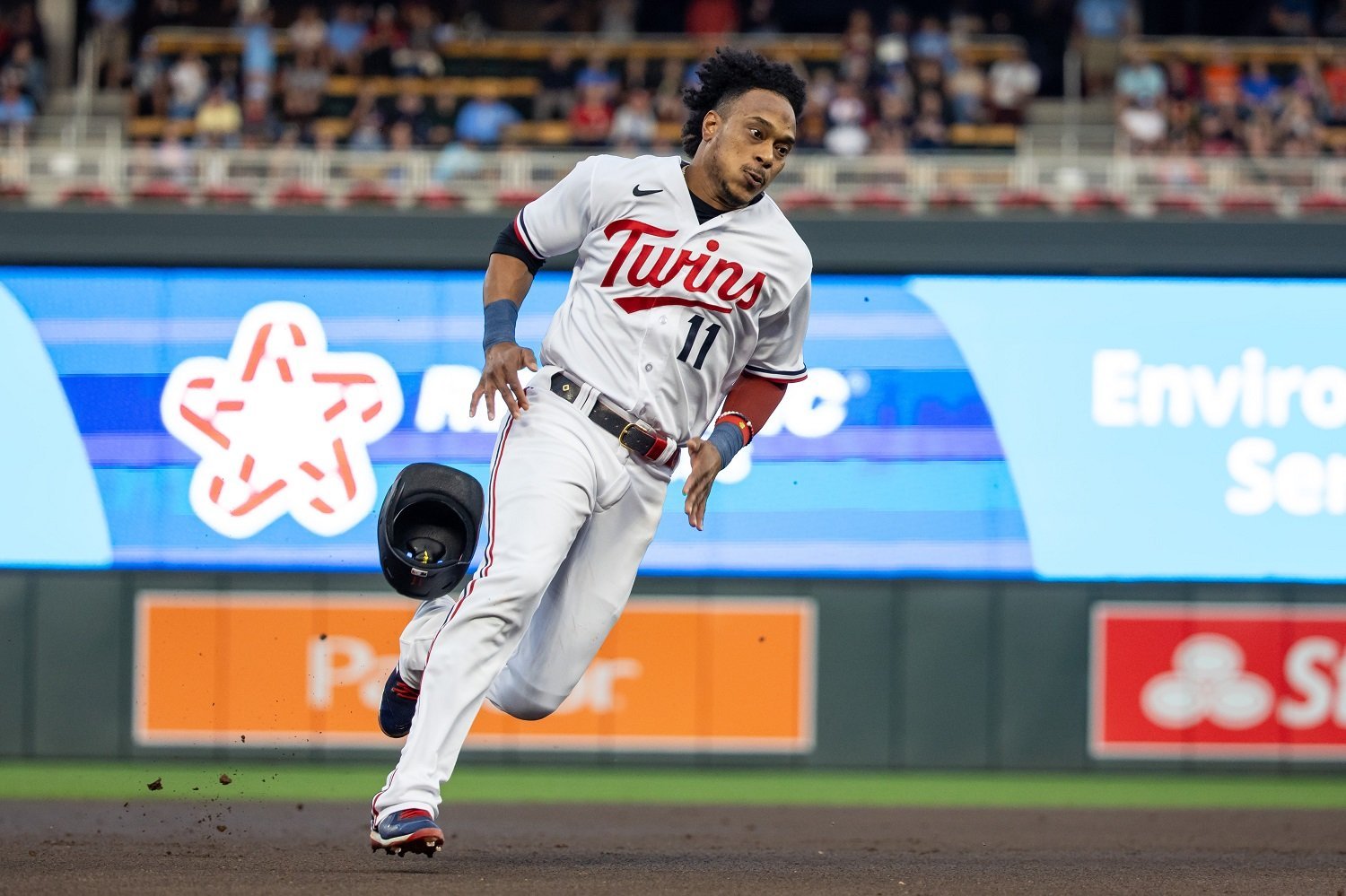
Minnesota's success in 2024 will be largely dependent on the breakthrough rookie class of 2023 continuing to drive the bus. Can these three crucial hitters fend off the dreaded sophomore slump? Image courtesy of Jesse Johnson and Katie Stratman, USA Today Twins fans have seen it time and time again: a player splashes onto the scene with a phenomenal rookie year and then quickly experiences the full weight of regression in the following season. Baseball is a game of ebbs, flows, and adjustments, which can often hit hardest after an introductory burst of success. Most recently we saw this convention play out with José Miranda, whose brilliant rookie campaign in 2022 gave way a to complete disaster this year, seeing him turn from key contributor to non-factor and planning uncertainty. The same could be said for Nick Gordon, though he technically was not a rookie last year. Miranda went from a 116 OPS+ in 2022 to 56 in limited time 2023; Gordon dropped from 111 to 35. Looking back through Twins history, there are plenty of other examples that might quickly come to mind, such as Danny Santana (130 OPS+ in 2015, 46 in 2016) and Danny Valencia (119 in 2010 to 86 in 2011). Both times, the Twins as a team took a massive step backward from year to year, in some part because they were counting on those young standouts to grow or at least hold steady rather than fall off. Which brings us to the outlook for the 2024 team. The Twins received a historic level of contribution from their rookie class this past season, with Edouard Julien, Royce Lewis and Matt Wallner becoming the first trio to post an OPS+ of 120 or higher since Lou Gehrig and the 1925 Yankees. In fact, they were all above 130, meaning each of these three MLB newcomers was at least 30% better than the average hitter. It's a remarkable accomplishment that sets an almost impossibly high bar for next year; there's almost zero chance all three finish the 2024 season at that threshold, even if they all have good seasons. The big question, as the Twins now plan around this emergent new youth core, is how much of a drop-off we can expect. Ideally, any marginal decline in rate performance will be counteracted by higher volume (fullish seasons from each, as opposed to the 900 plate appearances they collectively made in 2023) plus improvements from other key players – namely Carlos Correa and Byron Buxton. Here's a rundown on each of the Twins reigning standout rookies and what to look out for in 2024 in terms of regression risks, and how they can overcome them. Edouard Julien Julien slashed .263/.381/.459 with 16 homers, 16 doubles and three steals during his rookie campaign, which featured a brief debut in April and a permanent call-up in May. There are certain aspects of his game that make him feel somewhat regression-proof; namely, a level of plate discipline that is literally unrivaled throughout the league. Julien swung at only 14.8% pitches outside of the strike zone, according to Statcast, which was the lowest rate in the baseball among players with 400+ PA, beating out runner-up Juan Soto (17.2%). That's not a fluke, that's just who Julien is, and it's a big reason why concerns of a complete offensive fall-off are minimal. What does regression look like? While his discerning patience is a core skill that provides Julien with a solid offensive floor, it's no lock that he'll be able to approach his ceiling the way he did as a rookie. What made him so exceptional in 2023 was that in addition to all the walks, which helped produce a .381 on-base percentage, he also did major damage on pitches in the zone. Some of that production was inflated, no doubt. Julien struck out a lot, and posted a .371 batting average on balls in play (BABIP), so if all things stay the same profile-wise, we should probably expect his .263 average to drop significantly next year. His expected batting average (xBA) was .233, per Statcast. Meanwhile his xSLG was .427, so we'll see if he can keep the power production pumping. If Julien slashes something like .240/.350/.420 next year, while it'd be a significant step backward, he would still be a solid contributor. I'm inclined to believe the 24-year-old can maintain as a top-tier offensive player simply because he's done it literally everywhere, without exception, but the indicators of coming regression are not hard to see. Royce Lewis Lewis shocked the baseball world in 2023 by returning from his second straight ACL surgery and playing at a legitimate MVP-caliber level for 70 games, then kicking that up a notch in the playoffs. He is almost by definition bound for regression because the standard he set is so extraordinary, but the third baseman has given us every reason to believe he can sustain as a star-caliber player. After slashing .300/.317/.550 in a 12-game MLB debut in 2022, Lewis came back in 2023 to put up a .309/.372/.548 line in 70 games in 2023, plus a 1.119 OPS with four homers in the playoffs. He's set up as the centerpiece of the 2024 lineup. Which could be precarious. What does regression look like? It seems likely that Lewis is going to end up being a really good MLB player, maybe a multi-time All Star and maybe even one day an MVP. But people should not assume it will be an immediate and smooth journey even if he's started it with a bang. Turning 25 next season, Lewis still only has 280 major-league plate appearances – less than half of a full season's worth – and within that he's been an aggressive hitter whose pursuit of power has paid off. That payoff doesn't always remain steady. MLB pitchers are very smart and adaptive. Lewis could be in for some performance-based regression beyond what the underlying metrics already suggest. He had a .354 BABIP in 2023 and his exceptional wOBA (.393) was far higher than his xWOBA (.349). The former ranked 13th among big-leaguers (200+ PA); the latter ranked 65th. Lewis is still a developing player whose skill set and approach don't feel quite crystallized. Certainly the rapid and recent ascent of his power tool bodes well, as do the glimmers of discipline he's shown. But he's still got some things to prove in terms of plate approach and consistency. A full-on regression might look something like he put up in his last full minor-league season, between Single-A and Double-A in 2019, when he slashed .236/.290/.371 in 566 plate appearances. That's obviously on the extreme end. But everyone should be realistically bracing for some level of drop-off from what we saw in the last 76 games because, I mean, the guy is human. (Theoretically.) Matt Wallner I feel a little bad for Wallner, because his incredible rookie campaign was so largely overshadowed by those of Julien, who showed up in the Rookie of the Voting, and Lewis, who starred in the postseason. In any other season there would have been a lot more chatter surrounding Wallner, the reigning Minor League Player of the Year who broke through with a .249/.370/.507 slash line in 76 games for the Twins, sprinkling several highlight reel splashes into his 14-HR outburst. What does regression look like? In some ways, Wallner feels ripest for regression of this bunch. He doesn't have the consistent track record or floor-raising patience of Julien. He doesn't have the No. 1 pick pedigree or magical aura of Lewis. Wallner whiffs a lot and strikes out in bunches, which can cause some consternation. At the same time, he has some really durable underlying skills and traits that don't necessarily lend themselves to a fade. He hits the ball incredibly hard, with consistency, and while he strikes out a fair amount it's not like he's at Miguel Sanó or Joey Gallo levels. Wallner also has a healthy walk rate and draws more HBPs than usual with his plate-crowding stance, giving him a solid OBP floor. In short, it's a pretty good formula for ongoing offensive success, although like Julien and Lewis, Wallner will have a hard time meeting the exceedingly high bar he's set even if he continues to do his thing. One way or another, fans should be bracing for some level of regression from this trio, as each talented player seemed to be scratching his realistic ceiling as a rookie. How much regression is in store? That answer may play a big role in telling the story of the 2024 Minnesota Twins. View full article
-
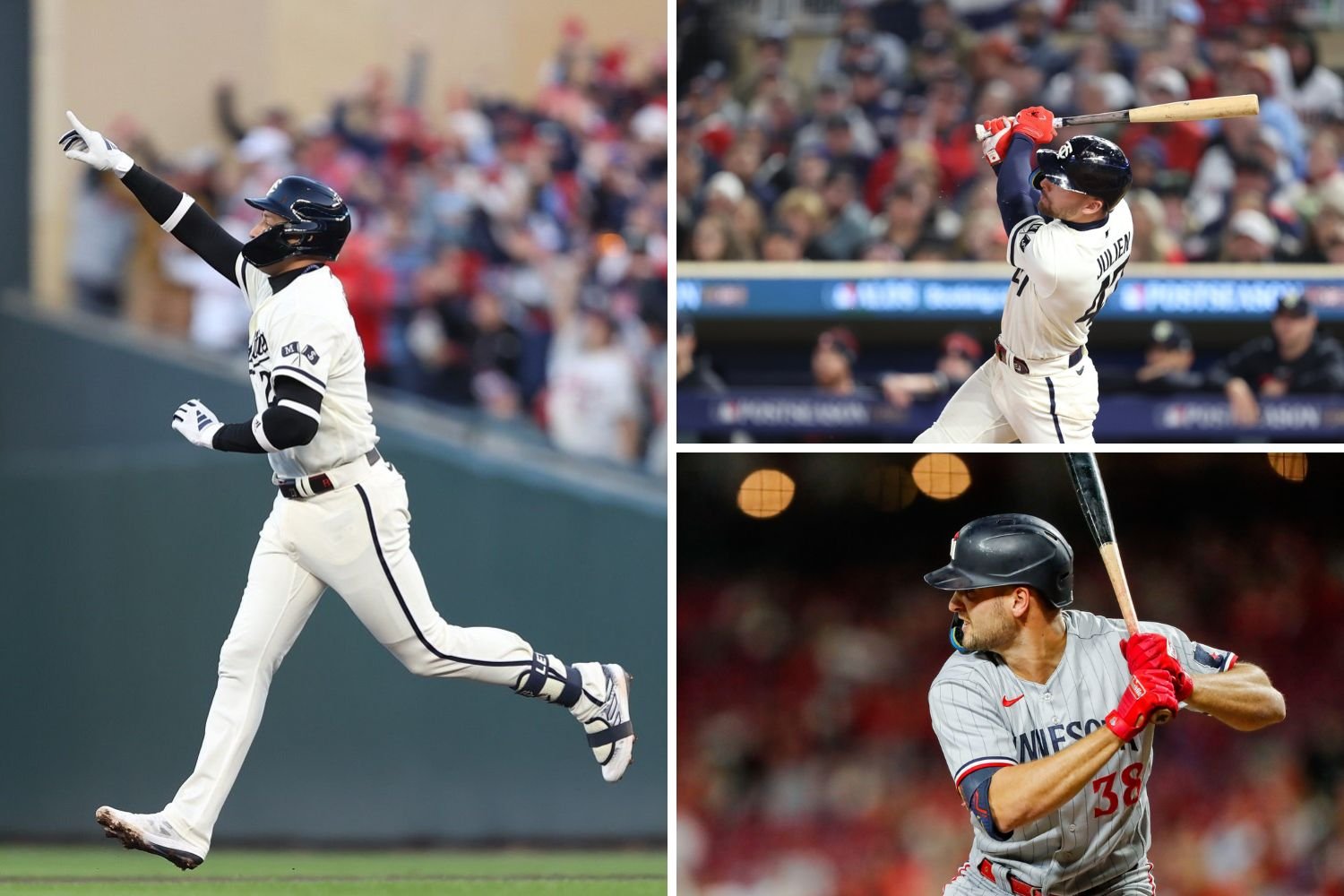 Twins fans have seen it time and time again: a player splashes onto the scene with a phenomenal rookie year and then quickly experiences the full weight of regression in the following season. Baseball is a game of ebbs, flows, and adjustments, which can often hit hardest after an introductory burst of success. Most recently we saw this convention play out with José Miranda, whose brilliant rookie campaign in 2022 gave way a to complete disaster this year, seeing him turn from key contributor to non-factor and planning uncertainty. The same could be said for Nick Gordon, though he technically was not a rookie last year. Miranda went from a 116 OPS+ in 2022 to 56 in limited time 2023; Gordon dropped from 111 to 35. Looking back through Twins history, there are plenty of other examples that might quickly come to mind, such as Danny Santana (130 OPS+ in 2015, 46 in 2016) and Danny Valencia (119 in 2010 to 86 in 2011). Both times, the Twins as a team took a massive step backward from year to year, in some part because they were counting on those young standouts to grow or at least hold steady rather than fall off. Which brings us to the outlook for the 2024 team. The Twins received a historic level of contribution from their rookie class this past season, with Edouard Julien, Royce Lewis and Matt Wallner becoming the first trio to post an OPS+ of 120 or higher since Lou Gehrig and the 1925 Yankees. In fact, they were all above 130, meaning each of these three MLB newcomers was at least 30% better than the average hitter. It's a remarkable accomplishment that sets an almost impossibly high bar for next year; there's almost zero chance all three finish the 2024 season at that threshold, even if they all have good seasons. The big question, as the Twins now plan around this emergent new youth core, is how much of a drop-off we can expect. Ideally, any marginal decline in rate performance will be counteracted by higher volume (fullish seasons from each, as opposed to the 900 plate appearances they collectively made in 2023) plus improvements from other key players – namely Carlos Correa and Byron Buxton. Here's a rundown on each of the Twins reigning standout rookies and what to look out for in 2024 in terms of regression risks, and how they can overcome them. Edouard Julien Julien slashed .263/.381/.459 with 16 homers, 16 doubles and three steals during his rookie campaign, which featured a brief debut in April and a permanent call-up in May. There are certain aspects of his game that make him feel somewhat regression-proof; namely, a level of plate discipline that is literally unrivaled throughout the league. Julien swung at only 14.8% pitches outside of the strike zone, according to Statcast, which was the lowest rate in the baseball among players with 400+ PA, beating out runner-up Juan Soto (17.2%). That's not a fluke, that's just who Julien is, and it's a big reason why concerns of a complete offensive fall-off are minimal. What does regression look like? While his discerning patience is a core skill that provides Julien with a solid offensive floor, it's no lock that he'll be able to approach his ceiling the way he did as a rookie. What made him so exceptional in 2023 was that in addition to all the walks, which helped produce a .381 on-base percentage, he also did major damage on pitches in the zone. Some of that production was inflated, no doubt. Julien struck out a lot, and posted a .371 batting average on balls in play (BABIP), so if all things stay the same profile-wise, we should probably expect his .263 average to drop significantly next year. His expected batting average (xBA) was .233, per Statcast. Meanwhile his xSLG was .427, so we'll see if he can keep the power production pumping. If Julien slashes something like .240/.350/.420 next year, while it'd be a significant step backward, he would still be a solid contributor. I'm inclined to believe the 24-year-old can maintain as a top-tier offensive player simply because he's done it literally everywhere, without exception, but the indicators of coming regression are not hard to see. Royce Lewis Lewis shocked the baseball world in 2023 by returning from his second straight ACL surgery and playing at a legitimate MVP-caliber level for 70 games, then kicking that up a notch in the playoffs. He is almost by definition bound for regression because the standard he set is so extraordinary, but the third baseman has given us every reason to believe he can sustain as a star-caliber player. After slashing .300/.317/.550 in a 12-game MLB debut in 2022, Lewis came back in 2023 to put up a .309/.372/.548 line in 70 games in 2023, plus a 1.119 OPS with four homers in the playoffs. He's set up as the centerpiece of the 2024 lineup. Which could be precarious. What does regression look like? It seems likely that Lewis is going to end up being a really good MLB player, maybe a multi-time All Star and maybe even one day an MVP. But people should not assume it will be an immediate and smooth journey even if he's started it with a bang. Turning 25 next season, Lewis still only has 280 major-league plate appearances – less than half of a full season's worth – and within that he's been an aggressive hitter whose pursuit of power has paid off. That payoff doesn't always remain steady. MLB pitchers are very smart and adaptive. Lewis could be in for some performance-based regression beyond what the underlying metrics already suggest. He had a .354 BABIP in 2023 and his exceptional wOBA (.393) was far higher than his xWOBA (.349). The former ranked 13th among big-leaguers (200+ PA); the latter ranked 65th. Lewis is still a developing player whose skill set and approach don't feel quite crystallized. Certainly the rapid and recent ascent of his power tool bodes well, as do the glimmers of discipline he's shown. But he's still got some things to prove in terms of plate approach and consistency. A full-on regression might look something like he put up in his last full minor-league season, between Single-A and Double-A in 2019, when he slashed .236/.290/.371 in 566 plate appearances. That's obviously on the extreme end. But everyone should be realistically bracing for some level of drop-off from what we saw in the last 76 games because, I mean, the guy is human. (Theoretically.) Matt Wallner I feel a little bad for Wallner, because his incredible rookie campaign was so largely overshadowed by those of Julien, who showed up in the Rookie of the Voting, and Lewis, who starred in the postseason. In any other season there would have been a lot more chatter surrounding Wallner, the reigning Minor League Player of the Year who broke through with a .249/.370/.507 slash line in 76 games for the Twins, sprinkling several highlight reel splashes into his 14-HR outburst. What does regression look like? In some ways, Wallner feels ripest for regression of this bunch. He doesn't have the consistent track record or floor-raising patience of Julien. He doesn't have the No. 1 pick pedigree or magical aura of Lewis. Wallner whiffs a lot and strikes out in bunches, which can cause some consternation. At the same time, he has some really durable underlying skills and traits that don't necessarily lend themselves to a fade. He hits the ball incredibly hard, with consistency, and while he strikes out a fair amount it's not like he's at Miguel Sanó or Joey Gallo levels. Wallner also has a healthy walk rate and draws more HBPs than usual with his plate-crowding stance, giving him a solid OBP floor. In short, it's a pretty good formula for ongoing offensive success, although like Julien and Lewis, Wallner will have a hard time meeting the exceedingly high bar he's set even if he continues to do his thing. One way or another, fans should be bracing for some level of regression from this trio, as each talented player seemed to be scratching his realistic ceiling as a rookie. How much regression is in store? That answer may play a big role in telling the story of the 2024 Minnesota Twins.
- 38 comments
-
- 14
-
-
- edouard julien
- royce lewis
- (and 1 more)
-
Anecdotally this makes sense, but does reality bear it out? I'm not sure. You saw Falvey's stats shared in the article about HRs vs Ks and how they correlate with playoff success. That holds true in a multi-year sample. Almost all the runs scored in the Twins playoff games this year came on home runs - for both sides. Failing to hit with RISP or move runners over isn't necessarily some failure by the hitters; you're going against the best pitchers and defenses in the game.
-
This is an interesting point, but I'd note that strikeouts from the pitching side tend to correlate a lot more with success than strikeouts from the hitting side correlate with failure. Why is that? I would suggest - because pitchers on balance have less control over what's happening with balls in play compared to hitters, who are aiming to maximize power and exit velocity when they make contact. You could say the Twins are obsessed with getting strikeouts on the pitching side but I think it's more about limiting contact and especially hard contact, which they did a reasonably good job of. Twins pitchers ranked 7th among MLB teams in barrels/PA, 8th in hard hit %, 14th in exit velo. From 2021 to 2023 they improved from 28th to 14th in HR rate.
-
Would you have felt better about it if they hit a grounder and a couple pop-ups? All three hitters in that inning took very good ABs and got beaten on full counts by one of the greatest postseason relievers in modern MLB history. Meanwhile, this team did break a long-time curse and win three playoff games thanks in large part to its ability to hit for power, which is the trade-off they're making for Ks.
-
The Twins front office are sticking to their guns, following a record-setting season of strikeouts at the plate. Let's examine the merits of this approach, and the thinking behind it. Image courtesy of Matt Krohn-USA TODAY Sports Fans were understandably exasperated by the amount of whiffing they witnessed from Twins hitters this year. Minnesota set Major League Baseball's all-time strikeout record in the regular season, and the team's playoff run ended with a parade of punchouts as they scrambled futilely to get a runner on base and mount a threat. If you asked random local baseball fans what they'd like to see from next year's club, "fewer strikeouts" would probably be a common refrain. That's why it's interesting that Twins leadership is making no bones about their intention to stick with the same basic philosophy that guided them in 2023, even if it means plenty more strikeouts are in the cards. In mid-October, shortly after the team was eliminated by Houston, Bobby Nightengale wrote a piece for the Star Tribune titled, "Strikeouts or not, Twins will not stop swinging for the fences." More recently, MLB.com beat writer Do-Hyoung Park echoed a similar sentiment with last week's headline, "Do Twins need to cut down on strikeouts? Not necessarily." Both articles include quotes from Derek Falvey and Rocco Baldelli firmly vouching for the controversial approach spearheaded by David Popkins and the hitting group. Our Matthew Trueblood looked at the same subject back at the beginning of the team's playoff run, for Twins Daily Caretakers. "Of course, it’s a very easy blinking light that everyone can look at and talk about,” Baldelli said of the strikeouts. “There are certain points in every game where you do want to find a way to put the ball in play. But in the vast majority of at-bats, that’s not part of the conversation. I would rather have a guy have a great at-bat and go deep into a count and possibly strike out, but give us a chance to actually give us a baserunner or actually look for a ball in the middle of the zone and pulverize it." As Baldelli outlines, the strikeout isn't any kind of aspiration, but rather an accepted risk to achieve the kinds of outcomes they want: walks and home runs. The Twins ranked second among AL teams in walks and tied for first in homers. “We weren’t trying to strike out more,” said Falvey. “But at the same time, we were trying to find ways to get to more power. We’ve all observed these playoffs to this point. What’s mattered most is power, the ability to hit for power. The reality is that striking out less this postseason has not led to more wins.” According to Park, Falvey is fond of pointing out that statistically, hitting home runs in the playoffs has proven to be more beneficial than striking out is detrimental. In 2023, postseason, teams that out-homered opponents went 29-7; those who struck out less went 17-19. Obviously, it would be ideal to have players throughout the lineup who can hit for power and draw walks without striking out frequently. But guess what? Those hitters are among the most valuable in baseball. They're really hard to find and really expensive to sign or acquire via trade. For a team in Minnesota's position, scaling back an already limited payroll, attempting to assemble an elite lineup through this means is essentially a non-starter. They can try to develop bats like that from the top of the draft (and hopefully have a couple on the way, in Brooks Lee and Walker Jenkins), but otherwise, they have to take the bad with the good. How bad are strikeouts, really? That's the question that folks like Falvey and Baldelli would pose, and challenge you to think more deeply about. It does seem telling that Minnesota's offense was well above average, in terms of runs scored and OPS, despite striking out more than any other club in baseball history. Maybe it's also noteworthy that, despite this ignominious distinction, these Twins were the ones to finally break through in the playoffs. Meanwhile, if you want to see the opposite end of the spectrum, look no further than across the division to the rival Cleveland Guardians. They struck out fewer times than any other team in the majors this year, and their offense was completely punchless and ineffectual. Cleveland hit the fewest homers in the American League, had the second-lowest slugging percentage, and scored the fourth-fewest runs. No matter how annoyed you were watching the Twins offense hack through one of its sleepy stretches of nonstop strikeouts, it was better than watching the Guardians feebly tap into an endless parade of groundouts and weak fly balls, all year long. Cleveland produced the lowest Barrels per plate appearance, lowest Hard Hit rate, and lowest average exit velocity of any major-league team this year. Now THAT is an unwatchable lineup. Yes, the Twins need to cut back the strikeouts to some extent. That's bound to happen organically, with the departure of Joey Gallo and his 300-plus plate appearances moving the needle on its own. But the coaching staff and front office is making it clear: we should not expect the team to fundamentally pivot away from a philosophy that prioritizes power at the expense of contact. And if we're taking an honest look at the evidence, I'm not sure we should want them to. View full article
-
The Twins Aren't Shying Away from Strikeouts. Are They Right?
Nick Nelson posted an article in Twins
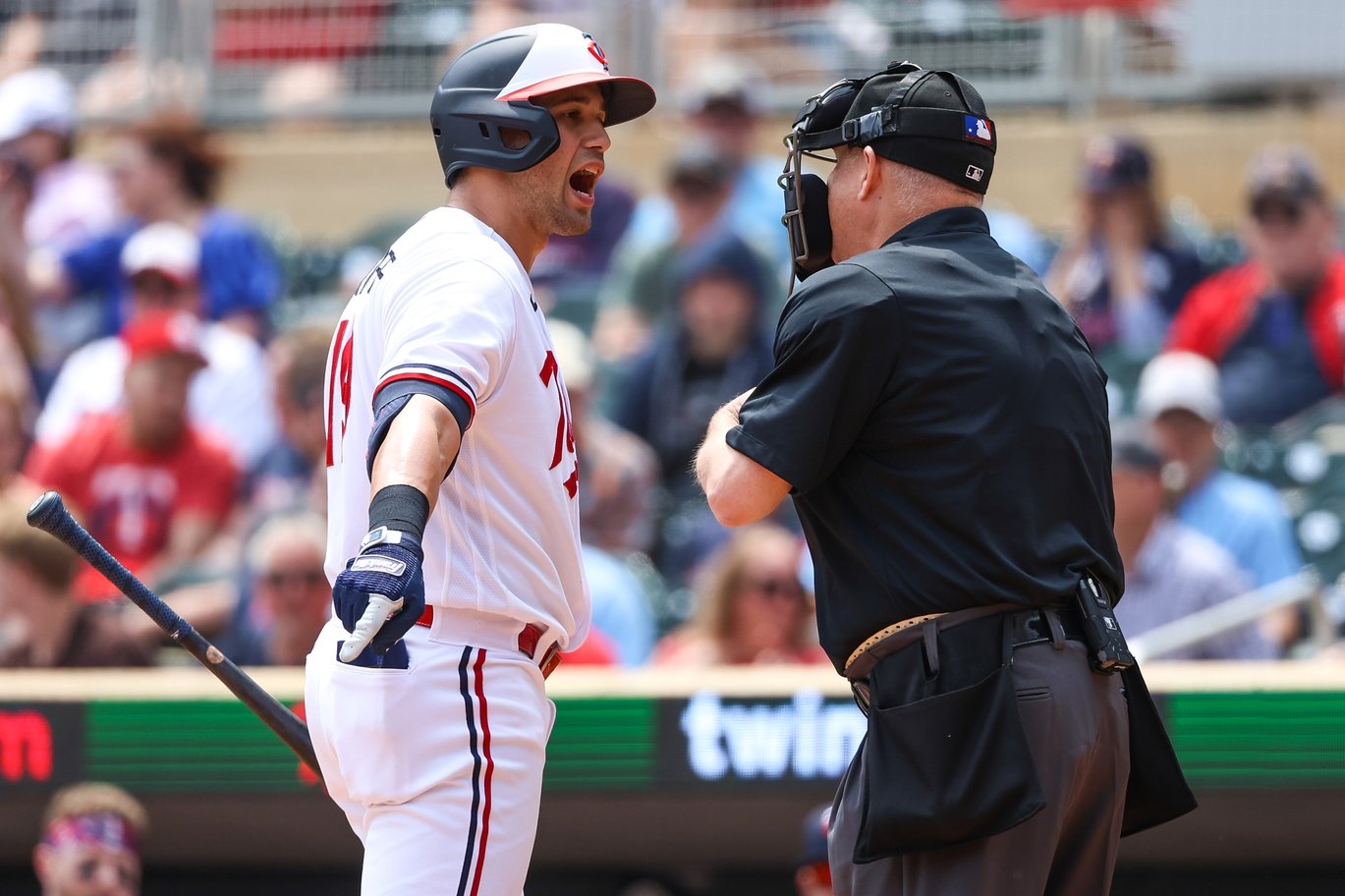 Fans were understandably exasperated by the amount of whiffing they witnessed from Twins hitters this year. Minnesota set Major League Baseball's all-time strikeout record in the regular season, and the team's playoff run ended with a parade of punchouts as they scrambled futilely to get a runner on base and mount a threat. If you asked random local baseball fans what they'd like to see from next year's club, "fewer strikeouts" would probably be a common refrain. That's why it's interesting that Twins leadership is making no bones about their intention to stick with the same basic philosophy that guided them in 2023, even if it means plenty more strikeouts are in the cards. In mid-October, shortly after the team was eliminated by Houston, Bobby Nightengale wrote a piece for the Star Tribune titled, "Strikeouts or not, Twins will not stop swinging for the fences." More recently, MLB.com beat writer Do-Hyoung Park echoed a similar sentiment with last week's headline, "Do Twins need to cut down on strikeouts? Not necessarily." Both articles include quotes from Derek Falvey and Rocco Baldelli firmly vouching for the controversial approach spearheaded by David Popkins and the hitting group. Our Matthew Trueblood looked at the same subject back at the beginning of the team's playoff run, for Twins Daily Caretakers. "Of course, it’s a very easy blinking light that everyone can look at and talk about,” Baldelli said of the strikeouts. “There are certain points in every game where you do want to find a way to put the ball in play. But in the vast majority of at-bats, that’s not part of the conversation. I would rather have a guy have a great at-bat and go deep into a count and possibly strike out, but give us a chance to actually give us a baserunner or actually look for a ball in the middle of the zone and pulverize it." As Baldelli outlines, the strikeout isn't any kind of aspiration, but rather an accepted risk to achieve the kinds of outcomes they want: walks and home runs. The Twins ranked second among AL teams in walks and tied for first in homers. “We weren’t trying to strike out more,” said Falvey. “But at the same time, we were trying to find ways to get to more power. We’ve all observed these playoffs to this point. What’s mattered most is power, the ability to hit for power. The reality is that striking out less this postseason has not led to more wins.” According to Park, Falvey is fond of pointing out that statistically, hitting home runs in the playoffs has proven to be more beneficial than striking out is detrimental. In 2023, postseason, teams that out-homered opponents went 29-7; those who struck out less went 17-19. Obviously, it would be ideal to have players throughout the lineup who can hit for power and draw walks without striking out frequently. But guess what? Those hitters are among the most valuable in baseball. They're really hard to find and really expensive to sign or acquire via trade. For a team in Minnesota's position, scaling back an already limited payroll, attempting to assemble an elite lineup through this means is essentially a non-starter. They can try to develop bats like that from the top of the draft (and hopefully have a couple on the way, in Brooks Lee and Walker Jenkins), but otherwise, they have to take the bad with the good. How bad are strikeouts, really? That's the question that folks like Falvey and Baldelli would pose, and challenge you to think more deeply about. It does seem telling that Minnesota's offense was well above average, in terms of runs scored and OPS, despite striking out more than any other club in baseball history. Maybe it's also noteworthy that, despite this ignominious distinction, these Twins were the ones to finally break through in the playoffs. Meanwhile, if you want to see the opposite end of the spectrum, look no further than across the division to the rival Cleveland Guardians. They struck out fewer times than any other team in the majors this year, and their offense was completely punchless and ineffectual. Cleveland hit the fewest homers in the American League, had the second-lowest slugging percentage, and scored the fourth-fewest runs. No matter how annoyed you were watching the Twins offense hack through one of its sleepy stretches of nonstop strikeouts, it was better than watching the Guardians feebly tap into an endless parade of groundouts and weak fly balls, all year long. Cleveland produced the lowest Barrels per plate appearance, lowest Hard Hit rate, and lowest average exit velocity of any major-league team this year. Now THAT is an unwatchable lineup. Yes, the Twins need to cut back the strikeouts to some extent. That's bound to happen organically, with the departure of Joey Gallo and his 300-plus plate appearances moving the needle on its own. But the coaching staff and front office is making it clear: we should not expect the team to fundamentally pivot away from a philosophy that prioritizes power at the expense of contact. And if we're taking an honest look at the evidence, I'm not sure we should want them to.
 -
I'm finally ready to go back. Let's review the ninth inning of Game 4 of the ALDS, to relive the final moments of the 2023 Twins season and see what valuable lessons we might take away from analyzing it. Image courtesy of Matt Blewett-USA TODAY Sports The date is October 11th. The Twins are facing the Houston Astros at Target Field, hoping to stay alive in the ALDS after falling behind two games to one the previous day. Heading into the ninth inning of Game 4, Minnesota trails Houston by one. It all comes down to this. Thinking back to my experience as a fan in the stands, memories of these final moments of the season are a bit hazy, and not only because I'd had a few hazy IPAs over the course of the day. Like many others in attendance, I was in a state of emotional turmoil, frustrated by the team's performance over the past two days and coming to grips with the inescapable feeling this fun ride was about to reach an end. Sadly, that ninth inning played out pretty much exactly according to our worst expectation. As such, I haven't had much desire to think about it since. But now that enough time has passed, I'm ready to dive back into this last gasp for the 2023 Minnesota Twins. What does the manner in which this team was eliminated tell us about them as a whole, and how they can take the next step? First, to set the stage: After suffering a painful blowout loss behind Sonny Gray in Game 3, the Twins decided to go all-out and empty their bullpen bench. They started Joe Ryan, but he only threw two innings before giving way to the reliever parade. Brock Stewart, Caleb Thielbar, Chris Paddack and Griffin Jax combined for five innings, and they were nearly perfect, outside of a two-run homer allowed by Thielbar. That home run was enough to put the Astros ahead by one through seven innings. With Houston set to turn over the order in the eighth, the Twins turned to their bullpen ace, Jhoan Durán. He retired the side in order, but Bryan Abreu did the same in the bottom half. It all came down to the final six outs. Top of the Ninth: Durán Keeps Dominating In the previous inning, Durán quickly dispatched Martín Maldonado, José Altuve and Alex Bregman on a groundout and a pair of fly balls. Bringing Durán back out for another inning, given the stakes, was likely an easy decision for Rocco Baldelli. The flame-throwing righty had been Minnesota's workhorse in the bullpen all year long, and they needed him now more than ever, to keep this game within range. Durán opened the frame with an excruciatingly tough assignment: Yordan Álvarez had terrorized the Twins all series long. Unfazed, Durán made quick work of him, striking out Álvarez on three pitches. He started by freezing the Astros slugger with a curveball, then got a whiff on a low splitter at 98 MPH before spiking a curveball that Alvarez chased. Beauty. One enjoyable thing about going back to this last game of the Twins' season was rediscovering a few genuinely cool highlights that I'd sort of forgotten. The quality of Paddack's outing (2.1 IP, 1 H, 0 BB, 4 K) is one of them. This dismantling of Álvarez by Durán was another. One titan overpowering another. Durán followed up by inducing a weak groundout from Kyle Tucker. He then gave up a single to José Abreu, before retiring Michael Brantley on a lineout to complete his two clean innings. It was an emphatic finish to a spectacular first postseason for Durán. In five innings across four appearances between the ALWC and ALDS, Durán allowed no runs on two hits and one walk. He struck out six and induced a 23% swinging strike rate. The 25-year-old has already established himself as one of the best relievers in franchise history. Regardless of what's been going on around him, he's dependably done his part since arriving in the majors. It's fitting that Durán was on the mound when they ended their postseason losing streak, and when they clinched their ALWC victory over Toronto. It's also fitting he was the last man standing on the hill when it all came to an end, doing his part, still giving them a fighting chance. Bottom of the Ninth: Twins Whiff Their Way to Elimination Naturally, the Astros sent out their closer, Ryan Pressly, to try and extinguish Minnesota's remaining life. Pressly and Durán have an interesting relationship in Twins history; Pressly was shipped out to Houston ahead of the 2018 deadline, on the very same day (July 27th) that the Twins acquired Durán from the Diamondbacks. If the vision at that time was for Durán to eventually fill the same role for the rebuilding Twins as a late-inning dominator capable of shutting down any opponent, then the front office was quite prescient. Still, I think they'd like to take back the Pressly trade if they could. Instead of having him available to their division-winning team in 2019 (and maybe beyond), they've watched Pressly do what Durán just did in October, pretty much every year. In exchange for Gilberto Celestino and Jorge Alcalá, Minnesota gave up one of the best postseason relievers since Mariano Rivera–and sent him to the powerhouse they were trying to overcome in their own league, no less. In 46 postseason appearances, Pressly has a 2.22 ERA and an 11.7 K/9 rate. He's never been tagged with a playoff loss and, perhaps most staggeringly, has allowed one (1) home run, while facing 181 batters in (mostly) game-deciding moments. That's what the Twins were up against. Their identity all year long had basically boiled down to "strike out or home run"--they tied for the AL lead in homers while setting the all-time major-league ounchout record--and so it probably shouldn't have been hard to guess how this was going to go down. First up, Jorge Polanco. He presented a solid matchup from Minnesota's perspective; a switch-hitter who takes good at-bats and doesn't strike out a ton. Polanco had demonstrated his ability to jolt the Twins offense earlier in this series. But here, as he led off the ninth inning of Game 4, it wasn't meant to be. Pressly got ahead with a called strike on a curveball, then kept feeding breaking balls, but Polanco didn't bite. He watched a slider, then two curveballs drop out of the zone, moving ahead 3-1. Pressly was in danger of a leadoff walk in front of the heart of Minnesota's lineup. Instead, he found the zone with a backdoor slider for a called strike, and then came with another slider down and in, striking out the veteran infielder on a foul tip. Polanco, who slugged .636 against fastballs in 2023, never saw one in this at-bat. That brought up Royce Lewis, who offered his own sense of fleeting optimism for Twins fans. Lewis gave us a spectacular postseason breakout, with four home runs through his first six games, including a first-inning bomb to open the scoring in this one. But the experienced and battle-tested Pressly knew exactly how to approach the excitable rookie, hunting for another big moment. Like Polanco, Lewis feasted on fastballs all year, except to an even greater extent: he slugged .821 against four-seamers, with a .461 wOBA against all heaters. So what does Pressly do? Starts him out with a four-seam fastball at the top of the zone, right at elbow level. It was technically the kind of pitch Lewis wanted, but he couldn't catch up to the 95-MPH offering and swung through it. Having raised the hitter's eye level, Pressly did the classic pitcher thing, dropping a curveball over the plate at the knees for strike two. At this point, Pressly had Lewis on the ropes, setting the stage for another of those nice little subplots that had kind of slipped my mind: Lewis really battled here. Knowing that he's an aggressive hitter to begin with, and emotionally primed to intensify that tendency in this moment, it'd be easy to see him chasing with a heroic cut as Pressly attempted to lure him out of the zone. I think that's what most of us in the stands were apprehensively bracing for. But Lewis held strong. Granted, Pressly didn't quite execute in this spot. He bounced a couple breaking balls and then threw a fastball well outside the zone. But Lewis watched three straight pitches, to work the count full, at which point the Astros closer unleashed a devastating 83-MPH curveball that dropped to the very bottom edge of the zone. A perfect pitch. Lewis swung over it. Up came Max Kepler, the longest-tenured Twin and last hope for the 2023 team. Following a resurgent second half, Kepler had reverted to familiar form in the postseason, with just five hits (three singles and two doubles) in 23 at-bats. Here, in his 49th career playoff plate appearance, Kepler was still looking for his first RBI. He wouldn't get it. Like Polanco and Lewis, Kepler put forth a good AB but came up empty. After fouling off a curveball and then taking three chase-me changeups to get ahead in the count 3-1, Kepler fouled off a hittable slider and then took a fastball on the outside corner, ending the at-bat and the Twins' season. Kepler erupted in anger as the home plate umpire punched him out, but the pitch was a strike, and I suspect Max knew it. His frustration surely stemmed from the overall situation–a big opportunity at home fumbled, a season brought to an end–as well as an earlier at-bat where he and the Twins truly WERE robbed, in pivotal fashion. In the sixth inning, Kepler was called out an egregiously inside pitch from Hector Neris, leaving the crowd confused after seemingly watching Lewis steal second to move into scoring position as the tying run with a full count. That's what should have happened. But the mounting threat was foiled by this brutal strike call on a pitch several inches off the plate. Everyone gets bitten by bad calls, but through the annals of Twins postseason misery, highly consequential blown calls like these really are persistently glaring. In this sense, Kepler's frustration was understandable. The fact remains: he stood with the bat on his shoulder as the Twins were eliminated, leaving Carlos Correa in the on-deck circle and extending his lifetime postseason record to 6-for-41 with a .505 OPS. Will that be our final memory of Kepler in a Twins uniform? It would be a bummer. So, What Have We Learned? A few things strike me as I revisit this last inning of Minnesota Twins action in 2023. One is that we probably don't talk enough about the Pressly trade, and how dramatically it helped shift the balance between Minnesota and Houston over the past five years. On the flip side, thank goodness for Durán. Another is a reaction that many reading this probably share: MAN, this offense was on-script, with all the strikeouts that drowned out any chance of a rally or comeback. It wasn't just the ninth inning; Byron Buxton's meager popout to first as a pinch-hitter in the eighth inning was the only plate appearance out of the last eight for the Twins that didn't result in a strikeout. Here's how they closed things out: Jeffers: K swinging Castro: K swinging Solano: K swinging Buxton: Pop fly to 1B Julien: K swinging Polanco: K swinging Lewis: K swinging Kepler: K looking The strikeouts were completely out of control this year. The Twins have got to find a way to rein them in and lessen their susceptibility to these momentum-stifling stretches of fruitless at-bats. At the same time, the front office understandably remains focused on prioritizing power, even at the expense of contact. "It would obviously be ideal if Minnesota had stacked lineups of superstar hitters who hit for power and don’t strike out, like those big-market teams," wrote Do Hyoung Park. "But here’s what the Twins do really well: They hit the ball hard and in the air, and they take their walks. And the way they see it, if that comes with a tradeoff of more strikeouts, they’re willing to make that trade." The value of this general offensive philosophy is hard to quibble with; every run scored in Game 4 came on a home run, and the long ball played an outsized role throughout the playoffs. At the same time, there has to be some kind of balance. There comes a point where too many strikeouts is too many, and I believe we've seen it, throughout the latest Twins season and especially at its conclusion. I'd love to hear from readers and other fans about what stands out to them as they think back to the final game (and inning) of the Twins season. How can the front office best make sure it comes later next year? View full article
-
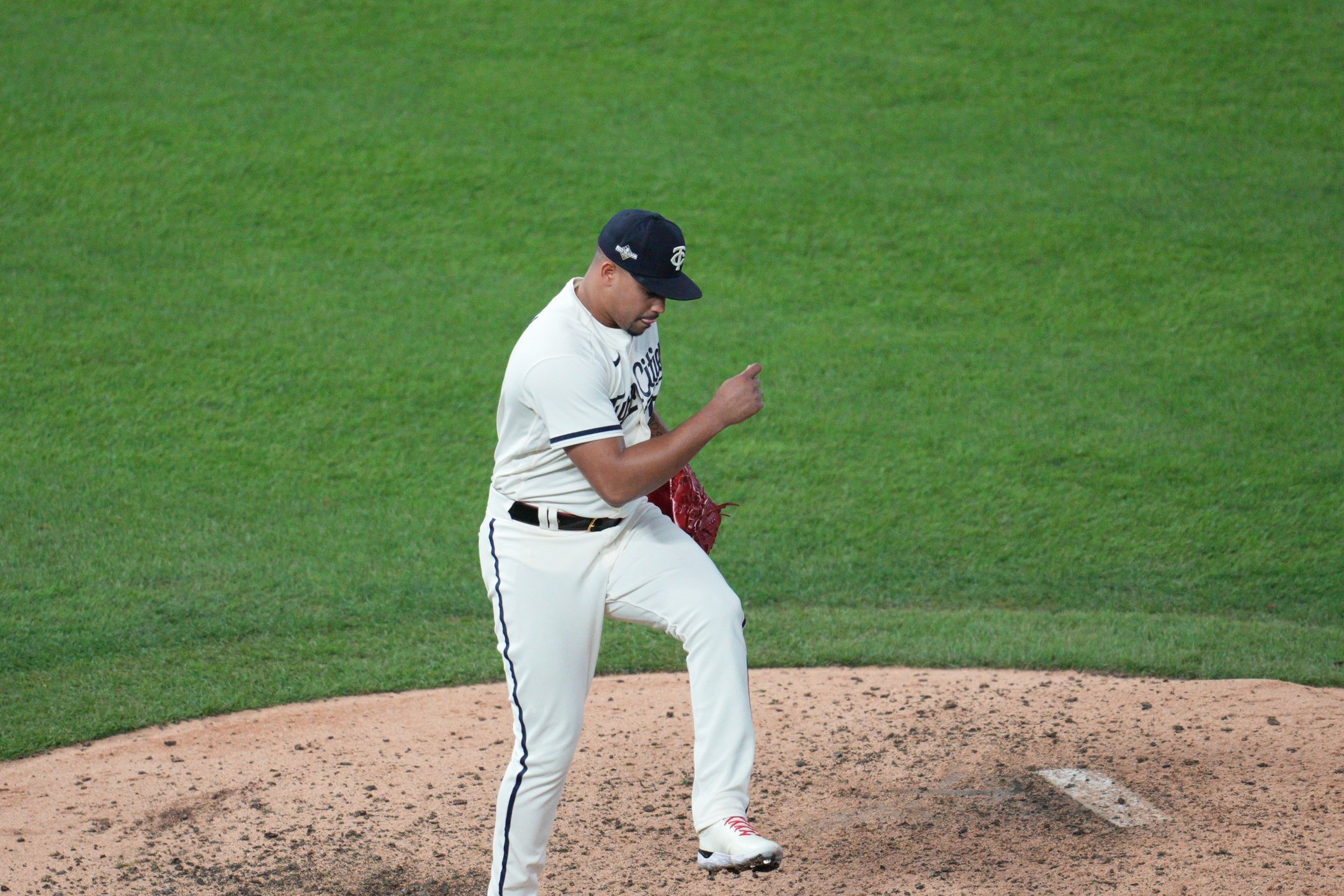 The date is October 11th. The Twins are facing the Houston Astros at Target Field, hoping to stay alive in the ALDS after falling behind two games to one the previous day. Heading into the ninth inning of Game 4, Minnesota trails Houston by one. It all comes down to this. Thinking back to my experience as a fan in the stands, memories of these final moments of the season are a bit hazy, and not only because I'd had a few hazy IPAs over the course of the day. Like many others in attendance, I was in a state of emotional turmoil, frustrated by the team's performance over the past two days and coming to grips with the inescapable feeling this fun ride was about to reach an end. Sadly, that ninth inning played out pretty much exactly according to our worst expectation. As such, I haven't had much desire to think about it since. But now that enough time has passed, I'm ready to dive back into this last gasp for the 2023 Minnesota Twins. What does the manner in which this team was eliminated tell us about them as a whole, and how they can take the next step? First, to set the stage: After suffering a painful blowout loss behind Sonny Gray in Game 3, the Twins decided to go all-out and empty their bullpen bench. They started Joe Ryan, but he only threw two innings before giving way to the reliever parade. Brock Stewart, Caleb Thielbar, Chris Paddack and Griffin Jax combined for five innings, and they were nearly perfect, outside of a two-run homer allowed by Thielbar. That home run was enough to put the Astros ahead by one through seven innings. With Houston set to turn over the order in the eighth, the Twins turned to their bullpen ace, Jhoan Durán. He retired the side in order, but Bryan Abreu did the same in the bottom half. It all came down to the final six outs. Top of the Ninth: Durán Keeps Dominating In the previous inning, Durán quickly dispatched Martín Maldonado, José Altuve and Alex Bregman on a groundout and a pair of fly balls. Bringing Durán back out for another inning, given the stakes, was likely an easy decision for Rocco Baldelli. The flame-throwing righty had been Minnesota's workhorse in the bullpen all year long, and they needed him now more than ever, to keep this game within range. Durán opened the frame with an excruciatingly tough assignment: Yordan Álvarez had terrorized the Twins all series long. Unfazed, Durán made quick work of him, striking out Álvarez on three pitches. He started by freezing the Astros slugger with a curveball, then got a whiff on a low splitter at 98 MPH before spiking a curveball that Alvarez chased. Beauty. One enjoyable thing about going back to this last game of the Twins' season was rediscovering a few genuinely cool highlights that I'd sort of forgotten. The quality of Paddack's outing (2.1 IP, 1 H, 0 BB, 4 K) is one of them. This dismantling of Álvarez by Durán was another. One titan overpowering another. Durán followed up by inducing a weak groundout from Kyle Tucker. He then gave up a single to José Abreu, before retiring Michael Brantley on a lineout to complete his two clean innings. It was an emphatic finish to a spectacular first postseason for Durán. In five innings across four appearances between the ALWC and ALDS, Durán allowed no runs on two hits and one walk. He struck out six and induced a 23% swinging strike rate. The 25-year-old has already established himself as one of the best relievers in franchise history. Regardless of what's been going on around him, he's dependably done his part since arriving in the majors. It's fitting that Durán was on the mound when they ended their postseason losing streak, and when they clinched their ALWC victory over Toronto. It's also fitting he was the last man standing on the hill when it all came to an end, doing his part, still giving them a fighting chance. Bottom of the Ninth: Twins Whiff Their Way to Elimination Naturally, the Astros sent out their closer, Ryan Pressly, to try and extinguish Minnesota's remaining life. Pressly and Durán have an interesting relationship in Twins history; Pressly was shipped out to Houston ahead of the 2018 deadline, on the very same day (July 27th) that the Twins acquired Durán from the Diamondbacks. If the vision at that time was for Durán to eventually fill the same role for the rebuilding Twins as a late-inning dominator capable of shutting down any opponent, then the front office was quite prescient. Still, I think they'd like to take back the Pressly trade if they could. Instead of having him available to their division-winning team in 2019 (and maybe beyond), they've watched Pressly do what Durán just did in October, pretty much every year. In exchange for Gilberto Celestino and Jorge Alcalá, Minnesota gave up one of the best postseason relievers since Mariano Rivera–and sent him to the powerhouse they were trying to overcome in their own league, no less. In 46 postseason appearances, Pressly has a 2.22 ERA and an 11.7 K/9 rate. He's never been tagged with a playoff loss and, perhaps most staggeringly, has allowed one (1) home run, while facing 181 batters in (mostly) game-deciding moments. That's what the Twins were up against. Their identity all year long had basically boiled down to "strike out or home run"--they tied for the AL lead in homers while setting the all-time major-league ounchout record--and so it probably shouldn't have been hard to guess how this was going to go down. First up, Jorge Polanco. He presented a solid matchup from Minnesota's perspective; a switch-hitter who takes good at-bats and doesn't strike out a ton. Polanco had demonstrated his ability to jolt the Twins offense earlier in this series. But here, as he led off the ninth inning of Game 4, it wasn't meant to be. Pressly got ahead with a called strike on a curveball, then kept feeding breaking balls, but Polanco didn't bite. He watched a slider, then two curveballs drop out of the zone, moving ahead 3-1. Pressly was in danger of a leadoff walk in front of the heart of Minnesota's lineup. Instead, he found the zone with a backdoor slider for a called strike, and then came with another slider down and in, striking out the veteran infielder on a foul tip. Polanco, who slugged .636 against fastballs in 2023, never saw one in this at-bat. That brought up Royce Lewis, who offered his own sense of fleeting optimism for Twins fans. Lewis gave us a spectacular postseason breakout, with four home runs through his first six games, including a first-inning bomb to open the scoring in this one. But the experienced and battle-tested Pressly knew exactly how to approach the excitable rookie, hunting for another big moment. Like Polanco, Lewis feasted on fastballs all year, except to an even greater extent: he slugged .821 against four-seamers, with a .461 wOBA against all heaters. So what does Pressly do? Starts him out with a four-seam fastball at the top of the zone, right at elbow level. It was technically the kind of pitch Lewis wanted, but he couldn't catch up to the 95-MPH offering and swung through it. Having raised the hitter's eye level, Pressly did the classic pitcher thing, dropping a curveball over the plate at the knees for strike two. At this point, Pressly had Lewis on the ropes, setting the stage for another of those nice little subplots that had kind of slipped my mind: Lewis really battled here. Knowing that he's an aggressive hitter to begin with, and emotionally primed to intensify that tendency in this moment, it'd be easy to see him chasing with a heroic cut as Pressly attempted to lure him out of the zone. I think that's what most of us in the stands were apprehensively bracing for. But Lewis held strong. Granted, Pressly didn't quite execute in this spot. He bounced a couple breaking balls and then threw a fastball well outside the zone. But Lewis watched three straight pitches, to work the count full, at which point the Astros closer unleashed a devastating 83-MPH curveball that dropped to the very bottom edge of the zone. A perfect pitch. Lewis swung over it. Up came Max Kepler, the longest-tenured Twin and last hope for the 2023 team. Following a resurgent second half, Kepler had reverted to familiar form in the postseason, with just five hits (three singles and two doubles) in 23 at-bats. Here, in his 49th career playoff plate appearance, Kepler was still looking for his first RBI. He wouldn't get it. Like Polanco and Lewis, Kepler put forth a good AB but came up empty. After fouling off a curveball and then taking three chase-me changeups to get ahead in the count 3-1, Kepler fouled off a hittable slider and then took a fastball on the outside corner, ending the at-bat and the Twins' season. Kepler erupted in anger as the home plate umpire punched him out, but the pitch was a strike, and I suspect Max knew it. His frustration surely stemmed from the overall situation–a big opportunity at home fumbled, a season brought to an end–as well as an earlier at-bat where he and the Twins truly WERE robbed, in pivotal fashion. In the sixth inning, Kepler was called out an egregiously inside pitch from Hector Neris, leaving the crowd confused after seemingly watching Lewis steal second to move into scoring position as the tying run with a full count. That's what should have happened. But the mounting threat was foiled by this brutal strike call on a pitch several inches off the plate. Everyone gets bitten by bad calls, but through the annals of Twins postseason misery, highly consequential blown calls like these really are persistently glaring. In this sense, Kepler's frustration was understandable. The fact remains: he stood with the bat on his shoulder as the Twins were eliminated, leaving Carlos Correa in the on-deck circle and extending his lifetime postseason record to 6-for-41 with a .505 OPS. Will that be our final memory of Kepler in a Twins uniform? It would be a bummer. So, What Have We Learned? A few things strike me as I revisit this last inning of Minnesota Twins action in 2023. One is that we probably don't talk enough about the Pressly trade, and how dramatically it helped shift the balance between Minnesota and Houston over the past five years. On the flip side, thank goodness for Durán. Another is a reaction that many reading this probably share: MAN, this offense was on-script, with all the strikeouts that drowned out any chance of a rally or comeback. It wasn't just the ninth inning; Byron Buxton's meager popout to first as a pinch-hitter in the eighth inning was the only plate appearance out of the last eight for the Twins that didn't result in a strikeout. Here's how they closed things out: Jeffers: K swinging Castro: K swinging Solano: K swinging Buxton: Pop fly to 1B Julien: K swinging Polanco: K swinging Lewis: K swinging Kepler: K looking The strikeouts were completely out of control this year. The Twins have got to find a way to rein them in and lessen their susceptibility to these momentum-stifling stretches of fruitless at-bats. At the same time, the front office understandably remains focused on prioritizing power, even at the expense of contact. "It would obviously be ideal if Minnesota had stacked lineups of superstar hitters who hit for power and don’t strike out, like those big-market teams," wrote Do Hyoung Park. "But here’s what the Twins do really well: They hit the ball hard and in the air, and they take their walks. And the way they see it, if that comes with a tradeoff of more strikeouts, they’re willing to make that trade." The value of this general offensive philosophy is hard to quibble with; every run scored in Game 4 came on a home run, and the long ball played an outsized role throughout the playoffs. At the same time, there has to be some kind of balance. There comes a point where too many strikeouts is too many, and I believe we've seen it, throughout the latest Twins season and especially at its conclusion. I'd love to hear from readers and other fans about what stands out to them as they think back to the final game (and inning) of the Twins season. How can the front office best make sure it comes later next year?
 -
Well, both their contracts were for 8 years, as opposed to the 5-year framework proposed for Lewis here, so I think that needs to be accounted in comparing total money. If you look at the specific annual salaries/progressions, the deal is actually quite similar to those. The idea here, as it was with Harris and Chourio, is to give Lewis a chance to still hit free agency around age 31, when he still has a real chance to score another big contract.
-
FWIW, he won't be a free agent until 2029. The 2028 season would be his last under arbitration. The proposed option seasons (20M and 25M) would be his first two FA years. Not that this necessarily negates your point.
-
Is this offseason the last chance to lock up the natural-born leader and potential superstar, while the team still has a little bit of leverage due to lingering injury concerns and service-time realities? Image courtesy of Nick Wosika-USA TODAY Sports The nature of Major League Baseball's service-time system (and the way it delays significant guaranteed paydays) creates interesting leverage dynamics when it comes to negotiating long-term contracts with young players. These dynamics lead to things like Jackson Chourio signing an eight-year, $82-million deal with the Brewers. One might ask, on one hand, why a team would commit that much money to a 19-year-old who has yet to play in the majors. On the other hand, though, why would a budding superstar sell out multiple future free-agent years at a discounted rate, potentially costing himself tens of millions of dollars? It's that dual uncertainty that makes possible a mutually desirable agreement. Chourio, the No. 2 prospect in all of baseball, would probably have been in line for an eventual megadeal, but not for many years. First, he would need to reach the majors, put in three full seasons of service at the minimum salary, and work his way through the arbitration process. Much can happen between now and that theoretical free-agent windfall. By signing his deal, Chourio mitigates the risk of something unforeseen and secures life-changing guaranteed money. In exchange, Milwaukee buys out up to four extra seasons at a significant bargain. The Atlanta Braves executed a similar blueprint with Michael Harris II during his rookie season in 2022, locking the young outfielder up through age 30 with an eight-year deal. This was different from the Chourio situation, in that Harris had already reached the majors and experienced some success (he was on his way to winning Rookie of the Year), but the premise was the same. Before this season, inspired by Atlanta's extension with Harris, I pondered what it might look like for the Twins to explore a long-term contract with Royce Lewis. He's older and further into his career than Harris or Chourio, but the motivations are the same: security and risk mitigation. Even with all the major-league service time Lewis accrued while on the injured list over the past two seasons, he is at least a year away from being eligible for arbitration, and is not in line to become a free agent until after the 2028 season. In his brief time on the big-league field, he has shown legit superstar ability, portending big arbitration salaries and a robust market down the line--if all goes to plan. But Lewis is more familiar than anyone with the harsh unpredictability of this game. Injuries robbed him of nearly two full campaigns, then almost forestalled his star turn in the playoffs. "It definitely made me not take anything for granted, knowing how quickly this game could be taken away from you," Lewis said of those injuries, during the playoff run, "whether it’s an ACL, hamstring, oblique, whatever it may be, or just strictly performance.” Minnesota's leverage to negotiate a long-term deal has diminished since before the season, no doubt, but I think it still exists. Lewis has emerged as a central part of the Twins' core alongside Carlos Correa and Byron Buxton. Could the front office lock him into a long-term deal alongside those of Correa and Buxton, to gain cost certainty amid revenue uncertainty? In February, I laid out the framework for a hypothetical seven-year, $34-million Lewis extension, which included two team options at $12 million and $15 million. The Twins would now need to sweeten some of the proposed numbers in order to entice Lewis and his agent, Scott Boras, following a breakthrough in 2023, but the same basic approach might make sense. Offer big raises for the minimum-salary years, guarantee substantial money during the arbitration years, and then recoup that up-front overpay by buying out years of free agency at an affordable price. Now, there's a major stipulation at play here: with one year and 142 days of MLB service under his belt, Lewis is very likely to qualify for Super 2 status in 2025, assuming he spends all of next year in the majors. That means he'll reach arbitration early and hit those escalating paydays more quickly, taking away from some of Minnesota's leverage. Here's a framework for a deal that might make sense from both sides: a five-year, $40 million contract with team options for $20 million and $25 million tacked onto the back, for a total possible value of seven years and $85 million. 2024 (age 25): $3 million 2025 (age 26): $5 million 2026 (age 27): $7 million 2027 (age 28): $10 million 2028 (age 29): $15 million 2029 (age 30): $20 million team option 2030 (age 31): $25 million team option The draw here for Lewis (and Boras) is that, in addition to nearly quadrupling his projected salary in 2024, he gets $37 million guaranteed in four years of arbitration, which is more than he's likely to earn during that span unless things go really well from a health and production standpoint. The Twins, meanwhile, get a pair of team options that can buy out a couple of free-agent years while Lewis is still in his prime. I'd consider increasing those to $25 million and $30 million, and throwing in some healthy buyouts, too. You might wonder, is it that valuable to get Lewis at those big salaries for those seasons--especially since the idea of him as a $30-million player remains purely theoretical at this point? The key is that you're getting those extra years without needing to commit to a long-term deal that involves paying heavily into his mid-30s. This might be the last chance for Minnesota to set up any such arrangement. It's basically a juiced up version of the extensions that Minnesota gave Max Kepler and Jorge Polanco at similar stages of their careers. The specific terms can be flexible, but the bottom line is that if Lewis is interested in the security of a long-term deal, I would be very amenable to that. For the record, here's how the team's books would map out long-term with the above deal added in: What do you think? Would you be interested in exploring a contract extension of this nature with Lewis, or would you rather play it year-to-year? View full article
-
How Might a Royce Lewis Contract Extension Make Sense for Both Sides?
Nick Nelson posted an article in Twins
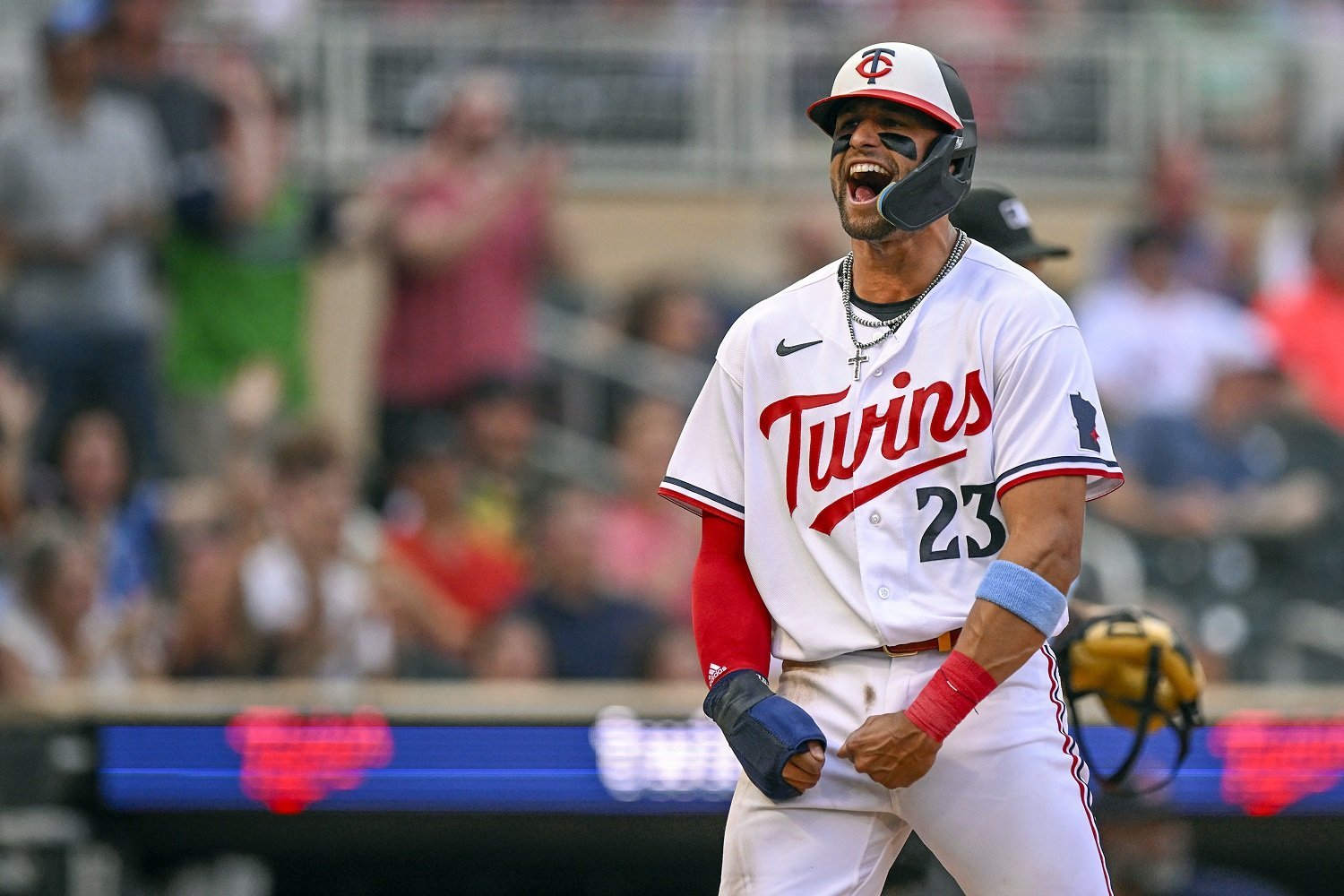 The nature of Major League Baseball's service-time system (and the way it delays significant guaranteed paydays) creates interesting leverage dynamics when it comes to negotiating long-term contracts with young players. These dynamics lead to things like Jackson Chourio signing an eight-year, $82-million deal with the Brewers. One might ask, on one hand, why a team would commit that much money to a 19-year-old who has yet to play in the majors. On the other hand, though, why would a budding superstar sell out multiple future free-agent years at a discounted rate, potentially costing himself tens of millions of dollars? It's that dual uncertainty that makes possible a mutually desirable agreement. Chourio, the No. 2 prospect in all of baseball, would probably have been in line for an eventual megadeal, but not for many years. First, he would need to reach the majors, put in three full seasons of service at the minimum salary, and work his way through the arbitration process. Much can happen between now and that theoretical free-agent windfall. By signing his deal, Chourio mitigates the risk of something unforeseen and secures life-changing guaranteed money. In exchange, Milwaukee buys out up to four extra seasons at a significant bargain. The Atlanta Braves executed a similar blueprint with Michael Harris II during his rookie season in 2022, locking the young outfielder up through age 30 with an eight-year deal. This was different from the Chourio situation, in that Harris had already reached the majors and experienced some success (he was on his way to winning Rookie of the Year), but the premise was the same. Before this season, inspired by Atlanta's extension with Harris, I pondered what it might look like for the Twins to explore a long-term contract with Royce Lewis. He's older and further into his career than Harris or Chourio, but the motivations are the same: security and risk mitigation. Even with all the major-league service time Lewis accrued while on the injured list over the past two seasons, he is at least a year away from being eligible for arbitration, and is not in line to become a free agent until after the 2028 season. In his brief time on the big-league field, he has shown legit superstar ability, portending big arbitration salaries and a robust market down the line--if all goes to plan. But Lewis is more familiar than anyone with the harsh unpredictability of this game. Injuries robbed him of nearly two full campaigns, then almost forestalled his star turn in the playoffs. "It definitely made me not take anything for granted, knowing how quickly this game could be taken away from you," Lewis said of those injuries, during the playoff run, "whether it’s an ACL, hamstring, oblique, whatever it may be, or just strictly performance.” Minnesota's leverage to negotiate a long-term deal has diminished since before the season, no doubt, but I think it still exists. Lewis has emerged as a central part of the Twins' core alongside Carlos Correa and Byron Buxton. Could the front office lock him into a long-term deal alongside those of Correa and Buxton, to gain cost certainty amid revenue uncertainty? In February, I laid out the framework for a hypothetical seven-year, $34-million Lewis extension, which included two team options at $12 million and $15 million. The Twins would now need to sweeten some of the proposed numbers in order to entice Lewis and his agent, Scott Boras, following a breakthrough in 2023, but the same basic approach might make sense. Offer big raises for the minimum-salary years, guarantee substantial money during the arbitration years, and then recoup that up-front overpay by buying out years of free agency at an affordable price. Now, there's a major stipulation at play here: with one year and 142 days of MLB service under his belt, Lewis is very likely to qualify for Super 2 status in 2025, assuming he spends all of next year in the majors. That means he'll reach arbitration early and hit those escalating paydays more quickly, taking away from some of Minnesota's leverage. Here's a framework for a deal that might make sense from both sides: a five-year, $40 million contract with team options for $20 million and $25 million tacked onto the back, for a total possible value of seven years and $85 million. 2024 (age 25): $3 million 2025 (age 26): $5 million 2026 (age 27): $7 million 2027 (age 28): $10 million 2028 (age 29): $15 million 2029 (age 30): $20 million team option 2030 (age 31): $25 million team option The draw here for Lewis (and Boras) is that, in addition to nearly quadrupling his projected salary in 2024, he gets $37 million guaranteed in four years of arbitration, which is more than he's likely to earn during that span unless things go really well from a health and production standpoint. The Twins, meanwhile, get a pair of team options that can buy out a couple of free-agent years while Lewis is still in his prime. I'd consider increasing those to $25 million and $30 million, and throwing in some healthy buyouts, too. You might wonder, is it that valuable to get Lewis at those big salaries for those seasons--especially since the idea of him as a $30-million player remains purely theoretical at this point? The key is that you're getting those extra years without needing to commit to a long-term deal that involves paying heavily into his mid-30s. This might be the last chance for Minnesota to set up any such arrangement. It's basically a juiced up version of the extensions that Minnesota gave Max Kepler and Jorge Polanco at similar stages of their careers. The specific terms can be flexible, but the bottom line is that if Lewis is interested in the security of a long-term deal, I would be very amenable to that. For the record, here's how the team's books would map out long-term with the above deal added in: What do you think? Would you be interested in exploring a contract extension of this nature with Lewis, or would you rather play it year-to-year?
 -
 We all knew coming into this offseason that the Minnesota Twins were likely to move slowly and save their biggest decisions for later. This has always been their tendency and a variety of factors -- not the least of which, their revenue uncertainty -- were pushing them further in that direction. Even with that context, the absolute dead silence from the front office has been staggering. We're six weeks into the offseason and the team has not made one single addition. Not a waiver claim, not a minor-league signing (outside of bringing back a few of their own organizational depth players). Certainly not any move of significance to jolt a slumbering fan base that's been quickly lulled to sleep following a breakthrough season. We know those moves are still to come. Playing out the market has been a consistent practice for this front office and it's been pretty effective. At the same time, no one can fault fans at large for feeling a little jaded and disconcerted by the state of affairs. The Twins opened up the offseason by oddly broadcasting their intention to slash payroll, and have now sat idly while watching several key pieces depart from the pitching machine they built. Minor-league pitching coordinator Justin Willard was poached away by the Red Sox. Sonny Gray, Kenta Maeda and Emilio Pagan all signed elsewhere. Most recently, another member of the 2023 rotation landed in a new spot -- albeit not one the Twins seemed very interested in re-signing. Mahle Signs Two-Year Contract with Rangers Following an injury-ruined run in Minnesota, free agent Tyler Mahle signed a deal this past week with the defending champions. Similar to the original contract between the Twins and Michael Pineda several years back, this one will involve paying Mahle to rehab from Tommy John surgery and then hopefully reap rewards on the back end. I gotta say, the Pineda deal ($10 million for two years) made a lot more sense to me than this one for Mahle. If you assume the right-hander is going to miss most or all of next year, then you're talking about basically paying him $20 million (plus incentives!) to be part of your 2025 rotation. Based on what? I get that everyone's high on Mahle's talent and upside but he'll be 30 with a 4.30 career ERA, 4.27 FIP, and history of durability issues. I can certainly see why the Twins reportedly "literally had zero interest" in approaching those terms, per Darren Wolfson. Still, he becomes the third member of the 2023 Opening Day rotation to officially move on, and he serves as a reminder of the depth Minnesota still needs to build; only because of their contingencies behind the starting five last year was Mahle being a non-factor ... well, a non-factor. Twins Pursuing a Frontline Starter via Trade Aaron Gleeman of The Athletic came away from the Winter Meetings earlier this month convinced of something many of us have generally assumed: the Twins are aiming to land a front-of-rotation starter this offseason by executing at least one major trade. It's the same formula that brought them Mahle, as well as (more successfully) Gray, Maeda and Pablo Lopez. In some areas, the Twins front office can basically afford to be as patient as they want, playing things at their own pace. That's not necessarily the case here if they have specific targets in mind. Those players are going to start moving once Yoshinobu Yamamoto signs and teams start scrambling for impact starters. One prominent name from the trade market, Tampa Bay's Tyler Glasnow, has already been claimed. He's heading to the Dodgers alongside outfielder Manuel Margot to join Shohei Ohtani and Co. on a rejuvenated National League powerhouse. Glasnow was likely not in the Twins' sights, given his $25 million price tag for next year (now with an extra $110 million added on, via freshly minted extension). But the market has begun to move. Polanco and Others Drawing Trade Interest Jorge Polanco is known to be on the trading block, and MLB Network's Jon Morosi reported last week that the the Twins were receiving increased interest in the veteran infielder. This comes as no real surprise given the state of the second base free agent market. Morosi previously connected Max Kepler and the Mariners as a possible match, which is not the first time this possible connection has been raised. Meanwhile, Kyle Farmer and Christian Vázquez remain names to watch, though trading either one of them would be primarily a salary dump. 2024 Roster and Payroll Projection Nothing has really changed since the end of the season. The projected roster and payroll has remained static with the lack of additions; here's how it would currently shake out at about $120 million, which is on the low end of the $120-$140 million range fans were told they could expect. It's a respectable roster, which speaks to the quality of the base from which the front office is building this offseason. But there's work to do. How long until they get to it? How long until we have some additions to talk about instead of only attrition and subtraction? Unfortunately, I think we fans have more waiting in store, because we are fast approaching a period of the baseball calendar that are always dormant. It may well be a new year before we see any new Twins enter the fold.
- 43 comments
-
- 11
-
-
- tyler mahle
- jorge polanco
- (and 1 more)
-
We're closing in on the holiday shutdown and the Twins have yet to make an additive move of significance. Even by their own standards, this lack of activity is extreme and deflating. Alas, the past few weeks of this offseason have not been without Twins-related headlines and rumors. Let's get caught up. Image courtesy of Jordan Johnson-USA TODAY Sports We all knew coming into this offseason that the Minnesota Twins were likely to move slowly and save their biggest decisions for later. This has always been their tendency and a variety of factors -- not the least of which, their revenue uncertainty -- were pushing them further in that direction. Even with that context, the absolute dead silence from the front office has been staggering. We're six weeks into the offseason and the team has not made one single addition. Not a waiver claim, not a minor-league signing (outside of bringing back a few of their own organizational depth players). Certainly not any move of significance to jolt a slumbering fan base that's been quickly lulled to sleep following a breakthrough season. We know those moves are still to come. Playing out the market has been a consistent practice for this front office and it's been pretty effective. At the same time, no one can fault fans at large for feeling a little jaded and disconcerted by the state of affairs. The Twins opened up the offseason by oddly broadcasting their intention to slash payroll, and have now sat idly while watching several key pieces depart from the pitching machine they built. Minor-league pitching coordinator Justin Willard was poached away by the Red Sox. Sonny Gray, Kenta Maeda and Emilio Pagan all signed elsewhere. Most recently, another member of the 2023 rotation landed in a new spot -- albeit not one the Twins seemed very interested in re-signing. Mahle Signs Two-Year Contract with Rangers Following an injury-ruined run in Minnesota, free agent Tyler Mahle signed a deal this past week with the defending champions. Similar to the original contract between the Twins and Michael Pineda several years back, this one will involve paying Mahle to rehab from Tommy John surgery and then hopefully reap rewards on the back end. I gotta say, the Pineda deal ($10 million for two years) made a lot more sense to me than this one for Mahle. If you assume the right-hander is going to miss most or all of next year, then you're talking about basically paying him $20 million (plus incentives!) to be part of your 2025 rotation. Based on what? I get that everyone's high on Mahle's talent and upside but he'll be 30 with a 4.30 career ERA, 4.27 FIP, and history of durability issues. I can certainly see why the Twins reportedly "literally had zero interest" in approaching those terms, per Darren Wolfson. Still, he becomes the third member of the 2023 Opening Day rotation to officially move on, and he serves as a reminder of the depth Minnesota still needs to build; only because of their contingencies behind the starting five last year was Mahle being a non-factor ... well, a non-factor. Twins Pursuing a Frontline Starter via Trade Aaron Gleeman of The Athletic came away from the Winter Meetings earlier this month convinced of something many of us have generally assumed: the Twins are aiming to land a front-of-rotation starter this offseason by executing at least one major trade. It's the same formula that brought them Mahle, as well as (more successfully) Gray, Maeda and Pablo Lopez. In some areas, the Twins front office can basically afford to be as patient as they want, playing things at their own pace. That's not necessarily the case here if they have specific targets in mind. Those players are going to start moving once Yoshinobu Yamamoto signs and teams start scrambling for impact starters. One prominent name from the trade market, Tampa Bay's Tyler Glasnow, has already been claimed. He's heading to the Dodgers alongside outfielder Manuel Margot to join Shohei Ohtani and Co. on a rejuvenated National League powerhouse. Glasnow was likely not in the Twins' sights, given his $25 million price tag for next year (now with an extra $110 million added on, via freshly minted extension). But the market has begun to move. Polanco and Others Drawing Trade Interest Jorge Polanco is known to be on the trading block, and MLB Network's Jon Morosi reported last week that the the Twins were receiving increased interest in the veteran infielder. This comes as no real surprise given the state of the second base free agent market. Morosi previously connected Max Kepler and the Mariners as a possible match, which is not the first time this possible connection has been raised. Meanwhile, Kyle Farmer and Christian Vázquez remain names to watch, though trading either one of them would be primarily a salary dump. 2024 Roster and Payroll Projection Nothing has really changed since the end of the season. The projected roster and payroll has remained static with the lack of additions; here's how it would currently shake out at about $120 million, which is on the low end of the $120-$140 million range fans were told they could expect. It's a respectable roster, which speaks to the quality of the base from which the front office is building this offseason. But there's work to do. How long until they get to it? How long until we have some additions to talk about instead of only attrition and subtraction? Unfortunately, I think we fans have more waiting in store, because we are fast approaching a period of the baseball calendar that are always dormant. It may well be a new year before we see any new Twins enter the fold. View full article
-
Isn't that really the defining question of this offseason? How many starters do the Twins currently have who meet this qualification, and how many more can they find? Image courtesy of Jim Rassol, Bruce Kluckhohn, Jesse Johnson - USA TODAY Sports Despite having one of the best rotations in franchise history this past year, the Twins ended up with only two pitchers whom they genuinely trusted to start a playoff game: Pablo López and Sonny Gray. The All-Star pairing made four starts in the playoffs–one apiece in both the ALWC and the ALDS–and were given the chance to go fairly deep in those games. Meanwhile, significantly less confidence was shown toward Bailey Ober, Joe Ryan and Kenta Maeda. Ober pitched Game 1 of the ALDS against Houston and was pulled after three innings, at 43 pitches. He gave up three runs on a pair of homers. Ryan started an elimination Game 4, and was removed after just two innings and 26 pitches. Maeda was trusted seemingly least of all, demoted to a low-leverage bullpen role in which he, too, struggled (4 IP, 3 ER). The Twins are looking ahead to a season in which they'll be favored to win the division, and aiming to take the next step in the playoffs. A rotation capable of meeting that challenge is crucial. Ultimately, the staff wasn't quite there this year, given the usage and the results beyond López and the now-departed Gray. As we ponder the outlook for 2024 and what the front office is building from, let's assess the trust level for each of the five starters currently slotted into next year's rotation. For each, I'll call out a few things the pitcher could do next season to improve that level of trust before the postseason rolls around. Pablo López Trust Level: 9/10 He pitched like an ace for much of the season and definitely looked the part in the playoffs, holding the Blue Jays and Astros to one run over 12 innings in his two starts--both of them wins. Not sure what more you could ask for, other than cutting out the occasional clunker that inflated his regular-season ERA a bit. What can he do to be a more trusted playoff option? Just stay the course. If López pitches exactly the same way in 2024 as he did in 2023, he's a viable Game 1 playoff starter, and that's a great place to start. From here, however, things get murkier. Bailey Ober Trust Level: 6/10 Over the course of the season, Ober was quietly one of the most effective starters in the majors, but he wore down late in the year under the burden of a career-high workload. The Twins sent him down in late August, after he posted a 6.75 ERA over a six-start stretch. He returned a few weeks later and then made the one playoff start, but Ober never looked quite the same after the All-Star break. What can he do to be a more trusted playoff option? Stay strong and durable throughout the marathon. The version of Ober we saw in the first half, wherein he held opponents to a .207/.259/.345 slash line with a 2.61 ERA in 14 starts, is a clear-cut playoff starter. He just needs to maintain that form into September and October. After going from 70 innings pitched in 2022 to 170 in 2023, he'll be much more equipped for the task next year. Joe Ryan Trust Level: 5/10 Much like Ober, Ryan experienced a steep drop-off after a strong start in 2023, posting a 2.98 ERA in his first 15 starts and a 6.62 ERA in the last 14. The team's shattered confidence in him was made clear by his usage in the playoffs, where Ryan made one "start" and was essentially used as an opener. He threw fewer pitches (26) than any other Twin who appeared in the postseason. What can he do to be a more trusted playoff option? Much like Ober, Ryan is a quality playoff option if he's pitching the way he did in the first half. But he needs to prove he can carry that form into the end of the season. He also experienced a dropoff in his solid rookie season, when his 2.89 ERA through the first 15 starts gave way to 4.36 in the final 12 starts. Hopefully the righthander learned a lesson from tanking his promising sophomore campaign by hiding an injury. Chris Paddack Trust Level: 3/10 The Twins seem convinced that Paddack can step in as a No. 2 or 3 starter next year, and their faith might be well-founded. He returned with a bang in late 2023. The 27-year-old looked excellent in September and October, throwing fire out of the bullpen. Even if he does channel this success back into a starting role, the problem is that it's tough to envision Paddack remaining effective into October. He's thrown 27 combined innings over the past two years. What can he do to be a more trusted playoff option? In addition to showing he can recapture the front-line starter profile of his rookie year in 2019 (140 IP, 3.33 ERA), Paddack needs to find a way to remain strong and effective through the finish line. As Ober exemplifies, even very good pitchers are bound to run out of gas when their bodies aren't conditioned for the rigors of six months and almost 200 innings. The Twins might need to get creative with his handling if they want Paddack to be a factor in their playoff rotation. Louie Varland Trust Level: 3/10 Unlike Paddack, Varland doesn't pose an obvious durability concern. He's been very healthy and dependable. The issue here is performance, and whether the righty can elevate to a level where he'd be in line for a playoff start. Right now, his future as a postseason difference-maker appears to be out of the bullpen, but he'd obviously be a much bigger asset if he could tap into some of that relief dominance in a starting role. What can he do to be a more trusted playoff option? Varland has shown signs of being a good MLB starter at times, and one who can handle the pressure of, say, making his major-league debut in Yankee Stadium. With nearly 100 MLB innings under his belt, he's ahead of the game when it comes to poise and stamina, He just needs to advance his stuff to a level where it's going to play against elite lineups multiple times on the biggest stage. If Varland can effectively incorporate the cutter that contributed to his bullpen breakthrough into his starting mix, that could be an interesting development. What Do the Twins Need? Obviously, it will be helpful if any of the four non-López starters elevate their trust level, but regardless, it seems clear that the Twins need to add at least one outside starter this offseason who checks in with a trust level of a least 8/10 (which is around where I'd have pegged Gray). That's the main lens through which I'll be looking at any offseason additions to the starting corps. It's less about upgrading the rotation, and more about making upgrades to the playoff rotation–which is why adding anything less than a Maeda-caliber starter would be unproductive. View full article
- 52 replies
-
- 1
-
-
- pablo lopez
- bailey ober
- (and 3 more)
-
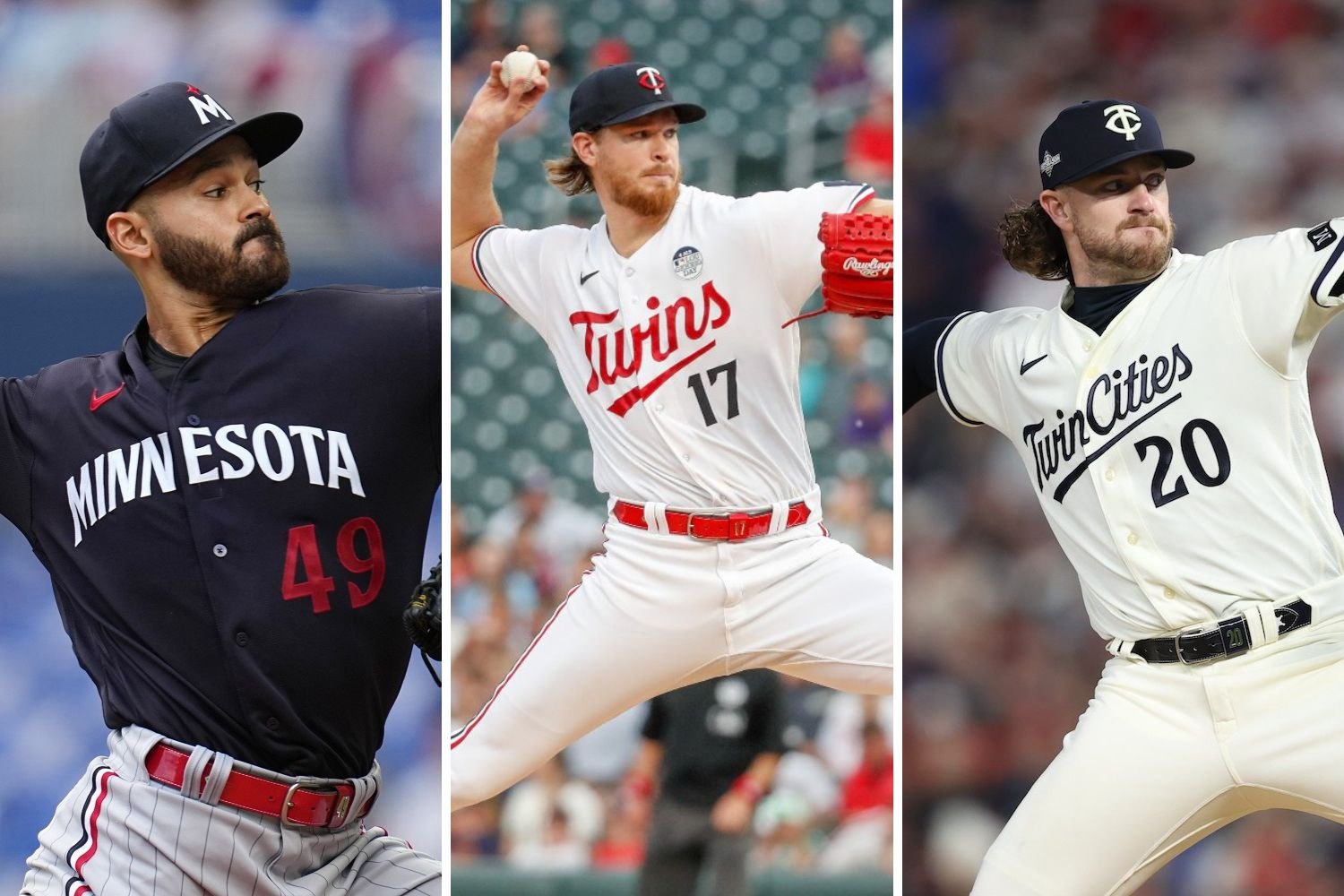 Despite having one of the best rotations in franchise history this past year, the Twins ended up with only two pitchers whom they genuinely trusted to start a playoff game: Pablo López and Sonny Gray. The All-Star pairing made four starts in the playoffs–one apiece in both the ALWC and the ALDS–and were given the chance to go fairly deep in those games. Meanwhile, significantly less confidence was shown toward Bailey Ober, Joe Ryan and Kenta Maeda. Ober pitched Game 1 of the ALDS against Houston and was pulled after three innings, at 43 pitches. He gave up three runs on a pair of homers. Ryan started an elimination Game 4, and was removed after just two innings and 26 pitches. Maeda was trusted seemingly least of all, demoted to a low-leverage bullpen role in which he, too, struggled (4 IP, 3 ER). The Twins are looking ahead to a season in which they'll be favored to win the division, and aiming to take the next step in the playoffs. A rotation capable of meeting that challenge is crucial. Ultimately, the staff wasn't quite there this year, given the usage and the results beyond López and the now-departed Gray. As we ponder the outlook for 2024 and what the front office is building from, let's assess the trust level for each of the five starters currently slotted into next year's rotation. For each, I'll call out a few things the pitcher could do next season to improve that level of trust before the postseason rolls around. Pablo López Trust Level: 9/10 He pitched like an ace for much of the season and definitely looked the part in the playoffs, holding the Blue Jays and Astros to one run over 12 innings in his two starts--both of them wins. Not sure what more you could ask for, other than cutting out the occasional clunker that inflated his regular-season ERA a bit. What can he do to be a more trusted playoff option? Just stay the course. If López pitches exactly the same way in 2024 as he did in 2023, he's a viable Game 1 playoff starter, and that's a great place to start. From here, however, things get murkier. Bailey Ober Trust Level: 6/10 Over the course of the season, Ober was quietly one of the most effective starters in the majors, but he wore down late in the year under the burden of a career-high workload. The Twins sent him down in late August, after he posted a 6.75 ERA over a six-start stretch. He returned a few weeks later and then made the one playoff start, but Ober never looked quite the same after the All-Star break. What can he do to be a more trusted playoff option? Stay strong and durable throughout the marathon. The version of Ober we saw in the first half, wherein he held opponents to a .207/.259/.345 slash line with a 2.61 ERA in 14 starts, is a clear-cut playoff starter. He just needs to maintain that form into September and October. After going from 70 innings pitched in 2022 to 170 in 2023, he'll be much more equipped for the task next year. Joe Ryan Trust Level: 5/10 Much like Ober, Ryan experienced a steep drop-off after a strong start in 2023, posting a 2.98 ERA in his first 15 starts and a 6.62 ERA in the last 14. The team's shattered confidence in him was made clear by his usage in the playoffs, where Ryan made one "start" and was essentially used as an opener. He threw fewer pitches (26) than any other Twin who appeared in the postseason. What can he do to be a more trusted playoff option? Much like Ober, Ryan is a quality playoff option if he's pitching the way he did in the first half. But he needs to prove he can carry that form into the end of the season. He also experienced a dropoff in his solid rookie season, when his 2.89 ERA through the first 15 starts gave way to 4.36 in the final 12 starts. Hopefully the righthander learned a lesson from tanking his promising sophomore campaign by hiding an injury. Chris Paddack Trust Level: 3/10 The Twins seem convinced that Paddack can step in as a No. 2 or 3 starter next year, and their faith might be well-founded. He returned with a bang in late 2023. The 27-year-old looked excellent in September and October, throwing fire out of the bullpen. Even if he does channel this success back into a starting role, the problem is that it's tough to envision Paddack remaining effective into October. He's thrown 27 combined innings over the past two years. What can he do to be a more trusted playoff option? In addition to showing he can recapture the front-line starter profile of his rookie year in 2019 (140 IP, 3.33 ERA), Paddack needs to find a way to remain strong and effective through the finish line. As Ober exemplifies, even very good pitchers are bound to run out of gas when their bodies aren't conditioned for the rigors of six months and almost 200 innings. The Twins might need to get creative with his handling if they want Paddack to be a factor in their playoff rotation. Louie Varland Trust Level: 3/10 Unlike Paddack, Varland doesn't pose an obvious durability concern. He's been very healthy and dependable. The issue here is performance, and whether the righty can elevate to a level where he'd be in line for a playoff start. Right now, his future as a postseason difference-maker appears to be out of the bullpen, but he'd obviously be a much bigger asset if he could tap into some of that relief dominance in a starting role. What can he do to be a more trusted playoff option? Varland has shown signs of being a good MLB starter at times, and one who can handle the pressure of, say, making his major-league debut in Yankee Stadium. With nearly 100 MLB innings under his belt, he's ahead of the game when it comes to poise and stamina, He just needs to advance his stuff to a level where it's going to play against elite lineups multiple times on the biggest stage. If Varland can effectively incorporate the cutter that contributed to his bullpen breakthrough into his starting mix, that could be an interesting development. What Do the Twins Need? Obviously, it will be helpful if any of the four non-López starters elevate their trust level, but regardless, it seems clear that the Twins need to add at least one outside starter this offseason who checks in with a trust level of a least 8/10 (which is around where I'd have pegged Gray). That's the main lens through which I'll be looking at any offseason additions to the starting corps. It's less about upgrading the rotation, and more about making upgrades to the playoff rotation–which is why adding anything less than a Maeda-caliber starter would be unproductive.
- 52 comments
-
- 12
-
-
- pablo lopez
- bailey ober
- (and 3 more)
-
For the Twins to sustain their success in the rotation, they'll need more young starters to step up the way Joe Ryan, Bailey Ober and Louie Varland did in 2023. Which minor-league pitchers in the system have that immediate impact in them? Image courtesy of Ed Bailey, Wichita Wind Surge (photo of David Festa) The top-tier Minnesota Twins rotation in 2023 was headlined by veterans Sonny Gray and Pablo López, who both made the All-Star team and received Cy Young votes. Kenta Maeda's resurgent campaign also did yeoman's work. But the contributions of younger starters who stepped up should not be overlooked. Joe Ryan and Bailey Ober were key cogs in the Minnesota rotation, combining for more than 300 innings and a whole bunch of quality starts. The Twins went 32-23 in their starts (.581), because (outside of an ugly stretch from Ryan when he was pitching hurt) they both always gave the team a good chance. When you can win at a clip like that behind your mid-rotation starters, that's a pretty foolproof formula for success. Louie Varland also played an important role in the journey of the 2023 Twins rotation. He stepped in as quality depth early on, while the unit was still stabilizing, and posted a 3.51 ERA across seven starts between April and May. These impact arms are exactly the prototype that Derek Falvey was recruited to produce: acquired at low cost (Ryan for a deadline rental, Ober and Varland with late-round draft picks) and developed into legit big-league assets. With Gray and Maeda moving on, the trio will likely be counted on more heavily in 2024. And with financial resources limited, the Twins might be counting on the next wave of internally-developed starters to provide depth next year and beyond. Who's got next? These seven prospects represent the best hope for meaningful pipeline impact in the rotation over the next season or two. Excluded from this list are a couple of top prospects who are multiple years away from the majors due to injuries (Connor Prielipp) or age (Charlee Soto). David Festa, RHP Age: 23 Finished 2023 Season: Triple A Don't be deceived by Festa's so-so ERA between Double A and Triple A this past year (4.19): he's a highly-regarded prospect who piled up 119 strikeouts in 92 innings and pitched in the 2023 Futures Game. A late-round draft pick (13th) in 2021 who has increased his fastball velocity dramatically in the Twins system, Festa follows very much in the footsteps of Ober and Varland. He still has an important hurdle (too many walks) to clear, but Festa is on the precipice of the big leagues and will likely get a long look in big-league camp next spring. Among pitchers on this list, he probably ranks highest at the intersection of upside and readiness. He turns 24 in March. Simeon Woods Richardson, RHP Age: 23 Finished 2023 Season: Triple A Woods Richardson is right on par with Festa in terms of readiness, but his perceived upside has fallen off a cliff since the Twins first acquired him in the Jose Berrios trade at the 2021 deadline. The 2023 season saw his post a sub-20% strikeout rate in St. Paul, despite having two full seasons' worth of experience in the high minors. SWR's flat fastball and lagging control have thrown his future into doubt, especially as a starter, so his place in this starting pipeline list is tenuous. Then again, he's got a pretty good physical workload base (around 115 innings pitched in each of the past two seasons) and pitched well in the second half for the Saints (2.92 ERA in his final 12 starts), so for now, he's certainly in the mix. At this moment, Woods Richardson is probably sixth on Minnesota's starting pitching depth chart. Marco Raya, RHP Age: 21 Finished 2023: Double A Raya is probably significantly farther away than the previous two, for the same reasons why SWR is so close: development and workload. Whereas SWR has thrown 400 innings in parts of five minor-league seasons, the 21-year-old Raya has thrown fewer than 130 in two seasons. Moreover, the Twins have been carefully managing his usage; he never threw more than four innings or 60 pitches in a start this year. That all points to the Twins proceeding very cautiously and conservatively with their 2020 draft pick, although Raya can expedite his own journey through his performance, which he already (more or less) has. The righty finished his latest campaign at Double A. I suspect one or more of the polished pitchers below him will leapfrog Raya in the coming year, but since he's advanced further in the system than any of them, the young hurler currently stands above them on this list. Cory Lewis, RHP Age: 23 Finished 2023: High A Lewis is one of the most intriguing arms in the Twins' system, for a specific reason: he throws a knuckleball and it looks legit. Very few major-league pitchers are able to master the knuckler, but those who do can pretty reliably give hitters fits, as Lewis did in 2023 when he posted a 2.49 ERA, 10.5 K/9 and 2.9 BB/9 between Low A and High A. He allowed just six homers in 102 innings across 22 starts. He was named Twins Minor League Pitcher of the Year, an honor that went to Varland each of the past two seasons. C.J. Culpepper, RHP Age: 22 Finished 2023: High A Stop me if you've heard this before: Culpepper was a 13th-round draft pick by the Twins who has significantly improved his velocity as a pro to put himself on the prospect radar. (You heard it earlier in this very article.) The California Baptist University product garnered a lot of strong reviews during his first full pro season in 2023, handling himself well at two levels of A ball as a 21-year-old. As opposed to starters who succeed on a specialized three-pitch mix, Culpepper unleashes a diverse arsenal with at least six different offerings, a la Sonny Gray. He showed solid command and kept the ball in the yard while tossing 86 innings in his first pro season. It's not unthinkable that he could put himself in line for a 2024 debut, though the following year feels more likely. Zebby Matthews, RHP Age: 23 Finished 2023: High A Matthews was selected in the eighth round of last year's draft, within five rounds of Lewis (9th) and Culpepper (13th), in what is looking to be a fruitful stretch of sleeper college arms harvested by the Twins. Of course, the coming year will tell us a lot about the true viability of this trio, as they start graduating to the high minors and facing advanced hitting. Success for college pitchers in A ball is not necessarily all that telling, though it is encouraging. Like Lewis and Culpepper, Matthews offered plenty of positive signs during his first full season in the system, posting a 3.84 ERA, 9.6 K/9, and 1.3 BB/9 between Ft. Myers and Cedar Rapids. He threw 105 innings to build a strong workload baseline and implant himself in the starting pipeline. Like Culpepper, he relies on a deep repertoire, more than specific standout pitches, so it will be interesting to see if he can develop a true weapon to elevate his game. Andrew Morris, RHP Age: 22 Finished 2023: High A Yet another product of the 2022 draft class, Morris was a relatively high-profile pick as a fourth-rounder who received a $500,000 bonus. He achieved stellar results in his first full go against pro competition, posting a 2.88 ERA over 84 innings between the two A-ball levels. Morris is more of a "floor over ceiling" guy, according to MLB Pipeline, but he could factor as a back-of-rotation option for the parent club as soon as this year. Who's your guy in this group? Weigh in. View full article
-
Who Will Be the Next Young Breakthrough Starter for the Twins?
Nick Nelson posted an article in Twins
.jpg.228cd6209e57bafd461c3c1407ac5a97.jpg) The top-tier Minnesota Twins rotation in 2023 was headlined by veterans Sonny Gray and Pablo López, who both made the All-Star team and received Cy Young votes. Kenta Maeda's resurgent campaign also did yeoman's work. But the contributions of younger starters who stepped up should not be overlooked. Joe Ryan and Bailey Ober were key cogs in the Minnesota rotation, combining for more than 300 innings and a whole bunch of quality starts. The Twins went 32-23 in their starts (.581), because (outside of an ugly stretch from Ryan when he was pitching hurt) they both always gave the team a good chance. When you can win at a clip like that behind your mid-rotation starters, that's a pretty foolproof formula for success. Louie Varland also played an important role in the journey of the 2023 Twins rotation. He stepped in as quality depth early on, while the unit was still stabilizing, and posted a 3.51 ERA across seven starts between April and May. These impact arms are exactly the prototype that Derek Falvey was recruited to produce: acquired at low cost (Ryan for a deadline rental, Ober and Varland with late-round draft picks) and developed into legit big-league assets. With Gray and Maeda moving on, the trio will likely be counted on more heavily in 2024. And with financial resources limited, the Twins might be counting on the next wave of internally-developed starters to provide depth next year and beyond. Who's got next? These seven prospects represent the best hope for meaningful pipeline impact in the rotation over the next season or two. Excluded from this list are a couple of top prospects who are multiple years away from the majors due to injuries (Connor Prielipp) or age (Charlee Soto). David Festa, RHP Age: 23 Finished 2023 Season: Triple A Don't be deceived by Festa's so-so ERA between Double A and Triple A this past year (4.19): he's a highly-regarded prospect who piled up 119 strikeouts in 92 innings and pitched in the 2023 Futures Game. A late-round draft pick (13th) in 2021 who has increased his fastball velocity dramatically in the Twins system, Festa follows very much in the footsteps of Ober and Varland. He still has an important hurdle (too many walks) to clear, but Festa is on the precipice of the big leagues and will likely get a long look in big-league camp next spring. Among pitchers on this list, he probably ranks highest at the intersection of upside and readiness. He turns 24 in March. Simeon Woods Richardson, RHP Age: 23 Finished 2023 Season: Triple A Woods Richardson is right on par with Festa in terms of readiness, but his perceived upside has fallen off a cliff since the Twins first acquired him in the Jose Berrios trade at the 2021 deadline. The 2023 season saw his post a sub-20% strikeout rate in St. Paul, despite having two full seasons' worth of experience in the high minors. SWR's flat fastball and lagging control have thrown his future into doubt, especially as a starter, so his place in this starting pipeline list is tenuous. Then again, he's got a pretty good physical workload base (around 115 innings pitched in each of the past two seasons) and pitched well in the second half for the Saints (2.92 ERA in his final 12 starts), so for now, he's certainly in the mix. At this moment, Woods Richardson is probably sixth on Minnesota's starting pitching depth chart. Marco Raya, RHP Age: 21 Finished 2023: Double A Raya is probably significantly farther away than the previous two, for the same reasons why SWR is so close: development and workload. Whereas SWR has thrown 400 innings in parts of five minor-league seasons, the 21-year-old Raya has thrown fewer than 130 in two seasons. Moreover, the Twins have been carefully managing his usage; he never threw more than four innings or 60 pitches in a start this year. That all points to the Twins proceeding very cautiously and conservatively with their 2020 draft pick, although Raya can expedite his own journey through his performance, which he already (more or less) has. The righty finished his latest campaign at Double A. I suspect one or more of the polished pitchers below him will leapfrog Raya in the coming year, but since he's advanced further in the system than any of them, the young hurler currently stands above them on this list. Cory Lewis, RHP Age: 23 Finished 2023: High A Lewis is one of the most intriguing arms in the Twins' system, for a specific reason: he throws a knuckleball and it looks legit. Very few major-league pitchers are able to master the knuckler, but those who do can pretty reliably give hitters fits, as Lewis did in 2023 when he posted a 2.49 ERA, 10.5 K/9 and 2.9 BB/9 between Low A and High A. He allowed just six homers in 102 innings across 22 starts. He was named Twins Minor League Pitcher of the Year, an honor that went to Varland each of the past two seasons. C.J. Culpepper, RHP Age: 22 Finished 2023: High A Stop me if you've heard this before: Culpepper was a 13th-round draft pick by the Twins who has significantly improved his velocity as a pro to put himself on the prospect radar. (You heard it earlier in this very article.) The California Baptist University product garnered a lot of strong reviews during his first full pro season in 2023, handling himself well at two levels of A ball as a 21-year-old. As opposed to starters who succeed on a specialized three-pitch mix, Culpepper unleashes a diverse arsenal with at least six different offerings, a la Sonny Gray. He showed solid command and kept the ball in the yard while tossing 86 innings in his first pro season. It's not unthinkable that he could put himself in line for a 2024 debut, though the following year feels more likely. Zebby Matthews, RHP Age: 23 Finished 2023: High A Matthews was selected in the eighth round of last year's draft, within five rounds of Lewis (9th) and Culpepper (13th), in what is looking to be a fruitful stretch of sleeper college arms harvested by the Twins. Of course, the coming year will tell us a lot about the true viability of this trio, as they start graduating to the high minors and facing advanced hitting. Success for college pitchers in A ball is not necessarily all that telling, though it is encouraging. Like Lewis and Culpepper, Matthews offered plenty of positive signs during his first full season in the system, posting a 3.84 ERA, 9.6 K/9, and 1.3 BB/9 between Ft. Myers and Cedar Rapids. He threw 105 innings to build a strong workload baseline and implant himself in the starting pipeline. Like Culpepper, he relies on a deep repertoire, more than specific standout pitches, so it will be interesting to see if he can develop a true weapon to elevate his game. Andrew Morris, RHP Age: 22 Finished 2023: High A Yet another product of the 2022 draft class, Morris was a relatively high-profile pick as a fourth-rounder who received a $500,000 bonus. He achieved stellar results in his first full go against pro competition, posting a 2.88 ERA over 84 innings between the two A-ball levels. Morris is more of a "floor over ceiling" guy, according to MLB Pipeline, but he could factor as a back-of-rotation option for the parent club as soon as this year. Who's your guy in this group? Weigh in.
The top-tier Minnesota Twins rotation in 2023 was headlined by veterans Sonny Gray and Pablo López, who both made the All-Star team and received Cy Young votes. Kenta Maeda's resurgent campaign also did yeoman's work. But the contributions of younger starters who stepped up should not be overlooked. Joe Ryan and Bailey Ober were key cogs in the Minnesota rotation, combining for more than 300 innings and a whole bunch of quality starts. The Twins went 32-23 in their starts (.581), because (outside of an ugly stretch from Ryan when he was pitching hurt) they both always gave the team a good chance. When you can win at a clip like that behind your mid-rotation starters, that's a pretty foolproof formula for success. Louie Varland also played an important role in the journey of the 2023 Twins rotation. He stepped in as quality depth early on, while the unit was still stabilizing, and posted a 3.51 ERA across seven starts between April and May. These impact arms are exactly the prototype that Derek Falvey was recruited to produce: acquired at low cost (Ryan for a deadline rental, Ober and Varland with late-round draft picks) and developed into legit big-league assets. With Gray and Maeda moving on, the trio will likely be counted on more heavily in 2024. And with financial resources limited, the Twins might be counting on the next wave of internally-developed starters to provide depth next year and beyond. Who's got next? These seven prospects represent the best hope for meaningful pipeline impact in the rotation over the next season or two. Excluded from this list are a couple of top prospects who are multiple years away from the majors due to injuries (Connor Prielipp) or age (Charlee Soto). David Festa, RHP Age: 23 Finished 2023 Season: Triple A Don't be deceived by Festa's so-so ERA between Double A and Triple A this past year (4.19): he's a highly-regarded prospect who piled up 119 strikeouts in 92 innings and pitched in the 2023 Futures Game. A late-round draft pick (13th) in 2021 who has increased his fastball velocity dramatically in the Twins system, Festa follows very much in the footsteps of Ober and Varland. He still has an important hurdle (too many walks) to clear, but Festa is on the precipice of the big leagues and will likely get a long look in big-league camp next spring. Among pitchers on this list, he probably ranks highest at the intersection of upside and readiness. He turns 24 in March. Simeon Woods Richardson, RHP Age: 23 Finished 2023 Season: Triple A Woods Richardson is right on par with Festa in terms of readiness, but his perceived upside has fallen off a cliff since the Twins first acquired him in the Jose Berrios trade at the 2021 deadline. The 2023 season saw his post a sub-20% strikeout rate in St. Paul, despite having two full seasons' worth of experience in the high minors. SWR's flat fastball and lagging control have thrown his future into doubt, especially as a starter, so his place in this starting pipeline list is tenuous. Then again, he's got a pretty good physical workload base (around 115 innings pitched in each of the past two seasons) and pitched well in the second half for the Saints (2.92 ERA in his final 12 starts), so for now, he's certainly in the mix. At this moment, Woods Richardson is probably sixth on Minnesota's starting pitching depth chart. Marco Raya, RHP Age: 21 Finished 2023: Double A Raya is probably significantly farther away than the previous two, for the same reasons why SWR is so close: development and workload. Whereas SWR has thrown 400 innings in parts of five minor-league seasons, the 21-year-old Raya has thrown fewer than 130 in two seasons. Moreover, the Twins have been carefully managing his usage; he never threw more than four innings or 60 pitches in a start this year. That all points to the Twins proceeding very cautiously and conservatively with their 2020 draft pick, although Raya can expedite his own journey through his performance, which he already (more or less) has. The righty finished his latest campaign at Double A. I suspect one or more of the polished pitchers below him will leapfrog Raya in the coming year, but since he's advanced further in the system than any of them, the young hurler currently stands above them on this list. Cory Lewis, RHP Age: 23 Finished 2023: High A Lewis is one of the most intriguing arms in the Twins' system, for a specific reason: he throws a knuckleball and it looks legit. Very few major-league pitchers are able to master the knuckler, but those who do can pretty reliably give hitters fits, as Lewis did in 2023 when he posted a 2.49 ERA, 10.5 K/9 and 2.9 BB/9 between Low A and High A. He allowed just six homers in 102 innings across 22 starts. He was named Twins Minor League Pitcher of the Year, an honor that went to Varland each of the past two seasons. C.J. Culpepper, RHP Age: 22 Finished 2023: High A Stop me if you've heard this before: Culpepper was a 13th-round draft pick by the Twins who has significantly improved his velocity as a pro to put himself on the prospect radar. (You heard it earlier in this very article.) The California Baptist University product garnered a lot of strong reviews during his first full pro season in 2023, handling himself well at two levels of A ball as a 21-year-old. As opposed to starters who succeed on a specialized three-pitch mix, Culpepper unleashes a diverse arsenal with at least six different offerings, a la Sonny Gray. He showed solid command and kept the ball in the yard while tossing 86 innings in his first pro season. It's not unthinkable that he could put himself in line for a 2024 debut, though the following year feels more likely. Zebby Matthews, RHP Age: 23 Finished 2023: High A Matthews was selected in the eighth round of last year's draft, within five rounds of Lewis (9th) and Culpepper (13th), in what is looking to be a fruitful stretch of sleeper college arms harvested by the Twins. Of course, the coming year will tell us a lot about the true viability of this trio, as they start graduating to the high minors and facing advanced hitting. Success for college pitchers in A ball is not necessarily all that telling, though it is encouraging. Like Lewis and Culpepper, Matthews offered plenty of positive signs during his first full season in the system, posting a 3.84 ERA, 9.6 K/9, and 1.3 BB/9 between Ft. Myers and Cedar Rapids. He threw 105 innings to build a strong workload baseline and implant himself in the starting pipeline. Like Culpepper, he relies on a deep repertoire, more than specific standout pitches, so it will be interesting to see if he can develop a true weapon to elevate his game. Andrew Morris, RHP Age: 22 Finished 2023: High A Yet another product of the 2022 draft class, Morris was a relatively high-profile pick as a fourth-rounder who received a $500,000 bonus. He achieved stellar results in his first full go against pro competition, posting a 2.88 ERA over 84 innings between the two A-ball levels. Morris is more of a "floor over ceiling" guy, according to MLB Pipeline, but he could factor as a back-of-rotation option for the parent club as soon as this year. Who's your guy in this group? Weigh in.- 30 comments
-
- 11
-
-
- david festa
- marco raya
- (and 3 more)
-
Baseball is very much a team game, but in many cases, a small nucleus of transcendently talented players are the differentiators who elevate championship-caliber clubs. Minnesota has assembled a trio of star players in their primes who've shown they can play at an MVP-caliber level in the majors. But question marks abound for Carlos Correa, Byron Buxton and Royce Lewis, heading into a pivotal season. Image courtesy of Jesse Johnson, Matt Blewett, Nick Wosika-USA TODAY Sports Looking back at the most successful teams in recent MLB history, we see how the impact of multiple star players clicking at the same time can carry clubs to new heights. The most recent example is the World Series champion Texas Rangers, who were propelled by a pair of top-three MVP finishers (Corey Seager and Marcus Semien). Teams like the Dodgers, Astros, Phillies, and Braves have, similarly, been elevated by their star power. Mookie Betts, Freddie Freeman, Jose Altuve, Yordan Alvarez, Bryce Harper, Ronald Acuna, Jr., and Matt Olson deliver massive value on the way to 100-plus win seasons and deep playoff runs. Pitching and depth both matter, as we've learned, but the reality is that having multiple everyday players on your roster who put up 5+ WAR can make up for a lot issues elsewhere. This concentrated production also tends to factor more heavily in October, where individual impact is accentuated. The Twins have long worked to build this kind of core, and are hoping it will all come together in 2024. Carlos Correa is entering his age-29 season, Byron Buxton his age-30 season, and Royce Lewis is looking to put in his first full MLB campaign at age 24. The Three North Stars It was always known that these three players could be destined for the tier of true major-league superstars. All were baseball prodigies from a very young age. Correa and Lewis were both No. 1 overall draft picks, and Buxton (No. 2 behind Correa in 2012) would've been the top pick in many other years. The Twins invested heavily to acquire these three–in money, draft capital, or both–and now the franchise has reached a point it's long been building toward: all three are in the majors, in their (ostensible) physical primes, and ready to join forces for a clear contender. Yes, there are question marks surrounding each of the three, as we'll discuss, but let's just look at what they've done when on the field. Here's a rough calculation of each player's fWAR per full season (averaged out for Buxton and Correa, extrapolated for Lewis): Carlos Correa: 4.7 fWAR per 150 games Byron Buxton: 4.2 fWAR per 150 games Royce Lewis: 6.2 fWAR per 150 games At a base level, if all three of these players stay mostly healthy next year and play to these standards of production, you've got a championship-caliber nucleus, plain and simple. Those are All-Star players at three critical positions. If we take one step farther into the realm of optimism, one could envision any of the three contending for an MVP in 2024. Correa wasn't far off from that form in 2021 or 2022. The same can be said for Buxton during that span, when on the field: he amassed 8.1 fWAR in 153 games. Lewis is the least proven, but his potential feels almost limitless, after watching him slug at a 40-homer pace while acclimating to major-league pitching. To whatever extent the clutch gene exists, Lewis has it in spades. That is undeniable. In addition to on-field production and pedigree, all three of these guys are leaders in the clubhouse, with intangible value that magnifies their positive impact. When you take away the injuries, it's easy to see why the Twins and their current front office have placed this trio at the center of their team-building scheme. Of course, you can't take away the injuries. The Elephant in the Room Let's just get it all out there. Correa is coming off the worst season of his career, in which he was plagued by signs of potential age-related regression even beyond the plantar fasciitis that bothered him for much of the season. Buxton's year was a depressing mess, casting doubt on his ability to stay on the field at all going forward, let alone play center field regularly. Lewis has played all of 118 total games over the past four seasons due to a medley of injuries, which extended into his brilliant rookie year. Coming off an 87-win season, it's understandable why many fans are yearning for more star power to be added to the mix this offseason, but that level of help probably isn't coming. The Twins will be focused on using what limited resources they have to replace their pitching losses and replenish their depth. They have little choice but to depend on these three core players as the foundations of their championship vision for 2024–because of the financial commitments they've already made to Correa and Buxton, and because of the ability Lewis has shown. There's an inclination for fans to focus on the negative or the downside in scenarios like these. After all, we've been conditioned to expect the worst when it comes to injury outcomes. But as this quiet offseason unfolds, I urge you to look at the bright side, and to consider the ceiling for the team if it all comes together next year. Reasons to Believe Setting aside the injury baggage, let's remind ourselves of the talent level these three players possess, and the highlights they've produced in big spots over the past few seasons. Is it plausible for all three to realize their top form next year? Here are some points for optimism: Not always, but plantar fasciitis is often an injury that lingers throughout a season before clearing up with extended rest during the offseason. That'll be the hope for Correa, who notably looked excellent in the playoffs after finally tearing the fascia late in the season. La Velle E. Neal III of the Star Tribune reported over the weekend that Buxton is "fully recovered" from his latest knee surgery and preparing for next season with the goal of playing center field. Given what a tough time he's had with the knee, I understand the widespread skepticism, but the team and its trainers are at least implementing a clear plan to address it. These things can take time. You'd like to think Lewis's catastrophic bad breaks are behind him. His twice-repaired right knee looked fully functional after his return this year. Hopefully going through some troubles with the oblique and hamstring helped him learn about managing his body and avoiding soft-tissue injuries going forward. For what it's worth, staying healthy and on the field was never a problem for Lewis prior to the two fluky ACL tears. The Time Is Now for This Twins Trio When Derek Falvey and Thad Levine took over the Twins front office, they inherited the first overall pick in their very first draft. They used it to select Lewis, setting in motion a team-building vision that is now reaching its planned fruition. Along the way, Correa and Buxton joined Lewis as core building blocks, signing two of the largest contracts in team history. This is it. This is what the Twins have been building toward and now we'll see if these three superstar-caliber players can come together and make magic. Down the line, they might be joined or succeeded at this level by the likes of Brooks Lee or Walker Jenkins, who arguably offer the same kind of upside. But for now, look no further than Correa, Buxton and Lewis as the decisive factors in Minnesota's outlook in 2024, regardless of what else happens this offseason. View full article
-
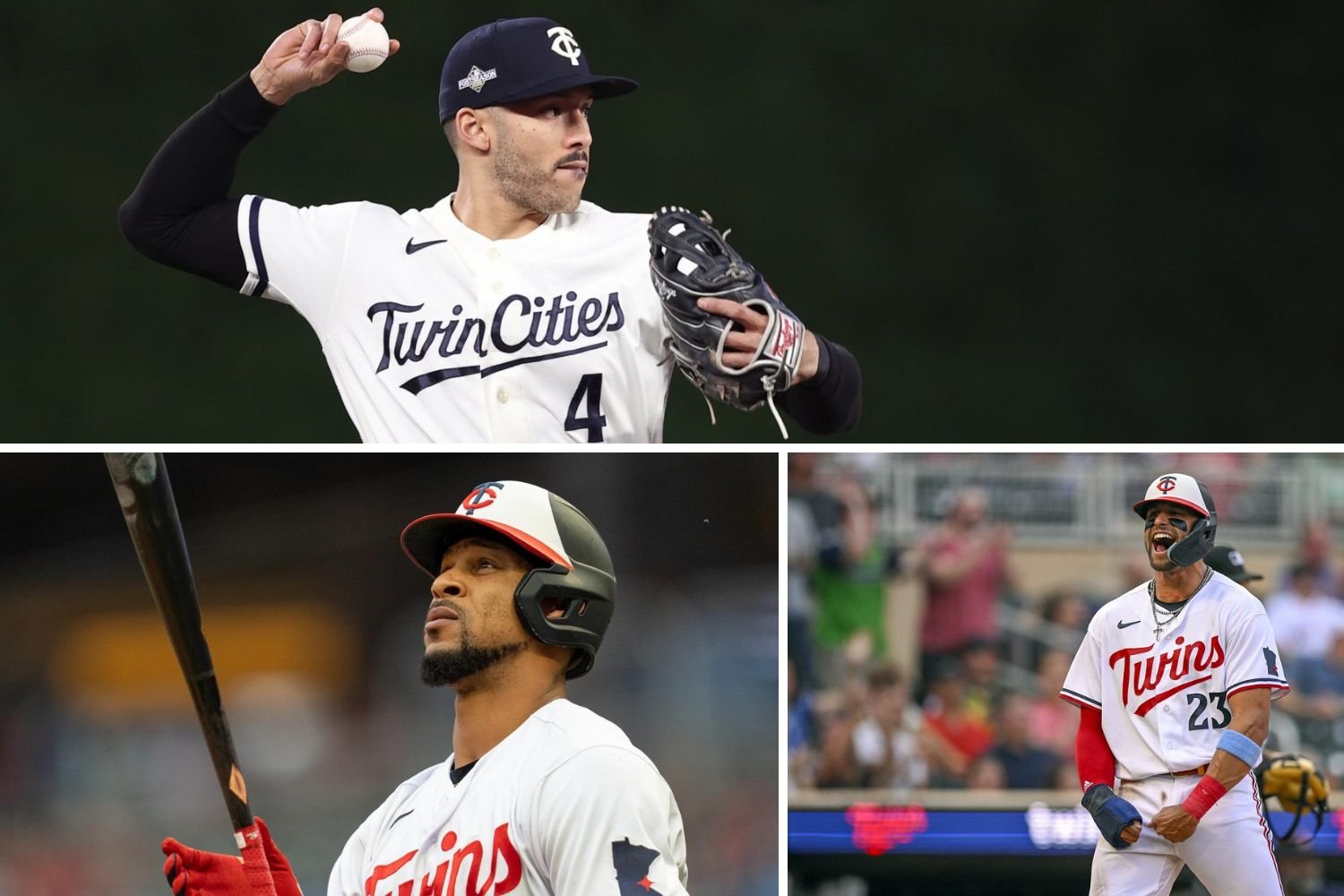 Looking back at the most successful teams in recent MLB history, we see how the impact of multiple star players clicking at the same time can carry clubs to new heights. The most recent example is the World Series champion Texas Rangers, who were propelled by a pair of top-three MVP finishers (Corey Seager and Marcus Semien). Teams like the Dodgers, Astros, Phillies, and Braves have, similarly, been elevated by their star power. Mookie Betts, Freddie Freeman, Jose Altuve, Yordan Alvarez, Bryce Harper, Ronald Acuna, Jr., and Matt Olson deliver massive value on the way to 100-plus win seasons and deep playoff runs. Pitching and depth both matter, as we've learned, but the reality is that having multiple everyday players on your roster who put up 5+ WAR can make up for a lot issues elsewhere. This concentrated production also tends to factor more heavily in October, where individual impact is accentuated. The Twins have long worked to build this kind of core, and are hoping it will all come together in 2024. Carlos Correa is entering his age-29 season, Byron Buxton his age-30 season, and Royce Lewis is looking to put in his first full MLB campaign at age 24. The Three North Stars It was always known that these three players could be destined for the tier of true major-league superstars. All were baseball prodigies from a very young age. Correa and Lewis were both No. 1 overall draft picks, and Buxton (No. 2 behind Correa in 2012) would've been the top pick in many other years. The Twins invested heavily to acquire these three–in money, draft capital, or both–and now the franchise has reached a point it's long been building toward: all three are in the majors, in their (ostensible) physical primes, and ready to join forces for a clear contender. Yes, there are question marks surrounding each of the three, as we'll discuss, but let's just look at what they've done when on the field. Here's a rough calculation of each player's fWAR per full season (averaged out for Buxton and Correa, extrapolated for Lewis): Carlos Correa: 4.7 fWAR per 150 games Byron Buxton: 4.2 fWAR per 150 games Royce Lewis: 6.2 fWAR per 150 games At a base level, if all three of these players stay mostly healthy next year and play to these standards of production, you've got a championship-caliber nucleus, plain and simple. Those are All-Star players at three critical positions. If we take one step farther into the realm of optimism, one could envision any of the three contending for an MVP in 2024. Correa wasn't far off from that form in 2021 or 2022. The same can be said for Buxton during that span, when on the field: he amassed 8.1 fWAR in 153 games. Lewis is the least proven, but his potential feels almost limitless, after watching him slug at a 40-homer pace while acclimating to major-league pitching. To whatever extent the clutch gene exists, Lewis has it in spades. That is undeniable. In addition to on-field production and pedigree, all three of these guys are leaders in the clubhouse, with intangible value that magnifies their positive impact. When you take away the injuries, it's easy to see why the Twins and their current front office have placed this trio at the center of their team-building scheme. Of course, you can't take away the injuries. The Elephant in the Room Let's just get it all out there. Correa is coming off the worst season of his career, in which he was plagued by signs of potential age-related regression even beyond the plantar fasciitis that bothered him for much of the season. Buxton's year was a depressing mess, casting doubt on his ability to stay on the field at all going forward, let alone play center field regularly. Lewis has played all of 118 total games over the past four seasons due to a medley of injuries, which extended into his brilliant rookie year. Coming off an 87-win season, it's understandable why many fans are yearning for more star power to be added to the mix this offseason, but that level of help probably isn't coming. The Twins will be focused on using what limited resources they have to replace their pitching losses and replenish their depth. They have little choice but to depend on these three core players as the foundations of their championship vision for 2024–because of the financial commitments they've already made to Correa and Buxton, and because of the ability Lewis has shown. There's an inclination for fans to focus on the negative or the downside in scenarios like these. After all, we've been conditioned to expect the worst when it comes to injury outcomes. But as this quiet offseason unfolds, I urge you to look at the bright side, and to consider the ceiling for the team if it all comes together next year. Reasons to Believe Setting aside the injury baggage, let's remind ourselves of the talent level these three players possess, and the highlights they've produced in big spots over the past few seasons. Is it plausible for all three to realize their top form next year? Here are some points for optimism: Not always, but plantar fasciitis is often an injury that lingers throughout a season before clearing up with extended rest during the offseason. That'll be the hope for Correa, who notably looked excellent in the playoffs after finally tearing the fascia late in the season. La Velle E. Neal III of the Star Tribune reported over the weekend that Buxton is "fully recovered" from his latest knee surgery and preparing for next season with the goal of playing center field. Given what a tough time he's had with the knee, I understand the widespread skepticism, but the team and its trainers are at least implementing a clear plan to address it. These things can take time. You'd like to think Lewis's catastrophic bad breaks are behind him. His twice-repaired right knee looked fully functional after his return this year. Hopefully going through some troubles with the oblique and hamstring helped him learn about managing his body and avoiding soft-tissue injuries going forward. For what it's worth, staying healthy and on the field was never a problem for Lewis prior to the two fluky ACL tears. The Time Is Now for This Twins Trio When Derek Falvey and Thad Levine took over the Twins front office, they inherited the first overall pick in their very first draft. They used it to select Lewis, setting in motion a team-building vision that is now reaching its planned fruition. Along the way, Correa and Buxton joined Lewis as core building blocks, signing two of the largest contracts in team history. This is it. This is what the Twins have been building toward and now we'll see if these three superstar-caliber players can come together and make magic. Down the line, they might be joined or succeeded at this level by the likes of Brooks Lee or Walker Jenkins, who arguably offer the same kind of upside. But for now, look no further than Correa, Buxton and Lewis as the decisive factors in Minnesota's outlook in 2024, regardless of what else happens this offseason.
- 62 comments
-
- 8
-
-
- carlos correa
- byron buxton
- (and 1 more)
-
Within the span of one week, Minnesota's top three free agent pitchers all just came off the board, leaving a definitive and sizable void remaining in the Twins staff. How will the front office make up for the losses of Sonny Gray, Kenta Maeda, and Emilio Pagan, who combined to account for nearly half of the value delivered by Twins pitchers this past season? Image courtesy of Jesse Johnson, Erik Williams, Ron Chenoy-USA TODAY Sports The story of the 2023 Twins pitching staff was the gains they made following an underwhelming 2022 campaign: From one year to the next, Minnesota improved from 20th among MLB teams in fWAR (10.7) to fourth (19.7). Conversely, the story of this offseason so far for the Twins pitching staff has been losses -- specifically, the confirmed departures of three pitchers who were instrumental in driving this year-over-year improvement. Sonny Gray, Kenta Maeda and Emilio Pagan all took huge steps forward in terms of production, combining for 7.9 fWAR between the three of them. That number figure accounts for nearly the entirety of the team's 9-WAR increase from below-average in 2022 (10.7) to elite in 2023 (19.7), and it represents 40% of Minnesota's total pitching WAR this past season. Given how they contributed to one of the league's best pitching staffs, it comes as no surprise that these three free agents were all in high demand, and among the first to come off the market. Each received a deal that exceeded many expectations, and kept the cost-cutting Twins from seriously pursuing reunions with any of the three. Now, they're tasked with making up for all that lost pitching value. In some ways, these players and their own journeys represent the path to another top-tier pitching staff next year. The Twins need other players to step up and break through in the same ways as this trio just did: In 2022, Gray was more on the precipice of being a dependable frontline starter, battling with durability issues that limited him to 120 innings. In 2023 he pulled it all together and had a career year. Joe Ryan and Bailey Ober seem to currently be in similar places to where Gray was a year ago, with the the ingredients to reach another level if they can stay healthy and lock in. In 2022, Maeda didn't pitch at all. He was recovering from Tommy John surgery, which set him up for a return in 2023 that was, overall, good enough to earn the 35-year-old a $24 million contract in free agency. Here the parallel to Chris Paddack is self-evident, and Paddack has a head-start on where Maeda was a year ago, in that he already returned to the major-league mound successfully. In 2022, Pagan... well, we know how things went for him. Despite having enough raw stuff and ability to preserve the team's faith, he repeatedly imploded on the mound in big spots. But the volatility of relief pitching works both ways, and sometimes it really does click in almost an instant for talented arms. There are several other players in Minnesota's bullpen mix who could feasibly make a Pagan-like leap next year, and the impending return of flame-thrower Matt Canterino looms large in this regard. Of course, even if the Twins are able to make up for some of these key free agency losses via internal improvements, there is no denying that they need to look outside in order to replenish their pitching staff, which has a few existing weak spots in addition to its clear openings. This front office has proven it has no appetite for outbidding the field to buy high in free agency. If they make acquisitions on this front, it will likely be of the lower-caliber variety (think J.A. Happ) or a high-risk venture with some reward. More likely the Twins will use the same avenue to try and replace these pitchers as they used to acquire all three in the first place: trading for multiple years of control at a reasonable price point. In each case the front office dealt from its pitching depth (Chase Petty, Brusdar Graterol, Taylor Rogers) to target arms that could factor into their plans -- including Paddack. This plan comes with its own premium but it can be financially feasible given the team's annoying constraint. How close can they come to replacing the upside and stability they just lost, and what will they have to give up to do so? These are the questions looming as the Twins reckon with the finality of Gray, Maeda and Pagan officially moving on, leaving critical roles in the rotation and bullpen vacant. I suspect that as usual the Twins front office will get creative and show patience. But options are prone to start coming off the board quickly as the Winter Meetings get underway on Monday. View full article
-
The Minnesota Twins Need to Replace 40% of the Value From Their 2023 Staff
Nick Nelson posted an article in Twins
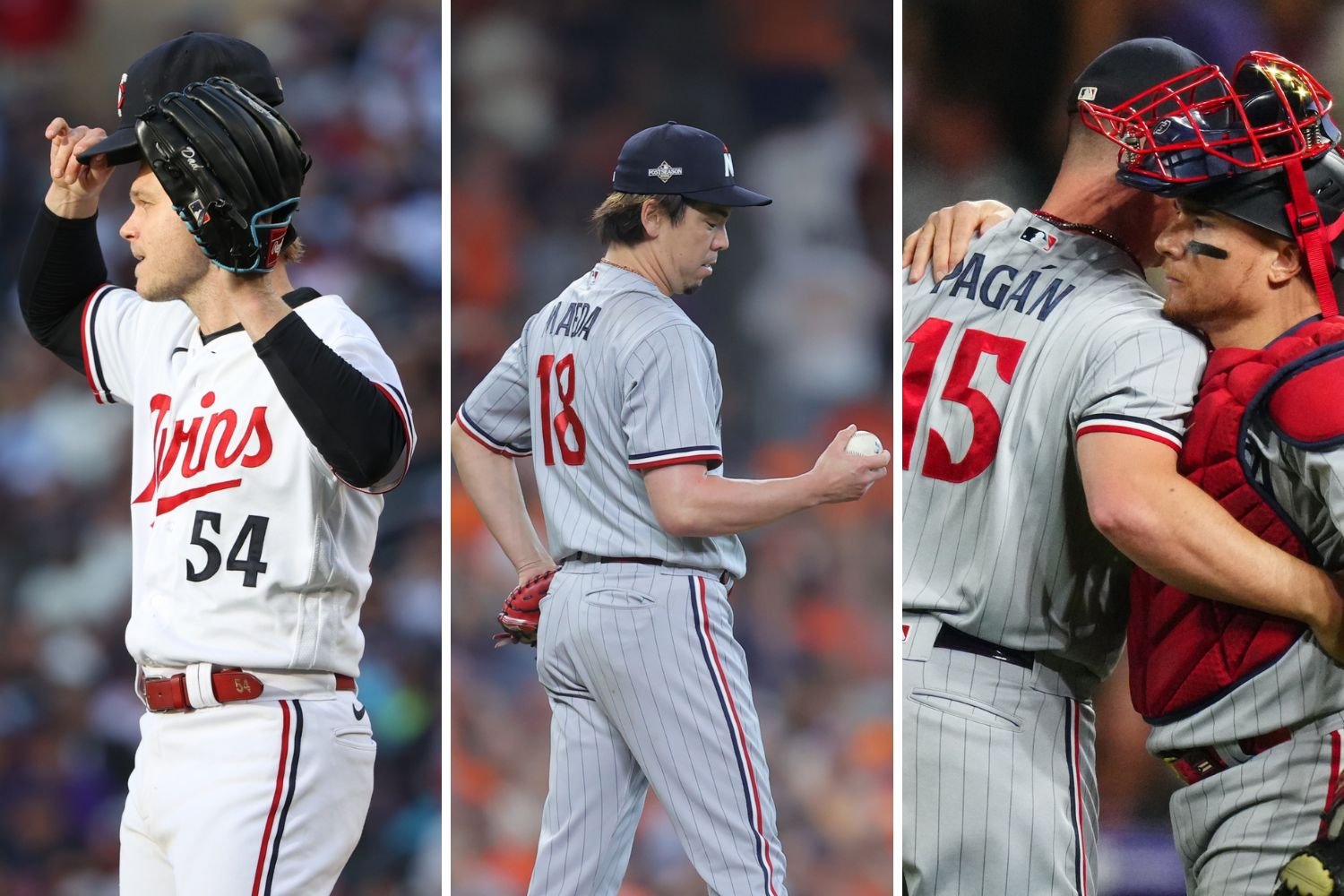 The story of the 2023 Twins pitching staff was the gains they made following an underwhelming 2022 campaign: From one year to the next, Minnesota improved from 20th among MLB teams in fWAR (10.7) to fourth (19.7). Conversely, the story of this offseason so far for the Twins pitching staff has been losses -- specifically, the confirmed departures of three pitchers who were instrumental in driving this year-over-year improvement. Sonny Gray, Kenta Maeda and Emilio Pagan all took huge steps forward in terms of production, combining for 7.9 fWAR between the three of them. That number figure accounts for nearly the entirety of the team's 9-WAR increase from below-average in 2022 (10.7) to elite in 2023 (19.7), and it represents 40% of Minnesota's total pitching WAR this past season. Given how they contributed to one of the league's best pitching staffs, it comes as no surprise that these three free agents were all in high demand, and among the first to come off the market. Each received a deal that exceeded many expectations, and kept the cost-cutting Twins from seriously pursuing reunions with any of the three. Now, they're tasked with making up for all that lost pitching value. In some ways, these players and their own journeys represent the path to another top-tier pitching staff next year. The Twins need other players to step up and break through in the same ways as this trio just did: In 2022, Gray was more on the precipice of being a dependable frontline starter, battling with durability issues that limited him to 120 innings. In 2023 he pulled it all together and had a career year. Joe Ryan and Bailey Ober seem to currently be in similar places to where Gray was a year ago, with the the ingredients to reach another level if they can stay healthy and lock in. In 2022, Maeda didn't pitch at all. He was recovering from Tommy John surgery, which set him up for a return in 2023 that was, overall, good enough to earn the 35-year-old a $24 million contract in free agency. Here the parallel to Chris Paddack is self-evident, and Paddack has a head-start on where Maeda was a year ago, in that he already returned to the major-league mound successfully. In 2022, Pagan... well, we know how things went for him. Despite having enough raw stuff and ability to preserve the team's faith, he repeatedly imploded on the mound in big spots. But the volatility of relief pitching works both ways, and sometimes it really does click in almost an instant for talented arms. There are several other players in Minnesota's bullpen mix who could feasibly make a Pagan-like leap next year, and the impending return of flame-thrower Matt Canterino looms large in this regard. Of course, even if the Twins are able to make up for some of these key free agency losses via internal improvements, there is no denying that they need to look outside in order to replenish their pitching staff, which has a few existing weak spots in addition to its clear openings. This front office has proven it has no appetite for outbidding the field to buy high in free agency. If they make acquisitions on this front, it will likely be of the lower-caliber variety (think J.A. Happ) or a high-risk venture with some reward. More likely the Twins will use the same avenue to try and replace these pitchers as they used to acquire all three in the first place: trading for multiple years of control at a reasonable price point. In each case the front office dealt from its pitching depth (Chase Petty, Brusdar Graterol, Taylor Rogers) to target arms that could factor into their plans -- including Paddack. This plan comes with its own premium but it can be financially feasible given the team's annoying constraint. How close can they come to replacing the upside and stability they just lost, and what will they have to give up to do so? These are the questions looming as the Twins reckon with the finality of Gray, Maeda and Pagan officially moving on, leaving critical roles in the rotation and bullpen vacant. I suspect that as usual the Twins front office will get creative and show patience. But options are prone to start coming off the board quickly as the Winter Meetings get underway on Monday.
- 21 comments
-
- 6
-
-
- sonny gray
- kenta maeda
- (and 1 more)
-
It was a decision that seemed weird at the time, and now seems even weirder as the self-inflicted negative PR takes its toll in early offseason discourse. Why did the Twins reveal their intentions to decrease their payroll? What did they stand to gain? Image courtesy of John Bonnes, Twins Daily The Twins didn't exactly hold a press conference to announce it, but they might as well have. In early November, shortly after the conclusion of the World Series, team leadership left little ambiguity about the spending outlook for 2024. “We’ve pushed our payroll to heights that we had never pushed it before with the support, certainly, of ownership,” Derek Falvey said. “We know there is some natural ebb and flow to that. Will it be where it was last year? I don’t expect that. I expect it [to be] less than that. Some of that may come more organically.” Some follow-up reporting from Dan Hayes for The Athletic brought even more detail to light: the team foresees "significant payroll cuts" of up to $30 million. This journalistic revelation was less overt than Falvey's open on-the-record admission, but still, you don't get the sense it was some tightly-held secret. Clearly Twins leadership–or at least certain elements of it–didn't mind having this narrative out there in the public sphere. WHY? Coming off a division-winning campaign and a long-awaited postseason breakthrough, the Twins were riding high. They had a prime opportunity to parlay the excitement surrounding this team into a robust winter of season ticket sales and sponsorships. Even if reduced spending was an inevitable reality (and arguably a reasonable one), why come out and say it right away? What is to be gained? Falvey and this front office are too strategic, too intentional to just let something like this slip accidentally. There was a rationale behind getting the word out there. Maybe that's what is most annoying about it for those of us trying to analyze from the outside; it's really hard to find an obvious answer. The effects of setting this vibe for the offseason have been fairly predictable. The widespread reaction to nearly every piece of Twins-related news is colored by resentment toward dropping payroll in a moment of great opportunity. Parting with longtime scouts from the previous regime? Cheap. Failing to re-sign Sonny Gray and Kenta Maeda? Classic Pohlads. Never mind that these decisions adhere to the same general philosophies this front office has pretty much always followed. The Twins are willingly inviting this narrative. So again, I ask: why? There's got to be some sort of motivation behind this course of action. In trying to land on an explanation that seems viable, a few potential objectives come to mind. They're trying to create awareness of the TV situation and its implications. This strikes me as most probable. While many Twins Daily regulars are likely aware of the team's collapsed broadcasting deal with Diamond Sports Group and what it means for the overall revenue picture, a majority of casual fans are not clued in. Not everyone's going to be empathetic to a mega-rich operation making fractionally less profit, but at least it gets an associated (and arguably valid) causal factor out there. Hayes's article makes this framing clear: "Following the expiration of a Bally TV deal that netted them $54.8 million last season, Falvey acknowledged the team’s payroll wouldn’t be nearly as high," he wrote. If a public perception is formed that "better TV deal = higher payroll", it could help the team curry support in its quest to find a new solution. They're trying to influence market expectations. The Twins love to find a competitive advantage wherever they can get it. If players, agents, and other front offices believe the Twins are intent on reducing their payroll, it could influence perceptions in interesting ways. Perhaps another team discounts the stealthy Twins in negotiations for a key player. A stretch? Perhaps. But it'll be a feel-good story for everyone if the Twins end up shooting higher than expected and can talk about how they went past their comfort zone to get the guy they wanted. They're lowering expectations so they can exceed them. Under-promise, over-deliver? The optics of even coming close to repeating their record-setting payroll of 2023 would now be pretty good, given that the team has proactively dampened expectations. I know most of us are zeroing in on the lower end of that $125-140 million range Hayes laid out, to the extent that going beyond that would now feel like a pleasant surprise. It matters, because the difference between those two figures would have a sizable impact on what the front office is realistically able to do this offseason when it comes to upgrading the team, or even making up for the losses they've already experienced in free agency. Unfortunately, this is probably wishful thinking. What I keep coming back to is, why come out with it now? If the Twins ended up spending marginally less next year than they did this year, I don't think too many people would notice or care. The up-front framing of these cuts as significant is glaring to me, and makes me expect the worst. They're trying to soften a big blow. Maybe we are all right to be zeroing in on the low-end $125 million target. Maybe that's the whole point. I don't have any specific insight beyond what's out there, but it wouldn't shock me if the Twins feel overextended after going big last offseason and then losing the RSN honeypot. If Falvey is merely leveling with us and being transparent about the steep drop-off to come, I find it hard to begrudge him. I still just don't get it from a business standpoint. Even if the front office leader's corresponding point about payroll–that the Twins can succeed with a lower one because they've built the infrastructure to do so–is accurate, he had to know how the comment and insinuation would be perceived. The reignited payroll narrative is now casting an additional pall over a series of Twins-related headlines that have not been received well: Dick Bremer being ushered out of the broadcast booth, tenured scouts being dismissed, several key free agents signing elsewhere. Hopefully, somewhere on the other side of this, there is a vision to turn the tides and revitalize morale. Right now, all I'm seeing is an avalanche of bad press and buzz-killing vibes. It makes me wonder what exactly the Twins are trying to do from a business and brand standpoint, as much as a baseball one. View full article

.jpg.228cd6209e57bafd461c3c1407ac5a97.jpg)
