



Nick Nelson
-
Posts
8,322 -
Joined
-
Last visited
-
Days Won
56
Content Type
Profiles
News
Minnesota Twins Videos
2026 Minnesota Twins Top Prospects Ranking
2022 Minnesota Twins Draft Picks
Minnesota Twins Free Agent & Trade Rumors, Notes, & Tidbits
Guides & Resources
2023 Minnesota Twins Draft Picks
The Minnesota Twins Players Project
2024 Minnesota Twins Draft Picks
2025 Minnesota Twins Draft Pick Tracker
2026 Minnesota Twins Draft Tracker: Picks & Bonuses
Forums
Blogs
Events
Store
Downloads
Gallery
Everything posted by Nick Nelson
-
 One year after the starting rotation was their defining strength, the 2024 Minnesota Twins may find that the way to get the most out of their starters is to rely on them less. Image courtesy of Erik Williams-USA TODAY Sports The visionary pitch for Minnesota's front office, the grand formula for sustainable success, was always this: Tampa Bay North, but with more resources. The Twins' baseball ops department has been massively overhauled and built out during Derek Falvey's tenure, in an effort to keep pace with the league's best in operational excellence. Meanwhile, Falvey has also been given the financial flexibility to take some big swings that might not be possible in Tampa, or at his former organization in Cleveland--for instance, signing Carlos Correa to nine-digit deals in consecutive offseasons. Even if the Twins have more budgetary freedom than Tampa and Cleveland, clearly, it's not infinite, and they are feeling the crunch this offseason. With Correa's salary now accounting for more than a quarter of available payroll (per self-imposed restrictions), the Twins are challenged to maintain their pitching edge on a tight budget. This means that re-signing Sonny Gray was never a viable option. Nor was shopping in free agency to replace him. With the start of camp upon us, optimism that a major rotation addition will come via trade is waning. Unable to meaningfully offset their losses in the starting corps, the front office has conspicuously shifted its focus to stacking up bullpen depth this offseason. The recent Nick Gordon trade, which returned 32-year-old lefty Steven Okert, is just the latest in a long line of moves adding experienced depth to Minnesota's reliever pool, both on the 40-man roster and beyond it. Trades, major-league signings, minor-league signings, waiver claims: the front office has used every avenue to compile an impressive quantity of capable arms, adding onto what was a very effective unit by year's end in 2023. As a result, their bullpen projects as the best in the league. Preseason projections are only worth so much, but on paper, this looks like a new defining strength for the Twins. After watching relievers play such a pivotal role in the team's postseason success last October, that's not such a hard thing to believe. The Twins appear poised to lean into this strength, embracing a "quality innings are quality innings" mindset and a bullpen-heavy strategy, not unlike the one Tampa deployed successfully last year. The Rays led the American League in pitching fWAR and won 99 games while getting fewer innings from their starters than all but two AL teams. They relied on a deep, dependable bullpen to carry the load, and it worked out brilliantly for them. Zach Eflin led all Rays starters in 2023 with 178 innings pitched. No one else threw more than 120. I wouldn't expect the Twins to be quite that extreme this year, but it wouldn't shock me if the distribution is similar, with Pablo López the only starter routinely given the freedom to pitch past the fifth or sixth. For varying and overlapping reasons (health and effectiveness), it makes sense to use relatively quick hooks with the likes of Chris Paddack, Joe Ryan, Bailey Ober and Anthony DeSclafani. A well-stocked bullpen makes this possible, and even advisable. You might respond by saying, "Didn't we try this in 2022? That didn't work." Which is fair! But as I wrote at the time, it wasn't so much the premise that failed the Twins as the pieces they used to put it into practice. The team's Opening Day rotation in 2022 included Chris Archer and Dylan Bundy. The bullpen included Tyler Duffey, Emilio Pagán (bad version), Joe Smith, Jharel Cotton and Jhon Romero -- players who are all gone and mostly out of the league two years later. Perhaps the strategy wasn't bad; it's just that the players were. The Twins are much stronger in both departments from the jump this season. In dissecting the 2022 pitching experiment, I concluded that it suffered from four fatal flaws: The starters weren't good enough, or healthy enough, even in shortened starts. You've got to have at least one starter who can be the workhorse. Their bullpen wasn't built adequately to handle the burden. Losing your pitching coach mid-season doesn't help. As I look back at that list now, I find myself mentally checking those boxes for this year's team, with Pete Maki at the helm. It's a roster that is far more equipped to execute on the bullpen-forward strategy that helped the Rays thrive last year. Of course, this all depends on the relief corps actually coming together and performing like the Twins hope they will. That's a volatile proposition. I also believe they are leaving themselves too little margin for error in the rotation if they don't add another starter. But in general, as the vision for pitching success in 2024 comes into focus, I find it's one I can get behind, now that they actually have the personnel to see it through. View full article
 -
Ride the Bullpen: Twins Set to Embrace Tampa's Successful Pitching Strategy
Nick Nelson posted an article in Twins
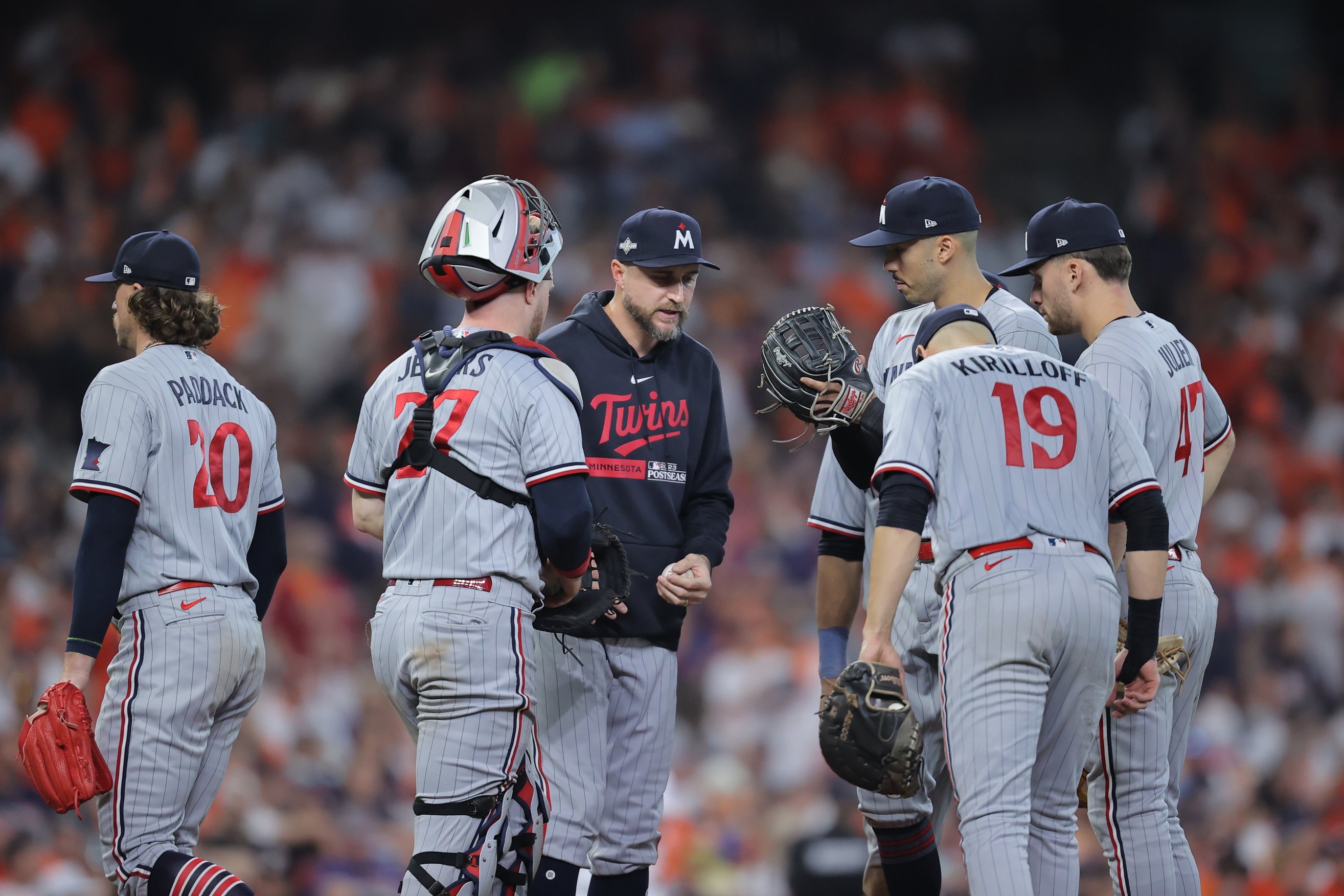 The visionary pitch for Minnesota's front office, the grand formula for sustainable success, was always this: Tampa Bay North, but with more resources. The Twins' baseball ops department has been massively overhauled and built out during Derek Falvey's tenure, in an effort to keep pace with the league's best in operational excellence. Meanwhile, Falvey has also been given the financial flexibility to take some big swings that might not be possible in Tampa, or at his former organization in Cleveland--for instance, signing Carlos Correa to nine-digit deals in consecutive offseasons. Even if the Twins have more budgetary freedom than Tampa and Cleveland, clearly, it's not infinite, and they are feeling the crunch this offseason. With Correa's salary now accounting for more than a quarter of available payroll (per self-imposed restrictions), the Twins are challenged to maintain their pitching edge on a tight budget. This means that re-signing Sonny Gray was never a viable option. Nor was shopping in free agency to replace him. With the start of camp upon us, optimism that a major rotation addition will come via trade is waning. Unable to meaningfully offset their losses in the starting corps, the front office has conspicuously shifted its focus to stacking up bullpen depth this offseason. The recent Nick Gordon trade, which returned 32-year-old lefty Steven Okert, is just the latest in a long line of moves adding experienced depth to Minnesota's reliever pool, both on the 40-man roster and beyond it. Trades, major-league signings, minor-league signings, waiver claims: the front office has used every avenue to compile an impressive quantity of capable arms, adding onto what was a very effective unit by year's end in 2023. As a result, their bullpen projects as the best in the league. Preseason projections are only worth so much, but on paper, this looks like a new defining strength for the Twins. After watching relievers play such a pivotal role in the team's postseason success last October, that's not such a hard thing to believe. The Twins appear poised to lean into this strength, embracing a "quality innings are quality innings" mindset and a bullpen-heavy strategy, not unlike the one Tampa deployed successfully last year. The Rays led the American League in pitching fWAR and won 99 games while getting fewer innings from their starters than all but two AL teams. They relied on a deep, dependable bullpen to carry the load, and it worked out brilliantly for them. Zach Eflin led all Rays starters in 2023 with 178 innings pitched. No one else threw more than 120. I wouldn't expect the Twins to be quite that extreme this year, but it wouldn't shock me if the distribution is similar, with Pablo López the only starter routinely given the freedom to pitch past the fifth or sixth. For varying and overlapping reasons (health and effectiveness), it makes sense to use relatively quick hooks with the likes of Chris Paddack, Joe Ryan, Bailey Ober and Anthony DeSclafani. A well-stocked bullpen makes this possible, and even advisable. You might respond by saying, "Didn't we try this in 2022? That didn't work." Which is fair! But as I wrote at the time, it wasn't so much the premise that failed the Twins as the pieces they used to put it into practice. The team's Opening Day rotation in 2022 included Chris Archer and Dylan Bundy. The bullpen included Tyler Duffey, Emilio Pagán (bad version), Joe Smith, Jharel Cotton and Jhon Romero -- players who are all gone and mostly out of the league two years later. Perhaps the strategy wasn't bad; it's just that the players were. The Twins are much stronger in both departments from the jump this season. In dissecting the 2022 pitching experiment, I concluded that it suffered from four fatal flaws: The starters weren't good enough, or healthy enough, even in shortened starts. You've got to have at least one starter who can be the workhorse. Their bullpen wasn't built adequately to handle the burden. Losing your pitching coach mid-season doesn't help. As I look back at that list now, I find myself mentally checking those boxes for this year's team, with Pete Maki at the helm. It's a roster that is far more equipped to execute on the bullpen-forward strategy that helped the Rays thrive last year. Of course, this all depends on the relief corps actually coming together and performing like the Twins hope they will. That's a volatile proposition. I also believe they are leaving themselves too little margin for error in the rotation if they don't add another starter. But in general, as the vision for pitching success in 2024 comes into focus, I find it's one I can get behind, now that they actually have the personnel to see it through.
 -
What are the best opportunities to take a trip and catch the Twins on the road this year? Here's a primer on following your favorite team, while experiencing new cities and ballparks along the way. Image courtesy of Nick Nelson / MLB Traveling to see the Twins on the road has become one of my absolute favorite parts of fandom. It's an excuse to go visit and explore different cities, and of course, seeing baseball played in the many unique venues across the league is a joy. Sampling the food, sizing up the sightlines, and socializing with local fans: you can't beat it. I have a poster on my office wall tracking my progress, and by its count I have thus far visited 18 of the 30 active MLB ballparks. This year, I'm sizing up a few chances to knock additional parks off the list, while maybe revisiting an old favorite or two. With the start of the season closing in, let's run through the upcoming schedule with an eye on road trips and vacation opportunities for Twins fans who want to travel to see the team in action. Midwest Tour to Open the Season For a second straight year, the Twins open in Kansas City at the end of March. I'll say right up-front that KC is my favorite baseball road trip. Aside from Target Field (and the Metrodome), there's no ballpark at which I've seen more games than Kauffman Stadium. With great barbecue, beer and neighborhoods, Kansas City is an awesome city in which to spend time. Crucially, it's a manageable drive from the Twin Cities (about seven hours down I-35, roughly equal to Chicago). The Twins visit the Royals twice this year, once at the very beginning of the season and once in September, meaning visitors will avoid the brutal heat that sometimes accompanies a midsummer affair. I highly recommend getting there at least once this year, if you haven't done so before. Kauffman Stadium is a gem, with beautiful sightlines, unique location and a nice blend of historical charm plus modern amenities. The gameday vibes are immaculate. With talks of a new downtown stadium in the works, there might not be too many more chances to visit this MLB institution. Ambitious early-season travelers could complete a Midwest loop by catching the opening series in Kansas City and then taking a detour on the way back to Minneapolis, heading east for the following short series against the Brewers. It's about about an eight-hour drive from KC to Milwaukee, with a chance to stop in affiliate city Cedar Rapids along the way. (Unfortunately, the Kernels don't open their home schedule until the following week.) The Twins play the Brewers on Tuesday and Wednesday. Catch both, leave town after the matinee series finale, and make the five-hour drive back to Minneapolis in time for a late dinner. (Our Steve Trefz has more details on what you can see and do in Kansas City and Milwaukee, if you're thus inclined.) Then get some rest. You'll need to gather your energy for the home opener at Target Field on Thursday. Other noteworthy road trips in April include Detroit and Anaheim (weekends), and Baltimore and Chicago (midweek). Orioles Park at Camden Yards is high on my list of parks to see, but I don't think I'll make it this year. Steve also wrote about Comerica, Camden, and those two cities for us, and you can check out that article on Saturday for details. Crossing the Border in May The Twins head to Canada in the middle of May for a weekend series in Toronto, which is a trip I'd love to take one of these years, but probably not this time around. Last summer, I went to Montreal for a bachelor party; I'm pretty sure there's a moratorium on any of us re-entering the country. I've been to games in Cleveland and Washington, both on work trips and neither time to see the Twins. (I happened to see the Nationals clinch their World Series berth in 2019, which was cool.) I liked both parks, but would rank them closer to the middle tier than to the top. D.C. is a way cooler city than Cleveland, in my humble opinion. Pinpointing PNC in June I've got my sights set on the mid-June series in Pittsburgh, because PNC Park is very high-priority on the list of stadiums I have yet to visit. Everyone raves about this yard, and the pictures are gorgeous. The June 7-9 weekend series looks like a great time to get out there and absorb the experience in all its glory. I've never been to Pittsburgh, so I'd welcome any tips on places to stay, sights to see, or attractions to check out. Preceding the Pittsburgh series is a midweek matchup against the Yankees. New York City is a blast, but personally, I could take or leave Yankee Stadium. When I went, it felt cold and sterile, with some odd design choices. The idea of seeing the Twins play there also feels daunting, though this year's matchup could potentially feature some real offensive fireworks. Pittsburgh is a short flight and manageable bus/train ride from New York, so there's potential here for an extended multi-city romp out East. The June schedule also features weekend trips to Houston, Oakland and Seattle, as well as a midweek trip to Arizona. Seattle ranks highly as a city and stadium. Oakland and Arizona have bottom-tier parks. Go See the Oracle in July Just before the All-Star break in the middle of July, the Twins travel to San Francisco for a weekend series against the Giants. This, along with the Pittsburgh series, stands out as the biggest highlight of the road schedule this year. Oracle is right up there with PNC among ballparks at which I haven't seen a game. (Bonus points for wearing a Correa Giants jersey if you make it to one of these games.) July offers a couple of other solid road trip destinations, including a weekend series in Detroit. I'd be all about making that trip (a lengthy 10-hour drive, but a much more reasonable sub-two hour flight) if it wasn't so closely bunched with San Francisco. I still might try to make it work, because Detroit is the only remaining AL Central city (and stadium) I've yet to visit. If you missed New York in June, you have an opportunity to catch the Twins against the Mets at the end of July, though it's another midweek series. I went to Citi Field way back in 2010 and saw Carl Pavano beat Johan Santana. We went to a nearby bar afterward and watched the U.S. lose to Ghana in the World Cup. It was a great time. The stadium reminded me a lot of Target Field, which makes sense given that it opened one year earlier and incorporated many of the same trends. I'd like to go back sometime. Alas, not this year. Returning to Wrigleyville in August The Twins played a late-season two-game series against the Cubs in Chicago back in 2021, and three games there with no fans in 2020. Not since 2018 have the Twins played a standard three-game series at Wrigley Field, but they return in August for a Monday-through-Wednesday set. The weekday scheduling can make this tough to negotiate, but Chicago tends to be a cheap flight and survivable seven-hour drive. I try to make a point of getting to Chi-town frequently, because my sister lives there. It's nice to use Twins road trips as an excuse to go. The city is fantastic, in contention for my favorite in the country. I've gone to Chicago for September series against the White Sox each of the past two years (with very different on-field vibes) and gained more appreciation for the Guaranteed Rate Field experience, but the ballpark – and especially the surrounding neighborhood – can't compete with Wrigleyville. August also offers an opportunity to visit San Diego and see the Twins play at Petco Park. That's a spectacular stadium and surrounding area. I went in 2022 and watched Joe Ryan give up approximately 20 home runs against the Padres. I'll definitely go back again soon; hopefully they host a weekend series in 2026. Texas is the most travel-friendly road trip series in August, a four-gamer spanning a weekend in the middle of the month. Someday I'll go see Globe Life Field, but there's not much pulling me there, nor to Dallas in the dog days of summer. Plenty of September Sights to See In the final month of the season, the Twins visit four different cities, closing out their road schedule with a weekend trip to Boston--another really cool city with a must-see ballpark, and the mid-September weather at Fenway should be phenomenal. This is an excellent late-season target if the early autumn best suits your travel plans. If you missed out on Kansas City all the way back at the start of the season, you've got a chance to make the trek in September instead. The Twins also play four-game series in both Tampa and Cleveland, with the latter potentially holding some drama in the AL Central race. There's no shortage of places to go and ballparks to see on the Twins schedule this season. Which road trips are you considering making? What are your favorite memories of traveling to see your favorite team play? Let's hear your thoughts in the comments. View full article
-
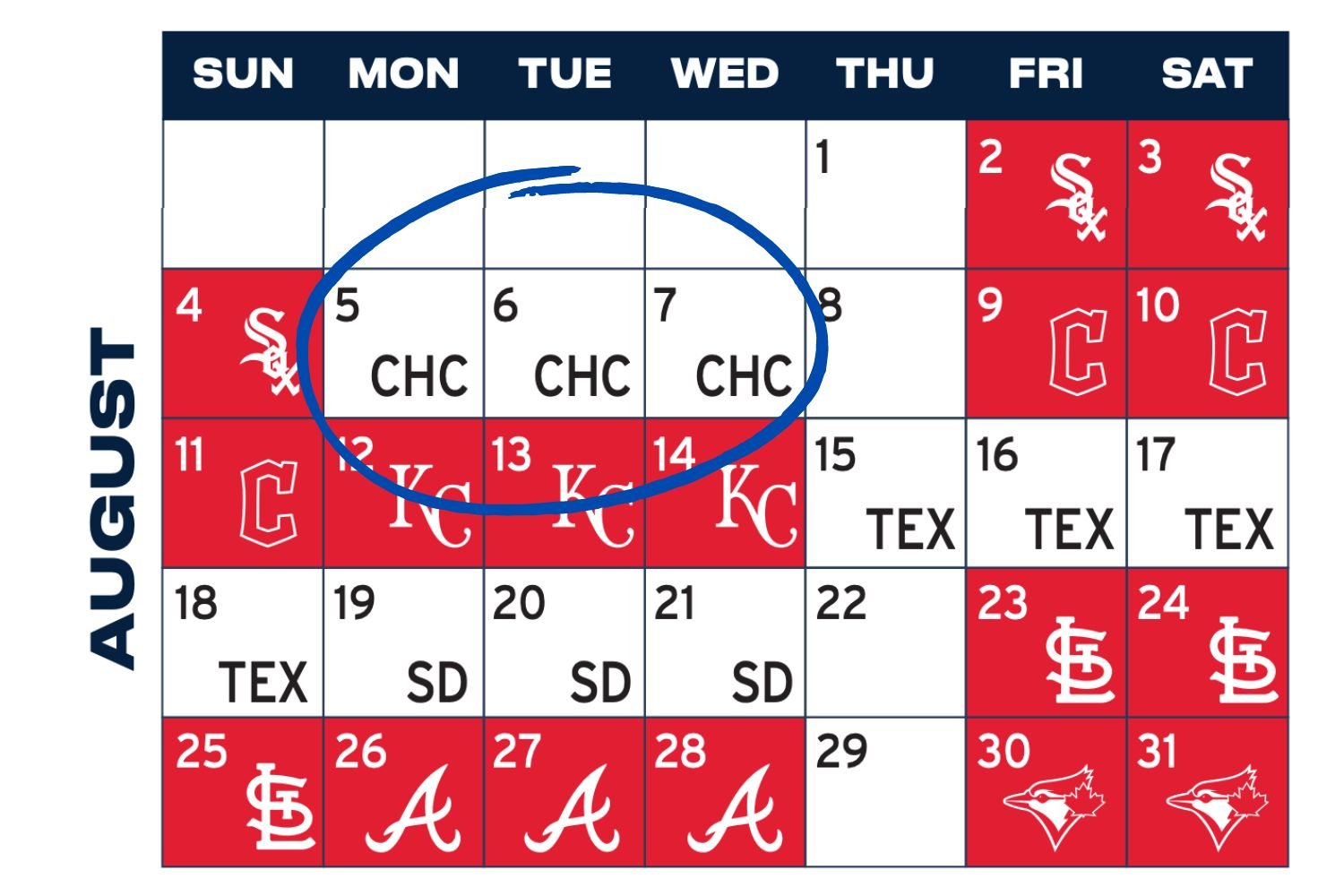 Traveling to see the Twins on the road has become one of my absolute favorite parts of fandom. It's an excuse to go visit and explore different cities, and of course, seeing baseball played in the many unique venues across the league is a joy. Sampling the food, sizing up the sightlines, and socializing with local fans: you can't beat it. I have a poster on my office wall tracking my progress, and by its count I have thus far visited 18 of the 30 active MLB ballparks. This year, I'm sizing up a few chances to knock additional parks off the list, while maybe revisiting an old favorite or two. With the start of the season closing in, let's run through the upcoming schedule with an eye on road trips and vacation opportunities for Twins fans who want to travel to see the team in action. Midwest Tour to Open the Season For a second straight year, the Twins open in Kansas City at the end of March. I'll say right up-front that KC is my favorite baseball road trip. Aside from Target Field (and the Metrodome), there's no ballpark at which I've seen more games than Kauffman Stadium. With great barbecue, beer and neighborhoods, Kansas City is an awesome city in which to spend time. Crucially, it's a manageable drive from the Twin Cities (about seven hours down I-35, roughly equal to Chicago). The Twins visit the Royals twice this year, once at the very beginning of the season and once in September, meaning visitors will avoid the brutal heat that sometimes accompanies a midsummer affair. I highly recommend getting there at least once this year, if you haven't done so before. Kauffman Stadium is a gem, with beautiful sightlines, unique location and a nice blend of historical charm plus modern amenities. The gameday vibes are immaculate. With talks of a new downtown stadium in the works, there might not be too many more chances to visit this MLB institution. Ambitious early-season travelers could complete a Midwest loop by catching the opening series in Kansas City and then taking a detour on the way back to Minneapolis, heading east for the following short series against the Brewers. It's about about an eight-hour drive from KC to Milwaukee, with a chance to stop in affiliate city Cedar Rapids along the way. (Unfortunately, the Kernels don't open their home schedule until the following week.) The Twins play the Brewers on Tuesday and Wednesday. Catch both, leave town after the matinee series finale, and make the five-hour drive back to Minneapolis in time for a late dinner. (Our Steve Trefz has more details on what you can see and do in Kansas City and Milwaukee, if you're thus inclined.) Then get some rest. You'll need to gather your energy for the home opener at Target Field on Thursday. Other noteworthy road trips in April include Detroit and Anaheim (weekends), and Baltimore and Chicago (midweek). Orioles Park at Camden Yards is high on my list of parks to see, but I don't think I'll make it this year. Steve also wrote about Comerica, Camden, and those two cities for us, and you can check out that article on Saturday for details. Crossing the Border in May The Twins head to Canada in the middle of May for a weekend series in Toronto, which is a trip I'd love to take one of these years, but probably not this time around. Last summer, I went to Montreal for a bachelor party; I'm pretty sure there's a moratorium on any of us re-entering the country. I've been to games in Cleveland and Washington, both on work trips and neither time to see the Twins. (I happened to see the Nationals clinch their World Series berth in 2019, which was cool.) I liked both parks, but would rank them closer to the middle tier than to the top. D.C. is a way cooler city than Cleveland, in my humble opinion. Pinpointing PNC in June I've got my sights set on the mid-June series in Pittsburgh, because PNC Park is very high-priority on the list of stadiums I have yet to visit. Everyone raves about this yard, and the pictures are gorgeous. The June 7-9 weekend series looks like a great time to get out there and absorb the experience in all its glory. I've never been to Pittsburgh, so I'd welcome any tips on places to stay, sights to see, or attractions to check out. Preceding the Pittsburgh series is a midweek matchup against the Yankees. New York City is a blast, but personally, I could take or leave Yankee Stadium. When I went, it felt cold and sterile, with some odd design choices. The idea of seeing the Twins play there also feels daunting, though this year's matchup could potentially feature some real offensive fireworks. Pittsburgh is a short flight and manageable bus/train ride from New York, so there's potential here for an extended multi-city romp out East. The June schedule also features weekend trips to Houston, Oakland and Seattle, as well as a midweek trip to Arizona. Seattle ranks highly as a city and stadium. Oakland and Arizona have bottom-tier parks. Go See the Oracle in July Just before the All-Star break in the middle of July, the Twins travel to San Francisco for a weekend series against the Giants. This, along with the Pittsburgh series, stands out as the biggest highlight of the road schedule this year. Oracle is right up there with PNC among ballparks at which I haven't seen a game. (Bonus points for wearing a Correa Giants jersey if you make it to one of these games.) July offers a couple of other solid road trip destinations, including a weekend series in Detroit. I'd be all about making that trip (a lengthy 10-hour drive, but a much more reasonable sub-two hour flight) if it wasn't so closely bunched with San Francisco. I still might try to make it work, because Detroit is the only remaining AL Central city (and stadium) I've yet to visit. If you missed New York in June, you have an opportunity to catch the Twins against the Mets at the end of July, though it's another midweek series. I went to Citi Field way back in 2010 and saw Carl Pavano beat Johan Santana. We went to a nearby bar afterward and watched the U.S. lose to Ghana in the World Cup. It was a great time. The stadium reminded me a lot of Target Field, which makes sense given that it opened one year earlier and incorporated many of the same trends. I'd like to go back sometime. Alas, not this year. Returning to Wrigleyville in August The Twins played a late-season two-game series against the Cubs in Chicago back in 2021, and three games there with no fans in 2020. Not since 2018 have the Twins played a standard three-game series at Wrigley Field, but they return in August for a Monday-through-Wednesday set. The weekday scheduling can make this tough to negotiate, but Chicago tends to be a cheap flight and survivable seven-hour drive. I try to make a point of getting to Chi-town frequently, because my sister lives there. It's nice to use Twins road trips as an excuse to go. The city is fantastic, in contention for my favorite in the country. I've gone to Chicago for September series against the White Sox each of the past two years (with very different on-field vibes) and gained more appreciation for the Guaranteed Rate Field experience, but the ballpark – and especially the surrounding neighborhood – can't compete with Wrigleyville. August also offers an opportunity to visit San Diego and see the Twins play at Petco Park. That's a spectacular stadium and surrounding area. I went in 2022 and watched Joe Ryan give up approximately 20 home runs against the Padres. I'll definitely go back again soon; hopefully they host a weekend series in 2026. Texas is the most travel-friendly road trip series in August, a four-gamer spanning a weekend in the middle of the month. Someday I'll go see Globe Life Field, but there's not much pulling me there, nor to Dallas in the dog days of summer. Plenty of September Sights to See In the final month of the season, the Twins visit four different cities, closing out their road schedule with a weekend trip to Boston--another really cool city with a must-see ballpark, and the mid-September weather at Fenway should be phenomenal. This is an excellent late-season target if the early autumn best suits your travel plans. If you missed out on Kansas City all the way back at the start of the season, you've got a chance to make the trek in September instead. The Twins also play four-game series in both Tampa and Cleveland, with the latter potentially holding some drama in the AL Central race. There's no shortage of places to go and ballparks to see on the Twins schedule this season. Which road trips are you considering making? What are your favorite memories of traveling to see your favorite team play? Let's hear your thoughts in the comments.
 -
We spent the past couple of weeks counting down our picks for the top 20 prospects in the Minnesota Twins organization entering 2024. Let's review the list and what it says about the state of the farm system. Before the start of spring training each year, Twins Daily asks our group of writers to share their preseason rankings of top Twins prospects. We take the results, calculate them, and arrive at a consensus board that informs our annual Twins Daily Top Prospects countdown. It should be noted that this list merely serves as a starting point for our real-time top prospect rankings, which are updated throughout the season with new stats and blurbs. I highly recommend bookmarking that page if you're a prospect hound who wants to keep a close tab on rising talent in the system. For now, here's a rundown of our rankings to open the 2024 season, with links to read more and analysis of key themes that emerged from the list. Twins Daily Top 20 Prospects of 2024 (Click on the player's name to read their full prospect profile from our team.) 20. Zebby Matthews, RHP: Strike-throwing machine buzzed through Low-A. 19. Simeon Woods Richardson, RHP: Stock is fading, but he's still youngish. 18. Ricardo Olivar, OF: Intriguing because he can hit and can play catcher. 17. Connor Prielipp, LHP: Down with another elbow injury, but a bright talent. 16. Matt Canterino, RHP: Returning from his own elbow injury, primed for impact. 15. Yunior Severino, 1B: One-tool player whose power is worth price of admission. 14. Danny De Andrade, SS: Toolsy teenager is rounding into impressive form. 13. C.J. Culpepper, RHP: 13th-rounder raised his profile with strong pro debut. 12. Kala'i Rosario, OF: Can his classic run-producer profile overcome poor glove? 11. Luke Keaschall, 2B: Advanced college bat handled minors in his first taste. 10. Tanner Schobel, 2B: One step ahead of Keaschall, at Double-A, but similar mold. 9. Brandon Winokur, OF: High-school draft pick flashed eye-popping power tool. 8. Charlee Soto, RHP: Another prep pick poised to rise fast with advanced stuff. 7. Cory Lewis, RHP: Deep pitch mix headlined by knuckleball distinguishes him. 6. Austin Martin, OF: Shook off injuries and struggles with redeeming second half. 5. David Festa, RHP: Near-ready with MLB stuff if he can keep it in the zone. 4. Marco Raya, RHP: Stellar results in limited sample due to cautious handling. 3½. Gabriel González, OF: Newly acquired outfielder is aggressive but can mash. 3. Emmanuel Rodriguez, OF: Rare power/patience combo threatened by contact woes. 2. Brooks Lee, SS: Convincing first full season in minors has him at doorstep of majors. 1. Walker Jenkins, OF: Top draft pick showed to be full package in dominant debut. Where Does the Twins' Farm System Rank Among MLB Teams? It's easy to read through all these profiles of promising young players and feel excited about the future. But that is the nature of prospects. Every organization across the league is bursting with young talent, so it's all relative. You might wonder how Minnesota's stable of prospects on whole compares against other organizations around the league. The answer: right around the middle of the pack. In Keith Law's ranking of MLB farm systems at The Athletic, he had the Twins ranked 17th out of 30. Baseball America has them 14th. According to Fangraphs, Minnesota's farm system currently ranks 15th. While one might consider it disappointing that the Twins are viewed by outsiders as having an average system, there are two things to consider. The first is that much of their young impact talent has already graduated to the majors. Including last year's historic rookie class of Edouard Julien, Royce Lewis and Matt Wallner would significantly lift this overall group in perception. Secondly, Minnesota's system is noticeably rich in high-end talent, featuring two players who are consensus top-30 prospects (Walker Jenkins and Brooks Lee) and another who cracks the top 50 on most lists (Emmanuel Rodriguez). A Late Addition to the List The announcement of the Jorge Polanco trade took place with our 2024 preseason prospect rankings already baked, and our countdown already underway. Still, we felt it was important to represent the newcomer Gabriel González in these rankings somehow, given that his addition does meaningfully impact the overall quality of the system. Obviously, we're not as familiar with González's game as the Twins prospects we've been closely following, but the general view on him is strong enough (top-100 rankings from MLB and The Athletic) that we felt comfortably sneaking him into the top five, between Rodriguez and Raya as our "3½-ranked" prospect for this year. Fellow newcomer Darren Bowen might slot somewhere into the back end of the top 20, but his placement felt less clear, so we'll sort that out for our season-opening update next month. Having González basically side-by-side with Rodriguez in our rankings makes for a "beautifully asymmetrical pair," as JD Cameron put it in his E-Rod writeup. Both are outfielders at similar stages of development, but one is a bulky, aggressive swing-at-everything force and the other is an ultra-patient athletic oddity. Pivotal Year for the Pitching Pipeline Among pitching prospects in our top 20, several are of the same mold – college pitchers drafted in the middle rounds with a goal of unlocking new levels of success. David Festa, Cory Lewis, C.J. Culpepper, Zebby Matthews and several who just missed the cut share this characterization. These are the types of draft-and-develop projects Derek Falvey was hired to spearhead. Big tests lie ahead for all of these hurlers, as Festa vies for a shot in the majors and others navigate the transition to the upper minors. We're going to have a much better picture of the true quality of Minnesota's pitching pipeline by the end of this year. As things stand, the front office appears poised to lean on this prospect depth with a lack of impactful additions to the rotation this offseason. Prioritizing Power Bats The Twins front office has clearly placed an emphasis on power-hitting in building their major-league offense, and that reflects in the makeup of their top hitting prospects in the minors. With the stark exception of Austin Martin (who was notably drafted with a high pick by another team), virtually every position player in this top 20 counts power as a primary offensive strength. In some cases – Rodriguez, Brandon Winokur, Kala'i Rosario, Yunior Severino, etc. – the big question is whether these players can develop enough contact skill to limit strikeouts and make that immense power viable. The 2B Pipeline It's notable that, within the past 12 months or so, the Twins have shipped out three players who were not-so-long-ago considered key to their depth and outlook at second base. Polanco, Luis Arraez and Nick Gordon combined to make 156 of the team's 162 starts at the position in 2022, and now all are gone. But as you look at this list of upcoming high-quality talent, it becomes easier to see why the Twins were willing to flip these established big-leaguers for value. Julien, who was our No. 5 prospect at this time last year, is set up to primarily man second base from the outset of 2024. Last year's No. 2 prospect Lewis is also an option there going forward if it's deemed to be his best spot defensively. Current No. 2 prospect Brooks Lee could force the issue by pushing for playing time at third, if he himself doesn't end up second. Martin played more at second than anywhere else for St. Paul last year, and is also pretty much MLB-ready. Further down the line, you've got a pair of promising prospects in Tanner Schobel and Luke Keaschall, who both profile best at second base. Share Your Thoughts I know we have a lot of hardcore prospect followers in our audience and I've really enjoyed reading all the comments throughout this series. Now that you take a step back and look at these rankings, what are your thoughts? Who are we underrating, or overrating? How do you feel about the health of Minnesota's system as a whole? View full article
- 29 replies
-
- 1
-

-
- walker jenkins
- brooks lee
- (and 3 more)
-
 Before the start of spring training each year, Twins Daily asks our group of writers to share their preseason rankings of top Twins prospects. We take the results, calculate them, and arrive at a consensus board that informs our annual Twins Daily Top Prospects countdown. It should be noted that this list merely serves as a starting point for our real-time top prospect rankings, which are updated throughout the season with new stats and blurbs. I highly recommend bookmarking that page if you're a prospect hound who wants to keep a close tab on rising talent in the system. For now, here's a rundown of our rankings to open the 2024 season, with links to read more and analysis of key themes that emerged from the list. Twins Daily Top 20 Prospects of 2024 (Click on the player's name to read their full prospect profile from our team.) 20. Zebby Matthews, RHP: Strike-throwing machine buzzed through Low-A. 19. Simeon Woods Richardson, RHP: Stock is fading, but he's still youngish. 18. Ricardo Olivar, OF: Intriguing because he can hit and can play catcher. 17. Connor Prielipp, LHP: Down with another elbow injury, but a bright talent. 16. Matt Canterino, RHP: Returning from his own elbow injury, primed for impact. 15. Yunior Severino, 1B: One-tool player whose power is worth price of admission. 14. Danny De Andrade, SS: Toolsy teenager is rounding into impressive form. 13. C.J. Culpepper, RHP: 13th-rounder raised his profile with strong pro debut. 12. Kala'i Rosario, OF: Can his classic run-producer profile overcome poor glove? 11. Luke Keaschall, 2B: Advanced college bat handled minors in his first taste. 10. Tanner Schobel, 2B: One step ahead of Keaschall, at Double-A, but similar mold. 9. Brandon Winokur, OF: High-school draft pick flashed eye-popping power tool. 8. Charlee Soto, RHP: Another prep pick poised to rise fast with advanced stuff. 7. Cory Lewis, RHP: Deep pitch mix headlined by knuckleball distinguishes him. 6. Austin Martin, OF: Shook off injuries and struggles with redeeming second half. 5. David Festa, RHP: Near-ready with MLB stuff if he can keep it in the zone. 4. Marco Raya, RHP: Stellar results in limited sample due to cautious handling. 3½. Gabriel González, OF: Newly acquired outfielder is aggressive but can mash. 3. Emmanuel Rodriguez, OF: Rare power/patience combo threatened by contact woes. 2. Brooks Lee, SS: Convincing first full season in minors has him at doorstep of majors. 1. Walker Jenkins, OF: Top draft pick showed to be full package in dominant debut. Where Does the Twins' Farm System Rank Among MLB Teams? It's easy to read through all these profiles of promising young players and feel excited about the future. But that is the nature of prospects. Every organization across the league is bursting with young talent, so it's all relative. You might wonder how Minnesota's stable of prospects on whole compares against other organizations around the league. The answer: right around the middle of the pack. In Keith Law's ranking of MLB farm systems at The Athletic, he had the Twins ranked 17th out of 30. Baseball America has them 14th. According to Fangraphs, Minnesota's farm system currently ranks 15th. While one might consider it disappointing that the Twins are viewed by outsiders as having an average system, there are two things to consider. The first is that much of their young impact talent has already graduated to the majors. Including last year's historic rookie class of Edouard Julien, Royce Lewis and Matt Wallner would significantly lift this overall group in perception. Secondly, Minnesota's system is noticeably rich in high-end talent, featuring two players who are consensus top-30 prospects (Walker Jenkins and Brooks Lee) and another who cracks the top 50 on most lists (Emmanuel Rodriguez). A Late Addition to the List The announcement of the Jorge Polanco trade took place with our 2024 preseason prospect rankings already baked, and our countdown already underway. Still, we felt it was important to represent the newcomer Gabriel González in these rankings somehow, given that his addition does meaningfully impact the overall quality of the system. Obviously, we're not as familiar with González's game as the Twins prospects we've been closely following, but the general view on him is strong enough (top-100 rankings from MLB and The Athletic) that we felt comfortably sneaking him into the top five, between Rodriguez and Raya as our "3½-ranked" prospect for this year. Fellow newcomer Darren Bowen might slot somewhere into the back end of the top 20, but his placement felt less clear, so we'll sort that out for our season-opening update next month. Having González basically side-by-side with Rodriguez in our rankings makes for a "beautifully asymmetrical pair," as JD Cameron put it in his E-Rod writeup. Both are outfielders at similar stages of development, but one is a bulky, aggressive swing-at-everything force and the other is an ultra-patient athletic oddity. Pivotal Year for the Pitching Pipeline Among pitching prospects in our top 20, several are of the same mold – college pitchers drafted in the middle rounds with a goal of unlocking new levels of success. David Festa, Cory Lewis, C.J. Culpepper, Zebby Matthews and several who just missed the cut share this characterization. These are the types of draft-and-develop projects Derek Falvey was hired to spearhead. Big tests lie ahead for all of these hurlers, as Festa vies for a shot in the majors and others navigate the transition to the upper minors. We're going to have a much better picture of the true quality of Minnesota's pitching pipeline by the end of this year. As things stand, the front office appears poised to lean on this prospect depth with a lack of impactful additions to the rotation this offseason. Prioritizing Power Bats The Twins front office has clearly placed an emphasis on power-hitting in building their major-league offense, and that reflects in the makeup of their top hitting prospects in the minors. With the stark exception of Austin Martin (who was notably drafted with a high pick by another team), virtually every position player in this top 20 counts power as a primary offensive strength. In some cases – Rodriguez, Brandon Winokur, Kala'i Rosario, Yunior Severino, etc. – the big question is whether these players can develop enough contact skill to limit strikeouts and make that immense power viable. The 2B Pipeline It's notable that, within the past 12 months or so, the Twins have shipped out three players who were not-so-long-ago considered key to their depth and outlook at second base. Polanco, Luis Arraez and Nick Gordon combined to make 156 of the team's 162 starts at the position in 2022, and now all are gone. But as you look at this list of upcoming high-quality talent, it becomes easier to see why the Twins were willing to flip these established big-leaguers for value. Julien, who was our No. 5 prospect at this time last year, is set up to primarily man second base from the outset of 2024. Last year's No. 2 prospect Lewis is also an option there going forward if it's deemed to be his best spot defensively. Current No. 2 prospect Brooks Lee could force the issue by pushing for playing time at third, if he himself doesn't end up second. Martin played more at second than anywhere else for St. Paul last year, and is also pretty much MLB-ready. Further down the line, you've got a pair of promising prospects in Tanner Schobel and Luke Keaschall, who both profile best at second base. Share Your Thoughts I know we have a lot of hardcore prospect followers in our audience and I've really enjoyed reading all the comments throughout this series. Now that you take a step back and look at these rankings, what are your thoughts? Who are we underrating, or overrating? How do you feel about the health of Minnesota's system as a whole?
- 29 comments
-
- 13
-
-
- walker jenkins
- brooks lee
- (and 3 more)
-
By virtue of a randomized draft lottery, the Twins lucked their way into Walker Jenkins with the No. 5 overall pick last year. In doing so they added a prized prospect to the top of their system and, perhaps, a new franchise centerpiece. Age: 18 (DOB: 2/19/2005) 2023 Stats (Rk/A): 115 PA, .362/.417/.571, 3 HR, 22 RBI ETA: 2026 2023 Ranking: NR National Top 100 Rankings BA: 13 | MLB: 10 | ATH: 15 | BP: 16 What's To Like At this point? Everything. Walker Jenkins was considered a "1-1" player in the draft (worthy of taking first overall) because he, like four others with that billing from the loaded 2023 class, excels at everything and projects achievable superstar potential. Aaron Gleeman aptly describes Jenkins as looking "like he was built in a lab to play baseball, with a physical, athletic 6-foot-3 frame and a smooth left-handed swing that already produces big-time power." That swing and power earned Jenkins rave reviews as a prep star in Southport, North Carolina. In glancing through some highlights from his days at South Brunswick High School, it's not hard to see why Bryce Harper comparisons took root for the lefty-swinging outfielder, who's also drawn parallels to fellow North Carolina prep standout Josh Hamilton and Hall of Famer Larry Walker. The Twins were thrilled to get Jenkins with the fifth pick, going slightly over-slot to sign him for $7.14 million soon after. The 18-year-old sealed his rep as one of the truly elite prospects in the game by dominating his pro debut, posting a .989 OPS in 26 games between the rookie-level Florida Complex League and Single-A Florida State League. His huge power was on display with three homers, four triples and five doubles in 116 plate appearances, but at the same time Jenkins struck out out only 12% of the time in his first exposure to pro pitching. His compact swing helps him get to the ball with lightning quickness and catch up to high velocity. A combination of contact and power skills puts Jenkins in rarefied air, and he rounds out his hitting prowess with a true five-tool skill set. He can run, he can track down the ball in the outfield, and he's got a big arm. His baseball IQ, makeup and leadership receive tremendously high marks. Jenkins is the full package. What's Left To Work On As great as everything looks right now, Jenkins has a long way to go. He has proven his superiority over players in high school and the lowest levels of the minors but there are many upshifts in competition ahead, and many more hurdles for Jenkins to overcome. First and foremost, he needs to stay healthy. That has been a challenge for many of the club's highest-drafted and highest-ranked prospects in years past, ranging from Royce Lewis to Alex Kirilloff to Byron Buxton. Jenkins has already endured some injury issues in his high school career – he underwent surgery for a hip impingement as a freshman, and suffered a broken hamate bone during his senior year – but he was obviously healthy after signing last year. There's nothing about his build or approach that would suggest durability is going to be a concern. From there, it's just a matter of handling more advanced pitching at each level, but Jenkins is well suited for the task with a plate approach that's going to be exceedingly tough to solve. Right now the outlook for his bat is less in question than the outlook for his glove. Jenkins played center field in high school and made all of his defensive starts there in the minors last year, but will he stick? The Twins seem somewhat bullish on that idea, and Jenkins is fast enough that you can't rule it out, but most scouts feel he will outgrow the position and end up in an outfielder corner. That's not necessarily a big deal, because his bat projects to be a big asset anywhere, but obviously it's fun to dream on Jenkins putting up huge offensive numbers as a center fielder a la Mike Trout. For the time being, he figures to keep getting most if not all of his starts in center field, where his defense is currently a strength. What's Next Presumably Jenkins will pick up where he left off last year, playing in the Florida State League for at least the first few months. If he keeps performing the way he did during a 12-game stint last year, the outfielder could earn himself a promotion to Cedar Rapids once the weather gets warmer. Arriving at Double-A by year's end is not totally out of the question; such an ascent would likely place Jenkins among the game's very elite prospects. The baseball world is watching Jenkins with awe and anticipating big things in 2024. MLB.com's top prospect experts Jim Callis and Jonathan Mayo both predicted he'll be the best hitter in the minors this year. "I feel like, in general, fans maybe underappreciate him a little bit because he was only the fifth pick in the Draft last year," said Callis. "He’d clearly be the number one pick in a lot of drafts. ... I mean, there’s not much this guy can’t do." Twins Daily 2024 Top Prospects Countdown 20. Zebby Matthews, RHP 19. Simeon Woods Richardson, RHP 18. Ricardo Olivar, OF 17. Connor Prielipp, LHP 16. Matt Canterino, RHP 15. Yunior Severino, 1B 14. Danny De Andrade, SS 13. C.J. Culpepper, RHP 12. Kala'i Rosario, OF 11. Luke Keaschall, 2B 10. Tanner Schobel, 2B 9. Brandon Winokur, OF 8. Charlee Soto, RHP 7. Cory Lewis, RHP 5. David Festa, RHP 4. Marco Raya, RHP 3. Emmanuel Rodriguez, OF 2. Brooks Lee, SS 1. Walker Jenkins, OF Let's hear your thoughts on No. 1 prospect Walker Jenkins! You can check back tomorrow for a full recap of the list plus key takeaways as we head into the 2024 season. View full article
-
Twins Daily 2024 Top Prospects: #1 Walker Jenkins, OF
Nick Nelson posted an article in Minor Leagues
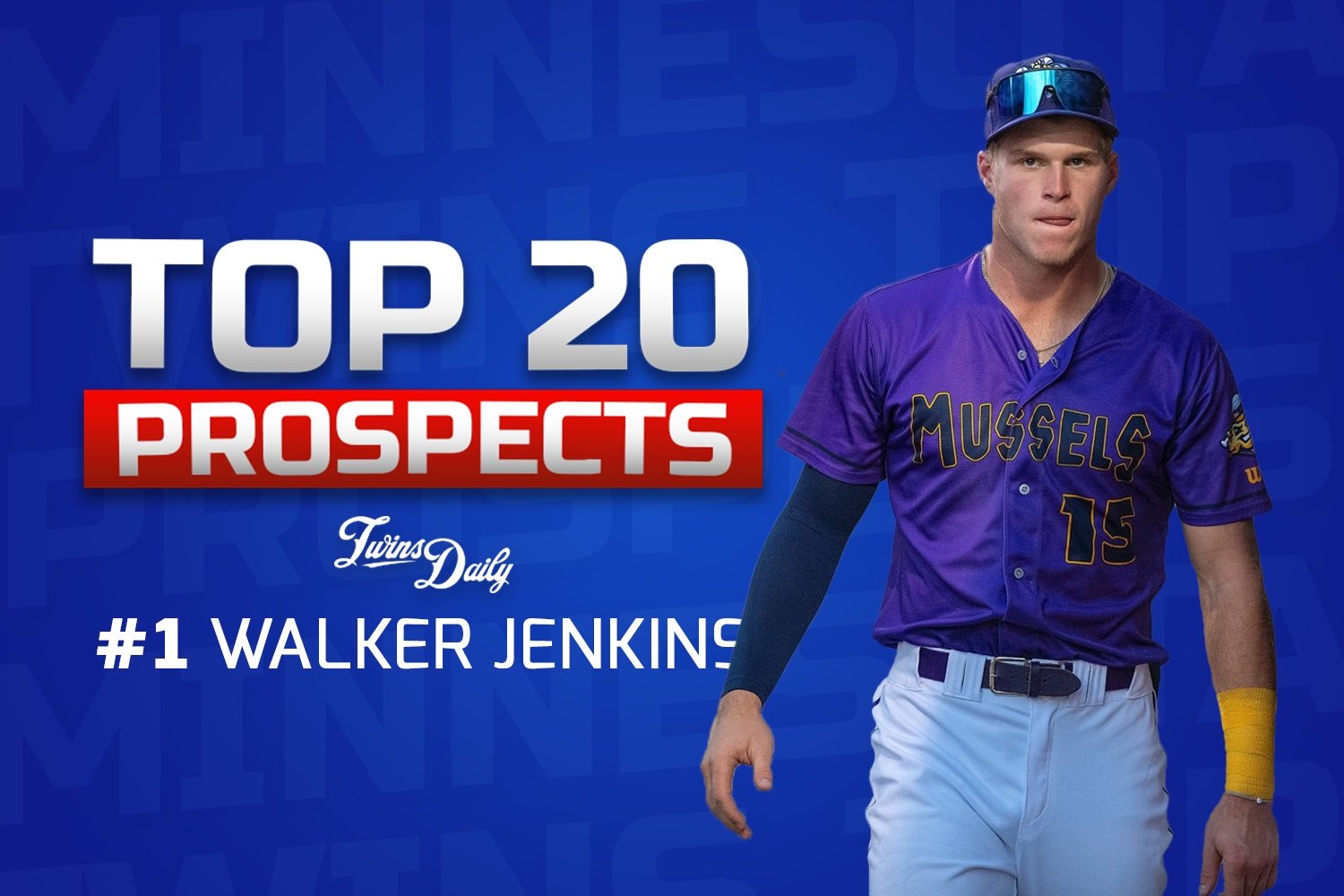 Age: 18 (DOB: 2/19/2005) 2023 Stats (Rk/A): 115 PA, .362/.417/.571, 3 HR, 22 RBI ETA: 2026 2023 Ranking: NR National Top 100 Rankings BA: 13 | MLB: 10 | ATH: 15 | BP: 16 What's To Like At this point? Everything. Walker Jenkins was considered a "1-1" player in the draft (worthy of taking first overall) because he, like four others with that billing from the loaded 2023 class, excels at everything and projects achievable superstar potential. Aaron Gleeman aptly describes Jenkins as looking "like he was built in a lab to play baseball, with a physical, athletic 6-foot-3 frame and a smooth left-handed swing that already produces big-time power." That swing and power earned Jenkins rave reviews as a prep star in Southport, North Carolina. In glancing through some highlights from his days at South Brunswick High School, it's not hard to see why Bryce Harper comparisons took root for the lefty-swinging outfielder, who's also drawn parallels to fellow North Carolina prep standout Josh Hamilton and Hall of Famer Larry Walker. The Twins were thrilled to get Jenkins with the fifth pick, going slightly over-slot to sign him for $7.14 million soon after. The 18-year-old sealed his rep as one of the truly elite prospects in the game by dominating his pro debut, posting a .989 OPS in 26 games between the rookie-level Florida Complex League and Single-A Florida State League. His huge power was on display with three homers, four triples and five doubles in 116 plate appearances, but at the same time Jenkins struck out out only 12% of the time in his first exposure to pro pitching. His compact swing helps him get to the ball with lightning quickness and catch up to high velocity. A combination of contact and power skills puts Jenkins in rarefied air, and he rounds out his hitting prowess with a true five-tool skill set. He can run, he can track down the ball in the outfield, and he's got a big arm. His baseball IQ, makeup and leadership receive tremendously high marks. Jenkins is the full package. What's Left To Work On As great as everything looks right now, Jenkins has a long way to go. He has proven his superiority over players in high school and the lowest levels of the minors but there are many upshifts in competition ahead, and many more hurdles for Jenkins to overcome. First and foremost, he needs to stay healthy. That has been a challenge for many of the club's highest-drafted and highest-ranked prospects in years past, ranging from Royce Lewis to Alex Kirilloff to Byron Buxton. Jenkins has already endured some injury issues in his high school career – he underwent surgery for a hip impingement as a freshman, and suffered a broken hamate bone during his senior year – but he was obviously healthy after signing last year. There's nothing about his build or approach that would suggest durability is going to be a concern. From there, it's just a matter of handling more advanced pitching at each level, but Jenkins is well suited for the task with a plate approach that's going to be exceedingly tough to solve. Right now the outlook for his bat is less in question than the outlook for his glove. Jenkins played center field in high school and made all of his defensive starts there in the minors last year, but will he stick? The Twins seem somewhat bullish on that idea, and Jenkins is fast enough that you can't rule it out, but most scouts feel he will outgrow the position and end up in an outfielder corner. That's not necessarily a big deal, because his bat projects to be a big asset anywhere, but obviously it's fun to dream on Jenkins putting up huge offensive numbers as a center fielder a la Mike Trout. For the time being, he figures to keep getting most if not all of his starts in center field, where his defense is currently a strength. What's Next Presumably Jenkins will pick up where he left off last year, playing in the Florida State League for at least the first few months. If he keeps performing the way he did during a 12-game stint last year, the outfielder could earn himself a promotion to Cedar Rapids once the weather gets warmer. Arriving at Double-A by year's end is not totally out of the question; such an ascent would likely place Jenkins among the game's very elite prospects. The baseball world is watching Jenkins with awe and anticipating big things in 2024. MLB.com's top prospect experts Jim Callis and Jonathan Mayo both predicted he'll be the best hitter in the minors this year. "I feel like, in general, fans maybe underappreciate him a little bit because he was only the fifth pick in the Draft last year," said Callis. "He’d clearly be the number one pick in a lot of drafts. ... I mean, there’s not much this guy can’t do." Twins Daily 2024 Top Prospects Countdown 20. Zebby Matthews, RHP 19. Simeon Woods Richardson, RHP 18. Ricardo Olivar, OF 17. Connor Prielipp, LHP 16. Matt Canterino, RHP 15. Yunior Severino, 1B 14. Danny De Andrade, SS 13. C.J. Culpepper, RHP 12. Kala'i Rosario, OF 11. Luke Keaschall, 2B 10. Tanner Schobel, 2B 9. Brandon Winokur, OF 8. Charlee Soto, RHP 7. Cory Lewis, RHP 5. David Festa, RHP 4. Marco Raya, RHP 3. Emmanuel Rodriguez, OF 2. Brooks Lee, SS 1. Walker Jenkins, OF Let's hear your thoughts on No. 1 prospect Walker Jenkins! You can check back tomorrow for a full recap of the list plus key takeaways as we head into the 2024 season.
 -
Twins Daily 2024 Top Prospects: #4 Marco Raya, RHP
Nick Nelson replied to Nick Nelson's topic in Twins Minor League Talk
The article actually used the word "traditional" 200 inning starter, not typical. As in, starting pitchers were traditionally built up for a 200-IP type workload (not so long ago!) and Raya is an example -- albeit on the extreme end -- of how much the convention is being bucked these days. -
For a while, Marco Raya was considered the best-kept secret in the Twins system. Now that he's had a chance to show his stuff on the mound, leaving no doubt of his ability, he just needs to prove he can hold up against a professional starter's workload... if that is, indeed, the plan. Image courtesy of William Parmeter Age: 21 (DOB: 8/7/2002) 2023 Stats (A+/AA): 62 2/3 IP, 4.02 ERA, 1.07 WHIP, 9.3 K/9, 3.2 BB/9 ETA: 2025 2023 Ranking: 4 National Top 100 Rankings BA: NR | MLB: NR | ATH: NR | BP: NR What's To Like Selected out of a Texas high school in the fourth round of the 2020 draft, Marco Raya didn't make his official professional debut until 2022. By then, people in the organization had been raving about the young hurler's work behind the scenes for months, talking about how much promise he showed with a stellar fastball/slider combo. I made him my "pick to click" in that year's top prospect list recap at Twins Daily. The organization finally let Raya loose that season, and he definitely clicked, posting a 3.05 ERA in 65 innings at Low-A, where he was three full years younger than the average player. The outstanding performance vaulted him to No. 4 in last year's ranking, a spot he retains this time around following another impressive campaign. While the Twins have been ultra-cautious with Raya's handling on the mound, they've also been very aggressive in pushing the right-hander competitively. Despite a relatively short stint at Low-A in 2022, he opened the 2023 season at High-A Cedar Rapids, where he continued to overpower more experienced opposition. In 11 starts for the Kernels, Raya posted a 2.93 ERA and 39-to-8 K/BB ratio in 33 ⅔ innings, holding opponents to a .192/.250/.325 triple-slash. Twins decision-makers were impressed enough that they once again promoted Raya, making him one of the youngest pitchers in Double-A after totaling fewer than 100 innings in A-ball. The 20-year-old righty struggled with the transition at first (11.08 ERA, 13/11 K/BB in his first six starts), but settled in and cruised to the finish line for Wichita (0.56 ERA, 13/3 K/BB in his last five starts). Raya throws a high-spin fastball that clocks at 94-96 MPH and is difficult to square up, but he mixes in a lot of breaking balls. That's where his real strength lies. In particular, the oft-used slider has been a tremendous weapon for him at every level, in large part because he can throw it where he wants with precision. "Raya’s slider has above-average horizontal movement, and he has the ability to get swings and misses in the zone with it," according to Baseball America. "He actually has better command of his slider than his fastball." When you have stuff like this and can throw it for strikes, you're going to be successful in the minors, even against more seasoned and accomplished competition. We've seen that play out consistently for Raya. It explains why the Twins have been comfortable advancing him so aggressively, and it's why we should feel good about Raya continuing to get results as he keeps moving up the ladder toward a not-too-distant MLB debut. What's Left To Work On When it comes to development, the Twins have clearly adopted an attitude that there's not much value in having young pitchers pile up a bunch of innings in the minors. Looking through game logs for any of their highly-rated starter prospects last year, you will rarely find an instance of someone pitching into the sixth inning or approaching 100 pitches. Raya has been on the extreme end, to the point where one could argue the organization is handling him with kid gloves. Although 39 of his 41 professional appearances have been starts, and he's obviously pitched well, Raya has only averaged a bit over three innings per outing. Last year, he never once pitched into even the fifth inning, nor threw more than 54 pitches. I can certainly see the logic in this philosophy. Throwing at max effort in game action is very hard on the body, and there's a cost to wasting bullets. Minor-league games ultimately don't matter for much other than development, and a lot of that can be handled on the side, as Raya's journey exemplifies. But the extent to which he's been held back does limit our ability to evaluate and project his potential as a major-league starter. Is his skinny yet athletic 6-foot-1 frame up to the task of sustaining velocity past 60 or 70 pitches? We don't know; we've never seen it. Will his stuff play against lineups multiple times? He never got through the batting order even two full times in a start last year, much less a third. Until he answers these questions, it'll be hard to envision Raya as anything approximating a traditional 200-inning starter. But the talent and performance have been so excellent that it's easy to envision him as an effective major-league pitcher, which is why Twins Daily has him ranked as the organization's top pitching prospect for a second straight year. What's Next Raya is likely to open his age-21 season back at Double-A. From there, he seems to have two paths forward in 2024. Either the Twins will start to focus on extending his outings and building him up toward a true starter's workload, or they'll continue to use him in shorter bursts with an eye on getting him to the majors quickly. Conceivably, Raya could join the big-league staff at some point during the season, perhaps as a multi-inning reliever. He'd be one of the youngest pitchers to debut for the Twins in decades. Twins Daily 2024 Top Prospects Countdown Honorable Mentions 20. Zebby Matthews, RHP 19. Simeon Woods Richardson, RHP 18. Ricardo Olivar, OF 17. Connor Prielipp, LHP 16. Matt Canterino, RHP 15. Yunior Severino, 1B 14. Danny De Andrade, SS 13. C.J. Culpepper, RHP 12. Kala'i Rosario, OF 11. Luke Keaschall, 2B 10. Tanner Schobel, 2B 9. Brandon Winokur, OF 8. Charlee Soto, RHP 7. Cory Lewis, RHP 5. David Festa, RHP 4. Marco Raya, RHP Check back tomorrow for a look at our No. 3 prospect of 2024, and this evening for a bonus insert to the list! For now, let's hear your thoughts on Marco Raya. What's the next step for his development? View full article
-
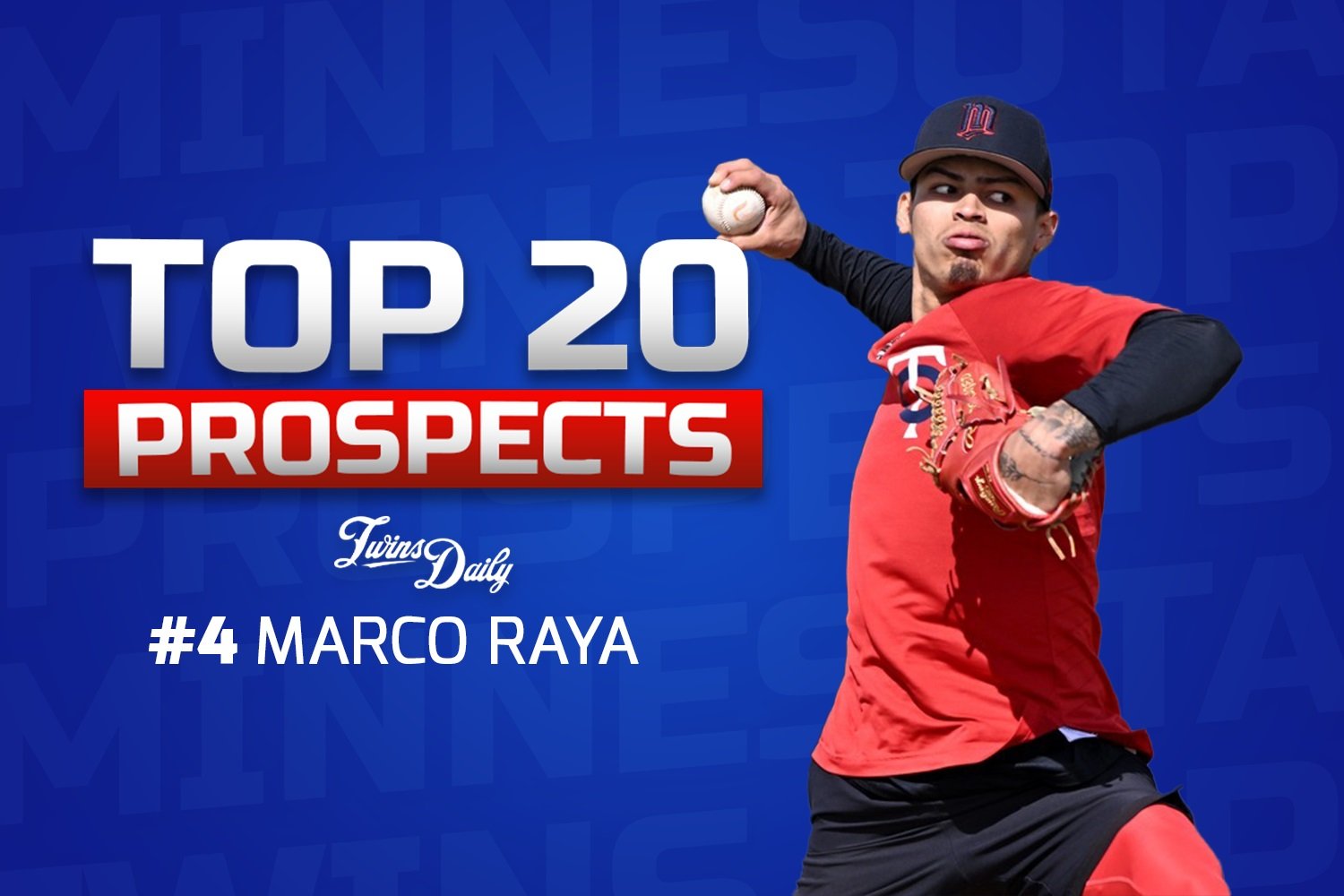 Age: 21 (DOB: 8/7/2002) 2023 Stats (A+/AA): 62 2/3 IP, 4.02 ERA, 1.07 WHIP, 9.3 K/9, 3.2 BB/9 ETA: 2025 2023 Ranking: 4 National Top 100 Rankings BA: NR | MLB: NR | ATH: NR | BP: NR What's To Like Selected out of a Texas high school in the fourth round of the 2020 draft, Marco Raya didn't make his official professional debut until 2022. By then, people in the organization had been raving about the young hurler's work behind the scenes for months, talking about how much promise he showed with a stellar fastball/slider combo. I made him my "pick to click" in that year's top prospect list recap at Twins Daily. The organization finally let Raya loose that season, and he definitely clicked, posting a 3.05 ERA in 65 innings at Low-A, where he was three full years younger than the average player. The outstanding performance vaulted him to No. 4 in last year's ranking, a spot he retains this time around following another impressive campaign. While the Twins have been ultra-cautious with Raya's handling on the mound, they've also been very aggressive in pushing the right-hander competitively. Despite a relatively short stint at Low-A in 2022, he opened the 2023 season at High-A Cedar Rapids, where he continued to overpower more experienced opposition. In 11 starts for the Kernels, Raya posted a 2.93 ERA and 39-to-8 K/BB ratio in 33 ⅔ innings, holding opponents to a .192/.250/.325 triple-slash. Twins decision-makers were impressed enough that they once again promoted Raya, making him one of the youngest pitchers in Double-A after totaling fewer than 100 innings in A-ball. The 20-year-old righty struggled with the transition at first (11.08 ERA, 13/11 K/BB in his first six starts), but settled in and cruised to the finish line for Wichita (0.56 ERA, 13/3 K/BB in his last five starts). Raya throws a high-spin fastball that clocks at 94-96 MPH and is difficult to square up, but he mixes in a lot of breaking balls. That's where his real strength lies. In particular, the oft-used slider has been a tremendous weapon for him at every level, in large part because he can throw it where he wants with precision. "Raya’s slider has above-average horizontal movement, and he has the ability to get swings and misses in the zone with it," according to Baseball America. "He actually has better command of his slider than his fastball." When you have stuff like this and can throw it for strikes, you're going to be successful in the minors, even against more seasoned and accomplished competition. We've seen that play out consistently for Raya. It explains why the Twins have been comfortable advancing him so aggressively, and it's why we should feel good about Raya continuing to get results as he keeps moving up the ladder toward a not-too-distant MLB debut. What's Left To Work On When it comes to development, the Twins have clearly adopted an attitude that there's not much value in having young pitchers pile up a bunch of innings in the minors. Looking through game logs for any of their highly-rated starter prospects last year, you will rarely find an instance of someone pitching into the sixth inning or approaching 100 pitches. Raya has been on the extreme end, to the point where one could argue the organization is handling him with kid gloves. Although 39 of his 41 professional appearances have been starts, and he's obviously pitched well, Raya has only averaged a bit over three innings per outing. Last year, he never once pitched into even the fifth inning, nor threw more than 54 pitches. I can certainly see the logic in this philosophy. Throwing at max effort in game action is very hard on the body, and there's a cost to wasting bullets. Minor-league games ultimately don't matter for much other than development, and a lot of that can be handled on the side, as Raya's journey exemplifies. But the extent to which he's been held back does limit our ability to evaluate and project his potential as a major-league starter. Is his skinny yet athletic 6-foot-1 frame up to the task of sustaining velocity past 60 or 70 pitches? We don't know; we've never seen it. Will his stuff play against lineups multiple times? He never got through the batting order even two full times in a start last year, much less a third. Until he answers these questions, it'll be hard to envision Raya as anything approximating a traditional 200-inning starter. But the talent and performance have been so excellent that it's easy to envision him as an effective major-league pitcher, which is why Twins Daily has him ranked as the organization's top pitching prospect for a second straight year. What's Next Raya is likely to open his age-21 season back at Double-A. From there, he seems to have two paths forward in 2024. Either the Twins will start to focus on extending his outings and building him up toward a true starter's workload, or they'll continue to use him in shorter bursts with an eye on getting him to the majors quickly. Conceivably, Raya could join the big-league staff at some point during the season, perhaps as a multi-inning reliever. He'd be one of the youngest pitchers to debut for the Twins in decades. Twins Daily 2024 Top Prospects Countdown Honorable Mentions 20. Zebby Matthews, RHP 19. Simeon Woods Richardson, RHP 18. Ricardo Olivar, OF 17. Connor Prielipp, LHP 16. Matt Canterino, RHP 15. Yunior Severino, 1B 14. Danny De Andrade, SS 13. C.J. Culpepper, RHP 12. Kala'i Rosario, OF 11. Luke Keaschall, 2B 10. Tanner Schobel, 2B 9. Brandon Winokur, OF 8. Charlee Soto, RHP 7. Cory Lewis, RHP 5. David Festa, RHP 4. Marco Raya, RHP Check back tomorrow for a look at our No. 3 prospect of 2024, and this evening for a bonus insert to the list! For now, let's hear your thoughts on Marco Raya. What's the next step for his development?
 -
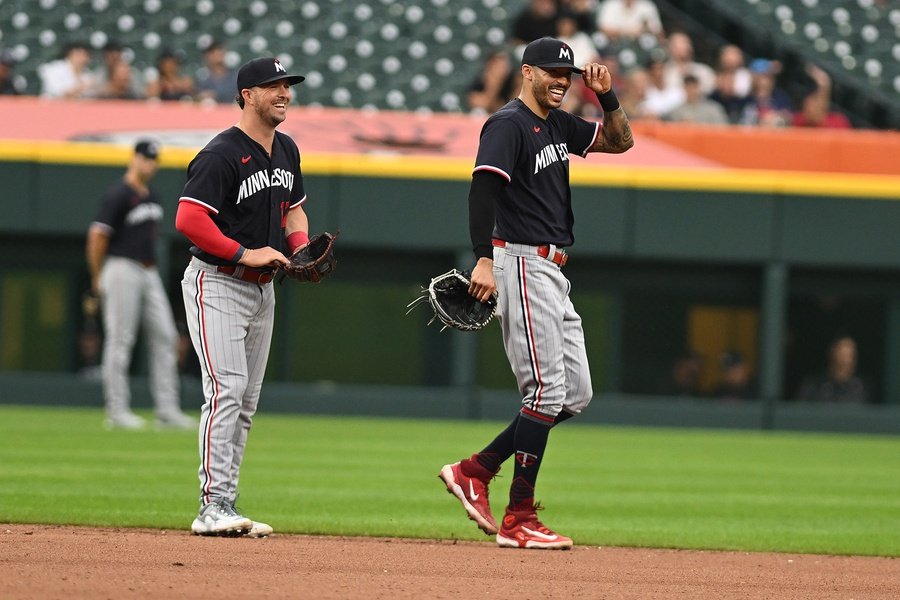 What's leadership worth? How do you quantify the value of a veteran player who is well-liked in the clubhouse – someone the younger guys can look to for advice and guidance? These feel like impossible questions to answer, but at the same time, they need to be asked as we assess the front office's team-building strategy. As guests at the Twins Daily Winter Meltdown last month, Louie Varland and Matt Wallner were asked about the veteran teammates who made a difference for them in 2023 as rookies learning the ropes. Both quickly named Emilio Pagán, who was frequently commended throughout his Twins tenure as an approachable and helpful presence in the clubhouse. It's striking that even Wallner, an outfielder, felt impacted by a relief pitcher with such a different role and routine. Many fans wondered why the Twins felt so attached to Pagán after a rough 2022 campaign, bringing him back last year as one of their highest-paid relievers. I suspect his intangible qualities played a part, and the club's bet paid off on both fronts. Pagán's value clearly went beyond his 2.99 ERA in 70 innings, leaving Minnesota's front office with more than just quality innings to replace. Through this lens, we look at the signing of 36-year-old veteran Jay Jackson, made official Wednesday. It's a fascinating contract, given the circumstances: not just a guaranteed MLB deal for a 36-year-old who'd never had one before, but one worth $1.3 million, with a club option and $200,000 buyout for 2025. If that's exercised, Jackson will earn $3 million (plus incentives) in 2025. (For context, Caleb Thielbar is their highest-paid reliever in 2024, at $3.2 million.) The total risk here for Minnesota is only $1.5 million, so it's not some high-stakes gamble. But the contract shows there was a real market for Jackson, who spent years pitching in Japan and has no meaningful track record of major-league success. Meanwhile, the relatively lucrative team option suggests the front office envisions a future for this partnership. Not to downplay their belief in Jackson's on-field ability–his slider can be a weapon–but this signing seems to be about more than that. The well-traveled reliever will bring a unique and valuable perspective to a team largely reliant on youth and inexperience. This represents a common theme in how the Twins have invested their scarce resources this offseason. The decision to tender a contract to Kyle Farmer back in November, despite known budgetary constraints, was striking. His $6-million salary has to be considered a luxury given his on-field role, but again, the Twins recognize an impact beyond the OPS+ and WAR. Farmer was another player quickly named as a veteran influence in the Winter Meltdown interview. The signing of free agent Carlos Santana, also announced on Wednesday, carried a similar undertone as Jackson's: late-30s vet who's been around the block, and might add as much to the locker room as the lineup in a part-time role. “This is a guy who is a leader, a tremendous teammate who shows up every day to play,” Derek Falvey said in describing Santana. The Twins suffered some key losses to free agency in terms of veteran personalities. The front office has been more committed to mitigating that aspect this offseason than replacing the on-field production. Honestly, it may well be a smart strategy. Anyone who spent time around the team last year can tell you how infectious the energy was and how much that seemed to lift everyone. Pagán and Farmer (and another offseason loss, Jorge Polanco) played big roles in that. But it all routes back, of course, to Carlos Correa. The Minnesota Twins signed Correa to a $105-million contract, and then after scrapping that, to a new $200 million contract. These accurate historical statements would have felt so funny to write in the not-so-distant past. This organization pushed well past its comfort zone when the opportunity to lock up Correa arose last winter, and there is zero question the decision was motivated by much more than his production and performance in games. Even coming off his worst season statistically, I'd bet the Twins felt he was worth his $35-million salary last year, and are glad to have him for the same this year, financial restrictions and all. Miraculously pivoting from Josh Donaldson to Correa was perhaps Falvey's crowning achievement, and certainly reshaped the clubhouse dynamic in fundamental ways. Given the connotations about analytics-driven front offices, one might consider it ironic that the Twins have leaned into intangibles and leadership qualities as predictors of success. But Falvey, Thad Levine, and the rest of Minnesota's decision-makers are not ignorant to the human element. If they ever were, they sure aren't now, having lived through the Donaldson era, and having seen the effect of disgruntled mercenaries like Lance Lynn. Despite those hiccups, you could argue that this emphasis can be traced to Falvey and Levine's very first year at the helm, when they used the No. 1 overall draft pick to select Royce Lewis, whose exceptional makeup and character elevated him above others at the top of a much-debated 2017 class. We're seeing the payoff now, with Lewis becoming an integral part of the clubhouse culture that the front office has built, and that Rocco Baldelli spearheads as manager. Baldelli runs as committed and harmonious a clubhouse as anyone in baseball, but it helps that he and the front office have been so intentional about what kind of people they enfold into that group.
- 54 comments
-
- 16
-
-

-
- jay jackson
- kyle farmer
- (and 2 more)
-
Writing about invisible factors like leadership and clubhouse character is difficult, as an outsider. But we can't ignore how intentional the Twins have been (and continue to be) about building their team culture, and the results they've seen. It's worth talking about. Image courtesy of Lon Horwedel-USA TODAY Sports What's leadership worth? How do you quantify the value of a veteran player who is well-liked in the clubhouse – someone the younger guys can look to for advice and guidance? These feel like impossible questions to answer, but at the same time, they need to be asked as we assess the front office's team-building strategy. As guests at the Twins Daily Winter Meltdown last month, Louie Varland and Matt Wallner were asked about the veteran teammates who made a difference for them in 2023 as rookies learning the ropes. Both quickly named Emilio Pagán, who was frequently commended throughout his Twins tenure as an approachable and helpful presence in the clubhouse. It's striking that even Wallner, an outfielder, felt impacted by a relief pitcher with such a different role and routine. Many fans wondered why the Twins felt so attached to Pagán after a rough 2022 campaign, bringing him back last year as one of their highest-paid relievers. I suspect his intangible qualities played a part, and the club's bet paid off on both fronts. Pagán's value clearly went beyond his 2.99 ERA in 70 innings, leaving Minnesota's front office with more than just quality innings to replace. Through this lens, we look at the signing of 36-year-old veteran Jay Jackson, made official Wednesday. It's a fascinating contract, given the circumstances: not just a guaranteed MLB deal for a 36-year-old who'd never had one before, but one worth $1.3 million, with a club option and $200,000 buyout for 2025. If that's exercised, Jackson will earn $3 million (plus incentives) in 2025. (For context, Caleb Thielbar is their highest-paid reliever in 2024, at $3.2 million.) The total risk here for Minnesota is only $1.5 million, so it's not some high-stakes gamble. But the contract shows there was a real market for Jackson, who spent years pitching in Japan and has no meaningful track record of major-league success. Meanwhile, the relatively lucrative team option suggests the front office envisions a future for this partnership. Not to downplay their belief in Jackson's on-field ability–his slider can be a weapon–but this signing seems to be about more than that. The well-traveled reliever will bring a unique and valuable perspective to a team largely reliant on youth and inexperience. This represents a common theme in how the Twins have invested their scarce resources this offseason. The decision to tender a contract to Kyle Farmer back in November, despite known budgetary constraints, was striking. His $6-million salary has to be considered a luxury given his on-field role, but again, the Twins recognize an impact beyond the OPS+ and WAR. Farmer was another player quickly named as a veteran influence in the Winter Meltdown interview. The signing of free agent Carlos Santana, also announced on Wednesday, carried a similar undertone as Jackson's: late-30s vet who's been around the block, and might add as much to the locker room as the lineup in a part-time role. “This is a guy who is a leader, a tremendous teammate who shows up every day to play,” Derek Falvey said in describing Santana. The Twins suffered some key losses to free agency in terms of veteran personalities. The front office has been more committed to mitigating that aspect this offseason than replacing the on-field production. Honestly, it may well be a smart strategy. Anyone who spent time around the team last year can tell you how infectious the energy was and how much that seemed to lift everyone. Pagán and Farmer (and another offseason loss, Jorge Polanco) played big roles in that. But it all routes back, of course, to Carlos Correa. The Minnesota Twins signed Correa to a $105-million contract, and then after scrapping that, to a new $200 million contract. These accurate historical statements would have felt so funny to write in the not-so-distant past. This organization pushed well past its comfort zone when the opportunity to lock up Correa arose last winter, and there is zero question the decision was motivated by much more than his production and performance in games. Even coming off his worst season statistically, I'd bet the Twins felt he was worth his $35-million salary last year, and are glad to have him for the same this year, financial restrictions and all. Miraculously pivoting from Josh Donaldson to Correa was perhaps Falvey's crowning achievement, and certainly reshaped the clubhouse dynamic in fundamental ways. Given the connotations about analytics-driven front offices, one might consider it ironic that the Twins have leaned into intangibles and leadership qualities as predictors of success. But Falvey, Thad Levine, and the rest of Minnesota's decision-makers are not ignorant to the human element. If they ever were, they sure aren't now, having lived through the Donaldson era, and having seen the effect of disgruntled mercenaries like Lance Lynn. Despite those hiccups, you could argue that this emphasis can be traced to Falvey and Levine's very first year at the helm, when they used the No. 1 overall draft pick to select Royce Lewis, whose exceptional makeup and character elevated him above others at the top of a much-debated 2017 class. We're seeing the payoff now, with Lewis becoming an integral part of the clubhouse culture that the front office has built, and that Rocco Baldelli spearheads as manager. Baldelli runs as committed and harmonious a clubhouse as anyone in baseball, but it helps that he and the front office have been so intentional about what kind of people they enfold into that group. View full article
- 54 replies
-
- 1
-
-
- jay jackson
- kyle farmer
- (and 2 more)
-
Twins Daily 2024 Top Prospects: #7 Cory Lewis, RHP
Nick Nelson replied to Nick Nelson's topic in Twins Minor League Talk
Great question. This kind of summarizes where I'm landing with him at the moment. Performance against Double-A competition will be very telling. Be fun to see him and Raya both in the Wichita rotation. -
Cory Lewis was named Twins' Minor League Pitcher of the Year in his first season with the organization. What's next for the righty and his intriguing high-speed knuckleball? Age: 23 (DOB: 10/9/2000) 2023 Stats (A/A+): 101.1 IP, 2.49 ERA, 1.06 WHIP, 10.5 K/9, 2.9 BB/9 ETA: 2025 2023 Ranking: NR National Top 100 Rankings BA: NR | MLB: NR | ATH: NR | BP: NR What's To Like After joining the organization as a ninth-round draft pick in 2022, Cory Lewis took the minor leagues by storm last year. In nine starts at Low-A Ft. Myers, he posted a 2.75 ERA to quickly earn a promotion to High-A. Lewis didn't miss a beat, going 5-1 with a 2.32 ERA in 13 starts for Cedar Rapids to close out an extremely successful first season in the system. The 23-year-old right-hander works from a deep five-pitch mix, which he talked through with Twins Daily's Seth Stohs after last season. You've got all the standards here – four-seam fastball, changeup, curve, slider – but Lewis's repertoire is made unique by the inclusion of a knuckleball. It's not a conventional version of the pitch, buzzing to the plate in the mid-80s as opposed to the slow floaters that generally come to mind. He also doesn't use it like a conventional knuckleballer, throwing it only occasionally as a pace-changer rather than favoring it as his main weapon. Still, the pitch helped keep pro hitters off balance in Lewis's first foray against them, and looks like it will be a real asset in his growth. Between the two levels of A-ball in 2023, Lewis allowed only 74 hits over 101 ⅓ innings, holding opponents to a .198 batting average that was among the lowest for all starters in the minors. "Adding in the knuckleball is what turns a tough at-bat into a brain-scrambler," according to Baseball America's scouting report. "He only throws it a few times a game, but it’s a weapon because hitters usually have never seen anything like it." What's Left To Work On There's a reason Lewis fell to the ninth round, signing for a relatively modest $140,000 out of UC Santa Barbara. He struggled with command in college, issuing 42 walks in 88 innings as a junior, and his fastball was in the upper 80s. He's added a few ticks since joining the Twins organization, but still doesn't regularly pump his heater into the mid-90s like many other top pitching prospects. Lewis's fastball is known better for its riding movement than its velocity, and was an effective mainstay for him last year, but there are questions about how it will play against more advanced hitters. The same is true of his offspeed pitches, which aren't widely viewed by evaluators as plus offerings. However, Twins scouting director Drew MacPhail has stated that Lewis has "some of the best movement on his slider and changeup in our system." The organization's reigning Minor League Pitcher of the Year should get a shot at Double-A this year, and the way he responds to that challenge will be telling. What's Next Lewis deals from a bendy and flummoxing repertoire that dominated Single-A hitters when he threw it in the zone. His professional debut was a resounding success, convincingly placing him on the prospect radar. Entering 2024, Lewis stands out as most exciting from a group of college starters drafted in 2022 – including our No. 13 prospect C.J. Culpepper and No. 20 Zebby Matthews – that now comprises a bulk of Minnesota's pitching pipeline. These hurlers will all be tested in key ways by taking the step to the upper minors, which is a central storyline for the system this year. Lewis gives plenty of reason to believe he's up to the task, especially if he increases the use of his bat-dodging knuckleball or amps up the rest of his arsenal. A late-season MLB debut is not out of the question, but realistically, some growing pains should probably be expected. Twins Daily 2024 Top Prospects Countdown 20. Zebby Matthews, RHP 19. Simeon Woods Richardson, RHP 18. Ricardo Olivar, OF 17. Connor Prielipp, LHP 16. Matt Canterino, RHP 15. Yunior Severino, 1B 14. Danny De Andrade, SS 13. C.J. Culpepper, RHP 12. Kala'i Rosario, OF 11. Luke Keaschall, 2B 10. Tanner Schobel, 2B 9. Brandon Winokur, OF 8. Charlee Soto, RHP 7. Cory Lewis, RHP Check back tomorrow to read about our pick for No. 6 on the list! For now, let's hear your thoughts on Cory Lewis. Is he the real deal, or will his flaws be exploited in Double-A? View full article
-
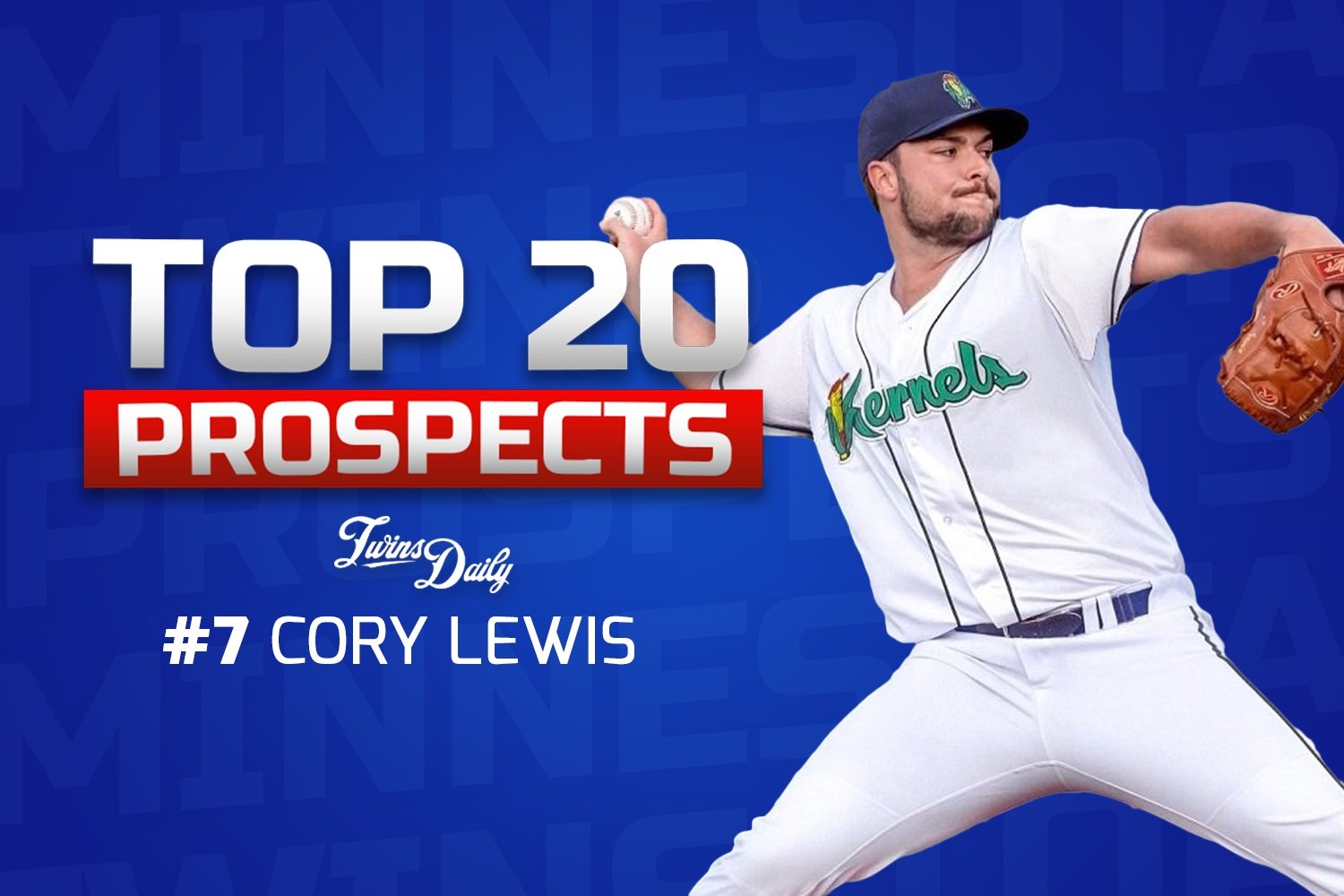 Age: 23 (DOB: 10/9/2000) 2023 Stats (A/A+): 101.1 IP, 2.49 ERA, 1.06 WHIP, 10.5 K/9, 2.9 BB/9 ETA: 2025 2023 Ranking: NR National Top 100 Rankings BA: NR | MLB: NR | ATH: NR | BP: NR What's To Like After joining the organization as a ninth-round draft pick in 2022, Cory Lewis took the minor leagues by storm last year. In nine starts at Low-A Ft. Myers, he posted a 2.75 ERA to quickly earn a promotion to High-A. Lewis didn't miss a beat, going 5-1 with a 2.32 ERA in 13 starts for Cedar Rapids to close out an extremely successful first season in the system. The 23-year-old right-hander works from a deep five-pitch mix, which he talked through with Twins Daily's Seth Stohs after last season. You've got all the standards here – four-seam fastball, changeup, curve, slider – but Lewis's repertoire is made unique by the inclusion of a knuckleball. It's not a conventional version of the pitch, buzzing to the plate in the mid-80s as opposed to the slow floaters that generally come to mind. He also doesn't use it like a conventional knuckleballer, throwing it only occasionally as a pace-changer rather than favoring it as his main weapon. Still, the pitch helped keep pro hitters off balance in Lewis's first foray against them, and looks like it will be a real asset in his growth. Between the two levels of A-ball in 2023, Lewis allowed only 74 hits over 101 ⅓ innings, holding opponents to a .198 batting average that was among the lowest for all starters in the minors. "Adding in the knuckleball is what turns a tough at-bat into a brain-scrambler," according to Baseball America's scouting report. "He only throws it a few times a game, but it’s a weapon because hitters usually have never seen anything like it." What's Left To Work On There's a reason Lewis fell to the ninth round, signing for a relatively modest $140,000 out of UC Santa Barbara. He struggled with command in college, issuing 42 walks in 88 innings as a junior, and his fastball was in the upper 80s. He's added a few ticks since joining the Twins organization, but still doesn't regularly pump his heater into the mid-90s like many other top pitching prospects. Lewis's fastball is known better for its riding movement than its velocity, and was an effective mainstay for him last year, but there are questions about how it will play against more advanced hitters. The same is true of his offspeed pitches, which aren't widely viewed by evaluators as plus offerings. However, Twins scouting director Drew MacPhail has stated that Lewis has "some of the best movement on his slider and changeup in our system." The organization's reigning Minor League Pitcher of the Year should get a shot at Double-A this year, and the way he responds to that challenge will be telling. What's Next Lewis deals from a bendy and flummoxing repertoire that dominated Single-A hitters when he threw it in the zone. His professional debut was a resounding success, convincingly placing him on the prospect radar. Entering 2024, Lewis stands out as most exciting from a group of college starters drafted in 2022 – including our No. 13 prospect C.J. Culpepper and No. 20 Zebby Matthews – that now comprises a bulk of Minnesota's pitching pipeline. These hurlers will all be tested in key ways by taking the step to the upper minors, which is a central storyline for the system this year. Lewis gives plenty of reason to believe he's up to the task, especially if he increases the use of his bat-dodging knuckleball or amps up the rest of his arsenal. A late-season MLB debut is not out of the question, but realistically, some growing pains should probably be expected. Twins Daily 2024 Top Prospects Countdown 20. Zebby Matthews, RHP 19. Simeon Woods Richardson, RHP 18. Ricardo Olivar, OF 17. Connor Prielipp, LHP 16. Matt Canterino, RHP 15. Yunior Severino, 1B 14. Danny De Andrade, SS 13. C.J. Culpepper, RHP 12. Kala'i Rosario, OF 11. Luke Keaschall, 2B 10. Tanner Schobel, 2B 9. Brandon Winokur, OF 8. Charlee Soto, RHP 7. Cory Lewis, RHP Check back tomorrow to read about our pick for No. 6 on the list! For now, let's hear your thoughts on Cory Lewis. Is he the real deal, or will his flaws be exploited in Double-A?
 -
The Twins awakened from their offseason slumber with a pair of significant moves that significantly reshape their 2024 team. Let's review these latest moves and how they impact the outlook for this season. Image courtesy of Nick Wosika and Rich Storry-USA TODAY Sports With the start of spring training less than two weeks away, the Twins' offseason makeover feels like a work still in progress. From a fan's perspective, it's tough to feel enthused about a stagnant three months that saw several quality players exit via free agency, with zero corresponding additions. This past week, Jorge Polanco joined the list of key departures, but the Twins finally started to add at last. Let's start with the blockbuster trade that sent out a longtime franchise fixture. Twins Trade Polanco for Four-Player Package Minnesota was known to be shopping Polanco throughout the winter, as they sought to unload salary and free up their infield logjam. That lengthy journey finally reached a conclusion on when the Twins pulled the trigger on a deal with the Seattle Mariners, bringing back an interesting mix of current and future help: Gabriel Gonzalez, OF: The highly-rated outfield prospect is the centerpiece of the deal for the Twins, coming off an impressive season at Single-A. But he's only 20 and at least a couple of years away from making an impact. Anthony DeSclafani, SP: The veteran right-hander is coming off back-to-back seasons lost to injury, but has been a solid starter over the course of his career with a 4.20 ERA and 4.16 WHIP in nearly 1,000 innings pitched. Seattle is covering $8 million of his $12 million salary. Justin Topa, RP: Was a quality contributor in the Mariners bullpen last year, posting a 2.61 ERA over 69 innings while pitching in a lot of key spots. The 32-year-old righty didn't have much of a preceding track record, so the Twins will hope he can sustain the breakout. Darren Bowen, SP/RP: Lotto ticket on a Single-A arm with some upside. He was drafted last summer and pitched in A-ball. Sending out Polanco fully clears space for Edouard Julien to become The Guy at second base, with Kyle Farmer likely factoring in against left-handers. The door is also now open for Brooks Lee to potentially arrive midseason. While Polo is a good player, it's not hard to see the logic in trading him. At the same time, fans cannot be blamed for being underwhelmed by the immediate return. A couple of prospects who might make an impact for a few years? A reliever who's had one good season? A salary-dump starter? In isolation, this move arguably didn't do much to upgrade the 2024 Twins. But the front office was adamant that the money saved in this deal will be redirected to upgrades elsewhere, and they wasted little time. Santana Slides Into the Mix On Friday night, the Twins reached agreement with first baseman Carlos Santana on a one-year deal worth $5.25 million. The accomplished switch-hitter enters the mix alongside Alex Kirilloff and Jose Miranda at first base, and will also likely rotate through the DH position. Renowned for his patience, Santana adds another tough AB to the lineup, and figures to mainly be used as a weapon against left-handed pitchers. He's been a consistent producer over the course of his 14-year career but seems to offer little upside coming off an average year at age 37. With that said, the Twins will take his veteran stability and experience, as well as his renowned patience at the plate in a lineup featuring many aggressive swingers. DeSclafani Steps in as Presumptive Fifth Starter The 33-year-old right-hander has been tabbed as the presumptive fifth starter, with the team signaling that they now view the rotation as a finished product. As we've learned, it's wise not to always take their stated intentions at face value, but if true this would be very disappointing. The Twins set out this offseason with a goal of replacing the frontline talent they lost in Sonny Gray. The mission was to add another playoff-caliber starter. Settling for DeSclafani at the back of the rotation would be a glaring admission of failure. Don't get me wrong, I think he could be fine in that role, if healthy. He's a strike-thrower who can get through five or six innings on a fairly regular basis. But DeSclafani missed a bunch of time last year with an elbow flexor strain and received a PRP injection. The Twins don't exactly have a great track record acquiring pitchers with known arm concerns. (See: Chris Paddack and Tyler Mahle.) Even if he can get past the elbow issue, DeSclafani is far from a lock to provide more than Louie Varland can in the fifth spot. Waiver Churn: Duarte In, Jensen Out On Friday the Twins claimed right-handed reliever Daniel Duarte off waivers, making room on the 40-man roster by waiving fellow righty reliever Ryan Jensen. The Rangers may have been trying to sneak Duarte through waivers shortly after acquiring him from Cincinnati for cash considerations. Now the Twins might try to do the same with Jensen, who himself was added via waivers about a month ago. It'd be great if the Twins could keep a few arms like this stashed at Triple-A. The 27-year-old Duarte, like Jensen and many others found on the waiver wire, has intriguing traits but is held back by control problems. Current Opening Day Roster and Payroll Projection The sum result of trading Polanco, getting back DeSclafani and Topa (plus $8M), and signing Santana is that the Twins are, payroll-wise, pretty much exactly where they were before all of the moves. Their payroll is right at $120 million, which is on the lowest end of the suggested range of cuts according to early-offseason reports. Are they done? It seems unlikely. There's buzz of more action on the way, with a right-handed outfielder being the most obvious area of need at the moment. Perhaps the news of a TV deal, eliminating some of their revenue uncertainties for the coming season, will enable them to start pushing a little bit from their current position. If they're willing to go to $130 million, which is where loosely start our expectations, there's still another $10 million or so to spend. Let's hear your thoughts on the latest moves and where the front office should go next. View full article
-
 With the start of spring training less than two weeks away, the Twins' offseason makeover feels like a work still in progress. From a fan's perspective, it's tough to feel enthused about a stagnant three months that saw several quality players exit via free agency, with zero corresponding additions. This past week, Jorge Polanco joined the list of key departures, but the Twins finally started to add at last. Let's start with the blockbuster trade that sent out a longtime franchise fixture. Twins Trade Polanco for Four-Player Package Minnesota was known to be shopping Polanco throughout the winter, as they sought to unload salary and free up their infield logjam. That lengthy journey finally reached a conclusion on when the Twins pulled the trigger on a deal with the Seattle Mariners, bringing back an interesting mix of current and future help: Gabriel Gonzalez, OF: The highly-rated outfield prospect is the centerpiece of the deal for the Twins, coming off an impressive season at Single-A. But he's only 20 and at least a couple of years away from making an impact. Anthony DeSclafani, SP: The veteran right-hander is coming off back-to-back seasons lost to injury, but has been a solid starter over the course of his career with a 4.20 ERA and 4.16 WHIP in nearly 1,000 innings pitched. Seattle is covering $8 million of his $12 million salary. Justin Topa, RP: Was a quality contributor in the Mariners bullpen last year, posting a 2.61 ERA over 69 innings while pitching in a lot of key spots. The 32-year-old righty didn't have much of a preceding track record, so the Twins will hope he can sustain the breakout. Darren Bowen, SP/RP: Lotto ticket on a Single-A arm with some upside. He was drafted last summer and pitched in A-ball. Sending out Polanco fully clears space for Edouard Julien to become The Guy at second base, with Kyle Farmer likely factoring in against left-handers. The door is also now open for Brooks Lee to potentially arrive midseason. While Polo is a good player, it's not hard to see the logic in trading him. At the same time, fans cannot be blamed for being underwhelmed by the immediate return. A couple of prospects who might make an impact for a few years? A reliever who's had one good season? A salary-dump starter? In isolation, this move arguably didn't do much to upgrade the 2024 Twins. But the front office was adamant that the money saved in this deal will be redirected to upgrades elsewhere, and they wasted little time. Santana Slides Into the Mix On Friday night, the Twins reached agreement with first baseman Carlos Santana on a one-year deal worth $5.25 million. The accomplished switch-hitter enters the mix alongside Alex Kirilloff and Jose Miranda at first base, and will also likely rotate through the DH position. Renowned for his patience, Santana adds another tough AB to the lineup, and figures to mainly be used as a weapon against left-handed pitchers. He's been a consistent producer over the course of his 14-year career but seems to offer little upside coming off an average year at age 37. With that said, the Twins will take his veteran stability and experience, as well as his renowned patience at the plate in a lineup featuring many aggressive swingers. DeSclafani Steps in as Presumptive Fifth Starter The 33-year-old right-hander has been tabbed as the presumptive fifth starter, with the team signaling that they now view the rotation as a finished product. As we've learned, it's wise not to always take their stated intentions at face value, but if true this would be very disappointing. The Twins set out this offseason with a goal of replacing the frontline talent they lost in Sonny Gray. The mission was to add another playoff-caliber starter. Settling for DeSclafani at the back of the rotation would be a glaring admission of failure. Don't get me wrong, I think he could be fine in that role, if healthy. He's a strike-thrower who can get through five or six innings on a fairly regular basis. But DeSclafani missed a bunch of time last year with an elbow flexor strain and received a PRP injection. The Twins don't exactly have a great track record acquiring pitchers with known arm concerns. (See: Chris Paddack and Tyler Mahle.) Even if he can get past the elbow issue, DeSclafani is far from a lock to provide more than Louie Varland can in the fifth spot. Waiver Churn: Duarte In, Jensen Out On Friday the Twins claimed right-handed reliever Daniel Duarte off waivers, making room on the 40-man roster by waiving fellow righty reliever Ryan Jensen. The Rangers may have been trying to sneak Duarte through waivers shortly after acquiring him from Cincinnati for cash considerations. Now the Twins might try to do the same with Jensen, who himself was added via waivers about a month ago. It'd be great if the Twins could keep a few arms like this stashed at Triple-A. The 27-year-old Duarte, like Jensen and many others found on the waiver wire, has intriguing traits but is held back by control problems. Current Opening Day Roster and Payroll Projection The sum result of trading Polanco, getting back DeSclafani and Topa (plus $8M), and signing Santana is that the Twins are, payroll-wise, pretty much exactly where they were before all of the moves. Their payroll is right at $120 million, which is on the lowest end of the suggested range of cuts according to early-offseason reports. Are they done? It seems unlikely. There's buzz of more action on the way, with a right-handed outfielder being the most obvious area of need at the moment. Perhaps the news of a TV deal, eliminating some of their revenue uncertainties for the coming season, will enable them to start pushing a little bit from their current position. If they're willing to go to $130 million, which is where loosely start our expectations, there's still another $10 million or so to spend. Let's hear your thoughts on the latest moves and where the front office should go next.
- 21 comments
-
- 6
-
-
- jorge polanco
- carlos santana
- (and 1 more)
-
Twins to Sign Veteran Free Agent First Baseman Carlos Santana
Nick Nelson posted an article in Twins
 Per Doogie Wolfson on Twitter, the Twins have agreed to a one-year contract with 37-year-old free agent Carlos Santana, who spent last season playing with the Pirates and Brewers. He's a first baseman who can plug in at that position and designated hitter, bringing impact depth and a respected veteran bat to Minnesota's explosive yet relatively inexperienced lineup. In a couple of key ways, Santana replaces what the Twins lost in Jorge Polanco. He's a switch-hitter who can factor into the middle of the lineup. Santana consistently gives tough at-bats and has been an amazingly consistent producer when on the field. In 14 seasons, he has posted an above-average OPS in 12, including 2023 (103 OPS+). He spent 10 of those seasons with Cleveland, who acquired him back in 2008 as a minor-leaguer from the Dodgers in a deal that included former Twin Casey Blake. Our Lou Hennessy wrote recently about what a smooth fit Santana is for the Twins, noting his strong production against southpaws, which makes him a nice platoon fit for Alex Kirilloff and the team's various DH options. Santana slashed .266/.354/.453 against LHP last year, and .276/.375/.443 in his lengthy career. Functionally, the Santana addition is not unlike the Donovan Solano signing from a year ago. Then, the Twins were seeking a low-cost but legit veteran bat capable of adding clubhouse leadership and providing depth at first base alongside a recovering Kirilloff. Solano ended up making 64 starts at first, and it the plan is probably to allocate a similar share there for Santana, alongside a rotational role at DH. The ultra-durable Santana made 603 plate appearances last year, and has eclipsed 600 in 11 of the last 12 one (non-COVID) seasons. But if he approaches that number this year, it would likely mean something went wrong elsewhere or Santana really surpassed expectations. Early in the offseason, I wrote about how Santana exemplified a player who could help change the Twins' offensive identity as an end-to-end strikeout factory. "Santana is a guy who can hit for power without striking out a ton, which is a combination the Twins would welcome," I suggested. "The veteran switch hitter has long been renowned for his discipline, with a 14.8% career walk rate alongside a 16.8% K-rate. His age (38 next April) means he'll likely be available on a one-year deal, but also increases the concern of steepening decline." Indeed, Santana has long been renowned for his patience. He posted a career-low 10.5% BB rate last year, but that still would've tied Polanco for fifth on the Twins. Santana's career 14.8% BB rate would've ranked second behind Edouard Julien (15.7%) and ahead of Joey Gallo (14.5%), who was also lost this offseason. The plate approach is not in doubt. The big question is if "Slamtana" can still hit. The Twins have struck gold with this type of late-career signing in the past (see: Nelson Cruz), but that's certainly not the norm. Santana, who turns 38 in April, showed serious decline in some key hitting metrics last year, going from a .372 xwOBA in 2022 (88th percentile) to .305 in 2023 (23rd percentile). His exit velocity, barrel rate, and hard-hit rate all fell off the table. Thus he was available at this price, at this stage of the offseason. Santana has question marks but he's an extremely accomplished hitter who brings some much-needed attributes to the table for the Twins. They're taking a gamble that he's got more in the tank, but it's not a terribly high-stakes gamble. Stay tuned to Twins Daily for more details and analysis of their first significant free agent signings of the offseason. For now, let's hear your thoughts on the move!
 -
Twins Daily 2024 Top Prospects: #8 Charlee Soto, RHP
Nick Nelson replied to Nick Nelson's topic in Twins Minor League Talk
And the big knock on Soto from almost every evaluator was the limited data. It was really hard to get eyes on him outside of these showcases. So eager to actually see him in games! -
Rarely have the Twins invested draft capital in a high school pitcher like they did with Charlee Soto, who received a $2.5 million bonus as the 34th overall pick last summer. It's easy to see why the club is enamored with the big righty and his projectable upside, even if we've yet to see him pitch professionally. Image courtesy of William Parmeter Age: 18 (DOB: 8/31/2005) 2023 Stats: Did not pitch ETA: 2027 2023 Ranking: NR National Top 100 Rankings BA: NR | MLB: NR | ATH: NR | BP: NR What's To Like At the time he was drafted last year, Charlee Soto was still only 17 years old, making him one of the youngest pitchers in the class. Despite his youth, the prep star out of Florida already has plenty of advanced traits. His physical maturity and velocity are what really stand out. By the time he finished high school, Soto was already 6-foot-3 and over 200 lbs. His teenage growth spurt compelled the pitcher and shortstop to abandon his ambitions of being a two-way player, but his size helped him unlock new levels of heat on the mound. "As his position solidified, so did his work in the weight room and he added significant muscle, especially in his lower half," wrote Melissa Lockard in a pre-draft profile on Soto for The Athletic. "He also took on a six-month program focused on ensuring the health and strength of his scapula." The work he put in helped Soto's fastball velocity jump into the upper-90s. "He’s a power pitcher, through and through," said Lockard, "with a circle changeup that sits in the mid- to high-80s and a sharp slider." Keith Law, who ranked Soto as the fourth-best prep pitcher in the draft, rated all three as plus pitches, complimenting the changeup's "hard, fading action." "Ten years ago I would have argued for him as a top-10 pick," said Law, "but the history of high school pitchers works against him." What's Left To Work On The "history of high school pitchers" that Law referenced is what keeps optimism around Soto somewhat tempered, and is also what has generally kept Minnesota from taking these kinds of high-stakes gambles. Projecting pitchers from such a young age is exceedingly difficult. The flame-out rate is high, even for those who look like slam-dunks coming into the draft. Kohl Stewart is one example of the downside from recent Twins history. There's much to like about Soto based on what we've seen from the showcases, what we've heard from the scouts, and what we've read about his commitment to the game. Until he actually steps on a professional mound and performs, none of that means a whole lot. Soto needs to prove he can physically withstand through the rigors of a pro regimen, and that his stuff will play against pro hitters. Those are no givens, for anyone, although the strength-building work he's done and the standout quality of his stuff make Soto a great bet to hit the ground running this year. What's Next It will be very interesting to see how the organization handles Soto from a usage and workload standpoint. On the one hand, they've grown increasingly conservative about pushing minor-league arms in general; their most prominent prep pitching prospect, Marco Raya, has seen his workload strictly capped since being drafted. (Though he still managed to reach Double-A by age 20.) On the other hand, among Soto's most appealing traits were his "traditional starter's build" and all of the groundwork he's laid to be a durable workhorse type arm. It would come as no surprise if the Twins start slow with Soto and let him dictate his own pace. Extended spring training and rookie ball could be in his near future. If the right-hander spends a decent chunk of the 2024 season at Single-A, that would be a huge step, and could put easily put him in the mix as the system's top pitching prospect, if not one of the better ones in all of baseball. We just need to see it. Twins Daily 2024 Top Prospects Countdown 20. Zebby Matthews, RHP 19. Simeon Woods Richardson, RHP 18. Ricardo Olivar, OF 17. Connor Prielipp, LHP 16. Matt Canterino, RHP 15. Yunior Severino, 1B 14. Danny De Andrade, SS 13. C.J. Culpepper, RHP 12. Kala'i Rosario, OF 11. Luke Keaschall, 2B 10. Tanner Schobel, 2B 9. Brandon Winokur, OF 8. Charlee Soto, RHP Check back on Monday when we reveal our No. 7 prospect! For now, let's hear your thoughts about Soto and what this season will hold for him. View full article
-
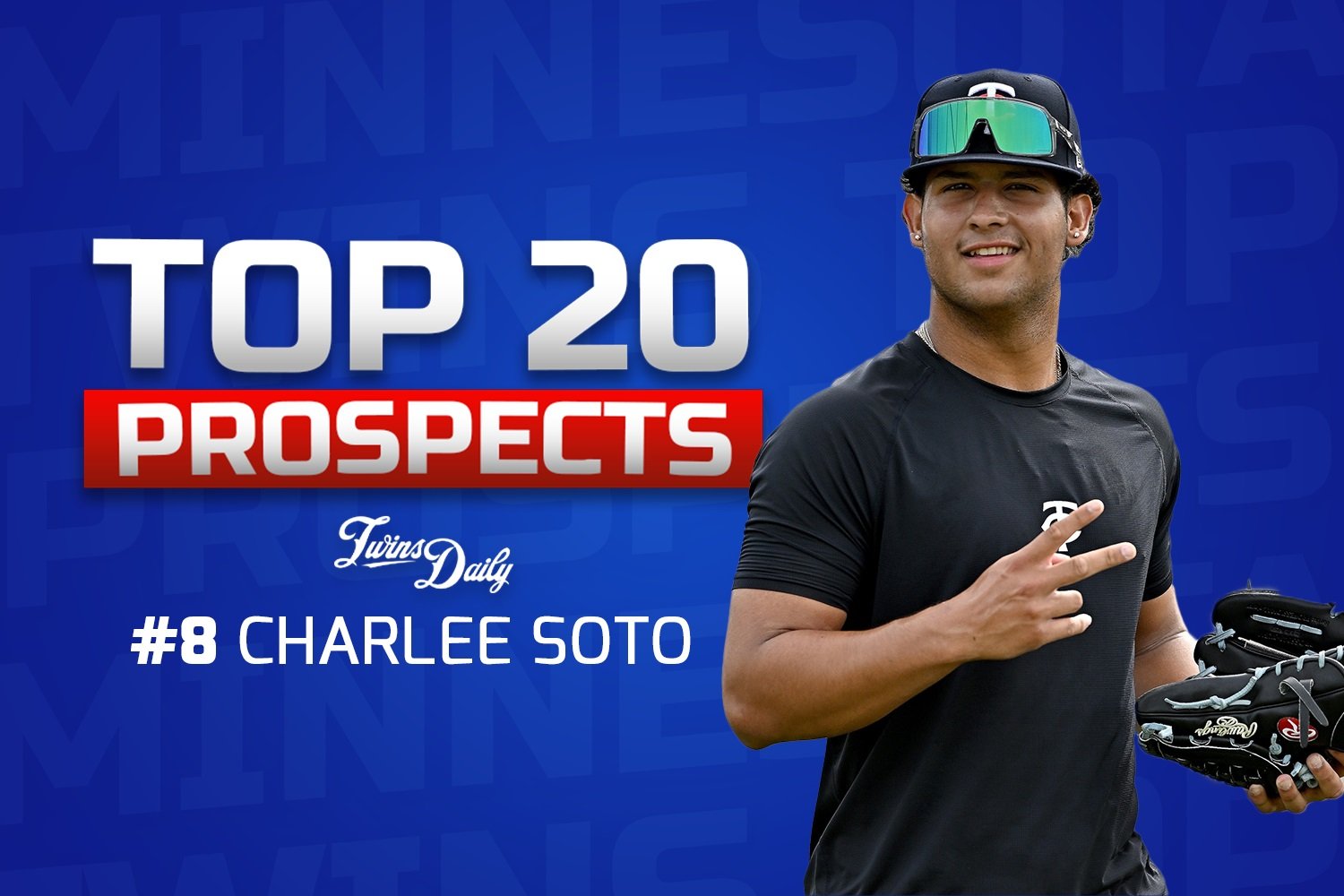 Age: 18 (DOB: 8/31/2005) 2023 Stats: Did not pitch ETA: 2027 2023 Ranking: NR National Top 100 Rankings BA: NR | MLB: NR | ATH: NR | BP: NR What's To Like At the time he was drafted last year, Charlee Soto was still only 17 years old, making him one of the youngest pitchers in the class. Despite his youth, the prep star out of Florida already has plenty of advanced traits. His physical maturity and velocity are what really stand out. By the time he finished high school, Soto was already 6-foot-3 and over 200 lbs. His teenage growth spurt compelled the pitcher and shortstop to abandon his ambitions of being a two-way player, but his size helped him unlock new levels of heat on the mound. "As his position solidified, so did his work in the weight room and he added significant muscle, especially in his lower half," wrote Melissa Lockard in a pre-draft profile on Soto for The Athletic. "He also took on a six-month program focused on ensuring the health and strength of his scapula." The work he put in helped Soto's fastball velocity jump into the upper-90s. "He’s a power pitcher, through and through," said Lockard, "with a circle changeup that sits in the mid- to high-80s and a sharp slider." Keith Law, who ranked Soto as the fourth-best prep pitcher in the draft, rated all three as plus pitches, complimenting the changeup's "hard, fading action." "Ten years ago I would have argued for him as a top-10 pick," said Law, "but the history of high school pitchers works against him." What's Left To Work On The "history of high school pitchers" that Law referenced is what keeps optimism around Soto somewhat tempered, and is also what has generally kept Minnesota from taking these kinds of high-stakes gambles. Projecting pitchers from such a young age is exceedingly difficult. The flame-out rate is high, even for those who look like slam-dunks coming into the draft. Kohl Stewart is one example of the downside from recent Twins history. There's much to like about Soto based on what we've seen from the showcases, what we've heard from the scouts, and what we've read about his commitment to the game. Until he actually steps on a professional mound and performs, none of that means a whole lot. Soto needs to prove he can physically withstand through the rigors of a pro regimen, and that his stuff will play against pro hitters. Those are no givens, for anyone, although the strength-building work he's done and the standout quality of his stuff make Soto a great bet to hit the ground running this year. What's Next It will be very interesting to see how the organization handles Soto from a usage and workload standpoint. On the one hand, they've grown increasingly conservative about pushing minor-league arms in general; their most prominent prep pitching prospect, Marco Raya, has seen his workload strictly capped since being drafted. (Though he still managed to reach Double-A by age 20.) On the other hand, among Soto's most appealing traits were his "traditional starter's build" and all of the groundwork he's laid to be a durable workhorse type arm. It would come as no surprise if the Twins start slow with Soto and let him dictate his own pace. Extended spring training and rookie ball could be in his near future. If the right-hander spends a decent chunk of the 2024 season at Single-A, that would be a huge step, and could put easily put him in the mix as the system's top pitching prospect, if not one of the better ones in all of baseball. We just need to see it. Twins Daily 2024 Top Prospects Countdown 20. Zebby Matthews, RHP 19. Simeon Woods Richardson, RHP 18. Ricardo Olivar, OF 17. Connor Prielipp, LHP 16. Matt Canterino, RHP 15. Yunior Severino, 1B 14. Danny De Andrade, SS 13. C.J. Culpepper, RHP 12. Kala'i Rosario, OF 11. Luke Keaschall, 2B 10. Tanner Schobel, 2B 9. Brandon Winokur, OF 8. Charlee Soto, RHP Check back on Monday when we reveal our No. 7 prospect! For now, let's hear your thoughts about Soto and what this season will hold for him.
 -
The next installment in our annual spring countdown of top Twins prospects brings a balanced mix, with five different positions represented and plenty of 2023 breakthroughs to be excited about. Image courtesy of Thiéres Rabelo Before you ask: no, you won't find Darren Bowen or Gabriel González in this piece. We'll enfold them into this process by giving them their own breakdown posts, and reveal their rankings within the system in due time. For now, we're sticking to the ranking we created by polling our top minor-league writers. 15. Yunior Severino, 1B Age: 24 2023 Stats (AA/AAA): 528 PA, .272/.352/.546, 35 HR, 84 RBI Severino really has only one standout tool: hitting for power. He's not fast, he's not good defensively, and he's not very disciplined at the plate. But when the 24-year-old switch-hitter gets a hold of a pitch, he can absolutely clobber it. Last year, he led the minors with 35 home runs between Double A and Triple A. One of his homers in late July was measured at 485 feet. Pure power as an isolated skill isn't valued the way it once was, meaning the slugging prospect is less in-demand than he might've been in the past. But the Twins still saw fit to add him to their 40-man roster this offseason, after previously leaving him exposed to the Rule 5 Draft. Evidently, their confidence in his ability to play a future role has grown. 14. Danny De Andrade, SS Age: 19 2023 Stats (A): 475 PA, .244/.354/.396, 11 HR, 67 RBI De Andrade is pretty much the opposite of Severino: an assortment of intriguing tools, but still fairly raw and undeveloped. Making his full-season debut in 2023, he held his own in a tough FSL pitching environment while flashing a combination of solid power, speed and patience. He's always had a knack for making contact, but now the infielder is increasingly starting to drive the ball with authority, which is encouraging to see. Turning 20 in April, the righty hitter is filling out his 5-foot-11 frame, and while he has mostly played shortstop so far, it's considered likely he will move to third at some point along the way. 13. C.J. Culpepper, RHP Age: 22 2023 Stats (A/A+): 86 IP, 3.56 ERA, 1.20 WHIP, 9.3 K/9, 3.2 BB/9 Derek Falvey and the Twins have built their pitching pipeline around arms in the same mold as Culpepper: mid-round draft picks who flew somewhat under the radar in college, but saw an immediate boost in stuff after joining the Twins organization. The 2022 13th-rounder was unleashed at Low A and carved up FSL hitters before moving up to High-A Cedar Rapids, where he mostly pitched well but struggled in his last few outings. Wearing down late in the season was a concerning sign from Culpepper, whose ability to stick in a starting role was a question mark when he was in college. But his strong performance and sharp sinking fastball have quickly established him as one of the system's most promising pitching projects. In 21 starts between two levels of A-ball last year, Culpepper allowed only four home runs. 12. Kala'i Rosario, OF Age: 21 2023 Stats (A+): 530 PA, .252/.364/.467, 21 HR, 94 RBI The bar is high offensively for Rosario to become an impact player, because he's already on the low end of the defensive spectrum: a right fielder with underwhelming range who may ultimately be best suited as a designated hitter. So far, though, the Hawaii native has hit at every level, and he's coming off a breakthrough campaign at Cedar Rapids that earned him Midwest League MVP honors. The right-handed slugger launched 27 home runs to lead that league in the regular season, then hit seven more bombs in 25 games at the Arizona Fall League, and also won the AFL Home Run Derby. Rosario's got a big prove-it year ahead at Double A, but his production up to this point and his improving patience make him impossible to ignore on the prospect radar. The future fit would be especially nice if his righty bat can emerge in the mix alongside lefty-swinging outfield and DH options like Matt Wallner, Edouard Julien, Trevor Larnach and Emmanuel Rodriguez--plus the newcomer, González. (Coincidental side note: Before the Twins drafted him out of high school in 2020, Rosario was committed to play at Cal Baptist, where he'd have been a teammate of ... C.J. Culpepper.) 11. Luke Keaschall, 2B Age: 21 2023 Stats (Rk/A/A+): 140 PA, .288/.414/.478, 3 HR, 15 RBI The California native developed a strong hitting rep during his time in college and as a fixture in the Cape Cod League. He transferred from the University of San Francisco to Arizona State as a junior and blew up, hitting 18 home runs with a 1.168 OPS to convince Minnesota to draft him 49th overall last summer. A righty-hitting infielder who profiles best at second, Keaschall excelled offensively in his first exposure to the pro ranks, posting a .414 OBP across three quick stops in rookie ball and Low A. He drew 19 walks against 25 strikeouts, showcasing his vaunted control of the zone, and also went 11-for-11 on steals. There are strong "feel for the game" vibes with this one. As Jamie Cameron wrote for us recently, Keaschall also put up impressive and exciting batted-ball data along the way. So far, the 21-year-old looks like everything you'd want from a second-round pick. Proving he can hit for some power as he progresses will be key to cracking the Top 10 on this list. Twins Daily 2024 Top Prospects Countdown 20. Zebby Matthews, RHP 19. Simeon Woods Richardson, RHP 18. Ricardo Olivar, OF 17. Connor Prielipp, LHP 16. Matt Canterino, RHP 15. Yunior Severino, 1B 14. Danny De Andrade, SS 13. C.J. Culpepper, RHP 12. Kala'i Rosario, OF 11. Luke Keaschall, 2B View full article
- 24 replies
-
- 1
-
-
- luke keaschall
- kalai rosario
- (and 3 more)
-
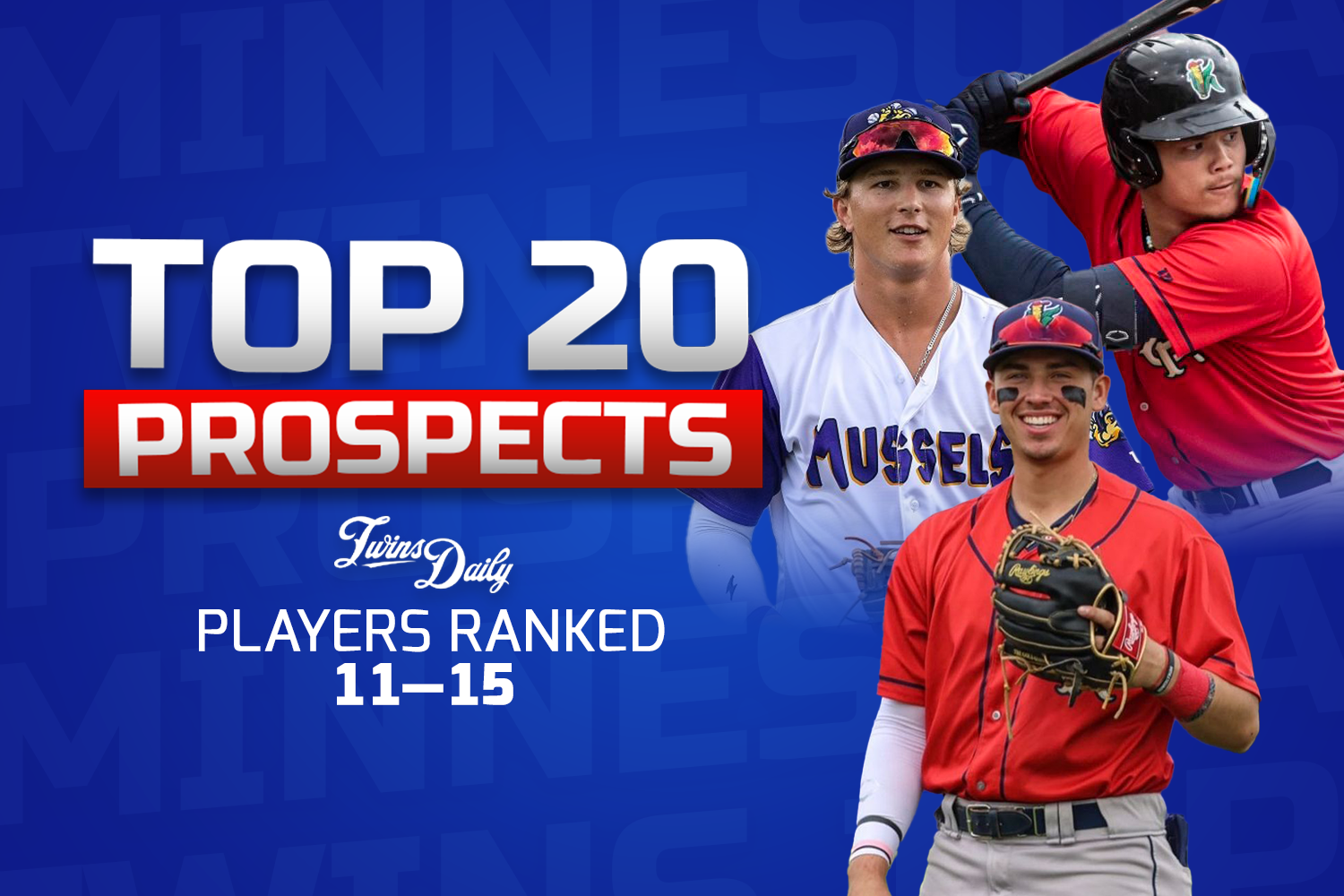 Before you ask: no, you won't find Darren Bowen or Gabriel González in this piece. We'll enfold them into this process by giving them their own breakdown posts, and reveal their rankings within the system in due time. For now, we're sticking to the ranking we created by polling our top minor-league writers. 15. Yunior Severino, 1B Age: 24 2023 Stats (AA/AAA): 528 PA, .272/.352/.546, 35 HR, 84 RBI Severino really has only one standout tool: hitting for power. He's not fast, he's not good defensively, and he's not very disciplined at the plate. But when the 24-year-old switch-hitter gets a hold of a pitch, he can absolutely clobber it. Last year, he led the minors with 35 home runs between Double A and Triple A. One of his homers in late July was measured at 485 feet. Pure power as an isolated skill isn't valued the way it once was, meaning the slugging prospect is less in-demand than he might've been in the past. But the Twins still saw fit to add him to their 40-man roster this offseason, after previously leaving him exposed to the Rule 5 Draft. Evidently, their confidence in his ability to play a future role has grown. 14. Danny De Andrade, SS Age: 19 2023 Stats (A): 475 PA, .244/.354/.396, 11 HR, 67 RBI De Andrade is pretty much the opposite of Severino: an assortment of intriguing tools, but still fairly raw and undeveloped. Making his full-season debut in 2023, he held his own in a tough FSL pitching environment while flashing a combination of solid power, speed and patience. He's always had a knack for making contact, but now the infielder is increasingly starting to drive the ball with authority, which is encouraging to see. Turning 20 in April, the righty hitter is filling out his 5-foot-11 frame, and while he has mostly played shortstop so far, it's considered likely he will move to third at some point along the way. 13. C.J. Culpepper, RHP Age: 22 2023 Stats (A/A+): 86 IP, 3.56 ERA, 1.20 WHIP, 9.3 K/9, 3.2 BB/9 Derek Falvey and the Twins have built their pitching pipeline around arms in the same mold as Culpepper: mid-round draft picks who flew somewhat under the radar in college, but saw an immediate boost in stuff after joining the Twins organization. The 2022 13th-rounder was unleashed at Low A and carved up FSL hitters before moving up to High-A Cedar Rapids, where he mostly pitched well but struggled in his last few outings. Wearing down late in the season was a concerning sign from Culpepper, whose ability to stick in a starting role was a question mark when he was in college. But his strong performance and sharp sinking fastball have quickly established him as one of the system's most promising pitching projects. In 21 starts between two levels of A-ball last year, Culpepper allowed only four home runs. 12. Kala'i Rosario, OF Age: 21 2023 Stats (A+): 530 PA, .252/.364/.467, 21 HR, 94 RBI The bar is high offensively for Rosario to become an impact player, because he's already on the low end of the defensive spectrum: a right fielder with underwhelming range who may ultimately be best suited as a designated hitter. So far, though, the Hawaii native has hit at every level, and he's coming off a breakthrough campaign at Cedar Rapids that earned him Midwest League MVP honors. The right-handed slugger launched 27 home runs to lead that league in the regular season, then hit seven more bombs in 25 games at the Arizona Fall League, and also won the AFL Home Run Derby. Rosario's got a big prove-it year ahead at Double A, but his production up to this point and his improving patience make him impossible to ignore on the prospect radar. The future fit would be especially nice if his righty bat can emerge in the mix alongside lefty-swinging outfield and DH options like Matt Wallner, Edouard Julien, Trevor Larnach and Emmanuel Rodriguez--plus the newcomer, González. (Coincidental side note: Before the Twins drafted him out of high school in 2020, Rosario was committed to play at Cal Baptist, where he'd have been a teammate of ... C.J. Culpepper.) 11. Luke Keaschall, 2B Age: 21 2023 Stats (Rk/A/A+): 140 PA, .288/.414/.478, 3 HR, 15 RBI The California native developed a strong hitting rep during his time in college and as a fixture in the Cape Cod League. He transferred from the University of San Francisco to Arizona State as a junior and blew up, hitting 18 home runs with a 1.168 OPS to convince Minnesota to draft him 49th overall last summer. A righty-hitting infielder who profiles best at second, Keaschall excelled offensively in his first exposure to the pro ranks, posting a .414 OBP across three quick stops in rookie ball and Low A. He drew 19 walks against 25 strikeouts, showcasing his vaunted control of the zone, and also went 11-for-11 on steals. There are strong "feel for the game" vibes with this one. As Jamie Cameron wrote for us recently, Keaschall also put up impressive and exciting batted-ball data along the way. So far, the 21-year-old looks like everything you'd want from a second-round pick. Proving he can hit for some power as he progresses will be key to cracking the Top 10 on this list. Twins Daily 2024 Top Prospects Countdown 20. Zebby Matthews, RHP 19. Simeon Woods Richardson, RHP 18. Ricardo Olivar, OF 17. Connor Prielipp, LHP 16. Matt Canterino, RHP 15. Yunior Severino, 1B 14. Danny De Andrade, SS 13. C.J. Culpepper, RHP 12. Kala'i Rosario, OF 11. Luke Keaschall, 2B
- 24 comments
-
- 10
-
-
-
- luke keaschall
- kalai rosario
- (and 3 more)
-
I mean, it's not like it hasn't translated to results. Sano had the third-highest slugging percentage in Twins history. Gallo has three 35+ homer seasons.
