Nick Nelson
-
Posts
8,322 -
Joined
-
Last visited
-
Days Won
56
Content Type
Profiles
News
Minnesota Twins Videos
2026 Minnesota Twins Top Prospects Ranking
2022 Minnesota Twins Draft Picks
Minnesota Twins Free Agent & Trade Rumors, Notes, & Tidbits
Guides & Resources
2023 Minnesota Twins Draft Picks
The Minnesota Twins Players Project
2024 Minnesota Twins Draft Picks
2025 Minnesota Twins Draft Pick Tracker
2026 Minnesota Twins Draft Tracker: Picks & Bonuses
Forums
Blogs
Events
Store
Downloads
Gallery
Everything posted by Nick Nelson
-
 Former general manager Terry Ryan and longtime coaching staff staple Rick Stelmaszek will be enshrined this summer. Image courtesy of Brad Rempel-USA TODAY Sports Last year, the Twins inducted Joe Mauer into their team Hall of Fame, one year ahead of his formal induction into the Baseball Hall of Fame. This year, he will be followed into the franchise's honorary club by the general manager who drafted him, and a man who coached Mauer during a large portion of his playing career. Terry Ryan overtook the GM reins from Andy MacPhail in 1994, with big shoes to fill after the Twins won a pair of World Series under his predecessor. Ryan spent several years rebuilding Minnesota into a contender and oversaw a flourishing decade in the 2000s, which saw the team win six division titles in nine years. Ryan's front office made many key moves and decisions to fuel this success, including the call to draft Mauer No. 1 overall in 2001. Other memorable moments for TR included the Johan Santana acquisition, the A.J. Pierzynski trade, and the deadline deal for Shannon Stewart in 2003. Ryan sat in the general manager's chair in Minnesota from '94 to 2016, with a hiatus from 2008 through 2011 during which he stepped down and Bill Smith took over. Terry Ryan is viewed in the game as a legendary scout, and also one of the most kind, honest, straightforward baseball executives to come around over the years. The time he gave to people covering the team, including lowly bloggers like ourselves, will not be forgotten. Rick Stelmaszek was a coach in the Twins organization for 32 consecutive years, starting all the back in 1980. Serving mostly as a catching coach or bullpen coach, "Stelly" worked under five different managers, including Tom Kelly during both of the World Series teams. He was a franchise institution up until the team parted ways with him in 2012. Stelmaszek passed away from pancreatic cancer in November of 2017 at the age of 69, so this will be a posthumous tribute to a man who was beloved by all who encountered him in the Twins organization. The Minnesota Twins 2024 Hall of Fame ceremony will take place on August 11th at Target Field. View full article
 -
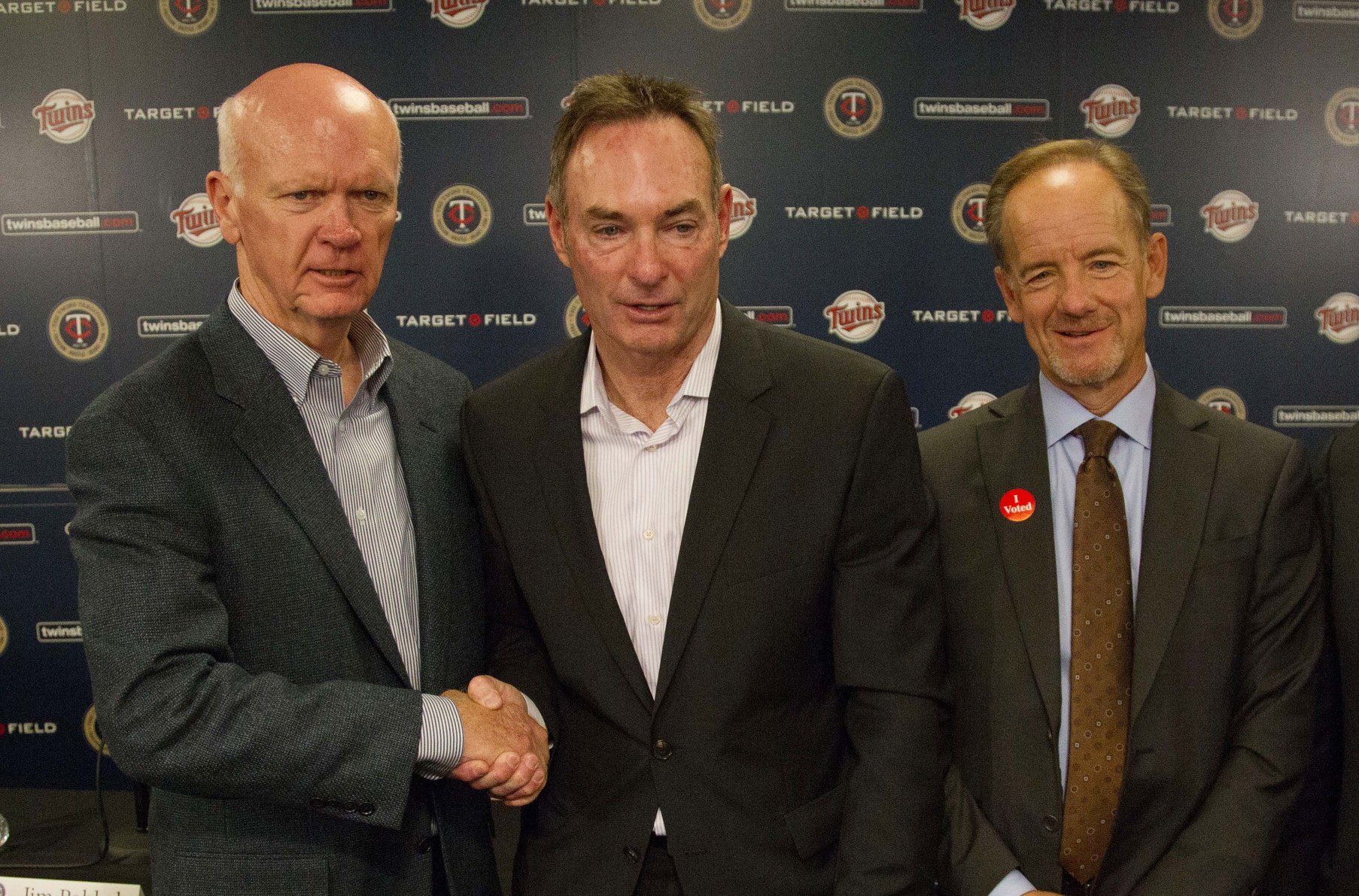 Last year, the Twins inducted Joe Mauer into their team Hall of Fame, one year ahead of his formal induction into the Baseball Hall of Fame. This year, he will be followed into the franchise's honorary club by the general manager who drafted him, and a man who coached Mauer during a large portion of his playing career. Terry Ryan overtook the GM reins from Andy MacPhail in 1994, with big shoes to fill after the Twins won a pair of World Series under his predecessor. Ryan spent several years rebuilding Minnesota into a contender and oversaw a flourishing decade in the 2000s, which saw the team win six division titles in nine years. Ryan's front office made many key moves and decisions to fuel this success, including the call to draft Mauer No. 1 overall in 2001. Other memorable moments for TR included the Johan Santana acquisition, the A.J. Pierzynski trade, and the deadline deal for Shannon Stewart in 2003. Ryan sat in the general manager's chair in Minnesota from '94 to 2016, with a hiatus from 2008 through 2011 during which he stepped down and Bill Smith took over. Terry Ryan is viewed in the game as a legendary scout, and also one of the most kind, honest, straightforward baseball executives to come around over the years. The time he gave to people covering the team, including lowly bloggers like ourselves, will not be forgotten. Rick Stelmaszek was a coach in the Twins organization for 32 consecutive years, starting all the back in 1980. Serving mostly as a catching coach or bullpen coach, "Stelly" worked under five different managers, including Tom Kelly during both of the World Series teams. He was a franchise institution up until the team parted ways with him in 2012. Stelmaszek passed away from pancreatic cancer in November of 2017 at the age of 69, so this will be a posthumous tribute to a man who was beloved by all who encountered him in the Twins organization. The Minnesota Twins 2024 Hall of Fame ceremony will take place on August 11th at Target Field.
 -
 Both Miguel Sanó and Joey Gallo made their major-league debuts in 2015. Since then, no other player has been given as much leash while striking out as much as these two. Among hitters with 2,000 or more plate appearances in the past nine years, Gallo ranks No. 1 in strikeout rate at 37.9 percent. Sano is right behind him with the second-highest rate at 36.4 percent. These are the Sultans of Swing-and-Miss. Despite striking out at historic clips, they've combined to play more than 1,500 games in the big leagues. Not only that, but they have three All-Star appearances between them. And now, at a time where it would be easy for anyone to look at the recent track records and write them off, both are getting another shot. On Tuesday, both former Twins sluggers latched on with new teams. Gallo got a $5 million, one-year deal with the Washington Nationals. Sanó signed a minor-league contract with the Angels, and will compete for a job in spring training. Twins fans have seen how poorly it can go with these two when they're not doing anything well to offset the K parade. In fact, those are our lingering final memories of both. Gallo had a nice start last year but become progressively unusable, to the point where he didn't come close to sniffing a postseason AB. Sanó batted .083 with a .345 OPS in 71 PAs during his final stint with the Twins, an injury-wrecked 2022 campaign. No team was interested in bringing him aboard last year. But it also needs to be acknowledged what comes along with these staggering strikeout propensities: power that registers a flat-out elite scale. And not just raw power but proven in-game power. While Gallo and Sanó rank first and second in K-rate since 2015, they also rank ninth and fifth, respectively, in average exit velocity during that span. You might say, exit velocity? Who cares. Can't be a terribly meaningful metric if those guys are up near the top of the leaderboard. But, these are the other seven names in the top nine: Aaron Judge, Giancarlo Stanton, Yordan Alvarez, Shohei Ohtani, Nelson Cruz, Matt Olson and Vladimir Guerrero Jr. Talk about powerful company. None of the aforementioned sluggers strike out like Gallo and Sanó, which is why those two haven't approached the same MVP-caliber levels of overall production. But their offensive impact is real, and it can be game-changing. We saw it when Sanó obliterated the league for four months in 2019 or when Gallo launched 38 jacks as recently as 2021. And, for all the talk about these strikeouts presenting massive downside and bust potential, that isn't really born out statistically. Anyone who followed the Twins last year can tell you Gallo was beyond bad almost all season long, incapable of doing anything other htan launching a very occasional homer. Yet he finished with an above-average OPS. Sanó has posted an above-average OPS every season where he's made 300-plus plate appearances. Power with a little patience plays. Even when it comes attached to unprecedented levels of striking out. That's why we see Gallo and Sanó getting these chances despite both looking cooked the last time they were on a major-league field. Yes, this is a skill set that tends to degrade quickly, and it's possible they've both simply lost it age 30. Thus the low-stakes investments from two teams coming off 90-loss seasons. But 30 isn't that old, and rarefied power like that is worth betting on. Having said that, most Twins fans are surely not disappointed to see Gallo and Sano take their reclamation journeys elsewhere. Even if Minnesota remains committed to an approach that prioritizes power at the expense of contact, it will be nice to see this plan in action without one of the all-time strikeout kings in the mix, pushing the offense toward a ridiculous extreme.
 -
Two of the most prolific whiffers in major-league history, both of whom are very familiar to Twins fans, signed with new teams this week. Both nearly a decade removed from debuting in the majors, their continuing careers show that Minnesota is not alone in valuing prodigious power-hitting ability – even when it comes attached to an egregious strikeout rate. Image courtesy of Sam Navarro and Jay Biggerstaff–USA Today Sports Both Miguel Sanó and Joey Gallo made their major-league debuts in 2015. Since then, no other player has been given as much leash while striking out as much as these two. Among hitters with 2,000 or more plate appearances in the past nine years, Gallo ranks No. 1 in strikeout rate at 37.9 percent. Sano is right behind him with the second-highest rate at 36.4 percent. These are the Sultans of Swing-and-Miss. Despite striking out at historic clips, they've combined to play more than 1,500 games in the big leagues. Not only that, but they have three All-Star appearances between them. And now, at a time where it would be easy for anyone to look at the recent track records and write them off, both are getting another shot. On Tuesday, both former Twins sluggers latched on with new teams. Gallo got a $5 million, one-year deal with the Washington Nationals. Sanó signed a minor-league contract with the Angels, and will compete for a job in spring training. Twins fans have seen how poorly it can go with these two when they're not doing anything well to offset the K parade. In fact, those are our lingering final memories of both. Gallo had a nice start last year but become progressively unusable, to the point where he didn't come close to sniffing a postseason AB. Sanó batted .083 with a .345 OPS in 71 PAs during his final stint with the Twins, an injury-wrecked 2022 campaign. No team was interested in bringing him aboard last year. But it also needs to be acknowledged what comes along with these staggering strikeout propensities: power that registers a flat-out elite scale. And not just raw power but proven in-game power. While Gallo and Sanó rank first and second in K-rate since 2015, they also rank ninth and fifth, respectively, in average exit velocity during that span. You might say, exit velocity? Who cares. Can't be a terribly meaningful metric if those guys are up near the top of the leaderboard. But, these are the other seven names in the top nine: Aaron Judge, Giancarlo Stanton, Yordan Alvarez, Shohei Ohtani, Nelson Cruz, Matt Olson and Vladimir Guerrero Jr. Talk about powerful company. None of the aforementioned sluggers strike out like Gallo and Sanó, which is why those two haven't approached the same MVP-caliber levels of overall production. But their offensive impact is real, and it can be game-changing. We saw it when Sanó obliterated the league for four months in 2019 or when Gallo launched 38 jacks as recently as 2021. And, for all the talk about these strikeouts presenting massive downside and bust potential, that isn't really born out statistically. Anyone who followed the Twins last year can tell you Gallo was beyond bad almost all season long, incapable of doing anything other htan launching a very occasional homer. Yet he finished with an above-average OPS. Sanó has posted an above-average OPS every season where he's made 300-plus plate appearances. Power with a little patience plays. Even when it comes attached to unprecedented levels of striking out. That's why we see Gallo and Sanó getting these chances despite both looking cooked the last time they were on a major-league field. Yes, this is a skill set that tends to degrade quickly, and it's possible they've both simply lost it age 30. Thus the low-stakes investments from two teams coming off 90-loss seasons. But 30 isn't that old, and rarefied power like that is worth betting on. Having said that, most Twins fans are surely not disappointed to see Gallo and Sano take their reclamation journeys elsewhere. Even if Minnesota remains committed to an approach that prioritizes power at the expense of contact, it will be nice to see this plan in action without one of the all-time strikeout kings in the mix, pushing the offense toward a ridiculous extreme. View full article
-
A big reason Hall of Famer Joe Mauer was often underrated during his career was a collective failure to understand the value of a catcher who can hit, field and stay healthy. The decade since Mauer moved away from the position, however, has perfectly exemplified how hard it is to find quality two-way catchers. Image courtesy of Vincent Carchietta, Steven Bisig, Jesse Johnson-USA TODAY Sports Around this time 10 years ago, veteran Joe Mauer was preparing to report for spring training with a new twist: he was now a first baseman, no longer a catcher. Before a fateful concussion in 2013 forced his position switch, Mauer had been Minnesota's Opening Day catcher in nine of the 10 past years. (The lone exception: his MVP-winning 2009 season, where he got a late start due to injury.) In 10 years since Mauer's catching career ended, the Twins have had five different Opening Day starters at the position, with more than a dozen others making appearances. There have been some flashes of success and entertaining moments (La Tortuga!), but none of these catchers have come close to matching the durability, stability, or value that Mauer provided throughout his decade-long run behind the plate. Reflecting on how difficult Mauer has been to replace helps contextualize just how special he really was. Let's take a tour through Minnesota's catching carousel. We'll start by running it back to 2014, the start of the post-Mauer era. As a setup, here's a quick look at Mauer's fWAR, and the team's league-wide rank in catching fWAR, for each of his 10 seasons at catcher. 2004: 1.2 fWAR (Twins 20th in MLB) 2005: 3.4 fWAR (Twins 3rd in MLB) 2006: 5.8 fWAR (Twins 1st in MLB) 2007: 3.3 fWAR (Twins 4th in MLB) 2008: 6.4 fWAR (Twins 3rd in MLB) 2009: 8.4 fWAR (Twins 2nd in MLB) 2010: 5.7 fWAR (Twins 3rd in MLB) 2011: 2.1 fWAR (Twins 26th in MLB) 2012: 4.6 fWAR (Twins 16th in MLB) 2013: 5.2 fWAR (Twins 6th in MLB) Six straight years under Mauer, the Twins were a top five team for value from the catcher position. As we'll see, it's a level they've rarely been able to approach without him, although their current setup shows promise. 2014 Season (Twins 28th in MLB) Opening Day Catcher: Kurt Suzuki (115 catching starts, -0.1 fWAR) Needing to address the catcher position for the first time since Mauer arrived in 2004, the Twins signed Suzuki to a one-year, $2.8-million contract and made him their primary catcher. Suzuki was well-liked and actually made the All-Star team by batting .309 in the first half, but his empty, inflated batting average overstated his offensive impact, and he rated out very poorly on defense. Immediately after getting a 5.2-fWAR season from Mauer in his final year as a catcher, the Twins got a sub-replacement level season from his replacement. Other Catchers to Appear: Coming into 2014, there was some optimism around prospect Josmil Pinto as a potential long-term successor to Mauer, but that evaporated as the club get a better look at his limited defensive skills and athleticism. He made 26 starts and wasn't heard from again in Minnesota. Fringy veteran Eric Fryer also made 21 starts. 2015 (Twins 29th in MLB) Opening Day Catcher: Kurt Suzuki (123 catching starts, -1.0 fWAR) With Pinto falling out of the plans and no other compelling options emerging in the system, Terry Ryan made the dubious decision to double-down on Suzuki, who got a two-year extension midway through his first season with the Twins. In 2015, there was no magical first half and Suzuki was terrible all year long, ranking last among the league's catchers in fWAR. He still received more than three-quarters of the team's starts at the position. Other Catchers to Appear: Chris Herrmann served as Suzuki's primary backup, making 32 starts at catcher, but would be traded to Arizona for Daniel Palka in the ensuing offseason. Fryer made seven starts in his final season with Minnesota. 2016 (Twins 28th in MLB) Opening Day Catcher: Kurt Suzuki (92 catching starts, 0.0 fWAR) This was, mercifully, the final year of Suzuki dragging Minnesota's catching unit down to the league's dregs. Yet another campaign in which he failed to elevate above replacement level. During the previous offseason, the Twins had tried to chart a new future course at catcher by dealing Aaron Hicks for John Ryan Murphy. The move backfired horribly and was one of Ryan's final missteps, speeding the end of his tenure as GM. Other Catchers to Appear: Murphy made only 23 starts behind the plate, posting a miserable .403 OPS in his lone stint as a Twin. Minor-league journeyman Juan Centeno got a whopping 47 starts at catcher and posted a -0.9 fWAR. I must admit I completely forgot about his existence before researching this piece. 2017 (Twins 11th in MLB) Opening Day Catcher: Jason Castro (104 catching starts, 2.1 fWAR) Improving the state of the catcher position was Priority No. 1 for Derek Falvey and the new Twins front office. The regime was barely settling in when they targeted and signed Jason Castro to a three-year deal in November 2016. Castro immediately stabilized the position as desired, putting up solid offense (93 OPS+) and quality defense to produce the highest WAR by a Twins catcher since Mauer's move. Other Catchers to Appear: Chris Gimenez stepped in as Castro's primary backup, starting 54 games and making a career-high 225 plate appearances. Meanwhile, a prospect named Mitch Garver debuted, making several appearances and four starts at the end of a stellar Triple-A season to plant his flag. 2018 (Twins 17th in MLB) Opening Day Catcher: Jason Castro (19 catching starts, 0.0 fWAR) The Twins opened the season with hopes of Castro leading a timeshare with Garver, but Castro would soon go down with an injury and miss most of the year. This opened the door for Garver to step up and prove his legitimacy; he led the team with 75 catching starts and slashed .268/.335/.414. Because his defense didn't grade out well, however, he was only worth 0.4 WAR in 103 games. Other Catchers to Appear: Another veteran journeyman, Bobby Wilson (remember him?), took over as the token glove-first veteran while Castro was down. He made 45 starts, posting a hideous 45 OPS+ but providing solid defense. Meanwhile, a novelty act by the name of Willians Astudillo first showed up, capturing the attention of fans by batting .355 during a late-season MLB debut. Gimenez and Juan Graterol made final appearances as Twins. We can't forget that Mauer himself also appeared at catcher near the end of this season, receiving exactly one pitch in a tearful send-off. 2019 (Twins 3rd in MLB) Opening Day Catcher: Jason Castro (72 catching starts, 1.7 fWAR) For one glorious season, the Twins returned to being one of the elite teams in baseball at the catcher position. Castro helped by providing solid stability in the last year of his contract, but the standout success here was mostly driven by a breakout from Garver, who led the team in catching starts (73) and produced 3.9 fWAR thanks to a prodigious offensive explosion: .273/.365/.630, with 31 homers in 359 plate appearances. His .404 wOBA in 2019 was a mark that Mauer only bested once, in his MVP 2009 season. Other Catchers to Appear: This was a generally healthy season for the catching corps. Garver and Castro combined to cover 145 of the team's starts behind the plate, with Astudillo taking the other 17. 2020 (Twins 14th in MLB) Opening Day Catcher: Mitch Garver (19 catching starts, -0.1 fWAR) Garver was ready to take over as the Twins' No. 1 catcher. At least, that was the hope. The Twins signed free agent Alex Avila to form a platoon and hopefully carry forward the club's catching success from 2019. Unfortunately, both were struck by injuries and combined for replacement-level production, but Ryan Jeffers salvaged the unit with his excellent rookie campaign. Thus, a new hope had arrived on the scene. Other Catchers to Appear: The trio of Garver, Avila and Jeffers split the catching load almost evenly during the abbreviated COVID season (19/19/18) with Astudillo making the other four. 2021 (Twins 9th in MLB) Opening Day Catcher: Mitch Garver (53 catching starts, 2.2 fWAR) Between Garver and Jeffers, the Twins were in good shape with two starting-caliber catchers heading into the 2021 season. The Opening Day starter, Garver, bounced back with a productive campaign (.256/.358/.517 in 68 games) but once again struggled to stay healthy. Jeffers ended up getting the bulk of starts behind the plate (77) but his performance regressed as he posted a .289 wOBA (down from .346 as a rookie) and 0.7 fWAR. Other Catchers to Appear: Rounding out Minnesota's homegrown catching corps was Ben Rortvedt, who made 28 starts at catcher as a glove-only backup. La Tortuga made four more starts in his last hurrah as a Twin. 2022 (Twins 15th in MLB) Opening Day Catcher: Ryan Jeffers (56 catching starts, 0.9 fWAR) Despite his regression in 2021, the Twins placed their full confidence in Jeffers as the club's future at catcher, trading both Garver and Rortvedt away in the offseason. Their faith was not rewarded; Jeffers got hurt and his bat failed to rebound when on the field. The absence of Jeffers for much of the summer left Gary Sánchez as the leading backstop (80 starts), and it wasn't pretty. Sánchez did (surprisingly) grade out okay defensively to produce a respectable 1.2 fWAR, keeping Minnesota's catching corps in the middle of the pack. Other Catchers to Appear: This season was a reminder of how desperate teams can get when high-level catching depth erodes. Left to lean on Sánchez as their starter, the Twins acquired another no-hit veteran minor-leaguer in Sandy Léon and gave him 22 starts. A handful also went to Caleb Hamilton (3) and José Godoy (1). 2023 (Twins 9th in MLB) Opening Day Catcher: Christian Vázquez (91 catching starts, 1.0 fWAR) By last winter, the Twins recognized that maybe Jeffers wasn't going to be the guy, coming off back-to-back seasons plagued by injuries and poor production. As such, they went uncharacteristically big in free agency, signing Vázquez to a three-year, $30-million deal. Still believers in Jeffers, they likely hoped that over time, the starter-backup dynamic would shift. It happened quickly, as Vázquez slumped offensively all year while Jeffers emerged as one of the league's best-hitting catchers. Other Catchers to Appear: Not one. With both Vázquez and Jeffers staying remarkably healthy all year, the Twins never needed to call on a third catcher in 2023. 10 Years After Mauer: The Outlook Going Forward Joe Mauer's career at catcher was defined by unparalleled stability behind the plate. The argument about his shortened prime gained no traction in the Hall of Fame discussion, because voters recognized: At this position, 10 years of consistently elite play is an eternity. Given the resource scarcity, finding a capable starting catcher is enough of a struggle--as the Twins have learned. They've cycled through a lot of different backstops since Mauer, rarely capturing even glimpses of the impact he brought. (Garver in 2019 was the closest, but like so many at catcher, he just couldn't overcome the durability hurdles.) As we look ahead to 2024, though, there's reason to feel optimism about what lies ahead at the catcher position. Ryan Jeffers had a breakout season, and fully regained the team's confidence, as illustrated by his postseason usage. Vázquez didn't hit but was a steady, trusted defensive presence. I suspect the continuity and rapport of this duo played an underrated role in the team's pitching success. Their ninth-ranked fWAR at the position in 2023 probably understates what a relative strength the catcher position was for Minnesota. Thus, I'm not keen on breaking up the position to dump salary. Jeffers is ready to take the reins, coming off a 134 OPS+ in his age-26 season. I'll take this opportunity to note that Mauer also posted a 134 OPS+ in his age-26 season, and followed up with an MVP campaign in his age-27 season (171 OPS+). That's not meant to overset expectations, but the point is that Jeffers is entering his true prime and has shown the rare ability to star on both sides. It's why I view him as one of the organization's most prized assets. Meanwhile, Jeffers has a quality veteran partner alongside him in Vázquez, who would basically be a league-average starter in his own right. Both are under control for multiple years, leaving the Twins in the best shape they've been behind the plate since Mauer's Hall of Fame run reached an end. View full article
- 13 replies
-
- 1
-

-
- joe mauer
- ryan jeffers
- (and 2 more)
-
Playing Catch-Up: Joe Mauer's Successors Behind the Plate in Minnesota
Nick Nelson posted an article in Twins
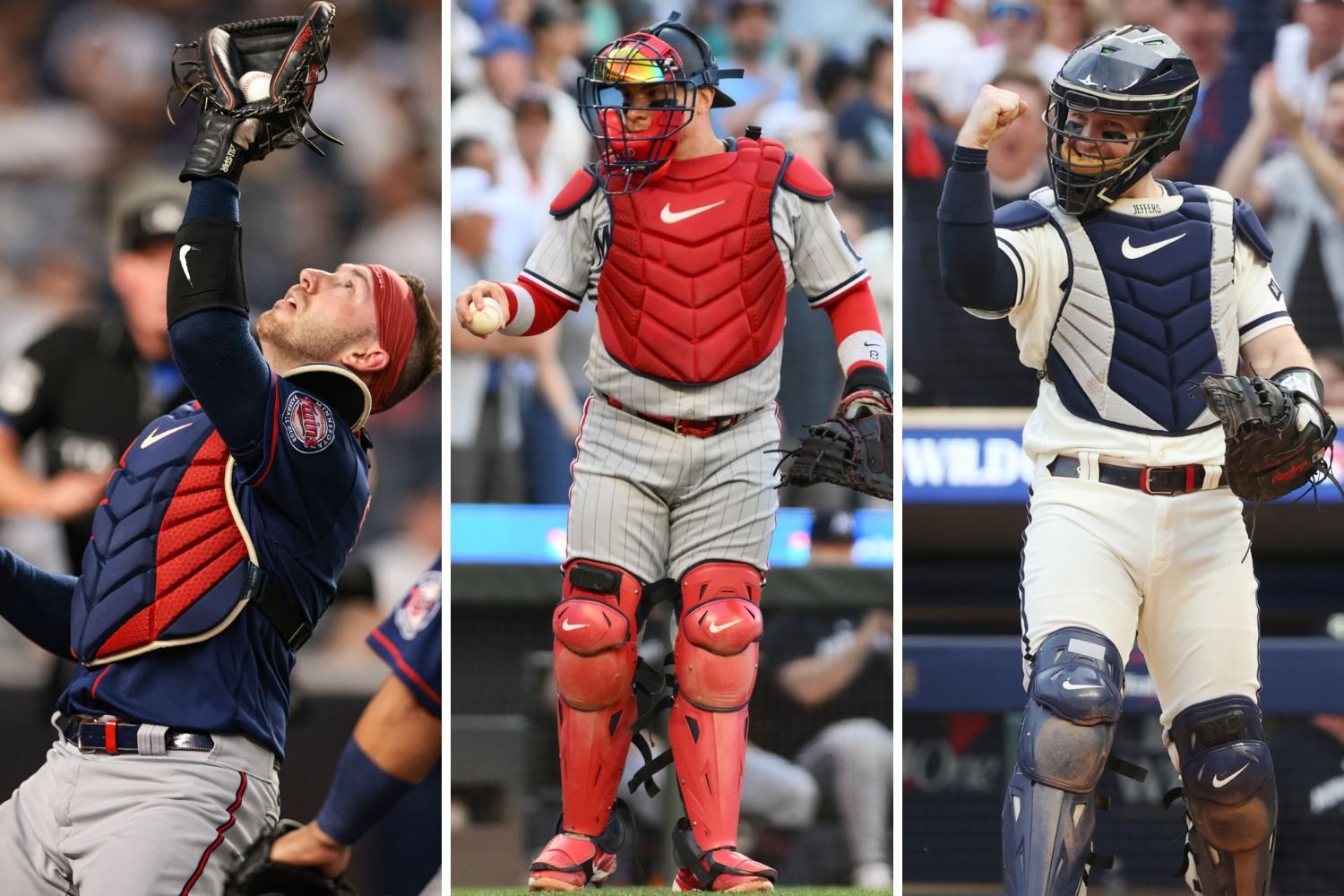 Around this time 10 years ago, veteran Joe Mauer was preparing to report for spring training with a new twist: he was now a first baseman, no longer a catcher. Before a fateful concussion in 2013 forced his position switch, Mauer had been Minnesota's Opening Day catcher in nine of the 10 past years. (The lone exception: his MVP-winning 2009 season, where he got a late start due to injury.) In 10 years since Mauer's catching career ended, the Twins have had five different Opening Day starters at the position, with more than a dozen others making appearances. There have been some flashes of success and entertaining moments (La Tortuga!), but none of these catchers have come close to matching the durability, stability, or value that Mauer provided throughout his decade-long run behind the plate. Reflecting on how difficult Mauer has been to replace helps contextualize just how special he really was. Let's take a tour through Minnesota's catching carousel. We'll start by running it back to 2014, the start of the post-Mauer era. As a setup, here's a quick look at Mauer's fWAR, and the team's league-wide rank in catching fWAR, for each of his 10 seasons at catcher. 2004: 1.2 fWAR (Twins 20th in MLB) 2005: 3.4 fWAR (Twins 3rd in MLB) 2006: 5.8 fWAR (Twins 1st in MLB) 2007: 3.3 fWAR (Twins 4th in MLB) 2008: 6.4 fWAR (Twins 3rd in MLB) 2009: 8.4 fWAR (Twins 2nd in MLB) 2010: 5.7 fWAR (Twins 3rd in MLB) 2011: 2.1 fWAR (Twins 26th in MLB) 2012: 4.6 fWAR (Twins 16th in MLB) 2013: 5.2 fWAR (Twins 6th in MLB) Six straight years under Mauer, the Twins were a top five team for value from the catcher position. As we'll see, it's a level they've rarely been able to approach without him, although their current setup shows promise. 2014 Season (Twins 28th in MLB) Opening Day Catcher: Kurt Suzuki (115 catching starts, -0.1 fWAR) Needing to address the catcher position for the first time since Mauer arrived in 2004, the Twins signed Suzuki to a one-year, $2.8-million contract and made him their primary catcher. Suzuki was well-liked and actually made the All-Star team by batting .309 in the first half, but his empty, inflated batting average overstated his offensive impact, and he rated out very poorly on defense. Immediately after getting a 5.2-fWAR season from Mauer in his final year as a catcher, the Twins got a sub-replacement level season from his replacement. Other Catchers to Appear: Coming into 2014, there was some optimism around prospect Josmil Pinto as a potential long-term successor to Mauer, but that evaporated as the club get a better look at his limited defensive skills and athleticism. He made 26 starts and wasn't heard from again in Minnesota. Fringy veteran Eric Fryer also made 21 starts. 2015 (Twins 29th in MLB) Opening Day Catcher: Kurt Suzuki (123 catching starts, -1.0 fWAR) With Pinto falling out of the plans and no other compelling options emerging in the system, Terry Ryan made the dubious decision to double-down on Suzuki, who got a two-year extension midway through his first season with the Twins. In 2015, there was no magical first half and Suzuki was terrible all year long, ranking last among the league's catchers in fWAR. He still received more than three-quarters of the team's starts at the position. Other Catchers to Appear: Chris Herrmann served as Suzuki's primary backup, making 32 starts at catcher, but would be traded to Arizona for Daniel Palka in the ensuing offseason. Fryer made seven starts in his final season with Minnesota. 2016 (Twins 28th in MLB) Opening Day Catcher: Kurt Suzuki (92 catching starts, 0.0 fWAR) This was, mercifully, the final year of Suzuki dragging Minnesota's catching unit down to the league's dregs. Yet another campaign in which he failed to elevate above replacement level. During the previous offseason, the Twins had tried to chart a new future course at catcher by dealing Aaron Hicks for John Ryan Murphy. The move backfired horribly and was one of Ryan's final missteps, speeding the end of his tenure as GM. Other Catchers to Appear: Murphy made only 23 starts behind the plate, posting a miserable .403 OPS in his lone stint as a Twin. Minor-league journeyman Juan Centeno got a whopping 47 starts at catcher and posted a -0.9 fWAR. I must admit I completely forgot about his existence before researching this piece. 2017 (Twins 11th in MLB) Opening Day Catcher: Jason Castro (104 catching starts, 2.1 fWAR) Improving the state of the catcher position was Priority No. 1 for Derek Falvey and the new Twins front office. The regime was barely settling in when they targeted and signed Jason Castro to a three-year deal in November 2016. Castro immediately stabilized the position as desired, putting up solid offense (93 OPS+) and quality defense to produce the highest WAR by a Twins catcher since Mauer's move. Other Catchers to Appear: Chris Gimenez stepped in as Castro's primary backup, starting 54 games and making a career-high 225 plate appearances. Meanwhile, a prospect named Mitch Garver debuted, making several appearances and four starts at the end of a stellar Triple-A season to plant his flag. 2018 (Twins 17th in MLB) Opening Day Catcher: Jason Castro (19 catching starts, 0.0 fWAR) The Twins opened the season with hopes of Castro leading a timeshare with Garver, but Castro would soon go down with an injury and miss most of the year. This opened the door for Garver to step up and prove his legitimacy; he led the team with 75 catching starts and slashed .268/.335/.414. Because his defense didn't grade out well, however, he was only worth 0.4 WAR in 103 games. Other Catchers to Appear: Another veteran journeyman, Bobby Wilson (remember him?), took over as the token glove-first veteran while Castro was down. He made 45 starts, posting a hideous 45 OPS+ but providing solid defense. Meanwhile, a novelty act by the name of Willians Astudillo first showed up, capturing the attention of fans by batting .355 during a late-season MLB debut. Gimenez and Juan Graterol made final appearances as Twins. We can't forget that Mauer himself also appeared at catcher near the end of this season, receiving exactly one pitch in a tearful send-off. 2019 (Twins 3rd in MLB) Opening Day Catcher: Jason Castro (72 catching starts, 1.7 fWAR) For one glorious season, the Twins returned to being one of the elite teams in baseball at the catcher position. Castro helped by providing solid stability in the last year of his contract, but the standout success here was mostly driven by a breakout from Garver, who led the team in catching starts (73) and produced 3.9 fWAR thanks to a prodigious offensive explosion: .273/.365/.630, with 31 homers in 359 plate appearances. His .404 wOBA in 2019 was a mark that Mauer only bested once, in his MVP 2009 season. Other Catchers to Appear: This was a generally healthy season for the catching corps. Garver and Castro combined to cover 145 of the team's starts behind the plate, with Astudillo taking the other 17. 2020 (Twins 14th in MLB) Opening Day Catcher: Mitch Garver (19 catching starts, -0.1 fWAR) Garver was ready to take over as the Twins' No. 1 catcher. At least, that was the hope. The Twins signed free agent Alex Avila to form a platoon and hopefully carry forward the club's catching success from 2019. Unfortunately, both were struck by injuries and combined for replacement-level production, but Ryan Jeffers salvaged the unit with his excellent rookie campaign. Thus, a new hope had arrived on the scene. Other Catchers to Appear: The trio of Garver, Avila and Jeffers split the catching load almost evenly during the abbreviated COVID season (19/19/18) with Astudillo making the other four. 2021 (Twins 9th in MLB) Opening Day Catcher: Mitch Garver (53 catching starts, 2.2 fWAR) Between Garver and Jeffers, the Twins were in good shape with two starting-caliber catchers heading into the 2021 season. The Opening Day starter, Garver, bounced back with a productive campaign (.256/.358/.517 in 68 games) but once again struggled to stay healthy. Jeffers ended up getting the bulk of starts behind the plate (77) but his performance regressed as he posted a .289 wOBA (down from .346 as a rookie) and 0.7 fWAR. Other Catchers to Appear: Rounding out Minnesota's homegrown catching corps was Ben Rortvedt, who made 28 starts at catcher as a glove-only backup. La Tortuga made four more starts in his last hurrah as a Twin. 2022 (Twins 15th in MLB) Opening Day Catcher: Ryan Jeffers (56 catching starts, 0.9 fWAR) Despite his regression in 2021, the Twins placed their full confidence in Jeffers as the club's future at catcher, trading both Garver and Rortvedt away in the offseason. Their faith was not rewarded; Jeffers got hurt and his bat failed to rebound when on the field. The absence of Jeffers for much of the summer left Gary Sánchez as the leading backstop (80 starts), and it wasn't pretty. Sánchez did (surprisingly) grade out okay defensively to produce a respectable 1.2 fWAR, keeping Minnesota's catching corps in the middle of the pack. Other Catchers to Appear: This season was a reminder of how desperate teams can get when high-level catching depth erodes. Left to lean on Sánchez as their starter, the Twins acquired another no-hit veteran minor-leaguer in Sandy Léon and gave him 22 starts. A handful also went to Caleb Hamilton (3) and José Godoy (1). 2023 (Twins 9th in MLB) Opening Day Catcher: Christian Vázquez (91 catching starts, 1.0 fWAR) By last winter, the Twins recognized that maybe Jeffers wasn't going to be the guy, coming off back-to-back seasons plagued by injuries and poor production. As such, they went uncharacteristically big in free agency, signing Vázquez to a three-year, $30-million deal. Still believers in Jeffers, they likely hoped that over time, the starter-backup dynamic would shift. It happened quickly, as Vázquez slumped offensively all year while Jeffers emerged as one of the league's best-hitting catchers. Other Catchers to Appear: Not one. With both Vázquez and Jeffers staying remarkably healthy all year, the Twins never needed to call on a third catcher in 2023. 10 Years After Mauer: The Outlook Going Forward Joe Mauer's career at catcher was defined by unparalleled stability behind the plate. The argument about his shortened prime gained no traction in the Hall of Fame discussion, because voters recognized: At this position, 10 years of consistently elite play is an eternity. Given the resource scarcity, finding a capable starting catcher is enough of a struggle--as the Twins have learned. They've cycled through a lot of different backstops since Mauer, rarely capturing even glimpses of the impact he brought. (Garver in 2019 was the closest, but like so many at catcher, he just couldn't overcome the durability hurdles.) As we look ahead to 2024, though, there's reason to feel optimism about what lies ahead at the catcher position. Ryan Jeffers had a breakout season, and fully regained the team's confidence, as illustrated by his postseason usage. Vázquez didn't hit but was a steady, trusted defensive presence. I suspect the continuity and rapport of this duo played an underrated role in the team's pitching success. Their ninth-ranked fWAR at the position in 2023 probably understates what a relative strength the catcher position was for Minnesota. Thus, I'm not keen on breaking up the position to dump salary. Jeffers is ready to take the reins, coming off a 134 OPS+ in his age-26 season. I'll take this opportunity to note that Mauer also posted a 134 OPS+ in his age-26 season, and followed up with an MVP campaign in his age-27 season (171 OPS+). That's not meant to overset expectations, but the point is that Jeffers is entering his true prime and has shown the rare ability to star on both sides. It's why I view him as one of the organization's most prized assets. Meanwhile, Jeffers has a quality veteran partner alongside him in Vázquez, who would basically be a league-average starter in his own right. Both are under control for multiple years, leaving the Twins in the best shape they've been behind the plate since Mauer's Hall of Fame run reached an end.
- 13 comments
-
- 7
-

-
- joe mauer
- ryan jeffers
- (and 2 more)
-
The Twins made another waiver claim on Wednesday, but this time, it's not a bullpen project. Instead, they're gaining some outfield depth and dynamic athleticism with the addition of speedy Bubba Thompson. Image courtesy of Rick Osentoski-USA TODAY Sports Outfielder Bubba Thompson was designated for assignment by the Yankees last week when they made the signing of free agent righthander Luke Weaver official. Five days later, the Twins have added him using one of their open 40-man roster spots. Thompson is a 25-year-old former first-round draft pick, selected by the Rangers 26th overall back in 2017. (That was the first season after Thad Levine left the Texas front office to join the Twins, in case you were curious.) After rising through the minor-league ranks, he made 181 plate appearances for the Rangers in 2022, slashing .265/.302/.312, and then saw a brief 37-game stint last year, posting a .520 OPS in 60 plate appearances. The Rangers designated him for assignment last August, and since then, he's passed through three organizations -- Kansas City, Cincinnati, and New York -- before landing with the Twins. Thompson's turbulent journey up to this point should probably serve as an indicator that his spot on Minnesota's roster is not terribly secure, but he's viewed as an intriguing player, and it's easy to see why the Twins would see him as a fit. The righty-swinging outfielder's calling card is, and always has been, his speed. He has chart-topping wheels at the prime Byron Buxton/Billy Hamilton level, registering a 100th-percentile sprint speed last season. He's 22-for-27 on stolen base attempts in the majors and went 150-for-181 (82.8%) as a prospect. The bat has obviously been less impressive, and his poor discipline makes it tough to see much upside there, but as a bench player, he could potentially fill a valuable role. Thompson has mostly played left field in the majors but has the speed and range to play center, where he's logged 2,500 innings in the minors. It's probably fair to describe him as a very poor man's Michael A. Taylor, with the potential for a little more if he can turn a corner in his late 20s. Thompson could profile as a potential part-time solution to the Twins' gap in center field this year, along with Buxton, Willi Castro, Nick Gordon, and Austin Martin. Or he could just be a temporary pickup since they have an open spot on the 40-man roster, perhaps until they bring in a more complete solution, like Taylor, who remains a free agent. What are your thoughts on this pickup? Do you think Thompson can stick on the roster through spring training and maybe win an Opening Day spot? View full article
-
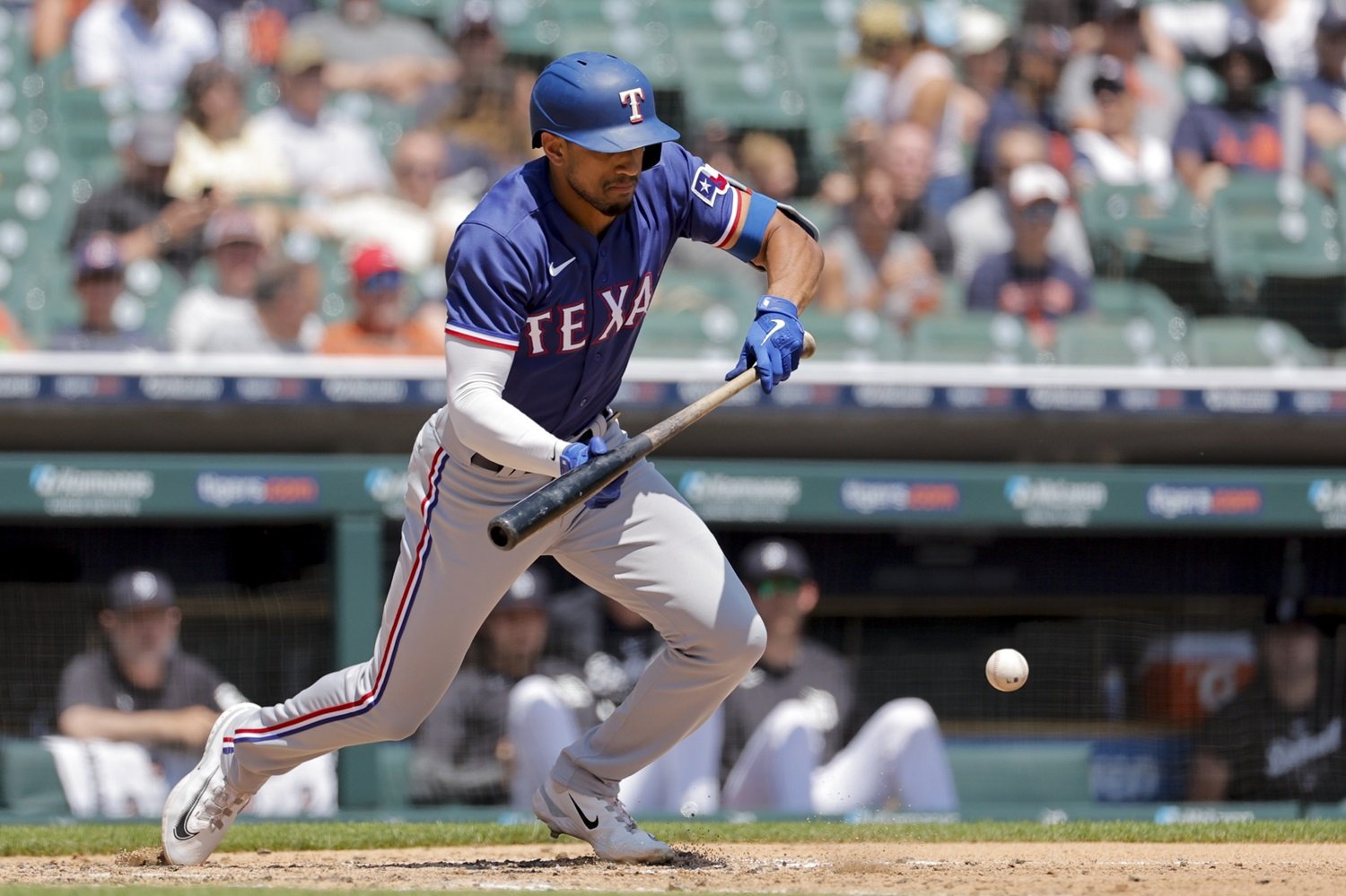 Outfielder Bubba Thompson was designated for assignment by the Yankees last week when they made the signing of free agent righthander Luke Weaver official. Five days later, the Twins have added him using one of their open 40-man roster spots. Thompson is a 25-year-old former first-round draft pick, selected by the Rangers 26th overall back in 2017. (That was the first season after Thad Levine left the Texas front office to join the Twins, in case you were curious.) After rising through the minor-league ranks, he made 181 plate appearances for the Rangers in 2022, slashing .265/.302/.312, and then saw a brief 37-game stint last year, posting a .520 OPS in 60 plate appearances. The Rangers designated him for assignment last August, and since then, he's passed through three organizations -- Kansas City, Cincinnati, and New York -- before landing with the Twins. Thompson's turbulent journey up to this point should probably serve as an indicator that his spot on Minnesota's roster is not terribly secure, but he's viewed as an intriguing player, and it's easy to see why the Twins would see him as a fit. The righty-swinging outfielder's calling card is, and always has been, his speed. He has chart-topping wheels at the prime Byron Buxton/Billy Hamilton level, registering a 100th-percentile sprint speed last season. He's 22-for-27 on stolen base attempts in the majors and went 150-for-181 (82.8%) as a prospect. The bat has obviously been less impressive, and his poor discipline makes it tough to see much upside there, but as a bench player, he could potentially fill a valuable role. Thompson has mostly played left field in the majors but has the speed and range to play center, where he's logged 2,500 innings in the minors. It's probably fair to describe him as a very poor man's Michael A. Taylor, with the potential for a little more if he can turn a corner in his late 20s. Thompson could profile as a potential part-time solution to the Twins' gap in center field this year, along with Buxton, Willi Castro, Nick Gordon, and Austin Martin. Or he could just be a temporary pickup since they have an open spot on the 40-man roster, perhaps until they bring in a more complete solution, like Taylor, who remains a free agent. What are your thoughts on this pickup? Do you think Thompson can stick on the roster through spring training and maybe win an Opening Day spot?
 -
To paraphrase the late great Mac Miller: it ain't 2004 no more. Image courtesy of Brad Rempel, USA TODAY Sports I've been thinking a lot about the year 2004. That's partly because I've begun receiving messages about my 20-year high school reunion. Yep: with the calendar flipping to 2024, it's now been two full decades since I graduated. That's a wild thing to come to grips with. Where did all the time go?! Of course, 2004 is also top-of-mind because it's when Joe Mauer made his long-awaited major-league debut for the Twins. The start of his major-league career essentially coincided with the start of my adult life. I find it interesting to reflect back on Mauer's baseball journey in parallel with my own, especially as we celebrate news of his coming induction into the Hall of Fame. Too often, Mauer's playing career was filled with constant ruminations on "what if," rather than a recognition and appreciation of what was. Now, baseball's resounding validation of his accomplishments (with Mauer joining Kirby Puckett and Rod Carew as the only first-ballot Twins in the Hall of Fame) lays bare how misguided that mindset was. There are some good life lessons to be found here, I think. A Humble Kid with Not-So-Humble Beginnings Joe Mauer's professional career opened up with an infamous "what if" scenario right out of the gates. Minnesota selected him with the No. 1 overall draft pick in 2001, a decision that was considered controversial at the time with USC ace Mark Prior widely viewed as the best player in the class. (Certainly, he was the closest to making a big-league impact, as he debuted less than a year after the draft.) Terry Ryan's call to go with the hometown high schooler naturally led to a great deal of dissection and second-guessing, especially as Prior rocketed to the majors for the Cubs. With the full benefit of hindsight, we can now say that Ryan and the Twins absolutely made the right choice. (It is interesting, though, to contemplate how Prior's presence might have elevated those division-winning Twins teams in 2002 and 2003. Being drafted with the top pick entails sky-high expectations, especially when you're being directly compared to a meteoric pitching prodigy like Prior. Unfazed by all of it, Mauer simply did his thing, immediately overwhelming minor-league pitchers. He quickly established himself as the top prospect in all of baseball, forging a path to the majors that would have him debuting at age 20. That set the stage for another round of "what if." Mauer's Rookie Year: Promise, Then Pain We arrive in 2004. Following the A.J. Pierzynski trade during the offseason, Mauer is lined up as Minnesota's Opening Day catcher. In his MLB debut, on April 5th, he goes 2-for-3 with a pair of singles and a pair of walks, opening his career in appropriate fashion. The following day, he suffers a meniscus injury in his knee while chasing a pop fly in foul territory. The incident led to surgery, and wound up costing the catcher most of his rookie season--including, crucially, the end. Mauer returned to the field in June, and played extremely well for six weeks (.291/.345/.563, with six homers in 33 games) before ongoing pain and swelling in the knee forced him to shut it down in mid-July. Ten days after Mauer's season ended, on July 25th, the 2004 Hall of Fame Induction Ceremony was held in Cooperstown. One of the two players honored that day: Paul Molitor, who preceded Mauer as a St. Paul native and Cretin-Derham prep star, turned top draft pick (third overall in 1977), turned eventual Hall of Famer. Molitor would later manage Mauer, with both reaching the end of their respective roads in the same year (2018). This intermingling of milestones makes for a fun little wrinkle in our timeline of events here. Coming Up Short in the ALDS Despite receiving only 35 total games from their young phenom catcher in 2004, Minnesota won the wimpy AL Central handily (again) and headed for a faceoff against the mighty Yankees in the first round of the playoffs (again). The Twins took Game 1 in New York behind a masterful performance from Johan Santana. Little did we know it'd be the last postseason victory in nearly two decades and, sadly, of Mauer's entire career. The rest of that 2004 ALDS was a harrowing thrill ride; they lost Game 2 and Game 4 by one run apiece, in extra innings. If only they had one more premier hitter, capable of delivering a big hit or coaxing a walk in a key moment, it might have made the difference. With no Mauer available, the Twins used two punchless veteran catchers in the series, Henry Blanco and Pat Borders, who combined to go 2-for-10. Imagine a healthy rookie Mauer propelling the Twins past the Yankees and onward to face David Ortiz and the fateful Boston Red Sox in the ALCS. Now there's a "what if"! A Legend in the Making The following spring, as a freshman in college, I started my Twins blog. The whole concept was relatively new, but I wanted a writing outlet, and my interest in the team was reaching a fever pitch. Mauer had played a major role in it. For someone in my position, how could he not? I grew up as a contemporary of Joe Mauer. Playing ball in the Twin Cities as a kid and into high school, you couldn't avoid incessantly hearing about the guy. His dynamic multi-sport athleticism. His cannon arm. His perfect swing. Mauer famously struck out once in his entire prep career. There was the time he homered in seven straight games. He batted .605 as a senior. Six-oh-five! The center of the amateur baseball universe was right in our backyard. It felt surreal. Twins scouting director Mike Radcliff put it perfectly: "The timing of it all is pretty remarkable. To have a kid this talented, from right down the street, enter the draft in the one year we happen to have the top pick — you could never plan that. You couldn’t imagine it." A storyline too divine to ignore. Just as Mauer entered the fold, I was turning from a kid who liked baseball to an adult who would fully invest himself in fandom. I was hooked for life, and Joe puts a face to that inflection point in my mind. Appreciating What Was I started writing regularly about the Twins in the spring of 2005, just as Mauer was getting his career started in earnest, so I had the pleasure of chronicling his entire tenure with the team. I watched him evolve into an All-Star and an MVP. He was one of the biggest stars in the league when the Twins opened their brand-new outdoor stadium, which is now my favorite place in the world. As much as people want to wring their hands in hindsight, when Mauer signed his franchise record-shattering $184-million extension in March of 2010, it was a special day for Minnesota baseball. "That sound you heard yesterday in the late afternoon? That was the sound of an entire state breathing out one huge sigh of relief," I wrote on my blog at the time. "Yankees fans can stop drooling with anticipation. Red Sox fans can stop formulating theoretical trade packages. Mets fans can let any glimmers of hope die and go back to wallowing in misery. Joe Mauer is staying in Minnesota." And so he did. All the way up until the end, when he hung up his gear following an emotional sendoff at the ballpark he helped make possible. It was a storybook finish to what we can now fairly summarize as a storybook run. Moral of the Story So what have we learned from Mauer's incredible journey, as we look back on the past 20 years leading up this momentous occasion? I'm mostly struck by two big takeaways. First, he's a perfect counterexample to the notion that nice guys finish last. The descriptor "class act" tends to get overused by fawning media types, but Joe truly embodied it. In the clubhouse, whether you were a team employee, a longtime newspaper columnist, a stadium janitor, or a lowly blogger feeling out of place, Mauer would give you the same treatment: making eye contact while walking by, with a genuine "How ya doing?" Nobody who covered or interacted with Mauer got a negative impression of him. His kindness and humility were noticed by all – uncommon for an individual of such talent and fame. We're now seeing the payoff for his gentlemanly ways, as those same people who covered or conversed with Mauer rush to select him on their ballots, despite some of the legitimate statistical question marks attached to his case (shortened prime, lack of playoff accolades, etc.). The contrast is especially compelling as Mauer easily edges other players on the same ballot who are being blocked for their transgressions on or off the field. He did everything the right way, and now he's being rewarded for it. My other big takeaway comes back to the aforementioned game of "what if." Yeah, we can play it all day with Mauer: What if his power surge from 2009 sustained? What if he could have avoided that career-altering concussion in 2013? What if Phil freaking Cuzzi knew the difference between a fair and foul ball?! But those "what ifs" can go both ways, and when you get caught up in searching for greener pastures you're liable to miss out on enjoying what's in front of you. Perspective is everything. That's a valuable piece of wisdom I've gained in my 20 years of adulthood, and following Mauer's career throughout that span helped me in developing it. "As you get older, you learn there are some things out of your control," Mauer said back in 2012. "You learn there's not much you can do but play, and I love to play." Be a good person, do what you love, and worry about what you can control. The lasting lessons from the legacy of Joe Mauer, a humble, wholesome, and worthy Hall of Famer. Thanks for everything, 7. View full article
-
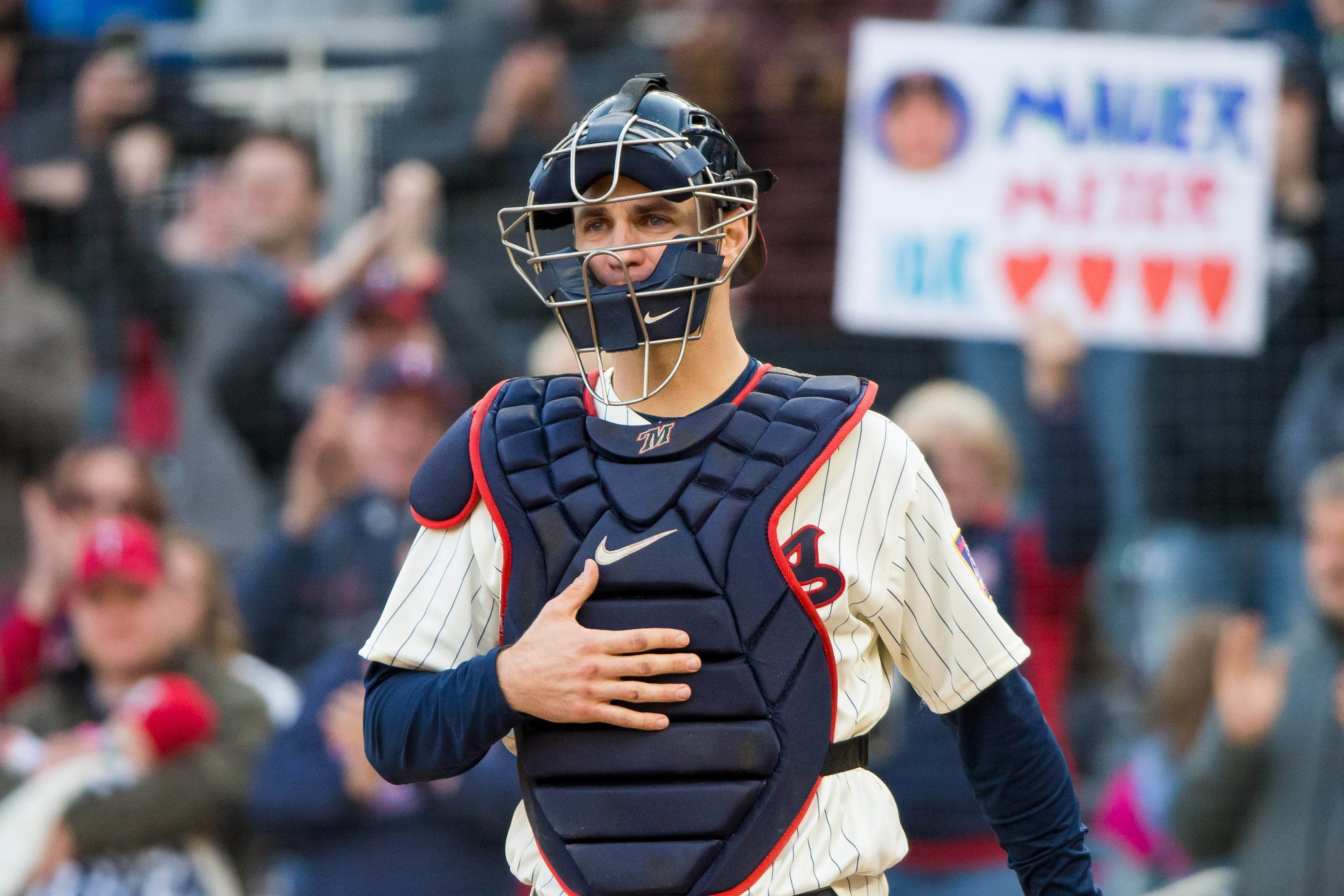 I've been thinking a lot about the year 2004. That's partly because I've begun receiving messages about my 20-year high school reunion. Yep: with the calendar flipping to 2024, it's now been two full decades since I graduated. That's a wild thing to come to grips with. Where did all the time go?! Of course, 2004 is also top-of-mind because it's when Joe Mauer made his long-awaited major-league debut for the Twins. The start of his major-league career essentially coincided with the start of my adult life. I find it interesting to reflect back on Mauer's baseball journey in parallel with my own, especially as we celebrate news of his coming induction into the Hall of Fame. Too often, Mauer's playing career was filled with constant ruminations on "what if," rather than a recognition and appreciation of what was. Now, baseball's resounding validation of his accomplishments (with Mauer joining Kirby Puckett and Rod Carew as the only first-ballot Twins in the Hall of Fame) lays bare how misguided that mindset was. There are some good life lessons to be found here, I think. A Humble Kid with Not-So-Humble Beginnings Joe Mauer's professional career opened up with an infamous "what if" scenario right out of the gates. Minnesota selected him with the No. 1 overall draft pick in 2001, a decision that was considered controversial at the time with USC ace Mark Prior widely viewed as the best player in the class. (Certainly, he was the closest to making a big-league impact, as he debuted less than a year after the draft.) Terry Ryan's call to go with the hometown high schooler naturally led to a great deal of dissection and second-guessing, especially as Prior rocketed to the majors for the Cubs. With the full benefit of hindsight, we can now say that Ryan and the Twins absolutely made the right choice. (It is interesting, though, to contemplate how Prior's presence might have elevated those division-winning Twins teams in 2002 and 2003. Being drafted with the top pick entails sky-high expectations, especially when you're being directly compared to a meteoric pitching prodigy like Prior. Unfazed by all of it, Mauer simply did his thing, immediately overwhelming minor-league pitchers. He quickly established himself as the top prospect in all of baseball, forging a path to the majors that would have him debuting at age 20. That set the stage for another round of "what if." Mauer's Rookie Year: Promise, Then Pain We arrive in 2004. Following the A.J. Pierzynski trade during the offseason, Mauer is lined up as Minnesota's Opening Day catcher. In his MLB debut, on April 5th, he goes 2-for-3 with a pair of singles and a pair of walks, opening his career in appropriate fashion. The following day, he suffers a meniscus injury in his knee while chasing a pop fly in foul territory. The incident led to surgery, and wound up costing the catcher most of his rookie season--including, crucially, the end. Mauer returned to the field in June, and played extremely well for six weeks (.291/.345/.563, with six homers in 33 games) before ongoing pain and swelling in the knee forced him to shut it down in mid-July. Ten days after Mauer's season ended, on July 25th, the 2004 Hall of Fame Induction Ceremony was held in Cooperstown. One of the two players honored that day: Paul Molitor, who preceded Mauer as a St. Paul native and Cretin-Derham prep star, turned top draft pick (third overall in 1977), turned eventual Hall of Famer. Molitor would later manage Mauer, with both reaching the end of their respective roads in the same year (2018). This intermingling of milestones makes for a fun little wrinkle in our timeline of events here. Coming Up Short in the ALDS Despite receiving only 35 total games from their young phenom catcher in 2004, Minnesota won the wimpy AL Central handily (again) and headed for a faceoff against the mighty Yankees in the first round of the playoffs (again). The Twins took Game 1 in New York behind a masterful performance from Johan Santana. Little did we know it'd be the last postseason victory in nearly two decades and, sadly, of Mauer's entire career. The rest of that 2004 ALDS was a harrowing thrill ride; they lost Game 2 and Game 4 by one run apiece, in extra innings. If only they had one more premier hitter, capable of delivering a big hit or coaxing a walk in a key moment, it might have made the difference. With no Mauer available, the Twins used two punchless veteran catchers in the series, Henry Blanco and Pat Borders, who combined to go 2-for-10. Imagine a healthy rookie Mauer propelling the Twins past the Yankees and onward to face David Ortiz and the fateful Boston Red Sox in the ALCS. Now there's a "what if"! A Legend in the Making The following spring, as a freshman in college, I started my Twins blog. The whole concept was relatively new, but I wanted a writing outlet, and my interest in the team was reaching a fever pitch. Mauer had played a major role in it. For someone in my position, how could he not? I grew up as a contemporary of Joe Mauer. Playing ball in the Twin Cities as a kid and into high school, you couldn't avoid incessantly hearing about the guy. His dynamic multi-sport athleticism. His cannon arm. His perfect swing. Mauer famously struck out once in his entire prep career. There was the time he homered in seven straight games. He batted .605 as a senior. Six-oh-five! The center of the amateur baseball universe was right in our backyard. It felt surreal. Twins scouting director Mike Radcliff put it perfectly: "The timing of it all is pretty remarkable. To have a kid this talented, from right down the street, enter the draft in the one year we happen to have the top pick — you could never plan that. You couldn’t imagine it." A storyline too divine to ignore. Just as Mauer entered the fold, I was turning from a kid who liked baseball to an adult who would fully invest himself in fandom. I was hooked for life, and Joe puts a face to that inflection point in my mind. Appreciating What Was I started writing regularly about the Twins in the spring of 2005, just as Mauer was getting his career started in earnest, so I had the pleasure of chronicling his entire tenure with the team. I watched him evolve into an All-Star and an MVP. He was one of the biggest stars in the league when the Twins opened their brand-new outdoor stadium, which is now my favorite place in the world. As much as people want to wring their hands in hindsight, when Mauer signed his franchise record-shattering $184-million extension in March of 2010, it was a special day for Minnesota baseball. "That sound you heard yesterday in the late afternoon? That was the sound of an entire state breathing out one huge sigh of relief," I wrote on my blog at the time. "Yankees fans can stop drooling with anticipation. Red Sox fans can stop formulating theoretical trade packages. Mets fans can let any glimmers of hope die and go back to wallowing in misery. Joe Mauer is staying in Minnesota." And so he did. All the way up until the end, when he hung up his gear following an emotional sendoff at the ballpark he helped make possible. It was a storybook finish to what we can now fairly summarize as a storybook run. Moral of the Story So what have we learned from Mauer's incredible journey, as we look back on the past 20 years leading up this momentous occasion? I'm mostly struck by two big takeaways. First, he's a perfect counterexample to the notion that nice guys finish last. The descriptor "class act" tends to get overused by fawning media types, but Joe truly embodied it. In the clubhouse, whether you were a team employee, a longtime newspaper columnist, a stadium janitor, or a lowly blogger feeling out of place, Mauer would give you the same treatment: making eye contact while walking by, with a genuine "How ya doing?" Nobody who covered or interacted with Mauer got a negative impression of him. His kindness and humility were noticed by all – uncommon for an individual of such talent and fame. We're now seeing the payoff for his gentlemanly ways, as those same people who covered or conversed with Mauer rush to select him on their ballots, despite some of the legitimate statistical question marks attached to his case (shortened prime, lack of playoff accolades, etc.). The contrast is especially compelling as Mauer easily edges other players on the same ballot who are being blocked for their transgressions on or off the field. He did everything the right way, and now he's being rewarded for it. My other big takeaway comes back to the aforementioned game of "what if." Yeah, we can play it all day with Mauer: What if his power surge from 2009 sustained? What if he could have avoided that career-altering concussion in 2013? What if Phil freaking Cuzzi knew the difference between a fair and foul ball?! But those "what ifs" can go both ways, and when you get caught up in searching for greener pastures you're liable to miss out on enjoying what's in front of you. Perspective is everything. That's a valuable piece of wisdom I've gained in my 20 years of adulthood, and following Mauer's career throughout that span helped me in developing it. "As you get older, you learn there are some things out of your control," Mauer said back in 2012. "You learn there's not much you can do but play, and I love to play." Be a good person, do what you love, and worry about what you can control. The lasting lessons from the legacy of Joe Mauer, a humble, wholesome, and worthy Hall of Famer. Thanks for everything, 7.
 -
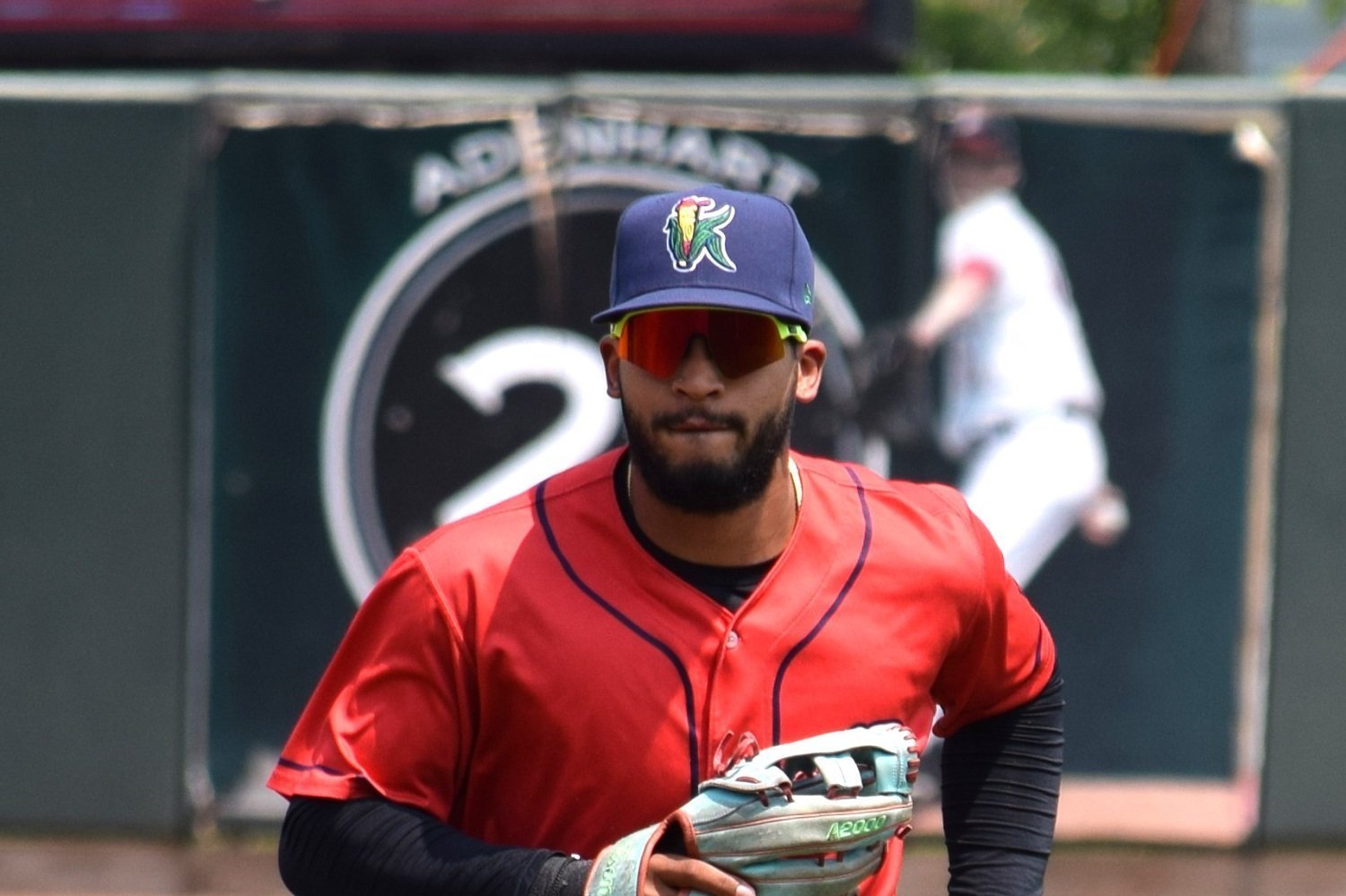 Back in 2019, when the Twins signed 16-year-old Dominican outfielder Emmanuel Rodriguez for a $2.5 million as an international free agent, MLB's Jesse Sanchez described him as "the next Eddie Rosario." It's easy to see why that comparison would feel natural. At the time, Rosario was a leading figure on the breakthrough Bomba Squad, who ended up winning 100 games and setting the all-time home run record. Rodriguez, like Rosario, was a lefty-swinging outfielder with surprising power from his smallish frame. Even right down to their makeup and mannerisms, you can see similarities between the two: their competitive swagger, their contagious smiles, their flair for dramatics. One can understand why the Emma/Eddie parallel felt fitting at the time, and in some ways, it still feels fitting. But in another way, it has proven to be hilariously off-base, because the ways in which these two approach hitting could not be more different. Rosario has carved out a very nice major-league career, while establishing a firm reputation as one of the least disciplined sluggers in the league. That hyperaggression keeps his ceiling something less than vaulted. During the Bomba Squad season, when he launched 32 homers to contribute to their historic total, Rosario drew 22 walks in 590 plate appearances. His 3.7% walk rate was was fifth-lowest in the league. Throughout his career, he has routinely been one of the hitters most likely to chase pitches out of the zone. Rodriguez, on the other hand, is among the most patient hitters ever to come through the Minnesota system. His 20.2% walk rate at Cedar Rapids last year led the Midwest League by a sizable margin. The prior season, he had a ridiculous 28.6% walk rate in the Florida State League, before going down with a knee injury. It's a strength that could become a weakness for the 20-year-old, making his big-league outlook tough to confidently project. "At times, Rodriguez’s extreme patience can border on passivity, and he’ll likely need to get more aggressive to combat polished strike-throwers," wrote Aaron Gleeman in his top prospects list at The Athletic. "Constantly being in deep counts without great contact skills has led to an underwhelming .242 batting average and 30 percent strikeout rate, both potential red flags for such a talented top prospect." The reality is that a lot of pitchers in the minors have a hard time throwing strikes consistently. Certain hitters are good at taking advantage of this, leading to inflated walk rates, and often, those hitters are treated as novelties. Edouard Julien, for example, was still not much on the national prospect radar after leading the Double-A Texas League with a 19.3% walk rate in 2022. He also ranked third in OPS. He appeared on zero prominent top-100 lists last spring. In a recent video breaking down the Emmanuel Rodriguez experience, Tom Froemming noted the statistical similarities between Rodriguez and Julien, who has ended up being the better "Eddie" comp. Both have been outliers when it comes to drawing walks in the minors. We saw how well that translated to the majors for Julien, who was a unicorn in terms of discipline and also one of the league's best rookie hitters. The key for Julien has been his ability to selectively attack early in the count and punish mistake pitches. He has legitimate power, and in this regard, Rodriguez has a bigger edge. As we saw, power was the outfielder's calling card when he signed at age 16, and it continues to flash in big ways on the field. When Rodriguez gets a hold of one, he can crush it, helping him produce 35 home runs and a .495 slugging percentage through 183 games as a pro. While Julien was largely flying under the radar as a prospect, Rodriguez is not. MLB Pipeline currently has him ranked as the No. 48 overall prospect in baseball. It's generally agreed that while he ranks third in Minnesota's system, he'd be first in a lot of others. Even with his known struggles to make contact, Rodriguez's power/patience combo is too enticing in its upside. You don't find this kind of skill set often. Last year, only three qualified MLB players had a walk rate above 15%: Juan Soto, Kyle Schwarber, Shohei Ohtani. Lower the qualified threshold to 300 plate appearances and you've only got eight players (including Julien) who met that standard. That's 2.7 percent of the entire player pool. You'll be hard-pressed to find a single bad offensive player among this ultra-patient cohort. Each of the eight had a wRC+ of 115 or better. Schwarber had the lowest on-base percentage, at .343, but he had a .197 batting average. He also hit 47 homers and drove in 108 runs. Schwarber exemplifies how this offensive profile can elevate a player beyond his contact struggles. Julien, Ryan Noda and Brandon Belt all had K-rates above 30% to go along with their 15% walk rates, but were solidly above-average offensive producers, nonetheless. So while the questions surrounding Rodriguez at this point mainly pertain to his floor, there's a good argument that his extreme level of patience–combined with power and defensive value–give E-Rod a fairly sturdy one. Meanwhile, his upside resides at the level of Soto and Aaron Judge: players capable of drawing 100 walks while hitting 30 to 40 home runs. Those are elite offensive forces who can win multiple MVP awards. All of this the Twins must weigh, in their pursuit of frontline starting pitching. To land a true prize capable of becoming a long-term fixture atop the rotation, they'll likely need to be willing to part with a talent of this caliber. Comparing Rodriguez to No. 2 prospect Brooks Lee (whose name, along with that of Julien, is also being bandied about in hypothetical trade scenarios) creates an interesting floor-versus-ceiling dichotomy. Which do you value more: the colossal upside of a Rodriguez or the stable certainty of a Lee? We'll likely know a lot more about Rodriguez and his true potential after this 2024 season, as he takes his game to the high minors and contends with higher-caliber pitching. One could very easily see him ascending to the highest tier of prospects, or fading dramatically because of his passivity and contact issues. That's what makes this such a pivotal moment. I wrote recently about how good the Twins front office has been at replacing stars they trade away. Structurally, they are currently set up to do so in Rodriguez's case, with several lefty-swinging outfielders on hand (including Matt Wallner and Trevor Larnach), plus the new No. 1 prospect Walker Jenkins poised to rise fast. But if Rodriguez turns into what he could turn into, there's no replacing that. If he develops into the production equivalent of Eddie Rosario, that's not a horrible outcome. As Rosario has, he can have a solid career. The Twins will still feel okay about trading him to get the rotation boost they needed, just as they feel fine about trading Luis Arráez for Pablo López last January. If Rodriguez turns into anything approximating the production equivalent of Juan Soto, though, that's a franchise-altering miscue that will be lamented for decades. These are the kinds of weighty decisions being considered by a front office equipped with a top-heavy farm system; a clear need at the front of the rotation; and limited funds with which to address that need. The high stakes make for an exciting yet harrowing moment of reckoning for Derek Falvey and the Twins. Would you be open to dealing Rodriguez, if that's what it takes to acquire a multi-year Pablo López co-ace, such as Jesus Luzardo or Logan Gilbert (whom Jamie Cameron wrote about here on Monday)? Or is your attitude more of a keep-at-all-costs, even if that means trading Lee instead, or aiming lower in your scale of starting pitching acquisition? This winter might be the last chance to trade Rodriguez while his value is sky-high--or it might be the last time time trading him even feels remotely plausible.
- 48 comments
-
- 10
-
-
- emmanuel rodriguez
- eddie rosario
- (and 1 more)
-
Emmanuel Rodriguez is one of the most intriguing prospects in the Twins system, and there's little doubt his name is being brought up in trade discussions (at least by other teams) as the front office looks to land a front-end starter before spring training. In some respects, Rodriguez looks like a logical candidate to trade. But he also has qualities of a player who could make you regret the decision for many years to come. Image courtesy of Steve Buhr, Twins Daily Back in 2019, when the Twins signed 16-year-old Dominican outfielder Emmanuel Rodriguez for a $2.5 million as an international free agent, MLB's Jesse Sanchez described him as "the next Eddie Rosario." It's easy to see why that comparison would feel natural. At the time, Rosario was a leading figure on the breakthrough Bomba Squad, who ended up winning 100 games and setting the all-time home run record. Rodriguez, like Rosario, was a lefty-swinging outfielder with surprising power from his smallish frame. Even right down to their makeup and mannerisms, you can see similarities between the two: their competitive swagger, their contagious smiles, their flair for dramatics. One can understand why the Emma/Eddie parallel felt fitting at the time, and in some ways, it still feels fitting. But in another way, it has proven to be hilariously off-base, because the ways in which these two approach hitting could not be more different. Rosario has carved out a very nice major-league career, while establishing a firm reputation as one of the least disciplined sluggers in the league. That hyperaggression keeps his ceiling something less than vaulted. During the Bomba Squad season, when he launched 32 homers to contribute to their historic total, Rosario drew 22 walks in 590 plate appearances. His 3.7% walk rate was was fifth-lowest in the league. Throughout his career, he has routinely been one of the hitters most likely to chase pitches out of the zone. Rodriguez, on the other hand, is among the most patient hitters ever to come through the Minnesota system. His 20.2% walk rate at Cedar Rapids last year led the Midwest League by a sizable margin. The prior season, he had a ridiculous 28.6% walk rate in the Florida State League, before going down with a knee injury. It's a strength that could become a weakness for the 20-year-old, making his big-league outlook tough to confidently project. "At times, Rodriguez’s extreme patience can border on passivity, and he’ll likely need to get more aggressive to combat polished strike-throwers," wrote Aaron Gleeman in his top prospects list at The Athletic. "Constantly being in deep counts without great contact skills has led to an underwhelming .242 batting average and 30 percent strikeout rate, both potential red flags for such a talented top prospect." The reality is that a lot of pitchers in the minors have a hard time throwing strikes consistently. Certain hitters are good at taking advantage of this, leading to inflated walk rates, and often, those hitters are treated as novelties. Edouard Julien, for example, was still not much on the national prospect radar after leading the Double-A Texas League with a 19.3% walk rate in 2022. He also ranked third in OPS. He appeared on zero prominent top-100 lists last spring. In a recent video breaking down the Emmanuel Rodriguez experience, Tom Froemming noted the statistical similarities between Rodriguez and Julien, who has ended up being the better "Eddie" comp. Both have been outliers when it comes to drawing walks in the minors. We saw how well that translated to the majors for Julien, who was a unicorn in terms of discipline and also one of the league's best rookie hitters. The key for Julien has been his ability to selectively attack early in the count and punish mistake pitches. He has legitimate power, and in this regard, Rodriguez has a bigger edge. As we saw, power was the outfielder's calling card when he signed at age 16, and it continues to flash in big ways on the field. When Rodriguez gets a hold of one, he can crush it, helping him produce 35 home runs and a .495 slugging percentage through 183 games as a pro. While Julien was largely flying under the radar as a prospect, Rodriguez is not. MLB Pipeline currently has him ranked as the No. 48 overall prospect in baseball. It's generally agreed that while he ranks third in Minnesota's system, he'd be first in a lot of others. Even with his known struggles to make contact, Rodriguez's power/patience combo is too enticing in its upside. You don't find this kind of skill set often. Last year, only three qualified MLB players had a walk rate above 15%: Juan Soto, Kyle Schwarber, Shohei Ohtani. Lower the qualified threshold to 300 plate appearances and you've only got eight players (including Julien) who met that standard. That's 2.7 percent of the entire player pool. You'll be hard-pressed to find a single bad offensive player among this ultra-patient cohort. Each of the eight had a wRC+ of 115 or better. Schwarber had the lowest on-base percentage, at .343, but he had a .197 batting average. He also hit 47 homers and drove in 108 runs. Schwarber exemplifies how this offensive profile can elevate a player beyond his contact struggles. Julien, Ryan Noda and Brandon Belt all had K-rates above 30% to go along with their 15% walk rates, but were solidly above-average offensive producers, nonetheless. So while the questions surrounding Rodriguez at this point mainly pertain to his floor, there's a good argument that his extreme level of patience–combined with power and defensive value–give E-Rod a fairly sturdy one. Meanwhile, his upside resides at the level of Soto and Aaron Judge: players capable of drawing 100 walks while hitting 30 to 40 home runs. Those are elite offensive forces who can win multiple MVP awards. All of this the Twins must weigh, in their pursuit of frontline starting pitching. To land a true prize capable of becoming a long-term fixture atop the rotation, they'll likely need to be willing to part with a talent of this caliber. Comparing Rodriguez to No. 2 prospect Brooks Lee (whose name, along with that of Julien, is also being bandied about in hypothetical trade scenarios) creates an interesting floor-versus-ceiling dichotomy. Which do you value more: the colossal upside of a Rodriguez or the stable certainty of a Lee? We'll likely know a lot more about Rodriguez and his true potential after this 2024 season, as he takes his game to the high minors and contends with higher-caliber pitching. One could very easily see him ascending to the highest tier of prospects, or fading dramatically because of his passivity and contact issues. That's what makes this such a pivotal moment. I wrote recently about how good the Twins front office has been at replacing stars they trade away. Structurally, they are currently set up to do so in Rodriguez's case, with several lefty-swinging outfielders on hand (including Matt Wallner and Trevor Larnach), plus the new No. 1 prospect Walker Jenkins poised to rise fast. But if Rodriguez turns into what he could turn into, there's no replacing that. If he develops into the production equivalent of Eddie Rosario, that's not a horrible outcome. As Rosario has, he can have a solid career. The Twins will still feel okay about trading him to get the rotation boost they needed, just as they feel fine about trading Luis Arráez for Pablo López last January. If Rodriguez turns into anything approximating the production equivalent of Juan Soto, though, that's a franchise-altering miscue that will be lamented for decades. These are the kinds of weighty decisions being considered by a front office equipped with a top-heavy farm system; a clear need at the front of the rotation; and limited funds with which to address that need. The high stakes make for an exciting yet harrowing moment of reckoning for Derek Falvey and the Twins. Would you be open to dealing Rodriguez, if that's what it takes to acquire a multi-year Pablo López co-ace, such as Jesus Luzardo or Logan Gilbert (whom Jamie Cameron wrote about here on Monday)? Or is your attitude more of a keep-at-all-costs, even if that means trading Lee instead, or aiming lower in your scale of starting pitching acquisition? This winter might be the last chance to trade Rodriguez while his value is sky-high--or it might be the last time time trading him even feels remotely plausible. View full article
- 48 replies
-
- 1
-
-
- emmanuel rodriguez
- eddie rosario
- (and 1 more)
-
During a mostly inactive offseason, the Twins front office has brought in a number of relief arms, adding to the spring training pool from which they'll shape their Opening Day bullpen. Can they extract enough quality from their quantity of relief options? Image courtesy of Matt Blewett, William Purnell, Geoff Burke-USA TODAY Sports The bullpen was not a strength, on balance, for the Twins last year. For the season, they ranked 15th in ERA, 16th in FIP and 21st in fWAR. Not a disaster by any means, but far from elite. Emilio Pagán was a big part of the reason Minnesota's relief corps was successful, to the extent it was. Now he's gone, having signed a two-year, $16 million deal with the Reds. The Twins are tasked with replacing his production while also improving the overall quality of the unit. As usual, their front office will aim to do so without making major investments. Instead, they'll gather a wide assortment of arms in spring training–many of them non-roster invites–with hopes of whittling down to a group capable of consistently protecting leads throughout the season. The stakes are high for a team that is favored to win the division and expected to contend for a championship. Few things are more painful than a great team sabotaged by a bad bullpen. Fortunately, the Twins have a solid foundation at the back end, and numerous interesting pieces in the mix to build around them with. For what it's worth, projection systems like ZiPS at FanGraphs forecast the Minnesota bullpen as above-average, even with the lack of impact additions. With the start of spring training now less than a month away, here's a tiered overview of the relievers that figure to be competing for spots in the Opening Day bullpen. This is not an exhaustive list and it's obviously subject to change based on comings and goings over the next several weeks, but I think we can start to get a solid handle on how this unit will take shape. Let's start with that back-end foundation, which would be the envy of many teams around the league. The Locks These four incumbents are all but certain to be key parts of the Twins bullpen heading into thee season, so long as they are healthy at the end of spring training. Jhoan Duran: One of the best closers in the American League and the premier centerpiece of Minnesota's bullpen. As long as he's healthy and doing his thing it'll be tough for the Twins bullpen to be downright bad. Griffin Jax: Was looking the part as a primary setup man before enduring some late-season struggles (5.57 ERA in August and September). Bounced back in the playoffs and should be lined up as a high-leverage fixture once again. Caleb Thielbar: The inspiring veteran leader of the bullpen deservingly scored a career-high payday in arbitration. He's been consistently excellent since reviving his career in 2020, with a 3.21 ERA in 174 innings. Can he keep the improbable run going at age 37? Brock Stewart: He was the Twins' best reliever, when healthy. Better than Duran even. The question is, and always has been, how many bullets he's got. Stewart presents an extremely volatile aspect of the team's bullpen outlook: their upside really hinges on his durability, and historically that's been a losing proposition. Almost Locks Each of these three hurlers has something to prove, but if they look good in spring training action they've got the inside track. Jorge Alcala: His new contract includes a club option for 2025, so clearly the Twins see a potential future here. Not hard to see why; Alcala throws fire when healthy. But he's totaled less than 20 innings in the majors over the past two seasons. Can he really be counted on? Kody Funderburk: He was impressive enough in a late-season audition (0.75 ERA, 19 strikeouts in 12 innings) to warrant a spot on the first-round playoff roster. It's safe to say Funderburk is a frontrunner to make the pen as a second lefty. Josh Staumont: He signed a big-league contract in late December, having caught Minnesota's attention with his years of success in the Kansas City bullpen. Coming off thoracic outlet surgery, his outlook is uncertain, but if he's throwing well in March the 30-year-old should get a shot. Wild Cards I wouldn't consider any of these guys favorites to make the Opening Day bullpen, at this point, but I'd say they are each in position to get there based on developments in camp. Each one has intriguing upside–and in one case we've already seen it. Louie Varland: We already know Varland is capable of being a lights-out reliever, because last September served as a proof-of-concept. I don't think he or the Twins are ready to commit him to that role quite yet, and right now it's hardly even an option since he's one of their top five starters. Matt Canterino: Finally healthy after injuries limited him to 85 total innings since being drafted in 2019. The Twins claim they still view him as a starter, but I'm dubious. His stuff might be the best in the organization, and I think the club will be eager to unleash it in a fast-tracked relief role if he looks healthy and strong in spring action. Canterino has a ridiculous 1.48 ERA and 13.8 K/9 rate in the minors. Jordan Balazovic: He's out of options, which might give the Twins some compulsion to carry him out of camp given the factors in play (big righty, former top prospect, mid-90s fastball). You don't necessarily want to give up on a talent like this for nothing. But the 25-year-old did himself no favors in a brutal 2023 campaign. He's gonna need to earn it. Simeon Woods Richardson: Like Canterino and Balazovic, Woods Richardson is already on the 40-man roster, giving him an edge over many below. His stock has dropped in a big way following a hugely discouraging age-23 season, but if he and the Twins decide to fully commit to a relief role–dropping a pitch or two, maximizing his effort in short stints–SWR could quickly put himself back on the radar. Hobie Harris: He might be more accurately categorized in the "longshots" group below. But I feel like Harris, who signed a minor-league deal last week, has a bit of an advantage over others. He's got MLB experience, he's 30, and the Twins are really high on his splitter as a weapon. Longshots All these guys have a chance, but they would likely need to make a really strong impression in spring training to overcome others and earn a spot on the Opening Day roster. Brent Headrick: The left-hander threw 25 innings in relief for the Twins last year. As a southpaw who can get some strikeouts and provide some length, he's a nice depth piece to have on hand, but not much more. Ryan Jensen: Claimed off waivers earlier this month, Jensen is still acclimating to pitching as a reliever after failing to pan as a starter. He's got a powerful arsenal that the Twins will likely aim to tweak in some ways. If he can start finding the zone with some regularly in exhibition action, it's not unthinkable he could sneak onto the roster. Cole Sands: A known commodity, Sands has made 26 appearances in the majors over the past couple seasons, amounting to a 4.99 ERA. Like Headrick, he's more of a depth piece, but his breaking ball shows the makings of a legitimate out pitch. I don't have to squint too hard to see Sands being an impact reliever but it might be hard to convincingly make that case in March. Josh Winder: Winder is in a similar boat to Sands–he's got MLB experience, he's on the 40-man roster, and he's got some pitches that inspire confidence. But until he can find a way to make his fastball usable (opponents hit .429 with a .786 SLG against it last year), Winder won't be a legit bullpen option. A.J. Alexy: The righty has been brought in by the Twins in two consecutive offseasons, most recently on a minor-league contract, so clearly they see something they like in him. His extreme control issues over the past couple years (he issued 41 walks in 21 innings at Triple-A last year) will be a lot to overcome, so he seems like more of a long-term project. Ronny Henriquez: He struggled mightily in Triple-A last year and was removed from the 40-man roster afterward, but returned to the organization on a minor-league deal. Henriquez needs to rebuild some confidence by throwing strikes and getting on track, but he's only 23 and has a solid repertoire. What would your preferred bullpen look like, if you had to pick eight names today? Let's hear your thoughts on the bullpen outlook in the comments. View full article
-
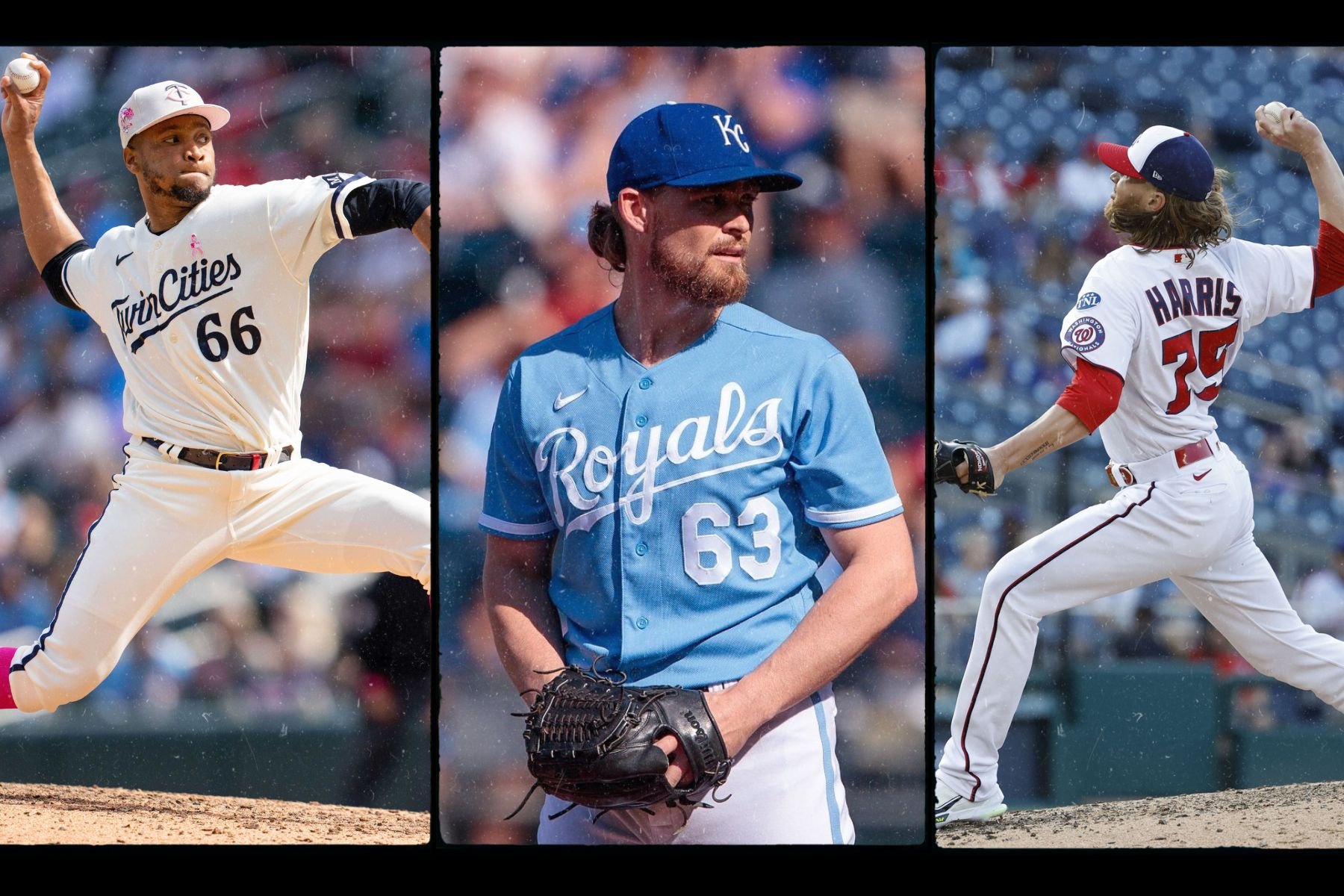 The bullpen was not a strength, on balance, for the Twins last year. For the season, they ranked 15th in ERA, 16th in FIP and 21st in fWAR. Not a disaster by any means, but far from elite. Emilio Pagán was a big part of the reason Minnesota's relief corps was successful, to the extent it was. Now he's gone, having signed a two-year, $16 million deal with the Reds. The Twins are tasked with replacing his production while also improving the overall quality of the unit. As usual, their front office will aim to do so without making major investments. Instead, they'll gather a wide assortment of arms in spring training–many of them non-roster invites–with hopes of whittling down to a group capable of consistently protecting leads throughout the season. The stakes are high for a team that is favored to win the division and expected to contend for a championship. Few things are more painful than a great team sabotaged by a bad bullpen. Fortunately, the Twins have a solid foundation at the back end, and numerous interesting pieces in the mix to build around them with. For what it's worth, projection systems like ZiPS at FanGraphs forecast the Minnesota bullpen as above-average, even with the lack of impact additions. With the start of spring training now less than a month away, here's a tiered overview of the relievers that figure to be competing for spots in the Opening Day bullpen. This is not an exhaustive list and it's obviously subject to change based on comings and goings over the next several weeks, but I think we can start to get a solid handle on how this unit will take shape. Let's start with that back-end foundation, which would be the envy of many teams around the league. The Locks These four incumbents are all but certain to be key parts of the Twins bullpen heading into thee season, so long as they are healthy at the end of spring training. Jhoan Duran: One of the best closers in the American League and the premier centerpiece of Minnesota's bullpen. As long as he's healthy and doing his thing it'll be tough for the Twins bullpen to be downright bad. Griffin Jax: Was looking the part as a primary setup man before enduring some late-season struggles (5.57 ERA in August and September). Bounced back in the playoffs and should be lined up as a high-leverage fixture once again. Caleb Thielbar: The inspiring veteran leader of the bullpen deservingly scored a career-high payday in arbitration. He's been consistently excellent since reviving his career in 2020, with a 3.21 ERA in 174 innings. Can he keep the improbable run going at age 37? Brock Stewart: He was the Twins' best reliever, when healthy. Better than Duran even. The question is, and always has been, how many bullets he's got. Stewart presents an extremely volatile aspect of the team's bullpen outlook: their upside really hinges on his durability, and historically that's been a losing proposition. Almost Locks Each of these three hurlers has something to prove, but if they look good in spring training action they've got the inside track. Jorge Alcala: His new contract includes a club option for 2025, so clearly the Twins see a potential future here. Not hard to see why; Alcala throws fire when healthy. But he's totaled less than 20 innings in the majors over the past two seasons. Can he really be counted on? Kody Funderburk: He was impressive enough in a late-season audition (0.75 ERA, 19 strikeouts in 12 innings) to warrant a spot on the first-round playoff roster. It's safe to say Funderburk is a frontrunner to make the pen as a second lefty. Josh Staumont: He signed a big-league contract in late December, having caught Minnesota's attention with his years of success in the Kansas City bullpen. Coming off thoracic outlet surgery, his outlook is uncertain, but if he's throwing well in March the 30-year-old should get a shot. Wild Cards I wouldn't consider any of these guys favorites to make the Opening Day bullpen, at this point, but I'd say they are each in position to get there based on developments in camp. Each one has intriguing upside–and in one case we've already seen it. Louie Varland: We already know Varland is capable of being a lights-out reliever, because last September served as a proof-of-concept. I don't think he or the Twins are ready to commit him to that role quite yet, and right now it's hardly even an option since he's one of their top five starters. Matt Canterino: Finally healthy after injuries limited him to 85 total innings since being drafted in 2019. The Twins claim they still view him as a starter, but I'm dubious. His stuff might be the best in the organization, and I think the club will be eager to unleash it in a fast-tracked relief role if he looks healthy and strong in spring action. Canterino has a ridiculous 1.48 ERA and 13.8 K/9 rate in the minors. Jordan Balazovic: He's out of options, which might give the Twins some compulsion to carry him out of camp given the factors in play (big righty, former top prospect, mid-90s fastball). You don't necessarily want to give up on a talent like this for nothing. But the 25-year-old did himself no favors in a brutal 2023 campaign. He's gonna need to earn it. Simeon Woods Richardson: Like Canterino and Balazovic, Woods Richardson is already on the 40-man roster, giving him an edge over many below. His stock has dropped in a big way following a hugely discouraging age-23 season, but if he and the Twins decide to fully commit to a relief role–dropping a pitch or two, maximizing his effort in short stints–SWR could quickly put himself back on the radar. Hobie Harris: He might be more accurately categorized in the "longshots" group below. But I feel like Harris, who signed a minor-league deal last week, has a bit of an advantage over others. He's got MLB experience, he's 30, and the Twins are really high on his splitter as a weapon. Longshots All these guys have a chance, but they would likely need to make a really strong impression in spring training to overcome others and earn a spot on the Opening Day roster. Brent Headrick: The left-hander threw 25 innings in relief for the Twins last year. As a southpaw who can get some strikeouts and provide some length, he's a nice depth piece to have on hand, but not much more. Ryan Jensen: Claimed off waivers earlier this month, Jensen is still acclimating to pitching as a reliever after failing to pan as a starter. He's got a powerful arsenal that the Twins will likely aim to tweak in some ways. If he can start finding the zone with some regularly in exhibition action, it's not unthinkable he could sneak onto the roster. Cole Sands: A known commodity, Sands has made 26 appearances in the majors over the past couple seasons, amounting to a 4.99 ERA. Like Headrick, he's more of a depth piece, but his breaking ball shows the makings of a legitimate out pitch. I don't have to squint too hard to see Sands being an impact reliever but it might be hard to convincingly make that case in March. Josh Winder: Winder is in a similar boat to Sands–he's got MLB experience, he's on the 40-man roster, and he's got some pitches that inspire confidence. But until he can find a way to make his fastball usable (opponents hit .429 with a .786 SLG against it last year), Winder won't be a legit bullpen option. A.J. Alexy: The righty has been brought in by the Twins in two consecutive offseasons, most recently on a minor-league contract, so clearly they see something they like in him. His extreme control issues over the past couple years (he issued 41 walks in 21 innings at Triple-A last year) will be a lot to overcome, so he seems like more of a long-term project. Ronny Henriquez: He struggled mightily in Triple-A last year and was removed from the 40-man roster afterward, but returned to the organization on a minor-league deal. Henriquez needs to rebuild some confidence by throwing strikes and getting on track, but he's only 23 and has a solid repertoire. What would your preferred bullpen look like, if you had to pick eight names today? Let's hear your thoughts on the bullpen outlook in the comments.
- 19 comments
-
- 7
-
-
- jorge alcala
- josh staumont
- (and 3 more)
-
Arbitration Agreement Deadline: 4 Interesting Wrinkles for the Twins
Nick Nelson posted an article in Twins
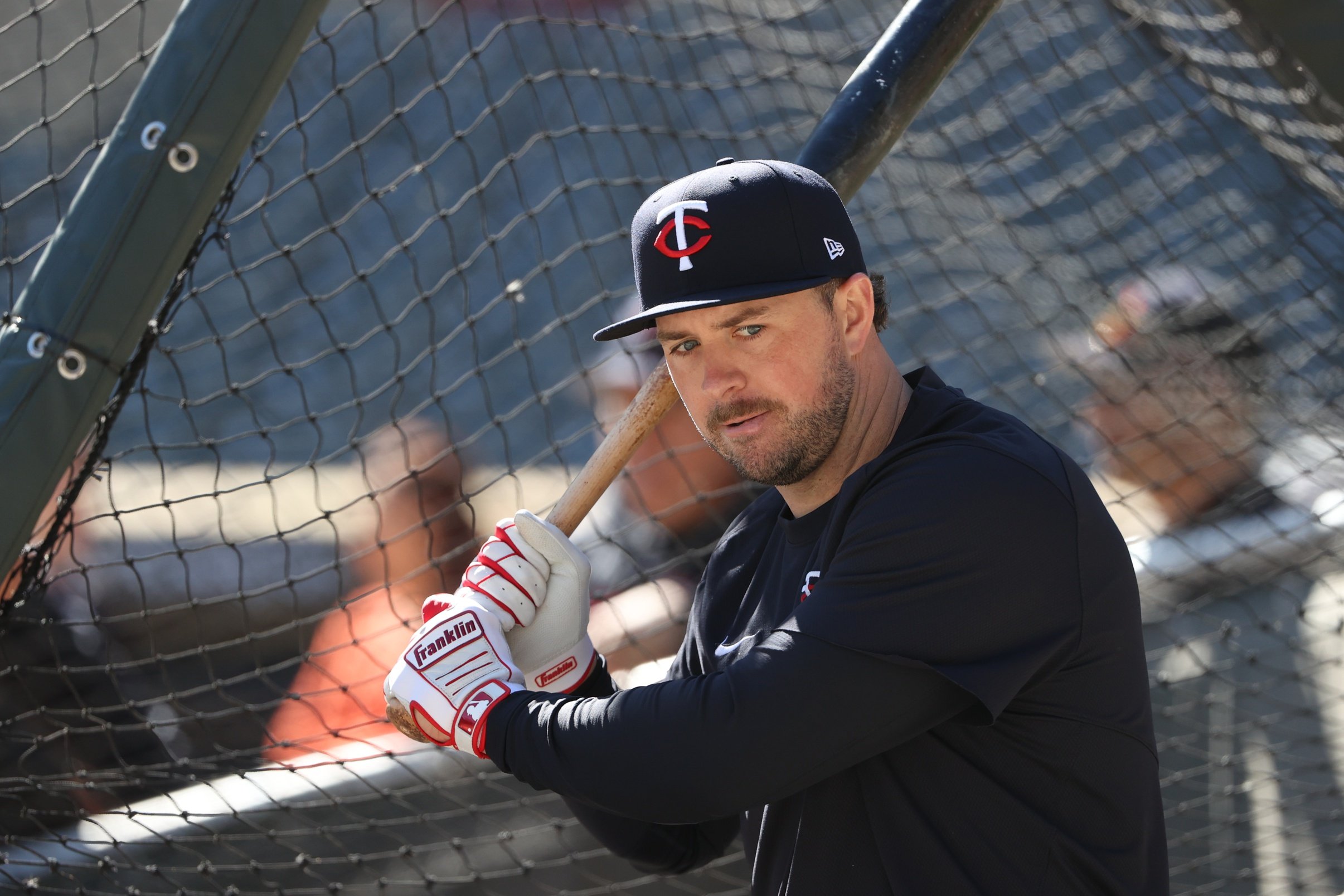 The short recap of events is pretty boring: Minnesota agreed to terms with six of their seven arbitration-eligible players, locking in their 2024 salaries and in some cases building options into their contracts. The lone player whose camp did not reach agreement with the Twins is Nick Gordon. He and the team are now likely headed toward a hearing–an outcome this front office hasn't necessary shied away from. Meanwhile, these six players are now under contract for 2024 at the following rates: Kyle Farmer: $6.05M Willi Castro: $3.3M Caleb Thielbar: $3.23M Ryan Jeffers: $2.43M Alex Kirilloff: $1.35M Jorge Alcala: $790K Beyond the straight-up payroll numbers for this year, which are mostly in line with expectations, some interesting details were reported around contract and negotiation specifics. Let's touch on a few of the most noteworthy takeaways from tonight's news: Farmer Gets a Mutual Option for 2025 The Twins included a mutual option for 2025 in Kyle Farmer's contract, which is interesting. If both sides agree to it, the club can retain him next year for $6.25 million. If the Twins are the ones to decline it, Farmer gets a $250,000 buyout. It should be noted that mutual options are almost never picked up. In nearly all cases, it's going to make sense for either the player or the team to move on. But this arrangement gives Farmer a little walkaway cash in that scenario. I will say, here it's a bit easier than usual to squint and see a scenario where both sides are on board with running it back in '25 for that number. Farmer being a veteran glue clubhouse guy, and all. But it's even easier to see that being a moot point, because he remains a prime trade candidate, at least unless/until the Twins choose to trade Jorge Polanco instead. Twins Add 2025 Club Option for Alcala Coming off two straight seasons lost to injury, Jorge Alcala will make barely over the minimum in 2024, but his contract does include a $1.5 million team option for 2025, with a $55,000 buyout. This deal offers a lot of upside for the Twins, because if Alcala can stay healthy and pitch like he did in 2020-21 (3.55 ERA, 3.92 FIP in 84 IP) he'll be a very nice middle relief asset at those prices. There might still be untapped upside for more. For the team, there's almost no financial risk, with a total commitment of less than $850K, but this speaks to Alcala's lack of leverage. For all his obvious ability, he hasn't been able to stay on the field. If he can finally pull it together this year it would be a massive development for the bullpen's outlook. Seemingly, he's finally healthy and on track. Good for Caleb Thielbar! He'll make a career-high $3.23 million, and it's well deserved following another season where he was one of the team's most reliably dominant relievers. Thielbar missed a bunch of time last year with an injured oblique, but was nails when on the mound, delivering a 3.23 ERA and 36-to-6 K/BB ratio in 31 innings. His one weakness was the long ball–seven homers allowed–and it's one that bit him in the playoffs. But nonetheless, Minnesota's glad to have him in the mix, especially given his local roots and amazing backstory. With no other Twins reliever currently slated to make even $1 million in 2024, Thielbar is by far the highest-paid member of the bullpen as it currently stands. He'll be counted on as a veteran leader and hopefully a stable force in a unit with several wild-cards. Gordon Unable to Reach Agreement If you asked me to guess which arbitration-eligible player was going to fail to reach agreement today, Nick Gordon would've been one of the last names I'd have guessed. This seemed like a fairly straightforward case. Like Alcala, Gordon unfortunately had little leverage–he missed most of last year and was horrible when he played. All the 28-year-old has to fall back on is an altogether average run of production from 2021-22, during which he put up a 100 OPS+ and 1.5 fWAR in 209 games. The two sides are separated by $350,000, with Gordon's side requesting $1.25 million and the Twins offering $900,000. In the grand scheme, it's a frivolous gap, but so these things go. What are your thoughts on the arbitration numbers and contract news? Sound off in the comments please, because we need SOMETHING to talk about!
- 35 comments
-
- 10
-
-
- kyle farmer
- nick gordon
- (and 2 more)
-
Thursday marked the deadline for teams and players to exchange arbitration salary figures. It's a pivot point that usually leads to numerous contract agreements. For the Twins and their sizable class of arb-eligible players, a few intriguing developments emerged. Image courtesy of Jesse Johnson-USA TODAY Sports The short recap of events is pretty boring: Minnesota agreed to terms with six of their seven arbitration-eligible players, locking in their 2024 salaries and in some cases building options into their contracts. The lone player whose camp did not reach agreement with the Twins is Nick Gordon. He and the team are now likely headed toward a hearing–an outcome this front office hasn't necessary shied away from. Meanwhile, these six players are now under contract for 2024 at the following rates: Kyle Farmer: $6.05M Willi Castro: $3.3M Caleb Thielbar: $3.23M Ryan Jeffers: $2.43M Alex Kirilloff: $1.35M Jorge Alcala: $790K Beyond the straight-up payroll numbers for this year, which are mostly in line with expectations, some interesting details were reported around contract and negotiation specifics. Let's touch on a few of the most noteworthy takeaways from tonight's news: Farmer Gets a Mutual Option for 2025 The Twins included a mutual option for 2025 in Kyle Farmer's contract, which is interesting. If both sides agree to it, the club can retain him next year for $6.25 million. If the Twins are the ones to decline it, Farmer gets a $250,000 buyout. It should be noted that mutual options are almost never picked up. In nearly all cases, it's going to make sense for either the player or the team to move on. But this arrangement gives Farmer a little walkaway cash in that scenario. I will say, here it's a bit easier than usual to squint and see a scenario where both sides are on board with running it back in '25 for that number. Farmer being a veteran glue clubhouse guy, and all. But it's even easier to see that being a moot point, because he remains a prime trade candidate, at least unless/until the Twins choose to trade Jorge Polanco instead. Twins Add 2025 Club Option for Alcala Coming off two straight seasons lost to injury, Jorge Alcala will make barely over the minimum in 2024, but his contract does include a $1.5 million team option for 2025, with a $55,000 buyout. This deal offers a lot of upside for the Twins, because if Alcala can stay healthy and pitch like he did in 2020-21 (3.55 ERA, 3.92 FIP in 84 IP) he'll be a very nice middle relief asset at those prices. There might still be untapped upside for more. For the team, there's almost no financial risk, with a total commitment of less than $850K, but this speaks to Alcala's lack of leverage. For all his obvious ability, he hasn't been able to stay on the field. If he can finally pull it together this year it would be a massive development for the bullpen's outlook. Seemingly, he's finally healthy and on track. Good for Caleb Thielbar! He'll make a career-high $3.23 million, and it's well deserved following another season where he was one of the team's most reliably dominant relievers. Thielbar missed a bunch of time last year with an injured oblique, but was nails when on the mound, delivering a 3.23 ERA and 36-to-6 K/BB ratio in 31 innings. His one weakness was the long ball–seven homers allowed–and it's one that bit him in the playoffs. But nonetheless, Minnesota's glad to have him in the mix, especially given his local roots and amazing backstory. With no other Twins reliever currently slated to make even $1 million in 2024, Thielbar is by far the highest-paid member of the bullpen as it currently stands. He'll be counted on as a veteran leader and hopefully a stable force in a unit with several wild-cards. Gordon Unable to Reach Agreement If you asked me to guess which arbitration-eligible player was going to fail to reach agreement today, Nick Gordon would've been one of the last names I'd have guessed. This seemed like a fairly straightforward case. Like Alcala, Gordon unfortunately had little leverage–he missed most of last year and was horrible when he played. All the 28-year-old has to fall back on is an altogether average run of production from 2021-22, during which he put up a 100 OPS+ and 1.5 fWAR in 209 games. The two sides are separated by $350,000, with Gordon's side requesting $1.25 million and the Twins offering $900,000. In the grand scheme, it's a frivolous gap, but so these things go. What are your thoughts on the arbitration numbers and contract news? Sound off in the comments please, because we need SOMETHING to talk about! View full article
-
For what it's worth - the Twins currently have the 10th-best odds to win the 2024 World Series, according to Vegas. Last year they ranked 19th before the season.
-
I must confess that Mr. Trueblood added that word during his editorial review, so I can't take credit. I had to look it up too 😂
- 67 replies
-
- 1
-

-
- edouard julien
- pablo lopez
- (and 2 more)
-
They've lost some good players through their ambitious deal-swinging, but the Twins front office has never really felt the sting of these losses. That speaks to the effectiveness of their planning and strategic foresight. Image courtesy of Tim Heitman, Matt Krohn-USA TODAY Sports You have to give to get, and that reality makes high-profile trades in MLB a dangerous dance for front offices. Giving up high-caliber talent is a risky play, leading to heavy criticism and scrutiny when it goes wrong. Traded players going on to have success elsewhere is especially tough to stomach when they are filling roles and delivering value in a way that the Twins could sorely use. The loss of David Ortiz is notorious for this reason, although it wasn't a trade (even worse, a DFA). Watching Ortiz emerge as an elite slugger and postseason hero in Boston was all the more gutting for Twins fans as their own team struggled to generate power, find a competent DH, or break through in the postseason following his departure. I also think back to moves like the Johan Santana and Matt Garza trades, which took place before the 2008 season. It's not just that these deals sent out coveted, premier talent and brought back (ultimately) underwhelming returns; it's that the Twins had no replacements for what Santana and Garza brought to the table. Their incomplete rotation held them back in 2008 (they missed the playoffs by one game, with Nick Blackburn as their No. 1 starter) and pitching would soon morph from a unique strength of the early Gardenhire-Era winners into a franchise-derailing deficiency. When trades contribute to turning an area of strength into one of dire weakness, that's some bad business. That brings me to this front office and some of their boldest, most ambitious moves. The Twins have not been shy about trading distinguished, well-liked players and prospects under Derek Falvey's regime. Some of those players have gone on to have considerable success elsewhere. But what's striking to me, in looking back at some of their most notable trades, is how those talent losses have been offset by players who emerged to distinctly fill the holes left behind. Allow me to cite a few examples of how we've seen this dynamic play out: Luis Arráez was replaced by Edouard Julien. Their belief in Julien, who was then an emerging prospect on the brink of big-league readiness, undoubtedly played a large role in the front office's willingness to part with Arráez in the Pablo López trade. It's almost astonishing how neatly and seamlessly that transition has taken place. It'd be a stretch to say Arráez and Julien are the same player–they are stylistically very different–but in terms of value and function, they are essentially the same. Both are premier left-handed hitters and on-base threats atop the lineup. Both are fringy defensive second basemen who are arguably best suited for first base or DH long-term. While Arráez enjoyed a career year with his new team in 2023 (133 OPS+, .369 wOBA, 3.4 fWAR in 147 games), Julien damn near replicated that production as a rookie (130 OPS+, .366 wOBA, 2.8 fWAR in 109 games). Meanwhile, the player Minnesota received back in exchange for Arráez was, himself, a replacement for a key piece they'd traded two years earlier. José Berríos was replaced by Pablo López. This replacement, unlike Julien for Arráez, was not immediate. When the Twins opportunistically traded Berríos to Toronto at the 2021 deadline, they had no readily apparent replacement for him as a rotation-fronting workhorse starter. They felt that pain in 2022, trying to make do with a patchwork rotation held together by Chris Archer and Dylan Bundy, before executing their signature move the following offseason: Arráez for López. Shortly after acquiring him, the Twins gave López what they were never inclined to give Berríos: a long-term contract extension. The former Marlin followed up with a first season arguably better than any in Berríos's career, including a pair of dominant playoff wins. It remains to be seen what the Twins will get out of the package they received from Toronto, but they have succeeded in their mission to replace Berríos with the pitcher we always wanted him to be: a legitimate ace who can go toe-to-toe with any opponent. Mitch Garver was replaced by Ryan Jeffers. Here's a fun fact: Among catchers who made at least 300 plate appearances last year, Garver ranked first in wOBA (.374). Right behind him at No. 2, with a .369 wOBA? Jeffers, of course. The Twins traded away the best-hitting catcher in baseball, and fell back on the second-best hitting catcher in baseball as their new starter. We use the term "catcher" somewhat loosely there, because Garver made only 27 starts behind the plate last year, as injuries and defensive decline have moved him into more of a designated hitter role. Really, there was no better offensive catcher than Jeffers in 2023, and at age 26, he's only settling into his prime. Power-hitting catchers are extraordinarily difficult to find, but as a Twins fan, you wouldn't know it. They traded one of the best in the league and barely missed a beat. Brusdar Graterol was replaced by Jhoan Durán. In order to acquire Kenta Maeda ahead of the 2020 season, the Twins were forced to part with a special talent in Graterol, whose triple-digit heater ensorceled fans during a late-season debut in 2019. The young righthander was viewed as a potential flame-throwing, shutdown force in the late innings, and he has indeed become that for the Dodgers. Meanwhile, the Twins have developed their own (superior?) version. Durán, who'd been acquired two years earlier in a deadline sell-off, has amazingly become all that we hoped Graterol would be: a healthy, dominant closer with overpowering heat who thrives in high leverage. The Twins franchise went six decades without ever having guys who throw like this, and suddenly they get two in rapid succession. It's almost inconceivable. Graterol set the Twins record for fastest pitch ever, and then a few years later, we've got Duran casually pacing the major leagues in velocity. Losing great players is never easy, but Minnesota's front office has managed to consistently soften the blow by ushering in replacements for these star talents who are at least as good, and in most these cases, I'd argue they've found something even better. From my view, it's been the defining strength that fuels their success and inspires confidence. Why does it matter now? Because the Twins are likely deep in trade conversations as we speak. If they're aiming high in their pursuit of a viable facsimile of the 2023 version of Sonny Gray, that will mean putting some quality names on the table–maybe players or prospects whom fans hold in a similar esteem to Arráez, Berríos, Garver and Graterol. But if their history is any indication, we can feel confident that the Twins will have another star player lined up to fill the void they leave behind. What's your level of confidence that this is a repeatable skill the Minnesota front office possesses? Does that color your opinions about their offseason options? Let's discuss it. View full article
-
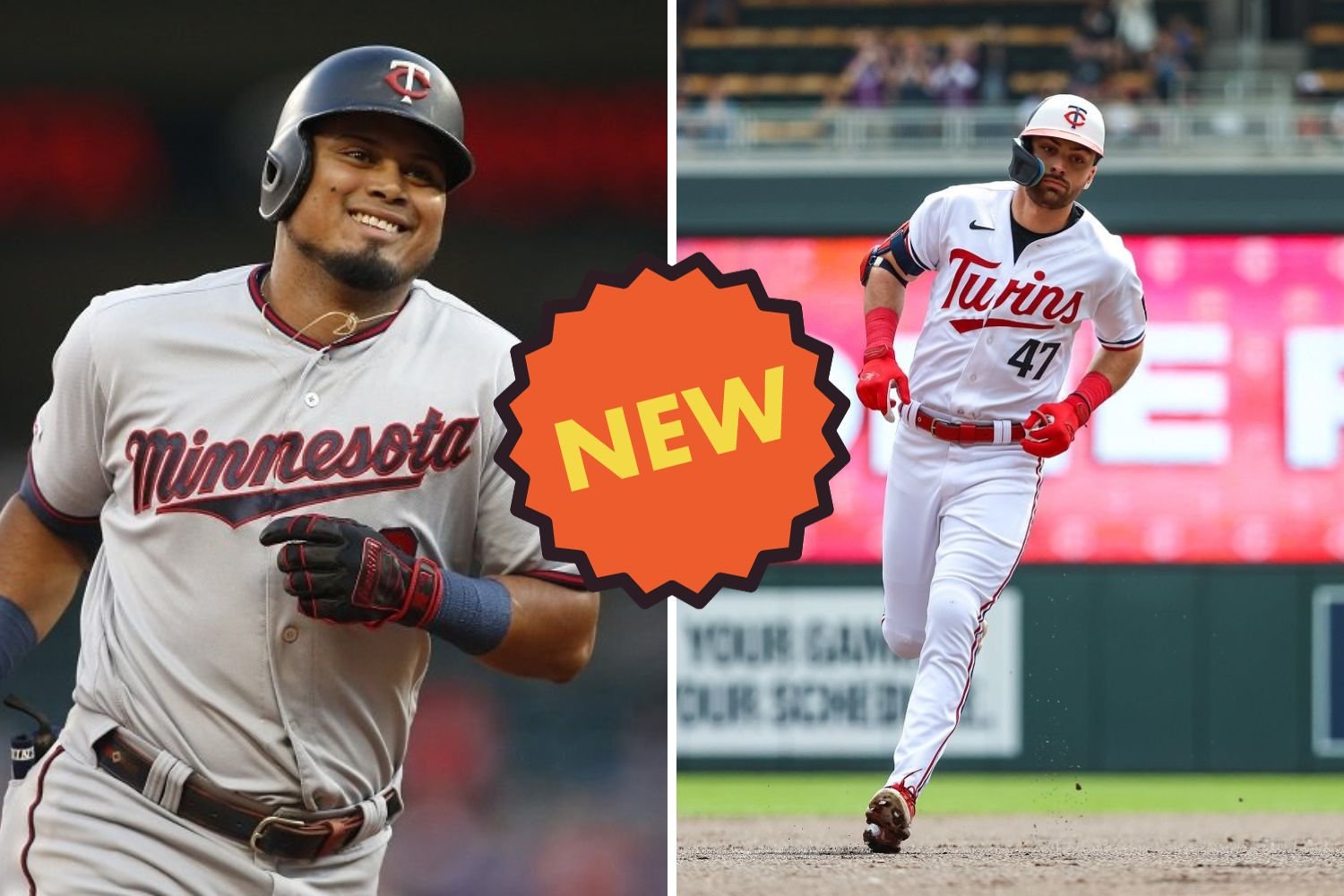 You have to give to get, and that reality makes high-profile trades in MLB a dangerous dance for front offices. Giving up high-caliber talent is a risky play, leading to heavy criticism and scrutiny when it goes wrong. Traded players going on to have success elsewhere is especially tough to stomach when they are filling roles and delivering value in a way that the Twins could sorely use. The loss of David Ortiz is notorious for this reason, although it wasn't a trade (even worse, a DFA). Watching Ortiz emerge as an elite slugger and postseason hero in Boston was all the more gutting for Twins fans as their own team struggled to generate power, find a competent DH, or break through in the postseason following his departure. I also think back to moves like the Johan Santana and Matt Garza trades, which took place before the 2008 season. It's not just that these deals sent out coveted, premier talent and brought back (ultimately) underwhelming returns; it's that the Twins had no replacements for what Santana and Garza brought to the table. Their incomplete rotation held them back in 2008 (they missed the playoffs by one game, with Nick Blackburn as their No. 1 starter) and pitching would soon morph from a unique strength of the early Gardenhire-Era winners into a franchise-derailing deficiency. When trades contribute to turning an area of strength into one of dire weakness, that's some bad business. That brings me to this front office and some of their boldest, most ambitious moves. The Twins have not been shy about trading distinguished, well-liked players and prospects under Derek Falvey's regime. Some of those players have gone on to have considerable success elsewhere. But what's striking to me, in looking back at some of their most notable trades, is how those talent losses have been offset by players who emerged to distinctly fill the holes left behind. Allow me to cite a few examples of how we've seen this dynamic play out: Luis Arráez was replaced by Edouard Julien. Their belief in Julien, who was then an emerging prospect on the brink of big-league readiness, undoubtedly played a large role in the front office's willingness to part with Arráez in the Pablo López trade. It's almost astonishing how neatly and seamlessly that transition has taken place. It'd be a stretch to say Arráez and Julien are the same player–they are stylistically very different–but in terms of value and function, they are essentially the same. Both are premier left-handed hitters and on-base threats atop the lineup. Both are fringy defensive second basemen who are arguably best suited for first base or DH long-term. While Arráez enjoyed a career year with his new team in 2023 (133 OPS+, .369 wOBA, 3.4 fWAR in 147 games), Julien damn near replicated that production as a rookie (130 OPS+, .366 wOBA, 2.8 fWAR in 109 games). Meanwhile, the player Minnesota received back in exchange for Arráez was, himself, a replacement for a key piece they'd traded two years earlier. José Berríos was replaced by Pablo López. This replacement, unlike Julien for Arráez, was not immediate. When the Twins opportunistically traded Berríos to Toronto at the 2021 deadline, they had no readily apparent replacement for him as a rotation-fronting workhorse starter. They felt that pain in 2022, trying to make do with a patchwork rotation held together by Chris Archer and Dylan Bundy, before executing their signature move the following offseason: Arráez for López. Shortly after acquiring him, the Twins gave López what they were never inclined to give Berríos: a long-term contract extension. The former Marlin followed up with a first season arguably better than any in Berríos's career, including a pair of dominant playoff wins. It remains to be seen what the Twins will get out of the package they received from Toronto, but they have succeeded in their mission to replace Berríos with the pitcher we always wanted him to be: a legitimate ace who can go toe-to-toe with any opponent. Mitch Garver was replaced by Ryan Jeffers. Here's a fun fact: Among catchers who made at least 300 plate appearances last year, Garver ranked first in wOBA (.374). Right behind him at No. 2, with a .369 wOBA? Jeffers, of course. The Twins traded away the best-hitting catcher in baseball, and fell back on the second-best hitting catcher in baseball as their new starter. We use the term "catcher" somewhat loosely there, because Garver made only 27 starts behind the plate last year, as injuries and defensive decline have moved him into more of a designated hitter role. Really, there was no better offensive catcher than Jeffers in 2023, and at age 26, he's only settling into his prime. Power-hitting catchers are extraordinarily difficult to find, but as a Twins fan, you wouldn't know it. They traded one of the best in the league and barely missed a beat. Brusdar Graterol was replaced by Jhoan Durán. In order to acquire Kenta Maeda ahead of the 2020 season, the Twins were forced to part with a special talent in Graterol, whose triple-digit heater ensorceled fans during a late-season debut in 2019. The young righthander was viewed as a potential flame-throwing, shutdown force in the late innings, and he has indeed become that for the Dodgers. Meanwhile, the Twins have developed their own (superior?) version. Durán, who'd been acquired two years earlier in a deadline sell-off, has amazingly become all that we hoped Graterol would be: a healthy, dominant closer with overpowering heat who thrives in high leverage. The Twins franchise went six decades without ever having guys who throw like this, and suddenly they get two in rapid succession. It's almost inconceivable. Graterol set the Twins record for fastest pitch ever, and then a few years later, we've got Duran casually pacing the major leagues in velocity. Losing great players is never easy, but Minnesota's front office has managed to consistently soften the blow by ushering in replacements for these star talents who are at least as good, and in most these cases, I'd argue they've found something even better. From my view, it's been the defining strength that fuels their success and inspires confidence. Why does it matter now? Because the Twins are likely deep in trade conversations as we speak. If they're aiming high in their pursuit of a viable facsimile of the 2023 version of Sonny Gray, that will mean putting some quality names on the table–maybe players or prospects whom fans hold in a similar esteem to Arráez, Berríos, Garver and Graterol. But if their history is any indication, we can feel confident that the Twins will have another star player lined up to fill the void they leave behind. What's your level of confidence that this is a repeatable skill the Minnesota front office possesses? Does that color your opinions about their offseason options? Let's discuss it.
- 67 comments
-
- 8
-
-
- edouard julien
- pablo lopez
- (and 2 more)
-
Last week, I counted down my choices for the top 20 player assets in the Minnesota Twins organization as we head into 2024. Today we'll take a step back to review the list, as well as what it tells us about Minnesota's evolving talent landscape and competitive position. Image courtesy of Erik Williams, Jesse Johnson, Matt Krohn (USA Today Sports), William Parmeter At the start of each new year, I take a shot at creating a hierarchical inventory of the top 20 players in the Twins organization, based on their distinct value to the franchise and its future. While far from a scientific exercise, it provides an opportunity to think about all players and prospects through a strategic lens. Accounting for age, contracts, control, scarcity, and – above all – talent, which players are most indispensable to the front office's vision for winning a championship? This process always creates some challenging decisions: How do you compare the value of a top prospect who hasn't reached the majors (but will eventually have six-plus full years of team control), versus a highly-paid veteran who lacks those traits but has proved his mettle in the majors? I'll talk through a few of those decisions, plus some revelations that struck me as I went through this exercise, shortly. But first, here's a recap of the full list, which I rolled out in four installments: Part 1 (16-20), Part 2 (11-15), Part 3 (6-10), and Part 4 (1-5). Listed next to each player is his method of acquisition. 20. Chris Paddack, RHP (Trade) 19. Austin Martin, CF (Trade) 18. Max Kepler, RF (Int'l. Signing) 17. Alex Kirilloff, 1B (Draft - 1st Rd) 16. David Festa, RHP (Draft - 13th Rd) 15. Louie Varland, RHP (Draft - 15th Rd) 14. Jorge Polanco, 2B (Int'l. Signing) 13. Marco Raya, RHP (Draft - 4th Rd) 12. Matt Wallner, RF (Draft - 1st Rd Supp) 11. Jhoan Durán, RHP (Trade) 10. Joe Ryan, RHP (Trade) 9. Emmanuel Rodriguez, CF (Int'l. Signing) 8. Edouard Julien, 2B (Draft - 18th Rd) 7. Bailey Ober, RHP (Draft - 12th Rd) 6. Carlos Correa, SS (Free Agent) 5. Ryan Jeffers, C (Draft Pick - 2nd Rd) 4. Brooks Lee, SS (Draft Pick - 1st Rd) 3. Pablo López, RHP (Trade) 2. Royce Lewis, 3B (Draft - 1st Rd) 1. Walker Jenkins, CF (Draft - 1st Rd) At a high level, as I look at these rankings and compare them to last year's, the first thing that strikes me is how much the overall talent level in the organization has improved in 12 months' time. While there was one staggeringly steep drop-off at the very top, which I'll address shortly, we also find a lot of newcomers in the top 10, including a few players who emerged last year to distinguish themselves as true franchise cornerstones. In particular I'm thinking about these three new arrivals in the top five: Lewis (No. 6 last year), López (No. 9 last year, after I updated the rankings), and Jeffers (No. 16). Having Game 1 battery-mates and a versatile lineup centerpiece like Lewis in these spots is a very favorable setup. All three are in their mid-20s; under team control for three or more years; and coming off excellent seasons in the majors. As I look at the Twins franchise at this moment, that trio represents the foundation for stability and success, with Jenkins and Lee mixing in as elite prospects on the way (or, trade chips to support the cause right away). The Just-Missed List There were a lot of players who floated around the fringe of this top 20 in my mind and were strongly considered for inclusion, but didn't quite make the cut. This group included, in no particular order: Jose Miranda, Kody Funderburk, Charlee Soto, Griffin Jax, Brock Stewart, Trevor Larnach, Jair Camargo and Willi Castro. The "just-missed list" did not, however, include last year's No. 1-ranked player, who sadly cannot really be viewed as having positive asset value as we speak. Bye Bye Buxton Buxton ranked No. 1 when I compiled these rankings last year. Although some fans act like his contract is some sort of debilitating hindrance, that's not true at all. His annual guaranteed base of $15 million is not prohibitive in today's MLB economy. Coming off back-to-back 4-WAR seasons and his first All-Star appearance, I didn't find it too controversial to view him as the organization's most treasured player asset a year ago, even while acknowledging the historical availability limitations. Unfortunately, Buxton's 2023 season more or less represented a worst-case scenario, which tanked his stock and sent him spiraling out of the top 20. Even as one of the world's foremost Buxton cheerleaders, I can't deny the reality: He's impossible to confidently plan around in any way at this point. Last year, he tried battling through severe knee pain and was reduced from superstar center fielder to mediocre DH—and still failed to reach 100 games played. The Twins are hopeful that he can bounce back and return to center field next year. As is Buxton; as am I. But I try not to let hopefulness guide these rankings. Right now, Buxton is owed $75 million over the next five years and his future is in limbo. Contemplating Correa's Value as an Asset Correa, whom I ranked No. 2 behind Buxton last year on my revised list after he signed, also saw a drop this year (to sixth), but not nearly to the same degree. He, too, is coming off a pretty crummy season, but it wasn't nearly as worrisome as Buxton's. One player was starring in the playoffs, while the other was limited to a single meager pinch-hit appearance, and that's the most current image we have of both. Remember: these rankings are a snapshot in time. I considered moving Correa down further, because he's owed a lot of money for the next several years and that's a big factor, given Minnesota's self-imposed financial constraints. But at the end of the day, I have to remind myself: This is a caliber of player to whom the Twins almost never have access, who ended up back here due to a borderline miracle with a contract most organizations would happily take. I believe the Twins, in spite of their newfound spending concerns, are still very glad to have him, price tag and all. Looking Back at the López Trade Thinking about players through this lens of asset evaluation can be a really interesting way to judge trade outcomes, because it puts the result in plain terms: Did you end up with something more valuable to your organization than what you gave up? If you did, then you can pretty safely say it was a good trade. Last year, before the trade, I had Luis Arráez ranked 10th among Twins player assets. I was probably lower on him than most, weighing his marginal defensive value and physical breakdown concerns alongside the system's array of potential replacements. Arraez went on to have a fantastic year for the Marlins—one that surely would've raised his stock this time around if he were still here. Nonetheless, it's hard to deny that the Twins are in better position after making the move. In my revised rankings following the trade, I had López ninth, viewing him as similar in value to Arraez. (Sign of a quality trade.) López went on to raise his stock massively in the 2023 season, transforming into the rarest of commodities: a legitimate ace starter in his prime. His performance, especially along with a contract extension that keeps him in Minnesota for the next four years at a very reasonable rate, vaulted him to the No. 3 spot in this year's rankings. In addition to López taking that step forward, we also saw Eddie Julien's breakthrough on the big-league stage. He narrowly missed the top 20 a year ago but finds himself now firmly in the top 10 after a convincing debut. I have Julien ranked higher now (eighth) than I had Arraez last year, because he's basically a 1:1 replacement, with more team control and fewer injury concerns. He has a similar defensive profile and similar offensive production (albeit a very different way of getting there). The Twins have Julien for six more years, compared to the three they had remaining for Arraez. Is Brooks Lee the Team's Best Trade Bait? For many MLB organizations, it seems fair to say that Lee would rank No. 1 on a list like this. He's the No. 18 prospect in all of baseball, according to MLB Pipeline, and he's pretty much major league-ready. Yet, here we find him ranked fourth in the Twins organization. It's not a knock on the kid, whom I'm extremely high on. It's just that I couldn't sell myself on him being more indispensable than any of the three above him (López, Lewis, Jenkins), especially because Lee projects to play one of several infield positions—third, short, and second—that are currently occupied by apparent long-term fixtures for Minnesota When I notice that a player is ranked lower on this Twins-specific list than he would be in many other organizations, it's a good indicator that the player could be viewed as a valuable trade chip. The same logic led me to name Arráez as one of the team's most likely trade candidates when recapping last year's list, days before he was, in fact, dealt. Let's Talk Walker at No. 1 As a final topic to dissect, I want to unpack the decision to rank Walker Jenkins as the organization's No. 1 player asset heading into 2024. Many commenters objected to the idea of a barely-tested teenager who's not close to the majors outranking players like Lewis and López—star players in their primes who have already arrived and are making it happen. I get it! Trust me. I wrestled a lot with where to rank Jenkins (and Lee, for that matter), given the inherent uncertainty of the prospects and future promises in baseball. The thing is, if you take a scrutinizing eye to anyone on this list, you're going to find blemishes or shades of reasonable doubt. Lewis has been constantly besieged by injuries for three straight years. (Sound familiar?) López has had one complete season of truly elite pitching, and there's no guarantee that he repeats it. Jeffers, Julien, Ober, Wallner? Regression could strike any of these guys, with their limited track records. You could argue that the "shiny new toy" effect is in play with Jenkins, and it is! But it's legitimate. Not only were the Twins and their fans watching with awe what he did during this pro debut, but the baseball world at large stood shoulder-to-shoulder with them. People in the organization are out of their minds about the North Carolina product. MLB.com's Jim Callis recently predicted that Jenkins will be the No. 2 ranked prospect in all of baseball by the end of 2024. It's very possible Jenkins's stock will never be this high again. Probable, even. But if it maintains, given the established MLB talents he is edging in these rankings, we are in for a hell of a ride over the next decade. The random twist of fate that pushed Minnesota from 13th to fifth in the 2023 draft order could end up as a truly franchise-altering moment, with epic consequences. Right now, we can dream. That's the fun part about these rankings: a snapshot in time, to start the new year. Bring on 2024. I'd love to hear your thoughts on the overall rankings, notable omissions, or changes you would have made. Huge thanks to everyone who's followed along and shared their thoughts. I read and enjoy every comment for this series! View full article
-
Breaking Down the Twins Organization's Talent Landscape Entering 2024
Nick Nelson posted an article in Twins
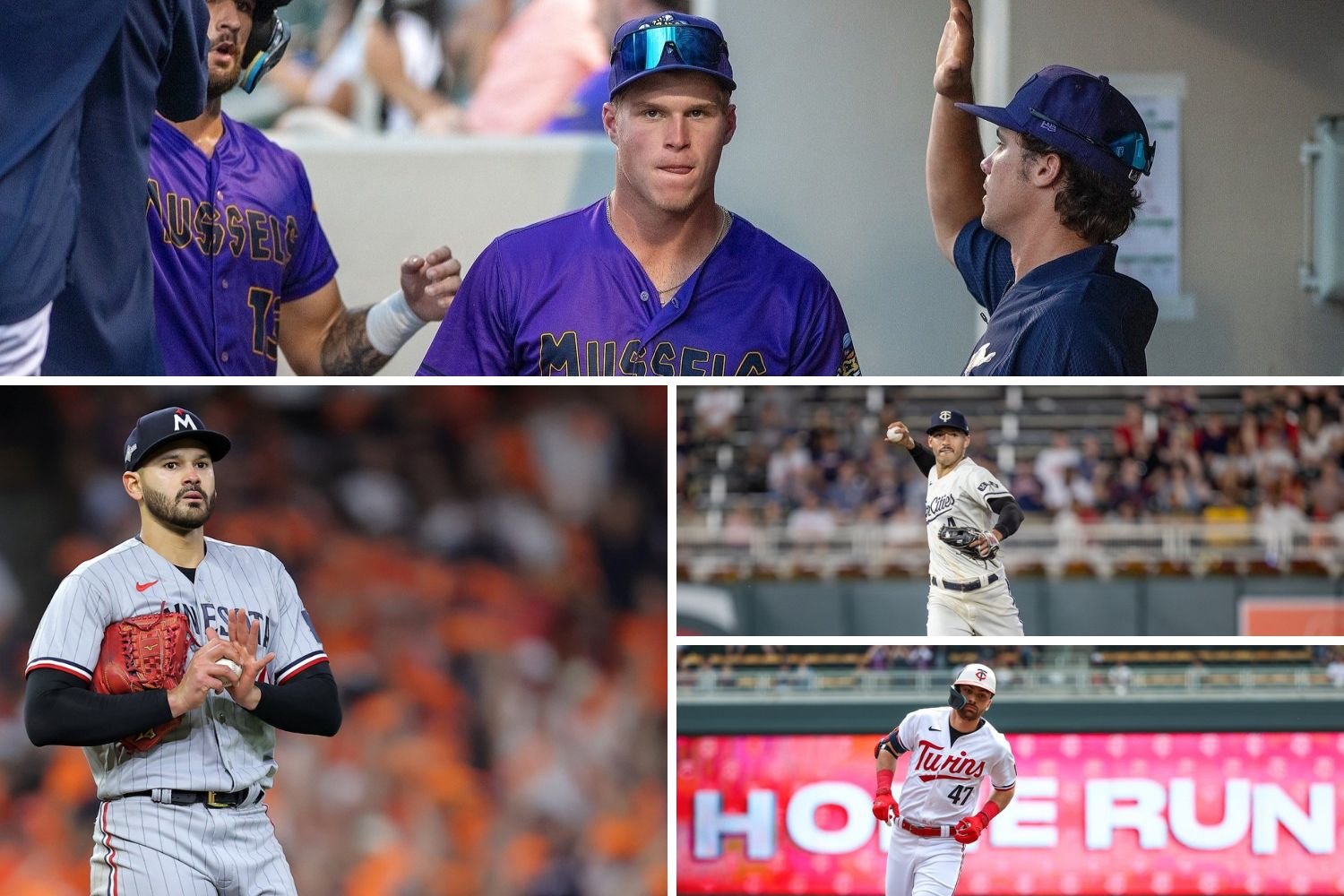 At the start of each new year, I take a shot at creating a hierarchical inventory of the top 20 players in the Twins organization, based on their distinct value to the franchise and its future. While far from a scientific exercise, it provides an opportunity to think about all players and prospects through a strategic lens. Accounting for age, contracts, control, scarcity, and – above all – talent, which players are most indispensable to the front office's vision for winning a championship? This process always creates some challenging decisions: How do you compare the value of a top prospect who hasn't reached the majors (but will eventually have six-plus full years of team control), versus a highly-paid veteran who lacks those traits but has proved his mettle in the majors? I'll talk through a few of those decisions, plus some revelations that struck me as I went through this exercise, shortly. But first, here's a recap of the full list, which I rolled out in four installments: Part 1 (16-20), Part 2 (11-15), Part 3 (6-10), and Part 4 (1-5). Listed next to each player is his method of acquisition. 20. Chris Paddack, RHP (Trade) 19. Austin Martin, CF (Trade) 18. Max Kepler, RF (Int'l. Signing) 17. Alex Kirilloff, 1B (Draft - 1st Rd) 16. David Festa, RHP (Draft - 13th Rd) 15. Louie Varland, RHP (Draft - 15th Rd) 14. Jorge Polanco, 2B (Int'l. Signing) 13. Marco Raya, RHP (Draft - 4th Rd) 12. Matt Wallner, RF (Draft - 1st Rd Supp) 11. Jhoan Durán, RHP (Trade) 10. Joe Ryan, RHP (Trade) 9. Emmanuel Rodriguez, CF (Int'l. Signing) 8. Edouard Julien, 2B (Draft - 18th Rd) 7. Bailey Ober, RHP (Draft - 12th Rd) 6. Carlos Correa, SS (Free Agent) 5. Ryan Jeffers, C (Draft Pick - 2nd Rd) 4. Brooks Lee, SS (Draft Pick - 1st Rd) 3. Pablo López, RHP (Trade) 2. Royce Lewis, 3B (Draft - 1st Rd) 1. Walker Jenkins, CF (Draft - 1st Rd) At a high level, as I look at these rankings and compare them to last year's, the first thing that strikes me is how much the overall talent level in the organization has improved in 12 months' time. While there was one staggeringly steep drop-off at the very top, which I'll address shortly, we also find a lot of newcomers in the top 10, including a few players who emerged last year to distinguish themselves as true franchise cornerstones. In particular I'm thinking about these three new arrivals in the top five: Lewis (No. 6 last year), López (No. 9 last year, after I updated the rankings), and Jeffers (No. 16). Having Game 1 battery-mates and a versatile lineup centerpiece like Lewis in these spots is a very favorable setup. All three are in their mid-20s; under team control for three or more years; and coming off excellent seasons in the majors. As I look at the Twins franchise at this moment, that trio represents the foundation for stability and success, with Jenkins and Lee mixing in as elite prospects on the way (or, trade chips to support the cause right away). The Just-Missed List There were a lot of players who floated around the fringe of this top 20 in my mind and were strongly considered for inclusion, but didn't quite make the cut. This group included, in no particular order: Jose Miranda, Kody Funderburk, Charlee Soto, Griffin Jax, Brock Stewart, Trevor Larnach, Jair Camargo and Willi Castro. The "just-missed list" did not, however, include last year's No. 1-ranked player, who sadly cannot really be viewed as having positive asset value as we speak. Bye Bye Buxton Buxton ranked No. 1 when I compiled these rankings last year. Although some fans act like his contract is some sort of debilitating hindrance, that's not true at all. His annual guaranteed base of $15 million is not prohibitive in today's MLB economy. Coming off back-to-back 4-WAR seasons and his first All-Star appearance, I didn't find it too controversial to view him as the organization's most treasured player asset a year ago, even while acknowledging the historical availability limitations. Unfortunately, Buxton's 2023 season more or less represented a worst-case scenario, which tanked his stock and sent him spiraling out of the top 20. Even as one of the world's foremost Buxton cheerleaders, I can't deny the reality: He's impossible to confidently plan around in any way at this point. Last year, he tried battling through severe knee pain and was reduced from superstar center fielder to mediocre DH—and still failed to reach 100 games played. The Twins are hopeful that he can bounce back and return to center field next year. As is Buxton; as am I. But I try not to let hopefulness guide these rankings. Right now, Buxton is owed $75 million over the next five years and his future is in limbo. Contemplating Correa's Value as an Asset Correa, whom I ranked No. 2 behind Buxton last year on my revised list after he signed, also saw a drop this year (to sixth), but not nearly to the same degree. He, too, is coming off a pretty crummy season, but it wasn't nearly as worrisome as Buxton's. One player was starring in the playoffs, while the other was limited to a single meager pinch-hit appearance, and that's the most current image we have of both. Remember: these rankings are a snapshot in time. I considered moving Correa down further, because he's owed a lot of money for the next several years and that's a big factor, given Minnesota's self-imposed financial constraints. But at the end of the day, I have to remind myself: This is a caliber of player to whom the Twins almost never have access, who ended up back here due to a borderline miracle with a contract most organizations would happily take. I believe the Twins, in spite of their newfound spending concerns, are still very glad to have him, price tag and all. Looking Back at the López Trade Thinking about players through this lens of asset evaluation can be a really interesting way to judge trade outcomes, because it puts the result in plain terms: Did you end up with something more valuable to your organization than what you gave up? If you did, then you can pretty safely say it was a good trade. Last year, before the trade, I had Luis Arráez ranked 10th among Twins player assets. I was probably lower on him than most, weighing his marginal defensive value and physical breakdown concerns alongside the system's array of potential replacements. Arraez went on to have a fantastic year for the Marlins—one that surely would've raised his stock this time around if he were still here. Nonetheless, it's hard to deny that the Twins are in better position after making the move. In my revised rankings following the trade, I had López ninth, viewing him as similar in value to Arraez. (Sign of a quality trade.) López went on to raise his stock massively in the 2023 season, transforming into the rarest of commodities: a legitimate ace starter in his prime. His performance, especially along with a contract extension that keeps him in Minnesota for the next four years at a very reasonable rate, vaulted him to the No. 3 spot in this year's rankings. In addition to López taking that step forward, we also saw Eddie Julien's breakthrough on the big-league stage. He narrowly missed the top 20 a year ago but finds himself now firmly in the top 10 after a convincing debut. I have Julien ranked higher now (eighth) than I had Arraez last year, because he's basically a 1:1 replacement, with more team control and fewer injury concerns. He has a similar defensive profile and similar offensive production (albeit a very different way of getting there). The Twins have Julien for six more years, compared to the three they had remaining for Arraez. Is Brooks Lee the Team's Best Trade Bait? For many MLB organizations, it seems fair to say that Lee would rank No. 1 on a list like this. He's the No. 18 prospect in all of baseball, according to MLB Pipeline, and he's pretty much major league-ready. Yet, here we find him ranked fourth in the Twins organization. It's not a knock on the kid, whom I'm extremely high on. It's just that I couldn't sell myself on him being more indispensable than any of the three above him (López, Lewis, Jenkins), especially because Lee projects to play one of several infield positions—third, short, and second—that are currently occupied by apparent long-term fixtures for Minnesota When I notice that a player is ranked lower on this Twins-specific list than he would be in many other organizations, it's a good indicator that the player could be viewed as a valuable trade chip. The same logic led me to name Arráez as one of the team's most likely trade candidates when recapping last year's list, days before he was, in fact, dealt. Let's Talk Walker at No. 1 As a final topic to dissect, I want to unpack the decision to rank Walker Jenkins as the organization's No. 1 player asset heading into 2024. Many commenters objected to the idea of a barely-tested teenager who's not close to the majors outranking players like Lewis and López—star players in their primes who have already arrived and are making it happen. I get it! Trust me. I wrestled a lot with where to rank Jenkins (and Lee, for that matter), given the inherent uncertainty of the prospects and future promises in baseball. The thing is, if you take a scrutinizing eye to anyone on this list, you're going to find blemishes or shades of reasonable doubt. Lewis has been constantly besieged by injuries for three straight years. (Sound familiar?) López has had one complete season of truly elite pitching, and there's no guarantee that he repeats it. Jeffers, Julien, Ober, Wallner? Regression could strike any of these guys, with their limited track records. You could argue that the "shiny new toy" effect is in play with Jenkins, and it is! But it's legitimate. Not only were the Twins and their fans watching with awe what he did during this pro debut, but the baseball world at large stood shoulder-to-shoulder with them. People in the organization are out of their minds about the North Carolina product. MLB.com's Jim Callis recently predicted that Jenkins will be the No. 2 ranked prospect in all of baseball by the end of 2024. It's very possible Jenkins's stock will never be this high again. Probable, even. But if it maintains, given the established MLB talents he is edging in these rankings, we are in for a hell of a ride over the next decade. The random twist of fate that pushed Minnesota from 13th to fifth in the 2023 draft order could end up as a truly franchise-altering moment, with epic consequences. Right now, we can dream. That's the fun part about these rankings: a snapshot in time, to start the new year. Bring on 2024. I'd love to hear your thoughts on the overall rankings, notable omissions, or changes you would have made. Huge thanks to everyone who's followed along and shared their thoughts. I read and enjoy every comment for this series!
- 11 comments
-
- 11
-
-
- walker jenkins
- byron buxton
- (and 2 more)
-
I'm also surprised there hasn't been more disagreement raised around Jeffers and his ranking. I went back and forth on him a lot. But I'm a huge believer in the value of catchers, beyond what is statistically evident, and I think he + Vazquez had an underrated impact on the team's pitching results last year.
-
Not impossible! If he performs like he did in his debut it's going to be hard to hold him back. Reaching the majors at 19 would be pretty wild and could set him on a Hall of Fame track, of course.
-
Buxton is my favorite Twins player but in the name of objectivity I couldn't bring myself to include him in this top 20. He wasn't even close to be honest. I still don't think his contract is any kind of Josh Donaldson-esque disaster but I don't know how anyone could argue he has positive asset value at this moment in time, with so much uncertainty and coming off the season he just had. A major fall from last year's No. 1 finisher on this list. I'll discuss that decision in a little more depth in next week's recap.