



Nick Nelson
-
Posts
8,319 -
Joined
-
Last visited
-
Days Won
56
Content Type
Profiles
News
Minnesota Twins Videos
2026 Minnesota Twins Top Prospects Ranking
2022 Minnesota Twins Draft Picks
Minnesota Twins Free Agent & Trade Rumors, Notes, & Tidbits
Guides & Resources
2023 Minnesota Twins Draft Picks
The Minnesota Twins Players Project
2024 Minnesota Twins Draft Picks
2025 Minnesota Twins Draft Pick Tracker
2026 Minnesota Twins Draft Tracker: Picks & Bonuses
Forums
Blogs
Events
Store
Downloads
Gallery
Everything posted by Nick Nelson
-
Welcome to the first "real" episode of the Twins Off-Daily Podcast as we tackle an ugly Baltimore series and what comes next for the Twins. Image courtesy of Brock Beauchamp Nick, Gregg, Lou and Cody commiserate over an ugly sweep in Baltimore, and look ahead to hopefully brighter days in an upcoming softer stretch of the schedule. Listen below, or on Apple, Spotify, or wherever else you get your podcasts. Subscribe for a new episode every time the Twins have a day off! View full article
-
 Nick, Gregg, Lou and Cody commiserate over an ugly sweep in Baltimore, and look ahead to hopefully brighter days in an upcoming softer stretch of the schedule. Listen below, or on Apple, Spotify, or wherever else you get your podcasts. Subscribe for a new episode every time the Twins have a day off!
 -
Byron Buxton Needs to Catch Up to the Fastball
Nick Nelson replied to Nick Nelson's topic in Twins Daily Front Page News
Good post but IMO the chasing and lack of discipline all tie back to the fastball problems. He's falling behind in the count because he can't hit fastballs in the zone, and then he's getting junk outside the zone when he has to protect. It's a pattern that played out in literally every single AB on Saturday. I would say his batted ball profile was pretty great prior to last year. -
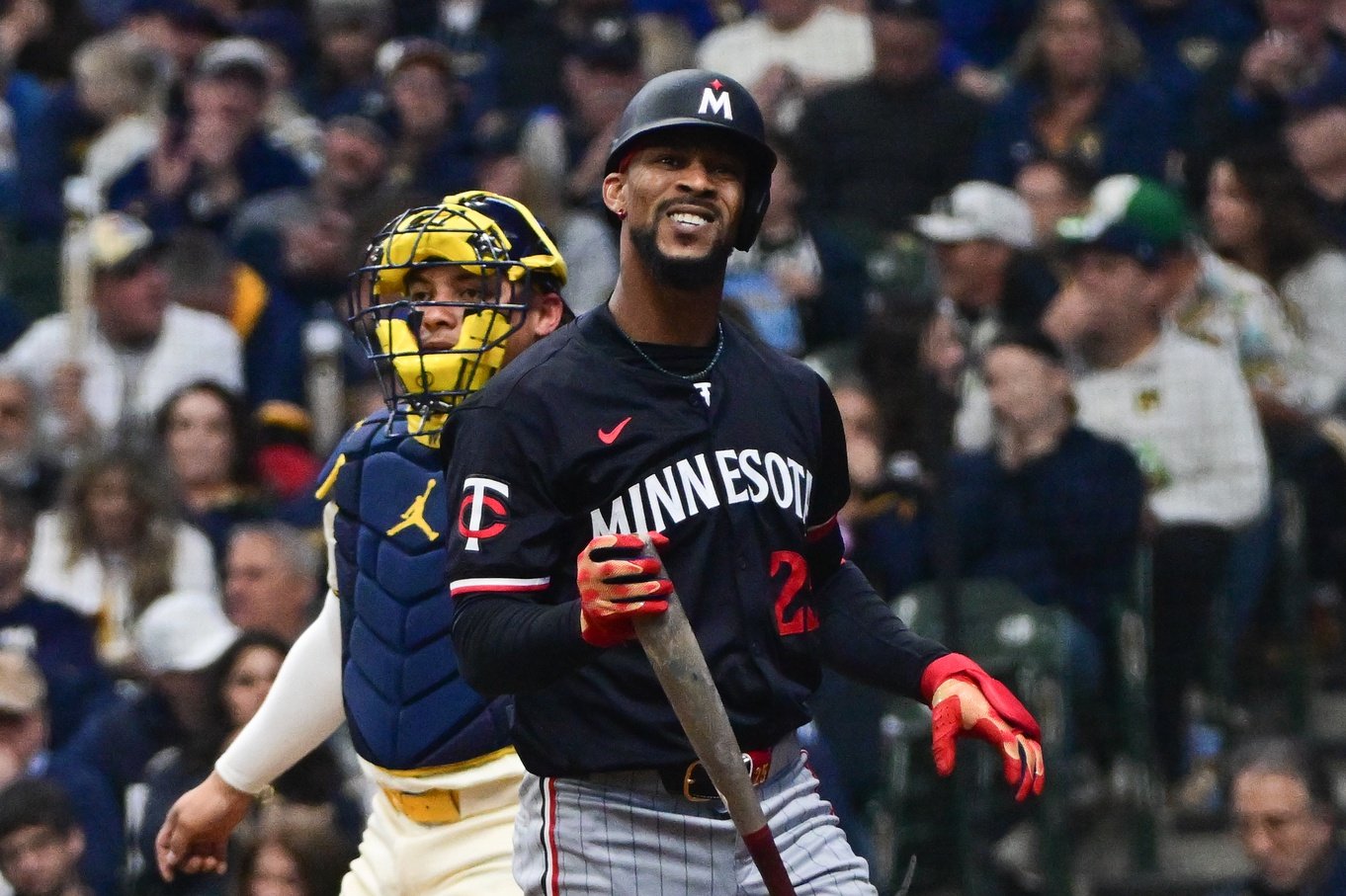 Hitting fastballs is a primary ingredient to success for most hitters, and that's certainly true for Byron Buxton. When he's going good, Buxton is reactively turning on heaters with his lightning-quick wrists and bashing those things to all fields with authority. Last year, despite mediocre production overall, he still posted a .363 wOBA against fastballs, notching 26 of his 35 extra-base hits against them. In 2022, Buxton's wOBA against fastballs was .373, and in 2021 – when at his absolute best – it was a ridiculous .464. An article on FanGraphs a couple of years ago dubbed him "Byron Buxton, Destroyer of Fastballs." Early in the 2024 season, Buxton has not lived up this reputation. Instead, it is the fastballs that are destroying him, leading to some very ugly at-bats and poor results. Through 14 games, the 30-year-old is batting .182 with zero extra-base hits against fastballs, good for a .223 wOBA. His most recent at-bats seem perfectly emblematic of the problems that are presenting in Buxton's plate appearances, while also making clear that opposing pitchers are aware, and taking full advantage. His most recent start came in the nightcap of Saturday's doubleheader at Detroit. In his first at-bat against Matt Manning, Buxton saw two pitches, both fastballs in the zone. He fouled away the first, and hit a sac fly on the second. In the next at-bat, Manning once again came after Buxton with two fastballs in the zone. The outfielder whiffed on the first, fouled away the second, and just like that, he was down 0-2, setting up Manning to unleash sweepers and induce weak contact on a ground-out to third. In his third AB of the game, facing Manning again, a similar script played out. Buxton fell behind 0-2, fouling away three straight fastballs in the zone, at which point the pitcher froze him by dropping a curveball right over the plate for a called strike three. The inability of Buck to connect solidly with any of these four-seamers, which were barely reaching the mid-90s, is noticeable. It's not just high velocity that's beating him; it's any velocity. In his fourth and final at-bat of the game, Buxton faced lefthander Joey Wentz – a seemingly favorable match-up suited to help him break free from his growing slump. Wentz followed the same plan as Manning did in each of the previous three at-bats, starting Buxton with two straight fastballs in the zone--although the second was called a ball. The following curveball at the knees was also called a ball, giving Buxton an advantageous 2-1 count, with two runners on and nobody out; a chance to break the game open. Wentz turned back to the fastball, throwing it on the inner part of the plate at the belt. Buxton swung and flied out meekly to center. By the conclusion of the game, through 50 plate appearances on the season, Buxton held a .196/.240/.261 slash line with 18 strikeouts and one walk. He has yet to homer, and hasn't notched an extra-base hit since doubling three times in the first five games. Obviously, Buxton has not been effective offensively. When you watch his at-bats and look closely at the numbers, it isn't too tough to see why. Given what happened last year, when he staggered and slumped into oblivion over the summer before being shut down in August, it's tempting to wonder whether underlying injury issues are at play. But Buxton has looked good and been very valuable both defensively and on the basepaths. If we assume this fastball futility is not driven by a specific health concern, there are a couple of different ways to view the matter. One is more pessimistic and the other more optimistic. The pessimistic view: some of the physical gifts that made Buxton a special hitter are eroding. Maybe his wrists just aren't as quick as they used to be, or he's struggling to engage his legs as rapidly as he once did. At 30, he's theoretically moving into the tail end of his athletic prime, and all of the injuries he's dealt with over the years could be evincing their cumulative toll. It's possible. I don't want to dismiss that scenario. But it does strike me as a potential overreaction to a short period's worth of struggles from a historically slump-prone player – and also a little implausible, when you consider how well he's handling other aspects of the game. What seems likelier to me is the more hopeful scenario: Buxton simply needs to catch up. He didn't appear after Aug. 1 last year, and played somewhat sparingly in the spring as Rocco Baldelli managed his reps. The Twins, as a team, have faced a disruptive schedule thus far, with off days and rainouts; Buxton has received a couple extra days off, further impeding his ability to see pitches and find a rhythm. (Although, notably, he has appeared at least as a sub in every game.) For major-league hitters, finding themselves routinely behind on fastballs in the early weeks of the season is not uncommon. It's one reason pitchers are considered to be at an advantage in April. Given Buxton's circumstances, it is perfectly understandable why he might be especially susceptible to this effect. Eventually, he will catch up. And as we've seen many times in the past with Buxton, when it starts to click for him things can get serious in a hurry. The Twins could sure use that burst from their best remaining player at this moment. The team's outlook and upside this year hinge so much on the core trio of Buxton, Carlos Correa and Royce Lewis. For the time being, Buxton is left to carry that load individually. As a genuine MVP-caliber talent, he's capable. As long as he can stay on the field, it's only a matter of time before Buxton closes this gap, like he has so many others.
 -
With the two other members of Minnesota's core trio sidelined by injuries, pressure is mounting for Byron Buxton to step up and power the lineup. So far, he's been falling short, and it's not very hard to see why. Ironically, one of the game's fastest players is struggling to adjust to speed. Image courtesy of Benny Sieu-USA TODAY Sports Hitting fastballs is a primary ingredient to success for most hitters, and that's certainly true for Byron Buxton. When he's going good, Buxton is reactively turning on heaters with his lightning-quick wrists and bashing those things to all fields with authority. Last year, despite mediocre production overall, he still posted a .363 wOBA against fastballs, notching 26 of his 35 extra-base hits against them. In 2022, Buxton's wOBA against fastballs was .373, and in 2021 – when at his absolute best – it was a ridiculous .464. An article on FanGraphs a couple of years ago dubbed him "Byron Buxton, Destroyer of Fastballs." Early in the 2024 season, Buxton has not lived up this reputation. Instead, it is the fastballs that are destroying him, leading to some very ugly at-bats and poor results. Through 14 games, the 30-year-old is batting .182 with zero extra-base hits against fastballs, good for a .223 wOBA. His most recent at-bats seem perfectly emblematic of the problems that are presenting in Buxton's plate appearances, while also making clear that opposing pitchers are aware, and taking full advantage. His most recent start came in the nightcap of Saturday's doubleheader at Detroit. In his first at-bat against Matt Manning, Buxton saw two pitches, both fastballs in the zone. He fouled away the first, and hit a sac fly on the second. In the next at-bat, Manning once again came after Buxton with two fastballs in the zone. The outfielder whiffed on the first, fouled away the second, and just like that, he was down 0-2, setting up Manning to unleash sweepers and induce weak contact on a ground-out to third. In his third AB of the game, facing Manning again, a similar script played out. Buxton fell behind 0-2, fouling away three straight fastballs in the zone, at which point the pitcher froze him by dropping a curveball right over the plate for a called strike three. The inability of Buck to connect solidly with any of these four-seamers, which were barely reaching the mid-90s, is noticeable. It's not just high velocity that's beating him; it's any velocity. In his fourth and final at-bat of the game, Buxton faced lefthander Joey Wentz – a seemingly favorable match-up suited to help him break free from his growing slump. Wentz followed the same plan as Manning did in each of the previous three at-bats, starting Buxton with two straight fastballs in the zone--although the second was called a ball. The following curveball at the knees was also called a ball, giving Buxton an advantageous 2-1 count, with two runners on and nobody out; a chance to break the game open. Wentz turned back to the fastball, throwing it on the inner part of the plate at the belt. Buxton swung and flied out meekly to center. By the conclusion of the game, through 50 plate appearances on the season, Buxton held a .196/.240/.261 slash line with 18 strikeouts and one walk. He has yet to homer, and hasn't notched an extra-base hit since doubling three times in the first five games. Obviously, Buxton has not been effective offensively. When you watch his at-bats and look closely at the numbers, it isn't too tough to see why. Given what happened last year, when he staggered and slumped into oblivion over the summer before being shut down in August, it's tempting to wonder whether underlying injury issues are at play. But Buxton has looked good and been very valuable both defensively and on the basepaths. If we assume this fastball futility is not driven by a specific health concern, there are a couple of different ways to view the matter. One is more pessimistic and the other more optimistic. The pessimistic view: some of the physical gifts that made Buxton a special hitter are eroding. Maybe his wrists just aren't as quick as they used to be, or he's struggling to engage his legs as rapidly as he once did. At 30, he's theoretically moving into the tail end of his athletic prime, and all of the injuries he's dealt with over the years could be evincing their cumulative toll. It's possible. I don't want to dismiss that scenario. But it does strike me as a potential overreaction to a short period's worth of struggles from a historically slump-prone player – and also a little implausible, when you consider how well he's handling other aspects of the game. What seems likelier to me is the more hopeful scenario: Buxton simply needs to catch up. He didn't appear after Aug. 1 last year, and played somewhat sparingly in the spring as Rocco Baldelli managed his reps. The Twins, as a team, have faced a disruptive schedule thus far, with off days and rainouts; Buxton has received a couple extra days off, further impeding his ability to see pitches and find a rhythm. (Although, notably, he has appeared at least as a sub in every game.) For major-league hitters, finding themselves routinely behind on fastballs in the early weeks of the season is not uncommon. It's one reason pitchers are considered to be at an advantage in April. Given Buxton's circumstances, it is perfectly understandable why he might be especially susceptible to this effect. Eventually, he will catch up. And as we've seen many times in the past with Buxton, when it starts to click for him things can get serious in a hurry. The Twins could sure use that burst from their best remaining player at this moment. The team's outlook and upside this year hinge so much on the core trio of Buxton, Carlos Correa and Royce Lewis. For the time being, Buxton is left to carry that load individually. As a genuine MVP-caliber talent, he's capable. As long as he can stay on the field, it's only a matter of time before Buxton closes this gap, like he has so many others. View full article
-
A persistent offensive slump has tanked their early results. Non-stop injuries have ravaged their roster. A third key star joined two others on the injured list. We're not halfway through April and already the Minnesota Twins find themselves on the ropes. But at least they now look ready to show some fight. Image courtesy of Brian Bradshaw Sevald-USA TODAY Sports Weekly Snapshot: Mon, 4/8 through Sun, 4/14 *** Record Last Week: 3-4 (Overall: 6-8) Run Differential Last Week: -2 (Overall: -7) Standing: 4th Place in AL Central (3.5 GB) Last Week's Game Results: Game 8 | LAD 4, MIN 2: Offense Sleepwalks Through Another Loss Game 9 | LAD 6, MIN 3: Glasnow Shreds Lineup, Late Burst Too Little Game 10 | MIN 3, LAD 2: Julien's Two Homers Help Salvage Series Game 11 | DET 8, MIN 2: Twins Go Down in Sloppy, Lethargic Loss Game 12 | MIN 11, DET 5: Breakthrough Finally Comes in 12th Inning Game 13 | MIN 4, DET 1: SWR Delivers Massively, Twins Sweep DH Game 14 | DET 4, MIN 3: Bullpen, Defense Cough Up Lead Late NEWS & NOTES This is one of those weeks where the News & Notes section (generally used to recap injuries and roster moves) is going to be very busy. Before quickly catching you up on all the noteworthy updates, we'll lead with the unfortunate top headline: Carlos Correa has gone down with an intercostal injury, landing Minnesota's Opening Day cleanup hitter alongside their No. 3 hitter on the injured list indefinitely. Correa exited Friday night's game in Detroit after wincing on a called strike three, and later shared that he'd been feeling tightness in his side throughout the game. The Twins got relatively good news from imaging, which downgraded the initial oblique strain diagnosis to a mild intercostal strain. There seems to be optimism he could avoid an overly lengthy absence, but the star shortstop will likely miss multiple weeks at least. Correa is the most important player on the team, for multiple reasons, and has been Minnesota's biggest bright spot through their early struggles, so this is obviously a blow. But we march on. Making matters worse, injuries continue to ravage the rest of the roster from every angle. Here's a rundown of who's in and who's out from the past seven days: The Twins started their week by unexpectedly placing reliever Daniel Duarte on the injured list with a tricep strain. José Miranda was called up to take his place on the roster, giving the Twins an uncharacteristic shift in balance toward position players. That shift worked itself out a day later when Max Kepler, still bothered by a knee contusion suffered on Opening Day, moved to the IL. Recently DFA'ed reliever Michael Tonkin was acquired from the Mets as an extra body in the bullpen. Minor-league pitcher Zack Weiss, dealing with a right shoulder strain, moved to the 60-day IL to make room for Tonkin. Tonkin himself was removed from the 40-man roster with another DFA, four days and one appearance after being acquired, to make room for another minor-league bullpen arm in Matt Bowman. At the same time, catcher Jair Camargo was called up from Triple-A to replace Correa, adding another body to Minnesota's beleaguered position player corps. In brighter news, the Twins did get one injured player back by the end of the week, with Caleb Thielbar rejoining the roster on Sunday following a rehab stint in Triple-A. The lefty was slowed by a hamstring injury in spring training, but returned to the big-league mound on Sunday, albeit with a forgettable first outing. Unfortunately, to make room for Thielbar, Jorge Alcala was the odd man out, which was far from deserved on merit. That said, it's likely Alcala's stay in the minors won't be long, and the Twins will welcome any boost to their bullpen depth at this point. HIGHLIGHTS It doesn't feel like such a positive to reflect on now, but Correa was the biggest bright spot of last week prior to going down with his injury. The shortstop's relay throw that cut down Shohei Ohtani as the tying run in Wednesday's game was perhaps the peak highlight of the season so far – an exhilarating reminder of what he brings to the table defensively. (And what they'll be without for the next few weeks at least.) Edouard Julien also played a key role in Minnesota's lone victory against the Dodgers, supplying a pair of opposite-field home runs to break free from an early cold spell at the plate. He added another solo jack to left-center in the nightcap of Saturday's doubleheader. Julien's approach at the plate doesn't seem fully dialed in yet – he struck out 10 times with only three walks in 26 PAs, and pitchers are often working him on the edges of the zone – but it was good to see his explosiveness back on display. Ryan Jeffers is another hitter who's recapturing his explosiveness at the plate. He entered the past week with a .111 batting average and .551 OPS, but lifted both numbers substantially by going 7-for-22 with two homers and five RBIs, delivering mutiple clutch hits in game-changing moments. Jeffers is stepping up right when the team needs him, and will continue to find himself high in the lineup. On the rotation front, Joe Ryan has been the clear star of the show. He's hung a couple of breaking balls, and paid for it, but by and large Ryan has looked fantastic this season, showcasing the tweaks and improvements he made during the offseason. On Saturday the right-hander was electric, piling up 12 strikeouts in six innings with one earned run allowed. Now sporting a 2.60 ERA and 24-to-2 K/BB ratio through three starts, Ryan is on an All-Star track, much like he was early last year, so the key will be in sustaining it. While Ryan's outing in the front of Saturday's doubleheader might have been the best start of the week, it wasn't the most crucial. That would go to Simeon Woods Richardson, who delivered in a huge way for the Twins in the nightcap. With the team desperately needing some quality length from their unproven rookie, Woods Richardson came through with six innings of one-run ball, peppering the strike zone and allowing just two hits. Given the circumstances, this was a massively impactful performance from the 23-year-old, and helps generate some confidence in the team's questionable rotation depth beyond the starting five. It surely won't be too long before we see SWR again. Through all the ups and downs of the rotation and lineup, it is the bullpen that continues to be the consistent premier strength of this Twins team. The unit collectively had a 2.13 ERA in six games last week before dubiously being charged with four earned runs and a loss on Sunday, when multiple defensive misplays contributed to the year's first true relief meltdown. By and large, the bullpen continues to earn a great deal of confidence. Alcala was among the top performers last week, overcoming a brief elbow scare to deliver 3 ⅔ innings across three appearances with one unearned run allowed. He takes a 0.00 ERA, 0.72 WHIP and 2.17 FIP with him back to the minors. Steven Okert, Brock Stewart and Kody Funderburk combined for 9 ⅓ scoreless frames. Griffin Jax continues to look dominant, Sunday's dink-and-dunk loss notwithstanding. A special shout-out is warranted for Cole Sands, who's been flashing really impressive and encouraging stuff in early action. He might not have even started in the big-league bullpen if not for spring injuries, but Sands is making the most of his opportunity, providing length as a reliever but also overpowering opponents with a 12-to-1 K/BB ratio in 7 ⅔ innings. Showing significantly improved metrics on his pitches, Sands has been lights-out. In one of the Los Angeles games he struck Ohtani, Freddie Freeman and Will Smith in order, and he was torching Tigers hitters on the way to closing out Saturday night's 4-1 win. If Sands keeps up, it's a major development for the Twins bullpen, which really needs at least one guy who can be counted on to throw multiple innings, pitch well, and hold up in that role. LOWLIGHTS With Correa and Royce Lewis sidelined for the foreseeable future, and Kepler also currently unavailable, big pressure falls on Minnesota's few healthy remaining healthy lineup cornerstones to carry even more weight. With this being the case, Byron Buxton's inability to find his swing looms even larger. Buxton assertively claimed "I'm back" before the season and very much looked like it during spring training and the opening series at Kansas City. He has delivered some of their only meaningful clutch hits with runners in scoring position. But in between those moments, it's looked more like the 2023 offensive version of Buxton is back: a completely undisciplined guess hitter taking hacks and rattling off poor ABs. An easy out. Since driving in three runs in the second game of the season, Buxton is hitting .158 with 17 strikeouts and no walks in 40 plate appearances, and he hasn't even really shown any power to make himself an occasional deep threat. He deserves credit for snapping the team's obscene 0-for-33 skid with runners in scoring position, but for the most part Buxton has been a non-factor offensively and that's simply not something the Twins can afford. Let's hope he's just shaking off the rust after playing very little in the second half of last season. Far too many hitters are dragging the offense down alongside Buxton, unable to find their rhythms or produce much of anything at the plate. These glaring offenders specifically come to mind: Matt Wallner looks beyond lost. The Twins downplayed concerns over the quality of his at bats in a K-filled spring training, but the outfielder has looked no better in games that matter. Outside of a meaningless homer against a position player on Saturday, Wallner went hitless in in 13 at-bats and struck out eight times. On the bright side, Wallner put forth a pretty good pinch-hit plate appearance to get himself on base as the tying run at the end of Sunday's game. Hopefully it can get him going. Carlos Santana looks cooked, posing no real threat at the plate and too often betraying his rep for good swing decisions. He went 2-for-22 last week with two singles and two walks in 24 plate appearances. The bargain-bin free agent signing has started all but one of the team's games and has been well below replacement level, with a WAR ranking among the league's worst. Santana is thus far looking like a poor use of the team's limited offseason funds, and so too is Kyle Farmer. When the Twins decided, somewhat surprisingly, to tender Farmer a $6 million arbitration contract, it made some sense on the premise that he could back up Correa at shortstop and that his strong offensive second half was legit. Well, turns out, Farmer is not the backup shortstop (Willi Castro has started all three games in Correa's stead) and his bat has been nothing short of putrid. Farmer went 2-for-16 last week, and his misplay of a ground ball at third base on Sunday likely cost Minnesota the game. TRENDING STORYLINE It's all about weathering the storm right now for the Minnesota Twins. Losing their closer and their two best players by mid-April poses a steep early challenge. There's no casting that gloomy reality in a cheery light. But the non-bad news is that none of those three – Jhoan Durán, Correa and Lewis – are believed to be lost for the season, or even a bulk of the season. The dream of taking over the division in the first half behind an MVP-caliber campaign from one of their superstars is fading. But the goal of reaching the playoffs and making a run is not, especially because Durán, Correa and Lewis are all in position to return and contribute to those efforts. While they're gone, the Twins need to hang in there and win as many games as they can to at least stay within range of the .500 mark. On Friday night, things were looking bleak. Correa went down in a blowout loss and the dejection was palpable. But Saturday's resilient doubleheader sweep served as a heartening indicator of this team's resolve. The next couple of series will tell us even more. LOOKING AHEAD The bottom of the Twins' rotation will face an extraordinary test in Baltimore, with Louie Varland and Chris Paddack tasked with facing a star-studded young Orioles lineup that now includes No. 1 prospect Jackson Holliday. Over the weekend they return home for a rematch against the Tigers. Thus far the Twins have won just one of five games Target Field. MONDAY, 4/15: TWINS @ ORIOLES – RHP Louie Varland v. LHP Cole Irvin TUESDAY, 4/16: TWINS @ ORIOLES – RHP Chris Paddack v. RHP Grayson Rodriguez WEDNESDAY, 4/17: TWINS @ ORIOLES – RHP Pablo Lopez v. RHP Tyler Wells FRIDAY, 4/19: TIGERS @ TWINS – RHP Jack Flaherty v. RHP Joe Ryan SATURDAY, 4/20: TIGERS @ TWINS – RHP Reese Olson v. RHP Bailey Ober SUNDAY, 4/21: TIGERS @ TWINS – RHP Casey Mize v. RHP Louie Varland View full article
-
 Weekly Snapshot: Mon, 4/8 through Sun, 4/14 *** Record Last Week: 3-4 (Overall: 6-8) Run Differential Last Week: -2 (Overall: -7) Standing: 4th Place in AL Central (3.5 GB) Last Week's Game Results: Game 8 | LAD 4, MIN 2: Offense Sleepwalks Through Another Loss Game 9 | LAD 6, MIN 3: Glasnow Shreds Lineup, Late Burst Too Little Game 10 | MIN 3, LAD 2: Julien's Two Homers Help Salvage Series Game 11 | DET 8, MIN 2: Twins Go Down in Sloppy, Lethargic Loss Game 12 | MIN 11, DET 5: Breakthrough Finally Comes in 12th Inning Game 13 | MIN 4, DET 1: SWR Delivers Massively, Twins Sweep DH Game 14 | DET 4, MIN 3: Bullpen, Defense Cough Up Lead Late NEWS & NOTES This is one of those weeks where the News & Notes section (generally used to recap injuries and roster moves) is going to be very busy. Before quickly catching you up on all the noteworthy updates, we'll lead with the unfortunate top headline: Carlos Correa has gone down with an intercostal injury, landing Minnesota's Opening Day cleanup hitter alongside their No. 3 hitter on the injured list indefinitely. Correa exited Friday night's game in Detroit after wincing on a called strike three, and later shared that he'd been feeling tightness in his side throughout the game. The Twins got relatively good news from imaging, which downgraded the initial oblique strain diagnosis to a mild intercostal strain. There seems to be optimism he could avoid an overly lengthy absence, but the star shortstop will likely miss multiple weeks at least. Correa is the most important player on the team, for multiple reasons, and has been Minnesota's biggest bright spot through their early struggles, so this is obviously a blow. But we march on. Making matters worse, injuries continue to ravage the rest of the roster from every angle. Here's a rundown of who's in and who's out from the past seven days: The Twins started their week by unexpectedly placing reliever Daniel Duarte on the injured list with a tricep strain. José Miranda was called up to take his place on the roster, giving the Twins an uncharacteristic shift in balance toward position players. That shift worked itself out a day later when Max Kepler, still bothered by a knee contusion suffered on Opening Day, moved to the IL. Recently DFA'ed reliever Michael Tonkin was acquired from the Mets as an extra body in the bullpen. Minor-league pitcher Zack Weiss, dealing with a right shoulder strain, moved to the 60-day IL to make room for Tonkin. Tonkin himself was removed from the 40-man roster with another DFA, four days and one appearance after being acquired, to make room for another minor-league bullpen arm in Matt Bowman. At the same time, catcher Jair Camargo was called up from Triple-A to replace Correa, adding another body to Minnesota's beleaguered position player corps. In brighter news, the Twins did get one injured player back by the end of the week, with Caleb Thielbar rejoining the roster on Sunday following a rehab stint in Triple-A. The lefty was slowed by a hamstring injury in spring training, but returned to the big-league mound on Sunday, albeit with a forgettable first outing. Unfortunately, to make room for Thielbar, Jorge Alcala was the odd man out, which was far from deserved on merit. That said, it's likely Alcala's stay in the minors won't be long, and the Twins will welcome any boost to their bullpen depth at this point. HIGHLIGHTS It doesn't feel like such a positive to reflect on now, but Correa was the biggest bright spot of last week prior to going down with his injury. The shortstop's relay throw that cut down Shohei Ohtani as the tying run in Wednesday's game was perhaps the peak highlight of the season so far – an exhilarating reminder of what he brings to the table defensively. (And what they'll be without for the next few weeks at least.) Edouard Julien also played a key role in Minnesota's lone victory against the Dodgers, supplying a pair of opposite-field home runs to break free from an early cold spell at the plate. He added another solo jack to left-center in the nightcap of Saturday's doubleheader. Julien's approach at the plate doesn't seem fully dialed in yet – he struck out 10 times with only three walks in 26 PAs, and pitchers are often working him on the edges of the zone – but it was good to see his explosiveness back on display. Ryan Jeffers is another hitter who's recapturing his explosiveness at the plate. He entered the past week with a .111 batting average and .551 OPS, but lifted both numbers substantially by going 7-for-22 with two homers and five RBIs, delivering mutiple clutch hits in game-changing moments. Jeffers is stepping up right when the team needs him, and will continue to find himself high in the lineup. On the rotation front, Joe Ryan has been the clear star of the show. He's hung a couple of breaking balls, and paid for it, but by and large Ryan has looked fantastic this season, showcasing the tweaks and improvements he made during the offseason. On Saturday the right-hander was electric, piling up 12 strikeouts in six innings with one earned run allowed. Now sporting a 2.60 ERA and 24-to-2 K/BB ratio through three starts, Ryan is on an All-Star track, much like he was early last year, so the key will be in sustaining it. While Ryan's outing in the front of Saturday's doubleheader might have been the best start of the week, it wasn't the most crucial. That would go to Simeon Woods Richardson, who delivered in a huge way for the Twins in the nightcap. With the team desperately needing some quality length from their unproven rookie, Woods Richardson came through with six innings of one-run ball, peppering the strike zone and allowing just two hits. Given the circumstances, this was a massively impactful performance from the 23-year-old, and helps generate some confidence in the team's questionable rotation depth beyond the starting five. It surely won't be too long before we see SWR again. Through all the ups and downs of the rotation and lineup, it is the bullpen that continues to be the consistent premier strength of this Twins team. The unit collectively had a 2.13 ERA in six games last week before dubiously being charged with four earned runs and a loss on Sunday, when multiple defensive misplays contributed to the year's first true relief meltdown. By and large, the bullpen continues to earn a great deal of confidence. Alcala was among the top performers last week, overcoming a brief elbow scare to deliver 3 ⅔ innings across three appearances with one unearned run allowed. He takes a 0.00 ERA, 0.72 WHIP and 2.17 FIP with him back to the minors. Steven Okert, Brock Stewart and Kody Funderburk combined for 9 ⅓ scoreless frames. Griffin Jax continues to look dominant, Sunday's dink-and-dunk loss notwithstanding. A special shout-out is warranted for Cole Sands, who's been flashing really impressive and encouraging stuff in early action. He might not have even started in the big-league bullpen if not for spring injuries, but Sands is making the most of his opportunity, providing length as a reliever but also overpowering opponents with a 12-to-1 K/BB ratio in 7 ⅔ innings. Showing significantly improved metrics on his pitches, Sands has been lights-out. In one of the Los Angeles games he struck Ohtani, Freddie Freeman and Will Smith in order, and he was torching Tigers hitters on the way to closing out Saturday night's 4-1 win. If Sands keeps up, it's a major development for the Twins bullpen, which really needs at least one guy who can be counted on to throw multiple innings, pitch well, and hold up in that role. LOWLIGHTS With Correa and Royce Lewis sidelined for the foreseeable future, and Kepler also currently unavailable, big pressure falls on Minnesota's few healthy remaining healthy lineup cornerstones to carry even more weight. With this being the case, Byron Buxton's inability to find his swing looms even larger. Buxton assertively claimed "I'm back" before the season and very much looked like it during spring training and the opening series at Kansas City. He has delivered some of their only meaningful clutch hits with runners in scoring position. But in between those moments, it's looked more like the 2023 offensive version of Buxton is back: a completely undisciplined guess hitter taking hacks and rattling off poor ABs. An easy out. Since driving in three runs in the second game of the season, Buxton is hitting .158 with 17 strikeouts and no walks in 40 plate appearances, and he hasn't even really shown any power to make himself an occasional deep threat. He deserves credit for snapping the team's obscene 0-for-33 skid with runners in scoring position, but for the most part Buxton has been a non-factor offensively and that's simply not something the Twins can afford. Let's hope he's just shaking off the rust after playing very little in the second half of last season. Far too many hitters are dragging the offense down alongside Buxton, unable to find their rhythms or produce much of anything at the plate. These glaring offenders specifically come to mind: Matt Wallner looks beyond lost. The Twins downplayed concerns over the quality of his at bats in a K-filled spring training, but the outfielder has looked no better in games that matter. Outside of a meaningless homer against a position player on Saturday, Wallner went hitless in in 13 at-bats and struck out eight times. On the bright side, Wallner put forth a pretty good pinch-hit plate appearance to get himself on base as the tying run at the end of Sunday's game. Hopefully it can get him going. Carlos Santana looks cooked, posing no real threat at the plate and too often betraying his rep for good swing decisions. He went 2-for-22 last week with two singles and two walks in 24 plate appearances. The bargain-bin free agent signing has started all but one of the team's games and has been well below replacement level, with a WAR ranking among the league's worst. Santana is thus far looking like a poor use of the team's limited offseason funds, and so too is Kyle Farmer. When the Twins decided, somewhat surprisingly, to tender Farmer a $6 million arbitration contract, it made some sense on the premise that he could back up Correa at shortstop and that his strong offensive second half was legit. Well, turns out, Farmer is not the backup shortstop (Willi Castro has started all three games in Correa's stead) and his bat has been nothing short of putrid. Farmer went 2-for-16 last week, and his misplay of a ground ball at third base on Sunday likely cost Minnesota the game. TRENDING STORYLINE It's all about weathering the storm right now for the Minnesota Twins. Losing their closer and their two best players by mid-April poses a steep early challenge. There's no casting that gloomy reality in a cheery light. But the non-bad news is that none of those three – Jhoan Durán, Correa and Lewis – are believed to be lost for the season, or even a bulk of the season. The dream of taking over the division in the first half behind an MVP-caliber campaign from one of their superstars is fading. But the goal of reaching the playoffs and making a run is not, especially because Durán, Correa and Lewis are all in position to return and contribute to those efforts. While they're gone, the Twins need to hang in there and win as many games as they can to at least stay within range of the .500 mark. On Friday night, things were looking bleak. Correa went down in a blowout loss and the dejection was palpable. But Saturday's resilient doubleheader sweep served as a heartening indicator of this team's resolve. The next couple of series will tell us even more. LOOKING AHEAD The bottom of the Twins' rotation will face an extraordinary test in Baltimore, with Louie Varland and Chris Paddack tasked with facing a star-studded young Orioles lineup that now includes No. 1 prospect Jackson Holliday. Over the weekend they return home for a rematch against the Tigers. Thus far the Twins have won just one of five games Target Field. MONDAY, 4/15: TWINS @ ORIOLES – RHP Louie Varland v. LHP Cole Irvin TUESDAY, 4/16: TWINS @ ORIOLES – RHP Chris Paddack v. RHP Grayson Rodriguez WEDNESDAY, 4/17: TWINS @ ORIOLES – RHP Pablo Lopez v. RHP Tyler Wells FRIDAY, 4/19: TIGERS @ TWINS – RHP Jack Flaherty v. RHP Joe Ryan SATURDAY, 4/20: TIGERS @ TWINS – RHP Reese Olson v. RHP Bailey Ober SUNDAY, 4/21: TIGERS @ TWINS – RHP Casey Mize v. RHP Louie Varland
- 6 comments
-
- 2
-

-

-
- ryan jeffers
- byron buxton
- (and 3 more)
-
He hasn't produced offensively, in 15 at-bats. I don't think that equates to him being bad offensively. He's accomplishing what he's trying to do and getting unlucky. I care much more about how he's swinging, and how that trend is carrying over from a spring that drew some rave reviews. Vazquez has been a solid hitter in the not too distant past. It'd be huge if he can get back to that level, building on early positives, which is the premise of the article. I don't know why people are choosing to interpret "Vazquez needs to earn that salary" as "Vazquez has earned his salary."
-
He hasn't been bad offensively this year and if you think he has you're looking at the wrong numbers in a small sample. Vazquez has the 4th-best xwOBA on the team behind Lewis, Correa and Kirilloff.
-
I'm sorry, was this a "Twins Daily" byline or a "Nick Nelson" byline? I put my name on it so you can just address me directly with your lil potshots my friend. There are plenty of negatively-focused Vazquez pieces to be found on TD. Personally, I've been consistent since the end of last year that I believe Vazquez is an underrated roster piece, and I think the idea that he's off to a strong start is well substantiated by the reality-based info I laid out here. Would you like to debate those points on merit or just make silly statements about being TD being shills* for the FO, which I assure you most members of said FO would find very amusing.
-
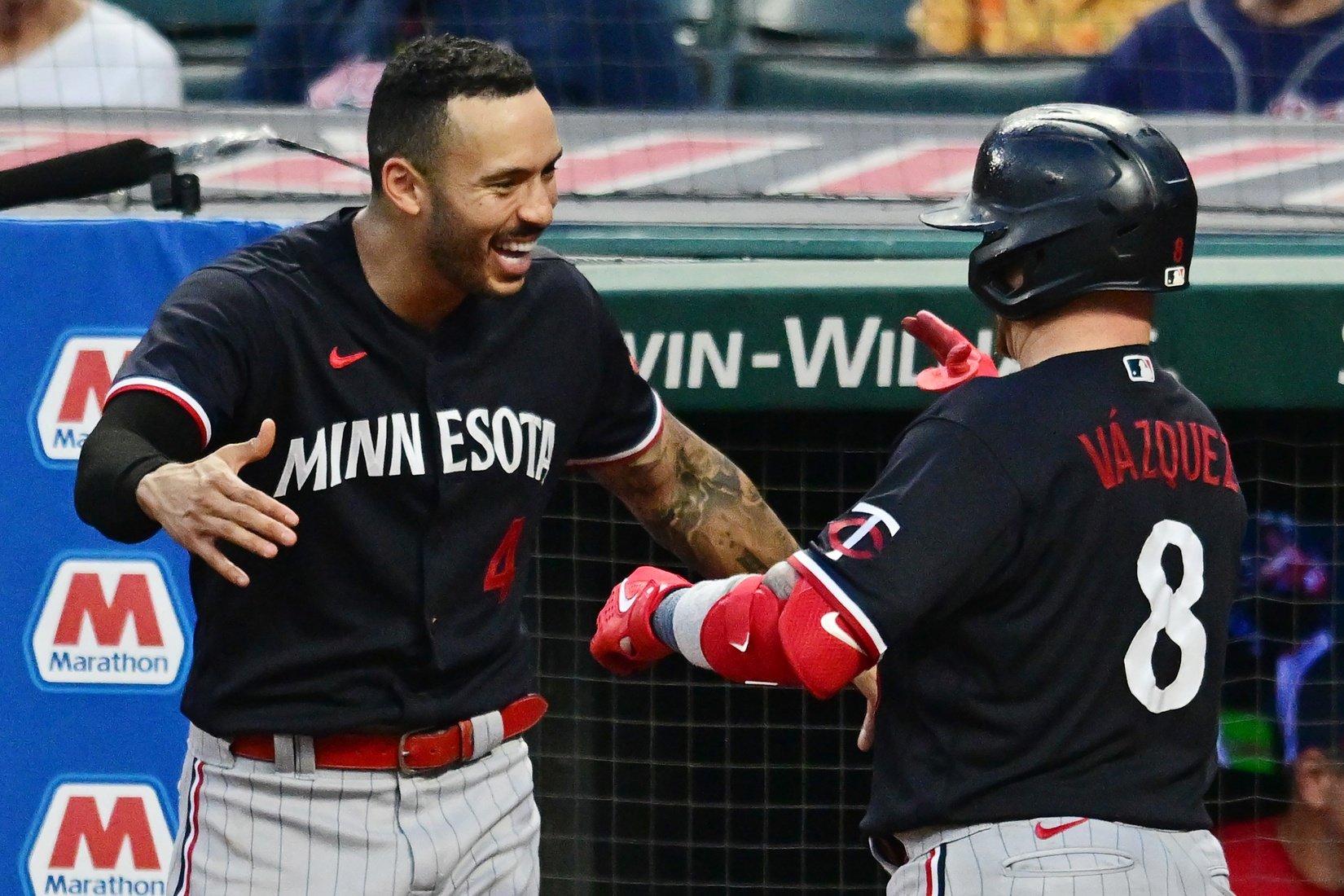 It may pale in comparison to Carlos Correa's precedent-shattering $200 million deal signed later in the same winter, but at the time, Christian Vázquez's $30 million free agent contract from Minnesota ranked as one of the biggest ever for this front office. Those two signings contributed to a record-setting 2023 payroll, which has been scaled back significantly here in 2024. With the Twins slashing payroll by $35 million, they lost a ton of flexibility to add and supplement around their highest and fourth-highest paid players, meaning they'll need both to carry a whole lot more weight now than in Year One of their new deals. Hampered for most of the season by a foot injury, Correa put forth his worst campaign as a big-leaguer, posting below-average production that was totally out of line with his career norms. Vázquez's offensive struggles were a little less shocking, as a catcher who's rarely been a great hitter, but his 65 OPS+ was terrible by any standard. The two combined to produce just 2.8 fWAR, and were valued by FanGraphs at around $23 million – well below what they were paid. Of course, it's fairly clear that the Twins invested in these two accomplished veterans for more than just on-field production. Both players bring a level of experience, leadership and savvy that add to their value in the eyes of a club building around homegrown young talent. Correa already has a legendary postseason track record: a World Series champ and the active MLB leader in playoff RBIs. Vázquez has been part of two championship teams – Boston in 2018 and Houston in 2022 – under the bright spotlights of big-market settings. These two bring plenty to the clubhouse, which is why they were still valuable last year even as their performances bottomed out. This year, the spending reduction means that Correa and Vázquez alone account for nearly 40% of the Twins' payroll, so the team is relying on each for more than a steady presence and good vibes. They need these two to deliver on the field, and so far we're seeing good signs. Wednesday's sweep-averting victory over the Dodgers was a brilliant showcase of what these two defensive stalwarts can do, especially in tandem. In the sixth inning, with LA looking to move the tying run into scoring position on a steal, Vázquez threw a pea down to second, with Correa applying one of his signature seamless tags to retire James Outman on a play where he seemed to have the pitcher beat. Two innings later, with the Twins still protecting a one-run lead, the roles were reversed with Vázquez on the receiving end of a spectacular throw-and-tag. Freddie Freeman drilled a ball into the right field corner, and it rattled around while Shohei Ohtani charged around the bases. As the play developed, it became clear that nothing short of a perfect relay would even give the Twins a chance to stopping Ohtani from tying the game. A perfect relay is what they got. Correa wheeled around from shortstop to the right field line (a designed play), received a strong throw from Alex Kirilloff, and threw a laser beam to Vázquez in the exact right spot. Credit goes to the catcher for rapidly turning around and getting his mitt in front of home plate to tag Ohtani in the nick of time. Two phenomenal plays from two big-time players. The Twins will be looking for a whole lot more of that as the season progresses. Correa obviously has the much bigger role as everyday shortstop and lineup cornerstone, but Vázquez is going to get plenty of playing time himself in a timeshare with Ryan Jeffers. Through the first couple of weeks, Correa has been stellar across the board, with his bat looking much more on par with his peak form. Running as fast as he has in several years, there are no signs Correa's heel is still an issue. He has a ridiculous 170 OPS+ in 10 games. Vázquez, who set out on a mission to rejuvenate his bat during the offseason, has seemingly seen no returns in the early going. The catcher has managed just two singles and a walk in 17 plate appearances. But believe me when I say the process does NOT match the results. Vázquez has been one of the unluckiest hitters in baseball thus far, with an actual batting average (.133) that's about 150 points short of his xBA (.281). His expected slugging percentage is .527. The 33-year-old has been smoking the ball, just as he did in the spring, and if he keeps it up it's going to start paying off. A glance at his (still materializing) Statcast sliders tell the story of a player who's excelling in a lot of areas. Improvement from Vázquez will help offset any regression from Jeffers, who's struggled so far, and if Jeffers comes around the catcher position could become a massive source of advantage for the Twins. Shortstop already looks to be solidified as one. When they're playing like this, Correa and Vázquez are well worth the money, even under a crunched budget. Here's hoping the veterans can keep it rolling.
 -
Minnesota's two biggest free agent signings from the 2022-23 offseason both fell flat in the first season of their new deals. Last year's team won the division in spite of Carlos Correa and Christian Vázquez. This year's team needs to succeed – at least in part – because of them. The duo's early-season results, and Wednesday's game specifically, serve as very encouraging indicators on this front. Image courtesy of Ken Blaze, USA Today Sports It may pale in comparison to Carlos Correa's precedent-shattering $200 million deal signed later in the same winter, but at the time, Christian Vázquez's $30 million free agent contract from Minnesota ranked as one of the biggest ever for this front office. Those two signings contributed to a record-setting 2023 payroll, which has been scaled back significantly here in 2024. With the Twins slashing payroll by $35 million, they lost a ton of flexibility to add and supplement around their highest and fourth-highest paid players, meaning they'll need both to carry a whole lot more weight now than in Year One of their new deals. Hampered for most of the season by a foot injury, Correa put forth his worst campaign as a big-leaguer, posting below-average production that was totally out of line with his career norms. Vázquez's offensive struggles were a little less shocking, as a catcher who's rarely been a great hitter, but his 65 OPS+ was terrible by any standard. The two combined to produce just 2.8 fWAR, and were valued by FanGraphs at around $23 million – well below what they were paid. Of course, it's fairly clear that the Twins invested in these two accomplished veterans for more than just on-field production. Both players bring a level of experience, leadership and savvy that add to their value in the eyes of a club building around homegrown young talent. Correa already has a legendary postseason track record: a World Series champ and the active MLB leader in playoff RBIs. Vázquez has been part of two championship teams – Boston in 2018 and Houston in 2022 – under the bright spotlights of big-market settings. These two bring plenty to the clubhouse, which is why they were still valuable last year even as their performances bottomed out. This year, the spending reduction means that Correa and Vázquez alone account for nearly 40% of the Twins' payroll, so the team is relying on each for more than a steady presence and good vibes. They need these two to deliver on the field, and so far we're seeing good signs. Wednesday's sweep-averting victory over the Dodgers was a brilliant showcase of what these two defensive stalwarts can do, especially in tandem. In the sixth inning, with LA looking to move the tying run into scoring position on a steal, Vázquez threw a pea down to second, with Correa applying one of his signature seamless tags to retire James Outman on a play where he seemed to have the pitcher beat. Two innings later, with the Twins still protecting a one-run lead, the roles were reversed with Vázquez on the receiving end of a spectacular throw-and-tag. Freddie Freeman drilled a ball into the right field corner, and it rattled around while Shohei Ohtani charged around the bases. As the play developed, it became clear that nothing short of a perfect relay would even give the Twins a chance to stopping Ohtani from tying the game. A perfect relay is what they got. Correa wheeled around from shortstop to the right field line (a designed play), received a strong throw from Alex Kirilloff, and threw a laser beam to Vázquez in the exact right spot. Credit goes to the catcher for rapidly turning around and getting his mitt in front of home plate to tag Ohtani in the nick of time. Two phenomenal plays from two big-time players. The Twins will be looking for a whole lot more of that as the season progresses. Correa obviously has the much bigger role as everyday shortstop and lineup cornerstone, but Vázquez is going to get plenty of playing time himself in a timeshare with Ryan Jeffers. Through the first couple of weeks, Correa has been stellar across the board, with his bat looking much more on par with his peak form. Running as fast as he has in several years, there are no signs Correa's heel is still an issue. He has a ridiculous 170 OPS+ in 10 games. Vázquez, who set out on a mission to rejuvenate his bat during the offseason, has seemingly seen no returns in the early going. The catcher has managed just two singles and a walk in 17 plate appearances. But believe me when I say the process does NOT match the results. Vázquez has been one of the unluckiest hitters in baseball thus far, with an actual batting average (.133) that's about 150 points short of his xBA (.281). His expected slugging percentage is .527. The 33-year-old has been smoking the ball, just as he did in the spring, and if he keeps it up it's going to start paying off. A glance at his (still materializing) Statcast sliders tell the story of a player who's excelling in a lot of areas. Improvement from Vázquez will help offset any regression from Jeffers, who's struggled so far, and if Jeffers comes around the catcher position could become a massive source of advantage for the Twins. Shortstop already looks to be solidified as one. When they're playing like this, Correa and Vázquez are well worth the money, even under a crunched budget. Here's hoping the veterans can keep it rolling. View full article
-
Bad umpiring performances have always been part of the game of baseball, but these days, fans are forced to have the extent and impact of botched strike zones constantly shoved in our faces. It detracts greatly from the viewing experience, and sooner or later, the league is going need to make a decision on a sensible path forward. Image courtesy of Jesse Johnson-USA TODAY Sports I watched a majority of Saturday's game against the Guardians from one of my favorite vantage points at Target Field, standing at the rail behind the lower-bowl home plate sections. Provided you don't mind being on your feet, it's one of the best views you can get in the park without paying for expensive seats. What's especially nice about watching from here is that you can keep an eye on the TVs mounted beneath the overhang for fans in the back rows and on the concourse – great for catching a quick zoomed-in replay of what you just witnessed live. This was helpful, for instance, when I was trying to parse out exactly what happened on this wild play at second base. This kind of stuff is what makes watching and dissecting baseball great. Unfortunately, Saturday's game also provided a glaring glimpse of something that is increasingly hampering the quality of the baseball-viewing experience: a persistent, precision-based strike zone display in broadcasts, paired with home plate umpires who are too often far from precise in their calls. As Brennan Miller bumbled his way through this game, repeatedly botching calls that overwhelmingly went against the Twins, all fans in my vicinity would glance to the screen, only to have these misses confirmed over and over again. For Major League Baseball, it's just a really odd way to present your product, placing shortcomings of officials and their pivotal impact front-and-center for viewers, to the point where it sort of overrides the rest of the action. When it comes to the topic of electronic strike zones, I personally tend to lean a little more traditional. I actually don't mind the idea of a somewhat subjective (yet consistent) strike zone, and I enjoy the human element playing a role in guiding the game. I'm cool with rewarding pitchers for executing really well, or catchers for framing the ball, and with these skills bending the margins of the zone to some extent. The thing is, there is no real subjectivity allowed for when you've got the strike zone overlay on the screen depicting balls and strikes as a matter of fact. When the circle is outside the box, it's clearly going to be perceived as a ball, and a missed call if the ump says otherwise. It's black and white. What's worse: the strike zones superimposed on broadcasts are not always even accurate, and can actually undermine the umpires when they are NOT getting it wrong. I'm not one to defend Angel Hernandez (perhaps the single greatest walking argument for robot umps), but he was getting roasted by people on Sunday for calling a strike against Giancarlo Stanton that was ... definitely a strike? Ah, but it did not land within the static strike zone overlay that barely reaches the bottom of his belt. Maybe I'm overly sensitive to this, because I watch a team that takes pitches and strikes out so very often, and seems to get bitten by these borderline calls with extreme frequency. For me, the annoying experience of watching Saturday's game and brooding over nonstop missed calls has come to feel somewhat routine. But at a broader level, I've long been bothered by this disconnect in the way MLB presents its product, at a time when the league is trying hard to win new fans. It's getting to be a little much to take. If Major League Baseball wants to position the strike zone as this absolute and enforceable thing, then why not just implement the automated balls and strikes (ABS) system and do away with the disjointed viewing experience. If, conversely, the league wants us to believe the strike zone is dynamic, fluid and subjective – thus validating the ongoing existence of human umpires – then broadcasts should stop giving the opposite impression. At the very least, the superimposed zone could better reflect the way umps are actually taught to call balls and strikes (or the way the Hawk-Eye tracking system measures them), as opposed to the uniform rectangle shape we mostly get now. One thing that seems uncontroversial: If we're gonna keep presenting the strike zone so prominently, it's past time to give managers the ability to challenge ball/strike calls in some capacity. Making the players, coaches and all the fans feel powerless while watching a disastrously butchered umpiring job like we saw from Miller on Saturday completely alter the course of the game is not good for anyone. It's certainly not the kind of thing that's going to attract more viewers to MLB. What's your feeling on the way Major League Baseball is handling and presenting the strike zone? Do the disjointed optics of these broadcasts bother you as much as me? I'd love to hear your thoughts in the comments. View full article
-
MLB Has an Optics Problem with Umpires and Strike Zone Displays
Nick Nelson posted an article in Twins
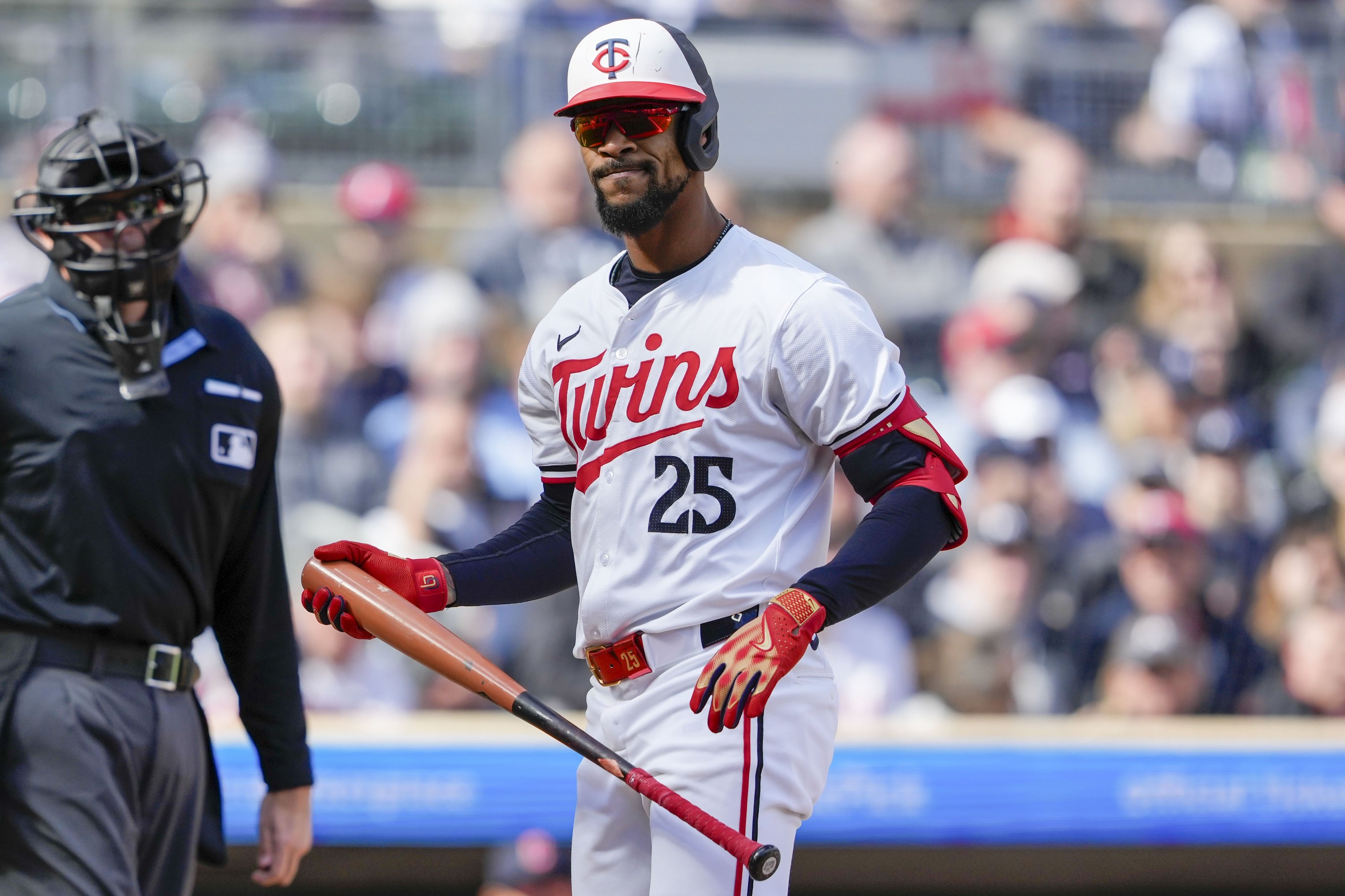 I watched a majority of Saturday's game against the Guardians from one of my favorite vantage points at Target Field, standing at the rail behind the lower-bowl home plate sections. Provided you don't mind being on your feet, it's one of the best views you can get in the park without paying for expensive seats. What's especially nice about watching from here is that you can keep an eye on the TVs mounted beneath the overhang for fans in the back rows and on the concourse – great for catching a quick zoomed-in replay of what you just witnessed live. This was helpful, for instance, when I was trying to parse out exactly what happened on this wild play at second base. This kind of stuff is what makes watching and dissecting baseball great. Unfortunately, Saturday's game also provided a glaring glimpse of something that is increasingly hampering the quality of the baseball-viewing experience: a persistent, precision-based strike zone display in broadcasts, paired with home plate umpires who are too often far from precise in their calls. As Brennan Miller bumbled his way through this game, repeatedly botching calls that overwhelmingly went against the Twins, all fans in my vicinity would glance to the screen, only to have these misses confirmed over and over again. For Major League Baseball, it's just a really odd way to present your product, placing shortcomings of officials and their pivotal impact front-and-center for viewers, to the point where it sort of overrides the rest of the action. When it comes to the topic of electronic strike zones, I personally tend to lean a little more traditional. I actually don't mind the idea of a somewhat subjective (yet consistent) strike zone, and I enjoy the human element playing a role in guiding the game. I'm cool with rewarding pitchers for executing really well, or catchers for framing the ball, and with these skills bending the margins of the zone to some extent. The thing is, there is no real subjectivity allowed for when you've got the strike zone overlay on the screen depicting balls and strikes as a matter of fact. When the circle is outside the box, it's clearly going to be perceived as a ball, and a missed call if the ump says otherwise. It's black and white. What's worse: the strike zones superimposed on broadcasts are not always even accurate, and can actually undermine the umpires when they are NOT getting it wrong. I'm not one to defend Angel Hernandez (perhaps the single greatest walking argument for robot umps), but he was getting roasted by people on Sunday for calling a strike against Giancarlo Stanton that was ... definitely a strike? Ah, but it did not land within the static strike zone overlay that barely reaches the bottom of his belt. Maybe I'm overly sensitive to this, because I watch a team that takes pitches and strikes out so very often, and seems to get bitten by these borderline calls with extreme frequency. For me, the annoying experience of watching Saturday's game and brooding over nonstop missed calls has come to feel somewhat routine. But at a broader level, I've long been bothered by this disconnect in the way MLB presents its product, at a time when the league is trying hard to win new fans. It's getting to be a little much to take. If Major League Baseball wants to position the strike zone as this absolute and enforceable thing, then why not just implement the automated balls and strikes (ABS) system and do away with the disjointed viewing experience. If, conversely, the league wants us to believe the strike zone is dynamic, fluid and subjective – thus validating the ongoing existence of human umpires – then broadcasts should stop giving the opposite impression. At the very least, the superimposed zone could better reflect the way umps are actually taught to call balls and strikes (or the way the Hawk-Eye tracking system measures them), as opposed to the uniform rectangle shape we mostly get now. One thing that seems uncontroversial: If we're gonna keep presenting the strike zone so prominently, it's past time to give managers the ability to challenge ball/strike calls in some capacity. Making the players, coaches and all the fans feel powerless while watching a disastrously butchered umpiring job like we saw from Miller on Saturday completely alter the course of the game is not good for anyone. It's certainly not the kind of thing that's going to attract more viewers to MLB. What's your feeling on the way Major League Baseball is handling and presenting the strike zone? Do the disjointed optics of these broadcasts bother you as much as me? I'd love to hear your thoughts in the comments.
 -
The season is officially underway, with our first full week of official action now in the books. Has anyone let the Minnesota Twins and their offense know? Image courtesy of Matt Blewett-USA TODAY Sports Weekly Snapshot: Mon, 4/1 through Sun, 4/7 *** Record Last Week: 1-3 (Overall: 3-4) Run Differential Last Week: -1 (Overall: -5) Standing: 4th Place in AL Central (3.0 GB) Last Week's Game Results: Game 4 | MIL 3, MIN 2: Late Rally Falls Short in Milwaukee Game 5 | MIN 7, MIL 3: Jeffers Jolts Lineup with Big Blast Game 6 | CLE 4, MIN 2: Twins Hitters Dominated in Home Opener Game 7 | CLE 3, MIN 1: Offense Unable to Awaken, Held to Two Hits Game 8 | PPD NEWS & NOTES The Twins provided some health updates over the weekend, sharing the latest on a trio of relievers who are working back from injury. Closest among the pack is Caleb Thielbar, who went through a successful live BP session and is on track to start a rehab assignment at St. Paul in the coming week. Jhoan Durán and Justin Topa are both reportedly "pain-free and throwing," but they haven't moved to a mound yet and neither appears to have a definitive timeline laid out at this point. Given the nature of their injuries (Topa shared that he dealt with problems in the same knee last year), and the overall success of the bullpen so far, the Twins will likely keep taking it slow. We did not get any new information regarding Royce Lewis's timeline – he remains shut down until the end of the month, when they will re-evaluate his strained quad – but we did learn that he received a PRP injection to boost healing. That's probably a telling sign regarding the severity of the injury. HIGHLIGHTS One of the most noticeable early trends of this season is the confidence that Rocco Baldelli has shown in Alex Kirilloff coming off a strong spring. Entering the season, it wasn't totally clear how Kirilloff's role would take shape, but the manager has found a place for him in the lineup nearly everyday, and in key spots. Kirilloff batted second in each of his first five starts, and he was in the three-hole on Saturday. He delivered by tripling in his third consecutive game, extending a scorching hot streak to open the season. So far AK has collected a hit in every game, including a 4-for-4 outburst at Milwaukee on Wednesday. He has struck out only three times in 30 plate appearances, and is slashing .385/.433/.692. Amid all the negative signs from the offense (which we'll soon cover), this big positive and its potential implications shouldn't be overlooked. With a sweet swing geared for both contact and power, Kirilloff at his best is a game-changer for the lineup – or will be, once some other bats come around to support him. The pitching staff had a strong collective showing despite the team's 1-3 record, allowing 12 earned runs in 35 innings (3.09 ERA) with a 35-to-11 K/BB ratio. The bullpen was especially effective, posting a 0.59 ERA in its 15 ⅓ innings of work. Entering play on Sunday, Twins relievers had the best ERA in MLB (0.98 ERA) and were tied for second in average fastball velocity (96.2 MPH). All this without Durán. LOWLIGHTS Outside of one swing of the bat from Ryan Jeffers on Wednesday – a three-run blast that helped the Twins secure their lone victory of the week – it's been a constant deluge of flailing and ineptitude from the lineup, bringing back vivid memories of last year's sluggish first half. The approach and outcomes feel very similar to those that plagued Minnesota in early 2023, and at the end: passive at-bats, lengthy droughts, tons of strikeouts. Twins hitters struck out 29 times in 18 innings against the Guardians, who held them to three runs on nine hits. The Twins offense simply looks out-planned and overmatched, with pitchers able to comfortably navigate through at-bats by dotting borderline pitches around the edges of the zone and getting ahead in counts. Yes, there have been some ugly umpiring performances, and Brennan Miller's lopsided travesty on Saturday was among the worst I've witnessed, but if we're being honest, the Twins kinda bring this upon themselves with their ultra-passive approach. They're unwilling to swing at the borderline pitches they don't want, which is fine except for they aren't doing anything with the pitches they swing on. Lots of foul balls drilled into feet from hitters who aren't locked in and squaring up. Thus far Minnesota has gone 9-for-72 with runners in scoring position, producing a miserable .125/.241/.222 slash line. Their three total home runs are the fewest in baseball. It's frustrating to watch this familiar pattern play out yet again, and even more frustrating to see Twins players and coaches so confounded and bamboozled by it. We've been here before, as Carlos Correa more or less acknowledged on Saturday. "We don’t want to be here half a season trying to figure out when we know we’re capable of doing it a lot earlier," he said, seemingly alluding to precisely what happened in 2023. Yes, the Twins have been victimized by some circumstances beyond their control, but you don't have to look far to find examples of self-inflicted damage. Manuel Margot inexplicably attempted to bunt as a pinch-hitter with the bases loaded on Wednesday, and runners have failed to take advantage of some opportunities on the bases. Already we've seen frustration boil over, with hitting coach David Popkins ejected from Saturday's affair. Extending back to last year's ALDS, the Twins have scored a total of six runs on 15 hits in their last four games at Target Field, with 54 strikeouts. They need to find an offensive pulse at their home park, and they need to find it fast with the Los Angeles Dodgers coming to town. TRENDING STORYLINE On Wednesday, José Miranda started at third base for the St. Paul Saints, which is notable because it was his first time playing the position since last July. Lingering shoulder issues have hampered the 25-year-old, including during this past spring when he was limited to first base defensively. Miranda's return to the hot corner in Triple-A featured a flashy charge-and-throw on a slow grounder that reminded us of his chops. Does this mean the Twins are once again viewing Miranda as a legit option at third? That might be a stretch; his three starts since all came at DH and first. But at the very least, it's a good sign for the state of his shoulder. If he can heat up, Miranda has a chance to put quickly himself in the mix as an option for the Twins, who could currently use an offensive boost of any kind at the big-league level. For what it's worth (maybe nothing), Miranda was not in the Saints starting lineup on Sunday. LOOKING AHEAD Sunday's rainout means everyone gets pushed back a day as Minnesota enters its first scheduled seven-game week. Bailey Ober will look to bounce back from a career-worst start against the star-studded Dodgers. Thursday's matchup in Detroit, López versus Tarik Skubal, is a showdown of electric aces worth circling. MONDAY, 4/8: DODGERS @ TWINS – LHP James Paxton v. RHP Bailey Ober TUESDAY, 4/9: DODGERS @ TWINS – RHP Tyler Glasnow v. RHP Louie Varland WEDNESDAY, 4/10: DODGERS @ TWINS – RHP Bobby Miller v. RHP Chris Paddack THURSDAY, 4/11: TWINS @ TIGERS – RHP Pablo López v. LHP Tarik Skubal FRIDAY, 4/12: TWINS @ TIGERS – RHP Joe Ryan v. RHP Kenta Maeda SATURDAY, 4/13: TWINS @ TIGERS – RHP Bailey Ober v. RHP Jack Flaherty SUNDAY, 4/14: TWINS @ TIGERS – RHP Louie Varland v. RHP Reese Olson View full article
-
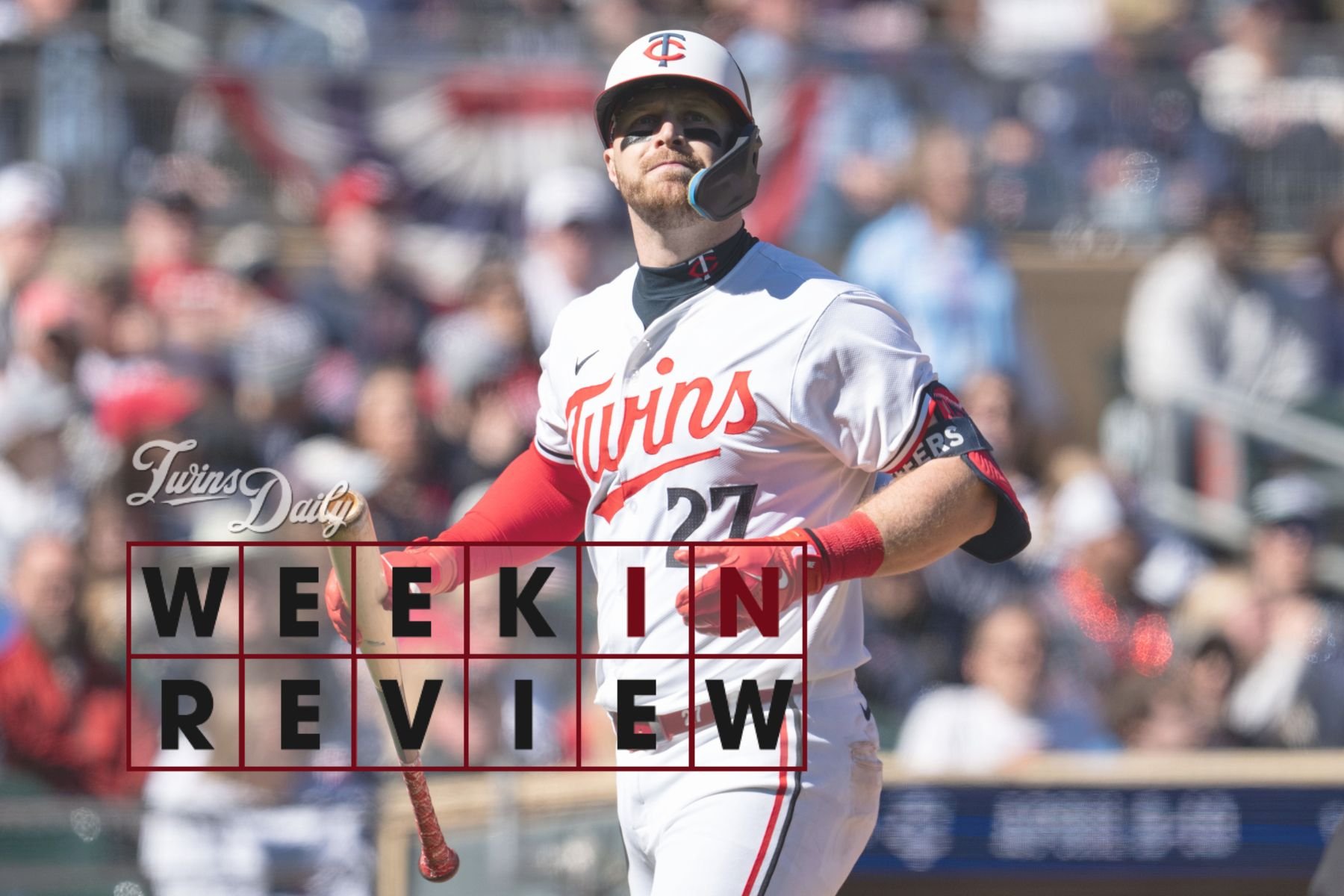 Weekly Snapshot: Mon, 4/1 through Sun, 4/7 *** Record Last Week: 1-3 (Overall: 3-4) Run Differential Last Week: -1 (Overall: -5) Standing: 4th Place in AL Central (3.0 GB) Last Week's Game Results: Game 4 | MIL 3, MIN 2: Late Rally Falls Short in Milwaukee Game 5 | MIN 7, MIL 3: Jeffers Jolts Lineup with Big Blast Game 6 | CLE 4, MIN 2: Twins Hitters Dominated in Home Opener Game 7 | CLE 3, MIN 1: Offense Unable to Awaken, Held to Two Hits Game 8 | PPD NEWS & NOTES The Twins provided some health updates over the weekend, sharing the latest on a trio of relievers who are working back from injury. Closest among the pack is Caleb Thielbar, who went through a successful live BP session and is on track to start a rehab assignment at St. Paul in the coming week. Jhoan Durán and Justin Topa are both reportedly "pain-free and throwing," but they haven't moved to a mound yet and neither appears to have a definitive timeline laid out at this point. Given the nature of their injuries (Topa shared that he dealt with problems in the same knee last year), and the overall success of the bullpen so far, the Twins will likely keep taking it slow. We did not get any new information regarding Royce Lewis's timeline – he remains shut down until the end of the month, when they will re-evaluate his strained quad – but we did learn that he received a PRP injection to boost healing. That's probably a telling sign regarding the severity of the injury. HIGHLIGHTS One of the most noticeable early trends of this season is the confidence that Rocco Baldelli has shown in Alex Kirilloff coming off a strong spring. Entering the season, it wasn't totally clear how Kirilloff's role would take shape, but the manager has found a place for him in the lineup nearly everyday, and in key spots. Kirilloff batted second in each of his first five starts, and he was in the three-hole on Saturday. He delivered by tripling in his third consecutive game, extending a scorching hot streak to open the season. So far AK has collected a hit in every game, including a 4-for-4 outburst at Milwaukee on Wednesday. He has struck out only three times in 30 plate appearances, and is slashing .385/.433/.692. Amid all the negative signs from the offense (which we'll soon cover), this big positive and its potential implications shouldn't be overlooked. With a sweet swing geared for both contact and power, Kirilloff at his best is a game-changer for the lineup – or will be, once some other bats come around to support him. The pitching staff had a strong collective showing despite the team's 1-3 record, allowing 12 earned runs in 35 innings (3.09 ERA) with a 35-to-11 K/BB ratio. The bullpen was especially effective, posting a 0.59 ERA in its 15 ⅓ innings of work. Entering play on Sunday, Twins relievers had the best ERA in MLB (0.98 ERA) and were tied for second in average fastball velocity (96.2 MPH). All this without Durán. LOWLIGHTS Outside of one swing of the bat from Ryan Jeffers on Wednesday – a three-run blast that helped the Twins secure their lone victory of the week – it's been a constant deluge of flailing and ineptitude from the lineup, bringing back vivid memories of last year's sluggish first half. The approach and outcomes feel very similar to those that plagued Minnesota in early 2023, and at the end: passive at-bats, lengthy droughts, tons of strikeouts. Twins hitters struck out 29 times in 18 innings against the Guardians, who held them to three runs on nine hits. The Twins offense simply looks out-planned and overmatched, with pitchers able to comfortably navigate through at-bats by dotting borderline pitches around the edges of the zone and getting ahead in counts. Yes, there have been some ugly umpiring performances, and Brennan Miller's lopsided travesty on Saturday was among the worst I've witnessed, but if we're being honest, the Twins kinda bring this upon themselves with their ultra-passive approach. They're unwilling to swing at the borderline pitches they don't want, which is fine except for they aren't doing anything with the pitches they swing on. Lots of foul balls drilled into feet from hitters who aren't locked in and squaring up. Thus far Minnesota has gone 9-for-72 with runners in scoring position, producing a miserable .125/.241/.222 slash line. Their three total home runs are the fewest in baseball. It's frustrating to watch this familiar pattern play out yet again, and even more frustrating to see Twins players and coaches so confounded and bamboozled by it. We've been here before, as Carlos Correa more or less acknowledged on Saturday. "We don’t want to be here half a season trying to figure out when we know we’re capable of doing it a lot earlier," he said, seemingly alluding to precisely what happened in 2023. Yes, the Twins have been victimized by some circumstances beyond their control, but you don't have to look far to find examples of self-inflicted damage. Manuel Margot inexplicably attempted to bunt as a pinch-hitter with the bases loaded on Wednesday, and runners have failed to take advantage of some opportunities on the bases. Already we've seen frustration boil over, with hitting coach David Popkins ejected from Saturday's affair. Extending back to last year's ALDS, the Twins have scored a total of six runs on 15 hits in their last four games at Target Field, with 54 strikeouts. They need to find an offensive pulse at their home park, and they need to find it fast with the Los Angeles Dodgers coming to town. TRENDING STORYLINE On Wednesday, José Miranda started at third base for the St. Paul Saints, which is notable because it was his first time playing the position since last July. Lingering shoulder issues have hampered the 25-year-old, including during this past spring when he was limited to first base defensively. Miranda's return to the hot corner in Triple-A featured a flashy charge-and-throw on a slow grounder that reminded us of his chops. Does this mean the Twins are once again viewing Miranda as a legit option at third? That might be a stretch; his three starts since all came at DH and first. But at the very least, it's a good sign for the state of his shoulder. If he can heat up, Miranda has a chance to put quickly himself in the mix as an option for the Twins, who could currently use an offensive boost of any kind at the big-league level. For what it's worth (maybe nothing), Miranda was not in the Saints starting lineup on Sunday. LOOKING AHEAD Sunday's rainout means everyone gets pushed back a day as Minnesota enters its first scheduled seven-game week. Bailey Ober will look to bounce back from a career-worst start against the star-studded Dodgers. Thursday's matchup in Detroit, López versus Tarik Skubal, is a showdown of electric aces worth circling. MONDAY, 4/8: DODGERS @ TWINS – LHP James Paxton v. RHP Bailey Ober TUESDAY, 4/9: DODGERS @ TWINS – RHP Tyler Glasnow v. RHP Louie Varland WEDNESDAY, 4/10: DODGERS @ TWINS – RHP Bobby Miller v. RHP Chris Paddack THURSDAY, 4/11: TWINS @ TIGERS – RHP Pablo López v. LHP Tarik Skubal FRIDAY, 4/12: TWINS @ TIGERS – RHP Joe Ryan v. RHP Kenta Maeda SATURDAY, 4/13: TWINS @ TIGERS – RHP Bailey Ober v. RHP Jack Flaherty SUNDAY, 4/14: TWINS @ TIGERS – RHP Louie Varland v. RHP Reese Olson
 -
On Saturday, the Minnesota Twins confirmed some unfortunate news: Anthony DeSclafani will miss the entire season after undergoing elbow surgery, thus removing the single layer of added rotation depth from the offseason. Needing a sixth (and seventh, and eighth) starter is a matter of when, not if. Let's size up the line of succession for Minnesota's starting corps. Image courtesy of Nathan Ray Seebeck, Kyle Ross, Jesse Johnson-USA TODAY Sports Starting pitching is an interesting area for the 2024 Twins. On the one hand, they've got admirable talent packed into the starting five, reflected by statistical projections that ranked them among the league's best coming into the campaign. We saw the upside of this unit in the first two games of the season, with Pablo López and Joe Ryan overpowering opponents and spearheading comfortable wins. On the other hand, the relative lack of depth compared to last year was noticeable, even before Anthony DeSclafani went down. By elevating Louie Varland into the season-opening rotation, the Twins used up the one proven contingency plan they had in the chamber. Chances are, it won't take long for the now-questionable rotation depth to be tested. While he appears to be healthy, Bailey Ober got annihilated by Kansas City in his first start on Sunday – an ominous early sign for a rotation looking to reconfigure itself in the absence of Sonny Gray and Kenta Maeda. We haven't yet gotten a look at Varland, who had a 5.30 ERA as a starter in 2023, nor Chris Paddack, who threw a grand total of five innings last season. Once the Twins start turning to the minors for help, they're not going to find a solution as inspiring as the 2023 version of Ober, or even the 2023 version of Varland. Here are the four pitchers who are seemingly in consideration as MLB rotation reinforcements, ranked in the order that I perceive them to be lined up: 1. Brent Headrick, LHP Headrick has a leg up on the competition, in that he's got major-league experience (14 relief appearances with the Twins last year) and is already on the 40-man roster. The 26-year-old lefty started St. Paul's second game of the season in Triple-A on Sunday, striking out eight with no walks allowed in 3 ⅔ innings. He threw 76 pitches, so clearly, the club is keeping him stretched as a starter, ready to step in as the first line of defense. Headrick is next in line for the Twins rotation. This much seems clear. From there, the picture gets much murkier. 2. Randy Dobnak, RHP Dobnak is not currently on the 40-man roster, which seemingly puts him at a disadvantage for an MLB call-up. But I'm not sure it's that much of an impediment. Matt Canterino and Royce Lewis are among the candidates to go on the 60-day injured list and open a spot for Dobnak, who is making $2.25 million this year under a contract he signed before his career was derailed by injuries. With 125 big-league innings under his belt, including a playoff start at Yankee Stadium, Dobnak has the most experience of anyone on the rotation depth chart. If he's actually healthy, there's little reason the Twins wouldn't turn back to him, and he looked plenty healthy during a sparkling season debut for the Saints on Saturday: 4 IP, 2 H, 1 ER, 0 BB, 6 K. I think there's a decent chance the Twins could promote Dobnak ahead of Headrick, depending on the timing of when a need emerges. Cody Pirkl wrote a good piece about Dobnak's situation Sunday. 3. Simeon Woods Richardson, RHP Theoretically, Woods Richardson should be at the top of this list. He is on the 40-man roster (unlike Dobnak) and he has made starts in the majors (unlike Headrick). Personally, though, I need to see more out of the angular righty to inspire legitimate confidence, and I wonder if the Twins feel the same way. Coming off an extremely discouraging season at Triple-A, the 23-year-old stirred up some optimism by flashing improved velocity and stuff early in spring training. But he still got shipped out of MLB camp pretty early, and interestingly, he hasn't appeared in the first two games for St. Paul, unlike all others on this list. Even after turning a corner and posting better results down the stretch for the Saints last year, Woods Richardson didn't display the traits of a guy built to succeed in the major leagues. He's got some work to do to be viewed as anything more than an emergency stopgap. 4. David Festa, RHP In terms of upside, Festa ranks No. 1 on this list, ranked by Twins Daily as the system's No. 5 prospect entering the 2024 season. After starting for the Twins in the Spring Breakout prospect showcase in mid-March, Festa got the Opening Day nod for the Saints on Saturday, tossing three scoreless innings with one hit allowed. I wouldn't put it past the Twins to spring Festa immediately into action, if they find themselves looking for an impact replacement. But his "clean" opening outing at Triple-A included three walks and a 53% strike rate. Control was an issue for him last year; he posted a 10.6% BB rate in the minors. As electric as his stuff is, there's a very good chance he'll struggle with walks against major-league hitters, which is a scenario the Twins want to avoid at all costs. I view him as more of an ongoing development project and mid-season option, as opposed to any short-term fix. That leaves the Twins lacking any other immediate rotation depth outside of the aforementioned shaky trio: Headrick, Dobnak, and Woods Richardson. I'm not really sure how to size up the hierarchy beyond them, because you're suddenly turning to Double-A at that point. (Marco Raya? Cory Lewis? These names could enter the fold sooner than expected.) I'm curious to hear thoughts from the community on the Twins' starting pitching depth chart, and your level of confidence in it. As I reviewed the current situation to write up this piece, I found myself pretty awestruck by the paper-thin nature of their dependable depth. Is the rotation equipped to endure a loss at the level of Lewis for the lineup, or Jhoan Durán for the bullpen? Or anything close? View full article
- 53 replies
-
- 1
-
-
- david festa
- simeon woods richardson
- (and 2 more)
-
What Does the Rotation Depth Chart Look Like After Louie Varland?
Nick Nelson posted an article in Twins
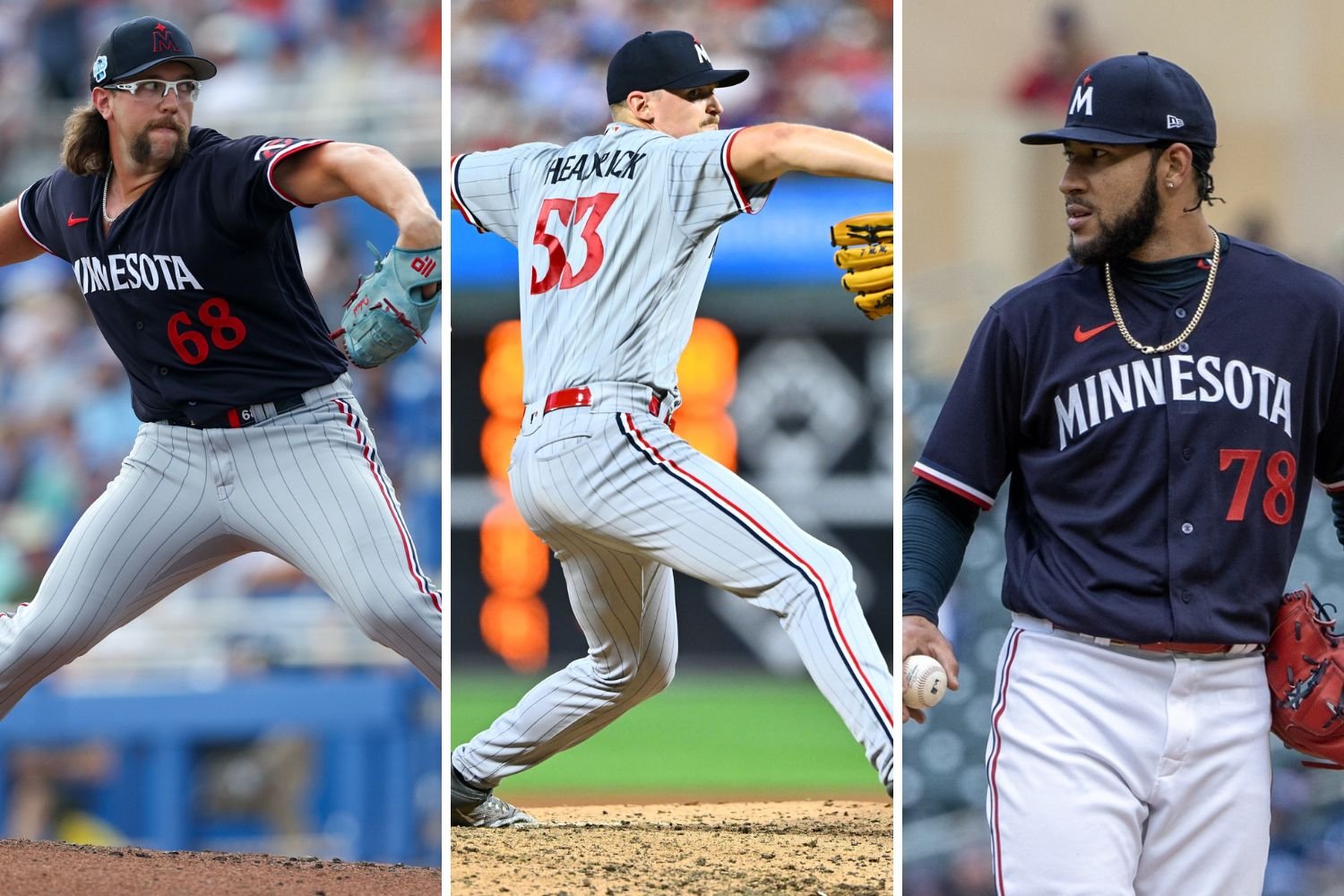 Starting pitching is an interesting area for the 2024 Twins. On the one hand, they've got admirable talent packed into the starting five, reflected by statistical projections that ranked them among the league's best coming into the campaign. We saw the upside of this unit in the first two games of the season, with Pablo López and Joe Ryan overpowering opponents and spearheading comfortable wins. On the other hand, the relative lack of depth compared to last year was noticeable, even before Anthony DeSclafani went down. By elevating Louie Varland into the season-opening rotation, the Twins used up the one proven contingency plan they had in the chamber. Chances are, it won't take long for the now-questionable rotation depth to be tested. While he appears to be healthy, Bailey Ober got annihilated by Kansas City in his first start on Sunday – an ominous early sign for a rotation looking to reconfigure itself in the absence of Sonny Gray and Kenta Maeda. We haven't yet gotten a look at Varland, who had a 5.30 ERA as a starter in 2023, nor Chris Paddack, who threw a grand total of five innings last season. Once the Twins start turning to the minors for help, they're not going to find a solution as inspiring as the 2023 version of Ober, or even the 2023 version of Varland. Here are the four pitchers who are seemingly in consideration as MLB rotation reinforcements, ranked in the order that I perceive them to be lined up: 1. Brent Headrick, LHP Headrick has a leg up on the competition, in that he's got major-league experience (14 relief appearances with the Twins last year) and is already on the 40-man roster. The 26-year-old lefty started St. Paul's second game of the season in Triple-A on Sunday, striking out eight with no walks allowed in 3 ⅔ innings. He threw 76 pitches, so clearly, the club is keeping him stretched as a starter, ready to step in as the first line of defense. Headrick is next in line for the Twins rotation. This much seems clear. From there, the picture gets much murkier. 2. Randy Dobnak, RHP Dobnak is not currently on the 40-man roster, which seemingly puts him at a disadvantage for an MLB call-up. But I'm not sure it's that much of an impediment. Matt Canterino and Royce Lewis are among the candidates to go on the 60-day injured list and open a spot for Dobnak, who is making $2.25 million this year under a contract he signed before his career was derailed by injuries. With 125 big-league innings under his belt, including a playoff start at Yankee Stadium, Dobnak has the most experience of anyone on the rotation depth chart. If he's actually healthy, there's little reason the Twins wouldn't turn back to him, and he looked plenty healthy during a sparkling season debut for the Saints on Saturday: 4 IP, 2 H, 1 ER, 0 BB, 6 K. I think there's a decent chance the Twins could promote Dobnak ahead of Headrick, depending on the timing of when a need emerges. Cody Pirkl wrote a good piece about Dobnak's situation Sunday. 3. Simeon Woods Richardson, RHP Theoretically, Woods Richardson should be at the top of this list. He is on the 40-man roster (unlike Dobnak) and he has made starts in the majors (unlike Headrick). Personally, though, I need to see more out of the angular righty to inspire legitimate confidence, and I wonder if the Twins feel the same way. Coming off an extremely discouraging season at Triple-A, the 23-year-old stirred up some optimism by flashing improved velocity and stuff early in spring training. But he still got shipped out of MLB camp pretty early, and interestingly, he hasn't appeared in the first two games for St. Paul, unlike all others on this list. Even after turning a corner and posting better results down the stretch for the Saints last year, Woods Richardson didn't display the traits of a guy built to succeed in the major leagues. He's got some work to do to be viewed as anything more than an emergency stopgap. 4. David Festa, RHP In terms of upside, Festa ranks No. 1 on this list, ranked by Twins Daily as the system's No. 5 prospect entering the 2024 season. After starting for the Twins in the Spring Breakout prospect showcase in mid-March, Festa got the Opening Day nod for the Saints on Saturday, tossing three scoreless innings with one hit allowed. I wouldn't put it past the Twins to spring Festa immediately into action, if they find themselves looking for an impact replacement. But his "clean" opening outing at Triple-A included three walks and a 53% strike rate. Control was an issue for him last year; he posted a 10.6% BB rate in the minors. As electric as his stuff is, there's a very good chance he'll struggle with walks against major-league hitters, which is a scenario the Twins want to avoid at all costs. I view him as more of an ongoing development project and mid-season option, as opposed to any short-term fix. That leaves the Twins lacking any other immediate rotation depth outside of the aforementioned shaky trio: Headrick, Dobnak, and Woods Richardson. I'm not really sure how to size up the hierarchy beyond them, because you're suddenly turning to Double-A at that point. (Marco Raya? Cory Lewis? These names could enter the fold sooner than expected.) I'm curious to hear thoughts from the community on the Twins' starting pitching depth chart, and your level of confidence in it. As I reviewed the current situation to write up this piece, I found myself pretty awestruck by the paper-thin nature of their dependable depth. Is the rotation equipped to endure a loss at the level of Lewis for the lineup, or Jhoan Durán for the bullpen? Or anything close?
- 53 comments
-
- 7
-
-
- david festa
- simeon woods richardson
- (and 2 more)
-
The opening series in Kansas City featured no shortage of ups and downs, with a pair of impressive wins followed by a brutal loss, as a much more critical loss from the roster looms over everything. We're only three games in, but there's plenty to discuss. Image courtesy of Jay Biggerstaff-USA TODAY Sports Weekly Snapshot: Thurs, 3/28 through Sun, 3/31 *** Record Last Week: 2-1 (Overall: 2-1) Run Differential Last Week: -4 (Overall: -4) Standing: 3rd Place in AL Central (1.0 GB) Last Week's Game Results: Game 1 | MIN 4, KC 1: López Leads Twins to Win, Lewis Injured Game 2 | MIN 5, KC 1: Buxton, Vázquez Fuel Late Offensive Surge Game 3 | KC 11, MIN 0: Royals Obliterate Ober and Twins NEWS & NOTES In Thursday's season opener, Royce Lewis instantly kicked the hype machine into overdrive by homering in his first at-bat and singling in his second. His spectacular start made what followed all the more crushing: Lewis hurt his right leg while sprinting from first to third, exiting the game and throwing the fanbase into a collective panic. We got specifics a couple days later, which were well covered by Twins Daily's resident injury specialist Lucas Seehafer. In short: Lewis has a severe quad strain, and the team will wait a month before re-evaluating and setting a timeline. Given the nature of these injuries and information shared by the team, Lucas concludes that the "most optimistic return for Lewis would be in 50 days, or May 19. A more realistic return date may be June 1, which is 63 days from the time of writing, though a later return date can't be ruled out." In other words, be prepared for Lewis to miss around two months, at least. For now, he's been replaced on the roster by Austin Martin, who made his first big-league start on Sunday. Eventually, Brooks Lee could get a chance at third base for the Twins, though he himself is currently sidelined 3-4 weeks by a back injury. We also learned over the weekend that Anthony DeSclafani will miss the entire season, which was expected. HIGHLIGHTS Minnesota's rotation hit the ground running in Kansas City, led by verified ace Pablo López. In his Opening Day start, the right-hander picked up where he left off in October, firing seven innings of one-run ball and mowing down Royals hitters with ruthless efficiency. You couldn't have asked for much more from López, who cruised deep into the game after giving up a leadoff homer, even talking his way into completing the seventh during a mound visit with Rocco Baldelli. Joe Ryan followed on Saturday with a very sharp and encouraging start, peppering the strike zone with fastballs while mixing in plenty of splitters and a few sweepers on the way to 5 ⅓ innings of one-run ball. He showed added life on all of his pitches and continues to evolve in the way he executes, living up so far to his sequential billing as the Twins' No. 2 starter. With Sonny Gray out of the picture, López and Ryan are facing heightened pressure to perform atop the rotation. Early in the season, while Jhoan Durán and Caleb Thielbar are sidelined, the same is true for Griffin Jax and Brock Stewart at the back of the bullpen. This duo also looked ready to answer the call in the opening series. The two relievers combined for four scoreless innings with five strikeouts. Each of them flashed stuff befitting the label of "bullpen ace" – Stewart flirting with triple-digit fastball velocity, Jax unleashing devastating sweepers. Having two relievers of this caliber on hand to hold down the late innings in the absence of Durán is a tremendous luxury, for which the front office deserves credit. Now the Twins just need to both to keep it rolling. The stakes are high. For me, seeing Byron Buxton healthy and playing his game without restriction was the biggest highlight of the opening weekend. Buxton started all three contests at Kauffman – two in center and one at DH – and he looked fantastic. Among his three hits were a pair of doubles, including a hustle play on a chopper over third base that saw Buxton open up on the basepaths and let loose, without issue. A joy to behold. As long as Buxton is healthy and doing his thing, it's kinda hard to not feel good about the Twins and their chances on any given day. He and Stewart are among the handful of players who entered the season with lingering injury concers but are sending positive early signals. This group also includes Carlos Correa and Alex Kirilloff, who parlayed their own strong springs into impressive starts to the season. The Twins are going to need all of these guys to keep on cooking if they're to stay on track and keep rattling off wins in the absence of Lewis. LOWLIGHTS Watching Lewis limp into third base and quickly leave the game on Opening Day was an absolutely gut-wrenching moment, for so many reasons. The extent of his impact on the team's outlook is one thing, and the crappy cards he continues to get dealt is another. It was fairly evident from the instant it occurred that Lewis's injury was a significant one and would cost him a bunch more time. After getting more details on Saturday, we still don't know exactly how much time that will be, but suffice to say Lewis will be sidelined for the foreseeable future. The team's best hitter joins the team's best reliever in this category, which is not a great thing for the Twins. On the bright side, it's better to be without Lewis and Durán – two crucial postseason performers in 2023 – at the beginning of the campaign than the end. With this in mind, it will be critical to handle these key players cautiously. and steer clear of any setback that puts their season at risk. This has proven to be a strength under head trainer Nick Paparesta. Bailey Ober is not injured, that we know of, but his first start of the season raised all kinds of alarms. In stark contrast to López and Ryan, Minnesota's No. 3 starter was bad against the Royals. Actually bad doesn't do it justice – he was horrific. While recording just four outs on Sunday, Ober was knocked around for eight earned runs on nine hits, including three homers. He struck out just one batter and induced only one swinging strike on 53 pitches. It was the worst start of his career and nothing else has come particularly close. Along with Ryan, Ober is being counted on to step up his game in the post-Gray era, so this was a very disturbing season debut. But at the end of the day, it's only one game. The big righty has been as consistent and reliable as they come in the past. We'll need to hope everything is fine with him physically and this was just an isolated clunker of epic proportions. TRENDING STORYLINE Max Kepler got X-rays after fouling a ball off his leg on Opening Day, but seemingly got news when the scans came back negative. On Sunday, Baldelli shared that Kepler was still struggling to run at full speed. If the right fielder isn't feeling right following an Monday's break, the team will likely need to make an IL move and bring someone else up. Who might that be? Unfortunately, the Twins are shorter on options than they would like to be. Trevor Larnach, who would be a rock-solid candidate to replace Kepler on the roster, has begun the season on the IL with turf toe. No other outfielders at Triple-A are presently on the 40-man roster, though it wouldn't be all that surprising to see an IL move for Lewis open up a spot. Maybe for DaShawn Keirsey Jr. or Michael Helman? LOOKING AHEAD TUESDAY, 4/2: TWINS @ BREWERS – RHP Louie Varland v. RHP Jakob Junis WEDNESDAY, 4/3 :TWINS @ BREWERS – RHP Chris Paddack v. RHP Joe Ross THURSDAY, 4/4: GUARDIANS @ TWINS – RHP Tanner Bibee v. RHP Pablo López SATURDAY, 4/6: GUARDIANS @ TWINS – RHP Carlos Carrasco v. RHP Joe Ryan SUNDAY, 4/7: GUARDIANS @ TWINS – RHP Triston McKenzie v. RHP Bailey Ober View full article
-
 Weekly Snapshot: Thurs, 3/28 through Sun, 3/31 *** Record Last Week: 2-1 (Overall: 2-1) Run Differential Last Week: -4 (Overall: -4) Standing: 3rd Place in AL Central (1.0 GB) Last Week's Game Results: Game 1 | MIN 4, KC 1: López Leads Twins to Win, Lewis Injured Game 2 | MIN 5, KC 1: Buxton, Vázquez Fuel Late Offensive Surge Game 3 | KC 11, MIN 0: Royals Obliterate Ober and Twins NEWS & NOTES In Thursday's season opener, Royce Lewis instantly kicked the hype machine into overdrive by homering in his first at-bat and singling in his second. His spectacular start made what followed all the more crushing: Lewis hurt his right leg while sprinting from first to third, exiting the game and throwing the fanbase into a collective panic. We got specifics a couple days later, which were well covered by Twins Daily's resident injury specialist Lucas Seehafer. In short: Lewis has a severe quad strain, and the team will wait a month before re-evaluating and setting a timeline. Given the nature of these injuries and information shared by the team, Lucas concludes that the "most optimistic return for Lewis would be in 50 days, or May 19. A more realistic return date may be June 1, which is 63 days from the time of writing, though a later return date can't be ruled out." In other words, be prepared for Lewis to miss around two months, at least. For now, he's been replaced on the roster by Austin Martin, who made his first big-league start on Sunday. Eventually, Brooks Lee could get a chance at third base for the Twins, though he himself is currently sidelined 3-4 weeks by a back injury. We also learned over the weekend that Anthony DeSclafani will miss the entire season, which was expected. HIGHLIGHTS Minnesota's rotation hit the ground running in Kansas City, led by verified ace Pablo López. In his Opening Day start, the right-hander picked up where he left off in October, firing seven innings of one-run ball and mowing down Royals hitters with ruthless efficiency. You couldn't have asked for much more from López, who cruised deep into the game after giving up a leadoff homer, even talking his way into completing the seventh during a mound visit with Rocco Baldelli. Joe Ryan followed on Saturday with a very sharp and encouraging start, peppering the strike zone with fastballs while mixing in plenty of splitters and a few sweepers on the way to 5 ⅓ innings of one-run ball. He showed added life on all of his pitches and continues to evolve in the way he executes, living up so far to his sequential billing as the Twins' No. 2 starter. With Sonny Gray out of the picture, López and Ryan are facing heightened pressure to perform atop the rotation. Early in the season, while Jhoan Durán and Caleb Thielbar are sidelined, the same is true for Griffin Jax and Brock Stewart at the back of the bullpen. This duo also looked ready to answer the call in the opening series. The two relievers combined for four scoreless innings with five strikeouts. Each of them flashed stuff befitting the label of "bullpen ace" – Stewart flirting with triple-digit fastball velocity, Jax unleashing devastating sweepers. Having two relievers of this caliber on hand to hold down the late innings in the absence of Durán is a tremendous luxury, for which the front office deserves credit. Now the Twins just need to both to keep it rolling. The stakes are high. For me, seeing Byron Buxton healthy and playing his game without restriction was the biggest highlight of the opening weekend. Buxton started all three contests at Kauffman – two in center and one at DH – and he looked fantastic. Among his three hits were a pair of doubles, including a hustle play on a chopper over third base that saw Buxton open up on the basepaths and let loose, without issue. A joy to behold. As long as Buxton is healthy and doing his thing, it's kinda hard to not feel good about the Twins and their chances on any given day. He and Stewart are among the handful of players who entered the season with lingering injury concers but are sending positive early signals. This group also includes Carlos Correa and Alex Kirilloff, who parlayed their own strong springs into impressive starts to the season. The Twins are going to need all of these guys to keep on cooking if they're to stay on track and keep rattling off wins in the absence of Lewis. LOWLIGHTS Watching Lewis limp into third base and quickly leave the game on Opening Day was an absolutely gut-wrenching moment, for so many reasons. The extent of his impact on the team's outlook is one thing, and the crappy cards he continues to get dealt is another. It was fairly evident from the instant it occurred that Lewis's injury was a significant one and would cost him a bunch more time. After getting more details on Saturday, we still don't know exactly how much time that will be, but suffice to say Lewis will be sidelined for the foreseeable future. The team's best hitter joins the team's best reliever in this category, which is not a great thing for the Twins. On the bright side, it's better to be without Lewis and Durán – two crucial postseason performers in 2023 – at the beginning of the campaign than the end. With this in mind, it will be critical to handle these key players cautiously. and steer clear of any setback that puts their season at risk. This has proven to be a strength under head trainer Nick Paparesta. Bailey Ober is not injured, that we know of, but his first start of the season raised all kinds of alarms. In stark contrast to López and Ryan, Minnesota's No. 3 starter was bad against the Royals. Actually bad doesn't do it justice – he was horrific. While recording just four outs on Sunday, Ober was knocked around for eight earned runs on nine hits, including three homers. He struck out just one batter and induced only one swinging strike on 53 pitches. It was the worst start of his career and nothing else has come particularly close. Along with Ryan, Ober is being counted on to step up his game in the post-Gray era, so this was a very disturbing season debut. But at the end of the day, it's only one game. The big righty has been as consistent and reliable as they come in the past. We'll need to hope everything is fine with him physically and this was just an isolated clunker of epic proportions. TRENDING STORYLINE Max Kepler got X-rays after fouling a ball off his leg on Opening Day, but seemingly got news when the scans came back negative. On Sunday, Baldelli shared that Kepler was still struggling to run at full speed. If the right fielder isn't feeling right following an Monday's break, the team will likely need to make an IL move and bring someone else up. Who might that be? Unfortunately, the Twins are shorter on options than they would like to be. Trevor Larnach, who would be a rock-solid candidate to replace Kepler on the roster, has begun the season on the IL with turf toe. No other outfielders at Triple-A are presently on the 40-man roster, though it wouldn't be all that surprising to see an IL move for Lewis open up a spot. Maybe for DaShawn Keirsey Jr. or Michael Helman? LOOKING AHEAD TUESDAY, 4/2: TWINS @ BREWERS – RHP Louie Varland v. RHP Jakob Junis WEDNESDAY, 4/3 :TWINS @ BREWERS – RHP Chris Paddack v. RHP Joe Ross THURSDAY, 4/4: GUARDIANS @ TWINS – RHP Tanner Bibee v. RHP Pablo López SATURDAY, 4/6: GUARDIANS @ TWINS – RHP Carlos Carrasco v. RHP Joe Ryan SUNDAY, 4/7: GUARDIANS @ TWINS – RHP Triston McKenzie v. RHP Bailey Ober
 -
Thursday's impressive victory over the Royals was clouded by a worrisome injury suffered by arguably their best player. But fans shouldn't let dejection over Royce Lewis and his setback detract from the positive signals sent by three other key players who carried their own health concerns into Opening Day. All three just became a whole lot more important. Image courtesy of Kim Klement Neitzel-USA TODAY Sports Once the games start mattering, nothing else does. Spring training stats and storylines go out the window when the heat is on and the results count. Royce Lewis gave us a fine reminder of that on Thursday. After a hugely encouraging and productive spring camp, he declared himself ready to silence the "injury-prone" label, setting his sights on a full healthy season. Two (brilliant) at-bats into the campaign, that ambition came crashing down. Looking to score from first on a double, Lewis injured his leg sprinting around second base, pulling into third with a limp and quickly exiting the game. He went for scans on what is currently being described as a quad strain. As fans await further detail (likely coming on Saturday), we're left to grapple with the reality that the rising star is once again likely to miss substantial time. It's a huge bummer! But lost in the despair over this crusher of a development is the flip side: three other extremely important players--who now just became all the more important--offered some very reassuring signs on Opening Day. These three players all checked out well physically, and that's something to celebrate. Byron Buxton has a beautifully uneventful day He started in center field and batted leadoff in his first start since August 1st, 2023, which felt like a little bit of a declarative statement. The lack of news was good news in this one for Buxton, who went 1-for-4 with a blistering 110.3 MPH single and handled defensive duties with no issue. As Dan Hayes shared in a great piece for The Athletic, Buxton was downright ecstatic to finish the game feeling as good as he did, finally able to compete at the level he wants and deserves. "Just the little bitty things was what made me happy,” Buxton said in the article. “It wasn’t getting a hit or the big things you see. It was like, ‘I played a whole nine innings in center and feel good.’ To come out the way we did and feel the way we did, and feel the way I did, I feel like the sky’s limit. I feel good, we feel good and it’s all about sticking together and keeping that bond and keep backing each other up.” Carlos Correa looks spry and special Correa, like Buxton, had a promising spring, telling reporters his foot was feeling better after plantar fasciitis haunted him through the 2023 season. But again, all the rosy spring narratives don't mean much once the games matter. In his first meaningful action of the year, Correa sent a pretty emphatic message with his Opening Day performance, reaching base four times and making multiple stellar plays defensively at short. Correa playing at his peak ability with the glove while crushing the ball and driving in runs from the middle of the lineup? Sign me up. For however long Lewis is sidelined, there will be no making up for what he brings to the table ... but Correa and Buxton both playing to the level of they showed on Thursday would go a long way toward mitigating the loss. Brock Stewart shows his stuff While not affected by the Lewis injury, Stewart's importance in the bullpen was heightened dramatically by late-spring injuries to Jhoan Durán and Caleb Thielbar. That's a precarious proposition, given just how much Stewart has struggled to stay healthy over the course of his career. Last year, another bout of arm elbow problems cost him basically the whole second half. But he was able to come back and finish strong, then enjoyed a normal spring camp. He became the first reliever to appear out of the Twins' bullpen this season when he entered to pitch the eighth on Thursday, delivering a clean inning and handing the ball over to Griffin Jax for the save. Stewart's fastball reached as high as 97.9 MPH. His top-end velocity helped him produce a 0.65 ERA in 2023; if he can stay on the mound and dominate in similar fashion here in April and May, the Twins will have a chance to weather Durán's absence with minimal impact. Stewart, Correa and Buxton are vital components of the Twins and their vision for success. Much hinges on their ability to shake off the injury woes and produce at the level they've proven capable. The team is counting on them more than ever, so it's really heartening to see their seasons get off to resoundingly positive starts. What encouraged you most about Opening Day and the individual showings we saw? How pleased are you with you saw from these three and others? Share your thoughts in the comments. View full article
-
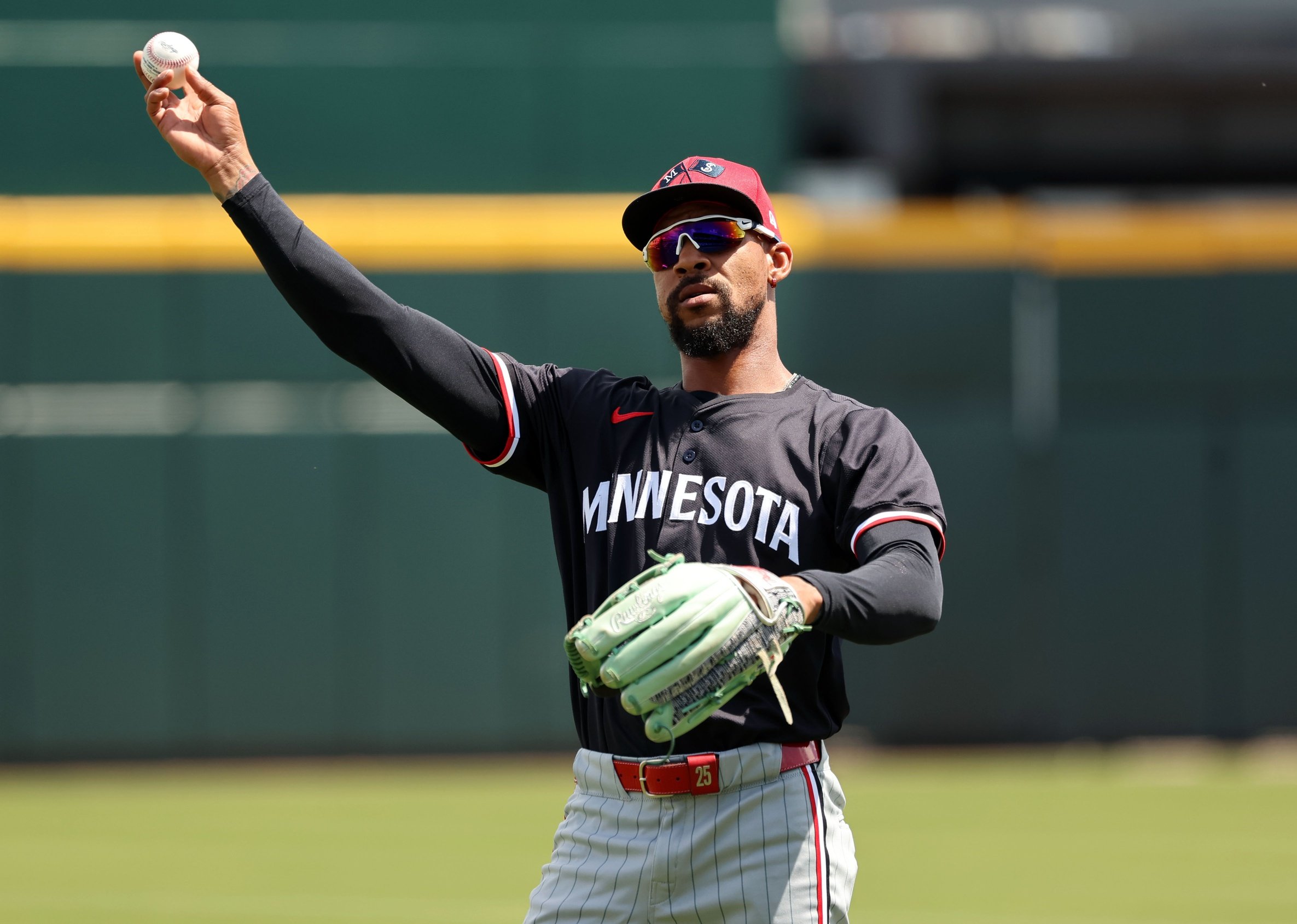 Once the games start mattering, nothing else does. Spring training stats and storylines go out the window when the heat is on and the results count. Royce Lewis gave us a fine reminder of that on Thursday. After a hugely encouraging and productive spring camp, he declared himself ready to silence the "injury-prone" label, setting his sights on a full healthy season. Two (brilliant) at-bats into the campaign, that ambition came crashing down. Looking to score from first on a double, Lewis injured his leg sprinting around second base, pulling into third with a limp and quickly exiting the game. He went for scans on what is currently being described as a quad strain. As fans await further detail (likely coming on Saturday), we're left to grapple with the reality that the rising star is once again likely to miss substantial time. It's a huge bummer! But lost in the despair over this crusher of a development is the flip side: three other extremely important players--who now just became all the more important--offered some very reassuring signs on Opening Day. These three players all checked out well physically, and that's something to celebrate. Byron Buxton has a beautifully uneventful day He started in center field and batted leadoff in his first start since August 1st, 2023, which felt like a little bit of a declarative statement. The lack of news was good news in this one for Buxton, who went 1-for-4 with a blistering 110.3 MPH single and handled defensive duties with no issue. As Dan Hayes shared in a great piece for The Athletic, Buxton was downright ecstatic to finish the game feeling as good as he did, finally able to compete at the level he wants and deserves. "Just the little bitty things was what made me happy,” Buxton said in the article. “It wasn’t getting a hit or the big things you see. It was like, ‘I played a whole nine innings in center and feel good.’ To come out the way we did and feel the way we did, and feel the way I did, I feel like the sky’s limit. I feel good, we feel good and it’s all about sticking together and keeping that bond and keep backing each other up.” Carlos Correa looks spry and special Correa, like Buxton, had a promising spring, telling reporters his foot was feeling better after plantar fasciitis haunted him through the 2023 season. But again, all the rosy spring narratives don't mean much once the games matter. In his first meaningful action of the year, Correa sent a pretty emphatic message with his Opening Day performance, reaching base four times and making multiple stellar plays defensively at short. Correa playing at his peak ability with the glove while crushing the ball and driving in runs from the middle of the lineup? Sign me up. For however long Lewis is sidelined, there will be no making up for what he brings to the table ... but Correa and Buxton both playing to the level of they showed on Thursday would go a long way toward mitigating the loss. Brock Stewart shows his stuff While not affected by the Lewis injury, Stewart's importance in the bullpen was heightened dramatically by late-spring injuries to Jhoan Durán and Caleb Thielbar. That's a precarious proposition, given just how much Stewart has struggled to stay healthy over the course of his career. Last year, another bout of arm elbow problems cost him basically the whole second half. But he was able to come back and finish strong, then enjoyed a normal spring camp. He became the first reliever to appear out of the Twins' bullpen this season when he entered to pitch the eighth on Thursday, delivering a clean inning and handing the ball over to Griffin Jax for the save. Stewart's fastball reached as high as 97.9 MPH. His top-end velocity helped him produce a 0.65 ERA in 2023; if he can stay on the mound and dominate in similar fashion here in April and May, the Twins will have a chance to weather Durán's absence with minimal impact. Stewart, Correa and Buxton are vital components of the Twins and their vision for success. Much hinges on their ability to shake off the injury woes and produce at the level they've proven capable. The team is counting on them more than ever, so it's really heartening to see their seasons get off to resoundingly positive starts. What encouraged you most about Opening Day and the individual showings we saw? How pleased are you with you saw from these three and others? Share your thoughts in the comments.
- 16 comments
-
- 11
-
-

-
- carlos correa
- byron buxton
- (and 2 more)
-
Minnesota Twins 2024 Opening Day 26-Man Roster: Get to Know 'Em
Nick Nelson posted an article in Twins
 As usual, the Twins will enter the season carrying 13 pitchers (five starters, eight relievers) and 13 position players, accounting for nine starters and a four-man bench. Read on for a quick rundown of where all 26 members of the active roster stand as the new season gets underway. CATCHER (2) Ryan Jeffers (26 years old): Looking to assert himself as catcher 1-A following a breakthrough season, in which he led all major-league catchers in OPS. Launched four homers and slugged .808 in spring training. Christian Vázquez (33): Worked hard in the offseason following a disappointing debut. His $10-million salary as a backup catcher looms large amid payroll cuts, but Vázquez offers valuable depth and stability. He and Jeffers caught every single inning for the Twins last year. INFIELDERS (5) Carlos Correa (29): Can he rebound from a career-worst season hampered by plantar fasciitis? The shortstop reports that his foot feels better, and he looked pretty mobile in camp, but the proof will be in the pudding. Kyle Farmer (33): Looking to build off an excellent second half and fill a valuable role as the righty-swinging side of a second base platoon. Farmer's also the top depth charge behind Correa at short, and a cherished personality staple in the clubhouse. Edouard Julien (24): He just does not stop producing offensively – a trend that carried into his phenomenal rookie season with the Twins and spilled over to this spring, where he had a .994 OPS. Julien will lead off against righties and should be an intimidating tone-setter for the lineup. Royce Lewis (24): Overcoming the injury hump is the only thing standing between Lewis and superstardom. For the first time in years, he is entering a season with no health issues, and looks poised to dominate the league as Minnesota's everyday third baseman. Carlos Santana (37): Seemingly the weak link in this season-opening infield mix. Santana was once a great hitter but has been diminished in recent years, and will be valued at first more for his defense, experience and steadiness than upside. The Twins hope José Miranda emerges here at some point. OUTFIELDERS (6) Byron Buxton (30): It feels so good to write his name into this section once again. Buxton was healthy and extremely productive in spring training, invigorating his coaches and teammates by flying around the bases and diving for balls in the outfield. We know how fleeting this can be, but Buck is good to go in center field to start the season, and that's easily the team's most encouraging storyline. Willi Castro (26): He's listed as an outfielder, but Castro is a true utility man, capable of plugging in all over the field. He gives Rocco Baldelli a lot of flexibility for lineup construction and in-game moves, and at 26, Castro still isn't necessarily a finished product. He was crushing the ball in spring training, where he batted .341. Max Kepler (31): It's likely the end of an era of Kepler in right field, and he's set up to go out with a bang. If he can recapture his second-half form from 2023, Kepler will add tremendous star-caliber depth to the lineup. He'll also be in line for a pretty payday in free agency. Alex Kirilloff (26): He'll spend some time at first base, but Kirilloff seems likely to factor more at designated hitter and the outfield early on. He was swinging the bat extremely well in spring training, which was a big positive coming off another offseason surgery. Manuel Margot (29): Acquired via trade from Los Angeles to provide a viable backup plan in center behind Buxton, or – more optimistically – a solid platoon bat to plug into the corners. Margot had a really brutal spring (3-for-41, zero XBH, zero walks). Matt Wallner (26): Was also slumping through the spring before he broke out with a couple of monster home runs at the end. Streakiness is to be expected from the young slugger, but we've seen what he can do when he's hot. It all comes down to how frequently he can get into those zones, and for how long. Expect Wallner to sit in favor of Margot or Castro against lefthanders. ROTATION (5) Pablo López (28): Minnesota's Opening Day starter for a second straight season, and this time there is no doubting his worthiness. López is a legit ace, one of the best starting pitchers in the league and an expected Cy Young contender. Given the October impact we've already seen, his ongoing health and success might be the single biggest factor in the Twins' championship hopes. Bailey Ober (28): The big righty turned a corner in terms of durability and workload last year, totaling 170 innings between the majors and minors. He also pitched like a frontline MLB starter, positioning himself to step up as No. 2 behind López and play a key role in filling the void left by Sonny Gray's departure. Chris Paddack (28): Returned from Tommy John surgery to throw fire out of the bullpen last September and October. Now he looks to transition back into the rotation, where he has the stuff to excel. The big question is how well he'll hold up; Paddack hasn't thrown more than 108 innings since he was a rookie back in 2019. Joe Ryan (27): At his best, he looks like an All-Star. That was the case last year, before he tried pitching through an injury and started giving up home runs in bunches. He believes he's made the right adjustments to shore up his game this year, and there's buzz surrounding some enhancements to his pitch mix. With the rare fastball that can consistently induce whiffs in the zone, Ryan has a primary ingredient for sustainable success. Louie Varland (26): An elbow setback for Anthony DeSclafani pushed Varland from St. Paul's No. 1 starter to Minnesota's No. 5 starter. The team will hope that some workshopping of his own arsenal leads to better results for the righty, who has a 4.83 ERA in 15 MLB starts. It seems noteworthy that all five Twins starters are between the ages of 26 and 28. BULLPEN (8) Jorge Alcalá (28): Has been limited to 13 total appearances for the Twins over the past two seasons, but his arm finally seems to be in a good place. Injuries elsewhere in the bullpen helped him secure this Opening Day spot. He'll likely be counted on to throw multiple innings with some frequency. Daniel Duarte (27): Non-roster invite impressed in camp and elevated himself to the roster amidst a deluge of reliever injuries. He has the stuff to get outs, but he needs to throw it in the zone. Encouragingly, the righty didn't issue a single walk this spring. Kody Funderburk (27): Sneaks in as the second bullpen lefty due to Caleb Thielbar's hamstring injury. Fundy impressed during his first taste of the majors, posting a 19-to-5 strikeout-to-walk ratio in 12 innings to earn a spot on the playoff roster. Jay Jackson (36): Veteran journeyman was signed as a free agent during the offseason. Initially pegged for middle-relief duty but could be elevated into a setup role by injuries. Well-traveled righty lives and dies by his slider, which he'll throw around two-thirds of the time. Griffin Jax (29): He was already in line for a key bullpen role before Jhoan Durán went down. Now, Jax could very well be the crux of the unit. He looks equipped to answer the call as Baldelli's late-inning fireman, armed with one of the best pitches in the league as his featured offering. Jax's sweeper somehow keeps getting better. Steven Okert (32): In the wake of the Thielbar injury, the acquisition of Okert in exchange for Nick Gordon looks especially sage. He will likely be Baldelli's top weapon against lefty hitters, though Okert has fairly neutral splits. Twins are hoping last year's second-half struggles don't resurface. Cole Sands (26): Posted a 5.52 FIP in 22 innings last year and was horrible this spring. He's here because the Twins simply need bodies in the bullpen with Thielbar, Durán and Justin Topa all down. Sands can provide some length and throw multiple innings, but should be reserved for mop-up duty. Brock Stewart (32): He was the most dominant Twins reliever when healthy last year – ahead of even Durán and Jax – but staying healthy has been a constant battle for the veteran righty. He seems to be feeling good coming out of camp and is expected to serve as primary closer at the start of the season. Is this the right roster, given the choices the Twins were left with at the end of the Grapefruit League schedule? Do you expect them to get off to a strong start? Join the discussion below.
 -
The Minnesota Twins have officially announced their Opening Day roster, with a few moderate surprises compared to expectations at the start of spring camp. Read on for a rundown of who made the team, and the roles they will fill. Griffin Jax (29): He was already in line for a key bullpen role before Jhoan Durán went down. Now, Jax could very well be the crux of the unit. He looks equipped to answer the call as Baldelli's late-inning fireman, armed with one of the best pitches in the league as his featured offering. Jax's sweeper somehow keeps getting better. Steven Okert (32): In the wake of the Thielbar injury, the acquisition of Okert in exchange for Nick Gordon looks especially sage. He will likely be Baldelli's top weapon against lefty hitters, though Okert has fairly neutral splits. Twins are hoping last year's second-half struggles don't resurface. Cole Sands (26): Posted a 5.52 FIP in 22 innings last year and was horrible this spring. He's here because the Twins simply need bodies in the bullpen with Thielbar, Durán and Justin Topa all down. Sands can provide some length and throw multiple innings, but should be reserved for mop-up duty. Brock Stewart (32): He was the most dominant Twins reliever when healthy last year – ahead of even Durán and Jax – but staying healthy has been a constant battle for the veteran righty. He seems to be feeling good coming out of camp and is expected to serve as primary closer at the start of the season. Is this the right roster, given the choices the Twins were left with at the end of the Grapefruit League schedule? Do you expect them to get off to a strong start? Join the discussion below. View full article
-
The Season's Here: Get Up to Speed with Our 2024 Twins Roster Preview
Nick Nelson posted an article in Caretakers
 The Twins and their fans are ready to put a long, slow offseason behind them as the season finally springs into action. Kauffman Stadium will host an Opening Day showdown on Thursday between Pablo Lopez and Cole Ragans, while Forgotten Star Brewing will host a bunch of Twins Daily folks to catch the game together. (Join us!) Our 2024 Twins Roster Preview PDF is now available exclusively for Caretakers, offering quick overviews of each position on the roster along with a few insider takeaways and tidbits that our writers gleaned during several weeks spent covering spring training. If you're interested, learn more about the Twins Daily Caretaker Fund and how to become a member. This is an opportunity for people to support the site and community; providing premium content perks like these are a small part of how we say thank you. As always, there will be plenty more free coverage on the site today, tomorrow, and throughout the season. Here's a quick preview of the spring training takeaways section of the PDF. Caretakers can scroll beyond that to find a link to download the full version. Byron Buxton's mood. Anyone who's covered Twins spring training in years past and was down there this year will tell you the same thing: this was a different Buxton. In the past he's been friendly and respectful but more reserved, clearly burdened by the weight of relentless health issues. This spring, he was full of life and energy, frequently bounding around the clubhouse with a big grin. On the field, he was running the bases and diving in the outfield with no restriction. This put all of us in a very good mood. Bailey Ober's new pitch. In order to address the velocity gap between his fastball and his slower offspeed pitches, Ober was working to introduce a new cutter to his arsenal this spring. He used the pitch heavily in all of his outings to try and get it "dialed in and consistent" when the season starts. A new go-to breaking ball for the big righty? "We'll see what it turns into ... it'll be good to have both to play with." Willi Castro's exit velocity. After making a big impression in his first season with the Twins, the versatile utility man was making noisy contact in Grapefruit League action, registering a handful of the highest exit velocities that he's ever recorded under Statcast. "He's smoked some balls early in this camp," said Rocco Baldelli.


