Nick Nelson
-
Posts
8,319 -
Joined
-
Last visited
-
Days Won
56
Content Type
Profiles
News
Minnesota Twins Videos
2026 Minnesota Twins Top Prospects Ranking
2022 Minnesota Twins Draft Picks
Minnesota Twins Free Agent & Trade Rumors, Notes, & Tidbits
Guides & Resources
2023 Minnesota Twins Draft Picks
The Minnesota Twins Players Project
2024 Minnesota Twins Draft Picks
2025 Minnesota Twins Draft Pick Tracker
2026 Minnesota Twins Draft Tracker: Picks & Bonuses
Forums
Blogs
Events
Store
Downloads
Gallery
Everything posted by Nick Nelson
-
 They brought in his "comedy changeup" so he can throw in low leverage while they're losing? Cool. While equipped with that changeup he's been one of the worst relievers in baseball over the past 5 years.
 -
He's pitched okay, but that's not really the point. Image courtesy of Bruce Kluckhohn-USA TODAY Sports At the end of July, as contending teams across the league hustled and haggled to upgrade their rosters for the stretch run, the Minnesota Twins mostly stood pat, amid reports of continuing ownership-imposed spending limitations. Their lone move: adding a mediocre veteran reliever named Trevor Richards from Toronto, in exchange for a nondescript minor-leaguer. That was it--the only lever pulled by a team in playoff position, with championship aspirations. At the time, it looked like just about the lowest-wattage move imaginable, and the team's usage of their newly-acquired reliever since then only cements it as such. In being charitable to the Twins front office, which has generally done a great job building this club into an elite one, I tried to convince myself there was more than meets the eye with Richards. The 31-year-old has performed barely above the replacement level, accumulating an almost impressively low 0.8 fWAR in nearly 300 innings over the past four-and-a-half years. Among 50 relievers with 200 or more innings pitched over that span, his 4.91 ERA ranked dead last. But maybe the front office saw something in him that compelled them to target the right-hander. A specific usage or pitch mix tweak that might unlock a new level? Now that he's been on the roster for three weeks, nothing of that nature has become apparent. Richards has pitched fine, with seven scoreless outings in eight appearances. But it's more the team's usage of the reliever that serves as an indictment of this trade. In their sole move at the deadline, the Twins acquired a pitcher whom they don't seem to trust or have any interest in using, outside of mop-up duty. The meltdown at Wrigley Field, when Richards came in to relieve an injured Joe Ryan and gave up three runs in an egregiously erratic showing, is the big blemish on his record. I'm not going to hold it against him too much, since entering a game cold in the third inning without warning is a cruel circumstance for any reliever. But I have to ask: Why was he the guy they chose there, just one week into his Twins tenure? Did they feel that the experienced vet would be better equipped to handle the assignment versus someone else? If so, it clearly didn't work out. It was a meaningful situation, with the Twins still leading 2-1 when Richards entered the game. Five walks and two wild pitches later, they were down 4-2, in what eventually became a lopsided loss. Richards hasn't pitched in a spot that qualifies as high-leverage, aside from that one. Since he was acquired on Jul. 30, his Average Leverage Index is sixth among Twins relievers, behind even Ronny Henriquez. Sunday's game against Texas really hammered home the shameful reality that Minnesota's only pickup at the trade deadline -- as a bona fide championship contender -- was a player that they don't even trust. With a 4-0 lead in the seventh inning, Rocco Baldelli opted to turn to Jorge Alcalá, who'd appeared twice in the previous three days, rather than Richards, who hadn't pitched in four days. We all saw how that went. Baldelli was more comfortable going to Richards as his first reliever the following day, with the Twins already down three runs. The lack of confidence is understandable, when you look past the fact that Minnesota actively sought him out for some reason. His decent overall results so far with the Twins are made possible by a .143 BABIP, and his tendency to completely lose control of where he's throwing the ball makes him impossible to count on when virtually anything is at stake. His last three appearances have all come with the team at a deficit. So, what is Richards's purpose here, exactly? Not to pitch meaningful innings, we know that. Is it to lessen the burden on Minnesota's top relievers, to prevent fatigue or attrition in September and October? That didn't happen on Sunday. Dispatch left-handed hitters with his reverse splits? He's faced as many righties as lefties, and besides, the Twins already already have two southpaws in Caleb Thielbar and Steven Okert who've proved useful for little except matchup-based usage--though the situations in which Baldelli trusts Thielbar also seem to be few in number. Three weeks later, it really isn't clear what motivated the Twins to bring in Richards at the deadline, other than to have him serve as one of the lowest-leverage relievers in a bullpen that could definitely use help at the top. Is Richards a better option for this role than a readily-available Quad-A type, like Scott Blewett? Perhaps, but it's far from a given. The fact that it's even in question lays bare how truly sad Minnesota's deadline showing was. And unfortunately, the most serious comeuppance may still lie ahead. View full article
-
Trevor Richards Was a Truly Inexplicable Deadline Pickup for the Twins
Nick Nelson posted an article in Twins
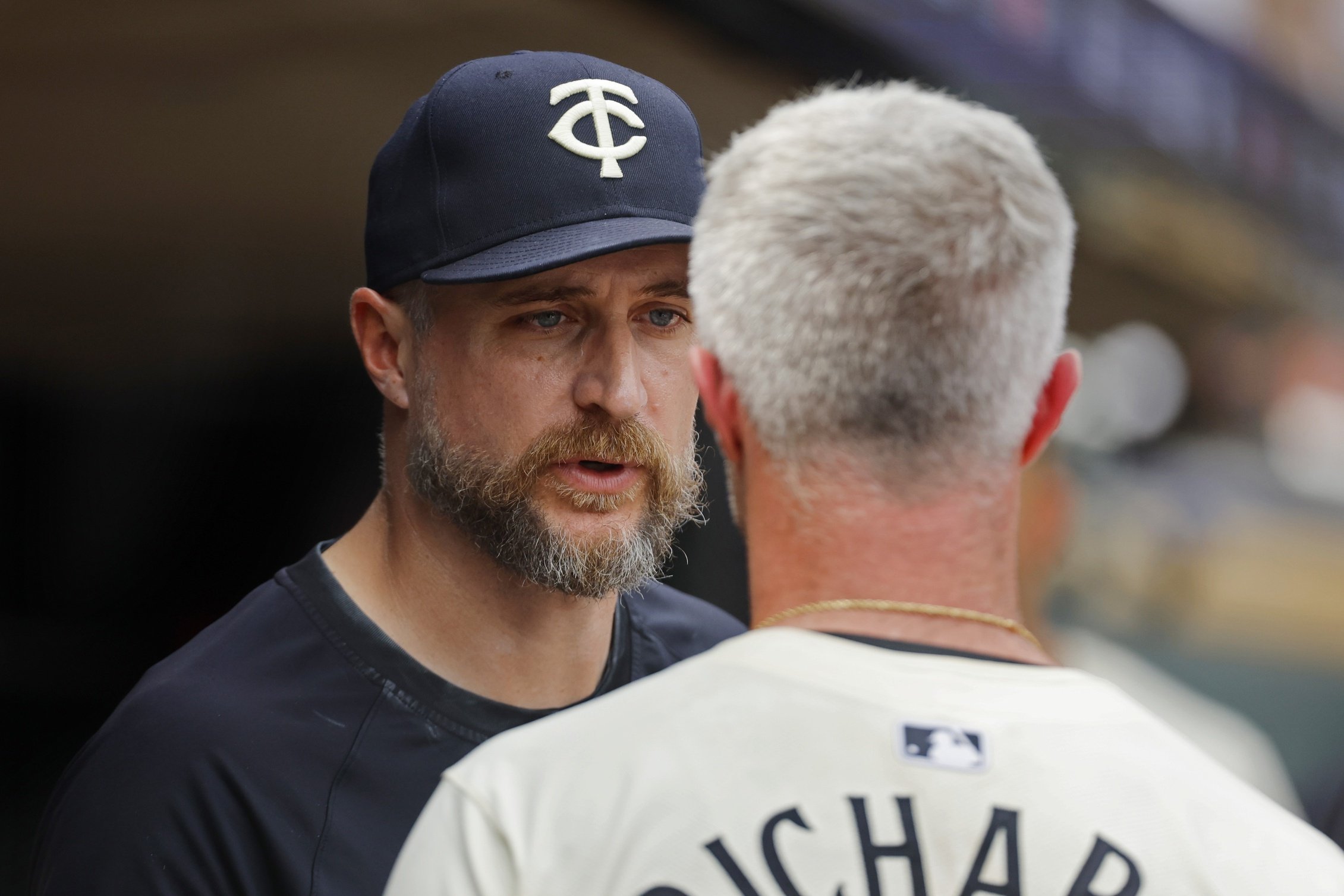 At the end of July, as contending teams across the league hustled and haggled to upgrade their rosters for the stretch run, the Minnesota Twins mostly stood pat, amid reports of continuing ownership-imposed spending limitations. Their lone move: adding a mediocre veteran reliever named Trevor Richards from Toronto, in exchange for a nondescript minor-leaguer. That was it--the only lever pulled by a team in playoff position, with championship aspirations. At the time, it looked like just about the lowest-wattage move imaginable, and the team's usage of their newly-acquired reliever since then only cements it as such. In being charitable to the Twins front office, which has generally done a great job building this club into an elite one, I tried to convince myself there was more than meets the eye with Richards. The 31-year-old has performed barely above the replacement level, accumulating an almost impressively low 0.8 fWAR in nearly 300 innings over the past four-and-a-half years. Among 50 relievers with 200 or more innings pitched over that span, his 4.91 ERA ranked dead last. But maybe the front office saw something in him that compelled them to target the right-hander. A specific usage or pitch mix tweak that might unlock a new level? Now that he's been on the roster for three weeks, nothing of that nature has become apparent. Richards has pitched fine, with seven scoreless outings in eight appearances. But it's more the team's usage of the reliever that serves as an indictment of this trade. In their sole move at the deadline, the Twins acquired a pitcher whom they don't seem to trust or have any interest in using, outside of mop-up duty. The meltdown at Wrigley Field, when Richards came in to relieve an injured Joe Ryan and gave up three runs in an egregiously erratic showing, is the big blemish on his record. I'm not going to hold it against him too much, since entering a game cold in the third inning without warning is a cruel circumstance for any reliever. But I have to ask: Why was he the guy they chose there, just one week into his Twins tenure? Did they feel that the experienced vet would be better equipped to handle the assignment versus someone else? If so, it clearly didn't work out. It was a meaningful situation, with the Twins still leading 2-1 when Richards entered the game. Five walks and two wild pitches later, they were down 4-2, in what eventually became a lopsided loss. Richards hasn't pitched in a spot that qualifies as high-leverage, aside from that one. Since he was acquired on Jul. 30, his Average Leverage Index is sixth among Twins relievers, behind even Ronny Henriquez. Sunday's game against Texas really hammered home the shameful reality that Minnesota's only pickup at the trade deadline -- as a bona fide championship contender -- was a player that they don't even trust. With a 4-0 lead in the seventh inning, Rocco Baldelli opted to turn to Jorge Alcalá, who'd appeared twice in the previous three days, rather than Richards, who hadn't pitched in four days. We all saw how that went. Baldelli was more comfortable going to Richards as his first reliever the following day, with the Twins already down three runs. The lack of confidence is understandable, when you look past the fact that Minnesota actively sought him out for some reason. His decent overall results so far with the Twins are made possible by a .143 BABIP, and his tendency to completely lose control of where he's throwing the ball makes him impossible to count on when virtually anything is at stake. His last three appearances have all come with the team at a deficit. So, what is Richards's purpose here, exactly? Not to pitch meaningful innings, we know that. Is it to lessen the burden on Minnesota's top relievers, to prevent fatigue or attrition in September and October? That didn't happen on Sunday. Dispatch left-handed hitters with his reverse splits? He's faced as many righties as lefties, and besides, the Twins already already have two southpaws in Caleb Thielbar and Steven Okert who've proved useful for little except matchup-based usage--though the situations in which Baldelli trusts Thielbar also seem to be few in number. Three weeks later, it really isn't clear what motivated the Twins to bring in Richards at the deadline, other than to have him serve as one of the lowest-leverage relievers in a bullpen that could definitely use help at the top. Is Richards a better option for this role than a readily-available Quad-A type, like Scott Blewett? Perhaps, but it's far from a given. The fact that it's even in question lays bare how truly sad Minnesota's deadline showing was. And unfortunately, the most serious comeuppance may still lie ahead.
 -
Week in Review: Compiling Wins, Closing In
Nick Nelson replied to Nick Nelson's topic in Twins Daily Front Page News
Good catch, will update. Thank you! -
Griffin Jax Has a Strong Case as Twins MVP
Nick Nelson posted a topic in Twins Daily Front Page News
Most of Minnesota's key players have wavered in their availability and effectiveness. Griffin Jax has been a steady force out of the bullpen all year long, handling the toughest assignments and keeping the Twins in the win column. Image courtesy of Jerome Miron-USA TODAY Sports A bad bullpen that constantly blows late leads can be demoralizing. Twins fans have lived through it in the past, and other franchises have had it much worse over the years. (Paging the Philadelphia Phillies.) When relievers melt down in crunch time, it can erase strong starts and big offensive performances, derailing an otherwise quality team and sending fans into a state of apoplectic anger. We got a small taste courtesy of Jorge Alcala on Sunday, but thankfully those have been somewhat rare. On the other hand, when relief pitchers excel, it tends to go largely unnoticed. It's like a great offensive line or a clean NBA reffing performance – they simply did their job, and played their part. But given the alternative scenario, and what happens when they don't get the job done, those consistently good relievers probably deserve a little more appreciation. With that in mind, we've gotta give Griffin Jax his flowers. This dude has been an indispensable asset for the Twins this year, and yet I suspect many fans wouldn't even put him in their top five when asked to name the team's most valuable player. That's reasonable enough. Several Twins players have been worth more WAR this year. Jax has thrown less than 5% of the staff's total innings. There have been plenty of flashier performances: All-Star first halves from Carlos Correa and Willi Castro, an ace-like run from Bailey Ober, Byron Buxton's resurgent campaign, Carlos Santana's clutch theatrics. Even among relievers, Durán has a solid case with his 3.35 ERA and team-leading 2.14 WPA since joining the team. But all of these players have either missed time with injury or experienced dramatic rises and falls in performance. Jax has been nails all year long, handling high-leverage spots and acing imposing assignments with some of the best stuff and results of any reliever in baseball. Jax ranks fifth among all major-league relievers in fWAR. He has a 1.82 ERA in 56 appearances, and his 2.33 xERA ranks in the 99th percentile for MLB pitchers. He's striking out 33% of opposing hitters, and holding opponents to a .177/.228/.271 slash line. These impressive numbers become all the more so when you consider the circumstances and context in which they've been produced. There are two key factors that help make the case for Jax as Minnesota's most valuable individual player so far this season. He has been a steady force all year in a bullpen that's gone through turbulence. Durán missed the first month of the season and hasn't quite looked like his usual self since returning. Caleb Thielbar missed the first two weeks and has been far worse. Brock Stewart made it through only that one month before going down, essentially, for the season. At no point has Jax been accompanied by the full complement of his planned high-leverage counterparts, but he's been there to take the ball in important spots at all times. Unlike last year, when he had a couple of luck-driven downswings, Jax hasn't really gone through a slump. He gave up a single run in three consecutive outings back in early May (all victories for the Twins) but that's the closest thing. Since that stretch he has allowed just five total earned runs in 37 appearances – a 1.23 ERA. He has routinely carved through the meat of opposing lineups with games on the line. This is the biggest thing for me. It's somewhat reflected in his WPA (second-highest on the team after Durán, 23rd among MLB relievers) but not entirely, because that metric doesn't account for the quality of opponents being faced. Rocco Baldelli knows Jax is his best reliever and he uses him as such, sending the righty out to take on an opposing lineup's best hitters with slim late-game leads constantly. To illustrate this, let's review Jax's eight appearances in the month of August. The Twins have won all but one of these games, contributing to an 11-6 month so far that has enabled them to gain 4 ½ games on Cleveland in the standings, with Jax playing a critical role. Aug 2 vs CWS: Jax enters in eighth inning, with Twins ahead 4-2, to face 9-1-2 hitters. Retires them in order. Aug 3 vs CWS: Jax enters in eighth inning, with Twins ahead 3-2, facing 9-1-2 hitters. Allows leadoff single and then sets down three straight. Aug 5 vs CHC: Jax enters in ninth inning, with Twins ahead 3-0, facing 3-4-5 hitters. Allows one single in a scoreless inning, picks up the save. Aug 9 vs CLE: Jax enters in eighth inning, with Twins ahead 4-2, facing 2-3-4 hitters. Retires the side in order. Aug 12 vs KC: Jax enters in seventh inning, with Twins ahead 6-3, facing 9-1-2 hitters. Allows leadoff single and then sets down three straight. Aug 15 vs TEX: Jax enters in seventh inning, with game tied, facing 2-3-4 hitters. Allows one single in a scoreless inning. Aug 16 vs TEX: Jax enters in eighth inning, with Twins ahead 4-3, facing 4-5-6 hitters. Retires them in order. Augt 18 vs TEX: Jax enters in ninth inning, with game tied, facing 2-3-4 hitters. Retires them in order. Jax doesn't really get a break. Whereas Durán might luck his way a soft part of the lineup occasionally, if say the bottom of the order happens to be due up for a save situation, Jax goes against the top and middle of opposing lineups pretty much exclusively. He's facing the guys that the other teams wants up in these spots, and he's putting them down. Late in spring training, after we'd watched Jax dominate Grapefruit competition with his otherworldly sweeper and also learned that Durán and Thielbar would open on the injured list, I wondered if we would see the Air Force Captain take command in the Twins bullpen, fulfilling his potential as its best member. He's done exactly that. And as a result, while I'm not sure he'd be at the top of my team MVP ballot here as we near the end of August, he would definitely be pretty close. View full article -
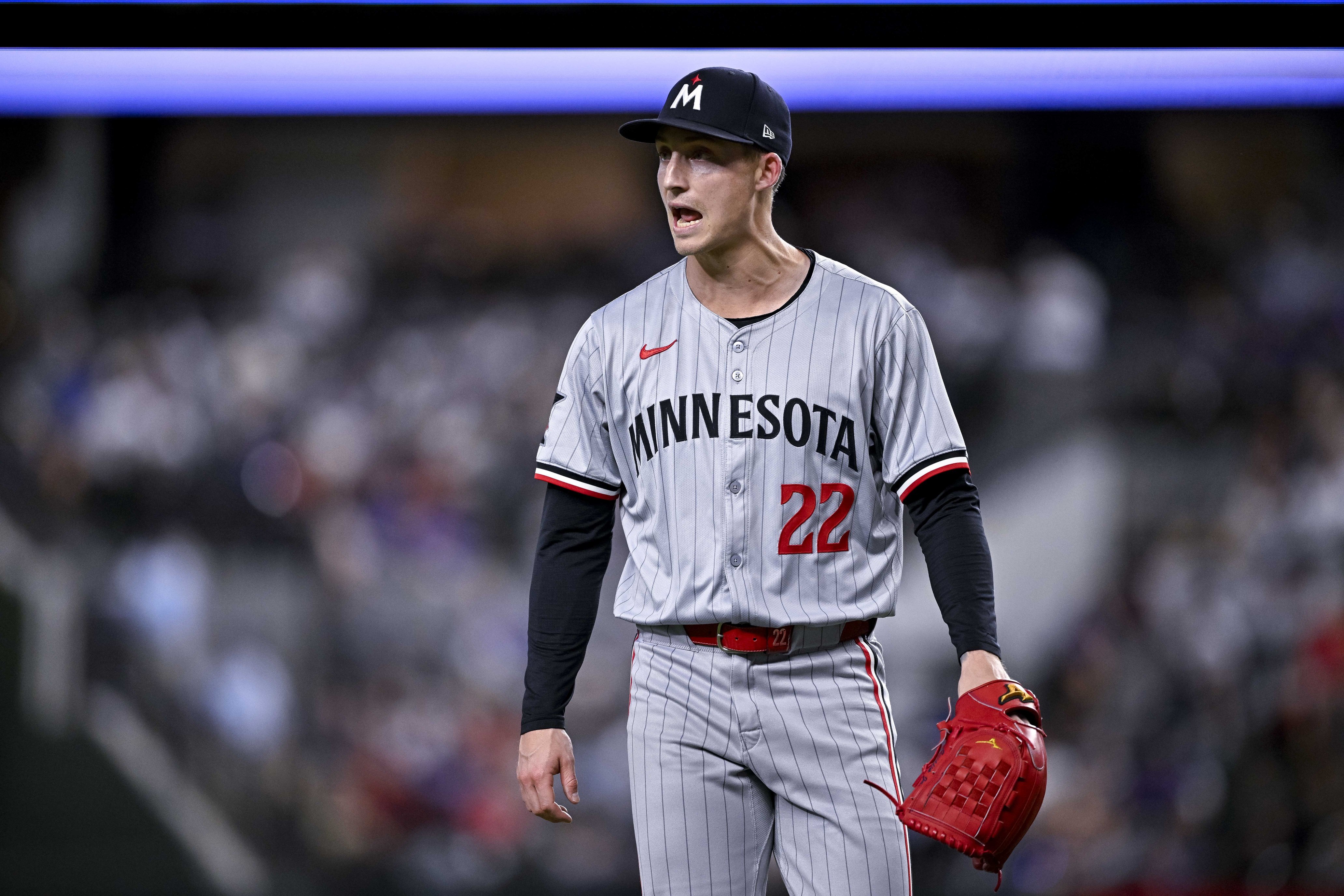 A bad bullpen that constantly blows late leads can be demoralizing. Twins fans have lived through it in the past, and other franchises have had it much worse over the years. (Paging the Philadelphia Phillies.) When relievers melt down in crunch time, it can erase strong starts and big offensive performances, derailing an otherwise quality team and sending fans into a state of apoplectic anger. We got a small taste courtesy of Jorge Alcala on Sunday, but thankfully those have been somewhat rare. On the other hand, when relief pitchers excel, it tends to go largely unnoticed. It's like a great offensive line or a clean NBA reffing performance – they simply did their job, and played their part. But given the alternative scenario, and what happens when they don't get the job done, those consistently good relievers probably deserve a little more appreciation. With that in mind, we've gotta give Griffin Jax his flowers. This dude has been an indispensable asset for the Twins this year, and yet I suspect many fans wouldn't even put him in their top five when asked to name the team's most valuable player. That's reasonable enough. Several Twins players have been worth more WAR this year. Jax has thrown less than 5% of the staff's total innings. There have been plenty of flashier performances: All-Star first halves from Carlos Correa and Willi Castro, an ace-like run from Bailey Ober, Byron Buxton's resurgent campaign, Carlos Santana's clutch theatrics. Even among relievers, Durán has a solid case with his 3.35 ERA and team-leading 2.14 WPA since joining the team. But all of these players have either missed time with injury or experienced dramatic rises and falls in performance. Jax has been nails all year long, handling high-leverage spots and acing imposing assignments with some of the best stuff and results of any reliever in baseball. Jax ranks fifth among all major-league relievers in fWAR. He has a 1.82 ERA in 56 appearances, and his 2.33 xERA ranks in the 99th percentile for MLB pitchers. He's striking out 33% of opposing hitters, and holding opponents to a .177/.228/.271 slash line. These impressive numbers become all the more so when you consider the circumstances and context in which they've been produced. There are two key factors that help make the case for Jax as Minnesota's most valuable individual player so far this season. He has been a steady force all year in a bullpen that's gone through turbulence. Durán missed the first month of the season and hasn't quite looked like his usual self since returning. Caleb Thielbar missed the first two weeks and has been far worse. Brock Stewart made it through only that one month before going down, essentially, for the season. At no point has Jax been accompanied by the full complement of his planned high-leverage counterparts, but he's been there to take the ball in important spots at all times. Unlike last year, when he had a couple of luck-driven downswings, Jax hasn't really gone through a slump. He gave up a single run in three consecutive outings back in early May (all victories for the Twins) but that's the closest thing. Since that stretch he has allowed just five total earned runs in 37 appearances – a 1.23 ERA. He has routinely carved through the meat of opposing lineups with games on the line. This is the biggest thing for me. It's somewhat reflected in his WPA (second-highest on the team after Durán, 23rd among MLB relievers) but not entirely, because that metric doesn't account for the quality of opponents being faced. Rocco Baldelli knows Jax is his best reliever and he uses him as such, sending the righty out to take on an opposing lineup's best hitters with slim late-game leads constantly. To illustrate this, let's review Jax's eight appearances in the month of August. The Twins have won all but one of these games, contributing to an 11-6 month so far that has enabled them to gain 4 ½ games on Cleveland in the standings, with Jax playing a critical role. Aug 2 vs CWS: Jax enters in eighth inning, with Twins ahead 4-2, to face 9-1-2 hitters. Retires them in order. Aug 3 vs CWS: Jax enters in eighth inning, with Twins ahead 3-2, facing 9-1-2 hitters. Allows leadoff single and then sets down three straight. Aug 5 vs CHC: Jax enters in ninth inning, with Twins ahead 3-0, facing 3-4-5 hitters. Allows one single in a scoreless inning, picks up the save. Aug 9 vs CLE: Jax enters in eighth inning, with Twins ahead 4-2, facing 2-3-4 hitters. Retires the side in order. Aug 12 vs KC: Jax enters in seventh inning, with Twins ahead 6-3, facing 9-1-2 hitters. Allows leadoff single and then sets down three straight. Aug 15 vs TEX: Jax enters in seventh inning, with game tied, facing 2-3-4 hitters. Allows one single in a scoreless inning. Aug 16 vs TEX: Jax enters in eighth inning, with Twins ahead 4-3, facing 4-5-6 hitters. Retires them in order. Augt 18 vs TEX: Jax enters in ninth inning, with game tied, facing 2-3-4 hitters. Retires them in order. Jax doesn't really get a break. Whereas Durán might luck his way a soft part of the lineup occasionally, if say the bottom of the order happens to be due up for a save situation, Jax goes against the top and middle of opposing lineups pretty much exclusively. He's facing the guys that the other teams wants up in these spots, and he's putting them down. Late in spring training, after we'd watched Jax dominate Grapefruit competition with his otherworldly sweeper and also learned that Durán and Thielbar would open on the injured list, I wondered if we would see the Air Force Captain take command in the Twins bullpen, fulfilling his potential as its best member. He's done exactly that. And as a result, while I'm not sure he'd be at the top of my team MVP ballot here as we near the end of August, he would definitely be pretty close.
 -
Week in Review: Compiling Wins, Closing In
Nick Nelson posted a topic in Twins Daily Front Page News
The Minnesota Twins are officially making their push in the American League Central. By winning five out of seven, despite missing two of their best players, the Twins moved within two games of Cleveland for the division lead with six weeks to go. Now the race is really on. Image courtesy of Brad Rempel-USA TODAY Sports Weekly Snapshot: Mon, 8/12 through Sun, 8/18 *** Record Last Week: 5-2 (Overall: 70-54) Run Differential Last Week: +16 (Overall: +70) Standing: 2nd Place in AL Central (2.0 GB) Game 118 | MIN 8, KC 3: Early Homers from Castro, Lewis Build Big Lead Game 119 | MIN 13, KC 3: Twins Rout Royals in Zebby's MLB Debut Game 120 | KC 4, MIN 1: Bats Go Silent Against Ragans, Relievers Game 121 | MIN 3, TEX 2: Ober Delivers Again, Beats Rangers in Opener Game 122 | MIN 4, TEX 3: Santana's Key Homer Fuels Another Close Win Game 123 | MIN 5, TEX 2: Pitching Leads the Way Again in Series Clincher Game 124 | TEX 6, MIN 5: Nightmare Inning from Alcala Costs Win, Sweep IF YOU'D RATHER LISTEN TO THE WEEK IN REVIEW THAN READ IT, YOU CAN NOW FIND IT IN PODCAST FORM. GET THE LATEST EPISODE HERE. ALSO AVAILABLE ON APPLE AND SPOTIFY. NEWS & NOTES After homering twice the previous day against Cleveland, Byron Buxton exited Monday's series opener against Kansas City following his third at-bat, complaining of hip soreness. An ensuing MRI thankfully revealed no structural damage, but the pain persisted for Buxton, who still wasn't game-ready when the Twins embarked on their road trip to Texas, necessitating an IL move. Edouard Julien returned to the big-league roster in his stead. Buxton's injury is officially being deemed inflammation, but I wouldn't assume he'll be back after the minimum 10 days. This hip has been problematic in the past. As with Carlos Correa – who himself remains sidelined with no clear return date in sight – the Twins need to make sure this thing heals as well as it can. They can't afford to push Buxton back too quickly, even though being without your star shortstop and center fielder is obviously a major blow in the short term. As expected, Zebby Matthews was called up from Triple-A to make his major-league debut on Tuesday against the Royals, picking up a win. Scott Blewett was designated for assignment to open a spot on the 40-man roster. (Blewett was outrighted, elected free agency, and then re-signed with the Saints.) Louie Varland was called up for a start the following day, then optioned afterward. Josh Winder was sent down to make room for Varland, and Ronny Henriquez was recalled to replace him. Finally, the Twins activated Steven Okert from the bereavement list on Monday, shuttling Randy Dobnak back down to the minors. HIGHLIGHTS We usually mention them near the end of the Highlights section, because the bullpen tends to be such an afterthought relative to the rotation and lineup, but this week, Jhoan Durán and Griffin Jax deserve head billing. These two relievers really are near the top of the list in terms of reasons for believing in this team, and its potential to make a legitimate run. Durán pitched on three straight days for the first time all season, and he handled it well, allowing one (meaningless) run over three innings, while picking up one-run saves on Thursday and Friday against the Rangers. He took the loss on Sunday's game but by no fault of his own: Entering in the 10th with a runner starting on second, Durán got a strikeout and then a weak grounder to third, which the infield managed to bungle into a game-losing defensive flub. For the week, Durán struck out six with no walks allowed in 3 ⅓ innings. He has posted an 18-to-2 K/BB ratio over his past 14 appearances; he was at 12-to-5 in his previous 14. Durán's velocity still isn't back to where it was in the past, and maybe it never will be, but he does look healthy and he's still plenty effective. Jax made four appearances over the course of the week, each time facing the top or middle of the opposing lineup with the game tied or the Twins narrowly leading. Each time he held the opposition scoreless. That's been the consistent story for him this month; the Twins are 7-1 in games where he has appeared in August, in no small part because of his contributions. Jax and Durán were instrumental last October to Minnesota's first postseason advancement in almost two decades, and they will be crucial to any such aspirations this year. You just hope they're not going to wear down from overuse, which is the one note of caution about this past week: Durán has pitched four times in five days and Jax was used three times in the four-game Rangers series. The Twins rotation, now relying on a pair of rookies alongside the established trio of Pablo López, Bailey Ober and Simeon Woods Richardson, continues to get the job done despite its setbacks. Matthews was very impressive in his debut on Tuesday, tossing five innings of two-run ball with five strikeouts and no walks. David Festa put up a very similar line in Texas on Saturday: 5 IP, 2 ER, 6 K. 0 BB. If the two 24-year-olds can keep throwing like this, the Twins are gonna be in fine shape. Down two of their best bats, the Twins have needed help from wherever they can get it in the lineup. Veteran Carlos Santana is answering the call to the utmost, and he delivered in a big way once again this past week. Although he was only 4-for-22 in seven games, three of the hits were home runs and Santana made them count: a solo shot to (briefly) draw the Twins within one in Wednesday's loss, a decisive three-run go-ahead homer in Friday's win, and a game-tying blast in the ninth inning of Sunday's loss. Santana also drew seven walks against four strikeouts while continuing to play spectacular, game-changing defense at first. Some other noteworthy performances in a solid week for the Twins offense: Royce Lewis notched at least one hit in all six of his starts, three of which came at third base and the other three at DH as he maintains a pretty even split. Lewis doubled, homered, and drove in three. José Miranda broke out of his post-break slump with two doubles, a triple and a homer among his six hits. His three-hit outburst on Tuesday helped fuel a blowout victory over Kansas City. Ryan Jeffers launched a pair of homers in Texas over the weekend, and drove in three runs on Sunday – his first multi-RBI game since July 4th. Kyle Farmer is starting to hit the ball with some authority, suggesting that maybe a little time on the sidelines to rest up his ailing shoulder did him some good. His 4-for-15 week included a home run and a triple, which turned into an inside-the-park homer. LOWLIGHTS With both Correa and Buxton sidelined, and Alex Kirilloff seemingly out of the picture, the Twins could really use the infusion that Julien's bat would bring to their lineup if he could even remotely approximate the player he was last year. But it's just not there. Julien struck out five times in his seven plate appearances, looking rough enough at the plate on Friday and Saturday that Rocco Baldelli opted for Farmer at second base against a right-hander on Sunday. Coming into the season, second base looked like such a deep, formidable position on the Twins roster. But with Julien unable to find himself, Brooks Lee injured, and Willi Castro needed at short in Correa's absence, the position's quality depth has been decimated. Center field is another spot where the Twins are thinned out and feeling the impact. Here too, Castro's ability to contribute is limited due to being regularly needed at shortstop. That leaves the underwhelming duo of Manuel Margot and Austin Martin to split duties in center. They're doing their best. It should be noted that the Twins were initially hesitant to use Margot in center at all – he didn't make his first start there until a week into May – and Martin is of course a rookie, who primarily played infield while coming up. They've looked expectedly rough defensively, especially in contrast to Buxton's brilliance. And while the past week was a relatively good one for the duo at the plate – Martin and Margot combined for 10 knocks in 35 at-bats (.288 AVG) – it was characteristic in that nine of the 10 hits were singles, and the pair totaled just one walk. While it was a very good week for the Twins overall, they unfortunately fumbled away a chance to make it a great one by blowing a late four-run lead on Sunday, letting a series sweep in Texas slip away. Jorge Alcala came in for the seventh, up 4-0, and got absolutely clobbered. Rangers hitters were all over him. He surrendered five earned runs on five hits, including two home runs, while recording only two outs. Alcala's ERA still sits at 3.09 even after the disastrous outing, speaking to how effective he's been generally, but Baldelli's decision to use him in that spot is worthy of scrutiny. Alcala's track record for durability is precarious, and he'd pitched the previous day, as well as throwing 20 pitches on Thursday. Meanwhile, Trevor Richards was fresh as could be, four days removed from his last appearance. Baldelli still didn't trust him with a four-run lead, turning to Richards only after the Twins were trailing. That's about as much of an indictment of the team's lone trade deadline acquisition as one could imagine. TRENDING STORYLINE The Twins are 11-6 in August and they've shaved 4 ½ games off Cleveland's division lead this month. That they've been able to do it without Correa and largely without Buxton makes this feat all the more impressive. But there's no question that the Twins are going to need their best players back in order to maintain momentum and finish the job with a challenging schedule still ahead. In the coming week, I'll be looking for positive signs on both fronts. Buxton will be eligible to return from his 10-day IL stint when Friday's home stand opens against the Cardinals. Will he be activated and back in the lineup? If not, the implications may be troubling. And what of Correa? Will he finally embark on a rehab assignment, signaling that his own return to the lineup is in sight? Or will this be another week of stagnating progress for the shortstop? Dan Hayes of The Athletic reported over the weekend that, per head trainer Nick Paparesta, Correa "needs to be comfortable running daily without feeling sore the next day" but has yet to reach that point. It's a disturbing state of limbo right now. LOOKING AHEAD A week of interleague competition lies ahead, with the Twins heading to San Diego for a three-game set before returning home to face the Cardinals. Following their matchup against Tyler Mahle on Sunday, the Twins have a couple more old friends on the docket in the coming week, with Martín Pérez scheduled to pitch for the Padres and Sonny Gray for the Cardinals. That pairing on Saturday is especially intriguing: Minnesota's Game 1 starter from last year's playoffs versus their Game 2 starter. MONDAY, AUG 19: TWINS @ PADRES – RHP Zebby Matthews v. RHP Michael King TUESDAY, AUG 20: TWINS @ PADRES – RHP Bailey Ober v. LHP Martin Perez WEDNESDAY, AUG 21: TWINS @ PADRES – RHP Simeon Woods Richardson v. RHP Matt Waldron FRIDAY, AUG 23: CARDINALS @ TWINS – RHP Andre Pallante v. RHP David Festa SATURDAY AUG 24: CARDINALS @ TWINS – RHP Sonny Gray v. RHP Pablo Lopez SUNDAY, AUG 25: CARDINALS @ TWINS – RHP Erick Fedde v. RHP Zebby Matthews View full article -
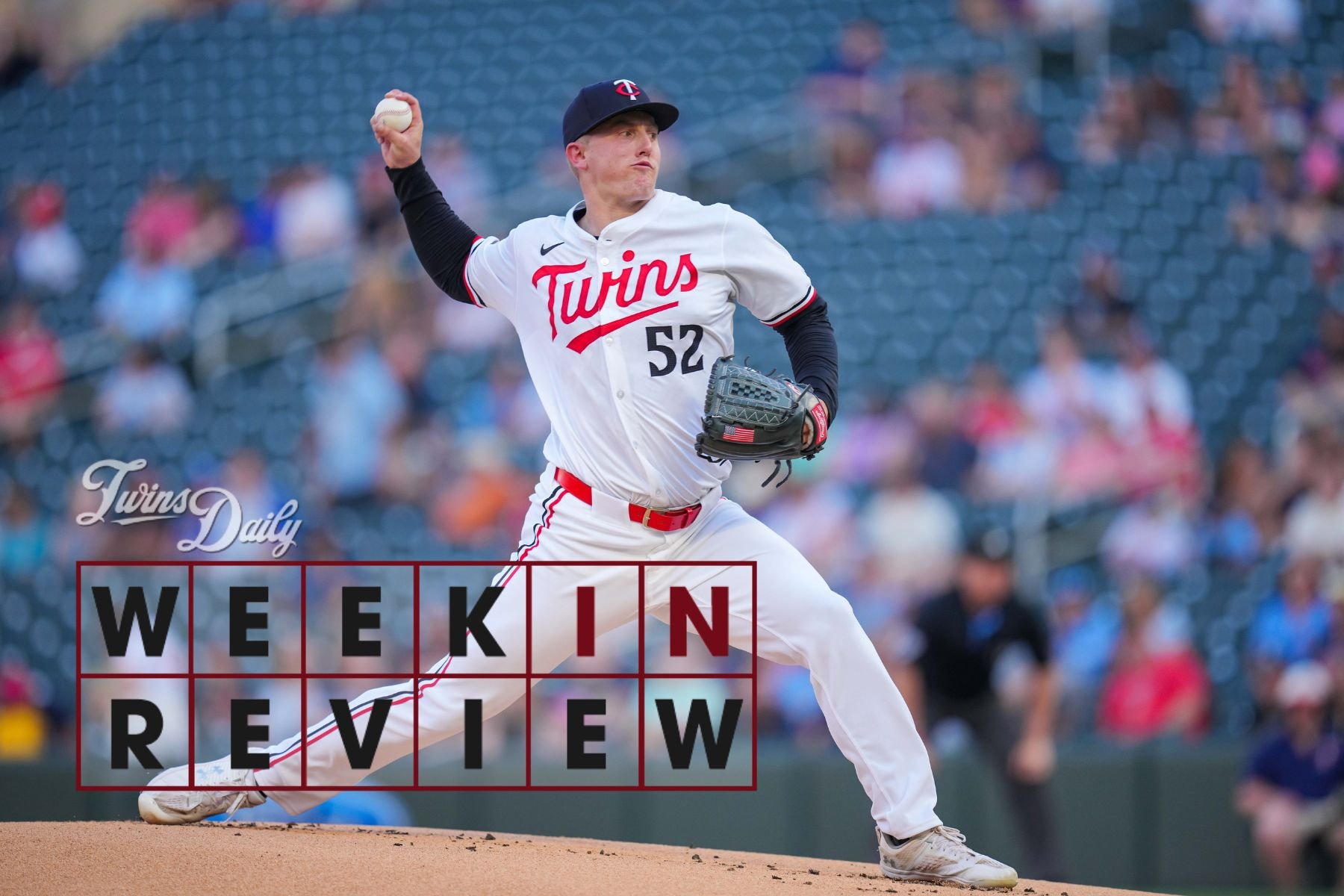 Weekly Snapshot: Mon, 8/12 through Sun, 8/18 *** Record Last Week: 5-2 (Overall: 70-54) Run Differential Last Week: +16 (Overall: +70) Standing: 2nd Place in AL Central (2.0 GB) Game 118 | MIN 8, KC 3: Early Homers from Castro, Lewis Build Big Lead Game 119 | MIN 13, KC 3: Twins Rout Royals in Zebby's MLB Debut Game 120 | KC 4, MIN 1: Bats Go Silent Against Ragans, Relievers Game 121 | MIN 3, TEX 2: Ober Delivers Again, Beats Rangers in Opener Game 122 | MIN 4, TEX 3: Santana's Key Homer Fuels Another Close Win Game 123 | MIN 5, TEX 2: Pitching Leads the Way Again in Series Clincher Game 124 | TEX 6, MIN 5: Nightmare Inning from Alcala Costs Win, Sweep IF YOU'D RATHER LISTEN TO THE WEEK IN REVIEW THAN READ IT, YOU CAN NOW FIND IT IN PODCAST FORM. GET THE LATEST EPISODE HERE. ALSO AVAILABLE ON APPLE AND SPOTIFY. NEWS & NOTES After homering twice the previous day against Cleveland, Byron Buxton exited Monday's series opener against Kansas City following his third at-bat, complaining of hip soreness. An ensuing MRI thankfully revealed no structural damage, but the pain persisted for Buxton, who still wasn't game-ready when the Twins embarked on their road trip to Texas, necessitating an IL move. Edouard Julien returned to the big-league roster in his stead. Buxton's injury is officially being deemed inflammation, but I wouldn't assume he'll be back after the minimum 10 days. This hip has been problematic in the past. As with Carlos Correa – who himself remains sidelined with no clear return date in sight – the Twins need to make sure this thing heals as well as it can. They can't afford to push Buxton back too quickly, even though being without your star shortstop and center fielder is obviously a major blow in the short term. As expected, Zebby Matthews was called up from Triple-A to make his major-league debut on Tuesday against the Royals, picking up a win. Scott Blewett was designated for assignment to open a spot on the 40-man roster. (Blewett was outrighted, elected free agency, and then re-signed with the Saints.) Louie Varland was called up for a start the following day, then optioned afterward. Josh Winder was sent down to make room for Varland, and Ronny Henriquez was recalled to replace him. Finally, the Twins activated Steven Okert from the bereavement list on Monday, shuttling Randy Dobnak back down to the minors. HIGHLIGHTS We usually mention them near the end of the Highlights section, because the bullpen tends to be such an afterthought relative to the rotation and lineup, but this week, Jhoan Durán and Griffin Jax deserve head billing. These two relievers really are near the top of the list in terms of reasons for believing in this team, and its potential to make a legitimate run. Durán pitched on three straight days for the first time all season, and he handled it well, allowing one (meaningless) run over three innings, while picking up one-run saves on Thursday and Friday against the Rangers. He took the loss on Sunday's game but by no fault of his own: Entering in the 10th with a runner starting on second, Durán got a strikeout and then a weak grounder to third, which the infield managed to bungle into a game-losing defensive flub. For the week, Durán struck out six with no walks allowed in 3 ⅓ innings. He has posted an 18-to-2 K/BB ratio over his past 14 appearances; he was at 12-to-5 in his previous 14. Durán's velocity still isn't back to where it was in the past, and maybe it never will be, but he does look healthy and he's still plenty effective. Jax made four appearances over the course of the week, each time facing the top or middle of the opposing lineup with the game tied or the Twins narrowly leading. Each time he held the opposition scoreless. That's been the consistent story for him this month; the Twins are 7-1 in games where he has appeared in August, in no small part because of his contributions. Jax and Durán were instrumental last October to Minnesota's first postseason advancement in almost two decades, and they will be crucial to any such aspirations this year. You just hope they're not going to wear down from overuse, which is the one note of caution about this past week: Durán has pitched four times in five days and Jax was used three times in the four-game Rangers series. The Twins rotation, now relying on a pair of rookies alongside the established trio of Pablo López, Bailey Ober and Simeon Woods Richardson, continues to get the job done despite its setbacks. Matthews was very impressive in his debut on Tuesday, tossing five innings of two-run ball with five strikeouts and no walks. David Festa put up a very similar line in Texas on Saturday: 5 IP, 2 ER, 6 K. 0 BB. If the two 24-year-olds can keep throwing like this, the Twins are gonna be in fine shape. Down two of their best bats, the Twins have needed help from wherever they can get it in the lineup. Veteran Carlos Santana is answering the call to the utmost, and he delivered in a big way once again this past week. Although he was only 4-for-22 in seven games, three of the hits were home runs and Santana made them count: a solo shot to (briefly) draw the Twins within one in Wednesday's loss, a decisive three-run go-ahead homer in Friday's win, and a game-tying blast in the ninth inning of Sunday's loss. Santana also drew seven walks against four strikeouts while continuing to play spectacular, game-changing defense at first. Some other noteworthy performances in a solid week for the Twins offense: Royce Lewis notched at least one hit in all six of his starts, three of which came at third base and the other three at DH as he maintains a pretty even split. Lewis doubled, homered, and drove in three. José Miranda broke out of his post-break slump with two doubles, a triple and a homer among his six hits. His three-hit outburst on Tuesday helped fuel a blowout victory over Kansas City. Ryan Jeffers launched a pair of homers in Texas over the weekend, and drove in three runs on Sunday – his first multi-RBI game since July 4th. Kyle Farmer is starting to hit the ball with some authority, suggesting that maybe a little time on the sidelines to rest up his ailing shoulder did him some good. His 4-for-15 week included a home run and a triple, which turned into an inside-the-park homer. LOWLIGHTS With both Correa and Buxton sidelined, and Alex Kirilloff seemingly out of the picture, the Twins could really use the infusion that Julien's bat would bring to their lineup if he could even remotely approximate the player he was last year. But it's just not there. Julien struck out five times in his seven plate appearances, looking rough enough at the plate on Friday and Saturday that Rocco Baldelli opted for Farmer at second base against a right-hander on Sunday. Coming into the season, second base looked like such a deep, formidable position on the Twins roster. But with Julien unable to find himself, Brooks Lee injured, and Willi Castro needed at short in Correa's absence, the position's quality depth has been decimated. Center field is another spot where the Twins are thinned out and feeling the impact. Here too, Castro's ability to contribute is limited due to being regularly needed at shortstop. That leaves the underwhelming duo of Manuel Margot and Austin Martin to split duties in center. They're doing their best. It should be noted that the Twins were initially hesitant to use Margot in center at all – he didn't make his first start there until a week into May – and Martin is of course a rookie, who primarily played infield while coming up. They've looked expectedly rough defensively, especially in contrast to Buxton's brilliance. And while the past week was a relatively good one for the duo at the plate – Martin and Margot combined for 10 knocks in 35 at-bats (.288 AVG) – it was characteristic in that nine of the 10 hits were singles, and the pair totaled just one walk. While it was a very good week for the Twins overall, they unfortunately fumbled away a chance to make it a great one by blowing a late four-run lead on Sunday, letting a series sweep in Texas slip away. Jorge Alcala came in for the seventh, up 4-0, and got absolutely clobbered. Rangers hitters were all over him. He surrendered five earned runs on five hits, including two home runs, while recording only two outs. Alcala's ERA still sits at 3.09 even after the disastrous outing, speaking to how effective he's been generally, but Baldelli's decision to use him in that spot is worthy of scrutiny. Alcala's track record for durability is precarious, and he'd pitched the previous day, as well as throwing 20 pitches on Thursday. Meanwhile, Trevor Richards was fresh as could be, four days removed from his last appearance. Baldelli still didn't trust him with a four-run lead, turning to Richards only after the Twins were trailing. That's about as much of an indictment of the team's lone trade deadline acquisition as one could imagine. TRENDING STORYLINE The Twins are 11-6 in August and they've shaved 4 ½ games off Cleveland's division lead this month. That they've been able to do it without Correa and largely without Buxton makes this feat all the more impressive. But there's no question that the Twins are going to need their best players back in order to maintain momentum and finish the job with a challenging schedule still ahead. In the coming week, I'll be looking for positive signs on both fronts. Buxton will be eligible to return from his 10-day IL stint when Friday's home stand opens against the Cardinals. Will he be activated and back in the lineup? If not, the implications may be troubling. And what of Correa? Will he finally embark on a rehab assignment, signaling that his own return to the lineup is in sight? Or will this be another week of stagnating progress for the shortstop? Dan Hayes of The Athletic reported over the weekend that, per head trainer Nick Paparesta, Correa "needs to be comfortable running daily without feeling sore the next day" but has yet to reach that point. It's a disturbing state of limbo right now. LOOKING AHEAD A week of interleague competition lies ahead, with the Twins heading to San Diego for a three-game set before returning home to face the Cardinals. Following their matchup against Tyler Mahle on Sunday, the Twins have a couple more old friends on the docket in the coming week, with Martín Pérez scheduled to pitch for the Padres and Sonny Gray for the Cardinals. That pairing on Saturday is especially intriguing: Minnesota's Game 1 starter from last year's playoffs versus their Game 2 starter. MONDAY, AUG 19: TWINS @ PADRES – RHP Zebby Matthews v. RHP Michael King TUESDAY, AUG 20: TWINS @ PADRES – RHP Bailey Ober v. LHP Martin Perez WEDNESDAY, AUG 21: TWINS @ PADRES – RHP Simeon Woods Richardson v. RHP Matt Waldron FRIDAY, AUG 23: CARDINALS @ TWINS – RHP Andre Pallante v. RHP David Festa SATURDAY AUG 24: CARDINALS @ TWINS – RHP Sonny Gray v. RHP Pablo Lopez SUNDAY, AUG 25: CARDINALS @ TWINS – RHP Erick Fedde v. RHP Zebby Matthews
- 11 comments
-
- 6
-

-
- carlos santana
- zebby matthews
- (and 3 more)
-
Now that's the kind of optimism I need!
-
Will Chris Paddack pitch for the Minnesota Twins again this year? As each week passes with a lack of tangible progress, it grows less likely. Now we have to wonder about what next year holds, since the righty's contract currently positions him as one of the team's five highest-paid players for 2025. Image courtesy of © D. Ross Cameron-USA TODAY Sports When Chris Paddack went back onto the injured list after returning from a bout with arm fatigue and making two starts ahead of the All-Star break, the Twins publicly expressed minimal concern. "It doesn't seem like anything major, to be honest," said manager Rocco Baldelli of Paddack feeling tightness while throwing over the break. "His elbow seems fine, the ligament seems fine, everything seems fine. It's some sort of muscle strain and should heal up." In retrospect, much like the team's initial reactions to the Carlos Correa, Joe Ryan and Byron Buxton injuries, this one now looks like wishful thinking. One month later, Paddack has made no real progress toward returning, and it doesn't sound like he's close. In his latest article at The Athletic, Dan Hayes runs through a litany of injury updates, including some news regarding Paddack. Hayes shares that, per head trainer Nick Paparesta, the right-hander "won’t go full throttle until he has a second MRI on Aug. 27 and is cleared by Dr. Keith Meister." "Once that's cleared up, we'll get him moving a bit quicker," Paparesta added. Which sounds fine in theory except that by that point, the end of the season is only a month away, and he won't have pitched for six weeks. Getting Paddack up to speed for even a relief role leading into the playoffs, similar to last year, feels like a bit of a pipe dream at this stage. There's been no word of a setback, but it's hard to believe something hasn't gone amiss. Eight days ago, on August 9th, it was reported that Paddack was "tracking really well," in the words of Derek Falvey, who added that the pitcher could be cleared to start a throwing program "really soon." Evidently, that's off the table. It's probably best to stop thinking about Paddack as a factor for the rest of this season and wondering about what next year holds. By virtue of the three-year contract extension he signed in January of 2023, he'll make $7.5 million guaranteed next season – only Correa, Pablo López, Buxton and Christian Vázquez are slated to earn more. That commitment wouldn't be a huge deal under normal circumstances, but with the ownership-mandated payroll crunch being faced by the front office, Paddack's salary looms large in their planning. Personally, I'm more interested in what that MRI scheduled for August 27th tells us about his outlook for next year than the rest of this year. What are your thoughts? Will Paddack pitch again for the Twins this season? What's your confidence level in him looking ahead to 2025? Sound off in the comments. View full article
-
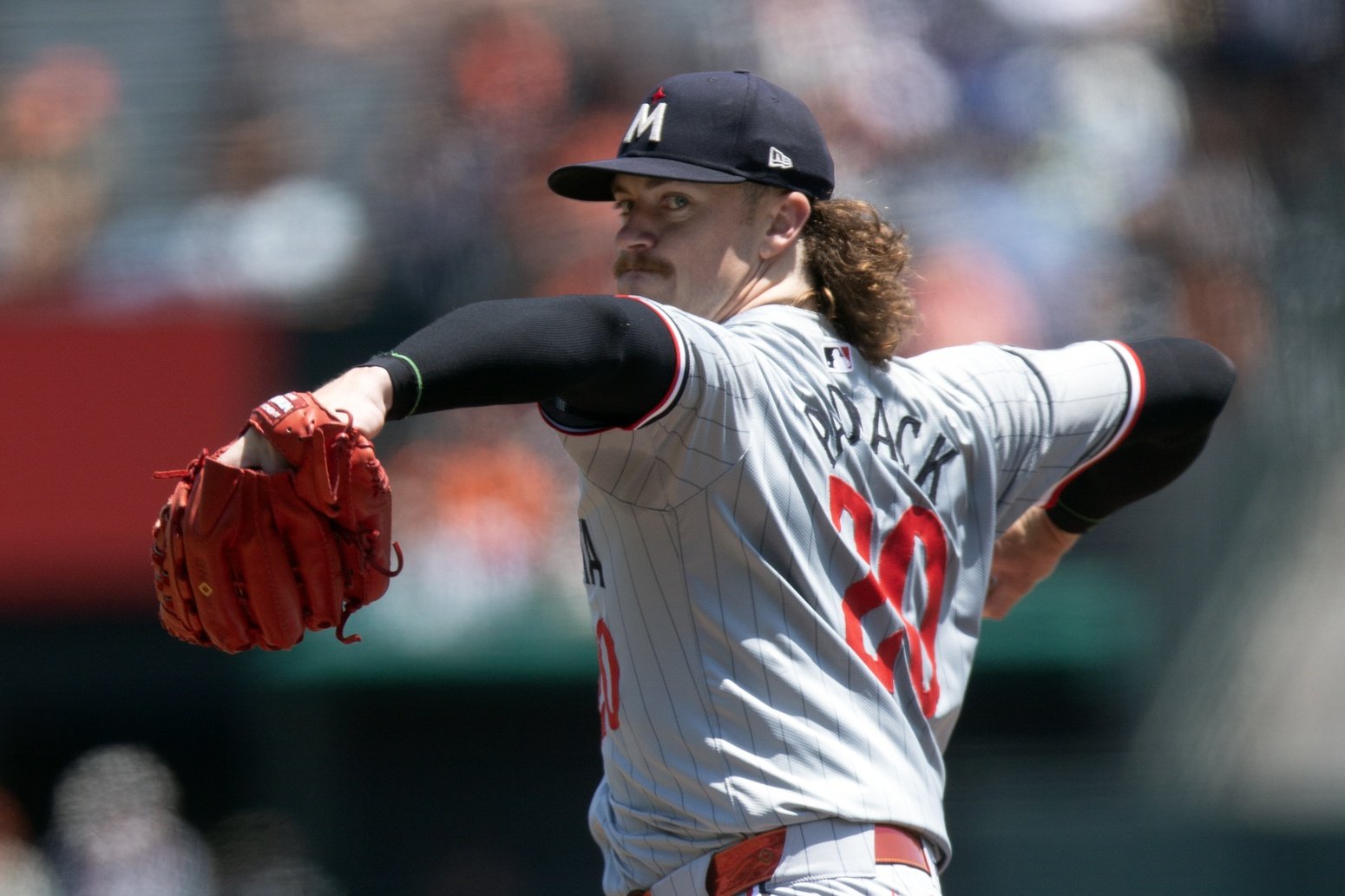 When Chris Paddack went back onto the injured list after returning from a bout with arm fatigue and making two starts ahead of the All-Star break, the Twins publicly expressed minimal concern. "It doesn't seem like anything major, to be honest," said manager Rocco Baldelli of Paddack feeling tightness while throwing over the break. "His elbow seems fine, the ligament seems fine, everything seems fine. It's some sort of muscle strain and should heal up." In retrospect, much like the team's initial reactions to the Carlos Correa, Joe Ryan and Byron Buxton injuries, this one now looks like wishful thinking. One month later, Paddack has made no real progress toward returning, and it doesn't sound like he's close. In his latest article at The Athletic, Dan Hayes runs through a litany of injury updates, including some news regarding Paddack. Hayes shares that, per head trainer Nick Paparesta, the right-hander "won’t go full throttle until he has a second MRI on Aug. 27 and is cleared by Dr. Keith Meister." "Once that's cleared up, we'll get him moving a bit quicker," Paparesta added. Which sounds fine in theory except that by that point, the end of the season is only a month away, and he won't have pitched for six weeks. Getting Paddack up to speed for even a relief role leading into the playoffs, similar to last year, feels like a bit of a pipe dream at this stage. There's been no word of a setback, but it's hard to believe something hasn't gone amiss. Eight days ago, on August 9th, it was reported that Paddack was "tracking really well," in the words of Derek Falvey, who added that the pitcher could be cleared to start a throwing program "really soon." Evidently, that's off the table. It's probably best to stop thinking about Paddack as a factor for the rest of this season and wondering about what next year holds. By virtue of the three-year contract extension he signed in January of 2023, he'll make $7.5 million guaranteed next season – only Correa, Pablo López, Buxton and Christian Vázquez are slated to earn more. That commitment wouldn't be a huge deal under normal circumstances, but with the ownership-mandated payroll crunch being faced by the front office, Paddack's salary looms large in their planning. Personally, I'm more interested in what that MRI scheduled for August 27th tells us about his outlook for next year than the rest of this year. What are your thoughts? Will Paddack pitch again for the Twins this season? What's your confidence level in him looking ahead to 2025? Sound off in the comments.
 -
At 44, the well traveled left-hander is ramping up to join a contender for a late-season push. The Twins have history with Rich Hill, and a very clear need in the rotation, so it's no surprise they are rumored to be among his suitors. Image courtesy of Bruce Kluckhohn-USA TODAY Sports In so many ways, 2020 feels like a lifetime ago. Those memories have become distant: The explosion of the COVID-19 pandemic, the delayed start to an abbreviated MLB season, the strange dynamics of playing a limited regional schedule in empty ballparks. Generally speaking, it's a period most of us would like to forget. But one fun element of that Twins season was the presence of Rich Hill, a veteran left-hander who was joining his eighth team at age 40, looking to reinforce a team coming off a 100-win season with championship aspirations. Even then, Hill needed to be managed carefully, struggling to stay healthy and throwing only 38 innings as a Twin. Still, he was useful, posting a 3.03 ERA for the repeat division winners. It was a good show, watching him craftily navigate big-league lineups with an upper-80s fastball thanks to command, grit, and his trademark curve. Hill would grunt with effort and shout with competitive emotion on the mound. He was valued in the clubhouse and liked by his teammates. These qualities have helped Hill stick around for three more seasons since, accumulating 430 innings from 2021 through 2023 for the Rays, Mets, Red Sox, Padres and Pirates. He's been a mercenary, rotating through different pitching staffs at a dizzying pace. Now, Hill is looking for one last job, and he wants to make it count. Could a return to the Twins be the perfect fit for both sides? Hill signaled to teams ahead of the season that he intended to sit out the first half. As Steve Adams explains at MLB Trade Rumors: The time has come. Hill hosted a showcase for scouts last week, in hopes of demonstrating his readiness. Afterward, Dan Hayes of The Athletic tweeted that the Twins "are in contact" with Hill and his representatives. It's a logical inquiry given not only Minnesota's history with the veteran, but also their increasingly dire need for starting pitching depth. Joe Ryan is likely out for the season after suffering a muscle strain in his shoulder. Chris Paddack remains sidelined indefinitely, and seems tough to count on going forward as a rotation member. The Twins currently find themselves depending on an exorbitant number of rookies and young arms, starting Simeon Woods Richardson, David Festa, Zebby Matthews and Louie Varland in the span of five crucial games against division rivals. Relying on a rotation with little collective experience in crunch time is a perilous thing, and the situation is even more dicey when you consider the ramifications of even one more injury to a starter. As a byproduct of their inactivity at the trade deadline, the Twins have as great a need for a pitcher like Hill as any contender in the league. And they are a bona fide contender, meaning Minnesota fits Hill's chief criterion. He wants to throw meaningful innings during what may be his last hurrah. He'd certainly have that opportunity for a Twins team that is in the thick of a tight, three-team division race, currently possessing the second Wild Card spot in the American League. So, should the Twins make a push for Hill? I can't see why not. It's important to keep expectations in check – we're talking about a 44-year-old who, even back in 2020, was far from dominant. Since then, he has a 4.51 ERA and 4.40 FIP. Last year, he was downright bad, posting an 81 ERA+ with his worst WHIP in over a decade. But it bears noting that Hill was vastly better in the first half (4.45 ERA in 16 starts through June) than the second (6.91 ERA in 16 starts after June), as fatigue evidently set in. The first number might not wow you, but it'd be just fine for the Twins' needs, especially since Hill completed five or more innings in 14 of those 16 first-half starts. Theoretically, 10 months of downtime and a four- or five-week season could help Hill maximize whatever he's got left. If he can give the Twins even a handful of starts at something approximating league-average effectiveness, it'd go a long way toward relieving the burden on Minnesota's rookie starters and beleaguered bullpen. I say: why the heck not? What are your thoughts: Should the Twins get aggressive in their pursuit of the grizzled veteran lefty? Or would you prefer to stick with the in-house options? View full article
-
Should the Minnesota Twins Reunite with Veteran Starter Rich Hill?
Nick Nelson posted an article in Twins
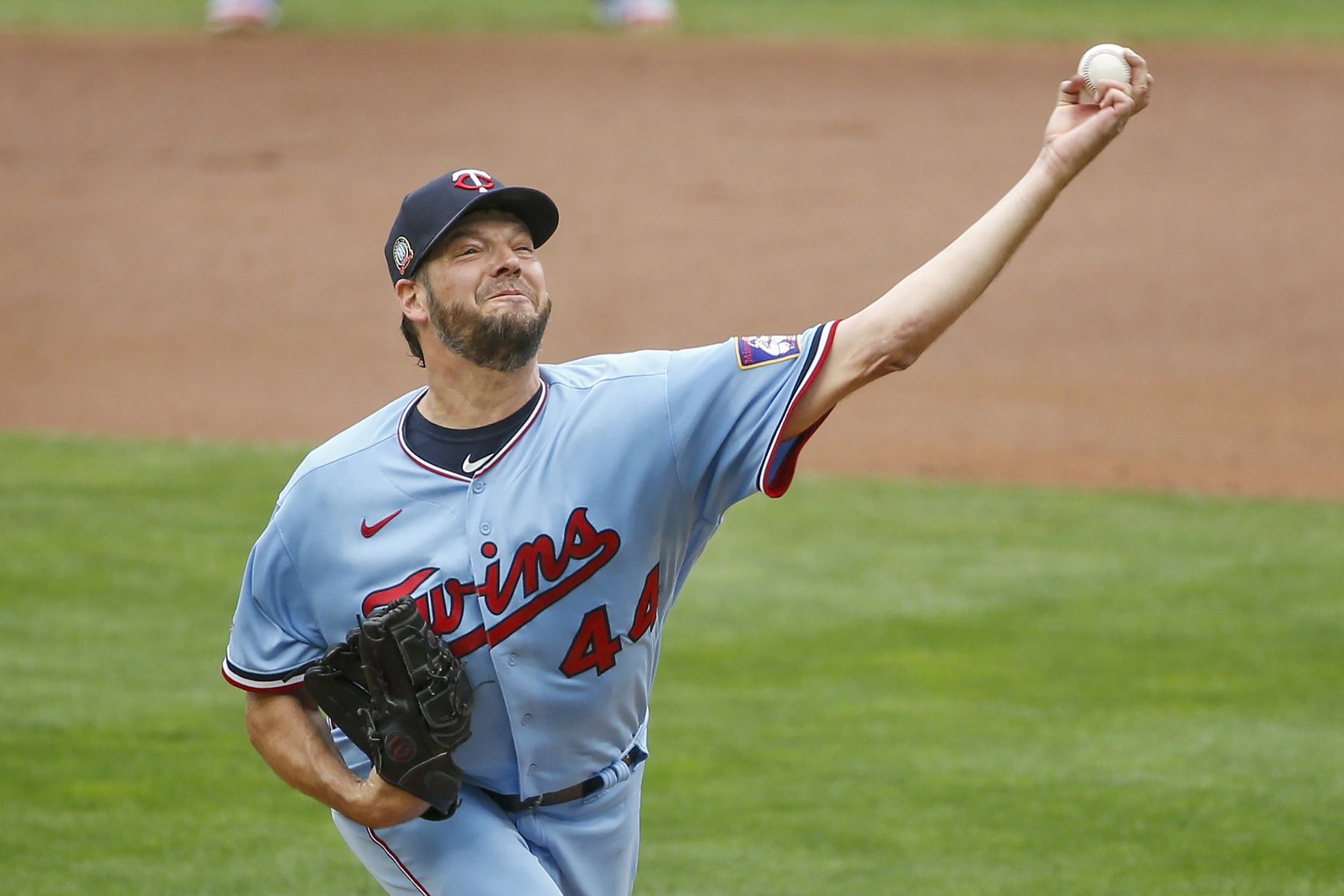 In so many ways, 2020 feels like a lifetime ago. Those memories have become distant: The explosion of the COVID-19 pandemic, the delayed start to an abbreviated MLB season, the strange dynamics of playing a limited regional schedule in empty ballparks. Generally speaking, it's a period most of us would like to forget. But one fun element of that Twins season was the presence of Rich Hill, a veteran left-hander who was joining his eighth team at age 40, looking to reinforce a team coming off a 100-win season with championship aspirations. Even then, Hill needed to be managed carefully, struggling to stay healthy and throwing only 38 innings as a Twin. Still, he was useful, posting a 3.03 ERA for the repeat division winners. It was a good show, watching him craftily navigate big-league lineups with an upper-80s fastball thanks to command, grit, and his trademark curve. Hill would grunt with effort and shout with competitive emotion on the mound. He was valued in the clubhouse and liked by his teammates. These qualities have helped Hill stick around for three more seasons since, accumulating 430 innings from 2021 through 2023 for the Rays, Mets, Red Sox, Padres and Pirates. He's been a mercenary, rotating through different pitching staffs at a dizzying pace. Now, Hill is looking for one last job, and he wants to make it count. Could a return to the Twins be the perfect fit for both sides? Hill signaled to teams ahead of the season that he intended to sit out the first half. As Steve Adams explains at MLB Trade Rumors: The time has come. Hill hosted a showcase for scouts last week, in hopes of demonstrating his readiness. Afterward, Dan Hayes of The Athletic tweeted that the Twins "are in contact" with Hill and his representatives. It's a logical inquiry given not only Minnesota's history with the veteran, but also their increasingly dire need for starting pitching depth. Joe Ryan is likely out for the season after suffering a muscle strain in his shoulder. Chris Paddack remains sidelined indefinitely, and seems tough to count on going forward as a rotation member. The Twins currently find themselves depending on an exorbitant number of rookies and young arms, starting Simeon Woods Richardson, David Festa, Zebby Matthews and Louie Varland in the span of five crucial games against division rivals. Relying on a rotation with little collective experience in crunch time is a perilous thing, and the situation is even more dicey when you consider the ramifications of even one more injury to a starter. As a byproduct of their inactivity at the trade deadline, the Twins have as great a need for a pitcher like Hill as any contender in the league. And they are a bona fide contender, meaning Minnesota fits Hill's chief criterion. He wants to throw meaningful innings during what may be his last hurrah. He'd certainly have that opportunity for a Twins team that is in the thick of a tight, three-team division race, currently possessing the second Wild Card spot in the American League. So, should the Twins make a push for Hill? I can't see why not. It's important to keep expectations in check – we're talking about a 44-year-old who, even back in 2020, was far from dominant. Since then, he has a 4.51 ERA and 4.40 FIP. Last year, he was downright bad, posting an 81 ERA+ with his worst WHIP in over a decade. But it bears noting that Hill was vastly better in the first half (4.45 ERA in 16 starts through June) than the second (6.91 ERA in 16 starts after June), as fatigue evidently set in. The first number might not wow you, but it'd be just fine for the Twins' needs, especially since Hill completed five or more innings in 14 of those 16 first-half starts. Theoretically, 10 months of downtime and a four- or five-week season could help Hill maximize whatever he's got left. If he can give the Twins even a handful of starts at something approximating league-average effectiveness, it'd go a long way toward relieving the burden on Minnesota's rookie starters and beleaguered bullpen. I say: why the heck not? What are your thoughts: Should the Twins get aggressive in their pursuit of the grizzled veteran lefty? Or would you prefer to stick with the in-house options?
 -
When the Twins hired Derek Falvey to lead their baseball operations, the decision was influenced by a belief that he could turn around their wayward pitching development engine, based on his reputed impact as part of Cleveland's front office. Eight years in, it's time for the rubber to meet the road. Image courtesy of © Kamil Krzaczynski-USA TODAY Sports Over the weekend, we learned that Joe Ryan is likely out for the year with a muscle strain. Chris Paddack remains sidelined, with some optimism but no clear timeline in place for his return. Because the Twins made no rotation additions at the deadline, they are left to rely on internal rotation depth to get through the rest of the season and into the playoffs. That means rookies needing to step up, with David Festa leading the charge. The 24-year-old right-hander epitomizes what Falvey and his group have sought to accomplish on the pitching front: targeting a particular type of overlooked collegiate pitcher in the mid-to-late rounds of the draft, and applying their magic to dramatically upgrade his velocity and stuff in the pros. Back when he was selected in the 13th round out of Seton Hall in 2021, the pre-draft book on Festa (per Baseball America) was that some scouts wondered "whether his frame is too narrow to project much more physically from him." The Twins believed in his lanky frame, and were rewarded, as Festa has added substantial velocity and turned himself into a whiff machine with a dominant changeup. Festa ranks as the Twins' fourth-best prospect, per MLB Pipeline, and 85th in all of baseball. This is precisely the kind of manufactured top-end pitching talent that Falvey was brought in to produce, and Festa is accompanied by a handful of other budding success stories within a system that Baseball America recently ranked as the third-best in the league. The Twins system's biggest success story of this year, per BA, is not Festa, but Zebby Matthews, who will make his major-league debut on Tuesday night against the Royals. It's a pressure-cooker spot for a 24-year-old who hadn't pitched above Single-A entering this year. Similar to Festa, the Twins grabbed Matthews later in the draft (eighth round in 2022) and built on the foundation of his existing strengths – namely, elite control and an excellent slider – while helping dial up his velo. As a result, Matthews has flown through the minors, and he now stands at the doorstep of the majors, with tantalizing upside thanks to swing-and-miss stuff that peppers the zone. Most pitchers don't succeed right away in the big leagues – even those who end up being very good. That is the troubling reality that Minnesota is working against as they turn to these untested arms in a high-stakes moment: an outcome of failing to add meaningfully during the offseason or at the trade deadline. This is a "ready-or-not" assignment for the likes of Festa and Matthews, who collectively have pitched fewer than 80 innings at Triple-A. Hopefully, they prove ready. Get used to it, because leaning on inexperienced youth is set to become a theme for the Twins going forward, as they try to piece together pitching rotations while operating under a crunched budget. So long as the "right-size" payroll limitations remain in place, the front office will be hard-pressed to spend much at all on new acquisitions; as we know, even moderately reliable starting pitchers come at a high price in free agency. In other words, get ready for plenty more reliance on the Falvey pitching pipeline, which will play an outsized role in dictating the success of the Minnesota Twins for years to come. It starts with Festa and Matthews, but there's plenty more to like in a system that also includes Charlee Soto, Marco Raya, Andrew Morris, Cory Lewis, C.J. Culpepper and more. Whether it's enough is a separate question, though, and a different one every year. What's your level of faith in Falvey's pitching pipeline to produce and carry the requisite load for the Twins? Are these young arms up to the task? View full article
- 54 replies
-
- 5
-
-
- derek falvey
- david festa
- (and 1 more)
-
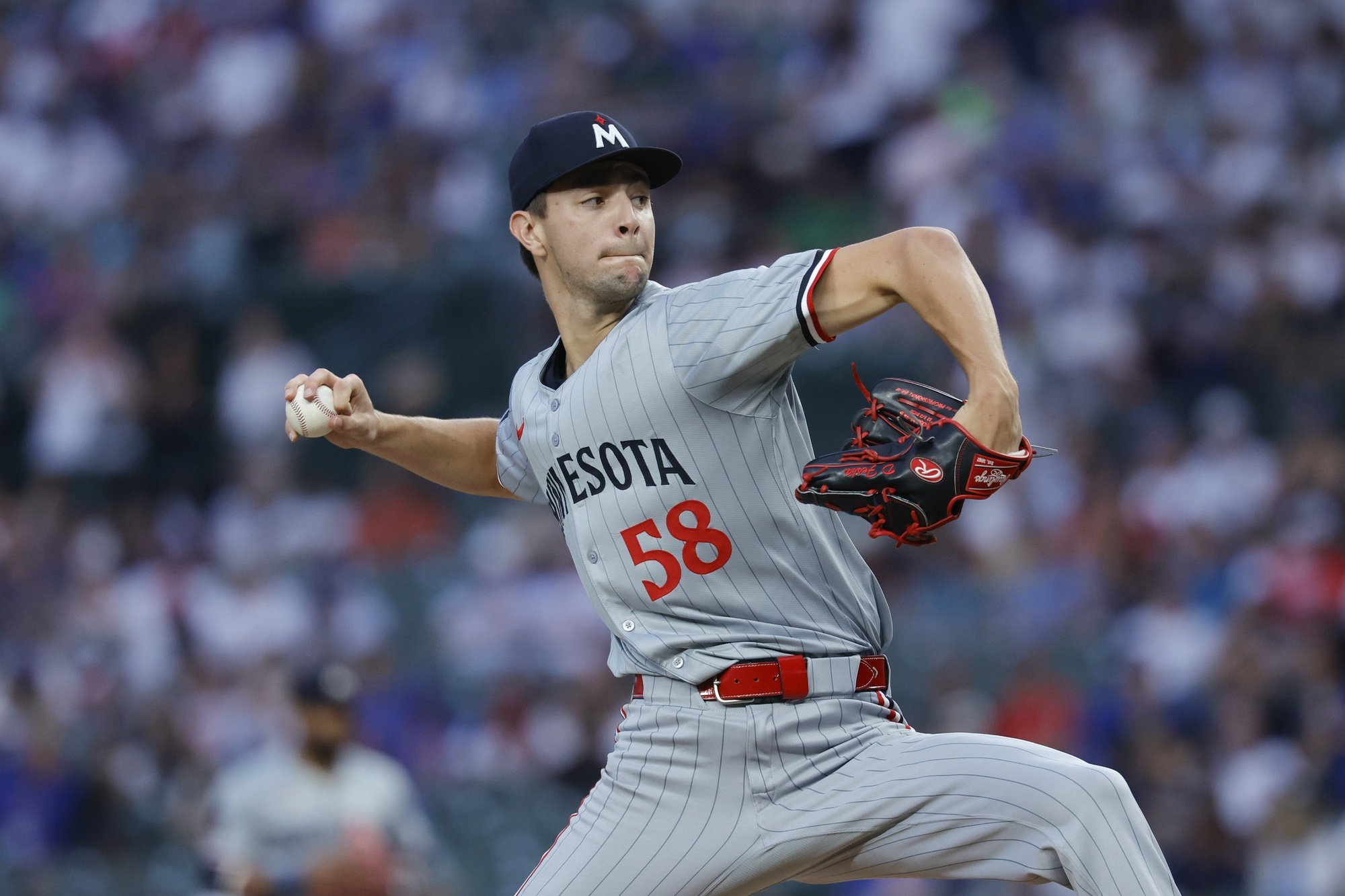 Over the weekend, we learned that Joe Ryan is likely out for the year with a muscle strain. Chris Paddack remains sidelined, with some optimism but no clear timeline in place for his return. Because the Twins made no rotation additions at the deadline, they are left to rely on internal rotation depth to get through the rest of the season and into the playoffs. That means rookies needing to step up, with David Festa leading the charge. The 24-year-old right-hander epitomizes what Falvey and his group have sought to accomplish on the pitching front: targeting a particular type of overlooked collegiate pitcher in the mid-to-late rounds of the draft, and applying their magic to dramatically upgrade his velocity and stuff in the pros. Back when he was selected in the 13th round out of Seton Hall in 2021, the pre-draft book on Festa (per Baseball America) was that some scouts wondered "whether his frame is too narrow to project much more physically from him." The Twins believed in his lanky frame, and were rewarded, as Festa has added substantial velocity and turned himself into a whiff machine with a dominant changeup. Festa ranks as the Twins' fourth-best prospect, per MLB Pipeline, and 85th in all of baseball. This is precisely the kind of manufactured top-end pitching talent that Falvey was brought in to produce, and Festa is accompanied by a handful of other budding success stories within a system that Baseball America recently ranked as the third-best in the league. The Twins system's biggest success story of this year, per BA, is not Festa, but Zebby Matthews, who will make his major-league debut on Tuesday night against the Royals. It's a pressure-cooker spot for a 24-year-old who hadn't pitched above Single-A entering this year. Similar to Festa, the Twins grabbed Matthews later in the draft (eighth round in 2022) and built on the foundation of his existing strengths – namely, elite control and an excellent slider – while helping dial up his velo. As a result, Matthews has flown through the minors, and he now stands at the doorstep of the majors, with tantalizing upside thanks to swing-and-miss stuff that peppers the zone. Most pitchers don't succeed right away in the big leagues – even those who end up being very good. That is the troubling reality that Minnesota is working against as they turn to these untested arms in a high-stakes moment: an outcome of failing to add meaningfully during the offseason or at the trade deadline. This is a "ready-or-not" assignment for the likes of Festa and Matthews, who collectively have pitched fewer than 80 innings at Triple-A. Hopefully, they prove ready. Get used to it, because leaning on inexperienced youth is set to become a theme for the Twins going forward, as they try to piece together pitching rotations while operating under a crunched budget. So long as the "right-size" payroll limitations remain in place, the front office will be hard-pressed to spend much at all on new acquisitions; as we know, even moderately reliable starting pitchers come at a high price in free agency. In other words, get ready for plenty more reliance on the Falvey pitching pipeline, which will play an outsized role in dictating the success of the Minnesota Twins for years to come. It starts with Festa and Matthews, but there's plenty more to like in a system that also includes Charlee Soto, Marco Raya, Andrew Morris, Cory Lewis, C.J. Culpepper and more. Whether it's enough is a separate question, though, and a different one every year. What's your level of faith in Falvey's pitching pipeline to produce and carry the requisite load for the Twins? Are these young arms up to the task?
- 54 comments
-
- 12
-
-

-
- derek falvey
- david festa
- (and 1 more)
-
The outfielder is having a good season, but not a great one, and his production doesn't stand out in the way you'd expect from a hitter who is consistently being used in the most crucial lineup spots. Image courtesy of Jordan Johnson-USA TODAY Sports Following a series of tough, injury-plagued seasons, Trevor Larnach's emergence this year has been among the brightest storylines for the 2024 Twins. Finally healthy enough to stay on the field, Larnach is on track to set new career highs for games played and plate appearances by the end of this month. He's delivered some clutch knocks and some prodigious, highlight-reel drives. Without question, Larnach has been an essential fixture in the lineup. Still, it does seem a little odd how preferential Rocco Baldelli has been toward Larnach in terms of lineup spots. The lefty slugger has made 47 starts in either the No. 2 or No. 3 spot in the lineup this year, which is more than any other Twins player save for Carlos Correa (52). Larnach hasn't made a start outside of a top-three spot in the order since May 5. This means he is regularly batting in front of guys like Royce Lewis, Matt Wallner, Byron Buxton and José Miranda, who have outperformed him by significant margins. Larnach has been good. He hasn't been great. His .740 OPS is above-average, but not by much. Despite his ability to make high-quality contact and produce impressive exit velocities, he hasn't really hit for that much power, ranking sixth among Twins hitters in slugging percentage at .420 with zero extra-base hits in his past 10 games. Now, I'm not one to make a big deal out of lineup construction, which is generally overblown in terms of actual run-scoring impact. But the usage of Larnach is interesting, and Baldelli's commitment to keeping him near the very top of the lineup has implications, which were exemplified at the end of Sunday's game. Down two runs in the ninth, the bottom part of the Twins' lineup managed to load the bases with no outs against Cleveland closer Emmanuel Clase. Willi Castro struck out, and so up came Larnach, who grounded into a game-ending double play while Lewis stood in the on-deck circle. Look: I don't hate having Larnach up in that spot, and he put a fairly good swing up against Clase, but the next three players in the batting order behind him – Lewis, Wallner, Buxton – all have an OPS at least 100 points higher than his. Baldelli's batting lineups are prioritizing plate appearances for a good hitter in a lineup of great ones. He's surely aware of that. In trying to understand this treatment – especially given what I know about Rocco's approach to managing – three possible explanations come to mind. I would guess that all three are playing a role in his continued steadfast adherence to this tendency. Larnach is a better hitter than the statistics show. The past is the past. When planning for the future, it's not about what someone's done; it's about what they're going to do. Just because other Twins players have outhit Larnach up to this point, that doesn't mean they will going forward. Baldelli may believe that Larnach's most productive days are still ahead this season, and that's a well-founded belief. The outfielder's Statcast metrics are impressive, reflecting above-average measurables that border on elite in many areas. Of particular note: his xwOBA (.357) is in the 86th percentile among MLB players, and 33 points higher than his wOBA (.324). Even in a Statcast-slider-measuring contest, Larnach can't quite compete with the likes of Wallner or Lewis, but their performance gap is smaller through the lens of expected outcomes. That helps explain why Baldelli might be okay with the extra ABs Larnach stands to get, especially when you factor in the following: Larnach brings a more prototypical stylistic presence to the top of the lineup. Wallner, Lewis and Buxton are very good hitters, but all are punishing sluggers who go up there looking for pitches to destroy. That might also be true of Larnach, but to a lesser extent. He's developed into a guy who consistently puts forth pretty disciplined, competitive at-bats that result in solid contact. This wasn't always the case; in fact, it's been one of the coolest wrinkles of his improvement this season. Larnach carried a 34% career K-rate into this season but has struck out only 20% of the time in 2024. He doesn't have a super-high walk rate, but he does work counts. He's seeing 3.96 pitches per plate appearance on average, which is second on the team behind the legendarily patient Carlos Santana. And again, this is on a team that mostly trends in the opposite direction: Minnesota hitters are seeing the seventh-fewest pitches per PA in baseball overall. I can see why Rocco would like to have a guy sitting in front of the mistake-hunting big boppers who is likely to see some pitches and get the opposing pitcher sweating. Then there is also the matter of making opposing managers sweat, which we know to be a Baldelli specialty. Larnach's lefty bat plays into Baldelli's sequencing strategy. Something Rocco loves to do with his lineups is bait opposing managers into bringing in relievers for situational spots, in order to set up the matchups he wants. It's a savvy technique in the age of three-batter minimums, and one we've seen pay off several times in the past. As much as he clearly believes in Larnach's bat, one thing Baldelli will NOT do is let the outfielder bat against a left-handed pitcher, under almost any circumstance. Larnach has made only 13 plate appearances all year against a southpaw, with a full 95% of his PAs coming against righties. He's not going to face a left-hander late in a close game. Everyone knows it. But if an opposing team wants to call on a lefty reliever with Larnach stepping up to the plate, they'll have to pay the toll. Whenever Larnach is batting second or third, you are likely to find an imposing right-handed bat directly behind him in the lineup, and maybe a couple in a row. Baldelli would love for Lewis or Buxton to get a chance against a lefty reliever in a high-leverage late-game situation, and rightfully so. In thinking through these aspects of Larnach's fit in the batting order, I can start to see the logic in his consistent placement near the top. But I still think it's worth questioning and scrutinizing, especially if Minnesota's offense continues to sputter and slump. How much longer will Baldelli continue to buck convention by batting his fifth (sixth? seventh?) best hitter in lineup spots that should be reserved for your absolute best? View full article
-
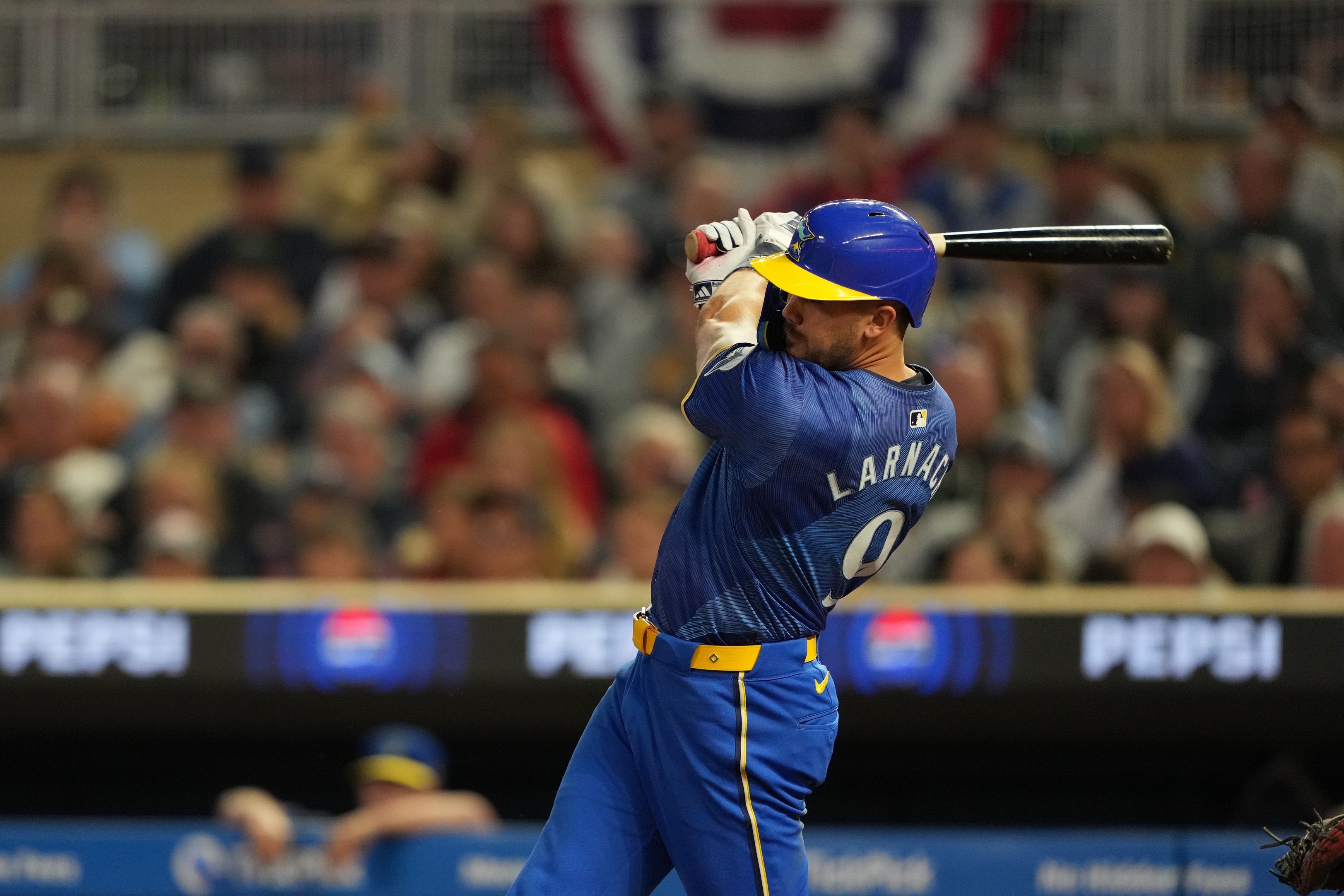 Following a series of tough, injury-plagued seasons, Trevor Larnach's emergence this year has been among the brightest storylines for the 2024 Twins. Finally healthy enough to stay on the field, Larnach is on track to set new career highs for games played and plate appearances by the end of this month. He's delivered some clutch knocks and some prodigious, highlight-reel drives. Without question, Larnach has been an essential fixture in the lineup. Still, it does seem a little odd how preferential Rocco Baldelli has been toward Larnach in terms of lineup spots. The lefty slugger has made 47 starts in either the No. 2 or No. 3 spot in the lineup this year, which is more than any other Twins player save for Carlos Correa (52). Larnach hasn't made a start outside of a top-three spot in the order since May 5. This means he is regularly batting in front of guys like Royce Lewis, Matt Wallner, Byron Buxton and José Miranda, who have outperformed him by significant margins. Larnach has been good. He hasn't been great. His .740 OPS is above-average, but not by much. Despite his ability to make high-quality contact and produce impressive exit velocities, he hasn't really hit for that much power, ranking sixth among Twins hitters in slugging percentage at .420 with zero extra-base hits in his past 10 games. Now, I'm not one to make a big deal out of lineup construction, which is generally overblown in terms of actual run-scoring impact. But the usage of Larnach is interesting, and Baldelli's commitment to keeping him near the very top of the lineup has implications, which were exemplified at the end of Sunday's game. Down two runs in the ninth, the bottom part of the Twins' lineup managed to load the bases with no outs against Cleveland closer Emmanuel Clase. Willi Castro struck out, and so up came Larnach, who grounded into a game-ending double play while Lewis stood in the on-deck circle. Look: I don't hate having Larnach up in that spot, and he put a fairly good swing up against Clase, but the next three players in the batting order behind him – Lewis, Wallner, Buxton – all have an OPS at least 100 points higher than his. Baldelli's batting lineups are prioritizing plate appearances for a good hitter in a lineup of great ones. He's surely aware of that. In trying to understand this treatment – especially given what I know about Rocco's approach to managing – three possible explanations come to mind. I would guess that all three are playing a role in his continued steadfast adherence to this tendency. Larnach is a better hitter than the statistics show. The past is the past. When planning for the future, it's not about what someone's done; it's about what they're going to do. Just because other Twins players have outhit Larnach up to this point, that doesn't mean they will going forward. Baldelli may believe that Larnach's most productive days are still ahead this season, and that's a well-founded belief. The outfielder's Statcast metrics are impressive, reflecting above-average measurables that border on elite in many areas. Of particular note: his xwOBA (.357) is in the 86th percentile among MLB players, and 33 points higher than his wOBA (.324). Even in a Statcast-slider-measuring contest, Larnach can't quite compete with the likes of Wallner or Lewis, but their performance gap is smaller through the lens of expected outcomes. That helps explain why Baldelli might be okay with the extra ABs Larnach stands to get, especially when you factor in the following: Larnach brings a more prototypical stylistic presence to the top of the lineup. Wallner, Lewis and Buxton are very good hitters, but all are punishing sluggers who go up there looking for pitches to destroy. That might also be true of Larnach, but to a lesser extent. He's developed into a guy who consistently puts forth pretty disciplined, competitive at-bats that result in solid contact. This wasn't always the case; in fact, it's been one of the coolest wrinkles of his improvement this season. Larnach carried a 34% career K-rate into this season but has struck out only 20% of the time in 2024. He doesn't have a super-high walk rate, but he does work counts. He's seeing 3.96 pitches per plate appearance on average, which is second on the team behind the legendarily patient Carlos Santana. And again, this is on a team that mostly trends in the opposite direction: Minnesota hitters are seeing the seventh-fewest pitches per PA in baseball overall. I can see why Rocco would like to have a guy sitting in front of the mistake-hunting big boppers who is likely to see some pitches and get the opposing pitcher sweating. Then there is also the matter of making opposing managers sweat, which we know to be a Baldelli specialty. Larnach's lefty bat plays into Baldelli's sequencing strategy. Something Rocco loves to do with his lineups is bait opposing managers into bringing in relievers for situational spots, in order to set up the matchups he wants. It's a savvy technique in the age of three-batter minimums, and one we've seen pay off several times in the past. As much as he clearly believes in Larnach's bat, one thing Baldelli will NOT do is let the outfielder bat against a left-handed pitcher, under almost any circumstance. Larnach has made only 13 plate appearances all year against a southpaw, with a full 95% of his PAs coming against righties. He's not going to face a left-hander late in a close game. Everyone knows it. But if an opposing team wants to call on a lefty reliever with Larnach stepping up to the plate, they'll have to pay the toll. Whenever Larnach is batting second or third, you are likely to find an imposing right-handed bat directly behind him in the lineup, and maybe a couple in a row. Baldelli would love for Lewis or Buxton to get a chance against a lefty reliever in a high-leverage late-game situation, and rightfully so. In thinking through these aspects of Larnach's fit in the batting order, I can start to see the logic in his consistent placement near the top. But I still think it's worth questioning and scrutinizing, especially if Minnesota's offense continues to sputter and slump. How much longer will Baldelli continue to buck convention by batting his fifth (sixth? seventh?) best hitter in lineup spots that should be reserved for your absolute best?
 -
Week in Review: Persevering Through Pain
Nick Nelson replied to Nick Nelson's topic in Twins Daily Front Page News
Mmm I wouldn't say that. I think in their optimal scenario, come October, they'll view Festa clearly as one of their top three. It's still a ways away. He has the stuff to dominate a good lineup. -
The Minnesota Twins navigated a wave of bad injury news and managed to fight their way to a 3-4 week, despite some tough competition and an offense that is once again short-circuiting. While they missed out on a key opportunity to gain more ground, the Twins did shave a game off Cleveland's division lead, moving within four games as the clock ticks down and the race heats up. Image courtesy of Jordan Johnson-USA TODAY Sports Weekly Snapshot: Mon, 8/5 through Sun, 8/11 *** Record Last Week: 3-4 (Overall: 65-52) Run Differential Last Week: -5 (Overall: +54) Standing: 2nd Place in AL Central (3.5 GB) Game 111 | MIN 3, CHC 0: Festa Leads Way in Shutout for Pitching Staff Game 112 | CHC 7, MIN 3: Cubs Get to Pablo, Lineup Can't Answer Game 113 | CHC 8, MIN 2: Ryan Exits with Arm Injury, Twins Drop Series Game 114 | MIN 4, CLE 2: Ober Leads the Way in Series-Opening Win Game 115 | MIN 6, CLE 3: Wallner's Home Run Turns Tables on Cleveland Game 116 | CLE 2, MIN 1: Offense Stymied, SWR's Strong Start Spoiled Game 117 | CLE 5, MIN 3: Late Rallies Fall Short, Twins Settle for Split IF YOU'D RATHER LISTEN TO THE WEEK IN REVIEW THAN READ IT, YOU CAN NOW FIND IT IN PODCAST FORM. GET THE LATEST EPISODE HERE. ALSO AVAILABLE ON APPLE AND SPOTIFY. NEWS & NOTES Just in time for the start of their most important series of the season up to this point, the Twins shared an avalanche of crushing injury updates on Friday that will have a significant impact on the team's outlook for the rest of the way. Let's run through them and get up to speed. Joe Ryan was diagnosed with a grade-2 teres major strain, which will likely sideline him for the remainder of the campaign. Ryan pulled himself from Wednesday's start against the Cubs in the third inning, waving for a trainer to the mound immediately after unleashing a pitch and quickly exiting. In the big picture, this muscle strain is not a worst-case scenario in the same realm as a rotator cuff or UCL tear, but for 2024 it's a devastating blow to the Twins and their rotation. Ryan had been one of the best starters in the American League. The Twins haven't officially ruled him out for the year but given the recovery timeline, it'll be nearly impossible for him to make it back as a starter, if at all. We learned more definitively on Friday that Brock Stewart is done for the season, set to undergo surgery on his shoulder with a 5-6 month expected recovery. It was probably wishful thinking to expect any meaningful impact from Stewart, especially after what we saw during his brief return attempt in July, but still the finality of this news hits hard. Minnesota will now have to make do without one of their best starters and best relievers. Stewart was placed back on the 60-day IL to make room for reliever Scott Blewett, who joined the 40-man and active rosters. Those spots might've gone to Justin Topa, but unfortunately the veteran hit an unspecified "setback" in his rehab and his status is now in limbo once again. While unfortunate, the IL moves for Ryan and Stewart were not unexpected. It was a bit more surprising to see Brooks Lee join them on the injured list, with the team hoping some down time will help relieve his sore shoulder. You wonder how much that issue was impeding his performance at the plate, where Lee put up a .197 average and .492 OPS in his past 18 games. Kyle Farmer's readiness to return from his own shoulder injury enabled Minnesota to swap in another infielder and give Lee's ailing shoulder a break. Hopefully a couple of weeks off can get him feeling right because the rookie still has a role to play. Carlos Correa set his sights on being back on the field for the Cleveland series, but was unable to do so as his recovery from plantar fasciitis lags and frustrates the star infielder. Correa ran sprints on Thursday but reported afterward that the foot injury is "not quite where we want it to be yet." With a rehab assignment in the cards ahead of his activation, next weekend appears to be the soonest Correa could return to the Twins, and even that might be a stretch. He's rightfully taking a long view as the team continues to hold its own in his absence. Rounding out the roster news for the week: Steven Okert went on the bereavement list on Monday, with Josh Winder recalled to take his place. Right-handed reliever Giovanny Gallegos signed a minor-league deal and joined the Saints, which wouldn't normally be too noteworthy but might be in light of his considerable MLB experience and Minnesota's growing need for bullpen depth. HIGHLIGHTS Ever since he returned to the big leagues following a lengthy stay in Triple-A, Matt Wallner has been a one-man wrecking crew, obliterating baseballs to an unparalleled degree. He delivered perhaps the biggest Twins highlight of the season on Friday night: a go-ahead three-run homer that turned the tides in the game and helped lift Minnesota to a doubleheader sweep over Cleveland. Wallner was facing Alex Cobb in the bottom of the fifth with two runners on. In the top half of the inning, Louie Varland had given up a three-run homer that put the Guardians on top for the first time all day, sucking the wind out of Minnesota's sails. Not for long. Cobb fell behind Wallner 3-0 and made the ill-advised decision to come right into the middle of the zone against one of MLB's foremost mistake crushers. Unfortunately for Cobb, Wallner had the green light. It was a very strong week overall for the slugging outfielder, who went 6-for-18 with three doubles, the homer and five RBIs to power the offense. He was supported by quality contributions from Christian Vázquez (5-for-9 with two doubles and a homer) and Byron Buxton, who missed the Cubs series but then chipped in two homers and a double against Cleveland. In the rotation, the loss of Ryan means heightened pressure for rookie David Festa to assume a prominent role, through the end of the season and likely into the playoffs. So it's a good thing that Festa looked up to the task on Monday night in Chicago, tossing five innings of shutout ball with nine strikeouts. He didn't look quite as good in his second start of the week on Sunday, failing to make it out of the fourth against Cleveland as his command started to elude him, but still only gave up one run. If Festa can keep pitching well, he has the capability to accompany Pablo López and Bailey Ober in a formidable playoff rotation even with Ryan unavailable. López was off his game in Chicago on Tuesday but still has a 3.31 ERA in his past six turns. Ober was phenomenal once again on Friday, holding Cleveland scoreless through six innings in a series-opening victory. He has rattled off nine consecutive quality starts. On Saturday, Simeon Woods Richardson bounced back in a big way, holding the Guardians to two runs in seven innings to wash away the sour aftertaste of back-to-back ugly outings. Woods Richardson is now vying for a potential role in the postseason rotation himself, and performances like that one will help make the case. His ERA stands at 3.78 through 20 starts. Minnesota's bullpen keeps getting the job done when they're handed leads, even in the absence of Stewart. The nightmare outing from Trevor Richards, who came in cold following the Ryan injury on Wednesday and proceeded to struggle immensely (0.2 IP, 5 BB, 3 ER), skews the unit's overall results, but the relief corps played a key part in winning some tight ballgames. Twins relievers gave up only two runs in 11 ⅓ innings across the three victories. Jhoan Durán and Griffin Jax naturally led the way, combining for four shutout frames, but there were also some promising performances elsewhere. That included Richards rebounding from the Wednesday clunker with a 1-2-3 ninth to pick up a save on Friday, Caleb Thielbar flashing some strikeout ability (8 K in 4.2 IP) and Winder delivering five innings of shutout, one-hit ball in long relief. LOWLIGHTS The Twins have been suffering major losses across all parts of the roster. In the rotation and bullpen, we've seen people step up. In the lineup, we need to see more of it. There weren't many outstanding offensive performances to accompany Wallner's mashing in a week where Minnesota batted .222 and averaged just 3.1 runs per game. Willi Castro went 5-for-27 (.185) with one double and one walk. Ryan Jeffers was 2-for-14 (.143) with no walks, and didn't drive in or score a run outside of his solo homer on Friday. José Miranda was 2-for-20 (.100), and is batting .205 with zero homers or RBIs since being activated from the injured list on July 27th. Austin Martin has been particularly unimpressive. He continues to produce almost nothing offensively (two singles in 15 plate appearances last week) and his defense has been shoddy whether viewed by the eye test or fielding metrics. The ostensible value of Martin's versatility loses its luster when he can't make plays at the positions he plugs into. Tuesday's adventurous route and ill-fated dive in center field at Wrigley on a Dansby Swanson "triple" served as one of the low points in the week. One way or another, Varland is going to be counted on by the Twins given the attrition on their pitching staff. Ideally he can eventually pick up where he left off in the bullpen, as a dominating arm in the late innings capable of offsetting the loss of Stewart. But for now, the Twins need him as part of their starting depth, and in that capacity, they called him up for the nightcap of Friday's doubleheader against Cleveland. Unfortunately, it was a pretty typical Varland start. He looked fine the first two times through the order and then unraveled the third time, putting a pair of runners aboard before serving up a 1-2 meatball to cleanup hitter Josh Naylor, who went yard for a three-run blast that (briefly) gave Cleveland the lead. For a fourth time in his eight MLB starts this year, Varland failed to complete five innings. It's par for the course for Varland, whose tendency to lapse into back-breaking mistake pitches at inopportune times has railroaded his progress as a starting pitcher. Finding a way to get the right-hander into a place where he can actually provide some value, whatever the role, is beginning to feel pivotal for Minnesota's outlook. TRENDING STORYLINE With Chris Paddack still down for the foreseeable future and Ryan likely out for the season, the Twins will see their starting pitching depth tested. They've already got a pair of rookies in the rotation in Festa and Woods Richardson. Varland is in play. Who else might factor in as the Twins push through the remainder of their schedule? Notably, Derek Falvey did not rule out Zebby Matthews when asked about the ascendant pitching prospect, who's currently at Triple-A. Matthews has a 5.68 ERA in four starts since being promoted to the Saints, but it comes along with a stellar 23-to-1 K/BB ratio in 19 innings. He last started on Thursday and could be in line to make his MLB debut during the upcoming Royals series. Meanwhile, the Twins have reportedly shown interest in old friend Rich Hill, who is gearing up to help a contender at age 44. He's not someone you would want to count on in any crucial spot at this stage, but if Hill were able come aboard and eat some innings in a Dallas Keuchel/Bartolo Colon capacity, that would be potentially useful and a fun little storyline. LOOKING AHEAD Another huge week is on tap for the Twins, who will welcome their other top divisional foe to Target Field for a three-game series. The third-place Royals trail Minnesota by just a half a game in the standings, and will be looking to leapfrog them in their home park. Get ready to be annoyed by Bobby Witt Jr. Minnesota's pitching plans for that series are up in the air, though as mentioned above, Matthews could be in line to make a start. From there, it's off to Texas for four games against the defending champs. Check out that probable starter for the Rangers on Sunday! MONDAY, AUG 12: ROYALS @ TWINS – RHP Brady Singer v. RHP Pablo Lopez TUESDAY, AUG 13: ROYALS @ TWINS – RHP Seth Lugo v. TBD WEDNESDAY, AUG 14: ROYALS @ TWINS – LHP Cole Ragans v. Bailey Ober THURSDAY, AUG 15: TWINS @ RANGERS – RHP Simeon Woods Richardson v. LHP Cody Bradford FRIDAY, AUG 16: TWINS @ RANGERS – RHP David Festa v. RHP Nathan Eovaldi SATURDAY AUG 17: TWINS @ RANGERS – RHP Pablo Lopez v. LHP Andrew Heaney SUNDAY, AUG 18: TWINS @ RANGERS – TBD v. RHP Tyler Mahle View full article
-
 Weekly Snapshot: Mon, 8/5 through Sun, 8/11 *** Record Last Week: 3-4 (Overall: 65-52) Run Differential Last Week: -5 (Overall: +54) Standing: 2nd Place in AL Central (3.5 GB) Game 111 | MIN 3, CHC 0: Festa Leads Way in Shutout for Pitching Staff Game 112 | CHC 7, MIN 3: Cubs Get to Pablo, Lineup Can't Answer Game 113 | CHC 8, MIN 2: Ryan Exits with Arm Injury, Twins Drop Series Game 114 | MIN 4, CLE 2: Ober Leads the Way in Series-Opening Win Game 115 | MIN 6, CLE 3: Wallner's Home Run Turns Tables on Cleveland Game 116 | CLE 2, MIN 1: Offense Stymied, SWR's Strong Start Spoiled Game 117 | CLE 5, MIN 3: Late Rallies Fall Short, Twins Settle for Split IF YOU'D RATHER LISTEN TO THE WEEK IN REVIEW THAN READ IT, YOU CAN NOW FIND IT IN PODCAST FORM. GET THE LATEST EPISODE HERE. ALSO AVAILABLE ON APPLE AND SPOTIFY. NEWS & NOTES Just in time for the start of their most important series of the season up to this point, the Twins shared an avalanche of crushing injury updates on Friday that will have a significant impact on the team's outlook for the rest of the way. Let's run through them and get up to speed. Joe Ryan was diagnosed with a grade-2 teres major strain, which will likely sideline him for the remainder of the campaign. Ryan pulled himself from Wednesday's start against the Cubs in the third inning, waving for a trainer to the mound immediately after unleashing a pitch and quickly exiting. In the big picture, this muscle strain is not a worst-case scenario in the same realm as a rotator cuff or UCL tear, but for 2024 it's a devastating blow to the Twins and their rotation. Ryan had been one of the best starters in the American League. The Twins haven't officially ruled him out for the year but given the recovery timeline, it'll be nearly impossible for him to make it back as a starter, if at all. We learned more definitively on Friday that Brock Stewart is done for the season, set to undergo surgery on his shoulder with a 5-6 month expected recovery. It was probably wishful thinking to expect any meaningful impact from Stewart, especially after what we saw during his brief return attempt in July, but still the finality of this news hits hard. Minnesota will now have to make do without one of their best starters and best relievers. Stewart was placed back on the 60-day IL to make room for reliever Scott Blewett, who joined the 40-man and active rosters. Those spots might've gone to Justin Topa, but unfortunately the veteran hit an unspecified "setback" in his rehab and his status is now in limbo once again. While unfortunate, the IL moves for Ryan and Stewart were not unexpected. It was a bit more surprising to see Brooks Lee join them on the injured list, with the team hoping some down time will help relieve his sore shoulder. You wonder how much that issue was impeding his performance at the plate, where Lee put up a .197 average and .492 OPS in his past 18 games. Kyle Farmer's readiness to return from his own shoulder injury enabled Minnesota to swap in another infielder and give Lee's ailing shoulder a break. Hopefully a couple of weeks off can get him feeling right because the rookie still has a role to play. Carlos Correa set his sights on being back on the field for the Cleveland series, but was unable to do so as his recovery from plantar fasciitis lags and frustrates the star infielder. Correa ran sprints on Thursday but reported afterward that the foot injury is "not quite where we want it to be yet." With a rehab assignment in the cards ahead of his activation, next weekend appears to be the soonest Correa could return to the Twins, and even that might be a stretch. He's rightfully taking a long view as the team continues to hold its own in his absence. Rounding out the roster news for the week: Steven Okert went on the bereavement list on Monday, with Josh Winder recalled to take his place. Right-handed reliever Giovanny Gallegos signed a minor-league deal and joined the Saints, which wouldn't normally be too noteworthy but might be in light of his considerable MLB experience and Minnesota's growing need for bullpen depth. HIGHLIGHTS Ever since he returned to the big leagues following a lengthy stay in Triple-A, Matt Wallner has been a one-man wrecking crew, obliterating baseballs to an unparalleled degree. He delivered perhaps the biggest Twins highlight of the season on Friday night: a go-ahead three-run homer that turned the tides in the game and helped lift Minnesota to a doubleheader sweep over Cleveland. Wallner was facing Alex Cobb in the bottom of the fifth with two runners on. In the top half of the inning, Louie Varland had given up a three-run homer that put the Guardians on top for the first time all day, sucking the wind out of Minnesota's sails. Not for long. Cobb fell behind Wallner 3-0 and made the ill-advised decision to come right into the middle of the zone against one of MLB's foremost mistake crushers. Unfortunately for Cobb, Wallner had the green light. It was a very strong week overall for the slugging outfielder, who went 6-for-18 with three doubles, the homer and five RBIs to power the offense. He was supported by quality contributions from Christian Vázquez (5-for-9 with two doubles and a homer) and Byron Buxton, who missed the Cubs series but then chipped in two homers and a double against Cleveland. In the rotation, the loss of Ryan means heightened pressure for rookie David Festa to assume a prominent role, through the end of the season and likely into the playoffs. So it's a good thing that Festa looked up to the task on Monday night in Chicago, tossing five innings of shutout ball with nine strikeouts. He didn't look quite as good in his second start of the week on Sunday, failing to make it out of the fourth against Cleveland as his command started to elude him, but still only gave up one run. If Festa can keep pitching well, he has the capability to accompany Pablo López and Bailey Ober in a formidable playoff rotation even with Ryan unavailable. López was off his game in Chicago on Tuesday but still has a 3.31 ERA in his past six turns. Ober was phenomenal once again on Friday, holding Cleveland scoreless through six innings in a series-opening victory. He has rattled off nine consecutive quality starts. On Saturday, Simeon Woods Richardson bounced back in a big way, holding the Guardians to two runs in seven innings to wash away the sour aftertaste of back-to-back ugly outings. Woods Richardson is now vying for a potential role in the postseason rotation himself, and performances like that one will help make the case. His ERA stands at 3.78 through 20 starts. Minnesota's bullpen keeps getting the job done when they're handed leads, even in the absence of Stewart. The nightmare outing from Trevor Richards, who came in cold following the Ryan injury on Wednesday and proceeded to struggle immensely (0.2 IP, 5 BB, 3 ER), skews the unit's overall results, but the relief corps played a key part in winning some tight ballgames. Twins relievers gave up only two runs in 11 ⅓ innings across the three victories. Jhoan Durán and Griffin Jax naturally led the way, combining for four shutout frames, but there were also some promising performances elsewhere. That included Richards rebounding from the Wednesday clunker with a 1-2-3 ninth to pick up a save on Friday, Caleb Thielbar flashing some strikeout ability (8 K in 4.2 IP) and Winder delivering five innings of shutout, one-hit ball in long relief. LOWLIGHTS The Twins have been suffering major losses across all parts of the roster. In the rotation and bullpen, we've seen people step up. In the lineup, we need to see more of it. There weren't many outstanding offensive performances to accompany Wallner's mashing in a week where Minnesota batted .222 and averaged just 3.1 runs per game. Willi Castro went 5-for-27 (.185) with one double and one walk. Ryan Jeffers was 2-for-14 (.143) with no walks, and didn't drive in or score a run outside of his solo homer on Friday. José Miranda was 2-for-20 (.100), and is batting .205 with zero homers or RBIs since being activated from the injured list on July 27th. Austin Martin has been particularly unimpressive. He continues to produce almost nothing offensively (two singles in 15 plate appearances last week) and his defense has been shoddy whether viewed by the eye test or fielding metrics. The ostensible value of Martin's versatility loses its luster when he can't make plays at the positions he plugs into. Tuesday's adventurous route and ill-fated dive in center field at Wrigley on a Dansby Swanson "triple" served as one of the low points in the week. One way or another, Varland is going to be counted on by the Twins given the attrition on their pitching staff. Ideally he can eventually pick up where he left off in the bullpen, as a dominating arm in the late innings capable of offsetting the loss of Stewart. But for now, the Twins need him as part of their starting depth, and in that capacity, they called him up for the nightcap of Friday's doubleheader against Cleveland. Unfortunately, it was a pretty typical Varland start. He looked fine the first two times through the order and then unraveled the third time, putting a pair of runners aboard before serving up a 1-2 meatball to cleanup hitter Josh Naylor, who went yard for a three-run blast that (briefly) gave Cleveland the lead. For a fourth time in his eight MLB starts this year, Varland failed to complete five innings. It's par for the course for Varland, whose tendency to lapse into back-breaking mistake pitches at inopportune times has railroaded his progress as a starting pitcher. Finding a way to get the right-hander into a place where he can actually provide some value, whatever the role, is beginning to feel pivotal for Minnesota's outlook. TRENDING STORYLINE With Chris Paddack still down for the foreseeable future and Ryan likely out for the season, the Twins will see their starting pitching depth tested. They've already got a pair of rookies in the rotation in Festa and Woods Richardson. Varland is in play. Who else might factor in as the Twins push through the remainder of their schedule? Notably, Derek Falvey did not rule out Zebby Matthews when asked about the ascendant pitching prospect, who's currently at Triple-A. Matthews has a 5.68 ERA in four starts since being promoted to the Saints, but it comes along with a stellar 23-to-1 K/BB ratio in 19 innings. He last started on Thursday and could be in line to make his MLB debut during the upcoming Royals series. Meanwhile, the Twins have reportedly shown interest in old friend Rich Hill, who is gearing up to help a contender at age 44. He's not someone you would want to count on in any crucial spot at this stage, but if Hill were able come aboard and eat some innings in a Dallas Keuchel/Bartolo Colon capacity, that would be potentially useful and a fun little storyline. LOOKING AHEAD Another huge week is on tap for the Twins, who will welcome their other top divisional foe to Target Field for a three-game series. The third-place Royals trail Minnesota by just a half a game in the standings, and will be looking to leapfrog them in their home park. Get ready to be annoyed by Bobby Witt Jr. Minnesota's pitching plans for that series are up in the air, though as mentioned above, Matthews could be in line to make a start. From there, it's off to Texas for four games against the defending champs. Check out that probable starter for the Rangers on Sunday! MONDAY, AUG 12: ROYALS @ TWINS – RHP Brady Singer v. RHP Pablo Lopez TUESDAY, AUG 13: ROYALS @ TWINS – RHP Seth Lugo v. TBD WEDNESDAY, AUG 14: ROYALS @ TWINS – LHP Cole Ragans v. Bailey Ober THURSDAY, AUG 15: TWINS @ RANGERS – RHP Simeon Woods Richardson v. LHP Cody Bradford FRIDAY, AUG 16: TWINS @ RANGERS – RHP David Festa v. RHP Nathan Eovaldi SATURDAY AUG 17: TWINS @ RANGERS – RHP Pablo Lopez v. LHP Andrew Heaney SUNDAY, AUG 18: TWINS @ RANGERS – TBD v. RHP Tyler Mahle
- 21 comments
-
- 6
-
-
- joe ryan
- brock stewart
- (and 3 more)
-
The Twins came up almost completely empty at yet another trade deadline, and compounded the pain by surrounding their inactivity with a pair of ugly losses against the Mets, but they rebounded to win four straight heading into a crucial week on the schedule. Image courtesy of Bruce Kluckhohn-USA TODAY Sports Weekly Snapshot: Mon, 7/29 through Sun, 8/4 *** Record Last Week: 4-2 (Overall: 62-48) Run Differential Last Week: +8 (Overall: +59) Standing: 2nd Place in AL Central (4.5 GB) Game 105 | NYM 15, MIN 2: Mets Run Up Score on SWR and Bullpen Game 106 | NYM 2, MIN 0: Festa Solid, Twins Blanked on Deadline Day Game 107 | MIN 8, NYM 3: López Leads Way as Twins Avoid NY Sweep Game 108 | MIN 10, CWS 2: Late Surge Turns Close Game into Blowout Game 109 | MIN 6, CWS 2: Ober's Excellence, Kepler's Bomb Bury Sox Game 110 | MIN 13, CWS 7: Early Lead Holds, Chicago Drops 20th Straight NO PODCAST VERSION THIS WEEK BECAUSE I'M ON THE ROAD. SORRY! YOU CAN USUALLY FIND NEW EPISODES AVAILABLE EACH WEEK ON APPLE AND SPOTIFY. NEWS & NOTES The trade deadline arrived on Tuesday, and it was a very active one around the league, although not so much here on the local scene. In their last opportunity to add meaningful help from outside this season, the Twins front office made only one move, and it was about as low-wattage as possible: acquiring veteran reliever Trevor Richards from the Blue Jays in exchange for minor-league infielder Jay Harry. The newly added 31-year-old right-hander is, by all appearances, a very mediocre pitcher. I'm sure he has traits that the Twins like, including career reverse splits that could make him a decent option against lefties, but this is a guy who's been borderline replacement level throughout his career. He has a 4.51 career ERA and 4.29 FIP, with his numbers for this year matching up closely to those. An underwhelming pickup to be sure, though to his credit, he made a couple of scoreless appearance in his first week as a Twin. To make room for Richards in the bullpen and on the 40-man rosters, the Twins designated Josh Staumont for assignment. It was a swift, sad downfall for Staumont, who looked to be pulling it all together in early July when his fastball was reaching triple digits and his ERA still stood at 0.00, albeit with a suspect K/BB ratio. Over his last seven appearances, he allowed 10 earned runs on 11 hits and six walks in 5 ⅓ innings, striking out just four of 33 hitters. It culminated with a nightmare outing against the Mets on Monday (0.1 IP, 5 ER, 3 H, 3 BB) that caused Minnesota's faith in him to completely evaporate. He was released shortly after his DFA and is now out of the organization. That's one hopeful contributor subtracted from the bullpen for the stretch run. And unfortunately, Brock Stewart is now back in limbo after returning to the injured list following a brutal stint where he pitched three times and gave up eight earned runs while recording seven outs. It's a shoulder strain for Stewart, who I guess was maybe rushed back from the IL based on how things played out. Then again, he was out of action for almost three full months. Hard to believe he's going to be part of the picture from here on out. On a happier note, Randy Dobnak received a much-deserved promotion back to the big leagues, called up on Tuesday to provide some length and depth in the bullpen. Alex Kirilloff's placement on the 60-day IL opened up a 40-man spot. It's been nearly three years since Dobnak was last in the majors, making this an inspiring journey that hopefully has some more high points left ahead. The Twins could use it, with their bullpen outlook beginning to look shaky. The stakes suddenly feel rather high for Justin Topa's effort to play through a knee issue and supplement the relief corps. On that note, Topa completed his fourth rehab outing with the Saints on Sunday and appears likely to rejoin the Twins this week. HIGHLIGHTS On Saturday, Bailey Ober delivered yet another strong performance, holding the White Sox to two runs over seven innings and lowering his ERA to 3.74, including 3.13 since after his first start. It was Ober's eighth consecutive quality start, the longest such streak for a Twins pitcher since Phil Hughes a decade ago. Ober continues to pitch at an ace-like level and that should have fans feeling very excited. While he can't quite compete with Ober's streak, Pablo López logged a third consecutive quality start on Wednesday, picking up his 10th win of the season with six innings of two-run ball against the Mets. López now has a 2.86 ERA with only four home runs allowed in his past seven starts. Joe Ryan (6.1 IP, 2 ER vs CWS) and David Festa (5 IP, 2 ER vs NYM) also put forth impressive outings, making for a (mostly) very solid week for the rotation. Offensively, several of the usual suspects carried weight for the Twins. Byron Buxton homered twice, doubled and drove in four. Matt Wallner notched three more extra-base hits, improving to a team-leading 1.006 OPS. Royce Lewis went 5-for-20 in his first week back, making plenty of noise with two homers, two doubles, eight RBIs and six walks. It was also nice to see some bursts of offense from players who'd previously been slumping, including Max Kepler (5-for-15, 1 HR, 2 doubles) and Ryan Jeffers (3-for-11, 2 HR). Kepler's home run on Saturday – a crucial one in the closest game of the generally lopsided White Sox series – was his first in six weeks. Given the way he and Jeffers were tentpoles of this offense in the early going, it'd be huge to get both of them consistently swinging well again. While the bullpen had its wobbles, it was another confidence-inspiring week for the big arms at the back end: Jhoan Durán, Griffin Jax and Cole Sands combined 9 ⅔ scoreless innings, striking out 10 with one walk. Jax was particularly outstanding, allowing just one baserunner in three innings with five strikeouts and a 30% swinging strike rate. He ranks sixth among MLB pitchers in fWAR (1.5). LOWLIGHTS Things were going smoothly through the first three innings for Simeon Woods Richardson in his week-opening start against New York on Monday, but it all unraveled in the fourth, where he was ambushed by Mets for six earned runs. This opened the floodgates in a blowout loss that saw Staumont and Stewart give up an additional nine runs. Woods Richardson followed with another rough start on Sunday, lasting just four innings against the lowly White Sox while giving up three runs on six hits and three walks. Overall, he allowed 19 baserunners in 7 ⅓ innings across his two turns. Even after two of his worst starts of the season, Woods Richardson still has a 3.87 ERA, which speaks to how well he's pitched on balance. We'll hope this is just a bump in the road and he can get back into a groove, although there have been concerns about potential regression due to his strikeout rate. The righty didn't get crushed in these outings by any means – 10 of the 13 hits he allowed were singles, most of them not that well struck – but it's a good example of how allowing too much contact can hurt you, which is the main reason it's always felt a little iffy to rely on SWR in the playoffs. As much success as the Twins are seeing in the heart of the lineup, the bottom part of the order has been much more stagnant. That's largely due to the ongoing slumps of Brooks Lee and Austin Martin, who both went 4-for-16 last week. These rookies can put the ball in play consistently, but Minnesota isn't getting a modicum of power from either one. Lee hasn't recorded an extra-base hit since July 10th, a stretch of 68 plate appearances, and Martin has just two since the start of July – one of them being a gifted "triple" that was butchered defensively by Chicago's Corey Julks on Saturday. As Carlos Correa works his way back from the injured list – he said over the weekend that he's starting to turn a corner, after the plantar fasciitis pain took longer than expected to subside – it appears Lee and Martin are battling to preserve their roster spots. Neither is doing a particularly convincing job at the moment. TRENDING STORYLINE The Twins got no meaningful bullpen help at the deadline, in a week where they also lost Stewart to the injury list and released Staumont. They're going to need some help the rest of the way and it looks like they'll need to find it from within. There are some candidates. One straightforward possibility that stands out is moving Louie Varland back into a relief role, where he excelled late last year. The Twins could consider taking the same route with Triple-A prospect Zebby Matthews, or even Festa, though the latter is holding it down in the big-league rotation right now. As mentioned earlier, Topa appears close to joining the mix, which could potentially provide a big jolt in light of how he pitched for the Mariners last week. But given the status of his knee, Topa is a complete wild-card. LOOKING AHEAD The Twins have a key opportunity in front of them. First they've got three games against a pretty bad (but not terrible) Cubs team at Wrigley, where they'll look to stay hot as they ride a four-game winning streak. From there they head home for one of the most pivotal remaining points on the schedule: a four-game series at home against the Guardians team they're chasing in the standings. Taking three of four or sweeping Cleveland could thrust Minnesota right back into the thick of the race atop the division. Anything less is going to make the objective of overtaking the Central lead before year's end far more difficult. We'll see how they handle the doubleheader on Friday from a pitching standpoint. Potentially Dobnak could get the nod in one of those games. MONDAY, AUG 5: TWINS @ CUBS – RHP David Festa v. RHP Kyle Hendricks TUESDAY, AUG 6: TWINS @ CUBS – RHP Pablo Lopez v. Shota Imanaga WEDNESDAY, AUG 7: TWINS @ CUBS – RHP Joe Ryan v. RHP Javier Assad FRIDAY, AUG 9: GUARDIANS @ TWINS (1) – LHP Joey Cantillo v. RHP Bailey Ober FRIDAY, AUG 9: GUARDIANS @ TWINS (2) – TBD v. TBD SATURDAY AUG 10: GUARDIANS @ TWINS – RHP Gavin Williams v. Simeon Woods Richardson SUNDAY, AUG 11: GUARDIANS @ TWINS – TBD v. RHP David Festa View full article
-
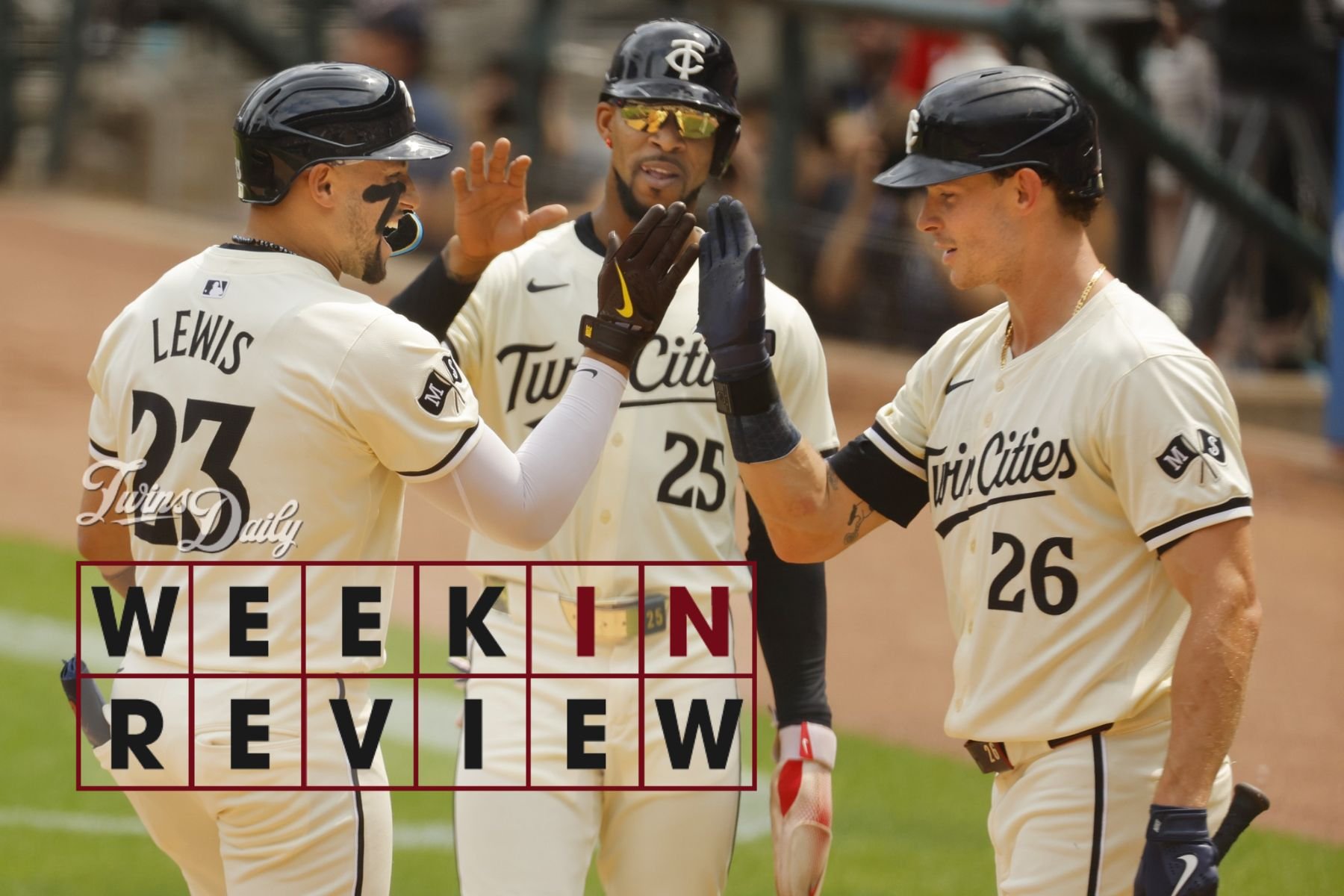 Weekly Snapshot: Mon, 7/29 through Sun, 8/4 *** Record Last Week: 4-2 (Overall: 62-48) Run Differential Last Week: +8 (Overall: +59) Standing: 2nd Place in AL Central (4.5 GB) Game 105 | NYM 15, MIN 2: Mets Run Up Score on SWR and Bullpen Game 106 | NYM 2, MIN 0: Festa Solid, Twins Blanked on Deadline Day Game 107 | MIN 8, NYM 3: López Leads Way as Twins Avoid NY Sweep Game 108 | MIN 10, CWS 2: Late Surge Turns Close Game into Blowout Game 109 | MIN 6, CWS 2: Ober's Excellence, Kepler's Bomb Bury Sox Game 110 | MIN 13, CWS 7: Early Lead Holds, Chicago Drops 20th Straight NO PODCAST VERSION THIS WEEK BECAUSE I'M ON THE ROAD. SORRY! YOU CAN USUALLY FIND NEW EPISODES AVAILABLE EACH WEEK ON APPLE AND SPOTIFY. NEWS & NOTES The trade deadline arrived on Tuesday, and it was a very active one around the league, although not so much here on the local scene. In their last opportunity to add meaningful help from outside this season, the Twins front office made only one move, and it was about as low-wattage as possible: acquiring veteran reliever Trevor Richards from the Blue Jays in exchange for minor-league infielder Jay Harry. The newly added 31-year-old right-hander is, by all appearances, a very mediocre pitcher. I'm sure he has traits that the Twins like, including career reverse splits that could make him a decent option against lefties, but this is a guy who's been borderline replacement level throughout his career. He has a 4.51 career ERA and 4.29 FIP, with his numbers for this year matching up closely to those. An underwhelming pickup to be sure, though to his credit, he made a couple of scoreless appearance in his first week as a Twin. To make room for Richards in the bullpen and on the 40-man rosters, the Twins designated Josh Staumont for assignment. It was a swift, sad downfall for Staumont, who looked to be pulling it all together in early July when his fastball was reaching triple digits and his ERA still stood at 0.00, albeit with a suspect K/BB ratio. Over his last seven appearances, he allowed 10 earned runs on 11 hits and six walks in 5 ⅓ innings, striking out just four of 33 hitters. It culminated with a nightmare outing against the Mets on Monday (0.1 IP, 5 ER, 3 H, 3 BB) that caused Minnesota's faith in him to completely evaporate. He was released shortly after his DFA and is now out of the organization. That's one hopeful contributor subtracted from the bullpen for the stretch run. And unfortunately, Brock Stewart is now back in limbo after returning to the injured list following a brutal stint where he pitched three times and gave up eight earned runs while recording seven outs. It's a shoulder strain for Stewart, who I guess was maybe rushed back from the IL based on how things played out. Then again, he was out of action for almost three full months. Hard to believe he's going to be part of the picture from here on out. On a happier note, Randy Dobnak received a much-deserved promotion back to the big leagues, called up on Tuesday to provide some length and depth in the bullpen. Alex Kirilloff's placement on the 60-day IL opened up a 40-man spot. It's been nearly three years since Dobnak was last in the majors, making this an inspiring journey that hopefully has some more high points left ahead. The Twins could use it, with their bullpen outlook beginning to look shaky. The stakes suddenly feel rather high for Justin Topa's effort to play through a knee issue and supplement the relief corps. On that note, Topa completed his fourth rehab outing with the Saints on Sunday and appears likely to rejoin the Twins this week. HIGHLIGHTS On Saturday, Bailey Ober delivered yet another strong performance, holding the White Sox to two runs over seven innings and lowering his ERA to 3.74, including 3.13 since after his first start. It was Ober's eighth consecutive quality start, the longest such streak for a Twins pitcher since Phil Hughes a decade ago. Ober continues to pitch at an ace-like level and that should have fans feeling very excited. While he can't quite compete with Ober's streak, Pablo López logged a third consecutive quality start on Wednesday, picking up his 10th win of the season with six innings of two-run ball against the Mets. López now has a 2.86 ERA with only four home runs allowed in his past seven starts. Joe Ryan (6.1 IP, 2 ER vs CWS) and David Festa (5 IP, 2 ER vs NYM) also put forth impressive outings, making for a (mostly) very solid week for the rotation. Offensively, several of the usual suspects carried weight for the Twins. Byron Buxton homered twice, doubled and drove in four. Matt Wallner notched three more extra-base hits, improving to a team-leading 1.006 OPS. Royce Lewis went 5-for-20 in his first week back, making plenty of noise with two homers, two doubles, eight RBIs and six walks. It was also nice to see some bursts of offense from players who'd previously been slumping, including Max Kepler (5-for-15, 1 HR, 2 doubles) and Ryan Jeffers (3-for-11, 2 HR). Kepler's home run on Saturday – a crucial one in the closest game of the generally lopsided White Sox series – was his first in six weeks. Given the way he and Jeffers were tentpoles of this offense in the early going, it'd be huge to get both of them consistently swinging well again. While the bullpen had its wobbles, it was another confidence-inspiring week for the big arms at the back end: Jhoan Durán, Griffin Jax and Cole Sands combined 9 ⅔ scoreless innings, striking out 10 with one walk. Jax was particularly outstanding, allowing just one baserunner in three innings with five strikeouts and a 30% swinging strike rate. He ranks sixth among MLB pitchers in fWAR (1.5). LOWLIGHTS Things were going smoothly through the first three innings for Simeon Woods Richardson in his week-opening start against New York on Monday, but it all unraveled in the fourth, where he was ambushed by Mets for six earned runs. This opened the floodgates in a blowout loss that saw Staumont and Stewart give up an additional nine runs. Woods Richardson followed with another rough start on Sunday, lasting just four innings against the lowly White Sox while giving up three runs on six hits and three walks. Overall, he allowed 19 baserunners in 7 ⅓ innings across his two turns. Even after two of his worst starts of the season, Woods Richardson still has a 3.87 ERA, which speaks to how well he's pitched on balance. We'll hope this is just a bump in the road and he can get back into a groove, although there have been concerns about potential regression due to his strikeout rate. The righty didn't get crushed in these outings by any means – 10 of the 13 hits he allowed were singles, most of them not that well struck – but it's a good example of how allowing too much contact can hurt you, which is the main reason it's always felt a little iffy to rely on SWR in the playoffs. As much success as the Twins are seeing in the heart of the lineup, the bottom part of the order has been much more stagnant. That's largely due to the ongoing slumps of Brooks Lee and Austin Martin, who both went 4-for-16 last week. These rookies can put the ball in play consistently, but Minnesota isn't getting a modicum of power from either one. Lee hasn't recorded an extra-base hit since July 10th, a stretch of 68 plate appearances, and Martin has just two since the start of July – one of them being a gifted "triple" that was butchered defensively by Chicago's Corey Julks on Saturday. As Carlos Correa works his way back from the injured list – he said over the weekend that he's starting to turn a corner, after the plantar fasciitis pain took longer than expected to subside – it appears Lee and Martin are battling to preserve their roster spots. Neither is doing a particularly convincing job at the moment. TRENDING STORYLINE The Twins got no meaningful bullpen help at the deadline, in a week where they also lost Stewart to the injury list and released Staumont. They're going to need some help the rest of the way and it looks like they'll need to find it from within. There are some candidates. One straightforward possibility that stands out is moving Louie Varland back into a relief role, where he excelled late last year. The Twins could consider taking the same route with Triple-A prospect Zebby Matthews, or even Festa, though the latter is holding it down in the big-league rotation right now. As mentioned earlier, Topa appears close to joining the mix, which could potentially provide a big jolt in light of how he pitched for the Mariners last week. But given the status of his knee, Topa is a complete wild-card. LOOKING AHEAD The Twins have a key opportunity in front of them. First they've got three games against a pretty bad (but not terrible) Cubs team at Wrigley, where they'll look to stay hot as they ride a four-game winning streak. From there they head home for one of the most pivotal remaining points on the schedule: a four-game series at home against the Guardians team they're chasing in the standings. Taking three of four or sweeping Cleveland could thrust Minnesota right back into the thick of the race atop the division. Anything less is going to make the objective of overtaking the Central lead before year's end far more difficult. We'll see how they handle the doubleheader on Friday from a pitching standpoint. Potentially Dobnak could get the nod in one of those games. MONDAY, AUG 5: TWINS @ CUBS – RHP David Festa v. RHP Kyle Hendricks TUESDAY, AUG 6: TWINS @ CUBS – RHP Pablo Lopez v. Shota Imanaga WEDNESDAY, AUG 7: TWINS @ CUBS – RHP Joe Ryan v. RHP Javier Assad FRIDAY, AUG 9: GUARDIANS @ TWINS (1) – LHP Joey Cantillo v. RHP Bailey Ober FRIDAY, AUG 9: GUARDIANS @ TWINS (2) – TBD v. TBD SATURDAY AUG 10: GUARDIANS @ TWINS – RHP Gavin Williams v. Simeon Woods Richardson SUNDAY, AUG 11: GUARDIANS @ TWINS – TBD v. RHP David Festa
- 20 comments
-
- 9
-
-
- royce lewis
- bailey ober
- (and 2 more)
-
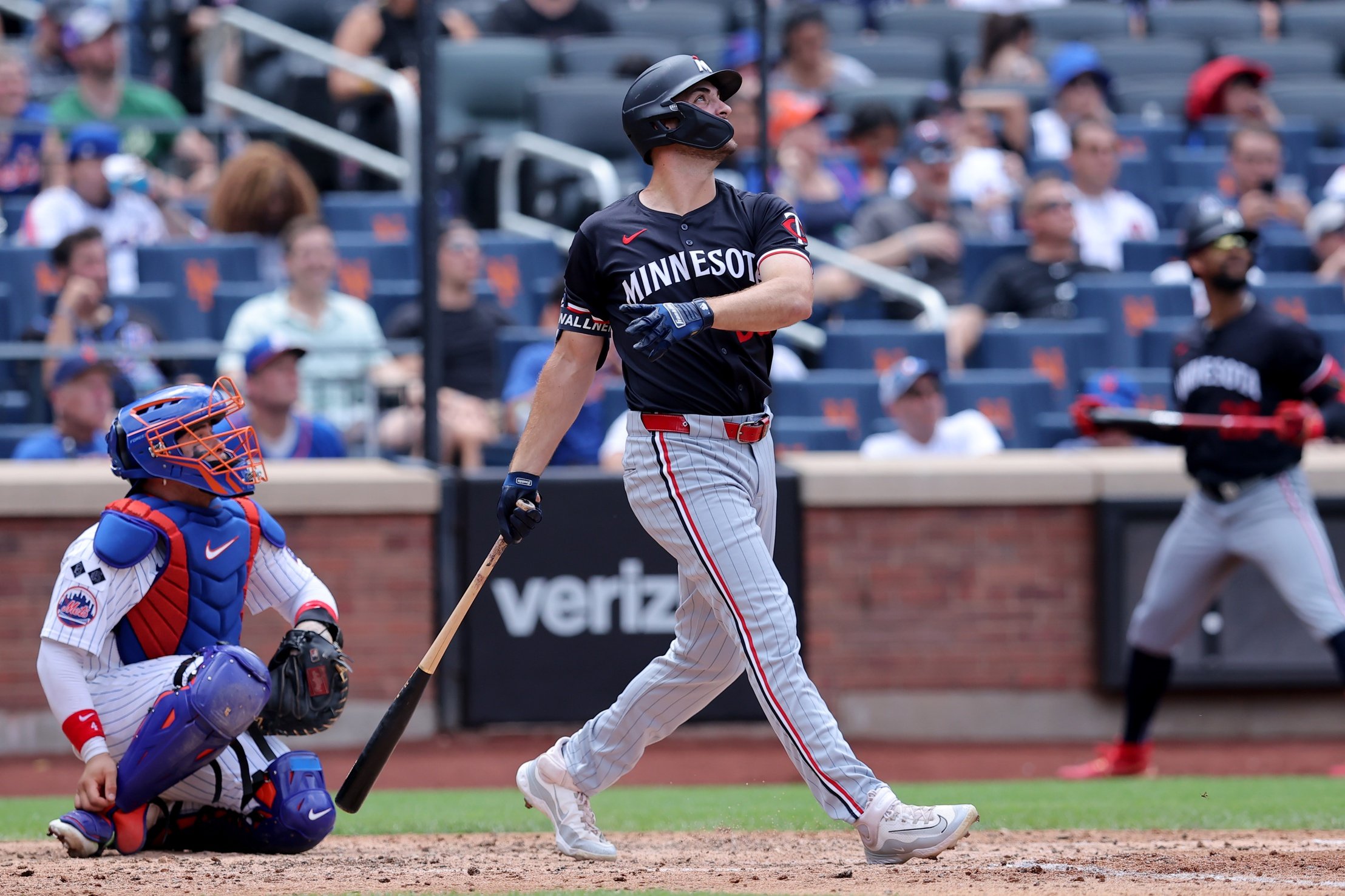 On Wednesday, Matt Wallner did the damn thing again: he launched a 108-MPH drive to right-center and watched it sail 442 feet for his sixth home run this season (25th if we're counting Triple-A). That's a dazzling distance, and yet, when you watch the replay of Wallner's swing, it doesn't even seem like he hit the ball quite flush. He reached out and got the end of his bat on Luis Severino's tailing changeup, still managing to muscle it out with ease. What we're seeing should not be taken for granted. This is not normal. Wallner is literally hitting the ball as hard as anybody in the major leagues, and that includes the most famed and acclaimed bashers of this generation. Don't believe me? Let's just take a look at the stats. They're unbelievable. Wallner does not have enough plate appearances to qualify for the batting title, having spent almost three months in the minors, but if he did, here's where he'd rank on the MLB leaderboard for three of the main Statcast measures of contact quality. AVERAGE EXIT VELOCITY Aaron Judge: 96.0 mph Matt Wallner: 95.9 mph Shohei Ohtani: 95.8 mph Oneil Cruz: 95.3 mph Juan Soto: 94.6 mph HARD HIT PERCENTAGE Matt Wallner: 61.8% Shohei Ohtani: 60.2% Aaron Judge: 60.2% Juan Soto: 57.8% Vladimir Guerrero Jr.: 56.5% BARREL RATE Matt Wallner: 29.4% Aaron Judge: 27.5% Shohei Ohtani: 20.5% Juan Soto: 19.7% Giancarlo Stanton: 19.1% Now, the big caveat here is that Wallner strikes out WAY more than anyone on this list. Only Cruz (33%) and Stanton (31%) are even in his stratosphere, but not really -- Wallner has struck out in a whopping 43% of his plate appearances this year. He still has managed to produce a .990 OPS, which leads the Twins and is 73% better than the average big-leaguer. Now, there's partially some good batted-ball luck at play (he won't maintain a .429 BABIP), but also, it's what quality contact will do for you. One measurement that was recently added to Statcast's public metrics serves to help explain why Wallner punishes the ball so much when he gets wood on it. Bat tracking data tells us that Wallner swings the stick at 77.6 MPH on average, which -- if qualified -- would rank third in the majors, behind Stanton and Cruz, ahead of Kyle Schwarber and Judge. I suppose one could reasonably ask if Wallner should continue to swing this ferociously hard. There's certainly no reason to change anything at the moment, but if production dries up and his extreme proneness to strikeouts sends him into another slump, the idea of dialing back slightly could gain merit. The slugger could theoretically afford to take a little off, given that he's registering legitimate MVP-level contact results right now. The other scenario is that he keeps hitting the ball this hard and manages to rein the strikeouts back to a semi-reasonable level. In that case, we might need to start rethinking how we talk about his ceiling as a difference-maker for this franchise. For the time being, I'm just going to sit back and enjoy the show. I'm a sucker for players who have visibly elite skills, and Wallner's ability to crush the ball is verifiably elite. I'm loving it; I'd probably love it less if I was an infielder who had to stand anywhere near him, or a family member to one of those poor baseballs.
 -
Those baseballs have families. Do you even think about that, Matthew? Image courtesy of Brad Penner-USA TODAY Sports On Wednesday, Matt Wallner did the damn thing again: he launched a 108-MPH drive to right-center and watched it sail 442 feet for his sixth home run this season (25th if we're counting Triple-A). That's a dazzling distance, and yet, when you watch the replay of Wallner's swing, it doesn't even seem like he hit the ball quite flush. He reached out and got the end of his bat on Luis Severino's tailing changeup, still managing to muscle it out with ease. What we're seeing should not be taken for granted. This is not normal. Wallner is literally hitting the ball as hard as anybody in the major leagues, and that includes the most famed and acclaimed bashers of this generation. Don't believe me? Let's just take a look at the stats. They're unbelievable. Wallner does not have enough plate appearances to qualify for the batting title, having spent almost three months in the minors, but if he did, here's where he'd rank on the MLB leaderboard for three of the main Statcast measures of contact quality. AVERAGE EXIT VELOCITY Aaron Judge: 96.0 mph Matt Wallner: 95.9 mph Shohei Ohtani: 95.8 mph Oneil Cruz: 95.3 mph Juan Soto: 94.6 mph HARD HIT PERCENTAGE Matt Wallner: 61.8% Shohei Ohtani: 60.2% Aaron Judge: 60.2% Juan Soto: 57.8% Vladimir Guerrero Jr.: 56.5% BARREL RATE Matt Wallner: 29.4% Aaron Judge: 27.5% Shohei Ohtani: 20.5% Juan Soto: 19.7% Giancarlo Stanton: 19.1% Now, the big caveat here is that Wallner strikes out WAY more than anyone on this list. Only Cruz (33%) and Stanton (31%) are even in his stratosphere, but not really -- Wallner has struck out in a whopping 43% of his plate appearances this year. He still has managed to produce a .990 OPS, which leads the Twins and is 73% better than the average big-leaguer. Now, there's partially some good batted-ball luck at play (he won't maintain a .429 BABIP), but also, it's what quality contact will do for you. One measurement that was recently added to Statcast's public metrics serves to help explain why Wallner punishes the ball so much when he gets wood on it. Bat tracking data tells us that Wallner swings the stick at 77.6 MPH on average, which -- if qualified -- would rank third in the majors, behind Stanton and Cruz, ahead of Kyle Schwarber and Judge. I suppose one could reasonably ask if Wallner should continue to swing this ferociously hard. There's certainly no reason to change anything at the moment, but if production dries up and his extreme proneness to strikeouts sends him into another slump, the idea of dialing back slightly could gain merit. The slugger could theoretically afford to take a little off, given that he's registering legitimate MVP-level contact results right now. The other scenario is that he keeps hitting the ball this hard and manages to rein the strikeouts back to a semi-reasonable level. In that case, we might need to start rethinking how we talk about his ceiling as a difference-maker for this franchise. For the time being, I'm just going to sit back and enjoy the show. I'm a sucker for players who have visibly elite skills, and Wallner's ability to crush the ball is verifiably elite. I'm loving it; I'd probably love it less if I was an infielder who had to stand anywhere near him, or a family member to one of those poor baseballs. View full article
-
The Twins came up empty once again at the trade deadline, despite being positioned as clear buyers with needs that were openly acknowledged by the front office. While it's clear that ownership's restriction on adding any payroll played a significant role, this wasn't the only factor holding them back. Image courtesy of David Richard-USA TODAY Sports It's unfortunate that the Twins missed out on their last chance to add significant outside help for the stretch run and (hopefully) into the playoffs. The fact that an ownership-imposed unwillingness to spend was primarily responsible for this inaction makes it all the more upsetting. Frustration from fans is more than justified. However, there were other things at play in stymying the front office. You can make a case that even if they had some level of spending flexibility, the Twins would've been wise to bypass any significant moves that were available. The reality is, given their circumstances, opportunities did not line up very well for Minnesota at this trade deadline. Here are three factors that, from my view, likely contributed to the front office standing pat. The market was limited (and ultimately ridiculous) for the upgrades they needed Although they definitely came nowhere close to meeting it, the threshold for what really qualified as a meaningful upgrade for the Twins was pretty high. They have a balanced, complete lineup and a solid bench. They have at least three very good starting pitchers. They have a handful of relievers who've proven capable in the late innings. To really get better, the Twins needed a legit No. 3 or above starter, and maybe a high-caliber back end reliever. There weren't too many of those guys available on the market, especially once teams like Texas opted not to sell. And seeing the prices for some who were moved ... no thanks. Toronto's Yusei Kikuchi was one of the names most commonly connected to the Twins as a make-sense target, and it sounds like they did actively pursue him to some degree, but Kikuchi ended up going to Houston for a prospect haul that Minnesota's front office rightfully came nowhere close to beating out. Look, Kikuchi is a talented pitcher with some solid peripherals. But he also has a 4.75 ERA this year (4.72 career) and the Blue Jays didn't trust him to start in the playoffs last year, coming off his best season. What really is the reasonable upside for this two-month rental? Trading away a 23-year-old starting pitcher with any level of ability, let alone two additional prospects, for that kind of underwhelming addition is hard to view as a savvy move, but it's one that the Astros were pressed into making because they had a much greater need. The Twins will likely welcome the chance to face the lefty Kikuchi in the playoffs, if it comes to that. Beyond Kikuchi, some the most compelling deadline options happened to be on teams that apparently had little interest in doing business with the Twins: AL Central sellers were reluctant to trade within the division As Dan Hayes of The Athletic explained in an appearance on Foul Territory TV, the White Sox took a hardline approach against trading with their rival, setting a laughable asking price for Erick Fedde when the Twins inquired. The notion of giving up Walker Jenkins, Brooks Lee or Emmanuel Rodriguez for a rental arm was rightfully laughed off. Frankly, I'm a little troubled that they would've considered even Luke Keaschall, if true. It sounds as though similar dynamics were at play with the Tigers and Jack Flaherty. "[The Twins] got the sense, with both Detroit and Chicago, that they just didn't want to trade in-division," Hayes shared. "That does make it difficult. You don't want to see your rivals win." The Twins were evidently willing to wade into those waters, despite the stakes being a bit higher for them as well. If, say, Fedde doesn't pitch brilliantly down the stretch and make a big difference in the playoffs (low likelihood, honestly), and you traded Keaschall for him, you're looking at a level of potential lingering follow-up pain that would make Spencer Steer blush. Chris Paddack got hurt and Max Kepler's play has tailed off substantially This last factor, I guess, does come back to money. But it also illustrates the way various trends played out against the front office in their deadline quest. Given the impetus to maintain a neutral payroll with any moves, unloading current commitments was going to be requisite for any significant add. The two most sensible candidates to dangle in a balanced salary swap? Paddack, owed about $9 million through next year, and Kepler, owed about $4 million through the rest of this year. If Paddack were healthy and pitching the way he was at times earlier in this season, he might have been appealing as a target for another playoff-minded team. Perhaps that played some role in motivating the Twins to activate him from the injured list in mid-July to showcase him ahead of the All-Star break. Whatever the reasoning, that decision didn't work out, as Paddack flashed the same inconsistent stuff and then quickly landed back on the injured list. The idea of trading Kepler might have been appealing for two reasons. First: they have high-quality lefty hitters for both corners in Trevor Larnach and Matt Wallner. Second: it would give them an opportunity to get something now for Kepler instead of nothing after the season, since they surely won't extend a qualifying offer. If he was still mashing the way he did in the second half last year, or the early weeks of this season, Kepler may have stood out to another contending club, opening the door for a creative need-versus-need deal. But the outfielder's power stroke has gone amiss and he's reverted to mediocre form offensively, with a .244/.295/.349 slash line in his past 60 games. My understanding is that the Twins did explore some conversations with others teams involving Kepler, but obviously, nothing ended up coming together. The good news, I suppose, is that Kepler and Paddack both have a chance to help the Twins get where they want to go this year. That's the overall outcome of another fruitless deadline: they Twins will need to rely on what they've already got. "I believe in our group," Derek Falvey told reporters after coming up empty. "I feel like this is a group that we want to go to battle with.” Let's hope he's right. Then again, what choice did he have? View full article