Nick Nelson
-
Posts
8,315 -
Joined
-
Last visited
-
Days Won
56
Content Type
Profiles
News
Minnesota Twins Videos
2026 Minnesota Twins Top Prospects Ranking
2022 Minnesota Twins Draft Picks
Minnesota Twins Free Agent & Trade Rumors, Notes, & Tidbits
Guides & Resources
2023 Minnesota Twins Draft Picks
The Minnesota Twins Players Project
2024 Minnesota Twins Draft Picks
2025 Minnesota Twins Draft Pick Tracker
2026 Minnesota Twins Draft Tracker: Picks & Bonuses
Forums
Blogs
Events
Store
Downloads
Gallery
Everything posted by Nick Nelson
-
 The flip side of this is that they were in position to make the playoffs in 3 of those past 4 seasons before stunning (fluky?) collapses in the final stretch in two. That actually kind of does seem like an endorsement since, as mentioned, the "momentum" from that collapse doesn't carry forward. The quality of the team and its talent does though.
- 30 replies
-
- 4
-

-

-
- carlos correa
- royce lewis
- (and 2 more)
-
It's very easy to get caught up in the dejection of a terrible late-season collapse and an offseason that promises to be underwhelming. But Twins fans shouldn't lose sight of the quality pieces in place for this team. Minnesota will be a contender in 2025. Image courtesy of Matt Blewett-USA TODAY Sports If you're feeling down about the Minnesota Twins, you're not alone. The latest season ended in bitter disappointment, and a long winter lies ahead filled with difficult decisions stemming from frustrating payroll constraints. It's difficult to envision the Twins getting a whole lot better on paper when they've already signaled no intent to raise payroll. Merely keeping together their existing talent will be a tall task. Vibes are not generally positive. Here on the site I've found myself covering a lot of downer topics recently, from the back concerns facing Brooks Lee and Jose Miranda to somber reflections on Alex Kirilloff's shortened career. It's time to pivot to a fresh perspective with a reminder that the Twins find themselves in a situation that is far from hopeless. In fact, there are a number of reasons to feel pretty good about the team's outlook, even if the offseason proves to be as unexciting as expected. A Contending Talent Baseline “We really had a tough run over the last six weeks and didn’t play as well as we could have and that’s on us,” Derek Falvey told Bobby Nightengale Jr. of the Star Tribune at the GM Meetings. “We’ve had to do some deep dives and a lot of deep introspection with frustration around that. But we feel like that core is still there from ‘23, even the core that held us up for a good chunk of last year. I’m confident that core from last year can get us back to where we need as related to next year.” Falvey's not just blowing hot air. According to projections from FanGraphs, based on players currently in organizations, the Twins are favored to top the AL Central next year with a .520 winning percentage. They have, by one measure, the fourth-best roster in the American League heading into the offseason. That might not be terribly meaningful, because it's likely that division rivals (especially Detroit and Kansas City) will be active in improving this offseason while the Twins mostly stand pat. But it is a more objective reminder that the Twins retain plenty of proven high-caliber talent. With minor changes, this is still the same core that won the division and advanced in the playoffs in 2023. The same group that boasted the best record in baseball over a four-month span in 2024. Yes, everyone slumped simultaneously down the stretch and it was brutal to watch, but there's little reason to think that will carry forward. Because: Year-to-Year Momentum Doesn't Exist in Baseball It's debatable whether team momentum exists within a baseball season. Many sabermetric types will say no; I find that hard to fully accept after watching this year's Twins team click on all cylinders during prolonged hot streaks and then collectively go in the tank as their season-ending struggles snowballed. But when you zoom out, there is just no reason to believe momentum exists on a year-to-year basis for MLB teams. Evidence in recent Minnesota Twins history certainly argues against it. In 2016, the Twins experienced an utterly disastrous season where everything went wrong -- a "total system failure." The next year they improved by 26 wins and reached the postseason. In 2018, the Twins finished below .500, a disappointing drop-off that got Paul Molitor dismissed as manager. In 2019 they went 101-61, winning the Central behind a 23-win improvement. In 2022, the Twins collapsed in similar fashion to what we just now witnessed. They went 11-22 in September/October to fumble away a division lead they held for most of the season. As bad of a finish as you could imagine. The next year, they rebounded to win the Central with ease and then took their first postseason series in almost 20 years. So yeah, the 2024 Twins ended on a sour note. Does it matter going forward? Not really. And I'd argue that same thing goes the other way for, say, Detroit's season-ending scorcher. Young Players Follow Volatile and Unpredictable Development Paths In looking back at some of the past examples we just covered, especially the turnaround from 2016 to 2017, one thing that stands out to me is how fluctuations in performance from developing young players influenced the highs and lows. Worth keeping in mind as we evaluate a 2025 Twins team whose fate will largely be dictated by impressive talents at similar stages. Among the reasons Minnesota flopped in 2016: Miguel Sanó and Eddie Rosario both took big steps backward following impressive rookie campaigns. Top pitching prospect José Berríos floundered in his MLB debut, posting an 8.02 ERA over 14 starts despite flashing impressive stuff at times. In 2017, Sanó and Rosario were both monsters at the plate, driving much of the team's offensive improvement, and Berríos instantly turned the corner to become a frontline starter. I think about these examples as I weigh the outlooks of hitters like Edouard Julien and Lee, or pitchers like David Festa and Zebby Matthews. They weren't necessarily good this year, but they are talented players. Oftentimes it turns on a dime for skilled guys in the 24-to-27 age range. The Stars Seem to Be Aligned The core nucleus of the Twins, and the reason they cannot be discounted as championship contenders, comprises these four players: Carlos Correa, Byron Buxton, Royce Lewis and Pablo López. Appraisals may vary on these four at the moment but from my view they remain clearly the best and highest-upside players on the team. They will also combine to account for more than half the payroll next year, so much hinges on them all delivering on their promise to some extent. We didn't get full, representative seasons from any of them in 2024. Correa lost half the year to injury. Buxton missed two months of games. Lewis experienced a staggering second-half slump from which he never emerged. López pitched to an average-ish ERA overall. But we absolutely saw the signs of greatness from all four, and each one seems potentially primed for big things in 2025. While you'd be hard-pressed to call Correa or Buxton free of health concerns, each one finished the year playing and producing. Buxton looked forward to a normal offseason free of his usual rehab regimen. Correa has a full three months to treat and resolve his plantar fasciitis, which he successfully overcame in the other foot last winter. When on the field in 2024, Buxton performed like an All-Star and Correa performed like an MVP. Lewis's deep slump in August and September was obviously alarming, but you can't talk about the .496 OPS in his last 41 games without talking about the 1.000 OPS in his first 41 games. Not to mention what he did the previous season and in October. While he might have been physically drained, Lewis ended the year healthy and something tells me he'll be determined to emphatically get back to where he was. As for López, he was not amazing but he was good -- phenomenal at times -- and (importantly) healthy all year long. Per fWAR, he's a top 10 pitcher in the major leagues over the past two seasons. He's an ace. I don't really harbor any substantial doubts or concerns about him. So you take those four, and then you factor in the surrounding talent, and it's really not difficult at all to foresee a very good or even downright dominant Twins team in 2025, springing merely from the foundation that they already have in place. With this in mind, and understanding their resource limitations, a few savvy moves on the fringes from the front office this winter could go a long way. View full article
- 30 replies
-
- 1
-
-
- carlos correa
- royce lewis
- (and 2 more)
-
Don't Underestimate the Winning Foundation of the 2025 Minnesota Twins
Nick Nelson posted an article in Twins
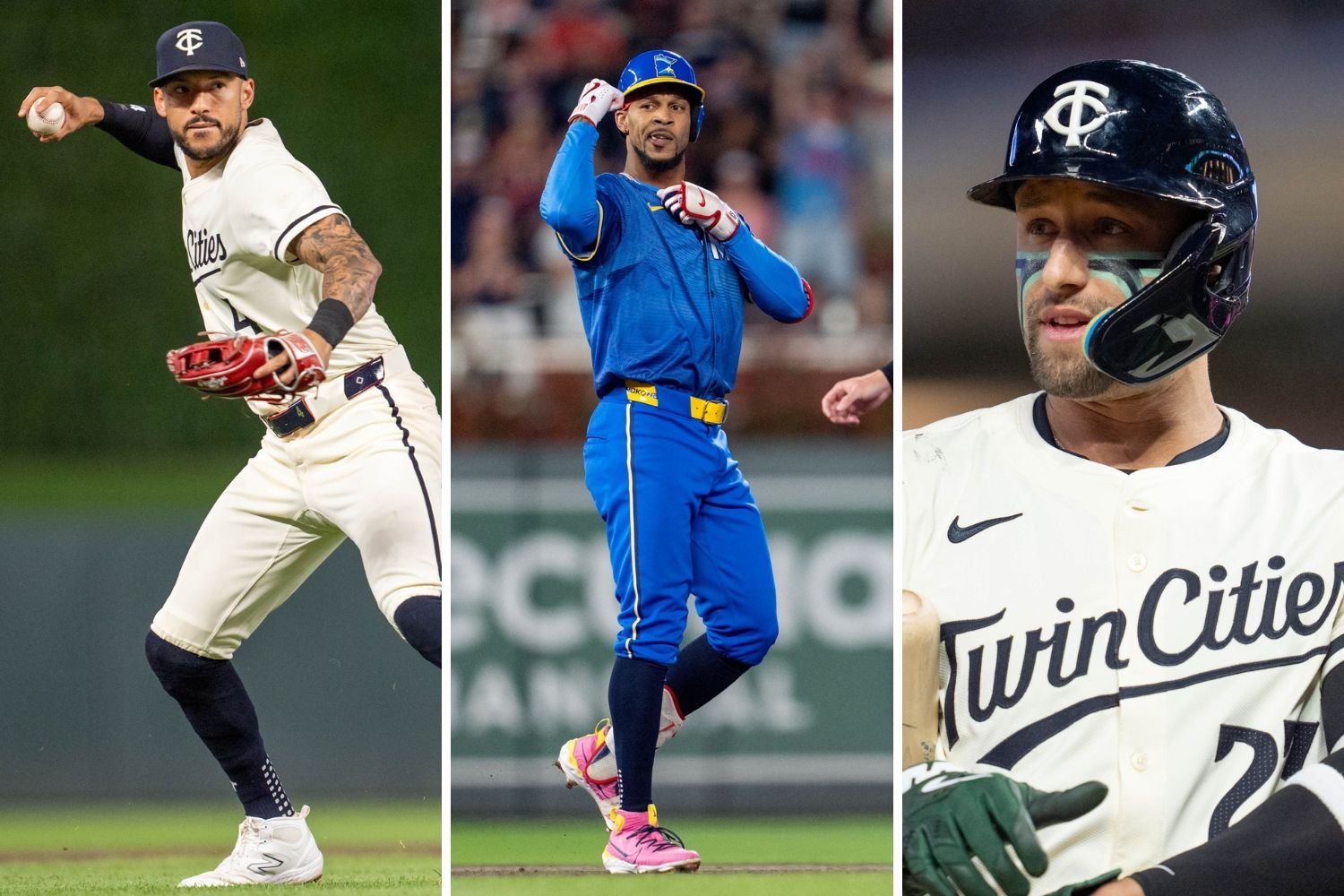 If you're feeling down about the Minnesota Twins, you're not alone. The latest season ended in bitter disappointment, and a long winter lies ahead filled with difficult decisions stemming from frustrating payroll constraints. It's difficult to envision the Twins getting a whole lot better on paper when they've already signaled no intent to raise payroll. Merely keeping together their existing talent will be a tall task. Vibes are not generally positive. Here on the site I've found myself covering a lot of downer topics recently, from the back concerns facing Brooks Lee and Jose Miranda to somber reflections on Alex Kirilloff's shortened career. It's time to pivot to a fresh perspective with a reminder that the Twins find themselves in a situation that is far from hopeless. In fact, there are a number of reasons to feel pretty good about the team's outlook, even if the offseason proves to be as unexciting as expected. A Contending Talent Baseline “We really had a tough run over the last six weeks and didn’t play as well as we could have and that’s on us,” Derek Falvey told Bobby Nightengale Jr. of the Star Tribune at the GM Meetings. “We’ve had to do some deep dives and a lot of deep introspection with frustration around that. But we feel like that core is still there from ‘23, even the core that held us up for a good chunk of last year. I’m confident that core from last year can get us back to where we need as related to next year.” Falvey's not just blowing hot air. According to projections from FanGraphs, based on players currently in organizations, the Twins are favored to top the AL Central next year with a .520 winning percentage. They have, by one measure, the fourth-best roster in the American League heading into the offseason. That might not be terribly meaningful, because it's likely that division rivals (especially Detroit and Kansas City) will be active in improving this offseason while the Twins mostly stand pat. But it is a more objective reminder that the Twins retain plenty of proven high-caliber talent. With minor changes, this is still the same core that won the division and advanced in the playoffs in 2023. The same group that boasted the best record in baseball over a four-month span in 2024. Yes, everyone slumped simultaneously down the stretch and it was brutal to watch, but there's little reason to think that will carry forward. Because: Year-to-Year Momentum Doesn't Exist in Baseball It's debatable whether team momentum exists within a baseball season. Many sabermetric types will say no; I find that hard to fully accept after watching this year's Twins team click on all cylinders during prolonged hot streaks and then collectively go in the tank as their season-ending struggles snowballed. But when you zoom out, there is just no reason to believe momentum exists on a year-to-year basis for MLB teams. Evidence in recent Minnesota Twins history certainly argues against it. In 2016, the Twins experienced an utterly disastrous season where everything went wrong -- a "total system failure." The next year they improved by 26 wins and reached the postseason. In 2018, the Twins finished below .500, a disappointing drop-off that got Paul Molitor dismissed as manager. In 2019 they went 101-61, winning the Central behind a 23-win improvement. In 2022, the Twins collapsed in similar fashion to what we just now witnessed. They went 11-22 in September/October to fumble away a division lead they held for most of the season. As bad of a finish as you could imagine. The next year, they rebounded to win the Central with ease and then took their first postseason series in almost 20 years. So yeah, the 2024 Twins ended on a sour note. Does it matter going forward? Not really. And I'd argue that same thing goes the other way for, say, Detroit's season-ending scorcher. Young Players Follow Volatile and Unpredictable Development Paths In looking back at some of the past examples we just covered, especially the turnaround from 2016 to 2017, one thing that stands out to me is how fluctuations in performance from developing young players influenced the highs and lows. Worth keeping in mind as we evaluate a 2025 Twins team whose fate will largely be dictated by impressive talents at similar stages. Among the reasons Minnesota flopped in 2016: Miguel Sanó and Eddie Rosario both took big steps backward following impressive rookie campaigns. Top pitching prospect José Berríos floundered in his MLB debut, posting an 8.02 ERA over 14 starts despite flashing impressive stuff at times. In 2017, Sanó and Rosario were both monsters at the plate, driving much of the team's offensive improvement, and Berríos instantly turned the corner to become a frontline starter. I think about these examples as I weigh the outlooks of hitters like Edouard Julien and Lee, or pitchers like David Festa and Zebby Matthews. They weren't necessarily good this year, but they are talented players. Oftentimes it turns on a dime for skilled guys in the 24-to-27 age range. The Stars Seem to Be Aligned The core nucleus of the Twins, and the reason they cannot be discounted as championship contenders, comprises these four players: Carlos Correa, Byron Buxton, Royce Lewis and Pablo López. Appraisals may vary on these four at the moment but from my view they remain clearly the best and highest-upside players on the team. They will also combine to account for more than half the payroll next year, so much hinges on them all delivering on their promise to some extent. We didn't get full, representative seasons from any of them in 2024. Correa lost half the year to injury. Buxton missed two months of games. Lewis experienced a staggering second-half slump from which he never emerged. López pitched to an average-ish ERA overall. But we absolutely saw the signs of greatness from all four, and each one seems potentially primed for big things in 2025. While you'd be hard-pressed to call Correa or Buxton free of health concerns, each one finished the year playing and producing. Buxton looked forward to a normal offseason free of his usual rehab regimen. Correa has a full three months to treat and resolve his plantar fasciitis, which he successfully overcame in the other foot last winter. When on the field in 2024, Buxton performed like an All-Star and Correa performed like an MVP. Lewis's deep slump in August and September was obviously alarming, but you can't talk about the .496 OPS in his last 41 games without talking about the 1.000 OPS in his first 41 games. Not to mention what he did the previous season and in October. While he might have been physically drained, Lewis ended the year healthy and something tells me he'll be determined to emphatically get back to where he was. As for López, he was not amazing but he was good -- phenomenal at times -- and (importantly) healthy all year long. Per fWAR, he's a top 10 pitcher in the major leagues over the past two seasons. He's an ace. I don't really harbor any substantial doubts or concerns about him. So you take those four, and then you factor in the surrounding talent, and it's really not difficult at all to foresee a very good or even downright dominant Twins team in 2025, springing merely from the foundation that they already have in place. With this in mind, and understanding their resource limitations, a few savvy moves on the fringes from the front office this winter could go a long way.
- 30 comments
-
- 6
-
-
- carlos correa
- royce lewis
- (and 2 more)
-
He's among the players most likely to be shopped around this offseason as the Twins front office seeks to clear payroll. Can they actually move him? Which teams might be interested? What could Minnesota realistically get back? Let's explore these questions. Image courtesy of © Matt Krohn-Imagn Images What's Up with Chris Paddack He finished the season on the injured list, although it sounds like he was on the verge of being able to return and might have tried to do so in the playoffs if the Twins didn't collapse and miss out. Alas, he didn't appear at all in the second half, finishing with fewer than 90 innings thrown in yet another campaign plagued by arm problems. He's entering the final year of a contract extension signed in January of 2023, set to earn $7.5 million at age 29 in 2025. Over the course of three seasons in Minnesota, he has pitched to 4.82 ERA over 116 innings, including 4.99 in 17 starts this year. The Case for Trading Chris Paddack It's pretty straightforward and self-explanatory. Coming off a fourth consecutive injury-shortened season, Paddack is a major question mark going forward. His salary stands out as a big sticking point for Twins leadership as they desperately seek to shed payroll in search of flexibility to add, or merely to meet their budgeted number. He's a talented pitcher with upside, and we've seen him flash it at times as a Twin. But having Paddack around feels like a luxury, especially with young starters like David Festa and Zebby Matthews already breaking through to the majors. Although $7.5 million isn't some huge sum in the grand scheme, there's little doubt the front office would love to redirect that money toward the bullpen, bench or first base. It's no surprise Paddack was recently listed by MLB Trade Rumors among top 35 trade candidates of the 2024-25 offseason. Video: Should the Minnesota Twins Trade Away Chris Paddack? The trickier part of this discussion is building a case to trade for Paddack from another team's perspective. His track record makes it almost impossible to trust his in his health, or really even his performance when available. Then again, it sounds like he was cleared for a relatively normal offseason program, and he is a respected arm talent with a high ceiling when he's right. Paddack is still under 30, and his contract (1 year, $7.5M) could be attractive for an upside-seeking team relative to free agency options. Bobby Nightengale Jr. wrote in the Star Tribune last week that "league sources expect some interest in Twins starter Chris Paddack." Comparable Trades of the Past One of the reasons it's tough to envision Paddack's trade market and theorize a return is that there just aren't many precedents that come to mind. Actually one of the best comps might be ... Chris Paddack, who was acquired by the Twins in 2022 under similar circumstances: His previous season had been cut short by an elbow injury, but Minnesota bet on him rebounding and tapping into that ever-tantalizing upside. In that case, I think it's fair to say his arm health was more openly in doubt. Already the survivor of one Tommy John surgery, he had suffered a UCL sprain in 2021 with the Padres, receiving a stem cell injection after the season in hopes of healing the injury without a second reconstruction. The Twins knew the risk when they signed up, and indeed, Paddack made it through only five starts before needing to go under the knife once again. Despite the looming health uncertainty, Paddack did have other more appealing qualities at that time: he was three years younger, with multiple years of inexpensive team control remaining. The trade cost to acquire him is a little hard to directly assess because Paddack was shipped alongside buy-low reliever Emilio Pagan in exchange for Brent Rooker and one year of a legitimately high-caliber bullpen arm in Taylor Rogers. Another comparable player traded for in recent Twins history, I suppose, is Anthony DeSclafani. Very similar story here: pitcher with some level of proven upside, coming off elbow injury that he attempted to rehab, acquired by the Twins as part of a complicated and creative trade package. The same motivation that compelled them to target DeSclafani in that deal -- adding a veteran starter for the back of the rotation on a cheap-ish one-year deal -- would be the same one stirring interest in Paddack. It seems fair to say that if Minnesota can find a way to move Paddack, the deal will take shape in a similar fashion to those examples, with multiple players and maybe even multiple teams involved. Potential Trade Partners If there's a general sense of confidence in his health, Paddack could draw interest from a wide range of teams, especially in the midst of pervasive reduction in spending across the league (which I expect). For all his risk, the right-hander could be attractive on a one-year commitment compared to the treacherous free agent market. Here are a few team names that stand out in my mind as likely suitors for Paddack. New York Mets They have some holes to fill in the rotation with Sean Manaea and Luis Severino heading into free agency. Head exec David Stearns has been open about the need to add in the rotation. "We have to have multiple starters. We understand that," he told The Record. "We went into last offseason with the same need, and I think we'll be able to do it." New York does have a pretty solid starting pitching corps in place, so they could potentially afford to take a gamble on Paddack, hoping to catch lightning in a bottle and bolster their championship hopes. Under owner Steve Cohen, the Mets are in sort of a sweet-spot for this kind of trade because they won't overly scrutinize a salary like Paddack's, but might also be looking to avoid huge financial commitments after leading MLB in payroll this year. Texas Rangers Like the Mets, Texas is a free-spending team with World Series aspirations. They also seem like a heck of a natural fit for Paddack, a Texas native known for arriving at the ballpark in his cowboy attire. The Rangers have a strong track record of taking fliers on starting pitchers whose stock is down and striking gold; Lance Lynn and Mike Minor are among the examples. They're also the team that signed Tyler Mahle to a two-year contract coming off Tommy John surgery with the Twins, although the returns haven't been so good there up to this point. Like the Mets, Texas is facing significant veteran losses in the rotation, with Max Scherzer, Nathan Eovaldi and Andrew Heaney becoming free agents. They could be looking to load up on arms. Tampa Bay Rays I don't have any specific reasons for including the Rays, other than that they are an unpredictable team with whom the Twins have done business in the past. Unlike the Rangers and Mets, they are far from big spenders, but they could be interested in acquiring a contract like Paddack's if they believe he's healthy and they like his underlying metrics. Tampa has a solid stable of young starters, but could be keen to add a veteran with frontline talent on top of it. I also think the Rays (or other teams) could be interested in Paddack as a multi-inning weapon out of the bullpen. Baltimore Orioles Corbin Burnes has finally reached free agency and is in search of a mega deal. Assuming they don't bring him back, he will leave a massive void in their rotation, and the O's will be on the hunt for quality arms to supplement their overflowing young offense. One name that stands out to me here as a possible return is Ryan O'Hearn, a strong lefty bat and first baseman making an equal $7.5 million in his final year under contract. Formerly a nondescript player for the Royals, O'Hearn blossomed in Baltimore over the past two seasons under now-Twins hitting coach Matt Borschulte, posting a 122 OPS+ in both, but his poor defense keeps his value in check. Conclusions When it comes to trading Paddack, there is definitely a will, but is there a way? The plausibility will be dictated by several factors: his arm prognosis, the temperature of the free-agent market, and the spending inclinations of major-league teams. If the Twins are able to move Paddack and his salary, expect the deal to be significantly more complex than a standard one-for-one swap. View full article
-
 What's Up with Chris Paddack He finished the season on the injured list, although it sounds like he was on the verge of being able to return and might have tried to do so in the playoffs if the Twins didn't collapse and miss out. Alas, he didn't appear at all in the second half, finishing with fewer than 90 innings thrown in yet another campaign plagued by arm problems. He's entering the final year of a contract extension signed in January of 2023, set to earn $7.5 million at age 29 in 2025. Over the course of three seasons in Minnesota, he has pitched to 4.82 ERA over 116 innings, including 4.99 in 17 starts this year. The Case for Trading Chris Paddack It's pretty straightforward and self-explanatory. Coming off a fourth consecutive injury-shortened season, Paddack is a major question mark going forward. His salary stands out as a big sticking point for Twins leadership as they desperately seek to shed payroll in search of flexibility to add, or merely to meet their budgeted number. He's a talented pitcher with upside, and we've seen him flash it at times as a Twin. But having Paddack around feels like a luxury, especially with young starters like David Festa and Zebby Matthews already breaking through to the majors. Although $7.5 million isn't some huge sum in the grand scheme, there's little doubt the front office would love to redirect that money toward the bullpen, bench or first base. It's no surprise Paddack was recently listed by MLB Trade Rumors among top 35 trade candidates of the 2024-25 offseason. Video: Should the Minnesota Twins Trade Away Chris Paddack? The trickier part of this discussion is building a case to trade for Paddack from another team's perspective. His track record makes it almost impossible to trust his in his health, or really even his performance when available. Then again, it sounds like he was cleared for a relatively normal offseason program, and he is a respected arm talent with a high ceiling when he's right. Paddack is still under 30, and his contract (1 year, $7.5M) could be attractive for an upside-seeking team relative to free agency options. Bobby Nightengale Jr. wrote in the Star Tribune last week that "league sources expect some interest in Twins starter Chris Paddack." Comparable Trades of the Past One of the reasons it's tough to envision Paddack's trade market and theorize a return is that there just aren't many precedents that come to mind. Actually one of the best comps might be ... Chris Paddack, who was acquired by the Twins in 2022 under similar circumstances: His previous season had been cut short by an elbow injury, but Minnesota bet on him rebounding and tapping into that ever-tantalizing upside. In that case, I think it's fair to say his arm health was more openly in doubt. Already the survivor of one Tommy John surgery, he had suffered a UCL sprain in 2021 with the Padres, receiving a stem cell injection after the season in hopes of healing the injury without a second reconstruction. The Twins knew the risk when they signed up, and indeed, Paddack made it through only five starts before needing to go under the knife once again. Despite the looming health uncertainty, Paddack did have other more appealing qualities at that time: he was three years younger, with multiple years of inexpensive team control remaining. The trade cost to acquire him is a little hard to directly assess because Paddack was shipped alongside buy-low reliever Emilio Pagan in exchange for Brent Rooker and one year of a legitimately high-caliber bullpen arm in Taylor Rogers. Another comparable player traded for in recent Twins history, I suppose, is Anthony DeSclafani. Very similar story here: pitcher with some level of proven upside, coming off elbow injury that he attempted to rehab, acquired by the Twins as part of a complicated and creative trade package. The same motivation that compelled them to target DeSclafani in that deal -- adding a veteran starter for the back of the rotation on a cheap-ish one-year deal -- would be the same one stirring interest in Paddack. It seems fair to say that if Minnesota can find a way to move Paddack, the deal will take shape in a similar fashion to those examples, with multiple players and maybe even multiple teams involved. Potential Trade Partners If there's a general sense of confidence in his health, Paddack could draw interest from a wide range of teams, especially in the midst of pervasive reduction in spending across the league (which I expect). For all his risk, the right-hander could be attractive on a one-year commitment compared to the treacherous free agent market. Here are a few team names that stand out in my mind as likely suitors for Paddack. New York Mets They have some holes to fill in the rotation with Sean Manaea and Luis Severino heading into free agency. Head exec David Stearns has been open about the need to add in the rotation. "We have to have multiple starters. We understand that," he told The Record. "We went into last offseason with the same need, and I think we'll be able to do it." New York does have a pretty solid starting pitching corps in place, so they could potentially afford to take a gamble on Paddack, hoping to catch lightning in a bottle and bolster their championship hopes. Under owner Steve Cohen, the Mets are in sort of a sweet-spot for this kind of trade because they won't overly scrutinize a salary like Paddack's, but might also be looking to avoid huge financial commitments after leading MLB in payroll this year. Texas Rangers Like the Mets, Texas is a free-spending team with World Series aspirations. They also seem like a heck of a natural fit for Paddack, a Texas native known for arriving at the ballpark in his cowboy attire. The Rangers have a strong track record of taking fliers on starting pitchers whose stock is down and striking gold; Lance Lynn and Mike Minor are among the examples. They're also the team that signed Tyler Mahle to a two-year contract coming off Tommy John surgery with the Twins, although the returns haven't been so good there up to this point. Like the Mets, Texas is facing significant veteran losses in the rotation, with Max Scherzer, Nathan Eovaldi and Andrew Heaney becoming free agents. They could be looking to load up on arms. Tampa Bay Rays I don't have any specific reasons for including the Rays, other than that they are an unpredictable team with whom the Twins have done business in the past. Unlike the Rangers and Mets, they are far from big spenders, but they could be interested in acquiring a contract like Paddack's if they believe he's healthy and they like his underlying metrics. Tampa has a solid stable of young starters, but could be keen to add a veteran with frontline talent on top of it. I also think the Rays (or other teams) could be interested in Paddack as a multi-inning weapon out of the bullpen. Baltimore Orioles Corbin Burnes has finally reached free agency and is in search of a mega deal. Assuming they don't bring him back, he will leave a massive void in their rotation, and the O's will be on the hunt for quality arms to supplement their overflowing young offense. One name that stands out to me here as a possible return is Ryan O'Hearn, a strong lefty bat and first baseman making an equal $7.5 million in his final year under contract. Formerly a nondescript player for the Royals, O'Hearn blossomed in Baltimore over the past two seasons under now-Twins hitting coach Matt Borschulte, posting a 122 OPS+ in both, but his poor defense keeps his value in check. Conclusions When it comes to trading Paddack, there is definitely a will, but is there a way? The plausibility will be dictated by several factors: his arm prognosis, the temperature of the free-agent market, and the spending inclinations of major-league teams. If the Twins are able to move Paddack and his salary, expect the deal to be significantly more complex than a standard one-for-one swap.
 -
Carlos Correa Trade Buzz Is Heating Up
Nick Nelson replied to Nick Nelson's topic in Twins Daily Front Page News
I don't think the premise is that you'd be getting back much at all, aside from the flexibility to use that money in other ways. Which is why I hate it. The example shared by Sherman in his article was basically to send back a couple lotto tickets in exchange for Carlos Correa and his contract, similar to the Giancarlo Stanton trade. Blech. -
Carlos Correa Trade Buzz Is Heating Up
Nick Nelson replied to Nick Nelson's topic in Twins Daily Front Page News
Trading Luis Gil to get Jake Cave and then trading Carlos Correa to get Gil back would be a really funny trade tree. -
Carlos Correa Trade Buzz Is Heating Up
Nick Nelson replied to Nick Nelson's topic in Twins Daily Front Page News
No guarantee the team will be sold at all, much less by any given point. For now we need to operate under the assumption that payroll remains static at best. -
New York media is pondering the availability of Minnesota's star shortstop. Sadly, it's fair game. Image courtesy of Matt Blewett-Imagn Images On Saturday, the New York Post published a column from Joel Sherman suggesting the following premise: "Yankees, Mets should test Twins’ waters for possible Carlos Correa trade." He proposes that both teams explore the possibility of acquiring Minnesota's All-Star shortstop, two years into a historic contract signed in 2023. Sherman's reasoning comes together like this: "Structurally, the Twins don’t work." Their core trio of Correa, Byron Buxton and Royce Lewis is too injury-prone to elevate the team. "Financially, the Twins don’t work well." Too much of their now-limited payroll is invested in Correa to properly build around him. Correa's contract and checkered availability make much more sense for a big-market team with more robust resources than the Twins. Interestingly, the article includes a quote from Derek Falvey in which he directly addresses the topic, acknowledging that the Twins have "been hit" in the past with trade interest on Correa, as well as Buxton and Lewis, while conspicuously not ruling out anything out. “If they came at us, we’re open-minded to anything,” the Twins president of baseball operations shared. “Obviously Carlos has a full no-trade clause. We love him. We’re always open-minded when team teams hit us on all of our players. We’ve been hit on Carlos before, we’ve been hit on Byron [Buxton] before, we’ve been hit on Royce [Lewis] before. That’s not shocking to anybody, but we hold an extremely high bar to even start that conversation, and I still feel like those guys are critical to our success.” It might be temping to pass this off as a New York writer stirring up attention with the classic "I want that" declaration coveting a small-market star. However, that quote from Falvey was anything but dismissive. I will note that Sherman's been around quite a while and is fairly plugged in. Moreover, it's not hard to accept the logic behind either NY team being interested in Correa. The Yankees came just short of winning the World Series, with a lineup that could greatly benefit from one more star hitter (and fielder). The Mets, of course, had an agreement with Correa fall through when he was a free agent, but their dream of playing him alongside Francisco Lindor could still be in play. As Sherman notes, the amended offer to Correa from the Mets (6 years, $157 million) was not too far off from what he ultimately got from the Twins. I can also, sadly, see the logic of trading Correa from Minnesota's perspective, given the circumstances. There's no way around it: his guaranteed contract over the next several years is a major impediment for a front office now obliged to keep payroll in the $125 million range. As salaries escalate across the roster in arbitration, it will grow increasingly difficult to keep the talent core together and maintain a club capable of competing when Correa is absent – a reality that by now must be planned around. With that said ... This would be so depressing from my view. The signing of Correa was a signature moment in franchise history; the moment that Minnesota finally rose to the occasion and paid the freight for a premier superstar in an emphatic commitment to winning. Dumping that contract to a New York-based team two years later would completely undo its impact while bringing back to the surface every negative connotation associated with this team. As a fan, it would be exceedingly difficult to stomach, making you wonder what was even the point. The Twins and Yankees do have recent history of creative salary-relief trades. It was the unloading of Josh Donaldson in 2022 that opened the door for signing Correa to begin with. And that worked out well enough for Minnesota. But trading Correa would rightfully be received very differently from trading Donaldson, who was an underperforming malcontent. Correa has delivered in his first two years as a Twin, leading them to a playoff advancement in 2023 and playing at an MVP-caliber level on when on the field in 2024. He is critical to any legitimate hopes of World Series contention in 2025. It's almost impossible to envision a Correa trade that actually makes the team better, and giving him away as a pure salary dump in the name of right-sizing payroll would be damningly pathetic. I know where I stand on this topic, but I'm curious to hear from you all. What's your temperature on trading Correa? How open should the front office be to these kinds of proposed inquiries from clubs that might be better equipped to absorb his contract? Let's hear from you in the comments. View full article
-
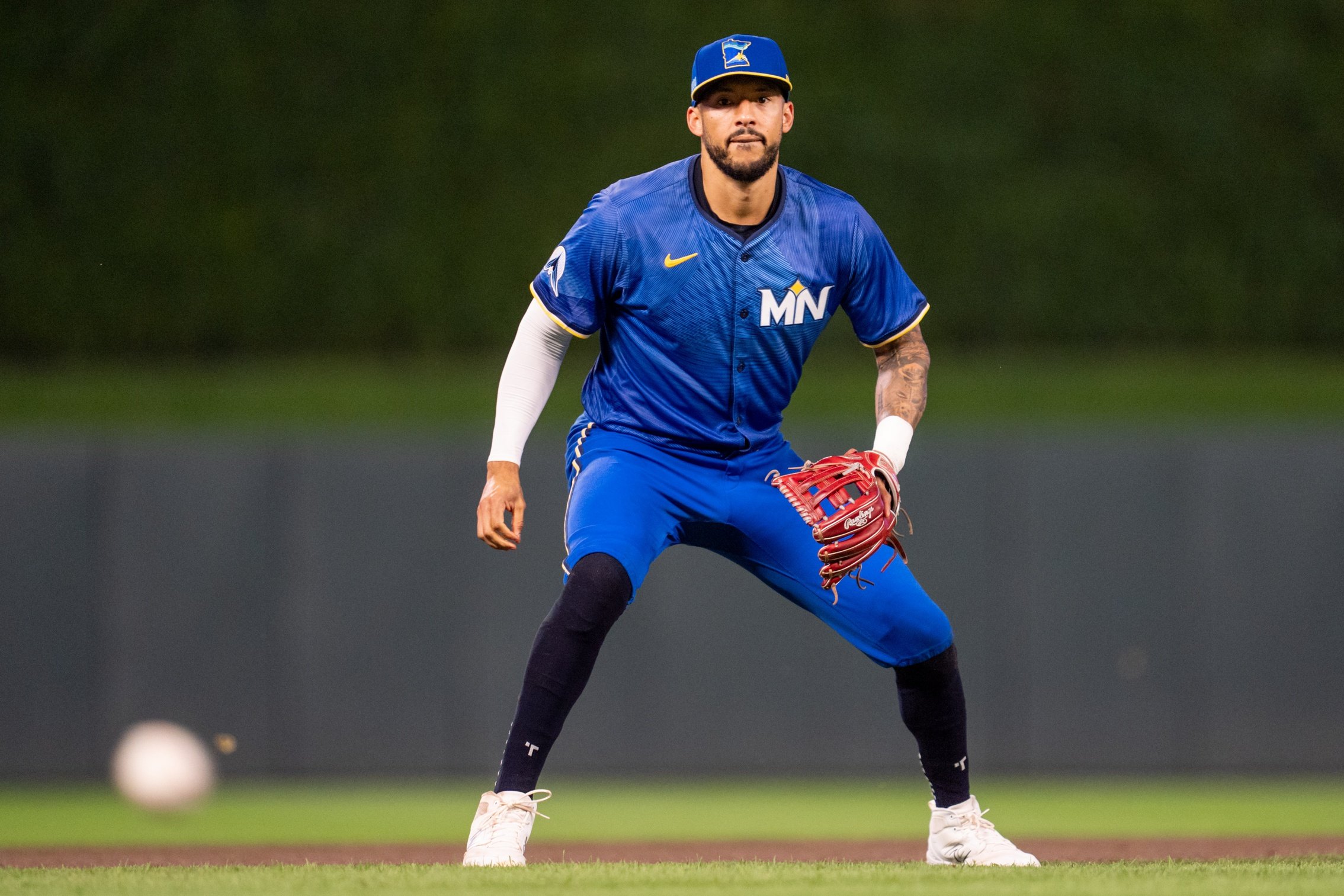 On Saturday, the New York Post published a column from Joel Sherman suggesting the following premise: "Yankees, Mets should test Twins’ waters for possible Carlos Correa trade." He proposes that both teams explore the possibility of acquiring Minnesota's All-Star shortstop, two years into a historic contract signed in 2023. Sherman's reasoning comes together like this: "Structurally, the Twins don’t work." Their core trio of Correa, Byron Buxton and Royce Lewis is too injury-prone to elevate the team. "Financially, the Twins don’t work well." Too much of their now-limited payroll is invested in Correa to properly build around him. Correa's contract and checkered availability make much more sense for a big-market team with more robust resources than the Twins. Interestingly, the article includes a quote from Derek Falvey in which he directly addresses the topic, acknowledging that the Twins have "been hit" in the past with trade interest on Correa, as well as Buxton and Lewis, while conspicuously not ruling out anything out. “If they came at us, we’re open-minded to anything,” the Twins president of baseball operations shared. “Obviously Carlos has a full no-trade clause. We love him. We’re always open-minded when team teams hit us on all of our players. We’ve been hit on Carlos before, we’ve been hit on Byron [Buxton] before, we’ve been hit on Royce [Lewis] before. That’s not shocking to anybody, but we hold an extremely high bar to even start that conversation, and I still feel like those guys are critical to our success.” It might be temping to pass this off as a New York writer stirring up attention with the classic "I want that" declaration coveting a small-market star. However, that quote from Falvey was anything but dismissive. I will note that Sherman's been around quite a while and is fairly plugged in. Moreover, it's not hard to accept the logic behind either NY team being interested in Correa. The Yankees came just short of winning the World Series, with a lineup that could greatly benefit from one more star hitter (and fielder). The Mets, of course, had an agreement with Correa fall through when he was a free agent, but their dream of playing him alongside Francisco Lindor could still be in play. As Sherman notes, the amended offer to Correa from the Mets (6 years, $157 million) was not too far off from what he ultimately got from the Twins. I can also, sadly, see the logic of trading Correa from Minnesota's perspective, given the circumstances. There's no way around it: his guaranteed contract over the next several years is a major impediment for a front office now obliged to keep payroll in the $125 million range. As salaries escalate across the roster in arbitration, it will grow increasingly difficult to keep the talent core together and maintain a club capable of competing when Correa is absent – a reality that by now must be planned around. With that said ... This would be so depressing from my view. The signing of Correa was a signature moment in franchise history; the moment that Minnesota finally rose to the occasion and paid the freight for a premier superstar in an emphatic commitment to winning. Dumping that contract to a New York-based team two years later would completely undo its impact while bringing back to the surface every negative connotation associated with this team. As a fan, it would be exceedingly difficult to stomach, making you wonder what was even the point. The Twins and Yankees do have recent history of creative salary-relief trades. It was the unloading of Josh Donaldson in 2022 that opened the door for signing Correa to begin with. And that worked out well enough for Minnesota. But trading Correa would rightfully be received very differently from trading Donaldson, who was an underperforming malcontent. Correa has delivered in his first two years as a Twin, leading them to a playoff advancement in 2023 and playing at an MVP-caliber level on when on the field in 2024. He is critical to any legitimate hopes of World Series contention in 2025. It's almost impossible to envision a Correa trade that actually makes the team better, and giving him away as a pure salary dump in the name of right-sizing payroll would be damningly pathetic. I know where I stand on this topic, but I'm curious to hear from you all. What's your temperature on trading Correa? How open should the front office be to these kinds of proposed inquiries from clubs that might be better equipped to absorb his contract? Let's hear from you in the comments.
 -
A serious back injury forced Alex Kirilloff into retirement at the age of 26. While not quite so dire, there are other concerning back injuries for key Twins players we need to be monitoring heading into 2025. Image courtesy of Jay Biggerstaff and Jesse Johnson-Imagn Images In 2016, Ian McMahan wrote for Sports Illustrated that back injuries were on the rise in Major League Baseball. "The repeated twists, torques and dives of baseball make the lower back a weak spot for many," he wrote, noting that at that time 12% of all injuries in MLB were localized in this region. "According to Dr. Joshua Dines, assistant team doctor for the New York Mets and the author of a recent review article on back injuries in professional baseball," McMahan shared, "these problems are all too common among baseball players, primarily for the reason that baseball places a great deal of stress on the spine." Dr. Dines puts it simply: “Swinging a bat is not a normal activity." And yet pro baseball players are asked to do it hundreds if not thousands of times over the course of a season, between game action, BP and the cages. We've seen the toll it can take. Alex Kirilloff fought through a depressing array of injuries and rehabs over the years – elbow surgery, shoulder surgery, multiple surgeries on the same wrist – but the back condition he's now facing proved to be the one that pushed him to step away. When they say "the straw that broke the camel's back," it's perhaps not a random body-part choice in the expression. As many reading this can surely attest from experience, back injuries are pernicious. They tend to be mysterious in nature and difficult to accurately diagnose. Given the spine's central integration within our interconnected bodies, back issues often present as pain or discomfort in various different areas, contributing to the challenges of diagnosis. And just in terms of quality of life, back pain can be downright overwhelming in the misery it causes. It is with this setup that I regretfully acknowledge: back injury concerns involving Twins players don't end with Kirilloff. I'm not trying to be overly dire but it cannot be ignored that this is a major factor in the team's outlook. Namely, can José Miranda and Brooks Lee rebound from the issues that plagued them in 2024? Miranda was on a massive tear heading into mid-July, with a .950 OPS in his past 50 games when he landed on the injured list with a lower back strain, which was initially deemed minor. He came back 15 days later but was never the same afterward, slashing .212/.242/.301 with zero home runs in 45 games. In late September, with just two games remaining on the schedule, the Twins placed him on the injured list to close the season, once again citing a lower back strain. To my knowledge, rest and rehab is the gameplan for Miranda this offseason. For the Twins, much hinges on him bouncing back physically and producing next year, because he could well be written in as the primary first baseman for 2025 as things currently stand. Lee has a long history of his own back problems dating back to high school, when they cost him his entire sophomore season. Reservations held by teams relating to Lee's balky back were among the reasons he fell to the Twins at No. 8 overall in 2022, despite being viewed by many as the top bat in the class. This year, a back injury surfaced in spring training for Lee ("the worst I’ve ever had it"), sidelining him out of the gates. Ultimately diagnosed as a herniated disc, it cost him the first two months of the season. “I’ve been dealing with the same thing — same pain, same flare-ups [since high school],” Lee said in June, after finally joining the Saints. “It feels like I have been trying to find that magic bullet and I haven’t found it yet. I don’t know if there is one; maybe a culmination of a bunch of different things." “We’ll see if I ever figure it out," the 23-year-old said. "It will be a challenge, but I’m ready to take that on.” Despite these rather ominous remarks, Lee seemed to relieve some of the concerns about his health by returning with a bang, dominating at Triple-A and then jumping to a hot start with the Twins coming off his big-league promotion. But the second half for Lee, like for Miranda, was a major struggle. He slashed .182/.233/.270 in his last 44 games, with a three-week stint on the injured list mixed in. In this case it was a shoulder injury, not a back injury, that led to his being shut down. But Lee just never seemed healthy outside of about a month-long stretch of the season, and that renders him a major question mark heading into 2025. Alas, the Twins have little choice but to depend on him, and Miranda. There are no easy answers for this kind of thing. Undoubtedly the players and team doctors have laid out some plans to keep these issues in check going forward. A few months off can do wonders. As a matter of maintenance in the future, it might make sense to limit how many nonessential cuts these guys are taking outside of games. It bears noting that Lee, much Kirilloff, is a notorious lifelong "baseball rat" who was the son of a coach. These types are renowned for the amount of time they spend churning out reps and practicing their craft, which is a generally a positive but has downsides. I think back to that quote from Dr. Dines: “Swinging a bat is not a normal activity." No, but Miranda and Lee are abnormally good at it when healthy. Here's hoping we get to see more of that in 2025. I hate to say the weight of the offense's hopes is largely on their backs ... but, well, it kind of is. View full article
-
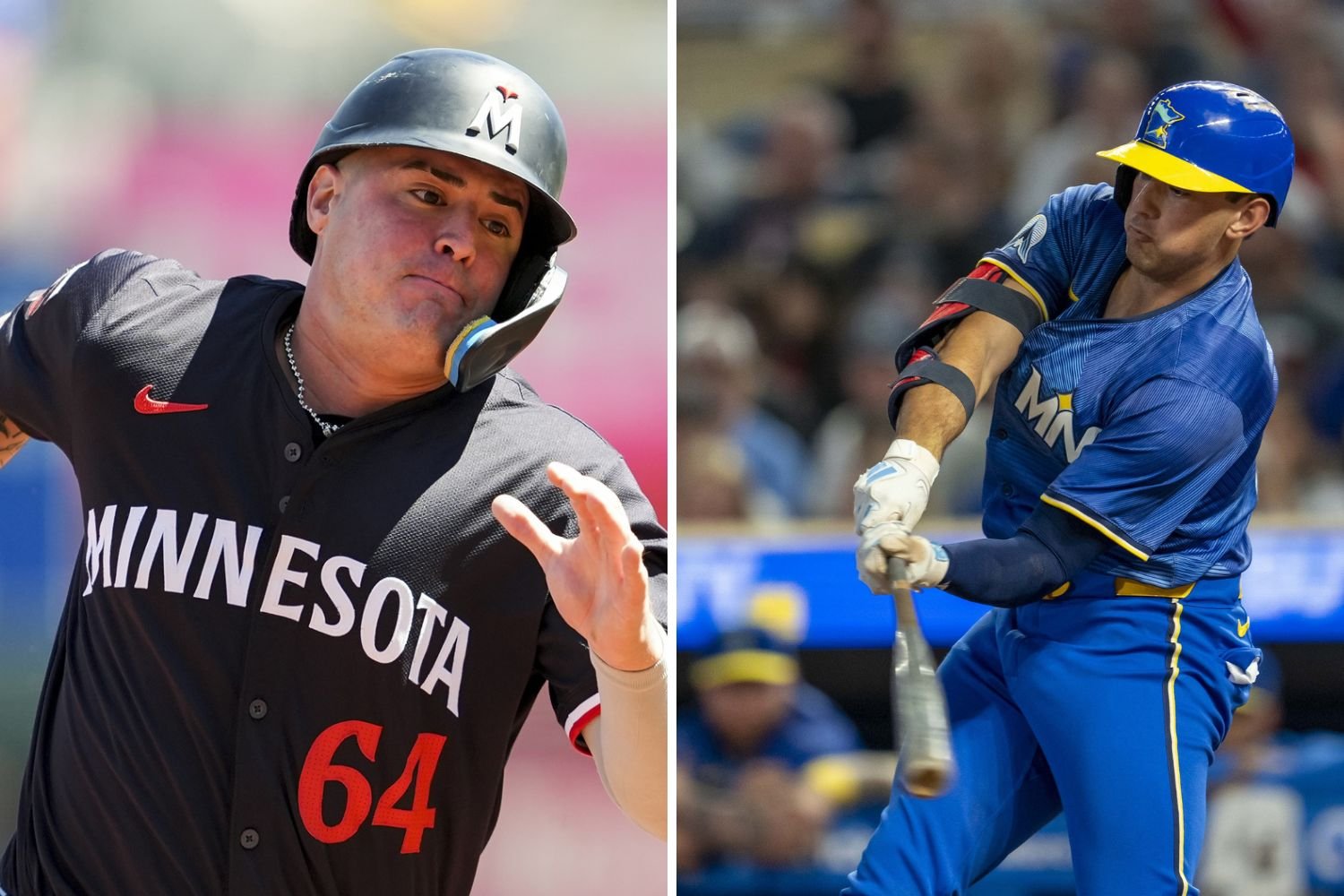 In 2016, Ian McMahan wrote for Sports Illustrated that back injuries were on the rise in Major League Baseball. "The repeated twists, torques and dives of baseball make the lower back a weak spot for many," he wrote, noting that at that time 12% of all injuries in MLB were localized in this region. "According to Dr. Joshua Dines, assistant team doctor for the New York Mets and the author of a recent review article on back injuries in professional baseball," McMahan shared, "these problems are all too common among baseball players, primarily for the reason that baseball places a great deal of stress on the spine." Dr. Dines puts it simply: “Swinging a bat is not a normal activity." And yet pro baseball players are asked to do it hundreds if not thousands of times over the course of a season, between game action, BP and the cages. We've seen the toll it can take. Alex Kirilloff fought through a depressing array of injuries and rehabs over the years – elbow surgery, shoulder surgery, multiple surgeries on the same wrist – but the back condition he's now facing proved to be the one that pushed him to step away. When they say "the straw that broke the camel's back," it's perhaps not a random body-part choice in the expression. As many reading this can surely attest from experience, back injuries are pernicious. They tend to be mysterious in nature and difficult to accurately diagnose. Given the spine's central integration within our interconnected bodies, back issues often present as pain or discomfort in various different areas, contributing to the challenges of diagnosis. And just in terms of quality of life, back pain can be downright overwhelming in the misery it causes. It is with this setup that I regretfully acknowledge: back injury concerns involving Twins players don't end with Kirilloff. I'm not trying to be overly dire but it cannot be ignored that this is a major factor in the team's outlook. Namely, can José Miranda and Brooks Lee rebound from the issues that plagued them in 2024? Miranda was on a massive tear heading into mid-July, with a .950 OPS in his past 50 games when he landed on the injured list with a lower back strain, which was initially deemed minor. He came back 15 days later but was never the same afterward, slashing .212/.242/.301 with zero home runs in 45 games. In late September, with just two games remaining on the schedule, the Twins placed him on the injured list to close the season, once again citing a lower back strain. To my knowledge, rest and rehab is the gameplan for Miranda this offseason. For the Twins, much hinges on him bouncing back physically and producing next year, because he could well be written in as the primary first baseman for 2025 as things currently stand. Lee has a long history of his own back problems dating back to high school, when they cost him his entire sophomore season. Reservations held by teams relating to Lee's balky back were among the reasons he fell to the Twins at No. 8 overall in 2022, despite being viewed by many as the top bat in the class. This year, a back injury surfaced in spring training for Lee ("the worst I’ve ever had it"), sidelining him out of the gates. Ultimately diagnosed as a herniated disc, it cost him the first two months of the season. “I’ve been dealing with the same thing — same pain, same flare-ups [since high school],” Lee said in June, after finally joining the Saints. “It feels like I have been trying to find that magic bullet and I haven’t found it yet. I don’t know if there is one; maybe a culmination of a bunch of different things." “We’ll see if I ever figure it out," the 23-year-old said. "It will be a challenge, but I’m ready to take that on.” Despite these rather ominous remarks, Lee seemed to relieve some of the concerns about his health by returning with a bang, dominating at Triple-A and then jumping to a hot start with the Twins coming off his big-league promotion. But the second half for Lee, like for Miranda, was a major struggle. He slashed .182/.233/.270 in his last 44 games, with a three-week stint on the injured list mixed in. In this case it was a shoulder injury, not a back injury, that led to his being shut down. But Lee just never seemed healthy outside of about a month-long stretch of the season, and that renders him a major question mark heading into 2025. Alas, the Twins have little choice but to depend on him, and Miranda. There are no easy answers for this kind of thing. Undoubtedly the players and team doctors have laid out some plans to keep these issues in check going forward. A few months off can do wonders. As a matter of maintenance in the future, it might make sense to limit how many nonessential cuts these guys are taking outside of games. It bears noting that Lee, much Kirilloff, is a notorious lifelong "baseball rat" who was the son of a coach. These types are renowned for the amount of time they spend churning out reps and practicing their craft, which is a generally a positive but has downsides. I think back to that quote from Dr. Dines: “Swinging a bat is not a normal activity." No, but Miranda and Lee are abnormally good at it when healthy. Here's hoping we get to see more of that in 2025. I hate to say the weight of the offense's hopes is largely on their backs ... but, well, it kind of is.
- 11 comments
-
- 2
-
-
- alex kirilloff
- jose miranda
- (and 1 more)
-
In a heartbreaking development, Alex Kirilloff has retired due to injuries at just 26 years old, ending a promising career before it ever could truly get going. Here's how I'll remember the talented, oft-injured hitter. Image courtesy of Jesse Johnson-Imagn Images Last Thursday, Alex Kirilloff announced his retirement from baseball, citing the mental and physical toll of dealing with repeated significant injuries, the latest of which is a back condition that will take up to a year to rehabilitate. He's hanging up his cleats after playing just 250 major-league games. A first-round draft pick who emerged as a top-10 prospect in the game and later became the first player in history to make his major-league debut with a playoff start, Kirilloff's future always seemed blindingly bright. Sadly he didn't have the opportunity to carve out a legacy in Twins lore as we might have dreamed based on his talent. But that doesn't mean he won't leave a lasting impression on those of us who watched his all-too-short career play out. My final vivid memory of Kirilloff is a fittingly sad one. When the Twins visited Pittsburgh to play the Pirates in early June, I made the trip to check out a new city and cross another ballpark off the list. I attended all three Twins/Pirates games at PNC Park, catching the action from different vantage points for each. In the series finale on Sunday, we were sitting in the left field bleachers, just a couple rows back from the wall. Kirilloff was in left field that day, and quite close to us, so I kept a close eye on him. I distinctly remember being struck by his body language, which signaled to me a level of deep frustration. These was nothing overtly pouty going on, but it just noticeable in the way he stood, moved around, threw the ball back in the infield ... he was bristling. At the time, I figured it was a guy carrying the mental weight of his offensive slump around with him. He went 0-for-3 in that game, dropping his slash line to .151/.222/.343 in his past 30. The team in general was struggling to score runs and he was a big part of the reason. Kirilloff had to know a demotion was soon to come. Looking back, I now have a much clearer understanding of what was tormenting Kirilloff so visibly: he was in pain. Probably an incredible amount of pain. It turned out to be one of the last games he'd ever play. The Twins returned home after the Pittsburgh series and Kirilloff went 0-for-6 in two games against Colorado before the front office was forced into action. They initially optioned him to Triple-A, at which point Kirilloff revealed the true severity of what he was dealing with. The option was reversed, Kirilloff was placed on the injured list, and he never came off it. A major-league career that started with an 0-for-15 slump ended with an 0-for-11 slump. That will be the last memory of Kirilloff as a Twin. But it won't be my lasting memory. Those of us who followed Kirilloff's journey, from top draft pick to MLB player, know better than to let the low points shape our ultimate perceptions of who he was as a player. While his playing career was heartbreakingly cut short, Kirilloff did plenty in his time on the field to cement his legacy as one of the best pure hitting talents to come through this organization. The Twins selected Kirilloff 15th overall in the 2016 draft out of a Pennsylvania high school. He was the final first-round pick made under the front-office leadership of legendary scout Terry Ryan, who would be dismissed a few weeks later amidst a disastrous season. Taking teenaged prep hitters in the first round can be risky business (see: Keoni Cavaco) but Kirilloff would prove the Twins very correct in their assessment of his hitting ability and potential. Kirilloff started raking immediately in the minors, batting .306 in his opening 55-game stint at rookie ball. He also started dealing with major injuries and surgical procedures almost immediately, as this outstanding debut was truncated by an elbow issue that required surgery the following spring, costing Kirilloff his entire 2017 season. It set the tone for a career that would be plagued by these types of setbacks and roadblocks. But it also set the tone for a player who was going to tenaciously meet the challenges head-on, time and time again. (Image via MLB.com) Kirilloff returned in 2018 and absolutely obliterated two levels of A-ball, slashing .348/.392/.578 with 20 homers, 44 doubles and 101 RBIs in 130 games. This performance sent him skyrocketing up global top prospects lists, including a placement in the top 10 by MLB Pipeline, which ranked Kirilloff as the ninth-best prospect in baseball. The following year he put up solid production as a 21-year-old at Double-A, seemingly putting himself on the doorstep of the majors just as Minnesota's Bomba Squad flexed its prowess. Then, COVID happened. The 2020 shutdown arrived with spectacularly bad timing for Kirilloff, derailing his rapid ascent toward the majors and forcing him to spend his summer toiling away at the Twins' alternate site in St. Paul, where he blew people away with his hitting displays. Kirilloff impressed enough to earn big-league promotion in the middle of the AL Wild Card series, an almost unprecedented move in MLB history. The Twins, facing elimination and desperate for an offensive spark, called Kirilloff up for Game 2 and he delivered, stroking a single in his second at-bat and becoming the first player ever to record his first hit in the playoffs. THAT will be a lasting memory. Over the seasons that followed, a similar pattern played out for Kirilloff with the Twins: He'd have a stretch of outstanding performance that would give way to a slump, then we'd later learn that he was battling through an injury that majorly inhibited his production. And yeah, those stretches were annoying, because ultimately Kirilloff was doing nobody any favors by trying to fight through these issues and playing at vastly below 100 percent. The last of these incidents was particularly vexing at the time, drawing ire from team officials and fans alike, because the 2024 Twins offense really went in the tank while Kirilloff silently struggled. But now, looking back at the totality of his career journey? I can't find myself feeling anything other than empathy and understanding. Kirilloff was trying to live his dream, only to have forces outside of his control repeatedly conspire against him. He did all he could to rise above and overcome each tribulation, only to have another thrown his way. Kirilloff was famous among teammates for his stoic demeanor, well earned from the arduous path he traveled. “You never see him smile,” Byron Buxton said back in 2021. “He’s serious." That's why it was so much fun when, during a two-homer game that showcased Kirilloff's prodigious talent that season, Nelson Cruz smushed the rookie's cheeks and pointed him toward the camera with a grin. THAT will be a lasting memory. Injuries have sadly controlled the narrative for the Minnesota Twins and their brightest talents over the past couple of decades. But we don't have to let them control the way we think back and remember these talents. Focus not on what could have been, but instead on what was. Alex Kirilloff was a special player. What will be your lasting memories of Kirilloff and his time in the Twins organization? Sound off in the comments. View full article
-
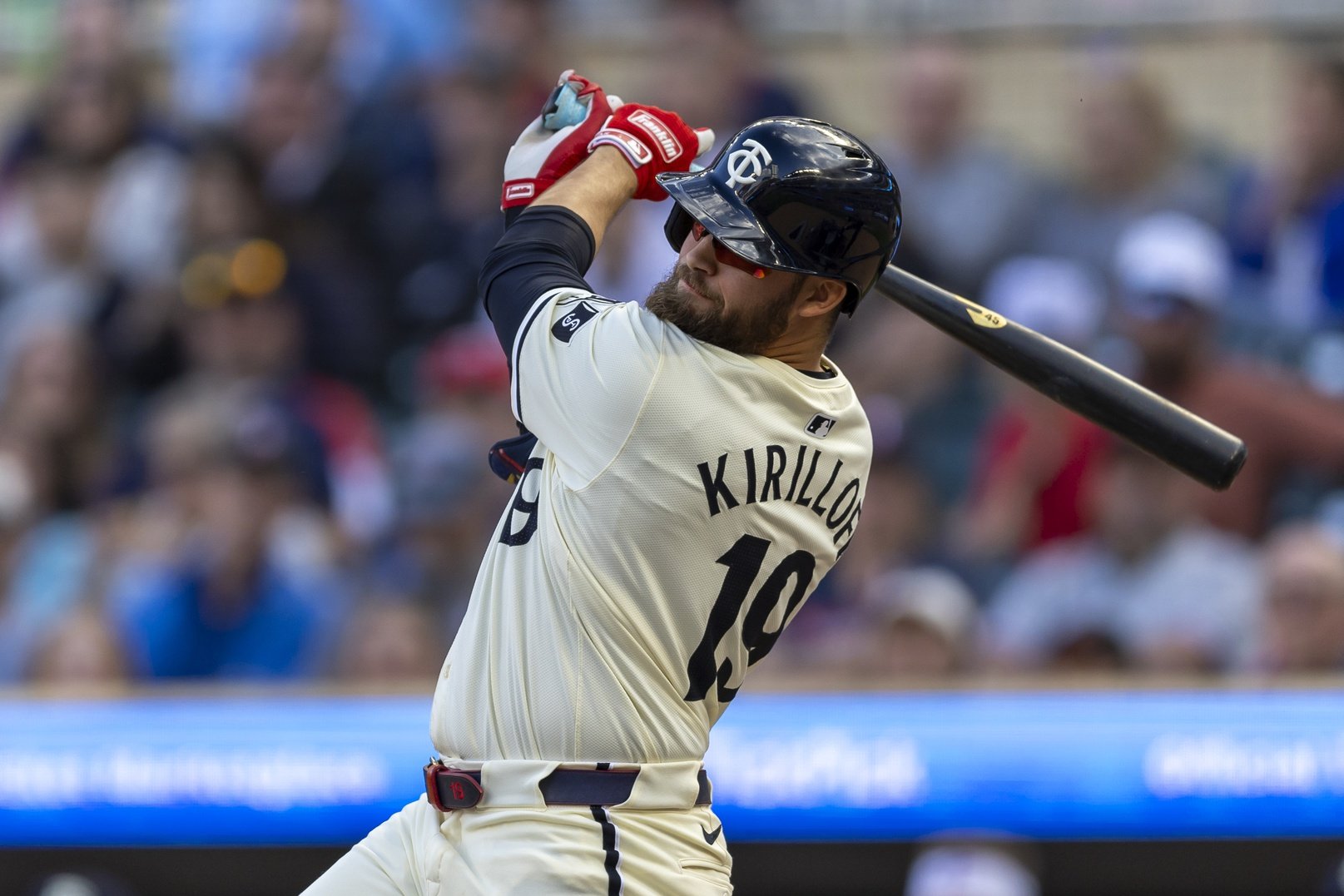 Last Thursday, Alex Kirilloff announced his retirement from baseball, citing the mental and physical toll of dealing with repeated significant injuries, the latest of which is a back condition that will take up to a year to rehabilitate. He's hanging up his cleats after playing just 250 major-league games. A first-round draft pick who emerged as a top-10 prospect in the game and later became the first player in history to make his major-league debut with a playoff start, Kirilloff's future always seemed blindingly bright. Sadly he didn't have the opportunity to carve out a legacy in Twins lore as we might have dreamed based on his talent. But that doesn't mean he won't leave a lasting impression on those of us who watched his all-too-short career play out. My final vivid memory of Kirilloff is a fittingly sad one. When the Twins visited Pittsburgh to play the Pirates in early June, I made the trip to check out a new city and cross another ballpark off the list. I attended all three Twins/Pirates games at PNC Park, catching the action from different vantage points for each. In the series finale on Sunday, we were sitting in the left field bleachers, just a couple rows back from the wall. Kirilloff was in left field that day, and quite close to us, so I kept a close eye on him. I distinctly remember being struck by his body language, which signaled to me a level of deep frustration. These was nothing overtly pouty going on, but it just noticeable in the way he stood, moved around, threw the ball back in the infield ... he was bristling. At the time, I figured it was a guy carrying the mental weight of his offensive slump around with him. He went 0-for-3 in that game, dropping his slash line to .151/.222/.343 in his past 30. The team in general was struggling to score runs and he was a big part of the reason. Kirilloff had to know a demotion was soon to come. Looking back, I now have a much clearer understanding of what was tormenting Kirilloff so visibly: he was in pain. Probably an incredible amount of pain. It turned out to be one of the last games he'd ever play. The Twins returned home after the Pittsburgh series and Kirilloff went 0-for-6 in two games against Colorado before the front office was forced into action. They initially optioned him to Triple-A, at which point Kirilloff revealed the true severity of what he was dealing with. The option was reversed, Kirilloff was placed on the injured list, and he never came off it. A major-league career that started with an 0-for-15 slump ended with an 0-for-11 slump. That will be the last memory of Kirilloff as a Twin. But it won't be my lasting memory. Those of us who followed Kirilloff's journey, from top draft pick to MLB player, know better than to let the low points shape our ultimate perceptions of who he was as a player. While his playing career was heartbreakingly cut short, Kirilloff did plenty in his time on the field to cement his legacy as one of the best pure hitting talents to come through this organization. The Twins selected Kirilloff 15th overall in the 2016 draft out of a Pennsylvania high school. He was the final first-round pick made under the front-office leadership of legendary scout Terry Ryan, who would be dismissed a few weeks later amidst a disastrous season. Taking teenaged prep hitters in the first round can be risky business (see: Keoni Cavaco) but Kirilloff would prove the Twins very correct in their assessment of his hitting ability and potential. Kirilloff started raking immediately in the minors, batting .306 in his opening 55-game stint at rookie ball. He also started dealing with major injuries and surgical procedures almost immediately, as this outstanding debut was truncated by an elbow issue that required surgery the following spring, costing Kirilloff his entire 2017 season. It set the tone for a career that would be plagued by these types of setbacks and roadblocks. But it also set the tone for a player who was going to tenaciously meet the challenges head-on, time and time again. (Image via MLB.com) Kirilloff returned in 2018 and absolutely obliterated two levels of A-ball, slashing .348/.392/.578 with 20 homers, 44 doubles and 101 RBIs in 130 games. This performance sent him skyrocketing up global top prospects lists, including a placement in the top 10 by MLB Pipeline, which ranked Kirilloff as the ninth-best prospect in baseball. The following year he put up solid production as a 21-year-old at Double-A, seemingly putting himself on the doorstep of the majors just as Minnesota's Bomba Squad flexed its prowess. Then, COVID happened. The 2020 shutdown arrived with spectacularly bad timing for Kirilloff, derailing his rapid ascent toward the majors and forcing him to spend his summer toiling away at the Twins' alternate site in St. Paul, where he blew people away with his hitting displays. Kirilloff impressed enough to earn big-league promotion in the middle of the AL Wild Card series, an almost unprecedented move in MLB history. The Twins, facing elimination and desperate for an offensive spark, called Kirilloff up for Game 2 and he delivered, stroking a single in his second at-bat and becoming the first player ever to record his first hit in the playoffs. THAT will be a lasting memory. Over the seasons that followed, a similar pattern played out for Kirilloff with the Twins: He'd have a stretch of outstanding performance that would give way to a slump, then we'd later learn that he was battling through an injury that majorly inhibited his production. And yeah, those stretches were annoying, because ultimately Kirilloff was doing nobody any favors by trying to fight through these issues and playing at vastly below 100 percent. The last of these incidents was particularly vexing at the time, drawing ire from team officials and fans alike, because the 2024 Twins offense really went in the tank while Kirilloff silently struggled. But now, looking back at the totality of his career journey? I can't find myself feeling anything other than empathy and understanding. Kirilloff was trying to live his dream, only to have forces outside of his control repeatedly conspire against him. He did all he could to rise above and overcome each tribulation, only to have another thrown his way. Kirilloff was famous among teammates for his stoic demeanor, well earned from the arduous path he traveled. “You never see him smile,” Byron Buxton said back in 2021. “He’s serious." That's why it was so much fun when, during a two-homer game that showcased Kirilloff's prodigious talent that season, Nelson Cruz smushed the rookie's cheeks and pointed him toward the camera with a grin. THAT will be a lasting memory. Injuries have sadly controlled the narrative for the Minnesota Twins and their brightest talents over the past couple of decades. But we don't have to let them control the way we think back and remember these talents. Focus not on what could have been, but instead on what was. Alex Kirilloff was a special player. What will be your lasting memories of Kirilloff and his time in the Twins organization? Sound off in the comments.
 -
He appears to be the de facto 2025 starter at this point, despite having made just 12 starts at first base for the Twins over the past two seasons. How comfortable do the Twins feel with this arrangement? How comfortable should they feel? Image courtesy of Eric Canha-Imagn Images One thing I really enjoy about writing for the audience here at Twins Daily is that we have a lot of smart, well informed readers who often challenge my thinking in ways that cause me to at least reconsider my views. One such example played out last week, when I shared a series of notes and thoughts on the offseason, and opined that first base is one of the clearest holes on the roster. "José Miranda is not an option as primary starter, or shouldn't be," I argued. It was a sentiment that received pushback from several people in the comments. Their points were fair. And if I'm being honest, the odds of Miranda being Opening Day starter at first base are probably higher than I initially portrayed, so it's a subject worth exploring more deeply. Let's break down the merits of José Miranda as Plan A at first base for 2025. First, I'll outline the case against, in my mind. There are three factors that make it difficult for me to envision the Twins being comfortable with Miranda as their primary starter at first going into next season: He looked very bad defensively at first base as a rookie in 2022, and the team has shown little interest in playing him there since. Of his 182 games started between majors and minors the past two years, only 24 have been at first. The Twins NEED to get better in the field. It was a clear and critical flaw for their team this past season, biting them repeatedly at crucial moments. This factor compounds the shortcomings of Miranda defensively at first base, a position where I believe Rocco Baldelli and the Twins hold effective glovework to be of particularly high importance. Finally, it's just hard to feel super confident Miranda is going to hit. While he enjoyed a scorching midsummer hot streak in 2024, much like he did in 2022, he waned down the stretch and finished the year hurt. Miranda hit zero home runs in the second half and batted .196 in September. This isn't meant as a long-term indictment on Miranda. He's still only 26. It's very possible he will eventually be a bat and glove that the Twins can fully trust at first base. But the reality is that up to this point he's played 286 games in the majors, making more than 1,000 plate appearances, and he has produced just 1.8 fWAR total. For me, the idea of handing a guy in his situation the Opening Day starting job at first base, an offense-driven position where the Twins could really use some standout production, felt like a nonstarter. But plenty of people disagree, especially in light of the limited resources at play for the front office. So let's examine that side of the argument. It's very possible that I'm exaggerating in my own mind Miranda's defensive deficiencies at first base. I know he was unequivocally terrible during his most extensive usage there in 2022, but that was then. Though we haven't had a chance to see him play a whole lot of first since, he's graded out better in the small sample, and it's plausible he's made strides behind the scenes as well. Out of curiosity, I asked my followers on Twitter whether they'd be comfortable with Miranda as primary first baseman next year from a defensive perspective. To my surprise, the yeses outnumbered the nos by nearly two to one. Even if Miranda isn't expected to be great first baseman, you can make the argument that first base is a position where being merely capable is fine. While you're involved in a lot of plays, a good majority of them are pretty routine. At 6-foot-2, he has the size to offer a solid target radius for infielders. So let's talk about the bat. Clearly Miranda has the upside to profile as a quality hitter at first base, or even an elite one. It's just a question of how much he can be counted on to sustainably harness that ability. He had a .299/.340/.472 line heading into September last year. You'd happily take that at first, even when accompanied by mediocre defense. His final OPS+ of 112, even with the season-ending slump incorporated, represents the kind of above-average production you're looking for at a bat-first position. And Miranda has a .306/.363/.489 career slash line at Triple-A. For a good portion of the season, Miranda was one of Minnesota's best hitters. His final numbers were dragged down by that late drop-off, which was clearly affected by injury. It's not overly optimistic to believe, or at least hope, the lower back strain will fully clear up during the offseason and he'll finally pull it all together at age 27 in 2025. In fact, it's the sort of thing that the Twins front office has little choice but to put their faith in. At the end of the day, I think this is probably the most convincing argument to be made in favor of going with Miranda as first baseman in 2025. We can all acknowledge that ideally the team might add at least another Carlos Santana type stopgap so that they aren't entirely dependent on Miranda rebounding from his second half at the plate and holding his own defensively. But the Twins can't afford much in the way of luxuries. Given ownership's financial impositions, the front office is going to really have to pick their battles in terms of where they can add and upgrade this offseason. I felt strongly that first base was one spot they'd prioritize over perhaps any other. I still feel that way to an extent, but after thinking it through more deeply, I can certainly give credence to the opposite view. Miranda is a talent worth betting on. It's going to be interesting to track. Following the retirement of Alex Kirilloff, first base is among the most intriguing decision points on the roster this offseason. View full article
-
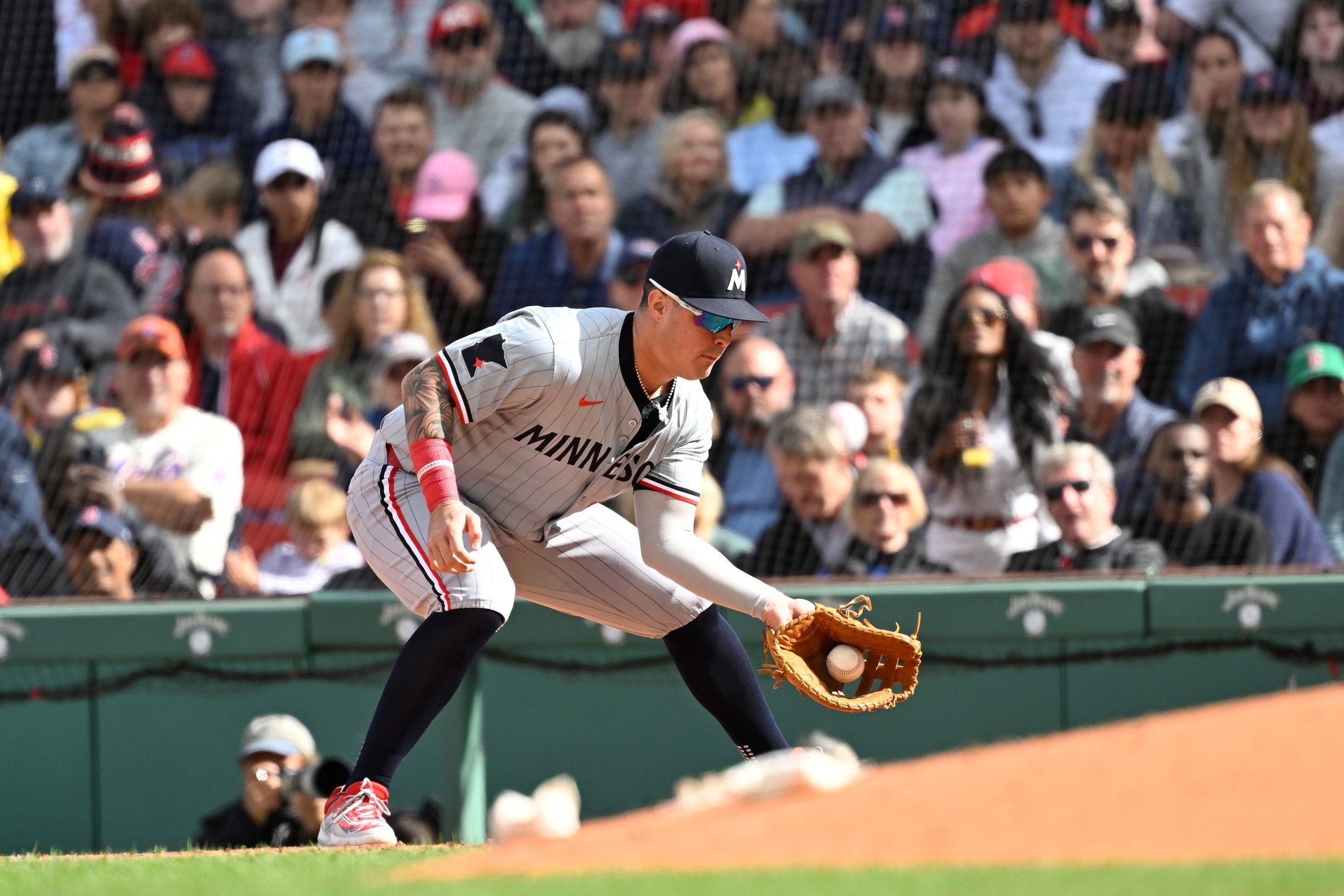 One thing I really enjoy about writing for the audience here at Twins Daily is that we have a lot of smart, well informed readers who often challenge my thinking in ways that cause me to at least reconsider my views. One such example played out last week, when I shared a series of notes and thoughts on the offseason, and opined that first base is one of the clearest holes on the roster. "José Miranda is not an option as primary starter, or shouldn't be," I argued. It was a sentiment that received pushback from several people in the comments. Their points were fair. And if I'm being honest, the odds of Miranda being Opening Day starter at first base are probably higher than I initially portrayed, so it's a subject worth exploring more deeply. Let's break down the merits of José Miranda as Plan A at first base for 2025. First, I'll outline the case against, in my mind. There are three factors that make it difficult for me to envision the Twins being comfortable with Miranda as their primary starter at first going into next season: He looked very bad defensively at first base as a rookie in 2022, and the team has shown little interest in playing him there since. Of his 182 games started between majors and minors the past two years, only 24 have been at first. The Twins NEED to get better in the field. It was a clear and critical flaw for their team this past season, biting them repeatedly at crucial moments. This factor compounds the shortcomings of Miranda defensively at first base, a position where I believe Rocco Baldelli and the Twins hold effective glovework to be of particularly high importance. Finally, it's just hard to feel super confident Miranda is going to hit. While he enjoyed a scorching midsummer hot streak in 2024, much like he did in 2022, he waned down the stretch and finished the year hurt. Miranda hit zero home runs in the second half and batted .196 in September. This isn't meant as a long-term indictment on Miranda. He's still only 26. It's very possible he will eventually be a bat and glove that the Twins can fully trust at first base. But the reality is that up to this point he's played 286 games in the majors, making more than 1,000 plate appearances, and he has produced just 1.8 fWAR total. For me, the idea of handing a guy in his situation the Opening Day starting job at first base, an offense-driven position where the Twins could really use some standout production, felt like a nonstarter. But plenty of people disagree, especially in light of the limited resources at play for the front office. So let's examine that side of the argument. It's very possible that I'm exaggerating in my own mind Miranda's defensive deficiencies at first base. I know he was unequivocally terrible during his most extensive usage there in 2022, but that was then. Though we haven't had a chance to see him play a whole lot of first since, he's graded out better in the small sample, and it's plausible he's made strides behind the scenes as well. Out of curiosity, I asked my followers on Twitter whether they'd be comfortable with Miranda as primary first baseman next year from a defensive perspective. To my surprise, the yeses outnumbered the nos by nearly two to one. Even if Miranda isn't expected to be great first baseman, you can make the argument that first base is a position where being merely capable is fine. While you're involved in a lot of plays, a good majority of them are pretty routine. At 6-foot-2, he has the size to offer a solid target radius for infielders. So let's talk about the bat. Clearly Miranda has the upside to profile as a quality hitter at first base, or even an elite one. It's just a question of how much he can be counted on to sustainably harness that ability. He had a .299/.340/.472 line heading into September last year. You'd happily take that at first, even when accompanied by mediocre defense. His final OPS+ of 112, even with the season-ending slump incorporated, represents the kind of above-average production you're looking for at a bat-first position. And Miranda has a .306/.363/.489 career slash line at Triple-A. For a good portion of the season, Miranda was one of Minnesota's best hitters. His final numbers were dragged down by that late drop-off, which was clearly affected by injury. It's not overly optimistic to believe, or at least hope, the lower back strain will fully clear up during the offseason and he'll finally pull it all together at age 27 in 2025. In fact, it's the sort of thing that the Twins front office has little choice but to put their faith in. At the end of the day, I think this is probably the most convincing argument to be made in favor of going with Miranda as first baseman in 2025. We can all acknowledge that ideally the team might add at least another Carlos Santana type stopgap so that they aren't entirely dependent on Miranda rebounding from his second half at the plate and holding his own defensively. But the Twins can't afford much in the way of luxuries. Given ownership's financial impositions, the front office is going to really have to pick their battles in terms of where they can add and upgrade this offseason. I felt strongly that first base was one spot they'd prioritize over perhaps any other. I still feel that way to an extent, but after thinking it through more deeply, I can certainly give credence to the opposite view. Miranda is a talent worth betting on. It's going to be interesting to track. Following the retirement of Alex Kirilloff, first base is among the most intriguing decision points on the roster this offseason.
 -
Offseason Status Update: The Long Winter Begins
Nick Nelson replied to Nick Nelson's topic in Twins Daily Front Page News
I agree that they didn't used to prioritize 1B defense, in the days of Cron and Sano. But I get the impression they've changed their view in recent years. They spent a good chunk of their available resources the past two offseasons on Joey Gallo and Carlos Santana, largely because of their gloves at 1B. They were open about that. This year they saw the impact that Santana's defense had all season long, saving runs time and time again. They know they need to get sharper defensively. And after all that, they're gonna run out Miranda – a verifiably poor defender thus far with like a dozen games of 1B experience the past couple years – to try and corral throws from Lewis and Julien or what have you? I just don't see it. I could well be wrong. The points yall are making are definitely valid. -
Offseason Status Update: The Long Winter Begins
Nick Nelson replied to Nick Nelson's topic in Twins Daily Front Page News
I didn't say he was unplayable there. Just that he shouldn't be viewed as the Plan A starter at first base next year -- based partially on his defensive aptitude, partially on the way this team values good defense at 1B, and partially on his lack of power at the plate. He had zero home runs in the second half! This isn't necessarily an indictment of his long-term outlook, but Miranda still has a lot to prove before being handed the reins as an Opening Day first baseman on a team that wants to contend. I don't know why that's treated as some sort of anti-Miranda bias, it's just reality. He's played almost 300 major-league games and produced less than 2 WAR total. He hasn't shown the ability to be productive for more than a few weeks at a time. I don't know that there currently is a plan but I do think they will strongly prioritize finding a more experienced and natural first baseman to slot ahead of him, at least for the start of the season. Maybe they'll come up empty. But I would be shocked if they're saying right now, "We're fine at first base, we got Miranda."- 72 replies
-
- 2
-
-
- alex kirilloff
- manuel margot
- (and 2 more)
-
Offseason Status Update: The Long Winter Begins
Nick Nelson replied to Nick Nelson's topic in Twins Daily Front Page News
He made 12 starts there this year. I don't think that's a meaningful sample to analyze. He also made zero starts there in 2023, when their primary starter was Donovan Solano, which says a lot to me about how the Twins view him. I don't think people in the org would tell you they feel confident in Miranda's glove at 1B, outside of the occasional spot start or maybe as the RH in a platoon role.- 72 replies
-
- 3
-
-
- alex kirilloff
- manuel margot
- (and 2 more)
-
Offseason Status Update: The Long Winter Begins
Nick Nelson replied to Nick Nelson's topic in Twins Daily Front Page News
Is it considered some sort of radical position that Miranda is a terrible first baseman? I'm actually kind of blown away by the idea that anyone would be comfortable with him as starter 1A there next year. It seems pretty clear to me the Twins soured on him big-time at the position. -
The snow began to fall in Minneapolis on Thursday morning, right on cue after the World Series concluded Wednesday night to signal the official start of the offseason. For the Twins, this figures to be a long, slow winter, but not without intrigue. Let's set the stage as the offseason gets underway. Image courtesy of Charles LeClaire, John Hefti-Imagn Images I wish I could set an exciting tone for this offseason. I really do. I wish I felt confident that big, splashy moves were ahead; an emphatic statement of commitment from the franchise to righting the ship in the wake an embarrassing collapse. But I don't. At a macro level, major change is certainly afoot for the Twins, who are officially up for sale as the Pohlad family actively explores suitors. In terms of roster action this winter, however, a relative adherence to the status quo may be the best we can realistically hope for, as the front office navigates challenging financial constraints. There have been no indications that a rise in spending is on the way -- only lukewarm unsourced assurances that payroll won't drop any further following last year's $30 million slash. (We'll see.) Ownership has made clear that they are more concerned about maintaining an attractive bottom line than making winning a priority. If that was the case last year, coming off a long-awaited postseason breakthrough, I'm not sure why it would change this year. Nonetheless, things are going to happen this offseason. We might get news of a sale, or at the very least, that specter will loom over everything. The hitting staff needs to be built out around new hire Matt Borgschulte. And one way or another, the front office needs to figure out some gaps on this roster. Much like my weekly recap columns during the season, these sporadic "offseason status updates" are intended to catch you up in short order on the latest news you need to know, for those not keeping up with the day-to-day minutiae of MLB's offseason. Now that the World Series is officially in the rearview mirror, and significant developments are already beginning to take place, here's your stage-setting Twins offseason update. Alex Kirilloff Announces His Retirement at Age 26 The Twins offseason opened up with a gut-punch, as the first baseman shared news on Thursday morning of his decision to step away from the game. "In my nine professional seasons, I’ve encountered numerous injuries, which led me to search for new ways to overcome the pain," Kirilloff wrote. "These challenges have taken a toll on me mentally and physically; over time, I’ve realized that my passion for playing the game has shifted." One of the most consequential decisions the Twins were facing this winter, from my view, was whether or not they could trust Kirilloff's health, knowing that his talent was too good to give up on if he had any chance of rebounding physically from this latest setback. Now, he has taken that decision out of their hands, bringing a sad end to one of the more promising careers in recent memory. You can learn more about the back injury that ultimately spelled the end of Kirilloff's career in Lucas Seehafer's writeup. Manuel Margot and Kyle Farmer's 2025 Options Declined This was a far less shocking development. Moving on from the underwhelming Margot, who had a $12 million club option, was a no-brainer, especially since the Twins aren't on the hook for his $2 million buyout. The same goes for Farmer, who would've made over $6 million again after posting an OPS+ of 82. While expected and well warranted, the departures of Margot and Farmer open up more clear holes on next year's roster alongside first base. That's where things start to get hairy. Projecting the 2025 Roster and Payroll With Kirilloff and Margot out of the picture, we have a little more clarity around the outlook for next year's roster as it currently stands. Max Kepler, Carlos Santana and Caleb Thielbar will all hit the free agent market when it opens up next week. Farmer and Margot are out after having their 2025 options declined. Jorge Alcala also has a team option ($1.5 million), which I'd expect but the Twins activate but that's no guarantee. Based on these and a few other arbitration-related assumptions, here's how the 2025 roster currently projects: In overviewing this roster makeup, a few things become immediately apparent. They need a first baseman. Jose Miranda is not an option as primary starter, or shouldn't be. I'm not sure who else would even conceivably play there other than, like, Yunior Severino. The Twins also desperately need to bolster their bench, ideally with higher-performing versions of Farmer and Margot. At the same time, if the front office is indeed up against a $130 million budget, they have less than no money to address these needs. By my (inexact) calculations, the Twins are about $4 million in the red for 2025 before making any moves. So unfortunately, one of the big storylines heading into the offseason will be: How can they create a modicum of flexibility? A salary dump at the Carlos Correa, Pablo Lopez or Byron Buxton level is too grim for me to presently contemplate. So instead we turn out attention to the players who would be much less painful to lose. Can the Twins Find Takers for Chris Paddack or Christian Vazquez? When you look at the roster layout above, these names stand out most as the ones the Twins could most comfortably part ways with to unlock salary relief. Both were named by MLB Trade Rumors among top candidates to move this offseason. I have no doubt the Twins will be motivated to deal both. That extra $17 million could go a long way toward patching up some of the aforementioned needs, and you're not losing much if at all by "downgrading" from an injury-plagued Paddack to David Festa, or a 34-year-old Vazquez to Jair Camargo. Then again, I just legitimately wonder if there's going to be a real market for either one of these players. Their price tags aren't huge, and there are specific reasons why each could be valued (Paddack's upside, Vazquez's reliability), but they're coming off bad years with question marks attached. I could see those salaries being scrutinized heavily at a time where teams across MLB might be looking to scale back spending. If they're going to shop these two, the Twins will be compelled to act fast so they can free up that money to spend elsewhere before desired targets come off the board. I don't know that it'll be an exciting offseason, but I do believe it'll be an intriguing one as Derek Falvey confronts these high-stakes challenges and navigates hot stove season without his right-hand man Thad Levine for the first time. Make sure you stay tuned into Twins Daily for coverage and analysis of everything as it happens. It's also a perfect time to sign up as a Caretaker, supporting our community's work and gaining access to premium Offseason Handbook content. View full article
- 72 replies
-
- 1
-
-
- alex kirilloff
- manuel margot
- (and 2 more)
-
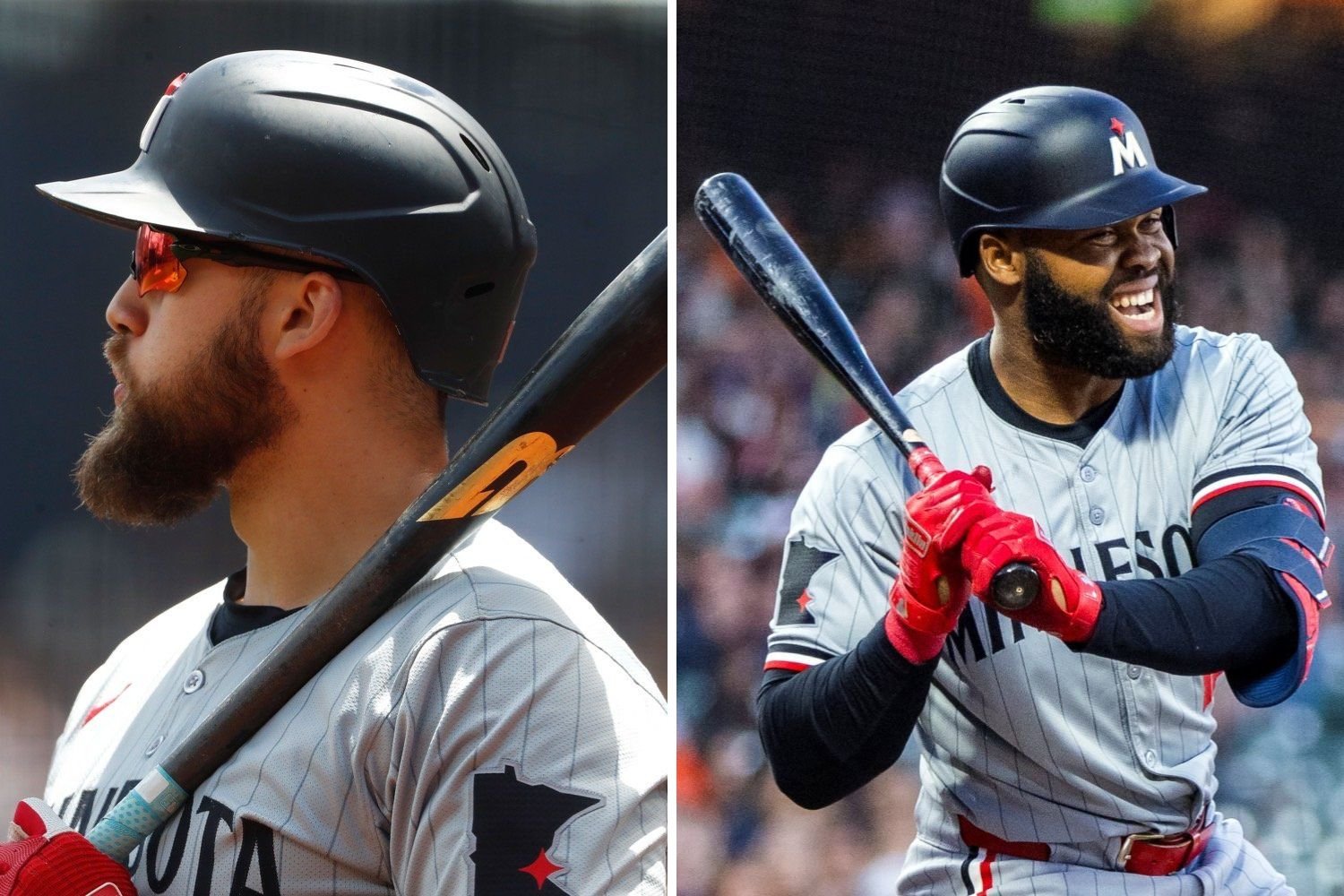 I wish I could set an exciting tone for this offseason. I really do. I wish I felt confident that big, splashy moves were ahead; an emphatic statement of commitment from the franchise to righting the ship in the wake an embarrassing collapse. But I don't. At a macro level, major change is certainly afoot for the Twins, who are officially up for sale as the Pohlad family actively explores suitors. In terms of roster action this winter, however, a relative adherence to the status quo may be the best we can realistically hope for, as the front office navigates challenging financial constraints. There have been no indications that a rise in spending is on the way -- only lukewarm unsourced assurances that payroll won't drop any further following last year's $30 million slash. (We'll see.) Ownership has made clear that they are more concerned about maintaining an attractive bottom line than making winning a priority. If that was the case last year, coming off a long-awaited postseason breakthrough, I'm not sure why it would change this year. Nonetheless, things are going to happen this offseason. We might get news of a sale, or at the very least, that specter will loom over everything. The hitting staff needs to be built out around new hire Matt Borgschulte. And one way or another, the front office needs to figure out some gaps on this roster. Much like my weekly recap columns during the season, these sporadic "offseason status updates" are intended to catch you up in short order on the latest news you need to know, for those not keeping up with the day-to-day minutiae of MLB's offseason. Now that the World Series is officially in the rearview mirror, and significant developments are already beginning to take place, here's your stage-setting Twins offseason update. Alex Kirilloff Announces His Retirement at Age 26 The Twins offseason opened up with a gut-punch, as the first baseman shared news on Thursday morning of his decision to step away from the game. "In my nine professional seasons, I’ve encountered numerous injuries, which led me to search for new ways to overcome the pain," Kirilloff wrote. "These challenges have taken a toll on me mentally and physically; over time, I’ve realized that my passion for playing the game has shifted." One of the most consequential decisions the Twins were facing this winter, from my view, was whether or not they could trust Kirilloff's health, knowing that his talent was too good to give up on if he had any chance of rebounding physically from this latest setback. Now, he has taken that decision out of their hands, bringing a sad end to one of the more promising careers in recent memory. You can learn more about the back injury that ultimately spelled the end of Kirilloff's career in Lucas Seehafer's writeup. Manuel Margot and Kyle Farmer's 2025 Options Declined This was a far less shocking development. Moving on from the underwhelming Margot, who had a $12 million club option, was a no-brainer, especially since the Twins aren't on the hook for his $2 million buyout. The same goes for Farmer, who would've made over $6 million again after posting an OPS+ of 82. While expected and well warranted, the departures of Margot and Farmer open up more clear holes on next year's roster alongside first base. That's where things start to get hairy. Projecting the 2025 Roster and Payroll With Kirilloff and Margot out of the picture, we have a little more clarity around the outlook for next year's roster as it currently stands. Max Kepler, Carlos Santana and Caleb Thielbar will all hit the free agent market when it opens up next week. Farmer and Margot are out after having their 2025 options declined. Jorge Alcala also has a team option ($1.5 million), which I'd expect but the Twins activate but that's no guarantee. Based on these and a few other arbitration-related assumptions, here's how the 2025 roster currently projects: In overviewing this roster makeup, a few things become immediately apparent. They need a first baseman. Jose Miranda is not an option as primary starter, or shouldn't be. I'm not sure who else would even conceivably play there other than, like, Yunior Severino. The Twins also desperately need to bolster their bench, ideally with higher-performing versions of Farmer and Margot. At the same time, if the front office is indeed up against a $130 million budget, they have less than no money to address these needs. By my (inexact) calculations, the Twins are about $4 million in the red for 2025 before making any moves. So unfortunately, one of the big storylines heading into the offseason will be: How can they create a modicum of flexibility? A salary dump at the Carlos Correa, Pablo Lopez or Byron Buxton level is too grim for me to presently contemplate. So instead we turn out attention to the players who would be much less painful to lose. Can the Twins Find Takers for Chris Paddack or Christian Vazquez? When you look at the roster layout above, these names stand out most as the ones the Twins could most comfortably part ways with to unlock salary relief. Both were named by MLB Trade Rumors among top candidates to move this offseason. I have no doubt the Twins will be motivated to deal both. That extra $17 million could go a long way toward patching up some of the aforementioned needs, and you're not losing much if at all by "downgrading" from an injury-plagued Paddack to David Festa, or a 34-year-old Vazquez to Jair Camargo. Then again, I just legitimately wonder if there's going to be a real market for either one of these players. Their price tags aren't huge, and there are specific reasons why each could be valued (Paddack's upside, Vazquez's reliability), but they're coming off bad years with question marks attached. I could see those salaries being scrutinized heavily at a time where teams across MLB might be looking to scale back spending. If they're going to shop these two, the Twins will be compelled to act fast so they can free up that money to spend elsewhere before desired targets come off the board. I don't know that it'll be an exciting offseason, but I do believe it'll be an intriguing one as Derek Falvey confronts these high-stakes challenges and navigates hot stove season without his right-hand man Thad Levine for the first time. Make sure you stay tuned into Twins Daily for coverage and analysis of everything as it happens. It's also a perfect time to sign up as a Caretaker, supporting our community's work and gaining access to premium Offseason Handbook content.
- 72 comments
-
- 10
-
-
- alex kirilloff
- manuel margot
- (and 2 more)
-
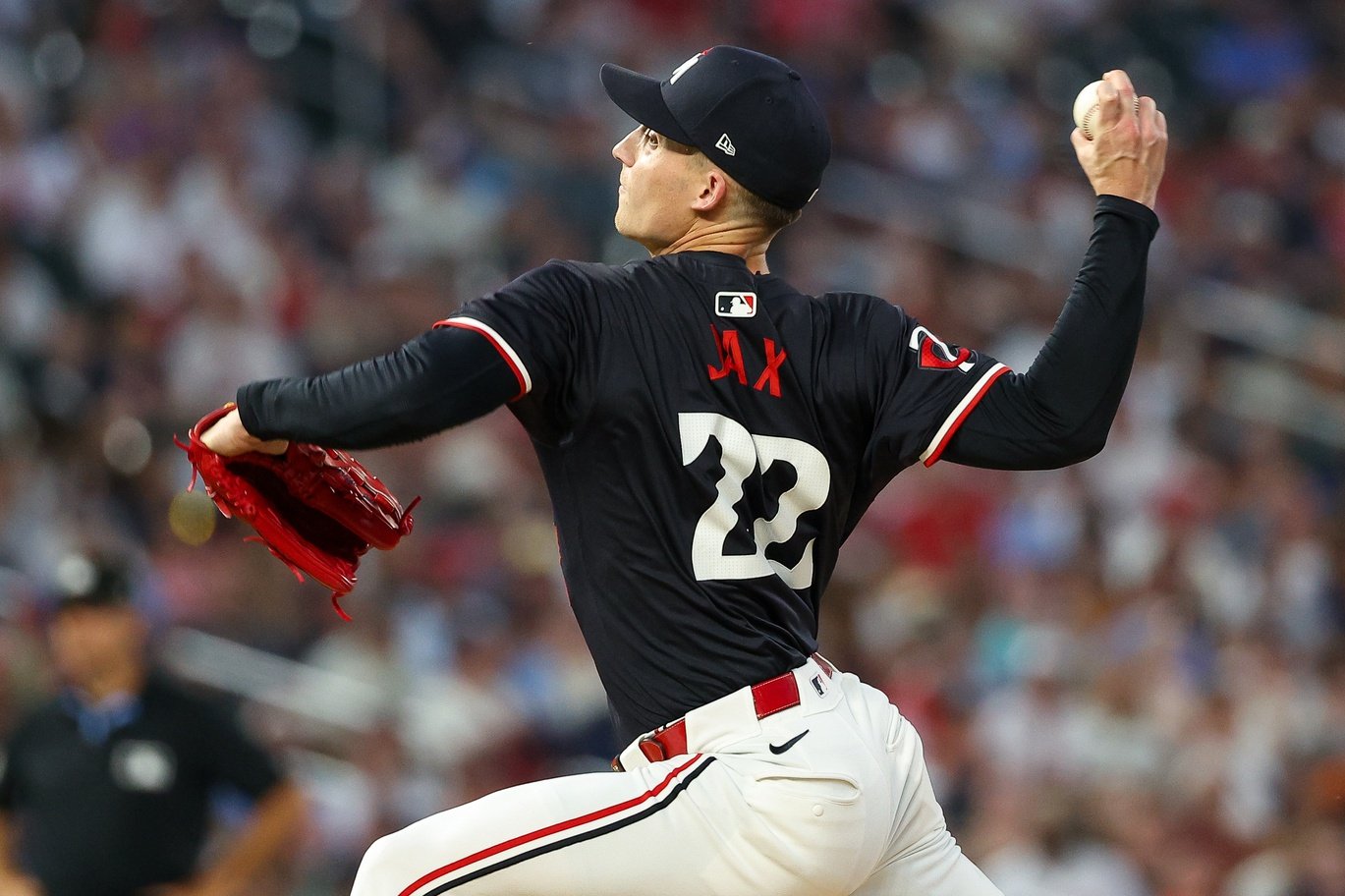 12-27. That's the stat that will be remembered most from the 2024 campaign. It was the Twins' win/loss record in the final six weeks, after they reached a high watermark of 17 games above .500 in mid-August. But there were a whole lot of other numbers involved with the past season, many of which help tell interesting stories about what happened with the team and its players. In digging deeper into player stats in the aftermath of the 2024 season, these eight really stuck out to me. Matt Wallner had a .389 batting average on balls in play. That's just an astonishingly high number. It ranked second in all of baseball among players with 200 or more plate appearances, behind Xavier Edwards (.398), and it's pretty funny that those two top the list because their styles couldn't be more opposite. (Edwards is a small, extreme-contact guy with no power, akin to Luis Arraez.) Wallner's hitting profile did play a role in so many batted balls turning into hits – when you crush the ball consistently, you're going to find fewer gloves – but there was a whole lot of luck involved in his managing a .259 average while striking out in 36% of plate appearances. Wallner's K-rate was fifth-highest among players with 200+ PA, and no one else in the top 10 had a batting average above .214. In other words, Wallner's going to need to cut down on the strikeouts substantially next year or we can expect a steep drop-off in average, and overall production. The Twins had 3 hitters finish with a wOBA above .340. I'm not just talking qualified hitters. I'm talking all hitters. (Well, expect Diego Castillo, who posted a .439 wOBA in eight plate appearances.) The only Twins players to post a wOBA of .340 or higher in 2024 were Wallner (.385), Carlos Correa (.385) and Byron Buxton (.366), and none played more than 102 games. From there it drops off to Trevor Larnach who came in fourth with a .336 wOBA. This says a ton about why the lineup was so disappointing. There simply weren't enough standout producers. By comparison, in 2023, the Twins had seven hitters with a wOBA of .340 or better: Royce Lewis, Wallner, Ryan Jeffers, Edouard Julien, Max Kepler, Alex Kirilloff and Jorge Polanco. All other than Polanco returned in 2024, but only Wallner could repeat his strong performance – and only after spending the first half in Triple-A. Griffin Jax induced swings on 41.2% of pitches outside the zone. There are plenty of stats that could be cited to showcase Jax's greatness in 2024 but I really like this one. One of the most reliably effective things a pitcher can do is get opposing hitters to chase outside of the zone, and Jax was masterful at it, leading the American League with the above percentage. It's a reflection of how Jax utterly baffles opposing hitters with his fastball/sweeper combo, which ranks among the most dominating pitch pairings in the game. Only 5 of 17 Twins hitters had above-average sprint speed. You probably noticed this was a slow team. The evidence backs it up. The Twins only had five above-average runners in 2024, and I was mildly surprised to learn that Wallner was one of them. The others are less surprising: Byron Buxton, Austin Martin, Willi Castro, Manuel Margot. Some of the names near the bottom of that list are actually more surprising to me. Christian Vázquez ranking last is expected, but second-slowest is Brooks Lee, whose sprint speed ranks in the 13th percentile. Slower than Ryan Jeffers. Slower than 38-year-old first baseman Carlos Santana. Gotta be one of the slowest middle infielders we've some come through. Jhoan Durán's xERA (2.70), FIP (2.85) and xFIP (2.70) were all nearly a run lower than his ERA (3.64). These numbers all tell the same story: Durán was extremely unlucky this season, and he pitched far better than the inflated ERA or nine losses would suggest. It's pretty easy to argue that he performed every bit as well as he did in 2023, when he finished with a 2.45 ERA, but stuff happens in baseball: bad sequencing, bad defense, general bad luck. Durán led the team in ground ball rate; in fact he ranked sixth in baseball. He allowed fewer walks and fewer home runs than the previous year. His strikeout rate was very good. Even while losing a few ticks of velocity Durán did all the important things at a premier level, which is why everyone should feel fully confident in him going forward. Louie Varland gave up home runs on 21.1% of fly balls allowed. Nearly one out of four balls that opposing hitters put into the air against Varland left the yard. That's wild. Even for someone not pitching well, it's an extraordinary HR/FB rate. As context, the leader among qualified pitchers was Boston reliever Zack Kelly at 20.8%, and only seven MLB relievers (no starters) were above 17 percent. I find it noteworthy that xFIP, which attempts to normalize HR rate, had Varland at 4.14 this year compared to his 7.61 ERA. It feels kind of silly to say, "If you take away all the homers, he didn't pitch that badly!" But, there's some truth to it? I'm bullish on Lou going forward. Edouard Julien struck out 175 times between the majors and minors. Following a stellar rookie season, Julien's patient approach gave way to passivity as pitchers took control, in the major leagues and even in Triple-A where he struck out in over 30% of his plate appearances. Only one Twins hitter in history has struck out more than 175 times in a season and you surely can guess who it is: Miguel Sanó. In fact, Sanó is the only Twin to ever strike out more than 150 times in a season. While top-tier sluggers like him and Wallner can whiff at that rate and still provide value, I'm not sure the same is true of Julien. Alex Kirilloff had a 13% line drive rate. It was the lowest of any Twins hitter and lower than any qualified hitter in baseball. In 2023, Kirilloff's 30.9% line drive rate led the team and would've led all qualified hitters. It's a stark demonstration of how much his play dropped off following that strong 2023 campaign, with an undisclosed back injury surely playing a role. The Twins find themselves in a tough spot with Kirilloff this offseason, who is due for almost $2 million in arbitration next year. They know he can be a liner-spraying force at his best, but also that he was far from that version this season, and now facing a fourth consecutive offseason of health uncertainty.
- 32 comments
-
- 5
-
-
- jhoan duran
- griffin jax
- (and 2 more)
-
In taking a deeper look at individual player metrics from the 2024 Minnesota Twins, we find some striking numbers that can tell us a great deal about what happened this past season, and what we can expect going forward. Image courtesy of Matt Krohn-Imagn Images 12-27. That's the stat that will be remembered most from the 2024 campaign. It was the Twins' win/loss record in the final six weeks, after they reached a high watermark of 17 games above .500 in mid-August. But there were a whole lot of other numbers involved with the past season, many of which help tell interesting stories about what happened with the team and its players. In digging deeper into player stats in the aftermath of the 2024 season, these eight really stuck out to me. Matt Wallner had a .389 batting average on balls in play. That's just an astonishingly high number. It ranked second in all of baseball among players with 200 or more plate appearances, behind Xavier Edwards (.398), and it's pretty funny that those two top the list because their styles couldn't be more opposite. (Edwards is a small, extreme-contact guy with no power, akin to Luis Arraez.) Wallner's hitting profile did play a role in so many batted balls turning into hits – when you crush the ball consistently, you're going to find fewer gloves – but there was a whole lot of luck involved in his managing a .259 average while striking out in 36% of plate appearances. Wallner's K-rate was fifth-highest among players with 200+ PA, and no one else in the top 10 had a batting average above .214. In other words, Wallner's going to need to cut down on the strikeouts substantially next year or we can expect a steep drop-off in average, and overall production. The Twins had 3 hitters finish with a wOBA above .340. I'm not just talking qualified hitters. I'm talking all hitters. (Well, expect Diego Castillo, who posted a .439 wOBA in eight plate appearances.) The only Twins players to post a wOBA of .340 or higher in 2024 were Wallner (.385), Carlos Correa (.385) and Byron Buxton (.366), and none played more than 102 games. From there it drops off to Trevor Larnach who came in fourth with a .336 wOBA. This says a ton about why the lineup was so disappointing. There simply weren't enough standout producers. By comparison, in 2023, the Twins had seven hitters with a wOBA of .340 or better: Royce Lewis, Wallner, Ryan Jeffers, Edouard Julien, Max Kepler, Alex Kirilloff and Jorge Polanco. All other than Polanco returned in 2024, but only Wallner could repeat his strong performance – and only after spending the first half in Triple-A. Griffin Jax induced swings on 41.2% of pitches outside the zone. There are plenty of stats that could be cited to showcase Jax's greatness in 2024 but I really like this one. One of the most reliably effective things a pitcher can do is get opposing hitters to chase outside of the zone, and Jax was masterful at it, leading the American League with the above percentage. It's a reflection of how Jax utterly baffles opposing hitters with his fastball/sweeper combo, which ranks among the most dominating pitch pairings in the game. Only 5 of 17 Twins hitters had above-average sprint speed. You probably noticed this was a slow team. The evidence backs it up. The Twins only had five above-average runners in 2024, and I was mildly surprised to learn that Wallner was one of them. The others are less surprising: Byron Buxton, Austin Martin, Willi Castro, Manuel Margot. Some of the names near the bottom of that list are actually more surprising to me. Christian Vázquez ranking last is expected, but second-slowest is Brooks Lee, whose sprint speed ranks in the 13th percentile. Slower than Ryan Jeffers. Slower than 38-year-old first baseman Carlos Santana. Gotta be one of the slowest middle infielders we've some come through. Jhoan Durán's xERA (2.70), FIP (2.85) and xFIP (2.70) were all nearly a run lower than his ERA (3.64). These numbers all tell the same story: Durán was extremely unlucky this season, and he pitched far better than the inflated ERA or nine losses would suggest. It's pretty easy to argue that he performed every bit as well as he did in 2023, when he finished with a 2.45 ERA, but stuff happens in baseball: bad sequencing, bad defense, general bad luck. Durán led the team in ground ball rate; in fact he ranked sixth in baseball. He allowed fewer walks and fewer home runs than the previous year. His strikeout rate was very good. Even while losing a few ticks of velocity Durán did all the important things at a premier level, which is why everyone should feel fully confident in him going forward. Louie Varland gave up home runs on 21.1% of fly balls allowed. Nearly one out of four balls that opposing hitters put into the air against Varland left the yard. That's wild. Even for someone not pitching well, it's an extraordinary HR/FB rate. As context, the leader among qualified pitchers was Boston reliever Zack Kelly at 20.8%, and only seven MLB relievers (no starters) were above 17 percent. I find it noteworthy that xFIP, which attempts to normalize HR rate, had Varland at 4.14 this year compared to his 7.61 ERA. It feels kind of silly to say, "If you take away all the homers, he didn't pitch that badly!" But, there's some truth to it? I'm bullish on Lou going forward. Edouard Julien struck out 175 times between the majors and minors. Following a stellar rookie season, Julien's patient approach gave way to passivity as pitchers took control, in the major leagues and even in Triple-A where he struck out in over 30% of his plate appearances. Only one Twins hitter in history has struck out more than 175 times in a season and you surely can guess who it is: Miguel Sanó. In fact, Sanó is the only Twin to ever strike out more than 150 times in a season. While top-tier sluggers like him and Wallner can whiff at that rate and still provide value, I'm not sure the same is true of Julien. Alex Kirilloff had a 13% line drive rate. It was the lowest of any Twins hitter and lower than any qualified hitter in baseball. In 2023, Kirilloff's 30.9% line drive rate led the team and would've led all qualified hitters. It's a stark demonstration of how much his play dropped off following that strong 2023 campaign, with an undisclosed back injury surely playing a role. The Twins find themselves in a tough spot with Kirilloff this offseason, who is due for almost $2 million in arbitration next year. They know he can be a liner-spraying force at his best, but also that he was far from that version this season, and now facing a fourth consecutive offseason of health uncertainty. View full article
-
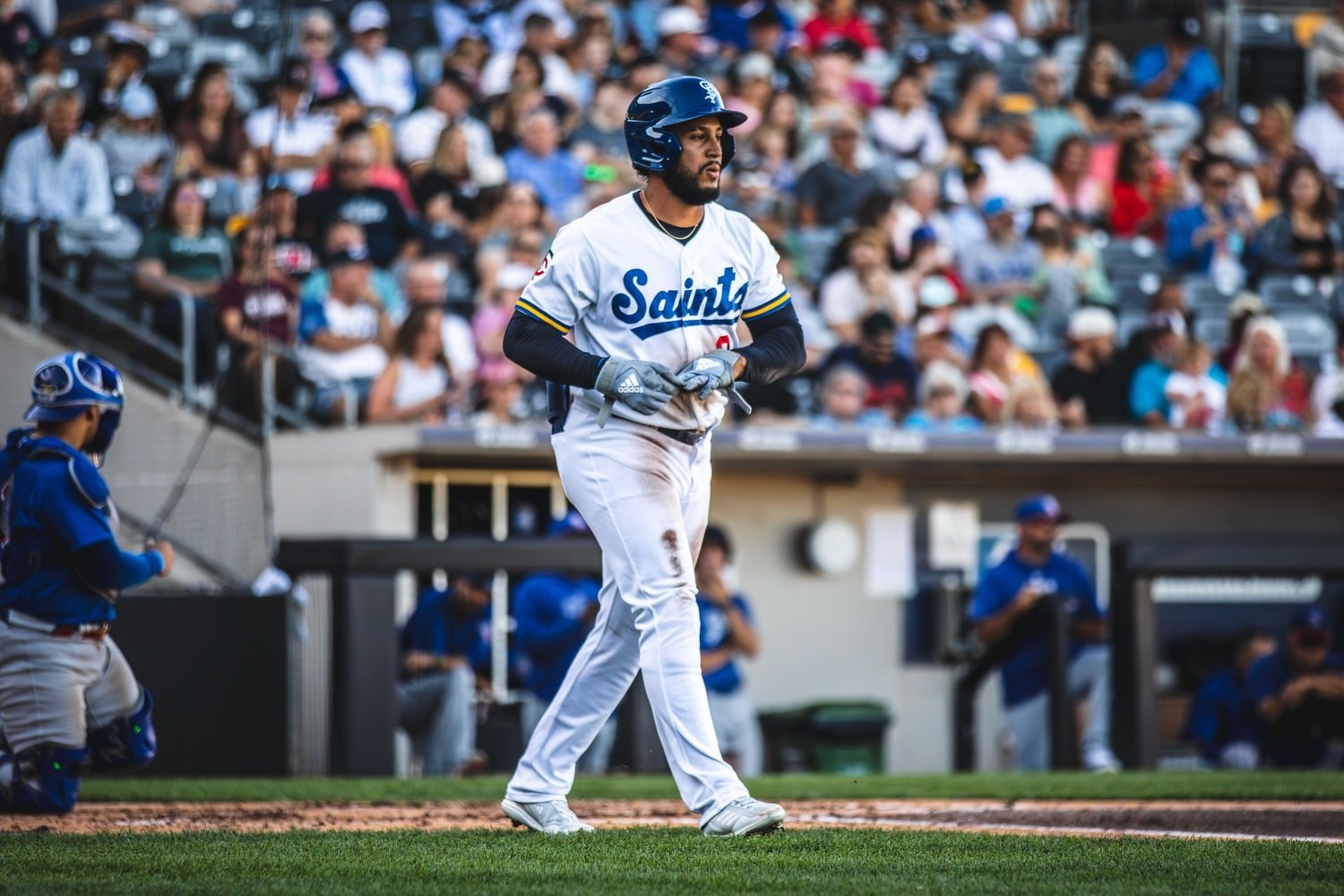 The Twins face a quandary this offseason: They need to get better offensively, but their available funds are limited if not non-existent. Even if the front office is unable to be active in making additions, however, there are still reasons for hope. Minnesota's offense can get a lot more effective under a new hitting coach with fuller seasons from Carlos Correa and Byron Buxton, as well as rebounds and improvements from returning young players. But there's another factor you might be overlooking in the Twins' short-term offensive outlook: Emmanuel Rodriguez. The meteoric young outfielder reached Triple-A at age 21 this year, and is considered one of the the highest-upside bats in all of the minors. The Twins might have a game-changer on their hands. Rising Despite Setbacks The story of Rodriguez's journey through the minors has followed a disturbingly familiar pattern: glimpses of absolutely brilliance, repeatedly disrupted by serious injuries. Rodriguez missed significant time in 2022 with a knee injury, 2023 with an ab injury, and 2024 with a thumb injury that he aggravated multiple times. This past season Rodriguez was limited to 47 games and 209 plate appearances. In spite of that, he slid into the top 30 on MLB Pipeline's list of top prospects, moving up to No. 29 after ranking No. 42 entering the season. It says a lot about what Rodriguez has been able to do when on the field. His .863 OPS in 2023 led all hitters in the High-A Midwest League. He then made the jump to Double-A in 2024 and slashed .298/.479/.621 in 167 plate appearances, drawing walks in 25% of his plate appearances with an astonishing .323 ISO (slugging minus average). This is a power/patience combo on a level that's virtually unheard of. Rodriguez was impressive enough in the small sample with Wichita that he was promoted to Triple-A at year's end. Assuming he gets past the thumb injury that plagued him, Emma will enter the 2025 season as one of the top impact bats in the upper levels of any team's system. How Does Rodriguez Fit In? Could Rodriguez compete for a spot on the Opening Day roster? It's not out of the question, especially if there's an injury somewhere in the outfield. But for the time being, the Twins seem to have lefty bats already locked into both corners, with Trevor Larnach and Matt Wallner coming off strong seasons. Those two are also seemingly in the plans for a while going forward, although Larnach is now into arbitration and of course designated hitter is also available. I could easily see Larnach being shopped in a trade, if not this offseason then certainly next. Right now would present an opportunity to sell relatively high, with Larnach having played his fullest and most productive season at age 27. He's slated to make around $2 million in arbitration next year and his cost will keep going up after that if he keeps playing well, so there's a financial angle here. But the main goal of such a move would be trading for value and opening up a clear path for Rodriguez. We're going to find out how much the Twins believe in Rodriguez as a center field. It's been almost his exclusive position in the minors, but there seems to be a sense he's more likely to end up in a corner at some point. If the Twins do trust Rodriguez in center, though, that would be a huge help. Buxton is now into his 30s and may be transitioning away from CF at some point, not to mention his perpetual risk of injury. The Twins have mostly been lacking for quality backup options behind Buxton but Rodriguez could fulfill that role in 2025 while potentially being groomed as his successor. Of course, the flip side is that the front office could seek to trade Rodriguez himself, especially with another superstar outfield prospect (Walker Jenkins) not far behind him in line. That's probably not the way a budget-conscious team will, or should, operate but it's a possibility worth considering. Rodriguez would boast tremendous value as a trade chip; I noted last offseason that his unique profile can make him a coveted asset in the eyes of other teams, but also the kind of talent Minnesota could live to regret giving up. He's only more in-demand after convincingly conquering Double-A. One way or another, Rodriguez figures to be a factor for the Twins, and sooner than later. He can get lost in the shuffle since he missed much of the past season while Jenkins further solidified his standing as one of the top prospects in baseball (ranked No. 2 by MLB Pipeline) while Brooks Lee broke into the majors, but Emma is a premier attraction in his own right and he's almost here.