



Nick Nelson
-
Posts
8,315 -
Joined
-
Last visited
-
Days Won
56
Content Type
Profiles
News
Minnesota Twins Videos
2026 Minnesota Twins Top Prospects Ranking
2022 Minnesota Twins Draft Picks
Minnesota Twins Free Agent & Trade Rumors, Notes, & Tidbits
Guides & Resources
2023 Minnesota Twins Draft Picks
The Minnesota Twins Players Project
2024 Minnesota Twins Draft Picks
2025 Minnesota Twins Draft Pick Tracker
2026 Minnesota Twins Draft Tracker: Picks & Bonuses
Forums
Blogs
Events
Store
Downloads
Gallery
Everything posted by Nick Nelson
-
 Twenty years ago today, I published my first ever blog post about the Minnesota Twins. Want to read it? Please promise not to laugh. In March of 2005, I was nearing the end of my freshman year of college at the University of Minnesota. Months earlier, during the first semester, I'd met a classmate in Intro to Philosophy — also named Nick — and we bonded over our fanship of the Twins. At the time they were fresh off a third consecutive AL Central title, and facing off against the dreaded New York Yankees in the playoffs. The 2004 ALDS was an epic series. A maddening series. A gut-wrenching series that (little to my knowledge) would spark a historic postseason losing streak for the franchise. It might've been the series that forever cemented my passion for baseball. I distinctly remember obsessing over the minutiae of Game 2, an extra-inning thriller that has since become a pivot point in Twins history. Why not pinch-hit Lew Ford at some point for overwhelmed rookie Jason Kubel? Why send a clearly gassed Joe Nathan out for a third inning rather than turning to Jesse Crain? WHY GARDY WHY? Discussing and debating these topics with my new friend Nick in philosophy class, while paying little attention to the lecture, laid groundwork for our creation of a blog the following spring: Nick & Nick's Twins Blog. We decided we'd try to publish every day, while alternating writing duties to keep the workload reasonable. On March 3rd, 2005, I published my first-ever Twins blog, entitled "First Game of Spring," which you can find below in its brief entirety (typos and all): I must say I was very excited at 6 o'clock this evening when I turned on the 'CCO on my radio and heard the voice of John Gordon pronouncing "Twins baseball on the air". The game itself, a 4-3 loss against the Red Sox, was not particularly interesting outside of being the first Twins game of 2005. Not a single projected starter played in the game (except for probable DH Lew Ford). The Twins fielded Matthew LeCroy, Luis Rodriguez, Eric Munson, and Bartlett in the infield; with Mike Ryan, Armando Ríos and Ford in the outfield and Mike Redmond at catcher. A few speculations below... *Bartlett, a contender for the starting job at shortstop this season, batted lead-off and start the game with a base hit. He ended up scoring on a wild pitch. *Kyle Lohse started the game, and pitched two innings, allowing a run. JD Durbin pitched the next two. He looked good in his first inning of work, but ran into some trouble in his second, walking a couple guys and loading up the bases with no outs, then allowing a run to score on a base hit. He ended up working out of the jam though. *The mid-inning subs included 2B Brent Abernathy, 3B Andy Fox, and CF Jason Tyner. All are offseason pickups, none of whom are expected to make the Major League club, but I recognized them because they have all started for the Tampa Bay Devil Rays within the past few years. Guess that says something for the D-Rays. The Twins play again tomorrow against Toronto, and the game actually should feature some starters. Reading this back now, I'm hit with a wave of nostalgia: another era of Twins baseball, another chapter of my life. I can just hear John Gordon's voice piping through the radio in my dorm at Comstock Hall. Ah, the good old days. Something that really strikes me, though, is the light substance. This wasn't analysis or commentary so much as a recitation of some things that happened. (What does it actually "say for the D-Rays," Nick?) But back then it was difficult to find any detailed coverage of spring training action outside of the occasional back-page blurb in the local newspapers. The lack of in-depth content available for obsessive fans is what motivated John Bonnes, Seth Stohs and Aaron Gleeman in the preceding years to start their own blogs, all of which played a big role in inspiring ours. The post above might seem quaint and insight-bare, but trust me when I say there wasn't much like it for fans in 2005. Online content was in a nascent state and social media barely existed. Mainstream publications tended to cover the bare bones, at surface level. Fast-forward 20 years and the landscape has changed dramatically. The quality and depth of Twins coverage available through mainstream media, independent media, blogs, videos, podcasts and beyond is staggering by comparison. I'm proud that Twins Daily — which I helped found in 2012, seven years after my blogging journey began — played some role in this evolution. The community of writers, creators, commenters and readers we have here is something I would never have dreamt of when I first started back in 2005. The other thing I'm struck by, in retrospect: How my experience following those successful, colorful, interesting, entertaining mid-aughts teams turned me into an invested lifelong fan who still — two decades later — writes about the team multiple times per week, and talks about it on social media all the time. Would I be doing this now if the product during these formative years was boring and uncompetitive? Would the Twins have been able to pry my attention away from Randy Moss and the Vikings, or Kevin Garnett and the Timberwolves, if not for the allure of summer nights spent watching Joe Mauer, Torii Hunter, Justin Morneau and Johan Santana star for consistent contenders? I honestly don't know. That really underscores the opportunity faced by the Minnesota Twins franchise right now, with a potential ownership transition at hand. Fielding competitive, compelling teams and making postseason runs doesn't just pay dividends in terms of short-term interest and attendance. For people who are at the crux of commitment, like I was back at age 18, it can be the difference between a permanent connection to the team or a sporadic, passing fancy. This current Twins team has all the ingredients in place to inspire deep, lifelong investment from a new generation of potential fans by capturing their imaginations and igniting their passion. The core is in place with star-caliber players like Carlos Correa, Byron Buxton and Royce Lewis, not to mention some tremendous talent rising in the minor leagues. It's crucial for these players to rise to the occasion, and for ownership and the front office to support them in meaningful ways. Will some other impressionable kid who's currently reaching adulthood find himself blogging or creating content 20 years from now? The way things play out on the field in these next couple seasons could well dictate the answer. View full article
 -
20 Years Later: Reflecting on Two Decades of Baseball Blogging
Nick Nelson posted an article in Twins
 In March of 2005, I was nearing the end of my freshman year of college at the University of Minnesota. Months earlier, during the first semester, I'd met a classmate in Intro to Philosophy — also named Nick — and we bonded over our fanship of the Twins. At the time they were fresh off a third consecutive AL Central title, and facing off against the dreaded New York Yankees in the playoffs. The 2004 ALDS was an epic series. A maddening series. A gut-wrenching series that (little to my knowledge) would spark a historic postseason losing streak for the franchise. It might've been the series that forever cemented my passion for baseball. I distinctly remember obsessing over the minutiae of Game 2, an extra-inning thriller that has since become a pivot point in Twins history. Why not pinch-hit Lew Ford at some point for overwhelmed rookie Jason Kubel? Why send a clearly gassed Joe Nathan out for a third inning rather than turning to Jesse Crain? WHY GARDY WHY? Discussing and debating these topics with my new friend Nick in philosophy class, while paying little attention to the lecture, laid groundwork for our creation of a blog the following spring: Nick & Nick's Twins Blog. We decided we'd try to publish every day, while alternating writing duties to keep the workload reasonable. On March 3rd, 2005, I published my first-ever Twins blog, entitled "First Game of Spring," which you can find below in its brief entirety (typos and all): I must say I was very excited at 6 o'clock this evening when I turned on the 'CCO on my radio and heard the voice of John Gordon pronouncing "Twins baseball on the air". The game itself, a 4-3 loss against the Red Sox, was not particularly interesting outside of being the first Twins game of 2005. Not a single projected starter played in the game (except for probable DH Lew Ford). The Twins fielded Matthew LeCroy, Luis Rodriguez, Eric Munson, and Bartlett in the infield; with Mike Ryan, Armando Ríos and Ford in the outfield and Mike Redmond at catcher. A few speculations below... *Bartlett, a contender for the starting job at shortstop this season, batted lead-off and start the game with a base hit. He ended up scoring on a wild pitch. *Kyle Lohse started the game, and pitched two innings, allowing a run. JD Durbin pitched the next two. He looked good in his first inning of work, but ran into some trouble in his second, walking a couple guys and loading up the bases with no outs, then allowing a run to score on a base hit. He ended up working out of the jam though. *The mid-inning subs included 2B Brent Abernathy, 3B Andy Fox, and CF Jason Tyner. All are offseason pickups, none of whom are expected to make the Major League club, but I recognized them because they have all started for the Tampa Bay Devil Rays within the past few years. Guess that says something for the D-Rays. The Twins play again tomorrow against Toronto, and the game actually should feature some starters. Reading this back now, I'm hit with a wave of nostalgia: another era of Twins baseball, another chapter of my life. I can just hear John Gordon's voice piping through the radio in my dorm at Comstock Hall. Ah, the good old days. Something that really strikes me, though, is the light substance. This wasn't analysis or commentary so much as a recitation of some things that happened. (What does it actually "say for the D-Rays," Nick?) But back then it was difficult to find any detailed coverage of spring training action outside of the occasional back-page blurb in the local newspapers. The lack of in-depth content available for obsessive fans is what motivated John Bonnes, Seth Stohs and Aaron Gleeman in the preceding years to start their own blogs, all of which played a big role in inspiring ours. The post above might seem quaint and insight-bare, but trust me when I say there wasn't much like it for fans in 2005. Online content was in a nascent state and social media barely existed. Mainstream publications tended to cover the bare bones, at surface level. Fast-forward 20 years and the landscape has changed dramatically. The quality and depth of Twins coverage available through mainstream media, independent media, blogs, videos, podcasts and beyond is staggering by comparison. I'm proud that Twins Daily — which I helped found in 2012, seven years after my blogging journey began — played some role in this evolution. The community of writers, creators, commenters and readers we have here is something I would never have dreamt of when I first started back in 2005. The other thing I'm struck by, in retrospect: How my experience following those successful, colorful, interesting, entertaining mid-aughts teams turned me into an invested lifelong fan who still — two decades later — writes about the team multiple times per week, and talks about it on social media all the time. Would I be doing this now if the product during these formative years was boring and uncompetitive? Would the Twins have been able to pry my attention away from Randy Moss and the Vikings, or Kevin Garnett and the Timberwolves, if not for the allure of summer nights spent watching Joe Mauer, Torii Hunter, Justin Morneau and Johan Santana star for consistent contenders? I honestly don't know. That really underscores the opportunity faced by the Minnesota Twins franchise right now, with a potential ownership transition at hand. Fielding competitive, compelling teams and making postseason runs doesn't just pay dividends in terms of short-term interest and attendance. For people who are at the crux of commitment, like I was back at age 18, it can be the difference between a permanent connection to the team or a sporadic, passing fancy. This current Twins team has all the ingredients in place to inspire deep, lifelong investment from a new generation of potential fans by capturing their imaginations and igniting their passion. The core is in place with star-caliber players like Carlos Correa, Byron Buxton and Royce Lewis, not to mention some tremendous talent rising in the minor leagues. It's crucial for these players to rise to the occasion, and for ownership and the front office to support them in meaningful ways. Will some other impressionable kid who's currently reaching adulthood find himself blogging or creating content 20 years from now? The way things play out on the field in these next couple seasons could well dictate the answer.
- 5 comments
-
- 13
-

-

-
It is inevitable.
-
.jpg.140bdbde8c2490bc4004a96799b44421.jpg) In an effort to distance themselves from a culture that some felt had become too lax and individualized, the Minnesota Twins hired as their new hitting coach Matt Borgschulte, better known in Federation circles as "The Borg." Already this spring, the new instructor has fostered a sense of togetherness by assimilating a majority of Twins hitters into his cybernetic collective. Setting aside traditional technology like Rapsodo and Trajekt, The Borg opts instead to leverage microscopic self-replicating machines he calls "nanoprobes," which rewrite the biology of a hitter by integrating robotic components and gradually connecting them to a central hive mind. "We're pretty excited about it," remarked Rocco Baldelli in his office on Friday, adorned with a conspicuous new glowing red oculus implant. "Borg is all about achieving perfection at the plate. We've been needing this kind of discipline around here." Enthusiasm has been noticeable among Twins players, many of whom have been seen at camp with metallic prosthetics, wires, circuits and tubes engrafted into their arms and legs – a sure sign of the tech-forward approach being championed by the team under The Borg. "He's really teaching us to have a symbiotic relationship," said utilityman Austin Martin after emerging from his wall-mounted recharging alcove in the Twins clubhouse. "We're a collective. We have to think about that at all times. And only that. Literally nothing else." Last year, Twins hitters frequently prepared for games on their own, spending time swinging in the cages in solitude. The Borg's leadership represents a radical departure from this norm, with all players being assimilated into a single shared consciousness. This new approach has downsides, such as deprivation of free will and individuality, but also offers key advantages on the field. The Twins believe they'll have an edge when it comes to adapting to the weapons used by opposing pitchers. Rapidly exerting his influence on all aspects of team culture, The Borg is a man of great authority, if few words. "Resistance is futile," droned the cybernetic overlord as he observed Ryan Jeffers and Willi Castro toiling in their batting cubes on Saturday morning. Although The Borg said he's only been able to meet with 7 of 9 members of the starting lineup thus far, he hopes to have them all acclimated and assimilated into his program by star date 76945.2.
In an effort to distance themselves from a culture that some felt had become too lax and individualized, the Minnesota Twins hired as their new hitting coach Matt Borgschulte, better known in Federation circles as "The Borg." Already this spring, the new instructor has fostered a sense of togetherness by assimilating a majority of Twins hitters into his cybernetic collective. Setting aside traditional technology like Rapsodo and Trajekt, The Borg opts instead to leverage microscopic self-replicating machines he calls "nanoprobes," which rewrite the biology of a hitter by integrating robotic components and gradually connecting them to a central hive mind. "We're pretty excited about it," remarked Rocco Baldelli in his office on Friday, adorned with a conspicuous new glowing red oculus implant. "Borg is all about achieving perfection at the plate. We've been needing this kind of discipline around here." Enthusiasm has been noticeable among Twins players, many of whom have been seen at camp with metallic prosthetics, wires, circuits and tubes engrafted into their arms and legs – a sure sign of the tech-forward approach being championed by the team under The Borg. "He's really teaching us to have a symbiotic relationship," said utilityman Austin Martin after emerging from his wall-mounted recharging alcove in the Twins clubhouse. "We're a collective. We have to think about that at all times. And only that. Literally nothing else." Last year, Twins hitters frequently prepared for games on their own, spending time swinging in the cages in solitude. The Borg's leadership represents a radical departure from this norm, with all players being assimilated into a single shared consciousness. This new approach has downsides, such as deprivation of free will and individuality, but also offers key advantages on the field. The Twins believe they'll have an edge when it comes to adapting to the weapons used by opposing pitchers. Rapidly exerting his influence on all aspects of team culture, The Borg is a man of great authority, if few words. "Resistance is futile," droned the cybernetic overlord as he observed Ryan Jeffers and Willi Castro toiling in their batting cubes on Saturday morning. Although The Borg said he's only been able to meet with 7 of 9 members of the starting lineup thus far, he hopes to have them all acclimated and assimilated into his program by star date 76945.2. -
"Resistance is futile," droned the cybernetic overlord as he observed Ryan Jeffers and Willi Castro toiling in their batting cubes. Image courtesy of Brock Beauchamp, Twins Daily In an effort to distance themselves from a culture that some felt had become too lax and individualized, the Minnesota Twins hired as their new hitting coach Matt Borgschulte, better known in Federation circles as "The Borg." Already this spring, the new instructor has fostered a sense of togetherness by assimilating a majority of Twins hitters into his cybernetic collective. Setting aside traditional technology like Rapsodo and Trajekt, The Borg opts instead to leverage microscopic self-replicating machines he calls "nanoprobes," which rewrite the biology of a hitter by integrating robotic components and gradually connecting them to a central hive mind. "We're pretty excited about it," remarked Rocco Baldelli in his office on Friday, adorned with a conspicuous new glowing red oculus implant. "Borg is all about achieving perfection at the plate. We've been needing this kind of discipline around here." Enthusiasm has been noticeable among Twins players, many of whom have been seen at camp with metallic prosthetics, wires, circuits and tubes engrafted into their arms and legs – a sure sign of the tech-forward approach being championed by the team under The Borg. "He's really teaching us to have a symbiotic relationship," said utilityman Austin Martin after emerging from his wall-mounted recharging alcove in the Twins clubhouse. "We're a collective. We have to think about that at all times. And only that. Literally nothing else." Last year, Twins hitters frequently prepared for games on their own, spending time swinging in the cages in solitude. The Borg's leadership represents a radical departure from this norm, with all players being assimilated into a single shared consciousness. This new approach has downsides, such as deprivation of free will and individuality, but also offers key advantages on the field. The Twins believe they'll have an edge when it comes to adapting to the weapons used by opposing pitchers. Rapidly exerting his influence on all aspects of team culture, The Borg is a man of great authority, if few words. "Resistance is futile," droned the cybernetic overlord as he observed Ryan Jeffers and Willi Castro toiling in their batting cubes on Saturday morning. Although The Borg said he's only been able to meet with 7 of 9 members of the starting lineup thus far, he hopes to have them all acclimated and assimilated into his program by star date 76945.2. View full article
-
Who's on first? Yeah, we all know the gag. But for the Twins this year, it's no laughing matter. Image courtesy of Chris Tilley and Jonah Hinebaugh, via Imagn Images One year ago, the roadmap at first base for the Twins looked like this: Hope Carlos Santana can hold it down as a stopgap before Alex Kirilloff finally rounds into form and takes over the position moving forward. Santana and Kirilloff combined to start all but 12 games at first base for Minnesota in 2024. Well, here in 2025, Santana has moved on as a free agent and Kirilloff has retired. The Twins were left with more or less a blank slate at first base, and now they'll look to color it in using a collection of flawed but capable candidates. No position on the Twins roster has less clarity, now or looking ahead. TWINS FIRST BASEMEN AT A GLANCE Starter: Ty France Backup: José Miranda Depth: Edouard Julien, Willi Castro, Mickey Gasper, Mike Ford (NRI) Prospects: Aaron Sabato, Yunior Severino Twins fWAR Ranking Last Year: 5th out of 30 Twins fWAR Projection This Year: 22nd out of 30 THE GOOD If we take it back to mid-summer of 2022, this first base mix for the Twins looks outstanding. José Miranda was dazzling during his major-league debut, flashing all of the offensive skills that fueled his breakout in the minors. Meanwhile, in Seattle, Ty France was headed for his first career All-Star appearance following a stellar first half for the Mariners. These certainly looked like the kinds of high-caliber right-handed bats you want at an offense-first position. I recognize that "These guys were good three years ago" is a less than ideal way to set up the optimistic side of this position preview, but that's where we are at. And also, there have been some positive signs for both players since 2022, so let's focus on those. There were points last year where Miranda and France both looked like legit offensive pieces. Twins fans will recall the scorching hot stretch Miranda enjoyed in July, lifting his OPS to .900 before a steep drop-off in the second half. France had his OPS at a respectable .732 before getting hit by a pitch that fractured his heel in early June. The Twins have signaled that they are viewing France as their likely first base starter out of the gates, but given his recent track record and contract (one year, $1 million, non-guaranteed), it seems clear the 30-year-old is more placeholder than remotely permanent solution. If he can put up the average-ish production we saw from him in 2023 (101 OPS+, 1.2 fWAR), France can be a fine stopgap, and in light of the alternatives, Minnesota will take his experience (4,500 career innings logged at first base). This position, however, is Miranda's to claim. Assuming he's on the roster to start the season, my presumption is that he will mix in at both infield corners and DH early on. If he can show enough with the bat while proving viable defensively at first base, he'll surely take the reins from France at some point and will have a chance to set up shop at the position for years. Still just 26 years old and now with more than 1,000 major-league plate appearances under his belt, it's go time for Miranda. He's been an above-average hitter overall (105 career OPS+) and at times he has flashed really special ability, but Miranda hasn't been able to harness it consistently over time; there are questions about whether he can overcome shoulder and back issues that have plagued him. It's all in front of him right now. While Minnesota's lack of compelling contingency options at first base is somewhat disconcerting, there is a level of excitement in the door being wide open for Miranda, with nothing really standing in his way of a full-time gig if he can lock in. THE BAD There is a lot of downside at this position for the Twins. Neither France nor Miranda hit in the second half last year, and both of their performances were hard to shrug off. The slow-footed France appears to be in decline at age 30, with his OPS dropping in four straight seasons. The contract he ended up with speaks for itself. Miranda's aggressive approach has been exploitable, and he has been dealing with those nagging, concerning injuries. Despite these question marks, the first base depth behind Minnesota's shaky starter candidates is borderline non-existent. Edouard Julien has been mentioned several times by team officials as a candidate, despite Rocco Baldelli showing little inclination to use Julien at first base at any point. The manager has mentioned Willi Castro as a potential option at the position, which happens to be the only one that Castro has never played in the majors. Mike Ford, who battled France for playing time in Seattle a couple years ago, is in camp as a non-roster invite after a stint in Japan. The top prospects at the position aren't really prospects anymore — Aaron Sabato and Yunior Severino are more organizational filler by now. If the future isn't Miranda, then it's anybody's guess who it might be; probably someone who currently isn't playing first base but is at risk of sliding down the defensive spectrum. Royce Lewis comes to mind. For 2025, the bigger concern than offense at first base might be defense. France rated as one of the league's worst fielders last year. Miranda has looked rough in his limited opportunities at the position. Julien and Castro have basically zero experience there. Although playing first base is "not that hard" according to Billy Beane (Ron Washington disagrees), it is a position where reps matter. Reading the ball off the bat, mastering the footwork, measuring and snaring a short-hop scoop — these skills can be learned by a good ballplayer, but they do take seasoning. The only experienced MLB first basemen in Minnesota's mix are France and Ford, both of whom might be better suited for DH. The drop-off from Gold Glove winner Carlos Santana will be steep. How steep? THE BOTTOM LINE Of all the positions to have mired in uncertainty, first base is the least bad. Players move here from other spots and do fine. We've seen it time and again in recent Twins history: Joe Mauer, Miguel Sano, Luis Arraez. Maybe Miranda will be next in line, after breaking into the majors as a third baseman. The opportunity is there for the taking. If Miranda can't seize the moment — if he, erm, throws away his shot — then the Twins will need to hope France still has some life in him. Or else they'll need someone else to accelerate their own transition from another position. Because as we head into 2025, the organization is as light on clear-cut first base talent as I can ever remember. Share your thoughts on the first base outlook below and check out the rest of our Position Analysis series: Twins 2025 Position Analysis: Catcher View full article
-
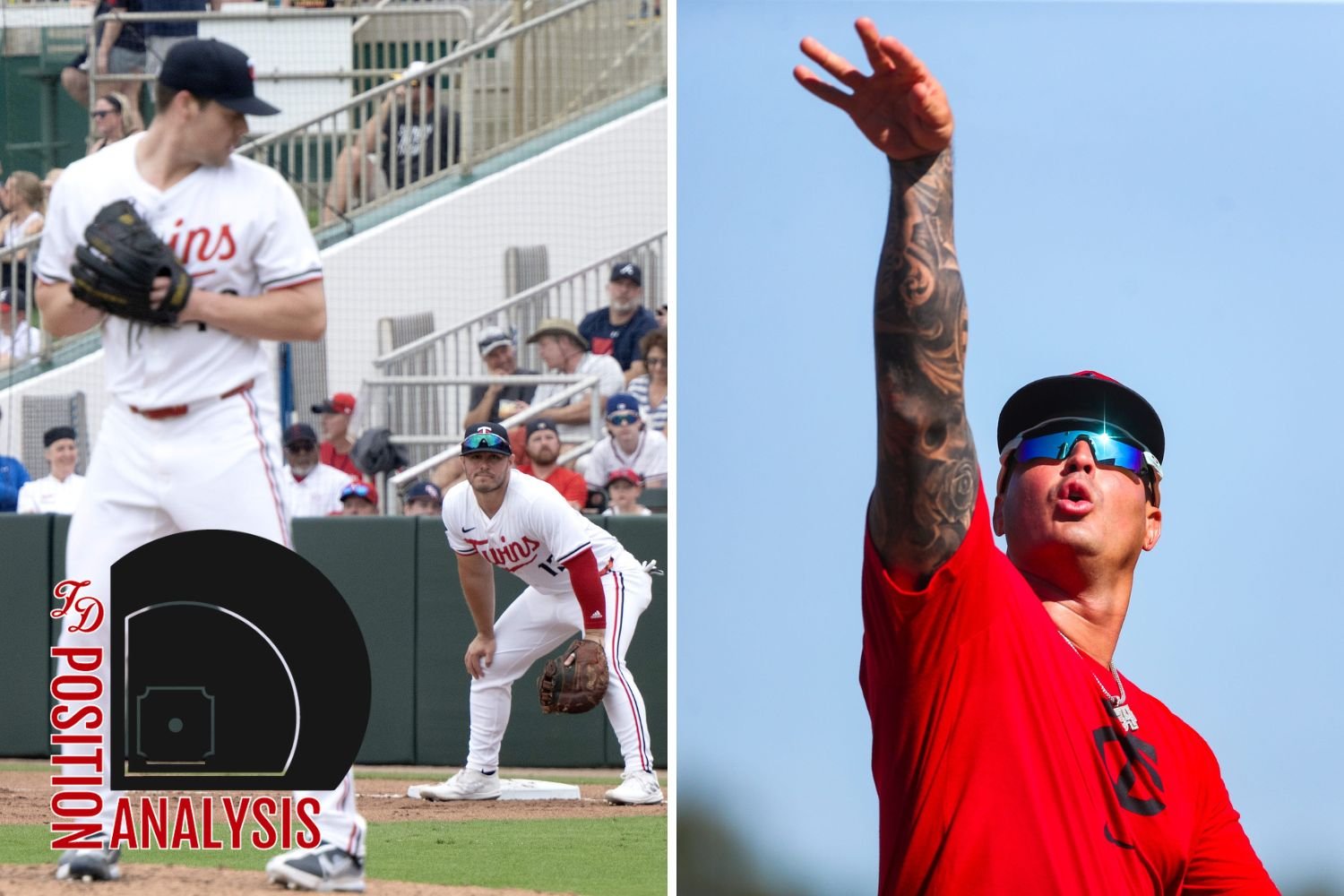 One year ago, the roadmap at first base for the Twins looked like this: Hope Carlos Santana can hold it down as a stopgap before Alex Kirilloff finally rounds into form and takes over the position moving forward. Santana and Kirilloff combined to start all but 12 games at first base for Minnesota in 2024. Well, here in 2025, Santana has moved on as a free agent and Kirilloff has retired. The Twins were left with more or less a blank slate at first base, and now they'll look to color it in using a collection of flawed but capable candidates. No position on the Twins roster has less clarity, now or looking ahead. TWINS FIRST BASEMEN AT A GLANCE Starter: Ty France Backup: José Miranda Depth: Edouard Julien, Willi Castro, Mickey Gasper, Mike Ford (NRI) Prospects: Aaron Sabato, Yunior Severino Twins fWAR Ranking Last Year: 5th out of 30 Twins fWAR Projection This Year: 22nd out of 30 THE GOOD If we take it back to mid-summer of 2022, this first base mix for the Twins looks outstanding. José Miranda was dazzling during his major-league debut, flashing all of the offensive skills that fueled his breakout in the minors. Meanwhile, in Seattle, Ty France was headed for his first career All-Star appearance following a stellar first half for the Mariners. These certainly looked like the kinds of high-caliber right-handed bats you want at an offense-first position. I recognize that "These guys were good three years ago" is a less than ideal way to set up the optimistic side of this position preview, but that's where we are at. And also, there have been some positive signs for both players since 2022, so let's focus on those. There were points last year where Miranda and France both looked like legit offensive pieces. Twins fans will recall the scorching hot stretch Miranda enjoyed in July, lifting his OPS to .900 before a steep drop-off in the second half. France had his OPS at a respectable .732 before getting hit by a pitch that fractured his heel in early June. The Twins have signaled that they are viewing France as their likely first base starter out of the gates, but given his recent track record and contract (one year, $1 million, non-guaranteed), it seems clear the 30-year-old is more placeholder than remotely permanent solution. If he can put up the average-ish production we saw from him in 2023 (101 OPS+, 1.2 fWAR), France can be a fine stopgap, and in light of the alternatives, Minnesota will take his experience (4,500 career innings logged at first base). This position, however, is Miranda's to claim. Assuming he's on the roster to start the season, my presumption is that he will mix in at both infield corners and DH early on. If he can show enough with the bat while proving viable defensively at first base, he'll surely take the reins from France at some point and will have a chance to set up shop at the position for years. Still just 26 years old and now with more than 1,000 major-league plate appearances under his belt, it's go time for Miranda. He's been an above-average hitter overall (105 career OPS+) and at times he has flashed really special ability, but Miranda hasn't been able to harness it consistently over time; there are questions about whether he can overcome shoulder and back issues that have plagued him. It's all in front of him right now. While Minnesota's lack of compelling contingency options at first base is somewhat disconcerting, there is a level of excitement in the door being wide open for Miranda, with nothing really standing in his way of a full-time gig if he can lock in. THE BAD There is a lot of downside at this position for the Twins. Neither France nor Miranda hit in the second half last year, and both of their performances were hard to shrug off. The slow-footed France appears to be in decline at age 30, with his OPS dropping in four straight seasons. The contract he ended up with speaks for itself. Miranda's aggressive approach has been exploitable, and he has been dealing with those nagging, concerning injuries. Despite these question marks, the first base depth behind Minnesota's shaky starter candidates is borderline non-existent. Edouard Julien has been mentioned several times by team officials as a candidate, despite Rocco Baldelli showing little inclination to use Julien at first base at any point. The manager has mentioned Willi Castro as a potential option at the position, which happens to be the only one that Castro has never played in the majors. Mike Ford, who battled France for playing time in Seattle a couple years ago, is in camp as a non-roster invite after a stint in Japan. The top prospects at the position aren't really prospects anymore — Aaron Sabato and Yunior Severino are more organizational filler by now. If the future isn't Miranda, then it's anybody's guess who it might be; probably someone who currently isn't playing first base but is at risk of sliding down the defensive spectrum. Royce Lewis comes to mind. For 2025, the bigger concern than offense at first base might be defense. France rated as one of the league's worst fielders last year. Miranda has looked rough in his limited opportunities at the position. Julien and Castro have basically zero experience there. Although playing first base is "not that hard" according to Billy Beane (Ron Washington disagrees), it is a position where reps matter. Reading the ball off the bat, mastering the footwork, measuring and snaring a short-hop scoop — these skills can be learned by a good ballplayer, but they do take seasoning. The only experienced MLB first basemen in Minnesota's mix are France and Ford, both of whom might be better suited for DH. The drop-off from Gold Glove winner Carlos Santana will be steep. How steep? THE BOTTOM LINE Of all the positions to have mired in uncertainty, first base is the least bad. Players move here from other spots and do fine. We've seen it time and again in recent Twins history: Joe Mauer, Miguel Sano, Luis Arraez. Maybe Miranda will be next in line, after breaking into the majors as a third baseman. The opportunity is there for the taking. If Miranda can't seize the moment — if he, erm, throws away his shot — then the Twins will need to hope France still has some life in him. Or else they'll need someone else to accelerate their own transition from another position. Because as we head into 2025, the organization is as light on clear-cut first base talent as I can ever remember. Share your thoughts on the first base outlook below and check out the rest of our Position Analysis series: Twins 2025 Position Analysis: Catcher
- 28 comments
-
- 7
-
-
- ty france
- jose miranda
- (and 2 more)
-
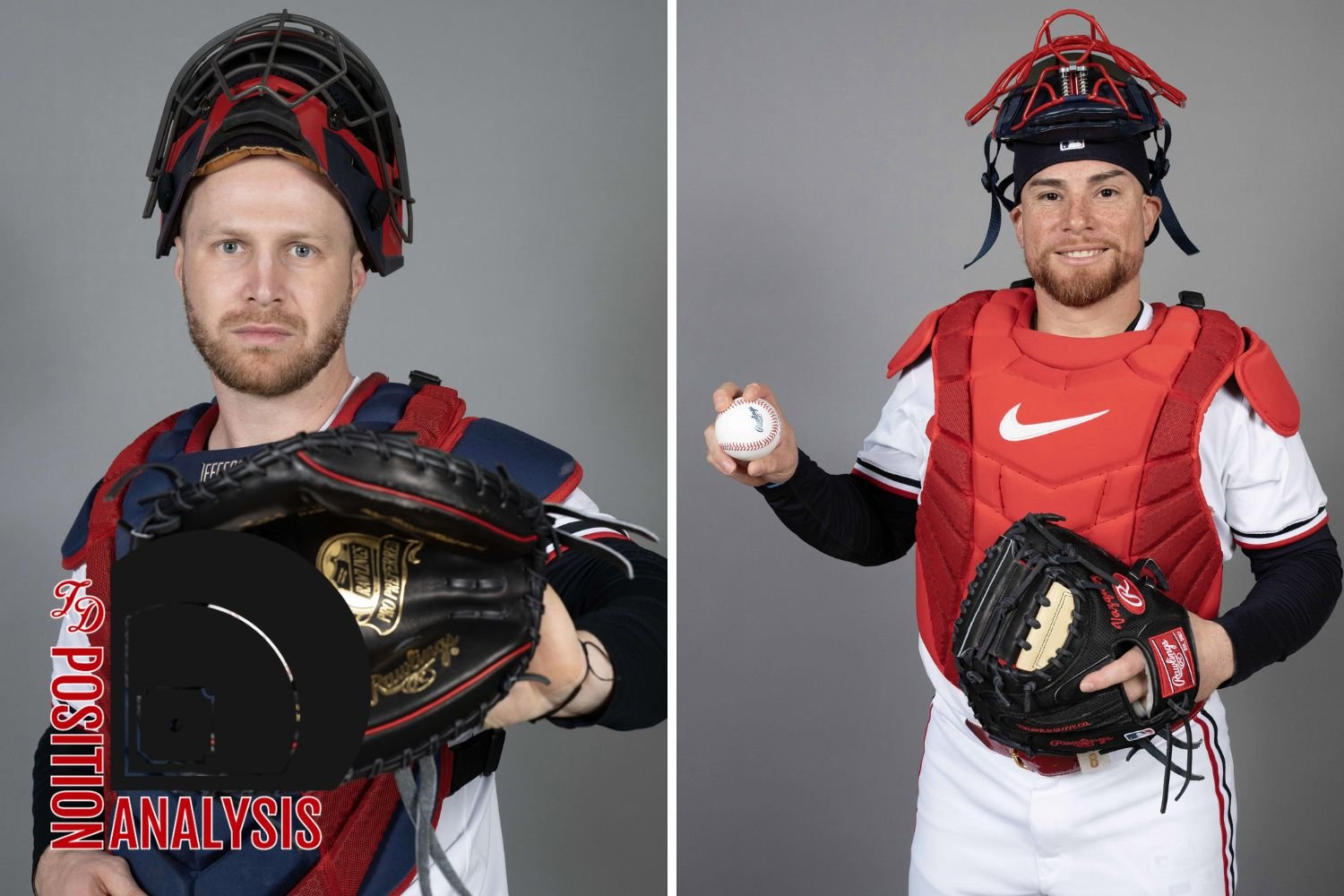 Stability was once again the biggest strength for the Twins catching corps in 2024. For a second straight year, the team used only two starters behind plate all season. However, the duo of Ryan Jeffers and Christian Vázquez failed to rate out better than average overall, and now we're entering the last year with this stable setup in place. Facing future uncertainty at the catcher position, Minnesota needs Jeffers to establish himself as a standout starter, and at least one player in the system to emerge behind Vázquez on the depth chart. TWINS CATCHERS AT A GLANCE Starter: Ryan Jeffers Backup: Christian Vázquez Depth: Jair Camargo, Diego Cartaya, Mickey Gasper Prospects: Camargo, Cartaya, Patrick Winkel (NRI) Twins fWAR Ranking Last Year: 14th out of 30 Twins fWAR Projection This Year: 16th out of 30 THE GOOD Continuity and consistency behind the plate are good things. Any pitcher will tell you this: they like having a comfort level and rapport with their battery-mates. There's little question that the Twins staff trusts Jeffers and Vázquez, having worked exclusively with these two veteran backstops over the past year two years. While framing metrics and caught stealing rates have wavered, both catchers have very good reps as receivers and game callers. I said it in last year's writeup, but I'll repeat it here: this matters for run prevention, more than we can measure. I strongly believe the team's steadiness at catcher contributed significantly to the successes of Minnesota pitchers in both 2023 and 2024; there's maybe an outsized advantage to boasting such a seasoned catching corps while ushering young arms into the rotation. The catcher position's offensive ceiling is somewhat capped, because it's just hard to envision Vázquez being anything more than a liability at the plate. The best hope is that he can improve from awful (60 OPS+ last year) to merely bad (81 career OPS+). He's going to get a sizable share of playing time, as a glove-first backup catcher and No. 9 hitter who occasionally hits a single or two. That's fine. Nothing special but serviceable. The potential for this unit to transcend its middling expectations will be tied entirely to Jeffers' bat. He has shown the ability to be an elite offensive backstop, providing a key competitive advantage at a position with few great hitters. Jeffers dominated at the dish in 2023 and scorched out of the gates last year, leading all major-league catchers in wOBA (.372) from the start of '23 through May of '24. Then he slumped nonstop for the next four months — save for a modest hot streak in August — and was at his worst in September while the team faded from contention. That finish left a sour taste, but let's not forget the ability Jeffers showcased in a much larger sample prior. Minnesota is counting on a number of key hitters to rebound after a collective meltdown in the second half last year; Ryan Jeffers might be at the very head of that list. Because, when he's on his game, the 27-year-old gives you that rarest of assets: a catcher you can confidently bat second or third on a regular basis. Rocco Baldelli did just that last year in April and May, before the declining performance forced a downward shift. THE BAD For all their injury misfortune elsewhere over the past two seasons, the Minnesota Twins have been stunningly lucky at catcher. This is a punishing, demanding position and the team has managed to get through two full seasons, 324 games, needing only two players. Certainly, Jeffers and Vázquez have shown to have durable makeups, but they're not superhuman. Eventually you've got to think their charmed runs of avoiding the injured list will reach an end. And even if not, Vázquez will be gone after this season. The Twins need to be thinking very deliberately about their depth beyond the top two. Their offseason moves make evident that the front office wants to give itself some options, even if not remotely proven ones. They acquired Mickey Gasper from the Red Sox and Diego Cartaya from the Dodgers in low-wattage trades, providing some semblance of depth on the 40-man beyond Jair Camargo. There's promise within this group, collectively, but it's tough to trust any one of them individually. Gasper has been a part-time catcher for years in the minors, but hasn't donned the gear in the majors, where he only got a cup of coffee last September. Cartaya is a former top prospect whose stock has cratered over the past year two years amid epic struggles in the upper minors. Camargo is likely first in line behind Vázquez, having spent two seasons on deck at Triple-A, but the downside of Minnesota's durable MLB duo is that Camargo has had no chance to get his feet wet in the majors. When his time comes, he'll be as green as Cartaya or Gasper. Given Gasper's defensive rep, I'm guessing he'll end up being more of an emergency-only option behind the plate, and the battle for No. 3 on the depth chart really comes down to Camargo and Cartaya. If one of those two can distinguish himself, he will be in line for a major-league role in 2026, and maybe an even a starting job down the line with Jeffers only two years from free agency. THE BOTTOM LINE The Twins have one more season to give it a go with the Jeffers/Vázquez tandem behind the plate. This veteran pairing should once again rate well defensively while setting pitchers up for success. The big question is how much offense they can provide, and it largely hinges on Jeffers rediscovering the excellence that evaporated midway through last season. The secondary depth behind these two is completely unproven. That will loom large if Jeffers and Vázquez break their durability streak at some point, and it even if not, the development of minor-league options like Camargo and Cartaya will be critical to the position's future beyond this year. We'll be breaking down the depth and outlook for every position across the roster in the coming weeks. Make sure to keep checking back, and let us know below how you're feeling about the catcher position for the Twins in 2025.
- 31 comments
-
- 8
-
-
- ryan jeffers
- christian vazquez
- (and 2 more)
-
It's time to kick off my annual spring breakdown of position-by-position previews of the Minnesota Twins roster. We get started today with a look at catcher, where the near-term future is fairly clear but the longer-term outlook gets foggier. Image courtesy of Chris Tilley-Imagn Images Stability was once again the biggest strength for the Twins catching corps in 2024. For a second straight year, the team used only two starters behind plate all season. However, the duo of Ryan Jeffers and Christian Vázquez failed to rate out better than average overall, and now we're entering the last year with this stable setup in place. Facing future uncertainty at the catcher position, Minnesota needs Jeffers to establish himself as a standout starter, and at least one player in the system to emerge behind Vázquez on the depth chart. TWINS CATCHERS AT A GLANCE Starter: Ryan Jeffers Backup: Christian Vázquez Depth: Jair Camargo, Diego Cartaya, Mickey Gasper Prospects: Camargo, Cartaya, Patrick Winkel (NRI) Twins fWAR Ranking Last Year: 14th out of 30 Twins fWAR Projection This Year: 16th out of 30 THE GOOD Continuity and consistency behind the plate are good things. Any pitcher will tell you this: they like having a comfort level and rapport with their battery-mates. There's little question that the Twins staff trusts Jeffers and Vázquez, having worked exclusively with these two veteran backstops over the past year two years. While framing metrics and caught stealing rates have wavered, both catchers have very good reps as receivers and game callers. I said it in last year's writeup, but I'll repeat it here: this matters for run prevention, more than we can measure. I strongly believe the team's steadiness at catcher contributed significantly to the successes of Minnesota pitchers in both 2023 and 2024; there's maybe an outsized advantage to boasting such a seasoned catching corps while ushering young arms into the rotation. The catcher position's offensive ceiling is somewhat capped, because it's just hard to envision Vázquez being anything more than a liability at the plate. The best hope is that he can improve from awful (60 OPS+ last year) to merely bad (81 career OPS+). He's going to get a sizable share of playing time, as a glove-first backup catcher and No. 9 hitter who occasionally hits a single or two. That's fine. Nothing special but serviceable. The potential for this unit to transcend its middling expectations will be tied entirely to Jeffers' bat. He has shown the ability to be an elite offensive backstop, providing a key competitive advantage at a position with few great hitters. Jeffers dominated at the dish in 2023 and scorched out of the gates last year, leading all major-league catchers in wOBA (.372) from the start of '23 through May of '24. Then he slumped nonstop for the next four months — save for a modest hot streak in August — and was at his worst in September while the team faded from contention. That finish left a sour taste, but let's not forget the ability Jeffers showcased in a much larger sample prior. Minnesota is counting on a number of key hitters to rebound after a collective meltdown in the second half last year; Ryan Jeffers might be at the very head of that list. Because, when he's on his game, the 27-year-old gives you that rarest of assets: a catcher you can confidently bat second or third on a regular basis. Rocco Baldelli did just that last year in April and May, before the declining performance forced a downward shift. THE BAD For all their injury misfortune elsewhere over the past two seasons, the Minnesota Twins have been stunningly lucky at catcher. This is a punishing, demanding position and the team has managed to get through two full seasons, 324 games, needing only two players. Certainly, Jeffers and Vázquez have shown to have durable makeups, but they're not superhuman. Eventually you've got to think their charmed runs of avoiding the injured list will reach an end. And even if not, Vázquez will be gone after this season. The Twins need to be thinking very deliberately about their depth beyond the top two. Their offseason moves make evident that the front office wants to give itself some options, even if not remotely proven ones. They acquired Mickey Gasper from the Red Sox and Diego Cartaya from the Dodgers in low-wattage trades, providing some semblance of depth on the 40-man beyond Jair Camargo. There's promise within this group, collectively, but it's tough to trust any one of them individually. Gasper has been a part-time catcher for years in the minors, but hasn't donned the gear in the majors, where he only got a cup of coffee last September. Cartaya is a former top prospect whose stock has cratered over the past year two years amid epic struggles in the upper minors. Camargo is likely first in line behind Vázquez, having spent two seasons on deck at Triple-A, but the downside of Minnesota's durable MLB duo is that Camargo has had no chance to get his feet wet in the majors. When his time comes, he'll be as green as Cartaya or Gasper. Given Gasper's defensive rep, I'm guessing he'll end up being more of an emergency-only option behind the plate, and the battle for No. 3 on the depth chart really comes down to Camargo and Cartaya. If one of those two can distinguish himself, he will be in line for a major-league role in 2026, and maybe an even a starting job down the line with Jeffers only two years from free agency. THE BOTTOM LINE The Twins have one more season to give it a go with the Jeffers/Vázquez tandem behind the plate. This veteran pairing should once again rate well defensively while setting pitchers up for success. The big question is how much offense they can provide, and it largely hinges on Jeffers rediscovering the excellence that evaporated midway through last season. The secondary depth behind these two is completely unproven. That will loom large if Jeffers and Vázquez break their durability streak at some point, and it even if not, the development of minor-league options like Camargo and Cartaya will be critical to the position's future beyond this year. We'll be breaking down the depth and outlook for every position across the roster in the coming weeks. Make sure to keep checking back, and let us know below how you're feeling about the catcher position for the Twins in 2025. View full article
-
If all these things happen they'll win 100 games.
-
Pitching wins division championships. Or something like that. Image courtesy of William Parmeter When I look over the Twins roster, I see a lot of cause for concern on the position-player side. Minnesota has a nucleus of potentially elite bats in Carlos Correa, Byron Buxton and Royce Lewis, but none have shown much ability to stay healthy. The lineup is otherwise littered with question marks, and during the offseason there was minimal effort to supplement this group with additional firepower, even as one of their most reliable bats exited via free agency. That said, I'm bullishly optimistic the offense can be at least good enough. The fact that Correa, Buxton and Lewis all arrived at camp 100% healthy bodes well. Trevor Larnach, Matt Wallner, Ryan Jeffers and Willi Castro have been quality hitters. There's some good young talent on hand, albeit with much to prove. The realist in me says we're probably going to see more of guys like Harrison Bader and Austin Martin in the lineup this year than we'd like to, but I also think the team can live with it. The Twins don't need their offense to be gangbusters like it was in 2019. They just need to score enough to support a pitching staff that can hopefully pave Minnesota's path to 90-plus wins and a division title. Derek Falvey was brought in from Cleveland to build a pitching machine and now it's primed to be their defining strength in a pivotal 2025 season. Here's a truism about baseball that can't be denied: When you routinely get five or six solid innings from your starting pitcher, and turn it over to a shutdown bullpen, you're going to win a lot of ballgames. Stymy the opposing offenses enough, and the success of your offense becomes almost immaterial. Of the top eight MLB teams in ERA last year, seven made the playoffs. All 12 teams that reached the postseason ranked in the top half of the league in ERA. This includes a Cleveland team that won 92 games despite ranking 17th in the wOBA. Detroit ranked 25th in wOBA and still managed to sneak in thanks to a staff that ranked fourth in ERA (on the shoulders of Cy Young winner Tarik Skubal). The Twins are coming into this season with relatively good health and booming optimism on the pitching front. Few if any teams can rival their top three starters in Pablo Lopez, Bailey Ober and Joe Ryan. Chris Paddack managed to hang around through the offseason (so far), and beyond these vets there are numerous promising young arms who've already begun to establish themselves in the majors. The bullpen, meanwhile, has all the makings of a lockdown unit and a formidable point of advantage, with Jhoan Duran, Griffin Jax, Cole Sands and newcomer Danny Coulombe giving them an assortment of high-leverage options beyond their solid middle-innings crew. I'm not naive enough to think there won't be health attrition on the pitching side, even with all the positive early-camp signs. In addition to the frontline talent leading the rotation and relief corps, there's enough depth that the Twins can sustain a few injuries and still come out very well in both areas. You've gotta score to win in baseball — hey, another truism — and the Twins should have what it takes to at least hold their own under new hitting coach Matt Borgschulte. But a deep rotation and consistent bullpen, capable of keeping opposing lineups bottled up day after day, is the most dependable formula for winning in baseball. That's what the Twins are counting on, and they're not alone in their belief that it can punch their ticket. Minnesota is projected as the AL Central's best team at FanGraphs and is favored to win the division in Vegas, despite last year's fourth-place finish and bettors being well aware of the injury concerns plaguing their best offensive players. Why? It's simple: The Twins look like the division's clear front-runners in the arms race. View full article
-
The Model for a 90-Win Twins Team This Year (Even with Injuries)
Nick Nelson posted an article in Twins
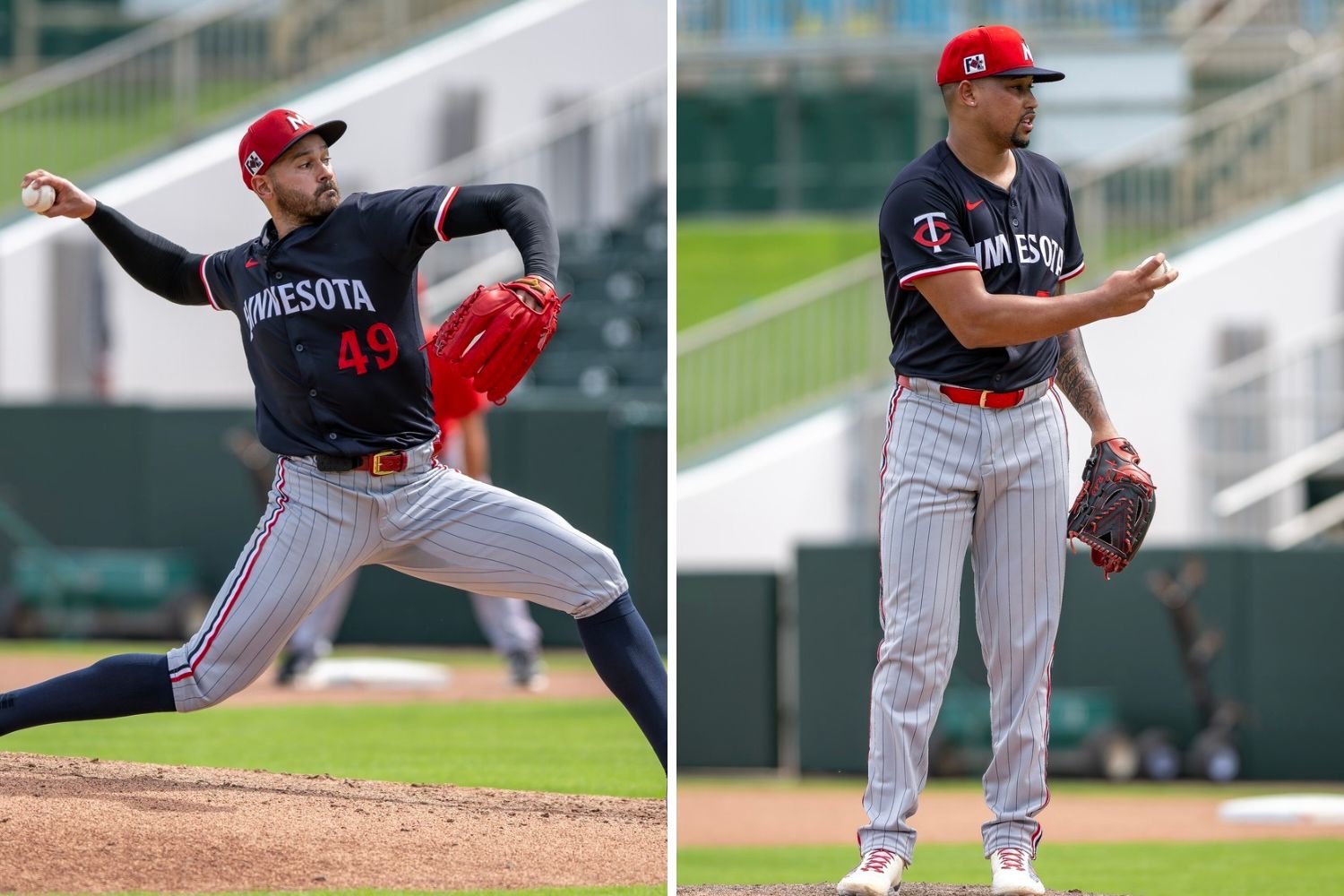 When I look over the Twins roster, I see a lot of cause for concern on the position-player side. Minnesota has a nucleus of potentially elite bats in Carlos Correa, Byron Buxton and Royce Lewis, but none have shown much ability to stay healthy. The lineup is otherwise littered with question marks, and during the offseason there was minimal effort to supplement this group with additional firepower, even as one of their most reliable bats exited via free agency. That said, I'm bullishly optimistic the offense can be at least good enough. The fact that Correa, Buxton and Lewis all arrived at camp 100% healthy bodes well. Trevor Larnach, Matt Wallner, Ryan Jeffers and Willi Castro have been quality hitters. There's some good young talent on hand, albeit with much to prove. The realist in me says we're probably going to see more of guys like Harrison Bader and Austin Martin in the lineup this year than we'd like to, but I also think the team can live with it. The Twins don't need their offense to be gangbusters like it was in 2019. They just need to score enough to support a pitching staff that can hopefully pave Minnesota's path to 90-plus wins and a division title. Derek Falvey was brought in from Cleveland to build a pitching machine and now it's primed to be their defining strength in a pivotal 2025 season. Here's a truism about baseball that can't be denied: When you routinely get five or six solid innings from your starting pitcher, and turn it over to a shutdown bullpen, you're going to win a lot of ballgames. Stymy the opposing offenses enough, and the success of your offense becomes almost immaterial. Of the top eight MLB teams in ERA last year, seven made the playoffs. All 12 teams that reached the postseason ranked in the top half of the league in ERA. This includes a Cleveland team that won 92 games despite ranking 17th in the wOBA. Detroit ranked 25th in wOBA and still managed to sneak in thanks to a staff that ranked fourth in ERA (on the shoulders of Cy Young winner Tarik Skubal). The Twins are coming into this season with relatively good health and booming optimism on the pitching front. Few if any teams can rival their top three starters in Pablo Lopez, Bailey Ober and Joe Ryan. Chris Paddack managed to hang around through the offseason (so far), and beyond these vets there are numerous promising young arms who've already begun to establish themselves in the majors. The bullpen, meanwhile, has all the makings of a lockdown unit and a formidable point of advantage, with Jhoan Duran, Griffin Jax, Cole Sands and newcomer Danny Coulombe giving them an assortment of high-leverage options beyond their solid middle-innings crew. I'm not naive enough to think there won't be health attrition on the pitching side, even with all the positive early-camp signs. In addition to the frontline talent leading the rotation and relief corps, there's enough depth that the Twins can sustain a few injuries and still come out very well in both areas. You've gotta score to win in baseball — hey, another truism — and the Twins should have what it takes to at least hold their own under new hitting coach Matt Borgschulte. But a deep rotation and consistent bullpen, capable of keeping opposing lineups bottled up day after day, is the most dependable formula for winning in baseball. That's what the Twins are counting on, and they're not alone in their belief that it can punch their ticket. Minnesota is projected as the AL Central's best team at FanGraphs and is favored to win the division in Vegas, despite last year's fourth-place finish and bettors being well aware of the injury concerns plaguing their best offensive players. Why? It's simple: The Twins look like the division's clear front-runners in the arms race.
 -
They've lost their safety net in Carlos Santana. Now the questionable assortment of defenders in Minnesota's infield mix will really be put to the test. Image courtesy of Jeff Curry-Imagn Images Last year, Twins first baseman Carlos Santana led all qualified MLB first basemen in Outs Above Average at +14, first out of 40 players, earning him a Gold Glove on his way out the door. He signed a one-year contract with the rival Cleveland Guardians during offseason, and as his heir apparent, the Twins brought in Ty France, who ranked dead last out of those 40 qualified first basemen in OOA at -12. That's a swing of 26 outs, almost a full ballgame. Get ready for a shock to the system. I don't think many would describe the Twins as a good defensive team last year — they ranked 25th in Defensive Runs Saved, per the Fielding Bible — but things would have been a whole lot uglier without Santana making spectacular diving grabs and run-saving scoops at first base. He put forth one of the best defensive performances we've ever seen from a Minnesota first baseman. France signed with the Twins last week on a one-year, $1 million contract that appears to be non-guaranteed in name only. Manager Rocco Baldelli has made it clear that the 30-year-old is in line for plenty of action at first base. In an infield that already could feature plenty of Royce Lewis at third base and Edouard Julien at second, this is an ominous proposition from a defensive perspective. To be fair, France is (hopefully) not as bad as the metrics from last year portray. Per Twins Daily's John Bonnes, who is on-site in Ft. Myers for spring training, France told reporters he doesn't much trust defensive stats regarding first basemen, which is probably fair to an extent. There's also reason to believe a heel fracture suffered last June took a toll on his performance in the field. But, the great defensive metrics from Santana last year sure matched the eye test. And while France's 2024 was especially bad, he has consistently rated as an awful defender in the past. It's not hard to see why. He's undersized at 5-foot-11 and he's extremely slow-footed. He's also now into his 30s, putting him on the downslope of the defensive aging curve. The Twins have one clearly very good infielder: Carlos Correa. If healthy, he should make life fairly easy for France on balls hit to short. Elsewhere, it could be an adventure. Lewis is apparently set to return as a regular at third base despite struggling with errant throws repeatedly last year. José Miranda has also been rough defensively at the hot corner. Julien could see significant time at second base, where he's been somewhere between below-average and a butcher. The Twins reportedly flirted with signing a backup shortstop who might have boosted their defensive depth in the infield, but didn't. This dynamic is one of the biggest reasons I think Brooks Lee has a major leg up for a roster spot, even if he doesn't win the full-time starting second base job. He can get plenty of playing time all around the infield, as probably the best defensive 2B/3B on the roster and maybe the only player they trust to play shortstop aside from Correa. But when you're counting on a 24-year-old rookie, whose signature strength has always been hitting, to be your defensive savior in the infield ... probably not a great sign. Watching infielders kick the ball around and fail to convert makeable plays is extremely vexing as a fan. But I'm sorry to say we are likely in for a fair amount of it from the Twins this year, unless Lewis can rebound, Correa can stay healthy, and Lee can entrench himself. Barring those types of favorable twists, there's going to be a lot of pressure on France, who — for all his faults — is the only first baseman the Twins have with any kind of major-league experience at the position. If he can't prove to be significantly better in the field than last year's numbers showed, this defensive infield has the potential makings of an all-out disaster class. View full article
-
Infield Defense Could Be a Total Disaster for the Minnesota Twins
Nick Nelson posted an article in Twins
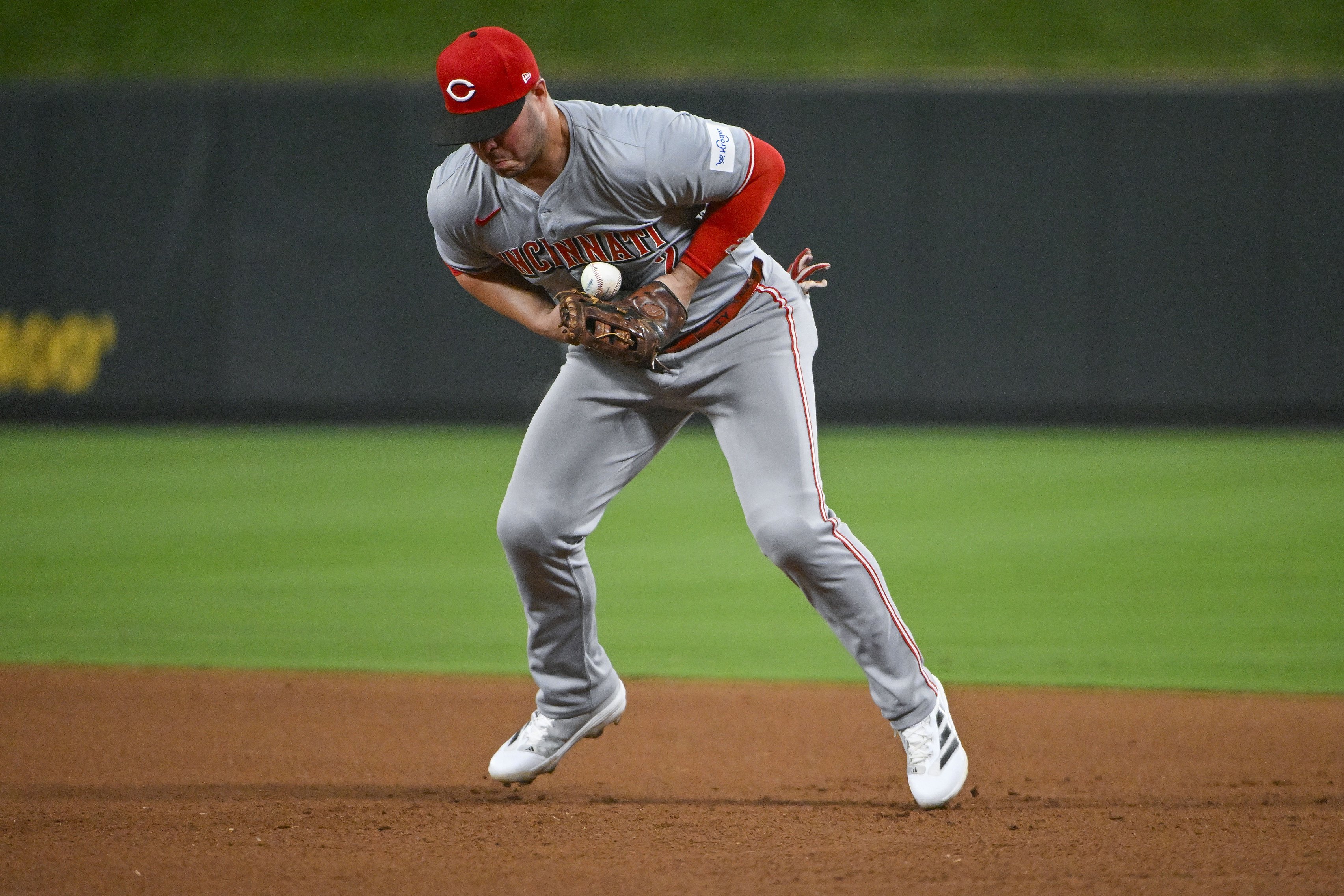 Last year, Twins first baseman Carlos Santana led all qualified MLB first basemen in Outs Above Average at +14, first out of 40 players, earning him a Gold Glove on his way out the door. He signed a one-year contract with the rival Cleveland Guardians during offseason, and as his heir apparent, the Twins brought in Ty France, who ranked dead last out of those 40 qualified first basemen in OOA at -12. That's a swing of 26 outs, almost a full ballgame. Get ready for a shock to the system. I don't think many would describe the Twins as a good defensive team last year — they ranked 25th in Defensive Runs Saved, per the Fielding Bible — but things would have been a whole lot uglier without Santana making spectacular diving grabs and run-saving scoops at first base. He put forth one of the best defensive performances we've ever seen from a Minnesota first baseman. France signed with the Twins last week on a one-year, $1 million contract that appears to be non-guaranteed in name only. Manager Rocco Baldelli has made it clear that the 30-year-old is in line for plenty of action at first base. In an infield that already could feature plenty of Royce Lewis at third base and Edouard Julien at second, this is an ominous proposition from a defensive perspective. To be fair, France is (hopefully) not as bad as the metrics from last year portray. Per Twins Daily's John Bonnes, who is on-site in Ft. Myers for spring training, France told reporters he doesn't much trust defensive stats regarding first basemen, which is probably fair to an extent. There's also reason to believe a heel fracture suffered last June took a toll on his performance in the field. But, the great defensive metrics from Santana last year sure matched the eye test. And while France's 2024 was especially bad, he has consistently rated as an awful defender in the past. It's not hard to see why. He's undersized at 5-foot-11 and he's extremely slow-footed. He's also now into his 30s, putting him on the downslope of the defensive aging curve. The Twins have one clearly very good infielder: Carlos Correa. If healthy, he should make life fairly easy for France on balls hit to short. Elsewhere, it could be an adventure. Lewis is apparently set to return as a regular at third base despite struggling with errant throws repeatedly last year. José Miranda has also been rough defensively at the hot corner. Julien could see significant time at second base, where he's been somewhere between below-average and a butcher. The Twins reportedly flirted with signing a backup shortstop who might have boosted their defensive depth in the infield, but didn't. This dynamic is one of the biggest reasons I think Brooks Lee has a major leg up for a roster spot, even if he doesn't win the full-time starting second base job. He can get plenty of playing time all around the infield, as probably the best defensive 2B/3B on the roster and maybe the only player they trust to play shortstop aside from Correa. But when you're counting on a 24-year-old rookie, whose signature strength has always been hitting, to be your defensive savior in the infield ... probably not a great sign. Watching infielders kick the ball around and fail to convert makeable plays is extremely vexing as a fan. But I'm sorry to say we are likely in for a fair amount of it from the Twins this year, unless Lewis can rebound, Correa can stay healthy, and Lee can entrench himself. Barring those types of favorable twists, there's going to be a lot of pressure on France, who — for all his faults — is the only first baseman the Twins have with any kind of major-league experience at the position. If he can't prove to be significantly better in the field than last year's numbers showed, this defensive infield has the potential makings of an all-out disaster class.
- 82 comments
-
- 5
-
-
- ty france
- edouard julien
- (and 1 more)
-
Ranking Minnesota Twins Non-Roster Invites By Their Potential Impact
Nick Nelson posted an article in Twins
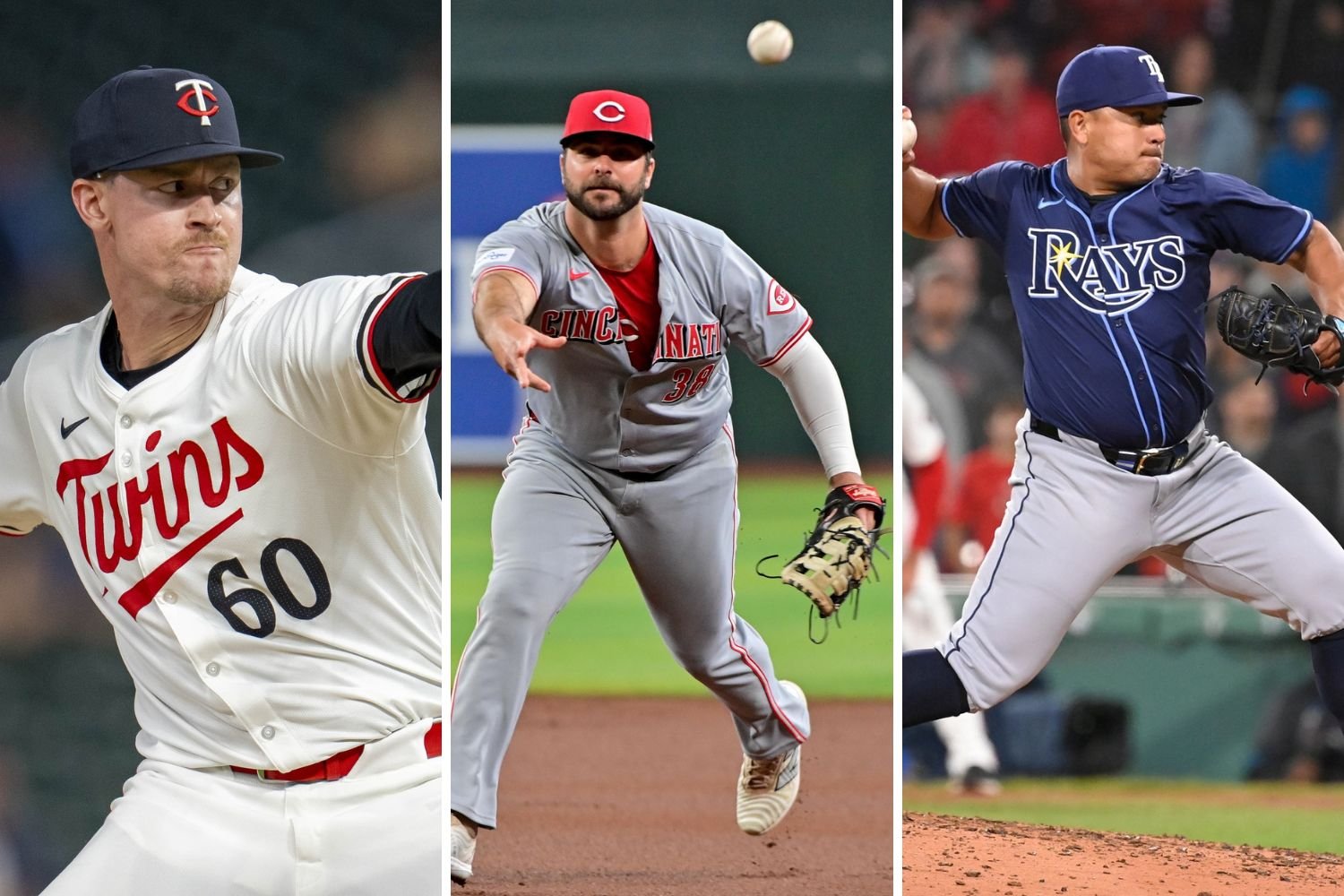 Invariably it seems like at least one or two non-roster camp invites end up making the Opening Day roster for the Minnesota Twins. Sometimes their impact is massive, like in the case of Willi Castro, who made the roster out of spring training in 2023 after signing a minor-league deal, and has since led the team in plate appearances while ranking second in fWAR. Conversely, sometimes their impact is minimal, like when Daniel Duarte earned a roster spot last year and made two appearances before going down with a season-ending elbow injury. Plenty of times, the outcome ultimately lies somewhere in between. But as examples such as Castro and Danny Coulombe have illustrated, non-roster invites shouldn't be overlooked, even if they didn't generate enough market demand to receive a guaranteed contract. Minor-league signings are typically players on the fringe of big-league relevance, hoping to establish or reestablish themselves at the highest level as they pursue their dream. Oh, and then there are the really good prospects who get summoned to MLB camp so they can start acclimating because they're seen as close to being ready. You'll find a couple of those on this list too. Below I've taken a shot at ranking Minnesota's 17 non-roster invites, based on their likelihood of making a meaningful impact for the Twins this year. To be clear, it's not a ranking of who is most likely to make the Opening Day roster because that (as Duarte showed) can be less important than the totality of their contribution, whenever the chance comes. 1. Luke Keaschall, IF: The top prospect in major-league camp, ranking third in the system on Twins Daily's list. Keaschall has sprinted through the minors with a polished, disciplined offensive approach that inspires a lot of confidence, and he's defensively versatile. Almost fully received from last year's elbow surgery, the 22-year-old could be a sneaky big difference-maker for the Twins this year, especially given their offensive depth question marks. 2. Scott Blewett, RHP: Made 12 appearances for the Twins last year after joining on a minor-league deal, and re-upped on the same terms this year. He's been effective when given chances in the majors, posting a 2.22 ERA in 28 innings. Probably first in line for a bullpen look among non-rostered pitchers. 3. Anthony Misiewicz, LHP: He doesn't offer exciting upside, but he's the only left-handed pitcher on this list and one of just three in Twins camp. With Brent Headrick gone, it's Misiewicz and Kody Funderburk behind Coulombe on the depth chart. By definition that gives the 30-year-old pretty good odds. Misiewicz has made 131 appearances in the big leagues. 4. Andrew Morris, RHP: Another highly regarded prospect (No. 6 on our list) getting a taste of MLB camp ahead of a potential 2025 debut. Morris climbed from Single-A to Triple-A last year, posting a 2.37 ERA across 133 innings. He throws strikes, which gives him a leg up over some other prospects in the MLB-readiness conversation, but is probably behind Simeon Woods Richardson, David Festa and Zebby Matthews in line for a crack at the rotation. 5. Mike Ford, 1B/DH: His chances of working into the first base mix took a hit with the Ty France signing, but he's got a decent amount of major-league experience and the Twins could find themselves looking for offense where they can get it this summer. Ford's a long shot to make the roster out of camp but could position himself for a call-up if he hits well at Triple-A. 6. Cory Lewis, RHP: The Twins' 2023 minor-league pitcher of the year is in camp to rub shoulders with the vets as he gets ready to take on the high minors in earnest. An injury limited him to 79 innings last year so building up will be Lewis's primary focus, but he's got the stuff – including a unique mid-80s knuckleball – to get a shot. 7. Huascar Ynoa, RHP: Traded once upon a time by the Twins to the Braves as a teenager, Ynoa returned to Minnesota on a minor-league deal and will compete for a look in the bullpen. He's recorded 128 strikeouts in 122 MLB innings, with a 96 MPH fastball leading his repertoire, but hasn't pitched in the majors since 2022. Ynoa is still only 26 years old and we all know relievers can be late bloomers. 8. Armando Alvarez, IF: A bat-first infielder whose opportunity could come if the Twins find themselves starving for offensive firepower and he's crushing Triple-A, as he did last year when he posted a .967 OPS in the Athletics system. It helps his case that he's shown an ability in the minors to crush left-handed pitching, which is a somewhat rare strength among the Twins' talent. 9. Erasmo Ramírez, RHP: Ramírez joined the Twins just a few days ago, bringing an extensive veteran track record spanning 850 innings in the majors, including 21 last year with the Rays. There's not a lot of upside to be found with the 35-year-old, who has never averaged more than 7.3 K/9 in 13 MLB seasons, but his depth of experience could give him a preferential edge if the Twins are looking for innings. He's a former starter who can provide some length. 10. Yunior Severino, 1B/DH: Severino was removed from the 40-man roster after last season but rejoined the Twins on a minors deal. To find his way back into the team's plans, he is going to need to hit, hit, hit in Triple-A. He has definitely shown the ability to get red-hot but hasn't been able to sustain it over prolonged stretches. The glove is bad enough that he might be a DH-only option in the majors. 11. Alex Speas, RHP: In terms of the potential impact he could make if everything were to click, Speas would be much higher on this list. He's got huge stuff, including a fastball that touches triple digits. But he simply has not been able to throw strikes, at all. He's issued 162 walks in 173 innings in the minors, including 68 BB in 58 IP at Triple-A. Speas would need to show dramatic improvement in strike-throwing ability to get a crack, methinks, but at age 26 it's not out of the question. 12. Randy Dobnak, RHP: Now in the final year of his guaranteed contract, which might be the only thing keeping him around, Dobnak is Triple-A depth and pretty low in the pecking order. He's never been the same since a finger injury derailed his promising career. Unless he can unlock something, the biggest impact he'll be realistically be lined up for is similar to last year: a handful of low-leverage relief outings when the Twins simply need a usable arm. 13. Ryan Jensen, RHP: Somewhat similar to Speas – good arsenal, extremely poor control – except the stuff isn't quite as impressive, which is why the former first-round draft pick has yet to get a look in the big leagues at 27. If he can find the strike zone with any consistency, he could get an opportunity, and from there who knows. Jensen struck out 81 hitters in 56 innings at St. Paul last year, but with 50 walks. 14. Pat Winkel, C: It's tough to imagine a scenario where Winkel sees significant time for the Twins unless their catching depth collapses. But this is hardly unthinkable. The 40-man options behind Ryan Jeffers and Christian Vázquez – Jair Camargo, Diego Cartaya, Mickey Gasper – are complete unknowns as MLB products. Winkel has a solid rep for working with pitchers and is well regarded in the org. 15. Jeferson Morales, UTIL: He's shown intriguing hitting ability in the minors, including an outstanding Triple-A debut last year, but fielding is a big limitation. The 5-foot-8 scrapper is listed as a utilityman mainly because he's not good enough at any position to call it home. That'll make it tough to break through, at least this year, but at 25 he's got time yet to develop and sharpen up. 16. Alex Isola, C: Isola can be barely be considered a catcher anymore – he spent far more time at first base, left field and DH last year – but his ability to don catcher's gear and swing a decent RH bat keeps him on the radar as a useful spring training presence. Hard to envision him finding his way to the majors this season. 17. Darren McCaughan, RHP: An experienced arm who was seemingly brought in merely to throw innings in St. Paul. The 28-year-old doesn't throw hard and hasn't posted an ERA below 4.55 at any level since 2019, though he does have some major-league experience.
- 23 comments
-
- 7
-
-
- luke keaschall
- scott blewett
- (and 3 more)
-
The Twins originally extended spring invites to 16 players outside of the 40-man roster this year, and they added a 17th on Saturday. Here's a breakdown of who among this group is most likely to play impactful roles for the Twins in 2025. Image courtesy of Jesse Johnson, Matt Kartozian, Eric Canha-Imagn Images Invariably it seems like at least one or two non-roster camp invites end up making the Opening Day roster for the Minnesota Twins. Sometimes their impact is massive, like in the case of Willi Castro, who made the roster out of spring training in 2023 after signing a minor-league deal, and has since led the team in plate appearances while ranking second in fWAR. Conversely, sometimes their impact is minimal, like when Daniel Duarte earned a roster spot last year and made two appearances before going down with a season-ending elbow injury. Plenty of times, the outcome ultimately lies somewhere in between. But as examples such as Castro and Danny Coulombe have illustrated, non-roster invites shouldn't be overlooked, even if they didn't generate enough market demand to receive a guaranteed contract. Minor-league signings are typically players on the fringe of big-league relevance, hoping to establish or reestablish themselves at the highest level as they pursue their dream. Oh, and then there are the really good prospects who get summoned to MLB camp so they can start acclimating because they're seen as close to being ready. You'll find a couple of those on this list too. Below I've taken a shot at ranking Minnesota's 17 non-roster invites, based on their likelihood of making a meaningful impact for the Twins this year. To be clear, it's not a ranking of who is most likely to make the Opening Day roster because that (as Duarte showed) can be less important than the totality of their contribution, whenever the chance comes. 1. Luke Keaschall, IF: The top prospect in major-league camp, ranking third in the system on Twins Daily's list. Keaschall has sprinted through the minors with a polished, disciplined offensive approach that inspires a lot of confidence, and he's defensively versatile. Almost fully received from last year's elbow surgery, the 22-year-old could be a sneaky big difference-maker for the Twins this year, especially given their offensive depth question marks. 2. Scott Blewett, RHP: Made 12 appearances for the Twins last year after joining on a minor-league deal, and re-upped on the same terms this year. He's been effective when given chances in the majors, posting a 2.22 ERA in 28 innings. Probably first in line for a bullpen look among non-rostered pitchers. 3. Anthony Misiewicz, LHP: He doesn't offer exciting upside, but he's the only left-handed pitcher on this list and one of just three in Twins camp. With Brent Headrick gone, it's Misiewicz and Kody Funderburk behind Coulombe on the depth chart. By definition that gives the 30-year-old pretty good odds. Misiewicz has made 131 appearances in the big leagues. 4. Andrew Morris, RHP: Another highly regarded prospect (No. 6 on our list) getting a taste of MLB camp ahead of a potential 2025 debut. Morris climbed from Single-A to Triple-A last year, posting a 2.37 ERA across 133 innings. He throws strikes, which gives him a leg up over some other prospects in the MLB-readiness conversation, but is probably behind Simeon Woods Richardson, David Festa and Zebby Matthews in line for a crack at the rotation. 5. Mike Ford, 1B/DH: His chances of working into the first base mix took a hit with the Ty France signing, but he's got a decent amount of major-league experience and the Twins could find themselves looking for offense where they can get it this summer. Ford's a long shot to make the roster out of camp but could position himself for a call-up if he hits well at Triple-A. 6. Cory Lewis, RHP: The Twins' 2023 minor-league pitcher of the year is in camp to rub shoulders with the vets as he gets ready to take on the high minors in earnest. An injury limited him to 79 innings last year so building up will be Lewis's primary focus, but he's got the stuff – including a unique mid-80s knuckleball – to get a shot. 7. Huascar Ynoa, RHP: Traded once upon a time by the Twins to the Braves as a teenager, Ynoa returned to Minnesota on a minor-league deal and will compete for a look in the bullpen. He's recorded 128 strikeouts in 122 MLB innings, with a 96 MPH fastball leading his repertoire, but hasn't pitched in the majors since 2022. Ynoa is still only 26 years old and we all know relievers can be late bloomers. 8. Armando Alvarez, IF: A bat-first infielder whose opportunity could come if the Twins find themselves starving for offensive firepower and he's crushing Triple-A, as he did last year when he posted a .967 OPS in the Athletics system. It helps his case that he's shown an ability in the minors to crush left-handed pitching, which is a somewhat rare strength among the Twins' talent. 9. Erasmo Ramírez, RHP: Ramírez joined the Twins just a few days ago, bringing an extensive veteran track record spanning 850 innings in the majors, including 21 last year with the Rays. There's not a lot of upside to be found with the 35-year-old, who has never averaged more than 7.3 K/9 in 13 MLB seasons, but his depth of experience could give him a preferential edge if the Twins are looking for innings. He's a former starter who can provide some length. 10. Yunior Severino, 1B/DH: Severino was removed from the 40-man roster after last season but rejoined the Twins on a minors deal. To find his way back into the team's plans, he is going to need to hit, hit, hit in Triple-A. He has definitely shown the ability to get red-hot but hasn't been able to sustain it over prolonged stretches. The glove is bad enough that he might be a DH-only option in the majors. 11. Alex Speas, RHP: In terms of the potential impact he could make if everything were to click, Speas would be much higher on this list. He's got huge stuff, including a fastball that touches triple digits. But he simply has not been able to throw strikes, at all. He's issued 162 walks in 173 innings in the minors, including 68 BB in 58 IP at Triple-A. Speas would need to show dramatic improvement in strike-throwing ability to get a crack, methinks, but at age 26 it's not out of the question. 12. Randy Dobnak, RHP: Now in the final year of his guaranteed contract, which might be the only thing keeping him around, Dobnak is Triple-A depth and pretty low in the pecking order. He's never been the same since a finger injury derailed his promising career. Unless he can unlock something, the biggest impact he'll be realistically be lined up for is similar to last year: a handful of low-leverage relief outings when the Twins simply need a usable arm. 13. Ryan Jensen, RHP: Somewhat similar to Speas – good arsenal, extremely poor control – except the stuff isn't quite as impressive, which is why the former first-round draft pick has yet to get a look in the big leagues at 27. If he can find the strike zone with any consistency, he could get an opportunity, and from there who knows. Jensen struck out 81 hitters in 56 innings at St. Paul last year, but with 50 walks. 14. Pat Winkel, C: It's tough to imagine a scenario where Winkel sees significant time for the Twins unless their catching depth collapses. But this is hardly unthinkable. The 40-man options behind Ryan Jeffers and Christian Vázquez – Jair Camargo, Diego Cartaya, Mickey Gasper – are complete unknowns as MLB products. Winkel has a solid rep for working with pitchers and is well regarded in the org. 15. Jeferson Morales, UTIL: He's shown intriguing hitting ability in the minors, including an outstanding Triple-A debut last year, but fielding is a big limitation. The 5-foot-8 scrapper is listed as a utilityman mainly because he's not good enough at any position to call it home. That'll make it tough to break through, at least this year, but at 25 he's got time yet to develop and sharpen up. 16. Alex Isola, C: Isola can be barely be considered a catcher anymore – he spent far more time at first base, left field and DH last year – but his ability to don catcher's gear and swing a decent RH bat keeps him on the radar as a useful spring training presence. Hard to envision him finding his way to the majors this season. 17. Darren McCaughan, RHP: An experienced arm who was seemingly brought in merely to throw innings in St. Paul. The 28-year-old doesn't throw hard and hasn't posted an ERA below 4.55 at any level since 2019, though he does have some major-league experience. View full article
-
Offseason Status Update: Springing Into Action
Nick Nelson replied to Nick Nelson's topic in Twins Daily Front Page News
Rocco/Falvey have definitely mentioned Julien in the first base mix. I recall him being named alongside Miranda when asked about the position at the Diamond Awards. It's fair to wonder how serious they are about it, when they've shown such minimal inclination to try him out there. The idea that Castro would be even worked in there seems like an indictment of Julien.- 25 replies
-
- 1
-
-
- danny coulombe
- harrison bader
- (and 1 more)
-
Offseason Status Update: Springing Into Action
Nick Nelson replied to Nick Nelson's topic in Twins Daily Front Page News
I would've agreed with you about Stewart but he's already throwing bullpens on the first few days of camp. He seems healthy. Despite having Lee listed as technically on the "bench" in that graphic, I don't really view him as a bench player: more like a guy who would start 4-5x a week while mixing in at 2B/SS/3B. The Twins like him defensively everywhere (unlike Julien and Martin) and they don't have a backup SS. You could flip him with Eddy J as the 2B starter if you like, it's all the same.- 25 replies
-
- 1
-
-
- danny coulombe
- harrison bader
- (and 1 more)
-
After remaining dormant through the first three months of the offseason, the Minnesota Twins finally sprung into action on the doorstep of spring training with a series of free agent signings. Let's recap their late moves and how they affect the roster outlook. Image courtesy of Tommy Gilligan, Jason Parkhurst, Katie Stratman-Imagn Images As the calendar pages flipped from November to December, from January to February, the Twins front office remained idle, constrained by payroll limitations and a challenging market. Their moves amounted to low-scale additions on the fringes: minor-league signings, meager trades, a Rule 5 selection. These offseason status updates I've been publishing every few weeks have not been terribly interesting to write, and I'm sure not to read either. Now, in mid-February, with spring training officially underway, we've finally got some meaningful moves to cover: a relative flurry of free agent signings after ownership reportedly green-lighted a small spending increase on their way out. Let's break down the club's latest acquisitions and their roster ramifications as we close out our offseason coverage and officially flip the page to spring training. Coulombe Bolsters Minnesota's Bullpen Strength The team's first major-league signing of the offseason reunited them with a familiar face: left-handed reliever Danny Coulombe. The 35-year-old previously spent parts of three seasons with the Twins before featuring in the Baltimore bullpen in 2024-25. He has posted outstanding numbers when healthy throughout that span. Coulombe will earn $3 million on his one-year deal, making him the second-highest paid member of the Minnesota bullpen behind Jhoan Durán ($4.13 million). While a lefty reliever was one of the roster's most obvious needs coming into the offseason, it was interesting to see such a substantial investment here given the strength of the Twins' relief corps and the question marks surrounding Coulombe at age 35, coming off an elbow injury. The front office seems focused on building a bullpen with the depth and quality to be an overwhelming strength for the Twins. Not a bad idea, based on what we saw from Cleveland last year. If Coulombe stays healthy and pitches up to his standard alongside the likes of Durán, Griffin Jax, Cole Sands and Louie Varland, this unit could be beyond formidable. But nowhere do these kinds of "ifs" loom larger than in the volatile world of MLB bullpens. Bader Brings His Brilliant Glove to Twins Outfield Last week, four different righty-swinging outfielders signed within the span of a few days. Harrison Bader got the biggest contract of the bunch, and in the surprise of the offseason, it was the Twins who gave it to him. Minnesota's front office did what it took to land the former Gold Glover, inking him to a $6.25 million deal with incentives and a mutual option. This signing on its own amounted to more than just about anyone expected the Twins to spend in the free agent market. Read more: What Differentiated Harrison Bader from the Field of RH Outfield Bats? Clearly, the Twins were adamant about rostering a true standout center fielder behind Byron Buxton – akin to Michael A. Taylor in 2023 – after last year's reinforcements proved lacking. Bader can play defense at the level of both, which is a rare trait. But the flip side is that he isn't much of a hitter, even against left-handed pitching, which negates the value of his platoon fit. With their modest influx of available funds, the Twins front office prioritized pitching and defense over offense, despite the lineup being arguably their biggest point of scrutiny and uncertainty. Spending nearly $10 million on Coulombe and Bader left them with little left to address first base, so they bought a lotto ticket. Twins Acquire France to Compete at First Base Following a season where Carlos Santana was one of the team's biggest stabilizing forces, producing 3.0 fWAR and winning a Gold Glove at first, the Twins have lined up as his heir apparent Ty France, who produced negative-0.9 fWAR with staggeringly bad defensive metrics last year. He has also posted a .688 OPS over the past two seasons, though the 30-year-old previously showed some ability at the plate as an All-Star with 20 home runs and 83 RBIs in 2022. France is far from guaranteed to win the starting first base job or even to make the team; his MLB deal was as close to a minor-league contract as you can get, giving him a 40-man roster spot but with a paltry non-guaranteed $1 million in salary. But it seems clear the Twins going to put him at the head of the line given his experience compared to alternative options like José Miranda, Edouard Julien, Mickey Gasper and Willi Castro. "He's going to play a lot. That's really the best way of saying it," declared Rocco Baldelli at Twins camp on Saturday. My friend Giles Ferrell put it best in calling this a "low-risk, low-reward pickup." It's a shame the Twins couldn't have found a way to secure a little more offensive upside at this position, which is already rife with defensive downside. But France at least brings a track record to the table. Henriquez, Headrick and Helman Are Victims of Roster Crunch To make room on the 40-man roster for their new signings, the Twins lost two pitchers and a position player. Right-hander Ronny Henriquez was claimed off waivers by Miami, and left-hander Brent Headrick by the Yankees, while utilityman Michael Helman was traded to St. Louis in exchange for cash. None could be considered devastating losses, but each player had his own level of promise and potential value. Keeping any of the three in the organization would be nice, but I suppose it speaks to the perceived quality of Minnesota's talent that their roster casualties are in demand elsewhere. Here's an updated look at Twins' (full) 40-man with the additions of Coulombe, Bader and France. Twins 2025 Roster and Payroll Projection Below you can find my attempt at predicting the Opening Day 26-man roster in the wake of these moves. Barring injuries, I think this is how the Twins would like things to take shape. Lee and France are listed as backups, but I foresee them both rotating through very frequently at different positions (Lee at second and short, France at first and DH) with Miranda seeing time at third and Julien seeing time at first. We all know that for this Twins front office, the offseason doesn't end until Opening Day. It's possible there could be more moves to come, although team officials have signaled that they're done in free agency. If the Twins do indeed hold onto all of their current players, they'll be poised to enter the season with payroll in the $140 million range. That's enough to win. Time to go on the field and do it. View full article
-
 As the calendar pages flipped from November to December, from January to February, the Twins front office remained idle, constrained by payroll limitations and a challenging market. Their moves amounted to low-scale additions on the fringes: minor-league signings, meager trades, a Rule 5 selection. These offseason status updates I've been publishing every few weeks have not been terribly interesting to write, and I'm sure not to read either. Now, in mid-February, with spring training officially underway, we've finally got some meaningful moves to cover: a relative flurry of free agent signings after ownership reportedly green-lighted a small spending increase on their way out. Let's break down the club's latest acquisitions and their roster ramifications as we close out our offseason coverage and officially flip the page to spring training. Coulombe Bolsters Minnesota's Bullpen Strength The team's first major-league signing of the offseason reunited them with a familiar face: left-handed reliever Danny Coulombe. The 35-year-old previously spent parts of three seasons with the Twins before featuring in the Baltimore bullpen in 2024-25. He has posted outstanding numbers when healthy throughout that span. Coulombe will earn $3 million on his one-year deal, making him the second-highest paid member of the Minnesota bullpen behind Jhoan Durán ($4.13 million). While a lefty reliever was one of the roster's most obvious needs coming into the offseason, it was interesting to see such a substantial investment here given the strength of the Twins' relief corps and the question marks surrounding Coulombe at age 35, coming off an elbow injury. The front office seems focused on building a bullpen with the depth and quality to be an overwhelming strength for the Twins. Not a bad idea, based on what we saw from Cleveland last year. If Coulombe stays healthy and pitches up to his standard alongside the likes of Durán, Griffin Jax, Cole Sands and Louie Varland, this unit could be beyond formidable. But nowhere do these kinds of "ifs" loom larger than in the volatile world of MLB bullpens. Bader Brings His Brilliant Glove to Twins Outfield Last week, four different righty-swinging outfielders signed within the span of a few days. Harrison Bader got the biggest contract of the bunch, and in the surprise of the offseason, it was the Twins who gave it to him. Minnesota's front office did what it took to land the former Gold Glover, inking him to a $6.25 million deal with incentives and a mutual option. This signing on its own amounted to more than just about anyone expected the Twins to spend in the free agent market. Read more: What Differentiated Harrison Bader from the Field of RH Outfield Bats? Clearly, the Twins were adamant about rostering a true standout center fielder behind Byron Buxton – akin to Michael A. Taylor in 2023 – after last year's reinforcements proved lacking. Bader can play defense at the level of both, which is a rare trait. But the flip side is that he isn't much of a hitter, even against left-handed pitching, which negates the value of his platoon fit. With their modest influx of available funds, the Twins front office prioritized pitching and defense over offense, despite the lineup being arguably their biggest point of scrutiny and uncertainty. Spending nearly $10 million on Coulombe and Bader left them with little left to address first base, so they bought a lotto ticket. Twins Acquire France to Compete at First Base Following a season where Carlos Santana was one of the team's biggest stabilizing forces, producing 3.0 fWAR and winning a Gold Glove at first, the Twins have lined up as his heir apparent Ty France, who produced negative-0.9 fWAR with staggeringly bad defensive metrics last year. He has also posted a .688 OPS over the past two seasons, though the 30-year-old previously showed some ability at the plate as an All-Star with 20 home runs and 83 RBIs in 2022. France is far from guaranteed to win the starting first base job or even to make the team; his MLB deal was as close to a minor-league contract as you can get, giving him a 40-man roster spot but with a paltry non-guaranteed $1 million in salary. But it seems clear the Twins going to put him at the head of the line given his experience compared to alternative options like José Miranda, Edouard Julien, Mickey Gasper and Willi Castro. "He's going to play a lot. That's really the best way of saying it," declared Rocco Baldelli at Twins camp on Saturday. My friend Giles Ferrell put it best in calling this a "low-risk, low-reward pickup." It's a shame the Twins couldn't have found a way to secure a little more offensive upside at this position, which is already rife with defensive downside. But France at least brings a track record to the table. Henriquez, Headrick and Helman Are Victims of Roster Crunch To make room on the 40-man roster for their new signings, the Twins lost two pitchers and a position player. Right-hander Ronny Henriquez was claimed off waivers by Miami, and left-hander Brent Headrick by the Yankees, while utilityman Michael Helman was traded to St. Louis in exchange for cash. None could be considered devastating losses, but each player had his own level of promise and potential value. Keeping any of the three in the organization would be nice, but I suppose it speaks to the perceived quality of Minnesota's talent that their roster casualties are in demand elsewhere. Here's an updated look at Twins' (full) 40-man with the additions of Coulombe, Bader and France. Twins 2025 Roster and Payroll Projection Below you can find my attempt at predicting the Opening Day 26-man roster in the wake of these moves. Barring injuries, I think this is how the Twins would like things to take shape. Lee and France are listed as backups, but I foresee them both rotating through very frequently at different positions (Lee at second and short, France at first and DH) with Miranda seeing time at third and Julien seeing time at first. We all know that for this Twins front office, the offseason doesn't end until Opening Day. It's possible there could be more moves to come, although team officials have signaled that they're done in free agency. If the Twins do indeed hold onto all of their current players, they'll be poised to enter the season with payroll in the $140 million range. That's enough to win. Time to go on the field and do it.
- 25 comments
-
- 10
-
-
- danny coulombe
- harrison bader
- (and 1 more)
-
Minnesota Twins Enter Camp with a Healthy Outlook (For a Change)
Nick Nelson posted an article in Twins
 Let's start by putting this out there: jinxes aren't real. I feel like any time a topic such as this is broached, people get panicked and upset as if merely speaking on the situation will cause it to change. Maybe that just ties back to the superstitious ethos of baseball. Knock on wood if you like, but it doesn't make a difference. Injuries are going to happen and it won't be due to this article getting written. With that said, it is worth remarking on the team's relatively clean bill of health entering camp, and how much that differs from past springs. Two years ago, Jorge Polanco and Alex Kirilloff were the big question marks. They were both facing potentially career-threatening medical concerns. Polanco had been plagued in 2022 by debilitating knee pain – "He could barely walk. He could barely swing the bat," his manager Rocco Baldelli later said – and he was behind from the very start of camp in 2023. Kirilloff was coming back from a rare, invasive procedure to address his chronic wrist soreness, after a previous surgery failed to resolve the issue. They were far from the only Twins players whose statuses were in doubt. Looking back at my early-camp rundown from that year, it's striking to recall at what an overwhelming narrative the injuries were heading into 2023: Tyler Mahle's balky shoulder, Kenta Maeda coming off Tommy John, Royce Lewis still recovering from a second ACL tear. Last year there were also a number of pressing health questions heading into spring training. Carlos Correa was looking to prove he was past the plantar fasciitis that bogged him down in 2023. Kirilloff was coming off another surgery (this time on his shoulder). Planned fifth starter Anthony DeSclafani had come aboard with uncertainty surrounding the condition of his elbow. But the microscope was clearly on Byron Buxton more than any other player. His '23 campaign had been a complete disaster, as persistent struggles with a non-cooperative right knee limited him like never before. Buxton didn't make a single start in center field and was a mere shell of himself offensively. As the new spring got underway, despite declaring himself "back" a few weeks early at TwinsFest, it was anyone's guess what to expect from the injury-ravaged star. The script has flipped completely coming off Buxton's healthiest season in years. He appeared in 100+ games for the second time in his career, played a good center field, and finished the season producing. As Bobby Nightengale recently highlighted for the Star Tribune, Buxton is entering camp this year with a "whole new mindset" after finally getting to experience an offseason that wasn't dominated by rehab and physical therapy. "This is probably the healthiest offseason he's had," according to Derek Falvey. Buxton's dramatically improved health outlook from last year to this year is a good facsimile for the team as a whole. You look around and there just aren't a ton of known scary injury concerns following guys into camp. Here are the situations worth monitoring, that I'm aware of: Brock Stewart seems to be the biggest question mark this year. The perennially injured reliever is coming off shoulder surgery that the Twins hope will resolve his arm woes. There's been no word of roadblocks or setbacks, but the team has acknowledged he might be a little behind in camp as he ramps up. It's tough to feel all that optimistic about Stewart given his history, but I think most of us are viewing him as more of a bonus than an integral cog in the bullpen. Chris Paddack, like Stewart, is inherently a wild card based on his track record, and probably not someone the Twins can or should count on. That's okay. Same as Stewart, he can be treated as as high-upside bonus in a unit that has the depth to succeed without him. But for what it's worth I've heard nothing to indicate he's off course. Justin Topa missed most of last year with a knee injury, and it's something he's dealt with before, but the Twins must have felt moderately confident in his condition to tender him a guaranteed contract. He's not a lock to make the team even if healthy, so again, relatively low stakes. Much higher stakes here: Correa is coming off another bout with plantar fasciitis, one that cost him nearly half of his 2024 season, and that's obviously something that will warrant monitoring. But he did make it back before the end of the campaign, and played well. Correa said during TwinsFest that he is completely healthy and a full go for spring training, expressing confidence he'll be able to manage both of his afflicted feet. Joe Ryan is coming off a shoulder injury that sidelined him for the final two months of 2024. We may not be able to feel full confidence until we see him letting loose on the mound again, but recent scans showed no signs of the strain, suggesting it is 100% healed. He's been preparing for spring as normal. Certainly there are some looming health-related challenges that need to be factored into this discussion. Specifically I'm thinking about the back issues that have plagued José Miranda and Brooks Lee, and the general need for position players (i.e. Willi Castro and Lewis) to weather the marathon of the MLB season rather than wearing down. And regardless of what we know going into camp, we're all aware that the injury report is subject to change quickly. I'm reminded that Jhoan Durán and Caleb Thielbar were healthy coming into camp last year until they weren't. By no means am I trying to paint some overly rosy picture of what I expect from a health standpoint. There are always a few surprises once the action fires up and from there it becomes a game of chance. But I will say this: Coming into spring training with so few prominent health predicaments sure beats the alternative. Especially because the Twins, given their highly questionable position-player depth, need key players to stay healthy in a pretty dire way. On second thought, maybe let's all knock on some wood, just to be safe.
- 23 comments
-
- 10
-
-
- byron buxton
- carlos correa
- (and 2 more)
-
Injuries will surely come. But as the Twins enter camp, there's a refreshing lack of known concerns to cast shadows over the spring training complex in Fort Myers. It's a positive omen, in a season where this team really needs to stay healthy. Image courtesy of Matt Blewett-Imagn Images Let's start by putting this out there: jinxes aren't real. I feel like any time a topic such as this is broached, people get panicked and upset as if merely speaking on the situation will cause it to change. Maybe that just ties back to the superstitious ethos of baseball. Knock on wood if you like, but it doesn't make a difference. Injuries are going to happen and it won't be due to this article getting written. With that said, it is worth remarking on the team's relatively clean bill of health entering camp, and how much that differs from past springs. Two years ago, Jorge Polanco and Alex Kirilloff were the big question marks. They were both facing potentially career-threatening medical concerns. Polanco had been plagued in 2022 by debilitating knee pain – "He could barely walk. He could barely swing the bat," his manager Rocco Baldelli later said – and he was behind from the very start of camp in 2023. Kirilloff was coming back from a rare, invasive procedure to address his chronic wrist soreness, after a previous surgery failed to resolve the issue. They were far from the only Twins players whose statuses were in doubt. Looking back at my early-camp rundown from that year, it's striking to recall at what an overwhelming narrative the injuries were heading into 2023: Tyler Mahle's balky shoulder, Kenta Maeda coming off Tommy John, Royce Lewis still recovering from a second ACL tear. Last year there were also a number of pressing health questions heading into spring training. Carlos Correa was looking to prove he was past the plantar fasciitis that bogged him down in 2023. Kirilloff was coming off another surgery (this time on his shoulder). Planned fifth starter Anthony DeSclafani had come aboard with uncertainty surrounding the condition of his elbow. But the microscope was clearly on Byron Buxton more than any other player. His '23 campaign had been a complete disaster, as persistent struggles with a non-cooperative right knee limited him like never before. Buxton didn't make a single start in center field and was a mere shell of himself offensively. As the new spring got underway, despite declaring himself "back" a few weeks early at TwinsFest, it was anyone's guess what to expect from the injury-ravaged star. The script has flipped completely coming off Buxton's healthiest season in years. He appeared in 100+ games for the second time in his career, played a good center field, and finished the season producing. As Bobby Nightengale recently highlighted for the Star Tribune, Buxton is entering camp this year with a "whole new mindset" after finally getting to experience an offseason that wasn't dominated by rehab and physical therapy. "This is probably the healthiest offseason he's had," according to Derek Falvey. Buxton's dramatically improved health outlook from last year to this year is a good facsimile for the team as a whole. You look around and there just aren't a ton of known scary injury concerns following guys into camp. Here are the situations worth monitoring, that I'm aware of: Brock Stewart seems to be the biggest question mark this year. The perennially injured reliever is coming off shoulder surgery that the Twins hope will resolve his arm woes. There's been no word of roadblocks or setbacks, but the team has acknowledged he might be a little behind in camp as he ramps up. It's tough to feel all that optimistic about Stewart given his history, but I think most of us are viewing him as more of a bonus than an integral cog in the bullpen. Chris Paddack, like Stewart, is inherently a wild card based on his track record, and probably not someone the Twins can or should count on. That's okay. Same as Stewart, he can be treated as as high-upside bonus in a unit that has the depth to succeed without him. But for what it's worth I've heard nothing to indicate he's off course. Justin Topa missed most of last year with a knee injury, and it's something he's dealt with before, but the Twins must have felt moderately confident in his condition to tender him a guaranteed contract. He's not a lock to make the team even if healthy, so again, relatively low stakes. Much higher stakes here: Correa is coming off another bout with plantar fasciitis, one that cost him nearly half of his 2024 season, and that's obviously something that will warrant monitoring. But he did make it back before the end of the campaign, and played well. Correa said during TwinsFest that he is completely healthy and a full go for spring training, expressing confidence he'll be able to manage both of his afflicted feet. Joe Ryan is coming off a shoulder injury that sidelined him for the final two months of 2024. We may not be able to feel full confidence until we see him letting loose on the mound again, but recent scans showed no signs of the strain, suggesting it is 100% healed. He's been preparing for spring as normal. Certainly there are some looming health-related challenges that need to be factored into this discussion. Specifically I'm thinking about the back issues that have plagued José Miranda and Brooks Lee, and the general need for position players (i.e. Willi Castro and Lewis) to weather the marathon of the MLB season rather than wearing down. And regardless of what we know going into camp, we're all aware that the injury report is subject to change quickly. I'm reminded that Jhoan Durán and Caleb Thielbar were healthy coming into camp last year until they weren't. By no means am I trying to paint some overly rosy picture of what I expect from a health standpoint. There are always a few surprises once the action fires up and from there it becomes a game of chance. But I will say this: Coming into spring training with so few prominent health predicaments sure beats the alternative. Especially because the Twins, given their highly questionable position-player depth, need key players to stay healthy in a pretty dire way. On second thought, maybe let's all knock on some wood, just to be safe. View full article
-
The Twins manager famously liked to go to his bench early and often for subs last year. Ultimately it's hard to say the tendency proved effective. This season, the front office seems to be pushing Rocco in a different direction based on the roster setup. Image courtesy of Eric Canha-Imagn Images It was fairly clear going into the 2024 season what Rocco Baldelli and the Twins were going to do: play matchups to the extreme, with mid-game substitutions intended to ambush opponents and capitalize on key moments. The front office collectively spent about $10 million of its limited funds last year on two bench players — Kyle Farmer and Manuel Margot — who were not really capable of playing shortstop or center field. The idea was that these veteran right-handed bats could be defensively useful enough while serving as frequent pinch-hitting and platooning options in a lineup featuring numerous lefty hitters. We saw how it went. Twins pinch-hitters slashed .186/.268/.273 in a league-leading 183 plate appearances. Margot was historically inept, posting an 0-for-30 egg in his 35 pinch-hitting appearances. Beyond the shoddy production Minnesota got from their hitting subs, the other ramification was that the team's best bats were often unavailable in crucial late-game spots. The logic behind Baldelli's philosophy made sense — platoon advantages are undeniably legitimate — but in practice it just didn't play. This owed partially to sample-size luck, partially to the quality of the players being subbed, and partially to the pinch-hitting penalty, which seemed to be drastically under-weighed. During his appearance on-stage at the Twins Daily Winter Meltdown last month, TV announcer Cory Provus offered up some light but fair criticism of Baldelli's steadfast commitment to this subbing strategy in 2024, noting that it made the team predictable and "easy to manage against." I'm guessing even Rocco would agree with this assessment to some degree in hindsight. Provus suggested that it's one fundamental aspect of the Twins' approach he expects to change this year. Indeed, the front office appears to be giving their manager little choice in the matter. Farmer and Margot exited via free agency and haven't been functionally replaced. The Twins signed a defensive specialist as their fourth outfielder in Harrison Bader, and they are reportedly targeting a glove-first veteran infielder to round out their infield mix. Other candidates for bench spots right now would appear to include Christian Vázquez, Mickey Gasper, Austin Martin and DaShawn Keirsey. Yes, on some days you'll have someone like like Trevor Larnach or Willi Castro or Edouard Julien available on the bench, but the Twins basically have one starting lineup's worth of good hitters on the 40-man roster. Unless additions are coming or prospects rise fast, Baldelli isn't going to be able to often summon an offensive threat in mid-game situations. Even Bader, who is ostensibly a good fit because he hits right-handed, is not someone I'd be inclined to pinch-hit for the likes of Larnach or Matt Wallner against a lefty unless it was a specifically terrible match-up. One could argue this is a good thing, and many fans probably will view it as such. I myself would love to see key hitters like Larnach and Wallner get more chances to survive a tough sixth-inning AB so they can remain in the lineup when a righty reliever swings around three innings later. We're trending in that direction. But this conversation does underscore the lack of depth present in Minnesota's offensive mix here at the doorstep of spring training. The sparsity of proven bats behind their planned starters means that even a few injuries could force the Twins into starting subpar hitters regularly. Already we're seeing talk of Castro starting at first base, which is a grim omen. Rejoice, frustrated Twins fans: It doesn't look like Rocco Baldelli will be equipped for nearly as many mid-game lineup subs this year. But be careful what you wish for. View full article
-
Front Office Moves Are Hampering Rocco Baldelli's Preferred Strategy. Good?
Nick Nelson posted an article in Twins
 It was fairly clear going into the 2024 season what Rocco Baldelli and the Twins were going to do: play matchups to the extreme, with mid-game substitutions intended to ambush opponents and capitalize on key moments. The front office collectively spent about $10 million of its limited funds last year on two bench players — Kyle Farmer and Manuel Margot — who were not really capable of playing shortstop or center field. The idea was that these veteran right-handed bats could be defensively useful enough while serving as frequent pinch-hitting and platooning options in a lineup featuring numerous lefty hitters. We saw how it went. Twins pinch-hitters slashed .186/.268/.273 in a league-leading 183 plate appearances. Margot was historically inept, posting an 0-for-30 egg in his 35 pinch-hitting appearances. Beyond the shoddy production Minnesota got from their hitting subs, the other ramification was that the team's best bats were often unavailable in crucial late-game spots. The logic behind Baldelli's philosophy made sense — platoon advantages are undeniably legitimate — but in practice it just didn't play. This owed partially to sample-size luck, partially to the quality of the players being subbed, and partially to the pinch-hitting penalty, which seemed to be drastically under-weighed. During his appearance on-stage at the Twins Daily Winter Meltdown last month, TV announcer Cory Provus offered up some light but fair criticism of Baldelli's steadfast commitment to this subbing strategy in 2024, noting that it made the team predictable and "easy to manage against." I'm guessing even Rocco would agree with this assessment to some degree in hindsight. Provus suggested that it's one fundamental aspect of the Twins' approach he expects to change this year. Indeed, the front office appears to be giving their manager little choice in the matter. Farmer and Margot exited via free agency and haven't been functionally replaced. The Twins signed a defensive specialist as their fourth outfielder in Harrison Bader, and they are reportedly targeting a glove-first veteran infielder to round out their infield mix. Other candidates for bench spots right now would appear to include Christian Vázquez, Mickey Gasper, Austin Martin and DaShawn Keirsey. Yes, on some days you'll have someone like like Trevor Larnach or Willi Castro or Edouard Julien available on the bench, but the Twins basically have one starting lineup's worth of good hitters on the 40-man roster. Unless additions are coming or prospects rise fast, Baldelli isn't going to be able to often summon an offensive threat in mid-game situations. Even Bader, who is ostensibly a good fit because he hits right-handed, is not someone I'd be inclined to pinch-hit for the likes of Larnach or Matt Wallner against a lefty unless it was a specifically terrible match-up. One could argue this is a good thing, and many fans probably will view it as such. I myself would love to see key hitters like Larnach and Wallner get more chances to survive a tough sixth-inning AB so they can remain in the lineup when a righty reliever swings around three innings later. We're trending in that direction. But this conversation does underscore the lack of depth present in Minnesota's offensive mix here at the doorstep of spring training. The sparsity of proven bats behind their planned starters means that even a few injuries could force the Twins into starting subpar hitters regularly. Already we're seeing talk of Castro starting at first base, which is a grim omen. Rejoice, frustrated Twins fans: It doesn't look like Rocco Baldelli will be equipped for nearly as many mid-game lineup subs this year. But be careful what you wish for.
- 90 comments
-
- 10
-
-
- rocco baldelli
- harrison bader
- (and 2 more)
-
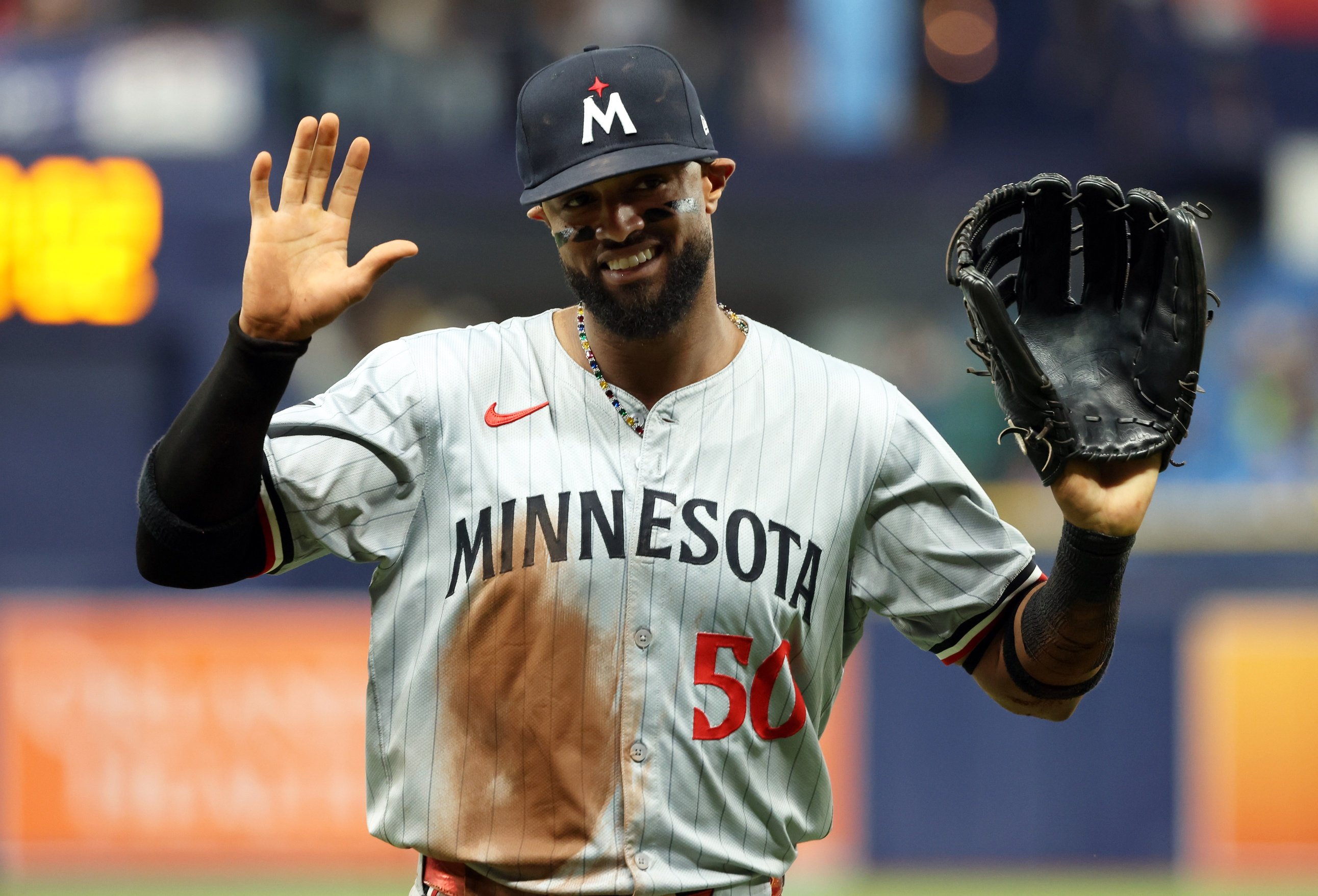 Personally I think it's a stretch to say Willi Castro was the Most Valuable Player on the Minnesota Twins in 2024, as selected by the local chapter of the BBWAA for the Diamond Awards. Our choice at Twins Daily was Carlos Correa. (Mine personally was Griffin Jax.) But the case for Castro is solid enough. He was an All-Star, led the team in games played, and offered a historic level of defensive versatility by becoming the first player ever to make 20-plus starts at five different positions. Critically, the 27-year-old utility man was able to step in at shortstop and center field for extended stretches while Correa and Byron Buxton were down. Correa and Buxton are pivotal to the Twins' outlook, in a way that few other duos around the league can match. Not only are they the best players on the team, capable of MVP-caliber production when healthy, but they play the two most hard-to-fill (non-catcher) positions on the field. Their injury concerns are magnified because when one or both of those guys is down, in order to prevent a massive drop-off, the Twins have to find capable defenders to replace them who can at least hold their own at the plate. In theory that's a huge part of the appeal for Castro, and a justification for his $6 million salary as the front office faces budget constraints: He's a contingency for both of your two most indispensable position-player assets. Knowing that you have Castro available to step in at short or in center in the event Buxton or Correa get sidelined is peace of mind worth paying for. But here's the thing: The Twins don't want to use Castro at shortstop or in center field. Their decision to invest $6 million in Harrison Bader made this clear, and the rumors about their interest in signing a veteran backup shortstop crystallize it further. "The Twins used utilityman Willi Castro as their backup shortstop and center fielder last season, and they believe that wore him down," wrote Bobby Nightengale in a recent article for the Star Tribune. "Castro, an All-Star last year, had a .276 batting average and .810 OPS through the first three months of the season, then hit .216 with a .613 OPS in the final three months." It's possible the team actually believes this. Or maybe it's a nicer way of saying they just didn't think he was any good at short or center — a view that would be backed by defensive metrics. If you take both of those positions out of his defense toolkit, the versatility he offers is much less impactful because the Twins have multiple other players who can fill in at all of his other positions. Now we've got the Twins starting to openly talk about using Castro at first base. Which, what? I mean I guess I see the benefit of working him in as an emergency option there, but if it's something Rocco Baldelli is considering doing with any regularity that seems like a bad sign. First base is the only (non-catcher) position Castro has never played in the major leagues. Although he's got the skills to hold his own and at 6-foot-1 he's got enough size for it, Castro's bat would not be much of an asset at such an offense-oriented position. He has experienced a career renaissance in Minnesota over the past two seasons by slashing .251/.334/.395 for a .729 OPS that is 3% better than the league average, and below the benchmark for MLB first basemen last year. Right now Castro looks to be the Twins' regular leadoff hitter by default, another role for which he is seemingly miscast. He led the team in leadoff starts last year (48), and the only others who made more 30 are Edouard Julien, who's got to earn his way back, and Manuel Margot, who is gone. Castro's switch-hitting and his speed play at the top of the lineup, but generally he doesn't have the discipline, on-base skills or overall offensive ability you'd like to see in your table-setter. His .331 OBP last year was acceptable, but buoyed by a flukish 21 HBPs. His OBP in the second half was .298, and while the Twins might believe that was due to wear, we are also talking about a guy who came to Minnesota with a .292 career mark. In fairness, Castro's imperfect fit atop the order isn't his fault — more so a reflection of the lack of suitable alternatives. If he does indeed open the season as Minnesota's primary leadoff man, they are probably just hoping he can keep the seat warm for a Julien rebound or Luke Keaschall emergence. Still, if the Plan-A usage for Castro involves leading off and starting at first base with regularity ... that doesn't seem like an optimal situation at all. It seems more like a square peg in a round hole. And if the lack of faith in him at center or short forces the Twins to roster two additional players, his versatility becomes far less valuable at his price tag. Castro absolutely did offer more value than WAR could convey last year, when he featured as a "quintessential 10th man." But he's not as quintessential in their outlook going forward, based on how things are trending. Which makes me continue to wonder if the reigning team MVP will be on the roster come Opening Day.

.jpg.140bdbde8c2490bc4004a96799b44421.jpg)


