



Nick Nelson
-
Posts
8,315 -
Joined
-
Last visited
-
Days Won
56
Content Type
Profiles
News
Minnesota Twins Videos
2026 Minnesota Twins Top Prospects Ranking
2022 Minnesota Twins Draft Picks
Minnesota Twins Free Agent & Trade Rumors, Notes, & Tidbits
Guides & Resources
2023 Minnesota Twins Draft Picks
The Minnesota Twins Players Project
2024 Minnesota Twins Draft Picks
2025 Minnesota Twins Draft Pick Tracker
2026 Minnesota Twins Draft Tracker: Picks & Bonuses
Forums
Blogs
Events
Store
Downloads
Gallery
Everything posted by Nick Nelson
-
 I get it but the Twins have lost 7 straight games decided by 3 runs or less dating to last year. Yeah the bullpen has been subjected to too many close games and low margins for error but that's probably just not gonna stop. They need to step up, period.
- 14 replies
-
- 2
-

-
- griffin jax
- jorge alcala
- (and 1 more)
-
The overall numbers are impressive, but the situational outcomes have been pretty disastrous so far. Image courtesy of William Purnell-Imagn Images Here's a fact that might surprise you if you've been following the Twins' dreadful 4-9 start to the season: Their bullpen ranks second in the American League with a 2.38 ERA, second only the Cleveland Guardians. That's not a luck-driven mirage either, as their 3.25 FIP ranks fourth. In this regard, the Twins relief corps is living up to its lofty preseason billing. But like I said, if you're paying any attention to this slumping ballclub, the numbers don't compute. Anyone can recognize that the offense is more responsible than the pitching staff for Minnesota's struggles, but the bullpen has been far from adequate in answering the call when needed. That's expressed by this statistic, which far better matches up to what we've seen: The Twins bullpen ranks 13th out of 15 AL teams in Win Probability Added (WPA), which measures how much a player’s actions increase or decrease their team’s chances of winning, based on the game situation before and after each play. On Thursday, we watched Cole Sands enter in the seventh inning with a one-run lead and surrender it almost immediately. Two nights earlier, on Tuesday, theoretical bullpen ace Griffin Jax came on in the eighth inning of a 1-1 game and handed Kansas City the lead with a devastating error. Already Jax had given up two costly homers in his first three appearances. There was also the game during the opening homestand where Jorge Alcala entered in the 6th inning of a 1-1 game and combined with Louie Varland to make it 4-1. That's a lot of lapses in this early slate of games. Again, let me be clear: the languishing lineup deserves a much larger share of blame here. The Twins have shown minimal ability to build leads or bounce back from deficits, which is a massive problem. And while I expect it will get somewhat better, I'm losing hope that this offense has potential to become consistent or much better than average overall. In order to turn things around and start winning, Minnesota needs its bullpen to step up and deliver when it counts. In that regard, they've been coming up woefully short for quite a while now. Dating back to August 18th last year, when Alcala's implosion in Texas set off this nightmarish stretch, the Twins bullpen ranks 29th out of 30 MLB teams in WPA, ahead of only (you guessed it) the White Sox. So yes, they do have a nice shiny ERA this year, thanks in large part to garbage-time contributions from Randy Dobnak and Darren McCaughan, who are now both off the 40-man roster but — quite tellingly — are tied for second in relief innings pitched for the Twins, with 5 ⅓ innings apiece of one-run ball. The reality is that in terms of affecting games, this bullpen has been just about the worst in baseball for an extended time, and in order to succeed this team needs the exact opposite. So where does that leave us? Despite the rocky moments and another discouraging start, there is reason to believe this bullpen can be part of the solution rather than the problem. Pitching performance — especially when backed by a strong FIP and elite ERA — tends to stabilize over time, unlike the more volatile nature of situational stats like Win Probability Added. The underlying talent is real, and reinforcements like Brock Stewart could be back soon to bolster the group’s late-inning credibility. But none of that changes what the Twins are facing right now. They've dug themselves an early hole, and the margin for error is rapidly narrowing. A bullpen that keeps its composure and executes in leverage spots isn’t a luxury at this point — it’s a vital necessity. Until that shows up with consistency, it’s hard to have full confidence in this team’s ability to claw back into contention. View full article
-
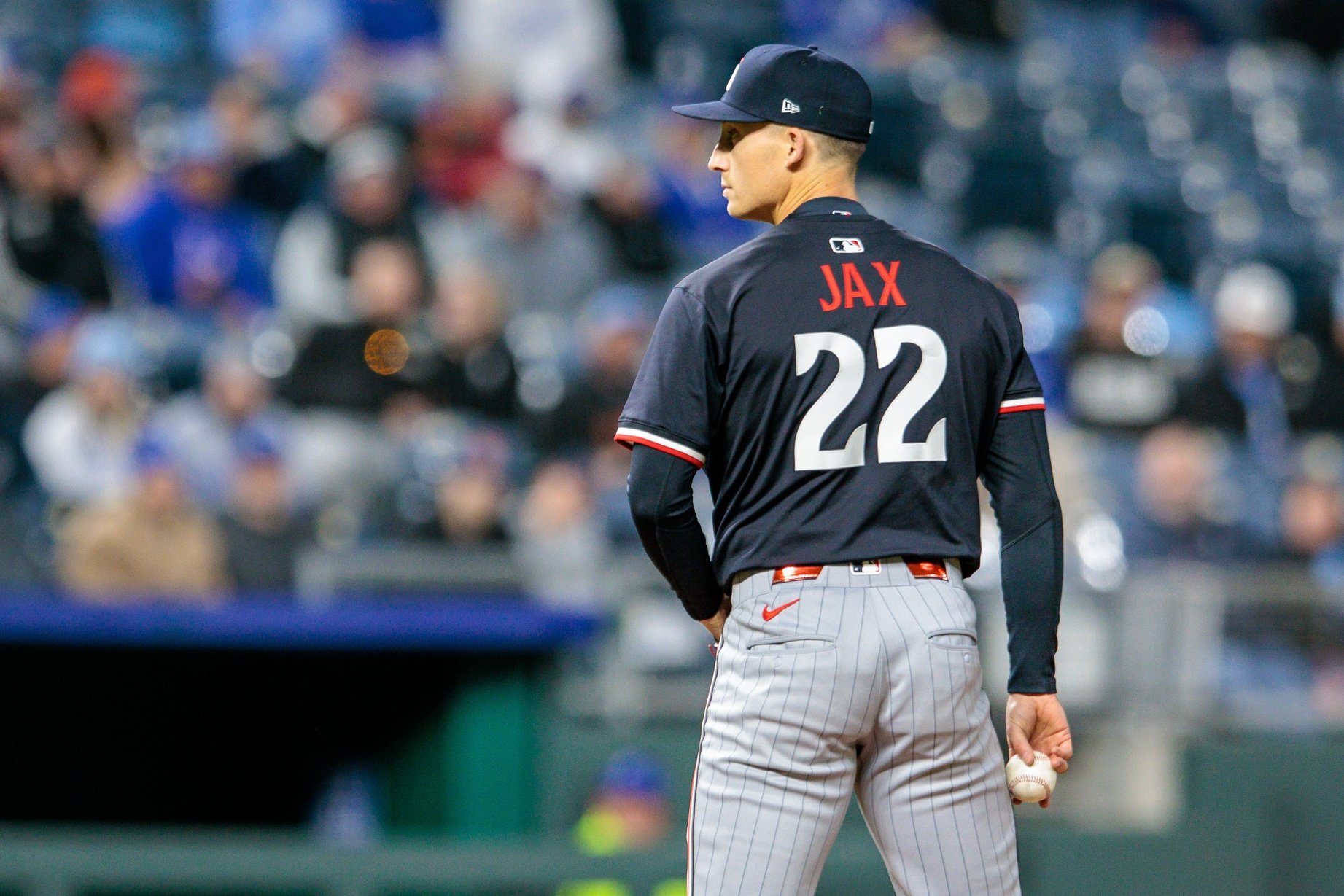 Here's a fact that might surprise you if you've been following the Twins' dreadful 4-9 start to the season: Their bullpen ranks second in the American League with a 2.38 ERA, second only the Cleveland Guardians. That's not a luck-driven mirage either, as their 3.25 FIP ranks fourth. In this regard, the Twins relief corps is living up to its lofty preseason billing. But like I said, if you're paying any attention to this slumping ballclub, the numbers don't compute. Anyone can recognize that the offense is more responsible than the pitching staff for Minnesota's struggles, but the bullpen has been far from adequate in answering the call when needed. That's expressed by this statistic, which far better matches up to what we've seen: The Twins bullpen ranks 13th out of 15 AL teams in Win Probability Added (WPA), which measures how much a player’s actions increase or decrease their team’s chances of winning, based on the game situation before and after each play. On Thursday, we watched Cole Sands enter in the seventh inning with a one-run lead and surrender it almost immediately. Two nights earlier, on Tuesday, theoretical bullpen ace Griffin Jax came on in the eighth inning of a 1-1 game and handed Kansas City the lead with a devastating error. Already Jax had given up two costly homers in his first three appearances. There was also the game during the opening homestand where Jorge Alcala entered in the 6th inning of a 1-1 game and combined with Louie Varland to make it 4-1. That's a lot of lapses in this early slate of games. Again, let me be clear: the languishing lineup deserves a much larger share of blame here. The Twins have shown minimal ability to build leads or bounce back from deficits, which is a massive problem. And while I expect it will get somewhat better, I'm losing hope that this offense has potential to become consistent or much better than average overall. In order to turn things around and start winning, Minnesota needs its bullpen to step up and deliver when it counts. In that regard, they've been coming up woefully short for quite a while now. Dating back to August 18th last year, when Alcala's implosion in Texas set off this nightmarish stretch, the Twins bullpen ranks 29th out of 30 MLB teams in WPA, ahead of only (you guessed it) the White Sox. So yes, they do have a nice shiny ERA this year, thanks in large part to garbage-time contributions from Randy Dobnak and Darren McCaughan, who are now both off the 40-man roster but — quite tellingly — are tied for second in relief innings pitched for the Twins, with 5 ⅓ innings apiece of one-run ball. The reality is that in terms of affecting games, this bullpen has been just about the worst in baseball for an extended time, and in order to succeed this team needs the exact opposite. So where does that leave us? Despite the rocky moments and another discouraging start, there is reason to believe this bullpen can be part of the solution rather than the problem. Pitching performance — especially when backed by a strong FIP and elite ERA — tends to stabilize over time, unlike the more volatile nature of situational stats like Win Probability Added. The underlying talent is real, and reinforcements like Brock Stewart could be back soon to bolster the group’s late-inning credibility. But none of that changes what the Twins are facing right now. They've dug themselves an early hole, and the margin for error is rapidly narrowing. A bullpen that keeps its composure and executes in leverage spots isn’t a luxury at this point — it’s a vital necessity. Until that shows up with consistency, it’s hard to have full confidence in this team’s ability to claw back into contention.
- 14 comments
-
- 5
-
-
- griffin jax
- jorge alcala
- (and 1 more)
-
The streaky offense continues to frustrate, and the highly touted Twins pitching staff is off to a gravely disappointing start. While Minnesota managed to find its way into the win column and stabilize a bit over the past week, this team still isn't doing much to inspire. Image courtesy of Nick Wosika-Imagn Images The Nutshell This leadoff section is a new one for the column, and it'll appear at the top each week, followed by the Week in Review content you're accustomed to: weekly snapshot, game results, highlights, lowlights, trending storylines and what's next. In the spirit of delivering an easy-to-digest rundown of key info from the past week, I'm adding this "Nutshell" as a ~100 word executive summary leading into the more detailed breakdowns and analysis. Over the past week, the focus for the Twins was on stopping the bleeding, and they were able to do so ... to some extent. They got their first three wins, and certainly a 3-6 record looks a lot better than 0-3, but the Twins also mixed in some really bad and concerning losses, including on Sunday when they blew a six-run lead to close the week on a very sour note. Read on for full details and reflections on the first full week of the season. Weekly Snapshot: Mon, 3/31 through Sun, 4/6 *** Record Last Week: 3-3 (Overall: 3-6) Run Differential Last Week: +1 (Overall: -12) Standing: T-3rd Place in AL Central (2.0 GB) Last Week's Game Results: Game 4 | CWS 9, MIN 0: Twins Unravel on All Fronts in Utter Debacle Paddack: 3.1 IP, 9 ER, 4 BB, 3 HR Game 5 | MIN 8, CWS 3: Floodgates Finally Open in First Win of Season Bullpen: 5 IP, 1 ER, 8 K Game 6 | MIN 6, CWS 1: Twins Take Series Behind Strong Pablo Start Lopez: 7 IP, 1 ER; Buxton 2/4, HR Game 7 | HOU 5, MIN 2: Bats Cool Off in Chilly Home-Opening Loss Twins lineup: 11 K, 0 BB Game 8 | MIN 6, HOU 1: Another Sudden Mid-Game Surge Lifts Twins Miranda: 3-R HR Game 9 | HOU 9, MIN 7: Big Early Lead Evaporates as Pitching Flounders Jax: Allowed game-tying 2-R HR in 9th NO NEW PODCAST EPISODE THIS WEEK SINCE I'M ON THE ROAD. BUT MOST OFTEN YOU CAN FIND THE LATEST EPISODE ON OUR PODCAST PAGE, AS WELL AS ON APPLE AND SPOTIFY. SUBSCRIBE TO OUR CHANNEL SO YOU DON'T MISS OUT! NEWS & NOTES Among the four players who opened the season on the injured list for the Twins, Brooks Lee looks to be on the fastest track to returning. When he started experiencing back soreness toward the end of spring training, Lee and team officials expressed hope and optimism that this bout wasn't as severe as what he dealt with last year, when he was sidelined into June. So far, so good: Lee started a rehab assignment with Class-A Fort Myers on Sunday, playing seven innings at shortstop and finishing 0-for-3 with a pair of strikeouts. He'll likely need a little time to get himself into the groove after having his spring camp cut short by the injury, but it's quite promising to see Lee back in action already. He could be poised to rejoin the Twins around the midpoint of April. HIGHLIGHTS The biggest bright spot of this young season for me, without question, has been watching a genuinely healthy Byron Buxton play baseball. I cannot remember the last time he looked as comfortable and uninhibited on the field as he has through this first handful of games. He shook off a quiet first series to go 6-for-21 with two doubles and a home run, and stole two bases. Buxton has started all nine games in center field and appears to be playing without limitation. Like Buxton, Matt Wallner put his forgettable first series behind him and turned it on over the past week, posting a 7-for-19 line that included four hits on Sunday. The big power hasn't quite shown up yet but Wallner has a .371 on-base percentage through nine games and that's what you like to see from your leadoff man. Wallner has struck out just eight times with five walks through 35 plate appearances; last year he was demoted to Triple-A after striking out 17 times in his first 33 plate appearances. Pablo López rebounded from his shaky Opening Day start with a much-improved performance on Wednesday, tossing seven innings of one-run ball. Granted, it came against the lowly White Sox, but the level of competition didn't prevent other starters from struggling in the series. I would say López is one of the only pitchers on the staff who has looked unequivocally "good" to me on the mound so far – even in his first outing, he was bitten more by bad luck and bad defensive execution than bad pitching. LOWLIGHTS Over the 12-31 stretch of games that saw the Twins implode at the end of last year and stumble into this one, we saw a lot of ugly losses. Monday's game in Chicago might take the cake. It was maybe the worst Twins performance I have ever witnessed, when you consider the context of it: a down-bad Minnesota squad desperately looking to get on track, going against literally the worst team in baseball. Chris Paddack completely melted down against a horrid lineup, surrending nine earned runs. Meanwhile Martín Pérez struck out nine over six no-hit innings, combining with two no-name White Sox relievers for a shutout. Buxton and Correa came out before the game was halfway over in a white-flag move. Willi Castro pitched. Mickey Gasper played left field and Edouard Julien played shortstop. It was disgraceful. Things thankfully got better from that point forward, but I would be remiss not to lead with this game as the lowlight of the week and hopefully the season. The Twins went 3-2 for the rest of the week following that brutal beatdown from the White Sox, and the offense finally showed up thereafter. However, we continued to see the same feast-or-famine routine that frustratingly defined this lineup for much of last season. They started the week with 14 consecutive scoreless innings, then scored five in the sixth on Tuesday. They scored two in the first inning of their home-opening series against Houston, then got blanked for the next 10 straight before putting up a six-spot in the fourth inning on Saturday. Just too many lengthy stretches of nothingness. Is that just what we are inevitably doomed to with this personnel? In Sunday's gut-wrenching loss, Minnesota built a 7-1 lead with an early explosion, and then the hitters went kaput, setting the stage for an Astros comeback that flipped the narrative on the week. There have been plenty of contributors in this failure to click offensively, but Carlos Correa is definitely at the head of the list; he went 4-for-21 and is slashing .125/.200/.156 on the young season while batting second everyday. He's setting the tone for an offense that's batting .195 overall. That said, even if the scoring distribution was funky and the consistency lacking, you can't really fault too much an offense that averaged nearly five runs per game. The pitching staff has been by far the most disappointing part of this team so far. Paddack looked terrible once again in his second start on Sunday, and played a key role in blowing Minnesota's early lead by failing to take care of business with a sizable margin, forcing Rocco Baldelli to remove him after just four innings. The right-hander has allowed 12 earned runs on 13 hits and six walks through 7 ⅓ innings, notching only four strikeouts. With top prospects making their case at Triple-A, Paddack's hold on a rotation spot has to be tenuous. He has definitely looked the worst among Twins pitchers, but no one has looked all that great. Joe Ryan gave up two homers and four earned runs to take a loss in the home opener. Bailey Ober looked better on Saturday than in his first start, but still was not especially sharp, needing 84 pitches to get through four innings. After nearly two full turns in the Twins rotation, López is the only starter to throw into the sixth even once. The bullpen has also been pretty iffy, and it starts at the top. Griffin Jax, who was expected to lead the unit coming off a breakthrough season, is off to a stunningly poor start, having already allowed two homers through his first three appearances. That includes a back-breaker on Sunday when Jax entered with a two-run lead and immediately coughed it up on a leadoff single followed by a Yordan Alvarez home run. Gonna take a while for Jax's WPA to recover from this one. If he's not the guy we thought he was, then the whole outlook for this bullpen changes. TRENDING STORYLINE All of the short outings from the Twins rotation have left the team in a tough spot. The four-inning starts from Ober and Paddack on Saturday and Sunday required Baldelli to lean on his bullpen for 11 innings, and now Minnesota's next scheduled day off isn't until April 17th. Getting through the packed schedule in front of them is going to be a challenge for the Twins, especially with few of their starters demonstrating any ability to work deep into games. As you can see above from our bullpen usage tracker above, the relief corps is stretched thin, with Jorge Alcala the only thing resembling a fresh arm as we enter a new week. We'll see how they manage things in the days ahead, but I presume Darren McCaughan is in line for a DFA to bring in another arm – unfortunate since the journeyman has actually looked surprisingly impressive in his opportunities. LOOKING AHEAD Get ready for a tour of the AL Central, with the Twins heading to Kansas City for a four-game set against the Royals and then returning home for three against the Tigers. I'm presently in KC and will be in attendance for the Monday and Tuesday games at Kauffman. The latter of those should make for a great matchup, with two contenders for the title of "best pitcher in the division" facing off in López and Cole Ragans. Are the Twins ready to reassert themselves in the Central after getting passed up in 2024 by three teams, including these two? Time to make a statement and show they can actually win some close games. MONDAY, APRIL 7: TWINS @ ROYALS — RHP Simeon Woods Richardson v. RHP Michael Lorenzen TUESDAY, APRIL 8: TWINS @ ROYALS — RHP Pablo Lopez v. LHP Cole Ragans WEDNESDAY, APRIL 9: TWINS @ ROYALS — RHP Joe Ryan v. RHP Seth Lugo THURSDAY, APRIL 10: TWINS @ ROYALS — RHP Bailey Ober v. RHP Michael Wacha FRIDAY, APRIL 11: TIGERS @ TWINS — RHP Reese Olson v. RHP Chris Paddack SATURDAY, APRIL 12: TIGERS @ TWINS — RHP Jackson Jobe v. RHP Simeon Woods Richardson SUNDAY, APRIL 13: TIGERS @ TWINS — RHP Casey Mize v. RHP Pablo Lopez View full article
-
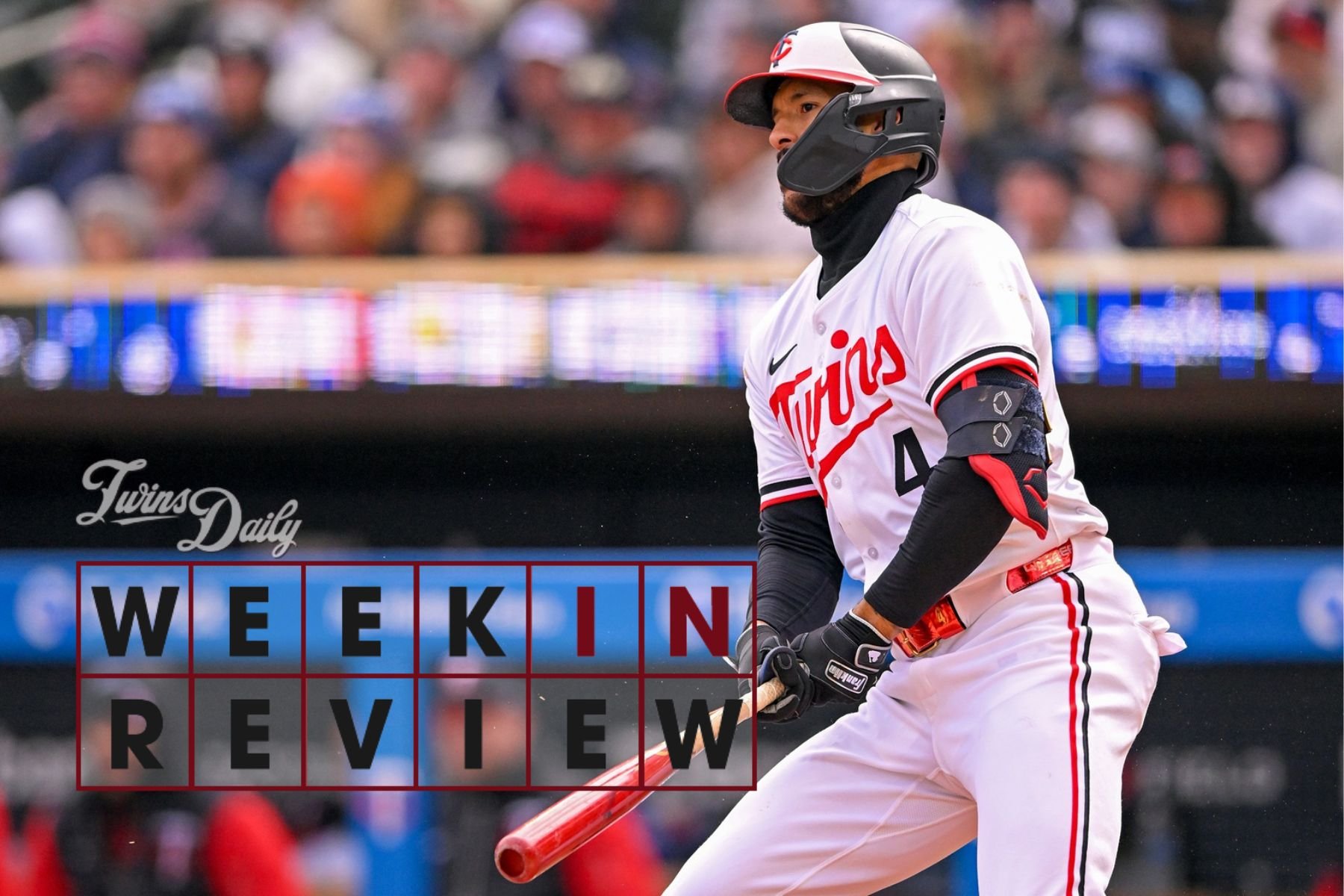 The Nutshell This leadoff section is a new one for the column, and it'll appear at the top each week, followed by the Week in Review content you're accustomed to: weekly snapshot, game results, highlights, lowlights, trending storylines and what's next. In the spirit of delivering an easy-to-digest rundown of key info from the past week, I'm adding this "Nutshell" as a ~100 word executive summary leading into the more detailed breakdowns and analysis. Over the past week, the focus for the Twins was on stopping the bleeding, and they were able to do so ... to some extent. They got their first three wins, and certainly a 3-6 record looks a lot better than 0-3, but the Twins also mixed in some really bad and concerning losses, including on Sunday when they blew a six-run lead to close the week on a very sour note. Read on for full details and reflections on the first full week of the season. Weekly Snapshot: Mon, 3/31 through Sun, 4/6 *** Record Last Week: 3-3 (Overall: 3-6) Run Differential Last Week: +1 (Overall: -12) Standing: T-3rd Place in AL Central (2.0 GB) Last Week's Game Results: Game 4 | CWS 9, MIN 0: Twins Unravel on All Fronts in Utter Debacle Paddack: 3.1 IP, 9 ER, 4 BB, 3 HR Game 5 | MIN 8, CWS 3: Floodgates Finally Open in First Win of Season Bullpen: 5 IP, 1 ER, 8 K Game 6 | MIN 6, CWS 1: Twins Take Series Behind Strong Pablo Start Lopez: 7 IP, 1 ER; Buxton 2/4, HR Game 7 | HOU 5, MIN 2: Bats Cool Off in Chilly Home-Opening Loss Twins lineup: 11 K, 0 BB Game 8 | MIN 6, HOU 1: Another Sudden Mid-Game Surge Lifts Twins Miranda: 3-R HR Game 9 | HOU 9, MIN 7: Big Early Lead Evaporates as Pitching Flounders Jax: Allowed game-tying 2-R HR in 9th NO NEW PODCAST EPISODE THIS WEEK SINCE I'M ON THE ROAD. BUT MOST OFTEN YOU CAN FIND THE LATEST EPISODE ON OUR PODCAST PAGE, AS WELL AS ON APPLE AND SPOTIFY. SUBSCRIBE TO OUR CHANNEL SO YOU DON'T MISS OUT! NEWS & NOTES Among the four players who opened the season on the injured list for the Twins, Brooks Lee looks to be on the fastest track to returning. When he started experiencing back soreness toward the end of spring training, Lee and team officials expressed hope and optimism that this bout wasn't as severe as what he dealt with last year, when he was sidelined into June. So far, so good: Lee started a rehab assignment with Class-A Fort Myers on Sunday, playing seven innings at shortstop and finishing 0-for-3 with a pair of strikeouts. He'll likely need a little time to get himself into the groove after having his spring camp cut short by the injury, but it's quite promising to see Lee back in action already. He could be poised to rejoin the Twins around the midpoint of April. HIGHLIGHTS The biggest bright spot of this young season for me, without question, has been watching a genuinely healthy Byron Buxton play baseball. I cannot remember the last time he looked as comfortable and uninhibited on the field as he has through this first handful of games. He shook off a quiet first series to go 6-for-21 with two doubles and a home run, and stole two bases. Buxton has started all nine games in center field and appears to be playing without limitation. Like Buxton, Matt Wallner put his forgettable first series behind him and turned it on over the past week, posting a 7-for-19 line that included four hits on Sunday. The big power hasn't quite shown up yet but Wallner has a .371 on-base percentage through nine games and that's what you like to see from your leadoff man. Wallner has struck out just eight times with five walks through 35 plate appearances; last year he was demoted to Triple-A after striking out 17 times in his first 33 plate appearances. Pablo López rebounded from his shaky Opening Day start with a much-improved performance on Wednesday, tossing seven innings of one-run ball. Granted, it came against the lowly White Sox, but the level of competition didn't prevent other starters from struggling in the series. I would say López is one of the only pitchers on the staff who has looked unequivocally "good" to me on the mound so far – even in his first outing, he was bitten more by bad luck and bad defensive execution than bad pitching. LOWLIGHTS Over the 12-31 stretch of games that saw the Twins implode at the end of last year and stumble into this one, we saw a lot of ugly losses. Monday's game in Chicago might take the cake. It was maybe the worst Twins performance I have ever witnessed, when you consider the context of it: a down-bad Minnesota squad desperately looking to get on track, going against literally the worst team in baseball. Chris Paddack completely melted down against a horrid lineup, surrending nine earned runs. Meanwhile Martín Pérez struck out nine over six no-hit innings, combining with two no-name White Sox relievers for a shutout. Buxton and Correa came out before the game was halfway over in a white-flag move. Willi Castro pitched. Mickey Gasper played left field and Edouard Julien played shortstop. It was disgraceful. Things thankfully got better from that point forward, but I would be remiss not to lead with this game as the lowlight of the week and hopefully the season. The Twins went 3-2 for the rest of the week following that brutal beatdown from the White Sox, and the offense finally showed up thereafter. However, we continued to see the same feast-or-famine routine that frustratingly defined this lineup for much of last season. They started the week with 14 consecutive scoreless innings, then scored five in the sixth on Tuesday. They scored two in the first inning of their home-opening series against Houston, then got blanked for the next 10 straight before putting up a six-spot in the fourth inning on Saturday. Just too many lengthy stretches of nothingness. Is that just what we are inevitably doomed to with this personnel? In Sunday's gut-wrenching loss, Minnesota built a 7-1 lead with an early explosion, and then the hitters went kaput, setting the stage for an Astros comeback that flipped the narrative on the week. There have been plenty of contributors in this failure to click offensively, but Carlos Correa is definitely at the head of the list; he went 4-for-21 and is slashing .125/.200/.156 on the young season while batting second everyday. He's setting the tone for an offense that's batting .195 overall. That said, even if the scoring distribution was funky and the consistency lacking, you can't really fault too much an offense that averaged nearly five runs per game. The pitching staff has been by far the most disappointing part of this team so far. Paddack looked terrible once again in his second start on Sunday, and played a key role in blowing Minnesota's early lead by failing to take care of business with a sizable margin, forcing Rocco Baldelli to remove him after just four innings. The right-hander has allowed 12 earned runs on 13 hits and six walks through 7 ⅓ innings, notching only four strikeouts. With top prospects making their case at Triple-A, Paddack's hold on a rotation spot has to be tenuous. He has definitely looked the worst among Twins pitchers, but no one has looked all that great. Joe Ryan gave up two homers and four earned runs to take a loss in the home opener. Bailey Ober looked better on Saturday than in his first start, but still was not especially sharp, needing 84 pitches to get through four innings. After nearly two full turns in the Twins rotation, López is the only starter to throw into the sixth even once. The bullpen has also been pretty iffy, and it starts at the top. Griffin Jax, who was expected to lead the unit coming off a breakthrough season, is off to a stunningly poor start, having already allowed two homers through his first three appearances. That includes a back-breaker on Sunday when Jax entered with a two-run lead and immediately coughed it up on a leadoff single followed by a Yordan Alvarez home run. Gonna take a while for Jax's WPA to recover from this one. If he's not the guy we thought he was, then the whole outlook for this bullpen changes. TRENDING STORYLINE All of the short outings from the Twins rotation have left the team in a tough spot. The four-inning starts from Ober and Paddack on Saturday and Sunday required Baldelli to lean on his bullpen for 11 innings, and now Minnesota's next scheduled day off isn't until April 17th. Getting through the packed schedule in front of them is going to be a challenge for the Twins, especially with few of their starters demonstrating any ability to work deep into games. As you can see above from our bullpen usage tracker above, the relief corps is stretched thin, with Jorge Alcala the only thing resembling a fresh arm as we enter a new week. We'll see how they manage things in the days ahead, but I presume Darren McCaughan is in line for a DFA to bring in another arm – unfortunate since the journeyman has actually looked surprisingly impressive in his opportunities. LOOKING AHEAD Get ready for a tour of the AL Central, with the Twins heading to Kansas City for a four-game set against the Royals and then returning home for three against the Tigers. I'm presently in KC and will be in attendance for the Monday and Tuesday games at Kauffman. The latter of those should make for a great matchup, with two contenders for the title of "best pitcher in the division" facing off in López and Cole Ragans. Are the Twins ready to reassert themselves in the Central after getting passed up in 2024 by three teams, including these two? Time to make a statement and show they can actually win some close games. MONDAY, APRIL 7: TWINS @ ROYALS — RHP Simeon Woods Richardson v. RHP Michael Lorenzen TUESDAY, APRIL 8: TWINS @ ROYALS — RHP Pablo Lopez v. LHP Cole Ragans WEDNESDAY, APRIL 9: TWINS @ ROYALS — RHP Joe Ryan v. RHP Seth Lugo THURSDAY, APRIL 10: TWINS @ ROYALS — RHP Bailey Ober v. RHP Michael Wacha FRIDAY, APRIL 11: TIGERS @ TWINS — RHP Reese Olson v. RHP Chris Paddack SATURDAY, APRIL 12: TIGERS @ TWINS — RHP Jackson Jobe v. RHP Simeon Woods Richardson SUNDAY, APRIL 13: TIGERS @ TWINS — RHP Casey Mize v. RHP Pablo Lopez
- 11 comments
-
- 4
-

-
-
- carlos correa
- byron buxton
- (and 1 more)
-
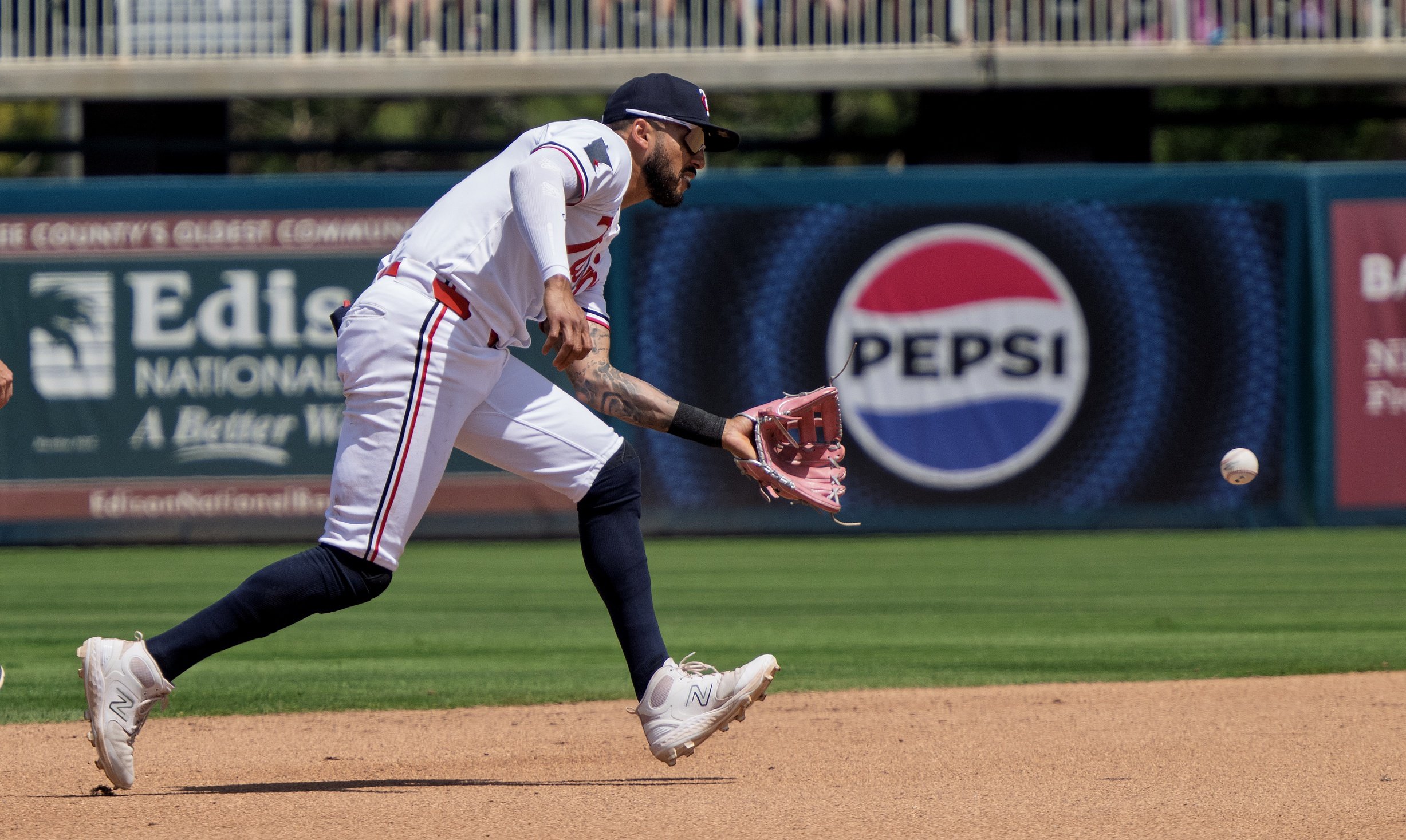 When the St. Paul Saints kicked off their season on Friday night, it was cool to look over their starting lineup and find a series of viable major-league contingency options, almost from top to bottom. Leading off was Austin Martin, who spent plenty of time with the Twins last year and will almost certainly be called upon this year to help in the outfield or at second base. No. 2 hitter Luke Keaschall is also capable of playing those positions and offers much more offensive upside, coming off an eye-opening spring at the plate. Batting third was Emmanuel Rodriguez, who has a real chance to break into the Twins outfield this summer. From there the lineup went Armando Alvarez (3B), Mike Ford (1B/DH), Jair Camargo (C), Yunior Severino (1B/DH) and Jeferson Morales (2B/OF) – all players who could credibly be viewed as MLB options, if needed, offering ways mitigate a loss at almost any position on the MLB roster. Except for one. At the very bottom of the lineup, batting ninth: the Saints' starting shortstop, Ryan Fitzgerald. Ever heard of him? Well, he might currently be third on Minnesota's SS depth chart. If Fitzgerald were to get the call at some point, it'd be a neat moment for him but an ominous sign for the Twins. He's a 30-year-old undrafted career minor-leaguer who is more of a utilityman than full-time shortstop. Last year, with Kansas City's Triple-A affiliate, he made more starts at both second and third than at short. Not the most compelling backup to an injury-prone star at a key position for a big-league team that's trying to contend, but that appears to be where we are at. How'd we get here? It's a combination of skimpy depth and some unfortunately grouped injuries. The Twins front office flirted with the idea of signing a veteran backup shortstop during the offseason, but elected not to, opting to use their available funds on a fourth outfielder, lefty reliever and scrap-heap first baseman. Meanwhile, their internal depth has been eroded by attrition: Brooks Lee, who would have been second on the shortstop depth chart behind Carlos Correa, is sidelined indefinitely with a back issue. Payton Eeles, who started 21 games at shortstop for the Saints last year in a sensational breakout minor-league season, underwent offseason knee surgery and will likely miss a sizable portion of this season. Will Holland, who made 20 starts at short for St. Paul in 2024, also opened the season on the injured list as he recovers from an ankle fracture suffered last year. All of these players were perhaps stretches to be viewed as MLB shortstops, to some extent. Lee is certainly a capable defender but he flopped offensively as a rookie last year. Eeles and Holland, while both intriguing in their own rights, are not considered top prospects and neither has played much above Double-A. For now, all three are out of the picture, leaving a vacuum behind Correa and Willi Castro on the depth chart. Even Royce Lewis, who could theoretically be an option in a pinch given his background, is unavailable. Castro himself is hardly an ideal safety net behind Correa, both because his functionality as a utilityman is quite valuable (as demonstrated by the fact he's currently starting elsewhere), and because the Twins have openly stated that they prefer not to use him at shortstop. The team says that's because they feel playing there wears him down, but also: Castro rates very poorly at the position defensively. And so, the Twins' entire shortstop situation teeters on the health and availability of Carlos Correa — a superstar whose presence is absolutely pivotal, and whose absence could send shockwaves through a team with no real contingency plan. He says he's healthy after being plagued by plantar fasciitis in both feet over the past two years, and he's looked fine in early action despite the early lack of results. Still I'll be wincing extra hard every time he takes an awkward step and grimaces, or jogs slowly down the baseline. At $37 million, Correa is by far the highest-paid player on the roster, and rightly so. But that price tag also underscores the burden he bears: not just to perform like a franchise cornerstone, but to stay on the field like one. With virtually no reliable backup behind him and the fallback options ranging from untested to impractical, the Twins’ outlook at one of the most important positions in baseball is fragile at best. If Correa falters, so too might the foundation.
- 19 comments
-
- 4
-
-
- carlos correa
- willi castro
- (and 1 more)
-
If Carlos Correa goes down, the Twins could quickly find themselves in dire straits at one of the most critical positions on the field. Image courtesy of Chris Tilley-Imagn Images When the St. Paul Saints kicked off their season on Friday night, it was cool to look over their starting lineup and find a series of viable major-league contingency options, almost from top to bottom. Leading off was Austin Martin, who spent plenty of time with the Twins last year and will almost certainly be called upon this year to help in the outfield or at second base. No. 2 hitter Luke Keaschall is also capable of playing those positions and offers much more offensive upside, coming off an eye-opening spring at the plate. Batting third was Emmanuel Rodriguez, who has a real chance to break into the Twins outfield this summer. From there the lineup went Armando Alvarez (3B), Mike Ford (1B/DH), Jair Camargo (C), Yunior Severino (1B/DH) and Jeferson Morales (2B/OF) – all players who could credibly be viewed as MLB options, if needed, offering ways mitigate a loss at almost any position on the MLB roster. Except for one. At the very bottom of the lineup, batting ninth: the Saints' starting shortstop, Ryan Fitzgerald. Ever heard of him? Well, he might currently be third on Minnesota's SS depth chart. If Fitzgerald were to get the call at some point, it'd be a neat moment for him but an ominous sign for the Twins. He's a 30-year-old undrafted career minor-leaguer who is more of a utilityman than full-time shortstop. Last year, with Kansas City's Triple-A affiliate, he made more starts at both second and third than at short. Not the most compelling backup to an injury-prone star at a key position for a big-league team that's trying to contend, but that appears to be where we are at. How'd we get here? It's a combination of skimpy depth and some unfortunately grouped injuries. The Twins front office flirted with the idea of signing a veteran backup shortstop during the offseason, but elected not to, opting to use their available funds on a fourth outfielder, lefty reliever and scrap-heap first baseman. Meanwhile, their internal depth has been eroded by attrition: Brooks Lee, who would have been second on the shortstop depth chart behind Carlos Correa, is sidelined indefinitely with a back issue. Payton Eeles, who started 21 games at shortstop for the Saints last year in a sensational breakout minor-league season, underwent offseason knee surgery and will likely miss a sizable portion of this season. Will Holland, who made 20 starts at short for St. Paul in 2024, also opened the season on the injured list as he recovers from an ankle fracture suffered last year. All of these players were perhaps stretches to be viewed as MLB shortstops, to some extent. Lee is certainly a capable defender but he flopped offensively as a rookie last year. Eeles and Holland, while both intriguing in their own rights, are not considered top prospects and neither has played much above Double-A. For now, all three are out of the picture, leaving a vacuum behind Correa and Willi Castro on the depth chart. Even Royce Lewis, who could theoretically be an option in a pinch given his background, is unavailable. Castro himself is hardly an ideal safety net behind Correa, both because his functionality as a utilityman is quite valuable (as demonstrated by the fact he's currently starting elsewhere), and because the Twins have openly stated that they prefer not to use him at shortstop. The team says that's because they feel playing there wears him down, but also: Castro rates very poorly at the position defensively. And so, the Twins' entire shortstop situation teeters on the health and availability of Carlos Correa — a superstar whose presence is absolutely pivotal, and whose absence could send shockwaves through a team with no real contingency plan. He says he's healthy after being plagued by plantar fasciitis in both feet over the past two years, and he's looked fine in early action despite the early lack of results. Still I'll be wincing extra hard every time he takes an awkward step and grimaces, or jogs slowly down the baseline. At $37 million, Correa is by far the highest-paid player on the roster, and rightly so. But that price tag also underscores the burden he bears: not just to perform like a franchise cornerstone, but to stay on the field like one. With virtually no reliable backup behind him and the fallback options ranging from untested to impractical, the Twins’ outlook at one of the most important positions in baseball is fragile at best. If Correa falters, so too might the foundation. View full article
-
The Minnesota Twins picked up their 2025 season where they left off in 2024: with ugly, lifeless, losing baseball. An opening sweep in St. Louis served to set a gloomy tone for this new season, giving skeptical fans little reason to believe off the bat. Image courtesy of Jeff Curry-Imagn Images Weekly Snapshot: Thurs, 3/27 through Sun, 3/30 *** Record Last Week: 0-3 (Overall: 0-3) Run Differential Last Week: -13 (Overall: -13) Standing: T-4th Place in AL Central (2.0 GB) Last Week's Game Results: Game 1 | STL 5, MIN 3: Pablo Unsharp in Opener, Offense Stifled by Sonny López: 5 IP, 8 H, 4 R (2 ER); Bader: 2/4, HR, 2B Game 2 | STL 5, MIN 1: Lineup Unable to Find Spark, Bullpen Struggles Twins 1-3 hitters: 0/12 Game 3 | STL 9, MIN 2: Shaky Ober Obliterated as Cards Complete Sweep Ober: 2.2 IP, 8 ER, 8 H, 3 BB, 2 HR IF YOU'D RATHER LISTEN TO THE WEEK IN REVIEW THAN READ IT, YOU CAN GET IT IN AUDIO FORM! FIND THE LATEST EPISODE ON OUR PODCAST PAGE, AS WELL AS ON APPLE AND SPOTIFY. SUBSCRIBE TO OUR CHANNEL SO YOU DON'T MISS OUT! NEWS & NOTES The Twins opened the season with four players on the injured list: Royce Lewis (hamstring), Brooks Lee (back), Michael Tonkin (shoulder) and Brock Stewart (hamstring). All were injured over the course of spring training. We don't have specific timelines on any of these sidelined players yet, but presumably we'll receive some updates when the team returns home on Thursday for their first series at Target Field. HIGHLIGHTS The most positive thing you can say about this opening series in St. Louis is that, at least on Thursday and Saturday, the Twins didn't look as bad as the results indicate. There were plenty of good at-bats and plenty of quality pitches thrown. It was one of those series where the ball always seemed to find grass for the opponent and never for the good guys. The Cardinals also, to their credit, played exceptionally well, repeatedly making big plays in the field and coming up clutch at the plate. But in terms of actual performance and output for Twins players, there weren't many high points over these three games. One of the few bright spots was Trevor Larnach, who appears ready to build on last year's success in his new apparent fixed role as cleanup hitter. The biggest factor in Larnach's 2024 breakthrough was a drastic reduction in strikeout rate; he showed an increased tendency to fight off breaking balls and go the other way with outside pitches. This adaptation was back on display in a series where he went 3-for-10 with a walk and just two strikeouts. Newcomer and fellow left fielder Harrison Bader made a nice first impression on Opening Day, going 2-for-4 with a double and a two-run homer against the team that drafted him. His one swing accounted for a full third of Minnesota's total run production in the series. Bader started twice in left field in St. Louis series, pushing Larnach to DH. Willi Castro, fresh off being named Twins 2024 MVP at the Diamond Awards, definitely looked the part as the lineup's biggest standout. Starting all three games at second base, Castro flashed serious pop, with all four of his hits going for extra bases, including three doubles and a homer. That's a very welcome sight after his power vanished in the second half last year, when Castro's slugging percentage dropped from .420 before the break to .329 after. LOWLIGHTS The offense picked up where it left off following last year's season-ending collapse. They scored just six runs in 16 hits in 27 innings against the Cardinals, with far too many prolonged stretches of nothingness. And yeah, there were some good at-bats here and there, but there were also a lot of really poor ones. Honestly this series just felt like a continuation of last September: hitters going to the plate without much of an evident plan, failing to make in-game adjustments, and falling into bad habits. The shortcomings start at the top: Minnesota's No. 1 through 3 hitters – Matt Wallner, Carlos Correa, Byron Buxton – went a combined 2-for-34, making it almost impossible for the offense to catalyze. The total lack of production from this trio was a major drain on a unit that couldn't muster a fruitful rally all weekend. Minnesota posted one crooked number in the entire series, when they scored two (on Bader's homer) in the fifth inning of the opener. Otherwise they were scarcely able to generate a threat, and couldn't capitalize when they did, going 3-for-20 with runners in scoring position. The lineup's struggles are what they are. While discouraging, it's only three games, and run-scoring was not expected to be this team's calling card. Instead, the pitching staff was to be the signature strength on this roster, led by a stable of accomplished veterans in the rotation and bullpen. Namely: Pablo López, Joe Ryan, Bailey Ober, Jhoan Durán and Griffin Jax. What most concerned me about the opening weekend is that none of those guys, with the exception of Ryan, looked much good at all. López struggled on Opening Day, both with executing pitches and executing plays on the mound. He gave up eight hits in five innings, committing a costly balk and throwing error on the way an 0-1 record. At least his velocity and stuff looked relatively intact. The same could not be said for Ober, who once again delivered a dud in his first start of the season. This one, to my eye, was much more worrisome than what we saw from the righty last year in Kansas City. It didn't seem like the Cardinals necessary "had something on him," as Rocco Baldelli theorized with the Royals. Instead, Ober just had really underwhelming stuff and brutal command coming off a spring where his velocity was noticeably down. He surrendered two three-run homers in the game and both came on straight-up meatballs hung out over the plate. You don't need a lot of in-depth scouting research to crush those things. Hopefully Ober can flush this clunker and get on track in similar fashion to 2024. For what it's worth, Baldelli mentioned after the game that Ober had been dealing with a virus leading up the start, so perhaps that was a factor. On the relief front, Jax – who allowed just four home runs all of last season – gave one up to the second batter he faced in 2025, with Nolan Arenado taking him deep to pad a one-run lead in the eighth inning of the opener. Outside of that, Jax looked fine. More alarming was the performance of Jhoan Durán, who entered with a deficit on Saturday to get some work in and, well, got worked. Like Ober, Durán flashed diminished velocity in camp. He had a little of it back in his first regular-season outing, touching 101 a few times, but the big righty simply had no command, throwing 13 of 24 pitches for strikes. He allowed the first three batters to reach, two on free passes, before getting pulled from the game with just one out recorded. Look – all of these guys have made one appearance apiece. There's no reason for dramatic extrapolations. But the bottom line is that these five pitchers represent the biggest reason to believe in the 2025 Twins, from my view, and aside from Ryan they all have started their seasons on the wrong foot. TRENDING STORYLINE How are the Twins going to get their offense going? You don't want to overreact to a three-game sample in the first series, but at the same time, it's difficult to have a lot of patience after what we saw from this (largely unchanged) offense at the end of last year. There are a few small and straightforward adjustments I can see that might help give the lineup a jumpstart. The first and simplest would be getting Edouard Julien into the lineup against right-handers – potentially at second base with Castro moving to third and José Miranda to the bench. It's clear to me that the Twins don't have a great deal of faith in Miranda's bat based on the fact that he's been batting eighth in the lineup. The lack of faith is justified based on what we've seen: really low-quality at-bats characterized by the same overaggressiveness and persistently weak contact that defined his second-half slump in 2024. You've got to think Julien is a better option against right-handed pitching. If not, why in the world is Julien – who made zero plate appearances in the opening series – on the roster? (It does sound as though Julien like Ober has been dealing with an illness.) The other opportunity that sticks out is to steer away from using Bader against right-handed pitchers. Bader's strong performance on Opening Day notwithstanding, this just isn't a good idea if the objective is to maximize run-scoring. The 30-year-old has a .672 career OPS against righties, yet drew starts against two of them in Minnesota's first three games. In each of those cases, the decision was understandable – the Twins wanted to showcase their biggest offseason acquisition on Opening Day, and Sunday's starter Andre Pallante has extreme reverse splits. But if this becomes a pattern, while the offense continues to sputter, it's going to turn into a point of contention. While I recognize the value of having Bader's glove in the outfield alongside Buxton, putting him into your starting lineup against a right-hander means sacrificing the ability to use a bat-first lefty swinger like Julien or Mickey Gasper. LOOKING AHEAD This season has started in exactly the way the Twins needed it NOT to, as a franchise. They're already clearly having a hard time igniting fan interest, which I suspect will be reflected by the crowd size and energy for Thursday's home opener. They can't afford to dig a deep early hole. These boys need to get going, and in a hurry. A three-game showdown against the lowly White Sox in Chicago, ahead of, will provide an opportunity to regain some composure before the Twins welcome Houston to Target Field. MONDAY, MARCH 31: TWINS @ WHITE SOX: RHP Chris Paddack v. LHP Martin Perez TUESDAY, APRIL 1: TWINS @ WHITE SOX — RHP Simeon Woods Richardson v. RHP Shane Smith WEDNESDAY, APRIL 2: TWINS @ WHITE SOX — RHP Pablo López v. RHP Sean Burke THURSDAY, APRIL 3: ASTROS @ TWINS — RHP Hunter Brown v. RHP Joe Ryan SATURDAY, APRIL 5: ASTROS @ TWINS — RHP Spencer Arrighetti v. RHP Bailey Ober SUNDAY, APRIL 6: ASTROS @ TWINS — RHP Ronel Blanco v. RHP Chris Paddack View full article
-
 Weekly Snapshot: Thurs, 3/27 through Sun, 3/30 *** Record Last Week: 0-3 (Overall: 0-3) Run Differential Last Week: -13 (Overall: -13) Standing: T-4th Place in AL Central (2.0 GB) Last Week's Game Results: Game 1 | STL 5, MIN 3: Pablo Unsharp in Opener, Offense Stifled by Sonny López: 5 IP, 8 H, 4 R (2 ER); Bader: 2/4, HR, 2B Game 2 | STL 5, MIN 1: Lineup Unable to Find Spark, Bullpen Struggles Twins 1-3 hitters: 0/12 Game 3 | STL 9, MIN 2: Shaky Ober Obliterated as Cards Complete Sweep Ober: 2.2 IP, 8 ER, 8 H, 3 BB, 2 HR IF YOU'D RATHER LISTEN TO THE WEEK IN REVIEW THAN READ IT, YOU CAN GET IT IN AUDIO FORM! FIND THE LATEST EPISODE ON OUR PODCAST PAGE, AS WELL AS ON APPLE AND SPOTIFY. SUBSCRIBE TO OUR CHANNEL SO YOU DON'T MISS OUT! NEWS & NOTES The Twins opened the season with four players on the injured list: Royce Lewis (hamstring), Brooks Lee (back), Michael Tonkin (shoulder) and Brock Stewart (hamstring). All were injured over the course of spring training. We don't have specific timelines on any of these sidelined players yet, but presumably we'll receive some updates when the team returns home on Thursday for their first series at Target Field. HIGHLIGHTS The most positive thing you can say about this opening series in St. Louis is that, at least on Thursday and Saturday, the Twins didn't look as bad as the results indicate. There were plenty of good at-bats and plenty of quality pitches thrown. It was one of those series where the ball always seemed to find grass for the opponent and never for the good guys. The Cardinals also, to their credit, played exceptionally well, repeatedly making big plays in the field and coming up clutch at the plate. But in terms of actual performance and output for Twins players, there weren't many high points over these three games. One of the few bright spots was Trevor Larnach, who appears ready to build on last year's success in his new apparent fixed role as cleanup hitter. The biggest factor in Larnach's 2024 breakthrough was a drastic reduction in strikeout rate; he showed an increased tendency to fight off breaking balls and go the other way with outside pitches. This adaptation was back on display in a series where he went 3-for-10 with a walk and just two strikeouts. Newcomer and fellow left fielder Harrison Bader made a nice first impression on Opening Day, going 2-for-4 with a double and a two-run homer against the team that drafted him. His one swing accounted for a full third of Minnesota's total run production in the series. Bader started twice in left field in St. Louis series, pushing Larnach to DH. Willi Castro, fresh off being named Twins 2024 MVP at the Diamond Awards, definitely looked the part as the lineup's biggest standout. Starting all three games at second base, Castro flashed serious pop, with all four of his hits going for extra bases, including three doubles and a homer. That's a very welcome sight after his power vanished in the second half last year, when Castro's slugging percentage dropped from .420 before the break to .329 after. LOWLIGHTS The offense picked up where it left off following last year's season-ending collapse. They scored just six runs in 16 hits in 27 innings against the Cardinals, with far too many prolonged stretches of nothingness. And yeah, there were some good at-bats here and there, but there were also a lot of really poor ones. Honestly this series just felt like a continuation of last September: hitters going to the plate without much of an evident plan, failing to make in-game adjustments, and falling into bad habits. The shortcomings start at the top: Minnesota's No. 1 through 3 hitters – Matt Wallner, Carlos Correa, Byron Buxton – went a combined 2-for-34, making it almost impossible for the offense to catalyze. The total lack of production from this trio was a major drain on a unit that couldn't muster a fruitful rally all weekend. Minnesota posted one crooked number in the entire series, when they scored two (on Bader's homer) in the fifth inning of the opener. Otherwise they were scarcely able to generate a threat, and couldn't capitalize when they did, going 3-for-20 with runners in scoring position. The lineup's struggles are what they are. While discouraging, it's only three games, and run-scoring was not expected to be this team's calling card. Instead, the pitching staff was to be the signature strength on this roster, led by a stable of accomplished veterans in the rotation and bullpen. Namely: Pablo López, Joe Ryan, Bailey Ober, Jhoan Durán and Griffin Jax. What most concerned me about the opening weekend is that none of those guys, with the exception of Ryan, looked much good at all. López struggled on Opening Day, both with executing pitches and executing plays on the mound. He gave up eight hits in five innings, committing a costly balk and throwing error on the way an 0-1 record. At least his velocity and stuff looked relatively intact. The same could not be said for Ober, who once again delivered a dud in his first start of the season. This one, to my eye, was much more worrisome than what we saw from the righty last year in Kansas City. It didn't seem like the Cardinals necessary "had something on him," as Rocco Baldelli theorized with the Royals. Instead, Ober just had really underwhelming stuff and brutal command coming off a spring where his velocity was noticeably down. He surrendered two three-run homers in the game and both came on straight-up meatballs hung out over the plate. You don't need a lot of in-depth scouting research to crush those things. Hopefully Ober can flush this clunker and get on track in similar fashion to 2024. For what it's worth, Baldelli mentioned after the game that Ober had been dealing with a virus leading up the start, so perhaps that was a factor. On the relief front, Jax – who allowed just four home runs all of last season – gave one up to the second batter he faced in 2025, with Nolan Arenado taking him deep to pad a one-run lead in the eighth inning of the opener. Outside of that, Jax looked fine. More alarming was the performance of Jhoan Durán, who entered with a deficit on Saturday to get some work in and, well, got worked. Like Ober, Durán flashed diminished velocity in camp. He had a little of it back in his first regular-season outing, touching 101 a few times, but the big righty simply had no command, throwing 13 of 24 pitches for strikes. He allowed the first three batters to reach, two on free passes, before getting pulled from the game with just one out recorded. Look – all of these guys have made one appearance apiece. There's no reason for dramatic extrapolations. But the bottom line is that these five pitchers represent the biggest reason to believe in the 2025 Twins, from my view, and aside from Ryan they all have started their seasons on the wrong foot. TRENDING STORYLINE How are the Twins going to get their offense going? You don't want to overreact to a three-game sample in the first series, but at the same time, it's difficult to have a lot of patience after what we saw from this (largely unchanged) offense at the end of last year. There are a few small and straightforward adjustments I can see that might help give the lineup a jumpstart. The first and simplest would be getting Edouard Julien into the lineup against right-handers – potentially at second base with Castro moving to third and José Miranda to the bench. It's clear to me that the Twins don't have a great deal of faith in Miranda's bat based on the fact that he's been batting eighth in the lineup. The lack of faith is justified based on what we've seen: really low-quality at-bats characterized by the same overaggressiveness and persistently weak contact that defined his second-half slump in 2024. You've got to think Julien is a better option against right-handed pitching. If not, why in the world is Julien – who made zero plate appearances in the opening series – on the roster? (It does sound as though Julien like Ober has been dealing with an illness.) The other opportunity that sticks out is to steer away from using Bader against right-handed pitchers. Bader's strong performance on Opening Day notwithstanding, this just isn't a good idea if the objective is to maximize run-scoring. The 30-year-old has a .672 career OPS against righties, yet drew starts against two of them in Minnesota's first three games. In each of those cases, the decision was understandable – the Twins wanted to showcase their biggest offseason acquisition on Opening Day, and Sunday's starter Andre Pallante has extreme reverse splits. But if this becomes a pattern, while the offense continues to sputter, it's going to turn into a point of contention. While I recognize the value of having Bader's glove in the outfield alongside Buxton, putting him into your starting lineup against a right-hander means sacrificing the ability to use a bat-first lefty swinger like Julien or Mickey Gasper. LOOKING AHEAD This season has started in exactly the way the Twins needed it NOT to, as a franchise. They're already clearly having a hard time igniting fan interest, which I suspect will be reflected by the crowd size and energy for Thursday's home opener. They can't afford to dig a deep early hole. These boys need to get going, and in a hurry. A three-game showdown against the lowly White Sox in Chicago, ahead of, will provide an opportunity to regain some composure before the Twins welcome Houston to Target Field. MONDAY, MARCH 31: TWINS @ WHITE SOX: RHP Chris Paddack v. LHP Martin Perez TUESDAY, APRIL 1: TWINS @ WHITE SOX — RHP Simeon Woods Richardson v. RHP Shane Smith WEDNESDAY, APRIL 2: TWINS @ WHITE SOX — RHP Pablo López v. RHP Sean Burke THURSDAY, APRIL 3: ASTROS @ TWINS — RHP Hunter Brown v. RHP Joe Ryan SATURDAY, APRIL 5: ASTROS @ TWINS — RHP Spencer Arrighetti v. RHP Bailey Ober SUNDAY, APRIL 6: ASTROS @ TWINS — RHP Ronel Blanco v. RHP Chris Paddack
- 31 comments
-
- 2
-
-
- bailey ober
- willi castro
- (and 1 more)
-
It's been 180 days since we had a starting lineup to gaze upon. You better believe we're going to read way too much into it. Let's dig in. Image courtesy of Dave Nelson-Imagn Images In general, far too much is made of the way managers choose to construct their batting orders. At the end of the day, the impact of lineup sequencing on run production is far less dramatic than most people believe. It's not that big of a deal. Having said that, the Opening Day lineup does seem to have an added layer of meaning. It can tell us a lot about how the manager views various hitters, how he envisions rallies coming together, how he intends to set up late-game scenarios. Even someone like Rocco Baldelli, who generally rolls his eyes at questions about his batting orders, surely puts a little more stock into this one he's been waiting six months to write out. That doesn't mean he'll stick with it though; last year the Twins used 154 different lineups over the course of the season. Baldelli and the Twins just shared their first lineup of the season for today's game against right-hander Sonny Gray and the Cardinals in St. Louis. Let's overanalyze it! First, here's a quick snapshot, and then we'll drill down into each spot. Matt Wallner, RF Carlos Correa, SS Byron Buxton, CF Trevor Larnach, DH Ryan Jeffers, C Ty France, 1B Willi Castro, 2B José Miranda, 3B Harrison Bader, LF 1. Matt Wallner, RF Rocco telegraphed this preference early in the spring, raising eyebrows by writing Wallner into the leadoff spot quickly once games started. At the time, Baldelli called it a "concept in action," hinting that he wasn't opposed to sticking with it. Wallner continued to appear atop the order throughout the spring, and he responded by posting an .833 OPS with six home runs—more than twice any other Twin—in a stark reversal of his struggles last March. Indeed, Wallner has come a very long way since then. Entering 2024, the team's faith in him was so delicate that they demoted him to Triple-A after two weeks. Entering 2025, he's batting leadoff with Baldelli talking him up as one of the best hitters in the league. "I’m not a fortune-teller, but I know his track record is really strong. I know I like guys who hit like Matt Wallner." - Rocco Baldelli on Matt Wallner (via the Star Tribune) 2. Carlos Correa, SS He's the heart and soul of this team, so it's no surprise to see Correa in the damage spot where managers often plant their best player. The shortstop primarily batted second for the Twins in 2022, and in the first half of 2023 before his injury-related limitations became clear. Since then he's moved around the lineup a bit more. Last year on Opening Day he batted fourth—against a lefty no less. Correa finding himself back in the No. 2 position this year seems to be a signal of Baldelli's confidence that the 30-year-old is back to his old self. That'd be excellent news for the Twins. Correa didn't put up big numbers this spring but the underlying metrics were encouraging, and he finished strong. 3. Byron Buxton, CF Buxton followed up his healthiest season in years with perhaps his healthiest offseason ever. The center fielder was ecstatic about being able to experience a normal winter, rather than rehabbing and recovering. This carried over into a spring training that was blissfully free of incidents or setbacks. We don't know how long it will last, but right now Buxton is in great shape physically, and he looks ready to thrive coming off a stellar spring that saw him slash .317/.420/.585 with three homers, seven walks, and even a couple of steals. When on his game he's one of the most dangerous hitters in baseball. 4. Trevor Larnach, DH After three years of struggling to break through in the majors, Larnach finally established himself in 2024. He overcame his vulnerability to non-fastballs, holding his own against offspeed stuff and drastically reducing his strikeout rate while continuing to hit the ball very hard upon contact. Larnach's .434 slugging percentage and 15 home runs last year might not jump off the page for a cleanup man, but those numbers understate his power-hitting ability. He ranked in the 90th percentile for average exit velocity, and in the 80th percentile for xSLG. Mark him down as my pick for first home run of the season. "He does a little bit of everything. He hits the ball hard. He can put some balls in the seats, which is still something that you’re looking for from your team." - Rocco Baldelli on Trevor Larnach (via MLB) 5. Ryan Jeffers, C Last year on Opening Day, Jeffers batted second. It was a big show of faith, and a well-warranted one coming off a season where he was one of the best-hitting catchers in baseball. He went on to hit 10 homers with a .997 OPS in his first 36 games. Then, from May 15th through the end of the season, he slashed .198/.269/.347, posting a lower OPS over the final 4 ½ months (.616) than Christian Vázquez (.639). Which version of Jeffers will we see this year? The fact that he's batting fifth on Opening Day indicates that the Twins are expecting to see the good version—the slugger who can make an impact in the middle of the lineup. “I don’t want to be known as just a good-hitting catcher. I want to be known as a good hitter all around.” - Ryan Jeffers this spring (via the Star Tribune) 6. Ty France, 1B The Twins signed France to replace their 2024 first-base stalwart, Carlos Santana. France is coming off a rotten season and looking to rebound on a $1 million contract. His spring performance was extremely encouraging, and probably helped motivate Baldelli to place the 30-year-old relatively high in the lineup. Now we'll see if the positive signs were legit. Sandwiching two righties on either side of Larnach (and Wallner for that matter) will make it exceedingly tough for an opposing manager to play matchups against Minnesota's lefty bats late in games. No doubt that is by design. 7. Willi Castro, 2B Castro led the team in games started last year and was named team MVP, so it's not terribly surprising he gets the nod over Edouard Julien at second base on Opening Day. In 2024 Castro was most likely to either find himself at the top of the batting order (48 leadoff appearances) or further down (74 starts in the 6th/7th/8th spots). While he's a decent hitter, it's going to be a better sign for the Twins offense if he finds himself down in this area more frequently this season. At this spot in the lineup, his switch-hitting ability and speed can be dynamic assets helping to make things happen. I expect the Twins to use him as a disruptive force nested between a group of slow-footed righty sluggers. "He’s very capable of being an above-average baserunner, being aggressive, stretching the limits, making the defense rush, stealing some bases. He can do all of those things, and I think he’s mentally prepared to do all those things.” - Rocco Baldelli on Willi Castro this spring (via the Pioneer Press) 8. José Miranda, 3B Last year Miranda was an all-world hitter in the first half and a total flop in the second half, hitting zero home runs. For a bat-first player like him to find himself this low in the order is telling; he's got something to prove. It's an opportunity he'll be primed to take advantage of, with Royce Lewis and Brooks Lee on the sidelines. 9. Harrison Bader, LF Hopefully we will not see Bader starting in an outfield corner against a right-handed starter too frequently. That's not an ideal scenario since he has a career .239/.302/.367 slash line against righties. But Bader was Minnesota's "big money" offseason acquisition, signed to a $6.25 million contract that represented more than half of their total expenditure, so it figures they would feature him on the first day of the season. Buried at the bottom of the lineup as a high-caliber defender in left, Bader's not really a liability. Having his bat in the lineup is a luxury the Twins can afford if everyone above him hits the way they're capable of. What are your thoughts on the Opening Day lineup? Any surprises? Anything you'd change? Sound off in the comments as we count down to first pitch. View full article
-
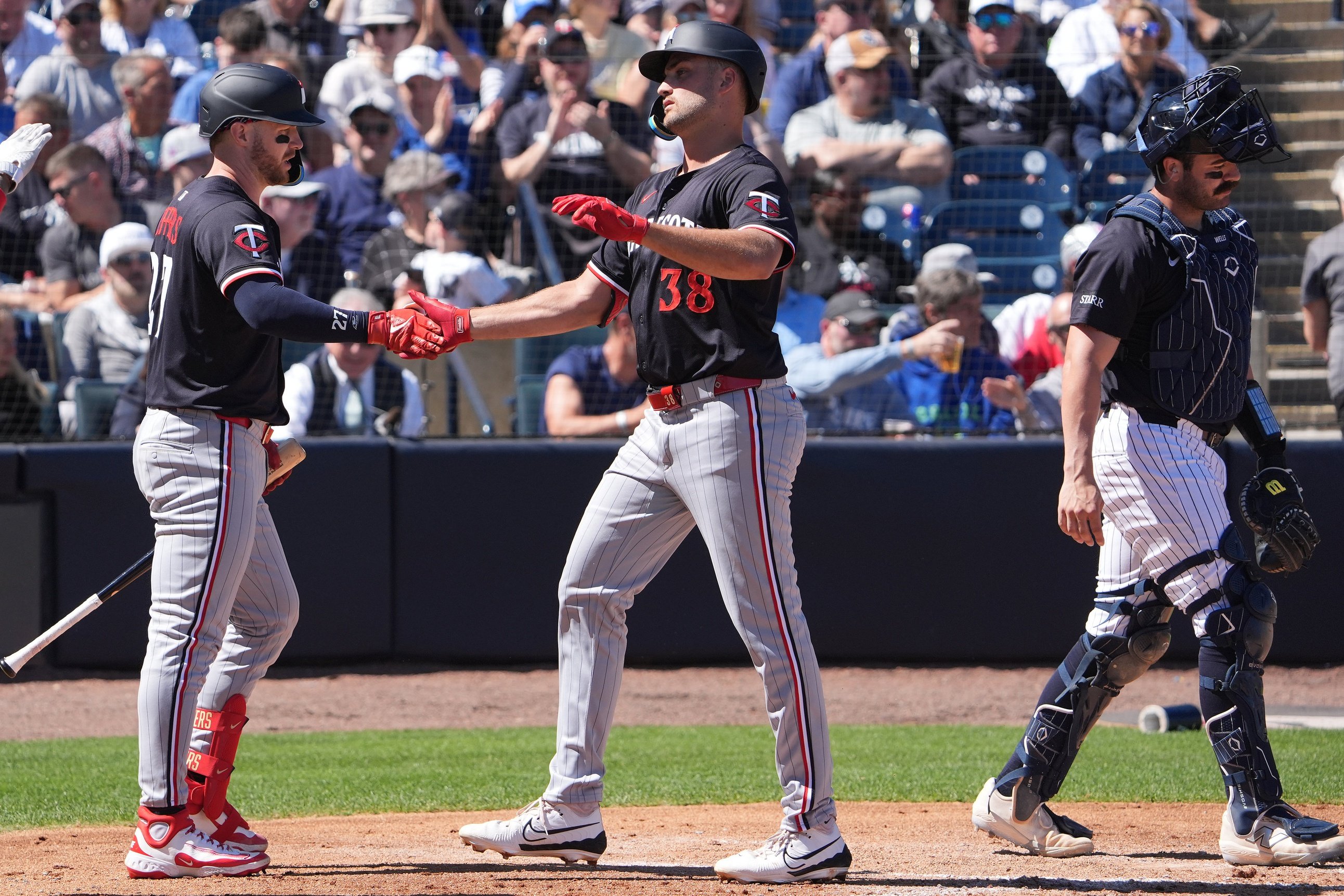 In general, far too much is made of the way managers choose to construct their batting orders. At the end of the day, the impact of lineup sequencing on run production is far less dramatic than most people believe. It's not that big of a deal. Having said that, the Opening Day lineup does seem to have an added layer of meaning. It can tell us a lot about how the manager views various hitters, how he envisions rallies coming together, how he intends to set up late-game scenarios. Even someone like Rocco Baldelli, who generally rolls his eyes at questions about his batting orders, surely puts a little more stock into this one he's been waiting six months to write out. That doesn't mean he'll stick with it though; last year the Twins used 154 different lineups over the course of the season. Baldelli and the Twins just shared their first lineup of the season for today's game against right-hander Sonny Gray and the Cardinals in St. Louis. Let's overanalyze it! First, here's a quick snapshot, and then we'll drill down into each spot. Matt Wallner, RF Carlos Correa, SS Byron Buxton, CF Trevor Larnach, DH Ryan Jeffers, C Ty France, 1B Willi Castro, 2B José Miranda, 3B Harrison Bader, LF 1. Matt Wallner, RF Rocco telegraphed this preference early in the spring, raising eyebrows by writing Wallner into the leadoff spot quickly once games started. At the time, Baldelli called it a "concept in action," hinting that he wasn't opposed to sticking with it. Wallner continued to appear atop the order throughout the spring, and he responded by posting an .833 OPS with six home runs—more than twice any other Twin—in a stark reversal of his struggles last March. Indeed, Wallner has come a very long way since then. Entering 2024, the team's faith in him was so delicate that they demoted him to Triple-A after two weeks. Entering 2025, he's batting leadoff with Baldelli talking him up as one of the best hitters in the league. "I’m not a fortune-teller, but I know his track record is really strong. I know I like guys who hit like Matt Wallner." - Rocco Baldelli on Matt Wallner (via the Star Tribune) 2. Carlos Correa, SS He's the heart and soul of this team, so it's no surprise to see Correa in the damage spot where managers often plant their best player. The shortstop primarily batted second for the Twins in 2022, and in the first half of 2023 before his injury-related limitations became clear. Since then he's moved around the lineup a bit more. Last year on Opening Day he batted fourth—against a lefty no less. Correa finding himself back in the No. 2 position this year seems to be a signal of Baldelli's confidence that the 30-year-old is back to his old self. That'd be excellent news for the Twins. Correa didn't put up big numbers this spring but the underlying metrics were encouraging, and he finished strong. 3. Byron Buxton, CF Buxton followed up his healthiest season in years with perhaps his healthiest offseason ever. The center fielder was ecstatic about being able to experience a normal winter, rather than rehabbing and recovering. This carried over into a spring training that was blissfully free of incidents or setbacks. We don't know how long it will last, but right now Buxton is in great shape physically, and he looks ready to thrive coming off a stellar spring that saw him slash .317/.420/.585 with three homers, seven walks, and even a couple of steals. When on his game he's one of the most dangerous hitters in baseball. 4. Trevor Larnach, DH After three years of struggling to break through in the majors, Larnach finally established himself in 2024. He overcame his vulnerability to non-fastballs, holding his own against offspeed stuff and drastically reducing his strikeout rate while continuing to hit the ball very hard upon contact. Larnach's .434 slugging percentage and 15 home runs last year might not jump off the page for a cleanup man, but those numbers understate his power-hitting ability. He ranked in the 90th percentile for average exit velocity, and in the 80th percentile for xSLG. Mark him down as my pick for first home run of the season. "He does a little bit of everything. He hits the ball hard. He can put some balls in the seats, which is still something that you’re looking for from your team." - Rocco Baldelli on Trevor Larnach (via MLB) 5. Ryan Jeffers, C Last year on Opening Day, Jeffers batted second. It was a big show of faith, and a well-warranted one coming off a season where he was one of the best-hitting catchers in baseball. He went on to hit 10 homers with a .997 OPS in his first 36 games. Then, from May 15th through the end of the season, he slashed .198/.269/.347, posting a lower OPS over the final 4 ½ months (.616) than Christian Vázquez (.639). Which version of Jeffers will we see this year? The fact that he's batting fifth on Opening Day indicates that the Twins are expecting to see the good version—the slugger who can make an impact in the middle of the lineup. “I don’t want to be known as just a good-hitting catcher. I want to be known as a good hitter all around.” - Ryan Jeffers this spring (via the Star Tribune) 6. Ty France, 1B The Twins signed France to replace their 2024 first-base stalwart, Carlos Santana. France is coming off a rotten season and looking to rebound on a $1 million contract. His spring performance was extremely encouraging, and probably helped motivate Baldelli to place the 30-year-old relatively high in the lineup. Now we'll see if the positive signs were legit. Sandwiching two righties on either side of Larnach (and Wallner for that matter) will make it exceedingly tough for an opposing manager to play matchups against Minnesota's lefty bats late in games. No doubt that is by design. 7. Willi Castro, 2B Castro led the team in games started last year and was named team MVP, so it's not terribly surprising he gets the nod over Edouard Julien at second base on Opening Day. In 2024 Castro was most likely to either find himself at the top of the batting order (48 leadoff appearances) or further down (74 starts in the 6th/7th/8th spots). While he's a decent hitter, it's going to be a better sign for the Twins offense if he finds himself down in this area more frequently this season. At this spot in the lineup, his switch-hitting ability and speed can be dynamic assets helping to make things happen. I expect the Twins to use him as a disruptive force nested between a group of slow-footed righty sluggers. "He’s very capable of being an above-average baserunner, being aggressive, stretching the limits, making the defense rush, stealing some bases. He can do all of those things, and I think he’s mentally prepared to do all those things.” - Rocco Baldelli on Willi Castro this spring (via the Pioneer Press) 8. José Miranda, 3B Last year Miranda was an all-world hitter in the first half and a total flop in the second half, hitting zero home runs. For a bat-first player like him to find himself this low in the order is telling; he's got something to prove. It's an opportunity he'll be primed to take advantage of, with Royce Lewis and Brooks Lee on the sidelines. 9. Harrison Bader, LF Hopefully we will not see Bader starting in an outfield corner against a right-handed starter too frequently. That's not an ideal scenario since he has a career .239/.302/.367 slash line against righties. But Bader was Minnesota's "big money" offseason acquisition, signed to a $6.25 million contract that represented more than half of their total expenditure, so it figures they would feature him on the first day of the season. Buried at the bottom of the lineup as a high-caliber defender in left, Bader's not really a liability. Having his bat in the lineup is a luxury the Twins can afford if everyone above him hits the way they're capable of. What are your thoughts on the Opening Day lineup? Any surprises? Anything you'd change? Sound off in the comments as we count down to first pitch.
- 40 comments
-
- 7
-
-

-

-
- matt wallner
- jose miranda
- (and 1 more)
-
People are sleeping on this Twins team. Time for a wake-up call. Image courtesy of Jonathan Dyer, Kim Klement Neitzel, Chris Tilley-Imagn Images The Minnesota Twins experienced a historic and catastrophic collapse in the final six weeks of last season, coming up severely short of their potential, and they still finished with a winning record. That's an important fact to keep in mind as we start to analyze the outlook for this year's roster, which—for better or worse—is largely unchanged. This is a good team. Vegas knows it. Projection models substantiate it. Many Twins fans don't seem to recognize it, or care. That's understandable. The pall of a tumultuous ownership situation and lifeless offseason hang over this franchise and won't clear until they can go on the field, start winning, and catalyze the community. Good won't cut it; they need to be great. And they are plenty capable. As we set the stage for the 2025 season here on Opening Day, here's a breakdown of everything you need to know about the Twins and their outlook. Still looking for somewhere to watch this afternoon's season opener against the Cardinals? Join us at BlackStack Brewing in St. Paul! It's free to attend, and you can claim a free beer by RSVP-ing here. Projections and Over-Unders Statistical projections and Vegas odds stop mattering once the games start being played. But as we look ahead one final time, probabilistic models and betting benchmarks can provide helpful outside context in evaluating the season-opening state of affairs. According to FanGraphs’ probabilistic Playoff Odds model—which runs 20,000 simulations using team projections from its Depth Charts system—the Twins are forecast to win 84 games with a 55% chance of reaching the postseason. They lead the AL Central division in both regards, despite coming off a fourth-place finish. In fact, the Twins are the third-most likely team in the American League to clinch a bye, trailing only the Yankees and Mariners. It's a good team. (Source) Vegas agrees. There's basically a consensus across betting markets that the Twins are slight AL Central favorites. FanDuel Sportsbook, as one example, has Minnesota (+220) narrowly edging the Tigers (+230), with a healthier distance in front of Cleveland and Kansas City. These specifics vary by the source; the Twins usually have the shortest odds, but no one is viewing them as anything close a heavy favorite. And anyway, that doesn't really matter, because the preseason favorite has rarely ended up on top of the Central in recent years. The moneyline numbers do tell us something about widespread perception of this team. Everyone is aware of what happened to the Twins at the end of last year. Everyone is aware they finished fourth, and did next to nothing in the offseason. Still, there's a relatively strong level of confidence among invested onlookers. Because it's a good team. Position-by-Position Overviews Over the past few weeks, I went through each area of the Twins' roster, position by position, to break down the outlook, depth and future. You can catch up on all of these position previews below. Catcher Ryan Jeffers and Christian Vazquez have been the league's most durable backstop duo, but that hasn't translated to outstanding overall performance. Jeffers's bat holds the key to elevating the Twins at catcher. First Base In 2024 it was the team's only position of stability. Now, the Twins aim to replace Carlos Santana with a long-shot reclamation flier on Ty France. They need to hope it pays off because the depth behind him is sparse. Second Base Brooks Lee was contending for the starting job but will open on the injured list due to another back injury. That leaves Edouard Julien in the driver's seat, with Willi Castro and potentially Mickey Gasper set to mix in. Third Base With both Lee and Royce Lewis down to start the year, Jose Miranda steps up as primary 3B, while Castro also factors in. The Twins now badly need Miranda to stay healthy and find consistency. Shortstop Carlos Correa staying on the field and productive coming off two injury-ravaged seasons is perhaps the single biggest key to Minnesota's success. With Lee down, there aren't really any trusted contingencies at short. Left Field Trevor Larnach is expected to split time between here and designated hitter, with Harrison Bader seeing a sizable share of time as well—especially against left-handers. A solid pairing of offensive and defensive strength. Center Field Byron Buxton is in a good place physically, which has been rare over the course of his career. As long as that remains true, CF is well covered. Bader gives them a high-caliber backup plan. Right Field The Max Kepler era has ended and now the Matt Wallner era begins. He has the potential to establish himself as one of the league's top sluggers at the position, if he can keep the prolonged slumps at bay. Designated Hitter Expect to see a medley of players rotating through DH, with the switch-hitting Gasper potentially serving as a regular early on until Lewis and Lee return to reduce the dependency on Miranda and Julien at 2B/3B. Starting Pitcher The three-headed monster of Pablo López, Joe Ryan and Bailey Ober leads the way for a deep rotation that shapes up as one of the team's biggest and most encouraging strengths heading into the season. Relief Pitcher The Twins bullpen projects as the best in MLB, but relievers are notoriously fickle and tough to predict. The ability of this unit to achieve it's potential seems to really hinge on how good Jhoan Durán can be. State of the AL Central Heading into the past offseason, the Twins faced an imposing landscape in this evolving division. The Guardians reclaimed the Central crown, reaching the ALCS, while both Detroit and Kansas City leapfrogged Minnesota en route to postseason berths of their own. It looked as though the long-dormant Tigers and Royals were on the rise, poised to potentially invest and keep pushing this offseason while the Twins sat still. But then ... everyone sat still. The AL Central as a whole barely made any noise during hot stove season, helping explain why no team has been able to elevate themselves above the idling Twins in projections or oddsmaking lines. In fact, the American League as a whole is wide open heading into this season, with the Astros down and the presumptive favorite Yankees besieged by devastating injuries. Compared to the East and West, teams in the Central will have the advantage of more matchups against the inept White Sox. If the Twins can get things to click this year, capturing the No. 1 seed in the AL is not out of the question. For that to happen, they'll need several of the key storylines below to play out favorably. Key Storylines for the 2025 Minnesota Twins These are the pivotal narratives that will determine the fate of this this year's Twins team. Healthy skepticism It's a cliché, especially for this team, but once again injuries are a central crux. Numerous players are looking to rebound from physically tumultuous seasons. There was an air of optimism throughout camp surrounding the team's health outlook, but then the setbacks started to mount in the final 10 days or so: Lewis's hamstring, Lee's back, Brock Stewart's hamstring and Michael Tonkin's shoulder will push all four players to the injured list to start the campaign. An early blip or a sign of things to come? We'll see. The Twins have a reasonable amount of depth, especially on the pitching side, but as we've learned: when the attrition keeps on coming you're eventually going to run out of capable options. Read more: Next Man Up: Silver Linings of Some Bad End-of-Camp Injury News for the Twins The Big Three There aren't many teams around baseball that have three genuinely MVP-caliber players in their prime, poised to propel the lineup. The Twins have that in Correa, Buxton and Lewis, but keeping these three on the field at the same time has proven to be an extraordinary challenge. Bucking this trend will be critical if Minnesota is to fulfill its true potential as a championship contender. We're already off to a bad start on the Lewis front, but Correa and Buxton had very encouraging camps from a physical standpoint, and that's big given how hobbled they both were at the end of 2024. If Lewis can come back relatively quickly and join a healthy Correa and Buxton, there's really no limit to where this team can go. Best-in-class bullpen? A truly elite, shutdown bullpen can make up for a lot of flaws elsewhere on a roster. It can elevate an otherwise mediocre team to greatness. Just ask the 2024 Cleveland Guardians, who won the Central and reached the ALCS despite a rotation and offense that both rated as pretty pedestrian. This Twins bullpen has that type of potential. It really does. Their formidable stable of late-inning arms includes Durán, Griffin Jax, Cole Sands, Jorge Alcala, Danny Coulombe, Louie Varland and hopefully Stewart once healthy. With good health, this unit has a chance to shorten games and tilt many close contests in Minnesota's favor. Then again, with bullpens, you just never know... Read more: 5 Reasons to Trust Jhoan Durán as Minnesota Twins Closer in 2025 Relying on offensive rebounds So many key players on this team have outlooks that are riddled with variance. Julien, Miranda, Jeffers, Austin Martin and the currently-injured Lee and Lewis are all among the youngish hitters looking to rebound from bad seasons, or bad second halves at least. That also goes for both of the newcomers, Bader and France. All of these guys have the potential to be really good. They've shown that. But they also all have the potential to be really unproductive drains on the lineup, and unfortunately in all cases, we've seen that side more recently. It's a precarious situation for a team to be so dependent on this quantity of players bouncing back from failure, but that's where we are at. If things don't break the right way more often than not within this group, and especially if the Big Three can't hold up, it's all too easy to see things really going south for this offense. Pulling for the underdogs Among the players who will open the season on the Twins' active roster, you have the following: Gasper, who is still searching for his first major-league hit at age 29 after finally breaking through with the Red Sox late last year, following 1,600 plate appearances in the minors. He survived a nasty collision that required six stitches at the end of spring, but he made it. DaShawn Keirsey Jr., a 28-year-old outfielder who also has barely tasted the big leagues. It looked like his chance may never come, but he got called up last September out of necessity and made enough of an impression to stick around for a more extended look here in 2025. Randy Dobnak, who was the OG underdog tale six years ago when he first arrived in the majors as an undrafted former independent-league pitcher. He started a playoff game, made the Opening Day roster in consecutive seasons, and even earned himself a nice contract extension. Then, in 2021, it all fell apart for Dobnak, who's mostly been out of sight since then. Now he gets one final opportunity to find redemption, starting out as a long reliever in the bullpen. Read more: Have the Twins Found Their Next Cult Hero in Mickey Gasper? Sale of the franchise looms overhead The pending potential sale of the Twins franchise continues to cast a shadow over everything happening on the field. This talented and star-laden roster was given the short shrift for a second straight offseason thanks to an ownership that decided they no longer want to seriously invest. News that the franchise was being put for sale by the Pohlad family was met by relief and borderline jubilation from a frustrated fan base. Throughout much of the offseason there was optimism that a new owner could be announced by Opening Day, but Justin Ishbia's gut-punch abandonment of his bid erased all momentum and now there is no resolution in sight. If this team gets off to a bad start, I loathe to think about the rancor and bad vibes that will fester from a certain contingent of fans, with ownership conveying such a low level of commitment. But I guess that's preferable to the apathy that will set in more broadly among Minnesota sports fans. The Twins need to find success on the field, or find a new owner, or both. The alternative scenario is exceedingly grim. Nick's Picks for the 2025 Season To close out my position preview, here are my predictions for Twins MVP, best pitcher, top rookie, and comeback player of the year (so many options for that one). I'd love to hear yours in the comments. Let's get this season rolling! Twins MVP: Byron Buxton Best Pitcher: Griffin Jax Top Rookie: Luke Keaschall Comeback Player: Edouard Julien View full article
- 30 replies
-
- 2
-
-
- carlos correa
- byron buxton
- (and 1 more)
-
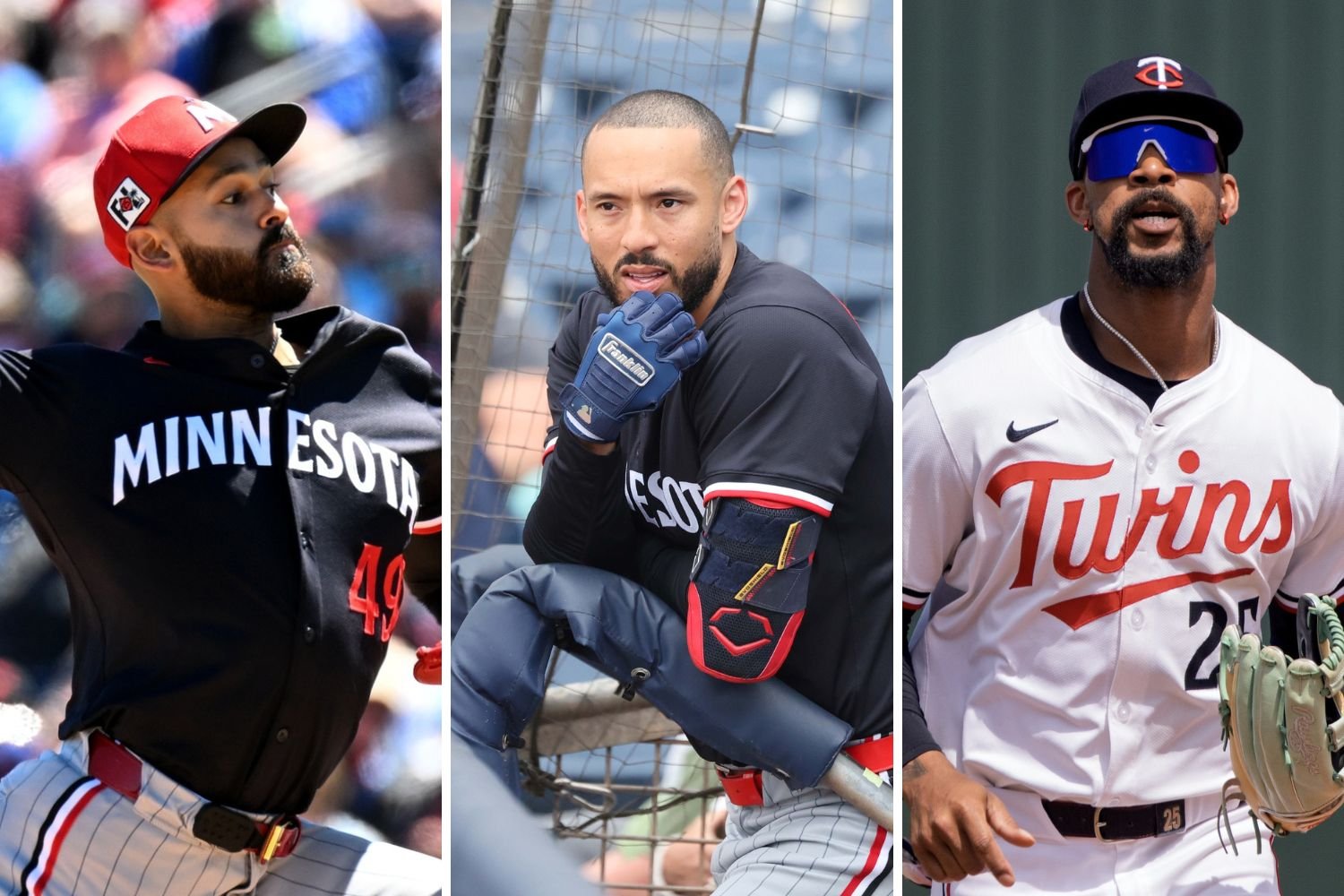 The Minnesota Twins experienced a historic and catastrophic collapse in the final six weeks of last season, coming up severely short of their potential, and they still finished with a winning record. That's an important fact to keep in mind as we start to analyze the outlook for this year's roster, which—for better or worse—is largely unchanged. This is a good team. Vegas knows it. Projection models substantiate it. Many Twins fans don't seem to recognize it, or care. That's understandable. The pall of a tumultuous ownership situation and lifeless offseason hang over this franchise and won't clear until they can go on the field, start winning, and catalyze the community. Good won't cut it; they need to be great. And they are plenty capable. As we set the stage for the 2025 season here on Opening Day, here's a breakdown of everything you need to know about the Twins and their outlook. Still looking for somewhere to watch this afternoon's season opener against the Cardinals? Join us at BlackStack Brewing in St. Paul! It's free to attend, and you can claim a free beer by RSVP-ing here. Projections and Over-Unders Statistical projections and Vegas odds stop mattering once the games start being played. But as we look ahead one final time, probabilistic models and betting benchmarks can provide helpful outside context in evaluating the season-opening state of affairs. According to FanGraphs’ probabilistic Playoff Odds model—which runs 20,000 simulations using team projections from its Depth Charts system—the Twins are forecast to win 84 games with a 55% chance of reaching the postseason. They lead the AL Central division in both regards, despite coming off a fourth-place finish. In fact, the Twins are the third-most likely team in the American League to clinch a bye, trailing only the Yankees and Mariners. It's a good team. (Source) Vegas agrees. There's basically a consensus across betting markets that the Twins are slight AL Central favorites. FanDuel Sportsbook, as one example, has Minnesota (+220) narrowly edging the Tigers (+230), with a healthier distance in front of Cleveland and Kansas City. These specifics vary by the source; the Twins usually have the shortest odds, but no one is viewing them as anything close a heavy favorite. And anyway, that doesn't really matter, because the preseason favorite has rarely ended up on top of the Central in recent years. The moneyline numbers do tell us something about widespread perception of this team. Everyone is aware of what happened to the Twins at the end of last year. Everyone is aware they finished fourth, and did next to nothing in the offseason. Still, there's a relatively strong level of confidence among invested onlookers. Because it's a good team. Position-by-Position Overviews Over the past few weeks, I went through each area of the Twins' roster, position by position, to break down the outlook, depth and future. You can catch up on all of these position previews below. Catcher Ryan Jeffers and Christian Vazquez have been the league's most durable backstop duo, but that hasn't translated to outstanding overall performance. Jeffers's bat holds the key to elevating the Twins at catcher. First Base In 2024 it was the team's only position of stability. Now, the Twins aim to replace Carlos Santana with a long-shot reclamation flier on Ty France. They need to hope it pays off because the depth behind him is sparse. Second Base Brooks Lee was contending for the starting job but will open on the injured list due to another back injury. That leaves Edouard Julien in the driver's seat, with Willi Castro and potentially Mickey Gasper set to mix in. Third Base With both Lee and Royce Lewis down to start the year, Jose Miranda steps up as primary 3B, while Castro also factors in. The Twins now badly need Miranda to stay healthy and find consistency. Shortstop Carlos Correa staying on the field and productive coming off two injury-ravaged seasons is perhaps the single biggest key to Minnesota's success. With Lee down, there aren't really any trusted contingencies at short. Left Field Trevor Larnach is expected to split time between here and designated hitter, with Harrison Bader seeing a sizable share of time as well—especially against left-handers. A solid pairing of offensive and defensive strength. Center Field Byron Buxton is in a good place physically, which has been rare over the course of his career. As long as that remains true, CF is well covered. Bader gives them a high-caliber backup plan. Right Field The Max Kepler era has ended and now the Matt Wallner era begins. He has the potential to establish himself as one of the league's top sluggers at the position, if he can keep the prolonged slumps at bay. Designated Hitter Expect to see a medley of players rotating through DH, with the switch-hitting Gasper potentially serving as a regular early on until Lewis and Lee return to reduce the dependency on Miranda and Julien at 2B/3B. Starting Pitcher The three-headed monster of Pablo López, Joe Ryan and Bailey Ober leads the way for a deep rotation that shapes up as one of the team's biggest and most encouraging strengths heading into the season. Relief Pitcher The Twins bullpen projects as the best in MLB, but relievers are notoriously fickle and tough to predict. The ability of this unit to achieve it's potential seems to really hinge on how good Jhoan Durán can be. State of the AL Central Heading into the past offseason, the Twins faced an imposing landscape in this evolving division. The Guardians reclaimed the Central crown, reaching the ALCS, while both Detroit and Kansas City leapfrogged Minnesota en route to postseason berths of their own. It looked as though the long-dormant Tigers and Royals were on the rise, poised to potentially invest and keep pushing this offseason while the Twins sat still. But then ... everyone sat still. The AL Central as a whole barely made any noise during hot stove season, helping explain why no team has been able to elevate themselves above the idling Twins in projections or oddsmaking lines. In fact, the American League as a whole is wide open heading into this season, with the Astros down and the presumptive favorite Yankees besieged by devastating injuries. Compared to the East and West, teams in the Central will have the advantage of more matchups against the inept White Sox. If the Twins can get things to click this year, capturing the No. 1 seed in the AL is not out of the question. For that to happen, they'll need several of the key storylines below to play out favorably. Key Storylines for the 2025 Minnesota Twins These are the pivotal narratives that will determine the fate of this this year's Twins team. Healthy skepticism It's a cliché, especially for this team, but once again injuries are a central crux. Numerous players are looking to rebound from physically tumultuous seasons. There was an air of optimism throughout camp surrounding the team's health outlook, but then the setbacks started to mount in the final 10 days or so: Lewis's hamstring, Lee's back, Brock Stewart's hamstring and Michael Tonkin's shoulder will push all four players to the injured list to start the campaign. An early blip or a sign of things to come? We'll see. The Twins have a reasonable amount of depth, especially on the pitching side, but as we've learned: when the attrition keeps on coming you're eventually going to run out of capable options. Read more: Next Man Up: Silver Linings of Some Bad End-of-Camp Injury News for the Twins The Big Three There aren't many teams around baseball that have three genuinely MVP-caliber players in their prime, poised to propel the lineup. The Twins have that in Correa, Buxton and Lewis, but keeping these three on the field at the same time has proven to be an extraordinary challenge. Bucking this trend will be critical if Minnesota is to fulfill its true potential as a championship contender. We're already off to a bad start on the Lewis front, but Correa and Buxton had very encouraging camps from a physical standpoint, and that's big given how hobbled they both were at the end of 2024. If Lewis can come back relatively quickly and join a healthy Correa and Buxton, there's really no limit to where this team can go. Best-in-class bullpen? A truly elite, shutdown bullpen can make up for a lot of flaws elsewhere on a roster. It can elevate an otherwise mediocre team to greatness. Just ask the 2024 Cleveland Guardians, who won the Central and reached the ALCS despite a rotation and offense that both rated as pretty pedestrian. This Twins bullpen has that type of potential. It really does. Their formidable stable of late-inning arms includes Durán, Griffin Jax, Cole Sands, Jorge Alcala, Danny Coulombe, Louie Varland and hopefully Stewart once healthy. With good health, this unit has a chance to shorten games and tilt many close contests in Minnesota's favor. Then again, with bullpens, you just never know... Read more: 5 Reasons to Trust Jhoan Durán as Minnesota Twins Closer in 2025 Relying on offensive rebounds So many key players on this team have outlooks that are riddled with variance. Julien, Miranda, Jeffers, Austin Martin and the currently-injured Lee and Lewis are all among the youngish hitters looking to rebound from bad seasons, or bad second halves at least. That also goes for both of the newcomers, Bader and France. All of these guys have the potential to be really good. They've shown that. But they also all have the potential to be really unproductive drains on the lineup, and unfortunately in all cases, we've seen that side more recently. It's a precarious situation for a team to be so dependent on this quantity of players bouncing back from failure, but that's where we are at. If things don't break the right way more often than not within this group, and especially if the Big Three can't hold up, it's all too easy to see things really going south for this offense. Pulling for the underdogs Among the players who will open the season on the Twins' active roster, you have the following: Gasper, who is still searching for his first major-league hit at age 29 after finally breaking through with the Red Sox late last year, following 1,600 plate appearances in the minors. He survived a nasty collision that required six stitches at the end of spring, but he made it. DaShawn Keirsey Jr., a 28-year-old outfielder who also has barely tasted the big leagues. It looked like his chance may never come, but he got called up last September out of necessity and made enough of an impression to stick around for a more extended look here in 2025. Randy Dobnak, who was the OG underdog tale six years ago when he first arrived in the majors as an undrafted former independent-league pitcher. He started a playoff game, made the Opening Day roster in consecutive seasons, and even earned himself a nice contract extension. Then, in 2021, it all fell apart for Dobnak, who's mostly been out of sight since then. Now he gets one final opportunity to find redemption, starting out as a long reliever in the bullpen. Read more: Have the Twins Found Their Next Cult Hero in Mickey Gasper? Sale of the franchise looms overhead The pending potential sale of the Twins franchise continues to cast a shadow over everything happening on the field. This talented and star-laden roster was given the short shrift for a second straight offseason thanks to an ownership that decided they no longer want to seriously invest. News that the franchise was being put for sale by the Pohlad family was met by relief and borderline jubilation from a frustrated fan base. Throughout much of the offseason there was optimism that a new owner could be announced by Opening Day, but Justin Ishbia's gut-punch abandonment of his bid erased all momentum and now there is no resolution in sight. If this team gets off to a bad start, I loathe to think about the rancor and bad vibes that will fester from a certain contingent of fans, with ownership conveying such a low level of commitment. But I guess that's preferable to the apathy that will set in more broadly among Minnesota sports fans. The Twins need to find success on the field, or find a new owner, or both. The alternative scenario is exceedingly grim. Nick's Picks for the 2025 Season To close out my position preview, here are my predictions for Twins MVP, best pitcher, top rookie, and comeback player of the year (so many options for that one). I'd love to hear yours in the comments. Let's get this season rolling! Twins MVP: Byron Buxton Best Pitcher: Griffin Jax Top Rookie: Luke Keaschall Comeback Player: Edouard Julien
- 30 comments
-
- 8
-
-
- carlos correa
- byron buxton
- (and 1 more)
-
A new report from The Athletic portrays a lukewarm buyer market, with no resolution in sight as Opening Day looms. Two months ago, there was a widespread sense of optimism that the Twins were trending toward naming a new owner before Opening Day amid reports of a "robust market" for the franchise. Billionaire Justin Ishbia was known to be in the driver's seat, expressing a level of serious interest that the Pohlad family clearly perceived as sincere and legitimate. Ishbia was courting local limited partners. Things were progressing briskly. Until they weren't. In mid-February, Jon Greenberg of The Athletic reported that Ishbia was abandoning his bid for the Twins, pivoting instead to boost his stake in the division rival Chicago White Sox. It was a development that left the Twins "hustling to regroup," according to Dan Hayes, who added that team officials were "caught off guard" by the news. At the time, it sounded as though the Twins intended to press forward with their efforts to find a find a buyer, turning their attention to the multiple other interested parties that were engaged. But in one month since, it's been radio silence. There have been no meaningful updates on the sale of the Twins ... at least, up until a new report emerged on Monday night, serving to more or less confirm what the recent lack of steam suggests: things have gone cold. The latest article published by The Athletic casts a rather grim picture for those hoping to see the Twins and Pohlads part ways. If you don't already, I highly recommend subscribing and reading the excellent reporting from Hayes, Ken Rosenthal and Britt Ghiroli. There are many interesting details and revelations within, and I'll only touch on a couple here. But the bottom line is that the Twins are "just starting to renew the sale process" more than four weeks after Ishbia said see ya, with an assortment of factors keeping interest from the remaining market in check. Several of those factors we already knew. The Twins have struggled to draw attendance since the 2019 season, they don't own their stadium (the city leases them Target Field), and their TV situation is far from ideal. But one new disclosure in The Athletic's report is that the franchise is also $425 million in debt, which is "one of the highest figures among MLB’s 30 teams." Oh, and Joe Pohlad apparently wants to remain in charge. Yes, that's right. Per the report: "Further complicating matters is the belief that current Twins executive chair Joe Pohlad would prefer to stay in control of the club ... Pohlad remaining in some capacity with a new ownership group isn’t out of the realm of possibility, multiple sources said." I recognize that this tidbit will probably be met with a sour reaction by many, and I don't begrudge you if so, but it's worth noting that Joe is merely one arm of a much larger machine that is the Pohlad empire. He doesn't necessarily call the shots on payroll. From all accounts I've heard, he's one of the few people in the family who actually likes baseball and is invested in the team as more than a business asset. Still, trying to sell the team while insisting — to any degree — that the previous ownership figurehead remain in place is bound to complicate a sale that already has plenty of sticking points. And it also diminishes the public perception of a fresh start with new organizational leadership. Much of this stuff makes me wonder how serious the Pohlads — reportedly taking a hardline stance on their asking price at $1.7 billion or more, with Forbes' valuation of $1.5 billion being deemed a "non-starter" — really are about making this happen, now that the one genuinely aggressive suitor is out of the running. The season starts in days and this situation is as murky as ever. The only thing that seems clear is that a resolution is nowhere in sight for the sale of the Minnesota Twins. Hopefully the team can go out and play well enough to take our minds off it. View full article
-
With Ishbia Out of Picture, Sale of Minnesota Twins Has Bogged Down
Nick Nelson posted an article in Twins
 Two months ago, there was a widespread sense of optimism that the Twins were trending toward naming a new owner before Opening Day amid reports of a "robust market" for the franchise. Billionaire Justin Ishbia was known to be in the driver's seat, expressing a level of serious interest that the Pohlad family clearly perceived as sincere and legitimate. Ishbia was courting local limited partners. Things were progressing briskly. Until they weren't. In mid-February, Jon Greenberg of The Athletic reported that Ishbia was abandoning his bid for the Twins, pivoting instead to boost his stake in the division rival Chicago White Sox. It was a development that left the Twins "hustling to regroup," according to Dan Hayes, who added that team officials were "caught off guard" by the news. At the time, it sounded as though the Twins intended to press forward with their efforts to find a find a buyer, turning their attention to the multiple other interested parties that were engaged. But in one month since, it's been radio silence. There have been no meaningful updates on the sale of the Twins ... at least, up until a new report emerged on Monday night, serving to more or less confirm what the recent lack of steam suggests: things have gone cold. The latest article published by The Athletic casts a rather grim picture for those hoping to see the Twins and Pohlads part ways. If you don't already, I highly recommend subscribing and reading the excellent reporting from Hayes, Ken Rosenthal and Britt Ghiroli. There are many interesting details and revelations within, and I'll only touch on a couple here. But the bottom line is that the Twins are "just starting to renew the sale process" more than four weeks after Ishbia said see ya, with an assortment of factors keeping interest from the remaining market in check. Several of those factors we already knew. The Twins have struggled to draw attendance since the 2019 season, they don't own their stadium (the city leases them Target Field), and their TV situation is far from ideal. But one new disclosure in The Athletic's report is that the franchise is also $425 million in debt, which is "one of the highest figures among MLB’s 30 teams." Oh, and Joe Pohlad apparently wants to remain in charge. Yes, that's right. Per the report: "Further complicating matters is the belief that current Twins executive chair Joe Pohlad would prefer to stay in control of the club ... Pohlad remaining in some capacity with a new ownership group isn’t out of the realm of possibility, multiple sources said." I recognize that this tidbit will probably be met with a sour reaction by many, and I don't begrudge you if so, but it's worth noting that Joe is merely one arm of a much larger machine that is the Pohlad empire. He doesn't necessarily call the shots on payroll. From all accounts I've heard, he's one of the few people in the family who actually likes baseball and is invested in the team as more than a business asset. Still, trying to sell the team while insisting — to any degree — that the previous ownership figurehead remain in place is bound to complicate a sale that already has plenty of sticking points. And it also diminishes the public perception of a fresh start with new organizational leadership. Much of this stuff makes me wonder how serious the Pohlads — reportedly taking a hardline stance on their asking price at $1.7 billion or more, with Forbes' valuation of $1.5 billion being deemed a "non-starter" — really are about making this happen, now that the one genuinely aggressive suitor is out of the running. The season starts in days and this situation is as murky as ever. The only thing that seems clear is that a resolution is nowhere in sight for the sale of the Minnesota Twins. Hopefully the team can go out and play well enough to take our minds off it.
 -
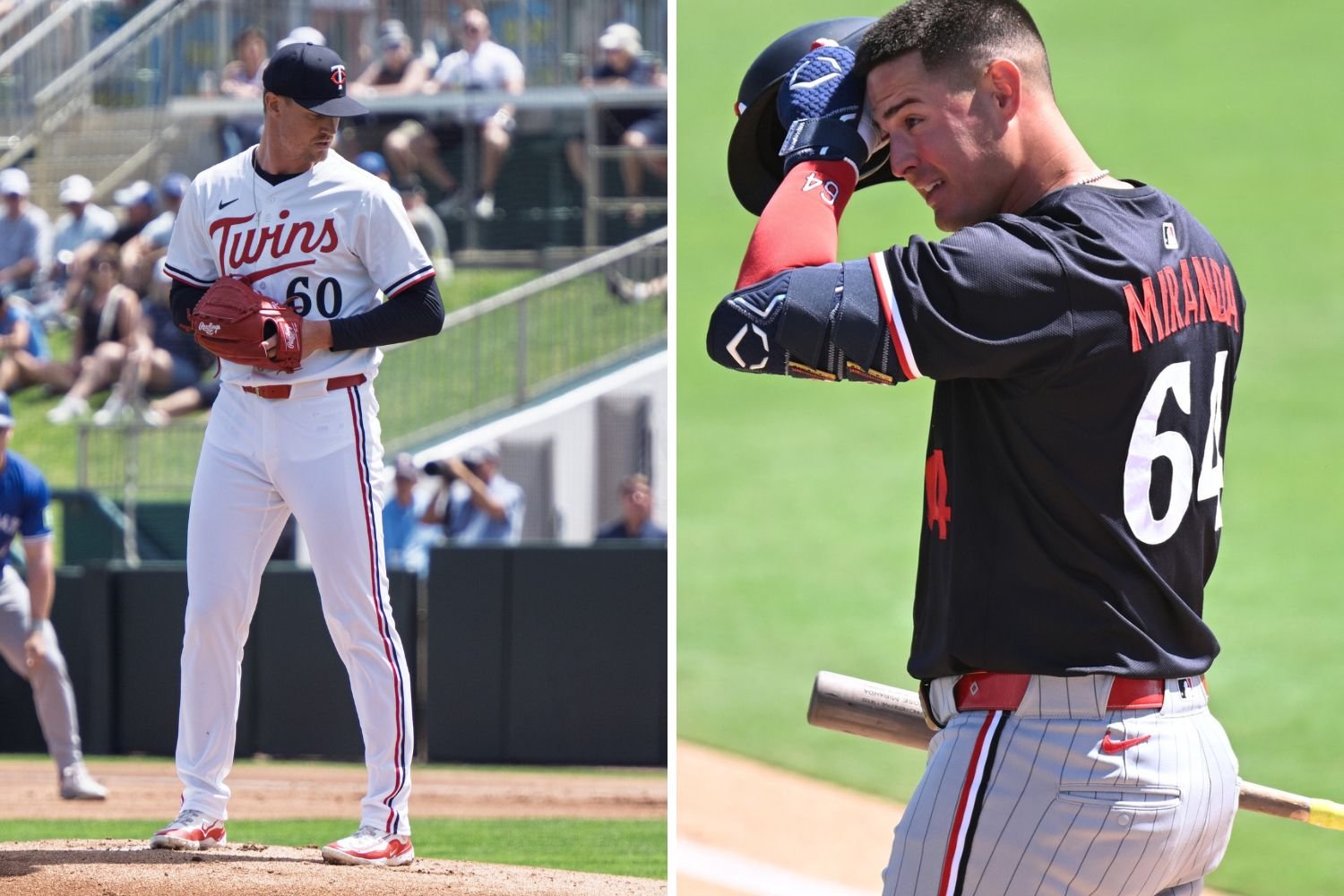 As Jamie Cameron covered earlier today, the Minnesota Twins shared a series of updates as they prepare to finalize their roster and head north. We already knew they'd be opening the season without Michael Tonkin, who is dealing with a shoulder injury, and now the Twins have confirmed Brock Stewart will also start on the injured list. Stewart suffered a hamstring strain in spring training and is still building up after rehabbing from shoulder surgery. On the position-player front, Royce Lewis will be joined by Brooks Lee on the IL, delivering a critical blow to the team's infield depth. None of these injuries are necessarily expected to be long-term, but all four players were initially expected to make the team. Instead, the Twins will need to proceed without them for at least the first couple of weeks. Next man up! While the contributions of Lewis, Lee, Stewart and Tonkin won't necessarily be easy to replace, there will be opportunities for others to emerge from the depth chart and capitalize. Here are some of the players who figure to become important to the team's plans as a result of these injuries. Bullpen Tonkin's shoulder strain had already more or less locked Louis Varland into a roster spot. Stewart being sidelined frees up another one. That final opening might have been filled with Rule 5 pick Eiberson Castellano if he made enough of an impression this spring, but the Twins already informed him he won't be making the team. Castellano is likely headed back to Philadelphia, barring a trade or a waiver claim by some pitching-hungrier outfit. So, who will round out an eight-man relief corps, alongside Varland, Griffin Jax, Jhoan Durán, Cole Sands, Danny Coulombe, Justin Topa and Jorge Alcalá? Right now, the most likely candidate appears to be Scott Blewett, who's had a good camp after looking good in his limited time with the Twins last year. Blewett is viewed as a pretty fringy major-league talent, which is why he was available to Minnesota on a minor-league deal for a second straight season, but there are intriguing traits here. Last year Cody Schoenmann wrote a piece here drawing parallels between Blewett and "the one who got away," Jeff Hoffman. I'd love to see Blewett get some run in a lower-leverage role in the majors, which was out of reach for him before Stewart and Tonkin got hurt. Fellow minor-league signings like Anthony Misiewicz, Huascar Ynoa and Alex Speas also have clearer paths to returning to the big leagues, though all three were reassigned to Triple A already during this camp. (That doesn't rule any of them out from making the roster, but I suspect Blewett is ahead in line.) By virtue of being on the 40-man roster, Kody Funderburk is also poised to get another opportunity soon. Infield and Lineup If everything went to plan this spring, the Twins might have had Lewis at third base and Lee at second on Opening Day. Their injuries will push José Miranda into (essentially) full-time duty at the hot corner, with Edouard Julien likely to be the primary starter at second. The situation represents a pathway to redemption on both fronts. Miranda and Julien entered this camp with much to prove, both at the plate and in the field. They've looked solid this spring, and now they'll have a chance to parlay that into succeeding when it matters. If Miranda can tap into his first-half form from 2024 and Julien can rediscover the edge from his rookie season, Minnesota has the potential to get good offensive production at both positions. Most teams don't have backup options like these behind their key lineup fixtures. I'm looking forward to what Miranda and Julien can do as regulars in the infield. The byproduct of those two being pushed into starting infield jobs is that it could open a considerable amount of playing time at designated hitter, where they figured to fill in frequently. The need for a bat-first option on the bench set the stage for Mickey Gasper to step up and make a bid to emerge as cult hero. Sadly, Gasper was carted off the field on Sunday after a scary-looking collision. He was diagnosed with a left ankle laceration after being spiked, and got stitches. Hopefully, there's nothing structurally wrong and he can return soon to jump on this opportunity for big-league at-bats. This is the opportunity he's been waiting for. The next man up would appear to be Austin Martin or DaShawn Keirsey. A week or two ago, both were slated to start in Triple A, where neither has a whole lot more to prove. Can one of these players seize the moment? I'm also interested to see how the next layers of depth take shape in the wake of these injuries. Losing both Lewis and Lee at third base leaves the Twins pretty thin, with Castro standing as the only readily available backup on the 40-man roster. Armando Alvarez, who's been in camp as a non-roster invite, could be next in line if Miranda struggles, or his back or shoulder acts up again. The 30-year-old Alvarez has only gotten a cup of coffee in the majors (16 games last year with the A's) but the righty hitter crushed at Triple-A pitching in 2024, slashing .315/.407/.560 in 75 games. Third base is his primary position, and he can also play second (as well as a bit of corner outfield). All told, he's a good fit for the team's needs. Injuries atop the depth chart might also accelerate the path for some prospects who impressed in spring training. Specifically, I'm thinking about Luke Keaschall, who could take over at second base quickly—especially if Lee is facing a prolonged absence. Another name to watch is Jeferson Morales. The Twins really like his bat, and he raked this spring. The lack of a clear defensive fit was one major thing holding Morales back, but if there are a whole bunch of DH starts available, his promising right-handed bat could find its way to the majors much more quickly than anticipated. Injuries are never the preferred path to opportunity, but they are an inevitable part of a long baseball season. For every setback, there's a ripple effect that creates a window—sometimes for a forgotten veteran, sometimes for a rising prospect, sometimes for someone in between. While the losses of Lewis, Lee, Stewart and Tonkin are undeniably tough to swallow, their absences will create proving grounds for others to step in, step up, and potentially make an impact that no one saw coming. In this sport, surprises are always lurking—and some of the most meaningful stories start with an unexpected chance.
- 58 comments
-
- 13
-
-
- jose miranda
- edouard julien
- (and 3 more)
-
The narrative of a resoundingly healthy camp has come crashing down in the final stretch, with several key players landing on the injured list to open the season. That's generally bad news, but there are some potential positives that could come out of it. Image courtesy of Chris Tilley, Jonathan Dyer-Imagn Images As Jamie Cameron covered earlier today, the Minnesota Twins shared a series of updates as they prepare to finalize their roster and head north. We already knew they'd be opening the season without Michael Tonkin, who is dealing with a shoulder injury, and now the Twins have confirmed Brock Stewart will also start on the injured list. Stewart suffered a hamstring strain in spring training and is still building up after rehabbing from shoulder surgery. On the position-player front, Royce Lewis will be joined by Brooks Lee on the IL, delivering a critical blow to the team's infield depth. None of these injuries are necessarily expected to be long-term, but all four players were initially expected to make the team. Instead, the Twins will need to proceed without them for at least the first couple of weeks. Next man up! While the contributions of Lewis, Lee, Stewart and Tonkin won't necessarily be easy to replace, there will be opportunities for others to emerge from the depth chart and capitalize. Here are some of the players who figure to become important to the team's plans as a result of these injuries. Bullpen Tonkin's shoulder strain had already more or less locked Louis Varland into a roster spot. Stewart being sidelined frees up another one. That final opening might have been filled with Rule 5 pick Eiberson Castellano if he made enough of an impression this spring, but the Twins already informed him he won't be making the team. Castellano is likely headed back to Philadelphia, barring a trade or a waiver claim by some pitching-hungrier outfit. So, who will round out an eight-man relief corps, alongside Varland, Griffin Jax, Jhoan Durán, Cole Sands, Danny Coulombe, Justin Topa and Jorge Alcalá? Right now, the most likely candidate appears to be Scott Blewett, who's had a good camp after looking good in his limited time with the Twins last year. Blewett is viewed as a pretty fringy major-league talent, which is why he was available to Minnesota on a minor-league deal for a second straight season, but there are intriguing traits here. Last year Cody Schoenmann wrote a piece here drawing parallels between Blewett and "the one who got away," Jeff Hoffman. I'd love to see Blewett get some run in a lower-leverage role in the majors, which was out of reach for him before Stewart and Tonkin got hurt. Fellow minor-league signings like Anthony Misiewicz, Huascar Ynoa and Alex Speas also have clearer paths to returning to the big leagues, though all three were reassigned to Triple A already during this camp. (That doesn't rule any of them out from making the roster, but I suspect Blewett is ahead in line.) By virtue of being on the 40-man roster, Kody Funderburk is also poised to get another opportunity soon. Infield and Lineup If everything went to plan this spring, the Twins might have had Lewis at third base and Lee at second on Opening Day. Their injuries will push José Miranda into (essentially) full-time duty at the hot corner, with Edouard Julien likely to be the primary starter at second. The situation represents a pathway to redemption on both fronts. Miranda and Julien entered this camp with much to prove, both at the plate and in the field. They've looked solid this spring, and now they'll have a chance to parlay that into succeeding when it matters. If Miranda can tap into his first-half form from 2024 and Julien can rediscover the edge from his rookie season, Minnesota has the potential to get good offensive production at both positions. Most teams don't have backup options like these behind their key lineup fixtures. I'm looking forward to what Miranda and Julien can do as regulars in the infield. The byproduct of those two being pushed into starting infield jobs is that it could open a considerable amount of playing time at designated hitter, where they figured to fill in frequently. The need for a bat-first option on the bench set the stage for Mickey Gasper to step up and make a bid to emerge as cult hero. Sadly, Gasper was carted off the field on Sunday after a scary-looking collision. He was diagnosed with a left ankle laceration after being spiked, and got stitches. Hopefully, there's nothing structurally wrong and he can return soon to jump on this opportunity for big-league at-bats. This is the opportunity he's been waiting for. The next man up would appear to be Austin Martin or DaShawn Keirsey. A week or two ago, both were slated to start in Triple A, where neither has a whole lot more to prove. Can one of these players seize the moment? I'm also interested to see how the next layers of depth take shape in the wake of these injuries. Losing both Lewis and Lee at third base leaves the Twins pretty thin, with Castro standing as the only readily available backup on the 40-man roster. Armando Alvarez, who's been in camp as a non-roster invite, could be next in line if Miranda struggles, or his back or shoulder acts up again. The 30-year-old Alvarez has only gotten a cup of coffee in the majors (16 games last year with the A's) but the righty hitter crushed at Triple-A pitching in 2024, slashing .315/.407/.560 in 75 games. Third base is his primary position, and he can also play second (as well as a bit of corner outfield). All told, he's a good fit for the team's needs. Injuries atop the depth chart might also accelerate the path for some prospects who impressed in spring training. Specifically, I'm thinking about Luke Keaschall, who could take over at second base quickly—especially if Lee is facing a prolonged absence. Another name to watch is Jeferson Morales. The Twins really like his bat, and he raked this spring. The lack of a clear defensive fit was one major thing holding Morales back, but if there are a whole bunch of DH starts available, his promising right-handed bat could find its way to the majors much more quickly than anticipated. Injuries are never the preferred path to opportunity, but they are an inevitable part of a long baseball season. For every setback, there's a ripple effect that creates a window—sometimes for a forgotten veteran, sometimes for a rising prospect, sometimes for someone in between. While the losses of Lewis, Lee, Stewart and Tonkin are undeniably tough to swallow, their absences will create proving grounds for others to step in, step up, and potentially make an impact that no one saw coming. In this sport, surprises are always lurking—and some of the most meaningful stories start with an unexpected chance. View full article
- 58 replies
-
- 1
-
-
- jose miranda
- edouard julien
- (and 3 more)
-
Posts from angry social media users prompted an internal investigation that exposed Twins medical malpractices, and validated the barrage of injury-related outrage and finger-pointing from fans. In a stunning development that has sent shockwaves through the sports medicine community, a new exposé has revealed that the Minnesota Twins training staff does not, in fact, believe in stretching, muscle maintenance, or the human musculoskeletal system in general. The investigation was sparked by a string of tweets from a concerned and extremely medically literate fan following news that Royce Lewis would miss time with a hamstring strain. One particular tweet, which read in part, "DO THESE GUYS EVEN STRETCH?????? FIRE THE WHOLE TRAINING STAFF @Twins", prompted the team's ownership to launch a full internal investigation into the medical practices of its employees, Twins Daily has learned. What they found, sources say, was "alarming." “Honestly, we’ve just been kind of winging it,” admitted head athletic trainer Nick Paparesta in an exclusive interview. “I always thought hamstrings were kind of a vibe thing. Like if you believe in them too much, they tighten up.” Paparesta, who joined the Twins in 2023 after a stint with the A’s (where players frequently healed injuries using sage smoke and emotional journaling), confirmed that the Twins' pregame routine consists primarily of vibes-based movement, light gossip, and playing hacky sack in a dimly lit yoga studio. “We tried foam rollers once,” said one assistant trainer, who asked to remain anonymous for fear of being chased out of town with torches and pitchforks. “But they’re, like, hard? And that seems kind of mean to the body.” Other revelations from the report include: The team has been using a "feelings wheel" to diagnose injuries and throwing darts at a board to determine recovery timelines. Instead of MRIs, players are evaluated using auras and energy readings. Muscle cramps are treated with "positive affirmations and, if necessary, a cool LaCroix." The report found that not one player on the current roster has performed a hamstring stretch since spring training of 2019. Leaked documentation of Byron Buxton's 2022–23 offseason rehab plan revealed a loose collection of vague bullet points, motivational stickers, and at least one crudely drawn diagram of a stick figure labeled "BYRON" doing squats next to a cartoonish knee wrapped in duct tape and hope. When reached for comment, Twins President of Business and Baseball Operations Derek Falvey expressed surprise at the findings. “Wow, yeah. I guess I assumed we were doing that stuff. Like, at least the basic anatomy parts. I mean, we have a table. There’s tape. It seemed legit.” Meanwhile, fans who have harped endlessly on social media about the team's conditioning approach and handling of injuries are expressing vindication. “I’ve been saying this for years,” said X/Twitter user @TwinsFan42069. “They should be doing three-hour dynamic warmups before every game, followed by a cool-down run around Lake Nokomis. It’s what I do before my adult kickball league and I never miss a game.” Major League Baseball declined to comment, but sources inside the league office say they are “deeply impressed” by how angry Minnesota fans get about injuries that are extremely common in a sport that involves explosive sprinting and diving. In a show of accountability, the Twins have promised to re-evaluate their training protocols and perhaps even "Google what a hamstring is." Royce Lewis, for his part, says he remains hopeful. “It’s frustrating, of course,” Lewis said. “But if this means they’ll stop rubbing crystals on my thigh and finally give me an ice pack, I’m all for it.” View full article
-
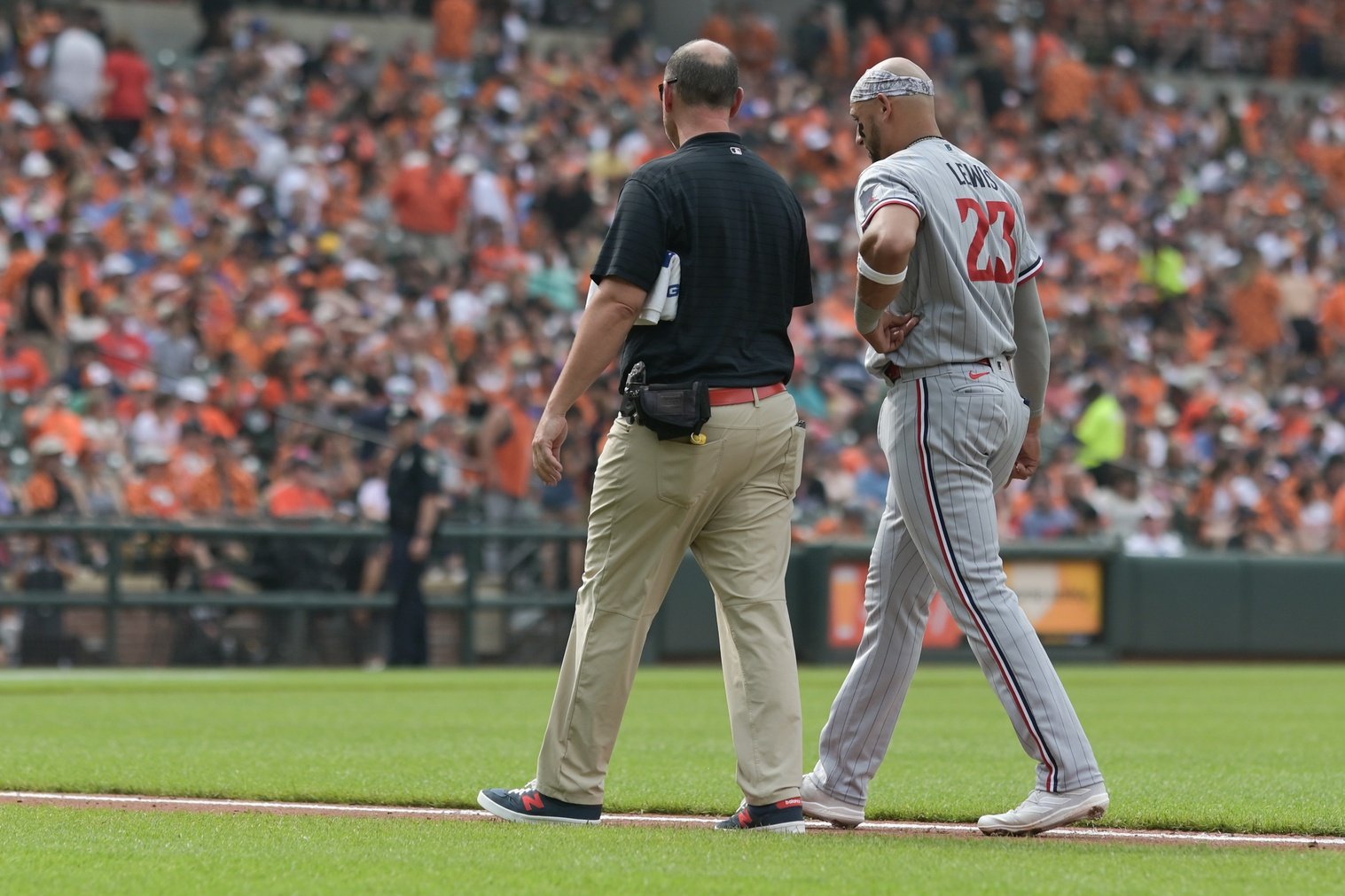 In a stunning development that has sent shockwaves through the sports medicine community, a new exposé has revealed that the Minnesota Twins training staff does not, in fact, believe in stretching, muscle maintenance, or the human musculoskeletal system in general. The investigation was sparked by a string of tweets from a concerned and extremely medically literate fan following news that Royce Lewis would miss time with a hamstring strain. One particular tweet, which read in part, "DO THESE GUYS EVEN STRETCH?????? FIRE THE WHOLE TRAINING STAFF @Twins", prompted the team's ownership to launch a full internal investigation into the medical practices of its employees, Twins Daily has learned. What they found, sources say, was "alarming." “Honestly, we’ve just been kind of winging it,” admitted head athletic trainer Nick Paparesta in an exclusive interview. “I always thought hamstrings were kind of a vibe thing. Like if you believe in them too much, they tighten up.” Paparesta, who joined the Twins in 2023 after a stint with the A’s (where players frequently healed injuries using sage smoke and emotional journaling), confirmed that the Twins' pregame routine consists primarily of vibes-based movement, light gossip, and playing hacky sack in a dimly lit yoga studio. “We tried foam rollers once,” said one assistant trainer, who asked to remain anonymous for fear of being chased out of town with torches and pitchforks. “But they’re, like, hard? And that seems kind of mean to the body.” Other revelations from the report include: The team has been using a "feelings wheel" to diagnose injuries and throwing darts at a board to determine recovery timelines. Instead of MRIs, players are evaluated using auras and energy readings. Muscle cramps are treated with "positive affirmations and, if necessary, a cool LaCroix." The report found that not one player on the current roster has performed a hamstring stretch since spring training of 2019. Leaked documentation of Byron Buxton's 2022–23 offseason rehab plan revealed a loose collection of vague bullet points, motivational stickers, and at least one crudely drawn diagram of a stick figure labeled "BYRON" doing squats next to a cartoonish knee wrapped in duct tape and hope. When reached for comment, Twins President of Business and Baseball Operations Derek Falvey expressed surprise at the findings. “Wow, yeah. I guess I assumed we were doing that stuff. Like, at least the basic anatomy parts. I mean, we have a table. There’s tape. It seemed legit.” Meanwhile, fans who have harped endlessly on social media about the team's conditioning approach and handling of injuries are expressing vindication. “I’ve been saying this for years,” said X/Twitter user @TwinsFan42069. “They should be doing three-hour dynamic warmups before every game, followed by a cool-down run around Lake Nokomis. It’s what I do before my adult kickball league and I never miss a game.” Major League Baseball declined to comment, but sources inside the league office say they are “deeply impressed” by how angry Minnesota fans get about injuries that are extremely common in a sport that involves explosive sprinting and diving. In a show of accountability, the Twins have promised to re-evaluate their training protocols and perhaps even "Google what a hamstring is." Royce Lewis, for his part, says he remains hopeful. “It’s frustrating, of course,” Lewis said. “But if this means they’ll stop rubbing crystals on my thigh and finally give me an ice pack, I’m all for it.”
 -
Brooks Lee was ominously scratched from Thursday's lineup with back stiffness. Given the key role he's been set up to play out of the gates, especially with Royce Lewis sidelined, it's worth examining the implications of Lee's potential absence to start the season. Image courtesy of Jonathan Dyer-Imagn Images Despite being a 24-year-old who largely floundered in his MLB debut last year, Brooks Lee has turned into a bit of a linchpin in the Twins' roster makeup. That's not so much because of his bat, which the Twins remain rightfully hopeful about, but more because of his glove. It seems clear that the Twins trust Lee more defensively than their starters or backup options at second and third. He is also probably the only player outside of Carlos Correa they truly trust to play shortstop. Because of this, I've been viewing Lee as essentially a lock to make the team. There are just so many ways he can fit. The Twins would surely love Lee to win the primary starting second base job, providing them with a sure-handed middle-infield pairing while keeping Willi Castro available to roam freely. After the injury to Royce Lewis, Lee elevated in the mix for playing time at third base, where he'd compete with the defensively questionable Jose Miranda. Circumstances have lined up the switch-hitting Lee to play everyday, and it almost doesn't matter if he produces, which — for what it's worth — he has not done in spring training. On Thursday, Lee was originally written into the Twins' lineup as starting third baseman against the Red Sox, but he was scratched ahead of game time with (gulp) back stiffness. I don't want to overreact or delve too far into doomer-ish speculation, but if you've followed the young infielder's career, it's impossible not to react to this news with concern. Lee is no stranger to back issues, which is one reason he slid further than expected in the 2022 MLB Draft, when he reached Minnesota at No. 8 overall. Last spring, he was enjoying a very impressive camp with the Twins before being removed from a game on March 21st — one year ago from today exactly — with back spasms. He went on to miss the first two months of the season. There's no indication that what he's currently dealing with is as severe as what he faced then, which he later described as "the worst I’ve ever had it." But then, there was no indication then that it was going to be that serious. Back injuries are very mysterious and difficult for even experts to understand clearly from the outset. "I saw him when he was coming in this morning, and he was OK," Twins manager Rocco Baldelli told Bobby Nightengale of the Star Tribune after Thursday's game. "Then he mentioned something to the training staff that something was bothering him. We’re going to treat it in a day-to-day fashion." "There is really nothing else to be done because we don’t think this is something more than potentially a muscle spasm," Baldelli added. "Let it rest and see where he’s at.” In his many battles with a balky back, Lee has faced some longer absences and also some very short ones. Hopefully this proves to be the latter. But with Opening Day now less than a week away, it's worth reviewing the contingencies behind Minnesota's top infield contingency. What would be the ripple effects of Lee, along with Lewis, being unavailable at the start of the season? Well for one thing, Castro would become the clear top backup (only backup?) at shortstop. Correa figures to get rest and DH days semi-frequently even if healthy, so that's one demand pulling Castro away from second and third. If Lee isn't on the roster then you have to believe Edouard Julien is, and perhaps playing more second base than the Twins would prefer. Meanwhile, Miranda would lose basically all competition for playing time at third base, which is exciting for him but risky given his second half last year. The DH spot could open up for someone like Mickey Gasper. Another corollary effect of losing Lee would be an increased level of pressure on Ty France to prove his strong spring performance is legit, and he's not as cooked as he looked last season. If he comes out of the gates slow, the Twins will be hard-pressed to move on without Lee or Lewis available. All of these different angles illustrate why I say Lee is integral to the Twins' infield depth, even if he's not the dedicated starter at any single position. Yes, he needs to show more at the plate, but he's a switch-hitter who can pick it all around the infield and offers plenty of upside with the bat. If the Twins were without Lee, it'd elevate several suspect players into fairly critical roles without much in the way of additional safety nets. The club will have some things to figure out in the infield if Lee needs to miss time. For now, we'll await word and wish him a speedy recovery. The team should provide an update this weekend. Back injuries suck! View full article
-
Brooks Lee Is Minnesota's Essential Infield Contingency. What If He's Down?
Nick Nelson posted an article in Twins
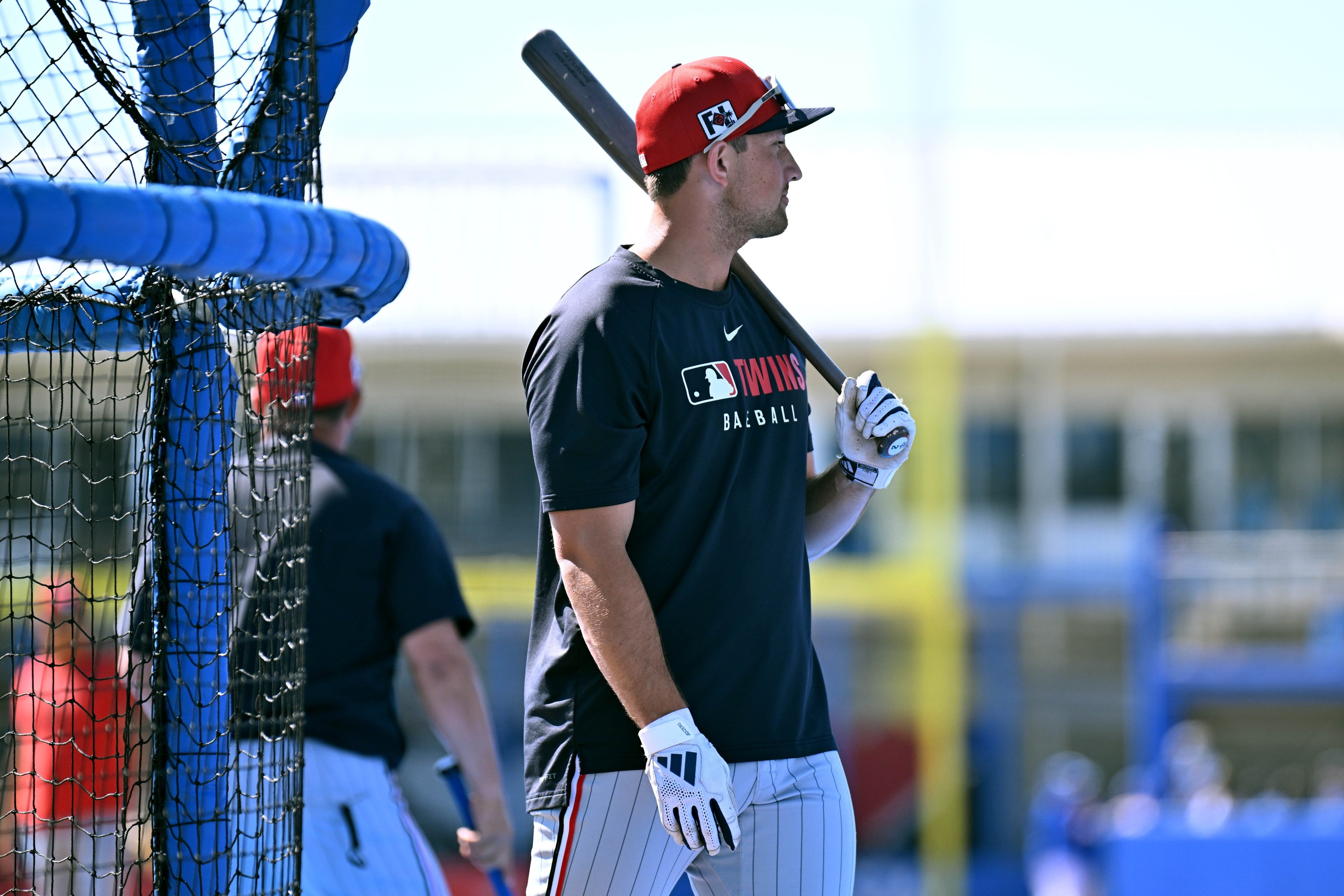 Despite being a 24-year-old who largely floundered in his MLB debut last year, Brooks Lee has turned into a bit of a linchpin in the Twins' roster makeup. That's not so much because of his bat, which the Twins remain rightfully hopeful about, but more because of his glove. It seems clear that the Twins trust Lee more defensively than their starters or backup options at second and third. He is also probably the only player outside of Carlos Correa they truly trust to play shortstop. Because of this, I've been viewing Lee as essentially a lock to make the team. There are just so many ways he can fit. The Twins would surely love Lee to win the primary starting second base job, providing them with a sure-handed middle-infield pairing while keeping Willi Castro available to roam freely. After the injury to Royce Lewis, Lee elevated in the mix for playing time at third base, where he'd compete with the defensively questionable Jose Miranda. Circumstances have lined up the switch-hitting Lee to play everyday, and it almost doesn't matter if he produces, which — for what it's worth — he has not done in spring training. On Thursday, Lee was originally written into the Twins' lineup as starting third baseman against the Red Sox, but he was scratched ahead of game time with (gulp) back stiffness. I don't want to overreact or delve too far into doomer-ish speculation, but if you've followed the young infielder's career, it's impossible not to react to this news with concern. Lee is no stranger to back issues, which is one reason he slid further than expected in the 2022 MLB Draft, when he reached Minnesota at No. 8 overall. Last spring, he was enjoying a very impressive camp with the Twins before being removed from a game on March 21st — one year ago from today exactly — with back spasms. He went on to miss the first two months of the season. There's no indication that what he's currently dealing with is as severe as what he faced then, which he later described as "the worst I’ve ever had it." But then, there was no indication then that it was going to be that serious. Back injuries are very mysterious and difficult for even experts to understand clearly from the outset. "I saw him when he was coming in this morning, and he was OK," Twins manager Rocco Baldelli told Bobby Nightengale of the Star Tribune after Thursday's game. "Then he mentioned something to the training staff that something was bothering him. We’re going to treat it in a day-to-day fashion." "There is really nothing else to be done because we don’t think this is something more than potentially a muscle spasm," Baldelli added. "Let it rest and see where he’s at.” In his many battles with a balky back, Lee has faced some longer absences and also some very short ones. Hopefully this proves to be the latter. But with Opening Day now less than a week away, it's worth reviewing the contingencies behind Minnesota's top infield contingency. What would be the ripple effects of Lee, along with Lewis, being unavailable at the start of the season? Well for one thing, Castro would become the clear top backup (only backup?) at shortstop. Correa figures to get rest and DH days semi-frequently even if healthy, so that's one demand pulling Castro away from second and third. If Lee isn't on the roster then you have to believe Edouard Julien is, and perhaps playing more second base than the Twins would prefer. Meanwhile, Miranda would lose basically all competition for playing time at third base, which is exciting for him but risky given his second half last year. The DH spot could open up for someone like Mickey Gasper. Another corollary effect of losing Lee would be an increased level of pressure on Ty France to prove his strong spring performance is legit, and he's not as cooked as he looked last season. If he comes out of the gates slow, the Twins will be hard-pressed to move on without Lee or Lewis available. All of these different angles illustrate why I say Lee is integral to the Twins' infield depth, even if he's not the dedicated starter at any single position. Yes, he needs to show more at the plate, but he's a switch-hitter who can pick it all around the infield and offers plenty of upside with the bat. If the Twins were without Lee, it'd elevate several suspect players into fairly critical roles without much in the way of additional safety nets. The club will have some things to figure out in the infield if Lee needs to miss time. For now, we'll await word and wish him a speedy recovery. The team should provide an update this weekend. Back injuries suck!
- 46 comments
-
- 12
-
-
- brooks lee
- jose miranda
- (and 2 more)
-
You've probably heard that the Twins are projected by FanGraphs to have the best bullpen in baseball this year. But the volatility of relief pitching makes it difficult to confidently set expectations, and we're already seeing why in spring training. Image courtesy of Matt Blewett-Imagn Images TWINS RELIEF PITCHERS AT A GLANCE Bullpen: Jhoan Durán, Griffin Jax, Cole Sands, Brock Stewart, Danny Coulombe, Jorge Alcala, Justin Topa, Louie Varland Depth: Michael Tonkin, Kody Funderburk, Scott Blewett, Alex Speas, Huascar Ynoa Prospects: Eiberson Castellano, Connor Prielipp, Marco Raya, Matt Canterino Twins fWAR Ranking Last Year: 5th out of 30 Twins fWAR Projection This Year: 1st out of 30 THE GOOD Coming out of last season, the path to an elite bullpen in 2025 for the Twins was pretty clear: part ways with underperforming vets, bring back the high-octane core at the back end, maybe add one or two solid pieces. Check, check, check. The laggards who dragged down the 2024 bullpen – Caleb Thielbar, Steven Okert, Josh Staumont Jay Jackson and Trevor Richards combined for a 5.29 ERA in 146 innings – have all moved on. The top dogs are back: Jhoan Durán, Griffin Jax and Cole Sands present a stellar late-inning trio, with Brock Stewart hopefully rounding out that group by finding a way to stay healthy at last. The Twins added an accomplished veteran free agent in Danny Coulombe to round out their late-inning stable. There just aren't many bullpens out there capable of going four or five deep with that kind of quality. Jax leads the way, and was by some measures one of the two or three best relievers in all of baseball last year. His deep pitch mix and devastating sweeper made him an overpowering weapon, and Rocco Baldelli routinely turned to Jax in the biggest moments. Jax and the Twins flirted with idea of a transition back to starting during the offseason, but ultimately opted to stick with what is working brilliantly. Having him as a fireman gives the Twins a big late-game advantage. Add in Durán, with his 2.59 career ERA, and Sands, who posted a 3.28 ERA and 2.63 FIP last year, and the Twins can stack power arms in the seventh, eighth and ninth. Coulombe covers them against tough lefties and can hold his own against righties. Stewart has what it takes to be the best of the bunch if he can stay healthy. It's a massive "if," and he's already dealing with a hamstring issue this spring, but there's a lot of optimism around the state of his arm following shoulder surgery. Signs have been positive on that front in spring training, where he was touching 97 MPH before being sidetracked by the hammy. Jorge Alcalá and Louie Varland are wild-cards in the middle-relief picture, with either one capable of elevating into a setup role if they can keep the homer-proneness at bay. We saw how dominant Varland could be as a reliever in late 2023 and now he'll have the opportunity to fully prepare and build up as one. We saw how effective Alcalá can be in the first half of last season; for his career he's posted a 3.64 ERA while averaging a strikeout per inning. Another wild-card: Eiberson Castellano, the Rule 5 pick out of Philadelphia, who is trying to latch on in a long relief role. With just over a week left in camp, it remains to be seen if he'll find his way onto the 26-man roster, where he would need to stay all year in order to be kept. I would be extremely surprised if he makes the roster but he's certainly an intriguing pitcher who has flashed glimpses this spring of what the Twins saw in him. And one to watch over the course of the summer: Connor Prielipp, the former second-round draft pick who finally appears to be healthy following a tumultuous run of arm issues. If he can keep the injuries at bay, he has a chance to be fast-tracked into the big-league bullpen and could be a huge rookie difference-maker. THE BAD The big question mark for me is Durán, whose continued excellence is critical to this bullpen meeting its lofty projection. Last year, after missing the start of the season with an oblique injury, the big right-hander's fastball velocity was down a couple of ticks, which played a role in his results going from great to good. His strikeouts were down and he gave up some big bops in crushing moments. Durán did not pitch poorly last year, and his 3.86 ERA was influenced by some fluky factors that should even out, including a .321 BABIP and 61.5% strand rate (seventh-lowest out of 169 qualified MLB relievers). If his performance in 2025 is the same as last year, I'd expect better numbers, but will he maintain that level or were we seeing the start of a decline? This spring Durán has been unable to summon the same velocity he showed even last year, with his fastball struggling to touch triple digits and his repertoire failing to generate whiffs. What happens if hitters catch up to more of Durán's pitches this year? It's going to be painful, given his occupation of the closer role. How many early hiccups would it take for Durán to move down in the bullpen hierarchy? He's earned a degree of patience over the past three years, but if the pitches aren't working as they once did, the Twins will need to be ready to adjust. This strikes me as the biggest non-health-related concern facing the unit. (Assuming it is not health-related.) Of course, injuries will come into play in this bullpen, and they already have. The dream of having Matt Canterino splash onto the scene this summer is all but dead after his shoulder flared up again this spring. That's an extra tough pill to swallow because, in keeping Canterino on the 40-man roster, the Twins lost a couple of potentially useful arms to waivers in Ronny Henriquez and Brent Headrick. Not the world's greatest tragedy, but depth is depth and the Twins have already seen some of theirs whittled away. With Justin Topa and Michael Tonkin already hampered by shoulder issues this spring, the cavalry is going to be needed. How deep can the Twins dig if needed? For all the supposed quantity in last year's relief corps, the team still found itself turning to waiver pickup Cole Irvin with the season on the line in September. THE BOTTOM LINE You can never have too many relief pitchers, as Twins fans were reminded last year. The talent and track record residing in this bullpen are easy to see, but health woes have already begun to surface and Durán's worrisome spring casts a shadow over the whole unit's outlook. Fortunately, wild cards like Stewart, Varland and Prielipp have the potential to offset a decline or elevate this relief corps to a new level if Durán is his usual self. The Twins bullpen has what it takes to be the best, but projections stop mattering once they're actually put to the test. For a team that figures to be in a lot of close games, the ability of this bullpen to rebound and excel will likely prove pivotal to Minnesota's fate. Share your thoughts on the outlook at relief pitcher below and check out the rest of our Position Analysis Series: Twins 2025 Position Analysis: Catcher Twins 2025 Position Analysis: First Base Twins 2025 Position Analysis: Second Base Twins 2025 Position Analysis: Third Base Twins 2025 Position Analysis: Shortstop Twins 2025 Position Analysis: Left Field Twins 2025 Position Analysis: Center Field Twins 2025 Position Analysis: Right Field Twins 2025 Position Analysis: Designated Hitter Twins 2025 Position Analysis: Starting Pitcher View full article
-
 TWINS RELIEF PITCHERS AT A GLANCE Bullpen: Jhoan Durán, Griffin Jax, Cole Sands, Brock Stewart, Danny Coulombe, Jorge Alcala, Justin Topa, Louie Varland Depth: Michael Tonkin, Kody Funderburk, Scott Blewett, Alex Speas, Huascar Ynoa Prospects: Eiberson Castellano, Connor Prielipp, Marco Raya, Matt Canterino Twins fWAR Ranking Last Year: 5th out of 30 Twins fWAR Projection This Year: 1st out of 30 THE GOOD Coming out of last season, the path to an elite bullpen in 2025 for the Twins was pretty clear: part ways with underperforming vets, bring back the high-octane core at the back end, maybe add one or two solid pieces. Check, check, check. The laggards who dragged down the 2024 bullpen – Caleb Thielbar, Steven Okert, Josh Staumont Jay Jackson and Trevor Richards combined for a 5.29 ERA in 146 innings – have all moved on. The top dogs are back: Jhoan Durán, Griffin Jax and Cole Sands present a stellar late-inning trio, with Brock Stewart hopefully rounding out that group by finding a way to stay healthy at last. The Twins added an accomplished veteran free agent in Danny Coulombe to round out their late-inning stable. There just aren't many bullpens out there capable of going four or five deep with that kind of quality. Jax leads the way, and was by some measures one of the two or three best relievers in all of baseball last year. His deep pitch mix and devastating sweeper made him an overpowering weapon, and Rocco Baldelli routinely turned to Jax in the biggest moments. Jax and the Twins flirted with idea of a transition back to starting during the offseason, but ultimately opted to stick with what is working brilliantly. Having him as a fireman gives the Twins a big late-game advantage. Add in Durán, with his 2.59 career ERA, and Sands, who posted a 3.28 ERA and 2.63 FIP last year, and the Twins can stack power arms in the seventh, eighth and ninth. Coulombe covers them against tough lefties and can hold his own against righties. Stewart has what it takes to be the best of the bunch if he can stay healthy. It's a massive "if," and he's already dealing with a hamstring issue this spring, but there's a lot of optimism around the state of his arm following shoulder surgery. Signs have been positive on that front in spring training, where he was touching 97 MPH before being sidetracked by the hammy. Jorge Alcalá and Louie Varland are wild-cards in the middle-relief picture, with either one capable of elevating into a setup role if they can keep the homer-proneness at bay. We saw how dominant Varland could be as a reliever in late 2023 and now he'll have the opportunity to fully prepare and build up as one. We saw how effective Alcalá can be in the first half of last season; for his career he's posted a 3.64 ERA while averaging a strikeout per inning. Another wild-card: Eiberson Castellano, the Rule 5 pick out of Philadelphia, who is trying to latch on in a long relief role. With just over a week left in camp, it remains to be seen if he'll find his way onto the 26-man roster, where he would need to stay all year in order to be kept. I would be extremely surprised if he makes the roster but he's certainly an intriguing pitcher who has flashed glimpses this spring of what the Twins saw in him. And one to watch over the course of the summer: Connor Prielipp, the former second-round draft pick who finally appears to be healthy following a tumultuous run of arm issues. If he can keep the injuries at bay, he has a chance to be fast-tracked into the big-league bullpen and could be a huge rookie difference-maker. THE BAD The big question mark for me is Durán, whose continued excellence is critical to this bullpen meeting its lofty projection. Last year, after missing the start of the season with an oblique injury, the big right-hander's fastball velocity was down a couple of ticks, which played a role in his results going from great to good. His strikeouts were down and he gave up some big bops in crushing moments. Durán did not pitch poorly last year, and his 3.86 ERA was influenced by some fluky factors that should even out, including a .321 BABIP and 61.5% strand rate (seventh-lowest out of 169 qualified MLB relievers). If his performance in 2025 is the same as last year, I'd expect better numbers, but will he maintain that level or were we seeing the start of a decline? This spring Durán has been unable to summon the same velocity he showed even last year, with his fastball struggling to touch triple digits and his repertoire failing to generate whiffs. What happens if hitters catch up to more of Durán's pitches this year? It's going to be painful, given his occupation of the closer role. How many early hiccups would it take for Durán to move down in the bullpen hierarchy? He's earned a degree of patience over the past three years, but if the pitches aren't working as they once did, the Twins will need to be ready to adjust. This strikes me as the biggest non-health-related concern facing the unit. (Assuming it is not health-related.) Of course, injuries will come into play in this bullpen, and they already have. The dream of having Matt Canterino splash onto the scene this summer is all but dead after his shoulder flared up again this spring. That's an extra tough pill to swallow because, in keeping Canterino on the 40-man roster, the Twins lost a couple of potentially useful arms to waivers in Ronny Henriquez and Brent Headrick. Not the world's greatest tragedy, but depth is depth and the Twins have already seen some of theirs whittled away. With Justin Topa and Michael Tonkin already hampered by shoulder issues this spring, the cavalry is going to be needed. How deep can the Twins dig if needed? For all the supposed quantity in last year's relief corps, the team still found itself turning to waiver pickup Cole Irvin with the season on the line in September. THE BOTTOM LINE You can never have too many relief pitchers, as Twins fans were reminded last year. The talent and track record residing in this bullpen are easy to see, but health woes have already begun to surface and Durán's worrisome spring casts a shadow over the whole unit's outlook. Fortunately, wild cards like Stewart, Varland and Prielipp have the potential to offset a decline or elevate this relief corps to a new level if Durán is his usual self. The Twins bullpen has what it takes to be the best, but projections stop mattering once they're actually put to the test. For a team that figures to be in a lot of close games, the ability of this bullpen to rebound and excel will likely prove pivotal to Minnesota's fate. Share your thoughts on the outlook at relief pitcher below and check out the rest of our Position Analysis Series: Twins 2025 Position Analysis: Catcher Twins 2025 Position Analysis: First Base Twins 2025 Position Analysis: Second Base Twins 2025 Position Analysis: Third Base Twins 2025 Position Analysis: Shortstop Twins 2025 Position Analysis: Left Field Twins 2025 Position Analysis: Center Field Twins 2025 Position Analysis: Right Field Twins 2025 Position Analysis: Designated Hitter Twins 2025 Position Analysis: Starting Pitcher
- 20 comments
-
- 8
-
-
- jhoan duran
- griffin jax
- (and 2 more)
-
Festa walked 3 of 54 batters faced. I can assure you the Twins are most pleased with that than concerned about his results in 11 innings with a .450 BABIP. If he can throw the ball in the zone he's gonna be successful.
- 35 replies
-
- 3
-
-
- pablo lopez
- joe ryan
- (and 1 more)
-
Between him and the 5 guys I mentioned, I'd certainly think he's most likely to go back to Wichita given his youth and the need to build stamina. I also didn't mention Dobnak. I dunno how they're gonna handle the number of Triple-A caliber starters, honestly. It's a good question. Maybe a lot of piggybacking?
- 35 replies
-
- 2
-
-
-
- pablo lopez
- joe ryan
- (and 1 more)


