



Nick Nelson
-
Posts
8,315 -
Joined
-
Last visited
-
Days Won
56
Content Type
Profiles
News
Minnesota Twins Videos
2026 Minnesota Twins Top Prospects Ranking
2022 Minnesota Twins Draft Picks
Minnesota Twins Free Agent & Trade Rumors, Notes, & Tidbits
Guides & Resources
2023 Minnesota Twins Draft Picks
The Minnesota Twins Players Project
2024 Minnesota Twins Draft Picks
2025 Minnesota Twins Draft Pick Tracker
2026 Minnesota Twins Draft Tracker: Picks & Bonuses
Forums
Blogs
Events
Store
Downloads
Gallery
Everything posted by Nick Nelson
-
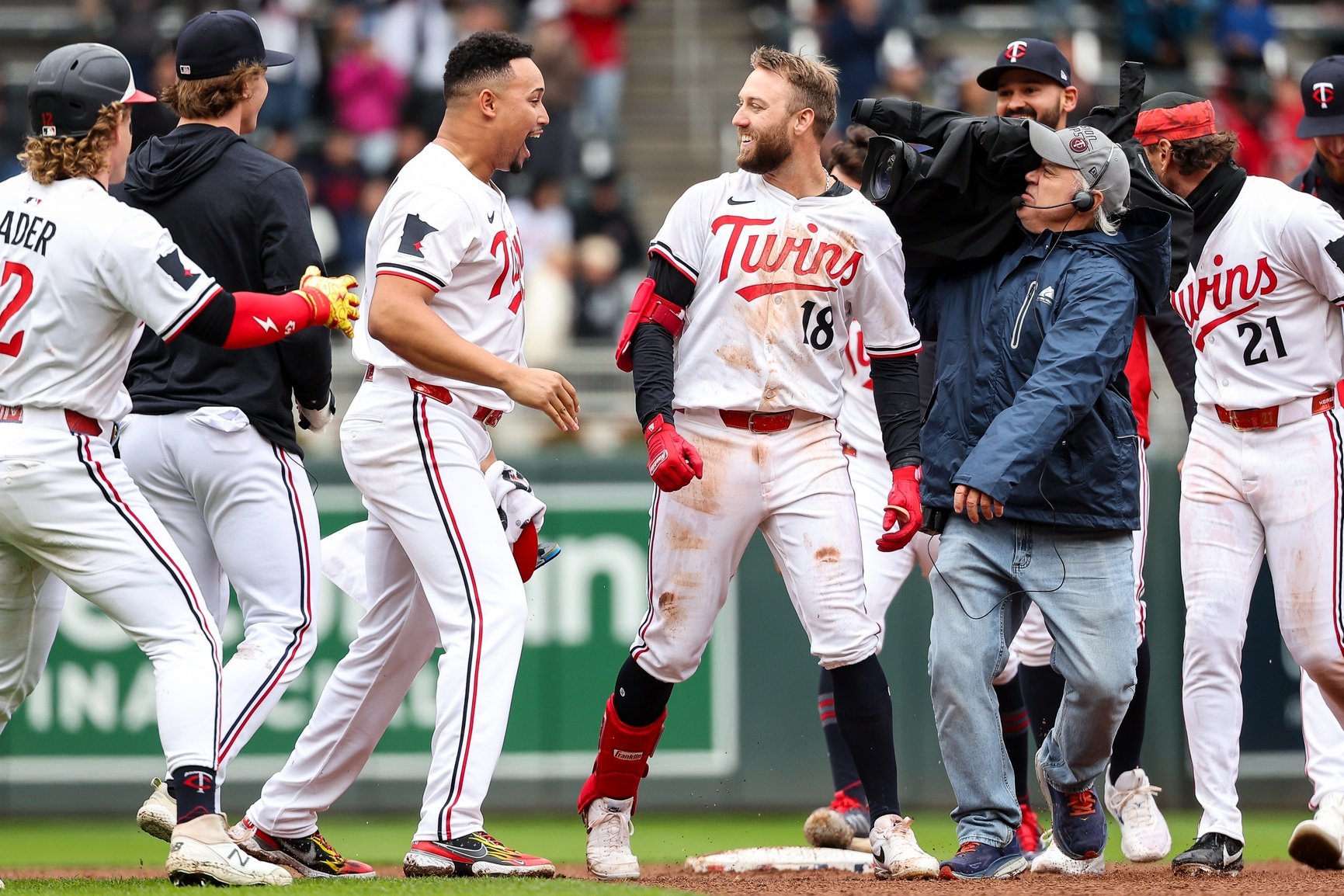
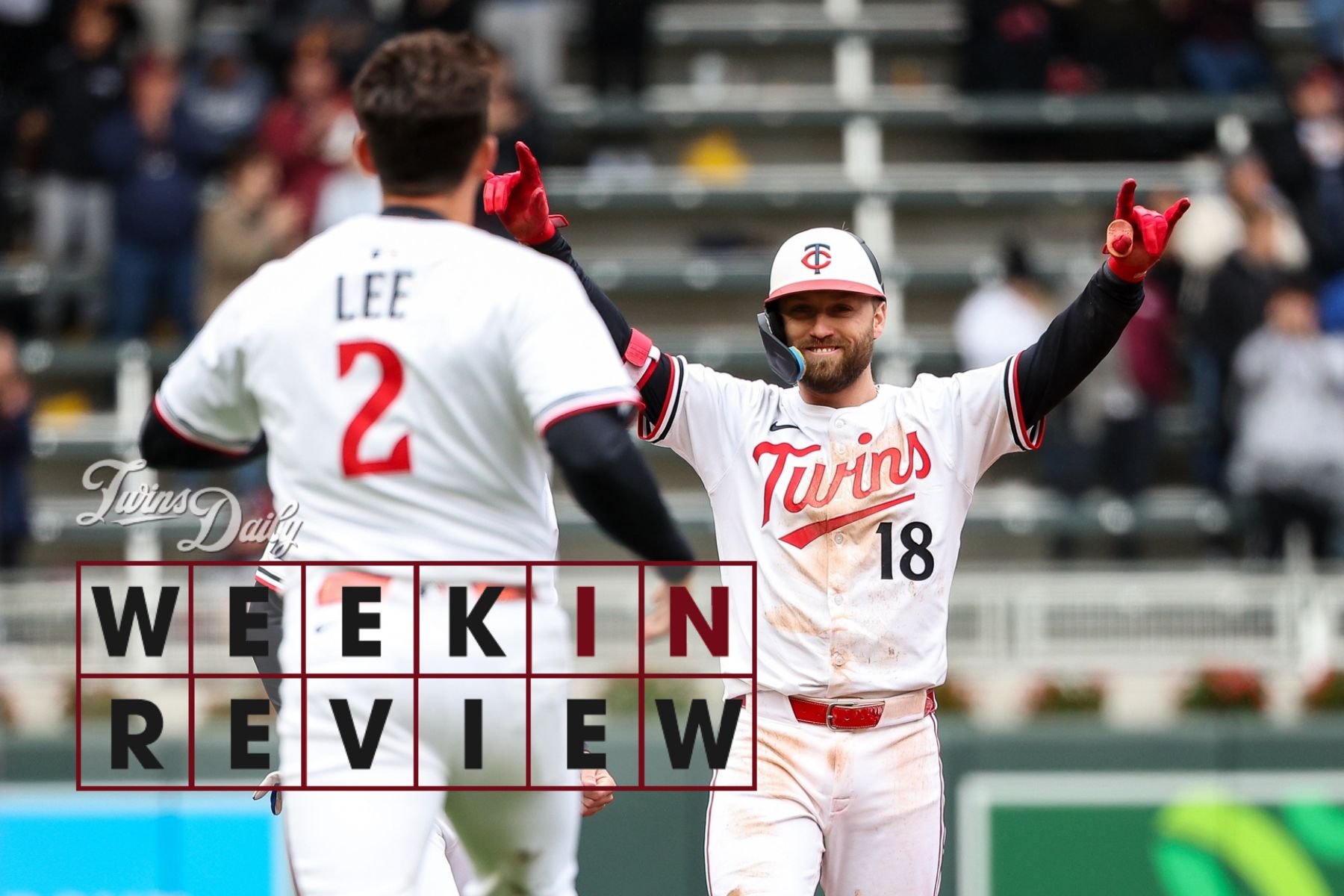 The Weekly Nutshell: With rain falling nonstop from Monday through Wednesday in Minneapolis, it was a challenge to try and play baseball. The Twins and Guardians were lucky to complete two of their scheduled games, splitting them and postponing the third until September. The weather improved greatly for a weekend series against the Royals, which saw Minnesota continue to play crisp ball and hang tough in tense situations. The Twins walked off Kansas City on Friday and Saturday, and they had the winning run at second in the ninth on Sunday before falling just short of a sweep. It was an entertaining, competitive series played before refreshingly large crowds at Target Field. Now, having improved their position in the standings, the Twins embark on a lengthy coast-to-coast road trip while getting ready to welcome back two crucial difference-makers in the lineup. Read on and we'll unpack it all. Weekly Snapshot: Mon, 5/19 through Sun, 5/25 *** Record Last Week: 3-2 (Overall: 29-23) Run Differential Last Week: -1 (Overall: +34) Standing: T-2nd Place in AL Central (4.0 GB) Last Week's Game Results: Game 48 | MIN 6, CLE 5: Twins Turn Tables on Guardians with Walk-Off Win Clemens: Walk-off double in 9th Game 49 | CLE 5, MIN 1: Offense Goes Silent, Ending 10-Game Home Win Streak Offense: 3 H, 1 XBH Game 50 | MIN 3, KC 1: Correa Homers in Return, France Walks It Off in Ninth France: Walk-off 2-R HR in 9th inning Game 51 | MIN 5, KC 4: Twins Rally Back from Deficit, Notch Another Walk-Off Win Lee: Walk-off RBI single in 9th inning Game 52 | KC 2, MIN 1 (10): Bubic and Royals Silence Minnesota Lineup to Avoid Sweep Offense: 3 H, 1 XBH IF YOU'D RATHER LISTEN TO THE WEEK IN REVIEW THAN READ IT, YOU CAN GET IT IN AUDIO FORM! FIND THE LATEST EPISODE ON OUR PODCAST PAGE, AS WELL AS ON APPLE AND SPOTIFY. SUBSCRIBE TO OUR CHANNELS SO YOU DON'T MISS OUT! NEWS & NOTES Carlos Correa spent the minimum seven days on the concussion injured list before being activated ahead of Friday's game, and homering in his first at-bat. A good sign, to be sure, but Correa was out of the lineup on Saturday, with the Twins clearly exercising caution. "We'll play him and then assess him to make sure everything is still going smoothly," said Rocco Baldelli. Seems like so far, it is: Correa did end up pinch-hitting Saturday night and started again on Sunday, with no apparent hiccups. Ryan Fitzgerald was optioned the minors in a corresponding move. Byron Buxton's recovery from his own concussion, suffered in the same collision, has been a bit more gradual. As of Sunday he had not yet been cleared by MLB to return, but it does sound like he's making progress and getting close – he's traveling with the Twins for their upcoming 10-game road trip, which gets underway in Tampa on Monday. Down at Triple-A, Matt Wallner initiated a rehab assignment on Thursday, homering twice in his first game back. It doesn't sound like he'll be back for the Tampa series but Wallner is in line to return to the Twins soon, following what would amount to about a six-week absence from the hamstring strain. That's on the quicker end of expectations, given the severity. So in addition to rarely getting hurt, Wallner also heals fast apparently. And we know he can absolutely mash – those poor minor-league pitchers. He'll be a welcome addition to the lineup whenever that happens. More on that shortly. HIGHLIGHTS The victory in the opening game of the Cleveland series felt like such a huge breakthrough moment for the Minnesota Twins. It was a weird game – halted midway through and spread across three days due to rainfall – and it was also the type of game Minnesota has been completely unable to win against the Guardians in recent years. The Twins had dropped nine consecutive one-run contests against Cleveland, dating back to June of 2023, before they managed to squeak this one out. There were definitely palpable "here we go again" vibes as the Guards mounted a ninth-inning rally against Joe Ryan and Jhoan Durán to erase a three-run deficit and tie the game. But the Twins quickly responded with a two-out rally in the bottom half, culminating in a walk-off double from Kody Clemens, who's been the unlikely hero of this torrid stretch for the club. Clemens, who tripled earlier in that game, added another double on Saturday and then walked as a pinch-hitter representing the winning run on Sunday. He sits with an incredible .283/.377/.642 slash line as of week's end. Two weeks ago his OPS was below .500. What a run for the miraculous scrap-heap pickup. Ty France and Brooks Lee also joined the Gatorade-bathing festivities, delivering game-winning knocks on back-to-back days to open the Royals series. France launched a two-run homer into the bullpen to secure a victory on Friday night, and then Lee tapped a seeing-eye single up the middle to bring home the winning run on Saturday. Neither player has been hugely productive overall, but they've made their hits count and these were prime examples. Strong pitching continues to be the norm for the Twins. Bailey Ober, Ryan and Chris Paddack combined to allow seven earned runs in 20 innings (3.15 ERA). Zebby Matthews struck out nine over four frames on Saturday, showcasing his high-caliber stuff and upside at the back of the rotation. Solid performances abound, but from my view, the ace and leader of this rotation remains clear to see. Pablo López lowered his ERA to 2.31 on Friday night by holding Kansas City to one run over 5 ⅔ innings, and the bullpen was near-perfect over the next three frames to keep the game tied 1-1 and set up the walk-off. Griffin Jax chipped in a scoreless inning, one of two on the week; he's been absolutely fantastic since his early-season slump in April. In his past 15 appearances, Jax has a 1.23 ERA and 24-to-2 K/BB ratio with a league-leading 0.8 fWAR. Following a brief blip, he's back to being the best reliever in baseball, and he's getting late-inning support in this bullpen from the likes of Louis Varland, Brock Stewart and Cole Sands, who combined to allow one run in 7 ⅓ innings. LOWLIGHTS I'm not inclined to put too much stock into it, given the situation and conditions, but Durán looked rough on Wednesday in giving up a three-run lead against the Guardians, continuing a run of high-leverage struggles against the division rival. Called upon to put out a fire after Ryan put the first two runners on base to start the ninth, Durán only fanned the flames. He managed to get out of the inning, but not before Cleveland had tied it with a single, wild pitch and double. The right-hander flashed some of his lowest fastball velocity of the season, failing to eclipse 100 MPH with any of his 10 four-seamers. Again, very tough spot, and he was pitching in the rain. His next time out, on Saturday, Durán got into another jam, loading the bases in a 4-4 game on a single, HBP and walk, but he was able to escape with no damage, and the offense sealed it up in the bottom of the ninth. Durán came on again Sunday, working the 10th with a runner starting on second base, and he was almost able to strand him but gave up a two-out go-ahead RBI single on an 0-2 count to take the loss. There's no denying that on balance this year, Durán has been downright phenomenal. He's got a 1.11 ERA and his underlying metrics are beyond encouraging. Ultimately I'm less worried about what he looked like this past week, and more so about what he might look like in the second half if Baldelli is forced to keep leaning on the big righty this hard. Durán has already appeared 24 times through the team's first 52 games. That puts him on pace to pitch 75 times this season, which would be 16 more than his career high. Meanwhile Varland, who is acclimating to short-burst relief duty for the first time, has already made an MLB-leading 27 appearances, which is an 84-game pace. Only three Twins pitchers have ever made more than 80 appearances in a season: Mike Marshall in 1979 (90), Eddie Guardado in 1996 (83) and J.C. Romero in 2002 (81). To prevent their most valuable relievers from burning out, the Twins have got to find a way to break this cycle of nonstop close games, which give Rocco little choice but to summon his leverage arms. That means the offense needs to step up. Run-scoring continues to be the clear deficiency weighing this club down. They've mostly been able to overcome it lately, thanks to timely hits and stellar pitching, but games like the two losses this past week – where the lineup really can't get anything going at all – remain far too common. Correa has been slow to go, but his thunderous home run on Friday at least provides some flourish of optimism. The two other names that stick out most in evaluating the offense's shortcomings are Willi Castro and Royce Lewis. Castro has really not shown signs of life at the plate since his strong opening series in St. Louis. Baldelli's got him batting at the very bottom the order and it's plain to see why. Last week Castro was 2-for-11 with four strikeouts, and since April 1st he's got a sub-.600 OPS. In a far cry from the celebrated all-around value he offered in his first two seasons with the Twins, Castro has been sub-replacement level through the first third of 2025. And as for Lewis ... man. It's genuinely just difficult to watch the guy play ball right now. He is so visibly out of sorts in terms of his mechanics and approach – staggering in the box and flinging his bat toward anything on the outer half – and there isn't much to index on in terms of progress indicators. We hoped the end of last week, when he homered once and nearly did so again on Sunday, would prove to be a turning point, but Lewis backslid during the home stand, managing just one hit in 15 at-bats. Notably, three of his four starts came at DH after the last eight in a row had all come at third base. The Twins need more from these guys, there's no two ways about. But help is on the way and that can hopefully relieve some pressure. TRENDING STORYLINE The offense is in line to receive two critical reinforcements during the upcoming road trip. I hesitate to make any guesses about when exactly Buxton might be back in the lineup – with brain injuries you just never know – but it sounds like it could be fairly imminent, maybe as soon as Monday night. The fact that he's traveling with the team to Tampa, after reportedly ramping up his activity in recent days, is a promising sign. Wallner's performance in Triple-A leaves little doubt that this swing is once again ready for showtime, but the Twins are inclined to test out his hamstring a little more before welcoming him back into the fold. Aaron Gleeman of The Athletic reports that the team wants to see Wallner play two complete games in the outfield on back-to-back days before giving the green light. The Saints have a day off on Monday and then open a six-game series in Omaha on Tuesday. Wallner could play the first two games there, then take a break on Thursday and join the Twins in Seattle for the series opener on Friday night. If all goes smoothly I would presume that is the plan. It can't be overstated what the returns of these two bats can do for the Twins lineup. Wallner and Buxton rank behind only Clemens and Luke Keaschall among Minnesota hitters in OPS – and they've done it in larger samples, with much more convincing major-league track records to back it up. Further down the line, Keaschall himself will eventually be poised to re-enter the mix. His forearm fracture will keep him sidelined until at least July, but suddenly that's only a little more than a month away. The idea of having all of these guys in the lineup together – alongside a theoretically awakening Correa and Lewis – is extremely exciting, especially when you consider what this team is capable of with even a modestly above average offense. In the coming week, we'll hopefully see some big steps in that direction. LOOKING AHEAD As we get head into the last week of May, the Twins are embarking on a 10-game road trip that will take them to opposite corners of the country – from southern Florida to the upper West Coast. The Twins open and close out this trip in minor-league stadiums, against Tampa and the Athletics, with a weekend stop in Seattle sandwiched in between. Can the Twins keep it clicking away from the comforts of Target Field, where they are now 18-8? We're going to find out. There's a saying that the baseball season doesn't truly begin until Memorial Day. We've officially reached that milestone, so now the race can really get underway. MONDAY, MAY 26: TWINS @ RAYS — RHP Joe Ryan v. RHP Zack Littell TUESDAY, MAY 27: TWINS @ RAYS — RHP Chris Paddack v. RHP Taj Bradley WEDNESDAY, MAY 28: TWINS @ RAYS — RHP Pablo Lopez v. RHP Drew Rasmussen FRIDAY, MAY 30: TWINS @ MARINERS — RHP Zebby Matthews v. RHP Bryan Woo SATURDAY, MAY 31: TWINS @ MARINERS — RHP Bailey Ober v. RHP Luis Castillo SUNDAY, JUNE 1: TWINS @ MARINERS — RHP Joe Ryan v. RHP Logan Evans
- 9 comments
-
- 1
-

-
- byron buxton
- matt wallner
- (and 1 more)
-
 Image courtesy of Daniel Kucin Jr.-Imagn Images I can see clearly now the rain is gone. The past week in Minnesota didn't feel much like summer. Temperatures dipped into the 40s as a constant deluge of rain fell upon the Twin Cities, creating tough circumstances for a scheduled three-game series against the Guardians at Target Field. All things considered, the two teams were lucky to get in two complete games, splitting them 1-1. Now, following Thursday's off day, the Twins are set to face off against another key division rival, and the forecast is looking much more favorable. The chances of rain on Friday, Saturday and Sunday are in single digits, with an expectation for partly-to-mostly sunny skies and temps in the 60s/70s. Memorial Day weekend is viewed by many as the unofficial start of summer, and so the conditions at Target Field will be very fitting. As will the meaningful context of the on-field action. I can see all obstacles in my way. There's a long-standing truism in baseball that the season doesn't really start until Memorial Day. Once teams have had the opportunity to work through their early streaks and slumps, to settle in and establish themselves a bit, you start to have a clearer picture of how the races will take shape. The Twins this year have been a perfect case in point. They started out almost unimaginably cold, then got almost unimaginably hot, and after it all they are about exactly where you would expect them to be: five games over .500, very much in contention for the AL Central. Entering play on Thursday, Minnesota is in a dead heat with the Kansas City Royals, who are coming to town this weekend for three games. The two clubs are tied for second place, 5 ½ games behind the world-beating Tigers and just a half-step ahead of Cleveland. It's gonna be a divisional dogfight, with Detroit's surprising ascendance sprinkling in an added challenge. The Twins will look to make a statement this weekend against a team that, in similar fashion, aims to win on the strength of its pitching but often struggles to score. The Royals are one of only two MLB teams with a lower ERA (3.03) than Minnesota (3.23). Runs will likely be hard to come by at Target Field this weekend, but luckily the Twins are getting back a crucial lineup fixture to aid in the effort. Gone are the dark clouds that had me blind. On Thursday the Twins optioned Ryan Fitzgerald to Triple-A, setting the stage for Carlos Correa to be activated from a minimum-length stay on the 7-day concussion injured list. Correa is expected to be in the starting lineup for Friday night's series opener against Kansas City. Correa went on the IL after being shaken up in an outfield collision with Byron Buxton one week ago. Twins head trainer Nick Paparesta gave a positive report on the shortstop's progress Wednesday, indicating his symptoms were gone, and sure enough it now looks like Correa's on track to return after missing just five games. His presence is obviously important to the team for more reasons than just offensive production, but the shortstop was showing signs of awakening at the plate before his injury, with a .323 average in his past 16 contests. Buxton, unfortunately, still does not appear to be out of the the dark clouds quite yet — there's no indication he'll be activated on Friday, with Paparesta noting that the center fielder was "a little behind" Correa's recovery timeline. It sounds like Buxton's history of concussions and migraines are a factor. But it also sounded like he himself was beginning to ramp up on Wednesday so hopefully Buck is not too far out. It's gonna be a bright, bright (partly) sun-shiny day. As I write this article on Thursday afternoon, the sun is pouring through my apartment window for the first time all week. There should be plenty more brightness ahead at Target Field this weekend and this summer, both literally and — we hope — figuratively. Health is of course going to be a decisive force in guiding the outcome of this season (as the next line goes, "I think I can make it now, the pain is gone") but right now it's a sunny vibe with Correa making an expedient comeback and Matt Wallner kicking off his minor-league rehab assignment in St. Paul on Thursday night. Let the summer begin. View full article
 -
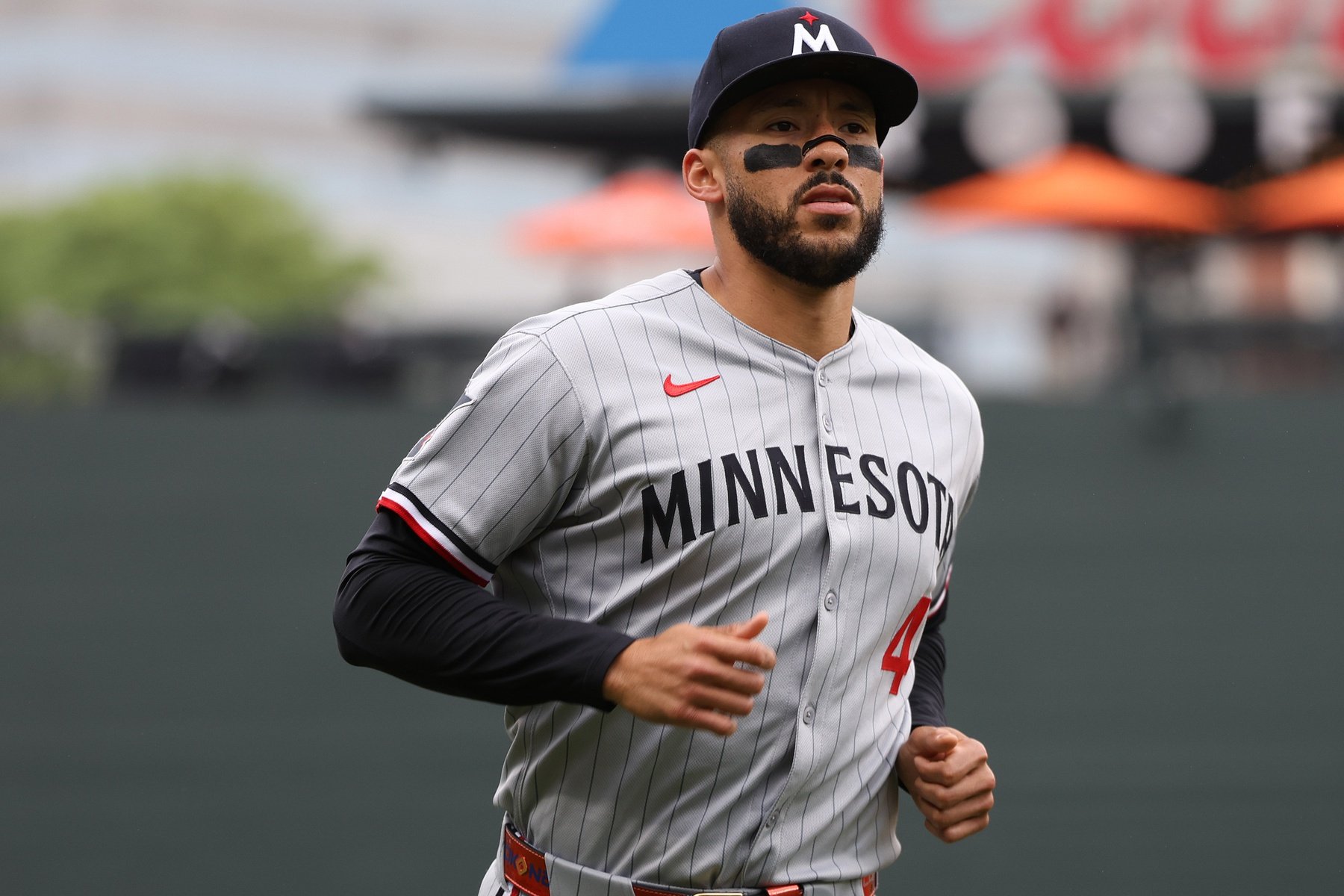 I can see clearly now the rain is gone. The past week in Minnesota didn't feel much like summer. Temperatures dipped into the 40s as a constant deluge of rain fell upon the Twin Cities, creating tough circumstances for a scheduled three-game series against the Guardians at Target Field. All things considered, the two teams were lucky to get in two complete games, splitting them 1-1. Now, following Thursday's off day, the Twins are set to face off against another key division rival, and the forecast is looking much more favorable. The chances of rain on Friday, Saturday and Sunday are in single digits, with an expectation for partly-to-mostly sunny skies and temps in the 60s/70s. Memorial Day weekend is viewed by many as the unofficial start of summer, and so the conditions at Target Field will be very fitting. As will the meaningful context of the on-field action. I can see all obstacles in my way. There's a long-standing truism in baseball that the season doesn't really start until Memorial Day. Once teams have had the opportunity to work through their early streaks and slumps, to settle in and establish themselves a bit, you start to have a clearer picture of how the races will take shape. The Twins this year have been a perfect case in point. They started out almost unimaginably cold, then got almost unimaginably hot, and after it all they are about exactly where you would expect them to be: five games over .500, very much in contention for the AL Central. Entering play on Thursday, Minnesota is in a dead heat with the Kansas City Royals, who are coming to town this weekend for three games. The two clubs are tied for second place, 5 ½ games behind the world-beating Tigers and just a half-step ahead of Cleveland. It's gonna be a divisional dogfight, with Detroit's surprising ascendance sprinkling in an added challenge. The Twins will look to make a statement this weekend against a team that, in similar fashion, aims to win on the strength of its pitching but often struggles to score. The Royals are one of only two MLB teams with a lower ERA (3.03) than Minnesota (3.23). Runs will likely be hard to come by at Target Field this weekend, but luckily the Twins are getting back a crucial lineup fixture to aid in the effort. Gone are the dark clouds that had me blind. On Thursday the Twins optioned Ryan Fitzgerald to Triple-A, setting the stage for Carlos Correa to be activated from a minimum-length stay on the 7-day concussion injured list. Correa is expected to be in the starting lineup for Friday night's series opener against Kansas City. Correa went on the IL after being shaken up in an outfield collision with Byron Buxton one week ago. Twins head trainer Nick Paparesta gave a positive report on the shortstop's progress Wednesday, indicating his symptoms were gone, and sure enough it now looks like Correa's on track to return after missing just five games. His presence is obviously important to the team for more reasons than just offensive production, but the shortstop was showing signs of awakening at the plate before his injury, with a .323 average in his past 16 contests. Buxton, unfortunately, still does not appear to be out of the the dark clouds quite yet — there's no indication he'll be activated on Friday, with Paparesta noting that the center fielder was "a little behind" Correa's recovery timeline. It sounds like Buxton's history of concussions and migraines are a factor. But it also sounded like he himself was beginning to ramp up on Wednesday so hopefully Buck is not too far out. It's gonna be a bright, bright (partly) sun-shiny day. As I write this article on Thursday afternoon, the sun is pouring through my apartment window for the first time all week. There should be plenty more brightness ahead at Target Field this weekend and this summer, both literally and — we hope — figuratively. Health is of course going to be a decisive force in guiding the outcome of this season (as the next line goes, "I think I can make it now, the pain is gone") but right now it's a sunny vibe with Correa making an expedient comeback and Matt Wallner kicking off his minor-league rehab assignment in St. Paul on Thursday night. Let the summer begin.
 -
Image courtesy of Matt Krohn-Imagn Images Since being acquired in a low-wattage trade in late April, Kody Clemens has emerged as a central figure in the team’s torrid May turnaround. Previously a fringe big-leaguer best known for being Roger’s kid, Clemens has hit .318 with a 1.070 OPS and delivered multiple game-changing home runs in the new uniform, not to mention a walk-off double Wednesday against the Guardians that sent Target Field into delirium. The Twins are 17-6 since Clemens came aboard. So what changed? “It’s the Codys, man,” Clemens said postgame, ice still melting off his jersey. “There’s something happening here. I show up in Minnesota, and suddenly I’m surrounded by Codys — writing about the team, tweeting, podcasting, probably grilling brats in the parking lot. I don’t know what to tell you. The energy is… real.” Clemens went on to clarify: “Yeah, they all spell it the wrong way, but still. I can feel their power.” The phenomenon has not gone unnoticed by the Codys themselves, particularly those with long-standing influence in the Twins Daily ecosystem. When informed of Clemens’ comments, writer Cody Christie responded, “We’ve always known the Cody Effect was no myth. Frankly, we’re just glad the Twins are finally tapping into it intentionally.” Added fellow TD contributor Cody Schoenmann: “People think it’s just a coincidence. But I've been saying ever since Stashak and later Funderburk emerged as key bullpen contributors: this is an environment where Codys are set up to thrive.” Cody Pirkl, also a writer and noted defensive metrics enjoyer, was more analytical. “The sample size is small,” he said, “but the WARPC (Wins Above Replacement Per Cody) is tracking at an all-time high. If you adjust for capitalization variance, it’s basically elite.” Kody Clemens, for his part, seems to have embraced the supernatural theory entirely. “I mean look, I was just trying to stay in the league. Now I’m out here hitting bombs and getting bathed in Gatorade. Something shifted. That something is Cody-based.” As the Twins continue their charge through the American League, one thing is clear: the Codys—and Kodys, and Codi Heuer or Kodi Whitley, too, should they happen to stumble in here—are not to be trifled with. View full article
-
 Since being acquired in a low-wattage trade in late April, Kody Clemens has emerged as a central figure in the team’s torrid May turnaround. Previously a fringe big-leaguer best known for being Roger’s kid, Clemens has hit .318 with a 1.070 OPS and delivered multiple game-changing home runs in the new uniform, not to mention a walk-off double Wednesday against the Guardians that sent Target Field into delirium. The Twins are 17-6 since Clemens came aboard. So what changed? “It’s the Codys, man,” Clemens said postgame, ice still melting off his jersey. “There’s something happening here. I show up in Minnesota, and suddenly I’m surrounded by Codys — writing about the team, tweeting, podcasting, probably grilling brats in the parking lot. I don’t know what to tell you. The energy is… real.” Clemens went on to clarify: “Yeah, they all spell it the wrong way, but still. I can feel their power.” The phenomenon has not gone unnoticed by the Codys themselves, particularly those with long-standing influence in the Twins Daily ecosystem. When informed of Clemens’ comments, writer Cody Christie responded, “We’ve always known the Cody Effect was no myth. Frankly, we’re just glad the Twins are finally tapping into it intentionally.” Added fellow TD contributor Cody Schoenmann: “People think it’s just a coincidence. But I've been saying ever since Stashak and later Funderburk emerged as key bullpen contributors: this is an environment where Codys are set up to thrive.” Cody Pirkl, also a writer and noted defensive metrics enjoyer, was more analytical. “The sample size is small,” he said, “but the WARPC (Wins Above Replacement Per Cody) is tracking at an all-time high. If you adjust for capitalization variance, it’s basically elite.” Kody Clemens, for his part, seems to have embraced the supernatural theory entirely. “I mean look, I was just trying to stay in the league. Now I’m out here hitting bombs and getting bathed in Gatorade. Something shifted. That something is Cody-based.” As the Twins continue their charge through the American League, one thing is clear: the Codys—and Kodys, and Codi Heuer or Kodi Whitley, too, should they happen to stumble in here—are not to be trifled with.
 -
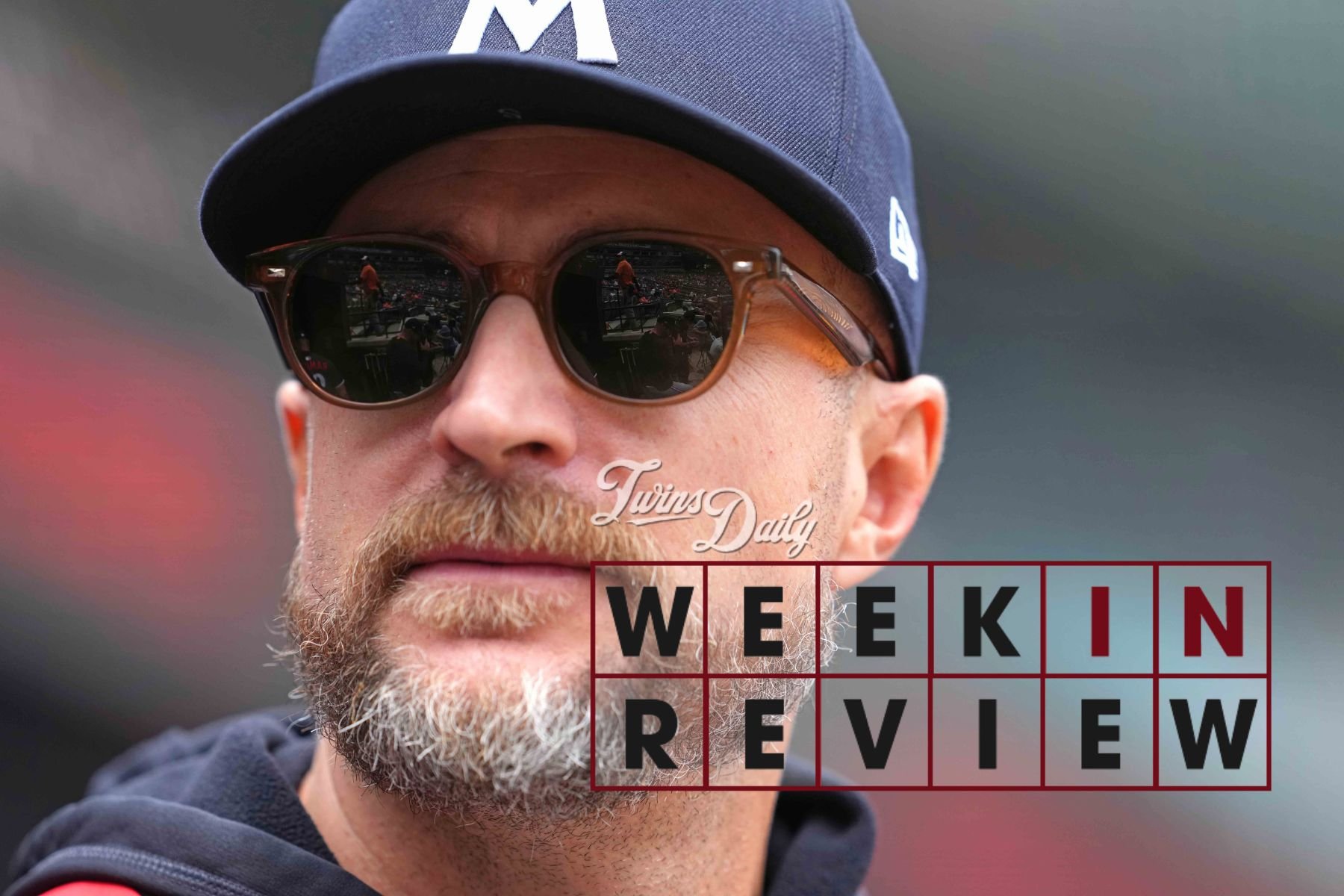 The Weekly Nutshell: Late last season and early this season, it seemed like the Minnesota Twins could not overcome any type of adversity or tribulation. A stiff breeze was liable to knock them over, and you could safely bet they weren't going to get back up off the mat. The lack of resilience was maddening. Over the last couple weeks, that script has flipped entirely. The hits keep coming and yet the winning won't stop for Minnesota, which rattled off five more wins on the road last week before finally ending the streak on Sunday in a solid, competitive game. Already playing without multiple key hitters, the Twins lineup suffered another devastating blow on Thursday when Byron Buxton and Carlos Correa collided violently in the outfield on Thursday, ultimately landing both players on the injured list with concussions. How did the team respond? By going into Milwaukee and not missing a beat. The pitching staff has been picking up a battered lineup by keeping opponents off the board to an almost unprecedented extreme. The Twins logged three consecutive shutouts and strung 35 straight scoreless innings before finally letting up on Sunday in the streak ending loss. The Twins have emphatically reasserted themselves as a force in the AL Central, and now they've got a big week at home on tap against two divisional rivals. They'll be shorthanded but undoubtedly more self-assured than the last time they faced either of these opponents. No team in baseball has been better over the past two-plus weeks. Weekly Snapshot: Mon, 5/12 through Sun, 5/18 *** Record Last Week: 5-1 (Overall: 26-21) Run Differential Last Week: +16 (Overall: +35) Standing: 2nd Place in AL Central (5.0 GB) Last Week's Game Results: Game 42 | MIN 6, BAL 3: Offense Adds Late, Bullpen Brilliant Once Again Twins bullpen: 4.1 IP, 0 R, 2 H, 7 K Game 43 | MIN 8, BAL 6: Clemens Keys Late Comeback in 10th Straight Win Clemens: Go-ahead 3-R HR in 8th inning Game 44 | MIN 4, BAL 0: Paddack Leads Charge in Sweep-Sealing Shutout Paddack: 7 IP, 3 H, 0 R Game 45 | MIN 3, MIL 0: Twins Pitching Plows Through Brewers in Border Battle Twins pitchers: 16 K, 1 BB Game 46: MIN 7, MIL 0: López Leads the Way in Third Consecutive Shutout López: 6 IP, 2 H, 0 R; Twins offense: 18 H Game 47 | MIL 5, MIN 2: Matthews Loses Control as Winning Streak Ends at 13 Matthews: 3 IP, 4 ER, 3 BB, 5 H IF YOU'D RATHER LISTEN TO THE WEEK IN REVIEW THAN READ IT, YOU CAN GET IT IN AUDIO FORM! FIND THE LATEST EPISODE ON OUR PODCAST PAGE, AS WELL AS ON APPLE AND SPOTIFY. SUBSCRIBE TO OUR CHANNELS SO YOU DON'T MISS OUT! NEWS & NOTES If you had to come up with series of worst-case scenarios for the Twins as they finally pull out of their tailspin and re-enter the American League power picture, Correa and Buxton running into each other and both suffering brain injuries would have to rank pretty high on the list. The incident occurred when Minnesota's veteran leaders converged on a pop-up in shallow center on Thursday; Buxton's call-off came too late and Correa couldn't get out of the way. Both players exited the game (though Buxton finished his inning in the field). Correa was placed on the 7-day concussion injured list on Friday, and Buck one day later following a more prolonged evaluation. It's a tough break for Correa, whose absence will test the organization's thin shortstop depth, but losing Buxton is especially unfortunate. His health and production have been the biggest bright spot in this Twins season so far, even while the team was struggling. As it goes with concussions, there's no way of knowing how long either player will be sidelined. As a silver lining, these IL placements did lead to a couple of storybook call-ups, with infielder Ryan Fitzgerald and outfielder Carson McCusker promoted from Triple-A. Both of these unheralded grinders have followed winding paths that included tours through Indy Ball. Fitzgerald, who made his MLB debut on Friday night, is on hand as more of a versatile bench piece, whereas McCusker – whose dominant performance in Triple-A instills a level of intrigue – could find his way into more regular action with the Twins in search of right-handed pop. He grounded out in his first plate appearance, as a pinch-hitter, on Sunday. Luke Keaschall and Michael Tonkin were both moved to the 60-day IL to free up space for the 40-man roster newcomers. As icing on the cake, we learned on Sunday that Danny Coulombe would also be headed for the injured list, due to a left forearm extensor strain that he says he's been dealing with all year. He expressed a low level of concern, but it's notable that Coulombe underwent surgery to remove bone chips from his elbow last summer. For now Kody Funderburk sticks around as the sole bullpen lefty as the Twins will be forced to proceed without MLB's relief FIP leader for at least two weeks. In a non-injury-related roster decision, the Twins optioned Simeon Woods Richardson to Triple-A following his rough outing against Baltimore on Wednesday. Zebby Matthews was recalled from St. Paul to make his season debut on Sunday. Woods Richardson was far from terrible through his first eight outings, by the standard of a fifth starter, but the bar in this rotation is mightily high. For now, Matthews will get a chance to hold it down at the back end. HIGHLIGHTS The pitching staff is flat-out demolishing the opposition. They went on a run unlike any we've ever seen from a Minnesota Twins team, carving through 35 scoreless innings in succession with three straight shutout victories mixed in. Over their six games, Twins pitchers held the Orioles and Brewers to a 2.38 ERA and .179 average with 56 strikeouts and 17 walks in 53 innings. As you'd expect when it's all coming together this nicely, the rotation and bullpen are contributing pretty much in equal measure. Chris Paddack, Joe Ryan and Pablo López produced scoreless starts on Thursday, Friday and Saturday, combining to allow just seven hits in 19 innings. Matthews finally ended the shutout streak on Sunday, running aground after coming out of the gates on fire in the first. He exhibited some of the same tendencies that afflicted him as a rookie – missing spots, falling behind, paying the price – but Zebby also was firing 98 MPH and struck out five in three innings. That's some outrageous upside and talent to have in the fifth rotation spot. The relief corps, meanwhile, continues to be near-flawless when called upon. After allowing just one run in 21 innings the previous week, the bullpen once again allowed a single run, in 22 ⅓, and it didn't come until the last inning of the week on Sunday. These guys are chugging Red Bulls and shredding batters with a relentlessness. Jhoan Durán made two scoreless appearances and notched his eighth save. Griffin Jax struck out four over two shutout frames and has a 1.42 ERA in 13 appearances since his four-run implosion in Atlanta. Louis Varland also chipped in a pair of shutout innings, striking out three and lowering his ERA to 2.95 on the season. Cole Sands tossed five clean innings and converted consecutive save chances. Jorge Alcalá should also be commended for some quality low-leverage work, allowing one run and one hit in five innings across four appearances. This is what we wanted the bullpen to be, and what we thought it could be. It's Cleveland-2024-level dominance and then some, or at least that's been the case since the first couple weeks of the season. This reliever group leads the majors in fWAR by a sizable margin, and they've moved into the top 10 for WPA which is pretty amazing given some of those huge early lapses. The Twins are so deep on trustworthy options, and they've even got guys like Justin Topa giving them value. It's really good to see. On offense, the Twins are getting critical production from some unexpected sources. At the top of that list is Kody Clemens, who has not only locked himself quite firmly into a roster spot but has even elevated into the middle of the order, making back-to-back starts in the five hole by week's end. He's been the team's best hitter of late, going 8-for-23 on the road trip with two home runs, six RBIs and three walks. Clemens sparked Minnesota's winning streak with a go-ahead homer in Boston back in early May, and he continued to deliver throughout. Another unexpected but welcome difference-maker in the lineup: Christian Vázquez, who's been seeing more time behind the plate with Ryan Jeffers being used more at DH. Vázquez was 6-for-17 with a double and a homer in his four starts and has his OPS up into the .600 range, which is honestly perfectly adequate. Meanwhile, Jeffers continues to look dialed at the dish. He had four hits in Saturday's 7-0 rout of Milwaukee, and went 8-for-22 on the week. Finally, Trevor Larnach is flourishing in his new role as leadoff hitter against right-handed pitching. He was a consistent threat against the Orioles and Brewers, tallying seven hits including two doubles, triple and home run in the six games. And hey, since he gets (and got) plenty of flak when things go awry, let's give the manager Rocco Baldelli some props. The Twins were finally able to pull themselves out of a funk that seemed to be spiralling uncontrollably, and they've done it even while plagued by almost inconceivable misfortune on the injury front. That takes leadership. The ability of these players to steadily focused and let the results come has to reflect well on him. Plus, you don't win 13 straight games and reel off about a billion straight scoreless bullpen innings without a plan that is well conceived and perfectly executed. The rumblings of a hot seat for Rocco have quickly become a distant memory, although his counterpart in Baltimore, Brandon Hyde was not so lucky, getting the axe over the weekend shortly after the Twins completed their second sweep over the Orioles in a span of 11 days. LOWLIGHTS The constant onslaught of attrition has thrown a wrench into the works during this winning run, keeping the elation of a thrilling 13-game streak in check. Not only are the Twins losing players to fairly serious injuries, one after another, but those players happen to be utterly crucial to their ability to stay on a roll. Correa still has yet to find his swing at the plate this season, but had been coming around in recent weeks and his presence is highly valued as a defender and leader. Buxton has pretty clearly been the team MVP through the first quarter of the schedule, and losing his bat alongside the already sidelined Matt Wallner and Keaschall deprives this lineup of three of its best hitters, for the foreseeable future, at a time where the offense is trying to find its rhythm and preparing to face some very tough pitching. If you've followed the Twins for any length of time, I don't need to tell you how unsettling it is to see beloved franchise centerpiece players battling brain injuries. We've seen superstars like Joe Mauer and Justin Morneau have their careers permanently altered by blows to the head that seemed, at first glance, far more innocuous than the forceful impact experienced by Correa and Buxton on that play. Obviously there's no reason to speculate and at this point, not much more to be said. We'll have to see what happens. The timing is especially rough as both players will miss, at minimum, almost the entirety of the upcoming six-game home stand against two AL Central contenders. But right now I'm less concerned about the implications for the team and more just thinking about Carlos and Byron as human beings. These guys have both dealt with so much physically and now to add this on top is heart-wrenching. Wishing them all the best in their recoveries. Beyond the injuries that are pushing players to IL, much of the Twins' active roster consists of the walking wounded. Harrison Bader missed time with a groin strain, and though he's returned to play it is apparent that he's not 100 percent. (One telltale sign is that he's been playing left field with DaShawn Keirsey Jr. in center.) Willi Castro exited Friday's game after fouling a ball of his knee and hasn't been on the field since. Major-league baseball can be a brutal sport, but damn y'all, this group has really been hexed. The next-man-up mentality has to win out for the Twins to succeed, and so far it has. Minnesota's beleaguered lineup will truly be put to the test in the next six games, facing off against a pair of premier pitching staffs. You can only expect so much from the Triple-A fillers who've been summoned out of desperation. What we really need to see is the few remaining cornerstone types to keep pulling weight. Larnach and Jeffers have been doing it. Is Royce Lewis ready to join the party? He showed some good signs with six hits in 21 at-bats last week, and on Sunday launched his first truly crushed home run since August 12th of last year. Up until then, Lewis had reached the seats just once in his previous 200 plate appearances, and "reached the seats" isn't quite accurate – one of the most weakly-hit homers of the entire MLB season barely scraped into the Target Field flower pots. In his last AB of the game Lewis came within inches of a game-tying second home run, only to have it robbed by Jackson Chourio on a spectacular play. The Twins have gone 11-1 since Lewis was activated from the injured list, despite the fact that he really hasn't done much at all. So that's perhaps a comforting nugget of food for thought as we process the losses of Correa and Buxton. TRENDING STORYLINE There is a massive opportunity in front of guys like Edouard Julien and José Miranda right now. With all due respect to the likes of Fitzgerald and McCusker, they are not players that the Twins were viewing as legitimate major-league options six weeks ago. I do think that the front office continues to hold Julien and Miranda in that esteem, and to some extent these former standout bats feel like aces in the hole. But they've got to show something to make us believe again. So far there hasn't been much to point toward as meaningful progress. Julien has a .214 average with just three extra-base hits in 55 plate appearances since his demotion to St. Paul. Miranda is batting .154 in seven games since coming off the Triple-A injured list. Both did show glimmers late in the past week: Miranda ripped three doubles over the weekend in Iowa (Friday through Sunday), while Julien had four walks and a homer. LOOKING AHEAD Buckle up folks. The Twins have jumped to second place in the AL Central, but they're just a half-game in front of the Guardians and Royals, who are tied for third place. You wish that Minnesota was coming into this important stretch at anything resembling full strength, but it should be an exciting and competitive week at Target Field nonetheless. MONDAY, MAY 19: GUARDIANS @ TWINS — LHP Logan Allen v. RHP Bailey Ober TUESDAY, MAY 20: GUARDIANS @ TWINS — RHP Gavin Williams v. RHP Chris Paddack WEDNESDAY, MAY 21: GUARDIANS @ TWINS — RHP Tanner Bibee v. RHP Joe Ryan FRIDAY, MAY 23: ROYALS @ TWINS — TBD v. RHP Pablo Lopez SATURDAY, MAY 24: ROYALS @ TWINS — RHP Michael Wacha v. RHP Zebby Matthews SUNDAY, MAY 25: ROYALS @ TWINS — LHP Kris Bubic v. RHP Bailey Ober
- 15 comments
-
- 4
-
-
- byron buxton
- carlos correa
- (and 2 more)
-
Week in Review: Streaking Through Setbacks
Nick Nelson posted a topic in Twins Daily Front Page News
Image courtesy of Mitch Stringer-Imagn Images The Weekly Nutshell: Late last season and early this season, it seemed like the Minnesota Twins could not overcome any type of adversity or tribulation. A stiff breeze was liable to knock them over, and you could safely bet they weren't going to get back up off the mat. The lack of resilience was maddening. Over the last couple weeks, that script has flipped entirely. The hits keep coming and yet the winning won't stop for Minnesota, which rattled off five more wins on the road last week before finally ending the streak on Sunday in a solid, competitive game. Already playing without multiple key hitters, the Twins lineup suffered another devastating blow on Thursday when Byron Buxton and Carlos Correa collided violently in the outfield on Thursday, ultimately landing both players on the injured list with concussions. How did the team respond? By going into Milwaukee and not missing a beat. The pitching staff has been picking up a battered lineup by keeping opponents off the board to an almost unprecedented extreme. The Twins logged three consecutive shutouts and strung 35 straight scoreless innings before finally letting up on Sunday in the streak ending loss. The Twins have emphatically reasserted themselves as a force in the AL Central, and now they've got a big week at home on tap against two divisional rivals. They'll be shorthanded but undoubtedly more self-assured than the last time they faced either of these opponents. No team in baseball has been better over the past two-plus weeks. Weekly Snapshot: Mon, 5/12 through Sun, 5/18 *** Record Last Week: 5-1 (Overall: 26-21) Run Differential Last Week: +16 (Overall: +35) Standing: 2nd Place in AL Central (5.0 GB) Last Week's Game Results: Game 42 | MIN 6, BAL 3: Offense Adds Late, Bullpen Brilliant Once Again Twins bullpen: 4.1 IP, 0 R, 2 H, 7 K Game 43 | MIN 8, BAL 6: Clemens Keys Late Comeback in 10th Straight Win Clemens: Go-ahead 3-R HR in 8th inning Game 44 | MIN 4, BAL 0: Paddack Leads Charge in Sweep-Sealing Shutout Paddack: 7 IP, 3 H, 0 R Game 45 | MIN 3, MIL 0: Twins Pitching Plows Through Brewers in Border Battle Twins pitchers: 16 K, 1 BB Game 46: MIN 7, MIL 0: López Leads the Way in Third Consecutive Shutout López: 6 IP, 2 H, 0 R; Twins offense: 18 H Game 47 | MIL 5, MIN 2: Matthews Loses Control as Winning Streak Ends at 13 Matthews: 3 IP, 4 ER, 3 BB, 5 H IF YOU'D RATHER LISTEN TO THE WEEK IN REVIEW THAN READ IT, YOU CAN GET IT IN AUDIO FORM! FIND THE LATEST EPISODE ON OUR PODCAST PAGE, AS WELL AS ON APPLE AND SPOTIFY. SUBSCRIBE TO OUR CHANNELS SO YOU DON'T MISS OUT! NEWS & NOTES If you had to come up with series of worst-case scenarios for the Twins as they finally pull out of their tailspin and re-enter the American League power picture, Correa and Buxton running into each other and both suffering brain injuries would have to rank pretty high on the list. The incident occurred when Minnesota's veteran leaders converged on a pop-up in shallow center on Thursday; Buxton's call-off came too late and Correa couldn't get out of the way. Both players exited the game (though Buxton finished his inning in the field). Correa was placed on the 7-day concussion injured list on Friday, and Buck one day later following a more prolonged evaluation. It's a tough break for Correa, whose absence will test the organization's thin shortstop depth, but losing Buxton is especially unfortunate. His health and production have been the biggest bright spot in this Twins season so far, even while the team was struggling. As it goes with concussions, there's no way of knowing how long either player will be sidelined. As a silver lining, these IL placements did lead to a couple of storybook call-ups, with infielder Ryan Fitzgerald and outfielder Carson McCusker promoted from Triple-A. Both of these unheralded grinders have followed winding paths that included tours through Indy Ball. Fitzgerald, who made his MLB debut on Friday night, is on hand as more of a versatile bench piece, whereas McCusker – whose dominant performance in Triple-A instills a level of intrigue – could find his way into more regular action with the Twins in search of right-handed pop. He grounded out in his first plate appearance, as a pinch-hitter, on Sunday. Luke Keaschall and Michael Tonkin were both moved to the 60-day IL to free up space for the 40-man roster newcomers. As icing on the cake, we learned on Sunday that Danny Coulombe would also be headed for the injured list, due to a left forearm extensor strain that he says he's been dealing with all year. He expressed a low level of concern, but it's notable that Coulombe underwent surgery to remove bone chips from his elbow last summer. For now Kody Funderburk sticks around as the sole bullpen lefty as the Twins will be forced to proceed without MLB's relief FIP leader for at least two weeks. In a non-injury-related roster decision, the Twins optioned Simeon Woods Richardson to Triple-A following his rough outing against Baltimore on Wednesday. Zebby Matthews was recalled from St. Paul to make his season debut on Sunday. Woods Richardson was far from terrible through his first eight outings, by the standard of a fifth starter, but the bar in this rotation is mightily high. For now, Matthews will get a chance to hold it down at the back end. HIGHLIGHTS The pitching staff is flat-out demolishing the opposition. They went on a run unlike any we've ever seen from a Minnesota Twins team, carving through 35 scoreless innings in succession with three straight shutout victories mixed in. Over their six games, Twins pitchers held the Orioles and Brewers to a 2.38 ERA and .179 average with 56 strikeouts and 17 walks in 53 innings. As you'd expect when it's all coming together this nicely, the rotation and bullpen are contributing pretty much in equal measure. Chris Paddack, Joe Ryan and Pablo López produced scoreless starts on Thursday, Friday and Saturday, combining to allow just seven hits in 19 innings. Matthews finally ended the shutout streak on Sunday, running aground after coming out of the gates on fire in the first. He exhibited some of the same tendencies that afflicted him as a rookie – missing spots, falling behind, paying the price – but Zebby also was firing 98 MPH and struck out five in three innings. That's some outrageous upside and talent to have in the fifth rotation spot. The relief corps, meanwhile, continues to be near-flawless when called upon. After allowing just one run in 21 innings the previous week, the bullpen once again allowed a single run, in 22 ⅓, and it didn't come until the last inning of the week on Sunday. These guys are chugging Red Bulls and shredding batters with a relentlessness. Jhoan Durán made two scoreless appearances and notched his eighth save. Griffin Jax struck out four over two shutout frames and has a 1.42 ERA in 13 appearances since his four-run implosion in Atlanta. Louis Varland also chipped in a pair of shutout innings, striking out three and lowering his ERA to 2.95 on the season. Cole Sands tossed five clean innings and converted consecutive save chances. Jorge Alcalá should also be commended for some quality low-leverage work, allowing one run and one hit in five innings across four appearances. This is what we wanted the bullpen to be, and what we thought it could be. It's Cleveland-2024-level dominance and then some, or at least that's been the case since the first couple weeks of the season. This reliever group leads the majors in fWAR by a sizable margin, and they've moved into the top 10 for WPA which is pretty amazing given some of those huge early lapses. The Twins are so deep on trustworthy options, and they've even got guys like Justin Topa giving them value. It's really good to see. On offense, the Twins are getting critical production from some unexpected sources. At the top of that list is Kody Clemens, who has not only locked himself quite firmly into a roster spot but has even elevated into the middle of the order, making back-to-back starts in the five hole by week's end. He's been the team's best hitter of late, going 8-for-23 on the road trip with two home runs, six RBIs and three walks. Clemens sparked Minnesota's winning streak with a go-ahead homer in Boston back in early May, and he continued to deliver throughout. Another unexpected but welcome difference-maker in the lineup: Christian Vázquez, who's been seeing more time behind the plate with Ryan Jeffers being used more at DH. Vázquez was 6-for-17 with a double and a homer in his four starts and has his OPS up into the .600 range, which is honestly perfectly adequate. Meanwhile, Jeffers continues to look dialed at the dish. He had four hits in Saturday's 7-0 rout of Milwaukee, and went 8-for-22 on the week. Finally, Trevor Larnach is flourishing in his new role as leadoff hitter against right-handed pitching. He was a consistent threat against the Orioles and Brewers, tallying seven hits including two doubles, triple and home run in the six games. And hey, since he gets (and got) plenty of flak when things go awry, let's give the manager Rocco Baldelli some props. The Twins were finally able to pull themselves out of a funk that seemed to be spiralling uncontrollably, and they've done it even while plagued by almost inconceivable misfortune on the injury front. That takes leadership. The ability of these players to steadily focused and let the results come has to reflect well on him. Plus, you don't win 13 straight games and reel off about a billion straight scoreless bullpen innings without a plan that is well conceived and perfectly executed. The rumblings of a hot seat for Rocco have quickly become a distant memory, although his counterpart in Baltimore, Brandon Hyde was not so lucky, getting the axe over the weekend shortly after the Twins completed their second sweep over the Orioles in a span of 11 days. LOWLIGHTS The constant onslaught of attrition has thrown a wrench into the works during this winning run, keeping the elation of a thrilling 13-game streak in check. Not only are the Twins losing players to fairly serious injuries, one after another, but those players happen to be utterly crucial to their ability to stay on a roll. Correa still has yet to find his swing at the plate this season, but had been coming around in recent weeks and his presence is highly valued as a defender and leader. Buxton has pretty clearly been the team MVP through the first quarter of the schedule, and losing his bat alongside the already sidelined Matt Wallner and Keaschall deprives this lineup of three of its best hitters, for the foreseeable future, at a time where the offense is trying to find its rhythm and preparing to face some very tough pitching. If you've followed the Twins for any length of time, I don't need to tell you how unsettling it is to see beloved franchise centerpiece players battling brain injuries. We've seen superstars like Joe Mauer and Justin Morneau have their careers permanently altered by blows to the head that seemed, at first glance, far more innocuous than the forceful impact experienced by Correa and Buxton on that play. Obviously there's no reason to speculate and at this point, not much more to be said. We'll have to see what happens. The timing is especially rough as both players will miss, at minimum, almost the entirety of the upcoming six-game home stand against two AL Central contenders. But right now I'm less concerned about the implications for the team and more just thinking about Carlos and Byron as human beings. These guys have both dealt with so much physically and now to add this on top is heart-wrenching. Wishing them all the best in their recoveries. Beyond the injuries that are pushing players to IL, much of the Twins' active roster consists of the walking wounded. Harrison Bader missed time with a groin strain, and though he's returned to play it is apparent that he's not 100 percent. (One telltale sign is that he's been playing left field with DaShawn Keirsey Jr. in center.) Willi Castro exited Friday's game after fouling a ball of his knee and hasn't been on the field since. Major-league baseball can be a brutal sport, but damn y'all, this group has really been hexed. The next-man-up mentality has to win out for the Twins to succeed, and so far it has. Minnesota's beleaguered lineup will truly be put to the test in the next six games, facing off against a pair of premier pitching staffs. You can only expect so much from the Triple-A fillers who've been summoned out of desperation. What we really need to see is the few remaining cornerstone types to keep pulling weight. Larnach and Jeffers have been doing it. Is Royce Lewis ready to join the party? He showed some good signs with six hits in 21 at-bats last week, and on Sunday launched his first truly crushed home run since August 12th of last year. Up until then, Lewis had reached the seats just once in his previous 200 plate appearances, and "reached the seats" isn't quite accurate – one of the most weakly-hit homers of the entire MLB season barely scraped into the Target Field flower pots. In his last AB of the game Lewis came within inches of a game-tying second home run, only to have it robbed by Jackson Chourio on a spectacular play. The Twins have gone 11-1 since Lewis was activated from the injured list, despite the fact that he really hasn't done much at all. So that's perhaps a comforting nugget of food for thought as we process the losses of Correa and Buxton. TRENDING STORYLINE There is a massive opportunity in front of guys like Edouard Julien and José Miranda right now. With all due respect to the likes of Fitzgerald and McCusker, they are not players that the Twins were viewing as legitimate major-league options six weeks ago. I do think that the front office continues to hold Julien and Miranda in that esteem, and to some extent these former standout bats feel like aces in the hole. But they've got to show something to make us believe again. So far there hasn't been much to point toward as meaningful progress. Julien has a .214 average with just three extra-base hits in 55 plate appearances since his demotion to St. Paul. Miranda is batting .154 in seven games since coming off the Triple-A injured list. Both did show glimmers late in the past week: Miranda ripped three doubles over the weekend in Iowa (Friday through Sunday), while Julien had four walks and a homer. LOOKING AHEAD Buckle up folks. The Twins have jumped to second place in the AL Central, but they're just a half-game in front of the Guardians and Royals, who are tied for third place. You wish that Minnesota was coming into this important stretch at anything resembling full strength, but it should be an exciting and competitive week at Target Field nonetheless. MONDAY, MAY 19: GUARDIANS @ TWINS — LHP Logan Allen v. RHP Bailey Ober TUESDAY, MAY 20: GUARDIANS @ TWINS — RHP Gavin Williams v. RHP Chris Paddack WEDNESDAY, MAY 21: GUARDIANS @ TWINS — RHP Tanner Bibee v. RHP Joe Ryan FRIDAY, MAY 23: ROYALS @ TWINS — TBD v. RHP Pablo Lopez SATURDAY, MAY 24: ROYALS @ TWINS — RHP Michael Wacha v. RHP Zebby Matthews SUNDAY, MAY 25: ROYALS @ TWINS — LHP Kris Bubic v. RHP Bailey Ober View full article- 15 replies
-
- 2
-
-
- byron buxton
- carlos correa
- (and 2 more)
-
Image courtesy of Rob Thompson, St. Paul Saints The Minnesota Twins will have a new face, and hard-to-miss physique, in their dugout on Sunday. Carson McCusker, the towering 6-foot-8, 250-pound slugger nicknamed McCrusher, is heading from Des Moines to Milwaukee to join the major-league club, as reported by Dan Hayes of The Athletic and others on Saturday evening. The circumstances, unfortunately, are sobering. Outfielder Byron Buxton is being placed on the 7-day concussion injured list, joining Carlos Correa, after their violent outfield collision on Thursday. Buxton had been under daily evaluation, but the Twins ultimately opted for caution following concussion protocol guidelines. While the injury news is tough, McCusker’s call-up is undeniably one of the most heartening stories of the Twins’ season. A few years ago, McCusker was on the verge of retirement. As Bobby Nightingale of the Star Tribune noted, the Oklahoma State product was coming off a second season in independent ball without a single offer from a major-league organization. But the Twins took a flier on him, and he’s made them look smart ever since. McCusker has mashed at every level of the system, and this year he's turned it up to 11. In 38 games with the St. Paul Saints, he’s slashing .350/.412/.650 with 10 home runs and 11 doubles, ranking third out of 119 International League hitters in OPS. That kind of production has made him impossible to ignore, especially for a Twins team that ranks in the bottom third of the league in slugging and home runs, and is now going to be without its most prolific power bat in Buxton. Make no mistake: this is not your typical big-league promotion. McCusker isn’t on any top prospect lists. He’s nearly 27, was drafted in the 26th round out of college, and has a career minor-league strikeout rate over 30 percent. He’s not a polished, five-tool player. But he does one thing exceptionally well: hit the baseball very hard. In profiling McCusker earlier this season, Jamie Cameron pointed out that his max exit velocity clocked in at over 114 mph, and he boasted a hard-hit rate above 60 percent. In other words, the Twins are adding something they are sorely lacking with Buxton down and Royce Lewis still not looking like himself: right-handed thump. McCusker’s late-bloomer trajectory, sky-high whiff rates and lack of discipline might make some skeptical, but Twins fans are ready to root for a grinder who earned his shot the hard way. Whether he becomes the next slugging sensation or simply a feel-good flash, he’s earned this moment. And for a team still searching for offensive identity — and now down two cornerstone players — it might be the perfect time to unleash McCrusher. Are you as excited as I am about this news?! Sound off in the comments! View full article
-
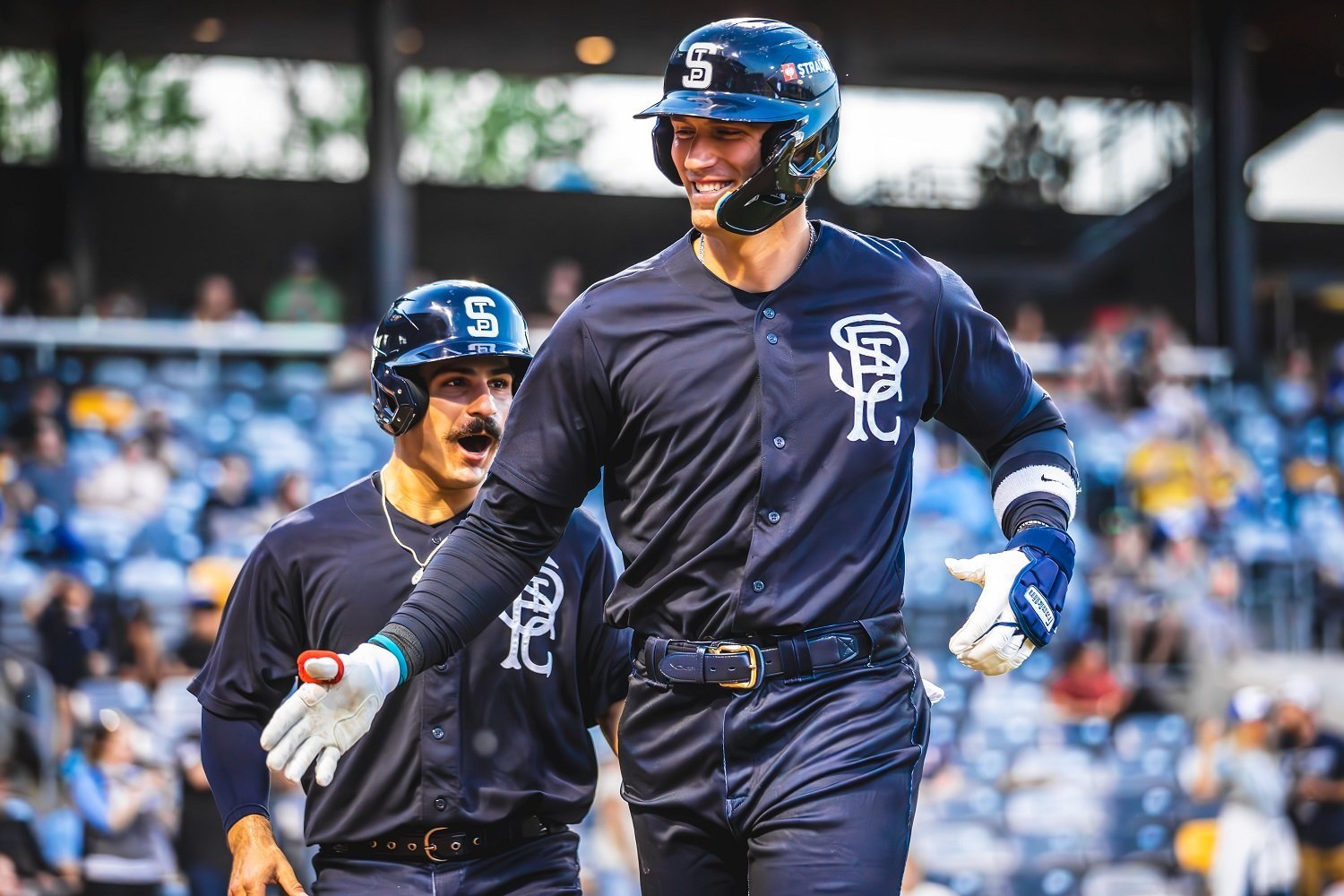 The Minnesota Twins will have a new face, and hard-to-miss physique, in their dugout on Sunday. Carson McCusker, the towering 6-foot-8, 250-pound slugger nicknamed McCrusher, is heading from Des Moines to Milwaukee to join the major-league club, as reported by Dan Hayes of The Athletic and others on Saturday evening. The circumstances, unfortunately, are sobering. Outfielder Byron Buxton is being placed on the 7-day concussion injured list, joining Carlos Correa, after their violent outfield collision on Thursday. Buxton had been under daily evaluation, but the Twins ultimately opted for caution following concussion protocol guidelines. While the injury news is tough, McCusker’s call-up is undeniably one of the most heartening stories of the Twins’ season. A few years ago, McCusker was on the verge of retirement. As Bobby Nightingale of the Star Tribune noted, the Oklahoma State product was coming off a second season in independent ball without a single offer from a major-league organization. But the Twins took a flier on him, and he’s made them look smart ever since. McCusker has mashed at every level of the system, and this year he's turned it up to 11. In 38 games with the St. Paul Saints, he’s slashing .350/.412/.650 with 10 home runs and 11 doubles, ranking third out of 119 International League hitters in OPS. That kind of production has made him impossible to ignore, especially for a Twins team that ranks in the bottom third of the league in slugging and home runs, and is now going to be without its most prolific power bat in Buxton. Make no mistake: this is not your typical big-league promotion. McCusker isn’t on any top prospect lists. He’s nearly 27, was drafted in the 26th round out of college, and has a career minor-league strikeout rate over 30 percent. He’s not a polished, five-tool player. But he does one thing exceptionally well: hit the baseball very hard. In profiling McCusker earlier this season, Jamie Cameron pointed out that his max exit velocity clocked in at over 114 mph, and he boasted a hard-hit rate above 60 percent. In other words, the Twins are adding something they are sorely lacking with Buxton down and Royce Lewis still not looking like himself: right-handed thump. McCusker’s late-bloomer trajectory, sky-high whiff rates and lack of discipline might make some skeptical, but Twins fans are ready to root for a grinder who earned his shot the hard way. Whether he becomes the next slugging sensation or simply a feel-good flash, he’s earned this moment. And for a team still searching for offensive identity — and now down two cornerstone players — it might be the perfect time to unleash McCrusher. Are you as excited as I am about this news?! Sound off in the comments!
- 29 comments
-
- 15
-

-
-

-
Sure, but elite pitching is what makes a streak like this possible. It's hard to lose very often when you're giving up two runs a game. And now they're about to swap out their lone underperforming starter with their top pitching prospect.
-
The Twins have one of the best pitching staffs in the league. The Orioles have the worst. I'm cherry-picking? Come on.
- 30 replies
-
- 11
-
-
-
Image courtesy of Daniel Kucin Jr.-Imagn Images A few short weeks ago, fans and media were rightfully wondering whether Rocco Baldelli's job might be in danger as the Twins dug deeper into an early-season hole, following last year's second-half collapse. That notion's been quelled by a 12-game winning streak that has Minnesota back to five games above .500 and firmly in the American League contention mix. Ironically, the epic run from Baldelli's squad played a direct role in the dismissal of a different manager: Brandon Hyde of the Orioles, against whom half of Minnesota's wins during the streak were recorded. On Saturday Baltimore announced that they've relieved Hyde of managerial duties, replacing him with third base coach Tony Mansolino in the interim. The Orioles are in last place in the AL East with a 15-28 record. The Twins looked like the clearly superior team while going 6-0 against them in an 11-day span this month, outscoring the O's by 23 runs. As Minnesota rose, Baltimore fell, and now their skipper is the one to take the fall, after guiding his team to the playoffs in each of the past two seasons. It was true with Baldelli and the Twins, and it's true with Hyde and the Orioles: the manager is not the primary issue at play. The desire for a shakeup is understandable, but the Baltimore Orioles are plagued by deeper problems that are in large part self-inflicted by the organization's leadership and its shortcomings. There is one glaring point of distinction between these two ships passing in the night: Pitching. The Orioles can’t stop losing for the same reason the Twins can’t stop winning. Baltimore’s team ERA ranks dead last in the American League at 5.31. Minnesota, by contrast, is second at 3.23. When your arms are giving you that kind of advantage — or disadvantage — the manager’s job becomes almost irrelevant. Twins fans have had plenty of valid gripes over the past couple years, most notably the front office’s decision to scale back payroll after a playoff breakthrough. But they can’t hold a candle to what the Orioles have put their fanbase through. After forcing fans to endure years of non-competitive rebuilding, Baltimore finally emerged with a fun, talented young core ... and then failed to follow through with the investments needed to take the next step. Most notably, they couldn’t retain Corbin Burnes — one of the few high-end pitchers they had managed to acquire — allowing the four-time All-Star and former Cy Young winner to walk in free agency. Burnes is now excelling in Arizona while the Orioles scramble to field competent starters. But Baltimore’s problems go beyond money. The Twins aren’t dominating opponents because they outspent anyone; they’re dominating because of development. Under Derek Falvey, Minnesota has built a pitching pipeline that consistently turns mid-round picks and overlooked arms into legitimate contributors. They’re identifying talent, nurturing it, and maximizing its value. It’s the difference between a flash-in-the-pan contender and a team with staying power. Case in point: Danny Coulombe. The Orioles had him in-house, but declined to activate a modest contract option this past offseason. Minnesota scooped him up, and Coulombe has returned to their bullpen as a key force with a zero runs allowed in 19 appearances and an MLB-leading 1.19 FIP, helping anchor one of the league’s most overpowering relief groups. Meanwhile, Baltimore’s bullpen is a mess, and one of their better lefty options is thriving elsewhere, on a team that’s now beaten them six times in a row. Twins fans have every right to be irritated in many regards with the state of their favorite franchise. But we just saw firsthand how much worse it can be. If you can pitch, you’re going to have a chance. Right now, the Twins have arms in abundance, and a front office that’s showing it knows how to keep them coming. Falvey may not be perfect, but he's doing the main thing he was asked to do when the Twins hire him. Rocco Baldelli is enjoying the benefits. Brandon Hyde, not so much. View full article
-
The Plight of the Orioles Should Give Twins Fans a Sense of Perspective
Nick Nelson posted an article in Twins
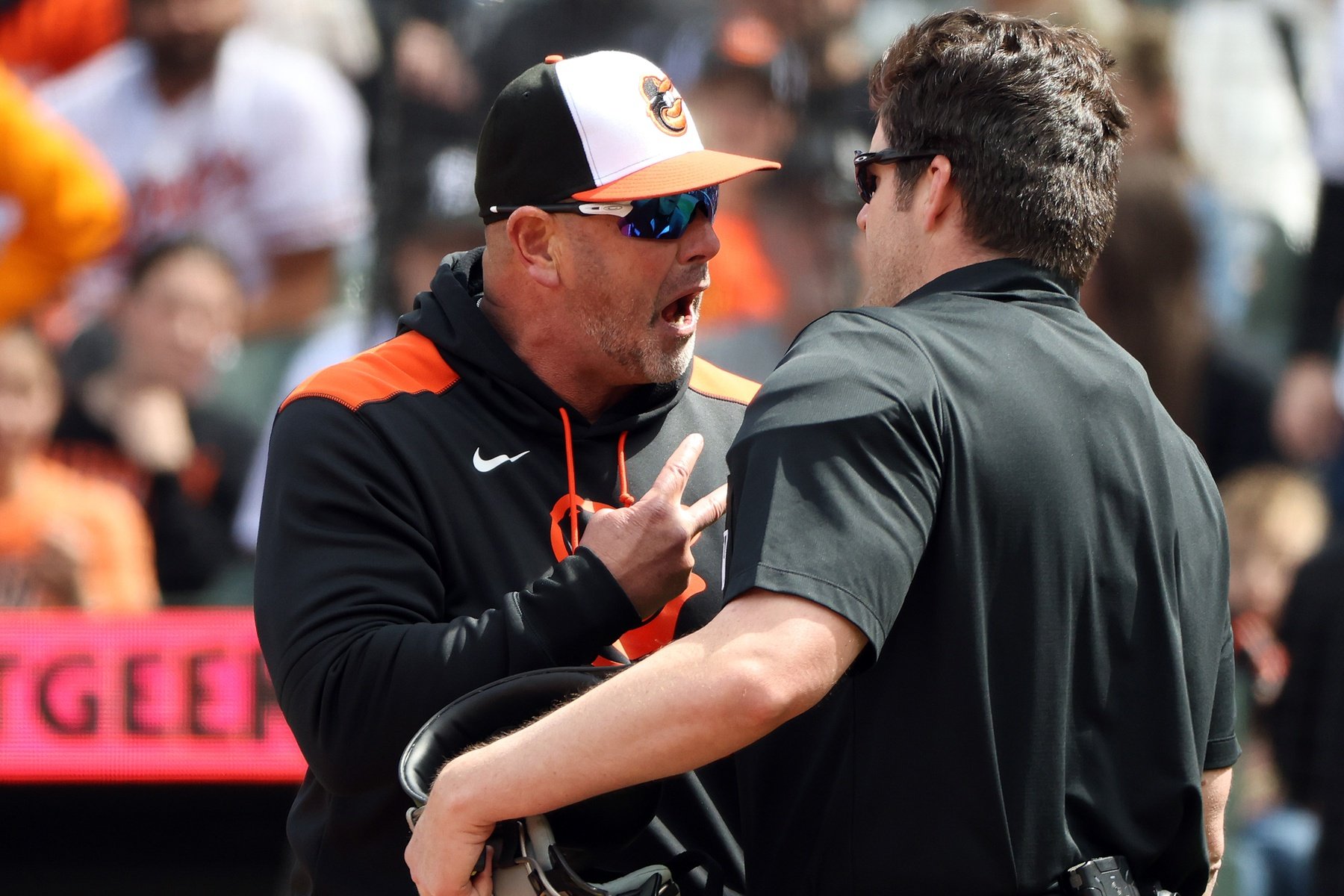 A few short weeks ago, fans and media were rightfully wondering whether Rocco Baldelli's job might be in danger as the Twins dug deeper into an early-season hole, following last year's second-half collapse. That notion's been quelled by a 12-game winning streak that has Minnesota back to five games above .500 and firmly in the American League contention mix. Ironically, the epic run from Baldelli's squad played a direct role in the dismissal of a different manager: Brandon Hyde of the Orioles, against whom half of Minnesota's wins during the streak were recorded. On Saturday Baltimore announced that they've relieved Hyde of managerial duties, replacing him with third base coach Tony Mansolino in the interim. The Orioles are in last place in the AL East with a 15-28 record. The Twins looked like the clearly superior team while going 6-0 against them in an 11-day span this month, outscoring the O's by 23 runs. As Minnesota rose, Baltimore fell, and now their skipper is the one to take the fall, after guiding his team to the playoffs in each of the past two seasons. It was true with Baldelli and the Twins, and it's true with Hyde and the Orioles: the manager is not the primary issue at play. The desire for a shakeup is understandable, but the Baltimore Orioles are plagued by deeper problems that are in large part self-inflicted by the organization's leadership and its shortcomings. There is one glaring point of distinction between these two ships passing in the night: Pitching. The Orioles can’t stop losing for the same reason the Twins can’t stop winning. Baltimore’s team ERA ranks dead last in the American League at 5.31. Minnesota, by contrast, is second at 3.23. When your arms are giving you that kind of advantage — or disadvantage — the manager’s job becomes almost irrelevant. Twins fans have had plenty of valid gripes over the past couple years, most notably the front office’s decision to scale back payroll after a playoff breakthrough. But they can’t hold a candle to what the Orioles have put their fanbase through. After forcing fans to endure years of non-competitive rebuilding, Baltimore finally emerged with a fun, talented young core ... and then failed to follow through with the investments needed to take the next step. Most notably, they couldn’t retain Corbin Burnes — one of the few high-end pitchers they had managed to acquire — allowing the four-time All-Star and former Cy Young winner to walk in free agency. Burnes is now excelling in Arizona while the Orioles scramble to field competent starters. But Baltimore’s problems go beyond money. The Twins aren’t dominating opponents because they outspent anyone; they’re dominating because of development. Under Derek Falvey, Minnesota has built a pitching pipeline that consistently turns mid-round picks and overlooked arms into legitimate contributors. They’re identifying talent, nurturing it, and maximizing its value. It’s the difference between a flash-in-the-pan contender and a team with staying power. Case in point: Danny Coulombe. The Orioles had him in-house, but declined to activate a modest contract option this past offseason. Minnesota scooped him up, and Coulombe has returned to their bullpen as a key force with a zero runs allowed in 19 appearances and an MLB-leading 1.19 FIP, helping anchor one of the league’s most overpowering relief groups. Meanwhile, Baltimore’s bullpen is a mess, and one of their better lefty options is thriving elsewhere, on a team that’s now beaten them six times in a row. Twins fans have every right to be irritated in many regards with the state of their favorite franchise. But we just saw firsthand how much worse it can be. If you can pitch, you’re going to have a chance. Right now, the Twins have arms in abundance, and a front office that’s showing it knows how to keep them coming. Falvey may not be perfect, but he's doing the main thing he was asked to do when the Twins hire him. Rocco Baldelli is enjoying the benefits. Brandon Hyde, not so much.
 -
Image courtesy of Daniel Kucin Jr.-Imagn Images 1. No Correa, No Buxton Amid Concussion Concerns Neither Carlos Correa nor Byron Buxton is in the lineup after Thursday’s scary outfield collision, and both remain in concussion protocol. Their absences loom large, especially with Matt Wallner on the injured list and Harrison Bader apparently still not available (but on the active roster). Ryan Fitzgerald is on standby via the taxi squad, as the Twins' depth continues to get stretched. "Players can remain in the league’s concussion protocol for multiple days, even if they haven’t been diagnosed with a concussion," reports Bobby Nightengale of the Star Tribune. "Correa said he felt fine when he walked around downtown Milwaukee on Friday morning, but he wasn’t visible in the clubhouse when it opened to reporters in the afternoon." UPDATE: Correa has officially been placed on the 7-day injured list and Fitzgerald has been activated. Buxton remains in the protocol. 2. Clemens Over Lewis? Believe It. Kody Clemens hitting sixth, Royce Lewis seventh. That sentence alone would’ve broken a few brains back in March. But it says a lot about both players’ current trajectories. Clemens — a fringe big-leaguer by most evaluations — has delivered in big moments, with multiple clutch, game-altering homers during this win streak. Meanwhile, Lewis has struggled to regain form since coming off the IL and, truthfully, has looked lost at the plate dating back to last August. Talent favors Lewis long-term, but right now, Clemens is the more dangerous bat. The lineup reflects that. With all of these injuries to key players piling up, now would be a GREAT time for Royce Lewis to remember who he is. 3. Larnach Leads Off (Again) For the third time this season, Trevor Larnach finds himself in the leadoff spot. With Edouard Julien down in St. Paul, Buxton in limbo, and Wallner still likely weeks away, the Twins are without a trio of players who've led off in 40 of their 44 games. Now it looks like Larnach has emerged as the next man up, and to his credit, he’s earned it. His left-handed approach plays well at the top, and he's been swinging a hot bat lately with an .856 OPS during the win streak. 4. Brooks Lee, #3 Hitter: Ready or Not Lee batted eighth when he made his season debut for Minnesota back in mid-April, coming off a rookie season where he looked very much like a hitter who belonged at the bottom of the order. In just over a month with the Twins, he has worked his way up into the heart of the lineup, batting cleanup in each of the past six games and tonight moving into the #3 spot. He's come through with some big hits to earn the vote of confidence from Rocco Baldelli. Personally, I'm still not fully sold on what I'm seeing. Lee has shown flashes at the plate, but his plate discipline remains a work in progress — a 12-to-1 strikeout-to-walk ratio and .250 OBP in May don’t exactly scream “middle-of-the-order anchor.” But with injuries piling up and bats slumping, Lee gets a chance to hit in a premium spot. The tools are there — the consistency needs to catch up. Ready or not, he’s got a chance to prove something. Plagued by attrition, the Twins need Lee and other players like him to step up and carry the load. So far over the course of this streak, guys have been answering the call. View full article
-
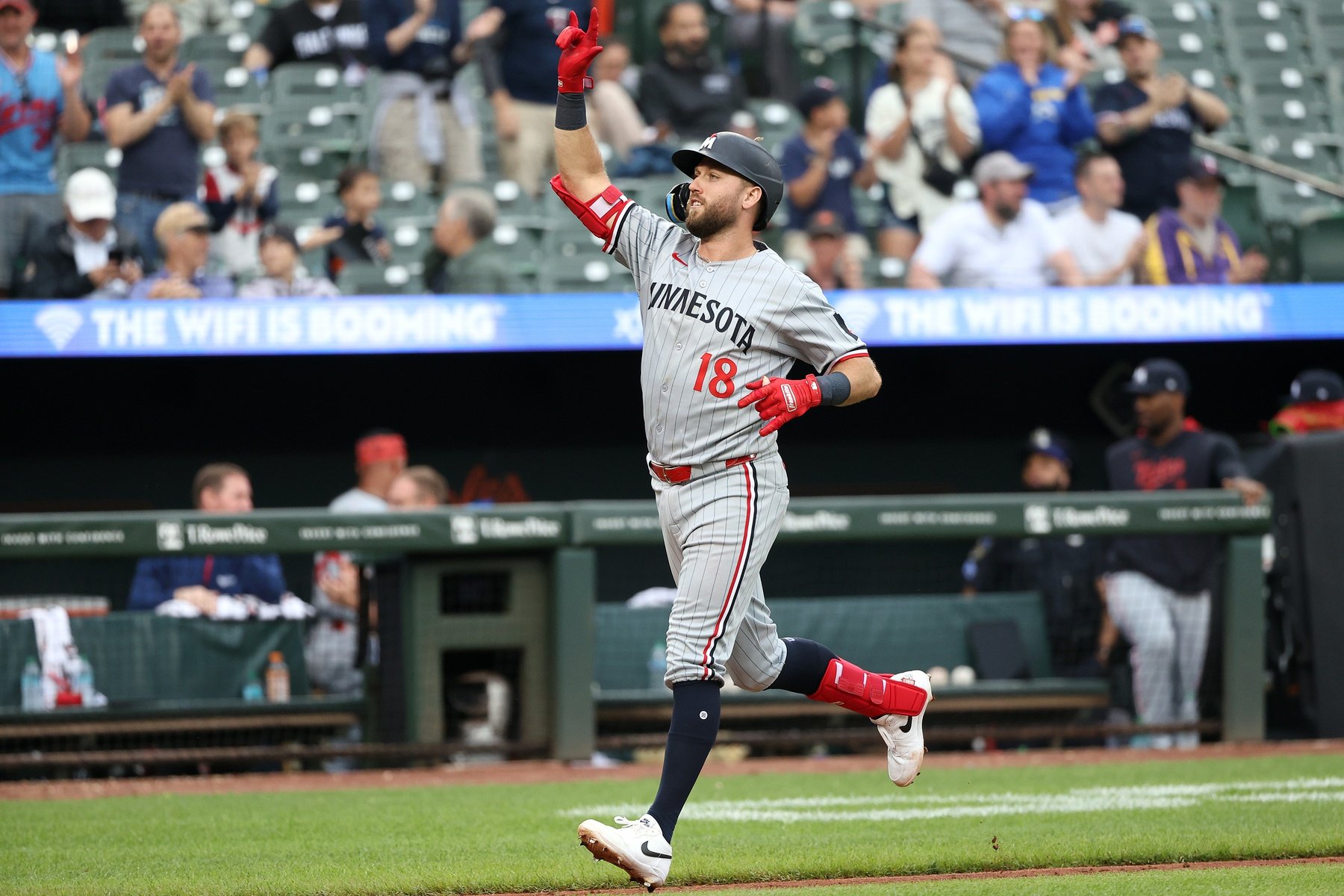 1. No Correa, No Buxton Amid Concussion Concerns Neither Carlos Correa nor Byron Buxton is in the lineup after Thursday’s scary outfield collision, and both remain in concussion protocol. Their absences loom large, especially with Matt Wallner on the injured list and Harrison Bader apparently still not available (but on the active roster). Ryan Fitzgerald is on standby via the taxi squad, as the Twins' depth continues to get stretched. "Players can remain in the league’s concussion protocol for multiple days, even if they haven’t been diagnosed with a concussion," reports Bobby Nightengale of the Star Tribune. "Correa said he felt fine when he walked around downtown Milwaukee on Friday morning, but he wasn’t visible in the clubhouse when it opened to reporters in the afternoon." UPDATE: Correa has officially been placed on the 7-day injured list and Fitzgerald has been activated. Buxton remains in the protocol. 2. Clemens Over Lewis? Believe It. Kody Clemens hitting sixth, Royce Lewis seventh. That sentence alone would’ve broken a few brains back in March. But it says a lot about both players’ current trajectories. Clemens — a fringe big-leaguer by most evaluations — has delivered in big moments, with multiple clutch, game-altering homers during this win streak. Meanwhile, Lewis has struggled to regain form since coming off the IL and, truthfully, has looked lost at the plate dating back to last August. Talent favors Lewis long-term, but right now, Clemens is the more dangerous bat. The lineup reflects that. With all of these injuries to key players piling up, now would be a GREAT time for Royce Lewis to remember who he is. 3. Larnach Leads Off (Again) For the third time this season, Trevor Larnach finds himself in the leadoff spot. With Edouard Julien down in St. Paul, Buxton in limbo, and Wallner still likely weeks away, the Twins are without a trio of players who've led off in 40 of their 44 games. Now it looks like Larnach has emerged as the next man up, and to his credit, he’s earned it. His left-handed approach plays well at the top, and he's been swinging a hot bat lately with an .856 OPS during the win streak. 4. Brooks Lee, #3 Hitter: Ready or Not Lee batted eighth when he made his season debut for Minnesota back in mid-April, coming off a rookie season where he looked very much like a hitter who belonged at the bottom of the order. In just over a month with the Twins, he has worked his way up into the heart of the lineup, batting cleanup in each of the past six games and tonight moving into the #3 spot. He's come through with some big hits to earn the vote of confidence from Rocco Baldelli. Personally, I'm still not fully sold on what I'm seeing. Lee has shown flashes at the plate, but his plate discipline remains a work in progress — a 12-to-1 strikeout-to-walk ratio and .250 OBP in May don’t exactly scream “middle-of-the-order anchor.” But with injuries piling up and bats slumping, Lee gets a chance to hit in a premium spot. The tools are there — the consistency needs to catch up. Ready or not, he’s got a chance to prove something. Plagued by attrition, the Twins need Lee and other players like him to step up and carry the load. So far over the course of this streak, guys have been answering the call.
- 5 comments
-
- 5
-
-
- byron buxton
- carlos correa
- (and 2 more)
-
Is that true though? The most memorable season of the last 5 years, if not the last 20, came in 2023 when Correa and Buxton had the worst campaigns of their career, and Lewis played 50 games. That's kind of my point. It's about having guys elsewhere step up, which this team is capable of. Not sure what your point is on Lee/Lewis -- I'm downgrading them both for the same reason: neither has been a remote offensive threat in their past 200 plate appearances.
- 26 replies
-
- 2
-
-
- ryan jeffers
- trevor larnach
- (and 2 more)
-
Image courtesy of Paul Rutherford-Imagn Images The Minnesota Twins have won eight games in a row, and most impressively they've been able to do it without Matt Wallner and Luke Keaschall, who looked like their two best hitters before going down with injuries. Wallner had an .847 OPS before suffering a significant hamstring strain on April 15th. Keaschall went 7-for-19 with five steals in seven games up until a wayward fastball fractured his forearm. Before they went down, Wallner was routinely leading off and Keaschall had found his way into the No. 3 spot, reflecting the magnitude of these losses in the lineup. Neither is going to be back anytime soon; Wallner is still weeks away and Keaschall probably won't return until around the All-Star break. The good news is that these two crucial reinforcements could set up the Twins offense, which has started to click somewhat in their absence, for a big second half. If the pitching staff continues the way it has, that's a recipe for a lot of winning and maybe a sprint to the top of the division. But in order for this to be in the cards down the line, Minnesota first needs to hang in the race. They need to their offense to keep holding up its end of the bargain. That doesn't mean they need the lineup to dominate. They haven't, and they probably aren't going to. Even over the course of this eight-game winning streak the Twins have scored more than five runs only twice, and their team .312 wOBA ranks right in middle of the MLB pack, at 15th. Supported by a staff that has allowed the fifth-fewest runs in baseball, the offense can get by with being merely solid. But they were far from that in the first month as the Twins dug this whole they're now trying to escape. In order to keep making progress toward that end in the weeks ahead, from my view, they need four players to build upon the success that has helped fuel Minnesota's turnaround. But first, I'm going to start by naming a few players I am NOT expecting to lead this charge. Because a couple of them may surprise. I'm not counting on Carlos Correa. He's been better of late, in terms of getting some singles to drop, but I'm still not seeing any indicators that Correa is on the verge of recapturing his form as a true impact player on the offensive side. Pitchers are challenging him relentlessly in the strike zone and rarely paying for it. I'll be satisfied enough with average production from him. I'm also not counting on Royce Lewis, not right now anyway. He looks out of whack at the plate and uncomfortable on the bases. And while you'd like to attribute that to temporary rust, Lewis's struggles date back the final six weeks of 2024. He now has one home run in his past 175 plate appearances, and that one barely skimmed over the left field wall at Target Field. Like with Correa, we know full well what Lewis is capable of, but in both cases I'm just not seeing anything to make me believe at the moment. Finally, I'm not counting on Brooks Lee. He's had some clutch hits over this winning streak and is coming off an awesome three-hit game, but in general he's just not showing enough discipline for a guy that lacks standout power. Lee is slashing .232/.277/.347 through 278 MLB plate appearances. Again: not saying by any means that these three players can't be key factors — along with Ty France, Willi Castro and even Edouard Julien or José Miranda — but I'm not expecting them to be the top difference-makers. Instead, I've got my eyes on these four players, who have already experienced offensive breakthroughs with potential to sustain. Byron Buxton Obviously. Even with a league-leading strikeout total, Buxton has been one of the most valuable players in baseball, ranking 16th among qualified players in fWAR. Just writing a sentence that included "Buxton" and "qualified player" makes me feel so happy. He's slashing .264/.304/.520 this year, including .322/.364/.610 since Keaschall got hurt on April 25th, and he's 8-for-8 on stolen base attempts with the second-most runs scored in the American League. Healthy at last, Buxton has easily been the team's MVP so far, and again: he's done it while whiffing at an exorbitant rate. Makes you wonder what's possible if he dials in the strike zone control just a tad. Buxton was showing signs of doing so, tallying seven strikeouts against four walks through his first eight games in May before striking out seven times on Saturday and Sunday. Harrison Bader When Bader homered three times with eight RBIs in his first five games as a Twin, it had the clear makings of an isolated hot start. Sure enough, after 10 more games played, he had a .686 OPS and 11-to-1 K/BB ratio. This seemed to match up with the reports on Bader, a defensive stud whose hitting ability and plate presence had largely gone amiss. But Bader refused to succumb to such a fate. Instead, he got back on track offensively in mid-April and now he has the best OPS on the team here at the one-quarter milestone. In 14 games since Keaschall joined Wallner on the IL, Bader is slashing .405/.490/.571, and after flailing at times early, he's putting together really solid professional at-bats. During this span, Bader has a 7-to-7 K/BB ratio, and on the season, his 10% walk rate dwarfs his career mark. He surely won't maintain at that rate, but if Bader's evolution in pitch selection is at all legit, he is plenty capable of continuing to contribute at an All-Star level alongside Buxton. So far, this is shaping up as one of the best free agent signings in team history, especially given the stakes. Trevor Larnach Through his first 15 games this year, Larnach was sporting lean .189/.279/.208 slash line with just one extra-base hit through 64 plate appearances. Personally, I wasn't that concerned. Nothing I saw led me to believe Larnach's talent wouldn't eventually win out and start translating to results. Now we are seeing it, in timely fashion. Since Wallner went down with his injury on April 15th, Larnach has produced an .846 OPS that is nearly identical to Wallner's team-leading mark when he suffered the injury (.847). Larnach has been a vital factor as really the only left-handed bat that presents any kind of threat in the Twins lineup, batting .303 with two homers and two doubles during the current winning streak. Ryan Jeffers The signs were there, even as Jeffers stumbled to a slow start the plate. But he has answered the call in the face of these injuries, slashing .271/.370/.457 in 21 games since April 15th. Like the others named above, Jeffers is inspiring a lot of confidence with not just his production but his approach at the plate (15 K and 9 BB in these 21 games). Overall, his .717 OPS on the season is about average, but that kind of steady output at the position is hard to come by, and too often was for the Twins last year. When you're getting offensive impact at all from catcher it can greatly benefit a lineup. Helpfully, Christian Vázquez has started to at least find his way on base, with four walks in 18 May plate appearances. Since the Wallner injury, Minnesota's catchers are top-10 in wOBA, and if that keeps up the offense should be alright. I'm certainly not giving up on the likes of Correa, Lewis or Lee in the grand scheme, but they all need to show me something. The four hitters above have done so, and they're helping lift the floor of the offense in the process. If they can keep it up, the Twins are going to keep winning, and if some of the team's other dormant stars can awaken in time for Wallner and eventually Keaschall to rejoin the fight, there's a whole lot to like about the lineup's eventual ceiling. View full article
-
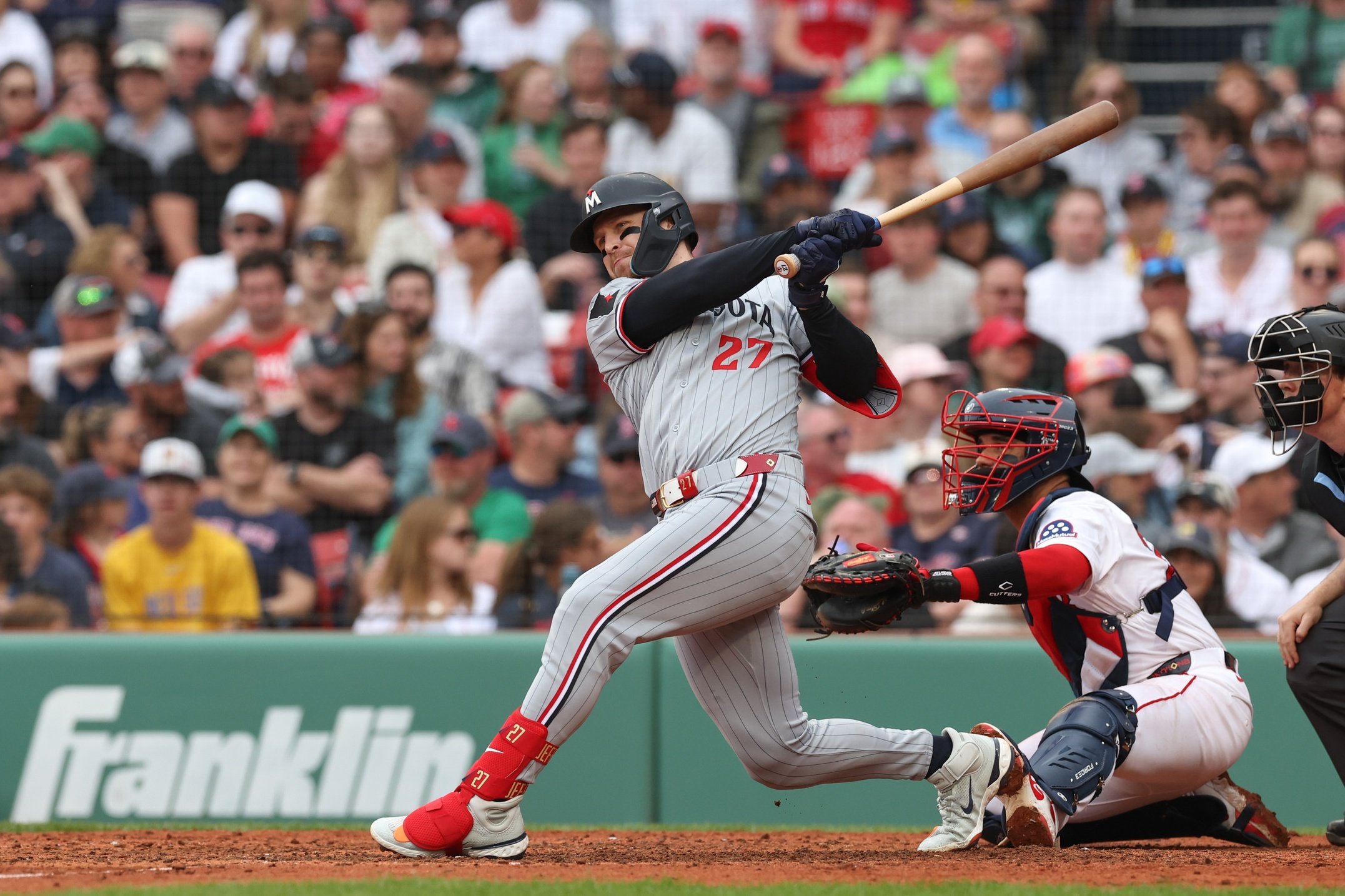 The Minnesota Twins have won eight games in a row, and most impressively they've been able to do it without Matt Wallner and Luke Keaschall, who looked like their two best hitters before going down with injuries. Wallner had an .847 OPS before suffering a significant hamstring strain on April 15th. Keaschall went 7-for-19 with five steals in seven games up until a wayward fastball fractured his forearm. Before they went down, Wallner was routinely leading off and Keaschall had found his way into the No. 3 spot, reflecting the magnitude of these losses in the lineup. Neither is going to be back anytime soon; Wallner is still weeks away and Keaschall probably won't return until around the All-Star break. The good news is that these two crucial reinforcements could set up the Twins offense, which has started to click somewhat in their absence, for a big second half. If the pitching staff continues the way it has, that's a recipe for a lot of winning and maybe a sprint to the top of the division. But in order for this to be in the cards down the line, Minnesota first needs to hang in the race. They need to their offense to keep holding up its end of the bargain. That doesn't mean they need the lineup to dominate. They haven't, and they probably aren't going to. Even over the course of this eight-game winning streak the Twins have scored more than five runs only twice, and their team .312 wOBA ranks right in middle of the MLB pack, at 15th. Supported by a staff that has allowed the fifth-fewest runs in baseball, the offense can get by with being merely solid. But they were far from that in the first month as the Twins dug this whole they're now trying to escape. In order to keep making progress toward that end in the weeks ahead, from my view, they need four players to build upon the success that has helped fuel Minnesota's turnaround. But first, I'm going to start by naming a few players I am NOT expecting to lead this charge. Because a couple of them may surprise. I'm not counting on Carlos Correa. He's been better of late, in terms of getting some singles to drop, but I'm still not seeing any indicators that Correa is on the verge of recapturing his form as a true impact player on the offensive side. Pitchers are challenging him relentlessly in the strike zone and rarely paying for it. I'll be satisfied enough with average production from him. I'm also not counting on Royce Lewis, not right now anyway. He looks out of whack at the plate and uncomfortable on the bases. And while you'd like to attribute that to temporary rust, Lewis's struggles date back the final six weeks of 2024. He now has one home run in his past 175 plate appearances, and that one barely skimmed over the left field wall at Target Field. Like with Correa, we know full well what Lewis is capable of, but in both cases I'm just not seeing anything to make me believe at the moment. Finally, I'm not counting on Brooks Lee. He's had some clutch hits over this winning streak and is coming off an awesome three-hit game, but in general he's just not showing enough discipline for a guy that lacks standout power. Lee is slashing .232/.277/.347 through 278 MLB plate appearances. Again: not saying by any means that these three players can't be key factors — along with Ty France, Willi Castro and even Edouard Julien or José Miranda — but I'm not expecting them to be the top difference-makers. Instead, I've got my eyes on these four players, who have already experienced offensive breakthroughs with potential to sustain. Byron Buxton Obviously. Even with a league-leading strikeout total, Buxton has been one of the most valuable players in baseball, ranking 16th among qualified players in fWAR. Just writing a sentence that included "Buxton" and "qualified player" makes me feel so happy. He's slashing .264/.304/.520 this year, including .322/.364/.610 since Keaschall got hurt on April 25th, and he's 8-for-8 on stolen base attempts with the second-most runs scored in the American League. Healthy at last, Buxton has easily been the team's MVP so far, and again: he's done it while whiffing at an exorbitant rate. Makes you wonder what's possible if he dials in the strike zone control just a tad. Buxton was showing signs of doing so, tallying seven strikeouts against four walks through his first eight games in May before striking out seven times on Saturday and Sunday. Harrison Bader When Bader homered three times with eight RBIs in his first five games as a Twin, it had the clear makings of an isolated hot start. Sure enough, after 10 more games played, he had a .686 OPS and 11-to-1 K/BB ratio. This seemed to match up with the reports on Bader, a defensive stud whose hitting ability and plate presence had largely gone amiss. But Bader refused to succumb to such a fate. Instead, he got back on track offensively in mid-April and now he has the best OPS on the team here at the one-quarter milestone. In 14 games since Keaschall joined Wallner on the IL, Bader is slashing .405/.490/.571, and after flailing at times early, he's putting together really solid professional at-bats. During this span, Bader has a 7-to-7 K/BB ratio, and on the season, his 10% walk rate dwarfs his career mark. He surely won't maintain at that rate, but if Bader's evolution in pitch selection is at all legit, he is plenty capable of continuing to contribute at an All-Star level alongside Buxton. So far, this is shaping up as one of the best free agent signings in team history, especially given the stakes. Trevor Larnach Through his first 15 games this year, Larnach was sporting lean .189/.279/.208 slash line with just one extra-base hit through 64 plate appearances. Personally, I wasn't that concerned. Nothing I saw led me to believe Larnach's talent wouldn't eventually win out and start translating to results. Now we are seeing it, in timely fashion. Since Wallner went down with his injury on April 15th, Larnach has produced an .846 OPS that is nearly identical to Wallner's team-leading mark when he suffered the injury (.847). Larnach has been a vital factor as really the only left-handed bat that presents any kind of threat in the Twins lineup, batting .303 with two homers and two doubles during the current winning streak. Ryan Jeffers The signs were there, even as Jeffers stumbled to a slow start the plate. But he has answered the call in the face of these injuries, slashing .271/.370/.457 in 21 games since April 15th. Like the others named above, Jeffers is inspiring a lot of confidence with not just his production but his approach at the plate (15 K and 9 BB in these 21 games). Overall, his .717 OPS on the season is about average, but that kind of steady output at the position is hard to come by, and too often was for the Twins last year. When you're getting offensive impact at all from catcher it can greatly benefit a lineup. Helpfully, Christian Vázquez has started to at least find his way on base, with four walks in 18 May plate appearances. Since the Wallner injury, Minnesota's catchers are top-10 in wOBA, and if that keeps up the offense should be alright. I'm certainly not giving up on the likes of Correa, Lewis or Lee in the grand scheme, but they all need to show me something. The four hitters above have done so, and they're helping lift the floor of the offense in the process. If they can keep it up, the Twins are going to keep winning, and if some of the team's other dormant stars can awaken in time for Wallner and eventually Keaschall to rejoin the fight, there's a whole lot to like about the lineup's eventual ceiling.
- 26 comments
-
- 7
-
-
- ryan jeffers
- trevor larnach
- (and 2 more)
-
Week in Review: Rallying Back to Relevance
Nick Nelson posted a topic in Twins Daily Front Page News
Image courtesy of Matt Blewett-Imagn Images The Weekly Nutshell: As they stumbled through the first month of the season, the Twins had their occasional moments of positivity and progress, but those fleeting bursts of momentum never seemed to sustain. Finally, it is now happening here in May. After winning a couple of close games to take the series in Fenway last weekend, Minnesota returned home and played phenomenal baseball in a 6-0 week that saw them sweep the Orioles and Giants while moving above the .500 mark for the first time all season. The Twins are 15-6 at Target Field and among MLB teams, only the Royals have more wins at their home ballpark. (Now that's how you get the fans back.) From the slow start to the streaky sprint back to relevance, this season is so far bearing plenty of resemblance to the last. But one area where the 2025 Twins are looking to differentiate is by proving they can succeed against bad teams and good teams alike. While their sweeping of a beleaguered Baltimore club certainly fits into the former category, Minnesota's eight-game winning streak also includes five wins against quality opponents in the Red Sox and Giants. When you pitch extremely well and you score enough runs, you're going to win a lot of games, no matter who you're playing. We're seeing it. Weekly Snapshot: Mon, 5/5 through Sun, 5/11 *** Record Last Week: 6-0 (Overall: 21-20) Run Differential Last Week: +18 (Overall: +19) Standing: 4th Place in AL Central (5.0 GB) Last Week's Game Results: Game 36 | MIN 9, BAL 1: Offense Clicks Against Shoddy Orioles Staff Buxton, Correa: 5-8, 2 HR, 7 RBI Game 37 | MIN 5, BAL 2: Twins Take Series Behind Bullpen, Bombs Buxton, Bader: 2 HR, 5 RBIs Game 38 | MIN 5, BAL 2: Lee's Clutch Hit Lifts Twins to Sweep Over O's Lee: Go-ahead 2-R double in 8th inning Game 39 | MIN 3, SF 1: Paddack Near-Perfect in Sixth Straight Victory Paddack: 7.1 IP, 3 H, 1 ER, 6 K Game 40 | MIN 2, SF 1: Larnach's Homer Is Enough for Ryan, Bullpen Twins pitching: 9 IP, 1 ER, 4 H, 0 BB, 9 K Game 41 | MIN 7, SF 6 (10): Clutch Moments Dictate Another Tightrope Win Keirsey Jr.: Walk-off single in 10th IF YOU'D RATHER LISTEN TO THE WEEK IN REVIEW THAN READ IT, YOU CAN GET IT IN AUDIO FORM! FIND THE LATEST EPISODE ON OUR PODCAST PAGE, AS WELL AS ON APPLE AND SPOTIFY. SUBSCRIBE TO OUR CHANNELS SO YOU DON'T MISS OUT! NEWS & NOTES The Twins opened the week by welcoming back a couple of key reinforcements from the injured list: Willi Castro, out since mid-April with on oblique injury, and Royce Lewis, out since mid-March with a hamstring injury. The two were back in the lineup for Tuesday's series opener against Baltimore, starting at DH and second base respectively. Optioned to Triple-A to make room for Lewis and Castro were Mickey Gasper and Edouard Julien. While Gasper was a straightforward choice, the decision to send Julien down tells us a couple things: First, the Twins are finding Jonah Bride and Kody Clemens useful enough as (essentially) early-season waiver claims, and second, they are really down on Julien. Which is understandable given the run he has had. Back down at Triple-A, Julien went 3-for-23 with eight strikeouts in his first week at St. Paul. Gasper was much more successful, going 11-for-23 with four home runs to lift his Triple-A OPS this year to 1.574. Meanwhile, José Miranda was activated from the IL by the Saints over the weekend. He went 0-for-6 in his first two games back. HIGHLIGHTS The vision for making this 2025 Minnesota Twins team a true contender was mainly predicated upon on a pitching staff good enough to carry the freight. We've been seeing exactly that. Although the offense has come to life, and that's been refreshing, the arms are leading this race: Minnesota is receiving high-quality performances from starters day after day, and the bullpen has shaken free of its situational troubles to solidify itself as an overpowering force at Rocco Baldelli's disposal. Over the course of their current eight-game winning streak, Twins pitchers have posted a 2.22 ERA with just four home runs allowed. Among the past week's many highlights on the mound: Pablo López struck out 11 over five innings of one-run ball to set a tone in the sweep over Baltimore. He induced 17 swings and misses in the start, his highest total since September 10th of last year. López was a little less sharp in his second start on Sunday (6 IP, 4 ER) but he still gave the team a good chance to win, which they did in extra innings. Bailey Ober stepped in unexpectedly on Thursday, after Joe Ryan's illness forced him to delay his planned start. Ober held Baltimore to one earned run over five frames to lead the charge in a sweep-clinching victory over the hapless O's. He now has a 1.98 ERA since his first start of the season. Ryan returned from said illness on Saturday and did his usual thing, with just two hits and one run allowed over six ultra-efficient innings. On the year, he has a more than 10-to-1 K/BB ratio, and his 2.74 ERA ranks as 13th-best in the American League. Most impressively, Chris Paddack delivered his strongest effort of the year on Friday, carrying a perfect game into the sixth inning and ultimately lasting into the eighth with one run allowed. Facing a very capable lineup, Paddack looked excellent, and his deep outing also served to alleviate a relief corps that threw 12 scoreless innings over the previous three days. On that note: As good as the starting pitching has been, the rotation has been outshined by a bullpen that is really beginning to meet the hype. Twins relievers allowed one single run over 21 innings, giving up only 14 hits and four walks while striking out 25. The Minnesota bullpen was 4-for-4 on save opportunities (three for Jhoan Durán, one for Danny Coulombe) and locked down every narrow lead without fail. I've harped on this frequently, but it's kind of an amazing stat: Dating back to last August, the Twins had lost 32 consecutive games in which they scored three or fewer runs, up until they won them back-to-back on Friday and Saturday. The bullpen played an integral role in making that happen, and hopefully they can keep it going because it's how this team will be able to stay in a winning groove. They've got to overcome in low-scoring affairs. On the offensive side, the lineup shows signs of beginning to click from top to bottom. The Twins have improved their situational hitting and are finding ways to come up big when it counts. Their run-scoring still hasn't necessarily been explosive for the most part, but the bats are doing what they need to in support of this outstanding pitching staff. Yet again Byron Buxton was the star of the show. With each passing week the center fielder seems to look more comfortable, more locked in at the plate, more sure of himself while running. Buxton catalyzed victories on Tuesday and Wednesday with seven RBIs; on the week he hit for the cycle with an extra home run, while also tallying his eighth steal. He has reliably been in center field every day. Trevor Larnach, now regularly appearing in the two-hole against right-handed pitching, is finding his groove as a key difference-maker. He was 8-for-25, mixing in a couple of big home runs. Larnach has an .837 OPS with six homers and 16 RBIs in 23 games since Matt Wallner went down with his hamstring injury in mid-April, and that is what we call rising to the occasion. Finally it should be noted that all three of the front office's major offseason acquisitions have been nothing short of brilliant up to this point, and they all featured in the past week. Coulombe picked up his first save and struck out eight over four shutout innings. He still has yet to allow a run through 18 appearances. Harrison Bader went 5-for-11 with three walks and another home run. He's been simply unbelievable. Ty France chipped in seven hits and has been providing big returns on his $1 million deal. They were given very little to work with, but at this point it's looking like the front office turned lemons into lemonade in free agency, and the impact has been crucial in the first quarter of the season. LOWLIGHTS Over the years, we've grown very accustomed to Royce Lewis returning from the injured list and immediately lighting the world on fire. It's never seemed to really matter how much time he missed or how he looked on his rehab assignments; once he was back on the big-league stage, Royce was gonna Royce. He was just a freak like that. This latest re-entry has been a different story. Lewis went hitless through his first 15 at-bats before finally picking up a couple of singles on Sunday, and he looks noticeably out of whack at the plate. His swing is a mechanical mess, with his upper and lower halves on two different pages. Lewis doesn't look comfortable reading or reacting to pitches, and physically his tentativeness is plain to see. He's more or less jogging the bases and already we've seen him grab at his left hamstring area at least once in the batter's box. All of what we are seeing unfortunately jibes with reports that came over from St. Paul, where Lewis went 3-for-23 with six strikeouts and no walks on his rehab, with his form looking rough. Upon being activated, Lewis admitted to reporters that he "might not even be at 100 percent," and that matches up to what we've seen. If the Twins decided they might as well have him work out the kinks at the big-league level versus the minors, hopefully running into a homer or two along the way, I'm okay with that. The greater concern is that what we are seeing isn't symptomatic simply of missed time and rust, but rather that something is more deeply amiss with the 25-year-old, who now has four extra-base hits (all doubles) in 117 plate appearances since his last home run on September 1st of 2024. This past week, with their pitchers leading the way and a few hitters elsewhere stepping up, the Twins were able to rattle off wins despite Lewis's lack of presence, but if they're going to hit their stride over the course of this season, they will need him to remember who he is. The same kinda goes for Willi Castro, technically Minnesota's reigning team MVP, who has yet to show any semblance of his 2024 impact. Castro was 4-for-20 in his first week back with no extra-base hits, two walks and seven strikeouts. Overall on the season he's been sub-replacement level with poor defense and a .613 OPS. TRENDING STORYLINE Keep on winning! Basically the entire AL Central has been scorching hot, which has prevented the Twins from making up much ground at all during this 14-5 run, but they can only control what they can control as they attempt to battle back into the mix. As of now, the division boasts four of the eight AL teams with 21 or more wins, but I'm just glad to be able to call the Twins one of them. Summer is about to get underway in earnest, and the Minnesota Twins are back in business. LOOKING AHEAD The Twins will get another shot at the same Baltimore Orioles team that they flattened at Target Field, this time on the road. They'll hope for a similar result in Camden following Monday's off day. From there the Twins head to Milwaukee for a border battle against the beatable Brewers. TUESDAY, MAY 13: TWINS @ ORIOLES — RHP Simeon Woods Richardson v. LHP Cade Povich WEDNESDAY, MAY 14: TWINS @ ORIOLES — RHP Bailey Ober v. RHP Dean Kremer THURSDAY, MAY 15: TWINS @ ORIOLES — RHP Chris Paddack v. RHP Tomoyuki Sugano FRIDAY, MAY 16: TWINS @ BREWERS — RHP Joe Ryan v. RHP Tobias Myers SATURDAY, MAY 17: TWINS @ BREWERS — RHP Pablo Lopez v. TBD SUNDAY, MAY 18: TWINS @ BREWERS — RHP Simeon Woods Richardson v. RHP Freddy Peralta View full article -
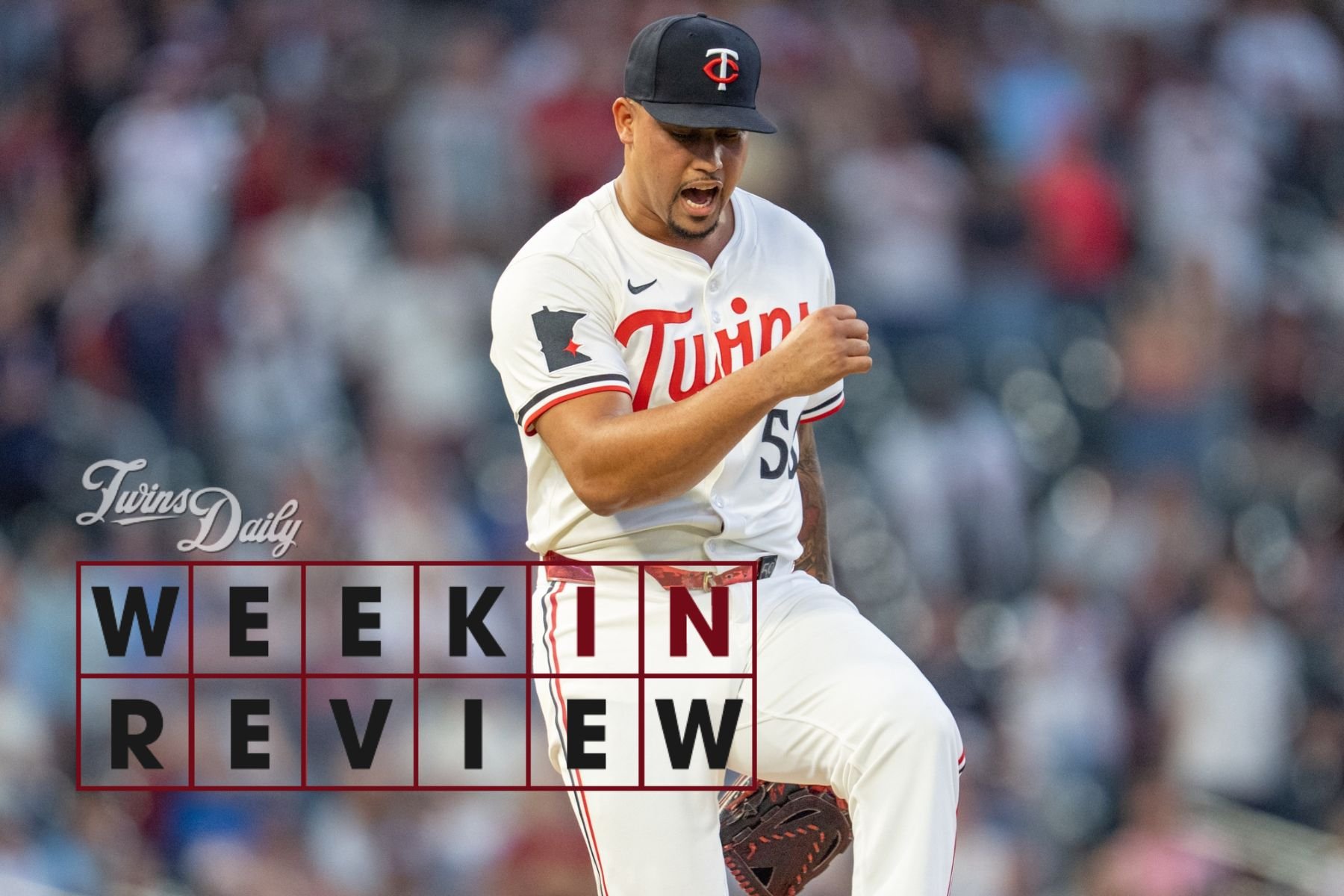 The Weekly Nutshell: As they stumbled through the first month of the season, the Twins had their occasional moments of positivity and progress, but those fleeting bursts of momentum never seemed to sustain. Finally, it is now happening here in May. After winning a couple of close games to take the series in Fenway last weekend, Minnesota returned home and played phenomenal baseball in a 6-0 week that saw them sweep the Orioles and Giants while moving above the .500 mark for the first time all season. The Twins are 15-6 at Target Field and among MLB teams, only the Royals have more wins at their home ballpark. (Now that's how you get the fans back.) From the slow start to the streaky sprint back to relevance, this season is so far bearing plenty of resemblance to the last. But one area where the 2025 Twins are looking to differentiate is by proving they can succeed against bad teams and good teams alike. While their sweeping of a beleaguered Baltimore club certainly fits into the former category, Minnesota's eight-game winning streak also includes five wins against quality opponents in the Red Sox and Giants. When you pitch extremely well and you score enough runs, you're going to win a lot of games, no matter who you're playing. We're seeing it. Weekly Snapshot: Mon, 5/5 through Sun, 5/11 *** Record Last Week: 6-0 (Overall: 21-20) Run Differential Last Week: +18 (Overall: +19) Standing: 4th Place in AL Central (5.0 GB) Last Week's Game Results: Game 36 | MIN 9, BAL 1: Offense Clicks Against Shoddy Orioles Staff Buxton, Correa: 5-8, 2 HR, 7 RBI Game 37 | MIN 5, BAL 2: Twins Take Series Behind Bullpen, Bombs Buxton, Bader: 2 HR, 5 RBIs Game 38 | MIN 5, BAL 2: Lee's Clutch Hit Lifts Twins to Sweep Over O's Lee: Go-ahead 2-R double in 8th inning Game 39 | MIN 3, SF 1: Paddack Near-Perfect in Sixth Straight Victory Paddack: 7.1 IP, 3 H, 1 ER, 6 K Game 40 | MIN 2, SF 1: Larnach's Homer Is Enough for Ryan, Bullpen Twins pitching: 9 IP, 1 ER, 4 H, 0 BB, 9 K Game 41 | MIN 7, SF 6 (10): Clutch Moments Dictate Another Tightrope Win Keirsey Jr.: Walk-off single in 10th IF YOU'D RATHER LISTEN TO THE WEEK IN REVIEW THAN READ IT, YOU CAN GET IT IN AUDIO FORM! FIND THE LATEST EPISODE ON OUR PODCAST PAGE, AS WELL AS ON APPLE AND SPOTIFY. SUBSCRIBE TO OUR CHANNELS SO YOU DON'T MISS OUT! NEWS & NOTES The Twins opened the week by welcoming back a couple of key reinforcements from the injured list: Willi Castro, out since mid-April with on oblique injury, and Royce Lewis, out since mid-March with a hamstring injury. The two were back in the lineup for Tuesday's series opener against Baltimore, starting at DH and second base respectively. Optioned to Triple-A to make room for Lewis and Castro were Mickey Gasper and Edouard Julien. While Gasper was a straightforward choice, the decision to send Julien down tells us a couple things: First, the Twins are finding Jonah Bride and Kody Clemens useful enough as (essentially) early-season waiver claims, and second, they are really down on Julien. Which is understandable given the run he has had. Back down at Triple-A, Julien went 3-for-23 with eight strikeouts in his first week at St. Paul. Gasper was much more successful, going 11-for-23 with four home runs to lift his Triple-A OPS this year to 1.574. Meanwhile, José Miranda was activated from the IL by the Saints over the weekend. He went 0-for-6 in his first two games back. HIGHLIGHTS The vision for making this 2025 Minnesota Twins team a true contender was mainly predicated upon on a pitching staff good enough to carry the freight. We've been seeing exactly that. Although the offense has come to life, and that's been refreshing, the arms are leading this race: Minnesota is receiving high-quality performances from starters day after day, and the bullpen has shaken free of its situational troubles to solidify itself as an overpowering force at Rocco Baldelli's disposal. Over the course of their current eight-game winning streak, Twins pitchers have posted a 2.22 ERA with just four home runs allowed. Among the past week's many highlights on the mound: Pablo López struck out 11 over five innings of one-run ball to set a tone in the sweep over Baltimore. He induced 17 swings and misses in the start, his highest total since September 10th of last year. López was a little less sharp in his second start on Sunday (6 IP, 4 ER) but he still gave the team a good chance to win, which they did in extra innings. Bailey Ober stepped in unexpectedly on Thursday, after Joe Ryan's illness forced him to delay his planned start. Ober held Baltimore to one earned run over five frames to lead the charge in a sweep-clinching victory over the hapless O's. He now has a 1.98 ERA since his first start of the season. Ryan returned from said illness on Saturday and did his usual thing, with just two hits and one run allowed over six ultra-efficient innings. On the year, he has a more than 10-to-1 K/BB ratio, and his 2.74 ERA ranks as 13th-best in the American League. Most impressively, Chris Paddack delivered his strongest effort of the year on Friday, carrying a perfect game into the sixth inning and ultimately lasting into the eighth with one run allowed. Facing a very capable lineup, Paddack looked excellent, and his deep outing also served to alleviate a relief corps that threw 12 scoreless innings over the previous three days. On that note: As good as the starting pitching has been, the rotation has been outshined by a bullpen that is really beginning to meet the hype. Twins relievers allowed one single run over 21 innings, giving up only 14 hits and four walks while striking out 25. The Minnesota bullpen was 4-for-4 on save opportunities (three for Jhoan Durán, one for Danny Coulombe) and locked down every narrow lead without fail. I've harped on this frequently, but it's kind of an amazing stat: Dating back to last August, the Twins had lost 32 consecutive games in which they scored three or fewer runs, up until they won them back-to-back on Friday and Saturday. The bullpen played an integral role in making that happen, and hopefully they can keep it going because it's how this team will be able to stay in a winning groove. They've got to overcome in low-scoring affairs. On the offensive side, the lineup shows signs of beginning to click from top to bottom. The Twins have improved their situational hitting and are finding ways to come up big when it counts. Their run-scoring still hasn't necessarily been explosive for the most part, but the bats are doing what they need to in support of this outstanding pitching staff. Yet again Byron Buxton was the star of the show. With each passing week the center fielder seems to look more comfortable, more locked in at the plate, more sure of himself while running. Buxton catalyzed victories on Tuesday and Wednesday with seven RBIs; on the week he hit for the cycle with an extra home run, while also tallying his eighth steal. He has reliably been in center field every day. Trevor Larnach, now regularly appearing in the two-hole against right-handed pitching, is finding his groove as a key difference-maker. He was 8-for-25, mixing in a couple of big home runs. Larnach has an .837 OPS with six homers and 16 RBIs in 23 games since Matt Wallner went down with his hamstring injury in mid-April, and that is what we call rising to the occasion. Finally it should be noted that all three of the front office's major offseason acquisitions have been nothing short of brilliant up to this point, and they all featured in the past week. Coulombe picked up his first save and struck out eight over four shutout innings. He still has yet to allow a run through 18 appearances. Harrison Bader went 5-for-11 with three walks and another home run. He's been simply unbelievable. Ty France chipped in seven hits and has been providing big returns on his $1 million deal. They were given very little to work with, but at this point it's looking like the front office turned lemons into lemonade in free agency, and the impact has been crucial in the first quarter of the season. LOWLIGHTS Over the years, we've grown very accustomed to Royce Lewis returning from the injured list and immediately lighting the world on fire. It's never seemed to really matter how much time he missed or how he looked on his rehab assignments; once he was back on the big-league stage, Royce was gonna Royce. He was just a freak like that. This latest re-entry has been a different story. Lewis went hitless through his first 15 at-bats before finally picking up a couple of singles on Sunday, and he looks noticeably out of whack at the plate. His swing is a mechanical mess, with his upper and lower halves on two different pages. Lewis doesn't look comfortable reading or reacting to pitches, and physically his tentativeness is plain to see. He's more or less jogging the bases and already we've seen him grab at his left hamstring area at least once in the batter's box. All of what we are seeing unfortunately jibes with reports that came over from St. Paul, where Lewis went 3-for-23 with six strikeouts and no walks on his rehab, with his form looking rough. Upon being activated, Lewis admitted to reporters that he "might not even be at 100 percent," and that matches up to what we've seen. If the Twins decided they might as well have him work out the kinks at the big-league level versus the minors, hopefully running into a homer or two along the way, I'm okay with that. The greater concern is that what we are seeing isn't symptomatic simply of missed time and rust, but rather that something is more deeply amiss with the 25-year-old, who now has four extra-base hits (all doubles) in 117 plate appearances since his last home run on September 1st of 2024. This past week, with their pitchers leading the way and a few hitters elsewhere stepping up, the Twins were able to rattle off wins despite Lewis's lack of presence, but if they're going to hit their stride over the course of this season, they will need him to remember who he is. The same kinda goes for Willi Castro, technically Minnesota's reigning team MVP, who has yet to show any semblance of his 2024 impact. Castro was 4-for-20 in his first week back with no extra-base hits, two walks and seven strikeouts. Overall on the season he's been sub-replacement level with poor defense and a .613 OPS. TRENDING STORYLINE Keep on winning! Basically the entire AL Central has been scorching hot, which has prevented the Twins from making up much ground at all during this 14-5 run, but they can only control what they can control as they attempt to battle back into the mix. As of now, the division boasts four of the eight AL teams with 21 or more wins, but I'm just glad to be able to call the Twins one of them. Summer is about to get underway in earnest, and the Minnesota Twins are back in business. LOOKING AHEAD The Twins will get another shot at the same Baltimore Orioles team that they flattened at Target Field, this time on the road. They'll hope for a similar result in Camden following Monday's off day. From there the Twins head to Milwaukee for a border battle against the beatable Brewers. TUESDAY, MAY 13: TWINS @ ORIOLES — RHP Simeon Woods Richardson v. LHP Cade Povich WEDNESDAY, MAY 14: TWINS @ ORIOLES — RHP Bailey Ober v. RHP Dean Kremer THURSDAY, MAY 15: TWINS @ ORIOLES — RHP Chris Paddack v. RHP Tomoyuki Sugano FRIDAY, MAY 16: TWINS @ BREWERS — RHP Joe Ryan v. RHP Tobias Myers SATURDAY, MAY 17: TWINS @ BREWERS — RHP Pablo Lopez v. TBD SUNDAY, MAY 18: TWINS @ BREWERS — RHP Simeon Woods Richardson v. RHP Freddy Peralta
- 30 comments
-
- 10
-
-
- jhoan duran
- byron buxton
- (and 2 more)
-
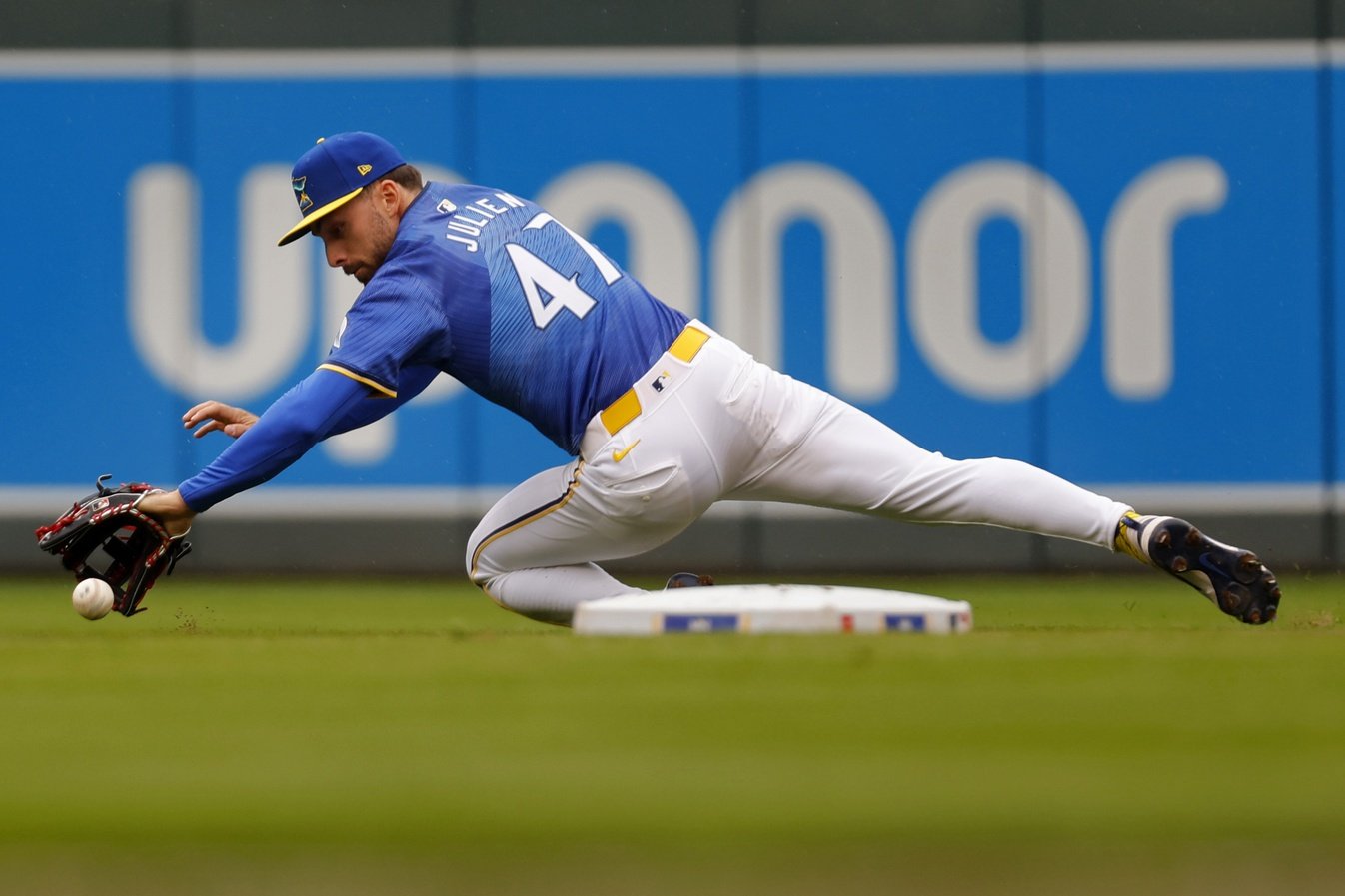 Nothing about Edouard Julien’s background screams “big-leaguer.” He grew up in Quebec, far from the traditional pipelines of American baseball. He arrived at Auburn University as a teenager who barely spoke English. He wasn’t a showcase star or a bonus baby. When the Twins drafted him in the 18th round in 2019, he was a curiosity at best — a flier on a guy with an odd profile and a disciplined eye. But that’s what made Julien different. He didn’t beat opponents with speed, power, or dazzling defense. He beat them with his brain — one of the most discerning approaches at the plate in professional baseball. He outwaited pitchers. He turned chaos into clarity. And it worked. He raked at every level of the minors. He became a surprise standout on Canada’s WBC squad. And in 2023, he debuted with the Twins and immediately made an impact, slashing .263/.381/.459 with the lowest chase rate of anyone in baseball. Julien didn’t look like a star, but for a while, he was one. That’s the kind of magic baseball allows, at least for a time. But this game inevitably seems to catch up. By the start of 2024, pitchers had a plan. They stopped challenging him in the zone. They exploited his passivity, knowing he’d rather walk than swing at a borderline pitch. They pounded him inside and spammed offspeed pitches. And it worked. His numbers cratered. The book was out. Meanwhile, the margins started to show. Julien’s instincts — so crucial in a game built on split-second decisions — have too often betrayed him. On the bases. In the field. In moments where anticipation and awareness matter more than mechanics. His defense at second base became an unacceptable liability. His mistakes multiplied. What had once been overlooked became impossible to ignore. On Monday, the Twins made the call: Julien was optioned back to Triple-A. It was not shocking, but it was still jarring. Because Edouard Julien is not a failure. He is a reminder. Of how impossible this game can feel. Of how much intelligence, perseverance, and resilience it takes to make it to the highest level — and how even that might not be enough to stay. Julien climbed a mountain most of us can’t even see. And the higher you go in this sport, the more ruthless the air becomes. We shouldn’t forget what he accomplished. Few reach the majors at all. Fewer still thrive, however briefly. Julien defied the odds, and maybe he will again. But right now, at age 26, it feels like the game has caught up. Baseball always does.
 -
Image courtesy of © Bruce Kluckhohn-Imagn Images Nothing about Edouard Julien’s background screams “big-leaguer.” He grew up in Quebec, far from the traditional pipelines of American baseball. He arrived at Auburn University as a teenager who barely spoke English. He wasn’t a showcase star or a bonus baby. When the Twins drafted him in the 18th round in 2019, he was a curiosity at best — a flier on a guy with an odd profile and a disciplined eye. But that’s what made Julien different. He didn’t beat opponents with speed, power, or dazzling defense. He beat them with his brain — one of the most discerning approaches at the plate in professional baseball. He outwaited pitchers. He turned chaos into clarity. And it worked. He raked at every level of the minors. He became a surprise standout on Canada’s WBC squad. And in 2023, he debuted with the Twins and immediately made an impact, slashing .263/.381/.459 with the lowest chase rate of anyone in baseball. Julien didn’t look like a star, but for a while, he was one. That’s the kind of magic baseball allows, at least for a time. But this game inevitably seems to catch up. By the start of 2024, pitchers had a plan. They stopped challenging him in the zone. They exploited his passivity, knowing he’d rather walk than swing at a borderline pitch. They pounded him inside and spammed offspeed pitches. And it worked. His numbers cratered. The book was out. Meanwhile, the margins started to show. Julien’s instincts — so crucial in a game built on split-second decisions — have too often betrayed him. On the bases. In the field. In moments where anticipation and awareness matter more than mechanics. His defense at second base became an unacceptable liability. His mistakes multiplied. What had once been overlooked became impossible to ignore. On Monday, the Twins made the call: Julien was optioned back to Triple-A. It was not shocking, but it was still jarring. Because Edouard Julien is not a failure. He is a reminder. Of how impossible this game can feel. Of how much intelligence, perseverance, and resilience it takes to make it to the highest level — and how even that might not be enough to stay. Julien climbed a mountain most of us can’t even see. And the higher you go in this sport, the more ruthless the air becomes. We shouldn’t forget what he accomplished. Few reach the majors at all. Fewer still thrive, however briefly. Julien defied the odds, and maybe he will again. But right now, at age 26, it feels like the game has caught up. Baseball always does. View full article
-
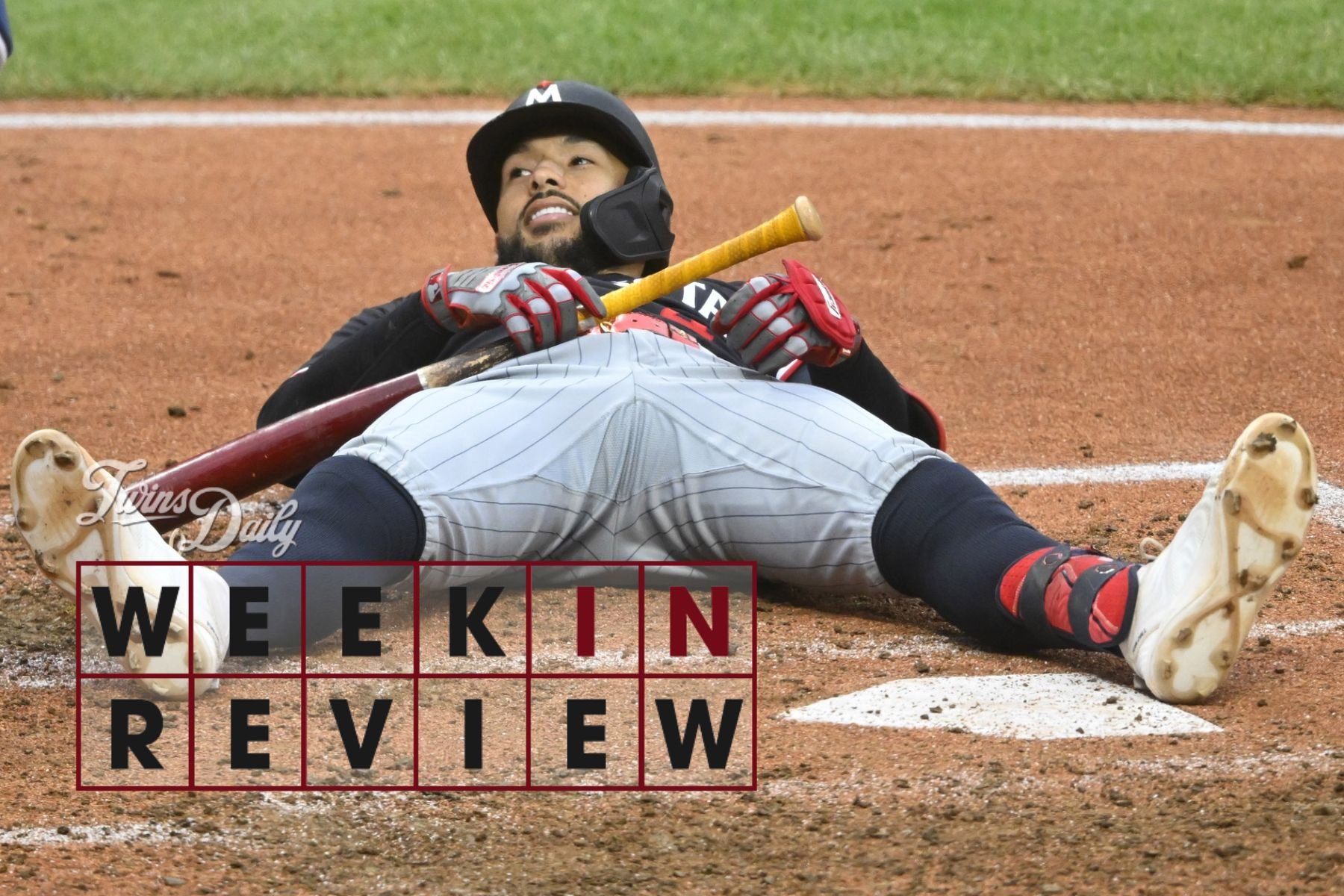 The Weekly Nutshell: Coming off a strong home stand against sub-par competition, the Twins opened their road trip by keeping the good times rolling in Cleveland with a blowout victory on Monday. Then, much like every other modest burst of momentum they've stumbled into this year, this one evaporated almost within the blink of an eye. For the final three games of the Guardians series, the Twins looked very much like the same ineffective, bottom-tier club that collapsed late last year and bellyflopped out of the gates this year. After taking their drubbing in the season tip-off on Monday, Cleveland right went back to outplaying and out-executing Minnesota at every turn, as they did throughout the 2024 campaign. Following that 11-run outburst, the Twins scored six runs over the remaining three games in the series, rarely mounting much of a threat as a depleted Guardians staff carved through their lineup over and over, on the way to yet another series victory over their subservient rivals. Friday brought another sleepy, rainy loss in Boston, the fourth straight for Minnesota to completely erase gains from their preceding winning streak, while sinking them further in the Central standings. On Saturday and Sunday, though, the Twins managed to steady themselves by doing something that has eluded them: they won back-to-back one-run games, improving on their 1-6 record coming into the weekend. Another mostly deflating week for the Twins ended on a light note of redemption, which has happened a few times. Will they be able to channel this one into something bigger? So far, that has not happened. Here's a recap of the week's key events as we head fully into May. Weekly Snapshot: Mon, 4/28 through Sun, 5/4 *** Record Last Week: 3-4 (Overall: 15-20) Run Differential Last Week: +3 (Overall: +1) Standing: 4th Place in AL Central (7.0 GB) Last Week's Game Results: Game 29 | MIN 11, CLE1: Twins Fire Opening Salvo with Blowout in Cleveland Offense: 17 H, 8-14 RISP Game 30 | CLE 2, MIN 1: Delayed Start and Sudden Finish as Guards Walk It Off Varland: Allowed game-winning HR Game 31 | CLE 4, MIN 2: Bullpen, Bats, Defense Let Twins Down Again in Ugly 7th Offense: 13 K, 1 XBH Game 32 | CLE 4, MIN 3: Another Walk-Off Loss in Cleveland Restores Bleak Vibes Topa: Allowed walk-off single Game 33 | BOS 6, MIN 1: Lineup No-Shows, Relievers Unravel After Ryan's Exit Bullpen: 9 H, 5 ER in 2 IP Game 34 | MIN 4, BOS 3: Twins Fend Off Late Scares, End Skid Behind Ober Ober: 6 IP, 1 ER, 6 K Game 35 | MIN 5, BOS 4: Timely Late Hitting Fuels Another One-Run Victory Jeffers, Bader: Game-tying and go-ahead RBIs IF YOU'D RATHER LISTEN TO THE WEEK IN REVIEW THAN READ IT, YOU CAN GET IT IN AUDIO FORM! FIND THE LATEST EPISODE ON OUR PODCAST PAGE, AS WELL AS ON APPLE AND SPOTIFY. SUBSCRIBE TO OUR CHANNELS SO YOU DON'T MISS OUT! NEWS & NOTES The date of Willi Castro's eligibility to return from the injured list came and went on Thursday, and as of week's end, the utilityman still had not been activated from his injured list stint. Count this among the mounting misses for the Twins and their decision-makers, who clearly misread the severity of Castro's oblique strain as they delayed an IL placement and initially hinted he could be back within days. (injured april 16th) Pretty low on this team's list of offenses, especially given the quality of replacements that would replace (and have replaced) Castro, but still, come on. Things are already bad enough without needlessly forcing yourself to play shorthanded. It does sound like Castro could return on Tuesday, and the Twins will certainly welcome him, even though he didn't look all that good before getting hurt. Also in line for a potential Tuesday return: Royce Lewis, who put in four more games with the rainout-sieged Saints as part of his rehab assignment. Lewis had one hit and no walks in 17 plate appearances, for whatever that's worth, but we've seen how quickly he can kick into gear following these extended injury layoffs. The Twins would die for a classic Royce heater right about now. In a final bit of roster news, the club re-signed right-hander Matt Canterino to a two-year minor-league contract following his release the previous week. Canterino has a long road ahead of him as he recovers from another arm surgery, but it's understood that if he ever makes it the majors he can be a force. I'm glad he's continuing his journey with the Twins. HIGHLIGHTS It doesn't do the Twins a whole of good when the offense can't score runs and the bullpen crumbles in close-and-late situations, but the starting rotation continues to look very good for Minnesota, delivering on its billing as a core team strength and formidable point of advantage. Bailey Ober was flat-out brilliant on Monday in Cleveland, notching his third straight win with 7 ⅔ innings of one-run ball, and he followed that with another crisp outing in Boston on Saturday, holding the Red Sox to a one score over six frames. His ERA on the season is down to 3.72, which is incredible after giving up eight earned runs in his first turn. Joe Ryan was again excellent in his lone start of the week, allowing one run in six innings against Cleveland. He struck out eight and walked one, pushing his K/BB ratio for the season to 47-to-8. His K-BB% is fifth-best in baseball. Pablo López also looked very good on the mound in his second start off the IL, allowing two runs over 6 ⅓ in Cleveland; he has a 2.25 ERA and 2.56 FIP through five starts. Minnesota's three-headed rotation monster has been pretty much as advertised. They lead the staff in fWAR and are anchoring an SP unit that has posted an AL-leading 2.48 ERA since April 7th. During that span the Twins have gone 12-14. I hesitate to say that Kody Clemens starting three different times was a highlight – more a symptom of the roster's direly thinned-out state – and his performance was not great: 2-for-12 with three strikeouts and zero walks. However, one of those hits was a pretty big one: a home run at Fenway, in front of his dad Roger Clemens. Cool moment for Kody and also a key one for the Twins, helping them pick up a pivotal win against Boston. In another generally underwhelming week for the offense, there were a few impressive performers worth calling out. Harrison Bader was 9-for-22 with a couple walks and more good defense. Ty France tallied nine hits, including a homer and a pair of doubles. Byron Buxton went 10-for-29 with a home run and another steal, starting all seven games in center field. Buxton has also begun to rein in the sky-high strikeout rate, which I take as a promising sign. Speaking of promising signs, we observed them from Ryan Jeffers in mid-April and now they are coming to fruition. The catcher enjoyed an excellent series in Boston, going 5-for-12 with a homer, a double, and on Sunday, a game-tying two-run single in the seventh. He's got his OPS up near .800 and is re-establishing himself as one of the best-hitting catchers in the game. Big. LOWLIGHTS Shoddy defensive play that looks out-of-place on a major-league baseball field was once again a prevailing narrative. Twins fielders continued to fumble makeable plays. Opposing baserunners swiped bags at will, going 9-for-11 on steal attempts. Lazy fly balls falling between defenders, grounders bouncing between confused middle infielders, wayward pickoff throws ... This road trip was another grab bag of blunders, bad decisions, botched execution, and runs given away that the offense could usually not get back. The seventh inning of Tuesday's loss, which served as a clear turning point in the Guardians series, was a a banner example of Minnesota's porous defense letting them down. From a scoreless tie, Cleveland was able to jump to a four-run lead on yet another throwing error to first from a Twins pitcher (López), multiple stolen bases, a wild pitch, and eventually a back-breaking three-run homer off Brock Stewart. Oh, but not before Jeffers managed to nail Stewart in his elbow on an errant throw down to second base during one of those steals. (Thankfully Stewart was okay.) Cleveland capitalized on Minnesota's mistakes and used them as a launching point, winning this game and the next two to take the series and improve to 13-4 against the Twins since the start of last year. The Boston series kicked off with more disheartening displays of self-inflicted disaster. Edouard Julien took center stage in Friday night's debacle, first getting tagged out after oversliding second on an easy steal to end the top of the seventh, then missing a minimally challenging play on a ground ball to his left in the bottom half – technically not ruled an error – that allowed two runs to score with two outs. In a flash, the score went from 1-1 to 6-1 and the utterly unresilient Twins were buried once again. Julien, who was also 2-for-16 at the plate for the week, was not seen again for the rest of the series. I have little doubt that the Twins would love to send Julien to the minors. He looks even worse than he did last year, and confidence in his major-league future is plummeting. Unfortunately, the front office's hands are tied to an extent by injuries and poor roster depth. I'm sure they would also prefer not to be using Mickey Gasper at DH every other game, or starting Clemens at three different positions (2B, 3B, and RF) in the same week, but options are beyond limited with Lewis, Castro, José Miranda and Luke Keaschall all down. While fringy contributors are obviously playing a role, Carlos Correa remains the face of the offense's failures, coming off another underwhelming week where he went 7-for-30 with a double and one RBI. Correa struck out eight times with no walks, so even the plate approach has ceased to be a source of positivity. His small offensive flurry against the Angels last weekend now looks like less of a breakthrough and more of a blip versus a bad team. The Twins offense has been horrible, and clearly the prime culprit in this endless loop of losing, but it's kind of incredible how unable to sync up the pitching and hitting have been. The Twins have scored less than four runs in almost half their games, which is brutal, but given the strength of their staff, you'd think they would be able to win a few of those low-scoring contests here and there. Nope. After dropping three more on the road trip, the Twins are now 0-17 this year in games where they've scored three or fewer runs, and have lost 32 straight dating back to last year. By comparison, Cleveland won five such games in the month of April alone. That insight really encapsulates the contrast between these two teams, especially in head-to-head action: The Guardians buckle down and step up in key moments to edge their opponents in tight games. They overcome their offensive deficiencies by getting things right on the margins and performing situationally. The Twins do not. Minnesota's altogether disappointing bullpen let them down again on multiple occasions last week. In Cleveland on Tuesday, Louis Varland entered in the ninth of a tie game and quickly gave it away on a center-cut changeup that Kyle Manzardo easily swatted over the wall for a walk-off homer. Stewart looked extremely rough for the week, coughing up four earned runs in his three appearances, all of them costly in close games. The increasingly unusable Jorge Alcalá gave up three runs on five hits in one inning against the Red Sox, and you have to wonder if he's on his way out when Michael Tonkin gets activated – perhaps in the coming week. The bullpen needs to lock it down. That's a given. But even in that event, the Twins aren't going to dig out of this hole unless they can find some semblance of offensive consistency and identity. Right now it just feels very difficult to figure out where that's gonna come from. Yes, Lewis should be back this week. Will he stay healthy and hit? Our most recent evidence sadly says no. Matt Wallner and Keaschall are out for the next month at least. Even if you wanted to get creative and draw aggressively from within the system: top prospect Walker Jenkins is down indefinitely with a mysterious ankle injury, and No. 2 prospect Emmanuel Rodriguez is once again battling thumb issues. “Despite our struggles right now, I still have a ton of belief in the group that’s in that room," Derek Falvey told media in Boston over the weekend. Well yeah ... what choice does he have? TRENDING STORYLINE Can the Twins make the great work from their rotation meaningful by leveraging it into a sprint toward contention, or is the success of Minnesota's top three starters more likely to lead to one departing this summer? I mentioned earlier that the Twins lead the AL (and rank second in baseball) in starting pitcher ERA since April 7th, and yet have managed to play sub-.500 ball in spite of it. Here are the other teams ranking in the top five for rotation ERA over the same span, and their records during (entering play on Sunday): New York Mets (2.29): 16-8 Minnesota Twins (2.37): 11-14 Seattle Mariners (2.85): 17-5 Chicago Cubs (3.04): 14-8 Detroit Tigers (3.05): 16-9 Each of these clubs is in first place. The numbers above might not be surprising but they emphasize a fundamental truth of baseball: starting pitching wins. The Twins have been almost astonishing in their ability to defy this general rule, but it's something that gives me a glimmer of hope that they could get on a run and rattle off some wins to regain relevance. They just need the lineup and bullpen to stop completely undoing all of the starters' good work. Like we saw on Saturday and Sunday. If that does not happen and things continue to devolve, then the exceptional performance from Minnesota's rotation takes on a different significance. In the event of a trade deadline shakeup that involves moving major pieces to reshape the Twins roster, there is no more obvious path than trading one or more of the team's rotation-fronting trio. We just established why high-quality starters are so immensely valuable for contending clubs, and Minnesota has three – all under 30, controllable for two more years, and showcasing All-Star ability. One way or another, I fully expect at least one of López, Ryan or Ober to be starting in the playoffs this year. I hope it's with the Twins, but that flicker of hope is fading. LOOKING AHEAD The Twins have a day off on Monday before they return to Target Field for another home stand. First they'll face a Baltimore team that has generally had their number in recent years, but is currently in last place in the rough-and-tumble AL East. Next up: the Giants, who are off to a very good start thanks largely due their outstanding pitching. Both of these teams, like Cleveland and Boston, were key figures in Minnesota's 2024 collapse. It was in San Francisco ahead of the All-Star break that Correa was scratched and Miranda placed on IL with heel and back injuries, setting the stage for their second-half disappearances. The Twins' season came to an end with a lifeless three-game sweeping at home from the Orioles. This past week didn't offer a ton in terms of exorcising demons and disproving doubters. Maybe this next one will be different? TUESDAY, MAY 6: ORIOLES @ TWINS — LHP Cade Povich v. RHP Pablo Lopez WEDNESDAY, MAY 7: ORIOLES @ TWINS — RHP Dean Kremer v. RHP Simeon Woods Richardson THURSDAY, MAY 8: ORIOLES @ TWINS — RHP Tomoyuki Sugano v. RHP Joe Ryan FRIDAY, MAY 9: GIANTS @ TWINS — RHP Jordan Hicks v. RHP Bailey Ober SATURDAY, MAY 10: GIANTS @ TWINS — RHP Logan Webb v. RHP Chris Paddack SUNDAY, MAY 11: GIANTS @ TWINS — RHP Landen Roupp v. RHP Pablo Lopez
- 26 comments
-
- 2
-
-
- carlos correa
- kody clemens
- (and 2 more)
-
Image courtesy of David Richard-Imagn Images The Weekly Nutshell: Coming off a strong home stand against sub-par competition, the Twins opened their road trip by keeping the good times rolling in Cleveland with a blowout victory on Monday. Then, much like every other modest burst of momentum they've stumbled into this year, this one evaporated almost within the blink of an eye. For the final three games of the Guardians series, the Twins looked very much like the same ineffective, bottom-tier club that collapsed late last year and bellyflopped out of the gates this year. After taking their drubbing in the season tip-off on Monday, Cleveland right went back to outplaying and out-executing Minnesota at every turn, as they did throughout the 2024 campaign. Following that 11-run outburst, the Twins scored six runs over the remaining three games in the series, rarely mounting much of a threat as a depleted Guardians staff carved through their lineup over and over, on the way to yet another series victory over their subservient rivals. Friday brought another sleepy, rainy loss in Boston, the fourth straight for Minnesota to completely erase gains from their preceding winning streak, while sinking them further in the Central standings. On Saturday and Sunday, though, the Twins managed to steady themselves by doing something that has eluded them: they won back-to-back one-run games, improving on their 1-6 record coming into the weekend. Another mostly deflating week for the Twins ended on a light note of redemption, which has happened a few times. Will they be able to channel this one into something bigger? So far, that has not happened. Here's a recap of the week's key events as we head fully into May. Weekly Snapshot: Mon, 4/28 through Sun, 5/4 *** Record Last Week: 3-4 (Overall: 15-20) Run Differential Last Week: +3 (Overall: +1) Standing: 4th Place in AL Central (7.0 GB) Last Week's Game Results: Game 29 | MIN 11, CLE1: Twins Fire Opening Salvo with Blowout in Cleveland Offense: 17 H, 8-14 RISP Game 30 | CLE 2, MIN 1: Delayed Start and Sudden Finish as Guards Walk It Off Varland: Allowed game-winning HR Game 31 | CLE 4, MIN 2: Bullpen, Bats, Defense Let Twins Down Again in Ugly 7th Offense: 13 K, 1 XBH Game 32 | CLE 4, MIN 3: Another Walk-Off Loss in Cleveland Restores Bleak Vibes Topa: Allowed walk-off single Game 33 | BOS 6, MIN 1: Lineup No-Shows, Relievers Unravel After Ryan's Exit Bullpen: 9 H, 5 ER in 2 IP Game 34 | MIN 4, BOS 3: Twins Fend Off Late Scares, End Skid Behind Ober Ober: 6 IP, 1 ER, 6 K Game 35 | MIN 5, BOS 4: Timely Late Hitting Fuels Another One-Run Victory Jeffers, Bader: Game-tying and go-ahead RBIs IF YOU'D RATHER LISTEN TO THE WEEK IN REVIEW THAN READ IT, YOU CAN GET IT IN AUDIO FORM! FIND THE LATEST EPISODE ON OUR PODCAST PAGE, AS WELL AS ON APPLE AND SPOTIFY. SUBSCRIBE TO OUR CHANNELS SO YOU DON'T MISS OUT! NEWS & NOTES The date of Willi Castro's eligibility to return from the injured list came and went on Thursday, and as of week's end, the utilityman still had not been activated from his injured list stint. Count this among the mounting misses for the Twins and their decision-makers, who clearly misread the severity of Castro's oblique strain as they delayed an IL placement and initially hinted he could be back within days. (injured april 16th) Pretty low on this team's list of offenses, especially given the quality of replacements that would replace (and have replaced) Castro, but still, come on. Things are already bad enough without needlessly forcing yourself to play shorthanded. It does sound like Castro could return on Tuesday, and the Twins will certainly welcome him, even though he didn't look all that good before getting hurt. Also in line for a potential Tuesday return: Royce Lewis, who put in four more games with the rainout-sieged Saints as part of his rehab assignment. Lewis had one hit and no walks in 17 plate appearances, for whatever that's worth, but we've seen how quickly he can kick into gear following these extended injury layoffs. The Twins would die for a classic Royce heater right about now. In a final bit of roster news, the club re-signed right-hander Matt Canterino to a two-year minor-league contract following his release the previous week. Canterino has a long road ahead of him as he recovers from another arm surgery, but it's understood that if he ever makes it the majors he can be a force. I'm glad he's continuing his journey with the Twins. HIGHLIGHTS It doesn't do the Twins a whole of good when the offense can't score runs and the bullpen crumbles in close-and-late situations, but the starting rotation continues to look very good for Minnesota, delivering on its billing as a core team strength and formidable point of advantage. Bailey Ober was flat-out brilliant on Monday in Cleveland, notching his third straight win with 7 ⅔ innings of one-run ball, and he followed that with another crisp outing in Boston on Saturday, holding the Red Sox to a one score over six frames. His ERA on the season is down to 3.72, which is incredible after giving up eight earned runs in his first turn. Joe Ryan was again excellent in his lone start of the week, allowing one run in six innings against Cleveland. He struck out eight and walked one, pushing his K/BB ratio for the season to 47-to-8. His K-BB% is fifth-best in baseball. Pablo López also looked very good on the mound in his second start off the IL, allowing two runs over 6 ⅓ in Cleveland; he has a 2.25 ERA and 2.56 FIP through five starts. Minnesota's three-headed rotation monster has been pretty much as advertised. They lead the staff in fWAR and are anchoring an SP unit that has posted an AL-leading 2.48 ERA since April 7th. During that span the Twins have gone 12-14. I hesitate to say that Kody Clemens starting three different times was a highlight – more a symptom of the roster's direly thinned-out state – and his performance was not great: 2-for-12 with three strikeouts and zero walks. However, one of those hits was a pretty big one: a home run at Fenway, in front of his dad Roger Clemens. Cool moment for Kody and also a key one for the Twins, helping them pick up a pivotal win against Boston. In another generally underwhelming week for the offense, there were a few impressive performers worth calling out. Harrison Bader was 9-for-22 with a couple walks and more good defense. Ty France tallied nine hits, including a homer and a pair of doubles. Byron Buxton went 10-for-29 with a home run and another steal, starting all seven games in center field. Buxton has also begun to rein in the sky-high strikeout rate, which I take as a promising sign. Speaking of promising signs, we observed them from Ryan Jeffers in mid-April and now they are coming to fruition. The catcher enjoyed an excellent series in Boston, going 5-for-12 with a homer, a double, and on Sunday, a game-tying two-run single in the seventh. He's got his OPS up near .800 and is re-establishing himself as one of the best-hitting catchers in the game. Big. LOWLIGHTS Shoddy defensive play that looks out-of-place on a major-league baseball field was once again a prevailing narrative. Twins fielders continued to fumble makeable plays. Opposing baserunners swiped bags at will, going 9-for-11 on steal attempts. Lazy fly balls falling between defenders, grounders bouncing between confused middle infielders, wayward pickoff throws ... This road trip was another grab bag of blunders, bad decisions, botched execution, and runs given away that the offense could usually not get back. The seventh inning of Tuesday's loss, which served as a clear turning point in the Guardians series, was a a banner example of Minnesota's porous defense letting them down. From a scoreless tie, Cleveland was able to jump to a four-run lead on yet another throwing error to first from a Twins pitcher (López), multiple stolen bases, a wild pitch, and eventually a back-breaking three-run homer off Brock Stewart. Oh, but not before Jeffers managed to nail Stewart in his elbow on an errant throw down to second base during one of those steals. (Thankfully Stewart was okay.) Cleveland capitalized on Minnesota's mistakes and used them as a launching point, winning this game and the next two to take the series and improve to 13-4 against the Twins since the start of last year. The Boston series kicked off with more disheartening displays of self-inflicted disaster. Edouard Julien took center stage in Friday night's debacle, first getting tagged out after oversliding second on an easy steal to end the top of the seventh, then missing a minimally challenging play on a ground ball to his left in the bottom half – technically not ruled an error – that allowed two runs to score with two outs. In a flash, the score went from 1-1 to 6-1 and the utterly unresilient Twins were buried once again. Julien, who was also 2-for-16 at the plate for the week, was not seen again for the rest of the series. I have little doubt that the Twins would love to send Julien to the minors. He looks even worse than he did last year, and confidence in his major-league future is plummeting. Unfortunately, the front office's hands are tied to an extent by injuries and poor roster depth. I'm sure they would also prefer not to be using Mickey Gasper at DH every other game, or starting Clemens at three different positions (2B, 3B, and RF) in the same week, but options are beyond limited with Lewis, Castro, José Miranda and Luke Keaschall all down. While fringy contributors are obviously playing a role, Carlos Correa remains the face of the offense's failures, coming off another underwhelming week where he went 7-for-30 with a double and one RBI. Correa struck out eight times with no walks, so even the plate approach has ceased to be a source of positivity. His small offensive flurry against the Angels last weekend now looks like less of a breakthrough and more of a blip versus a bad team. The Twins offense has been horrible, and clearly the prime culprit in this endless loop of losing, but it's kind of incredible how unable to sync up the pitching and hitting have been. The Twins have scored less than four runs in almost half their games, which is brutal, but given the strength of their staff, you'd think they would be able to win a few of those low-scoring contests here and there. Nope. After dropping three more on the road trip, the Twins are now 0-17 this year in games where they've scored three or fewer runs, and have lost 32 straight dating back to last year. By comparison, Cleveland won five such games in the month of April alone. That insight really encapsulates the contrast between these two teams, especially in head-to-head action: The Guardians buckle down and step up in key moments to edge their opponents in tight games. They overcome their offensive deficiencies by getting things right on the margins and performing situationally. The Twins do not. Minnesota's altogether disappointing bullpen let them down again on multiple occasions last week. In Cleveland on Tuesday, Louis Varland entered in the ninth of a tie game and quickly gave it away on a center-cut changeup that Kyle Manzardo easily swatted over the wall for a walk-off homer. Stewart looked extremely rough for the week, coughing up four earned runs in his three appearances, all of them costly in close games. The increasingly unusable Jorge Alcalá gave up three runs on five hits in one inning against the Red Sox, and you have to wonder if he's on his way out when Michael Tonkin gets activated – perhaps in the coming week. The bullpen needs to lock it down. That's a given. But even in that event, the Twins aren't going to dig out of this hole unless they can find some semblance of offensive consistency and identity. Right now it just feels very difficult to figure out where that's gonna come from. Yes, Lewis should be back this week. Will he stay healthy and hit? Our most recent evidence sadly says no. Matt Wallner and Keaschall are out for the next month at least. Even if you wanted to get creative and draw aggressively from within the system: top prospect Walker Jenkins is down indefinitely with a mysterious ankle injury, and No. 2 prospect Emmanuel Rodriguez is once again battling thumb issues. “Despite our struggles right now, I still have a ton of belief in the group that’s in that room," Derek Falvey told media in Boston over the weekend. Well yeah ... what choice does he have? TRENDING STORYLINE Can the Twins make the great work from their rotation meaningful by leveraging it into a sprint toward contention, or is the success of Minnesota's top three starters more likely to lead to one departing this summer? I mentioned earlier that the Twins lead the AL (and rank second in baseball) in starting pitcher ERA since April 7th, and yet have managed to play sub-.500 ball in spite of it. Here are the other teams ranking in the top five for rotation ERA over the same span, and their records during (entering play on Sunday): New York Mets (2.29): 16-8 Minnesota Twins (2.37): 11-14 Seattle Mariners (2.85): 17-5 Chicago Cubs (3.04): 14-8 Detroit Tigers (3.05): 16-9 Each of these clubs is in first place. The numbers above might not be surprising but they emphasize a fundamental truth of baseball: starting pitching wins. The Twins have been almost astonishing in their ability to defy this general rule, but it's something that gives me a glimmer of hope that they could get on a run and rattle off some wins to regain relevance. They just need the lineup and bullpen to stop completely undoing all of the starters' good work. Like we saw on Saturday and Sunday. If that does not happen and things continue to devolve, then the exceptional performance from Minnesota's rotation takes on a different significance. In the event of a trade deadline shakeup that involves moving major pieces to reshape the Twins roster, there is no more obvious path than trading one or more of the team's rotation-fronting trio. We just established why high-quality starters are so immensely valuable for contending clubs, and Minnesota has three – all under 30, controllable for two more years, and showcasing All-Star ability. One way or another, I fully expect at least one of López, Ryan or Ober to be starting in the playoffs this year. I hope it's with the Twins, but that flicker of hope is fading. LOOKING AHEAD The Twins have a day off on Monday before they return to Target Field for another home stand. First they'll face a Baltimore team that has generally had their number in recent years, but is currently in last place in the rough-and-tumble AL East. Next up: the Giants, who are off to a very good start thanks largely due their outstanding pitching. Both of these teams, like Cleveland and Boston, were key figures in Minnesota's 2024 collapse. It was in San Francisco ahead of the All-Star break that Correa was scratched and Miranda placed on IL with heel and back injuries, setting the stage for their second-half disappearances. The Twins' season came to an end with a lifeless three-game sweeping at home from the Orioles. This past week didn't offer a ton in terms of exorcising demons and disproving doubters. Maybe this next one will be different? TUESDAY, MAY 6: ORIOLES @ TWINS — LHP Cade Povich v. RHP Pablo Lopez WEDNESDAY, MAY 7: ORIOLES @ TWINS — RHP Dean Kremer v. RHP Simeon Woods Richardson THURSDAY, MAY 8: ORIOLES @ TWINS — RHP Tomoyuki Sugano v. RHP Joe Ryan FRIDAY, MAY 9: GIANTS @ TWINS — RHP Jordan Hicks v. RHP Bailey Ober SATURDAY, MAY 10: GIANTS @ TWINS — RHP Logan Webb v. RHP Chris Paddack SUNDAY, MAY 11: GIANTS @ TWINS — RHP Landen Roupp v. RHP Pablo Lopez View full article
-
Image courtesy of Kim Klement Neitzel-Imagn Images Let’s get the obvious out of the way: the Minnesota Twins are a mess. They’re 14-20 to start 2025, riding the same sloppy, scoring-deprived wave that wrecked last year’s playoff hopes. Since August 18th of last season, they’ve gone 26-47 – a record that would make even a White Sox fan wince. The offense is sputtering, the bullpen unreliable, and the clubhouse vibes seem stuck somewhere between “mild panic” and “total resignation.” The face of this tailspin isn’t manager Rocco Baldelli, though his seat is heating up. Nor is it the Pohlads, who seem basically checked out at this point. No, the spotlight now falls on Derek Falvey — the man who, as of this offseason, is not only Minnesota’s President of Baseball Operations but the head of business operations too, following Dave St. Peter’s exit. It’s a rare dual role — one that blurs lines between roster construction and revenue generation, between clubhouse chemistry and customer experience. And so far, the returns on both sides are grim. Attendance is down 14.3% year-over-year through 15 home games. The drawn-out launch of the new Twins TV streaming service was a headache for fans and a black eye for the league. Team officials are apparently berating local media for speaking truth on the state of affairs. And on the field, the Twins look like they never even addressed the problems that sank them last fall. That, perhaps, is the most troubling part. Because they did try. “We weren’t focused on shaking up for the sake of shaking up,” Falvey told the Star Tribune’s Bobby Nightengale this weekend. “Despite our struggles right now, I still have a ton of belief in the group that’s in that room.” But belief doesn’t win games – and Falvey himself seems unable to diagnose what’s actually going wrong. “If I could explain it,” he said, “I’d go back and try to figure out a perfect answer to that. I don’t have it.” It’s a startling admission from a man tasked with fixing both the product and the perception of this franchise. Falvey’s quote on the team’s current state? “Incredibly disappointing.” His evaluation of the manager he hired and has stuck by through thick and thin? “Rocco and the staff keep showing up ... That’s what I’m focused on.” That’s it? There’s a real possibility Falvey is facing an unwinnable battle – one where ownership is pulling back support, the fan base is fed up, and the broader business strategy is in limbo. But even so, the silence at the top grows more deafening. If Baldelli is ultimately scapegoated for this mess, it won’t answer the bigger question: who’s holding Falvey accountable? He was once billed as a forward-thinking architect of sustained success. But nearly a decade into his tenure, the Twins remain a team of fits and starts, of minor miracles followed by major regressions. And now, he’s the face of both the failures on the diamond and the dysfunction off it. If Falvey doesn’t have answers, who does? View full article
