Nick Nelson
-
Posts
8,319 -
Joined
-
Last visited
-
Days Won
56
Content Type
Profiles
News
Minnesota Twins Videos
2026 Minnesota Twins Top Prospects Ranking
2022 Minnesota Twins Draft Picks
Minnesota Twins Free Agent & Trade Rumors, Notes, & Tidbits
Guides & Resources
2023 Minnesota Twins Draft Picks
The Minnesota Twins Players Project
2024 Minnesota Twins Draft Picks
2025 Minnesota Twins Draft Pick Tracker
2026 Minnesota Twins Draft Tracker: Picks & Bonuses
Forums
Blogs
Events
Store
Downloads
Gallery
Everything posted by Nick Nelson
-
Image courtesy of Bruce Kluckhohn-Imagn Images The Weekly Nutshell: It's honestly just hard to comprehend. I know the 2025 Minnesota Twins are not this bad. We saw what they are capable of when they went 18-8 in a month of May that included a 13-game winning streak. This is a team that, according to both projection models and betting lines, was at least a co-favorite in the AL Central heading into the season, and at times they have looked like it. Competency was the baseline expectation here. But over the past couple of weeks, much like the first few, the Twins have resembled one of the worst teams you will ever witness on a major-league field. It's not just the losing, which has been relentless. It's how they're losing: fumbling and failing in every phase of the game, committing mind-boggling blunders on a regular basis and being blatantly outclassed by their opponents. Minnesota's formerly elite pitching staff has dissolved into disaster, the offense remains woefully inadequate, and at a simple fundamental level, this team has been nothing short of disgraceful. After dropping five of six for a second consecutive week, once again getting blown out multiple times, the Twins have sunk back below the .500 mark and into fourth place. This is a club that does neither the big things nor the little things well, and whose biggest strength has been transformed into a glaring weakness, leaving them with little leg left to stand on. As we approach July and the trade deadline, the Twins are looking like sellers and cellar-dwellers. Heading into another challenging stretch of the schedule, they've demonstrated no ability to stop the bleeding or redirect their fate. Disheartening doesn't even begin to describe it. But it's not too late yet. Weekly Snapshot: Mon, 6/16 through Sun, 6/22 *** Record Last Week: 1-5 (Overall: 37-40) Run Differential Last Week: -17 (Overall: -10) Standing: 4th Place in AL Central (11.0 GB) Last Week's Game Results: Game 72 | CIN 6, MIN 5: Bullpen Forfeits Late Lead, Twins Lose By One Again Stewart: 0.2 IP, 3 H, 2 ER, L Game 73 | CIN 4, MIN 2: Rain-Shortened Snoozer Leads to Sixth Straight Loss Ober: 5.2 IP, 9 H, 4 ER Game 74 | MIN 12, CIN 5: Lineup Unleashes at Last as Losing Streak Snaps Buxton: 3-6, 2 HR Game 75 | MIL 17, MIN 6: Brewers Bash Twins into Submission in Total Debacle Twins pitching: 19 H allowed Game 76 | MIL 9, MIN 0: New Lows Reached in a Messy, Miserable Performance Twins offense: 4 H, 1 XBH Game 77 | MIL 9, MIN 8: Comeback Falls Short After Pitching Gets Pounded Again Festa: 4.2 IP, 12 H, 8 ER, 3 BB IF YOU'D RATHER LISTEN TO THE WEEK IN REVIEW THAN READ IT, YOU CAN GET IT IN AUDIO FORM! FIND THE LATEST EPISODE ON OUR PODCAST PAGE, AS WELL AS ON APPLE AND SPOTIFY. SUBSCRIBE TO OUR CHANNELS SO YOU DON'T MISS OUT! NEWS & NOTES This was actually an uncommonly quiet week on the roster and injury front, which is altogether welcome news. The Twins made zero MLB transactions over the past seven days, avoiding any new injuries while continuing to play the waiting game on recovering players like Pablo López, Zebby Matthews and Royce Lewis (none of whom are particularly close to returning). There were however a few noteworthy developments on the farm. Austin Martin, who has missed most of the first half due to multiple hamstring injuries, started a rehab assignment in the Florida Complex League on Saturday. He's got some catching up to do after all the missed time, but this is the first step toward working his way back and potentially factoring in for the big-league club during the second half. Meanwhile top prospect Emmanuel Rodriguez, who's been sidelined for almost all of June in Triple-A with a hip injury, also started at rehab in the FCL. Certainly a name worth watching as the Twins grow increasingly desperate for a jolt of life. HIGHLIGHTS Byron Buxton is the main attraction for Twins fans, and really the lone attraction right now. Buxton was seeing red in Cincinnati, clubbing four home runs in three games while also adding a double and striking out just twice in 14 plate appearances. He added two more home runs on Sunday against the Brewers, pushing his season total to 17 as he charges toward a second career All-Star appearance. Buxton has seven home runs in his past 10 games and is slugging .575 on the year, fourth-best in baseball behind Aaron Judge, Cal Raleigh and Shohei Ohtani. The premier power is of course awesome to see, but Buxton's materializing patience is perhaps even more intriguing than the hot swing. He drew four more walks in six games last week, and now has 12 in June with only 10 strikeouts. It's a remarkable spike in a discipline, and we'll see how long it can sustain. Buxton is legitimately playing at an MVP-caliber level right now. No one else on the Twins can come close to such a characterization – thus all the losing in spite of Buxton's brilliance – but there have been a handful of solid performers. Ryan Jeffers joined Buxton in having a monster series against the Reds, tallying four hits – including a homer and a double – with four RBIs in just one-and-a-half games. He added another home run against Milwaukee on Sunday, his sixth. Brooks Lee saw his hitting streak end at 19 games with an 0-for-4 on Saturday, but bounced back with a four-hit game on Sunday, helping to make up for some truly atrocious defensive play in the infield. (For the record, I remain extremely skeptical of Lee's impact potential until he develops a semblance of power or patience, neither of which were on display in a week where seven of his eight hits were singles and he drew one walk against six strikeouts.) LOWLIGHTS The most glaring low point of the week, and really one of the most pitiful moments I can remember as a Twins fan, was watching Jonah Bride come out to pitch on Friday for a fourth time in the span of 15 days. It came at the end of another non-competitive blowout loss in which the Twins lineup was carved up by a 23-year-old who took a perfect game into the seventh, and the pitching staff was pummeled for 17 runs on 19 hits. Bride did his part to put the game thoroughly out of reach, allowing five runs in his one inning of work, but plenty of actual pitchers played their own roles. Joe Ryan was okay, allowing three runs in 5 ⅓ innings before the floodgates opened on the underbelly of the Twins bullpen. Justin Topa got clobbered for five earned runs while recording only one out. Joey Wentz followed by surrendering four earned runs in 1 ⅓. Friday marked the fifth time in 14 games that Twins pitchers allowed double-digit runs, after doing so zero times in their first 61 games. They came just short of adding a sixth and seventh when they allowed nine runs on Saturday and Sunday. What once felt like the biggest reason to believe in the Twins now feels like the biggest barrier to having any faith whatsoever. You can't win games if you can't get people out and that has far too often been the case for a pitching staff that is totally imploding here in the month of June, where the Twins are 6-14. When the pitchers aren't staking opponents to untouchable leads, they are too frequently coming up short in crucial spots. That led to a third consecutive one-run loss on Tuesday, in the opener against the Reds, with Brock Stewart giving up a devastating two-run double to TJ Friedl just after the Twins had managed to steal away a lead from Cincinnati. Stewart's letdown — admittedly a rare one from a pitcher who's been mostly been very good — came on the heels of Jhoan Durán and Cole Sands giving up back-to-back walk-offs in Houston. Everywhere you look, guys just aren't getting it done. That includes the entire rotation, which continues to look very underwhelming in the absence of López and Matthews. In six games last week, Twins starters posted a 6.82 ERA over 30 ⅓ innings, with not one genuinely impressive outing. At this point there's no reason to feel much confidence in anyone aside from Ryan. On Sunday, David Festa gave up eight earned runs for the second time in four starts since being recalled from the minors, casting serious doubt on his readiness to succeed in the big leagues. The Twins have no choice but to stick with him, as their rotation depth suffered another crushing blow over the weekend when Andrew Morris was placed on the IL in Triple-A with a forearm strength. The reinforcements have run dry and the current mix is cratering. Offensively, the Twins ended the week on somewhat of a high note, churning out eight runs in an effort to erase another massive deficit from the pitching staff, but for the most part there was little to like outside of Buxton's heroics. Even in a game like Sunday's, where the lineup could have been poised to overcome another abhorrent showing from the staff, there were too many letdowns and missed opportunities to declare a success. Thirteen of Minnesota's 18 hits were singles, including all four from Carlos Correa, who is slugging .353 since last homering on May 30th. The Twins hit four home runs in the game but three came with the bases empty. They went 3-for-12 with runners in scoring position and stranded 13 men on base in a one-run loss. Trevor Larnach watched strike three sail over the middle of the plate with two outs in the ninth and the tying run in scoring position. It all speaks to how broken this ballclub is. Even on a good day, they're pretty bad. Which brings me to the final and most egregious blemish on the Twins' performance: defense and fundamentals. Over the past week, Rocco Baldelli's club has played the kind of baseball that would make a little league coach shake their head in disbelief. Lee, son of a coach and a heralded "baseball IQ" guy, failed to run out a dropped third strike to end Saturday’s game, even as it skipped far from the plate. He then followed up with a comedy of errors at third base on Sunday, booting back-to-back plays that belied his defensive rep. Correa, whose sure-handed glove has been the only redeeming quality of a lackluster campaign, lost a pop-up in partly-cloudy conditions and let it drop. Jeffers launched a throw into center field on a steal attempt, scoring a run. Willi Castro forgot how many outs there were and didn’t turn a double play that should’ve been automatic. (Was that last week or the week before? I honestly can't even remember.) These are not bad breaks or moments of misfortune; they are mental lapses and execution failures that reflect a team completely out of sync. Don't take my word for it. “You want to sum it up in one word, it’s embarrassing,” Jeffers admitted after Saturday's game. “We’re big league ballplayers and we’re not playing like a big league ballclub.” That accountability is appreciated, but for fans watching this sloppy, dismal display — the very brand of uninspired ball that defined the team’s miserable early-season funk — it’s maddening to see history repeating itself. The truth is becoming harder to deny with each gaffe and mounting loss: this is probably no mere slump. This might just be who the Twins are, at least under their current leadership. Given all that's taken place surrounding it, that 13-game winning streak in May increasingly looks like the fluke. TRENDING STORYLINE Down in Triple-A, Edouard Julien has begun to heat up at last. He consistently struggled to find any kind of power stroke in the minors or majors during the first two and a half months of the season, but turned a corner last week in St. Paul's series against the Toledo Mud Hens. In six games, Julien went 9-for-23 with three home runs and six RBIs, also drawing six walks. In his first 36 games at Triple-A following the early-May demotion, he had two homers and 11 RBIs. To be clear: This is a very small sample and no one is denying that. Possibly Julien has just run into a bit of a random hot streak rather than unlocking substantive improvements that will translate to the major-league level. But this is a striking outburst, and it's not like Julien is an unproven hitter. He's showing a lot of confidence in the box right now. We'll take that. Another name to watch in Triple-A is Aaron Sabato, the 2020 first-round draft pick who faded from prospect relevance after failing to distinguish himself in the low minors. But the 26-year-old first baseman is enjoying a breakthrough season and was recently promoted to the Saints, where he's already catching eyes with his loud contact and evolved plate approach. Sabato, even more than Julien, should be viewed through a lens of small-sample skepticism. He's played all of nine games at Triple-A and had fallen completely off the radar entering this year, with good cause. To even ponder the idea of a big-league promotion feels like an overreaction, which is also true of Julien to a degree. But, we are at the point where overreactions need to be strongly considered, even in the form of a nominal shakeup to unsettle the stifling status quo. One big problem with this Twins offense, beyond the injuries and slumps and Correa disappointment, is that there are three position players on the roster who have legitimately almost no chance of doing anything at the plate. It's no coincidence Buxton has hit six straight solo homers when you consider that the ninth spot in the order is so often occupied by someone like Christian Vázquez, Bride or DaShawn Keirsey Jr. Vázquez isn't going anywhere, but Keirsey Jr. probably should and Bride absolutely should be gone yesterday. His utility to the roster as an oft-used mop-up man on the mound has become a sad joke, and when it comes to contributing in the ways he's actually supposed to, Bride has been a huge negative. If the Twins are going to start playing like a big league ballclub, as Jeffers urged, then it's past time to start purging the non-big league ballplayers from the roster. LOOKING AHEAD Things get no easier. The Twins are going to have a heck of a time trying to escape this death spiral, with seven games against quality competition on tap. First the Mariners travel to Target Field for a four-game series, subjecting the lineup to some very high-quality right-handed pitching (all the more reason to give a Julien a look), and then it's off to Detroit for three games against the MLB-leading Tigers. Detroit has widened its advantage over Minnesota in the division to 11 games, and the Twins are at great risk of seeing that number grow even further in the coming week. The more pertinent concern at this point, though, is losing ground to a wild-card contending team like Seattle. The division is quickly beginning to look out of reach, but the postseason isn't. As bleak as things are right now, vibes can shift quickly and we've seen it happen all too many times over the past few seasons. As long as they can hang within range of the .500 mark, the Twins — poised to potentially resurge in the second half as key injured players return — can't be counted out. That said, the clock is ticking and the reality of the looming trade deadline is unignorable. If the Twins determine by mid-to-late July that contention isn't viable for this season, it would simply be irresponsible to stand still and wait around for things to get better. If this is really what this team is, then its time to start taking it apart. We're not quite there yet. But unless the freefalling Twins can't find a way to steal some unlikely victories against the Mariners and Tigers in these next seven days, those conversations are by necessity going to need to start taking center stage. MONDAY, JUNE 23: MARINERS @ TWINS — RHP Bryan Woo v. RHP Bailey Ober TUESDAY, JUNE 24: MARINERS @ TWINS — RHP Luis Castillo v. RHP Chris Paddack WEDNESDAY, JUNE 25: MARINERS @ TWINS — RHP George Kirby v. RHP Joe Ryan THURSDAY, JUNE 26: MARINERS @ TWINS — RHP Emerson Hancock v. RHP Simeon Woods Richardson FRIDAY, JUNE 27: TWINS @ TIGERS — RHP David Festa v. RHP Sawyer Gipson-Long SATURDAY, JUNE 28: TWINS @ TIGERS — RHP Bailey Ober vs Casey Mize SUNDAY, JUNE 29: TWINS @ TIGERS — RHP Chris Paddack v. LHP Tarik Skubal View full article
-
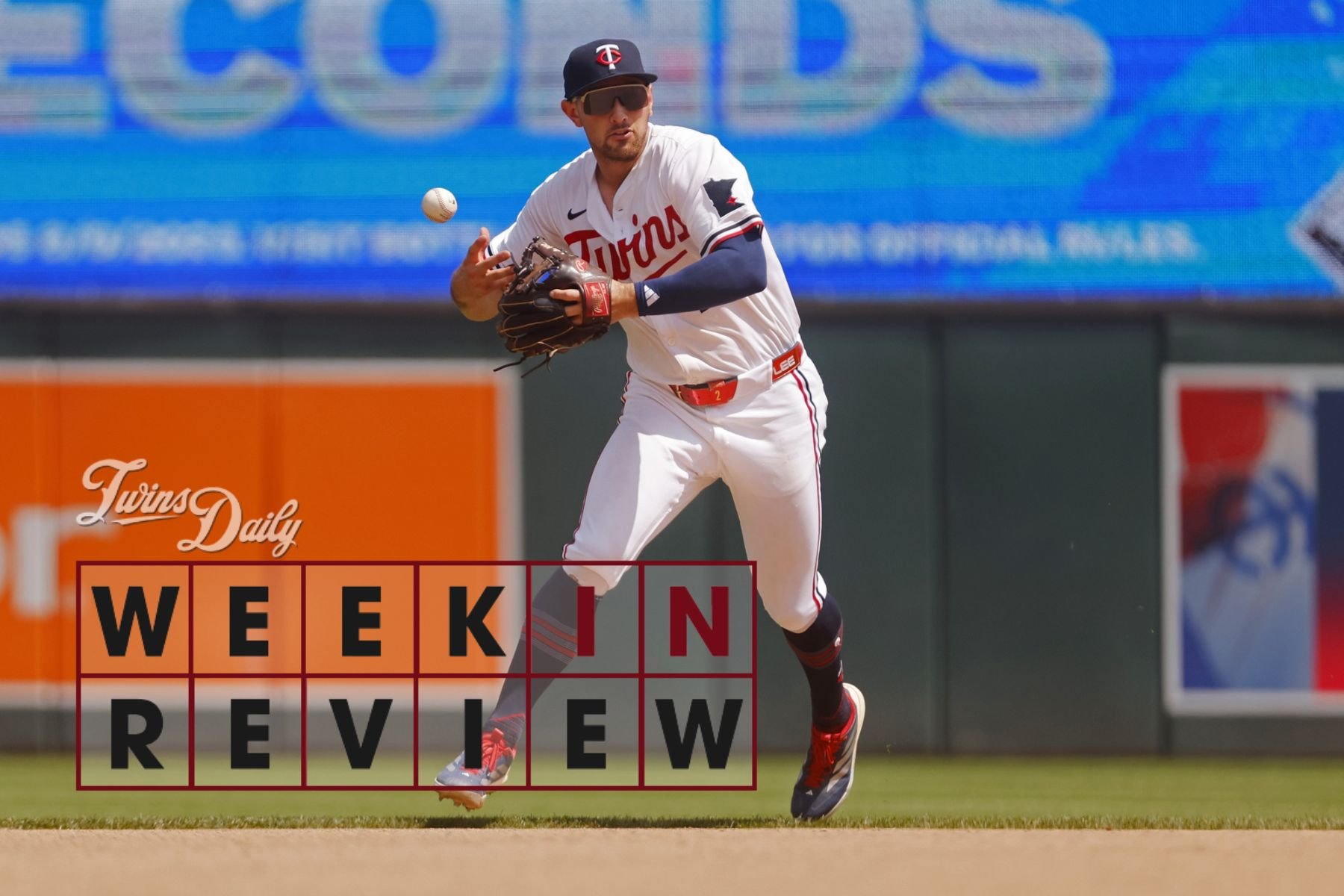 The Weekly Nutshell: It's honestly just hard to comprehend. I know the 2025 Minnesota Twins are not this bad. We saw what they are capable of when they went 18-8 in a month of May that included a 13-game winning streak. This is a team that, according to both projection models and betting lines, was at least a co-favorite in the AL Central heading into the season, and at times they have looked like it. Competency was the baseline expectation here. But over the past couple of weeks, much like the first few, the Twins have resembled one of the worst teams you will ever witness on a major-league field. It's not just the losing, which has been relentless. It's how they're losing: fumbling and failing in every phase of the game, committing mind-boggling blunders on a regular basis and being blatantly outclassed by their opponents. Minnesota's formerly elite pitching staff has dissolved into disaster, the offense remains woefully inadequate, and at a simple fundamental level, this team has been nothing short of disgraceful. After dropping five of six for a second consecutive week, once again getting blown out multiple times, the Twins have sunk back below the .500 mark and into fourth place. This is a club that does neither the big things nor the little things well, and whose biggest strength has been transformed into a glaring weakness, leaving them with little leg left to stand on. As we approach July and the trade deadline, the Twins are looking like sellers and cellar-dwellers. Heading into another challenging stretch of the schedule, they've demonstrated no ability to stop the bleeding or redirect their fate. Disheartening doesn't even begin to describe it. But it's not too late yet. Weekly Snapshot: Mon, 6/16 through Sun, 6/22 *** Record Last Week: 1-5 (Overall: 37-40) Run Differential Last Week: -17 (Overall: -10) Standing: 4th Place in AL Central (11.0 GB) Last Week's Game Results: Game 72 | CIN 6, MIN 5: Bullpen Forfeits Late Lead, Twins Lose By One Again Stewart: 0.2 IP, 3 H, 2 ER, L Game 73 | CIN 4, MIN 2: Rain-Shortened Snoozer Leads to Sixth Straight Loss Ober: 5.2 IP, 9 H, 4 ER Game 74 | MIN 12, CIN 5: Lineup Unleashes at Last as Losing Streak Snaps Buxton: 3-6, 2 HR Game 75 | MIL 17, MIN 6: Brewers Bash Twins into Submission in Total Debacle Twins pitching: 19 H allowed Game 76 | MIL 9, MIN 0: New Lows Reached in a Messy, Miserable Performance Twins offense: 4 H, 1 XBH Game 77 | MIL 9, MIN 8: Comeback Falls Short After Pitching Gets Pounded Again Festa: 4.2 IP, 12 H, 8 ER, 3 BB IF YOU'D RATHER LISTEN TO THE WEEK IN REVIEW THAN READ IT, YOU CAN GET IT IN AUDIO FORM! FIND THE LATEST EPISODE ON OUR PODCAST PAGE, AS WELL AS ON APPLE AND SPOTIFY. SUBSCRIBE TO OUR CHANNELS SO YOU DON'T MISS OUT! NEWS & NOTES This was actually an uncommonly quiet week on the roster and injury front, which is altogether welcome news. The Twins made zero MLB transactions over the past seven days, avoiding any new injuries while continuing to play the waiting game on recovering players like Pablo López, Zebby Matthews and Royce Lewis (none of whom are particularly close to returning). There were however a few noteworthy developments on the farm. Austin Martin, who has missed most of the first half due to multiple hamstring injuries, started a rehab assignment in the Florida Complex League on Saturday. He's got some catching up to do after all the missed time, but this is the first step toward working his way back and potentially factoring in for the big-league club during the second half. Meanwhile top prospect Emmanuel Rodriguez, who's been sidelined for almost all of June in Triple-A with a hip injury, also started at rehab in the FCL. Certainly a name worth watching as the Twins grow increasingly desperate for a jolt of life. HIGHLIGHTS Byron Buxton is the main attraction for Twins fans, and really the lone attraction right now. Buxton was seeing red in Cincinnati, clubbing four home runs in three games while also adding a double and striking out just twice in 14 plate appearances. He added two more home runs on Sunday against the Brewers, pushing his season total to 17 as he charges toward a second career All-Star appearance. Buxton has seven home runs in his past 10 games and is slugging .575 on the year, fourth-best in baseball behind Aaron Judge, Cal Raleigh and Shohei Ohtani. The premier power is of course awesome to see, but Buxton's materializing patience is perhaps even more intriguing than the hot swing. He drew four more walks in six games last week, and now has 12 in June with only 10 strikeouts. It's a remarkable spike in a discipline, and we'll see how long it can sustain. Buxton is legitimately playing at an MVP-caliber level right now. No one else on the Twins can come close to such a characterization – thus all the losing in spite of Buxton's brilliance – but there have been a handful of solid performers. Ryan Jeffers joined Buxton in having a monster series against the Reds, tallying four hits – including a homer and a double – with four RBIs in just one-and-a-half games. He added another home run against Milwaukee on Sunday, his sixth. Brooks Lee saw his hitting streak end at 19 games with an 0-for-4 on Saturday, but bounced back with a four-hit game on Sunday, helping to make up for some truly atrocious defensive play in the infield. (For the record, I remain extremely skeptical of Lee's impact potential until he develops a semblance of power or patience, neither of which were on display in a week where seven of his eight hits were singles and he drew one walk against six strikeouts.) LOWLIGHTS The most glaring low point of the week, and really one of the most pitiful moments I can remember as a Twins fan, was watching Jonah Bride come out to pitch on Friday for a fourth time in the span of 15 days. It came at the end of another non-competitive blowout loss in which the Twins lineup was carved up by a 23-year-old who took a perfect game into the seventh, and the pitching staff was pummeled for 17 runs on 19 hits. Bride did his part to put the game thoroughly out of reach, allowing five runs in his one inning of work, but plenty of actual pitchers played their own roles. Joe Ryan was okay, allowing three runs in 5 ⅓ innings before the floodgates opened on the underbelly of the Twins bullpen. Justin Topa got clobbered for five earned runs while recording only one out. Joey Wentz followed by surrendering four earned runs in 1 ⅓. Friday marked the fifth time in 14 games that Twins pitchers allowed double-digit runs, after doing so zero times in their first 61 games. They came just short of adding a sixth and seventh when they allowed nine runs on Saturday and Sunday. What once felt like the biggest reason to believe in the Twins now feels like the biggest barrier to having any faith whatsoever. You can't win games if you can't get people out and that has far too often been the case for a pitching staff that is totally imploding here in the month of June, where the Twins are 6-14. When the pitchers aren't staking opponents to untouchable leads, they are too frequently coming up short in crucial spots. That led to a third consecutive one-run loss on Tuesday, in the opener against the Reds, with Brock Stewart giving up a devastating two-run double to TJ Friedl just after the Twins had managed to steal away a lead from Cincinnati. Stewart's letdown — admittedly a rare one from a pitcher who's been mostly been very good — came on the heels of Jhoan Durán and Cole Sands giving up back-to-back walk-offs in Houston. Everywhere you look, guys just aren't getting it done. That includes the entire rotation, which continues to look very underwhelming in the absence of López and Matthews. In six games last week, Twins starters posted a 6.82 ERA over 30 ⅓ innings, with not one genuinely impressive outing. At this point there's no reason to feel much confidence in anyone aside from Ryan. On Sunday, David Festa gave up eight earned runs for the second time in four starts since being recalled from the minors, casting serious doubt on his readiness to succeed in the big leagues. The Twins have no choice but to stick with him, as their rotation depth suffered another crushing blow over the weekend when Andrew Morris was placed on the IL in Triple-A with a forearm strength. The reinforcements have run dry and the current mix is cratering. Offensively, the Twins ended the week on somewhat of a high note, churning out eight runs in an effort to erase another massive deficit from the pitching staff, but for the most part there was little to like outside of Buxton's heroics. Even in a game like Sunday's, where the lineup could have been poised to overcome another abhorrent showing from the staff, there were too many letdowns and missed opportunities to declare a success. Thirteen of Minnesota's 18 hits were singles, including all four from Carlos Correa, who is slugging .353 since last homering on May 30th. The Twins hit four home runs in the game but three came with the bases empty. They went 3-for-12 with runners in scoring position and stranded 13 men on base in a one-run loss. Trevor Larnach watched strike three sail over the middle of the plate with two outs in the ninth and the tying run in scoring position. It all speaks to how broken this ballclub is. Even on a good day, they're pretty bad. Which brings me to the final and most egregious blemish on the Twins' performance: defense and fundamentals. Over the past week, Rocco Baldelli's club has played the kind of baseball that would make a little league coach shake their head in disbelief. Lee, son of a coach and a heralded "baseball IQ" guy, failed to run out a dropped third strike to end Saturday’s game, even as it skipped far from the plate. He then followed up with a comedy of errors at third base on Sunday, booting back-to-back plays that belied his defensive rep. Correa, whose sure-handed glove has been the only redeeming quality of a lackluster campaign, lost a pop-up in partly-cloudy conditions and let it drop. Jeffers launched a throw into center field on a steal attempt, scoring a run. Willi Castro forgot how many outs there were and didn’t turn a double play that should’ve been automatic. (Was that last week or the week before? I honestly can't even remember.) These are not bad breaks or moments of misfortune; they are mental lapses and execution failures that reflect a team completely out of sync. Don't take my word for it. “You want to sum it up in one word, it’s embarrassing,” Jeffers admitted after Saturday's game. “We’re big league ballplayers and we’re not playing like a big league ballclub.” That accountability is appreciated, but for fans watching this sloppy, dismal display — the very brand of uninspired ball that defined the team’s miserable early-season funk — it’s maddening to see history repeating itself. The truth is becoming harder to deny with each gaffe and mounting loss: this is probably no mere slump. This might just be who the Twins are, at least under their current leadership. Given all that's taken place surrounding it, that 13-game winning streak in May increasingly looks like the fluke. TRENDING STORYLINE Down in Triple-A, Edouard Julien has begun to heat up at last. He consistently struggled to find any kind of power stroke in the minors or majors during the first two and a half months of the season, but turned a corner last week in St. Paul's series against the Toledo Mud Hens. In six games, Julien went 9-for-23 with three home runs and six RBIs, also drawing six walks. In his first 36 games at Triple-A following the early-May demotion, he had two homers and 11 RBIs. To be clear: This is a very small sample and no one is denying that. Possibly Julien has just run into a bit of a random hot streak rather than unlocking substantive improvements that will translate to the major-league level. But this is a striking outburst, and it's not like Julien is an unproven hitter. He's showing a lot of confidence in the box right now. We'll take that. Another name to watch in Triple-A is Aaron Sabato, the 2020 first-round draft pick who faded from prospect relevance after failing to distinguish himself in the low minors. But the 26-year-old first baseman is enjoying a breakthrough season and was recently promoted to the Saints, where he's already catching eyes with his loud contact and evolved plate approach. Sabato, even more than Julien, should be viewed through a lens of small-sample skepticism. He's played all of nine games at Triple-A and had fallen completely off the radar entering this year, with good cause. To even ponder the idea of a big-league promotion feels like an overreaction, which is also true of Julien to a degree. But, we are at the point where overreactions need to be strongly considered, even in the form of a nominal shakeup to unsettle the stifling status quo. One big problem with this Twins offense, beyond the injuries and slumps and Correa disappointment, is that there are three position players on the roster who have legitimately almost no chance of doing anything at the plate. It's no coincidence Buxton has hit six straight solo homers when you consider that the ninth spot in the order is so often occupied by someone like Christian Vázquez, Bride or DaShawn Keirsey Jr. Vázquez isn't going anywhere, but Keirsey Jr. probably should and Bride absolutely should be gone yesterday. His utility to the roster as an oft-used mop-up man on the mound has become a sad joke, and when it comes to contributing in the ways he's actually supposed to, Bride has been a huge negative. If the Twins are going to start playing like a big league ballclub, as Jeffers urged, then it's past time to start purging the non-big league ballplayers from the roster. LOOKING AHEAD Things get no easier. The Twins are going to have a heck of a time trying to escape this death spiral, with seven games against quality competition on tap. First the Mariners travel to Target Field for a four-game series, subjecting the lineup to some very high-quality right-handed pitching (all the more reason to give a Julien a look), and then it's off to Detroit for three games against the MLB-leading Tigers. Detroit has widened its advantage over Minnesota in the division to 11 games, and the Twins are at great risk of seeing that number grow even further in the coming week. The more pertinent concern at this point, though, is losing ground to a wild-card contending team like Seattle. The division is quickly beginning to look out of reach, but the postseason isn't. As bleak as things are right now, vibes can shift quickly and we've seen it happen all too many times over the past few seasons. As long as they can hang within range of the .500 mark, the Twins — poised to potentially resurge in the second half as key injured players return — can't be counted out. That said, the clock is ticking and the reality of the looming trade deadline is unignorable. If the Twins determine by mid-to-late July that contention isn't viable for this season, it would simply be irresponsible to stand still and wait around for things to get better. If this is really what this team is, then its time to start taking it apart. We're not quite there yet. But unless the freefalling Twins can't find a way to steal some unlikely victories against the Mariners and Tigers in these next seven days, those conversations are by necessity going to need to start taking center stage. MONDAY, JUNE 23: MARINERS @ TWINS — RHP Bryan Woo v. RHP Bailey Ober TUESDAY, JUNE 24: MARINERS @ TWINS — RHP Luis Castillo v. RHP Chris Paddack WEDNESDAY, JUNE 25: MARINERS @ TWINS — RHP George Kirby v. RHP Joe Ryan THURSDAY, JUNE 26: MARINERS @ TWINS — RHP Emerson Hancock v. RHP Simeon Woods Richardson FRIDAY, JUNE 27: TWINS @ TIGERS — RHP David Festa v. RHP Sawyer Gipson-Long SATURDAY, JUNE 28: TWINS @ TIGERS — RHP Bailey Ober vs Casey Mize SUNDAY, JUNE 29: TWINS @ TIGERS — RHP Chris Paddack v. LHP Tarik Skubal
- 39 comments
-
- 6
-

-

-
- jonah bride
- byron buxton
- (and 1 more)
-
 Image courtesy of David Malamut (photo of Kaelen Culpepper) CURRENT W-L Records Minnesota Twins: 37-39 St. Paul Saints: 32-40 Wichita Wind Surge: 37-31 Cedar Rapids Kernels: 41-27 Fort Myers Mighty Mussels: 29-37 FCL Twins: 23-11 DSL Twins: 3-11 TRANSACTIONS The Twins sent Austin Martin and Emmanuel Rodriguez to the rookie-level Florida State League on rehab assignments. Martin has missed most of the first three months after injuring and then re-injuring his hamstring. Rodriguez has been sidelined for about three weeks with a hip injury. Both players have a chance to factor in for the Twins at the big-league level in the second half. Check out the Complex Chronicles recap below to find out how each did in their first game back on Saturday. Connor Prielipp, who spent a short while on the injured list to let a blister heal, was activated by the Wichita Wind Surge, returning to a shiny 3.13 ERA. He started for Wichita and we'll let you know how that went shortly. Wichita also transferred RHP Angel Macuare to the Development List. It wasn't all gains today though. In a tough development for the Twins' pitching depth, Andrew Morris was placed on the injured list at Triple-A with a forearm strain. He joins Pablo López and Zebby Matthews in being unavailable for the foreseeable future. SAINTS SENTINEL Toledo 9, St. Paul 4 Box Score Cory Lewis has struggled to find a rhythm this season and tonight was no different. He labored through a 35-pitch first inning before ultimately needing 76 to get through three frames. Lewis allowed two runs on two hits and four walks, with seven of his nine outs recorded coming by strikeout. The Saints were up 3-2 when Lewis exited in the third, but the game got away under Randy Dobnak, who surrendered six runs in three innings. Justyn-Henry Malloy's three-run homer in the fourth turned the tides for good. Ryan Fitzgerald starred on offense for St. Paul, going 3-for-4 with a home run and two RBIs. Edouard Julien stayed hot with a couple hits. Aaron Sabato was 1-for-3, drew a bases-loaded walk and hit a towering blast down the left field line in the eighth that was JUST foul. Carson McCusker wore the golden sombrero with strikeouts in all four of his at-bats. McCusker is batting .155 in 19 games since returning form the majors. Of note: Mickey Gasper exited this game after two at-bats, and no one seemed sure as to why. There was no readily apparent injury suffered. It would be odd for Gasper to be pulled midway through a game for a promotion when the Twins were already finished before the Saints game started, but that is possible. Stay tuned. WIND SURGE WISDOM Wichita 7, Arkansas 2 Box Score Kaelen Culpepper led off in his Double-A debut, catalyzing a formidable top of the order for the Wind Surge: Culpepper, Gabriel Gonzalez, Walker Jenkins, Kala'i Rosario. All four are renowned hitters on the top-prospect radar for the organization, including their last two first-round picks. Fun stuff. Culpepper struck out in his first at-bat, but singled in his second and went 2-for-4 on the day. He added another single and scored in the eighth as part of a late rally that fell short. Kyler Fedko hit a two-run homer as part of the flurry, and finished 3-for-4 with two RBIs. Gonzalez added two hits and a double. Prielipp had a bit of a rocky re-entry, allowing three runs (two earned) on seven hits in 2 ⅓ innings, but to say he was plagued by poor batted ball luck would be an understatement. He gave up several unauthoritative hits, including a grounder up the middle that deflected first off Prielipp, then second base, scoring two runs. He was in the zone and seemed healthy so that's what matters. Aaron Rozek relieved Prielipp and allowed just one run over three innings, striking out eight (!). KERNELS NUGGETS Cedar Rapids 9, Beloit 3 Box Score The Kernels struck big early, with home runs from Brandon Winokur and Danny De Andrade powering a six-run outburst in the second inning that held up behind an excellent start from Jose Olivares. The 22-year-old righty struck out nine and walked none over six frames – breakthroughs on multiple fronts from a pitcher who hadn't thrown more than five innings in 10 previous starts, and was averaging 6.7 BB/9. MUSSEL MATTERS Fort Myers 5, Lakeland 2 Box Score Fort Myers fell behind 2-0 in the third with Dasan Hill struggling to find the strike zone – he issued four walks in a second straight start, throwing 33 of 61 pitches for strikes. But the Mighty Mussels broke through in the fifth thanks to a fielding error, a bunt single, a wild pitch, and three straight run-producing plate appearances. RBI hits from Yasser Mercedes and Caleb McNeely sandwiched a game-tying walk from Bryan Acuña, who reached base three times on the night. Blaze O’Saben doubled to lead off the sixth and came around to score on a wild pitch, adding insurance. Dylan Questad and Ruddy Gomez combined for five scoreless innings in relief, racking up seven strikeouts while holding Lakeland to just two hits over that span. COMPLEX CHRONICLES FCL Twins 6, FCL Red Sox 5 Box Score Austin Martin and Emmanuel Rodriguez batted first and second as both kicked off rehab stints in the FCL. Martin started at second and went 0-for-3 with a bases-loaded walk before being replaced defensively late. Rodriguez went 1-for-3 with a walk and a go-ahead RBI single. The FCL Twins erased an early three-run deficit and capitalized on defensive miscues to edge out the Red Sox, 6–5. After Avinson Pinto homered and doubled to help put the Sox up 3-0, the Twins responded in the bottom of the second with a patient, opportunistic rally. A bases-loaded walk, wild pitch, and Rodriguez's RBI single flipped the score, giving the Twins a 4-3 lead. The Red Sox briefly reclaimed the advantage in the third, but a fielding error in the fourth allowed Minnesota to tie it at 5-5. In the sixth, Eduardo Beltre stole third and came home on a throwing error, providing the eventual winning run. The Twins’ bullpen made it stand, working around a leadoff walk in the seventh and sealing the win with back-to-back strikeouts. DOMINICAN DAILIES DSL Twins 5, DSL Colorado 3 Box Score The DSL Twins rallied late to secure a 5-3 win over DSL Colorado in a back-and-forth contest marked by timely hits and costly miscues. Colorado took an early lead in the first, but the Twins answered in the second with back-to-back extra-base hits from Jhomnardo Reyes and Darwin Almanzar. Another triple, this time from Haritzon Castillo in the sixth, tied the game at 2-2 before a wild pitch in the eighth briefly gave Colorado the lead again. In the bottom of the eighth, Almanzar sparked the rally with his second double of the day, and Cristian Bonifacio delivered the go-ahead two-run single to put the Twins on top. A sharp defensive double play in the ninth sealed the win, capping off a strong all-around effort that showcased the Twins’ resilience and opportunism. The 17-year-old Almanzar has been on a tear and is now batting .308 with a 1.079 OPS through nine games in his first DSL foray. TWINS DAILY MINOR LEAGUE PLAYERS OF THE DAY Pitcher of the Day: Jose Olivares, Cedar Rapids (6 IP, 4 H, 2 ER, 0 BB, 9 K) Hitter of the Day: Ryan Fitzgerald, St. Paul (3-for-4, HR, 2 RBI) PROSPECT SUMMARY Check out the Prospect Tracker for more. 1. Walker Jenkins (Wichita): 0-for-4, RBI 3. Emmanuel Rodriguez (rehabbing with FCL): 1-for-3, BB, RBI 4. Kaelen Culpepper (Wichita debut): 2-for-4 5. Connor Prielipp (Wichita): 2.1 IP, 7 H, 2 ER, 0 BB, 2 K 6. Dasan Hill (Fort Myers): 2.2 IP, 2 H, 2 ER, 4 BB, 2 K 9. Brandon Winokur (Cedar Rapids): 1-for-4, HR, 2 RBI, BB 10. Kyle DeBarge (Cedar Rapids): 2-for-6, 3B 12. Billy Amick (rehabbing with Fort Myers): 0-for-3, BB 13. Gabriel Gonzalez (Wichita): 2-for-4, 2B 15. Eduardo Beltre (FCL): 2-for-4, 2B, SB 17. Cory Lewis (St. Paul): 2.2 IP, 2 H, 2 ER, 4 BB, 7 K 19. Danny De Andrade (Cedar Rapids): 2-for-4, HR, RBI, BB TOMORROW’S PROBABLE STARTERS St. Paul vs. Toledo, 2:07 pm CT: Marco Raya Wichita at Arkansas, 6:05 pm CT: TBD Cedar Rapids at Beloit, 6:35 pm CT: Cole Peschl Fort Myers vs. Lakeland, 5:05 pm CT: Eli Jones View full article
 -
Twins Minor League Report (6/21): Culpepper Debuts at Double-A
Nick Nelson posted an article in Twins
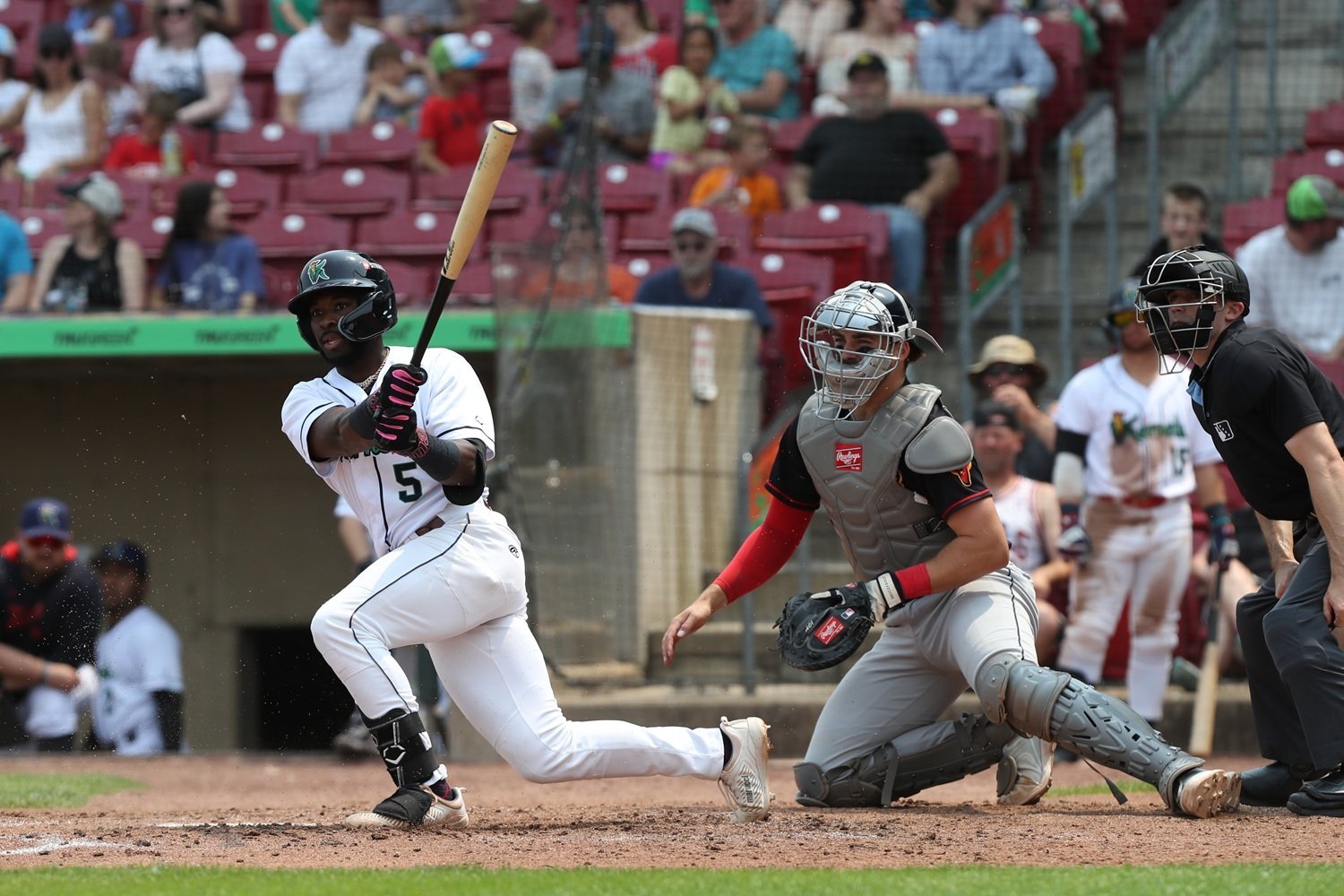 CURRENT W-L Records Minnesota Twins: 37-39 St. Paul Saints: 32-40 Wichita Wind Surge: 37-31 Cedar Rapids Kernels: 41-27 Fort Myers Mighty Mussels: 29-37 FCL Twins: 23-11 DSL Twins: 3-11 TRANSACTIONS The Twins sent Austin Martin and Emmanuel Rodriguez to the rookie-level Florida State League on rehab assignments. Martin has missed most of the first three months after injuring and then re-injuring his hamstring. Rodriguez has been sidelined for about three weeks with a hip injury. Both players have a chance to factor in for the Twins at the big-league level in the second half. Check out the Complex Chronicles recap below to find out how each did in their first game back on Saturday. Connor Prielipp, who spent a short while on the injured list to let a blister heal, was activated by the Wichita Wind Surge, returning to a shiny 3.13 ERA. He started for Wichita and we'll let you know how that went shortly. Wichita also transferred RHP Angel Macuare to the Development List. It wasn't all gains today though. In a tough development for the Twins' pitching depth, Andrew Morris was placed on the injured list at Triple-A with a forearm strain. He joins Pablo López and Zebby Matthews in being unavailable for the foreseeable future. SAINTS SENTINEL Toledo 9, St. Paul 4 Box Score Cory Lewis has struggled to find a rhythm this season and tonight was no different. He labored through a 35-pitch first inning before ultimately needing 76 to get through three frames. Lewis allowed two runs on two hits and four walks, with seven of his nine outs recorded coming by strikeout. The Saints were up 3-2 when Lewis exited in the third, but the game got away under Randy Dobnak, who surrendered six runs in three innings. Justyn-Henry Malloy's three-run homer in the fourth turned the tides for good. Ryan Fitzgerald starred on offense for St. Paul, going 3-for-4 with a home run and two RBIs. Edouard Julien stayed hot with a couple hits. Aaron Sabato was 1-for-3, drew a bases-loaded walk and hit a towering blast down the left field line in the eighth that was JUST foul. Carson McCusker wore the golden sombrero with strikeouts in all four of his at-bats. McCusker is batting .155 in 19 games since returning form the majors. Of note: Mickey Gasper exited this game after two at-bats, and no one seemed sure as to why. There was no readily apparent injury suffered. It would be odd for Gasper to be pulled midway through a game for a promotion when the Twins were already finished before the Saints game started, but that is possible. Stay tuned. WIND SURGE WISDOM Wichita 7, Arkansas 2 Box Score Kaelen Culpepper led off in his Double-A debut, catalyzing a formidable top of the order for the Wind Surge: Culpepper, Gabriel Gonzalez, Walker Jenkins, Kala'i Rosario. All four are renowned hitters on the top-prospect radar for the organization, including their last two first-round picks. Fun stuff. Culpepper struck out in his first at-bat, but singled in his second and went 2-for-4 on the day. He added another single and scored in the eighth as part of a late rally that fell short. Kyler Fedko hit a two-run homer as part of the flurry, and finished 3-for-4 with two RBIs. Gonzalez added two hits and a double. Prielipp had a bit of a rocky re-entry, allowing three runs (two earned) on seven hits in 2 ⅓ innings, but to say he was plagued by poor batted ball luck would be an understatement. He gave up several unauthoritative hits, including a grounder up the middle that deflected first off Prielipp, then second base, scoring two runs. He was in the zone and seemed healthy so that's what matters. Aaron Rozek relieved Prielipp and allowed just one run over three innings, striking out eight (!). KERNELS NUGGETS Cedar Rapids 9, Beloit 3 Box Score The Kernels struck big early, with home runs from Brandon Winokur and Danny De Andrade powering a six-run outburst in the second inning that held up behind an excellent start from Jose Olivares. The 22-year-old righty struck out nine and walked none over six frames – breakthroughs on multiple fronts from a pitcher who hadn't thrown more than five innings in 10 previous starts, and was averaging 6.7 BB/9. MUSSEL MATTERS Fort Myers 5, Lakeland 2 Box Score Fort Myers fell behind 2-0 in the third with Dasan Hill struggling to find the strike zone – he issued four walks in a second straight start, throwing 33 of 61 pitches for strikes. But the Mighty Mussels broke through in the fifth thanks to a fielding error, a bunt single, a wild pitch, and three straight run-producing plate appearances. RBI hits from Yasser Mercedes and Caleb McNeely sandwiched a game-tying walk from Bryan Acuña, who reached base three times on the night. Blaze O’Saben doubled to lead off the sixth and came around to score on a wild pitch, adding insurance. Dylan Questad and Ruddy Gomez combined for five scoreless innings in relief, racking up seven strikeouts while holding Lakeland to just two hits over that span. COMPLEX CHRONICLES FCL Twins 6, FCL Red Sox 5 Box Score Austin Martin and Emmanuel Rodriguez batted first and second as both kicked off rehab stints in the FCL. Martin started at second and went 0-for-3 with a bases-loaded walk before being replaced defensively late. Rodriguez went 1-for-3 with a walk and a go-ahead RBI single. The FCL Twins erased an early three-run deficit and capitalized on defensive miscues to edge out the Red Sox, 6–5. After Avinson Pinto homered and doubled to help put the Sox up 3-0, the Twins responded in the bottom of the second with a patient, opportunistic rally. A bases-loaded walk, wild pitch, and Rodriguez's RBI single flipped the score, giving the Twins a 4-3 lead. The Red Sox briefly reclaimed the advantage in the third, but a fielding error in the fourth allowed Minnesota to tie it at 5-5. In the sixth, Eduardo Beltre stole third and came home on a throwing error, providing the eventual winning run. The Twins’ bullpen made it stand, working around a leadoff walk in the seventh and sealing the win with back-to-back strikeouts. DOMINICAN DAILIES DSL Twins 5, DSL Colorado 3 Box Score The DSL Twins rallied late to secure a 5-3 win over DSL Colorado in a back-and-forth contest marked by timely hits and costly miscues. Colorado took an early lead in the first, but the Twins answered in the second with back-to-back extra-base hits from Jhomnardo Reyes and Darwin Almanzar. Another triple, this time from Haritzon Castillo in the sixth, tied the game at 2-2 before a wild pitch in the eighth briefly gave Colorado the lead again. In the bottom of the eighth, Almanzar sparked the rally with his second double of the day, and Cristian Bonifacio delivered the go-ahead two-run single to put the Twins on top. A sharp defensive double play in the ninth sealed the win, capping off a strong all-around effort that showcased the Twins’ resilience and opportunism. The 17-year-old Almanzar has been on a tear and is now batting .308 with a 1.079 OPS through nine games in his first DSL foray. TWINS DAILY MINOR LEAGUE PLAYERS OF THE DAY Pitcher of the Day: Jose Olivares, Cedar Rapids (6 IP, 4 H, 2 ER, 0 BB, 9 K) Hitter of the Day: Ryan Fitzgerald, St. Paul (3-for-4, HR, 2 RBI) PROSPECT SUMMARY Check out the Prospect Tracker for more. 1. Walker Jenkins (Wichita): 0-for-4, RBI 3. Emmanuel Rodriguez (rehabbing with FCL): 1-for-3, BB, RBI 4. Kaelen Culpepper (Wichita debut): 2-for-4 5. Connor Prielipp (Wichita): 2.1 IP, 7 H, 2 ER, 0 BB, 2 K 6. Dasan Hill (Fort Myers): 2.2 IP, 2 H, 2 ER, 4 BB, 2 K 9. Brandon Winokur (Cedar Rapids): 1-for-4, HR, 2 RBI, BB 10. Kyle DeBarge (Cedar Rapids): 2-for-6, 3B 12. Billy Amick (rehabbing with Fort Myers): 0-for-3, BB 13. Gabriel Gonzalez (Wichita): 2-for-4, 2B 15. Eduardo Beltre (FCL): 2-for-4, 2B, SB 17. Cory Lewis (St. Paul): 2.2 IP, 2 H, 2 ER, 4 BB, 7 K 19. Danny De Andrade (Cedar Rapids): 2-for-4, HR, RBI, BB TOMORROW’S PROBABLE STARTERS St. Paul vs. Toledo, 2:07 pm CT: Marco Raya Wichita at Arkansas, 6:05 pm CT: TBD Cedar Rapids at Beloit, 6:35 pm CT: Cole Peschl Fort Myers vs. Lakeland, 5:05 pm CT: Eli Jones
- 5 comments
-
- 3
-
-
-
- kaelen culpepper
- connor prielipp
- (and 3 more)
-
Image courtesy of Matt Krohn-Imagn Images As the Minnesota Twins rattled off 13 straight wins in May, rising from fourth to second place in the Central and closing the gap behind the Tigers to four games, there was a lot of cause for positivity and excitement. The roster was relatively healthy, and Minnesota had a formula for overcoming opponents — driven by elite pitching — that felt pretty infallible. As long as they could stay healthy. Ahhh, well. We've been on this ride long enough to know what was coming next, but it was fun to dream. The Twins improved to a season-high seven games above .500, at 34-27, after beating the Athletics on June 4th. Around that time, things began to customarily fall apart. Pablo López went down with a devastating shoulder injury that will knock him out of action until the late stretch of the season. Days later, Zebby Matthews was sidelined by his own fairly significant shoulder strain. Two of the rotation's most electric arms, gone in a blink. More recently, the Twins lost Royce Lewis to yet another hamstring injury, and the timing stung because Royce was finally showing signs of life at the plate with a .990 OPS in June. There's no timeline for his return but it feels safe to assume he'll miss at least a month. Beyond the injuries, remaining key players are letting this team down in a big way. Bailey Ober, ostensibly healthy, has lost his dominant edge and finds himself searching for answers. Chris Paddack got shelled in his most recent start. And most disturbingly, Carlos Correa is showing the worst offensive form of his entire career at age 30. The team faces very tough sledding ahead. Their schedule for the rest of June is challenging: four series, all against winning teams, including the division-leading Tigers to close out the month. The Twins have lost eight of 10 and they're entering this midseason gauntlet without several of their highest-impact players. If we're being realistic, it's hard to envision the team having much success in the weeks leading up the All-Star break. But for now, the goal is not resounding success — merely to tread water. Minnesota needs to stay afloat and remain relevant until the second half gets underway, because there is palpable reason for hope of major improvement on the horizon. None of the aforementioned injuries are believed to be season-ending. Lewis's hamstring strain was deemed mild and he could return around the All-Star break if not sooner. The Twins have said they expect López to pitch "meaningful innings" in the regular season, setting himself up to once again be a potential postseason force. The timeline for Matthews is a bit more ambiguous but even on the longer end, he should be back with plenty of time left. There's also a guy by the name of Luke Keaschall — remember him? — who should be back from a forearm fracture sometime around the break next month. Get these guys back into the mix and you're in business. The Twins didn't win 13 in a row by accident. Certainly some of the trends we've been seeing with currently healthy (or "healthy") players are troubling, but slumps come and go in a long MLB season. There's nothing to say Ober and Correa won't look like different players in a month or two. None of this takes away from the fact that the Twins are currently in a bad spot. They've been sinking and in all honesty they are probably about to sink further. They're going to need to find the wins where they can and weather the storm while waiting for brighter days ahead in the second half. Still, as long as this Twins team can avoid getting flooded out of contention in a densely packed middle tier in the American League, it'll be hard to lose faith in their ultimate outlook. Just hang on for now boys. View full article
-
A Breakthrough Second Half Is Still on the Table for the Minnesota Twins
Nick Nelson posted an article in Twins
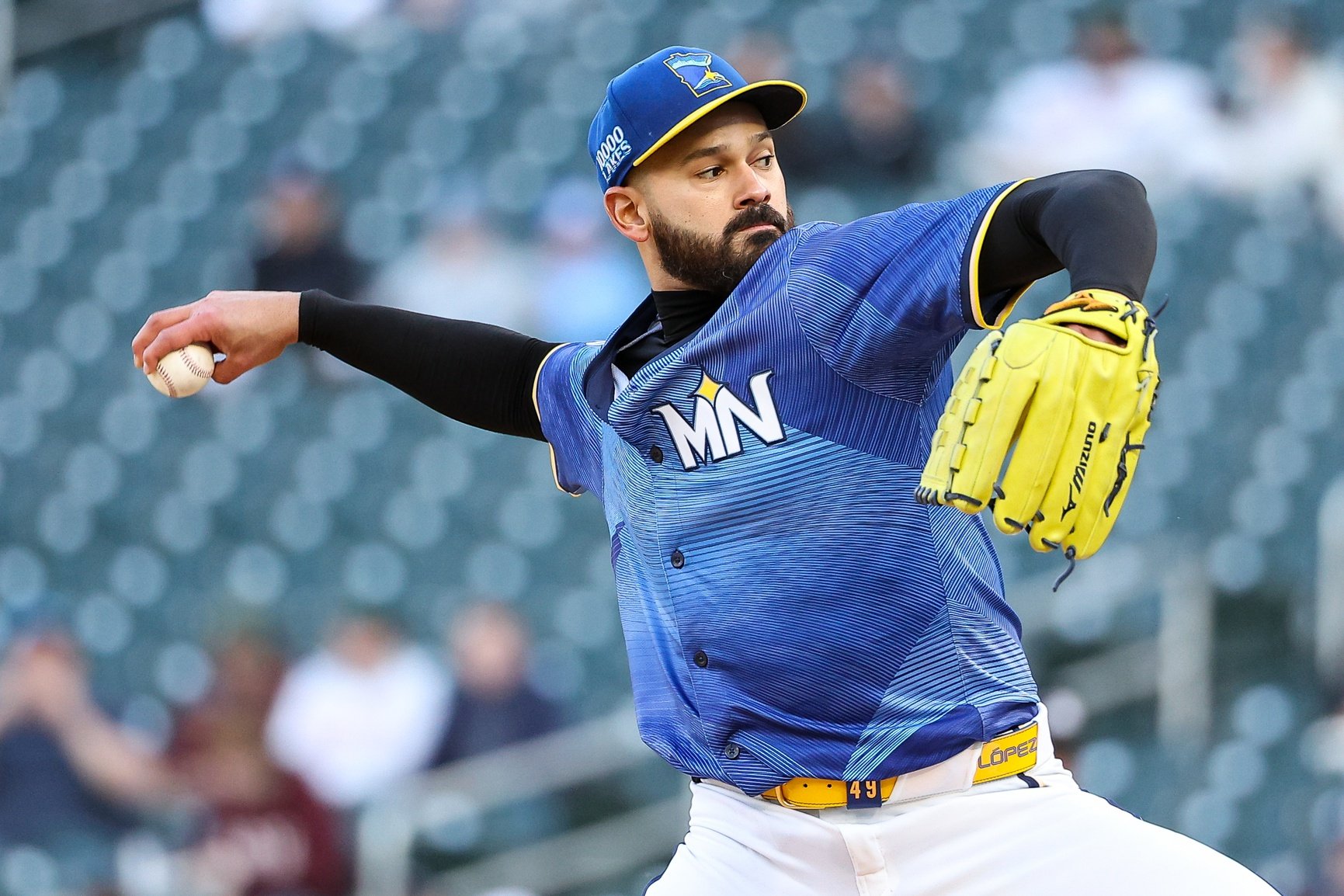 As the Minnesota Twins rattled off 13 straight wins in May, rising from fourth to second place in the Central and closing the gap behind the Tigers to four games, there was a lot of cause for positivity and excitement. The roster was relatively healthy, and Minnesota had a formula for overcoming opponents — driven by elite pitching — that felt pretty infallible. As long as they could stay healthy. Ahhh, well. We've been on this ride long enough to know what was coming next, but it was fun to dream. The Twins improved to a season-high seven games above .500, at 34-27, after beating the Athletics on June 4th. Around that time, things began to customarily fall apart. Pablo López went down with a devastating shoulder injury that will knock him out of action until the late stretch of the season. Days later, Zebby Matthews was sidelined by his own fairly significant shoulder strain. Two of the rotation's most electric arms, gone in a blink. More recently, the Twins lost Royce Lewis to yet another hamstring injury, and the timing stung because Royce was finally showing signs of life at the plate with a .990 OPS in June. There's no timeline for his return but it feels safe to assume he'll miss at least a month. Beyond the injuries, remaining key players are letting this team down in a big way. Bailey Ober, ostensibly healthy, has lost his dominant edge and finds himself searching for answers. Chris Paddack got shelled in his most recent start. And most disturbingly, Carlos Correa is showing the worst offensive form of his entire career at age 30. The team faces very tough sledding ahead. Their schedule for the rest of June is challenging: four series, all against winning teams, including the division-leading Tigers to close out the month. The Twins have lost eight of 10 and they're entering this midseason gauntlet without several of their highest-impact players. If we're being realistic, it's hard to envision the team having much success in the weeks leading up the All-Star break. But for now, the goal is not resounding success — merely to tread water. Minnesota needs to stay afloat and remain relevant until the second half gets underway, because there is palpable reason for hope of major improvement on the horizon. None of the aforementioned injuries are believed to be season-ending. Lewis's hamstring strain was deemed mild and he could return around the All-Star break if not sooner. The Twins have said they expect López to pitch "meaningful innings" in the regular season, setting himself up to once again be a potential postseason force. The timeline for Matthews is a bit more ambiguous but even on the longer end, he should be back with plenty of time left. There's also a guy by the name of Luke Keaschall — remember him? — who should be back from a forearm fracture sometime around the break next month. Get these guys back into the mix and you're in business. The Twins didn't win 13 in a row by accident. Certainly some of the trends we've been seeing with currently healthy (or "healthy") players are troubling, but slumps come and go in a long MLB season. There's nothing to say Ober and Correa won't look like different players in a month or two. None of this takes away from the fact that the Twins are currently in a bad spot. They've been sinking and in all honesty they are probably about to sink further. They're going to need to find the wins where they can and weather the storm while waiting for brighter days ahead in the second half. Still, as long as this Twins team can avoid getting flooded out of contention in a densely packed middle tier in the American League, it'll be hard to lose faith in their ultimate outlook. Just hang on for now boys.
- 14 comments
-
- 10
-
-
- pablo lopez
- zebby matthews
- (and 2 more)
-
Image courtesy of Troy Taormina-Imagn Images The Weekly Nutshell: The first week without Pablo López and Zebby Matthews pushed the rotation from concern to full-blown crisis. What had been Minnesota’s greatest strength is now a staggering weakness. Both the replacements and holdovers struggled to keep the Twins competitive in a stretch where they were blasted twice at home by a slumping Texas lineup, then swept by a Houston team that looked superior in every phase. Even when the starters began settling in late in the week, the offense and bullpen took turns unraveling — evoking that earlier portion of the season when nothing could go right. We’ve learned this team can turn things around quickly, so there's no call for despair. But the return to very bad baseball, paired with a steady drain of top-end talent due to injury, is unsettling. Weekly Snapshot: Mon, 6/9 through Sun, 6/15 *** Record Last Week: 1-5 (Overall: 36-35) Run Differential Last Week: -30 (Overall: +7) Standing: 2nd Place in AL Central (9.0 GB) Last Week's Game Results: Game 66 | TEX 16, MIN 4: Soft Underbelly of Pitching Staff Sliced Open Woods Richardson: 4.2 IP, 7 R (6 ER) Game 67 | MIN 6, TEX 2: Festa Bounces Back, Buxton Comes Up Big Buxton: 3-3, HR, 3 RBI Game 68 | TEX 16. MIN 3 : Ober Melts Down, Twins Again Battered by Bad Offense Ober: 4.2 IP, 7 ER, 6 BB, 4 HR Game 69 | HOU 10, MIN 3: Astros Tee Off on Paddack in Another Blowout Loss Paddack: 4 IP, 12 H, 8 ER, 1 K Game 70 | HOU 3, MIN 2: Houston Dominates on Mound, Walks Off Durán in Ninth Lineup: 3 H, 2 BB, 17 K Game 71 | HOU 2, MIN 1: Lineup Remains Dormant, SWR's Strong Start Wasted Lineup: 1 R, 1 BB, 12 K IF YOU'D RATHER LISTEN TO THE WEEK IN REVIEW THAN READ IT, YOU CAN GET IT IN AUDIO FORM! FIND THE LATEST EPISODE ON OUR PODCAST PAGE, AS WELL AS ON APPLE AND SPOTIFY. SUBSCRIBE TO OUR CHANNELS SO YOU DON'T MISS OUT! NEWS & NOTES In a blowout loss to open the week, Jorge Alcalá's inability to competently soak up a couple meaningless innings proved to be the final straw. Pitching with the Twins already in a deep hole, Alcalá could do nothing to slow down the Rangers offense, yielding six runs (five earned) on five hits and a walk, while somehow inducing just one swinging strike on 40 pitches. One of the worst relief outings we've seen all year. The Twins had seen enough. They were ready to cut the right-hander loose to make room for bullpen reinforcements, but — for the same reason Alcalá hung around as long as he did with the Twins — a buyer came calling, hoping to take a flier on the reliever's undeniable talent. Boston skipped the waiver line by trading to Minnesota an A-ball lotto ticket in 21-year-old infielder Andy Lugo. Desperate for bullpen depth, the Twins snagged left-hander Joey Wentz off waivers following his recent DFA by the Pirates. His multi-inning length capability is handy given the way things have been going. López went to the 60-day IL to make room on the 40-man roster for Wentz, whose presence may well be temporary. He's pitched just once so far for the Twins, and did not look impressive at all, allowing two runs on two hits and three walks in one inning of work. Vibes were already pretty bleak by the ninth inning of Friday night's game, with Minnesota playing out the string on its third crushing defeat in four days' time, but they managed to take another turn for the worse when Royce Lewis came up limping as he ran out a base hit in a lost cause. It's the left hamstring, again. Lewis landed back on the injured list, although this strain was deemed "mild" and he's expected to miss less time than the previous injury, which cost him the first 34 games of the season. DaShawn Keirsey Jr. was recalled to take over the vacated roster spot. It is noteworthy that the Twins did NOT opt to go with José Miranda in what would have been a straightforward swap of right-handed hitting third basemen. That feels like a damning indicator, given how badly the lineup could use a boost. But unfortunately, Miranda has done nothing in Triple-A to warrant a call-up. He showed signs of awakening with homers in back-to-back games at the start of June, but has since gone 6-for-44 with one double, sinking his OPS to around the .600 mark. Keirsey Jr. can't hit but at least the team is confident he can provide value in other ways. That's a big limitation standing in the way of Miranda, Edouard Julien and Mickey Gasper. As a final note, Michael Tonkin's rehab stint ended and the Twins weren't ready to activate him, so he accepted an outright assignment to Triple-A. As long as he can stay on the mound with a somewhat functional shoulder, he will undoubtedly be called upon soon enough. HIGHLIGHTS It was an ugly week for the Twins. Byron Buxton is the biggest reason why it wasn't uglier. He put on a show in their lone victory on Tuesday night at Target Field, saving two runs with a dazzling catch in center field and then launching the longest home-run of his career, a go-ahead three-run blast that traveled 479 feet to center and put the Twins ahead for good. Buxton completely flipped the script on a game that was (familiarly) heading the wrong direction. He also doubled twice and stole two bases on the week. Buxton has been far-and-away the Twins' best player this season. His 2.3 fWAR lead the team by a wide margin (no one else has more than 1.6), and now that he's adding patience into his offensive repertoire he's grown into even more of a well-rounded threat. Beyond his impact in the box score, Buxton has simply been a joy to watch, flying around the field and destroying baseballs with an athletic skill set that few in the world can match. All of this added to the malaise on Saturday when Buxton was forced to exit a close game after being hit in the elbow by a pitch. Losing him on top of López and Lewis would be almost too much to take, but it does sound like he'll be okay. Buxton was in the original lineup on Sunday before being scratched with lingering pain – still, word is that he's structurally okay and should hopefully be back in the coming week. Willi Castro has fully shaken off a slow start and risen to join Buxton has one of the team's most valuable bats. His OPS dropped to .600 on May 14th with an 0-fer in Baltimore, but in the month since then Castro has slashed .368/.444/.655 with six homers in 26 games. He was a rare spark plug for the offense this past week, notching 10 hits in 23 ABs and driving in four. The utilityman has been playing outfield almost exclusively of late – and looking pretty rough out there, to be honest – but you wonder if that will change with Lewis going down and being replaced by Keirsey Jr. The Twins are without three infield bats they were counting on in Lewis, Miranda and Julien, so the need for Brooks Lee to show some life offensively is greater than ever. Thankfully he's making his case that he is up to the task. He had an exceptional week at the plate, extending his hitting streak to 15 games while collecting eight hits in 19 at-bats, including a pair of home runs to Houston's Crawford Boxes over the weekend. The emergence of a little pop is a welcome sight from Lee, who has struck out 17 times with only one walk in his past 20 games. It remains difficult to feel much conviction in his offensive outlook until he can find some semblance of discipline at the dish, but right now Lee's swinging a hot stick, pushing his OPS up over .700, and the Twins will take that for sure. LOWLIGHTS Simeon Woods Richardson got crushed in his return to the rotation on Tuesday, coughing up six earned runs in 4 ⅔ innings against a Rangers offense that ranked as the league's worst coming in. It set the tone for a lackluster week on the pitching front. On Thursday, Bailey Ober was obliterated by that same Texas team in an outing that set off major alarm bells. His velocity continued to lag, his control uncharacteristically went totally amiss, and hitters were crushing everything he got into the zone. Ober has allowed 12 earned runs in 11 ⅔ innings in June, inflating his ERA from 3.48 to 4.40 in two starts. Ober and the Twins continue to insist he's not injured, although they acknowledge he's been dealing with an issue in his left hip along with faulty mechanics. "I think I'll be fine. I mean, obviously if I keep pitching like this, then probably not," Ober told reporters after his second straight ugly outing. Adding to the rotation misery, Chris Paddack took a pummeling to kick off the Houston series, allowing nine runs (eight earned) on 12 hits in four innings of work. Paddack tallied only one strikeout, his lowest total of the season, and gave up more runs than his previous six starts combined. You hope it's merely a hiccup because Paddack has gone from a luxury back-end starter to a veteran linchpin in this ravaged corps. In six games last week, Twins pitchers allowed 49 runs on 63 hits and 11 homers with an ugly 43-to-24 K/BB ratio. Brutal stuff all around. The rotation was bad and the bullpen wasn't a whole lot better. They couldn't keep the lopsided losses remotely close and, when actually asked to hold down some tight late-game situations in Houston, Jhoan Durán and Cole Sands came up short in walk-off losses. A staff that previously was giving the Twins almost no chance to lose is now too often giving them no chance to win. Potentially this is just a blip on the radar, and a bit of regression catching up following a charmed run that included three straight shutouts in May, but if guys like Ober and Paddack can't flush their latest outings and get back on track, it's going to be tough sledding ahead. Even if the pitchers do rediscover their groove, the Twins will be going nowhere if the offense can't find some life. Production from Buxton and Castro hasn't been enough to elevate this short-circuiting unit, which has averaged just 3.6 runs in their last 10 games while the team has gone 2-8. Understandably, you're going to get streakiness from guys like Ryan Jeffers (2-for-16 last week), Matt Wallner (2-for-21) and Trevor Larnach (1-for-9). It's hard when those slumps seem to so frequently come in unison. The Kody Clemens cooldown (0-for-7 last week, 3-for-28 in June) shouldn't be a huge surprise, nor should the ongoing ineffectiveness of Jonah Bride, who's gone hitless in 24 straight at-bats and is now getting more run as a pitcher than as a hitter. For better or worse, the Twins figure to find themselves needing to lean on those two more with Lewis going down. Week after week, though, it's Carlos Correa who stands out as Minnesota's most glaring and inexcusable underperformer,. Pitchers are still showing no fear of his diminished bat whatsoever, peppering the strike zone with minimal blowback. Correa went 6-for-25 last week with a couple of doubles, striking out six times with zero walks. He let the team down in several key moments and is now slugging .283 in the month of June. We're approaching the halfway point of the season and Correa still hasn't shown any real propensity to differentiate himself from the sub-par form we saw in 2023. If he can't lift this team then they're simply not going to rise up, and his contract is going to increasingly look like a debilitating millstone. TRENDING STORYLINE The big challenge for Rocco Baldelli and the Twins right now: eating through midsummer innings without running their bullpen into the ground. This past week saw only two of six starts last into the sixth inning, and that's probably going to be standard going forward in the absence of López. Minnesota's top bullpen arms are almost exclusively one-inning guys and the lower end of the unit is a rotating door of marginal pitchers that can't be trusted in a meaningful spot. Justin Topa has been exclusively reserved for low-leverage situations. Baldelli showed no real inclination to use Travis Adams while he was here. He also hasn't shown much faith in Wentz, and that appears justified based on what little we've seen. Tonkin could return soon, but has been hit hard during his rehab in Triple-A. Is he an answer to anything? The Twins have got to find a way to get through these games and relieve some pressure on their best relievers. It would be nice if game circumstances gave them more opportunities to turn to those mop-up types like Topa and Wentz, but what we've come to see is that the script for this Twins team is either losing huge or winning close. Right now it's hard to envision a sustained run of success for Minnesota that doesn't burn out all of their best relief arms — barring a run-scoring surge from an offense that's scored more than six runs just three times in the past 25 games, with two of those coming in the extremely favorable environment of West Sacramento. Unless and until Correa wakes up, I'm not feeling the most optimistic in that regard. LOOKING AHEAD It's a week of interleague ball, with the Twins lined up to face a pair of NL Central opponents. First they'll head to Cincinnati for three games against the Reds, and then it's back to Target Field for a weekend series against the Brewers. The Twins are slated to see left-handed starters in three of their first four games, making it all the more interesting that they opted for Keirsey over Miranda as Lewis's roster replacement. TUESDAY, JUNE 17: TWINS @ REDS — RHP David Festa v. LHP Andrew Abbott WEDNESDAY, JUNE 18: TWINS @ REDS — RHP Bailey Ober v. LHP Nick Lodolo THURSDAY, JUNE 19: TWINS @ REDS — RHP Chris Paddack v. RHP Nick Martinez FRIDAY, JUNE 20: BREWERS @ TWINS — LHP Jose Quintana v. RHP Joe Ryan SATURDAY, JUNE 21: BREWERS @ TWINS — RHP Quinn Priester v. RHP Simeon Woods Richardson SUNDAY, JUNE 22: BREWERS @ TWINS — RHP Chad Patrick v. RHP David Festa View full article
-
 The Weekly Nutshell: The first week without Pablo López and Zebby Matthews pushed the rotation from concern to full-blown crisis. What had been Minnesota’s greatest strength is now a staggering weakness. Both the replacements and holdovers struggled to keep the Twins competitive in a stretch where they were blasted twice at home by a slumping Texas lineup, then swept by a Houston team that looked superior in every phase. Even when the starters began settling in late in the week, the offense and bullpen took turns unraveling — evoking that earlier portion of the season when nothing could go right. We’ve learned this team can turn things around quickly, so there's no call for despair. But the return to very bad baseball, paired with a steady drain of top-end talent due to injury, is unsettling. Weekly Snapshot: Mon, 6/9 through Sun, 6/15 *** Record Last Week: 1-5 (Overall: 36-35) Run Differential Last Week: -30 (Overall: +7) Standing: 2nd Place in AL Central (9.0 GB) Last Week's Game Results: Game 66 | TEX 16, MIN 4: Soft Underbelly of Pitching Staff Sliced Open Woods Richardson: 4.2 IP, 7 R (6 ER) Game 67 | MIN 6, TEX 2: Festa Bounces Back, Buxton Comes Up Big Buxton: 3-3, HR, 3 RBI Game 68 | TEX 16. MIN 3 : Ober Melts Down, Twins Again Battered by Bad Offense Ober: 4.2 IP, 7 ER, 6 BB, 4 HR Game 69 | HOU 10, MIN 3: Astros Tee Off on Paddack in Another Blowout Loss Paddack: 4 IP, 12 H, 8 ER, 1 K Game 70 | HOU 3, MIN 2: Houston Dominates on Mound, Walks Off Durán in Ninth Lineup: 3 H, 2 BB, 17 K Game 71 | HOU 2, MIN 1: Lineup Remains Dormant, SWR's Strong Start Wasted Lineup: 1 R, 1 BB, 12 K IF YOU'D RATHER LISTEN TO THE WEEK IN REVIEW THAN READ IT, YOU CAN GET IT IN AUDIO FORM! FIND THE LATEST EPISODE ON OUR PODCAST PAGE, AS WELL AS ON APPLE AND SPOTIFY. SUBSCRIBE TO OUR CHANNELS SO YOU DON'T MISS OUT! NEWS & NOTES In a blowout loss to open the week, Jorge Alcalá's inability to competently soak up a couple meaningless innings proved to be the final straw. Pitching with the Twins already in a deep hole, Alcalá could do nothing to slow down the Rangers offense, yielding six runs (five earned) on five hits and a walk, while somehow inducing just one swinging strike on 40 pitches. One of the worst relief outings we've seen all year. The Twins had seen enough. They were ready to cut the right-hander loose to make room for bullpen reinforcements, but — for the same reason Alcalá hung around as long as he did with the Twins — a buyer came calling, hoping to take a flier on the reliever's undeniable talent. Boston skipped the waiver line by trading to Minnesota an A-ball lotto ticket in 21-year-old infielder Andy Lugo. Desperate for bullpen depth, the Twins snagged left-hander Joey Wentz off waivers following his recent DFA by the Pirates. His multi-inning length capability is handy given the way things have been going. López went to the 60-day IL to make room on the 40-man roster for Wentz, whose presence may well be temporary. He's pitched just once so far for the Twins, and did not look impressive at all, allowing two runs on two hits and three walks in one inning of work. Vibes were already pretty bleak by the ninth inning of Friday night's game, with Minnesota playing out the string on its third crushing defeat in four days' time, but they managed to take another turn for the worse when Royce Lewis came up limping as he ran out a base hit in a lost cause. It's the left hamstring, again. Lewis landed back on the injured list, although this strain was deemed "mild" and he's expected to miss less time than the previous injury, which cost him the first 34 games of the season. DaShawn Keirsey Jr. was recalled to take over the vacated roster spot. It is noteworthy that the Twins did NOT opt to go with José Miranda in what would have been a straightforward swap of right-handed hitting third basemen. That feels like a damning indicator, given how badly the lineup could use a boost. But unfortunately, Miranda has done nothing in Triple-A to warrant a call-up. He showed signs of awakening with homers in back-to-back games at the start of June, but has since gone 6-for-44 with one double, sinking his OPS to around the .600 mark. Keirsey Jr. can't hit but at least the team is confident he can provide value in other ways. That's a big limitation standing in the way of Miranda, Edouard Julien and Mickey Gasper. As a final note, Michael Tonkin's rehab stint ended and the Twins weren't ready to activate him, so he accepted an outright assignment to Triple-A. As long as he can stay on the mound with a somewhat functional shoulder, he will undoubtedly be called upon soon enough. HIGHLIGHTS It was an ugly week for the Twins. Byron Buxton is the biggest reason why it wasn't uglier. He put on a show in their lone victory on Tuesday night at Target Field, saving two runs with a dazzling catch in center field and then launching the longest home-run of his career, a go-ahead three-run blast that traveled 479 feet to center and put the Twins ahead for good. Buxton completely flipped the script on a game that was (familiarly) heading the wrong direction. He also doubled twice and stole two bases on the week. Buxton has been far-and-away the Twins' best player this season. His 2.3 fWAR lead the team by a wide margin (no one else has more than 1.6), and now that he's adding patience into his offensive repertoire he's grown into even more of a well-rounded threat. Beyond his impact in the box score, Buxton has simply been a joy to watch, flying around the field and destroying baseballs with an athletic skill set that few in the world can match. All of this added to the malaise on Saturday when Buxton was forced to exit a close game after being hit in the elbow by a pitch. Losing him on top of López and Lewis would be almost too much to take, but it does sound like he'll be okay. Buxton was in the original lineup on Sunday before being scratched with lingering pain – still, word is that he's structurally okay and should hopefully be back in the coming week. Willi Castro has fully shaken off a slow start and risen to join Buxton has one of the team's most valuable bats. His OPS dropped to .600 on May 14th with an 0-fer in Baltimore, but in the month since then Castro has slashed .368/.444/.655 with six homers in 26 games. He was a rare spark plug for the offense this past week, notching 10 hits in 23 ABs and driving in four. The utilityman has been playing outfield almost exclusively of late – and looking pretty rough out there, to be honest – but you wonder if that will change with Lewis going down and being replaced by Keirsey Jr. The Twins are without three infield bats they were counting on in Lewis, Miranda and Julien, so the need for Brooks Lee to show some life offensively is greater than ever. Thankfully he's making his case that he is up to the task. He had an exceptional week at the plate, extending his hitting streak to 15 games while collecting eight hits in 19 at-bats, including a pair of home runs to Houston's Crawford Boxes over the weekend. The emergence of a little pop is a welcome sight from Lee, who has struck out 17 times with only one walk in his past 20 games. It remains difficult to feel much conviction in his offensive outlook until he can find some semblance of discipline at the dish, but right now Lee's swinging a hot stick, pushing his OPS up over .700, and the Twins will take that for sure. LOWLIGHTS Simeon Woods Richardson got crushed in his return to the rotation on Tuesday, coughing up six earned runs in 4 ⅔ innings against a Rangers offense that ranked as the league's worst coming in. It set the tone for a lackluster week on the pitching front. On Thursday, Bailey Ober was obliterated by that same Texas team in an outing that set off major alarm bells. His velocity continued to lag, his control uncharacteristically went totally amiss, and hitters were crushing everything he got into the zone. Ober has allowed 12 earned runs in 11 ⅔ innings in June, inflating his ERA from 3.48 to 4.40 in two starts. Ober and the Twins continue to insist he's not injured, although they acknowledge he's been dealing with an issue in his left hip along with faulty mechanics. "I think I'll be fine. I mean, obviously if I keep pitching like this, then probably not," Ober told reporters after his second straight ugly outing. Adding to the rotation misery, Chris Paddack took a pummeling to kick off the Houston series, allowing nine runs (eight earned) on 12 hits in four innings of work. Paddack tallied only one strikeout, his lowest total of the season, and gave up more runs than his previous six starts combined. You hope it's merely a hiccup because Paddack has gone from a luxury back-end starter to a veteran linchpin in this ravaged corps. In six games last week, Twins pitchers allowed 49 runs on 63 hits and 11 homers with an ugly 43-to-24 K/BB ratio. Brutal stuff all around. The rotation was bad and the bullpen wasn't a whole lot better. They couldn't keep the lopsided losses remotely close and, when actually asked to hold down some tight late-game situations in Houston, Jhoan Durán and Cole Sands came up short in walk-off losses. A staff that previously was giving the Twins almost no chance to lose is now too often giving them no chance to win. Potentially this is just a blip on the radar, and a bit of regression catching up following a charmed run that included three straight shutouts in May, but if guys like Ober and Paddack can't flush their latest outings and get back on track, it's going to be tough sledding ahead. Even if the pitchers do rediscover their groove, the Twins will be going nowhere if the offense can't find some life. Production from Buxton and Castro hasn't been enough to elevate this short-circuiting unit, which has averaged just 3.6 runs in their last 10 games while the team has gone 2-8. Understandably, you're going to get streakiness from guys like Ryan Jeffers (2-for-16 last week), Matt Wallner (2-for-21) and Trevor Larnach (1-for-9). It's hard when those slumps seem to so frequently come in unison. The Kody Clemens cooldown (0-for-7 last week, 3-for-28 in June) shouldn't be a huge surprise, nor should the ongoing ineffectiveness of Jonah Bride, who's gone hitless in 24 straight at-bats and is now getting more run as a pitcher than as a hitter. For better or worse, the Twins figure to find themselves needing to lean on those two more with Lewis going down. Week after week, though, it's Carlos Correa who stands out as Minnesota's most glaring and inexcusable underperformer,. Pitchers are still showing no fear of his diminished bat whatsoever, peppering the strike zone with minimal blowback. Correa went 6-for-25 last week with a couple of doubles, striking out six times with zero walks. He let the team down in several key moments and is now slugging .283 in the month of June. We're approaching the halfway point of the season and Correa still hasn't shown any real propensity to differentiate himself from the sub-par form we saw in 2023. If he can't lift this team then they're simply not going to rise up, and his contract is going to increasingly look like a debilitating millstone. TRENDING STORYLINE The big challenge for Rocco Baldelli and the Twins right now: eating through midsummer innings without running their bullpen into the ground. This past week saw only two of six starts last into the sixth inning, and that's probably going to be standard going forward in the absence of López. Minnesota's top bullpen arms are almost exclusively one-inning guys and the lower end of the unit is a rotating door of marginal pitchers that can't be trusted in a meaningful spot. Justin Topa has been exclusively reserved for low-leverage situations. Baldelli showed no real inclination to use Travis Adams while he was here. He also hasn't shown much faith in Wentz, and that appears justified based on what little we've seen. Tonkin could return soon, but has been hit hard during his rehab in Triple-A. Is he an answer to anything? The Twins have got to find a way to get through these games and relieve some pressure on their best relievers. It would be nice if game circumstances gave them more opportunities to turn to those mop-up types like Topa and Wentz, but what we've come to see is that the script for this Twins team is either losing huge or winning close. Right now it's hard to envision a sustained run of success for Minnesota that doesn't burn out all of their best relief arms — barring a run-scoring surge from an offense that's scored more than six runs just three times in the past 25 games, with two of those coming in the extremely favorable environment of West Sacramento. Unless and until Correa wakes up, I'm not feeling the most optimistic in that regard. LOOKING AHEAD It's a week of interleague ball, with the Twins lined up to face a pair of NL Central opponents. First they'll head to Cincinnati for three games against the Reds, and then it's back to Target Field for a weekend series against the Brewers. The Twins are slated to see left-handed starters in three of their first four games, making it all the more interesting that they opted for Keirsey over Miranda as Lewis's roster replacement. TUESDAY, JUNE 17: TWINS @ REDS — RHP David Festa v. LHP Andrew Abbott WEDNESDAY, JUNE 18: TWINS @ REDS — RHP Bailey Ober v. LHP Nick Lodolo THURSDAY, JUNE 19: TWINS @ REDS — RHP Chris Paddack v. RHP Nick Martinez FRIDAY, JUNE 20: BREWERS @ TWINS — LHP Jose Quintana v. RHP Joe Ryan SATURDAY, JUNE 21: BREWERS @ TWINS — RHP Quinn Priester v. RHP Simeon Woods Richardson SUNDAY, JUNE 22: BREWERS @ TWINS — RHP Chad Patrick v. RHP David Festa
- 31 comments
-
- 3
-

-
-
- carlos correa
- byron buxton
- (and 2 more)
-
Image courtesy of D. Ross Cameron-Imagn Images David Festa has awesome stuff. That's easy to see, and it has translated into results. In his MLB career, he has struck out 77 hitters in 64 ⅓ innings with a 13% swing-and-miss rate. These are excellent numbers, especially for a young pitcher still finding his way in the big leagues. On top of that, Festa has overcome his greatest perceived weakness by walking just 8% of the hitters he has faced. Pair that with what Festa has done in the minors – 2.83 ERA, 34-to-4 K/BB ratio in six starts at Triple-A this year – and you've got an ideal contingency plan for a team that just lost its No. 1 starter and much-hyped top pitching prospect to shoulder injuries. Festa oozes frontline potential. But up to this point, he hasn't been able to convincingly seize that potential. Last year, the right-hander gave up 12 earned runs over 10 innings in his first two starts for the Twins. This made it nearly impossible for his overall numbers to recover, so he finished the season with an underwhelming 4.90 ERA despite pitching very well thereafter. But what is noteworthy about those first two starts is that – despite getting lit up – Festa completed five innings in both. In fact, he did so seven times in his first 10 major-league starts. Since then, he has completed five innings only once in eight starts, including zero of his four outings with the Twins this year. Festa was allowed to face 23 batters in his first MLB start last year, and 24 in his second. He has since made 16 starts for the Twins, and never been allowed to face more than 21 hitters. In his four starts this year, the team has been very regimented in removing him at a certain threshold: he faced 19 batters in three, and 18 in the other. Under no circumstances have the Twins even flirted with the idea of letting Festa embark on a third time through the order. That was working pretty well, up until he got ambushed by the Athletics on Thursday for eight earned runs in 3 ⅔ innings. He'll look to rebound when he faces off against Jack Leiter and the Texas Rangers on Wednesday at Target Field – an interesting matchup between two 25-year-olds who were born about a month apart in the year 2000. (In the year two thousAAANNNDDDD.) Leiter was more or less destined to be a major-league starting pitcher from the moment he was born. His father (Al Leiter) was a two-decade big-leaguer and an All-Star. Jack was a standout pitcher as a youth, in high school, in college, in the minors. He was a second overall draft pick, and now he's a fixture in the Rangers rotation, despite a record of performance that has been rocky through his first 87 innings as a big-leaguer (5.87 ERA, 4.80 FIP). Nothing has ever come quite so easy for Festa, who had a solid but unremarkable run at Seton Hall University before the Twins drafted him in the 13th round – 399th overall – in 2021. From there, the Derek Falvey Pitching Machine got to work turning Festa into the "Slim Reaper." With amped up velocity and stuff, he averaged 11.1 strikeouts per nine innings in the minors in his way to the big leagues, where he is now firmly entrenched so long as he can stay healthy. Are the Twins ready to loosen the reins? Do they have a choice? The "staying healthy" thing is no small caveat. It never is with pitchers, but Festa already this year has taken a break due to arm fatigue, and we're not even at the halfway point. This factor no doubt plays a role in the team's conservative handling of Festa, who has yet to throw even 85 pitches in an outing this season, minors or majors. But if he's going to be a full-time member of the Twins rotation going forward, the standard needs to change. I mean, I would think so. Pablo López had completed five or more innings in all but one of his 11 starts for the Twins this year. Those reliable innings cannot be absorbed entirely by a bullpen that already has been ridden hard, with Jhoan Durán and Griffin Jax on pace for career-high workloads, and Louis Varland seeing one of the highest usage rates in franchise history. It already feels kinda miraculous that Brock Stewart has stayed as healthy as he has, and Danny Coulombe is dealing with elbow pain at age 35. For his part, Festa sounded at the end of last year like he was ready for the challenge of extending his outings. “When the stakes were super-high, I really enjoyed it,” he said in a November 2024 Star Tribune article from the great Bobby Nightengale. “Would I have liked to go longer in some outings? Yeah, but a lot of that is situational, which I totally understand. Some outings I felt good and I was dying to get the team through six innings, but I only went 4 ⅔ or whatever the case may be. Learning to navigate the lineup and being able to face guys the third time around in most of my outings, I thought I did a good job of learning how to do that.” The Twins, up until now, haven't been willing to see if those lessons actually took. But with López and Matthews down, and the kid-glove treatment essentially off the table, we're likely about to find out. View full article
-
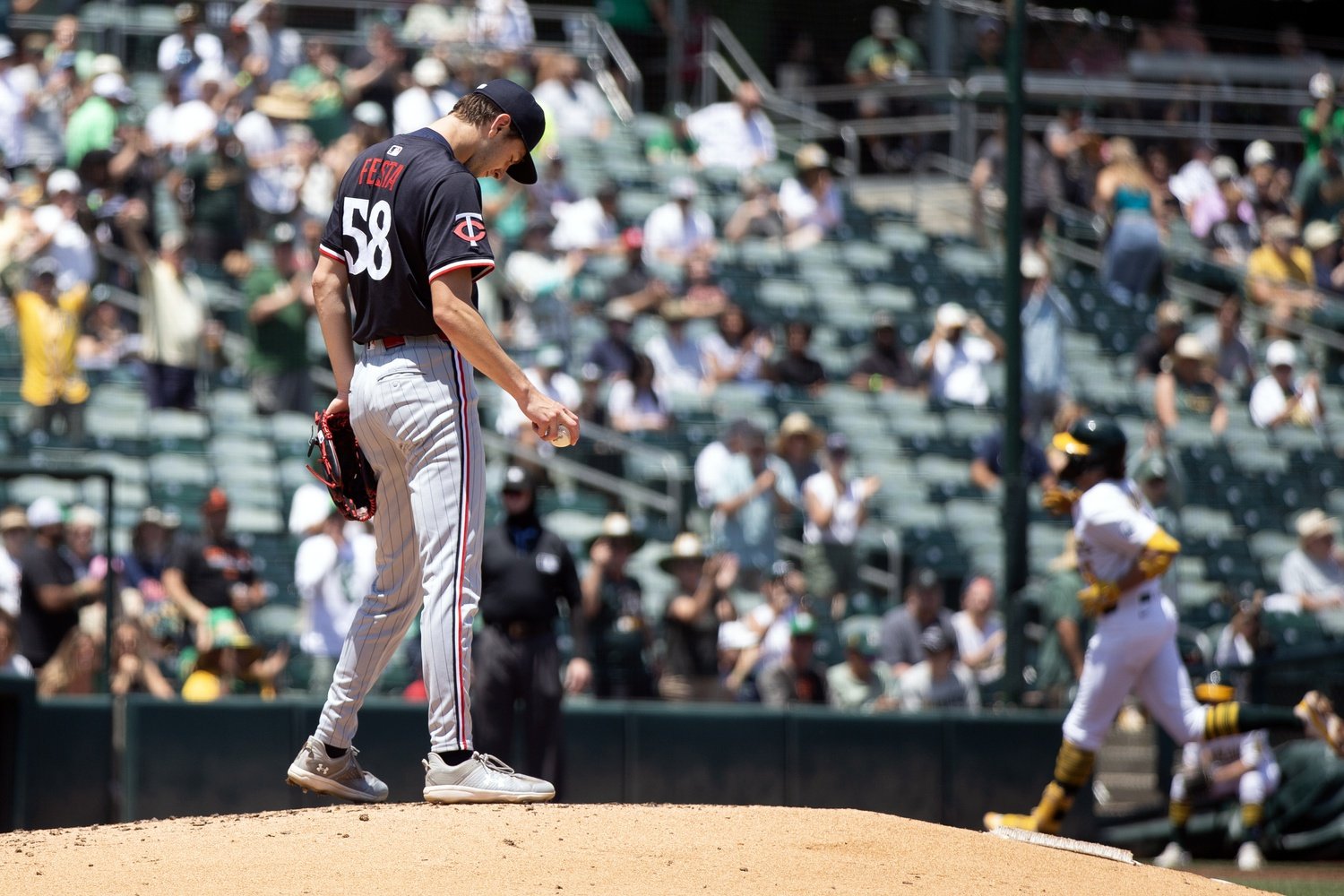 David Festa has awesome stuff. That's easy to see, and it has translated into results. In his MLB career, he has struck out 77 hitters in 64 ⅓ innings with a 13% swing-and-miss rate. These are excellent numbers, especially for a young pitcher still finding his way in the big leagues. On top of that, Festa has overcome his greatest perceived weakness by walking just 8% of the hitters he has faced. Pair that with what Festa has done in the minors – 2.83 ERA, 34-to-4 K/BB ratio in six starts at Triple-A this year – and you've got an ideal contingency plan for a team that just lost its No. 1 starter and much-hyped top pitching prospect to shoulder injuries. Festa oozes frontline potential. But up to this point, he hasn't been able to convincingly seize that potential. Last year, the right-hander gave up 12 earned runs over 10 innings in his first two starts for the Twins. This made it nearly impossible for his overall numbers to recover, so he finished the season with an underwhelming 4.90 ERA despite pitching very well thereafter. But what is noteworthy about those first two starts is that – despite getting lit up – Festa completed five innings in both. In fact, he did so seven times in his first 10 major-league starts. Since then, he has completed five innings only once in eight starts, including zero of his four outings with the Twins this year. Festa was allowed to face 23 batters in his first MLB start last year, and 24 in his second. He has since made 16 starts for the Twins, and never been allowed to face more than 21 hitters. In his four starts this year, the team has been very regimented in removing him at a certain threshold: he faced 19 batters in three, and 18 in the other. Under no circumstances have the Twins even flirted with the idea of letting Festa embark on a third time through the order. That was working pretty well, up until he got ambushed by the Athletics on Thursday for eight earned runs in 3 ⅔ innings. He'll look to rebound when he faces off against Jack Leiter and the Texas Rangers on Wednesday at Target Field – an interesting matchup between two 25-year-olds who were born about a month apart in the year 2000. (In the year two thousAAANNNDDDD.) Leiter was more or less destined to be a major-league starting pitcher from the moment he was born. His father (Al Leiter) was a two-decade big-leaguer and an All-Star. Jack was a standout pitcher as a youth, in high school, in college, in the minors. He was a second overall draft pick, and now he's a fixture in the Rangers rotation, despite a record of performance that has been rocky through his first 87 innings as a big-leaguer (5.87 ERA, 4.80 FIP). Nothing has ever come quite so easy for Festa, who had a solid but unremarkable run at Seton Hall University before the Twins drafted him in the 13th round – 399th overall – in 2021. From there, the Derek Falvey Pitching Machine got to work turning Festa into the "Slim Reaper." With amped up velocity and stuff, he averaged 11.1 strikeouts per nine innings in the minors in his way to the big leagues, where he is now firmly entrenched so long as he can stay healthy. Are the Twins ready to loosen the reins? Do they have a choice? The "staying healthy" thing is no small caveat. It never is with pitchers, but Festa already this year has taken a break due to arm fatigue, and we're not even at the halfway point. This factor no doubt plays a role in the team's conservative handling of Festa, who has yet to throw even 85 pitches in an outing this season, minors or majors. But if he's going to be a full-time member of the Twins rotation going forward, the standard needs to change. I mean, I would think so. Pablo López had completed five or more innings in all but one of his 11 starts for the Twins this year. Those reliable innings cannot be absorbed entirely by a bullpen that already has been ridden hard, with Jhoan Durán and Griffin Jax on pace for career-high workloads, and Louis Varland seeing one of the highest usage rates in franchise history. It already feels kinda miraculous that Brock Stewart has stayed as healthy as he has, and Danny Coulombe is dealing with elbow pain at age 35. For his part, Festa sounded at the end of last year like he was ready for the challenge of extending his outings. “When the stakes were super-high, I really enjoyed it,” he said in a November 2024 Star Tribune article from the great Bobby Nightengale. “Would I have liked to go longer in some outings? Yeah, but a lot of that is situational, which I totally understand. Some outings I felt good and I was dying to get the team through six innings, but I only went 4 ⅔ or whatever the case may be. Learning to navigate the lineup and being able to face guys the third time around in most of my outings, I thought I did a good job of learning how to do that.” The Twins, up until now, haven't been willing to see if those lessons actually took. But with López and Matthews down, and the kid-glove treatment essentially off the table, we're likely about to find out.
 -
Image courtesy of Dennis Lee-Imagn Images The Weekly Nutshell: Things started off swimmingly, with the Twins securing three straight lopsided victories against the Athletics and rising to seven games above .500 midway through the week. However, they lost Pablo López to an injury in one of those games and it proved to be an ill omen. The A's avoided a sweep on Thursday with a blowout win and then the Twins dropped tight games against Toronto on Friday and Saturday, sucking the wind out of their sails and offsetting their early-week success. Adding to their woes, Minnesota lost another starter to another shoulder injury over the weekend, leaving their once-admirable rotation depth in a state of disrepair. The Twins closed out the week with a win to end a three-game skid, with their league-best bullpen leading the way. They'll be hoping for plenty more of that as they prepare for life without two critical starting arms. Weekly Snapshot: Mon, 6/2 through Sun, 6/8 *** Record Last Week: 4-3 (Overall: 35-30) Run Differential Last Week: +7 (Overall: +37) Standing: 2nd Place in AL Central (7.0 GB) Last Week's Game Results: Game 59 | MIN 10, ATH 4: Buxton Drives in Five as Twins Rout A's in Sacramento Buxton: 2-5, 5 RBI Game 60 | MIN 10, ATH 3: Offense Goes Off in Late Innings, Pablo Goes Down with Injury Castro: 2 HR Game 61 | MIN 6, ATH 1: Lights-Out Pitching, Power Hitting Propel Twins to Another Win Twins bullpen: 4 IP, 0 R, 10 K, 1 H, 1 BB Game 62 | ATH 14, MIN 3: Athletics Ambush Festa, Avoid Sweep with Blowout Victory Festa: 3.2 IP, 8 ER, 3 HR Game 63 | TOR 6, MIN 4: Middle Inning Malaise Flips Script as Early Lead Vanishes Ober: 7 IP, 5 ER Game 64 | TOR 5, MIN 4: Jax Surrenders Costly Homer, Lineup Comes Up Short Again Jax: 1 IP, 2 ER, L Game 65 | MIN 6, TOR 3: Twins Overcome Sloppy Play, Ride Bullpen Brilliance to Win Twins bullpen: 4 IP, 0 R, 1 H, 0 BB IF YOU'D RATHER LISTEN TO THE WEEK IN REVIEW THAN READ IT, YOU CAN GET IT IN AUDIO FORM! FIND THE LATEST EPISODE ON OUR PODCAST PAGE, AS WELL AS ON APPLE AND SPOTIFY. SUBSCRIBE TO OUR CHANNELS SO YOU DON'T MISS OUT! NEWS & NOTES The Twins were on their way to a second consecutive blowout win over the A's on Tuesday when Pablo López signaled for trainers during his warmups in the sixth inning. He exited the game with right shoulder tightness, and was later diagnosed with a Grade 2 teres major strain that will sideline him for eight to 12 weeks. This is the very same injury that Joe Ryan suffered last August, ending his season. While obviously a huge bummer, the good news here is that López – who ranks second only to Byron Buxton among Twins in fWAR (1.6) – has plenty of time to make it back and help the cause. The team is expressing optimism that he can return and make a significant impact in the regular season, let alone the postseason, where he might be their single most important player. In the meantime, the Twins will need to make do without their No. 1 starter, which they were theoretically as well-equipped as any team in the league to do. They felt confident turning to David Festa, who has pitched very well in the minors and majors this year, for Thursday's series finale in Sacramento but the righty got blown up for eight runs. Hopefully just a small hiccup because the Twins are going to have to rely on him. On Friday, Minnesota called up right-hander Travis Adams to relieve a worn-down bullpen, replacing Kody Funderburk who was optioned to St. Paul. Adams has yet to make an appearance but whenever he does he'll become the fourth Twins player to make his MLB debut this season, joining Luke Keaschall, Carson McCusker and Ryan Fitzgerald. Adams is expected to fill a multi-inning long relief role but as we saw over the weekend, that type of usage can be tough to plan around. The pitching staff received more meaningful help on Sunday in the form of Danny Coulombe, who was activated from the injured list following just one rehab appearance in Triple-A. The return of Coulombe restores a key piece to Rocco Baldelli's late-game mix, but this reinforcement comes at a cost – we learned on Sunday that Zebby Matthews will be joining López on the injured list, after being diagnosed with his own shoulder strain. He'll be out for an undetermined amount of time. It looks like Simeon Woods Richardson, who was scratched from his scheduled start with the Saints on Sunday, will be recalled to replace him. Carlos Correa had a bit of a scare with his back, which flared up in Sacramento – evidently because of how much he was sliding around in the batter's box in a minor-league ballpark. “It’s the worst box I’ve ever stepped in,” he told reporters. Correa, who has a history of back problems, sat out the last two games of the A's series and the first game of the Blue Jays series, but was back in the lineup for Minnesota on Saturday and Sunday. Twins players intimated that field conditions at Sutter Health Park played a role in López's injury, and it's also worth noting that Matthews last pitched in the ballpark before landing on the IL with his injury. HIGHLIGHTS At long last, Royce Lewis is showing signs of breaking free from his unrelenting slump, which dates back to August of last year. He's shown occasional flashes this season, but this past week Lewis really seemed to be turning a corner, going 7-for-16 with two doubles, five walks and just three strikeouts. Lewis reached base all four times in Friday night's game against Toronto, and then reached in all three trips on Sunday after entering as a pinch-hitter. Willi Castro, meanwhile, continues to heat up. He had another two-homer game against the Athletics on Tuesday, helping key a 10-3 blowout, and was 9-for-23 with four walks on the week, showing power and patience that were both amiss throughout the first two months. A few other outstanding performers for the Twins offense in a week that saw them score 43 runs across seven games: Trevor Larnach and Matt Wallner are bringing the left-handed thump that this lineup badly needs, with both homering twice. Larnach has seemingly earned his way into everyday entrenchment near the top of Rocco's lineups, even against lefty starters. Wallner has homered three times in seven games since coming off the IL, and seems like he's still shaking off the rust. Ryan Jeffers went 5-for-16 with a double, a homer and three walks. His .357 wOBA ranked fifth among major-league catchers entering play on Sunday. He's an underrated linchpin in the Twins' lineup. Ty France has been unexceptional overall but he's doing what the Twins signed him to do: get on base. He did so steadily in the past week with 10 hits, a walk and two more HBPs that pushed his league-leading total to 12. He has reached base in 20 consecutive games, becoming the first Minnesota hitter to do so since Edouard Julien in 2023. France also hasn't slowed down with the clutch-hitting heroics, now batting .381 with runners in scoring position. In the bullpen, the Twins keep on riding Louis Varland hard, and he keeps on responding in a big way. Varland pitched three times in Minnesota's seven games, striking out six over three scoreless innings. He has appeared in almost exactly half of the team's games so far, putting him on track for one of the highest appearance totals in franchise history, and is holding up very well under the heavy usage, seemingly getting better and stronger as the year goes on. Unleashing maxed-out stuff in a short-burst relief role, Varland is averaging 98 MPH with his four-seam fastball and carving hitters up with an overpowering knuckle curve, which is yielding a .140 batting average and generating whiffs on 43.7% of swings. One final point of positivity worth noting: Byron Buxton drew three walks for the first time in his career on Sunday. This came on the heels of a two-walk game on Friday night. Buck's bat went mostly quiet after he picked up four hits in the first two games against the A's, but finding a way to still get his speed aboard when that's the case adds another dimension to his game. He has now drawn 12 walks in his past 15 games after drawing five in his first 34. Mainly I'm just really glad to see Buxton tracking the ball so well and taking at-bats of this quality after the concussion scare. It strikes me as a very reassuring sign. LOWLIGHTS The strength of their rotation was one of the biggest reasons to believe in this Minnesota Twins team, and to an extent, it still is. But attrition is striking this group in a major way here in June. The loss of López is pretty devastating, and adding Matthews on top is a double-whammy of dire proportions. Subtracting these two arms from the picture dramatically lowers the rotation's floor and ceiling, especially when you look at what remains. Woods Richardson is returning after being demoted to the minors for performance reasons earlier in the season. Festa got crushed in his first start back, and himself has dealt with arm fatigue. Then we have Bailey Ober. He gave up five earned runs on Friday, his worst start since the season-opening clunker, although that in of itself was not overly alarming. He still tossed seven innings and gave the Twins a chance to win. One aspect of Ober's start that was eye-catching, however, was his diminished velocity. That's been a larger trend for him this year but was really stark in this game, where his fastball averaged just 89.3 MPH, his lowest mark ever in 101 major-league starts. Ober says he's healthy and attributes the velo struggles to mechanics issues that he is working to solve. Joe Ryan seems to be the sole rotation member with no durability concerns attached at the moment, and he of course missed most the second half last year with his own shoulder injury. The pressure is now more intense than ever for him overcome that final hurdle by staying healthy and effective through the full schedule. Ryan's gonna need to be the de facto ace of this rotation for the time being, and the Twins need him to pitch like one. He didn't necessarily look the part this past week, allowing seven runs (six earned) over 10 innings in his two starts while uncharacteristically struggling to throw the ball in the zone. The Twins also need their back-end bullpen stalwarts to pitch up to their standards. Griffin Jax gave up a leadoff double and then a go-ahead two-run homer in the eighth inning on Saturday night. Jhoan Durán gave up a run on two hits in the ninth. These ones hurt in an eventual 5-4 loss. You can't expect perfection from these guys, and that's more or less what they've been delivering of late – Jax had a 1.32 ERA in May, Durán 0.60 – but the lapses are going to be painful given their extremely high-leverage roles for a team that is now back to playing close games on a daily basis. To their credit, both Jax and Durán bounced back with scoreless innings in Sunday's 6-3 win over Toronto. TRENDING STORYLINE Last year, Simeon Woods Richardson was a life-saver for the rotation, stepping in early to deliver steady and solid work as the team's fifth starter. Is he ready to reprise that role? The Twins have an equally urgent need for quality innings now with two key starters going down, and they'd be thrilled with the kind of performance SWR provided for a majority of his rookie season. In his first eight starts with the Twins this year, prior to being swapped out for Matthews in mid-May, Woods Richardson was not up to snuff, and trending the wrong way. He completed five innings in only three of those starts, and got bombed by the Orioles for six runs in his final turn before the demotion. The right-hander made just three starts at Triple-A before being recalled, but for what it's worth his numbers there were encouraging: 17 innings, 19 strikeouts, four walks. Efficient work and relatively deep outings – that's what the Twins will want to see from him this time around. Woods Richardson will be pushed into the grinder right away with two starts in his first week back, scheduled to start Tuesday's opener against Texas and Sunday's finale against Houston. LOOKING AHEAD After getting a break on Monday, the Twins will open another series at Target Field on Tuesday, welcoming the Texas Rangers into town for a three-game series. The Rangers have struggled mightily on the road this season with a 10-22 record. From there, the Twins head to Houston for a weekend series against the first-place Astros, who have been very good at home where they are 22-12. TUESDAY, JUNE 10: RANGERS @ TWINS — RHP Tyler Mahle v. RHP Simeon Woods Richardson WEDNESDAY, JUNE 11: RANGERS @ TWINS — RHP Jack Leiter v. RHP David Festa THURSDAY, JUNE 12: RANGERS @ TWINS — LHP Patrick Corbin v. RHP Bailey Ober FRIDAY, JUNE 13: TWINS @ ASTROS — RHP Chris Paddack v. LHP Colton Gordon SATURDAY, JUNE 14: TWINS @ ASTROS — RHP Joe Ryan v. RHP Hunter Brown SUNDAY, JUNE 15: TWINS @ ASTROS — RHP Simeon Woods Richardson v. RHP Lance McCullers Jr. View full article
- 13 replies
-
- 1
-
-
- pablo lopez
- zebby matthews
- (and 2 more)
-
 The Weekly Nutshell: Things started off swimmingly, with the Twins securing three straight lopsided victories against the Athletics and rising to seven games above .500 midway through the week. However, they lost Pablo López to an injury in one of those games and it proved to be an ill omen. The A's avoided a sweep on Thursday with a blowout win and then the Twins dropped tight games against Toronto on Friday and Saturday, sucking the wind out of their sails and offsetting their early-week success. Adding to their woes, Minnesota lost another starter to another shoulder injury over the weekend, leaving their once-admirable rotation depth in a state of disrepair. The Twins closed out the week with a win to end a three-game skid, with their league-best bullpen leading the way. They'll be hoping for plenty more of that as they prepare for life without two critical starting arms. Weekly Snapshot: Mon, 6/2 through Sun, 6/8 *** Record Last Week: 4-3 (Overall: 35-30) Run Differential Last Week: +7 (Overall: +37) Standing: 2nd Place in AL Central (7.0 GB) Last Week's Game Results: Game 59 | MIN 10, ATH 4: Buxton Drives in Five as Twins Rout A's in Sacramento Buxton: 2-5, 5 RBI Game 60 | MIN 10, ATH 3: Offense Goes Off in Late Innings, Pablo Goes Down with Injury Castro: 2 HR Game 61 | MIN 6, ATH 1: Lights-Out Pitching, Power Hitting Propel Twins to Another Win Twins bullpen: 4 IP, 0 R, 10 K, 1 H, 1 BB Game 62 | ATH 14, MIN 3: Athletics Ambush Festa, Avoid Sweep with Blowout Victory Festa: 3.2 IP, 8 ER, 3 HR Game 63 | TOR 6, MIN 4: Middle Inning Malaise Flips Script as Early Lead Vanishes Ober: 7 IP, 5 ER Game 64 | TOR 5, MIN 4: Jax Surrenders Costly Homer, Lineup Comes Up Short Again Jax: 1 IP, 2 ER, L Game 65 | MIN 6, TOR 3: Twins Overcome Sloppy Play, Ride Bullpen Brilliance to Win Twins bullpen: 4 IP, 0 R, 1 H, 0 BB IF YOU'D RATHER LISTEN TO THE WEEK IN REVIEW THAN READ IT, YOU CAN GET IT IN AUDIO FORM! FIND THE LATEST EPISODE ON OUR PODCAST PAGE, AS WELL AS ON APPLE AND SPOTIFY. SUBSCRIBE TO OUR CHANNELS SO YOU DON'T MISS OUT! NEWS & NOTES The Twins were on their way to a second consecutive blowout win over the A's on Tuesday when Pablo López signaled for trainers during his warmups in the sixth inning. He exited the game with right shoulder tightness, and was later diagnosed with a Grade 2 teres major strain that will sideline him for eight to 12 weeks. This is the very same injury that Joe Ryan suffered last August, ending his season. While obviously a huge bummer, the good news here is that López – who ranks second only to Byron Buxton among Twins in fWAR (1.6) – has plenty of time to make it back and help the cause. The team is expressing optimism that he can return and make a significant impact in the regular season, let alone the postseason, where he might be their single most important player. In the meantime, the Twins will need to make do without their No. 1 starter, which they were theoretically as well-equipped as any team in the league to do. They felt confident turning to David Festa, who has pitched very well in the minors and majors this year, for Thursday's series finale in Sacramento but the righty got blown up for eight runs. Hopefully just a small hiccup because the Twins are going to have to rely on him. On Friday, Minnesota called up right-hander Travis Adams to relieve a worn-down bullpen, replacing Kody Funderburk who was optioned to St. Paul. Adams has yet to make an appearance but whenever he does he'll become the fourth Twins player to make his MLB debut this season, joining Luke Keaschall, Carson McCusker and Ryan Fitzgerald. Adams is expected to fill a multi-inning long relief role but as we saw over the weekend, that type of usage can be tough to plan around. The pitching staff received more meaningful help on Sunday in the form of Danny Coulombe, who was activated from the injured list following just one rehab appearance in Triple-A. The return of Coulombe restores a key piece to Rocco Baldelli's late-game mix, but this reinforcement comes at a cost – we learned on Sunday that Zebby Matthews will be joining López on the injured list, after being diagnosed with his own shoulder strain. He'll be out for an undetermined amount of time. It looks like Simeon Woods Richardson, who was scratched from his scheduled start with the Saints on Sunday, will be recalled to replace him. Carlos Correa had a bit of a scare with his back, which flared up in Sacramento – evidently because of how much he was sliding around in the batter's box in a minor-league ballpark. “It’s the worst box I’ve ever stepped in,” he told reporters. Correa, who has a history of back problems, sat out the last two games of the A's series and the first game of the Blue Jays series, but was back in the lineup for Minnesota on Saturday and Sunday. Twins players intimated that field conditions at Sutter Health Park played a role in López's injury, and it's also worth noting that Matthews last pitched in the ballpark before landing on the IL with his injury. HIGHLIGHTS At long last, Royce Lewis is showing signs of breaking free from his unrelenting slump, which dates back to August of last year. He's shown occasional flashes this season, but this past week Lewis really seemed to be turning a corner, going 7-for-16 with two doubles, five walks and just three strikeouts. Lewis reached base all four times in Friday night's game against Toronto, and then reached in all three trips on Sunday after entering as a pinch-hitter. Willi Castro, meanwhile, continues to heat up. He had another two-homer game against the Athletics on Tuesday, helping key a 10-3 blowout, and was 9-for-23 with four walks on the week, showing power and patience that were both amiss throughout the first two months. A few other outstanding performers for the Twins offense in a week that saw them score 43 runs across seven games: Trevor Larnach and Matt Wallner are bringing the left-handed thump that this lineup badly needs, with both homering twice. Larnach has seemingly earned his way into everyday entrenchment near the top of Rocco's lineups, even against lefty starters. Wallner has homered three times in seven games since coming off the IL, and seems like he's still shaking off the rust. Ryan Jeffers went 5-for-16 with a double, a homer and three walks. His .357 wOBA ranked fifth among major-league catchers entering play on Sunday. He's an underrated linchpin in the Twins' lineup. Ty France has been unexceptional overall but he's doing what the Twins signed him to do: get on base. He did so steadily in the past week with 10 hits, a walk and two more HBPs that pushed his league-leading total to 12. He has reached base in 20 consecutive games, becoming the first Minnesota hitter to do so since Edouard Julien in 2023. France also hasn't slowed down with the clutch-hitting heroics, now batting .381 with runners in scoring position. In the bullpen, the Twins keep on riding Louis Varland hard, and he keeps on responding in a big way. Varland pitched three times in Minnesota's seven games, striking out six over three scoreless innings. He has appeared in almost exactly half of the team's games so far, putting him on track for one of the highest appearance totals in franchise history, and is holding up very well under the heavy usage, seemingly getting better and stronger as the year goes on. Unleashing maxed-out stuff in a short-burst relief role, Varland is averaging 98 MPH with his four-seam fastball and carving hitters up with an overpowering knuckle curve, which is yielding a .140 batting average and generating whiffs on 43.7% of swings. One final point of positivity worth noting: Byron Buxton drew three walks for the first time in his career on Sunday. This came on the heels of a two-walk game on Friday night. Buck's bat went mostly quiet after he picked up four hits in the first two games against the A's, but finding a way to still get his speed aboard when that's the case adds another dimension to his game. He has now drawn 12 walks in his past 15 games after drawing five in his first 34. Mainly I'm just really glad to see Buxton tracking the ball so well and taking at-bats of this quality after the concussion scare. It strikes me as a very reassuring sign. LOWLIGHTS The strength of their rotation was one of the biggest reasons to believe in this Minnesota Twins team, and to an extent, it still is. But attrition is striking this group in a major way here in June. The loss of López is pretty devastating, and adding Matthews on top is a double-whammy of dire proportions. Subtracting these two arms from the picture dramatically lowers the rotation's floor and ceiling, especially when you look at what remains. Woods Richardson is returning after being demoted to the minors for performance reasons earlier in the season. Festa got crushed in his first start back, and himself has dealt with arm fatigue. Then we have Bailey Ober. He gave up five earned runs on Friday, his worst start since the season-opening clunker, although that in of itself was not overly alarming. He still tossed seven innings and gave the Twins a chance to win. One aspect of Ober's start that was eye-catching, however, was his diminished velocity. That's been a larger trend for him this year but was really stark in this game, where his fastball averaged just 89.3 MPH, his lowest mark ever in 101 major-league starts. Ober says he's healthy and attributes the velo struggles to mechanics issues that he is working to solve. Joe Ryan seems to be the sole rotation member with no durability concerns attached at the moment, and he of course missed most the second half last year with his own shoulder injury. The pressure is now more intense than ever for him overcome that final hurdle by staying healthy and effective through the full schedule. Ryan's gonna need to be the de facto ace of this rotation for the time being, and the Twins need him to pitch like one. He didn't necessarily look the part this past week, allowing seven runs (six earned) over 10 innings in his two starts while uncharacteristically struggling to throw the ball in the zone. The Twins also need their back-end bullpen stalwarts to pitch up to their standards. Griffin Jax gave up a leadoff double and then a go-ahead two-run homer in the eighth inning on Saturday night. Jhoan Durán gave up a run on two hits in the ninth. These ones hurt in an eventual 5-4 loss. You can't expect perfection from these guys, and that's more or less what they've been delivering of late – Jax had a 1.32 ERA in May, Durán 0.60 – but the lapses are going to be painful given their extremely high-leverage roles for a team that is now back to playing close games on a daily basis. To their credit, both Jax and Durán bounced back with scoreless innings in Sunday's 6-3 win over Toronto. TRENDING STORYLINE Last year, Simeon Woods Richardson was a life-saver for the rotation, stepping in early to deliver steady and solid work as the team's fifth starter. Is he ready to reprise that role? The Twins have an equally urgent need for quality innings now with two key starters going down, and they'd be thrilled with the kind of performance SWR provided for a majority of his rookie season. In his first eight starts with the Twins this year, prior to being swapped out for Matthews in mid-May, Woods Richardson was not up to snuff, and trending the wrong way. He completed five innings in only three of those starts, and got bombed by the Orioles for six runs in his final turn before the demotion. The right-hander made just three starts at Triple-A before being recalled, but for what it's worth his numbers there were encouraging: 17 innings, 19 strikeouts, four walks. Efficient work and relatively deep outings – that's what the Twins will want to see from him this time around. Woods Richardson will be pushed into the grinder right away with two starts in his first week back, scheduled to start Tuesday's opener against Texas and Sunday's finale against Houston. LOOKING AHEAD After getting a break on Monday, the Twins will open another series at Target Field on Tuesday, welcoming the Texas Rangers into town for a three-game series. The Rangers have struggled mightily on the road this season with a 10-22 record. From there, the Twins head to Houston for a weekend series against the first-place Astros, who have been very good at home where they are 22-12. TUESDAY, JUNE 10: RANGERS @ TWINS — RHP Tyler Mahle v. RHP Simeon Woods Richardson WEDNESDAY, JUNE 11: RANGERS @ TWINS — RHP Jack Leiter v. RHP David Festa THURSDAY, JUNE 12: RANGERS @ TWINS — LHP Patrick Corbin v. RHP Bailey Ober FRIDAY, JUNE 13: TWINS @ ASTROS — RHP Chris Paddack v. LHP Colton Gordon SATURDAY, JUNE 14: TWINS @ ASTROS — RHP Joe Ryan v. RHP Hunter Brown SUNDAY, JUNE 15: TWINS @ ASTROS — RHP Simeon Woods Richardson v. RHP Lance McCullers Jr.
- 13 comments
-
- 3
-
-
- pablo lopez
- zebby matthews
- (and 2 more)
-
We Should Appreciate Matt Wallner for the World-Class Hitter He Is
Nick Nelson posted an article in Twins
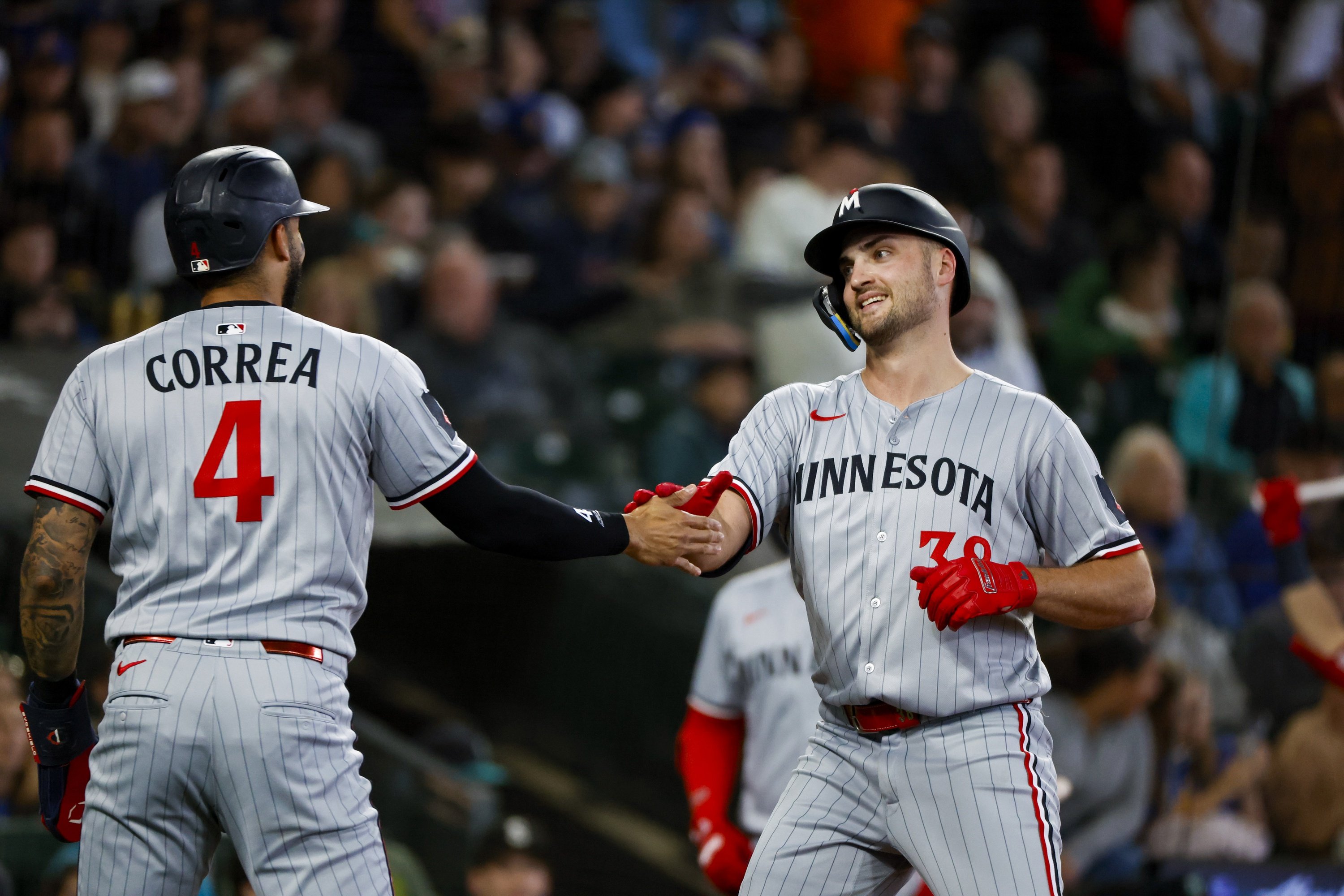 I'm not sure what it is about Matt Wallner that leads to him not being fully appreciated by Twins fans for what he is. You would think that this status as a hometown product — Forest Lake native, former Mr. Baseball Minnesota turned first-round draft pick — would help his case. Instead the opposite dynamic could be at play, with the self-effacing insecurity of us Midwesterners (I say it lovingly) causing us to reflexively downgrade "one of us." Certainly Joe Mauer seemed to experience this effect. There is also the style of play that Wallner brings to the table. He swings and misses a ton. He strikes out in bunches. He's not going to post high batting averages and he's not going to necessarily make things happen with his legs. But production in baseball isn't about hits or stolen bases, not directly anyway. It's about getting on base and hitting for power. In these areas, Wallner excels like few others. Through 191 major-league games and 661 plate appearances, a little over one full season's worth of action, Wallner has slashed .253/.368/.503 with 32 home runs, 36 doubles, 94 RBIs and 69 walks. That is All-Star caliber offensive performance bordering on MVP level. Don't believe me? Let's take a look at the wOBA leaderboard for all big-leaguers since Wallner first got called up. Through the lens of this sabermetric stat, which uses a run-value-based formula that reflects the actual impact of each event, Wallner's productivity at the plate is almost unrivaled. Among players who have made as many or more plate appearances since 2022, only eight have a higher wOBA and it is just about the most superstar-laden list you can imagine: Aaron Judge, Shohei Ohtani, Yordan Alvarez, Freddie Freeman, Juan Soto, Mike Trout, Mookie Betts, Ronald Acuna Jr. Among Minnesota Twins players with 600 or more career plate appearances, only two have a better career OPS than Wallner's .871: Nelson Cruz (.984) and Harmon Killebrew (.892). We're not just seeing one of the best hitters in the lineup; so far in his major-league time Wallner has been one of the best hitters in baseball and in franchise history. Which makes it all the more hard to believe, in retrospect, that he spent almost the entire first half of 2024 in Triple-A due to a 13-game slump, but, I digress. What's important now is that, after a lengthy injury layoff, Wallner is back in the Twins lineup and making an impact as usual, with two homers already in his first four games since returning from his hamstring injury. If the Twins are going to make a serious push this summer, they’ll need more than just their big-name stars to lead the charge. Wallner might not often be mentioned in the same breath as Byron Buxton, Carlos Correa, or Royce Lewis when fans talk about core pillars, but he absolutely belongs in that conversation. His bat is that impactful — not just a luxury, but a necessity for this offense to reach its full potential.
 -
Image courtesy of Joe Nicholson-Imagn Images I'm not sure what it is about Matt Wallner that leads to him not being fully appreciated by Twins fans for what he is. You would think that this status as a hometown product — Forest Lake native, former Mr. Baseball Minnesota turned first-round draft pick — would help his case. Instead the opposite dynamic could be at play, with the self-effacing insecurity of us Midwesterners (I say it lovingly) causing us to reflexively downgrade "one of us." Certainly Joe Mauer seemed to experience this effect. There is also the style of play that Wallner brings to the table. He swings and misses a ton. He strikes out in bunches. He's not going to post high batting averages and he's not going to necessarily make things happen with his legs. But production in baseball isn't about hits or stolen bases, not directly anyway. It's about getting on base and hitting for power. In these areas, Wallner excels like few others. Through 191 major-league games and 661 plate appearances, a little over one full season's worth of action, Wallner has slashed .253/.368/.503 with 32 home runs, 36 doubles, 94 RBIs and 69 walks. That is All-Star caliber offensive performance bordering on MVP level. Don't believe me? Let's take a look at the wOBA leaderboard for all big-leaguers since Wallner first got called up. Through the lens of this sabermetric stat, which uses a run-value-based formula that reflects the actual impact of each event, Wallner's productivity at the plate is almost unrivaled. Among players who have made as many or more plate appearances since 2022, only eight have a higher wOBA and it is just about the most superstar-laden list you can imagine: Aaron Judge, Shohei Ohtani, Yordan Alvarez, Freddie Freeman, Juan Soto, Mike Trout, Mookie Betts, Ronald Acuna Jr. Among Minnesota Twins players with 600 or more career plate appearances, only two have a better career OPS than Wallner's .871: Nelson Cruz (.984) and Harmon Killebrew (.892). We're not just seeing one of the best hitters in the lineup; so far in his major-league time Wallner has been one of the best hitters in baseball and in franchise history. Which makes it all the more hard to believe, in retrospect, that he spent almost the entire first half of 2024 in Triple-A due to a 13-game slump, but, I digress. What's important now is that, after a lengthy injury layoff, Wallner is back in the Twins lineup and making an impact as usual, with two homers already in his first four games since returning from his hamstring injury. If the Twins are going to make a serious push this summer, they’ll need more than just their big-name stars to lead the charge. Wallner might not often be mentioned in the same breath as Byron Buxton, Carlos Correa, or Royce Lewis when fans talk about core pillars, but he absolutely belongs in that conversation. His bat is that impactful — not just a luxury, but a necessity for this offense to reach its full potential. View full article
-
Am I missing something? From what I can see there has been one front-page article before this one about the concept of a Royce Lewis demotion, and it was assessing the more traditional idea of sending him to Triple-A. IMO the parallel between Miguel Sano and the actions that were taken in his case is a unique idea worth unpacking on its own. Where is the overlap exactly? BTW - in between the two articles about Lewis and what to do with him, there were 11 front-page articles focusing on different topics. On a weekend.
-
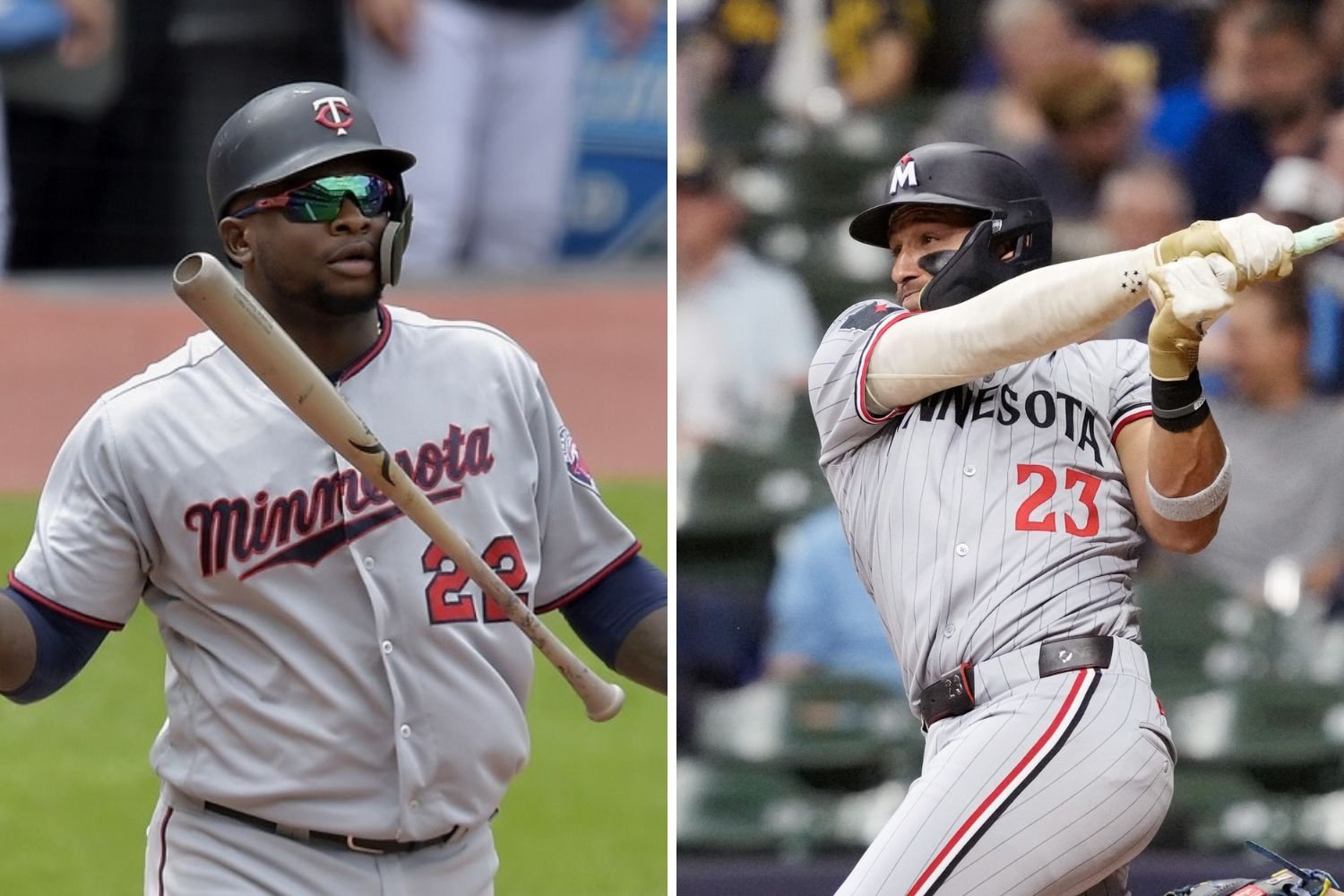 Seven years ago this month – on June 18th, 2018 – the Minnesota Twins optioned Miguel Sanó from the major leagues to Single-A Fort Myers. It was a stunning turn of events for the 25-year-old, who was less than one year removed from featuring in the All-Star Game and Home Run Derby. But Sanó's performance forced the issue; through 37 games and 163 plate appearances, he was batting .203 with a .675 OPS and 41% strikeout rate. Beyond the performance was the observable reality: Sanó wasn't in playing shape. He'd suffered a major leg injury near the end of the previous season, resulting in surgery to insert a titanium rod, and it set him behind greatly in terms of offseason conditioning and preparation. This all contributed to a decision that was drastic and exceedingly rare: sending a 25-year-old with 1,500 MLB plate appearances – and very good overall career numbers – back to the land of teenagers and college draftees in southwest Florida. Sending Sanó all the way down to Single-A wasn't an act of punishment or belittlement. It was strategic. Fort Myers, where the Mighty Mussels (then Miracle) play, is home to the Twins' spring training complex and organizational development hub. Sending Sanó there gave him a chance to take in-game swings against low-caliber competition, sure, but it also gave him an opportunity to do the more important behind-the-scenes work alongside coaches and trainers who could focus on him intently. "He needs to be the guy we think he can be," said manager Paul Molitor at the time. "He's not there right now. We have to take a step backwards here and determine the steps moving forward. But we like our coaches and facility there with a lot of things we can control more there." I bring up this precedent as we ponder the quandary that is Royce Lewis. In some ways his path up to now has been very similar to that of Sanó: a heralded amateur shortstop turned top prospect turned formidable slugging third baseman in the majors. Much like Sanó did, Lewis is experiencing a sudden and profound spiral in his age-25 season. Actually, his performance has been far worse than Sanó's was, especially when you factor in last six weeks of 2024. The team's dwindling faith in Lewis was made evident on Sunday when he batted ninth in the starting lineup, and was replaced as a pinch-hitter midway through by Brooks Lee and his 71 OPS+. That's the clearest indictment we've seen yet of Royce, whose quotes to media inspire little confidence that he's got a plan to fight his way out of this. Like Sanó back in 2018, it's evident from watching Lewis play that he's not right physically. His issue is not one of conditioning but of strength and stability – his legs just plainly aren't underneath him. Commentator Trevor Plouffe was calling this out quite openly during the Twins TV broadcast from Seattle on Friday night, seemingly in disbelief that Lewis is being allowed to work through this on a major-league field. (A feeling I've shared on many occasions while watching his at-bats.) Is Lewis still hurt? Does he need more time to build up his lower body and regain his explosiveness? Does he need to completely reset his mechanics in a lower-pressure environment? It's beginning to feel like one of these things has to be true. Right now Lewis doesn't look like a player who would even have much chance of succeeding against Triple-A pitching (and didn't – he was terrible on his rehab stint). You might be wondering, as we mull this comparative course of action: how did it work out with Sanó? Well, he unsurprisingly dominated Single-A pitching, returned to the Twins in late July, and played ... not well the rest of the way, slashing .195/.294/.390 in 136 plate appearances. But the following season, in 2019, a 26-year-old Sanó rebounded with career-best production, posting a .932 OPS with 34 homers for a 101-win team. Which is to say: don't give up on Royce Lewis, as ugly as it looks right now. But it's time to acknowledge that he may need a step backward to figure out the best step forward.
 -
Image courtesy of David Richard and Jeff Hanisch-Imagn Images Seven years ago this month – on June 18th, 2018 – the Minnesota Twins optioned Miguel Sanó from the major leagues to Single-A Fort Myers. It was a stunning turn of events for the 25-year-old, who was less than one year removed from featuring in the All-Star Game and Home Run Derby. But Sanó's performance forced the issue; through 37 games and 163 plate appearances, he was batting .203 with a .675 OPS and 41% strikeout rate. Beyond the performance was the observable reality: Sanó wasn't in playing shape. He'd suffered a major leg injury near the end of the previous season, resulting in surgery to insert a titanium rod, and it set him behind greatly in terms of offseason conditioning and preparation. This all contributed to a decision that was drastic and exceedingly rare: sending a 25-year-old with 1,500 MLB plate appearances – and very good overall career numbers – back to the land of teenagers and college draftees in southwest Florida. Sending Sanó all the way down to Single-A wasn't an act of punishment or belittlement. It was strategic. Fort Myers, where the Mighty Mussels (then Miracle) play, is home to the Twins' spring training complex and organizational development hub. Sending Sanó there gave him a chance to take in-game swings against low-caliber competition, sure, but it also gave him an opportunity to do the more important behind-the-scenes work alongside coaches and trainers who could focus on him intently. "He needs to be the guy we think he can be," said manager Paul Molitor at the time. "He's not there right now. We have to take a step backwards here and determine the steps moving forward. But we like our coaches and facility there with a lot of things we can control more there." I bring up this precedent as we ponder the quandary that is Royce Lewis. In some ways his path up to now has been very similar to that of Sanó: a heralded amateur shortstop turned top prospect turned formidable slugging third baseman in the majors. Much like Sanó did, Lewis is experiencing a sudden and profound spiral in his age-25 season. Actually, his performance has been far worse than Sanó's was, especially when you factor in last six weeks of 2024. The team's dwindling faith in Lewis was made evident on Sunday when he batted ninth in the starting lineup, and was replaced as a pinch-hitter midway through by Brooks Lee and his 71 OPS+. That's the clearest indictment we've seen yet of Royce, whose quotes to media inspire little confidence that he's got a plan to fight his way out of this. Like Sanó back in 2018, it's evident from watching Lewis play that he's not right physically. His issue is not one of conditioning but of strength and stability – his legs just plainly aren't underneath him. Commentator Trevor Plouffe was calling this out quite openly during the Twins TV broadcast from Seattle on Friday night, seemingly in disbelief that Lewis is being allowed to work through this on a major-league field. (A feeling I've shared on many occasions while watching his at-bats.) Is Lewis still hurt? Does he need more time to build up his lower body and regain his explosiveness? Does he need to completely reset his mechanics in a lower-pressure environment? It's beginning to feel like one of these things has to be true. Right now Lewis doesn't look like a player who would even have much chance of succeeding against Triple-A pitching (and didn't – he was terrible on his rehab stint). You might be wondering, as we mull this comparative course of action: how did it work out with Sanó? Well, he unsurprisingly dominated Single-A pitching, returned to the Twins in late July, and played ... not well the rest of the way, slashing .195/.294/.390 in 136 plate appearances. But the following season, in 2019, a 26-year-old Sanó rebounded with career-best production, posting a .932 OPS with 34 homers for a 101-win team. Which is to say: don't give up on Royce Lewis, as ugly as it looks right now. But it's time to acknowledge that he may need a step backward to figure out the best step forward. View full article
-
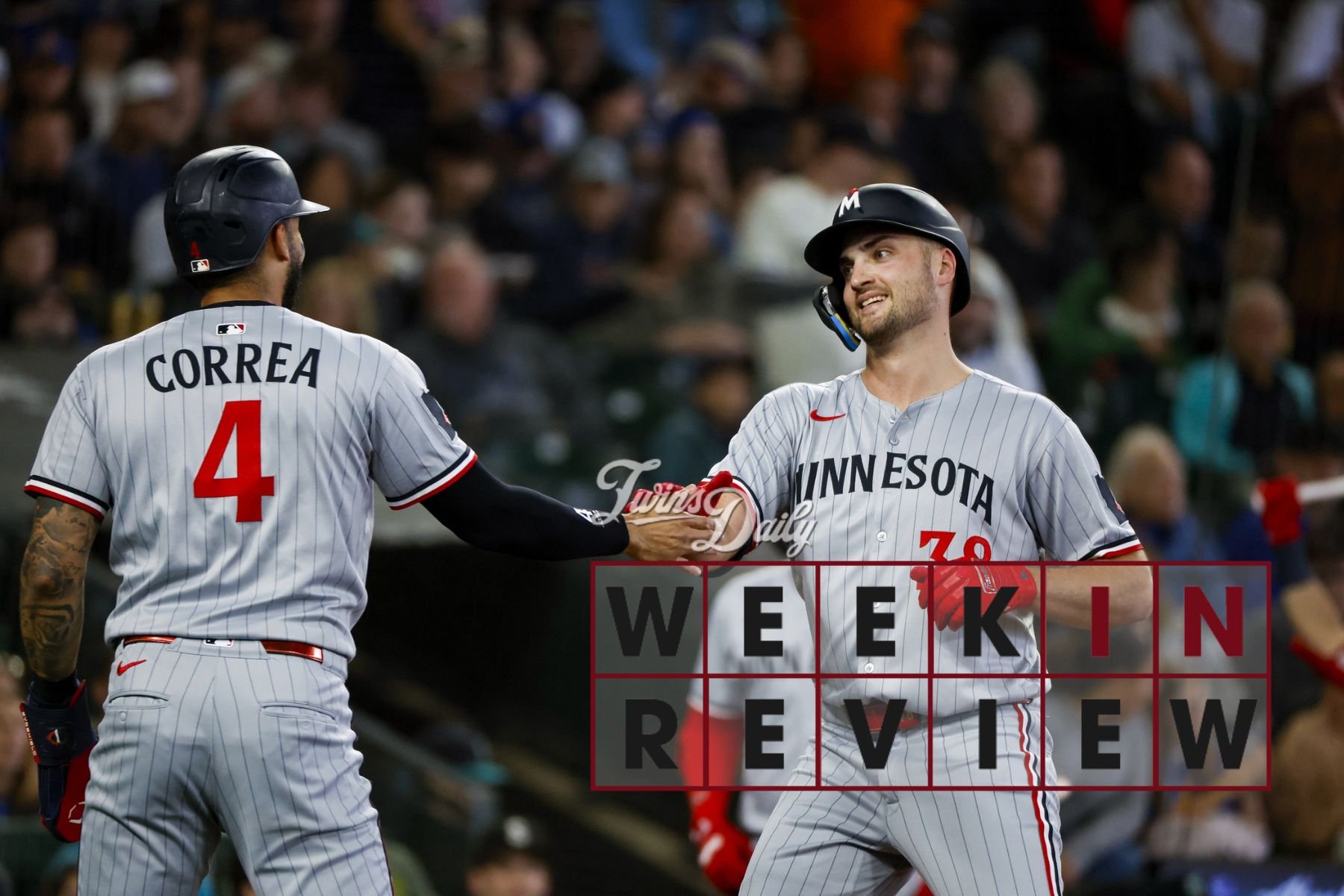 The Weekly Nutshell: The Twins embarked on a lengthy road trip, which started on the southern Atlantic coast and then brought them to the northern Pacific. They dropped both of their series two-to-one, in Tampa and Seattle, but that doesn't necessarily tell the whole story – these were hard-fought games in which Minnesota displayed plenty of the tenacity and resiliency that were disturbingly amiss throughout the early part of the schedule. It was another week where the pitching shined but the unsteady offense sabotaged some strong efforts, scoring seven runs across 38 innings in four losses. Even with key reinforcements returning and a few laggards starting to step it up, the Twins lineup remains a glaring deficiency standing in the way of a sustainable run of success. It's a problem, but we shouldn't let it take away from all the positives seen during this eventful week on the road. Weekly Snapshot: Mon, 5/26 through Sun, 6/1 *** Record Last Week: 2-4 (Overall: 31-27) Run Differential Last Week: -4 (Overall: +30) Standing: 3rd Place in AL Central (7.0 GB) Last Week's Game Results: Game 53 | TB 7, MIN 2: Bats Come Up Empty Again, Funderburk Flops Late Offense: 5 H, 1 XBH Game 54 | MIN 4, TB 2: Ryan and Relievers Stifle Rays, Lineup Gets It Done Correa: 3-4, double Game 55 | TB 5, MIN 0: Offense Melts Down Again in Swampy Florida Heat Offense: 0 XBH, 0-8 RISP Game 56 | MIN 12, SEA 6 (10): Epic Comeback in 9th Sets Up Explosion in Extras Larnach: 4-6, 4 RBI; Castro: 2 HR Game 57 | SEA 5, MIN 4 (11): Another Comeback Attempt Falls Short in 11th Inning Castro: 3-4, SB Game 58 | SEA 2, MIN 1: Castillo and Mariners Outduel Paddack to Take Tight Series Paddack: 8 IP, 1 ER, 10 K IF YOU'D RATHER LISTEN TO THE WEEK IN REVIEW THAN READ IT, YOU CAN GET IT IN AUDIO FORM! FIND THE LATEST EPISODE ON OUR PODCAST PAGE, AS WELL AS ON APPLE AND SPOTIFY. SUBSCRIBE TO OUR CHANNELS SO YOU DON'T MISS OUT! NEWS & NOTES Carson McCusker made only six plate appearances during his 11 days with the Twins, striking out in four of them, before being optioned on Thursday to set up the return of Byron Buxton on Friday from the concussion injured list, where he ended up spending two weeks. McCusker didn't get much of an opportunity during his short time in the majors, reflecting the team's lack of faith in him despite the gaudy Triple-A numbers. On Saturday, Matt Wallner followed Buxton in being activated from the IL, where he spent significantly more time due to a hamstring strain suffered in mid-April. Wallner obliterated Triple-A pitching while rehabbing with the Saints, leaving no doubt as to his readiness. DaShawn Keirsey Jr. was optioned as a corresponding move. Replacing two fringe (at best) major-league players in McCusker and Keirsey Jr. with arguably the team's two best hitters is a roster upgrade of immense proportions. Neither of the returning outfielders wasted any time in making their presence and impact felt. On Friday night Buxton singled, stole second and scored the tying run with two outs in the ninth. On Saturday, Wallner gave Minnesota a 2-0 lead with a home run on his first swing of the bat. HIGHLIGHTS Friday night's win over the Mariners was the clear highlight of the week and probably the highlight of the season so far. It was the type of magical, unyielding, against-all-odds comeback that sticks in your mind for months if not years – the kind of showing that will make you (as a fan or player) feel for the rest of the season like you're never out of a game, and no deficit is unsurmountable. Down 4-0 before most fans even found their seats, the Twins scratched and clawed over the course of the game but found themselves down 6-3 entering the ninth, with closer extraordinaire Andrés Muñoz summoned to close it out. Coming into this appearance, Muñoz was 17-for-19 on save attempts. He had not allowed an earned run, or even an extra-base hit, all season. Staring at infinitesimal odds of victory, Minnesota faced the tallest of tasks, especially once they quickly found themselves down to their last out. Then it happened. Willi Castro clubbed a two-run homer, his second of the game, to draw the Twins back within a run. That one-run deficit still loomed large with the bases empty and two down. Up came Buxton, who pulled an 0-1 pitch between short and third for a single. Then Buxton stole second with ease. Trevor Larnach followed with a clutch game-tying single to center field, his fourth knock of the night, scoring the speedy Buxton to tie the game before a stunned crowd of Mariners fans. Jhoan Durán pitched a clean bottom of the ninth to send the game to extras, and that's where Minnesota's offense really went to work. Carlos Correa ripped a two-run homer, putting the Twins up 8-6, and later in the inning Buxton and Larnach both struck again with two-run hits to turn a surefire loss into an unthinkable blowout victory. The emphatic returns of Buxton and Wallner were definitely a big boost for an offense that is still searching for a consistent heartbeat. Just as helpful, though, are the signs of awakening from other key bats that have been dormant in the first two months of the season. Correa is at the head of that list. He went 7-for-22 with two homers and two doubles and is slugging .667 in nine games since coming off the concussion IL. The power-hitting capability that was completely amiss for Correa in the early going has finally materialized, and that's a potentially huge development for the lineup. Another one is Castro starting to provide a spark. The 2024 All-Star was below replacement level through the first third of this season, but was a key contributor over the past week with seven hits in 21 at-bats. Castro's two home runs on Friday were critical in fueling the comeback victory, and matched his total from his first 35 games. On the rotation front, the Twins got a strong performance from Joe Ryan (6 IP, 1 ER) and exceptional work in two starts from Chris Paddack (13.2 IP, 3 ER). The team also seemingly saw a bit of a breakthrough from Zebby Matthews. He had a nightmarish beginning to his start against the Mariners on Friday, allowing four runs on two homers before getting the second out of the game, but he recovered to pitch through seven innings – a career high – with just two hits and a walk allowed the rest of the way, striking out seven. Zebby's gutsy effort saved the bullpen from heavy work and enabled a late comeback. It was a big "I belong" moment. A shout-out is also due to Durán, who bounced back from a somewhat rocky week to deliver three clean innings, all in very high leverage. He picked up a save (his ninth) and a win (his fourth) while lowering his ERA to 0.99 on the season. If he keeps getting these results Durán seems like a lock to make his first All-Star team. LOWLIGHTS Two hitters who are NOT finding their stride at the plate: Royce Lewis and Brooks Lee. Both are doing much to limit the lineup's effectiveness. In Lewis's case, we know what an X-factor he can be, for better or worse. We've seen him turn into a one-man wrecking crew at times, carrying the offense with his stellar slugging prowess. Any semblance of that form would be such a massive difference-maker for the Twins. But we haven't seen any semblance of it for a very long time. Lewis was 0-for-13 last week, extending his latest hitless streak to 30 at-bats. The futility is simply astonishing to behold from a player for whom success always seemed to come so easily. On Sunday, for the first time since he was a rookie back in 2022, Lewis found himself batting ninth in the starting lineup, and it was well deserved – his OPS has dropped below 400. The Twins have been demonstrating patience and giving him time, but nothing is clicking for the embattled third baseman. He avoided a minor-league demotion this past week, but that course of action has to be on the table at this rate. He'd be in greater danger if someone like Edouard Julien or José Miranda were showing any signs of life in Triple-A, but that's not the case. Meanwhile, Lee presents an interesting situation. Unlike Lewis, he hasn't really given us any reason thus far to believe he can be an impact hitter in the majors, yet Rocco Baldelli is expressing a very high level of confidence in the switch-hitting 24-year-old nevertheless. When the Twins ran out their first "full strength" lineup of the season on Saturday night, with both Buxton and Wallner included, Lee was batting third despite a .625 OPS that dropped to .613 after he went 1-for-6 with a single. His production as a big-leaguer has barely outpaced Christian Vázquez in the same time span. From my view, it's tough to see much offensive upside in Lee right now unless he can start hitting the ball with more authority, which he has shown no signs of doing. He's not disciplined or patient, and he is extremely slow-footed. I'm not exactly sure what it is that has Rocco so enamored other than Lee's ability to take good ABs and put the ball in play. At the bottom of the order that's fine from a glove-first middle infielder, but there isn't much reason for Lee to be hitting in prime lineup spots at this time. Pitching-wise, things are good but not perfect. While the top arms in the Twins bullpen are excelling, the soft underbelly has proven susceptible to getting sliced open. Usage of Kody Funderburk has become a bit of a white-flag signal; he allowed five earned runs over just 1 ⅔ innings in two appearances, putting a close game out of reach on Monday in Tampa by allowing four runs on six hits while recording only two outs. Jorge Alcalá also has not done much to merit pitching in high leverage, but Baldelli had little choice on Saturday when Bailey Ober's four-inning start forced the Twins to turn to the bullpen early. Alcalá came on in the seventh with a 3-2 lead and surrendered a two-run homer that put Seattle on top. The right-hander has shown improvement of late, with just one run allowed in his previous six appearances, but this is the kind of outing that makes it hard to trust in him. The Twins are feeling the absence of Danny Coulombe in the bullpen. He's now eligible to return from the IL, but there's been no indication that's imminent. TRENDING STORYLINE How much longer does Royce Lewis have? Right now the decision in front of the Twins is less about trying to optimize their lineup – which he's doing plenty to hinder by making outs constantly – and more about trying to put the skids on a spiral that threatens to derail his promising career. To see Lewis bat ninth in the lineup on Sunday, and then get pinch-hit for by Brooks Lee after two at-bats, is a very telling sign of the team's current view on the former centerpiece star. What's the best plan going forward? I wouldn't claim to know. As mentioned, no one in Triple-A is exactly knocking the door down for a call-up, unless you wanna give Mickey Gasper another go. But again: at this point it's less about improving the lineup and more about finding a way to halt Lewis's descent from unstoppable to unusable; from captain clutch to cautionary tale. Right now the 25-year-old's play doesn't inspire any confidence nor do his "I'm at a point where the hope is gone" comments. In one sense, the idea of sending Lewis to the minor leagues seems absurd, given all he's accomplished. In another sense, the idea of continuing to run him out in a major-league starting lineup when he looks like this day after day seems even more so. I don't know what the answer is but the status quo is looking increasingly unacceptable. LOOKING AHEAD After opening the past week by playing in a minor-league ballpark, the Twins will do so again when they travel to Sacramento for a four-game series against the Athletics. It's theoretically a very favorable matchup against an A's club that's been free-falling here in May, with 16 losses in their past 17 games, but we just saw first-hand how playing in these unorthodox venues can throw a wrench in the works. From there, the Twins return home from their 10-game road trip without a break, kicking off a weekend series against the Blue Jays at Target Field on Friday. MONDAY, JUNE 2: TWINS @ ATHLETICS — RHP Joe Ryan v. RHP Luis Severino TUESDAY, JUNE 3: TWINS @ ATHLETICS — RHP Pablo Lopez v. LHP Jacob Lopez WEDNESDAY, JUNE 4: TWINS @ ATHLETICS — RHP Zebby Matthews v. LHP Jeffrey Springs THURSDAY, JUNE 5: TWINS @ ATHLETICS — RHP Bailey Ober v. RHP Gunnar Hoglund FRIDAY, JUNE 6: BLUE JAYS @ TWINS — RHP Kevin Gausman v. RHP Chris Paddack SATURDAY, JUNE 7: BLUE JAYS @ TWINS — TBD v. RHP Joe Ryan SUNDAY, JUNE 8: BLUE JAYS @ TWINS — RHP Jose Berrios v. RHP Pablo Lopez
- 13 comments
-
- 4
-
-
- carlos correa
- byron buxton
- (and 2 more)
-
Image courtesy of Joe Nicholson-Imagn Images The Weekly Nutshell: The Twins embarked on a lengthy road trip, which started on the southern Atlantic coast and then brought them to the northern Pacific. They dropped both of their series two-to-one, in Tampa and Seattle, but that doesn't necessarily tell the whole story – these were hard-fought games in which Minnesota displayed plenty of the tenacity and resiliency that were disturbingly amiss throughout the early part of the schedule. It was another week where the pitching shined but the unsteady offense sabotaged some strong efforts, scoring seven runs across 38 innings in four losses. Even with key reinforcements returning and a few laggards starting to step it up, the Twins lineup remains a glaring deficiency standing in the way of a sustainable run of success. It's a problem, but we shouldn't let it take away from all the positives seen during this eventful week on the road. Weekly Snapshot: Mon, 5/26 through Sun, 6/1 *** Record Last Week: 2-4 (Overall: 31-27) Run Differential Last Week: -4 (Overall: +30) Standing: 3rd Place in AL Central (7.0 GB) Last Week's Game Results: Game 53 | TB 7, MIN 2: Bats Come Up Empty Again, Funderburk Flops Late Offense: 5 H, 1 XBH Game 54 | MIN 4, TB 2: Ryan and Relievers Stifle Rays, Lineup Gets It Done Correa: 3-4, double Game 55 | TB 5, MIN 0: Offense Melts Down Again in Swampy Florida Heat Offense: 0 XBH, 0-8 RISP Game 56 | MIN 12, SEA 6 (10): Epic Comeback in 9th Sets Up Explosion in Extras Larnach: 4-6, 4 RBI; Castro: 2 HR Game 57 | SEA 5, MIN 4 (11): Another Comeback Attempt Falls Short in 11th Inning Castro: 3-4, SB Game 58 | SEA 2, MIN 1: Castillo and Mariners Outduel Paddack to Take Tight Series Paddack: 8 IP, 1 ER, 10 K IF YOU'D RATHER LISTEN TO THE WEEK IN REVIEW THAN READ IT, YOU CAN GET IT IN AUDIO FORM! FIND THE LATEST EPISODE ON OUR PODCAST PAGE, AS WELL AS ON APPLE AND SPOTIFY. SUBSCRIBE TO OUR CHANNELS SO YOU DON'T MISS OUT! NEWS & NOTES Carson McCusker made only six plate appearances during his 11 days with the Twins, striking out in four of them, before being optioned on Thursday to set up the return of Byron Buxton on Friday from the concussion injured list, where he ended up spending two weeks. McCusker didn't get much of an opportunity during his short time in the majors, reflecting the team's lack of faith in him despite the gaudy Triple-A numbers. On Saturday, Matt Wallner followed Buxton in being activated from the IL, where he spent significantly more time due to a hamstring strain suffered in mid-April. Wallner obliterated Triple-A pitching while rehabbing with the Saints, leaving no doubt as to his readiness. DaShawn Keirsey Jr. was optioned as a corresponding move. Replacing two fringe (at best) major-league players in McCusker and Keirsey Jr. with arguably the team's two best hitters is a roster upgrade of immense proportions. Neither of the returning outfielders wasted any time in making their presence and impact felt. On Friday night Buxton singled, stole second and scored the tying run with two outs in the ninth. On Saturday, Wallner gave Minnesota a 2-0 lead with a home run on his first swing of the bat. HIGHLIGHTS Friday night's win over the Mariners was the clear highlight of the week and probably the highlight of the season so far. It was the type of magical, unyielding, against-all-odds comeback that sticks in your mind for months if not years – the kind of showing that will make you (as a fan or player) feel for the rest of the season like you're never out of a game, and no deficit is unsurmountable. Down 4-0 before most fans even found their seats, the Twins scratched and clawed over the course of the game but found themselves down 6-3 entering the ninth, with closer extraordinaire Andrés Muñoz summoned to close it out. Coming into this appearance, Muñoz was 17-for-19 on save attempts. He had not allowed an earned run, or even an extra-base hit, all season. Staring at infinitesimal odds of victory, Minnesota faced the tallest of tasks, especially once they quickly found themselves down to their last out. Then it happened. Willi Castro clubbed a two-run homer, his second of the game, to draw the Twins back within a run. That one-run deficit still loomed large with the bases empty and two down. Up came Buxton, who pulled an 0-1 pitch between short and third for a single. Then Buxton stole second with ease. Trevor Larnach followed with a clutch game-tying single to center field, his fourth knock of the night, scoring the speedy Buxton to tie the game before a stunned crowd of Mariners fans. Jhoan Durán pitched a clean bottom of the ninth to send the game to extras, and that's where Minnesota's offense really went to work. Carlos Correa ripped a two-run homer, putting the Twins up 8-6, and later in the inning Buxton and Larnach both struck again with two-run hits to turn a surefire loss into an unthinkable blowout victory. The emphatic returns of Buxton and Wallner were definitely a big boost for an offense that is still searching for a consistent heartbeat. Just as helpful, though, are the signs of awakening from other key bats that have been dormant in the first two months of the season. Correa is at the head of that list. He went 7-for-22 with two homers and two doubles and is slugging .667 in nine games since coming off the concussion IL. The power-hitting capability that was completely amiss for Correa in the early going has finally materialized, and that's a potentially huge development for the lineup. Another one is Castro starting to provide a spark. The 2024 All-Star was below replacement level through the first third of this season, but was a key contributor over the past week with seven hits in 21 at-bats. Castro's two home runs on Friday were critical in fueling the comeback victory, and matched his total from his first 35 games. On the rotation front, the Twins got a strong performance from Joe Ryan (6 IP, 1 ER) and exceptional work in two starts from Chris Paddack (13.2 IP, 3 ER). The team also seemingly saw a bit of a breakthrough from Zebby Matthews. He had a nightmarish beginning to his start against the Mariners on Friday, allowing four runs on two homers before getting the second out of the game, but he recovered to pitch through seven innings – a career high – with just two hits and a walk allowed the rest of the way, striking out seven. Zebby's gutsy effort saved the bullpen from heavy work and enabled a late comeback. It was a big "I belong" moment. A shout-out is also due to Durán, who bounced back from a somewhat rocky week to deliver three clean innings, all in very high leverage. He picked up a save (his ninth) and a win (his fourth) while lowering his ERA to 0.99 on the season. If he keeps getting these results Durán seems like a lock to make his first All-Star team. LOWLIGHTS Two hitters who are NOT finding their stride at the plate: Royce Lewis and Brooks Lee. Both are doing much to limit the lineup's effectiveness. In Lewis's case, we know what an X-factor he can be, for better or worse. We've seen him turn into a one-man wrecking crew at times, carrying the offense with his stellar slugging prowess. Any semblance of that form would be such a massive difference-maker for the Twins. But we haven't seen any semblance of it for a very long time. Lewis was 0-for-13 last week, extending his latest hitless streak to 30 at-bats. The futility is simply astonishing to behold from a player for whom success always seemed to come so easily. On Sunday, for the first time since he was a rookie back in 2022, Lewis found himself batting ninth in the starting lineup, and it was well deserved – his OPS has dropped below 400. The Twins have been demonstrating patience and giving him time, but nothing is clicking for the embattled third baseman. He avoided a minor-league demotion this past week, but that course of action has to be on the table at this rate. He'd be in greater danger if someone like Edouard Julien or José Miranda were showing any signs of life in Triple-A, but that's not the case. Meanwhile, Lee presents an interesting situation. Unlike Lewis, he hasn't really given us any reason thus far to believe he can be an impact hitter in the majors, yet Rocco Baldelli is expressing a very high level of confidence in the switch-hitting 24-year-old nevertheless. When the Twins ran out their first "full strength" lineup of the season on Saturday night, with both Buxton and Wallner included, Lee was batting third despite a .625 OPS that dropped to .613 after he went 1-for-6 with a single. His production as a big-leaguer has barely outpaced Christian Vázquez in the same time span. From my view, it's tough to see much offensive upside in Lee right now unless he can start hitting the ball with more authority, which he has shown no signs of doing. He's not disciplined or patient, and he is extremely slow-footed. I'm not exactly sure what it is that has Rocco so enamored other than Lee's ability to take good ABs and put the ball in play. At the bottom of the order that's fine from a glove-first middle infielder, but there isn't much reason for Lee to be hitting in prime lineup spots at this time. Pitching-wise, things are good but not perfect. While the top arms in the Twins bullpen are excelling, the soft underbelly has proven susceptible to getting sliced open. Usage of Kody Funderburk has become a bit of a white-flag signal; he allowed five earned runs over just 1 ⅔ innings in two appearances, putting a close game out of reach on Monday in Tampa by allowing four runs on six hits while recording only two outs. Jorge Alcalá also has not done much to merit pitching in high leverage, but Baldelli had little choice on Saturday when Bailey Ober's four-inning start forced the Twins to turn to the bullpen early. Alcalá came on in the seventh with a 3-2 lead and surrendered a two-run homer that put Seattle on top. The right-hander has shown improvement of late, with just one run allowed in his previous six appearances, but this is the kind of outing that makes it hard to trust in him. The Twins are feeling the absence of Danny Coulombe in the bullpen. He's now eligible to return from the IL, but there's been no indication that's imminent. TRENDING STORYLINE How much longer does Royce Lewis have? Right now the decision in front of the Twins is less about trying to optimize their lineup – which he's doing plenty to hinder by making outs constantly – and more about trying to put the skids on a spiral that threatens to derail his promising career. To see Lewis bat ninth in the lineup on Sunday, and then get pinch-hit for by Brooks Lee after two at-bats, is a very telling sign of the team's current view on the former centerpiece star. What's the best plan going forward? I wouldn't claim to know. As mentioned, no one in Triple-A is exactly knocking the door down for a call-up, unless you wanna give Mickey Gasper another go. But again: at this point it's less about improving the lineup and more about finding a way to halt Lewis's descent from unstoppable to unusable; from captain clutch to cautionary tale. Right now the 25-year-old's play doesn't inspire any confidence nor do his "I'm at a point where the hope is gone" comments. In one sense, the idea of sending Lewis to the minor leagues seems absurd, given all he's accomplished. In another sense, the idea of continuing to run him out in a major-league starting lineup when he looks like this day after day seems even more so. I don't know what the answer is but the status quo is looking increasingly unacceptable. LOOKING AHEAD After opening the past week by playing in a minor-league ballpark, the Twins will do so again when they travel to Sacramento for a four-game series against the Athletics. It's theoretically a very favorable matchup against an A's club that's been free-falling here in May, with 16 losses in their past 17 games, but we just saw first-hand how playing in these unorthodox venues can throw a wrench in the works. From there, the Twins return home from their 10-game road trip without a break, kicking off a weekend series against the Blue Jays at Target Field on Friday. MONDAY, JUNE 2: TWINS @ ATHLETICS — RHP Joe Ryan v. RHP Luis Severino TUESDAY, JUNE 3: TWINS @ ATHLETICS — RHP Pablo Lopez v. LHP Jacob Lopez WEDNESDAY, JUNE 4: TWINS @ ATHLETICS — RHP Zebby Matthews v. LHP Jeffrey Springs THURSDAY, JUNE 5: TWINS @ ATHLETICS — RHP Bailey Ober v. RHP Gunnar Hoglund FRIDAY, JUNE 6: BLUE JAYS @ TWINS — RHP Kevin Gausman v. RHP Chris Paddack SATURDAY, JUNE 7: BLUE JAYS @ TWINS — TBD v. RHP Joe Ryan SUNDAY, JUNE 8: BLUE JAYS @ TWINS — RHP Jose Berrios v. RHP Pablo Lopez View full article
-
Image courtesy of David Richard and William Purnell-Imagn Images This season is only two months old, but already we've seen plenty of examples that illustrate the massive chasm in competition level between the major leagues and the highest rung of the minors. It has been routine for players to look completely overmatched against MLB pitching before heading down to Triple-A and feasting (or vice versa). Case in point: Mickey Gasper. During his time with the Twins, he's looked like a total non-threat, tallying six hits (one double) in 39 plate appearances. In his overall MLB sample, Gasper has slashed .115/.258/.135 in 62 trips. But when he returns to the comforts of Triple-A he instantly looks like Babe Ruth; in 109 plate appearances with the Saints, Gasper is slashing .348/.450/.717 with nine home runs and 18 RBIs. This after leading all of Triple-A in OPS last year, while in Boston's system. Another prime example: Carson McCusker. He's been destroying minor-league pitching this year, with a 1.032 OPS that leads the International League. Yet despite this dominance, the Twins were extremely reluctant to call him up, and when they did — for a handful of days — they showed no inclination to play him. And then you see what happens when actually really good hitters get a chance against Triple-A pitching. Matt Wallner was utterly unstoppable during his rehab stint with the Saint this past week, crushing five home runs and driving in 13 men in just 27 plate appearances. The reaction from the opposing pitcher on his latest bomb — a three-run shot in the eighth that turned a loss into a win — was very much giving the vibe of, "Why am I facing this guy in the minor leagues, this is stupid." I mention all this to set up a review of José Miranda and Edouard Julien's and performances in Triple-A since they were optioned there on April 13th and May 5th, respectively. It's been ugly. Really ugly. Miranda immediately landed on the minor-league injured list after being sent down, due to a hand injury suffered while handling a case of water at Target. Since being activated, Miranda has exhibited the same fatal flaws that plagued him in the second half last year and out of the gates with the Twins this season. He's putting the ball in play but his quality of contact is atrocious. Miranda has struck out only seven times in 65 plate appearances with St. Paul but he is batting .224 with a .310 slugging percentage. He has five doubles and no home runs. In fact, between the minors and majors, Miranda has hit just one homer in his past 78 games and 272 plate appearances, dating back to before the All-Star break in 2024. That one long ball came on this breaking ball hung by Houston's Spencer Arrighetti. Now, before you write Miranda off, bear in mind that he's still only 26 years old and around this time last year he started locking into an unbelievable hot streak that saw him clobber everything thrown his way. At the All-Star break, the third baseman was slashing .325/.366/.522 with nine homers and 21 doubles in 276 plate appearances. Then, his back flared up, and he's never been the same again since. It's unnerving, in light of what we just saw back injuries do to the career of Alex Kirilloff. But let's not allow that one example to guide our expectations. In plenty of cases, injuries clear up, and their lingering after-effects wear off. Miranda has shown how quickly fortunes can change for the worse. Why can't the opposite be true? We know what kind of hitting ability resides within him at his best. Julien is a trickier one to find optimism with. There is no apparent health-related factor contributing to his downfall. It seems like pitchers and scouts just figured him out, or his skills regressed, or likely some combination of both. The version of Julien that we saw two years would've dominated in this offensive environment, and did. In 2023, before being called up for good, Julien had a .932 OPS with the Saints. Even last year, during his performance-driven demotions, he put up an .803 OPS and popped some extra-base hits. This year, there's been nothing positive to cling onto. He's drawn some walks from time to time, leading to a .388 OBP, but when pitchers come into the zone he can't do much, batting .231 with a .308 slugging percentage in 85 plate appearances while striking out at an exorbitant 27% clip. He hasn't had an extra-base hit in two weeks. Julien, like Miranda, is only 26 years old. It's too soon to give up on him, although both players' defensive shortcomings only magnify the implications of their offensive freefalls. The clock is ticking on these former standouts to turn it around and become viable options for a Twins hitting mix that could sorely use an infusion of explosiveness. Right now they're both a long way from forcing that conversation, and trending the wrong way, but their time hasn't run out yet. There is no doubt: Even as they return to nearly full-strength this weekend in Seattle, the Minnesota Twins are going to need more reinforcements over the course of the summer. Heck, they could use one or two right now, even with their full complement of planned starters. Julien and Miranda are down but not out. Can one or both find the lost spark before writing their way out of the organization's plans? View full article
-
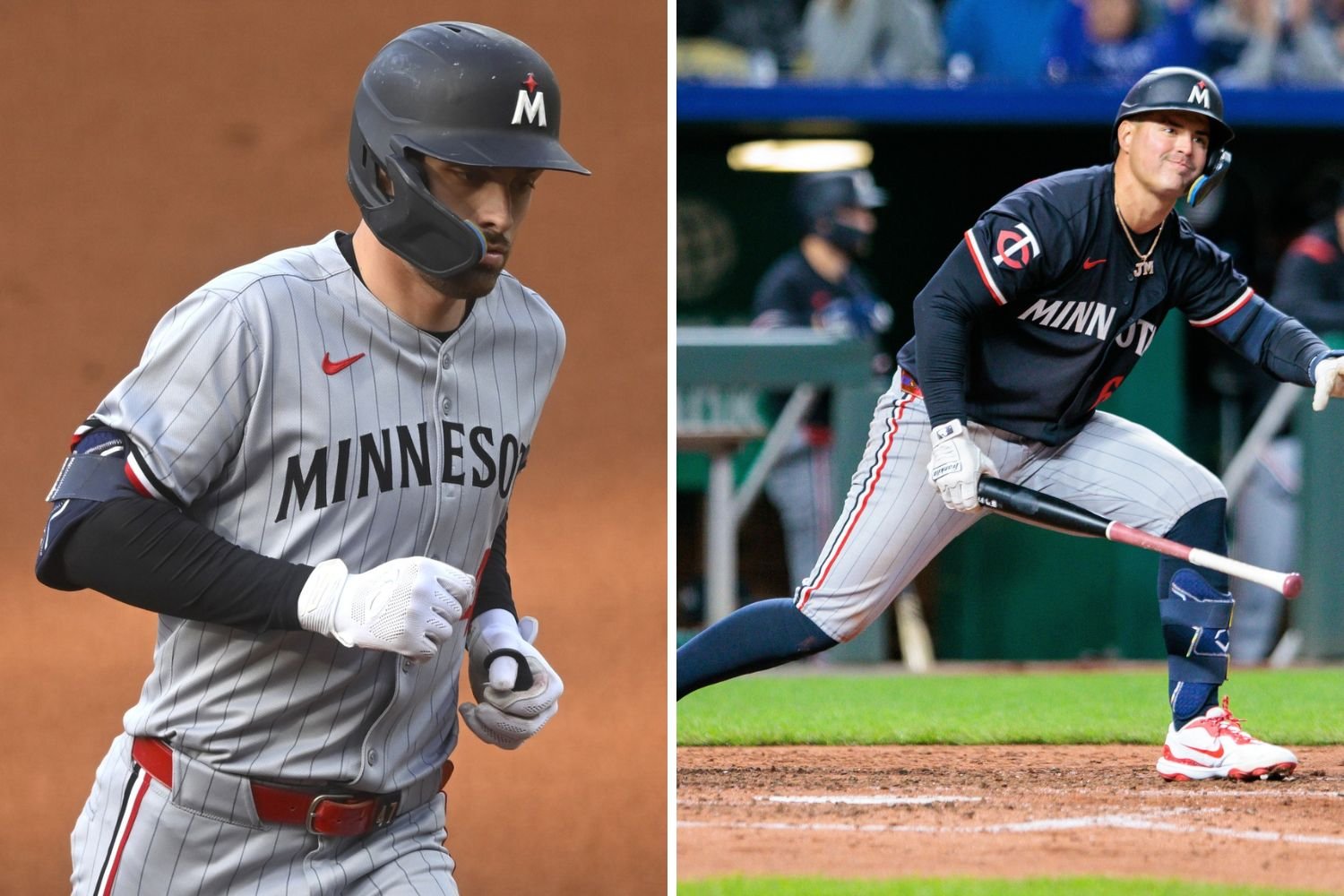 This season is only two months old, but already we've seen plenty of examples that illustrate the massive chasm in competition level between the major leagues and the highest rung of the minors. It has been routine for players to look completely overmatched against MLB pitching before heading down to Triple-A and feasting (or vice versa). Case in point: Mickey Gasper. During his time with the Twins, he's looked like a total non-threat, tallying six hits (one double) in 39 plate appearances. In his overall MLB sample, Gasper has slashed .115/.258/.135 in 62 trips. But when he returns to the comforts of Triple-A he instantly looks like Babe Ruth; in 109 plate appearances with the Saints, Gasper is slashing .348/.450/.717 with nine home runs and 18 RBIs. This after leading all of Triple-A in OPS last year, while in Boston's system. Another prime example: Carson McCusker. He's been destroying minor-league pitching this year, with a 1.032 OPS that leads the International League. Yet despite this dominance, the Twins were extremely reluctant to call him up, and when they did — for a handful of days — they showed no inclination to play him. And then you see what happens when actually really good hitters get a chance against Triple-A pitching. Matt Wallner was utterly unstoppable during his rehab stint with the Saint this past week, crushing five home runs and driving in 13 men in just 27 plate appearances. The reaction from the opposing pitcher on his latest bomb — a three-run shot in the eighth that turned a loss into a win — was very much giving the vibe of, "Why am I facing this guy in the minor leagues, this is stupid." I mention all this to set up a review of José Miranda and Edouard Julien's and performances in Triple-A since they were optioned there on April 13th and May 5th, respectively. It's been ugly. Really ugly. Miranda immediately landed on the minor-league injured list after being sent down, due to a hand injury suffered while handling a case of water at Target. Since being activated, Miranda has exhibited the same fatal flaws that plagued him in the second half last year and out of the gates with the Twins this season. He's putting the ball in play but his quality of contact is atrocious. Miranda has struck out only seven times in 65 plate appearances with St. Paul but he is batting .224 with a .310 slugging percentage. He has five doubles and no home runs. In fact, between the minors and majors, Miranda has hit just one homer in his past 78 games and 272 plate appearances, dating back to before the All-Star break in 2024. That one long ball came on this breaking ball hung by Houston's Spencer Arrighetti. Now, before you write Miranda off, bear in mind that he's still only 26 years old and around this time last year he started locking into an unbelievable hot streak that saw him clobber everything thrown his way. At the All-Star break, the third baseman was slashing .325/.366/.522 with nine homers and 21 doubles in 276 plate appearances. Then, his back flared up, and he's never been the same again since. It's unnerving, in light of what we just saw back injuries do to the career of Alex Kirilloff. But let's not allow that one example to guide our expectations. In plenty of cases, injuries clear up, and their lingering after-effects wear off. Miranda has shown how quickly fortunes can change for the worse. Why can't the opposite be true? We know what kind of hitting ability resides within him at his best. Julien is a trickier one to find optimism with. There is no apparent health-related factor contributing to his downfall. It seems like pitchers and scouts just figured him out, or his skills regressed, or likely some combination of both. The version of Julien that we saw two years would've dominated in this offensive environment, and did. In 2023, before being called up for good, Julien had a .932 OPS with the Saints. Even last year, during his performance-driven demotions, he put up an .803 OPS and popped some extra-base hits. This year, there's been nothing positive to cling onto. He's drawn some walks from time to time, leading to a .388 OBP, but when pitchers come into the zone he can't do much, batting .231 with a .308 slugging percentage in 85 plate appearances while striking out at an exorbitant 27% clip. He hasn't had an extra-base hit in two weeks. Julien, like Miranda, is only 26 years old. It's too soon to give up on him, although both players' defensive shortcomings only magnify the implications of their offensive freefalls. The clock is ticking on these former standouts to turn it around and become viable options for a Twins hitting mix that could sorely use an infusion of explosiveness. Right now they're both a long way from forcing that conversation, and trending the wrong way, but their time hasn't run out yet. There is no doubt: Even as they return to nearly full-strength this weekend in Seattle, the Minnesota Twins are going to need more reinforcements over the course of the summer. Heck, they could use one or two right now, even with their full complement of planned starters. Julien and Miranda are down but not out. Can one or both find the lost spark before writing their way out of the organization's plans?
 -
“Just Having Fun”: Royce Lewis and the Ironic Burden of Joy in Pro Sports
Nick Nelson posted an article in Twins
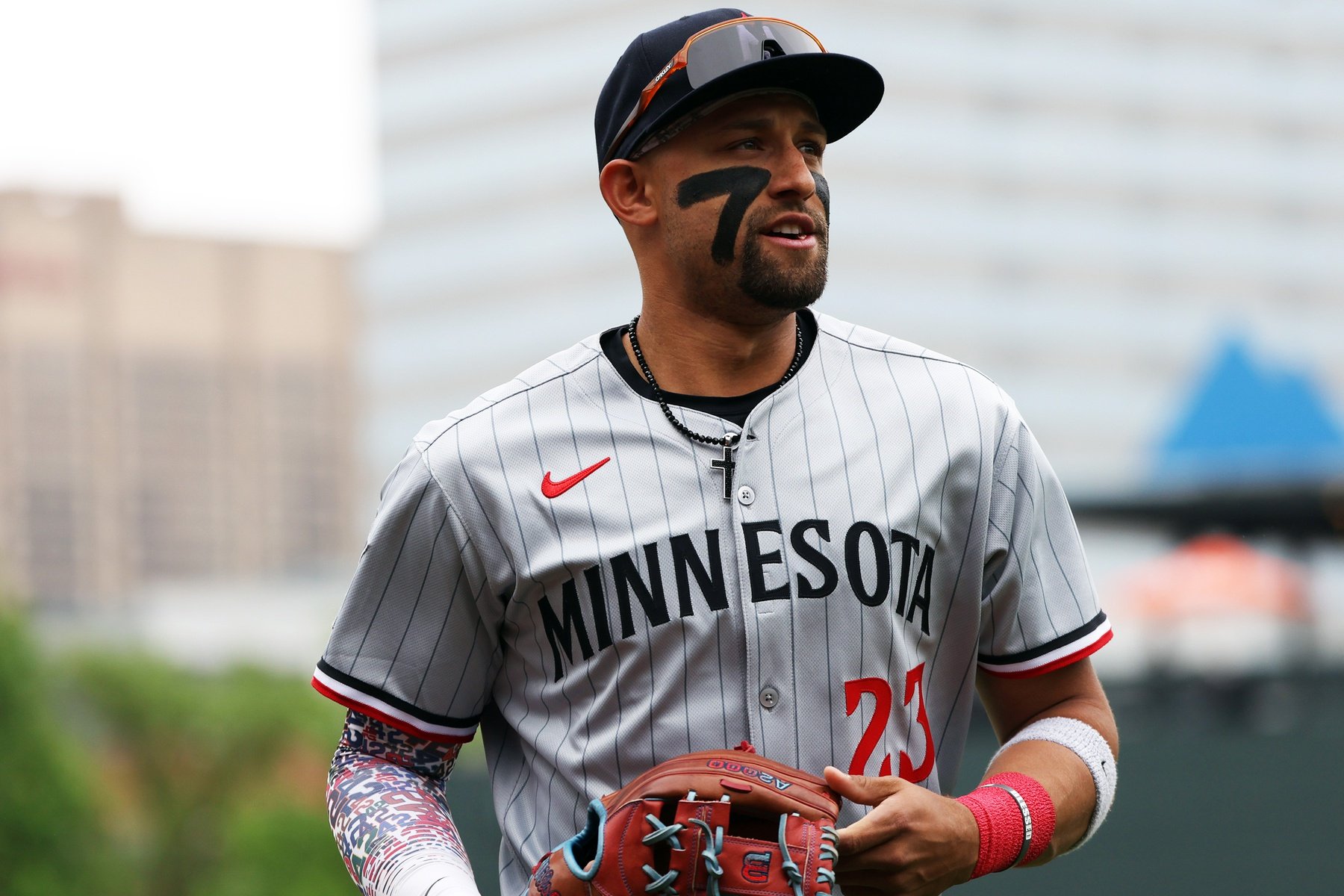 Baseball, at its core, is a game. A kid’s pastime. A joyous outlet! But at the highest level, under the suffocating weight of expectation and pressure, it often becomes anything but fun — which is what makes it so jarring (yet understandable) when a slumping player leans into that very mindset as a way to find their way out. Royce Lewis, the Twins’ once-untouchable phenom, is in the midst of the deepest and most unrelenting slump of his professional life. He’s 0-for-his-last-24, now batting .138 on the season. He hasn't looked right at the plate since last July. And after another hitless game in Tampa on Wednesday, these were his answers to reporters: You can see what he’s trying to do: reframe the moment, lighten the burden, return to the roots. But there’s an almost tragic irony in the effort. When a gifted athlete like Lewis, who once seemed like he could do no wrong, starts repeating “have fun” like a mantra, it doesn’t sound like a return to joy. It sounds like survival. This is, after all, the same Royce Lewis who once said, “I don’t do that slump thing.” He's a freak of nature who seemed immune to struggle; a top draft pick and postseason hero who defied reasonable logic to immediately dominate whenever he stepped in the box following every lengthy injury hiatus. Lewis made the hardest sport on earth look like backyard Wiffle ball. Now, it feels like Wiffle ball for a different reason, evidently. The fall from “unstoppable force” to “grasping for answers” is not unique to Lewis. Baseball humbles everyone, eventually. But the whiplash is amplified when it hits someone who has always seemed like The Chosen One. For fans, it's a little surreal. For teammates, it's a reminder. And for Royce himself, it might just be the first time he’s having to learn what most pros confront early: this game isn’t fair, and it definitely isn’t always fun. Still, there’s something deeply human in Lewis’s coping mechanism. We all tell ourselves little lies to make it through the grind. “This is fun” becomes a sort of foxhole affirmation, like a soldier in a lost war muttering “I’m fighting for a good cause.” You don’t say it because it’s true. You say it because you need it to be. There was a time when even his own teammates couldn’t relate to Lewis. “He’s a freak,” Matt Wallner once said at a Twins Daily Winter Meltdown event with both awe and resignation. And he was. But now, as Royce struggles and searches for joy in a cruel game, he’s finally doing something that’s relatable: reminding us he’s human after all.
 -
Image courtesy of Daniel Kucin Jr.-Imagn Images Baseball, at its core, is a game. A kid’s pastime. A joyous outlet! But at the highest level, under the suffocating weight of expectation and pressure, it often becomes anything but fun — which is what makes it so jarring (yet understandable) when a slumping player leans into that very mindset as a way to find their way out. Royce Lewis, the Twins’ once-untouchable phenom, is in the midst of the deepest and most unrelenting slump of his professional life. He’s 0-for-his-last-24, now batting .138 on the season. He hasn't looked right at the plate since last July. And after another hitless game in Tampa on Wednesday, these were his answers to reporters: You can see what he’s trying to do: reframe the moment, lighten the burden, return to the roots. But there’s an almost tragic irony in the effort. When a gifted athlete like Lewis, who once seemed like he could do no wrong, starts repeating “have fun” like a mantra, it doesn’t sound like a return to joy. It sounds like survival. This is, after all, the same Royce Lewis who once said, “I don’t do that slump thing.” He's a freak of nature who seemed immune to struggle; a top draft pick and postseason hero who defied reasonable logic to immediately dominate whenever he stepped in the box following every lengthy injury hiatus. Lewis made the hardest sport on earth look like backyard Wiffle ball. Now, it feels like Wiffle ball for a different reason, evidently. The fall from “unstoppable force” to “grasping for answers” is not unique to Lewis. Baseball humbles everyone, eventually. But the whiplash is amplified when it hits someone who has always seemed like The Chosen One. For fans, it's a little surreal. For teammates, it's a reminder. And for Royce himself, it might just be the first time he’s having to learn what most pros confront early: this game isn’t fair, and it definitely isn’t always fun. Still, there’s something deeply human in Lewis’s coping mechanism. We all tell ourselves little lies to make it through the grind. “This is fun” becomes a sort of foxhole affirmation, like a soldier in a lost war muttering “I’m fighting for a good cause.” You don’t say it because it’s true. You say it because you need it to be. There was a time when even his own teammates couldn’t relate to Lewis. “He’s a freak,” Matt Wallner once said at a Twins Daily Winter Meltdown event with both awe and resignation. And he was. But now, as Royce struggles and searches for joy in a cruel game, he’s finally doing something that’s relatable: reminding us he’s human after all. View full article
-
The Minnesota Twins Pitching Staff Is a Buzzsaw
Nick Nelson replied to Nick Nelson's topic in Twins Daily Front Page News
In 2006 the Twins went 71-37 in their last 108 games, and uhhhh that lineup had some weak spots. It's not like it's unprecedented. I don't see why that kind of record is out of the question if they continue to boast far-and-away the best pitching staff in the AL. Also I'm not sure what you mean by "continue to produce," they haven't really produced. And they're still 6 games over .500. Asking for above-average offensive production from this group is not such a stretch.- 35 replies
-
- 1
-
-
- joe ryan
- griffin jax
- (and 2 more)
-
Image courtesy of Nathan Ray Seebeck-Imagn Images It's safe to say the Twins have a formula. They've ridden it to a 17-5 record in their last 22 games, and we saw it successfully deployed again in Tampa on Tuesday night. Minnesota's pitching staff is so good, so consistent, that all the Twins offense needs to do is show up and the game is basically won. Joe Ryan, who didn't even look to be at his best in the sweltering Florida heat, casually rattled off six innings of one-run ball, navigating out of trouble on multiple occasions and keeping the ball in the yard. Ryan struck out five and improved to 5-2 with a 2.57 ERA on the season. Louis Varland came in to handle the seventh, giving up a run that he could afford to with a 3-1 lead. He got the job done, hammering the zone with nine strikes on 11 pitches. Everyday Louie is thriving in a relief role, and his durability has been nothing short of astounding – this was his MLB-leading 27th appearance, putting him on pace for the second-most in franchise history. The eighth inning belonged to Griffin Jax, who struck out the side on 14 pitches while inducing five whiffs. Jax has put his slow start firmly in the rear-view mirror; over the past month he's been the best reliever in baseball. Right now he's at the height of his powers and that's an advantage almost no other team in baseball can match. Completing the game was Jhoan Durán, who converted his ninth save in 10 tries while lowering his ERA to 1.07. Ho-hum. He's pitching as well as he has at any point in his career, riding a reconfigured pitch mix to All-Star type results. The offense was unspectacular on Tuesday night, but was were able to scratch across four runs and that's been the magic ticket: when scoring four-plus, the Twins are now 26-3 this season. Their pitching staff has been so good that Minnesota basically can't lose when scoring at least an average number of runs. The Rays never stood a chance in a game where they had to scratch and claw to get two men across the plate. The Twins pitching staff is relentless. Tampa Bay won't get much of a respite in the series finale when they line up against Pablo López and his 2.31 ERA. Rocco Baldelli might have used three of his very best bullpen arms in Tuesday's win, but he can still call upon a fresh Cole Sands or Brock Stewart, and Danny Coulombe will hopefully be back soon with his pristine 0.00 ERA. Minnesota pitchers lead the American League in fWAR and nobody else is close; entering play on Tuesday, the Twins were at 9.3 – just slightly behind the Phillies (9.4) for the major-league lead. The Astros and Royals were tied for second in the AL at 7.7 apiece. This prestigious ranking is reflective of a group that boasts frontline prowess and impressive depth. Letting Jorge Alcalá work through it in a low-leverage bullpen is a luxury. Many contenders would kill to have a guy like Simeon Woods Richardson – currently standing by at Triple-A – in their big-league rotation. Or a David Festa. Or a Zebby Matthews blocking them both (for the moment). Of course, we all know nothing in baseball is ever guaranteed — injuries are inevitably part of the grind, and fortunes can flip quickly. But at this moment, the Twins are making an emphatic case as the best pitching team in the American League. From the top of the rotation to the back end of the bullpen, they’re carving through opponents with ruthless efficiency. When the bats contribute even modestly, this team is nearly impossible to beat. Speaking of which, Matt Wallner and Byron Buxton are both in line to return to the lineup any day now. View full article