Nick Nelson
-
Posts
8,372 -
Joined
-
Last visited
-
Days Won
56
Content Type
Profiles
News
Minnesota Twins Videos
2026 Minnesota Twins Top Prospects Ranking
2022 Minnesota Twins Draft Picks
Minnesota Twins Free Agent & Trade Rumors, Notes, & Tidbits
Guides & Resources
2023 Minnesota Twins Draft Picks
The Minnesota Twins Players Project
2024 Minnesota Twins Draft Picks
2025 Minnesota Twins Draft Pick Tracker
2026 Minnesota Twins Draft Tracker: Picks & Bonuses
Forums
Blogs
Events
Store
Downloads
Gallery
Everything posted by Nick Nelson
-
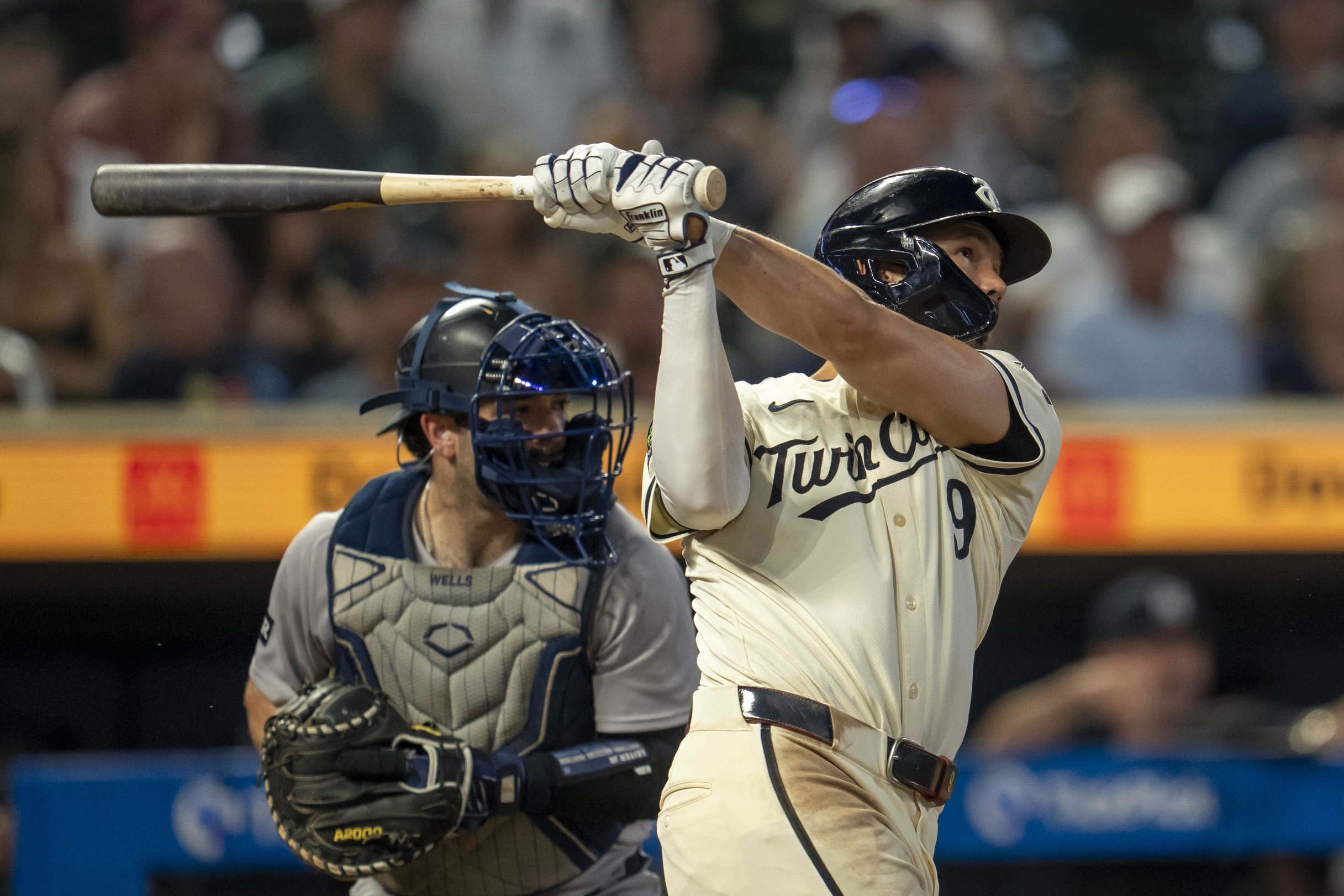 Trevor Larnach's development as a major-leaguer was slow and full of setbacks, but what made one feel confident was the steady trend of improvement. He debuted with a meager .672 OPS in 2021, then improved to .712 in 2022 and .727 in 2023. Even by this point, at age 26, the production remained unspectacular, but there were a lot of intriguing aspects in his underlying metrics and trajectory. Sure enough, the pieces came together in a breakout 2024 season for Larnach. He slashed .259/.338/.434 for a .771 OPS that was 16% better than league average. He became a fixture near the top of Rocco Baldelli's lineups against righties, and Larnach taking another step forward in 2025 was integral to the Twins' vision for an all-around offensive rebound. Larnach came out of the gates this year as regular cleanup hitter. And he just never really got going. There were modest bursts of production from time to time but Larnach couldn't find a rhythm, slumping to the finish line and finishing with a regressive .727 OPS. Like Matt Wallner, Larnach was heavily suppressed when pitchers buckled down in run-scoring opportunities, and he offered even less value than Wallner in the field (leading to almost three-quarters of his starts coming at designated hitter). It all amounted to roughly replacement-level production in 142 games. Larnach was one of the biggest drags on Minnesota's dormant offense. He plays at a position of abundance, and he's in line to get a decent raise via arbitration — so naturally there is talk about moving on. I think that would be a mistake. But let's take a look at what needs to do to rejuvenate this career if he remains in the team's plans. Limitations to Overcome Larnach has two primary things working against his value as a player, and neither one seems likely to change for the better at this point. First, he can't hit lefties. He just can't. The Twins greatly increased his opportunities against southpaws in 2025, hoping he might come to at least hold his own in same-sided matchups –– but he posted a .608 OPS, in line with his .585 career mark. Second, there is the total lack of defensive value. He's slow and unlike Wallner he doesn't have much of an arm. Both of these factors were hindrances in a campaign that saw Larnach finish with 0.2 fWAR, but they don't preclude him from being a valuable contributor at the major-league level. I will grant that Larnach's persistent inability to fully unlock his potential makes a solid case against keeping him around, but if he can lock back into what he does well, Twins fans will quickly come to remember what he can offer. Seeing Red Again The 2024 season, especially the final stretch, was a rough one for many Minnesota hitters. Not Larnach, though. He enjoyed a career year, and actually finished strong while the rest of the team tanked, posting an .804 OPS in August and September. I look at Larnach's Statcast profile from that season and I see all of the qualities that made him a first-round draft pick and a highly regarded young bat: the outfielder did everything well at the plate with the exception of swinging and missing (where he improved dramatically from the previous year). He faded across pretty much every facet in 2025, for whatever reason. Maybe his skills are already dulling as he approaches 30. Maybe there were health issues quietly being managed. Maybe it was plain and simply a bad year, and one he can put behind him in pursuit of an eventual free-agent payday. It all comes down to Larnach maximizing his theoretical main strength: mashing right-handed pitchers. That was a persistent struggle this year for the Twins, who slashed just .237/.308/.400 against righties. Larnach's .758 OPS vs. RHP wasn't good enough, but also it's a solidly above-average baseline and he packs more explosive upside than a lot of other players crowding the corner-outfield mix. Enough Rebound Potential to Stay Relevant? Larnach is in a tough spot. Turning 29 this winter, he no longer offers youthful projection in the same sense as Alan Roden, whose acquisition at the last deadline puts Larnach in the expendability crosshairs. He also doesn't have the proven track record of high-end production of Wallner; at his best Larnach hasn't been able to level up from good to great. Still, as we all know, baseball development is nonlinear and late bloomers are all around us. Larnach has shown the traits of a very good hitter, and the Twins clearly recognized that. Projected to make $4.7 million in arbitration, he's feeling the crunch as Wallner, Roden, Austin Martin, Emmanuel Rodriguez and maybe even Walker Jenkins all contend for playing time in the outfield corners or DH. Is the upside the flashed in 2024 still within Larnach? Was it even good enough to be worth betting on? We'll find out soon enough how the Twins feel. Explore previous entries in the "Road to a Rebound" series: Brooks Lee, Royce Lewis, Matt Wallner
-
Image courtesy of © Jesse Johnson-Imagn Images Trevor Larnach's development as a major-leaguer was slow and full of setbacks, but what made one feel confident was the steady trend of improvement. He debuted with a meager .672 OPS in 2021, then improved to .712 in 2022 and .727 in 2023. Even by this point, at age 26, the production remained unspectacular, but there were a lot of intriguing aspects in his underlying metrics and trajectory. Sure enough, the pieces came together in a breakout 2024 season for Larnach. He slashed .259/.338/.434 for a .771 OPS that was 16% better than league average. He became a fixture near the top of Rocco Baldelli's lineups against righties, and Larnach taking another step forward in 2025 was integral to the Twins' vision for an all-around offensive rebound. Larnach came out of the gates this year as regular cleanup hitter. And he just never really got going. There were modest bursts of production from time to time but Larnach couldn't find a rhythm, slumping to the finish line and finishing with a regressive .727 OPS. Like Matt Wallner, Larnach was heavily suppressed when pitchers buckled down in run-scoring opportunities, and he offered even less value than Wallner in the field (leading to almost three-quarters of his starts coming at designated hitter). It all amounted to roughly replacement-level production in 142 games. Larnach was one of the biggest drags on Minnesota's dormant offense. He plays at a position of abundance, and he's in line to get a decent raise via arbitration — so naturally there is talk about moving on. I think that would be a mistake. But let's take a look at what needs to do to rejuvenate this career if he remains in the team's plans. Limitations to Overcome Larnach has two primary things working against his value as a player, and neither one seems likely to change for the better at this point. First, he can't hit lefties. He just can't. The Twins greatly increased his opportunities against southpaws in 2025, hoping he might come to at least hold his own in same-sided matchups –– but he posted a .608 OPS, in line with his .585 career mark. Second, there is the total lack of defensive value. He's slow and unlike Wallner he doesn't have much of an arm. Both of these factors were hindrances in a campaign that saw Larnach finish with 0.2 fWAR, but they don't preclude him from being a valuable contributor at the major-league level. I will grant that Larnach's persistent inability to fully unlock his potential makes a solid case against keeping him around, but if he can lock back into what he does well, Twins fans will quickly come to remember what he can offer. Seeing Red Again The 2024 season, especially the final stretch, was a rough one for many Minnesota hitters. Not Larnach, though. He enjoyed a career year, and actually finished strong while the rest of the team tanked, posting an .804 OPS in August and September. I look at Larnach's Statcast profile from that season and I see all of the qualities that made him a first-round draft pick and a highly regarded young bat: the outfielder did everything well at the plate with the exception of swinging and missing (where he improved dramatically from the previous year). He faded across pretty much every facet in 2025, for whatever reason. Maybe his skills are already dulling as he approaches 30. Maybe there were health issues quietly being managed. Maybe it was plain and simply a bad year, and one he can put behind him in pursuit of an eventual free-agent payday. It all comes down to Larnach maximizing his theoretical main strength: mashing right-handed pitchers. That was a persistent struggle this year for the Twins, who slashed just .237/.308/.400 against righties. Larnach's .758 OPS vs. RHP wasn't good enough, but also it's a solidly above-average baseline and he packs more explosive upside than a lot of other players crowding the corner-outfield mix. Enough Rebound Potential to Stay Relevant? Larnach is in a tough spot. Turning 29 this winter, he no longer offers youthful projection in the same sense as Alan Roden, whose acquisition at the last deadline puts Larnach in the expendability crosshairs. He also doesn't have the proven track record of high-end production of Wallner; at his best Larnach hasn't been able to level up from good to great. Still, as we all know, baseball development is nonlinear and late bloomers are all around us. Larnach has shown the traits of a very good hitter, and the Twins clearly recognized that. Projected to make $4.7 million in arbitration, he's feeling the crunch as Wallner, Roden, Austin Martin, Emmanuel Rodriguez and maybe even Walker Jenkins all contend for playing time in the outfield corners or DH. Is the upside the flashed in 2024 still within Larnach? Was it even good enough to be worth betting on? We'll find out soon enough how the Twins feel. Explore previous entries in the "Road to a Rebound" series: Brooks Lee, Royce Lewis, Matt Wallner View full article
-
Road to a Rebound: Matt Wallner
Nick Nelson replied to Nick Nelson's topic in Twins Daily Front Page News
Okay but here's the thing: in 2024 Wallner had a 1.123 OPS with RISP and in 2023 it was .983. Did his skill for hitting in these situations radically change from one year to the next or are we looking at statistical noise in a sample of 60 at-bats? You can certainly believe what you please but it's at least a valid question to ask. (I'll add that despite the .177 avg, Wallner had a very solid 19-to-14 K/BB in 79 PA with RISP so it's not like he was getting dismantled in those ABs.) -
Road to a Rebound: Matt Wallner
Nick Nelson replied to Nick Nelson's topic in Twins Daily Front Page News
I get that memories of these at-bats (getting beat with fastballs up in the zone) stick in people's minds, but what evidence is there that it actually derailed his game? If pitchers unlocked some new advantage wouldn't it lead to more strikeouts, fewer walks, more pop-ups, something? He stayed consistent or improved in basically all of these areas. -
Road to a Rebound: Matt Wallner
Nick Nelson replied to Nick Nelson's topic in Twins Daily Front Page News
Great example of the disconnect between perception and reality with Wallner! We're treating him like he's been a disaster at the plate -- he has a 127 career OPS+. That would rank in the top 10 all time for this franchise. For reference: Allison 127, Hrbek 128, Oliva 131. -
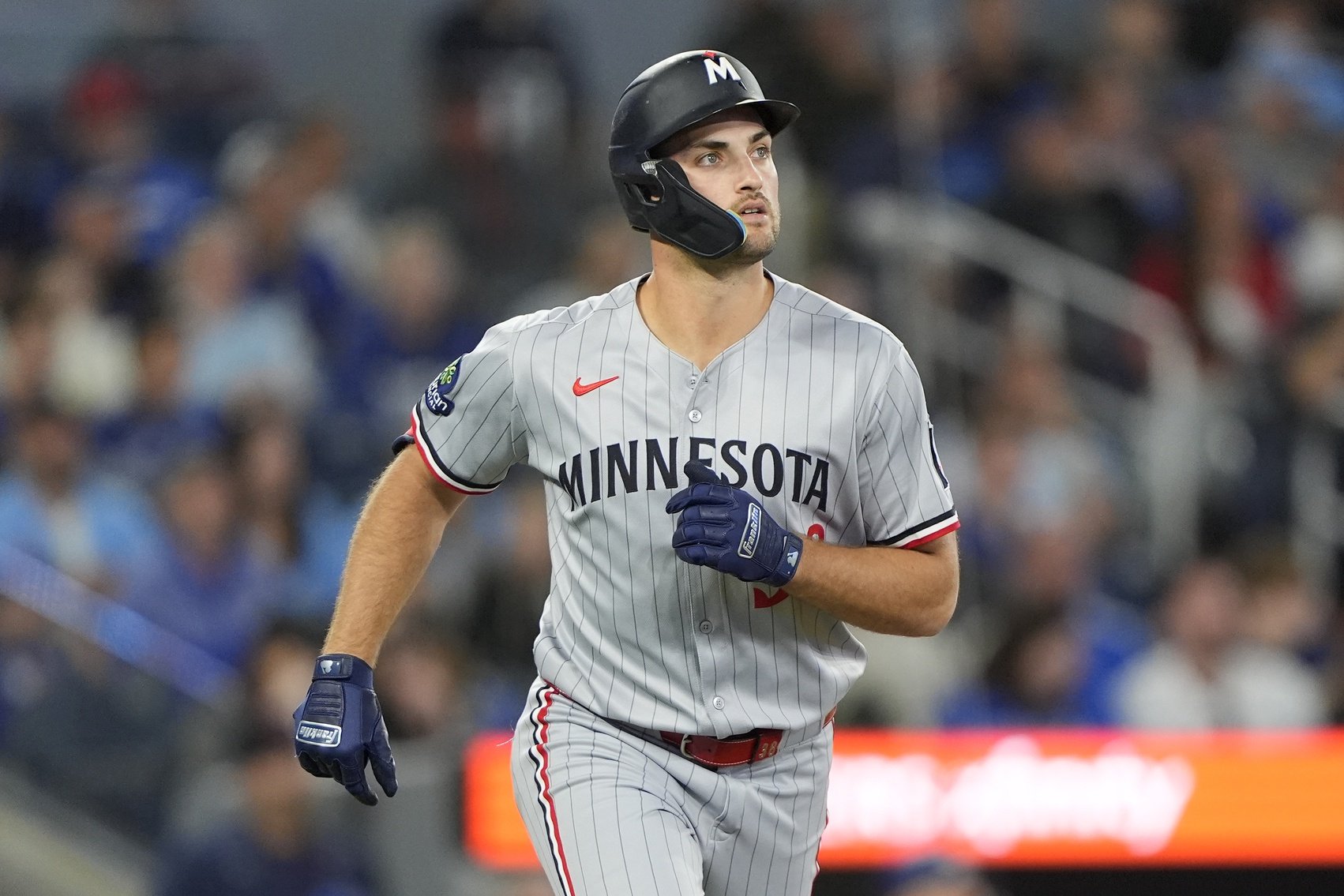 Here are a few things that might surprise you about Matt Wallner's 2025 season, compared to his previous norm: he struck out less, swung and miss less, and walked more. And despite batting just .202, he was still 10% better than the average MLB hitter overall. I don't think these facts match up with a lot of perceptions from the fanbase, understandably enough. With his big penchant for big whiffs, Wallner's aesthetics haven't quite matched the caliber of his offensive performance in the big leagues, which is why many didn't recognize that he was one of the most productive hitters in all of baseball for the first couple seasons of his career, rubbing shoulders on the wOBA leaderboard with perennial MVP contenders. Wallner's step back in 2025 was disappointing and discouraging, to be sure, but from my view, less disturbing than some of the other hitters covered in this "Road to a Rebound" series. (Find previous entries linked at the bottom of this article.) The Cruel Whims of BABIP and RISP In 2023 and 2024, Wallner greatly exceeded his expected batting average, for one simple reason: amazing fortune on balls in play. Between those two seasons, his .358 BABIP was third-highest in MLB (min. 500 PA), enabling him to bat .257 despite a 34% K-rate. There's always a degree of randomness involved with BABIP. It definitely helps to consistently hit the ball hard as hell, but in the case of Wallner — a lumbering fly ball hitter — such a high rate of reaching on contact never felt sustainable. (Especially because, to be clear, home runs do not count toward one's batting average on balls in play.) Sure enough, things swung in the opposite direction for Wallner in 2025. His .228 BABIP ranked third-worst in the majors (min. 300 PA) and as a result his batting average sunk to nearly the Mendoza line. One of the other glaring characteristics of Wallner's 2025 season was his performance with runners in scoring position, where he batted just .177. Fifteen of his 17 homers were solo shots. Troubling numbers! But we're talking about a sample size of 62 at-bats, and the same thing is true of Wallner's RISP stats as his BABIP — prior to being very bad in 2025, they were extremely good. I'm not saying either of these things are out of a hitter's control. But again, there's definitely some randomness involved and Wallner seems like proof positive, given how relatively little his underlying metrics changed. I feel safe in saying that, even without the kind of wholesale adjustments we need to see from Brooks Lee and Royce Lewis, Wallner will naturally gravitate back toward being a quality hitter in 2026. But just how far he bounces back with the bat matters because his defensive outlook has shifted more firmly for the worse. An Uncertain Defensive Future Wallner has persistently rated out very poorly in the field, thanks mainly to a lack of range, and that could present an issue for a Twins team that has been vocal about wanting to sharpen up defensively. The missed plays became more frequent and noticeable from Wallner, who on several occasions gave up extra bases on ill-advised dives. His stellar arm just doesn't come into play often enough to be a major asset. I'm of two minds on Wallner and his defensive future. I do think that upgrading to someone like Alan Roden could potentially save a bunch of runs, but then you've got Roden and his questionable bat starting in right field. Actually what I find most likely is that Wallner holds down the job for a while longer, before Byron Buxton eventually slides to right field and Walker Jenkins takes over in center. Either way, whether he's holding down right field as a subpar glove or relocating to DH, the pressure will be on Wallner's bat to produce if he's going to emerge as a true cornerstone player. Sturdy Strengths to Build On I'm probably more bullish on Wallner than any other Twins hitter who had a down year and is looking to rebound. There are some variables that can affect his outcomes greatly, and slumps will remain inevitable, but when your core foundation involves taking good at-bats, walking at a 12% clip and consistently hitting the ball as hard as anyone in the league, you're going to be in solid shape at the plate. Certainly there are tweaks and adjustments Wallner can and should make to facilitate better outcomes on swings next year, but there's reason for confidence that he can get back to meeting his high bar for offensive output. Explore previous entries in the "Road to a Rebound" series: Brooks Lee, Royce Lewis
-
Image courtesy of John E. Sokolowski-Imagn Images Here are a few things that might surprise you about Matt Wallner's 2025 season, compared to his previous norm: he struck out less, swung and miss less, and walked more. And despite batting just .202, he was still 10% better than the average MLB hitter overall. I don't think these facts match up with a lot of perceptions from the fanbase, understandably enough. With his big penchant for big whiffs, Wallner's aesthetics haven't quite matched the caliber of his offensive performance in the big leagues, which is why many didn't recognize that he was one of the most productive hitters in all of baseball for the first couple seasons of his career, rubbing shoulders on the wOBA leaderboard with perennial MVP contenders. Wallner's step back in 2025 was disappointing and discouraging, to be sure, but from my view, less disturbing than some of the other hitters covered in this "Road to a Rebound" series. (Find previous entries linked at the bottom of this article.) The Cruel Whims of BABIP and RISP In 2023 and 2024, Wallner greatly exceeded his expected batting average, for one simple reason: amazing fortune on balls in play. Between those two seasons, his .358 BABIP was third-highest in MLB (min. 500 PA), enabling him to bat .257 despite a 34% K-rate. There's always a degree of randomness involved with BABIP. It definitely helps to consistently hit the ball hard as hell, but in the case of Wallner — a lumbering fly ball hitter — such a high rate of reaching on contact never felt sustainable. (Especially because, to be clear, home runs do not count toward one's batting average on balls in play.) Sure enough, things swung in the opposite direction for Wallner in 2025. His .228 BABIP ranked third-worst in the majors (min. 300 PA) and as a result his batting average sunk to nearly the Mendoza line. One of the other glaring characteristics of Wallner's 2025 season was his performance with runners in scoring position, where he batted just .177. Fifteen of his 17 homers were solo shots. Troubling numbers! But we're talking about a sample size of 62 at-bats, and the same thing is true of Wallner's RISP stats as his BABIP — prior to being very bad in 2025, they were extremely good. I'm not saying either of these things are out of a hitter's control. But again, there's definitely some randomness involved and Wallner seems like proof positive, given how relatively little his underlying metrics changed. I feel safe in saying that, even without the kind of wholesale adjustments we need to see from Brooks Lee and Royce Lewis, Wallner will naturally gravitate back toward being a quality hitter in 2026. But just how far he bounces back with the bat matters because his defensive outlook has shifted more firmly for the worse. An Uncertain Defensive Future Wallner has persistently rated out very poorly in the field, thanks mainly to a lack of range, and that could present an issue for a Twins team that has been vocal about wanting to sharpen up defensively. The missed plays became more frequent and noticeable from Wallner, who on several occasions gave up extra bases on ill-advised dives. His stellar arm just doesn't come into play often enough to be a major asset. I'm of two minds on Wallner and his defensive future. I do think that upgrading to someone like Alan Roden could potentially save a bunch of runs, but then you've got Roden and his questionable bat starting in right field. Actually what I find most likely is that Wallner holds down the job for a while longer, before Byron Buxton eventually slides to right field and Walker Jenkins takes over in center. Either way, whether he's holding down right field as a subpar glove or relocating to DH, the pressure will be on Wallner's bat to produce if he's going to emerge as a true cornerstone player. Sturdy Strengths to Build On I'm probably more bullish on Wallner than any other Twins hitter who had a down year and is looking to rebound. There are some variables that can affect his outcomes greatly, and slumps will remain inevitable, but when your core foundation involves taking good at-bats, walking at a 12% clip and consistently hitting the ball as hard as anyone in the league, you're going to be in solid shape at the plate. Certainly there are tweaks and adjustments Wallner can and should make to facilitate better outcomes on swings next year, but there's reason for confidence that he can get back to meeting his high bar for offensive output. Explore previous entries in the "Road to a Rebound" series: Brooks Lee, Royce Lewis View full article
-
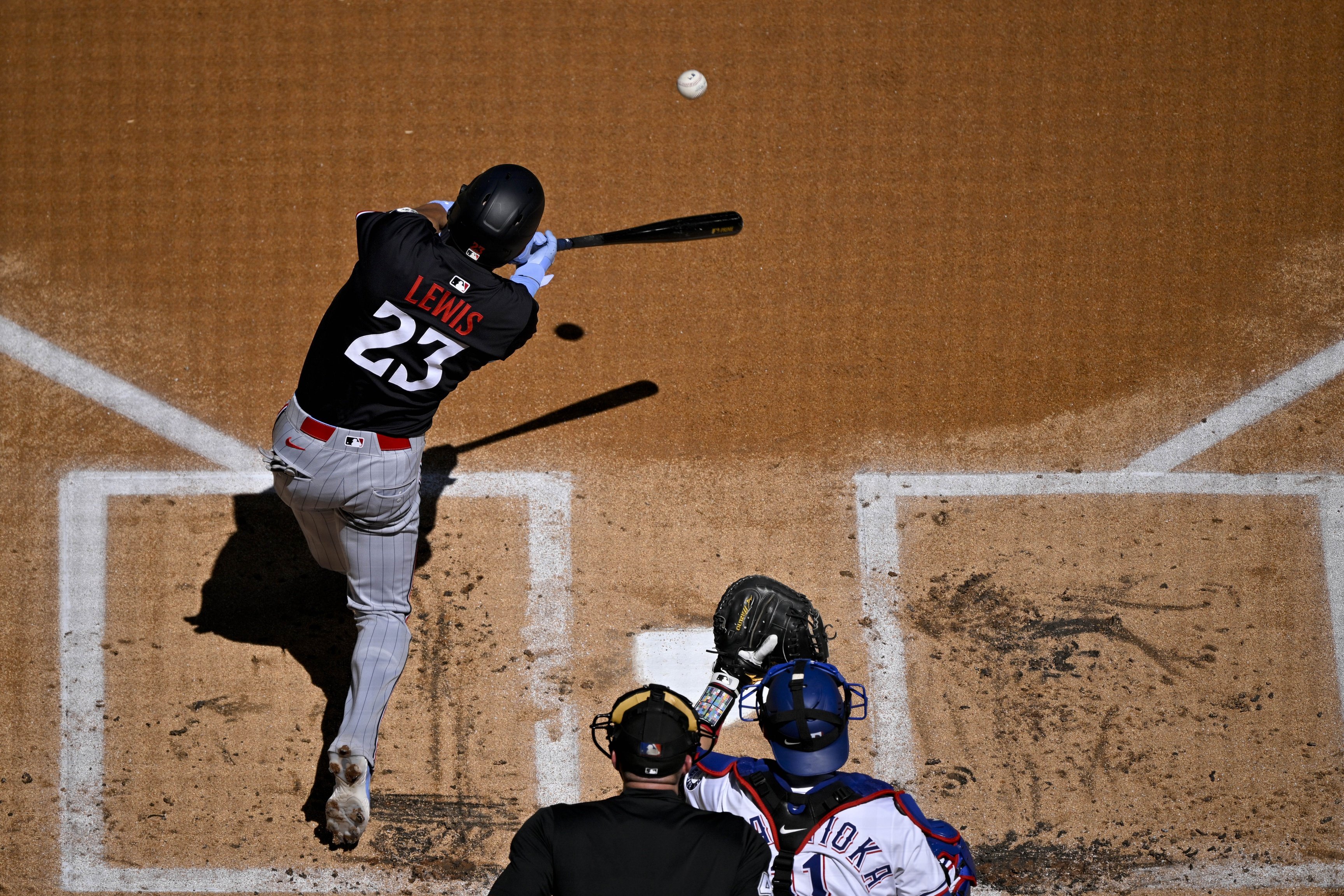 August 18th, 2024. It's a date that lives in infamy for Twins fans — the moment it all started falling apart for the team. Jorge Alcala imploded on the mound in Texas, blowing a four-run lead, and a collapse ensued for Minnesota that hasn't really stopped since. You can also trace the downfall of Royce Lewis back to this date pretty much exactly. In that same 6-5 loss against the Rangers, he snapped a seven-game hitting streak (striking out in a pinch-hit appearance), and thus his own unceasing performance spiral began. Lewis entered play that day with a .970 OPS; he slashed .182/.224/.250 the rest of the way to finish with a .747 OPS. Lewis homered 32 times in career 463 plate appearances prior to the 8/18/24 dividing line, an average of one home run per every 15 trips. Since then he has gone deep 14 times in 546 PA, or once every 39. At his best Lewis elevated the Twins as a team to new heights — their first playoff success in 20 years — and at his worst he's been one of the chief culprits in their collective descent. Can the former top draft pick go back to being an asset instead of an anchor? The Fear Factor As Lewis found his footing in the major leagues, between injuries, he began to distinguish himself as a hitter who inspired fear in opposing pitchers. Make a mistake and that thing is going over the fence. The pressure on pitchers to tread carefully helped Lewis draw walks at a decent rate, despite the fact that he will never be confused with a patient hitter. In 2023 he walked at a respectable 8.4% clip, and in 2024 a nearly identical 8.6%. What really tells the story of Lewis' drop-off, in my mind, is how much the fear factor has evaporated for opposing pitchers. By the end of the 2025 season, no one was remotely afraid to come into the zone against Royce. After his last and only multi-walk game of the season on August 17th, Lewis drew three walks (against 40 strikeouts) in 146 plate appearances, including just one in the entire month of September. Whereas coming over the plate against Lewis used to be a death sentence, pitchers now felt confident that he'd whiff or put a weak swing on the ball, and their confidence was well warranted outside of one random Monday night in Anaheim. Now it's Twins fans who are afraid — afraid that the aggregated impact of Lewis' string of serious injuries has taken a physical toll, fundamentally and permanently lowering his ability to produce. Fortunately, there were some promising signs in his late-season performance that serve to quell such concerns somewhat. Healthy at Last ... With a Payoff Yet to Come? You wouldn't know it from his stats or swing results, but by simply watching him on the field, it seemed quite evident that during the final stretch of 2025, Lewis was in as good of a place physically as he's been in a long time. The poor showing at the plate was offset by levels of sharpness in the field and speed on the bases that many thought were gone for good. At third base, he was steady and made a handful of exceptional plays. He also stole 11 bags on 12 attempts in his final 34 games. The same guy who, not long ago, found himself jogging the bases out of desperation to keep injuries at bay was routinely cutting loose and swiping them at will. I don't know how you can look at the development and not feel encouraged. It didn't translate to offensive production, for the most part. Lewis' plate approach and swing remained out of sorts right up through the end of the season. But a broken swing is much easier to fix than a broken body, and he finished on an unprecedented run of good health, appearing in all but two of Minnesota's 77 games after the start of July. This offseason he has the opportunity focus more on his game than physical maintenance. Open Up the Swing, Unlock Results I'm far from a hitting expert, but when I take a cursory dive deeper into Lewis' metrics, a couple of (possibly related) things stick out: he's getting dominated by fastballs and has become overly fixated on pulling the ball. In 2023, Lewis batted .327 and slugged .800 against four-seam fastballs, whiffing at just 20%. In 2025, he batted .181 with a .333 slugging percentage and whiffed on 31.2% of four-seamers. Lewis had a .344 OBA this year against breaking balls compared to .267 against fastballs. This matches the eye test. Lewis struggles to get around on velocity, and hopes for a hanging pitch he can turn on. Such examples accounted for a majority of his 2025 home runs, all of which landed left of center and most of which were straight-up yanked. Pull power will always be Lewis' specialization when at his best, but he needs to recapture his ability to handle heaters and drive certain pitches the other way. It's a fairly straightforward mandate but undoubtedly a much more challenging and complex matter to execute. There are a lot of uncertainties in play. Who will be his manager and hitting coach? Will he even be in a Twins uniform next year? Time will tell, but a little uncertainty and shaking things up could prove beneficial for Lewis as he looks to resurrect his wayward career at age 26, three years out from free agency. Explore previous entries in the "Road to a Rebound" series: Brooks Lee
-
Image courtesy of Jerome Miron-Imagn Images August 18th, 2024. It's a date that lives in infamy for Twins fans — the moment it all started falling apart for the team. Jorge Alcala imploded on the mound in Texas, blowing a four-run lead, and a collapse ensued for Minnesota that hasn't really stopped since. You can also trace the downfall of Royce Lewis back to this date pretty much exactly. In that same 6-5 loss against the Rangers, he snapped a seven-game hitting streak (striking out in a pinch-hit appearance), and thus his own unceasing performance spiral began. Lewis entered play that day with a .970 OPS; he slashed .182/.224/.250 the rest of the way to finish with a .747 OPS. Lewis homered 32 times in career 463 plate appearances prior to the 8/18/24 dividing line, an average of one home run per every 15 trips. Since then he has gone deep 14 times in 546 PA, or once every 39. At his best Lewis elevated the Twins as a team to new heights — their first playoff success in 20 years — and at his worst he's been one of the chief culprits in their collective descent. Can the former top draft pick go back to being an asset instead of an anchor? The Fear Factor As Lewis found his footing in the major leagues, between injuries, he began to distinguish himself as a hitter who inspired fear in opposing pitchers. Make a mistake and that thing is going over the fence. The pressure on pitchers to tread carefully helped Lewis draw walks at a decent rate, despite the fact that he will never be confused with a patient hitter. In 2023 he walked at a respectable 8.4% clip, and in 2024 a nearly identical 8.6%. What really tells the story of Lewis' drop-off, in my mind, is how much the fear factor has evaporated for opposing pitchers. By the end of the 2025 season, no one was remotely afraid to come into the zone against Royce. After his last and only multi-walk game of the season on August 17th, Lewis drew three walks (against 40 strikeouts) in 146 plate appearances, including just one in the entire month of September. Whereas coming over the plate against Lewis used to be a death sentence, pitchers now felt confident that he'd whiff or put a weak swing on the ball, and their confidence was well warranted outside of one random Monday night in Anaheim. Now it's Twins fans who are afraid — afraid that the aggregated impact of Lewis' string of serious injuries has taken a physical toll, fundamentally and permanently lowering his ability to produce. Fortunately, there were some promising signs in his late-season performance that serve to quell such concerns somewhat. Healthy at Last ... With a Payoff Yet to Come? You wouldn't know it from his stats or swing results, but by simply watching him on the field, it seemed quite evident that during the final stretch of 2025, Lewis was in as good of a place physically as he's been in a long time. The poor showing at the plate was offset by levels of sharpness in the field and speed on the bases that many thought were gone for good. At third base, he was steady and made a handful of exceptional plays. He also stole 11 bags on 12 attempts in his final 34 games. The same guy who, not long ago, found himself jogging the bases out of desperation to keep injuries at bay was routinely cutting loose and swiping them at will. I don't know how you can look at the development and not feel encouraged. It didn't translate to offensive production, for the most part. Lewis' plate approach and swing remained out of sorts right up through the end of the season. But a broken swing is much easier to fix than a broken body, and he finished on an unprecedented run of good health, appearing in all but two of Minnesota's 77 games after the start of July. This offseason he has the opportunity focus more on his game than physical maintenance. Open Up the Swing, Unlock Results I'm far from a hitting expert, but when I take a cursory dive deeper into Lewis' metrics, a couple of (possibly related) things stick out: he's getting dominated by fastballs and has become overly fixated on pulling the ball. In 2023, Lewis batted .327 and slugged .800 against four-seam fastballs, whiffing at just 20%. In 2025, he batted .181 with a .333 slugging percentage and whiffed on 31.2% of four-seamers. Lewis had a .344 OBA this year against breaking balls compared to .267 against fastballs. This matches the eye test. Lewis struggles to get around on velocity, and hopes for a hanging pitch he can turn on. Such examples accounted for a majority of his 2025 home runs, all of which landed left of center and most of which were straight-up yanked. Pull power will always be Lewis' specialization when at his best, but he needs to recapture his ability to handle heaters and drive certain pitches the other way. It's a fairly straightforward mandate but undoubtedly a much more challenging and complex matter to execute. There are a lot of uncertainties in play. Who will be his manager and hitting coach? Will he even be in a Twins uniform next year? Time will tell, but a little uncertainty and shaking things up could prove beneficial for Lewis as he looks to resurrect his wayward career at age 26, three years out from free agency. Explore previous entries in the "Road to a Rebound" series: Brooks Lee View full article
-
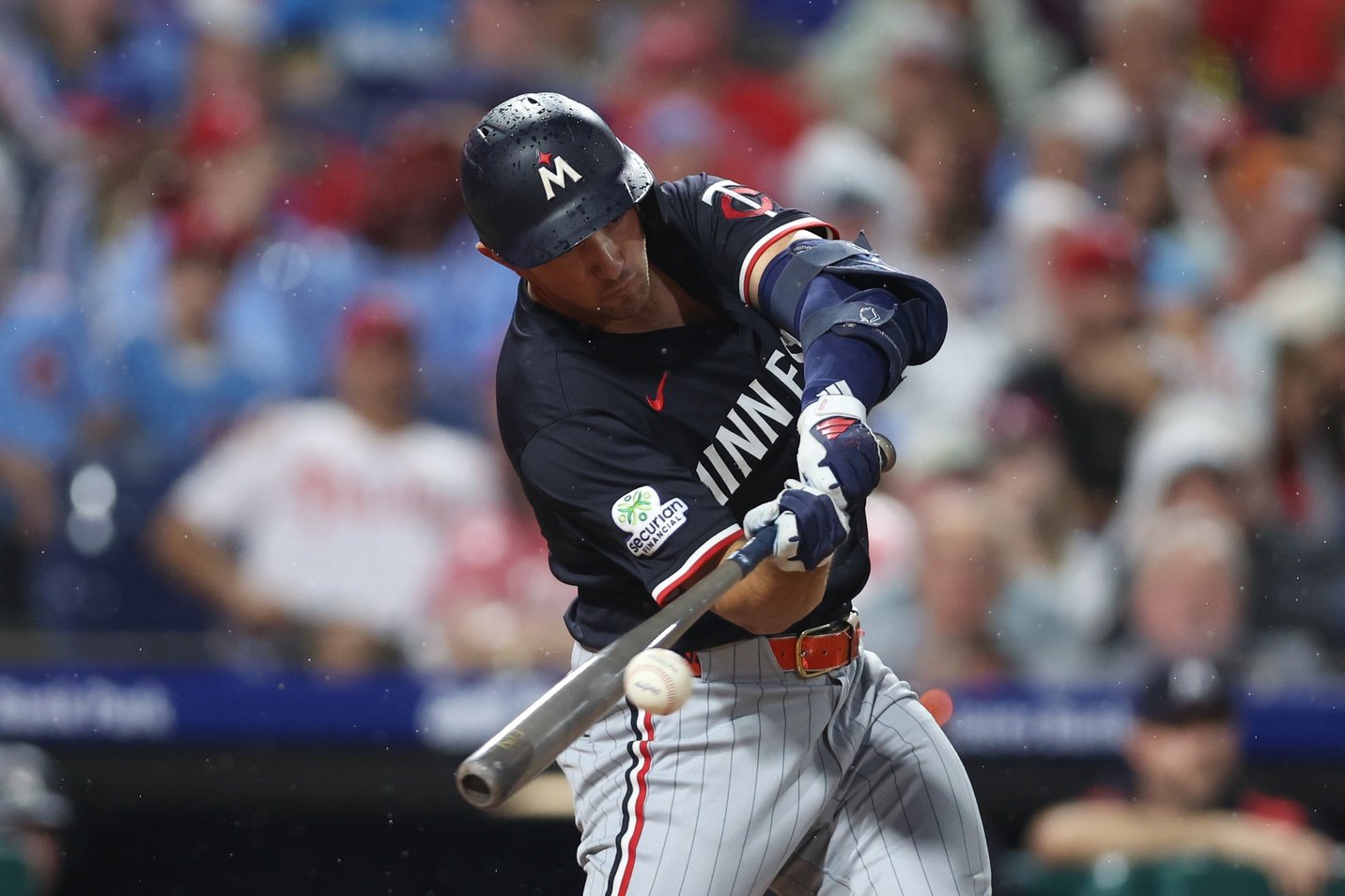 Earlier this week, I provided an overview of the grim state of affairs for the Twins lineup. In short, nearly every hitter ended the season in a downward trend, leaving it difficult to feel a sense of optimism regarding an offense that was well below average in 2025 and gave away one of its better bats (faint praise) in Carlos Correa. They have some work to do in the bullpen, obviously, but if the relief corps won't matter much if the Twins can't build leads. There's probably not a lot of help on the way for a lineup that ranked 23rd in runs scored, and rising prospects likely won't be quite ready for a full-fledged impact, so Minnesota's improvement is going to hinge on a handful of former top prospects and top draft picks to lead the charge. In this new series, we'll examine what a rebound season would look like for five of these hitters, including the ingredients needed to make it happen. We begin today with a player whose outlook might be as closely tied to that of the team in 2026 as anyone. Stuck in the Mud After a Hot Start in MLB When he first arrived in the big leagues, Brooks Lee looked like the real deal. He'd been demolishing Triple-A last summer before his MLB promotion in early July, and wasted no time piling up hits as a Twin, with 11 in his first six games. In 185 games and 695 plate appearances since, he has slashed .227/.275/.348 with a negative-0.3 fWAR. Here's the list of Twins hitters who have been less valuable over that span, according to FanGraphs: Manuel Margot, James Outman, Carson McCusker, Mickey Gasper, DaShawn Keirsey Jr., Edouard Julien, Jose Miranda. Production-wise, Lee exists at the level of washouts and fringe major-league players. He's had some bursts of power-hitting along with a BABIP-driven hot streak this past June, but his flashes have persistently been canceled out by prolonged droughts. Turning 25 this offseason and now with considerable MLB experience under his belt, Lee is past the point of growing pains. He's firmly beyond prospect status and establishing himself as a pretty low-caliber big-leaguer. But he's still relatively young, and those occasional glimpses of power, along with his long track record of making adjustments and hitting for average, do give some cause for optimism. A Track Record Worth Believing In When the Twins drafted him eighth overall back in 2022, Lee was regarded as one of the best collegiate hitters in the country. He went to the minors and raked at every level, pushing his way to the majors in about two years' time. Across 195 minor-league games, he hit .289/.360/.476, and he showed big pop at Triple-A. Tapping into that power with more consistency holds the key to Lee's ability to break through. Hitting 16 home runs as a 24-year-old in the majors is impressive, all else aside. Just not enough on its own, as those homers came along with only 15 doubles, one triple and a .236 batting average in 527 plate appearances. A quick glance at his Statcast sliders lays bare the central issue: too much weak contact. Lee's sub-90 MPH exit velo is near the bottom quartile of the league, and his bat speed ranks among the worst. He has shown the ability to crush the ball on occasion, which makes him relatively hard to give up on, but too often Lee's swings produce soft liners and easy grounders. Muscle Up and Dial In, Kid Here are some things I think we can safely say about Brooks Lee: he's never going to be a swift runner or selective hitter. His best position is probably third base although he can hold his own at short. There are a lot of limitations in place so it's vital that Lee fully maximize his strengths, and build an offensive identity around them. Those strengths, namely: bat-to-ball skills and a swing that is theoretically geared for power. The idea of Lee being a .370 OBP guy has more or less gone out the window, but it's not hard to see him hitting like .275/.330/.475 with the right advancements. For a capable shortstop or good defensive third baseman, that will absolutely play. From my view, reaching this level at the plate will require Lee to do two things: Add some strength in the offseason. He simply needs to swing the bat harder and make louder contact on a consistent basis. Lee certainly has the build for it, so it's really about finding whatever ways he can — be it swing mechanics or strength training — to increase his swing velocity over the winter. Unlock just a little more plate discipline. Often, the soft contact from Lee wasn't a result of poor swings so much as poor swing decisions — chasing a pitcher's pitch that offers little hope of a favorable result. Overcoming this mental aspect will be as important as anything he does physically. I've given up on Lee, who had a 31% chase rate and 6% walk rate this year, ever being a patient hitter. But a tiny bit more patience could go a long way toward getting Lee into more hitters' counts with more chances to unleash the A-swing. Right now, based on his complete lack of progression as a major-league player, it feels hard to have confidence in Lee's outlook. And that is disturbing because the reality is that the Twins are all but committed to him as their starting shortstop for the foreseeable future. However, we shouldn't lose sight of who Lee has been on the baseball field, and what he could still become, even after an introduction to the majors that has perhaps redefined his ceiling and player type. No matter which direction they go this offseason, Lee is going to be pivotal to the plan going forward.
-
Image courtesy of Bill Streicher-Imagn Images Earlier this week, I provided an overview of the grim state of affairs for the Twins lineup. In short, nearly every hitter ended the season in a downward trend, leaving it difficult to feel a sense of optimism regarding an offense that was well below average in 2025 and gave away one of its better bats (faint praise) in Carlos Correa. They have some work to do in the bullpen, obviously, but if the relief corps won't matter much if the Twins can't build leads. There's probably not a lot of help on the way for a lineup that ranked 23rd in runs scored, and rising prospects likely won't be quite ready for a full-fledged impact, so Minnesota's improvement is going to hinge on a handful of former top prospects and top draft picks to lead the charge. In this new series, we'll examine what a rebound season would look like for five of these hitters, including the ingredients needed to make it happen. We begin today with a player whose outlook might be as closely tied to that of the team in 2026 as anyone. Stuck in the Mud After a Hot Start in MLB When he first arrived in the big leagues, Brooks Lee looked like the real deal. He'd been demolishing Triple-A last summer before his MLB promotion in early July, and wasted no time piling up hits as a Twin, with 11 in his first six games. In 185 games and 695 plate appearances since, he has slashed .227/.275/.348 with a negative-0.3 fWAR. Here's the list of Twins hitters who have been less valuable over that span, according to FanGraphs: Manuel Margot, James Outman, Carson McCusker, Mickey Gasper, DaShawn Keirsey Jr., Edouard Julien, Jose Miranda. Production-wise, Lee exists at the level of washouts and fringe major-league players. He's had some bursts of power-hitting along with a BABIP-driven hot streak this past June, but his flashes have persistently been canceled out by prolonged droughts. Turning 25 this offseason and now with considerable MLB experience under his belt, Lee is past the point of growing pains. He's firmly beyond prospect status and establishing himself as a pretty low-caliber big-leaguer. But he's still relatively young, and those occasional glimpses of power, along with his long track record of making adjustments and hitting for average, do give some cause for optimism. A Track Record Worth Believing In When the Twins drafted him eighth overall back in 2022, Lee was regarded as one of the best collegiate hitters in the country. He went to the minors and raked at every level, pushing his way to the majors in about two years' time. Across 195 minor-league games, he hit .289/.360/.476, and he showed big pop at Triple-A. Tapping into that power with more consistency holds the key to Lee's ability to break through. Hitting 16 home runs as a 24-year-old in the majors is impressive, all else aside. Just not enough on its own, as those homers came along with only 15 doubles, one triple and a .236 batting average in 527 plate appearances. A quick glance at his Statcast sliders lays bare the central issue: too much weak contact. Lee's sub-90 MPH exit velo is near the bottom quartile of the league, and his bat speed ranks among the worst. He has shown the ability to crush the ball on occasion, which makes him relatively hard to give up on, but too often Lee's swings produce soft liners and easy grounders. Muscle Up and Dial In, Kid Here are some things I think we can safely say about Brooks Lee: he's never going to be a swift runner or selective hitter. His best position is probably third base although he can hold his own at short. There are a lot of limitations in place so it's vital that Lee fully maximize his strengths, and build an offensive identity around them. Those strengths, namely: bat-to-ball skills and a swing that is theoretically geared for power. The idea of Lee being a .370 OBP guy has more or less gone out the window, but it's not hard to see him hitting like .275/.330/.475 with the right advancements. For a capable shortstop or good defensive third baseman, that will absolutely play. From my view, reaching this level at the plate will require Lee to do two things: Add some strength in the offseason. He simply needs to swing the bat harder and make louder contact on a consistent basis. Lee certainly has the build for it, so it's really about finding whatever ways he can — be it swing mechanics or strength training — to increase his swing velocity over the winter. Unlock just a little more plate discipline. Often, the soft contact from Lee wasn't a result of poor swings so much as poor swing decisions — chasing a pitcher's pitch that offers little hope of a favorable result. Overcoming this mental aspect will be as important as anything he does physically. I've given up on Lee, who had a 31% chase rate and 6% walk rate this year, ever being a patient hitter. But a tiny bit more patience could go a long way toward getting Lee into more hitters' counts with more chances to unleash the A-swing. Right now, based on his complete lack of progression as a major-league player, it feels hard to have confidence in Lee's outlook. And that is disturbing because the reality is that the Twins are all but committed to him as their starting shortstop for the foreseeable future. However, we shouldn't lose sight of who Lee has been on the baseball field, and what he could still become, even after an introduction to the majors that has perhaps redefined his ceiling and player type. No matter which direction they go this offseason, Lee is going to be pivotal to the plan going forward. View full article
-
The Core Conundrum: Twins Hitters Are Trending Downward Across the Roster
Nick Nelson posted an article in Twins
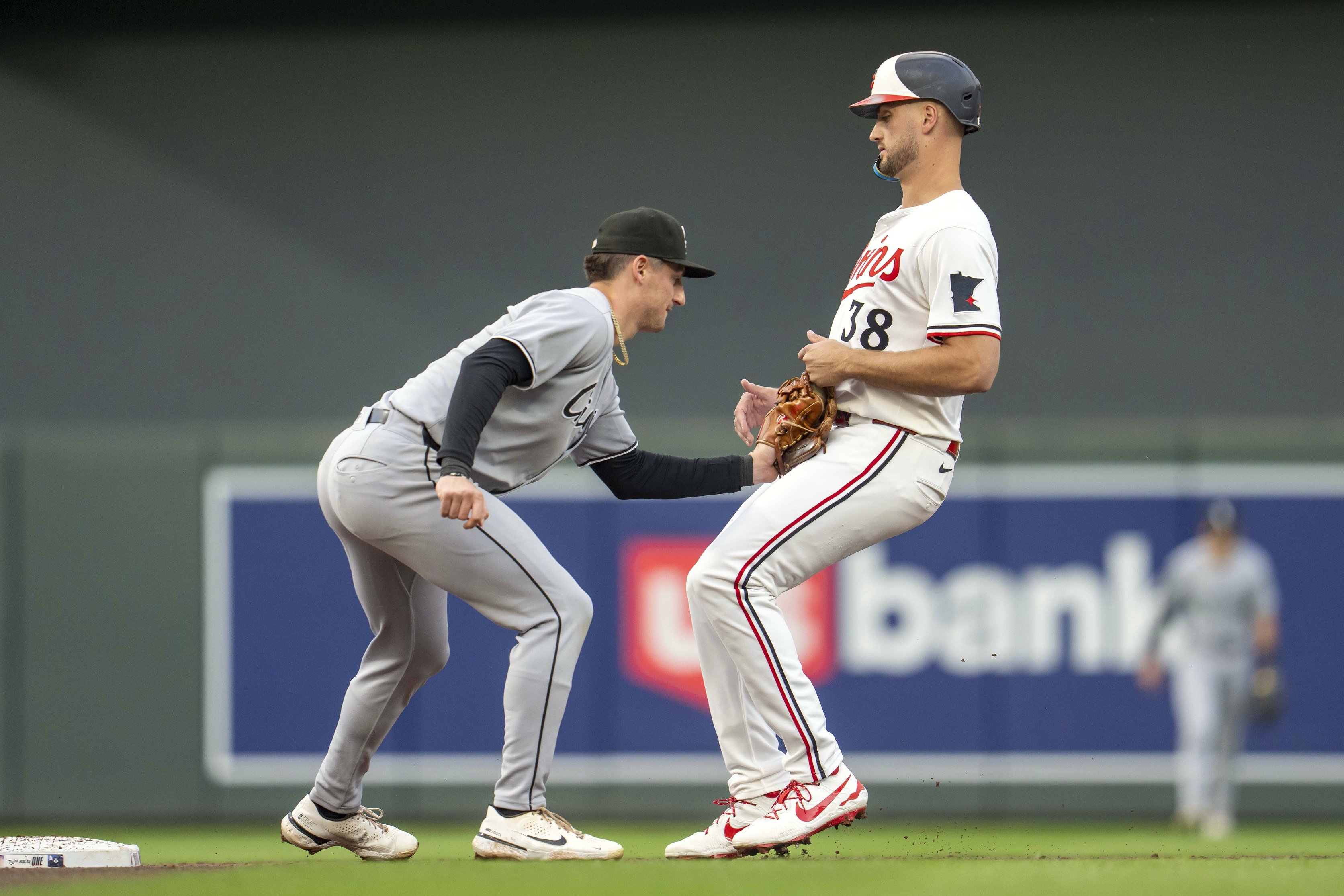 The end of a season, even a very bad one, offers a chance to dream. The offseason is a stage to strengthen the roster, along with individual skills; beyond it lies spring training and a fresh slate. The trouble for Twins fans is that there isn't much to dream on heading into 2026. Almost without exception, every hitter that is currently written into the team's plans next year is experiencing a downward trendline in terms of performance or skills. An inventory of where each player stands coming out of September shows just how lacking the 40-man roster is with offensive players on the rise. I'll start with the three players who bucked this trend by coming out of the season with some semblance of momentum, adding a note of caveat for each: Luke Keaschall: Awesome MLB debut between the injuries, which have plagued him. Tough to nitpick a great rookie year but he did post a .685 OPS in September while flashing iffy defense. At the very least, enthusiasm has been tempered around his future as a cornerstone. Byron Buxton: Fantastic career year that is reaffirming for his ability to produce at the plate, but he turns 32 in December and his skills are declining in center. Buxton's probably the only hitter on the Twins with any substantial trade value, sans Keaschall, but has a no-trade clause. Austin Martin: Made hay after the trade deadline, batting .282 with a .374 OBP. But even in this productive run, Martin's limitations were evident as he slugged .365 and played left field almost exclusively. He showcased the tools to be a solid role player, which is a step forward, but far from a game-changer. Okay. Now let's turn our attention to the rest of the Twins' 40-man roster, in alphabetical order: Kody Clemens: Cooled off immensely after a stunning midseason surge as (essentially) a waiver claim. Slashed .201/.262/.354 in his last 55 games, rarely showing much outside of an isolated 3-HR outburst in September. Ryan Fitzgerald: Quad-A player who finished the season 1-for-19 and batted .196 overall, though he did pop a few homers while showing a decent plate approach. Could be a usable bench guy. Mickey Gasper: It would've been a cool story if Gasper could have taken advantage of the wide-open opportunity to solidify his standing as a big-leaguer in the second half. He did not, slashing .136/.212/.237 in 67 plate appearances after the deadline. Edouard Julien: Similarly, it would've been great to see Julien step up and reassert himself post-deadline. In 104 plate appearances, he posted a .660 OPS with one home run, with his untrusted glove relegating him to 1B/DH duty. Ryan Jeffers: Went from 21 homers in 2024 to nine in 2025 (including just two after the All-Star break), sacrificing a bunch of power for unspectacular gains in average and OBP. His defensive value is in rapid decline as he approaches 30, so the drop-off in power is alarming. Battled concussion issues late in the season. DaShawn Keirsey Jr.: Zero hits or walks as a major-leaguer after July 28th. (Albeit only two MLB starts.) Clearly not a factor. Ryan Kreidler: Hey, a newcomer! Perhaps a chance to deviate from the pattern of plummeting performance! Oh, what's that? He spent almost all of last year in Triple-A? He slashed .182/.333/.288 in his last 20 games there? He was waived by the 91-loss Pirates? I see. Trevor Larnach: He looked to be carving out a spot as a lineup fixture with a 116 OPS+ in 2024, but regressed significantly to 99 in 2025 and hit just one homer after August 11th. Fielding value value fell through the floor, to the point he was almost exclusively used as DH in the second half. Non-tender candidate. Brooks Lee: Not so much trending downward as continuing to stagnate with replacement-level MLB production. Lacking speed, power or discipline, Lee has shown no real standout skills in a Twins uniform. He batted .195 with a .531 OPS in September. Perfect example of a player the team is essentially tethered to because he's too young/cheap to give up on but has no trade value. Royce Lewis: Similar deal here, although they surely could trade Lewis and get something for him, if motivated to do so. The market will hardly be hopping after a dismal campaign that ended without much positive motion — Lewis posted a .678 OPS and 25-to-1 K/BB ratio in September, albeit while looking more spry in field and on the bases. Carson McCusker: Did nothing in the majors, and even his minor-league success came to look like a mirage after he cooled off big-time in Triple-A. José Miranda: The ultimate stock drop. Miranda was on the Opening Day roster this year (remember that??) but by season's end found himself hopelessly mired in Triple-A, where he was overwhelmed. In August and September he batted .175 with two home runs for the Saints. James Outman: Two hits in his last 32 at-bats of the season, but at least they were both homers! That pretty much sums up Outman — an all-or-nothing hitter who lives up to his name with a .147 average and .558 OPS in his time with the Twins. Jhonny Pereda: Probably not a big-league player, and unlikely to stick around. Did hit a little bit in 30 at-bats though. Alan Roden: The most immediate return from the front office's deadline sell-off could have hardly made a worse first impression, hitting .158 with a .463 OPS in his first 12 games as a Twin before suffering a season-ending thumb injury. Turning 26 in December, he has yet to demonstrate he can hit in the majors at all. Emmanuel Rodriguez: Mentioned because he's on the 40-man roster, although he has yet to debut in the majors. One of the team's top prospects, although 2025 wasn't a real upward season for Rodriguez either — he battled injuries again and saw his power tamped down at Triple-A. Matt Wallner: Wallner's season was one of the most discouraging developments for the Twins offense all-around in 2025. His OPS+ fell by almost 40 points from the previous season as pitchers leaned into his weaknesses and often left him without answers. He batted .157 with a .600 OPS in his final 20 games, ending the year with another oblique injury. You take stock of all these Twins hitters and it's really hard to feel any kind of grounded positivity regarding the team's outlook. I mean, it's fairly common for talented players to turn around negative trends and bounce back from poor seasons. I'd bet on at least a couple of the above guys doing so. But in order to substantially improve on offense, Minnesota needs a TON of these wayward bats to round into form, and quickly. It feels like a stretch of the imagination at the moment, especially with their manager and hitting instruction group in total limbo. At the same time, there's really not much choice but to stay committed to these players who've earned little on merit, because as a byproduct of their uninspiring performances, the Twins' current offensive assortment is almost bereft of trade value that would lend logic to a shakeup. When it comes to improving the offense, much like a majority of their hitters, the Twins are stuck in place.
-
Image courtesy of Jesse Johnson-Imagn Images The end of a season, even a very bad one, offers a chance to dream. The offseason is a stage to strengthen the roster, along with individual skills; beyond it lies spring training and a fresh slate. The trouble for Twins fans is that there isn't much to dream on heading into 2026. Almost without exception, every hitter that is currently written into the team's plans next year is experiencing a downward trendline in terms of performance or skills. An inventory of where each player stands coming out of September shows just how lacking the 40-man roster is with offensive players on the rise. I'll start with the three players who bucked this trend by coming out of the season with some semblance of momentum, adding a note of caveat for each: Luke Keaschall: Awesome MLB debut between the injuries, which have plagued him. Tough to nitpick a great rookie year but he did post a .685 OPS in September while flashing iffy defense. At the very least, enthusiasm has been tempered around his future as a cornerstone. Byron Buxton: Fantastic career year that is reaffirming for his ability to produce at the plate, but he turns 32 in December and his skills are declining in center. Buxton's probably the only hitter on the Twins with any substantial trade value, sans Keaschall, but has a no-trade clause. Austin Martin: Made hay after the trade deadline, batting .282 with a .374 OBP. But even in this productive run, Martin's limitations were evident as he slugged .365 and played left field almost exclusively. He showcased the tools to be a solid role player, which is a step forward, but far from a game-changer. Okay. Now let's turn our attention to the rest of the Twins' 40-man roster, in alphabetical order: Kody Clemens: Cooled off immensely after a stunning midseason surge as (essentially) a waiver claim. Slashed .201/.262/.354 in his last 55 games, rarely showing much outside of an isolated 3-HR outburst in September. Ryan Fitzgerald: Quad-A player who finished the season 1-for-19 and batted .196 overall, though he did pop a few homers while showing a decent plate approach. Could be a usable bench guy. Mickey Gasper: It would've been a cool story if Gasper could have taken advantage of the wide-open opportunity to solidify his standing as a big-leaguer in the second half. He did not, slashing .136/.212/.237 in 67 plate appearances after the deadline. Edouard Julien: Similarly, it would've been great to see Julien step up and reassert himself post-deadline. In 104 plate appearances, he posted a .660 OPS with one home run, with his untrusted glove relegating him to 1B/DH duty. Ryan Jeffers: Went from 21 homers in 2024 to nine in 2025 (including just two after the All-Star break), sacrificing a bunch of power for unspectacular gains in average and OBP. His defensive value is in rapid decline as he approaches 30, so the drop-off in power is alarming. Battled concussion issues late in the season. DaShawn Keirsey Jr.: Zero hits or walks as a major-leaguer after July 28th. (Albeit only two MLB starts.) Clearly not a factor. Ryan Kreidler: Hey, a newcomer! Perhaps a chance to deviate from the pattern of plummeting performance! Oh, what's that? He spent almost all of last year in Triple-A? He slashed .182/.333/.288 in his last 20 games there? He was waived by the 91-loss Pirates? I see. Trevor Larnach: He looked to be carving out a spot as a lineup fixture with a 116 OPS+ in 2024, but regressed significantly to 99 in 2025 and hit just one homer after August 11th. Fielding value value fell through the floor, to the point he was almost exclusively used as DH in the second half. Non-tender candidate. Brooks Lee: Not so much trending downward as continuing to stagnate with replacement-level MLB production. Lacking speed, power or discipline, Lee has shown no real standout skills in a Twins uniform. He batted .195 with a .531 OPS in September. Perfect example of a player the team is essentially tethered to because he's too young/cheap to give up on but has no trade value. Royce Lewis: Similar deal here, although they surely could trade Lewis and get something for him, if motivated to do so. The market will hardly be hopping after a dismal campaign that ended without much positive motion — Lewis posted a .678 OPS and 25-to-1 K/BB ratio in September, albeit while looking more spry in field and on the bases. Carson McCusker: Did nothing in the majors, and even his minor-league success came to look like a mirage after he cooled off big-time in Triple-A. José Miranda: The ultimate stock drop. Miranda was on the Opening Day roster this year (remember that??) but by season's end found himself hopelessly mired in Triple-A, where he was overwhelmed. In August and September he batted .175 with two home runs for the Saints. James Outman: Two hits in his last 32 at-bats of the season, but at least they were both homers! That pretty much sums up Outman — an all-or-nothing hitter who lives up to his name with a .147 average and .558 OPS in his time with the Twins. Jhonny Pereda: Probably not a big-league player, and unlikely to stick around. Did hit a little bit in 30 at-bats though. Alan Roden: The most immediate return from the front office's deadline sell-off could have hardly made a worse first impression, hitting .158 with a .463 OPS in his first 12 games as a Twin before suffering a season-ending thumb injury. Turning 26 in December, he has yet to demonstrate he can hit in the majors at all. Emmanuel Rodriguez: Mentioned because he's on the 40-man roster, although he has yet to debut in the majors. One of the team's top prospects, although 2025 wasn't a real upward season for Rodriguez either — he battled injuries again and saw his power tamped down at Triple-A. Matt Wallner: Wallner's season was one of the most discouraging developments for the Twins offense all-around in 2025. His OPS+ fell by almost 40 points from the previous season as pitchers leaned into his weaknesses and often left him without answers. He batted .157 with a .600 OPS in his final 20 games, ending the year with another oblique injury. You take stock of all these Twins hitters and it's really hard to feel any kind of grounded positivity regarding the team's outlook. I mean, it's fairly common for talented players to turn around negative trends and bounce back from poor seasons. I'd bet on at least a couple of the above guys doing so. But in order to substantially improve on offense, Minnesota needs a TON of these wayward bats to round into form, and quickly. It feels like a stretch of the imagination at the moment, especially with their manager and hitting instruction group in total limbo. At the same time, there's really not much choice but to stay committed to these players who've earned little on merit, because as a byproduct of their uninspiring performances, the Twins' current offensive assortment is almost bereft of trade value that would lend logic to a shakeup. When it comes to improving the offense, much like a majority of their hitters, the Twins are stuck in place. View full article
-
Image courtesy of Raymond Carlin III-Imagn Images Comparing the Twins team that won a playoff series in 2023 to the last one that did, 21 years earlier in 2002, exposes a sharp contrast. That 2002 group of players had come up together, honing their fundamentals and mastering the elements of "small ball" under Tom Kelly's tutelage to earn a distinct reputation, which only intensified when Ron Gardenhire took over. Those Twins gained advantages on the margins, played superior defense, and ran the bases aggressively. (Maybe over-aggressively, with the worst success rate in baseball.) Back then, and in the decade or so that followed, "The Twins Way" was a grounding set of principles. Now it's little more than a street sign outside of Target Field. The 2023 Twins were a hodgepodge of outside additions and graduated prospects from different waves, led by an expensive free-agent mercenary in Carlos Correa. Under Rocco Baldelli, this team aimed to win with strikeouts on the mound and home runs at the plate; defense and baserunning were far from specializations. Rocco's boys weren't laying down a lot of sac bunts. Another stark difference between these two division-winning clubs: payroll. In 2002, they ranked 26th out of 30 teams at $41 million. No one on that mean was making any serious money. In 2023 the Twins set a franchise record with a $153 million payroll, ranking 17th in the majors. Reading between the lines, and in some cases just taking their words at face value, it becomes clear that Twins leadership is longing for a return to the good old days of "The Twins Way" — or at least an evolution of it — on multiple levels. Getting Back to Fundamentals At the end of the season, Derek Falvey cast his vision for the next iteration of the Minnesota Twins: “We’re going to be a really good base running team, we’re going to be on the details, we’re going to be leaning into the fundamentals,” he said. “It would be surprising if any manager candidate said that they didn’t care about those things.” With all the nostalgia for a different era packed in those words, you might wonder if the Twins thought about dialing up Gardenhire and inquiring about reunion. Or if not Gardy, maybe his favorite student. Sure enough, the Twins have reportedly interviewed Nick Punto for the managerial vacancy, alongside a few other candidates. For those who are too young to remember his heyday, Punto featured (arguably too prominently) on the late Metrodome teams, serving as the embodiment of grit and hustle. He was a switch-hitting utilityman who happily handled fast-changing assignments, put the ball in play but hit for zero power, and routinely slid headfirst into first base. MLB's Cut4 once honored him with the "Unnecessary Hustle Award." White Sox manager Ozzie Guillen coined the term "piranha" to describe his ilk. Under Falvey's leadership, the Twins have gravitated very far from that profile in terms of their identity. But as you look ahead to 2026, you can already see some piranha-esque players written into the plans: Luke Keaschall, Alan Roden and Austin Martin to name a few. You wonder if Minnesota's ultimate managerial choice or offseason player pickups will continue to trend in this direction. I kind of think so. Because here's the thing: these scrappy hustle type players tend to command a lot less money than the established big sluggers. A New Norm for Twins Spending? Whether or not you choose to believe them, the Pohlads have been clear and unflinching in their assertion that their financial state of affairs had become entirely unsustainable. Meeting the demands of a payroll in the $140 million range with reduced revenue streams was pushing them deep into debt, which they brought in minority investors to alleviate. Despite the appearance from the outside that the Twin Cities market should be able to support roughly middle-of-the-pack spending, the Pohlads insist that is not the case. Comments about "right-sizing" the payroll, and Tom Pohlad telling the Star Tribune recently that his family has "repeatedly chosen to invest beyond what the Twins’ revenues can support in an effort to field a competitive team," all point to one thing: a new norm for Twins payroll, or more accurately, a return to the old norm. No, I don't expect the Twins to go back to a $40 million payroll. But in 2002, when the overall benchmark was much lower, that figure represented 60% of the MLB average. Today the same percentage would equate to about a $100 million payroll — a renewed baseline I suspect they'll fall short of in an all-out rebuild year in 2026. In fairness, it's definitely possible to win under such constraints, with the right baseball leadership. The Twins in 2002 were proof enough. The Rays have been doing it for many years. More relevantly: the Cleveland Guardians had a $100 million payroll this year and rallied to reach the postseason while the Twins floundered and underperformed. Cleveland has been a model of low-budget success, fueled by player development and savvy acquisitions. They aren't high-priced or high-powered, but they win on aggressiveness, cohesion and fundamentals. Despite coming from that organization, Falvey has led Minnesota far astray from such characteristics. Everything I'm seeing now leads me to believe he's now looking to lead them back. For better or worse. View full article
-
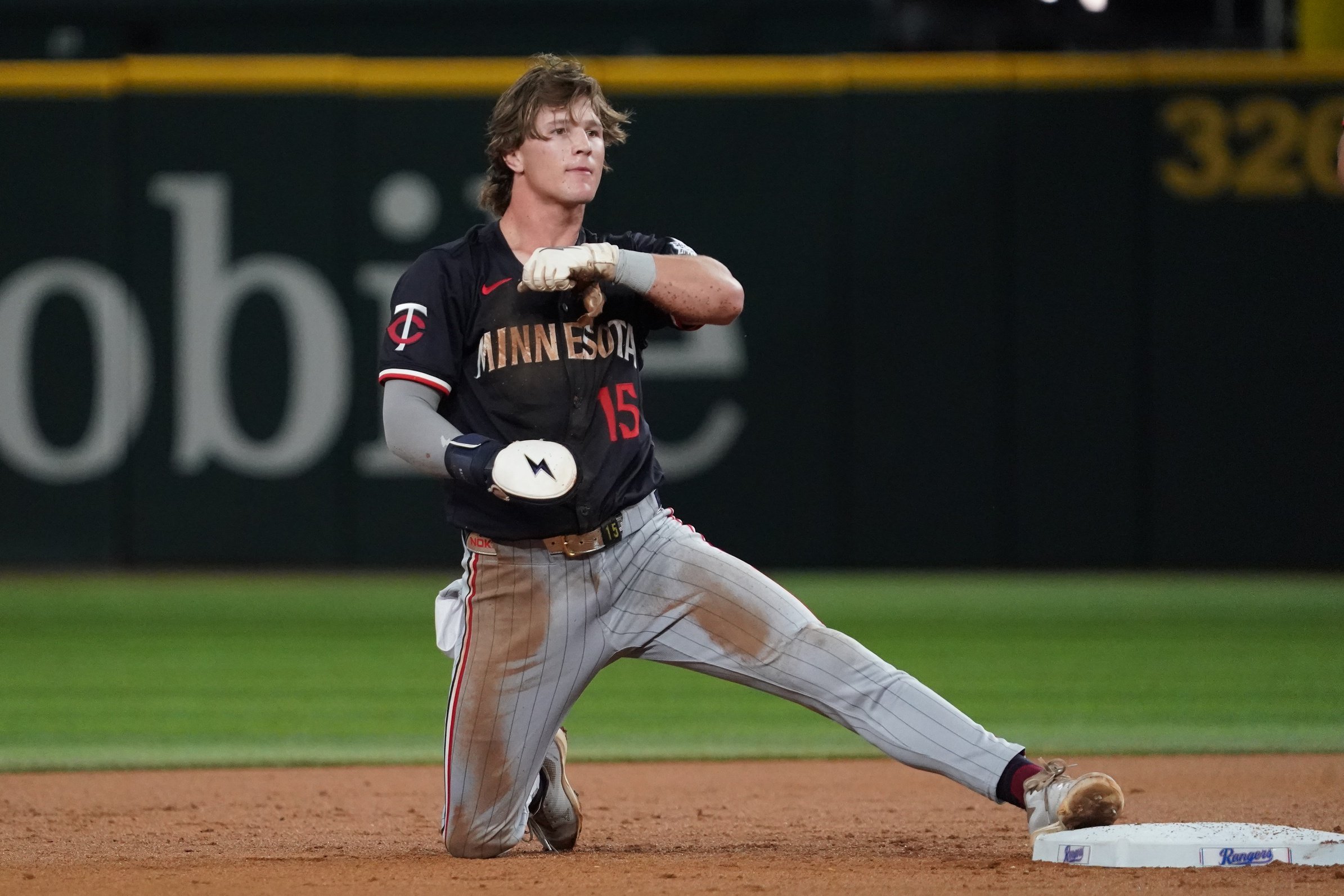 Comparing the Twins team that won a playoff series in 2023 to the last one that did, 21 years earlier in 2002, exposes a sharp contrast. That 2002 group of players had come up together, honing their fundamentals and mastering the elements of "small ball" under Tom Kelly's tutelage to earn a distinct reputation, which only intensified when Ron Gardenhire took over. Those Twins gained advantages on the margins, played superior defense, and ran the bases aggressively. (Maybe over-aggressively, with the worst success rate in baseball.) Back then, and in the decade or so that followed, "The Twins Way" was a grounding set of principles. Now it's little more than a street sign outside of Target Field. The 2023 Twins were a hodgepodge of outside additions and graduated prospects from different waves, led by an expensive free-agent mercenary in Carlos Correa. Under Rocco Baldelli, this team aimed to win with strikeouts on the mound and home runs at the plate; defense and baserunning were far from specializations. Rocco's boys weren't laying down a lot of sac bunts. Another stark difference between these two division-winning clubs: payroll. In 2002, they ranked 26th out of 30 teams at $41 million. No one on that mean was making any serious money. In 2023 the Twins set a franchise record with a $153 million payroll, ranking 17th in the majors. Reading between the lines, and in some cases just taking their words at face value, it becomes clear that Twins leadership is longing for a return to the good old days of "The Twins Way" — or at least an evolution of it — on multiple levels. Getting Back to Fundamentals At the end of the season, Derek Falvey cast his vision for the next iteration of the Minnesota Twins: “We’re going to be a really good base running team, we’re going to be on the details, we’re going to be leaning into the fundamentals,” he said. “It would be surprising if any manager candidate said that they didn’t care about those things.” With all the nostalgia for a different era packed in those words, you might wonder if the Twins thought about dialing up Gardenhire and inquiring about reunion. Or if not Gardy, maybe his favorite student. Sure enough, the Twins have reportedly interviewed Nick Punto for the managerial vacancy, alongside a few other candidates. For those who are too young to remember his heyday, Punto featured (arguably too prominently) on the late Metrodome teams, serving as the embodiment of grit and hustle. He was a switch-hitting utilityman who happily handled fast-changing assignments, put the ball in play but hit for zero power, and routinely slid headfirst into first base. MLB's Cut4 once honored him with the "Unnecessary Hustle Award." White Sox manager Ozzie Guillen coined the term "piranha" to describe his ilk. Under Falvey's leadership, the Twins have gravitated very far from that profile in terms of their identity. But as you look ahead to 2026, you can already see some piranha-esque players written into the plans: Luke Keaschall, Alan Roden and Austin Martin to name a few. You wonder if Minnesota's ultimate managerial choice or offseason player pickups will continue to trend in this direction. I kind of think so. Because here's the thing: these scrappy hustle type players tend to command a lot less money than the established big sluggers. A New Norm for Twins Spending? Whether or not you choose to believe them, the Pohlads have been clear and unflinching in their assertion that their financial state of affairs had become entirely unsustainable. Meeting the demands of a payroll in the $140 million range with reduced revenue streams was pushing them deep into debt, which they brought in minority investors to alleviate. Despite the appearance from the outside that the Twin Cities market should be able to support roughly middle-of-the-pack spending, the Pohlads insist that is not the case. Comments about "right-sizing" the payroll, and Tom Pohlad telling the Star Tribune recently that his family has "repeatedly chosen to invest beyond what the Twins’ revenues can support in an effort to field a competitive team," all point to one thing: a new norm for Twins payroll, or more accurately, a return to the old norm. No, I don't expect the Twins to go back to a $40 million payroll. But in 2002, when the overall benchmark was much lower, that figure represented 60% of the MLB average. Today the same percentage would equate to about a $100 million payroll — a renewed baseline I suspect they'll fall short of in an all-out rebuild year in 2026. In fairness, it's definitely possible to win under such constraints, with the right baseball leadership. The Twins in 2002 were proof enough. The Rays have been doing it for many years. More relevantly: the Cleveland Guardians had a $100 million payroll this year and rallied to reach the postseason while the Twins floundered and underperformed. Cleveland has been a model of low-budget success, fueled by player development and savvy acquisitions. They aren't high-priced or high-powered, but they win on aggressiveness, cohesion and fundamentals. Despite coming from that organization, Falvey has led Minnesota far astray from such characteristics. Everything I'm seeing now leads me to believe he's now looking to lead them back. For better or worse.
-
 In the wake of Rocco Baldelli’s dismissal, sources tell Twins Daily that the Minnesota Twins are leaning toward a futuristic hire: Robo-Skipper 5000, a fully automated dugout management system that promises to align perfectly with the franchise’s prioritization of innovation and cost efficiency. The mechanical manager, developed in-house by a partnership between Baseball Ops and Target Field’s IT Department, has been programmed to follow every organizational directive without hesitation or critical thought — an improvement over Baldelli, who occasionally tried to win games on instinct while too often expressing independent thought. “Robo-Skipper 5000 represents a bold step forward in our mission to integrate efficiency, alignment, and plausible deniability,” said President of Baseball and Business Operations Derek Falvey, who will retain final override authority via a Bluetooth-connected tablet. “Our fans can rest assured: every decision will be backed by data, or at least by our interpretation of it.” Features of Robo-Skipper 5000 Automated Pitching Hooks: Pre-set to remove all starters after four innings regardless of score, pitch count, or general human decency. Platoon Optimization: Lineups generated exclusively by left-right splits, with no regard for “hot streaks,” “track records,” or “talent.” Injury-Aware Algorithms: Capable of identifying new ways for players to be listed as “day-to-day.” PR Compliance Module: Built-in response generator for media scrums, designed to repeat “We’re focused on long-term sustainability” up to 10,000 times without error. Loyalty Chip: Hardwired to ensure unwavering obedience to Falvey and ownership. The Baldelli Connection Critics long accused Baldelli of managing robotically, relying on spreadsheets and matchups instead of gut feel. Now, it appears the Twins have decided to cut out the middleman. Robo-Skipper 5000 comes preloaded with the entire Statcast database and no sentimental attachment to the notion of “riding the hot hand.” “It’s really the natural progression,” one team insider said. “Rocco gave us five years of simulating a robot. Now we get the real thing.” Comments from Ownership While the expected move has raised eyebrows elsewhere in MLB, Twins leadership remains steadfast. "We needed to right-size the level of human intervention in our baseball engine," noted ownership figurehead Joe Pohlad. Robo-Skipper 5000 is actually programmed to do the jobs of the pitching and hitting coaches, as well as vendors and janitors, enabling the Twins to cut their organizational headcount by up to 90 percent. "This solution is going to be tremendous for our operational efficiencies and meeting our goal of championship-caliber revenue," said Pohlad. What’s Next? The Twins are expected to introduce Robo-Skipper 5000 in a press conference later this month, pending a successful firmware update. If hired, he would become the first fully automated manager in Major League history, though sources indicate the Athletics are working on a knockoff prototype assembled from surplus soda machines. For now, Falvey and Pohlad appear thrilled. “This is the future of Twins baseball,” Falvey said, with a slight twinge of apprehension. “It sure is," said Pohlad as he furtively flipped over a document featuring planned schematics for the organization's next development project, Robo-POBO 6000.
-
Image courtesy of Alex Knight, Flickr In the wake of Rocco Baldelli’s dismissal, sources tell Twins Daily that the Minnesota Twins are leaning toward a futuristic hire: Robo-Skipper 5000, a fully automated dugout management system that promises to align perfectly with the franchise’s prioritization of innovation and cost efficiency. The mechanical manager, developed in-house by a partnership between Baseball Ops and Target Field’s IT Department, has been programmed to follow every organizational directive without hesitation or critical thought — an improvement over Baldelli, who occasionally tried to win games on instinct while too often expressing independent thought. “Robo-Skipper 5000 represents a bold step forward in our mission to integrate efficiency, alignment, and plausible deniability,” said President of Baseball and Business Operations Derek Falvey, who will retain final override authority via a Bluetooth-connected tablet. “Our fans can rest assured: every decision will be backed by data, or at least by our interpretation of it.” Features of Robo-Skipper 5000 Automated Pitching Hooks: Pre-set to remove all starters after four innings regardless of score, pitch count, or general human decency. Platoon Optimization: Lineups generated exclusively by left-right splits, with no regard for “hot streaks,” “track records,” or “talent.” Injury-Aware Algorithms: Capable of identifying new ways for players to be listed as “day-to-day.” PR Compliance Module: Built-in response generator for media scrums, designed to repeat “We’re focused on long-term sustainability” up to 10,000 times without error. Loyalty Chip: Hardwired to ensure unwavering obedience to Falvey and ownership. The Baldelli Connection Critics long accused Baldelli of managing robotically, relying on spreadsheets and matchups instead of gut feel. Now, it appears the Twins have decided to cut out the middleman. Robo-Skipper 5000 comes preloaded with the entire Statcast database and no sentimental attachment to the notion of “riding the hot hand.” “It’s really the natural progression,” one team insider said. “Rocco gave us five years of simulating a robot. Now we get the real thing.” Comments from Ownership While the expected move has raised eyebrows elsewhere in MLB, Twins leadership remains steadfast. "We needed to right-size the level of human intervention in our baseball engine," noted ownership figurehead Joe Pohlad. Robo-Skipper 5000 is actually programmed to do the jobs of the pitching and hitting coaches, as well as vendors and janitors, enabling the Twins to cut their organizational headcount by up to 90 percent. "This solution is going to be tremendous for our operational efficiencies and meeting our goal of championship-caliber revenue," said Pohlad. What’s Next? The Twins are expected to introduce Robo-Skipper 5000 in a press conference later this month, pending a successful firmware update. If hired, he would become the first fully automated manager in Major League history, though sources indicate the Athletics are working on a knockoff prototype assembled from surplus soda machines. For now, Falvey and Pohlad appear thrilled. “This is the future of Twins baseball,” Falvey said, with a slight twinge of apprehension. “It sure is," said Pohlad as he furtively flipped over a document featuring planned schematics for the organization's next development project, Robo-POBO 6000. View full article
-
If they trade Pablo I feel very confident it's not so they can spend that money elsewhere. How would you spend $20M that would be more valuable than a #1 starter in his prime anyway?
- 69 replies
-
- 17
-

-

-
- pablo lopez
- byron buxton
- (and 1 more)
-
Image courtesy of Jesse Johnson-Imagn Images Will the Twins trade Joe Ryan this offseason? It's a big question, but I don't think it's the pivotal question. In my mind, the calculus for trading Ryan is reasonable, even if the Twins are going to make an effort to contend next year. This is a pretty straightforward sell-high opportunity, with the right-hander coming off a career year and All-Star appearance at age 29. If the Twins trade Ryan, who's due less than $6 million next year according to MLBTR projections, it won't be about money. And while Ryan is a hell of a pitcher who would hurt to lose, I do think the team and rotation could theoretically survive his subtraction and still hold their own next year. I don't believe either of those things are true of Pablo López. If he gets traded, it's about the money, and it's a sure sign that the Twins are headed to a very dark place next year. It would obviously be a huge stretch to say that Minnesota collapsed this past season simply because López got hurt, but you can't deny how uncanny the timing was. On June 3rd, when López injured his shoulder on the much-maligned pitching mound at Sutter Health Park, the Twins were six games above .500, on their way to a 20th win in their last 27 games. Over their next 27 games following the injury they would go 8-19, erasing all progress from their electric month of May, and by the time López returned in September the Twins were 16 games below .500, mired deeply in irrelevance. Would the Twins have made the playoffs if López didn't get hurt? No. But I do think the huge drop-off in performance and vibes was reflective in some ways of his absence. López is not only a great pitcher — he posted a 2.74 ERA in the 14 starts he was able to make — but also a natural leader and integral figure in the clubhouse. If Byron Buxton is the heart of this Twins team, López is the brain, and I'm not sure they can survive without either in 2026, let alone both. It was notable that, in a late-season interview on YouTube, Twins announcer Cory Provus opined specifically that moving López trade — not Ryan — could be the breaking point that compels Buxton to reconsider his no-trade stance. "If the Twins trade Pablo," Provus said, "then the likelihood of Buxton coming back, I think, drops considerably. That’s on my mind a lot." Even drawing back from the on-field and clubhouse implications of a López trade, let's just take an honest look at the motivations that would drive such a move. López is not a sell-high candidate in the same vein as Ryan. I don't doubt he would generate significant demand and a solid return, but López just missed half a season due to multiple injuries and he's going to make twice as much as Ryan over his two remaining years under contract. Will these factors scare away big-market contenders looking to make a splash? Hardly, but the recent injuries and price tag are bound to temper the bidding for López relative to Ryan. In my mind, if López gets dealt, it's merely about finances, because currently he's on track to earn about a corner of the team's payroll in 2026. So that's where my attention is focused heading into this offseason: Pablo López, the pivot point of the Twins' short-term future. If he gets traded, it's a grim omen on its own, not even accounting for the dominoes it's bound to trigger. Please don't trade Pablo. PLEASE don't trade Byron. Stripped down as it is, this team needs likable characters and a fighting chance. View full article
- 69 replies
-
- 2
-
-
- pablo lopez
- byron buxton
- (and 1 more)
-
Pablo López Is the Pivot Point for the Minnesota Twins Offseason
Nick Nelson posted an article in Twins
 Will the Twins trade Joe Ryan this offseason? It's a big question, but I don't think it's the pivotal question. In my mind, the calculus for trading Ryan is reasonable, even if the Twins are going to make an effort to contend next year. This is a pretty straightforward sell-high opportunity, with the right-hander coming off a career year and All-Star appearance at age 29. If the Twins trade Ryan, who's due less than $6 million next year according to MLBTR projections, it won't be about money. And while Ryan is a hell of a pitcher who would hurt to lose, I do think the team and rotation could theoretically survive his subtraction and still hold their own next year. I don't believe either of those things are true of Pablo López. If he gets traded, it's about the money, and it's a sure sign that the Twins are headed to a very dark place next year. It would obviously be a huge stretch to say that Minnesota collapsed this past season simply because López got hurt, but you can't deny how uncanny the timing was. On June 3rd, when López injured his shoulder on the much-maligned pitching mound at Sutter Health Park, the Twins were six games above .500, on their way to a 20th win in their last 27 games. Over their next 27 games following the injury they would go 8-19, erasing all progress from their electric month of May, and by the time López returned in September the Twins were 16 games below .500, mired deeply in irrelevance. Would the Twins have made the playoffs if López didn't get hurt? No. But I do think the huge drop-off in performance and vibes was reflective in some ways of his absence. López is not only a great pitcher — he posted a 2.74 ERA in the 14 starts he was able to make — but also a natural leader and integral figure in the clubhouse. If Byron Buxton is the heart of this Twins team, López is the brain, and I'm not sure they can survive without either in 2026, let alone both. It was notable that, in a late-season interview on YouTube, Twins announcer Cory Provus opined specifically that moving López trade — not Ryan — could be the breaking point that compels Buxton to reconsider his no-trade stance. "If the Twins trade Pablo," Provus said, "then the likelihood of Buxton coming back, I think, drops considerably. That’s on my mind a lot." Even drawing back from the on-field and clubhouse implications of a López trade, let's just take an honest look at the motivations that would drive such a move. López is not a sell-high candidate in the same vein as Ryan. I don't doubt he would generate significant demand and a solid return, but López just missed half a season due to multiple injuries and he's going to make twice as much as Ryan over his two remaining years under contract. Will these factors scare away big-market contenders looking to make a splash? Hardly, but the recent injuries and price tag are bound to temper the bidding for López relative to Ryan. In my mind, if López gets dealt, it's merely about finances, because currently he's on track to earn about a corner of the team's payroll in 2026. So that's where my attention is focused heading into this offseason: Pablo López, the pivot point of the Twins' short-term future. If he gets traded, it's a grim omen on its own, not even accounting for the dominoes it's bound to trigger. Please don't trade Pablo. PLEASE don't trade Byron. Stripped down as it is, this team needs likable characters and a fighting chance.
- 69 comments
-
- 20
-
-
-
- pablo lopez
- byron buxton
- (and 1 more)
-
What Would a True "Blow It Up" Offseason Look Like for the Minnesota Twins?
Nick Nelson posted an article in Twins
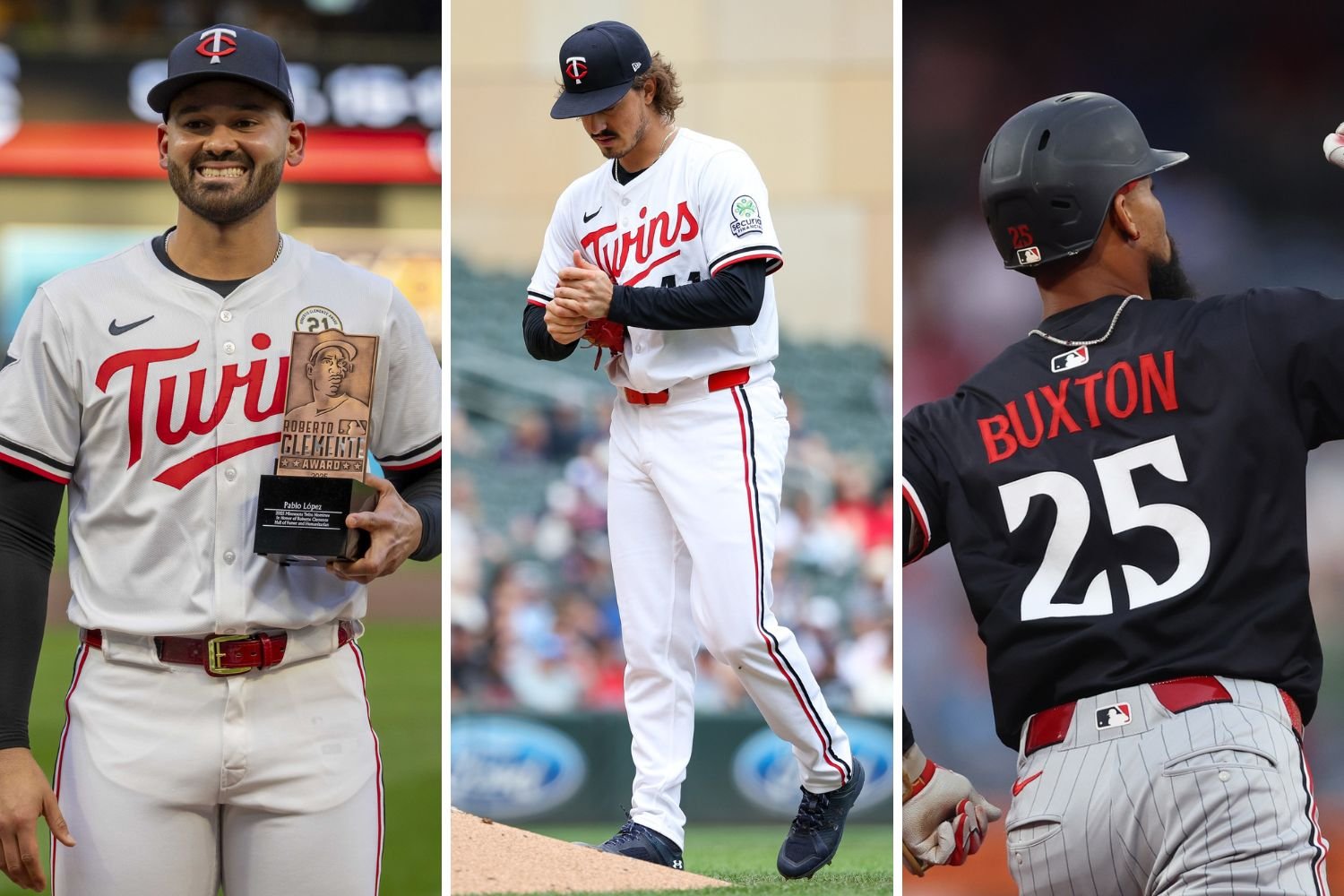 Twins leadership has hinted, not so subtly, that fans can expect a non-competitive rebuild season in 2026. The big question is how far they plan to lean into this. The baseline scenario is that the Twins mostly stand pat, holding onto what they've got and maybe spending modestly to try and fill some gaps. That is, I would argue, the best fans can expect. It's not what I'm expecting. Based on everything I've seen and heard, in combination with my general lack of faith in ownership's mettle (regardless of "new investors"), I believe the Twins are going to full-on tank next year. They'll dump more of their more even moderately expensive prime-aged players who have value — for the players' sakes as much as theirs — and they'll run out a very low payroll in 2026 under the messaging of a youth-driven rebuild. "Come see the kids play at Target Field!" How might this actually play out in practice? To convey an image of what the most extreme version of a conclusive teardown this offseason might look like, I theorized a few trade destinations for players who would be likely to depart. I'm not gonna get into guessing at what the returns might look like — that's a matter for another day, or for the commenters to muse on — but I wanted to put a little more specificity by identifying some logical trade partners. Here's a rundown of some moves I could envision, followed by an overview of what would remain. Trade Joe Ryan to the Red Sox and Pablo Lopez to the Mets. Minnesota and Boston were in (potentially deep) talks over Ryan trade at the deadline. The Red Sox could use a starter like him added to their rotation, which was underscored in a playoff exit against the Yankees. I have little doubt these discussions will pick up again in the offseason so it's just a matter of getting across the finish line. Lopez to the Mets is a bit more of a creative and unfounded guess but makes a lot of sense in my mind. New York just experienced a dramatic midseason collapse, and you just know owner Steve Cohen is looking to make an ambitious statement this winter. Lopez would give them the durable, veteran, front-end starter they need, and they won't blink at adding his salary. Trade Byron Buxton to the Braves. This pains me to write. It's true that Buxton has declared his intention to remain in a Twins uniform for life, but sometimes people reconsider things. If the front office is up-front with Buxton about what the next two years have in store, it's entirely possible Buxton changes his tune, knowing that Minnesota's next contending window won't likely overlap with his ability to contribute at a high level. In the same vein as Carlos Correa and Houston, the idea of Buxton accepting a trade only to one team — his hometown Braves — feels plausible. So does the idea of Atlanta pursuing Buxton's All-Star impact coming off a disappointing season, though they'd have to figure a few things out in the outfield. Trade Royce Lewis to the Angels. Another boring "trade to hometown" concept that also has merits. I have a hard time envisioning a Lewis trade that makes much sense for the Twins, given how low his stock is at the moment, but maybe a downtrodden Angels team gambles on the change-of-scenery effect and pays a reasonable premium for the upside and three remaining years of service. They did watch Lewis launch a pair of homers in their ballpark near the end of the season. It's not really a matter of money, because Lewis's projected salary ($3 million according to MLBTR) isn't substantial. But, fair or not, it's just hard to see any kind of true "reset" taking place on this team with Lewis still a part of it. And he hasn't been talking like a guy who's in lockstep with team leadership in quite a while. Trade Ryan Jeffers to the Rays. Tampa is known to be looking for catching help coming off a season where they ranked third-to-last in fWAR at the position. Jeffers is slated to make around $6.6 million in his final season before free agency, which is probably not enough to make even the low-budget Rays balk, but perhaps too much for a tanking Twins team — especially if they feel they can extract some real value before he becomes a free agent. The Twins have traded with the Rays plenty of times before, including most recently at the deadline when they dealt Griffin Jax for Taj Bradley. Where Does This Leave Us? Okay, so in this most extreme vision for wiping the slate clean, the Twins part with roughly $50 million in salary, and basically every veteran player from the previous wave. I left out Bailey Ober, only because the value proposition of trading him is so unfavorable, but he could conceivably be shipped out too. I also left out Trevor Larnach, for similar reasons, and just to keep some small semblance of continuity on the offense. Below I took a spin at concocting a 2026 roster in this aftermath. Spoiler alert: the payroll amounts to under $50 million, with a large portion of it going toward Carlos Correa in Houston. A few decisions I made to lend some realism: Had them re-sign Christian Vazquez for $3 million as a veteran stopgap as they figure out their post-Jeffers future at catcher. Also had the Twins reunite with Isiah Kiner-Falefa, a middling free agent, to fill in at shortstop with Lee shifting over to third in Lewis's stead. The idea here is that Kiner-Falefa is competently keeping the seat warm until Kaelen Culpepper arrives. On that note, the upside of this generally grim scenario is that the Twins will be unimpeded in pushing their top prospects into the spotlight. In fact, to generate some shred of enthusiasm, they may feel compelled to do so. For that reason, I've got Walker Jenkins on the Opening Day roster, playing center field as Buxton's successor. I mean, yikes. I will say up-front that what I have laid out above is undoubtedly exaggerated. Though I do consider myself pretty pessimistic about the team's intentions at this point, I'm not expecting a sub-$50 million payroll. First of all, they're not going to trade ALL of those guys. (But if they trade even one I wonder why they wouldn't just trade most.) Moreover, they are going to get back talent in these trades. Significant talent in some cases. Probably major-league talent and maybe a few guys already making over the minimum. And yeah, the front office will make a few procedural signings beyond the ones I included, maybe spending a few mil on some relievers, but be assured: they're not throwing any serious money at free agency. The bottom line here is that what's presented above is unfortunately not out of the question. If the Twins are serious about clearing the books and starting over as ownership reconfigures and a lockout looms, the exodus that is yet to come could be staggering for what fans remain. Brace yourselves.
- 102 comments
-
- 10
-

-
-
- pablo lopez
- joe ryan
- (and 3 more)
-
Image courtesy of Jesse Johnson, Matt Krohn, Bill Streicher-Imagn Images Twins leadership has hinted, not so subtly, that fans can expect a non-competitive rebuild season in 2026. The big question is how far they plan to lean into this. The baseline scenario is that the Twins mostly stand pat, holding onto what they've got and maybe spending modestly to try and fill some gaps. That is, I would argue, the best fans can expect. It's not what I'm expecting. Based on everything I've seen and heard, in combination with my general lack of faith in ownership's mettle (regardless of "new investors"), I believe the Twins are going to full-on tank next year. They'll dump more of their more even moderately expensive prime-aged players who have value — for the players' sakes as much as theirs — and they'll run out a very low payroll in 2026 under the messaging of a youth-driven rebuild. "Come see the kids play at Target Field!" How might this actually play out in practice? To convey an image of what the most extreme version of a conclusive teardown this offseason might look like, I theorized a few trade destinations for players who would be likely to depart. I'm not gonna get into guessing at what the returns might look like — that's a matter for another day, or for the commenters to muse on — but I wanted to put a little more specificity by identifying some logical trade partners. Here's a rundown of some moves I could envision, followed by an overview of what would remain. Trade Joe Ryan to the Red Sox and Pablo Lopez to the Mets. Minnesota and Boston were in (potentially deep) talks over Ryan trade at the deadline. The Red Sox could use a starter like him added to their rotation, which was underscored in a playoff exit against the Yankees. I have little doubt these discussions will pick up again in the offseason so it's just a matter of getting across the finish line. Lopez to the Mets is a bit more of a creative and unfounded guess but makes a lot of sense in my mind. New York just experienced a dramatic midseason collapse, and you just know owner Steve Cohen is looking to make an ambitious statement this winter. Lopez would give them the durable, veteran, front-end starter they need, and they won't blink at adding his salary. Trade Byron Buxton to the Braves. This pains me to write. It's true that Buxton has declared his intention to remain in a Twins uniform for life, but sometimes people reconsider things. If the front office is up-front with Buxton about what the next two years have in store, it's entirely possible Buxton changes his tune, knowing that Minnesota's next contending window won't likely overlap with his ability to contribute at a high level. In the same vein as Carlos Correa and Houston, the idea of Buxton accepting a trade only to one team — his hometown Braves — feels plausible. So does the idea of Atlanta pursuing Buxton's All-Star impact coming off a disappointing season, though they'd have to figure a few things out in the outfield. Trade Royce Lewis to the Angels. Another boring "trade to hometown" concept that also has merits. I have a hard time envisioning a Lewis trade that makes much sense for the Twins, given how low his stock is at the moment, but maybe a downtrodden Angels team gambles on the change-of-scenery effect and pays a reasonable premium for the upside and three remaining years of service. They did watch Lewis launch a pair of homers in their ballpark near the end of the season. It's not really a matter of money, because Lewis's projected salary ($3 million according to MLBTR) isn't substantial. But, fair or not, it's just hard to see any kind of true "reset" taking place on this team with Lewis still a part of it. And he hasn't been talking like a guy who's in lockstep with team leadership in quite a while. Trade Ryan Jeffers to the Rays. Tampa is known to be looking for catching help coming off a season where they ranked third-to-last in fWAR at the position. Jeffers is slated to make around $6.6 million in his final season before free agency, which is probably not enough to make even the low-budget Rays balk, but perhaps too much for a tanking Twins team — especially if they feel they can extract some real value before he becomes a free agent. The Twins have traded with the Rays plenty of times before, including most recently at the deadline when they dealt Griffin Jax for Taj Bradley. Where Does This Leave Us? Okay, so in this most extreme vision for wiping the slate clean, the Twins part with roughly $50 million in salary, and basically every veteran player from the previous wave. I left out Bailey Ober, only because the value proposition of trading him is so unfavorable, but he could conceivably be shipped out too. I also left out Trevor Larnach, for similar reasons, and just to keep some small semblance of continuity on the offense. Below I took a spin at concocting a 2026 roster in this aftermath. Spoiler alert: the payroll amounts to under $50 million, with a large portion of it going toward Carlos Correa in Houston. A few decisions I made to lend some realism: Had them re-sign Christian Vazquez for $3 million as a veteran stopgap as they figure out their post-Jeffers future at catcher. Also had the Twins reunite with Isiah Kiner-Falefa, a middling free agent, to fill in at shortstop with Lee shifting over to third in Lewis's stead. The idea here is that Kiner-Falefa is competently keeping the seat warm until Kaelen Culpepper arrives. On that note, the upside of this generally grim scenario is that the Twins will be unimpeded in pushing their top prospects into the spotlight. In fact, to generate some shred of enthusiasm, they may feel compelled to do so. For that reason, I've got Walker Jenkins on the Opening Day roster, playing center field as Buxton's successor. I mean, yikes. I will say up-front that what I have laid out above is undoubtedly exaggerated. Though I do consider myself pretty pessimistic about the team's intentions at this point, I'm not expecting a sub-$50 million payroll. First of all, they're not going to trade ALL of those guys. (But if they trade even one I wonder why they wouldn't just trade most.) Moreover, they are going to get back talent in these trades. Significant talent in some cases. Probably major-league talent and maybe a few guys already making over the minimum. And yeah, the front office will make a few procedural signings beyond the ones I included, maybe spending a few mil on some relievers, but be assured: they're not throwing any serious money at free agency. The bottom line here is that what's presented above is unfortunately not out of the question. If the Twins are serious about clearing the books and starting over as ownership reconfigures and a lockout looms, the exodus that is yet to come could be staggering for what fans remain. Brace yourselves. View full article
-
Image courtesy of Bruce Kluckhohn-Imagn Images In a season-ending interview with the Star Tribune, Joe Pohlad telegraphed ownership's intentions for the offseason and the 2026 Twins more clearly than ever before. "The goal is to win a World Series," he said. "That doesn’t mean it doesn’t come with some pain in the short term.” Pohlad is obviously not referencing next season when he talks about attempting to win a World Series. Instead, he's referencing some vague future state where the Twins are a legitimate championship contender, something they've been unable to accomplish in the entirety of his adult life. And he's dangling that vague future state as the payoff that will justify the short-term (more accurately: indefinite) pain that fans have only begun to experience. “At some point you gotta look at yourself and be like, ‘You know what? We’ve gotta try something different.’ And not everybody’s going to like it," Pohlad shared. "You’ve gotta own it. Fans are going to be upset. They’re going to say what they’re going to say. And you gotta keep moving forward, and trust that you’re making the right decision.” For starters, "you've gotta own it" is a hilarious statement from an ownership figurehead who has scarcely made himself available for comment while his franchise has devolved into a disastrous state. So is "we've got to try something different" as he continues to stick with the baseball leader who architected this abject failure. But in his usual tone-deaf and cryptic terms, he's said enough. I'm glad Joe Pohlad trusts that he's making the right decisions, while giving fans no reason whatsoever to share that trust. He's asking us not to believe our eyes. As reporter Reid Forgrave wrote in the Star Tribune article, "it's worth noting: 2023’s excitement was based on a team that won a wild-card series, not a World Series. That resurgent team only had the 11th-best record in baseball — a fringe playoff team, not a bona fide contender." This was intended, I guess, to sort of reflect ownership's higher aspirations, but instead it underscores how short they've repeatedly fallen. That "fringe playoff team" was the pinnacle of their success in the Target Field era. It was the culmination of six years of team-building under Derek Falvey, who now gets to start over after firing the manager he hand-picked. The Twins have one 90-win season in the last 15 years, despite playing in one of baseball's softest divisions. They've lagged competitively with payrolls that, to the faint credit of the Pohlads, have been pretty reasonable by the standards of a mid-market MLB franchise. (In fact, they've invested enough to put themselves heavily in debt, forcing outrageous actions like a massive payroll cut coming off a playoff breakthrough, if you take their word for it. (I don't take their word for it.)) Now we're being told it's time to pull back those investments. More right-sizing. “Baseball is all about finding that right balance between patience and striking when the moment is right,” Pohlad said, in the aftermath of squandering a historic moment. You don't have to read between the lines much to see what that means for next year. Patience. Pain. Okay, fine, that's how it goes, if you believe in the model of a rebuild — predicated on low-cost rosters full of young developing players, taking their licks and filtering out on the way to constructing a quality team. It's worked before. The Twins do at least appear to have a worthy long-term centerpiece in Walker Jenkins. You just have to wonder what this "short-term pain" means for the people involved who don't have the luxury of patience. Pablo Lopez and Joe Ryan are in the primes of their careers, two years from free agency. Why would they want to play for a team that keeps trending downward offensively and defensively, and is openly not trying to contend? The same question, unfortunately, goes for Byron Buxton, with some rumblings that he could be compelled to waive his no-trade clause after all. The idea of this team's lack of commitment to winning becoming so intense that it shatters Buxton's loyal resolve ... it's grim. That turn of events would somehow take the state of affairs with this franchise to an all-new level of shame. As someone who counts Buxton as probably their favorite player of all time, I'd find it pretty tough to care much about the 2026 team. I know I'm not alone. But I guess it's just the "short-term pain" that we all have to deal with as a trade-off for putting our faith in the people who got in this situation to begin with. If Buxton and Lopez and Ryan all exit this offseason, at least we can take comfort in the knowledge that Joe Pohlad wants to win a World Series someday. View full article
-
Short-Term Pain: Joe Pohlad Says It All With Three Dastardly Words
Nick Nelson posted an article in Twins
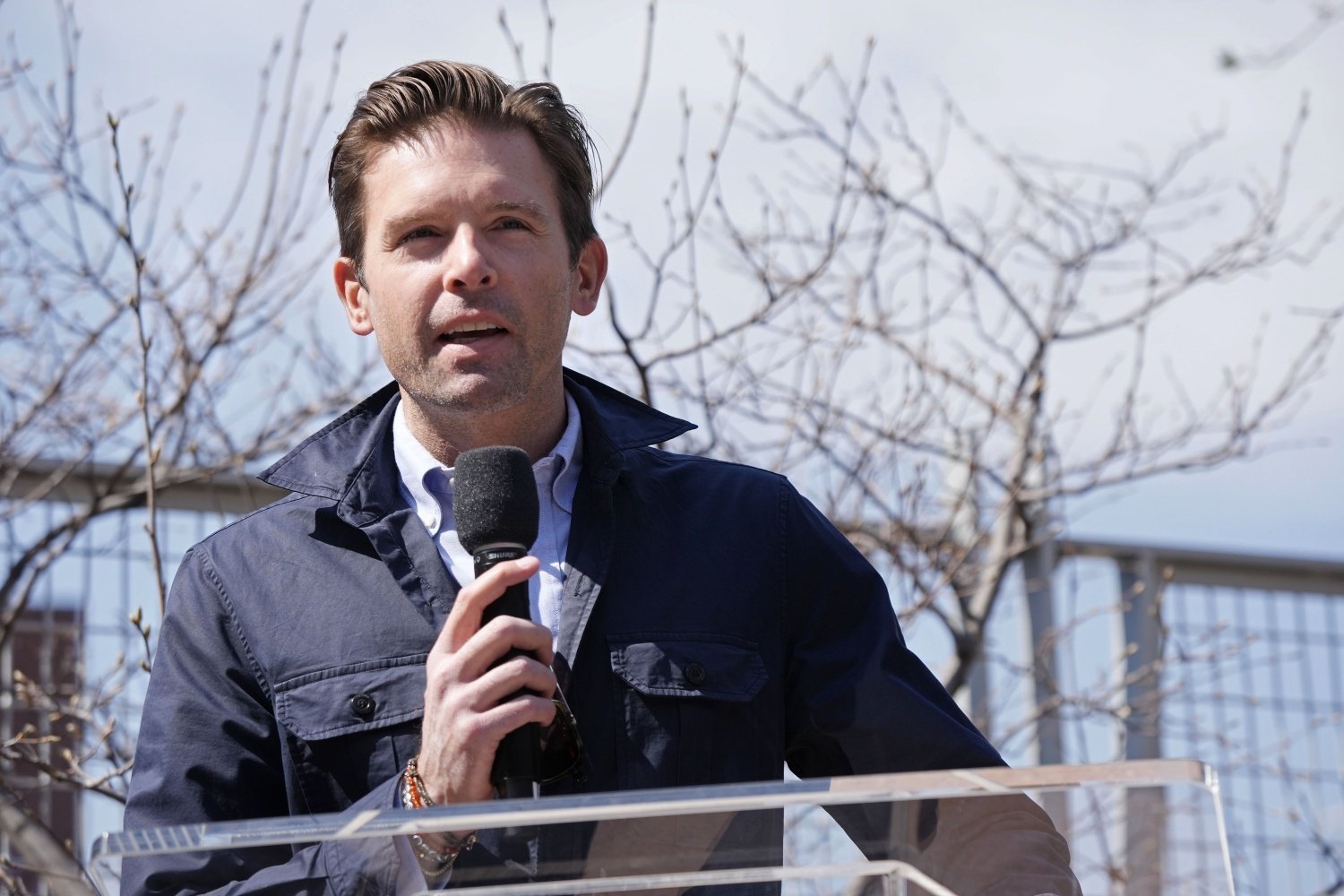 In a season-ending interview with the Star Tribune, Joe Pohlad telegraphed ownership's intentions for the offseason and the 2026 Twins more clearly than ever before. "The goal is to win a World Series," he said. "That doesn’t mean it doesn’t come with some pain in the short term.” Pohlad is obviously not referencing next season when he talks about attempting to win a World Series. Instead, he's referencing some vague future state where the Twins are a legitimate championship contender, something they've been unable to accomplish in the entirety of his adult life. And he's dangling that vague future state as the payoff that will justify the short-term (more accurately: indefinite) pain that fans have only begun to experience. “At some point you gotta look at yourself and be like, ‘You know what? We’ve gotta try something different.’ And not everybody’s going to like it," Pohlad shared. "You’ve gotta own it. Fans are going to be upset. They’re going to say what they’re going to say. And you gotta keep moving forward, and trust that you’re making the right decision.” For starters, "you've gotta own it" is a hilarious statement from an ownership figurehead who has scarcely made himself available for comment while his franchise has devolved into a disastrous state. So is "we've got to try something different" as he continues to stick with the baseball leader who architected this abject failure. But in his usual tone-deaf and cryptic terms, he's said enough. I'm glad Joe Pohlad trusts that he's making the right decisions, while giving fans no reason whatsoever to share that trust. He's asking us not to believe our eyes. As reporter Reid Forgrave wrote in the Star Tribune article, "it's worth noting: 2023’s excitement was based on a team that won a wild-card series, not a World Series. That resurgent team only had the 11th-best record in baseball — a fringe playoff team, not a bona fide contender." This was intended, I guess, to sort of reflect ownership's higher aspirations, but instead it underscores how short they've repeatedly fallen. That "fringe playoff team" was the pinnacle of their success in the Target Field era. It was the culmination of six years of team-building under Derek Falvey, who now gets to start over after firing the manager he hand-picked. The Twins have one 90-win season in the last 15 years, despite playing in one of baseball's softest divisions. They've lagged competitively with payrolls that, to the faint credit of the Pohlads, have been pretty reasonable by the standards of a mid-market MLB franchise. (In fact, they've invested enough to put themselves heavily in debt, forcing outrageous actions like a massive payroll cut coming off a playoff breakthrough, if you take their word for it. (I don't take their word for it.)) Now we're being told it's time to pull back those investments. More right-sizing. “Baseball is all about finding that right balance between patience and striking when the moment is right,” Pohlad said, in the aftermath of squandering a historic moment. You don't have to read between the lines much to see what that means for next year. Patience. Pain. Okay, fine, that's how it goes, if you believe in the model of a rebuild — predicated on low-cost rosters full of young developing players, taking their licks and filtering out on the way to constructing a quality team. It's worked before. The Twins do at least appear to have a worthy long-term centerpiece in Walker Jenkins. You just have to wonder what this "short-term pain" means for the people involved who don't have the luxury of patience. Pablo Lopez and Joe Ryan are in the primes of their careers, two years from free agency. Why would they want to play for a team that keeps trending downward offensively and defensively, and is openly not trying to contend? The same question, unfortunately, goes for Byron Buxton, with some rumblings that he could be compelled to waive his no-trade clause after all. The idea of this team's lack of commitment to winning becoming so intense that it shatters Buxton's loyal resolve ... it's grim. That turn of events would somehow take the state of affairs with this franchise to an all-new level of shame. As someone who counts Buxton as probably their favorite player of all time, I'd find it pretty tough to care much about the 2026 team. I know I'm not alone. But I guess it's just the "short-term pain" that we all have to deal with as a trade-off for putting our faith in the people who got in this situation to begin with. If Buxton and Lopez and Ryan all exit this offseason, at least we can take comfort in the knowledge that Joe Pohlad wants to win a World Series someday.
-
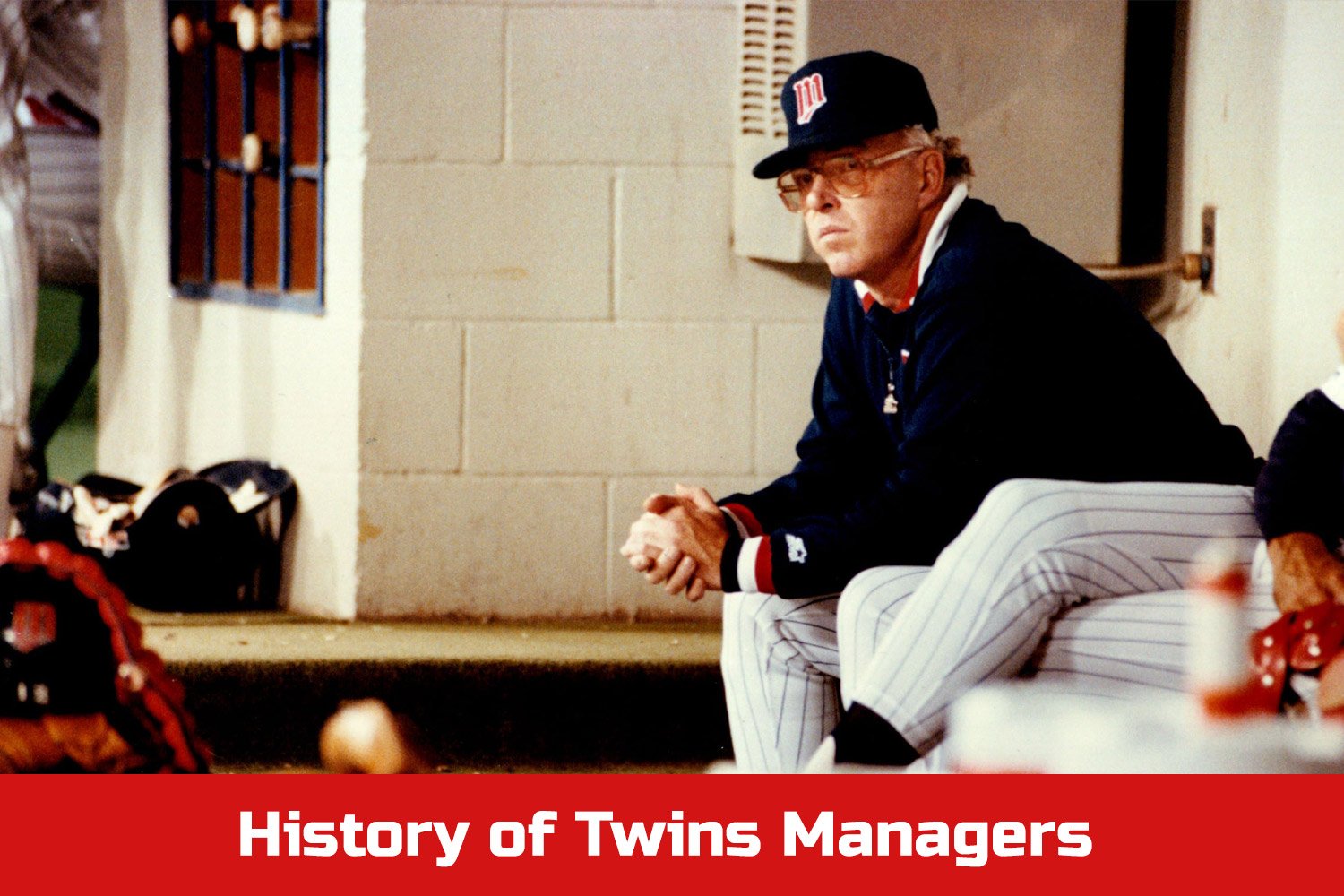 The Minnesota Twins, born out of the Washington Senators' relocation in 1961, have had a fascinating cast of characters at the helm over their decades of existence. From fiery tacticians to laid-back players' coaches, the succession of Twins managers reflects the franchise's storied ups and downs. Here's a journey through their history, highlighting the quirks and qualities that made each skipper unique. Cookie Lavagetto (1961-1961) Cookie Lavagetto technically holds the distinction of being the first manager in Minnesota Twins history, but his legacy is more tied to the team’s Washington Senators roots than to its Minnesota future. Lavagetto managed the Senators from 1957 to 1960 and was retained when the franchise relocated to Minnesota for the 1961 season. However, his tenure as the Twins' skipper was short-lived; he was dismissed in June with the team in ninth place and 15 games below .500. Sam Mele (1961-1967) Effectively the Twins' inaugural manager, Sam Mele guided the team during its transition from Washington to Minnesota, helping forge a new franchise identity. A no-nonsense leader, Mele famously turned a roster brimming with raw talent into a 1965 American League pennant winner. His hard-nosed demeanor set the tone for the Twins’ first decade. Fun Fact: Mele wasn’t afraid to get fiery. In 1965, he charged onto the field to argue a call with umpire Bill Valentine — a stunt that ended with Mele throwing punches, leading to $500 fine and five-game suspension. Twins Legacy: Mele's knack for developing and managing big-name stars, from Harmon Killebrew to Tony Oliva to Rod Carew, along with his leadership during a transformative era, make him an integral part of the Twins canon. Cal Ermer (1967-68) Cal Ermer, a longtime minor-league manager, served as the Minnesota Twins manager after replacing Mele midseason in 1967. Ermer led the Twins to a near playoff berth that year, finishing just one game behind the Boston Red Sox in a thrilling American League pennant race. However, he was dismissed the next year after Minnesota underwhelmed in 1968. Billy Martin (1969) Billy Martin’s one-year stint with the Twins was brief but unforgettable. Under his volatile leadership, the Twins won the AL West in 1969. However, Martin’s temper ultimately led to his departure. He later became an iconic figure in Yankees lore, leading New York to consecutive pennants while clashing with owner George Steinbrenner and star Reggie Jackson. Fun Fact: Martin infamously got into a fistfight with pitcher Dave Boswell outside of a Detroit bar on a road trip. "Well, when he came off the wall, I hit him again.” - Billy Martin on his reaction to Dave Boswell bouncing off an alley wall after Martin landed his first punch, according to author Bill Pennington in Billy Martin: Baseball's Flawed Genius Twins Legacy: Despite his abrasiveness, Martin’s aggressive tactics revitalized the team, instilling a fighting spirit that players carried with them even after his exit. Read more from Al Roettger: Billy Martin, For Good And Bad, Was A Legendary Baseball Personality Bill Rigney and Frank Quilici (1970-1975) Bill Rigney replaced Martin after the Twins' AL West title in 1969. He guided the team to another division title in 1970 but struggled in subsequent seasons, leading to his dismissal in 1972. This paved way for Frank Quilici, a former Twins player and future radio commentator known for his strong rapport with players. He was fired after failing to get the Twins above third place in three seasons. Gene Mauch (1976-1980) Gene Mauch, known as the "Little General," brought his strategic brilliance to Minnesota in the late 1970s. While the Twins weren’t powerhouses under his tenure, Mauch’s reputation for outsmarting opponents was cemented. Fun Fact: Often credited with starting the double player switch, Mauch was a champion of small ball — early sacrifice bunts, hit-and-runs, defensive substitutions aplenty. He was also hugely respected by his peers. Former pitcher and Twins announcer Tommy John once remarked that Mauch "knew the baseball rule book better than anyone in baseball" and was "one of the most astute bench managers I ever saw." Twins Legacy: Though Mauch couldn’t lead the Twins to postseason glory, he laid groundwork for the team’s future success by emphasizing discipline and fundamentals. Johnny Goryl, Billy Gardner, Ray Miller (1980-1986) The period from 1980 to 1986 was a transitional one focused on rebuilding for the Twins, with seven straight non-winning seasons under five different managers. Goryl took over midseason in 1980 after Mauch resigned, managing parts of two seasons with limited success. Gardner stepped in and was tasked with developing young talent like Kent Hrbek, Tom Brunansky, and Gary Gaetti. In 1985, Gardner gave way to pitching specialist Ray Miller, who served as a brief stopgap leading up to the arrival of an iconic figure in franchise history. Tom Kelly (1986-2001) If you’re a Twins fan, Tom Kelly is synonymous with winning. Kelly’s tenure is marked by World Series victories in 1987 and 1991, with the latter often called one of the greatest Fall Classics of all time. "TK" became the first Twins manager inducted into the team Hall of Fame, in 2002, and a bronze statue in his likeness was unveiled outside Target Field in 2017. Fun Fact: Kelly was obsessive about fundamentals and playing the game the right way. His "Baseball Is FUNdamental" program and "Good Morning America" drills in spring training were notorious. Twins Legacy: Kelly’s ability to cultivate team chemistry and get the most out of players like Kirby Puckett and Hrbek led the Twins to their greatest success in history. His "Twins Way" approach became a franchise hallmark. "If you don't learn something new every day, you're not paying attention." - Tom Kelly in ESPN Mag. Ron Gardenhire (2002-2014) After Kelly’s surprise retirement following the 2001 season, former third-base coach Ron Gardenhire stepped in and brought a modern twist to "The Twins Way." Gardenhire guided the team to six division titles in his first nine years, including an ALCS berth in his first season. He was named AL Manager of the Year in 2010 but followed it with four straight 90-loss seasons, and was fired in 2014. Fun Fact: Gardenhire’s ejections were legendary. He was tossed 73 times during his Twins tenure — eighth all-time among MLB managers — and often to the delight of fans. Twins Legacy: Gardenhire’s affable personality masked a sharp tactical mind. He excelled at nurturing young talent, helping stars like Joe Mauer and Justin Morneau thrive. He was named winner of the Herb Carneal Lifetime Achievement Award for 2024 based on both his on-field accomplishments and his "heartfelt commitment to those around him." Paul Molitor (2015-2018) The Hall of Famer’s tenure as manager was brief but notable for its highs and lows. Following a disastrous 2016 campaign that led to a front-office overhaul, Molitor oversaw the Twins’ resurgence in 2017, guiding them to a surprise playoff appearance and laying groundwork for future success. Minnesota's 26-win improvement earned Molitor AL Manager of the Year honors, but they took a step backward in 2018, at which point new leadership decided to pivot to their own guy. Fun Fact: Following Frank Robinson, Molitor is only the second person to be elected to the Hall of Fame as a player and win the Manager of the Year Award. Twins Legacy: Molitor’s attention to detail and ability to connect with modern players made him a bridge between the old-school and analytics-driven eras of baseball — an evolutionary contrast reflected well by his predecessor and successor. "I'm not an old curmudgeon who insists that the old way was better. I see a lot of things in the new game that I find really challenging that I'm willing to learn, to understand -- that's instrumental to your players." - Paul Molitor in an article for MLB.com Rocco Baldelli (2019-2025) Rocco Baldelli blended analytics with a player-friendly demeanor. Baldelli led the Twins to 101 wins in his first season, becoming the third Twins manager of the decade to earn AL Manager of the Year. The Twins won the division three times in seven seasons under Baldelli, who was let go by the Twins following his first 90-loss season in 2025. Fun Fact: Baldelli’s nickname, "The Woonsocket Rocket," stems from his Rhode Island roots, though his perpetually calm and laid-back demeanor hardly screams "rocket." Twins Legacy: Baldelli’s emphasis on rest and recovery has redefined how the Twins manage workloads, making him a pioneer in blending sports science with strategy. His extensive embrace of modern analytical principles, such as stringently platooning hitters and removing starters after two times through the order, have made him a somewhat controversial figure in Minnesota's multi-generational fan base. Derek Shelton (2026-Present) Derek Shelton was announced as the 15th manager in Minnesota Twins history on October 29th, 2025. He returns to the organization after previously serving as bench coach under Molitor and Baldelli, in 2018-19. Following Minnesota's 101-win season in 2019, Shelton was hired to manage the Pittsburgh Pirates. His six-year tenure with the Pirates saw little success, leading to his firing in May of 2025. Shelton was an in-demand managerial candidate prior to landing in Pittsburgh, and he faced difficult circumstances with a low-payroll, talent-deficient team. A former hitting coach who's renowned for connecting with his players, Shelton brings a mix of familiarity and freshness as the Twins embark on a new chapter and hope to leave behind them the bitter disappointment of Baldelli's last two seasons.