



Nick Nelson
-
Posts
8,315 -
Joined
-
Last visited
-
Days Won
56
Content Type
Profiles
News
Minnesota Twins Videos
2026 Minnesota Twins Top Prospects Ranking
2022 Minnesota Twins Draft Picks
Minnesota Twins Free Agent & Trade Rumors, Notes, & Tidbits
Guides & Resources
2023 Minnesota Twins Draft Picks
The Minnesota Twins Players Project
2024 Minnesota Twins Draft Picks
2025 Minnesota Twins Draft Pick Tracker
2026 Minnesota Twins Draft Tracker: Picks & Bonuses
Forums
Blogs
Events
Store
Downloads
Gallery
Everything posted by Nick Nelson
-
 This also might be an incentive that helps pitchers get on board with transitioning from starter to reliever before they might feel the starting path has been exhausted. "You can stay in the minors and keep chasing the unlikely starter route, behind 8-9 other guys on the depth chart, or you can jump into the relief role and be in the majors right away."
- 35 replies
-
- 3
-

-
- connor prielipp
- marco raya
- (and 3 more)
-
Image courtesy of John Vittas-Fort Myers Mighty Mussels The Twins shipped out nearly a dozen veteran players at the trade deadline last year, and have done little to replace the lost talent and experience. Team leaders have asserted their intention to build from within, and to succeed on the strength of a system that is viewed by baseball executives (per a recent MLB Pipeline survey) as one of baseball's most underrated. If the Twins really want to follow through and put their (lack of) money where their mouth is, they'll give some of their prospects a chance to seize Opening Day jobs. There are at least five credible candidates, looking beyond Walker Jenkins and Emmanuel Rodriguez, who — while arguably deserving of a look after reaching Triple-A last year — are crowded out of a lefty-heavy outfield mix. That's one player type these current Twins don't presently need. Here are a couple they badly do need: relief pitchers, and right-handed bats. For that reason, I could envision any of these five players who've yet to debut in the majors catching on with the big-league team if they take spring training by storm. Connor Prielipp One of the factors that often prevents MLB teams from carrying a rookie straight out of spring training is service-clock manipulation. By waiting a few weeks, you can game the system for an extra year of control. That's not so much of a consideration for Prielipp, who turned 25 a few days ago. If all went perfectly and he stuck in the majors for good after making the team, he'd still be under Twins control through age 30. Among the arms they currently have, I'm pretty confident Prielipp is one of Minnesota's best relief options, injury and workload question marks aside. With his fearsome fastball/slider combo from the left side, he may very well be the best, or at least the highest-upside. Could Prielipp step into a setup or closer role out of the gate, with no major-league experience, just as Jhoan Duran did in 2022? I could definitely see it. Like with Duran, there's not really any reason to waste more bullets in the minors if he's healthy. Marco Raya Raya struggled mightily in Triple-A last year while working mostly as a starter. By now he and the Twins should be embracing the shift to a reliever role, and Derek Falvey has hinted as much. In short stints, able to maximize his effort and lean heavily on his standout slider, Raya could be a force. He seems to be an X-factor they are relying on for their rebuilt bullpen. That won't necessarily happen right away. Raya undoubtedly has the stuff but he's got to harness it consistently and manage his emotions. But if he is throwing heat and finding the strike zone in spring training, why not gamble on his potential in a relief corps that is currently lacking for it? John Klein Maybe my favorite dark horse heading into camp. Most Twins fans probably hadn't heard of Klein before he was added to the 40-man roster in November, but that decision came on the heels of a very strong season in the minors where the 6-foot-5 righty ramped up his arsenal and fanned 128 hitters over 106 innings in the high minors. He only threw 25 innings after reaching Triple-A, but Klein turns 24 in April and has the makings of a bullpen-uptick guy with a five-pitch mix that could be whittled down. His presence on the 40-man roster gives him an edge over other prospects or minor-league signings who would need to be added. Gabriel Gonzalez Shifting our focus from relief pitching to another need: right-handed hitting. The Twins are deep on lefty-swinging corner bats, including Trevor Larnach, Matt Wallner, Kody Clemens, Alan Roden and James Outman. Meanwhile they are very short on right-handed options to complement and balance this proliferation of portsiders. Yeah, you've got Austin Martin, but he hasn't proven to be much of an offensive force. Scrap-heap pickup Eric Wagaman is probably the de facto favorite to fill a platoon-type role, but he's not very exciting, and also he's got minor-league options so there's no obligation to go with him. Gonzalez distinguishing himself in spring camp and claiming an Opening Day roster spot is a fun thought. If the Twins want real right-handed punch, and a true weapon against lefties, he's maybe their best bet to offer it even at just 22 years old. Last year Gonzalez raked through three levels of the minors, slashing .368/.430/.592 against lefties and finishing with an .862 OPS in 150 PAs at Triple-A. The big snag here is consistent playing time. The Twins aren't going to have him on the roster starting twice a week, which is what a true platoon role would entail. For Gonzalez to have a chance, space will need to be cleared ahead of him. Kyler Fedko Fedko could be looked at as Gonzalez Lite. The underlying concept is similar. Promoting him straight to the majors would be a lot less audacious than Gonzalez, since Fedko is 26 and no longer really a development project. Because of that, the Twins would also probably be far more comfortable carrying him in a part-time role. Despite Fedko posting a strong .855 OPS at Triple-A last year, he didn't make believers of the Twins, who declined to promote him late in the year or add him to the 40-man roster after. Fedko went unpicked in the Rule 5, so apparently the rest of the league weren't big believers either. But he's still a guy on the prospect radar — ranked 18th on Twins Daily's list, and 33rd on Aaron Gleeman's latest — with a skill set that could suit the club's short-term needs. Anyone I'm missing? Who's your dark horse prospect to make his MLB debut on Opening Day? Share your thoughts in the comments. View full article
-
5 Twins Prospects Who Could Make Their MLB Debut on Opening Day
Nick Nelson posted an article in Twins
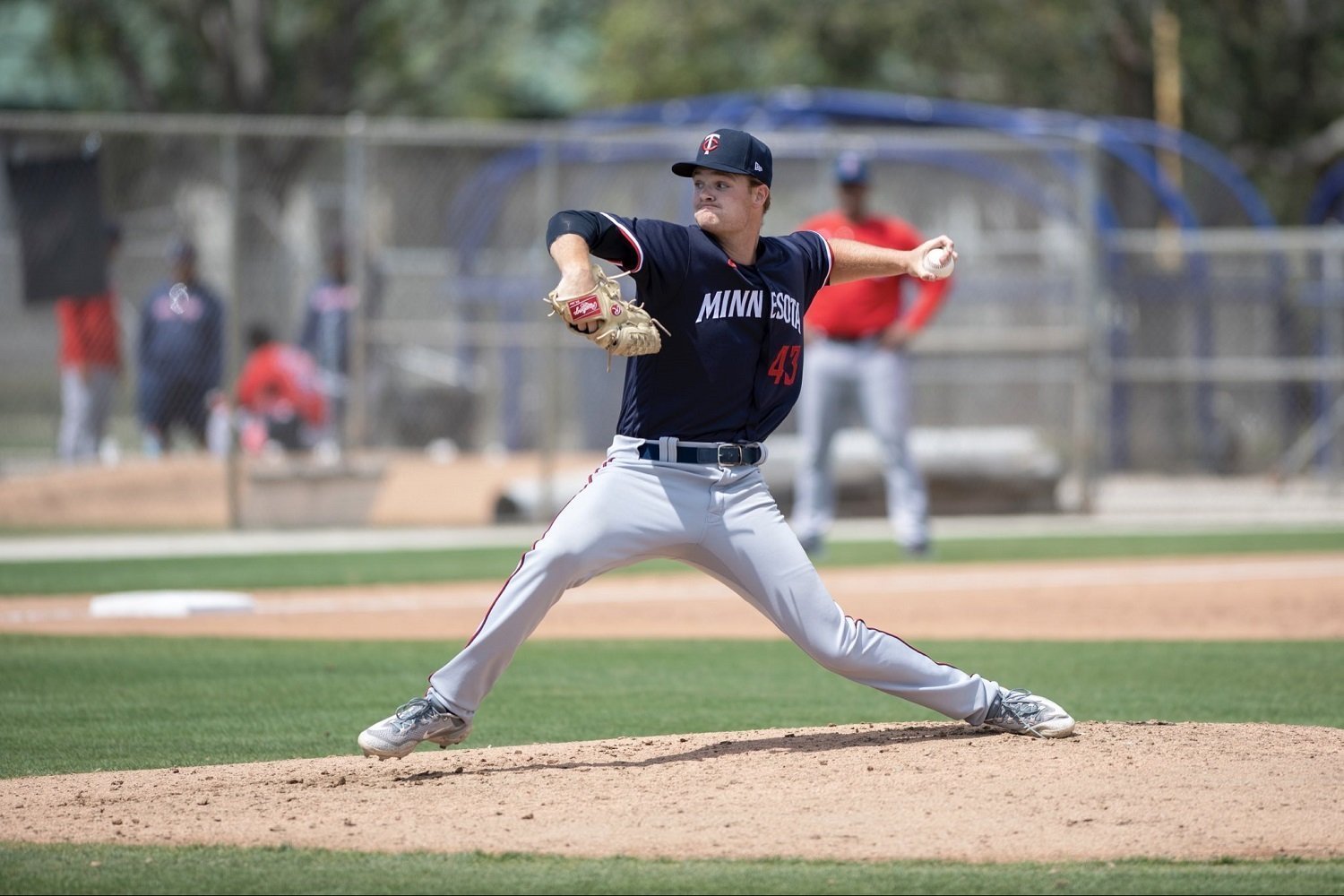 The Twins shipped out nearly a dozen veteran players at the trade deadline last year, and have done little to replace the lost talent and experience. Team leaders have asserted their intention to build from within, and to succeed on the strength of a system that is viewed by baseball executives (per a recent MLB Pipeline survey) as one of baseball's most underrated. If the Twins really want to follow through and put their (lack of) money where their mouth is, they'll give some of their prospects a chance to seize Opening Day jobs. There are at least five credible candidates, looking beyond Walker Jenkins and Emmanuel Rodriguez, who — while arguably deserving of a look after reaching Triple-A last year — are crowded out of a lefty-heavy outfield mix. That's one player type these current Twins don't presently need. Here are a couple they badly do need: relief pitchers, and right-handed bats. For that reason, I could envision any of these five players who've yet to debut in the majors catching on with the big-league team if they take spring training by storm. Connor Prielipp One of the factors that often prevents MLB teams from carrying a rookie straight out of spring training is service-clock manipulation. By waiting a few weeks, you can game the system for an extra year of control. That's not so much of a consideration for Prielipp, who turned 25 a few days ago. If all went perfectly and he stuck in the majors for good after making the team, he'd still be under Twins control through age 30. Among the arms they currently have, I'm pretty confident Prielipp is one of Minnesota's best relief options, injury and workload question marks aside. With his fearsome fastball/slider combo from the left side, he may very well be the best, or at least the highest-upside. Could Prielipp step into a setup or closer role out of the gate, with no major-league experience, just as Jhoan Duran did in 2022? I could definitely see it. Like with Duran, there's not really any reason to waste more bullets in the minors if he's healthy. Marco Raya Raya struggled mightily in Triple-A last year while working mostly as a starter. By now he and the Twins should be embracing the shift to a reliever role, and Derek Falvey has hinted as much. In short stints, able to maximize his effort and lean heavily on his standout slider, Raya could be a force. He seems to be an X-factor they are relying on for their rebuilt bullpen. That won't necessarily happen right away. Raya undoubtedly has the stuff but he's got to harness it consistently and manage his emotions. But if he is throwing heat and finding the strike zone in spring training, why not gamble on his potential in a relief corps that is currently lacking for it? John Klein Maybe my favorite dark horse heading into camp. Most Twins fans probably hadn't heard of Klein before he was added to the 40-man roster in November, but that decision came on the heels of a very strong season in the minors where the 6-foot-5 righty ramped up his arsenal and fanned 128 hitters over 106 innings in the high minors. He only threw 25 innings after reaching Triple-A, but Klein turns 24 in April and has the makings of a bullpen-uptick guy with a five-pitch mix that could be whittled down. His presence on the 40-man roster gives him an edge over other prospects or minor-league signings who would need to be added. Gabriel Gonzalez Shifting our focus from relief pitching to another need: right-handed hitting. The Twins are deep on lefty-swinging corner bats, including Trevor Larnach, Matt Wallner, Kody Clemens, Alan Roden and James Outman. Meanwhile they are very short on right-handed options to complement and balance this proliferation of portsiders. Yeah, you've got Austin Martin, but he hasn't proven to be much of an offensive force. Scrap-heap pickup Eric Wagaman is probably the de facto favorite to fill a platoon-type role, but he's not very exciting, and also he's got minor-league options so there's no obligation to go with him. Gonzalez distinguishing himself in spring camp and claiming an Opening Day roster spot is a fun thought. If the Twins want real right-handed punch, and a true weapon against lefties, he's maybe their best bet to offer it even at just 22 years old. Last year Gonzalez raked through three levels of the minors, slashing .368/.430/.592 against lefties and finishing with an .862 OPS in 150 PAs at Triple-A. The big snag here is consistent playing time. The Twins aren't going to have him on the roster starting twice a week, which is what a true platoon role would entail. For Gonzalez to have a chance, space will need to be cleared ahead of him. Kyler Fedko Fedko could be looked at as Gonzalez Lite. The underlying concept is similar. Promoting him straight to the majors would be a lot less audacious than Gonzalez, since Fedko is 26 and no longer really a development project. Because of that, the Twins would also probably be far more comfortable carrying him in a part-time role. Despite Fedko posting a strong .855 OPS at Triple-A last year, he didn't make believers of the Twins, who declined to promote him late in the year or add him to the 40-man roster after. Fedko went unpicked in the Rule 5, so apparently the rest of the league weren't big believers either. But he's still a guy on the prospect radar — ranked 18th on Twins Daily's list, and 33rd on Aaron Gleeman's latest — with a skill set that could suit the club's short-term needs. Anyone I'm missing? Who's your dark horse prospect to make his MLB debut on Opening Day? Share your thoughts in the comments.
- 35 comments
-
- 9
-

-
-
- connor prielipp
- marco raya
- (and 3 more)
-
Image courtesy of Jordan Johnson-Imagn Images The bullpen sell-off at last year's trade deadline was staggering in its sweeping totality, but when you drill down to the individual moves, most weren't terribly surprising. Unloading the free-agency-bound Danny Coulombe was a given. Brock Stewart's brief run of decent health made him a clear sell-high guy. Jhoan Duran and Griffin Jax were known trade candidates, pitching well with two-plus years of control remaining. The real shocker was the late-breaking decision to trade Louis Varland. Even for a rebuilding team, this decision was tough to figure, with Varland still under team control for five years and seemingly a great fit as the carryover building block in a reimagined unit. The message sent in trading him, and completing a bullpen teardown that left almost nothing behind: we can create more Varlands. The Twins seem to believe he is the case-in-point for the argument in favor of their course of action — a ground-up bullpen rebuild based on transitioning marginal starters into standout relievers. In fairness, he's a compelling example. Varland was a respectable talent while rising through the minors, even winning Twins minor-league pitcher of the year honors twice, but he was a 15th-round draft pick and never a true top prospect. When given the chance to start in the majors, he repeatedly came up short. But when the Twins flipped the switch from starter to reliever, first temporarily in the 2023 playoffs and then permanently last season, Varland transformed into something else entirely: a dominant force, a natural. Coming out of the pen, he was a different pitcher. The type that draws big interest from contenders at the deadline. You can make similar arguments for Jhoan Duran and Griffin Jax, but they both have pretty unique traits that enable them to thrive as relievers: Duran's unrivaled velocity, Jax's deep arsenal of high-quality pitches. Relatively speaking, Varland keeps it pretty simple. He's got a hard fastball and one good breaking ball, and he relies on that tandem almost exclusively at the expense of his lesser offerings. Theoretically, that player type — hard-throwing righty with one good secondary — is abundant in the Twins system, and almost any system really. Most teams just aren't brazen enough to go all-in on the strategy of rapidly manufacturing MLB relievers out of these fringy, unproven young arms. Yet it appears to be exactly where Minnesota's front office is headed as they sit out the free-agent relief market entirely and hurtle toward spring training with a collection of "starters" on the 40-man roster that includes: Zebby Matthews, David Festa, Mick Abel, Travis Adams, Pierson Ohl, Andrew Morris, Kendry Rojas, Connor Prielipp, Marco Raya, John Klein. Some of these guys are going to the bullpen, without much delay. There's no practical way around it. This flip-switch doesn't always take, at least not right away. We saw the downside play out in the second half last year as Adams and Ohl floundered, despite possessing a similar type of prospect intrigue as Varland did when he was coming up. There's also the matter of selling young pitchers on this plan of giving up their future as starters before it has much chance to take shape. Then again, this could be another area where Varland serves as a valuable precedent to reference. Looking back now, you wonder if both team and player feel like pursuing the opportunity to start in 2024 was a waste of time. He ended up struggling badly in the majors with a 7.61 ERA and spent most of his season in Triple-A, delaying his service clock and big-league paydays at age 26. With the current SP depth chart as it is, there are going to be a lot of nominal "starter" prospects headed to the minors to open up the 2026 campaign. That is, unless they immediately embrace the relief role, where their strengths can be maximized, injuries can be reduced, and the MLB path is fast-tracked. As a persuasive proof of concept, the Twins can point to Varland, who went within the span of one-year from flameout starter toiling in St. Paul to entrenched MLB bullpen fixture, setting the all-time record for postseason appearances with Toronto. It was an amazing evolution and one that the Twins seem to be banking on their ability to repeat, several times over. View full article
-
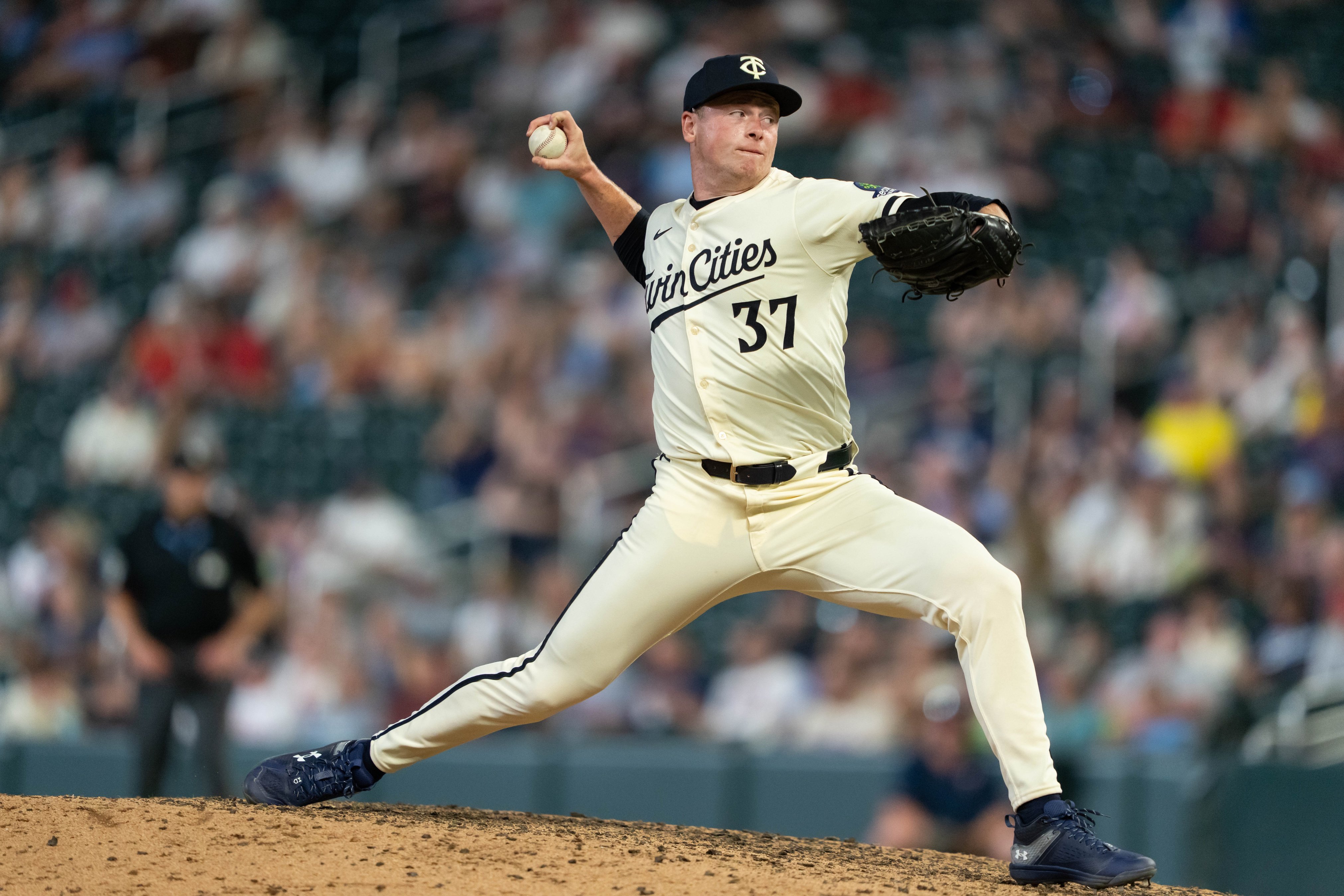 The bullpen sell-off at last year's trade deadline was staggering in its sweeping totality, but when you drill down to the individual moves, most weren't terribly surprising. Unloading the free-agency-bound Danny Coulombe was a given. Brock Stewart's brief run of decent health made him a clear sell-high guy. Jhoan Duran and Griffin Jax were known trade candidates, pitching well with two-plus years of control remaining. The real shocker was the late-breaking decision to trade Louis Varland. Even for a rebuilding team, this decision was tough to figure, with Varland still under team control for five years and seemingly a great fit as the carryover building block in a reimagined unit. The message sent in trading him, and completing a bullpen teardown that left almost nothing behind: we can create more Varlands. The Twins seem to believe he is the case-in-point for the argument in favor of their course of action — a ground-up bullpen rebuild based on transitioning marginal starters into standout relievers. In fairness, he's a compelling example. Varland was a respectable talent while rising through the minors, even winning Twins minor-league pitcher of the year honors twice, but he was a 15th-round draft pick and never a true top prospect. When given the chance to start in the majors, he repeatedly came up short. But when the Twins flipped the switch from starter to reliever, first temporarily in the 2023 playoffs and then permanently last season, Varland transformed into something else entirely: a dominant force, a natural. Coming out of the pen, he was a different pitcher. The type that draws big interest from contenders at the deadline. You can make similar arguments for Jhoan Duran and Griffin Jax, but they both have pretty unique traits that enable them to thrive as relievers: Duran's unrivaled velocity, Jax's deep arsenal of high-quality pitches. Relatively speaking, Varland keeps it pretty simple. He's got a hard fastball and one good breaking ball, and he relies on that tandem almost exclusively at the expense of his lesser offerings. Theoretically, that player type — hard-throwing righty with one good secondary — is abundant in the Twins system, and almost any system really. Most teams just aren't brazen enough to go all-in on the strategy of rapidly manufacturing MLB relievers out of these fringy, unproven young arms. Yet it appears to be exactly where Minnesota's front office is headed as they sit out the free-agent relief market entirely and hurtle toward spring training with a collection of "starters" on the 40-man roster that includes: Zebby Matthews, David Festa, Mick Abel, Travis Adams, Pierson Ohl, Andrew Morris, Kendry Rojas, Connor Prielipp, Marco Raya, John Klein. Some of these guys are going to the bullpen, without much delay. There's no practical way around it. This flip-switch doesn't always take, at least not right away. We saw the downside play out in the second half last year as Adams and Ohl floundered, despite possessing a similar type of prospect intrigue as Varland did when he was coming up. There's also the matter of selling young pitchers on this plan of giving up their future as starters before it has much chance to take shape. Then again, this could be another area where Varland serves as a valuable precedent to reference. Looking back now, you wonder if both team and player feel like pursuing the opportunity to start in 2024 was a waste of time. He ended up struggling badly in the majors with a 7.61 ERA and spent most of his season in Triple-A, delaying his service clock and big-league paydays at age 26. With the current SP depth chart as it is, there are going to be a lot of nominal "starter" prospects headed to the minors to open up the 2026 campaign. That is, unless they immediately embrace the relief role, where their strengths can be maximized, injuries can be reduced, and the MLB path is fast-tracked. As a persuasive proof of concept, the Twins can point to Varland, who went within the span of one-year from flameout starter toiling in St. Paul to entrenched MLB bullpen fixture, setting the all-time record for postseason appearances with Toronto. It was an amazing evolution and one that the Twins seem to be banking on their ability to repeat, several times over.
 -
Image courtesy of Jeff Curry-Imagn Images Last week, I gradually rolled out my ranking of the top 20 player assets in the Twins organization heading into the new year. The purpose of this annual exercise is to try and blend the big-picture view with the the short term. Accounting for the team's present and future, viewing players as pieces of a strategic vision, which players matter most? If interested, you can read the blurbs and explanations for each ranking in Part 1 (16-20), Part 2 (11-15), Part 3 (6-10) and Part 4 (1-5). But here's a recap of the list, along with each player's original method of acquisition: Walker Jenkins, OF (Draft - 1st Rd) Luke Keaschall, 2B (Draft - 2nd Rd) Joe Ryan, RHP (Trade) Pablo Lopez, RHP (Trade) Kaelen Culpepper, SS (Draft - 1st Rd) Simeon Woods Richardson, RHP (Trade) Emmanuel Rodriguez, OF (Int'l Signing) Byron Buxton, OF (Draft - 1st Rd) Mick Abel, RHP (Trade) Taj Bradley, RHP (Trade) Zebby Matthews, RHP (Draft - 8th Rd) Matt Wallner, OF (Draft - 1st Rd) Royce Lewis, 3B (Draft - 1st Rd) Eduardo Tait, C (Trade) David Festa, RHP (Draft - 13th Rd) Connor Prielipp, LHP (Draft - 2nd Rd) Bailey Ober, RHP (Draft - 12th Rd) Brooks Lee, SS (Draft - 1st Rd) Ryan Jeffers, C (Draft - 2nd Rd) Marek Houston, SS (Draft - 1st Rd) Today I'm going to riff on this list a little bit, using it as an opportunity to dig deeper into the system's strengths and weaknesses, the next layer of talent, and the tightrope of a timeline that the Minnesota Twins are trying to walk. Future Meets Present Reading through the top five is admittedly a bit jarring: two veteran frontline starters sandwiched by a couple of prospects who've yet to debut, and Keaschall with his whole 50 games of MLB experience. That's the challenge that I enjoy about compiling these rankings — zooming out for a multi-year view, and trying to construct the sweet-spot vision for a winning window. The Twins are very much attempting to thread the needle of present and future. They're holding their veteran stars and passing up the opportunity to go all-in on a rebuild. To an extent I admire that, and agree with it. Ryan, Lopez and Buxton are three of the biggest success stories in modern franchise history, fully realized. You cannot take for granted that you're going to have a proven foundation this strong again anytime soon. But there's a ton of work to do around those three. It's telling that they are the only proven veteran performers in the top 10, aside from Woods Richardson who's sort of crossing over that threshold. Everyone else ranked 10 or higher is unproven youth. But it's MLB-ready youth: they've all debuted in the majors or on the verge of it. Can this wave collectively make an impact fast enough to accomplish something while Lopez and Ryan are still here? That's the story of the Twins for the next two years. Top Talent Isn't Bought (But Can Be Traded For) Looking at the origins of the 20 players on this list, not one came aboard as a free agent. The Twins have amassed most of their top talent through the draft, and usually in the first couple rounds. Only one player on the list (Rodriguez) was an international signing, which reflects a glaring weakness in Minnesota's development engine. Five of the organization's top 10 assets were acquired via trade. If the Twins were to bring in any other player this offseason who'd have a chance at cracking this top 20 and significantly shaking up the high-end talent pool, I have no doubt it would be via trade. Of course, that also requires giving to get. There is one abundant player type on my list and it's right-handed pitchers, who occupy eight of the 20 spots. Trading from this pool would make a lot of sense if the Twins are aiming to acquire, say, an impact bat. Woods Richardson and Ober are names that stand out as possibilities, if indeed the front office is shutting down requests for Ryan and Lopez. You could also seemingly live with trading one guy from the closely-bunched Matthews/Bradley/Abel group, for the right return. Rethinking the 2025 Trade Deadline When the Twins front office did what they did at the deadline, I was furious. I certainly understood the decision to sell, but taking it to such an extreme — dumping Carlos Correa's salary for nothing, trading the entire bullpen away — left me feeling extremely sour. As I factor the new additions into the rankings and consider these moves as asset exchanges, I start to feel ... a little better. Last year I had Griffin Jax ranked 10th, and this year I have Taj Bradley ranked 10th. An even swap in that regard, made palatable by the starter-reliever value gap (for now) and the two extra years of team control. The Jhoan Duran trade was one of the few moves from the deadline that I actually really liked, and this year's ranking illustrates why: Duran was ranked 11th on my list in 2025, and the Twins flipped him for a distinguished, high-upside catcher (ranking 14th on my list) and an MLB-ready pitching prospect with tons of team control (ranking 9th). You can easily see the logic in that trade. The Louie Varland trade, maybe not so much. Varland wasn't in my top 20 last year but he definitely would've been this year following a bullpen breakthrough. The Twins traded him for Alan Roden and Kendry Rojas, both of whom are on the fringe of these rankings but couldn't make the cut following rough debuts in the system. I really hope the front office is right about at least one of those guys because that decision continues to bother me. The Natural Target for Championship Contention: 2027 Do the Twins have realistic hopes to contend for a World Series this year? I would say no. The best-case scenario, and what I surmise they are aspiring for, is a .500-ish season — one good enough to rejuvenate some fan interest, and justify (in their minds) a more significant investment the following year. Because that's when it's got to happen, if it's going to. By that time, most of the top prospects featured in these rankings will have arrived. Ryan and Lopez will be in their final years under contract. Buxton will be in his second-to-last, and another year into his 30s. Hopefully a bullpen will have taken shape through the experimentation that takes place in 2026. Now, there are two hitches in this plan. First of all, there might not be a 2027 MLB season, or at least not a normal one, with the CBA expiring at the end of 2026 and many anticipating a lockout. But even taking that out of the equation, the Twins have to reach 2027 in a state where they are still intact, and willing to further invest. '“I don’t think that as the landscape, what I see right now, that we should put a significant investment into the team of (an additional) $50 (million) or $60 million,” Tom Pohlad said in a recent presser when he took over the ownership mantle. “But I don’t think we’re far off from that." Well, he and the Twins need to be convinced of it within one year. And honestly that feels like a stretch. Minnesota was the worst team in baseball in the second half of 2025 and the roster has barely changed. It's reasonable to hope that they can right the ship gradually, but in the first half of 2026, the going will be tough. It just will. They have no bullpen, and a grim defensive outlook. The prospects aren't quite here yet. They're facing some serious challenges on offense. If the front office gets to the upcoming trade deadline and they're 10 games under .500, plagued by many of the same issues of the past two years, are they really going to say, "Let's stay the course and hope everything comes together next year"? Or are they going to do what's probably prudent: trade Ryan and Lopez, and Buxton too if he wants out. Load up on more controllable young assets. Commit fully to the rebuild. I find no joy in reaching this conclusion but I think it's the undeniable reality the Twins face. The decision to hold onto Ryan, Lopez and Buxton seems more motivated by preserving a semblance of fan favor as opposed to a baseball decision. Pohlad has in fact been fairly open about that. But at some point, baseball decision-making needs to take control, and the Twins are walking a very fine line in trying to guide this current multi-generational core to championship contention within a tight one-year window. It's a notion that could fizzle out quickly with another stumble out of the gates. View full article
-
Reviewing the Twins' Organizational Talent Landscape Entering 2026
Nick Nelson posted an article in Twins
 Last week, I gradually rolled out my ranking of the top 20 player assets in the Twins organization heading into the new year. The purpose of this annual exercise is to try and blend the big-picture view with the the short term. Accounting for the team's present and future, viewing players as pieces of a strategic vision, which players matter most? If interested, you can read the blurbs and explanations for each ranking in Part 1 (16-20), Part 2 (11-15), Part 3 (6-10) and Part 4 (1-5). But here's a recap of the list, along with each player's original method of acquisition: Walker Jenkins, OF (Draft - 1st Rd) Luke Keaschall, 2B (Draft - 2nd Rd) Joe Ryan, RHP (Trade) Pablo Lopez, RHP (Trade) Kaelen Culpepper, SS (Draft - 1st Rd) Simeon Woods Richardson, RHP (Trade) Emmanuel Rodriguez, OF (Int'l Signing) Byron Buxton, OF (Draft - 1st Rd) Mick Abel, RHP (Trade) Taj Bradley, RHP (Trade) Zebby Matthews, RHP (Draft - 8th Rd) Matt Wallner, OF (Draft - 1st Rd) Royce Lewis, 3B (Draft - 1st Rd) Eduardo Tait, C (Trade) David Festa, RHP (Draft - 13th Rd) Connor Prielipp, LHP (Draft - 2nd Rd) Bailey Ober, RHP (Draft - 12th Rd) Brooks Lee, SS (Draft - 1st Rd) Ryan Jeffers, C (Draft - 2nd Rd) Marek Houston, SS (Draft - 1st Rd) Today I'm going to riff on this list a little bit, using it as an opportunity to dig deeper into the system's strengths and weaknesses, the next layer of talent, and the tightrope of a timeline that the Minnesota Twins are trying to walk. Future Meets Present Reading through the top five is admittedly a bit jarring: two veteran frontline starters sandwiched by a couple of prospects who've yet to debut, and Keaschall with his whole 50 games of MLB experience. That's the challenge that I enjoy about compiling these rankings — zooming out for a multi-year view, and trying to construct the sweet-spot vision for a winning window. The Twins are very much attempting to thread the needle of present and future. They're holding their veteran stars and passing up the opportunity to go all-in on a rebuild. To an extent I admire that, and agree with it. Ryan, Lopez and Buxton are three of the biggest success stories in modern franchise history, fully realized. You cannot take for granted that you're going to have a proven foundation this strong again anytime soon. But there's a ton of work to do around those three. It's telling that they are the only proven veteran performers in the top 10, aside from Woods Richardson who's sort of crossing over that threshold. Everyone else ranked 10 or higher is unproven youth. But it's MLB-ready youth: they've all debuted in the majors or on the verge of it. Can this wave collectively make an impact fast enough to accomplish something while Lopez and Ryan are still here? That's the story of the Twins for the next two years. Top Talent Isn't Bought (But Can Be Traded For) Looking at the origins of the 20 players on this list, not one came aboard as a free agent. The Twins have amassed most of their top talent through the draft, and usually in the first couple rounds. Only one player on the list (Rodriguez) was an international signing, which reflects a glaring weakness in Minnesota's development engine. Five of the organization's top 10 assets were acquired via trade. If the Twins were to bring in any other player this offseason who'd have a chance at cracking this top 20 and significantly shaking up the high-end talent pool, I have no doubt it would be via trade. Of course, that also requires giving to get. There is one abundant player type on my list and it's right-handed pitchers, who occupy eight of the 20 spots. Trading from this pool would make a lot of sense if the Twins are aiming to acquire, say, an impact bat. Woods Richardson and Ober are names that stand out as possibilities, if indeed the front office is shutting down requests for Ryan and Lopez. You could also seemingly live with trading one guy from the closely-bunched Matthews/Bradley/Abel group, for the right return. Rethinking the 2025 Trade Deadline When the Twins front office did what they did at the deadline, I was furious. I certainly understood the decision to sell, but taking it to such an extreme — dumping Carlos Correa's salary for nothing, trading the entire bullpen away — left me feeling extremely sour. As I factor the new additions into the rankings and consider these moves as asset exchanges, I start to feel ... a little better. Last year I had Griffin Jax ranked 10th, and this year I have Taj Bradley ranked 10th. An even swap in that regard, made palatable by the starter-reliever value gap (for now) and the two extra years of team control. The Jhoan Duran trade was one of the few moves from the deadline that I actually really liked, and this year's ranking illustrates why: Duran was ranked 11th on my list in 2025, and the Twins flipped him for a distinguished, high-upside catcher (ranking 14th on my list) and an MLB-ready pitching prospect with tons of team control (ranking 9th). You can easily see the logic in that trade. The Louie Varland trade, maybe not so much. Varland wasn't in my top 20 last year but he definitely would've been this year following a bullpen breakthrough. The Twins traded him for Alan Roden and Kendry Rojas, both of whom are on the fringe of these rankings but couldn't make the cut following rough debuts in the system. I really hope the front office is right about at least one of those guys because that decision continues to bother me. The Natural Target for Championship Contention: 2027 Do the Twins have realistic hopes to contend for a World Series this year? I would say no. The best-case scenario, and what I surmise they are aspiring for, is a .500-ish season — one good enough to rejuvenate some fan interest, and justify (in their minds) a more significant investment the following year. Because that's when it's got to happen, if it's going to. By that time, most of the top prospects featured in these rankings will have arrived. Ryan and Lopez will be in their final years under contract. Buxton will be in his second-to-last, and another year into his 30s. Hopefully a bullpen will have taken shape through the experimentation that takes place in 2026. Now, there are two hitches in this plan. First of all, there might not be a 2027 MLB season, or at least not a normal one, with the CBA expiring at the end of 2026 and many anticipating a lockout. But even taking that out of the equation, the Twins have to reach 2027 in a state where they are still intact, and willing to further invest. '“I don’t think that as the landscape, what I see right now, that we should put a significant investment into the team of (an additional) $50 (million) or $60 million,” Tom Pohlad said in a recent presser when he took over the ownership mantle. “But I don’t think we’re far off from that." Well, he and the Twins need to be convinced of it within one year. And honestly that feels like a stretch. Minnesota was the worst team in baseball in the second half of 2025 and the roster has barely changed. It's reasonable to hope that they can right the ship gradually, but in the first half of 2026, the going will be tough. It just will. They have no bullpen, and a grim defensive outlook. The prospects aren't quite here yet. They're facing some serious challenges on offense. If the front office gets to the upcoming trade deadline and they're 10 games under .500, plagued by many of the same issues of the past two years, are they really going to say, "Let's stay the course and hope everything comes together next year"? Or are they going to do what's probably prudent: trade Ryan and Lopez, and Buxton too if he wants out. Load up on more controllable young assets. Commit fully to the rebuild. I find no joy in reaching this conclusion but I think it's the undeniable reality the Twins face. The decision to hold onto Ryan, Lopez and Buxton seems more motivated by preserving a semblance of fan favor as opposed to a baseball decision. Pohlad has in fact been fairly open about that. But at some point, baseball decision-making needs to take control, and the Twins are walking a very fine line in trying to guide this current multi-generational core to championship contention within a tight one-year window. It's a notion that could fizzle out quickly with another stumble out of the gates.
- 39 comments
-
- 5
-
-
- byron buxton
- joe ryan
- (and 2 more)
-
This is the same conclusion I reached and I'll dig a little deeper on it next week. The big looming question: can they stay afloat long enough to keep that possibility on the table? If the Twins reach the deadline this year and they're heading for another 90-loss season, it would probably be reckless not to just trade Ryan/Lopez and commit fully to the rebuild.
- 51 replies
-
- 2
-
-
- kaelen culpepper
- pablo lopez
- (and 3 more)
-
Love these! Would be fun to hear more from others on this, but my quick-reaction picks are: Biggest riser: Prielipp Biggest regression: Keaschall (bean voices some valid outlook concerns in the post above) Newcomer: Aside from the #3 pick next June, who is all but guaranteed to jump into the top 5, I'm gonna go with Alan Roden or Kendrys Rojas. Not so much because I'm a big believer in either, but because I NEED the Twins to be right about one of these guys. Varland certainly would've been in my top 20 this year if still around.
- 51 replies
-
- 3
-
-
- kaelen culpepper
- pablo lopez
- (and 3 more)
-
What makes me nervous is that at least 2-3 of those guys (and Buxton) have pretty lengthy injury histories. If multiple guys from that group go down, you're looking at a sizable amount of playing time for the likes of Arcia and Kreidler and Outman.
- 61 replies
-
- 5
-
-

-
- eric wagaman
- alex jackson
- (and 2 more)
-
The headline was a little tongue-in-cheek, but the reality is that they needed some upgrades on offense, and 80% of the position players they've added so far have been abjectly awful hitters. I don't really expect them to add much more on the hitting side. Puts a ton of pressure on unlikely rebounds + the few proven stars to stay healthy and productive.
- 61 replies
-
- 6
-
-
-
- eric wagaman
- alex jackson
- (and 2 more)
-
Image courtesy of Ron Chenoy, Sam Navarro-Imagn Images Last season, the Minnesota Twins ranked 23rd out of 30 MLB teams in runs scored and 18th in OPS. The offense was once again a major letdown, and an area where significant improvement will be needed in order to turn around this wayward franchise. To that end, the Twins made some key changes to their coaching staff, which were at least partially aimed at revamping the team's hitter development at the big-league level: they dismissed their hitting coach for a second straight year, replacing Matt Borgschulte with Derek Beauregard, and they hired a new manager in Derek Shelton with a deep background in hitting instruction. These changes are all well and good, but it's the players on the field who will determine whether the lineup can finally find some life and score enough to be competitive. On that front, their offseason additions have been ... quite uninspiring. To their credit, the Twins did make a move to add some legitimate veteran offensive firepower in the form of Josh Bell, who signed a $7 million deal last month. He's got a track record. That's a good start. But since the offseason started, the Twins have added four other position players — via trades, waiver claims and minor-league signings — and to say they've been unproductive at the plate would be an understatement. Admittedly, there are some selective endpoints and thresholds being used below, but I don't think any of them are unfair. I'm trying to provide context about how these hitters have performed compared to their major-league peers over recent timeframes. It's not pretty. Eric Wagaman: Ranked 132nd out of 146 qualified hitters in OPS in 2025 Orlando Arcia: Second-worst OPS among MLB hitters with 700+ PA since 2024 Ryan Kreidler: Ranks dead last in OPS among MLB hitters with 200+ PA since 2022 Alex Jackson: Ranks 588th in OPS out of 592 MLB hitters with 400+ PA since 2021 Yeah, you can make some points in favor of each of these guys. Jackson and Kreidler are a backup catcher and utility infielder respectively, so the bar for hitting is low. Wagaman has shown some promise in the minors and against left-handed pitching. Arcia was an okay hitter prior to the last two years. But these numbers speak for themselves. Desperate to upgrade their offense, the Twins have been taking flyers on players who were given up on by previous organizations largely because of their bats. And this comes on the heels of a trade deadline that saw Minnesota bring in two MLB-ready hitters: Alan Roden (ranked 376th in OPS out of 393 players with 150+ PA last year) and James Outman (ranks 409th out of 417 players with 300+ PA since 2024). On top of that, you've got two key returning players in Royce Lewis and Brooks Lee who are also looking to bounce back from bottom-tier hitting performances in 2025. Among 215 players to make 400+ plate appearances last year, Lewis ranked 180th in OPS and Lee ranked 194th. Again, there are reasons to believe some of these guys can be better than they've been, especially those like Roden and Lee who are relatively young and have crushed in the minors. But when you take a step back and look at the totality of talent the Twins have brought in to try and rejuvenate a lagging offense, it's bleak. These haven't just been bad hitters, they've been atrocious, and there's a good chance they are going to be populating a majority of the Twins' roster in 2026. Beauregard is getting dealt a hell of a hand in his first go as primary hitting coach. View full article
-
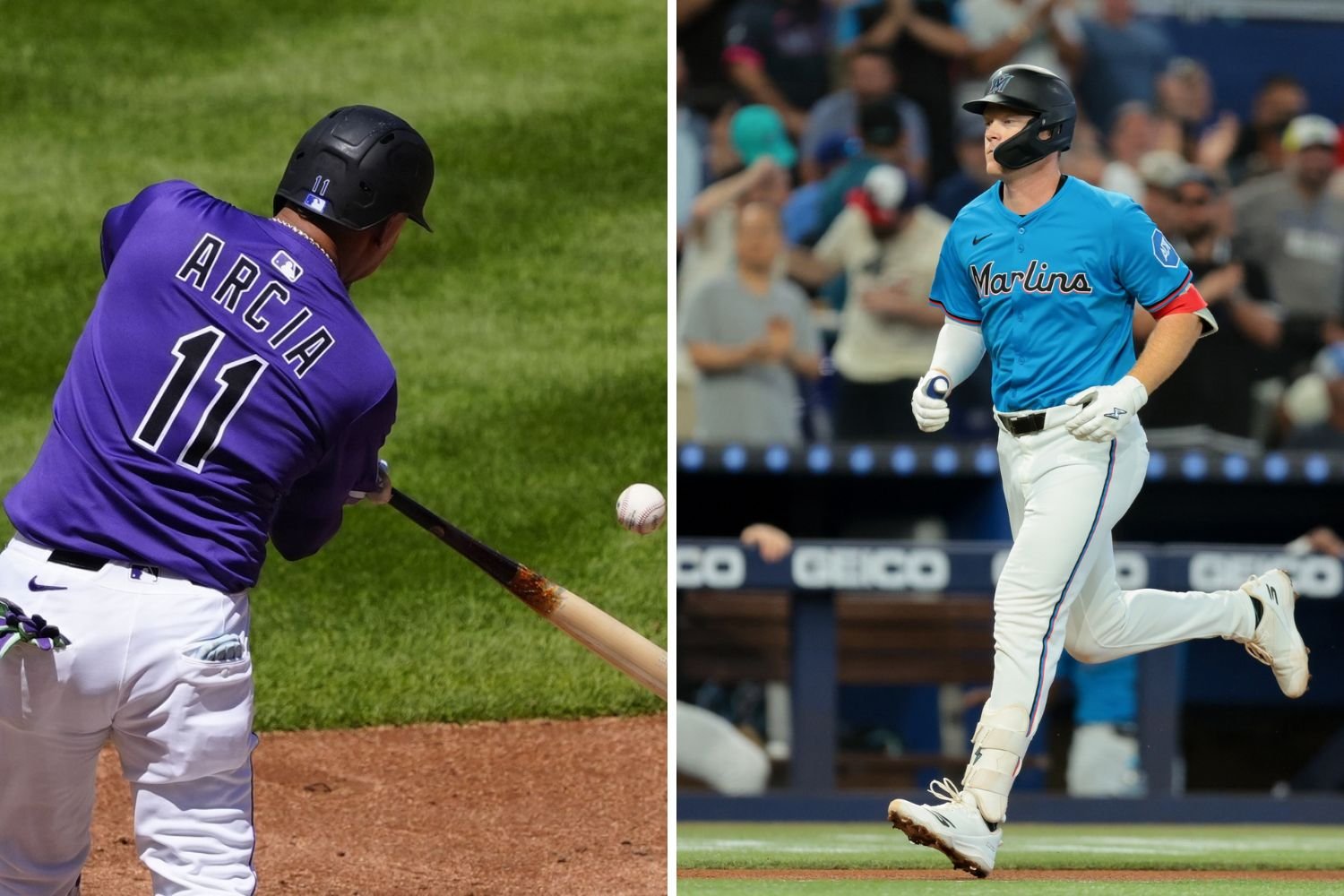 Last season, the Minnesota Twins ranked 23rd out of 30 MLB teams in runs scored and 18th in OPS. The offense was once again a major letdown, and an area where significant improvement will be needed in order to turn around this wayward franchise. To that end, the Twins made some key changes to their coaching staff, which were at least partially aimed at revamping the team's hitter development at the big-league level: they dismissed their hitting coach for a second straight year, replacing Matt Borgschulte with Derek Beauregard, and they hired a new manager in Derek Shelton with a deep background in hitting instruction. These changes are all well and good, but it's the players on the field who will determine whether the lineup can finally find some life and score enough to be competitive. On that front, their offseason additions have been ... quite uninspiring. To their credit, the Twins did make a move to add some legitimate veteran offensive firepower in the form of Josh Bell, who signed a $7 million deal last month. He's got a track record. That's a good start. But since the offseason started, the Twins have added four other position players — via trades, waiver claims and minor-league signings — and to say they've been unproductive at the plate would be an understatement. Admittedly, there are some selective endpoints and thresholds being used below, but I don't think any of them are unfair. I'm trying to provide context about how these hitters have performed compared to their major-league peers over recent timeframes. It's not pretty. Eric Wagaman: Ranked 132nd out of 146 qualified hitters in OPS in 2025 Orlando Arcia: Second-worst OPS among MLB hitters with 700+ PA since 2024 Ryan Kreidler: Ranks dead last in OPS among MLB hitters with 200+ PA since 2022 Alex Jackson: Ranks 588th in OPS out of 592 MLB hitters with 400+ PA since 2021 Yeah, you can make some points in favor of each of these guys. Jackson and Kreidler are a backup catcher and utility infielder respectively, so the bar for hitting is low. Wagaman has shown some promise in the minors and against left-handed pitching. Arcia was an okay hitter prior to the last two years. But these numbers speak for themselves. Desperate to upgrade their offense, the Twins have been taking flyers on players who were given up on by previous organizations largely because of their bats. And this comes on the heels of a trade deadline that saw Minnesota bring in two MLB-ready hitters: Alan Roden (ranked 376th in OPS out of 393 players with 150+ PA last year) and James Outman (ranks 409th out of 417 players with 300+ PA since 2024). On top of that, you've got two key returning players in Royce Lewis and Brooks Lee who are also looking to bounce back from bottom-tier hitting performances in 2025. Among 215 players to make 400+ plate appearances last year, Lewis ranked 180th in OPS and Lee ranked 194th. Again, there are reasons to believe some of these guys can be better than they've been, especially those like Roden and Lee who are relatively young and have crushed in the minors. But when you take a step back and look at the totality of talent the Twins have brought in to try and rejuvenate a lagging offense, it's bleak. These haven't just been bad hitters, they've been atrocious, and there's a good chance they are going to be populating a majority of the Twins' roster in 2026. Beauregard is getting dealt a hell of a hand in his first go as primary hitting coach.
- 61 comments
-
- 9
-
-
-
-
- eric wagaman
- alex jackson
- (and 2 more)
-
He's definitely in the "honorable mention" pool but not quite ready to put him in the top 20. I'm somewhat of a believer in the bat but he's slow with no defensive value so he's really gonna have to hit in order to be an impact player.
- 51 replies
-
- 1
-
-
- kaelen culpepper
- pablo lopez
- (and 3 more)
-
Being highly paid is not a plus in this exercise. It's tough to make this list as a free agent signing (especially on a one-year deal) because by definition the Twins paid more than any other team was willing to for the asset. That said, I think he was a solid pickup.
- 51 replies
-
- 3
-
-
- kaelen culpepper
- pablo lopez
- (and 3 more)
-
Image courtesy of Bill Streicher, Raymond Carlin III-Imagn Images; Ed Bailey-Wichita Wind Surge Here at the start of 2026, we're taking stock of talent in the Twins organization by ranking their top 20 player assets. We went over the the ground rules in our introductory post on Monday, but the short version is this: We're trying to answer the question, "Which current players in the organization are most indispensable to fulfilling the vision of building a champion?" You can read Monday's, Tuesday's and Wednesday's posts for breakdowns of each player, but here's a quick glance at the list so far: 20. Marek Houston, SS 19. Ryan Jeffers, C 18. Brooks Lee, SS 17. Bailey Ober, RHP 16. Connor Prielipp, LHP 15. David Festa, RHP 14. Eduardo Tait, C 13. Royce Lewis, 3B 12. Matt Wallner, RF 11. Zebby Matthews, RHP 10. Taj Bradley, RHP 9. Mick Abel, RHP 8. Byron Buxton, CF 7. Emmanuel Rodriguez, CF 6. Simeon Woods Richardson, RHP Now, without further ado, here are the five most important players and prospects for the outlook of the Minnesota Twins, from my view. The Top 20 Twins Player Assets of 2026: 1-5 5. Kaelen Culpepper, SS Age: 23 Controlled through: 2031+ 2025 Ranking: NR The biggest riser of the Twins system in 2025. It came at a very opportune time with Carlos Correa's departure opening up shortstop as the franchise's most critical long-term question mark. Right now Brooks Lee is manning the position but he hasn't shown much, leaving the door open for Culpepper to potentially step in soon if he can keep building on his breakthrough in the minors. The 2024 first-rounder's first full season in the pros was split almost equally between High-A and Double-A. Culpepper raked at both stops, posting a cumulative .289/.375/.469 slash line with 20 homers and 25 steals. He played shortstop almost exclusively, generating some belief that he can stick there in the majors, although that's far from assured. Right now he looks like Minnesota's best long-term bet at shortstop, with third base as a potential fallback if the defensive skills aren't quite sharp enough. That'll be a fine outcome so long as he can keep riding a standout bat. Culpepper is very much in play for a 2026 debut. 4. Pablo López, RHP Age: 29 Controlled through: 2027 2025 Ranking: 5 On one hand, it's really hard to rank López this highly as a player making $42 million over the next two seasons for a team hampered by payroll constraints. Recent injury issues don't help his case. On the other hand, what López brings for Minnesota is almost irreplaceable: a proven frontline starter who has dominated in the playoffs, and is in the heart of his prime coming off a 2.74 ERA. To the extent that the Twins have any aspirations of contending for a title in the next two years, López will be foundational. And if they decide it's not in the cards, then trading him would bring back a level of future value to substantially bolster a rebuild. 3. Joe Ryan, RHP Age: 29 Controlled through: 2027 2025 Ranking: 4 The same things I just said about López basically apply to Ryan as well. He also achieved a high watermark for performance in 2025 (3.42 ERA) while earning his first All-Star nod. Unlike López, he reached a new workload peak too, totaling 171 frames over 30 starts. The financial factor looms large here: Ryan is in line to receive (via arbitration) only a fraction of López's guaranteed commitment in his final two years before free agency. That's obviously a major consideration for a Twins team with capped spending capability, and it makes him generally more desirable for potential trade partners as well. 2. Luke Keaschall, 2B Age: 23 Controlled through: 2031 2025 Ranking: 15 Keaschall's stellar big-league debut was one of the biggest bright spots for the 2025 Twins, obscured somewhat by a broken arm that cost him more than half the season. When on the field, he made a memorable first impression, batting .302 with four homers, 14 doubles and 14 stolen bases in 49 games. Keaschall showed an uncommonly advanced eye at the plate, drawing 19 walks against 29 strikeouts and reaching base at a .382 clip. There are legitimate questions about how much power he'll be able to generate. A potential transition to the outfield might downgrade his value a bit (unless he can really shine defensively, which he didn't at second). But those relative drawbacks pale in comparison to the ability he's already shown. With his speed and his control of the strike zone, you can more or less write Keaschall's name into the top of the lineup for years to come. 1. Walker Jenkins, OF Age: 20 Controlled through: 2031+ 2025 Ranking: 1 It's nearly time. Jenkins has been painted as The Next Big Thing ever since he was drafted fifth overall in 2023, and he's been living up to the hype as a prospect, at least in between injuries. The 20-year-old's meteoric ascent through the minors has only been made more striking by all the time he's missed; there's clearly a ton of faith from the organization in his skills and makeup. Minnesota's decision to promote Jenkins to Triple-A near the end of the season – warranted, but fairly aggressive – signals that they envision him in their big-league plans sooner than later. While it should be emphasized that there's no such thing as a sure thing, and even success stories often take time to materialize ... Jenkins is awfully easy to dream on. The few prospects of his caliber who've come through the system – Joe Mauer, Byron Buxton, Royce Lewis – have all made major impacts in the majors. They've also proven you can't do it alone, which is why even a 99th percentile outcome for Jenkins (first-ballot Hall of Famer, like Mauer) would require others above him on this list to support the cause. There you have it. My ranking of the top 20 player assets in the Twins organization entering the 2026 season. You can find the full list summarized below. I'd love to hear your thoughts. Who would you have moved up or down? Who missed the cut that shouldn't have? Who's overhyped and who's underrated? Sound off in the comment section. Walker Jenkins, OF Luke Keaschall, 2B Joe Ryan, RHP Pablo Lopez, RHP Kaelen Culpepper, SS Simeon Woods Richardson, RHP Emmanuel Rodriguez, OF Byron Buxton, OF Mick Abel, RHP Taj Bradley, RHP Zebby Matthews, RHP Matt Wallner, OF Royce Lewis, 3B Eduardo Tait, C David Festa, RHP Connor Prielipp, LHP Bailey Ober, RHP Brooks Lee, SS Ryan Jeffers, C Marek Houston, SS View full article
-
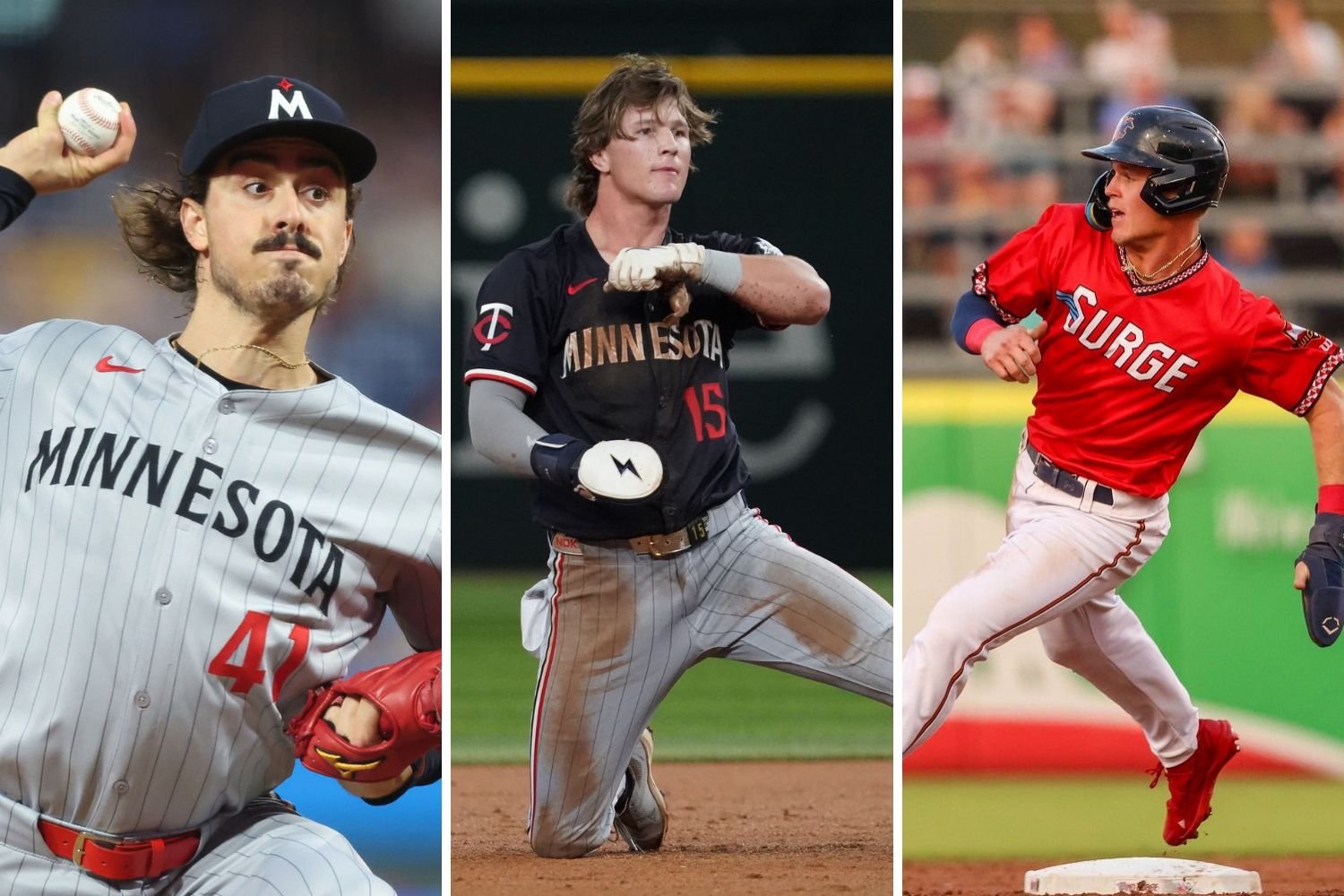 Here at the start of 2026, we're taking stock of talent in the Twins organization by ranking their top 20 player assets. We went over the the ground rules in our introductory post on Monday, but the short version is this: We're trying to answer the question, "Which current players in the organization are most indispensable to fulfilling the vision of building a champion?" You can read Monday's, Tuesday's and Wednesday's posts for breakdowns of each player, but here's a quick glance at the list so far: 20. Marek Houston, SS 19. Ryan Jeffers, C 18. Brooks Lee, SS 17. Bailey Ober, RHP 16. Connor Prielipp, LHP 15. David Festa, RHP 14. Eduardo Tait, C 13. Royce Lewis, 3B 12. Matt Wallner, RF 11. Zebby Matthews, RHP 10. Taj Bradley, RHP 9. Mick Abel, RHP 8. Byron Buxton, CF 7. Emmanuel Rodriguez, CF 6. Simeon Woods Richardson, RHP Now, without further ado, here are the five most important players and prospects for the outlook of the Minnesota Twins, from my view. The Top 20 Twins Player Assets of 2026: 1-5 5. Kaelen Culpepper, SS Age: 23 Controlled through: 2031+ 2025 Ranking: NR The biggest riser of the Twins system in 2025. It came at a very opportune time with Carlos Correa's departure opening up shortstop as the franchise's most critical long-term question mark. Right now Brooks Lee is manning the position but he hasn't shown much, leaving the door open for Culpepper to potentially step in soon if he can keep building on his breakthrough in the minors. The 2024 first-rounder's first full season in the pros was split almost equally between High-A and Double-A. Culpepper raked at both stops, posting a cumulative .289/.375/.469 slash line with 20 homers and 25 steals. He played shortstop almost exclusively, generating some belief that he can stick there in the majors, although that's far from assured. Right now he looks like Minnesota's best long-term bet at shortstop, with third base as a potential fallback if the defensive skills aren't quite sharp enough. That'll be a fine outcome so long as he can keep riding a standout bat. Culpepper is very much in play for a 2026 debut. 4. Pablo López, RHP Age: 29 Controlled through: 2027 2025 Ranking: 5 On one hand, it's really hard to rank López this highly as a player making $42 million over the next two seasons for a team hampered by payroll constraints. Recent injury issues don't help his case. On the other hand, what López brings for Minnesota is almost irreplaceable: a proven frontline starter who has dominated in the playoffs, and is in the heart of his prime coming off a 2.74 ERA. To the extent that the Twins have any aspirations of contending for a title in the next two years, López will be foundational. And if they decide it's not in the cards, then trading him would bring back a level of future value to substantially bolster a rebuild. 3. Joe Ryan, RHP Age: 29 Controlled through: 2027 2025 Ranking: 4 The same things I just said about López basically apply to Ryan as well. He also achieved a high watermark for performance in 2025 (3.42 ERA) while earning his first All-Star nod. Unlike López, he reached a new workload peak too, totaling 171 frames over 30 starts. The financial factor looms large here: Ryan is in line to receive (via arbitration) only a fraction of López's guaranteed commitment in his final two years before free agency. That's obviously a major consideration for a Twins team with capped spending capability, and it makes him generally more desirable for potential trade partners as well. 2. Luke Keaschall, 2B Age: 23 Controlled through: 2031 2025 Ranking: 15 Keaschall's stellar big-league debut was one of the biggest bright spots for the 2025 Twins, obscured somewhat by a broken arm that cost him more than half the season. When on the field, he made a memorable first impression, batting .302 with four homers, 14 doubles and 14 stolen bases in 49 games. Keaschall showed an uncommonly advanced eye at the plate, drawing 19 walks against 29 strikeouts and reaching base at a .382 clip. There are legitimate questions about how much power he'll be able to generate. A potential transition to the outfield might downgrade his value a bit (unless he can really shine defensively, which he didn't at second). But those relative drawbacks pale in comparison to the ability he's already shown. With his speed and his control of the strike zone, you can more or less write Keaschall's name into the top of the lineup for years to come. 1. Walker Jenkins, OF Age: 20 Controlled through: 2031+ 2025 Ranking: 1 It's nearly time. Jenkins has been painted as The Next Big Thing ever since he was drafted fifth overall in 2023, and he's been living up to the hype as a prospect, at least in between injuries. The 20-year-old's meteoric ascent through the minors has only been made more striking by all the time he's missed; there's clearly a ton of faith from the organization in his skills and makeup. Minnesota's decision to promote Jenkins to Triple-A near the end of the season – warranted, but fairly aggressive – signals that they envision him in their big-league plans sooner than later. While it should be emphasized that there's no such thing as a sure thing, and even success stories often take time to materialize ... Jenkins is awfully easy to dream on. The few prospects of his caliber who've come through the system – Joe Mauer, Byron Buxton, Royce Lewis – have all made major impacts in the majors. They've also proven you can't do it alone, which is why even a 99th percentile outcome for Jenkins (first-ballot Hall of Famer, like Mauer) would require others above him on this list to support the cause. There you have it. My ranking of the top 20 player assets in the Twins organization entering the 2026 season. You can find the full list summarized below. I'd love to hear your thoughts. Who would you have moved up or down? Who missed the cut that shouldn't have? Who's overhyped and who's underrated? Sound off in the comment section. Walker Jenkins, OF Luke Keaschall, 2B Joe Ryan, RHP Pablo Lopez, RHP Kaelen Culpepper, SS Simeon Woods Richardson, RHP Emmanuel Rodriguez, OF Byron Buxton, OF Mick Abel, RHP Taj Bradley, RHP Zebby Matthews, RHP Matt Wallner, OF Royce Lewis, 3B Eduardo Tait, C David Festa, RHP Connor Prielipp, LHP Bailey Ober, RHP Brooks Lee, SS Ryan Jeffers, C Marek Houston, SS
- 51 comments
-
- 6
-
-
- kaelen culpepper
- pablo lopez
- (and 3 more)
-
Fair points. I've said in the past that I'm a huge Buxton fan so it's always tempting to rank him higher, but given that this is meant to be a vibes-neutral exercise, I try to push back on that compulsion. Maybe a little too hard. When I think about his value as an asset, the age and injury history are hard to ignore, despite how great he looked last year. I will say, per your last question -- there are only three prospects ranking above Buxton on this list (spoiler alert) and they are all of a caliber that, if you were getting them back as the main piece in a Buxton trade, I'd feel a little more okay about it, at least in terms of the value exchange.
- 46 replies
-
- 1
-
-
- taj bradley
- mick abel
- (and 3 more)
-
Fair enough on Bradley and Abel. Much of it comes down to: I have almost no doubt Bradley can be a good back-end reliever (which the Twins now badly need). Abel still needs to prove he's a big-leaguer. I also look at the way these guys were objectively valued in the trade market -- Abel came alongside another top-20 asset in Tait, while Bradley was a standalone. Is the gap between Duran's and Jax's value really that huge? (To be clear though, I thought the Duran trade was very good and the Jax trade was very bad.) Re: Buxton. He was not on the 2025 list, mainly as a carryover from his value bottoming out the previous year and still not showing in 2024 that he could stay particularly healthy. But yes, I was sort of kicking myself for not including him at the time and in retrospect it just looks silly.
- 46 replies
-
- 4
-
-
- taj bradley
- mick abel
- (and 3 more)
-
I don't know if seeing "hints of a #2 or #3" is the same as calling him a frontline starter, but I realize I am probably out on a limb in rating SWR this high. When I'm trying to compile these rankings, I challenge myself to weigh certainty and track record against upside and potential. No one would blink at saying Bradley or Abel have frontline potential, but at the same time ... they're almost the same age as SWR and have both accomplished far less in the majors. A 2.4 bWAR from a 24-year-old is really good and really promising! Every one of the pitchers in these rankings, sans Ryan and Lopez, has improvements to make in order to become a high-quality MLB starter. The way I see it, Woods Richardson has less ground to make up than anyone else, and with five remaining years of control he's got plenty of time to reach that level and hopefully sustain.
- 46 replies
-
- 6
-
-
- taj bradley
- mick abel
- (and 3 more)
-
Your last point here is super valid and probably one that deserves more attention/discussion. But I guess it underscores the value of Bradley and Abel being (theoretically) high-strikeout pitchers.
- 46 replies
-
- 6
-
-
- taj bradley
- mick abel
- (and 3 more)
-
Image courtesy of Jerome Miron, Bill Streicher, Matt Blewett - Imagn Images Here at the start of 2026, we're taking stock of talent in the Twins organization by ranking their top 20 player assets. Went over the ground rules in our introductory post from Monday, but the short version is this: We're trying to answer the question, "Which current players in the organization are most indispensable to fulfilling the vision of building a champion?" Check out Monday's and Tuesday's posts for breakdowns of each player, but here's a quick glance at the list so far: 20. Marek Houston, SS 19. Ryan Jeffers, C 18. Brooks Lee, SS 17. Bailey Ober, RHP 16. Connor Prielipp, LHP 15. David Festa, RHP 14. Eduardo Tait, C 13. Royce Lewis, 3B 12. Matt Wallner, RF 11. Zebby Matthews, RHP Now we dive into the top 10 with an overview of my picks for the 6th through 10th most essential players to the outlook of the Minnesota Twins. The Top 20 Twins Player Assets of 2026: 6-10 10. Taj Bradley, RHP Age: 24 Controlled through: 2029 2025 Ranking: NR The Twins acquired Bradley at the trade deadline as a distressed asset. If a Tampa Bay Rays blogger were putting together a list similar to this one for their org, Bradley would've previously been near the very top of the rankings for many years in a row. He was one of the very best pitching prospects in baseball, and the fact that he has already made 73 major-league starts before turning 25 says a lot about how he's viewed. But, so does the fact he was demoted to Triple-A when Minnesota got him last July. Bradley just hasn't been good. The high-end stuff is there, the durability is there, and it's really not hard to envision him as a frontline starter, but the breakthrough hasn't come. Bradley has a career 85 ERA+ and a mediocre 4.38 FIP to match. He got knocked around for a 6.61 ERA in his first six starts as a Twin. With four more years of team control remaining, there's still plenty of time to figure it out, and he would seemingly have a pretty safe fallback as a quality reliever – likely a big part of the Twins' reasoning when they dealt two years of Griffin Jax for him. I had Jax ranked in the exact same spot last year (10th) some form that perspective its a very even value swap for the Twins. 9. Mick Abel, RHP Age: 24 Controlled through: 2031 2025 Ranking: NR Abel is altogether pretty similar to Bradley: promising young righty arm, acquired at the deadline in exchange for a top reliever, and valued for his upside and team control. On the latter front, Abel still has at least six full years remaining, as he has barely started his MLB service clock. Like Bradley, Abel has multiple plus pitches and the potential to pan out as a frontline starter, even if a mid-rotation or bullpen role is ultimately more likely. While his first foray into the majors in 2025 was rocky overall (6.23 ERA), he showed what he's capable of in his first start for Philly and his final start for Minnesota – 6 IP, 0 R, 9 K in each. Abel won't even reach arbitration until 2029 at the earliest. It's easy to see why the rebuilding Twins were swayed to trade Jhoan Duran when getting him alongside Eduardo Tait (ranked #14 on this list). 8. Byron Buxton, OF Age: 32 Controlled through: 2028 2025 Ranking: NR Once a mainstay at the top of these rankings, Buxton has struggled to crack the top 20 in recent years, with relentless injuries and a sizable (albeit reasonable) contract keeping his asset value in check. There are still factors weighing him down in this exercise: he just turned 32 as a player whose game is highly dependent on premium athleticism, and his history of unavailability remains. But Buxton is coming off a career-best season that offered more reason for optimism around his health outlook than we've ever really had. He's feeling good enough to join Team USA for the World Baseball Classic, which would've been an absurd proposition not long ago. In the short term, Buxton is without question one of the most important players to the Twins' fortunes, but they do have another star center fielder on the rise as Buck reaches his mid-30s. 7. Emmanuel Rodriguez, OF Age: 22 Controlled thorough: 2031+ 2025 Ranking: 7 As I internally debated where to put players in these rankings, Buxton versus Rodriguez was a tricky dichotomy. Looking at the big picture for a semi-rebuilding team facing payroll constraints, how do you compare the proven All-Star, who's aging into his mid-30s and making $45 million over three more years, to the 22-year-old top-tier prospect on the verge of his major-league debut? In some ways, placing Rodriguez one spot higher feels like falling into the trap of "shiny new object" fixation. But that also undersells how special of a talent he is. (And, more practically, the value of three extra years of control at league minimum). Rodriguez has a unique, extreme skill-set that gives his MLB outlook a lot of variance. There's a fair chance of stardom, and a fair chance of not making enough contact to stick at all. His first exposure to Triple-A in 2025 was fairly underwhelming but he did post an OBP over .400, as he's done everywhere. Rodriguez needs to overcome the injury bug (sound familiar?) and has some aspects of his game to solve, but time is very much on his side. 6. Simeon Woods Richardson, RHP Age: 25 Controlled through: 2030 2025 Ranking: 19 Woods Richardson is one of those guys who often gets talked about as underrated. Well I'm not going to underrate him anymore. This is a borderline top-five asset in the organization, and a case study in gradual, steady improvement. I've talked about the value of controllable young starting pitching, and how that element pushed names like Abel and Bradley into the top 10. Woods Richardson doesn't have the upper-90s fastball or gaudy strikeout rates of those two. The ceiling is not as high at a glance. What he does have is a well-established track record of consistently solid MLB performance over the past two years. The dude can just pitch. He was only picking up steam toward the end of 2025, posting a 2.33 ERA with 36 strikeouts in 27 September innings. There are hints of a #2 or #3 starter in there, especially if he can unlock just a bit more velocity. I think we'd all be talking more about last season as another major step forward for Woods Richardson if not for the unfortunate battle with a stomach issue that cost him much of the second half. We've almost reached the end of the list. Share your thoughts about the rankings so far in the comments and circle back tomorrow morning when we wrap up with the top five. View full article
-
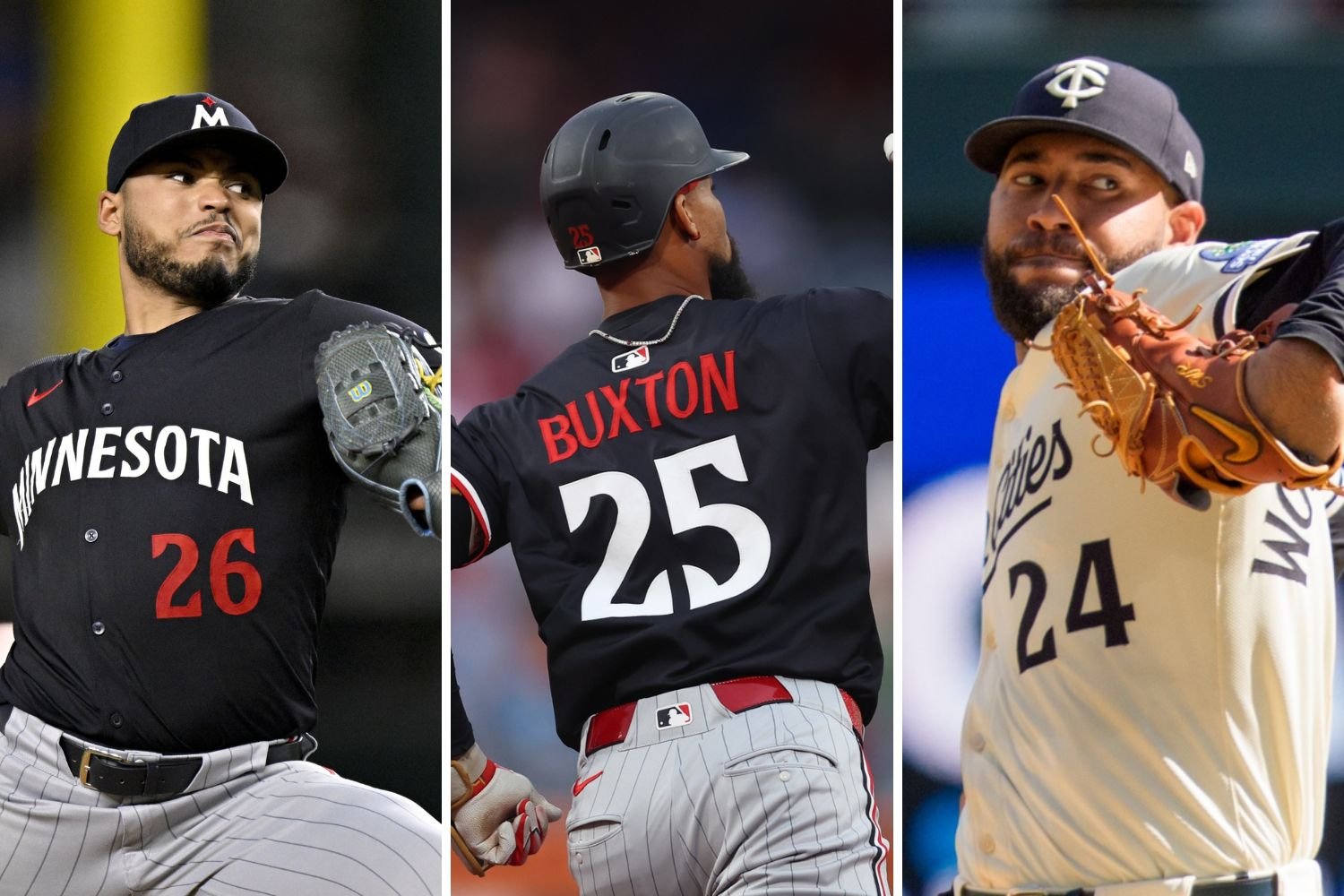 Here at the start of 2026, we're taking stock of talent in the Twins organization by ranking their top 20 player assets. Went over the ground rules in our introductory post from Monday, but the short version is this: We're trying to answer the question, "Which current players in the organization are most indispensable to fulfilling the vision of building a champion?" Check out Monday's and Tuesday's posts for breakdowns of each player, but here's a quick glance at the list so far: 20. Marek Houston, SS 19. Ryan Jeffers, C 18. Brooks Lee, SS 17. Bailey Ober, RHP 16. Connor Prielipp, LHP 15. David Festa, RHP 14. Eduardo Tait, C 13. Royce Lewis, 3B 12. Matt Wallner, RF 11. Zebby Matthews, RHP Now we dive into the top 10 with an overview of my picks for the 6th through 10th most essential players to the outlook of the Minnesota Twins. The Top 20 Twins Player Assets of 2026: 6-10 10. Taj Bradley, RHP Age: 24 Controlled through: 2029 2025 Ranking: NR The Twins acquired Bradley at the trade deadline as a distressed asset. If a Tampa Bay Rays blogger were putting together a list similar to this one for their org, Bradley would've previously been near the very top of the rankings for many years in a row. He was one of the very best pitching prospects in baseball, and the fact that he has already made 73 major-league starts before turning 25 says a lot about how he's viewed. But, so does the fact he was demoted to Triple-A when Minnesota got him last July. Bradley just hasn't been good. The high-end stuff is there, the durability is there, and it's really not hard to envision him as a frontline starter, but the breakthrough hasn't come. Bradley has a career 85 ERA+ and a mediocre 4.38 FIP to match. He got knocked around for a 6.61 ERA in his first six starts as a Twin. With four more years of team control remaining, there's still plenty of time to figure it out, and he would seemingly have a pretty safe fallback as a quality reliever – likely a big part of the Twins' reasoning when they dealt two years of Griffin Jax for him. I had Jax ranked in the exact same spot last year (10th) some form that perspective its a very even value swap for the Twins. 9. Mick Abel, RHP Age: 24 Controlled through: 2031 2025 Ranking: NR Abel is altogether pretty similar to Bradley: promising young righty arm, acquired at the deadline in exchange for a top reliever, and valued for his upside and team control. On the latter front, Abel still has at least six full years remaining, as he has barely started his MLB service clock. Like Bradley, Abel has multiple plus pitches and the potential to pan out as a frontline starter, even if a mid-rotation or bullpen role is ultimately more likely. While his first foray into the majors in 2025 was rocky overall (6.23 ERA), he showed what he's capable of in his first start for Philly and his final start for Minnesota – 6 IP, 0 R, 9 K in each. Abel won't even reach arbitration until 2029 at the earliest. It's easy to see why the rebuilding Twins were swayed to trade Jhoan Duran when getting him alongside Eduardo Tait (ranked #14 on this list). 8. Byron Buxton, OF Age: 32 Controlled through: 2028 2025 Ranking: NR Once a mainstay at the top of these rankings, Buxton has struggled to crack the top 20 in recent years, with relentless injuries and a sizable (albeit reasonable) contract keeping his asset value in check. There are still factors weighing him down in this exercise: he just turned 32 as a player whose game is highly dependent on premium athleticism, and his history of unavailability remains. But Buxton is coming off a career-best season that offered more reason for optimism around his health outlook than we've ever really had. He's feeling good enough to join Team USA for the World Baseball Classic, which would've been an absurd proposition not long ago. In the short term, Buxton is without question one of the most important players to the Twins' fortunes, but they do have another star center fielder on the rise as Buck reaches his mid-30s. 7. Emmanuel Rodriguez, OF Age: 22 Controlled thorough: 2031+ 2025 Ranking: 7 As I internally debated where to put players in these rankings, Buxton versus Rodriguez was a tricky dichotomy. Looking at the big picture for a semi-rebuilding team facing payroll constraints, how do you compare the proven All-Star, who's aging into his mid-30s and making $45 million over three more years, to the 22-year-old top-tier prospect on the verge of his major-league debut? In some ways, placing Rodriguez one spot higher feels like falling into the trap of "shiny new object" fixation. But that also undersells how special of a talent he is. (And, more practically, the value of three extra years of control at league minimum). Rodriguez has a unique, extreme skill-set that gives his MLB outlook a lot of variance. There's a fair chance of stardom, and a fair chance of not making enough contact to stick at all. His first exposure to Triple-A in 2025 was fairly underwhelming but he did post an OBP over .400, as he's done everywhere. Rodriguez needs to overcome the injury bug (sound familiar?) and has some aspects of his game to solve, but time is very much on his side. 6. Simeon Woods Richardson, RHP Age: 25 Controlled through: 2030 2025 Ranking: 19 Woods Richardson is one of those guys who often gets talked about as underrated. Well I'm not going to underrate him anymore. This is a borderline top-five asset in the organization, and a case study in gradual, steady improvement. I've talked about the value of controllable young starting pitching, and how that element pushed names like Abel and Bradley into the top 10. Woods Richardson doesn't have the upper-90s fastball or gaudy strikeout rates of those two. The ceiling is not as high at a glance. What he does have is a well-established track record of consistently solid MLB performance over the past two years. The dude can just pitch. He was only picking up steam toward the end of 2025, posting a 2.33 ERA with 36 strikeouts in 27 September innings. There are hints of a #2 or #3 starter in there, especially if he can unlock just a bit more velocity. I think we'd all be talking more about last season as another major step forward for Woods Richardson if not for the unfortunate battle with a stomach issue that cost him much of the second half. We've almost reached the end of the list. Share your thoughts about the rankings so far in the comments and circle back tomorrow morning when we wrap up with the top five.
- 46 comments
-
- 9
-
-
- taj bradley
- mick abel
- (and 3 more)
-
Would he? That's debatable but an intriguing question. Sounds like the Twins floated Jeffers around at the deadline and didn't get much interest. I definitely think Prielipp is a more valuable trade piece.
- 29 replies
-
- 1
-

-
- marek houston
- bailey ober
- (and 3 more)
-
He's been the most productive hitter on the team over the past 4 years. Pretty much that simple. Is ranking him 12th indicative of a "love affair"?? I will admit I'm probably higher on him than most.
- 16 replies
-
- 3
-
-
- david festa
- eduardo tait
- (and 3 more)
