



Nick Nelson
-
Posts
8,372 -
Joined
-
Last visited
-
Days Won
56
Content Type
Profiles
News
Minnesota Twins Videos
2026 Minnesota Twins Top Prospects Ranking
2022 Minnesota Twins Draft Picks
Minnesota Twins Free Agent & Trade Rumors, Notes, & Tidbits
Guides & Resources
2023 Minnesota Twins Draft Picks
The Minnesota Twins Players Project
2024 Minnesota Twins Draft Picks
2025 Minnesota Twins Draft Pick Tracker
2026 Minnesota Twins Draft Tracker: Picks & Bonuses
Forums
Blogs
Events
Store
Downloads
Gallery
Everything posted by Nick Nelson
-
 Image courtesy of Jordan Johnson-Imagn Images Just over a month ago, on July 11th, the Twins selected Georgia Tech catcher Vahn Lackey with the third overall pick in the MLB Draft. It was a momentous occasion, marking the seventh time in Twins history — third in the last 25 years — that they've had a top-three draft pick. Lackey instantly became one of the stars in the system and one of the most compelling prospects in the minors. Here's a (very) early look at how his professional career has unfolded since the Twins called his name. A Historic Signing Bonus After selecting him third overall, behind Roch Cholowsky and Grady Emerson, the Twins wasted little time getting Lackey signed and into the organization. Within 10 days of the draft, the club had signed its entire class, including Lackey who received a $9,497,500 bonus. While slightly below slot ($9.7M), it was briefly the second-largest in MLB history (behind Cholowsky) before Emerson signed and pushed him to third. This isn't all that noteworthy because, as the sentence above indicates, these records are basically reset at the top of the draft every year. Still, a fun factoid. Signing Lackey slightly under-slot helped the Twins spread their draft pool around — combined with the under-slot deal they struck with second-rounder Carson Tinney, it helped enabled Minnesota to reel in third-round pitcher Ethan Wachmann for more than double his slot value at $2.25 million. “Just a great fit for our organization, on every front. Fantastic player, fantastic human being, great character.” - Twins scouting director Sean Johnson on Lackey (via MLB) An Emphatic Arrival in Prospect Rankings In Twins Daily's top prospect tracker (voted on by our creator community), Lackey immediately jumped in at No. 2, behind only Walker Jenkins. In a high-caliber farm system like this one — ranked sixth in baseball by FanGraphs — that's a strong place to debut. In Baseball America's latest prospect rankings, Lackey is also behind only Jenkins among Twins prospects, ranking 23rd overall (three spots ahead of recently-promoted Kaelen Culpepper). Jenkins ranks 10th, putting him at the elite prospect tier, while Lackey is right on the borderline. Keith Law of The Athletic is slightly more bullish on Lackey, ranking him 20th — one spot behind Jenkins, and one spot ahead of Cholowsky. MLB Pipeline has yet to release their post-draft update, but for context, last year they ranked third overall pick Kade Anderson 22nd overall in mid-August, nearly identical to where Lackey initially finds himself on the BA and Athletic boards. Anderson, a left-handed pitcher in the Seattle system, has been a quick riser and is now up to fifth overall in MLB Pipeline's current rankings. On the flip side, the No. 3 pick in 2024, Charlie Condon, debuted at 12th in those rankings (ahead of even first overall pick Travis Bazzana) but has struggled enough since to fall to 69th. Despite being drafted as a college star, Condon is the only player from the top nine of the class who's yet to reach the majors. Just a reminder that pre-draft hype is what it is, and that's really all we have to go on so far for Lackey, who has barely played in the minors yet. But there is a small sample's worth of performance to analyze. "Lackey might end up a plus defensive catcher with plus power and a plus hit tool, which may as well be a jackalope given how rare that profile is." - Keith Law, The Athletic Early Results in the Minors Shortly after signing, Lackey was assigned to Low-A Fort Myers, where he made his pro debut on July 30th. In his first game, the 21-year-old flashed a couple of his highly touted tools, drawing two walks and stealing a base. Since then he's played nine more games, and in that short time, it's been his defense more than his offense making highlight reels. Through 46 plate appearances, Lackey is batting .206 with only three extra-base hits, the first of which was a grounder chopped down the third-base line for a double. He's holding his own mainly thanks to a disciplined approach yielding an 11-to-8 K/BB ratio and .391 on-base percentage. What's really been eye-catching about Lackey in his initial action is the defense, and specifically his throws from behind the plate. Opponents have attempted 13 steals already against Lackey and he's gunned down five of them (38%), backing up his rep as a cannon-armed controller of the run game. The dude pops up and throws absolute peas. Much like on the offensive side, the sample is far too small to be worthy of drawing any serious conclusions, but it's a good reminder of Lackey's legit defensive skill set, which makes him nearly a lock to remain at catcher with Gold Glove potential. That element of his game is hugely important, because it will keep Lackey high on prospect lists even if his bat is a little slower to develop. What's Next for Lackey I would consider it unlikely that Lackey remains at the Low-A level much longer. Fort Myers is a fine place to get his feet wet, especially given it's the location of the organization's minor-league complex, but it's also a fairly conservative assignment for a top-three draft pick out of college. He could move up to High-A Cedar Rapids in the near future. The seasons for both Fort Myers and Cedar Rapids run only through the first week of September. Double-A Wichita goes through the second week, and Triple-A St. Paul the third. Is it possible the Twins could give Lackey a late-season taste of the high minors, as they did with Brooks Lee when he played a couple of games in Double-A in 2022? Either way, he'll be set to open up his first full professional season at Wichita, as Lee did. From there, the major leagues is really only a step away, making a 2027 MLB debut plausible. A more likely scenario is that comes up in his second full season, as Lee did, but either way, Lackey's advanced talent and polished will enable him to hop on the fast track if he's up to it. View full article
 -
Here's the Early Scoop on New Twins Prospect Phenom Vahn Lackey
Nick Nelson posted an article in Minor Leagues
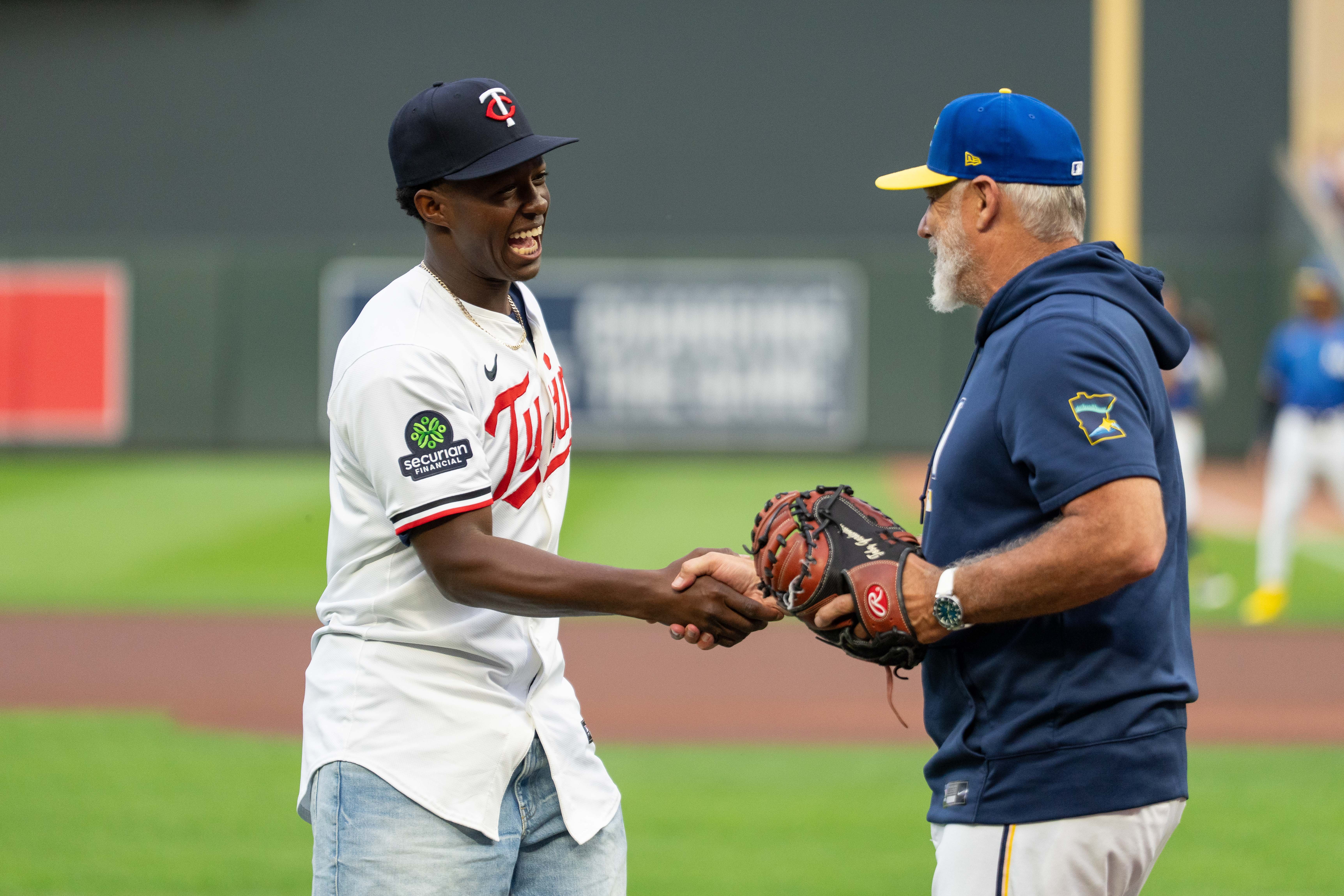 Just over a month ago, on July 11th, the Twins selected Georgia Tech catcher Vahn Lackey with the third overall pick in the MLB Draft. It was a momentous occasion, marking the seventh time in Twins history — third in the last 25 years — that they've had a top-three draft pick. Lackey instantly became one of the stars in the system and one of the most compelling prospects in the minors. Here's a (very) early look at how his professional career has unfolded since the Twins called his name. A Historic Signing Bonus After selecting him third overall, behind Roch Cholowsky and Grady Emerson, the Twins wasted little time getting Lackey signed and into the organization. Within 10 days of the draft, the club had signed its entire class, including Lackey who received a $9,497,500 bonus. While slightly below slot ($9.7M), it was briefly the second-largest in MLB history (behind Cholowsky) before Emerson signed and pushed him to third. This isn't all that noteworthy because, as the sentence above indicates, these records are basically reset at the top of the draft every year. Still, a fun factoid. Signing Lackey slightly under-slot helped the Twins spread their draft pool around — combined with the under-slot deal they struck with second-rounder Carson Tinney, it helped enabled Minnesota to reel in third-round pitcher Ethan Wachmann for more than double his slot value at $2.25 million. “Just a great fit for our organization, on every front. Fantastic player, fantastic human being, great character.” - Twins scouting director Sean Johnson on Lackey (via MLB) An Emphatic Arrival in Prospect Rankings In Twins Daily's top prospect tracker (voted on by our creator community), Lackey immediately jumped in at No. 2, behind only Walker Jenkins. In a high-caliber farm system like this one — ranked sixth in baseball by FanGraphs — that's a strong place to debut. In Baseball America's latest prospect rankings, Lackey is also behind only Jenkins among Twins prospects, ranking 23rd overall (three spots ahead of recently-promoted Kaelen Culpepper). Jenkins ranks 10th, putting him at the elite prospect tier, while Lackey is right on the borderline. Keith Law of The Athletic is slightly more bullish on Lackey, ranking him 20th — one spot behind Jenkins, and one spot ahead of Cholowsky. MLB Pipeline has yet to release their post-draft update, but for context, last year they ranked third overall pick Kade Anderson 22nd overall in mid-August, nearly identical to where Lackey initially finds himself on the BA and Athletic boards. Anderson, a left-handed pitcher in the Seattle system, has been a quick riser and is now up to fifth overall in MLB Pipeline's current rankings. On the flip side, the No. 3 pick in 2024, Charlie Condon, debuted at 12th in those rankings (ahead of even first overall pick Travis Bazzana) but has struggled enough since to fall to 69th. Despite being drafted as a college star, Condon is the only player from the top nine of the class who's yet to reach the majors. Just a reminder that pre-draft hype is what it is, and that's really all we have to go on so far for Lackey, who has barely played in the minors yet. But there is a small sample's worth of performance to analyze. "Lackey might end up a plus defensive catcher with plus power and a plus hit tool, which may as well be a jackalope given how rare that profile is." - Keith Law, The Athletic Early Results in the Minors Shortly after signing, Lackey was assigned to Low-A Fort Myers, where he made his pro debut on July 30th. In his first game, the 21-year-old flashed a couple of his highly touted tools, drawing two walks and stealing a base. Since then he's played nine more games, and in that short time, it's been his defense more than his offense making highlight reels. Through 46 plate appearances, Lackey is batting .206 with only three extra-base hits, the first of which was a grounder chopped down the third-base line for a double. He's holding his own mainly thanks to a disciplined approach yielding an 11-to-8 K/BB ratio and .391 on-base percentage. What's really been eye-catching about Lackey in his initial action is the defense, and specifically his throws from behind the plate. Opponents have attempted 13 steals already against Lackey and he's gunned down five of them (38%), backing up his rep as a cannon-armed controller of the run game. The dude pops up and throws absolute peas. Much like on the offensive side, the sample is far too small to be worthy of drawing any serious conclusions, but it's a good reminder of Lackey's legit defensive skill set, which makes him nearly a lock to remain at catcher with Gold Glove potential. That element of his game is hugely important, because it will keep Lackey high on prospect lists even if his bat is a little slower to develop. What's Next for Lackey I would consider it unlikely that Lackey remains at the Low-A level much longer. Fort Myers is a fine place to get his feet wet, especially given it's the location of the organization's minor-league complex, but it's also a fairly conservative assignment for a top-three draft pick out of college. He could move up to High-A Cedar Rapids in the near future. The seasons for both Fort Myers and Cedar Rapids run only through the first week of September. Double-A Wichita goes through the second week, and Triple-A St. Paul the third. Is it possible the Twins could give Lackey a late-season taste of the high minors, as they did with Brooks Lee when he played a couple of games in Double-A in 2022? Either way, he'll be set to open up his first full professional season at Wichita, as Lee did. From there, the major leagues is really only a step away, making a 2027 MLB debut plausible. A more likely scenario is that comes up in his second full season, as Lee did, but either way, Lackey's advanced talent and polished will enable him to hop on the fast track if he's up to it.
 -
Image courtesy of Mike Watters-Imagn Images Twins prospect Emmanuel Rodriguez was activated from the injured list earlier this week and returned to the St. Paul Saints roster after missing more than three months with a thumb injury that required surgery. With less than two months remaining in the season, Rodriguez will look to hit the ground running and make up for lost time. The clock is ticking on his last year in the minors and unfortunately, the Twins have been able to learn very little about the 23-year-old's readiness. Patience is a central aspect of Rodriguez's game. His ability to take pitches and draw walks is almost unparalleled in the professional ranks. It's why has a .425 career on-base percentage in the minors, and a big part of why he's been viewed as one of the better prospects in the game — top 100 entering this year according to Baseball Prospectus (#48), Baseball America (#57) and MLB Pipeline (#74). Twins Daily had him ranked #3 in the Minnesota system, noting that he sported "one of the weirdest, most fascinating offensive profiles in baseball." During his time on the field in 2026, Rodriguez has put that profile on full display, slashing .270/.432/.487 in 34 games spent mostly with the Saints. But the outfielder also missed three months after undergoing surgery for a torn thumb ligament suffered while sliding into first base. It's far from the first time he's dealt with thumb issues in an injury-riddled career, and this latest instance bears extra weight at a time where the Twins really needed to see what they have in Rodriguez. When it comes to their ultra-patient outfield prospect, patience is no longer a luxury the Twins can afford on their end. That's because, as Aaron Gleeman recently covered on his website, Rodriguez will be out of options next spring, meaning the Twins will need to either carry him on the major-league roster or expose him to waivers and lose him. Sometimes in cases like this an extra option year is granted due to time lost on the IL, but Gleeman reports, "a league source with knowledge of the formula used to determine eligibility tells me he wouldn't qualify unless the rules change as part of a new Collective Bargaining Agreement." If that remains true, then the Twin will find themselves in a difficult spot, essentially forced to carry Rodriguez on the active roster out of camp if he's healthy. And if he's on the roster, he's going to need to be starting regularly, in an already-crowded outfield mix that includes Byron Buxton, Trevor Larnach (?), Luke Keaschall, Alan Roden, Austin Martin and soon enough, Walker Jenkins. The implications extend well beyond Rodriguez himself. Knowing they'll have little flexibility with him next spring, should the Twins be more motivated to trade Rodriguez this offseason? Or does his situation make it more important to move another outfielder and clear a runway for him? More immediately, should they accelerate his arrival this season, giving him at least a taste of the majors rather than asking him to break camp next year as an untested rookie with no safety net? That last consideration feels especially relevant given Rodriguez's unusual and volatile offensive profile. The huge power and elite patience give him tremendous upside, but the swing-and-miss could also make for a steep adjustment against major-league pitching. There's a plausible version of his future where Rodriguez becomes a middle-of-the-order force, but getting there might require some ugly stretches along the way. We've arrived at just what makes the lack of options so uncomfortable. What happens if the Twins enter next season expecting to contend and Rodriguez is batting .150 at the end of April? They can't simply send him to St. Paul to work through it. They'd either need to keep absorbing the growing pains or risk losing a talented 23-year-old for nothing. Maybe Rodriguez will make the whole issue moot by hitting his way into the Twins' plans over these final weeks, and leaving little doubt next spring. But after years of patiently waiting for his development to unfold, Minnesota is approaching a point where his roster status could start making decisions for them. The Twins need to use the time they have left this year — and the offseason that follows — to make sure they're not caught without a plan when that clock finally runs out. View full article
-
Out of Patience: Emmanuel Rodriguez's Lack of Remaining Options Is a Problem
Nick Nelson posted an article in Twins
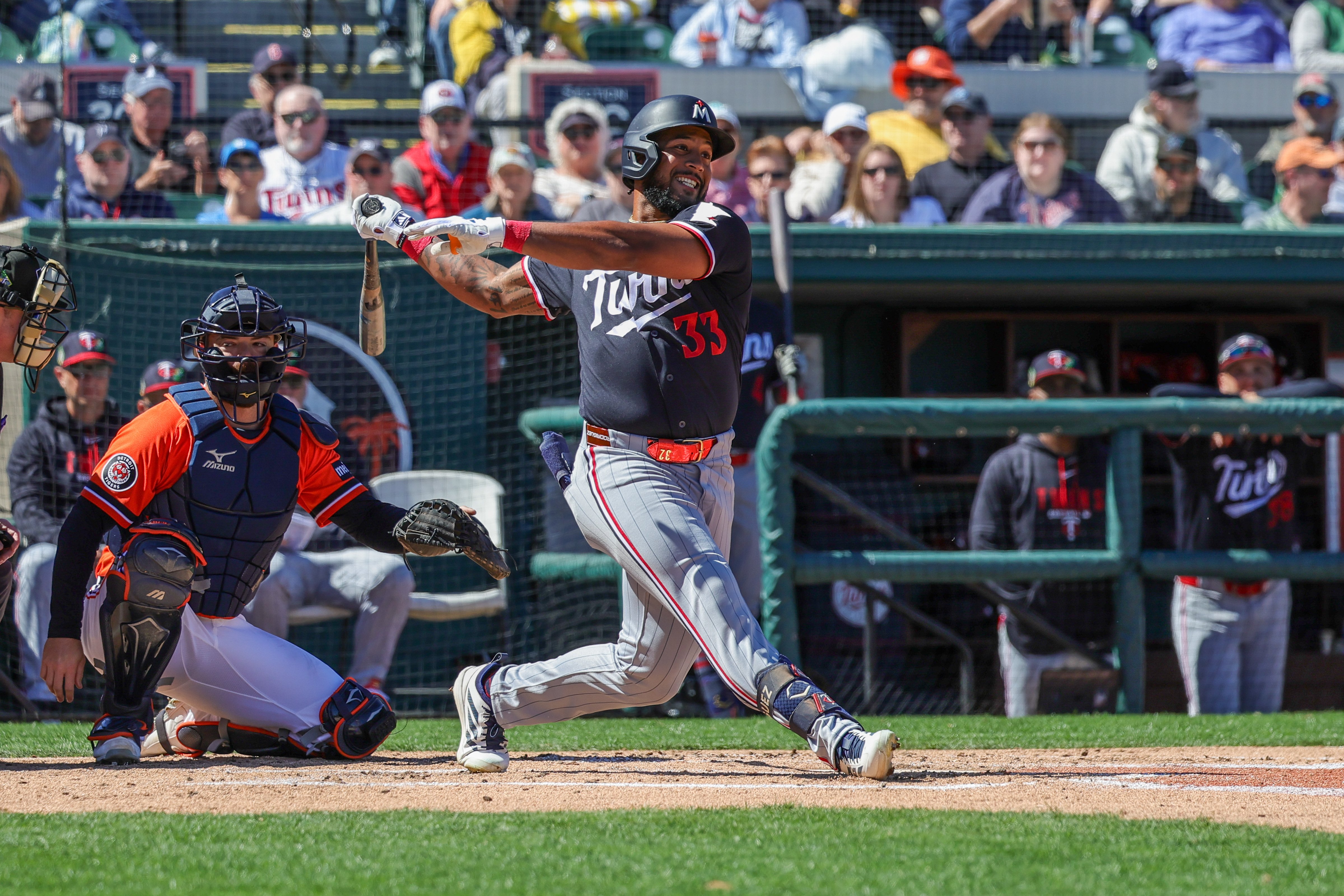 Twins prospect Emmanuel Rodriguez was activated from the injured list earlier this week and returned to the St. Paul Saints roster after missing more than three months with a thumb injury that required surgery. With less than two months remaining in the season, Rodriguez will look to hit the ground running and make up for lost time. The clock is ticking on his last year in the minors and unfortunately, the Twins have been able to learn very little about the 23-year-old's readiness. Patience is a central aspect of Rodriguez's game. His ability to take pitches and draw walks is almost unparalleled in the professional ranks. It's why has a .425 career on-base percentage in the minors, and a big part of why he's been viewed as one of the better prospects in the game — top 100 entering this year according to Baseball Prospectus (#48), Baseball America (#57) and MLB Pipeline (#74). Twins Daily had him ranked #3 in the Minnesota system, noting that he sported "one of the weirdest, most fascinating offensive profiles in baseball." During his time on the field in 2026, Rodriguez has put that profile on full display, slashing .270/.432/.487 in 34 games spent mostly with the Saints. But the outfielder also missed three months after undergoing surgery for a torn thumb ligament suffered while sliding into first base. It's far from the first time he's dealt with thumb issues in an injury-riddled career, and this latest instance bears extra weight at a time where the Twins really needed to see what they have in Rodriguez. When it comes to their ultra-patient outfield prospect, patience is no longer a luxury the Twins can afford on their end. That's because, as Aaron Gleeman recently covered on his website, Rodriguez will be out of options next spring, meaning the Twins will need to either carry him on the major-league roster or expose him to waivers and lose him. Sometimes in cases like this an extra option year is granted due to time lost on the IL, but Gleeman reports, "a league source with knowledge of the formula used to determine eligibility tells me he wouldn't qualify unless the rules change as part of a new Collective Bargaining Agreement." If that remains true, then the Twin will find themselves in a difficult spot, essentially forced to carry Rodriguez on the active roster out of camp if he's healthy. And if he's on the roster, he's going to need to be starting regularly, in an already-crowded outfield mix that includes Byron Buxton, Trevor Larnach (?), Luke Keaschall, Alan Roden, Austin Martin and soon enough, Walker Jenkins. The implications extend well beyond Rodriguez himself. Knowing they'll have little flexibility with him next spring, should the Twins be more motivated to trade Rodriguez this offseason? Or does his situation make it more important to move another outfielder and clear a runway for him? More immediately, should they accelerate his arrival this season, giving him at least a taste of the majors rather than asking him to break camp next year as an untested rookie with no safety net? That last consideration feels especially relevant given Rodriguez's unusual and volatile offensive profile. The huge power and elite patience give him tremendous upside, but the swing-and-miss could also make for a steep adjustment against major-league pitching. There's a plausible version of his future where Rodriguez becomes a middle-of-the-order force, but getting there might require some ugly stretches along the way. We've arrived at just what makes the lack of options so uncomfortable. What happens if the Twins enter next season expecting to contend and Rodriguez is batting .150 at the end of April? They can't simply send him to St. Paul to work through it. They'd either need to keep absorbing the growing pains or risk losing a talented 23-year-old for nothing. Maybe Rodriguez will make the whole issue moot by hitting his way into the Twins' plans over these final weeks, and leaving little doubt next spring. But after years of patiently waiting for his development to unfold, Minnesota is approaching a point where his roster status could start making decisions for them. The Twins need to use the time they have left this year — and the offseason that follows — to make sure they're not caught without a plan when that clock finally runs out.
 -
Joe Ryan Has Put The Twins in a Tough Spot
Nick Nelson replied to Cody Pirkl's topic in Twins Daily Front Page News
The fact that the decision has essentially been made for them does not mean they are in a good spot. Personally I thought trading Ryan — either at the deadline or in the offseason — was the obvious best course of action. I mean just look at the offer they rejected from Boston last year, franchise-changing. The way he was pitching as of a month ago would've opened up some pretty exciting possibilities. They are loaded on starting pitching depth going forward to absorb his loss. Alas, their leverage in any kind of trade talks has plummeted. -
Joe Ryan Has Put The Twins in a Tough Spot
Nick Nelson replied to Cody Pirkl's topic in Twins Daily Front Page News
As the person on editing duty today, I'll wear this. The way I read it (and the way I'm sure Cody meant it) was "Joe Ryan's inability to hold up in the second half year after year puts the Twins in a tough spot." But I can see how it would read as unfairly accusatory. Obviously he's not trying to break down like this time and again. -
What I struggle with is many of his plate appearances continuing to be so egregiously bad. Still seems like a lot of guesswork up there even when he's swinging well. Lewis has a 1.025 OPS in his last 12 games but a 15-to-1 K/BB ratio. As Sam notes in the article, the Twins don't need Lewis to necessarily keep up at this rate, but they can't have him go back in the tank. That kind of plate discipline lends itself to extended slumps.
-
Week in Review: Big Moves, Little Momentum
Nick Nelson posted a topic in Twins Daily Front Page News
Image courtesy of Jeff Hanisch-Imagn Images The Weekly Nutshell: The Twins swung a big trade on Monday, capping an active deadline stretch that saw three newcomers join the pitching staff. Unfortunately, Minnesota's play on the field was far less inspired. They were six outs away from getting swept in Kansas City before rallying to take a late lead in the finale. They followed a series-opening win in Milwaukee with back-to-back one-run losses, falling back to three games under .500 and losing ground in the postseason race. Since very briefly holding a winning record at the end of July, the Twins have stumbled badly, dropping six of their last eight. The offense is sputtering and the biggest stars are MIA. With 43 games remaining, the pressure is on for this club to get on track and reverse its downward trend. They are hoping the promotion of one of their top prospects can provide a helpful jolt. Weekly Snapshot: Mon, 8/3 through Sun, 8/9 *** Record Last Week: 2-4 (Overall: 58-61) Run Differential Last Week: -6 (Overall: -35) Standing: T-3rd Place in AL Central (3.5 GB); 1.5 games out of WC Latest Game Results Game 114 | KC 8, MIN 2: Royals Take Control From Start to Finish, Ryan Struggles Ryan: 5.1 IP, 5 R (4 ER), 7 H, 2 BB, 3 K Game 115 | KC 2, MIN 1: Offense Smothered by Cameron Again in 4th Straight Loss Twins offense: 2-29, 0 XBH, 1 BB, 10 K Game 116 | MIN 4, KC 3: Another Late-Game Comeback Steers Twins Clear of Sweep Twins bullpen: 3 IP, 0 R, 1 H, 1 BB, 4 K Game 117 | MIN 8, MIL 6: Twins Rally Back from Early Deficit, Bullpen Hangs On Bell: 4-5, HR, 3 RBI Game 118 | MIL 4, MIN 3: Early Lead Disappears in Middle Innings, Hoffman Takes Loss Lewis: 2-4, 2 RBI Game 119 | MIL 4, MIN 3 (10): Brewers Take Game, Series Behind Key Defensive Plays Clemens: 1-4, HR, 2 RBI NEWS & NOTES The Twins made only one move on deadline day but it was a significant one, sending a three-prospect package headlined by Dasan Hill to the Blue Jays in exchange for veteran reliever Jeff Hoffman. The righty Hoffman joins A.J. Minter and Dean Kremer as outside reinforcements for a pitching staff that Jeremy Zoll and the front office bolstered semi-aggressively, as the Twins look to make a run from within this unspectacular American League field. Kendry Rojas was optioned and Cody Laweryson designated for assignment to make room for Hoffman, who immediately becomes the team's best reliever. The added rotation depth provided by Kremer's acquisition came in handy quickly when Joe Ryan landed on the injured list following another sub-par start in Kansas City on Tuesday. Openly exasperated with his physical limitations, Ryan was sent home for an exam and diagnosed with a mild glute strain, helping explain why his performance has taken a sharp downward turn of late. Zebby Matthews, optioned the previous week to make room for Kremer, returned to the Twins rotation before even making a start at Triple-A. The Twins didn't make any offensive additions at the deadline, but they sought a boost internally by promoting one of their top prospects in Kaelen Culpepper. The infielder was called up from Triple-A ahead of Friday's series opener in Milwaukee, with Tristan Gray optioned to the minors to make room. Culpepper started at shortstop and batted seventh in his debut. HIGHLIGHTS Culpepper started his MLB career with a bang, launching a solo home run in his second at-bat on Friday night to draw the Twins within one run in an eventual victory. On an 0-2 pitch, Culpepper took Brewers starter Shane Drohan deep to left-center for a 390-feet blast. Welcome to the big leagues, kid. I'm eager to see a lot more. Royce Lewis kicked things off in Kansas City with a four-hit night, then went on to add a homer and two doubles over the remainder of the week, extending his hitting streak to 13 games before an 0-fer snapped it on Sunday. Lewis has notched six extra-base hits and driven in seven runs across eight games this month, providing a rare spark for a lineup that's otherwise struggling to find big hits. Josh Bell enjoyed a four-hit game of his own, on Friday night in Milwaukee, and homered twice during the week to break out of a prolonged power slump. Bell had gone a full month in between home runs before taking Royals reliever Steven Cruz deep on Tuesday. Hopefully he's about to get locked into another hot streak, because the team could really use it. The freshly reinforced bullpen continued to look like the strength of the roster, allowing six earned runs in 20 innings for a 2.70 ERA. Slim margins for error meant that Hoffman and Yoendrys Gómez were tagged with losses on Saturday and Sunday by allowing one run apiece, but they mostly looked good, as did the rest of the relief corps. Kody Funderburk threw 4 ⅔ scoreless innings with eight strikeouts and one walk; he's given up one run in his past 15 appearances. Tommy Nance made three shutout appearances and has a 1.74 ERA since being acquired. Andrew Morris didn't allow a run in his 2 ⅔ innings of work, lowering his ERA to 3.09 for the season. It makes sense that the Twins focused mainly on relief upgrades at the deadline, given their overall talent level there, but the bullpen has strongly outpaced the rotation and lineup over the past month-plus and that continued to be the case last week. The Twins are staying in a lot of close games thanks to this unit, which has consistently shown that if handed leads it can hold them. LOWLIGHTS Leads are tough to come by. The offense is struggling to get anything going, especially against opposing starters. Thursday's finale against the Royals marked the ninth consecutive time an opposing team held the Twins to two or fewer runs through the first six innings. They managed to score three in the eighth of that one to come back and avoid a sweep, but have become far too dependent on those types of dramatic late-game rallies to ever win a game. Kody Clemens has authored a few of those big game-changing knocks, and added another on Sunday with his game-tying two-run homer, but prior to that he was 2-for-22 on the week and his OBP has sunk to .287. Brooks Lee also homered on Sunday but was 1-for-14 coming into the game and his OPS is sagging back toward the 600s. Victor Caratini was 2-for-11 and hasn't homered since June. Alan Roden went 1-for-7 and is running a .527 OPS in his latest stint with the Twins. Minnesota's best hitters are either injured (Byron Buxton) or mildly slumping — Ryan Jeffers was 3-for-19 last week and Trevor Larnach 1-for-11. Save for the modest hot streaks from Lewis and Bell, no one's picking up the slack in a lineup that constantly shortcircuits. The timely-hitting magic that elevated the offense's results in the first half has predictably dried up, as demonstrated over the weekend (2-for-18 with RISP on Saturday and Sunday). It was profoundly frustrating to watch the Twins lineup get shut down by Randy Dobnak and Noah Cameron at Kauffman Stadium five days after they did the same at Target Field. These are not exceptional pitchers and you'd like to think Minnesota's hitters and coaches would come up with some sort of plan seeing them both in such short succession. Alas, the Twins had no answers, scoring just two runs in 13 innings against the Royals starters in a pair of losses to clinch the season series for KC. Four of six games in the past week were decided by one run, and six of the past eight. On the one hand, with margins being this tight, one could reasonably surmise the Twins were just a few missed swings or lucky breaks away from going 6-3 on this road trip instead of 3-6. On the other hand, they've been getting generally outplayed, and clutch late-game heroics have bailed them out several times. The Twins could have easily gone 0-6 against the Royals over the past two weeks on merit. That's tough stuff against a team pacing for 95 losses. Upgrades to the bullpen aren't going to be meaningful if the offense can't find some life and start building some leads here and there. TRENDING STORYLINE The Twins are a fringe playoff contender, tied with Cleveland for the eighth-best record in the AL. They are one of six teams within four games of a Wild Card spot. They've now fallen behind the Tigers in the Central standings. In order to have a shot at making the dance, they're going to win significantly more than they lose the rest of the way. Can they hang in there with their two best players sidelined indefinitely? Buxton received an injection in his ailing hip and there's no clear timeline in place for his return. Ryan's glute injury was deemed relatively minor but it was enough to land him on the IL so he'll miss a couple weeks at least, and who knows what kind of effectiveness level can be expected when he's back on the mound. The Twins are in a tough place, compelled to show patience and get both Buxton and Ryan as healthy as possible while also recognizing that the team's hopes for this season hang in the balance. Every game matters and the absence of Minnesota's two All-Stars is deeply felt. Culpepper's arrival will hopefully help awaken the Buxton-less lineup, but if the Twins really want to push their chips in, they need to find a way to get Walker Jenkins to the big leagues. Jenkins homered twice for the Saints on Thursday and is batting .357 this month. He's ready, and he's talented enough to make a real impact on Minnesota's fortunes. LOOKING AHEAD With their latest nine-game road trip in the books, the Twins return home with two three-game series slated for the coming week, although one of the "home games" (on Thursday) will actually take place in Iowa for the Field of Dreams Game. The Orioles should present a pretty even match-up for the Twins, with nearly identical records and run differentials. The difficulty level only goes up from there, with the Phillies (63-56) followed on the schedule by the Braves (71-47) and Padres (61-57). Can the Twins survive this gauntlet through some of the National League's finest teams? We'll find out. But first they need to take care of business against Baltimore. MONDAY, AUGUST 10: ORIOLES @ TWINS — LHP Trevor Rogers v. RHP Dean Kremer TUESDAY, AUGUST 11: ORIOLES @ TWINS — RHP Brandon Young v. RHP Bailey Ober WEDNESDAY, AUGUST 12: ORIOLES @ TWINS — RHP Shane Baz v. RHP Zebby Matthews THURSDAY, AUGUST 13: PHILLIES @ TWINS — RHP Aaron Nola v. RHP Taj Bradley SATURDAY, AUGUST 15: PHILLIES @ TWINS — LHP Jesus Luzardo v. LHP Connor Prielipp SUNDAY, AUGUST 16: PHILLIES @ TWINS — RHP Andrew Painter v. RHP Dean Kremer View full article -
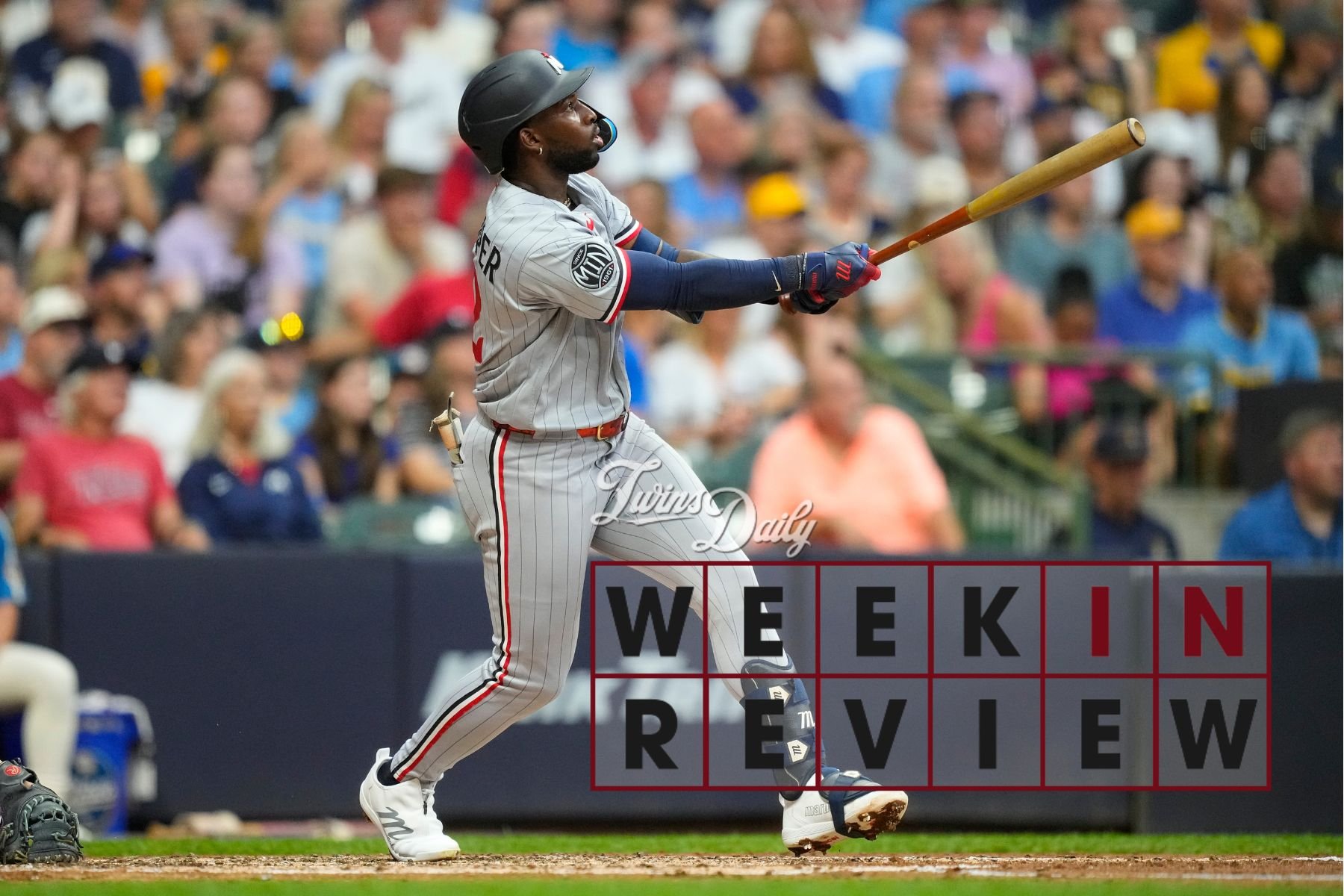 The Weekly Nutshell: The Twins swung a big trade on Monday, capping an active deadline stretch that saw three newcomers join the pitching staff. Unfortunately, Minnesota's play on the field was far less inspired. They were six outs away from getting swept in Kansas City before rallying to take a late lead in the finale. They followed a series-opening win in Milwaukee with back-to-back one-run losses, falling back to three games under .500 and losing ground in the postseason race. Since very briefly holding a winning record at the end of July, the Twins have stumbled badly, dropping six of their last eight. The offense is sputtering and the biggest stars are MIA. With 43 games remaining, the pressure is on for this club to get on track and reverse its downward trend. They are hoping the promotion of one of their top prospects can provide a helpful jolt. Weekly Snapshot: Mon, 8/3 through Sun, 8/9 *** Record Last Week: 2-4 (Overall: 58-61) Run Differential Last Week: -6 (Overall: -35) Standing: T-3rd Place in AL Central (3.5 GB); 1.5 games out of WC Latest Game Results Game 114 | KC 8, MIN 2: Royals Take Control From Start to Finish, Ryan Struggles Ryan: 5.1 IP, 5 R (4 ER), 7 H, 2 BB, 3 K Game 115 | KC 2, MIN 1: Offense Smothered by Cameron Again in 4th Straight Loss Twins offense: 2-29, 0 XBH, 1 BB, 10 K Game 116 | MIN 4, KC 3: Another Late-Game Comeback Steers Twins Clear of Sweep Twins bullpen: 3 IP, 0 R, 1 H, 1 BB, 4 K Game 117 | MIN 8, MIL 6: Twins Rally Back from Early Deficit, Bullpen Hangs On Bell: 4-5, HR, 3 RBI Game 118 | MIL 4, MIN 3: Early Lead Disappears in Middle Innings, Hoffman Takes Loss Lewis: 2-4, 2 RBI Game 119 | MIL 4, MIN 3 (10): Brewers Take Game, Series Behind Key Defensive Plays Clemens: 1-4, HR, 2 RBI NEWS & NOTES The Twins made only one move on deadline day but it was a significant one, sending a three-prospect package headlined by Dasan Hill to the Blue Jays in exchange for veteran reliever Jeff Hoffman. The righty Hoffman joins A.J. Minter and Dean Kremer as outside reinforcements for a pitching staff that Jeremy Zoll and the front office bolstered semi-aggressively, as the Twins look to make a run from within this unspectacular American League field. Kendry Rojas was optioned and Cody Laweryson designated for assignment to make room for Hoffman, who immediately becomes the team's best reliever. The added rotation depth provided by Kremer's acquisition came in handy quickly when Joe Ryan landed on the injured list following another sub-par start in Kansas City on Tuesday. Openly exasperated with his physical limitations, Ryan was sent home for an exam and diagnosed with a mild glute strain, helping explain why his performance has taken a sharp downward turn of late. Zebby Matthews, optioned the previous week to make room for Kremer, returned to the Twins rotation before even making a start at Triple-A. The Twins didn't make any offensive additions at the deadline, but they sought a boost internally by promoting one of their top prospects in Kaelen Culpepper. The infielder was called up from Triple-A ahead of Friday's series opener in Milwaukee, with Tristan Gray optioned to the minors to make room. Culpepper started at shortstop and batted seventh in his debut. HIGHLIGHTS Culpepper started his MLB career with a bang, launching a solo home run in his second at-bat on Friday night to draw the Twins within one run in an eventual victory. On an 0-2 pitch, Culpepper took Brewers starter Shane Drohan deep to left-center for a 390-feet blast. Welcome to the big leagues, kid. I'm eager to see a lot more. Royce Lewis kicked things off in Kansas City with a four-hit night, then went on to add a homer and two doubles over the remainder of the week, extending his hitting streak to 13 games before an 0-fer snapped it on Sunday. Lewis has notched six extra-base hits and driven in seven runs across eight games this month, providing a rare spark for a lineup that's otherwise struggling to find big hits. Josh Bell enjoyed a four-hit game of his own, on Friday night in Milwaukee, and homered twice during the week to break out of a prolonged power slump. Bell had gone a full month in between home runs before taking Royals reliever Steven Cruz deep on Tuesday. Hopefully he's about to get locked into another hot streak, because the team could really use it. The freshly reinforced bullpen continued to look like the strength of the roster, allowing six earned runs in 20 innings for a 2.70 ERA. Slim margins for error meant that Hoffman and Yoendrys Gómez were tagged with losses on Saturday and Sunday by allowing one run apiece, but they mostly looked good, as did the rest of the relief corps. Kody Funderburk threw 4 ⅔ scoreless innings with eight strikeouts and one walk; he's given up one run in his past 15 appearances. Tommy Nance made three shutout appearances and has a 1.74 ERA since being acquired. Andrew Morris didn't allow a run in his 2 ⅔ innings of work, lowering his ERA to 3.09 for the season. It makes sense that the Twins focused mainly on relief upgrades at the deadline, given their overall talent level there, but the bullpen has strongly outpaced the rotation and lineup over the past month-plus and that continued to be the case last week. The Twins are staying in a lot of close games thanks to this unit, which has consistently shown that if handed leads it can hold them. LOWLIGHTS Leads are tough to come by. The offense is struggling to get anything going, especially against opposing starters. Thursday's finale against the Royals marked the ninth consecutive time an opposing team held the Twins to two or fewer runs through the first six innings. They managed to score three in the eighth of that one to come back and avoid a sweep, but have become far too dependent on those types of dramatic late-game rallies to ever win a game. Kody Clemens has authored a few of those big game-changing knocks, and added another on Sunday with his game-tying two-run homer, but prior to that he was 2-for-22 on the week and his OBP has sunk to .287. Brooks Lee also homered on Sunday but was 1-for-14 coming into the game and his OPS is sagging back toward the 600s. Victor Caratini was 2-for-11 and hasn't homered since June. Alan Roden went 1-for-7 and is running a .527 OPS in his latest stint with the Twins. Minnesota's best hitters are either injured (Byron Buxton) or mildly slumping — Ryan Jeffers was 3-for-19 last week and Trevor Larnach 1-for-11. Save for the modest hot streaks from Lewis and Bell, no one's picking up the slack in a lineup that constantly shortcircuits. The timely-hitting magic that elevated the offense's results in the first half has predictably dried up, as demonstrated over the weekend (2-for-18 with RISP on Saturday and Sunday). It was profoundly frustrating to watch the Twins lineup get shut down by Randy Dobnak and Noah Cameron at Kauffman Stadium five days after they did the same at Target Field. These are not exceptional pitchers and you'd like to think Minnesota's hitters and coaches would come up with some sort of plan seeing them both in such short succession. Alas, the Twins had no answers, scoring just two runs in 13 innings against the Royals starters in a pair of losses to clinch the season series for KC. Four of six games in the past week were decided by one run, and six of the past eight. On the one hand, with margins being this tight, one could reasonably surmise the Twins were just a few missed swings or lucky breaks away from going 6-3 on this road trip instead of 3-6. On the other hand, they've been getting generally outplayed, and clutch late-game heroics have bailed them out several times. The Twins could have easily gone 0-6 against the Royals over the past two weeks on merit. That's tough stuff against a team pacing for 95 losses. Upgrades to the bullpen aren't going to be meaningful if the offense can't find some life and start building some leads here and there. TRENDING STORYLINE The Twins are a fringe playoff contender, tied with Cleveland for the eighth-best record in the AL. They are one of six teams within four games of a Wild Card spot. They've now fallen behind the Tigers in the Central standings. In order to have a shot at making the dance, they're going to win significantly more than they lose the rest of the way. Can they hang in there with their two best players sidelined indefinitely? Buxton received an injection in his ailing hip and there's no clear timeline in place for his return. Ryan's glute injury was deemed relatively minor but it was enough to land him on the IL so he'll miss a couple weeks at least, and who knows what kind of effectiveness level can be expected when he's back on the mound. The Twins are in a tough place, compelled to show patience and get both Buxton and Ryan as healthy as possible while also recognizing that the team's hopes for this season hang in the balance. Every game matters and the absence of Minnesota's two All-Stars is deeply felt. Culpepper's arrival will hopefully help awaken the Buxton-less lineup, but if the Twins really want to push their chips in, they need to find a way to get Walker Jenkins to the big leagues. Jenkins homered twice for the Saints on Thursday and is batting .357 this month. He's ready, and he's talented enough to make a real impact on Minnesota's fortunes. LOOKING AHEAD With their latest nine-game road trip in the books, the Twins return home with two three-game series slated for the coming week, although one of the "home games" (on Thursday) will actually take place in Iowa for the Field of Dreams Game. The Orioles should present a pretty even match-up for the Twins, with nearly identical records and run differentials. The difficulty level only goes up from there, with the Phillies (63-56) followed on the schedule by the Braves (71-47) and Padres (61-57). Can the Twins survive this gauntlet through some of the National League's finest teams? We'll find out. But first they need to take care of business against Baltimore. MONDAY, AUGUST 10: ORIOLES @ TWINS — LHP Trevor Rogers v. RHP Dean Kremer TUESDAY, AUGUST 11: ORIOLES @ TWINS — RHP Brandon Young v. RHP Bailey Ober WEDNESDAY, AUGUST 12: ORIOLES @ TWINS — RHP Shane Baz v. RHP Zebby Matthews THURSDAY, AUGUST 13: PHILLIES @ TWINS — RHP Aaron Nola v. RHP Taj Bradley SATURDAY, AUGUST 15: PHILLIES @ TWINS — LHP Jesus Luzardo v. LHP Connor Prielipp SUNDAY, AUGUST 16: PHILLIES @ TWINS — RHP Andrew Painter v. RHP Dean Kremer
 -
Image courtesy of Troy Taormina, Kevin Sousa-Imagn Images The Twins came into this trade deadline with one clear mandate: add a high-caliber righty reliever to the back end of their bullpen. Yes, they made other additions to bolster the depth of their staff in A.J. Minter and Dean Kremer, but the big prize was always going to be a premier arm that could slot into the late innings alongside — or ahead of — Yoendrys Gómez and Andrew Morris. They thought they had their guy in Bryan Abreu of the Astros. Unsubstantiated rumors later turned into confirmed reports that Minnesota and Houston had a deal in place sending over Trevor Larnach in exchange for Abreu, only to have it nixed by Astros owner Jim Crane in the final stages. So the Twins evidently pivoted, turning their attention toward pushing talks across the finish line for Blue Jays reliever Jeff Hoffman. At the end of the day, the sum result is fairly similar in terms of player acquired. The Twins landed a veteran reliever with dominant stuff, an excellent track record, and plenty of experience pitching in big situations. Either one would have done the trick. Since 2023, Hoffman ranks 15th among MLB relievers in fWAR with a 3.22 ERA and 3.21 FIP; Abreu ranks 17th with a 2.72 ERA and 3.31 FIP. Both have seen their stock drop a little this year — Abreu more so, as he's run into walk and home run troubles — but both have also quelled any performance concerns with strong recent runs. All other things being equal, you'd probably lean toward Hoffman, mainly because he has an additional year of control extending into 2027. But it's close. Either one would have satisfied the biggest need Minnesota's front office sought to address. The difference is in the diverging paths required to get there, and implications for the organization going forward. It's pretty rare that we get the tea on a trade that fell through in the manner we did with this Abreu effort, but since it's out there, we can weigh its merits alongside the deal that actually ended up getting done. Larnach has one remaining year of control and is likely on the verge of exiting the Twins' plans in a crowded outfield mix. He's creating a bit of a logjam as upcoming players like Walker Jenkins vie for opportunities, but Larnach has also been one of the team's most important players to up to this point, ranking second among Twins position players in fWAR. Trading him would embody the idea of threading a needle between buying and selling. You run the risk of somewaht weakening an offensive unit that already shows signs of regression, but at the same time, you address your top priority without sacrificing any real future value. With their pivot to Hoffman, the Twins steered much harder into a traditional "buy" posture. They kept Larnach, along with everyone else on the big-league roster, but at real future expense. The headliner of a three-player package sent to Toronto is Dasan Hill, who was arguably the best pitching prospect in the organization and one of the higher-upside lefties to ever come through this system. Twins Daily named Hill the Twins' minor-league starting pitcher of the year in 2025, and had him ranked as Minnesota's #6 prospect entering this season, behind only the now-graduated Connor Prielipp among pitchers. We described the former second-rounder as "Oozing top-of-rotation potential after fanning 83 over 62 IP in first season out of HS." Though his own stock has ticked down a bit this year amid major control issues, Hill's upside remains undeniable. He was at #9 on our prospect tracker before the trade, still top 10 and one of just four pitchers among the top 15. That's a real loss, but one that might not be fully felt at the moment because he's 20, unrefined, and still years away from MLB readiness. It's the kind of move an all-in contender makes without blinking. For the Twins, who are straddling the line between contending and rebuilding, it's far from a no-brainer. Trading Larnach for Abreu would have carried minimal future implications, good or bad. Abreu, an impending free agent, wasn't going to be here next year and Larnach probably won't either. The pivot to Hill-for-Hoffman is a much more consequential decision. Hoffman is under contract next year, which does add more value but also entails its own level of risk: a 34-year-old relief pitcher making $8 million (even with Toronto paying down part of his salary) is hardly some surefire proposition. In fact it runs counter to the general philosophy of a Twins team that has rarely dedicated that kind of payroll to any single reliever. By changing course in their pursuit of a legit late-inning arm, even if not necessarily by their own volition, the Twins radically altered the risk/reward stakes of their biggest deadline move. Whether they ultimately chose this path or simply adapted to the one left available, the failed Abreu deal may prove every bit as significant as the Hoffman trade itself. If Hoffman helps anchor a playoff push over the next two seasons, surrendering Dasan Hill should be an easy price to justify. But if Hill develops into the frontline starter his talent suggests is possible, this deadline won't be remembered for the reliever Minnesota acquired, but for for the prospect they had to give up after their first plan fell apart. View full article
-
Examining the Deadline Pivot From Bryan Abreu to Jeff Hoffman
Nick Nelson posted an article in Twins
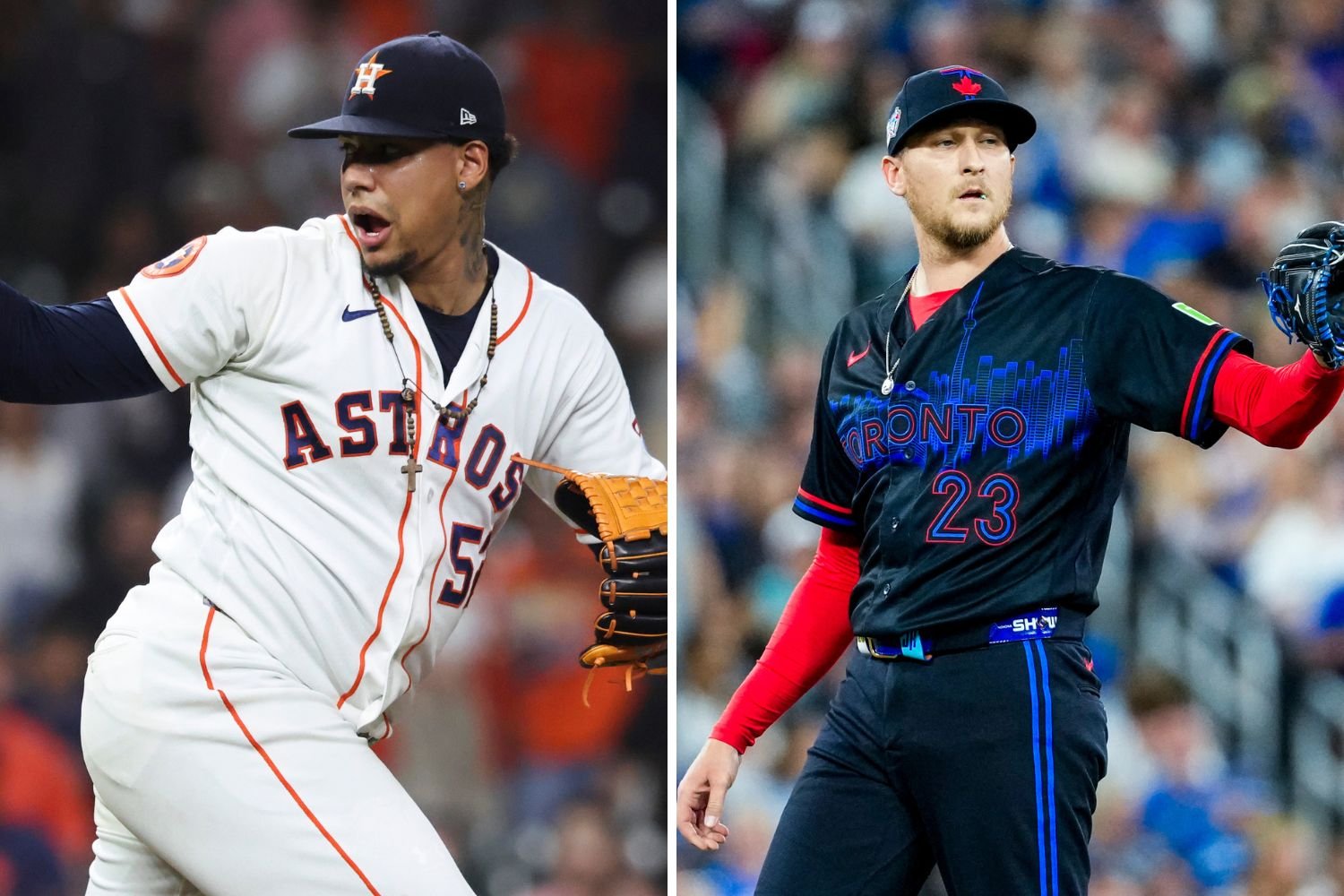 The Twins came into this trade deadline with one clear mandate: add a high-caliber righty reliever to the back end of their bullpen. Yes, they made other additions to bolster the depth of their staff in A.J. Minter and Dean Kremer, but the big prize was always going to be a premier arm that could slot into the late innings alongside — or ahead of — Yoendrys Gómez and Andrew Morris. They thought they had their guy in Bryan Abreu of the Astros. Unsubstantiated rumors later turned into confirmed reports that Minnesota and Houston had a deal in place sending over Trevor Larnach in exchange for Abreu, only to have it nixed by Astros owner Jim Crane in the final stages. So the Twins evidently pivoted, turning their attention toward pushing talks across the finish line for Blue Jays reliever Jeff Hoffman. At the end of the day, the sum result is fairly similar in terms of player acquired. The Twins landed a veteran reliever with dominant stuff, an excellent track record, and plenty of experience pitching in big situations. Either one would have done the trick. Since 2023, Hoffman ranks 15th among MLB relievers in fWAR with a 3.22 ERA and 3.21 FIP; Abreu ranks 17th with a 2.72 ERA and 3.31 FIP. Both have seen their stock drop a little this year — Abreu more so, as he's run into walk and home run troubles — but both have also quelled any performance concerns with strong recent runs. All other things being equal, you'd probably lean toward Hoffman, mainly because he has an additional year of control extending into 2027. But it's close. Either one would have satisfied the biggest need Minnesota's front office sought to address. The difference is in the diverging paths required to get there, and implications for the organization going forward. It's pretty rare that we get the tea on a trade that fell through in the manner we did with this Abreu effort, but since it's out there, we can weigh its merits alongside the deal that actually ended up getting done. Larnach has one remaining year of control and is likely on the verge of exiting the Twins' plans in a crowded outfield mix. He's creating a bit of a logjam as upcoming players like Walker Jenkins vie for opportunities, but Larnach has also been one of the team's most important players to up to this point, ranking second among Twins position players in fWAR. Trading him would embody the idea of threading a needle between buying and selling. You run the risk of somewaht weakening an offensive unit that already shows signs of regression, but at the same time, you address your top priority without sacrificing any real future value. With their pivot to Hoffman, the Twins steered much harder into a traditional "buy" posture. They kept Larnach, along with everyone else on the big-league roster, but at real future expense. The headliner of a three-player package sent to Toronto is Dasan Hill, who was arguably the best pitching prospect in the organization and one of the higher-upside lefties to ever come through this system. Twins Daily named Hill the Twins' minor-league starting pitcher of the year in 2025, and had him ranked as Minnesota's #6 prospect entering this season, behind only the now-graduated Connor Prielipp among pitchers. We described the former second-rounder as "Oozing top-of-rotation potential after fanning 83 over 62 IP in first season out of HS." Though his own stock has ticked down a bit this year amid major control issues, Hill's upside remains undeniable. He was at #9 on our prospect tracker before the trade, still top 10 and one of just four pitchers among the top 15. That's a real loss, but one that might not be fully felt at the moment because he's 20, unrefined, and still years away from MLB readiness. It's the kind of move an all-in contender makes without blinking. For the Twins, who are straddling the line between contending and rebuilding, it's far from a no-brainer. Trading Larnach for Abreu would have carried minimal future implications, good or bad. Abreu, an impending free agent, wasn't going to be here next year and Larnach probably won't either. The pivot to Hill-for-Hoffman is a much more consequential decision. Hoffman is under contract next year, which does add more value but also entails its own level of risk: a 34-year-old relief pitcher making $8 million (even with Toronto paying down part of his salary) is hardly some surefire proposition. In fact it runs counter to the general philosophy of a Twins team that has rarely dedicated that kind of payroll to any single reliever. By changing course in their pursuit of a legit late-inning arm, even if not necessarily by their own volition, the Twins radically altered the risk/reward stakes of their biggest deadline move. Whether they ultimately chose this path or simply adapted to the one left available, the failed Abreu deal may prove every bit as significant as the Hoffman trade itself. If Hoffman helps anchor a playoff push over the next two seasons, surrendering Dasan Hill should be an easy price to justify. But if Hill develops into the frontline starter his talent suggests is possible, this deadline won't be remembered for the reliever Minnesota acquired, but for for the prospect they had to give up after their first plan fell apart.
- 48 comments
-
- 5
-

-
- trevor larnach
- jeff hoffman
- (and 2 more)
-
Image courtesy of Jesse Johnson-Imagn Images Generally speaking, it's an exaggeration to say their bullpen has been the Twins' biggest strength. The unit has been quite bad overall, which was predictable after they gutted the relief corps at last year's deadline and did little to address it in the offseason. Except, of late, the bullpen actually has been this team's biggest strength. Since the start of July, Twins relievers rank 10th among MLB teams in fWAR, fifth in ERA, and ninth in Win Probability Added. Their starters, meanwhile, are 21st in WAR, 23rd in ERA, 21st in WPA. Their offense: 21st in WAR, 19th in wOBA, 6th in WPA. (That knack for timely hitting keeps on propping them up.) Prior to the additions of Jeff Hoffman and A.J. Minter, I certainly wouldn't say I felt confident in the Twins bullpen to keep performing at the level it did in July ... but, I might have felt more confident in that unit's outlook than the rotation or the lineup. Let's start with the starters. Here you've got: Joe Ryan openly battling arm fatigue as he lapses into familiar second-half struggles. Bailey Ober averaging 87 MPH with his fastball. Connor Prielipp already venturing into unprecedented workload territory as he nears 100 innings. Dean Kremer bringing in a 6.50 ERA and hoping to gravitate back toward his career norm of mediocrity. Zebby Matthews optioned to the minors (for now) with a 5.22 ERA this year and 5.64 for this career. Pablo López, Mick Abel and David Festa all out for the season. In the rotation mix, only Taj Bradley is inspiring a ton of confidence from both a durability and performance standpoint. And even then, there is a turbulent track record to contend with. The admirable depth boasted by Minnesota's starting corps entering this season has been whittled away, to the point where Kremer comes aboard as a credible upgrade. I wonder if we'll look back in two months lamenting the lack of one more front-end starter. Offensively, the Twins offer a little more reason for optimism. They continue to pace all American League teams in runs scored, although as mentioned earlier, it's a bit of a deceiving indicator. Twins hitters lead all of baseball in OPS with runners in scoring position. All their scoring up to this point is banked, but a big gap between overall performance and RISP is a glaring regression flag. Sure enough, we've already been seeing this play out in recent weeks, with the lineup drifting into long stretches of silence. The Twins rank 21st in runs scored since the break, identical to their hitting WAR rank for the season. Although the front office didn't make any additions to the position player group, they also didn't make any subtractions, which could be viewed in some ways as an investment in the offense. Trevor Larnach and Ryan Jeffers have been the club's two best hitters (sans the injured Byron Buxton), and both were circumstantial trade candidates. Minnesota held onto both — perhaps to the detriment of their long-term benefit — in order to at least hold steady in terms of bats. Ultimately, the Twins are asking their rotation and lineup to solve their own problems. There will be no external cavalry riding in to stabilize a thinning starting staff or reignite an offense that's cooled after carrying the club for much of the season. While that may feel unsatisfying in the moment, it's a defensible approach. Front offices can't afford to chase the last three weeks. The bullpen that looks like a strength today looked like one of baseball's biggest liabilities a month ago, and few areas of the sport are more volatile than relief pitching. Jeremy Zoll and company weren't buying July's results so much as insulating themselves against what history says is likely to come next. If those additions prove necessary, they'll look prescient. The bigger question is whether the starters and hitters can rediscover their form without the same kind of reinforcement. View full article
-
 Generally speaking, it's an exaggeration to say their bullpen has been the Twins' biggest strength. The unit has been quite bad overall, which was predictable after they gutted the relief corps at last year's deadline and did little to address it in the offseason. Except, of late, the bullpen actually has been this team's biggest strength. Since the start of July, Twins relievers rank 10th among MLB teams in fWAR, fifth in ERA, and ninth in Win Probability Added. Their starters, meanwhile, are 21st in WAR, 23rd in ERA, 21st in WPA. Their offense: 21st in WAR, 19th in wOBA, 6th in WPA. (That knack for timely hitting keeps on propping them up.) Prior to the additions of Jeff Hoffman and A.J. Minter, I certainly wouldn't say I felt confident in the Twins bullpen to keep performing at the level it did in July ... but, I might have felt more confident in that unit's outlook than the rotation or the lineup. Let's start with the starters. Here you've got: Joe Ryan openly battling arm fatigue as he lapses into familiar second-half struggles. Bailey Ober averaging 87 MPH with his fastball. Connor Prielipp already venturing into unprecedented workload territory as he nears 100 innings. Dean Kremer bringing in a 6.50 ERA and hoping to gravitate back toward his career norm of mediocrity. Zebby Matthews optioned to the minors (for now) with a 5.22 ERA this year and 5.64 for this career. Pablo López, Mick Abel and David Festa all out for the season. In the rotation mix, only Taj Bradley is inspiring a ton of confidence from both a durability and performance standpoint. And even then, there is a turbulent track record to contend with. The admirable depth boasted by Minnesota's starting corps entering this season has been whittled away, to the point where Kremer comes aboard as a credible upgrade. I wonder if we'll look back in two months lamenting the lack of one more front-end starter. Offensively, the Twins offer a little more reason for optimism. They continue to pace all American League teams in runs scored, although as mentioned earlier, it's a bit of a deceiving indicator. Twins hitters lead all of baseball in OPS with runners in scoring position. All their scoring up to this point is banked, but a big gap between overall performance and RISP is a glaring regression flag. Sure enough, we've already been seeing this play out in recent weeks, with the lineup drifting into long stretches of silence. The Twins rank 21st in runs scored since the break, identical to their hitting WAR rank for the season. Although the front office didn't make any additions to the position player group, they also didn't make any subtractions, which could be viewed in some ways as an investment in the offense. Trevor Larnach and Ryan Jeffers have been the club's two best hitters (sans the injured Byron Buxton), and both were circumstantial trade candidates. Minnesota held onto both — perhaps to the detriment of their long-term benefit — in order to at least hold steady in terms of bats. Ultimately, the Twins are asking their rotation and lineup to solve their own problems. There will be no external cavalry riding in to stabilize a thinning starting staff or reignite an offense that's cooled after carrying the club for much of the season. While that may feel unsatisfying in the moment, it's a defensible approach. Front offices can't afford to chase the last three weeks. The bullpen that looks like a strength today looked like one of baseball's biggest liabilities a month ago, and few areas of the sport are more volatile than relief pitching. Jeremy Zoll and company weren't buying July's results so much as insulating themselves against what history says is likely to come next. If those additions prove necessary, they'll look prescient. The bigger question is whether the starters and hitters can rediscover their form without the same kind of reinforcement.
- 60 comments
-
- 11
-
-
Image courtesy of Bruce Kluckhohn-Imagn Images One year ago, the Minnesota Twins front office conducted arguably the biggest deadline firesale in the history of Major League Baseball. It was brutal to witness: 10 players traded, as an organization admitted failure on what it had spent years trying to build. The declaration of a reset. The Twins followed through with more sweeping changes in the offseason — they fired Rocco Baldelli, parted ways with Derek Falvey, and ushered in Tom Pohlad as new ownership chair. With fan morale circling the drain, the franchise hoped to get across a message that things were going to be different. For real this time. I counted myself among the skeptics. Jeremy Zoll was unproven, and Derek Shelton was one of the losingest managers of all time. Why believe Tom would really be any different than Joe, or Jim, or Carl? That skepticism remains, to some extent. But I'm starting to let my guard down. Shelton's got these guys playing inspired, resilient ball. The front office is re-earning confidence with an adaptive nature and solid pickups such as Yoendrys Gómez. I hesitate to give ownership too much credit for adding to one of the league's lowest payrolls, but, they're adding. That's rarely been the case around this time in years past. This deadline feels decidedly different, and there are multiple reasons for that: unusual buy/sell dynamics, Tom looking to stake a claim, a potential impending lockout. Oh yeah, and the fan morale. Twins decision-makers haven't' exactly ben shy in saying that rejuvenating fan interest is a major motivator, perhaps to the point of superceding strategic wisdom. That's one of the reasons I have a feeling things might get weird at this deadline. Now that the day is upon us arrived, here are seven key storylines to keep an eye on leading up to the 5:00 PM CT MLB trade deadline: Ryan Jeffers: Can the Twins Really Trade Their Best Hitter? The strangest name on the board. Jeffers is an impending free agent, the hottest catching commodity likely available, and arguably the best offensive catcher in baseball this season. Under normal circumstances, a contender doesn't trade that player. But normal circumstances also don't involve a club carrying three catchers while facing the likelihood of losing Jeffers for nothing this winter. If a bidding war materializes, the Twins have to listen. Trading your best hitter while trying to make the playoffs would be bizarre. That's what makes this deadline so fascinating. Trevor Larnach: A Deal Already Nearly Happened It already sounds like Larnach was almost gone once. Reports indicate a deal sending him to Houston collapsed at the finish line, suggesting the Twins are very much willing to discuss one of their most productive everyday bats. Like Jeffers, it's an odd contradiction: Larnach has settled into the leadoff spot and is having the best offensive season of his career. Yet with organizational outfield depth and bullpen needs, he remains one of Minnesota's clearest avenues to acquiring impact help, and clearing a path for the next wave. Joe Ryan: The Biggest Decision They Probably Won't Make If the Twins truly want to contend in 2026 and 2027, Ryan shouldn't be going anywhere. Still, his name won't disappear until 5:00. Frontline starters with another year of control almost never become available, and if the Twins entertained offers, the return could be franchise-altering. Recent arm fatigue and a couple of uneven outings probably cool the speculation more than anything. Unless someone completely overwhelms Jeremy Zoll, Ryan still feels much more likely to headline a playoff rotation than another organization's deadline haul. Byron Buxton: His Health Looms Over Everything Any lingering fantasy about a Buxton trade should be over. The organization has repeatedly made clear he's part of its future, and his latest hip injury doesn't change that. What it does change is the calculus for the rest of this season. If the hip limits him into September, the Twins' playoff odds take a significant hit. More broadly, every recurrence raises the same question we all hate to ask: how much can the organization realistically count on him over the final years of his contract? Emmanuel Rodriguez: A Prospect Crunch Just Got More Complicated Rodriguez looked like one of Minnesota's most intriguing trade chips: elite upside at a position where the organization suddenly has enviable depth. Then came soreness in his surgically repaired thumb, an unfortunate development that likely makes a deal much harder to execute. With Walker Jenkins, Vahn Lackey and Kaelen Culpepper essentially untouchable, and Rodriguez was easily the team's best piece to dangle at this deadline. Especially because he'lls be out of options next spring, opening up a whole bag of worms from a planning perspective. Whether that gets resolved now or this winter remains one of the organization's biggest long-term questions. Selling Low: Could Familiar Names Benefit from a Change of Scenery? Could the Twins capitalize on another club believing in a rebound? Matt Wallner has become an awkward fit, buried at Triple-A with little path back to consistent at-bats in Minnesota. Royce Lewis presents an even tougher call. His talent remains undeniable, but injuries, defensive uncertainty and a crowded infield have complicated his future. If another organization still sees an All-Star waiting to emerge, the Twins may at least entertain the conversation rather than risk watching his value continue to erode. A Well-Stocked System: How Much Prospect Capital Are They Willing to Spend? Unlike last summer, the Twins don't have to choose between buying and protecting a barren farm. The system is in excellent shape after last year's selloff and a draft class plucked near the top of every round. They've already shown a willingness to dip into that prospect capital with their early additions. The real question is how aggressive they'll become. Do they stop at patching holes, or leverage organizational depth to chase a true difference-maker before the clock strikes five? The rumors are about to become reality. Before the phones stop ringing at 5:00, drop your predictions below: Who gets moved, who stays put, and what grade would make this a successful deadline for the Twins? View full article
-
 One year ago, the Minnesota Twins front office conducted arguably the biggest deadline firesale in the history of Major League Baseball. It was brutal to witness: 10 players traded, as an organization admitted failure on what it had spent years trying to build. The declaration of a reset. The Twins followed through with more sweeping changes in the offseason — they fired Rocco Baldelli, parted ways with Derek Falvey, and ushered in Tom Pohlad as new ownership chair. With fan morale circling the drain, the franchise hoped to get across a message that things were going to be different. For real this time. I counted myself among the skeptics. Jeremy Zoll was unproven, and Derek Shelton was one of the losingest managers of all time. Why believe Tom would really be any different than Joe, or Jim, or Carl? That skepticism remains, to some extent. But I'm starting to let my guard down. Shelton's got these guys playing inspired, resilient ball. The front office is re-earning confidence with an adaptive nature and solid pickups such as Yoendrys Gómez. I hesitate to give ownership too much credit for adding to one of the league's lowest payrolls, but, they're adding. That's rarely been the case around this time in years past. This deadline feels decidedly different, and there are multiple reasons for that: unusual buy/sell dynamics, Tom looking to stake a claim, a potential impending lockout. Oh yeah, and the fan morale. Twins decision-makers haven't' exactly ben shy in saying that rejuvenating fan interest is a major motivator, perhaps to the point of superceding strategic wisdom. That's one of the reasons I have a feeling things might get weird at this deadline. Now that the day is upon us arrived, here are seven key storylines to keep an eye on leading up to the 5:00 PM CT MLB trade deadline: Ryan Jeffers: Can the Twins Really Trade Their Best Hitter? The strangest name on the board. Jeffers is an impending free agent, the hottest catching commodity likely available, and arguably the best offensive catcher in baseball this season. Under normal circumstances, a contender doesn't trade that player. But normal circumstances also don't involve a club carrying three catchers while facing the likelihood of losing Jeffers for nothing this winter. If a bidding war materializes, the Twins have to listen. Trading your best hitter while trying to make the playoffs would be bizarre. That's what makes this deadline so fascinating. Trevor Larnach: A Deal Already Nearly Happened It already sounds like Larnach was almost gone once. Reports indicate a deal sending him to Houston collapsed at the finish line, suggesting the Twins are very much willing to discuss one of their most productive everyday bats. Like Jeffers, it's an odd contradiction: Larnach has settled into the leadoff spot and is having the best offensive season of his career. Yet with organizational outfield depth and bullpen needs, he remains one of Minnesota's clearest avenues to acquiring impact help, and clearing a path for the next wave. Joe Ryan: The Biggest Decision They Probably Won't Make If the Twins truly want to contend in 2026 and 2027, Ryan shouldn't be going anywhere. Still, his name won't disappear until 5:00. Frontline starters with another year of control almost never become available, and if the Twins entertained offers, the return could be franchise-altering. Recent arm fatigue and a couple of uneven outings probably cool the speculation more than anything. Unless someone completely overwhelms Jeremy Zoll, Ryan still feels much more likely to headline a playoff rotation than another organization's deadline haul. Byron Buxton: His Health Looms Over Everything Any lingering fantasy about a Buxton trade should be over. The organization has repeatedly made clear he's part of its future, and his latest hip injury doesn't change that. What it does change is the calculus for the rest of this season. If the hip limits him into September, the Twins' playoff odds take a significant hit. More broadly, every recurrence raises the same question we all hate to ask: how much can the organization realistically count on him over the final years of his contract? Emmanuel Rodriguez: A Prospect Crunch Just Got More Complicated Rodriguez looked like one of Minnesota's most intriguing trade chips: elite upside at a position where the organization suddenly has enviable depth. Then came soreness in his surgically repaired thumb, an unfortunate development that likely makes a deal much harder to execute. With Walker Jenkins, Vahn Lackey and Kaelen Culpepper essentially untouchable, and Rodriguez was easily the team's best piece to dangle at this deadline. Especially because he'lls be out of options next spring, opening up a whole bag of worms from a planning perspective. Whether that gets resolved now or this winter remains one of the organization's biggest long-term questions. Selling Low: Could Familiar Names Benefit from a Change of Scenery? Could the Twins capitalize on another club believing in a rebound? Matt Wallner has become an awkward fit, buried at Triple-A with little path back to consistent at-bats in Minnesota. Royce Lewis presents an even tougher call. His talent remains undeniable, but injuries, defensive uncertainty and a crowded infield have complicated his future. If another organization still sees an All-Star waiting to emerge, the Twins may at least entertain the conversation rather than risk watching his value continue to erode. A Well-Stocked System: How Much Prospect Capital Are They Willing to Spend? Unlike last summer, the Twins don't have to choose between buying and protecting a barren farm. The system is in excellent shape after last year's selloff and a draft class plucked near the top of every round. They've already shown a willingness to dip into that prospect capital with their early additions. The real question is how aggressive they'll become. Do they stop at patching holes, or leverage organizational depth to chase a true difference-maker before the clock strikes five? The rumors are about to become reality. Before the phones stop ringing at 5:00, drop your predictions below: Who gets moved, who stays put, and what grade would make this a successful deadline for the Twins?
 -
Week in Review: Buying Time
Nick Nelson replied to Nick Nelson's topic in Twins Daily Front Page News
Yes, forgot to update that section before publishing, thanks for the reminder! Pitching probables vs. KC: TUESDAY, AUGUST 4: TWINS @ ROYALS — RHP Joe Ryan v. RHP Randy Dobnak WEDNESDAY, AUGUST 5: TWINS @ ROYALS — RHP Dean Kremer v. LHP Noah Cameron THURSDAY, AUGUST 6: TWINS @ ROYALS — RHP Bailey Ober v. RHP Michael Wacha- 18 replies
-
- 1
-
-
- royce lewis
- kody clemens
- (and 1 more)
-
Image courtesy of Bruce Kluckhohn-Imagn Images The Weekly Nutshell: No shortage of action or excitement in the final week before the trade deadline. On the field, the Twins battled through a string of tightly contested ballgames — including one of the most thrilling and improbable victories in franchise history — to finish with a 3-3 record, while the front office made multiple significant trades to shake up its increasingly depleted pitching staff. The trade deadline looms on Monday, and the Twins find themselves in a fascinating position, teetering on the brink of contention with dueling motivations to buy and sell. Let's break it all down heading into a pivotal week for the organization and its newly embedded leadership structure. Weekly Snapshot: Mon, 7/27 through Sun, 8/2 *** Record Last Week: 3-3 (Overall: 56-57) Run Differential Last Week: +1 (Overall: -29) Standing: 3rd Place in AL Central (4.0 GB); 1.0 games out of WC Latest Game Results Game 108 | MIN 3, KC 2: Lewis Delivers Clutch Walk-Off Hit with Two Outs in the Ninth Bradley: 6 IP, 2 ER, 3 H, 3 BB, 10 K Game 109 | KC 4, MIN 0: Dobnak Outpitches Ryan as Slumping Offense Can't Find Life Twins offense: 5-32, 1 XBH Game 110 | MIN 4, KC 3: Clemens Caps Stunning 9th-Inning Rally with Walk-Off Grand Slam Clemens: 1-4, HR, 4 RBI Game 111 | MIN 5, SEA 3: Another Late Burst from Offense Leads to Series-Opening Victory Keaschall: 2-3, RBI Game 112 | SEA 4, MIN 3: Close Game Ends in M's Walk-Off on Lewis Braine Freeze at First Prielipp: 5.1 IP, 3 ER, 4 H, 4 BB, 5 K Game 113 | SEA 7, MIN 6: Another Late Comeback Falls Short as Emerson Walks Off Gómez Gómez: 0.1 IP, 3 H, 1 ER, L NEWS & NOTES The Twins got their deadline shopping started in early July with a relatively minor trade to acquire Tommy Nance from the Blue Jays. Last week, Minnesota's front office made its first real splashes, trading two prospects to the Mets in exchange for veteran lefty reliever A.J. Minter, and then following by sending a teenaged outfielder to Baltimore for starter Dean Kremer. The Minter trade came first, on Thursday night. Described by Jeff Passan as "one of the top relievers on the market," Minter is a legit addition to the late-inning mix, with plenty of experience in high leverage and in the postseason. He serves as an apt replacement for Anthony Banda, who went down with a season-ending injury at the end of June. Billy Amick and Bruin Agbayani, the two minor-leaguers given up by Minnesota in the deal, are solid prospects but not ones ranking near the top tier of the system. A fairly emphatic, yet responsible, buy move. The Kremer trade was a bit less straightforward, and a bit less favorable on the surface. The right-hander is much more of a floor-raising addition versus a ceiling-lifter. He's the definition of a back-end starter: 30 years old, 4.37 career ERA, generally worth about 1.5 fWAR per season. He missed most of the first half this year with an injury and has struggled to a 6.50 ERA when on the mound, so it's a little surprising the Twins had to give up a prospect as interesting as Jhomnardo Reyes, but ultimately the team decided the price of a low-minors lotto ticket was worth adding veteran stability to their staff, which has been thinned out substantially. I get it. Kremer is under team control for 2027 as well. Interestingly, it was Zebby Matthews optioned to the minors to make room. He hasn't pitched all that well this year, with a 5.22 ERA in 14 starts, but still I would expect it's a temporary arrangement. Shifting him into a bullpen role might help unlock his greatest impact, if the team is willing to accept the starting depth trade-off. Between the Minter and Kremer trades, Minnesota's front office added some reinforcements to their pitching group with maybe more to come. But one pitcher who will not be helping their cause down the stretch is Cole Sands. He made one extremely rough appearance off the injured list, then went back on the IL, and now will miss the rest of the season following arthroscopic elbow surgery. It'll go down as a lost year for the right-hander, who had a real opportunity to assert himself within a wide-open bullpen mix, but now he'll hope to come back healthy next year and get his career on track. Jack Anderson rejoined the bullpen in place of Sands, pitching one shutout inning before being swapped out to make room for Kremer. Byron Buxton also landed back on the IL after a brief return to action in which he never looked quite right. Buxton went 4-for-25 (.160) with no extra-base hits before exiting Tuesday's game with another flare-up of his chronic hip issue. He received an injection that the Twins are hoping can provide lasting relief, but it's really hard to feel confident in his availability — at least at anything resembling 100% — for the rest of this season. For now, infielder Tristan Gray is back on the roster to fill Buxton's vacancy. Rounding out the roster churn: Mike Paredes went on the 60-day IL, ending his season. Cody Laweryson was designated for assignment. Garrett Acton was activated from the injured list and optioned to Triple-A. HIGHLIGHTS What a run it's been for Kody Clemens with the Twins. In 210 games since being acquired as essentially a waiver claim in April of 2025, Clemens has hit 38 homers and driven in 105 runs. He's had a lot of big hits and big moments, delivering plenty of value with his consistent power, defensive versatility and clubhouse vibe. His Twins career reached a new pinnacle on Thursday, when Clemens capped one of the most improbable comebacks in franchise history with a walk-off grand slam against the Royals. The Twins had been no-hit through six innings, and were down 3-0 with two outs and nobody on in the bottom of the ninth before scratching together three baserunners to set up Clemens' surreal game-winning blast. He was down to his last strike, trailing 0-2 in the count against a left-handed reliever, when he got a hanging breaking ball and drove it over the wall in right field to turn one of the worst losses of the season into the most exhilarating win. Matt Strahm would love to have that pitch back. Two days earlier, Royce Lewis came through with a clutch highlight of his own, grasping victory from the jaws of defeat with a two-run triple off the wall in the right center. This one also came with the Twins down to their last out, flipping the outcome on a game that was ready to go down as one of the season's most disappointing. On Sunday, Lewis ripped a three-run homer to fuel a comeback that fell just short in the finale at T-Mobile Park. He's been sporadic, but the big-moment theatrics are certainly here. In what might have been his final week as a Twin, Ryan Jeffers was customarily very good, notching five hits including a homer in 18 at-bats, with two walks and just one strikeout. Since coming back from injury, he's done everything he can to prop up his value in the eyes of trade suitors ... but also to the Twins, who are routinely using him as their No. 2 or 3 hitter. Trading Jeffers while trying to get better and make a push would be a tricky needle to thread. For the front office, the primary area of focus in trades has been supplementing the bullpen. They've said as much openly, and they've also made it clear through their actions, acquiring Nance and Minter with seemingly at least one more move yet to come. The bullpen is a logical area to target for improvement, in the big picture, but also an ironic one considering that relief pitching has — at times — been the biggest strength of this team. That was the case this past week. Those dramatic walk-off wins at home don't happen if the bullpen isn't nearly flawless to keep Kansas City's leads from expanding. Twins relievers combined for nine shutout innings against the Royals. The Minnesota bullpen was also mostly nails in Seattle, holding the Mariners scoreless over four innings in Friday's two-run win and only surrendering the walk-off on a defensive miscue in the ninth on Saturday. The unit finally showed some cracks on Sunday, but before that it was nearly a perfect week. Really strong performance all around on the relief front. Kody Funderburk tossed three hitless innings with one walk and four strikeouts. He has a 0.75 ERA and 12-to-3 K/BB ratio in 12 innings since the start of July. Minter recorded an out on one pitch in his Twins debut on Saturday, then fired a scoreless frame on Sunday. Taylor Rogers, Travis Adams and Nance all appeared multiple times without allowing a run. The relievers haven't been effective overall this season, but you've gotta give the Minnesota bullpen credit for largely coming through when it counts. They've climbed up near the middle of the pack in Win Probability Added (17th in MLB) despite ranking 26th in ERA, thanks to finishing fourth among all teams in WPA in the month of July. The role of the relief corps in keeping this season afloat and putting the Twins in position to buy should not be overlooked. LOWLIGHTS What also shouldn't be overlooked, in light of the thrilling finishes to Tuesday's and Thursday's games, is how bad the offense been, putting Minnesota on the verge of deflating losses in those games before Lewis and Clemens came through with heroic swings. The Twins were held to one run with out remaining in the series opener against Kansas City. They were shut out on Wednesday behind seven scoreless innings from Randy Dobnak. And on Thursday the Twins were on their way to another shutout loss before their miraculous surge with two outs in the ninth. All of the bullpen additions in the world aren't going to make a difference if this lineup can't rediscover some life. That's easier said than done. Their best hitter, Buxton, is down again indefinitely. Who knows what we can expect from him the rest of the way. The team's two best healthy hitters, Jeffers and Trevor Larnach, are both generating buzz as trade candidates. (Larnach was reportedly very close to being shipped to Houston, in a deal that was nixed by Astros owner Jim Crane at the last minute.) Meanwhile, Alan Roden continues to spin his wheels — he went 2-for-9 last week and is still searching for his first extra-base hit. Victor Caratini is off to an 0-for-5 start in August after posting a .526 OPS in July. Josh Bell had four singles and a double in 19 at-bats and is experiencing a power outage, with no homers since July 4th. An offense carried by All-Star production from Buxton was one of the strengths that put Minnesota in a meaningful spot entering this deadline window. Can they count on that in the final two months? It's unclear. And unfortunately this uncertainty also applies to their other All-Star, Joe Ryan, whose shakiness atop the rotation leaves that unit in some doubt. After giving up six home runs in one of his worst starts ever the previous week, Ryan took a few extra days of rest in between turns, complaining of arm fatigue. He took the mound again on Wednesday against the Royals and looked better, but still not himself. The righty allowed four earned runs on eight hits over six innings, striking out only four against a team he has thoroughly dominated throughout his career. It was far from a disastrous performance, differentiating it from the one before, but Ryan's post-game quotes hardly inspired confidence that he's feeling right or figuring things out. Without Buxton and Ryan on top of their games in August and September, does anything else matter? TRENDING STORYLINE The trade deadline falls at 5:00 PM CT on Monday, and the Twins are expected to be actively involved up until the clock strikes. That was the case last year too, but then, the front office was busy conducting an all-out firesale. They weren't buying. This time around, they've already begun trekking down the buyer aisle, yet the coming day could bring anything as the team navigates unique circumstances. Larnach has been the regular leadoff hitter in a lineup that's scuffling of late. Trading him seems an odd choice through that lens, but the Twins have made clear they are willing to do so in the right deal. It would potentially open the door for someone like Walker Jenkins to enter the fold for the stretch run. Jeffers, too, seems a strange trade candidate as Minnesota's best healthy hitter, but the logic in trying to recoup value for an impending free agent can't be ignored. The Yankees are among clubs known to be in hot pursuit of MLB's best-hitting catcher. The likelihood of a Ryan trade has dropped sharply as he battles through physical issues and grapples with a history of second half drop-offs, but you can't rule out the possibility that an ambitious contender comes at the Twins with an offer they can't refuse, especially with top prize Tarik Skubal now off the market. Of course, while the three bullets above wouldn't indicate it, the Twins do fancy themselves buyers, and we can't rule out an additive move that is bolder than any of the above. Tom Pohlad is looking to put his stamp on this operation and give something fans to believe in. He's already taken baby steps by green-lighting a rare level of salary intake. Will he take things a step further? I'm intrigued to see what goes down on Monday. LOOKING AHEAD Following Monday's trade deadline, the Twins will head to Kansas City for a quick-turn rematch against the Royals. Assuming Ryan is still here, he's in line for another match-up against Dobnak as the lineup looks to redeem itself against him and Noah Cameron (who no-hit them through six innings on Thursday). Next weekend will feature one of the toughest remaining series on the schedule: three games in Milwaukee against a Brewers team that is neck-and-neck with Los Angeles for the best record in baseball, and 16 games above .500 in their home park. The Twins are slated to face phenom Jacob Misiorowski in Game 1 of that series. TUESDAY, AUGUST 4: TWINS @ ROYALS — RHP Joe Ryan v. RHP Randy Dobnak WEDNESDAY, AUGUST 5: TWINS @ ROYALS — RHP Dean Kremer v. LHP Noah Cameron THURSDAY, AUGUST 6: TWINS @ ROYALS — RHP Bailey Ober v. RHP Michael Wacha FRIDAY, AUGUST 7: TWINS @ BREWERS — LHP Connor Prielipp v. RHP Jacob Misiorowski SATURDAY, AUGUST 8: TWINS @ BREWERS — RHP Taj Bradley v. RHP Brandon Sproat SUNDAY, AUGUST 9: TWINS @ BREWERS — RHP Joe Ryan v. RHP Logan Henderson View full article
- 18 replies
-
- 1
-
-
- royce lewis
- kody clemens
- (and 1 more)
-
 The Weekly Nutshell: No shortage of action or excitement in the final week before the trade deadline. On the field, the Twins battled through a string of tightly contested ballgames — including one of the most thrilling and improbable victories in franchise history — to finish with a 3-3 record, while the front office made multiple significant trades to shake up its increasingly depleted pitching staff. The trade deadline looms on Monday, and the Twins find themselves in a fascinating position, teetering on the brink of contention with dueling motivations to buy and sell. Let's break it all down heading into a pivotal week for the organization and its newly embedded leadership structure. Weekly Snapshot: Mon, 7/27 through Sun, 8/2 *** Record Last Week: 3-3 (Overall: 56-57) Run Differential Last Week: +1 (Overall: -29) Standing: 3rd Place in AL Central (4.0 GB); 1.0 games out of WC Latest Game Results Game 108 | MIN 3, KC 2: Lewis Delivers Clutch Walk-Off Hit with Two Outs in the Ninth Bradley: 6 IP, 2 ER, 3 H, 3 BB, 10 K Game 109 | KC 4, MIN 0: Dobnak Outpitches Ryan as Slumping Offense Can't Find Life Twins offense: 5-32, 1 XBH Game 110 | MIN 4, KC 3: Clemens Caps Stunning 9th-Inning Rally with Walk-Off Grand Slam Clemens: 1-4, HR, 4 RBI Game 111 | MIN 5, SEA 3: Another Late Burst from Offense Leads to Series-Opening Victory Keaschall: 2-3, RBI Game 112 | SEA 4, MIN 3: Close Game Ends in M's Walk-Off on Lewis Braine Freeze at First Prielipp: 5.1 IP, 3 ER, 4 H, 4 BB, 5 K Game 113 | SEA 7, MIN 6: Another Late Comeback Falls Short as Emerson Walks Off Gómez Gómez: 0.1 IP, 3 H, 1 ER, L NEWS & NOTES The Twins got their deadline shopping started in early July with a relatively minor trade to acquire Tommy Nance from the Blue Jays. Last week, Minnesota's front office made its first real splashes, trading two prospects to the Mets in exchange for veteran lefty reliever A.J. Minter, and then following by sending a teenaged outfielder to Baltimore for starter Dean Kremer. The Minter trade came first, on Thursday night. Described by Jeff Passan as "one of the top relievers on the market," Minter is a legit addition to the late-inning mix, with plenty of experience in high leverage and in the postseason. He serves as an apt replacement for Anthony Banda, who went down with a season-ending injury at the end of June. Billy Amick and Bruin Agbayani, the two minor-leaguers given up by Minnesota in the deal, are solid prospects but not ones ranking near the top tier of the system. A fairly emphatic, yet responsible, buy move. The Kremer trade was a bit less straightforward, and a bit less favorable on the surface. The right-hander is much more of a floor-raising addition versus a ceiling-lifter. He's the definition of a back-end starter: 30 years old, 4.37 career ERA, generally worth about 1.5 fWAR per season. He missed most of the first half this year with an injury and has struggled to a 6.50 ERA when on the mound, so it's a little surprising the Twins had to give up a prospect as interesting as Jhomnardo Reyes, but ultimately the team decided the price of a low-minors lotto ticket was worth adding veteran stability to their staff, which has been thinned out substantially. I get it. Kremer is under team control for 2027 as well. Interestingly, it was Zebby Matthews optioned to the minors to make room. He hasn't pitched all that well this year, with a 5.22 ERA in 14 starts, but still I would expect it's a temporary arrangement. Shifting him into a bullpen role might help unlock his greatest impact, if the team is willing to accept the starting depth trade-off. Between the Minter and Kremer trades, Minnesota's front office added some reinforcements to their pitching group with maybe more to come. But one pitcher who will not be helping their cause down the stretch is Cole Sands. He made one extremely rough appearance off the injured list, then went back on the IL, and now will miss the rest of the season following arthroscopic elbow surgery. It'll go down as a lost year for the right-hander, who had a real opportunity to assert himself within a wide-open bullpen mix, but now he'll hope to come back healthy next year and get his career on track. Jack Anderson rejoined the bullpen in place of Sands, pitching one shutout inning before being swapped out to make room for Kremer. Byron Buxton also landed back on the IL after a brief return to action in which he never looked quite right. Buxton went 4-for-25 (.160) with no extra-base hits before exiting Tuesday's game with another flare-up of his chronic hip issue. He received an injection that the Twins are hoping can provide lasting relief, but it's really hard to feel confident in his availability — at least at anything resembling 100% — for the rest of this season. For now, infielder Tristan Gray is back on the roster to fill Buxton's vacancy. Rounding out the roster churn: Mike Paredes went on the 60-day IL, ending his season. Cody Laweryson was designated for assignment. Garrett Acton was activated from the injured list and optioned to Triple-A. HIGHLIGHTS What a run it's been for Kody Clemens with the Twins. In 210 games since being acquired as essentially a waiver claim in April of 2025, Clemens has hit 38 homers and driven in 105 runs. He's had a lot of big hits and big moments, delivering plenty of value with his consistent power, defensive versatility and clubhouse vibe. His Twins career reached a new pinnacle on Thursday, when Clemens capped one of the most improbable comebacks in franchise history with a walk-off grand slam against the Royals. The Twins had been no-hit through six innings, and were down 3-0 with two outs and nobody on in the bottom of the ninth before scratching together three baserunners to set up Clemens' surreal game-winning blast. He was down to his last strike, trailing 0-2 in the count against a left-handed reliever, when he got a hanging breaking ball and drove it over the wall in right field to turn one of the worst losses of the season into the most exhilarating win. Matt Strahm would love to have that pitch back. Two days earlier, Royce Lewis came through with a clutch highlight of his own, grasping victory from the jaws of defeat with a two-run triple off the wall in the right center. This one also came with the Twins down to their last out, flipping the outcome on a game that was ready to go down as one of the season's most disappointing. On Sunday, Lewis ripped a three-run homer to fuel a comeback that fell just short in the finale at T-Mobile Park. He's been sporadic, but the big-moment theatrics are certainly here. In what might have been his final week as a Twin, Ryan Jeffers was customarily very good, notching five hits including a homer in 18 at-bats, with two walks and just one strikeout. Since coming back from injury, he's done everything he can to prop up his value in the eyes of trade suitors ... but also to the Twins, who are routinely using him as their No. 2 or 3 hitter. Trading Jeffers while trying to get better and make a push would be a tricky needle to thread. For the front office, the primary area of focus in trades has been supplementing the bullpen. They've said as much openly, and they've also made it clear through their actions, acquiring Nance and Minter with seemingly at least one more move yet to come. The bullpen is a logical area to target for improvement, in the big picture, but also an ironic one considering that relief pitching has — at times — been the biggest strength of this team. That was the case this past week. Those dramatic walk-off wins at home don't happen if the bullpen isn't nearly flawless to keep Kansas City's leads from expanding. Twins relievers combined for nine shutout innings against the Royals. The Minnesota bullpen was also mostly nails in Seattle, holding the Mariners scoreless over four innings in Friday's two-run win and only surrendering the walk-off on a defensive miscue in the ninth on Saturday. The unit finally showed some cracks on Sunday, but before that it was nearly a perfect week. Really strong performance all around on the relief front. Kody Funderburk tossed three hitless innings with one walk and four strikeouts. He has a 0.75 ERA and 12-to-3 K/BB ratio in 12 innings since the start of July. Minter recorded an out on one pitch in his Twins debut on Saturday, then fired a scoreless frame on Sunday. Taylor Rogers, Travis Adams and Nance all appeared multiple times without allowing a run. The relievers haven't been effective overall this season, but you've gotta give the Minnesota bullpen credit for largely coming through when it counts. They've climbed up near the middle of the pack in Win Probability Added (17th in MLB) despite ranking 26th in ERA, thanks to finishing fourth among all teams in WPA in the month of July. The role of the relief corps in keeping this season afloat and putting the Twins in position to buy should not be overlooked. LOWLIGHTS What also shouldn't be overlooked, in light of the thrilling finishes to Tuesday's and Thursday's games, is how bad the offense been, putting Minnesota on the verge of deflating losses in those games before Lewis and Clemens came through with heroic swings. The Twins were held to one run with out remaining in the series opener against Kansas City. They were shut out on Wednesday behind seven scoreless innings from Randy Dobnak. And on Thursday the Twins were on their way to another shutout loss before their miraculous surge with two outs in the ninth. All of the bullpen additions in the world aren't going to make a difference if this lineup can't rediscover some life. That's easier said than done. Their best hitter, Buxton, is down again indefinitely. Who knows what we can expect from him the rest of the way. The team's two best healthy hitters, Jeffers and Trevor Larnach, are both generating buzz as trade candidates. (Larnach was reportedly very close to being shipped to Houston, in a deal that was nixed by Astros owner Jim Crane at the last minute.) Meanwhile, Alan Roden continues to spin his wheels — he went 2-for-9 last week and is still searching for his first extra-base hit. Victor Caratini is off to an 0-for-5 start in August after posting a .526 OPS in July. Josh Bell had four singles and a double in 19 at-bats and is experiencing a power outage, with no homers since July 4th. An offense carried by All-Star production from Buxton was one of the strengths that put Minnesota in a meaningful spot entering this deadline window. Can they count on that in the final two months? It's unclear. And unfortunately this uncertainty also applies to their other All-Star, Joe Ryan, whose shakiness atop the rotation leaves that unit in some doubt. After giving up six home runs in one of his worst starts ever the previous week, Ryan took a few extra days of rest in between turns, complaining of arm fatigue. He took the mound again on Wednesday against the Royals and looked better, but still not himself. The righty allowed four earned runs on eight hits over six innings, striking out only four against a team he has thoroughly dominated throughout his career. It was far from a disastrous performance, differentiating it from the one before, but Ryan's post-game quotes hardly inspired confidence that he's feeling right or figuring things out. Without Buxton and Ryan on top of their games in August and September, does anything else matter? TRENDING STORYLINE The trade deadline falls at 5:00 PM CT on Monday, and the Twins are expected to be actively involved up until the clock strikes. That was the case last year too, but then, the front office was busy conducting an all-out firesale. They weren't buying. This time around, they've already begun trekking down the buyer aisle, yet the coming day could bring anything as the team navigates unique circumstances. Larnach has been the regular leadoff hitter in a lineup that's scuffling of late. Trading him seems an odd choice through that lens, but the Twins have made clear they are willing to do so in the right deal. It would potentially open the door for someone like Walker Jenkins to enter the fold for the stretch run. Jeffers, too, seems a strange trade candidate as Minnesota's best healthy hitter, but the logic in trying to recoup value for an impending free agent can't be ignored. The Yankees are among clubs known to be in hot pursuit of MLB's best-hitting catcher. The likelihood of a Ryan trade has dropped sharply as he battles through physical issues and grapples with a history of second half drop-offs, but you can't rule out the possibility that an ambitious contender comes at the Twins with an offer they can't refuse, especially with top prize Tarik Skubal now off the market. Of course, while the three bullets above wouldn't indicate it, the Twins do fancy themselves buyers, and we can't rule out an additive move that is bolder than any of the above. Tom Pohlad is looking to put his stamp on this operation and give something fans to believe in. He's already taken baby steps by green-lighting a rare level of salary intake. Will he take things a step further? I'm intrigued to see what goes down on Monday. LOOKING AHEAD Following Monday's trade deadline, the Twins will head to Kansas City for a quick-turn rematch against the Royals. Assuming Ryan is still here, he's in line for another match-up against Dobnak as the lineup looks to redeem itself against him and Noah Cameron (who no-hit them through six innings on Thursday). Next weekend will feature one of the toughest remaining series on the schedule: three games in Milwaukee against a Brewers team that is neck-and-neck with Los Angeles for the best record in baseball, and 16 games above .500 in their home park. The Twins are slated to face phenom Jacob Misiorowski in Game 1 of that series. TUESDAY, AUGUST 4: TWINS @ ROYALS — RHP Joe Ryan v. RHP Randy Dobnak WEDNESDAY, AUGUST 5: TWINS @ ROYALS — RHP Dean Kremer v. LHP Noah Cameron THURSDAY, AUGUST 6: TWINS @ ROYALS — RHP Bailey Ober v. RHP Michael Wacha FRIDAY, AUGUST 7: TWINS @ BREWERS — LHP Connor Prielipp v. RHP Jacob Misiorowski SATURDAY, AUGUST 8: TWINS @ BREWERS — RHP Taj Bradley v. RHP Brandon Sproat SUNDAY, AUGUST 9: TWINS @ BREWERS — RHP Joe Ryan v. RHP Logan Henderson
- 18 comments
-
- 5
-
-
- royce lewis
- kody clemens
- (and 1 more)
-
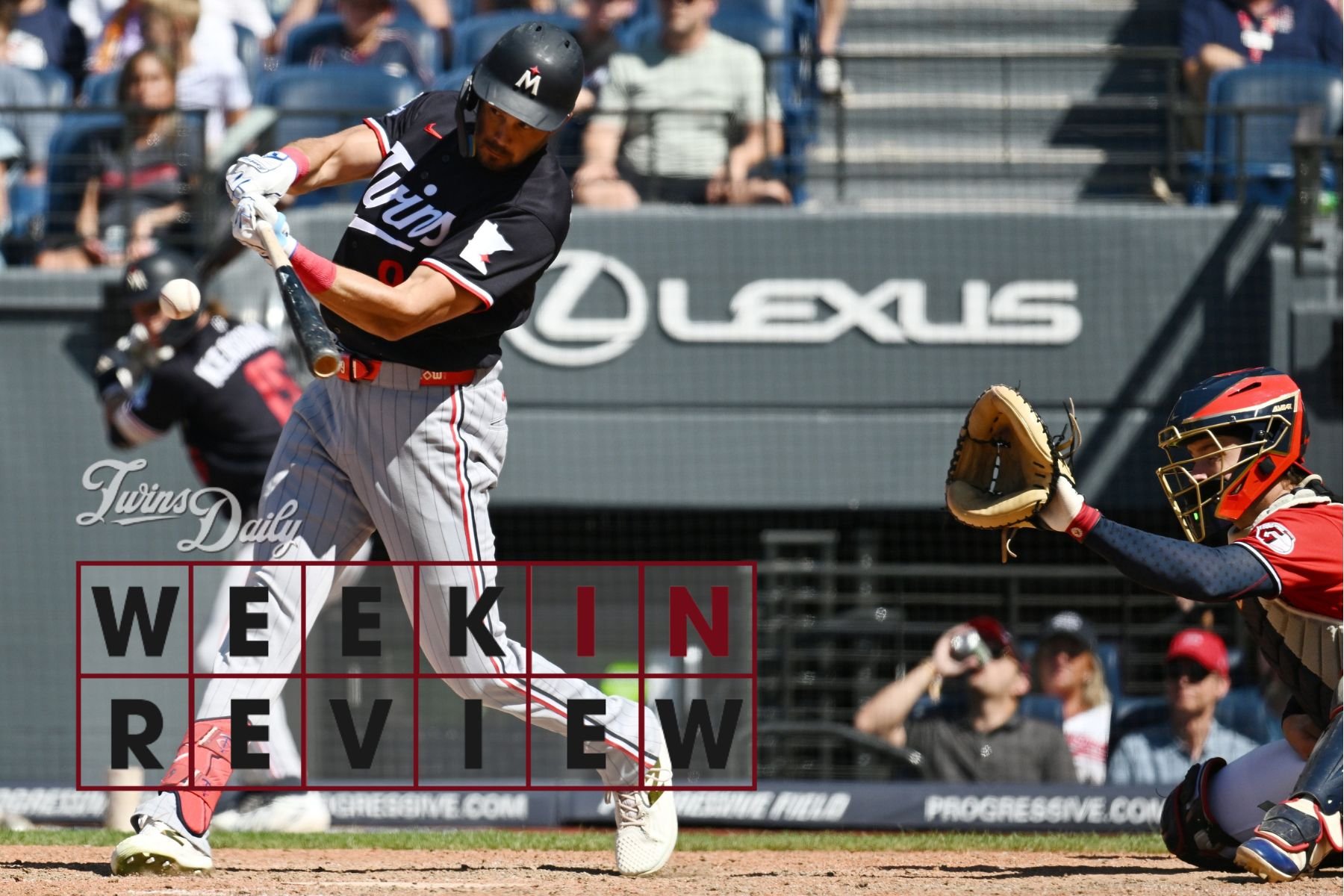 The Weekly Nutshell: Resilience was the defining characteristic of this Twins team in the early part of the season, and it's a trait that's sticking with them as the second half unfolds. They looked to be on the ropes in Cleveland after dropping the first two games, but rallied to take the next two, including a marathon 12-inning victory in the finale. Friday's opener against the Athletics was a gut punch — a shutout loss against a bad team with a bad pitching staff — but the Twins rebounded to take the series and move back within a game of .500. The rest of the American League shows signs of awakening for the stretch run, including a Boston team that has streaked into the Wild Card picture and a Detroit team that is slowly closing the gap in the Central. But the Twins are doing enough to hang around and make a strong case for adding at the deadline as they remain within striking distance of a postseason spot (one game out) and even the division (three and a half out). Weekly Snapshot: Mon, 7/20 through Sun, 7/26 *** Record Last Week: 4-3 (Overall: 53-54) Run Differential Last Week: -6 (Overall: -30) Standing: 3rd Place in AL Central (3.5 GB) Latest Game Results Game 101 | CLE 13, MIN 4: Ryan Clobbered for Six Home Runs in Crushing Defeat Ryan: 4 IP, 8 ER, 10 H, 0 BB, 3 K, 6 HR Game 102 | CLE 5, MIN 2: Lineup Goes Silent vs. Lefty Starter, Contention Hopes Fade Offense: 9 K, 1 BB, 0-5 RISP Game 103 | MIN 10, CLE 6: Bats Break Out to Snap Losing Streak at Four Games Lee: 2-5, HR, 4 RBI Game 104 | MIN 3, CLE 1 (12): Twins Outlast Guardians in Duel, Salvage Series Split Bradley: 7 IP, 1 ER, 2 H, 3 BB, 5 K Game 105 | ATH 2, MIN 0: Offense Manages Only Two Hits in Ugly Shutout Loss Caratini: 0-4, 3 K Game 106 | MIN 2, ATH 0: Rojas Steps Up in Emergency Start to Spearhead Victory Rojas: 4 IP, 0 ER, 1 H, 1 BB, 5 K Game 107 | MIN 11, ATH 8: Big Early Lead Holds Up in a Sloppy Sunday Matinee Jeffers: 3-5, 3 RBI NEWS & NOTES He wasn't quite ready to go coming out of the All-Star break, but it didn't take too much longer for Byron Buxton, who was activated on Monday ahead of a key series in Cleveland. Somewhat surprisingly, infielder Tristan Gray was the man optioned to make room, meaning that Alan Roden stays on the roster for now while the Twins continue to carry three catchers. They've had to get creative in trying to find playing time for all three backstops — on Sunday, Alex Jackson made his first professional start at first base. On Tuesday, recent waiver pickup Jack Anderson was called up to join the Twins bullpen, swapping places with another recent acquisition in Woo-Suk Go who was sent to Triple-A. Anderson was excellent across three appearances, allowing zero runs in 3 ⅓ innings, but nonetheless returned to the minors on Sunday to make room for the activation of Cole Sands, who had rough re-entry after being down for three months (0.1 IP, 5 ER). Meanwhile, Mike Paredes went on the injured list with an oblique strain, with Connor Prielipp activated to start the finale against the Athletics. Sidelined for a couple weeks by a blister on his finger, Prielipp looked great in his return, allowing one run on two hits in 5 ⅔ innings. One other note on Go: prior to making in his first appearance at Triple-A on Friday, he was ejected when a foreign substance was discovered on his glove. As a result, he received a 10-game suspension, which he began serving on Saturday. You don't see that too often. We'll see how long he is for the 40-man roster following an unimpressive stint with the big-league club. HIGHLIGHTS Taj Bradley bounced back from a rocky outing at Wrigley with another gem on Thursday, helping the Twins earn a series split against Cleveland via seven frames of one-run ball. Bradley kept pace with a dominant Gavin Williams and paved way for an extra-innings win. It was the third time in his past four starts that Bradley has pitched seven innings while allowing two runs or fewer, and the Twins are 13-7 when he takes the mound this year, winning seven of the last eight. On Saturday, Paredes was the scheduled starter but a last-minute scratch after an oblique injury popped up pregame. This forced Kendry Rojas into action as an emergency starter and the left-hander stepped up in a big way, tossing four shutout innings with just one hit and one walk allowed. When he's in the zone, he's effective, and that was the case in this one. Rojas gave way to a bullpen that shut down the A's over the final five innings, allowing only two hits. The relief corps also came through brilliantly behind Bradley in Thursday's finale against Cleveland: Andrew Morris, Yoendrys Gómez, Tommy Nance, Taylor Rogers and Anderson combined in that one for five innings of scoreless, one-hit ball, with each of the latter three stranding an auto-runner in extra innings. Anderson closed out the 12th and became the 12th Twins pitcher to record a save this year. The bullpen has certainly had its share of ups and downs, and that was the case last week, but they have delivered some absolutely critical performances. Here in July the relievers have played a big role in keeping Minnesota's season alive, entering play on Sunday with a 2.64 ERA and the second-highest WPA in the American League this month. At the plate, Trevor Larnach put together another stellar stretch, collecting seven hits and five RBIs in 17 at-bats. He contributed the go-ahead hit on Thursday, lacing an RBI single in the top of the 12th in a tough matchup against a left-handed reliever. The outfielder shows no signs of slowing down, with a .974 OPS here in July after posting a .918 mark in June. He's batting .404 with a 1.061 OPS with runners in scoring position. An intriguing deadline figure, to be sure. Roden also provided more clutch moments. His game-tying RBI single off Cade Smith in the eighth inning of Thursday's game made possible the eventual win in extras. He drove in the only two runs in Saturday's 2-0 victory on one swing in the sixth inning. Roden hasn't been terribly productive overall, batting .219 with no extra-base hits through 13 games, but he's made an outsized impact in leverage and the underlying numbers are pretty good. I'm definitely interested to see more; he just needs steady playing time, which is a little hard to come by with Larnach and Luke Keaschall manning the outfield corners while Austin Martin also vies for opportunities. This logjam is part of what makes Larnach in intriguing deadline figure. LOWLIGHTS Fresh off appearing in the All-Star Game, Joe Ryan opened up the biggest series of the Twins season with one of the worst performances in franchise history. Ryan was pounded for six home runs in four innings, surrendering 10 hits and eight earned runs against one of the least powerful lineups in baseball. Just an astonishing clunker at the most inopportune of moments. Days later, Ryan had his planned second start of the week pushed back due to arm fatigue, which might help explain the brutal results on Monday. The Twins offense has been a signature strength this season, but has tailed off since the All-Star break. The lineup was quiet last week outside of double-digit efforts on Wednesday and Sunday, and has scored two or fewer in five of 10 contests since the break. Their susceptibility to left-handed starters remains a glaring issue as the Twins were stifled by Parker Messick in a 5-2 loss on Tuesday, and then by Jacob Lopez (who entered the game with a 6.64 ERA) in Friday's 2-0 loss. Byron Buxton has been slow to get going since his return from the IL, with four singles in 23 at-bats. He hasn't homered since June 22nd. Josh Bell has cooled off considerably after surging into the break — he went 4-for-24 and on Thursday had one of the worst games at the plate you will see (0-for-5 with four strikeouts and a GIDP). Ryan Kreidler was 1-for-18 on the week and had a .322 OPS in July before breaking out with two doubles and a triple on Sunday. Perhaps the most concerning offensive laggard is Victor Caratini. The pendulum has swung again for the streaky hitter, with a scorching month of June giving way to an ice-cold July. He's slashing .229/.260/.292 this month and the past week saw him go 3-for-17 with six strikeouts and no walks. With buzz building around Ryan Jeffers as a trade candidate, Caratini could be positioned as primary catcher for the rest of this year and into the next. The Twins need him to lock in and help get the offense back into a more consistent place. TRENDING STORYLINE With his 22nd start of the season pushed back to this Wednesday against Kansas City, Ryan will likely take the mound just once more ahead of the trade deadline. It's an outing that looms large. Every game feels weighty on its own for the team, given the stakes at this stage of the season, and the right-hander himself has much to prove coming off an alarmingly bad start in Cleveland. He's got a history of drop-offs in the second half, and that performance coming out of the break is certainly not going to help him shake the rep. From my view, the decision to trade or not trade Ryan is THE biggest story of this deadline, with major implications on the team's course going forward. Rumors of a rejected offer from the Red Sox last year that supposedly included Payton Tolle and Franklin Arias underscore the kind of system-transforming haul that Minnesota's #1 starter could potentially command if the front office chooses to lean further into the rebuild and capitalize on a sell-high situation. Will they choose that path? And will potential suitors feel confident enough in Ryan's outlook the rest of the way to pay a price justifying such a move? The coming week could prove fairly decisive on both fronts. LOOKING AHEAD Following a day off on Monday, the Twins will pick up their homestand with another bottom-tier team rolling into town. The Royals are in last place at 45-62, and are currently lacking their best player with Bobby Witt Jr. on the injured list. A series win would put Minnesota at the .500 mark entering a crucial showdown in Seattle against a Mariners team that is neck-and-neck in the Wild Card race. The Twins will have their hands full in that one with match-ups against three of the AL's best starting pitchers on the docket. TUESDAY, JULY 28: ROYALS @ TWINS — RHP Seth Lugo v. RHP Taj Bradley WEDNESDAY, JULY 29: ROYALS @ TWINS — RHP Randy Dobnak v. RHP Joe Ryan THURSDAY, JULY 30: ROYALS @ TWINS — LHP Noah Cameron v. RHP Bailey Ober FRIDAY, JULY 31: TWINS @ MARINERS — RHP Zebby Matthews v. RHP Bryan Woo SATURDAY, AUGUST 1: TWINS @ MARINERS — LHP Connor Prielipp v. RHP Logan Gilbert SUNDAY, AUGUST 2: TWINS @ MARINERS — RHP Taj Bradley v. RHP George Kirby
 -
Image courtesy of Ken Blaze-Imagn Images The Weekly Nutshell: Resilience was the defining characteristic of this Twins team in the early part of the season, and it's a trait that's sticking with them as the second half unfolds. They looked to be on the ropes in Cleveland after dropping the first two games, but rallied to take the next two, including a marathon 12-inning victory in the finale. Friday's opener against the Athletics was a gut punch — a shutout loss against a bad team with a bad pitching staff — but the Twins rebounded to take the series and move back within a game of .500. The rest of the American League shows signs of awakening for the stretch run, including a Boston team that has streaked into the Wild Card picture and a Detroit team that is slowly closing the gap in the Central. But the Twins are doing enough to hang around and make a strong case for adding at the deadline as they remain within striking distance of a postseason spot (one game out) and even the division (three and a half out). Weekly Snapshot: Mon, 7/20 through Sun, 7/26 *** Record Last Week: 4-3 (Overall: 53-54) Run Differential Last Week: -6 (Overall: -30) Standing: 3rd Place in AL Central (3.5 GB) Latest Game Results Game 101 | CLE 13, MIN 4: Ryan Clobbered for Six Home Runs in Crushing Defeat Ryan: 4 IP, 8 ER, 10 H, 0 BB, 3 K, 6 HR Game 102 | CLE 5, MIN 2: Lineup Goes Silent vs. Lefty Starter, Contention Hopes Fade Offense: 9 K, 1 BB, 0-5 RISP Game 103 | MIN 10, CLE 6: Bats Break Out to Snap Losing Streak at Four Games Lee: 2-5, HR, 4 RBI Game 104 | MIN 3, CLE 1 (12): Twins Outlast Guardians in Duel, Salvage Series Split Bradley: 7 IP, 1 ER, 2 H, 3 BB, 5 K Game 105 | ATH 2, MIN 0: Offense Manages Only Two Hits in Ugly Shutout Loss Caratini: 0-4, 3 K Game 106 | MIN 2, ATH 0: Rojas Steps Up in Emergency Start to Spearhead Victory Rojas: 4 IP, 0 ER, 1 H, 1 BB, 5 K Game 107 | MIN 11, ATH 8: Big Early Lead Holds Up in a Sloppy Sunday Matinee Jeffers: 3-5, 3 RBI NEWS & NOTES He wasn't quite ready to go coming out of the All-Star break, but it didn't take too much longer for Byron Buxton, who was activated on Monday ahead of a key series in Cleveland. Somewhat surprisingly, infielder Tristan Gray was the man optioned to make room, meaning that Alan Roden stays on the roster for now while the Twins continue to carry three catchers. They've had to get creative in trying to find playing time for all three backstops — on Sunday, Alex Jackson made his first professional start at first base. On Tuesday, recent waiver pickup Jack Anderson was called up to join the Twins bullpen, swapping places with another recent acquisition in Woo-Suk Go who was sent to Triple-A. Anderson was excellent across three appearances, allowing zero runs in 3 ⅓ innings, but nonetheless returned to the minors on Sunday to make room for the activation of Cole Sands, who had rough re-entry after being down for three months (0.1 IP, 5 ER). Meanwhile, Mike Paredes went on the injured list with an oblique strain, with Connor Prielipp activated to start the finale against the Athletics. Sidelined for a couple weeks by a blister on his finger, Prielipp looked great in his return, allowing one run on two hits in 5 ⅔ innings. One other note on Go: prior to making in his first appearance at Triple-A on Friday, he was ejected when a foreign substance was discovered on his glove. As a result, he received a 10-game suspension, which he began serving on Saturday. You don't see that too often. We'll see how long he is for the 40-man roster following an unimpressive stint with the big-league club. HIGHLIGHTS Taj Bradley bounced back from a rocky outing at Wrigley with another gem on Thursday, helping the Twins earn a series split against Cleveland via seven frames of one-run ball. Bradley kept pace with a dominant Gavin Williams and paved way for an extra-innings win. It was the third time in his past four starts that Bradley has pitched seven innings while allowing two runs or fewer, and the Twins are 13-7 when he takes the mound this year, winning seven of the last eight. On Saturday, Paredes was the scheduled starter but a last-minute scratch after an oblique injury popped up pregame. This forced Kendry Rojas into action as an emergency starter and the left-hander stepped up in a big way, tossing four shutout innings with just one hit and one walk allowed. When he's in the zone, he's effective, and that was the case in this one. Rojas gave way to a bullpen that shut down the A's over the final five innings, allowing only two hits. The relief corps also came through brilliantly behind Bradley in Thursday's finale against Cleveland: Andrew Morris, Yoendrys Gómez, Tommy Nance, Taylor Rogers and Anderson combined in that one for five innings of scoreless, one-hit ball, with each of the latter three stranding an auto-runner in extra innings. Anderson closed out the 12th and became the 12th Twins pitcher to record a save this year. The bullpen has certainly had its share of ups and downs, and that was the case last week, but they have delivered some absolutely critical performances. Here in July the relievers have played a big role in keeping Minnesota's season alive, entering play on Sunday with a 2.64 ERA and the second-highest WPA in the American League this month. At the plate, Trevor Larnach put together another stellar stretch, collecting seven hits and five RBIs in 17 at-bats. He contributed the go-ahead hit on Thursday, lacing an RBI single in the top of the 12th in a tough matchup against a left-handed reliever. The outfielder shows no signs of slowing down, with a .974 OPS here in July after posting a .918 mark in June. He's batting .404 with a 1.061 OPS with runners in scoring position. An intriguing deadline figure, to be sure. Roden also provided more clutch moments. His game-tying RBI single off Cade Smith in the eighth inning of Thursday's game made possible the eventual win in extras. He drove in the only two runs in Saturday's 2-0 victory on one swing in the sixth inning. Roden hasn't been terribly productive overall, batting .219 with no extra-base hits through 13 games, but he's made an outsized impact in leverage and the underlying numbers are pretty good. I'm definitely interested to see more; he just needs steady playing time, which is a little hard to come by with Larnach and Luke Keaschall manning the outfield corners while Austin Martin also vies for opportunities. This logjam is part of what makes Larnach in intriguing deadline figure. LOWLIGHTS Fresh off appearing in the All-Star Game, Joe Ryan opened up the biggest series of the Twins season with one of the worst performances in franchise history. Ryan was pounded for six home runs in four innings, surrendering 10 hits and eight earned runs against one of the least powerful lineups in baseball. Just an astonishing clunker at the most inopportune of moments. Days later, Ryan had his planned second start of the week pushed back due to arm fatigue, which might help explain the brutal results on Monday. The Twins offense has been a signature strength this season, but has tailed off since the All-Star break. The lineup was quiet last week outside of double-digit efforts on Wednesday and Sunday, and has scored two or fewer in five of 10 contests since the break. Their susceptibility to left-handed starters remains a glaring issue as the Twins were stifled by Parker Messick in a 5-2 loss on Tuesday, and then by Jacob Lopez (who entered the game with a 6.64 ERA) in Friday's 2-0 loss. Byron Buxton has been slow to get going since his return from the IL, with four singles in 23 at-bats. He hasn't homered since June 22nd. Josh Bell has cooled off considerably after surging into the break — he went 4-for-24 and on Thursday had one of the worst games at the plate you will see (0-for-5 with four strikeouts and a GIDP). Ryan Kreidler was 1-for-18 on the week and had a .322 OPS in July before breaking out with two doubles and a triple on Sunday. Perhaps the most concerning offensive laggard is Victor Caratini. The pendulum has swung again for the streaky hitter, with a scorching month of June giving way to an ice-cold July. He's slashing .229/.260/.292 this month and the past week saw him go 3-for-17 with six strikeouts and no walks. With buzz building around Ryan Jeffers as a trade candidate, Caratini could be positioned as primary catcher for the rest of this year and into the next. The Twins need him to lock in and help get the offense back into a more consistent place. TRENDING STORYLINE With his 22nd start of the season pushed back to this Wednesday against Kansas City, Ryan will likely take the mound just once more ahead of the trade deadline. It's an outing that looms large. Every game feels weighty on its own for the team, given the stakes at this stage of the season, and the right-hander himself has much to prove coming off an alarmingly bad start in Cleveland. He's got a history of drop-offs in the second half, and that performance coming out of the break is certainly not going to help him shake the rep. From my view, the decision to trade or not trade Ryan is THE biggest story of this deadline, with major implications on the team's course going forward. Rumors of a rejected offer from the Red Sox last year that supposedly included Payton Tolle and Franklin Arias underscore the kind of system-transforming haul that Minnesota's #1 starter could potentially command if the front office chooses to lean further into the rebuild and capitalize on a sell-high situation. Will they choose that path? And will potential suitors feel confident enough in Ryan's outlook the rest of the way to pay a price justifying such a move? The coming week could prove fairly decisive on both fronts. LOOKING AHEAD Following a day off on Monday, the Twins will pick up their homestand with another bottom-tier team rolling into town. The Royals are in last place at 45-62, and are currently lacking their best player with Bobby Witt Jr. on the injured list. A series win would put Minnesota at the .500 mark entering a crucial showdown in Seattle against a Mariners team that is neck-and-neck in the Wild Card race. The Twins will have their hands full in that one with match-ups against three of the AL's best starting pitchers on the docket. TUESDAY, JULY 28: ROYALS @ TWINS — RHP Seth Lugo v. RHP Taj Bradley WEDNESDAY, JULY 29: ROYALS @ TWINS — RHP Randy Dobnak v. RHP Joe Ryan THURSDAY, JULY 30: ROYALS @ TWINS — LHP Noah Cameron v. RHP Bailey Ober FRIDAY, JULY 31: TWINS @ MARINERS — RHP Zebby Matthews v. RHP Bryan Woo SATURDAY, AUGUST 1: TWINS @ MARINERS — LHP Connor Prielipp v. RHP Logan Gilbert SUNDAY, AUGUST 2: TWINS @ MARINERS — RHP Taj Bradley v. RHP George Kirby View full article
-
Image courtesy of Matt Krohn-Imagn Images Great offensive production from catchers tends to fly under the radar, because it doesn't always look comparatively amazing compared to other positions. That's a big reason Joe Mauer tended to be underrated. But even back in his days, a great-hitting catcher was not the rarity it is today. As the baseline for a "great-hitting catcher," let's use these simple single-season thresholds: 300 or more plate appearances, and a wOBA of .400 or better. In 2000, the year before Mauer was drafted, four different catchers reached that standard, including a pair of future Hall of Famers (Ivan Rodriguez, Mike Piazza, Charles Johnson, Jorge Posada). Since then, there's never been a year where multiple catchers made 300+ PAs with a .400+ wOBA. Six players total did so between 2003 and 2012, including Mauer's MVP season in 2009, but since 2013 it's only happened twice: one was Yasmani Grandal posting a .402 wOBA for the White Sox in 2021 (375 PA), and the other was Mitch Garver posting a .404 wOBA for the Bomba Squad in 2019 (359 PA). In other words: truly elite offensive production at the catcher position, in a large sample, has become one of the rarest things in baseball. Which brings us to Ryan Jeffers. Among MLB catchers with 150 or more plate appearances this year, only one has a wOBA of .400 or higher. It's Jeffers, at .409 in 162 PA (entering Sunday). The next-best mark belongs to Arizona catcher Gabriel Moreno (.369). Jeffers' .950 OPS is 270 points higher than the MLB average at the position, .680, which is lower than any other. Jeffers has batted second in all five of his starts since coming off the injured list, including at DH on Saturday in Chicago. He certainly fits that bill, and showed it on Friday with a crucial three-run homer that helped lift Minnesota's record back to .500 ever so briefly. It shouldn't be taken for granted how unusual it is for a team to be able to bat their catcher second or use them as a credible DH. League-wide, most clubs are burying their backstops at the bottom of the order and hoping they don't inflict too much rally-killing damage. Meanwhile, the Twins are leaning on Jeffers as a cornerstone of their lineup. That's what makes him such an intriguing piece at the trade deadline. Few players can provide a greater relative advantage to an offense as Jeffers, who is lapping the field in terms of production at his position. It comes as no surprise that a team like the Yankees, ranked dead last with a .234 wOBA from their catchers, have taken such a keen interest in Jeffers as a deadline target. Even if the Twins consider themselves buyers, there is a logical case for shopping the free agency-bound Jeffers. You fall back on Victor Caratini (another above-average, yet far from elite, catcher) and await the arrival of another potential high-end offensive catcher in Vahn Lackey, selected with the third overall draft pick earlier this month. If and when Lackey makes it to the majors, he'll be joining quite the lineage of bat-centric backstops. Whether Jeffers ultimately finishes the season in Minnesota or elsewhere, his 2026 campaign deserves to be appreciated for what it is: one of the most valuable offensive performances at the sport's most demanding position. Catcher has become an increasingly defense-first job, where teams are often content to sacrifice offense in exchange for framing, game-calling and durability. Players who excel on both sides of the equation are exceedingly uncommon. As Twins fans, we've been spoiled. Mauer earned first-ballot entry to the Hall of Fame with some of the best hitting from a catcher in history. Garver put up one the greatest offensive seasons ever produced by a Twins catcher. Now Jeffers is authoring another. That's three remarkably rare campaigns in less than two decades from one organization. If Lackey eventually becomes the next in line, Twins fans may continue to view elite offensive catching as normal. The rest of baseball knows better. View full article
-
Ryan Jeffers and the Twins' Unlikely Legacy of Elite-Hitting Catchers
Nick Nelson posted an article in Twins
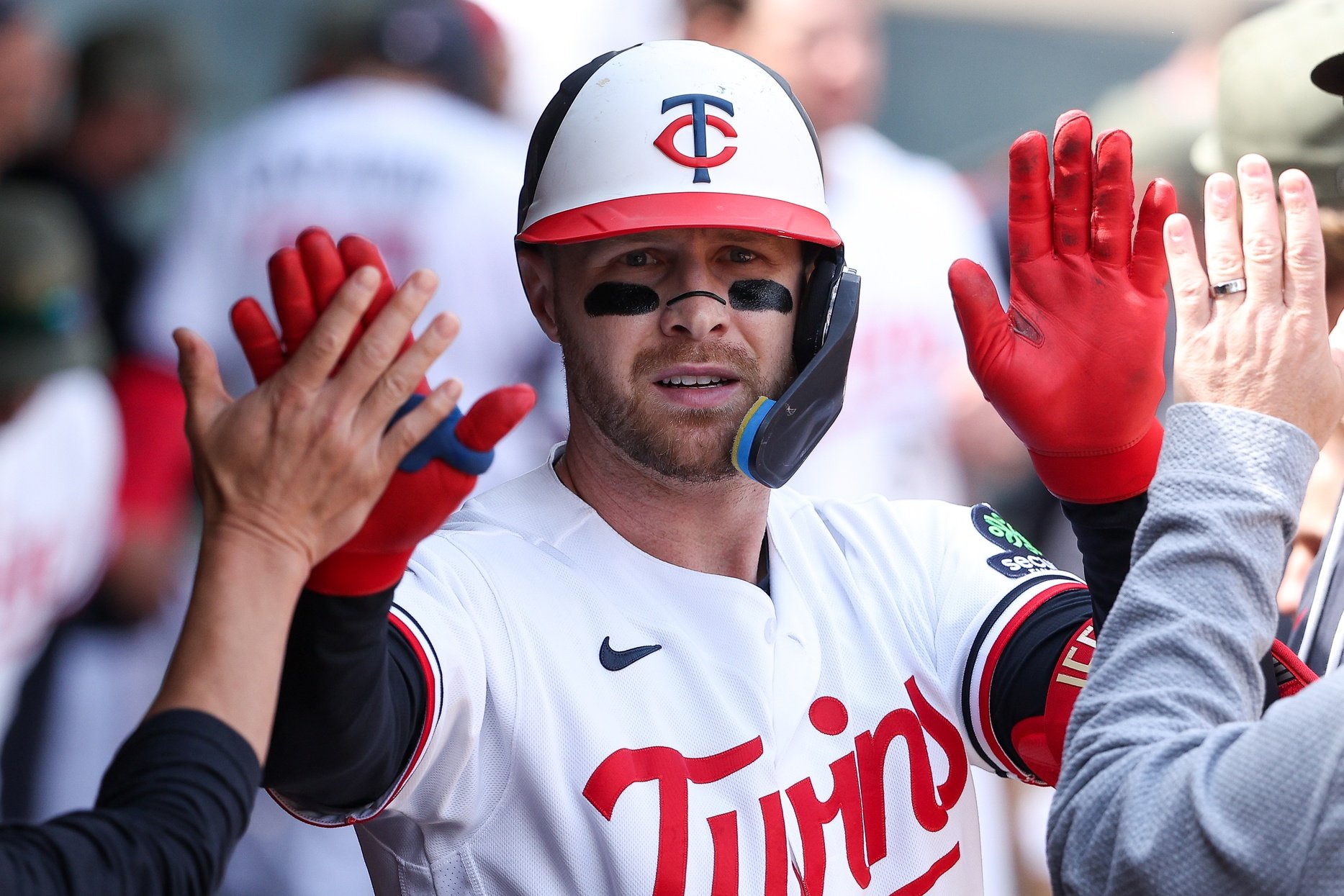 Great offensive production from catchers tends to fly under the radar, because it doesn't always look comparatively amazing compared to other positions. That's a big reason Joe Mauer tended to be underrated. But even back in his days, a great-hitting catcher was not the rarity it is today. As the baseline for a "great-hitting catcher," let's use these simple single-season thresholds: 300 or more plate appearances, and a wOBA of .400 or better. In 2000, the year before Mauer was drafted, four different catchers reached that standard, including a pair of future Hall of Famers (Ivan Rodriguez, Mike Piazza, Charles Johnson, Jorge Posada). Since then, there's never been a year where multiple catchers made 300+ PAs with a .400+ wOBA. Six players total did so between 2003 and 2012, including Mauer's MVP season in 2009, but since 2013 it's only happened twice: one was Yasmani Grandal posting a .402 wOBA for the White Sox in 2021 (375 PA), and the other was Mitch Garver posting a .404 wOBA for the Bomba Squad in 2019 (359 PA). In other words: truly elite offensive production at the catcher position, in a large sample, has become one of the rarest things in baseball. Which brings us to Ryan Jeffers. Among MLB catchers with 150 or more plate appearances this year, only one has a wOBA of .400 or higher. It's Jeffers, at .409 in 162 PA (entering Sunday). The next-best mark belongs to Arizona catcher Gabriel Moreno (.369). Jeffers' .950 OPS is 270 points higher than the MLB average at the position, .680, which is lower than any other. Jeffers has batted second in all five of his starts since coming off the injured list, including at DH on Saturday in Chicago. He certainly fits that bill, and showed it on Friday with a crucial three-run homer that helped lift Minnesota's record back to .500 ever so briefly. It shouldn't be taken for granted how unusual it is for a team to be able to bat their catcher second or use them as a credible DH. League-wide, most clubs are burying their backstops at the bottom of the order and hoping they don't inflict too much rally-killing damage. Meanwhile, the Twins are leaning on Jeffers as a cornerstone of their lineup. That's what makes him such an intriguing piece at the trade deadline. Few players can provide a greater relative advantage to an offense as Jeffers, who is lapping the field in terms of production at his position. It comes as no surprise that a team like the Yankees, ranked dead last with a .234 wOBA from their catchers, have taken such a keen interest in Jeffers as a deadline target. Even if the Twins consider themselves buyers, there is a logical case for shopping the free agency-bound Jeffers. You fall back on Victor Caratini (another above-average, yet far from elite, catcher) and await the arrival of another potential high-end offensive catcher in Vahn Lackey, selected with the third overall draft pick earlier this month. If and when Lackey makes it to the majors, he'll be joining quite the lineage of bat-centric backstops. Whether Jeffers ultimately finishes the season in Minnesota or elsewhere, his 2026 campaign deserves to be appreciated for what it is: one of the most valuable offensive performances at the sport's most demanding position. Catcher has become an increasingly defense-first job, where teams are often content to sacrifice offense in exchange for framing, game-calling and durability. Players who excel on both sides of the equation are exceedingly uncommon. As Twins fans, we've been spoiled. Mauer earned first-ballot entry to the Hall of Fame with some of the best hitting from a catcher in history. Garver put up one the greatest offensive seasons ever produced by a Twins catcher. Now Jeffers is authoring another. That's three remarkably rare campaigns in less than two decades from one organization. If Lackey eventually becomes the next in line, Twins fans may continue to view elite offensive catching as normal. The rest of baseball knows better.
- 13 comments
-
- 7
-

-
-
- ryan jeffers
- mitch garver
- (and 2 more)
-
Week in Review: Break's Over, Crunch Time Begins
Nick Nelson replied to Nick Nelson's topic in Twins Daily Front Page News
I didn't mean to imply it was anything more than a mental mistake. But just trying to say, more broadly, that it's the kind of thing that can happen when you've got a team full of slow, bad baserunners.- 29 replies
-
- 2
-
-
- ryan jeffers
- luke keaschall
- (and 2 more)
-
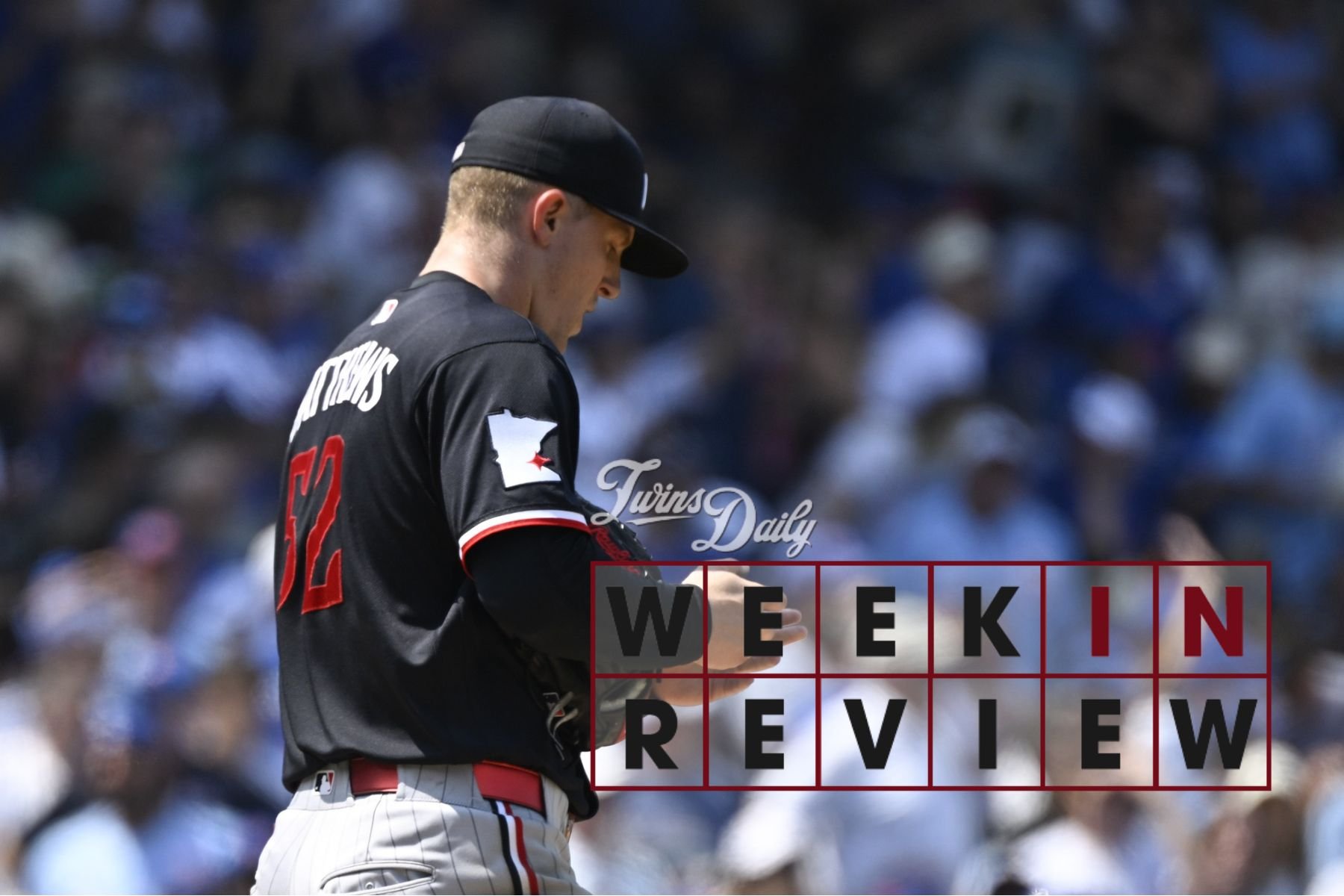 The Weekly Nutshell: Last year, the Minnesota Twins came out of the All-Star break with a thud. Chris Paddack coughed up four first-inning runs en route to a 6-4 loss against a Rockies team that was 40 games below .500 — the beginning of the end. This year's second half opened on a very different note, with the Twins taking down a Cubs team that was 10 games above .500 in a crisply played 5-2 victory. Minnesota's 48th win finally got them back to the .500 mark, a milestone they've been chasing since April. They didn't stay there for long. The Twins dropped the second and third games at Wrigley, including an ugly blowout loss on Sunday, closing out the week with a 49-51 record through 100 games. Still, taking one of three against a quality Cubs team is hardly a disastrous outcome, and the Twins now head to Cleveland for a key four-game set against a Guardians team just three games ahead of them in the AL Central standings. With the trade deadline only two weeks away, every game looms large. Weekly Snapshot: Mon, 7/13 through Sun, 7/19 *** Record Last Week: 1-2 (Overall: 49-51) Run Differential Last Week: -10 (Overall: -24) Standing: 3rd Place in AL Central (4.0 GB) Latest Game Results Game 98 | Twins 5, Cubs 2: Ober Gets It Done Again, Jeffers Delivers Big Homer Jeffers: 1-4, HR, 3 RBI Game 99 | Cubs 6, Twins 2: Clemens Supplies Sole Offense as Bradley Struggles Bradley: 5 IP, 5 ER, 7 H, 3 BB, 7 K Game 100 | Cubs 10, Twins 1: Matthews Crushed by Cubs in Rubber Match Blowout Matthews: 3 IP, 10 R (8 ER), 9 H, 3 BB, 4 K NEWS & NOTES Cole Sands looks to be nearing a return from an injured list stint that has cost him nearly half the season. After having his rehab moved to the FCL during the All-Star break, he reported back to Triple-A over the weekend, throwing two scoreless innings for the Saints on Friday. Sands struck out three with one walk and one hit allowed, throwing 35 pitches as he ramps back up toward readiness. As long as he's feeling good, I'd expect Sands to be activated within the next week. Garrett Acton is fairly deep into his own rehab and on track to be activated soon, although it's not as clear he'll be added right back onto the big-league roster. Marco Raya also started a rehab assignment, less than 10 days after going on the IL with a shoulder impingement, suggesting the injury is (hopefully) not too serious. Connor Prielipp, who went on the IL shortly before the break due to a blister, pitched three scoreless innings for the Saints on Sunday. I'd expect his next appearance to come with the Twins. HIGHLIGHTS Before he went down with a fractured hamate in mid-May, Ryan Jeffers had a reasonable case for being the Twins MVP, which is saying a lot for a team that also boasts an All-Star center fielder and #1 starter. In just a handful of games since being activated, he has wasted no time reminding us all of just how impactful he can be. Jeffers notched a key two-run double in the final game before the All-Star break and then launched a three-run homer in the first game coming out. His third-inning shot off Colin Rea on Friday proved to be the difference in a three-run victory. Jeffers owns a .409 wOBA on the season, putting him in the realm of the greatest offensive seasons we've ever seen from Twins catchers. Mitch Garver had a .404 wOBA in 2019, and Joe Mauer had a .438 wOBA in his MVP 2009 season. We've been blessed to watch some truly marvelous hitting performances from catchers in Twins uniforms, and hopefully there's more of that to come with Vahn Lackey entering the pipeline. (The top draft pick has already reportedly agreed to terms.) One of the most positive developments of this season is how well Luke Keaschall has taken to the outfield. He was struggling mightily in the field at second base and seemed to be taking it to the plate with him, posting a meager .663 OPS at the position. Since shifting to the grass, he's looked much more natural defensively and his bat has come to life. Keaschall is hitting .347 as an outfielder and his prowess was on full display on Friday, when he picked up two hits and a walk while making multiple spectacular plays in center field. (He also made a very non-spectacular play in center on Sunday, reminding us that he still needs some refinement out there despite the flashes of ability.) Bailey Ober delivered a strong start to open the second half, holding Chicago to two runs over 5 ⅓ innings, and the bullpen shut things down from there with Tommy Nance, Taylor Rogers, Andrew Morris and Yoendrys Gómez teaming up to get the last 11 outs with zero runs and one hit allowed. Gómez picked up his 12th save in as many tries while Morris lowered his ERA to 3.26 with a 16th consecutive scoreless appearance. Twins relievers continued to put in good work the rest of the weekend, with Mike Paredes, Kendry Rojas, Travis Adams, Kody Funderburk and Woo-Suk Go holding the Cubs to one run in eight frames between Saturday and Sunday. The Twins bullpen has a collective 2.25 ERA here in July, ranking among the league's best after posting an MLB-worst 6.94 mark in June. And they're on the verge of getting back Sands, which could be big if he can get back to anything resembling his 2024 form. LOWLIGHTS Not such good work from the Minnesota rotation over the remainder of the weekend. Twins starters didn't give the team much of a chance to win this series after Ober's solid effort in game one. Taj Bradley hit a bump in the road on Saturday, allowing five earned runs allowed over five innings to halt his hot streak, and Zebby Matthews totally unraveled on Sunday, surrendering 10 runs (eight earned) in three innings of work. It's been a rough month of July for Matthews, who's been tagged for 16 earned runs in 13 ⅔ innings with nine walks and 12 strikeouts. Very disappointing to see after the righty seemed to be settling into a groove in June. Despite digging an early hole on Saturday, the Twins had a chance to mount a threat late. They had a rally brewing in the ninth inning before a volley of baserunning blunders blotted out their hopes for a thrilling comeback. Down 5-1, the offense produced three consecutive hits to open the final frame and then ... this happened: It was a glaring display of a blatant shortcoming on this roster: speed. The three players on base during this debacle — Josh Bell, Victor Caratini and Brooks Lee — are all extremely slow, and it showed here. For a team hoping to scrap its way into unlikely contention, these types of executional meltdowns can not really be afforded. In general, the plodding Twins are getting dusted on the bases, with opponents going 13-for-15 on steals over the past month while Minnesota's gone 8-for-16. TRENDING STORYLINE Byron Buxton was not ready to return to the roster coming out of the break, despite being eligible 10 days after landing on the injured list. That makes it official that this flare-up of his hip injury is more serious than those that sidelined him for a few days in the past. With that said, it doesn't look like Buxton is too far off from re-entering the fold. Dan Hayes of The Athletic snapped footage of the sidelined center fielder performing various on-field baseball activities ahead of Friday's game, and Bobby Nightengale of the Star Tribune indicates that Buxton is likely to rejoin the active roster in Cleveland. The Twins face important decisions with Buxton moving forward. He's their best player and their leader, pivotal to their chances of mounting a charge in the second half. But this hip thing does not seem to be going away. The team needs to be very careful in handling him and maximizing his chances of staying on the field. Maybe that contributed to the decision to keep him out of action in Chicago. When he does come back, as soon as Monday, it would probably behoove the team to incorporate some preventative measures. Fewer steal attempts is a given. Maybe more action at DH? That's easier said than done with Bell occupying the position full-time. Buxton's absence from the lineup has been noticeable for a Twins team that his totaled just six home runs in nine games since he last played. They need him to get back in the lineup and stay there. LOOKING AHEAD Big, big series in Cleveland on tap. The Twins will open with their ace, Joe Ryan, who is fresh off throwing a scoreless inning in the All-Star Game. They'll also throw Ober and Bradley in the series; it's anyone's guess who will get the nod on Tuesday, which could end up being a bullpen game. Prielipp should presumably be back to start in the second open spot on Sunday. MONDAY, JULY 20: TWINS @ GUARDIANS — RHP Joe Ryan v. RHP Tanner Bibee TUESDAY, JULY 21: TWINS @ GUARDIANS — TBD v. LHP Parker Messick WEDNESDAY, JULY 22: TWINS @ GUARDIANS — RHP Bailey Ober v. RHP Slade Cecconi THURSDAY, JULY 23: TWINS @ GUARDIANS — RHP Taj Bradley v. RHP Gavin Williams FRIDAY, JULY 24: ATHLETICS @ TWINS — RHP J.T. Ginn v. RHP Zebby Matthews SATURDAY, JULY 25: ATHLETICS @ TWINS — LHP Jacob Lopez v. RHP Joe Ryan SUNDAY, JULY 26: ATHLETICS @ TWINS — LHP Jeffrey Springs v. TBD
- 29 comments
-
- 5
-
-
-
- ryan jeffers
- luke keaschall
- (and 2 more)
-
Image courtesy of Matt Marton-Imagn Images The Weekly Nutshell: Last year, the Minnesota Twins came out of the All-Star break with a thud. Chris Paddack coughed up four first-inning runs en route to a 6-4 loss against a Rockies team that was 40 games below .500 — the beginning of the end. This year's second half opened on a very different note, with the Twins taking down a Cubs team that was 10 games above .500 in a crisply played 5-2 victory. Minnesota's 48th win finally got them back to the .500 mark, a milestone they've been chasing since April. They didn't stay there for long. The Twins dropped the second and third games at Wrigley, including an ugly blowout loss on Sunday, closing out the week with a 49-51 record through 100 games. Still, taking one of three against a quality Cubs team is hardly a disastrous outcome, and the Twins now head to Cleveland for a key four-game set against a Guardians team just three games ahead of them in the AL Central standings. With the trade deadline only two weeks away, every game looms large. Weekly Snapshot: Mon, 7/13 through Sun, 7/19 *** Record Last Week: 1-2 (Overall: 49-51) Run Differential Last Week: -10 (Overall: -24) Standing: 3rd Place in AL Central (4.0 GB) Latest Game Results Game 98 | Twins 5, Cubs 2: Ober Gets It Done Again, Jeffers Delivers Big Homer Jeffers: 1-4, HR, 3 RBI Game 99 | Cubs 6, Twins 2: Clemens Supplies Sole Offense as Bradley Struggles Bradley: 5 IP, 5 ER, 7 H, 3 BB, 7 K Game 100 | Cubs 10, Twins 1: Matthews Crushed by Cubs in Rubber Match Blowout Matthews: 3 IP, 10 R (8 ER), 9 H, 3 BB, 4 K NEWS & NOTES Cole Sands looks to be nearing a return from an injured list stint that has cost him nearly half the season. After having his rehab moved to the FCL during the All-Star break, he reported back to Triple-A over the weekend, throwing two scoreless innings for the Saints on Friday. Sands struck out three with one walk and one hit allowed, throwing 35 pitches as he ramps back up toward readiness. As long as he's feeling good, I'd expect Sands to be activated within the next week. Garrett Acton is fairly deep into his own rehab and on track to be activated soon, although it's not as clear he'll be added right back onto the big-league roster. Marco Raya also started a rehab assignment, less than 10 days after going on the IL with a shoulder impingement, suggesting the injury is (hopefully) not too serious. Connor Prielipp, who went on the IL shortly before the break due to a blister, pitched three scoreless innings for the Saints on Sunday. I'd expect his next appearance to come with the Twins. HIGHLIGHTS Before he went down with a fractured hamate in mid-May, Ryan Jeffers had a reasonable case for being the Twins MVP, which is saying a lot for a team that also boasts an All-Star center fielder and #1 starter. In just a handful of games since being activated, he has wasted no time reminding us all of just how impactful he can be. Jeffers notched a key two-run double in the final game before the All-Star break and then launched a three-run homer in the first game coming out. His third-inning shot off Colin Rea on Friday proved to be the difference in a three-run victory. Jeffers owns a .409 wOBA on the season, putting him in the realm of the greatest offensive seasons we've ever seen from Twins catchers. Mitch Garver had a .404 wOBA in 2019, and Joe Mauer had a .438 wOBA in his MVP 2009 season. We've been blessed to watch some truly marvelous hitting performances from catchers in Twins uniforms, and hopefully there's more of that to come with Vahn Lackey entering the pipeline. (The top draft pick has already reportedly agreed to terms.) One of the most positive developments of this season is how well Luke Keaschall has taken to the outfield. He was struggling mightily in the field at second base and seemed to be taking it to the plate with him, posting a meager .663 OPS at the position. Since shifting to the grass, he's looked much more natural defensively and his bat has come to life. Keaschall is hitting .347 as an outfielder and his prowess was on full display on Friday, when he picked up two hits and a walk while making multiple spectacular plays in center field. (He also made a very non-spectacular play in center on Sunday, reminding us that he still needs some refinement out there despite the flashes of ability.) Bailey Ober delivered a strong start to open the second half, holding Chicago to two runs over 5 ⅓ innings, and the bullpen shut things down from there with Tommy Nance, Taylor Rogers, Andrew Morris and Yoendrys Gómez teaming up to get the last 11 outs with zero runs and one hit allowed. Gómez picked up his 12th save in as many tries while Morris lowered his ERA to 3.26 with a 16th consecutive scoreless appearance. Twins relievers continued to put in good work the rest of the weekend, with Mike Paredes, Kendry Rojas, Travis Adams, Kody Funderburk and Woo-Suk Go holding the Cubs to one run in eight frames between Saturday and Sunday. The Twins bullpen has a collective 2.25 ERA here in July, ranking among the league's best after posting an MLB-worst 6.94 mark in June. And they're on the verge of getting back Sands, which could be big if he can get back to anything resembling his 2024 form. LOWLIGHTS Not such good work from the Minnesota rotation over the remainder of the weekend. Twins starters didn't give the team much of a chance to win this series after Ober's solid effort in game one. Taj Bradley hit a bump in the road on Saturday, allowing five earned runs allowed over five innings to halt his hot streak, and Zebby Matthews totally unraveled on Sunday, surrendering 10 runs (eight earned) in three innings of work. It's been a rough month of July for Matthews, who's been tagged for 16 earned runs in 13 ⅔ innings with nine walks and 12 strikeouts. Very disappointing to see after the righty seemed to be settling into a groove in June. Despite digging an early hole on Saturday, the Twins had a chance to mount a threat late. They had a rally brewing in the ninth inning before a volley of baserunning blunders blotted out their hopes for a thrilling comeback. Down 5-1, the offense produced three consecutive hits to open the final frame and then ... this happened: It was a glaring display of a blatant shortcoming on this roster: speed. The three players on base during this debacle — Josh Bell, Victor Caratini and Brooks Lee — are all extremely slow, and it showed here. For a team hoping to scrap its way into unlikely contention, these types of executional meltdowns can not really be afforded. In general, the plodding Twins are getting dusted on the bases, with opponents going 13-for-15 on steals over the past month while Minnesota's gone 8-for-16. TRENDING STORYLINE Byron Buxton was not ready to return to the roster coming out of the break, despite being eligible 10 days after landing on the injured list. That makes it official that this flare-up of his hip injury is more serious than those that sidelined him for a few days in the past. With that said, it doesn't look like Buxton is too far off from re-entering the fold. Dan Hayes of The Athletic snapped footage of the sidelined center fielder performing various on-field baseball activities ahead of Friday's game, and Bobby Nightengale of the Star Tribune indicates that Buxton is likely to rejoin the active roster in Cleveland. The Twins face important decisions with Buxton moving forward. He's their best player and their leader, pivotal to their chances of mounting a charge in the second half. But this hip thing does not seem to be going away. The team needs to be very careful in handling him and maximizing his chances of staying on the field. Maybe that contributed to the decision to keep him out of action in Chicago. When he does come back, as soon as Monday, it would probably behoove the team to incorporate some preventative measures. Fewer steal attempts is a given. Maybe more action at DH? That's easier said than done with Bell occupying the position full-time. Buxton's absence from the lineup has been noticeable for a Twins team that his totaled just six home runs in nine games since he last played. They need him to get back in the lineup and stay there. LOOKING AHEAD Big, big series in Cleveland on tap. The Twins will open with their ace, Joe Ryan, who is fresh off throwing a scoreless inning in the All-Star Game. They'll also throw Ober and Bradley in the series; it's anyone's guess who will get the nod on Tuesday, which could end up being a bullpen game. Prielipp should presumably be back to start in the second open spot on Sunday. MONDAY, JULY 20: TWINS @ GUARDIANS — RHP Joe Ryan v. RHP Tanner Bibee TUESDAY, JULY 21: TWINS @ GUARDIANS — TBD v. LHP Parker Messick WEDNESDAY, JULY 22: TWINS @ GUARDIANS — RHP Bailey Ober v. RHP Slade Cecconi THURSDAY, JULY 23: TWINS @ GUARDIANS — RHP Taj Bradley v. RHP Gavin Williams FRIDAY, JULY 24: ATHLETICS @ TWINS — RHP J.T. Ginn v. RHP Zebby Matthews SATURDAY, JULY 25: ATHLETICS @ TWINS — LHP Jacob Lopez v. RHP Joe Ryan SUNDAY, JULY 26: ATHLETICS @ TWINS — LHP Jeffrey Springs v. TBD View full article
