



Nick Nelson
-
Posts
8,372 -
Joined
-
Last visited
-
Days Won
56
Content Type
Profiles
News
Minnesota Twins Videos
2026 Minnesota Twins Top Prospects Ranking
2022 Minnesota Twins Draft Picks
Minnesota Twins Free Agent & Trade Rumors, Notes, & Tidbits
Guides & Resources
2023 Minnesota Twins Draft Picks
The Minnesota Twins Players Project
2024 Minnesota Twins Draft Picks
2025 Minnesota Twins Draft Pick Tracker
2026 Minnesota Twins Draft Tracker: Picks & Bonuses
Forums
Blogs
Events
Store
Downloads
Gallery
Everything posted by Nick Nelson
-
 Image courtesy of Matt Marton-Imagn Images Ryan Jeffers came just a few feet short of another dramatic, game-changing home run in the ninth inning on Monday, driving a Kenley Jansen pitch 411 feet to center where it fell into Max Clark's glove at the warning track. Just a little deeper, or a little more toward the left pole, and Jeffers would've had a go-ahead two-run homer. Despite coming up just a little short on this one, it's been a sensational run for Jeffers of late. Monday marked his eighth consecutive start behind the plate — usage that is basically unprecedented for a Twins catcher in the modern era. He's been red-hot with four home runs and 11 RBIs over that stretch. In the waning weeks of a wayward season, he's firming up his case as Most Valuable Player for the 2026 Twins. It's pretty difficult to see an argument otherwise. Joe Ryan and Byron Buxton were front-runners for much of the season, but they rank last and second-to-last on the team in fWAR during a second half in which the team has fallen out of contention. That seems to all but dismantle their cases. From there the best candidates are Taj Bradley, Brooks Lee, Kody Clemens, Luke Keaschall ... I don't think any can hold a candle to what Jeffers has done, even accounting for the extensive time he missed due to injury. Despite being sidelined for nearly two full months by a fractured hamate, Jeffers leads all Twins position players in fWAR, and ranks third among MLB catchers. He has been a regular fixture in the second, third and fourth lineup spots, out-hitting the average player at his position by nearly 200 points of OPS. And now, he's on the doorstep of free agency. Which is great news for him but less so for the Twins. As one of the better catchers to hit the market in years, coming in off a career season and under 30, Jeffers is in line for a massive payday. That should hopefully remove any sense of drama and uncertainty from the biggest looming decision for the front office: to extend a qualifying offer or not. It's the only chance to recoup any value for Jeffers after holding him at the trade deadline. By offering Jeffers a one-year contract worth roughly $23 million, the Twins stand to get back what equates to a second-round draft pick. Probably less value than they'd have gotten for trading him, but real value nonetheless. The "downside" of extending a QO is the possibility that Jeffers accepts, but at this point it doesn't even feel like an overpay. Per FanGraphs he's been worth almost exactly that amount ($22.6M) this year in 80 games. Bringing back your reigning best player on a short-term deal at that rate should be viewed as a favorable outcome, so long as Tom Pohlad and the Twins are serious about their stated intentions to raise payroll and spend at a more credible level. I's most likely a moot point. I would say Jeffers accepting is extremely unlikely to happen. He has long desired the security of a long-term contract and now he'll be able pursue it on the open market with his stock riding high. Odds are he'll end up getting multiple years at an annual salary not far below $23 million, although the attachment of a QO (which requires the signing team to part with a compensatory pick) could temper his market somewhat. In the event that he lands elsewhere, the Twins will be glad to get back a relatively high draft pick that can infuse their system with talent. But it won't do much in the short term to offset such an enormous loss for a team with eyes on truly contending in 2027. The longest-tenured Twin aside from Buxton, Jeffers not only leads the team in fWAR this year but ranks second among Twins position players since 2023. He's been a crucial mainstay for this club, and he's going to leave a giant hole. Finding some way to fill it will be the biggest order of business this offseason after the QO decision, which takes place right away. (The deadline to offer is five days after the World Series, and the player has 10 days to decide from there.) In the expected event that Jeffers turns it down, then the front office should be prepared to invest that earmarked $23 million into upgrades elsewhere. And in the unexpected event that the mere possibility of being forced to commit this money leaves the Twins too gun-shy to actually extend the QO to Jeffers ... well, any and all trust or goodwill generated by Tom Pohlad's big talk will evaporate in an instant. View full article
 -
Tigers 5, Twins 4: Twins Keep It Close But Fall Short in Ryan's Return
Nick Nelson posted an article in Twins
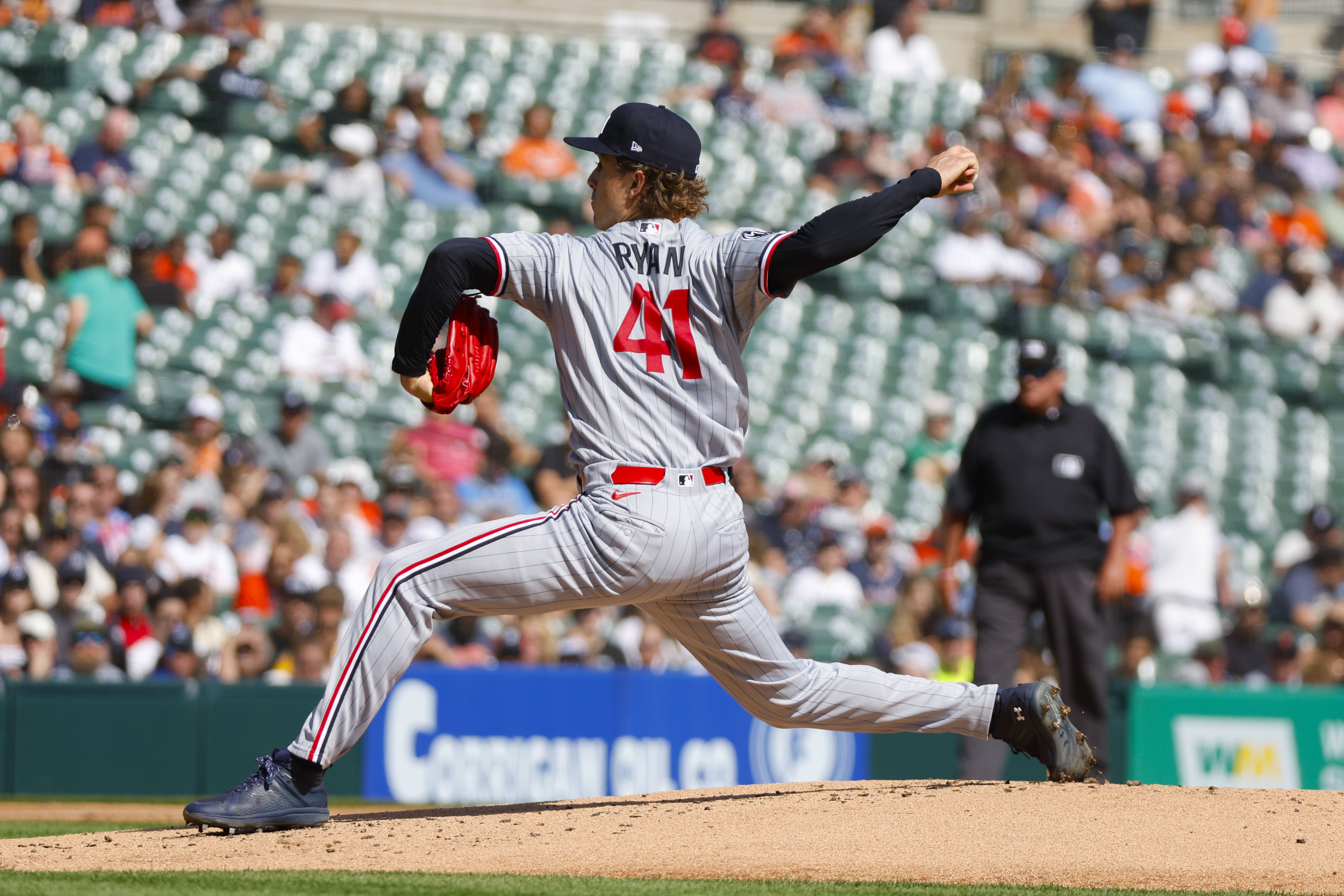 Box Score Starting Pitcher: Joe Ryan — 4 IP, 3 H, 2 ER, 1 BB, 7 K (66 Pitches, 46 Strikes, 69.7%) Home Runs: Trevor Larnach (12) Bottom 3 WPA: Josh Bell (-0.30), Royce Lewis (-0.17), Kaelen Culpepper (-0.17) Win Probability Chart (Via BaseballSavant): Joe Ryan's rehab process was seemingly accelerated compared to original plans. Sidelined since August 4th by a glute injury, he made one minor-league start last Tuesday, throwing just three innings, and then tossed a bullpen over the weekend, at which point he was pronounced good to go for Monday's series opener in Detroit. The stakes were high in this one for the Twins. With their playoff odds down to 3.2% according to FanGraphs, they've run out of runway to get going. To reassert themselves in the race, Minnesota needed to get on a winning streak and they needed it to start now, against a team they trounced twice at home one week ago. Ryan Jeffers, starting for an eighth consecutive game at catcher, gave the Twins an early lead with an RBI groundout in the top of the first, but Josh Bell grounded into a double play to strand a runner on third. In the bottom of the first, Ryan got off to an encouraging start on the mound, striking out leadoff man Colt Keith on three pitches, but gave up a game-tying home run to Kevin McGonigle in the next at-bat. Ryan ran into trouble in the second, loading the bases with one out. Detroit scored twice, on an HBP and then an errant force-out throw to the plate by Royce Lewis. But Ryan kept things from spiraling, retiring the next two batters to leave the bases loaded. He cruised through the next two frames before hitting a presumably pre-planned threshold and giving way to piggy-backer Connor Prielipp. Seemingly bumped into this long-relief role by Ryan's return, Prielipp handled the final four innings and pitched well outside of a two-run homer by Riley Greene, which unfortunately proved to be the difference. Trevor Larnach had drawn the Twins within one on a fourth-inning solo homer before Greene answered with his two-run shot in the fifth, putting the Tigers up 5-2. Minnesota would rally for a comeback bid in the sixth, with Walker Jenkins delivering a clutch two-run double to pull them within one. It was an awesome way for the rookie to snap an 0-for-16 slump. Luke Keaschall and Brooks Lee followed with back-to-back walks, but unfortunately Kody Clemens left the bases full, taking strike three right down the pipe from Troy Melton on a 1-2 count. He was looking for a breaking ball and consequently watched a fastball sail right over the plate. From there the Tigers bullpen took care of business, with four relievers combining to hold Minnesota scoreless in the final 3 ⅓ innings. The Twins generated a little hope against closer Kenley Jansen in the ninth when Clemens drew a leadoff walk and Jeffers followed by driving a pitch to deep center, but unfortunately his 411-foot fly was tracked down near the wall by Max Clark. It would've been a home run in more than half of MLB parks, according to StatCast. From there, Bell ended the ninth inning like he ended the first: a GIDP. He leads the team with 17 and no one else has more than 10. Their fourth loss in five games leaves the Twins at 68-76, with their postseason odds now down to 2.3%. The contention dream is all but dead. In a tough game like this, we can take solace in the big slump-busting hit from Jenkins, and the generally promising return to action for Ryan, whose average fastball velocity (94.0 MPH) was actually up slightly from his season norm (93.4 MPH). There was a little rust in play but he really only gave up one hard-hit ball in the outing. Tomorrow it'll be Dean Kremer facing off against right-hander Drew Anderson in a 5:40 PM CT start as the Twins look to even the series. Notes: Ryan's first three pitches of the day clocked at 94.2, 95.2 and 95.1 MPH. It was a bit of a statement after his relatively low velo in last week's Triple-A rehab start raised eyebrows. Lee stole his eighth base, which is actually a shockingly high total for such a slow player. Keaschall stole his 17th base, which is less surprising. The Twins lineup went 1-for-10 with RISP and stranded 10 on base in the one-run loss. Another game that reeks of missed opportunity. Postgame Interview: Bullpen Usage Chart:
 -
Image courtesy of rian Bradshaw Sevald-Imagn Images Box Score Starting Pitcher: Joe Ryan — 4 IP, 3 H, 2 ER, 1 BB, 7 K (66 Pitches, 46 Strikes, 69.7%) Home Runs: Trevor Larnach (12) Bottom 3 WPA: Josh Bell (-0.30), Royce Lewis (-0.17), Kaelen Culpepper (-0.17) Win Probability Chart (Via BaseballSavant): Joe Ryan's rehab process was seemingly accelerated compared to original plans. Sidelined since August 4th by a glute injury, he made one minor-league start last Tuesday, throwing just three innings, and then tossed a bullpen over the weekend, at which point he was pronounced good to go for Monday's series opener in Detroit. The stakes were high in this one for the Twins. With their playoff odds down to 3.2% according to FanGraphs, they've run out of runway to get going. To reassert themselves in the race, Minnesota needed to get on a winning streak and they needed it to start now, against a team they trounced twice at home one week ago. Ryan Jeffers, starting for an eighth consecutive game at catcher, gave the Twins an early lead with an RBI groundout in the top of the first, but Josh Bell grounded into a double play to strand a runner on third. In the bottom of the first, Ryan got off to an encouraging start on the mound, striking out leadoff man Colt Keith on three pitches, but gave up a game-tying home run to Kevin McGonigle in the next at-bat. Ryan ran into trouble in the second, loading the bases with one out. Detroit scored twice, on an HBP and then an errant force-out throw to the plate by Royce Lewis. But Ryan kept things from spiraling, retiring the next two batters to leave the bases loaded. He cruised through the next two frames before hitting a presumably pre-planned threshold and giving way to piggy-backer Connor Prielipp. Seemingly bumped into this long-relief role by Ryan's return, Prielipp handled the final four innings and pitched well outside of a two-run homer by Riley Greene, which unfortunately proved to be the difference. Trevor Larnach had drawn the Twins within one on a fourth-inning solo homer before Greene answered with his two-run shot in the fifth, putting the Tigers up 5-2. Minnesota would rally for a comeback bid in the sixth, with Walker Jenkins delivering a clutch two-run double to pull them within one. It was an awesome way for the rookie to snap an 0-for-16 slump. Luke Keaschall and Brooks Lee followed with back-to-back walks, but unfortunately Kody Clemens left the bases full, taking strike three right down the pipe from Troy Melton on a 1-2 count. He was looking for a breaking ball and consequently watched a fastball sail right over the plate. From there the Tigers bullpen took care of business, with four relievers combining to hold Minnesota scoreless in the final 3 ⅓ innings. The Twins generated a little hope against closer Kenley Jansen in the ninth when Clemens drew a leadoff walk and Jeffers followed by driving a pitch to deep center, but unfortunately his 411-foot fly was tracked down near the wall by Max Clark. It would've been a home run in more than half of MLB parks, according to StatCast. From there, Bell ended the ninth inning like he ended the first: a GIDP. He leads the team with 17 and no one else has more than 10. Their fourth loss in five games leaves the Twins at 68-76, with their postseason odds now down to 2.3%. The contention dream is all but dead. In a tough game like this, we can take solace in the big slump-busting hit from Jenkins, and the generally promising return to action for Ryan, whose average fastball velocity (94.0 MPH) was actually up slightly from his season norm (93.4 MPH). There was a little rust in play but he really only gave up one hard-hit ball in the outing. Tomorrow it'll be Dean Kremer facing off against right-hander Drew Anderson in a 5:40 PM CT start as the Twins look to even the series. Notes: Ryan's first three pitches of the day clocked at 94.2, 95.2 and 95.1 MPH. It was a bit of a statement after his relatively low velo in last week's Triple-A rehab start raised eyebrows. Lee stole his eighth base, which is actually a shockingly high total for such a slow player. Keaschall stole his 17th base, which is less surprising. The Twins lineup went 1-for-10 with RISP and stranded 10 on base in the one-run loss. Another game that reeks of missed opportunity. Postgame Interview: Bullpen Usage Chart: View full article
-
 In a season like this, where contention felt so viably within reach, it's easy to look back and play the "what if" game. The Twins have essentially fallen out of the postseason race by going 20-26 since the All-Star break, but they've been on the fringe of the playoff mix all year, and as recently as August 20th their postseason odds were in the 40% range. You wonder how differently things might have gone with a few different variables in place — some in the team's control, some not. What if Pablo López didn't go down with a season-ending injury on the first day of spring training? What if high-octane arms like Mick Abel or David Festa were healthy enough to contribute at all? What if the Twins didn't trade Louis Varland at the deadline last year, and were anchoring their shaky bullpen with the best reliever in the league? What if they made any kind of serious investment in the roster last offseason, rather than waffling over ownership uncertainty? What if, what if. It does little good to lament over it now. What I will say is that, given the in-season circumstances and cards currently in their hand, the Twins are giving it their all. It's proving to not be enough. But I will say that I appreciate it, and it gives me a sense of optimism for what lies ahead. Look around and you can see the signs of a team, manager and front office that are trying their best to push all chips into the middle of the table. It started, of course, with the trade deadline, which was one of Minnesota's most aggressive in memory. They traded away a bundle of prospects, including one of their best young arms, for immediate pitching help. Has it paid off? Not really, the Twins are 23rd in relief pitching ERA since the deadline. But the effort matters. Then you turn your attention to roster moves and player usage decisions. A few things stick out to me: Impact prospects joining the fight. Some people might argue that it took too long for Kaelen Culpepper and especially Waker Jenkins to get the call. Well, Minnesota's best two MLB-ready prospects have arrived and they are playing every day — including Jenkins who is the youngest player to don a Twins uniform since a rookie Byron Buxton in 2015. Whatever concerns the front office harbored about starting service clocks or losing development time to a lockout were cast aside in the name of urgency. Speaking of Buxton, he has repeatedly pushed himself to play through a hip injury that is clearly rather serious. Even now, as he acknowledges that offseason surgery is in the cards, Buxton is attempting to get back on the field. Meanwhile, Joe Ryan is set to return to the mound today in Detroit, and while I wouldn't say he was necessarily rushed, it's clear he was making haste to come back, logging only one three-inning rehab outing. He should be able to get in four more starts, knowing each one counts. Ryan Jeffers, despite missing almost two months with a fractured hamate, leads all Twins in fWAR. He has been their best player and Derek Shelton is leaning on him hard here in the home stretch. Sunday's game marked Jeffers' seventh consecutive start behind the plate. Previously he had never started more than three in a row all year. All of these things point to a team going all-out to try and make hay with a clear opportunity in what was a wide-open American League. Unfortunately, it just hasn't been enough. Culpepper's been good but Jenkins has struggled initially, which is unsurprising for a 21-year-old getting his first taste of the majors. Buxton and Ryan, for all their efforts to overcome injuries, have nonetheless been absent and/or ineffective in the second half. And while Jeffers has delivered abundantly in his sudden full-time role, ripping four homers and driving in 11 over seven games, the Twins have remained stuck in neutral. The result has been the same as the last two years: a postseason pursuit that seemed plausible at midseason turning into a pipe dream by September following a second-half collapse. But what struck me as most frustrating about 2024 and 2025 is how the team seemed to simply give up. Trevor Richards was a laughable sole addition at the deadline two years ago for a team that appeared playoff-bound. Last year's decision to sell was understandable, but the historic firesale was a white flag of epic proportions. In both instances, the team was sending strong signals of apathy, which bled over into stagnant offseasons, and it left the fanbase feeling sour. I'm getting no signals of apathy this year. Will it translate to bolder team-building moves this offseason and a better outcome in 2027? Nothing is guaranteed, but I've seen enough to feel more confident in Twins leadership moving forward than I have in some time.
- 73 comments
-
- 10
-

-

-
Image courtesy of Mark J. Rebilas-Imagn Images In a season like this, where contention felt so viably within reach, it's easy to look back and play the "what if" game. The Twins have essentially fallen out of the postseason race by going 20-26 since the All-Star break, but they've been on the fringe of the playoff mix all year, and as recently as August 20th their postseason odds were in the 40% range. You wonder how differently things might have gone with a few different variables in place — some in the team's control, some not. What if Pablo López didn't go down with a season-ending injury on the first day of spring training? What if high-octane arms like Mick Abel or David Festa were healthy enough to contribute at all? What if the Twins didn't trade Louis Varland at the deadline last year, and were anchoring their shaky bullpen with the best reliever in the league? What if they made any kind of serious investment in the roster last offseason, rather than waffling over ownership uncertainty? What if, what if. It does little good to lament over it now. What I will say is that, given the in-season circumstances and cards currently in their hand, the Twins are giving it their all. It's proving to not be enough. But I will say that I appreciate it, and it gives me a sense of optimism for what lies ahead. Look around and you can see the signs of a team, manager and front office that are trying their best to push all chips into the middle of the table. It started, of course, with the trade deadline, which was one of Minnesota's most aggressive in memory. They traded away a bundle of prospects, including one of their best young arms, for immediate pitching help. Has it paid off? Not really, the Twins are 23rd in relief pitching ERA since the deadline. But the effort matters. Then you turn your attention to roster moves and player usage decisions. A few things stick out to me: Impact prospects joining the fight. Some people might argue that it took too long for Kaelen Culpepper and especially Waker Jenkins to get the call. Well, Minnesota's best two MLB-ready prospects have arrived and they are playing every day — including Jenkins who is the youngest player to don a Twins uniform since a rookie Byron Buxton in 2015. Whatever concerns the front office harbored about starting service clocks or losing development time to a lockout were cast aside in the name of urgency. Speaking of Buxton, he has repeatedly pushed himself to play through a hip injury that is clearly rather serious. Even now, as he acknowledges that offseason surgery is in the cards, Buxton is attempting to get back on the field. Meanwhile, Joe Ryan is set to return to the mound today in Detroit, and while I wouldn't say he was necessarily rushed, it's clear he was making haste to come back, logging only one three-inning rehab outing. He should be able to get in four more starts, knowing each one counts. Ryan Jeffers, despite missing almost two months with a fractured hamate, leads all Twins in fWAR. He has been their best player and Derek Shelton is leaning on him hard here in the home stretch. Sunday's game marked Jeffers' seventh consecutive start behind the plate. Previously he had never started more than three in a row all year. All of these things point to a team going all-out to try and make hay with a clear opportunity in what was a wide-open American League. Unfortunately, it just hasn't been enough. Culpepper's been good but Jenkins has struggled initially, which is unsurprising for a 21-year-old getting his first taste of the majors. Buxton and Ryan, for all their efforts to overcome injuries, have nonetheless been absent and/or ineffective in the second half. And while Jeffers has delivered abundantly in his sudden full-time role, ripping four homers and driving in 11 over seven games, the Twins have remained stuck in neutral. The result has been the same as the last two years: a postseason pursuit that seemed plausible at midseason turning into a pipe dream by September following a second-half collapse. But what struck me as most frustrating about 2024 and 2025 is how the team seemed to simply give up. Trevor Richards was a laughable sole addition at the deadline two years ago for a team that appeared playoff-bound. Last year's decision to sell was understandable, but the historic firesale was a white flag of epic proportions. In both instances, the team was sending strong signals of apathy, which bled over into stagnant offseasons, and it left the fanbase feeling sour. I'm getting no signals of apathy this year. Will it translate to bolder team-building moves this offseason and a better outcome in 2027? Nothing is guaranteed, but I've seen enough to feel more confident in Twins leadership moving forward than I have in some time. View full article
-
Week in Review: Stuck in Neutral
Nick Nelson replied to Nick Nelson's topic in Twins Daily Front Page News
The computer is just measuring what happens on the field, though. And what it's telling us is: Brooks Lee doesn't hit the ball hard consistently, doesn't draw walks, doesn't control the zone, and doesn't run well. He does pull the ball in the air and he can hit some home runs, which I'm not discrediting. I just haven't been overly impressed by the totality of his game. -
Week in Review: Stuck in Neutral
Nick Nelson replied to Nick Nelson's topic in Twins Daily Front Page News
These are the kinds of comments that befuddle me. Lee had the 7th-worst OPS and 10th-worst WAR among all MLB players last year. What is confusing about criticizing that performance? I get that some people feel I'm being too hard on him this year which is fair but he was objectively very bad last year, and 2024.- 23 replies
-
- 1
-
-
- ryan jeffers
- joe ryan
- (and 2 more)
-
Week in Review: Stuck in Neutral
Nick Nelson replied to Nick Nelson's topic in Twins Daily Front Page News
Among 105 players with 500 plate appearances this year, he ranks 103rd in xwOBA. Pretty much that simple. You might not care about a metric like that but it's something front offices pay attention to.- 23 replies
-
- 6
-
-

-
- ryan jeffers
- joe ryan
- (and 2 more)
-
Week in Review: Stuck in Neutral
Nick Nelson replied to Nick Nelson's topic in Twins Daily Front Page News
I don't mean to take away from what he's accomplished. He's having a perfectly solid year. I just don't buy into the sustainability unless he starts improving stylistically. And I very much do not see him as a fit in the #2 spot in the lineup.- 23 replies
-
- 2
-
-
- ryan jeffers
- joe ryan
- (and 2 more)
-
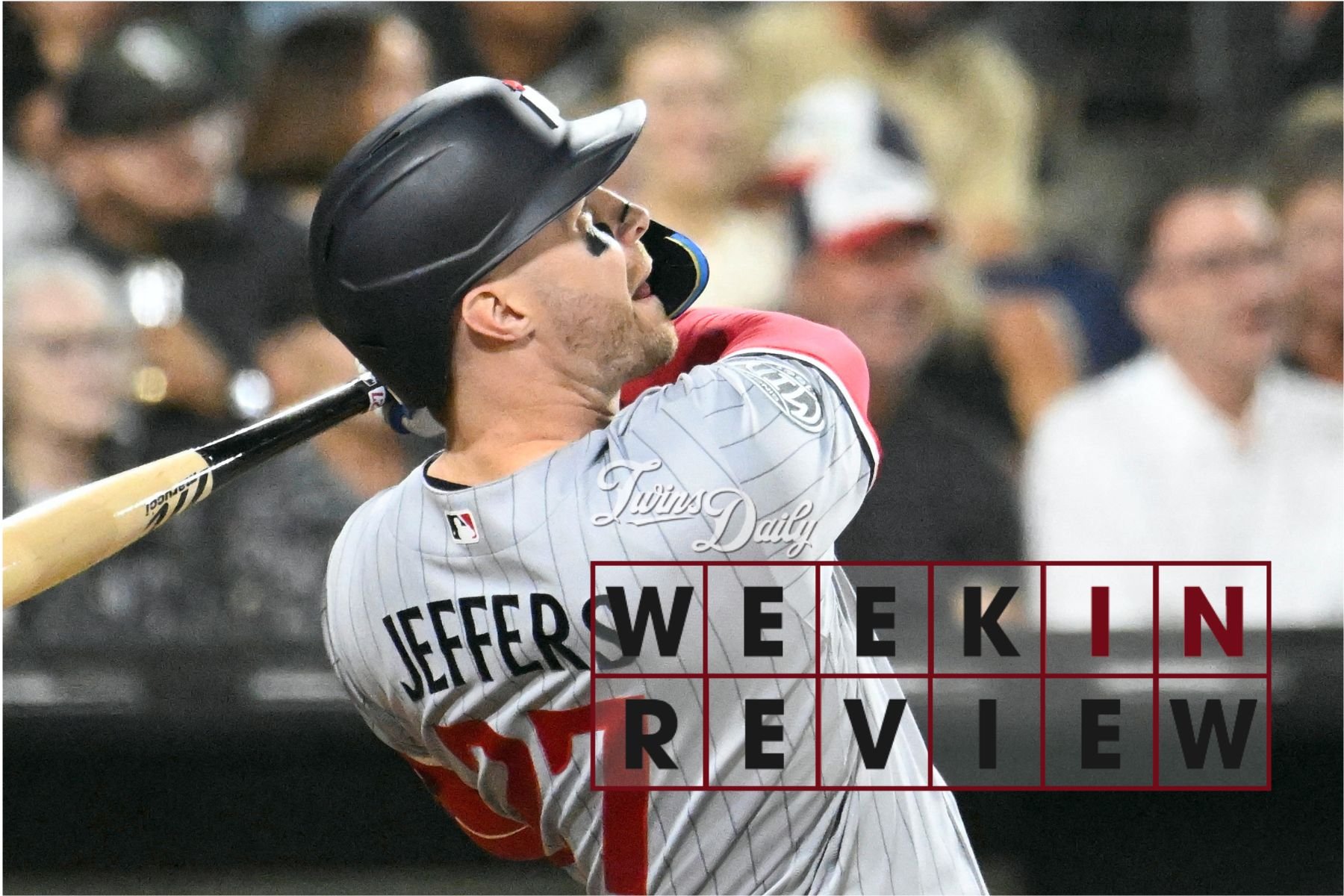 The Weekly Nutshell: The Twins opened the past week in exactly the way they needed: two blowout victories that ran their winning streak to three and inched them back in the direction of the .500 mark. Then, in customary fashion, they fumbled away their newfound momentum with back-to-back losses, and by the end of the week they were back where they started. Generally speaking, a 3-3 week that included a road series against the division leaders would not be a bad thing, but the Twins have run out of time to stand in place. They need wins in bunches. They needed to complete the sweep over Detroit rather than letting Wednesday's game get away in extras. They needed to find a way to win two in Chicago. They didn't. As things stand, their postseason odds are in the low single digits, with the Central title all but out of sight and four teams in front of them for the last Wild Card spot. With 19 games remaining, Minnesota needs to go 14-5 to finish with a winning record, and probably better than that to have a realistic shot at the playoffs. Impossible? No. But extraordinarily unlikely, especially given their persistent inability to stay on a roll in the second half. With contention this year more or less out of the equation, our attention increasingly turns toward analyzing a more hopeful future and the players whom it will depend on. Weekly Snapshot: Mon, 8/31 through Sun, 9/6 *** Record Last Week: 3-3 (Overall: 68-75) Run Differential Last Week: +8 (Overall: -48) Standing: 3rd Place in AL Central (7.0 GB); 4.5 games out of WC Latest Game Results Game 138 | MIN 11, DET 1: Twins Pummel Fading Tigers Behind Strong Bradley Start Jeffers: 2-4, 2 HR, 4 RBI Game 139 | MIN 15, DET 2: Offense Tees Off in Second Consecutive Blowout Victory Lewis: 3-4, HR, 3 RBI Game 140 | DET 11, MIN 6 (12): Comeback Falls Short as Tigers Take Over in Twelfth Nance: 1.1 IP, 5 R (4 ER) Game 141 | CWS 4, MIN 1: Matthews Gives Up Three Homers, Gets No Run Support Twins offense: 0-6 RISP, 9 LOB Game 142 | MIN 6, CWS 4: Tides Turn in Middle Innings on Three-Run HR from Jeffers Jeffers: 1-4, HR, 3 RBI Game 143 | CWS 10, MIN 1: Sox Take Rubber Match in a Laugher on National Broadcast Twins bullpen: 3.2 IP, 9 ER, 7 BB NEWS & NOTES When rosters expanded to 28 on September 1st, the Twins called up one pitcher and one position player: right-hander Garrett Acton and utilityman Ben Ross. Acton is making his return after appearing for the Twins four times back in April; the hard-throwing 28-year-old righty adds some depth and length to the staff, and is essentially auditioning for an opportunity in next year's bullpen. He pitched three times last week, allowing one run over four innings in his first two appearances before enduring a disaster outing on Sunday night (0.1 IP, 4 ER). Ross is a newcomer to the big-league scene, making his MLB debut as a sub on Tuesday and also entering in the late innings of Wednesday's and Sunday's games. He's a nice functional fit as a right-hander who can play all over, but it remains to be seen if he can hit enough to make an impact. So far he's looked pretty overmatched at the plate. To make room for Ross on the 40-man roster, the Twins designated Kyler Fedko for assignment and then released him, enabling him to quickly latch on with the Pirates. Fedko was already out for the year with a knee injury. HIGHLIGHTS It's been an encouraging start to Kaelen Culpepper's big-league career. His OPS sits at .801 through 25 games after another solid week that saw him notch six hits, including three doubles. He stole his first base and drove in four. Culpepper swings hard and when he connects the contact is loud. The question that will dictate his true upside is whether he can control the strike zone enough and avoid leaning too hard into pitch-hunting aggressiveness. The past two series were promising in this regard: Culpepper struck out just three times in 26 plate appearances, and he has a 5-to-4 K/BB ratio in his past 10 games after starting his career 15-to-2. Ryan Jeffers stole the show offensively for the Twins. After struggling through most of August, he launched two homers on its final day then added two more in the first week of September, including a critical three-run blast in Saturday's win at Rate Field. Jeffers drove in 11 runs across six games to power the offense, with Victor Caratini notably getting zero starts all week. It can't be overstated how tough it's going to be to replace Jeffers' bat in the lineup when he departs this offseason. He owns the highest wOBA (.379) of any catcher in the majors with 300-plus plate appearances. The 26-run explosion that took place between Monday and Tuesday against the Tigers helped a number of other slumping bats get on track. Royce Lewis had a three-hit, three-RBI game on Tuesday and a game-tying two-run single on Wednesday as part of a 7-for-23 week. He had as many extra-base hits in the first four games of September (3) as his final 20 in August. Kody Clemens homered twice, drove in four, and drew four walks. Josh Bell went 7-for-22 and drove in his 84th run, giving him the highest single-season total for any Twins hitter since 2021. On the pitching side, Taj Bradley (7 IP, 1 ER) and Connor Prielipp (5 IP, 0 ER) were both excellent in the big wins over Detroit — much better than they needed to be, as it turned out. Bradley was less effective on Saturday (5 IP, 4 ER) but the offense picked him up to earn his team-leading 11th victory of the year. Strong finishes for Bradley and Prielipp would bode very well for the 2027 rotation's outlook. Minnesota's deadline bullpen pickups also deserve a nod. A.J. Minter threw two scoreless innings and has a 0.66 ERA in 13 ⅔ innings since being acquired. Jeff Hoffman was absurdly dominant, striking out five of eight batters faced across his two outings. LOWLIGHTS Relative to Culpepper, it hasn't been nearly as smooth of an entry to the big leagues for Walker Jenkins, at least from a production standpoint. He's batting .115 after going 1-for-17 in the past week. His lone hit was a home run, the first of his MLB career, but it came against a position player in Monday's blowout. Obviously you'd like a few more hits to drop in, but I'm not overly concerned with what I've seen. Stylistically there is plenty to like about Jenkins, who is generally taking good at-bats and putting some decent swings on the ball. He's also playing a solid center field, providing a sizable upgrade over Luke Keaschall and a hobbled Byron Buxton. I feel sort of the opposite way about Brooks Lee. His numbers look okay — he drove in six runs last week and is second on the team behind Bell with 79 RBIs on the season — but the underlying metrics portray a hitter with poor discipline and consistently low contact quality. He did help produce some runs last week but overall he was 7-for-25 with no walks, and he's running a sub-.300 OBP while now frequently batting second in the lineup. A charmed run for Tommy Nance in a Twins uniform came to a crashing halt on Wednesday night. He posted a 2.08 ERA with no home runs allowed through his first 17 appearances with Minnesota following his acquisition in early July, proving to be a nifty low-stakes pickup for the front office, but things unraveled under his watch in the 12th inning on Wednesday. The score was 6-6 before Detroit detonated for five runs on a two-run homer and three-run double, pulling away and robbing the Twins of their chance at a much-needed sweep. Nance gave up another three-run homer in Chicago on Sunday night, though two of the runs were charged to Acton. These were an ugly couple of outings, but probably an overdue regression to the mean for Nance, who still has a respectable 4.12 ERA with Minnesota. Like with Dean Kremer, we're getting a reality check on a middling talent that overperformed out of the gates with his new team. But like Kremer, Nance still has a chance to play a useful role on next year's team. TRENDING STORYLINE Joe Ryan is set to rejoin the Twins in a final desperation push for the playoffs. (Or maybe just as much to showcase his health for offseason trade suitors.) He threw three innings for St. Paul in a rehab start on Tuesday, and then reportedly came out of a bullpen session over the weekend feeling good. It sounds like the plan is for him to start Monday's series opener in Detroit. Assuming he comes back looking healthy and strong, Ryan can be a difference-maker for the Twins, who have received very little from their two All-Stars in the second half. He'll be in line to make four starts over the remaining three weeks of games, including two in the coming week. Presumably Ryan's return will bump Prielipp to the bullpen for workload management reasons. As for Minnesota's other All-Star, a return to action this year is less likely and certainly less imminent. Buxton refuses to call it quits on this season, even as he acknowledges that hip surgery in the offseason is inevitable. I respect his grit, but I think it's best for all parties if Buxton shuts it down and shifts focus to the next step in resolving this chronic hip issue. I suspect he'll reach the same conclusion within the next week or so unless the Twins go on a serious run. The specific nature and recovery timeline of Buxton's surgery, both yet to be determined, will be among the biggest question marks looming for the team entering this offseason. LOOKING AHEAD Though nothing has been officially announced, the expectation is that Ryan will be activated to start the series opener in Detroit, which would also line him up to face Cleveland in the finale of the weekend series at Target Field. Not to put too fine a point on it, but the Twins need to go 5-1 or better this week to maintain any credibility in the postseason race. MONDAY, SEPTEMBER 7: TWINS @ TIGERS — TBD v. RHP Troy Melton TUESDAY, SEPTEMBER 8: TWINS @ TIGERS — RHP Dean Kremer v. RHP Drew Anderson WEDNESDAY, SEPTEMBER 9: TWINS @ TIGERS — RHP Zebby Matthews v. RHP Keider Montero FRIDAY, SEPTEMBER 11: GUARDIANS @ TWINS — LHP Parker Messick v. RHP Taj Bradley SATURDAY, SEPTEMBER 12: GUARDIANS @ TWINS — RHP Gavin Williams v. RHP Bailey Ober SUNDAY, SEPTEMBER 13: GUARDIANS @ TWINS —LHP Joey Cantillo v. TBD
- 23 comments
-
- 5
-
-
- ryan jeffers
- joe ryan
- (and 2 more)
-
Image courtesy of Matt Marton-Imagn Images The Weekly Nutshell: The Twins opened the past week in exactly the way they needed: two blowout victories that ran their winning streak to three and inched them back in the direction of the .500 mark. Then, in customary fashion, they fumbled away their newfound momentum with back-to-back losses, and by the end of the week they were back where they started. Generally speaking, a 3-3 week that included a road series against the division leaders would not be a bad thing, but the Twins have run out of time to stand in place. They need wins in bunches. They needed to complete the sweep over Detroit rather than letting Wednesday's game get away in extras. They needed to find a way to win two in Chicago. They didn't. As things stand, their postseason odds are in the low single digits, with the Central title all but out of sight and four teams in front of them for the last Wild Card spot. With 19 games remaining, Minnesota needs to go 14-5 to finish with a winning record, and probably better than that to have a realistic shot at the playoffs. Impossible? No. But extraordinarily unlikely, especially given their persistent inability to stay on a roll in the second half. With contention this year more or less out of the equation, our attention increasingly turns toward analyzing a more hopeful future and the players whom it will depend on. Weekly Snapshot: Mon, 8/31 through Sun, 9/6 *** Record Last Week: 3-3 (Overall: 68-75) Run Differential Last Week: +8 (Overall: -48) Standing: 3rd Place in AL Central (7.0 GB); 4.5 games out of WC Latest Game Results Game 138 | MIN 11, DET 1: Twins Pummel Fading Tigers Behind Strong Bradley Start Jeffers: 2-4, 2 HR, 4 RBI Game 139 | MIN 15, DET 2: Offense Tees Off in Second Consecutive Blowout Victory Lewis: 3-4, HR, 3 RBI Game 140 | DET 11, MIN 6 (12): Comeback Falls Short as Tigers Take Over in Twelfth Nance: 1.1 IP, 5 R (4 ER) Game 141 | CWS 4, MIN 1: Matthews Gives Up Three Homers, Gets No Run Support Twins offense: 0-6 RISP, 9 LOB Game 142 | MIN 6, CWS 4: Tides Turn in Middle Innings on Three-Run HR from Jeffers Jeffers: 1-4, HR, 3 RBI Game 143 | CWS 10, MIN 1: Sox Take Rubber Match in a Laugher on National Broadcast Twins bullpen: 3.2 IP, 9 ER, 7 BB NEWS & NOTES When rosters expanded to 28 on September 1st, the Twins called up one pitcher and one position player: right-hander Garrett Acton and utilityman Ben Ross. Acton is making his return after appearing for the Twins four times back in April; the hard-throwing 28-year-old righty adds some depth and length to the staff, and is essentially auditioning for an opportunity in next year's bullpen. He pitched three times last week, allowing one run over four innings in his first two appearances before enduring a disaster outing on Sunday night (0.1 IP, 4 ER). Ross is a newcomer to the big-league scene, making his MLB debut as a sub on Tuesday and also entering in the late innings of Wednesday's and Sunday's games. He's a nice functional fit as a right-hander who can play all over, but it remains to be seen if he can hit enough to make an impact. So far he's looked pretty overmatched at the plate. To make room for Ross on the 40-man roster, the Twins designated Kyler Fedko for assignment and then released him, enabling him to quickly latch on with the Pirates. Fedko was already out for the year with a knee injury. HIGHLIGHTS It's been an encouraging start to Kaelen Culpepper's big-league career. His OPS sits at .801 through 25 games after another solid week that saw him notch six hits, including three doubles. He stole his first base and drove in four. Culpepper swings hard and when he connects the contact is loud. The question that will dictate his true upside is whether he can control the strike zone enough and avoid leaning too hard into pitch-hunting aggressiveness. The past two series were promising in this regard: Culpepper struck out just three times in 26 plate appearances, and he has a 5-to-4 K/BB ratio in his past 10 games after starting his career 15-to-2. Ryan Jeffers stole the show offensively for the Twins. After struggling through most of August, he launched two homers on its final day then added two more in the first week of September, including a critical three-run blast in Saturday's win at Rate Field. Jeffers drove in 11 runs across six games to power the offense, with Victor Caratini notably getting zero starts all week. It can't be overstated how tough it's going to be to replace Jeffers' bat in the lineup when he departs this offseason. He owns the highest wOBA (.379) of any catcher in the majors with 300-plus plate appearances. The 26-run explosion that took place between Monday and Tuesday against the Tigers helped a number of other slumping bats get on track. Royce Lewis had a three-hit, three-RBI game on Tuesday and a game-tying two-run single on Wednesday as part of a 7-for-23 week. He had as many extra-base hits in the first four games of September (3) as his final 20 in August. Kody Clemens homered twice, drove in four, and drew four walks. Josh Bell went 7-for-22 and drove in his 84th run, giving him the highest single-season total for any Twins hitter since 2021. On the pitching side, Taj Bradley (7 IP, 1 ER) and Connor Prielipp (5 IP, 0 ER) were both excellent in the big wins over Detroit — much better than they needed to be, as it turned out. Bradley was less effective on Saturday (5 IP, 4 ER) but the offense picked him up to earn his team-leading 11th victory of the year. Strong finishes for Bradley and Prielipp would bode very well for the 2027 rotation's outlook. Minnesota's deadline bullpen pickups also deserve a nod. A.J. Minter threw two scoreless innings and has a 0.66 ERA in 13 ⅔ innings since being acquired. Jeff Hoffman was absurdly dominant, striking out five of eight batters faced across his two outings. LOWLIGHTS Relative to Culpepper, it hasn't been nearly as smooth of an entry to the big leagues for Walker Jenkins, at least from a production standpoint. He's batting .115 after going 1-for-17 in the past week. His lone hit was a home run, the first of his MLB career, but it came against a position player in Monday's blowout. Obviously you'd like a few more hits to drop in, but I'm not overly concerned with what I've seen. Stylistically there is plenty to like about Jenkins, who is generally taking good at-bats and putting some decent swings on the ball. He's also playing a solid center field, providing a sizable upgrade over Luke Keaschall and a hobbled Byron Buxton. I feel sort of the opposite way about Brooks Lee. His numbers look okay — he drove in six runs last week and is second on the team behind Bell with 79 RBIs on the season — but the underlying metrics portray a hitter with poor discipline and consistently low contact quality. He did help produce some runs last week but overall he was 7-for-25 with no walks, and he's running a sub-.300 OBP while now frequently batting second in the lineup. A charmed run for Tommy Nance in a Twins uniform came to a crashing halt on Wednesday night. He posted a 2.08 ERA with no home runs allowed through his first 17 appearances with Minnesota following his acquisition in early July, proving to be a nifty low-stakes pickup for the front office, but things unraveled under his watch in the 12th inning on Wednesday. The score was 6-6 before Detroit detonated for five runs on a two-run homer and three-run double, pulling away and robbing the Twins of their chance at a much-needed sweep. Nance gave up another three-run homer in Chicago on Sunday night, though two of the runs were charged to Acton. These were an ugly couple of outings, but probably an overdue regression to the mean for Nance, who still has a respectable 4.12 ERA with Minnesota. Like with Dean Kremer, we're getting a reality check on a middling talent that overperformed out of the gates with his new team. But like Kremer, Nance still has a chance to play a useful role on next year's team. TRENDING STORYLINE Joe Ryan is set to rejoin the Twins in a final desperation push for the playoffs. (Or maybe just as much to showcase his health for offseason trade suitors.) He threw three innings for St. Paul in a rehab start on Tuesday, and then reportedly came out of a bullpen session over the weekend feeling good. It sounds like the plan is for him to start Monday's series opener in Detroit. Assuming he comes back looking healthy and strong, Ryan can be a difference-maker for the Twins, who have received very little from their two All-Stars in the second half. He'll be in line to make four starts over the remaining three weeks of games, including two in the coming week. Presumably Ryan's return will bump Prielipp to the bullpen for workload management reasons. As for Minnesota's other All-Star, a return to action this year is less likely and certainly less imminent. Buxton refuses to call it quits on this season, even as he acknowledges that hip surgery in the offseason is inevitable. I respect his grit, but I think it's best for all parties if Buxton shuts it down and shifts focus to the next step in resolving this chronic hip issue. I suspect he'll reach the same conclusion within the next week or so unless the Twins go on a serious run. The specific nature and recovery timeline of Buxton's surgery, both yet to be determined, will be among the biggest question marks looming for the team entering this offseason. LOOKING AHEAD Though nothing has been officially announced, the expectation is that Ryan will be activated to start the series opener in Detroit, which would also line him up to face Cleveland in the finale of the weekend series at Target Field. Not to put too fine a point on it, but the Twins need to go 5-1 or better this week to maintain any credibility in the postseason race. MONDAY, SEPTEMBER 7: TWINS @ TIGERS — TBD v. RHP Troy Melton TUESDAY, SEPTEMBER 8: TWINS @ TIGERS — RHP Dean Kremer v. RHP Drew Anderson WEDNESDAY, SEPTEMBER 9: TWINS @ TIGERS — RHP Zebby Matthews v. RHP Keider Montero FRIDAY, SEPTEMBER 11: GUARDIANS @ TWINS — LHP Parker Messick v. RHP Taj Bradley SATURDAY, SEPTEMBER 12: GUARDIANS @ TWINS — RHP Gavin Williams v. RHP Bailey Ober SUNDAY, SEPTEMBER 13: GUARDIANS @ TWINS —LHP Joey Cantillo v. TBD View full article
-
Envisioning the 2027 Twins Starting Lineup
Nick Nelson posted a topic in Twins Daily Front Page News
Image courtesy of Stephen Brashear-Imagn Images The Twins' offense has not been a strength this year, nor has it been a weakness. By wOBA and fWAR, they have been exactly average, ranking 15th out of 30 MLB teams. They are 10th overall in runs scored, thanks mostly to an unsustainable RISP rate that has faded in the second half, but have fallen to 23rd here in a month of August that essentially knocked them out of contention. Next year's team is going to have legitimate contention hopes, and that's before you factor any offseason moves. It begins with their pitching staff, which figures to be extremely deep with Pablo López, Mick Abel, David Festa and others hopefully returning from injury. The bullpen has been given a year to develop and should be in a much better place entering the 2027 season versus 2026. This has the makings of a good team. What will determine its true upside is how good the offense can be. Are we looking at another middle-of-the-road unit like we saw this year? Or can the Twins' lineup evolve into something special as young talent melds with veteran leadership? Here's my early projection of a 2027 starting lineup for the Twins, along with some thoughts and questions we need to see answered in September and the offseason for each. 1. Luke Keaschall, DH Keaschall has firmly established himself as the team's leadoff hitter, now and going forward. He's batted atop the order in 12 consecutive games and I'd be surprised if he moves away for anything other than an injury. The honor is well deserved for Keaschall, whose .416 OBP since the start of July ranks 3rd among MLB hitters. He provides everything you'd want from a leadoff man, whether the role is being viewed through an old-school or new-school lens. He takes good at-bats, handles the bat, hits for average, runs well and sets the table for the best hitters in the lineup. The question, of course, is where he fits in defensively. For now I've got him pegged as a regular DH who slides into an outfield corner against left-handers. What to watch for in September: Where the Twins play Keaschall in the field, offering clues about how they envision fitting his bat into the 2027 lineup without locking him into DH. 2. Walker Jenkins, RF Jenkins has been appearing at the bottom the order initially to ease pressure on a 21-year-old seeing his first major-league action, but soon enough I think it will become clear he's the best all-around hitter in the lineup, and that is who belongs in the No. 2 spot. Already we've seen Jenkins' smooth swing and ability to control the zone, and even his ability to hang tough against southpaws. He has the ability to do it all at the plate. I want to see his at-bats maximized. And slotting him in between two right-handed hitters will make it harder for opposing managers to play matchups in the late innings. What to watch for in September: How quickly Jenkins adjusts to major-league pitching, particularly against left-handers, and whether he can already begin establishing himself as a fixture near the top of the order. 3. Byron Buxton, CF A question mark at the moment, to be sure. Buxton is currently on the injured list for a third time in the past two months with a right hip impingement that won't go away. He's never been right since the issue first sprung up, slashing 172/.274/.203 in 74 plate appearances between IL stints. GM Jeremy Zoll has acknowledged that offseason surgery is on the table. What really makes the situation frustrating is that, before his hip started barking constantly, Buxton was as healthy and productive as ever. He earned a third All-Star nod in the first half by slashing .271/.328/.575 with 25 homers. That's the definition of a No. 3 hitter, and the ideal kind of slugger to have lined behind Keaschall and Jenkins. The hip thing does not look good for Buxton at the moment. But neither did his knee before October 2023 surgery to excise a plica finally resolved his recurring pain. Maybe he and the doctors can figure out some kind of similar course of action for the hip this offseason? For now that's what I'm banking on. What to watch for in September: Whether Buxton returns at all, and if he does, whether his hip shows enough improvement to inspire confidence that rest and rehab can work, or further strengthens the case for offseason surgery. 4. Kody Clemens, 2B The cleanup spot is the first one in the batting order that you come across and find a lack of credible fit among current options. It could have been Matt Wallner if he didn't fall out of the team's plans with a disastrous first half. It could eventually be Emmanuel Rodriguez. But for the moment, the most logical candidate would seem to be Clemens, who's made more starts at cleanup in 2026 than any Twin other than Josh Bell. Clemens makes a lot of outs, which is what gives me hesitation about putting him in the top half of the lineup. His .293 OBP is 15th-lowest among qualified MLB hitters. But the power tool is legit: 22 homers, 21 doubles and six triples. His .459 slugging percentage ranks second among MLB second basemen. Plus, batting him after Buxton gives you the ability to go R-L-R-L in the top four lineup spots. I view Clemens as a placeholder, in multiple senses: in the cleanup spot, until someone more deserving emerges, and at second base, until Marek Houston comes up and takes over at short. What to watch for in September: Can Clemens can sustain his power production while improving his ability to reach base? This could determine whether he's viewed as a legitimate middle-of-the-order bat or more of a lower-lineup complementary piece. 5. Kaelen Culpepper, SS In his limited time as a big-leaguer, we've already started to get a clear idea of who Culpepper is as a hitter. He's aggressive, he swings hard, and he hits the ball with authority. Culpepper has already notched two double and three homers, with bat speed and contact quality that jump out at you. He also has a 16-to-4 K/BB ratio, which is the flip side to his offensive profile. I would expect him to be a power-first bat with a relatively low OBP, not unlike Clemens but hopefully with a little more discipline. Culpepper seems like a good fit to bat fifth, especially because it keeps with our pattern of alternating handedness. What to watch for in September: How Culpepper's aggressive approach holds up as pitchers adjust to him, and whether he can tighten his strike-zone discipline without sacrificing the impact that has made his early arrival so encouraging. 6. Emmanuel Rodriguez, LF Ready or not, here he comes. Rodriguez will be out of options next spring, meaning the Twins will have to bring him north out of camp. He's the major wild-card in my projected lineup as the only player who has yet to debut, and that's why I'd love to get a look at him in September. The profile here is pretty unique, with maxed-out power and patience to go along with a rare level of swing-and-miss tendency. It's not hard to imagine him best-suited for the bottom of the order initially, given the potential for overwhelm as he deals with MLB pitchers who can dot the borders of the zone, but I think Rodriguez will give you enough big swings to justify placement in the middle of the order. What to watch for in September: First and foremost, whether Rodriguez gets the call. If he does, how will his extreme three-true-outcomes profile translate against major-league pitching before he's forced onto the roster next spring? 7. Royce Lewis, 1B Among players listed in this lineup projection, I feel least certain about Lewis being a member of the 2027 team. On the one hand, first base is a pretty easy position to address (see: Josh Bell) and Lewis has been rather unexceptional there. On the other hand, he'll still be relatively cheap via arbitration next year, and he's been decent enough to merit another attempt at unlocking his dormant upside. Especially given the lack of competing internal options. At this time, I'd still be counting him in my plans, but Lewis has not shown enough offensively to deserve hitting in the top half of the order. I'm really interested to see how he finishes out this current season. What to watch for in September: Whether Lewis can finally rediscover some sustained offensive impact down the stretch and give the Twins a compelling reason to keep betting on his upside in 2027. 8. Brooks Lee, 3B An enigma. You look at Lee's underlying metrics and he grades out as one of the worst hitters in the league, with an xwOBA ranking in the 3rd percentile. And yet. He's tied for second among Twins position players in fWAR, and he's running an above-average .739 OPS. He doesn't do anything particularly well but he does everything well enough to be a productive and reliable starter in the infield. Lee has a .287 career OBP and has yet to finish a season above .300. Until that changes, or he lifts his average out of the .240 range, I can't see much an argument for Lee hitting in a prime lineup position like he did on Sunday. But he's a relatively strong piece at the bottom of the order. What to watch for in September: Whether Lee can finish the year with stronger underlying offensive indicators — more quality contact, more walks or simply more consistent production — to reinforce his case as more than a defense-and-versatility regular. 9. Victor Caratini, C Outside of a hot streak in June, Caratini has been one of the worst hitters in baseball all year. I don't expect that to improve much heading into his age-33 season. But it bears noting that the bar for a No. 9 hitter is very low — the average MLB hitter in that lineup spot is slashing .228/.294/.349 this year. For a catcher hitting at the bottom of the order, he's perfectly adequate. But it's certainly fun that the only clear-cut offensive liability in the 2027 lineup happens to play the same position as Minnesota's soon-to-be No. 1 prospect, Vahn Lackey, who is off to a ridiculous start in Cedar Rapids. What to watch for in September: How much the Twins lean on Caratini down the stretch, relative to the outgoing Ryan Jeffers, and whether they use the fading stakes to audition Alex Jackson more seriously as a presumptive 2027 backup. Looing ahead at the 2027 lineup, and even starting to map things out a bit further, we can start to see a compelling convergence of the past wave and the new wave. The top prospects have officially arrived, so we no longer need to discuss their fit as theoretical. Now the real work begins. How good can this lineup be? View full article -
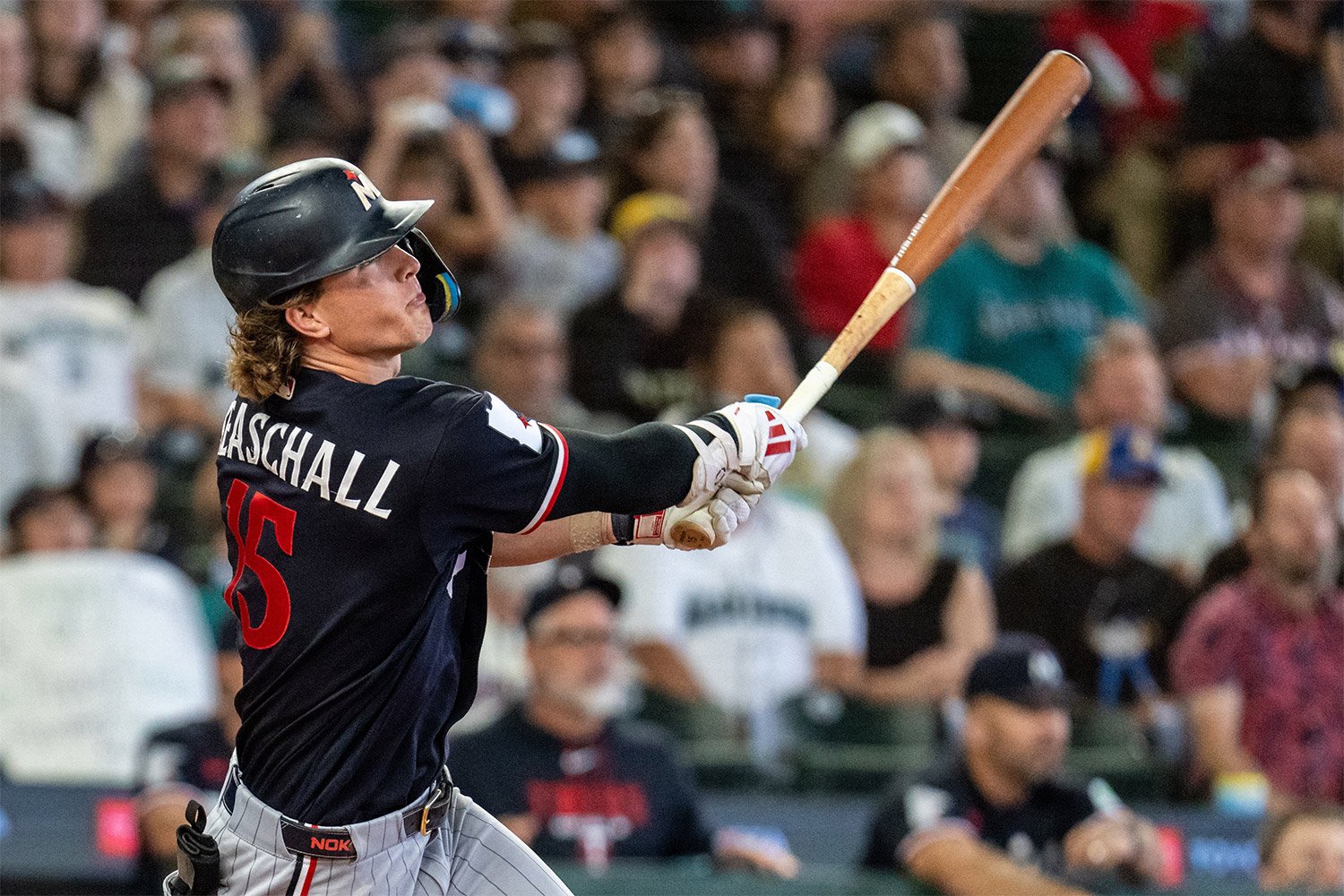 The Twins' offense has not been a strength this year, nor has it been a weakness. By wOBA and fWAR, they have been exactly average, ranking 15th out of 30 MLB teams. They are 10th overall in runs scored, thanks mostly to an unsustainable RISP rate that has faded in the second half, but have fallen to 23rd here in a month of August that essentially knocked them out of contention. Next year's team is going to have legitimate contention hopes, and that's before you factor any offseason moves. It begins with their pitching staff, which figures to be extremely deep with Pablo López, Mick Abel, David Festa and others hopefully returning from injury. The bullpen has been given a year to develop and should be in a much better place entering the 2027 season versus 2026. This has the makings of a good team. What will determine its true upside is how good the offense can be. Are we looking at another middle-of-the-road unit like we saw this year? Or can the Twins' lineup evolve into something special as young talent melds with veteran leadership? Here's my early projection of a 2027 starting lineup for the Twins, along with some thoughts and questions we need to see answered in September and the offseason for each. 1. Luke Keaschall, DH Keaschall has firmly established himself as the team's leadoff hitter, now and going forward. He's batted atop the order in 12 consecutive games and I'd be surprised if he moves away for anything other than an injury. The honor is well deserved for Keaschall, whose .416 OBP since the start of July ranks 3rd among MLB hitters. He provides everything you'd want from a leadoff man, whether the role is being viewed through an old-school or new-school lens. He takes good at-bats, handles the bat, hits for average, runs well and sets the table for the best hitters in the lineup. The question, of course, is where he fits in defensively. For now I've got him pegged as a regular DH who slides into an outfield corner against left-handers. What to watch for in September: Where the Twins play Keaschall in the field, offering clues about how they envision fitting his bat into the 2027 lineup without locking him into DH. 2. Walker Jenkins, RF Jenkins has been appearing at the bottom the order initially to ease pressure on a 21-year-old seeing his first major-league action, but soon enough I think it will become clear he's the best all-around hitter in the lineup, and that is who belongs in the No. 2 spot. Already we've seen Jenkins' smooth swing and ability to control the zone, and even his ability to hang tough against southpaws. He has the ability to do it all at the plate. I want to see his at-bats maximized. And slotting him in between two right-handed hitters will make it harder for opposing managers to play matchups in the late innings. What to watch for in September: How quickly Jenkins adjusts to major-league pitching, particularly against left-handers, and whether he can already begin establishing himself as a fixture near the top of the order. 3. Byron Buxton, CF A question mark at the moment, to be sure. Buxton is currently on the injured list for a third time in the past two months with a right hip impingement that won't go away. He's never been right since the issue first sprung up, slashing 172/.274/.203 in 74 plate appearances between IL stints. GM Jeremy Zoll has acknowledged that offseason surgery is on the table. What really makes the situation frustrating is that, before his hip started barking constantly, Buxton was as healthy and productive as ever. He earned a third All-Star nod in the first half by slashing .271/.328/.575 with 25 homers. That's the definition of a No. 3 hitter, and the ideal kind of slugger to have lined behind Keaschall and Jenkins. The hip thing does not look good for Buxton at the moment. But neither did his knee before October 2023 surgery to excise a plica finally resolved his recurring pain. Maybe he and the doctors can figure out some kind of similar course of action for the hip this offseason? For now that's what I'm banking on. What to watch for in September: Whether Buxton returns at all, and if he does, whether his hip shows enough improvement to inspire confidence that rest and rehab can work, or further strengthens the case for offseason surgery. 4. Kody Clemens, 2B The cleanup spot is the first one in the batting order that you come across and find a lack of credible fit among current options. It could have been Matt Wallner if he didn't fall out of the team's plans with a disastrous first half. It could eventually be Emmanuel Rodriguez. But for the moment, the most logical candidate would seem to be Clemens, who's made more starts at cleanup in 2026 than any Twin other than Josh Bell. Clemens makes a lot of outs, which is what gives me hesitation about putting him in the top half of the lineup. His .293 OBP is 15th-lowest among qualified MLB hitters. But the power tool is legit: 22 homers, 21 doubles and six triples. His .459 slugging percentage ranks second among MLB second basemen. Plus, batting him after Buxton gives you the ability to go R-L-R-L in the top four lineup spots. I view Clemens as a placeholder, in multiple senses: in the cleanup spot, until someone more deserving emerges, and at second base, until Marek Houston comes up and takes over at short. What to watch for in September: Can Clemens can sustain his power production while improving his ability to reach base? This could determine whether he's viewed as a legitimate middle-of-the-order bat or more of a lower-lineup complementary piece. 5. Kaelen Culpepper, SS In his limited time as a big-leaguer, we've already started to get a clear idea of who Culpepper is as a hitter. He's aggressive, he swings hard, and he hits the ball with authority. Culpepper has already notched two double and three homers, with bat speed and contact quality that jump out at you. He also has a 16-to-4 K/BB ratio, which is the flip side to his offensive profile. I would expect him to be a power-first bat with a relatively low OBP, not unlike Clemens but hopefully with a little more discipline. Culpepper seems like a good fit to bat fifth, especially because it keeps with our pattern of alternating handedness. What to watch for in September: How Culpepper's aggressive approach holds up as pitchers adjust to him, and whether he can tighten his strike-zone discipline without sacrificing the impact that has made his early arrival so encouraging. 6. Emmanuel Rodriguez, LF Ready or not, here he comes. Rodriguez will be out of options next spring, meaning the Twins will have to bring him north out of camp. He's the major wild-card in my projected lineup as the only player who has yet to debut, and that's why I'd love to get a look at him in September. The profile here is pretty unique, with maxed-out power and patience to go along with a rare level of swing-and-miss tendency. It's not hard to imagine him best-suited for the bottom of the order initially, given the potential for overwhelm as he deals with MLB pitchers who can dot the borders of the zone, but I think Rodriguez will give you enough big swings to justify placement in the middle of the order. What to watch for in September: First and foremost, whether Rodriguez gets the call. If he does, how will his extreme three-true-outcomes profile translate against major-league pitching before he's forced onto the roster next spring? 7. Royce Lewis, 1B Among players listed in this lineup projection, I feel least certain about Lewis being a member of the 2027 team. On the one hand, first base is a pretty easy position to address (see: Josh Bell) and Lewis has been rather unexceptional there. On the other hand, he'll still be relatively cheap via arbitration next year, and he's been decent enough to merit another attempt at unlocking his dormant upside. Especially given the lack of competing internal options. At this time, I'd still be counting him in my plans, but Lewis has not shown enough offensively to deserve hitting in the top half of the order. I'm really interested to see how he finishes out this current season. What to watch for in September: Whether Lewis can finally rediscover some sustained offensive impact down the stretch and give the Twins a compelling reason to keep betting on his upside in 2027. 8. Brooks Lee, 3B An enigma. You look at Lee's underlying metrics and he grades out as one of the worst hitters in the league, with an xwOBA ranking in the 3rd percentile. And yet. He's tied for second among Twins position players in fWAR, and he's running an above-average .739 OPS. He doesn't do anything particularly well but he does everything well enough to be a productive and reliable starter in the infield. Lee has a .287 career OBP and has yet to finish a season above .300. Until that changes, or he lifts his average out of the .240 range, I can't see much an argument for Lee hitting in a prime lineup position like he did on Sunday. But he's a relatively strong piece at the bottom of the order. What to watch for in September: Whether Lee can finish the year with stronger underlying offensive indicators — more quality contact, more walks or simply more consistent production — to reinforce his case as more than a defense-and-versatility regular. 9. Victor Caratini, C Outside of a hot streak in June, Caratini has been one of the worst hitters in baseball all year. I don't expect that to improve much heading into his age-33 season. But it bears noting that the bar for a No. 9 hitter is very low — the average MLB hitter in that lineup spot is slashing .228/.294/.349 this year. For a catcher hitting at the bottom of the order, he's perfectly adequate. But it's certainly fun that the only clear-cut offensive liability in the 2027 lineup happens to play the same position as Minnesota's soon-to-be No. 1 prospect, Vahn Lackey, who is off to a ridiculous start in Cedar Rapids. What to watch for in September: How much the Twins lean on Caratini down the stretch, relative to the outgoing Ryan Jeffers, and whether they use the fading stakes to audition Alex Jackson more seriously as a presumptive 2027 backup. Looing ahead at the 2027 lineup, and even starting to map things out a bit further, we can start to see a compelling convergence of the past wave and the new wave. The top prospects have officially arrived, so we no longer need to discuss their fit as theoretical. Now the real work begins. How good can this lineup be?
- 165 comments
-
- 11
-
-
-
- luke keaschall
- walker jenkins
- (and 1 more)
-
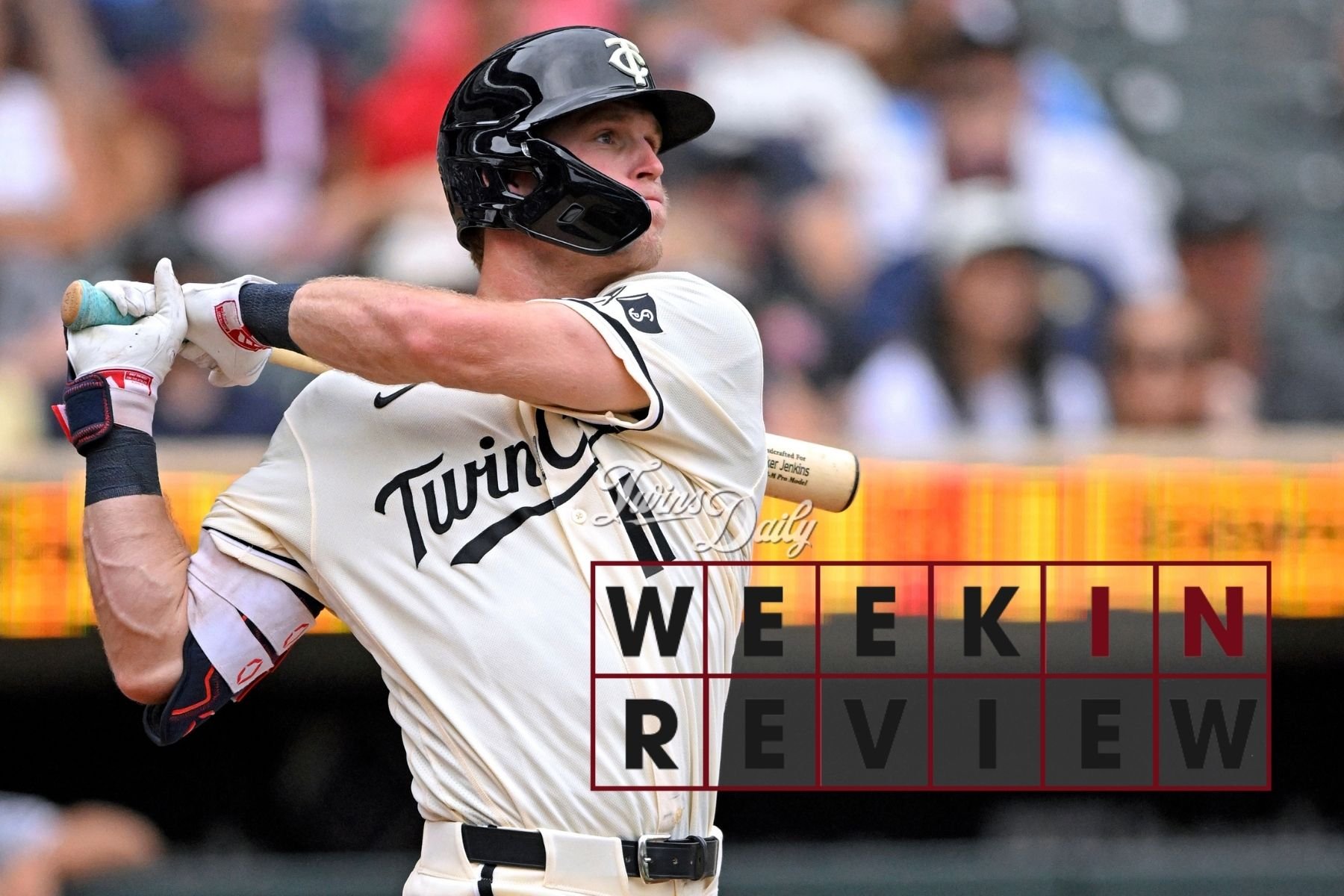 The Weekly Nutshell: The Twins had fallen six games below .500, with their playoff odds sinking toward single digits, by the time they finally made the move we've all been waiting for: promoting top prospect Walker Jenkins to the big leagues. Jenkins debuted at Target Field on Friday night and had a solid game, but he couldn't prevent the Twins from dropping a third straight game and sixth out of seven. The Twins would lose again on Saturday before rebounding to take the final game of the week. A brutal month of August, somehow even worse than their post-firesale stretch a year ago, has effectively knocked the Twins out of playoff contention. But the arrival of Jenkins alongside Kaelen Culpepper gives fans an opportunity to turn their gaze toward a hopeful future while grasping onto the last fleeting glimmers of possibility for a 2026 run. Weekly Snapshot: Mon, 8/24 through Sun, 8/30 *** Record Last Week: 2-4 (Overall: 65-72) Run Differential Last Week: -2 (Overall: -56) Standing: 3rd Place in AL Central (7.5 GB); 4.0 games out of WC Latest Game Results Game 132 | MIN 9, ATH 6: Twins Take Big Early Lead, Hold Off Ninth-Inning Charge by A's Culpepper: 4-5, RBI Game 133 | ATH 4, MIN 2: Offense Goes Back to Sleep, Buxton Exits with Injury Again Keaschall, Buxton, Jeffers: 0-10, 6 K Game 134 | ATH 7, MIN 4: Bats Vanish After Three Early Homers, Bullpen Blows Lead Morris: 1 IP, 3 ER Game 135 | CWS 7, MIN 4: Jenkins Debuts But Can't Save Twins From Third Straight Loss Kremer: 4 IP, 6 R (5 ER), 7 H, 3 BB, 3 K Game 136 | CWS 3, MIN 2: Offense Goes Quietly Again to Waste Well-Pitched Effort Twins offense: 0-7 RISP Game 137 | MIN 5, CWS 1: Twins Latest End Skid Behind Masterful Outing from Matthews Matthews: 8.1 IP, 1 ER, 5 H, 1 BB, 5 K NEWS & NOTES The Jenkins promotion was of course the big news of the week. The Twins' No. 1 prospect was called up on Friday with Alan Roden optioned to the minors and Woo-Suk Go designated for assignment to create room. The hope and expectation is that the 21-year-old Jenkins will be up for good. Byron Buxton, unfortunately, might be down for good (this year, anyway). He exited Tuesday's game with yet another flare-up of his balky right hip, which rendered him unable to bend over and pick up a rolling ball in the gap. The Twins waited several days to place him on the injured list but did so on Sunday, recalling outfielder Gabriel Gonzalez in his stead. This is Buxton's third time landing on the IL this year due to the same hip issue, and you've gotta believe that with the team's postseason hopes fading away, they are just going to call it on Buxton, with an eye on trying to get him back to a decent place physically for next year. General manager Jeremy Zoll acknowledged that offseason surgery is "definitely a potential option." A case could also be made for shutting down Joe Ryan for similar reasons, but it looks like the right-hander will try and get back out there for a few more starts in September to close out another forgettable second half on a positive note. Ryan threw live batting practice in St. Paul on Wednesday and was scheduled to throw another bullpen at Target Field on Sunday, with a rehab assignment to follow if everything checks out. HIGHLIGHTS Jenkins certainly looks the part of a big-leaguer. He walked and singled in his first game on Friday, then picked up his first career extra-base hit Saturday on a hustle double. He looked good in center field and made an excellent running catch at the wall on Sunday. Culpepper also put together a strong week, highlighted by a four-hit game on Monday. He doubled, homered and struck out only four times in 24 plate appearances across six games. Culpepper is batting .313 with an .843 OPS so far in the majors while starting everyday at shortstop. The kids are looking all right. The rotation showed signs of settling in. They had the worst ERA in the American League over the month following the All-Star break, but in the past couple of weeks, Twins starters have at least gravitated back toward the middle of the road. Zebby Matthews is leading the charge. He's been one of the few bona fide bright spots of the second half for the Twins, shaking off a track record of inconsistency and homer-proneness to lock in with steadily effective outings. He was downright phenomenal this past week, holding the A's to one run over seven innings on Monday and then flirting with perfection on Sunday before ultimately pitching into the ninth with only one run allowed. Matthews has recovered brilliantly from a clunker at Wrigley coming out of the break, completing five-plus innings in seven straight starts with a 3.21 ERA and only four home runs allowed. He went 5-0 in August. Taj Bradley's 11-strikeout performance on Tuesday included the first immaculate inning in Twins history: nine pitches, nine strikes. It's a great encapsulation of the dominant capability he possesses. His 27% K-rate ranks 12th among qualified MLB starters. Bailey Ober is a far cry from Bradley on the dominance spectrum but he continues to get the job done with some of the league's lowest top-end velocity. Ober delivered another impressive effort on Saturday, holding the White Sox to two runs (one earned) in five innings — although, much like Bradley's start on Tuesday, the lineup didn't do much of anything to support him. Since giving up three bombs against Baltimore on August 11th, Ober has a 2.51 ERA across three starts, with only one home run allowed, and his ERA for the season is down to a very respectable 4.37. I dunno how he's doing it, but he's doing it. LOWLIGHTS Regression is catching up to the top arms in the Twins bullpen. Andrew Morris and Yoendrys Gómez, who've been overachieving all season, are seeing their respective breakouts tail off here in the final stage. Gómez had not given up multiple runs in an outing all year with the Twins before getting knocked around for four earned on Monday, yielding four hits and a walk while recording just two outs. It was a low-leverage spot for the closer, who entered with a 9-2 lead, but adds to what has been a rocky month of August in which he's allowed 10 hits and seven walks in 8 ⅓ innings. We're getting a bit of a reality check on the journeyman, which is not to take anything away from his stellar work overall. Morris came in for a one-pitch save on Monday after Gómez's meltdown brought the A's within three runs, but then picked up his sixth and seventh losses of the season on Wednesday and Saturday. The finale against the Athletics, which saw Morris turn a two-lead into a two-run deficit in the sixth, marked the third time in five appearances where he yielded three or more runs. He's got a 6.94 ERA in August after coming in at 3.12, and his negative-1.77 WPA this month is worst among MLB relievers. Regression also came calling for Dean Kremer, who was touched up for six runs (five earned) in four innings against Chicago on Friday. He issued three walks and a wild pitch while striking out only three in an outing that more closely resembled his pre-Minnesota form. As with Gómez and Morris, this type of showing from Kremer doesn't cause me to lose sight of his usefulness or future fit, but it does serve as a reminder of who he is — a solid but unspectacular arm that probably shouldn't be counted on as a primary weapon on next year's staff. Offensively, the Twins are just a drag. For a while this lineup could never seem to get anything going in the early innings and now they've swung the opposite way. On three consecutive occasions (Wednesday, Friday, Saturday), Minnesota put up multiple runs during the first couple of innings and then went silent. Across those three games, with their backs against the wall, Twins hitters went 2-for-22 (.091) with runners in scoring position. Ryan Jeffers has cooled off after initially mashing off the IL. He went 3-for-20 with a pair of singles and a double, and hasn't homered all month. Royce Lewis totaled five singles and no walks in 23 at-bats. His OPS has fallen back below .700, with undisciplined at-bats (24-to-3 K/BB ratio this month) that are increasingly irritating to watch. Both of these guys represent major offseason decision points for the Twins. Jeffers is due for free agency, and with a contract extension unlikely, the front office will need to decide whether it is willing to extend a qualifying offer and potentially recoup some value when he leaves, at the "risk" of paying a big one-year salary in 2027. If not, the wisdom of holding him at the deadline for a seemingly fruitless postseason pursuit will deserve a lot of scrutiny. Lewis, meanwhile, is headed toward his second-to-last year of arbitration eligibility and the team will need to make a call on whether they want to bring him back or go a different direction. We've seen flashes of his upside at times, but overall he's turned into a sub-par asset: a below-average offensive first baseman who is merely okay with the glove and prone to inexplicable lapses, like when he cost his pitcher a pitch-clock violation by being late to his position on Friday night. TRENDING STORYLINE With the team's playoff hopes drying up, we turn our eyes to the future. The good news is that the future is now for the Twins. Jenkins and Culpepper have arrived, with Gonzalez the latest to join the fray. We'll see if Emmanuel Rodriguez, whom the Twins will be obligated to carry out of spring training next year, enters the mix as a September call-up to get a bit of seasoning. Last year the Twins went 8-17 in September, stumbling to a 92-loss finish and leaving a sour taste for a completely unenergized fanbase. This year's team has an opportunity to finish on a much more inspiring note. The remaining 25 games may not prove to be particularly meaningful from a contention standpoint, but they can be plenty meaningful for many of the players involved. LOOKING AHEAD When we looked ahead to this portion of the schedule with 15 consecutive games against AL Central opponents, it had the makings of an exciting, season-deciding stretch. Alas, Minnesota's lackluster play over the past few weeks has tempered the stakes. At this point, making a run at first place is essentially out of the question, and the Twins' main objective will be staying above Detroit and Kansas City at the bottom of the division. MONDAY, AUGUST 31: TIGERS @ TWINS — RHP Jackson Jobe v. RHP Taj Bradley TUESDAY, SEPTEMBER 1: TIGERS @ TWINS — RHP Troy Melton v. LHP Connor Prielipp WEDNESDAY, SEPTEMBER 2: TIGERS @ TWINS — RHP Drew Anderson v. RHP Dean Kremer FRIDAY, SEPTEMBER 4: TWINS @ WHITE SOX — RHP Bailey Ober v. TBD SATURDAY, SEPTEMBER 5: TWINS @ WHITE SOX — RHP Zebby Matthews v. LHP Anthony Kay SUNDAY, SEPTEMBER 6: TWINS @ WHITE SOX — RHP Taj Bradley v/ RHP Sean Burke
- 20 comments
-
- 5
-
-
- walker jenkins
- kaelen culpepper
- (and 1 more)
-
Image courtesy of Nick Wosika-Imagn Images The Weekly Nutshell: The Twins had fallen six games below .500, with their playoff odds sinking toward single digits, by the time they finally made the move we've all been waiting for: promoting top prospect Walker Jenkins to the big leagues. Jenkins debuted at Target Field on Friday night and had a solid game, but he couldn't prevent the Twins from dropping a third straight game and sixth out of seven. The Twins would lose again on Saturday before rebounding to take the final game of the week. A brutal month of August, somehow even worse than their post-firesale stretch a year ago, has effectively knocked the Twins out of playoff contention. But the arrival of Jenkins alongside Kaelen Culpepper gives fans an opportunity to turn their gaze toward a hopeful future while grasping onto the last fleeting glimmers of possibility for a 2026 run. Weekly Snapshot: Mon, 8/24 through Sun, 8/30 *** Record Last Week: 2-4 (Overall: 65-72) Run Differential Last Week: -2 (Overall: -56) Standing: 3rd Place in AL Central (7.5 GB); 4.0 games out of WC Latest Game Results Game 132 | MIN 9, ATH 6: Twins Take Big Early Lead, Hold Off Ninth-Inning Charge by A's Culpepper: 4-5, RBI Game 133 | ATH 4, MIN 2: Offense Goes Back to Sleep, Buxton Exits with Injury Again Keaschall, Buxton, Jeffers: 0-10, 6 K Game 134 | ATH 7, MIN 4: Bats Vanish After Three Early Homers, Bullpen Blows Lead Morris: 1 IP, 3 ER Game 135 | CWS 7, MIN 4: Jenkins Debuts But Can't Save Twins From Third Straight Loss Kremer: 4 IP, 6 R (5 ER), 7 H, 3 BB, 3 K Game 136 | CWS 3, MIN 2: Offense Goes Quietly Again to Waste Well-Pitched Effort Twins offense: 0-7 RISP Game 137 | MIN 5, CWS 1: Twins Latest End Skid Behind Masterful Outing from Matthews Matthews: 8.1 IP, 1 ER, 5 H, 1 BB, 5 K NEWS & NOTES The Jenkins promotion was of course the big news of the week. The Twins' No. 1 prospect was called up on Friday with Alan Roden optioned to the minors and Woo-Suk Go designated for assignment to create room. The hope and expectation is that the 21-year-old Jenkins will be up for good. Byron Buxton, unfortunately, might be down for good (this year, anyway). He exited Tuesday's game with yet another flare-up of his balky right hip, which rendered him unable to bend over and pick up a rolling ball in the gap. The Twins waited several days to place him on the injured list but did so on Sunday, recalling outfielder Gabriel Gonzalez in his stead. This is Buxton's third time landing on the IL this year due to the same hip issue, and you've gotta believe that with the team's postseason hopes fading away, they are just going to call it on Buxton, with an eye on trying to get him back to a decent place physically for next year. General manager Jeremy Zoll acknowledged that offseason surgery is "definitely a potential option." A case could also be made for shutting down Joe Ryan for similar reasons, but it looks like the right-hander will try and get back out there for a few more starts in September to close out another forgettable second half on a positive note. Ryan threw live batting practice in St. Paul on Wednesday and was scheduled to throw another bullpen at Target Field on Sunday, with a rehab assignment to follow if everything checks out. HIGHLIGHTS Jenkins certainly looks the part of a big-leaguer. He walked and singled in his first game on Friday, then picked up his first career extra-base hit Saturday on a hustle double. He looked good in center field and made an excellent running catch at the wall on Sunday. Culpepper also put together a strong week, highlighted by a four-hit game on Monday. He doubled, homered and struck out only four times in 24 plate appearances across six games. Culpepper is batting .313 with an .843 OPS so far in the majors while starting everyday at shortstop. The kids are looking all right. The rotation showed signs of settling in. They had the worst ERA in the American League over the month following the All-Star break, but in the past couple of weeks, Twins starters have at least gravitated back toward the middle of the road. Zebby Matthews is leading the charge. He's been one of the few bona fide bright spots of the second half for the Twins, shaking off a track record of inconsistency and homer-proneness to lock in with steadily effective outings. He was downright phenomenal this past week, holding the A's to one run over seven innings on Monday and then flirting with perfection on Sunday before ultimately pitching into the ninth with only one run allowed. Matthews has recovered brilliantly from a clunker at Wrigley coming out of the break, completing five-plus innings in seven straight starts with a 3.21 ERA and only four home runs allowed. He went 5-0 in August. Taj Bradley's 11-strikeout performance on Tuesday included the first immaculate inning in Twins history: nine pitches, nine strikes. It's a great encapsulation of the dominant capability he possesses. His 27% K-rate ranks 12th among qualified MLB starters. Bailey Ober is a far cry from Bradley on the dominance spectrum but he continues to get the job done with some of the league's lowest top-end velocity. Ober delivered another impressive effort on Saturday, holding the White Sox to two runs (one earned) in five innings — although, much like Bradley's start on Tuesday, the lineup didn't do much of anything to support him. Since giving up three bombs against Baltimore on August 11th, Ober has a 2.51 ERA across three starts, with only one home run allowed, and his ERA for the season is down to a very respectable 4.37. I dunno how he's doing it, but he's doing it. LOWLIGHTS Regression is catching up to the top arms in the Twins bullpen. Andrew Morris and Yoendrys Gómez, who've been overachieving all season, are seeing their respective breakouts tail off here in the final stage. Gómez had not given up multiple runs in an outing all year with the Twins before getting knocked around for four earned on Monday, yielding four hits and a walk while recording just two outs. It was a low-leverage spot for the closer, who entered with a 9-2 lead, but adds to what has been a rocky month of August in which he's allowed 10 hits and seven walks in 8 ⅓ innings. We're getting a bit of a reality check on the journeyman, which is not to take anything away from his stellar work overall. Morris came in for a one-pitch save on Monday after Gómez's meltdown brought the A's within three runs, but then picked up his sixth and seventh losses of the season on Wednesday and Saturday. The finale against the Athletics, which saw Morris turn a two-lead into a two-run deficit in the sixth, marked the third time in five appearances where he yielded three or more runs. He's got a 6.94 ERA in August after coming in at 3.12, and his negative-1.77 WPA this month is worst among MLB relievers. Regression also came calling for Dean Kremer, who was touched up for six runs (five earned) in four innings against Chicago on Friday. He issued three walks and a wild pitch while striking out only three in an outing that more closely resembled his pre-Minnesota form. As with Gómez and Morris, this type of showing from Kremer doesn't cause me to lose sight of his usefulness or future fit, but it does serve as a reminder of who he is — a solid but unspectacular arm that probably shouldn't be counted on as a primary weapon on next year's staff. Offensively, the Twins are just a drag. For a while this lineup could never seem to get anything going in the early innings and now they've swung the opposite way. On three consecutive occasions (Wednesday, Friday, Saturday), Minnesota put up multiple runs during the first couple of innings and then went silent. Across those three games, with their backs against the wall, Twins hitters went 2-for-22 (.091) with runners in scoring position. Ryan Jeffers has cooled off after initially mashing off the IL. He went 3-for-20 with a pair of singles and a double, and hasn't homered all month. Royce Lewis totaled five singles and no walks in 23 at-bats. His OPS has fallen back below .700, with undisciplined at-bats (24-to-3 K/BB ratio this month) that are increasingly irritating to watch. Both of these guys represent major offseason decision points for the Twins. Jeffers is due for free agency, and with a contract extension unlikely, the front office will need to decide whether it is willing to extend a qualifying offer and potentially recoup some value when he leaves, at the "risk" of paying a big one-year salary in 2027. If not, the wisdom of holding him at the deadline for a seemingly fruitless postseason pursuit will deserve a lot of scrutiny. Lewis, meanwhile, is headed toward his second-to-last year of arbitration eligibility and the team will need to make a call on whether they want to bring him back or go a different direction. We've seen flashes of his upside at times, but overall he's turned into a sub-par asset: a below-average offensive first baseman who is merely okay with the glove and prone to inexplicable lapses, like when he cost his pitcher a pitch-clock violation by being late to his position on Friday night. TRENDING STORYLINE With the team's playoff hopes drying up, we turn our eyes to the future. The good news is that the future is now for the Twins. Jenkins and Culpepper have arrived, with Gonzalez the latest to join the fray. We'll see if Emmanuel Rodriguez, whom the Twins will be obligated to carry out of spring training next year, enters the mix as a September call-up to get a bit of seasoning. Last year the Twins went 8-17 in September, stumbling to a 92-loss finish and leaving a sour taste for a completely unenergized fanbase. This year's team has an opportunity to finish on a much more inspiring note. The remaining 25 games may not prove to be particularly meaningful from a contention standpoint, but they can be plenty meaningful for many of the players involved. LOOKING AHEAD When we looked ahead to this portion of the schedule with 15 consecutive games against AL Central opponents, it had the makings of an exciting, season-deciding stretch. Alas, Minnesota's lackluster play over the past few weeks has tempered the stakes. At this point, making a run at first place is essentially out of the question, and the Twins' main objective will be staying above Detroit and Kansas City at the bottom of the division. MONDAY, AUGUST 31: TIGERS @ TWINS — RHP Jackson Jobe v. RHP Taj Bradley TUESDAY, SEPTEMBER 1: TIGERS @ TWINS — RHP Troy Melton v. LHP Connor Prielipp WEDNESDAY, SEPTEMBER 2: TIGERS @ TWINS — RHP Drew Anderson v. RHP Dean Kremer FRIDAY, SEPTEMBER 4: TWINS @ WHITE SOX — RHP Bailey Ober v. TBD SATURDAY, SEPTEMBER 5: TWINS @ WHITE SOX — RHP Zebby Matthews v. LHP Anthony Kay SUNDAY, SEPTEMBER 6: TWINS @ WHITE SOX — RHP Taj Bradley v/ RHP Sean Burke View full article
-
 Last year, the Twins stumbled into the month of August, dropping four of their last five in July to fall six games below .500 and spur an unprecedented deadline sell-off. In what would prove to be Derek Falvey's final big swing at the helm, Minnesota's front office traded away 10 major-league players. The outgoing wave included their three best relievers in Jhoan Duran, Griffin Jax and Louis Varland, and one of their top-three position players in Carlos Correa. What remained was an ill-suited starting shortstop in Brooks Lee and a bullpen full of marginal (at best) MLB talent. The ensuing result was predictably very bad. Through August 27th, they were 9-16, a .360 winning percentage. Their decimated bullpen ranked 19th among MLB teams in fWAR, while their rotation ranked 18th and their offense ranked 21st. This year, August started on a very different note for the Twins. They won seven of their last nine games in July, bouncing back from a post-break slump, and by the time the trade deadline arrived, they had emphatically emerged as buyers. They traded one of their top pitching prospects for Jeff Hoffman, after also shipping out noteworthy prospects for reliever A.J. Minter and starter Dean Kremer. Following Tom Pohlad's edict, first-year baseball ops leader Jeremy Zoll invested in his roster, in an effort to bolster the club's chances in August and September as they competed for a playoff spot. And in response to that investment, through August 27th, this year's Twins have gone ... 8-15, good for a .348 winning percentage that is slightly worse than 2025 through this date. The revamped bullpen has been modestly better (15th), albeit with a far worse Win Probability Added, while the rotation and offense have both been middle-of-the-pack. Just as expectations played to Shelton's favor in the first half of the season, they now work against him relative to where Rocco Baldelli stood one year ago. Last August, people were commending the Twins for playing free and easy, absent the weight of contention status and urgency. Now the current team is collapsing under pressure, struggling across all phases, with poor play accompanied by questionable decision-making from both Shelton and Zoll's front office. The difference is that the ending of this year's story remains unwritten. We know where it went from here last season: from August 28th onward the Twins went 10-19 to end up in fourth place with 92 losses. There's still time for the Twins to turn the ship around and at least make things interesting. Their remaining schedule is favorable. Walker Jenkins is on his way and Joe Ryan is hopefully not far behind. But in order to avoid irrelevance by mid-September, an outcome that would cast huge scrutiny on their decision to parse out future assets for short-term help three weeks ago, these beefed-up Twins need to show they are better than the dismantled, resigned team that marched to the finish line a year ago. So far, they haven't proven it in the least.
- 63 comments
-
- 3
-
-
- derek shelton
- rocco baldelli
- (and 2 more)
-
Image courtesy of Matt Blewett, David Frerker-Imagn Images Last year, the Twins stumbled into the month of August, dropping four of their last five in July to fall six games below .500 and spur an unprecedented deadline sell-off. In what would prove to be Derek Falvey's final big swing at the helm, Minnesota's front office traded away 10 major-league players. The outgoing wave included their three best relievers in Jhoan Duran, Griffin Jax and Louis Varland, and one of their top-three position players in Carlos Correa. What remained was an ill-suited starting shortstop in Brooks Lee and a bullpen full of marginal (at best) MLB talent. The ensuing result was predictably very bad. Through August 27th, they were 9-16, a .360 winning percentage. Their decimated bullpen ranked 19th among MLB teams in fWAR, while their rotation ranked 18th and their offense ranked 21st. This year, August started on a very different note for the Twins. They won seven of their last nine games in July, bouncing back from a post-break slump, and by the time the trade deadline arrived, they had emphatically emerged as buyers. They traded one of their top pitching prospects for Jeff Hoffman, after also shipping out noteworthy prospects for reliever A.J. Minter and starter Dean Kremer. Following Tom Pohlad's edict, first-year baseball ops leader Jeremy Zoll invested in his roster, in an effort to bolster the club's chances in August and September as they competed for a playoff spot. And in response to that investment, through August 27th, this year's Twins have gone ... 8-15, good for a .348 winning percentage that is slightly worse than 2025 through this date. The revamped bullpen has been modestly better (15th), albeit with a far worse Win Probability Added, while the rotation and offense have both been middle-of-the-pack. Just as expectations played to Shelton's favor in the first half of the season, they now work against him relative to where Rocco Baldelli stood one year ago. Last August, people were commending the Twins for playing free and easy, absent the weight of contention status and urgency. Now the current team is collapsing under pressure, struggling across all phases, with poor play accompanied by questionable decision-making from both Shelton and Zoll's front office. The difference is that the ending of this year's story remains unwritten. We know where it went from here last season: from August 28th onward the Twins went 10-19 to end up in fourth place with 92 losses. There's still time for the Twins to turn the ship around and at least make things interesting. Their remaining schedule is favorable. Walker Jenkins is on his way and Joe Ryan is hopefully not far behind. But in order to avoid irrelevance by mid-September, an outcome that would cast huge scrutiny on their decision to parse out future assets for short-term help three weeks ago, these beefed-up Twins need to show they are better than the dismantled, resigned team that marched to the finish line a year ago. So far, they haven't proven it in the least. View full article
-
Week in Review: Wild Card Whiplash
Nick Nelson replied to Nick Nelson's topic in Twins Daily Front Page News
It’s early, but hard not to look at the Larnach trade that almost happened and think “what if.” Larnach’s been horrible since the trade deadline. Hoffman’s been disappointing so far. Meanwhile, Abreu has been excellent and Jenkins, who would’ve surely been called up if Larnach was traded, is on fire. And they’d still have Dasan Hill…- 18 replies
-
- 6
-
-
- kody clemens
- luke keaschall
- (and 2 more)
-
Image courtesy of David Frerker-Imagn Images The Weekly Nutshell: The Twins entered this past week coming off perhaps their worst series of the entire season — a demoralizing sweep at the hands of the Phillies that left Minnesota on the ropes, five games below .500 with six weeks remaining. Once again, the Twins put themselves in a tough spot. And once again, they resiliently bounced back, putting together perhaps their best series of the season in a sweep over the Braves. For a brief moment, Minnesota overtook sole ownership of the third AL's Wild Card spot. Then: all progress erased. The Twins traveled to San Diego and dropped all three against the Padres, including a blown four-run lead on Saturday. By the end of play on Sunday, three teams (Texas, Cleveland and Toronto) stood between Minnesota and the last postseason position, with the Orioles tied at two games back. That tells you how quickly things can swing in this tight race, but also underscores why the Twins can't afford more series like the ones against Philadelphia and San Diego. Fortunately, the schedule is about to ease up. Weekly Snapshot: Mon, 8/17 through Sun, 8/23 *** Record Last Week: 3-3 (Overall: 63-68) Run Differential Last Week: -6 (Overall: -54) Standing: 3rd Place in AL Central (5.5 GB); 2.0 games out of WC Latest Game Results Game 126 | MIN 4, ATL 2: Bats Stake Early Lead, Bullpen Holds Tight to Win Opener Twins bullpen: 4.2 IP, 0 R, 1 H, 2 BB, 4 K Game 127 | MIN 4, ATL 1: Matthews Leads Charge in Masterful Pitching Performance Matthews: 5.2 IP, 1 R, 5 H, 1 BB, 4 K Game 128 | MIN 6, ATL 4: Offense Shows Fight as Twins Complete Impressive Sweep Clemens: 2-4, 2B, 3 RBI Game 129 | SD 6, MIN 2: Prielipp Hits Mid-Game Wall Again, Lineup Held to Two Hits Prielipp: 6 IP, 6 ER, 8 H, 2 BB, 7 K Game 130 | SD 7, MIN 5: Early Lead Evaporates, Morris Melts Down in Four-Run Seventh Morris: 1 IP, 4 R (1 ER), 3 H Game 131 | SD 8, MIN 1: Twins Lineup Goes Feebly Against Buehler, Bullpen Struggles Twins bullpen: 3 IP, 7 ER NEWS & NOTES Austin Martin, who was injured in the series finale against Philadelphia last weekend, went on the injured list Monday with a hamstring strain. While the severity of the injury was deemed mild, it will keep Martin out into September, subtracting a useful right-handed bat from a lineup that continues to need all the help it can get against lefties. (Two more on tap in Sacramento to open the coming week, by the way.) To replace Martin on the roster, the Twins front office bypassed every interesting or exciting option, instead turning back to Alex Jackson, who'd just cleared waivers and been outrighted to Triple-A one day earlier. Jackson will resume his role as a sparsely-used third catcher offering no real utility on the roster. Walker Jenkins, who notched a pair of two-homer games in Columbus this past week, remains in the minors for the time being. Kendry Rojas exited Friday night's game for the Saints and landed on the IL a day later with a right oblique strain. It could be a season-ender given how little runway is left. At minimum he'll be sidelined for several weeks, taking a key potential weapon out of the pitching equation as the Twins make their push. HIGHLIGHTS Minnesota's rotation entered this past week in a major funk, ranking 29th out of all MLB teams in ERA since the All-Star break (5.86) and coming off a dreadful week against Baltimore and Philly. This unit badly needed to get on track, and they did so against the Braves. Bailey Ober kicked things off with a solid, albeit short, outing on Monday, allowing two runs in 4 ⅓ innings. Derek Shelton wisely exercised an early hook, handing a 4-2 lead over to the relievers who shut things down the rest of the way to seal a win. Zebby Matthews improved upon Ober's results the next night with 5 ⅔ innings of one-run ball in a 4-1 victory. Taj Bradley followed with one run allowed over five innings on Wednesday to help the Twins clinch a sweep. Dean Kremer was effective again on Saturday, allowing two runs in 5 ⅓, and Ober held the Padres to one run in five innings on Sunday. No one's getting through six innings but the whole point of the trade deadline strategy was to lessen the need for it. When the bolstered bullpen is holding up its end of the bargain and the offense is showing some fight, those types of outings are really all the Twins need from their starters. Kody Clemens came into the week with a sub-.500 OPS in the month of August, but caught fire against Atlanta and San Diego, driving in seven runs on eight hits (including a double and a triple) in 18 at-bats. Clemens was pivotal in Wednesday's win over the Braves, delivering two key run-scoring hits including the eventual game-winner. He's tied for the AL lead with six triples on the season, delivering power and clutchness that help make up for an OBP leaving plenty to be desired. Luke Keaschall, unlike Clemens, has been an on-base machine. He kept it rolling last week with multiple hits in four of six games, totaling 10 hits in 26 at-bats to lift his average to .274 for the year. Keaschall stumbled out of the gates with a cold month of April, but since May 1st his .402 OBP ranks third in all of baseball. Shelton has finally slid Keaschall up to the leadoff spot and I see little reason that should change. He's pretty much an ideal table-setter atop the order. A few other notable performances from an offense that is hopefully showing signs of awakening for the stretch run: Josh Bell supplied some pop with two doubles, a homer and five RBIs. He's enjoying a monster month of August after slumping through the second half of July. Bell leads the team with 77 RBIs on the season, and has an OPS north of 1.000 with runners in scoring position. Streaky Brooks Lee was 1-for-13 on the week before coming through with a three-hit game on Saturday night, which included a home run and a double. He then added another solo shot on Sunday — the lone damage Minnesota could muster against Walker Buehler and the Padres. Lee is up to 20 home runs on the season and he ranks second on the team behind Bell in RBIs with 69. Kaelen Culpepper launched the second home run of his young career on Saturday, as part of a 7-for-21 week that lifts his slash line to .289/.340/.444 through 13 games as a Twin. There have been some rough patches and learning moments for the rookie, but overall he has provided the kind of spark that the Twins hoped for when they promoted him. LOWLIGHTS It's great to see guys like Bell and Culpepper stepping up here in the late stage of the season, but the Twins continue to be held back by a lack of production from two hitters who carried their offense in the first half. Trevor Larnach had zero hits or walks in 13 plate appearances last week, and is batting .151 in August. Larnach has one RBI and no extra-base hits in his past 48 plate appearances as a breakthrough season cools into a much more ordinary one. He has essentially switched spots in the order with Keaschall against righties, with Larnach batting sixth, seventh and seventh in his past three starts after hitting leadoff almost exclusively since June. The player whose true form the Twins are missing more than anything, though, is Byron Buxton. He started five of six games, and pinch-hit in the other, so obviously Buxton is feeling well enough to be on the field. But, he does not look right. It comes through in the numbers — Buxton was 3-for-19 last week, and is batting .129 with no home runs and one RBI in eight games since being activated from the injured list. His level of discomfort is also very evident in watching him play. He hasn't been running hard, removing a key aspect of his value. Buxton tapped into double plays on both Saturday and Sunday, giving him two more GIDPs in one weekend than he had all of last year. He hasn't tried to steal a base since July 5th, when an attempt at Yankee Stadium flared up his hip and led to an IL stint. Buxton made a spectacular play in the outfield at Petco on Friday but it visibly took a toll, as he stayed on the ground for several seconds before slowly getting up and gingerly walking off the field. His diving grab in San Diego is a reminder that Buxton can still do special things even while physically compromised, but watching him swing the bat and run the bases makes clear just how affected he is. This is hardly the first time we've seen Buxton play through pain, but in the past, you'd usually rather have him at less than 100 percent than any of the alternatives. Right now, with Jenkins banging down the door in Triple-A and Emmanuel Rodriguez making a case in his own right, I'm not so sure that's the case. Is there a point where it stops making sense to push Buxton through what he's dealing with and try something else? The Twins also need to consider what their best course of action is with Connor Prielipp. Unlike Buxton, there is no sign Prielipp is playing through any injury, but he does appear to be wearing down. His start against the Padres on Friday was the second straight where he unraveled in the middle innings, turning a quality outing into a clunker. Prielipp had allowed two runs through four innings in San Diego before giving up four runs in the fifth on a parade of singles. Prielipp fell to 3-7 with the loss, on the heels of coughing up eight runs against the Phillies. His ERA is up to 5.57 and his control is beginning to elude him, with 12 walks across four August starts. The left-hander is already well beyond his career high for workload with 112 innings pitched this season, and his velocity was down a tick in this latest start. I don't know that the Twins can really afford to shut him down, especially with the Rojas injury eroding their already thin rotation depth, but a quicker hook might be in order versus letting him face lineups three times as he has in these past two starts. TRENDING STORYLINE We're heading into the home stretch, with five weeks left to go. The Twins have one of the softest remaining schedules, giving them a chance to make a run despite their relatively unfavorable current position. But in order to take advantage, they've got to play better baseball than we've largely seen this month. Buxton's ability to get on track looms large, as does the front office's willingness to press the red button and promote Jenkins. The other glaring question: When will Joe Ryan make it back? He threw off a mound on Tuesday and it sounds like that went reasonably well, with Ryan calling it "a step in the right direction." But the clock is ticking with only 31 games remaining on the schedule. I'll be closely watching to see what kinds of strides he is able to make in the coming seven days, and whether any plans for a rehab assignment are put into motion. LOOKING AHEAD Taking advantage of the relatively soft remaining schedule needs to start now, with a ripe opportunity at hand. The Twins are heading to Sacramento for three games against an A's team that leads the majors with 80 losses. Taking at least two of three is a must, because from there the Twins embark on a run of 15 consecutive games against AL Central opponents, including six against the division-leading White Sox. It's go time. MONDAY, AUGUST 24: TWINS @ ATHLETICS — RHP Zebby Matthews v. LHP Jeffrey Springs TUESDAY, AUGUST 25: TWINS @ ATHLETICS — RHP Taj Bradley v. LHP Gage Jump WEDNESDAY, AUGUST 26: TWINS @ ATHLETICS — LHP Connor Prielipp v. RHP J.T. Ginn FRIDAY, AUGUST 28: WHITE SOX @ TWINS — RHP Luis Castillo v. RHP Dean Kremer SATURDAY, AUGUST 29: WHITE SOX @ TWINS — TBD v. RHP Bailey Ober SUNDAY, AUGUST 30: WHITE SOX @ TWINS — TBD v. RHP Zebby Matthews View full article
- 18 replies
-
- 2
-
-
- kody clemens
- luke keaschall
- (and 2 more)
-
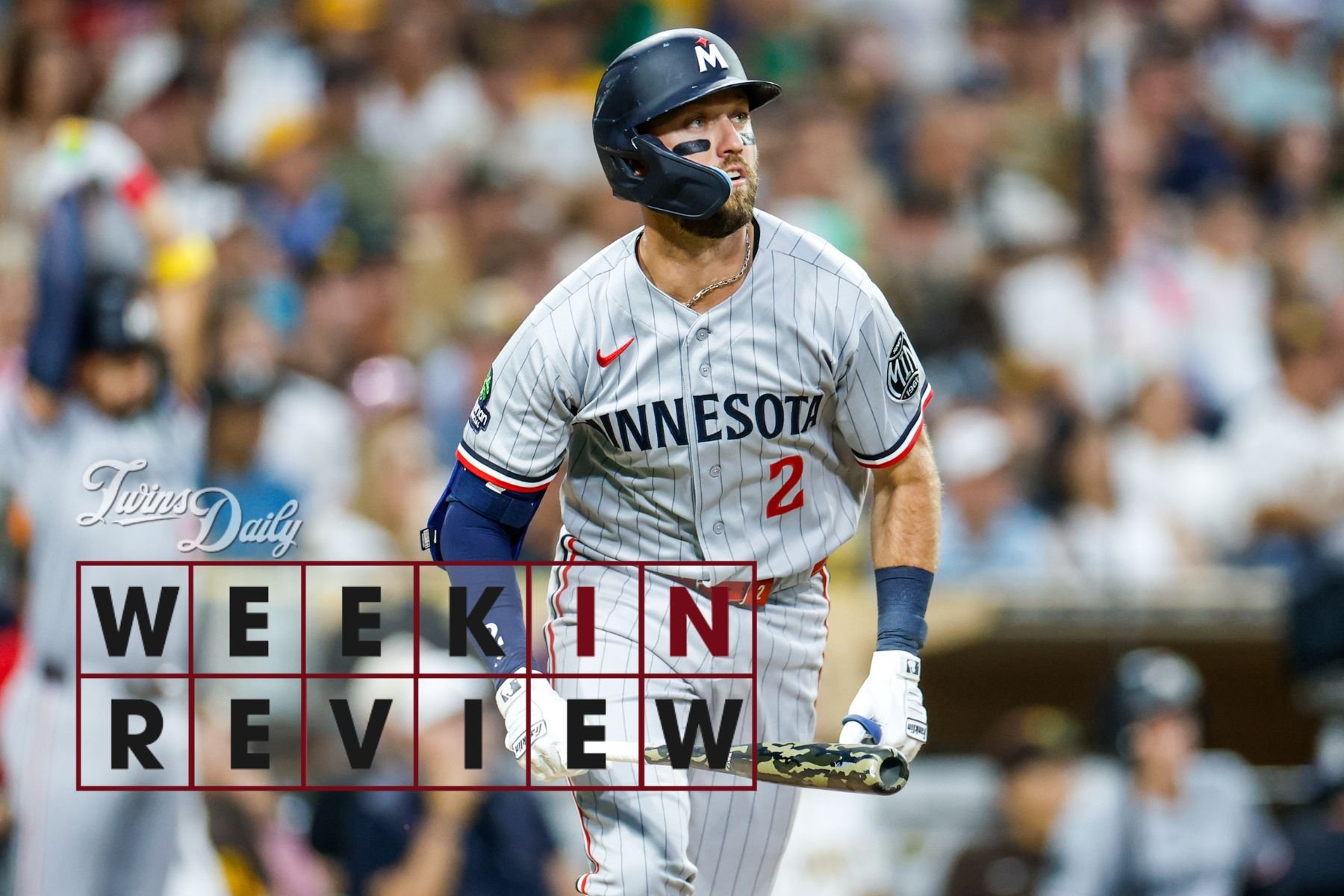 The Weekly Nutshell: The Twins entered this past week coming off perhaps their worst series of the entire season — a demoralizing sweep at the hands of the Phillies that left Minnesota on the ropes, five games below .500 with six weeks remaining. Once again, the Twins put themselves in a tough spot. And once again, they resiliently bounced back, putting together perhaps their best series of the season in a sweep over the Braves. For a brief moment, Minnesota overtook sole ownership of the third AL's Wild Card spot. Then: all progress erased. The Twins traveled to San Diego and dropped all three against the Padres, including a blown four-run lead on Saturday. By the end of play on Sunday, three teams (Texas, Cleveland and Toronto) stood between Minnesota and the last postseason position, with the Orioles tied at two games back. That tells you how quickly things can swing in this tight race, but also underscores why the Twins can't afford more series like the ones against Philadelphia and San Diego. Fortunately, the schedule is about to ease up. Weekly Snapshot: Mon, 8/17 through Sun, 8/23 *** Record Last Week: 3-3 (Overall: 63-68) Run Differential Last Week: -6 (Overall: -54) Standing: 3rd Place in AL Central (5.5 GB); 2.0 games out of WC Latest Game Results Game 126 | MIN 4, ATL 2: Bats Stake Early Lead, Bullpen Holds Tight to Win Opener Twins bullpen: 4.2 IP, 0 R, 1 H, 2 BB, 4 K Game 127 | MIN 4, ATL 1: Matthews Leads Charge in Masterful Pitching Performance Matthews: 5.2 IP, 1 R, 5 H, 1 BB, 4 K Game 128 | MIN 6, ATL 4: Offense Shows Fight as Twins Complete Impressive Sweep Clemens: 2-4, 2B, 3 RBI Game 129 | SD 6, MIN 2: Prielipp Hits Mid-Game Wall Again, Lineup Held to Two Hits Prielipp: 6 IP, 6 ER, 8 H, 2 BB, 7 K Game 130 | SD 7, MIN 5: Early Lead Evaporates, Morris Melts Down in Four-Run Seventh Morris: 1 IP, 4 R (1 ER), 3 H Game 131 | SD 8, MIN 1: Twins Lineup Goes Feebly Against Buehler, Bullpen Struggles Twins bullpen: 3 IP, 7 ER NEWS & NOTES Austin Martin, who was injured in the series finale against Philadelphia last weekend, went on the injured list Monday with a hamstring strain. While the severity of the injury was deemed mild, it will keep Martin out into September, subtracting a useful right-handed bat from a lineup that continues to need all the help it can get against lefties. (Two more on tap in Sacramento to open the coming week, by the way.) To replace Martin on the roster, the Twins front office bypassed every interesting or exciting option, instead turning back to Alex Jackson, who'd just cleared waivers and been outrighted to Triple-A one day earlier. Jackson will resume his role as a sparsely-used third catcher offering no real utility on the roster. Walker Jenkins, who notched a pair of two-homer games in Columbus this past week, remains in the minors for the time being. Kendry Rojas exited Friday night's game for the Saints and landed on the IL a day later with a right oblique strain. It could be a season-ender given how little runway is left. At minimum he'll be sidelined for several weeks, taking a key potential weapon out of the pitching equation as the Twins make their push. HIGHLIGHTS Minnesota's rotation entered this past week in a major funk, ranking 29th out of all MLB teams in ERA since the All-Star break (5.86) and coming off a dreadful week against Baltimore and Philly. This unit badly needed to get on track, and they did so against the Braves. Bailey Ober kicked things off with a solid, albeit short, outing on Monday, allowing two runs in 4 ⅓ innings. Derek Shelton wisely exercised an early hook, handing a 4-2 lead over to the relievers who shut things down the rest of the way to seal a win. Zebby Matthews improved upon Ober's results the next night with 5 ⅔ innings of one-run ball in a 4-1 victory. Taj Bradley followed with one run allowed over five innings on Wednesday to help the Twins clinch a sweep. Dean Kremer was effective again on Saturday, allowing two runs in 5 ⅓, and Ober held the Padres to one run in five innings on Sunday. No one's getting through six innings but the whole point of the trade deadline strategy was to lessen the need for it. When the bolstered bullpen is holding up its end of the bargain and the offense is showing some fight, those types of outings are really all the Twins need from their starters. Kody Clemens came into the week with a sub-.500 OPS in the month of August, but caught fire against Atlanta and San Diego, driving in seven runs on eight hits (including a double and a triple) in 18 at-bats. Clemens was pivotal in Wednesday's win over the Braves, delivering two key run-scoring hits including the eventual game-winner. He's tied for the AL lead with six triples on the season, delivering power and clutchness that help make up for an OBP leaving plenty to be desired. Luke Keaschall, unlike Clemens, has been an on-base machine. He kept it rolling last week with multiple hits in four of six games, totaling 10 hits in 26 at-bats to lift his average to .274 for the year. Keaschall stumbled out of the gates with a cold month of April, but since May 1st his .402 OBP ranks third in all of baseball. Shelton has finally slid Keaschall up to the leadoff spot and I see little reason that should change. He's pretty much an ideal table-setter atop the order. A few other notable performances from an offense that is hopefully showing signs of awakening for the stretch run: Josh Bell supplied some pop with two doubles, a homer and five RBIs. He's enjoying a monster month of August after slumping through the second half of July. Bell leads the team with 77 RBIs on the season, and has an OPS north of 1.000 with runners in scoring position. Streaky Brooks Lee was 1-for-13 on the week before coming through with a three-hit game on Saturday night, which included a home run and a double. He then added another solo shot on Sunday — the lone damage Minnesota could muster against Walker Buehler and the Padres. Lee is up to 20 home runs on the season and he ranks second on the team behind Bell in RBIs with 69. Kaelen Culpepper launched the second home run of his young career on Saturday, as part of a 7-for-21 week that lifts his slash line to .289/.340/.444 through 13 games as a Twin. There have been some rough patches and learning moments for the rookie, but overall he has provided the kind of spark that the Twins hoped for when they promoted him. LOWLIGHTS It's great to see guys like Bell and Culpepper stepping up here in the late stage of the season, but the Twins continue to be held back by a lack of production from two hitters who carried their offense in the first half. Trevor Larnach had zero hits or walks in 13 plate appearances last week, and is batting .151 in August. Larnach has one RBI and no extra-base hits in his past 48 plate appearances as a breakthrough season cools into a much more ordinary one. He has essentially switched spots in the order with Keaschall against righties, with Larnach batting sixth, seventh and seventh in his past three starts after hitting leadoff almost exclusively since June. The player whose true form the Twins are missing more than anything, though, is Byron Buxton. He started five of six games, and pinch-hit in the other, so obviously Buxton is feeling well enough to be on the field. But, he does not look right. It comes through in the numbers — Buxton was 3-for-19 last week, and is batting .129 with no home runs and one RBI in eight games since being activated from the injured list. His level of discomfort is also very evident in watching him play. He hasn't been running hard, removing a key aspect of his value. Buxton tapped into double plays on both Saturday and Sunday, giving him two more GIDPs in one weekend than he had all of last year. He hasn't tried to steal a base since July 5th, when an attempt at Yankee Stadium flared up his hip and led to an IL stint. Buxton made a spectacular play in the outfield at Petco on Friday but it visibly took a toll, as he stayed on the ground for several seconds before slowly getting up and gingerly walking off the field. His diving grab in San Diego is a reminder that Buxton can still do special things even while physically compromised, but watching him swing the bat and run the bases makes clear just how affected he is. This is hardly the first time we've seen Buxton play through pain, but in the past, you'd usually rather have him at less than 100 percent than any of the alternatives. Right now, with Jenkins banging down the door in Triple-A and Emmanuel Rodriguez making a case in his own right, I'm not so sure that's the case. Is there a point where it stops making sense to push Buxton through what he's dealing with and try something else? The Twins also need to consider what their best course of action is with Connor Prielipp. Unlike Buxton, there is no sign Prielipp is playing through any injury, but he does appear to be wearing down. His start against the Padres on Friday was the second straight where he unraveled in the middle innings, turning a quality outing into a clunker. Prielipp had allowed two runs through four innings in San Diego before giving up four runs in the fifth on a parade of singles. Prielipp fell to 3-7 with the loss, on the heels of coughing up eight runs against the Phillies. His ERA is up to 5.57 and his control is beginning to elude him, with 12 walks across four August starts. The left-hander is already well beyond his career high for workload with 112 innings pitched this season, and his velocity was down a tick in this latest start. I don't know that the Twins can really afford to shut him down, especially with the Rojas injury eroding their already thin rotation depth, but a quicker hook might be in order versus letting him face lineups three times as he has in these past two starts. TRENDING STORYLINE We're heading into the home stretch, with five weeks left to go. The Twins have one of the softest remaining schedules, giving them a chance to make a run despite their relatively unfavorable current position. But in order to take advantage, they've got to play better baseball than we've largely seen this month. Buxton's ability to get on track looms large, as does the front office's willingness to press the red button and promote Jenkins. The other glaring question: When will Joe Ryan make it back? He threw off a mound on Tuesday and it sounds like that went reasonably well, with Ryan calling it "a step in the right direction." But the clock is ticking with only 31 games remaining on the schedule. I'll be closely watching to see what kinds of strides he is able to make in the coming seven days, and whether any plans for a rehab assignment are put into motion. LOOKING AHEAD Taking advantage of the relatively soft remaining schedule needs to start now, with a ripe opportunity at hand. The Twins are heading to Sacramento for three games against an A's team that leads the majors with 80 losses. Taking at least two of three is a must, because from there the Twins embark on a run of 15 consecutive games against AL Central opponents, including six against the division-leading White Sox. It's go time. MONDAY, AUGUST 24: TWINS @ ATHLETICS — RHP Zebby Matthews v. LHP Jeffrey Springs TUESDAY, AUGUST 25: TWINS @ ATHLETICS — RHP Taj Bradley v. LHP Gage Jump WEDNESDAY, AUGUST 26: TWINS @ ATHLETICS — LHP Connor Prielipp v. RHP J.T. Ginn FRIDAY, AUGUST 28: WHITE SOX @ TWINS — RHP Luis Castillo v. RHP Dean Kremer SATURDAY, AUGUST 29: WHITE SOX @ TWINS — TBD v. RHP Bailey Ober SUNDAY, AUGUST 30: WHITE SOX @ TWINS — TBD v. RHP Zebby Matthews
- 18 comments
-
- 4
-
-
- kody clemens
- luke keaschall
- (and 2 more)
-
 We're closing in on the end of August and while the Minnesota Twins haven't clinched anything, they have pretty firmly secured one of their most openly stated priorities for the season: playing meaningful baseball in September. The Twins entered this weekend in a tie for the final Wild Card spot in the American League, and they'll spend the home stretch of the schedule battling to stay in that mix. With one game left to go against the Padres followed by five more weeks of regular-season action, here's a quick overview of what's left for the Twins. Remaining Twins Schedule, at a Glance Games Remaining: 32 Home / Road: 15 / 17 Games vs. .500+ Teams: 10 Remaining Strength of Schedule: 5th-easiest in MLB Key Storylines in the Final 5 Weeks Soft September Schedule One of the Twins' biggest advantages relative to the field is their weak strength of schedule, which really presents itself in the month of September. As things currently stand, 18 of their 24 games in September will come against sub-.500 teams. That includes a road trip out west from the 17th through the 23rd where Minnesota will face the Angels and Giants, who are both on track for nearly 100 losses. The Twins haven't always fared as well as you hope in these softer matchups — see the Kansas City Royals — but they'll have a chance to make hay on bottom-dwellers in September, and that's not including their upcoming series against the Athletics who have a worse record than either. The Toughest Remaining Matchup While there are a number of unintimidating opponents on the schedule, one heavy-hitter does stand out. From the 14th through the 16th, just ahead of the soft pocket mentioned above, the Twins will go toe to toe with the New York Yankees at Target Field. It's possible they'll have Aaron Judge, who's been out since May, back by then. The Twins didn't demonstrate their usual submissiveness against the Yanks earlier this year, taking two of three in New York, but this is always a tough test and it comes in the midst of a 13-day stretch with no break, the biggest remaining gauntlet on the schedule. A Final Push for the AL Central Title? With Cleveland and Detroit failing to make strides, the Twins have risen to second place in the AL Central. They're still 4 ½ games behind the White Sox, which is a somewhat sizable gap to make up in five weeks, but the Twins control their destiny to some extent. They face Chicago six times in the final 32 contests. Going, say, 5-1 in those matchups would potential give Minnesota a chance to make a charge for one of the more unlikely division titles in franchise history. A Photo Finish in the Wild Card Race? The final weekend of the season could be a doozy if things stay the way they are now. The Twins are one game behind the last Wild Card spot, which is currently held by the Texas Rangers. Those two teams will face off at Target Field in the final series of the season, September 25th through 27th, in what could be an epic high-stakes showdown. What strikes you most about the Twins' remaining schedule? What are the biggest keys to coming out on top of this crowded postseason race?
 -
Image courtesy of David Frerker-Imagn Images We're closing in on the end of August and while the Minnesota Twins haven't clinched anything, they have pretty firmly secured one of their most openly stated priorities for the season: playing meaningful baseball in September. The Twins entered this weekend in a tie for the final Wild Card spot in the American League, and they'll spend the home stretch of the schedule battling to stay in that mix. With one game left to go against the Padres followed by five more weeks of regular-season action, here's a quick overview of what's left for the Twins. Remaining Twins Schedule, at a Glance Games Remaining: 32 Home / Road: 15 / 17 Games vs. .500+ Teams: 10 Remaining Strength of Schedule: 5th-easiest in MLB Key Storylines in the Final 5 Weeks Soft September Schedule One of the Twins' biggest advantages relative to the field is their weak strength of schedule, which really presents itself in the month of September. As things currently stand, 18 of their 24 games in September will come against sub-.500 teams. That includes a road trip out west from the 17th through the 23rd where Minnesota will face the Angels and Giants, who are both on track for nearly 100 losses. The Twins haven't always fared as well as you hope in these softer matchups — see the Kansas City Royals — but they'll have a chance to make hay on bottom-dwellers in September, and that's not including their upcoming series against the Athletics who have a worse record than either. The Toughest Remaining Matchup While there are a number of unintimidating opponents on the schedule, one heavy-hitter does stand out. From the 14th through the 16th, just ahead of the soft pocket mentioned above, the Twins will go toe to toe with the New York Yankees at Target Field. It's possible they'll have Aaron Judge, who's been out since May, back by then. The Twins didn't demonstrate their usual submissiveness against the Yanks earlier this year, taking two of three in New York, but this is always a tough test and it comes in the midst of a 13-day stretch with no break, the biggest remaining gauntlet on the schedule. A Final Push for the AL Central Title? With Cleveland and Detroit failing to make strides, the Twins have risen to second place in the AL Central. They're still 4 ½ games behind the White Sox, which is a somewhat sizable gap to make up in five weeks, but the Twins control their destiny to some extent. They face Chicago six times in the final 32 contests. Going, say, 5-1 in those matchups would potential give Minnesota a chance to make a charge for one of the more unlikely division titles in franchise history. A Photo Finish in the Wild Card Race? The final weekend of the season could be a doozy if things stay the way they are now. The Twins are one game behind the last Wild Card spot, which is currently held by the Texas Rangers. Those two teams will face off at Target Field in the final series of the season, September 25th through 27th, in what could be an epic high-stakes showdown. What strikes you most about the Twins' remaining schedule? What are the biggest keys to coming out on top of this crowded postseason race? View full article
-
Image courtesy of Reese Strickland-Imagn Images The Weekly Nutshell: The Twins need to get on a run. The past week was the latest instance of their inability to do so. It's a recurring cycle: one impressive breakout game is followed by one or two non-competitive duds to damper any momentum. The Twins have had just one winning streak of more than two games since the All-Star break, and are 1-4 following a win here in the month of August. They've lost five straight one-run games, two of them walk-offs, and have fallen to five games below .500 after getting swept at home by the Phillies. The Twins are doing enough to hang around in an undifferentiated AL field, but they're not doing enough to inspire confidence that they can rise above the pack with six weeks remaining. Can their rotation and lineup awaken before the clock strikes midnight? Weekly Snapshot: Mon, 8/10 through Sun, 8/16 *** Record Last Week: 2-4 (Overall: 60-65) Run Differential Last Week: -13 (Overall: -48) Standing: 4th Place in AL Central (6.0 GB); 1.5 games out of WC Latest Game Results Game 120 | MIN 9, BAL 5: Kremer Dominates His Former Team as Bats Break Out Kremer: 7 IP, 1 ER, 1 H, 1 BB, 7 K Game 121 | BAL 5, MIN 2: Twins Strand 10 Runners, Ober Gives Up Three Bombs Ober: 6 IP, 5 ER, 8 H, 1 BB, 4 K, 3 HR Game 122 | MIN 7, BAL 5: Offense Keeps Punching Back in Series-Clinching Win Bell: 3-5, RBI Game 123 | PHI 7, MIN 1: Dire Showing From Offense in Dyersville, Bradley Stumbles Lewis, Clemens, Lee: 0-12, 6 K Game 124 | PHI 9, MIN 1: Prielipp Unravels in Fifth as Offense No-Shows Once Again Prielipp: 5 IP, 8 ER, 8 H, 4 BB, 6 K Game 125 | PHI 7. MIN 5: Phillies Erase Five-Run Lead to Clinch Devastating Sweep Morris: 1 IP, 3 ER, 4 H, 1 BB, 0 K NEWS & NOTES Byron Buxton's return from the injured list could not have been much more cinematically compelling. Buxton came walking out of the cornfields in Dyersville, IA, to participate in the Field of Dreams Game on Thursday night — his first game action since July 28th following his second hip-related IL stint of the season. This time, like last, he skipped a rehab and jumped right back onto the active roster. Buxton served as 27th man for Thursday's game (a specialized rule for this event), but on Saturday the Twins designated third catcher Alex Jackson for assignment to formally make room. The front office delayed this inevitability as long as they could, fearing they'll lose the out-of-options Jackson on waivers, but no longer could hold off. We'll see if he gets claimed or makes it through within the coming days. Right-handed pitcher Taylor Rashi, himself DFA'ed a week earlier, was claimed off waivers by the Athletics. He never made an appearance in a Twins uniform, posting a 4.76 ERA in 15 appearances for the Saints. On the flip side, Minnesota added back some pitching depth by signing veteran righty Germán Márquez to a minor-league deal. He was a solid pitcher for Colorado back in the day, an All-Star in 2021, but the 31-year-old has faded in recent years. I would expect we'll see him up in the majors before the year is through, even if just as a bullpen filler arm for September. HIGHLIGHTS Dean Kremer was impressive in his first start as a Twin, tossing five innings of one-run ball in Kansas City on August 5th. But his second start and Target Field debut last Monday was nothing short of brilliant. Going against the team that had traded 10 days earlier, Kremer completely stymied the Orioles over seven innings of three-hit ball. He allowed only one run, and he didn't even really allow it — Gunnar Henderson scored on a double-steal for the lone tally. Kremer was cruising again on Sunday in his third start as a Twin, holding the Phillies scoreless through five innings, before hitting a wall in the sixth and letting four across. Despite the rocky ending, he has certainly reversed course after switching teams, allowing six runs through 17 ⅓ innings as a Twin (3.12 ERA) after allowing 16 earned runs in 14 innings in his final three starts with Baltimore. I'm hesitant to read into that too much, given the sample size and how streaky baseball players can be, but it's a great first impression, and there's reason to believe the Twins have had some influence on his turnaround. The bullpen started and ended the week on hiccups, courtesy of Travis Adams, Taylor Rogers and Andrew Morris. (And the defense, naturally.) In between they were mostly lockdown, allowing four runs in 16 innings across four contests. But only in one of those games — Wednesday's 7-5 win over Baltimore — were their efforts particularly consequential. It's a good reminder that a good bullpen doesn't do much for you when you can't build leads, which is the paradox of Minnesota's deadline upgrades. On the offensive side, Luke Keaschall is leading the way as he builds on a resurgent second half. He went 6-for-17 with a homer, two doubles and four walks. He's inching up in the batting order, now usually slotting sixth or seventh after spending much of the season near the bottom, and is making a strong case to be hitting higher yet. Keaschall entered play Sunday slashing .308/.423/.474 since the All-Star break, good for a .395 wOBA that led all Twins by 35 points and ranked 18th among all MLB hitters. Some other notable performances at the plate: Ryan Jeffers went 6-for-16 with two doubles and three RBIs. Royce Lewis was 7-for-22 with three doubles and three RBIs. Brooks Lee went 8-for-24 with a pair of doubles and a grand slam. Josh Bell came through with a big three-run homer on Monday as part of a seven-hit week. And at last, Alan Roden broke out of his funk with a three-hit game on Wednesday that included a pair of doubles. With the exception of Roden, that is basically the same select group of hitters contributing lately on offense while far too many key bats remain dormant. LOWLIGHTS It was not terribly surprising to see Bailey Ober get lit up for five earned runs on Tuesday against the Orioles, who teed off for a home run in each of the first three innings. What's surprising is that this doesn't happen more often. Ober has struggled to ramp his fastball into even the upper-80s of late, but through pure execution and guile he had managed to post a respectable 4.10 ERA with only two home runs allowed in his first five starts off the injured list. That execution was not there in his latest start, with Ober hanging several pitches that were absolutely clobbered, including a moonshot off the bat of former Twins prospect Christian Encarnacion-Strand. Ober was one of several culprits on a staff that looked downright terrible, surrendering 38 runs (all earned) on 59 hits and 22 walks across the six games. The Joe Ryan-less starting stable shows signs of falling apart as we move into the stretch run. Taj Bradley got knocked around in the Field of Dreams Game for five earned runs in four innings, his shortest outing since May. Connor Prielipp melted down in the fifth inning on Saturday, turning a 1-0 deficit into an insurmountable 8-0 by giving up three singles, three walks and a back-breaking three-run homer. It was somewhat bizarre to see him left out there flapping in the wind by manager Derek Shelton, given the stakes of the game and the mounting workload concerns for Prielipp. Shelton's slow hook for Kremer the following day also raised some eyebrows. Meanwhile, with the exception of a few standouts, the all-or-nothing Twins lineup continues to hold the team back. They had strong showings on Monday, Wednesday and Sunday, totaling 21 runs across those three contests, but were held to two or fewer in the the other three games, giving the team no real chance at a victory. Even on Sunday, when they jumped on Andrew Painter for five runs on two early swings, the Twins were not particularly effective at putting runners on and pushing them across, shutting down after the third inning. In their four losses, Minnesota's offense went 3-for-34 with runners in scoring position, stranding 36 runners on base. The penchant for clutchness that buoyed this unit in the first half of the season has largely vanished, and along with it, the team's ability to produce runs on any kind of consistent basis. The Twins entered play Sunday with the fifth-fewest runs scored in the majors since the break, after scoring the sixth-most prior. It's nice to have Buxton back but he doesn't really seem to be "back" in any meaningful sense. He is very obviously limited by rust, lingering injury effects, or some combination of both. Buxton went 1-for-12 including a three-strikeout game on Sunday, and hasn't driven in a run since July 4th. Trevor Larnach, who was one of the team's best hitters in the first half alongside Buxton, has also gone silent, though the steady stream of opposing lefty starters is limiting his opportunities somewhat. He tallied four singles and a walk in 19 plate appearances. Kody Clemens hit a solo homer on Sunday, but went 2-for-14 otherwise and is batting .149 in August. He has the lowest on-base percentage of any MLB hitter over the past two months. Ryan Kreidler is finding himself in the lineup far too often for a guy with a .438 OPS since the start of July. Neither the starting rotation nor starting lineup is warranting much confidence at all. The defense, while somewhat improved, remains prone to multiple headshake-inducing displays every game. And the bullpen showed on Sunday it's far from infallible. Tough to win when there is no concrete strength you can hang your hat on. TRENDING STORYLINE It feels like this season is slipping away away. The Twins aren't playing blatantly horrible baseball — they've been winning games here and there, avoiding prolonged losing streaks to stay within range of .500 — but they're not playing well enough to make up any ground, and the clock is ticking down as we enter the latter half of August. They've slid to six games out in the division, their biggest gap since early June, with Detroit emerging as the prime threat to Chicago in the Central. But the Twins are still technically very much alive in the crowded Wild Card mix, one of five teams that entered play on Sunday within a game of the final spot. Yes, they are "in it." At some point, though, you've got to stop looking at what's happening around you and start to look inward. Currently Minnesota is on a 78-win pace. That's not gonna do it. In order to win 83 games, which is the bare minimum for legitimacy in my opinion, they would need to 23-14 the rest of the way. That's a 100-win full-season pace. Not impossible, especially with a relatively soft remaining schedule, but the Twins have shown no real capability to play at that level over any sustained period of time, and lately they've simply looked like a bad team. If they're going to make the push required, they're going to need to put it all on the line. With the trade deadline in the rearview, there aren't a whole lot of levers the front office can still pull, but two options stick out in Triple-A. One is Kendry Rojas. He's one of the most electric arms in the organization and there's seemingly little reason to have him stashed at Triple-A while the season hangs on the brink. The left-hander has been lights-out since returning to the Saints, with a 0.82 ERA and 11-to-2 K/BB ratio in 11 innings. He started twice against the Iowa Cubs this past week (Tuesday and Saturday) and allowed just one run on a solo homer. Rojas is being somewhat stretched out to start, although the Twins don't seem inclined to push him much past the 50-pitch range. That's fine, they can find a role for him in that capacity. He's far from a lock to come up and dominate — we've seen how the control can come and go — but the Twins staff could desperately use some juice with Ryan sidelined, Prielipp wearing down and Zebby Matthews looking thoroughly mediocre. On the hitting side, you have Walker Jenkins. He's a consensus top-20 prospect in baseball, and by nearly every account, he's showing readiness to take the next step. His recent stats help make the case; Jenkins has an OPS over .900 since coming off the injured list in late June, and his past week was another impressive one: 7-for-17 with a home run, a double, three walks and two steals. You can't simply expect that an untested rookie is going to come up and be a heroic world-beater — Kaelen Culpepper's slowish start is a good prompt to temper expectations — but Jenkins has the tools and makeup to hit the ground running. He represents one of the few clear advantages the Twins have compared to other contenders running alongside them in the postseason race. Very few teams have a prospect with this kind of upside and potential impact sitting in Triple-A, ready to go. There's open room on the 40-man roster with the Jackson DFA. (Kyler Fedko, out for the season with a knee injury, can also easily be shifted to the 60-day IL.) So that's not an issue. Finding room for Jenkins in the lineup regularly isn't necessarily quite as straightforward with Buxton back in the mix, but it's also not rocket science. Use Buxton at DH frequently. Strongly deprioritize Roden. Shift Keaschall back to second base on occasion. Do what it takes to get one of most dynamic talents in your organization on the field with everything on the line. The more the Twins wait, the more unserious their aspirations for postseason contention come to look. LOOKING AHEAD The Twins have faced three National League contenders since the All-Star break. They've lost all three of those series, dropping two of three against Cubs and Brewers before getting swept by the Phillies. With two more matchups against playoff-minded NL clubs ahead, can Minnesota finally get over the hump and put together a winning week? They desperately need it to set themselves up for the season-defining stretch that follows: three games against the last-place Athletics followed by 15 straight against the three other teams in the AL Central race: Chicago (6), Detroit (6), Cleveland (3). MONDAY, AUGUST 17: BRAVES @ TWINS — LHP Martin Perez v. RHP Bailey Ober TUESDAY, AUGUST 18: BRAVES @ TWINS —RHP Tyler Mahle v. RHP Zebby Matthews WEDNESDAY, AUGUST 19: BRAVES @ TWINS — LHP Chris Sale v. RHP Taj Bradley FRIDAY, AUGUST 21: TWINS @ PADRES — LHP Connor Prielipp v. RHP Randy Vasquez SATURDAY, AUGUST 22: TWINS @ PADRES — RHP Dean Kremer v. RHP Casey Mize SUNDAY, AUGUST 23: TWINS @ PADRES — RHP Bailey Ober v. RHP Walker Buehler View full article
-
 The Weekly Nutshell: The Twins need to get on a run. The past week was the latest instance of their inability to do so. It's a recurring cycle: one impressive breakout game is followed by one or two non-competitive duds to damper any momentum. The Twins have had just one winning streak of more than two games since the All-Star break, and are 1-4 following a win here in the month of August. They've lost five straight one-run games, two of them walk-offs, and have fallen to five games below .500 after getting swept at home by the Phillies. The Twins are doing enough to hang around in an undifferentiated AL field, but they're not doing enough to inspire confidence that they can rise above the pack with six weeks remaining. Can their rotation and lineup awaken before the clock strikes midnight? Weekly Snapshot: Mon, 8/10 through Sun, 8/16 *** Record Last Week: 2-4 (Overall: 60-65) Run Differential Last Week: -13 (Overall: -48) Standing: 4th Place in AL Central (6.0 GB); 1.5 games out of WC Latest Game Results Game 120 | MIN 9, BAL 5: Kremer Dominates His Former Team as Bats Break Out Kremer: 7 IP, 1 ER, 1 H, 1 BB, 7 K Game 121 | BAL 5, MIN 2: Twins Strand 10 Runners, Ober Gives Up Three Bombs Ober: 6 IP, 5 ER, 8 H, 1 BB, 4 K, 3 HR Game 122 | MIN 7, BAL 5: Offense Keeps Punching Back in Series-Clinching Win Bell: 3-5, RBI Game 123 | PHI 7, MIN 1: Dire Showing From Offense in Dyersville, Bradley Stumbles Lewis, Clemens, Lee: 0-12, 6 K Game 124 | PHI 9, MIN 1: Prielipp Unravels in Fifth as Offense No-Shows Once Again Prielipp: 5 IP, 8 ER, 8 H, 4 BB, 6 K Game 125 | PHI 7. MIN 5: Phillies Erase Five-Run Lead to Clinch Devastating Sweep Morris: 1 IP, 3 ER, 4 H, 1 BB, 0 K NEWS & NOTES Byron Buxton's return from the injured list could not have been much more cinematically compelling. Buxton came walking out of the cornfields in Dyersville, IA, to participate in the Field of Dreams Game on Thursday night — his first game action since July 28th following his second hip-related IL stint of the season. This time, like last, he skipped a rehab and jumped right back onto the active roster. Buxton served as 27th man for Thursday's game (a specialized rule for this event), but on Saturday the Twins designated third catcher Alex Jackson for assignment to formally make room. The front office delayed this inevitability as long as they could, fearing they'll lose the out-of-options Jackson on waivers, but no longer could hold off. We'll see if he gets claimed or makes it through within the coming days. Right-handed pitcher Taylor Rashi, himself DFA'ed a week earlier, was claimed off waivers by the Athletics. He never made an appearance in a Twins uniform, posting a 4.76 ERA in 15 appearances for the Saints. On the flip side, Minnesota added back some pitching depth by signing veteran righty Germán Márquez to a minor-league deal. He was a solid pitcher for Colorado back in the day, an All-Star in 2021, but the 31-year-old has faded in recent years. I would expect we'll see him up in the majors before the year is through, even if just as a bullpen filler arm for September. HIGHLIGHTS Dean Kremer was impressive in his first start as a Twin, tossing five innings of one-run ball in Kansas City on August 5th. But his second start and Target Field debut last Monday was nothing short of brilliant. Going against the team that had traded 10 days earlier, Kremer completely stymied the Orioles over seven innings of three-hit ball. He allowed only one run, and he didn't even really allow it — Gunnar Henderson scored on a double-steal for the lone tally. Kremer was cruising again on Sunday in his third start as a Twin, holding the Phillies scoreless through five innings, before hitting a wall in the sixth and letting four across. Despite the rocky ending, he has certainly reversed course after switching teams, allowing six runs through 17 ⅓ innings as a Twin (3.12 ERA) after allowing 16 earned runs in 14 innings in his final three starts with Baltimore. I'm hesitant to read into that too much, given the sample size and how streaky baseball players can be, but it's a great first impression, and there's reason to believe the Twins have had some influence on his turnaround. The bullpen started and ended the week on hiccups, courtesy of Travis Adams, Taylor Rogers and Andrew Morris. (And the defense, naturally.) In between they were mostly lockdown, allowing four runs in 16 innings across four contests. But only in one of those games — Wednesday's 7-5 win over Baltimore — were their efforts particularly consequential. It's a good reminder that a good bullpen doesn't do much for you when you can't build leads, which is the paradox of Minnesota's deadline upgrades. On the offensive side, Luke Keaschall is leading the way as he builds on a resurgent second half. He went 6-for-17 with a homer, two doubles and four walks. He's inching up in the batting order, now usually slotting sixth or seventh after spending much of the season near the bottom, and is making a strong case to be hitting higher yet. Keaschall entered play Sunday slashing .308/.423/.474 since the All-Star break, good for a .395 wOBA that led all Twins by 35 points and ranked 18th among all MLB hitters. Some other notable performances at the plate: Ryan Jeffers went 6-for-16 with two doubles and three RBIs. Royce Lewis was 7-for-22 with three doubles and three RBIs. Brooks Lee went 8-for-24 with a pair of doubles and a grand slam. Josh Bell came through with a big three-run homer on Monday as part of a seven-hit week. And at last, Alan Roden broke out of his funk with a three-hit game on Wednesday that included a pair of doubles. With the exception of Roden, that is basically the same select group of hitters contributing lately on offense while far too many key bats remain dormant. LOWLIGHTS It was not terribly surprising to see Bailey Ober get lit up for five earned runs on Tuesday against the Orioles, who teed off for a home run in each of the first three innings. What's surprising is that this doesn't happen more often. Ober has struggled to ramp his fastball into even the upper-80s of late, but through pure execution and guile he had managed to post a respectable 4.10 ERA with only two home runs allowed in his first five starts off the injured list. That execution was not there in his latest start, with Ober hanging several pitches that were absolutely clobbered, including a moonshot off the bat of former Twins prospect Christian Encarnacion-Strand. Ober was one of several culprits on a staff that looked downright terrible, surrendering 38 runs (all earned) on 59 hits and 22 walks across the six games. The Joe Ryan-less starting stable shows signs of falling apart as we move into the stretch run. Taj Bradley got knocked around in the Field of Dreams Game for five earned runs in four innings, his shortest outing since May. Connor Prielipp melted down in the fifth inning on Saturday, turning a 1-0 deficit into an insurmountable 8-0 by giving up three singles, three walks and a back-breaking three-run homer. It was somewhat bizarre to see him left out there flapping in the wind by manager Derek Shelton, given the stakes of the game and the mounting workload concerns for Prielipp. Shelton's slow hook for Kremer the following day also raised some eyebrows. Meanwhile, with the exception of a few standouts, the all-or-nothing Twins lineup continues to hold the team back. They had strong showings on Monday, Wednesday and Sunday, totaling 21 runs across those three contests, but were held to two or fewer in the the other three games, giving the team no real chance at a victory. Even on Sunday, when they jumped on Andrew Painter for five runs on two early swings, the Twins were not particularly effective at putting runners on and pushing them across, shutting down after the third inning. In their four losses, Minnesota's offense went 3-for-34 with runners in scoring position, stranding 36 runners on base. The penchant for clutchness that buoyed this unit in the first half of the season has largely vanished, and along with it, the team's ability to produce runs on any kind of consistent basis. The Twins entered play Sunday with the fifth-fewest runs scored in the majors since the break, after scoring the sixth-most prior. It's nice to have Buxton back but he doesn't really seem to be "back" in any meaningful sense. He is very obviously limited by rust, lingering injury effects, or some combination of both. Buxton went 1-for-12 including a three-strikeout game on Sunday, and hasn't driven in a run since July 4th. Trevor Larnach, who was one of the team's best hitters in the first half alongside Buxton, has also gone silent, though the steady stream of opposing lefty starters is limiting his opportunities somewhat. He tallied four singles and a walk in 19 plate appearances. Kody Clemens hit a solo homer on Sunday, but went 2-for-14 otherwise and is batting .149 in August. He has the lowest on-base percentage of any MLB hitter over the past two months. Ryan Kreidler is finding himself in the lineup far too often for a guy with a .438 OPS since the start of July. Neither the starting rotation nor starting lineup is warranting much confidence at all. The defense, while somewhat improved, remains prone to multiple headshake-inducing displays every game. And the bullpen showed on Sunday it's far from infallible. Tough to win when there is no concrete strength you can hang your hat on. TRENDING STORYLINE It feels like this season is slipping away away. The Twins aren't playing blatantly horrible baseball — they've been winning games here and there, avoiding prolonged losing streaks to stay within range of .500 — but they're not playing well enough to make up any ground, and the clock is ticking down as we enter the latter half of August. They've slid to six games out in the division, their biggest gap since early June, with Detroit emerging as the prime threat to Chicago in the Central. But the Twins are still technically very much alive in the crowded Wild Card mix, one of five teams that entered play on Sunday within a game of the final spot. Yes, they are "in it." At some point, though, you've got to stop looking at what's happening around you and start to look inward. Currently Minnesota is on a 78-win pace. That's not gonna do it. In order to win 83 games, which is the bare minimum for legitimacy in my opinion, they would need to 23-14 the rest of the way. That's a 100-win full-season pace. Not impossible, especially with a relatively soft remaining schedule, but the Twins have shown no real capability to play at that level over any sustained period of time, and lately they've simply looked like a bad team. If they're going to make the push required, they're going to need to put it all on the line. With the trade deadline in the rearview, there aren't a whole lot of levers the front office can still pull, but two options stick out in Triple-A. One is Kendry Rojas. He's one of the most electric arms in the organization and there's seemingly little reason to have him stashed at Triple-A while the season hangs on the brink. The left-hander has been lights-out since returning to the Saints, with a 0.82 ERA and 11-to-2 K/BB ratio in 11 innings. He started twice against the Iowa Cubs this past week (Tuesday and Saturday) and allowed just one run on a solo homer. Rojas is being somewhat stretched out to start, although the Twins don't seem inclined to push him much past the 50-pitch range. That's fine, they can find a role for him in that capacity. He's far from a lock to come up and dominate — we've seen how the control can come and go — but the Twins staff could desperately use some juice with Ryan sidelined, Prielipp wearing down and Zebby Matthews looking thoroughly mediocre. On the hitting side, you have Walker Jenkins. He's a consensus top-20 prospect in baseball, and by nearly every account, he's showing readiness to take the next step. His recent stats help make the case; Jenkins has an OPS over .900 since coming off the injured list in late June, and his past week was another impressive one: 7-for-17 with a home run, a double, three walks and two steals. You can't simply expect that an untested rookie is going to come up and be a heroic world-beater — Kaelen Culpepper's slowish start is a good prompt to temper expectations — but Jenkins has the tools and makeup to hit the ground running. He represents one of the few clear advantages the Twins have compared to other contenders running alongside them in the postseason race. Very few teams have a prospect with this kind of upside and potential impact sitting in Triple-A, ready to go. There's open room on the 40-man roster with the Jackson DFA. (Kyler Fedko, out for the season with a knee injury, can also easily be shifted to the 60-day IL.) So that's not an issue. Finding room for Jenkins in the lineup regularly isn't necessarily quite as straightforward with Buxton back in the mix, but it's also not rocket science. Use Buxton at DH frequently. Strongly deprioritize Roden. Shift Keaschall back to second base on occasion. Do what it takes to get one of most dynamic talents in your organization on the field with everything on the line. The more the Twins wait, the more unserious their aspirations for postseason contention come to look. LOOKING AHEAD The Twins have faced three National League contenders since the All-Star break. They've lost all three of those series, dropping two of three against Cubs and Brewers before getting swept by the Phillies. With two more matchups against playoff-minded NL clubs ahead, can Minnesota finally get over the hump and put together a winning week? They desperately need it to set themselves up for the season-defining stretch that follows: three games against the last-place Athletics followed by 15 straight against the three other teams in the AL Central race: Chicago (6), Detroit (6), Cleveland (3). MONDAY, AUGUST 17: BRAVES @ TWINS — LHP Martin Perez v. RHP Bailey Ober TUESDAY, AUGUST 18: BRAVES @ TWINS —RHP Tyler Mahle v. RHP Zebby Matthews WEDNESDAY, AUGUST 19: BRAVES @ TWINS — LHP Chris Sale v. RHP Taj Bradley FRIDAY, AUGUST 21: TWINS @ PADRES — LHP Connor Prielipp v. RHP Randy Vasquez SATURDAY, AUGUST 22: TWINS @ PADRES — RHP Dean Kremer v. RHP Casey Mize SUNDAY, AUGUST 23: TWINS @ PADRES — RHP Bailey Ober v. RHP Walker Buehler
 -
Good catch, I accidentally listed # of successful stolen bases as the denominator instead of SB attempts. It's been updated! (He's 5-for-13)

