Nick Nelson
-
Posts
8,372 -
Joined
-
Last visited
-
Days Won
56
Content Type
Profiles
News
Minnesota Twins Videos
2026 Minnesota Twins Top Prospects Ranking
2022 Minnesota Twins Draft Picks
Minnesota Twins Free Agent & Trade Rumors, Notes, & Tidbits
Guides & Resources
2023 Minnesota Twins Draft Picks
The Minnesota Twins Players Project
2024 Minnesota Twins Draft Picks
2025 Minnesota Twins Draft Pick Tracker
2026 Minnesota Twins Draft Tracker: Picks & Bonuses
Forums
Blogs
Events
Store
Downloads
Gallery
Everything posted by Nick Nelson
-
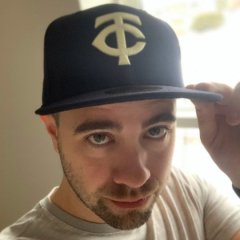 Image courtesy of Wendell Cruz-Imagn Images The Minnesota Twins headed into the 2026 season with gaping hole at the back end of their bullpen. Trading away Jhoan Duran, Louis Varland and Griffin Jax left them deprived of proven options for the late innings. In the early going, it hurt them. Though the course of the year, the Twins did establish some solid options to handle high leverage for 2027. Andrew Morris and Yoendrys Gómez thrived in the setup and closer role for much of the year before nosediving down the stretch. Jeff Hoffman looked brilliant after being acquired at the deadline, but ended the year sidelined by a forearm injury. There's much more to work with now than there was a year ago, but that's not necessarily saying much. If the Twins want to invest boldly and aggressively this offseason, as Tom Pohlad insisted in a year-ending press conference on Tuesday, one of the most obvious places to do so is by spending on a late-inning arm, and perhaps even a closer who can push everyone else down the pecking order. There are a number of options in this year's free agent class who fit that billing, including Bryan Abreu, whom the Twins nearly acquired at the deadline. But there's another name that really stands out as a fit, in part because of his connection to Minnesota's manager. David Bednar emerged as an All-Star closer under Derek Shelton's watch in Pittsburgh, posting a 3.01 ERA with 146 saves over four-and-a-half seasons with the Pirates. Bednar was traded to the Yankees at last year's deadline, and played out his final year of team control in New York this year, notching 35 saves with a 2.47 ERA as closer. Dating back to his breakout season in 2021, Bednar ranks fourth among MLB relievers in fWAR, trailing only Emmanuel Clase, Josh Hader and Duran — three of the best closers in this generation. He's got the fifth-most saves, and his record of success was interrupted only by a random down year in 2024, from which he's bounced back fully. At 32, Bednar will be one of the top relievers on the market. There will be plenty of teams vying for his services, including the Yankees who've experienced his excellence first-hand. Outbidding the field will require the Twins to pony up, and in that regard, would be a strong follow-through on Pohlad's big talk. It would surely make Shelton a happy camper. Not many things went right during his time in Pittsburgh, but Bednar played a big role in any success they had, ranking behind only Paul Skenes and Bryan Reynolds in Win Probability Added over Shelton's managerial tenure. He was not shy about his "When you have stability at the end of the game when you have the opportunity to win, it's something that you lean on," Shelton said in 2022. "We've leaned on David … But that stability at the end of a game is extremely important for a young club.” Last year, when Bednar was traded from Pittsburgh to New York, Shelton gave a scouting report to C.J. Nitowski of MLB Network Radio and praised the right-hander's elite makeup and overpowering arsenal. I don't know how much Shelton's history with Bednar should really factor into the equation of targeting him as a free agent, but the reality is that he stands out as an ideal pickup even with that aside. He checks every box in the Twins should be looking for with a big bullpen splash: Proven track record of success and durability? Check. Plenty of closing experience, including in the postseason? Check. A big enough name to satisfy the standard of ambition and aggressiveness that Pohlad promised? Check. Bednar won't come cheaply, and that's kind of the point. If the Twins are serious about wanting to invest, this is the caliber of free agent they should be pursuing: established, durable, dominant and capable of immediately upgrading a clear area of need. The Shelton connection only makes the fit cleaner. He already knows what it feels like to hand Bednar a late lead and trust that the game is going to end there. Bringing that certainty to Minnesota would strengthen the bullpen, clarify everyone's role and give Pohlad a meaningful early opportunity to put some substance behind his promise of a different kind of offseason View full article
 -
Grading Every Player Who Appeared for the Twins in 2026: Pitchers
Nick Nelson posted an article in Twins
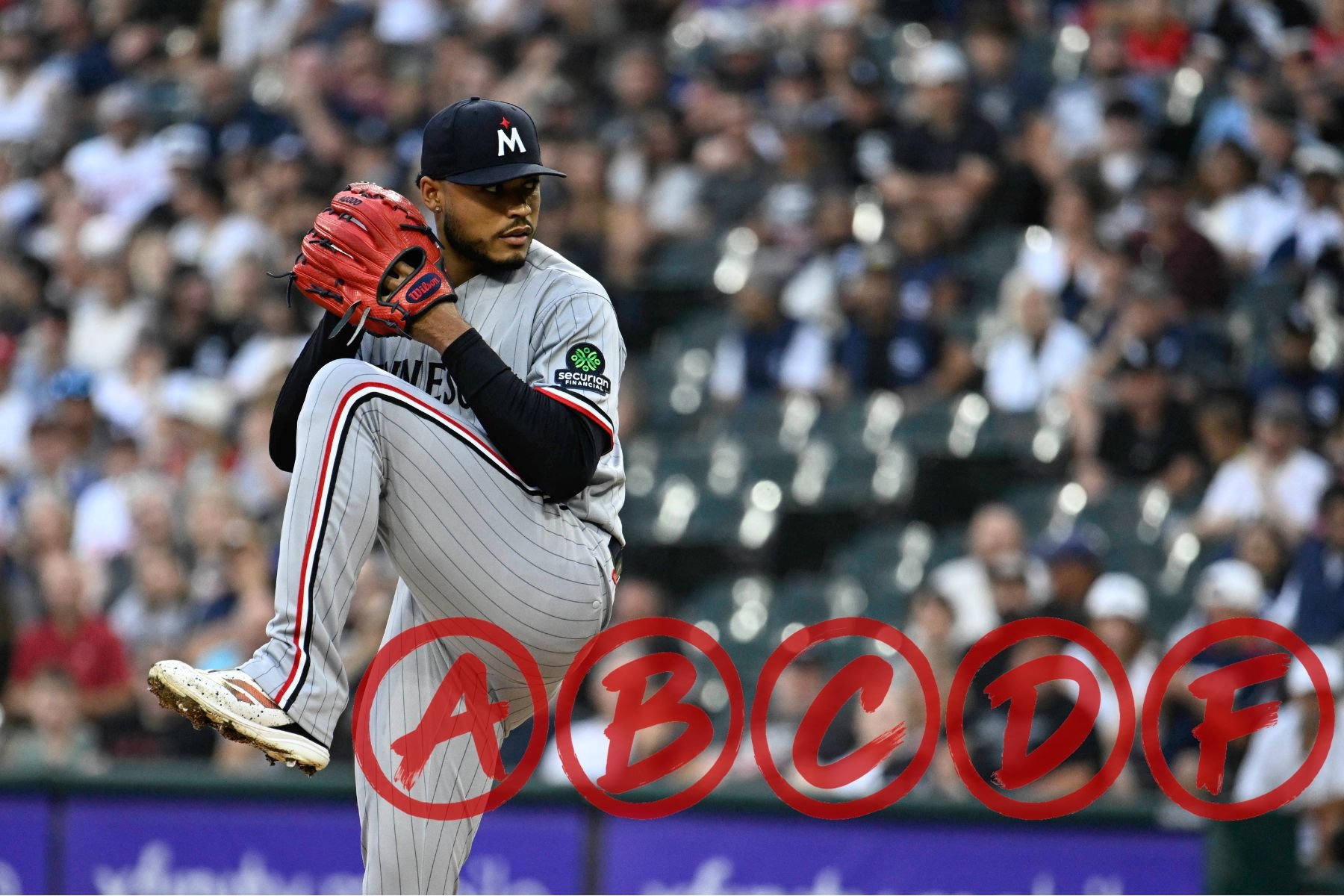 Thirty-two different pitchers made at least one appearance for the Minnesota Twins in 2026. It's certainly a sign of the times. Twenty years ago, in 2006, the team used barely over half that number (17). This Twins staff had plenty of injuries, but the front office also churned-and-burned through arms as they looked to account for innings on a staff depleted by the 2025 deadline firesale. As you get to the bottom of the list below, you might start running into names you barely remember. Here are my grades for all 32 hurlers who appeared for the Twins this season, in order of innings pitched. Taj Bradley (178.1 IP): A- Huge breakout and without a doubt that biggest individual bright spot for the Twins this year. He threw the most innings of any Minnesota starter in the last two seasons despite an IL stint, joining 2023 Pablo López and 2018 José Berríos as the only Twins since 2010 to strike out 200 hitters. Posted a career-best 3.73 ERA and 3.82 FIP. Team went 18-13 in his starts. Joe Ryan (144.2 IP): B- Seemingly a harsh grade for one of the team's two All-Stars, but Ryan's second half (once again) did so much to undo all of the great work from early on. He missed a month with a glute injury and struggled mightily when on the mound, going 1-5 with a 6.82 ERA and 11 homers allowed in seven post-break starts. His inability to stay effective throughout a full season has become such a bummer. Bailey Ober (131 IP): C Against all odds, Ober held his own with the lowest top-end velocity of any pitcher in baseball, posting a slightly below-average 95 ERA+. Missed time and logged fewest innings in four years but the big righty was a stable back-of-rotation arm. Zebby Matthews (130.1 IP): C- Maddeningly inconsistent. Matthews showed great flashes at times, and stayed mostly healthy, but his proneness to homers and clunker outings resulted in a sub-par 4.90 ERA. When the Twins added to their rotation at the deadline, he was the one demoted, which seems telling. Connor Prielipp (125.2 IP): B- An even more encouraging season than this grade would suggest. His ERA (4.87) was barely lower than Matthews, but Prielipp did it with much better peripherals and mixed in a very strong finish, which was especially reassuring as he ventured deep into unprecedented workload territory. Andrew Morris (73.2 IP): C+ Much like Ryan, an instance where a very poor finish diminished much of the good work leading up to it. Acclimating to the majors and a full-time relief role simultaneously, Morris was brilliant for much of his rookie campaign, posting a 2.98 ERA through 47 appearances and elevating into the top setup role. But he cratered in the last six weeks with a 8.80 ERA and five losses in his final 16 appearances, leading to merely average numbers overall. Taylor Rogers (60.1 IP): C+ A valued veteran presence whose performance on the mound was mediocre, with the caveat that most of his worst outings came in garbage time. Stayed healthy, led team in appearances. Travis Adams (59 IP): C- Brutal in May and June, but quietly rounded into form during the second half with a 3.31 ERA and 3.66 FIP from July 1st onward. It wasn't enough to salvage a 90 ERA+, but the promising finish should give Adams a leg-up in next year's bullpen competition. Dean Kremer (54.1 IP): B+ Deadline acquisition pitched very well in 10 starts as a Twin, holding opponents to two or fewer runs in seven of them en route to a 3.48 ERA that greatly outshined his numbers before the trade. He won four of five decisions. Kody Funderburk (51 IP): B+ Another pitcher who really turned a corner in the second half, shaking off his control struggles to post a 3.03 ERA with 36 strikeouts and only one home run and nine non-intentional walks allowed in 34 post-June appearances. Yoendrys Gómez (49.2 IP): B+ The start to his Twins career could have hardly been better: 1.85 ERA with a perfect 20-for-20 save conversion rate through 44 appearances. The final stretch would have hardly been worse: 10.13 ERA with two blown saves in his final 12 games. The sum result, though, was a very solid season as a Twin. He led the bullpen in WPA and filled a crucial need out of nowhere. (We're not factoring his nine ugly outings with the Rays.) Simeon Woods Richardson (47.2 IP): F Stunning fall from grace. A multi-year rotation staple, Woods Richardson ended the 2025 season with momentum but fell flat in 2026, posting a 7.74 ERA in 12 appearances (10 starts) before being waived in early June. Eric Orze (41.1 IP): D- Pitched his way out of the team's plans with a 5.66 ERA through 36 appearances. For what it's worth, the 3.34 FIP looks a lot better and suggests bad luck was in play, but the Twins never saw fit to recall him from Triple-A after an early-June demotion. Anthony Banda (34.1 IP): C Got off to a rough start, was on his way to turning it around before a season-ending lat injury suffered in late June. Ultimately the 4.46 ERA is nothing to write home about. Mike Paredes (34.1 IP): C- For Paredes, a 4.72 ERA actually is something to write home about. He was far down the pitching depth chart entering this season, but stepped up as attrition struck. Made five starts among nine appearances and generally did his job by keeping the Twins in games. The 18-to-13 K/BB ratio doesn't paint him as an arm worth counting on in the future. Kendry Rojas (29.2 IP): B Showcased impressive stuff and velocity in limited action, posting a 3.34 ERA with 34 strikeouts and just two home runs allowed across 29 ⅔ innings. The control issues are a problem though, with 22 walks removing some of the luster. Didn't pitch for Twins after August 2nd, which is unfortunate. Tommy Nance (26.2 IP): C+ Sort of a middling acquisition when Minnesota targeted him in early July, he pitched shockingly well for a stretch: 1.35 ERA through 14 appearances. Nance unsurprisingly regressed from there, allowing runs in seven of his last 10 appearances to finish with a 4.21 ERA as Twin. A.J. Minter (22.2 IP): A- Pretty much exactly what you want from a rental reliever. He posted a 2.78 ERA and 22-to-6 K/BB ratio in 25 appearances with the Twins. Mick Abel (20.1 IP): B+ Since we're only grading here based on time spent on the field, Abel was quite good. He struck out 25% of batters faced, allowed zero home runs, and threw 13 shutout innings in his last two starts. Unfortunately, he went down in April with an elbow injury that ultimately required surgery and ended his season. Justin Topa (19 IP): F Gave up 27 hits (including four homers), 11 walks and 17 earned runs in 19 innings before being released in May. Jeff Hoffman (18 IP): A- The front office's marquee deadline addition looked fantastic after being acquired, allowing just nine hits (zero home runs) with 27 strikeouts in 18 innings. A truly dominant arm that could've been a real difference-maker if the Twins were able to stay in the fight. Cody Laweryson (16.2 IP): D Surprisingly made the bullpen out of camp but failed to reward the team's confidence with a 4.86 ERA and 5.08 FIP across 16 ⅔ innings of work. He was released in August to make room on the 40-man roster for Minter. Cole Sands (12 IP): F Threw only 12 innings all year with an 8.25 ERA. Completely lost season that puts his career outlook in jeopardy, especially on the heels of an underwhelming 2025. Garrett Acton (11 IP): D There are things to like about his pitch arsenal, but a 5.73 ERA in 11 innings between injuries is what it is. Luis Garcia (8.2 IP): F Gets no worse than this. In nine excruciating appearances, the washed-up veteran allowed 10 earned runs while striking out just two of 42 batters faced. Justin Lawrence (6 IP): F Another forgettable midseason relief flier. Gave up a whopping 12 earned runs in just six frames, averaging more than three baserunners allowed per inning. Marco Raya (6 IP): B Wish we could have seen a little more of the intriguing young righty. He got the job done in his three two-inning appearances, allowing just two runs for a 3.00 ERA, but was far from dominant. John Klein (4.1 IP): D+ Barely got any chances. Struggled to throw strikes when he did, issuing four walks with just two strikeouts. Jack Anderson (4.1 IP): A I didn't remember him pitching this well, to be honest. Allowed zero runs, two hits and one walk with six strikeouts in his four appearances. That's very fine work. Wasn't enough to earn him any opportunities in the majors after July, but Anderson remains on the 40-man roster for now. Woo-Suk Go (4 IP): F Flashed mildly intriguing stuff but allowed eight hits in four innings of work. Austin Voth (4 IP): F Made only one appearance and it wasn’t pretty; the Dodgers went 11-for-24 against him and scored five earned runs. Zak Kent (3.2 IP): D- Gave up a hit or walk to nine of the 20 batters he faced in two relief outings. The Twins cycled an awful lot of arms to get through 2026, but they came out of the churn with some important answers. Bradley emerged as a legitimate rotation anchor, Prielipp held up through a breakthrough workload, and several younger pitchers showed enough to warrant continued opportunities. There are still plenty of questions to answer — especially with Ryan and Ober coming off uneven seasons and the bullpen remaining unsettled — but compared to where this pitching staff stood after last year's deadline teardown, there's at least a clearer foundation to build around. And as we just learned, it will be a new pitching group leading the way.
- 48 comments
-
- 8
-

-
- taj bradley
- joe ryan
- (and 1 more)
-
Image courtesy of Matt Marton-Imagn Images Thirty-two different pitchers made at least one appearance for the Minnesota Twins in 2026. It's certainly a sign of the times. Twenty years ago, in 2006, the team used barely over half that number (17). This Twins staff had plenty of injuries, but the front office also churned-and-burned through arms as they looked to account for innings on a staff depleted by the 2025 deadline firesale. As you get to the bottom of the list below, you might start running into names you barely remember. Here are my grades for all 32 hurlers who appeared for the Twins this season, in order of innings pitched. Taj Bradley (178.1 IP): A- Huge breakout and without a doubt that biggest individual bright spot for the Twins this year. He threw the most innings of any Minnesota starter in the last two seasons despite an IL stint, joining 2023 Pablo López and 2018 José Berríos as the only Twins since 2010 to strike out 200 hitters. Posted a career-best 3.73 ERA and 3.82 FIP. Team went 18-13 in his starts. Joe Ryan (144.2 IP): B- Seemingly a harsh grade for one of the team's two All-Stars, but Ryan's second half (once again) did so much to undo all of the great work from early on. He missed a month with a glute injury and struggled mightily when on the mound, going 1-5 with a 6.82 ERA and 11 homers allowed in seven post-break starts. His inability to stay effective throughout a full season has become such a bummer. Bailey Ober (131 IP): C Against all odds, Ober held his own with the lowest top-end velocity of any pitcher in baseball, posting a slightly below-average 95 ERA+. Missed time and logged fewest innings in four years but the big righty was a stable back-of-rotation arm. Zebby Matthews (130.1 IP): C- Maddeningly inconsistent. Matthews showed great flashes at times, and stayed mostly healthy, but his proneness to homers and clunker outings resulted in a sub-par 4.90 ERA. When the Twins added to their rotation at the deadline, he was the one demoted, which seems telling. Connor Prielipp (125.2 IP): B- An even more encouraging season than this grade would suggest. His ERA (4.87) was barely lower than Matthews, but Prielipp did it with much better peripherals and mixed in a very strong finish, which was especially reassuring as he ventured deep into unprecedented workload territory. Andrew Morris (73.2 IP): C+ Much like Ryan, an instance where a very poor finish diminished much of the good work leading up to it. Acclimating to the majors and a full-time relief role simultaneously, Morris was brilliant for much of his rookie campaign, posting a 2.98 ERA through 47 appearances and elevating into the top setup role. But he cratered in the last six weeks with a 8.80 ERA and five losses in his final 16 appearances, leading to merely average numbers overall. Taylor Rogers (60.1 IP): C+ A valued veteran presence whose performance on the mound was mediocre, with the caveat that most of his worst outings came in garbage time. Stayed healthy, led team in appearances. Travis Adams (59 IP): C- Brutal in May and June, but quietly rounded into form during the second half with a 3.31 ERA and 3.66 FIP from July 1st onward. It wasn't enough to salvage a 90 ERA+, but the promising finish should give Adams a leg-up in next year's bullpen competition. Dean Kremer (54.1 IP): B+ Deadline acquisition pitched very well in 10 starts as a Twin, holding opponents to two or fewer runs in seven of them en route to a 3.48 ERA that greatly outshined his numbers before the trade. He won four of five decisions. Kody Funderburk (51 IP): B+ Another pitcher who really turned a corner in the second half, shaking off his control struggles to post a 3.03 ERA with 36 strikeouts and only one home run and nine non-intentional walks allowed in 34 post-June appearances. Yoendrys Gómez (49.2 IP): B+ The start to his Twins career could have hardly been better: 1.85 ERA with a perfect 20-for-20 save conversion rate through 44 appearances. The final stretch would have hardly been worse: 10.13 ERA with two blown saves in his final 12 games. The sum result, though, was a very solid season as a Twin. He led the bullpen in WPA and filled a crucial need out of nowhere. (We're not factoring his nine ugly outings with the Rays.) Simeon Woods Richardson (47.2 IP): F Stunning fall from grace. A multi-year rotation staple, Woods Richardson ended the 2025 season with momentum but fell flat in 2026, posting a 7.74 ERA in 12 appearances (10 starts) before being waived in early June. Eric Orze (41.1 IP): D- Pitched his way out of the team's plans with a 5.66 ERA through 36 appearances. For what it's worth, the 3.34 FIP looks a lot better and suggests bad luck was in play, but the Twins never saw fit to recall him from Triple-A after an early-June demotion. Anthony Banda (34.1 IP): C Got off to a rough start, was on his way to turning it around before a season-ending lat injury suffered in late June. Ultimately the 4.46 ERA is nothing to write home about. Mike Paredes (34.1 IP): C- For Paredes, a 4.72 ERA actually is something to write home about. He was far down the pitching depth chart entering this season, but stepped up as attrition struck. Made five starts among nine appearances and generally did his job by keeping the Twins in games. The 18-to-13 K/BB ratio doesn't paint him as an arm worth counting on in the future. Kendry Rojas (29.2 IP): B Showcased impressive stuff and velocity in limited action, posting a 3.34 ERA with 34 strikeouts and just two home runs allowed across 29 ⅔ innings. The control issues are a problem though, with 22 walks removing some of the luster. Didn't pitch for Twins after August 2nd, which is unfortunate. Tommy Nance (26.2 IP): C+ Sort of a middling acquisition when Minnesota targeted him in early July, he pitched shockingly well for a stretch: 1.35 ERA through 14 appearances. Nance unsurprisingly regressed from there, allowing runs in seven of his last 10 appearances to finish with a 4.21 ERA as Twin. A.J. Minter (22.2 IP): A- Pretty much exactly what you want from a rental reliever. He posted a 2.78 ERA and 22-to-6 K/BB ratio in 25 appearances with the Twins. Mick Abel (20.1 IP): B+ Since we're only grading here based on time spent on the field, Abel was quite good. He struck out 25% of batters faced, allowed zero home runs, and threw 13 shutout innings in his last two starts. Unfortunately, he went down in April with an elbow injury that ultimately required surgery and ended his season. Justin Topa (19 IP): F Gave up 27 hits (including four homers), 11 walks and 17 earned runs in 19 innings before being released in May. Jeff Hoffman (18 IP): A- The front office's marquee deadline addition looked fantastic after being acquired, allowing just nine hits (zero home runs) with 27 strikeouts in 18 innings. A truly dominant arm that could've been a real difference-maker if the Twins were able to stay in the fight. Cody Laweryson (16.2 IP): D Surprisingly made the bullpen out of camp but failed to reward the team's confidence with a 4.86 ERA and 5.08 FIP across 16 ⅔ innings of work. He was released in August to make room on the 40-man roster for Minter. Cole Sands (12 IP): F Threw only 12 innings all year with an 8.25 ERA. Completely lost season that puts his career outlook in jeopardy, especially on the heels of an underwhelming 2025. Garrett Acton (11 IP): D There are things to like about his pitch arsenal, but a 5.73 ERA in 11 innings between injuries is what it is. Luis Garcia (8.2 IP): F Gets no worse than this. In nine excruciating appearances, the washed-up veteran allowed 10 earned runs while striking out just two of 42 batters faced. Justin Lawrence (6 IP): F Another forgettable midseason relief flier. Gave up a whopping 12 earned runs in just six frames, averaging more than three baserunners allowed per inning. Marco Raya (6 IP): B Wish we could have seen a little more of the intriguing young righty. He got the job done in his three two-inning appearances, allowing just two runs for a 3.00 ERA, but was far from dominant. John Klein (4.1 IP): D+ Barely got any chances. Struggled to throw strikes when he did, issuing four walks with just two strikeouts. Jack Anderson (4.1 IP): A I didn't remember him pitching this well, to be honest. Allowed zero runs, two hits and one walk with six strikeouts in his four appearances. That's very fine work. Wasn't enough to earn him any opportunities in the majors after July, but Anderson remains on the 40-man roster for now. Woo-Suk Go (4 IP): F Flashed mildly intriguing stuff but allowed eight hits in four innings of work. Austin Voth (4 IP): F Made only one appearance and it wasn’t pretty; the Dodgers went 11-for-24 against him and scored five earned runs. Zak Kent (3.2 IP): D- Gave up a hit or walk to nine of the 20 batters he faced in two relief outings. The Twins cycled an awful lot of arms to get through 2026, but they came out of the churn with some important answers. Bradley emerged as a legitimate rotation anchor, Prielipp held up through a breakthrough workload, and several younger pitchers showed enough to warrant continued opportunities. There are still plenty of questions to answer — especially with Ryan and Ober coming off uneven seasons and the bullpen remaining unsettled — but compared to where this pitching staff stood after last year's deadline teardown, there's at least a clearer foundation to build around. And as we just learned, it will be a new pitching group leading the way. View full article
-
Tom Pohlad Is on a Mission to Rebuild Trust. A Critical Juncture Lies Ahead.
Nick Nelson posted an article in Twins
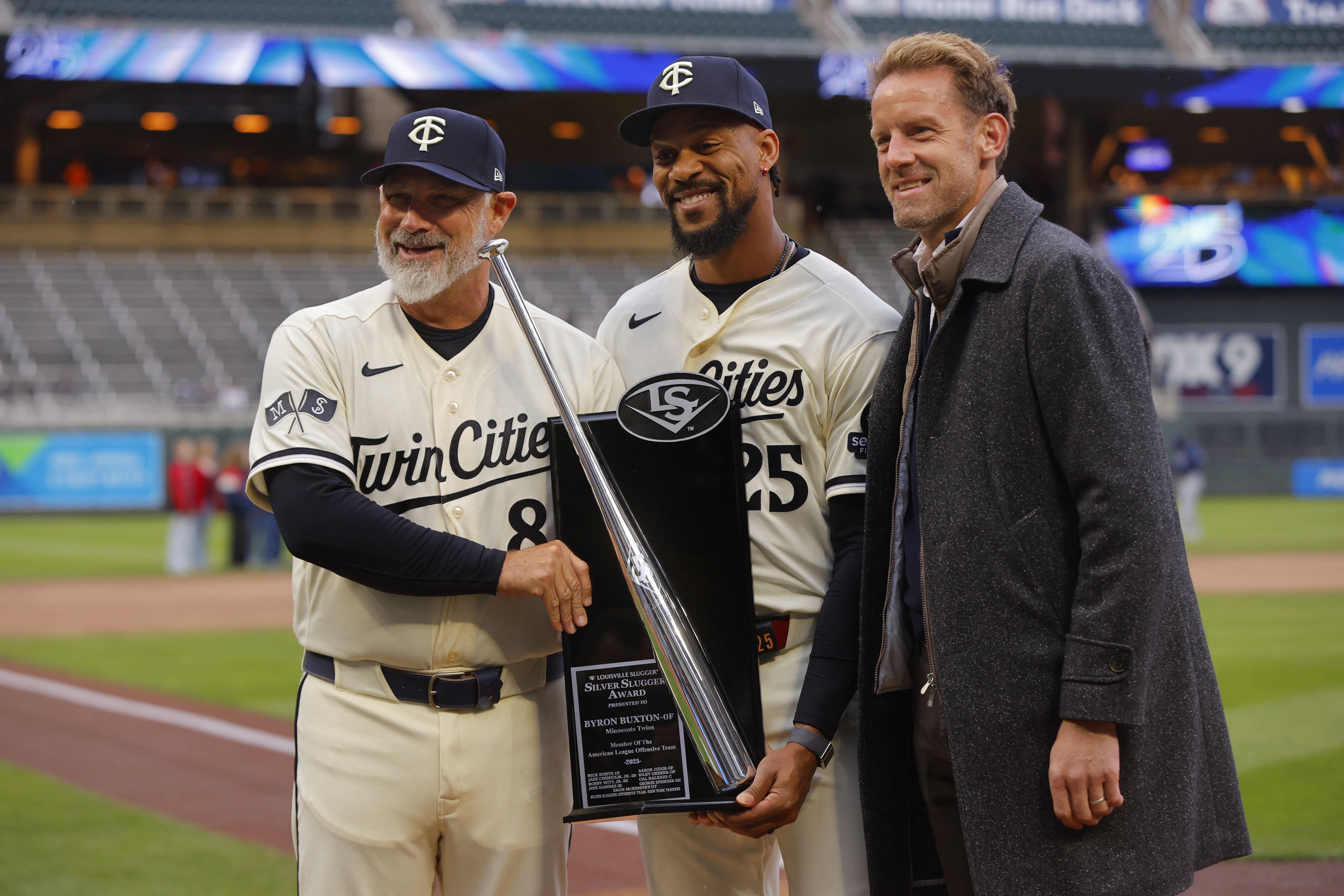 You don't build trust by saying things. Well, not on its own, anyway. You build trust by saying things and then doing them. It conditions people to believe what you say. It demonstrates conviction. To his credit, Tom Pohlad seems to recognize this. The team's alignment of messaging and approach at the trade deadline was seemingly guided by an edict to re-establish trust and credibility. In the weeks and days leading up, general manager Jeremy Zoll was surprisingly open about Minnesota's intention to add impact talent, specifically in the bullpen. This was a stark contrast from the vague double-speak we often heard from Derek Falvey, and the team's actions at the deadline also represented a departure from Falvey's hem-hawing front offices in recent years. The Twins did exactly what they said they were going to do, assertively adding three pitchers who performed very well, although it wasn't enough to keep the club from falling out of contention. All in all, a good first step. But only a first step. Now the real work begins, coming off a second straight losing season where attendance fell to a new 25-year low. At Tuesday's season-ending press conference at Target Field, Pohlad called this offseason "another opportunity for us to put action to words" and adding "I’m really excited about the month ahead." There's little that can happen from a team-building standpoint before the World Series ends, so I assume what Pohlad was really referencing is the one-month window in November where the offseason is underway, before a CBA lockout shutdown commences at the start of December. If the Twins want to demonstrate some genuine initiative, they need to strike with at least one big move during what is anticipated to be an active stretch of Hot Stove action. Pohlad insisted, in no uncertain terms, that's the plan. "We are going to be aggressive when free agency starts," he told reporters. Follow through on that, and he'll have another drop in the trust bucket. As that bucket fills, rancor toward ownership subsides and fans can once again start to buy in. When asked about his expectations for payroll, Pohlad shied away from specifics but ended with some remarks I find interesting: “Let me just say, I have been very vocal about what our ambitions are. I have been vocal, and to some degree critical, of where we’ve been. And so you can take some comfort in the fact that, with payroll, wherever we land is cognizant of both those things and will be commensurate with what we’re trying to accomplish.” I'm not sure anyone is going to take comfort in words. Not yet. The Twins have spent too many years conditioning fans to wait for the catch, the qualifier or the retreat. Pohlad has correctly identified that rebuilding trust requires breaking that cycle, and the trade deadline offered a promising start. Now comes a much bigger test. If the Twins are truly ambitious about restoring credibility and building a winner, November presents their first real opportunity to prove it. Pohlad has said they will be aggressive. He has said payroll will reflect their ambitions. At this particular moment, matching those words with action would carry weight well beyond whatever player they acquire or dollars they spend. It would give fans another reason to believe that, when this version of Twins ownership tells them something, they can actually trust it.
 -
Image courtesy of Bruce Kluckhohn-Imagn Images You don't build trust by saying things. Well, not on its own, anyway. You build trust by saying things and then doing them. It conditions people to believe what you say. It demonstrates conviction. To his credit, Tom Pohlad seems to recognize this. The team's alignment of messaging and approach at the trade deadline was seemingly guided by an edict to re-establish trust and credibility. In the weeks and days leading up, general manager Jeremy Zoll was surprisingly open about Minnesota's intention to add impact talent, specifically in the bullpen. This was a stark contrast from the vague double-speak we often heard from Derek Falvey, and the team's actions at the deadline also represented a departure from Falvey's hem-hawing front offices in recent years. The Twins did exactly what they said they were going to do, assertively adding three pitchers who performed very well, although it wasn't enough to keep the club from falling out of contention. All in all, a good first step. But only a first step. Now the real work begins, coming off a second straight losing season where attendance fell to a new 25-year low. At Tuesday's season-ending press conference at Target Field, Pohlad called this offseason "another opportunity for us to put action to words" and adding "I’m really excited about the month ahead." There's little that can happen from a team-building standpoint before the World Series ends, so I assume what Pohlad was really referencing is the one-month window in November where the offseason is underway, before a CBA lockout shutdown commences at the start of December. If the Twins want to demonstrate some genuine initiative, they need to strike with at least one big move during what is anticipated to be an active stretch of Hot Stove action. Pohlad insisted, in no uncertain terms, that's the plan. "We are going to be aggressive when free agency starts," he told reporters. Follow through on that, and he'll have another drop in the trust bucket. As that bucket fills, rancor toward ownership subsides and fans can once again start to buy in. When asked about his expectations for payroll, Pohlad shied away from specifics but ended with some remarks I find interesting: “Let me just say, I have been very vocal about what our ambitions are. I have been vocal, and to some degree critical, of where we’ve been. And so you can take some comfort in the fact that, with payroll, wherever we land is cognizant of both those things and will be commensurate with what we’re trying to accomplish.” I'm not sure anyone is going to take comfort in words. Not yet. The Twins have spent too many years conditioning fans to wait for the catch, the qualifier or the retreat. Pohlad has correctly identified that rebuilding trust requires breaking that cycle, and the trade deadline offered a promising start. Now comes a much bigger test. If the Twins are truly ambitious about restoring credibility and building a winner, November presents their first real opportunity to prove it. Pohlad has said they will be aggressive. He has said payroll will reflect their ambitions. At this particular moment, matching those words with action would carry weight well beyond whatever player they acquire or dollars they spend. It would give fans another reason to believe that, when this version of Twins ownership tells them something, they can actually trust it. View full article
-
He drove in a lot of runs, and I credit him for that, but really wasn't that productive otherwise. Ranked 14th out of 16 primary designated hitters in wOBA.
- 73 replies
-
- 7
-
-

-
- josh bell
- brooks lee
- (and 1 more)
-
Grading Every Player Who Appeared for the Twins in 2026: Position Players
Nick Nelson posted an article in Twins
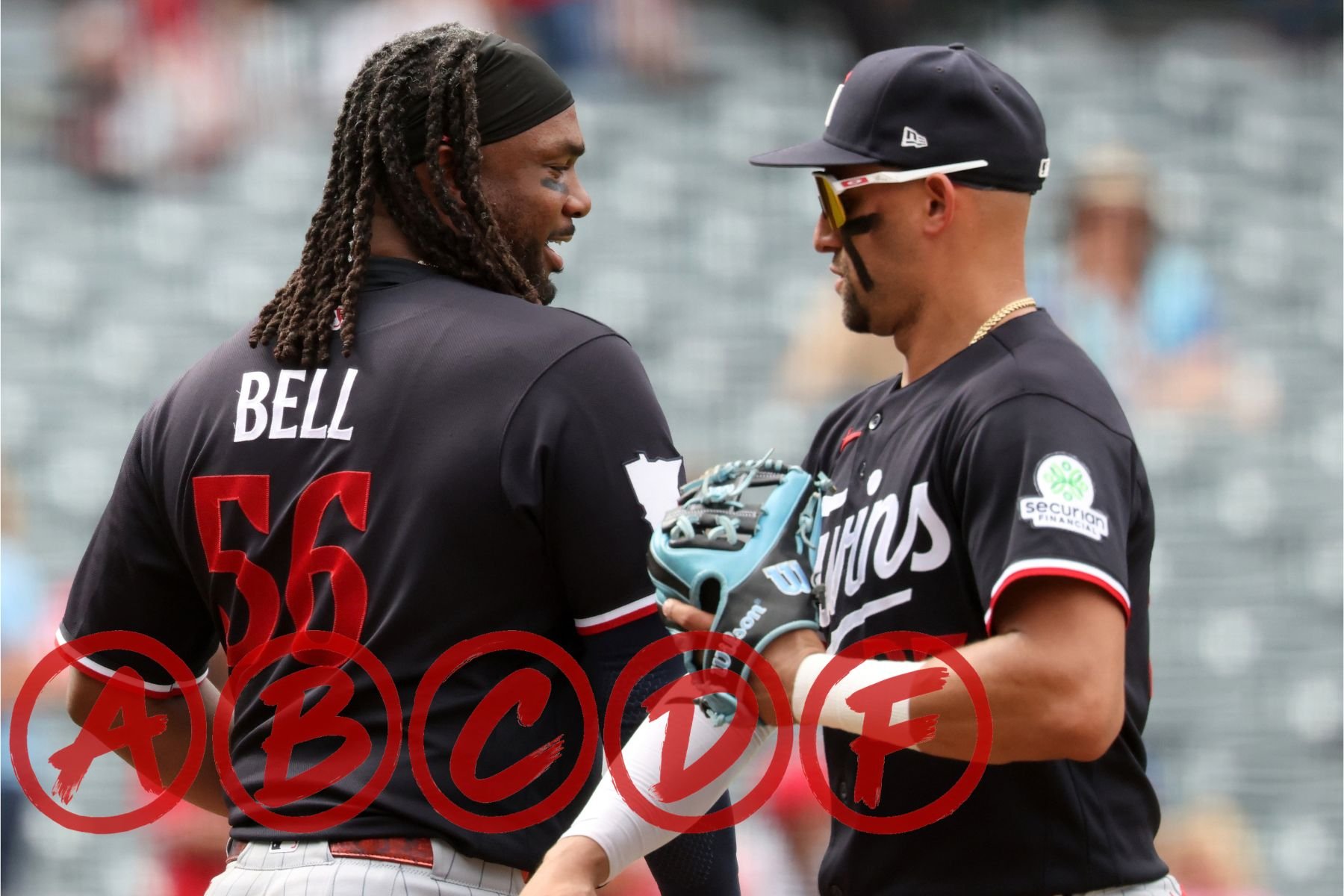 Twenty-four different position players made at least one appearance for the Minnesota Twins in 2026. That includes seven rookies who made their MLB debuts, several long-tenured veterans who might have been reaching the end of the road in this organization, and everything in between. The sum result was a losing season, but the offense took meaningful steps forward, and so did the defense over the course of the year. Many faces played a role in helping shaping this year's story, and here we're going to evaluate each one. Read on to find my grades for all 24 hitters who appeared for the Twins this year, in order of plate appearances. Josh Bell (631 PA): B- Did what he was signed to do, driving in the most runs (96) of any Twins hitter in the past five years. Lack of fielding value and unspectacular overall production mitigated his impact, but Bell mostly delivered as promised on the one-year deal. Brooks Lee (631 PA): B After a brutal run at shortstop, he found his defensive home at third base and popped 24 home runs to emerge as one of the Minnesota's steadiest players. Underlying metrics are not promising (.281 xwOBA) and his inability to draw walks remains an issue, but this was undeniably a big step forward for Lee. Luke Keaschall (620 PA): B+ Poor defense and a slow start are the only factors keeping him out of the A-grade range. Keaschall was an on-base machine from May 1st forward, slashing .301/.402/.446. Increased power output in the second half was highly encouraging. Also stole 17 bases. Kody Clemens (583 PA): A- He was what the Twins needed him to be, and then some. Led the team with 27 home runs while also leading the American League with seven triples. Proved highly versatile defensively, making 20+ starts at four different positions (1B, 2B, LF, RF) and nine in center field. Authored the greatest moment of the season (walk-off grand slam). Lack of OBP (.298) his only real drawback. Royce Lewis (509 PA): D+ It feels like the promise of his early days is gone. We saw a flash of dominance during his brief demotion to the minors, and for a brief spell following his return, but Lewis never could harness anything sustainably in the majors, finishing with mediocre production that played worse at first than at third. Trevor Larnach (433 PA): B- One of the Twins' best hitters early on, he faded in the second half. Still finished with a very good 120 OPS+ that ranked third on the team, but that figure overstates his value as a platooned corner outfielder with a bad glove. Byron Buxton (408 PA): B A similar story to Larnach except that Buxton was even better in the first half with an even bigger (injury-driven) drop-off in the second half. Buxton's All-Star performance in center field before the hip issues surfaced are enough to earn him a strong grade despite providing almost no value in the last two months. Victor Caratini (382 PA): D+ Generally very unimpressive. He had one spectacular month (June) but was otherwise close to a zero offensively, with so-so glovework behind the plate. It's telling that when they were fighting to keep their season alive in September, the Twins buried Caratini on the bench. Hopefully better things ahead in Year 2 of the contract as the (gulp) likely starting catcher. Ryan Jeffers (369 PA): A- Missed two months with a fractured hamate and struggled to control the running game defensively. Slumped to the finish line. Outside of that, Jeffers was phenomenal. He was one of the best hitters on the team and among the best-hitting catchers in baseball. Replacing his impact will be a top challenge for the front office this offseason. Austin Martin (358 PA): C- Got off to an outstanding start with a .466 OBP and .889 OPS through 35 games, but it was all downhill from there — Martin batted .181 the rest of the way and his role shrunk significantly. Still reasonably effective overall as a platoon player with a .379 OBP against LHP, but limitation to outfield corners holds back his utility. Ryan Kreidler (267 PA): C+ Pretty much as advertised. Good glove all over the field, not much bat, although he did surpass offensive expectations by popping seven homers and keeping his OPS in the mid-600s. Tristan Gray (188 PA): F The Twins inexplicably stuck with him for way too long. Exhibited zero standout tools: poor hitting, poor fielding and minimal running speed. Matt Wallner (135 PA): F Banished to the minors permanently after slashing .167/.259/.292 with terrible defense and a team-worst WPA in 34 games. It is all but certain that Wallner has reached the end of the line in Minnesota. Kaelen Culpepper (128 PA): B Very solid debut with talent that was plain to see. Showed some real pop including a home run in his first big-league game. Had good and bad moments at shortstop but flashed a big arm. Plate approach needs some work. Alan Roden (94 PA): B Much better showing than last year, with a .291/.376/.392 slash line better reflecting the ability shown in his minor-league performance. Still he struggled to find opportunities, which speaks to his conundrum in the Twins outfield as younger and better options pass him by. Walker Jenkins (89 PA): B- Shook off a 4-for-45 start to slash .385/.400/.615 with three homers in his last 10 games. Still finished with a sub-.700 OPS but the adjustments were awesome to see, and Jenkins does look like a legitimate center fielder. Alex Jackson (73 PA): B Banked a .309 average and 114 OPS+ despite a very ugly 24-to-2 K/BB ratio. Good defense behind the plate when he had the chance to play. As a third catcher his main function was bench-warming but he's in line for a bigger role next year. James Outman (70 PA): F Batted .146 with a .479 OPS before being waived in June. Orlando Arcia (50 PA): C Perfectly adequate when given chances to play, batting .271 with minimal power and patience in 50 plate appearances. Emmanuel Rodriguez (48 PA): C+ Showed huge raw power, with a home run in his first MLB at-bat and five extra-base hits in 13 games. Crushed almost everything he made contact with. But the well-established contact concerns are real: 16 strikeouts and surprisingly only three walks. Ben Ross (21 PA): D Batted .190 with 11 strikeouts and no walks in 21 plate appearances during a late-season audition. He did rip a few extra-base hits and ran the bases well while playing all around the infield. Has a chance to carve out an MLB bench role. Kyler Fedko (19 PA): F Barely played during his call-up, going 1-for-16 with eight strikeouts. He was released from the minors in September and quickly signed with Pittsburgh. Gabriel Gonzalez (11 PA): C Made only 11 plate appearances with the Twins, contributing a couple singles and a couple walks. Needs to show he can be trusted defensively, either at first or in an outfield corner. Aaron Sabato (6 PA): F It was very cool to see him get an opportunity in September, but not sure how we can give him a passing grade when he we went 0-for-6 with three strikeouts in his handful of MLB at-bats. For a losing team, there’s a surprising amount to feel good about here. Keaschall established himself as a foundational piece, Clemens authored a career year, and late arrivals like Culpepper, Jenkins and Rodriguez gave the Twins a tantalizing glimpse of what their next core could look like. Now comes the hard part. With Buxton coming off major surgery and Lewis potentially on the way out while several young players push for bigger opportunities, the Twins enter the offseason with more offensive talent — but also plenty of decisions about how it all fits together. Check back tomorrow for my grades on all 32 pitchers who appeared for the Twins this season.
- 73 comments
-
- 17
-
-
- josh bell
- brooks lee
- (and 1 more)
-
Image courtesy of Kiyoshi Mio-Imagn Images Twenty-four different position players made at least one appearance for the Minnesota Twins in 2026. That includes seven rookies who made their MLB debuts, several long-tenured veterans who might have been reaching the end of the road in this organization, and everything in between. The sum result was a losing season, but the offense took meaningful steps forward, and so did the defense over the course of the year. Many faces played a role in helping shaping this year's story, and here we're going to evaluate each one. Read on to find my grades for all 24 hitters who appeared for the Twins this year, in order of plate appearances. Josh Bell (631 PA): B- Did what he was signed to do, driving in the most runs (96) of any Twins hitter in the past five years. Lack of fielding value and unspectacular overall production mitigated his impact, but Bell mostly delivered as promised on the one-year deal. Brooks Lee (631 PA): B After a brutal run at shortstop, he found his defensive home at third base and popped 24 home runs to emerge as one of the Minnesota's steadiest players. Underlying metrics are not promising (.281 xwOBA) and his inability to draw walks remains an issue, but this was undeniably a big step forward for Lee. Luke Keaschall (620 PA): B+ Poor defense and a slow start are the only factors keeping him out of the A-grade range. Keaschall was an on-base machine from May 1st forward, slashing .301/.402/.446. Increased power output in the second half was highly encouraging. Also stole 17 bases. Kody Clemens (583 PA): A- He was what the Twins needed him to be, and then some. Led the team with 27 home runs while also leading the American League with seven triples. Proved highly versatile defensively, making 20+ starts at four different positions (1B, 2B, LF, RF) and nine in center field. Authored the greatest moment of the season (walk-off grand slam). Lack of OBP (.298) his only real drawback. Royce Lewis (509 PA): D+ It feels like the promise of his early days is gone. We saw a flash of dominance during his brief demotion to the minors, and for a brief spell following his return, but Lewis never could harness anything sustainably in the majors, finishing with mediocre production that played worse at first than at third. Trevor Larnach (433 PA): B- One of the Twins' best hitters early on, he faded in the second half. Still finished with a very good 120 OPS+ that ranked third on the team, but that figure overstates his value as a platooned corner outfielder with a bad glove. Byron Buxton (408 PA): B A similar story to Larnach except that Buxton was even better in the first half with an even bigger (injury-driven) drop-off in the second half. Buxton's All-Star performance in center field before the hip issues surfaced are enough to earn him a strong grade despite providing almost no value in the last two months. Victor Caratini (382 PA): D+ Generally very unimpressive. He had one spectacular month (June) but was otherwise close to a zero offensively, with so-so glovework behind the plate. It's telling that when they were fighting to keep their season alive in September, the Twins buried Caratini on the bench. Hopefully better things ahead in Year 2 of the contract as the (gulp) likely starting catcher. Ryan Jeffers (369 PA): A- Missed two months with a fractured hamate and struggled to control the running game defensively. Slumped to the finish line. Outside of that, Jeffers was phenomenal. He was one of the best hitters on the team and among the best-hitting catchers in baseball. Replacing his impact will be a top challenge for the front office this offseason. Austin Martin (358 PA): C- Got off to an outstanding start with a .466 OBP and .889 OPS through 35 games, but it was all downhill from there — Martin batted .181 the rest of the way and his role shrunk significantly. Still reasonably effective overall as a platoon player with a .379 OBP against LHP, but limitation to outfield corners holds back his utility. Ryan Kreidler (267 PA): C+ Pretty much as advertised. Good glove all over the field, not much bat, although he did surpass offensive expectations by popping seven homers and keeping his OPS in the mid-600s. Tristan Gray (188 PA): F The Twins inexplicably stuck with him for way too long. Exhibited zero standout tools: poor hitting, poor fielding and minimal running speed. Matt Wallner (135 PA): F Banished to the minors permanently after slashing .167/.259/.292 with terrible defense and a team-worst WPA in 34 games. It is all but certain that Wallner has reached the end of the line in Minnesota. Kaelen Culpepper (128 PA): B Very solid debut with talent that was plain to see. Showed some real pop including a home run in his first big-league game. Had good and bad moments at shortstop but flashed a big arm. Plate approach needs some work. Alan Roden (94 PA): B Much better showing than last year, with a .291/.376/.392 slash line better reflecting the ability shown in his minor-league performance. Still he struggled to find opportunities, which speaks to his conundrum in the Twins outfield as younger and better options pass him by. Walker Jenkins (89 PA): B- Shook off a 4-for-45 start to slash .385/.400/.615 with three homers in his last 10 games. Still finished with a sub-.700 OPS but the adjustments were awesome to see, and Jenkins does look like a legitimate center fielder. Alex Jackson (73 PA): B Banked a .309 average and 114 OPS+ despite a very ugly 24-to-2 K/BB ratio. Good defense behind the plate when he had the chance to play. As a third catcher his main function was bench-warming but he's in line for a bigger role next year. James Outman (70 PA): F Batted .146 with a .479 OPS before being waived in June. Orlando Arcia (50 PA): C Perfectly adequate when given chances to play, batting .271 with minimal power and patience in 50 plate appearances. Emmanuel Rodriguez (48 PA): C+ Showed huge raw power, with a home run in his first MLB at-bat and five extra-base hits in 13 games. Crushed almost everything he made contact with. But the well-established contact concerns are real: 16 strikeouts and surprisingly only three walks. Ben Ross (21 PA): D Batted .190 with 11 strikeouts and no walks in 21 plate appearances during a late-season audition. He did rip a few extra-base hits and ran the bases well while playing all around the infield. Has a chance to carve out an MLB bench role. Kyler Fedko (19 PA): F Barely played during his call-up, going 1-for-16 with eight strikeouts. He was released from the minors in September and quickly signed with Pittsburgh. Gabriel Gonzalez (11 PA): C Made only 11 plate appearances with the Twins, contributing a couple singles and a couple walks. Needs to show he can be trusted defensively, either at first or in an outfield corner. Aaron Sabato (6 PA): F It was very cool to see him get an opportunity in September, but not sure how we can give him a passing grade when he we went 0-for-6 with three strikeouts in his handful of MLB at-bats. For a losing team, there’s a surprising amount to feel good about here. Keaschall established himself as a foundational piece, Clemens authored a career year, and late arrivals like Culpepper, Jenkins and Rodriguez gave the Twins a tantalizing glimpse of what their next core could look like. Now comes the hard part. With Buxton coming off major surgery and Lewis potentially on the way out while several young players push for bigger opportunities, the Twins enter the offseason with more offensive talent — but also plenty of decisions about how it all fits together. Check back tomorrow for my grades on all 32 pitchers who appeared for the Twins this season. View full article
-
Image courtesy of Jeffrey Becker-USA TODAY Sports The premise of a successful season for the 2026 Minnesota Twins was essentially put to rest on the very first day of spring training. That ambitious notion rested upon the idea that Pablo López, Joe Ryan and Byron Buxton — the three former All-Stars whom the Twins held onto through last year's deadline firesale — would lead the way for an upstart group capable of taking a mediocre division by surprise. It was, honestly, not a ridiculous concept. But when López went down with a season-ending injury during the first full-squad workout in February, it lost plausibility. A fringe team with a bottom-tier payroll could not afford to get zero contribution from its best, most expensive player. Just doesn't work, as much as no one wanted to admit it at the time. In fairness, the rest of that plan worked out quite well, during the first half at least. Ryan and Buxton were both All-Stars for a second straight year, and they played a big role in keeping the Twins relevant. At the end of July, when Minnesota briefly surfaced above .500 and committed to buying at the deadline, Ryan and Buxton were tied for the team lead in fWAR (2.6). But from that point forward, they were sub-replacement level. The two biggest stars on the Twins turned into two of their worst players, either unavailable or ineffective throughout the second half. Combine that with the continuing absence of López, and it really tells the whole story of this latest collapse. It is, unfortunately, a familiar story. Second-half declines, with injuries playing a factor, have become the norm for both Ryan and Buxton. The latter will be coming off a major hip surgery at age 33 next season, and the former has essentially never put together a complete season. López carries his own set of question marks as he makes his return from Tommy John. I'm bullish on him, but you can never take for granted immediate success coming off reconstructive elbow surgery. At their best, these three veteran players are certainly capable of forming the core of a contending team. You almost have no choice but to hope they can. But you also can't exactly count on it. And that's where the real challenge emerges for the Twins and their front office. Hope for the Best, Build for Something Less The Twins shouldn't approach this offseason trying to replace López, Ryan or Buxton. Nor should they operate under the assumption that those three will collectively provide a full season of star-level production. They need to build a roster capable of surviving when they don't. It's not some totally unique situation in this game of attrition. Injuries happen to every team. Good players slump. Pitchers wear down. The problem is not experiencing those things, but constructing a roster where experiencing them effectively ends your season. And that's what happened in 2026. When Buxton stopped producing, there wasn't another established middle-of-the-order force ready to pick up the slack. When Ryan faltered, the rotation suddenly lacked the frontline presence it had already been missing without López. The Twins had some impressive young players emerge, but asking them to immediately become the stars carrying a contender is a different proposition altogether. That becomes especially relevant when looking at the next wave. Luke Keaschall looks like a foundational player. Taj Bradley and Connor Prielipp established themselves as legitimate rotation building blocks. Walker Jenkins, Emmanuel Rodriguez and Kaelen Culpepper finally reached the majors and gave us reasons to dream on what's ahead. It's exactly what the Twins spent the past year waiting for. Now that those players are here, the temptation will be to view their arrival as the offseason upgrade. It can't be. The Kids Can't Be the Entire Plan There is tremendous upside in this young core, perhaps more than we've seen in Minnesota for quite some time. There is also plenty of uncertainty. Jenkins and Rodriguez have barely experienced the major leagues. Culpepper has fewer than 150 plate appearances. Prielipp just completed by far the largest workload of his professional career. Even Keaschall, as impressive as he's been, has only two big-league seasons under his belt. Some of these players will take steps forward next year. Some probably won't. That's how young players work. The Twins should be excited about having Jenkins and Rodriguez in their Opening Day lineup. They shouldn't need either one to immediately become a three- or four-win player for the offense to work. They should be thrilled to have Bradley and Prielipp behind López and Ryan. They shouldn't be sunk if one of those veterans misses time or struggles again. That's the difference between having upside and having depth. Between hoping to contend and planning to contend. The latter requires investment. Raise the Floor Last offseason, there was at least some justification for restraint. The Twins were coming off an organizational reset. They had just traded away a huge portion of the roster. Several of their best prospects weren't quite ready yet. It made some sense to spend 2026 figuring out what they had and identifying who could be part of the next competitive team. Well, now we know a lot more. Bradley is part of it. Prielipp is part of it. Keaschall is part of it. Kody Clemens earned his way into that conversation. Jenkins, Rodriguez and Culpepper are here. López is coming back. The evaluation year is over. That doesn't mean the Twins should abandon their young players or block their paths with expensive veterans. Quite the opposite. The goal should be to surround them with enough established talent that their development doesn't carry the entire weight of the season. The lineup is an obvious place to start. Josh Bell and Ryan Jeffers, two of this year's most productive hitters, are headed to free agency. Royce Lewis' future with the organization is uncertain at best. Buxton's health can't be assumed. There is room — and need — for a legitimate veteran bat who can occupy a prominent spot in the order without requiring everything to break right around him. The bullpen is another clear need. Jeff Hoffman gives them one potentially dominant late-inning arm, assuming his season-ending forearm issue proves minor, but the Twins cannot repeat last winter's approach of assembling a relief corps largely out of hope and spare parts. Andrew Morris and Yoendrys Gómez, meant to be proof-of-concept for building on the fly, demonstrated exactly how quickly seemingly reliable relievers can turn unreliable. The Twins don't need to construct a superteam, but they need to eliminate the fragility that ultimately doomed the 2026 Twins. Their path to contention depended on their few established stars remaining stars, their inexpensive supporting cast exceeding expectations, and enough young players arriving quickly enough to fill the gaps. For much of the summer, an impressive number of those things happened. Then a couple stopped happening, and the entire operation fell apart. No More Waiting for Everything to Go Right There will be plenty of optimism surrounding the Twins this offseason, and I think much of it is justified. This is a much more interesting roster than the one they carried into spring training. The rotation has real depth and upside. The organization's best position-player prospects have arrived. Several unexpected contributors established themselves. But the front office can't mistake interesting for complete. Maybe López comes back looking like an ace. Maybe Ryan finally carries his first-half form through September. Maybe Buxton's hip surgery restores the dynamic player we saw early this year. Maybe Jenkins or Rodriguez explodes onto the scene and becomes an immediate star. While any of those developments would dramatically raise the Twins' ceiling, none should be prerequisites for having a good baseball team. And that's the challenge this offseason: build a roster sturdy enough that its best-case scenario isn't also its only path to contention. The Twins spent 2026 finding out which pieces of their next core they could trust. In 2027, it's time to give those pieces enough support that they don't have to trust everything else to go right. View full article
- 79 replies
-
- 1
-
-
- byron buxton
- joe ryan
- (and 1 more)
-
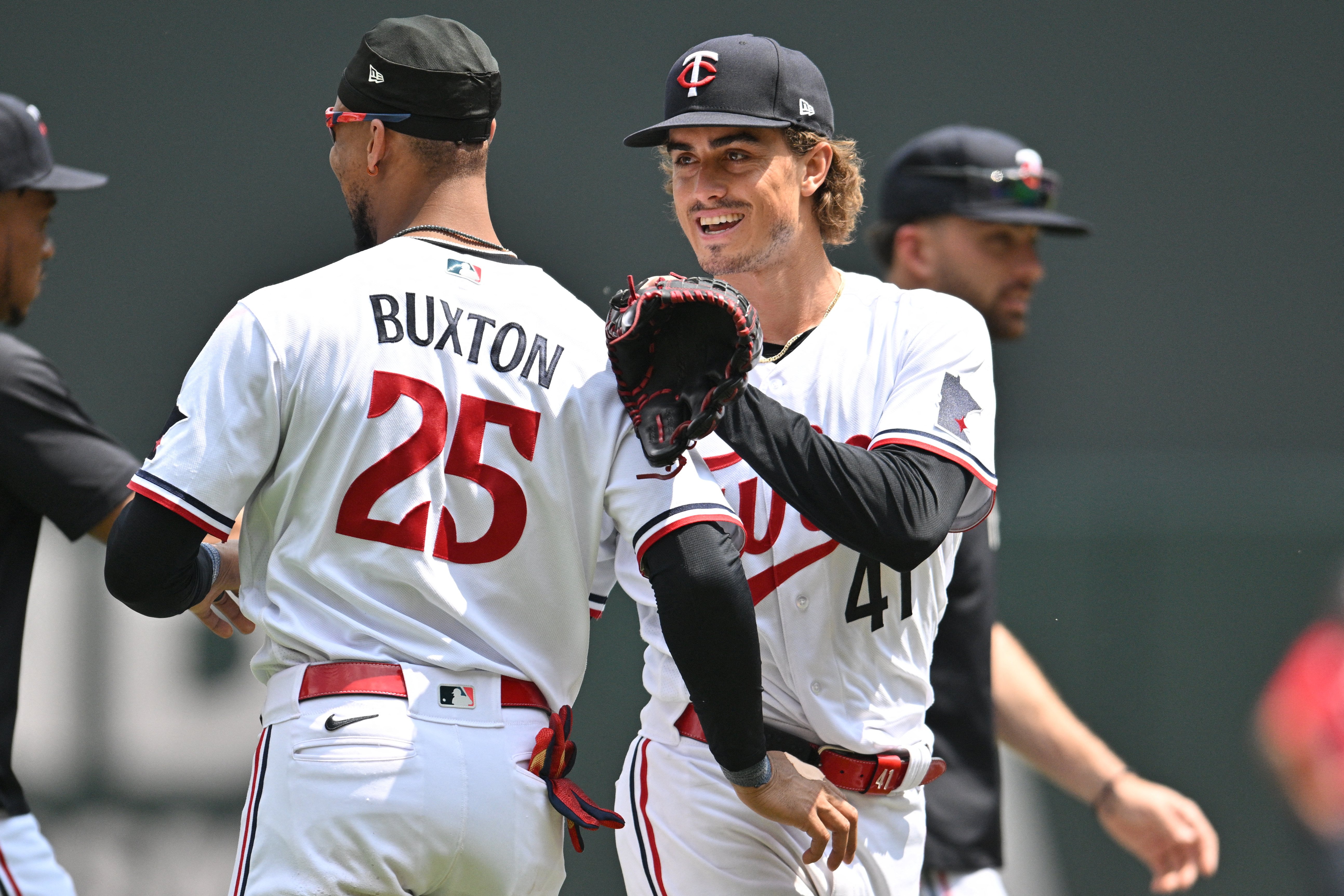 The premise of a successful season for the 2026 Minnesota Twins was essentially put to rest on the very first day of spring training. That ambitious notion rested upon the idea that Pablo López, Joe Ryan and Byron Buxton — the three former All-Stars whom the Twins held onto through last year's deadline firesale — would lead the way for an upstart group capable of taking a mediocre division by surprise. It was, honestly, not a ridiculous concept. But when López went down with a season-ending injury during the first full-squad workout in February, it lost plausibility. A fringe team with a bottom-tier payroll could not afford to get zero contribution from its best, most expensive player. Just doesn't work, as much as no one wanted to admit it at the time. In fairness, the rest of that plan worked out quite well, during the first half at least. Ryan and Buxton were both All-Stars for a second straight year, and they played a big role in keeping the Twins relevant. At the end of July, when Minnesota briefly surfaced above .500 and committed to buying at the deadline, Ryan and Buxton were tied for the team lead in fWAR (2.6). But from that point forward, they were sub-replacement level. The two biggest stars on the Twins turned into two of their worst players, either unavailable or ineffective throughout the second half. Combine that with the continuing absence of López, and it really tells the whole story of this latest collapse. It is, unfortunately, a familiar story. Second-half declines, with injuries playing a factor, have become the norm for both Ryan and Buxton. The latter will be coming off a major hip surgery at age 33 next season, and the former has essentially never put together a complete season. López carries his own set of question marks as he makes his return from Tommy John. I'm bullish on him, but you can never take for granted immediate success coming off reconstructive elbow surgery. At their best, these three veteran players are certainly capable of forming the core of a contending team. You almost have no choice but to hope they can. But you also can't exactly count on it. And that's where the real challenge emerges for the Twins and their front office. Hope for the Best, Build for Something Less The Twins shouldn't approach this offseason trying to replace López, Ryan or Buxton. Nor should they operate under the assumption that those three will collectively provide a full season of star-level production. They need to build a roster capable of surviving when they don't. It's not some totally unique situation in this game of attrition. Injuries happen to every team. Good players slump. Pitchers wear down. The problem is not experiencing those things, but constructing a roster where experiencing them effectively ends your season. And that's what happened in 2026. When Buxton stopped producing, there wasn't another established middle-of-the-order force ready to pick up the slack. When Ryan faltered, the rotation suddenly lacked the frontline presence it had already been missing without López. The Twins had some impressive young players emerge, but asking them to immediately become the stars carrying a contender is a different proposition altogether. That becomes especially relevant when looking at the next wave. Luke Keaschall looks like a foundational player. Taj Bradley and Connor Prielipp established themselves as legitimate rotation building blocks. Walker Jenkins, Emmanuel Rodriguez and Kaelen Culpepper finally reached the majors and gave us reasons to dream on what's ahead. It's exactly what the Twins spent the past year waiting for. Now that those players are here, the temptation will be to view their arrival as the offseason upgrade. It can't be. The Kids Can't Be the Entire Plan There is tremendous upside in this young core, perhaps more than we've seen in Minnesota for quite some time. There is also plenty of uncertainty. Jenkins and Rodriguez have barely experienced the major leagues. Culpepper has fewer than 150 plate appearances. Prielipp just completed by far the largest workload of his professional career. Even Keaschall, as impressive as he's been, has only two big-league seasons under his belt. Some of these players will take steps forward next year. Some probably won't. That's how young players work. The Twins should be excited about having Jenkins and Rodriguez in their Opening Day lineup. They shouldn't need either one to immediately become a three- or four-win player for the offense to work. They should be thrilled to have Bradley and Prielipp behind López and Ryan. They shouldn't be sunk if one of those veterans misses time or struggles again. That's the difference between having upside and having depth. Between hoping to contend and planning to contend. The latter requires investment. Raise the Floor Last offseason, there was at least some justification for restraint. The Twins were coming off an organizational reset. They had just traded away a huge portion of the roster. Several of their best prospects weren't quite ready yet. It made some sense to spend 2026 figuring out what they had and identifying who could be part of the next competitive team. Well, now we know a lot more. Bradley is part of it. Prielipp is part of it. Keaschall is part of it. Kody Clemens earned his way into that conversation. Jenkins, Rodriguez and Culpepper are here. López is coming back. The evaluation year is over. That doesn't mean the Twins should abandon their young players or block their paths with expensive veterans. Quite the opposite. The goal should be to surround them with enough established talent that their development doesn't carry the entire weight of the season. The lineup is an obvious place to start. Josh Bell and Ryan Jeffers, two of this year's most productive hitters, are headed to free agency. Royce Lewis' future with the organization is uncertain at best. Buxton's health can't be assumed. There is room — and need — for a legitimate veteran bat who can occupy a prominent spot in the order without requiring everything to break right around him. The bullpen is another clear need. Jeff Hoffman gives them one potentially dominant late-inning arm, assuming his season-ending forearm issue proves minor, but the Twins cannot repeat last winter's approach of assembling a relief corps largely out of hope and spare parts. Andrew Morris and Yoendrys Gómez, meant to be proof-of-concept for building on the fly, demonstrated exactly how quickly seemingly reliable relievers can turn unreliable. The Twins don't need to construct a superteam, but they need to eliminate the fragility that ultimately doomed the 2026 Twins. Their path to contention depended on their few established stars remaining stars, their inexpensive supporting cast exceeding expectations, and enough young players arriving quickly enough to fill the gaps. For much of the summer, an impressive number of those things happened. Then a couple stopped happening, and the entire operation fell apart. No More Waiting for Everything to Go Right There will be plenty of optimism surrounding the Twins this offseason, and I think much of it is justified. This is a much more interesting roster than the one they carried into spring training. The rotation has real depth and upside. The organization's best position-player prospects have arrived. Several unexpected contributors established themselves. But the front office can't mistake interesting for complete. Maybe López comes back looking like an ace. Maybe Ryan finally carries his first-half form through September. Maybe Buxton's hip surgery restores the dynamic player we saw early this year. Maybe Jenkins or Rodriguez explodes onto the scene and becomes an immediate star. While any of those developments would dramatically raise the Twins' ceiling, none should be prerequisites for having a good baseball team. And that's the challenge this offseason: build a roster sturdy enough that its best-case scenario isn't also its only path to contention. The Twins spent 2026 finding out which pieces of their next core they could trust. In 2027, it's time to give those pieces enough support that they don't have to trust everything else to go right.
- 79 comments
-
- 12
-
-

-
- byron buxton
- joe ryan
- (and 1 more)
-
Image courtesy of Kelley L Cox-Imagn Images The Weekly Nutshell: Naturally, Minnesota's first winning week since July came immediately after they were officially eliminated from contention, and losses became more strategically valuable than victories. At the expense of their 2027 draft position, the Twins finished on a relative high note, winning both of their last two series and playing spoiler against the Texas Rangers to close out their campaign. The wins weren't very meaningful, but the performances that drove them were: young building blocks stepping up and finishing the year strong to send the Twins into this offseason with a sense of momentum, especially relative to last year. Weekly Snapshot: Mon, 9/21 through Sun, 9/27 *** Record Last Week: 4-2 (Overall: 77-85) Run Differential Last Week: +6 (Overall: -58) Final Standing: 3rd Place in AL Central (8.0 GB) Latest Game Results Game 157 | SF 5, MIN 2: Matthews Struggles Early, Offense Held to Two Solo Homers Matthews: 5 IP, 5 ER, 8 H, 0 BB, 9 K Game 158 | MIN 3, SF 2: Bradley, Bullpen Shut Down Inexperienced Giants Lineup Bradley: 6 IP, 1 ER, 3 H, 3 BB, 6 K Game 159 | MIN 4, SF 2: Twins Pitch Their Way to First Road Series Win of Second Half Twins bullpen: 3.2 IP, 0 R, 1 H, 1 BB, 4 K Game 160 | MIN 10, TEX 2: Keaschall Keys Offense with 4 Hits as Ryan Finishes Strong Keaschall: 4-5, 3 R, 3 RBI Game 161 | TEX 6, MIN 2: Twins and Ober Crash Back to Reality Against Urgent Rangers Ober: 5 IP, 6 ER, 10 H, 1 BB, 5 K Game 162 | MIN 6, TEX 4: Kremer Spins a Gem to Close a Losing Season with a Victory Kremer: 7 IP, 1 R, 3 H, 0 BB, 4 K NEWS & NOTES The final week of the season was all about creating opportunities and looking ahead to what's next. It started with Aaron Sabato's promotion to the big leagues on Monday. The 27-year-old Sabato is far from a top prospect at this point, but earned the nod through back-to-back strong showings at Triple-A and six years of grinding in the minors. Sabato went hitless with three strikeouts in six at-bats. Alex Jackson, Minnesota's scarcely-used third catcher, was designated for assignment to make room. For a third time this season, he passed through waivers unclaimed, meaning the Twins will be able to bring him back as their No. 2 catcher if they so choose. That has seemingly been the motivation behind their odd handling of Jackson throughout much of the year. On Saturday, Kaelen Culpepper was activated from the injured list following a minimum-length stay for his mild hammy strain. It was nice to see him return for one more quick glimpse at season's end as he prepares to take over as full-time shortstop in 2027. He went 2-for-8 in two games over the weekend. The corresponding move was a bit ominous: Jeff Hoffman landed on the IL with right forearm inflammation. Hopefully nothing serious, and that's the indication coming from the team, but given his immense importance to the bullpen picture next year, it's unsettling to see him end the year with an arm issue that often has elbow-related implications. As a case in point, look no further than Mick Abel. He went down in April with elbow inflammation that was initially deemed "not too serious" and he never ended up making it back, undergoing arthroscopic surgery in July. A promising update on that front, however: Abel threw a bullpen session at Target Field over the weekend, signaling that his progression toward 2027 readiness is on track. HIGHLIGHTS The Twins rotation was generally not great this year, ranking 23rd among MLB teams in ERA, 16th in FIP and 19th in fWAR. At the same time, starting pitching is pretty clearly the biggest strength for the club looking ahead to next year. In the final week of this 2026 season, we saw some reasons why. Taj Bradley and Connor Prielipp were massive bright spots in September, pitching to a 3.00 ERA and 2.36 ERA respectively while setting new workload benchmarks. Each closed out his season with gusto. On Tuesday, Bradley held the Giants to one run on three hits over six innings, striking out six to surpass 200 Ks for the year. One day later, Prielipp allowed two runs over 5 ⅓ to help secure a series victory in San Fran. These two have established themselves as rotation building blocks going forward. Oh, then there's that Joe Ryan guy. Another shaky second half wore the luster off his season, but we're talking about a guy who has made two straight All-Star teams and looked like an ace for long stretches. He mostly did not shown that form after the break, entering his final start with an 0-5 record and 7.62 ERA, but looked more like his best version on Friday night when he struck out eight over six innings of two-run ball. I would've fully expected the Twins to trade Ryan this offseason, and still believe they'll be open to the idea, but his struggles down the stretch might temper his market to a point where it makes sense to bring him back for his walk year. Asset management aside, that's an exciting proposition with Prielipp and Bradley looking like outstanding mid-rotation options, and Pablo López — who departed for Miami over the weekend to ramp up his Tommy John rehab — retaking his place atop the unit. Luke Keaschall is another major source of optimism for the team's 2027 outlook. He has solidified his standing as a prototypical leadoff man, putting a stamp on a strong sophomore season with a stellar final week: 6-for-18 with a double, two triples, a homer, six RBIs and 10 (!) runs scored scored. Keaschall has been getting on base relentlessly all year, ranking 14th in the majors in OBP, but what I find especially heartening about his finish is the power we've seen emerge. That was on full display with six extra base hits over these final six games. I'm excited to see what Keaschall can do as the table-setter in a 2027 lineup that will surely include Walker Jenkins and Emmanuel Rodriguez, who both homered last week. They'll mix in with returning veterans like Kody Clemens, who batted third or fourth routinely against right-handers in September, reflecting the level of trust Derek Shelton has in his bat. Clemens kept delivering on that trust in last week: he went 6-for-22 with his team-leading 27th home run, closing out a season that fully solidified his status as a starting-caliber big leaguer. A great story and a great find for the Twins. The bullpen is sure to be an area of focus for the front office this offseason — it was generally a weakness for the 2026 team both before and after they addressed it at the deadline. The relief corps did finish on a high note however, combining for 16 ⅔ shutout innings across five games before a hiccup in the season finale. That included: 3 ⅔ scoreless frames from Travis Adams, who struck out seven with one walk allowed. It's a nice end cap to a second half that has strongly bolstered Adams' case to be a part of next year's bullpen. From July 1st onward, he posted a 3.13 ERA and 3.50 FIP across 37 ⅓ innings. Adams showed the ability to get a lot of chase and a lot of whiffs this year. Kody Funderburk also experienced a resurgent second half that strengthened his place in the team's plans. He led the staff in WPA after June, posting a 2.93 ERA with 38 strikeouts in 30 ⅔ innings, and closed things out with two scoreless appearances Yoendrys Gómez and Andrew Morris, whose late-season struggles have forced the Twins to rethink their roles moving forward, both at least ended their seasons on the upswing. Gómez, coming off a nightmarish week, picked up the win on Wednesday in San Francisco and was perfect across 2 ⅔ innings, retiring all eight batters faced. Morris gave up an ultimately inconsequential two-run homer in the ninth inning Sunday, but struck out three across two shutout innings previously. Finally, we've got to shout out Taylor Rogers. Unlike the guys above, he's not vying for a spot in next year's bullpen picture, but he did a solid job this year as a veteran placeholder. The final week saw him make his team-leading 63rd, 64th and 65th appearances, throwing strikes and shutting down the opposition. He deserves a tip of the cap for what he brought to the table on a one-year, $2 million deal. LOWLIGHTS With our focus now fully geared toward 2027, I suppose it's a positive that most of the players who ended this season in a funk are not likely part of the future plans. Impending free agent Josh Bell homered and drove in five last week to push his season total to 95 RBIs, but went just 3-for-17 and finished the season with an unexceptional .738 OPS. Ryan Jeffers, who's also about to hit the open market, went 3-for-15 with six strikeouts, punctuating an ugly finish to his walk year. Will his September downturn affect the team's decision-making with regards to a qualifying offer? We'll see. Royce Lewis is not due for free agency, but will probably be moving on anyway. He went 4-for-19 with six strikeouts, and finishes September with a 27-to-3 K/BB ratio. Lewis did homer in the season's last game, just his second in 44 games, but finished with a .227 average and .667 OPS. The Twins need to get a lot more production out of first base and Lewis has given us little reason to believe he's capable of it anymore. Bailey Ober got rocked in what may have been his last start as a Twin on Saturday, surrendering six earned runs on 10 hits in five innings against the Rangers. Ober allowed a ton of hard contact, including two home runs. It's a major credit to him that he largely avoided outings like this over the course of the season despite failing to crack 90 with his fastball, but it's a performance that underscores the risk in continuing to count on him going forward. If the Twins want to invest in bringing back a veteran No. 5 starter next year, Dean Kremer (who was brilliant in his final start on Sunday) would seem to be the better choice. If this is it for guys like Jeffers, Lewis and Ober, then we are reaching the end of an era. They are among the team's longest-tenured players. It's unfortunate to see them play poorly on the way out, but I'll remember and appreciate the many highlights we saw from each over many years. TRENDING STORYLINE An interesting offseason lies ahead. The possibility (inevitability?) of an impending MLB lockout looms over everything, but beyond that, the Twins and their front office have some stuff to figure out. The transitional 2026 season is over and now it's time to push. That begins with finding ways to reinforce a lineup that will be losing two of its most productive bats in Bell and Jeffers, who ended the season batting third and fourth. Counting on young and inexperienced hitters like Jenkins, Rodriguez and Culpepper to carry the weight of catalyzing the offense is a dangerous gambit. And then of course there is a the bullpen. Hopefully Hoffman comes back healthy, and they've got plenty to work with in the middle innings, but the Twins do seem to need at least one more trusted high-leverage arm. We're going to need to see much more ambition and urgency here than we did last winter. The baseball ops group that will be navigating this key offseason is in flux. We saw Thad Levine and Derek Falvey depart in the past couple of years, and more recently the Twins parted ways with assistant GM Daniel Adler and longtime scouting exec Deron Johnson. What does the future hold for Jeremy Zoll? WIll he remain atop the decision-making hierarchy, or will the club seek out a new front office leader? Much to be decided. Now that the vaunted prospects have arrived, and the rotation is built for success, there are no excuses. The 2027 season needs to be a legitimately competitive one. But first, the league and its players association will need to get aligned. The CBA is set to expire on December 1st. LOOKING BACK As always, I've really enjoyed bringing you these recaps each Sunday night. I appreciate all the feedback I've received and all the great conversations sparked in the comments. I told myself at the beginning of the season that — while the likelihood of missing the playoffs was evident — it would be important to analyze meaningful big-picture developments and celebrate the wins where we could. I think we've done that, continually surfacing highlights for a team that didn't have too many winning weeks, while also recognizing the many areas for improvement. We'll be back at with the Week in Review next year. My hope is that we'll have a more relevant and consistently successful team to dissect, but one way or another we'll keep breaking down all the highlights, lowlights, and storylines that matter all season. As always, if you have suggestions or requests for things you'd like to see in these columns, I always love to hear it. Thanks for following along. View full article
- 19 replies
-
- 1
-
-
- taj bradley
- connor prielipp
- (and 1 more)
-
 The Weekly Nutshell: Naturally, Minnesota's first winning week since July came immediately after they were officially eliminated from contention, and losses became more strategically valuable than victories. At the expense of their 2027 draft position, the Twins finished on a relative high note, winning both of their last two series and playing spoiler against the Texas Rangers to close out their campaign. The wins weren't very meaningful, but the performances that drove them were: young building blocks stepping up and finishing the year strong to send the Twins into this offseason with a sense of momentum, especially relative to last year. Weekly Snapshot: Mon, 9/21 through Sun, 9/27 *** Record Last Week: 4-2 (Overall: 77-85) Run Differential Last Week: +6 (Overall: -58) Final Standing: 3rd Place in AL Central (8.0 GB) Latest Game Results Game 157 | SF 5, MIN 2: Matthews Struggles Early, Offense Held to Two Solo Homers Matthews: 5 IP, 5 ER, 8 H, 0 BB, 9 K Game 158 | MIN 3, SF 2: Bradley, Bullpen Shut Down Inexperienced Giants Lineup Bradley: 6 IP, 1 ER, 3 H, 3 BB, 6 K Game 159 | MIN 4, SF 2: Twins Pitch Their Way to First Road Series Win of Second Half Twins bullpen: 3.2 IP, 0 R, 1 H, 1 BB, 4 K Game 160 | MIN 10, TEX 2: Keaschall Keys Offense with 4 Hits as Ryan Finishes Strong Keaschall: 4-5, 3 R, 3 RBI Game 161 | TEX 6, MIN 2: Twins and Ober Crash Back to Reality Against Urgent Rangers Ober: 5 IP, 6 ER, 10 H, 1 BB, 5 K Game 162 | MIN 6, TEX 4: Kremer Spins a Gem to Close a Losing Season with a Victory Kremer: 7 IP, 1 R, 3 H, 0 BB, 4 K NEWS & NOTES The final week of the season was all about creating opportunities and looking ahead to what's next. It started with Aaron Sabato's promotion to the big leagues on Monday. The 27-year-old Sabato is far from a top prospect at this point, but earned the nod through back-to-back strong showings at Triple-A and six years of grinding in the minors. Sabato went hitless with three strikeouts in six at-bats. Alex Jackson, Minnesota's scarcely-used third catcher, was designated for assignment to make room. For a third time this season, he passed through waivers unclaimed, meaning the Twins will be able to bring him back as their No. 2 catcher if they so choose. That has seemingly been the motivation behind their odd handling of Jackson throughout much of the year. On Saturday, Kaelen Culpepper was activated from the injured list following a minimum-length stay for his mild hammy strain. It was nice to see him return for one more quick glimpse at season's end as he prepares to take over as full-time shortstop in 2027. He went 2-for-8 in two games over the weekend. The corresponding move was a bit ominous: Jeff Hoffman landed on the IL with right forearm inflammation. Hopefully nothing serious, and that's the indication coming from the team, but given his immense importance to the bullpen picture next year, it's unsettling to see him end the year with an arm issue that often has elbow-related implications. As a case in point, look no further than Mick Abel. He went down in April with elbow inflammation that was initially deemed "not too serious" and he never ended up making it back, undergoing arthroscopic surgery in July. A promising update on that front, however: Abel threw a bullpen session at Target Field over the weekend, signaling that his progression toward 2027 readiness is on track. HIGHLIGHTS The Twins rotation was generally not great this year, ranking 23rd among MLB teams in ERA, 16th in FIP and 19th in fWAR. At the same time, starting pitching is pretty clearly the biggest strength for the club looking ahead to next year. In the final week of this 2026 season, we saw some reasons why. Taj Bradley and Connor Prielipp were massive bright spots in September, pitching to a 3.00 ERA and 2.36 ERA respectively while setting new workload benchmarks. Each closed out his season with gusto. On Tuesday, Bradley held the Giants to one run on three hits over six innings, striking out six to surpass 200 Ks for the year. One day later, Prielipp allowed two runs over 5 ⅓ to help secure a series victory in San Fran. These two have established themselves as rotation building blocks going forward. Oh, then there's that Joe Ryan guy. Another shaky second half wore the luster off his season, but we're talking about a guy who has made two straight All-Star teams and looked like an ace for long stretches. He mostly did not shown that form after the break, entering his final start with an 0-5 record and 7.62 ERA, but looked more like his best version on Friday night when he struck out eight over six innings of two-run ball. I would've fully expected the Twins to trade Ryan this offseason, and still believe they'll be open to the idea, but his struggles down the stretch might temper his market to a point where it makes sense to bring him back for his walk year. Asset management aside, that's an exciting proposition with Prielipp and Bradley looking like outstanding mid-rotation options, and Pablo López — who departed for Miami over the weekend to ramp up his Tommy John rehab — retaking his place atop the unit. Luke Keaschall is another major source of optimism for the team's 2027 outlook. He has solidified his standing as a prototypical leadoff man, putting a stamp on a strong sophomore season with a stellar final week: 6-for-18 with a double, two triples, a homer, six RBIs and 10 (!) runs scored scored. Keaschall has been getting on base relentlessly all year, ranking 14th in the majors in OBP, but what I find especially heartening about his finish is the power we've seen emerge. That was on full display with six extra base hits over these final six games. I'm excited to see what Keaschall can do as the table-setter in a 2027 lineup that will surely include Walker Jenkins and Emmanuel Rodriguez, who both homered last week. They'll mix in with returning veterans like Kody Clemens, who batted third or fourth routinely against right-handers in September, reflecting the level of trust Derek Shelton has in his bat. Clemens kept delivering on that trust in last week: he went 6-for-22 with his team-leading 27th home run, closing out a season that fully solidified his status as a starting-caliber big leaguer. A great story and a great find for the Twins. The bullpen is sure to be an area of focus for the front office this offseason — it was generally a weakness for the 2026 team both before and after they addressed it at the deadline. The relief corps did finish on a high note however, combining for 16 ⅔ shutout innings across five games before a hiccup in the season finale. That included: 3 ⅔ scoreless frames from Travis Adams, who struck out seven with one walk allowed. It's a nice end cap to a second half that has strongly bolstered Adams' case to be a part of next year's bullpen. From July 1st onward, he posted a 3.13 ERA and 3.50 FIP across 37 ⅓ innings. Adams showed the ability to get a lot of chase and a lot of whiffs this year. Kody Funderburk also experienced a resurgent second half that strengthened his place in the team's plans. He led the staff in WPA after June, posting a 2.93 ERA with 38 strikeouts in 30 ⅔ innings, and closed things out with two scoreless appearances Yoendrys Gómez and Andrew Morris, whose late-season struggles have forced the Twins to rethink their roles moving forward, both at least ended their seasons on the upswing. Gómez, coming off a nightmarish week, picked up the win on Wednesday in San Francisco and was perfect across 2 ⅔ innings, retiring all eight batters faced. Morris gave up an ultimately inconsequential two-run homer in the ninth inning Sunday, but struck out three across two shutout innings previously. Finally, we've got to shout out Taylor Rogers. Unlike the guys above, he's not vying for a spot in next year's bullpen picture, but he did a solid job this year as a veteran placeholder. The final week saw him make his team-leading 63rd, 64th and 65th appearances, throwing strikes and shutting down the opposition. He deserves a tip of the cap for what he brought to the table on a one-year, $2 million deal. LOWLIGHTS With our focus now fully geared toward 2027, I suppose it's a positive that most of the players who ended this season in a funk are not likely part of the future plans. Impending free agent Josh Bell homered and drove in five last week to push his season total to 95 RBIs, but went just 3-for-17 and finished the season with an unexceptional .738 OPS. Ryan Jeffers, who's also about to hit the open market, went 3-for-15 with six strikeouts, punctuating an ugly finish to his walk year. Will his September downturn affect the team's decision-making with regards to a qualifying offer? We'll see. Royce Lewis is not due for free agency, but will probably be moving on anyway. He went 4-for-19 with six strikeouts, and finishes September with a 27-to-3 K/BB ratio. Lewis did homer in the season's last game, just his second in 44 games, but finished with a .227 average and .667 OPS. The Twins need to get a lot more production out of first base and Lewis has given us little reason to believe he's capable of it anymore. Bailey Ober got rocked in what may have been his last start as a Twin on Saturday, surrendering six earned runs on 10 hits in five innings against the Rangers. Ober allowed a ton of hard contact, including two home runs. It's a major credit to him that he largely avoided outings like this over the course of the season despite failing to crack 90 with his fastball, but it's a performance that underscores the risk in continuing to count on him going forward. If the Twins want to invest in bringing back a veteran No. 5 starter next year, Dean Kremer (who was brilliant in his final start on Sunday) would seem to be the better choice. If this is it for guys like Jeffers, Lewis and Ober, then we are reaching the end of an era. They are among the team's longest-tenured players. It's unfortunate to see them play poorly on the way out, but I'll remember and appreciate the many highlights we saw from each over many years. TRENDING STORYLINE An interesting offseason lies ahead. The possibility (inevitability?) of an impending MLB lockout looms over everything, but beyond that, the Twins and their front office have some stuff to figure out. The transitional 2026 season is over and now it's time to push. That begins with finding ways to reinforce a lineup that will be losing two of its most productive bats in Bell and Jeffers, who ended the season batting third and fourth. Counting on young and inexperienced hitters like Jenkins, Rodriguez and Culpepper to carry the weight of catalyzing the offense is a dangerous gambit. And then of course there is a the bullpen. Hopefully Hoffman comes back healthy, and they've got plenty to work with in the middle innings, but the Twins do seem to need at least one more trusted high-leverage arm. We're going to need to see much more ambition and urgency here than we did last winter. The baseball ops group that will be navigating this key offseason is in flux. We saw Thad Levine and Derek Falvey depart in the past couple of years, and more recently the Twins parted ways with assistant GM Daniel Adler and longtime scouting exec Deron Johnson. What does the future hold for Jeremy Zoll? WIll he remain atop the decision-making hierarchy, or will the club seek out a new front office leader? Much to be decided. Now that the vaunted prospects have arrived, and the rotation is built for success, there are no excuses. The 2027 season needs to be a legitimately competitive one. But first, the league and its players association will need to get aligned. The CBA is set to expire on December 1st. LOOKING BACK As always, I've really enjoyed bringing you these recaps each Sunday night. I appreciate all the feedback I've received and all the great conversations sparked in the comments. I told myself at the beginning of the season that — while the likelihood of missing the playoffs was evident — it would be important to analyze meaningful big-picture developments and celebrate the wins where we could. I think we've done that, continually surfacing highlights for a team that didn't have too many winning weeks, while also recognizing the many areas for improvement. We'll be back at with the Week in Review next year. My hope is that we'll have a more relevant and consistently successful team to dissect, but one way or another we'll keep breaking down all the highlights, lowlights, and storylines that matter all season. As always, if you have suggestions or requests for things you'd like to see in these columns, I always love to hear it. Thanks for following along.
- 19 comments
-
- 12
-
-
-
- taj bradley
- connor prielipp
- (and 1 more)
-
Image courtesy of Bruce Kluckhohn-Imagn Images The Minnesota Twins were flying high coming off the 2023 season, but a demoralizing collapse in 2024 followed by a roundly disappointing 2025 erased their momentum and tanked fan morale. Attendance reached its lowest point in 25 years. When Tom Pohlad took over last offseason as the new face of ownership, he acknowledged the state of affairs and the core imperative: they needed to win back confidence. They needed to put a better and more inspiring product on the field. "It’s undeniable," Pohlad said, "that we haven’t won enough baseball games, the financial health of the club has been put in jeopardy, and we’ve got a fan base that has lost trust in us as owners — and, as a result, this organization and the direction it’s headed." No one was suggesting a 90-win campaign. The reality of this team's situation coming off a historic deadline firesale was plain to see. Pohlad, to his credit, was measured in his level-setting for the 2026 season. "We really like our team," he shared at the start of spring training. "We think we’ve got a good mix of veterans and really talented young people that want to make a statement. I think we’re going to exceed expectations.” That was a low bar. General expectations for the Twins were tempered to say the least, coming off 90 losses and carrying one of the league's skimpiest payrolls. The over/under in Vegas coming into this season was 72 to 73 wins (which Pohlad called "ridiculous"), whereas projection systems like FanGraphs viewed the team's outlook somewhat more favorably, pegging them in the 77-win range. With one game left, the Twins sit at 76 wins. They've already won money for the over bettors and it looks like they are going to nail their projection forecasts to a tee. I guess that's something to celebrate? It calls to mind a classic Calvin and Hobbes comic panel from the great Bill Watterson. Conversing with Calvin over the construction of a snowman, Hobbes ponders: “So the secret to good self-esteem is to lower your expectations to the point where they’re already met?” “Right,” Calvin responds. “We should take pride in our mediocrity.” Taking pride in mediocrity feels like a good way to synopsize any good vibes that this losing season might elicit. There's no better way to describe this 2026 Twins team than mediocre: okay, passable, neither very good nor very bad. They avoided elimination until the last week of September, but were above .500 for 13 days all season, and hung around on the fringe of contention only due to the sorry state of the American League at large. But hey, perception matters. This year's Twins team played almost in lockstep with last year's in the first half, hovering just below .500 for most of July before taking very different paths at the trade deadline. The contrast was twofold: In 2025, Detroit was running away with the Central, and being five games below .500 was not enough to put you in the Wild Card conversation. In 2025, the Twins were playing this mediocre brand of baseball with a roster that was at least co-favored to win the division, and with Carlos Correa being paid $35 million. Some view the latter as a bad thing. I get it. It's more frustrating to watch a good team lose. And it leads to more rancor: players grumbling, media melting down, "sell the team" chants erupting. Relatively speaking, there's been very little of that this year, because people know the deal. For me, I like to have some skin in the game. I like to feel the sweat, to revel in the dramatics. My sweat was never beading up in this 2026 season, even as the AL field did its best to keep things interesting. I was convinced from the outset this was going to be a bad team and it was indeed a bad team, albeit somewhat less bad than I feared. So, did the Twins surpass expectations? In my view yes, at least in terms of wins and losses, but only because mine were so low to begin with. And that very fact is why I struggled to ever feel truly engaged with this season. I never believed in the capability and potential of this team like I did in 2024 before the collapse, or in 2025's first half to a lesser degree. This team never won 12 or 13 straight games; it never won more than four straight. Not a single player had a truly star-caliber season. In that regard, the Twins didn't surpass my expectations at all. They were exactly what I expected. But at least they are giving me reason to expect more next year. Because, everything else aside, this team did finish on a much different note than the last two. Instead of watching a collection of disgruntled veterans play out the string, Twins fans got a September introduction to players who might actually be central to where this thing goes next. Walker Jenkins, Kaelen Culpepper and Emmanuel Rodriguez weren't just prospects looming somewhere off in the distance anymore. They were here, getting meaningful exposure to the majors and giving us a glimpse of what a younger, more dynamic Twins lineup could look like. On the pitching side, Taj Bradley and Connor Prielipp put the finishing touches on breakthrough seasons that established them as legitimate rotation fixtures. There are plenty of holes left to fill and questions left to answer, but the Twins will enter this offseason with a clearer picture of their young core than they had a year ago. Maybe that's the most meaningful way this team exceeded expectations. The 2026 Twins weren't particularly good, and they never gave us much reason to believe they would become good. But by the end, they gave us a few more reasons to believe what comes next might (finally) be different. I'd love to hear your thoughts. Did this team exceed your expectations? And where does this finish leave your expectations looking ahead to 2027? View full article
-
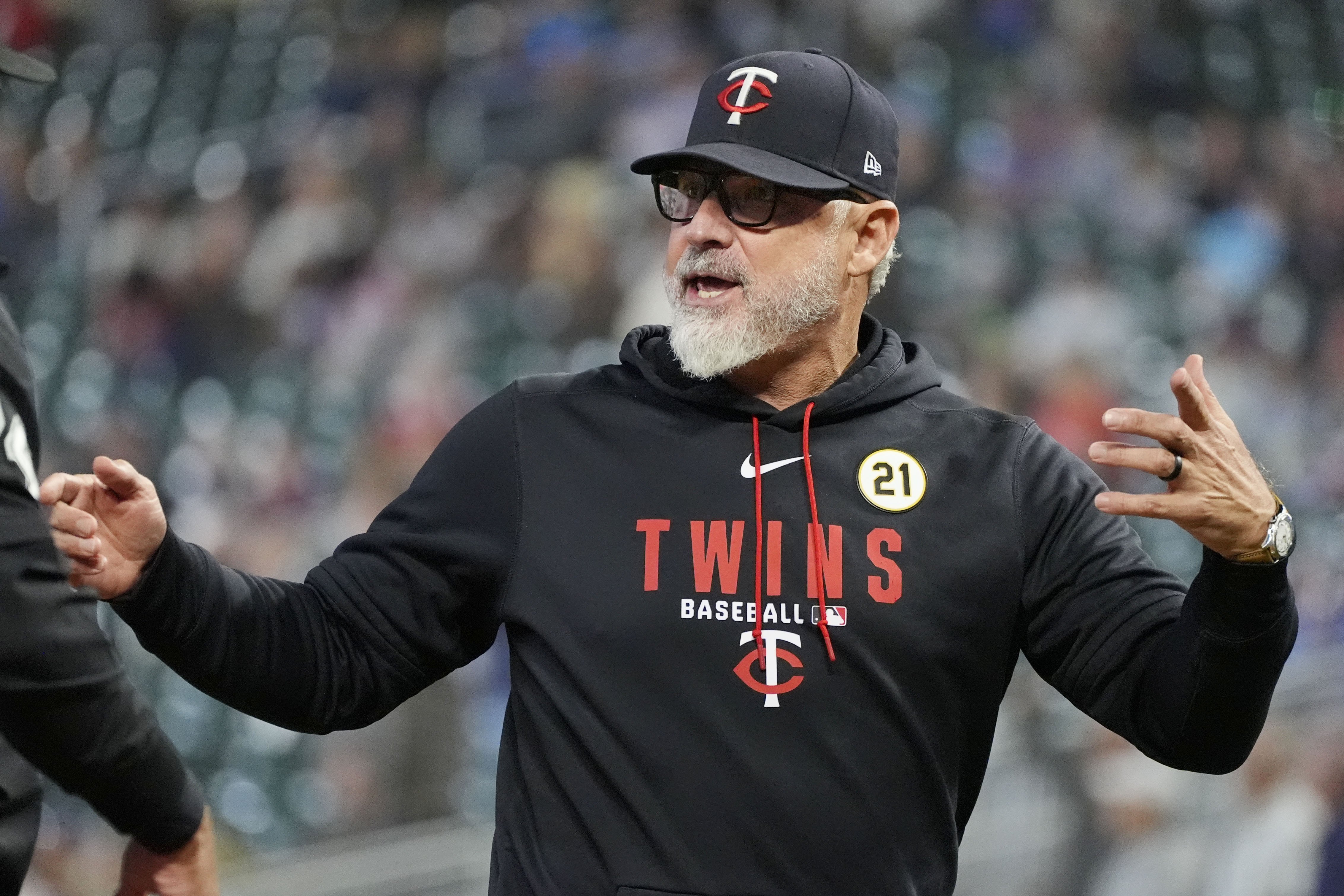 The Minnesota Twins were flying high coming off the 2023 season, but a demoralizing collapse in 2024 followed by a roundly disappointing 2025 erased their momentum and tanked fan morale. Attendance reached its lowest point in 25 years. When Tom Pohlad took over last offseason as the new face of ownership, he acknowledged the state of affairs and the core imperative: they needed to win back confidence. They needed to put a better and more inspiring product on the field. "It’s undeniable," Pohlad said, "that we haven’t won enough baseball games, the financial health of the club has been put in jeopardy, and we’ve got a fan base that has lost trust in us as owners — and, as a result, this organization and the direction it’s headed." No one was suggesting a 90-win campaign. The reality of this team's situation coming off a historic deadline firesale was plain to see. Pohlad, to his credit, was measured in his level-setting for the 2026 season. "We really like our team," he shared at the start of spring training. "We think we’ve got a good mix of veterans and really talented young people that want to make a statement. I think we’re going to exceed expectations.” That was a low bar. General expectations for the Twins were tempered to say the least, coming off 90 losses and carrying one of the league's skimpiest payrolls. The over/under in Vegas coming into this season was 72 to 73 wins (which Pohlad called "ridiculous"), whereas projection systems like FanGraphs viewed the team's outlook somewhat more favorably, pegging them in the 77-win range. With one game left, the Twins sit at 76 wins. They've already won money for the over bettors and it looks like they are going to nail their projection forecasts to a tee. I guess that's something to celebrate? It calls to mind a classic Calvin and Hobbes comic panel from the great Bill Watterson. Conversing with Calvin over the construction of a snowman, Hobbes ponders: “So the secret to good self-esteem is to lower your expectations to the point where they’re already met?” “Right,” Calvin responds. “We should take pride in our mediocrity.” Taking pride in mediocrity feels like a good way to synopsize any good vibes that this losing season might elicit. There's no better way to describe this 2026 Twins team than mediocre: okay, passable, neither very good nor very bad. They avoided elimination until the last week of September, but were above .500 for 13 days all season, and hung around on the fringe of contention only due to the sorry state of the American League at large. But hey, perception matters. This year's Twins team played almost in lockstep with last year's in the first half, hovering just below .500 for most of July before taking very different paths at the trade deadline. The contrast was twofold: In 2025, Detroit was running away with the Central, and being five games below .500 was not enough to put you in the Wild Card conversation. In 2025, the Twins were playing this mediocre brand of baseball with a roster that was at least co-favored to win the division, and with Carlos Correa being paid $35 million. Some view the latter as a bad thing. I get it. It's more frustrating to watch a good team lose. And it leads to more rancor: players grumbling, media melting down, "sell the team" chants erupting. Relatively speaking, there's been very little of that this year, because people know the deal. For me, I like to have some skin in the game. I like to feel the sweat, to revel in the dramatics. My sweat was never beading up in this 2026 season, even as the AL field did its best to keep things interesting. I was convinced from the outset this was going to be a bad team and it was indeed a bad team, albeit somewhat less bad than I feared. So, did the Twins surpass expectations? In my view yes, at least in terms of wins and losses, but only because mine were so low to begin with. And that very fact is why I struggled to ever feel truly engaged with this season. I never believed in the capability and potential of this team like I did in 2024 before the collapse, or in 2025's first half to a lesser degree. This team never won 12 or 13 straight games; it never won more than four straight. Not a single player had a truly star-caliber season. In that regard, the Twins didn't surpass my expectations at all. They were exactly what I expected. But at least they are giving me reason to expect more next year. Because, everything else aside, this team did finish on a much different note than the last two. Instead of watching a collection of disgruntled veterans play out the string, Twins fans got a September introduction to players who might actually be central to where this thing goes next. Walker Jenkins, Kaelen Culpepper and Emmanuel Rodriguez weren't just prospects looming somewhere off in the distance anymore. They were here, getting meaningful exposure to the majors and giving us a glimpse of what a younger, more dynamic Twins lineup could look like. On the pitching side, Taj Bradley and Connor Prielipp put the finishing touches on breakthrough seasons that established them as legitimate rotation fixtures. There are plenty of holes left to fill and questions left to answer, but the Twins will enter this offseason with a clearer picture of their young core than they had a year ago. Maybe that's the most meaningful way this team exceeded expectations. The 2026 Twins weren't particularly good, and they never gave us much reason to believe they would become good. But by the end, they gave us a few more reasons to believe what comes next might (finally) be different. I'd love to hear your thoughts. Did this team exceed your expectations? And where does this finish leave your expectations looking ahead to 2027?
 -
Image courtesy of Gary A. Vasquez-Imagn Images The Weekly Nutshell: We've reached a point in the season where the game outcomes don't really matter. In fact, given the draft order implications, you can very well argue that losing is now more valuable than winning for the Twins. From that perspective, this was a fairly successful week: they dropped four of seven games, leaving themselves with the eighth-worst record in the majors. At present, the Twins are basically a coin flip for a ticket to the 2027 draft lottery. More than wins and losses, what we're really focusing on in these remaining games is positive signs from young players and future building blocks. On that front, there was much to like, with an emphatic awakening from Walker Jenkins stealing the show. Let's dig in. Weekly Snapshot: Mon, 9/14 through Sun, 9/20 *** Record Last Week: 3-4 (Overall: 73-83) Run Differential Last Week: -2 (Overall: -64) Standing: 4th Place in AL Central (8.0 GB); 6.5 games out of WC Latest Game Results Game 150 | NYY 8, MIN 3: Bullpen Collapses in Disastrous 6-Run Eighth Inning Morris, Minter: 0.1 IP, 6 ER, 6 H, 1 BB, 1 K Game 151 | NYY 8, MIN 1: Yankees Once Again Pull Away in Middle Innings Rogers: 1.2 IP, 4 R (0 ER), 3 H, 1 BB, 1 K Game 152 | MIN 5, NYY 4 (13): Gómez Blows First Save, Twins Outlast Yanks in Extras Matthews: 6 IP, 0 R, 2 H, 2 BB, 8 K Game 153 | LAA 5, MIN 4 (10): Twins Fall in 10 Despite Clutch Homer from Jenkins Jenkins: 3-4, HR, 2 RBI Game 154 | MIN 3, LAA 0: Prielipp Delivers a Gem, Jenkins Has Another 3-Hit Game Prielipp: 7 IP, 0 R, 2 H, 2 BB, 8 K Game 155 | LAA 6, MIN 5 (11): Another Winnable Game Slips Away in Extra Innings Ryan: 5 IP, 2 ER, 7 H, 1 BB, 5 K Game 156 | MIN 8, LAA 0: Twins Earn Split in Lopsided Shutout Win Behind Kremer Roden: 3-5, HR, 4 RBI NEWS & NOTES Kaelen Culpepper exited Tuesday's game against the Yankees after he tweaked his hamstring while trying to beat out a double play in the sixth. He went on the injured list the following day with a strain, but it's considered minor enough that Culpepper hopes to return as soon as he's eligible, which would enable him to play the final two games of the season. Ben Ross was recalled to take over Culpepper's spot on the roster and made his first MLB start at shortstop on Wednesday, going 1-for-2 with his first big-league hit, a double. He picked up his first RBI on Sunday and scored his first run on an electric baserunning play. On Friday Trevor Larnach was placed on the injured list with a left wrist sprain, ending his season. Alan Roden returned from Triple-A in a corresponding move. It was a solid season overall for Larnach, who slashed .269/.352/.436 to set a new career high in OPS by nearly 50 points, but his future fit in a crowded outfield mix is murky at best. Byron Buxton has undergone arthroscopic hip surgery, which involved "a labral repair with decompression and a cam resection procedure." He's got a considerable rehab journey ahead of him but it sounds like the Twins are hopeful he'll be ready for the start of the regular season, if not day one of spring training. The possibility of a lockout-driven late start to 2027 could work in Buxton's favor in terms of minimizing missed time. HIGHLIGHTS Friday night's win over the Angels was exactly the type you tune in for at the tail end of a lost season. It was more or less a meaningless game competitively for both teams, but performances from emerging young members of Minnesota's hopeful future core helped build enthusiasm for what comes next. Connor Prielipp started for the Twins and pitched the finest game of his career, firing seven shutout innings with eight strikeouts and only two hits allowed. Prielipp pounded the zone with quality stuff and looked every bit like a front-end starter. He's finishing his rookie year strong, with a 2.11 ERA and 19-to-3 K/BB ratio across 21 ⅓ innings in September. In the same game, Jenkins notched three hits including his third home run. One night earlier, he'd broken out of his career-opening slump very loudly with another three-hit game. He homered in that one as well, his first in the majors off a real pitcher, and it came at a huge moment: With the Twins down to their final out in the ninth, Jenkins tied the score with his two-run blast off a 101-MPH fastball from Angels reliever Ben Joyce. One of the most game-changing swings of the season. Jenkins also had two hits on Saturday and added another one as leadoff man Sunday, rounding out a monster series in Anaheim that erased any sense of concern generated by his slow strart. By the end of weekend, Jenkins had his slash line up to a very respectable .210/.300/.387, showing just how quickly things can shift when the samples are this small. The start of Jenkins' Twins career is following a familiar script — he has a history of starting slow at new levels before he inevitably finds his footing. The good news is that once he turns the corner, he doesn't look back, and if that pattern holds in the big leagues it will bode very well for him and the team next year. Count Luke Keaschall as another critical long-term cornerstone closing out his campaign on a high note. He went 9-for-24 (.375) with three walks and two steals, also setting a franchise record with his 22nd HBP. He has become embedded as Minnesota's everyday right fielder, starting 31 of their last 34 games there — including every game in September up until Sunday's day off. I'm envisioning Keaschall and Jenkins as the lineup's 1-2 combo of the future, and it wouldn't surprise me if that arrangement is in place as soon as Opening Day in 2027. A few other strong performances worth noting from the penultimate week of the season, all carrying pertinence to the team's future outlook: Brooks Lee went 10-for-26 (.385) with a double and two RBIs. He also drew two walks, matching his total from the past 34 games. Lee has established his baseline as an average hitter, which has value, but if he's to rise above that it's going to come down to plate discipline. He's got to lay off unfavorable pitches and reduce low-quality contact. That's why I'm really paying attention to his swing decisions here in these final plate appearances. Ryan Kreidler homered twice in his 15 at-bats, pushing his season total to eight. Combine that power production with his defensive skill and versatility, and you've got yourself a very useful roster piece. With both Kreidler and Austin Martin out of options next spring, and suited for somewhat redundant roles, it'll be interesting to see how the Twins proceed. I'm also curious to see how the Twins move forward with Roden. He drew a rare start on Sunday and made the most of it, tallying three hits and driving in four. He's also struggling to make a dent in the outfield mix even with Buxton and Larnach down. As I recall, the Twins hinted when they acquired Roden that they might try working him in at first base, where he played some in college. I wonder if they revisit that idea next spring. It's easily his clearest path to semi-regular playing time. Zebby Matthews had the best month of his career in August, going 5-0 with a 2.90 ERA, and then got lit up in his first two starts of September (0-2, 11.05 ERA). He got right back on track in his latest turn on Wednesday, helping the Twins avoid a sweep by holding the Yankees scoreless over six frames. Matthews is enigmatic in his variance from start to start, but ultimately he has pitched to the level of a solid back-end starter. Still feels like there is a lot more upside to be tapped in a relief role. Taj Bradley completed seven innings the next night, allowing three runs on five hits with one walk and nine strikeouts. His 172 innings pitched not only lead the staff by a wide margin, but are the most logged by any Twins starter in the past two years. A very impressive feat for a guy who did miss time with an IL stint. Bradley's next strikeout will be his 200th — a figure no Twins pitcher has reached since Pablo López in 2023. Before that, José Berríos was the last to do it in 2018. Jeff Hoffman is looking like a massive addition to the 2027 bullpen picture. He's been outrageously dominant for the Twins here in September. After posting four more hitless appearances in the past week, he's up to to 8 ⅓ shutout innings this month with 15 strikeouts, three walks and one hit allowed. Overall he's got a 2.12 ERA as a Twin after coming over from Toronto with a 3.94 mark. LOWLIGHTS While Jenkins showed us how quickly a fledgling rookie's fortunes can change for the better, Emmanuel Rodriguez illustrated the opposite. In his first handful of games, he showcased why the Twins are so high on his potential, generating tons of hard contact including a two-run triple against the Yankees on Monday. But in the Angels series, we saw Rodriguez's biggest red flag — the swing and miss — on full display. He went 1-for-14 with seven strikeouts in the series, and now has a 12-to-1 K/BB ratio through 34 MLB plate appearances. His overaggressiveness and tendency to chase belie a minor-league track record where Rodriguez's patience often bordered on passivity. It wouldn't surprise me if this is intentional. If the Twins are encouraging him to go out there and take hacks I'm all for it, but going forward we'll need to see him recapture some of that trademark discipline. There's just too much whiff in his game to survive a lack of selectiveness. While we're on the subject of undisciplined at-bats, Royce Lewis is the banner example. He went 5-for-27 (.185) with nine strikeouts and zero walks, and now has a 20-to-3 ratio here in September. Minnesota's offense has been lagging down the stretch and Lewis is a big reason for it, with a .182 average and one home run in his past 30 games. It sure feels like he's punching his ticket out of town with this finish; the Twins simply have to find more production at first base next year. Another factor hurting the Twins in their latest September collapse: their two best relievers for the bulk of the season have been ravaged by regression to the mean. Andrew Morris took the loss in Monday's series opener against the Yankees, coughing up three runs while recording just one out. It was his sixth time being charged with a loss in 20 appearances since the start of August — during this span he has a 7.71 ERA, four blown saves, and the second-lowest WPA among MLB relievers (negative-1.84). Also near the bottom of that WPA list is Yoendrys Gómez, whose charmed run as Twins closer has come to a crashing halt. He was charged with his first blown save in 23 attempts on Wednesday, and his second came the following night in a loss to the Angels. Saturday brought another costly clunker: Gómez allowed two runs to cut a three-run lead down to one, setting up an eventual comeback win for Los Angeles. Gómez gave up multiple runs in three of his four appearances last week, and now has a 13.50 ERA and 10-to-10 K/BB ratio in his past eight, lifting his ERA as a Twin by nearly two full runs (from 1.85 to 3.83). There have been some redeeming aspects to this ugly stretch — still missing bats, keeping the ball in the park — but the lack of command is becoming a very serious issue. I certainly wouldn't say he's playing his way out of the team's plans next year but he might be pitching his way out of a high-leverage role. We're coming to see why Gómez has passed through five organizations in the past two years. TRENDING STORYLINE The last week of the season is upon us. The Twins were officially eliminated from postseason contention on Sunday night, so thus our attention turns to one vital question: how do they avoid the same fate next year? The players to watch closely will be those who can catalyze the turnaround. Will Jenkins build upon this breakout series and finish strong? Can Rodriguez shake off his strikeout woes and take some momentum into the offseason? Will Culpepper make it back for the final weekend at Target Field? We'll also see one last turn through a rotation that enters the offseason with some uncertainty looming. Matthews, Bradley and Prielipp are scheduled to start consecutive games in the middle of the week, and are the main sources of optimism for this unit going forward: all controlled for multiple years and coming off healthy, largely effective second halves. Each of the three hurlers set a new career high for workload. We'll see if Prielipp makes that last scheduled start on Friday or if the Twins opt to shut him down and call it good at 120 innings pitched. The veterans surrounding these three are where the uncertainty comes in. Bailey Ober was scheduled to start the series opener in San Francisco before entering Sunday's game in relief of Dean Kremer, with whom he combined for a shutout. Those two represent key decision points for 2027 rotation planning. They each provided some value as reasonably priced back-end starters, and it seems likely that one will be back next year but probably not both. Which one would you hold, if either? Joe Ryan was shaping up as an offseason trade candidate before another injury-fueled second-half fade torpedoed his stock. He's looked merely okay in three starts since coming off the IL, and the Twins have lost six straight games with him on the mound. Ryan will enter his walk year with much to prove. LOOKING AHEAD The final week on the schedule opens with a three-game series in San Francisco against one of the seven teams in baseball boasting a worse record than the Twins. Neither club will be too invested in the outcome. That figures to change in the last series, at least on one side. The Rangers are neck-and-neck with Houston atop the AL West and will be playing with urgency in a postseason race almost regardless what happens in the next few days. MONDAY, SEPTEMBER 21: TWINS @ GIANTS — TBD v. RHP Landen Roupp TUESDAY, SEPTEMBER 22: TWINS @ GIANTS — RHP Zebby Matthews v. RHP Blade Tidwell WEDNESDAY, SEPTEMBER 23: TWINS @ GIANTS — RHP Taj Bradley v. RHP Anthony Molina FRIDAY, SEPTEMBER 25: RANGERS @ TWINS — RHP Cal Quantrill v. LHP Connor Prielipp SATURDAY, SEPTEMBER 26: RANGERS @ TWINS — RHP Jacob deGrom v. RHP Joe Ryan SUNDAY, SEPTEMBER 27: RANGERS @ TWINS — LHP MacKenzie Gore v. RHP Dean Kremer View full article
-
 The Weekly Nutshell: We've reached a point in the season where the game outcomes don't really matter. In fact, given the draft order implications, you can very well argue that losing is now more valuable than winning for the Twins. From that perspective, this was a fairly successful week: they dropped four of seven games, leaving themselves with the eighth-worst record in the majors. At present, the Twins are basically a coin flip for a ticket to the 2027 draft lottery. More than wins and losses, what we're really focusing on in these remaining games is positive signs from young players and future building blocks. On that front, there was much to like, with an emphatic awakening from Walker Jenkins stealing the show. Let's dig in. Weekly Snapshot: Mon, 9/14 through Sun, 9/20 *** Record Last Week: 3-4 (Overall: 73-83) Run Differential Last Week: -2 (Overall: -64) Standing: 4th Place in AL Central (8.0 GB); 6.5 games out of WC Latest Game Results Game 150 | NYY 8, MIN 3: Bullpen Collapses in Disastrous 6-Run Eighth Inning Morris, Minter: 0.1 IP, 6 ER, 6 H, 1 BB, 1 K Game 151 | NYY 8, MIN 1: Yankees Once Again Pull Away in Middle Innings Rogers: 1.2 IP, 4 R (0 ER), 3 H, 1 BB, 1 K Game 152 | MIN 5, NYY 4 (13): Gómez Blows First Save, Twins Outlast Yanks in Extras Matthews: 6 IP, 0 R, 2 H, 2 BB, 8 K Game 153 | LAA 5, MIN 4 (10): Twins Fall in 10 Despite Clutch Homer from Jenkins Jenkins: 3-4, HR, 2 RBI Game 154 | MIN 3, LAA 0: Prielipp Delivers a Gem, Jenkins Has Another 3-Hit Game Prielipp: 7 IP, 0 R, 2 H, 2 BB, 8 K Game 155 | LAA 6, MIN 5 (11): Another Winnable Game Slips Away in Extra Innings Ryan: 5 IP, 2 ER, 7 H, 1 BB, 5 K Game 156 | MIN 8, LAA 0: Twins Earn Split in Lopsided Shutout Win Behind Kremer Roden: 3-5, HR, 4 RBI NEWS & NOTES Kaelen Culpepper exited Tuesday's game against the Yankees after he tweaked his hamstring while trying to beat out a double play in the sixth. He went on the injured list the following day with a strain, but it's considered minor enough that Culpepper hopes to return as soon as he's eligible, which would enable him to play the final two games of the season. Ben Ross was recalled to take over Culpepper's spot on the roster and made his first MLB start at shortstop on Wednesday, going 1-for-2 with his first big-league hit, a double. He picked up his first RBI on Sunday and scored his first run on an electric baserunning play. On Friday Trevor Larnach was placed on the injured list with a left wrist sprain, ending his season. Alan Roden returned from Triple-A in a corresponding move. It was a solid season overall for Larnach, who slashed .269/.352/.436 to set a new career high in OPS by nearly 50 points, but his future fit in a crowded outfield mix is murky at best. Byron Buxton has undergone arthroscopic hip surgery, which involved "a labral repair with decompression and a cam resection procedure." He's got a considerable rehab journey ahead of him but it sounds like the Twins are hopeful he'll be ready for the start of the regular season, if not day one of spring training. The possibility of a lockout-driven late start to 2027 could work in Buxton's favor in terms of minimizing missed time. HIGHLIGHTS Friday night's win over the Angels was exactly the type you tune in for at the tail end of a lost season. It was more or less a meaningless game competitively for both teams, but performances from emerging young members of Minnesota's hopeful future core helped build enthusiasm for what comes next. Connor Prielipp started for the Twins and pitched the finest game of his career, firing seven shutout innings with eight strikeouts and only two hits allowed. Prielipp pounded the zone with quality stuff and looked every bit like a front-end starter. He's finishing his rookie year strong, with a 2.11 ERA and 19-to-3 K/BB ratio across 21 ⅓ innings in September. In the same game, Jenkins notched three hits including his third home run. One night earlier, he'd broken out of his career-opening slump very loudly with another three-hit game. He homered in that one as well, his first in the majors off a real pitcher, and it came at a huge moment: With the Twins down to their final out in the ninth, Jenkins tied the score with his two-run blast off a 101-MPH fastball from Angels reliever Ben Joyce. One of the most game-changing swings of the season. Jenkins also had two hits on Saturday and added another one as leadoff man Sunday, rounding out a monster series in Anaheim that erased any sense of concern generated by his slow strart. By the end of weekend, Jenkins had his slash line up to a very respectable .210/.300/.387, showing just how quickly things can shift when the samples are this small. The start of Jenkins' Twins career is following a familiar script — he has a history of starting slow at new levels before he inevitably finds his footing. The good news is that once he turns the corner, he doesn't look back, and if that pattern holds in the big leagues it will bode very well for him and the team next year. Count Luke Keaschall as another critical long-term cornerstone closing out his campaign on a high note. He went 9-for-24 (.375) with three walks and two steals, also setting a franchise record with his 22nd HBP. He has become embedded as Minnesota's everyday right fielder, starting 31 of their last 34 games there — including every game in September up until Sunday's day off. I'm envisioning Keaschall and Jenkins as the lineup's 1-2 combo of the future, and it wouldn't surprise me if that arrangement is in place as soon as Opening Day in 2027. A few other strong performances worth noting from the penultimate week of the season, all carrying pertinence to the team's future outlook: Brooks Lee went 10-for-26 (.385) with a double and two RBIs. He also drew two walks, matching his total from the past 34 games. Lee has established his baseline as an average hitter, which has value, but if he's to rise above that it's going to come down to plate discipline. He's got to lay off unfavorable pitches and reduce low-quality contact. That's why I'm really paying attention to his swing decisions here in these final plate appearances. Ryan Kreidler homered twice in his 15 at-bats, pushing his season total to eight. Combine that power production with his defensive skill and versatility, and you've got yourself a very useful roster piece. With both Kreidler and Austin Martin out of options next spring, and suited for somewhat redundant roles, it'll be interesting to see how the Twins proceed. I'm also curious to see how the Twins move forward with Roden. He drew a rare start on Sunday and made the most of it, tallying three hits and driving in four. He's also struggling to make a dent in the outfield mix even with Buxton and Larnach down. As I recall, the Twins hinted when they acquired Roden that they might try working him in at first base, where he played some in college. I wonder if they revisit that idea next spring. It's easily his clearest path to semi-regular playing time. Zebby Matthews had the best month of his career in August, going 5-0 with a 2.90 ERA, and then got lit up in his first two starts of September (0-2, 11.05 ERA). He got right back on track in his latest turn on Wednesday, helping the Twins avoid a sweep by holding the Yankees scoreless over six frames. Matthews is enigmatic in his variance from start to start, but ultimately he has pitched to the level of a solid back-end starter. Still feels like there is a lot more upside to be tapped in a relief role. Taj Bradley completed seven innings the next night, allowing three runs on five hits with one walk and nine strikeouts. His 172 innings pitched not only lead the staff by a wide margin, but are the most logged by any Twins starter in the past two years. A very impressive feat for a guy who did miss time with an IL stint. Bradley's next strikeout will be his 200th — a figure no Twins pitcher has reached since Pablo López in 2023. Before that, José Berríos was the last to do it in 2018. Jeff Hoffman is looking like a massive addition to the 2027 bullpen picture. He's been outrageously dominant for the Twins here in September. After posting four more hitless appearances in the past week, he's up to to 8 ⅓ shutout innings this month with 15 strikeouts, three walks and one hit allowed. Overall he's got a 2.12 ERA as a Twin after coming over from Toronto with a 3.94 mark. LOWLIGHTS While Jenkins showed us how quickly a fledgling rookie's fortunes can change for the better, Emmanuel Rodriguez illustrated the opposite. In his first handful of games, he showcased why the Twins are so high on his potential, generating tons of hard contact including a two-run triple against the Yankees on Monday. But in the Angels series, we saw Rodriguez's biggest red flag — the swing and miss — on full display. He went 1-for-14 with seven strikeouts in the series, and now has a 12-to-1 K/BB ratio through 34 MLB plate appearances. His overaggressiveness and tendency to chase belie a minor-league track record where Rodriguez's patience often bordered on passivity. It wouldn't surprise me if this is intentional. If the Twins are encouraging him to go out there and take hacks I'm all for it, but going forward we'll need to see him recapture some of that trademark discipline. There's just too much whiff in his game to survive a lack of selectiveness. While we're on the subject of undisciplined at-bats, Royce Lewis is the banner example. He went 5-for-27 (.185) with nine strikeouts and zero walks, and now has a 20-to-3 ratio here in September. Minnesota's offense has been lagging down the stretch and Lewis is a big reason for it, with a .182 average and one home run in his past 30 games. It sure feels like he's punching his ticket out of town with this finish; the Twins simply have to find more production at first base next year. Another factor hurting the Twins in their latest September collapse: their two best relievers for the bulk of the season have been ravaged by regression to the mean. Andrew Morris took the loss in Monday's series opener against the Yankees, coughing up three runs while recording just one out. It was his sixth time being charged with a loss in 20 appearances since the start of August — during this span he has a 7.71 ERA, four blown saves, and the second-lowest WPA among MLB relievers (negative-1.84). Also near the bottom of that WPA list is Yoendrys Gómez, whose charmed run as Twins closer has come to a crashing halt. He was charged with his first blown save in 23 attempts on Wednesday, and his second came the following night in a loss to the Angels. Saturday brought another costly clunker: Gómez allowed two runs to cut a three-run lead down to one, setting up an eventual comeback win for Los Angeles. Gómez gave up multiple runs in three of his four appearances last week, and now has a 13.50 ERA and 10-to-10 K/BB ratio in his past eight, lifting his ERA as a Twin by nearly two full runs (from 1.85 to 3.83). There have been some redeeming aspects to this ugly stretch — still missing bats, keeping the ball in the park — but the lack of command is becoming a very serious issue. I certainly wouldn't say he's playing his way out of the team's plans next year but he might be pitching his way out of a high-leverage role. We're coming to see why Gómez has passed through five organizations in the past two years. TRENDING STORYLINE The last week of the season is upon us. The Twins were officially eliminated from postseason contention on Sunday night, so thus our attention turns to one vital question: how do they avoid the same fate next year? The players to watch closely will be those who can catalyze the turnaround. Will Jenkins build upon this breakout series and finish strong? Can Rodriguez shake off his strikeout woes and take some momentum into the offseason? Will Culpepper make it back for the final weekend at Target Field? We'll also see one last turn through a rotation that enters the offseason with some uncertainty looming. Matthews, Bradley and Prielipp are scheduled to start consecutive games in the middle of the week, and are the main sources of optimism for this unit going forward: all controlled for multiple years and coming off healthy, largely effective second halves. Each of the three hurlers set a new career high for workload. We'll see if Prielipp makes that last scheduled start on Friday or if the Twins opt to shut him down and call it good at 120 innings pitched. The veterans surrounding these three are where the uncertainty comes in. Bailey Ober was scheduled to start the series opener in San Francisco before entering Sunday's game in relief of Dean Kremer, with whom he combined for a shutout. Those two represent key decision points for 2027 rotation planning. They each provided some value as reasonably priced back-end starters, and it seems likely that one will be back next year but probably not both. Which one would you hold, if either? Joe Ryan was shaping up as an offseason trade candidate before another injury-fueled second-half fade torpedoed his stock. He's looked merely okay in three starts since coming off the IL, and the Twins have lost six straight games with him on the mound. Ryan will enter his walk year with much to prove. LOOKING AHEAD The final week on the schedule opens with a three-game series in San Francisco against one of the seven teams in baseball boasting a worse record than the Twins. Neither club will be too invested in the outcome. That figures to change in the last series, at least on one side. The Rangers are neck-and-neck with Houston atop the AL West and will be playing with urgency in a postseason race almost regardless what happens in the next few days. MONDAY, SEPTEMBER 21: TWINS @ GIANTS — TBD v. RHP Landen Roupp TUESDAY, SEPTEMBER 22: TWINS @ GIANTS — RHP Zebby Matthews v. RHP Blade Tidwell WEDNESDAY, SEPTEMBER 23: TWINS @ GIANTS — RHP Taj Bradley v. RHP Anthony Molina FRIDAY, SEPTEMBER 25: RANGERS @ TWINS — RHP Cal Quantrill v. LHP Connor Prielipp SATURDAY, SEPTEMBER 26: RANGERS @ TWINS — RHP Jacob deGrom v. RHP Joe Ryan SUNDAY, SEPTEMBER 27: RANGERS @ TWINS — LHP MacKenzie Gore v. RHP Dean Kremer
- 12 comments
-
- 6
-
-
- walker jenkins
- emmanuel rodriguez
- (and 2 more)
-
Image courtesy of David Frerker-Imagn Images Back in spring training, Byron Buxton was asked by KSTP report Alec Ausmus if he envisioned himself moving anywhere other than center field. "No, not really," Buxton replied. "I mean, if someone else come here and is faster than me, then I will move over, but until then, I ain't going nowhere. Like … that is home for me." Well, no one faster has come along as of yet. In fact, Walker Jenkins, who has taken over center field for the final stretch for the Twins, is a below-average runner according to Statcast, and a far cry from Buxton's blazing 97th percentile sprint speed. But as the team looks ahead to 2027, the planning and decision criteria at center field might need to be a little more involved than "who can run the fastest." Buxton's desire to remain in center field is perfectly understandable. He's been an All-Star at the position in back-to-back years. When on the field, he still impacts games positively on defense. And the last time he tried moving away from center, during the 2023 season when physical limitations ruled out a defensive role, was the low point of his career. It's well established that some players aren't that well suited for designated hitter. They hit better when engaged on the defensive side rather than sitting on the bench for long spells between every at-bat. There's a fair chance Buxton is one of those players, even if he hasn't said so outright. That 2023 campaign was a trying one offensively, with Buxton batting .207 with a .311 wOBA. Of course, you wonder how much the health situation hindered his production. Heading into 2027, the Twins have a new set of outfielders set to take the reins, and we saw all in the lineup together for the first time on Sunday: Emmanuel Rodriguez in left, Jenkins in center, Luke Keaschall in right. The presence of this players on next year's team feels non-negotiable. Rodriguez has to be on the active roster coming out of spring training due to being out of options. Jenkins could theoretically start back in the minors, but I wouldn't expect it unless he really struggles in camp. And while Keaschall is not necessarily locked into an outfield role, the Twins have shown no appetite for using him in the infield since June. There are ways you could shift things around to facilitate a return to center field for Buxton. Rodriguez could open the season in a backup role. Jenkins could open the season in Triple-A. Keaschall could relocate to second base again, or spend most of his time as DH. But all of these moves would feel like kicking the can down the road, in ways that aren't even necessarily beneficial short-term, for the sake of bowing to the will of a 33-year-old player nearing the end of his contract. Don't get me wrong, I don't have a problem with the Twins giving Buxton a large say in his handling. He's earned that. But at the end of the day, Minnesota's decision-makers have to do what's best for the team, and it's future. Importantly, moving Buxton off center field also might be what's best for him. Increasingly, the hip injury that plagued him throughout this 2026 season and ultimately cut it short was flaring up while he played the outfield. On August 21st, he made a sensational diving catch in San Diego but was in clear discomfort afterward, hunching on the field for several moments before gingerly trotting off. Buxton remained in the game against San Diego, but four days later in Sacramento, he was unable to bend over and pick up a rolling ball in the gap. He lumbered off the field in pain, and that proved to be the end of his season. We're all hoping that Buxton's upcoming surgery, scheduled for later this week, does much to resolve the hip issues that have repeatedly bothered him over the years. But either way, drop-offs in the second half have become the norm for him over many years. If the Twins have true aspirations of stepping forward into legitimate contention next year, keeping Buck going in August and September will be imperative. As it happens, the DH spot is one of the few on next year's team that is completely open. Josh Bell, who has started 117 of 149 games there for the Twins this year, is headed for free agency and unlikely to return. Buxton, who made the second-most DH starts this year with 20, is a natural successor — especially because his pre-injury offensive production would look great there. That sets up some sensitive but necessary conversations between Buxton and the Twins this offseason. He has earned a meaningful voice in how the final years of his career take shape, but the organization also owes it to him (and itself) to seriously consider whether leaving center field behind gives him the best chance to stay healthy, productive and on the field when the games matter most. View full article
-
Should a Return to Designated Hitter Be in the Plans for Byron Buxton?
Nick Nelson posted an article in Twins
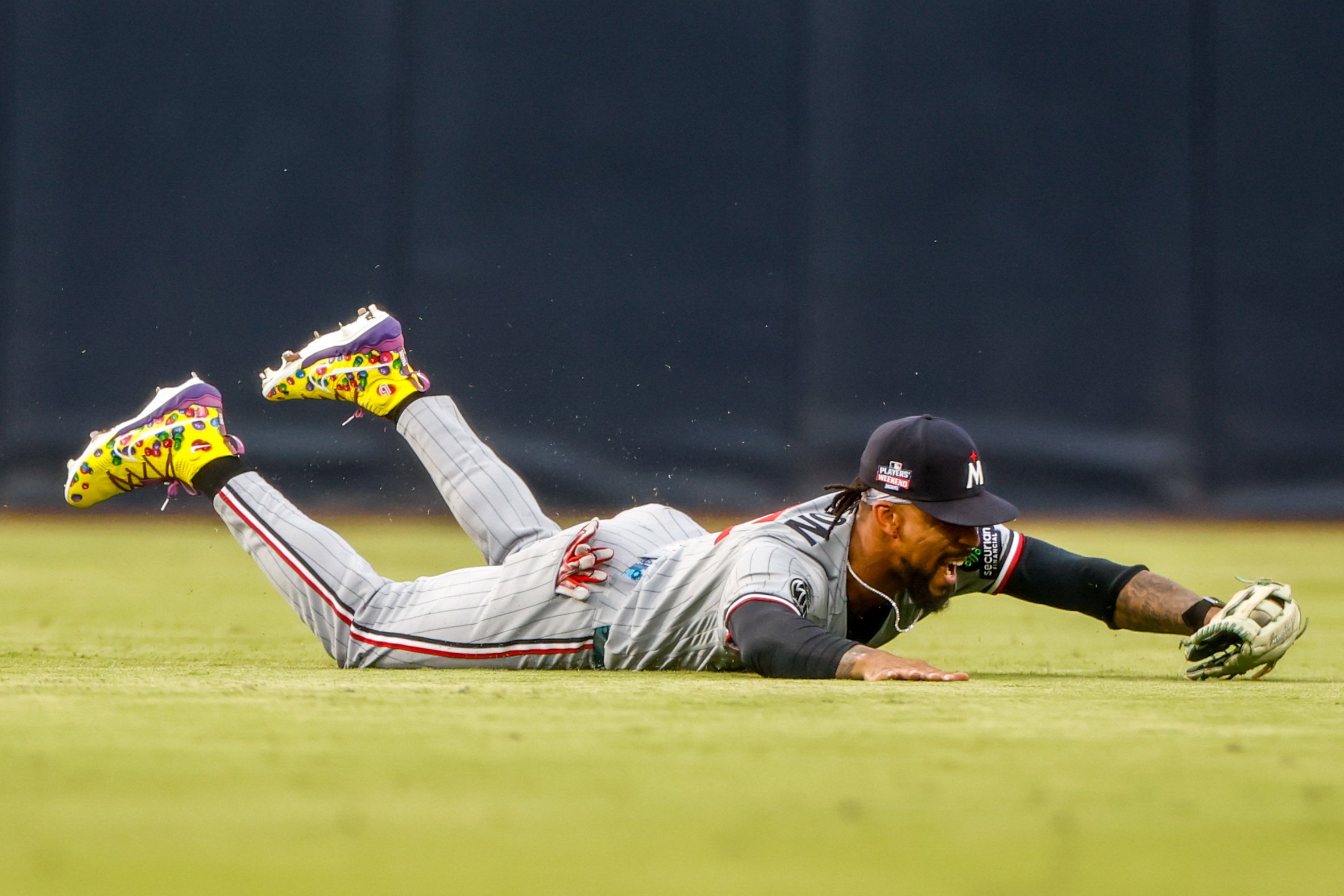 Back in spring training, Byron Buxton was asked by KSTP report Alec Ausmus if he envisioned himself moving anywhere other than center field. "No, not really," Buxton replied. "I mean, if someone else come here and is faster than me, then I will move over, but until then, I ain't going nowhere. Like … that is home for me." Well, no one faster has come along as of yet. In fact, Walker Jenkins, who has taken over center field for the final stretch for the Twins, is a below-average runner according to Statcast, and a far cry from Buxton's blazing 97th percentile sprint speed. But as the team looks ahead to 2027, the planning and decision criteria at center field might need to be a little more involved than "who can run the fastest." Buxton's desire to remain in center field is perfectly understandable. He's been an All-Star at the position in back-to-back years. When on the field, he still impacts games positively on defense. And the last time he tried moving away from center, during the 2023 season when physical limitations ruled out a defensive role, was the low point of his career. It's well established that some players aren't that well suited for designated hitter. They hit better when engaged on the defensive side rather than sitting on the bench for long spells between every at-bat. There's a fair chance Buxton is one of those players, even if he hasn't said so outright. That 2023 campaign was a trying one offensively, with Buxton batting .207 with a .311 wOBA. Of course, you wonder how much the health situation hindered his production. Heading into 2027, the Twins have a new set of outfielders set to take the reins, and we saw all in the lineup together for the first time on Sunday: Emmanuel Rodriguez in left, Jenkins in center, Luke Keaschall in right. The presence of this players on next year's team feels non-negotiable. Rodriguez has to be on the active roster coming out of spring training due to being out of options. Jenkins could theoretically start back in the minors, but I wouldn't expect it unless he really struggles in camp. And while Keaschall is not necessarily locked into an outfield role, the Twins have shown no appetite for using him in the infield since June. There are ways you could shift things around to facilitate a return to center field for Buxton. Rodriguez could open the season in a backup role. Jenkins could open the season in Triple-A. Keaschall could relocate to second base again, or spend most of his time as DH. But all of these moves would feel like kicking the can down the road, in ways that aren't even necessarily beneficial short-term, for the sake of bowing to the will of a 33-year-old player nearing the end of his contract. Don't get me wrong, I don't have a problem with the Twins giving Buxton a large say in his handling. He's earned that. But at the end of the day, Minnesota's decision-makers have to do what's best for the team, and it's future. Importantly, moving Buxton off center field also might be what's best for him. Increasingly, the hip injury that plagued him throughout this 2026 season and ultimately cut it short was flaring up while he played the outfield. On August 21st, he made a sensational diving catch in San Diego but was in clear discomfort afterward, hunching on the field for several moments before gingerly trotting off. Buxton remained in the game against San Diego, but four days later in Sacramento, he was unable to bend over and pick up a rolling ball in the gap. He lumbered off the field in pain, and that proved to be the end of his season. We're all hoping that Buxton's upcoming surgery, scheduled for later this week, does much to resolve the hip issues that have repeatedly bothered him over the years. But either way, drop-offs in the second half have become the norm for him over many years. If the Twins have true aspirations of stepping forward into legitimate contention next year, keeping Buck going in August and September will be imperative. As it happens, the DH spot is one of the few on next year's team that is completely open. Josh Bell, who has started 117 of 149 games there for the Twins this year, is headed for free agency and unlikely to return. Buxton, who made the second-most DH starts this year with 20, is a natural successor — especially because his pre-injury offensive production would look great there. That sets up some sensitive but necessary conversations between Buxton and the Twins this offseason. He has earned a meaningful voice in how the final years of his career take shape, but the organization also owes it to him (and itself) to seriously consider whether leaving center field behind gives him the best chance to stay healthy, productive and on the field when the games matter most.
 -
Image courtesy of Bruce Kluckhohn-Imagn Images The Weekly Nutshell: The past week felt like an official turning of the page. There are still 13 games left to be played in the 2026 season, but focus is shifting to 2027 as the reality of a missed playoff bid sets in. Following a seventh consecutive week in which the Twins failed to post a winning record, they are now a season-high nine games below .500, with their postseason odds down to 1.7%. While the stakes have faded, the intrigue hasn't entirely disappeared. A third top prospect joined the big-league team this week, giving the Twins and their fans a meaningful glimpse at a young core that could shape the next era. At this point, the final two weeks are less about where the Twins finish in 2026 and more about what they can learn for 2027. Weekly Snapshot: Mon, 9/7 through Sun, 9/13 *** Record Last Week: 2-4 (Overall: 70-79) Run Differential Last Week: -14 (Overall: -62) Standing: T-3rd Place in AL Central (6.0 GB); 5.5 games out of WC Latest Game Results Game 144 | DET 5, MIN 4: Twins Keep Things Close But Fall Short in Ryan's Return Ryan: 4 IP, 3 R (2 ER), 3 H, 1 BB, 7 K Game 145 | MIN 3, DET 2: Bullpen Backs Up Kremer with Four Hitless Innings in Win Twins bullpen: 4 IP, 0 R, 0 H, 1 BB, 4 K Game 146 | DET 7, MIN 2: Pitchers Walk 8, Lineup Can't Mount Rally in Lifeless Loss Matthews: 2.1 IP, 5 ER, 2 H, 4 BB, 2 K Game 147 | CLE 5, MIN 2: Tie Game Slips Away in Erratic Ninth Inning for Gómez Gómez: 0.1 IP, 3 ER, 2 H, 2 BB Game 148 | MIN 4, CLE 3: Rodriguez Homers in Debut, Bullpen Holds Slim Lead Twins bullpen: 3.2 IP, 0 R, 0 H, 2 BB, 8 K Game 149 | CLE 9, MIN 2: Non-Competitive Loss Pushes Twins Closer to Elimination Ryan: 4 IP, 4 ER, 7 H, 1 BB, 1 K NEWS & NOTES Sidelined for almost all of August by a glute injury, Joe Ryan was activated from the injured list on Monday to start the series opener in Detroit. Reliever Garrett Acton was optioned to the minors in a corresponding move. Ryan made two starts over the course of the week, looking reasonably sharp in the first and much less so in the second. He should be in line to make two more turns before season's end. Another injured player returned a few days later when Austin Martin was activated, bumping Gabriel Gonzalez off the roster and overtaking his role as righty-hitting corner outfielder. Then, on Saturday, the big news of the week: Emmanuel Rodriguez was promoted from Triple-A, adding another top prospect to the Twins roster alongside Walker Jenkins and Kaelen Culpepper. Rodriguez's arrival displaced Ben Ross, who like Gonzalez had seen very little usage during his short time with the Twins. For Byron Buxton, an outcome that already seemed highly likely has now been made official: he's shutting it down for the season. Buxton is slated to undergo arthroscopic surgery next Friday on his problematic right hip, and the team hopes he'll be ready for spring training. We can only hope that this procedure proves anywhere near as effective as the one he had for his knee after the 2023 season. HIGHLIGHTS Batting ninth in his major-league debut on Saturday, Rodriguez wasted little time making his presence known. In his very first at-bat, he sent a pitch from Franco Aleman over the fence in left center for a solo home run. Rodriguez became the first Twins player to homer in his first MLB at-bat since Eddie Rosario, whom he coincidentally drew comparisons to when originally signed out of the Dominican Republic as a teenager. Kody Clemens also supplied some power, launching two home runs among his seven hits and driving in five. He's up to 26 long balls this season, and will certainly draw some consideration for team MVP as we reflect back on the season. The overall results are more solid than spectacular, but no other position player has matched his combination of availability and performance. Taj Bradley has done that on the pitching side, though. He did miss a few starts in May with a pec issue, but Bradley has been healthy enough to throw 165 innings over 29 starts and he's been very good through most of it. That includes his latest outing on Friday, which saw the right-hander shut out Cleveland over six innings of one-hit ball. He handed out four walks but also struck out six, giving him the fifth-highest strikeout total (190) in the American League. On the surface, it appears Griffin Jax has had a fairly similar season in Tampa, with a 3.99 ERA and some success in the transition from reliever to starter. But Jax has thrown just 99 innings while dealing with elbow discomfort. His underlying metrics aren't nearly as strong, explaining why Bradley has a healthy advantage in Wins Above Replacement. Most importantly, the Twins have control of Bradley for the next three seasons while Jax is now just a year from free agency. Not every decision from last year's deadline looks great in hindsight, but the Bradley trade looks like a slam-dunk win after year one. So how about this year's deadline? It's unfortunate that the front office's acquisitions aren't contributing in the stakes we would have hoped for, but they are contributing. Tuesday's win over Detroit was exactly the type that Minnesota's front office likely envisioned as a post-deadline standard. Five solid innings from Dean Kremer, followed by a lockdown performance from the relief corps: four hitless innings, including one apiece from A.J. Minter and Jeff Hoffman. Those two also protected a one-run lead in the final two innings of Saturday's win, with Minter becoming the 12th Twins pitcher to record a save this season. Hoffman has been utterly phenomenal in September, with just one hit and one walked allowed across five scoreless innings. He has struck out 10 of the 17 batters he's faced. It's very reassuring to have him back in the mix for 2027, especially as some of the bullpen's previous fixtures falter down the stretch. I'd also love to see the Twins make an effort to bring back Minter as a free agent. He has a 1.56 ERA in 18 appearances since being acquired. LOWLIGHTS Minnesota's offense is sputtering to the finish line. They scored four or fewer runs in every game last week, and eight of their past nine. Jenkins continues to look overmatched in his first go at the big leagues. He came through with his biggest hit yet as a Twin on Monday, ripping a two-run double to cut down a late deficit in Detroit, but otherwise was 0-for-13 with six strikeouts. Culpepper also cooled off a bit, with three singles in 15 at-bats, and he got hit in the upper back by a pitch on Saturday night that forced him out of the game. X-rays came back negative but Culpepper sat out Sunday's finale against the Guardians. Through the ups and downs — certainly more downs than ups in Jenkins' case — I'm still glad and appreciative to see these prospects getting a chance to acclimate themselves in the majors at the tail end of a lost season. Same now goes for Rodriguez, who is 2-for-8 through two games. In fact, I'll voice that even more strongly with Emma, since going back to the minors to start next year isn't an option for him. The sample will be small, but at least he'll be able to gain some idea of what he needs to work on to hit the ground running as a big-leaguer in 2027. As we look toward a hopefully brighter future spearheaded by the likes of Jenkins, Culpepper and Rodriguez, we're also led to wonder whether Royce Lewis is going to be a part of it. He represents a key decision point for the front office heading into this offseason, and isn't make a convincing case for himself. Lewis was 2-for-20 with a single, a double, a walk and six strikeouts. He continues to put forth brutally ugly at-bats, frequently lapsing into guesswork at the plate, and has homered just once in his past 33 games. This has been arguably Lewis' worst season and yet it has also been his healthiest season, as he's reached career highs in games played (114) and plate appearances (462). Incidentally, he left Sunday's game with a shoulder injury, so we'll see if those numbers are final. The question the Twins need to ask: is there any valid reason to believe he's going to be significantly better next year? If he's not, there isn't much an argument for keeping him around, even at a relatively modest arbitration price tag. Looking over Minnesota's projected 2027 lineup, there is no more obvious place to aim for an upgrade than first base. TRENDING STORYLINE Sunday's starting outfield gave us a potential glimpse into the next era for the Twins: Rodriguez in left, Jenkins in center, Luke Keaschall in right. It's got the makings of a solid defensive alignment with tantalizing offensive upside. Keaschall has already tapped into his, with a .392 wOBA since the start of July that ranks top-10 in baseball. Jenkins has shown glimpses amidst a slow start to his career, and Rodriguez started things out with a bang on Saturday. Of course it remains to be seen how all three of these players will fit into the short-term outfield picture alongside Buxton, but for now it's all just about getting Buck right physically. Throw in Culpepper at short, plus Connor Prielipp wrapping up his rookie season in the rotation, and there is plenty of future-facing motivation to tune in for these final 13 games, especially compared to September of last year when the team was running out the string with mostly veteran placeholders. The ending of this season brings a better sense of direction and momentum, but how the Twins — and specifically these players — finish undoubtedly have an effect on the vibe going into the winter. With a likely lockout looming, we may have to hold onto this final batch of games for quite a while. LOOKING AHEAD It's a full slate in the second-to-last week of the 2026 season, kicking off with Minnesota's toughest remaining matchup: three games at home against the dreaded Yankees. With contention already an afterthought, they can't hurt us anymore, so there's that. Now all but assured of a losing record, at this point I'm now mainly just curious to see if the Twins will finish closer to their preseason Vegas over/under (72 wins) or their FanGraphs projection (77 wins). MONDAY, SEPTEMBER 14: YANKEES @ TWINS — RHP Will Warren v. RHP Bailey Ober TUESDAY, SEPTEMBER 15: YANKEES @ TWINS — LHP Max Fried v. RHP Dean Kremer WEDNESDAY, SEPTEMBER 16: YANKEES @ TWINS — LHP Carlos Rodon v. RHP Zebby Matthews THURSDAY, SEPTEMBER 17: TWINS @ ANGELS — RHP Taj Bradley v. RHP Walbert Urena FRIDAY, SEPTEMBER 18: TWINS @ ANGELS — LHP Connor Prielipp v. RHP Grayson Rodriguez SATURDAY, SEPTEMBER 19: TWINS @ ANGELS — RHP Joe Ryan v. LHP Reid Detmers SUNDAY, SEPTEMBER 20: TWINS @ ANGELS — RHP Bailey Ober v. RHP Ryan Johnson View full article
-
 The Weekly Nutshell: The past week felt like an official turning of the page. There are still 13 games left to be played in the 2026 season, but focus is shifting to 2027 as the reality of a missed playoff bid sets in. Following a seventh consecutive week in which the Twins failed to post a winning record, they are now a season-high nine games below .500, with their postseason odds down to 1.7%. While the stakes have faded, the intrigue hasn't entirely disappeared. A third top prospect joined the big-league team this week, giving the Twins and their fans a meaningful glimpse at a young core that could shape the next era. At this point, the final two weeks are less about where the Twins finish in 2026 and more about what they can learn for 2027. Weekly Snapshot: Mon, 9/7 through Sun, 9/13 *** Record Last Week: 2-4 (Overall: 70-79) Run Differential Last Week: -14 (Overall: -62) Standing: T-3rd Place in AL Central (6.0 GB); 5.5 games out of WC Latest Game Results Game 144 | DET 5, MIN 4: Twins Keep Things Close But Fall Short in Ryan's Return Ryan: 4 IP, 3 R (2 ER), 3 H, 1 BB, 7 K Game 145 | MIN 3, DET 2: Bullpen Backs Up Kremer with Four Hitless Innings in Win Twins bullpen: 4 IP, 0 R, 0 H, 1 BB, 4 K Game 146 | DET 7, MIN 2: Pitchers Walk 8, Lineup Can't Mount Rally in Lifeless Loss Matthews: 2.1 IP, 5 ER, 2 H, 4 BB, 2 K Game 147 | CLE 5, MIN 2: Tie Game Slips Away in Erratic Ninth Inning for Gómez Gómez: 0.1 IP, 3 ER, 2 H, 2 BB Game 148 | MIN 4, CLE 3: Rodriguez Homers in Debut, Bullpen Holds Slim Lead Twins bullpen: 3.2 IP, 0 R, 0 H, 2 BB, 8 K Game 149 | CLE 9, MIN 2: Non-Competitive Loss Pushes Twins Closer to Elimination Ryan: 4 IP, 4 ER, 7 H, 1 BB, 1 K NEWS & NOTES Sidelined for almost all of August by a glute injury, Joe Ryan was activated from the injured list on Monday to start the series opener in Detroit. Reliever Garrett Acton was optioned to the minors in a corresponding move. Ryan made two starts over the course of the week, looking reasonably sharp in the first and much less so in the second. He should be in line to make two more turns before season's end. Another injured player returned a few days later when Austin Martin was activated, bumping Gabriel Gonzalez off the roster and overtaking his role as righty-hitting corner outfielder. Then, on Saturday, the big news of the week: Emmanuel Rodriguez was promoted from Triple-A, adding another top prospect to the Twins roster alongside Walker Jenkins and Kaelen Culpepper. Rodriguez's arrival displaced Ben Ross, who like Gonzalez had seen very little usage during his short time with the Twins. For Byron Buxton, an outcome that already seemed highly likely has now been made official: he's shutting it down for the season. Buxton is slated to undergo arthroscopic surgery next Friday on his problematic right hip, and the team hopes he'll be ready for spring training. We can only hope that this procedure proves anywhere near as effective as the one he had for his knee after the 2023 season. HIGHLIGHTS Batting ninth in his major-league debut on Saturday, Rodriguez wasted little time making his presence known. In his very first at-bat, he sent a pitch from Franco Aleman over the fence in left center for a solo home run. Rodriguez became the first Twins player to homer in his first MLB at-bat since Eddie Rosario, whom he coincidentally drew comparisons to when originally signed out of the Dominican Republic as a teenager. Kody Clemens also supplied some power, launching two home runs among his seven hits and driving in five. He's up to 26 long balls this season, and will certainly draw some consideration for team MVP as we reflect back on the season. The overall results are more solid than spectacular, but no other position player has matched his combination of availability and performance. Taj Bradley has done that on the pitching side, though. He did miss a few starts in May with a pec issue, but Bradley has been healthy enough to throw 165 innings over 29 starts and he's been very good through most of it. That includes his latest outing on Friday, which saw the right-hander shut out Cleveland over six innings of one-hit ball. He handed out four walks but also struck out six, giving him the fifth-highest strikeout total (190) in the American League. On the surface, it appears Griffin Jax has had a fairly similar season in Tampa, with a 3.99 ERA and some success in the transition from reliever to starter. But Jax has thrown just 99 innings while dealing with elbow discomfort. His underlying metrics aren't nearly as strong, explaining why Bradley has a healthy advantage in Wins Above Replacement. Most importantly, the Twins have control of Bradley for the next three seasons while Jax is now just a year from free agency. Not every decision from last year's deadline looks great in hindsight, but the Bradley trade looks like a slam-dunk win after year one. So how about this year's deadline? It's unfortunate that the front office's acquisitions aren't contributing in the stakes we would have hoped for, but they are contributing. Tuesday's win over Detroit was exactly the type that Minnesota's front office likely envisioned as a post-deadline standard. Five solid innings from Dean Kremer, followed by a lockdown performance from the relief corps: four hitless innings, including one apiece from A.J. Minter and Jeff Hoffman. Those two also protected a one-run lead in the final two innings of Saturday's win, with Minter becoming the 12th Twins pitcher to record a save this season. Hoffman has been utterly phenomenal in September, with just one hit and one walked allowed across five scoreless innings. He has struck out 10 of the 17 batters he's faced. It's very reassuring to have him back in the mix for 2027, especially as some of the bullpen's previous fixtures falter down the stretch. I'd also love to see the Twins make an effort to bring back Minter as a free agent. He has a 1.56 ERA in 18 appearances since being acquired. LOWLIGHTS Minnesota's offense is sputtering to the finish line. They scored four or fewer runs in every game last week, and eight of their past nine. Jenkins continues to look overmatched in his first go at the big leagues. He came through with his biggest hit yet as a Twin on Monday, ripping a two-run double to cut down a late deficit in Detroit, but otherwise was 0-for-13 with six strikeouts. Culpepper also cooled off a bit, with three singles in 15 at-bats, and he got hit in the upper back by a pitch on Saturday night that forced him out of the game. X-rays came back negative but Culpepper sat out Sunday's finale against the Guardians. Through the ups and downs — certainly more downs than ups in Jenkins' case — I'm still glad and appreciative to see these prospects getting a chance to acclimate themselves in the majors at the tail end of a lost season. Same now goes for Rodriguez, who is 2-for-8 through two games. In fact, I'll voice that even more strongly with Emma, since going back to the minors to start next year isn't an option for him. The sample will be small, but at least he'll be able to gain some idea of what he needs to work on to hit the ground running as a big-leaguer in 2027. As we look toward a hopefully brighter future spearheaded by the likes of Jenkins, Culpepper and Rodriguez, we're also led to wonder whether Royce Lewis is going to be a part of it. He represents a key decision point for the front office heading into this offseason, and isn't make a convincing case for himself. Lewis was 2-for-20 with a single, a double, a walk and six strikeouts. He continues to put forth brutally ugly at-bats, frequently lapsing into guesswork at the plate, and has homered just once in his past 33 games. This has been arguably Lewis' worst season and yet it has also been his healthiest season, as he's reached career highs in games played (114) and plate appearances (462). Incidentally, he left Sunday's game with a shoulder injury, so we'll see if those numbers are final. The question the Twins need to ask: is there any valid reason to believe he's going to be significantly better next year? If he's not, there isn't much an argument for keeping him around, even at a relatively modest arbitration price tag. Looking over Minnesota's projected 2027 lineup, there is no more obvious place to aim for an upgrade than first base. TRENDING STORYLINE Sunday's starting outfield gave us a potential glimpse into the next era for the Twins: Rodriguez in left, Jenkins in center, Luke Keaschall in right. It's got the makings of a solid defensive alignment with tantalizing offensive upside. Keaschall has already tapped into his, with a .392 wOBA since the start of July that ranks top-10 in baseball. Jenkins has shown glimpses amidst a slow start to his career, and Rodriguez started things out with a bang on Saturday. Of course it remains to be seen how all three of these players will fit into the short-term outfield picture alongside Buxton, but for now it's all just about getting Buck right physically. Throw in Culpepper at short, plus Connor Prielipp wrapping up his rookie season in the rotation, and there is plenty of future-facing motivation to tune in for these final 13 games, especially compared to September of last year when the team was running out the string with mostly veteran placeholders. The ending of this season brings a better sense of direction and momentum, but how the Twins — and specifically these players — finish undoubtedly have an effect on the vibe going into the winter. With a likely lockout looming, we may have to hold onto this final batch of games for quite a while. LOOKING AHEAD It's a full slate in the second-to-last week of the 2026 season, kicking off with Minnesota's toughest remaining matchup: three games at home against the dreaded Yankees. With contention already an afterthought, they can't hurt us anymore, so there's that. Now all but assured of a losing record, at this point I'm now mainly just curious to see if the Twins will finish closer to their preseason Vegas over/under (72 wins) or their FanGraphs projection (77 wins). MONDAY, SEPTEMBER 14: YANKEES @ TWINS — RHP Will Warren v. RHP Bailey Ober TUESDAY, SEPTEMBER 15: YANKEES @ TWINS — LHP Max Fried v. RHP Dean Kremer WEDNESDAY, SEPTEMBER 16: YANKEES @ TWINS — LHP Carlos Rodon v. RHP Zebby Matthews THURSDAY, SEPTEMBER 17: TWINS @ ANGELS — RHP Taj Bradley v. RHP Walbert Urena FRIDAY, SEPTEMBER 18: TWINS @ ANGELS — LHP Connor Prielipp v. RHP Grayson Rodriguez SATURDAY, SEPTEMBER 19: TWINS @ ANGELS — RHP Joe Ryan v. LHP Reid Detmers SUNDAY, SEPTEMBER 20: TWINS @ ANGELS — RHP Bailey Ober v. RHP Ryan Johnson
- 24 comments
-
- 7
-
-
- byron buxton
- emmanuel rodriguez
- (and 1 more)
-
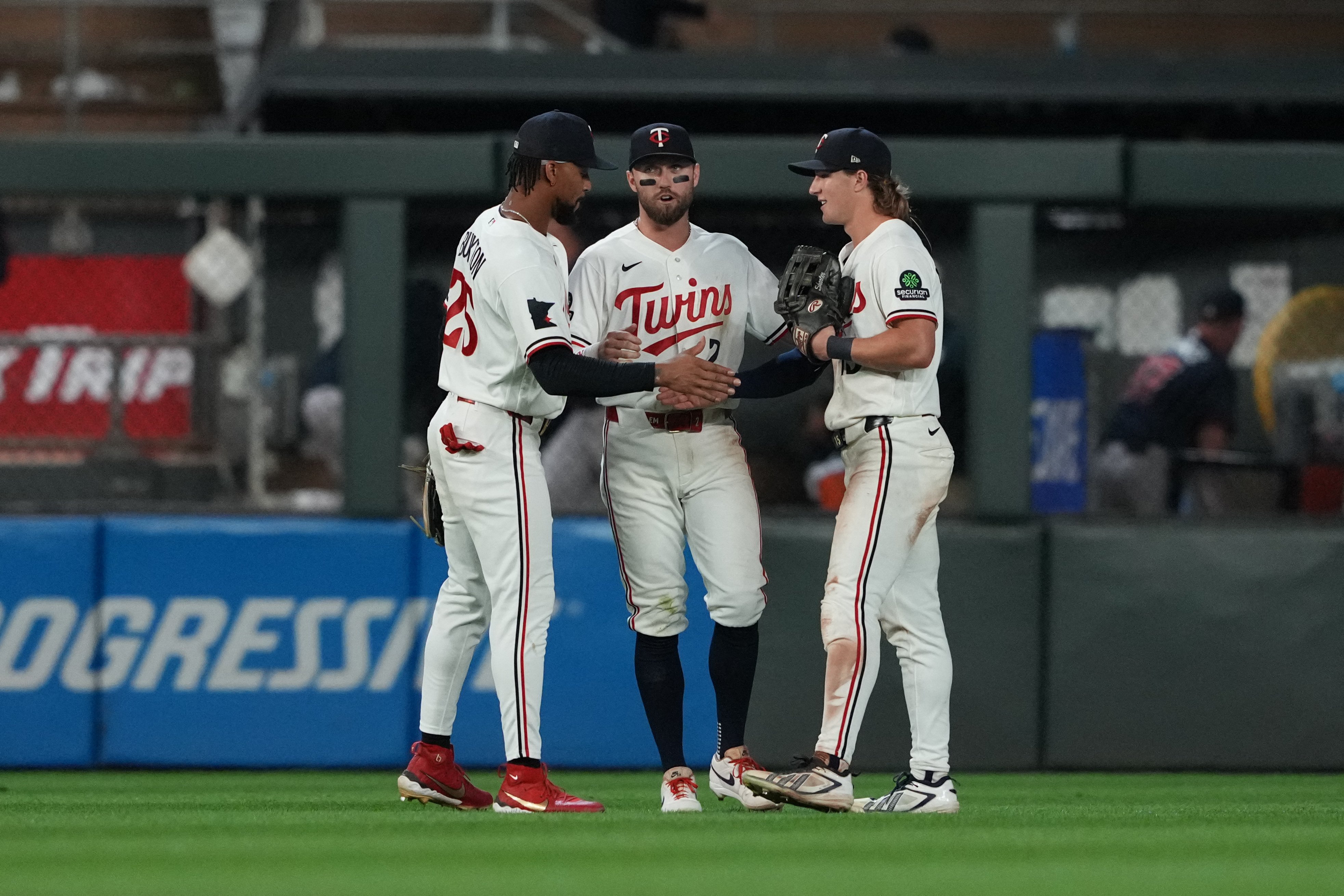 It's not an exact science, but generally speaking, the scale for Wins Above Replacement (WAR) in baseball looks like this: Zero is a replacement-level player, the kind readily available in the minors or waiver wire at any given time. One is a below-average regular or decent part-timer. Two is an average regular. Three to four is an above-average, very good starting player. And once you get to five and above you're talking All-Star caliber. One way to judge the quality of a team in a given year is counting how many players reach that 3-WAR threshold. How many legitimate standouts stayed healthy enough to contribute significantly to the cause? When the Twins have been at their best, they've usually had several. For example, in 2019 the 101-win Twins had seven different players post 3+ WAR (Nelson Cruz, Mitch Garver, Max Kepler, Jorge Polanco, Byron Buxton, José Berríos, Jake Odorizzi). Minnesota's had multiple 3-WAR players every year since the COVID season. And outside of that shortened 2020 campaign, the last time the Twins finished with zero 3-WAR players was 2011 — a disastrous 99-loss season that set off a multi-year spiral for the franchise. You probably know where I'm going with this. (Especially because it's right up there in the headline.) This year, with less than three weeks remaining on the schedule, not one Twins player has reached 3 WAR, at least by the FanGraphs calculation (fWAR). It's not clear that anyone will. Entering play on Tuesday, the leaderboard looked like this: Ryan Jeffers: 2.8 Byron Buxton: 2.6 Joe Ryan: 2.6 Brooks Lee: 2.5 Luke Keaschall: 2.3 Kody Clemens: 2.2 Taj Bradley: 2.1 Trevor Larnach: 2.0 It's very possible Jeffers surpasses 3 WAR with a good finish, or someone else with a great finish. But this could also easily be the first full season since 2011 in which the Twins don't end up with a single 3-WAR player. And that really tells the story of this team. The transcendent talents suffered injuries that sidelined them or impeded their performance for nearly half the season — Buxton, Ryan and Jeffers were all tracking for that All-Star level 5-WAR territory. Two of them were All-Stars, and Jeffers surely would have been if not for a two-month injury knocking him out of action in May. Buxton and Ryan have each posted a negative WAR since the All-Star break; both actually did have a 3+ WAR at one point before lapsing into their injury-plagued second-half slides. Among the players who've been healthy enough to play the bulk of the season, no one's been that exceptional. Bradley probably comes closest in my mind, but with a 3.95 ERA and 4.02 FIP, he's been more good great. (For what it's worth, the Baseball Reference calculation for WAR views Bradley more favorably with a staff-leading 3.1 bWAR.) Keaschall's been a solid hitter but a big negative defensively. Lee and Clemens have been average-ish at the plate, with dreadfully low OBPs offsetting their power output. Royce Lewis has played a career-high 109 games and been worth just one win above replacement. If the Twins are to improve significantly and return to contention next year, this has got to change. It makes the case against a status-quo 2027 lineup that features Lee, Clemens, Lewis and Victor Caratini as staples. I do have faith in Keaschall to take a step forward in value with more defensive stability, and of course, you're hoping that guys like Kaelen Culpepper and Walker Jenkins emerge quickly as first-division players. But it's putting an awful lot of pressure on these young newcomers if there aren't veteran fixtures leading the way. Among the Twins players that have even flirted with a 3-WAR season this year: Jeffers is heading for free agency and all but assured to sign elsewhere. Buxton is in line for potentially serious offseason hip surgery, and turning 33 in December. Ryan is (in my opinion) very likely to be traded, so long as his season finishes smoothly. This sets up the challenge for the Twins heading into 2027. Who's going to step up and deliver a full, outstanding season? Multiple guys need to answer the call. At the risk of oversimplifying, winning over the course of a season in baseball is pretty straightforward: you need great players to play great, and to remain relatively healthy. No one was able to do both on this year's Twins. And that's how you end up failing to every shake a losing record or seriously contend in the worst American League class we're likely to see in some time.
- 30 comments
-
- 8
-
-
- byron buxton
- joe ryan
- (and 1 more)
-
Image courtesy of Jordan Johnson-Imagn Images It's not an exact science, but generally speaking, the scale for Wins Above Replacement (WAR) in baseball looks like this: Zero is a replacement-level player, the kind readily available in the minors or waiver wire at any given time. One is a below-average regular or decent part-timer. Two is an average regular. Three to four is an above-average, very good starting player. And once you get to five and above you're talking All-Star caliber. One way to judge the quality of a team in a given year is counting how many players reach that 3-WAR threshold. How many legitimate standouts stayed healthy enough to contribute significantly to the cause? When the Twins have been at their best, they've usually had several. For example, in 2019 the 101-win Twins had seven different players post 3+ WAR (Nelson Cruz, Mitch Garver, Max Kepler, Jorge Polanco, Byron Buxton, José Berríos, Jake Odorizzi). Minnesota's had multiple 3-WAR players every year since the COVID season. And outside of that shortened 2020 campaign, the last time the Twins finished with zero 3-WAR players was 2011 — a disastrous 99-loss season that set off a multi-year spiral for the franchise. You probably know where I'm going with this. (Especially because it's right up there in the headline.) This year, with less than three weeks remaining on the schedule, not one Twins player has reached 3 WAR, at least by the FanGraphs calculation (fWAR). It's not clear that anyone will. Entering play on Tuesday, the leaderboard looked like this: Ryan Jeffers: 2.8 Byron Buxton: 2.6 Joe Ryan: 2.6 Brooks Lee: 2.5 Luke Keaschall: 2.3 Kody Clemens: 2.2 Taj Bradley: 2.1 Trevor Larnach: 2.0 It's very possible Jeffers surpasses 3 WAR with a good finish, or someone else with a great finish. But this could also easily be the first full season since 2011 in which the Twins don't end up with a single 3-WAR player. And that really tells the story of this team. The transcendent talents suffered injuries that sidelined them or impeded their performance for nearly half the season — Buxton, Ryan and Jeffers were all tracking for that All-Star level 5-WAR territory. Two of them were All-Stars, and Jeffers surely would have been if not for a two-month injury knocking him out of action in May. Buxton and Ryan have each posted a negative WAR since the All-Star break; both actually did have a 3+ WAR at one point before lapsing into their injury-plagued second-half slides. Among the players who've been healthy enough to play the bulk of the season, no one's been that exceptional. Bradley probably comes closest in my mind, but with a 3.95 ERA and 4.02 FIP, he's been more good great. (For what it's worth, the Baseball Reference calculation for WAR views Bradley more favorably with a staff-leading 3.1 bWAR.) Keaschall's been a solid hitter but a big negative defensively. Lee and Clemens have been average-ish at the plate, with dreadfully low OBPs offsetting their power output. Royce Lewis has played a career-high 109 games and been worth just one win above replacement. If the Twins are to improve significantly and return to contention next year, this has got to change. It makes the case against a status-quo 2027 lineup that features Lee, Clemens, Lewis and Victor Caratini as staples. I do have faith in Keaschall to take a step forward in value with more defensive stability, and of course, you're hoping that guys like Kaelen Culpepper and Walker Jenkins emerge quickly as first-division players. But it's putting an awful lot of pressure on these young newcomers if there aren't veteran fixtures leading the way. Among the Twins players that have even flirted with a 3-WAR season this year: Jeffers is heading for free agency and all but assured to sign elsewhere. Buxton is in line for potentially serious offseason hip surgery, and turning 33 in December. Ryan is (in my opinion) very likely to be traded, so long as his season finishes smoothly. This sets up the challenge for the Twins heading into 2027. Who's going to step up and deliver a full, outstanding season? Multiple guys need to answer the call. At the risk of oversimplifying, winning over the course of a season in baseball is pretty straightforward: you need great players to play great, and to remain relatively healthy. No one was able to do both on this year's Twins. And that's how you end up failing to every shake a losing record or seriously contend in the worst American League class we're likely to see in some time. View full article
-
If anyone is dubious of the market for Jeffers in free agency, take a look at the list of other catchers who will be available. He is the youngest and best by a wide margin. And we know from the trade deadline that catchers are in high demand among contenders. I really think a lot of folks are underselling the type of contract he'll be able to land.
-
Why are you putting "MVP" in quotes? Do you disagree with the premise? I'd probably agree it's not a great sign that their most best player is somewhat who played half the games, but that is indeed the reality. He's been the third-best catcher in baseball and he's the Twins' greatest source of relative advantage, I don't think we need to undersell that.
-
The Twins Are About to Lose Their MVP. They Must Get Something in Return.
Nick Nelson posted an article in Twins
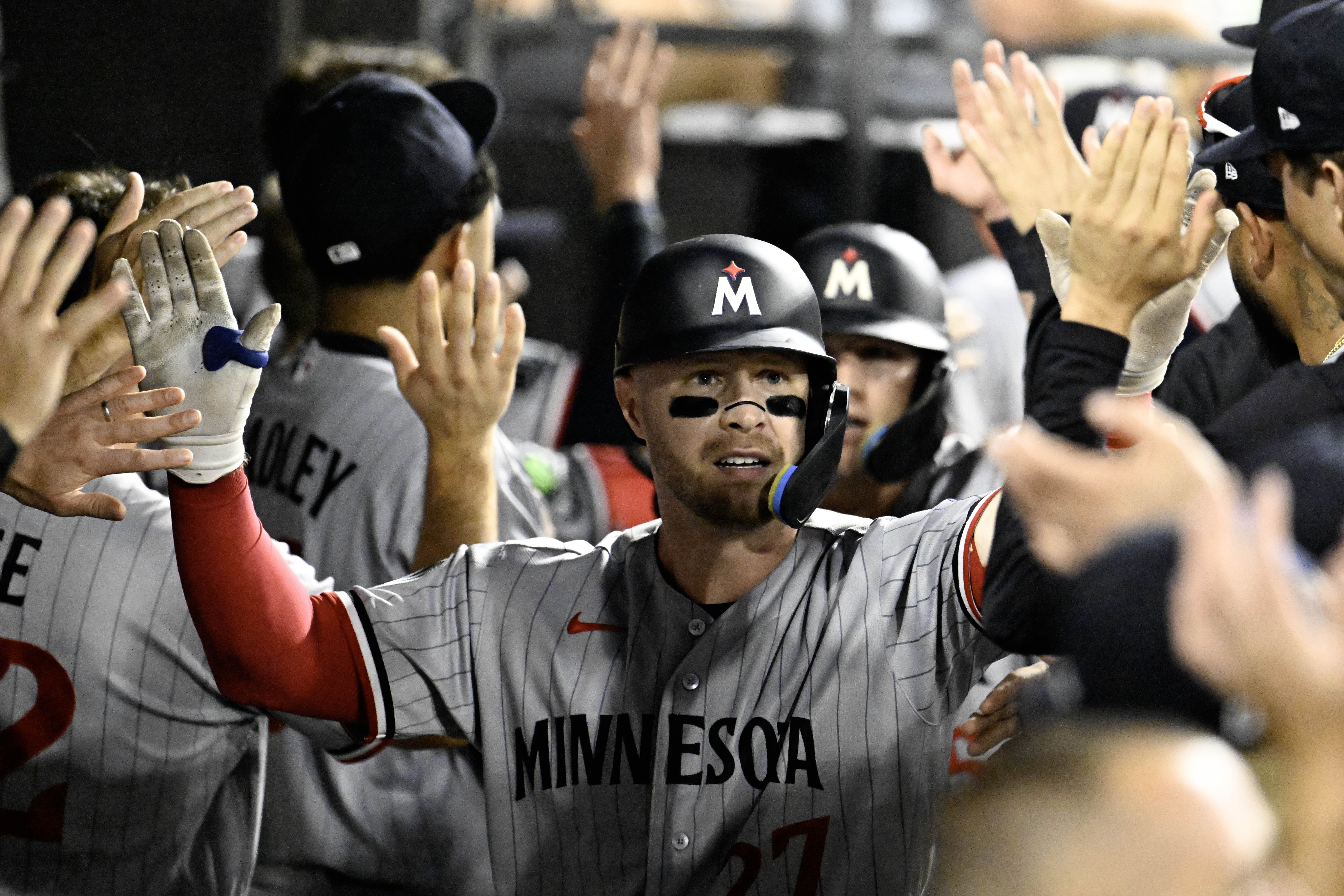 Ryan Jeffers came just a few feet short of another dramatic, game-changing home run in the ninth inning on Monday, driving a Kenley Jansen pitch 411 feet to center where it fell into Max Clark's glove at the warning track. Just a little deeper, or a little more toward the left pole, and Jeffers would've had a go-ahead two-run homer. Despite coming up just a little short on this one, it's been a sensational run for Jeffers of late. Monday marked his eighth consecutive start behind the plate — usage that is basically unprecedented for a Twins catcher in the modern era. He's been red-hot with four home runs and 11 RBIs over that stretch. In the waning weeks of a wayward season, he's firming up his case as Most Valuable Player for the 2026 Twins. It's pretty difficult to see an argument otherwise. Joe Ryan and Byron Buxton were front-runners for much of the season, but they rank last and second-to-last on the team in fWAR during a second half in which the team has fallen out of contention. That seems to all but dismantle their cases. From there the best candidates are Taj Bradley, Brooks Lee, Kody Clemens, Luke Keaschall ... I don't think any can hold a candle to what Jeffers has done, even accounting for the extensive time he missed due to injury. Despite being sidelined for nearly two full months by a fractured hamate, Jeffers leads all Twins position players in fWAR, and ranks third among MLB catchers. He has been a regular fixture in the second, third and fourth lineup spots, out-hitting the average player at his position by nearly 200 points of OPS. And now, he's on the doorstep of free agency. Which is great news for him but less so for the Twins. As one of the better catchers to hit the market in years, coming in off a career season and under 30, Jeffers is in line for a massive payday. That should hopefully remove any sense of drama and uncertainty from the biggest looming decision for the front office: to extend a qualifying offer or not. It's the only chance to recoup any value for Jeffers after holding him at the trade deadline. By offering Jeffers a one-year contract worth roughly $23 million, the Twins stand to get back what equates to a second-round draft pick. Probably less value than they'd have gotten for trading him, but real value nonetheless. The "downside" of extending a QO is the possibility that Jeffers accepts, but at this point it doesn't even feel like an overpay. Per FanGraphs he's been worth almost exactly that amount ($22.6M) this year in 80 games. Bringing back your reigning best player on a short-term deal at that rate should be viewed as a favorable outcome, so long as Tom Pohlad and the Twins are serious about their stated intentions to raise payroll and spend at a more credible level. I's most likely a moot point. I would say Jeffers accepting is extremely unlikely to happen. He has long desired the security of a long-term contract and now he'll be able pursue it on the open market with his stock riding high. Odds are he'll end up getting multiple years at an annual salary not far below $23 million, although the attachment of a QO (which requires the signing team to part with a compensatory pick) could temper his market somewhat. In the event that he lands elsewhere, the Twins will be glad to get back a relatively high draft pick that can infuse their system with talent. But it won't do much in the short term to offset such an enormous loss for a team with eyes on truly contending in 2027. The longest-tenured Twin aside from Buxton, Jeffers not only leads the team in fWAR this year but ranks second among Twins position players since 2023. He's been a crucial mainstay for this club, and he's going to leave a giant hole. Finding some way to fill it will be the biggest order of business this offseason after the QO decision, which takes place right away. (The deadline to offer is five days after the World Series, and the player has 10 days to decide from there.) In the expected event that Jeffers turns it down, then the front office should be prepared to invest that earmarked $23 million into upgrades elsewhere. And in the unexpected event that the mere possibility of being forced to commit this money leaves the Twins too gun-shy to actually extend the QO to Jeffers ... well, any and all trust or goodwill generated by Tom Pohlad's big talk will evaporate in an instant.