



Nick Nelson
-
Posts
8,315 -
Joined
-
Last visited
-
Days Won
56
Content Type
Profiles
News
Minnesota Twins Videos
2026 Minnesota Twins Top Prospects Ranking
2022 Minnesota Twins Draft Picks
Minnesota Twins Free Agent & Trade Rumors, Notes, & Tidbits
Guides & Resources
2023 Minnesota Twins Draft Picks
The Minnesota Twins Players Project
2024 Minnesota Twins Draft Picks
2025 Minnesota Twins Draft Pick Tracker
2026 Minnesota Twins Draft Tracker: Picks & Bonuses
Forums
Blogs
Events
Store
Downloads
Gallery
Everything posted by Nick Nelson
-
 He was officially named the team's MVP last year, and there were viable reasons for it. But the planned usage for Willi Castro this season seem to downplay his most valuable qualities. Image courtesy of Kim Klement Neitzel-Imagn Images Personally I think it's a stretch to say Willi Castro was the Most Valuable Player on the Minnesota Twins in 2024, as selected by the local chapter of the BBWAA for the Diamond Awards. Our choice at Twins Daily was Carlos Correa. (Mine personally was Griffin Jax.) But the case for Castro is solid enough. He was an All-Star, led the team in games played, and offered a historic level of defensive versatility by becoming the first player ever to make 20-plus starts at five different positions. Critically, the 27-year-old utility man was able to step in at shortstop and center field for extended stretches while Correa and Byron Buxton were down. Correa and Buxton are pivotal to the Twins' outlook, in a way that few other duos around the league can match. Not only are they the best players on the team, capable of MVP-caliber production when healthy, but they play the two most hard-to-fill (non-catcher) positions on the field. Their injury concerns are magnified because when one or both of those guys is down, in order to prevent a massive drop-off, the Twins have to find capable defenders to replace them who can at least hold their own at the plate. In theory that's a huge part of the appeal for Castro, and a justification for his $6 million salary as the front office faces budget constraints: He's a contingency for both of your two most indispensable position-player assets. Knowing that you have Castro available to step in at short or in center in the event Buxton or Correa get sidelined is peace of mind worth paying for. But here's the thing: The Twins don't want to use Castro at shortstop or in center field. Their decision to invest $6 million in Harrison Bader made this clear, and the rumors about their interest in signing a veteran backup shortstop crystallize it further. "The Twins used utilityman Willi Castro as their backup shortstop and center fielder last season, and they believe that wore him down," wrote Bobby Nightengale in a recent article for the Star Tribune. "Castro, an All-Star last year, had a .276 batting average and .810 OPS through the first three months of the season, then hit .216 with a .613 OPS in the final three months." It's possible the team actually believes this. Or maybe it's a nicer way of saying they just didn't think he was any good at short or center — a view that would be backed by defensive metrics. If you take both of those positions out of his defense toolkit, the versatility he offers is much less impactful because the Twins have multiple other players who can fill in at all of his other positions. Now we've got the Twins starting to openly talk about using Castro at first base. Which, what? I mean I guess I see the benefit of working him in as an emergency option there, but if it's something Rocco Baldelli is considering doing with any regularity that seems like a bad sign. First base is the only (non-catcher) position Castro has never played in the major leagues. Although he's got the skills to hold his own and at 6-foot-1 he's got enough size for it, Castro's bat would not be much of an asset at such an offense-oriented position. He has experienced a career renaissance in Minnesota over the past two seasons by slashing .251/.334/.395 for a .729 OPS that is 3% better than the league average, and below the benchmark for MLB first basemen last year. Right now Castro looks to be the Twins' regular leadoff hitter by default, another role for which he is seemingly miscast. He led the team in leadoff starts last year (48), and the only others who made more 30 are Edouard Julien, who's got to earn his way back, and Manuel Margot, who is gone. Castro's switch-hitting and his speed play at the top of the lineup, but generally he doesn't have the discipline, on-base skills or overall offensive ability you'd like to see in your table-setter. His .331 OBP last year was acceptable, but buoyed by a flukish 21 HBPs. His OBP in the second half was .298, and while the Twins might believe that was due to wear, we are also talking about a guy who came to Minnesota with a .292 career mark. In fairness, Castro's imperfect fit atop the order isn't his fault — more so a reflection of the lack of suitable alternatives. If he does indeed open the season as Minnesota's primary leadoff man, they are probably just hoping he can keep the seat warm for a Julien rebound or Luke Keaschall emergence. Still, if the Plan-A usage for Castro involves leading off and starting at first base with regularity ... that doesn't seem like an optimal situation at all. It seems more like a square peg in a round hole. And if the lack of faith in him at center or short forces the Twins to roster two additional players, his versatility becomes far less valuable at his price tag. Castro absolutely did offer more value than WAR could convey last year, when he featured as a "quintessential 10th man." But he's not as quintessential in their outlook going forward, based on how things are trending. Which makes me continue to wonder if the reigning team MVP will be on the roster come Opening Day. View full article
 -
What Differentiated Harrison Bader from the Field of RH Outfield Bats?
Nick Nelson posted an article in Twins
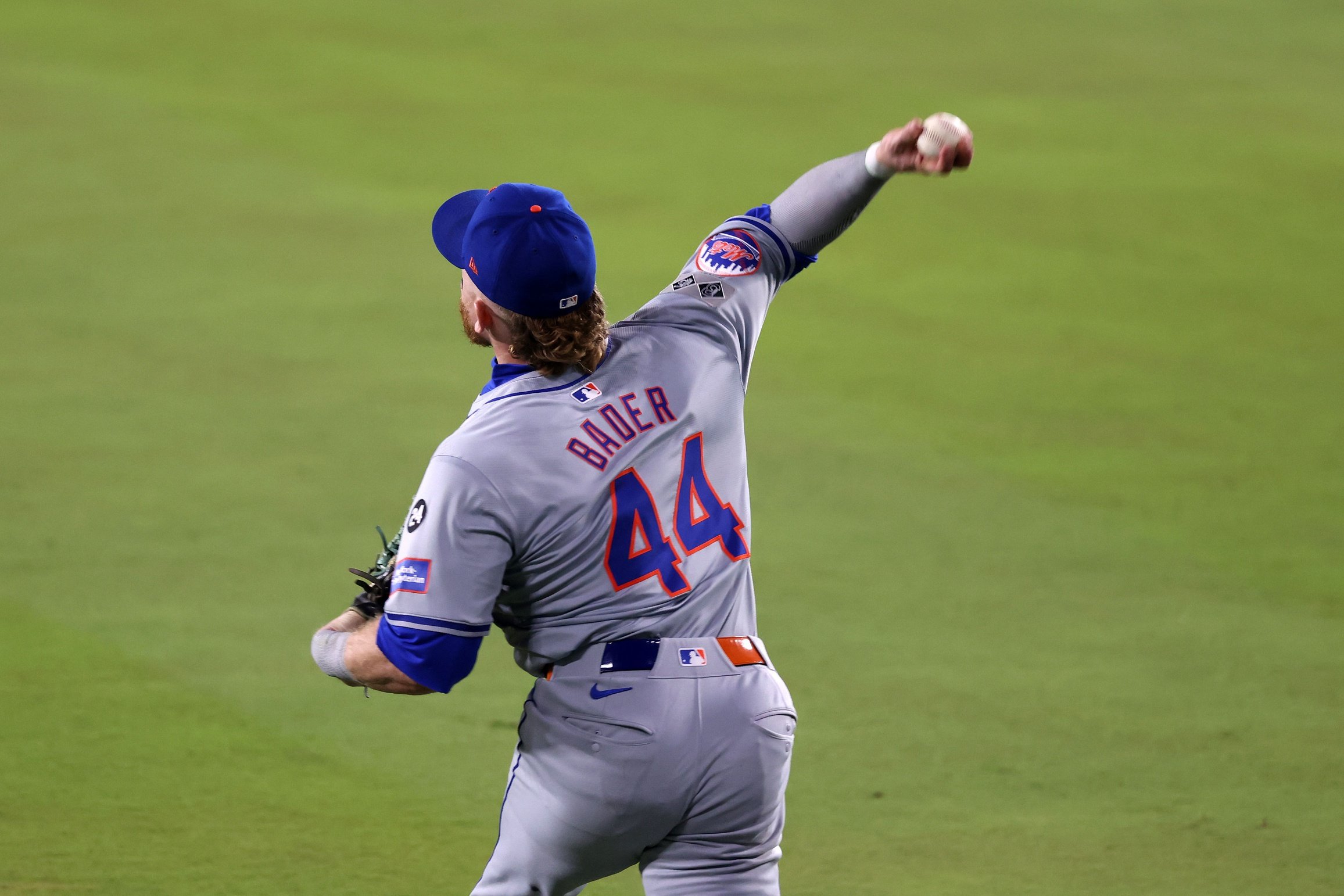 It's been a busy week for a very specific free-agent market: right-handed swinging outfielders who are fringe starters and more likely destined for backup/platoon roles. Ramón Laureano opened the floodgates by agreeing with the Orioles on a deal Tuesday afternoon. A couple hours later, we learned Randal Grichuk will be returning to the Diamondbacks. On Wednesday the Twins came to terms with Harrison Bader and on Thursday morning Tommy Pham's contract with the Pirates was reported. What's interesting is not only how close these signings were in proximity but also how similar the terms were on all the them: Tommy Pham, PIT: 1 year, $4 million Ramon Laureano, BAL: 1 year, $4 million Randal Grichuk, ARI: 1 year, $5 million (mutual option) Harrison Bader, MIN: 1 year, $6.25 million (mutual option, $2M incentives) Yes, you read that right: in this niche pocket of free agency, the Twins were the big spenders. While all four players project to provide similar value — albeit in different ways — Minnesota had a preference and spent what it took to get their guy. Based on their surprising willingness to commit up to $8 million in addressing this need, the Twins seemingly could had their pick of the bunch. What led them to choose Bader? Let's first quickly explore the strengths and weaknesses of all four players to establish what they stand to offer to the Twins. Harrison Bader Pros: Elite Defense: Bader is renowned for his exceptional defensive abilities in center field, having won a Gold Glove in 2021 and ranking in the 95th percentile for Outs Above Average each of the past two seasons. He's also got a fantastic arm. Speed: He has consistently demonstrated above-average speed, contributing both in the outfield and on the base paths. Bader's sprint speed last year, at 28.2 ft/sec, would've ranked fourth among all Twins behind Byron Buxton, Michael Helman and Austin Martin. Cons: Subpar Bat: He has a 91 career OPS+ and finished last year with an 86 mark. Although he's better against lefties than righties, he's hardly been dominant against them. Injury Concerns: Bader has had multiple stints on the injured list, and last year dealt with midseason neck and ankle injuries that might've contributed to his performance tanking in the second half. Randal Grichuk Pros: Power Hitting Prowess: Grichuk has a history of providing solid power numbers, especially against left-handed pitching. In 2024, he posted a .914 OPS against lefties with an .875 OPS overall. Offensive Floor: The 33-year-old has consistently been at least a pretty good hitter. Grichuk has only once posted an OPS+ below Bader's career mark (91) since his rookie season in 2014. Cons: Plate Discipline: He has a career .300 on-base percentage thanks to his lack of patience at the plate. Poor discipline can lead to rapid deterioration in one's mid-30s. Limited Fielding Ability: He's more serviceable than good in the outfield corners and has pretty much ceased to be an option in center, making zero appearances there in 2024. Ramón Laureano Pros: Strong Arm: Laureano has one of the best outfield cannons in the game, with his arm strength ranking in the 89th percentile per Statcast and his "arm value" ranking in the 100th percentile. Imagine him and Matt Wallner in the same outfield. Hits Lefties: Batted .305 against southpaws last year and has an .802 career OPS against them. (via Fangraphs) Cons: Health Track Record: He has an injury-prone reputation and was handed a PED suspension in 2021, since which he's never been able to recapture the promise he displayed early in his career. Lack of Range: His good arm isn't accompanied by particularly good reactions or closing speed in the outfield, which is why he's primarily been limited to RF in recent years. Tommy Pham Pros: Quality Career Hitting Record: He has a 111 career OPS+ and in his prime was an All-Star caliber regular. He's easily the most disciplined hitter on this list. Veteran Experience: His extensive MLB experience provides leadership and a seasoned presence in the clubhouse, though his personality is considered an ... acquired taste. Cons: Lacking Platoon Appeal: Despite being a righty swinger, Pham's L/R splits are pretty neutral, reducing his value as a matchup-based player in the corners. Defensive Decline: He was a borderline center field option at best, but at age 37 using Pham anywhere other than the corners or DH is malpractice. (The White Sox gave him 30 starts in CF last year, which, yeah.) Why Did the Twins Go with Harrison Bader? There's a case to be made that Bader is the worst hitter of these four. ZiPS from FanGraphs forecasts him to slash .237/.287/.369 in 2025 — that ranks as the lowest AVG, OBP and SLG of the bunch. It's basically Manuel Margot from 2024 (.238/.289/.337) with a bit more power. But Bader is also pretty clearly the best defender and best overall athlete in the group. Given the needs of this specific role, backing up Buxton in center and likely appearing frequently as a late-game sub, it's understandable that these traits would take priority. Minnesota's defense was an absolute mess last year when guys like Buxton and Carlos Correa weren't on the field, which certainly played a role in the team's second-half collapse. Not as big of a role as their offense, though. Between Bader and reliever Danny Coulombe, the Twins have now spent almost $10 million in money they seemingly didn't have without doing a thing to address their offense that tanked their 2024 season.
 -
Four different players fitting this same mold all signed within the past few days. Harrison Bader was the Twins' choice, and he got the largest deal of the group. What made Bader stand out from the other available options as a fit and a worthy investment? Image courtesy of Jason Parkhurst-Imagn Images It's been a busy week for a very specific free-agent market: right-handed swinging outfielders who are fringe starters and more likely destined for backup/platoon roles. Ramón Laureano opened the floodgates by agreeing with the Orioles on a deal Tuesday afternoon. A couple hours later, we learned Randal Grichuk will be returning to the Diamondbacks. On Wednesday the Twins came to terms with Harrison Bader and on Thursday morning Tommy Pham's contract with the Pirates was reported. What's interesting is not only how close these signings were in proximity but also how similar the terms were on all the them: Tommy Pham, PIT: 1 year, $4 million Ramon Laureano, BAL: 1 year, $4 million Randal Grichuk, ARI: 1 year, $5 million (mutual option) Harrison Bader, MIN: 1 year, $6.25 million (mutual option, $2M incentives) Yes, you read that right: in this niche pocket of free agency, the Twins were the big spenders. While all four players project to provide similar value — albeit in different ways — Minnesota had a preference and spent what it took to get their guy. Based on their surprising willingness to commit up to $8 million in addressing this need, the Twins seemingly could had their pick of the bunch. What led them to choose Bader? Let's first quickly explore the strengths and weaknesses of all four players to establish what they stand to offer to the Twins. Harrison Bader Pros: Elite Defense: Bader is renowned for his exceptional defensive abilities in center field, having won a Gold Glove in 2021 and ranking in the 95th percentile for Outs Above Average each of the past two seasons. He's also got a fantastic arm. Speed: He has consistently demonstrated above-average speed, contributing both in the outfield and on the base paths. Bader's sprint speed last year, at 28.2 ft/sec, would've ranked fourth among all Twins behind Byron Buxton, Michael Helman and Austin Martin. Cons: Subpar Bat: He has a 91 career OPS+ and finished last year with an 86 mark. Although he's better against lefties than righties, he's hardly been dominant against them. Injury Concerns: Bader has had multiple stints on the injured list, and last year dealt with midseason neck and ankle injuries that might've contributed to his performance tanking in the second half. Randal Grichuk Pros: Power Hitting Prowess: Grichuk has a history of providing solid power numbers, especially against left-handed pitching. In 2024, he posted a .914 OPS against lefties with an .875 OPS overall. Offensive Floor: The 33-year-old has consistently been at least a pretty good hitter. Grichuk has only once posted an OPS+ below Bader's career mark (91) since his rookie season in 2014. Cons: Plate Discipline: He has a career .300 on-base percentage thanks to his lack of patience at the plate. Poor discipline can lead to rapid deterioration in one's mid-30s. Limited Fielding Ability: He's more serviceable than good in the outfield corners and has pretty much ceased to be an option in center, making zero appearances there in 2024. Ramón Laureano Pros: Strong Arm: Laureano has one of the best outfield cannons in the game, with his arm strength ranking in the 89th percentile per Statcast and his "arm value" ranking in the 100th percentile. Imagine him and Matt Wallner in the same outfield. Hits Lefties: Batted .305 against southpaws last year and has an .802 career OPS against them. (via Fangraphs) Cons: Health Track Record: He has an injury-prone reputation and was handed a PED suspension in 2021, since which he's never been able to recapture the promise he displayed early in his career. Lack of Range: His good arm isn't accompanied by particularly good reactions or closing speed in the outfield, which is why he's primarily been limited to RF in recent years. Tommy Pham Pros: Quality Career Hitting Record: He has a 111 career OPS+ and in his prime was an All-Star caliber regular. He's easily the most disciplined hitter on this list. Veteran Experience: His extensive MLB experience provides leadership and a seasoned presence in the clubhouse, though his personality is considered an ... acquired taste. Cons: Lacking Platoon Appeal: Despite being a righty swinger, Pham's L/R splits are pretty neutral, reducing his value as a matchup-based player in the corners. Defensive Decline: He was a borderline center field option at best, but at age 37 using Pham anywhere other than the corners or DH is malpractice. (The White Sox gave him 30 starts in CF last year, which, yeah.) Why Did the Twins Go with Harrison Bader? There's a case to be made that Bader is the worst hitter of these four. ZiPS from FanGraphs forecasts him to slash .237/.287/.369 in 2025 — that ranks as the lowest AVG, OBP and SLG of the bunch. It's basically Manuel Margot from 2024 (.238/.289/.337) with a bit more power. But Bader is also pretty clearly the best defender and best overall athlete in the group. Given the needs of this specific role, backing up Buxton in center and likely appearing frequently as a late-game sub, it's understandable that these traits would take priority. Minnesota's defense was an absolute mess last year when guys like Buxton and Carlos Correa weren't on the field, which certainly played a role in the team's second-half collapse. Not as big of a role as their offense, though. Between Bader and reliever Danny Coulombe, the Twins have now spent almost $10 million in money they seemingly didn't have without doing a thing to address their offense that tanked their 2024 season. View full article
-
Three million dollars for a veteran lefty reliever? In this micro-economy? Image courtesy of Reggie Hildred-Imagn Images Within the next day or two, the Twins are expected to make official their signing of left-handed reliever Danny Coulombe, reuniting with the veteran free agent on a one-year deal reportedly worth $3 million. In isolation, it is a match that makes plenty of sense. Minnesota had a glaring absence of established left-handers in the bullpen mix, and Coulombe has been excellent over the past two seasons. He's also plenty familiar to the organization, having spent three seasons here from 2020-22. But when you take a step back and look at the full scope of Minnesota's needs, and their (lack of) available resources, investing this amount into a 35-year-old relief pitcher coming off an injury — for a bullpen unit that already looked like the team's biggest strength — is an interesting decision, to say the least. Barring an upcoming move that reduces the payroll level, it seems as though the Twins front office just spent most if not all of the funds at its disposal. Dan Hayes of The Athletic wrote in a column last week that the "Twins are believed to have some financial leeway, perhaps $5 million in the 2025 payroll." That is a heavily couched statement, and even if true in the most generous reading, that would mean they're now down to about $2 million in remaining funds. To reiterate, left-handed relief was a clear area of need for the Twins. I'm glad they addressed it a meaningful way and made the team better. Just maybe not so much if it comes at the expense of meaningfully addressing another area of need where the urgency was arguably higher. Coulombe should be a quality addition. In 2023-24 with the Orioles, he posted a 2.56 ERA and 2.83 FIP over 81 innings — tremendous production that makes it a little surprising he was available on a one-year, $3 million deal. The reason for this, aside from the generally challenging market for free agent relievers, is that Coulombe is 35 years old and coming off surgery to remove bone spurs from his elbow. The Orioles were dubious enough about his outlook to decline a $4 million option, which is why he was a free agent to begin with. That's a good amount of added risk at an already volatile position. His upside is clearly higher than Minnesota's in-house options like Kody Funderburk and non-roster invite Anthony Misiewicz, but when you account for age, injury and the general impact of the role ... is Coulombe's baseline expectation as a difference-maker that much higher? I'm not sure. At least not when you account for the opportunities that this signing potentially curtails. The Twins are lacking a clear starter at first base, and have little experienced depth on their bench. There's been an evident imbalance of pitchers and hitters on the roster, yet they continually to only add arms. Two million dollars, if indeed that's what remains available to spend, isn't going to get you much of anything on these fronts. I mean $5 million wasn't going to get much but you've got a better chance at getting lucky. Carlos Santana cost $5 million. Randal Grichuk, a veteran righty outfield bat, signed for $5 million on the same day Coulombe's agreement was announced. If healthy and pitching up to his standard, Coulombe will be a formidable addition to a high-powered bullpen that has a chance to shorten games in similar fashion to Cleveland's last year. In the end maybe as a whole that is more valuable than whatever bat the Twins might have landed for a few million bucks, and that's the motivation at play. But if this front office had only one move to make, I don't know that I would've ranked a middle reliever higher than a first baseman or an outfielder. Either the team disagrees, or another twist is waiting in the wings. View full article
-
Danny Coulombe Is an Interesting Use of the Front Office's Minimal Resources
Nick Nelson posted an article in Twins
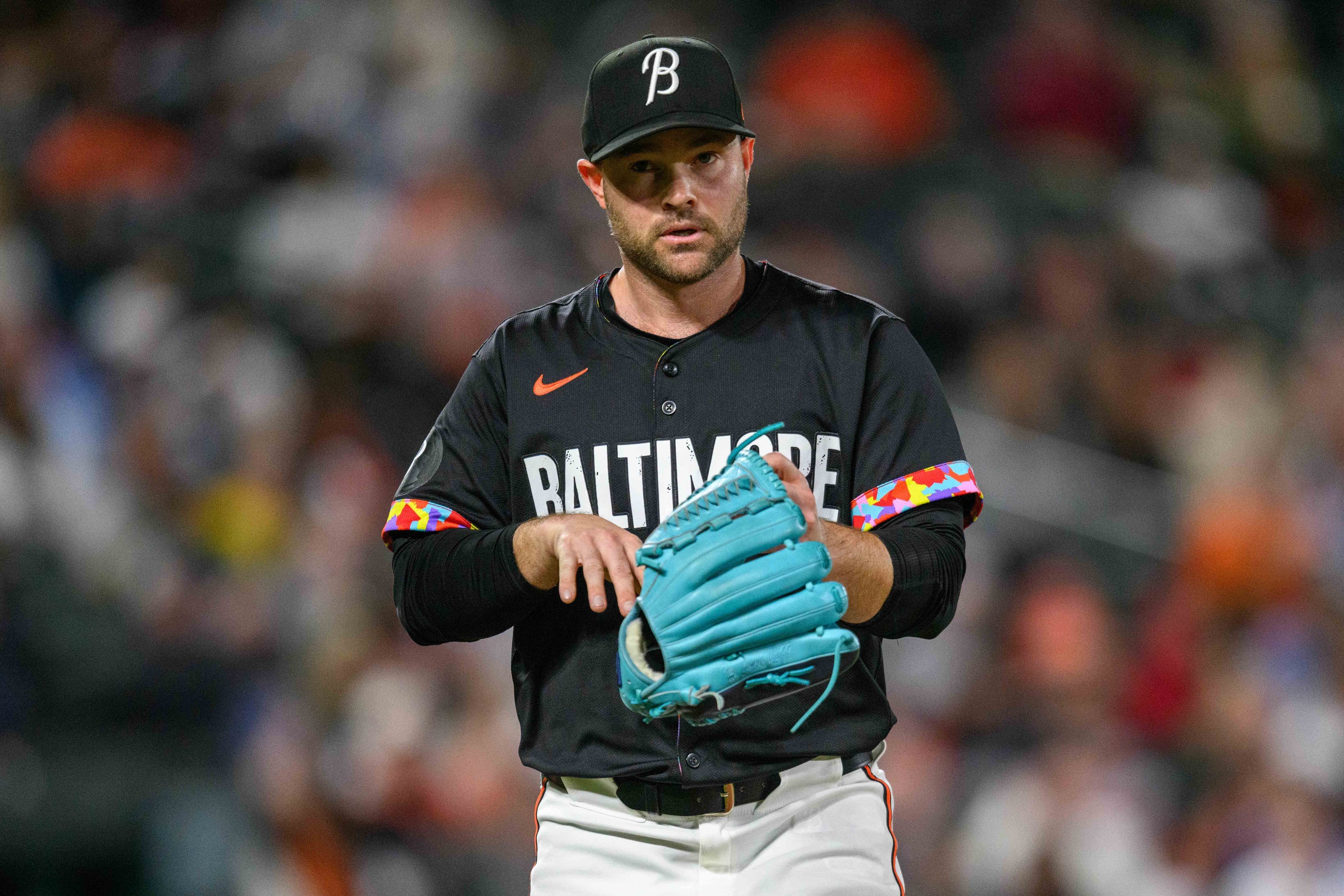 Within the next day or two, the Twins are expected to make official their signing of left-handed reliever Danny Coulombe, reuniting with the veteran free agent on a one-year deal reportedly worth $3 million. In isolation, it is a match that makes plenty of sense. Minnesota had a glaring absence of established left-handers in the bullpen mix, and Coulombe has been excellent over the past two seasons. He's also plenty familiar to the organization, having spent three seasons here from 2020-22. But when you take a step back and look at the full scope of Minnesota's needs, and their (lack of) available resources, investing this amount into a 35-year-old relief pitcher coming off an injury — for a bullpen unit that already looked like the team's biggest strength — is an interesting decision, to say the least. Barring an upcoming move that reduces the payroll level, it seems as though the Twins front office just spent most if not all of the funds at its disposal. Dan Hayes of The Athletic wrote in a column last week that the "Twins are believed to have some financial leeway, perhaps $5 million in the 2025 payroll." That is a heavily couched statement, and even if true in the most generous reading, that would mean they're now down to about $2 million in remaining funds. To reiterate, left-handed relief was a clear area of need for the Twins. I'm glad they addressed it a meaningful way and made the team better. Just maybe not so much if it comes at the expense of meaningfully addressing another area of need where the urgency was arguably higher. Coulombe should be a quality addition. In 2023-24 with the Orioles, he posted a 2.56 ERA and 2.83 FIP over 81 innings — tremendous production that makes it a little surprising he was available on a one-year, $3 million deal. The reason for this, aside from the generally challenging market for free agent relievers, is that Coulombe is 35 years old and coming off surgery to remove bone spurs from his elbow. The Orioles were dubious enough about his outlook to decline a $4 million option, which is why he was a free agent to begin with. That's a good amount of added risk at an already volatile position. His upside is clearly higher than Minnesota's in-house options like Kody Funderburk and non-roster invite Anthony Misiewicz, but when you account for age, injury and the general impact of the role ... is Coulombe's baseline expectation as a difference-maker that much higher? I'm not sure. At least not when you account for the opportunities that this signing potentially curtails. The Twins are lacking a clear starter at first base, and have little experienced depth on their bench. There's been an evident imbalance of pitchers and hitters on the roster, yet they continually to only add arms. Two million dollars, if indeed that's what remains available to spend, isn't going to get you much of anything on these fronts. I mean $5 million wasn't going to get much but you've got a better chance at getting lucky. Carlos Santana cost $5 million. Randal Grichuk, a veteran righty outfield bat, signed for $5 million on the same day Coulombe's agreement was announced. If healthy and pitching up to his standard, Coulombe will be a formidable addition to a high-powered bullpen that has a chance to shorten games in similar fashion to Cleveland's last year. In the end maybe as a whole that is more valuable than whatever bat the Twins might have landed for a few million bucks, and that's the motivation at play. But if this front office had only one move to make, I don't know that I would've ranked a middle reliever higher than a first baseman or an outfielder. Either the team disagrees, or another twist is waiting in the wings.
 -
There's a proven young first baseman known to be on the trade market, with his team reportedly seeking quality pitching in return. It's not hard to see the match here. Image courtesy of Brian Fluharty-Imagn Images We're at the stage of the offseason where the Minnesota Twins, under Derek Falvey, have been known to get creative with stunning blockbuster moves that seemingly materialize out of nowhere. While this front office has been dormant for two full years now, I can't shake the feeling that some type of significant move is still in the offing as the team looks to generate excitement (and TV sign-ups) ahead of a pivotal season. As I size up the offseason landscape and where it stands with spring training about to commence, one clear possibility sticks out. First baseman Triston Casas is on the market, and few teams have as stark of a need for his services as the Twins. Red Sox Are Known To Have Shopped Casas It seems to be one of the worst-kept secrets of this hot stove season. Adam Jude wrote recently in the Seattle Times that the Mariners rejected multiple trade offers from Boston this offseason that proposed exchanging Casas for starting pitching — first targeting a young starter like Bryce Miller or Bryan Woo, then veteran starter Luis Castillo. Unable to get a bite on Casas in December, the Red Sox pivoted in their pursuit of pitching, swinging a big trade with the White Sox for Garrett Crochet and signing free agent right-hander Walker Buehler. Even after adding those arms, though, Boston still apparently kept dangling Casas. MassLive reporter Chris Cotillo wrote a month ago that "there remains a belief in the industry that the Red Sox remain open to trading Casas, potentially for young pitching." This came as the Red Sox were thought to be exploring a trade for Nolan Arenado, whose presence alongside Rafael Devers would make Casas somewhat of a redundancy. Twins Have Seen Casas's Offensive Prowess First-Hand If Casas is familiar to you, it might be because you watched him essentially deliver the death blow to the Twins' 2024 season. The slugger launched three home runs and drove in seven at Fenway Park on September 22nd, taking Pablo López deep twice and handing the Twins a loss they couldn't afford. It came on the tail end of an injury-shortened season for the 24-year-old, who missed nearly four months with torn cartilage in his ribs. But when on the field for 63 games, he posted a 120 OPS+, backing up his breakthrough 2023 season where Casas slashed .263/.367/.490 with 21 homers to finish third in the AL Rookie of the Year voting. For his career, Casas has an .830 OPS fueled by a disciplined, powerful approach. He's a former first-round draft pick and top prospect so the track record is there. In terms of difference-making moves the Twins could pull off at this point, reeling in Casas to take over first base is about the biggest I can realistically imagine. With just over two years of MLB service under his belt, he's slated to make the minimum this year and under team control through 2028. Stepping in alongside a core of mid-20s talent, Casas would fit into Minnesota's plans quite nicely, financially and otherwise. That is, if they are willing to pay the freight. What Would It Cost to Get Casas? The Twins have plenty of players who could be appealing to Boston — part of what makes this an interesting scenario to consider. If the Red Sox were targeting controllable rotation standouts like Miller and Woo, it stands to reason someone like Bailey Ober or Joe Ryan might strike their fancy. Boston also could be interested in adding a relief weapon like Jhoan Duran or Griffin Jax to the back end of their bullpen, giving the Twins a chance to deal from their strength. The front offices of Boston and Minnesota are plenty familiar. They've already swung one trade this offseason (Mickey Gasper for Jovani Moran), and Red Sox GM Craig Breslow was actually one of the first signings by Falvey as Twins CBO. I'm on the record as saying I expected the Twins to make a significant pitching-for-hitting trade this offseason, and this would fit that bill to the extreme. Is it advisable? That depends. Why Is Casas Being Made Available? You can't help but wonder. It's not like Breslow and the Red Sox are desperately looking to unload Casas, but the overt presence of an inexpensive 25-year-old hitter with his pedigree in trade discussions is noteworthy. The simple and relatively innocuous explanation is that Boston sees an opportunity to flip an ascendant hitter with minimal defensive value for quality pitching, which is in greater scarcity than a good lefty bat at first base. That shouldn't scare the Twins. The more troubling idea is that the Red Sox have doubts about Casas for some reason — the way his skill set will age, or the way he'll rebound from the injury that sidelined him for so long last year. That's obviously something you need to be very careful of if you're talking about parting with the assets it'll take to add a Triston Casas, but on the surface this looks like a pretty terrific fit for Minnesota's needs. That is, if they're interested in boldly shaking up the status quo. View full article
-
Could the Twins Make a Late Play for Red Sox Slugger Triston Casas?
Nick Nelson posted an article in Twins
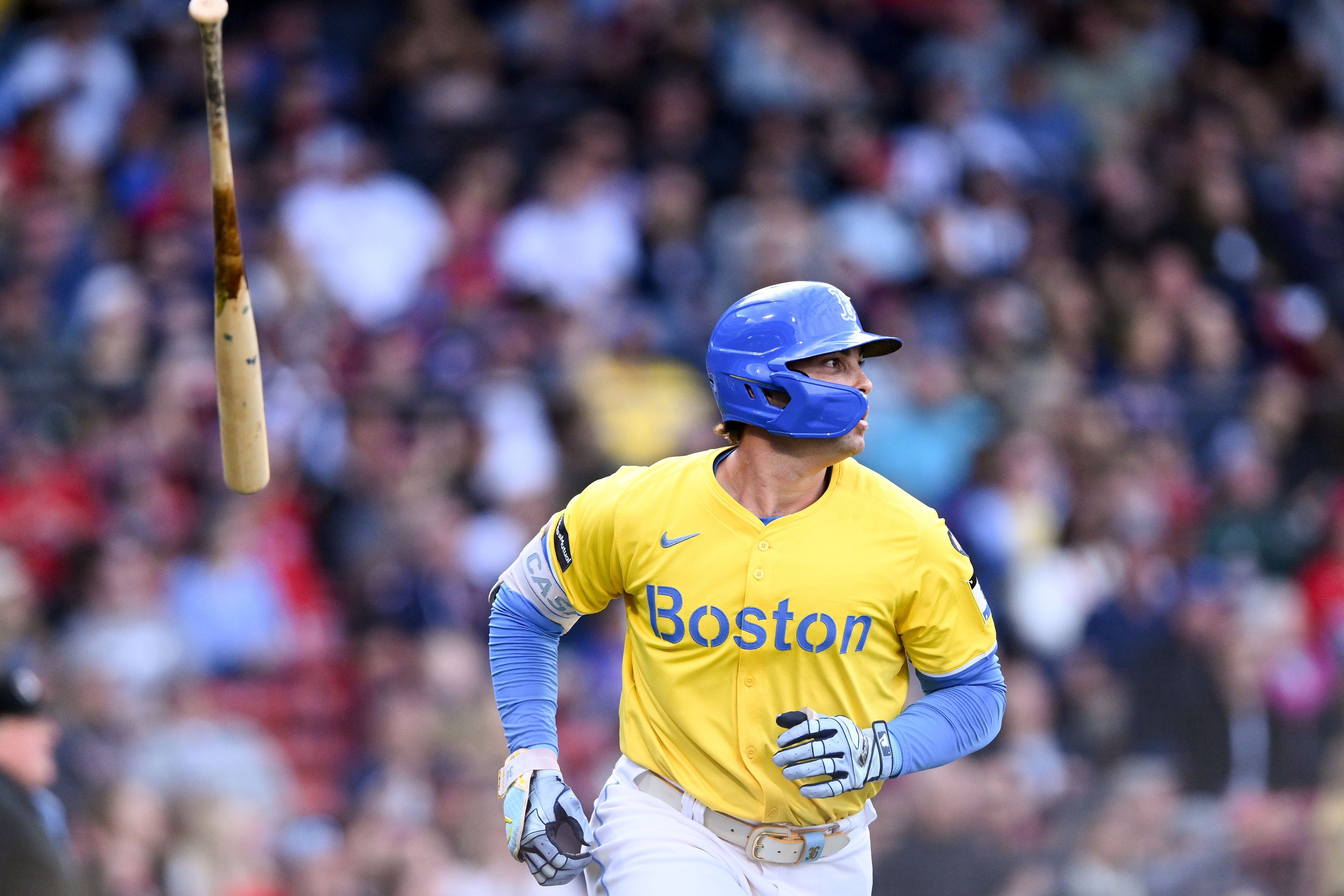 We're at the stage of the offseason where the Minnesota Twins, under Derek Falvey, have been known to get creative with stunning blockbuster moves that seemingly materialize out of nowhere. While this front office has been dormant for two full years now, I can't shake the feeling that some type of significant move is still in the offing as the team looks to generate excitement (and TV sign-ups) ahead of a pivotal season. As I size up the offseason landscape and where it stands with spring training about to commence, one clear possibility sticks out. First baseman Triston Casas is on the market, and few teams have as stark of a need for his services as the Twins. Red Sox Are Known To Have Shopped Casas It seems to be one of the worst-kept secrets of this hot stove season. Adam Jude wrote recently in the Seattle Times that the Mariners rejected multiple trade offers from Boston this offseason that proposed exchanging Casas for starting pitching — first targeting a young starter like Bryce Miller or Bryan Woo, then veteran starter Luis Castillo. Unable to get a bite on Casas in December, the Red Sox pivoted in their pursuit of pitching, swinging a big trade with the White Sox for Garrett Crochet and signing free agent right-hander Walker Buehler. Even after adding those arms, though, Boston still apparently kept dangling Casas. MassLive reporter Chris Cotillo wrote a month ago that "there remains a belief in the industry that the Red Sox remain open to trading Casas, potentially for young pitching." This came as the Red Sox were thought to be exploring a trade for Nolan Arenado, whose presence alongside Rafael Devers would make Casas somewhat of a redundancy. Twins Have Seen Casas's Offensive Prowess First-Hand If Casas is familiar to you, it might be because you watched him essentially deliver the death blow to the Twins' 2024 season. The slugger launched three home runs and drove in seven at Fenway Park on September 22nd, taking Pablo López deep twice and handing the Twins a loss they couldn't afford. It came on the tail end of an injury-shortened season for the 24-year-old, who missed nearly four months with torn cartilage in his ribs. But when on the field for 63 games, he posted a 120 OPS+, backing up his breakthrough 2023 season where Casas slashed .263/.367/.490 with 21 homers to finish third in the AL Rookie of the Year voting. For his career, Casas has an .830 OPS fueled by a disciplined, powerful approach. He's a former first-round draft pick and top prospect so the track record is there. In terms of difference-making moves the Twins could pull off at this point, reeling in Casas to take over first base is about the biggest I can realistically imagine. With just over two years of MLB service under his belt, he's slated to make the minimum this year and under team control through 2028. Stepping in alongside a core of mid-20s talent, Casas would fit into Minnesota's plans quite nicely, financially and otherwise. That is, if they are willing to pay the freight. What Would It Cost to Get Casas? The Twins have plenty of players who could be appealing to Boston — part of what makes this an interesting scenario to consider. If the Red Sox were targeting controllable rotation standouts like Miller and Woo, it stands to reason someone like Bailey Ober or Joe Ryan might strike their fancy. Boston also could be interested in adding a relief weapon like Jhoan Duran or Griffin Jax to the back end of their bullpen, giving the Twins a chance to deal from their strength. The front offices of Boston and Minnesota are plenty familiar. They've already swung one trade this offseason (Mickey Gasper for Jovani Moran), and Red Sox GM Craig Breslow was actually one of the first signings by Falvey as Twins CBO. I'm on the record as saying I expected the Twins to make a significant pitching-for-hitting trade this offseason, and this would fit that bill to the extreme. Is it advisable? That depends. Why Is Casas Being Made Available? You can't help but wonder. It's not like Breslow and the Red Sox are desperately looking to unload Casas, but the overt presence of an inexpensive 25-year-old hitter with his pedigree in trade discussions is noteworthy. The simple and relatively innocuous explanation is that Boston sees an opportunity to flip an ascendant hitter with minimal defensive value for quality pitching, which is in greater scarcity than a good lefty bat at first base. That shouldn't scare the Twins. The more troubling idea is that the Red Sox have doubts about Casas for some reason — the way his skill set will age, or the way he'll rebound from the injury that sidelined him for so long last year. That's obviously something you need to be very careful of if you're talking about parting with the assets it'll take to add a Triston Casas, but on the surface this looks like a pretty terrific fit for Minnesota's needs. That is, if they're interested in boldly shaking up the status quo.
 -
X Factors: One Make-or-Break Focus for Each Twins Hitter This Year
Nick Nelson posted an article in Twins
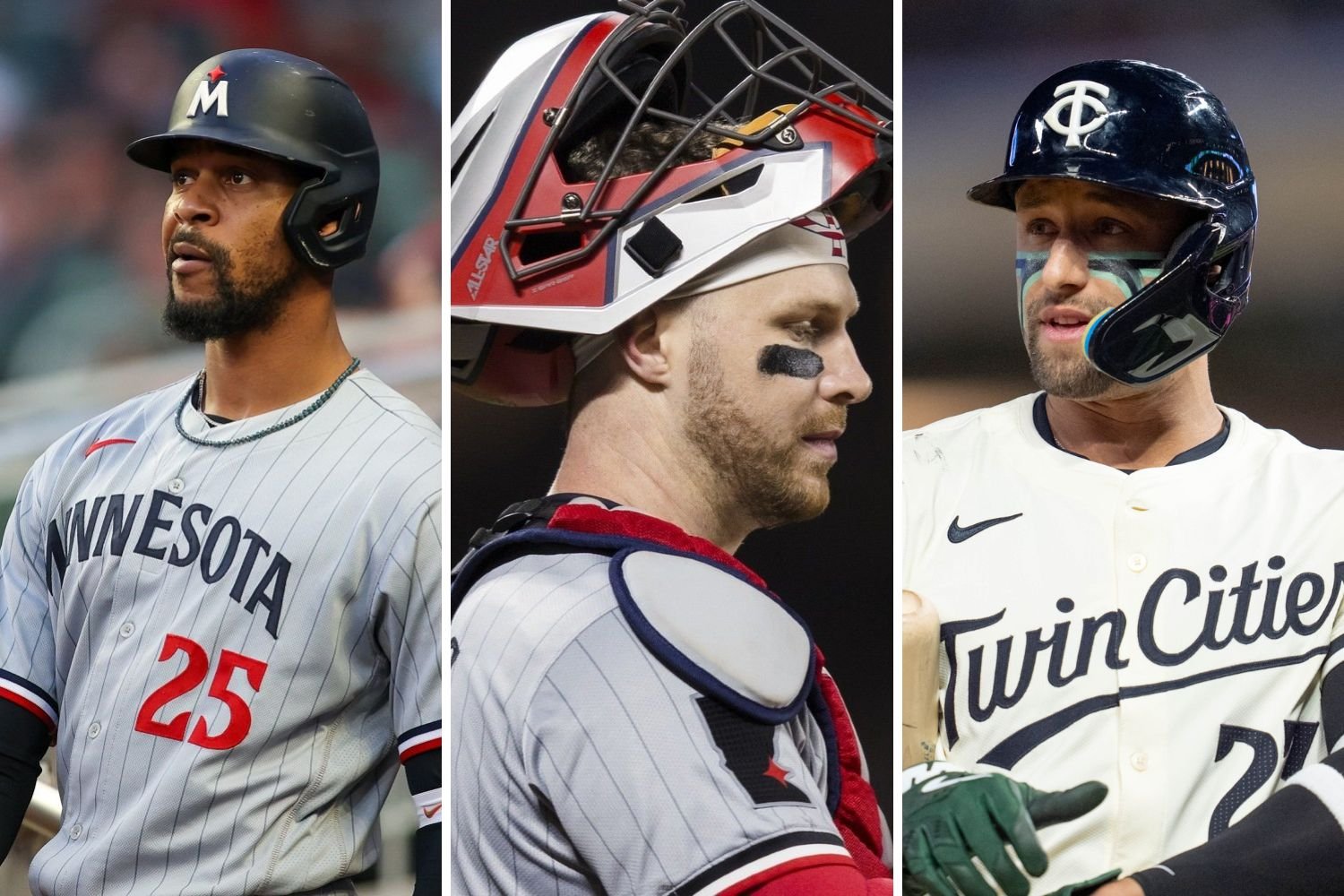 Make-or-break feels like the theme of the 2025 Twins season. The current group of players offers plenty of proven high-end potential, but so many of them finished the previous season on sour notes and face big question marks heading into the new one. Let's explore one crucial X factor that will prove decisive in the success of each Twins position player this season. We'll cover not only players that are currently on the 40-man roster, but also those who seem to be within orbit: near-ready prospects and minor-league signings with a chance to make an impact. Byron Buxton: Keep aging at bay "Stay on the field" has become a cliched and obvious focus for Buxton, but it's at least one that feels more achievable coming off his healthiest season in years. Entering his age-31 season, Buck now must contend with a different physical reality: the impacts of aging. His game is highly dependent on running very fast in the outfield and swinging very hard at the plate. These are traits that tend to diminish quickly in one's 30s — especially when their body has taken a beating over the years. Jair Camargo: Demonstrate your MLB catching mettle Camargo has impressed the Twins enough to remain planted on their 40-man roster as the third name on the catching depth chart since the end of the 2023 season. However, at age 25 he has yet to receive any meaningful opportunity to receive in the majors. Is his combination of glove and bat strong enough for an MLB breakthrough? Last year's poor showing at Triple-A, combined with a 34-to-3 K/BB ratio in winter ball, cast some doubt. Unlike last year, he's now got some direct competition in the org. Diego Cartaya: Prove you can outplay Camargo The Twins seemingly brought in Cartaya, via trade from the Dodgers, with a directive to compete with Camargo for the role of third catcher and heir apparent to Christian Vázquez, who is entering his last year under contract and perhaps not likely to play it out. Cartaya has a much stronger pedigree than Camargo (who was coincidentally also acquired via trade from the Dodgers), but hasn't performed in the upper minors. He's got his own issues to sort out on offense and defense, but if Cartaya can gravitate back toward his pre-2023 level, he'll surpass Camargo in the Twins' plans. Willi Castro: Keep dialing up the discipline We know he's going to be highly useful defensively. The thing I worry about his bat. When you look at Castro's offensive metrics you find that he doesn't do anything especially well, but he's still managed to be an above-average hitter (103 OPS+) over two seasons with the Twins. The second half last year did provide some cause for concern as he slashed .219/.298/.329 after his All-Star Game appearance. Key to Castro's first-half success was an 8.3% BB-rate that towered over his previous 5.7% career mark. That figure tailed off in the second half as pitchers started to exploit some tendencies. Castro's gotta find ways to get on base and he probably won't have a historical HBP rate to help out. Carlos Correa: Manage the foot conditions It's hard to point to anything else as the primary focus for Correa. If healthy there is just not much question that he'll perform at a high level — perhaps MVP-caliber if he picks up where he left off. But both of the first two seasons in his current contract were hampered by plantar fasciitis conditions, which can be pesky and recurring. Correa reported during TwinsFest that he was in a "really good spot" physically and hasn't been limited in his activity as he gears up for spring training. Payton Eeles: Don't stop now He's the ultimate underdog story and one of the most fun we've seen in the Twins system. The 5-foot-5 Eeles was unable to get a D1 offer out of high school, unable to get drafted out of college, and unable to latch on with an MLB organization up until the Twins signed him out of indy ball for $500 last year. Amazingly, the scrappy infielder torched every level of the minors and worked his way up to Triple-A before season's end, leading the entire Twins system in average, OBP, and slugging. If he keeps playing like this he's going to make it to the majors at some point and it's gonna be cool as hell. Mike Ford: Mash right-handed pitching mercilessly Signed to a minor-league contract just after New Years, Ford will compete for a stake at first base. The Twins weren't able to add much of anything to address their offensive question marks, so they could really use a wild-card like this stepping up. Ford has shown enough hitting ability over the years to log 250 games in the majors, and as recently as 2023 he posted a 124 OPS+ for Seattle. If he puts together an impressive spring he could easily find his way into a first base platoon for the Twins, and from there a C.J. Cron 2019 type season is a plausible outcome. Mickey Gasper: Hold your own defensively Acquired from Boston in exchange for reliever Jovani Moran, Gasper is an interesting case: a Triple-A star who has yet to record a major-league hit at age 29. While lacking for power, his proven plate discipline and contact ability should give him a decent enough offensive floor, but Gasper's value will be dictated but what he can bring on defense. Theoretically he offers handy versatility with the ability to play first, second, left, even catcher. Is he actually good at any of these positions? The Twins will now get a first-hand look. If they don't trust his glove it's tough to see him getting a shot. Michael Helman: Show your utility. Last year in Triple-A, Helman appeared at six different positions (2B/SS/3B/LF/CF/RF). In nine September games in the majors, he appeared at four different spots (3B/LF/CF/RF). Rocco Baldelli and the Twins love flexibility, and that could be Helman's ticket to an opportunity — especially if Castro were to get traded or injured. But like with Gasper, it's not so much the theoretical ability to play these various positions that matters; you've got to be trusted to play them in the majors. Neither of these guys have really done that yet. With the Twins very much in need of a right-handed outfield bat, the door is open for Helman. Ryan Jeffers: Find your swing again Dating back to 2023, Jeffers ranks third among all MLB catchers (700+ PA) in wOBA. And that's with the massive slump he endured down the stretch last year, when he batted .188 with a .508 OPS in his final 25 games. The 27-year-old is a rare offensive talent at the catcher position, and at his best Jeffers's bat is such an asset that the progressive defensive decline is almost immaterial. Few teams can viably bat their catcher second or third in the lineup. Can Jeffers get back to that level? He ended the year ice cold so it will be important to find his footing quickly. Edouard Julien: Rediscover your edge In 2023, Julien was a nightmare for opposing pitchers. That was also true for him at every stop in the minors up until that point. He laid off everything outside the zone and was ready to ambush when opponents ventured over the plate. It felt like a pretty safe and sustainable profile, which made it all the more disheartening to watch Julien fall apart in his sophomore season. Suddenly he was the one trapped in a nightmare. This season presents a fresh slate for the 25-year-old. Can he take back control in the batter's box or will he be on his heels once again? I'm not ready to count out a guy with his offensive track record. Julien figures to get every chance to re-establish himself, given the team's uncertainty at first and second. Luke Keaschall: Leave no doubt Even if he balls out during spring training, Keaschall probably won't have much of a path to make the Opening Day roster, barring injuries. He looked tremendously polished in the minors last year, even after graduating to Double-A, but he's coming off elbow surgery and has yet to reach Triple-A. The Twins are undoubtedly eager to get Keaschall's right-handed bat into the lineup once he proves he's ready. A scorching first couple months could make the case undeniable for Keaschall, especially if the MLB lineup is in need of a jolt. He's a sleeper to make a big rookie impact this year. DaShawn Keirsey Jr.: Capitalize on the moment Under different circumstances, Keirsey might not even be in position to get a shot. If the Twins had any flexibility to make additions, there's a good chance they'd go sign a veteran fourth outfielder and he'd find himself as the 40-man roster victim. (Maybe that's still in the cards.) But as things stand, Minnesota's financial situation could necessitate putting their faith in Keirsey, who certainly has the tools to be useful in a bench role. He's one of those fringe guys that could watch his opportunity pass him by if he can't make the most of it. In the game of baseball, that's a lot of pressure, but it's likely the reality for Keirsey: get hot or go home. Trevor Larnach: Bring it all together After struggling to break through for three years, Larnach finally found his groove at the plate in 2024, thanks in large part to a massive reduction in strikeout rate. In 112 games he was worth 1.5 fWAR, making him a solid regular. But I still don't think we've seen Larnach in his full form. He was known to be battling a turf toe issue for much of the season, which greatly impacted his running and defense. If he can shake off the injuries, keep the strikeouts in check and play a solid left field, he's going to be one of the best players on the team. Brooks Lee: Hit the ball harder In some ways, Lee's rookie season was what we were afraid of. His renowned offensive skills were on display — discipline, bat control, and a line-drive swing — but still he couldn't produce at all. Lee sputtered with the Twins after a hot start and finished with a .585 OPS in 185 plate appearances. The problem was pretty simple: he had no juice. Lee's average exit velocity of 85.4 MPH was lowest of any Twin with more than 15 at-bats. He struggled to get the ball past the shallow outfield, especially from the right side. Granted, he was getting his first taste of the majors, and dealt with back and shoulder issues during the season. But if we didn't see him hit the ball with more authority this year, we may need to reassess how we view his ceiling. Royce Lewis: Complete the marathon Plagued by injuries and misfortune, Lewis hasn't been able to get through a full MLB season. Part of me wonders if it's because he pushes himself so hard — constantly taking ferocious cuts at the plate, going full bore on the base paths and in the field — that his body can't withstand the toll. This might've played into Lewis running completely out of gas in August and September last year. He and the team have clearly been focusing on doing what it takes to stay healthy and strong from start to finish. Austin Martin: Add some swing speed Actually, the biggest X-factor for Martin is probably whether he can prove viable as a center fielder, but we've covered that. Regardless of how he fares on defense, Martin can make himself much more valuable offensively if he can find a way to put more of a charge into the ball. Last year with the Twins he managed just one homer with a .099 ISO in 250 plate appearances. He barreled only two of the 188 balls he put in play. He's a very disciplined hitter, with an elite chase rate and above-average K/BB rates, but he's got to show he can do some damage to be more than a borderline big-leaguer. Carson McCusker: Clobber Triple-A and await your chance He's somewhat of a longshot, but McCusker is on the radar thanks to the Twins' outfield depth vagueness and his production as a righty bat in the high minors. Standing 6-foot-8, the former indy ball standout slashed .282/.353/.488 with 19 homers between Double-A and Triple-A in 2024, his second year in the Twins system. If he can put up gaudy numbers at St. Paul, and especially if he can make any kind of inroads with his iffy discipline, he'll be in line to get the call at some point. Jose Miranda: Elude the slump He's not fast. He's not patient. He's probably not going to be much good defensively wherever he ends up. Miranda needs to consistently hit to be valuable. He's shown his upside at times — last year he was batting .325 with an .888 OPS at the All-Star break — but he hasn't been able to avoid lapsing into prolonged slumps that render him a liability. Miranda's OPS dropped 120 points in the second half as he batted .212 with no homers. He doesn't need to stay locked in at that absurd level from last June, but we need to see more stability and tenacity from Miranda entering his age-27 season. Projection systems are not bullish on his power. Emmanuel Rodriguez: Don't let patience turn to passivity One of the top Twins prospects is nearly ready for showtime after finishing last season in Triple-A. His skill set is rare and intriguing: top-tier power and off-the-scale plate discipline paired with a ton of swing-and-miss. Never chasing outside the zone while punishing mistakes is a good recipe in the minors but can sometimes be thwarted in the majors. When you're taking a lot of borderline pitches and whiffing at a lot of quality strikes, the K's can mount. We've seen that with Julien — who is, in fairness, far less of a special athlete and all-around specimen than Rodriguez, a top-40 prospect in baseball according to MLB Pipeline. Yunior Severino: Rake relentlessly He's no longer on the 40-man roster but still not out of the picture after rejoining the Twins on a minor-league contract. His major offensive drop-off last year dampened his outlook, but Severino is a switch-hitter with big raw power and he's still only 25. He has shown the ability to go on ridiculous heaters, including last June when he slashed .425/.544/.688 in 103 plate appearances for the Saints, but he needs to show he can sustain high-caliber production since he offers next to nothing on defense. Christian Vázquez: Muster something offensively For all the talk about what a burden his salary is, Vázquez is really not that far from being worth the $10 million price tag. He is an excellent defensive catcher who pitchers love working with, and that has underrated value. But he's got to hit a little bit to be a true asset; the 62 OPS+ over the past two years is not cutting it. Even if he could get back to his previous career baseline of 85, it'd make him a far more impactful player. Vázquez has shown occasional bursts of offensive ability — he posted an .844 OPS in July and August last year — but he's got to harness it more often, and at 34 that may be a tall task. Matt Wallner: Cut down the K's at least modestly No one is asking Wallner to be a contact hitter. He's going to swing hard and he's going to strike out a lot. We just need him to whiff a little bit less often. At the extreme he's shown through his early time in he majors (34.5%, 6th-highest in MLB) it's going to be difficult to fulfill his potential as a premier slugger. Reducing that figure even to the 30% range would make a big difference, because when he puts the ball in play it's a problem. All he really needs to do is counteract regression because with a 138 OPS+ in 169 MLB games he's already been one of the best hitters in baseball.
- 28 comments
-
- 10
-

-
- byron buxton
- ryan jeffers
- (and 1 more)
-
Here's the single biggest priority for each position player in the mix for the Minnesota Twins to focus on this year if they want to unlock the best versions of themselves. Image courtesy of Brett Davis, John Hefti, Matt Blewett--Imagn Images Make-or-break feels like the theme of the 2025 Twins season. The current group of players offers plenty of proven high-end potential, but so many of them finished the previous season on sour notes and face big question marks heading into the new one. Let's explore one crucial X factor that will prove decisive in the success of each Twins position player this season. We'll cover not only players that are currently on the 40-man roster, but also those who seem to be within orbit: near-ready prospects and minor-league signings with a chance to make an impact. Byron Buxton: Keep aging at bay "Stay on the field" has become a cliched and obvious focus for Buxton, but it's at least one that feels more achievable coming off his healthiest season in years. Entering his age-31 season, Buck now must contend with a different physical reality: the impacts of aging. His game is highly dependent on running very fast in the outfield and swinging very hard at the plate. These are traits that tend to diminish quickly in one's 30s — especially when their body has taken a beating over the years. Jair Camargo: Demonstrate your MLB catching mettle Camargo has impressed the Twins enough to remain planted on their 40-man roster as the third name on the catching depth chart since the end of the 2023 season. However, at age 25 he has yet to receive any meaningful opportunity to receive in the majors. Is his combination of glove and bat strong enough for an MLB breakthrough? Last year's poor showing at Triple-A, combined with a 34-to-3 K/BB ratio in winter ball, cast some doubt. Unlike last year, he's now got some direct competition in the org. Diego Cartaya: Prove you can outplay Camargo The Twins seemingly brought in Cartaya, via trade from the Dodgers, with a directive to compete with Camargo for the role of third catcher and heir apparent to Christian Vázquez, who is entering his last year under contract and perhaps not likely to play it out. Cartaya has a much stronger pedigree than Camargo (who was coincidentally also acquired via trade from the Dodgers), but hasn't performed in the upper minors. He's got his own issues to sort out on offense and defense, but if Cartaya can gravitate back toward his pre-2023 level, he'll surpass Camargo in the Twins' plans. Willi Castro: Keep dialing up the discipline We know he's going to be highly useful defensively. The thing I worry about his bat. When you look at Castro's offensive metrics you find that he doesn't do anything especially well, but he's still managed to be an above-average hitter (103 OPS+) over two seasons with the Twins. The second half last year did provide some cause for concern as he slashed .219/.298/.329 after his All-Star Game appearance. Key to Castro's first-half success was an 8.3% BB-rate that towered over his previous 5.7% career mark. That figure tailed off in the second half as pitchers started to exploit some tendencies. Castro's gotta find ways to get on base and he probably won't have a historical HBP rate to help out. Carlos Correa: Manage the foot conditions It's hard to point to anything else as the primary focus for Correa. If healthy there is just not much question that he'll perform at a high level — perhaps MVP-caliber if he picks up where he left off. But both of the first two seasons in his current contract were hampered by plantar fasciitis conditions, which can be pesky and recurring. Correa reported during TwinsFest that he was in a "really good spot" physically and hasn't been limited in his activity as he gears up for spring training. Payton Eeles: Don't stop now He's the ultimate underdog story and one of the most fun we've seen in the Twins system. The 5-foot-5 Eeles was unable to get a D1 offer out of high school, unable to get drafted out of college, and unable to latch on with an MLB organization up until the Twins signed him out of indy ball for $500 last year. Amazingly, the scrappy infielder torched every level of the minors and worked his way up to Triple-A before season's end, leading the entire Twins system in average, OBP, and slugging. If he keeps playing like this he's going to make it to the majors at some point and it's gonna be cool as hell. Mike Ford: Mash right-handed pitching mercilessly Signed to a minor-league contract just after New Years, Ford will compete for a stake at first base. The Twins weren't able to add much of anything to address their offensive question marks, so they could really use a wild-card like this stepping up. Ford has shown enough hitting ability over the years to log 250 games in the majors, and as recently as 2023 he posted a 124 OPS+ for Seattle. If he puts together an impressive spring he could easily find his way into a first base platoon for the Twins, and from there a C.J. Cron 2019 type season is a plausible outcome. Mickey Gasper: Hold your own defensively Acquired from Boston in exchange for reliever Jovani Moran, Gasper is an interesting case: a Triple-A star who has yet to record a major-league hit at age 29. While lacking for power, his proven plate discipline and contact ability should give him a decent enough offensive floor, but Gasper's value will be dictated but what he can bring on defense. Theoretically he offers handy versatility with the ability to play first, second, left, even catcher. Is he actually good at any of these positions? The Twins will now get a first-hand look. If they don't trust his glove it's tough to see him getting a shot. Michael Helman: Show your utility. Last year in Triple-A, Helman appeared at six different positions (2B/SS/3B/LF/CF/RF). In nine September games in the majors, he appeared at four different spots (3B/LF/CF/RF). Rocco Baldelli and the Twins love flexibility, and that could be Helman's ticket to an opportunity — especially if Castro were to get traded or injured. But like with Gasper, it's not so much the theoretical ability to play these various positions that matters; you've got to be trusted to play them in the majors. Neither of these guys have really done that yet. With the Twins very much in need of a right-handed outfield bat, the door is open for Helman. Ryan Jeffers: Find your swing again Dating back to 2023, Jeffers ranks third among all MLB catchers (700+ PA) in wOBA. And that's with the massive slump he endured down the stretch last year, when he batted .188 with a .508 OPS in his final 25 games. The 27-year-old is a rare offensive talent at the catcher position, and at his best Jeffers's bat is such an asset that the progressive defensive decline is almost immaterial. Few teams can viably bat their catcher second or third in the lineup. Can Jeffers get back to that level? He ended the year ice cold so it will be important to find his footing quickly. Edouard Julien: Rediscover your edge In 2023, Julien was a nightmare for opposing pitchers. That was also true for him at every stop in the minors up until that point. He laid off everything outside the zone and was ready to ambush when opponents ventured over the plate. It felt like a pretty safe and sustainable profile, which made it all the more disheartening to watch Julien fall apart in his sophomore season. Suddenly he was the one trapped in a nightmare. This season presents a fresh slate for the 25-year-old. Can he take back control in the batter's box or will he be on his heels once again? I'm not ready to count out a guy with his offensive track record. Julien figures to get every chance to re-establish himself, given the team's uncertainty at first and second. Luke Keaschall: Leave no doubt Even if he balls out during spring training, Keaschall probably won't have much of a path to make the Opening Day roster, barring injuries. He looked tremendously polished in the minors last year, even after graduating to Double-A, but he's coming off elbow surgery and has yet to reach Triple-A. The Twins are undoubtedly eager to get Keaschall's right-handed bat into the lineup once he proves he's ready. A scorching first couple months could make the case undeniable for Keaschall, especially if the MLB lineup is in need of a jolt. He's a sleeper to make a big rookie impact this year. DaShawn Keirsey Jr.: Capitalize on the moment Under different circumstances, Keirsey might not even be in position to get a shot. If the Twins had any flexibility to make additions, there's a good chance they'd go sign a veteran fourth outfielder and he'd find himself as the 40-man roster victim. (Maybe that's still in the cards.) But as things stand, Minnesota's financial situation could necessitate putting their faith in Keirsey, who certainly has the tools to be useful in a bench role. He's one of those fringe guys that could watch his opportunity pass him by if he can't make the most of it. In the game of baseball, that's a lot of pressure, but it's likely the reality for Keirsey: get hot or go home. Trevor Larnach: Bring it all together After struggling to break through for three years, Larnach finally found his groove at the plate in 2024, thanks in large part to a massive reduction in strikeout rate. In 112 games he was worth 1.5 fWAR, making him a solid regular. But I still don't think we've seen Larnach in his full form. He was known to be battling a turf toe issue for much of the season, which greatly impacted his running and defense. If he can shake off the injuries, keep the strikeouts in check and play a solid left field, he's going to be one of the best players on the team. Brooks Lee: Hit the ball harder In some ways, Lee's rookie season was what we were afraid of. His renowned offensive skills were on display — discipline, bat control, and a line-drive swing — but still he couldn't produce at all. Lee sputtered with the Twins after a hot start and finished with a .585 OPS in 185 plate appearances. The problem was pretty simple: he had no juice. Lee's average exit velocity of 85.4 MPH was lowest of any Twin with more than 15 at-bats. He struggled to get the ball past the shallow outfield, especially from the right side. Granted, he was getting his first taste of the majors, and dealt with back and shoulder issues during the season. But if we didn't see him hit the ball with more authority this year, we may need to reassess how we view his ceiling. Royce Lewis: Complete the marathon Plagued by injuries and misfortune, Lewis hasn't been able to get through a full MLB season. Part of me wonders if it's because he pushes himself so hard — constantly taking ferocious cuts at the plate, going full bore on the base paths and in the field — that his body can't withstand the toll. This might've played into Lewis running completely out of gas in August and September last year. He and the team have clearly been focusing on doing what it takes to stay healthy and strong from start to finish. Austin Martin: Add some swing speed Actually, the biggest X-factor for Martin is probably whether he can prove viable as a center fielder, but we've covered that. Regardless of how he fares on defense, Martin can make himself much more valuable offensively if he can find a way to put more of a charge into the ball. Last year with the Twins he managed just one homer with a .099 ISO in 250 plate appearances. He barreled only two of the 188 balls he put in play. He's a very disciplined hitter, with an elite chase rate and above-average K/BB rates, but he's got to show he can do some damage to be more than a borderline big-leaguer. Carson McCusker: Clobber Triple-A and await your chance He's somewhat of a longshot, but McCusker is on the radar thanks to the Twins' outfield depth vagueness and his production as a righty bat in the high minors. Standing 6-foot-8, the former indy ball standout slashed .282/.353/.488 with 19 homers between Double-A and Triple-A in 2024, his second year in the Twins system. If he can put up gaudy numbers at St. Paul, and especially if he can make any kind of inroads with his iffy discipline, he'll be in line to get the call at some point. Jose Miranda: Elude the slump He's not fast. He's not patient. He's probably not going to be much good defensively wherever he ends up. Miranda needs to consistently hit to be valuable. He's shown his upside at times — last year he was batting .325 with an .888 OPS at the All-Star break — but he hasn't been able to avoid lapsing into prolonged slumps that render him a liability. Miranda's OPS dropped 120 points in the second half as he batted .212 with no homers. He doesn't need to stay locked in at that absurd level from last June, but we need to see more stability and tenacity from Miranda entering his age-27 season. Projection systems are not bullish on his power. Emmanuel Rodriguez: Don't let patience turn to passivity One of the top Twins prospects is nearly ready for showtime after finishing last season in Triple-A. His skill set is rare and intriguing: top-tier power and off-the-scale plate discipline paired with a ton of swing-and-miss. Never chasing outside the zone while punishing mistakes is a good recipe in the minors but can sometimes be thwarted in the majors. When you're taking a lot of borderline pitches and whiffing at a lot of quality strikes, the K's can mount. We've seen that with Julien — who is, in fairness, far less of a special athlete and all-around specimen than Rodriguez, a top-40 prospect in baseball according to MLB Pipeline. Yunior Severino: Rake relentlessly He's no longer on the 40-man roster but still not out of the picture after rejoining the Twins on a minor-league contract. His major offensive drop-off last year dampened his outlook, but Severino is a switch-hitter with big raw power and he's still only 25. He has shown the ability to go on ridiculous heaters, including last June when he slashed .425/.544/.688 in 103 plate appearances for the Saints, but he needs to show he can sustain high-caliber production since he offers next to nothing on defense. Christian Vázquez: Muster something offensively For all the talk about what a burden his salary is, Vázquez is really not that far from being worth the $10 million price tag. He is an excellent defensive catcher who pitchers love working with, and that has underrated value. But he's got to hit a little bit to be a true asset; the 62 OPS+ over the past two years is not cutting it. Even if he could get back to his previous career baseline of 85, it'd make him a far more impactful player. Vázquez has shown occasional bursts of offensive ability — he posted an .844 OPS in July and August last year — but he's got to harness it more often, and at 34 that may be a tall task. Matt Wallner: Cut down the K's at least modestly No one is asking Wallner to be a contact hitter. He's going to swing hard and he's going to strike out a lot. We just need him to whiff a little bit less often. At the extreme he's shown through his early time in he majors (34.5%, 6th-highest in MLB) it's going to be difficult to fulfill his potential as a premier slugger. Reducing that figure even to the 30% range would make a big difference, because when he puts the ball in play it's a problem. All he really needs to do is counteract regression because with a 138 OPS+ in 169 MLB games he's already been one of the best hitters in baseball. View full article
-
The Twins ranked second in the AL in bullpen WAR last year, so I would say yes, it did.
-
FanGraphs expects this reliever duo to be far-and-away the best in the major leagues. Let's dive into the reasons behind the bullish optimism from systems like these. Image courtesy of David Richard and Jerome Miron-Imagn Images You might have heard that the Twins are projected by FanGraphs to have the No. 1 bullpen in baseball this season. It's been a frequent talking point, both because fans have little else to discuss and because there seems to be a broad disconnect regarding the caliber of this unit. Today I wanted to dig a little bit into WHY projection systems view the Minnesota relief corps so favorably, even after they finished 19th in the majors last year with a 4.12 ERA and have made zero additions this offseason. When you start parsing out the individual projections, what it comes down to is that systems like these are extremely high on the top two arms in the Twins bullpen: Jhoan Durán and Griffin Jax. For example, FanGraphs projects Durán to be worth 1.7 fWAR this season and Jax to be at 1.3 fWAR. That combined total, 3.0 fWAR, is higher than the projections for the entire bullpens of 17 different teams. Here is the total pool of relief pitchers who are projected by FanGraphs to produce 1.3 fWAR or more in 2025: Mason Miller (2.1) Jhoan Durán (1.7) Félix Bautista (1.7) Edwin Díaz (1.6) Ryan Helsley (1.5) Josh Hader (1.4) Griffin Jax (1.3) Emmanuel Clase (1.3) Matt Strahm (1.3) Jeff Hoffman (1.3) This really puts into context how high-powered the back end of Minnesota's bullpen can be: the Twins boast two of the top 10 projected relievers according to FanGraphs. So, what is it about Durán and Jax that make them such darlings in the eyes of these models, which evaluate based on historical performance, age curves, peripheral stats and predictive analytics? Here's a quick breakdown of the factors influencing each: Jhoan Durán Durán is among the most dominant relievers in baseball, and projection systems recognize that by weighing multiple key indicators: Elite stuff: Durán's fastball velocity (100+ mph) and splinker movement create extreme strikeout and weak contact tendencies. Stuff+ models (like those from Eno Sarris at The Athletic) grade his arsenal as among the best in MLB. Underlying metrics: Yes, Durán posted an underwhelming 3.64 ERA last year. But he does the things these models want to see. His xERA, xFIP, and SIERA have consistently shown that premier performance is sustainable. His ability to miss bats (30%+ K rate) while limiting walks and home runs keeps his projections strong. Durability and usage: Once plagued by injuries, he has made 58+ appearances in three straight seasons, and has held up well despite a minor dip in velocity. Expected regression to the mean: While relievers often show variance year to year, projection models hedge against outlier seasons. If Durán had a slightly "off" year in 2024 (even by his standards), models would likely expect a rebound. Griffin Jax Jax has transformed into a high-leverage weapon, and projections recognize him as a valuable setup man: Swing-and-miss arsenal: His overpowering sweeper ranks among the best in baseball in Whiff%, and he tunnels it effectively with his fastball. Projection models reward this ability because it sustains strikeout rates. Improved walk rate: Jax has cut his BB% each year, a trend models favor since control metrics are more stable than pure ERA. FIP and xFIP stability: Even when his ERA has fluctuated, his peripheral stats (FIP, xFIP, SIERA) remain strong, indicating he’s not overperforming by luck. Leverage role: The Twins trust him in high-leverage situations, meaning he’ll consistently get innings in the 7th and 8th with high strikeout potential. And he's consistently shown he can deliver in those spots. The relief pitcher position is highly volatile, with a great deal of year-to-year variance. Naturally, this makes performance difficult to confidently predict. But the bottom line is that Durán and Jax both excel in the areas that drive positive outcomes, and are in their physical primes with strong bills of health. There just aren't many relief pitchers around the league for whom that is true, as the list above indicates. None of this really matters much when the rubber hits the road, of course, but as we look ahead to the 2025 season it's a nice jolt of encouragement. Also, I would note that front offices around the league are using similar metrics and projection systems as FanGraphs, so the fact that both relievers grade out so favorably would seemingly only raise their appeal as trade targets, if in fact that's on the menu. Where do you stand on the top two Twins relievers heading into this season? Do you agree with the models or do you think they're exaggerating the team's strength at the back end. Would the Twins be wise to sell high on either? Let's hear from you in the comments. View full article
-
Why Are Projection Systems So High on Jhoan Durán and Griffin Jax?
Nick Nelson posted an article in Twins
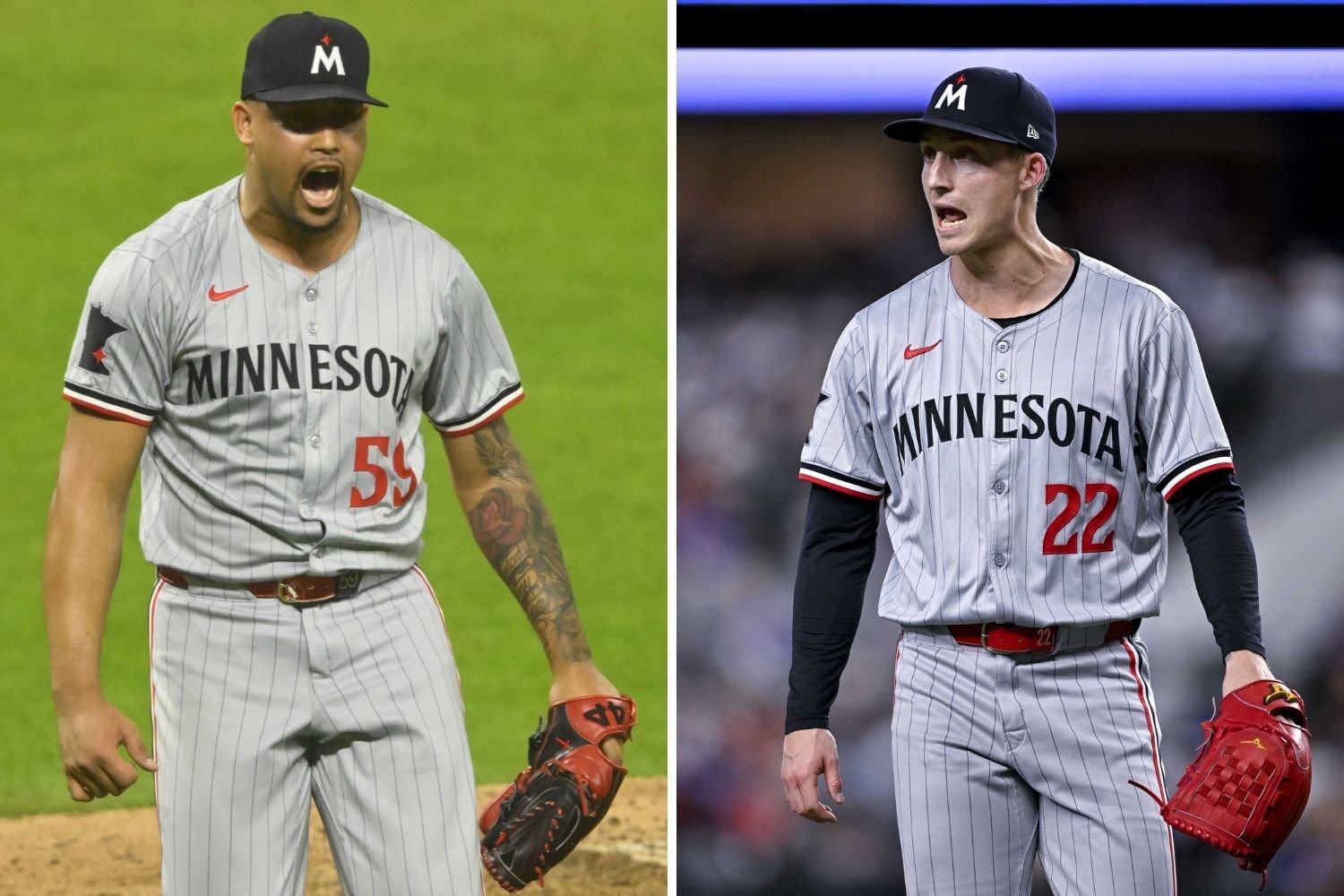 You might have heard that the Twins are projected by FanGraphs to have the No. 1 bullpen in baseball this season. It's been a frequent talking point, both because fans have little else to discuss and because there seems to be a broad disconnect regarding the caliber of this unit. Today I wanted to dig a little bit into WHY projection systems view the Minnesota relief corps so favorably, even after they finished 19th in the majors last year with a 4.12 ERA and have made zero additions this offseason. When you start parsing out the individual projections, what it comes down to is that systems like these are extremely high on the top two arms in the Twins bullpen: Jhoan Durán and Griffin Jax. For example, FanGraphs projects Durán to be worth 1.7 fWAR this season and Jax to be at 1.3 fWAR. That combined total, 3.0 fWAR, is higher than the projections for the entire bullpens of 17 different teams. Here is the total pool of relief pitchers who are projected by FanGraphs to produce 1.3 fWAR or more in 2025: Mason Miller (2.1) Jhoan Durán (1.7) Félix Bautista (1.7) Edwin Díaz (1.6) Ryan Helsley (1.5) Josh Hader (1.4) Griffin Jax (1.3) Emmanuel Clase (1.3) Matt Strahm (1.3) Jeff Hoffman (1.3) This really puts into context how high-powered the back end of Minnesota's bullpen can be: the Twins boast two of the top 10 projected relievers according to FanGraphs. So, what is it about Durán and Jax that make them such darlings in the eyes of these models, which evaluate based on historical performance, age curves, peripheral stats and predictive analytics? Here's a quick breakdown of the factors influencing each: Jhoan Durán Durán is among the most dominant relievers in baseball, and projection systems recognize that by weighing multiple key indicators: Elite stuff: Durán's fastball velocity (100+ mph) and splinker movement create extreme strikeout and weak contact tendencies. Stuff+ models (like those from Eno Sarris at The Athletic) grade his arsenal as among the best in MLB. Underlying metrics: Yes, Durán posted an underwhelming 3.64 ERA last year. But he does the things these models want to see. His xERA, xFIP, and SIERA have consistently shown that premier performance is sustainable. His ability to miss bats (30%+ K rate) while limiting walks and home runs keeps his projections strong. Durability and usage: Once plagued by injuries, he has made 58+ appearances in three straight seasons, and has held up well despite a minor dip in velocity. Expected regression to the mean: While relievers often show variance year to year, projection models hedge against outlier seasons. If Durán had a slightly "off" year in 2024 (even by his standards), models would likely expect a rebound. Griffin Jax Jax has transformed into a high-leverage weapon, and projections recognize him as a valuable setup man: Swing-and-miss arsenal: His overpowering sweeper ranks among the best in baseball in Whiff%, and he tunnels it effectively with his fastball. Projection models reward this ability because it sustains strikeout rates. Improved walk rate: Jax has cut his BB% each year, a trend models favor since control metrics are more stable than pure ERA. FIP and xFIP stability: Even when his ERA has fluctuated, his peripheral stats (FIP, xFIP, SIERA) remain strong, indicating he’s not overperforming by luck. Leverage role: The Twins trust him in high-leverage situations, meaning he’ll consistently get innings in the 7th and 8th with high strikeout potential. And he's consistently shown he can deliver in those spots. The relief pitcher position is highly volatile, with a great deal of year-to-year variance. Naturally, this makes performance difficult to confidently predict. But the bottom line is that Durán and Jax both excel in the areas that drive positive outcomes, and are in their physical primes with strong bills of health. There just aren't many relief pitchers around the league for whom that is true, as the list above indicates. None of this really matters much when the rubber hits the road, of course, but as we look ahead to the 2025 season it's a nice jolt of encouragement. Also, I would note that front offices around the league are using similar metrics and projection systems as FanGraphs, so the fact that both relievers grade out so favorably would seemingly only raise their appeal as trade targets, if in fact that's on the menu. Where do you stand on the top two Twins relievers heading into this season? Do you agree with the models or do you think they're exaggerating the team's strength at the back end. Would the Twins be wise to sell high on either? Let's hear from you in the comments.
 -
The Time for "Getting Creative" Is Upon Us
Nick Nelson replied to Nick Nelson's topic in Twins Daily Front Page News
There was buzz about the Twins and Marlins re: Lopez and Arraez for months before it happened. But that's about the only one I can think of. -
The Time for "Getting Creative" Is Upon Us
Nick Nelson posted a topic in Twins Daily Front Page News
History tells us that if the Twins are going to get weird with an unexpected or unconventional trade, we've now arrived at the stage of the offseason where it's going to happen. Image courtesy of Jesse Johnson-Imagn Images Ever since Derek Falvey first took over, the Twins have openly prided themselves on a willingness to think creatively in their team-building approach. As Do-Hyoung Park remarked in his Twins Beat newsletter last month, "getting creative" is one of Falvey's favorite phrases. It's a valuable mindset for a team operating with limited resources in a middle market — if you can't outspend the heavy hitters, you can at least aim to outfox them. And the creativity mantra is far from being all talk: time and again the Twins have pulled off outside-the-box moves, in free agency and trades, that have seemingly come out of nowhere and shaken up the status quo. Sometimes these moves have given the Twins access to players that were seemingly beyond their means, including the highly opportunistic Carlos Correa signings. We've seen plenty of fascinatingly constructed trades over the years too. There was the challenge trade that sent reigning batting champ Luis Arráez to Miami for emerging starter Pablo López. There was that five-player fracas involving Josh Donaldson, Isiah Kiner-Falefa, Gary Sánchez and Gio Urshela. Few could've foreseen the acquisition of Kenta Maeda as part of a three-team blockbuster that sent Brusdar Graterol and Mookie Betts to LA. And of course, who could forget the stunner on the eve of Opening Day 2022 that shipped Taylor Rogers and Brent Rooker to San Diego for Chris Paddack and Emilio Pagán. The commonality between all of these moves is that they happened in the late stage of the offseason, if not deep into spring training. And that's no coincidence; for these kinds of creative and complex trades to reach fruition takes time, and a lot of prolonged discussions. For other teams to be open to this kind of creative thinking usually requires other, more straightforward options to come off the board. Well, we are there now. Pitchers and catchers report two weeks from Thursday. That's certainly not a deadline preventing action thereafter, but we are now almost officially into February. Teams across the league are getting into the mindset that Falvey, Jeremy Zoll and Co. need them in to reach a receptive audience for their ideas and designs. We're seeing some signs of this environment starting to percolate. The San Diego Padres are believed to be intent on lowering payroll ahead of the 2025 season, and thus it is probably no coincidence that we've seen names like Dylan Cease, Michael King and Robert Suarez springing up in trade rumors of late. The clock is ticking down and things need to start falling into place for a number of clubs that have largely idled through the first three months of the offseason. Falvey, for his part, isn't tempering expectations for the rest of the offseason. During TwinsFest appearances last week, he seemed focused on getting the message across that activity is still on the way. “The reality of the baseball offseason is it feels like each year I come here, there is a lot more ahead of us than behind us,” he said at a banquet last Wednesday. “We’ve made trades, acquisitions in February and March. That’s just the way baseball works these days. Ultimately, I feel like it’s the midway point to the offseason. We have a lot more work to do.” If reports that the Twins have shown any level of legitimate interest in the likes of Cease have merit, then it's fair to say Falvey's not bluffing. Based on his front office's history, you can't count these guys out at this stage of the offseason, although it's fair to feel dubious amid a stretch of 24 months with no significant moves. Now or never. Can the Twins turn creativity into concrete upgrades? View full article -
 Ever since Derek Falvey first took over, the Twins have openly prided themselves on a willingness to think creatively in their team-building approach. As Do-Hyoung Park remarked in his Twins Beat newsletter last month, "getting creative" is one of Falvey's favorite phrases. It's a valuable mindset for a team operating with limited resources in a middle market — if you can't outspend the heavy hitters, you can at least aim to outfox them. And the creativity mantra is far from being all talk: time and again the Twins have pulled off outside-the-box moves, in free agency and trades, that have seemingly come out of nowhere and shaken up the status quo. Sometimes these moves have given the Twins access to players that were seemingly beyond their means, including the highly opportunistic Carlos Correa signings. We've seen plenty of fascinatingly constructed trades over the years too. There was the challenge trade that sent reigning batting champ Luis Arráez to Miami for emerging starter Pablo López. There was that five-player fracas involving Josh Donaldson, Isiah Kiner-Falefa, Gary Sánchez and Gio Urshela. Few could've foreseen the acquisition of Kenta Maeda as part of a three-team blockbuster that sent Brusdar Graterol and Mookie Betts to LA. And of course, who could forget the stunner on the eve of Opening Day 2022 that shipped Taylor Rogers and Brent Rooker to San Diego for Chris Paddack and Emilio Pagán. The commonality between all of these moves is that they happened in the late stage of the offseason, if not deep into spring training. And that's no coincidence; for these kinds of creative and complex trades to reach fruition takes time, and a lot of prolonged discussions. For other teams to be open to this kind of creative thinking usually requires other, more straightforward options to come off the board. Well, we are there now. Pitchers and catchers report two weeks from Thursday. That's certainly not a deadline preventing action thereafter, but we are now almost officially into February. Teams across the league are getting into the mindset that Falvey, Jeremy Zoll and Co. need them in to reach a receptive audience for their ideas and designs. We're seeing some signs of this environment starting to percolate. The San Diego Padres are believed to be intent on lowering payroll ahead of the 2025 season, and thus it is probably no coincidence that we've seen names like Dylan Cease, Michael King and Robert Suarez springing up in trade rumors of late. The clock is ticking down and things need to start falling into place for a number of clubs that have largely idled through the first three months of the offseason. Falvey, for his part, isn't tempering expectations for the rest of the offseason. During TwinsFest appearances last week, he seemed focused on getting the message across that activity is still on the way. “The reality of the baseball offseason is it feels like each year I come here, there is a lot more ahead of us than behind us,” he said at a banquet last Wednesday. “We’ve made trades, acquisitions in February and March. That’s just the way baseball works these days. Ultimately, I feel like it’s the midway point to the offseason. We have a lot more work to do.” If reports that the Twins have shown any level of legitimate interest in the likes of Cease have merit, then it's fair to say Falvey's not bluffing. Based on his front office's history, you can't count these guys out at this stage of the offseason, although it's fair to feel dubious amid a stretch of 24 months with no significant moves. Now or never. Can the Twins turn creativity into concrete upgrades?
 -
The viability of Austin Martin as a center fielder is a key topic heading into this season. How likely is he to hold his own if needed at one of the most demanding, difference-making defensive positions on the field? Image courtesy of Brad Rempel-Imagn Images At the end of a recent Bobby Nightengale notebook article in the Star Tribune was this tidbit: "Austin Martin could see a lot of playing time in center field during spring training, manager Rocco Baldelli said, to become more acclimated to the position." This is not terribly surprising, given that Martin made more starts in center (33) than anywhere else as a rookie, but as Nightengale points out, his tendency to get slow jumps led to substandard defensive performance. “He’s a very good athlete,” said Baldelli in the piece. “I think first exposure in the big leagues, his work in the outfield probably could’ve been better than it was, but all the ability is there.” In a small sampling of 277 innings as center fielder last year, Martin's defensive metrics were beyond brutal. Per FanGraphs, his Outs Above Average (OAA) was -4, and his UZR/150 was -15.5. Among the 60 MLB players who spent more than 200 innings in CF, only two had a worse OAA or a worse UZR/150. So yes, Baldelli's suggestion that Martin "could've been better" is well validated. But there are two other parts of his quote that I think are worth considering. One: it was Martin's first exposure to the big leagues. Not only was he trying to get comfortable in the majors, but also in center field. The position is not necessarily natural for him. He spent much more time in the infield during his time in college and the minors. Martin likely struggled to make good reads and quickly react in part due to a lack of consistent reps to build muscle memory. So a commitment to giving him plenty of action there during spring training could play dividends. Second: all the ability is there. He is indeed a good athlete. He runs well and he's got a solid arm. Martin had developed a pretty good rep as a center fielder in the minors, posting numerous highlight-reel catches, and we saw some occasional glimpses of that play-making pizzazz during his time in the majors. They were not frequent, and there were some ugly moments in between, but again: he was learning in the ropes. Martin successfully establishing himself as a trusted option in center field is of critical importance, for both him individually and the team as a whole. The upside of Martin's career – the difference between a fringe big-leaguer or valued 10-year mainstay – could well hinge on this deciding factor. Although there are some reasons to believe he can tap into another level offensively (especially if he can find a bit more swing speed), Martin seems to project as an average hitter at best. Enough discipline to hold his own, but not enough power to be a threat. That's a workable hitting profile for someone who can capably play center field. For a guy who is exclusively a left fielder, and maybe a useable second baseman? Tougher sell. From a team depth standpoint, the Twins desperately need Martin to be an option for them in center field, unless additions are on the way. Byron Buxton started his second-most games ever at the position (87) last year and Baldelli still needed to find another CF starter for 75 contests. With Manuel Margot out of the picture, the 40-man depth behind Buxton is currently Willi Castro, DaShawn Keirsey Jr. and Martin. Castro is also not a good defensive center fielder – his metrics were nearly on par with Martin last year – and he's got less potential to improve there. Besides, Castro can hardly be viewed as a backup when he's starting elsewhere in the lineup almost every day. So then you've got Keirsey, who arguably could be a rock-solid fourth outfielder but is 27 with six games of MLB experience. Keirsey is a late-blooming former fourth-round draft pick who was never a top prospect, and who was passed over by every team in the Rule 5 last offseason. Martin is a former top-five draft pick, targeted by the Twins as a key return in the José Berríos trade of 2021. It seems clear who the Twins would like to see emerge as Buxton's preferred backup, and who's got the most long-term potential, but Martin's got to go out there and prove he's up to it. It's sounding like he'll get that chance in spring training. Even with Buxton apparently feeling as good as he has heading into a season for some time, the Twins will surely aim to keep his workload light in exhibition, so there should be ample opportunity for Martin to acclimate. Can he show enough growth to earn the team's faith? Much is at stake. View full article
-
Can Austin Martin Become a Trusted Center Field Option for the Twins?
Nick Nelson posted an article in Twins
 At the end of a recent Bobby Nightengale notebook article in the Star Tribune was this tidbit: "Austin Martin could see a lot of playing time in center field during spring training, manager Rocco Baldelli said, to become more acclimated to the position." This is not terribly surprising, given that Martin made more starts in center (33) than anywhere else as a rookie, but as Nightengale points out, his tendency to get slow jumps led to substandard defensive performance. “He’s a very good athlete,” said Baldelli in the piece. “I think first exposure in the big leagues, his work in the outfield probably could’ve been better than it was, but all the ability is there.” In a small sampling of 277 innings as center fielder last year, Martin's defensive metrics were beyond brutal. Per FanGraphs, his Outs Above Average (OAA) was -4, and his UZR/150 was -15.5. Among the 60 MLB players who spent more than 200 innings in CF, only two had a worse OAA or a worse UZR/150. So yes, Baldelli's suggestion that Martin "could've been better" is well validated. But there are two other parts of his quote that I think are worth considering. One: it was Martin's first exposure to the big leagues. Not only was he trying to get comfortable in the majors, but also in center field. The position is not necessarily natural for him. He spent much more time in the infield during his time in college and the minors. Martin likely struggled to make good reads and quickly react in part due to a lack of consistent reps to build muscle memory. So a commitment to giving him plenty of action there during spring training could play dividends. Second: all the ability is there. He is indeed a good athlete. He runs well and he's got a solid arm. Martin had developed a pretty good rep as a center fielder in the minors, posting numerous highlight-reel catches, and we saw some occasional glimpses of that play-making pizzazz during his time in the majors. They were not frequent, and there were some ugly moments in between, but again: he was learning in the ropes. Martin successfully establishing himself as a trusted option in center field is of critical importance, for both him individually and the team as a whole. The upside of Martin's career – the difference between a fringe big-leaguer or valued 10-year mainstay – could well hinge on this deciding factor. Although there are some reasons to believe he can tap into another level offensively (especially if he can find a bit more swing speed), Martin seems to project as an average hitter at best. Enough discipline to hold his own, but not enough power to be a threat. That's a workable hitting profile for someone who can capably play center field. For a guy who is exclusively a left fielder, and maybe a useable second baseman? Tougher sell. From a team depth standpoint, the Twins desperately need Martin to be an option for them in center field, unless additions are on the way. Byron Buxton started his second-most games ever at the position (87) last year and Baldelli still needed to find another CF starter for 75 contests. With Manuel Margot out of the picture, the 40-man depth behind Buxton is currently Willi Castro, DaShawn Keirsey Jr. and Martin. Castro is also not a good defensive center fielder – his metrics were nearly on par with Martin last year – and he's got less potential to improve there. Besides, Castro can hardly be viewed as a backup when he's starting elsewhere in the lineup almost every day. So then you've got Keirsey, who arguably could be a rock-solid fourth outfielder but is 27 with six games of MLB experience. Keirsey is a late-blooming former fourth-round draft pick who was never a top prospect, and who was passed over by every team in the Rule 5 last offseason. Martin is a former top-five draft pick, targeted by the Twins as a key return in the José Berríos trade of 2021. It seems clear who the Twins would like to see emerge as Buxton's preferred backup, and who's got the most long-term potential, but Martin's got to go out there and prove he's up to it. It's sounding like he'll get that chance in spring training. Even with Buxton apparently feeling as good as he has heading into a season for some time, the Twins will surely aim to keep his workload light in exhibition, so there should be ample opportunity for Martin to acclimate. Can he show enough growth to earn the team's faith? Much is at stake.
 -
They'll be available on local TV (i.e. FOX or WCCO)
-
It's been a while since we last checked in with a report on Twins offseason activity and we've got a whole lot of nothing to get you updated on. (Which is, in itself, the story of the winter for this team.) Image courtesy of Wendell Cruz and Mark J. Rebilas-Imagn Images (Pictured: Anthony Misiewicz and Diego Cartaya) These status updates are intended to serve as periodic recaps of the team's latest moves, rumors and headlines, helping keep in the loop those who don't follow Twins baseball closely during the offseason. Needless to say, there hasn't been much to cover this winter, and that rings truer than ever as we head into the home stretch of hot stove season. In the three-plus weeks since I last checked in to comment on the roster's lack of turnover in a new year, here's a recap of everything the team has done: Traded minor-league pitcher Jose Vasquez to the Dodgers for minor-league catcher Diego Cartaya. Signed left-handed pitcher Anthony Misiewicz to a minor-league contract. Signed a bunch of teenagers comprising the organization's newest international free agent class. Reached final agreement on contracts with all of their arbitration players. While not especially significant, all of these moves are interesting in their own way, and there have also been some noteworthy rumors percolating in the Twins sphere. So let's get up to speed on everything you need to know with spring training now just a few short weeks away. Twins Acquire a Former Top Catching Prospect from Dodgers in Diego Cartaya Two years ago, ahead of the 2023 season, Cartaya was ranked by MLB Pipeline as the No. 14 prospect in all of baseball. Since then, his stock has fallen far enough that Los Angeles designated the 23-year-old for assignment earlier this month to make room for newly signed Hyeseong Kim on their roster. Minnesota jumped to head of the waiver line by making a trade, sending rookie-ball pitcher Jose Vasquez to Los Angeles in exchange for Cartaya. Even compared to the low-stakes swap earlier in the offseason that sent Jovani Moran to Boston for Mickey Gasper, this trade is very minor in magnitude. Vasquez has a good arm but is a true lottery ticket and wasn't really on the prospect radar for the Twins. Cartaya's inability to succeed in the high minors has greatly diminished his shine. But it is conspicuous that the Twins now have four catchers on the 40-man roster (4.5 if you want to include Gasper as semi-depth). This depth-building could be setting the stage for a trade, as we'll cover shortly. Anthony Misiewicz Joins the Bullpen Mix Much like Mike Ford earlier this offseason, Misiewicz is a minor-league signing that seems more consequential because of his MLB experience, and his potential ability to fit in at an area of need for the Twins. The scarcity of compelling left-handed options for the Twins bullpen is one of the most pressing questions facing the unit. Misiewicz, a 30-year-old journeyman, instantly becomes the most established pitcher in that mix. In 115 MLB innings for five different teams, Misiewicz has posted a 4.67 ERA, but also a 3.92 FIP while averaging a strikeout per inning. He spent most of last year with the Yankees' Triple-A affiliate, where he struck out 29% of opponents. He might not look like the strongest candidate for a big-league role, and he'll need to earn his way onto the 40-man roster, but when the top alternatives as southpaw relievers are Kody Funderburk and Brent Headrick, the addition of Misiewicz is definitely notable. Twins Add Wave of International Talent to System When the international signing period opened on January 15th, the Twins announced a bunch of deals with young players hailing from places such as the Dominican Republic, Venezuela, Colombia and Haiti. Twins Daily's J.D. Cameron put together a comprehensive review of this international free agent class, highlighting some key takeaways: Aggressive approach and strategic flips: The Twins maximized their $7.55M bonus pool by signing 24 international prospects. Their proactive and flexible approach saw them flipping outfielder Teilon Serrano and infielder Dencer Diaz from other organizations. Top prospects to watch: Standouts include Santiago Castellanos, a Venezuelan pitcher with a 97 mph fastball, Santiago Leon, a skilled shortstop with a patient offensive approach, and Carlos Taveras, a promising 16-year-old outfielder with power potential and defensive versatility. (The Taveras signing has not been made official so it's unknown whether something is up there.) Many years will pass before any of these players factor in for the Twins at the major-league level, but we can expect to see some of their names creep into top prospect lists before long. Vázquez, Cease Mentioned in Padres Trade Rumors Tangible rumors have been few and far between for the Twins, who've been forced to sit on the sidelines while other clubs have loaded up. As such, the recent rumblings of trade discussions between the Twins and Padres – via reporting from Dan Hayes and Dennis Shin of The Athletic – have garnered plenty of attention. Two specific names mentioned in the story are Christian Vázquez and Dylan Cease. The Twins are known to be shopping Vázquez and his salary, and the Padres are known to need a catcher. It's a make-sense match, outside of the belief that San Diego is in a similar position as the Twins: unable to add payroll. That's where Cease, who is set to make about $13 million in his final year before free agency, could come into play. Cease is a legitimate frontline starter and arguably an ace, so he would clearly require a lot more in return than Vázquez and his negative asset value. Hayes has also emphasized that while scenarios involving Cease have been discussed, such a deal is unlikely to materialize. Nevertheless, the very idea of Minnesota's front office targeting someone like Cease indicates that perhaps they still do have higher-profile aspirations in the late stages of this offseason. Arbitration Agreements Bring Clarity to Payroll Picture The Twins finalized contracts with all of their arbitration-eligible players, giving us a clear view of the payroll outlook this year. (Well, as clear as it can be.) The projection currently sits around $135 million, which would put them at or slightly above their limit, as we've come to understand it. Recent quotes from general manager Jeremy Zoll suggest that the front office may not feel obligated to further cut payroll from where it currently stands. That's somewhat encouraging, but it doesn't mean they're able to add at all. At least until they can move away a salary like Vázquez or Chris Paddack or Willi Castro. Derek Falvey told reporters last week that he feels "like it’s the midway point to the offseason. We have a lot more work to do.” Alas, with TwinsFest now behind us and February around the corner, spring training is suddenly less than three weeks away. There isn't that much time left to shake up the status quo, but this front office under Falvey is has definitely shown a penchant for late surprises. View full article
-
 These status updates are intended to serve as periodic recaps of the team's latest moves, rumors and headlines, helping keep in the loop those who don't follow Twins baseball closely during the offseason. Needless to say, there hasn't been much to cover this winter, and that rings truer than ever as we head into the home stretch of hot stove season. In the three-plus weeks since I last checked in to comment on the roster's lack of turnover in a new year, here's a recap of everything the team has done: Traded minor-league pitcher Jose Vasquez to the Dodgers for minor-league catcher Diego Cartaya. Signed left-handed pitcher Anthony Misiewicz to a minor-league contract. Signed a bunch of teenagers comprising the organization's newest international free agent class. Reached final agreement on contracts with all of their arbitration players. While not especially significant, all of these moves are interesting in their own way, and there have also been some noteworthy rumors percolating in the Twins sphere. So let's get up to speed on everything you need to know with spring training now just a few short weeks away. Twins Acquire a Former Top Catching Prospect from Dodgers in Diego Cartaya Two years ago, ahead of the 2023 season, Cartaya was ranked by MLB Pipeline as the No. 14 prospect in all of baseball. Since then, his stock has fallen far enough that Los Angeles designated the 23-year-old for assignment earlier this month to make room for newly signed Hyeseong Kim on their roster. Minnesota jumped to head of the waiver line by making a trade, sending rookie-ball pitcher Jose Vasquez to Los Angeles in exchange for Cartaya. Even compared to the low-stakes swap earlier in the offseason that sent Jovani Moran to Boston for Mickey Gasper, this trade is very minor in magnitude. Vasquez has a good arm but is a true lottery ticket and wasn't really on the prospect radar for the Twins. Cartaya's inability to succeed in the high minors has greatly diminished his shine. But it is conspicuous that the Twins now have four catchers on the 40-man roster (4.5 if you want to include Gasper as semi-depth). This depth-building could be setting the stage for a trade, as we'll cover shortly. Anthony Misiewicz Joins the Bullpen Mix Much like Mike Ford earlier this offseason, Misiewicz is a minor-league signing that seems more consequential because of his MLB experience, and his potential ability to fit in at an area of need for the Twins. The scarcity of compelling left-handed options for the Twins bullpen is one of the most pressing questions facing the unit. Misiewicz, a 30-year-old journeyman, instantly becomes the most established pitcher in that mix. In 115 MLB innings for five different teams, Misiewicz has posted a 4.67 ERA, but also a 3.92 FIP while averaging a strikeout per inning. He spent most of last year with the Yankees' Triple-A affiliate, where he struck out 29% of opponents. He might not look like the strongest candidate for a big-league role, and he'll need to earn his way onto the 40-man roster, but when the top alternatives as southpaw relievers are Kody Funderburk and Brent Headrick, the addition of Misiewicz is definitely notable. Twins Add Wave of International Talent to System When the international signing period opened on January 15th, the Twins announced a bunch of deals with young players hailing from places such as the Dominican Republic, Venezuela, Colombia and Haiti. Twins Daily's J.D. Cameron put together a comprehensive review of this international free agent class, highlighting some key takeaways: Aggressive approach and strategic flips: The Twins maximized their $7.55M bonus pool by signing 24 international prospects. Their proactive and flexible approach saw them flipping outfielder Teilon Serrano and infielder Dencer Diaz from other organizations. Top prospects to watch: Standouts include Santiago Castellanos, a Venezuelan pitcher with a 97 mph fastball, Santiago Leon, a skilled shortstop with a patient offensive approach, and Carlos Taveras, a promising 16-year-old outfielder with power potential and defensive versatility. (The Taveras signing has not been made official so it's unknown whether something is up there.) Many years will pass before any of these players factor in for the Twins at the major-league level, but we can expect to see some of their names creep into top prospect lists before long. Vázquez, Cease Mentioned in Padres Trade Rumors Tangible rumors have been few and far between for the Twins, who've been forced to sit on the sidelines while other clubs have loaded up. As such, the recent rumblings of trade discussions between the Twins and Padres – via reporting from Dan Hayes and Dennis Shin of The Athletic – have garnered plenty of attention. Two specific names mentioned in the story are Christian Vázquez and Dylan Cease. The Twins are known to be shopping Vázquez and his salary, and the Padres are known to need a catcher. It's a make-sense match, outside of the belief that San Diego is in a similar position as the Twins: unable to add payroll. That's where Cease, who is set to make about $13 million in his final year before free agency, could come into play. Cease is a legitimate frontline starter and arguably an ace, so he would clearly require a lot more in return than Vázquez and his negative asset value. Hayes has also emphasized that while scenarios involving Cease have been discussed, such a deal is unlikely to materialize. Nevertheless, the very idea of Minnesota's front office targeting someone like Cease indicates that perhaps they still do have higher-profile aspirations in the late stages of this offseason. Arbitration Agreements Bring Clarity to Payroll Picture The Twins finalized contracts with all of their arbitration-eligible players, giving us a clear view of the payroll outlook this year. (Well, as clear as it can be.) The projection currently sits around $135 million, which would put them at or slightly above their limit, as we've come to understand it. Recent quotes from general manager Jeremy Zoll suggest that the front office may not feel obligated to further cut payroll from where it currently stands. That's somewhat encouraging, but it doesn't mean they're able to add at all. At least until they can move away a salary like Vázquez or Chris Paddack or Willi Castro. Derek Falvey told reporters last week that he feels "like it’s the midway point to the offseason. We have a lot more work to do.” Alas, with TwinsFest now behind us and February around the corner, spring training is suddenly less than three weeks away. There isn't that much time left to shake up the status quo, but this front office under Falvey is has definitely shown a penchant for late surprises.
- 45 comments
-
- 5
-
-
- anthony misiewicz
- diego cartaya
- (and 2 more)
-
It sounds like a former Twins player could end up having a small stake in the group that eventually purchases the team from the Pohlads. Who might it be? Let's take some educated guesses. Image courtesy of Jesse Johnson, David Berding, Jason Bridge–Imagn Images In his column last week for the Star Tribune on the sale of the Twins franchise, veteran sportswriter La Velle E. Neal III shared several nuggets of interest, including reports that there have been "double-digit inquiries" and that a deal is expected to be complete by midseason at the latest. One detail I found particularly interesting is that fans should "expect a former Twin to be part of any ownership group as a limited partner." Neal emphasizes that this would be a relatively small stake – perhaps just 1% or 2%, so the individual wouldn't necessarily be hugely influential from an operational standpoint. However, the idea of a former player entrenching himself in the franchise long-term with ownership equity is kind of fun to ponder. Let's try and come up with a list of most likely former Twins players to end up as part of the buyer group. The requisites here would be that they earned a significant amount of money in their career, and they have some level of deeper connection to the franchise that might signal a desire to become embedded within it. 1. Joe Mauer This is the first name that comes to mind, as Neal acknowledged in his article: "Fans will automatically assume that Joe Mauer would be a lock for such a position." Mauer's ties to the team and the Twin Cities go without saying. He's not only the highest-earning Twin of all time, but one of the highest-earning MLB players of all time, period. The thing is, would Joe Mauer really want to deal with being part of an MLB ownership group? I'm not claiming to intimately know the guy but it doesn't really seem up his alley to me. I get the impression he is enjoying retirement and spending time with his family, away from the spotlight. But it would be pretty poetic, and a fitting next chapter in his Minnesota baseball journey. 2. Torii Hunter This is another name that La Velle mentioned, making note of Hunter's ventures into the business world since retiring as a player. I could definitely see this. Hunter seems to have a lot of interest in remaining involved with the game at an administrative level; he spent some years as a special assistant in the Twins front office, and more recently has been serving a similar role for Angels GM Perry Minasian. While his career earnings aren't quite in the Mauer range, Hunter made well over $150 million as a player, so he could definitely have the financial means to be in this conversation. For what it's worth, he expressed interest last year in eventually becoming a manager, and interviewed for the Angels job that eventually went to Ron Washington, so Hunter may have his sights set elsewhere. 3. Justin Morneau Morneau was the third name referenced in Neal's article, and he's a very logical candidate. The former MVP was an iconic player during his time in Minnesota, and has become an integral member of the organization and TV broadcast booth in his retirement. According to the Twins' website, Morneau has an extensive range of responsibilities within the Twins organization beyond his role as lead color commentator, including "helping position player development by focusing on transition programs and teaching an understanding of major league expectations, environment and culture. He is also involved in the amateur draft process and as a resource for player acquisitions." Given his current level of involvement in the team's operations, an ownership stake might make sense as a next step. However, if such a scenario would preclude him continuing in his commentator role, I selfishly hope it doesn't happen. 4. Glen Perkins I'm just riffing now, but the thought process behind Perkins as a candidate is similar to the one with Mauer: native Minnesotan who grew up as a fan of the team and spent his entire career with the Twins. Like Morneau, Perkins is now part of the TV broadcast team, albeit in a smaller role. His earnings as a player don't quite stack up to the names above, but who knows how Perkins and others may have expanded or diversified their wealth post-retirement. Building an extravagant farmhouse estate, and later selling it for $2.5 million, is one example demonstrating a level of entrepreneurial spirit and financial acumen. 5. LaTroy Hawkins Hawkins is another guy who has shown considerable intent to stay involved with the game of baseball since retiring, and has also maintained a strong bond with the Minnesota Twins. He's been part of the team's front office since 2016 and occasionally appears as an analyst on broadcasts. As a career-long setup man who didn't have the saves to artificially inflate his value, Hawkins never earned huge salaries as a player but he accrued plenty of money over time in a 21-year MLB career. Again, there are indicators of a entrepreneurial ambition here; Hawkins co-founded a business selling e-bikes a couple years back. Also, in terms of access to capital, his godson is Patrick Mahomes ... 6. Roy Smalley We recently learned that Smalley is stepping away from the TV broadcast booth this season. He said he was finally caving into his wife's requests, and maybe he was, but PERHAPS this was also a move to pave way for Smalley buying an ownership stake? The timing is interesting, is all I'm saying! Smalley is clearly very financially adept. He has a role as "Senior Vice President, Wealth Advisor, Senior Portfolio Manager" at Morgan Stanley. Given these chops, it wouldn't surprise me if he has considerably grown his earnings since retiring from playing, and he undoubtedly speaks the financial language of heavy hitters like the Ishbias. Here are some former players who will NOT be in the ownership group For a laugh, I asked my followers on X/Twitter to name their picks for the most hilarious possible former players to be involved with the purchase of the Twins franchise. Here are some of the responses that made chuckle. I think we can safely rule these names out of the discussion. But you never know! Delmon Young Tommy Herr A.J. Pierzynski Ricky Nolasco Tsuyoshi Nishioka Lance Lynn Willians Astudillo Josh Donaldson Chuck Knoblauch Jaime Garcia David Ortiz In all seriousness, it should be mentioned that this type of arrangement appears to be quite rare. You don't see many former players later end up with an ownership stake in the same team they played for during their career. Ken Griffey Jr. joined the Mariners ownership group in 2021. Nolan Ryan was the controlling owner of the Rangers for a brief time, but exited in 2013. I don't know of many other examples. One way or another, it will be interesting to see how this plays out, if La Velle's instincts are correct. Who would you like to see join the Twins ownership group? Did I miss any likely candidates? View full article
-
The 6 Most Likely Former Twins to Become Part of the New Ownership Group
Nick Nelson posted an article in Twins
 In his column last week for the Star Tribune on the sale of the Twins franchise, veteran sportswriter La Velle E. Neal III shared several nuggets of interest, including reports that there have been "double-digit inquiries" and that a deal is expected to be complete by midseason at the latest. One detail I found particularly interesting is that fans should "expect a former Twin to be part of any ownership group as a limited partner." Neal emphasizes that this would be a relatively small stake – perhaps just 1% or 2%, so the individual wouldn't necessarily be hugely influential from an operational standpoint. However, the idea of a former player entrenching himself in the franchise long-term with ownership equity is kind of fun to ponder. Let's try and come up with a list of most likely former Twins players to end up as part of the buyer group. The requisites here would be that they earned a significant amount of money in their career, and they have some level of deeper connection to the franchise that might signal a desire to become embedded within it. 1. Joe Mauer This is the first name that comes to mind, as Neal acknowledged in his article: "Fans will automatically assume that Joe Mauer would be a lock for such a position." Mauer's ties to the team and the Twin Cities go without saying. He's not only the highest-earning Twin of all time, but one of the highest-earning MLB players of all time, period. The thing is, would Joe Mauer really want to deal with being part of an MLB ownership group? I'm not claiming to intimately know the guy but it doesn't really seem up his alley to me. I get the impression he is enjoying retirement and spending time with his family, away from the spotlight. But it would be pretty poetic, and a fitting next chapter in his Minnesota baseball journey. 2. Torii Hunter This is another name that La Velle mentioned, making note of Hunter's ventures into the business world since retiring as a player. I could definitely see this. Hunter seems to have a lot of interest in remaining involved with the game at an administrative level; he spent some years as a special assistant in the Twins front office, and more recently has been serving a similar role for Angels GM Perry Minasian. While his career earnings aren't quite in the Mauer range, Hunter made well over $150 million as a player, so he could definitely have the financial means to be in this conversation. For what it's worth, he expressed interest last year in eventually becoming a manager, and interviewed for the Angels job that eventually went to Ron Washington, so Hunter may have his sights set elsewhere. 3. Justin Morneau Morneau was the third name referenced in Neal's article, and he's a very logical candidate. The former MVP was an iconic player during his time in Minnesota, and has become an integral member of the organization and TV broadcast booth in his retirement. According to the Twins' website, Morneau has an extensive range of responsibilities within the Twins organization beyond his role as lead color commentator, including "helping position player development by focusing on transition programs and teaching an understanding of major league expectations, environment and culture. He is also involved in the amateur draft process and as a resource for player acquisitions." Given his current level of involvement in the team's operations, an ownership stake might make sense as a next step. However, if such a scenario would preclude him continuing in his commentator role, I selfishly hope it doesn't happen. 4. Glen Perkins I'm just riffing now, but the thought process behind Perkins as a candidate is similar to the one with Mauer: native Minnesotan who grew up as a fan of the team and spent his entire career with the Twins. Like Morneau, Perkins is now part of the TV broadcast team, albeit in a smaller role. His earnings as a player don't quite stack up to the names above, but who knows how Perkins and others may have expanded or diversified their wealth post-retirement. Building an extravagant farmhouse estate, and later selling it for $2.5 million, is one example demonstrating a level of entrepreneurial spirit and financial acumen. 5. LaTroy Hawkins Hawkins is another guy who has shown considerable intent to stay involved with the game of baseball since retiring, and has also maintained a strong bond with the Minnesota Twins. He's been part of the team's front office since 2016 and occasionally appears as an analyst on broadcasts. As a career-long setup man who didn't have the saves to artificially inflate his value, Hawkins never earned huge salaries as a player but he accrued plenty of money over time in a 21-year MLB career. Again, there are indicators of a entrepreneurial ambition here; Hawkins co-founded a business selling e-bikes a couple years back. Also, in terms of access to capital, his godson is Patrick Mahomes ... 6. Roy Smalley We recently learned that Smalley is stepping away from the TV broadcast booth this season. He said he was finally caving into his wife's requests, and maybe he was, but PERHAPS this was also a move to pave way for Smalley buying an ownership stake? The timing is interesting, is all I'm saying! Smalley is clearly very financially adept. He has a role as "Senior Vice President, Wealth Advisor, Senior Portfolio Manager" at Morgan Stanley. Given these chops, it wouldn't surprise me if he has considerably grown his earnings since retiring from playing, and he undoubtedly speaks the financial language of heavy hitters like the Ishbias. Here are some former players who will NOT be in the ownership group For a laugh, I asked my followers on X/Twitter to name their picks for the most hilarious possible former players to be involved with the purchase of the Twins franchise. Here are some of the responses that made chuckle. I think we can safely rule these names out of the discussion. But you never know! Delmon Young Tommy Herr A.J. Pierzynski Ricky Nolasco Tsuyoshi Nishioka Lance Lynn Willians Astudillo Josh Donaldson Chuck Knoblauch Jaime Garcia David Ortiz In all seriousness, it should be mentioned that this type of arrangement appears to be quite rare. You don't see many former players later end up with an ownership stake in the same team they played for during their career. Ken Griffey Jr. joined the Mariners ownership group in 2021. Nolan Ryan was the controlling owner of the Rangers for a brief time, but exited in 2013. I don't know of many other examples. One way or another, it will be interesting to see how this plays out, if La Velle's instincts are correct. Who would you like to see join the Twins ownership group? Did I miss any likely candidates?
- 23 comments
-
- 2
-
-
- joe mauer
- justin morneau
- (and 3 more)
-
5 Burning Questions Facing the 2025 Twins Bullpen
Nick Nelson replied to Nick Nelson's topic in Twins Daily Front Page News
If you want to dwell endlessly on what happened last year instead of what is likely to happen this year, go for it. WPA and strand rate are not predictive from year to year. I'm not sure what you mean by "regressing to the mean" since that's baked into these numbers.- 49 replies
-
- 8
-
-
- jhoan duran
- brock stewart
- (and 1 more)
-
This unit has a chance to be elite, and could elevate the team in profound ways with a few good breaks. Five key questions loom large for the Twins relief corps with spring training less than a month away. Image courtesy of Jesse Johnson, Matt Krohn-Imagn Images The Twins are hoping continuity will pay off for their bullpen in 2025. Last year they watched every outside addition flop, derailing an otherwise highly effective unit. This time around they are poised to include almost exclusively incumbents in their spring reliever mix, aside from a few of the usual minor-league signings and longshot fliers. Based on the guaranteed contracts they've handed out and their rare decision to add a player in the Rule 5 draft, this would seemingly project as Minnesota's eight-man Opening Day bullpen as of this moment: Jhoan Durán Griffin Jax Cole Sands Brock Stewart Jorge Alcalá Justin Topa Michael Tonkin Eiberson Castellano In sizing up this group, and assessing the next layer of bullpen depth, a few pressing questions come to mind. But more than anything, I'm hit with a strong sense of optimism. So let's start there. 1. Is the Twins bullpen as good as projections think? At the beginning of the offseason, FanGraphs was already projecting Minnesota as MLB's top projected bullpen (per fWAR) in 2025. More recently, their ZiPS forecast dropped and corroborated that ranking. "Though it’s certainly not an official projection yet, ZiPS believes at this moment that the Twins have the best bullpen in baseball," wrote Dan Szymborski. Projections are projections. But this does speak to the relative level of stability and proven performance boasted by the Twins bullpen compared to others. And I really cannot overstate how impactful a truly elite bullpen can be on the outcome of a season. While an extreme case, last year the Guardians won 92 games and reached the ALCS despite a lineup and starting rotation that were simply not special. Cleveland's bullpen repeatedly turned close games in their favor. We saw the opposite happen to Minnesota down the stretch. The Twins are hoping that their starting pitching and offense can carry them to big improvement in 2025. But if this bullpen lives up to its projected potential, that will buy them a lot of margin for error on both fronts. 2. Will the Opening Day bullpen have a left-hander? When you look at the slated eight-man bullpen above, the lack of a southpaw is one thing that sticks out. With a manager who loves to play late-game matchups, are the Twins really going to head into the season with an unorthodox all-righty staff? It's not unthinkable. We know this team's philosophy is that, with the proper traits, right-handers can be plenty effective against lefty hitters – and the Twins have some pitchers with those traits. We also know how volatile and fluid the relief pitching unit can be. Even if all eight of the pitchers mentioned above make it to Opening Day, it's only a matter of time before spots open up for others. With that in mind, I'm more interested to know which left-handed pitchers will be at the top of the list to get opportunities. Kody Funderburk is in that mix. Brent Headrick is still on the 40-man. Connor Prielipp could be a sneaky, high-ceiling option. 3. Which direction will Jhoan Durán go? I didn't find Durán's 2024 season all that concerning, on its own. Yes, his career-high 3.64 ERA was underwhelming, but the secondary metrics painted a much rosier picture. He closed out the season with a 32-to-3 K/BB ratio and zero home runs allowed over 19 innings in his final 20 appearances. He was dominant as ever. Durán managed this despite losing a full tick on his fastball, which dropped from averaging 101.8 MPH in 2023 to 100.5 MPH in 2024. Hey, that's still top-of-the-scale heat and, like I said, he was dealing for the most part. But what if he loses another tick and his average FB drops into double digits? Eventually, the reductions start to catch up in terms of their impact on an overall arsenal. If Durán gets back to pitching exactly the way he did last year, I'm not worried. But if his fastball shows any signs of further loss in spring training, it'll be worth keeping an eye on. 4. Will Louie Varland be a reliever from day one? The Twins haven't officially committed to using Varland as a reliever going forward, but it seems likely coming off his immensely rough 2024 campaign. Given what we saw out of him in late 2023, Varland has the makings of an absolute game-changer out of the bullpen, so he's a major X-factor in this unit's outlook. However, even if the Twins do formally convert Varland into a relief role, there's no guarantee he'll open the season with the major-league club. He struggled even as a reliever during his time with the Twins last year, which was one of the more concerning aspects of his season. But hopefully a more focused and intentional build-up in the role will set him up for greater success. Heading into camp, Varland seems to have his work cut out for him, given that he has options remaining and the guys in front of him don't. (Plus, a left-hander is probably ahead in line for any spots that opens up.) Varland's job in spring will be to pitch so well that he forces the team's hand. 5. Can Brock Stewart finally stay healthy? This feels like the pivotal question when evaluating the Twins bullpen's true upside. A healthy Stewart, pitching like he has during his limited time on the mound in Minnesota (2.28 ERA, 2.78 FIP, 12.3 K/9) can lift the unit to another level entirely. A back end with Durán, Jax, Sands and Stewart all clicking would have the ability to take this team places. No one's matching that. Stewart feels like the biggest stretch among the four, and he almost has to be considered more of a bonus than a planned fixture. The injuries have been constant and unrelenting. He underwent arthroscopic shoulder surgery last August and there seems to be optimism it will finally resolve the pain that plagued him throughout last year. If the Twins could even get 40 innings out of Stewart it'd be a huge boost; it'd also be his highest inning total in the majors. Let's hear from you all. What are your biggest questions as you look at the 2025 Twins bullpen? View full article
-
 The Twins are hoping continuity will pay off for their bullpen in 2025. Last year they watched every outside addition flop, derailing an otherwise highly effective unit. This time around they are poised to include almost exclusively incumbents in their spring reliever mix, aside from a few of the usual minor-league signings and longshot fliers. Based on the guaranteed contracts they've handed out and their rare decision to add a player in the Rule 5 draft, this would seemingly project as Minnesota's eight-man Opening Day bullpen as of this moment: Jhoan Durán Griffin Jax Cole Sands Brock Stewart Jorge Alcalá Justin Topa Michael Tonkin Eiberson Castellano In sizing up this group, and assessing the next layer of bullpen depth, a few pressing questions come to mind. But more than anything, I'm hit with a strong sense of optimism. So let's start there. 1. Is the Twins bullpen as good as projections think? At the beginning of the offseason, FanGraphs was already projecting Minnesota as MLB's top projected bullpen (per fWAR) in 2025. More recently, their ZiPS forecast dropped and corroborated that ranking. "Though it’s certainly not an official projection yet, ZiPS believes at this moment that the Twins have the best bullpen in baseball," wrote Dan Szymborski. Projections are projections. But this does speak to the relative level of stability and proven performance boasted by the Twins bullpen compared to others. And I really cannot overstate how impactful a truly elite bullpen can be on the outcome of a season. While an extreme case, last year the Guardians won 92 games and reached the ALCS despite a lineup and starting rotation that were simply not special. Cleveland's bullpen repeatedly turned close games in their favor. We saw the opposite happen to Minnesota down the stretch. The Twins are hoping that their starting pitching and offense can carry them to big improvement in 2025. But if this bullpen lives up to its projected potential, that will buy them a lot of margin for error on both fronts. 2. Will the Opening Day bullpen have a left-hander? When you look at the slated eight-man bullpen above, the lack of a southpaw is one thing that sticks out. With a manager who loves to play late-game matchups, are the Twins really going to head into the season with an unorthodox all-righty staff? It's not unthinkable. We know this team's philosophy is that, with the proper traits, right-handers can be plenty effective against lefty hitters – and the Twins have some pitchers with those traits. We also know how volatile and fluid the relief pitching unit can be. Even if all eight of the pitchers mentioned above make it to Opening Day, it's only a matter of time before spots open up for others. With that in mind, I'm more interested to know which left-handed pitchers will be at the top of the list to get opportunities. Kody Funderburk is in that mix. Brent Headrick is still on the 40-man. Connor Prielipp could be a sneaky, high-ceiling option. 3. Which direction will Jhoan Durán go? I didn't find Durán's 2024 season all that concerning, on its own. Yes, his career-high 3.64 ERA was underwhelming, but the secondary metrics painted a much rosier picture. He closed out the season with a 32-to-3 K/BB ratio and zero home runs allowed over 19 innings in his final 20 appearances. He was dominant as ever. Durán managed this despite losing a full tick on his fastball, which dropped from averaging 101.8 MPH in 2023 to 100.5 MPH in 2024. Hey, that's still top-of-the-scale heat and, like I said, he was dealing for the most part. But what if he loses another tick and his average FB drops into double digits? Eventually, the reductions start to catch up in terms of their impact on an overall arsenal. If Durán gets back to pitching exactly the way he did last year, I'm not worried. But if his fastball shows any signs of further loss in spring training, it'll be worth keeping an eye on. 4. Will Louie Varland be a reliever from day one? The Twins haven't officially committed to using Varland as a reliever going forward, but it seems likely coming off his immensely rough 2024 campaign. Given what we saw out of him in late 2023, Varland has the makings of an absolute game-changer out of the bullpen, so he's a major X-factor in this unit's outlook. However, even if the Twins do formally convert Varland into a relief role, there's no guarantee he'll open the season with the major-league club. He struggled even as a reliever during his time with the Twins last year, which was one of the more concerning aspects of his season. But hopefully a more focused and intentional build-up in the role will set him up for greater success. Heading into camp, Varland seems to have his work cut out for him, given that he has options remaining and the guys in front of him don't. (Plus, a left-hander is probably ahead in line for any spots that opens up.) Varland's job in spring will be to pitch so well that he forces the team's hand. 5. Can Brock Stewart finally stay healthy? This feels like the pivotal question when evaluating the Twins bullpen's true upside. A healthy Stewart, pitching like he has during his limited time on the mound in Minnesota (2.28 ERA, 2.78 FIP, 12.3 K/9) can lift the unit to another level entirely. A back end with Durán, Jax, Sands and Stewart all clicking would have the ability to take this team places. No one's matching that. Stewart feels like the biggest stretch among the four, and he almost has to be considered more of a bonus than a planned fixture. The injuries have been constant and unrelenting. He underwent arthroscopic shoulder surgery last August and there seems to be optimism it will finally resolve the pain that plagued him throughout last year. If the Twins could even get 40 innings out of Stewart it'd be a huge boost; it'd also be his highest inning total in the majors. Let's hear from you all. What are your biggest questions as you look at the 2025 Twins bullpen?
- 49 comments
-
- 9
-
-
- jhoan duran
- brock stewart
- (and 1 more)

