Nick Nelson
-
Posts
8,318 -
Joined
-
Last visited
-
Days Won
56
Content Type
Profiles
News
Minnesota Twins Videos
2026 Minnesota Twins Top Prospects Ranking
2022 Minnesota Twins Draft Picks
Minnesota Twins Free Agent & Trade Rumors, Notes, & Tidbits
Guides & Resources
2023 Minnesota Twins Draft Picks
The Minnesota Twins Players Project
2024 Minnesota Twins Draft Picks
2025 Minnesota Twins Draft Pick Tracker
2026 Minnesota Twins Draft Tracker: Picks & Bonuses
Forums
Blogs
Events
Store
Downloads
Gallery
Everything posted by Nick Nelson
-
 In taking a deeper look at individual player metrics from the 2024 Minnesota Twins, we find some striking numbers that can tell us a great deal about what happened this past season, and what we can expect going forward. Image courtesy of Matt Krohn-Imagn Images 12-27. That's the stat that will be remembered most from the 2024 campaign. It was the Twins' win/loss record in the final six weeks, after they reached a high watermark of 17 games above .500 in mid-August. But there were a whole lot of other numbers involved with the past season, many of which help tell interesting stories about what happened with the team and its players. In digging deeper into player stats in the aftermath of the 2024 season, these eight really stuck out to me. Matt Wallner had a .389 batting average on balls in play. That's just an astonishingly high number. It ranked second in all of baseball among players with 200 or more plate appearances, behind Xavier Edwards (.398), and it's pretty funny that those two top the list because their styles couldn't be more opposite. (Edwards is a small, extreme-contact guy with no power, akin to Luis Arraez.) Wallner's hitting profile did play a role in so many batted balls turning into hits – when you crush the ball consistently, you're going to find fewer gloves – but there was a whole lot of luck involved in his managing a .259 average while striking out in 36% of plate appearances. Wallner's K-rate was fifth-highest among players with 200+ PA, and no one else in the top 10 had a batting average above .214. In other words, Wallner's going to need to cut down on the strikeouts substantially next year or we can expect a steep drop-off in average, and overall production. The Twins had 3 hitters finish with a wOBA above .340. I'm not just talking qualified hitters. I'm talking all hitters. (Well, expect Diego Castillo, who posted a .439 wOBA in eight plate appearances.) The only Twins players to post a wOBA of .340 or higher in 2024 were Wallner (.385), Carlos Correa (.385) and Byron Buxton (.366), and none played more than 102 games. From there it drops off to Trevor Larnach who came in fourth with a .336 wOBA. This says a ton about why the lineup was so disappointing. There simply weren't enough standout producers. By comparison, in 2023, the Twins had seven hitters with a wOBA of .340 or better: Royce Lewis, Wallner, Ryan Jeffers, Edouard Julien, Max Kepler, Alex Kirilloff and Jorge Polanco. All other than Polanco returned in 2024, but only Wallner could repeat his strong performance – and only after spending the first half in Triple-A. Griffin Jax induced swings on 41.2% of pitches outside the zone. There are plenty of stats that could be cited to showcase Jax's greatness in 2024 but I really like this one. One of the most reliably effective things a pitcher can do is get opposing hitters to chase outside of the zone, and Jax was masterful at it, leading the American League with the above percentage. It's a reflection of how Jax utterly baffles opposing hitters with his fastball/sweeper combo, which ranks among the most dominating pitch pairings in the game. Only 5 of 17 Twins hitters had above-average sprint speed. You probably noticed this was a slow team. The evidence backs it up. The Twins only had five above-average runners in 2024, and I was mildly surprised to learn that Wallner was one of them. The others are less surprising: Byron Buxton, Austin Martin, Willi Castro, Manuel Margot. Some of the names near the bottom of that list are actually more surprising to me. Christian Vázquez ranking last is expected, but second-slowest is Brooks Lee, whose sprint speed ranks in the 13th percentile. Slower than Ryan Jeffers. Slower than 38-year-old first baseman Carlos Santana. Gotta be one of the slowest middle infielders we've some come through. Jhoan Durán's xERA (2.70), FIP (2.85) and xFIP (2.70) were all nearly a run lower than his ERA (3.64). These numbers all tell the same story: Durán was extremely unlucky this season, and he pitched far better than the inflated ERA or nine losses would suggest. It's pretty easy to argue that he performed every bit as well as he did in 2023, when he finished with a 2.45 ERA, but stuff happens in baseball: bad sequencing, bad defense, general bad luck. Durán led the team in ground ball rate; in fact he ranked sixth in baseball. He allowed fewer walks and fewer home runs than the previous year. His strikeout rate was very good. Even while losing a few ticks of velocity Durán did all the important things at a premier level, which is why everyone should feel fully confident in him going forward. Louie Varland gave up home runs on 21.1% of fly balls allowed. Nearly one out of four balls that opposing hitters put into the air against Varland left the yard. That's wild. Even for someone not pitching well, it's an extraordinary HR/FB rate. As context, the leader among qualified pitchers was Boston reliever Zack Kelly at 20.8%, and only seven MLB relievers (no starters) were above 17 percent. I find it noteworthy that xFIP, which attempts to normalize HR rate, had Varland at 4.14 this year compared to his 7.61 ERA. It feels kind of silly to say, "If you take away all the homers, he didn't pitch that badly!" But, there's some truth to it? I'm bullish on Lou going forward. Edouard Julien struck out 175 times between the majors and minors. Following a stellar rookie season, Julien's patient approach gave way to passivity as pitchers took control, in the major leagues and even in Triple-A where he struck out in over 30% of his plate appearances. Only one Twins hitter in history has struck out more than 175 times in a season and you surely can guess who it is: Miguel Sanó. In fact, Sanó is the only Twin to ever strike out more than 150 times in a season. While top-tier sluggers like him and Wallner can whiff at that rate and still provide value, I'm not sure the same is true of Julien. Alex Kirilloff had a 13% line drive rate. It was the lowest of any Twins hitter and lower than any qualified hitter in baseball. In 2023, Kirilloff's 30.9% line drive rate led the team and would've led all qualified hitters. It's a stark demonstration of how much his play dropped off following that strong 2023 campaign, with an undisclosed back injury surely playing a role. The Twins find themselves in a tough spot with Kirilloff this offseason, who is due for almost $2 million in arbitration next year. They know he can be a liner-spraying force at his best, but also that he was far from that version this season, and now facing a fourth consecutive offseason of health uncertainty. View full article
 -
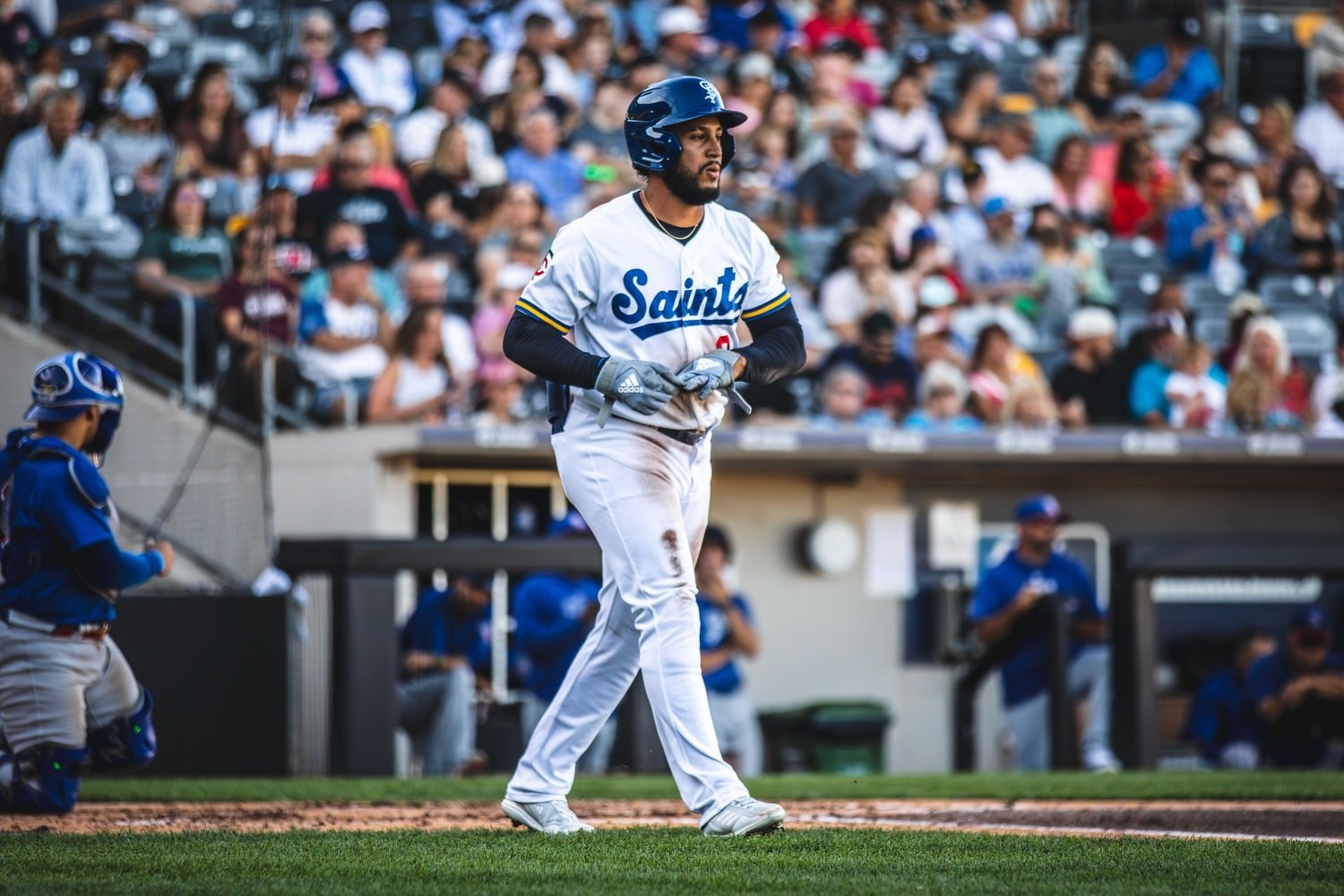 The Twins face a quandary this offseason: They need to get better offensively, but their available funds are limited if not non-existent. Even if the front office is unable to be active in making additions, however, there are still reasons for hope. Minnesota's offense can get a lot more effective under a new hitting coach with fuller seasons from Carlos Correa and Byron Buxton, as well as rebounds and improvements from returning young players. But there's another factor you might be overlooking in the Twins' short-term offensive outlook: Emmanuel Rodriguez. The meteoric young outfielder reached Triple-A at age 21 this year, and is considered one of the the highest-upside bats in all of the minors. The Twins might have a game-changer on their hands. Rising Despite Setbacks The story of Rodriguez's journey through the minors has followed a disturbingly familiar pattern: glimpses of absolutely brilliance, repeatedly disrupted by serious injuries. Rodriguez missed significant time in 2022 with a knee injury, 2023 with an ab injury, and 2024 with a thumb injury that he aggravated multiple times. This past season Rodriguez was limited to 47 games and 209 plate appearances. In spite of that, he slid into the top 30 on MLB Pipeline's list of top prospects, moving up to No. 29 after ranking No. 42 entering the season. It says a lot about what Rodriguez has been able to do when on the field. His .863 OPS in 2023 led all hitters in the High-A Midwest League. He then made the jump to Double-A in 2024 and slashed .298/.479/.621 in 167 plate appearances, drawing walks in 25% of his plate appearances with an astonishing .323 ISO (slugging minus average). This is a power/patience combo on a level that's virtually unheard of. Rodriguez was impressive enough in the small sample with Wichita that he was promoted to Triple-A at year's end. Assuming he gets past the thumb injury that plagued him, Emma will enter the 2025 season as one of the top impact bats in the upper levels of any team's system. How Does Rodriguez Fit In? Could Rodriguez compete for a spot on the Opening Day roster? It's not out of the question, especially if there's an injury somewhere in the outfield. But for the time being, the Twins seem to have lefty bats already locked into both corners, with Trevor Larnach and Matt Wallner coming off strong seasons. Those two are also seemingly in the plans for a while going forward, although Larnach is now into arbitration and of course designated hitter is also available. I could easily see Larnach being shopped in a trade, if not this offseason then certainly next. Right now would present an opportunity to sell relatively high, with Larnach having played his fullest and most productive season at age 27. He's slated to make around $2 million in arbitration next year and his cost will keep going up after that if he keeps playing well, so there's a financial angle here. But the main goal of such a move would be trading for value and opening up a clear path for Rodriguez. We're going to find out how much the Twins believe in Rodriguez as a center field. It's been almost his exclusive position in the minors, but there seems to be a sense he's more likely to end up in a corner at some point. If the Twins do trust Rodriguez in center, though, that would be a huge help. Buxton is now into his 30s and may be transitioning away from CF at some point, not to mention his perpetual risk of injury. The Twins have mostly been lacking for quality backup options behind Buxton but Rodriguez could fulfill that role in 2025 while potentially being groomed as his successor. Of course, the flip side is that the front office could seek to trade Rodriguez himself, especially with another superstar outfield prospect (Walker Jenkins) not far behind him in line. That's probably not the way a budget-conscious team will, or should, operate but it's a possibility worth considering. Rodriguez would boast tremendous value as a trade chip; I noted last offseason that his unique profile can make him a coveted asset in the eyes of other teams, but also the kind of talent Minnesota could live to regret giving up. He's only more in-demand after convincingly conquering Double-A. One way or another, Rodriguez figures to be a factor for the Twins, and sooner than later. He can get lost in the shuffle since he missed much of the past season while Jenkins further solidified his standing as one of the top prospects in baseball (ranked No. 2 by MLB Pipeline) while Brooks Lee broke into the majors, but Emma is a premier attraction in his own right and he's almost here.
 -
He's one of the best prospects in baseball and he's on the verge of big-league readiness. Emmanuel Rodriguez represents a very intriguing crux point in Minnesota's planning. Image courtesy of Rob Thompson / St. Paul Saints The Twins face a quandary this offseason: They need to get better offensively, but their available funds are limited if not non-existent. Even if the front office is unable to be active in making additions, however, there are still reasons for hope. Minnesota's offense can get a lot more effective under a new hitting coach with fuller seasons from Carlos Correa and Byron Buxton, as well as rebounds and improvements from returning young players. But there's another factor you might be overlooking in the Twins' short-term offensive outlook: Emmanuel Rodriguez. The meteoric young outfielder reached Triple-A at age 21 this year, and is considered one of the the highest-upside bats in all of the minors. The Twins might have a game-changer on their hands. Rising Despite Setbacks The story of Rodriguez's journey through the minors has followed a disturbingly familiar pattern: glimpses of absolutely brilliance, repeatedly disrupted by serious injuries. Rodriguez missed significant time in 2022 with a knee injury, 2023 with an ab injury, and 2024 with a thumb injury that he aggravated multiple times. This past season Rodriguez was limited to 47 games and 209 plate appearances. In spite of that, he slid into the top 30 on MLB Pipeline's list of top prospects, moving up to No. 29 after ranking No. 42 entering the season. It says a lot about what Rodriguez has been able to do when on the field. His .863 OPS in 2023 led all hitters in the High-A Midwest League. He then made the jump to Double-A in 2024 and slashed .298/.479/.621 in 167 plate appearances, drawing walks in 25% of his plate appearances with an astonishing .323 ISO (slugging minus average). This is a power/patience combo on a level that's virtually unheard of. Rodriguez was impressive enough in the small sample with Wichita that he was promoted to Triple-A at year's end. Assuming he gets past the thumb injury that plagued him, Emma will enter the 2025 season as one of the top impact bats in the upper levels of any team's system. How Does Rodriguez Fit In? Could Rodriguez compete for a spot on the Opening Day roster? It's not out of the question, especially if there's an injury somewhere in the outfield. But for the time being, the Twins seem to have lefty bats already locked into both corners, with Trevor Larnach and Matt Wallner coming off strong seasons. Those two are also seemingly in the plans for a while going forward, although Larnach is now into arbitration and of course designated hitter is also available. I could easily see Larnach being shopped in a trade, if not this offseason then certainly next. Right now would present an opportunity to sell relatively high, with Larnach having played his fullest and most productive season at age 27. He's slated to make around $2 million in arbitration next year and his cost will keep going up after that if he keeps playing well, so there's a financial angle here. But the main goal of such a move would be trading for value and opening up a clear path for Rodriguez. We're going to find out how much the Twins believe in Rodriguez as a center field. It's been almost his exclusive position in the minors, but there seems to be a sense he's more likely to end up in a corner at some point. If the Twins do trust Rodriguez in center, though, that would be a huge help. Buxton is now into his 30s and may be transitioning away from CF at some point, not to mention his perpetual risk of injury. The Twins have mostly been lacking for quality backup options behind Buxton but Rodriguez could fulfill that role in 2025 while potentially being groomed as his successor. Of course, the flip side is that the front office could seek to trade Rodriguez himself, especially with another superstar outfield prospect (Walker Jenkins) not far behind him in line. That's probably not the way a budget-conscious team will, or should, operate but it's a possibility worth considering. Rodriguez would boast tremendous value as a trade chip; I noted last offseason that his unique profile can make him a coveted asset in the eyes of other teams, but also the kind of talent Minnesota could live to regret giving up. He's only more in-demand after convincingly conquering Double-A. One way or another, Rodriguez figures to be a factor for the Twins, and sooner than later. He can get lost in the shuffle since he missed much of the past season while Jenkins further solidified his standing as one of the top prospects in baseball (ranked No. 2 by MLB Pipeline) while Brooks Lee broke into the majors, but Emma is a premier attraction in his own right and he's almost here. View full article
-
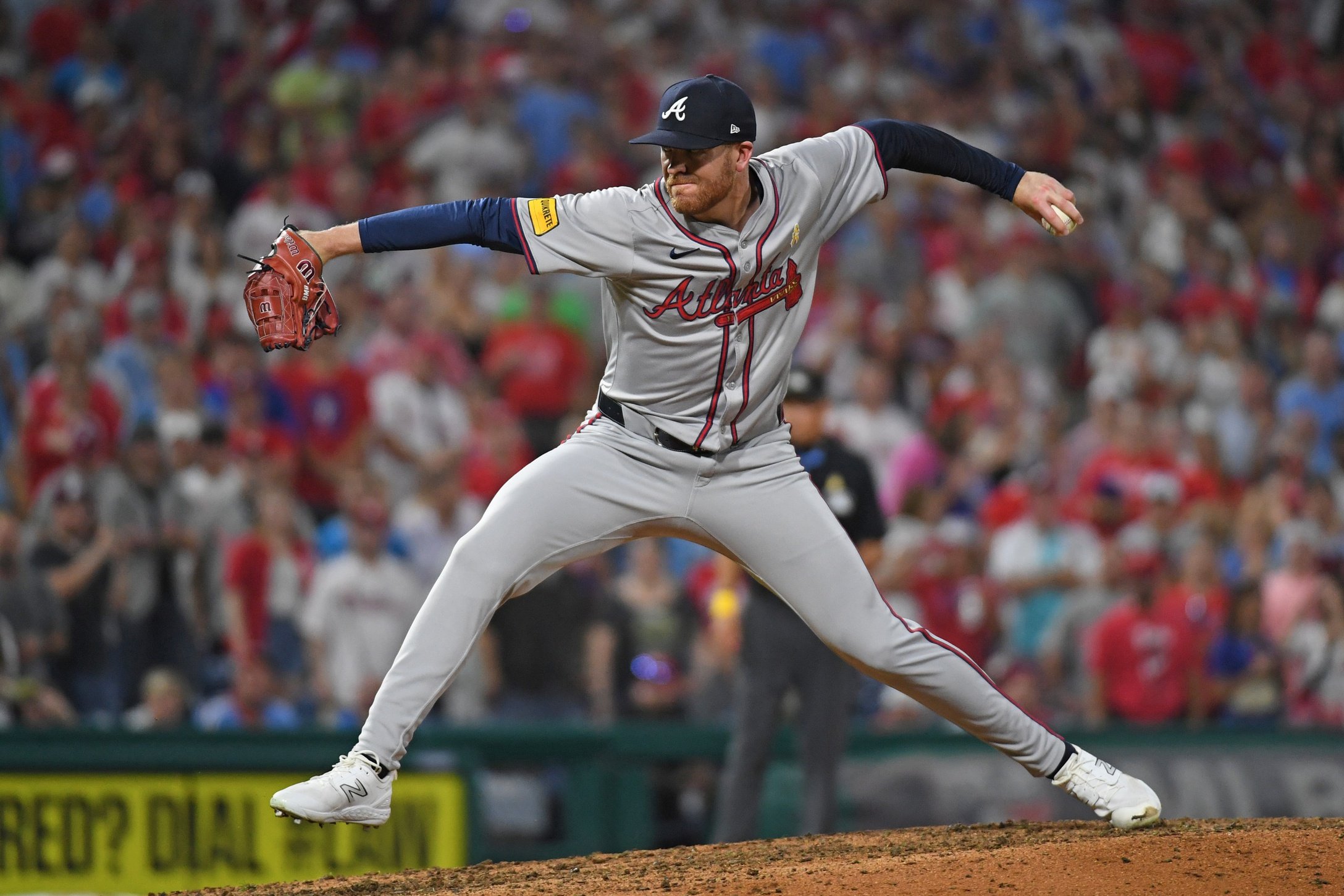 To me, one of the most perplexing contradictions of this Minnesota Twins team and the way they operate is the contrasting prioritization of platoon advantages, from a hitting and pitching perspective. We all know that Rocco Baldelli loves to stack his starting lineup with opposite-handed bats, and is starkly averse to letting lefty hitters face lefty relievers late in games. This is undoubtedly an organization edict as much as a personal philosophy. If the Twins brass wanted Baldelli to stop playing the percentages to such an extreme, he'd stop. Clearly there is a shared belief that lefty hitters shouldn't be facing opposing lefties in late in games. At the same time, the club shows little urgency when it comes to equipping their roster with quality left-handed arms that can provide them with this same advantage. The Twins didn't have a left-hander make a start all season long (save for one appearance from Steven Okert as opener). Their lefty relievers on the Opening Day roster were Okert, acquired for Nick Gordon in a low-wattage trade with Miami, and Kody Funderburk, a former non-prospect with 12 innings of major-league experience. Waiting in the wings was an injured Caleb Thielbar, who was certainly more of a safe bet than the other two, but also 37 and showing signs of decline. All of these pitchers struggled mightily in 2024. Despite being a clear need at the trade deadline, the front office did not add a left-handed reliever, rather choosing to go with right-hander Trevor Richards, who supposedly specialized in neutralizing LH bats with a changeup but in reality just wasn't good. The Twins found themselves so desperate for left-handed bullpen help late in the season that they acquired Cole Irvin off waivers and almost immediately started throwing him into crucial high-leverage situations (in which he floundered). It's time for the Twins to start practicing what they preach about platoon advantages, by bringing in a left-handed reliever who can actually be counted on to come through. In a division featuring the likes of Steven Kwan, Josh Naylor, Riley Greene and Kerry Carpenter, Baldelli needs better answers, especially since the team's minimal existing depth is drying up. Thielbar and Okert are gone, and Funderburk is back on the fringe. Yes, there are some intriguing names to watch internally: Brent Headrick, Connor Prielipp, Jovani Moran, and more. But there is zero doubt that lefty bullpen help must be high on the list of offseason priorities for the Twins front office. In a cursory look through the free agent market, here are some names that stand out to me (click to check out their Baseball Reference pages): Tanner Scott: The Marlins closer was a first-time All-Star in 2024 before being traded at the deadline to San Diego, where he assisted a playoff run. He'd be a massive impact addition to the bullpen but is almost certainly out of Minnesota's price range. Aroldis Chapman: Personally, not a fan, and he's not what you'd consider a lefty specialist. Still, he's worth mentioning as one of the top southpaws on the market, still striking out hitters at an elite rate and coming off a strong year in Pittsburgh. Aaron Bummer: If he does become a free agent (Atlanta has a team option), Bummer is my favorite target. He's got major upside that he's flashed often in the past. The former White Sox standout has a wipeout sweeper and we know how the Twins love those. Andrew Chafin: A familiar face from his days in Detroit. He's got one of the more consistent long-term track records you'll see from a relief pitcher, and is still getting it done in his mid-30s. Yet, his age and control issues might keep him relatively affordable. This one does seem to meet the sweet-spot criteria for the Twins. Caleb Ferguson: The 28-year-old has been tested under the bright lights, spending six seasons with the Dodgers before splitting 2024 between the Astros and Yankees. He's a proven performer, but coming off one of this worst seasons (4.64 ERA), which could suppress his price tag. Brooks Raley: If the Twins aren't looking to spend at the level of the above names, Raley might be a more realistic option. He underwent Tommy John surgery last May, so his readiness for the start of the season is in question, but Raley has a 3.42 ERA in five seasons since returning from a stint in Korea. Will Smith: Another possible buy-low target with some upside. Smith was long reputed as one of the top lefty relievers in the game, an All-Star in 2019, but he's struggled over the past couple seasons and was really bad in 2024. He'd be a project, but one with some real potential if the Twins feel they have reason to believe. Do any of these names interest you? Or would you be more inclined to rely on internal options and spend available resources elsewhere? Sound off in the comments.
- 36 comments
-
- 3
-

-
- caleb thielbar
- steven okert
- (and 1 more)
-
The Twins failed to take seriously their need for capable left-handed bullpen help this season, and paid for it. In a division full of threatening lefty bats, this confusing attitude needs to change, and quickly. Image courtesy of Eric Hartline-Imagn Images (Aaron Bummer) To me, one of the most perplexing contradictions of this Minnesota Twins team and the way they operate is the contrasting prioritization of platoon advantages, from a hitting and pitching perspective. We all know that Rocco Baldelli loves to stack his starting lineup with opposite-handed bats, and is starkly averse to letting lefty hitters face lefty relievers late in games. This is undoubtedly an organization edict as much as a personal philosophy. If the Twins brass wanted Baldelli to stop playing the percentages to such an extreme, he'd stop. Clearly there is a shared belief that lefty hitters shouldn't be facing opposing lefties in late in games. At the same time, the club shows little urgency when it comes to equipping their roster with quality left-handed arms that can provide them with this same advantage. The Twins didn't have a left-hander make a start all season long (save for one appearance from Steven Okert as opener). Their lefty relievers on the Opening Day roster were Okert, acquired for Nick Gordon in a low-wattage trade with Miami, and Kody Funderburk, a former non-prospect with 12 innings of major-league experience. Waiting in the wings was an injured Caleb Thielbar, who was certainly more of a safe bet than the other two, but also 37 and showing signs of decline. All of these pitchers struggled mightily in 2024. Despite being a clear need at the trade deadline, the front office did not add a left-handed reliever, rather choosing to go with right-hander Trevor Richards, who supposedly specialized in neutralizing LH bats with a changeup but in reality just wasn't good. The Twins found themselves so desperate for left-handed bullpen help late in the season that they acquired Cole Irvin off waivers and almost immediately started throwing him into crucial high-leverage situations (in which he floundered). It's time for the Twins to start practicing what they preach about platoon advantages, by bringing in a left-handed reliever who can actually be counted on to come through. In a division featuring the likes of Steven Kwan, Josh Naylor, Riley Greene and Kerry Carpenter, Baldelli needs better answers, especially since the team's minimal existing depth is drying up. Thielbar and Okert are gone, and Funderburk is back on the fringe. Yes, there are some intriguing names to watch internally: Brent Headrick, Connor Prielipp, Jovani Moran, and more. But there is zero doubt that lefty bullpen help must be high on the list of offseason priorities for the Twins front office. In a cursory look through the free agent market, here are some names that stand out to me (click to check out their Baseball Reference pages): Tanner Scott: The Marlins closer was a first-time All-Star in 2024 before being traded at the deadline to San Diego, where he assisted a playoff run. He'd be a massive impact addition to the bullpen but is almost certainly out of Minnesota's price range. Aroldis Chapman: Personally, not a fan, and he's not what you'd consider a lefty specialist. Still, he's worth mentioning as one of the top southpaws on the market, still striking out hitters at an elite rate and coming off a strong year in Pittsburgh. Aaron Bummer: If he does become a free agent (Atlanta has a team option), Bummer is my favorite target. He's got major upside that he's flashed often in the past. The former White Sox standout has a wipeout sweeper and we know how the Twins love those. Andrew Chafin: A familiar face from his days in Detroit. He's got one of the more consistent long-term track records you'll see from a relief pitcher, and is still getting it done in his mid-30s. Yet, his age and control issues might keep him relatively affordable. This one does seem to meet the sweet-spot criteria for the Twins. Caleb Ferguson: The 28-year-old has been tested under the bright lights, spending six seasons with the Dodgers before splitting 2024 between the Astros and Yankees. He's a proven performer, but coming off one of this worst seasons (4.64 ERA), which could suppress his price tag. Brooks Raley: If the Twins aren't looking to spend at the level of the above names, Raley might be a more realistic option. He underwent Tommy John surgery last May, so his readiness for the start of the season is in question, but Raley has a 3.42 ERA in five seasons since returning from a stint in Korea. Will Smith: Another possible buy-low target with some upside. Smith was long reputed as one of the top lefty relievers in the game, an All-Star in 2019, but he's struggled over the past couple seasons and was really bad in 2024. He'd be a project, but one with some real potential if the Twins feel they have reason to believe. Do any of these names interest you? Or would you be more inclined to rely on internal options and spend available resources elsewhere? Sound off in the comments. View full article
-
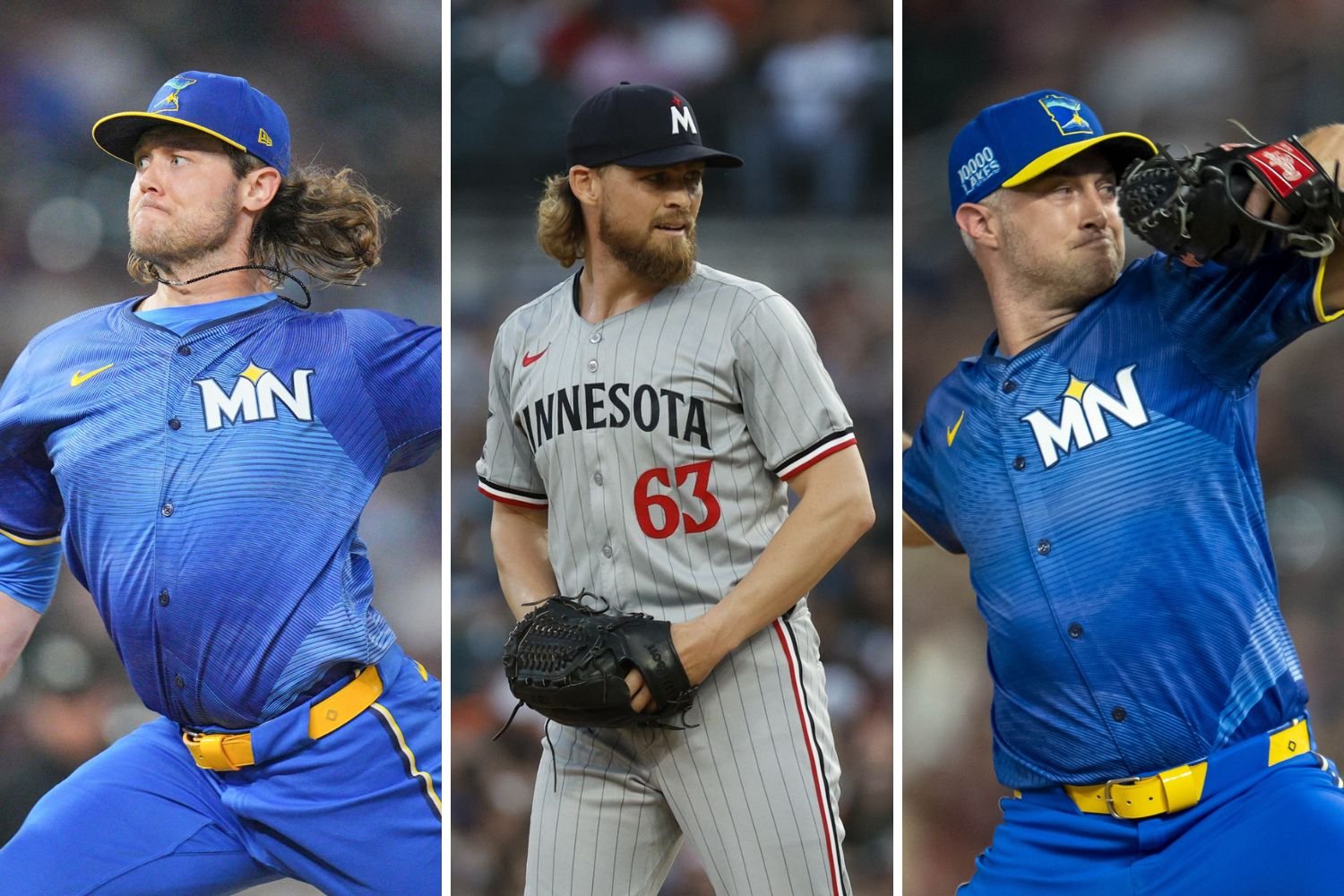 I want to start by saying that the Twins front office under Derek Falvey has shown an impressive ability to identify and develop quality relief talent internally, and even from other organizations. They drafted Griffin Jax and Cole Sands, then turned them from non-prospects into high-end late-inning relievers. They acquired Jhoan Durán as an unrefined hard-throwing starter from Arizona's system and turned him into a top closer. Even Brock Stewart, despite his health woes, could be mentioned among this collection of developmental successes. Clearly, Falvey and the Twins have some idea of what it takes to create an effective relief pitcher. Which makes their astonishingly bad track record in acquiring established ones so difficult to comprehend. Signing or trading for relievers is an inherently uphill battle — there are so many variables and so much volatility at play with these sample sizes and roles — but even through that lens, the consistent level of failure we've seen with high-stakes relief pitcher acquisitions is pretty extraordinary. In 2024, the Twins signed two relief pitchers to major-league deals (Jay Jackson, Josh Staumont) and acquired three in low-wattage trades (Steven Okert, Justin Topa, Trevor Richards). Four of those relievers were so bad that they got cut midseason, including Richards less than a month after being added. The other, Topa, threw two total innings in garbage time. The Twins were more active on the bullpen front than anywhere else last season, and out of all these moves, they didn't come up with one pitcher who was so much as usable and non-disastrous. The toll this took on the 2024 team is nauseating Consider this: The Minnesota Twins ranked second in the American League this year in relief FIP (3.65) and fWAR (5.9). They trailed only the historically great Cleveland bullpen in both categories. Yes, you read that right. They did so in SPITE of the above five players collectively contributing negative-0.2 fWAR. And we all saw in real-time how this progressive erosion of planned bullpen depth contributed to a complete unraveling toward the end of the season, culminating with The Cole Irvin Game. In attempting to diagnose what went wrong with this batch of pick-ups, a simple explanation comes to mind: you get what you pay for. The Twins invested very little in money or trade capital to acquire these arms, who were clearly not in high demand. But in tracing back the front office's long history of failed relief acquisitions, the story isn't quite so simple. They've tried just about everything and come up empty. To try and figure out a way forward, let's take a quick look backward. It's easy to forget now that one of Falvey's most assertive and eye-opening moves at the helm was to make an unprecedented investment in free agent relief help. In January of 2018, coming off Falvey and Thad Levine's first full season in charge, the Twins signed Addison Reed to a two-year, $16.75 million contract. It was the first multi-year guaranteed contract Minnesota had ever given an FA reliever. Reed had all the qualities of a safe bet. Excellent track record of effectiveness and durability, including plenty of time as a closer. Postseason experience. Still under 30. Despite all of that he flopped, burning out after 56 mediocre innings and never pitching again in the big leagues. It was an experience that seemingly soured Falvey's front office on targeting high-priced relief talent in free agency. So they tried other things, but couldn't manage to avoid landmines everywhere they stepped. In 2019 they brought in Blake Parker as a waiver claim from the Angels and gave him an Opening Day job. Kaboom. That deadline they traded for a seemingly capable reliever in Sam Dyson. Kaboom. In 2021 they went back to the free agent well, albeit at a lower scale, with the signing of Alex Colome. Kaboom. In 2022 they traded for Emilio Pagan, hoping to turn around his run of home-run struggles. Kaboom. The front office upped its ambition at the deadline, trading for an All-Star closer in Jorge Lopez. Kaboom. Under Falvey, the Twins have taken plenty of high-risk and low-risk gambles, but the outcome has almost always been the same, save for a modest success here and there like Sergio Romo or Tyler Clippard. So in a sense it's hard to blame the front office for taking fliers on a bunch of inexpensive wild-cards this year with hopes that at least a couple would pan out. But it didn't work. In fact it blew up in their faces magnificently, sabotaging the highly effective bullpen core that they'd put in place through what they do well. So, what's the path forward? Even with the limited resources at hand, I don't think the Twins can afford to take the same bare-bones approach in the coming offseason. Whatever route they go, it's difficult to feel confident based on past experiences, but with the pressure heightened following the late-season collapse, maybe now they'll finally show they can learn from their mistakes.
- 54 comments
-
- 7
-
-
- trevor richards
- josh staumont
- (and 3 more)
-
You can't fault their creativity or willingness to try different things. But no matter how they go about it, the front office's attempts to secure veteran, trustworthy relief help have repeatedly fallen flat. Can they figure out a path to a different outcome this offseason? Image courtesy of Brad Rempel, Brian Bradshaw Sevald, Jesse Johnson-Imagn Images I want to start by saying that the Twins front office under Derek Falvey has shown an impressive ability to identify and develop quality relief talent internally, and even from other organizations. They drafted Griffin Jax and Cole Sands, then turned them from non-prospects into high-end late-inning relievers. They acquired Jhoan Durán as an unrefined hard-throwing starter from Arizona's system and turned him into a top closer. Even Brock Stewart, despite his health woes, could be mentioned among this collection of developmental successes. Clearly, Falvey and the Twins have some idea of what it takes to create an effective relief pitcher. Which makes their astonishingly bad track record in acquiring established ones so difficult to comprehend. Signing or trading for relievers is an inherently uphill battle — there are so many variables and so much volatility at play with these sample sizes and roles — but even through that lens, the consistent level of failure we've seen with high-stakes relief pitcher acquisitions is pretty extraordinary. In 2024, the Twins signed two relief pitchers to major-league deals (Jay Jackson, Josh Staumont) and acquired three in low-wattage trades (Steven Okert, Justin Topa, Trevor Richards). Four of those relievers were so bad that they got cut midseason, including Richards less than a month after being added. The other, Topa, threw two total innings in garbage time. The Twins were more active on the bullpen front than anywhere else last season, and out of all these moves, they didn't come up with one pitcher who was so much as usable and non-disastrous. The toll this took on the 2024 team is nauseating Consider this: The Minnesota Twins ranked second in the American League this year in relief FIP (3.65) and fWAR (5.9). They trailed only the historically great Cleveland bullpen in both categories. Yes, you read that right. They did so in SPITE of the above five players collectively contributing negative-0.2 fWAR. And we all saw in real-time how this progressive erosion of planned bullpen depth contributed to a complete unraveling toward the end of the season, culminating with The Cole Irvin Game. In attempting to diagnose what went wrong with this batch of pick-ups, a simple explanation comes to mind: you get what you pay for. The Twins invested very little in money or trade capital to acquire these arms, who were clearly not in high demand. But in tracing back the front office's long history of failed relief acquisitions, the story isn't quite so simple. They've tried just about everything and come up empty. To try and figure out a way forward, let's take a quick look backward. It's easy to forget now that one of Falvey's most assertive and eye-opening moves at the helm was to make an unprecedented investment in free agent relief help. In January of 2018, coming off Falvey and Thad Levine's first full season in charge, the Twins signed Addison Reed to a two-year, $16.75 million contract. It was the first multi-year guaranteed contract Minnesota had ever given an FA reliever. Reed had all the qualities of a safe bet. Excellent track record of effectiveness and durability, including plenty of time as a closer. Postseason experience. Still under 30. Despite all of that he flopped, burning out after 56 mediocre innings and never pitching again in the big leagues. It was an experience that seemingly soured Falvey's front office on targeting high-priced relief talent in free agency. So they tried other things, but couldn't manage to avoid landmines everywhere they stepped. In 2019 they brought in Blake Parker as a waiver claim from the Angels and gave him an Opening Day job. Kaboom. That deadline they traded for a seemingly capable reliever in Sam Dyson. Kaboom. In 2021 they went back to the free agent well, albeit at a lower scale, with the signing of Alex Colome. Kaboom. In 2022 they traded for Emilio Pagan, hoping to turn around his run of home-run struggles. Kaboom. The front office upped its ambition at the deadline, trading for an All-Star closer in Jorge Lopez. Kaboom. Under Falvey, the Twins have taken plenty of high-risk and low-risk gambles, but the outcome has almost always been the same, save for a modest success here and there like Sergio Romo or Tyler Clippard. So in a sense it's hard to blame the front office for taking fliers on a bunch of inexpensive wild-cards this year with hopes that at least a couple would pan out. But it didn't work. In fact it blew up in their faces magnificently, sabotaging the highly effective bullpen core that they'd put in place through what they do well. So, what's the path forward? Even with the limited resources at hand, I don't think the Twins can afford to take the same bare-bones approach in the coming offseason. Whatever route they go, it's difficult to feel confident based on past experiences, but with the pressure heightened following the late-season collapse, maybe now they'll finally show they can learn from their mistakes. View full article
-
One Key Offseason Question the Minnesota Twins Face at Each Position
Nick Nelson posted an article in Twins
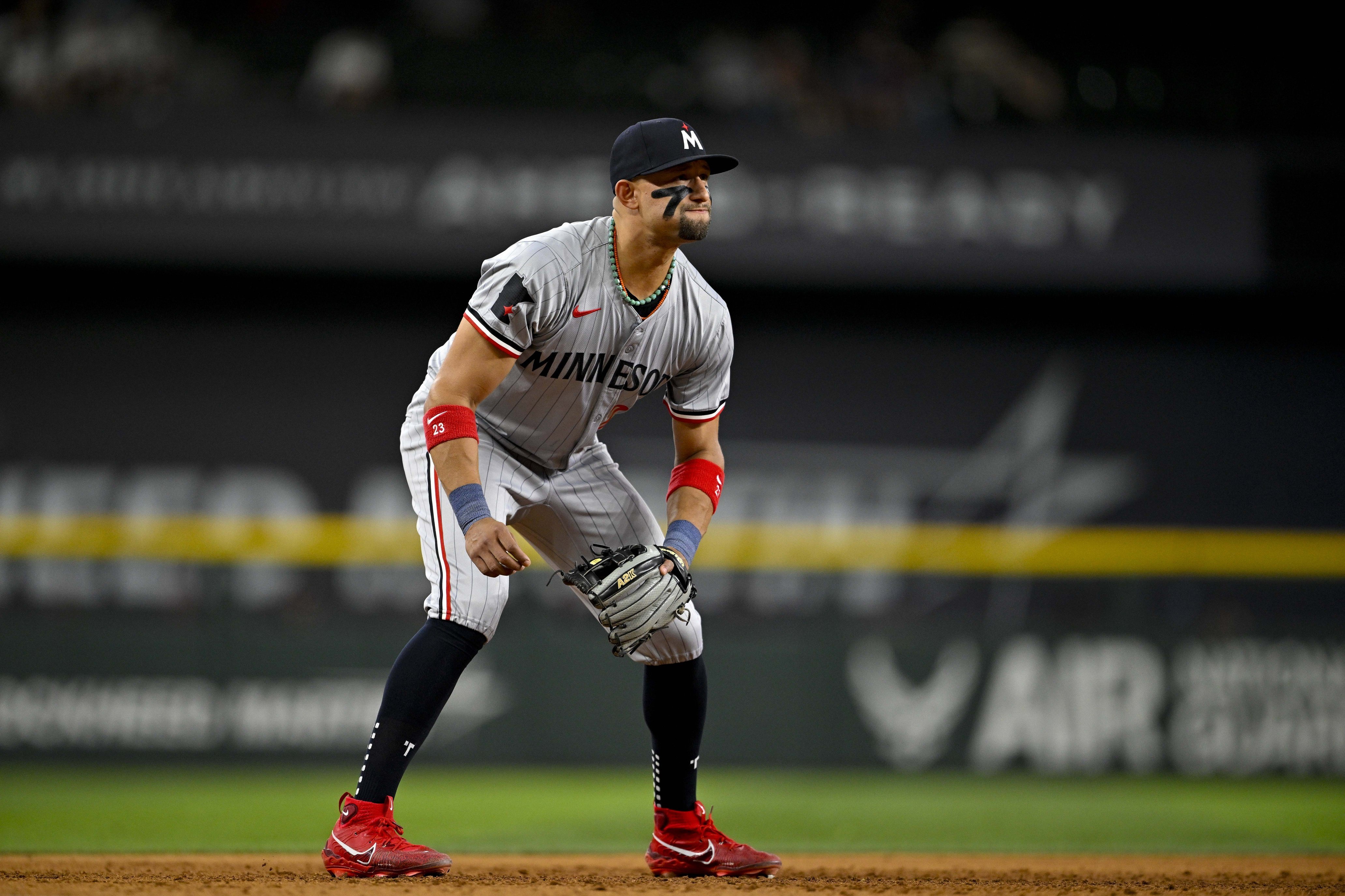 From mapping out their future around the infield to finding payroll relief wherever possible, there are important decisions to be made by the front office up and down the Twins roster. Where can they add? Where can they subtract? Who do they trust? What kinds of shakeups are on the table, within reason? Let's take a tour through each position by breaking down a critical question the Twins will be tasked with answering at each over the coming months. CATCHER: Can Christian Vázquez's contract be moved? In looking for opportunities to trim payroll as the Twins bump against their ownership-imposed spending cap, one of the most obvious candidates to be moved is Vázquez. Entering the final season of his three-year, $30 million contract, Vázquez is a luxury at best: a 34-year-old part-time catcher who has slashed .222/.265/.322 in his first two seasons with Minnesota. The general consensus seems to be that Vázquez's $10 million is immovable, at least in full. But on an episode the Gleeman and the Geek podcast last week, Star Tribune beat writer Phil Miller challenged this presumption, saying that in his opinion the Twins could likely find a taker for Vázquez if they so desire. Miller's point was that folks might be underestimating the appeal of Vázquez's high-quality defense and strong rep, at a position where paltry offensive production is the standard. Phil may be right. If so, the Twins would be hard-pressed not to heavily explore trading Vázquez, which would free up a decent amount of spending flexibility to address other needs. Like, say, first base. FIRST BASE: Can the Twins afford to give up on Alex Kirilloff? It's sneakily one of the most consequential questions of the offseason. With Carlos Santana becoming a free agent, first base is once again wide open for the Twins. They could direct their limited funds toward trying to re-sign Santana, or another player from the free agent or trade pool. Or, they could bring back Kirilloff for an estimated $1.8 million in arbitration and give him another shot to lock down the position. Understandably it's not the most enticing proposition on the surface coming off a really rough and frustrating year, but if the Twins have any confidence in his health going forward, it's hard to argue against his upside for the price. Should the team decide to move on from Kirilloff, via either non-tender or trade, they'll have a challenge in front of them when it comes to solving first base. Re-upping with a 39-year-old Santana is not likely to end well. And merely finding the funds to sign him or a comparable free-agent option could prove tricky. SECOND BASE: Where does Edouard Julien go from here? Following a brutal sophomore season, is Julien destined to start his age-26 season back in Triple-A? Or will the Twins give him a chance to win back the starting job in spring training? They certainly can't write off Julien, even after a hugely uninspiring sophomore campaign. He's too talented, and he's been too consistently productive up until 2024. Alas, while they can't write him off, the Twins also can't write him in. There needs to be a Plan A (and maybe even a Plan B) in front of Julien heading into the season. Right? It could make sense to go with Willi Castro or Brooks Lee, since either one would be capable of filling a different role if (when?) Julien earns his way back. SHORTSTOP: Who backs up the hobbled team MVP? It was encouraging to see Correa return to the field at the end of the season, playing well despite being clearly less than 100 percent. Coming off back-to-back seasons that were massively impacted by plantar fasciitis afflicting both feet, Correa's health will inevitably be a question mark at arguably the most important position on the field. So, who's his primary backup? Castro was the top choice in 2024, starting 51 games at short in Correa's absence, although it's not clear the Twins love his defense there. Lee is also an option, having made a couple dozen starts as a rookie, but he may already be starting elsewhere in the infield. THIRD BASE: Do the Twins trust Royce Lewis's glove at third? His drop-off at the plate was obviously a concern, but shaky defense at third base was another one that cropped up for Lewis during his disappointing 2024 season. His throws were frequently errant, even on routine plays. He just didn't really look like a natural at the hot corner, which may have played a role in the Twins (controversially) giving him late-season reps at second base. It seems like a matter of time until Lewis ends up at another position, possibly designated hitter, with Lee looking like the definition of a natural at third. Maybe the Twins aren't quite ready to take that step yet, however, since Lee's already-proven ability to handle second and short are handy at the moment. José Miranda looms as another mysterious factor at third base. LEFT FIELD: Can the Twins find a quality RH platoon bat? With Kyle Farmer and Manuel Margot departing as free agents, right-handed bats are going to be a straightforward need for the Twins front office. It shouldn't be difficult to upgrade over what those two provided, even with limited resources at available. A righty-swinging left fielder would be a logical addition, to pair with Trevor Larnach in a rotation while ideally providing some depth elsewhere. A buy-low candidate like free agent Mitch Haniger, or a trade acquisition, would make sense to address this need. CENTER FIELD: Can the Twins find a true center fielder aside from Byron Buxton? After making zero starts in center field in 2023, Buxton led the team in CF starts this year with 87. The other players that made starts: Austin Martin (33), Castro (24), Margot (14), DaShawn Keirsey Jr. (4). Of those four, I would only describe Keirsey as a "true center fielder," as opposed to a capable in-a-pinch guy whose best position is elsewhere. Seems like an important thing to get squared away during the offseason, especially since Buxton's days in center field may be numbered. Unless they trust Martin to make major strides, or they plan to keep Keirsey in their plans, the Twins have a center fielder near the top of their shopping list for a third straight offseason. Hopefully the player they land on is more Michael A. Taylor and less Manuel Margot. RIGHT FIELD: Is Matt Wallner ready to pull it all together? With so many positions in flux, right field is an exception to the norm for Minnesota. Max Kepler is on his way out, and Wallner was the Twins' best player in the second half. He's built to play this position, so right field figures to belong to him for the foreseeable future. Of course, Wallner was also riding pretty high last year around this time, firmly placing himself in the team's plans before falling flat in spring training and the early regular season. I'd like to think he'll have a much longer leash this time around after proving himself assertively in the second half, but the slugger needs to show he can put together a full high-quality season in the big leagues. STARTING PITCHER: Will one of Minnesota's top three starters be moved? If the Twins want to shake up the roster in a meaningful way, trading one of their top three starters strikes me as the most practical way to do so. The Twins could get back significant talent in return for Pablo López, Bailey Ober or Joe Ryan, while also unlocking various levels of current or future payroll relief. Theoretically their young pitching depth, a strength of the system, could help backfill the loss. It would be a bold and risky gambit. But the choice is between making disruptive moves like this or essentially running it back. RELIEF PITCHER: What lessons did the front office learn from its bullpen-building blunders? Identifying and acquiring good relief pitchers is hard. I do empathize with the difficulty of the undertaking, trying to predict performance in volatile roles over short samples. Still, the front office's whiff rate on bullpen acquisitions over the past year has been so extraordinarily high that it's hard to believe they are not doing something systematically wrong. You can't necessarily predict injuries like those that struck Justin Topa and Daniel Duarte, but what we saw play out again and again – with Jay Jackson, Steven Okert, Josh Staumont, Trevor Richards – were flawed evaluations with costly ramifications. I get that these moves were often justifiable at the time. On paper Minnesota's bullpen was projected preseason as the best in the league! But something went terribly wrong and I can only hope the painful experience proves productive in terms of applied learnings. The good news, on the bullpen front, is that the Twins seem to have a pretty solid core in Jhoan Durán, Griffin Jax, Cole Sands, Louie Varland and a hopefully healthier Brock Stewart. They just need to make non-disastrous moves at the fringes. What are the biggest questions in your mind as we look ahead to the coming Twins offseason? Share them in the comments!
- 56 comments
-
- 5
-
-

-
- christian vazquez
- carlos correa
- (and 1 more)
-
The Twins and their front office face uncertainty across the roster as they look ahead to the offseason soon to get underway. Here's one question they need to answer at each position. Image courtesy of Jerome Miron-Imagn Images From mapping out their future around the infield to finding payroll relief wherever possible, there are important decisions to be made by the front office up and down the Twins roster. Where can they add? Where can they subtract? Who do they trust? What kinds of shakeups are on the table, within reason? Let's take a tour through each position by breaking down a critical question the Twins will be tasked with answering at each over the coming months. CATCHER: Can Christian Vázquez's contract be moved? In looking for opportunities to trim payroll as the Twins bump against their ownership-imposed spending cap, one of the most obvious candidates to be moved is Vázquez. Entering the final season of his three-year, $30 million contract, Vázquez is a luxury at best: a 34-year-old part-time catcher who has slashed .222/.265/.322 in his first two seasons with Minnesota. The general consensus seems to be that Vázquez's $10 million is immovable, at least in full. But on an episode the Gleeman and the Geek podcast last week, Star Tribune beat writer Phil Miller challenged this presumption, saying that in his opinion the Twins could likely find a taker for Vázquez if they so desire. Miller's point was that folks might be underestimating the appeal of Vázquez's high-quality defense and strong rep, at a position where paltry offensive production is the standard. Phil may be right. If so, the Twins would be hard-pressed not to heavily explore trading Vázquez, which would free up a decent amount of spending flexibility to address other needs. Like, say, first base. FIRST BASE: Can the Twins afford to give up on Alex Kirilloff? It's sneakily one of the most consequential questions of the offseason. With Carlos Santana becoming a free agent, first base is once again wide open for the Twins. They could direct their limited funds toward trying to re-sign Santana, or another player from the free agent or trade pool. Or, they could bring back Kirilloff for an estimated $1.8 million in arbitration and give him another shot to lock down the position. Understandably it's not the most enticing proposition on the surface coming off a really rough and frustrating year, but if the Twins have any confidence in his health going forward, it's hard to argue against his upside for the price. Should the team decide to move on from Kirilloff, via either non-tender or trade, they'll have a challenge in front of them when it comes to solving first base. Re-upping with a 39-year-old Santana is not likely to end well. And merely finding the funds to sign him or a comparable free-agent option could prove tricky. SECOND BASE: Where does Edouard Julien go from here? Following a brutal sophomore season, is Julien destined to start his age-26 season back in Triple-A? Or will the Twins give him a chance to win back the starting job in spring training? They certainly can't write off Julien, even after a hugely uninspiring sophomore campaign. He's too talented, and he's been too consistently productive up until 2024. Alas, while they can't write him off, the Twins also can't write him in. There needs to be a Plan A (and maybe even a Plan B) in front of Julien heading into the season. Right? It could make sense to go with Willi Castro or Brooks Lee, since either one would be capable of filling a different role if (when?) Julien earns his way back. SHORTSTOP: Who backs up the hobbled team MVP? It was encouraging to see Correa return to the field at the end of the season, playing well despite being clearly less than 100 percent. Coming off back-to-back seasons that were massively impacted by plantar fasciitis afflicting both feet, Correa's health will inevitably be a question mark at arguably the most important position on the field. So, who's his primary backup? Castro was the top choice in 2024, starting 51 games at short in Correa's absence, although it's not clear the Twins love his defense there. Lee is also an option, having made a couple dozen starts as a rookie, but he may already be starting elsewhere in the infield. THIRD BASE: Do the Twins trust Royce Lewis's glove at third? His drop-off at the plate was obviously a concern, but shaky defense at third base was another one that cropped up for Lewis during his disappointing 2024 season. His throws were frequently errant, even on routine plays. He just didn't really look like a natural at the hot corner, which may have played a role in the Twins (controversially) giving him late-season reps at second base. It seems like a matter of time until Lewis ends up at another position, possibly designated hitter, with Lee looking like the definition of a natural at third. Maybe the Twins aren't quite ready to take that step yet, however, since Lee's already-proven ability to handle second and short are handy at the moment. José Miranda looms as another mysterious factor at third base. LEFT FIELD: Can the Twins find a quality RH platoon bat? With Kyle Farmer and Manuel Margot departing as free agents, right-handed bats are going to be a straightforward need for the Twins front office. It shouldn't be difficult to upgrade over what those two provided, even with limited resources at available. A righty-swinging left fielder would be a logical addition, to pair with Trevor Larnach in a rotation while ideally providing some depth elsewhere. A buy-low candidate like free agent Mitch Haniger, or a trade acquisition, would make sense to address this need. CENTER FIELD: Can the Twins find a true center fielder aside from Byron Buxton? After making zero starts in center field in 2023, Buxton led the team in CF starts this year with 87. The other players that made starts: Austin Martin (33), Castro (24), Margot (14), DaShawn Keirsey Jr. (4). Of those four, I would only describe Keirsey as a "true center fielder," as opposed to a capable in-a-pinch guy whose best position is elsewhere. Seems like an important thing to get squared away during the offseason, especially since Buxton's days in center field may be numbered. Unless they trust Martin to make major strides, or they plan to keep Keirsey in their plans, the Twins have a center fielder near the top of their shopping list for a third straight offseason. Hopefully the player they land on is more Michael A. Taylor and less Manuel Margot. RIGHT FIELD: Is Matt Wallner ready to pull it all together? With so many positions in flux, right field is an exception to the norm for Minnesota. Max Kepler is on his way out, and Wallner was the Twins' best player in the second half. He's built to play this position, so right field figures to belong to him for the foreseeable future. Of course, Wallner was also riding pretty high last year around this time, firmly placing himself in the team's plans before falling flat in spring training and the early regular season. I'd like to think he'll have a much longer leash this time around after proving himself assertively in the second half, but the slugger needs to show he can put together a full high-quality season in the big leagues. STARTING PITCHER: Will one of Minnesota's top three starters be moved? If the Twins want to shake up the roster in a meaningful way, trading one of their top three starters strikes me as the most practical way to do so. The Twins could get back significant talent in return for Pablo López, Bailey Ober or Joe Ryan, while also unlocking various levels of current or future payroll relief. Theoretically their young pitching depth, a strength of the system, could help backfill the loss. It would be a bold and risky gambit. But the choice is between making disruptive moves like this or essentially running it back. RELIEF PITCHER: What lessons did the front office learn from its bullpen-building blunders? Identifying and acquiring good relief pitchers is hard. I do empathize with the difficulty of the undertaking, trying to predict performance in volatile roles over short samples. Still, the front office's whiff rate on bullpen acquisitions over the past year has been so extraordinarily high that it's hard to believe they are not doing something systematically wrong. You can't necessarily predict injuries like those that struck Justin Topa and Daniel Duarte, but what we saw play out again and again – with Jay Jackson, Steven Okert, Josh Staumont, Trevor Richards – were flawed evaluations with costly ramifications. I get that these moves were often justifiable at the time. On paper Minnesota's bullpen was projected preseason as the best in the league! But something went terribly wrong and I can only hope the painful experience proves productive in terms of applied learnings. The good news, on the bullpen front, is that the Twins seem to have a pretty solid core in Jhoan Durán, Griffin Jax, Cole Sands, Louie Varland and a hopefully healthier Brock Stewart. They just need to make non-disastrous moves at the fringes. What are the biggest questions in your mind as we look ahead to the coming Twins offseason? Share them in the comments! View full article
-
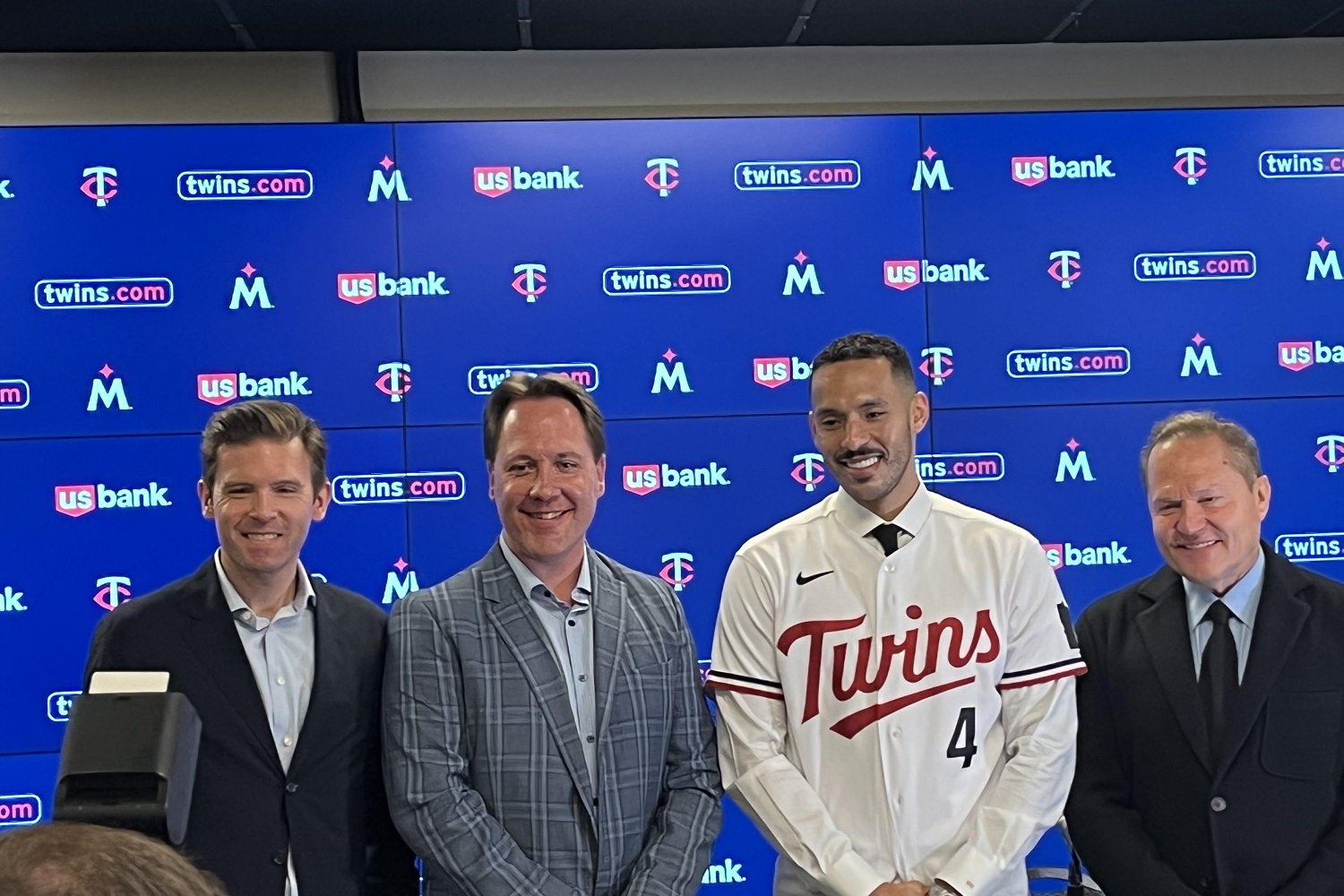 To say the Pohlad family went out of their comfort zone when they signed Carlos Correa to a $200 million contract in January of 2023 would be an understatement. It was the largest free-agent contract they'd ever signed by a margin of more than $100 million. Two prior contract agreements elsewhere had to fall through to even bring Correa into the range of remote feasibility, but when the opportunity to land a generational talent was in front of them, the Twins took it. The Pohlads stepped up. I commended them for doing so, just as I did two years earlier when they did what it took to lock up Byron Buxton. I continue to commend it. The Correa contract wasn't just a big deal by Twins standards; it was a big deal period. One of the 30 largest contracts ever handed out by a major-league team, a list dominated by large-market powerhouses. The Pohlads went into that historic agreement with eyes open. They knew how it would impact their payroll over the following seven years. They had to have some understanding at the time of the revenue uncertainty to come, albeit maybe not the full extent of it. Their message was nonetheless clear and assertive. “I think it's great for the organization, great for the fans," said Joe Pohlad, celebrating his signature move as newly-appointed ownership figurehead. "And hopefully what it reiterates to the fan base is that our commitment to winning." It did, at the time. Looking back two years later, one question that comes to mind. What was the point? While it would be a stretch to say Correa's contract has gone entirely to plan over the first two seasons, it's been far from a disaster. In the first year, despite his struggles due to a foot injury, Correa helped the Twins advance in the playoffs for the first time in almost 20 years. In the second year, he missed 76 games with another foot injury, but when on the field he played at a legitimate MVP-caliber level. While his multiple bouts with plantar fasciitis have been concerning, he did come back productively at year's end, inspiring hope that he can rebound physically in 2025. No, he hasn't been exactly what you'd hope for as a $70 million player between 2023-24, but Correa has been FAR from a Javier Baez-level disaster where you basically just have to write off the contract as a sunk cost and try to succeed in spite of it. He remains a viable championship building block as he enters his 30s, still in the heart of his prime. And yet, one year after signing Correa, the Twins stripped down their payroll around him, sabotaging a playoff-caliber squad that unraveled in the shortstop's absence. Correa was deprived of a chance to deliver more postseason heroics, and as we look ahead to a reshaped competitive landscape in the Central next year, ownership seems inclined to follow the same inexplicable path. There have been indications that they won't further reduce spending after slashing payroll by $30 million last offseason, but even if true, that still leaves the Twins and their front office in a precarious position as they attempt to retool and rebound following their historic collapse. This is where I just sort of get lost in trying to grasp the logic and mindset behind what's happening. Look, if finances and the bottom line are the guiding factors for the Pohlads, I understand it. I don't agree with it, but I understand. If that's the case, though, then why the hell did they make such a bold statement to the contrary, both literally and figuratively? Why sign Correa, or Buxton or Pablo Lopez for that matter? The club now has $70 million in guaranteed money tied up in those three for each of the next three years. And they are worthy foundational building blocks! Now we're suddenly going to decide to skimp on the rest of the construction? The Minnesota Twins managing to end up with Carlos Correa was one of the most unlikely free-agent outcomes we've ever seen. It created a unique opportunity for this franchise to truly push behind one of the most celebrated performers in the league. His age-30 season lies ahead and he's shown that if healthy he can be exactly who they thought he was. In two or three years, we may not feel as confident in that. Spending an extra $10-20 million this offseason would be pretty insignificant relative to the investment they've already made in Correa. But it could have an outsized effect on getting the most from that investment by supplementing the roster around him rather than dismantling it. If you're not willing to take that modest step toward actualizing the goals set forth by that monumental signing, then what was the point of it to begin with?
 -
If they're not going to make a push now, at this moment, then why did the Twins bother signing Carlos Correa to the biggest contract in franchise history? To say the Pohlad family went out of their comfort zone when they signed Carlos Correa to a $200 million contract in January of 2023 would be an understatement. It was the largest free-agent contract they'd ever signed by a margin of more than $100 million. Two prior contract agreements elsewhere had to fall through to even bring Correa into the range of remote feasibility, but when the opportunity to land a generational talent was in front of them, the Twins took it. The Pohlads stepped up. I commended them for doing so, just as I did two years earlier when they did what it took to lock up Byron Buxton. I continue to commend it. The Correa contract wasn't just a big deal by Twins standards; it was a big deal period. One of the 30 largest contracts ever handed out by a major-league team, a list dominated by large-market powerhouses. The Pohlads went into that historic agreement with eyes open. They knew how it would impact their payroll over the following seven years. They had to have some understanding at the time of the revenue uncertainty to come, albeit maybe not the full extent of it. Their message was nonetheless clear and assertive. “I think it's great for the organization, great for the fans," said Joe Pohlad, celebrating his signature move as newly-appointed ownership figurehead. "And hopefully what it reiterates to the fan base is that our commitment to winning." It did, at the time. Looking back two years later, one question that comes to mind. What was the point? While it would be a stretch to say Correa's contract has gone entirely to plan over the first two seasons, it's been far from a disaster. In the first year, despite his struggles due to a foot injury, Correa helped the Twins advance in the playoffs for the first time in almost 20 years. In the second year, he missed 76 games with another foot injury, but when on the field he played at a legitimate MVP-caliber level. While his multiple bouts with plantar fasciitis have been concerning, he did come back productively at year's end, inspiring hope that he can rebound physically in 2025. No, he hasn't been exactly what you'd hope for as a $70 million player between 2023-24, but Correa has been FAR from a Javier Baez-level disaster where you basically just have to write off the contract as a sunk cost and try to succeed in spite of it. He remains a viable championship building block as he enters his 30s, still in the heart of his prime. And yet, one year after signing Correa, the Twins stripped down their payroll around him, sabotaging a playoff-caliber squad that unraveled in the shortstop's absence. Correa was deprived of a chance to deliver more postseason heroics, and as we look ahead to a reshaped competitive landscape in the Central next year, ownership seems inclined to follow the same inexplicable path. There have been indications that they won't further reduce spending after slashing payroll by $30 million last offseason, but even if true, that still leaves the Twins and their front office in a precarious position as they attempt to retool and rebound following their historic collapse. This is where I just sort of get lost in trying to grasp the logic and mindset behind what's happening. Look, if finances and the bottom line are the guiding factors for the Pohlads, I understand it. I don't agree with it, but I understand. If that's the case, though, then why the hell did they make such a bold statement to the contrary, both literally and figuratively? Why sign Correa, or Buxton or Pablo Lopez for that matter? The club now has $70 million in guaranteed money tied up in those three for each of the next three years. And they are worthy foundational building blocks! Now we're suddenly going to decide to skimp on the rest of the construction? The Minnesota Twins managing to end up with Carlos Correa was one of the most unlikely free-agent outcomes we've ever seen. It created a unique opportunity for this franchise to truly push behind one of the most celebrated performers in the league. His age-30 season lies ahead and he's shown that if healthy he can be exactly who they thought he was. In two or three years, we may not feel as confident in that. Spending an extra $10-20 million this offseason would be pretty insignificant relative to the investment they've already made in Correa. But it could have an outsized effect on getting the most from that investment by supplementing the roster around him rather than dismantling it. If you're not willing to take that modest step toward actualizing the goals set forth by that monumental signing, then what was the point of it to begin with? View full article
-
He was in his first smattering of games in the major leagues. I feel like Willi Castro is a good example of why we shouldn't draw definitive conclusions from such a sample?
-
Is it? I dunno. Willi Castro through age 25 in the majors: 87 OPS+. Austin Martin through age 25 in the majors: 89 OPS+. The idea that Castro would become what he has for the Twins probably seemed laughable when they acquired him. That's how baseball player development goes. Martin has some pretty comparable skills in a lot of ways.
-
Willi Castro Presents an Offseason Planning Paradox for the Twins
Nick Nelson posted an article in Twins
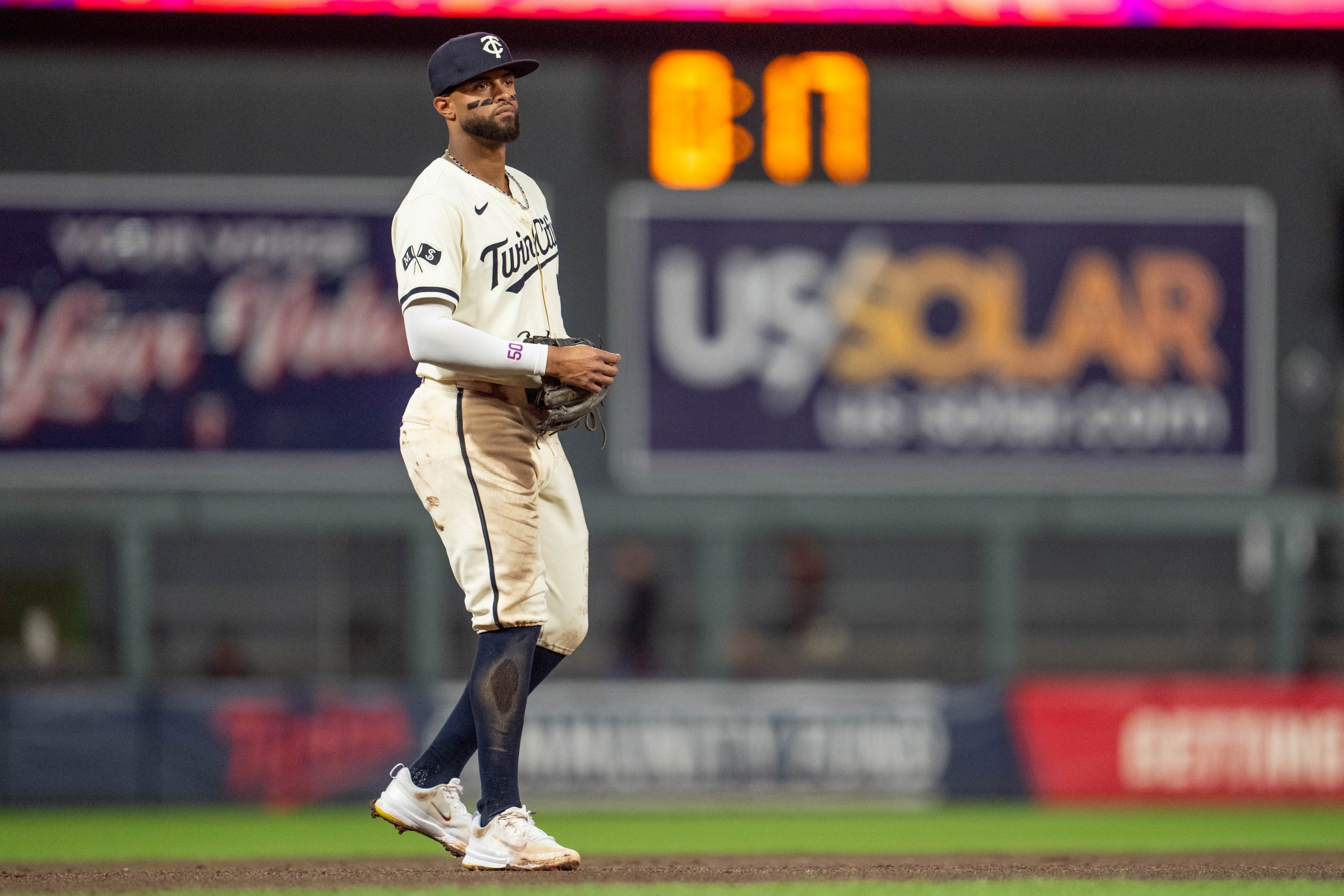 Willi Castro had a really interesting season for the Twins. On the one hand, you can make a pretty reasonable argument he was the team's most valuable player (he finished seventh in our balloting). Castro led the Twins in games played and plate appearances, setting a new standard for defensive versatility by becoming the first player in major-league history to make 20-plus appearances at five different positions. His career-high 3.1 fWAR ranked third among Minnesota position players, behind Carlos Correa and Byron Buxton. Castro was an All-Star and was just nominated as one of three finalists for the AL Gold Glove for the UTL position. On the other hand, the narrative around Castro's indispensable value took a major hit when he slumped badly in the second half as the team collapsed. He finished the season with a .717 OPS that was barely above average. And despite his recent Gold Glove nod, most who watched him would not rate Castro's defensive prowess at any of the positions he played as all that exceptional, much as the flexibility was appreciated. A glance at Castro's Statcast profile portrays a player who was able to deliver value, but did very few things especially well. That includes running, where his sprint speed dropped from 82nd percentile in 2023 to 66th percentile in 2024 as his stolen base total was sliced in half (33 to 16). His known back issues over the course of the season may have contributed to this. None of these factors take away from what was generally a successful and commendable season for Castro. But they might cast doubt on what he can produce moving forward, and that's a major concern for a front office navigating serious payroll challenges. Entering his third and final year of arbitration, Castro is projected by MLBTR for a $6.2 million salary in 2025. I doubt the Twins would non-tender Castro, repeating the same Tigers mistake that brought him to Minnesota originally, but they could be very motivated to trade him and move his salary. While no one will quite replicate the versatility Willi brings to the table, there are some candidates internally to collectively backfill his role, including Austin Martin. You wonder how something like that would go over with manager Rocco Baldelli. I think it would be fair to describe Castro as Baldlli's safety blanket, and I don't mean that in a pejorative sense. Any manager would be keen on an athletic switch-hitter who is available to play every day, almost anywhere. For Baldelli, who loves making in-game moves and is constantly dealing with wavering availability from his players, Castro's flexibility and durability are especially appreciated. The affinity is no secret. Baldelli called Castro personally two offseasons ago to try to persuade him to join the Twins. The manager speaks glowingly of the utilityman often, and clearly holds Castro in high esteem. It was a touching moment when Rocco personally informed the 27-year-old of his first All-Star selection. “Every person in our clubhouse, no matter who they are -- pitcher, catcher, position player, coach, trainer -- no matter who you are, you look at and admire Willi Castro in a big way,” Baldelli said in July. “He plays the game with tremendous energy and passion. He's running all over the place all the time and making positive things happen for our team.” If Derek Falvey and the front office set their mind to trading Castro this offseason, in the name of creating payroll flexibility to improve the team elsewhere, it probably won't go over very well with Rocco Baldelli. Maybe not with a lot of fans, either. But much like the possibility of trading Bailey Ober or Joe Ryan, it's the kind of uncomfortable decision Minnesota's decision-makers will need to weigh as they seek creative and meaningful ways to renovate the roster following a disastrous finish in 2024.
 -
Named on Tuesday as a Gold Glove finalist, Willi Castro has piled up plenty of accolades and achievements here in 2024. While the Twins have the ability to retain him next year, it's not necessarily a straightforward decision, and could create internal strife for an organization in flux, trying to figure out the right way forward. Image courtesy of Matt Blewett-Imagn Images Willi Castro had a really interesting season for the Twins. On the one hand, you can make a pretty reasonable argument he was the team's most valuable player (he finished seventh in our balloting). Castro led the Twins in games played and plate appearances, setting a new standard for defensive versatility by becoming the first player in major-league history to make 20-plus appearances at five different positions. His career-high 3.1 fWAR ranked third among Minnesota position players, behind Carlos Correa and Byron Buxton. Castro was an All-Star and was just nominated as one of three finalists for the AL Gold Glove for the UTL position. On the other hand, the narrative around Castro's indispensable value took a major hit when he slumped badly in the second half as the team collapsed. He finished the season with a .717 OPS that was barely above average. And despite his recent Gold Glove nod, most who watched him would not rate Castro's defensive prowess at any of the positions he played as all that exceptional, much as the flexibility was appreciated. A glance at Castro's Statcast profile portrays a player who was able to deliver value, but did very few things especially well. That includes running, where his sprint speed dropped from 82nd percentile in 2023 to 66th percentile in 2024 as his stolen base total was sliced in half (33 to 16). His known back issues over the course of the season may have contributed to this. None of these factors take away from what was generally a successful and commendable season for Castro. But they might cast doubt on what he can produce moving forward, and that's a major concern for a front office navigating serious payroll challenges. Entering his third and final year of arbitration, Castro is projected by MLBTR for a $6.2 million salary in 2025. I doubt the Twins would non-tender Castro, repeating the same Tigers mistake that brought him to Minnesota originally, but they could be very motivated to trade him and move his salary. While no one will quite replicate the versatility Willi brings to the table, there are some candidates internally to collectively backfill his role, including Austin Martin. You wonder how something like that would go over with manager Rocco Baldelli. I think it would be fair to describe Castro as Baldlli's safety blanket, and I don't mean that in a pejorative sense. Any manager would be keen on an athletic switch-hitter who is available to play every day, almost anywhere. For Baldelli, who loves making in-game moves and is constantly dealing with wavering availability from his players, Castro's flexibility and durability are especially appreciated. The affinity is no secret. Baldelli called Castro personally two offseasons ago to try to persuade him to join the Twins. The manager speaks glowingly of the utilityman often, and clearly holds Castro in high esteem. It was a touching moment when Rocco personally informed the 27-year-old of his first All-Star selection. “Every person in our clubhouse, no matter who they are -- pitcher, catcher, position player, coach, trainer -- no matter who you are, you look at and admire Willi Castro in a big way,” Baldelli said in July. “He plays the game with tremendous energy and passion. He's running all over the place all the time and making positive things happen for our team.” If Derek Falvey and the front office set their mind to trading Castro this offseason, in the name of creating payroll flexibility to improve the team elsewhere, it probably won't go over very well with Rocco Baldelli. Maybe not with a lot of fans, either. But much like the possibility of trading Bailey Ober or Joe Ryan, it's the kind of uncomfortable decision Minnesota's decision-makers will need to weigh as they seek creative and meaningful ways to renovate the roster following a disastrous finish in 2024. View full article
-
Will the Minnesota Twins Trade Joe Ryan or Bailey Ober This Offseason?
Nick Nelson posted an article in Twins
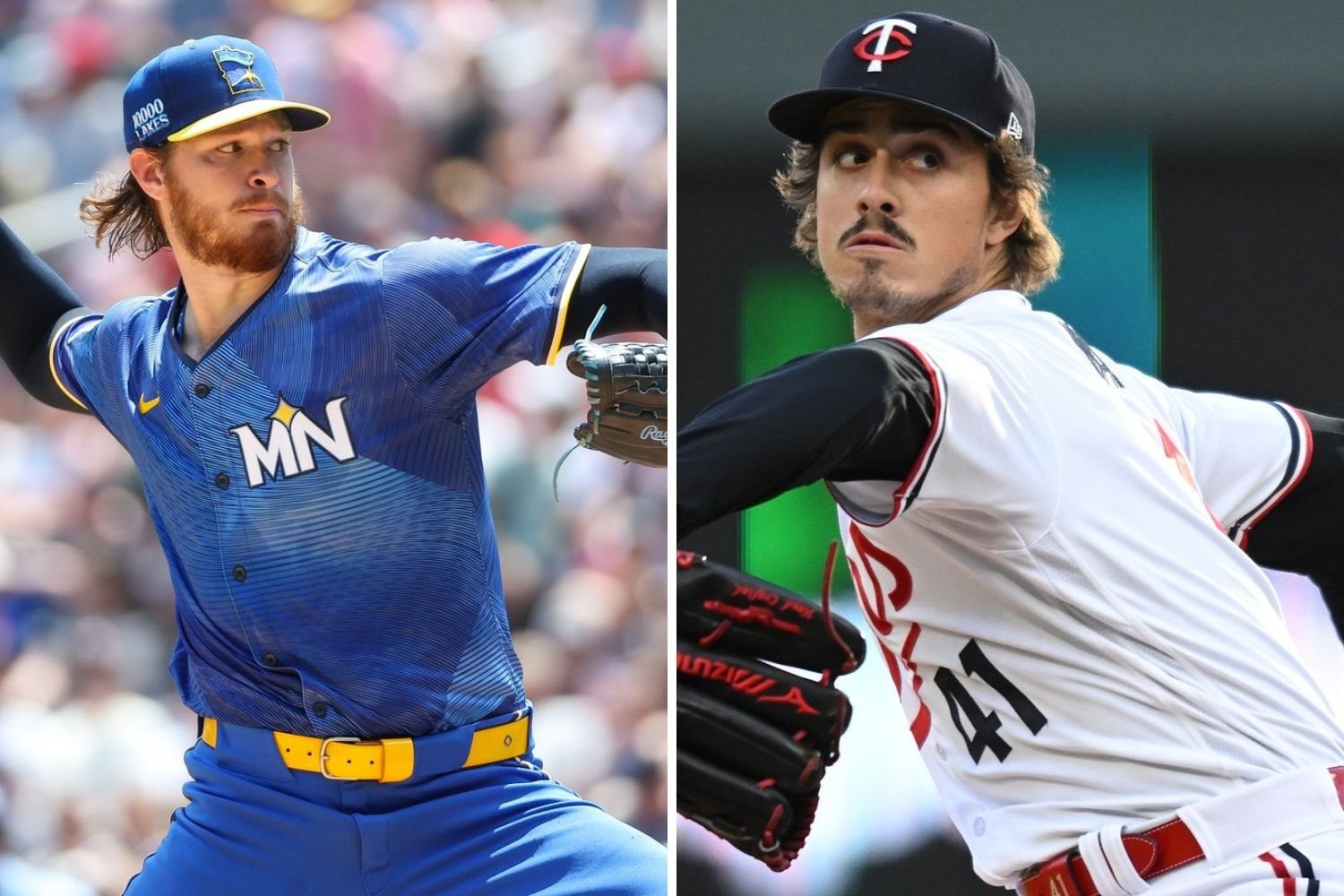 The Twins front office, restructured following the departure of Thad Levine, faces a key challenge this offseason: get better with almost literally zero spending flexibility. To find any room for additions, Derek Falvey and Co. will likely need to get creative, and that might mean moving some of their existing commitments to clear up space moving forward. Pablo López, who will see his salary jump from $8 million to $21 million next season, is a name that's been thrown around as a potential trade candidate. There have also been suggestions the Twins could try to unload the remaining contracts of Carlos Correa or Byron Buxton, if one or both would be willing to waive their no-trade clauses. In my mind, the Twins shouldn't be looking to deal any of those three. In part it's because I believe López, Correa and Buxton make up a viable veteran nucleus for a championship team. The front office should be building around these prime-aged stars, not dismantling them. All three players had their issues this past season, but at least they ended in a good place. Let's run it back behind them. Much was invested to get these pieces in place. There's also the question of trade value and expected return. Even if you can talk Correa or Buxton into waiving their NTCs, and you can actually find a taker for their risk-laden contracts, are you really get anything of substance in return? Unlikely. López certainly would command a respectable package, but he hardly seems like a sell-high candidate: He just posted an ERA over 4.00 for the first time in five years, and he's owed about $65 million over the next three seasons, having put his low-cost days behind him. If the front office wants to thread the needle of finding financial relief through trades that actually have a chance to make the team better, I believe they'd be far better off shopping Bailey Ober or Joe Ryan. Would they actually be willing to lose a cornerstone from the 2024 rotation? It might come down to how much these controllable arms could net, and how much Falvey believes in his pitching pipeline. The Case for Trading Ober or Ryan Proven, cost-controlled starting pitching is perhaps the most valued commodity in baseball. I suspect we might see an even greater appetite for it than usual this offseason, as teams across the league look to scale back spending and balk at a free-agent market full of pricey question marks. Trading Ober or Ryan wouldn't be so much about short-term cost savings. They are both first-time arbitration eligible this offseason, estimated by MLB Trade Rumors to be in line for $4.3 million and $3.8 million in 2025, respectively. Those price tags make them appealing to prospective trade partners relative to López, who will earn about five times as much. Given what they're up against from a payroll perspective, even an extra $4 million or so would be quite useful for the Twins front office this offseason. But the financial implications of trading Ober or Ryan are more about future years beyond 2025. With good seasons, their salaries would escalate into the $10 million range in year two of arbitration, and then up from there in year three. The Twins will still be on the hook with López, Correa and Buxton for about $70 million in 2026 and 2027, making those increases difficult to absorb. By trading Ober or Ryan now, the Twins would be getting out in front of this coming payroll crunch while theoretically maximizing their value as trade pieces. Presently both are under team control for three more years, inexpensive in the short term, and – most importantly – coming off very good seasons. Ober set career bests in innings (179), fWAR (2.9) and strikeout rate (26.9%), performing like a frontline starter outside of a few hiccups among his 31 starts. His 3.24 xERA ranked fifth-best among all major-league starters. For a good stretch of the summer, he was one of the most effective pitchers in all of baseball. Ryan missed the final two months after suffering a season-ending shoulder injury. Obviously, that's a consideration in assessing his trade value. But the right-hander generally has a track record of very good health, and there seems to be no reason to think the teres major strain he sustained in August will be a long-term concern. It didn't require surgery and, in fact, based on the initial recovery timeline of roughly two months, he might be fully healed by now. Any team trading for Ryan should be able to gain a solid level of confidence in his physical state. They also should feel confident in what he can do when healthy and on the mound. Ryan set a career high in fWAR this year (3.1) despite making only 23 starts. Still only 28, he has been excellent since joining the MLB ranks, holding opponents to a .223/.275/.409 slash line while averaging 10 strikeouts and two walks per nine innings. He's been worthy of All-Star consideration in each of the past two seasons. Naturally, all these factors that make Ober and Ryan attractive to other teams also signify why losing them would hurt the Minnesota Twins. When at their best this year, the consistency of the team's rotation was arguably their biggest strength, and these hurlers were crucial ingredients in that. The idea of succeeding without one of them hinges on the legitimacy of the organization's pitching pipeline. Between Simeon Woods Richardson, David Festa, Zebby Matthews, Marco Raya, Andrew Morris, Cory Lewis and Connor Prielipp, the system is ripe with intriguing and impressive young pitchers who are nearing major-league readiness if not already there. Giving up the proven impact of an Ober or Ryan, and turning the reins over to these largely unproven youngsters, entails a significant amount of risk. But it's not just about clearing payroll – you're going to get back legitimate talent in exchange for one of these starters. What kind of talent? Well, as one point of comparison, when the Miami Marlins traded Pablo López at a similar stage a couple years ago, they got back an All-Star, Silver Slugger, and fringe MVP candidate. Trading Bailey Ober or Joe Ryan would not be a comfortable move, and maybe not a popular one. But as we think of the challenges and constraints that lie before the front office, these are the kinds of moves we're going to need to view within the realm of realistic possibilities. I'd almost say the odds are better than not that one gets dealt. What are your thoughts on the matter? Would you be open to trading Ober or Ryan in the right deal? Or should the Twins be looking elsewhere in their efforts to shave payroll and find ways to improve? Let us know in the comments.
 -
As the front office strives to create future payroll flexibility while also finding ways to improve the roster this offseason, these two quality starters who are about to get more expensive could be on the block. Image courtesy of Matt Krohn and Jeffrey Becker–Imagn Images The Twins front office, restructured following the departure of Thad Levine, faces a key challenge this offseason: get better with almost literally zero spending flexibility. To find any room for additions, Derek Falvey and Co. will likely need to get creative, and that might mean moving some of their existing commitments to clear up space moving forward. Pablo López, who will see his salary jump from $8 million to $21 million next season, is a name that's been thrown around as a potential trade candidate. There have also been suggestions the Twins could try to unload the remaining contracts of Carlos Correa or Byron Buxton, if one or both would be willing to waive their no-trade clauses. In my mind, the Twins shouldn't be looking to deal any of those three. In part it's because I believe López, Correa and Buxton make up a viable veteran nucleus for a championship team. The front office should be building around these prime-aged stars, not dismantling them. All three players had their issues this past season, but at least they ended in a good place. Let's run it back behind them. Much was invested to get these pieces in place. There's also the question of trade value and expected return. Even if you can talk Correa or Buxton into waiving their NTCs, and you can actually find a taker for their risk-laden contracts, are you really get anything of substance in return? Unlikely. López certainly would command a respectable package, but he hardly seems like a sell-high candidate: He just posted an ERA over 4.00 for the first time in five years, and he's owed about $65 million over the next three seasons, having put his low-cost days behind him. If the front office wants to thread the needle of finding financial relief through trades that actually have a chance to make the team better, I believe they'd be far better off shopping Bailey Ober or Joe Ryan. Would they actually be willing to lose a cornerstone from the 2024 rotation? It might come down to how much these controllable arms could net, and how much Falvey believes in his pitching pipeline. The Case for Trading Ober or Ryan Proven, cost-controlled starting pitching is perhaps the most valued commodity in baseball. I suspect we might see an even greater appetite for it than usual this offseason, as teams across the league look to scale back spending and balk at a free-agent market full of pricey question marks. Trading Ober or Ryan wouldn't be so much about short-term cost savings. They are both first-time arbitration eligible this offseason, estimated by MLB Trade Rumors to be in line for $4.3 million and $3.8 million in 2025, respectively. Those price tags make them appealing to prospective trade partners relative to López, who will earn about five times as much. Given what they're up against from a payroll perspective, even an extra $4 million or so would be quite useful for the Twins front office this offseason. But the financial implications of trading Ober or Ryan are more about future years beyond 2025. With good seasons, their salaries would escalate into the $10 million range in year two of arbitration, and then up from there in year three. The Twins will still be on the hook with López, Correa and Buxton for about $70 million in 2026 and 2027, making those increases difficult to absorb. By trading Ober or Ryan now, the Twins would be getting out in front of this coming payroll crunch while theoretically maximizing their value as trade pieces. Presently both are under team control for three more years, inexpensive in the short term, and – most importantly – coming off very good seasons. Ober set career bests in innings (179), fWAR (2.9) and strikeout rate (26.9%), performing like a frontline starter outside of a few hiccups among his 31 starts. His 3.24 xERA ranked fifth-best among all major-league starters. For a good stretch of the summer, he was one of the most effective pitchers in all of baseball. Ryan missed the final two months after suffering a season-ending shoulder injury. Obviously, that's a consideration in assessing his trade value. But the right-hander generally has a track record of very good health, and there seems to be no reason to think the teres major strain he sustained in August will be a long-term concern. It didn't require surgery and, in fact, based on the initial recovery timeline of roughly two months, he might be fully healed by now. Any team trading for Ryan should be able to gain a solid level of confidence in his physical state. They also should feel confident in what he can do when healthy and on the mound. Ryan set a career high in fWAR this year (3.1) despite making only 23 starts. Still only 28, he has been excellent since joining the MLB ranks, holding opponents to a .223/.275/.409 slash line while averaging 10 strikeouts and two walks per nine innings. He's been worthy of All-Star consideration in each of the past two seasons. Naturally, all these factors that make Ober and Ryan attractive to other teams also signify why losing them would hurt the Minnesota Twins. When at their best this year, the consistency of the team's rotation was arguably their biggest strength, and these hurlers were crucial ingredients in that. The idea of succeeding without one of them hinges on the legitimacy of the organization's pitching pipeline. Between Simeon Woods Richardson, David Festa, Zebby Matthews, Marco Raya, Andrew Morris, Cory Lewis and Connor Prielipp, the system is ripe with intriguing and impressive young pitchers who are nearing major-league readiness if not already there. Giving up the proven impact of an Ober or Ryan, and turning the reins over to these largely unproven youngsters, entails a significant amount of risk. But it's not just about clearing payroll – you're going to get back legitimate talent in exchange for one of these starters. What kind of talent? Well, as one point of comparison, when the Miami Marlins traded Pablo López at a similar stage a couple years ago, they got back an All-Star, Silver Slugger, and fringe MVP candidate. Trading Bailey Ober or Joe Ryan would not be a comfortable move, and maybe not a popular one. But as we think of the challenges and constraints that lie before the front office, these are the kinds of moves we're going to need to view within the realm of realistic possibilities. I'd almost say the odds are better than not that one gets dealt. What are your thoughts on the matter? Would you be open to trading Ober or Ryan in the right deal? Or should the Twins be looking elsewhere in their efforts to shave payroll and find ways to improve? Let us know in the comments. View full article
-
In a season full of incomplete performances across the roster, Carlos Correa's stood out as most valuable. Giving the MVP award to someone who played half a season says a lot about this Twins team as a whole. The 2024 Twins season is not one that we'll look back at in a positive light. The way it ended leaves a bitter taste that overwhelms all other senses as we attempt to reflect and analyze the year that was. Small consolation as it may be, the Twins did experience a fair amount of success over the course of the season. They finished above .500, albeit it barely. From mid-April through mid-August, they were one of the winningest teams in baseball. Before the bottom fell out in the final six weeks, the Twins were on a 92-win pace with a 95% chance to make the playoffs. So, as we tried to reach a decision on who was deserving of Twins Daily's MVP nod this year, Twins Daily's voters had to ask: Who was most instrumental in the success they did have? It was unfortunately not an easy question to answer. Across the Twins roster there were a number of incomplete performances, with key players everywhere either missing significant chunks of the season or staying on the field but seeing sharp, costly drop-offs in production. Although the voting from our panel of 14 was relatively close and widely distributed, Carlos Correa emerged as the clear-cut leader in the tally, despite missing almost half the season. His play on the field was strong enough, and impactful enough, to outweigh all of the missed time. We'll talk about his accomplishments and why Correa was the choice shortly, but first, let's take a look at the final voting results and how the rest of the field stacked up. Twins Daily 2024 Team MVP Balloting: Final Points Tally Carlos Correa: 96 Griffin Jax: 81 Byron Buxton: 77 Bailey Ober: 58 Pablo Lopez: 51 Carlos Santana: 40 Willi Castro: 39 Matt Wallner: 20 Joe Ryan: 15 Simeon Woods Richardson: 12 Royce Lewis: 7 Reviewing the Rest of the Field To understand why Correa ended up as the choice despite playing only 86 games, it's important to consider why the rest of the contenders fell short. Here's a quick rundown of the players who received votes, and why their cases didn't quite win out. Griffin Jax (2nd): For full disclosure, Jax was the No. 1 choice on my ballot. If we're talking about players who had a complete season, excelled from front to back, and consistently helped the team win, he strikes me as the most viable candidate. However, understandably it is tough to award MVP to a guy who threw 71 innings, even in extreme leverage. Byron Buxton (3rd): Buxton's comeback year deserves more appreciation. He crossed the 100-game milestone for the first time in seven years, starting 87 times in center field after making zero starts there in 2023. He rediscovered his dominance at the plate with 18 homers and a 137 OPS+. However, Buxton still missed nearly as much time as Correa, and wasn't quite as excellent while on the field. Bailey Ober (4th): The best argument for Ober is that the rotation was the team's biggest strength, and he was arguably their best starter on balance. That said, his proneness to blow-ups left him with an ERA that was barely above average, and well below the standard he set in 2023. Pablo López (5th): Largely the same story as Ober. López was brilliant at times but at the end of the day he wasn't quite the guy the Twins needed him to be. Carlos Santana (6th): He gets credit for durability, defense and contract value, but overall Santana was more good than great. Willi Castro (7th): His All-Star first half gave way to a punchless second half, with Castro's decline playing a prominent role in the offense's devastating late slump. His case is helped by versatility and reliability, but he gets a big detraction for batting .200 with a .562 OPS in September as the season withered a way. Matt Wallner (8th): He was the team's best hitter in the second half, but missed nearly the entire first half after slumping badly out of the gates. Joe Ryan (9th): He was the team's best pitcher in the first half, but missed nearly the entire second half after injuring his shoulder in early August. Simeon Woods Richardson (10th): The rookie played a crucial role in stabilizing the rotation, rattling off quality outings as demonstrated by the team's 17-11 record in his starts. However, he tailed off at the end of the season and his final numbers were fairly mediocre. Royce Lewis (11th): I'm including Lewis on this list only to make the point that he did NOT even make the top 10, despite posting a 1.021 OPS in his first 40 games. Sadly, for all of his prior highlights, Lewis's mega-slump down the stretch was the story of his season. Why We Picked Carlos Correa as Twins 2024 MVP There are two lenses through which we can view Correa as the most valuable player for the 2024 Twins: the more objective statistical case and the more subjective narrative case. Let's cover both. The Statistical Case It's pretty straightforward, actually. Despite missing nearly half the season, Correa led all Twins players in fWAR (4.3) and bWAR (3.7). He led all Twins position players in Win Probability Added (2.08), ranking second behind only Jax (2.20) among all players. When he was on the field, the 29-year-old Correa was as good as he's ever been, making it all the more saddening that he was forced to miss so much time. He slashed .310/.388/.517 with 20 doubles, two triples and 14 home runs for a 152+ OPS, second-highest in his career behind 2017 (155), when he was an All-Star and World Series champion. Coming off the worst season of his career, Correa carried some serious question marks into this campaign. Would there be lingering effects from the plantar fasciitis issue that thoroughly hampered him in 2023? The answer, in the first half of 2024, proved to be a resounding no. Correa's production and impact when on the field can hardly be overstated. To put his team-leading 4.3 fWAR over 86 games into context, it's higher than any Twins position player produced for an 87-win team in 2023. In fact, the only Twins hitter in the last five years to post a higher fWAR than Correa did this year was ... Carlos Correa, in 2022 (4.6). I get that it's tricky to view Correa as an MVP when he missed so much time, but it's not like the team had to leave shortstop unmanned while he was sidelined. His contributions when available turned perhaps the most critical position on the field into a major strength for the Twins, who ranked sixth in the majors in fWAR at shortstop. Four of the five teams ahead of them (KC, NYM, BAL, LAD) reached the playoffs. The Narrative Case Because the award is dubbed "Most Valuable Player" instead of simply "Most Outstanding Player," it's worthwhile to look beyond the stats and examine Correa's individual impact on the outcome of the season. One can certainly argue that his absence for most of the second half, as the team buckled and collapsed, was a major ding against his value, even if not his fault. But the reality is that Correa was a huge reason why the Twins even had such a favorable situation to fumble away, and he did everything in his power at the end to stop it from coming to fruition. On June 8th, Minnesota fell 4-0 in Pittsburgh, dropping to 33-31 and leaving them 8 ½ games out of first place. At the time, Correa's slash line sat at a solid yet ordinary .255/.324/.436. Things weren't looking so hot. But the Twins were about to make their move, with C4 leading the charge. The following day, in the series finale at PNC, he went 3-for-5 with two RBIs in an 11-5 win. From that point until he went down on July 12th, Correa slashed .386/.453/.640 with eight homers and 23 RBIs in 29 games. The Twins, during this span, went 20-10, cutting the division deficit in half. On the date he was scratched from the lineup in San Francisco with what turned out to be another case of plantar fasciitis, the Twins had an 85% chance to make the postseason, per FanGraphs, and he ranked 10th among all major-league players in fWAR. Hi spending the next two months on the sidelines certainly played a role in Minnesota's downfall but on the day Correa returned, September 14th, the Twins still had an 81% chance to make the playoffs. He did everything he could to ensure that they would, slashing .325/.460/.500 in his final 11 games. Despite his best efforts, he couldn't stem the tide of this team's free-fall. The Twins went 4-10 following his activation, reflecting the limited impact any one player can have on a baseball team. Correa's third game back perfectly exemplified the lack of support he received as the season slipped away; in a crucial game against Cleveland, he went 3-for-5 and drove in all four of Minnesota's runs, including a go-ahead two-run single in the 10th. The Twins still lost, 5-4, because the 4-through-9 spots in the lineup went 1-for-25 and the beleaguered bullpen broke down. Despite playing in only 53% of the team's games, Carlos Correa stood out to our voting body as the most valuable player on the 2024 Twins. That says a lot about the rest of the players on the roster and their seasons, but we shouldn't overlook what it says about Correa, who was about as good as anyone could possibly ask for in the 86 games he was able to play. Do you agree that Carlos Correa was MVP of this year's Twins team? If not, who would your choice be and why? Let's hear your thoughts in the comments. View full article
- 14 replies
-
- 1
-
-
- carlos correa
- byron buxton
- (and 1 more)
-
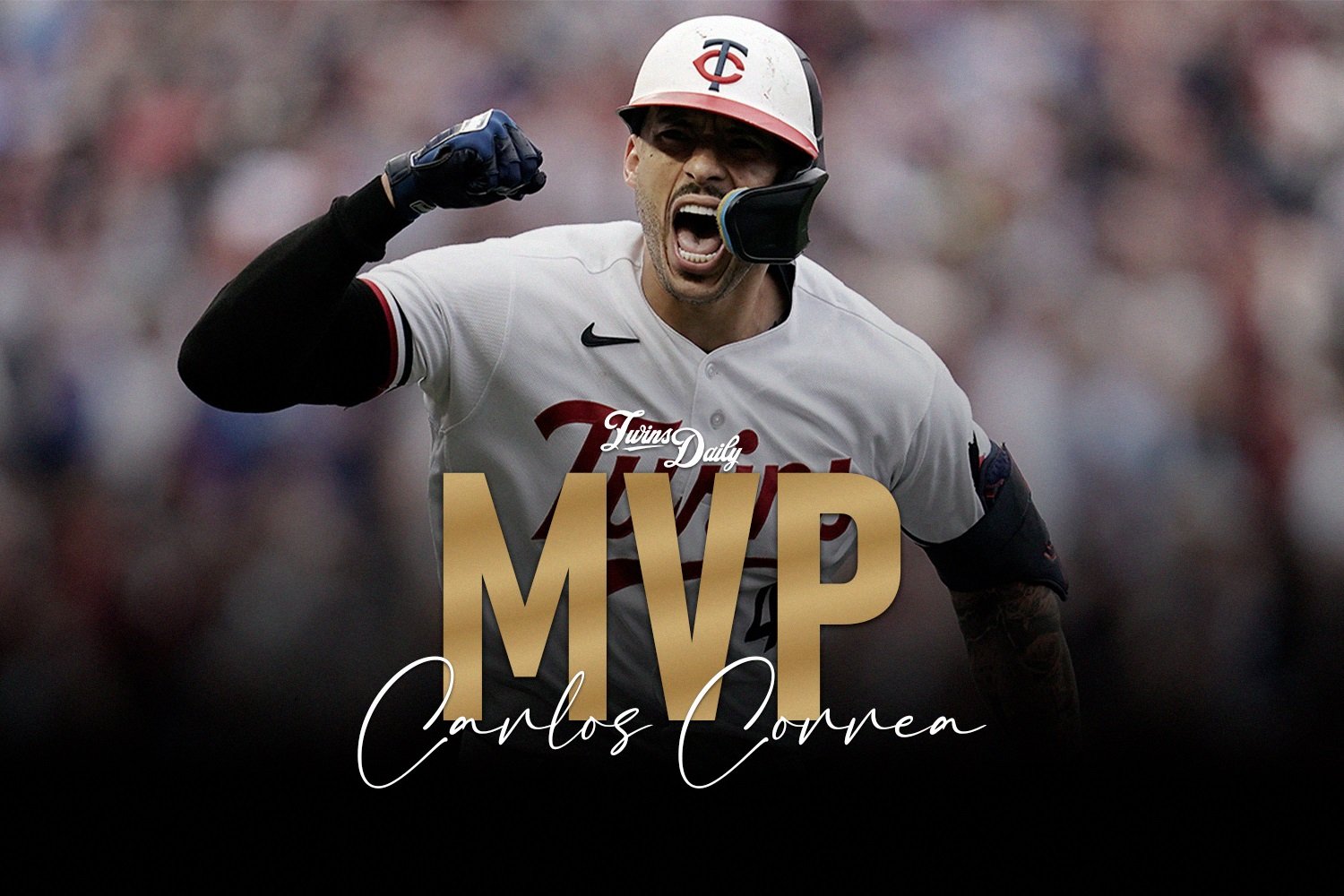 The 2024 Twins season is not one that we'll look back at in a positive light. The way it ended leaves a bitter taste that overwhelms all other senses as we attempt to reflect and analyze the year that was. Small consolation as it may be, the Twins did experience a fair amount of success over the course of the season. They finished above .500, albeit it barely. From mid-April through mid-August, they were one of the winningest teams in baseball. Before the bottom fell out in the final six weeks, the Twins were on a 92-win pace with a 95% chance to make the playoffs. So, as we tried to reach a decision on who was deserving of Twins Daily's MVP nod this year, Twins Daily's voters had to ask: Who was most instrumental in the success they did have? It was unfortunately not an easy question to answer. Across the Twins roster there were a number of incomplete performances, with key players everywhere either missing significant chunks of the season or staying on the field but seeing sharp, costly drop-offs in production. Although the voting from our panel of 14 was relatively close and widely distributed, Carlos Correa emerged as the clear-cut leader in the tally, despite missing almost half the season. His play on the field was strong enough, and impactful enough, to outweigh all of the missed time. We'll talk about his accomplishments and why Correa was the choice shortly, but first, let's take a look at the final voting results and how the rest of the field stacked up. Twins Daily 2024 Team MVP Balloting: Final Points Tally Carlos Correa: 96 Griffin Jax: 81 Byron Buxton: 77 Bailey Ober: 58 Pablo Lopez: 51 Carlos Santana: 40 Willi Castro: 39 Matt Wallner: 20 Joe Ryan: 15 Simeon Woods Richardson: 12 Royce Lewis: 7 Reviewing the Rest of the Field To understand why Correa ended up as the choice despite playing only 86 games, it's important to consider why the rest of the contenders fell short. Here's a quick rundown of the players who received votes, and why their cases didn't quite win out. Griffin Jax (2nd): For full disclosure, Jax was the No. 1 choice on my ballot. If we're talking about players who had a complete season, excelled from front to back, and consistently helped the team win, he strikes me as the most viable candidate. However, understandably it is tough to award MVP to a guy who threw 71 innings, even in extreme leverage. Byron Buxton (3rd): Buxton's comeback year deserves more appreciation. He crossed the 100-game milestone for the first time in seven years, starting 87 times in center field after making zero starts there in 2023. He rediscovered his dominance at the plate with 18 homers and a 137 OPS+. However, Buxton still missed nearly as much time as Correa, and wasn't quite as excellent while on the field. Bailey Ober (4th): The best argument for Ober is that the rotation was the team's biggest strength, and he was arguably their best starter on balance. That said, his proneness to blow-ups left him with an ERA that was barely above average, and well below the standard he set in 2023. Pablo López (5th): Largely the same story as Ober. López was brilliant at times but at the end of the day he wasn't quite the guy the Twins needed him to be. Carlos Santana (6th): He gets credit for durability, defense and contract value, but overall Santana was more good than great. Willi Castro (7th): His All-Star first half gave way to a punchless second half, with Castro's decline playing a prominent role in the offense's devastating late slump. His case is helped by versatility and reliability, but he gets a big detraction for batting .200 with a .562 OPS in September as the season withered a way. Matt Wallner (8th): He was the team's best hitter in the second half, but missed nearly the entire first half after slumping badly out of the gates. Joe Ryan (9th): He was the team's best pitcher in the first half, but missed nearly the entire second half after injuring his shoulder in early August. Simeon Woods Richardson (10th): The rookie played a crucial role in stabilizing the rotation, rattling off quality outings as demonstrated by the team's 17-11 record in his starts. However, he tailed off at the end of the season and his final numbers were fairly mediocre. Royce Lewis (11th): I'm including Lewis on this list only to make the point that he did NOT even make the top 10, despite posting a 1.021 OPS in his first 40 games. Sadly, for all of his prior highlights, Lewis's mega-slump down the stretch was the story of his season. Why We Picked Carlos Correa as Twins 2024 MVP There are two lenses through which we can view Correa as the most valuable player for the 2024 Twins: the more objective statistical case and the more subjective narrative case. Let's cover both. The Statistical Case It's pretty straightforward, actually. Despite missing nearly half the season, Correa led all Twins players in fWAR (4.3) and bWAR (3.7). He led all Twins position players in Win Probability Added (2.08), ranking second behind only Jax (2.20) among all players. When he was on the field, the 29-year-old Correa was as good as he's ever been, making it all the more saddening that he was forced to miss so much time. He slashed .310/.388/.517 with 20 doubles, two triples and 14 home runs for a 152+ OPS, second-highest in his career behind 2017 (155), when he was an All-Star and World Series champion. Coming off the worst season of his career, Correa carried some serious question marks into this campaign. Would there be lingering effects from the plantar fasciitis issue that thoroughly hampered him in 2023? The answer, in the first half of 2024, proved to be a resounding no. Correa's production and impact when on the field can hardly be overstated. To put his team-leading 4.3 fWAR over 86 games into context, it's higher than any Twins position player produced for an 87-win team in 2023. In fact, the only Twins hitter in the last five years to post a higher fWAR than Correa did this year was ... Carlos Correa, in 2022 (4.6). I get that it's tricky to view Correa as an MVP when he missed so much time, but it's not like the team had to leave shortstop unmanned while he was sidelined. His contributions when available turned perhaps the most critical position on the field into a major strength for the Twins, who ranked sixth in the majors in fWAR at shortstop. Four of the five teams ahead of them (KC, NYM, BAL, LAD) reached the playoffs. The Narrative Case Because the award is dubbed "Most Valuable Player" instead of simply "Most Outstanding Player," it's worthwhile to look beyond the stats and examine Correa's individual impact on the outcome of the season. One can certainly argue that his absence for most of the second half, as the team buckled and collapsed, was a major ding against his value, even if not his fault. But the reality is that Correa was a huge reason why the Twins even had such a favorable situation to fumble away, and he did everything in his power at the end to stop it from coming to fruition. On June 8th, Minnesota fell 4-0 in Pittsburgh, dropping to 33-31 and leaving them 8 ½ games out of first place. At the time, Correa's slash line sat at a solid yet ordinary .255/.324/.436. Things weren't looking so hot. But the Twins were about to make their move, with C4 leading the charge. The following day, in the series finale at PNC, he went 3-for-5 with two RBIs in an 11-5 win. From that point until he went down on July 12th, Correa slashed .386/.453/.640 with eight homers and 23 RBIs in 29 games. The Twins, during this span, went 20-10, cutting the division deficit in half. On the date he was scratched from the lineup in San Francisco with what turned out to be another case of plantar fasciitis, the Twins had an 85% chance to make the postseason, per FanGraphs, and he ranked 10th among all major-league players in fWAR. Hi spending the next two months on the sidelines certainly played a role in Minnesota's downfall but on the day Correa returned, September 14th, the Twins still had an 81% chance to make the playoffs. He did everything he could to ensure that they would, slashing .325/.460/.500 in his final 11 games. Despite his best efforts, he couldn't stem the tide of this team's free-fall. The Twins went 4-10 following his activation, reflecting the limited impact any one player can have on a baseball team. Correa's third game back perfectly exemplified the lack of support he received as the season slipped away; in a crucial game against Cleveland, he went 3-for-5 and drove in all four of Minnesota's runs, including a go-ahead two-run single in the 10th. The Twins still lost, 5-4, because the 4-through-9 spots in the lineup went 1-for-25 and the beleaguered bullpen broke down. Despite playing in only 53% of the team's games, Carlos Correa stood out to our voting body as the most valuable player on the 2024 Twins. That says a lot about the rest of the players on the roster and their seasons, but we shouldn't overlook what it says about Correa, who was about as good as anyone could possibly ask for in the 86 games he was able to play. Do you agree that Carlos Correa was MVP of this year's Twins team? If not, who would your choice be and why? Let's hear your thoughts in the comments.
- 14 comments
-
- 3
-
-
- carlos correa
- byron buxton
- (and 1 more)
-
Now that we've had a little time to digest the sour finish to the season, it's a good time to take a step back and review the year that was for the Minnesota Twins. Which specific moments best tell the story of this up-and-down season that ultimately ended in heartbreak? Image courtesy of John Hefti, David Richard, Jesse Johnson – Imagn Sports There are a lot of moments that one could point back to as particularly important or pivotal in the course of the 2024 Minnesota Twins season. I'd love to hear some submissions from others in the comments regarding the memories that will stick out most as they think back to this one. These are my choices for the 10 events, games, and dates that most succinctly tell the story of this unique year in Twins history: the flat start, the thrilling rise, the devastating fall. March 28th: Royce Lewis suffers serious quad injury after two at-bats After finishing the previous season with a bang in the playoffs, Lewis was glowing with hype out of spring training, finally entering a season healthy and ready to go. It lasted roughly an hour. The third baseman fueled his hype train by homering in his first at-bat and then singling in his second, but pulled up lame rounding second base in the third inning, forcing him to exit the game. He was later diagnosed with a significant quad strain, sucking immediate wind out of the team's sails. Lewis would miss two months, and it's very possible the injury he suffered on Opening Day contributed to a subsequent adductor strain and physical burnout. In the short term, the Twins' offense sputtered in his absence on the way to digging a 7-13 hole to open the season. April 22nd: Twins stomp White Sox 7-0 behind gem from Chris Paddack On this date, the Twins officially turned things around and put their slow start behind them. Minnesota took a big early lead and never looked back, with Paddack striking out 10 over seven shutout innings. Edouard Julien had three hits including a home run as the No. 2 hitter. The series-opening victory kicked off a 12-game winning streak and set the tone for a summer of complete dominance over the lowly White Sox. This breakout game offered some legitimate reasons for optimism from a team that was about to win a ton of games over the next four months. There were also some misleading positive indicators (Julien, Paddack). May 19th: Guardians walk off Jhoan Durán, complete sweep While beating up on Chicago helped keep Minnesota in contention all year, the Twins' inability to match Cleveland's fortitude is what kept them from ever fully breaking through or overtaking the division. The Guardians simply owned the Twins all year long. Cleveland's players stepped up in the biggest spots and Minnesota's fell apart. It was a persistent dynamic that defined their rivalry this season, and you could pick any number of different games to exemplify it. This one is most deeply burrowed in my memory, encompassing a range of tendencies that ultimately spelled the Twins' downfall. They wasted a good start: Paddack threw eight innings of two-run ball. Their offense repeatedly could not come up with a key hit: they went 0-for-8 with RISP. And with no margin for error, a Twins reliever gave up the game: Durán, who'd already been beaten by José Ramirez earlier in the series, took another loss on a three-run walk-off homer by Will Brennan. These were all ingredients in a gut-wrenching loss that fans lived through over and over again. The defeat secured a sweep for Cleveland, dropping the Twins to 0-5 against them in the wake of being swept by the Yankees at Target Field. The Twins were able to rebound from this early low point, at least temporarily, but in retrospect it was a dark omen of things to come later down the line. Watch highlight June 12th: Offense erupts for 17 runs in blowout win over Rockies The Twins lineup was cooking in June, scoring 150 runs with a .350 wOBA that ranked third in baseball. Their absolute throttling of Colorado on this night at Target Field was the highlight of the month, and the season, for the offense. It was a game that really seemed to showcase what was possible for this Twins team, encouraging fans to dream big. Carlos Correa, Royce Lewis and Byron Buxton were all in the lineup. Correa went 5-for-5, while fellow soon-to-be All-Star Willi Castro had three hits and a home run. Lewis also homered--his fourth in eight games since returning from the quad injury. Pablo López got the win, embarking on a stretch that would see him go 10-2 with a 2.75 ERA over his next 17 starts. July 13th: Carlos Correa scratched from lineup with bruised heel The aforementioned 17-9 win over Colorado on June 12th served as a launching pad. The Twins took off and went 18-8 over the next month, closing within five games of Cleveland for the division lead by the time they headed to San Francisco for their final series before the All-Star break. Correa had been an essential contributor over that stretch, slashing .373/.439/.647 with eight homers in 26 games to lock up an ASG nod and even generate some MVP buzz. On July 13th, shortly before their second game against the Giants, Correa was scratched from the lineup with what was ominously described as a heel contusion. Days later we learned that the shortstop was again dealing with plantar fasciitis, this time in his other foot. Initial optimism about the severity of the injury gradually evaporated as Correa struggled futilely for weeks on end to get back into playing shape. He didn't return until the middle of September, by which point his best efforts couldn't save a free-falling Twins team. July 30th: Twins acquire only Trevor Richards at trade deadline Every move the Twins made to acquire relief pitching during the last offseason flopped, with Jay Jackson, Josh Staumont and Steven Okert all being cut loose over the course of the season while Justin Topa didn't pitch a meaningful inning. The front office had an opportunity to atone somewhat for their misses and shore up the deteriorating bullpen at the deadline, but instead of making a real effort, their lone move was to trade for a replacement-level veteran in Richards from the Blue Jays. Somehow, doing something proved worse than doing nothing. Richards gave up six runs on 11 walks and approximately 6,000 wild pitches in 13 innings, and was designated for assignment a month after the Twins acquired him. August 3rd: Joe Ryan suffers season-ending teres major strain Ryan was on his way to the best season of his career when he took the mound at Wrigley for the rubber match of a three-game series against the Cubs. After getting through two innings, the right-hander signaled to trainers from the mound while facing his first batter in the third, and was quickly pulled from the game. It turned out to be a shoulder injury that would end his season. Up to that point, Ryan had been the team's best starter. Losing him and their best hitter within a one-month span--along with the trade deadline inaction--was a three-pronged disaster sequence setting up the collapse to come. August 18th: Jorge Alcala gives up 4 ER in loss to Rangers Despite being without several of their best players, the Twins admirably managed to hang on and rattle off victories through the first half of August. Following a series win over the Royals, the Twins had won their first three games in Texas. With a 4-0 lead in the seventh inning of the fourth, it looked like they were headed for a sweep, which would have pushed their record 18 games above .500 and pulled them within a game of first place. In part because the team's lone trade deadline acquisition was proving unusable, Rocco Baldelli turned to an overworked Jorge Alcalá to protect a seemingly comfortable four-run lead. Catastrophe ensued. The Rangers went double-double-flyout-homer-strikeout-homer, and within seven batters they had the lead. Watch highlight The Twins came back to tie it before losing in extras. Two days later they would blow a game in similar fashion, with Okert coming out of the bullpen and unraveling against the Padres. Thus, Minnesota's epic slide was officially underway. August 25th: Edouard Julien's brutal error contributes to another meltdown loss This was but one painful loss out of many down the stretch. I remember it very distinctly, though, because it was the moment I personally came to a grim realization: They're actually gonna screw this up, aren't they? Even after losing this game, the Twins were still statistically highly likely to reach the playoffs, but it was impossible to ignore the way this team was falling apart at the seams, coughing up close games in the same fashion over and over again due to sleepy hitting and sloppy execution while their best players remained sidelined indefinitely. In this one the Twins carried a 2-1 lead into the ninth before Julien's errant throw to second on a double-play ball turned a win into a loss almost single-handedly. September 22nd: Cole Irvin gives up back-breaking homer in loss to Red Sox Following the above loss, the Twins dropped four of their last five games in August before flipping the calendar to September, where things would truly go off the rails as Minnesota went 9-18 to spiral out of playoff position. You could point to any number of games as the death blow, including the 13-inning debacle against Miami that effectively knocked them out of the race, or the following lifeless loss against the Orioles that made it official. But for me, it was the nightcap of Minnesota's doubleheader against the Red Sox that all but marked the end of their season, serving as the culmination of so many recurring mistakes and shortcomings that plagued these Twins. Once again the offense couldn't find a pulse, going scoreless through four innings against Kutter Crawford. They finally scratched a couple runs across in the fifth, and but once again couldn't sustain an ounce of momentum. Again Baldelli pulled his starter at the first sign of trouble, and again the decision backfired, as Irvin replaced Zebby Matthews in the fifth and quickly gave up three runs to surrender the lead. Once again, the Twins shriveled up at the first sign of adversity, giving up six runs in the next inning to turn a close game into a blowout loss. The fact that this season sunk with Cole Irvin on the mound is almost poetic. Those are my picks for the most unforgettable moments in a season that will be memorable for all the wrong reasons. Let's hear yours! View full article
-
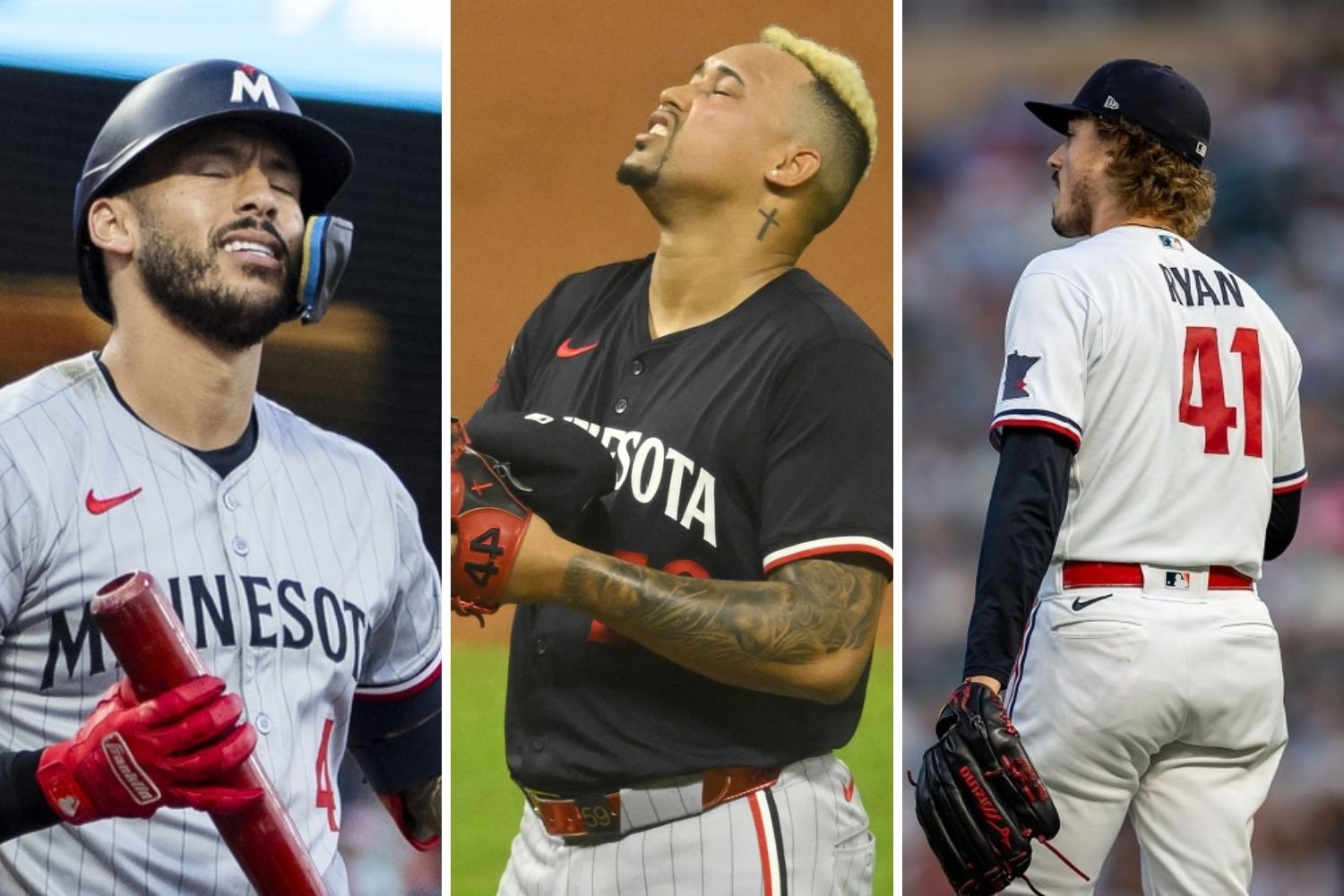 There are a lot of moments that one could point back to as particularly important or pivotal in the course of the 2024 Minnesota Twins season. I'd love to hear some submissions from others in the comments regarding the memories that will stick out most as they think back to this one. These are my choices for the 10 events, games, and dates that most succinctly tell the story of this unique year in Twins history: the flat start, the thrilling rise, the devastating fall. March 28th: Royce Lewis suffers serious quad injury after two at-bats After finishing the previous season with a bang in the playoffs, Lewis was glowing with hype out of spring training, finally entering a season healthy and ready to go. It lasted roughly an hour. The third baseman fueled his hype train by homering in his first at-bat and then singling in his second, but pulled up lame rounding second base in the third inning, forcing him to exit the game. He was later diagnosed with a significant quad strain, sucking immediate wind out of the team's sails. Lewis would miss two months, and it's very possible the injury he suffered on Opening Day contributed to a subsequent adductor strain and physical burnout. In the short term, the Twins' offense sputtered in his absence on the way to digging a 7-13 hole to open the season. April 22nd: Twins stomp White Sox 7-0 behind gem from Chris Paddack On this date, the Twins officially turned things around and put their slow start behind them. Minnesota took a big early lead and never looked back, with Paddack striking out 10 over seven shutout innings. Edouard Julien had three hits including a home run as the No. 2 hitter. The series-opening victory kicked off a 12-game winning streak and set the tone for a summer of complete dominance over the lowly White Sox. This breakout game offered some legitimate reasons for optimism from a team that was about to win a ton of games over the next four months. There were also some misleading positive indicators (Julien, Paddack). May 19th: Guardians walk off Jhoan Durán, complete sweep While beating up on Chicago helped keep Minnesota in contention all year, the Twins' inability to match Cleveland's fortitude is what kept them from ever fully breaking through or overtaking the division. The Guardians simply owned the Twins all year long. Cleveland's players stepped up in the biggest spots and Minnesota's fell apart. It was a persistent dynamic that defined their rivalry this season, and you could pick any number of different games to exemplify it. This one is most deeply burrowed in my memory, encompassing a range of tendencies that ultimately spelled the Twins' downfall. They wasted a good start: Paddack threw eight innings of two-run ball. Their offense repeatedly could not come up with a key hit: they went 0-for-8 with RISP. And with no margin for error, a Twins reliever gave up the game: Durán, who'd already been beaten by José Ramirez earlier in the series, took another loss on a three-run walk-off homer by Will Brennan. These were all ingredients in a gut-wrenching loss that fans lived through over and over again. The defeat secured a sweep for Cleveland, dropping the Twins to 0-5 against them in the wake of being swept by the Yankees at Target Field. The Twins were able to rebound from this early low point, at least temporarily, but in retrospect it was a dark omen of things to come later down the line. Watch highlight June 12th: Offense erupts for 17 runs in blowout win over Rockies The Twins lineup was cooking in June, scoring 150 runs with a .350 wOBA that ranked third in baseball. Their absolute throttling of Colorado on this night at Target Field was the highlight of the month, and the season, for the offense. It was a game that really seemed to showcase what was possible for this Twins team, encouraging fans to dream big. Carlos Correa, Royce Lewis and Byron Buxton were all in the lineup. Correa went 5-for-5, while fellow soon-to-be All-Star Willi Castro had three hits and a home run. Lewis also homered--his fourth in eight games since returning from the quad injury. Pablo López got the win, embarking on a stretch that would see him go 10-2 with a 2.75 ERA over his next 17 starts. July 13th: Carlos Correa scratched from lineup with bruised heel The aforementioned 17-9 win over Colorado on June 12th served as a launching pad. The Twins took off and went 18-8 over the next month, closing within five games of Cleveland for the division lead by the time they headed to San Francisco for their final series before the All-Star break. Correa had been an essential contributor over that stretch, slashing .373/.439/.647 with eight homers in 26 games to lock up an ASG nod and even generate some MVP buzz. On July 13th, shortly before their second game against the Giants, Correa was scratched from the lineup with what was ominously described as a heel contusion. Days later we learned that the shortstop was again dealing with plantar fasciitis, this time in his other foot. Initial optimism about the severity of the injury gradually evaporated as Correa struggled futilely for weeks on end to get back into playing shape. He didn't return until the middle of September, by which point his best efforts couldn't save a free-falling Twins team. July 30th: Twins acquire only Trevor Richards at trade deadline Every move the Twins made to acquire relief pitching during the last offseason flopped, with Jay Jackson, Josh Staumont and Steven Okert all being cut loose over the course of the season while Justin Topa didn't pitch a meaningful inning. The front office had an opportunity to atone somewhat for their misses and shore up the deteriorating bullpen at the deadline, but instead of making a real effort, their lone move was to trade for a replacement-level veteran in Richards from the Blue Jays. Somehow, doing something proved worse than doing nothing. Richards gave up six runs on 11 walks and approximately 6,000 wild pitches in 13 innings, and was designated for assignment a month after the Twins acquired him. August 3rd: Joe Ryan suffers season-ending teres major strain Ryan was on his way to the best season of his career when he took the mound at Wrigley for the rubber match of a three-game series against the Cubs. After getting through two innings, the right-hander signaled to trainers from the mound while facing his first batter in the third, and was quickly pulled from the game. It turned out to be a shoulder injury that would end his season. Up to that point, Ryan had been the team's best starter. Losing him and their best hitter within a one-month span--along with the trade deadline inaction--was a three-pronged disaster sequence setting up the collapse to come. August 18th: Jorge Alcala gives up 4 ER in loss to Rangers Despite being without several of their best players, the Twins admirably managed to hang on and rattle off victories through the first half of August. Following a series win over the Royals, the Twins had won their first three games in Texas. With a 4-0 lead in the seventh inning of the fourth, it looked like they were headed for a sweep, which would have pushed their record 18 games above .500 and pulled them within a game of first place. In part because the team's lone trade deadline acquisition was proving unusable, Rocco Baldelli turned to an overworked Jorge Alcalá to protect a seemingly comfortable four-run lead. Catastrophe ensued. The Rangers went double-double-flyout-homer-strikeout-homer, and within seven batters they had the lead. Watch highlight The Twins came back to tie it before losing in extras. Two days later they would blow a game in similar fashion, with Okert coming out of the bullpen and unraveling against the Padres. Thus, Minnesota's epic slide was officially underway. August 25th: Edouard Julien's brutal error contributes to another meltdown loss This was but one painful loss out of many down the stretch. I remember it very distinctly, though, because it was the moment I personally came to a grim realization: They're actually gonna screw this up, aren't they? Even after losing this game, the Twins were still statistically highly likely to reach the playoffs, but it was impossible to ignore the way this team was falling apart at the seams, coughing up close games in the same fashion over and over again due to sleepy hitting and sloppy execution while their best players remained sidelined indefinitely. In this one the Twins carried a 2-1 lead into the ninth before Julien's errant throw to second on a double-play ball turned a win into a loss almost single-handedly. September 22nd: Cole Irvin gives up back-breaking homer in loss to Red Sox Following the above loss, the Twins dropped four of their last five games in August before flipping the calendar to September, where things would truly go off the rails as Minnesota went 9-18 to spiral out of playoff position. You could point to any number of games as the death blow, including the 13-inning debacle against Miami that effectively knocked them out of the race, or the following lifeless loss against the Orioles that made it official. But for me, it was the nightcap of Minnesota's doubleheader against the Red Sox that all but marked the end of their season, serving as the culmination of so many recurring mistakes and shortcomings that plagued these Twins. Once again the offense couldn't find a pulse, going scoreless through four innings against Kutter Crawford. They finally scratched a couple runs across in the fifth, and but once again couldn't sustain an ounce of momentum. Again Baldelli pulled his starter at the first sign of trouble, and again the decision backfired, as Irvin replaced Zebby Matthews in the fifth and quickly gave up three runs to surrender the lead. Once again, the Twins shriveled up at the first sign of adversity, giving up six runs in the next inning to turn a close game into a blowout loss. The fact that this season sunk with Cole Irvin on the mound is almost poetic. Those are my picks for the most unforgettable moments in a season that will be memorable for all the wrong reasons. Let's hear yours!
- 21 comments
-
- 4
-
-

-
- carlos correa
- jhoan duran
- (and 3 more)
-
Real Talk: Rebuilding Is Not an Option for the Minnesota Twins
Nick Nelson posted an article in Twins
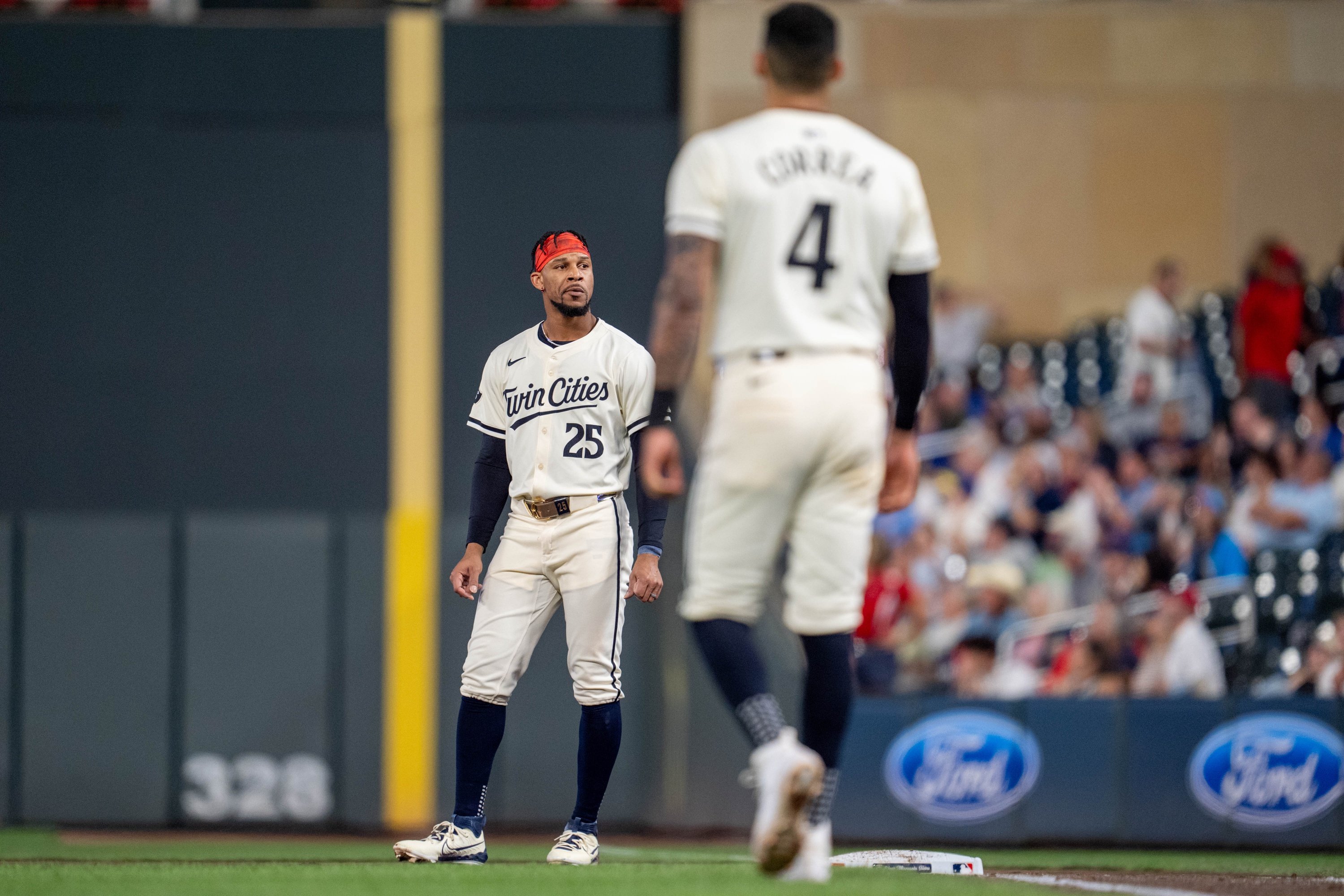 In a piece published in the Minnesota Star Tribune over the weekend, veteran columnist Patrick Reusse takes a rather odd angle in sizing up the Twins and their offseason outlook. "Pressure will be on Twins to spend money," the headline states, "but they should rebuild instead." This immediately raises a question: What does a "rebuild" look like for the Twins? Traditionally the term refers to a strategy that involves tearing down a roster to the studs, clearing out expensive veteran contracts and starting fresh--typically with low payroll and low expectations (but high draft picks!) in the short term. We saw the Astros do it successfully. We saw the White Sox do it less successfully. Jury is still out on the Orioles, who are currently in the process of trying to parlay their many years of losing and amassing young talent into a championship run. So far, not so good. To many of us fans, the act of "rebuilding" as portrayed above is a BS approach meant to provide cover for ownership to not spend and front offices to not try. I don't doubt, sadly, that if they had the capability the Twins might try to go that route. But let's be very clear: They don't have that capability. Carlos Correa is locked into for another four years and $140 million, guaranteed. He'll make $37 million next year and there's no getting around that. Byron Buxton, likewise, has a four more guaranteed years on his contract, at $15 million annually. Both players have full no-trade clauses, and even if one or both were willing to waive theirs, the front office wouldn't be able to find a trade partner willing to take on their contracts at this point given their health situations. Those are the two players a traditionally rebuilding team would aim to unload in efforts to start fresh. It's not an option for Minnesota. And Reusse knows that; he's not suggesting trading Correa or Buxton. Instead he references the decision Terry Ryan made more than a decade ago to sign Ricky Nolasco as an unhelpful, reactionary, overpriced free agent on a losing team. In fact, Reusse's summarizing conclusion literally amounts to: "No Nolascos." Which ... what?! I mean, yes, obviously. Don't sign Ricky Nolasco, literally or figuratively: He proved to be an ineffective malcontent, but also, throwing big money at unspectacular starting pitchers aging into their 30s is a losing proposition. Those aren't the kinds of moves Derek Falvey has ever made. It's part of the reason he replaced TR. There's no need to warn him against it. If we pull back from that specific example, we can perceive Reusse's mandate to be: Don't spend any more money on this roster. That's an argument that falls flat with me. I don't think anyone is realistically expecting payroll to jump back to the $160 million range where it was in 2023, but I also don't think local columnists need to be using their platform to urge ownership to not add at all, or even to cut further. It's nonsensical. As we just discussed, Correa and Buxton are going to be here next year, making a combined $50 million. They're still in their physical primes, and both just showed us that they can still play at an elite, game-changing level when healthy. The Twins invested all of this money into them with the idea of building a winning team around them. And that's the thing: They have plenty of components in place already to do so. Reusse spent much of his column talking about all the young talent the Twins have ushered in, or will soon, as a rationale for following his suggested approach. Hand it over to the young guys. This isn't a misguided notion, and the Nolasco example makes some sense through that lens: The Twins would've been better off just giving innings to their own young starters or experimenting with cheap reclamation signings versus running out a sub-mediocre Nolasco to eat innings on 90-loss teams. But that was a failure of decision-making, not investment. Thirteen million dollars can get you Ricky Nolasco or it can get you Nelson Cruz. If we want to take Reusse's "rebuilding" suggestion to a practical conclusion, the biggest move they could actually make would be trading Pablo López, whose salary will escalate to $21 million over the next three years. Unlike Correa or Buxton, he actually has surplus value and could bring in a haul. But is that actually a move Reusse, or anyone, would endorse? If we're talking about rebuilds, that's what we're talking about, so let's keep that term in the proper context. The foundation that's in place for the Twins is fairly immovable, so the question is whether they're going to build around it and maximize their chances of success, or further sabotage the champion vision that they've already invested so heavily in.
- 62 comments
-
- 14
-
-
-
- carlos correa
- byron buxton
- (and 1 more)
-
There's no breaking down this foundation. And that's not the worst thing, because it's a viable foundation in spite of how this latest season ended. The front office should be looking to add, not subtract. Image courtesy of Matt Blewett-Imagn Images In a piece published in the Minnesota Star Tribune over the weekend, veteran columnist Patrick Reusse takes a rather odd angle in sizing up the Twins and their offseason outlook. "Pressure will be on Twins to spend money," the headline states, "but they should rebuild instead." This immediately raises a question: What does a "rebuild" look like for the Twins? Traditionally the term refers to a strategy that involves tearing down a roster to the studs, clearing out expensive veteran contracts and starting fresh--typically with low payroll and low expectations (but high draft picks!) in the short term. We saw the Astros do it successfully. We saw the White Sox do it less successfully. Jury is still out on the Orioles, who are currently in the process of trying to parlay their many years of losing and amassing young talent into a championship run. So far, not so good. To many of us fans, the act of "rebuilding" as portrayed above is a BS approach meant to provide cover for ownership to not spend and front offices to not try. I don't doubt, sadly, that if they had the capability the Twins might try to go that route. But let's be very clear: They don't have that capability. Carlos Correa is locked into for another four years and $140 million, guaranteed. He'll make $37 million next year and there's no getting around that. Byron Buxton, likewise, has a four more guaranteed years on his contract, at $15 million annually. Both players have full no-trade clauses, and even if one or both were willing to waive theirs, the front office wouldn't be able to find a trade partner willing to take on their contracts at this point given their health situations. Those are the two players a traditionally rebuilding team would aim to unload in efforts to start fresh. It's not an option for Minnesota. And Reusse knows that; he's not suggesting trading Correa or Buxton. Instead he references the decision Terry Ryan made more than a decade ago to sign Ricky Nolasco as an unhelpful, reactionary, overpriced free agent on a losing team. In fact, Reusse's summarizing conclusion literally amounts to: "No Nolascos." Which ... what?! I mean, yes, obviously. Don't sign Ricky Nolasco, literally or figuratively: He proved to be an ineffective malcontent, but also, throwing big money at unspectacular starting pitchers aging into their 30s is a losing proposition. Those aren't the kinds of moves Derek Falvey has ever made. It's part of the reason he replaced TR. There's no need to warn him against it. If we pull back from that specific example, we can perceive Reusse's mandate to be: Don't spend any more money on this roster. That's an argument that falls flat with me. I don't think anyone is realistically expecting payroll to jump back to the $160 million range where it was in 2023, but I also don't think local columnists need to be using their platform to urge ownership to not add at all, or even to cut further. It's nonsensical. As we just discussed, Correa and Buxton are going to be here next year, making a combined $50 million. They're still in their physical primes, and both just showed us that they can still play at an elite, game-changing level when healthy. The Twins invested all of this money into them with the idea of building a winning team around them. And that's the thing: They have plenty of components in place already to do so. Reusse spent much of his column talking about all the young talent the Twins have ushered in, or will soon, as a rationale for following his suggested approach. Hand it over to the young guys. This isn't a misguided notion, and the Nolasco example makes some sense through that lens: The Twins would've been better off just giving innings to their own young starters or experimenting with cheap reclamation signings versus running out a sub-mediocre Nolasco to eat innings on 90-loss teams. But that was a failure of decision-making, not investment. Thirteen million dollars can get you Ricky Nolasco or it can get you Nelson Cruz. If we want to take Reusse's "rebuilding" suggestion to a practical conclusion, the biggest move they could actually make would be trading Pablo López, whose salary will escalate to $21 million over the next three years. Unlike Correa or Buxton, he actually has surplus value and could bring in a haul. But is that actually a move Reusse, or anyone, would endorse? If we're talking about rebuilds, that's what we're talking about, so let's keep that term in the proper context. The foundation that's in place for the Twins is fairly immovable, so the question is whether they're going to build around it and maximize their chances of success, or further sabotage the champion vision that they've already invested so heavily in. View full article
- 62 replies
-
- 2
-
-
- carlos correa
- byron buxton
- (and 1 more)
-
Facing another major payroll crunch in the offseason and needing to infuse the 2025 roster with whatever offensive upside they can, it won't be all that easy for the Twins to move on from Alex Kirilloff, even if there are plenty of sound arguments for doing so. Image courtesy of Charles LeClaire-Imagn Images Let's begin by acknowledging the obvious: There are plenty of reasons for the Twins to want be ready to part ways with Alex Kirilloff. Turning 27 this offseason, he's never come close to playing a full major-league season, and this past one was his worst. Trying to rebound from a third consecutive offseason surgery, Kirilloff was brought along slowly in spring training, but he was on the Opening Day roster and played plenty in the early going. In the first half of April, he actually played well, slashing .291/.344/.546 through 17 games as one of the lone positive contributors on offense. He was batting third or fourth in the lineup almost daily. That's the player we've been wanting to see. From there it was all downhill. Kirilloff slashed .154/.231/.298 in the next 40 games, looking progressively less capable at the plate up until the front office decided to option him to Triple-A in mid-June. Only at that point did the first baseman reveal he'd been dealing with a back injury, compelling the Twins to reverse their option and instead place him on the injured list, where he'd remain for the rest of the year. The team was not happy, that much was clear. And why would they be? You're not going to hold it against a guy for getting hurt--with Kirilloff's history, empathy would be the most valid inclination--but failing to disclose this fact while your play and the team suffers for it ... That's going to erode some goodwill. "The communication on that, if that was something that was worsening and he was unable to play, does need to be better and something he needs to be able to bring up and say,” manager Rocco Baldelli said at the time. “He had the opportunity to do it. Hopefully, we can do that better next time.” The $1.8 million question is: Will there a be a next time? Or will the Twins take the opportunity this offseason to sever ties with the last top draft pick of the Terry Ryan regime? It would be simple enough to do so; Kirilloff is eligible for arbitration, so the front office will face a decision to actively tender him a contract or not. MLB Trade Rumors just released their projected arbitration salaries for 2025, and they've got Kirilloff pegged at $1.8 million, an understandably modest raise over his $1.35 million salary in 2024. He's no longer a minimum-salary player, but Kirilloff isn't far off. And as rough as his latest campaign was from a variety of perspectives, I think the Twins will find it extremely difficult to discard his ability and potential at that price tag. Consider this: The Twins signed a 38-year-old Carlos Santana for $5.25 million this year. He was far beyond what most people expected, and still finished with a 109 OPS+ that was in the range of average. Kirilloff has a career OPS+ of 99, despite all the tribulations he's experienced since reaching the majors. In 2023 he set a career high with 88 games played and posted a 116 OPS+, which is better than any mark Santana has posted in the past five years. Ask yourself, realistically, would you rather bring back a 39-year-old Santana over a 27-year-old Kirilloff at about three times the cost? Especially when you know how else that money could be used, in terms of adding a badly-needed reliever or bench piece? Recency bias might say yes, but the 2025 season will be a different story. In terms of pure hitting ability, I don't think there's any argument to be made that Santana at 39 is better than Kirilloff at 27. Santana is better defensively, without question, but that only goes so far at first base. Kirilloff has been through a lot. Opportunities to watch him play his game uninhibited have been few and far between over the past few seasons. But it's important not to lose sight of his talent. This is the same guy whose standout bat once earned him a ranking as a top-10 prospect in baseball, and persuaded the Twins to call him up directly from the alternate site for a postseason debut in 2020. We've seen flashes of his special contact/power combination at times, including on occasion this past season. I wouldn't say my confidence level in Kirilloff is super high at this moment, and that's probably true of the Twins as well, but it behooves them to give him another chance, given their circumstances. You're not going to be able to find a first baseman with his offensive upside on the open market and the Twins are going to need upside in the lineup where they can get it. The caveat here, I guess, is that they might be convinced the injuries are too much for Kirilloff to overcome. He underwent multiple wrist surgeries before last year hurting his shoulder and requiring surgery on that. Now he's got this back issue which seems very serious; he was down for almost three months before attempting a comeback in early September, experiencing a "flare-up" of the back soreness and being shut down for the rest of the season. Maybe the Twins just think Kirilloff's body is no longer up to the task. If so, that'd be a reasonable motivator to move on and pocket the nearly $2 million he'd earn. But they'd be better be very sure of it if that's the case, because Kirilloff finally finding his stride elsewhere next year while the Twins search for production at first base or DH would be a bitter pill to swallow. Let's hope sour grapes don't lead to a bad decision. View full article
-
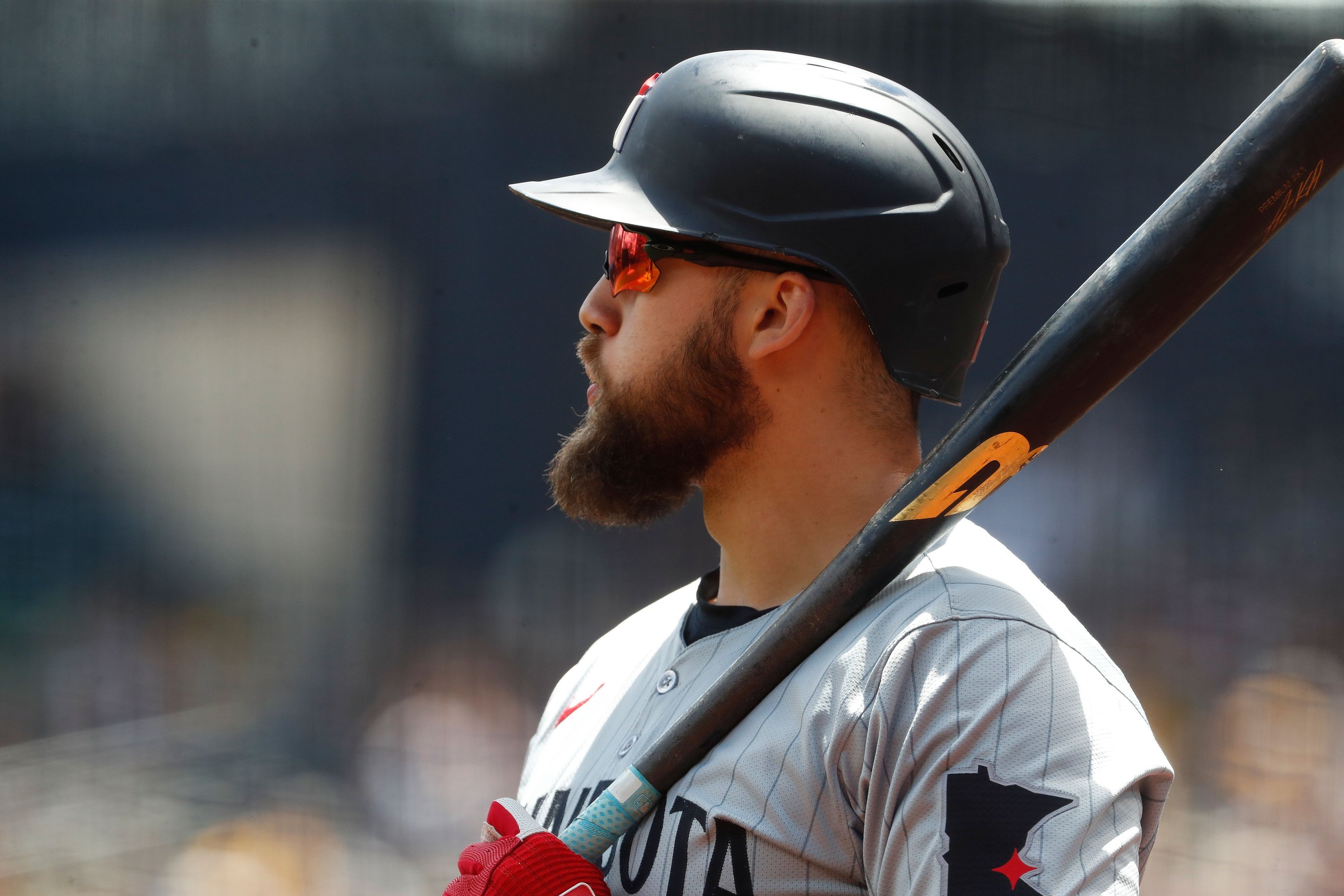 Let's begin by acknowledging the obvious: There are plenty of reasons for the Twins to want be ready to part ways with Alex Kirilloff. Turning 27 this offseason, he's never come close to playing a full major-league season, and this past one was his worst. Trying to rebound from a third consecutive offseason surgery, Kirilloff was brought along slowly in spring training, but he was on the Opening Day roster and played plenty in the early going. In the first half of April, he actually played well, slashing .291/.344/.546 through 17 games as one of the lone positive contributors on offense. He was batting third or fourth in the lineup almost daily. That's the player we've been wanting to see. From there it was all downhill. Kirilloff slashed .154/.231/.298 in the next 40 games, looking progressively less capable at the plate up until the front office decided to option him to Triple-A in mid-June. Only at that point did the first baseman reveal he'd been dealing with a back injury, compelling the Twins to reverse their option and instead place him on the injured list, where he'd remain for the rest of the year. The team was not happy, that much was clear. And why would they be? You're not going to hold it against a guy for getting hurt--with Kirilloff's history, empathy would be the most valid inclination--but failing to disclose this fact while your play and the team suffers for it ... That's going to erode some goodwill. "The communication on that, if that was something that was worsening and he was unable to play, does need to be better and something he needs to be able to bring up and say,” manager Rocco Baldelli said at the time. “He had the opportunity to do it. Hopefully, we can do that better next time.” The $1.8 million question is: Will there a be a next time? Or will the Twins take the opportunity this offseason to sever ties with the last top draft pick of the Terry Ryan regime? It would be simple enough to do so; Kirilloff is eligible for arbitration, so the front office will face a decision to actively tender him a contract or not. MLB Trade Rumors just released their projected arbitration salaries for 2025, and they've got Kirilloff pegged at $1.8 million, an understandably modest raise over his $1.35 million salary in 2024. He's no longer a minimum-salary player, but Kirilloff isn't far off. And as rough as his latest campaign was from a variety of perspectives, I think the Twins will find it extremely difficult to discard his ability and potential at that price tag. Consider this: The Twins signed a 38-year-old Carlos Santana for $5.25 million this year. He was far beyond what most people expected, and still finished with a 109 OPS+ that was in the range of average. Kirilloff has a career OPS+ of 99, despite all the tribulations he's experienced since reaching the majors. In 2023 he set a career high with 88 games played and posted a 116 OPS+, which is better than any mark Santana has posted in the past five years. Ask yourself, realistically, would you rather bring back a 39-year-old Santana over a 27-year-old Kirilloff at about three times the cost? Especially when you know how else that money could be used, in terms of adding a badly-needed reliever or bench piece? Recency bias might say yes, but the 2025 season will be a different story. In terms of pure hitting ability, I don't think there's any argument to be made that Santana at 39 is better than Kirilloff at 27. Santana is better defensively, without question, but that only goes so far at first base. Kirilloff has been through a lot. Opportunities to watch him play his game uninhibited have been few and far between over the past few seasons. But it's important not to lose sight of his talent. This is the same guy whose standout bat once earned him a ranking as a top-10 prospect in baseball, and persuaded the Twins to call him up directly from the alternate site for a postseason debut in 2020. We've seen flashes of his special contact/power combination at times, including on occasion this past season. I wouldn't say my confidence level in Kirilloff is super high at this moment, and that's probably true of the Twins as well, but it behooves them to give him another chance, given their circumstances. You're not going to be able to find a first baseman with his offensive upside on the open market and the Twins are going to need upside in the lineup where they can get it. The caveat here, I guess, is that they might be convinced the injuries are too much for Kirilloff to overcome. He underwent multiple wrist surgeries before last year hurting his shoulder and requiring surgery on that. Now he's got this back issue which seems very serious; he was down for almost three months before attempting a comeback in early September, experiencing a "flare-up" of the back soreness and being shut down for the rest of the season. Maybe the Twins just think Kirilloff's body is no longer up to the task. If so, that'd be a reasonable motivator to move on and pocket the nearly $2 million he'd earn. But they'd be better be very sure of it if that's the case, because Kirilloff finally finding his stride elsewhere next year while the Twins search for production at first base or DH would be a bitter pill to swallow. Let's hope sour grapes don't lead to a bad decision.