



Nick Nelson
-
Posts
8,319 -
Joined
-
Last visited
-
Days Won
56
Content Type
Profiles
News
Minnesota Twins Videos
2026 Minnesota Twins Top Prospects Ranking
2022 Minnesota Twins Draft Picks
Minnesota Twins Free Agent & Trade Rumors, Notes, & Tidbits
Guides & Resources
2023 Minnesota Twins Draft Picks
The Minnesota Twins Players Project
2024 Minnesota Twins Draft Picks
2025 Minnesota Twins Draft Pick Tracker
2026 Minnesota Twins Draft Tracker: Picks & Bonuses
Forums
Blogs
Events
Store
Downloads
Gallery
Everything posted by Nick Nelson
-
 If you were hoping the Twins could overcome the most irksome aspect of their offensive game, then you've got to be pleased with what you're seeing this year. Amazingly, they've transformed into one of the least strikeout-prone teams in the majors. Image courtesy of John Froschauer-USA TODAY Sports As you are surely aware, the Minnesota Twins offense set the major-league record for strikeouts in 2023. Around this time last year, as the team hurtled toward their dubious distinction, Rocco Baldelli acknowledged, "The strikeouts, they are an issue, and there’s no way around that." Concerns around the stylistic tendencies of the Twins offense were arguably validated when the team crumpled at home against Houston in the ALDS, amid a flurry of nonstop strikeouts. Minnesota hitters piled up 28 of them in Games 3 and 4 while scoring three total runs, in front of packed houses at Target Field. It felt frustratingly fitting that the final game of the 2023 season -- a 3-2 series-clinching loss to the Astros -- ended with the last four Twins batters (and eight of the last 10) going down on strikeouts. This year, we all hoped to see some positive regression in the contact department, even as the Twins showed no inclination to shy away from their general approach of prioritizing power over contact. Early on, the signs were not good. Through their first 20 games, while slumping to a 7-13 start behind an offense that couldn't kick into gear, Minnesota posted the fourth-highest strikeout rate in the majors (26.5%), batting .195 as a team. Their turnaround since that point has been astonishing. In 65 games since Apr. 22, the Twins have the fifth-lowest strikeout rate in all of baseball, at 19.5 percent. In the month of June, the Minnesota Twins had the lowest strikeout rate in the American League, and second-lowest in baseball. It's remarkable, especially because they haven't sacrificed anything in the way of power or potency of contact. Over these past 65 games, the Twins rank fourth in the majors in Isolated Power (ISO), behind only the formidable Orioles, Yankees and Dodgers. Minnesota has struck out the least of any of these teams. How far we've come! It's almost impossible to comprehend how quickly the Twins went from being one of the most strikeout-prone teams in baseball to one of the least, and how impactful this has been for their offensive production. (Entering play on Wednesday, the Twins led MLB in batting average, wOBA and runs scored since Apr. 22. They also have the best record in the AL during that span.) Just what are the factors driving this stunning turn of events? There are three primary developments that help tell the story: Offseason Roster Changes This is the fairly obvious explanation. Last year, Joey Gallo and Michael A. Taylor combined to strike out 272 times in 770 plate appearances (37.8%), ranking first and eighth in the AL in strikeout rate, respectively. Merely removing them from the lineup was bound to at least help the Twins gravitate back toward the pack following a historic year for whiffs, especially when the players brought in to functionally replace them (Carlos Santana and Manuel Margot) are contact-oriented hitters. Demotions of Strikeout-Prone Batters Over the course of the first half, the Twins sequentially demoted Matt Wallner, Edouard Julien and Alex Kirilloff. Those three combined to strike out 130 times in 405 plate appearances (32.1%) during their time in the majors, holding three of the four highest strikeout rates on the team. And here again: It's not just removal of K-prone players from the mix -- it's replacing them with players who carry the opposite profile, like José Miranda (15th-lowest K-rate in MLB) and Austin Martin. Substantial Improvement and Adjustments from Within This is the most encouraging factor behind Minnesota's huge strides in mitigating the strikeouts: much of it is simply coming from players still on the roster who are striking out far less than they did previously. The two other players among the top five on the team in strikeout rate, alongside Wallner, Julien and Kirilloff, are Willi Castro and Byron Buxton, who perfectly exemplify this trend. It's easy to forget now, but Castro got off to a really rough start at the plate this year. He struck out in 21 of his first 47 plate appearances, and halfway through April he led the majors, with his 43.8% mark edging Gallo's 40.6%. Since Apr. 16, Castro has struck out in a mere 21.4% of his plate appearances. Buxton's struggles at the plate persisted a bit longer than Castro's, but he, too, has completely flipped the narrative on his strikeout tendencies. Buck has played 64 games this year, posting a 31.9% punchout rate in the first 32 and a 22.6% K-rate in the next 32. Trevor Larnach is another example of a player who has reinvented himself when it comes to making contact. He entered this season with a 32.6% career strikeout rate in the majors; his inability to get the bat on the ball consistently stood as a prime barrier to success. In 2024 Larnach has struck out just 33 times in 183 plate appearances (18.0%), and uncoincidentally, it's all coming together, as he finds himself batting second or third against righties. Every team, naturally, swings more often with two strikes than before they get to that point in the count. You have to protect the plate in those situations. For all of 2023 and much of the first month this year, though, the Twins were one of the worst teams in the league at making those adjustments and covering the zone once failing to do so meant going down looking. Since Apr. 22, though, they've made the switch. Some of that is sending down overly passive players like Julien. Some of it is guys like Castro and Buxton tweaking their approach. No matter the reasons, though, they're now a tougher set of at-bats for opposing pitchers. The strikeout demons that notoriously come to haunt the Twins have evidently been slain, through a combination of strategic roster moves, hitter adjustments and effective coaching support. That bodes very well for the offense's outlook in the second half and beyond, and very badly for opposing pitchers who are tasked with facing the best lineup in baseball. View full article
 -
From Worst to Best: The Twins Have Slain Their Strikeout Demons
Nick Nelson posted an article in Twins
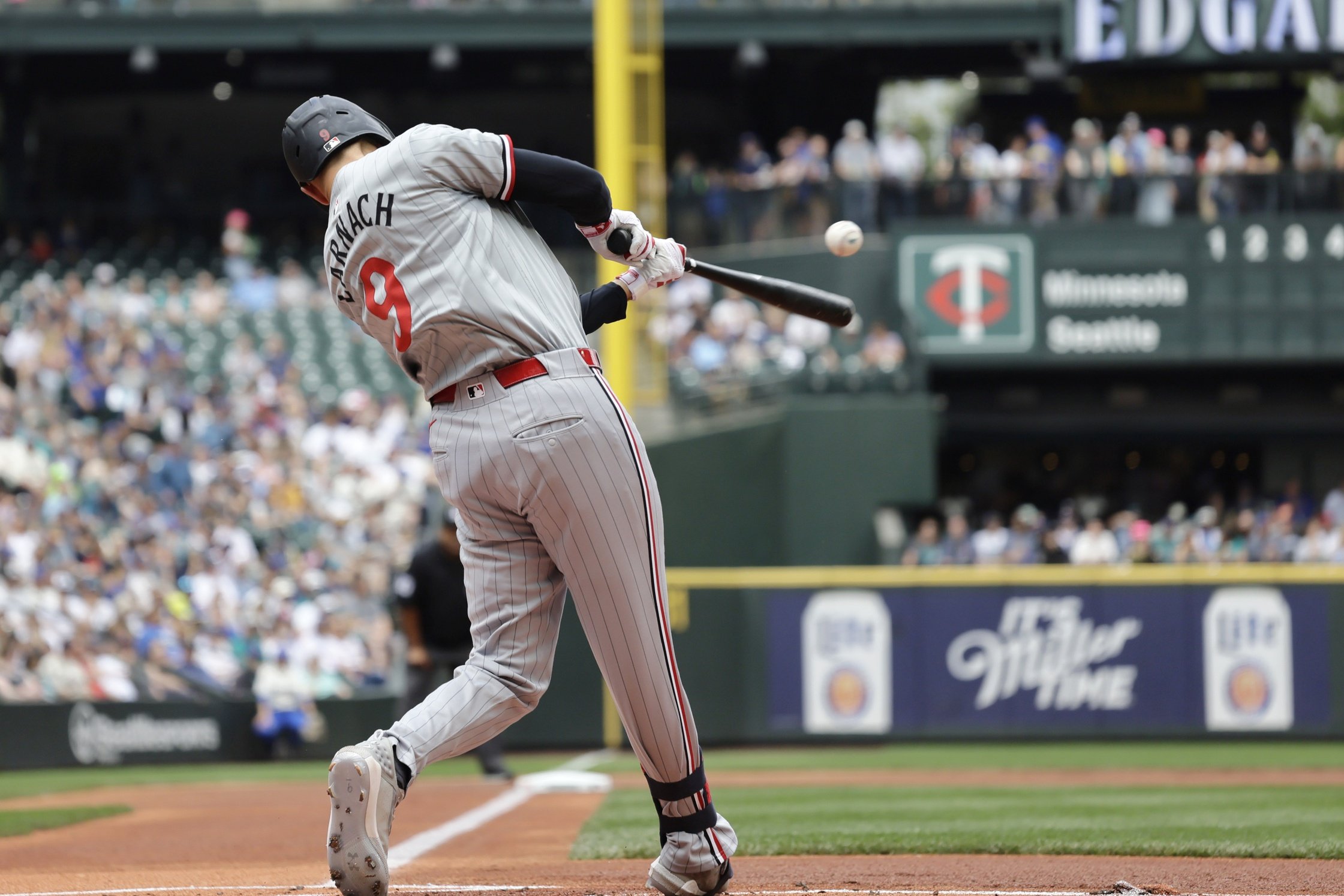 As you are surely aware, the Minnesota Twins offense set the major-league record for strikeouts in 2023. Around this time last year, as the team hurtled toward their dubious distinction, Rocco Baldelli acknowledged, "The strikeouts, they are an issue, and there’s no way around that." Concerns around the stylistic tendencies of the Twins offense were arguably validated when the team crumpled at home against Houston in the ALDS, amid a flurry of nonstop strikeouts. Minnesota hitters piled up 28 of them in Games 3 and 4 while scoring three total runs, in front of packed houses at Target Field. It felt frustratingly fitting that the final game of the 2023 season -- a 3-2 series-clinching loss to the Astros -- ended with the last four Twins batters (and eight of the last 10) going down on strikeouts. This year, we all hoped to see some positive regression in the contact department, even as the Twins showed no inclination to shy away from their general approach of prioritizing power over contact. Early on, the signs were not good. Through their first 20 games, while slumping to a 7-13 start behind an offense that couldn't kick into gear, Minnesota posted the fourth-highest strikeout rate in the majors (26.5%), batting .195 as a team. Their turnaround since that point has been astonishing. In 65 games since Apr. 22, the Twins have the fifth-lowest strikeout rate in all of baseball, at 19.5 percent. In the month of June, the Minnesota Twins had the lowest strikeout rate in the American League, and second-lowest in baseball. It's remarkable, especially because they haven't sacrificed anything in the way of power or potency of contact. Over these past 65 games, the Twins rank fourth in the majors in Isolated Power (ISO), behind only the formidable Orioles, Yankees and Dodgers. Minnesota has struck out the least of any of these teams. How far we've come! It's almost impossible to comprehend how quickly the Twins went from being one of the most strikeout-prone teams in baseball to one of the least, and how impactful this has been for their offensive production. (Entering play on Wednesday, the Twins led MLB in batting average, wOBA and runs scored since Apr. 22. They also have the best record in the AL during that span.) Just what are the factors driving this stunning turn of events? There are three primary developments that help tell the story: Offseason Roster Changes This is the fairly obvious explanation. Last year, Joey Gallo and Michael A. Taylor combined to strike out 272 times in 770 plate appearances (37.8%), ranking first and eighth in the AL in strikeout rate, respectively. Merely removing them from the lineup was bound to at least help the Twins gravitate back toward the pack following a historic year for whiffs, especially when the players brought in to functionally replace them (Carlos Santana and Manuel Margot) are contact-oriented hitters. Demotions of Strikeout-Prone Batters Over the course of the first half, the Twins sequentially demoted Matt Wallner, Edouard Julien and Alex Kirilloff. Those three combined to strike out 130 times in 405 plate appearances (32.1%) during their time in the majors, holding three of the four highest strikeout rates on the team. And here again: It's not just removal of K-prone players from the mix -- it's replacing them with players who carry the opposite profile, like José Miranda (15th-lowest K-rate in MLB) and Austin Martin. Substantial Improvement and Adjustments from Within This is the most encouraging factor behind Minnesota's huge strides in mitigating the strikeouts: much of it is simply coming from players still on the roster who are striking out far less than they did previously. The two other players among the top five on the team in strikeout rate, alongside Wallner, Julien and Kirilloff, are Willi Castro and Byron Buxton, who perfectly exemplify this trend. It's easy to forget now, but Castro got off to a really rough start at the plate this year. He struck out in 21 of his first 47 plate appearances, and halfway through April he led the majors, with his 43.8% mark edging Gallo's 40.6%. Since Apr. 16, Castro has struck out in a mere 21.4% of his plate appearances. Buxton's struggles at the plate persisted a bit longer than Castro's, but he, too, has completely flipped the narrative on his strikeout tendencies. Buck has played 64 games this year, posting a 31.9% punchout rate in the first 32 and a 22.6% K-rate in the next 32. Trevor Larnach is another example of a player who has reinvented himself when it comes to making contact. He entered this season with a 32.6% career strikeout rate in the majors; his inability to get the bat on the ball consistently stood as a prime barrier to success. In 2024 Larnach has struck out just 33 times in 183 plate appearances (18.0%), and uncoincidentally, it's all coming together, as he finds himself batting second or third against righties. Every team, naturally, swings more often with two strikes than before they get to that point in the count. You have to protect the plate in those situations. For all of 2023 and much of the first month this year, though, the Twins were one of the worst teams in the league at making those adjustments and covering the zone once failing to do so meant going down looking. Since Apr. 22, though, they've made the switch. Some of that is sending down overly passive players like Julien. Some of it is guys like Castro and Buxton tweaking their approach. No matter the reasons, though, they're now a tougher set of at-bats for opposing pitchers. The strikeout demons that notoriously come to haunt the Twins have evidently been slain, through a combination of strategic roster moves, hitter adjustments and effective coaching support. That bodes very well for the offense's outlook in the second half and beyond, and very badly for opposing pitchers who are tasked with facing the best lineup in baseball.
- 39 comments
-
- 8
-

-

-
- byron buxton
- willi castro
- (and 1 more)
-
 Weekly Snapshot: Mon, 6/24 through Sun, 6/30 *** Record Last Week: 4-2 (Overall: 47-37) Run Differential Last Week: +16 (Overall: +39) Standing: 2nd Place in AL Central (6.0 GB) Last Week's Game Results: Game 79 | ARI 5, MIN 4: Bad Breaks Late Lead to One-Run Loss Game 80 | MIN 8, ARI 3: Miranda Leads Charge in Lopsided Win Game 81 | MIN 13, ARI 6: Twins Steamroll D-backs in Festa's Debut Game 82 | SEA 3, MIN 2: Defensive Miscues Prove Costly in Tight Game Game 83 | MIN 5, SEA 1: Buxton Bashes, Backs Up López Excellence Game 84 | MIN 5, SEA 3: Larnach's Homer Lifts Twins to Series Win IF YOU'D RATHER LISTEN TO THE WEEK IN REVIEW THAN READ IT, YOU CAN NOW FIND IT IN PODCAST FORM. GET THE LATEST EPISODE HERE. ALSO AVAILABLE ON APPLE AND SPOTIFY. NEWS & NOTES We wondered last week if the Twins might choose to give Chris Paddack a break following his second straight alarming performance on the mound. Indeed they did, placing Paddack on the injured list on Tuesday with what they described as right arm fatigue. It's unclear how long Paddack might be sidelined, although it would be no surprise if he's out through the All-Star break. What matters most is ensuring he can be strong and healthy at the end of the season, and into the playoffs. In the meantime, Minnesota's top pitching prospect gets an audition. Following an interim bullpen stint from Ronny Henriquez, David Festa was called up to start Thursday's series finale in Arizona. Festa showed some positive signs and was awarded the win in his debut, despite giving up five earned runs in five innings. He should at least get a couple more chances to show what he can do. HIGHLIGHTS If Byron Buxton is truly rounding back into his top form, or something close to it, the league is in trouble. Buxton was the key difference-maker in Saturday night's win against Seattle, driving in four of the team's five runs. Three of those came on a monster home run to left-center, Buxton's fourth in five games. Days earlier he made key plays on the bases to keep rallies rolling in a win over the D-backs. For the week he was 8-for-19 with three homers and nine RBIs in five games. Buxton started the month of June on an 0-for-14 skid. Since then he has multiple hits in six of 17 games started, and is batting .343 with 10 extra-base hits. Importantly, his strikeout rate during this span is below 20%, which makes the success feel more sustainable than a fleeting hot streak. He struck out twice in 22 plate appearance last week. From all appearances Buxton is feeling as good as he has in a long time. He's moving around well and no longer routinely wincing visibly after exerting himself. It was really encouraging to see Buxton spring up quickly after a somewhat scary wall collision in Arizona on Tuesday, no worse for the wear. The Twins are not only much more enjoyable to watch when Buck is doing his thing like this, but they can also be an extremely tough team to stop, as we've seen. Buxton's emergence is bringing the Twins' star nucleus into full activation. Carlos Correa keeps on raking and taking great ABs; he went 7-for-17 this past week with three walks and just one strikeout. A scary moment unfolded on Thursday when Correa got hit by a pitch in the wrist and immediately pulled himself from the game, seemingly fearing a major injury, but X-rays thankfully came back negative. (Yet another example of the team's refreshingly improved fortune on the health front this season.) Correa was not only in the lineup the next day, but he hit a home run, his fifth in the month of June. His .311 batting average ranks fourth in the American League. Royce Lewis, naturally, fell into a 1-for-25 slump shortly after bragging that he doesn't do the whole slumping thing, but he's still got an OPS above 1.000 for the season and is clearly a threat every time he steps into the box. Alongside these three, Minnesota continues to receive strong contributions from Willi Castro (8-for-25 with a double, triple and home run), Carlos Santana (8-for-25 with three doubles), and José Miranda (8-for-18 with two doubles, six RBIs and zero strikeouts). This has been arguably the best offense in baseball for a prolonged period, and credit is deserved for all involved. Since April 22nd, when they put an ugly 7-13 start behind them, the Twins are tied with the Yankees for most runs scored in the majors. Minnesota is at or near the top of the leaderboard in virtually every metric during that span, with an approach that is yielding both contact and power. They lead the American League in batting average in these 64 games, and have the fifth-lowest K-rate in the majors. On Sunday the Twins had a player homer in a franchise-record 19th consecutive game. As long as they can stay mostly healthy, there's not much reason to think the Twins can't keep running up the score in the second half. Minnesota's lineup is deep and formidable, and they're only reaching new levels with Buxton finding himself at the plate, and Trevor Larnach's great swings finally starting to bear fruit. On top of that, they've got Brooks Lee and Matt Wallner knocking on the door rather aggressively in Triple-A. The offensive outlook for this club is blindingly bright. In the rotation, Pablo López followed up his previous gem against Oakland with another sterling performance on Saturday, holding Seattle to one run in six innings with nine strikeouts. His ERA is back down below five. Bailey Ober posted the very same line one night earlier (6 IP, 1 ER, 9 K) and looks as locked in as he has all year. Joe Ryan struck out 10 with no walks allowed on Sunday, improving his K/BB ratio to a sensational 115-to-15 for the season. Twins starters lead the American League in strikeout rate at 24 percent. In the bullpen, Jorge Alcalá is establishing himself as a huge bright spot. He gave up a tough-luck run and took the loss on Tuesday in Arizona, but Alcalá bounced back with scoreless innings on Friday and Saturday, striking out four. In 12 June appearances, the righty has allowed only two earned runs in 13 ⅔ innings (1.32 ERA), and he hasn't allowed a home run all year. Now that the Twins have fully committed to him in a one-inning role, Alcalá is blossoming, further dialing up his already impressive velocity. On Saturday night he registered a career-high 101.2 MPH on the gun. LOWLIGHTS In close games, you can't afford to miss on the little things, and that was the story yet again for the Twins, who lost their fifth and sixth consecutive one-run games in the series openers against Arizona and Seattle. A rare hiccup from Griffin Jax, who walked the leadoff man in the eighth inning on Friday and watched him come around to score the tying run on an error, loomed larger than it needed to. Cole Sands later took the loss in the 10th without allowing a grounder to leave the infield. Earlier in that game, the first run scored when Christian Vázquez failed to corral an in-time throw at home and apply the tag, worsening matters on a night where he went 0-for-4 at the plate. He was 1-for-11 last week and his OPS is down to a miserable .459 on the season. It's obviously frustrating to see these lackluster showings pile up, and overall Vázquez has clearly been a big disappointment, but I do think the calls for releasing him are a bit over the top. For one thing, it's not happening, with the veteran still owed about $15 million through next year. But also, he hasn't been as detrimental to the team as some would suggest. He's been good defensively, Friday's misplay notwithstanding, and while Vázquez has been well below the offensive standard for even a part-time glove-first catcher, it is a role with low offensive expectations. Even with the 33-year-old backstop starting every other game, you can live with him buried at the bottom of this ultra-deep lineup. We've seen that; Vázquez's presence hasn't stopped the Twins developing into the league's most potent offense. I hope he can show he's got a little something left in the tank during the second half, but if not, it isn't the biggest deal in the world. The Twins showed they have no problem going with Ryan Jeffers exclusively in the playoffs, and keeping Vázquez in the regular rotation now helps preserve Jeffers physically for that crucial late stage of the season. Similarly, it's tough for me to get too worked up about the team's recent costly late-game lapses. Yes, it is true that Minnesota's last six losses have all come by one run, and relievers were tagged with the L in each, but the way many have played out is akin to what we saw on Tuesday and Friday: ordinary bad breaks and isolated miscues turning the tides in tight games. So it goes. Even with the recent string of one-run losses, the Twins are still above .500 in such games on the season (14-11). But that's not to say the bullpen couldn't use an upgrade or two. TRENDING STORYLINE As we turn the calendar to July, we're officially entering trade deadline season in Major League Baseball. The Twins are very much in the buyer category as they look to surmount Cleveland's lead in the division and put together another postseason run. Minnesota has a flourishing minor-league system with numerous high-performing, highly-regarded prospects they could dangle in the hunt for impact talent, although it remains to be seen how their self-imposed financial limitations may or may not limit their options. Aaron Gleeman teamed up with Eno Sarris at The Athletic to put together an exhaustive overview of players who might be available on the trade market, categorized by position and tier. While there's clearly not much of an offensive need for the Twins, as things stand, there's a good argument for targeting a frontline starter and an almost undeniable case for targeting relief help. Brock Stewart is gradually making his way back from a shoulder injury and reportedly making progress in bullpen sessions, but it's tough to feel confident in what you're getting from him the rest of the way. Jhoan Durán is an uncertainty right now amidst lost velocity and strikeouts. The plainest need for the Twins, in terms of taking the next step as a premier contender, is at least one more high-caliber relief arm for the late innings. As such, I'll be keeping a close eye on the likes of Mason Miller, Tanner Scott, Paul Sewald and even our old friend Ryan Pressly in the coming weeks. Will they be shopped? If so, how will their markets take shape? The Twins have certainly seen the downside of paying the freight for bullpen help at the deadline (see: Jorge López) but to stand still this year would feel irresponsible, barring major developments in the next month. LOOKING AHEAD The Twins return home on Tuesday from their successful 6-3 road trip out west for a six-game home stand, with three against the Tigers and three the Astros. Tuesday's opener against Detroit will make for a great matchup, with Minnesota's elite lineup against lefties facing off against perhaps the best left-handed pitcher in baseball, Tarik Skubal. Houston is on the rise in the AL West following a slow start, with a lineup that will present challenges for Twins pitching. TUESDAY, JULY 2: TIGERS @ TWINS – LHP Tarik Skubal v. RHP Simeon Woods Richardson WEDNESDAY, JULY 3: TIGERS @ TWINS – RHP Jack Flaherty v. RHP David Festa THURSDAY, JULY 4: TIGERS @ TWINS – RHP Kenta Maeda v. RHP Bailey Ober FRIDAY, JULY 5: ASTROS @ TWINS – TBD v. RHP Pablo Lopez SATURDAY, JULY 6: ASTROS @ TWINS – RHP Hunter Brown v. RHP Joe Ryan SUNDAY, JULY 7: ASTROS @ TWINS – RHP Spencer Arrighetti v. RHP Simeon Woods Richardson
- 47 comments
-
- 11
-
-
- byron buxton
- carlos correa
- (and 1 more)
-
The Minnesota Twins completed a highly successful road trip, taking two of three against both Arizona and Seattle this past week behind a lineup that is firmly establishing itself as one of the best and deepest in the major leagues. Image courtesy of John Froschauer-USA TODAY Sports Weekly Snapshot: Mon, 6/24 through Sun, 6/30 *** Record Last Week: 4-2 (Overall: 47-37) Run Differential Last Week: +16 (Overall: +39) Standing: 2nd Place in AL Central (6.0 GB) Last Week's Game Results: Game 79 | ARI 5, MIN 4: Bad Breaks Late Lead to One-Run Loss Game 80 | MIN 8, ARI 3: Miranda Leads Charge in Lopsided Win Game 81 | MIN 13, ARI 6: Twins Steamroll D-backs in Festa's Debut Game 82 | SEA 3, MIN 2: Defensive Miscues Prove Costly in Tight Game Game 83 | MIN 5, SEA 1: Buxton Bashes, Backs Up López Excellence Game 84 | MIN 5, SEA 3: Larnach's Homer Lifts Twins to Series Win IF YOU'D RATHER LISTEN TO THE WEEK IN REVIEW THAN READ IT, YOU CAN NOW FIND IT IN PODCAST FORM. GET THE LATEST EPISODE HERE. ALSO AVAILABLE ON APPLE AND SPOTIFY. NEWS & NOTES We wondered last week if the Twins might choose to give Chris Paddack a break following his second straight alarming performance on the mound. Indeed they did, placing Paddack on the injured list on Tuesday with what they described as right arm fatigue. It's unclear how long Paddack might be sidelined, although it would be no surprise if he's out through the All-Star break. What matters most is ensuring he can be strong and healthy at the end of the season, and into the playoffs. In the meantime, Minnesota's top pitching prospect gets an audition. Following an interim bullpen stint from Ronny Henriquez, David Festa was called up to start Thursday's series finale in Arizona. Festa showed some positive signs and was awarded the win in his debut, despite giving up five earned runs in five innings. He should at least get a couple more chances to show what he can do. HIGHLIGHTS If Byron Buxton is truly rounding back into his top form, or something close to it, the league is in trouble. Buxton was the key difference-maker in Saturday night's win against Seattle, driving in four of the team's five runs. Three of those came on a monster home run to left-center, Buxton's fourth in five games. Days earlier he made key plays on the bases to keep rallies rolling in a win over the D-backs. For the week he was 8-for-19 with three homers and nine RBIs in five games. Buxton started the month of June on an 0-for-14 skid. Since then he has multiple hits in six of 17 games started, and is batting .343 with 10 extra-base hits. Importantly, his strikeout rate during this span is below 20%, which makes the success feel more sustainable than a fleeting hot streak. He struck out twice in 22 plate appearance last week. From all appearances Buxton is feeling as good as he has in a long time. He's moving around well and no longer routinely wincing visibly after exerting himself. It was really encouraging to see Buxton spring up quickly after a somewhat scary wall collision in Arizona on Tuesday, no worse for the wear. The Twins are not only much more enjoyable to watch when Buck is doing his thing like this, but they can also be an extremely tough team to stop, as we've seen. Buxton's emergence is bringing the Twins' star nucleus into full activation. Carlos Correa keeps on raking and taking great ABs; he went 7-for-17 this past week with three walks and just one strikeout. A scary moment unfolded on Thursday when Correa got hit by a pitch in the wrist and immediately pulled himself from the game, seemingly fearing a major injury, but X-rays thankfully came back negative. (Yet another example of the team's refreshingly improved fortune on the health front this season.) Correa was not only in the lineup the next day, but he hit a home run, his fifth in the month of June. His .311 batting average ranks fourth in the American League. Royce Lewis, naturally, fell into a 1-for-25 slump shortly after bragging that he doesn't do the whole slumping thing, but he's still got an OPS above 1.000 for the season and is clearly a threat every time he steps into the box. Alongside these three, Minnesota continues to receive strong contributions from Willi Castro (8-for-25 with a double, triple and home run), Carlos Santana (8-for-25 with three doubles), and José Miranda (8-for-18 with two doubles, six RBIs and zero strikeouts). This has been arguably the best offense in baseball for a prolonged period, and credit is deserved for all involved. Since April 22nd, when they put an ugly 7-13 start behind them, the Twins are tied with the Yankees for most runs scored in the majors. Minnesota is at or near the top of the leaderboard in virtually every metric during that span, with an approach that is yielding both contact and power. They lead the American League in batting average in these 64 games, and have the fifth-lowest K-rate in the majors. On Sunday the Twins had a player homer in a franchise-record 19th consecutive game. As long as they can stay mostly healthy, there's not much reason to think the Twins can't keep running up the score in the second half. Minnesota's lineup is deep and formidable, and they're only reaching new levels with Buxton finding himself at the plate, and Trevor Larnach's great swings finally starting to bear fruit. On top of that, they've got Brooks Lee and Matt Wallner knocking on the door rather aggressively in Triple-A. The offensive outlook for this club is blindingly bright. In the rotation, Pablo López followed up his previous gem against Oakland with another sterling performance on Saturday, holding Seattle to one run in six innings with nine strikeouts. His ERA is back down below five. Bailey Ober posted the very same line one night earlier (6 IP, 1 ER, 9 K) and looks as locked in as he has all year. Joe Ryan struck out 10 with no walks allowed on Sunday, improving his K/BB ratio to a sensational 115-to-15 for the season. Twins starters lead the American League in strikeout rate at 24 percent. In the bullpen, Jorge Alcalá is establishing himself as a huge bright spot. He gave up a tough-luck run and took the loss on Tuesday in Arizona, but Alcalá bounced back with scoreless innings on Friday and Saturday, striking out four. In 12 June appearances, the righty has allowed only two earned runs in 13 ⅔ innings (1.32 ERA), and he hasn't allowed a home run all year. Now that the Twins have fully committed to him in a one-inning role, Alcalá is blossoming, further dialing up his already impressive velocity. On Saturday night he registered a career-high 101.2 MPH on the gun. LOWLIGHTS In close games, you can't afford to miss on the little things, and that was the story yet again for the Twins, who lost their fifth and sixth consecutive one-run games in the series openers against Arizona and Seattle. A rare hiccup from Griffin Jax, who walked the leadoff man in the eighth inning on Friday and watched him come around to score the tying run on an error, loomed larger than it needed to. Cole Sands later took the loss in the 10th without allowing a grounder to leave the infield. Earlier in that game, the first run scored when Christian Vázquez failed to corral an in-time throw at home and apply the tag, worsening matters on a night where he went 0-for-4 at the plate. He was 1-for-11 last week and his OPS is down to a miserable .459 on the season. It's obviously frustrating to see these lackluster showings pile up, and overall Vázquez has clearly been a big disappointment, but I do think the calls for releasing him are a bit over the top. For one thing, it's not happening, with the veteran still owed about $15 million through next year. But also, he hasn't been as detrimental to the team as some would suggest. He's been good defensively, Friday's misplay notwithstanding, and while Vázquez has been well below the offensive standard for even a part-time glove-first catcher, it is a role with low offensive expectations. Even with the 33-year-old backstop starting every other game, you can live with him buried at the bottom of this ultra-deep lineup. We've seen that; Vázquez's presence hasn't stopped the Twins developing into the league's most potent offense. I hope he can show he's got a little something left in the tank during the second half, but if not, it isn't the biggest deal in the world. The Twins showed they have no problem going with Ryan Jeffers exclusively in the playoffs, and keeping Vázquez in the regular rotation now helps preserve Jeffers physically for that crucial late stage of the season. Similarly, it's tough for me to get too worked up about the team's recent costly late-game lapses. Yes, it is true that Minnesota's last six losses have all come by one run, and relievers were tagged with the L in each, but the way many have played out is akin to what we saw on Tuesday and Friday: ordinary bad breaks and isolated miscues turning the tides in tight games. So it goes. Even with the recent string of one-run losses, the Twins are still above .500 in such games on the season (14-11). But that's not to say the bullpen couldn't use an upgrade or two. TRENDING STORYLINE As we turn the calendar to July, we're officially entering trade deadline season in Major League Baseball. The Twins are very much in the buyer category as they look to surmount Cleveland's lead in the division and put together another postseason run. Minnesota has a flourishing minor-league system with numerous high-performing, highly-regarded prospects they could dangle in the hunt for impact talent, although it remains to be seen how their self-imposed financial limitations may or may not limit their options. Aaron Gleeman teamed up with Eno Sarris at The Athletic to put together an exhaustive overview of players who might be available on the trade market, categorized by position and tier. While there's clearly not much of an offensive need for the Twins, as things stand, there's a good argument for targeting a frontline starter and an almost undeniable case for targeting relief help. Brock Stewart is gradually making his way back from a shoulder injury and reportedly making progress in bullpen sessions, but it's tough to feel confident in what you're getting from him the rest of the way. Jhoan Durán is an uncertainty right now amidst lost velocity and strikeouts. The plainest need for the Twins, in terms of taking the next step as a premier contender, is at least one more high-caliber relief arm for the late innings. As such, I'll be keeping a close eye on the likes of Mason Miller, Tanner Scott, Paul Sewald and even our old friend Ryan Pressly in the coming weeks. Will they be shopped? If so, how will their markets take shape? The Twins have certainly seen the downside of paying the freight for bullpen help at the deadline (see: Jorge López) but to stand still this year would feel irresponsible, barring major developments in the next month. LOOKING AHEAD The Twins return home on Tuesday from their successful 6-3 road trip out west for a six-game home stand, with three against the Tigers and three the Astros. Tuesday's opener against Detroit will make for a great matchup, with Minnesota's elite lineup against lefties facing off against perhaps the best left-handed pitcher in baseball, Tarik Skubal. Houston is on the rise in the AL West following a slow start, with a lineup that will present challenges for Twins pitching. TUESDAY, JULY 2: TIGERS @ TWINS – LHP Tarik Skubal v. RHP Simeon Woods Richardson WEDNESDAY, JULY 3: TIGERS @ TWINS – RHP Jack Flaherty v. RHP David Festa THURSDAY, JULY 4: TIGERS @ TWINS – RHP Kenta Maeda v. RHP Bailey Ober FRIDAY, JULY 5: ASTROS @ TWINS – TBD v. RHP Pablo Lopez SATURDAY, JULY 6: ASTROS @ TWINS – RHP Hunter Brown v. RHP Joe Ryan SUNDAY, JULY 7: ASTROS @ TWINS – RHP Spencer Arrighetti v. RHP Simeon Woods Richardson View full article
-
It's not so much what he's doing – it's how he's doing it, and what he's gone through to get here. Royce Lewis is on a path to becoming a franchise great, and he's leaving opposing pitchers at a loss for answers. Baseball is a hard game. How can he possibly make it look so easy? Image courtesy of Jesse Johnson-USA TODAY Sports Back in January, Twins Daily hosted its annual Winter Meltdown event, bringing together fans during the weekend of Twins Fest for an evening of drinks, food and baseball chatter in downtown Minneapolis. Our special guests at The Pourhouse this year were Matt Wallner and Louie Varland, two locally-sourced players whose baseball journeys have been inspiring – but also illustrative examples of how ruthless this game can be at the highest level. Wallner and Varland were coming off impressive rookie seasons at the time of their on-stage interview with John Bonnes and Aaron Gleeman, but have since faced the harsh realities of league adjustments, advanced scouting reports, setbacks, slumps and demotions. These reapers come for a vast majority of big-leaguers at some point, even the most talented ones, and they seem to be especially prevalent for sophomores coming off breakthrough rookie seasons. (Just ask Edouard Julien.) In listening back to their Winter Meltdown interview recently, I was struck by a particular moment. Gleeman was asking Wallner about the experience of shuttling from Triple-A, with its automated strike zone, to the major leagues and adapting to human umps. Aaron recalled a conversation with Royce Lewis in which Lewis shared that, during his time in St. Paul, he started to notice the ABS system would never call strikes at the top of the zone, so he was able to rule them out entirely. "One thing I'll say is, I never listen to anything Royce says," Wallner quickly replied, "because he's a freak." Laughter arose from the crowd and Wallner smirked, but anyone could see he was at least half-serious. The outfielder continued: "He sees the game differently than me ... He's that good. He's unbelievable. I mean, he can lay off that high pitch so, he's impressive." Wallner was losing himself in thought, trying to summon words for the indescribable ability level of his teammate, and eventually caught himself. "So, um, can you go back to your question?" That exchange sticks in my head, watching Lewis's 2024 season unfold. There's just no other way to describe him. He's an absolute freak, capable of sustaining a higher level of play than almost anyone else you've ever seen, even in the face of repeated interruptions. Lewis himself has bought into his own mythical aura, and who could blame him? Last week, he told reporters, "I don't do that slump thing. That's not a real thing for me." It's a claim that would be perfectly absurd coming from virtually any other player, and even Lewis – who is confident but not oblivious – surely meant it more as a reflection of his mindset than an actual expectation. And yet ... sure enough, after the 0-for-5 effort that prompted this remark from Lewis, he homered in three straight games, including a three-hit night following his rare 0-fer. The journey to this point has been anything but smooth for the former No. 1 overall draft pick. He tore his ACL twice in a row, and since returning to the field midway through last season, he's spent time on the injured list with an oblique strain, a hamstring strain, and most recently a severe quad strain. The 25-year-old has missed huge chunks of crucial development time while recovering from repeated, significant injuries. He's been extremely limited in terms of opportunities to face competitive pitching over the past three years. It doesn't seem to matter. Every time Lewis picks up a bat and steps into the box at the major-league level, he instantly resumes being one of the best hitters anyone has ever seen. He spearheaded the effort to conquer Minnesota's postseason curse last October, going deep four times in six playoff games. This year, Lewis has homered 10 times in 18 games, finding the seats in seven of his past 12. He came about two feet short of making it 11 of 18 and eight of 12 in his first AB on Sunday. He's a threat to hit a nuke at any time, and what's most astounding is his control of the strike zone in tandem with that capability. Pitchers have been unable to take advantage of Lewis's aggressiveness and ferocious cuts. He's struck out only 12 times in 75 plate appearances, with eight walks. He's hitting home runs at a historic rate, while getting the lumber on everything. Opponents can't get anything by him – fastballs, offspeed, breaking balls, he's crushing all of it. Wallner is not exactly a slouch when it comes to playing the game of baseball. He was named Mr. Baseball in Minnesota while playing high school ball at Forest Lake. He was a college star, a first-round draft pick, a Twins Minor League Player of the Year, and then a standout rookie who posted a 141 OPS+ in his first prolonged exposure to the big leagues. Yet, even he can't find a way to relate to the supernatural ballplayer that is Royce Lewis, and Wallner's sense of astonishment is seemingly shared by all around him, from teammates to coaches to broadcasters, who can't hide their incredulity watching Lewis perform. Their eyes do not deceive them. Lewis is playing at a rate unsurpassed through this point in franchise history. A lot of greats have donned the Twins uniform, including another naturally-gifted top draft pick who's headed to the Hall of Fame next month. But none have done what Lewis is doing. No one can seem to find the words to articulate what they're seeing, so if you're struggling to do so, don't feel alone. All we need to do is sit back and witness. What we're seeing is truly special, whether you're a fan sitting at home on the couch or a 10-year veteran watching this unique greatness from the same field. View full article
-
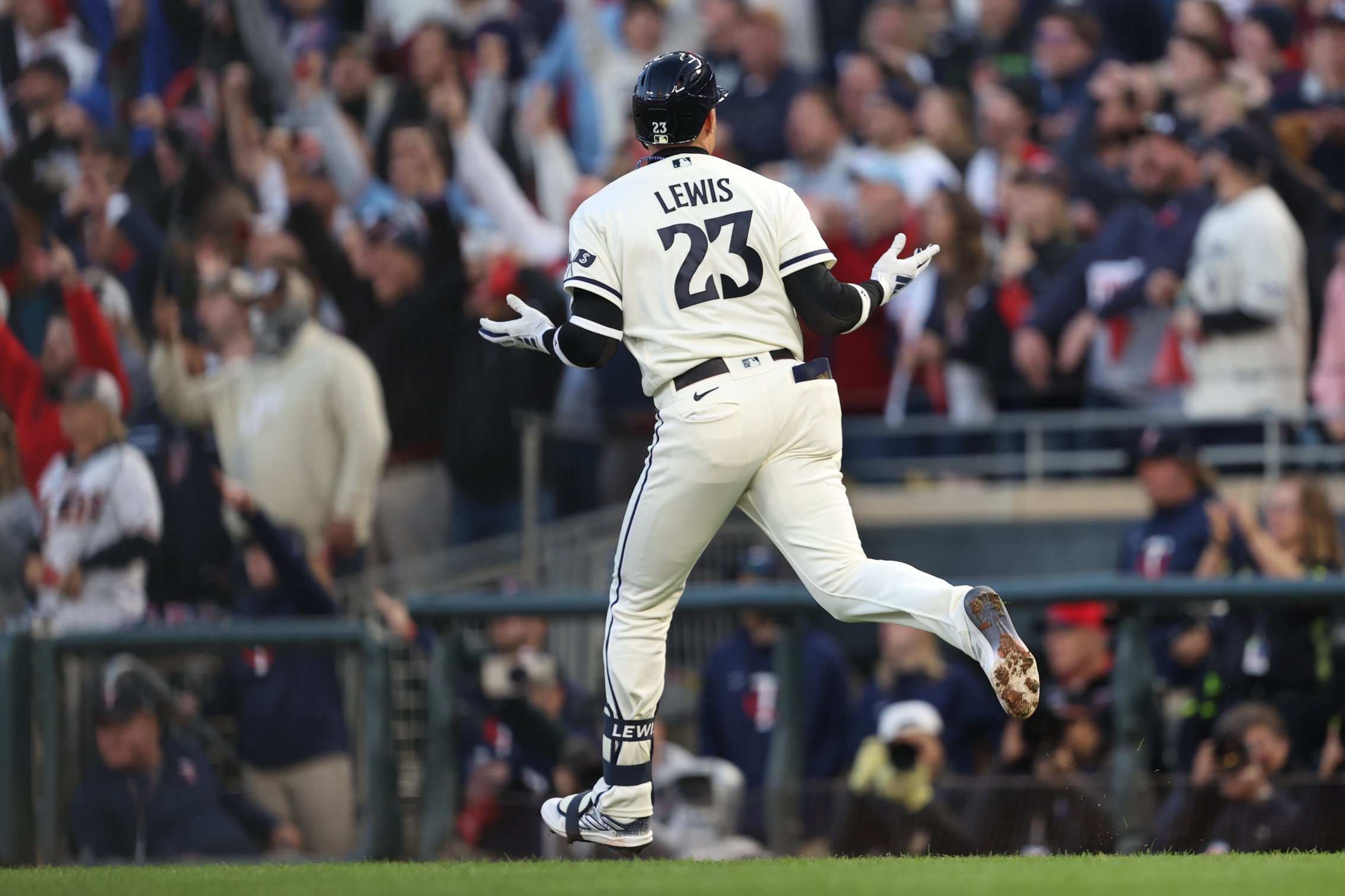 Back in January, Twins Daily hosted its annual Winter Meltdown event, bringing together fans during the weekend of Twins Fest for an evening of drinks, food and baseball chatter in downtown Minneapolis. Our special guests at The Pourhouse this year were Matt Wallner and Louie Varland, two locally-sourced players whose baseball journeys have been inspiring – but also illustrative examples of how ruthless this game can be at the highest level. Wallner and Varland were coming off impressive rookie seasons at the time of their on-stage interview with John Bonnes and Aaron Gleeman, but have since faced the harsh realities of league adjustments, advanced scouting reports, setbacks, slumps and demotions. These reapers come for a vast majority of big-leaguers at some point, even the most talented ones, and they seem to be especially prevalent for sophomores coming off breakthrough rookie seasons. (Just ask Edouard Julien.) In listening back to their Winter Meltdown interview recently, I was struck by a particular moment. Gleeman was asking Wallner about the experience of shuttling from Triple-A, with its automated strike zone, to the major leagues and adapting to human umps. Aaron recalled a conversation with Royce Lewis in which Lewis shared that, during his time in St. Paul, he started to notice the ABS system would never call strikes at the top of the zone, so he was able to rule them out entirely. "One thing I'll say is, I never listen to anything Royce says," Wallner quickly replied, "because he's a freak." Laughter arose from the crowd and Wallner smirked, but anyone could see he was at least half-serious. The outfielder continued: "He sees the game differently than me ... He's that good. He's unbelievable. I mean, he can lay off that high pitch so, he's impressive." Wallner was losing himself in thought, trying to summon words for the indescribable ability level of his teammate, and eventually caught himself. "So, um, can you go back to your question?" That exchange sticks in my head, watching Lewis's 2024 season unfold. There's just no other way to describe him. He's an absolute freak, capable of sustaining a higher level of play than almost anyone else you've ever seen, even in the face of repeated interruptions. Lewis himself has bought into his own mythical aura, and who could blame him? Last week, he told reporters, "I don't do that slump thing. That's not a real thing for me." It's a claim that would be perfectly absurd coming from virtually any other player, and even Lewis – who is confident but not oblivious – surely meant it more as a reflection of his mindset than an actual expectation. And yet ... sure enough, after the 0-for-5 effort that prompted this remark from Lewis, he homered in three straight games, including a three-hit night following his rare 0-fer. The journey to this point has been anything but smooth for the former No. 1 overall draft pick. He tore his ACL twice in a row, and since returning to the field midway through last season, he's spent time on the injured list with an oblique strain, a hamstring strain, and most recently a severe quad strain. The 25-year-old has missed huge chunks of crucial development time while recovering from repeated, significant injuries. He's been extremely limited in terms of opportunities to face competitive pitching over the past three years. It doesn't seem to matter. Every time Lewis picks up a bat and steps into the box at the major-league level, he instantly resumes being one of the best hitters anyone has ever seen. He spearheaded the effort to conquer Minnesota's postseason curse last October, going deep four times in six playoff games. This year, Lewis has homered 10 times in 18 games, finding the seats in seven of his past 12. He came about two feet short of making it 11 of 18 and eight of 12 in his first AB on Sunday. He's a threat to hit a nuke at any time, and what's most astounding is his control of the strike zone in tandem with that capability. Pitchers have been unable to take advantage of Lewis's aggressiveness and ferocious cuts. He's struck out only 12 times in 75 plate appearances, with eight walks. He's hitting home runs at a historic rate, while getting the lumber on everything. Opponents can't get anything by him – fastballs, offspeed, breaking balls, he's crushing all of it. Wallner is not exactly a slouch when it comes to playing the game of baseball. He was named Mr. Baseball in Minnesota while playing high school ball at Forest Lake. He was a college star, a first-round draft pick, a Twins Minor League Player of the Year, and then a standout rookie who posted a 141 OPS+ in his first prolonged exposure to the big leagues. Yet, even he can't find a way to relate to the supernatural ballplayer that is Royce Lewis, and Wallner's sense of astonishment is seemingly shared by all around him, from teammates to coaches to broadcasters, who can't hide their incredulity watching Lewis perform. Their eyes do not deceive them. Lewis is playing at a rate unsurpassed through this point in franchise history. A lot of greats have donned the Twins uniform, including another naturally-gifted top draft pick who's headed to the Hall of Fame next month. But none have done what Lewis is doing. No one can seem to find the words to articulate what they're seeing, so if you're struggling to do so, don't feel alone. All we need to do is sit back and witness. What we're seeing is truly special, whether you're a fan sitting at home on the couch or a 10-year veteran watching this unique greatness from the same field.
 -
The Minnesota Twins played a bunch of very close games last week. Even when you're going well, that can be a dangerous dance, as they learned in suffering three straight one-run losses that sullied an otherwise strong stretch and widened their division deficit behind the unstoppable Cleveland Guardians. Image courtesy of Stan Szeto-USA TODAY Sports Weekly Snapshot: Mon, 6/17 through Sun, 6/23 *** Record Last Week: 3-3 (Overall: 43-35) Run Differential Last Week: +9 (Overall: +25) Standing: 2nd Place in AL Central (7.5 GB) Last Week's Game Results: Game 73 | MIN 7, TB 6: Santana Delivers Pinch-Hit Walk-Off Single Game 74 | TB 3, MIN 2: Lewis Homers, But Error in 10th Proves Costly Game 75 | TB 7, MIN 6: Twins Fall in Extras Again Despite Miranda Magic Game 76 | OAK 6, MIN 5: Duran Blows Lead in Another One-Run Loss Game 77 | MIN 10, OAK 2: Offense Takes Off as Ober Cruises to CG Game 78 | MIN 3, OAK 0: López Electric, Buck Bashes in Victory IF YOU'D RATHER LISTEN TO THE WEEK IN REVIEW THAN READ IT, YOU CAN NOW FIND IT IN PODCAST FORM. GET THE LATEST EPISODE HERE. ALSO AVAILABLE ON APPLE AND SPOTIFY. NEWS & NOTES Jay Jackson, we hardly knew ye. Again. The team's decision to recall Jackson and re-add him to the 40-man roster, such a short time after designating him for assignment with a 6.85 ERA, was curious. Barely a week after returning to the fold, the veteran right-hander was DFA'ed once again, allowing five earned runs and three homers in four innings during his latest stint. There was little reason to expect much different from Jackson this time around, given that his untenable velocity was lower, not higher, during his brief time at Triple-A. Cycling back to him was a strange call by the front office, and a costly one: Jackson coughed up three runs in Thursday's 7-6 loss to Tampa before being sent out. Brought back to fill Jackson's vacant spot was Kody Funderburk, giving the Twins three lefties in the bullpen, for now. The relief corps is in a bit of a fluid state with Caleb Thielbar and his 7.71 ERA still on the roster, albeit now reserved for the lowest-leverage situations possible. Brock Stewart, who's been on the injured list since the beginning of May, still has no return date in sight. At the beginning of last week, Alex Kirilloff joined Stewart on the IL following an odd turn of events. The Twins had previously announced they were optioning Kirilloff to Triple-A, but reversed that decision when it was revealed that the struggling 26-year-old was dealing with a back injury, which apparently had not been communicated well. Not a great look. It's unclear what the timeline is for AK to get back on the field, but he'll surely do so in St. Paul when he's ready. HIGHLIGHTS Royce Lewis might as well build a home in this section of our weekly recap; it doesn't look like he'll be going anywhere. The third baseman amusingly claimed "slumps aren't a real thing for me" last week while somehow managing to keep on backing up that ridiculous notion. Not only has Lewis avoided lapsing into anything resembling a slump, but he keeps on crushing home runs and tracking toward the best start to a career in franchise history. After starting both ends of last Sunday's doubleheader, Lewis got the nod in all six of Minnesota's games last week, another highly encouraging sign for his health. He started three times at third and three times at DH, finishing 7-for-25 with three more homers. Lewis received his first intentional walk of the season on Wednesday but it probably won't be his last. Carlos Correa cooled down a bit following one of the best weeks in his career, but still managed to produce a pair of three-hit games, doubling and walking twice with just three strikeouts. Willi Castro remains an everyday force in the lineup, wherever he's playing defensively: he went 9-for-24 with five doubles and a big three-run homer. Carlos Santana has quietly been one of the best hitters in baseball this month, and kept on clicking with an 8-for-21 week that included two doubles and a home run. José Miranda went 7-for-22 with two doubles, as well as a home run that could've been one of the biggest of the season for the Twins: a game-tying three-run shot while down to their last strike on Thursday. Unfortunately, his teammates couldn't get it done in an extra-innings loss. Miranda has the second-best OPS on the team behind Correa this season, and has been nothing short of a godsend for the lineup. While I wouldn't necessarily call him a godsend, Austin Martin has been a heck of an addition since replacing Kirilloff on the roster. I wondered about his functional redundancy with Manuel Margot, but Martin has proven plenty useful. He found his way into five of six games last week, starting four, and went 6-for-14 with three walks, two steals and four runs scored. At a time where every remotely non-essential position player on the Twins roster needs to be continually justifying his spot, with a few hitters loudly making their cases in Triple-A, Martin is among those answering the call, and so is Margot. It's been awesome to see all these bats come alive. Also worth filing under "awesome to see": Bailey Ober's dazzling performance on Saturday in Oakland. It's been a bumpy ride this year for the big righty, who was hoping to take the next step atop the Twins rotation, but he's been dialed in for his past two turns against Oakland, lowering his ERA from 5.13 to 4.50 on the season. In his latest start he put together one of the most efficient complete games you'll ever see, working around a pair of solo homers to get through nine innings of two-run ball with 10 strikeouts on just 89 pitches. After setting a season high with 16 swings and misses in his previous start, Ober got 20 whiffs in this one. Granted, both these outings came against a fairly poor A's lineup, but not every Twins pitcher has looked so effective against Oakland. Exciting stuff from Ober. On Sunday, Pablo López followed up on Ober's statement start with a big one of his own, putting together one of the most dominant performances of his career against the Athletics. With his fastball touching 97 MPH, López struck out 14 hitters over eight shutout innings, holding Oakland's lineup to one walk and pair of singles. López had struggled in his first start of the week, allowing five earned runs in four innings against Tampa, and he came into Sunday with an 8.49 ERA over his past six starts. So suffice to say, this breakthrough was much-needed, and lovely to see. LOWLIGHTS Chris Paddack is going off the rails in worrisome fashion, and looks to be in need of a break. He made his second consecutive ugly start against the Athletics on Friday night, once again battling with command and diminished stuff. His fastball velocity dropping down to the 90-91 MPH range, and his command wavering, Paddack got through 4 ⅔ innings. He was lucky to allow only three earned runs on five hits and three walks, after failing to get through three frames in his previous home start against Oakland. The right-hander's workload management has been a big topic of conversation, coming off his second Tommy John surgery, and that will only ramp up if his performance continues to trend this way, with a 7.79 ERA in four June starts. Louie Varland, who might've been in line to step in for Paddack in the near future, unfortunately experienced a nightmare outing for the Saints on Sunday, allowing 11 earned runs on five homers in 2 ⅓ innings. Could Varland be rerouted back into a relief role for the second half? It's now worth asking more than ever. His ongoing troubles as a starter seems to call for a change, and the state of the Twins bullpen may also play a role in making the argument. Aside from Griffin Jax, who's been among the league's finest relief arms, it's tough to feel much confidence in Rocco Baldelli's array of options right now. Twins relievers not named Jax allowed nine earned runs in 14 ⅓ innings (5.65 ERA), and the bullpen was tagged with losses in all three games where Minnesota came up short. Granted, they weren't given much margin for error, but these were not the highest-quality opponents. Jhoan Durán's brutal outing on Friday was most concerning of the bunch: Entering to pitch the eighth, he hit leadoff man Tyler Soderstrom with a pitch, then served up a two-run homer on the first pitch to Shea Langeliers, turning a one-run lead into a deficit in the blink of an eye. The command and the stuff continue to lag for Durán, whose xERA is up by more than a run from last year (2.60 to 3.65). His strikeout rate is down a full 10 percentage points, from 32.9% in 2023 (96th percentile) to an average-ish 22.8%. He seems to have minimal trust in his fastball – with good reason, as opponents are hitting .320 with a .403 xwOBA against it – and his overall arsenal just doesn't work that well without the big heater setting the tone. I'm not sure what's to be done about that, if he's indeed healthy, other than keep hoping he can fight his way through these ostensible mechanical issues, perhaps in a relatively lower-leverage role. On that note, it's worth pointing out that Jax, not Durán, got the three-run save opportunity on Sunday. But the Twins don't really have the luxury of using Durán anywhere other than key spots, especially so long as Stewart remains sidelined. TRENDING STORYLINE Big hitters are on deck in St. Paul, and they are waiting for their chances to step up to the plate at Target Field. Last week we talked about the ridiculous run that Matt Wallner has been on for the Saints; he launched two more homers last week, although he also struck out 14 times. It's the top prospect Brooks Lee who is now fiercely knocking on the door for a big-league chance, after going 10-for-22 with three doubles, three home runs and 11 RBIs in five games. Lee has a 1.017 OPS through 14 total games with the Saints, mixing in strong plate discipline and sharp defense around the infield. He made his first start of the season at second base on Thursday, perhaps setting the stage for him to eventually factor in at that position for the Twins. He needs to wait his turn, with the Twins infield thoroughly fortified at the moment. But it's invigorating to see Lee immediately thriving after a two-month absence, and putting himself in position for a debut as soon as the opportunity arises. His presence provides a comforting safety net behind some of Minnesota's most critical pieces. With Correa, Lewis, Miranda and Castro carrying so much of the load offensively, it's really nice to know there's a guy like Lee on hand who could step into any of their roles in the event of an injury. LOOKING AHEAD The Twins will remain out west as their road trip rolls on with stops in Arizona and Seattle. The D-backs are a fairly mediocre sub-.500 team this year following their charmed World Series run in 2023, but the Mariners will present a real test for these Twins, who have played at nearly a 110-win pace outside of their 0-14 record against the three top teams in the American League (NYY, BAL, CLE). Seattle currently leads the AL West with the most wins in the AL outside of those three, so the Twins can buoy the case for their legitimacy with a strong showing against the Mariners, from whom they took two of three at Target Field back in early May. Thursday's game will be the 81st of the season, marking the official halfway point. TUESDAY, JUNE 25: TWINS @ DIAMONDBACKS – RHP Joe Ryan v. RHP Brandon Pfaadt WEDNESDAY, JUNE 26: TWINS @ DIAMONDBACKS – RHP Simeon Woods Richardson v. RHP Ryne Nelson THURSDAY, JUNE 27: TWINS @ DIAMONDBACKS – RHP Chris Paddack v. LHP Jordan Montgomery FRIDAY, JUNE 28: TWINS @ MARINERS – RHP Bailey Ober v. RHP Logan Gilbert SATURDAY, JUNE 29: TWINS @ MARINERS – RHP Pablo Lopez v. RHP Bryce Miller SUNDAY, JUNE 30: TWINS @ MARINERS – RHP Joe Ryan v. RHP Bryan Woo View full article
-
 Weekly Snapshot: Mon, 6/17 through Sun, 6/23 *** Record Last Week: 3-3 (Overall: 43-35) Run Differential Last Week: +9 (Overall: +25) Standing: 2nd Place in AL Central (7.5 GB) Last Week's Game Results: Game 73 | MIN 7, TB 6: Santana Delivers Pinch-Hit Walk-Off Single Game 74 | TB 3, MIN 2: Lewis Homers, But Error in 10th Proves Costly Game 75 | TB 7, MIN 6: Twins Fall in Extras Again Despite Miranda Magic Game 76 | OAK 6, MIN 5: Duran Blows Lead in Another One-Run Loss Game 77 | MIN 10, OAK 2: Offense Takes Off as Ober Cruises to CG Game 78 | MIN 3, OAK 0: López Electric, Buck Bashes in Victory IF YOU'D RATHER LISTEN TO THE WEEK IN REVIEW THAN READ IT, YOU CAN NOW FIND IT IN PODCAST FORM. GET THE LATEST EPISODE HERE. ALSO AVAILABLE ON APPLE AND SPOTIFY. NEWS & NOTES Jay Jackson, we hardly knew ye. Again. The team's decision to recall Jackson and re-add him to the 40-man roster, such a short time after designating him for assignment with a 6.85 ERA, was curious. Barely a week after returning to the fold, the veteran right-hander was DFA'ed once again, allowing five earned runs and three homers in four innings during his latest stint. There was little reason to expect much different from Jackson this time around, given that his untenable velocity was lower, not higher, during his brief time at Triple-A. Cycling back to him was a strange call by the front office, and a costly one: Jackson coughed up three runs in Thursday's 7-6 loss to Tampa before being sent out. Brought back to fill Jackson's vacant spot was Kody Funderburk, giving the Twins three lefties in the bullpen, for now. The relief corps is in a bit of a fluid state with Caleb Thielbar and his 7.71 ERA still on the roster, albeit now reserved for the lowest-leverage situations possible. Brock Stewart, who's been on the injured list since the beginning of May, still has no return date in sight. At the beginning of last week, Alex Kirilloff joined Stewart on the IL following an odd turn of events. The Twins had previously announced they were optioning Kirilloff to Triple-A, but reversed that decision when it was revealed that the struggling 26-year-old was dealing with a back injury, which apparently had not been communicated well. Not a great look. It's unclear what the timeline is for AK to get back on the field, but he'll surely do so in St. Paul when he's ready. HIGHLIGHTS Royce Lewis might as well build a home in this section of our weekly recap; it doesn't look like he'll be going anywhere. The third baseman amusingly claimed "slumps aren't a real thing for me" last week while somehow managing to keep on backing up that ridiculous notion. Not only has Lewis avoided lapsing into anything resembling a slump, but he keeps on crushing home runs and tracking toward the best start to a career in franchise history. After starting both ends of last Sunday's doubleheader, Lewis got the nod in all six of Minnesota's games last week, another highly encouraging sign for his health. He started three times at third and three times at DH, finishing 7-for-25 with three more homers. Lewis received his first intentional walk of the season on Wednesday but it probably won't be his last. Carlos Correa cooled down a bit following one of the best weeks in his career, but still managed to produce a pair of three-hit games, doubling and walking twice with just three strikeouts. Willi Castro remains an everyday force in the lineup, wherever he's playing defensively: he went 9-for-24 with five doubles and a big three-run homer. Carlos Santana has quietly been one of the best hitters in baseball this month, and kept on clicking with an 8-for-21 week that included two doubles and a home run. José Miranda went 7-for-22 with two doubles, as well as a home run that could've been one of the biggest of the season for the Twins: a game-tying three-run shot while down to their last strike on Thursday. Unfortunately, his teammates couldn't get it done in an extra-innings loss. Miranda has the second-best OPS on the team behind Correa this season, and has been nothing short of a godsend for the lineup. While I wouldn't necessarily call him a godsend, Austin Martin has been a heck of an addition since replacing Kirilloff on the roster. I wondered about his functional redundancy with Manuel Margot, but Martin has proven plenty useful. He found his way into five of six games last week, starting four, and went 6-for-14 with three walks, two steals and four runs scored. At a time where every remotely non-essential position player on the Twins roster needs to be continually justifying his spot, with a few hitters loudly making their cases in Triple-A, Martin is among those answering the call, and so is Margot. It's been awesome to see all these bats come alive. Also worth filing under "awesome to see": Bailey Ober's dazzling performance on Saturday in Oakland. It's been a bumpy ride this year for the big righty, who was hoping to take the next step atop the Twins rotation, but he's been dialed in for his past two turns against Oakland, lowering his ERA from 5.13 to 4.50 on the season. In his latest start he put together one of the most efficient complete games you'll ever see, working around a pair of solo homers to get through nine innings of two-run ball with 10 strikeouts on just 89 pitches. After setting a season high with 16 swings and misses in his previous start, Ober got 20 whiffs in this one. Granted, both these outings came against a fairly poor A's lineup, but not every Twins pitcher has looked so effective against Oakland. Exciting stuff from Ober. On Sunday, Pablo López followed up on Ober's statement start with a big one of his own, putting together one of the most dominant performances of his career against the Athletics. With his fastball touching 97 MPH, López struck out 14 hitters over eight shutout innings, holding Oakland's lineup to one walk and pair of singles. López had struggled in his first start of the week, allowing five earned runs in four innings against Tampa, and he came into Sunday with an 8.49 ERA over his past six starts. So suffice to say, this breakthrough was much-needed, and lovely to see. LOWLIGHTS Chris Paddack is going off the rails in worrisome fashion, and looks to be in need of a break. He made his second consecutive ugly start against the Athletics on Friday night, once again battling with command and diminished stuff. His fastball velocity dropping down to the 90-91 MPH range, and his command wavering, Paddack got through 4 ⅔ innings. He was lucky to allow only three earned runs on five hits and three walks, after failing to get through three frames in his previous home start against Oakland. The right-hander's workload management has been a big topic of conversation, coming off his second Tommy John surgery, and that will only ramp up if his performance continues to trend this way, with a 7.79 ERA in four June starts. Louie Varland, who might've been in line to step in for Paddack in the near future, unfortunately experienced a nightmare outing for the Saints on Sunday, allowing 11 earned runs on five homers in 2 ⅓ innings. Could Varland be rerouted back into a relief role for the second half? It's now worth asking more than ever. His ongoing troubles as a starter seems to call for a change, and the state of the Twins bullpen may also play a role in making the argument. Aside from Griffin Jax, who's been among the league's finest relief arms, it's tough to feel much confidence in Rocco Baldelli's array of options right now. Twins relievers not named Jax allowed nine earned runs in 14 ⅓ innings (5.65 ERA), and the bullpen was tagged with losses in all three games where Minnesota came up short. Granted, they weren't given much margin for error, but these were not the highest-quality opponents. Jhoan Durán's brutal outing on Friday was most concerning of the bunch: Entering to pitch the eighth, he hit leadoff man Tyler Soderstrom with a pitch, then served up a two-run homer on the first pitch to Shea Langeliers, turning a one-run lead into a deficit in the blink of an eye. The command and the stuff continue to lag for Durán, whose xERA is up by more than a run from last year (2.60 to 3.65). His strikeout rate is down a full 10 percentage points, from 32.9% in 2023 (96th percentile) to an average-ish 22.8%. He seems to have minimal trust in his fastball – with good reason, as opponents are hitting .320 with a .403 xwOBA against it – and his overall arsenal just doesn't work that well without the big heater setting the tone. I'm not sure what's to be done about that, if he's indeed healthy, other than keep hoping he can fight his way through these ostensible mechanical issues, perhaps in a relatively lower-leverage role. On that note, it's worth pointing out that Jax, not Durán, got the three-run save opportunity on Sunday. But the Twins don't really have the luxury of using Durán anywhere other than key spots, especially so long as Stewart remains sidelined. TRENDING STORYLINE Big hitters are on deck in St. Paul, and they are waiting for their chances to step up to the plate at Target Field. Last week we talked about the ridiculous run that Matt Wallner has been on for the Saints; he launched two more homers last week, although he also struck out 14 times. It's the top prospect Brooks Lee who is now fiercely knocking on the door for a big-league chance, after going 10-for-22 with three doubles, three home runs and 11 RBIs in five games. Lee has a 1.017 OPS through 14 total games with the Saints, mixing in strong plate discipline and sharp defense around the infield. He made his first start of the season at second base on Thursday, perhaps setting the stage for him to eventually factor in at that position for the Twins. He needs to wait his turn, with the Twins infield thoroughly fortified at the moment. But it's invigorating to see Lee immediately thriving after a two-month absence, and putting himself in position for a debut as soon as the opportunity arises. His presence provides a comforting safety net behind some of Minnesota's most critical pieces. With Correa, Lewis, Miranda and Castro carrying so much of the load offensively, it's really nice to know there's a guy like Lee on hand who could step into any of their roles in the event of an injury. LOOKING AHEAD The Twins will remain out west as their road trip rolls on with stops in Arizona and Seattle. The D-backs are a fairly mediocre sub-.500 team this year following their charmed World Series run in 2023, but the Mariners will present a real test for these Twins, who have played at nearly a 110-win pace outside of their 0-14 record against the three top teams in the American League (NYY, BAL, CLE). Seattle currently leads the AL West with the most wins in the AL outside of those three, so the Twins can buoy the case for their legitimacy with a strong showing against the Mariners, from whom they took two of three at Target Field back in early May. Thursday's game will be the 81st of the season, marking the official halfway point. TUESDAY, JUNE 25: TWINS @ DIAMONDBACKS – RHP Joe Ryan v. RHP Brandon Pfaadt WEDNESDAY, JUNE 26: TWINS @ DIAMONDBACKS – RHP Simeon Woods Richardson v. RHP Ryne Nelson THURSDAY, JUNE 27: TWINS @ DIAMONDBACKS – RHP Chris Paddack v. LHP Jordan Montgomery FRIDAY, JUNE 28: TWINS @ MARINERS – RHP Bailey Ober v. RHP Logan Gilbert SATURDAY, JUNE 29: TWINS @ MARINERS – RHP Pablo Lopez v. RHP Bryce Miller SUNDAY, JUNE 30: TWINS @ MARINERS – RHP Joe Ryan v. RHP Bryan Woo
- 23 comments
-
- 5
-
-
- royce lewis
- pablo lopez
- (and 3 more)
-
There's been buzz around these parts regarding the subject of overrated players, with Carlos Correa's name popping up as such in a recent player poll. That's pretty laughable, as Correa has emphatically underscored with his performance since. But if we want to actually talk about overrated MLB players, there's another name I'd submit, for the sake of making some broader points about modern baseball theory and analysis. (Not to mention Twins fan FOMO.) Image courtesy of Matt Krohn and John Jones-USA TODAY Sports As Cody Christie covered here last week, Carlos Correa's name appeared among the top three for "most overrated player" in a spring player poll conducted by The Athletic. It should be noted that relatively few players opted to answer this question, and Correa came in third with a mere four total votes. Still, his connection with this label does seem to hint at a wider perception gap. In the first round of MLB All-Star voting, released a few days ago, Correa ranked 10th among MLB shortstops. Tenth! For a name with that recognition level, who was having a good season even before the current torrid streak got underway, that is simply wild. Star Tribune columnist LaVelle E. Neal III tweeted last week that "standards haven't been met" by the high-salaried shortstop, demanding more offense from a player who'd been well above average by virtually any metric. As Correa's current rampage got underway, Neal doubled down, even as his own newspaper ran a glowing piece full of clubhouse quotes marveling at Correa's exceptional leadership and culture-shaping impact. It's very weird to see. When healthy, Correa is one of the most well-rounded players in baseball. A defensive whiz at shortstop; a disciplined and consistent offensive threat at the plate. He's among the slower middle infielders you'll come across, but that is literally the only significant mark against him in terms of player profile. He does everything well, on and off the field. Yet so many scribes and fans seem to undervalue him while waxing poetic and reminiscing for the days of a bygone singles hitter, who legitimately does only one thing well. That's right. I'm here to say that Luis Arráez is in fact the most overrated player in baseball, and I continue to believe that the Twins front office executed a master stroke by taking advantage of his inflated valuation to acquire Pablo López. Let's be clear: I'm not saying Arráez is a bad player, by any means. He's won two straight batting titles, and looks to be on his way to a third. He's just a very one-dimensional player. There's obviously value in making contact and hitting singles at an unparalleled rate, but the name of the game is overall production. In this regard, Arráez amounts to a pretty average player. Consider this: while Arráez is hitting a robust .318, his OPS (.733) is 13 points lower than that of Carlos Santana (.746), whose batting average is just .239. Minnesota's 38-year-old scrap-heap free agent signee has a significantly higher fWAR (1.1) than Arráez (0.7), who would rank 10th among Twins position players in that metric. You might feel WAR is overrated. You might feel Arráez's contact-oriented production is preferable to more of a walk-driven OBP and power-fueled OPS. I can buy into those beliefs, to some extent. But production is production, and there's really no argument for Arráez being vastly more productive than Santana (as one example), especially when you account for the chasm in defense. Your mileage may vary when it comes to fielding stats, but it's plain to the eye test that Santana is a good defender and Arráez is a very poor one, who costs his team runs. That has to be factored in. But seemingly, it's not. Arráez is currently the leader in All-Star votes at second base for the National League, edging Ketel Marte -- who's been immensely better through any lens other than batting average -- by 7,000 votes. I'm sorry, but that's the definition of overrated. And Correa ranking 10th among AL shortstops, behind Zach Neto and J.P. Crawford, is the definition of underrated. While I'm sure many will interpret it as one, this is not intended as a hit piece on Luis Arráez. I love Arráez! He's one of the most likable players around, and his style of play is enjoyable to me. It was awesome that Correa recently credited conversations with Arráez for helping enable his success this year. The point here is more about the continually exaggerated perception of batting average as a standalone measure of value, or strikeouts as some supreme detriment, and Arráez (who leads the league in GIDP) happens to be the poster child this year. Arráez's Padres lead the major leagues in batting average (.259). But they rank 10th in OPS, and 10th in runs scored. The Twins rank 15th out of 30 teams in average, but eighth in OPS, and they've scored three more runs than San Diego in four fewer games. That's a perfect reflection of the point at hand here. Production is production. No team in baseball is using batting average as the primary evaluator of it. The gap between production and perception is the clearest way to objectively characterize a player as overrated or underrated. From this perspective, the narratives around Correa and Arráez are astoundingly twisted up, even on the home front. View full article
-
Let's Talk About Who's Actually the Most Overrated Player in MLB
Nick Nelson posted an article in Twins
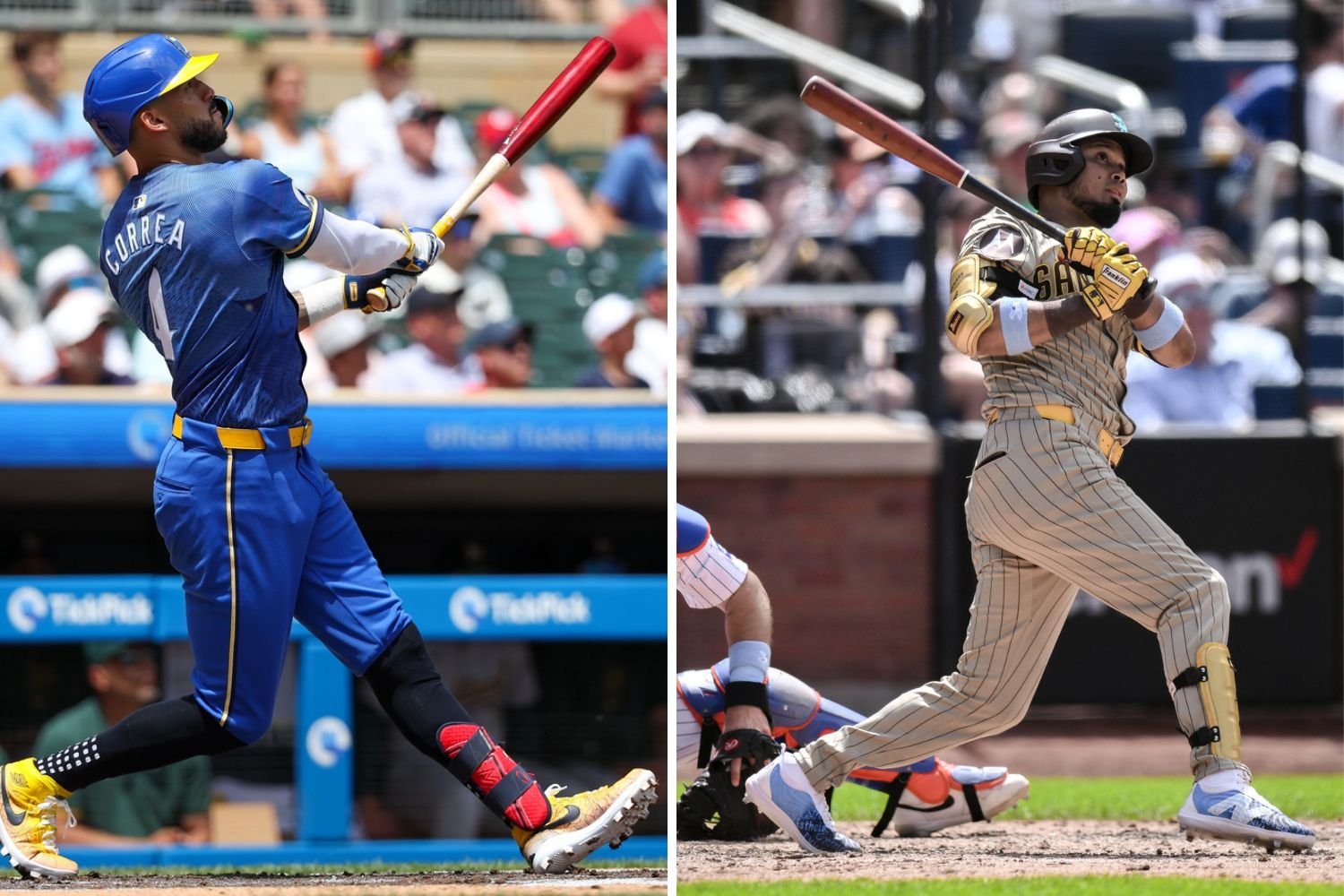 As Cody Christie covered here last week, Carlos Correa's name appeared among the top three for "most overrated player" in a spring player poll conducted by The Athletic. It should be noted that relatively few players opted to answer this question, and Correa came in third with a mere four total votes. Still, his connection with this label does seem to hint at a wider perception gap. In the first round of MLB All-Star voting, released a few days ago, Correa ranked 10th among MLB shortstops. Tenth! For a name with that recognition level, who was having a good season even before the current torrid streak got underway, that is simply wild. Star Tribune columnist LaVelle E. Neal III tweeted last week that "standards haven't been met" by the high-salaried shortstop, demanding more offense from a player who'd been well above average by virtually any metric. As Correa's current rampage got underway, Neal doubled down, even as his own newspaper ran a glowing piece full of clubhouse quotes marveling at Correa's exceptional leadership and culture-shaping impact. It's very weird to see. When healthy, Correa is one of the most well-rounded players in baseball. A defensive whiz at shortstop; a disciplined and consistent offensive threat at the plate. He's among the slower middle infielders you'll come across, but that is literally the only significant mark against him in terms of player profile. He does everything well, on and off the field. Yet so many scribes and fans seem to undervalue him while waxing poetic and reminiscing for the days of a bygone singles hitter, who legitimately does only one thing well. That's right. I'm here to say that Luis Arráez is in fact the most overrated player in baseball, and I continue to believe that the Twins front office executed a master stroke by taking advantage of his inflated valuation to acquire Pablo López. Let's be clear: I'm not saying Arráez is a bad player, by any means. He's won two straight batting titles, and looks to be on his way to a third. He's just a very one-dimensional player. There's obviously value in making contact and hitting singles at an unparalleled rate, but the name of the game is overall production. In this regard, Arráez amounts to a pretty average player. Consider this: while Arráez is hitting a robust .318, his OPS (.733) is 13 points lower than that of Carlos Santana (.746), whose batting average is just .239. Minnesota's 38-year-old scrap-heap free agent signee has a significantly higher fWAR (1.1) than Arráez (0.7), who would rank 10th among Twins position players in that metric. You might feel WAR is overrated. You might feel Arráez's contact-oriented production is preferable to more of a walk-driven OBP and power-fueled OPS. I can buy into those beliefs, to some extent. But production is production, and there's really no argument for Arráez being vastly more productive than Santana (as one example), especially when you account for the chasm in defense. Your mileage may vary when it comes to fielding stats, but it's plain to the eye test that Santana is a good defender and Arráez is a very poor one, who costs his team runs. That has to be factored in. But seemingly, it's not. Arráez is currently the leader in All-Star votes at second base for the National League, edging Ketel Marte -- who's been immensely better through any lens other than batting average -- by 7,000 votes. I'm sorry, but that's the definition of overrated. And Correa ranking 10th among AL shortstops, behind Zach Neto and J.P. Crawford, is the definition of underrated. While I'm sure many will interpret it as one, this is not intended as a hit piece on Luis Arráez. I love Arráez! He's one of the most likable players around, and his style of play is enjoyable to me. It was awesome that Correa recently credited conversations with Arráez for helping enable his success this year. The point here is more about the continually exaggerated perception of batting average as a standalone measure of value, or strikeouts as some supreme detriment, and Arráez (who leads the league in GIDP) happens to be the poster child this year. Arráez's Padres lead the major leagues in batting average (.259). But they rank 10th in OPS, and 10th in runs scored. The Twins rank 15th out of 30 teams in average, but eighth in OPS, and they've scored three more runs than San Diego in four fewer games. That's a perfect reflection of the point at hand here. Production is production. No team in baseball is using batting average as the primary evaluator of it. The gap between production and perception is the clearest way to objectively characterize a player as overrated or underrated. From this perspective, the narratives around Correa and Arráez are astoundingly twisted up, even on the home front.
 -
I was out there last weekend for the series as well and we had an awesome time. It was fun to read your perspective John, thanks for sharing! That first picture of downtown at night is spectacular, did you take that??
- 6 comments
-
- 2
-
-
- joe ryan
- target field
- (and 1 more)
-
 Weekly Snapshot: Mon, 6/10 through Sun, 6/16 *** Record Last Week: 6-1 (Overall: 40-32) Run Differential Last Week: +22 (Overall: +16) Standing: 3rd Place in AL Central (5.5 GB) Last Week's Game Results: Game 66 | MIN 5, COL 0: Paddack Throws Fire, Lewis Homers to Seal Win Game 67 | COL 5, MIN 4: Comeback Falls Short After Thielbar Meltdown Game 68 | MIN 17, COL 9: Bats Go Bananas in Series-Clinching Slugfest Game 69 | MIN 6, OAK 2: Correa's Hot Bat Powers Twins to Victory Game 70 | MIN 6, OAK 5: Kepler's Big Game Culminates in Walk-Off Game 71 | MIN 6, OAK 2: Correa and Lewis Fuel Fourth Straight Win Game 72 | MIN 8, OAK 7: Twins Fend Off Pesky A's to Lock Up Sweep IF YOU'D RATHER LISTEN TO THE WEEK IN REVIEW THAN READ IT, YOU CAN NOW FIND IT IN PODCAST FORM. GET THE LATEST EPISODE HERE. ALSO AVAILABLE ON APPLE AND SPOTIFY. NEWS & NOTES Following in the footsteps of Edouard Julien, Alex Kirilloff was demoted to Triple-A last week, subtracting another key left-handed bat from Minnesota's offensive mix. It was hard to argue against the demotion on merit, as Kirilloff has looked ineffective at the plate for a vast majority of the season, while offering no positive value on defense. Kirilloff is hardly one to wear his emotions on his sleeve, but to me his mounting frustration seemed evident. There's been nothing free and easy about his game. Hopefully a reset of his own at Triple-A can rejuvenate Kirilloff's confidence and swing. In the meantime, Austin Martin has returned to serve as a dynamic bench weapon and part-time player. Louie Varland also made it back across the river this past week – twice in fact. He made a spot start on Tuesday to give the rotation a break, and took advantage of the opportunity with five shutout innings. Varland shuttled back to the minors after the start, but returned as the extra man for Sunday's doubleheader, pitching long relief in the nightcap and helping bridge to the late relievers in a sweep-clinching win. Varland will now go back to Triple-A, but definitely with an added level of faith from the Twins. Curiously, it was Jay Jackson recalled to fill the new roster vacancy, after spending a few weeks outside of the active and 40-man rosters. His reinstatement meant a DFA for fellow fringe reliever Diego Castillo, who showed little control or ability to miss bats. Castillo elected free agency on Sunday. HIGHLIGHTS Soft competition or not, the Twins are a team you can't help but believe in when Royce Lewis, Carlos Correa and Byron Buxton are healthy and clicking. Right now that is very much the case. Lewis finds himself on an eight-game hitting streak after going 10-for-24 with four more home runs, extending his remarkable power-hitting rampage since coming off the injured list. He got Friday night off as a matter of maintenance, but started all six other games, including each end of Sunday's doubleheader (homering in both, naturally). That seems like a great sign for his physical state, and his swing is clearly healthy as could be. Lewis struck out once in 27 plate appearances the past week and has only six total strikeouts in 12 games. Meanwhile, he's slugging a cool .951. Simply unreal. Correa posted his first career five-hit game on Wednesday, part of a spectacular week that saw him notch 17 knocks in 31 at-bats. He found his power stroke in a big way, launching three home runs after entering the week with five on the season. Correa is batting .431 in the month of June, with 16 RBIs in 14 games. He's potentially putting himself in position for All-Star consideration, although competition at shortstop is stiff. Contrary to what you might've heard, standards have most definitely been met. Seeing Lewis and Correa excel to this degree is delightful, but not entirely surprising. We know who they are when healthy. That's been less clear lately for Buxton, who's struggled to find his footing offensively in the first half. This past week he showed real signs of getting on track, putting together his best stretch of the season so far at the plate. Buxton tallied eight hits in 19 at-bats with a home run, a triple and six RBIs. Most encouraging: he drew two walks and struck out only twice all week. For much of the first two months, Buxton looked like he was struggling to catch up, but now he's flashing a bit more quickness and connecting on his pitches. Obviously it's a very small sample against largely sub-par pitching, and Buck needs to prove he can avoid lapsing back into a strikeout-filled slump, but his rise is very much worth keeping an eye on. If he's tilting back toward his prime form with the bat, that's a major game-changer for the Twins lineup. Some other highlights in an overpowering week that saw the offense produce 52 runs on 88 hits (14 homers) in seven games: Max Kepler snapped his slump in a big way on Friday night, producing one of the biggest individual performances of the season as the team debuted their blue-and-yellow City Connect uniforms in front of a packed house at Target Field. Kepler gave them a good show: he delivered a game-tying three-run homer, then survived a 99-MPH fastball to the elbow, staying in the game to later come through with a walk-off single in the bottom of the ninth. His OPS jumped nearly 40 points (.721 to .759) from this game alone. Carlos Santana continues to beat the "cooked" allegations in a big way. He's become a legit run-producer in the lineup, driving in nine runs in his seven games last week with two homers and two doubles. Santana's been raking for over a month now, putting a slow start firmly in the rearview mirror and – in doing so – changing the narrative a bit regarding the front office's offseason moves. (On that note, Manuel Margot also had a very solid week, contributing four hits and three walks in a growing role.) If you've been waiting for Willi Castro to come back down to Earth ... you're gonna have to keep waiting. He just keeps on coming through and last week was no different, with the free-swinging utility man going 10-for-29 with eight runs scored (and another HBP, naturally). Castro has truly embodied the everyday multi-positional role, leading the team in games played while factoring in at five positions at least semi-regularly. Even Christian Vázquez has started to find some power (three doubles and three RBIs last week), helping offset the ongoing lull from Ryan Jeffers. José Miranda is making himself an essential cog in the lineup; he went 6-for-17 and came through with the game-winning home run in Sunday's doubleheader nightcap. Yeah, the Twins hitters were doing all this damage against some generally poor pitching and low-grade opponents. But the numbers count, and they matter. The Twins might be getting fat off soft competition, but to overly stretch that metaphor, the layers of fat gained now can serve as warmth and sustenance in the event of upcoming dry spells. Or something. Basically what I'm saying it's good to get yourself elevated up over the .500 mark, however you can do it, and now the Twins find themselves back eight games in the black. LOWLIGHTS It wasn't all rays of Minnesota sunlight for the Twins, and specifically their pitching staff. Pablo López delivered another underwhelming outing on Wednesday, lasting only five innings against the Rockies, then handed the ball to a bullpen that flirted with blowing a six-run lead before the offense pulled away. Simeon Woods Richardson gave up a first-inning grand slam to Oakland on Friday and lasted only four innings. Chris Paddack is a perplexing case. He looked about as good as we've seen him in his first start of the week, shutting out the Rockies over 6 ⅓ innings, and then looked about as bad as we've seen him in his second start on Sunday night, coughing up five earned runs in 2 ⅓ against a poor A's lineup. I continue to wonder if the Twins will find a way to get Paddack a break at some point this summer, as he advances toward a 170+ IP pace. We'll see. Varland's strong showing could play a role in setting that up. In the bullpen, Jhoan Durán keeps getting the job done despite – I would argue – relying on smoke and mirrors. He didn't give up a hit in his 2 ⅓ innings over three appearances, and converted his eighth consecutive save, but Durán's stuff is noticeably down and his K-rate has plummeted. (He struck out just one of 10 batters faced last week, with two walks, and has a 10-to-8 K/BB ratio over his past 16 innings.) Unless the big righty can rediscover his dominant edge and start missing more bats, it feels like only a matter of time before all of the increased contact catches up with him. Much as it pains me to say it, Caleb Thielbar appears to not have it anymore at age 37. Dating back to last year, he's had a tough time staying healthy and the execution on his pitches has been lacking. Hitters are taking advantage. Since the start of 2023, including the playoffs, Thielbar has surrendered 12 home runs in 49 ⅔ innings, often in very damaging situations for the team. That was the case on Tuesday, when Thielbar was charged with four earned runs while recording zero outs in an eventual 5-4 loss to Colorado. Rocco Baldelli ran him back out there the next day to try and salvage some confidence with a big lead, but Thielbar was again unable to get a single batter out, allowing three runs (one earned) on a hit and two walks. In total, the left-hander gave up five earned runs without getting an out in his two appearances, lifting his ERA from 5.17 to 8.04 on the season. It's truly sad to see from a local guy whose baseball journey has been one for the storybooks. I'll never forget some of Thielbar's best moments in a Twins uniform, but the team can't let sentiment get in the way of decision-making, and you have to wonder how long they can reasonably keep sticking with him. Kody Funderburk is a pretty clearly superior option at Triple-A. I would guess that an IL stint is more likely than a DFA for Thielbar, who is the highest-paid pitcher in the bullpen at more than $3 million. Maybe his hamstring still isn't fully right? Even if the 37-year-old has degraded skill-wise, what we saw this past week was beyond the pale. TRENDING STORYLINE Down at Triple-A, Matt Wallner is rather loudly making his case for a return to the big leagues. The demoted outfielder has been on an absolute tear following a slow start in Triple-A, notching a pair of four-hit games over the past week and boasting a .397 average with nine home runs in 14 games this month. Wallner's success at the plate has been underpinned by huge improvements in discipline, which was a severe weakness for him in the early part of the season. As the Twins transition back into some tougher competition and aim to chip away at their division deficit, they're going to want to put their best foot forward, and it sure looks like the optimal version of this lineup should feature Wallner's bat against right-handed pitchers. The question is when and how an opportunity will open up for him. I was a little surprised to see the Twins pick Martin over Wallner as Kirilloff's replacement on the roster, given that Martin seems to offer a fair amount of redundancy with Margot as a righty-swinging outfield bat. But Martin has looked good, and it seems unlikely the Twins will reverse course on their decision too quickly. For now, Wallner may simply have to wait his turn, even as he continues to utterly obliterate minor-league pitching. LOOKING AHEAD The homestand continues following a day off on Monday, with the Tampa Bay Rays arriving in town on Tuesday for a three-game set. These aren't your typical Rays: they are in last place in the East, four games below .500, and have uncharacteristically not pitched very well, but this is a team that always battles the Twins hard. Following that series, the Twins head to Oakland for a rematch against the Athletics team they just swept at home. With their stars currently shining bright, there's no reason to think the Twins and their offense can't keep the good times rolling and keep fattening up as we approach the season's midpoint. TUESDAY, JUNE 18: RAYS @ TWINS – RHP Aaron Civale v. RHP Pablo Lopez WEDNESDAY, JUNE 19: RAYS @ TWINS – RHP Taj Bradley v. RHP Joe Ryan THURSDAY, JUNE 20: RAYS @ TWINS – RHP Zack Littell v. RHP Simeon Woods Richardson FRIDAY, JUNE 21: TWINS @ ATHLETICS – RHP Bailey Ober v. RHP Joey Estes SATURDAY, JUNE 22: TWINS @ ATHLETICS – RHP Chris Paddack v. LHP JP Sears SUNDAY, JUNE 23: TWINS @ ATHLETICS – RHP Pablo Lopez v. LHP Hogan Harris
- 16 comments
-
- 6
-
-
- carlos correa
- royce lewis
- (and 3 more)
-
In what was likely the easiest week they'll encounter on their entire schedule, the Twins welcomed two of the worst teams in baseball to Target Field and they more than took care of business, showcasing their new threads and some red-hot bats while winning six of seven. Image courtesy of Bruce Kluckhohn-USA TODAY Sports Weekly Snapshot: Mon, 6/10 through Sun, 6/16 *** Record Last Week: 6-1 (Overall: 40-32) Run Differential Last Week: +22 (Overall: +16) Standing: 3rd Place in AL Central (5.5 GB) Last Week's Game Results: Game 66 | MIN 5, COL 0: Paddack Throws Fire, Lewis Homers to Seal Win Game 67 | COL 5, MIN 4: Comeback Falls Short After Thielbar Meltdown Game 68 | MIN 17, COL 9: Bats Go Bananas in Series-Clinching Slugfest Game 69 | MIN 6, OAK 2: Correa's Hot Bat Powers Twins to Victory Game 70 | MIN 6, OAK 5: Kepler's Big Game Culminates in Walk-Off Game 71 | MIN 6, OAK 2: Correa and Lewis Fuel Fourth Straight Win Game 72 | MIN 8, OAK 7: Twins Fend Off Pesky A's to Lock Up Sweep IF YOU'D RATHER LISTEN TO THE WEEK IN REVIEW THAN READ IT, YOU CAN NOW FIND IT IN PODCAST FORM. GET THE LATEST EPISODE HERE. ALSO AVAILABLE ON APPLE AND SPOTIFY. NEWS & NOTES Following in the footsteps of Edouard Julien, Alex Kirilloff was demoted to Triple-A last week, subtracting another key left-handed bat from Minnesota's offensive mix. It was hard to argue against the demotion on merit, as Kirilloff has looked ineffective at the plate for a vast majority of the season, while offering no positive value on defense. Kirilloff is hardly one to wear his emotions on his sleeve, but to me his mounting frustration seemed evident. There's been nothing free and easy about his game. Hopefully a reset of his own at Triple-A can rejuvenate Kirilloff's confidence and swing. In the meantime, Austin Martin has returned to serve as a dynamic bench weapon and part-time player. Louie Varland also made it back across the river this past week – twice in fact. He made a spot start on Tuesday to give the rotation a break, and took advantage of the opportunity with five shutout innings. Varland shuttled back to the minors after the start, but returned as the extra man for Sunday's doubleheader, pitching long relief in the nightcap and helping bridge to the late relievers in a sweep-clinching win. Varland will now go back to Triple-A, but definitely with an added level of faith from the Twins. Curiously, it was Jay Jackson recalled to fill the new roster vacancy, after spending a few weeks outside of the active and 40-man rosters. His reinstatement meant a DFA for fellow fringe reliever Diego Castillo, who showed little control or ability to miss bats. Castillo elected free agency on Sunday. HIGHLIGHTS Soft competition or not, the Twins are a team you can't help but believe in when Royce Lewis, Carlos Correa and Byron Buxton are healthy and clicking. Right now that is very much the case. Lewis finds himself on an eight-game hitting streak after going 10-for-24 with four more home runs, extending his remarkable power-hitting rampage since coming off the injured list. He got Friday night off as a matter of maintenance, but started all six other games, including each end of Sunday's doubleheader (homering in both, naturally). That seems like a great sign for his physical state, and his swing is clearly healthy as could be. Lewis struck out once in 27 plate appearances the past week and has only six total strikeouts in 12 games. Meanwhile, he's slugging a cool .951. Simply unreal. Correa posted his first career five-hit game on Wednesday, part of a spectacular week that saw him notch 17 knocks in 31 at-bats. He found his power stroke in a big way, launching three home runs after entering the week with five on the season. Correa is batting .431 in the month of June, with 16 RBIs in 14 games. He's potentially putting himself in position for All-Star consideration, although competition at shortstop is stiff. Contrary to what you might've heard, standards have most definitely been met. Seeing Lewis and Correa excel to this degree is delightful, but not entirely surprising. We know who they are when healthy. That's been less clear lately for Buxton, who's struggled to find his footing offensively in the first half. This past week he showed real signs of getting on track, putting together his best stretch of the season so far at the plate. Buxton tallied eight hits in 19 at-bats with a home run, a triple and six RBIs. Most encouraging: he drew two walks and struck out only twice all week. For much of the first two months, Buxton looked like he was struggling to catch up, but now he's flashing a bit more quickness and connecting on his pitches. Obviously it's a very small sample against largely sub-par pitching, and Buck needs to prove he can avoid lapsing back into a strikeout-filled slump, but his rise is very much worth keeping an eye on. If he's tilting back toward his prime form with the bat, that's a major game-changer for the Twins lineup. Some other highlights in an overpowering week that saw the offense produce 52 runs on 88 hits (14 homers) in seven games: Max Kepler snapped his slump in a big way on Friday night, producing one of the biggest individual performances of the season as the team debuted their blue-and-yellow City Connect uniforms in front of a packed house at Target Field. Kepler gave them a good show: he delivered a game-tying three-run homer, then survived a 99-MPH fastball to the elbow, staying in the game to later come through with a walk-off single in the bottom of the ninth. His OPS jumped nearly 40 points (.721 to .759) from this game alone. Carlos Santana continues to beat the "cooked" allegations in a big way. He's become a legit run-producer in the lineup, driving in nine runs in his seven games last week with two homers and two doubles. Santana's been raking for over a month now, putting a slow start firmly in the rearview mirror and – in doing so – changing the narrative a bit regarding the front office's offseason moves. (On that note, Manuel Margot also had a very solid week, contributing four hits and three walks in a growing role.) If you've been waiting for Willi Castro to come back down to Earth ... you're gonna have to keep waiting. He just keeps on coming through and last week was no different, with the free-swinging utility man going 10-for-29 with eight runs scored (and another HBP, naturally). Castro has truly embodied the everyday multi-positional role, leading the team in games played while factoring in at five positions at least semi-regularly. Even Christian Vázquez has started to find some power (three doubles and three RBIs last week), helping offset the ongoing lull from Ryan Jeffers. José Miranda is making himself an essential cog in the lineup; he went 6-for-17 and came through with the game-winning home run in Sunday's doubleheader nightcap. Yeah, the Twins hitters were doing all this damage against some generally poor pitching and low-grade opponents. But the numbers count, and they matter. The Twins might be getting fat off soft competition, but to overly stretch that metaphor, the layers of fat gained now can serve as warmth and sustenance in the event of upcoming dry spells. Or something. Basically what I'm saying it's good to get yourself elevated up over the .500 mark, however you can do it, and now the Twins find themselves back eight games in the black. LOWLIGHTS It wasn't all rays of Minnesota sunlight for the Twins, and specifically their pitching staff. Pablo López delivered another underwhelming outing on Wednesday, lasting only five innings against the Rockies, then handed the ball to a bullpen that flirted with blowing a six-run lead before the offense pulled away. Simeon Woods Richardson gave up a first-inning grand slam to Oakland on Friday and lasted only four innings. Chris Paddack is a perplexing case. He looked about as good as we've seen him in his first start of the week, shutting out the Rockies over 6 ⅓ innings, and then looked about as bad as we've seen him in his second start on Sunday night, coughing up five earned runs in 2 ⅓ against a poor A's lineup. I continue to wonder if the Twins will find a way to get Paddack a break at some point this summer, as he advances toward a 170+ IP pace. We'll see. Varland's strong showing could play a role in setting that up. In the bullpen, Jhoan Durán keeps getting the job done despite – I would argue – relying on smoke and mirrors. He didn't give up a hit in his 2 ⅓ innings over three appearances, and converted his eighth consecutive save, but Durán's stuff is noticeably down and his K-rate has plummeted. (He struck out just one of 10 batters faced last week, with two walks, and has a 10-to-8 K/BB ratio over his past 16 innings.) Unless the big righty can rediscover his dominant edge and start missing more bats, it feels like only a matter of time before all of the increased contact catches up with him. Much as it pains me to say it, Caleb Thielbar appears to not have it anymore at age 37. Dating back to last year, he's had a tough time staying healthy and the execution on his pitches has been lacking. Hitters are taking advantage. Since the start of 2023, including the playoffs, Thielbar has surrendered 12 home runs in 49 ⅔ innings, often in very damaging situations for the team. That was the case on Tuesday, when Thielbar was charged with four earned runs while recording zero outs in an eventual 5-4 loss to Colorado. Rocco Baldelli ran him back out there the next day to try and salvage some confidence with a big lead, but Thielbar was again unable to get a single batter out, allowing three runs (one earned) on a hit and two walks. In total, the left-hander gave up five earned runs without getting an out in his two appearances, lifting his ERA from 5.17 to 8.04 on the season. It's truly sad to see from a local guy whose baseball journey has been one for the storybooks. I'll never forget some of Thielbar's best moments in a Twins uniform, but the team can't let sentiment get in the way of decision-making, and you have to wonder how long they can reasonably keep sticking with him. Kody Funderburk is a pretty clearly superior option at Triple-A. I would guess that an IL stint is more likely than a DFA for Thielbar, who is the highest-paid pitcher in the bullpen at more than $3 million. Maybe his hamstring still isn't fully right? Even if the 37-year-old has degraded skill-wise, what we saw this past week was beyond the pale. TRENDING STORYLINE Down at Triple-A, Matt Wallner is rather loudly making his case for a return to the big leagues. The demoted outfielder has been on an absolute tear following a slow start in Triple-A, notching a pair of four-hit games over the past week and boasting a .397 average with nine home runs in 14 games this month. Wallner's success at the plate has been underpinned by huge improvements in discipline, which was a severe weakness for him in the early part of the season. As the Twins transition back into some tougher competition and aim to chip away at their division deficit, they're going to want to put their best foot forward, and it sure looks like the optimal version of this lineup should feature Wallner's bat against right-handed pitchers. The question is when and how an opportunity will open up for him. I was a little surprised to see the Twins pick Martin over Wallner as Kirilloff's replacement on the roster, given that Martin seems to offer a fair amount of redundancy with Margot as a righty-swinging outfield bat. But Martin has looked good, and it seems unlikely the Twins will reverse course on their decision too quickly. For now, Wallner may simply have to wait his turn, even as he continues to utterly obliterate minor-league pitching. LOOKING AHEAD The homestand continues following a day off on Monday, with the Tampa Bay Rays arriving in town on Tuesday for a three-game set. These aren't your typical Rays: they are in last place in the East, four games below .500, and have uncharacteristically not pitched very well, but this is a team that always battles the Twins hard. Following that series, the Twins head to Oakland for a rematch against the Athletics team they just swept at home. With their stars currently shining bright, there's no reason to think the Twins and their offense can't keep the good times rolling and keep fattening up as we approach the season's midpoint. TUESDAY, JUNE 18: RAYS @ TWINS – RHP Aaron Civale v. RHP Pablo Lopez WEDNESDAY, JUNE 19: RAYS @ TWINS – RHP Taj Bradley v. RHP Joe Ryan THURSDAY, JUNE 20: RAYS @ TWINS – RHP Zack Littell v. RHP Simeon Woods Richardson FRIDAY, JUNE 21: TWINS @ ATHLETICS – RHP Bailey Ober v. RHP Joey Estes SATURDAY, JUNE 22: TWINS @ ATHLETICS – RHP Chris Paddack v. LHP JP Sears SUNDAY, JUNE 23: TWINS @ ATHLETICS – RHP Pablo Lopez v. LHP Hogan Harris View full article
- 16 replies
-
- 1
-
-
- carlos correa
- royce lewis
- (and 3 more)
-
Matt Wallner Is Finally Finding Himself at Triple-A
Nick Nelson replied to Nick Nelson's topic in Twins Daily Front Page News
Good points all around in these comments. I guess the big (happy) takeaway is that we're having these discussions because the Twins are so remarkably healthy right now. Knock on wood and all that. There's been many a year where attrition at the MLB level would be rendering the debate around Wallner's handling moot. -
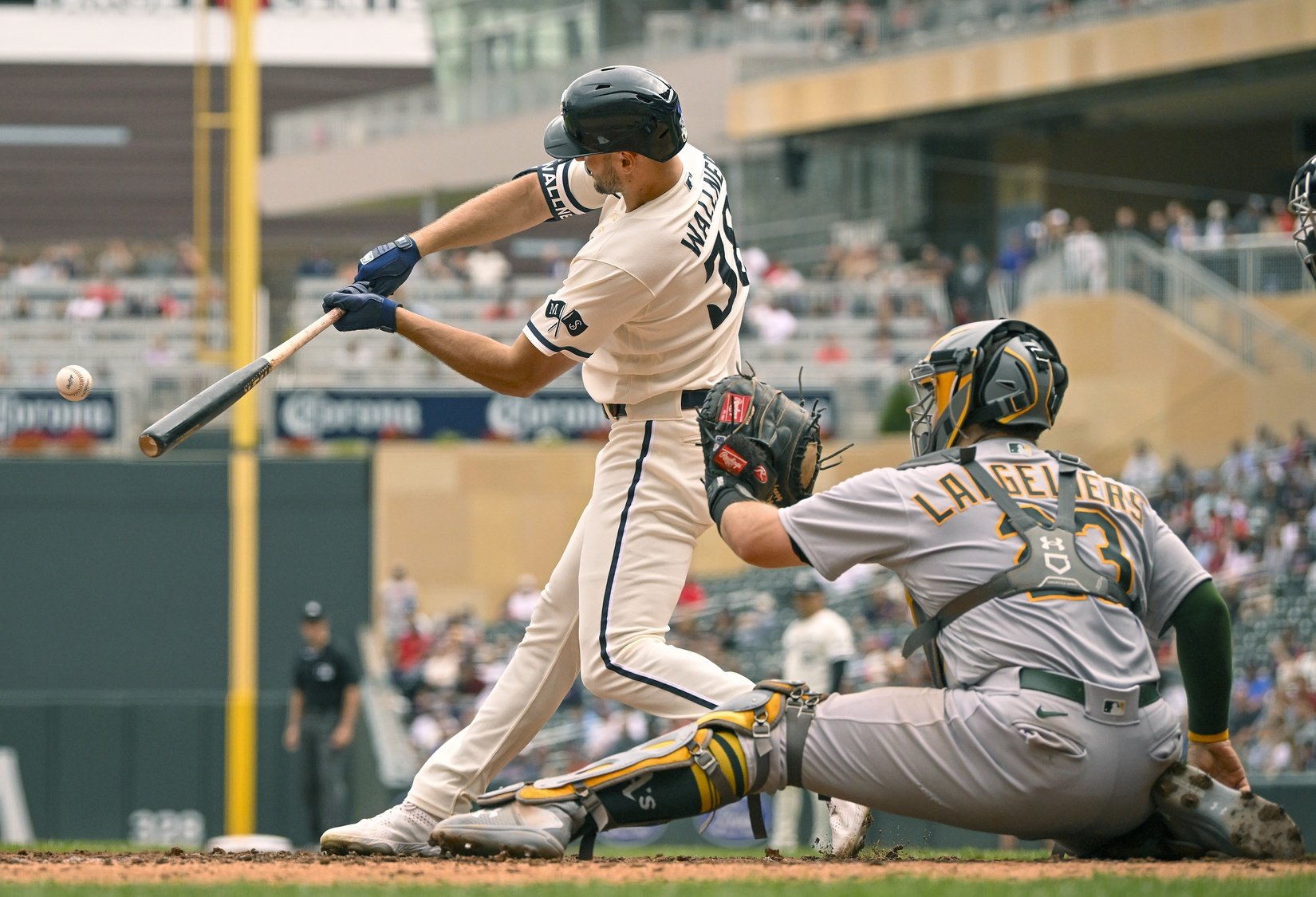 Coming off a breakthrough rookie season, Matt Wallner struggled mightily throughout spring training, but it was mostly shrugged off by him and his coaches. The sample is small and the games don't matter, was the refrain more or less. Once the games did start mattering and Wallner's bat failed to start battering, the vibe quickly changed. Just 13 games into his season, with a .080/.273/.240 slash line and 17-to-3 K/BB ratio in 33 plate appearances, the Twins decided to send Wallner down. The hope was that a trip to St. Paul would help Wallner get right in a hurry. Instead, it merely verified that his plate approach was truly broken. Playing at a level where he crushed in both 2022 and 2023, Wallner looked totally lost in his first couple weeks with the Saints, slashing .152/.204/.261 with 21 strikeouts in three walks through his first 11 games and 49 plate appearances. Almost identical to his numbers in the majors. In early May he went through a bit of a power streak, but the indicators of plate discipline were still pretty alarming: 33 strikeouts and four walks through 20 games at Triple-A; a 37% K-rate and 4% BB rate. He just wasn't going to sustainably succeed the way. No one can. On May 12th, Wallner did something he hadn't all year: he drew two walks in a game. It was a notable development from a player who had drawn seven total free passes through 33 games. Then he drew two walks again three games later. And again two games after that. Since that date, May 12th, Wallner has a 36-to-20 K/BB ratio that looks radically different from what we saw in the first seven weeks of the season. In 19 games during that span (entering play Friday) Wallner has a palatable 29% K-rate and an excellent 16% BB-rate. He's slashing .214/.341/.505 for an .846 OPS that is very strong despite being suppressed by a .230 BABIP. If we zoom into a more recent sample, the numbers are even more impressive: in his past 15 games, Wallner is batting .316 with a 1.126 OPS, eight homers and 17 RBIs. In 66 plate appearances: 15 strikeouts (23%) and eight walks (12%). Seeing Wallner launching home runs all over the place -- most recently he crushed two as part of a four-hit night in St. Paul's 18-run barrage against Louisville on Thursday -- is obviously great. But it's not necessarily all that telling. He's always going to be able to obliterate the baseball when he gets a hold of it. Putting forth better plate appearances and getting himself in position to get pitches he can wallop (or spitting on those he can't) is the key for Wallner. Now he's finally doing those things, in convincing fashion. Wallner's eventual turnaround in Triple-A offers hope for Edouard Julien, who is going through a similar spell of initial struggles following his demotion, as well as Alex Kirilloff, who's now joined the two in the minors. Of course, it won't matter unless Wallner can channel the newfound confidence back into major-league success, and you wonder how long it will take for him to get that chance. The front office chose Austin Martin as the call-up instead of Wallner when they sent down Kirilloff earlier this week, which surprised me somewhat given the need for another quality left-handed bat. But with that need in mind, Wallner's return can't be too far off. We can officially and unequivocally say at this point he's earned it. What are your thoughts? Would you be looking for a way to get Wallner back up into the Twins lineup quickly, or would you keep him in the minors until an opportunity naturally arises?
 -
The homegrown slugger endured a tumultuous start to this season at the major-league level, and didn't initially look a whole lot better after being demoted to the minors in April. The past few weeks, however, have brought a lot of positive signs, suggesting that Matt Wallner may be ready to return and make an impact in the near future. Image courtesy of © Nick Wosika-USA TODAY Sports Coming off a breakthrough rookie season, Matt Wallner struggled mightily throughout spring training, but it was mostly shrugged off by him and his coaches. The sample is small and the games don't matter, was the refrain more or less. Once the games did start mattering and Wallner's bat failed to start battering, the vibe quickly changed. Just 13 games into his season, with a .080/.273/.240 slash line and 17-to-3 K/BB ratio in 33 plate appearances, the Twins decided to send Wallner down. The hope was that a trip to St. Paul would help Wallner get right in a hurry. Instead, it merely verified that his plate approach was truly broken. Playing at a level where he crushed in both 2022 and 2023, Wallner looked totally lost in his first couple weeks with the Saints, slashing .152/.204/.261 with 21 strikeouts in three walks through his first 11 games and 49 plate appearances. Almost identical to his numbers in the majors. In early May he went through a bit of a power streak, but the indicators of plate discipline were still pretty alarming: 33 strikeouts and four walks through 20 games at Triple-A; a 37% K-rate and 4% BB rate. He just wasn't going to sustainably succeed the way. No one can. On May 12th, Wallner did something he hadn't all year: he drew two walks in a game. It was a notable development from a player who had drawn seven total free passes through 33 games. Then he drew two walks again three games later. And again two games after that. Since that date, May 12th, Wallner has a 36-to-20 K/BB ratio that looks radically different from what we saw in the first seven weeks of the season. In 19 games during that span (entering play Friday) Wallner has a palatable 29% K-rate and an excellent 16% BB-rate. He's slashing .214/.341/.505 for an .846 OPS that is very strong despite being suppressed by a .230 BABIP. If we zoom into a more recent sample, the numbers are even more impressive: in his past 15 games, Wallner is batting .316 with a 1.126 OPS, eight homers and 17 RBIs. In 66 plate appearances: 15 strikeouts (23%) and eight walks (12%). Seeing Wallner launching home runs all over the place -- most recently he crushed two as part of a four-hit night in St. Paul's 18-run barrage against Louisville on Thursday -- is obviously great. But it's not necessarily all that telling. He's always going to be able to obliterate the baseball when he gets a hold of it. Putting forth better plate appearances and getting himself in position to get pitches he can wallop (or spitting on those he can't) is the key for Wallner. Now he's finally doing those things, in convincing fashion. Wallner's eventual turnaround in Triple-A offers hope for Edouard Julien, who is going through a similar spell of initial struggles following his demotion, as well as Alex Kirilloff, who's now joined the two in the minors. Of course, it won't matter unless Wallner can channel the newfound confidence back into major-league success, and you wonder how long it will take for him to get that chance. The front office chose Austin Martin as the call-up instead of Wallner when they sent down Kirilloff earlier this week, which surprised me somewhat given the need for another quality left-handed bat. But with that need in mind, Wallner's return can't be too far off. We can officially and unequivocally say at this point he's earned it. What are your thoughts? Would you be looking for a way to get Wallner back up into the Twins lineup quickly, or would you keep him in the minors until an opportunity naturally arises? View full article
-
It's no secret that Rocco Baldelli likes to embrace the platoon advantage, a tendency that is well supported by data. Unfortunately, recent roster moves are making it increasingly hard for him to build optimized lineups against the very pitchers that have stymied the Twins offense. Image courtesy of Jesse Johnson-USA TODAY Sports It's hard to argue with the decision to demote Alex Kirilloff to the minors, in a vacuum. His latest performance -- 0-for-4 with three strikeouts in a one-run loss to the Rockies on Tuesday -- punctuated a lengthy slump that saw him slash .143/.221/.325 with six extra-base hits since the start of May. It's also hard to argue with the decision to promote Austin Martin as a corresponding move, in a vacuum. Martin has been an on-base machine since returning to Triple-A, posting a .449 OBP with 18 walks in 78 plate appearances. That's the kind of discipline and consistency Minnesota's lineup could use. The problem with swapping out Kirilloff for Martin, nine days after demoting Edouard Julien to make room for Royce Lewis, is that it further skews the problematic balance of lefty/righty bats on this roster, which has already been forced to make do without Matt Wallner, who was expected to be a key threat versus right-handed pitchers. Manager Rocco Baldelli will now be hard-pressed to fill out an optimized lineup against righties, who have been a critical pain point for the Twins offense. Minnesota has actually performed quite well against lefties, slashing .266/.312/.429 in 631 plate appearances against them, with Wednesday's ambush of Colorado southpaw Austin Gomber serving as the latest success story. Against righties, the Twins have been significantly worse, slashing .227/.307/.394 for an OPS that is 40 points lower. That is an issue, of course, because right-handed pitchers are far more prevalent: 75% of Minnesota's total PAs have come against RHP, which is pretty standard. Replacing Kirilloff and Julien with righty bats leaves the Twins with just two pure left-handed hitters on the roster: Max Kepler and Trevor Larnach. Kepler has of course been mired in a massive slump (.389 OPS in his past 18 games) and Larnach always seems at risk of falling into one. Beyond them, you have a switch-hitter in Carlos Santana, who has been better against lefties than righties this year and in his career, and another in Willi Castro, for whom the same applies. From there, it's all righties. For now, that might not feel like such a bad thing -- Twins RH batters have a respectable .715 OPS against RH pitchers, which is 9% better than the league average -- but you have to wonder how that's going to hold up if Baldelli is forced to write in the names of Martin, Jose Miranda, Manuel Margot and Kyle Farmer against righty starters too frequently. Here's what the three demoted lefty hitters did against right-handed pitching last year, and what the Twins are missing: Julien: .274/.401/.497 (360 PA) Kirilloff: .300/.373/.485 (263 PA) Wallner: .281/.409/.561 (208 PA) Losing all that outstanding production is a pretty clear-cut prime culprit in the team's overall offensive woes. I'm not saying that keeping them around was necessarily going to be the solution, but stacking the entire roster with right-handed bats also doesn't seem to be it. In order to truly get their lagging lineup on track, it's imperative for the Twins to get at least one of these lefty bats back on the roster in functional form, and preferably two or all three. There is plenty more right-handed pitching ahead. View full article
- 71 replies
-
- 2
-
-
-
- austin martin
- alex kirilloff
- (and 1 more)
-
Swapping Kirilloff for Martin Magnifies Minnesota's Matchup Problems
Nick Nelson posted an article in Twins
 It's hard to argue with the decision to demote Alex Kirilloff to the minors, in a vacuum. His latest performance -- 0-for-4 with three strikeouts in a one-run loss to the Rockies on Tuesday -- punctuated a lengthy slump that saw him slash .143/.221/.325 with six extra-base hits since the start of May. It's also hard to argue with the decision to promote Austin Martin as a corresponding move, in a vacuum. Martin has been an on-base machine since returning to Triple-A, posting a .449 OBP with 18 walks in 78 plate appearances. That's the kind of discipline and consistency Minnesota's lineup could use. The problem with swapping out Kirilloff for Martin, nine days after demoting Edouard Julien to make room for Royce Lewis, is that it further skews the problematic balance of lefty/righty bats on this roster, which has already been forced to make do without Matt Wallner, who was expected to be a key threat versus right-handed pitchers. Manager Rocco Baldelli will now be hard-pressed to fill out an optimized lineup against righties, who have been a critical pain point for the Twins offense. Minnesota has actually performed quite well against lefties, slashing .266/.312/.429 in 631 plate appearances against them, with Wednesday's ambush of Colorado southpaw Austin Gomber serving as the latest success story. Against righties, the Twins have been significantly worse, slashing .227/.307/.394 for an OPS that is 40 points lower. That is an issue, of course, because right-handed pitchers are far more prevalent: 75% of Minnesota's total PAs have come against RHP, which is pretty standard. Replacing Kirilloff and Julien with righty bats leaves the Twins with just two pure left-handed hitters on the roster: Max Kepler and Trevor Larnach. Kepler has of course been mired in a massive slump (.389 OPS in his past 18 games) and Larnach always seems at risk of falling into one. Beyond them, you have a switch-hitter in Carlos Santana, who has been better against lefties than righties this year and in his career, and another in Willi Castro, for whom the same applies. From there, it's all righties. For now, that might not feel like such a bad thing -- Twins RH batters have a respectable .715 OPS against RH pitchers, which is 9% better than the league average -- but you have to wonder how that's going to hold up if Baldelli is forced to write in the names of Martin, Jose Miranda, Manuel Margot and Kyle Farmer against righty starters too frequently. Here's what the three demoted lefty hitters did against right-handed pitching last year, and what the Twins are missing: Julien: .274/.401/.497 (360 PA) Kirilloff: .300/.373/.485 (263 PA) Wallner: .281/.409/.561 (208 PA) Losing all that outstanding production is a pretty clear-cut prime culprit in the team's overall offensive woes. I'm not saying that keeping them around was necessarily going to be the solution, but stacking the entire roster with right-handed bats also doesn't seem to be it. In order to truly get their lagging lineup on track, it's imperative for the Twins to get at least one of these lefty bats back on the roster in functional form, and preferably two or all three. There is plenty more right-handed pitching ahead.
- 71 comments
-
- 7
-
-
- austin martin
- alex kirilloff
- (and 1 more)
-
Once again, the Minnesota Twins were on a nice little roll when they ran into the New York Yankees on the schedule. Once again, that dreaded meeting sent them into a depressing death spiral, leaving us all to question the true quality and capability of this frustrating Twins team. Image courtesy of Vincent Carchietta-USA TODAY Sports Weekly Snapshot: Mon, 6/3 through Sun, 6/9 *** Record Last Week: 1-5 (Overall: 34-31) Run Differential Last Week: -12 (Overall: -6) Standing: 3rd Place in AL Central (8.5 GB) Last Week's Game Results: Game 60 | NYY 5, MIN 1: Royce Returns to Familiar Result in NYC Game 61 | NYY 9, MIN 5: Yankees Pounce on Paddack, Win Again Game 62 | NYY 8, MIN 5: Twins Shrink in the Bronx Once Again Game 63 | PIT 3, MIN 0: Lineup Can't Support Strong Ryan Outing Game 64 | PIT 4, MIN 0: Slumping Offense Comes Up Empty Game 65 | MIN 11, PIT 5: Twins Break Through in Extras to Win NO PODCAST EPISODE THIS WEEK SINCE I'M ON THE ROAD IN PITTSBURGH. BUT WE'LL BE BACK NEXT WEEK. SUBSCRIBE ON APPLE OR SPOTIFY SO YOU DON'T MISS OUT! NEWS & NOTES Royce Lewis made his long-awaited return to the Twins after spending two months on the injured list, and as we learned last Sunday, Edouard Julien was the unlucky victim of a roster crunch. The slumping second baseman was optioned to Triple-A, where he homered on the first pitch he saw on Wednesday. Hopefully it'll be a short stay in the minors for one of Minnesota's most talented and crucial hitters. Julien was joined at Triple-Al by Brooks Lee, who completed his rehab in Single-A and now looks to get fully back on track in his pursuit of a major-league debut. Lee notched three hits and a pair of walks in his first week back in action at St. Paul. HIGHLIGHTS They went to waste thanks to the Twins offense, but both Joe Ryan and Simeon Woods Richardson delivered excellent outings in Pittsburgh. Ryan bounced back from his worst start of the year in Houston with seven innings of two-run ball, striking out eight with only two hits allowed. Woods Richardson's outing was even more encouraging, all things considered; he took a shutout into the seventh inning and finished with just one run allowed, striking out six. SWR showcased his newfound velocity bump, averaging 94 MPH with the fastball and touching 97, which would've been unheard of a year ago. The right-hander now owns a 2.84 ERA in 10 starts, and the Twins have gone 7-3 in those games. He's been a lifesaver for the back of the rotation. Offensively, the return of Lewis was really the lone bright spot. He homered in his first two games back, but unfortunately his energy did not prove contagious. LOWLIGHTS The lineup is currently a woeful mess, filled with hitters who've either been slumping most of the year or previously hot bats that have gone ice cold. In the latter bucket, you have Max Kepler (4-for-22, 9 K, 1 BB) and Ryan Jeffers (2-for-15). Jeffers is batting .129 with a .286 SLG since May 15th; he's actually been worse over that span since Christian Vázquez. Both Kepler and Jeffers have seen their outstanding numbers hurdle back to Earth, which is disappointing but not entirely unexpected. It's a little tougher to accept the performances of players who've been unable to find any offensive game all year. Byron Buxton is in that group. He picked up three singles in 19 at-bats last week, with six strikeouts and no walks. He's now slashing .223/.276/.357 on the season. As a Buxton fan, I was hoping he'd round into form as he settled and got comfortable, but we're now in June and he's shown no real improvement or progression. At this point, his offensive game seems very limited, and I'm not sure his defensive impact is offsetting his negatives at the plate. That said, there's not much to be done other than keep running the veteran out there and hoping he can find a pulse at the plate. Alex Kirilloff is not so lucky as to have a $100 million contract keeping him locked into the roster. He's been in a perpetual slump since about the third week of the season, and is coming off another poor week in which he went 1-for-12 to lower his OPS to .674. Kirilloff has played in 55 games this season and has tallied multiple hits in two of them. Honestly, I'd be surprised if he isn't sent down on Monday. Generally, I'm not sure what to say about this club. After flopping against the Yankees again, they are now 0-14 against the three best teams in the American League (NYY, CLE, BAL) and they have a negative run differential on the season. Their ace Pablo López has a 5.45 ERA – one of three starters with an ERA above five – and their closer Jhoan Durán is at 4.60. Nobody is really playing up to their potential. Rocco Baldelli's previous penchant for keeping his team out of prolonged funks has disappeared, with three different five-game losing streaks already on the books. It's getting much tougher to say, "They'll come around." Come around to what? They roster isn't even beat up really. They just haven't been good, nor have they given any substantial reason for anyone to be confident that will change. TRENDING STORYLINE Things are kind of slipping away from the Twins. They find themselves 8 ½ games out of first place here in mid-June, with roundly underwhelming performances across the board. Will they shake things up? As mentioned earlier, I would expect to see a fairly significant roster move in the coming week, such as swapping out Kirilloff for Matt Wallner. I also wouldn't be surprised to see something like the dismissal of the hitting coach. If David Popkins and his hitting instruction program are not failing, you wonder what that it would look like if they were. LOOKING AHEAD It gets easier from here. The Rockies and Athletics are abjectly bad teams. Hopefully the Twins will rattle off some wins at home. Not sure it'll be all that fulfilling or satisfying even if they do. MONDAY, JUN 10: ROCKIES @ TWINS – RHP Dakota Hudson v. RHP Chris Paddack TUESDAY, JUNE 11: ROCKIES @ TWINS – RHP Cal Quantrill v. TBD WEDNESDAY, JUNE 12: ROCKIES @ TWINS – LHP Austin Gomber v. RHP Pablo López THURSDAY, JUNE 13: ATHLETICS @ TWINS – RHP Luis Medina v. RHP Joe Ryan FRIDAY, JUNE 14: ATHLETICS @ TWINS – RHP Mitch Spence v. RHP Simeon Woods Richardson SATURDAY, JUNE 15: ATHLETICS @ TWINS – RHP Joey Estes v. RHP Bailey Ober SUNDAY, JUNE 16: ATHLETICS @ TWINS – LHP JP Sears v. RHP Chris Paddack View full article
-
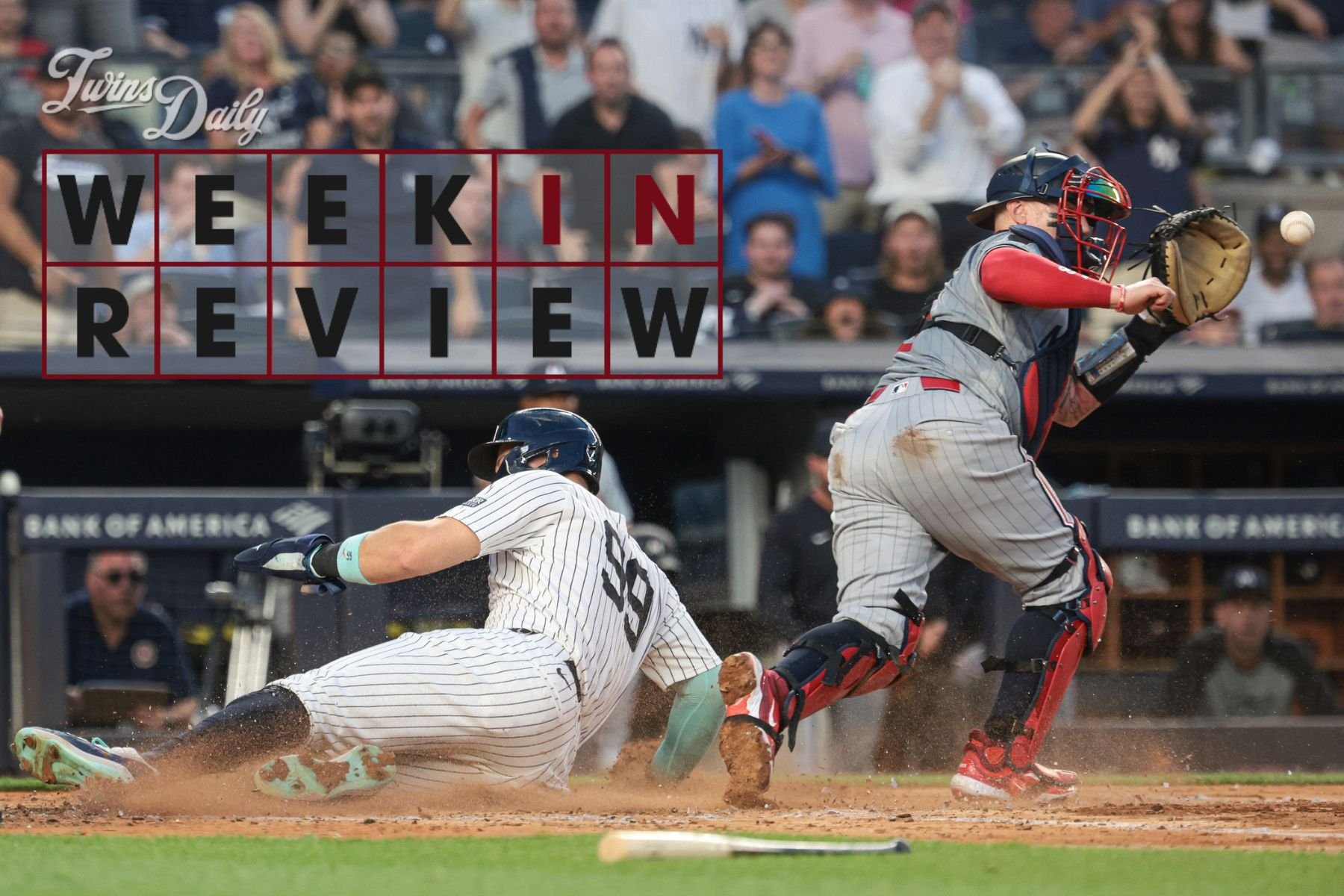 Weekly Snapshot: Mon, 6/3 through Sun, 6/9 *** Record Last Week: 1-5 (Overall: 34-31) Run Differential Last Week: -12 (Overall: -6) Standing: 3rd Place in AL Central (8.5 GB) Last Week's Game Results: Game 60 | NYY 5, MIN 1: Royce Returns to Familiar Result in NYC Game 61 | NYY 9, MIN 5: Yankees Pounce on Paddack, Win Again Game 62 | NYY 8, MIN 5: Twins Shrink in the Bronx Once Again Game 63 | PIT 3, MIN 0: Lineup Can't Support Strong Ryan Outing Game 64 | PIT 4, MIN 0: Slumping Offense Comes Up Empty Game 65 | MIN 11, PIT 5: Twins Break Through in Extras to Win NO PODCAST EPISODE THIS WEEK SINCE I'M ON THE ROAD IN PITTSBURGH. BUT WE'LL BE BACK NEXT WEEK. SUBSCRIBE ON APPLE OR SPOTIFY SO YOU DON'T MISS OUT! NEWS & NOTES Royce Lewis made his long-awaited return to the Twins after spending two months on the injured list, and as we learned last Sunday, Edouard Julien was the unlucky victim of a roster crunch. The slumping second baseman was optioned to Triple-A, where he homered on the first pitch he saw on Wednesday. Hopefully it'll be a short stay in the minors for one of Minnesota's most talented and crucial hitters. Julien was joined at Triple-Al by Brooks Lee, who completed his rehab in Single-A and now looks to get fully back on track in his pursuit of a major-league debut. Lee notched three hits and a pair of walks in his first week back in action at St. Paul. HIGHLIGHTS They went to waste thanks to the Twins offense, but both Joe Ryan and Simeon Woods Richardson delivered excellent outings in Pittsburgh. Ryan bounced back from his worst start of the year in Houston with seven innings of two-run ball, striking out eight with only two hits allowed. Woods Richardson's outing was even more encouraging, all things considered; he took a shutout into the seventh inning and finished with just one run allowed, striking out six. SWR showcased his newfound velocity bump, averaging 94 MPH with the fastball and touching 97, which would've been unheard of a year ago. The right-hander now owns a 2.84 ERA in 10 starts, and the Twins have gone 7-3 in those games. He's been a lifesaver for the back of the rotation. Offensively, the return of Lewis was really the lone bright spot. He homered in his first two games back, but unfortunately his energy did not prove contagious. LOWLIGHTS The lineup is currently a woeful mess, filled with hitters who've either been slumping most of the year or previously hot bats that have gone ice cold. In the latter bucket, you have Max Kepler (4-for-22, 9 K, 1 BB) and Ryan Jeffers (2-for-15). Jeffers is batting .129 with a .286 SLG since May 15th; he's actually been worse over that span since Christian Vázquez. Both Kepler and Jeffers have seen their outstanding numbers hurdle back to Earth, which is disappointing but not entirely unexpected. It's a little tougher to accept the performances of players who've been unable to find any offensive game all year. Byron Buxton is in that group. He picked up three singles in 19 at-bats last week, with six strikeouts and no walks. He's now slashing .223/.276/.357 on the season. As a Buxton fan, I was hoping he'd round into form as he settled and got comfortable, but we're now in June and he's shown no real improvement or progression. At this point, his offensive game seems very limited, and I'm not sure his defensive impact is offsetting his negatives at the plate. That said, there's not much to be done other than keep running the veteran out there and hoping he can find a pulse at the plate. Alex Kirilloff is not so lucky as to have a $100 million contract keeping him locked into the roster. He's been in a perpetual slump since about the third week of the season, and is coming off another poor week in which he went 1-for-12 to lower his OPS to .674. Kirilloff has played in 55 games this season and has tallied multiple hits in two of them. Honestly, I'd be surprised if he isn't sent down on Monday. Generally, I'm not sure what to say about this club. After flopping against the Yankees again, they are now 0-14 against the three best teams in the American League (NYY, CLE, BAL) and they have a negative run differential on the season. Their ace Pablo López has a 5.45 ERA – one of three starters with an ERA above five – and their closer Jhoan Durán is at 4.60. Nobody is really playing up to their potential. Rocco Baldelli's previous penchant for keeping his team out of prolonged funks has disappeared, with three different five-game losing streaks already on the books. It's getting much tougher to say, "They'll come around." Come around to what? They roster isn't even beat up really. They just haven't been good, nor have they given any substantial reason for anyone to be confident that will change. TRENDING STORYLINE Things are kind of slipping away from the Twins. They find themselves 8 ½ games out of first place here in mid-June, with roundly underwhelming performances across the board. Will they shake things up? As mentioned earlier, I would expect to see a fairly significant roster move in the coming week, such as swapping out Kirilloff for Matt Wallner. I also wouldn't be surprised to see something like the dismissal of the hitting coach. If David Popkins and his hitting instruction program are not failing, you wonder what that it would look like if they were. LOOKING AHEAD It gets easier from here. The Rockies and Athletics are abjectly bad teams. Hopefully the Twins will rattle off some wins at home. Not sure it'll be all that fulfilling or satisfying even if they do. MONDAY, JUN 10: ROCKIES @ TWINS – RHP Dakota Hudson v. RHP Chris Paddack TUESDAY, JUNE 11: ROCKIES @ TWINS – RHP Cal Quantrill v. TBD WEDNESDAY, JUNE 12: ROCKIES @ TWINS – LHP Austin Gomber v. RHP Pablo López THURSDAY, JUNE 13: ATHLETICS @ TWINS – RHP Luis Medina v. RHP Joe Ryan FRIDAY, JUNE 14: ATHLETICS @ TWINS – RHP Mitch Spence v. RHP Simeon Woods Richardson SATURDAY, JUNE 15: ATHLETICS @ TWINS – RHP Joey Estes v. RHP Bailey Ober SUNDAY, JUNE 16: ATHLETICS @ TWINS – LHP JP Sears v. RHP Chris Paddack
 -
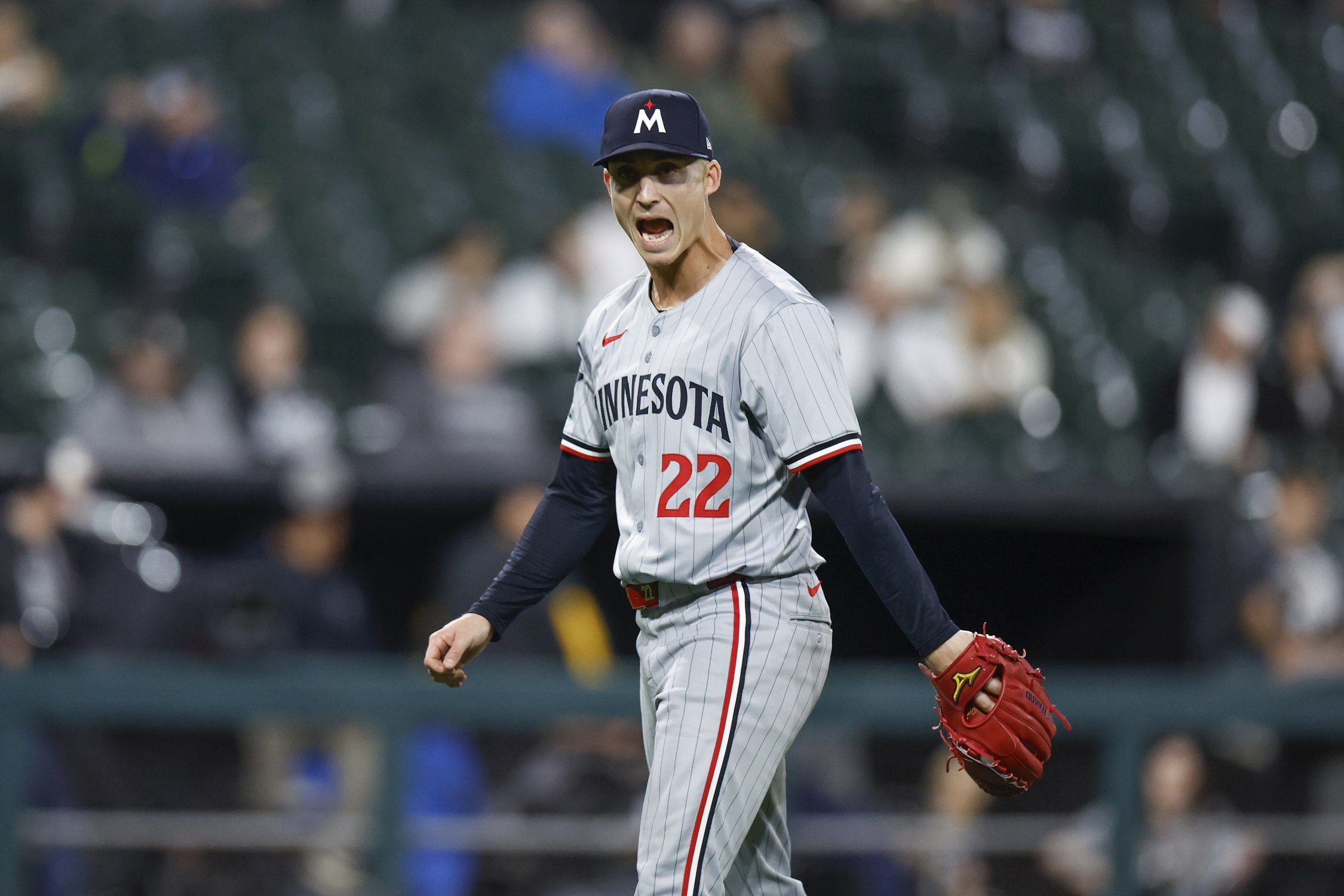 In Sunday's series finale against the Houston Astros, Rocco Baldelli made a familiar move: he pivoted away from his starting pitcher early, counting on his bullpen to carry the freight in a close game. Simeon Woods Richardson wasn't at his best, but he was still at 66 pitches in the fifth inning of a one-run game. Rather than let him see the Houston lineup for a third time, Baldelli turned to his relief corps. The outcome was also familiar: Minnesota's bullpen locked it down with 4 ⅔ shutout innings to set up and seal a 4-3 victory. The Twins improved to 11-4 in one-run games on the season, with Caleb Thielbar, Jorge Alcalá, Steven Okert, Griffin Jax and Jhoan Durán combining to stifle Astros bats and set the stage for José Miranda's heroics. The Twins are now 9-3 in their last 12 games since snapping a seven-game losing streak, and during this span, those five relievers who pitched on Sunday have allowed a total of one earned run in 26 ⅓ innings, good for a 0.34 ERA. Durán converted all seven of his save attempts during that span. For the season, Minnesota's bullpen ranks seventh among MLB teams in ERA (3.69) and sixth in FIP (3.72), despite being without one of their three best relievers (Brock Stewart or Durán) for literally every game. This unit has certainly not been without its hiccups; inflated ERAs from now-absent relievers Jay Jackson and Kody Funderburk took a toll, as did a pair of rough outings from Durán in Cleveland. But in its current form, there is a whole lot to like about the bullpen makeup and its outlook. The closer has been highly effective, even if his velocity is down a bit. Late-inning contributors are getting it done across the board. And Griffin Jax. Hoo boy. I wrote about Jax's potential to rise and command the Twins bullpen just ahead of the season, coming off a ridiculously impressive spring camp. The righthander has lived up to the hype, and then some. He ranks ninth in the majors with a 1.88 FIP, and seventh with a 2.15 xERA. Jax's Statcast page is an array of blindingly bright red sliders, illustrating the underlying dominance that fuels his numbers. Jax's sweeper has been an absolute wipeout pitch, as anticipated. Opponents have an xBA of .191 against it and an xSLG of .219 – no one can handle the freakish 89-MPH breaking ball. It slices across the batter's field of view like a buzzsaw. Somehow, he only seems to be getting better and stronger. On Sunday, he unleashed a 98.6-MPH fastball, the hardest of his career. At some point, the Twins will (hopefully) get Stewart back, but as things stand, this looks like a deep and overpowering bullpen, led by Durán and Jax but with capable performers throughout. I promise: this article isn't intended to serve as a jinx (although it may function as one, especially with the Twins heading into Yankee Stadium). Rather, take it as a token of appreciation for what the relief corps has accomplished through the first third of the season, and especially of late, despite being pressed heavily by a ton of close games. Bullpens only tend to get noticed and discussed when they're struggling. Let's celebrate the fact that, right now, Minnesota's relievers are doing the opposite. They're pitching out of their minds, and have played a massive role in getting the Twins right back on track.
 -
Since recovering from their stumble out of the gate, the Minnesota Twins have been one of the winningest teams in baseball, largely because they are performing phenomenally in close games. For all the fluctuations we've seen from the lineup and rotation, their (mostly) steady and stellar bullpen has been the unsung hero in Minnesota's ability to play at a 90-win pace in the absence of Royce Lewis. Image courtesy of Kamil Krzaczynski-USA TODAY Sports In Sunday's series finale against the Houston Astros, Rocco Baldelli made a familiar move: he pivoted away from his starting pitcher early, counting on his bullpen to carry the freight in a close game. Simeon Woods Richardson wasn't at his best, but he was still at 66 pitches in the fifth inning of a one-run game. Rather than let him see the Houston lineup for a third time, Baldelli turned to his relief corps. The outcome was also familiar: Minnesota's bullpen locked it down with 4 ⅔ shutout innings to set up and seal a 4-3 victory. The Twins improved to 11-4 in one-run games on the season, with Caleb Thielbar, Jorge Alcalá, Steven Okert, Griffin Jax and Jhoan Durán combining to stifle Astros bats and set the stage for José Miranda's heroics. The Twins are now 9-3 in their last 12 games since snapping a seven-game losing streak, and during this span, those five relievers who pitched on Sunday have allowed a total of one earned run in 26 ⅓ innings, good for a 0.34 ERA. Durán converted all seven of his save attempts during that span. For the season, Minnesota's bullpen ranks seventh among MLB teams in ERA (3.69) and sixth in FIP (3.72), despite being without one of their three best relievers (Brock Stewart or Durán) for literally every game. This unit has certainly not been without its hiccups; inflated ERAs from now-absent relievers Jay Jackson and Kody Funderburk took a toll, as did a pair of rough outings from Durán in Cleveland. But in its current form, there is a whole lot to like about the bullpen makeup and its outlook. The closer has been highly effective, even if his velocity is down a bit. Late-inning contributors are getting it done across the board. And Griffin Jax. Hoo boy. I wrote about Jax's potential to rise and command the Twins bullpen just ahead of the season, coming off a ridiculously impressive spring camp. The righthander has lived up to the hype, and then some. He ranks ninth in the majors with a 1.88 FIP, and seventh with a 2.15 xERA. Jax's Statcast page is an array of blindingly bright red sliders, illustrating the underlying dominance that fuels his numbers. Jax's sweeper has been an absolute wipeout pitch, as anticipated. Opponents have an xBA of .191 against it and an xSLG of .219 – no one can handle the freakish 89-MPH breaking ball. It slices across the batter's field of view like a buzzsaw. Somehow, he only seems to be getting better and stronger. On Sunday, he unleashed a 98.6-MPH fastball, the hardest of his career. At some point, the Twins will (hopefully) get Stewart back, but as things stand, this looks like a deep and overpowering bullpen, led by Durán and Jax but with capable performers throughout. I promise: this article isn't intended to serve as a jinx (although it may function as one, especially with the Twins heading into Yankee Stadium). Rather, take it as a token of appreciation for what the relief corps has accomplished through the first third of the season, and especially of late, despite being pressed heavily by a ton of close games. Bullpens only tend to get noticed and discussed when they're struggling. Let's celebrate the fact that, right now, Minnesota's relievers are doing the opposite. They're pitching out of their minds, and have played a massive role in getting the Twins right back on track. View full article
-
By taking five of seven from the Royals and Astros, and extending their series winning streak to four in a row, the Minnesota Twins continued to play exceptional ball. Their resurgent run will be tested on a coming trip to the East Coast, but a crucial reinforcement is on deck with Royce Lewis set to return. Image courtesy of Erik Williams-USA TODAY Sports Weekly Snapshot: Mon, 5/27 through Sun, 6/2 *** Record Last Week: 5-2 (Overall: 33-26) Run Differential Last Week: +2 (Overall: +6) Standing: 3rd Place in AL Central (6.0 GB) Last Week's Game Results: Game 53 | MIN 6, KC 5: Twins Ward Off KC Comeback, Win Opener Game 54 | MIN 4, KC 2: Early Lead Holds Up Behind SWR and Bullpen Game 55 | KC 6, MIN 1: Royals Get to Ober Again, Lineup Silenced Game 56 | MIN 7, KC 6: Jeffers and Correa Power Big Comeback Game 57 | MIN 6, HOU 1: Lopez Dominates as Twins Roll Houston Game 58 | HOU 5, MIN 2: Astros Launch Four Homers Off Ryan Game 59 | MIN 4, HOU 3: Miranda Lifts Off, Bullpen Locks Down IF YOU'D RATHER LISTEN TO THE WEEK IN REVIEW THAN READ IT, YOU CAN NOW FIND IT IN PODCAST FORM. GET THE LATEST EPISODE HERE. ALSO AVAILABLE ON APPLE AND SPOTIFY. NEWS & NOTES Royce Lewis's return is officially imminent. The Twins shared on Sunday that if all went well in his final rehab tuneup with the Saints on Sunday – and seemingly they did, as he got through four ABs with a hit, a walk and a strikeout – he was expected to rejoin the team on Tuesday in New York. Minnesota will be getting back their best hitter as they look to build on their recent success and erase the memory of a brutal Target Field sweep at the hands of the Yankees in mid-May. Of course, activating Lewis will require a corresponding move, and it sounds like we have a pretty clear read on who that's going to be. We'll get to that decision in a bit. The Twins made only one roster move over the past week, calling up reliever Diego Castillo as a fresh arm on Monday after sending down Kody Funderburk last Sunday. Justin Topa was moved to the 60-day IL to make room on the 40-man roster for Castillo, who showed some encouraging signs in a pair of scoreless two-inning appearances. I'm not trying to jinx anything or whatever, but it deserves to be noted how much the physical attrition has slowed for the Twins following an early-season flurry. They haven't made an IL move since placing Byron Buxton and Brock Stewart on May 2nd. Buxton has since returned and looks to be in a fairly good place. Carlos Correa, Max Kepler and Jhoan Durán are among other key players who've spent time on the shelf but came back strong and without setbacks. Hopefully the same will be true of Lewis soon. To me, this is the under-discussed story of Minnesota's turnaround. They've gotten healthy and they're about to get healthier. They're playing almost at full strength and that has allowed them to rattle off series wins with impressive consistency. Nick Paparesta and the training staff deserve a ton of credit for building on what they started last year. You can't control people getting hurt, but you can control how you address and manage the handling of those injuries. It's tough to argue the Twins haven't been doing an amazing job on that front, based on results. HIGHLIGHTS Amusingly, almost all of the players who appeared to be on the roster bubble in the face of Lewis's impending return enjoyed pretty strong weeks as they sought to make their case for sticking around. José Miranda led the way by adding three more home runs and driving in six, coming through with a game-changing boost on Sunday that put a stamp on his locked-down roster spot: tying home run in the sixth, go-ahead double in the eighth. Trevor Larnach also hit three homers and drove in six runs between his four starts. Alex Kirilloff followed up his big weekend against Texas with three more RBIs on three hits in 11 at-bats. Edouard Julien showed signs of emerging from his lengthy slump, notching four hits and a couple walks in 15 plate appearances, although it looks to have not been enough. Meanwhile, even the struggling veteran contingent managed to post some production. Carlos Santana had one of his better weeks of the season, going 6-for-18 with a homer and four walks in a vintage snapshot. Manuel Margot notched four hits and three walks in 15 plate appearances, and has actually come through in a few big spots of late. These performances from contributing role players served to create a tougher decision for the front office, as they prepare to integrate another core player into their roster mix. Lewis will rejoin a team led by a thriving Correa, who is living up to his big-money contract with stellar play on both the offensive and defensive sides. Correa has resumed being a stalwart defensively at short – improving from 64th percentile in Outs Above Average last year to 93rd percentile – and his bat has bounced back in a big way, with an OPS that is 22 points above the league average. On Thursday he came through with a huge bases-clearing triple to help seal up a series victory over the Royals, shrinking the division gap. Outbursts of production from guys like Larnach and Miranda are great to see, but this team's true upside hinges on that core trio of Correa, Buxton and Lewis being healthy and spearheading the charge. So it's really good to see Correa doing his thing. Buxton's bat still hasn't quite come around, but he's moving around well and at least starting to take some better ABs (three walks last week, four all season previous). I'm encouraged by the fact he appeared in all seven games, starting six, while showing no visible impairment from the balky knee. On the pitching side, Pablo López rebounded after two poor starts the previous week, delivering another brilliant performance against the Astros in Houston. López tossed seven innings of one-run ball on Friday night, striking out six with one walk. Hopefully he's ready to put his short run of struggles behind him. LOWLIGHTS Just in time for López to turn around his downward performance trend, other Twins starting pitchers were doing the opposite. The good ol' ebbs and flows of baseball. Home run regression caught up in a major way with Joe Ryan, who gave up four long balls in Houston on Saturday, after surrendering only seven through his first 11 starts. Simeon Woods Richardson was tapped by the Astros for a pair of bombs on Sunday, equalling the number he'd allowed in his first nine starts. Chris Paddack gave up two home runs against Kansas City on Thursday, his second multi-HR game of the season and first since April 16th. Paddack continues to be a tough one to figure out, often looking like a different pitcher from start to start with wavering variations in velocity and stuff. He's already at 61 innings on the season, putting him on pace for nearly 170, which would easily be a career-high. You've got to think the Twins have plans to give Paddack – coming off his second Tommy John surgery and with just 27 innings pitched in the majors over the past two years – a break at some point in the relatively near future. Cody Pirkl wrote over the weekend about the possibility of calling up red-hot pitching prospect David Festa to fill in for a spell. There is likely no replacement coming for Christian Vázquez, who continues to draw semi-regular starts as the team's part-time catcher while remaining mired in a remarkable void of offensive production. He's clearly not anything close to a good hitter at this point, but you would think at some point a few hits would start falling in for the 33-year-old, who's been arguably the worst in the majors and can't buy a bucket. He managed one single in 11 at-bats last week, dropping his line to .161/.179/.196 on the season. Vázquez has drawn two walks in 119 plate appearances this year. Opposing pitchers are going right after him and he can't do a thing about it. I doubt parting ways with Vázquez is something the Twins would consider, given his contract situation and his persisting defensive value, but that's not really an option at the moment anyway. No. 3 catcher Jair Camargo just started to work his way back from a six-week IL stint in the minors. Kyle Farmer's staying power is probably lower than Vázquez's, even if he appears to have avoided the chop this time around. Farmer was really the only member of the Royce Lewis bubble group to not have a good week, and his role has been severely diminished. The veteran started three games last week, getting pulled from each after two plate appearances. He managed one single in eight plate appearances, and now has a .513 OPS on the season. He hasn't played a complete game front to back since May 21st. TRENDING STORYLINE The mystery around the Lewis roster decision was lifted after Sunday's game, with Julien reportedly hugging teammates following a conversation in the manager's office. The writing was somewhat on the wall with Julien's production stifled over the past several weeks, and his placement in the lineup dropping from the top to bottom against righties. I'm still a bit surprised by this decision and not sure I agree with it. Julien has been a valuable contributor in spite of his offensive struggles, thanks to his much-improved fielding. I'm not convinced Castro is a better option regularly at second, given how it affects his flexibility, and Farmer is clearly not – maybe not even on defense at this point. I realize that Julien has not been at his best but I'd just as soon have him work through it in the majors rather than Triple-A, where he'll likely overwhelm the opposition with his control of the automated strike zone. Is that going to be a meaningfully fruitful experience for the 25-year-old, as opposed to just letting him work through things in the majors? I guess we'll see. There's something to be said for getting some good swings in and feeling the rhythm again. Interestingly, Julien will soon be joined in the Saints infield by Brooks Lee, who's currently rehabbing in Single-A. Matt Wallner also shows signs of finding himself at the plate. The Twins will have some real threats lurking in the high minors as we roll toward the second half. Even though Farmer and Margot may have survived this round, the clock is clearly ticking on these underperforming veterans if they can't pick things up in a hurry. LOOKING AHEAD There's nothing like a trip to Yankee Stadium to test whether the Twins can maintain their mojo. Minnesota was cruising merrily along before running into the Bronx Bombers last time, and it sent them into a weeklong death spiral, from which they've since bounced back admirably. Can Lewis help them avoid a relapse in the House of Pain? Old demons will be at play, especially with Luis Gil – the young star right-hander whom Minnesota traded as a teenager for Jake Cave – set to start against Minnesota in the opener on Tuesday. From there, the Twins head to Pittsburgh, for a series at PNC Park which I will be attending. (Can't wait!) At this point it looks like the Twins will avoid rookie sensation Paul Skenes, though they're slated to run into another one in Jared Jones next Sunday. TUESDAY, JUNE 4: TWINS @ YANKEES – RHP Bailey Ober v. RHP Luis Gil WEDNESDAY, JUNE 5: TWINS @ YANKEES – RHP Chris Paddack v. LHP Carlos Rodon THURSDAY, JUNE 6: TWINS @ YANKEES – RHP Pablo Lopez v. RHP Marcus Stroman FRIDAY, JUNE 7: TWINS @ PIRATES – RHP Joe Ryan v. RHP Mitch Keller SATURDAY, JUNE 8: TWINS @ PIRATES – RHP Simeon Woods Richardson v. RHP Quinn Priester SUNDAY, JUNE 9: TWINS @ PIRATES – RHP Bailey Ober v. RHP Jared Jones View full article
-
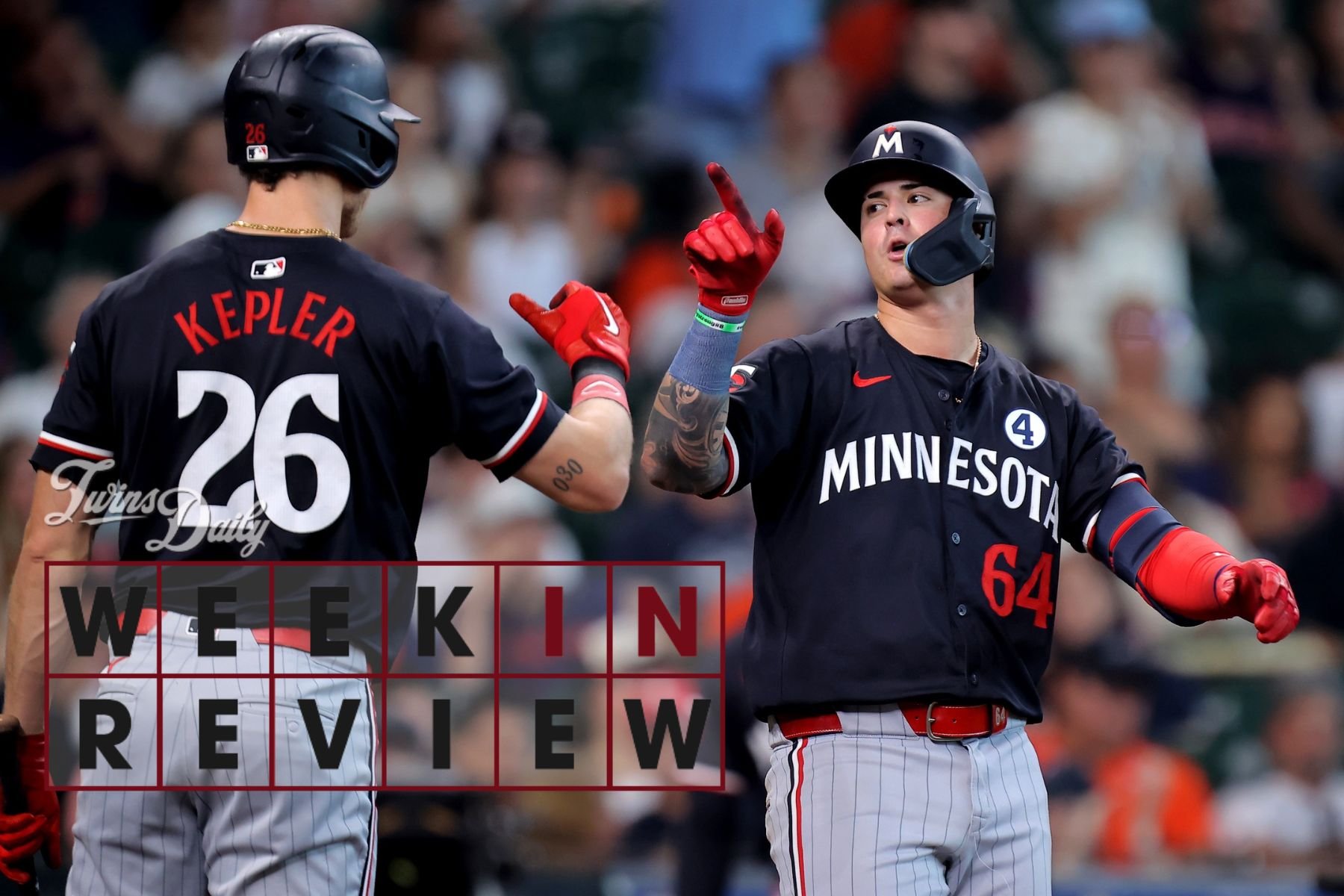 Weekly Snapshot: Mon, 5/27 through Sun, 6/2 *** Record Last Week: 5-2 (Overall: 33-26) Run Differential Last Week: +2 (Overall: +6) Standing: 3rd Place in AL Central (6.0 GB) Last Week's Game Results: Game 53 | MIN 6, KC 5: Twins Ward Off KC Comeback, Win Opener Game 54 | MIN 4, KC 2: Early Lead Holds Up Behind SWR and Bullpen Game 55 | KC 6, MIN 1: Royals Get to Ober Again, Lineup Silenced Game 56 | MIN 7, KC 6: Jeffers and Correa Power Big Comeback Game 57 | MIN 6, HOU 1: Lopez Dominates as Twins Roll Houston Game 58 | HOU 5, MIN 2: Astros Launch Four Homers Off Ryan Game 59 | MIN 4, HOU 3: Miranda Lifts Off, Bullpen Locks Down IF YOU'D RATHER LISTEN TO THE WEEK IN REVIEW THAN READ IT, YOU CAN NOW FIND IT IN PODCAST FORM. GET THE LATEST EPISODE HERE. ALSO AVAILABLE ON APPLE AND SPOTIFY. NEWS & NOTES Royce Lewis's return is officially imminent. The Twins shared on Sunday that if all went well in his final rehab tuneup with the Saints on Sunday – and seemingly they did, as he got through four ABs with a hit, a walk and a strikeout – he was expected to rejoin the team on Tuesday in New York. Minnesota will be getting back their best hitter as they look to build on their recent success and erase the memory of a brutal Target Field sweep at the hands of the Yankees in mid-May. Of course, activating Lewis will require a corresponding move, and it sounds like we have a pretty clear read on who that's going to be. We'll get to that decision in a bit. The Twins made only one roster move over the past week, calling up reliever Diego Castillo as a fresh arm on Monday after sending down Kody Funderburk last Sunday. Justin Topa was moved to the 60-day IL to make room on the 40-man roster for Castillo, who showed some encouraging signs in a pair of scoreless two-inning appearances. I'm not trying to jinx anything or whatever, but it deserves to be noted how much the physical attrition has slowed for the Twins following an early-season flurry. They haven't made an IL move since placing Byron Buxton and Brock Stewart on May 2nd. Buxton has since returned and looks to be in a fairly good place. Carlos Correa, Max Kepler and Jhoan Durán are among other key players who've spent time on the shelf but came back strong and without setbacks. Hopefully the same will be true of Lewis soon. To me, this is the under-discussed story of Minnesota's turnaround. They've gotten healthy and they're about to get healthier. They're playing almost at full strength and that has allowed them to rattle off series wins with impressive consistency. Nick Paparesta and the training staff deserve a ton of credit for building on what they started last year. You can't control people getting hurt, but you can control how you address and manage the handling of those injuries. It's tough to argue the Twins haven't been doing an amazing job on that front, based on results. HIGHLIGHTS Amusingly, almost all of the players who appeared to be on the roster bubble in the face of Lewis's impending return enjoyed pretty strong weeks as they sought to make their case for sticking around. José Miranda led the way by adding three more home runs and driving in six, coming through with a game-changing boost on Sunday that put a stamp on his locked-down roster spot: tying home run in the sixth, go-ahead double in the eighth. Trevor Larnach also hit three homers and drove in six runs between his four starts. Alex Kirilloff followed up his big weekend against Texas with three more RBIs on three hits in 11 at-bats. Edouard Julien showed signs of emerging from his lengthy slump, notching four hits and a couple walks in 15 plate appearances, although it looks to have not been enough. Meanwhile, even the struggling veteran contingent managed to post some production. Carlos Santana had one of his better weeks of the season, going 6-for-18 with a homer and four walks in a vintage snapshot. Manuel Margot notched four hits and three walks in 15 plate appearances, and has actually come through in a few big spots of late. These performances from contributing role players served to create a tougher decision for the front office, as they prepare to integrate another core player into their roster mix. Lewis will rejoin a team led by a thriving Correa, who is living up to his big-money contract with stellar play on both the offensive and defensive sides. Correa has resumed being a stalwart defensively at short – improving from 64th percentile in Outs Above Average last year to 93rd percentile – and his bat has bounced back in a big way, with an OPS that is 22 points above the league average. On Thursday he came through with a huge bases-clearing triple to help seal up a series victory over the Royals, shrinking the division gap. Outbursts of production from guys like Larnach and Miranda are great to see, but this team's true upside hinges on that core trio of Correa, Buxton and Lewis being healthy and spearheading the charge. So it's really good to see Correa doing his thing. Buxton's bat still hasn't quite come around, but he's moving around well and at least starting to take some better ABs (three walks last week, four all season previous). I'm encouraged by the fact he appeared in all seven games, starting six, while showing no visible impairment from the balky knee. On the pitching side, Pablo López rebounded after two poor starts the previous week, delivering another brilliant performance against the Astros in Houston. López tossed seven innings of one-run ball on Friday night, striking out six with one walk. Hopefully he's ready to put his short run of struggles behind him. LOWLIGHTS Just in time for López to turn around his downward performance trend, other Twins starting pitchers were doing the opposite. The good ol' ebbs and flows of baseball. Home run regression caught up in a major way with Joe Ryan, who gave up four long balls in Houston on Saturday, after surrendering only seven through his first 11 starts. Simeon Woods Richardson was tapped by the Astros for a pair of bombs on Sunday, equalling the number he'd allowed in his first nine starts. Chris Paddack gave up two home runs against Kansas City on Thursday, his second multi-HR game of the season and first since April 16th. Paddack continues to be a tough one to figure out, often looking like a different pitcher from start to start with wavering variations in velocity and stuff. He's already at 61 innings on the season, putting him on pace for nearly 170, which would easily be a career-high. You've got to think the Twins have plans to give Paddack – coming off his second Tommy John surgery and with just 27 innings pitched in the majors over the past two years – a break at some point in the relatively near future. Cody Pirkl wrote over the weekend about the possibility of calling up red-hot pitching prospect David Festa to fill in for a spell. There is likely no replacement coming for Christian Vázquez, who continues to draw semi-regular starts as the team's part-time catcher while remaining mired in a remarkable void of offensive production. He's clearly not anything close to a good hitter at this point, but you would think at some point a few hits would start falling in for the 33-year-old, who's been arguably the worst in the majors and can't buy a bucket. He managed one single in 11 at-bats last week, dropping his line to .161/.179/.196 on the season. Vázquez has drawn two walks in 119 plate appearances this year. Opposing pitchers are going right after him and he can't do a thing about it. I doubt parting ways with Vázquez is something the Twins would consider, given his contract situation and his persisting defensive value, but that's not really an option at the moment anyway. No. 3 catcher Jair Camargo just started to work his way back from a six-week IL stint in the minors. Kyle Farmer's staying power is probably lower than Vázquez's, even if he appears to have avoided the chop this time around. Farmer was really the only member of the Royce Lewis bubble group to not have a good week, and his role has been severely diminished. The veteran started three games last week, getting pulled from each after two plate appearances. He managed one single in eight plate appearances, and now has a .513 OPS on the season. He hasn't played a complete game front to back since May 21st. TRENDING STORYLINE The mystery around the Lewis roster decision was lifted after Sunday's game, with Julien reportedly hugging teammates following a conversation in the manager's office. The writing was somewhat on the wall with Julien's production stifled over the past several weeks, and his placement in the lineup dropping from the top to bottom against righties. I'm still a bit surprised by this decision and not sure I agree with it. Julien has been a valuable contributor in spite of his offensive struggles, thanks to his much-improved fielding. I'm not convinced Castro is a better option regularly at second, given how it affects his flexibility, and Farmer is clearly not – maybe not even on defense at this point. I realize that Julien has not been at his best but I'd just as soon have him work through it in the majors rather than Triple-A, where he'll likely overwhelm the opposition with his control of the automated strike zone. Is that going to be a meaningfully fruitful experience for the 25-year-old, as opposed to just letting him work through things in the majors? I guess we'll see. There's something to be said for getting some good swings in and feeling the rhythm again. Interestingly, Julien will soon be joined in the Saints infield by Brooks Lee, who's currently rehabbing in Single-A. Matt Wallner also shows signs of finding himself at the plate. The Twins will have some real threats lurking in the high minors as we roll toward the second half. Even though Farmer and Margot may have survived this round, the clock is clearly ticking on these underperforming veterans if they can't pick things up in a hurry. LOOKING AHEAD There's nothing like a trip to Yankee Stadium to test whether the Twins can maintain their mojo. Minnesota was cruising merrily along before running into the Bronx Bombers last time, and it sent them into a weeklong death spiral, from which they've since bounced back admirably. Can Lewis help them avoid a relapse in the House of Pain? Old demons will be at play, especially with Luis Gil – the young star right-hander whom Minnesota traded as a teenager for Jake Cave – set to start against Minnesota in the opener on Tuesday. From there, the Twins head to Pittsburgh, for a series at PNC Park which I will be attending. (Can't wait!) At this point it looks like the Twins will avoid rookie sensation Paul Skenes, though they're slated to run into another one in Jared Jones next Sunday. TUESDAY, JUNE 4: TWINS @ YANKEES – RHP Bailey Ober v. RHP Luis Gil WEDNESDAY, JUNE 5: TWINS @ YANKEES – RHP Chris Paddack v. LHP Carlos Rodon THURSDAY, JUNE 6: TWINS @ YANKEES – RHP Pablo Lopez v. RHP Marcus Stroman FRIDAY, JUNE 7: TWINS @ PIRATES – RHP Joe Ryan v. RHP Mitch Keller SATURDAY, JUNE 8: TWINS @ PIRATES – RHP Simeon Woods Richardson v. RHP Quinn Priester SUNDAY, JUNE 9: TWINS @ PIRATES – RHP Bailey Ober v. RHP Jared Jones
- 11 comments
-
- 6
-
-
- jose miranda
- edouard julien
- (and 2 more)
-
Through the first third of the season, the Minnesota Twins offense hasn't exactly been the imposing powerhouse we hoped it would be. But they bats have still been pretty decent overall, despite facing some major tribulations, and high-caliber help is on the way. The outlook for this offensive unit remains bright, even if the lineup has been navigating some murky times in April and May. Image courtesy of Nick Wosika-USA TODAY Sports The biggest concern for the offense heading into this 2024 campaign, as I outlined during the offseason, was the threat of regression coming for three players who were all key contributors to the offense as rookies: Royce Lewis, Matt Wallner and Edouard Julien. Each of the three posted an OPS+ north of 130 in 2023, during which they were worth a combined 6.8 Wins Above Replacement according to FanGraphs. Well, that sophomore regression bug bit right on cue. Lewis missed almost the entire first two months with an injury. Wallner batted .080 in 13 games before being demoted to the minors, where he's struggled to find himself. Julien has been the most productive of the bunch, but entered play on Monday with a sub-.200 batting average, his OPS+ down 40 points from last year. Julien's unraveling plate approach is forcing the Twins to consider a similar course of action as they took with Wallner. In spite of these developments, through 52 games, the Twins have been almost exactly a league-average offense. Among 30 MLB teams, they rank 16th in runs scored, 15th in wOBA, and 14th in fWAR from position players. In addition to the massive drop-off in production from the aforementioned sophomore trio, the Twins have also endured injured list stints from Carlos Correa, Max Kepler and Byron Buxton, as well as jarringly lackluster performance from the likes of Kyle Farmer, Manuel Margot and Christian Vázquez. The latter, in particular, has been an extraordinary drain: Vázquez ranks last in the majors in OPS (by 40 points) among players with 100+ plate appearances, and has individually accounted for more than 5% of the team's total at-bats. In light of all these hindrances, it really is pretty amazing that the Twins have managed to remain in the middle of the pack as an offensive unit. It speaks to a few different things – how good guys like Correa, Kepler, Ryan Jeffers, Willi Castro and José Miranda have been, but also how much the bar has been lowered for league-wide production as a whole. The average big-league hitter currently has a sub-.700 OPS, which provides valuable benchmarking context. We're in an environment where, say, Buxton's .250/.296/.414 slash line is better than average, even though it's not the level anyone hopes to see from him. Generally speaking, pitchers are running the show right now in Major League Baseball, and that's important to keep in mind when evaluating how teams are performing offensively. All of this is to say that the Twins have really nowhere to go but up. We've likely seen their floor over the first third of the season, and it still was not abnormally bad compared to the league as a whole. The distribution of their run-scoring, with a dominant 20-game run surrounded by drought-filled stretches, has certainly been unusual, but that kind of thing tends to even out in the long term. Meanwhile, reinforcements are on the way. Lewis is rehabbing in Triple-A and could rejoin the lineup as soon as next weekend, restoring the team's best hitter to the No. 3 spot in the batting order. Brooks Lee also started a rehab stint last week, piling up a bunch of hits in rookie ball, and is set to take the next step to Single-A this week en route to St. Paul. In spring training he was making a strong case for stealing a roster spot; Lee's switch-hitting bat looks ready to roll. On top of all that, the Twins also have an outfield prospect named Emmanuel Rodriguez with a 1.079 OPS as a 21-year-old at Double-A. It's only a matter of time before the ultra-patient slugger gets promoted to Triple-A, and from there it's not out of the question he could join the fold with a second-half rookie jolt akin to what Minnesota got from Julien and Wallner last season. It's easy to get caught up in some of the underwhelming performances we've seen and the generally uneven nature of the Twins offense. League-average production is nothing to get excited about. But it feels like what we've seen so far is the downside of this lineup, whereas going forward, it's easy to see plenty of upside. View full article
- 32 replies
-
- 1
-
-
- royce lewis
- brooks lee
- (and 3 more)

