



Nick Nelson
-
Posts
8,319 -
Joined
-
Last visited
-
Days Won
56
Content Type
Profiles
News
Minnesota Twins Videos
2026 Minnesota Twins Top Prospects Ranking
2022 Minnesota Twins Draft Picks
Minnesota Twins Free Agent & Trade Rumors, Notes, & Tidbits
Guides & Resources
2023 Minnesota Twins Draft Picks
The Minnesota Twins Players Project
2024 Minnesota Twins Draft Picks
2025 Minnesota Twins Draft Pick Tracker
2026 Minnesota Twins Draft Tracker: Picks & Bonuses
Forums
Blogs
Events
Store
Downloads
Gallery
Everything posted by Nick Nelson
-
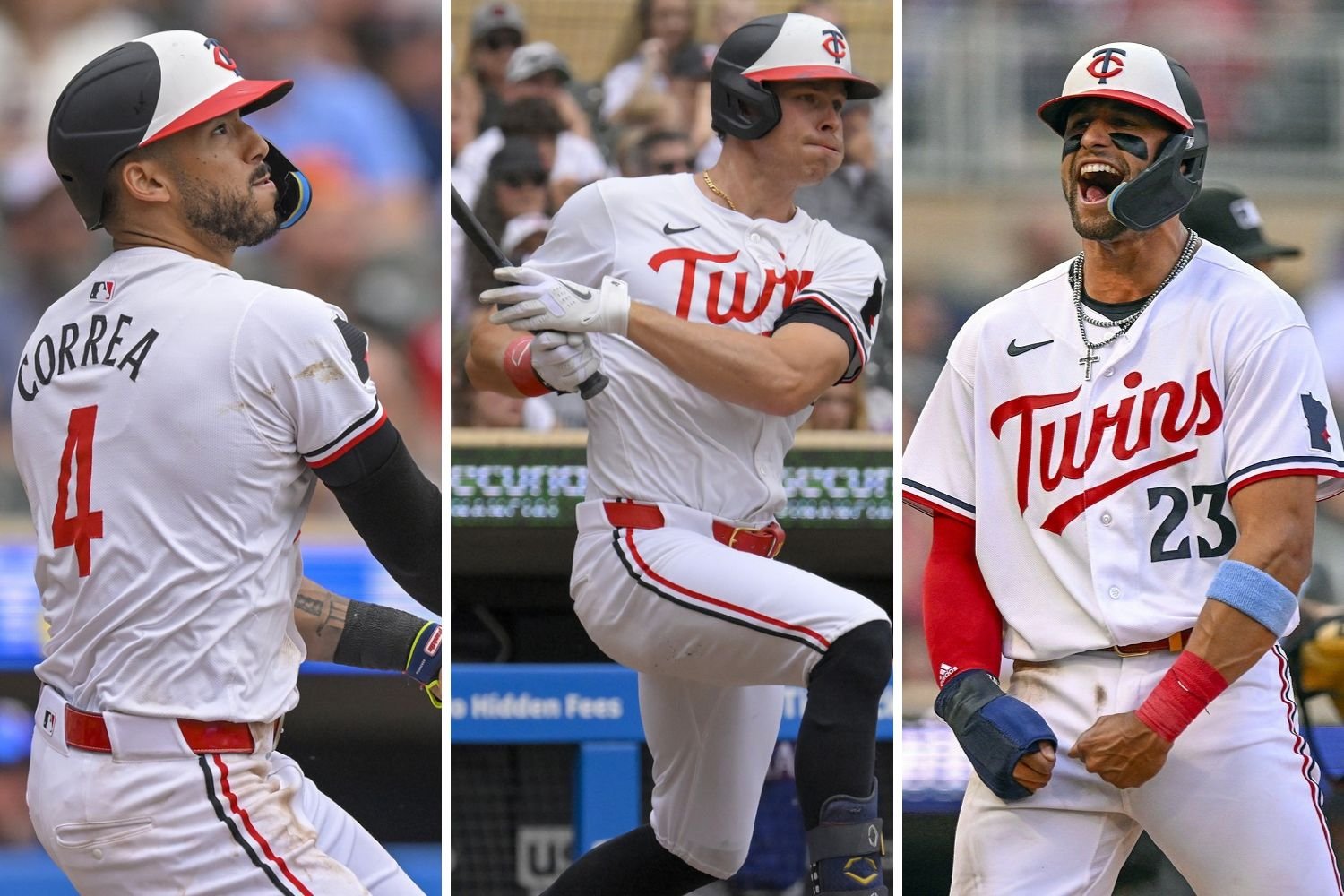 The biggest concern for the offense heading into this 2024 campaign, as I outlined during the offseason, was the threat of regression coming for three players who were all key contributors to the offense as rookies: Royce Lewis, Matt Wallner and Edouard Julien. Each of the three posted an OPS+ north of 130 in 2023, during which they were worth a combined 6.8 Wins Above Replacement according to FanGraphs. Well, that sophomore regression bug bit right on cue. Lewis missed almost the entire first two months with an injury. Wallner batted .080 in 13 games before being demoted to the minors, where he's struggled to find himself. Julien has been the most productive of the bunch, but entered play on Monday with a sub-.200 batting average, his OPS+ down 40 points from last year. Julien's unraveling plate approach is forcing the Twins to consider a similar course of action as they took with Wallner. In spite of these developments, through 52 games, the Twins have been almost exactly a league-average offense. Among 30 MLB teams, they rank 16th in runs scored, 15th in wOBA, and 14th in fWAR from position players. In addition to the massive drop-off in production from the aforementioned sophomore trio, the Twins have also endured injured list stints from Carlos Correa, Max Kepler and Byron Buxton, as well as jarringly lackluster performance from the likes of Kyle Farmer, Manuel Margot and Christian Vázquez. The latter, in particular, has been an extraordinary drain: Vázquez ranks last in the majors in OPS (by 40 points) among players with 100+ plate appearances, and has individually accounted for more than 5% of the team's total at-bats. In light of all these hindrances, it really is pretty amazing that the Twins have managed to remain in the middle of the pack as an offensive unit. It speaks to a few different things – how good guys like Correa, Kepler, Ryan Jeffers, Willi Castro and José Miranda have been, but also how much the bar has been lowered for league-wide production as a whole. The average big-league hitter currently has a sub-.700 OPS, which provides valuable benchmarking context. We're in an environment where, say, Buxton's .250/.296/.414 slash line is better than average, even though it's not the level anyone hopes to see from him. Generally speaking, pitchers are running the show right now in Major League Baseball, and that's important to keep in mind when evaluating how teams are performing offensively. All of this is to say that the Twins have really nowhere to go but up. We've likely seen their floor over the first third of the season, and it still was not abnormally bad compared to the league as a whole. The distribution of their run-scoring, with a dominant 20-game run surrounded by drought-filled stretches, has certainly been unusual, but that kind of thing tends to even out in the long term. Meanwhile, reinforcements are on the way. Lewis is rehabbing in Triple-A and could rejoin the lineup as soon as next weekend, restoring the team's best hitter to the No. 3 spot in the batting order. Brooks Lee also started a rehab stint last week, piling up a bunch of hits in rookie ball, and is set to take the next step to Single-A this week en route to St. Paul. In spring training he was making a strong case for stealing a roster spot; Lee's switch-hitting bat looks ready to roll. On top of all that, the Twins also have an outfield prospect named Emmanuel Rodriguez with a 1.079 OPS as a 21-year-old at Double-A. It's only a matter of time before the ultra-patient slugger gets promoted to Triple-A, and from there it's not out of the question he could join the fold with a second-half rookie jolt akin to what Minnesota got from Julien and Wallner last season. It's easy to get caught up in some of the underwhelming performances we've seen and the generally uneven nature of the Twins offense. League-average production is nothing to get excited about. But it feels like what we've seen so far is the downside of this lineup, whereas going forward, it's easy to see plenty of upside.
- 32 comments
-
- 8
-

-
- royce lewis
- brooks lee
- (and 3 more)
-
The staggeringly streaky Minnesota Twins stayed true to form last week, extending their losing streak to seven games before once again turning on a dime to win their next four in a row. They haven't been able to gain any ground in a Central division led by two scorching hot teams, but for now the Twins stopped the bleeding and held mostly steady, and that's just what they needed to do. Image courtesy of Nick Wosika-USA TODAY Sports Weekly Snapshot: Mon, 5/20 through Sun, 5/26 *** Record Last Week: 4-2 (Overall: 28-24) Run Differential Last Week: +1 (Overall: +4) Standing: 3rd Place in AL Central (7.5 GB) Last Week's Game Results: Game 47 | WAS 12, MIN 3: Slump Worsens with Beatdown in DC Game 48 | MIN 10, WAS 0: Twins End Losing Streak with a Bang Game 49 | MIN 3, WAS 2: Duran Squeezes by to Secure Series Game 50 | MIN 3, TEX 2: Bullpen Locks Down Tight Win Over Texas Game 51 | MIN 5, TEX 3: Another Key HR from Kirilloff Lifts Twins Game 52 | TEX 6, MIN 2: Lopez Struggles Again, Offense Snoozes IF YOU'D RATHER LISTEN TO THE WEEK IN REVIEW THAN READ IT, YOU CAN NOW FIND IT IN PODCAST FORM. GET THE LATEST EPISODE HERE. ALSO AVAILABLE ON APPLE AND SPOTIFY. NEWS & NOTES The biggest news development of the week (month? year??) was Royce Lewis getting the thumbs-up to kick off his rehab stint in the minors. He joined the St. Paul Saints on the road in Buffalo and started at DH for them on Saturday and Sunday, finishing 3-for-9 between the two games. As if to make a statement about the health of his leg (one that the Twins apparently did not enjoy), Lewis immediately stole second base after singling in his first at-bat. This will probably run longer than the typical rehab assignment, since Lewis is coming off a two-month absence, and the Twins have every reason to be cautious and minimize any risk of a setback or aggravation. He could return for the series in Houston next weekend (the very site he debuted last year) but it's also very possible he stays with the Saints throughout the week, joining the big-league club later on their road trip through New York and Pittsburgh. Either way, Lewis is on track to make it back quicker than expected from a scary injury that can sometimes require up to half of a season to heal. The 24-year-old's ability to bounce back again and again from these major physical hurdles continues to be as impressive as what he's accomplished in his (all too brief) time on the field. Fingers crossed that things keep progressing smoothly for him as he ramps up and starts playing defense. Some additional positive injury news from the farm: Minnesota's top two prospects simultaneously fired up their own rehab stints in the minors, with both Walker Jenkins and Brooks Lee getting started in the rookie-level Florida Complex League last week. It's great to see Jenkins, out since Opening Day with a hamstring injury, resume his journey to conquer the low minors. But Lee's return to action has greater short-term implications for the Twins and their lagging offense; Lee could be an option to join the team within a month or so if he looks good in Triple-A upon being activated. On the bullpen front, a couple of moves worth mentioning: Jorge Alcalá was recalled in place of Caleb Boushley, and Jay Jackson accepted his assignment to Triple-A following last week's DFA. Kody Funderburk was optioned to Triple-A following Sunday's game, with the Twins expected to call up a fresh arm on Monday. HIGHLIGHTS Several strong performances contributed to a winning week for the Twins, but none were more refreshing to see than that of Alex Kirilloff, who delivered a pair of crucial home runs over the weekend against the defending champs. Mired in a deep funk, Kirilloff's batting average had sunk below .200 before he picked up four hits in his past 10 ABs, including go-ahead homers that proved decisive on Friday and Saturday. Teammates remarked that Kirilloff's showing of emotion after the latter home run, a game-breaking three-run blast, was a rarity. Kirilloff's prolonged mega-slump (he slashed .147/.219/.284 in 35 games from April 8th to May 21st) has played a substantial role in the offense's inability to stay in a rhythm. At his best he's one of the team's top bats, and at a minimum they need him to produce respectably while playing offense-driven positions. It's too soon to say Kirilloff's struggles are fully behind him, but the power flurry over the weekend was extremely encouraging. Also supplying power for the offense last week were Byron Buxton (two home runs in a blowout win over Washington on Tuesday), Carlos Correa (two homers, two doubles and a triple on the week), and Max Kepler, who homered, doubled twice, and drew three walks in five games. The offense as a whole remains pretty uneven and wasn't overly impressive last week, but with these guys swinging the bat well, Lewis on his way back, and Lee building up in the minors, it's easier to feel some confidence in the outlook for this unit. The pitching staff rebounded from a rough start to the week, posting a 2.72 collective ERA in five games after coughing up 12 behind Pablo López on Monday. Joe Ryan, who has emerged as the clear-cut leader of this staff and rotation, fittingly played the role of stopper with a masterful outing on Tuesday, holding the Nationals scoreless over seven innings to lower his ERA to 3.15 on the season. Ryan could make a bid for an All-Star nod if he continues to deliver with this consistency and quality. It was a much-needed week of redemption for Jhoan Durán, who was coming off a Pagán-esque nightmare series in Cleveland and has been raising some eyebrows with his reduced velocity. Durán's save attempt in Washington on Wednesday gave off "here we go again" vibes after he surrendered a homer and single to the first two batters he faced, but the right-hander managed to strand the tying run on base and secure a win before closing out back-to-back wins against Texas at Target Field. You can certainly argue that Durán, who has a 5-to-4 K/BB ratio over his past eight appearances, still doesn't look quite up to his usual standard. But he's mostly getting the job done, and insists that his velocity issues are more mechanical than anything. It's a long season and he's got plenty of time to get right. In the meantime, he'll welcome all the help he can get in the bullpen, which has settled into a nice groove after parting ways with Jackson. On Friday night, Durán teamed up with Griffin Jax, Caleb Thielbar and Steven Okert to fire four hitless innings, protecting a one-run lead following five solid frames from Bailey Ober. A similar script played out on Saturday, when Cole Sands threw two perfect innings as a bridge to Durán after a five-inning start from Chris Paddack. That's a formula that Rocco Baldelli loves to successfully deploy. LOWLIGHTS We talked about Kirilloff and his slumping bat being a major factor in the shortcomings of an offense that has scored five or more runs just twice in their past 12 games. But more broadly, it's a lack of all-around effectiveness from their slate of key left-handed bats – sans Kepler – that is stifling the team's run-scoring prowess. Much of the offseason discourse centered on the need to add a right-handed bat to help balance the lineup against southpaws, but as it turns out, the Twins have proven far better against left-handed pitching, with an OPS about 80 points higher. Right-handers have routinely kept this lineup in check, and that's obviously problematic given their prominence in the pitching pool. Like Kirilloff, Trevor Larnach cooled off dramatically after a strong start for the Twins. He's hitting just .192 with one extra-base hit in 52 May at-bats, including 2-for-his-last-25, and hasn't driven in a run for more than two weeks. Pitchers have found pretty reliable ways to attack him, often with breaking balls that run down and in, and Larnach has been unable to make an adjustment. Nonetheless, he was elevated into the leadoff spot on Sunday, due to being deemed a superior option to Edouard Julien, who was finally downgraded from his usual perch atop the batting order as his sophomore slump persists and worsens. A 1-for-13 week with one walk and five strikeouts dropped Julien's OPS to .674, which is rough when you consider his OPS sat at .830 entering May. It's been a truly rotten month for Julien, and his deteriorating plate approach is the most troubling aspect. In the past, Julien has been susceptible to slumps in hitting production but has always been able to offset them with his world-class discipline, drawing enough walks to remain an on-base threat and keep the line moving when the knocks aren't coming. That's gone amiss. Julien has drawn just one walk in his past 12 games and his OBP is dangerously close to falling below .300. Dropping Julien from first to eighth in the batting order against a righty on Sunday was the first step toward trying to address his increasingly worrisome spiral in performance at the plate. The next step might be approaching soon. TRENDING STORYLINE As Lewis works his way back toward the big-league roster, someone's current spot is at risk. It would be unlike the Twins to cut bait on someone like Kyle Farmer at this point, as much as doing so might seem to make sense. The most straightforward swap would be sending down José Miranda, who's been filling in as regular third baseman in Lewis's absence, but given how much the Twins are struggling to string runs together, you wonder if they'd want to subtract one of their best bats. Miranda was 5-for-17 with a homer last week and ranks fourth on the team in OPS behind Kepler, Ryan Jeffers and Correa. In light of what we just covered regarding Julien's downfall, the preferable path might be sending him down to Triple-A alongside Matt Wallner for a sophomore reset of his own, while keeping Miranda's bat available to the MLB club. But that's not as easy to accommodate logistically. Who steps in as regular second baseman in this scenario? Lewis? Moreover, we just talked about how much worse the Twins have been against righties than lefties this year; is subbing in a RH bat for a LH one – even someone who's been scuffling like Julien has – really going to be a helpful solution? I'm not claiming to have the answer either way. But I do think we're at a point where any extreme upcoming week from either player, good or bad, could significantly influence the decision. So it'll be interesting to see how Miranda and Julien perform in the next couple of series ... and also where Lewis is making starts defensively in Triple-A. LOOKING AHEAD A huge series lies ahead to close out the homestand, as the Twins welcome the Kansas City Royals to town for a four-game set. Given how woefully short Minnesota has come up against the other world-beating team they're chasing in the Central, there's some heightened pressure to show up and take this series or at least earn a split. Even if the season is still relatively young, you don't want to be creating distance between yourself and multiple teams ahead of you in the standings. From there the Twins will head to Houston to open a nine-game road trip against the team that eliminated them a year ago. This year's iteration of the Astros is a far cry from past powerhouses, but they've been playing better ball lately and are never an opponent to be dismissed. MONDAY, MAY 27: ROYALS @ TWINS – RHP Alec Marsh v. RHP Joe Ryan TUESDAY, MAY 28: ROYALS @ TWINS – LHP Cole Ragans v. RHP Simeon Woods Richardson WEDNESDAY, MAY 29: ROYALS @ TWINS – RHP Seth Lugo v. RHP Bailey Ober THURSDAY, MAY 30: ROYALS @ TWINS – RHP Brady Singer v. RHP Chris Paddack FRIDAY, MAY 31: TWINS @ ASTROS – RHP Pablo Lopez v. RHP Spencer Arrighetti SATURDAY, JUNE 1: TWINS @ ASTROS – RHP Joe Ryan v. RHP Ronel Blanco SUNDAY, JUNE 2: TWINS @ ASTROS – RHP Simeon Woods Richardson v. LHP Framber Valdez View full article
-
 Weekly Snapshot: Mon, 5/20 through Sun, 5/26 *** Record Last Week: 4-2 (Overall: 28-24) Run Differential Last Week: +1 (Overall: +4) Standing: 3rd Place in AL Central (7.5 GB) Last Week's Game Results: Game 47 | WAS 12, MIN 3: Slump Worsens with Beatdown in DC Game 48 | MIN 10, WAS 0: Twins End Losing Streak with a Bang Game 49 | MIN 3, WAS 2: Duran Squeezes by to Secure Series Game 50 | MIN 3, TEX 2: Bullpen Locks Down Tight Win Over Texas Game 51 | MIN 5, TEX 3: Another Key HR from Kirilloff Lifts Twins Game 52 | TEX 6, MIN 2: Lopez Struggles Again, Offense Snoozes IF YOU'D RATHER LISTEN TO THE WEEK IN REVIEW THAN READ IT, YOU CAN NOW FIND IT IN PODCAST FORM. GET THE LATEST EPISODE HERE. ALSO AVAILABLE ON APPLE AND SPOTIFY. NEWS & NOTES The biggest news development of the week (month? year??) was Royce Lewis getting the thumbs-up to kick off his rehab stint in the minors. He joined the St. Paul Saints on the road in Buffalo and started at DH for them on Saturday and Sunday, finishing 3-for-9 between the two games. As if to make a statement about the health of his leg (one that the Twins apparently did not enjoy), Lewis immediately stole second base after singling in his first at-bat. This will probably run longer than the typical rehab assignment, since Lewis is coming off a two-month absence, and the Twins have every reason to be cautious and minimize any risk of a setback or aggravation. He could return for the series in Houston next weekend (the very site he debuted last year) but it's also very possible he stays with the Saints throughout the week, joining the big-league club later on their road trip through New York and Pittsburgh. Either way, Lewis is on track to make it back quicker than expected from a scary injury that can sometimes require up to half of a season to heal. The 24-year-old's ability to bounce back again and again from these major physical hurdles continues to be as impressive as what he's accomplished in his (all too brief) time on the field. Fingers crossed that things keep progressing smoothly for him as he ramps up and starts playing defense. Some additional positive injury news from the farm: Minnesota's top two prospects simultaneously fired up their own rehab stints in the minors, with both Walker Jenkins and Brooks Lee getting started in the rookie-level Florida Complex League last week. It's great to see Jenkins, out since Opening Day with a hamstring injury, resume his journey to conquer the low minors. But Lee's return to action has greater short-term implications for the Twins and their lagging offense; Lee could be an option to join the team within a month or so if he looks good in Triple-A upon being activated. On the bullpen front, a couple of moves worth mentioning: Jorge Alcalá was recalled in place of Caleb Boushley, and Jay Jackson accepted his assignment to Triple-A following last week's DFA. Kody Funderburk was optioned to Triple-A following Sunday's game, with the Twins expected to call up a fresh arm on Monday. HIGHLIGHTS Several strong performances contributed to a winning week for the Twins, but none were more refreshing to see than that of Alex Kirilloff, who delivered a pair of crucial home runs over the weekend against the defending champs. Mired in a deep funk, Kirilloff's batting average had sunk below .200 before he picked up four hits in his past 10 ABs, including go-ahead homers that proved decisive on Friday and Saturday. Teammates remarked that Kirilloff's showing of emotion after the latter home run, a game-breaking three-run blast, was a rarity. Kirilloff's prolonged mega-slump (he slashed .147/.219/.284 in 35 games from April 8th to May 21st) has played a substantial role in the offense's inability to stay in a rhythm. At his best he's one of the team's top bats, and at a minimum they need him to produce respectably while playing offense-driven positions. It's too soon to say Kirilloff's struggles are fully behind him, but the power flurry over the weekend was extremely encouraging. Also supplying power for the offense last week were Byron Buxton (two home runs in a blowout win over Washington on Tuesday), Carlos Correa (two homers, two doubles and a triple on the week), and Max Kepler, who homered, doubled twice, and drew three walks in five games. The offense as a whole remains pretty uneven and wasn't overly impressive last week, but with these guys swinging the bat well, Lewis on his way back, and Lee building up in the minors, it's easier to feel some confidence in the outlook for this unit. The pitching staff rebounded from a rough start to the week, posting a 2.72 collective ERA in five games after coughing up 12 behind Pablo López on Monday. Joe Ryan, who has emerged as the clear-cut leader of this staff and rotation, fittingly played the role of stopper with a masterful outing on Tuesday, holding the Nationals scoreless over seven innings to lower his ERA to 3.15 on the season. Ryan could make a bid for an All-Star nod if he continues to deliver with this consistency and quality. It was a much-needed week of redemption for Jhoan Durán, who was coming off a Pagán-esque nightmare series in Cleveland and has been raising some eyebrows with his reduced velocity. Durán's save attempt in Washington on Wednesday gave off "here we go again" vibes after he surrendered a homer and single to the first two batters he faced, but the right-hander managed to strand the tying run on base and secure a win before closing out back-to-back wins against Texas at Target Field. You can certainly argue that Durán, who has a 5-to-4 K/BB ratio over his past eight appearances, still doesn't look quite up to his usual standard. But he's mostly getting the job done, and insists that his velocity issues are more mechanical than anything. It's a long season and he's got plenty of time to get right. In the meantime, he'll welcome all the help he can get in the bullpen, which has settled into a nice groove after parting ways with Jackson. On Friday night, Durán teamed up with Griffin Jax, Caleb Thielbar and Steven Okert to fire four hitless innings, protecting a one-run lead following five solid frames from Bailey Ober. A similar script played out on Saturday, when Cole Sands threw two perfect innings as a bridge to Durán after a five-inning start from Chris Paddack. That's a formula that Rocco Baldelli loves to successfully deploy. LOWLIGHTS We talked about Kirilloff and his slumping bat being a major factor in the shortcomings of an offense that has scored five or more runs just twice in their past 12 games. But more broadly, it's a lack of all-around effectiveness from their slate of key left-handed bats – sans Kepler – that is stifling the team's run-scoring prowess. Much of the offseason discourse centered on the need to add a right-handed bat to help balance the lineup against southpaws, but as it turns out, the Twins have proven far better against left-handed pitching, with an OPS about 80 points higher. Right-handers have routinely kept this lineup in check, and that's obviously problematic given their prominence in the pitching pool. Like Kirilloff, Trevor Larnach cooled off dramatically after a strong start for the Twins. He's hitting just .192 with one extra-base hit in 52 May at-bats, including 2-for-his-last-25, and hasn't driven in a run for more than two weeks. Pitchers have found pretty reliable ways to attack him, often with breaking balls that run down and in, and Larnach has been unable to make an adjustment. Nonetheless, he was elevated into the leadoff spot on Sunday, due to being deemed a superior option to Edouard Julien, who was finally downgraded from his usual perch atop the batting order as his sophomore slump persists and worsens. A 1-for-13 week with one walk and five strikeouts dropped Julien's OPS to .674, which is rough when you consider his OPS sat at .830 entering May. It's been a truly rotten month for Julien, and his deteriorating plate approach is the most troubling aspect. In the past, Julien has been susceptible to slumps in hitting production but has always been able to offset them with his world-class discipline, drawing enough walks to remain an on-base threat and keep the line moving when the knocks aren't coming. That's gone amiss. Julien has drawn just one walk in his past 12 games and his OBP is dangerously close to falling below .300. Dropping Julien from first to eighth in the batting order against a righty on Sunday was the first step toward trying to address his increasingly worrisome spiral in performance at the plate. The next step might be approaching soon. TRENDING STORYLINE As Lewis works his way back toward the big-league roster, someone's current spot is at risk. It would be unlike the Twins to cut bait on someone like Kyle Farmer at this point, as much as doing so might seem to make sense. The most straightforward swap would be sending down José Miranda, who's been filling in as regular third baseman in Lewis's absence, but given how much the Twins are struggling to string runs together, you wonder if they'd want to subtract one of their best bats. Miranda was 5-for-17 with a homer last week and ranks fourth on the team in OPS behind Kepler, Ryan Jeffers and Correa. In light of what we just covered regarding Julien's downfall, the preferable path might be sending him down to Triple-A alongside Matt Wallner for a sophomore reset of his own, while keeping Miranda's bat available to the MLB club. But that's not as easy to accommodate logistically. Who steps in as regular second baseman in this scenario? Lewis? Moreover, we just talked about how much worse the Twins have been against righties than lefties this year; is subbing in a RH bat for a LH one – even someone who's been scuffling like Julien has – really going to be a helpful solution? I'm not claiming to have the answer either way. But I do think we're at a point where any extreme upcoming week from either player, good or bad, could significantly influence the decision. So it'll be interesting to see how Miranda and Julien perform in the next couple of series ... and also where Lewis is making starts defensively in Triple-A. LOOKING AHEAD A huge series lies ahead to close out the homestand, as the Twins welcome the Kansas City Royals to town for a four-game set. Given how woefully short Minnesota has come up against the other world-beating team they're chasing in the Central, there's some heightened pressure to show up and take this series or at least earn a split. Even if the season is still relatively young, you don't want to be creating distance between yourself and multiple teams ahead of you in the standings. From there the Twins will head to Houston to open a nine-game road trip against the team that eliminated them a year ago. This year's iteration of the Astros is a far cry from past powerhouses, but they've been playing better ball lately and are never an opponent to be dismissed. MONDAY, MAY 27: ROYALS @ TWINS – RHP Alec Marsh v. RHP Joe Ryan TUESDAY, MAY 28: ROYALS @ TWINS – LHP Cole Ragans v. RHP Simeon Woods Richardson WEDNESDAY, MAY 29: ROYALS @ TWINS – RHP Seth Lugo v. RHP Bailey Ober THURSDAY, MAY 30: ROYALS @ TWINS – RHP Brady Singer v. RHP Chris Paddack FRIDAY, MAY 31: TWINS @ ASTROS – RHP Pablo Lopez v. RHP Spencer Arrighetti SATURDAY, JUNE 1: TWINS @ ASTROS – RHP Joe Ryan v. RHP Ronel Blanco SUNDAY, JUNE 2: TWINS @ ASTROS – RHP Simeon Woods Richardson v. LHP Framber Valdez
- 6 comments
-
- 3
-
-
- royce lewis
- alex kirilloff
- (and 3 more)
-
This Twins season is already showcasing the many ups and downs of this everyday game. The team pulled out of a brutal early slump, played brilliantly for three weeks, and then once again fell flat on their faces over the past week, with some of the worst performances we've seen all year. Will the real Minnesota Twins please stand up? [chairs scrape] Image courtesy of Ken Blaze, USA Today Sports Weekly Snapshot: Mon, 5/13 through Sun, 5/19 *** Record Last Week: 0-6 (Overall: 24-22) Run Differential Last Week: -24 (Overall: +3) Standing: 3rd Place in AL Central (5.5 GB) Last Week's Game Results: Game 41 | NYY 5, MIN 1: Bombers Cool Off Red-Hot Minnesota Game 42 | NYY 4, MIN 0: Pablo Battles, Offense Bottled Up Game 43 | NYY 5, MIN 0: Yankees Sweep Away Punchless Twins Game 44 | CLE 3, MIN 2: Ramirez Beats Duran, Sleepy Twins Game 45 | CLE 11, MIN 4: Slide Continues in Sloppy Blowout Game 46 | CLE 5, MIN 2: Guardians Get to Duran Again in Walk-Off IF YOU'D RATHER LISTEN TO THE WEEK IN REVIEW THAN READ IT, YOU CAN NOW FIND IT IN PODCAST FORM. FIND THE LATEST EPISODE HERE. ALSO AVAILABLE ON APPLE AND SPOTIFY. NEWS & NOTES The Twins got back Byron Buxton following a relatively short stay on the injured list. The 30-year-old was activated in Cleveland on Saturday, 15 days after being shelved with knee inflammation, thus giving the team a much-needed defensive upgrade in center field, as well as a boost on the basepaths--where he made things happen late in Sunday's game. In a corresponding move, Austin Martin was sent back to Triple-A, where he'll focus on jumpstarting his offensive game; Martin is batting just .224 with a .644 OPS through 30 big-league games, which doesn't work too well when the defense has largely been underwhelming. In the bullpen, it looks like Jay Jackson's time as a Twin has already reached an end. Last week in this column, I noted that "patience from the coaching staff has to be wearing very thin, especially with Jackson," with his performance going beyond merely bad and venturing into the realm of unusable. Another disastrous outing on Saturday (1 IP, 4 H, 3 ER) proved to be the final straw; Jackson was designated for assignment after the game. We'll see where the 36-year-old goes from here. He might end up passing through waivers and going to St. Paul, but (as Rocco Baldelli noted) unless he can find some of his lost velocity, there's really no chance for Jackson in the big leagues. It's unfortunate to see, as a lot of people (including me) were really rooting for the guy. But bargain-bin reliever signings are what they are. For now, Caleb Boushley has been called up to fill the vacant bullpen spot, although that hardly seems permanent. I would expect to see Jorge Alcalá return soon to assume a similar role to Jackson's. But, with the Twins and Alcalá these days, you never know. HIGHLIGHTS Um, well, let's see. Simeon Woods Richardson pitched pretty well on Friday night, holding Cleveland to one run over 5 ⅓ innings, with no walks allowed and a whole bunch of grounders. He did his part to get Minnesota off to a strong start in a key series, even if no one else answered the call. Through six starts and just over 30 innings with the Twins this year, SWR has a remarkable 2.97 ERA. True, a glance at his Statcast sliders suggests this level of success is probably not sustainable, but regardless, it's really encouraging to see what Woods Richardson is doing at age 23 in the majors, especially given that many had more or less written him off coming into this season. Chris Paddack also closed out the week with a very strong and encouraging outing, holding Cleveland to two runs over eight innings on Sunday – the deepest start of his career – but like Woods Richardson's start two nights earlier, it was all for naught thanks to a lineup that right now is incapable of even putting up a fight. LOWLIGHTS It was simply staggering to watch this offense, which lit up the league – including some very high-caliber pitching – over the course of nearly a month, completely shut down over the past week. They looked about as limp and lifeless as they did in their worst moments during the season-opening 7-13 slump that we all hoped to forget. Over the course of six games against the Yankees and Guardians, Twins hitters batted .166 with just 10 extra-base hits (three homers), seven GIDP, and 36 runners left on base. They scored only nine runs total, and four of those came essentially in garbage time, late in Saturday's blowout loss to Cleveland. The offensive group was so roundly terrible over the past week that it hardly feels worthwhile to call out individual culprits, but these players and performances are especially alarming: Carlos Santana saw his nice little hot streak come to an abrupt halt, following last weekend's three-homer outburst by going 3-for-24 with no extra-base hits, no RBIs, no walks, and seven strikeouts. His OPS, which was briefly flirting with .700, is now back down to .630. When you're getting this kind of production out of your everyday first baseman, it puts a real hamper on the lineup as a whole. Getting zero production from your leadoff man is also a pretty major impediment for a lineup, and unfortunately that's been the case for Minnesota with Edouard Julien failing to find his groove at the plate. He went 2-for-18 without an RBI or run scored, striking out six times without drawing a single walk. Aside from a few flurries of power, Julien's been a far cry from the consistently imposing offensive threat we saw last year. Walks are down, strikeouts are up, and Julien is slugging just .204 in the month of May. Trevor Larnach went 0-for-13 with five strikeouts, extending his hitless streak to 18 plate appearances while drawing starts as the No. 2 hitter. Another key lineup spot delivering nothing whatsoever, which helps tell the story of this offense lately. You hope Larnach's just going through a temporary slump rather than reverting to the famine-over-feast form that has largely defined his inability to break through in the majors. Especially because there are really no alternatives to take his ABs. Alex Kirilloff has been awful for about six weeks and Matt Wallner looks broken in Triple-A. Christian Vázquez carries the lowest expectations of any hitter on the team, given his role as a glove-first backup catcher, but he's still managing to fall drastically short of them. Vázquez went 0-for-9 and fell to 1-for-30 in the month of May, during which he has drawn zero walks. Out of 308 major-league players with 80 or more plate appearances, Vázquez ranks dead last with a .174 wOBA. This looks like an aging, worn-down player who has completely lost his ability to produce anything at the plate, and that is legitimately scary to contemplate with the suddenly budget-strapped Twins on the hook for $20 million this year and next. Beyond all the conspicuously awful performances, what strikes me most is the inability of anybody to step up and break this miserable pattern. Ryan Jeffers launched another homer to open last week but has otherwise cooled from his otherworldly heater, which is understandable. Max Kepler too experienced a not-unexpected downswing. But where is everyone else? Royce Lewis ain't walking through that door. (Not for a few more weeks, at least.) The offensive ineptitude that plagues this lineup is frustratingly contagious, with fruitless at-bats and futile innings continuing to pile up in perpetuity. The Twins managed to post one crooked number in the entire week, and that came in a meaningless circumstance. In six games they went 4-for-32 with runners in scoring position, and three of those four hits came in that ninth inning on Saturday, so again, meaningless. The timing of this collapse could have hardly been worse, coming against a Yankees team that has notoriously terrorized the psyche of Twins fans for more than two decades, and a rival Cleveland team that grew its lead in the AL Central, taking back five games in the standings. It's almost impossible to imagine a more morale-crushing turn of events following that charmed 17-3 run. Seeing the Minnesota Twins sink back into this sorry state after seemingly finding their way out of it makes it pretty difficult to believe this is not – to a large extent – simply who they are. TRENDING STORYLINE If the Twins offense continues to flounder like this, and the front office finds itself looking for a way to jolt them back to life, there aren't many appealing options in the organization at the moment. Brooks Lee remains sidelined indefinitely. The 40-man roster is largely bereft of standout bats. Martin was part of the problem before going down, and Wallner, as we discussed, is a mess. Yunior Severino is batting .148 at Triple-A. But looking down just a little further, to Double-A, we find Emmanuel Rodriguez, who's been the biggest bright spot in the Twins system thus far. While the entire major-league lineup was flailing and failing over the past week, Twins Daily's No. 3 prospect was busy going 6-for-17 with two homers, a triple and NINE walks for the Wichita Wind Surge, improving his OPS season to 1.028 on the season. He's only 21, and you certainly don't want to rush a developing prospect out of panic, but if the Twins are looking to shake things up and find some sort of spark for the offense, it's an option. Really at this time their only option. LOOKING AHEAD A pair of left-handed starters are on tap in Washington, where the Twins will face a sub-.500 Nationals team that offers a decent chance to get right. Get ready to see old friend Joey Gallo, who is batting .129 for his new team. Over the weekend, the defending champs will visit Target Field, with the Rangers in town for three games. Here's hoping for better days ahead. MONDAY, MAY 20: TWINS @ NATIONALS – RHP Pablo Lopez v. LHP Mitchell Parker TUESDAY, MAY 21: TWINS @ NATIONALS – RHP Joe Ryan v. LHP Patrick Corbin WEDNESDAY, MAY 22: TWINS @ NATIONALS – RHP Simeon Woods Richardson v. RHP Jake Irvin FRIDAY, MAY 24: RANGERS @ TWINS – RHP Michael Lorenzen v. RHP Bailey Ober SATURDAY, MAY 18: RANGERS @ TWINS – TBD v. RHP Chris Paddack SUNDAY, MAY 19: RANGERS @ TWINS – RHP Jon Gray v. RHP Pablo Lopez View full article
-
 Weekly Snapshot: Mon, 5/13 through Sun, 5/19 *** Record Last Week: 0-6 (Overall: 24-22) Run Differential Last Week: -24 (Overall: +3) Standing: 3rd Place in AL Central (5.5 GB) Last Week's Game Results: Game 41 | NYY 5, MIN 1: Bombers Cool Off Red-Hot Minnesota Game 42 | NYY 4, MIN 0: Pablo Battles, Offense Bottled Up Game 43 | NYY 5, MIN 0: Yankees Sweep Away Punchless Twins Game 44 | CLE 3, MIN 2: Ramirez Beats Duran, Sleepy Twins Game 45 | CLE 11, MIN 4: Slide Continues in Sloppy Blowout Game 46 | CLE 5, MIN 2: Guardians Get to Duran Again in Walk-Off IF YOU'D RATHER LISTEN TO THE WEEK IN REVIEW THAN READ IT, YOU CAN NOW FIND IT IN PODCAST FORM. FIND THE LATEST EPISODE HERE. ALSO AVAILABLE ON APPLE AND SPOTIFY. NEWS & NOTES The Twins got back Byron Buxton following a relatively short stay on the injured list. The 30-year-old was activated in Cleveland on Saturday, 15 days after being shelved with knee inflammation, thus giving the team a much-needed defensive upgrade in center field, as well as a boost on the basepaths--where he made things happen late in Sunday's game. In a corresponding move, Austin Martin was sent back to Triple-A, where he'll focus on jumpstarting his offensive game; Martin is batting just .224 with a .644 OPS through 30 big-league games, which doesn't work too well when the defense has largely been underwhelming. In the bullpen, it looks like Jay Jackson's time as a Twin has already reached an end. Last week in this column, I noted that "patience from the coaching staff has to be wearing very thin, especially with Jackson," with his performance going beyond merely bad and venturing into the realm of unusable. Another disastrous outing on Saturday (1 IP, 4 H, 3 ER) proved to be the final straw; Jackson was designated for assignment after the game. We'll see where the 36-year-old goes from here. He might end up passing through waivers and going to St. Paul, but (as Rocco Baldelli noted) unless he can find some of his lost velocity, there's really no chance for Jackson in the big leagues. It's unfortunate to see, as a lot of people (including me) were really rooting for the guy. But bargain-bin reliever signings are what they are. For now, Caleb Boushley has been called up to fill the vacant bullpen spot, although that hardly seems permanent. I would expect to see Jorge Alcalá return soon to assume a similar role to Jackson's. But, with the Twins and Alcalá these days, you never know. HIGHLIGHTS Um, well, let's see. Simeon Woods Richardson pitched pretty well on Friday night, holding Cleveland to one run over 5 ⅓ innings, with no walks allowed and a whole bunch of grounders. He did his part to get Minnesota off to a strong start in a key series, even if no one else answered the call. Through six starts and just over 30 innings with the Twins this year, SWR has a remarkable 2.97 ERA. True, a glance at his Statcast sliders suggests this level of success is probably not sustainable, but regardless, it's really encouraging to see what Woods Richardson is doing at age 23 in the majors, especially given that many had more or less written him off coming into this season. Chris Paddack also closed out the week with a very strong and encouraging outing, holding Cleveland to two runs over eight innings on Sunday – the deepest start of his career – but like Woods Richardson's start two nights earlier, it was all for naught thanks to a lineup that right now is incapable of even putting up a fight. LOWLIGHTS It was simply staggering to watch this offense, which lit up the league – including some very high-caliber pitching – over the course of nearly a month, completely shut down over the past week. They looked about as limp and lifeless as they did in their worst moments during the season-opening 7-13 slump that we all hoped to forget. Over the course of six games against the Yankees and Guardians, Twins hitters batted .166 with just 10 extra-base hits (three homers), seven GIDP, and 36 runners left on base. They scored only nine runs total, and four of those came essentially in garbage time, late in Saturday's blowout loss to Cleveland. The offensive group was so roundly terrible over the past week that it hardly feels worthwhile to call out individual culprits, but these players and performances are especially alarming: Carlos Santana saw his nice little hot streak come to an abrupt halt, following last weekend's three-homer outburst by going 3-for-24 with no extra-base hits, no RBIs, no walks, and seven strikeouts. His OPS, which was briefly flirting with .700, is now back down to .630. When you're getting this kind of production out of your everyday first baseman, it puts a real hamper on the lineup as a whole. Getting zero production from your leadoff man is also a pretty major impediment for a lineup, and unfortunately that's been the case for Minnesota with Edouard Julien failing to find his groove at the plate. He went 2-for-18 without an RBI or run scored, striking out six times without drawing a single walk. Aside from a few flurries of power, Julien's been a far cry from the consistently imposing offensive threat we saw last year. Walks are down, strikeouts are up, and Julien is slugging just .204 in the month of May. Trevor Larnach went 0-for-13 with five strikeouts, extending his hitless streak to 18 plate appearances while drawing starts as the No. 2 hitter. Another key lineup spot delivering nothing whatsoever, which helps tell the story of this offense lately. You hope Larnach's just going through a temporary slump rather than reverting to the famine-over-feast form that has largely defined his inability to break through in the majors. Especially because there are really no alternatives to take his ABs. Alex Kirilloff has been awful for about six weeks and Matt Wallner looks broken in Triple-A. Christian Vázquez carries the lowest expectations of any hitter on the team, given his role as a glove-first backup catcher, but he's still managing to fall drastically short of them. Vázquez went 0-for-9 and fell to 1-for-30 in the month of May, during which he has drawn zero walks. Out of 308 major-league players with 80 or more plate appearances, Vázquez ranks dead last with a .174 wOBA. This looks like an aging, worn-down player who has completely lost his ability to produce anything at the plate, and that is legitimately scary to contemplate with the suddenly budget-strapped Twins on the hook for $20 million this year and next. Beyond all the conspicuously awful performances, what strikes me most is the inability of anybody to step up and break this miserable pattern. Ryan Jeffers launched another homer to open last week but has otherwise cooled from his otherworldly heater, which is understandable. Max Kepler too experienced a not-unexpected downswing. But where is everyone else? Royce Lewis ain't walking through that door. (Not for a few more weeks, at least.) The offensive ineptitude that plagues this lineup is frustratingly contagious, with fruitless at-bats and futile innings continuing to pile up in perpetuity. The Twins managed to post one crooked number in the entire week, and that came in a meaningless circumstance. In six games they went 4-for-32 with runners in scoring position, and three of those four hits came in that ninth inning on Saturday, so again, meaningless. The timing of this collapse could have hardly been worse, coming against a Yankees team that has notoriously terrorized the psyche of Twins fans for more than two decades, and a rival Cleveland team that grew its lead in the AL Central, taking back five games in the standings. It's almost impossible to imagine a more morale-crushing turn of events following that charmed 17-3 run. Seeing the Minnesota Twins sink back into this sorry state after seemingly finding their way out of it makes it pretty difficult to believe this is not – to a large extent – simply who they are. TRENDING STORYLINE If the Twins offense continues to flounder like this, and the front office finds itself looking for a way to jolt them back to life, there aren't many appealing options in the organization at the moment. Brooks Lee remains sidelined indefinitely. The 40-man roster is largely bereft of standout bats. Martin was part of the problem before going down, and Wallner, as we discussed, is a mess. Yunior Severino is batting .148 at Triple-A. But looking down just a little further, to Double-A, we find Emmanuel Rodriguez, who's been the biggest bright spot in the Twins system thus far. While the entire major-league lineup was flailing and failing over the past week, Twins Daily's No. 3 prospect was busy going 6-for-17 with two homers, a triple and NINE walks for the Wichita Wind Surge, improving his OPS season to 1.028 on the season. He's only 21, and you certainly don't want to rush a developing prospect out of panic, but if the Twins are looking to shake things up and find some sort of spark for the offense, it's an option. Really at this time their only option. LOOKING AHEAD A pair of left-handed starters are on tap in Washington, where the Twins will face a sub-.500 Nationals team that offers a decent chance to get right. Get ready to see old friend Joey Gallo, who is batting .129 for his new team. Over the weekend, the defending champs will visit Target Field, with the Rangers in town for three games. Here's hoping for better days ahead. MONDAY, MAY 20: TWINS @ NATIONALS – RHP Pablo Lopez v. LHP Mitchell Parker TUESDAY, MAY 21: TWINS @ NATIONALS – RHP Joe Ryan v. LHP Patrick Corbin WEDNESDAY, MAY 22: TWINS @ NATIONALS – RHP Simeon Woods Richardson v. RHP Jake Irvin FRIDAY, MAY 24: RANGERS @ TWINS – RHP Michael Lorenzen v. RHP Bailey Ober SATURDAY, MAY 18: RANGERS @ TWINS – TBD v. RHP Chris Paddack SUNDAY, MAY 19: RANGERS @ TWINS – RHP Jon Gray v. RHP Pablo Lopez
- 16 comments
-
- 1
-
-
- carlos santana
- christian vazquez
- (and 3 more)
-
Great to see! Nelly is the best and I'm sure he'll thrive in this role.
-
 With 40 games in the books, we are now almost exactly one quarter of the way through the Twins 2024 season. It seems like a good opportunity to look back at how this team was projected heading into the campaign, and how reality has matched up thus far. Image courtesy of Brad Rempel-USA TODAY Sports Before the start of the season, I wrote up a series of Position Analysis articles previewing each position across the roster. As part of that exercise, I noted where FanGraphs projected the Twins to rank among 30 teams in Wins Above Replacement for each positional unit. With 25 percent of the season now in the books, I thought it would be interesting to compare those preseason projections to where the Twins stand at each position, as a way of reviewing how expectations have matched reality through the first quarter of the schedule. Here's a rundown of each position – you can click on the name of the position to look back at the full preview for a refresher on how they were viewed heading into the season. Catcher Preseason Projection: 15th out of 30 Through One Quarter: 4th out of 30 As I noted at the time, it was surprising to see the Twins forecasted as a middle-of-the-pack catching unit, with Ryan Jeffers coming off a breakout year and backed up by a good-glove veteran in Christian Vázquez. Much of the system's skepticism stemmed from expected regression for Jeffers, who was projected at just 1.8 fWAR. He's already reached that number in a quarter of the season, and is on an MVP-type pace. Vázquez once again isn't hitting, but is once again grading out extremely well defensively. First Base Preseason Projection: 26th out of 30 Through One Quarter: 15th out of 30 Much like at catcher, the Twins are headily outperforming expectations at first base, which were understandably very low coming into the season with declining veteran Carlos Santana and oft-injured Alex Kirilloff set to handle the position. It was trending this way for a while, with Minnesota ranking near the bottom of the league through the first few weeks, but they've inched up to the median thanks to Santana's awakening at the plate and solid work in the field. Notably, more than one-third of the league (11 teams) have gotten sub-replacement level production at first base. Second Base Preseason Projection: 14th out of 30 Through One Quarter: 7th out of 30 FanGraphs projected a steep drop-off for the Twins at second, ranking them 14th after they finished third among MLB teams in 2023. The reason was the same as at catcher: anticipated regression from the starter, following an outrageously good season. Indeed, Edouard Julien has experienced some minor regression at the plate, with his 131 OPS+ as a rookie dropping to 121 so far in his sophomore campaign. But he's still been very good, and his better-than-expected defense has him on pace for a 4+ WAR season, placing the Twins comfortably in the top 10 at this position despite Kyle Farmer's negative contributions. Third Base Preseason Projection: 6th out of 30 Through One Quarter: 14th out of 30 This is one of the only positions where the Twins have been significantly worse than expected, and the reason is obvious: Royce Lewis was primed to be one of the best third basemen in the league, and he's been unavailable since Opening Day. In light of that fact, it's fairly impressive they've managed to hang around the middle of the league, and that owes in large part to José Miranda stepping up. Coming into the season, it wasn't clear that Miranda was really even in the picture anymore at third base, so his re-emergence has been one of the most pleasant surprises of the season so far. Shortstop Preseason Projection: 6th out of 30 Through One Quarter: 8th out of 30 With superstar Carlos Correa entering his age-29 season, the Twins were expected to be among the league's best at shortstop. They've nearly met their No. 6 projection so far, despite being without Correa for almost half of their games – a major credit to Willi Castro, who slashed .322/.369/.542 while Correa was on the injured list. Left Field Preseason Projection: 19th out of 30 Through One Quarter: 22nd out of 30 The Twins are right around they were expected to be in left field, though the way they've gotten there is not quite what we expected. Matt Wallner was lined up as the regular at the spot, but he made only three starts there. He quickly shifted to right field to cover for injured Max Kepler and was demoted by the time Kepler returned. Left field has mainly been handled by Kirilloff (13 starts) and Austin Martin (11), with Trevor Larnach, Manuel Margot and Castro also factoring in. Collectively, this group has been below-average, but not downright terrible. Center Field Preseason Projection: 7th out of 30 Through One Quarter: 6th out of 30 This might come as the biggest surprise as you read through these rankings; it certainly did for me. Byron Buxton has been mediocre offensively, but was providing a lot of impact on defense before going down with his knee injury, with FanGraphs rating him as the third-most valuable center fielder in baseball behind Julio Rodríguez and (guess who) Michael A. Taylor. Castro and Martin have also done a decent job in center. Right Field Preseason Projection: 10th out of 30 Through One Quarter: 12th out of 30 The Twins started out slowly here, but have been steadily climbing the rankings, with Kepler on an absolute tear over the past three weeks. Since returning from the injured list, Kepler leads the major leagues in both Wins Above Replacement and Win Probability Added. Combine that with the subpar production Minnesota got from right before he returned, and on the whole, you end up right around the fringe of the top 10. Designated Hitter Preseason Projection: 16th out of 30 Through One Quarter: 23rd of 30 The expectation coming into the season was that Kirilloff would get the lion's share of at-bats as the designated hitter. Instead, he's spent much more time in the outfield. Starts at DH were distributed pretty widely in April, but here in May, it's developed into a consistent rotation between Jeffers and Trevor Larnach. For as much power as the Twins have gotten throughout the lineup, they haven't gotten a ton from this position, which is slugging .363 with a sub-.300 on-base percentage. Starting Pitcher Preseason Projection: 6th out of 30 Through One Quarter: 7th out of 30 Many were surprised to see the Twins rotation so favorably projected by systems like FanGraphs, following an offseason where they lost Sonny Gray and Kenta Maeda. But these lofty projections were influenced by the premise that Minnesota's top three starters – Pablo López, Joe Ryan, Bailey Ober – present a 1-2-3 trio that few others can match. So far, that has proven to be exactly the case. Meanwhile, Chris Paddack has pitched well and Simeon Woods Richardson's positive contributions have erased the negative ones from Louie Varland. The Twins' rotation isn't quite elite overall, but it has been in the past three weeks – or, since Varland exited. Relief Pitcher Preseason Projection: 9th out of 30 Through One Quarter: 13th out of 30 Minnesota's bullpen was projected as one of the best in the league, until Jhoan Durán and Caleb Thielbar went down with injuries just before Opening Day, pushing them to the back end of the top third. They've more or less played to that level, with Durán returning just in time for Brock Stewart to go down. As was the case last year, Griffin Jax has thus far led the bullpen in fWAR. So what have we learned here? For one thing, kudos to the FanGraphs and their projection system! By and large, it has proven to be pretty accurate in its assessment of the 2024 Twins and how they stack up against the rest of the league. At six of 11 positional units, Minnesota is within four spots of their preseason forecast through a quarter of the season, even if they had to Jekyll-and-Hyde their way there. The other big takeaway is that the Twins are only severely underperforming in a couple of areas (3B/DH) that seem correctable in the long run. Meanwhile, they are overperforming at some positions (like catcher, first and second) in a way that feels more sustainable. It will be interesting to check back in at the halfway point and see how these rankings have evolved, but right now, this looks like a very balanced and strong team relative to the league. What are your thoughts on where the Twins stand at the quarter mark, compared to what you expected coming into the season? What are your biggest surprises and disappointments? Let's hear from you in the comments. View full article
 -
 Before the start of the season, I wrote up a series of Position Analysis articles previewing each position across the roster. As part of that exercise, I noted where FanGraphs projected the Twins to rank among 30 teams in Wins Above Replacement for each positional unit. With 25 percent of the season now in the books, I thought it would be interesting to compare those preseason projections to where the Twins stand at each position, as a way of reviewing how expectations have matched reality through the first quarter of the schedule. Here's a rundown of each position – you can click on the name of the position to look back at the full preview for a refresher on how they were viewed heading into the season. Catcher Preseason Projection: 15th out of 30 Through One Quarter: 4th out of 30 As I noted at the time, it was surprising to see the Twins forecasted as a middle-of-the-pack catching unit, with Ryan Jeffers coming off a breakout year and backed up by a good-glove veteran in Christian Vázquez. Much of the system's skepticism stemmed from expected regression for Jeffers, who was projected at just 1.8 fWAR. He's already reached that number in a quarter of the season, and is on an MVP-type pace. Vázquez once again isn't hitting, but is once again grading out extremely well defensively. First Base Preseason Projection: 26th out of 30 Through One Quarter: 15th out of 30 Much like at catcher, the Twins are headily outperforming expectations at first base, which were understandably very low coming into the season with declining veteran Carlos Santana and oft-injured Alex Kirilloff set to handle the position. It was trending this way for a while, with Minnesota ranking near the bottom of the league through the first few weeks, but they've inched up to the median thanks to Santana's awakening at the plate and solid work in the field. Notably, more than one-third of the league (11 teams) have gotten sub-replacement level production at first base. Second Base Preseason Projection: 14th out of 30 Through One Quarter: 7th out of 30 FanGraphs projected a steep drop-off for the Twins at second, ranking them 14th after they finished third among MLB teams in 2023. The reason was the same as at catcher: anticipated regression from the starter, following an outrageously good season. Indeed, Edouard Julien has experienced some minor regression at the plate, with his 131 OPS+ as a rookie dropping to 121 so far in his sophomore campaign. But he's still been very good, and his better-than-expected defense has him on pace for a 4+ WAR season, placing the Twins comfortably in the top 10 at this position despite Kyle Farmer's negative contributions. Third Base Preseason Projection: 6th out of 30 Through One Quarter: 14th out of 30 This is one of the only positions where the Twins have been significantly worse than expected, and the reason is obvious: Royce Lewis was primed to be one of the best third basemen in the league, and he's been unavailable since Opening Day. In light of that fact, it's fairly impressive they've managed to hang around the middle of the league, and that owes in large part to José Miranda stepping up. Coming into the season, it wasn't clear that Miranda was really even in the picture anymore at third base, so his re-emergence has been one of the most pleasant surprises of the season so far. Shortstop Preseason Projection: 6th out of 30 Through One Quarter: 8th out of 30 With superstar Carlos Correa entering his age-29 season, the Twins were expected to be among the league's best at shortstop. They've nearly met their No. 6 projection so far, despite being without Correa for almost half of their games – a major credit to Willi Castro, who slashed .322/.369/.542 while Correa was on the injured list. Left Field Preseason Projection: 19th out of 30 Through One Quarter: 22nd out of 30 The Twins are right around they were expected to be in left field, though the way they've gotten there is not quite what we expected. Matt Wallner was lined up as the regular at the spot, but he made only three starts there. He quickly shifted to right field to cover for injured Max Kepler and was demoted by the time Kepler returned. Left field has mainly been handled by Kirilloff (13 starts) and Austin Martin (11), with Trevor Larnach, Manuel Margot and Castro also factoring in. Collectively, this group has been below-average, but not downright terrible. Center Field Preseason Projection: 7th out of 30 Through One Quarter: 6th out of 30 This might come as the biggest surprise as you read through these rankings; it certainly did for me. Byron Buxton has been mediocre offensively, but was providing a lot of impact on defense before going down with his knee injury, with FanGraphs rating him as the third-most valuable center fielder in baseball behind Julio Rodríguez and (guess who) Michael A. Taylor. Castro and Martin have also done a decent job in center. Right Field Preseason Projection: 10th out of 30 Through One Quarter: 12th out of 30 The Twins started out slowly here, but have been steadily climbing the rankings, with Kepler on an absolute tear over the past three weeks. Since returning from the injured list, Kepler leads the major leagues in both Wins Above Replacement and Win Probability Added. Combine that with the subpar production Minnesota got from right before he returned, and on the whole, you end up right around the fringe of the top 10. Designated Hitter Preseason Projection: 16th out of 30 Through One Quarter: 23rd of 30 The expectation coming into the season was that Kirilloff would get the lion's share of at-bats as the designated hitter. Instead, he's spent much more time in the outfield. Starts at DH were distributed pretty widely in April, but here in May, it's developed into a consistent rotation between Jeffers and Trevor Larnach. For as much power as the Twins have gotten throughout the lineup, they haven't gotten a ton from this position, which is slugging .363 with a sub-.300 on-base percentage. Starting Pitcher Preseason Projection: 6th out of 30 Through One Quarter: 7th out of 30 Many were surprised to see the Twins rotation so favorably projected by systems like FanGraphs, following an offseason where they lost Sonny Gray and Kenta Maeda. But these lofty projections were influenced by the premise that Minnesota's top three starters – Pablo López, Joe Ryan, Bailey Ober – present a 1-2-3 trio that few others can match. So far, that has proven to be exactly the case. Meanwhile, Chris Paddack has pitched well and Simeon Woods Richardson's positive contributions have erased the negative ones from Louie Varland. The Twins' rotation isn't quite elite overall, but it has been in the past three weeks – or, since Varland exited. Relief Pitcher Preseason Projection: 9th out of 30 Through One Quarter: 13th out of 30 Minnesota's bullpen was projected as one of the best in the league, until Jhoan Durán and Caleb Thielbar went down with injuries just before Opening Day, pushing them to the back end of the top third. They've more or less played to that level, with Durán returning just in time for Brock Stewart to go down. As was the case last year, Griffin Jax has thus far led the bullpen in fWAR. So what have we learned here? For one thing, kudos to the FanGraphs and their projection system! By and large, it has proven to be pretty accurate in its assessment of the 2024 Twins and how they stack up against the rest of the league. At six of 11 positional units, Minnesota is within four spots of their preseason forecast through a quarter of the season, even if they had to Jekyll-and-Hyde their way there. The other big takeaway is that the Twins are only severely underperforming in a couple of areas (3B/DH) that seem correctable in the long run. Meanwhile, they are overperforming at some positions (like catcher, first and second) in a way that feels more sustainable. It will be interesting to check back in at the halfway point and see how these rankings have evolved, but right now, this looks like a very balanced and strong team relative to the league. What are your thoughts on where the Twins stand at the quarter mark, compared to what you expected coming into the season? What are your biggest surprises and disappointments? Let's hear from you in the comments.
- 21 comments
-
- 10
-
-
Week in Review: Going Legit
Nick Nelson replied to Nick Nelson's topic in Twins Daily Front Page News
Yea, I think it's less about changing their approach and more about the approach finally working. Twins are tied for 4th in MLB in HR since the winning streak started and they lead MLB in ISO. Still a very very power-driven team, but they have managed to cut down the K's which is huge.- 29 replies
-
- 4
-
-
- max kepler
- ryan jeffers
- (and 2 more)
-
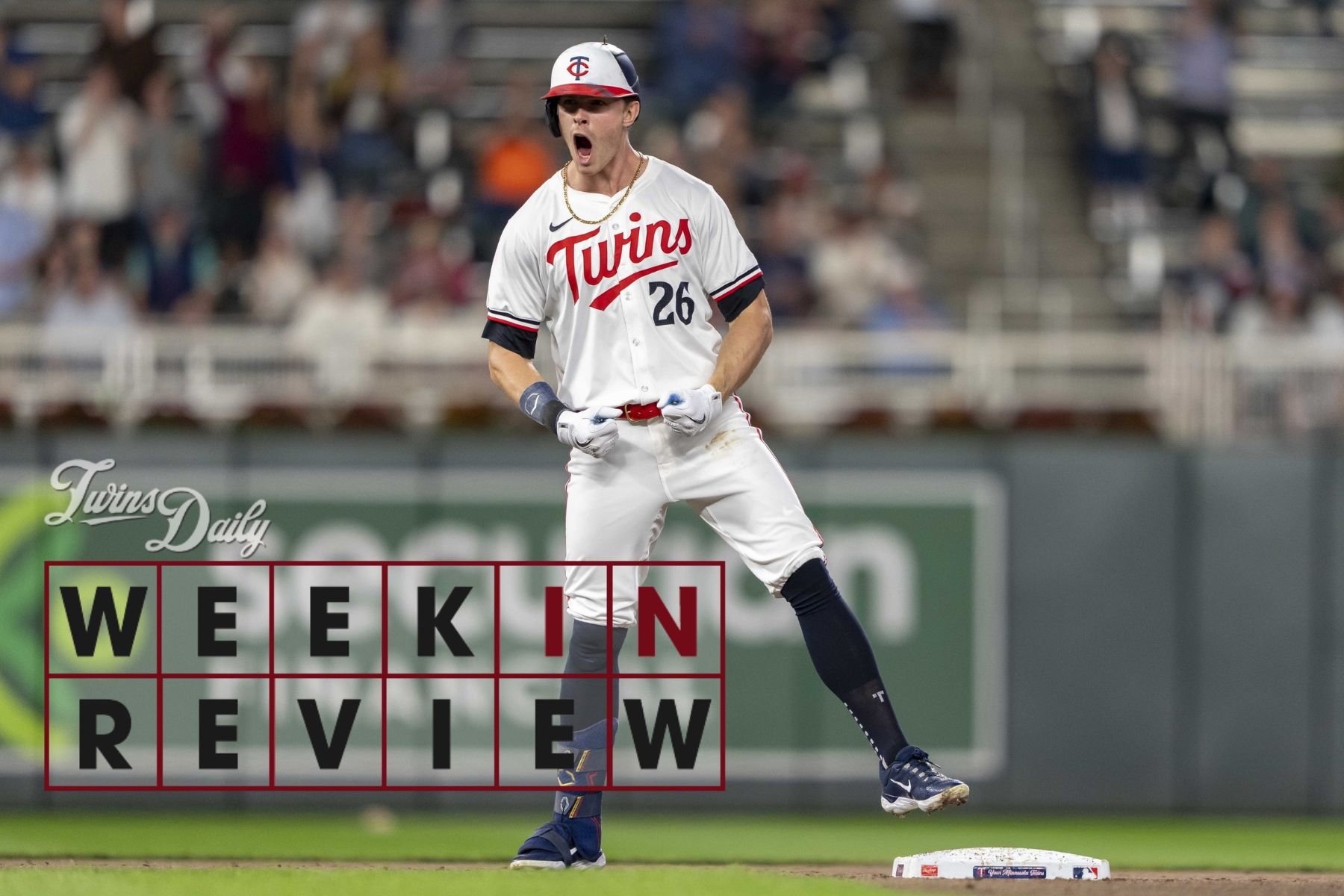 Weekly Snapshot: Mon, 5/6 through Sun, 5/12 *** Record Last Week: 5-2 (Overall: 24-16) Run Differential Last Week: +14 (Overall: +27) Standing: 2nd Place in AL Central (0.5 GB) Last Week's Game Results: Game 34 | MIN 3, SEA 1: Twins Take Opener Behind Strong Pitching Game 35 | SEA 10, MIN 6: Bullpen Unravels and Blows Late Lead Game 36 | MIN 6, SEA 3: Paddack Prevails with Help from Homers Game 37 | MIN 11, SEA 1: Mariners Dismantled in Stunning Takedown Game 38 | MIN 3, TOR 2: Ryan's Gem Sets Tone in Series Opener Game 39 | TOR 10, MIN 8: Another Bullpen Meltdown Sinks Twins Game 40 | MIN 5, TOR 1: Offense Spring Late to Clinch 6th Straight Series IF YOU'D RATHER LISTEN TO THE WEEK IN REVIEW THAN READ IT, YOU CAN NOW FIND IT IN PODCAST FORM. FIND THE LATEST EPISODE HERE. ALSO AVAILABLE ON APPLE AND SPOTIFY. NEWS & NOTES While it was a very active week on the schedule, with seven games and a trip across the border to Canada, there was relatively little action on the roster churn front, and that's a welcome change. Nobody landed on the injured list over the past seven days, and the only significant roster move – aside from a few minor-league signings, and Josh Winder initiating a rehab stint – was the swap of Jorge Alcalá for Josh Staumont in the bullpen. The treatment of Alcalá, who threw nearly 50 pitches on Tuesday before being optioned once again to Triple-A, remains perplexing. Especially considering that, as we'll discuss, the Twins could use all the help they can get in those middle-relief innings. We did receive an update, via Dan Hayes of The Athletic, on the status of Royce Lewis, and unfortunately it's nothing overly positive. While Lewis has been able to engage in some baseball activities at partial intensity, a recent MRI showed that his quad strain suffered on Opening Day has not yet fully healed, and still shows signs of inflammation. This is not necessarily unexpected, but it does put a damper on the idea of Lewis returning anytime in the near future, as he goes through what he's called "the most challenging rehab" of a career that has thus far been defined by challenging rehabs. Two-plus months was always the most realistic timetable for an injury of this severity, as Derek Falvey more or less alluded in the article while saying the team is pleased with his recovery so far. The Twins have every reason to take it slow and ensure Lewis' quad is in a very good place before they fully ramp him up, especially since they're somehow managing to play at a 97-win pace in his absence. HIGHLIGHTS The turnaround of the Twins offense has been amazing to behold. The lineup didn't just go from bad to good; it essentially went from worst to best in almost the blink of an eye. Through their first 20 games the Twins had the league's worst offense (per wRC+) aside from the White Sox and Marlins, and since then only the Dodgers have been better. The past week saw Minnesota push across 42 runs in seven games against quality pitching as they slugged 10 more home runs and added 17 doubles, winning five of seven to rise eight games above the .500 mark. The offensive charge continues to be led by red-hot Max Kepler and Ryan Jeffers, who've been among the best hitters in the league over the past three weeks. Kepler ran his hitting streak up to 14 games, going 10-for-25 with a homer and six doubles. Since his return from the injured list on April 22nd, Kepler leads the major leagues in WAR and WPA. Jeffers is pacing the American League with a .988 OPS overall after homering three more times in the past week and driving in seven runs across five games. There are not enough superlatives to describe what Jeffers is doing – simply a mind-blowing display of power-hitting prowess to build off last year's breakthrough. It also bears noting that the catcher's strikeout rate is below 20%, far down from his career 29% mark. He is just locked in beyond belief. As great as Kepler and Jeffers have been, it is the steady contributions up and down the lineup that are making the Twins offense almost impossibly formidable for opponents. Carlos Correa looks to be back fully in his groove; he went 7-for-23 with four doubles, striking out just twice in 25 plate appearances. Willi Castro kept cooking with six hits on the week including a double, triple and homer. Carlos Santana, whose individual resurgence has been as remarkable as anyone's, homered in three straight games in Toronto, including a crucial three-run bomb that decided Sunday's contest. This offense just has a spark and drive that were completely amiss throughout that ugly 7-13 run to open the season. They start strong, they avoid long dry spells, and they step up in key spots – all traits that leaned in the opposite direction early on. Thursday's game, which might have been the most impressive victory of the year thus far for the Twins, reflected this transformation perfectly. Heading into a getaway day with a depleted bullpen, going up against MLB's ERA leader in Logan Gilbert, the Minnesota lineup ambushed for five runs in the first inning, then kept adding on the way to an 11-1 series-clinching blowout. Of course, what shouldn't be overlooked in this example is that Pablo López and the Twins held Seattle to one run, so all of that extra run support wasn't ultimately even needed. This points to the underlying thread in all of this winning from the Twins: starting pitching has re-emerged as an overwhelming strength. López was dominant against the M's on Thursday, holding them to one run in 6 ⅓ innings with 10 strikeouts and no walks. The previous night, Chris Paddack struck out 10 over 5 ⅓ frames of one-run ball. Joe Ryan followed with seven excellent innings in Toronto on Friday, lowering his ERA to 3.21 and improving his K/BB ratio to 53-to-6. Bailey Ober allowed two runs over 10 ⅓ innings in his two starts and was flat-out brilliant on Sunday. Simeon Woods Richardson had one great start and one not-great start, but his 3.24 ERA through 25 innings has been a revelation in the No. 5 rotation spot. Collectively Twins starters allowed 10 earned runs over 40 ⅓ innings (2.23 ERA) last week with 54 strikeouts and five walks. Absurd. LOWLIGHTS It could have been an even better week for the Twins, who had multi-run leads in their losses on Tuesday and Saturday before watching the soft underbelly of their bullpen get sliced open on both occasions. On Tuesday it was Jay Jackson, Steven Okert and Alcalá combining to allow eight earned runs in the final three innings, turning a 4-2 lead into a 10-6 loss. Jackson and Okert were also involved in Saturday's meltdown, which saw the Twins carry an 8-3 advantage into the fifth before giving up seven unanswered and losing 10-8. Cole Sands surrendered three runs in that one, and Caleb Thielbar looked brutal, giving up two walks and a hit while recording one out. To some extent, a few lapses need to be expected from the bullpen for a team on such a heater. Outside of the blowout loss against Boston on May 5th, the Twins have had late leads to protect in literally every game over the past three weeks. While there were a couple lopsided victories mixed in, this relief corps has been pressed into high-leverage situations almost nonstop in the past 20 games, with very few days off mixed in. That takes a toll, and it limits Rocco Baldelli's ability to use his preferred relievers at all the times he'd like to, including Tuesday and Saturday when both Jhoan Durán and Griffin Jax were unavailable due to previous usage. The problem is that right now it feels like no one other than those two can be trusted in important spots at all, and even Jax looked a little rocky in his three appearances last week. Being without Brock Stewart, who was Minnesota's most effective reliever before going down with a shoulder injury, obviously hinders the depth of the bullpen at the back end. But the Twins are going to need more on balance going forward from this bullpen. Mainly because, from a big-picture perspective, they cannot afford to keep riding Durán and Jax as hard as they've been forced to during this stretch. It's reasonable to expect the likes of Okert and Kody Funderburk to rebound from their current slumps, but Jackson and Thielbar – 36 and 37 years old, respectively – seem to be showing their age, and that feels less reversible. Patience from the coaching staff has to be wearing very thin especially with Jackson, who has shown no ability to get anybody out with a diminished arsenal that wasn't strong to begin with. He was charged with five earned runs on four hits and a walk while recording only one out in each of his two appearances, ballooning his ERA to 6.87. Jackson has allowed at least one run in nine of his past 11 outings. TRENDING STORYLINE Byron Buxton will be eligible to come off the 10-day injured list on Tuesday. Scans on his inflamed right knee came back negative, and there's been suggestion from the team that Buxton's IL stint could end up being close to the minimum. It's obviously something that is going to loom over him, but there is hope that this flare-up was more of a minor bump in the road than a sign of things to come. We shall see. First, we'll see how the Twins choose to handle Buxton. Like with Lewis, there's no need whatsoever to rush, since the team is playing phenomenally without him as we wrap up the first quarter of the campaign. The front office could choose to send him on a rehab assignment, although my feeling by now is, why waste any of his game reps anywhere other than the big-league field. If he's going to be dashing around on the bases and chasing balls in the outfield, I'd just as soon have him doing it for the Twins where that impact can be felt. The impact is perhaps greater than you might perceive. Buxton's bat was undoubtedly mediocre through 28 games, as he's been fighting through some major struggles with his plate approach (32-to-3 K/BB), but the 30-year-old has been a big contributor via fielding and base-running. The Twins rank fourth out of 30 MLB teams in fWAR from the center fielder position, primarily because of Buxton and his defensive excellence. If Buxton's feeling okay, the Twins might as well activate him, but maybe with a plan to reduce his usage compared to appearing in 28 of the first 30 games. Therein lies the tricky part – it'd be great to keep rotating Austin Martin through center field once or twice a week, but someone's gotta go to make room on the roster for Buxton. That would seemingly need to be either Martin or José Miranda, who is now sort of thriving as Minnesota's regular third baseman (started 8 of last 10 games). The fact that Castro can play both positions gives the Twins a luxury of choosing based on their preference. LOOKING AHEAD Another challenging and consequential week looms for the Twins, who will get a break on Monday before welcoming the dreaded New York Yankees to town for a midweek series. Then it's off to Cleveland for three games against the Guardians. These specific opponents, of course, carry special weight for the Twins: the Yankees, their eternal tormentors, and a Guardians team that looks to be their top competitor in the Central. New York and Cleveland also been two of the best teams in the league up to this point, ranking second and third in the AL in wins. Another strong week would not only solidify the Twins' legitimacy as contenders, it would help build their suddenly viable case as THE team to beat in the American League. TUESDAY, MAY 14: YANKEES @ TWINS – LHP Carlos Rodon v. RHP Chris Paddack WEDNESDAY, MAY 15: YANKEES @ TWINS – RHP Marcus Stroman v. RHP Pablo Lopez THURSDAY, MAY 16: YANKEES @ TWINS – RHP Clarke Schmidt v. RHP Joe Ryan FRIDAY, MAY 17: TWINS @ GUARDIANS – RHP Simeon Woods Richardson v. RHP Triston McKenzie SATURDAY, MAY 18: TWINS @ GUARDIANS – RHP Bailey Ober v. LHP Logan Allen SUNDAY, MAY 19: TWINS @ GUARDIANS – RHP Chris Paddack v. RHP Tanner Bibee
- 29 comments
-
- 9
-
-
- max kepler
- ryan jeffers
- (and 2 more)
-
The good times continue to roll for the Minnesota Twins, who logged another winning week and, in doing so, ascended near the top of the AL Central standings. To the extent this incredible ongoing run could have previously been attributed to low-grade competition, that's no longer the case, as the Twins took the fight to a pair of playoff contenders with premier pitching and outclassed them both. Image courtesy of Jesse Johnson-USA TODAY Sports Weekly Snapshot: Mon, 5/6 through Sun, 5/12 *** Record Last Week: 5-2 (Overall: 24-16) Run Differential Last Week: +14 (Overall: +27) Standing: 2nd Place in AL Central (0.5 GB) Last Week's Game Results: Game 34 | MIN 3, SEA 1: Twins Take Opener Behind Strong Pitching Game 35 | SEA 10, MIN 6: Bullpen Unravels and Blows Late Lead Game 36 | MIN 6, SEA 3: Paddack Prevails with Help from Homers Game 37 | MIN 11, SEA 1: Mariners Dismantled in Stunning Takedown Game 38 | MIN 3, TOR 2: Ryan's Gem Sets Tone in Series Opener Game 39 | TOR 10, MIN 8: Another Bullpen Meltdown Sinks Twins Game 40 | MIN 5, TOR 1: Offense Spring Late to Clinch 6th Straight Series IF YOU'D RATHER LISTEN TO THE WEEK IN REVIEW THAN READ IT, YOU CAN NOW FIND IT IN PODCAST FORM. FIND THE LATEST EPISODE HERE. ALSO AVAILABLE ON APPLE AND SPOTIFY. NEWS & NOTES While it was a very active week on the schedule, with seven games and a trip across the border to Canada, there was relatively little action on the roster churn front, and that's a welcome change. Nobody landed on the injured list over the past seven days, and the only significant roster move – aside from a few minor-league signings, and Josh Winder initiating a rehab stint – was the swap of Jorge Alcalá for Josh Staumont in the bullpen. The treatment of Alcalá, who threw nearly 50 pitches on Tuesday before being optioned once again to Triple-A, remains perplexing. Especially considering that, as we'll discuss, the Twins could use all the help they can get in those middle-relief innings. We did receive an update, via Dan Hayes of The Athletic, on the status of Royce Lewis, and unfortunately it's nothing overly positive. While Lewis has been able to engage in some baseball activities at partial intensity, a recent MRI showed that his quad strain suffered on Opening Day has not yet fully healed, and still shows signs of inflammation. This is not necessarily unexpected, but it does put a damper on the idea of Lewis returning anytime in the near future, as he goes through what he's called "the most challenging rehab" of a career that has thus far been defined by challenging rehabs. Two-plus months was always the most realistic timetable for an injury of this severity, as Derek Falvey more or less alluded in the article while saying the team is pleased with his recovery so far. The Twins have every reason to take it slow and ensure Lewis' quad is in a very good place before they fully ramp him up, especially since they're somehow managing to play at a 97-win pace in his absence. HIGHLIGHTS The turnaround of the Twins offense has been amazing to behold. The lineup didn't just go from bad to good; it essentially went from worst to best in almost the blink of an eye. Through their first 20 games the Twins had the league's worst offense (per wRC+) aside from the White Sox and Marlins, and since then only the Dodgers have been better. The past week saw Minnesota push across 42 runs in seven games against quality pitching as they slugged 10 more home runs and added 17 doubles, winning five of seven to rise eight games above the .500 mark. The offensive charge continues to be led by red-hot Max Kepler and Ryan Jeffers, who've been among the best hitters in the league over the past three weeks. Kepler ran his hitting streak up to 14 games, going 10-for-25 with a homer and six doubles. Since his return from the injured list on April 22nd, Kepler leads the major leagues in WAR and WPA. Jeffers is pacing the American League with a .988 OPS overall after homering three more times in the past week and driving in seven runs across five games. There are not enough superlatives to describe what Jeffers is doing – simply a mind-blowing display of power-hitting prowess to build off last year's breakthrough. It also bears noting that the catcher's strikeout rate is below 20%, far down from his career 29% mark. He is just locked in beyond belief. As great as Kepler and Jeffers have been, it is the steady contributions up and down the lineup that are making the Twins offense almost impossibly formidable for opponents. Carlos Correa looks to be back fully in his groove; he went 7-for-23 with four doubles, striking out just twice in 25 plate appearances. Willi Castro kept cooking with six hits on the week including a double, triple and homer. Carlos Santana, whose individual resurgence has been as remarkable as anyone's, homered in three straight games in Toronto, including a crucial three-run bomb that decided Sunday's contest. This offense just has a spark and drive that were completely amiss throughout that ugly 7-13 run to open the season. They start strong, they avoid long dry spells, and they step up in key spots – all traits that leaned in the opposite direction early on. Thursday's game, which might have been the most impressive victory of the year thus far for the Twins, reflected this transformation perfectly. Heading into a getaway day with a depleted bullpen, going up against MLB's ERA leader in Logan Gilbert, the Minnesota lineup ambushed for five runs in the first inning, then kept adding on the way to an 11-1 series-clinching blowout. Of course, what shouldn't be overlooked in this example is that Pablo López and the Twins held Seattle to one run, so all of that extra run support wasn't ultimately even needed. This points to the underlying thread in all of this winning from the Twins: starting pitching has re-emerged as an overwhelming strength. López was dominant against the M's on Thursday, holding them to one run in 6 ⅓ innings with 10 strikeouts and no walks. The previous night, Chris Paddack struck out 10 over 5 ⅓ frames of one-run ball. Joe Ryan followed with seven excellent innings in Toronto on Friday, lowering his ERA to 3.21 and improving his K/BB ratio to 53-to-6. Bailey Ober allowed two runs over 10 ⅓ innings in his two starts and was flat-out brilliant on Sunday. Simeon Woods Richardson had one great start and one not-great start, but his 3.24 ERA through 25 innings has been a revelation in the No. 5 rotation spot. Collectively Twins starters allowed 10 earned runs over 40 ⅓ innings (2.23 ERA) last week with 54 strikeouts and five walks. Absurd. LOWLIGHTS It could have been an even better week for the Twins, who had multi-run leads in their losses on Tuesday and Saturday before watching the soft underbelly of their bullpen get sliced open on both occasions. On Tuesday it was Jay Jackson, Steven Okert and Alcalá combining to allow eight earned runs in the final three innings, turning a 4-2 lead into a 10-6 loss. Jackson and Okert were also involved in Saturday's meltdown, which saw the Twins carry an 8-3 advantage into the fifth before giving up seven unanswered and losing 10-8. Cole Sands surrendered three runs in that one, and Caleb Thielbar looked brutal, giving up two walks and a hit while recording one out. To some extent, a few lapses need to be expected from the bullpen for a team on such a heater. Outside of the blowout loss against Boston on May 5th, the Twins have had late leads to protect in literally every game over the past three weeks. While there were a couple lopsided victories mixed in, this relief corps has been pressed into high-leverage situations almost nonstop in the past 20 games, with very few days off mixed in. That takes a toll, and it limits Rocco Baldelli's ability to use his preferred relievers at all the times he'd like to, including Tuesday and Saturday when both Jhoan Durán and Griffin Jax were unavailable due to previous usage. The problem is that right now it feels like no one other than those two can be trusted in important spots at all, and even Jax looked a little rocky in his three appearances last week. Being without Brock Stewart, who was Minnesota's most effective reliever before going down with a shoulder injury, obviously hinders the depth of the bullpen at the back end. But the Twins are going to need more on balance going forward from this bullpen. Mainly because, from a big-picture perspective, they cannot afford to keep riding Durán and Jax as hard as they've been forced to during this stretch. It's reasonable to expect the likes of Okert and Kody Funderburk to rebound from their current slumps, but Jackson and Thielbar – 36 and 37 years old, respectively – seem to be showing their age, and that feels less reversible. Patience from the coaching staff has to be wearing very thin especially with Jackson, who has shown no ability to get anybody out with a diminished arsenal that wasn't strong to begin with. He was charged with five earned runs on four hits and a walk while recording only one out in each of his two appearances, ballooning his ERA to 6.87. Jackson has allowed at least one run in nine of his past 11 outings. TRENDING STORYLINE Byron Buxton will be eligible to come off the 10-day injured list on Tuesday. Scans on his inflamed right knee came back negative, and there's been suggestion from the team that Buxton's IL stint could end up being close to the minimum. It's obviously something that is going to loom over him, but there is hope that this flare-up was more of a minor bump in the road than a sign of things to come. We shall see. First, we'll see how the Twins choose to handle Buxton. Like with Lewis, there's no need whatsoever to rush, since the team is playing phenomenally without him as we wrap up the first quarter of the campaign. The front office could choose to send him on a rehab assignment, although my feeling by now is, why waste any of his game reps anywhere other than the big-league field. If he's going to be dashing around on the bases and chasing balls in the outfield, I'd just as soon have him doing it for the Twins where that impact can be felt. The impact is perhaps greater than you might perceive. Buxton's bat was undoubtedly mediocre through 28 games, as he's been fighting through some major struggles with his plate approach (32-to-3 K/BB), but the 30-year-old has been a big contributor via fielding and base-running. The Twins rank fourth out of 30 MLB teams in fWAR from the center fielder position, primarily because of Buxton and his defensive excellence. If Buxton's feeling okay, the Twins might as well activate him, but maybe with a plan to reduce his usage compared to appearing in 28 of the first 30 games. Therein lies the tricky part – it'd be great to keep rotating Austin Martin through center field once or twice a week, but someone's gotta go to make room on the roster for Buxton. That would seemingly need to be either Martin or José Miranda, who is now sort of thriving as Minnesota's regular third baseman (started 8 of last 10 games). The fact that Castro can play both positions gives the Twins a luxury of choosing based on their preference. LOOKING AHEAD Another challenging and consequential week looms for the Twins, who will get a break on Monday before welcoming the dreaded New York Yankees to town for a midweek series. Then it's off to Cleveland for three games against the Guardians. These specific opponents, of course, carry special weight for the Twins: the Yankees, their eternal tormentors, and a Guardians team that looks to be their top competitor in the Central. New York and Cleveland also been two of the best teams in the league up to this point, ranking second and third in the AL in wins. Another strong week would not only solidify the Twins' legitimacy as contenders, it would help build their suddenly viable case as THE team to beat in the American League. TUESDAY, MAY 14: YANKEES @ TWINS – LHP Carlos Rodon v. RHP Chris Paddack WEDNESDAY, MAY 15: YANKEES @ TWINS – RHP Marcus Stroman v. RHP Pablo Lopez THURSDAY, MAY 16: YANKEES @ TWINS – RHP Clarke Schmidt v. RHP Joe Ryan FRIDAY, MAY 17: TWINS @ GUARDIANS – RHP Simeon Woods Richardson v. RHP Triston McKenzie SATURDAY, MAY 18: TWINS @ GUARDIANS – RHP Bailey Ober v. LHP Logan Allen SUNDAY, MAY 19: TWINS @ GUARDIANS – RHP Chris Paddack v. RHP Tanner Bibee View full article
-
The Offensive Turnaround of the Minnesota Twins Has Been Astounding
Nick Nelson posted an article in Twins
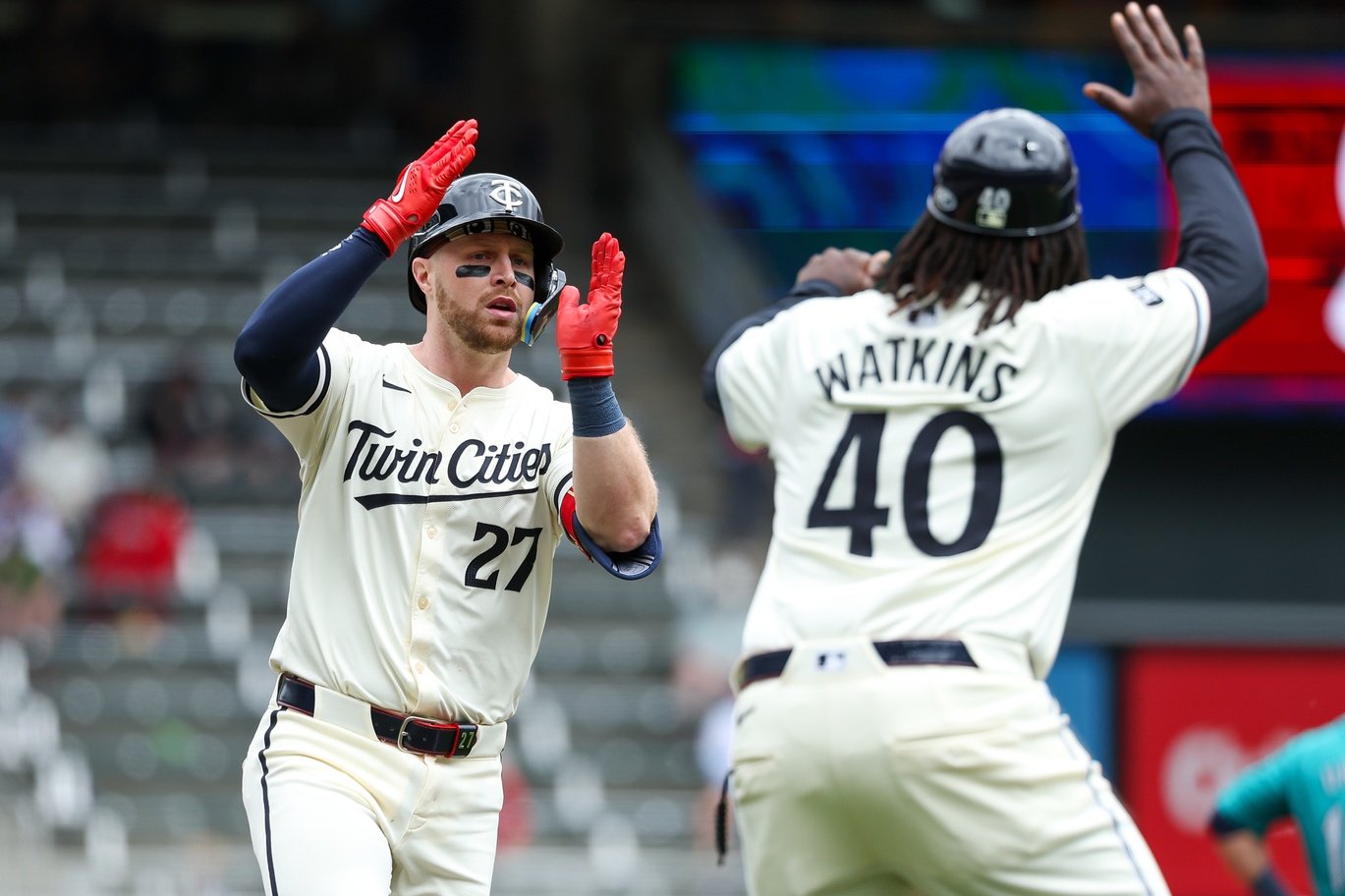 You can draw a line in the sand when the Twins offense flipped a switch following a staggeringly bad offensive start. The date was April 20th, and the Twins had just lost their second game out of three to the Detroit Tigers, falling 6-1 in another lifeless effort at the plate. Casey Mize stifled Minnesota's bat over six scoreless innings and the Twins went 0-for-6 in scoring position, extending a woeful record of hitting in key spots. At this point, 20 games into their season, the Twins were hitting .195/.281/.329 as a team with a collective 26.4% strikeout rate that ranked third-highest in the majors. They'd gone 7-13 while averaging just 3.3 runs per game. Then, came the switch flip. The following day, April 21st, Minnesota opened a four-game set against the lowly White Sox at Target Field, cleansing themselves of the previous weekend with a clean 7-0 win. It was their first time scoring more than four runs in a nine-inning game since April 3rd, and just their fourth time all season notching double-digit hits. They were only getting started. The Twins scored five-plus runs and tallied 10-plus hits in each of their next seven games, en route to a 12-game winning streak and 15-2 stretch that brings us to today. During these 17 games, Twins hitters have slashed .292/.358/.505 with a 20.0% K-rate that ranks fifth-lowest in the majors. The Twins went from ranking 28th in MLB with a 76 wRC+ through 20 games (ahead of only the White Sox and Marlins) to second in MLB with a 142 wRC+ (behind only the Dodgers) since. And what's most exciting is that this offense, seemingly driven by newfound confidence and belief (possibly sausage-influenced), has maintained its drastic level of improvement as the difficulty level has grown steeply. Bashing the White Sox and Angels pitching staffs is one thing, but the success they've been able to achieve in their past two series has been beyond encouraging and convincing. The Red Sox and Mariners came to Target Field with two of the best-performing staffs in the league and the Twins took it to them, winning five of seven. Thursday's game was perhaps the most impressive of the season for the Minnesota lineup, which jumped all over ERA leader Logan Gilbert for five runs in an explosive first inning, and kept the pressure applied on the way to an 11-1 blowout. Thinking back to a few short weeks ago when the Twins offense was routinely being shut down night after night by whatever random opposing starter happened to take the mound, it felt almost incomprehensible to see this unfold. We've certainly seen this type of thing before from the Twins offense, which scuffled throughout most of the first half in 2023 before turning a corner around the All-Star break, and emerging as one of the league's better units in the second half. By then, the team had already wasted a lot of time and they had to race to get to 87 wins. Carlos Correa reflected on this experience and how important it was to avoid a redux. “We've just got to figure out sooner or later," Correa said in early April, amidst the team's slow start. "We don't want to be here half a season trying to figure out when we know we're capable of doing it a lot earlier." Right now, it's looking like the hitting coach David Popkins and the Twins figured it out a lot earlier. This offense shows no resemblance to the lifeless bunch we saw through 20 games, and they never had a stretch like this in the first half last year. They need to prove that they can avoid reverting or regressing too starkly, but for now, they've blossomed into what the front office envisioned: one of the most potent and intimidating lineups in baseball. They'll look to keep it going as they head into Toronto to face a Blue Jays lineup that has been falling well short of expectations and, unlike the Twins, has yet to snap out of it.
 -
If you've followed baseball for any length of time, you've seen no shortage of teams going from hot to cold, and vice versa. But the degree to which the Twins offense slingshotted from one of the league's absolute worst to one of the absolute best, and the suddenness of it happening, is truly stunning. Image courtesy of Matt Krohn-USA TODAY Sports You can draw a line in the sand when the Twins offense flipped a switch following a staggeringly bad offensive start. The date was April 20th, and the Twins had just lost their second game out of three to the Detroit Tigers, falling 6-1 in another lifeless effort at the plate. Casey Mize stifled Minnesota's bat over six scoreless innings and the Twins went 0-for-6 in scoring position, extending a woeful record of hitting in key spots. At this point, 20 games into their season, the Twins were hitting .195/.281/.329 as a team with a collective 26.4% strikeout rate that ranked third-highest in the majors. They'd gone 7-13 while averaging just 3.3 runs per game. Then, came the switch flip. The following day, April 21st, Minnesota opened a four-game set against the lowly White Sox at Target Field, cleansing themselves of the previous weekend with a clean 7-0 win. It was their first time scoring more than four runs in a nine-inning game since April 3rd, and just their fourth time all season notching double-digit hits. They were only getting started. The Twins scored five-plus runs and tallied 10-plus hits in each of their next seven games, en route to a 12-game winning streak and 15-2 stretch that brings us to today. During these 17 games, Twins hitters have slashed .292/.358/.505 with a 20.0% K-rate that ranks fifth-lowest in the majors. The Twins went from ranking 28th in MLB with a 76 wRC+ through 20 games (ahead of only the White Sox and Marlins) to second in MLB with a 142 wRC+ (behind only the Dodgers) since. And what's most exciting is that this offense, seemingly driven by newfound confidence and belief (possibly sausage-influenced), has maintained its drastic level of improvement as the difficulty level has grown steeply. Bashing the White Sox and Angels pitching staffs is one thing, but the success they've been able to achieve in their past two series has been beyond encouraging and convincing. The Red Sox and Mariners came to Target Field with two of the best-performing staffs in the league and the Twins took it to them, winning five of seven. Thursday's game was perhaps the most impressive of the season for the Minnesota lineup, which jumped all over ERA leader Logan Gilbert for five runs in an explosive first inning, and kept the pressure applied on the way to an 11-1 blowout. Thinking back to a few short weeks ago when the Twins offense was routinely being shut down night after night by whatever random opposing starter happened to take the mound, it felt almost incomprehensible to see this unfold. We've certainly seen this type of thing before from the Twins offense, which scuffled throughout most of the first half in 2023 before turning a corner around the All-Star break, and emerging as one of the league's better units in the second half. By then, the team had already wasted a lot of time and they had to race to get to 87 wins. Carlos Correa reflected on this experience and how important it was to avoid a redux. “We've just got to figure out sooner or later," Correa said in early April, amidst the team's slow start. "We don't want to be here half a season trying to figure out when we know we're capable of doing it a lot earlier." Right now, it's looking like the hitting coach David Popkins and the Twins figured it out a lot earlier. This offense shows no resemblance to the lifeless bunch we saw through 20 games, and they never had a stretch like this in the first half last year. They need to prove that they can avoid reverting or regressing too starkly, but for now, they've blossomed into what the front office envisioned: one of the most potent and intimidating lineups in baseball. They'll look to keep it going as they head into Toronto to face a Blue Jays lineup that has been falling well short of expectations and, unlike the Twins, has yet to snap out of it. View full article
-
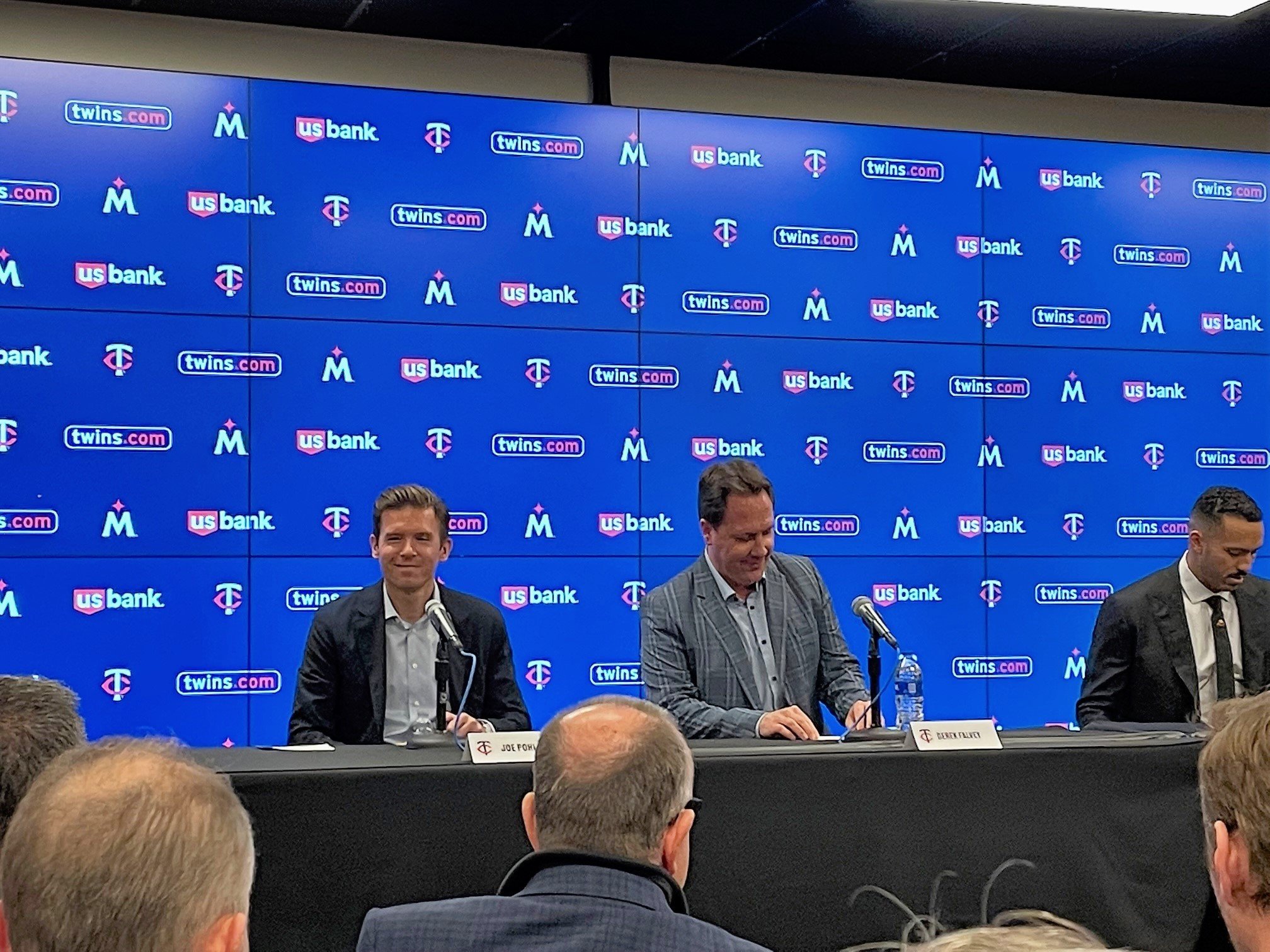 When Joe Pohlad took over as the new figurehead for ownership during the 2022-23 offseason, he talked a big game, with the organization positioning him as a bold leader who would usher in a bright new era of prestige for the Minnesota Twins brand. He seemed ready to back it up. As the third-generation Pohlad settled into his new title and role, Minnesota's payroll rose to unprecedented heights, fueled in large part by the paradigm-shattering Carlos Correa signing. Meanwhile, the Twins were unveiling an ambitious and comprehensive rebrand, while also teasing big upgrades to Target Field, including a $30-million scoreboard expansion. The message at the time was that the Twins were only getting started. "While he didn’t mention a specific number, Pohlad didn’t hesitate to suggest the Twins could increase payroll significantly if everything was properly aligned," wrote Dan Hayes in The Athletic at the time. In the article, Pohlad did not rule out the possibility of payroll eventually climbing into the $180-200 million range, putting Minnesota into another class of resource availability and market legitimacy. In the ensuing 2023 season, a slow start stifled enthusiasm around the team, but things progressed brilliantly after the All-Star break, as the Twins rallied to a division title and snapped a two-decade postseason curse before a packed house at Target Field. As luck would have it, their TV contract with the much-maligned Diamond Sports Group was reaching an end, making the Twins free agents in the broadcast arena, free to shop their rights around or bring them under their own umbrella. Team officials crowed about the opportunity to expand reach and access throughout Twins Territory, while also publicly promising to end blackouts. Here's a quick recap of all that's happened since the Twins were eliminated from the playoffs by Houston last year: Derek Falvey openly stated the team's intention to substantially reduce spending, just days after one of the most exciting breakthroughs in the franchise's modern history, driven by a record payroll. The Twins followed through on this declaration to the extreme, slashing payroll by a whopping $35 million to drop into the bottom third of the league. At the same time, they ended up signing on for another year with Diamond Sports, in a decision clearly and solely motivated by money, rendering false and hollow their talk about fan access being the priority. You can throw in some other questionable courses of action – e.g. unceremoniously parting ways with Dick Bremer in a manner that struck many as cold – but those are the big ones, from my view. Especially in tandem. Slashing payroll and pocketing the TV money (while sticking with a broadcast situation that the team already acknowledged as a raw deal for their fans) really felt to a lot of people like a middle finger extended in their direction, rather than an open hand of welcome. Who could blame them? Now, it's gotten even worse. Last week, without any warning, Bally Sports North and other Diamond Sports RSNs went dark for Comcast and Xfinity customers, as the two sides evidently failed to reach agreement ahead of a May 1 deadline. Two huge, greedy, despised companies at war. As a byproduct, a massive share of the Twins' already-restricted audience lost their means of watching them. In light of all those lofty proclamations about the vital importance of making their product available to a larger audience, the emergence of new barriers for willing, would-be paying customers to watch this baseball team almost feels like some kind of sick joke. Those proclamations were savvy, and correct! Yet, the Twins have betrayed these supposed beliefs in their every action, and they now find themselves embroiled in a disaster of their own making, damaging their brand in ways that are difficult to overstate. Yes, someone like me can find an alternative. I did. I canceled my Xfinity subscription over the weekend and I'm now on board with Fubo TV, which seems fine. But the Twins were never at risk of losing me. They're at risk of losing people who lack the means to find a new solution, or who are so fed up with all this garbage that they don't even try to do so. I think of restaurants and sports bars, which – I can say from experience – were already liable to have whatever out-of-market NBA or NHL game happened to be available on TV instead of the Twins, even when the broadcasts were easier to access. I think of people like my parents, who are big Twins fans but also longtime cable subscribers, and unlikely to make some drastic change over this. Guess they'll just dial back their investment. I think of stories like the one below, from a Twitter acquaintance whose 87-year-old grandpa now suddenly has to figure out how he can watch the team at his assisted living community. It's sad. These are all missed opportunities at best, and flagrant brand-building blunders at worst. Although I am one, it doesn't take a marketing professional to understand the dire long-term implications of this sort of audience gatekeeping, especially in a local market where competition for sports fans is fierce: The Timberwolves are making a thrilling postseason run, and the Vikings just drafted their quarterback of the future. Look, I'm not unearthing any secret, groundbreaking revelations here. And that's where I end up utterly confused. Joe Pohlad is renowned for, as much as anything, his brand-building chops. His previous work in taking over Go Media was largely tied to this strength, despite business failures, even in his own words. "Go had a ton of successes in my opinion on the brand side. But the failures came from the business standpoint, from pivoting," Pohlad said in the aforementioned Hayes article. Well, from a business standpoint, the Twins need to pivot. Clearly. They're fumbling that right now. But at the very least, they can get their situation straight from a messaging and branding standpoint. Your fans, and potential future fans, are everything. Stop antagonizing them! Is this billable business advice? Should I be charging? Whatever advice this organization's leadership is receiving now, it doesn't seem very good. I'm not sure who felt that an out-of-touch shrug the shoulders ¯_(ツ)_/¯ would be received well as the team's spin on this Bally Sports travesty. "No role or voice in this matter"? Get real. Treating your audience as expendable is one thing; treating them as idiots is another. I'm writing this not because I'm calling for heads to roll, or even because I want to single out any specific person for the complete debacle that has unfolded with this franchise. Joe Pohlad, Dave St. Peter, I don't care. Someone's gotta step up and mitigate the brand damage. Notably, whoever is going to play a role in turning around this wayward ship, it won't be Meka Morris. Hired in 2021 as the organization's first-ever Chief Revenue Officer, and described by Forbes in a glowing feature last summer as "the woman in charge of selling [the Twins'] appeal," Morris quietly exited recently, taking a job in March as EVP/Revenue & Chief Business Officer (essentially the same title) for the Chicago Bears. I'm not going to speculate on the reasons behind the departure of this executive who was seemingly viewed as a rising star. As far as I can tell, neither side has commented on the split publicly. But at the very least, it's yet another glaring example of the bright and confident vision laid out for this organization just a few years ago going by the wayside. Revenues are dropping, payroll is dropping, fans are pissed off, and everyone seems completely clueless and reactive in the way they're responding and communicating about it. It's a real shame, at a time where the Twins should be capitalizing on all the excellent work this front office and this coaching staff and these players have done to generate energy and excitement. They deserve better. We all deserve better. It's time for the Minnesota Twins – their ownership, their business side – to do better. Or find somebody who can.
- 107 comments
-
- 40
-
-

-

-
With baffling decisions and tone-deaf messaging, the Twins continue to alienate their audience at a crucial moment of opportunity. Despite their best efforts, the organization's leadership cannot escape culpability in this fan-infuriating fiasco. You have to wonder where everything went so wrong. Image courtesy of Theo Tollefson When Joe Pohlad took over as the new figurehead for ownership during the 2022-23 offseason, he talked a big game, with the organization positioning him as a bold leader who would usher in a bright new era of prestige for the Minnesota Twins brand. He seemed ready to back it up. As the third-generation Pohlad settled into his new title and role, Minnesota's payroll rose to unprecedented heights, fueled in large part by the paradigm-shattering Carlos Correa signing. Meanwhile, the Twins were unveiling an ambitious and comprehensive rebrand, while also teasing big upgrades to Target Field, including a $30-million scoreboard expansion. The message at the time was that the Twins were only getting started. "While he didn’t mention a specific number, Pohlad didn’t hesitate to suggest the Twins could increase payroll significantly if everything was properly aligned," wrote Dan Hayes in The Athletic at the time. In the article, Pohlad did not rule out the possibility of payroll eventually climbing into the $180-200 million range, putting Minnesota into another class of resource availability and market legitimacy. In the ensuing 2023 season, a slow start stifled enthusiasm around the team, but things progressed brilliantly after the All-Star break, as the Twins rallied to a division title and snapped a two-decade postseason curse before a packed house at Target Field. As luck would have it, their TV contract with the much-maligned Diamond Sports Group was reaching an end, making the Twins free agents in the broadcast arena, free to shop their rights around or bring them under their own umbrella. Team officials crowed about the opportunity to expand reach and access throughout Twins Territory, while also publicly promising to end blackouts. Here's a quick recap of all that's happened since the Twins were eliminated from the playoffs by Houston last year: Derek Falvey openly stated the team's intention to substantially reduce spending, just days after one of the most exciting breakthroughs in the franchise's modern history, driven by a record payroll. The Twins followed through on this declaration to the extreme, slashing payroll by a whopping $35 million to drop into the bottom third of the league. At the same time, they ended up signing on for another year with Diamond Sports, in a decision clearly and solely motivated by money, rendering false and hollow their talk about fan access being the priority. You can throw in some other questionable courses of action – e.g. unceremoniously parting ways with Dick Bremer in a manner that struck many as cold – but those are the big ones, from my view. Especially in tandem. Slashing payroll and pocketing the TV money (while sticking with a broadcast situation that the team already acknowledged as a raw deal for their fans) really felt to a lot of people like a middle finger extended in their direction, rather than an open hand of welcome. Who could blame them? Now, it's gotten even worse. Last week, without any warning, Bally Sports North and other Diamond Sports RSNs went dark for Comcast and Xfinity customers, as the two sides evidently failed to reach agreement ahead of a May 1 deadline. Two huge, greedy, despised companies at war. As a byproduct, a massive share of the Twins' already-restricted audience lost their means of watching them. In light of all those lofty proclamations about the vital importance of making their product available to a larger audience, the emergence of new barriers for willing, would-be paying customers to watch this baseball team almost feels like some kind of sick joke. Those proclamations were savvy, and correct! Yet, the Twins have betrayed these supposed beliefs in their every action, and they now find themselves embroiled in a disaster of their own making, damaging their brand in ways that are difficult to overstate. Yes, someone like me can find an alternative. I did. I canceled my Xfinity subscription over the weekend and I'm now on board with Fubo TV, which seems fine. But the Twins were never at risk of losing me. They're at risk of losing people who lack the means to find a new solution, or who are so fed up with all this garbage that they don't even try to do so. I think of restaurants and sports bars, which – I can say from experience – were already liable to have whatever out-of-market NBA or NHL game happened to be available on TV instead of the Twins, even when the broadcasts were easier to access. I think of people like my parents, who are big Twins fans but also longtime cable subscribers, and unlikely to make some drastic change over this. Guess they'll just dial back their investment. I think of stories like the one below, from a Twitter acquaintance whose 87-year-old grandpa now suddenly has to figure out how he can watch the team at his assisted living community. It's sad. These are all missed opportunities at best, and flagrant brand-building blunders at worst. Although I am one, it doesn't take a marketing professional to understand the dire long-term implications of this sort of audience gatekeeping, especially in a local market where competition for sports fans is fierce: The Timberwolves are making a thrilling postseason run, and the Vikings just drafted their quarterback of the future. Look, I'm not unearthing any secret, groundbreaking revelations here. And that's where I end up utterly confused. Joe Pohlad is renowned for, as much as anything, his brand-building chops. His previous work in taking over Go Media was largely tied to this strength, despite business failures, even in his own words. "Go had a ton of successes in my opinion on the brand side. But the failures came from the business standpoint, from pivoting," Pohlad said in the aforementioned Hayes article. Well, from a business standpoint, the Twins need to pivot. Clearly. They're fumbling that right now. But at the very least, they can get their situation straight from a messaging and branding standpoint. Your fans, and potential future fans, are everything. Stop antagonizing them! Is this billable business advice? Should I be charging? Whatever advice this organization's leadership is receiving now, it doesn't seem very good. I'm not sure who felt that an out-of-touch shrug the shoulders ¯_(ツ)_/¯ would be received well as the team's spin on this Bally Sports travesty. "No role or voice in this matter"? Get real. Treating your audience as expendable is one thing; treating them as idiots is another. I'm writing this not because I'm calling for heads to roll, or even because I want to single out any specific person for the complete debacle that has unfolded with this franchise. Joe Pohlad, Dave St. Peter, I don't care. Someone's gotta step up and mitigate the brand damage. Notably, whoever is going to play a role in turning around this wayward ship, it won't be Meka Morris. Hired in 2021 as the organization's first-ever Chief Revenue Officer, and described by Forbes in a glowing feature last summer as "the woman in charge of selling [the Twins'] appeal," Morris quietly exited recently, taking a job in March as EVP/Revenue & Chief Business Officer (essentially the same title) for the Chicago Bears. I'm not going to speculate on the reasons behind the departure of this executive who was seemingly viewed as a rising star. As far as I can tell, neither side has commented on the split publicly. But at the very least, it's yet another glaring example of the bright and confident vision laid out for this organization just a few years ago going by the wayside. Revenues are dropping, payroll is dropping, fans are pissed off, and everyone seems completely clueless and reactive in the way they're responding and communicating about it. It's a real shame, at a time where the Twins should be capitalizing on all the excellent work this front office and this coaching staff and these players have done to generate energy and excitement. They deserve better. We all deserve better. It's time for the Minnesota Twins – their ownership, their business side – to do better. Or find somebody who can. View full article
-
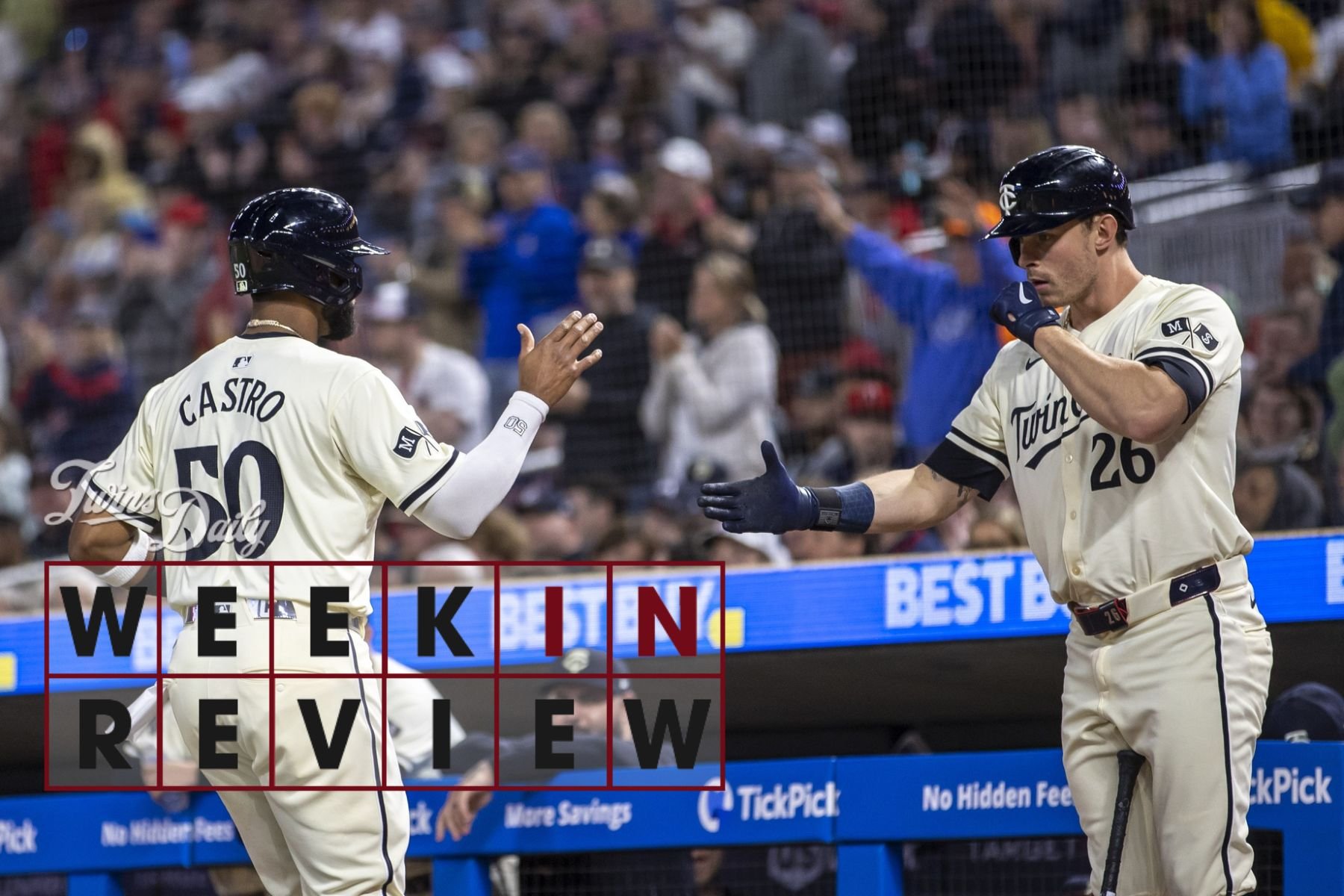 Weekly Snapshot: Mon, 4/29 through Sun, 5/5 *** Record Last Week: 5-1 (Overall: 19-14) Run Differential Last Week: +5 (Overall: +13) Standing: T-2nd Place in AL Central (2.5 GB) Last Week's Game Results: Game 28 | MIN 3, CWS 2: Twins Grind Out Win to Extend Streak Game 29 | MIN 6, CWS 5: Durán Nails Down Save in Return Game 30 | MIN 10, CWS 5: White Sox Buried by Late Scoring Flurry Game 31 | MIN 5, BOS 2: Paddack Powers Twins Past Red Sox Game 32 | MIN 3, BOS 1: López Shoves, Winning Streak Reaches 12 Game 33 | BOS 9, MIN 2: Streak Reaches an End in Sloppy Loss IF YOU'D RATHER LISTEN TO THE WEEK IN REVIEW THAN READ IT, YOU CAN NOW GET IT IN PODCAST FORM. FIND THE LATEST EPISODE HERE. ALSO AVAILABLE ON APPLE AND SPOTIFY. NEWS & NOTES In rapid succession, the Twins have been getting back key players from injuries, serving to fuel their longest winning streak in more than 30 years. Freshly activated Max Kepler was already making a huge impact before Carlos Correa returned to the fold on Monday, followed by Jhoan Durán on Tuesday. For a brief moment, the roster was beginning to look like a near-complete version of itself. But the injury carousel continues to spin relentlessly. No sooner had Correa and Durán returned than Byron Buxton and Brock Stewart swapped into their places on the injured list with worrisome health issues. Buxton came up limping on a stolen base attempt Wednesday, experiencing soreness in his twice-repaired right knee. Stewart apparently has been dealing with a right shoulder issue, and went for an MRI. Neither of these are being framed by the team as grave long-term concerns. Buxton's knee has no structural damage – for what that's worth at this point – and the Twins say they want to get out front of Stewart's shoulder discomfort. But it's a bummer to see. These two bright talents have had such a hard time staying on the field over the years, and watching them out there doing their thing was a big highlight of the first month. Hopefully, the Twins are simply erring on the side of caution and these familiar hurdles can be overcome in due time. In the roster shuffle, Austin Martin and Kody Funderburk were briefly sent down to Triple-A before quickly returning. Jorge Alcalá returned to the fold. Caleb Boushley was added to the 40-man roster and spent one day on the active roster, but didn't pitch. Matt Bowman was designated for assignment. I think that just about covers it. HIGHLIGHTS As you'd expect during such an extraordinary stretch of nonstop winning baseball, the Twins have been clicking on all cylinders, receiving contributions from various players and units across the roster with crisp performances night after night. Willi Castro has been the star of the show of late, showcasing his valuable flexibility while also going on an absolute tear at the plate. Freed up from everyday shortstop duties by Correa's return, Castro went back to his versatile roving defensive role, making starts at third base, left field and center. He appeared at multiple positions in four of six games, and needless to say, his ability to handle center is especially handy with Buxton going down. Offensively, the switch-hitter went 9-for-24 with two doubles, two triples and three stolen bases, electrifying the lineup with his dynamic play. On Saturday, Castro found himself batting third in the order, a sign of his elevated esteem in the eyes of manager Rocco Baldelli. The super utilityman is living up to his label in a big way. Kepler is on a heater of his own ever since coming off the injured list. He continued to rake in a week where he went 8-for-23 with a home run against a left-handed pitcher. Kepler looks fantastic at the plate, consistently turning in excellent at-bats and driving the ball upon contact. He's stuck out only four times in 45 plate appearances since being activated, with six walks. We've also gotta once again give props to Ryan Jeffers, who shows no signs of slowing down in his early-season offensive conquest. The past week saw him notch a home run and four doubles as he continues to alternate between catcher and DH. Jeffers is doing his best Mike Piazza impression, with a .563 slugging percentage that ranks ninth among qualified big-leaguers. The ascendance of the offense, which scored five-plus runs 10 different times on the 12-game winning streak after doing so three times total in their first 20 games, has clearly been very noticeable. But pitching is the engine that has made the Twins almost impossible to beat. While the lineup is now producing more than five runs with some regularity, the team didn't allow more than five during the entire 12-game streak, and has done so in only six games total this year, including Sunday's streak-snapping loss. Complete breakdowns from the staff have been ultra-rare and, as we've seen, that's an excellent way to rattle off consistent wins once the offense is doing its thing. The rotation has grown extremely reliable with Simeon Woods Richardson aboard and Chris Paddack stabilizing at the back end. Pablo López had a very encouraging bounce-back start on Saturday, firing six innings of one-run ball with eight strikeouts. Joe Ryan chipped in a pair of quality starts; he has pitched into the sixth every time out and has yet to allow more than three earned runs in a start. Backing up the quality work of the starters, the bullpen keeps on coming through in almost every instance. Durán came back with a bang, striking out five and issuing no walks over three scoreless appearances. He picked up a pair of saves and handled the heart of the Boston order to protect a two-run lead in the eighth on Saturday. Durán is supported by quite the effective entourage in Minnesota’s phenomenal relief corps. He combined with Griffin Jax, Caleb Thielbar, Alcalá and Steven Okert for 10 shutout innings with 14 strikeouts. Okert came through in a big spot with the bases loaded on Saturday to help secure their 12th straight win. LOWLIGHTS All of the great on-field energy was dampened by some very unfortunate developments regarding the team's broadcast situation and viewership availability. On Tuesday night, fans learned out of nowhere that Bally Sports North (and other regional Diamond Sports networks) would be going dark on Comcast/Xfinity cable as of May 1st, meaning that a huge portion of people would lose their ability to watch the games on TV, right in the middle of a historic winning streak. In a rather tone-deaf public statement, the Twins attempted to absolve themselves of responsibility, claiming they have "no role or voice" in a matter they very much played a role in creating. The Twins betrayed their own promise by choosing money over reach during the offseason, and now their fans continue to experience the negative impacts of this decision. The Twins are playing great baseball on the field and have hoist themselves right back into the contention picture. It's a fun time, but the positive vibes are being muted by these frustrating access barriers, as well as the buzzkilling health setbacks for Buxton and Stewart. Not to mention recent updates that indicate the organization's top two prospects, Walker Jenkins and Brooks Lee, are nowhere close to playing in the minors as their early injuries threaten to wipe out large chunks very important campaigns for both. TRENDING STORYLINE Though Stewart's injury lessens the logjam to a degree, the Twins will have another tricky bullpen decision upcoming with Justin Topa due to wrap up his rehab stint sometime in the coming week or so. He's already made four appearances for the Saints, posting a 6-to-1 K/BB ratio. As much as the club seems inclined to let him build up after being sidelined for more than a month, it can't be long until he's ready. The same question we pondered last week, in the face of Durán's impending return, must be asked again: who goes to make room? Do you send down Cole Sands with an eye on stretching him out as a potential starter? Does Alcalá go back down undeservingly? Right now the most likely candidate may be Funderburk, who gave up four earned runs on five hits in a rough outing on Sunday, though he's generally looked good. To lose such a crucial piece as Stewart and still find yourself in this kind of scenario – a veritable embarrassment of relief riches, with no clear weak links in the chain – speaks very favorably to how deftly this bullpen was built and how well each arm has been utilized. We'll see soon what Topa can bring to the table as another reinforcement. LOOKING AHEAD The Twins are now past the easy part of their schedule and will be embarking on a bit of a gauntlet here in May, beginning with this week's slate featuring matchups against a pair of bona fide playoff contenders in Seattle and Toronto. With their impressive play against a solid Boston squad over the weekend, Minnesota made a statement that their turnaround was about more than clobbering shoddy competition, and they will have a chance to build on that message in the week ahead. The offense will be tested heavily by a barrage of top-tier starters. MONDAY, 5/6: MARINERS @ TWINS – RHP Luis Castillo v. RHP Simeon Woods Richardson TUESDAY, 5/7: MARINERS @ TWINS – RHP Emerson Hancock v. RHP Bailey Ober WEDNESDAY, 5/8: MARINERS @ TWINS – RHP George Kirby v. RHP Chris Paddack THURSDAY, 5/9: MARINERS @ TWINS – RHP Pablo López v. RHP Logan Gilbert FRIDAY, 5/10: TWINS @ BLUE JAYS – RHP Joe Ryan v. LHP Yusei Kikuchi SATURDAY, 5/11: TWINS @ BLUE JAYS – RHP Simeon Woods Richardson v. RHP Kevin Gausman SUNDAY, 5/12: TWINS @ BLUE JAYS – RHP Bailey Ober v. TBD
- 8 comments
-
- 4
-
-
- willi castro
- max kepler
- (and 3 more)
-
The Minnesota Twins ran their longest winning streak since 1991 to 12 games before finally seeing it snapped on Sunday. They have risen from the ashes of a hideous start to firmly reassert themselves as power players in the American League. And yet, a couple of troubling injury developments and a disastrous turn of events with the team's TV broadcast situation served to keep the good vibes in check this past week. Image courtesy of Jesse Johnson-USA TODAY Sports Weekly Snapshot: Mon, 4/29 through Sun, 5/5 *** Record Last Week: 5-1 (Overall: 19-14) Run Differential Last Week: +5 (Overall: +13) Standing: T-2nd Place in AL Central (2.5 GB) Last Week's Game Results: Game 28 | MIN 3, CWS 2: Twins Grind Out Win to Extend Streak Game 29 | MIN 6, CWS 5: Durán Nails Down Save in Return Game 30 | MIN 10, CWS 5: White Sox Buried by Late Scoring Flurry Game 31 | MIN 5, BOS 2: Paddack Powers Twins Past Red Sox Game 32 | MIN 3, BOS 1: López Shoves, Winning Streak Reaches 12 Game 33 | BOS 9, MIN 2: Streak Reaches an End in Sloppy Loss IF YOU'D RATHER LISTEN TO THE WEEK IN REVIEW THAN READ IT, YOU CAN NOW GET IT IN PODCAST FORM. FIND THE LATEST EPISODE HERE. ALSO AVAILABLE ON APPLE AND SPOTIFY. NEWS & NOTES In rapid succession, the Twins have been getting back key players from injuries, serving to fuel their longest winning streak in more than 30 years. Freshly activated Max Kepler was already making a huge impact before Carlos Correa returned to the fold on Monday, followed by Jhoan Durán on Tuesday. For a brief moment, the roster was beginning to look like a near-complete version of itself. But the injury carousel continues to spin relentlessly. No sooner had Correa and Durán returned than Byron Buxton and Brock Stewart swapped into their places on the injured list with worrisome health issues. Buxton came up limping on a stolen base attempt Wednesday, experiencing soreness in his twice-repaired right knee. Stewart apparently has been dealing with a right shoulder issue, and went for an MRI. Neither of these are being framed by the team as grave long-term concerns. Buxton's knee has no structural damage – for what that's worth at this point – and the Twins say they want to get out front of Stewart's shoulder discomfort. But it's a bummer to see. These two bright talents have had such a hard time staying on the field over the years, and watching them out there doing their thing was a big highlight of the first month. Hopefully, the Twins are simply erring on the side of caution and these familiar hurdles can be overcome in due time. In the roster shuffle, Austin Martin and Kody Funderburk were briefly sent down to Triple-A before quickly returning. Jorge Alcalá returned to the fold. Caleb Boushley was added to the 40-man roster and spent one day on the active roster, but didn't pitch. Matt Bowman was designated for assignment. I think that just about covers it. HIGHLIGHTS As you'd expect during such an extraordinary stretch of nonstop winning baseball, the Twins have been clicking on all cylinders, receiving contributions from various players and units across the roster with crisp performances night after night. Willi Castro has been the star of the show of late, showcasing his valuable flexibility while also going on an absolute tear at the plate. Freed up from everyday shortstop duties by Correa's return, Castro went back to his versatile roving defensive role, making starts at third base, left field and center. He appeared at multiple positions in four of six games, and needless to say, his ability to handle center is especially handy with Buxton going down. Offensively, the switch-hitter went 9-for-24 with two doubles, two triples and three stolen bases, electrifying the lineup with his dynamic play. On Saturday, Castro found himself batting third in the order, a sign of his elevated esteem in the eyes of manager Rocco Baldelli. The super utilityman is living up to his label in a big way. Kepler is on a heater of his own ever since coming off the injured list. He continued to rake in a week where he went 8-for-23 with a home run against a left-handed pitcher. Kepler looks fantastic at the plate, consistently turning in excellent at-bats and driving the ball upon contact. He's stuck out only four times in 45 plate appearances since being activated, with six walks. We've also gotta once again give props to Ryan Jeffers, who shows no signs of slowing down in his early-season offensive conquest. The past week saw him notch a home run and four doubles as he continues to alternate between catcher and DH. Jeffers is doing his best Mike Piazza impression, with a .563 slugging percentage that ranks ninth among qualified big-leaguers. The ascendance of the offense, which scored five-plus runs 10 different times on the 12-game winning streak after doing so three times total in their first 20 games, has clearly been very noticeable. But pitching is the engine that has made the Twins almost impossible to beat. While the lineup is now producing more than five runs with some regularity, the team didn't allow more than five during the entire 12-game streak, and has done so in only six games total this year, including Sunday's streak-snapping loss. Complete breakdowns from the staff have been ultra-rare and, as we've seen, that's an excellent way to rattle off consistent wins once the offense is doing its thing. The rotation has grown extremely reliable with Simeon Woods Richardson aboard and Chris Paddack stabilizing at the back end. Pablo López had a very encouraging bounce-back start on Saturday, firing six innings of one-run ball with eight strikeouts. Joe Ryan chipped in a pair of quality starts; he has pitched into the sixth every time out and has yet to allow more than three earned runs in a start. Backing up the quality work of the starters, the bullpen keeps on coming through in almost every instance. Durán came back with a bang, striking out five and issuing no walks over three scoreless appearances. He picked up a pair of saves and handled the heart of the Boston order to protect a two-run lead in the eighth on Saturday. Durán is supported by quite the effective entourage in Minnesota’s phenomenal relief corps. He combined with Griffin Jax, Caleb Thielbar, Alcalá and Steven Okert for 10 shutout innings with 14 strikeouts. Okert came through in a big spot with the bases loaded on Saturday to help secure their 12th straight win. LOWLIGHTS All of the great on-field energy was dampened by some very unfortunate developments regarding the team's broadcast situation and viewership availability. On Tuesday night, fans learned out of nowhere that Bally Sports North (and other regional Diamond Sports networks) would be going dark on Comcast/Xfinity cable as of May 1st, meaning that a huge portion of people would lose their ability to watch the games on TV, right in the middle of a historic winning streak. In a rather tone-deaf public statement, the Twins attempted to absolve themselves of responsibility, claiming they have "no role or voice" in a matter they very much played a role in creating. The Twins betrayed their own promise by choosing money over reach during the offseason, and now their fans continue to experience the negative impacts of this decision. The Twins are playing great baseball on the field and have hoist themselves right back into the contention picture. It's a fun time, but the positive vibes are being muted by these frustrating access barriers, as well as the buzzkilling health setbacks for Buxton and Stewart. Not to mention recent updates that indicate the organization's top two prospects, Walker Jenkins and Brooks Lee, are nowhere close to playing in the minors as their early injuries threaten to wipe out large chunks very important campaigns for both. TRENDING STORYLINE Though Stewart's injury lessens the logjam to a degree, the Twins will have another tricky bullpen decision upcoming with Justin Topa due to wrap up his rehab stint sometime in the coming week or so. He's already made four appearances for the Saints, posting a 6-to-1 K/BB ratio. As much as the club seems inclined to let him build up after being sidelined for more than a month, it can't be long until he's ready. The same question we pondered last week, in the face of Durán's impending return, must be asked again: who goes to make room? Do you send down Cole Sands with an eye on stretching him out as a potential starter? Does Alcalá go back down undeservingly? Right now the most likely candidate may be Funderburk, who gave up four earned runs on five hits in a rough outing on Sunday, though he's generally looked good. To lose such a crucial piece as Stewart and still find yourself in this kind of scenario – a veritable embarrassment of relief riches, with no clear weak links in the chain – speaks very favorably to how deftly this bullpen was built and how well each arm has been utilized. We'll see soon what Topa can bring to the table as another reinforcement. LOOKING AHEAD The Twins are now past the easy part of their schedule and will be embarking on a bit of a gauntlet here in May, beginning with this week's slate featuring matchups against a pair of bona fide playoff contenders in Seattle and Toronto. With their impressive play against a solid Boston squad over the weekend, Minnesota made a statement that their turnaround was about more than clobbering shoddy competition, and they will have a chance to build on that message in the week ahead. The offense will be tested heavily by a barrage of top-tier starters. MONDAY, 5/6: MARINERS @ TWINS – RHP Luis Castillo v. RHP Simeon Woods Richardson TUESDAY, 5/7: MARINERS @ TWINS – RHP Emerson Hancock v. RHP Bailey Ober WEDNESDAY, 5/8: MARINERS @ TWINS – RHP George Kirby v. RHP Chris Paddack THURSDAY, 5/9: MARINERS @ TWINS – RHP Pablo López v. RHP Logan Gilbert FRIDAY, 5/10: TWINS @ BLUE JAYS – RHP Joe Ryan v. LHP Yusei Kikuchi SATURDAY, 5/11: TWINS @ BLUE JAYS – RHP Simeon Woods Richardson v. RHP Kevin Gausman SUNDAY, 5/12: TWINS @ BLUE JAYS – RHP Bailey Ober v. TBD View full article
-
Week in Review: From Slumping to Streaking
Nick Nelson posted a topic in Twins Daily Front Page News
The Minnesota Twins did everything they needed to do against a soft portion of the schedule, rallying back to relevance with seven straight wins against the lowly White Sox and Angels. It's already been an emotional roller coaster, but one month into the season, the Twins are basically back to a blank slate. Image courtesy of Matt Krohn-USA TODAY Sports Weekly Snapshot: Mon, 4/22 through Sun, 4/28 *** Record Last Week: 7-0 (Overall: 14-13) Run Differential Last Week: +33 (Overall: +8) Standing: 4th Place in AL Central (4.5 GB) Last Week's Game Results: Game 21 | MIN 7, CWS 0: Paddack, Twins Get Right Against White Sox Game 22 | MIN 6, CWS 5: Buxton, Kirilloff Spark Comeback in Ninth Game 23 | MIN 6, CWS 3: Castro's Homer Keys Third Straight Win Game 24 | MIN 6, CWS 3: Late Power Explosion Tilts Scales in Sweep Game 25 | MIN 5, LAA 3: Ober's Excellence Spearheads Another Victory Game 26 | MIN 16, LAA 5: Bats Go Off in Blowout Win to Extend Streak Game 27 | MIN 11, LAA 5: Twins Stay Hot, Sweep Angels in Anaheim IF YOU'D RATHER LISTEN TO THE WEEK IN REVIEW THAN READ IT, YOU CAN NOW FIND IT IN PODCAST FORM. FIND THE LATEST EPISODE HERE. ALSO AVAILABLE ON APPLE AND SPOTIFY. NEWS & NOTES Homegrown talents Matt Wallner and Louie Varland played key roles in elevating the Twins as rookies last year. This year, both were been prime culprits in the team's early struggles, and now both have been sent down within weeks of the season starting. Shortly after Wallner was optioned to Triple-A amidst a severe season-opening slump, Varland joined him in St. Paul following a nightmare outing last Sunday against Detroit. While these demotions might seem rash in some respects, both players have seen their flaws exploited to the max in the first month of the season. However long it takes, getting them both right will be critical to overcoming the team's deficiencies in the lineup and back of the rotation. For now, they're hoping Simeon Woods Richardson can be a salve for the latter. He rotated onto the Twins pitching staff following an interim bullpen stint from Ronny Henriquez, who initially replaced Varland on the roster. Woods Richardson looked good once again in his return on Thursday against the White Sox (5 IP, 2 ER, 6 K, 1 BB). Offensively, the Twins got back a key piece in Max Kepler, who immediately made his presence felt, driving in three runs on Monday after being activated from the injured list. Jair Camargo returned to Triple-A in a corresponding move. Kepler went 8-for-17 in a successful week that lent credence to the idea that, as the Twins start getting back their injured stars, they'll be okay. On that note, Carlos Correa's return appears imminent after he took ground balls defensively and batting practice on the field in Anaheim. It would be no surprise to see both Correa and Jhoan Durán join the Twins in Chicago for their next series against the White Sox, or at the latest, their next home stand starting on Friday. Durán made his second rehab appearance in St. Paul on Saturday and looked great, reaching 102 MPH with his fastball as he revs toward a 2024 MLB debut. HIGHLIGHTS Last week in this column, we lamented the Twins' ongoing struggles but left on a relatively optimistic parting note: regression (or progression) was on the way. It had to be. The ebbs and flows of baseball performance – along with key players starting to return from injury, and a softening schedule – suggested that the pendulum was about to swing the other way for this team. That is precisely what happened in the past week. Out of their first 20 games, there were only three in which Minnesota scored five or more runs, and three in which they collected 10 or more hits. They did each of those things in all seven of their games last week, clubbing the White Sox and Angels into submission with 57 runs on 89 hits, including 13 homers. After batting .195 as a team through 20 games to start 7-13, the Twins posted a .347 average in these last seven while going 7-0. Yes, Kepler's return provided a critical boost, but the lineup saw plenty of resurgent performances to help them finally get on track. Some key standouts, all of whom were named as laggards in this column a week ago: Embattled Carlos Santana finally started to show some life offensively, homering in three straight games en route to an 8-for-28 week with nine RBIs. Now that's the hitter the Twins hoped they were getting. For a little while at least, the "cooked" narratives can rest. Instead, Santana is now cooking. Willi Castro notched five multi-hit games, after totaling zero in his 20. Castro is still showing no discipline at the plate (six strikeouts, zero walks in 26 plate appearances) but he's starting to connect with some pitches and deliver in big spots. His 13-for-31 (.371) week included a pivotal three-run homer on Wednesday. Even Christian Vázquez (8-for-16) and Kyle Farmer (reached based four times on Saturday, doubled on Sunday) showed positive signs to fuel the positive vibes. Santana, Castro, Vázquez, Farmer: These are the crucial depth pieces that the front office invested heavily in, figuring these veterans would provide a stable floor in the event of multiple stars being sidelined. It took some time, but now this group is starting to look up to the task, establishing some length in a lineup that is improving at the top thanks largely to Edouard Julien. The second baseman was utterly monstrous at the plate last week, tallying nine hits (including three home runs and three doubles) in 22 at-bats, and he continues to look mighty impressive defensively. Julien is playing at an All-Star level, showing no hints of succumbing to the sophomore regression that some feared. Also saying "no" to regression: Ryan Jeffers, who now finds himself as a clear focal point of the offense. Jeffers batted leadoff three times and third twice in the past week, living up this billing by going 11-for-25 with two homers and five RBIs. Understandably, Rocco Baldelli is inclined to get Jeffers in the lineup everyday, using him at DH when he's not catching. Hopefully the slugging catcher can hold up physically against the punishment he's taking both behind the plate and in the batter's box. Jeffers was hit by pitches three times last week, and his total of seven HBPs leads the league. While the offense's awakening was certainly the banner headline of the week, the pitching staff also deserves credit for making the most of this newfound run support. Chris Paddack struck out 12 and walked one over 12 innings between two starts, allowing just one homer. Bailey Ober became the first Twins starter to pitch into the eighth on Friday night against the Angels, whom he held to two runs on three hits. Joe Ryan piled up eight strikeouts and notched his first win of the season on Wednesday. Ryan's K-BB% ranks second in the majors behind Pittsburgh's rookie phenom Jared Jones. The bullpen was great as usual, with too many strong performers to name. Collectively, Twins relievers posted a 1.90 ERA. Griffin Jax picked up two saves while bulletproof Brock Stewart rattled off two more scoreless innings. In 39 total innings with the Twins, Stewart has a 0.46 ERA and 35% K-rate with only one home run allowed. What a find. Yeah, the White Sox and Angels are bad, and in Chicago's case, "bad" might not even do it justice. But fattening up on soft competition is what good teams do, and it's something that this Twins team desperately needed to do in the past week. Mission accomplished ... and then some. LOWLIGHTS It's tough to find too many low points in a week where the Twins didn't lose a single game, and were rarely at risk of doing so. That is not a complaint. I suppose Pablo López qualifies as a relative blemish on an otherwise fantastic week for the Twins. He was the only starter to have issues with the White Sox, lasting just four innings on Tuesday and raising some alarm with diminished velocity late in the outing. In his next turn, on Sunday, López appeared well on his way to erasing any concerns, taking a perfect game into the fifth before the wheels fell off and he gave up four runs in the blink of an eye, ending his day. The velocity was back to normal and López was extremely effective for most of the start, so Sunday's game can be viewed as relatively encouraging, even if it wasn't good. I would not have guessed after their respective first starts that, one month into the season, Ober would have a significantly better ERA (4.21) than López (4.83) One of the only hitters who didn't partake in the offensive production fest was newcomer Austin Martin. He had a good game on Sunday, drawing two walks and driving in two runs with a single, but Martin otherwise was 2-for-18 with six strikeouts. He has had a fairly impressive MLB debut, from my view, but his overall production has been below replacement level. He's put 50 balls in play and is still looking for his first barrel. Normally I wouldn't make much out of a minor slump like this from a rookie still learning the ropes, but with a personnel crunch afoot, it may not bode well for Martin. TRENDING STORYLINE Roster moves are coming, and they will present some tough decisions. It appears that Correa is lined up to be activated for the White Sox series on Monday. Martin and José Miranda are the main candidates to be optioned and make room for Correa on the roster. While I think Martin has been more valuable, I also think the Twins care more about getting him everyday reps, whereas using the more fully-formed Miranda in a part-time role is less of an issue. Castro, who will be freed up from shortstop by Correa's return, can more or less fill the same role as Martin off the bench. Then there is Durán, who may also get activated on Monday, or Friday at the latest barring a setback. Assuming no further injuries emerge in the bullpen, who forfeits their spot to make room? Kody Funderburk, now the team's third lefty following Caleb Thielbar's return, is likely in the crosshairs simply by virtue of having options, despite pitching well. Justin Topa, currently rehabbing in St. Paul, is not far behind Durán, and could force an even more difficult decision. A good problem to have, but still a quandary. Matt Bowman would be the obvious candidate, but in demoting him you'd risk losing him. Bowman has looked solid and the Twins front office hates to lose any quality depth if they can avoid it. You wonder if Cole Sands – who has looked fantastic – could be sent down to stretch out as a starter, bolstering Minnesota's skimpy rotation depth. Aaron Gleeman mentioned in The Athletic that he asked both Baldelli and Derek Falvey about this, "and they each indicated that Sands stretching back out as a starter could be a possibility if the rotation depth erodes much further." LOOKING AHEAD A week of multi-colored socks lies ahead. The Twins will head to Chicago for another go against the worst team in baseball, albeit one that just swept the down-bad Tampa Bay Rays over the weekend. From there, the Twins return home to face a more formidable (but still not great) Red Sox team. MONDAY, 4/29: TWINS @ WHITE SOX – RHP Joe Ryan v. LHP Garrett Crochet TUESDAY, 4/30: TWINS @ WHITE SOX – RHP Simeon Woods Richardson v. RHP Michael Soroka WEDNESDAY, 5/1: TWINS @ WHITE SOX – RHP Bailey Ober v. RHP Chris Flexen FRIDAY, 5/3: RED SOX @ TWINS – RHP Josh Winckowski v. RHP Chris Paddack SATURDAY, 5/4: RED SOX @ TWINS – RHP Tanner Houck v. RHP Pablo Lopez SUNDAY, 5/5: RED SOX @ TWINS – TBD V. RHP Joe Ryan View full article -
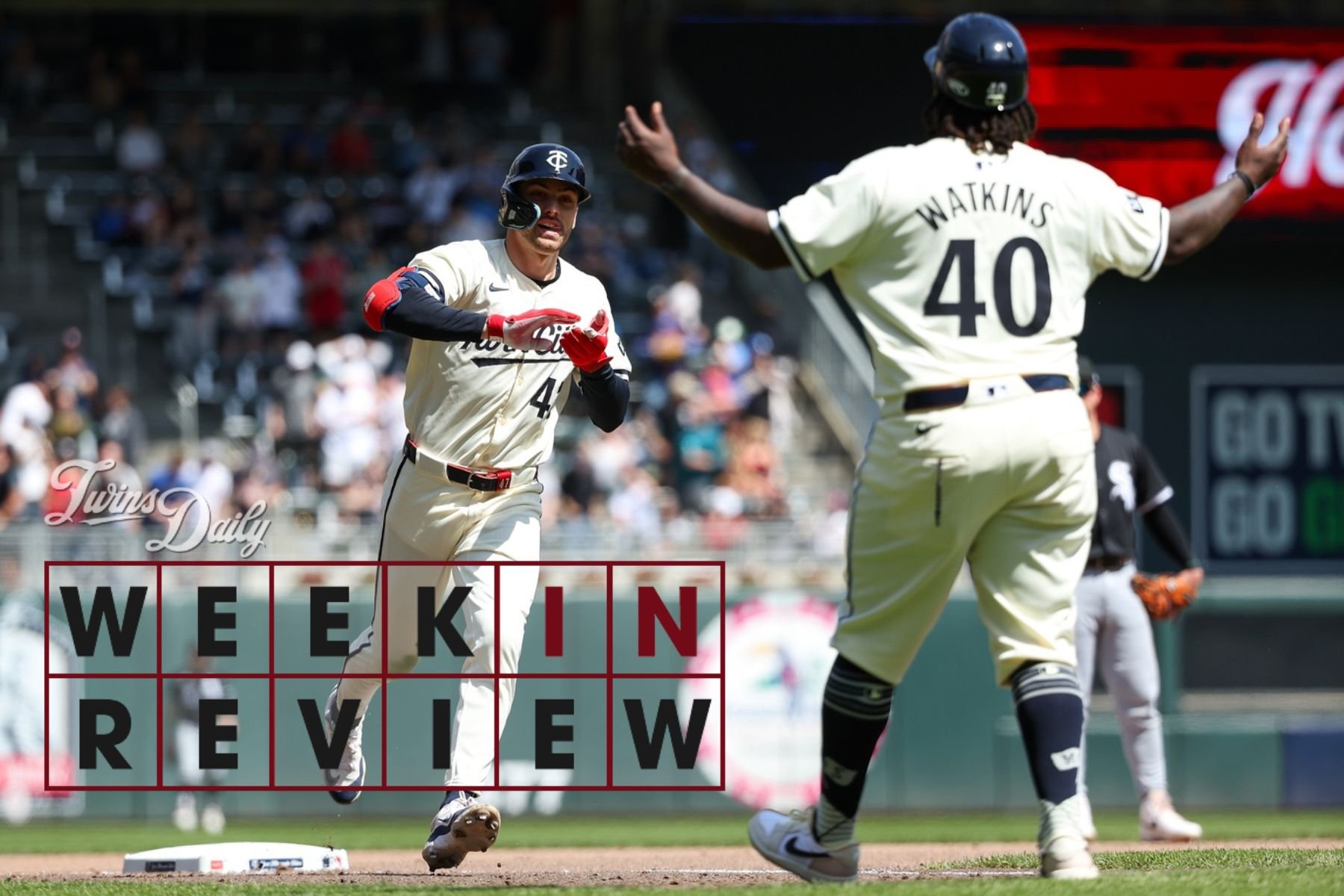 Weekly Snapshot: Mon, 4/22 through Sun, 4/28 *** Record Last Week: 7-0 (Overall: 14-13) Run Differential Last Week: +33 (Overall: +8) Standing: 4th Place in AL Central (4.5 GB) Last Week's Game Results: Game 21 | MIN 7, CWS 0: Paddack, Twins Get Right Against White Sox Game 22 | MIN 6, CWS 5: Buxton, Kirilloff Spark Comeback in Ninth Game 23 | MIN 6, CWS 3: Castro's Homer Keys Third Straight Win Game 24 | MIN 6, CWS 3: Late Power Explosion Tilts Scales in Sweep Game 25 | MIN 5, LAA 3: Ober's Excellence Spearheads Another Victory Game 26 | MIN 16, LAA 5: Bats Go Off in Blowout Win to Extend Streak Game 27 | MIN 11, LAA 5: Twins Stay Hot, Sweep Angels in Anaheim IF YOU'D RATHER LISTEN TO THE WEEK IN REVIEW THAN READ IT, YOU CAN NOW FIND IT IN PODCAST FORM. FIND THE LATEST EPISODE HERE. ALSO AVAILABLE ON APPLE AND SPOTIFY. NEWS & NOTES Homegrown talents Matt Wallner and Louie Varland played key roles in elevating the Twins as rookies last year. This year, both were been prime culprits in the team's early struggles, and now both have been sent down within weeks of the season starting. Shortly after Wallner was optioned to Triple-A amidst a severe season-opening slump, Varland joined him in St. Paul following a nightmare outing last Sunday against Detroit. While these demotions might seem rash in some respects, both players have seen their flaws exploited to the max in the first month of the season. However long it takes, getting them both right will be critical to overcoming the team's deficiencies in the lineup and back of the rotation. For now, they're hoping Simeon Woods Richardson can be a salve for the latter. He rotated onto the Twins pitching staff following an interim bullpen stint from Ronny Henriquez, who initially replaced Varland on the roster. Woods Richardson looked good once again in his return on Thursday against the White Sox (5 IP, 2 ER, 6 K, 1 BB). Offensively, the Twins got back a key piece in Max Kepler, who immediately made his presence felt, driving in three runs on Monday after being activated from the injured list. Jair Camargo returned to Triple-A in a corresponding move. Kepler went 8-for-17 in a successful week that lent credence to the idea that, as the Twins start getting back their injured stars, they'll be okay. On that note, Carlos Correa's return appears imminent after he took ground balls defensively and batting practice on the field in Anaheim. It would be no surprise to see both Correa and Jhoan Durán join the Twins in Chicago for their next series against the White Sox, or at the latest, their next home stand starting on Friday. Durán made his second rehab appearance in St. Paul on Saturday and looked great, reaching 102 MPH with his fastball as he revs toward a 2024 MLB debut. HIGHLIGHTS Last week in this column, we lamented the Twins' ongoing struggles but left on a relatively optimistic parting note: regression (or progression) was on the way. It had to be. The ebbs and flows of baseball performance – along with key players starting to return from injury, and a softening schedule – suggested that the pendulum was about to swing the other way for this team. That is precisely what happened in the past week. Out of their first 20 games, there were only three in which Minnesota scored five or more runs, and three in which they collected 10 or more hits. They did each of those things in all seven of their games last week, clubbing the White Sox and Angels into submission with 57 runs on 89 hits, including 13 homers. After batting .195 as a team through 20 games to start 7-13, the Twins posted a .347 average in these last seven while going 7-0. Yes, Kepler's return provided a critical boost, but the lineup saw plenty of resurgent performances to help them finally get on track. Some key standouts, all of whom were named as laggards in this column a week ago: Embattled Carlos Santana finally started to show some life offensively, homering in three straight games en route to an 8-for-28 week with nine RBIs. Now that's the hitter the Twins hoped they were getting. For a little while at least, the "cooked" narratives can rest. Instead, Santana is now cooking. Willi Castro notched five multi-hit games, after totaling zero in his 20. Castro is still showing no discipline at the plate (six strikeouts, zero walks in 26 plate appearances) but he's starting to connect with some pitches and deliver in big spots. His 13-for-31 (.371) week included a pivotal three-run homer on Wednesday. Even Christian Vázquez (8-for-16) and Kyle Farmer (reached based four times on Saturday, doubled on Sunday) showed positive signs to fuel the positive vibes. Santana, Castro, Vázquez, Farmer: These are the crucial depth pieces that the front office invested heavily in, figuring these veterans would provide a stable floor in the event of multiple stars being sidelined. It took some time, but now this group is starting to look up to the task, establishing some length in a lineup that is improving at the top thanks largely to Edouard Julien. The second baseman was utterly monstrous at the plate last week, tallying nine hits (including three home runs and three doubles) in 22 at-bats, and he continues to look mighty impressive defensively. Julien is playing at an All-Star level, showing no hints of succumbing to the sophomore regression that some feared. Also saying "no" to regression: Ryan Jeffers, who now finds himself as a clear focal point of the offense. Jeffers batted leadoff three times and third twice in the past week, living up this billing by going 11-for-25 with two homers and five RBIs. Understandably, Rocco Baldelli is inclined to get Jeffers in the lineup everyday, using him at DH when he's not catching. Hopefully the slugging catcher can hold up physically against the punishment he's taking both behind the plate and in the batter's box. Jeffers was hit by pitches three times last week, and his total of seven HBPs leads the league. While the offense's awakening was certainly the banner headline of the week, the pitching staff also deserves credit for making the most of this newfound run support. Chris Paddack struck out 12 and walked one over 12 innings between two starts, allowing just one homer. Bailey Ober became the first Twins starter to pitch into the eighth on Friday night against the Angels, whom he held to two runs on three hits. Joe Ryan piled up eight strikeouts and notched his first win of the season on Wednesday. Ryan's K-BB% ranks second in the majors behind Pittsburgh's rookie phenom Jared Jones. The bullpen was great as usual, with too many strong performers to name. Collectively, Twins relievers posted a 1.90 ERA. Griffin Jax picked up two saves while bulletproof Brock Stewart rattled off two more scoreless innings. In 39 total innings with the Twins, Stewart has a 0.46 ERA and 35% K-rate with only one home run allowed. What a find. Yeah, the White Sox and Angels are bad, and in Chicago's case, "bad" might not even do it justice. But fattening up on soft competition is what good teams do, and it's something that this Twins team desperately needed to do in the past week. Mission accomplished ... and then some. LOWLIGHTS It's tough to find too many low points in a week where the Twins didn't lose a single game, and were rarely at risk of doing so. That is not a complaint. I suppose Pablo López qualifies as a relative blemish on an otherwise fantastic week for the Twins. He was the only starter to have issues with the White Sox, lasting just four innings on Tuesday and raising some alarm with diminished velocity late in the outing. In his next turn, on Sunday, López appeared well on his way to erasing any concerns, taking a perfect game into the fifth before the wheels fell off and he gave up four runs in the blink of an eye, ending his day. The velocity was back to normal and López was extremely effective for most of the start, so Sunday's game can be viewed as relatively encouraging, even if it wasn't good. I would not have guessed after their respective first starts that, one month into the season, Ober would have a significantly better ERA (4.21) than López (4.83) One of the only hitters who didn't partake in the offensive production fest was newcomer Austin Martin. He had a good game on Sunday, drawing two walks and driving in two runs with a single, but Martin otherwise was 2-for-18 with six strikeouts. He has had a fairly impressive MLB debut, from my view, but his overall production has been below replacement level. He's put 50 balls in play and is still looking for his first barrel. Normally I wouldn't make much out of a minor slump like this from a rookie still learning the ropes, but with a personnel crunch afoot, it may not bode well for Martin. TRENDING STORYLINE Roster moves are coming, and they will present some tough decisions. It appears that Correa is lined up to be activated for the White Sox series on Monday. Martin and José Miranda are the main candidates to be optioned and make room for Correa on the roster. While I think Martin has been more valuable, I also think the Twins care more about getting him everyday reps, whereas using the more fully-formed Miranda in a part-time role is less of an issue. Castro, who will be freed up from shortstop by Correa's return, can more or less fill the same role as Martin off the bench. Then there is Durán, who may also get activated on Monday, or Friday at the latest barring a setback. Assuming no further injuries emerge in the bullpen, who forfeits their spot to make room? Kody Funderburk, now the team's third lefty following Caleb Thielbar's return, is likely in the crosshairs simply by virtue of having options, despite pitching well. Justin Topa, currently rehabbing in St. Paul, is not far behind Durán, and could force an even more difficult decision. A good problem to have, but still a quandary. Matt Bowman would be the obvious candidate, but in demoting him you'd risk losing him. Bowman has looked solid and the Twins front office hates to lose any quality depth if they can avoid it. You wonder if Cole Sands – who has looked fantastic – could be sent down to stretch out as a starter, bolstering Minnesota's skimpy rotation depth. Aaron Gleeman mentioned in The Athletic that he asked both Baldelli and Derek Falvey about this, "and they each indicated that Sands stretching back out as a starter could be a possibility if the rotation depth erodes much further." LOOKING AHEAD A week of multi-colored socks lies ahead. The Twins will head to Chicago for another go against the worst team in baseball, albeit one that just swept the down-bad Tampa Bay Rays over the weekend. From there, the Twins return home to face a more formidable (but still not great) Red Sox team. MONDAY, 4/29: TWINS @ WHITE SOX – RHP Joe Ryan v. LHP Garrett Crochet TUESDAY, 4/30: TWINS @ WHITE SOX – RHP Simeon Woods Richardson v. RHP Michael Soroka WEDNESDAY, 5/1: TWINS @ WHITE SOX – RHP Bailey Ober v. RHP Chris Flexen FRIDAY, 5/3: RED SOX @ TWINS – RHP Josh Winckowski v. RHP Chris Paddack SATURDAY, 5/4: RED SOX @ TWINS – RHP Tanner Houck v. RHP Pablo Lopez SUNDAY, 5/5: RED SOX @ TWINS – TBD V. RHP Joe Ryan
- 31 comments
-
- 10
-
-

-
- edouard julien
- carlos santana
- (and 2 more)
-
Under pressure to spend wisely while facing a 20% payroll reduction, the Twins' front office opted to invest its limited funds in building or maintaining veteran depth across the roster. Almost to a man, the players that Minnesota counted on to establish their floor this year have proven woefully unsuited for the task. As such, the bottom is falling out for the Twins in April. Image courtesy of Benny Sieu-USA TODAY Sports It was striking to everyone – including him – that the Twins decided to tender a contract to Kyle Farmer this year, making him a $6.3 million 33-year-old backup on a team that was about to slash payroll by $30 million. The logic seemed to make sense – Farmer was coming off a pretty good year, including a really good second half, and provided stable depth at two positions with crucial players carrying health question marks. Plus, there was the valued clubhouse presence. It's tough to imagine this decision playing out worse thus far. The exact type of scenario that theoretically merited Farmer's expensive retention – both Carlos Correa and Royce Lewis going down with significant early injuries – has materialized, and in an elevated role, Farmer has been one of the worst players on the team. None of the qualities that the front office prioritized in retaining him have been on display. Farmer apparently is a less preferred option at shortstop than Willi Castro, which is a very bad sign because Castro is a bad shortstop. Farmer has instead mainly been playing third, where he's been unexceptional at best; last weekend in Detroit he committed one of the most costly defensive misplays of the season. Offensively, Farmer has been brutal, posting an incomprehensible .079 batting average through 16 games. Included within that is an 0-for-12 mark against left-handed pitchers, against whom Farmer is supposed to specialize – another aspect of the specific value Minnesota's front office saw in him. To whatever extent Farmer's presence in the clubhouse is beneficial, there's been little evidence as the Twins have fallen into a demoralized state with a blatant leadership void in Correa's absence. On its own, the $6 million they Twins are spending on Farmer may not be all that consequential. But when you combine it with all of the other "luxury" expenses on this roster that are failing to pan out, it becomes quite apparent how easily the front office could have allocated its payroll in more impactful ways. Consider that: The Twins signed Carlos Santana for $5.25 million, despite already having a starting option at first base in Alex Kirilloff. The idea of adding another switch-hitting bat and reducing their reliance on the injury-prone Kirilloff made sense, but Santana looks totally out of gas at age 38. His negative-0.5 fWAR ranks as the fifth-worst in baseball. Manuel Margot was a late add via trade with the Dodgers, costing $4 million but bringing a needed righty-swinging outfield bat into the mix for Minnesota, as well as a viable backup in center for Byron Buxton. But much like with Farmer as an infielder, Margot loses much of his appeal as an outfielder if the Twins don't like him in center. That seems to be the case; he's not started a game there. Margot has also looked pretty underwhelming in the corners and he's slashing. .171/.277/.244 at the plate. Minnesota brought back Anthony DeSclafani as a part of Seattle's return in the Jorge Polanco trade, seemingly giving them a veteran layer of depth at $4 million to keep Louie Varland in Triple-A as rotation depth. DeSclafani, who missed the second half of 2023 with an elbow injury, experienced a recurrence in spring training and underwent season-ending surgery before throwing a pitch for the Twins. This thrust Varland into the season-opening rotation, where he's struggled immensely. The decision to bring him back via arbitration was not as controversial as Farmer, but Castro could also be considered a bit of a luxury off the bench at a $3.5 million price tag. Castro's batting .158 with one of the highest strikeout rates in the league. He's been hugely overexposed defensively at short. Finally, although it wasn't a move made in this past offseason, the Twins are still on the hook for $10 million to backup catcher Christian Vázquez this year and next. Pressed into more regular duty than expected by injuries elsewhere in the lineup, Vázquez is batting .139 with a .380 OPS and one walk in 40 plate appearances. Between those six players – Farmer, Santana, Margot, DeSclafani, Castro, Vázquez – the Twins are paying more than $33 million, or about a quarter of their $125 million payroll. Each of these veterans has been replacement-level or worse, collectively producing about negative-1.0 fWAR thus far. Being without your $36 million franchise centerpiece in Carlos Correa is one thing. But the front office placed a clear emphasis this past offseason on embedding veteran depth and leadership around him, spreading what little money they had toward this end rather than opting for a big splash or two. This strategy, while sensible, is failing them direly, and that's been the story of the season as much as the key injuries. The contingency planning has turned to catastrophe in practice. View full article
- 104 replies
-
- 1
-
-
- kyle farmer
- manuel margot
- (and 3 more)
-
The Front Office's Investments in Veteran Depth Are Not Paying Off
Nick Nelson posted an article in Twins
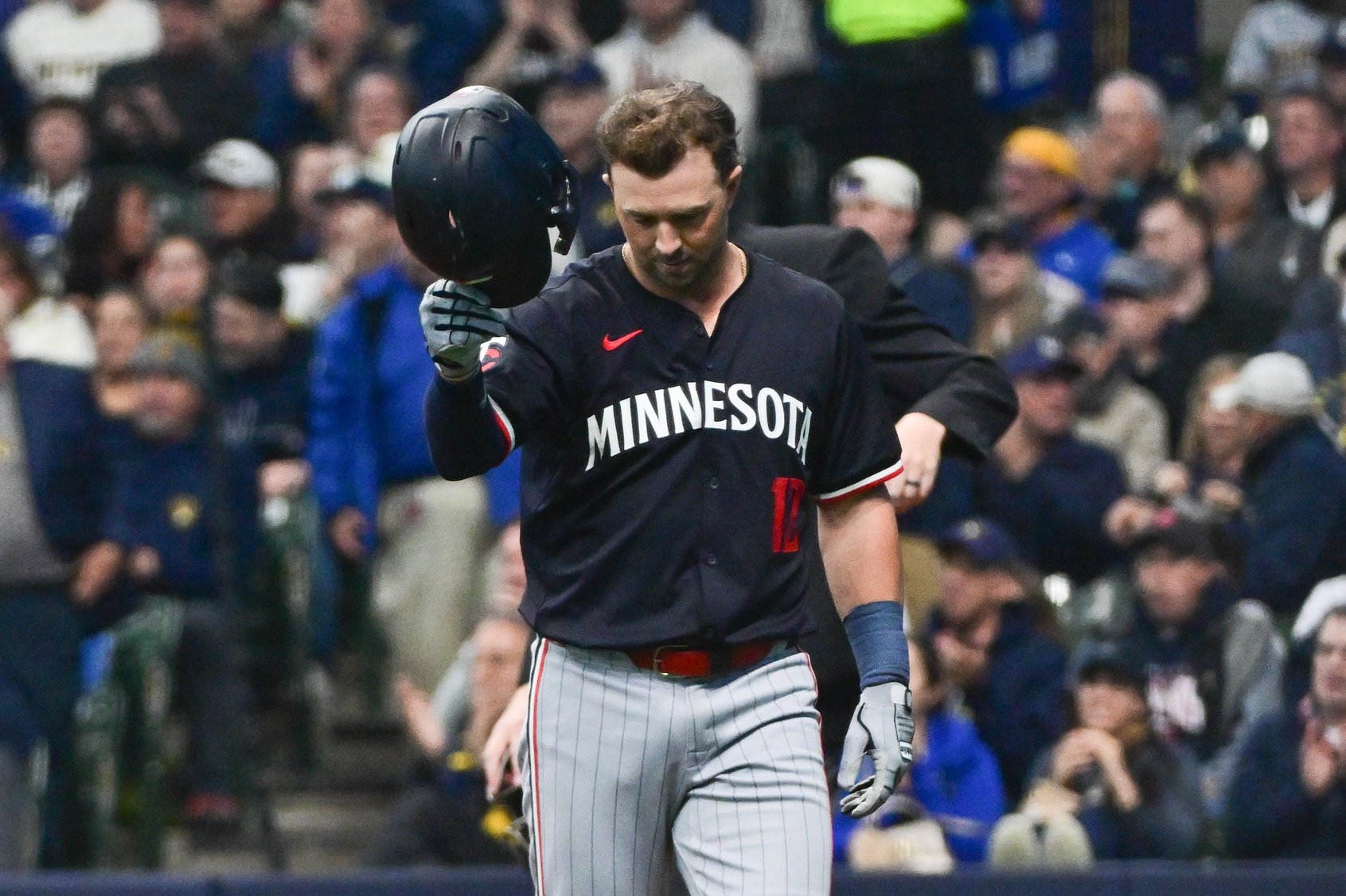 It was striking to everyone – including him – that the Twins decided to tender a contract to Kyle Farmer this year, making him a $6.3 million 33-year-old backup on a team that was about to slash payroll by $30 million. The logic seemed to make sense – Farmer was coming off a pretty good year, including a really good second half, and provided stable depth at two positions with crucial players carrying health question marks. Plus, there was the valued clubhouse presence. It's tough to imagine this decision playing out worse thus far. The exact type of scenario that theoretically merited Farmer's expensive retention – both Carlos Correa and Royce Lewis going down with significant early injuries – has materialized, and in an elevated role, Farmer has been one of the worst players on the team. None of the qualities that the front office prioritized in retaining him have been on display. Farmer apparently is a less preferred option at shortstop than Willi Castro, which is a very bad sign because Castro is a bad shortstop. Farmer has instead mainly been playing third, where he's been unexceptional at best; last weekend in Detroit he committed one of the most costly defensive misplays of the season. Offensively, Farmer has been brutal, posting an incomprehensible .079 batting average through 16 games. Included within that is an 0-for-12 mark against left-handed pitchers, against whom Farmer is supposed to specialize – another aspect of the specific value Minnesota's front office saw in him. To whatever extent Farmer's presence in the clubhouse is beneficial, there's been little evidence as the Twins have fallen into a demoralized state with a blatant leadership void in Correa's absence. On its own, the $6 million they Twins are spending on Farmer may not be all that consequential. But when you combine it with all of the other "luxury" expenses on this roster that are failing to pan out, it becomes quite apparent how easily the front office could have allocated its payroll in more impactful ways. Consider that: The Twins signed Carlos Santana for $5.25 million, despite already having a starting option at first base in Alex Kirilloff. The idea of adding another switch-hitting bat and reducing their reliance on the injury-prone Kirilloff made sense, but Santana looks totally out of gas at age 38. His negative-0.5 fWAR ranks as the fifth-worst in baseball. Manuel Margot was a late add via trade with the Dodgers, costing $4 million but bringing a needed righty-swinging outfield bat into the mix for Minnesota, as well as a viable backup in center for Byron Buxton. But much like with Farmer as an infielder, Margot loses much of his appeal as an outfielder if the Twins don't like him in center. That seems to be the case; he's not started a game there. Margot has also looked pretty underwhelming in the corners and he's slashing. .171/.277/.244 at the plate. Minnesota brought back Anthony DeSclafani as a part of Seattle's return in the Jorge Polanco trade, seemingly giving them a veteran layer of depth at $4 million to keep Louie Varland in Triple-A as rotation depth. DeSclafani, who missed the second half of 2023 with an elbow injury, experienced a recurrence in spring training and underwent season-ending surgery before throwing a pitch for the Twins. This thrust Varland into the season-opening rotation, where he's struggled immensely. The decision to bring him back via arbitration was not as controversial as Farmer, but Castro could also be considered a bit of a luxury off the bench at a $3.5 million price tag. Castro's batting .158 with one of the highest strikeout rates in the league. He's been hugely overexposed defensively at short. Finally, although it wasn't a move made in this past offseason, the Twins are still on the hook for $10 million to backup catcher Christian Vázquez this year and next. Pressed into more regular duty than expected by injuries elsewhere in the lineup, Vázquez is batting .139 with a .380 OPS and one walk in 40 plate appearances. Between those six players – Farmer, Santana, Margot, DeSclafani, Castro, Vázquez – the Twins are paying more than $33 million, or about a quarter of their $125 million payroll. Each of these veterans has been replacement-level or worse, collectively producing about negative-1.0 fWAR thus far. Being without your $36 million franchise centerpiece in Carlos Correa is one thing. But the front office placed a clear emphasis this past offseason on embedding veteran depth and leadership around him, spreading what little money they had toward this end rather than opting for a big splash or two. This strategy, while sensible, is failing them direly, and that's been the story of the season as much as the key injuries. The contingency planning has turned to catastrophe in practice.
- 104 comments
-
- 11
-
-
- kyle farmer
- manuel margot
- (and 3 more)
-
It's getting late early for the Minnesota Twins, who have dropped six of seven and fallen eight games out of first place as they struggle to escape a repetitive cycle of poor hitting, shoddy defense and ill-timed miscues. Image courtesy of Mitch Stringer-USA TODAY Sports Weekly Snapshot: Mon, 4/15 through Sun, 4/21 *** Record Last Week: 1-5 (Overall: 7-13) Run Differential Last Week: -18 (Overall: -25) Standing: 4th Place in AL Central (8.0 GB) Last Week's Game Results: Game 15 | BAL 7, MIN 4: Varland Gets Blown Up in Third Straight Start Game 16 | BAL 11, MIN 3: Paddack Implodes as O's Blow Out Twins Game 17 | BAL 4, MIN 2: Misery Crescendos in Sweep-Clinching Loss Game 18 | DET 5, MIN 4: Cold and Sloppy Play Match the Weather Game 19 | MIN 4, DET 3: Twins Narrowly Avoid a Sixth Straight Loss Game 20 | DET 6, MIN 1: Varland Rocked, Offense Remains Dormant NEW this week: The Twins Daily Week in Review is now available in podcast form if you prefer to listen on the go as opposed to reading the column. SUBSCRIBE AND LISTEN HERE. Also available on Apple and Spotify. NEWS & NOTES Following his breakthrough rookie season, the Twins stuck with Matt Wallner despite a thoroughly unimpressive spring, but evidently his leash wasn't all that long. Following a 2-for-25 start – with one of those hits being a homer against a positon player – Wallner was optioned to Triple-A on Tuesday, replaced by fellow lefty-swinging outfielder Trevor Larnach fresh off rehabbing a turf toe injury. The Michael Tonkin reunion was short-lived. Freshly claimed off waivers from the Mets, Tonkin made one appearance for the Twins in Detroit last weekend before being placed back on waivers, where he was claimed on Wednesday by ... the Mets. The life of a fringe major-league reliever – which is not to say Tonkin's journey has been anywhere near typical. On the flip side, the Twins also added a fringe major-league infielder in the form of Tony Kemp, signed to a minor-league contract after being released into free agency by the Orioles a week earlier. The veteran infielder has logged more than 700 games in the majors. He's been playing second base for the Saints and could become an option for the Twins in the near future, especially because... Another 40-man roster spot is about to open up. The team shared over the weekend that Daniel Duarte is set for season-ending elbow surgery, which is a big downer after his impressive early showing out of the bullpen. On the bright side, Jhoan Durán is nearing an earlier-than-expected return, as he prepares to embark on a rehab assignment in St. Paul this week. Meanwhile, Max Kepler, who was rehabbing with the Saints over the past few days, appears on track to get activated on Monday. The Twins are starting to get back some of their injured stars. On a final roster note, reliever Josh Staumont was activated from the injured last and option to Triple-A. He's got some work to do to convince the Twins he can be an effective MLB pitcher again. HIGHLIGHTS The rotation-leading trio of Pablo López, Joe Ryan and Bailey Ober has looked good. That's an encouraging fact as the Twins stare down a steep uphill climb to escape their early hole. When it comes to rattling off wins, consistent starting pitching is a vital part of the puzzle. This trio continues to look good each time out, with the exception of Ober's weird first start in Kansas City. López was brilliant in Wednesday's start against a high-powered Orioles lineup that otherwise decimated Twins pitching, holding Baltimore to one run on two hits in six innings, with seven strikeouts and zero walks. Ryan and Ober followed with strong showings against the Tigers on Friday and Saturday; Ryan's effectiveness may not have been reflected in the box score (5.1 IP, 4 ER) but don't be deceived. Entering play on Sunday, Ryan's 2.26 FIP ranked as the sixth-best in baseball. Last year Sonny Gray led the majors with a 2.83 FIP. LOWLIGHTS As good as the top half of the Twins rotation has looked, the back end has looked almost equally bad, negating much of the value Minnesota is getting from its top three starters. Louie Varland and Chris Paddack do not appear up to the task in the fourth and fifth spots. Paddack was pummeled by the Orioles on Tuesday, coughing up nine runs (all earned) on 12 hits in 5 ⅓ innings. He looked good in his late bullpen stint last year, but Paddack has inspired minimal confidence as a starter this year with a 9-to-5 K/BB ratio and 1.039 OPS allowed through 14 innings. Hopefully he's just trying to regain his sharpness after a long time away from pitching in a rotation. The immense struggles of Varland are just as concerning, and maybe even more so. He got shelled for six runs (four earned) in five frames in Baltimore, yielding two more homers, and then was an erratic mess at home against the Tigers on Sunday, inflating his ERA to 9.18. The lopsided rotation performance almost feels like a moot point in light of a Twins offense that routinely gives the team very little chance to win, lacking explosiveness or timely contributions from top to bottom. Despite a philosophy that is seemingly geared entirely toward hunting mistake pitches and hitting for power, the Twins have been vastly below average when ahead in the count and rank 28th out of 30 MLB teams in slugging percentage, ahead of only the lowly Marlins and White Sox. I legitimately cannot think of an entire example all season of an inning where the Twins put together an actual rally fueled by multiple legitimate run-scoring hits. Their only modest outbursts of scoring seem to come on sacrifice flies, or when opposing teams misplay fly balls or grounders. Aside from Ryan Jeffers (who himself has fallen into an 0-for-10 slump), no one's been especially productive at the plate. There are a few laggards who are really dragging the offense into the dregs with their complete inability to get going: Christian Vázquez went 2-for-13 with no walks and two GIDP. Kyle Farmer went 1-for-13, also with no walks; his batting average sits at .079 through 38 at-bats, and he's hitless in 15 plate appearances against lefties. Manuel Margot was 1-for-10 and continues to look rather unimpressive defensively in the outfield. Arguably no one looks visibly worse than Carlos Santana, whose offensive aptitude has plainly evaporated at age 38. He went 2-for-12 and his OPS on the season sits .374. There are no redeeming qualities to be found in his performance, aside from looking solid on defense at first. His signature patience has become meaningless as pitchers attack the zone with impunity. There were multiple instances last week in which Santana got meatballs right out over the plate, swung his mightiest, and watched fly balls die in the medium-deep outfield. Beyond the relentless lackluster performance across the board, this team is just difficult and maddening to watch on a basic level. There have been a lot of preventable lapses that seem really unacceptable for a team trying to scrap its way back into relevance. In the second inning of Sunday's game, Edouard Julien failed to keep a tag applied on Javier Báez when he overslid second base, potentially costing the Twins an out. On Friday night, Byron Buxton finally got into a pitch, then stood and stared as it sailed toward left field, basically until it landed at the warning track. He cost himself at least one base by inexplicably failing to run out of the box, which is less annoying than the message it sends as a veteran leader on a floundering, power-obsessed team. It was one of the team's only big hits of the weekend (they were otherwise 1-for-23 with RISP) and even at that, felt jarring and unsatisfying. When you're down bad, and missing several key players, you need to do everything right on the margins and try to gain any advantage you can get. The Twins can't seem to do much of anything right. TRENDING STORYLINE Is regression (or, progression) to the mean coming? Even if you believe this is a pretty bad offense, and the players mentioned above are in fact not very good ... the eternal ebbs and flows of baseball would suggest better days are ahead that will draw some of these guys closer to a level that could be considered merely "bad." I mean, for cripe's sakes. Farmer is batting .079, and Castro .158. Vázquez has a .120 BABIP. Paddack and Varland have two of the worst ERAs in the majors. The Twins, as a team, are batting .194, grouped at the bottom of the league with a bunch of teams that aren't even trying. And it's even worse than that in scoring opportunities. Aside from baseball arithmetic seeming to favor a turnaround of sorts, the Twins are also poised to start getting some of their key players back. And the softer upcoming portion of the schedule is conducive to going on a run. The Twins are counting on those things coming together because if that doesn't happen, they're going to be in extremely bad shape by month's end. LOOKING AHEAD The Twins have lost six of seven and are 2-6 at home. You can't ask for a much better opportunity to reverse these pitiful trends than a four-game serries against the pitiful Chicago White Sox at Target Field. Chicago has been the worst team in ball, playing at a sub-replacement level and padding the records of all opponents with their 3-18 start. If the Twins can't take advantage and win at least three of four in this series, it's going to be pretty tough not to write them off. MONDAY, 4/22: WHITE SOX @ TWINS – RHP Jonathan Cannon v. RHP Chris Paddack TUESDAY, 4/23: WHITE SOX @ TWINS – RHP Erick Fedde v. RHP Pablo Lopez WEDNESDAY, 4/24: WHITE SOX @ TWINS – LHP Garrett Crochet v. RHP Joe Ryan THURSDAY, 4/25: WHITE SOX @ TWINS – RHP Michael Soroka v. RHP Bailey Ober FRIDAY, 4/26: TWINS @ ANGELS – RHP Louie Varland v. LHP Patrick Sandoval SATURDAY, 4/27: TWINS @ ANGELS – RHP Chris Paddack v. RHP Jose Soriano SUNDAY, 4/28: TWINS @ ANGELS – RHP Pablo Lopez v. LHP Reid Detmers View full article
-
 Weekly Snapshot: Mon, 4/15 through Sun, 4/21 *** Record Last Week: 1-5 (Overall: 7-13) Run Differential Last Week: -18 (Overall: -25) Standing: 4th Place in AL Central (8.0 GB) Last Week's Game Results: Game 15 | BAL 7, MIN 4: Varland Gets Blown Up in Third Straight Start Game 16 | BAL 11, MIN 3: Paddack Implodes as O's Blow Out Twins Game 17 | BAL 4, MIN 2: Misery Crescendos in Sweep-Clinching Loss Game 18 | DET 5, MIN 4: Cold and Sloppy Play Match the Weather Game 19 | MIN 4, DET 3: Twins Narrowly Avoid a Sixth Straight Loss Game 20 | DET 6, MIN 1: Varland Rocked, Offense Remains Dormant NEW this week: The Twins Daily Week in Review is now available in podcast form if you prefer to listen on the go as opposed to reading the column. SUBSCRIBE AND LISTEN HERE. Also available on Apple and Spotify. NEWS & NOTES Following his breakthrough rookie season, the Twins stuck with Matt Wallner despite a thoroughly unimpressive spring, but evidently his leash wasn't all that long. Following a 2-for-25 start – with one of those hits being a homer against a positon player – Wallner was optioned to Triple-A on Tuesday, replaced by fellow lefty-swinging outfielder Trevor Larnach fresh off rehabbing a turf toe injury. The Michael Tonkin reunion was short-lived. Freshly claimed off waivers from the Mets, Tonkin made one appearance for the Twins in Detroit last weekend before being placed back on waivers, where he was claimed on Wednesday by ... the Mets. The life of a fringe major-league reliever – which is not to say Tonkin's journey has been anywhere near typical. On the flip side, the Twins also added a fringe major-league infielder in the form of Tony Kemp, signed to a minor-league contract after being released into free agency by the Orioles a week earlier. The veteran infielder has logged more than 700 games in the majors. He's been playing second base for the Saints and could become an option for the Twins in the near future, especially because... Another 40-man roster spot is about to open up. The team shared over the weekend that Daniel Duarte is set for season-ending elbow surgery, which is a big downer after his impressive early showing out of the bullpen. On the bright side, Jhoan Durán is nearing an earlier-than-expected return, as he prepares to embark on a rehab assignment in St. Paul this week. Meanwhile, Max Kepler, who was rehabbing with the Saints over the past few days, appears on track to get activated on Monday. The Twins are starting to get back some of their injured stars. On a final roster note, reliever Josh Staumont was activated from the injured last and option to Triple-A. He's got some work to do to convince the Twins he can be an effective MLB pitcher again. HIGHLIGHTS The rotation-leading trio of Pablo López, Joe Ryan and Bailey Ober has looked good. That's an encouraging fact as the Twins stare down a steep uphill climb to escape their early hole. When it comes to rattling off wins, consistent starting pitching is a vital part of the puzzle. This trio continues to look good each time out, with the exception of Ober's weird first start in Kansas City. López was brilliant in Wednesday's start against a high-powered Orioles lineup that otherwise decimated Twins pitching, holding Baltimore to one run on two hits in six innings, with seven strikeouts and zero walks. Ryan and Ober followed with strong showings against the Tigers on Friday and Saturday; Ryan's effectiveness may not have been reflected in the box score (5.1 IP, 4 ER) but don't be deceived. Entering play on Sunday, Ryan's 2.26 FIP ranked as the sixth-best in baseball. Last year Sonny Gray led the majors with a 2.83 FIP. LOWLIGHTS As good as the top half of the Twins rotation has looked, the back end has looked almost equally bad, negating much of the value Minnesota is getting from its top three starters. Louie Varland and Chris Paddack do not appear up to the task in the fourth and fifth spots. Paddack was pummeled by the Orioles on Tuesday, coughing up nine runs (all earned) on 12 hits in 5 ⅓ innings. He looked good in his late bullpen stint last year, but Paddack has inspired minimal confidence as a starter this year with a 9-to-5 K/BB ratio and 1.039 OPS allowed through 14 innings. Hopefully he's just trying to regain his sharpness after a long time away from pitching in a rotation. The immense struggles of Varland are just as concerning, and maybe even more so. He got shelled for six runs (four earned) in five frames in Baltimore, yielding two more homers, and then was an erratic mess at home against the Tigers on Sunday, inflating his ERA to 9.18. The lopsided rotation performance almost feels like a moot point in light of a Twins offense that routinely gives the team very little chance to win, lacking explosiveness or timely contributions from top to bottom. Despite a philosophy that is seemingly geared entirely toward hunting mistake pitches and hitting for power, the Twins have been vastly below average when ahead in the count and rank 28th out of 30 MLB teams in slugging percentage, ahead of only the lowly Marlins and White Sox. I legitimately cannot think of an entire example all season of an inning where the Twins put together an actual rally fueled by multiple legitimate run-scoring hits. Their only modest outbursts of scoring seem to come on sacrifice flies, or when opposing teams misplay fly balls or grounders. Aside from Ryan Jeffers (who himself has fallen into an 0-for-10 slump), no one's been especially productive at the plate. There are a few laggards who are really dragging the offense into the dregs with their complete inability to get going: Christian Vázquez went 2-for-13 with no walks and two GIDP. Kyle Farmer went 1-for-13, also with no walks; his batting average sits at .079 through 38 at-bats, and he's hitless in 15 plate appearances against lefties. Manuel Margot was 1-for-10 and continues to look rather unimpressive defensively in the outfield. Arguably no one looks visibly worse than Carlos Santana, whose offensive aptitude has plainly evaporated at age 38. He went 2-for-12 and his OPS on the season sits .374. There are no redeeming qualities to be found in his performance, aside from looking solid on defense at first. His signature patience has become meaningless as pitchers attack the zone with impunity. There were multiple instances last week in which Santana got meatballs right out over the plate, swung his mightiest, and watched fly balls die in the medium-deep outfield. Beyond the relentless lackluster performance across the board, this team is just difficult and maddening to watch on a basic level. There have been a lot of preventable lapses that seem really unacceptable for a team trying to scrap its way back into relevance. In the second inning of Sunday's game, Edouard Julien failed to keep a tag applied on Javier Báez when he overslid second base, potentially costing the Twins an out. On Friday night, Byron Buxton finally got into a pitch, then stood and stared as it sailed toward left field, basically until it landed at the warning track. He cost himself at least one base by inexplicably failing to run out of the box, which is less annoying than the message it sends as a veteran leader on a floundering, power-obsessed team. It was one of the team's only big hits of the weekend (they were otherwise 1-for-23 with RISP) and even at that, felt jarring and unsatisfying. When you're down bad, and missing several key players, you need to do everything right on the margins and try to gain any advantage you can get. The Twins can't seem to do much of anything right. TRENDING STORYLINE Is regression (or, progression) to the mean coming? Even if you believe this is a pretty bad offense, and the players mentioned above are in fact not very good ... the eternal ebbs and flows of baseball would suggest better days are ahead that will draw some of these guys closer to a level that could be considered merely "bad." I mean, for cripe's sakes. Farmer is batting .079, and Castro .158. Vázquez has a .120 BABIP. Paddack and Varland have two of the worst ERAs in the majors. The Twins, as a team, are batting .194, grouped at the bottom of the league with a bunch of teams that aren't even trying. And it's even worse than that in scoring opportunities. Aside from baseball arithmetic seeming to favor a turnaround of sorts, the Twins are also poised to start getting some of their key players back. And the softer upcoming portion of the schedule is conducive to going on a run. The Twins are counting on those things coming together because if that doesn't happen, they're going to be in extremely bad shape by month's end. LOOKING AHEAD The Twins have lost six of seven and are 2-6 at home. You can't ask for a much better opportunity to reverse these pitiful trends than a four-game serries against the pitiful Chicago White Sox at Target Field. Chicago has been the worst team in ball, playing at a sub-replacement level and padding the records of all opponents with their 3-18 start. If the Twins can't take advantage and win at least three of four in this series, it's going to be pretty tough not to write them off. MONDAY, 4/22: WHITE SOX @ TWINS – RHP Jonathan Cannon v. RHP Chris Paddack TUESDAY, 4/23: WHITE SOX @ TWINS – RHP Erick Fedde v. RHP Pablo Lopez WEDNESDAY, 4/24: WHITE SOX @ TWINS – LHP Garrett Crochet v. RHP Joe Ryan THURSDAY, 4/25: WHITE SOX @ TWINS – RHP Michael Soroka v. RHP Bailey Ober FRIDAY, 4/26: TWINS @ ANGELS – RHP Louie Varland v. LHP Patrick Sandoval SATURDAY, 4/27: TWINS @ ANGELS – RHP Chris Paddack v. RHP Jose Soriano SUNDAY, 4/28: TWINS @ ANGELS – RHP Pablo Lopez v. LHP Reid Detmers
- 35 comments
-
- 8
-
-
-
- louis varland
- pablo lopez
- (and 2 more)
-
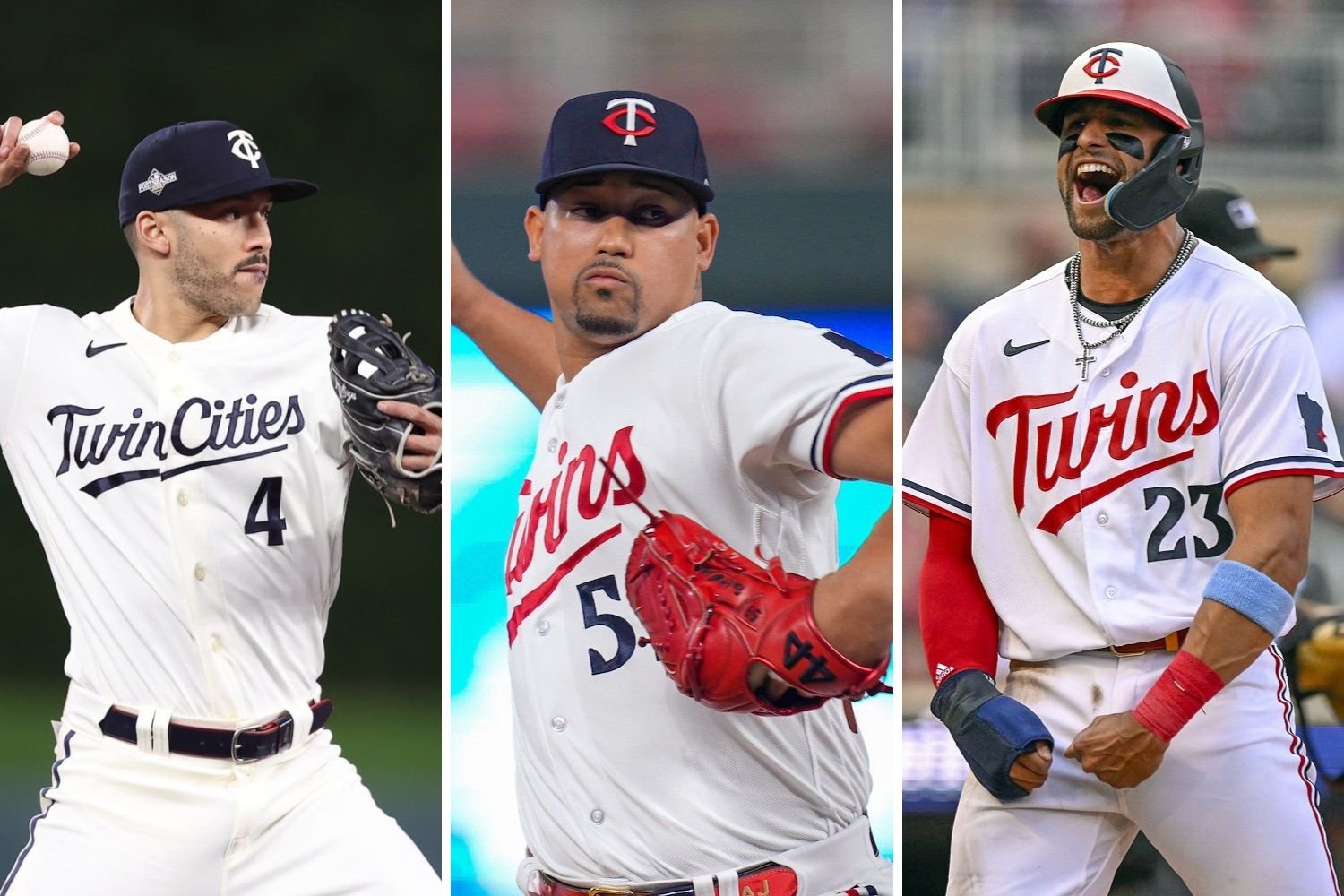 The Twins have been without several key players in the early going, and it's clearly taken a toll on their performance. While their season spirals and the team tries to stay above water, fans are eagerly awaiting the return of injured stars, with hopes that reinforcements and help rejuvenate this wayward club. Anthony DeSclafani is down for the season due to elbow surgery, and unfortunately we learned on Saturday that reliever Daniel Duarte will be joining him in that boat. But elsewhere, important roster fixtures are making progress and tracking toward getting back on the field. Based on the recent updates and the latest known timelines, here's a rundown of expected returns for players who are currently sidelined. Max Kepler: Within days Kepler fouled a ball off his knee on Opening Day, tried to play through it for a bit (fruitlessly) before being placed on the injured list on April 9th. Although his IL assignment ran a bit past the minimum 10-day window, it does appear Kepler is very close to returning. He started a rehab stint with the Saints on Thursday, starting at DH, and then played right field there on Friday. Aaron Gleeman wrote in The Athletic that Kepler could return from his knee contusion "as soon as Sunday or Monday." Said Rocco Baldelli, "“I think it’s close. I need him to tell us he’s ready before we can make any calls, though." Kepler's season was off to a horrible start, with one hit in 20 at-bats, so he'll be looking to hit the ground running and turn things around quickly. Jhoan Durán: 1-2 weeks When the Twins announced at the end of spring training that their closer had been diagnosed with "moderate oblique strain," it was grim news. Oblique injuries can take a long time to properly heal, especially for a pitcher with such explosive torque as Durán, so this had the makings of a multi-month injury. As it turns out, Durán seemingly healed very quickly. He reported being pain-free over a week ago, and took a big step in his progression on Friday when he threw live on-field batting practice at a chilly Target Field. It sounds like the right-hander came out of that session feeling good, so a rehab assignment is now in the cards. That could get underway in the coming week, which would put Durán in line to potentially be activated as soon as next weekend. He'll significantly power up a bullpen that's been pretty good in his absence. Justin Topa: Early May Bothered by a knee issue that cropped up in late spring, Topa is slightly behind Durán but not far. Topa is reportedly scheduled to throw live batting practice at Target Field on Tuesday, with a rehab to follow if all goes well. He might make it back before the end of April. Topa doesn't fit the billing of "injured star" like others on this list, but pitching staff will welcome any quality depth it can get. Carlos Correa: Early May Correa and the Twins dodged a bullet when a scary-looking side injury suffered on April 12th was deemed to be a relatively minor intercostal strain. That's certainly less bad than an oblique scenario, as outlined above, but it didn't mean the shortstop was looking at the 10-day IL minimum, either. These kinds of soft-tissue injuries needed to be treated carefully regardless. There have been no concrete updates on Correa, suggesting that he's still letting the inflamed muscles calm down before getting back to action. I've heard nothing to hint at a setback or prolonged timetable, but Correa is still probably a couple weeks out at least. Out of everyone on this list, it's pretty clear that Correa's absence is being felt most, other than maybe the next guy. Royce Lewis: June On Opening Day, Lewis suffered a significant quad strain while running the bases, extinguishing an energetic spark that this team hasn't been able to recapture since. Lewis received a platelet-rich plasma injection to promote healing, but from the jump, it was understood that he was looking at a lengthy recovery that could span close to half the season. Lewis is nowhere near returning as we speak, but his timetable seems to be trending on the positive side. Head trainer Nick Paparesta shared with reporters on Saturday that Lewis has "started some baseball activity" and could start running within the next week. It's important to note that Lewis is still in the early stages of ramping up, and the Twins are going to exercise every precaution as they ease him back. An aggravation of the quad would be potentially devastating, and must be avoided at all costs. The Twins will still be without their ascendant young third baseman for the foreseeable future, meaning the mission is to stay afloat and remain relevant until he returns. So far it's not going great, but hopefully the more imminent returns of Kepler, Durán and Correa can help right the ship.
- 27 comments
-
- 8
-
-
-
- carlos correa
- jhoan duran
- (and 3 more)
-
Here's what you need to know about estimated timelines for Carlos Correa, Royce Lewis, Jhoan Durán and more. Image courtesy of Jesse Johnson, Brad Rempel, Nick Wosika-USA TODAY Sports The Twins have been without several key players in the early going, and it's clearly taken a toll on their performance. While their season spirals and the team tries to stay above water, fans are eagerly awaiting the return of injured stars, with hopes that reinforcements and help rejuvenate this wayward club. Anthony DeSclafani is down for the season due to elbow surgery, and unfortunately we learned on Saturday that reliever Daniel Duarte will be joining him in that boat. But elsewhere, important roster fixtures are making progress and tracking toward getting back on the field. Based on the recent updates and the latest known timelines, here's a rundown of expected returns for players who are currently sidelined. Max Kepler: Within days Kepler fouled a ball off his knee on Opening Day, tried to play through it for a bit (fruitlessly) before being placed on the injured list on April 9th. Although his IL assignment ran a bit past the minimum 10-day window, it does appear Kepler is very close to returning. He started a rehab stint with the Saints on Thursday, starting at DH, and then played right field there on Friday. Aaron Gleeman wrote in The Athletic that Kepler could return from his knee contusion "as soon as Sunday or Monday." Said Rocco Baldelli, "“I think it’s close. I need him to tell us he’s ready before we can make any calls, though." Kepler's season was off to a horrible start, with one hit in 20 at-bats, so he'll be looking to hit the ground running and turn things around quickly. Jhoan Durán: 1-2 weeks When the Twins announced at the end of spring training that their closer had been diagnosed with "moderate oblique strain," it was grim news. Oblique injuries can take a long time to properly heal, especially for a pitcher with such explosive torque as Durán, so this had the makings of a multi-month injury. As it turns out, Durán seemingly healed very quickly. He reported being pain-free over a week ago, and took a big step in his progression on Friday when he threw live on-field batting practice at a chilly Target Field. It sounds like the right-hander came out of that session feeling good, so a rehab assignment is now in the cards. That could get underway in the coming week, which would put Durán in line to potentially be activated as soon as next weekend. He'll significantly power up a bullpen that's been pretty good in his absence. Justin Topa: Early May Bothered by a knee issue that cropped up in late spring, Topa is slightly behind Durán but not far. Topa is reportedly scheduled to throw live batting practice at Target Field on Tuesday, with a rehab to follow if all goes well. He might make it back before the end of April. Topa doesn't fit the billing of "injured star" like others on this list, but pitching staff will welcome any quality depth it can get. Carlos Correa: Early May Correa and the Twins dodged a bullet when a scary-looking side injury suffered on April 12th was deemed to be a relatively minor intercostal strain. That's certainly less bad than an oblique scenario, as outlined above, but it didn't mean the shortstop was looking at the 10-day IL minimum, either. These kinds of soft-tissue injuries needed to be treated carefully regardless. There have been no concrete updates on Correa, suggesting that he's still letting the inflamed muscles calm down before getting back to action. I've heard nothing to hint at a setback or prolonged timetable, but Correa is still probably a couple weeks out at least. Out of everyone on this list, it's pretty clear that Correa's absence is being felt most, other than maybe the next guy. Royce Lewis: June On Opening Day, Lewis suffered a significant quad strain while running the bases, extinguishing an energetic spark that this team hasn't been able to recapture since. Lewis received a platelet-rich plasma injection to promote healing, but from the jump, it was understood that he was looking at a lengthy recovery that could span close to half the season. Lewis is nowhere near returning as we speak, but his timetable seems to be trending on the positive side. Head trainer Nick Paparesta shared with reporters on Saturday that Lewis has "started some baseball activity" and could start running within the next week. It's important to note that Lewis is still in the early stages of ramping up, and the Twins are going to exercise every precaution as they ease him back. An aggravation of the quad would be potentially devastating, and must be avoided at all costs. The Twins will still be without their ascendant young third baseman for the foreseeable future, meaning the mission is to stay afloat and remain relevant until he returns. So far it's not going great, but hopefully the more imminent returns of Kepler, Durán and Correa can help right the ship. View full article

