



Nick Nelson
-
Posts
8,319 -
Joined
-
Last visited
-
Days Won
56
Content Type
Profiles
News
Minnesota Twins Videos
2026 Minnesota Twins Top Prospects Ranking
2022 Minnesota Twins Draft Picks
Minnesota Twins Free Agent & Trade Rumors, Notes, & Tidbits
Guides & Resources
2023 Minnesota Twins Draft Picks
The Minnesota Twins Players Project
2024 Minnesota Twins Draft Picks
2025 Minnesota Twins Draft Pick Tracker
2026 Minnesota Twins Draft Tracker: Picks & Bonuses
Forums
Blogs
Events
Store
Downloads
Gallery
Everything posted by Nick Nelson
-
 Following Wednesday's win over the Angels, the Twins surprisingly announced that Byron Buxton will be activated from the injured list ahead of Friday's game against Cincinnati. Minnesota is getting back one of its most valuable players for this critical last stretch of the season, though it remains to be seen what kind of shape he'll be in. Image courtesy of Jordan Johnson-Imagn Images It's been exactly one month since Byron Buxton last played in a game for the Minnesota Twins. On August 12th, he exited following his third at-bat against the Royals at Target Field due to hip discomfort. When the pain didn't improve after a few days, Buxton was placed on the injured list, and there he has remained for the past four weeks, while the Twins have fallen into a season-threatening slump. Initial optimism resulting from a "clean" MRI on Buxton's hip gradually faded as the discomfort persisted for days and weeks, with doctors suggesting scar tissue from a previous injury may be the cause. At the beginning of September, Buxton embarked on a rehab assignment in St. Paul, making it through his first game before needing to bow out midway through the second when hip discomfort reemerged. The Twins announced they were pausing his rehab assignment, and with that, the 30-year-old's season appeared very much in doubt. Then, in the past few days, Buxton started taking swings on the field alongside other sidelined Minnesota hitters at Target Field against minor-league pitchers called in from Cedar Rapids. Evidently the Twins liked what they saw from Manuel Margot enough activate him on Wednesday, and Buxton follows as next in line. After Wednesday night's 6-4 victory over the Angels, the Twins proactively announced that they'll be activating Buxton from the injured list on Friday, and sending Austin Martin to the minors. (Notably, not DaShawn Keirsey Jr.) Presumably, Buxton will be in the lineup and in center field on Friday night against the Reds. It's anyone's guess what to expect. Buxton hasn't played in a month, and he looked visibly uncomfortable during his handful of at-bats in Triple-A. Has he experienced some sort of breakthrough in the week since, or is he just throwing caution to the wind and pushing through pain to try and help, with the team struggling to hold onto playoff position? I admire Buxton's grit and determination, as always, but I wonder what we can realistically expect. Buxton is one of the Twins' most talented, valuable, difference-making players. Probably number two in each of those categories behind Carlos Correa, actually. Despite having played only 90 of 146 games, Buxton ranks second among all Twins players in fWAR (3.3), behind Correa (3.6), who's played only 75 games. If he can stay healthy enough to push across the finish line, even in a diminished state, Buxton has a chance to alter the team's fortunes in a profound way. And by the way, Correa gave an optimistic update on his own health in recent days that suggests his return may not be far off. Are the tides finally turning at an opportune time? What are your expectations for Buxton in his return to the lineup? Will you be confident or wincing as he steps in the box on Friday night? Let's hear from you in the comments! View full article
 -
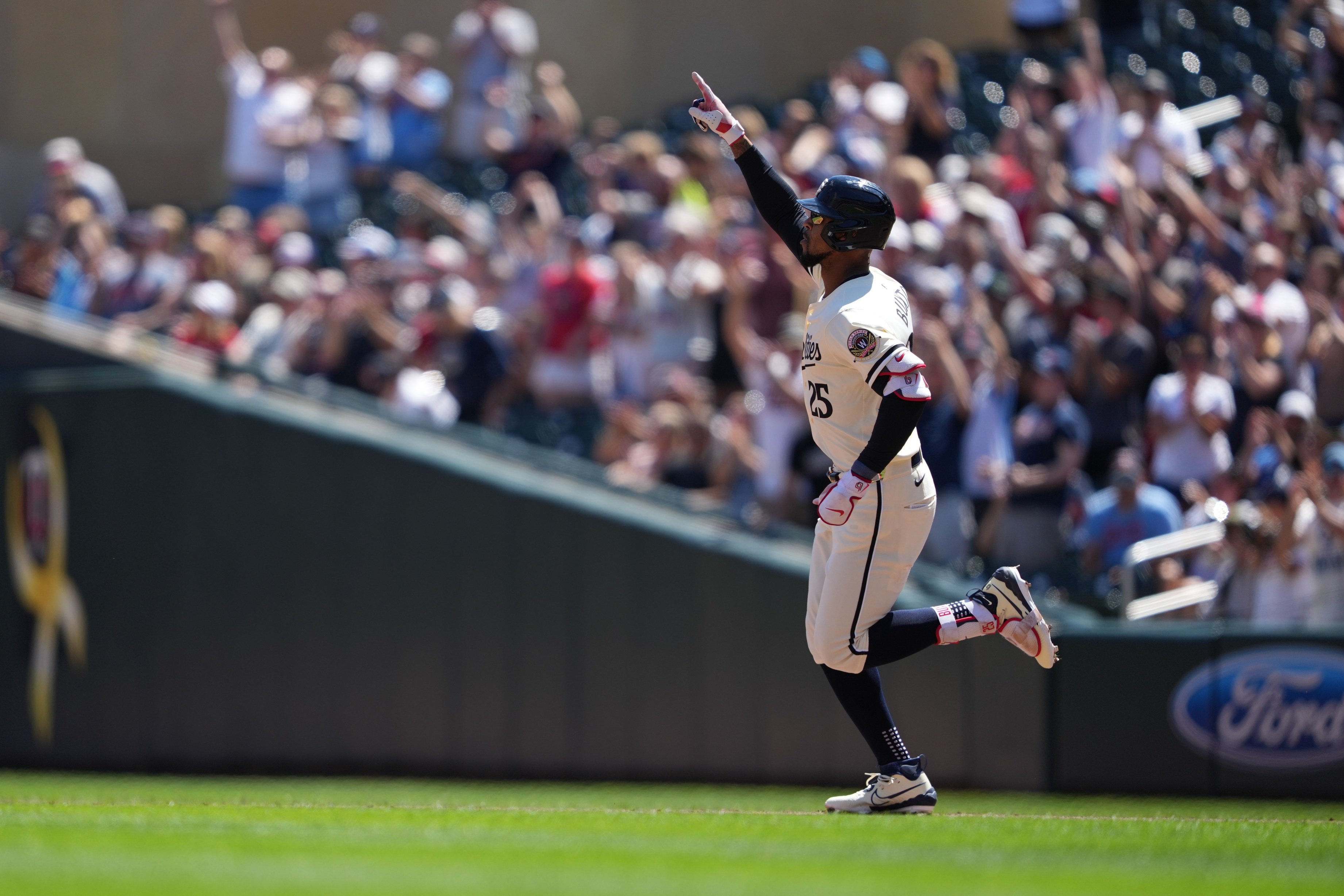 It's been exactly one month since Byron Buxton last played in a game for the Minnesota Twins. On August 12th, he exited following his third at-bat against the Royals at Target Field due to hip discomfort. When the pain didn't improve after a few days, Buxton was placed on the injured list, and there he has remained for the past four weeks, while the Twins have fallen into a season-threatening slump. Initial optimism resulting from a "clean" MRI on Buxton's hip gradually faded as the discomfort persisted for days and weeks, with doctors suggesting scar tissue from a previous injury may be the cause. At the beginning of September, Buxton embarked on a rehab assignment in St. Paul, making it through his first game before needing to bow out midway through the second when hip discomfort reemerged. The Twins announced they were pausing his rehab assignment, and with that, the 30-year-old's season appeared very much in doubt. Then, in the past few days, Buxton started taking swings on the field alongside other sidelined Minnesota hitters at Target Field against minor-league pitchers called in from Cedar Rapids. Evidently the Twins liked what they saw from Manuel Margot enough activate him on Wednesday, and Buxton follows as next in line. After Wednesday night's 6-4 victory over the Angels, the Twins proactively announced that they'll be activating Buxton from the injured list on Friday, and sending Austin Martin to the minors. (Notably, not DaShawn Keirsey Jr.) Presumably, Buxton will be in the lineup and in center field on Friday night against the Reds. It's anyone's guess what to expect. Buxton hasn't played in a month, and he looked visibly uncomfortable during his handful of at-bats in Triple-A. Has he experienced some sort of breakthrough in the week since, or is he just throwing caution to the wind and pushing through pain to try and help, with the team struggling to hold onto playoff position? I admire Buxton's grit and determination, as always, but I wonder what we can realistically expect. Buxton is one of the Twins' most talented, valuable, difference-making players. Probably number two in each of those categories behind Carlos Correa, actually. Despite having played only 90 of 146 games, Buxton ranks second among all Twins players in fWAR (3.3), behind Correa (3.6), who's played only 75 games. If he can stay healthy enough to push across the finish line, even in a diminished state, Buxton has a chance to alter the team's fortunes in a profound way. And by the way, Correa gave an optimistic update on his own health in recent days that suggests his return may not be far off. Are the tides finally turning at an opportune time? What are your expectations for Buxton in his return to the lineup? Will you be confident or wincing as he steps in the box on Friday night? Let's hear from you in the comments!
 -
His ability to drive the ball, once so natural and unflinching, has gone totally amiss as the integral infielder admits that he's grinding in the late stage of the season. Image courtesy of Kim Klement Neitzel-Imagn Images After missing the first two months with a quad injury suffered on Opening Day, Royce Lewis picked up where he left off in 2023: a relentless offensive force, hitting for average and power with a ferocious yet controlled approach. He homered in his first at-bat back on June 4th, and continued to deliver tape-measure blasts with amazing frequency over the several weeks that followed, up until suffering another injury in early July. The groin strain knocked him out for three weeks, but Lewis came back and once again found his stride quickly, launching six more home runs with 16 RBIs in 16 games after being activated. The last of those homers came on August 12th, and that date is noteworthy because it marked the start of a prolonged slump from which Lewis has yet to emerge. As of August 12th, nearly one month ago, Lewis had 15 home runs and a 1.021 OPS through 40 games this season. That's a near-impossible level of production to maintain, in fairness. But since then, he has experienced less a regression and more a ravine slide, slashing .198/.226/.261 in 24 games. During this span he has hit just one home run – and while it was a big one, giving the Twins a late lead in the series finale against Toronto, it barely left the yard, traveling at just 91 MPH. Not his best swing, by Lewis's own admission: “I hit it off the end of the bat. I’ve never seen it. … So I’ll take that all day. Our team, I think we’ll all take that. It was just good timing for it to go out like that.” Aside from the wall-scraper, Lewis has produced just four doubles and 12 singles in 86 plate appearances over these past 22 games. The no-doubt bombs have gone completely amiss. Meanwhile he's struck out 25 times with just four walks, betraying the solid discipline we'd seen through his first 40 games (34 K, 18 BB in 160 PA). Throughout the first 100 games of his MLB career, Lewis drove the ball with astonishing authority and consistency. A glance at his rolling xwOBA, via Statcast, illustrates the rapid deterioration in contact quality we've seen from the once-fearsome slugger, into below-average depths. What we've witnessed in his past couple dozen games has been such a far cry that it's impossible not to be believe something is amiss. Lewis himself has not run away from this. As MLB.com beat writer Do-Hyoung Park recently shared on Twitter: "When I asked Royce Lewis about his production dip in August, he indicated it's been a physical grind in one of the longest stretches of his recent career playing every day. He's still trying to find that 'second wind' physically and a good routine to keep himself fresh, he said." You might meet to this revelation with a bit of puzzlement; he hasn't even played half a season's worth of games. But Park adds important context in a follow-up tweet, noting that Lewis has "pretty much never had an uninterrupted stretch more than, say, a month and a half of playing close to every day since 2019 due to the pandemic and all the injuries." In a story for The Athletic over the weekend, Dan Hayes observed that, "Recently, the grind of a long, exhausting season seemingly caught up to Lewis. Whether discussing his disdain for playing second base or how tired he’s felt in his longest season since 2019, Lewis twice in the past month demonstrated something less than the plucky attitude he’s always featured." The change in Lewis's upbeat demeanor speaks volumes about what he's going through, much like last week's outbursts of frustration from Louie Varland and Byron Buxton conveyed the same. And while Lewis did express optimism in Hayes's article about being able to fight through this and find that "second wind," the reality is that his performance is only steepening in its descent. He looked as bad as we've seen him all year in Kansas City over the weekend, flailing away hopelessly en route to an 0-for-11 output with five strikeouts. The Twins have had so much go against him in this second half, but the one biggest source of hope has been the prospect of Lewis getting hot and carrying the team as we've seen before, including last year's playoffs. Right now that doesn't even feel like a vague possibility. Is there any action the Twins can take to change that outlook? Giving Lewis a couple weeks off to rest up seems like the only tangible course of action. It would mean sacrificing one of their best remaining players during a stretch they need to win games and hold onto their playoff position, but right now Lewis isn't helping them in the least. What would you do, if anything? Take action in some way to straighten out Lewis and his physical state ahead of the playoffs, or let it ride and hope he can recapture a spark before it's too late? View full article
-
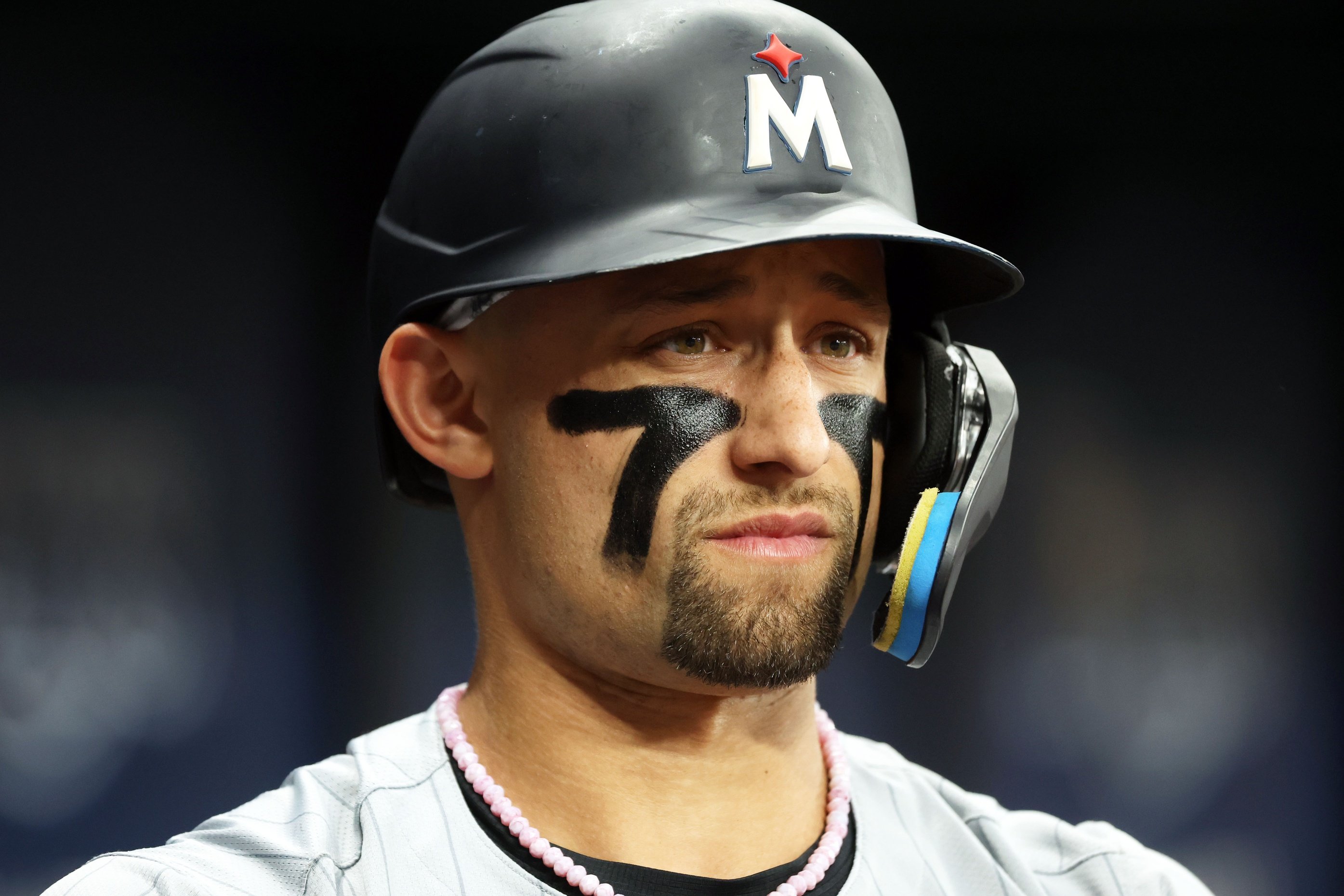 After missing the first two months with a quad injury suffered on Opening Day, Royce Lewis picked up where he left off in 2023: a relentless offensive force, hitting for average and power with a ferocious yet controlled approach. He homered in his first at-bat back on June 4th, and continued to deliver tape-measure blasts with amazing frequency over the several weeks that followed, up until suffering another injury in early July. The groin strain knocked him out for three weeks, but Lewis came back and once again found his stride quickly, launching six more home runs with 16 RBIs in 16 games after being activated. The last of those homers came on August 12th, and that date is noteworthy because it marked the start of a prolonged slump from which Lewis has yet to emerge. As of August 12th, nearly one month ago, Lewis had 15 home runs and a 1.021 OPS through 40 games this season. That's a near-impossible level of production to maintain, in fairness. But since then, he has experienced less a regression and more a ravine slide, slashing .198/.226/.261 in 24 games. During this span he has hit just one home run – and while it was a big one, giving the Twins a late lead in the series finale against Toronto, it barely left the yard, traveling at just 91 MPH. Not his best swing, by Lewis's own admission: “I hit it off the end of the bat. I’ve never seen it. … So I’ll take that all day. Our team, I think we’ll all take that. It was just good timing for it to go out like that.” Aside from the wall-scraper, Lewis has produced just four doubles and 12 singles in 86 plate appearances over these past 22 games. The no-doubt bombs have gone completely amiss. Meanwhile he's struck out 25 times with just four walks, betraying the solid discipline we'd seen through his first 40 games (34 K, 18 BB in 160 PA). Throughout the first 100 games of his MLB career, Lewis drove the ball with astonishing authority and consistency. A glance at his rolling xwOBA, via Statcast, illustrates the rapid deterioration in contact quality we've seen from the once-fearsome slugger, into below-average depths. What we've witnessed in his past couple dozen games has been such a far cry that it's impossible not to be believe something is amiss. Lewis himself has not run away from this. As MLB.com beat writer Do-Hyoung Park recently shared on Twitter: "When I asked Royce Lewis about his production dip in August, he indicated it's been a physical grind in one of the longest stretches of his recent career playing every day. He's still trying to find that 'second wind' physically and a good routine to keep himself fresh, he said." You might meet to this revelation with a bit of puzzlement; he hasn't even played half a season's worth of games. But Park adds important context in a follow-up tweet, noting that Lewis has "pretty much never had an uninterrupted stretch more than, say, a month and a half of playing close to every day since 2019 due to the pandemic and all the injuries." In a story for The Athletic over the weekend, Dan Hayes observed that, "Recently, the grind of a long, exhausting season seemingly caught up to Lewis. Whether discussing his disdain for playing second base or how tired he’s felt in his longest season since 2019, Lewis twice in the past month demonstrated something less than the plucky attitude he’s always featured." The change in Lewis's upbeat demeanor speaks volumes about what he's going through, much like last week's outbursts of frustration from Louie Varland and Byron Buxton conveyed the same. And while Lewis did express optimism in Hayes's article about being able to fight through this and find that "second wind," the reality is that his performance is only steepening in its descent. He looked as bad as we've seen him all year in Kansas City over the weekend, flailing away hopelessly en route to an 0-for-11 output with five strikeouts. The Twins have had so much go against him in this second half, but the one biggest source of hope has been the prospect of Lewis getting hot and carrying the team as we've seen before, including last year's playoffs. Right now that doesn't even feel like a vague possibility. Is there any action the Twins can take to change that outlook? Giving Lewis a couple weeks off to rest up seems like the only tangible course of action. It would mean sacrificing one of their best remaining players during a stretch they need to win games and hold onto their playoff position, but right now Lewis isn't helping them in the least. What would you do, if anything? Take action in some way to straighten out Lewis and his physical state ahead of the playoffs, or let it ride and hope he can recapture a spark before it's too late?
 -
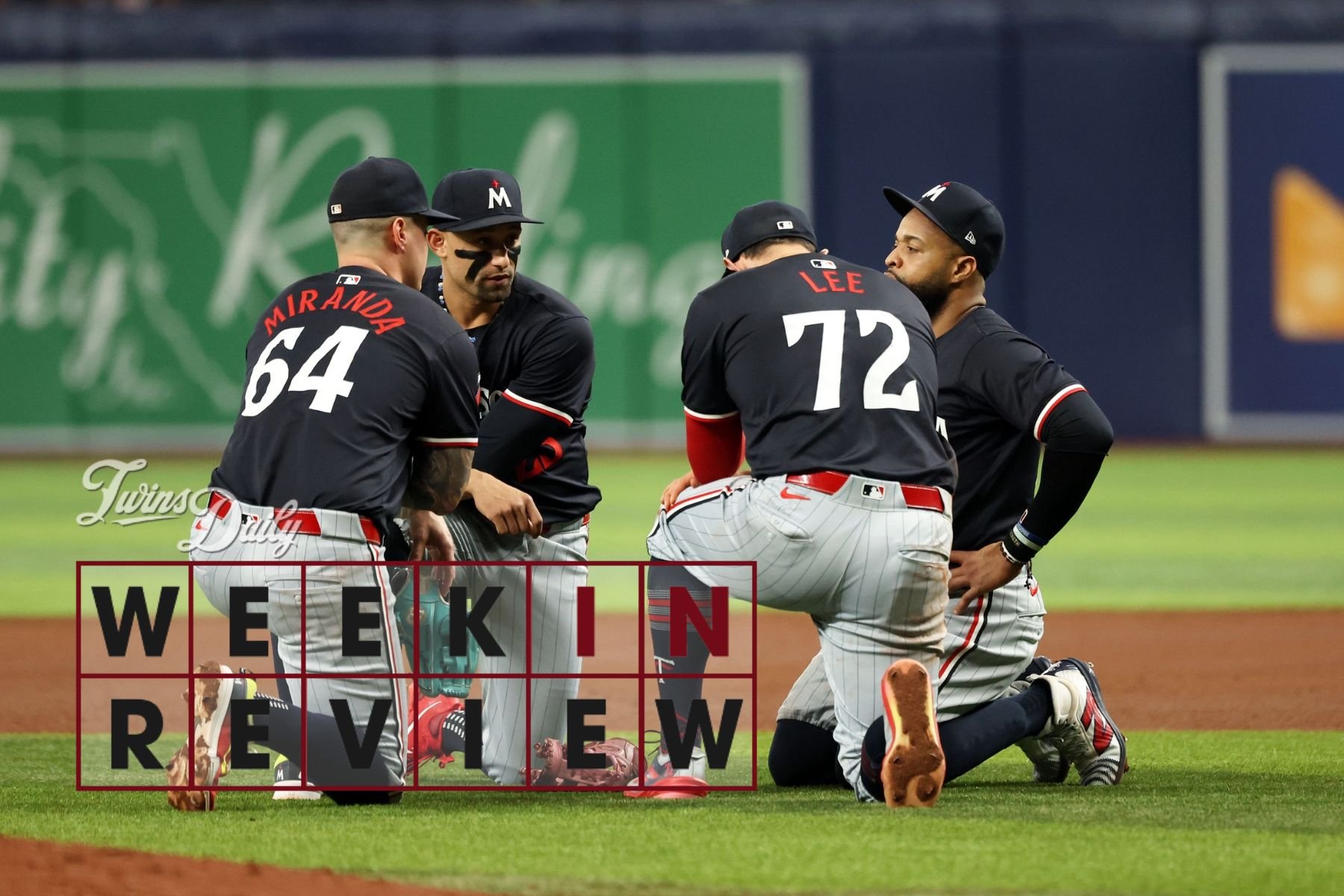 Weekly Snapshot: Mon, 9/2 through Sun, 9/8 *** Record Last Week: 2-5 (Overall: 76-67) Run Differential Last Week: -13 (Overall: +38) Standing: 3rd Place in AL Central (5.5 GB) Game 137 | MN 5, TB 4: Key Hits and Clutch Relief Lift Twins Game 138 | TB 2, MIN 1: Bats Unable to Awaken Against Springs Game 139 | TB 9, MIN 4: Varland Implodes, Defense Flops Game 140 | MIN 4, TB 3: Lopez Leads the Way to Salvage Split Game 141 | KC 5, MIN 0: Twins Go Quietly in Opener at Kauffman Game 142 | KC 4, MIN 2: Bullpen Blows Up, Ober's Gem Wasted Game 143 | KC 2, MIN 0: Embarrassing Sweep Ends with Shutout IF YOU'D RATHER LISTEN TO THE WEEK IN REVIEW THAN READ IT, YOU CAN NOW FIND IT IN PODCAST FORM. GET THE LATEST EPISODE HERE. ALSO AVAILABLE ON APPLE AND SPOTIFY. NEWS & NOTES It's all hands on deck for the injury-ravaged Minnesota Twins, who now find themselves just 3 ½ games in front of Seattle for the final playoff position. Last week Max Kepler joined Byron Buxton and Carlos Correa on the injured list, with DaShawn Keirsey Jr. called up to try and help fill the growing veteran void in the lineup. Michael Helman had been promoted from Triple-A days earlier, bringing into the fold two players with zero major-league experience in the heat of a postseason race. Correa remains sidelined indefinitely, and Buxton's return is now very much in question after he experienced a setback while rehabbing from his hip injury in St. Paul on Wednesday. Kepler's timeline is unclear, but he's been dealing with this knee issue for the entire season. If the Twins aren't confident he can give them more than he has over the past couple of months, then there's no real point in bringing him back. It would be a sad end for the franchise's longest-tenured player. Louie Varland was recalled to serve as bulk pitcher in Wednesday's game against Tampa Bay, with Diego Castillo optioned to the minors. Varland got through two perfect innings against the Rays before falling apart in his third, where he allowed eight runs while recording one out. With that, the inevitable became official: On Friday, the Twins announced Varland will be formally transitioning to a bullpen role. HIGHLIGHTS If the Twins are able to hang on and reach the playoffs, they've got the makings of a formidable short-series rotation. Pablo López and Bailey Ober delivered strong outings in their latest turns and both went deep, which the team is counting on them to do in support of a depleted bullpen. López struck out nine over 6 ⅔ innings in a win over Tampa on Thursday, and Ober hurled seven shutout frames against Kansas City on Saturday to slay his Royals demons. Since the halfway point of June, Ober and López rank eighth and 12th respectively among qualified MLB pitchers in ERA. That's what you want in your 1-2 starters. Meanwhile, David Festa is quickly solidifying his standing as third in line for any potential postseason scenario, missing bats at a fantastic rate while continuing to showcase surprisingly sharp command. Facing Tampa on Tuesday, the rookie fanned seven with only one walk over five frames of two-run ball, leaving his ERA at 3.13 in 37 ⅓ innings since his latest call-up after the All-Star break. Unfortunately, this trio of starting pitchers essentially represented the extent of positives in what was – all things considered – probably the worst week of the season for the Twins. LOWLIGHTS The Twins lineup isn't producing enough to win games. Plain and simple. There are many other contributing culprits you can point toward in this ongoing backslide to submediocrity – ill-timed meltdowns from pitchers, questionable managerial decisions, consistently poor defensive play – but the lack of run-scoring overshadows it all. They are without their two best hitters and the Twins are just going to need to get used to it. In all likelihood, Correa and Buxton aren't coming back, at least not until the very end of the season. Kepler is also probably down for the year. In the absence of these lineup cornerstones, the Twins need the rest of their key bats to step up. That's been a recurring call to action that is perpetually not being answered. Slumping Royce Lewis is at the forefront of the team's struggles. Without his spark the Twins seem completely bereft of energy or life. He went 4-for-25 (.160) with seven strikeouts and has homered just once – barely – in his past 24 games after going deep 15 times in his first 40. Lewis looks less like a hitter who's going through a standard slump and more like a guy who is physically depleted and grinding. He has more or less admitted as much. That makes it difficult to trust there's significant improvement on the way unless he can somehow find a second wind. You wonder how much physical wear-and-tear has also taken a toll on Willi Castro, who's known to have battled back troubles this year, and has seen his production plummet in the second half. He went 1-for-18 with seven strikeouts last week, and since the All-Star break is batting just .206 with 11 extra-base hits in 45 games. In the same category as these two (unproductive, possibly unhealthy) you've got Brooks Lee, who came back after missing time with a shoulder injury but looks much the same as he did before going down: punchless at the plate. Lee went 3-for-21 with no walks, and he had some rough rookie moments in the field at shortstop. I mean, that's just a lot to withstand. No Correa, no Buxton, no Kepler. Lewis, Castro and Lee all offering next to nothing at the plate. Even with the occasional flashes from guys like Matt Wallner, Trevor Larnach and even Edouard Julien, the lineup isn't going to function with so many of its core fixtures either literally or figuratively absent. As more at-bats start getting directed to the likes of Helman and Keirsey, the Twins will be at risk of a fully fledged 2022-style collapse unless their remaining hitting talent can step up. Overall, this team is in a miserable state. The defense has been utterly atrocious, in terms of both execution and decision-making. This is costing a pitching staff that's already stretched and lurching. Tommy Watkins has been repeatedly making inexcusably bad calls as third-base coach, windmilling slow runners to the plate and costing an offense that's already stretched. On top of that, the Twins have just been horribly unlucky, with low-quality contact leading to runs for the opposition in key spots over and over again. You add this litany of compounding factors on top of the challenging circumstances this team already faces, and you've got the recipe for an all-out free fall. We're seeing it. By virtue of their stellar mid-summer run, and the widespread mediocrity in the middle of the American League pack, the Twins are still highly likely to reach the playoffs. But this is not a group that currently inspires any confidence as a legitimate contender. They're shrinking as the weight of the moment continues to grow. TRENDING STORYLINE Where do we go from here? Will there be a shakeup of some kind in the wake of this pitiful series in Kansas City? Uncontained frustration was the theme of the week for the Twins, and understandably so. Buxton got ejected from a minor-league game for barking at an ump on Wednesday. Around the same time, Varland exploded with screaming rage on the mound as his starting career likely reached an end. When met by reporters following Sunday's lifeless loss, Rocco Baldelli declined to take questions or offer comment other than: "That was an unprofessional series of baseball we played and that’s all I’ve got for you.” He reportedly held a team meeting afterward. There are three weeks and 19 games remaining on the schedule. The math is still in favor of the Twins, who miraculously maintain an 87% chance of making the postseason according to FanGraphs. But those playoff odds don't mean squat if they can't win some ballgames and hold their ground. If this team keeps playing the way they have, they are very much at risk of getting passed. You wonder if some sort of significant last-ditch gambit to disrupt the stuffy status quo might be in play. I'm not sure what that would look like, although an Emmanuel Rodriguez promotion has been thrown out there as one far-flung possibility. (He's in Triple-A and on the 40-man roster.) Everything should be on the table. You can't take for granted when you get a real shot at October, and while the Twins are far from the shape they hoped they be in at this stage of the game, they still very much have that shot. The front office and coaching staff should be aiming to do anything and everything in their power to avoid the catastrophic scenario where they miss out. LOOKING AHEAD This is a get-right week if I've ever seen one. The Twins return to Target Field for a six-game home stand against sub-.500 teams, starting with three against an Angels club with the fourth-worst record in baseball. The off day on Thursday will be very welcomed – Minnesota's first break in two weeks. It is imperative that the team get on track and fatten up a bit in these two series, because afterward looms the most critical gauntlet in the remaining schedule: a seven-game road trip through Cleveland and Boston. MONDAY, SEPT 9: ANGELS @ TWINS – LHP Reid Detmers v. RHP David Festa TUESDAY, SEPT 10: ANGELS @ TWINS – RHP Griffin Canning v. RHP Pablo Lopez WEDNESDAY, SEPT 11: ANGELS @ TWINS – RHP Jack Kochanowicz v. RHP Zebby Matthews FRIDAY, SEPT 13: REDS @ TWINS – TBD v. RHP Bailey Ober SATURDAY, SEPT 14: REDS @ TWINS – RHP Nick Martinez v. RHP Simeon Woods Richardson SUNDAY, SEPT 15: REDS @ TWINS – RHP Rhett Lowder v. RHP David Festa
- 34 comments
-
- 7
-

-

-
- royce lewis
- louis varland
- (and 2 more)
-
The continually undermanned Twins have entered a free fall, unraveling at the seams as they try to hold onto the final wild-card spot and limp into the postseason. The frustration was palpable in an ugly 2-5 week that leaves Minnesota closer to missing the playoffs than winning the division. Image courtesy of Kim Klement Neitzel-Imagn Images Weekly Snapshot: Mon, 9/2 through Sun, 9/8 *** Record Last Week: 2-5 (Overall: 76-67) Run Differential Last Week: -13 (Overall: +38) Standing: 3rd Place in AL Central (5.5 GB) Game 137 | MN 5, TB 4: Key Hits and Clutch Relief Lift Twins Game 138 | TB 2, MIN 1: Bats Unable to Awaken Against Springs Game 139 | TB 9, MIN 4: Varland Implodes, Defense Flops Game 140 | MIN 4, TB 3: Lopez Leads the Way to Salvage Split Game 141 | KC 5, MIN 0: Twins Go Quietly in Opener at Kauffman Game 142 | KC 4, MIN 2: Bullpen Blows Up, Ober's Gem Wasted Game 143 | KC 2, MIN 0: Embarrassing Sweep Ends with Shutout IF YOU'D RATHER LISTEN TO THE WEEK IN REVIEW THAN READ IT, YOU CAN NOW FIND IT IN PODCAST FORM. GET THE LATEST EPISODE HERE. ALSO AVAILABLE ON APPLE AND SPOTIFY. NEWS & NOTES It's all hands on deck for the injury-ravaged Minnesota Twins, who now find themselves just 3 ½ games in front of Seattle for the final playoff position. Last week Max Kepler joined Byron Buxton and Carlos Correa on the injured list, with DaShawn Keirsey Jr. called up to try and help fill the growing veteran void in the lineup. Michael Helman had been promoted from Triple-A days earlier, bringing into the fold two players with zero major-league experience in the heat of a postseason race. Correa remains sidelined indefinitely, and Buxton's return is now very much in question after he experienced a setback while rehabbing from his hip injury in St. Paul on Wednesday. Kepler's timeline is unclear, but he's been dealing with this knee issue for the entire season. If the Twins aren't confident he can give them more than he has over the past couple of months, then there's no real point in bringing him back. It would be a sad end for the franchise's longest-tenured player. Louie Varland was recalled to serve as bulk pitcher in Wednesday's game against Tampa Bay, with Diego Castillo optioned to the minors. Varland got through two perfect innings against the Rays before falling apart in his third, where he allowed eight runs while recording one out. With that, the inevitable became official: On Friday, the Twins announced Varland will be formally transitioning to a bullpen role. HIGHLIGHTS If the Twins are able to hang on and reach the playoffs, they've got the makings of a formidable short-series rotation. Pablo López and Bailey Ober delivered strong outings in their latest turns and both went deep, which the team is counting on them to do in support of a depleted bullpen. López struck out nine over 6 ⅔ innings in a win over Tampa on Thursday, and Ober hurled seven shutout frames against Kansas City on Saturday to slay his Royals demons. Since the halfway point of June, Ober and López rank eighth and 12th respectively among qualified MLB pitchers in ERA. That's what you want in your 1-2 starters. Meanwhile, David Festa is quickly solidifying his standing as third in line for any potential postseason scenario, missing bats at a fantastic rate while continuing to showcase surprisingly sharp command. Facing Tampa on Tuesday, the rookie fanned seven with only one walk over five frames of two-run ball, leaving his ERA at 3.13 in 37 ⅓ innings since his latest call-up after the All-Star break. Unfortunately, this trio of starting pitchers essentially represented the extent of positives in what was – all things considered – probably the worst week of the season for the Twins. LOWLIGHTS The Twins lineup isn't producing enough to win games. Plain and simple. There are many other contributing culprits you can point toward in this ongoing backslide to submediocrity – ill-timed meltdowns from pitchers, questionable managerial decisions, consistently poor defensive play – but the lack of run-scoring overshadows it all. They are without their two best hitters and the Twins are just going to need to get used to it. In all likelihood, Correa and Buxton aren't coming back, at least not until the very end of the season. Kepler is also probably down for the year. In the absence of these lineup cornerstones, the Twins need the rest of their key bats to step up. That's been a recurring call to action that is perpetually not being answered. Slumping Royce Lewis is at the forefront of the team's struggles. Without his spark the Twins seem completely bereft of energy or life. He went 4-for-25 (.160) with seven strikeouts and has homered just once – barely – in his past 24 games after going deep 15 times in his first 40. Lewis looks less like a hitter who's going through a standard slump and more like a guy who is physically depleted and grinding. He has more or less admitted as much. That makes it difficult to trust there's significant improvement on the way unless he can somehow find a second wind. You wonder how much physical wear-and-tear has also taken a toll on Willi Castro, who's known to have battled back troubles this year, and has seen his production plummet in the second half. He went 1-for-18 with seven strikeouts last week, and since the All-Star break is batting just .206 with 11 extra-base hits in 45 games. In the same category as these two (unproductive, possibly unhealthy) you've got Brooks Lee, who came back after missing time with a shoulder injury but looks much the same as he did before going down: punchless at the plate. Lee went 3-for-21 with no walks, and he had some rough rookie moments in the field at shortstop. I mean, that's just a lot to withstand. No Correa, no Buxton, no Kepler. Lewis, Castro and Lee all offering next to nothing at the plate. Even with the occasional flashes from guys like Matt Wallner, Trevor Larnach and even Edouard Julien, the lineup isn't going to function with so many of its core fixtures either literally or figuratively absent. As more at-bats start getting directed to the likes of Helman and Keirsey, the Twins will be at risk of a fully fledged 2022-style collapse unless their remaining hitting talent can step up. Overall, this team is in a miserable state. The defense has been utterly atrocious, in terms of both execution and decision-making. This is costing a pitching staff that's already stretched and lurching. Tommy Watkins has been repeatedly making inexcusably bad calls as third-base coach, windmilling slow runners to the plate and costing an offense that's already stretched. On top of that, the Twins have just been horribly unlucky, with low-quality contact leading to runs for the opposition in key spots over and over again. You add this litany of compounding factors on top of the challenging circumstances this team already faces, and you've got the recipe for an all-out free fall. We're seeing it. By virtue of their stellar mid-summer run, and the widespread mediocrity in the middle of the American League pack, the Twins are still highly likely to reach the playoffs. But this is not a group that currently inspires any confidence as a legitimate contender. They're shrinking as the weight of the moment continues to grow. TRENDING STORYLINE Where do we go from here? Will there be a shakeup of some kind in the wake of this pitiful series in Kansas City? Uncontained frustration was the theme of the week for the Twins, and understandably so. Buxton got ejected from a minor-league game for barking at an ump on Wednesday. Around the same time, Varland exploded with screaming rage on the mound as his starting career likely reached an end. When met by reporters following Sunday's lifeless loss, Rocco Baldelli declined to take questions or offer comment other than: "That was an unprofessional series of baseball we played and that’s all I’ve got for you.” He reportedly held a team meeting afterward. There are three weeks and 19 games remaining on the schedule. The math is still in favor of the Twins, who miraculously maintain an 87% chance of making the postseason according to FanGraphs. But those playoff odds don't mean squat if they can't win some ballgames and hold their ground. If this team keeps playing the way they have, they are very much at risk of getting passed. You wonder if some sort of significant last-ditch gambit to disrupt the stuffy status quo might be in play. I'm not sure what that would look like, although an Emmanuel Rodriguez promotion has been thrown out there as one far-flung possibility. (He's in Triple-A and on the 40-man roster.) Everything should be on the table. You can't take for granted when you get a real shot at October, and while the Twins are far from the shape they hoped they be in at this stage of the game, they still very much have that shot. The front office and coaching staff should be aiming to do anything and everything in their power to avoid the catastrophic scenario where they miss out. LOOKING AHEAD This is a get-right week if I've ever seen one. The Twins return to Target Field for a six-game home stand against sub-.500 teams, starting with three against an Angels club with the fourth-worst record in baseball. The off day on Thursday will be very welcomed – Minnesota's first break in two weeks. It is imperative that the team get on track and fatten up a bit in these two series, because afterward looms the most critical gauntlet in the remaining schedule: a seven-game road trip through Cleveland and Boston. MONDAY, SEPT 9: ANGELS @ TWINS – LHP Reid Detmers v. RHP David Festa TUESDAY, SEPT 10: ANGELS @ TWINS – RHP Griffin Canning v. RHP Pablo Lopez WEDNESDAY, SEPT 11: ANGELS @ TWINS – RHP Jack Kochanowicz v. RHP Zebby Matthews FRIDAY, SEPT 13: REDS @ TWINS – TBD v. RHP Bailey Ober SATURDAY, SEPT 14: REDS @ TWINS – RHP Nick Martinez v. RHP Simeon Woods Richardson SUNDAY, SEPT 15: REDS @ TWINS – RHP Rhett Lowder v. RHP David Festa View full article
-
In St. Petersburg and St. Paul, Frustration Boiled Over on Wednesday Night
Nick Nelson posted an article in Twins
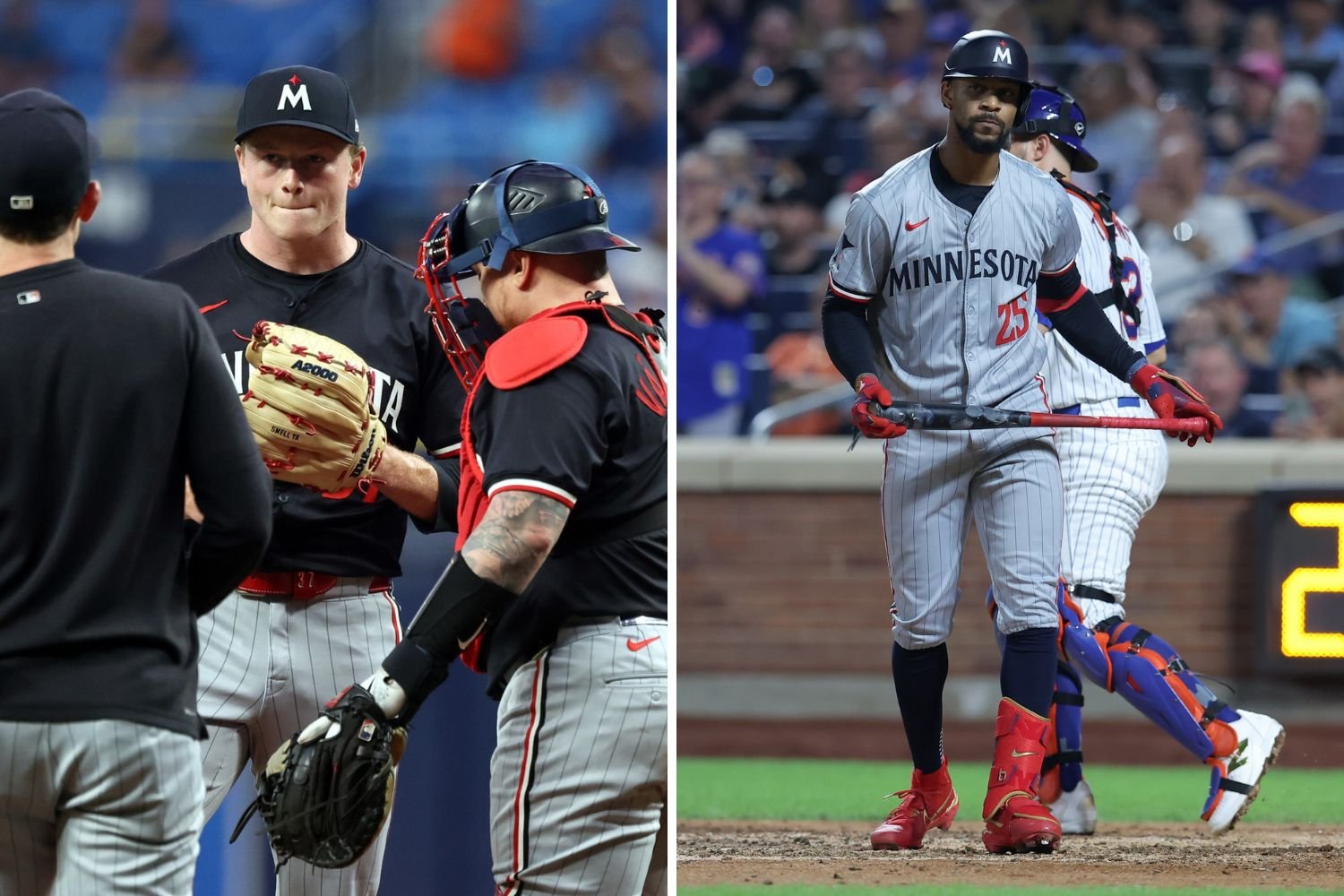 Around the same time on Wednesday night, Louie Varland was exploding into a ball of fiery rage on the mound at Tropicana Field while Byron Buxton was getting himself ejected from a Triple-A game after repeatedly barking at an umpire. These displays were, on both counts, uncharacteristic. We're talking about two generally mild-mannered players who keep their emotions under control on the field. But sometimes, it all just becomes too much to take. That was the case for Varland in St. Petersburg, where the Rays jumped all over him in a single inning for eight earned runs, with all the damage unfolding faster than you can say "Lou." It was a terribly familiar series of events for the right-hander, who was cruising merrily for two perfect innings before Tampa's lineup exploded to completely take over the game. A combination of poor defensive play and miscues from multiple players contributed to this meltdown, but Varland brought much of it on himself with poor pitch location and a costly errant pickoff throw. It all culminated with a two-run homer by Yandy Diaz that ended Varland's day, but not before the camera caught him screaming with anger to no one in particular as he paced around the mound. Varland's palpable frustration was understandable, from his perspective. For one thing, he let his team down in a key late-season contest, turning a close game into a surefire loss in an instant. But for him personally and his development, this is another crushing blow. The right-hander's future as a major-league starter is almost certainly out the window, and Varland's ability to simply hold his own in the majors at all is very much in question. He's now 0-6 with a 7.62 ERA in what was supposed to be his breakthrough year at age 26. He just can't get over the hump. Neither can Buxton as he battles physical issues that just won't stop holding him back. Playing the second game of his rehab in St. Paul on Wednesday night, Buxton got into a back-and-forth with an umpire who failed to reset the pitch clock after the batter called a timeout. Buxton's continued chirping after striking out led to his ejection. As Do-Hyoung Park noted at the time, he has never been thrown out of an MLB game in his career. Buxton's irritation was justified to an extent, but as a veteran player trying to get reps in while building back up toward a return to the majors, this was a bad look from someone who should know better. It seemed at the time like something else might be at play, and on Thursday morning we learned that this was indeed the case. The center fielder reportedly experienced renewed hip soreness in the game before the fateful plate appearance, and his rehab has been placed on hold. I can't even comprehend how sick of this Buxton must be. Nearly every season he's been unable to contribute when September and October roll around. Here at a time where the Twins direly need him, that looks to be the case again. He's going to come up short of 100 games for a sixth straight (non-2020) year. Most maddeningly, this injury is a difficult one to clearly understand, as MRI scans on Buxton's hip came back "clean" but he's been able to shake the persisting discomfort. His rehab has been placed on pause and with only about three weeks left in the season, Buxton's ability to return at all this season is very much at risk. Meanwhile, Max Kepler joined him on the injured list Thursday while Carlos Correa remains sidelined indefinitely. It's the same old, same old. For Buxton, for Varland, for the Minnesota Twins. If you can relate as a fan to the frustration that these players put on display Wednesday night, you're far from alone. This just sucks.
 -
In two different cities, two players very uncustomarily lost their cool on the field. These emotional outbursts serve as vivid summations of how things are going for Byron Buxton, Louie Varland and the rapidly unraveling Minnesota Twins. Image courtesy of Kim Klement Neitzel, Brad Penner-Imagn Images Around the same time on Wednesday night, Louie Varland was exploding into a ball of fiery rage on the mound at Tropicana Field while Byron Buxton was getting himself ejected from a Triple-A game after repeatedly barking at an umpire. These displays were, on both counts, uncharacteristic. We're talking about two generally mild-mannered players who keep their emotions under control on the field. But sometimes, it all just becomes too much to take. That was the case for Varland in St. Petersburg, where the Rays jumped all over him in a single inning for eight earned runs, with all the damage unfolding faster than you can say "Lou." It was a terribly familiar series of events for the right-hander, who was cruising merrily for two perfect innings before Tampa's lineup exploded to completely take over the game. A combination of poor defensive play and miscues from multiple players contributed to this meltdown, but Varland brought much of it on himself with poor pitch location and a costly errant pickoff throw. It all culminated with a two-run homer by Yandy Diaz that ended Varland's day, but not before the camera caught him screaming with anger to no one in particular as he paced around the mound. Varland's palpable frustration was understandable, from his perspective. For one thing, he let his team down in a key late-season contest, turning a close game into a surefire loss in an instant. But for him personally and his development, this is another crushing blow. The right-hander's future as a major-league starter is almost certainly out the window, and Varland's ability to simply hold his own in the majors at all is very much in question. He's now 0-6 with a 7.62 ERA in what was supposed to be his breakthrough year at age 26. He just can't get over the hump. Neither can Buxton as he battles physical issues that just won't stop holding him back. Playing the second game of his rehab in St. Paul on Wednesday night, Buxton got into a back-and-forth with an umpire who failed to reset the pitch clock after the batter called a timeout. Buxton's continued chirping after striking out led to his ejection. As Do-Hyoung Park noted at the time, he has never been thrown out of an MLB game in his career. Buxton's irritation was justified to an extent, but as a veteran player trying to get reps in while building back up toward a return to the majors, this was a bad look from someone who should know better. It seemed at the time like something else might be at play, and on Thursday morning we learned that this was indeed the case. The center fielder reportedly experienced renewed hip soreness in the game before the fateful plate appearance, and his rehab has been placed on hold. I can't even comprehend how sick of this Buxton must be. Nearly every season he's been unable to contribute when September and October roll around. Here at a time where the Twins direly need him, that looks to be the case again. He's going to come up short of 100 games for a sixth straight (non-2020) year. Most maddeningly, this injury is a difficult one to clearly understand, as MRI scans on Buxton's hip came back "clean" but he's been able to shake the persisting discomfort. His rehab has been placed on pause and with only about three weeks left in the season, Buxton's ability to return at all this season is very much at risk. Meanwhile, Max Kepler joined him on the injured list Thursday while Carlos Correa remains sidelined indefinitely. It's the same old, same old. For Buxton, for Varland, for the Minnesota Twins. If you can relate as a fan to the frustration that these players put on display Wednesday night, you're far from alone. This just sucks. View full article
-
The Elder Statesman: Can Caleb Thielbar Lift a Lagging Twins Bullpen?
Nick Nelson posted an article in Twins
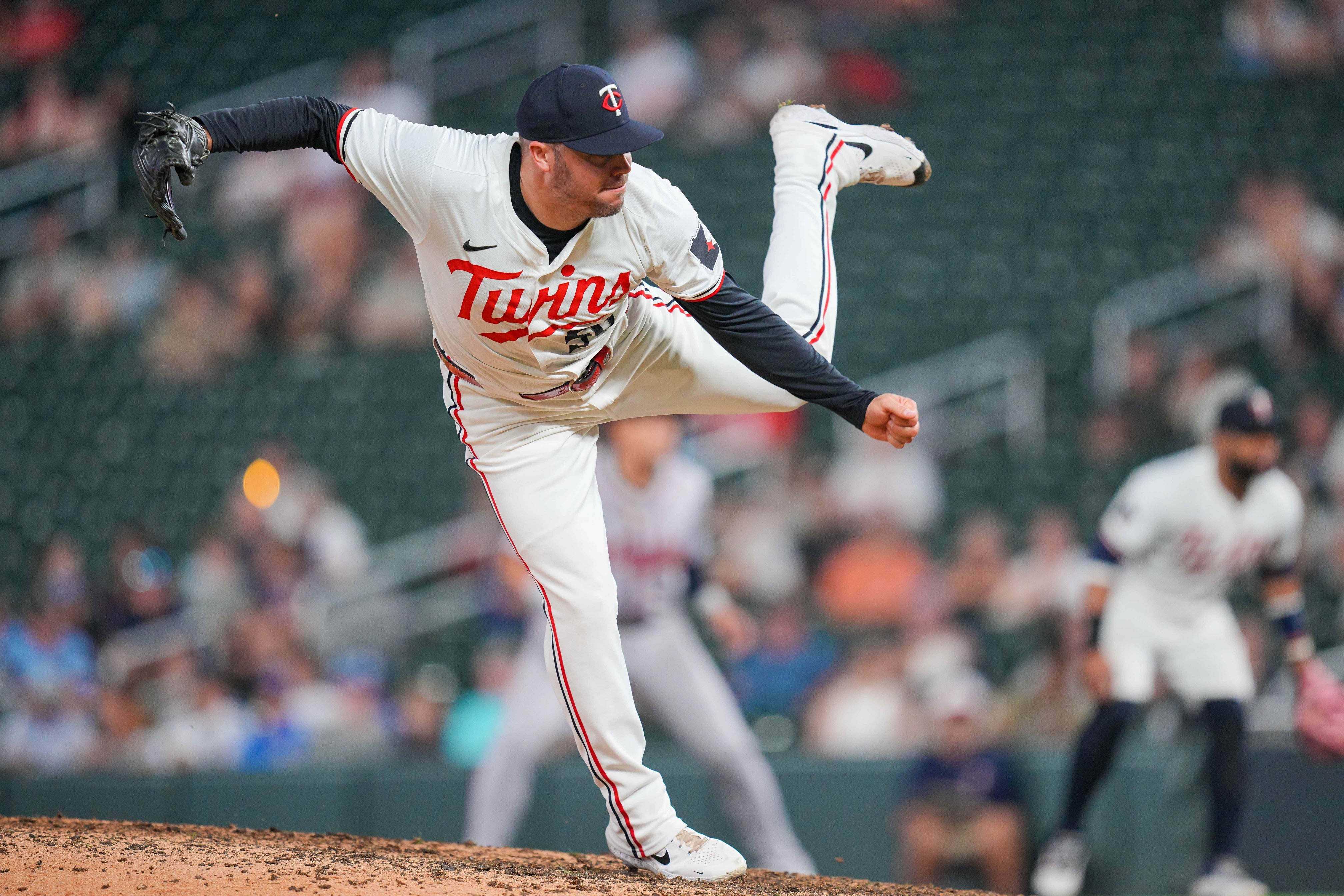 Caleb Thielbar's career has been quite a journey up to this point. The Minnesota native was a late draft pack out of South Dakota State, fizzled out of affiliated ball, signed with the Twins out of an independent league, put together a solid multi-year run in the major leagues, fizzled out of affiliated ball again, then took a college coaching position before signing with the Twins again. He has since put together one of the better prolonged stretches we've seen from a Minnesota relief pitcher. From 2020 through 2023, Thielbar posted a 3.21 ERA, 3.16 FIP, and 130 ERA+ over 174 innings, striking out 215 batters. It's the kind of real-life fairy tale they make movies about, but here in the late chapters, Thielbar has hardly been trending toward a storybook ending. The left-hander has struggled with injuries and lapses in execution over the past couple of seasons, betraying his sturdy reputation of dependability. Last year he was limited to 30 regular-season innings, and he imploded in the ALDS where he surrendered a pair of key homers, including the go-ahead shot by José Abreu in Game 4 that proved decisive. His rough ending to 2023 carried spilled over into 2024. Thielbar got hurt in spring training, missed the first two weeks, gave up three runs in his first appearance, and proceeded to struggle throughout the first half of the season. By the end of June he had a 7.00 ERA, with opponents hitting .317/.391/.494 against him. His 19-to-11 K/BB ratio in 18 innings inspired little confidence as Thielbar became part of the problem in a bullpen increasingly lacking for reliable late-inning options. Since around the midpoint of the season, however, Thielbar has shown real signs of improvement, suggesting the bullpen's elder statesman is not entirely out of gas at age 37. His 4.50 ERA since the start of July is obviously much better than that 7.00 mark he brought in, but it doesn't reflect how much better Thielbar has pitched. In 23 appearances, the lefty has held opponents to a .222/.284/.333 slash line, allowing only two homers with a 28-to-7 K/BB ratio. He has a 2.77 FIP in this time, compared to 5.07 before July. The Twins really need Thielbar to sustain this caliber of performance and finish strong. It's not just because he's the sole left-hander in the bullpen picture currently – although that does elevate his importance somewhat. The team is just desperately short on trusted high-leverage arms in general, and Thielbar so often in the past has been that. If he can lock in for these final weeks and complement Jhoan Durán, Griffin Jax, Cole Sands and Jorge Alcalá, rather than blending in with the so-so supporting cast in the relief corps, Thielbar could be a big difference-maker. There's still time for a storybook ending to his Twins career.
 -
Looking to put the sour memories of last year's playoffs and this year's first half behind him, Caleb Thielbar has an opportunity to assume a crucial leadership role and help salvage a wayward bullpen in September. Image courtesy of Brad Rempel-Imagn Images Caleb Thielbar's career has been quite a journey up to this point. The Minnesota native was a late draft pack out of South Dakota State, fizzled out of affiliated ball, signed with the Twins out of an independent league, put together a solid multi-year run in the major leagues, fizzled out of affiliated ball again, then took a college coaching position before signing with the Twins again. He has since put together one of the better prolonged stretches we've seen from a Minnesota relief pitcher. From 2020 through 2023, Thielbar posted a 3.21 ERA, 3.16 FIP, and 130 ERA+ over 174 innings, striking out 215 batters. It's the kind of real-life fairy tale they make movies about, but here in the late chapters, Thielbar has hardly been trending toward a storybook ending. The left-hander has struggled with injuries and lapses in execution over the past couple of seasons, betraying his sturdy reputation of dependability. Last year he was limited to 30 regular-season innings, and he imploded in the ALDS where he surrendered a pair of key homers, including the go-ahead shot by José Abreu in Game 4 that proved decisive. His rough ending to 2023 carried spilled over into 2024. Thielbar got hurt in spring training, missed the first two weeks, gave up three runs in his first appearance, and proceeded to struggle throughout the first half of the season. By the end of June he had a 7.00 ERA, with opponents hitting .317/.391/.494 against him. His 19-to-11 K/BB ratio in 18 innings inspired little confidence as Thielbar became part of the problem in a bullpen increasingly lacking for reliable late-inning options. Since around the midpoint of the season, however, Thielbar has shown real signs of improvement, suggesting the bullpen's elder statesman is not entirely out of gas at age 37. His 4.50 ERA since the start of July is obviously much better than that 7.00 mark he brought in, but it doesn't reflect how much better Thielbar has pitched. In 23 appearances, the lefty has held opponents to a .222/.284/.333 slash line, allowing only two homers with a 28-to-7 K/BB ratio. He has a 2.77 FIP in this time, compared to 5.07 before July. The Twins really need Thielbar to sustain this caliber of performance and finish strong. It's not just because he's the sole left-hander in the bullpen picture currently – although that does elevate his importance somewhat. The team is just desperately short on trusted high-leverage arms in general, and Thielbar so often in the past has been that. If he can lock in for these final weeks and complement Jhoan Durán, Griffin Jax, Cole Sands and Jorge Alcalá, rather than blending in with the so-so supporting cast in the relief corps, Thielbar could be a big difference-maker. There's still time for a storybook ending to his Twins career. View full article
-
The Twins dropped four of six at home as their late-season slump lingers, but they only lost a half-game in the Central standings and they remain 4 ½ clear of Boston for the last wild-card spot. With one month left to go, the goal for Minnesota is simple: hang on for dear life. Image courtesy of Bruce Kluckhohn-USA TODAY Sports Weekly Snapshot: Mon, 8/26 through Sun, 9/1 *** Record Last Week: 2-4 (Overall: 74-62) Run Differential Last Week: -22 (Overall: +51) Standing: T-2nd Place in AL Central (3.5 GB) Game 131 | ATL 10, MIN 6: Ober Bombs in Weather-Disrupted Loss Game 132 | ATL 8, MIN 6: Twins Battle Back, But Can't Finish Job Game 133 | ATL 5, MIN 1: Bullpen and Bats Fold in Sweep-Clincher Game 134 | MIN 2, TOR 0: Pablo Deals, Jax and Duran Shut Door Game 135 | TOR 15, MIN 0: Matthews Implodes, Offense Goes Quietly Game 136 | MIN 4, TOR 3: Lewis's Clutch Home Run Salvages Series IF YOU'D RATHER LISTEN TO THE WEEK IN REVIEW THAN READ IT, YOU CAN NOW FIND IT IN PODCAST FORM. GET THE LATEST EPISODE HERE. ALSO AVAILABLE ON APPLE AND SPOTIFY. NEWS & NOTES Still no Carlos Correa. Still no Byron Buxton. We have officially flipped the calendar to September and neither star player has so much as begun a rehab assignment. While Buxton could be close to doing so, it's time to come to grips with the reality that Correa probably isn't going to make it back before the end of September if at all. There is sadly no indication that the All-Star shortstop is anywhere close to being ready as his plantar fasciitis continues to keep him from running at full intensity. Struggling to win games in the absence of their best players, the Twins did get some key reinforcements on Sunday when rosters expanded for September. Reliever Diego Castillo joined the bullpen, although his presence is likely temporary. Michael Helman was also promoted from Triple-A, setting up his MLB debut at age 28 and giving the Twins a versatile right-handed bat. They'll need Helman in this capacity, with Manuel Margot landing on the injured list due to a groin injury suffered on Saturday. The biggest addition was Brooks Lee, who rehabbed with the Saints over the past week after spending three weeks on the injured list with a shoulder injury. The infielder launched a homer and a pair of doubles in five games with St. Paul, and went 1-for-4 in his return to MLB action on Sunday. If he can find a way to recapture the same spark he provided upon first joining the Twins back in July, Lee could be a big difference-maker in the final month. One person who won't be a difference-maker for the Twins in September is their lone trade deadline pickup. Trevor Richards was designated for assignment on Tuesday, less than a month after the front office acquired him from Toronto in one of the lowest-wattage, most pointless deadline moves imaginable. Michael Tonkin was claimed off waivers to replace Richards on the roster, after being waived by the Yankees days earlier. The Twins also designated Caleb Boushley for assignment and moved Chris Paddack to the 60-day IL. HIGHLIGHTS Friday night's game followed the script that Rocco Baldelli and the Twins hope to orchestrate if they're going to make noise in the playoffs. In fact, it's pretty much the exact same script that played out in their streak-shattering Game 1 victory over the very same Blue Jays team last October. Pablo López pitched brilliantly, outdueling Kevin Gausman. The offense scratched together enough to build a small lead. Griffin Jax and Jhoan Durán locked down said lead at game's end. That is a formula that simply works for this team. López has been inspiring a great deal of confidence lately, with his latest gem adding to a growing run of ace-caliber performance. In his past 12 starts, he's got a 2.38 ERA and the Twins have gone 8-4. Crucially, López has relieved the burden on a beleaguered relief corps, completing seven or more innings in nearly half those starts. He did leave Friday's game in a bit of a trouble spot, with two on and to out in the eighth, but Jax came in and did what he does, quickly neutralizing the threat. Jax struck out Daulton Varsho on three pitches, wrapping up a perfect month of August for the elite reliever: 12.1 IP, 0 R, 6 H (all singles), 17 K, 0 BB. The Twins appeared to be headed for a 1-5 week before Royce Lewis turned the tides in Sunday's rubber match against Toronto. With the Twins trailing by two runs in the eighth, two on and one out, Lewis got a hold of a pitch from Chad Green and launched it just barely over the left-field wall for a go-ahead three-run blast. It was Lewis's first time going deep in 17 games, and hopefully a sign that he's ready to break free from the first extended offensive drought of his career. LOWLIGHTS As much as Friday night's game showcased a sound winning formula for the Twins, Saturday's blowout loss laid bare many of the flaws that threaten to derail this team's ambitions. A rookie starter still acclimating to the big leagues leagues got absolutely annihilated, with the Blue Jays jumping on poor Zebby Matthews for nine runs on 10 hits in two innings. Toronto came in with a gameplan to swing away at the strike-throwing newcomer, and Matthews had no answers. Minnesota's lefty-stacked lineup, meanwhile, could come up with nothing against José Berríos and the Jays bullpen, getting out-hit 23-to-4 in front of the home fans. Max Kepler went 0-for-4 to finish the month of August with a punchless .222/.250/.333 slash line; he had five extra-base hits, six RBIs and two walks in all of August. (He then started his September 0-for-4.) Lewis was 1-for-4 on Saturday, and 2-for-19 on the week before his dramatic homer on Sunday. These are the bats that Minnesota needs to be stepping up in the absence of Correa and Buxton. We got a positive sign from Royce at least, but there's no indication Kepler's close to getting hot, or even fully healthy. The offense generally dragged hard after a decent start to last week, producing just four totals runs in their last four games before the three-run bomb late on Sunday. In addition to light yields from Kepler and Lewis, Austin Martin has crashed hard following a modest hot streak in mid-August. He was brutal last week, singling twice in 16 plate appearances with six strikeouts and no walks. Speaking of brutal, Bailey Ober's impressive string of quality starts came crashing to a halt on Monday night, when he yielded nine earned runs over two innings against the Braves. With Joe Ryan down, it goes without saying that the Twins badly need Ober to pitch like a frontliner, like he has for the past couple of months. Hopefully the clunker against Atlanta was merely a hiccup, and his rebound on Sunday (6 IP, 1 ER) suggests so. It was tough to watch the Twins come up so woefully short against the Braves, failing yet another litmus test against a top-tier team. There aren't many of those left now until October, which I suppose is a good thing, but Minnesota will need to show its mettle in key upcoming showdowns against Kansas City, Cleveland and Boston. TRENDING STORYLINE The handling of Louie Varland becomes a key focus as we march into the final month of the season. The Twins are going to need him as a weapon out of the bullpen if they want to beat good teams. They know that. At the same time, they still need him stretched out as rotation depth for the time being. Do-Hyoung Park of MLB.com noted over the weekend that the team has talked about using six starters at times in September with to navigate a packed schedule. The Twins currently have Wednesday's starter for the Tampa series listed as "To Be Decided," and it's expected Varland will be called up to make that start. Minnesota is on the early end of a stretch of 13 games with no break, and right now they need bulk innings from Varland more than anything. As they shift their gaze toward the end of the season and the playoffs, though, the Twins are going to need that bullpen upgrade we know he's able to provide. They're just too thin on quality options. How long can they wait? Their position in the standings – still comfortable now, from a wild-card perspective – may dictate that answer. LOOKING AHEAD Rookies are slated to start four of seven games in the week ahead, with Varland expected to take another. The Twins are headed to Tampa to face an unexceptional Rays team, and then to Kansas City for a potentially pivotal three-game set against the Royals, with whom Minnesota is tied in the standings and jockeying for playoff position. The matchup on Friday, between Matthews and All-Star Cole Ragans, looms as an ominous one given Zebby's latest performance. Ober, who has a 7.71 career ERA in nine starts against the Royals, is scheduled to get the nod on Saturday. MONDAY, SEPT 2: TWINS @ RAYS – RHP Simeon Woods Richardson v. RHP Zack Littell TUESDAY, SEPT 3: TWINS @ RAYS – RHP David Festa v. LHP Jeffrey Springs WEDNESDAY, SEPT 4: TWINS @ RAYS – TBD v. RHP Taj Bradley THURSDAY, SEPT 5: TWINS @ RAYS – RHP Pablo Lopez v. LHP Shane Baz FRIDAY, SEPT 6: TWINS @ ROYALS – RHP Zebby Matthews v. LHP Cole Ragans SATURDAY, SEPT 7: TWINS @ ROYALS – RHP Bailey Ober v. TBD SUNDAY, SEPT 8: TWINS @ ROYALS – RHP Simeon Woods Richardson v. RHP Michael Wacha View full article
-
 Weekly Snapshot: Mon, 8/26 through Sun, 9/1 *** Record Last Week: 2-4 (Overall: 74-62) Run Differential Last Week: -22 (Overall: +51) Standing: T-2nd Place in AL Central (3.5 GB) Game 131 | ATL 10, MIN 6: Ober Bombs in Weather-Disrupted Loss Game 132 | ATL 8, MIN 6: Twins Battle Back, But Can't Finish Job Game 133 | ATL 5, MIN 1: Bullpen and Bats Fold in Sweep-Clincher Game 134 | MIN 2, TOR 0: Pablo Deals, Jax and Duran Shut Door Game 135 | TOR 15, MIN 0: Matthews Implodes, Offense Goes Quietly Game 136 | MIN 4, TOR 3: Lewis's Clutch Home Run Salvages Series IF YOU'D RATHER LISTEN TO THE WEEK IN REVIEW THAN READ IT, YOU CAN NOW FIND IT IN PODCAST FORM. GET THE LATEST EPISODE HERE. ALSO AVAILABLE ON APPLE AND SPOTIFY. NEWS & NOTES Still no Carlos Correa. Still no Byron Buxton. We have officially flipped the calendar to September and neither star player has so much as begun a rehab assignment. While Buxton could be close to doing so, it's time to come to grips with the reality that Correa probably isn't going to make it back before the end of September if at all. There is sadly no indication that the All-Star shortstop is anywhere close to being ready as his plantar fasciitis continues to keep him from running at full intensity. Struggling to win games in the absence of their best players, the Twins did get some key reinforcements on Sunday when rosters expanded for September. Reliever Diego Castillo joined the bullpen, although his presence is likely temporary. Michael Helman was also promoted from Triple-A, setting up his MLB debut at age 28 and giving the Twins a versatile right-handed bat. They'll need Helman in this capacity, with Manuel Margot landing on the injured list due to a groin injury suffered on Saturday. The biggest addition was Brooks Lee, who rehabbed with the Saints over the past week after spending three weeks on the injured list with a shoulder injury. The infielder launched a homer and a pair of doubles in five games with St. Paul, and went 1-for-4 in his return to MLB action on Sunday. If he can find a way to recapture the same spark he provided upon first joining the Twins back in July, Lee could be a big difference-maker in the final month. One person who won't be a difference-maker for the Twins in September is their lone trade deadline pickup. Trevor Richards was designated for assignment on Tuesday, less than a month after the front office acquired him from Toronto in one of the lowest-wattage, most pointless deadline moves imaginable. Michael Tonkin was claimed off waivers to replace Richards on the roster, after being waived by the Yankees days earlier. The Twins also designated Caleb Boushley for assignment and moved Chris Paddack to the 60-day IL. HIGHLIGHTS Friday night's game followed the script that Rocco Baldelli and the Twins hope to orchestrate if they're going to make noise in the playoffs. In fact, it's pretty much the exact same script that played out in their streak-shattering Game 1 victory over the very same Blue Jays team last October. Pablo López pitched brilliantly, outdueling Kevin Gausman. The offense scratched together enough to build a small lead. Griffin Jax and Jhoan Durán locked down said lead at game's end. That is a formula that simply works for this team. López has been inspiring a great deal of confidence lately, with his latest gem adding to a growing run of ace-caliber performance. In his past 12 starts, he's got a 2.38 ERA and the Twins have gone 8-4. Crucially, López has relieved the burden on a beleaguered relief corps, completing seven or more innings in nearly half those starts. He did leave Friday's game in a bit of a trouble spot, with two on and to out in the eighth, but Jax came in and did what he does, quickly neutralizing the threat. Jax struck out Daulton Varsho on three pitches, wrapping up a perfect month of August for the elite reliever: 12.1 IP, 0 R, 6 H (all singles), 17 K, 0 BB. The Twins appeared to be headed for a 1-5 week before Royce Lewis turned the tides in Sunday's rubber match against Toronto. With the Twins trailing by two runs in the eighth, two on and one out, Lewis got a hold of a pitch from Chad Green and launched it just barely over the left-field wall for a go-ahead three-run blast. It was Lewis's first time going deep in 17 games, and hopefully a sign that he's ready to break free from the first extended offensive drought of his career. LOWLIGHTS As much as Friday night's game showcased a sound winning formula for the Twins, Saturday's blowout loss laid bare many of the flaws that threaten to derail this team's ambitions. A rookie starter still acclimating to the big leagues leagues got absolutely annihilated, with the Blue Jays jumping on poor Zebby Matthews for nine runs on 10 hits in two innings. Toronto came in with a gameplan to swing away at the strike-throwing newcomer, and Matthews had no answers. Minnesota's lefty-stacked lineup, meanwhile, could come up with nothing against José Berríos and the Jays bullpen, getting out-hit 23-to-4 in front of the home fans. Max Kepler went 0-for-4 to finish the month of August with a punchless .222/.250/.333 slash line; he had five extra-base hits, six RBIs and two walks in all of August. (He then started his September 0-for-4.) Lewis was 1-for-4 on Saturday, and 2-for-19 on the week before his dramatic homer on Sunday. These are the bats that Minnesota needs to be stepping up in the absence of Correa and Buxton. We got a positive sign from Royce at least, but there's no indication Kepler's close to getting hot, or even fully healthy. The offense generally dragged hard after a decent start to last week, producing just four totals runs in their last four games before the three-run bomb late on Sunday. In addition to light yields from Kepler and Lewis, Austin Martin has crashed hard following a modest hot streak in mid-August. He was brutal last week, singling twice in 16 plate appearances with six strikeouts and no walks. Speaking of brutal, Bailey Ober's impressive string of quality starts came crashing to a halt on Monday night, when he yielded nine earned runs over two innings against the Braves. With Joe Ryan down, it goes without saying that the Twins badly need Ober to pitch like a frontliner, like he has for the past couple of months. Hopefully the clunker against Atlanta was merely a hiccup, and his rebound on Sunday (6 IP, 1 ER) suggests so. It was tough to watch the Twins come up so woefully short against the Braves, failing yet another litmus test against a top-tier team. There aren't many of those left now until October, which I suppose is a good thing, but Minnesota will need to show its mettle in key upcoming showdowns against Kansas City, Cleveland and Boston. TRENDING STORYLINE The handling of Louie Varland becomes a key focus as we march into the final month of the season. The Twins are going to need him as a weapon out of the bullpen if they want to beat good teams. They know that. At the same time, they still need him stretched out as rotation depth for the time being. Do-Hyoung Park of MLB.com noted over the weekend that the team has talked about using six starters at times in September with to navigate a packed schedule. The Twins currently have Wednesday's starter for the Tampa series listed as "To Be Decided," and it's expected Varland will be called up to make that start. Minnesota is on the early end of a stretch of 13 games with no break, and right now they need bulk innings from Varland more than anything. As they shift their gaze toward the end of the season and the playoffs, though, the Twins are going to need that bullpen upgrade we know he's able to provide. They're just too thin on quality options. How long can they wait? Their position in the standings – still comfortable now, from a wild-card perspective – may dictate that answer. LOOKING AHEAD Rookies are slated to start four of seven games in the week ahead, with Varland expected to take another. The Twins are headed to Tampa to face an unexceptional Rays team, and then to Kansas City for a potentially pivotal three-game set against the Royals, with whom Minnesota is tied in the standings and jockeying for playoff position. The matchup on Friday, between Matthews and All-Star Cole Ragans, looms as an ominous one given Zebby's latest performance. Ober, who has a 7.71 career ERA in nine starts against the Royals, is scheduled to get the nod on Saturday. MONDAY, SEPT 2: TWINS @ RAYS – RHP Simeon Woods Richardson v. RHP Zack Littell TUESDAY, SEPT 3: TWINS @ RAYS – RHP David Festa v. LHP Jeffrey Springs WEDNESDAY, SEPT 4: TWINS @ RAYS – TBD v. RHP Taj Bradley THURSDAY, SEPT 5: TWINS @ RAYS – RHP Pablo Lopez v. LHP Shane Baz FRIDAY, SEPT 6: TWINS @ ROYALS – RHP Zebby Matthews v. LHP Cole Ragans SATURDAY, SEPT 7: TWINS @ ROYALS – RHP Bailey Ober v. TBD SUNDAY, SEPT 8: TWINS @ ROYALS – RHP Simeon Woods Richardson v. RHP Michael Wacha
- 5 comments
-
- 3
-
-
- royce lewis
- pablo lopez
- (and 2 more)
-
Soft September Schedule Could Be the Minnesota Twins' Saving Grace
Nick Nelson posted an article in Twins
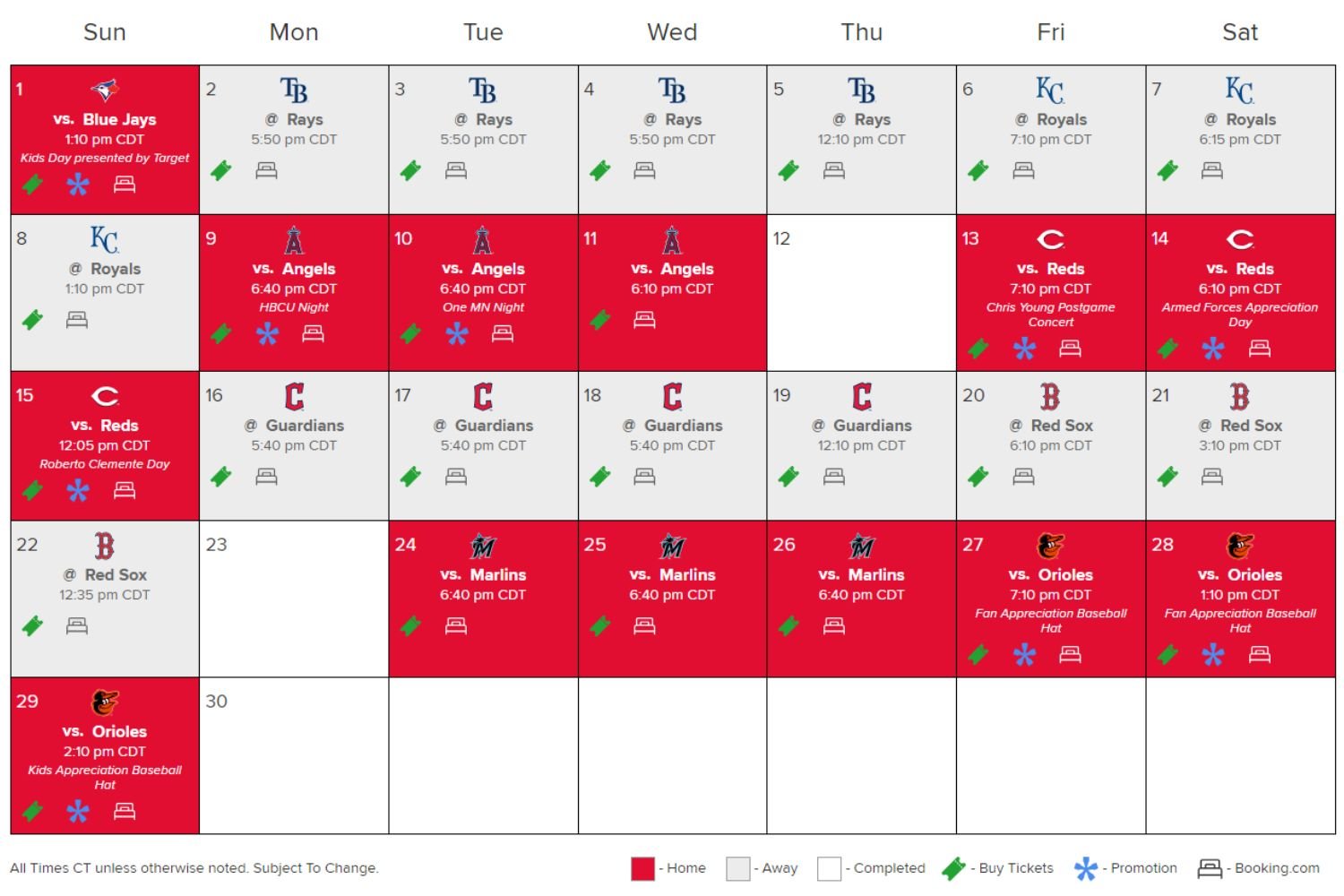 It's a fairly dire time for the Twins. They headed into the weekend with eight losses in their last 10 games, and they're coming to grips with the reality that they probably won't be getting Carlos Correa back until the end of September, if at all. Not long ago, they were in prime position to make a charge for the division title, but now the Twins are being forced to adjust their aim and reconsider what is realistic. Winning the AL Central isn't out of reach, but feels far less achievable; above all, Minnesota needs to avoid collapsing their way out of the postseason picture. That would be a flat-out disastrous scenario. The Twins led the Red Sox by 3 ½ games for the third and final wild-card spot entering play on Friday, with the Mariners and Tigers also within five. That is a fairly sizable gap with less than 30 games remaining. For this reason, FanGraphs still viewed Minnesota as having an 85% chance to make the playoffs. But that presumes the Twins will continue to play reasonably decent ball. If their performance from the past couple of weeks holds, they'll very much be in danger of getting passed up. The month of September will prove decisive for the Twins and their rivals in the playoff race. Three key series -- one versus Kansas City, one versus Cleveland, one versus Boston -- could have pivotal implications in deciding the Central division and wild-card outcomes. All three of those series are on the road, which is not great. But the good news is that, outside of those 10 games, the Twins face a pretty soft slate of opponents over the next four weeks. Here's a rundown of Minnesota's schedule for the final month, including the record of their opponents: 1 vs TOR (66-70, .485 winning %) 4 @ TB (66-67, .496) 3 @ KC (75-60, .556) 3 vs LAA (45-79, .410) 3 vs CIN (64-70, .478) 4 @ CLE (76-58, .567) 3 @ BOS (69-65, .515) 3 vs MIA (49-85, .366) 3 vs BAL (77-58, .570) That's 27 games, and 14 of them are against sub-.500 teams. If there's one thing the Twins have shown they can do this year, it's beat up on losing clubs; they are 35-13 (.729) against such opposition. Granted, the Jays and Rays are just barely below .500 and not to be taken lightly, but they aren't very good. Meanwhile, the Angels and Marlins are two of the worst teams in baseball. Baltimore obviously stands out as a premier opponent, and they slaughtered the Twins at Camden back in April. But by this final weekend of the season, there would seem to be a very good chance the Orioles will be comfortable and solidified in their standing, either as AL East champ or the top wild-card, allowing them to take their foot of the gas while Minnesota makes a final push with potentially everything on the line. If they can rise to the occasion in their head-to-heads against the two top teams in the Central, the Twins still have an opportunity to complete a dramatic division takeover, which would be nothing short of miraculous given their current state. Short of that, they can still wrap up a postseason berth by simply taking care of business and handling equal or lesser opponents. Their destiny is still very much in their hands. Many things are working against the Twins as they march toward the finish line. Luckily, the schedule isn't really one of them.
 -
Stretched thin by injuries and attrition, the Minnesota Twins have been in a tailspin, putting their postseason chances at risk. Fortunately, a favorable final month on the schedule bodes well as they battle to hang on and at least protect their wild-card position. Image courtesy of Twins.com It's a fairly dire time for the Twins. They headed into the weekend with eight losses in their last 10 games, and they're coming to grips with the reality that they probably won't be getting Carlos Correa back until the end of September, if at all. Not long ago, they were in prime position to make a charge for the division title, but now the Twins are being forced to adjust their aim and reconsider what is realistic. Winning the AL Central isn't out of reach, but feels far less achievable; above all, Minnesota needs to avoid collapsing their way out of the postseason picture. That would be a flat-out disastrous scenario. The Twins led the Red Sox by 3 ½ games for the third and final wild-card spot entering play on Friday, with the Mariners and Tigers also within five. That is a fairly sizable gap with less than 30 games remaining. For this reason, FanGraphs still viewed Minnesota as having an 85% chance to make the playoffs. But that presumes the Twins will continue to play reasonably decent ball. If their performance from the past couple of weeks holds, they'll very much be in danger of getting passed up. The month of September will prove decisive for the Twins and their rivals in the playoff race. Three key series -- one versus Kansas City, one versus Cleveland, one versus Boston -- could have pivotal implications in deciding the Central division and wild-card outcomes. All three of those series are on the road, which is not great. But the good news is that, outside of those 10 games, the Twins face a pretty soft slate of opponents over the next four weeks. Here's a rundown of Minnesota's schedule for the final month, including the record of their opponents: 1 vs TOR (66-70, .485 winning %) 4 @ TB (66-67, .496) 3 @ KC (75-60, .556) 3 vs LAA (45-79, .410) 3 vs CIN (64-70, .478) 4 @ CLE (76-58, .567) 3 @ BOS (69-65, .515) 3 vs MIA (49-85, .366) 3 vs BAL (77-58, .570) That's 27 games, and 14 of them are against sub-.500 teams. If there's one thing the Twins have shown they can do this year, it's beat up on losing clubs; they are 35-13 (.729) against such opposition. Granted, the Jays and Rays are just barely below .500 and not to be taken lightly, but they aren't very good. Meanwhile, the Angels and Marlins are two of the worst teams in baseball. Baltimore obviously stands out as a premier opponent, and they slaughtered the Twins at Camden back in April. But by this final weekend of the season, there would seem to be a very good chance the Orioles will be comfortable and solidified in their standing, either as AL East champ or the top wild-card, allowing them to take their foot of the gas while Minnesota makes a final push with potentially everything on the line. If they can rise to the occasion in their head-to-heads against the two top teams in the Central, the Twins still have an opportunity to complete a dramatic division takeover, which would be nothing short of miraculous given their current state. Short of that, they can still wrap up a postseason berth by simply taking care of business and handling equal or lesser opponents. Their destiny is still very much in their hands. Many things are working against the Twins as they march toward the finish line. Luckily, the schedule isn't really one of them. View full article
-
 Carlos Correa was having one of the best seasons of his career. He was on a scorching midsummer heater -- slashing .360/.418/.596 in his previous 35 games -- when he was scratched from the lineup 90 minutes ahead of game time on Jul. 13 with a bruised heel. Days later, he was diagnosed with the dreaded plantar fasciitis, which severely diminished his play for most of last season, albeit on the other foot. Correa and the team initially expressed optimism that this would be a less serious ordeal. "It doesn't look as severe as it did last year," said Rocco Baldelli at the time. Sadly, their optimism was misgiven. This has developed into one of the most significant injuries of Correa's career, threatening to shut down his amazing age-29 season and cast long-term concern for a foot that was a subject of much scrutiny during Correa's free-agent odyssey. It's now been 48 days since the shortstop played a game, and there's no end to his absence in sight. Weeks and weeks have passed without meaningful updates on a concrete timeline. Correa admitted to reporters last weekend that he experienced a "minor setback" earlier this month, and still wasn't able to run at full speed or in cleats. In his Wednesday article for The Athletic, Dan Hayes shared that, per a Twins source, "Buxton [is] much closer to rejoining the big-league club than the All-Star Correa, who is making only incremental progress." Even at that, "Buxton might not begin a rehab assignment until early next week." If Buxton is considered "much closer" to returning than Correa, and he's not even poised to start a rehab assignment until the first week of September, what does that imply? We're running out of time for "incremental progress" to result in a return to play. Reading between the lines, it feels like the Twins are shifting their objective from trying to get Correa back for a late-season push to getting him back for the actual playoffs, in some capacity, if they're able to get there. That last part may be a tall order. The Twins are now just three games ahead of Boston for the final playoff spot, and while Boston's not an especially great team, neither is Minnesota minus its best player. The Twins have hung in there admirably in Correa's absence, but heading into their eighth week without the team MVP, they appear to be falling apart at the seams. On the bright side, the schedule is about to get much easier, and the Twins still do have some cushion for that last Wild Card berth. Even if pushing to overtake the division without Correa feels less realistic, they still have a chance to hang on and get him back in time to make an impact when it matters most, just like last year. At this point, that seems to be our best hope. Unfortunately, it's time to come to grips with the reality that Correa probably is not going to make it back to have much of an influence on the outcome of the regular season.
 -
If he makes it back at all this year, the Twins probably need to be hoping for their All-Star shortstop to help them in the playoffs, rather than helping them get there. Image courtesy of © Matt Marton-USA TODAY Sports Carlos Correa was having one of the best seasons of his career. He was on a scorching midsummer heater -- slashing .360/.418/.596 in his previous 35 games -- when he was scratched from the lineup 90 minutes ahead of game time on Jul. 13 with a bruised heel. Days later, he was diagnosed with the dreaded plantar fasciitis, which severely diminished his play for most of last season, albeit on the other foot. Correa and the team initially expressed optimism that this would be a less serious ordeal. "It doesn't look as severe as it did last year," said Rocco Baldelli at the time. Sadly, their optimism was misgiven. This has developed into one of the most significant injuries of Correa's career, threatening to shut down his amazing age-29 season and cast long-term concern for a foot that was a subject of much scrutiny during Correa's free-agent odyssey. It's now been 48 days since the shortstop played a game, and there's no end to his absence in sight. Weeks and weeks have passed without meaningful updates on a concrete timeline. Correa admitted to reporters last weekend that he experienced a "minor setback" earlier this month, and still wasn't able to run at full speed or in cleats. In his Wednesday article for The Athletic, Dan Hayes shared that, per a Twins source, "Buxton [is] much closer to rejoining the big-league club than the All-Star Correa, who is making only incremental progress." Even at that, "Buxton might not begin a rehab assignment until early next week." If Buxton is considered "much closer" to returning than Correa, and he's not even poised to start a rehab assignment until the first week of September, what does that imply? We're running out of time for "incremental progress" to result in a return to play. Reading between the lines, it feels like the Twins are shifting their objective from trying to get Correa back for a late-season push to getting him back for the actual playoffs, in some capacity, if they're able to get there. That last part may be a tall order. The Twins are now just three games ahead of Boston for the final playoff spot, and while Boston's not an especially great team, neither is Minnesota minus its best player. The Twins have hung in there admirably in Correa's absence, but heading into their eighth week without the team MVP, they appear to be falling apart at the seams. On the bright side, the schedule is about to get much easier, and the Twins still do have some cushion for that last Wild Card berth. Even if pushing to overtake the division without Correa feels less realistic, they still have a chance to hang on and get him back in time to make an impact when it matters most, just like last year. At this point, that seems to be our best hope. Unfortunately, it's time to come to grips with the reality that Correa probably is not going to make it back to have much of an influence on the outcome of the regular season. View full article
-
No pressure or anything, kid. Image courtesy of Jesse Johnson-USA TODAY Sports The Minnesota Twins have been awash in bad news lately. Neither Byron Buxton nor Carlos Correa's injuries have healed as hoped. Alex Kirilloff started ramping up on a rehab assignment and was quickly shut down. Joe Ryan is officially out for the season and Chris Paddack effectively is also. The bullpen has turned into a "this is fine" meme. Through it all, there is one positive developing story, and it could do much to offset some of the negative impacts referenced above. Brooks Lee is on the comeback trail from his shoulder injury, and his return looks imminent. Out since August 8th with a shoulder injury, Lee embarked on a rehab at Triple-A St. Paul this past weekend. After slumping through his final weeks with the Twins, with the injury likely playing a role, Lee's bat has looked rejuvenated for the Saints. He homered in the first at-bat of his rehab and doubled twice in the second. Overall he has a .913 OPS in four games. It's not totally clear when Lee will be activated to rejoin the big-league club, but he's not far off. At the soonest, Lee could be called back on Friday for the start of a series against Toronto to close out their current home stand. The latest I could see it happening is on Sunday when rosters expand, if there happens to be any timidity about a roster move to make room. I don't want to set expectations too high for Lee. He's 23 years old. He's played 26 MLB games. And as mentioned, he really struggled for much of that time, slashing .187/.262/.240 in his final 20 games before going on the IL. But again: he was hurt. And before the skid, Lee had notched 11 hits in his first six games, with a double, a homer and eight RBIs. It was no mirage. Lee is a great talent who is renowned by evaluators everywhere, ranking as the 16th-best prospect in baseball per MLB Pipeline. He has thoroughly outclassed Triple-A pitching with a 1.016 OPS in 24 games at the level. And what's most exciting is that Lee's functional profile presents a crucial fix for some of Minnesota's gravest current needs: Willi Castro has been mostly limited to playing shortstop in Correa's absence, preventing Rocco Baldelli from being able to take advantage of the versatility and positional flexibility that made Castro so valuable in the first half. If the Twins trust Lee to play short, at least part-time, it will free up the utilityman to move back into his best role. As a result of Castro being stuck at short, he can't play second or center, which means Edouard Julien and Austin Martin are being forced into essentially everyday duty. They look stretched both offensively and defensively. Scaling back their usage will be a positive for the team. Perhaps most critically, the Twins need a spark near the top of their order. Correa and Buxton have left a void, as has Royce Lewis's ongoing slump. Lee had worked his way into that mix, appearing first, third and fourth in the lineup before his production dropped off. His switch-hitting bat can factor against any pitcher. Right now it's reasonable to feel a sense of looming pessimism around the Twins and their outlook, for a variety of reasons. There's not an abundance of hope on the horizon, with several key players mired in uncertain or unpromising health situations. Lee is an exception, looking strong and healthy as he prepares to rejoin the team for an intense stretch run. The Twins are desperately in need of something approximating his best form. Like I said, no pressure Brooks. View full article
-
Brooks Lee Has a Chance to Play September Savior for the Twins
Nick Nelson posted an article in Twins
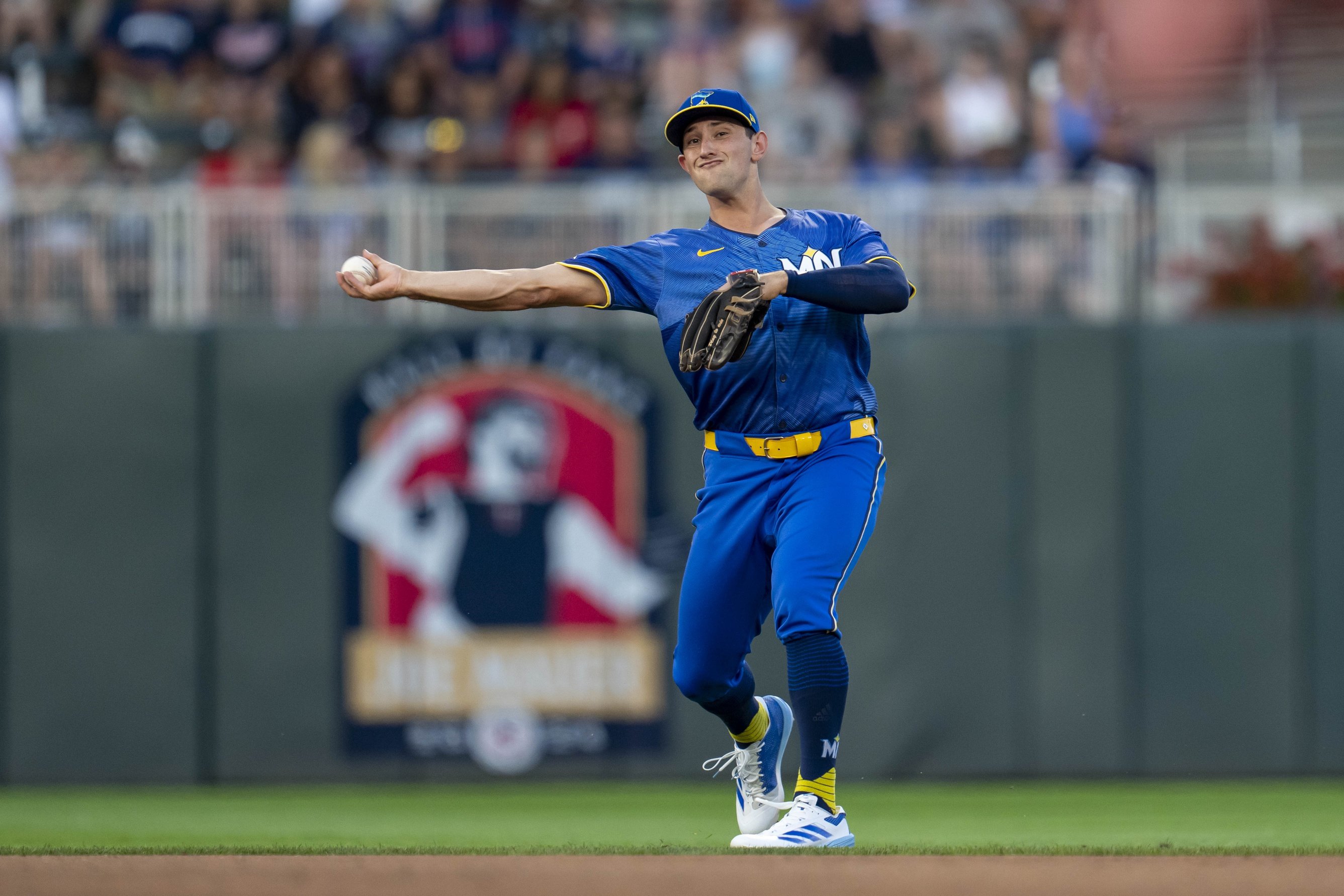 The Minnesota Twins have been awash in bad news lately. Neither Byron Buxton nor Carlos Correa's injuries have healed as hoped. Alex Kirilloff started ramping up on a rehab assignment and was quickly shut down. Joe Ryan is officially out for the season and Chris Paddack effectively is also. The bullpen has turned into a "this is fine" meme. Through it all, there is one positive developing story, and it could do much to offset some of the negative impacts referenced above. Brooks Lee is on the comeback trail from his shoulder injury, and his return looks imminent. Out since August 8th with a shoulder injury, Lee embarked on a rehab at Triple-A St. Paul this past weekend. After slumping through his final weeks with the Twins, with the injury likely playing a role, Lee's bat has looked rejuvenated for the Saints. He homered in the first at-bat of his rehab and doubled twice in the second. Overall he has a .913 OPS in four games. It's not totally clear when Lee will be activated to rejoin the big-league club, but he's not far off. At the soonest, Lee could be called back on Friday for the start of a series against Toronto to close out their current home stand. The latest I could see it happening is on Sunday when rosters expand, if there happens to be any timidity about a roster move to make room. I don't want to set expectations too high for Lee. He's 23 years old. He's played 26 MLB games. And as mentioned, he really struggled for much of that time, slashing .187/.262/.240 in his final 20 games before going on the IL. But again: he was hurt. And before the skid, Lee had notched 11 hits in his first six games, with a double, a homer and eight RBIs. It was no mirage. Lee is a great talent who is renowned by evaluators everywhere, ranking as the 16th-best prospect in baseball per MLB Pipeline. He has thoroughly outclassed Triple-A pitching with a 1.016 OPS in 24 games at the level. And what's most exciting is that Lee's functional profile presents a crucial fix for some of Minnesota's gravest current needs: Willi Castro has been mostly limited to playing shortstop in Correa's absence, preventing Rocco Baldelli from being able to take advantage of the versatility and positional flexibility that made Castro so valuable in the first half. If the Twins trust Lee to play short, at least part-time, it will free up the utilityman to move back into his best role. As a result of Castro being stuck at short, he can't play second or center, which means Edouard Julien and Austin Martin are being forced into essentially everyday duty. They look stretched both offensively and defensively. Scaling back their usage will be a positive for the team. Perhaps most critically, the Twins need a spark near the top of their order. Correa and Buxton have left a void, as has Royce Lewis's ongoing slump. Lee had worked his way into that mix, appearing first, third and fourth in the lineup before his production dropped off. His switch-hitting bat can factor against any pitcher. Right now it's reasonable to feel a sense of looming pessimism around the Twins and their outlook, for a variety of reasons. There's not an abundance of hope on the horizon, with several key players mired in uncertain or unpromising health situations. Lee is an exception, looking strong and healthy as he prepares to rejoin the team for an intense stretch run. The Twins are desperately in need of something approximating his best form. Like I said, no pressure Brooks.
 -
It's quite amazing that the Twins have done as well as they have, given all they've been dealt. But as we reach the final stretch of the season, there are signs that the weight of it all is becoming too much to bear. Image courtesy of John Hefti-USA TODAY Sports I am beyond impressed by what the Minnesota Twins have done up to this point. It's a team that makes me feel proud to root for them. This group has shown incredible determination and resiliency to put themselves in the position they are currently in: less than three games out of first place, squarely in playoff position, with 30 games left in the season. They are outpacing their preseason over/under and on pace for nearly 90 wins, a mark they've reached once in the past 13 years. They have managed to do this DESPITE all of the following: Ownership slashing payroll during the offseason and giving the front office no flexibility to replace outgoing talent, much less add on. Stumbling to a 7-13 start that left them eight games out of first place by April 21st. The bullpen gradually whittling down to two or three trustworthy options -- in part because the front office's lone deadline acquisition was a total failure, released within one month of being acquired. Suddenly losing Joe Ryan, a borderline All-Star and (still) their staff leader in fWAR, for the season in early August. Lengthy injuries for Byron Buxton and Royce Lewis, as well as -- most critically -- the loss of a borderline MVP contender in Carlos Correa, the heart and soul of their team, for six weeks running. Through all of this, the Twins have battled and endured. For a while, they were hanging in there, consistently winning and splitting series to make up ground on Cleveland and close the gap in the AL Central. Even without Correa, or Buxton or Ryan for the most part, they won 11 of their first 16 games in August, shaving 4 ½ games off the division lead. But eventually, all of these setbacks and limitations are going to collectively catch up with you, and it feels like we're seeing that play out in real-time with the Twins. They've proven they are a great team when their horses are mostly healthy and performing, but with so many of their top players down, it goes without saying this squad is only a severely diminished version of its best self. The remaining players who are left to carry the load seem to be wearing down and buckling under all the weight they've been left to bear. This feels palpably apparent in Minnesota's recent results, with crushing defeat after crushing defeat. The Twins have dropped seven of their past nine, and they've given up leads at the end of the game in four of those. Increasingly the club's performance is characterized by sloppiness, rapid meltdowns on the mound, and blown opportunities at the plate. It's not just missing three key players that hurts, it's the nature of those losses: a starting pitcher, starting shortstop and starting center fielder are perhaps the three most difficult positions to backfill, especially when those players are arguably three of the five best on the team. These are devastating injuries and the Twins have been left reeling, with young players pushed aggressively into roles they probably aren't ready for out of necessity. Under different circumstances, Edouard Julien and Austin Martin would likely not be in the majors, much less costing the Twins crucial games with their bats and gloves. The most troubling part is that there's no real light at the end of the tunnel. Ryan won't be back. Correa might not be. And it's unclear when Buxton will be able to return or how effective he'll be. There are some potential longshot reinforcements to bolster the bullpen internally but the unit is in rough shape. Meanwhile, one more significant injury in the rotation, bullpen or lineup could snap this sinking ship in half like the Titanic. Even if things don't manage to get worse, the tough reality is that it's difficult to envision a major change for the better in the circumstances the Twins face. Therefore, the guys who are still here and grinding away -- as well as Brooks Lee, one of the few key reinforcements whose return does feel imminent -- need to find it within themselves to rekindle their spark and rise above it all in the final month of the season. If they can't, this beleaguered squad appears destined for a quick playoff exit or even missing out on the postseason entirely; a legitimately excellent team crushed by the burden of endless second-half setbacks. View full article
-
Are the Twins Finally Buckling Under the Weight of Their Challenges?
Nick Nelson posted an article in Twins
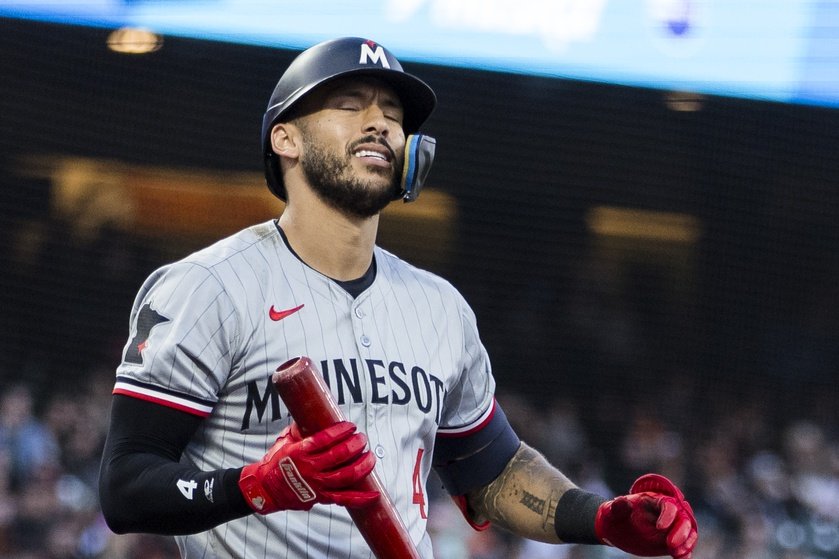 I am beyond impressed by what the Minnesota Twins have done up to this point. It's a team that makes me feel proud to root for them. This group has shown incredible determination and resiliency to put themselves in the position they are currently in: less than three games out of first place, squarely in playoff position, with 30 games left in the season. They are outpacing their preseason over/under and on pace for nearly 90 wins, a mark they've reached once in the past 13 years. They have managed to do this DESPITE all of the following: Ownership slashing payroll during the offseason and giving the front office no flexibility to replace outgoing talent, much less add on. Stumbling to a 7-13 start that left them eight games out of first place by April 21st. The bullpen gradually whittling down to two or three trustworthy options -- in part because the front office's lone deadline acquisition was a total failure, released within one month of being acquired. Suddenly losing Joe Ryan, a borderline All-Star and (still) their staff leader in fWAR, for the season in early August. Lengthy injuries for Byron Buxton and Royce Lewis, as well as -- most critically -- the loss of a borderline MVP contender in Carlos Correa, the heart and soul of their team, for six weeks running. Through all of this, the Twins have battled and endured. For a while, they were hanging in there, consistently winning and splitting series to make up ground on Cleveland and close the gap in the AL Central. Even without Correa, or Buxton or Ryan for the most part, they won 11 of their first 16 games in August, shaving 4 ½ games off the division lead. But eventually, all of these setbacks and limitations are going to collectively catch up with you, and it feels like we're seeing that play out in real-time with the Twins. They've proven they are a great team when their horses are mostly healthy and performing, but with so many of their top players down, it goes without saying this squad is only a severely diminished version of its best self. The remaining players who are left to carry the load seem to be wearing down and buckling under all the weight they've been left to bear. This feels palpably apparent in Minnesota's recent results, with crushing defeat after crushing defeat. The Twins have dropped seven of their past nine, and they've given up leads at the end of the game in four of those. Increasingly the club's performance is characterized by sloppiness, rapid meltdowns on the mound, and blown opportunities at the plate. It's not just missing three key players that hurts, it's the nature of those losses: a starting pitcher, starting shortstop and starting center fielder are perhaps the three most difficult positions to backfill, especially when those players are arguably three of the five best on the team. These are devastating injuries and the Twins have been left reeling, with young players pushed aggressively into roles they probably aren't ready for out of necessity. Under different circumstances, Edouard Julien and Austin Martin would likely not be in the majors, much less costing the Twins crucial games with their bats and gloves. The most troubling part is that there's no real light at the end of the tunnel. Ryan won't be back. Correa might not be. And it's unclear when Buxton will be able to return or how effective he'll be. There are some potential longshot reinforcements to bolster the bullpen internally but the unit is in rough shape. Meanwhile, one more significant injury in the rotation, bullpen or lineup could snap this sinking ship in half like the Titanic. Even if things don't manage to get worse, the tough reality is that it's difficult to envision a major change for the better in the circumstances the Twins face. Therefore, the guys who are still here and grinding away -- as well as Brooks Lee, one of the few key reinforcements whose return does feel imminent -- need to find it within themselves to rekindle their spark and rise above it all in the final month of the season. If they can't, this beleaguered squad appears destined for a quick playoff exit or even missing out on the postseason entirely; a legitimately excellent team crushed by the burden of endless second-half setbacks.
- 39 comments
-
- 8
-
-
-
- carlos correa
- byron buxton
- (and 1 more)
-
Searching Far and Wide for Late-Season Twins Bullpen Reinforcements
Nick Nelson posted an article in Twins
.jpg.2406919319bf63e915cacfa6a5babade.jpg) Over the weekend, the Twins parted ways with Steven Okert, who joins Jay Jackson and Josh Staumont as offseason additions whom the team was forced to abandon midway through the campaign. The Twins are also making do without Brock Stewart, who's out for the year following shoulder surgery, and Justin Topa, who hasn't pitched this season and probably won't. Altogether, these mounting losses have whittled away the bullpen depth that seemed like such an asset coming into the season. Minnesota's front office passed up the chance to make a meaningful addition at the trade deadline, instead making Trevor Richards their lone pickup – a befuddling decision that has yielded no benefit. He's at least healthy enough to eat some innings, but Richards is not someone the Twins can trust in leverage. The pool of reliable late-inning arms is essentially limited to Jhoan Durán, Griffin Jax, Cole Sands and Jorge Alcalá, with the latter beginning to wobble here in August. If the team can't find a way to expand their stable of trusted arms, they're simply not going to have much hope of making a deep run, and they might be at risk of missing the playoffs. With external acquisitions largely off the table by now, here are some names that should be kept in mind as pitchers with a plausible chance to impact the late innings for the Twins in the final five weeks of the season, and beyond. Louie Varland He's the most obvious name when it comes to upgrading the back end of the bullpen. We saw what Varland can do as a reliever late last year, and it was a thoroughly convincing display. The Twins could use a very similar approach this time around, ramping Varland up in the bullpen with a handful of September appearances to prime him as a high-leverage arm in the playoffs, capable of throwing multiple innings. Knowing the kind of value Varland was able to provide in this role, it's going to be hard to avoid turning to this path at some point, although Minnesota's thinned-out rotation depth does complicate matters. Josh Winder Not long ago, Winder's name would not have been mentioned as an option for anything resembling a high-leverage role. Then again, not long ago, the same was also true of Sands. Winder has looked legitimately good during his short time in the Twins bullpen this year, striking out 10 with one walk over nine innings, while generating a 15% swinging strike rate. He is required to spend a few more days in Triple-A following his option in mid-August, but should be back up soon, and deserves a chance to show what he can do in some key spots. Chris Paddack Paddack is scheduled for an MRI on Tuesday. If it's clean, the right-hander could be approved to start throwing again, with a rehab assignment soon to follow. I doubt he'll have time to build up as a starter, but he showed late last year that he can be an effective asset out of the bullpen. Paddack threw 3 ⅓ innings of near-perfect ball across two appearances in the ALDS. Joe Ryan This is more of a stretch than Paddack, to be sure, but the Twins intentionally didn't rule Ryan out for the season with his shoulder injury. It would take a best-case-scenario recovery, but it's not impossible the righthander could get back on a throwing program in the second half of September. Like Paddack, Ryan wouldn't have much chance at starting a game again at any point, but he could be a formidable weapon out of the pen. Reiterating: this is a major longshot. David Festa The rookie is currently filling a spot in the Twins rotation, and he's looked solid, but his struggles after the first time through the order have held him back. Opponents are hitting .133/.175/.167 against Festa their first time facing him, but .423/.492/.808 the second time. That profile screams for a bullpen role, in which the 24-year-old could be quite dominant. Granted, it'd require finding a starter to replace him in the rotation for the rest of the regular season (Varland? Randy Dobnak?), but there's a lot of upside in this idea. Kody Funderburk Something of a forgotten man in the Twins' bullpen depth chart. Funderburk has been on the injured list since the All-Star break with an oblique injury. Phil Miller of the Star Tribune reported last week that the lefty was healed and ready to start throwing, with a rehab assignment likely to follow. Funderburk has not pitched great this year, but don't sleep on his ability to throw important innings in September and even October. He's got legit strikeout stuff. The Twins liked him enough to carry him on the postseason roster last year as a rookie. Michael Tonkin I bring up this name because it's timely and relevant. Tonkin was designated for assignment by the Yankees on Sunday, following a tough stretch. But overall, he had a very nice run in New York, posting a 3.38 ERA and 3.58 FIP in 56 innings for one of the best teams in the league. As you may recall, Tonkin spent a very brief spell as a Twin back in April, and he has plenty more history here. If he reaches them on waivers, Tonkin could be a worthwhile addition for a desperate team. Marco Raya Ranked by Twins Daily as the organization's 10th-best prospect, Raya is an undersized 21-year-old with a nasty fastball/slider combo, currently pitching in Double-A. The Twins have handled the former high school draft pick carefully, and he's still got some work to do as a starter from a developmental standpoint, but his stuff could play in short stints against big-league hitters right now. It would be a gambit, but from my point of view, nothing should be off the table right now. Did I miss anyone? Who else should be named as a possible late-season bullpen addition for the Twins? Who on this list excites you most? Sound off in the comments!
Over the weekend, the Twins parted ways with Steven Okert, who joins Jay Jackson and Josh Staumont as offseason additions whom the team was forced to abandon midway through the campaign. The Twins are also making do without Brock Stewart, who's out for the year following shoulder surgery, and Justin Topa, who hasn't pitched this season and probably won't. Altogether, these mounting losses have whittled away the bullpen depth that seemed like such an asset coming into the season. Minnesota's front office passed up the chance to make a meaningful addition at the trade deadline, instead making Trevor Richards their lone pickup – a befuddling decision that has yielded no benefit. He's at least healthy enough to eat some innings, but Richards is not someone the Twins can trust in leverage. The pool of reliable late-inning arms is essentially limited to Jhoan Durán, Griffin Jax, Cole Sands and Jorge Alcalá, with the latter beginning to wobble here in August. If the team can't find a way to expand their stable of trusted arms, they're simply not going to have much hope of making a deep run, and they might be at risk of missing the playoffs. With external acquisitions largely off the table by now, here are some names that should be kept in mind as pitchers with a plausible chance to impact the late innings for the Twins in the final five weeks of the season, and beyond. Louie Varland He's the most obvious name when it comes to upgrading the back end of the bullpen. We saw what Varland can do as a reliever late last year, and it was a thoroughly convincing display. The Twins could use a very similar approach this time around, ramping Varland up in the bullpen with a handful of September appearances to prime him as a high-leverage arm in the playoffs, capable of throwing multiple innings. Knowing the kind of value Varland was able to provide in this role, it's going to be hard to avoid turning to this path at some point, although Minnesota's thinned-out rotation depth does complicate matters. Josh Winder Not long ago, Winder's name would not have been mentioned as an option for anything resembling a high-leverage role. Then again, not long ago, the same was also true of Sands. Winder has looked legitimately good during his short time in the Twins bullpen this year, striking out 10 with one walk over nine innings, while generating a 15% swinging strike rate. He is required to spend a few more days in Triple-A following his option in mid-August, but should be back up soon, and deserves a chance to show what he can do in some key spots. Chris Paddack Paddack is scheduled for an MRI on Tuesday. If it's clean, the right-hander could be approved to start throwing again, with a rehab assignment soon to follow. I doubt he'll have time to build up as a starter, but he showed late last year that he can be an effective asset out of the bullpen. Paddack threw 3 ⅓ innings of near-perfect ball across two appearances in the ALDS. Joe Ryan This is more of a stretch than Paddack, to be sure, but the Twins intentionally didn't rule Ryan out for the season with his shoulder injury. It would take a best-case-scenario recovery, but it's not impossible the righthander could get back on a throwing program in the second half of September. Like Paddack, Ryan wouldn't have much chance at starting a game again at any point, but he could be a formidable weapon out of the pen. Reiterating: this is a major longshot. David Festa The rookie is currently filling a spot in the Twins rotation, and he's looked solid, but his struggles after the first time through the order have held him back. Opponents are hitting .133/.175/.167 against Festa their first time facing him, but .423/.492/.808 the second time. That profile screams for a bullpen role, in which the 24-year-old could be quite dominant. Granted, it'd require finding a starter to replace him in the rotation for the rest of the regular season (Varland? Randy Dobnak?), but there's a lot of upside in this idea. Kody Funderburk Something of a forgotten man in the Twins' bullpen depth chart. Funderburk has been on the injured list since the All-Star break with an oblique injury. Phil Miller of the Star Tribune reported last week that the lefty was healed and ready to start throwing, with a rehab assignment likely to follow. Funderburk has not pitched great this year, but don't sleep on his ability to throw important innings in September and even October. He's got legit strikeout stuff. The Twins liked him enough to carry him on the postseason roster last year as a rookie. Michael Tonkin I bring up this name because it's timely and relevant. Tonkin was designated for assignment by the Yankees on Sunday, following a tough stretch. But overall, he had a very nice run in New York, posting a 3.38 ERA and 3.58 FIP in 56 innings for one of the best teams in the league. As you may recall, Tonkin spent a very brief spell as a Twin back in April, and he has plenty more history here. If he reaches them on waivers, Tonkin could be a worthwhile addition for a desperate team. Marco Raya Ranked by Twins Daily as the organization's 10th-best prospect, Raya is an undersized 21-year-old with a nasty fastball/slider combo, currently pitching in Double-A. The Twins have handled the former high school draft pick carefully, and he's still got some work to do as a starter from a developmental standpoint, but his stuff could play in short stints against big-league hitters right now. It would be a gambit, but from my point of view, nothing should be off the table right now. Did I miss anyone? Who else should be named as a possible late-season bullpen addition for the Twins? Who on this list excites you most? Sound off in the comments!- 41 comments
-
- 7
-

-
-
- chris paddack
- louis varland
- (and 3 more)
-
The Minnesota Twins are going to need bullpen help down the stretch, and did themselves no favors by whiffing at the trade deadline. But they're not totally lacking for potential reinforcements. These eight names are worth keeping an eye on for September and October. Image courtesy of D. Ross Cameron-USA TODAY Sports Over the weekend, the Twins parted ways with Steven Okert, who joins Jay Jackson and Josh Staumont as offseason additions whom the team was forced to abandon midway through the campaign. The Twins are also making do without Brock Stewart, who's out for the year following shoulder surgery, and Justin Topa, who hasn't pitched this season and probably won't. Altogether, these mounting losses have whittled away the bullpen depth that seemed like such an asset coming into the season. Minnesota's front office passed up the chance to make a meaningful addition at the trade deadline, instead making Trevor Richards their lone pickup – a befuddling decision that has yielded no benefit. He's at least healthy enough to eat some innings, but Richards is not someone the Twins can trust in leverage. The pool of reliable late-inning arms is essentially limited to Jhoan Durán, Griffin Jax, Cole Sands and Jorge Alcalá, with the latter beginning to wobble here in August. If the team can't find a way to expand their stable of trusted arms, they're simply not going to have much hope of making a deep run, and they might be at risk of missing the playoffs. With external acquisitions largely off the table by now, here are some names that should be kept in mind as pitchers with a plausible chance to impact the late innings for the Twins in the final five weeks of the season, and beyond. Louie Varland He's the most obvious name when it comes to upgrading the back end of the bullpen. We saw what Varland can do as a reliever late last year, and it was a thoroughly convincing display. The Twins could use a very similar approach this time around, ramping Varland up in the bullpen with a handful of September appearances to prime him as a high-leverage arm in the playoffs, capable of throwing multiple innings. Knowing the kind of value Varland was able to provide in this role, it's going to be hard to avoid turning to this path at some point, although Minnesota's thinned-out rotation depth does complicate matters. Josh Winder Not long ago, Winder's name would not have been mentioned as an option for anything resembling a high-leverage role. Then again, not long ago, the same was also true of Sands. Winder has looked legitimately good during his short time in the Twins bullpen this year, striking out 10 with one walk over nine innings, while generating a 15% swinging strike rate. He is required to spend a few more days in Triple-A following his option in mid-August, but should be back up soon, and deserves a chance to show what he can do in some key spots. Chris Paddack Paddack is scheduled for an MRI on Tuesday. If it's clean, the right-hander could be approved to start throwing again, with a rehab assignment soon to follow. I doubt he'll have time to build up as a starter, but he showed late last year that he can be an effective asset out of the bullpen. Paddack threw 3 ⅓ innings of near-perfect ball across two appearances in the ALDS. Joe Ryan This is more of a stretch than Paddack, to be sure, but the Twins intentionally didn't rule Ryan out for the season with his shoulder injury. It would take a best-case-scenario recovery, but it's not impossible the righthander could get back on a throwing program in the second half of September. Like Paddack, Ryan wouldn't have much chance at starting a game again at any point, but he could be a formidable weapon out of the pen. Reiterating: this is a major longshot. David Festa The rookie is currently filling a spot in the Twins rotation, and he's looked solid, but his struggles after the first time through the order have held him back. Opponents are hitting .133/.175/.167 against Festa their first time facing him, but .423/.492/.808 the second time. That profile screams for a bullpen role, in which the 24-year-old could be quite dominant. Granted, it'd require finding a starter to replace him in the rotation for the rest of the regular season (Varland? Randy Dobnak?), but there's a lot of upside in this idea. Kody Funderburk Something of a forgotten man in the Twins' bullpen depth chart. Funderburk has been on the injured list since the All-Star break with an oblique injury. Phil Miller of the Star Tribune reported last week that the lefty was healed and ready to start throwing, with a rehab assignment likely to follow. Funderburk has not pitched great this year, but don't sleep on his ability to throw important innings in September and even October. He's got legit strikeout stuff. The Twins liked him enough to carry him on the postseason roster last year as a rookie. Michael Tonkin I bring up this name because it's timely and relevant. Tonkin was designated for assignment by the Yankees on Sunday, following a tough stretch. But overall, he had a very nice run in New York, posting a 3.38 ERA and 3.58 FIP in 56 innings for one of the best teams in the league. As you may recall, Tonkin spent a very brief spell as a Twin back in April, and he has plenty more history here. If he reaches them on waivers, Tonkin could be a worthwhile addition for a desperate team. Marco Raya Ranked by Twins Daily as the organization's 10th-best prospect, Raya is an undersized 21-year-old with a nasty fastball/slider combo, currently pitching in Double-A. The Twins have handled the former high school draft pick carefully, and he's still got some work to do as a starter from a developmental standpoint, but his stuff could play in short stints against big-league hitters right now. It would be a gambit, but from my point of view, nothing should be off the table right now. Did I miss anyone? Who else should be named as a possible late-season bullpen addition for the Twins? Who on this list excites you most? Sound off in the comments! View full article
-
With the statuses of Carlos Correa and Byron Buxton still in limbo, the Twins dropped back-to-back series in a week headlined by costly mistakes, miscues and meltdowns. Minnesota is losing ground in the Central at a time they need to be gaining it. Is this team running out of gas? Image courtesy of Matt Krohn-USA TODAY Sports Weekly Snapshot: Mon, 8/19 through Sun, 8/25 *** Record Last Week: 2-4 (Overall: 72-58) Run Differential Last Week: +3 (Overall: +73) Standing: T-2nd Place in AL Central (3.0 GB) Game 125 | SD 5, MIN 3: Zebby Runs Into Trouble in Second MLB Start Game 126 | SD 7, MIN 5: Bullpen and Baserunning Blunders Abound Game 127 | MIN 11, SD 4: Twins Rebound Resoundingly to Avoid Sweep Game 128 | STL 6, MIN 1: Pitchers Can't Find Zone, Bats Can't Find Pulse Game 129 | MIN 6, STL 0: Power Hitting and Pablo's Pitching Pave the Way Game 130 | STL 3, MIN 2: Julien's Ninth-Inning Error Costs Twins the Game IF YOU'D RATHER LISTEN TO THE WEEK IN REVIEW THAN READ IT, YOU CAN NOW FIND IT IN PODCAST FORM. GET THE LATEST EPISODE HERE. ALSO AVAILABLE ON APPLE AND SPOTIFY. NEWS & NOTES The Twins remain in a holding pattern with their two best players, as Carlos Correa and Byron Buxton remain sidelined with no clear timelines for return. Buxton was eligible to return from the 10-day injured list on Friday but was not activated over the weekend. He shared with reporters that his hip is still bothering him when he runs, which is the final hurdle he feels he needs to clear. Buxton hopes to avoid a rehab stint, but the longer he's out of action, the less feasible that becomes. More ominously, the Twins had little in the way of an update on Correa, who still seems to be at the mercy of a heel injury that refuses to, well, heal. The latest on the All-Star shortstop is that he's "moving around OK" six weeks into his latest plantar fasciitis ordeal, but he apparently hasn't yet progressed to running in cleats or sprinting daily. Correa revealed over the weekend that he had a "minor setback" a couple weeks ago, but didn't elaborate. He said he still expects to return this season but that no longer feels like anything close to a guarantee. The Twins are rightfully playing things safe with both Buxton and Correa, recognizing that the long game matters most, but these nebulous injuries are putting the team in a tough position, and the effects are starting to be felt more in terms of on-field results. In happier news, Brooks Lee is officially on the comeback trail, and his return could do much to fill the Correa-sized void in the infield. Lee started a rehab assignment with the Saints on Saturday night, batting second and playing DH. He homered in his first at-bat. On Sunday he made the start at second base and notched three hits including a pair of doubles. He's likely to rejoin the Twins on the current home stand, maybe as soon as Monday. Alex Kirilloff also started a rehab stint in Triple-A over the weekend, but his didn't go so well. After playing just one game for St. Paul on Friday, Kirilloff experienced a flare-up of the back issue that's had him on the shelf for nearly half the season. He's been shut down again, and this may spell the end of Kirilloff's season. After a mediocre first half, Steven Okert became downright unusable following the All-Star break, with a 9.82 ERA and 6-to-5 K/BB ratio. His spiral into oblivion left the Twins with little choice but to move on, and they did so on Saturday, designating the left-hander for assignment and replacing him on the roster with Scott Blewett, who himself had been DFA'ed earlier this month. We can now firmly describe the offseason trade that brought Okert to Minnesota in exchange for Nick Gordon, who was also DFA'ed earlier this month by the Marlins, as a lose-lose. HIGHLIGHTS Trevor Larnach is locked in right now, coming off one of his best weeks of the season. He notched four hits in Wednesday's blowout win against San Diego and then homered twice off Sonny Gray in Saturday's victory over the Cards. Larnach has six extra-base hits and seven RBIs over his past eight games. This outstanding production is justifying his premium placements in Rocco Baldelli's lineups, while also helping counterbalance the ongoing absences of Correa and Buxton. Refusing to slow down, Matt Wallner keeps on bringing the thump alongside Larnach, and his power was on full display in a 5-for-16 week that included two homers, two doubles and five RBIs. Notably, Wallner struck out only four times in 20 plate appearances. He's got his strikeout rate under 30% in the month of August, which is a really promising sign. Right now Wallner is simply one of the best hitters in baseball, making it sort of wild in retrospect that he had to spend almost half the season down in Triple-A. On Saturday night, Pablo López spun seven shutout innings against St. Louis, striking out nine with just one walk. Baldelli deemed López's stuff in the outing as "probably the best he's had all year" after watching the starter shred through Cardinals hitters, repeatedly bearing down and making big pitches in key spots. López has completed seven innings in three of seven starts since the All-Star break and has a 2.25 ERA in that span. This is who the Twins need him to be. Simeon Woods Richardson, meanwhile, has been everything the Twins could have asked for and more. He delivered another strong performance on Wednesday, helping the team salvage a win in San Diego with five innings of one-run ball. The right-hander struck out seven and lowered his ERA to 3.69 as the Twins improved to 15-7 in his starts. What's most encouraging about Woods Richardson is that, as he ventures into unprecedented workload territory, he only seems to be getting stronger. His velocity has progressively increased over the course of the season; SWR's fastball was averaging 92.8 MPH in April compared to 93.7 in August, and in Wednesday's start he was touching 97 as he approached 100 pitches. Defying and greatly exceeding expectations, Woods Richardson's consistently strong play raises the question: Is he a playoff starter? LOWLIGHTS Sloppy, sloppy baseball ruled the day for a Twins team that has coughed up late leads in three of their past eight games, turning much-needed victories into losses with botched execution in the most costly of circumstances. Edouard Julien was on his way to a positive evaluation last week as he started to find some semblance of life at the plate, but he erased all good vibes with a brutal ninth-inning error on Sunday that ended up costing his team the game. Earlier in the week, the Twins ran into several outs on the base paths in a two-run loss to San Diego. These are simply not the kinds of blunders that a team in such a tight race as this one can keep making over and over again. Down several of their best players, the Twins don't have the margin for error to withstand it. Beyond the general sloppiness, the biggest area of concern for the Twins has got to be the bullpen, which does not appear equipped for the burden it needs to bear. Okert went out on a very sour note, rapidly coughing up four runs to blow a lead in Tuesday's loss to San Diego and then contributing to an erratic mess of a performance from the pitching staff on Friday, which featured nine walks including one from Okert. Trevor Richards also took part in that clunker, issuing three walks while throwing just 23 of 44 pitches for strikes. Richards been an ineffective, inexplicable deadline acquisition. He's given Baldelli no reason to trust him, and clearly the manager doesn't, using him only in deficit spots of late. Honestly Richards would probably be following Okert (and Jay Jackson, and Josh Staumont...) out the door, if the team had any remaining depth with which to oust him. But they're running dry. That's plain enough to see in the re-addition of Blewett who – while offering some intrigue – was himself DFA'ed by the Twins earlier this month and went unclaimed on waivers. The front office is to the point of grasping for straws at an absolutely critical point of the season. As the Twins juggle the bottom of their bullpen, they're also starting to look shakier at the top with Jorge Alcalá in a major rut. After completely bombing in last Sunday's appearance against Texas, Alcalá was mostly given a break this past week, but his lone appearance was another worrisome one. The righty threw just 12 of 25 pitches for strikes against St. Louis on Friday, issuing two walks and giving up his fifth home run in the month of August. (He'd given up just one all year previous.) The Twins can ill afford to have Alcalá continue down this path. They are already short on high-leverage arms they can remotely count on. Hopefully this restful week, following a stretch of extensive usage, can help the hard-throwing righty get back on track. This team will need to find quality innings wherever they can to get through the final five weeks and accomplish their mission. The rookies in their rotation are flashing plenty of upside, but none of them – Woods Richardson, Zebby Matthews, nor David Festa – pitched past the fifth inning in their four combined starts last week. That's going to likely be the norm: These guys are being managed carefully, in terms of pitch counts and repetitions through the lineup, for better or worse. A situation like Tuesday, where Okert was used with a two-run lead in the eighth, was in some ways the byproduct of how hard guys like Alcalá, Jhoan Durán and Griffin Jax have been pushed already. Preventing them from burning out is paramount. At the same time, though, Baldelli has little choice but to turn to his few best arms in close games, given the lack of reliable options at his disposal, and the stakes in the standings. Now, as we start a new week, the Twins find themselves heading into another series where both Durán and Jax are likely down for the first game, having both pitched back-to-backs on Saturday and Sunday. It's a conundrum. And the only thing that will solve it is more pitchers stepping up. Or getting healthy. TRENDING STORYLINE Chris Paddack is lined up for an MRI on Tuesday, which should provide some clarity on the state of his elbow and his outlook for the rest of the season. As I wrote last weekend, the fact that Paddack's scan was being scheduled so far out didn't seem to suggest that the team is expecting things to move very quickly. I'm skeptical he's going to be able to ramp up and make an impact before year's end, at least not as a starter. But if he could follow a similar program to last year – a couple of relief appearances in late September setting up a postseason bullpen role – that would be useful. Paddack threw some good innings in the playoffs last year. This beleaguered Twins staff will take whatever help it can get. We should find out soon enough whether we can realistically hope for Paddack to provide it. LOOKING AHEAD There's more tough sledding ahead for the Twins, who will welcome a very good Braves team to Target Field followed by the Blue Jays, who've been disappointing in the rough-and-tumble AL East but are still a threat. There are some interesting pitching matchups on the docket. In successive games, the Twins will face two starters in Chris Sale and Kevin Gausman who they've sort of famously enjoyed odd levels of success against. In the Toronto series, we'll also get a look at old friend José Berríos, who's been merely OK for the Jays this year. MONDAY, AUG 26: BRAVES @ TWINS – LHP Max Fried v. RHP Bailey Ober TUESDAY, AUG 27: BRAVES @ TWINS – RHP Spencer Schwellenbach v. RHP Simeon Woods Richardson WEDNESDAY, AUG 28: BRAVES @ TWINS – LHP Chris Sale v. RHP David Festa FRIDAY, AUG 30: BLUE JAYS @ TWINS – RHP Kevin Gausman v. RHP Pablo Lopez SATURDAY AUG 31: BLUE JAYS @ TWINS – RHP Jose Berrios v. RHP Zebby Matthews SUNDAY, SEPT 1: BLUE JAYS @ TWINS – RHP Yariel Rodriguez v. RHP Bailey Ober View full article
-
 Weekly Snapshot: Mon, 8/19 through Sun, 8/25 *** Record Last Week: 2-4 (Overall: 72-58) Run Differential Last Week: +3 (Overall: +73) Standing: T-2nd Place in AL Central (3.0 GB) Game 125 | SD 5, MIN 3: Zebby Runs Into Trouble in Second MLB Start Game 126 | SD 7, MIN 5: Bullpen and Baserunning Blunders Abound Game 127 | MIN 11, SD 4: Twins Rebound Resoundingly to Avoid Sweep Game 128 | STL 6, MIN 1: Pitchers Can't Find Zone, Bats Can't Find Pulse Game 129 | MIN 6, STL 0: Power Hitting and Pablo's Pitching Pave the Way Game 130 | STL 3, MIN 2: Julien's Ninth-Inning Error Costs Twins the Game IF YOU'D RATHER LISTEN TO THE WEEK IN REVIEW THAN READ IT, YOU CAN NOW FIND IT IN PODCAST FORM. GET THE LATEST EPISODE HERE. ALSO AVAILABLE ON APPLE AND SPOTIFY. NEWS & NOTES The Twins remain in a holding pattern with their two best players, as Carlos Correa and Byron Buxton remain sidelined with no clear timelines for return. Buxton was eligible to return from the 10-day injured list on Friday but was not activated over the weekend. He shared with reporters that his hip is still bothering him when he runs, which is the final hurdle he feels he needs to clear. Buxton hopes to avoid a rehab stint, but the longer he's out of action, the less feasible that becomes. More ominously, the Twins had little in the way of an update on Correa, who still seems to be at the mercy of a heel injury that refuses to, well, heal. The latest on the All-Star shortstop is that he's "moving around OK" six weeks into his latest plantar fasciitis ordeal, but he apparently hasn't yet progressed to running in cleats or sprinting daily. Correa revealed over the weekend that he had a "minor setback" a couple weeks ago, but didn't elaborate. He said he still expects to return this season but that no longer feels like anything close to a guarantee. The Twins are rightfully playing things safe with both Buxton and Correa, recognizing that the long game matters most, but these nebulous injuries are putting the team in a tough position, and the effects are starting to be felt more in terms of on-field results. In happier news, Brooks Lee is officially on the comeback trail, and his return could do much to fill the Correa-sized void in the infield. Lee started a rehab assignment with the Saints on Saturday night, batting second and playing DH. He homered in his first at-bat. On Sunday he made the start at second base and notched three hits including a pair of doubles. He's likely to rejoin the Twins on the current home stand, maybe as soon as Monday. Alex Kirilloff also started a rehab stint in Triple-A over the weekend, but his didn't go so well. After playing just one game for St. Paul on Friday, Kirilloff experienced a flare-up of the back issue that's had him on the shelf for nearly half the season. He's been shut down again, and this may spell the end of Kirilloff's season. After a mediocre first half, Steven Okert became downright unusable following the All-Star break, with a 9.82 ERA and 6-to-5 K/BB ratio. His spiral into oblivion left the Twins with little choice but to move on, and they did so on Saturday, designating the left-hander for assignment and replacing him on the roster with Scott Blewett, who himself had been DFA'ed earlier this month. We can now firmly describe the offseason trade that brought Okert to Minnesota in exchange for Nick Gordon, who was also DFA'ed earlier this month by the Marlins, as a lose-lose. HIGHLIGHTS Trevor Larnach is locked in right now, coming off one of his best weeks of the season. He notched four hits in Wednesday's blowout win against San Diego and then homered twice off Sonny Gray in Saturday's victory over the Cards. Larnach has six extra-base hits and seven RBIs over his past eight games. This outstanding production is justifying his premium placements in Rocco Baldelli's lineups, while also helping counterbalance the ongoing absences of Correa and Buxton. Refusing to slow down, Matt Wallner keeps on bringing the thump alongside Larnach, and his power was on full display in a 5-for-16 week that included two homers, two doubles and five RBIs. Notably, Wallner struck out only four times in 20 plate appearances. He's got his strikeout rate under 30% in the month of August, which is a really promising sign. Right now Wallner is simply one of the best hitters in baseball, making it sort of wild in retrospect that he had to spend almost half the season down in Triple-A. On Saturday night, Pablo López spun seven shutout innings against St. Louis, striking out nine with just one walk. Baldelli deemed López's stuff in the outing as "probably the best he's had all year" after watching the starter shred through Cardinals hitters, repeatedly bearing down and making big pitches in key spots. López has completed seven innings in three of seven starts since the All-Star break and has a 2.25 ERA in that span. This is who the Twins need him to be. Simeon Woods Richardson, meanwhile, has been everything the Twins could have asked for and more. He delivered another strong performance on Wednesday, helping the team salvage a win in San Diego with five innings of one-run ball. The right-hander struck out seven and lowered his ERA to 3.69 as the Twins improved to 15-7 in his starts. What's most encouraging about Woods Richardson is that, as he ventures into unprecedented workload territory, he only seems to be getting stronger. His velocity has progressively increased over the course of the season; SWR's fastball was averaging 92.8 MPH in April compared to 93.7 in August, and in Wednesday's start he was touching 97 as he approached 100 pitches. Defying and greatly exceeding expectations, Woods Richardson's consistently strong play raises the question: Is he a playoff starter? LOWLIGHTS Sloppy, sloppy baseball ruled the day for a Twins team that has coughed up late leads in three of their past eight games, turning much-needed victories into losses with botched execution in the most costly of circumstances. Edouard Julien was on his way to a positive evaluation last week as he started to find some semblance of life at the plate, but he erased all good vibes with a brutal ninth-inning error on Sunday that ended up costing his team the game. Earlier in the week, the Twins ran into several outs on the base paths in a two-run loss to San Diego. These are simply not the kinds of blunders that a team in such a tight race as this one can keep making over and over again. Down several of their best players, the Twins don't have the margin for error to withstand it. Beyond the general sloppiness, the biggest area of concern for the Twins has got to be the bullpen, which does not appear equipped for the burden it needs to bear. Okert went out on a very sour note, rapidly coughing up four runs to blow a lead in Tuesday's loss to San Diego and then contributing to an erratic mess of a performance from the pitching staff on Friday, which featured nine walks including one from Okert. Trevor Richards also took part in that clunker, issuing three walks while throwing just 23 of 44 pitches for strikes. Richards been an ineffective, inexplicable deadline acquisition. He's given Baldelli no reason to trust him, and clearly the manager doesn't, using him only in deficit spots of late. Honestly Richards would probably be following Okert (and Jay Jackson, and Josh Staumont...) out the door, if the team had any remaining depth with which to oust him. But they're running dry. That's plain enough to see in the re-addition of Blewett who – while offering some intrigue – was himself DFA'ed by the Twins earlier this month and went unclaimed on waivers. The front office is to the point of grasping for straws at an absolutely critical point of the season. As the Twins juggle the bottom of their bullpen, they're also starting to look shakier at the top with Jorge Alcalá in a major rut. After completely bombing in last Sunday's appearance against Texas, Alcalá was mostly given a break this past week, but his lone appearance was another worrisome one. The righty threw just 12 of 25 pitches for strikes against St. Louis on Friday, issuing two walks and giving up his fifth home run in the month of August. (He'd given up just one all year previous.) The Twins can ill afford to have Alcalá continue down this path. They are already short on high-leverage arms they can remotely count on. Hopefully this restful week, following a stretch of extensive usage, can help the hard-throwing righty get back on track. This team will need to find quality innings wherever they can to get through the final five weeks and accomplish their mission. The rookies in their rotation are flashing plenty of upside, but none of them – Woods Richardson, Zebby Matthews, nor David Festa – pitched past the fifth inning in their four combined starts last week. That's going to likely be the norm: These guys are being managed carefully, in terms of pitch counts and repetitions through the lineup, for better or worse. A situation like Tuesday, where Okert was used with a two-run lead in the eighth, was in some ways the byproduct of how hard guys like Alcalá, Jhoan Durán and Griffin Jax have been pushed already. Preventing them from burning out is paramount. At the same time, though, Baldelli has little choice but to turn to his few best arms in close games, given the lack of reliable options at his disposal, and the stakes in the standings. Now, as we start a new week, the Twins find themselves heading into another series where both Durán and Jax are likely down for the first game, having both pitched back-to-backs on Saturday and Sunday. It's a conundrum. And the only thing that will solve it is more pitchers stepping up. Or getting healthy. TRENDING STORYLINE Chris Paddack is lined up for an MRI on Tuesday, which should provide some clarity on the state of his elbow and his outlook for the rest of the season. As I wrote last weekend, the fact that Paddack's scan was being scheduled so far out didn't seem to suggest that the team is expecting things to move very quickly. I'm skeptical he's going to be able to ramp up and make an impact before year's end, at least not as a starter. But if he could follow a similar program to last year – a couple of relief appearances in late September setting up a postseason bullpen role – that would be useful. Paddack threw some good innings in the playoffs last year. This beleaguered Twins staff will take whatever help it can get. We should find out soon enough whether we can realistically hope for Paddack to provide it. LOOKING AHEAD There's more tough sledding ahead for the Twins, who will welcome a very good Braves team to Target Field followed by the Blue Jays, who've been disappointing in the rough-and-tumble AL East but are still a threat. There are some interesting pitching matchups on the docket. In successive games, the Twins will face two starters in Chris Sale and Kevin Gausman who they've sort of famously enjoyed odd levels of success against. In the Toronto series, we'll also get a look at old friend José Berríos, who's been merely OK for the Jays this year. MONDAY, AUG 26: BRAVES @ TWINS – LHP Max Fried v. RHP Bailey Ober TUESDAY, AUG 27: BRAVES @ TWINS – RHP Spencer Schwellenbach v. RHP Simeon Woods Richardson WEDNESDAY, AUG 28: BRAVES @ TWINS – LHP Chris Sale v. RHP David Festa FRIDAY, AUG 30: BLUE JAYS @ TWINS – RHP Kevin Gausman v. RHP Pablo Lopez SATURDAY AUG 31: BLUE JAYS @ TWINS – RHP Jose Berrios v. RHP Zebby Matthews SUNDAY, SEPT 1: BLUE JAYS @ TWINS – RHP Yariel Rodriguez v. RHP Bailey Ober
- 15 comments
-
- 4
-
-
-
- trevor larnach
- steven okert
- (and 3 more)
-
The idea that they're trying to "develop" a 31-year-old pitcher and 7-year MLB veteran in two months while in the thick of championship contention is an amazing stretch of logic, but you're entitled to your opinion!


.jpg.2406919319bf63e915cacfa6a5babade.jpg)
