



Nick Nelson
-
Posts
8,319 -
Joined
-
Last visited
-
Days Won
56
Content Type
Profiles
News
Minnesota Twins Videos
2026 Minnesota Twins Top Prospects Ranking
2022 Minnesota Twins Draft Picks
Minnesota Twins Free Agent & Trade Rumors, Notes, & Tidbits
Guides & Resources
2023 Minnesota Twins Draft Picks
The Minnesota Twins Players Project
2024 Minnesota Twins Draft Picks
2025 Minnesota Twins Draft Pick Tracker
2026 Minnesota Twins Draft Tracker: Picks & Bonuses
Forums
Blogs
Events
Store
Downloads
Gallery
Everything posted by Nick Nelson
-

OK, But Really: Why Did the Twins Openly Leak Their Payroll Drop?
Nick Nelson posted an article in Twins
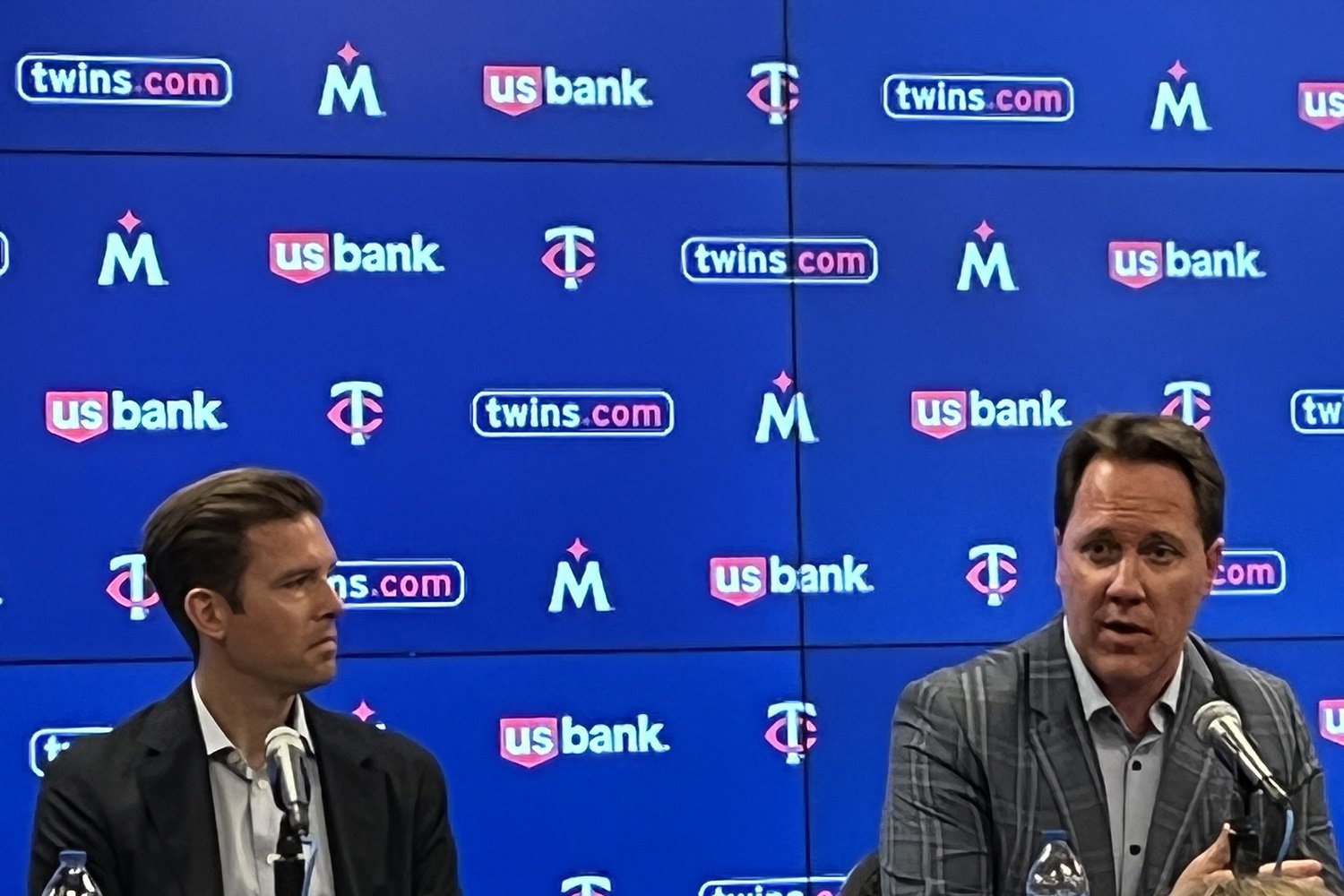 The Twins didn't exactly hold a press conference to announce it, but they might as well have. In early November, shortly after the conclusion of the World Series, team leadership left little ambiguity about the spending outlook for 2024. “We’ve pushed our payroll to heights that we had never pushed it before with the support, certainly, of ownership,” Derek Falvey said. “We know there is some natural ebb and flow to that. Will it be where it was last year? I don’t expect that. I expect it [to be] less than that. Some of that may come more organically.” Some follow-up reporting from Dan Hayes for The Athletic brought even more detail to light: the team foresees "significant payroll cuts" of up to $30 million. This journalistic revelation was less overt than Falvey's open on-the-record admission, but still, you don't get the sense it was some tightly-held secret. Clearly Twins leadership–or at least certain elements of it–didn't mind having this narrative out there in the public sphere. WHY? Coming off a division-winning campaign and a long-awaited postseason breakthrough, the Twins were riding high. They had a prime opportunity to parlay the excitement surrounding this team into a robust winter of season ticket sales and sponsorships. Even if reduced spending was an inevitable reality (and arguably a reasonable one), why come out and say it right away? What is to be gained? Falvey and this front office are too strategic, too intentional to just let something like this slip accidentally. There was a rationale behind getting the word out there. Maybe that's what is most annoying about it for those of us trying to analyze from the outside; it's really hard to find an obvious answer. The effects of setting this vibe for the offseason have been fairly predictable. The widespread reaction to nearly every piece of Twins-related news is colored by resentment toward dropping payroll in a moment of great opportunity. Parting with longtime scouts from the previous regime? Cheap. Failing to re-sign Sonny Gray and Kenta Maeda? Classic Pohlads. Never mind that these decisions adhere to the same general philosophies this front office has pretty much always followed. The Twins are willingly inviting this narrative. So again, I ask: why? There's got to be some sort of motivation behind this course of action. In trying to land on an explanation that seems viable, a few potential objectives come to mind. They're trying to create awareness of the TV situation and its implications. This strikes me as most probable. While many Twins Daily regulars are likely aware of the team's collapsed broadcasting deal with Diamond Sports Group and what it means for the overall revenue picture, a majority of casual fans are not clued in. Not everyone's going to be empathetic to a mega-rich operation making fractionally less profit, but at least it gets an associated (and arguably valid) causal factor out there. Hayes's article makes this framing clear: "Following the expiration of a Bally TV deal that netted them $54.8 million last season, Falvey acknowledged the team’s payroll wouldn’t be nearly as high," he wrote. If a public perception is formed that "better TV deal = higher payroll", it could help the team curry support in its quest to find a new solution. They're trying to influence market expectations. The Twins love to find a competitive advantage wherever they can get it. If players, agents, and other front offices believe the Twins are intent on reducing their payroll, it could influence perceptions in interesting ways. Perhaps another team discounts the stealthy Twins in negotiations for a key player. A stretch? Perhaps. But it'll be a feel-good story for everyone if the Twins end up shooting higher than expected and can talk about how they went past their comfort zone to get the guy they wanted. They're lowering expectations so they can exceed them. Under-promise, over-deliver? The optics of even coming close to repeating their record-setting payroll of 2023 would now be pretty good, given that the team has proactively dampened expectations. I know most of us are zeroing in on the lower end of that $125-140 million range Hayes laid out, to the extent that going beyond that would now feel like a pleasant surprise. It matters, because the difference between those two figures would have a sizable impact on what the front office is realistically able to do this offseason when it comes to upgrading the team, or even making up for the losses they've already experienced in free agency. Unfortunately, this is probably wishful thinking. What I keep coming back to is, why come out with it now? If the Twins ended up spending marginally less next year than they did this year, I don't think too many people would notice or care. The up-front framing of these cuts as significant is glaring to me, and makes me expect the worst. They're trying to soften a big blow. Maybe we are all right to be zeroing in on the low-end $125 million target. Maybe that's the whole point. I don't have any specific insight beyond what's out there, but it wouldn't shock me if the Twins feel overextended after going big last offseason and then losing the RSN honeypot. If Falvey is merely leveling with us and being transparent about the steep drop-off to come, I find it hard to begrudge him. I still just don't get it from a business standpoint. Even if the front office leader's corresponding point about payroll–that the Twins can succeed with a lower one because they've built the infrastructure to do so–is accurate, he had to know how the comment and insinuation would be perceived. The reignited payroll narrative is now casting an additional pall over a series of Twins-related headlines that have not been received well: Dick Bremer being ushered out of the broadcast booth, tenured scouts being dismissed, several key free agents signing elsewhere. Hopefully, somewhere on the other side of this, there is a vision to turn the tides and revitalize morale. Right now, all I'm seeing is an avalanche of bad press and buzz-killing vibes. It makes me wonder what exactly the Twins are trying to do from a business and brand standpoint, as much as a baseball one.
- 97 comments
-
- 13
-

-

-
The veteran catcher sure seems to be on the chopping block as the Twins look to cut payroll. Would trading Christian Vázquez for salary relief be a short-sighted move? Image courtesy of Jesse Johnson-USA TODAY Sports On its face, the idea of trading a backup catcher who makes $10 million seems like a pretty logical method of lowering payroll without substantially downgrading the team. Especially when that catcher is coming off a truly hideous offensive season where the starter in front of him emerged as one of the game's best backstops. And so it comes as no surprise the Twins are said to be "aggressively" trying to move Christian Vázquez (among others) as next week's Winter Meetings approach. An uninspiring free agent class for catchers, headlined by Gary Sánchez, is helping create a market to shop Vázquez even coming off a 2023 campaign where he posted a sub-.600 OPS and ceded his starting job. I'm not trying to say that losing Vázquez would be some sort of disaster, with Ryan Jeffers establishing himself as a true standout and Jair Camargo recently joining the 40-man roster. Vázquez had become so extraneous to the Twins by October that he didn't get a single postseason AB – although I'd argue this owed more to their belief in Jeffers than a lack of faith in Vázquez. Things change from year to year. Just because Vázquez had a down year offensively doesn't mean he can't rebound and get back near the average-ish level that was his baseline the previous four years. And also, focusing on his bat does not tell the full story of what Vázquez provides by a longshot. Most defensive metrics (including SDI) ranked the 33-year-old among the game's best catchers – far better than Jeffers. His presence should not be overlooked in assessing the team's remarkable pitching breakthrough, or overall run prevention prowess. Whether you're looking at blocking, framing, or throwing, Vázquez graded out extremely well. Yes, $10 million for a backup catcher feels like a luxury. But it's better to look at the tandem of he and Jeffers as a combined cost of a bout $12.5 million, which is a very reasonable commitment to one of the most critical positions on the field. It's important to think about the insurance Vázquez provides for Jeffers, who has quickly become one of the franchise's most key assets. Let us not forget what a priority it was for the Twins to go out and get a veteran catcher a year ago, and why. They targeted Vázquez and went out of their comfort zone by adding a third year to their offer for him, specifically because Jeffers had proven so unreliable from a health and production standpoint. One good season, as impressive as it was, does not eliminate these concerns for Jeffers. Looking ahead to 2024, one of the most glaring concerns for the Minnesota Twins is regression. The team would be leaving themselves with little protection behind the plate by subtracting the trusted veteran safety net that is Vázquez; another significant injury to Jeffers would leave the completely untested 24-year-old Camargo atop the catching depth chart. Sure, you could say Vázquez is a luxury. But he doesn't seem like the kind of luxury that a team with World Series aspirations should be looking to part with – rather the kind they should be looking to add. View full article
-
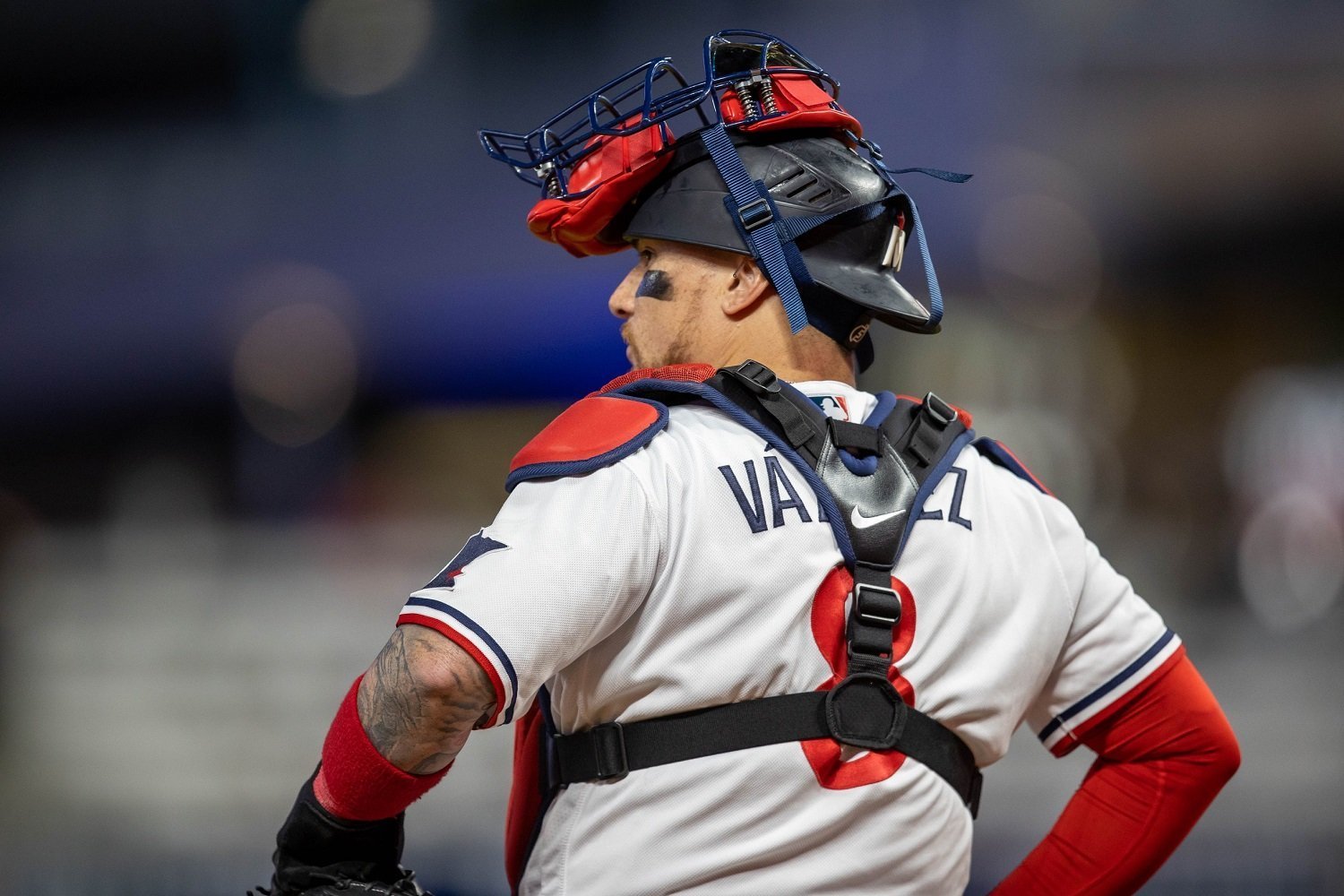 On its face, the idea of trading a backup catcher who makes $10 million seems like a pretty logical method of lowering payroll without substantially downgrading the team. Especially when that catcher is coming off a truly hideous offensive season where the starter in front of him emerged as one of the game's best backstops. And so it comes as no surprise the Twins are said to be "aggressively" trying to move Christian Vázquez (among others) as next week's Winter Meetings approach. An uninspiring free agent class for catchers, headlined by Gary Sánchez, is helping create a market to shop Vázquez even coming off a 2023 campaign where he posted a sub-.600 OPS and ceded his starting job. I'm not trying to say that losing Vázquez would be some sort of disaster, with Ryan Jeffers establishing himself as a true standout and Jair Camargo recently joining the 40-man roster. Vázquez had become so extraneous to the Twins by October that he didn't get a single postseason AB – although I'd argue this owed more to their belief in Jeffers than a lack of faith in Vázquez. Things change from year to year. Just because Vázquez had a down year offensively doesn't mean he can't rebound and get back near the average-ish level that was his baseline the previous four years. And also, focusing on his bat does not tell the full story of what Vázquez provides by a longshot. Most defensive metrics (including SDI) ranked the 33-year-old among the game's best catchers – far better than Jeffers. His presence should not be overlooked in assessing the team's remarkable pitching breakthrough, or overall run prevention prowess. Whether you're looking at blocking, framing, or throwing, Vázquez graded out extremely well. Yes, $10 million for a backup catcher feels like a luxury. But it's better to look at the tandem of he and Jeffers as a combined cost of a bout $12.5 million, which is a very reasonable commitment to one of the most critical positions on the field. It's important to think about the insurance Vázquez provides for Jeffers, who has quickly become one of the franchise's most key assets. Let us not forget what a priority it was for the Twins to go out and get a veteran catcher a year ago, and why. They targeted Vázquez and went out of their comfort zone by adding a third year to their offer for him, specifically because Jeffers had proven so unreliable from a health and production standpoint. One good season, as impressive as it was, does not eliminate these concerns for Jeffers. Looking ahead to 2024, one of the most glaring concerns for the Minnesota Twins is regression. The team would be leaving themselves with little protection behind the plate by subtracting the trusted veteran safety net that is Vázquez; another significant injury to Jeffers would leave the completely untested 24-year-old Camargo atop the catching depth chart. Sure, you could say Vázquez is a luxury. But he doesn't seem like the kind of luxury that a team with World Series aspirations should be looking to part with – rather the kind they should be looking to add.
 -
The Twins have a handful of pitchers on their 40-man roster with tenuous holds on their spots. As the front office seeks to upgrade in the offseason, any one of these five players could find themselves at risk of being the odd man out. Image courtesy of © Rick Osentoski-USA TODAY Sports I'll start out by acknowledging what you already know: young and controllable arms are very valuable in baseball. For that reason, none of these decisions will or should be taken lightly. We've seen countless times how a small shift in pitching role, or a minor tweak to mechanics or pitch mix, can completely turn around a wayward pitcher. The Twins won't be eager to move on from any of these five, who have all shown some level of potential while pitching on the big-league stage. With that said, the front office will likely be seeking to shake things up on the pitching staff this offseason, targeting new talents and projects to take on. There are currently four open spots on the 40-man roster, but those could be claimed quickly as the Twins fulfill needs in the rotation and position-player corps. After being extended arbitration earlier this month, Jorge Alcala will likely be given every chance to overcome his injuries and make the 2024 bullpen, although that isn't a lock. The following five could be considered less likely to make it through the offseason without exiting the organization via DFA or minor trade. Jordan Balazovic, RHP Heading into the 2020 season, we had Balazovic ranked as the fifth-best prospect in the Twins system. He would move up to the status of No. 1 pitching prospect when Brusdar Graterol – ranked one spot ahead – was traded shortly thereafter. At the time, Balazovic was coming off a stellar year in Single-A, and at age 21 was on track to eventually impact an MLB rotation. Unfortunately, since the lost COVID season, the righty has struggled with pretty much everything: control, hits, home runs. The 2023 season was especially tumultuous for Balazovic; he missed time in spring training after an off-the-field altercation, and once again got rocked at Triple-A. He did break through to the majors with 18 appearances, but gave up 12 walks and five homers in 24 innings. A smokescreen of unsustainable early success gave way to the reality of an overmatched pitcher. “Jordan was really good about identifying and being honest with the way he was throwing the ball,” manager Rocco Baldelli said when Balazovic was demoted in late August. “He said, ‘I just have to get in the zone.’ … I liked him taking that level of responsibility on. He was very direct and that felt good. He knows what he’s trying to accomplish.” Balazovic proceeded to issue 11 walks with four strikeouts in 10 innings for the Saints after getting sent down. A brutal end to a brutal year that leaves the 25-year-old's future here in limbo. He still has some traits to like – namely a big frame and a fastball that can elevate in the zone – but it's fairly to easy imagine the front office moving on and picking a new arm to develop with this roster spot. Josh Winder, RHP The Twins were very high on Winder coming out of spring training in 2022, to the point that they surprisingly kept him on the Opening Day roster. He was impressive early on, before familiar shoulder issues cropped up and derailed his season. Winder has since been unable to shake those recurring right shoulder woes, and was limited to just 70 ineffective innings between the majors and Triple-A this season. He stands 6-foot-5 with a great slider, giving him a strong reliever profile, and even throws 95 to boot. The problem is that Winder's fastball, despite its velocity, has been a batting-practice pitch in the majors, yielding a .537 wOBA this year and .485 last year. Simply non-viable. He turned 27 in October. Cole Sands, RHP Sands has been up and down over the past couple of seasons, filling in as needed with 26 appearances (three starts) and 52 innings. The sum result has been a 4.99 ERA and 5.06 FIP – not good. He's in a very similar boat as Winder, running dangerously close to the "Quadruple-A player" designation at age 26 with no real record of MLB success. I think the Twins will be a little more inclined to keep Sands over Winder because he is younger, has been healthier, and his fastball at least shows signs of being usable. Plus Sands has a really interesting secondary mix that is worth building around as a reliever. Brent Headrick, LHP The left-hander was a somewhat surprising add to the 40-man roster last offseason, in that he wasn't really on the prospect radar. The Twins liked his ability to factor as immediate major-league depth, and they were valid in assessing him as such. Headrick made 14 appearances for the big-league club in 2023, handling the load capably at times. Still, his performance could hardy be described as impressive. Headrick finished with a 6.31 ERA and 6.10 FIP in 26 innings for the Twins. His performance in Triple-A also wasn't great (4.68 ERA in 75 innings) but as a hard-throwing lefty who can provide length and strike people out, I don't think Headrick is especially likely to exit. Simeon Woods Richardson, RHP I don't really believe Woods Richardson is at risk of being dumped this offseason, which is why he's at the bottom of this list. He's young enough to have upside, and seasoned enough to offer big-league depth. But the theoretical upside in his game is fading fast. Woods Richardson's 2023 season was discouraging in almost every way. His velocity dwindled, his stuff lagged and his numbers were dreadful, even though he was seemingly healthy throughout the season. To put his 19.3% K-rate at Triple-A in some context, it was lower than Randy Dobnak's. The right-hander is still only 23 and I suspect the Twins would at least let him loose in a full-time relief role before letting him loose. That said, it wouldn't surprise me if he was a toss-in for some trade package this offseason. Managing pitchers like these is a delicate balance. You never want to give up too early, but holding too long can mean costing yourself opportunities to roster and develop different arms. We'll see where the Twins land this offseason on these five fringe figures in the team's pitching plans. View full article
-
Which Marginal Twins Pitchers Won't Make It Through the Offseason?
Nick Nelson posted an article in Twins
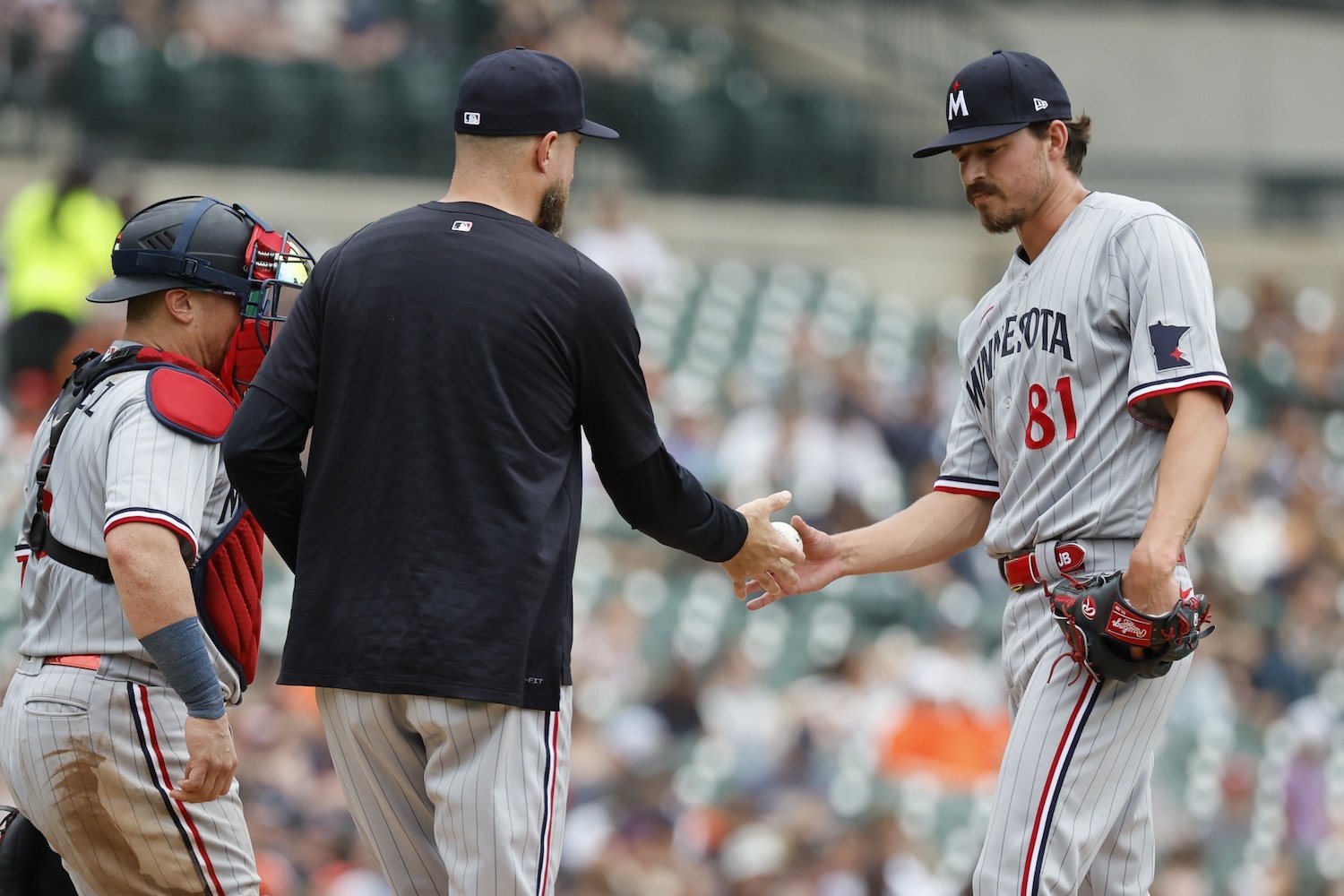 I'll start out by acknowledging what you already know: young and controllable arms are very valuable in baseball. For that reason, none of these decisions will or should be taken lightly. We've seen countless times how a small shift in pitching role, or a minor tweak to mechanics or pitch mix, can completely turn around a wayward pitcher. The Twins won't be eager to move on from any of these five, who have all shown some level of potential while pitching on the big-league stage. With that said, the front office will likely be seeking to shake things up on the pitching staff this offseason, targeting new talents and projects to take on. There are currently four open spots on the 40-man roster, but those could be claimed quickly as the Twins fulfill needs in the rotation and position-player corps. After being extended arbitration earlier this month, Jorge Alcala will likely be given every chance to overcome his injuries and make the 2024 bullpen, although that isn't a lock. The following five could be considered less likely to make it through the offseason without exiting the organization via DFA or minor trade. Jordan Balazovic, RHP Heading into the 2020 season, we had Balazovic ranked as the fifth-best prospect in the Twins system. He would move up to the status of No. 1 pitching prospect when Brusdar Graterol – ranked one spot ahead – was traded shortly thereafter. At the time, Balazovic was coming off a stellar year in Single-A, and at age 21 was on track to eventually impact an MLB rotation. Unfortunately, since the lost COVID season, the righty has struggled with pretty much everything: control, hits, home runs. The 2023 season was especially tumultuous for Balazovic; he missed time in spring training after an off-the-field altercation, and once again got rocked at Triple-A. He did break through to the majors with 18 appearances, but gave up 12 walks and five homers in 24 innings. A smokescreen of unsustainable early success gave way to the reality of an overmatched pitcher. “Jordan was really good about identifying and being honest with the way he was throwing the ball,” manager Rocco Baldelli said when Balazovic was demoted in late August. “He said, ‘I just have to get in the zone.’ … I liked him taking that level of responsibility on. He was very direct and that felt good. He knows what he’s trying to accomplish.” Balazovic proceeded to issue 11 walks with four strikeouts in 10 innings for the Saints after getting sent down. A brutal end to a brutal year that leaves the 25-year-old's future here in limbo. He still has some traits to like – namely a big frame and a fastball that can elevate in the zone – but it's fairly to easy imagine the front office moving on and picking a new arm to develop with this roster spot. Josh Winder, RHP The Twins were very high on Winder coming out of spring training in 2022, to the point that they surprisingly kept him on the Opening Day roster. He was impressive early on, before familiar shoulder issues cropped up and derailed his season. Winder has since been unable to shake those recurring right shoulder woes, and was limited to just 70 ineffective innings between the majors and Triple-A this season. He stands 6-foot-5 with a great slider, giving him a strong reliever profile, and even throws 95 to boot. The problem is that Winder's fastball, despite its velocity, has been a batting-practice pitch in the majors, yielding a .537 wOBA this year and .485 last year. Simply non-viable. He turned 27 in October. Cole Sands, RHP Sands has been up and down over the past couple of seasons, filling in as needed with 26 appearances (three starts) and 52 innings. The sum result has been a 4.99 ERA and 5.06 FIP – not good. He's in a very similar boat as Winder, running dangerously close to the "Quadruple-A player" designation at age 26 with no real record of MLB success. I think the Twins will be a little more inclined to keep Sands over Winder because he is younger, has been healthier, and his fastball at least shows signs of being usable. Plus Sands has a really interesting secondary mix that is worth building around as a reliever. Brent Headrick, LHP The left-hander was a somewhat surprising add to the 40-man roster last offseason, in that he wasn't really on the prospect radar. The Twins liked his ability to factor as immediate major-league depth, and they were valid in assessing him as such. Headrick made 14 appearances for the big-league club in 2023, handling the load capably at times. Still, his performance could hardy be described as impressive. Headrick finished with a 6.31 ERA and 6.10 FIP in 26 innings for the Twins. His performance in Triple-A also wasn't great (4.68 ERA in 75 innings) but as a hard-throwing lefty who can provide length and strike people out, I don't think Headrick is especially likely to exit. Simeon Woods Richardson, RHP I don't really believe Woods Richardson is at risk of being dumped this offseason, which is why he's at the bottom of this list. He's young enough to have upside, and seasoned enough to offer big-league depth. But the theoretical upside in his game is fading fast. Woods Richardson's 2023 season was discouraging in almost every way. His velocity dwindled, his stuff lagged and his numbers were dreadful, even though he was seemingly healthy throughout the season. To put his 19.3% K-rate at Triple-A in some context, it was lower than Randy Dobnak's. The right-hander is still only 23 and I suspect the Twins would at least let him loose in a full-time relief role before letting him loose. That said, it wouldn't surprise me if he was a toss-in for some trade package this offseason. Managing pitchers like these is a delicate balance. You never want to give up too early, but holding too long can mean costing yourself opportunities to roster and develop different arms. We'll see where the Twins land this offseason on these five fringe figures in the team's pitching plans.
 -
The kids did step up! They had the most impactful rookie class in franchise history and won 87 games. I think that's why people would understandably like to see some investment around that core.
-
Naming moves from last offseason is a weird way to disagree with my assessment of this offseason. Are you really saying that making obvious moves on Kepler, Polanco and Gray is a deviation from the status quo?
-
The offseason is off to a quiet start across the league, but things figure to start heating up as the Winter Meetings fast approach. Here's a quick rundown of where things stand with the Twins, who've been busy setting themselves up to make some moves. Image courtesy of Ron Chenoy-USA TODAY Sports There's no other way to frame it: The start of this offseason has been flat-out deflating for Minnesota Twins fans. After watching a promising ALDS fizzle out at Target Field, we've since been informed directly by the team's leadership that we can expect payroll cuts next year. It's a splash of cold water following the franchise's much-awaited resurgence. Thus far, everything we've seen from the Twins in a slow start to the offseason has been suggestive of a commitment to the status quo. There have been no real surprises or curveballs yet. But that doesn't mean some aren't in store. Read on to catch up on any moves or headlines you might've missed. Twins Extend Arbitration To All Eligible Players Minnesota's front office characteristically waited until the very last minute to make their decisions public, but ultimately ruffled no feathers when the deadline to extend 2024 contracts for arbitration-eligible (and pre-arb) players arrived on November 17th. The Twins extended offers to the following seven players, whose salary estimates for next year are listed alongside: Kyle Farmer, $6.6M Willi Castro, $3.2M Caleb Thielbar, $3.0M Ryan Jeffers: $2.3M Alex Kirilloff: $1.7M Nick Gordon, $1.0M Jorge Alcala, $1.0M Just because these players were offered arbitration, that does not assure they'll be on the team next year. In some cases (i.e. Farmer) it's probably more likely they won't be. But for now, all seven remain in the Twins' plans. Prospects Added to 40-Man, Suspects Subtracted Earlier, the Twins had added four prospects to their 40-man roster in order to protect them from the upcoming Rule 5 draft: Emmanuel Rodriguez, Austin Martin, Jair Camargo, and Yunior Severino. You can read about the minor-leaguers who were NOT added, and thus left vulnerable to getting plucked away when the Rule 5 takes place, here. These additions have been counterbalanced by a number of marginal or injured players being removed and outrighted from the 40-man roster, including all the departing free agents (Michael A. Taylor, Tyler Mahle, Donovan Solano, Kenta Maeda, Sonny Gray, Dallas Keuchel, Emilio Pagan, Joey Gallo) as well as relievers Jovani Moran and Ronny Henriquez. Gray was extended a qualifying offer, which he rejected, so in the likely event he signs elsewhere, the Twins will get draft pick compensation. All of this shuffling leaves the 40-man roster at 36, as the Twins turn their attention toward acquiring new talent. Twins Said To Be Shopping Vázquez Last offseason, the Twins' top priority was signing Christian Vázquez, and they got it done before Christmas. This year, their top priority already be unloading his contract. According to MLB insider Robert Murray, via Foul Territory TV, "The Twins are looking to cut payroll and have aggressively tried to move certain players, including Christian Vázquez." Just a bummer of a headline and tone-setter for this offseason, as alluded earlier. For the Twins to immediately go into open cost-cutting mode following such an energizing, breakthrough season is horrible optics. Alas, here we are. Vázquez is coming off one of his worst offensive seasons, but rated out well defensively and clearly has some level of demand in a sparse catching market. Still, it's tough to envision the Twins getting much more than salary relief in return for trading the veteran and his remaining two years, $20 million. Detroit Zeroing In on Maeda Elsewhere, it sounds like momentum is building toward a deal between Maeda and the Detroit Tigers, which would keep the right-hander in the AL Central following his four-year stint with the Twins. The Twins were said to be in the mix for Maeda, but I don't get the sense they are prepared to win a bidding war for the 35-year-old coming off a good-not-great season. With Detroit looking to take a step forward and overtake the Twins after finishing second this year, snagging away Maeda would be an interesting development for a budding rivalry. The Hot Stove has been cool thus far, but it's bound to heat up soon. Stay tuned to Twins Daily for real-time coverage and discussion of the MLB offseason. View full article
-
Offseason Status Update: Arbitration, 40-Man Pruning, Vázquez Rumors
Nick Nelson posted an article in Twins
 There's no other way to frame it: The start of this offseason has been flat-out deflating for Minnesota Twins fans. After watching a promising ALDS fizzle out at Target Field, we've since been informed directly by the team's leadership that we can expect payroll cuts next year. It's a splash of cold water following the franchise's much-awaited resurgence. Thus far, everything we've seen from the Twins in a slow start to the offseason has been suggestive of a commitment to the status quo. There have been no real surprises or curveballs yet. But that doesn't mean some aren't in store. Read on to catch up on any moves or headlines you might've missed. Twins Extend Arbitration To All Eligible Players Minnesota's front office characteristically waited until the very last minute to make their decisions public, but ultimately ruffled no feathers when the deadline to extend 2024 contracts for arbitration-eligible (and pre-arb) players arrived on November 17th. The Twins extended offers to the following seven players, whose salary estimates for next year are listed alongside: Kyle Farmer, $6.6M Willi Castro, $3.2M Caleb Thielbar, $3.0M Ryan Jeffers: $2.3M Alex Kirilloff: $1.7M Nick Gordon, $1.0M Jorge Alcala, $1.0M Just because these players were offered arbitration, that does not assure they'll be on the team next year. In some cases (i.e. Farmer) it's probably more likely they won't be. But for now, all seven remain in the Twins' plans. Prospects Added to 40-Man, Suspects Subtracted Earlier, the Twins had added four prospects to their 40-man roster in order to protect them from the upcoming Rule 5 draft: Emmanuel Rodriguez, Austin Martin, Jair Camargo, and Yunior Severino. You can read about the minor-leaguers who were NOT added, and thus left vulnerable to getting plucked away when the Rule 5 takes place, here. These additions have been counterbalanced by a number of marginal or injured players being removed and outrighted from the 40-man roster, including all the departing free agents (Michael A. Taylor, Tyler Mahle, Donovan Solano, Kenta Maeda, Sonny Gray, Dallas Keuchel, Emilio Pagan, Joey Gallo) as well as relievers Jovani Moran and Ronny Henriquez. Gray was extended a qualifying offer, which he rejected, so in the likely event he signs elsewhere, the Twins will get draft pick compensation. All of this shuffling leaves the 40-man roster at 36, as the Twins turn their attention toward acquiring new talent. Twins Said To Be Shopping Vázquez Last offseason, the Twins' top priority was signing Christian Vázquez, and they got it done before Christmas. This year, their top priority already be unloading his contract. According to MLB insider Robert Murray, via Foul Territory TV, "The Twins are looking to cut payroll and have aggressively tried to move certain players, including Christian Vázquez." Just a bummer of a headline and tone-setter for this offseason, as alluded earlier. For the Twins to immediately go into open cost-cutting mode following such an energizing, breakthrough season is horrible optics. Alas, here we are. Vázquez is coming off one of his worst offensive seasons, but rated out well defensively and clearly has some level of demand in a sparse catching market. Still, it's tough to envision the Twins getting much more than salary relief in return for trading the veteran and his remaining two years, $20 million. Detroit Zeroing In on Maeda Elsewhere, it sounds like momentum is building toward a deal between Maeda and the Detroit Tigers, which would keep the right-hander in the AL Central following his four-year stint with the Twins. The Twins were said to be in the mix for Maeda, but I don't get the sense they are prepared to win a bidding war for the 35-year-old coming off a good-not-great season. With Detroit looking to take a step forward and overtake the Twins after finishing second this year, snagging away Maeda would be an interesting development for a budding rivalry. The Hot Stove has been cool thus far, but it's bound to heat up soon. Stay tuned to Twins Daily for real-time coverage and discussion of the MLB offseason.
 -
The last time the Twins were riding momentum like this heading into an offseason, they swung big, albeit not quite in the way people expected. If the front office wants to build on a strong offensive foundation like they did with the Josh Donaldson signing, these two trade targets would seriously upgrade the heart of the Minnesota lineup for 2024. Image courtesy of Eric Hartline, Gregory Fisher-USA TODAY Sports Coming off a 101-win season in 2019 where their pitching fell short in the playoffs, everyone expected the Minnesota Twins to move aggressively on arms in free agency. By all accounts, they tried, but were unable to woo their top targets. So the front office pivoted. They were determined to make an emphatic addition that would energize the fanbase and further elevate their ascendant squad. Minnesota made an ambitious addition at a position that didn't really seem like much of a need, because the opportunity was there. The Twins signed Josh Donaldson to be their new third baseman, and shifted Miguel Sano to first base in order to accommodate the move. The idea was that infusing Donaldson's high-end bat into an already potent lineup would serve to elevate an offense that already ranked near the top of the league. That move didn't work out particularly well, but the rationale was sound. This winter, if the Twins want to bring in a proven big bopper who can dramatically upgrade a lineup that already ranked as one of the league's best in the second half, they should seek to do it at first base, where there's flexibility to add. And they should look to the trade market rather than free agency, where two opportunities exist to add a potentially elite right-handed bat. There are reasons to believe Paul Goldschmidt and Pete Alonso could be available this offseason at a somewhat reasonable cost, and either one would have the makings of a huge difference-maker in the Twins offense. Paul Goldschmidt, STL Goldschmidt has been one of the league's premier players for more than a decade. Since splashing onto the scene with Arizona back in 2012, Goldy ranks fourth among MLB players in fWAR. The only players to total more home runs during that span: Mike Trout, Nelson Cruz, Giancarlo Stanton. Goldschmidt has been a top-three finisher for the MVP award four times, including 2022 when he won it. So why would he potentially be available in trade talks? A few reasons: Goldschmidt is reaching the end of his $130 million contract, with one year remaining at $26 million. Trading him now would allow the Cardinals to recoup value while also experiencing some payroll relief. The veteran first baseman turned 36 in September, and showed signs of possible decline this year with his lowest OPS+ (120) since he was a rookie back in 2011. The Cardinals have been a relentlessly competitive team over the years, but they are coming off a last-place finish and might need to be realistic about their outlook for 2024. Does it really behoove them to hold onto an aging and expensive first baseman if St. Louis isn't serious about making a push? It definitely bears noting that Goldschmidt has a full no-trade clause. He would need to approve and sign off on any hypothetical deal. It's possible that would require an extension from the acquiring team, if it's an option at all. Goldy may very well prefer staying where he's comfortable for another year and figuring out his plan then. However, I'll say this: his name was definitely floating around at the last trade deadline. And he was recently listed off by top MLB insider Jeff Passan as one of several candidates to be moved this offseason. Maybe Goldschmidt looks at the opportunity to join Carlos Correa in leading an ascendant Twins team as inviting after a 91-loss slog with the Cards. (Who just inspiringly signed Lance Lynn.) For a more straightforward but arguably less ideal fit, let's turn our attention to the second candidate I'm highlighting today. Pete Alonso, 1B Unlike Goldschmidt, you don't have a manufacture a scenario where Alonso gets traded this offseason. He's being mentioned far and wide in the rumor mill, entering his final season of arbitration with a projected price tag in the $22 million range. Steve Cohen and the Mets aren't going to trade Alonso just to dump his salary, although it might help pave the way for another big splash. They are likely seeking to shift their identity after the 2023 club was an expensive disaster. There's been little indication they plan to extend him, so it only makes sense the Mets would shop their 28-year-old three-time All Star around and see if they could get a haul. Alonso embodies what the Twins have valued as an offensive profile: he hits the ball extremely hard and launches a ton of home runs. He hit 53 home runs while winning Rookie of the Year in 2019, and has averaged 41 in three full seasons since. That includes a most recent 2023 campaign in which the "Polar Bear" went deep 46 times for New York. Needless to say, the cost to acquire him would be high. Which is a little scary because – in what might sound familiar to Twins fans – Alonso offered relatively little value outside of all those home runs this year. He batted .217 and struck out 150 times. Despite leading the league in HBP, he finished with a mere .318 on-base percentage. His defense rates out poorly and he's extremely slow. Of course, that's only one season. In 2022, Alonso was an all-out monster, posting a 146 OPS+ with 131 RBIs and 3.8 fWAR. He didn't finish too far behind Goldschmidt (the winner) in the MVP voting. While the aging Goldy is on the downslope of his career, Alonso might yet be on the way up. For that reason, he'll probably be aiming to land with a team that plans to give him a contract extension. I can't imagine that being the Twins. Making room for his salary in 2024 would be tricky enough, let alone committing the nine-digit sum necessary to lock up an all-or-nothing RH power bat when they're already beholden to one in Byron Buxton. Goldschmidt's $26 million salary would be tougher to accommodate in the short-term, but trading Max Kepler would help offset the addition somewhat, and in turn, Alex Kirilloff could slide to the outfield to make room for a new full-time first baseman. If the Twins choose to target an explosive first baseman to upgrade the heart of their lineup and elevate their offensive ceiling to new heights, there are two very legitimate options out there. That is, if they are willing to pay the price, in prospects and dollars. View full article
-
Two Trade Targets at First Base Who Could Transform the Twins Lineup
Nick Nelson posted an article in Twins
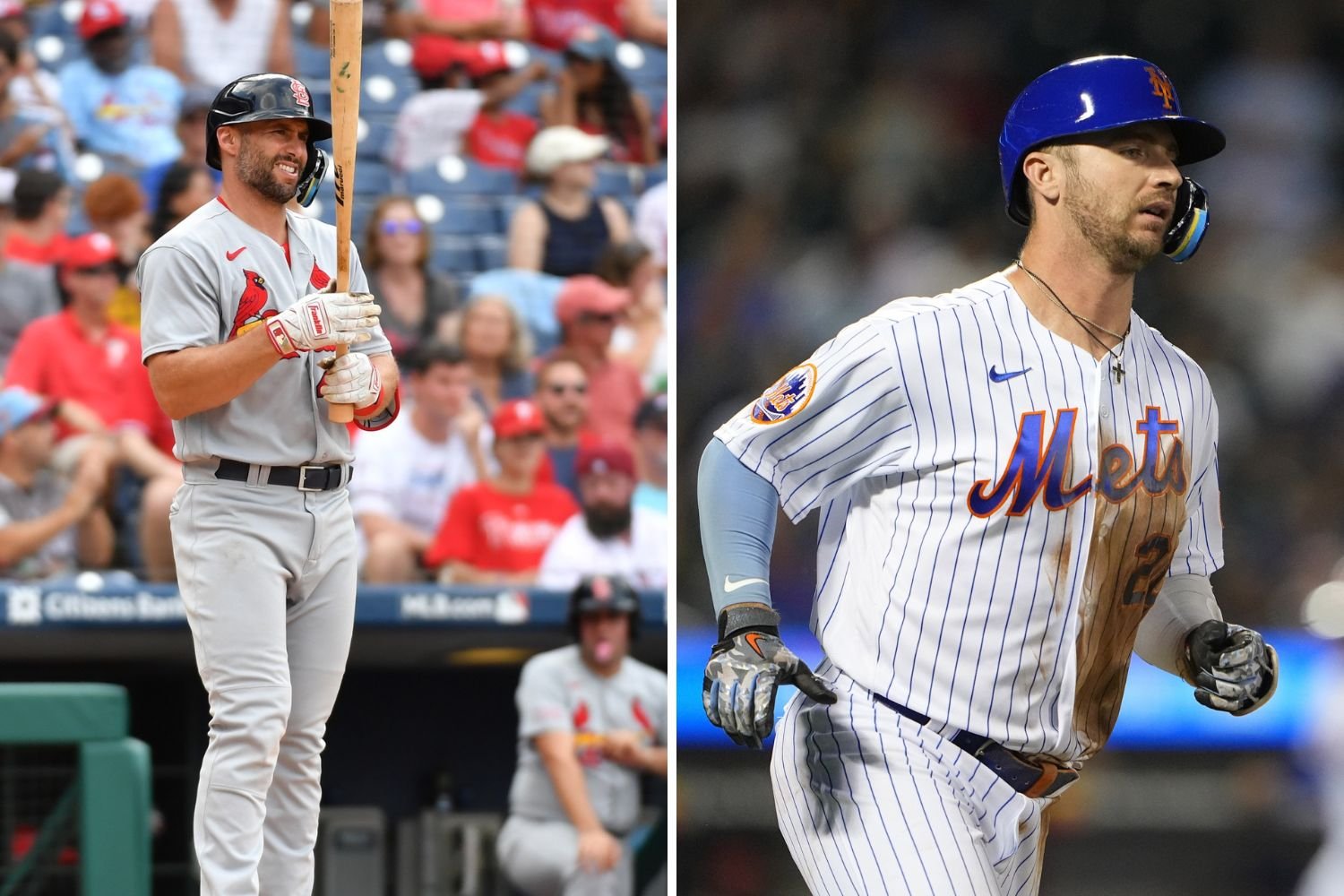 Coming off a 101-win season in 2019 where their pitching fell short in the playoffs, everyone expected the Minnesota Twins to move aggressively on arms in free agency. By all accounts, they tried, but were unable to woo their top targets. So the front office pivoted. They were determined to make an emphatic addition that would energize the fanbase and further elevate their ascendant squad. Minnesota made an ambitious addition at a position that didn't really seem like much of a need, because the opportunity was there. The Twins signed Josh Donaldson to be their new third baseman, and shifted Miguel Sano to first base in order to accommodate the move. The idea was that infusing Donaldson's high-end bat into an already potent lineup would serve to elevate an offense that already ranked near the top of the league. That move didn't work out particularly well, but the rationale was sound. This winter, if the Twins want to bring in a proven big bopper who can dramatically upgrade a lineup that already ranked as one of the league's best in the second half, they should seek to do it at first base, where there's flexibility to add. And they should look to the trade market rather than free agency, where two opportunities exist to add a potentially elite right-handed bat. There are reasons to believe Paul Goldschmidt and Pete Alonso could be available this offseason at a somewhat reasonable cost, and either one would have the makings of a huge difference-maker in the Twins offense. Paul Goldschmidt, STL Goldschmidt has been one of the league's premier players for more than a decade. Since splashing onto the scene with Arizona back in 2012, Goldy ranks fourth among MLB players in fWAR. The only players to total more home runs during that span: Mike Trout, Nelson Cruz, Giancarlo Stanton. Goldschmidt has been a top-three finisher for the MVP award four times, including 2022 when he won it. So why would he potentially be available in trade talks? A few reasons: Goldschmidt is reaching the end of his $130 million contract, with one year remaining at $26 million. Trading him now would allow the Cardinals to recoup value while also experiencing some payroll relief. The veteran first baseman turned 36 in September, and showed signs of possible decline this year with his lowest OPS+ (120) since he was a rookie back in 2011. The Cardinals have been a relentlessly competitive team over the years, but they are coming off a last-place finish and might need to be realistic about their outlook for 2024. Does it really behoove them to hold onto an aging and expensive first baseman if St. Louis isn't serious about making a push? It definitely bears noting that Goldschmidt has a full no-trade clause. He would need to approve and sign off on any hypothetical deal. It's possible that would require an extension from the acquiring team, if it's an option at all. Goldy may very well prefer staying where he's comfortable for another year and figuring out his plan then. However, I'll say this: his name was definitely floating around at the last trade deadline. And he was recently listed off by top MLB insider Jeff Passan as one of several candidates to be moved this offseason. Maybe Goldschmidt looks at the opportunity to join Carlos Correa in leading an ascendant Twins team as inviting after a 91-loss slog with the Cards. (Who just inspiringly signed Lance Lynn.) For a more straightforward but arguably less ideal fit, let's turn our attention to the second candidate I'm highlighting today. Pete Alonso, 1B Unlike Goldschmidt, you don't have a manufacture a scenario where Alonso gets traded this offseason. He's being mentioned far and wide in the rumor mill, entering his final season of arbitration with a projected price tag in the $22 million range. Steve Cohen and the Mets aren't going to trade Alonso just to dump his salary, although it might help pave the way for another big splash. They are likely seeking to shift their identity after the 2023 club was an expensive disaster. There's been little indication they plan to extend him, so it only makes sense the Mets would shop their 28-year-old three-time All Star around and see if they could get a haul. Alonso embodies what the Twins have valued as an offensive profile: he hits the ball extremely hard and launches a ton of home runs. He hit 53 home runs while winning Rookie of the Year in 2019, and has averaged 41 in three full seasons since. That includes a most recent 2023 campaign in which the "Polar Bear" went deep 46 times for New York. Needless to say, the cost to acquire him would be high. Which is a little scary because – in what might sound familiar to Twins fans – Alonso offered relatively little value outside of all those home runs this year. He batted .217 and struck out 150 times. Despite leading the league in HBP, he finished with a mere .318 on-base percentage. His defense rates out poorly and he's extremely slow. Of course, that's only one season. In 2022, Alonso was an all-out monster, posting a 146 OPS+ with 131 RBIs and 3.8 fWAR. He didn't finish too far behind Goldschmidt (the winner) in the MVP voting. While the aging Goldy is on the downslope of his career, Alonso might yet be on the way up. For that reason, he'll probably be aiming to land with a team that plans to give him a contract extension. I can't imagine that being the Twins. Making room for his salary in 2024 would be tricky enough, let alone committing the nine-digit sum necessary to lock up an all-or-nothing RH power bat when they're already beholden to one in Byron Buxton. Goldschmidt's $26 million salary would be tougher to accommodate in the short-term, but trading Max Kepler would help offset the addition somewhat, and in turn, Alex Kirilloff could slide to the outfield to make room for a new full-time first baseman. If the Twins choose to target an explosive first baseman to upgrade the heart of their lineup and elevate their offensive ceiling to new heights, there are two very legitimate options out there. That is, if they are willing to pay the price, in prospects and dollars.
 -
@Greggory Masterson I just realized what a wrench I threw in the title of this post by scheduling it to publish on a Tuesday. Please forgive me 😭 Seriously though, great stuff as usual
- 13 replies
-
- 2
-

-
-
- sonny gray
- jake odorizzi
- (and 3 more)
-
We asked Twins Daily users and writers to submit their ideas for realistic offseason trades. We ended up with a list of 35 submissions. While each was unique, there were definitely some noticeable trends and commonalities. Image courtesy of Michael McLoone and Jeff Curry-USA TODAY SportsMichael McLoone and Jeff Curry-USA TODAY Sports If you haven't yet, you can download the (FREE!) big list of trade ideas, which is a PDF compiling submissions from our community. Each proposal was explained, vetted, and analyzed. Anyone can access this installment of our 2024 Offseason Handbook, whether you are a Caretaker or not. This call for imaginative yet considered trade ideas yielded a wide range of theoretical swaps, involving many different players. Some were off the wall; others seemed downright plausible. One person submitted a three-team deal involving six players. I encourage everyone to read through all of the many ideas unpacked in the PDF, but here I'm going to pull out some themes and takeaways that struck us as we went through all your submissions. Corbin Burnes is a good trade fit for the Twins Clearly the rumors of Burnes' availability, with reports that the Brewers are willing to trade "virtually any player" following Craig Counsell's exit, have piqued the interest of Twins fans, and for obvious reasons. Burnes is a frontline starter capable of offsetting the loss of Sonny Gray like few others could. Multiple different trade submissions targeted Burnes, including a really well thought out and explained framework from Matthew Trueblood, who has unique dual insight as editor for both a Twins and Brewers website. If Milwaukee would be down to deal Burnes and his one remaining year of control for Jorge Polanco and David Festa, as Matthew suggests, I think I'd take that in a second. Payroll could be an impediment in making a big splash The pesky knowledge of a looming Twins payroll decrease threw some cold water on a few otherwise intriguing trade ideas. Multiple people took a shot at acquiring Juan Soto from San Diego, but even if the Twins could muster a worthy package, it's hard to see how another $30 million salary fits on the books. The same is true to a lesser extent with Pete Alonso, another known trade candidate. One popular name whose pursuit could be stymied by payroll implications is Tyler Glasnow. He's an appealing fit for the Twins as a frontline talent with one remaining year of control, but the same reason Tampa is looking to unload Glasnow is the same reason Minnesota may struggle to accommodate his addition; the righty is owed $25 million in 2024. David Festa is a popular trade chip In trying to conceptualize trades that would be considered realistic, many respondents included pitching prospects, which tells us they were taking the assignment seriously. Festa was named in six different Twins trade packages, and Marco Raya was in a few others. Twins Daily has these two ranked as the top two pitching prospects in the organization, fourth and fifth overall. Minnesota's front office might prefer to trade exclusively from its position-player depth, but young arms are the currency of baseball. As I wrote in an earlier Handbook chapter, "If the Twins front office is big-game hunting this winter, these are names they’ll need to make themselves comfortable including." People are eyeing Mitch Keller as the next Pablo Lopez The Lopez trade worked out extremely well, so it's unsurprising that many fans are eager to try and replicate it. Pittsburgh's Keller was called out in multiple submissions as a target with similar traits: he's pretty young (27) with good-not-great performance and upside to potentially be tapped. Like Lopez a year ago, Keller has two remaining years of team control, and they don't figure to be that expensive. Of course, for these reasons, the Pirates won't be giving him away. Players dangled in various hypothetical Keller trades included Edouard Julien, Matt Wallner, and both of the top two pitching prospects mentioned above. Unloading salary for prospects looks like a realistic path It's no surprise that there were a lot of different deals in the book involving Max Kepler and/or Jorge Polanco, given that both are logical candidates to be shopped this winter. Several of these proposals brought back immediate impact talent, but if the Twins are truly motivated to move one or both for salary reasons, a trade that brings back prospects might be most likely -- particularly if the Twins are using this step-back in spending as an opportunity to reload their longer-term pipeline. One trade suggestion from user Cory had the Twins swapping Polanco for RHP Tom Harrington, the No. 6 prospect in Pittsburgh's system. Another submission, from "harmony," sent both Polanco and Kepler to Seattle for their top pitching prospect Emerson Hancock. If you haven't yet, we encourage you to explore the Big List of Twins Trade Ideas and share your own thoughts, or any ideas for offseason trades that might've been inspired by others. View full article
-
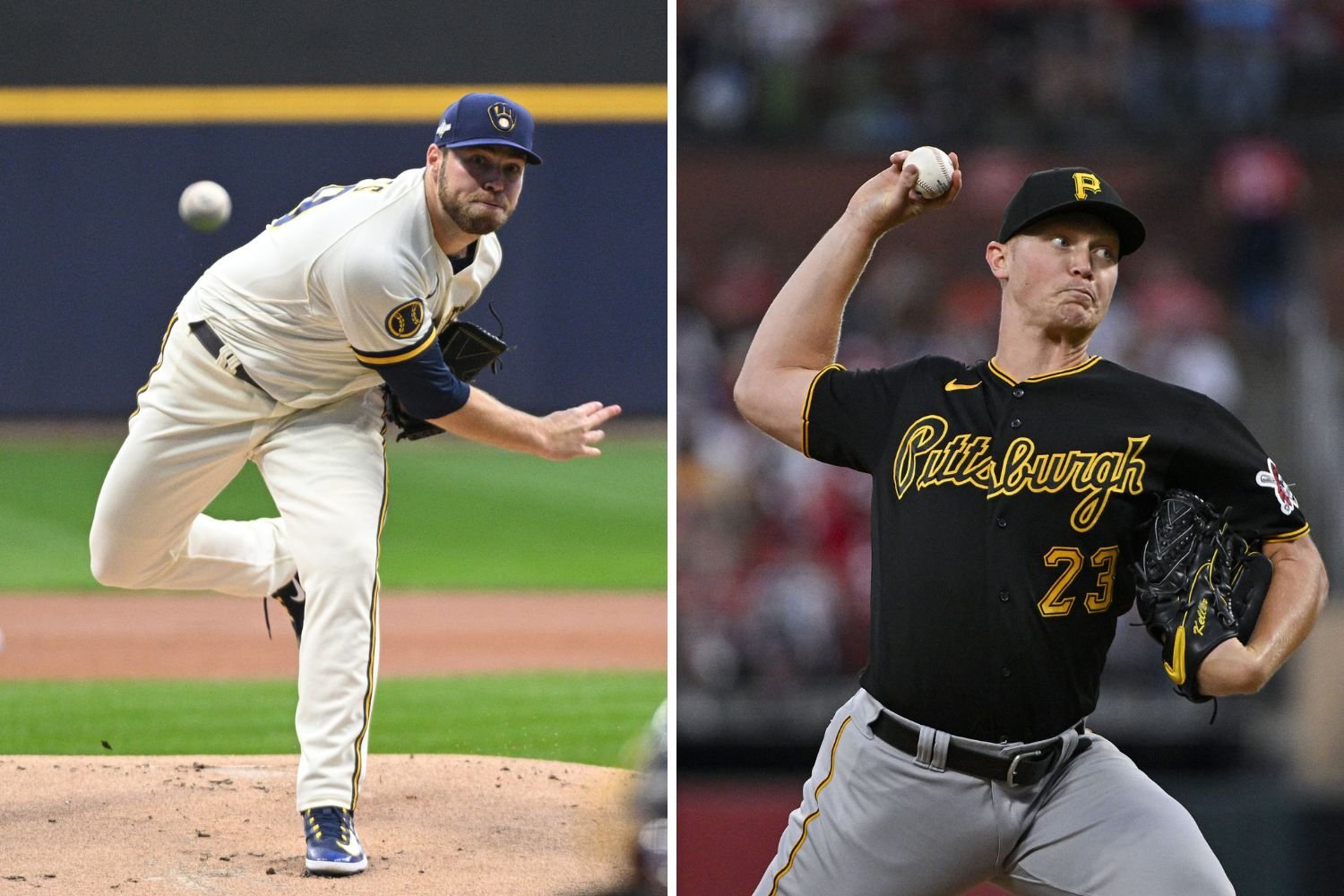 If you haven't yet, you can download the (FREE!) big list of trade ideas, which is a PDF compiling submissions from our community. Each proposal was explained, vetted, and analyzed. Anyone can access this installment of our 2024 Offseason Handbook, whether you are a Caretaker or not. This call for imaginative yet considered trade ideas yielded a wide range of theoretical swaps, involving many different players. Some were off the wall; others seemed downright plausible. One person submitted a three-team deal involving six players. I encourage everyone to read through all of the many ideas unpacked in the PDF, but here I'm going to pull out some themes and takeaways that struck us as we went through all your submissions. Corbin Burnes is a good trade fit for the Twins Clearly the rumors of Burnes' availability, with reports that the Brewers are willing to trade "virtually any player" following Craig Counsell's exit, have piqued the interest of Twins fans, and for obvious reasons. Burnes is a frontline starter capable of offsetting the loss of Sonny Gray like few others could. Multiple different trade submissions targeted Burnes, including a really well thought out and explained framework from Matthew Trueblood, who has unique dual insight as editor for both a Twins and Brewers website. If Milwaukee would be down to deal Burnes and his one remaining year of control for Jorge Polanco and David Festa, as Matthew suggests, I think I'd take that in a second. Payroll could be an impediment in making a big splash The pesky knowledge of a looming Twins payroll decrease threw some cold water on a few otherwise intriguing trade ideas. Multiple people took a shot at acquiring Juan Soto from San Diego, but even if the Twins could muster a worthy package, it's hard to see how another $30 million salary fits on the books. The same is true to a lesser extent with Pete Alonso, another known trade candidate. One popular name whose pursuit could be stymied by payroll implications is Tyler Glasnow. He's an appealing fit for the Twins as a frontline talent with one remaining year of control, but the same reason Tampa is looking to unload Glasnow is the same reason Minnesota may struggle to accommodate his addition; the righty is owed $25 million in 2024. David Festa is a popular trade chip In trying to conceptualize trades that would be considered realistic, many respondents included pitching prospects, which tells us they were taking the assignment seriously. Festa was named in six different Twins trade packages, and Marco Raya was in a few others. Twins Daily has these two ranked as the top two pitching prospects in the organization, fourth and fifth overall. Minnesota's front office might prefer to trade exclusively from its position-player depth, but young arms are the currency of baseball. As I wrote in an earlier Handbook chapter, "If the Twins front office is big-game hunting this winter, these are names they’ll need to make themselves comfortable including." People are eyeing Mitch Keller as the next Pablo Lopez The Lopez trade worked out extremely well, so it's unsurprising that many fans are eager to try and replicate it. Pittsburgh's Keller was called out in multiple submissions as a target with similar traits: he's pretty young (27) with good-not-great performance and upside to potentially be tapped. Like Lopez a year ago, Keller has two remaining years of team control, and they don't figure to be that expensive. Of course, for these reasons, the Pirates won't be giving him away. Players dangled in various hypothetical Keller trades included Edouard Julien, Matt Wallner, and both of the top two pitching prospects mentioned above. Unloading salary for prospects looks like a realistic path It's no surprise that there were a lot of different deals in the book involving Max Kepler and/or Jorge Polanco, given that both are logical candidates to be shopped this winter. Several of these proposals brought back immediate impact talent, but if the Twins are truly motivated to move one or both for salary reasons, a trade that brings back prospects might be most likely -- particularly if the Twins are using this step-back in spending as an opportunity to reload their longer-term pipeline. One trade suggestion from user Cory had the Twins swapping Polanco for RHP Tom Harrington, the No. 6 prospect in Pittsburgh's system. Another submission, from "harmony," sent both Polanco and Kepler to Seattle for their top pitching prospect Emerson Hancock. If you haven't yet, we encourage you to explore the Big List of Twins Trade Ideas and share your own thoughts, or any ideas for offseason trades that might've been inspired by others.
- 28 comments
-
- 6
-
-
- corbin burnes
- mitch keller
- (and 1 more)
-
 We've spent the past two weeks diving deep on free agents and internal options for the Minnesota Twins. But if we know one thing about this front office, it's that they favor the trade as their avenue for the highest-impact acquisitions. Trades are hard to predict. But that doesn't mean we can't try. For our third and final installment of the 2024 Offseason Handbook, we crowdsourced 35 different trade ideas and asked submitters to explain their reasoning and verify plausibility (to some extent) with an online tool. Then we gathered them all up, categorized 'em, and added our commentary. While previous installments of the Handbook have been exclusive for Caretakers, we're making this bountiful helping of content FREE TO ALL. Click below to download the chapter, explore the many ideas and angles for trades, and share your thoughts in the comments. (Or, create a blog and share your own idea for a realistic offseason trade that benefits the Twins!) If you like this portion of the Offseason Handbook, we encourage you to become a Twins Daily Caretaker and access the full guide, which also includes deep dives on payroll, free agent targets, and the organization's internal talent pipeline.
 -
We asked our community to help with crowdsourcing realistic trades the Twins could make this offseason to address their needs. They delivered. Explore nearly three dozen different trade scenarios suggested by Twins Daily users and writers, with reasoning and commentary. Image courtesy of Twins Daily & Brock Beauchamp We've spent the past two weeks diving deep on free agents and internal options for the Minnesota Twins. But if we know one thing about this front office, it's that they favor the trade as their avenue for the highest-impact acquisitions. Trades are hard to predict. But that doesn't mean we can't try. For our third and final installment of the 2024 Offseason Handbook, we crowdsourced 35 different trade ideas and asked submitters to explain their reasoning and verify plausibility (to some extent) with an online tool. Then we gathered them all up, categorized 'em, and added our commentary. While previous installments of the Handbook have been exclusive for Caretakers, we're making this bountiful helping of content FREE TO ALL. Click below to download the chapter, explore the many ideas and angles for trades, and share your thoughts in the comments. (Or, create a blog and share your own idea for a realistic offseason trade that benefits the Twins!) If you like this portion of the Offseason Handbook, we encourage you to become a Twins Daily Caretaker and access the full guide, which also includes deep dives on payroll, free agent targets, and the organization's internal talent pipeline. View full article
-
Great points! This is something I stressed all year long. Rocco and the Twins did Gray a huge favor in the way they managed him, setting him up to hit FA in the best possible state.
-
Bronx Bombas: James Rowson's Long Journey to Yankees Hitting Coach
Nick Nelson posted an article in Twins
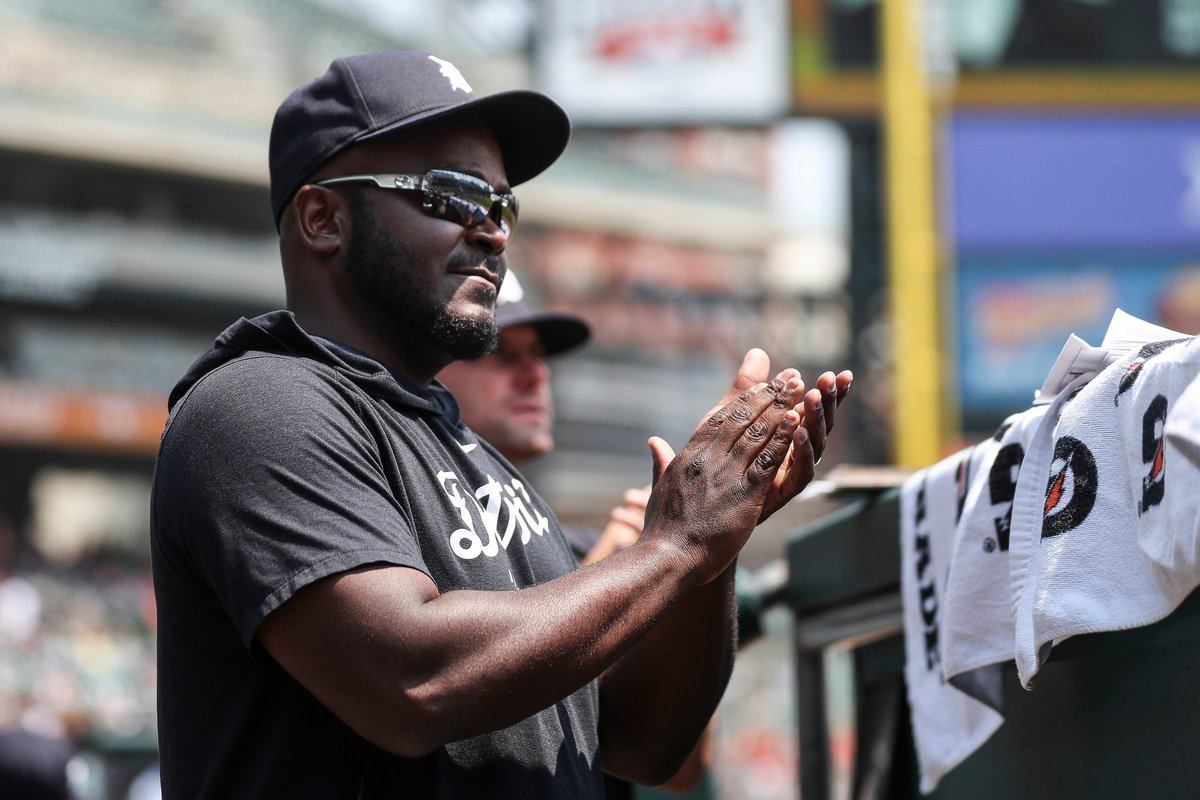 In 2019, the New York Yankees led the major leagues in runs scored with 943, and the Twins followed close behind at 939. These elite offenses were both propelled by the long ball – Minnesota set the all-time home run record, with 307, and New York finished just one behind. Of course, the two explosive 100+ win teams faced off in the ALDS, and the Twins were swept. Since then, the franchises have followed interesting parallel paths in terms of how their record-setting offenses have fared. Fading from the top After leading the world in runs and homers in 2019, here's how the Yankees and Twins fared against the rest of the majors over the following three years. 2020 Yankees: 4th in runs, 5th in homers, 5th in OPS Twins: 18th in runs, 6th in homers, 15th in OPS In the shortened COVID season, the Yankees took a minor step back offensively and the Twins took a huge one, as their overreliance on home runs became plainly problematic. Notably, Minnesota's hitting coach James Rowson – who many hitters had credited with their success in the 2019 "Bomba Squad" season – took a bench coach job with the Marlins during the previous offseason. Many outsiders viewed Rowson's absence as a factor in the team's massive offensive drop-off. 2021 Yankees: 19th in runs, 8th in homers, 13th in OPS Twins: 14th in runs, 5th in homers, 11th in OPS Now it was New York's turn to take a tremendous offensive tumble. Despite continuing to hit homers at a solid pace, their offense was mediocre and the Yankees failed to win the AL East for a ninth time in 10 years. Meanwhile, Minnesota sputtered to a last-place finish, ranking as a middle-of-the-pack offense overall despite having six players hit 19+ home runs. Each club decided it was time for a change. The Yankees moved on from hitting coach Marcus Thames, who'd been in the role since 2018. (Naturally, he took a job as hitting coach for the Miami Marlins, on the same staff as Rowson.) The Twins reassigned Edgar Varela, who'd replaced Rowson as top hitting instructor in 2020. Both clubs went in similar directions with their new hires, enlisting analytically inclined young coaches from the minors, with no MLB experience to speak of. New York hired internally, promoting a "data-driven" minor-league coach named Dillon Lawson. The Twins went outside of the organization, plucking David Popkins from Los Angeles' Single-A affiliate. The thought behind this hire was described as "similar to the data-driven approach that Wes Johnson takes with the pitching staff." The Great Lakes Loons, for whom Popkins had previously been coaching, "hit more home runs under Popkins' watch than all but two of the 90 Class A and AA teams this year, the sort of results the Twins are looking for," wrote Phil Miller at the time. Both of these new-school hitting coaches espoused a similar philosophy: swing hard, ambush opponents, crush mistakes – and don't get too defensive with two strikes. The diverging paths that have unfolded since then are fascinating. 2022 Yankees: 2nd in runs, 1st in homers, 4th in OPS Twins: 17th in runs, 13th in homers, 11th in OPS New York had a great offense in 2022, but it can hardly be overstated how much this was driven by a historic individual season from Aaron Judge. Outside of him only one qualified player on the Yankees (Anthony Rizzo) had an OPS over .800, or a wOBA over .330. Unless you considered Lawson the Judge Whisperer, there wasn't a lot of success to be attributed to the new hitting coach. In Minnesota, there weren't many conclusions to be drawn either way. Catastrophic injuries decimated the Twins roster, to the point where their pedestrian overall numbers could be considered a moderate success. Which bring us to 2023. Both offenses were underwhelming in the first half. Both fanbases had people calling for the heads of their inexperienced young hitting coaches, who seemed to be in over their heads based on results. The Yankees made a drastic change, firing Lawson at the All-Star break and bringing in former big-leaguer Sean Casey, who had zero experience and certainly no analytical bona fides. The Twins held strong and stuck to their plan with Popkins. In the second half of the season, the Twins ranked fifth in runs, third in homers, and third in OPS. Meanwhile, the Yankees ranked 27th in runs, 14th in homers, and 28th in OPS. Minnesota was vindicated for showing faith in their plan and their coach. New York further unraveled after making a change mid-season, then parted ways with Casey afterward. From there it was back to the drawing board, which brings us (and Rowson) full circle. James Rowson comes home When the Twins originally hired Rowson, he'd been the minor league hitting coordinator for the New York Yankees, which is the same role Lawson was in before graduating to the job that Rowson has now been hired to fill. It's a real full-circle moment – in more ways than one when you think back to the home run race of 2019. In a way, it feels like the Yankees are now desperately trying to replicate what the Twins have been able to accomplish. Which is an amazing thing to say.
 -
The Yankees are still searching for the offensive clout that's been amiss since they raced with Minnesota for the home run record in 2019. Now, they're turning to the hitting coach who oversaw the historic Bomba Squad season. Image courtesy of Junfu Han / USA TODAY NETWORK In 2019, the New York Yankees led the major leagues in runs scored with 943, and the Twins followed close behind at 939. These elite offenses were both propelled by the long ball – Minnesota set the all-time home run record, with 307, and New York finished just one behind. Of course, the two explosive 100+ win teams faced off in the ALDS, and the Twins were swept. Since then, the franchises have followed interesting parallel paths in terms of how their record-setting offenses have fared. Fading from the top After leading the world in runs and homers in 2019, here's how the Yankees and Twins fared against the rest of the majors over the following three years. 2020 Yankees: 4th in runs, 5th in homers, 5th in OPS Twins: 18th in runs, 6th in homers, 15th in OPS In the shortened COVID season, the Yankees took a minor step back offensively and the Twins took a huge one, as their overreliance on home runs became plainly problematic. Notably, Minnesota's hitting coach James Rowson – who many hitters had credited with their success in the 2019 "Bomba Squad" season – took a bench coach job with the Marlins during the previous offseason. Many outsiders viewed Rowson's absence as a factor in the team's massive offensive drop-off. 2021 Yankees: 19th in runs, 8th in homers, 13th in OPS Twins: 14th in runs, 5th in homers, 11th in OPS Now it was New York's turn to take a tremendous offensive tumble. Despite continuing to hit homers at a solid pace, their offense was mediocre and the Yankees failed to win the AL East for a ninth time in 10 years. Meanwhile, Minnesota sputtered to a last-place finish, ranking as a middle-of-the-pack offense overall despite having six players hit 19+ home runs. Each club decided it was time for a change. The Yankees moved on from hitting coach Marcus Thames, who'd been in the role since 2018. (Naturally, he took a job as hitting coach for the Miami Marlins, on the same staff as Rowson.) The Twins reassigned Edgar Varela, who'd replaced Rowson as top hitting instructor in 2020. Both clubs went in similar directions with their new hires, enlisting analytically inclined young coaches from the minors, with no MLB experience to speak of. New York hired internally, promoting a "data-driven" minor-league coach named Dillon Lawson. The Twins went outside of the organization, plucking David Popkins from Los Angeles' Single-A affiliate. The thought behind this hire was described as "similar to the data-driven approach that Wes Johnson takes with the pitching staff." The Great Lakes Loons, for whom Popkins had previously been coaching, "hit more home runs under Popkins' watch than all but two of the 90 Class A and AA teams this year, the sort of results the Twins are looking for," wrote Phil Miller at the time. Both of these new-school hitting coaches espoused a similar philosophy: swing hard, ambush opponents, crush mistakes – and don't get too defensive with two strikes. The diverging paths that have unfolded since then are fascinating. 2022 Yankees: 2nd in runs, 1st in homers, 4th in OPS Twins: 17th in runs, 13th in homers, 11th in OPS New York had a great offense in 2022, but it can hardly be overstated how much this was driven by a historic individual season from Aaron Judge. Outside of him only one qualified player on the Yankees (Anthony Rizzo) had an OPS over .800, or a wOBA over .330. Unless you considered Lawson the Judge Whisperer, there wasn't a lot of success to be attributed to the new hitting coach. In Minnesota, there weren't many conclusions to be drawn either way. Catastrophic injuries decimated the Twins roster, to the point where their pedestrian overall numbers could be considered a moderate success. Which bring us to 2023. Both offenses were underwhelming in the first half. Both fanbases had people calling for the heads of their inexperienced young hitting coaches, who seemed to be in over their heads based on results. The Yankees made a drastic change, firing Lawson at the All-Star break and bringing in former big-leaguer Sean Casey, who had zero experience and certainly no analytical bona fides. The Twins held strong and stuck to their plan with Popkins. In the second half of the season, the Twins ranked fifth in runs, third in homers, and third in OPS. Meanwhile, the Yankees ranked 27th in runs, 14th in homers, and 28th in OPS. Minnesota was vindicated for showing faith in their plan and their coach. New York further unraveled after making a change mid-season, then parted ways with Casey afterward. From there it was back to the drawing board, which brings us (and Rowson) full circle. James Rowson comes home When the Twins originally hired Rowson, he'd been the minor league hitting coordinator for the New York Yankees, which is the same role Lawson was in before graduating to the job that Rowson has now been hired to fill. It's a real full-circle moment – in more ways than one when you think back to the home run race of 2019. In a way, it feels like the Yankees are now desperately trying to replicate what the Twins have been able to accomplish. Which is an amazing thing to say. View full article
-
Twins Add Prospects Rodriguez, Martin to Roster Ahead of Rule 5 Deadline
Nick Nelson posted an article in Twins
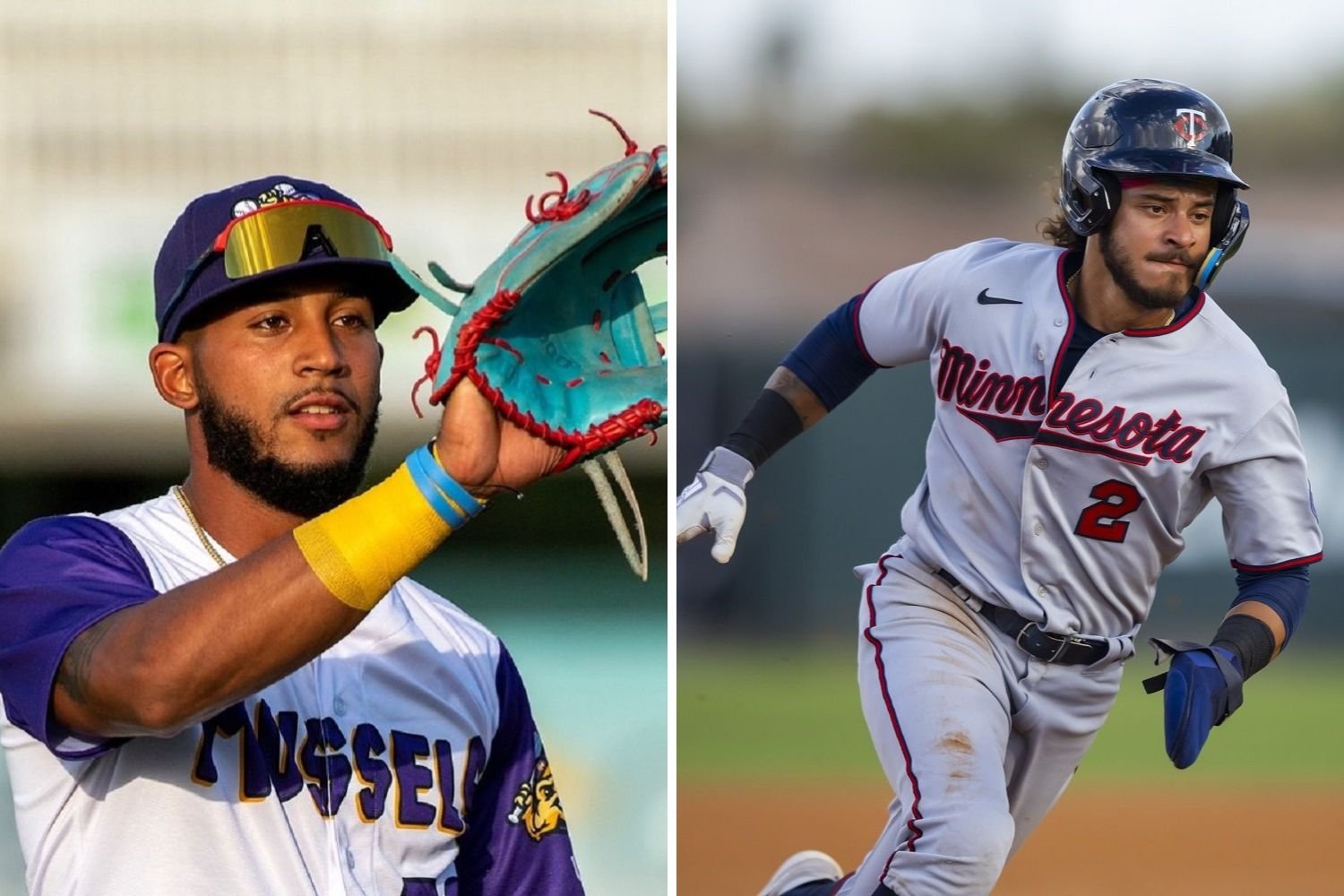 The Twins got a head start on their 40-man roster moves earlier this month by adding infielder Yunior Severino and catcher Jair Camargo, keeping them from free agency and protecting them from teams seeking to add talent in the Rule 5 draft. They saved the easiest decisions for last. Today, the club added outfielders Emmanuel Rodriguez and Austin Martin, pushing their 40-man roster to 38. There was no way either of these two would be left unprotected. Both are highly promising players – Rodriguez ranks third on our top prospects list, Martin seventh – and both would have certainly been selected if left available. (Possibly with the top two picks.) Both Rodriguez and Martin are interesting figures in the Twins' offseason planning, for different reasons. Rodriguez is one of the team's best trade chips to dangle in the hunt for frontline pitching, while Martin's presence as a future center field option will influence the front office's decision-making at that position. Ultimately, the Twins added four prospects to their 40-man roster ahead of the Rule 5 eligibility deadline: Severino, Camargo, Rodriguez and Martin. That means a number of other Twins minor-leaguers WILL be left exposed when the Rule 5 takes place on December 6th. As a reminder, the stipulation of adding a player through this process means that player must remain on the active MLB roster for the entire 2024 season, or be put through waivers and offered back to his original team. With this in mind, players who could potentially be selected by other teams include: DaShawn Keirsey, OF – 26-year-old can run and play center capably, posted productive numbers in the high minors. Could easily be viewed as a fourth outfielder candidate in the majors right now, with a bit of helium. Anthony Prato, IF/OF – Defensively versatile right-handed hitter with strong OBP skills. Posted a .990 OPS in the inflated Triple-A environment. But there are a lot of players coming off big seasons in that league. Not a prospect, per se, but a solid ballplayer. Michael Helman, IF/OF – Finds himself in a similar boat as Prato, but his relatively advanced age (27) might remove any perception of remaining upside. After a great 2022 in St. Paul, injuries derailed most of his 2023 season. Aaron Sabato, 1B – Former first-round pick has been a major disappointment, but his power and patience give him a semblance of offensive floor. A non-competing team could try running him out there at first to see what happens. Jose Salas, IF – He's 20 and coming off a horrible season at Single-A. It's clear Salas would be overmatched in the majors but given his ceiling, it's not unthinkable a team like Oakland or KC could try to stash him in a utility role for the summer to steal him away long-term. Ricardo Olivar, C/CF - Yes, catcher and center fielder. Olivar had a strong performance in Low-A Fort Myers and hit a lot of doubles. While his bat is certainly not ready for prime time, his intriguing defensive profile could make him appealing to some team. Stay tuned to Twins Daily for more updates on offseason developments and breaking news.
 -
Ahead of Tuesday's deadline to protect minor-leaguers from the upcoming Rule 5 draft, the Twins added two of their top 10 prospects to the 40-man roster, starting the clock on their major-league arrivals. A few other intriguing eligible players were left unprotected, meaning Minnesota will be at risk of losing them from the system next month. Image courtesy of William Parmeter, Mighty Mussels, and Mark J. Rebilas, USA TODAY Sports The Twins got a head start on their 40-man roster moves earlier this month by adding infielder Yunior Severino and catcher Jair Camargo, keeping them from free agency and protecting them from teams seeking to add talent in the Rule 5 draft. They saved the easiest decisions for last. Today, the club added outfielders Emmanuel Rodriguez and Austin Martin, pushing their 40-man roster to 38. There was no way either of these two would be left unprotected. Both are highly promising players – Rodriguez ranks third on our top prospects list, Martin seventh – and both would have certainly been selected if left available. (Possibly with the top two picks.) Both Rodriguez and Martin are interesting figures in the Twins' offseason planning, for different reasons. Rodriguez is one of the team's best trade chips to dangle in the hunt for frontline pitching, while Martin's presence as a future center field option will influence the front office's decision-making at that position. Ultimately, the Twins added four prospects to their 40-man roster ahead of the Rule 5 eligibility deadline: Severino, Camargo, Rodriguez and Martin. That means a number of other Twins minor-leaguers WILL be left exposed when the Rule 5 takes place on December 6th. As a reminder, the stipulation of adding a player through this process means that player must remain on the active MLB roster for the entire 2024 season, or be put through waivers and offered back to his original team. With this in mind, players who could potentially be selected by other teams include: DaShawn Keirsey, OF – 26-year-old can run and play center capably, posted productive numbers in the high minors. Could easily be viewed as a fourth outfielder candidate in the majors right now, with a bit of helium. Anthony Prato, IF/OF – Defensively versatile right-handed hitter with strong OBP skills. Posted a .990 OPS in the inflated Triple-A environment. But there are a lot of players coming off big seasons in that league. Not a prospect, per se, but a solid ballplayer. Michael Helman, IF/OF – Finds himself in a similar boat as Prato, but his relatively advanced age (27) might remove any perception of remaining upside. After a great 2022 in St. Paul, injuries derailed most of his 2023 season. Aaron Sabato, 1B – Former first-round pick has been a major disappointment, but his power and patience give him a semblance of offensive floor. A non-competing team could try running him out there at first to see what happens. Jose Salas, IF – He's 20 and coming off a horrible season at Single-A. It's clear Salas would be overmatched in the majors but given his ceiling, it's not unthinkable a team like Oakland or KC could try to stash him in a utility role for the summer to steal him away long-term. Ricardo Olivar, C/CF - Yes, catcher and center fielder. Olivar had a strong performance in Low-A Fort Myers and hit a lot of doubles. While his bat is certainly not ready for prime time, his intriguing defensive profile could make him appealing to some team. Stay tuned to Twins Daily for more updates on offseason developments and breaking news. View full article
-
Comparing Kepler and Polanco to Free Agents at Their Positions
Nick Nelson posted an article in Twins
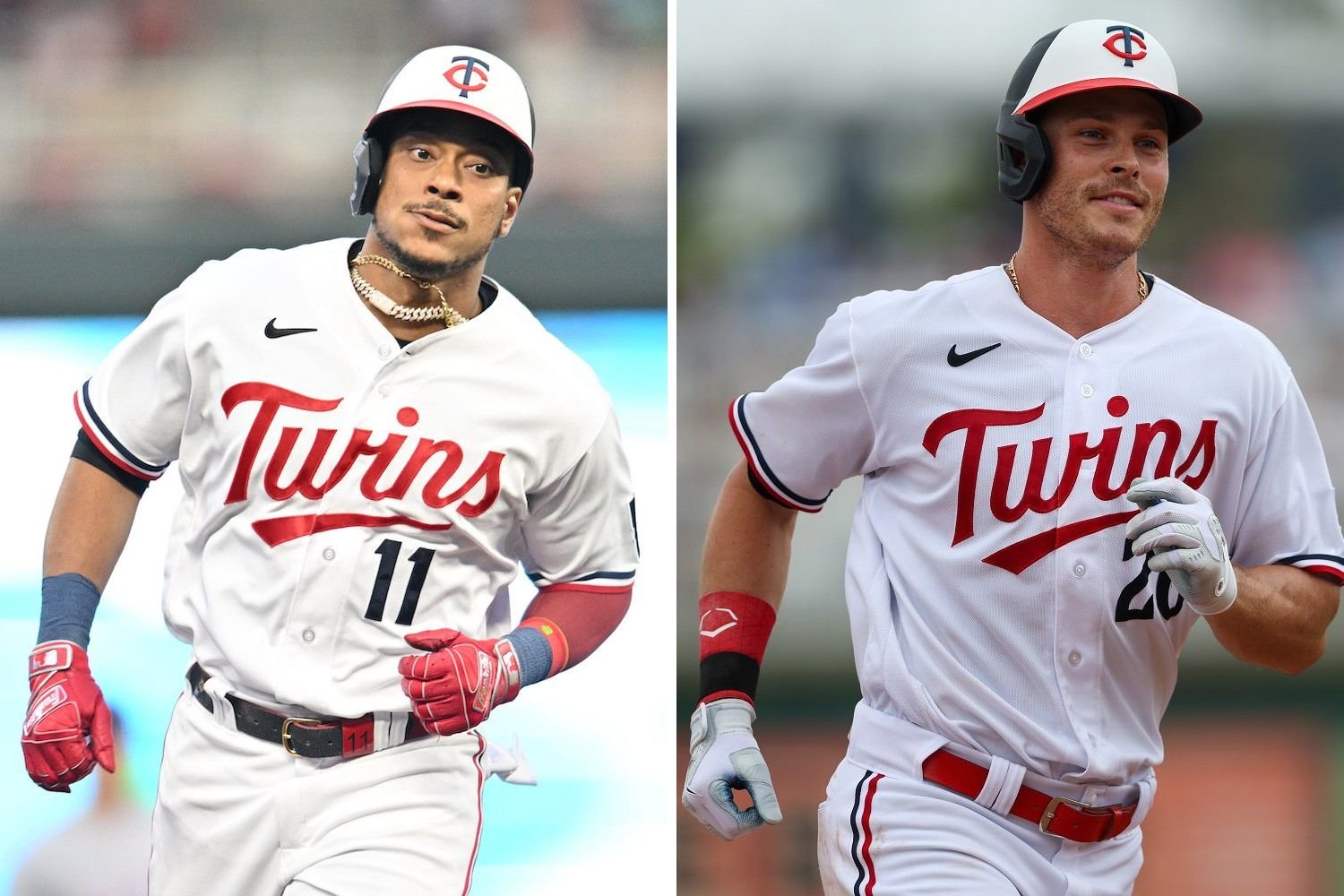 The Twins recently confirmed that they'll be looking to trim payroll this offseason, which may create some challenges as they aim to address a set of clear needs on the roster. One of the most straightforward ways for the front office to create some spending flexibility is by trading one or both of Jorge Polanco and Max Kepler. The longtime Twins mainstays are both under contract for around $10 million apiece next season; the club could clear as much as $20 million from the 2024 payroll by moving them and their salaries. Adding to the appeal of this idea: the emergence of standout rookies (Edouard Julien and Matt Wallner) at second base and right field, and the fact that both Polanco and Kepler boast solid trade value. That latter point is key, because as we've seen, this Twins front office isn't going to trade guys they like just for the sake of doing so. Both Polanco and Kepler are coming off solid seasons and, more importantly, the free agent alternatives at their positions aren't very compelling. The value Minnesota might get back in a trade for one or both of these veterans will be dictated by how much 2B/RF-needy teams are willing to give up, and that will be determined by how much more attractive Polanco and Kepler (and their contracts) are compared to signing a free agent for only money. Here's a look at how both players would rank on against the free agent classes at their respective positions, to give you an idea of the options being weighed by these teams. Right Field: Max Kepler vs. The Market Kepler's trade value: Following a breakthrough second half that re-established him as an All-Star caliber talent, Kepler has one remaining season under contract at $10 million. The short-term control could be viewed as a downside, but teams might also value the flexibility of a one-year deal versus locking into a 30+ year-old free agent for several years. In listing its position-by-position free agents, MLB.com ranks players by fWAR over the past two seasons (2022-23), so we'll add Kepler into that mix using the same lens. What we find is that Kepler outranks every single free agent right fielder, and is also the youngest of the bunch: Max Kepler (31 years old, 4.6 WAR) Teoscar Hernández (31, 4.3) Hunter Renfroe (32, 3.1) Jason Heyward (34, 1.8) Randal Grichuk (32, 0.4) Wil Myers (33, 0.3) Tyler Naquin (33, 0.1) Kevin Pillar (35, 0.1) Kole Calhoun (36, -1.3) Only Hernández, whom MLB Trade Rumors projected to get an $80 million contract coming off a fairly underwhelming season, is even in Kepler's range in terms of value over the past two years. And that's with Kepler being quite disappointing offensively for a large stretch of that period. The drop-off is especially steep for any team specifically targeting a left-handed hitting right fielder. Heyward, Myers, Naquin and Calhoun are not appealing targets at this stage of their careers – at least in anything resembling a full-time role. Kepler is the clear standout of the pack here. Second Base: Jorge Polanco vs. The Market Polanco's trade value: Polanco's contractual situation is even more favorable than Kepler's – he's controllable for two more years with a $12.5 million team option in 2025. Polanco has been an extremely consistent hitter, with an OPS+ of 110 or better in each of the past five full MLB seasons. Teams are sure to be wary of Polo's recent injury history, but a review of the free agent market at second base casts his risk level in a different light. Here's how Polanco ranks against this year's class by 2022-23 fWAR: Elvis Andrus (35 years old, 4.6 WAR) Jorge Polanco (30, 3.3) Whit Merrifield (35, 3.0) Tony Kemp (32, 1.5) Kolten Wong (33, 1.5) Adam Frazier (32, 1.3) Jonathan Schoop (32, 1.2) Rougned Odor (30, 1.0) Josh Harrison (36, 0.8) Hanser Alberto (31, -0.7) Leury García (33, -1.1) Pretty much everyone below the Merrifield line is a clear-cut backup-caliber player at this point, and no one's idea of an assertive solution to a middle-infield need. So then you've got Polanco near the top going against two mid-30s players in decline. Andrus technically edges Polanco in fWAR, but that's mostly because of a random 3.5-WAR last season that's an outlier from everything else he's done in the past six years. Merrifield has more appeal as a flex player than a full-time second baseman. No one in this class comes close to offering the offensive floor or ceiling of Polanco. With two reasonably priced years remaining under contract and a more consistent track record, I actually think he compares even more favorably against his class than Kepler against right fielders. Unsurprisingly, rumors are already circulating that the Twins intend to shop Polanco around this winter. Ultimately, his value in a trade will be dependent on how confident the team acquiring him is that Polanco can stay healthy. The veteran infielder played in only 80 games this year due to injury issues, and often looked hobbled down the stretch, although he was able to play in every playoff game. Even with the risk that comes attached to him, Polanco compares favorably to aging players like Andrus and Merrifield in free agency. Kepler's drawbacks are also healthily outweighed by his strengths in comparing him to the right field market. As the Twins reach the end of the road with these two long-tenured fixtures, they find a very favorable offseason environment for talking trade. Both players figure to be in high demand.
 -
Jorge Polanco and Max Kepler are both prime candidates to be traded this offseason, but their demand on the market will be dictated by how needy teams view their relative appeal versus the free agent classes at second base and right field. Let's see how they stack up. Image courtesy of Jeffrey Becker and Nathan Ray Seebeck-USA TODAY Sports The Twins recently confirmed that they'll be looking to trim payroll this offseason, which may create some challenges as they aim to address a set of clear needs on the roster. One of the most straightforward ways for the front office to create some spending flexibility is by trading one or both of Jorge Polanco and Max Kepler. The longtime Twins mainstays are both under contract for around $10 million apiece next season; the club could clear as much as $20 million from the 2024 payroll by moving them and their salaries. Adding to the appeal of this idea: the emergence of standout rookies (Edouard Julien and Matt Wallner) at second base and right field, and the fact that both Polanco and Kepler boast solid trade value. That latter point is key, because as we've seen, this Twins front office isn't going to trade guys they like just for the sake of doing so. Both Polanco and Kepler are coming off solid seasons and, more importantly, the free agent alternatives at their positions aren't very compelling. The value Minnesota might get back in a trade for one or both of these veterans will be dictated by how much 2B/RF-needy teams are willing to give up, and that will be determined by how much more attractive Polanco and Kepler (and their contracts) are compared to signing a free agent for only money. Here's a look at how both players would rank on against the free agent classes at their respective positions, to give you an idea of the options being weighed by these teams. Right Field: Max Kepler vs. The Market Kepler's trade value: Following a breakthrough second half that re-established him as an All-Star caliber talent, Kepler has one remaining season under contract at $10 million. The short-term control could be viewed as a downside, but teams might also value the flexibility of a one-year deal versus locking into a 30+ year-old free agent for several years. In listing its position-by-position free agents, MLB.com ranks players by fWAR over the past two seasons (2022-23), so we'll add Kepler into that mix using the same lens. What we find is that Kepler outranks every single free agent right fielder, and is also the youngest of the bunch: Max Kepler (31 years old, 4.6 WAR) Teoscar Hernández (31, 4.3) Hunter Renfroe (32, 3.1) Jason Heyward (34, 1.8) Randal Grichuk (32, 0.4) Wil Myers (33, 0.3) Tyler Naquin (33, 0.1) Kevin Pillar (35, 0.1) Kole Calhoun (36, -1.3) Only Hernández, whom MLB Trade Rumors projected to get an $80 million contract coming off a fairly underwhelming season, is even in Kepler's range in terms of value over the past two years. And that's with Kepler being quite disappointing offensively for a large stretch of that period. The drop-off is especially steep for any team specifically targeting a left-handed hitting right fielder. Heyward, Myers, Naquin and Calhoun are not appealing targets at this stage of their careers – at least in anything resembling a full-time role. Kepler is the clear standout of the pack here. Second Base: Jorge Polanco vs. The Market Polanco's trade value: Polanco's contractual situation is even more favorable than Kepler's – he's controllable for two more years with a $12.5 million team option in 2025. Polanco has been an extremely consistent hitter, with an OPS+ of 110 or better in each of the past five full MLB seasons. Teams are sure to be wary of Polo's recent injury history, but a review of the free agent market at second base casts his risk level in a different light. Here's how Polanco ranks against this year's class by 2022-23 fWAR: Elvis Andrus (35 years old, 4.6 WAR) Jorge Polanco (30, 3.3) Whit Merrifield (35, 3.0) Tony Kemp (32, 1.5) Kolten Wong (33, 1.5) Adam Frazier (32, 1.3) Jonathan Schoop (32, 1.2) Rougned Odor (30, 1.0) Josh Harrison (36, 0.8) Hanser Alberto (31, -0.7) Leury García (33, -1.1) Pretty much everyone below the Merrifield line is a clear-cut backup-caliber player at this point, and no one's idea of an assertive solution to a middle-infield need. So then you've got Polanco near the top going against two mid-30s players in decline. Andrus technically edges Polanco in fWAR, but that's mostly because of a random 3.5-WAR last season that's an outlier from everything else he's done in the past six years. Merrifield has more appeal as a flex player than a full-time second baseman. No one in this class comes close to offering the offensive floor or ceiling of Polanco. With two reasonably priced years remaining under contract and a more consistent track record, I actually think he compares even more favorably against his class than Kepler against right fielders. Unsurprisingly, rumors are already circulating that the Twins intend to shop Polanco around this winter. Ultimately, his value in a trade will be dependent on how confident the team acquiring him is that Polanco can stay healthy. The veteran infielder played in only 80 games this year due to injury issues, and often looked hobbled down the stretch, although he was able to play in every playoff game. Even with the risk that comes attached to him, Polanco compares favorably to aging players like Andrus and Merrifield in free agency. Kepler's drawbacks are also healthily outweighed by his strengths in comparing him to the right field market. As the Twins reach the end of the road with these two long-tenured fixtures, they find a very favorable offseason environment for talking trade. Both players figure to be in high demand. View full article
-
Thanks for the comments! There are several on Julien. To be honest I thought hard about ranking but ultimately edged him more toward the "will not get traded" category - I think if they deal anyone to clear the 2B logjam, Polanco or Lee are far more likely. I do think he'd probably fit in around 5th/6th on this list.
- 30 replies
-
- 3
-
-
- brooks lee
- emmanuel rodriguez
- (and 1 more)
-
If the Twins are thinking ambitiously about trade targets this offseason, these are the types of players they'll need to consider parting with. Here in the month of November, Twins Daily is providing offseason preview coverage with a phased thematic approach. Last week we took a deep dive on free agency possibilities; this week we're shining the spotlight inward with a focus on players currently in the Twins organization and how they might factor into the team's plans. Along with articles on the site that will explore this focus from every angle, we're also releasing a new section of the 2024 Offseason Handbook for TD Caretakers, which includes Seth's breakdown of organizational depth at every position, and a story from me ranking the 10 players in Twins organization who best blend tradeability with trade value. If you use the coupon code 2024HANDBOOK at checkout, all Caretaker packages are 25% off! You can read an excerpt from that story here, or become a Caretaker to access the whole thing! (If you are a Caretaker, you can scroll to the bottom of this page to download the full PDF for the chapter.) The Twins front office has not been shy about swinging big trades and giving up high-profile talent in the process. In the past we've seen them trade top pitching prospects Brusdar Graterol and Chase Petty to acquire frontline starters, and more recently, they gave up cherished team fixture Luis Arraez in the Pablo Lopez swap. These moves involved some painful losses, but they were also responsible for shaping the league-leading 2023 rotation. As the Twins endeavor to fill key gaps left in their starting pitching corps this offseason, history tells us there's a good chance they'll turn to the trade market. The other factor at play: Minnesota has a lot of players in the mix who look like plausible trade candidates. To their credit, the front office has built up some redundancies, or at least reasonable depth, to make certain quality players less essential to the future. The Twins have productive veterans they could be motivated to deal, as well as elite prospects they could use to aim exceptionally high in their hunt for controllable frontline pitching. Here's my take on 10 players who could realistically be traded this offseason, in order of how much value they might bring back by my estimation. I didn't include players who have no-trade clauses (Correa, Buxton) or players who I simply could not imagine being traded (Jeffers, MLB starting pitchers). I also didn't include players who are candidates to be traded, but have mostly neutral value because of their salaries (Farmer, Vazquez). 1. Brooks Lee, 3B Lee is not the Twins' top prospect, according to TD's rankings, but I do think he is their most valuable and viable trade chip. He's a truly elite prospect in the game – 18th overall in the season-ending MLB Pipeline rankings – and he is pretty clearly major-league ready or very close. Turning 23 next spring, Lee will be a cheap, controllable regular for years to come. He's established a solid floor while still offering an All-Star level ceiling. This blend of qualities makes him highly appealing to a wide range of rebuilding and contending teams. Placing Lee at the center of a trade package would put the Twins in the conversation for almost any hypothetical high-end pitcher on the market. And while losing him obviously would not be fun, we already find ourselves talking about how to make room for him in a crowded Twins infield next year. 2. Emmanuel Rodriguez, OF Rodriguez is not quite the same caliber of prospect as Walker Jenkins (below), in absolute terms. However, I do think he has a special sort of intrigue that could make him alluring to front offices enamored by his rare skill set. To be clear, E-Rod's game is not without known flaws. He has a lot of swing-and-miss in his plate approach, with a 30% K-rate in three minor-league seasons helping contribute to a .242 batting average. He's also had some injury issues. But the corresponding strengths really jump out at you. He's a speedy, lefty-swinging center fielder whose power is uncommon and whose patience is almost unheard of. The 20-year-old has an absurd 21.3% career walk rate in the minors. While constantly facing more advanced competition, he has gotten on base more than 41% of the time. After leading the High-A Midwest League in OPS and finishing second in wOBA, Rodriguez is flying high, ready to tackle Double-A. His relative proximity to the majors adds to his value from a trade acquisition standpoint. 3. Walker Jenkins, OF If the Twins were to make their newly drafted top prospect available in trades, they could get a haul. And technically, that is an option on the table. An MLB rule change in 2015 made it so teams can trade draft picks in the same year they were selected, which was previously prohibited. Jenkins was a consensus top-five talent in a loaded draft, and followed up with an emphatic pro debut that puts him in the discussion as a top 10 global prospect. Still, it seems really unlikely the Twins would shop him already. And even if they did, any club drawn to his immense upside would also have to grapple with an added level of uncertainty compared to Lee and Rodriguez. Jenkins has played 26 total pro games and is likely multiple years away from the majors, even in a favorable scenario. Then again, when you're talking about the #16 prospect in baseball (per MLB Pipeline), you're talking about gargantuan trade capital. View full article
