



Nick Nelson
-
Posts
8,322 -
Joined
-
Last visited
-
Days Won
56
Content Type
Profiles
News
Minnesota Twins Videos
2026 Minnesota Twins Top Prospects Ranking
2022 Minnesota Twins Draft Picks
Minnesota Twins Free Agent & Trade Rumors, Notes, & Tidbits
Guides & Resources
2023 Minnesota Twins Draft Picks
The Minnesota Twins Players Project
2024 Minnesota Twins Draft Picks
2025 Minnesota Twins Draft Pick Tracker
2026 Minnesota Twins Draft Tracker: Picks & Bonuses
Forums
Blogs
Events
Store
Downloads
Gallery
Everything posted by Nick Nelson
-
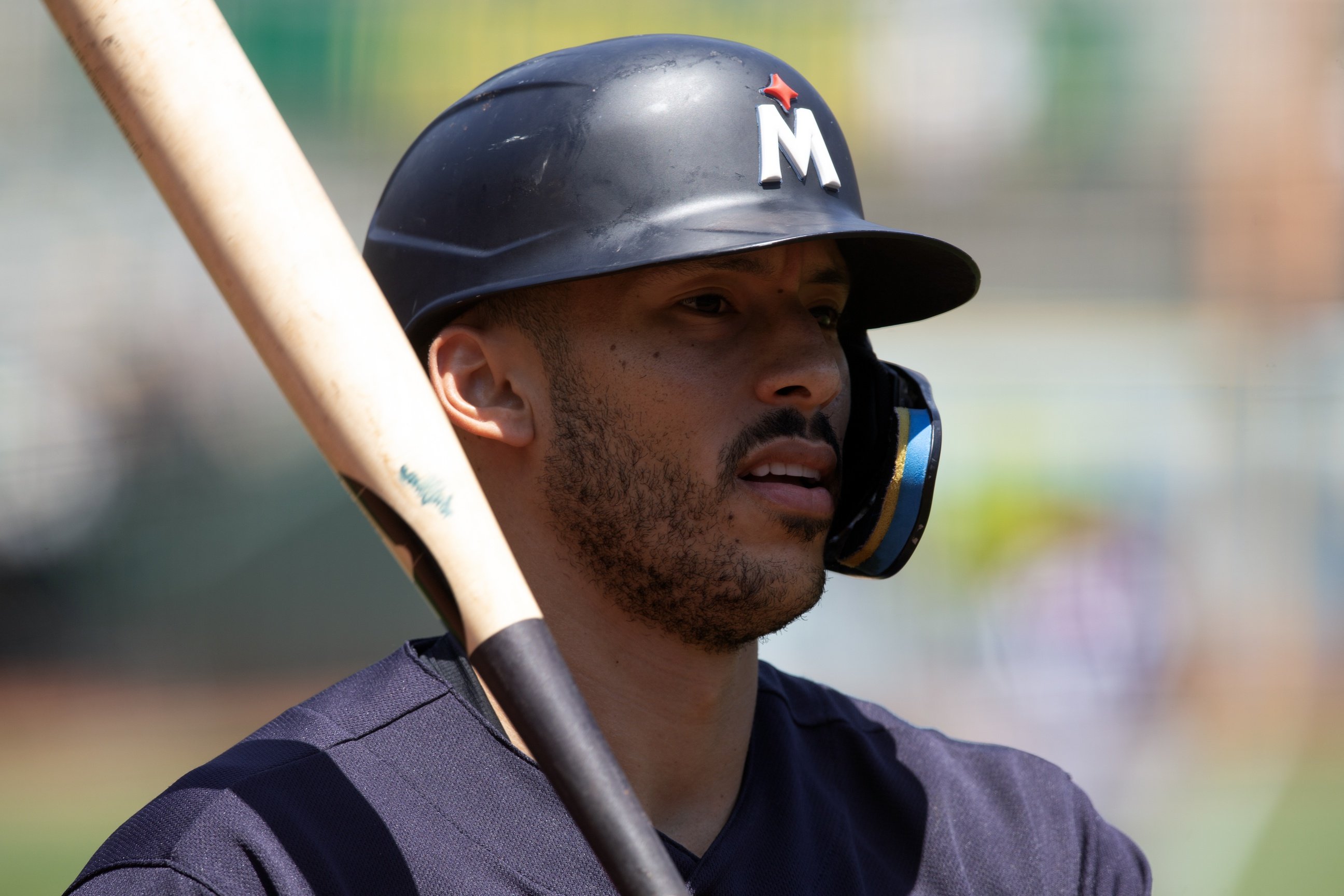 As Carlos Correa stumbled out of the gates in Year 1 of his newly minted $200 million contract with the Minnesota Twins, most of us shrugged. Even as the troubles persisted into May and June, his eventual turnaround always felt like a matter of when, not if. There were many factors fueling this level of faith. First and foremost, you have his talent level and track record. Correa has been a blatantly amazing ballplayer throughout his career. He's been one of the biggest stars in the game over the past decade – a consistent standout performer and occasional MVP contender with off-the-charts baseball IQ. He's had slumps, as any player does, and he's always come out of them. Moreover, we witnessed his ability to overcome an early swoon just one year ago. Correa was unimpressive during his first few weeks as a Twin, posting a .243/.309/.324 slash line in April of 2022, but he busted out bigtime in the second half to finish with some of the better offensive numbers of his career. It always felt like a matter of time. So it has been very easy to buy into the teasing glimpses of self-actualization we've seen from Correa over the course of the season. He's had some moments, to be sure. There was the walk-off homer on June 14th against the Brewers, punctuated by a dramatic gesture toward an imaginary watch. "Finally," Correa seemed to signaling, "the wait is over." Turns out, it wasn't. He followed that epic highlight-reel moment by slashing .217/.254/.383 for the rest of June, with five RBIs in 15 games. “It's a constant grind every at-bat where I've got to fight for hits, and I've got to fight to just feel sexy at the plate,” Correa said as his momentum failed to sustain. “But, you know, I feel like I'm not that far off right now.” At the end of the month, the Twins held their infamous players-only meeting and it coincided with shifting Correa into the leadoff spot. Here, it looked for awhile like the shortstop was truly and finally starting to "feel sexy." He thrived during his first few weeks atop the order, slashing .339/.413/.482 in 14 games. The power was still alarmingly absent, but Correa was at least producing, and providing some value to the lineup. An article from Dan Hayes in The Athletic on July 19th, when his OPS had risen to a season-high .725, declared Correa "back on track thanks to a leadoff mentality." “I’m just swinging," said Correa. "If it’s in the zone, I want to hit it, whatever pitch it is. Rocco putting me in the leadoff spot gave me a new perspective. Instead of trying to go deep on every pitch, it was put the barrel on the ball and let something happen. That’s been allowing me to get on base and allowing me to have better results. Credit to Rocco for putting me in that spot. It changed my mentality.” As if right on cue, Correa went 0-for-5 in the very next game and is slashing .163/.236/.225 in 12 games since. All the positive progress built up during his modest hot streak was wiped away even more quickly. The 28-year-old returned to what now appears to be his gravitational norm. His limitations are outweighing his ability to adjust and excel. We're 109 games into this 2023 season – about two-thirds of the way home – and Correa has been worth less than one Win Above Replacement, while earning a $36 million salary. He's on pace to finish with 1.3 fWAR, which is roughly equivalent to the number he posted in 2020, a 60-game season where he posted a 93 OPS+. The ugly overall offensive numbers actually understate how damaging Correa has been at the plate because he also has grounded into an MLB-leading 20 double plays. Correa's running out of time to escape this dismal rut and there's increasingly little reason to think he will. Much like the team he's supposed to be leading, Correa has quickly erased every budding glimmer of momentum he's able to materialize by falling flat on his face. He can't turn to underlying indicators of better days ahead for comfort, and nor can we. Correa can't hit fastballs; his wOBA against them is down more than 100 points from a year ago. That's just a core aspect of having any kind of success at the plate. His expected-outcome numbers don't paint a much more optimistic outlook than what we see in his sub-par on-field production. Compare the xwOBA, xAVG, and xSLG in the two pictures below contrasting Correa's 2022 and 2023 seasons. Note the uptick in chasing and whiffing, the decrease in barrels. He's just not an effective hitter. The true breakout hasn't come, and I'm done pretending it's going to happen, or buying into these temporary deviations. The Twins probably need to give themselves a reality check as well. Their options are limited obviously but at the very least they can stop writing a guy with a sub-.300 OBP into the leadoff spot everyday. We can now safely say that experiment failed, just like every other half-measure this team has taken to address its dire deficiencies. I have no doubt that Correa is more frustrated and disappointed with his season than any fan, nor that he will fully commit himself to fixing his broken offensive game during the offseason. But that only goes so far. Attitude, effort and commitment have NEVER been the issue with Correa. The issue is that he frankly looks like a player being suddenly ravaged by the effects of physical aging at 28, in his first of a six-year guaranteed contract. If that's the case, there are no real silver linings to be found.
 -
 Fans have been anxiously awaiting a seemingly inevitable sustained breakout from the biggest signing in franchise history. It hasn't happened. Sadly, I've grown convinced it's not gonna happen. Carlos Correa is what he is, for this year at least. If this is his new permanent reality, then the outlook for the Twins going forward is very grim. Image courtesy of D. Ross Cameron-USA TODAY Sports As Carlos Correa stumbled out of the gates in Year 1 of his newly minted $200 million contract with the Minnesota Twins, most of us shrugged. Even as the troubles persisted into May and June, his eventual turnaround always felt like a matter of when, not if. There were many factors fueling this level of faith. First and foremost, you have his talent level and track record. Correa has been a blatantly amazing ballplayer throughout his career. He's been one of the biggest stars in the game over the past decade – a consistent standout performer and occasional MVP contender with off-the-charts baseball IQ. He's had slumps, as any player does, and he's always come out of them. Moreover, we witnessed his ability to overcome an early swoon just one year ago. Correa was unimpressive during his first few weeks as a Twin, posting a .243/.309/.324 slash line in April of 2022, but he busted out bigtime in the second half to finish with some of the better offensive numbers of his career. It always felt like a matter of time. So it has been very easy to buy into the teasing glimpses of self-actualization we've seen from Correa over the course of the season. He's had some moments, to be sure. There was the walk-off homer on June 14th against the Brewers, punctuated by a dramatic gesture toward an imaginary watch. "Finally," Correa seemed to signaling, "the wait is over." Turns out, it wasn't. He followed that epic highlight-reel moment by slashing .217/.254/.383 for the rest of June, with five RBIs in 15 games. “It's a constant grind every at-bat where I've got to fight for hits, and I've got to fight to just feel sexy at the plate,” Correa said as his momentum failed to sustain. “But, you know, I feel like I'm not that far off right now.” At the end of the month, the Twins held their infamous players-only meeting and it coincided with shifting Correa into the leadoff spot. Here, it looked for awhile like the shortstop was truly and finally starting to "feel sexy." He thrived during his first few weeks atop the order, slashing .339/.413/.482 in 14 games. The power was still alarmingly absent, but Correa was at least producing, and providing some value to the lineup. An article from Dan Hayes in The Athletic on July 19th, when his OPS had risen to a season-high .725, declared Correa "back on track thanks to a leadoff mentality." “I’m just swinging," said Correa. "If it’s in the zone, I want to hit it, whatever pitch it is. Rocco putting me in the leadoff spot gave me a new perspective. Instead of trying to go deep on every pitch, it was put the barrel on the ball and let something happen. That’s been allowing me to get on base and allowing me to have better results. Credit to Rocco for putting me in that spot. It changed my mentality.” As if right on cue, Correa went 0-for-5 in the very next game and is slashing .163/.236/.225 in 12 games since. All the positive progress built up during his modest hot streak was wiped away even more quickly. The 28-year-old returned to what now appears to be his gravitational norm. His limitations are outweighing his ability to adjust and excel. We're 109 games into this 2023 season – about two-thirds of the way home – and Correa has been worth less than one Win Above Replacement, while earning a $36 million salary. He's on pace to finish with 1.3 fWAR, which is roughly equivalent to the number he posted in 2020, a 60-game season where he posted a 93 OPS+. The ugly overall offensive numbers actually understate how damaging Correa has been at the plate because he also has grounded into an MLB-leading 20 double plays. Correa's running out of time to escape this dismal rut and there's increasingly little reason to think he will. Much like the team he's supposed to be leading, Correa has quickly erased every budding glimmer of momentum he's able to materialize by falling flat on his face. He can't turn to underlying indicators of better days ahead for comfort, and nor can we. Correa can't hit fastballs; his wOBA against them is down more than 100 points from a year ago. That's just a core aspect of having any kind of success at the plate. His expected-outcome numbers don't paint a much more optimistic outlook than what we see in his sub-par on-field production. Compare the xwOBA, xAVG, and xSLG in the two pictures below contrasting Correa's 2022 and 2023 seasons. Note the uptick in chasing and whiffing, the decrease in barrels. He's just not an effective hitter. The true breakout hasn't come, and I'm done pretending it's going to happen, or buying into these temporary deviations. The Twins probably need to give themselves a reality check as well. Their options are limited obviously but at the very least they can stop writing a guy with a sub-.300 OBP into the leadoff spot everyday. We can now safely say that experiment failed, just like every other half-measure this team has taken to address its dire deficiencies. I have no doubt that Correa is more frustrated and disappointed with his season than any fan, nor that he will fully commit himself to fixing his broken offensive game during the offseason. But that only goes so far. Attitude, effort and commitment have NEVER been the issue with Correa. The issue is that he frankly looks like a player being suddenly ravaged by the effects of physical aging at 28, in his first of a six-year guaranteed contract. If that's the case, there are no real silver linings to be found. View full article
 -
Trades involve risk. People beg for them all the time and then act shocked when the downside plays out. That's part of playing the game – doesn't mean you shouldn't play it. Sitting on your hands and doing nothing might be easier, but entails risk of its own. (It's also much less interesting!)
- 120 replies
-
- 16
-

-

-
Complacent Twins Front Office Stands Pat at the Trade Deadline
Nick Nelson posted an article in Twins
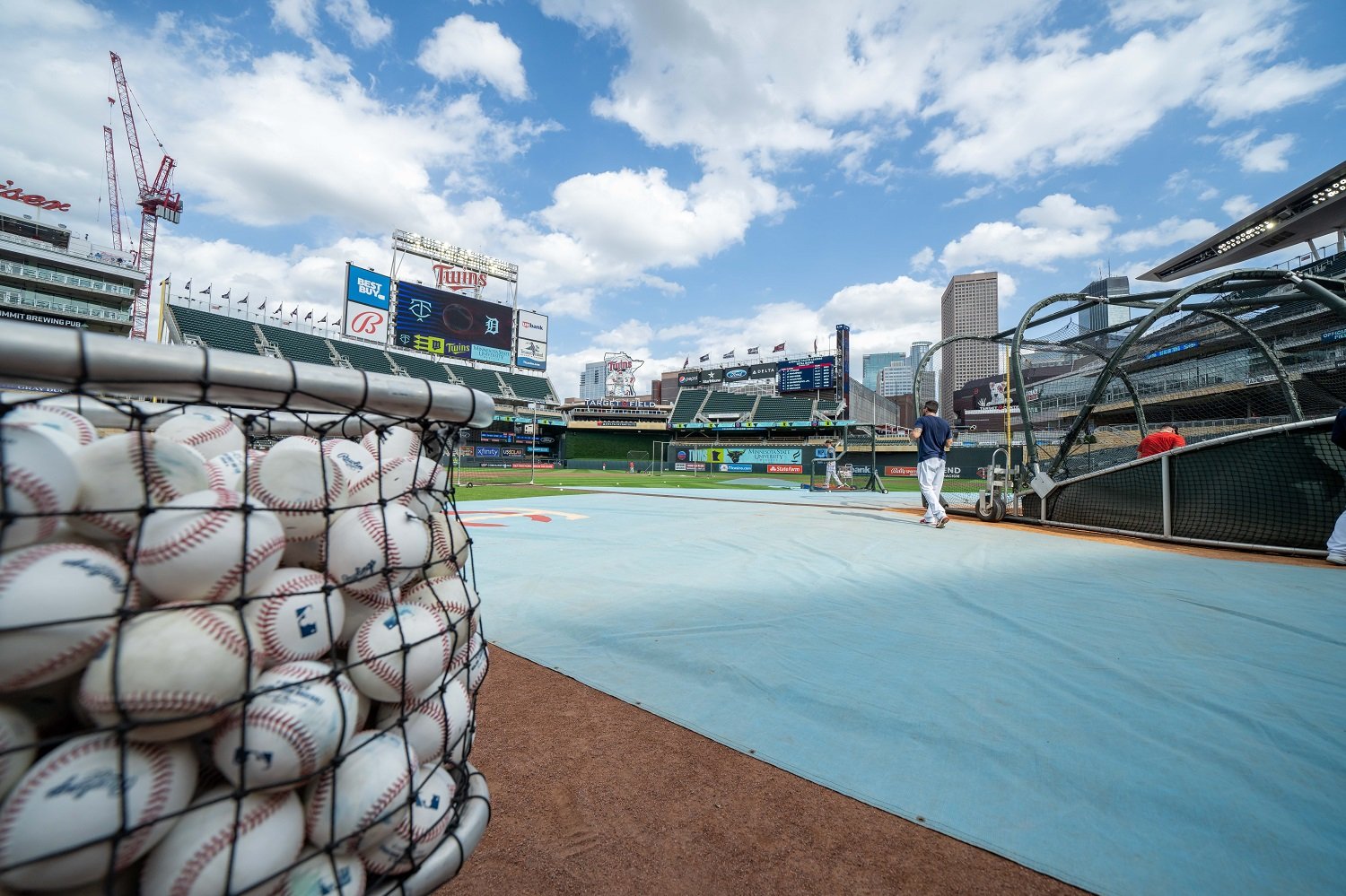 While they were surely plugging away behind the scenes, the Twins were never openly prominent players at this deadline, appearing in very few publicized trade rumors and none of particular ambition. Fans would have been satisfied with even a relatively low-wattage move or two on deadline day to improve upon the club's clear areas of weakness: most notably bullpen depth and right-handed hitting. They've been the worst team in baseball against lefties, having punctuated their pre-deadline schedule by getting shut down by Ryan Yarbrough for comedic effect. No reinforcements acquired. Their bullpen has shown increasingly concerning signs of wear. No reinforcements acquired, outside of swapping Jorge Lopez for Dylan Floro last week, which itself was an admission of failure on one of last year's big deadline swings. Making matters worse, it was announced minutes after the deadline passed that Brock Stewart had a setback with his elbow and is going for an MRI. Expect him to miss the rest of the year. With no Stewart, no Lopez, and no Jorge Alcala, the Twins are down three key right-handed arms they might've relied on in the late innings. Given the chance to offset these high-leverage losses and provide some desperately needed support for Jhoan Duran and Griffin Jax, the front office passed on their chances. I haven't heard any quotes yet from Derek Falvey or Thad Levine but I don't need to. They'll say the asking prices were too high. They'll say they like the guys they have. They'll say a bunch of other BS that we're all incredibly tired of hearing. The bottom line is that this was an inexcusably passive and complacent way to handle a crucial moment for the franchise. There were plenty of players moved at this deadline, and plenty of bold or at least beneficial additions made by teams with much lower playoff odds, much less at stake. The Twins are content to watch this same old shoddy product sputter the rest of the way untouched. And content to force us all to do the same.
- 120 comments
-
- 17
-
-

-
-
The 5:00 PM deadline on Tuesday has come and gone, with the Minnesota Twins completing zero trades to improve their flawed, frustrating, flailing first-place team. The front office is setting itself up for massive criticism and angst by, once again, essentially shrugging its shoulders at chronically underwhelming product on the field. Image courtesy of Jordan Johnson-USA TODAY Sports While they were surely plugging away behind the scenes, the Twins were never openly prominent players at this deadline, appearing in very few publicized trade rumors and none of particular ambition. Fans would have been satisfied with even a relatively low-wattage move or two on deadline day to improve upon the club's clear areas of weakness: most notably bullpen depth and right-handed hitting. They've been the worst team in baseball against lefties, having punctuated their pre-deadline schedule by getting shut down by Ryan Yarbrough for comedic effect. No reinforcements acquired. Their bullpen has shown increasingly concerning signs of wear. No reinforcements acquired, outside of swapping Jorge Lopez for Dylan Floro last week, which itself was an admission of failure on one of last year's big deadline swings. Making matters worse, it was announced minutes after the deadline passed that Brock Stewart had a setback with his elbow and is going for an MRI. Expect him to miss the rest of the year. With no Stewart, no Lopez, and no Jorge Alcala, the Twins are down three key right-handed arms they might've relied on in the late innings. Given the chance to offset these high-leverage losses and provide some desperately needed support for Jhoan Duran and Griffin Jax, the front office passed on their chances. I haven't heard any quotes yet from Derek Falvey or Thad Levine but I don't need to. They'll say the asking prices were too high. They'll say they like the guys they have. They'll say a bunch of other BS that we're all incredibly tired of hearing. The bottom line is that this was an inexcusably passive and complacent way to handle a crucial moment for the franchise. There were plenty of players moved at this deadline, and plenty of bold or at least beneficial additions made by teams with much lower playoff odds, much less at stake. The Twins are content to watch this same old shoddy product sputter the rest of the way untouched. And content to force us all to do the same. View full article
-
Your friends at Twins Daily have been keeping a close eye on the rumor mill so you don't have to. With less than 24 hours remaining before Tuesday's 5:00 PM CT trade deadline, here's how the market is taking shape and where the Twins stand. Image courtesy of John Jones-USA TODAY Sports (Harrison Bader) Those who've followed the Twins for any length of time know that this front office operates in a shroud of secrecy. Rarely are their moves foreshadowed by media speculation, often coming seemingly out of nowhere. They tend to keep the lid tight, publicly anyway. Their lone move so far in deadline season – trading Jorge López to the Marlins for Dylan Floro last week – was a fine example. While it's no surprise that Miami was willing to deal Floro and his expiring contract, his name wasn't bouncing around in tons of rumors or anything. Nor was López. That said, the Twins have some pretty clear needs, and they've been open about receiving interest in certain players. While they stood pat on the day preceding the deadline, other moves around the league had implications for Minnesota's strategy. As we look ahead to deadline day (and potential late-night action preceding it), here's a rundown of what Twins fans should know right now. Twins are on the hunt for right-handed bats, relief help Even after acquiring Floro, the Twins should still be in the market for another reliever. Their bullpen has been wobbling lately along with the rotation. While getting Caleb Thielbar back is helpful, optimism is limited around Brock Stewart's uncertain return. This year's bullpen was designed with López as an integral late-inning linchpin, so the Twins are now scrambling to backfill in terms of depth. Meanwhile, in their final game ahead of the deadline, the Twins were shut down by another mediocre left-handed starter (Ryan Yarbrough), underscoring the need for an impact bat from the right side. One interesting potential match is the Yankees, who are known to be targeting corner outfielders. That's an area the Twins could help with. New York is reportedly receptive to dealing players with expiring contracts. "The Yankees continued to try to operate on two tracks — see if they could move out some veterans for prospects and perhaps salary relief while trying to acquire pieces that have control beyond the 2023 season," according to Joel Sherman in a new piece for the New York Post. Harrison Bader is one name Sherman specifies as a candidate. Bader is a good-glove center fielder who swings righty and has a 1.210 OPS against left-handed pitchers this year (.841 career). Swapping him for, say, Trevor Larnach would make some sense on both sides, although the Yankees would need to add in more on top of the rental. Seattle's Teoscar Hernandez, who would be a higher-upside RH bat than Bader (albeit not a center field option), reportedly has an active market, and is likely to move. Cleveland is ... selling? Despite being only a half-game out in the division, the Guardians are acting as sellers. It's not a white flag necessarily, given the quality of this division, but the trade of Aaron Civale to the Rays on Wednesday for a prospect hardly signals an intent to press the Twins for the Central crown. Civale ranked second among Guardians pitchers in fWAR with a 2.34 ERA in 13 starts. He's under team control for two more years. In return, Cleveland got back Kyle Manzardo, a 23-year-old lefty-swinging first baseman who is highly regarded as a prospect. Coming off a Miranda-esque breakout season in the minors (he posted a 1.043 OPS between Single-A and Double-A in 2022), Manzardo was on the back half of most Top 100 prospect lists this spring, and played in the Futures Game earlier this month. The move is not dissimilar in nature from four years ago when Cleveland traded Trevor Bauer for Franmil Reyes at the 2019 deadline, hoping to sell high on a good pitcher inching toward free agency while bringing a high-upside young bat into their system. They'll hope Manzardo works out better than Reyes did, while Twins fans hope he doesn't. This trade is unlikely to offer much positive impact for Cleveland in the second half. Quite the opposite. Barring a counterbalancing "buy" type move before the deadline strikes, the Guardians are lying down – no Civale, no Shane Bieber, no Triston McKenzie. The Twins have no excuse not to clamp down this division, and use this opportunity to position themselves for success in the postseason. Twins trade targets are falling off the table The Twins have a history of remaining patient in these situations, letting the market take shape and seizing opportunities in the late stages. Last year, most of their action came close to the deadline itself. But there's a cost to standing still. Monday saw several deals take place, including some desirable targets snatched up by other contenders. Here are a few trades consummated on Monday involving players who were connected to the Twins, or might have interested them for specific reasons: Diamondbacks acquired closer Paul Sewald from the Mariners. Brewers acquired utilityman Mark Canha from the Mets. Cubs acquired infielder Jeimer Candelario from the Nationals. Reds acquired left-handed reliever Sam Moll from the Athletics. Tomorrow could be a busy day. Make sure you stay plugged into Twins Daily (and our deadline news feed specifically) all day long. View full article
-
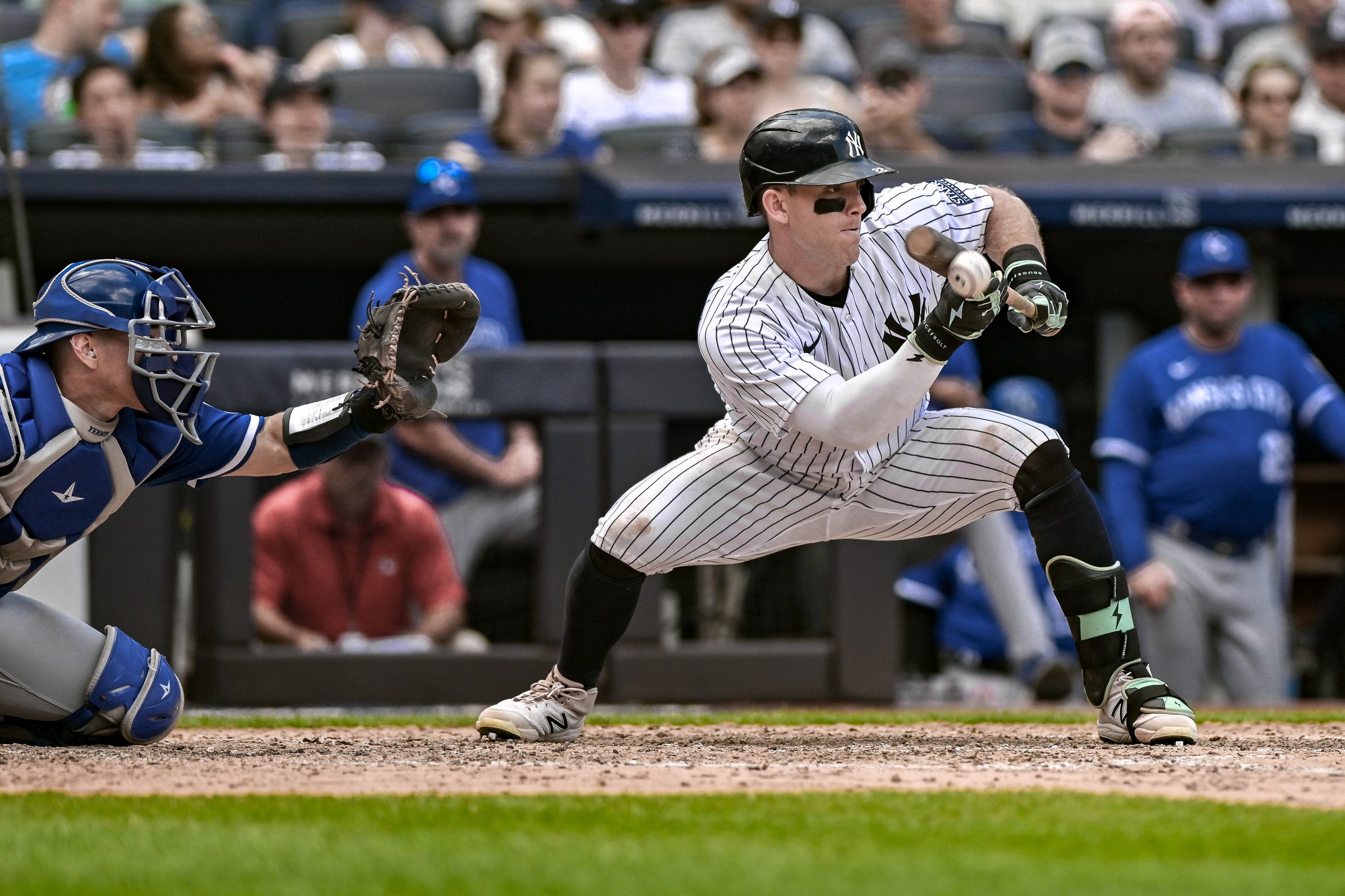 Those who've followed the Twins for any length of time know that this front office operates in a shroud of secrecy. Rarely are their moves foreshadowed by media speculation, often coming seemingly out of nowhere. They tend to keep the lid tight, publicly anyway. Their lone move so far in deadline season – trading Jorge López to the Marlins for Dylan Floro last week – was a fine example. While it's no surprise that Miami was willing to deal Floro and his expiring contract, his name wasn't bouncing around in tons of rumors or anything. Nor was López. That said, the Twins have some pretty clear needs, and they've been open about receiving interest in certain players. While they stood pat on the day preceding the deadline, other moves around the league had implications for Minnesota's strategy. As we look ahead to deadline day (and potential late-night action preceding it), here's a rundown of what Twins fans should know right now. Twins are on the hunt for right-handed bats, relief help Even after acquiring Floro, the Twins should still be in the market for another reliever. Their bullpen has been wobbling lately along with the rotation. While getting Caleb Thielbar back is helpful, optimism is limited around Brock Stewart's uncertain return. This year's bullpen was designed with López as an integral late-inning linchpin, so the Twins are now scrambling to backfill in terms of depth. Meanwhile, in their final game ahead of the deadline, the Twins were shut down by another mediocre left-handed starter (Ryan Yarbrough), underscoring the need for an impact bat from the right side. One interesting potential match is the Yankees, who are known to be targeting corner outfielders. That's an area the Twins could help with. New York is reportedly receptive to dealing players with expiring contracts. "The Yankees continued to try to operate on two tracks — see if they could move out some veterans for prospects and perhaps salary relief while trying to acquire pieces that have control beyond the 2023 season," according to Joel Sherman in a new piece for the New York Post. Harrison Bader is one name Sherman specifies as a candidate. Bader is a good-glove center fielder who swings righty and has a 1.210 OPS against left-handed pitchers this year (.841 career). Swapping him for, say, Trevor Larnach would make some sense on both sides, although the Yankees would need to add in more on top of the rental. Seattle's Teoscar Hernandez, who would be a higher-upside RH bat than Bader (albeit not a center field option), reportedly has an active market, and is likely to move. Cleveland is ... selling? Despite being only a half-game out in the division, the Guardians are acting as sellers. It's not a white flag necessarily, given the quality of this division, but the trade of Aaron Civale to the Rays on Wednesday for a prospect hardly signals an intent to press the Twins for the Central crown. Civale ranked second among Guardians pitchers in fWAR with a 2.34 ERA in 13 starts. He's under team control for two more years. In return, Cleveland got back Kyle Manzardo, a 23-year-old lefty-swinging first baseman who is highly regarded as a prospect. Coming off a Miranda-esque breakout season in the minors (he posted a 1.043 OPS between Single-A and Double-A in 2022), Manzardo was on the back half of most Top 100 prospect lists this spring, and played in the Futures Game earlier this month. The move is not dissimilar in nature from four years ago when Cleveland traded Trevor Bauer for Franmil Reyes at the 2019 deadline, hoping to sell high on a good pitcher inching toward free agency while bringing a high-upside young bat into their system. They'll hope Manzardo works out better than Reyes did, while Twins fans hope he doesn't. This trade is unlikely to offer much positive impact for Cleveland in the second half. Quite the opposite. Barring a counterbalancing "buy" type move before the deadline strikes, the Guardians are lying down – no Civale, no Shane Bieber, no Triston McKenzie. The Twins have no excuse not to clamp down this division, and use this opportunity to position themselves for success in the postseason. Twins trade targets are falling off the table The Twins have a history of remaining patient in these situations, letting the market take shape and seizing opportunities in the late stages. Last year, most of their action came close to the deadline itself. But there's a cost to standing still. Monday saw several deals take place, including some desirable targets snatched up by other contenders. Here are a few trades consummated on Monday involving players who were connected to the Twins, or might have interested them for specific reasons: Diamondbacks acquired closer Paul Sewald from the Mariners. Brewers acquired utilityman Mark Canha from the Mets. Cubs acquired infielder Jeimer Candelario from the Nationals. Reds acquired left-handed reliever Sam Moll from the Athletics. Tomorrow could be a busy day. Make sure you stay plugged into Twins Daily (and our deadline news feed specifically) all day long.
 -
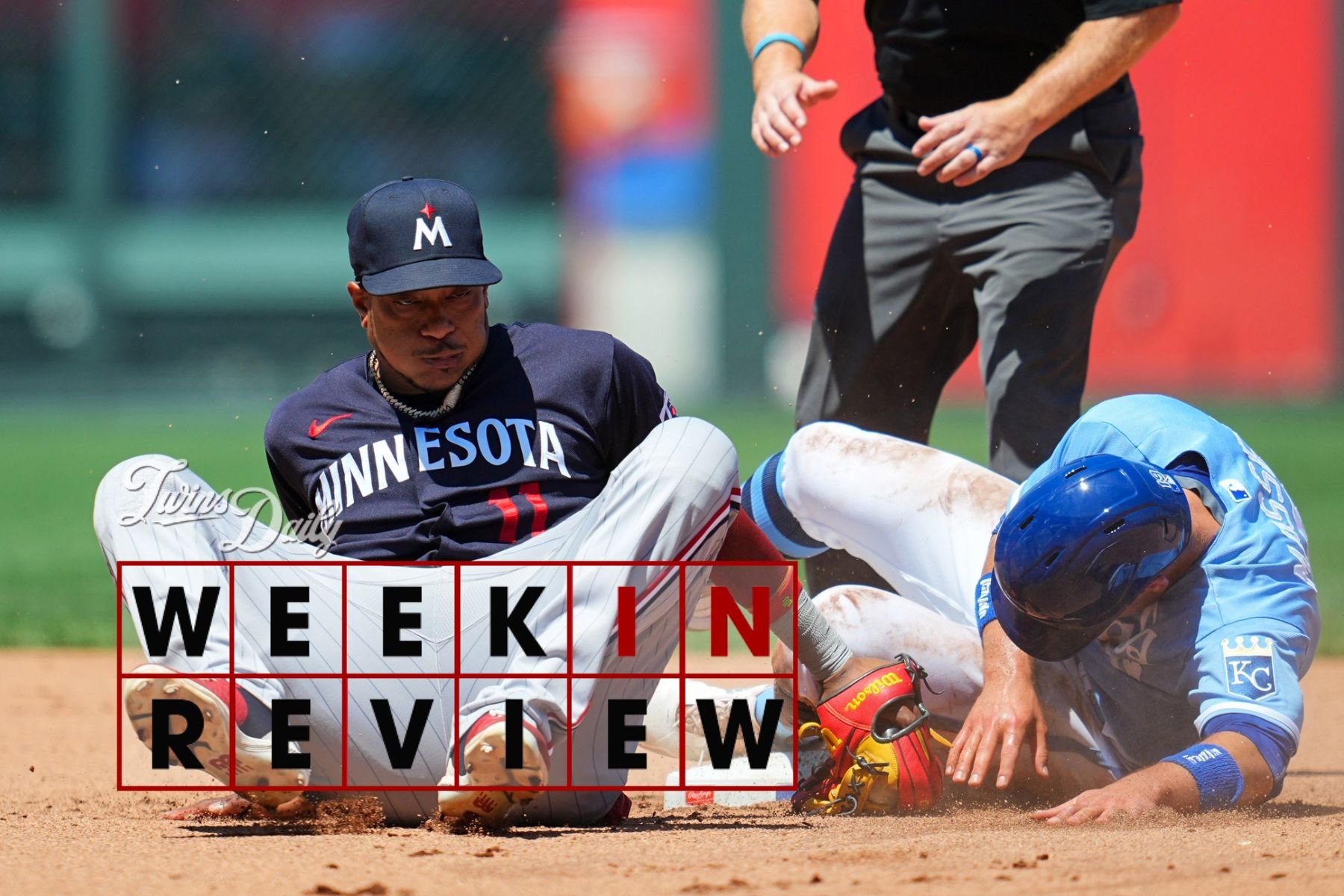 Weekly Snapshot: Mon, 7/24 through Sun, 7/30 *** Record Last Week: 1-5 (Overall: 54-53) Run Differential Last Week: -9 (Overall: +34) Standing: 1st Place in AL Central (0.5 GA) Last Week's Game Results: Game 102 | MIN 4, SEA 3: Twins Come Through in Extra Innings Game 103 | SEA 9, MIN 7: Bullpen Blows Up as Early Lead Disappears Game 104 | SEA 8, MIN 7: Ryan Falls Flat, Late Rally Falls Short Game 105 | KC 8, MIN 5: Walk-off Grand Slam Sinks Duran, Twins Game 106 | KC 10, MIN 7: Royals Trample Twins Pitchers Game 107 | KC 2, MIN 1: Offense Shrinks in Fifth Straight Loss NEWS & NOTES Faster than expected, the Twins activated Jorge Polanco from his minor-league rehab just ahead of the Royals series. Starting all three games in Kansas City (the first two at third base), Polanco notched two hits in 12 at-bats, including a huge game-tying two-run double with two outs in the ninth on Friday. Cole Sands was optioned to make room for Polanco, temporarily giving the Twins a 12-man pitching staff. The Twins also got Byron Buxton back from the paternity list, leading to Trevor Larnach once again being optioned to the minors. Struggling to find any sustained opportunity in this organization, Larnach will be an interesting name to watch as the trade deadline bears down. Ahead of Sunday's game, Alex Kirilloff was placed on the injured list due to a sore shoulder. Needless to say, the timing is far from ideal – Kirilloff was heating up in a big way as reigning AL Player of the Week, a driving force in the offense's resurgence. Now they'll need to make do without him at first base for a while. On the bright side, a needy bullpen got back Caleb Thielbar in the corresponding roster move. HIGHLIGHTS Buxton looked great in his return to action on Saturday night, drilling three doubles (against three different pitchers). He added another two-bagger on Sunday. It's nice to not only see Byron hitting after another lengthy dry spell, but bringing some variety to his boom-or-bust offensive profile. Prior to the KC series he had only three doubles in his past 42 games – compared to nine homers and 57 strikeouts. Other hitters stood out in a week that saw the Twins score 31 runs in six games. Max Kepler continued his awakening by going 8-for-23 (.348) with three doubles and a home run. Christian Vázquez homered and drove in five runs in four games. Matt Wallner launched four bombs, although they were his only hits and he otherwise struck out 11 times with one walk in 23 plate appearances. While the offense has certainly been improved since the All-Star break, it's tough to feel much enthusiasm about this modest turnaround given that they closed out the week with a pitiful one-run showing, while things begin to completely unravel elsewhere. LOWLIGHTS Just as the offense has finally come to life, the pitching staff is spiraling. The team's post-break ERA rose to 5.15 on Saturday night when the lowly Royals offense tacked up 10 runs on Bailey Ober and the Twins bullpen. One night earlier, Jhoan Duran gave up a walk-off grand slam to Bobby Witt Jr. after Sonny Gray earlier failed to handle the Royals. Friday's was a very typical Gray outing. He mostly cruised through five innings, entered the sixth with a lead, and couldn't finish the job, coughing up two runs to exit with a deficit. Gray hasn't earned a win since April and the Twins are 4-11 in his 15 starts over that span. It's not entirely his fault by any stretch, of course, but it's not a total coincidence either. Elsewhere in the rotation, Joe Ryan is free-falling with a 5.90 ERA and 17 home runs allowed in his past 11 starts. He coughed up two more long balls on Wednesday in Seattle – a laborious outing in which he required 95 pitches to get 11 outs. Ryan continues to miss bats and get strikeouts but whenever opponents are making contact they're crushing him. The right-hander needs to make some adjustments and fast. Across the pitching staff, pitchers who the Twins have relied on all year are wobbling. Duran is showing clear signs of wear, with his command eroding as the team leans heavily on him in constantly close games. He has a 6.52 ERA in July and has given up multiple runs in three of 10 appearances – something he hadn't done in his previous 56 appearances. Griffin Jax has given up seven hits in his last six outings. (He'd given up four in his previous 18.) The early magic from Oliver Ortega and Jordan Balazovic seems to be wearing off. It's nice to have Thielbar back in the mix, and Dallas Keuchel looms in the minors as a potential rotation reinforcement to help relieve concerning workloads, and the deadline offers another chance to add depth, but the Twins need their horses to get back on track and fast or this is gonna get ugly. TRENDING STORYLINE The makeup of the Twins' roster will likely look different the next time they take the field on Tuesday night. They already got their deadline season activity underway early by trading Jorge López to Miami for Dylan Floro on Wednesday, and there are surely more moves to come. The deadline is at 5:00 CT on Tuesday (August 1st). Definitely keep tuned to Twins Daily's trade deadline coverage to stay in the know as things develop in the next 48 hours. LOOKING AHEAD Following a dismal showing against Kansas City, the Twins will make the brief jaunt over to St. Louis for another three-game series against a last-place team. Interestingly, the Cards are among the likely sellers who've been connected most to Minnesota in deadline rumblings. (Although their most intriguing reliever, Jordan Hicks, was dealt to Toronto on Sunday.) From there it's back home to Target Field for a series against the Diamondbacks, who were one of the biggest surprises in MLB in the first half but have slid in the standings with a 7-16 July. Good news for the Twins offense: all right-handed starters on the docket. But it's not going to matter much if the fumbling pitchers don't get it together in a hurry. TUESDAY, 8/1: TWINS @ CARDINALS – RHP Pablo Lopez v. RHP Jack Flaherty WEDNESDAY, 8/2: TWINS @ CARDINALS – RHP Joe Ryan v. RHP Miles Mikolas THURSDAY, 8/3: TWINS @ CARDINALS – RHP Sonny Gray v. LHP Jordan Montgomery FRIDAY, 8/4: DIAMONDBACKS @ TWINS – RHP Merrill Kelly v. RHP Bailey Ober SATURDAY, 8/5: DIAMONDBACKS @ TWINS – RHP Ryne Nelson v. RHP Kenta Maeda SUNDAY, 8/6: DIAMONDBACKS @ TWINS – RHP Zac Gallen v. RHP Pablo Lopez
 -
The Twins came out of the All-Star break looking like a rejuvenated squad, winning nine of their first 11 games to seemingly make a statement: the second half as going to be DIFFERENT. Turns out, nah. As usual, that flickering spark of progress was quickly erased. A five-game losing streak, capped by an embarrassing sweep at the hands of the league's worst team, affirmed why it's very hard for anyone to have much confidence in the quality of these Twins. Image courtesy of Jay Biggerstaff-USA TODAY Sports Weekly Snapshot: Mon, 7/24 through Sun, 7/30 *** Record Last Week: 1-5 (Overall: 54-53) Run Differential Last Week: -9 (Overall: +34) Standing: 1st Place in AL Central (0.5 GA) Last Week's Game Results: Game 102 | MIN 4, SEA 3: Twins Come Through in Extra Innings Game 103 | SEA 9, MIN 7: Bullpen Blows Up as Early Lead Disappears Game 104 | SEA 8, MIN 7: Ryan Falls Flat, Late Rally Falls Short Game 105 | KC 8, MIN 5: Walk-off Grand Slam Sinks Duran, Twins Game 106 | KC 10, MIN 7: Royals Trample Twins Pitchers Game 107 | KC 2, MIN 1: Offense Shrinks in Fifth Straight Loss NEWS & NOTES Faster than expected, the Twins activated Jorge Polanco from his minor-league rehab just ahead of the Royals series. Starting all three games in Kansas City (the first two at third base), Polanco notched two hits in 12 at-bats, including a huge game-tying two-run double with two outs in the ninth on Friday. Cole Sands was optioned to make room for Polanco, temporarily giving the Twins a 12-man pitching staff. The Twins also got Byron Buxton back from the paternity list, leading to Trevor Larnach once again being optioned to the minors. Struggling to find any sustained opportunity in this organization, Larnach will be an interesting name to watch as the trade deadline bears down. Ahead of Sunday's game, Alex Kirilloff was placed on the injured list due to a sore shoulder. Needless to say, the timing is far from ideal – Kirilloff was heating up in a big way as reigning AL Player of the Week, a driving force in the offense's resurgence. Now they'll need to make do without him at first base for a while. On the bright side, a needy bullpen got back Caleb Thielbar in the corresponding roster move. HIGHLIGHTS Buxton looked great in his return to action on Saturday night, drilling three doubles (against three different pitchers). He added another two-bagger on Sunday. It's nice to not only see Byron hitting after another lengthy dry spell, but bringing some variety to his boom-or-bust offensive profile. Prior to the KC series he had only three doubles in his past 42 games – compared to nine homers and 57 strikeouts. Other hitters stood out in a week that saw the Twins score 31 runs in six games. Max Kepler continued his awakening by going 8-for-23 (.348) with three doubles and a home run. Christian Vázquez homered and drove in five runs in four games. Matt Wallner launched four bombs, although they were his only hits and he otherwise struck out 11 times with one walk in 23 plate appearances. While the offense has certainly been improved since the All-Star break, it's tough to feel much enthusiasm about this modest turnaround given that they closed out the week with a pitiful one-run showing, while things begin to completely unravel elsewhere. LOWLIGHTS Just as the offense has finally come to life, the pitching staff is spiraling. The team's post-break ERA rose to 5.15 on Saturday night when the lowly Royals offense tacked up 10 runs on Bailey Ober and the Twins bullpen. One night earlier, Jhoan Duran gave up a walk-off grand slam to Bobby Witt Jr. after Sonny Gray earlier failed to handle the Royals. Friday's was a very typical Gray outing. He mostly cruised through five innings, entered the sixth with a lead, and couldn't finish the job, coughing up two runs to exit with a deficit. Gray hasn't earned a win since April and the Twins are 4-11 in his 15 starts over that span. It's not entirely his fault by any stretch, of course, but it's not a total coincidence either. Elsewhere in the rotation, Joe Ryan is free-falling with a 5.90 ERA and 17 home runs allowed in his past 11 starts. He coughed up two more long balls on Wednesday in Seattle – a laborious outing in which he required 95 pitches to get 11 outs. Ryan continues to miss bats and get strikeouts but whenever opponents are making contact they're crushing him. The right-hander needs to make some adjustments and fast. Across the pitching staff, pitchers who the Twins have relied on all year are wobbling. Duran is showing clear signs of wear, with his command eroding as the team leans heavily on him in constantly close games. He has a 6.52 ERA in July and has given up multiple runs in three of 10 appearances – something he hadn't done in his previous 56 appearances. Griffin Jax has given up seven hits in his last six outings. (He'd given up four in his previous 18.) The early magic from Oliver Ortega and Jordan Balazovic seems to be wearing off. It's nice to have Thielbar back in the mix, and Dallas Keuchel looms in the minors as a potential rotation reinforcement to help relieve concerning workloads, and the deadline offers another chance to add depth, but the Twins need their horses to get back on track and fast or this is gonna get ugly. TRENDING STORYLINE The makeup of the Twins' roster will likely look different the next time they take the field on Tuesday night. They already got their deadline season activity underway early by trading Jorge López to Miami for Dylan Floro on Wednesday, and there are surely more moves to come. The deadline is at 5:00 CT on Tuesday (August 1st). Definitely keep tuned to Twins Daily's trade deadline coverage to stay in the know as things develop in the next 48 hours. LOOKING AHEAD Following a dismal showing against Kansas City, the Twins will make the brief jaunt over to St. Louis for another three-game series against a last-place team. Interestingly, the Cards are among the likely sellers who've been connected most to Minnesota in deadline rumblings. (Although their most intriguing reliever, Jordan Hicks, was dealt to Toronto on Sunday.) From there it's back home to Target Field for a series against the Diamondbacks, who were one of the biggest surprises in MLB in the first half but have slid in the standings with a 7-16 July. Good news for the Twins offense: all right-handed starters on the docket. But it's not going to matter much if the fumbling pitchers don't get it together in a hurry. TUESDAY, 8/1: TWINS @ CARDINALS – RHP Pablo Lopez v. RHP Jack Flaherty WEDNESDAY, 8/2: TWINS @ CARDINALS – RHP Joe Ryan v. RHP Miles Mikolas THURSDAY, 8/3: TWINS @ CARDINALS – RHP Sonny Gray v. LHP Jordan Montgomery FRIDAY, 8/4: DIAMONDBACKS @ TWINS – RHP Merrill Kelly v. RHP Bailey Ober SATURDAY, 8/5: DIAMONDBACKS @ TWINS – RHP Ryne Nelson v. RHP Kenta Maeda SUNDAY, 8/6: DIAMONDBACKS @ TWINS – RHP Zac Gallen v. RHP Pablo Lopez View full article
-
Joey Gallo is 30 years old with 3000 MLB plate appearances! He's NOT a developing player. I feel like you're intentionally ignoring the topic of discussion to rail on Rooker. Take away the specific names and circumstances and just look at the numbers. Rooker went from a 668 career OPS and 85 OPS+ to a 796 OPS and 125 OPS+ this year. (Again, this is WITH all the slumping you keep hammering on!) If Larnach saw a similar jump at age 27 he'd be in like the 840 OPS and 130 OPS+ range. As a left-handed hitter with solid defense and some patience. Take out Rooker's name (since they're not super comparable profiles anyway) and swap in one of any number of seemingly future-less players who break out in their late 20s. It happens all the time. Larnach has a lot of attributes of being such a candidate. And I think that will intrigue other teams.
- 83 replies
-
- 1
-
-
- trevor larnach
- matt wallner
- (and 1 more)
-
The point is that sometimes hitters take a while to find their stride, it's one example to illustrate a point. Want another example, see LaMonte Wade, who also was completely unaccomplished through age 26. I really don't care about Rooker's monthly splits, they are irrelevant to what we're actually discussing. I only referenced him as a comp because of the close career timeline parallels to Larnach. Still, you can't just ignore that Rooker's been 25% better than the average hitter based on where the production was concentrated or what you presume will happen going forward. His OPS is up 130 points from his previous career norm, even with all that slumping after April. Bottom line: Larnach is not a finished product. He's been better through age 26 than either of the two mentioned above.
- 83 replies
-
- 1
-
-
- trevor larnach
- matt wallner
- (and 1 more)
-
Pretty sure Larnach would realistically need to be the 2nd or 3rd best piece going back to San Diego in a Hader trade.
- 83 replies
-
- 1
-

-
- trevor larnach
- matt wallner
- (and 1 more)
-
Larnach's options, per MLB.com: Aug 16, 2021 March 30, 2022 May 5, 2023 (also June 14 and July 26) They optioned him in 2021 before they shut him down with the hand injury. What am I missing here?
-
Why are we parsing it out like this? Did the season start on May 1st? We're all aware he had a hot start and cooled off but the numbers still count and he's been a good offensive player overall. (Also don't steal my lines lol.)
-
Oh yeah? If Larnach has a 125 OPS+ next year you won't be moved, huh.
-
Because the guys with futures have trade value and the veterans on expiring contracts have much less. (None, in Gallo's case.) This front office likes to make hay of an opportunity, which Falvey's quote hints at them viewing this as.
- 83 replies
-
- 2
-
-
- trevor larnach
- matt wallner
- (and 1 more)
-
? He was added to the 40-man in 2021 and has been optioned in each of the past three years.
-
Timing has worked against the former first-round draft pick during his tenure in the Twins organization. Now, timing dictates that the smart move is for the team to deal him away at this deadline. That's not an indictment of Larnach as a player. Quite the opposite, in fact. Image courtesy of Nick Wosika-USA TODAY Sports There seems to be a perception that Trevor Larnach has been a failure as a draft pick or development project. It's just not fair or accurate. First of all, he's been pretty decent! The Twins selected Larnach in the second half of the first round, where it's very difficult to find future stars. They liked him for his high-floor bat, and he's delivered on that appeal. Larnach has slashed .283/.371/.452 in the minors. He has a 96 OPS+ and 2.0 fWAR in 180 major-league games, which – while far from great – is respectable, especially for a developing young player. And that's the other part: the book is hardly written on Larnach for a big-leaguer. I will remind you that Brent Rooker, drafted a year earlier as a similar high-floor college hitter, had a .668 OPS in the majors through his age-27 season and was an All-Star at age 28. It takes time, especially for players like Rooker and Larnach who had their development massively disrupted by the lost COVID season. That bit of poor timing for Larnach, coming just as he was arriving in the high minors and preparing to make his case for a call-up, was the first of many in his tumultuous young career. After getting no official at-bats in 2020, Larnach reached the majors in 2021 and was beginning to establish himself as a fixture, before a hand injury tanked his numbers and ultimately forced him to finish on the IL. Last year he again was looking solid at the plate before another injury ended his season, this time a core muscle issue. In spite of all that, Larnach has actually shown far more promise than Rooker had up to this point. The strikeouts are out of control but Larnach has shown the ability to take some walks and he's a capable defender. His raw power has flashed in big ways at times. Twins fans can easily lose sight of it, given the stockpile in this organization, but quality left-handed bats are in short supply elsewhere. As Twins Chief Baseball Officer Derek Falvey recently shared that the team's lefty bats have been "asked on a lot," adding that "there are teams that don't have any of that and they're dying to get some." To plenty of other teams, rebuilding or otherwise, Larnach should have a lot of appeal – still controllable for four more seasons, with upside yet to be tapped. In the Twins organization, his path is almost hopelessly blocked. He managed to get only 10 at-bats in his latest MLB stint before being optioned to make room for Byron Buxton on Thursday. Even if the Twins are able to keep Matt Wallner on the roster by, say, designating Joey Gallo for assignment, that still leaves Larnach with no path to regular playing time. His lefty bat remains stacked behind at least two others in the corner outfield mix, with Nick Gordon also returning to the fold at some point. And here's the other thing: Larnach will be out of options next spring. The clock is ticking and now seems like the right time to make a proactive move with Larnach rather than waiting to make a reactive one. Larnach deserves a real opportunity and now that he's been firmly passed in the pecking order by Wallner, it's exceedingly difficult to see him getting it here. The Twins should take the best offer for Larnach and give him a chance to make an impact elsewhere since it just ain't coming here. View full article
-
Right Now Is (Unfortunately) the Right Time to Trade Trevor Larnach
Nick Nelson posted an article in Twins
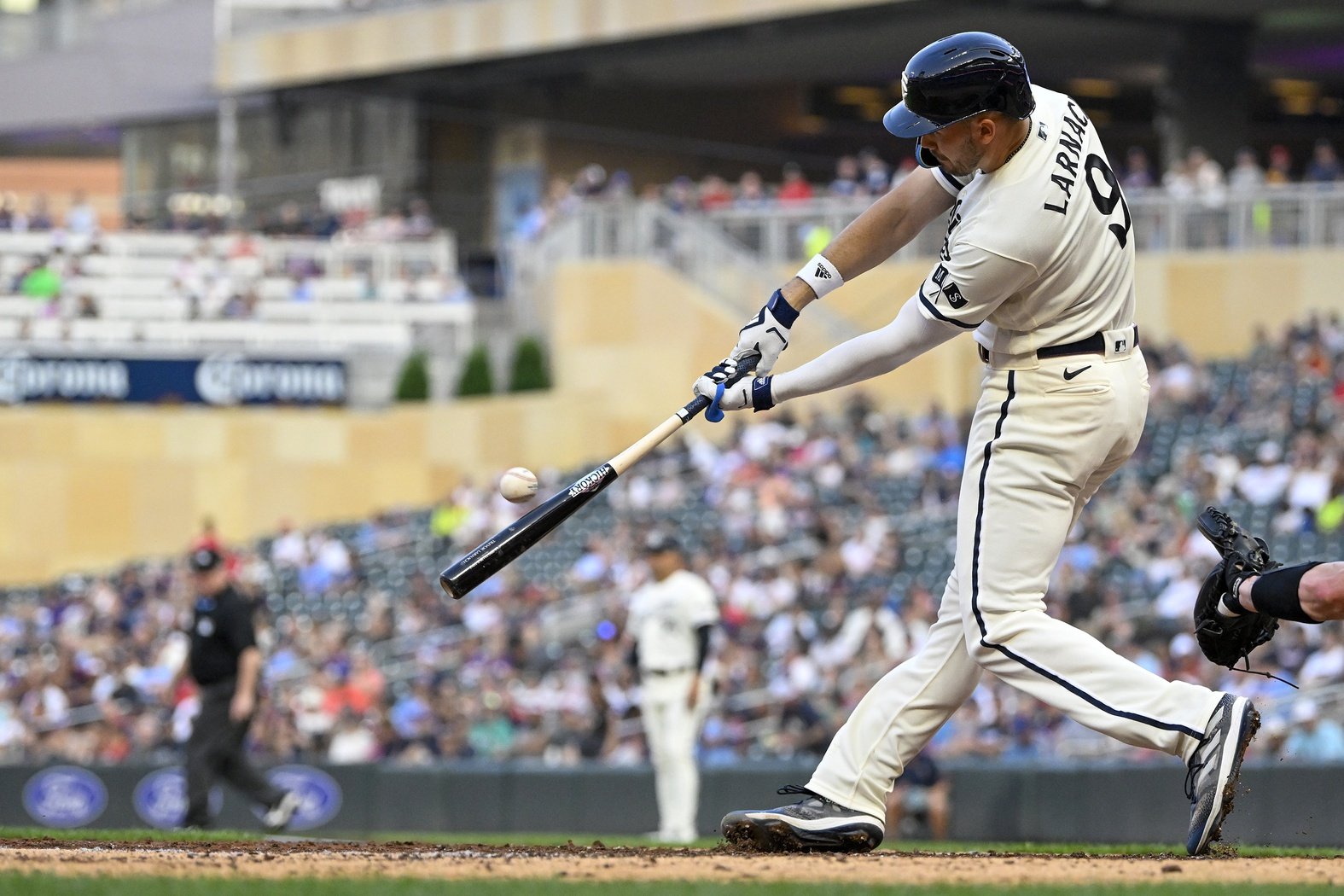 There seems to be a perception that Trevor Larnach has been a failure as a draft pick or development project. It's just not fair or accurate. First of all, he's been pretty decent! The Twins selected Larnach in the second half of the first round, where it's very difficult to find future stars. They liked him for his high-floor bat, and he's delivered on that appeal. Larnach has slashed .283/.371/.452 in the minors. He has a 96 OPS+ and 2.0 fWAR in 180 major-league games, which – while far from great – is respectable, especially for a developing young player. And that's the other part: the book is hardly written on Larnach for a big-leaguer. I will remind you that Brent Rooker, drafted a year earlier as a similar high-floor college hitter, had a .668 OPS in the majors through his age-27 season and was an All-Star at age 28. It takes time, especially for players like Rooker and Larnach who had their development massively disrupted by the lost COVID season. That bit of poor timing for Larnach, coming just as he was arriving in the high minors and preparing to make his case for a call-up, was the first of many in his tumultuous young career. After getting no official at-bats in 2020, Larnach reached the majors in 2021 and was beginning to establish himself as a fixture, before a hand injury tanked his numbers and ultimately forced him to finish on the IL. Last year he again was looking solid at the plate before another injury ended his season, this time a core muscle issue. In spite of all that, Larnach has actually shown far more promise than Rooker had up to this point. The strikeouts are out of control but Larnach has shown the ability to take some walks and he's a capable defender. His raw power has flashed in big ways at times. Twins fans can easily lose sight of it, given the stockpile in this organization, but quality left-handed bats are in short supply elsewhere. As Twins Chief Baseball Officer Derek Falvey recently shared that the team's lefty bats have been "asked on a lot," adding that "there are teams that don't have any of that and they're dying to get some." To plenty of other teams, rebuilding or otherwise, Larnach should have a lot of appeal – still controllable for four more seasons, with upside yet to be tapped. In the Twins organization, his path is almost hopelessly blocked. He managed to get only 10 at-bats in his latest MLB stint before being optioned to make room for Byron Buxton on Thursday. Even if the Twins are able to keep Matt Wallner on the roster by, say, designating Joey Gallo for assignment, that still leaves Larnach with no path to regular playing time. His lefty bat remains stacked behind at least two others in the corner outfield mix, with Nick Gordon also returning to the fold at some point. And here's the other thing: Larnach will be out of options next spring. The clock is ticking and now seems like the right time to make a proactive move with Larnach rather than waiting to make a reactive one. Larnach deserves a real opportunity and now that he's been firmly passed in the pecking order by Wallner, it's exceedingly difficult to see him getting it here. The Twins should take the best offer for Larnach and give him a chance to make an impact elsewhere since it just ain't coming here.
- 83 comments
-
- 11
-
-
-
- trevor larnach
- matt wallner
- (and 1 more)
-
The Twins Are Trending Toward Full Strength for the Stretch Run
Nick Nelson posted an article in Twins
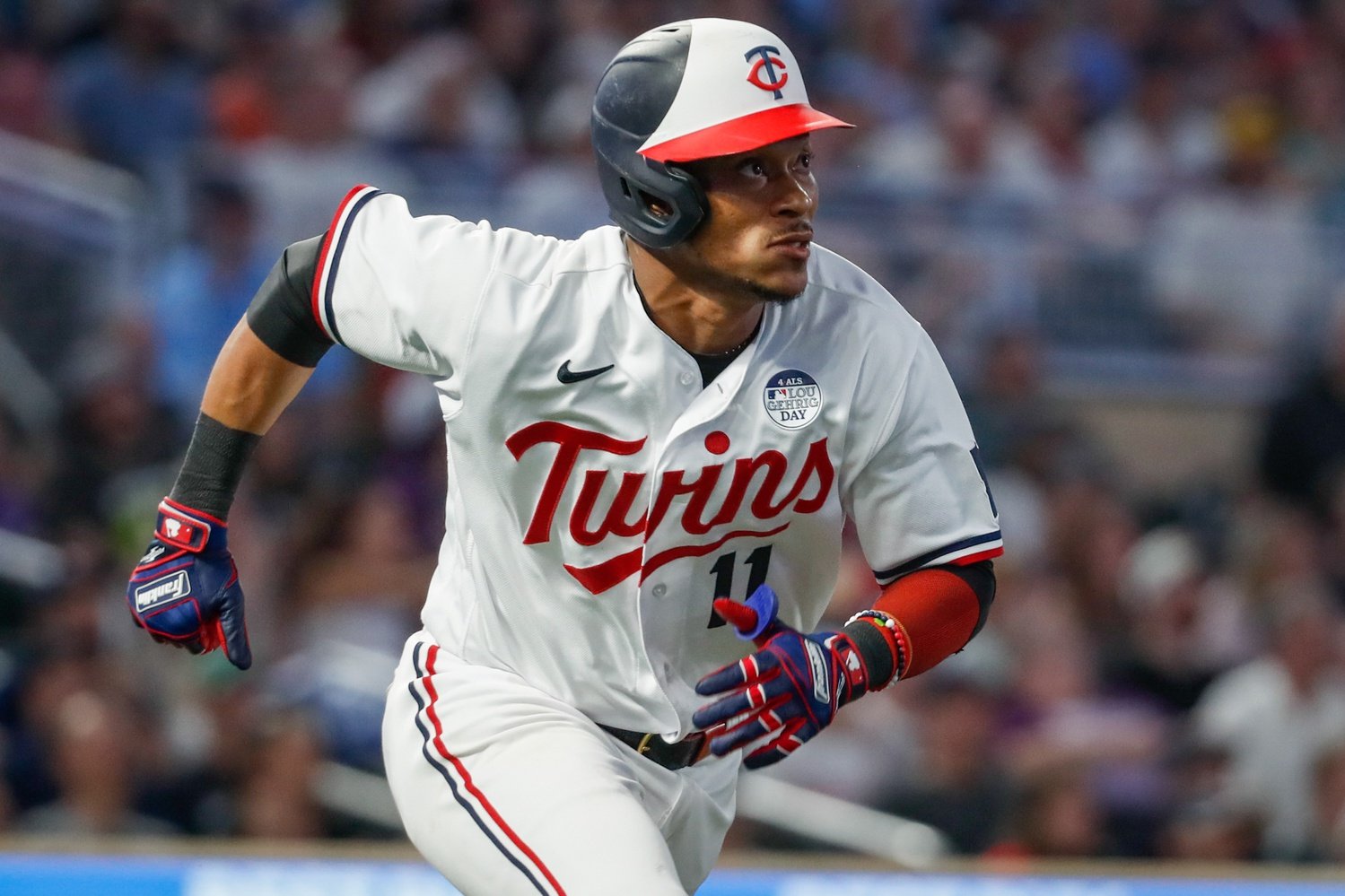 On this date in 2022, the Minnesota Twins were technically in a very similar position to the one they are now: six games above .500 and three games ahead in the division. This could be treated as a cautionary tale. As we now know, that margin was as high as it would ever get. Minnesota's lead in the Central disappeared over the next two weeks and they never got it back, finishing 14 games out. But let's take a step back and compare the team's current state to where they were at a year ago, just before the bottom fell out. Moreover, let's compare how their top competitor in the division is relatively faring this time around. While the Twins don't deserve total absolution for their post-break collapse last year, a contrast in roster health was clearly the overriding factor in Cleveland's surpassing them for the division title. The Guardians managed to avoid key injuries almost entirely, losing the fewest days to the injured list of any team in baseball. Meanwhile, the Twins were on the opposite end of that spectrum, plagued by an ever-growing assortment of ailments. Right around this time, the whole thing was beginning to unravel. On July 26th, Alex Kirilloff went 0-for-4 against Milwaukee. Days later he'd be shut down for the season. In the following weeks, Jorge Polanco, Byron Buxton and Max Kepler all went down. Ryan Jeffers had already suffered an essentially season-ending thumb injury. This year we find ourselves with a much brighter outlook. Whereas Kirilloff was plainly wearing down and searching for answers at this time last year, he now appears to be rounding into form. Kepler and Jeffers are healthy and playing well. Buxton is on pace to play the second-most games of his nine-year career. Polanco is on the comeback trail. The Twins certainly haven't avoided injuries entirely, with Polanco being a prime example, but there isn't the same air of hopelessness that began to envelope the club a year ago. Players like Polanco, Caleb Thielbar, and Royce Lewis are making their way back with fairly firm timelines, allowing the front office to plan around addition rather than attrition. Others with more ambiguous long-term timelines, like Nick Gordon, Jose Miranda, Jorge Alcala and Chris Paddack, are more role players than mainstays. Brock Stewart is an exception to this trend – a vital component of the bullpen who is sidelined indefinitely with a vague and worrisome outlook – but he's just that: an exception. The second half of 2022 was overrun by situations like these. In Cleveland, the turn of fortune has been less favorable. Their charmed life has worn off and the injured list has grown much more crowded for the second-place Guardians, who recently moved Shane Bieber to the 60-day IL where he joins Triston McKenzie. Both top starters will miss most of the second half, if not all of it, leaving Cleveland's chances to overtake the Twins even lower, in practical terms, than their 15% odds (per FanGraphs) might suggest. Look, I'm not here to tell you anything is promised. You know never what can happen, as we've seen. But if you find yourself feeling a sense of doom and pessimism stemming from what we all went through in 2022, know that the situation in the AL Central is very, very different here in 2023. The same magical formula that enabled the Guardians to overcome the Twins last year won't be replicated with the cosmic balance of injury luck leveling out.
 -
Knock on wood. Do it, now! Did you knock on it? Okay, find some more and go knock on that as well please. We need to get all superstitious frivolities out of the way before we start diving into what a drastically different picture is taking shape in the AL Central compared to one year ago. Image courtesy of Bruce Kluckhohn-USA TODAY Sports On this date in 2022, the Minnesota Twins were technically in a very similar position to the one they are now: six games above .500 and three games ahead in the division. This could be treated as a cautionary tale. As we now know, that margin was as high as it would ever get. Minnesota's lead in the Central disappeared over the next two weeks and they never got it back, finishing 14 games out. But let's take a step back and compare the team's current state to where they were at a year ago, just before the bottom fell out. Moreover, let's compare how their top competitor in the division is relatively faring this time around. While the Twins don't deserve total absolution for their post-break collapse last year, a contrast in roster health was clearly the overriding factor in Cleveland's surpassing them for the division title. The Guardians managed to avoid key injuries almost entirely, losing the fewest days to the injured list of any team in baseball. Meanwhile, the Twins were on the opposite end of that spectrum, plagued by an ever-growing assortment of ailments. Right around this time, the whole thing was beginning to unravel. On July 26th, Alex Kirilloff went 0-for-4 against Milwaukee. Days later he'd be shut down for the season. In the following weeks, Jorge Polanco, Byron Buxton and Max Kepler all went down. Ryan Jeffers had already suffered an essentially season-ending thumb injury. This year we find ourselves with a much brighter outlook. Whereas Kirilloff was plainly wearing down and searching for answers at this time last year, he now appears to be rounding into form. Kepler and Jeffers are healthy and playing well. Buxton is on pace to play the second-most games of his nine-year career. Polanco is on the comeback trail. The Twins certainly haven't avoided injuries entirely, with Polanco being a prime example, but there isn't the same air of hopelessness that began to envelope the club a year ago. Players like Polanco, Caleb Thielbar, and Royce Lewis are making their way back with fairly firm timelines, allowing the front office to plan around addition rather than attrition. Others with more ambiguous long-term timelines, like Nick Gordon, Jose Miranda, Jorge Alcala and Chris Paddack, are more role players than mainstays. Brock Stewart is an exception to this trend – a vital component of the bullpen who is sidelined indefinitely with a vague and worrisome outlook – but he's just that: an exception. The second half of 2022 was overrun by situations like these. In Cleveland, the turn of fortune has been less favorable. Their charmed life has worn off and the injured list has grown much more crowded for the second-place Guardians, who recently moved Shane Bieber to the 60-day IL where he joins Triston McKenzie. Both top starters will miss most of the second half, if not all of it, leaving Cleveland's chances to overtake the Twins even lower, in practical terms, than their 15% odds (per FanGraphs) might suggest. Look, I'm not here to tell you anything is promised. You know never what can happen, as we've seen. But if you find yourself feeling a sense of doom and pessimism stemming from what we all went through in 2022, know that the situation in the AL Central is very, very different here in 2023. The same magical formula that enabled the Guardians to overcome the Twins last year won't be replicated with the cosmic balance of injury luck leveling out. View full article
-
Week in Review: Powering Up
Nick Nelson replied to Nick Nelson's topic in Twins Daily Front Page News
Taking advantage of bad or inexperienced pitching would be a departure from what they did in the first half lol -
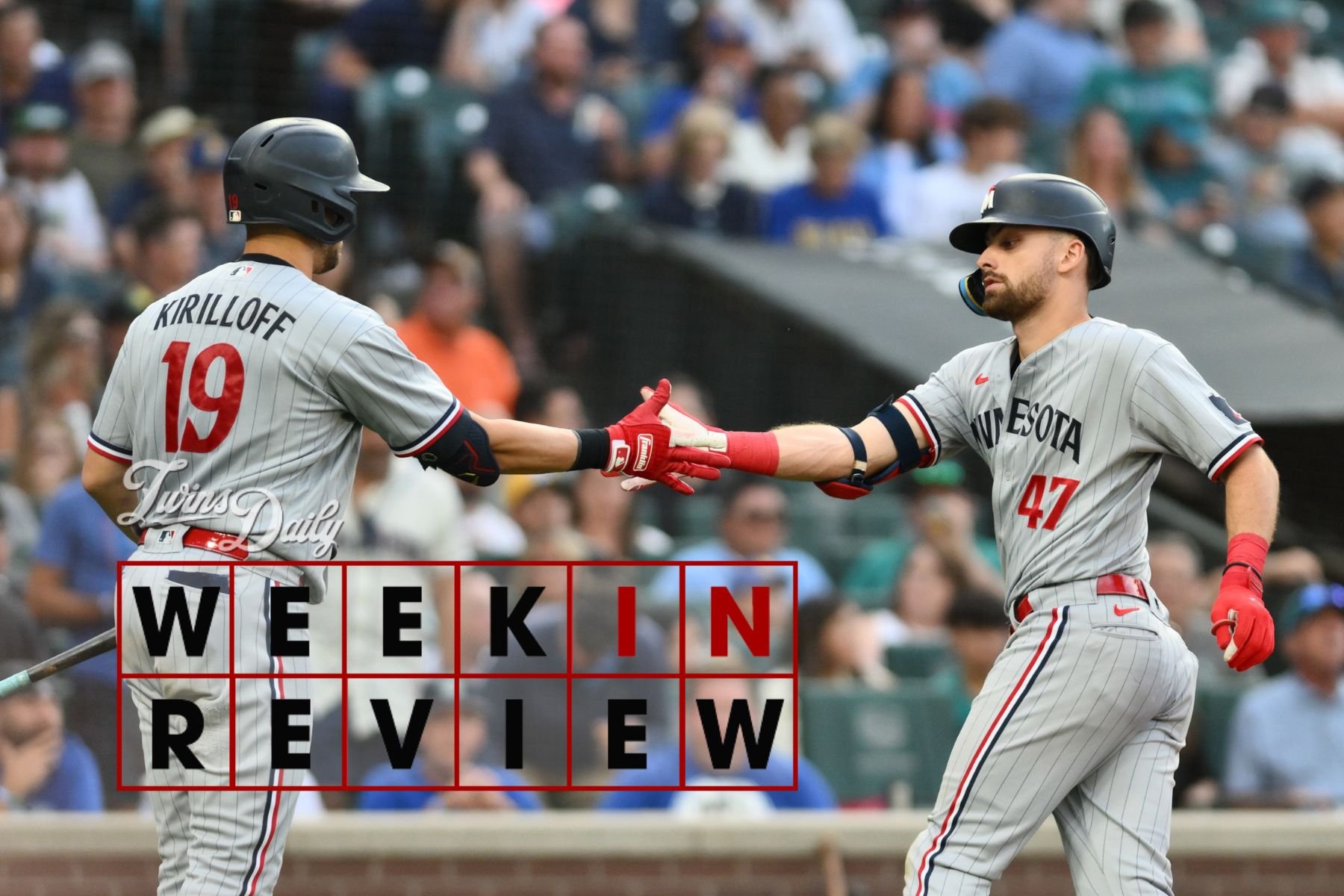 Weekly Snapshot: Mon, 7/17 through Sun, 7/23 *** Record Last Week: 5-2 (Overall: 53-48) Run Differential Last Week: +11 (Overall: +43) Standing: 1st Place in AL Central (3.0 GA) Last Week's Game Results: Game 95 | SEA 6, MIN 5: Gray Wobbles, Twins Drop Opener Game 96 | MIN 10, SEA 3: Offense Explodes Behind Ober Game 97 | MIN 6, SEA 3: Maeda Rolls, Julien Hits Key Homer Game 98 | SEA 5, MIN 0: Kirby Cruises to Quiet Minnesota Bats Game 99 | MIN 9, CWS 4: Buxton Breaks Out, Twins Bury Lynn Game 100 | MIN 3, CWS 2: Vázquez Keys Comeback Victory Game 101 | MIN 5, CWS 4: Lineup Surges Late to Clinch Sweep NEWS & NOTES The Twins didn't get any players back over the past week, but some key reinforcements are on the way. Jorge Polanco embarked on a rehab assignment at Triple-A, where he's 5-for-17 with a double and homer in five games. He made starts at DH and second base before debuting at third base on Sunday, where the Twins are working him in with hopes he can join their lineup there, alongside second baseman Edouard Julien and designated hitter Byron Buxton. It wouldn't be surprising if Polanco spent at least one more full week at St. Paul, and maybe longer if the Twins want to build his comfort level at the hot corner. But soon enough, barring setbacks, he'll be activated. The prospect of re-adding Polanco's potent bat to this resurgent lineup for the final two months is very exciting. The same can be said for getting Caleb Thielbar back into this high-performing bullpen. Twins relievers rank fourth in the majors in ERA, including a 2.00 mark since the All-Star break, but are still at least one arm short of feeling comfortable in the late innings. Thielbar threw a live batting practice on Saturday, and could be on track to start a rehab assignment in the coming days. Still no word on Brock Stewart. Dallas Keuchel decided not to opt out of his minor-league contract with the Twins ... for now. He bypassed the opportunity to re-enter free agency last week, making another start for St. Paul on Saturday and tossing six shutout innings. He has another opt-out coming at the start of August, so one way or another, a decision point is approaching with Keuchel. HIGHLIGHTS The Twins are finally starting to form an offensive identity, with two stellar young left-handed hitters leading the charge. In an homage to the early days of Joe Mauer and Justin Morneau, Julien and Alex Kirilloff are giving fans reason to believe in the Minnesota lineup. For the first time on Tuesday, Rocco Baldelli wrote Julien and Kirilloff into the 2-3 spots in the lineup. He was rewarded by watching the duo pile up six hits and score six runs in a 10-3 blowout win against the Mariners. The following day they again batted second and third; both homered. On Friday, these two helped put the Twins up 5-1 in the first inning when Kirilloff followed Julien's LONG single by pulling a homer to right. Surpassing all expectations, Julien has legitimately been one of the best hitters in the major leagues as a rookie, ranking alongside MVP runaways Shohei Ohtani and Ronald Acuna Jr. in wOBA since being recalled six weeks ago. The power, patience, persistence ... it's all been on display at the plate. Julien is an instantly premier offensive player, albeit it one due for some regression with a .430 BABIP. Kirilloff, meanwhile, is finally rediscovering his power stroke as he adapts to life with a twice-repaired wrist. He'd been getting the job done with a disciplined approach for the first couple months, even as he struggled to lift the ball, but here in mid-July the extra-base hits are starting to rain down for AK. He capped off the previous week on Sunday by homering, doubling, and driving in four runs against Oakland. That breakout carried over to excellent performances against Seattle and Chicago – Kirilloff was 10-for-29 with two doubles, a triple, three home runs, and 10 RBIs in seven games. His two-out RBI single in the ninth on Sunday tied the game and paved way for a comeback win in extras. Baldelli now seems firmly set on his No. 3 hitter against right-handed pitchers. Max Kepler is on the way to entrenching himself behind AK in the cleanup spot. Restoring the viability of his "Max Power" moniker, Kepler went 8-for-25 on the week with three doubles and two home runs, driving in six. With Carlos Correa continuing to perform effectively in the leadoff spot (6-for-26 with a homer, two doubles, and four walks last week), the Twins are giving opposing right-handers a sizable challenge by following with Julien, Kirilloff, and Kepler in succession. That mix will grow even more formidable once they get back Polanco and his punishing lefty swing. This all might not necessarily help much with Minnesota's much-discussed shortcomings against left-handed pitchers, which they can aim to address at the deadline, but they're in the middle of seeing a ton of match-ups against righty starters so it's not a pressing issue at the moment. They still have their missteps – as seen in the empty efforts against George Kirby and Lucas Giolito last week – but the Twins lineup has definitely looked rejuvenated since the All-Star break, scoring five or more runs in eight of 10 games while going 8-2. Minnesota had scored 5+ runs just eight times in the four weeks leading up to the break. LOWLIGHTS After all the clamoring for him to be called up, and then the angst over his sitting on the bench for a few days when he was called up, Matt Wallner returned with a bit of a thud. Receiving starts at DH and both outfield corners last week, Wallner went 5-for-20 with a double and zero RBIs. Meanwhile, Kepler is absolutely thriving. Baseball, eh? Even with his production coming back down to Earth, it still makes sense to have Wallner in the lineup ahead of Joey Gallo, who went 1-for-15 with eight strikeouts in Seattle and then sat out most of the weekend series at Target Field due to pink eye. Since May 15th, Gallo is slashing .159/.279/.373 in 45 games with eight home runs ... and 10 RBIs. It's solo homer or bust, and mostly the latter from Gallo. Sadly the same has become true of Byron Buxton, who went deep twice in Friday's game but otherwise was 1-for-17 with nine strikeouts on the week. TRENDING STORYLINE There are a whole bunch of compelling storylines surrounding the Twins as we head toward the end of July. The trade deadline is looming in just nine days, with the front office said to be seeking bullpen help and a righty bat. Keuchel could be called up to join the rotation at seemingly any time. Buxton is going to force some difficult decisions if his slumping persists much longer, especially as Polanco's return gets nearer. Finally, there's Walker Jenkins. The fifth overall pick still has not yet agreed to terms with the Twins, and the deadline is just two days away. Jenkins is one of only two first-round picks who hasn't signed. (The other is high school catcher Ralphy Velazquez, taken 23rd overall by Cleveland.) Starting to get a little nervous here... LOOKING AHEAD It's going to be a sweltering hot series against Seattle at Target Field, with temperatures approaching triple digits by midweek. Things will get no better in Kansas City, where the projected highs are 100+ throughout next weekend. MONDAY, 7/24: MARINERS @ TWINS – RHP Luis Castillo v. RHP Kenta Maeda TUESDAY, 7/25: MARINERS @ TWINS – RHP George Kirby v. RHP Pablo Lopez WEDNESDAY, 7/26: MARINERS @ TWINS – RHP Bryce Miller v. RHP Joe Ryan FRIDAY, 7/28: TWINS @ ROYALS – RHP Sonny Gray v. RHP Brady Singer SATURDAY, 7/29: TWINS @ ROYALS – RHP Bailey Ober v. RHP Jordan Lyles SUNDAY, 7/30: TWINS @ ROYALS – RHP Kenta Maeda v. LHP Ryan Yarbrough
 -
The Twins offense is finally showing signs of sustained life, with a pair of young lefty hitters emerging as the driving force atop the lineup. Minnesota is 8-2 since the All-Star break and three games ahead in the AL Central. Image courtesy of Steven Bisig-USA TODAY Sports Weekly Snapshot: Mon, 7/17 through Sun, 7/23 *** Record Last Week: 5-2 (Overall: 53-48) Run Differential Last Week: +11 (Overall: +43) Standing: 1st Place in AL Central (3.0 GA) Last Week's Game Results: Game 95 | SEA 6, MIN 5: Gray Wobbles, Twins Drop Opener Game 96 | MIN 10, SEA 3: Offense Explodes Behind Ober Game 97 | MIN 6, SEA 3: Maeda Rolls, Julien Hits Key Homer Game 98 | SEA 5, MIN 0: Kirby Cruises to Quiet Minnesota Bats Game 99 | MIN 9, CWS 4: Buxton Breaks Out, Twins Bury Lynn Game 100 | MIN 3, CWS 2: Vázquez Keys Comeback Victory Game 101 | MIN 5, CWS 4: Lineup Surges Late to Clinch Sweep NEWS & NOTES The Twins didn't get any players back over the past week, but some key reinforcements are on the way. Jorge Polanco embarked on a rehab assignment at Triple-A, where he's 5-for-17 with a double and homer in five games. He made starts at DH and second base before debuting at third base on Sunday, where the Twins are working him in with hopes he can join their lineup there, alongside second baseman Edouard Julien and designated hitter Byron Buxton. It wouldn't be surprising if Polanco spent at least one more full week at St. Paul, and maybe longer if the Twins want to build his comfort level at the hot corner. But soon enough, barring setbacks, he'll be activated. The prospect of re-adding Polanco's potent bat to this resurgent lineup for the final two months is very exciting. The same can be said for getting Caleb Thielbar back into this high-performing bullpen. Twins relievers rank fourth in the majors in ERA, including a 2.00 mark since the All-Star break, but are still at least one arm short of feeling comfortable in the late innings. Thielbar threw a live batting practice on Saturday, and could be on track to start a rehab assignment in the coming days. Still no word on Brock Stewart. Dallas Keuchel decided not to opt out of his minor-league contract with the Twins ... for now. He bypassed the opportunity to re-enter free agency last week, making another start for St. Paul on Saturday and tossing six shutout innings. He has another opt-out coming at the start of August, so one way or another, a decision point is approaching with Keuchel. HIGHLIGHTS The Twins are finally starting to form an offensive identity, with two stellar young left-handed hitters leading the charge. In an homage to the early days of Joe Mauer and Justin Morneau, Julien and Alex Kirilloff are giving fans reason to believe in the Minnesota lineup. For the first time on Tuesday, Rocco Baldelli wrote Julien and Kirilloff into the 2-3 spots in the lineup. He was rewarded by watching the duo pile up six hits and score six runs in a 10-3 blowout win against the Mariners. The following day they again batted second and third; both homered. On Friday, these two helped put the Twins up 5-1 in the first inning when Kirilloff followed Julien's LONG single by pulling a homer to right. Surpassing all expectations, Julien has legitimately been one of the best hitters in the major leagues as a rookie, ranking alongside MVP runaways Shohei Ohtani and Ronald Acuna Jr. in wOBA since being recalled six weeks ago. The power, patience, persistence ... it's all been on display at the plate. Julien is an instantly premier offensive player, albeit it one due for some regression with a .430 BABIP. Kirilloff, meanwhile, is finally rediscovering his power stroke as he adapts to life with a twice-repaired wrist. He'd been getting the job done with a disciplined approach for the first couple months, even as he struggled to lift the ball, but here in mid-July the extra-base hits are starting to rain down for AK. He capped off the previous week on Sunday by homering, doubling, and driving in four runs against Oakland. That breakout carried over to excellent performances against Seattle and Chicago – Kirilloff was 10-for-29 with two doubles, a triple, three home runs, and 10 RBIs in seven games. His two-out RBI single in the ninth on Sunday tied the game and paved way for a comeback win in extras. Baldelli now seems firmly set on his No. 3 hitter against right-handed pitchers. Max Kepler is on the way to entrenching himself behind AK in the cleanup spot. Restoring the viability of his "Max Power" moniker, Kepler went 8-for-25 on the week with three doubles and two home runs, driving in six. With Carlos Correa continuing to perform effectively in the leadoff spot (6-for-26 with a homer, two doubles, and four walks last week), the Twins are giving opposing right-handers a sizable challenge by following with Julien, Kirilloff, and Kepler in succession. That mix will grow even more formidable once they get back Polanco and his punishing lefty swing. This all might not necessarily help much with Minnesota's much-discussed shortcomings against left-handed pitchers, which they can aim to address at the deadline, but they're in the middle of seeing a ton of match-ups against righty starters so it's not a pressing issue at the moment. They still have their missteps – as seen in the empty efforts against George Kirby and Lucas Giolito last week – but the Twins lineup has definitely looked rejuvenated since the All-Star break, scoring five or more runs in eight of 10 games while going 8-2. Minnesota had scored 5+ runs just eight times in the four weeks leading up to the break. LOWLIGHTS After all the clamoring for him to be called up, and then the angst over his sitting on the bench for a few days when he was called up, Matt Wallner returned with a bit of a thud. Receiving starts at DH and both outfield corners last week, Wallner went 5-for-20 with a double and zero RBIs. Meanwhile, Kepler is absolutely thriving. Baseball, eh? Even with his production coming back down to Earth, it still makes sense to have Wallner in the lineup ahead of Joey Gallo, who went 1-for-15 with eight strikeouts in Seattle and then sat out most of the weekend series at Target Field due to pink eye. Since May 15th, Gallo is slashing .159/.279/.373 in 45 games with eight home runs ... and 10 RBIs. It's solo homer or bust, and mostly the latter from Gallo. Sadly the same has become true of Byron Buxton, who went deep twice in Friday's game but otherwise was 1-for-17 with nine strikeouts on the week. TRENDING STORYLINE There are a whole bunch of compelling storylines surrounding the Twins as we head toward the end of July. The trade deadline is looming in just nine days, with the front office said to be seeking bullpen help and a righty bat. Keuchel could be called up to join the rotation at seemingly any time. Buxton is going to force some difficult decisions if his slumping persists much longer, especially as Polanco's return gets nearer. Finally, there's Walker Jenkins. The fifth overall pick still has not yet agreed to terms with the Twins, and the deadline is just two days away. Jenkins is one of only two first-round picks who hasn't signed. (The other is high school catcher Ralphy Velazquez, taken 23rd overall by Cleveland.) Starting to get a little nervous here... LOOKING AHEAD It's going to be a sweltering hot series against Seattle at Target Field, with temperatures approaching triple digits by midweek. Things will get no better in Kansas City, where the projected highs are 100+ throughout next weekend. MONDAY, 7/24: MARINERS @ TWINS – RHP Luis Castillo v. RHP Kenta Maeda TUESDAY, 7/25: MARINERS @ TWINS – RHP George Kirby v. RHP Pablo Lopez WEDNESDAY, 7/26: MARINERS @ TWINS – RHP Bryce Miller v. RHP Joe Ryan FRIDAY, 7/28: TWINS @ ROYALS – RHP Sonny Gray v. RHP Brady Singer SATURDAY, 7/29: TWINS @ ROYALS – RHP Bailey Ober v. RHP Jordan Lyles SUNDAY, 7/30: TWINS @ ROYALS – RHP Kenta Maeda v. LHP Ryan Yarbrough View full article
-
In the seventh draft since Derek Falvey took over and transformed their front office, the Minnesota Twins selected high school outfielder Walker Jenkins out of North Carolina at fifth overall. How does this pick track against other players the Twins have selected with their first choice in the draft under Falvey and Co.? Image courtesy of Jeffrey Becker, Nathan Ray Seebeck, Ken Blevens – USA TODAY Sports At a basic level, most people in MLB front offices would likely agree that "Best Player Available" is a proper guiding principle for the amateur draft. It's a smart approach to drafting in any sport, really, but especially one with such lengthy, circuitous, and unpredictable development timelines. With that said, determining the "Best Player Available" is not so straightforward in practice. After a certain early point in the first round, this assessment becomes very subjective, and even at the highest picks, opinions tend to vary wildly about who is better than who. Moreover, you have different organizational metrics and evaluation systems, different priorities, and different strategies in play. The bottom line: looking back at players chosen with the highest-stakes draft picks can tell you a lot about a front office's philosophies. Reviewing how those decisions have panned out can be telling in terms of how effective these philosophies have been, and what lessons might be carried forward. Is the Walker Jenkins selection reflective of an adaptive front office evolving its mentality? Or are they merely following their usual blueprint? Let's run it back to the start and see what patterns or takeaways we can find. Top Twins Draft Picks Under the Falvey/Levine Front Office 2017: Royce Lewis, SS (1st overall) By virtue of joining the reigning worst team in the major leagues, Derek Falvey inherited the No. 1 overall pick in the first draft he would oversee as Chief Baseball Officer. Quite a welcoming gift. The top of the that class was a fascinating one. Sometimes there is a clear-cut No. 1 pick, sometimes there are two or three guys who could reasonably be the choice. In 2017, there were a handful of plausible options. Lewis was among them, but generally considered lower in that mix. Two-way player hysteria was taking over in the face of Shohei Ohtani's looming stateside arrival. There was a pair of talents billed as such at the top of the 2017 draft class: Louisville's Brendan McKay and high school phenom Hunter Greene. To the extent there was a consensus choice for the top pick, it was probably Greene. He would've been an exciting addition as a teenager throwing in triple digits along with that trendy two-way potential. Alas, that also made for a highly experimental path, and a costly one to boot with Greene expected to command a big signing bonus. The Twins opted for Lewis in a move that preserved draft pool funds for a later splash. (They took prep pitcher and LSU commit Blayne Enlow in the third round, and signed him overslot with the leftover budget.) Interestingly, they used their second pick, which was essentially a late first-rounder at No. 35 overall, to select college slugger Brent Rooker – a much "safer" draft pick after dominating higher-level competition at Mississippi State. Takeaways: While the Twins would later develop a reputation for highly preferring college players in the draft under Falvey, the first and most significant draft selection under his regime was a high schooler. Take note of this. They did, however, aim to offset the volatility of a raw prep talent with their first pick by adding a more polished college slugger shortly after. Take note of that also. Six years after being drafted with the No. 1 and 2 overall picks, Greene and Lewis are still working to establish themselves as big-leaguers: Greene has thrown 199 MLB innings, Lewis has accrued a whole 140 plate appearances. This despite the fact that both have mostly delivered on their promise when healthy and on the field. A reminder that with high school prospects – even the small percentage who don't fizzle out – it can take a while. 2018: Trevor Larnach, OF (20th overall) In the second draft under the new regime, Minnesota went back to the Rooker profile with their first pick. Larnach was an established collegiate masher who featured on a star-studded, national champion Oregon State team. There were no illusions about Larnach being a defensive maven or future batting champ. He was drafted for his proven power at the highest amateur level, which theoretically made him a low-risk pick in the second half of the first round. Looking back, that assessment was ... pretty accurate? It's definitely fair to say the 26-year-old Larnach has fulfilled the "high floor" part of his scouting report. He can hit. He has a .292/.379/.463 career slash line in the minors and a respectable career OPS+ of 93 in the majors. Has he hit enough to justify regular MLB playing time at a bat-first position? Not really, as evidenced by his current presence in Triple-A. Then again, neither had Rooker at age 26. Now he's an All-Star at 28. Takeaways: College bats like Larnach might be appealing for their ostensible quicker path to the majors, but it doesn't always work out that way. Rooker took every bit as long as Lewis to find his footing in the majors. Larnach's breakout might still be ahead, five years in. We probably shouldn't be super hasty to give up on Trevor Larnach? 2019: Keoni Cavaco, SS (13th overall) This pick seemingly went against the organization's scruples. Not only was Cavaco an unrefined prep talent out of high school, he was also generally viewed as a reach this high in the first round. (Cavaco ranked 28th on MLB Pipeline's pre-draft board.) The Twins had scouted him heavily and bought into their favorable assessment of his tools and potential. “I think upside is the right word to use here.” scouting director Sean Johnson said at the time. “He’s got electric bat speed. We think he’s going to have home run power. He’s one of the best third basemen I’ve seen in the high school ranks in my time scouting, and most of the guys who saw him -- that’s including guys that’s done it 20-plus years -- so a great defender.” Most great infield defenders don't play third base in high school. Never mind. Like so many other promising high school players who enamor scouts with their conceptual ceiling, Cavaco didn't reach his. In fact, he has never come close. He's had no success in the pros and currently has a .544 OPS at Single-A as a 22-year-old, on the verge of fizzling out of the system. In this draft, as they did two years earlier when they took a high schooler with their top selection, the Twins aimed for some level of assurance in their next two picks, going with college slugger Matt Wallner (39th overall) and college fireballer Matt Canterino (54th overall). Takeaways: Toolsy teenaged high schoolers are risky, especially near the top of the draft – even when they amaze with their tantalizing potential against prep competition. Cavaco is shaping up as a banner example; he might not even make it Double-A. While the Twins were showing a willingness to gamble on prep picks in the draft, they also were noticeably balancing those gambles out with college standouts in the following selections. 2020: Aaron Sabato, 1B (27th overall) The Twins picked near the end of the first round in 2020 due to their 101-win season the prior year. This was a weird draft – because of COVID, it was cut down to five rounds, and teams had relatively little data to evaluate the class. Under the circumstances, Minnesota opted for what they viewed as the safe pick to pan out into something of substance. Like Larnach and Rooker, Sabato was a proven college slugger seemingly poised for a quick path to the majors on the strength of his bat alone. Unfortunately, we've witnessed the downside of a one-dimensional, strikeout-prone slugger who doesn't slug. (Sound familiar?) The Twins liked his offensive profile, in part, because of advanced metrics. (Sound familiar?) "If you look at him analytically, he lined up with some of the guys that went at the very top of the board," said Johnson at the time. While patience and power have kept his numbers afloat, Sabato has never dominated pro pitching as hoped. He owns a .785 OPS through two-and-a-half minor-league seasons, and is currently batting .226 with a 34% K-rate as a 24-year-old at Double-A. Takeaways: Again: there is no such thing as a safe bet in the MLB Draft. Even the apparent sure-thing bat – drafted solely for that purpose, already at the bottom of the defensive spectrum – can fail to figure it out against professional pitching. Probably not a good idea to use a first-rounder on a position player with zero likelihood of offering any defensive value at any point. 2021: Chase Petty, RHP (26th overall) Another division-winning season in 2020 left the Twins drafting late in the first round again. This time, they reversed course dramatically from the prior year's strategy – from collegiate slugger to prep pitcher. High school arms are notoriously the most high-risk proposition for a top draft pick, and it's a profile the Twins have resolutely avoided with their highest picks under Falvey. Petty was a big exception, due in large part to his big fastball. While reaching triple digits as a high schooler might not have been as novel as it was four years earlier when Hunter Greene was doing it, Petty had plenty of steam behind him and flashed impressive stuff during a brief pro debut. That was enough to sell the Cincinnati Reds on him. They flipped Sonny Gray to Minnesota for Petty in a one-for-one swap, securing the Twins a frontline starter who's made a huge impact over two seasons. In many ways, for a team that fancies itself in immediate contention mode, this is the most ideal use of a late-first-round pick you could ask for. Takeaways: Major-league teams like upside. Would the Twins have enticed Cincinnati if they'd instead selected and offered some 22-year-old college pitcher, or run-of-the-mill high school shortstop? Maybe. I kind of doubt it. The allure of age and projection adds a lot of shine to young pitching prospects. Sometimes it's good to sell high on these assets when the shine is still there. Sometimes that comes back to haunt you. While the Twins have certainly gotten back a lot of value on this pick already, it may ultimately be another we look back at with dread. 2022: Brooks Lee, SS (8th overall) I think most Twins officials would agree that, among all draft picks covered on this list, Lee was the least difficult choice. Possessing a top 10 pick for the first time since Falvey took over, the team had eyes on Lee but didn't figure he would fall to them at No. 8. When he did, the decision was a no-brainer. Lee is a pretty prototypical first-round draft pick: standout collegiate shortstop with a chance to stick at the position. This profile offers a nice mix of polish and floor with upside and ceiling. Surprisingly, he was the first (and only) player of this ilk that the Twins have drafted under this front office. In fact, it's the first such player they've drafted since 2011 when they took Levi Michael, who could aptly be described as Brooks Lee Lite. Outside of Lee and Michael, the Twins haven't taken a college infielder in the first round in almost 30 years ago, when they took Todd Walker out of LSU in 1994. Michael was emblematic of the downside in these types; he had already basically reached his ceiling when the Twins drafted him. Walker better represented the upside – a readymade impact player – and he's probably a better comp for Lee, given that he too was taken with the eighth overall pick. Takeaways: Due to preference or circumstance, the Twins have been really averse to drafting college infielders in the first round! In the MLB draft, things fall where they may and sometimes you have to take what you're given. That looks to have worked out well for the Twins last year. As for this year... 2023: Walker Jenkins, OF (5th overall) For months leading up to this year's draft, consensus solidified around five distinct standout talents atop the class. The three college stars were likely to be off the board by the time Minnesota's selection swung around at No. 5, leaving them with the proposition of taking whichever prep outfielder was left, or pivoting to a different strategy. The Twins chose not to get cute. And that shouldn't surprise anyone. As we've seen while going through this review, the idea that Minnesota's current front office heavily favors college players is pretty off-base. They have used all of their highest-stakes picks on high-school players. Jenkins is merely a continuation of that trend. This front office has amassed lefty-hitting outfielders, having added Larnach and Wallner with previous first-rounders. And it's an affinity that predates the current regime. In recent Twins draft history, Jenkins best approximates Alex Kirilloff, who was taken 15th overall in 2016, just before Falvey took over. A good reminder that while Falvey now ultimately calls the shots, scouting director Sean Johnson runs the draft, and he's a carryover from the previous regime. Some old habits die hard. The Twins love drafting high-school outfielders in the first round and frankly it ain't hard to see why. Of the six prep outfielders the Twins have drafted since the turn of the century – Denard Span (2002), Chris Parmelee (2006), Ben Revere (2007), Aaron Hicks (20008), Byron Buxton (2012), and Kirilloff (2016) – all six have reached the major leagues. A six-for-six hit rate. That just doesn't happen in the crapshoot known as the MLB Draft. Jenkins seems to blend the best of many worlds from the history of Twins drafts. He offers the exhilarating upside of an ascendant teenaged talent, in a historically safe profile. And the team didn't go out on a limb one bit to draft him. View full article
- 19 replies
-
- 1
-
-
- walker jenkins
- royce lewis
- (and 1 more)


