


Twins Video
While wallowing near the bottom of the AL Central and perpetually searching for a way out, the Royals often sported an impressive collection of minor-league talent. Understandably, they tended to be protective of those assets, considering them the lifeblood of their rebuilding process.
But, as tends to be the case, things didn't always work out. Rising stars fizzled along the way. Injuries struck. Prospects that were expected to be cornerstones ended up being merely 'OK.'
A batter is considered successful if he gets a hit three out of every ten trips to the plate. As much as we'd like to believe otherwise, player development isn't a whole lot different.
The Twins have a soundly designed plan to return to relevancy, but it is a plan based around uncertainties. I think they were rather unlucky this year with the major injuries to their two best prospects, but setbacks and side-tracks in the minors are nothing out of the norm.
No matter what kind of stats and scouting reports you print out, you just never know what you have until a player reaches the majors, and even then it usually takes a while to get a clear picture.
At one point it appeared that the Royals would tailor an effective rebuild around Eric Hosmer and Mike Moustakas, who a few years ago were both considered elite young talents at the level we currently view Byron Buxon and Miguel Sano.
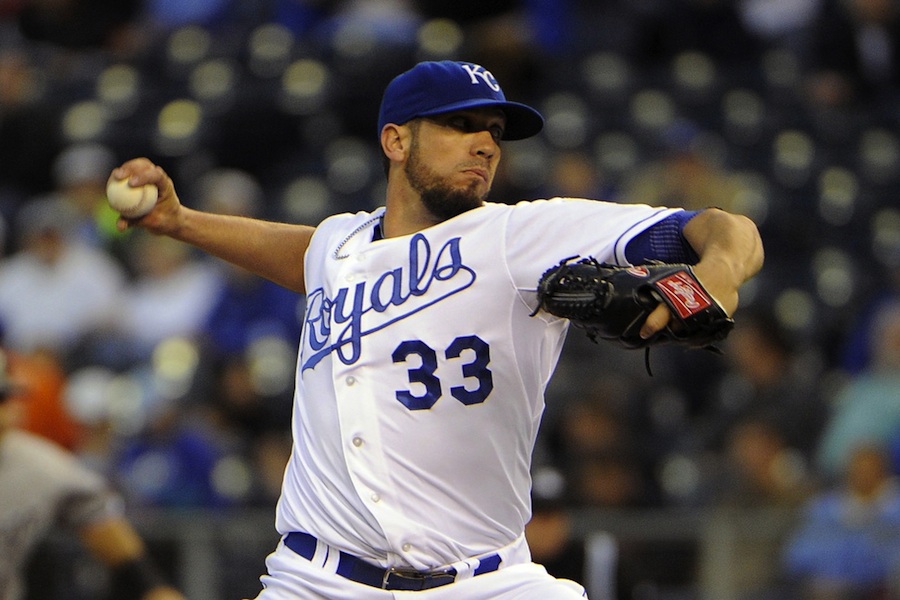
Both Hosmer and Moustakas took much longer than anticipated to develop. And this year, while they each contributed in Kansas City's strong season, neither has been all that great. Instead, it is the pitching staff that has been key to the franchise's revival, and leading that staff is the guy who they'll turn to on Tuesday night: James Shields.
The Royals, of course, acquired Shields two years ago in a deal that was highly controversial and widely criticized. In order to acquire the frontline starter from Tampa Bay, Kansas City had to part with a premium package of prospects headlined by Wil Myers, who was considered a Top 5 player in the minors.
The move was kind of baffling. The Royals were coming off a 90-loss season and hadn't won more than 75 games in a decade. What were they doing trading their best prospect -- a major-league ready star in the making -- for a 30-year-old whose impact figured to be immediate and short-lived?
It's worked out well enough. The Royals won 86 games last year and 89 this year, their two highest totals since 1990. And through all of that, Shields has performed exactly as advertised -- a durable, inning-eating ace, setting the example in a rotation that has seen incredible improvement.
It's hard to look at Kansas City's reemergence and not wonder about the Twins. Most around here recognize the importance of homegrown talent, and we're reminded of the upside offered by that talent regularly, but there's something to be said about the boldness of Dayton Moore's dramatic shift in approach and the results that have been yielded.
Various injury concerns surround some of the top prospects, but Minnesota's system still contains a number of young players that would be highly appealing to other clubs, particularly in this age of skyrocketing free agent salaries.
How protective should Terry Ryan be of guys like Sano, Buxton, Alex Meyer and Jose Berrios? For that matter, what about those that have already successfully debuted, like Oswaldo Arcia, Kennys Vargas and Danny Santana?
I'm not entirely sure where I fall on the subject. I can see the wisdom of both sides, but as I examine the lengthy stagnant cycles that have plagued organizations like the Royals, and as I size up the marketability problems being faced by the Twins, I must admit that I find myself questioning the conservative route.






Recommended Comments
Create an account or sign in to comment
You need to be a member in order to leave a comment
Create an account
Sign up for a new account in our community. It's easy!
Register a new accountSign in
Already have an account? Sign in here.
Sign In Now