


Twins Video
The Minnesota Twins are entering another important offseason with plenty of questions surrounding the roster, but some of the first decisions will come down to simple arithmetic. MLB Trade Rumors recently released its annual arbitration projections, giving the public an early estimate of what arbitration-eligible players could earn for the upcoming season. Two names stand out for the Twins, not because of the projected salaries, but because of what those salaries could mean for the team's offseason plans.
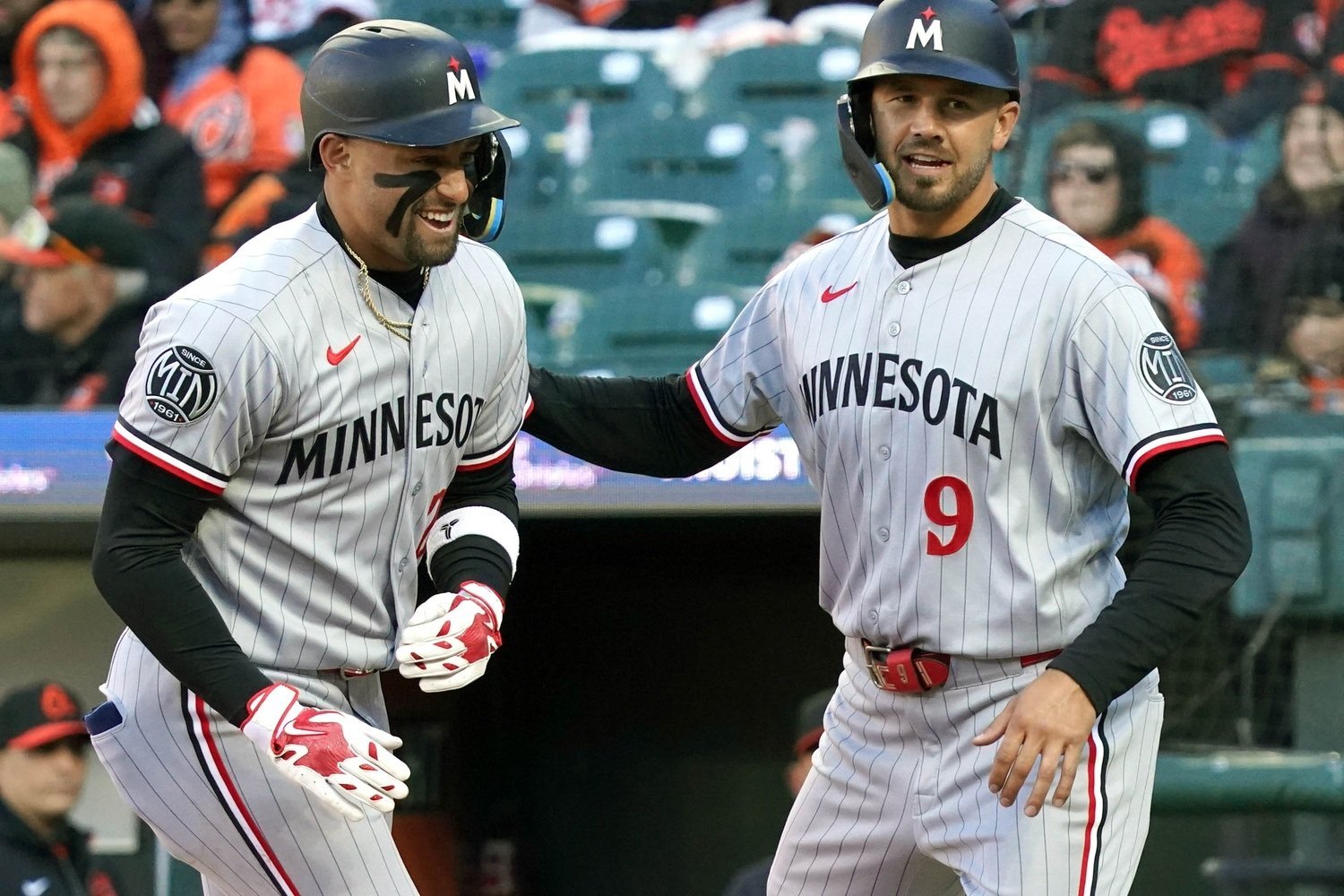
Trevor Larnach is projected to earn $6.3 million in 2027. Royce Lewis is projected at $5.1 million. Neither number is outrageous. In fact, both could be reasonable salaries if the players perform at or near their previous levels. That's exactly what makes these decisions interesting. The Twins have to determine whether those players (at the projected salaries) represent useful assets, roster complications, or both.
Trevor Larnach
Larnach's projected $6.3-million salary feels relatively modest when compared to his potential production. FanGraphs valued Larnach at $17.9 million during the 2026 season, making the projected arbitration salary roughly one-third of the value he provided. That doesn't mean the Twins should automatically keep him, but it certainly gives the organization a reason to avoid giving away the asset simply because it doesn't have a perfect spot for him.
The bigger question is playing time. Larnach appeared in 122 games in 2026 and hit .269/.352/.436 with 13 home runs, 23 doubles and a 121 OPS+, while being shielded from facing left-handed pitchers. Those aren't numbers a team should casually remove from its lineup. But the Twins also have to figure out where Larnach fits. If the organization believes it can improve at first base, add another outfielder or give more opportunities to younger players, Larnach could become part of an increasingly crowded roster. His arbitration salary is affordable enough that Minnesota doesn't have to make a decision before the arbitration deadline.
Last offseason, the Twins offered Larnach arbitration with the hope that a trade would eventually materialize. It didn't. Instead, the team went into spring training with a player it had seemingly hoped to move. They also tried to move him at the trade deadline before Houston’s owner nixed the deal. The Twins don't want to repeat that cycle. They do, however, have value on their hands, and they need to decide on a way to optimize it.
Royce Lewis
Lewis presents a similar question, but with significantly more upside and considerably more uncertainty. His projected $5.1-million salary is higher than the $4.3-million value FanGraphs assigned to his 2026 season. On the surface, that isn't a great return. But looking only at 2026 would be a mistake. Lewis provided substantially more value from 2023 through 2025, and he continues to have upside, if he can put it all together. The problem is that the Twins have spent enough time dealing with injuries and inconsistency. His future role is no longer obvious.
That creates the potential for a very familiar offseason scenario. The Twins could offer him arbitration, because $5.1 million is a manageable number and because they believe there is a trade market for a talented player. However, if they try that, they might discover that moving him isn't as easy as anticipated.
Suddenly, Lewis is occupying a roster spot—and not just any roster spot. He could affect how the Twins approach first base. He could affect how they distribute playing time around the infield. He could influence whether the club believes it has room for another veteran bat.
This is where arbitration decisions become more complicated than simply asking whether a player is worth his projected salary. The question is whether the player is worth the opportunity cost attached to that salary and roster spot; Lewis probably isn't.
Holding an Asset
The Twins have used arbitration in this manner before. The basic strategy is understandable. Rather than non-tendering a player or allowing him to walk away for nothing, the team offers arbitration, retains the player's rights, and tries to find a trade that makes sense.
In theory, it gives the front office leverage. The player has value. The contract is known. Other teams have an opportunity to acquire him. Minnesota doesn't have to sell low simply because it's decided the player isn't part of its long-term plans.
The problem comes when the trade doesn't happen. One example is Kyle Farmer in 2024. The Twins had a veteran infielder under contract who could provide useful depth, but his presence also complicated the organization's efforts to create opportunities for younger players. Larnach became another example last offseason. Minnesota apparently saw enough value in retaining him to go through the arbitration process, but no trade that met the organization's expectations materialized. There's a roster inertia enforced by arbitration. The abstract fear of losing a player "for nothing" can lead a team to hold onto someone they should part with. Once a contract has been tendered, though, moving the player sometimes yields less value than expected—which can lead a club not to move said player at all, locking in a mediocre option.
For a team with a deep roster and limited payroll flexibility, that can become especially problematic. A $5-million or $6-million player isn't expensive in a vacuum, by baseball standards. But if that player prevents the organization from adding someone it believes is a better fit, the real cost is much higher. That's why the Lewis and Larnach decision could be particularly important.
The Two-Step Shuffle
There's nothing wrong with offering arbitration to a player the Twins would prefer to trade. In fact, it can be smart roster management. The mistake would be assuming that the trade will eventually happen. The Twins need to enter the offseason with clear priorities. If Lewis is part of those plans, keep him and build around him. If Larnach is part of those plans, give him a defined role. If either player is viewed primarily as a trade asset, though, the Twins need to understand what happens if the market doesn't cooperate.
That final question is perhaps the most important. The Twins can't afford to make an arbitration decision in November and then make their roster decisions in February, as though the first decision never happened.
Both Larnach and Lewis have enough talent to be useful pieces of a competitive team. Their projected salaries make them relatively affordable. But affordable players can still create expensive roster decisions. The two-step shuffle only works if the Twins know where they want to end up.
Will both Lewis and Larnach be on the 2026 Twins? Does their relatively low arbitration estimate change the team’s view of the players? Leave a comment and start the discussion.








Recommended Comments
Create an account or sign in to comment
You need to be a member in order to leave a comment
Create an account
Sign up for a new account in our community. It's easy!
Register a new accountSign in
Already have an account? Sign in here.
Sign In Now