


Twins Video
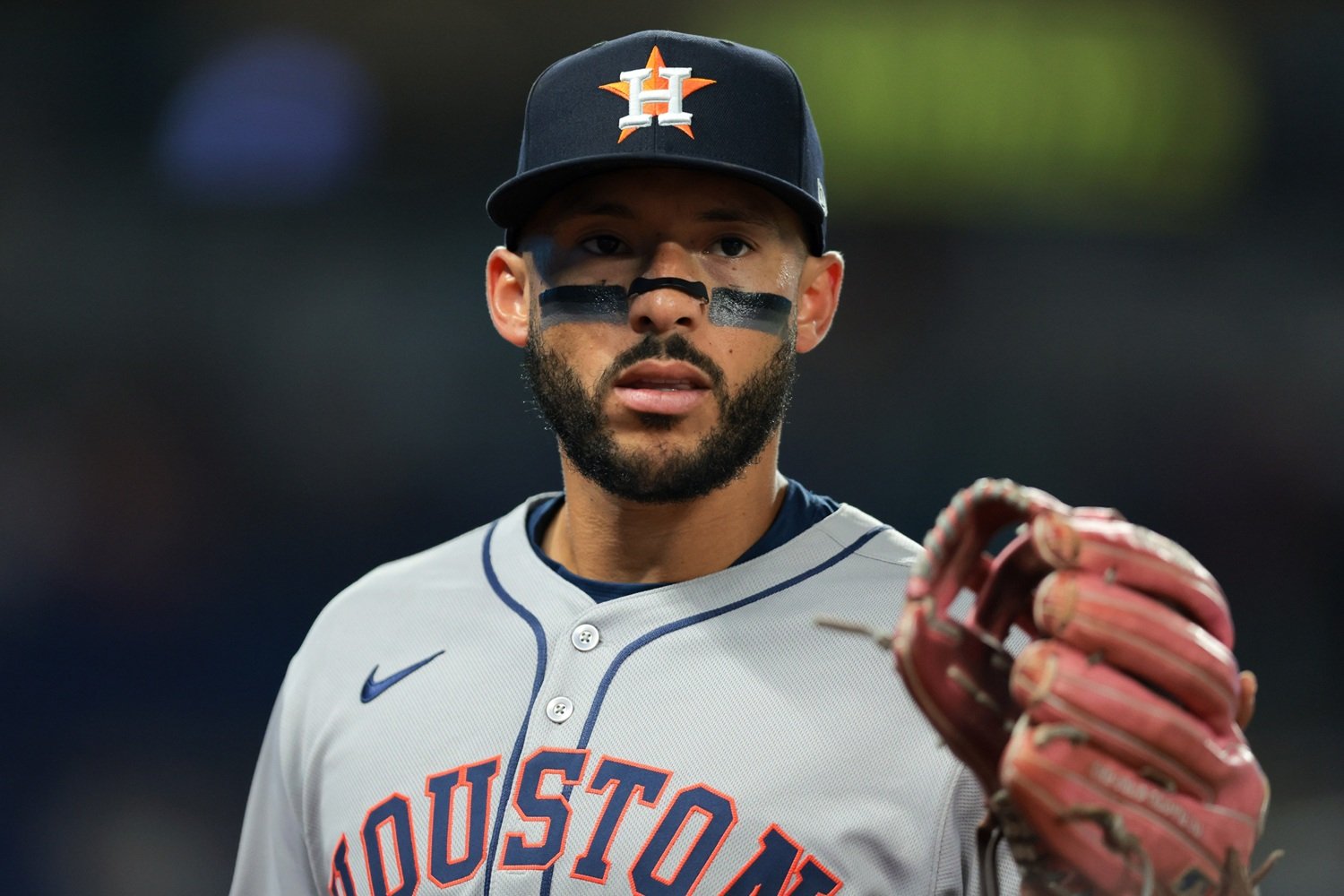
Signed to a six-year, $200 million contract in January 2023, Carlos Correa joined forces with the Minnesota Twins on a long-term deal, signaling a new, celebrated era of Twins baseball. The club splurging on Correa beckoned a meaningful shift in the club ownership's willingness to open their pocketbooks to field a World Series contender. Unfortunately, that change was not sustainable, evidenced by the Pohlad family enforcing strict spending restrictions, mandating the front office to slash $30 million from the club's payroll two offseasons ago, and remaining unwilling to meaningfully raise payroll this past offseason.
That being the case, Correa's behemoth contract ($33.33 million AAV) occupied over one-third of the club's payroll, meaning the star veteran would need to perform at an All-Star rate to justify him occupying such a significant amount of the club's available payroll. He failed to rise to expectations during the inaugural season of his long-term deal in 2023, evidenced by his production being worth a mere $14 million, according to FanGraphs's Value metric. However, given that he was able to lead the club to its first postseason victory in nearly 20 years while combating a severe case of plantar fasciitis, Twins Territory was willing to be charitable to the star shortstop.
The fanbase's generosity paid off in 2024 as the then-29-year-old earned his first All-Star nod with Minnesota while generating a 152 wRC+ over 317 plate appearances. Unfortunately, Correa's bout with plantar fasciitis resurfaced, forcing the veteran to miss over three months before returning to a club that was nearing the conclusion of a cataclysmic late-season meltdown. Still, his strong first-half performance created a sense of optimism within Twins Territory, making those who follow the team believe he could still perform at an above-average rate, health permitting.
Despite battling through left wrist soreness earlier this season, the now-30-year-old veteran has maintained a clean bill of health this season. Unfortunately, his numbers slipped to 2023 form, evidenced by him generating a below-league-average 97 wRC+ over his first 364 plate appearances this season. Correa's lackluster performance mimicked the Twins as a whole, with the club possessing an uninspiring 3.4% chance of earning a Wild Card spot on July 31.
Destined to miss the postseason for the second season in a row, Twins decision-makers elected to undergo one of the more significant active roster teardowns in modern baseball history, parting ways with ten players on the club's 26-man roster, including Correa. The former first overall pick was sent back to his Houston Astros, the club with which he won a World Series title in 2017, in what was perceived by many to be a pure salary dump. However, given the highly paid veteran's inability to meet the expectations set by his hefty deal, Minnesota decision-makers were wise to part ways with him and his bloated contract once the opportunity arose.
As reported by USA Today's Bob Nightengale, Correa's departure from Minnesota was primarily orchestrated by Astros' owner Jim Crane, Correa's agent Scott Boras, and Correa (who possessed a full no-trade clause) himself. Out of respect for the veteran, Twins President of Baseball and Business Operations Derek Falvey was going to greenlight a trade to any destination Correa requested. That being the case, Minnesota had little to no control over whether Correa would stay with the Twins or return to Houston. That being the case, Crane, Correa, and Boras handed Minnesota a reprieve, an unexpected development that those who follow the Twins should be incredibly grateful for.
Sans the first half of the 2024 season, Correa has been unable to produce offensively for Minnesota since signing his six-year deal. Given his steady decline in defensive prowess at shortstop, Minnesota would have soon been forced to slide the veteran to shortstop, a move that Houston was able to undergo immediately by rostering Jeremy Pena, one of the best shortstops in baseball. Given the club's significant financial restrictions that will continue to exist as long as the Pohlad family owns the team, Minnesota couldn't afford to have a poor-hitting corner infielder consume such a significant portion of the club's payroll if it wants to earnestly contend for an AL Central title or Wild Card spot in the near future.
Possessing a near-elite starting rotation and the makings of an offensive core that could produce at an above-average rate, Minnesota has not yet entered a full-fledged rebuild, meaning the club could meaningfully contend next season with a handful of bullpen reinforcements and a fortification of its lineup. I am not naive about the club's situation. I understand that if the Pohlad family still owns the team at the end of the season, the front office is unlikely to be handed meaningful spending flexibility. Still, there is reason to believe the club could afford to pursue and sign above-average veteran contributors like Josh Naylor, Luis Rengifo, Eugenio Suárez, or others who could add potency to what is presently a stagnant lineup, something the club wouldn't have been able to do if they were to have been still been bogged down by Correa's bloated contract.
Again, given Minnesota's lack of control over the situation, it would be malpractice to celebrate Correa's departure as a form of front office savviness, similar to when club decision-makers got the New York Yankees to absorb the remainder of Josh Donaldson's contract. Still, to have Houston take on $71 million of the remaining $104 million left in Correa's deal should be a celebrated outcome, even though it was more so a gift that landed in Minnesota's lap rather than the result of shrewd decision-making. Minnesota is in a very unique spot. While times justifiably feel bleak for many at the moment, Twins Territory resides at the dawn of a new era.
Having played a soulless brand of baseball for the better part of two seasons while being on the brink of missing the postseason for the fourth time in five seasons, Twins decision-makers were correct in gutting a core that had become rotten. Parting ways with Correa and his bloated contract was the transaction that needed to be made to spark a newfound sense of optimism surrounding this organization.
While this front office likely won't be the ones who reap the benefits of this mass exodus, assuming new ownership hires a new collective, they should be celebrated for being able to rip the proverbial band-aid off what was a lifeless team. A baseball organization grows great when front office executives plant trees in whose shade they may never sit in. Twins decision-makers shedding Correa's contract and electing to undergo a significant overhaul was the correct long-term decision for the organization, even though persevering through short-term ramifications will likely be an unpleasant endeavor.








Recommended Comments
Create an account or sign in to comment
You need to be a member in order to leave a comment
Create an account
Sign up for a new account in our community. It's easy!
Register a new accountSign in
Already have an account? Sign in here.
Sign In Now