Jump to content
Twins Daily
  • Create Account
  • Twins News & Analysis

    Mailbag: Looming Strike, Free Agent Issues, Pitch Clock


    Cody Christie

    In the last week, the Twins have gotten things up and running in Fort Myers. The club played their first few games on their Grapefruit League schedule. Minnesota also made a splash by signing super utility player Marwin Gonzalez to a two-year contract. It’s tough to know where he will fit in the line-up, but he can play almost anywhere so he should still get regular at-bats.

    There were certainly some interesting questions in this week’s mailbag. Let’s head to the mailbox and open some mail.

    Image courtesy of Brad Rempel-USA TODAY Sports

    Twins Video

    https://twitter.com/Hey_Yo_Its_GMan/status/1099177714790137856

    Baseball players certainly have some concerns with how the system is currently being run. Over the last two winters, teams have not been willing to give veteran players long-term contracts. Even the highest rated free agents have been on the market all the way until spring training began.

    According to USA Today, “The conditions players feel are suppressing their earning power – a luxury tax that serves as a de facto salary cap, a heavy reliance on analytics that leads to wage suppression, a segment of ownership disincentivized and perhaps ambivalent about winning – aren’t going away until then, if at all.”

    Teams have also manipulated service time of their top prospects to delay them reaching free agency. Players would like to reach free agency after five years, arbitration after two years, and for the minimum salary to be raised. To make this kind of change, the players are going to have to give something up.

    Players are getting frustrated and some are even preparing for a looming strike. It took baseball a long time to come back from the last strike. Hopefully, it won’t happen again.

    https://twitter.com/PandaPete21/status/1098735489744539648

    Free agency sure has taken on a different feel over the last two off-seasons. Bryce Harper and Manny Machado had to feel good about reaching free agency at such a young age. Still, it took until February for either of them to sign. With the way organizations approach spending money, I didn’t think anything will change with how clubs spend money next off-season.

    Names like Paul Goldschmidt, Xander Bogaerts, Nolan Arenado and Justin Verlander could all be on the free agent market. Goldschmidt and Verlander are already in their 30’s. Arenado might be the most prized free agent but there is talk of him signing a long-term deal with the Rockies. Bogaerts is good but he isn’t in the same realm as some of the other names on this list.

    Until the player’s union can force some changes, free agency is looking less appealing for veteran players.

    https://twitter.com/TFTwins/status/1098732744002154496

    When it comes to the pitch clock, I think it is what it is. Players and teams need to get used to the idea because Major League Baseball is going to have a pitch clock. Younger players are getting used to the clock in the minor leagues so that will help the transition. I truly believe it will become something that fans and players don’t even notice. It will just become a transparent element of the game.

    Commissioner Rob Manfred’s focus on pace of play will certainly continue to be part of the game moving forward. I think a pitch clock will impact the length of games, but I don’t think it will be a significant impact. Baseball will continue to need to address at things like pitching changes and mound visits. Players can also take some of this on themselves. Pitchers can get the ball back on the mound and pitch right away. Batters can stay in the box and wait for the next pitch to come.

    Pitch clocks are just part of the steps MLB is going to take to speed up the game.

    https://twitter.com/alexmilne87/status/1098704366977105921

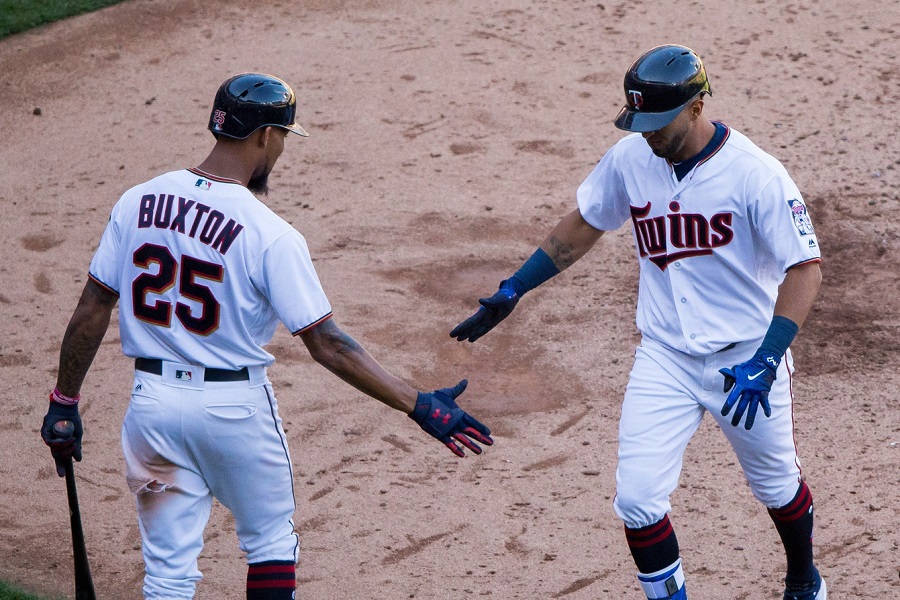
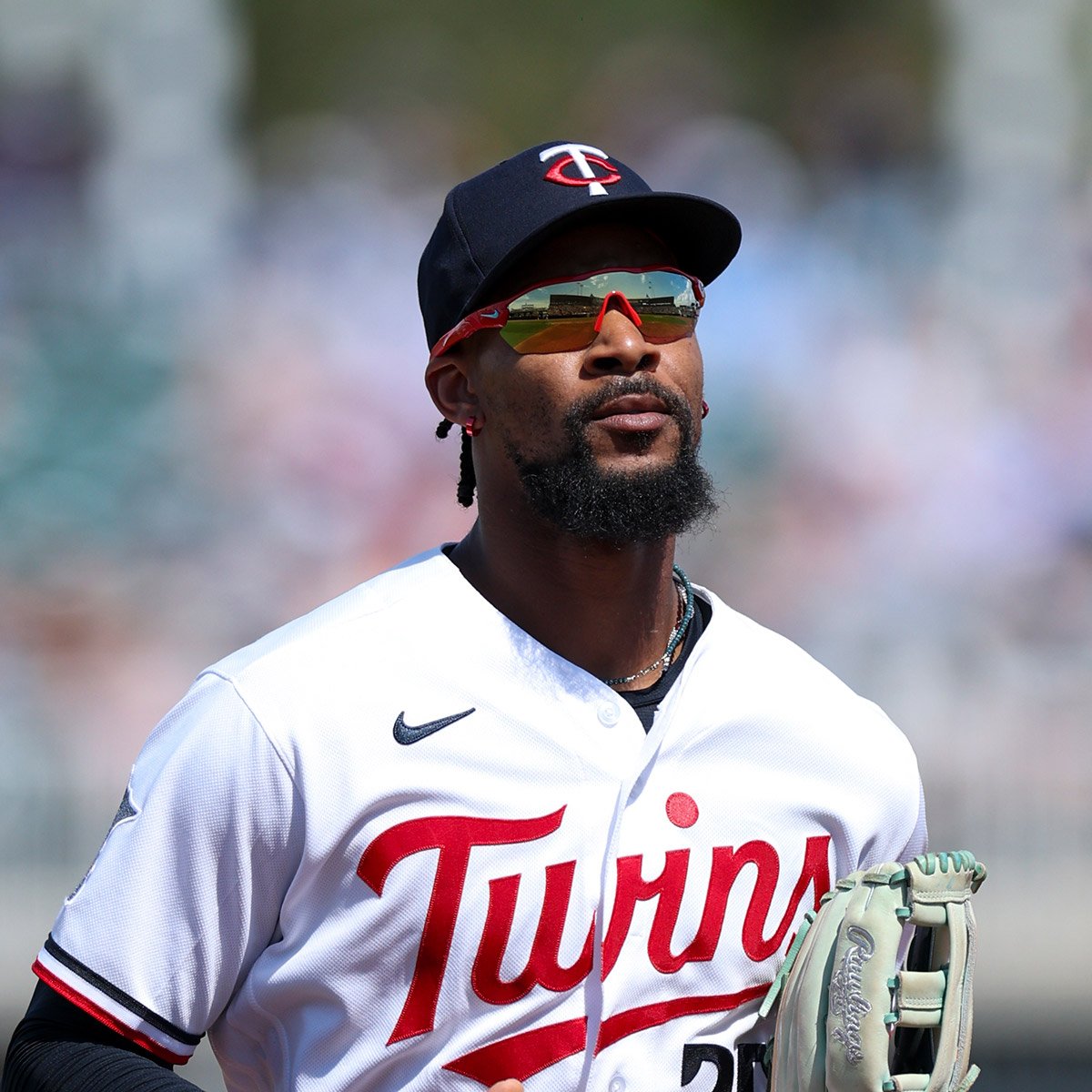
    Cleveland is vulnerable for the first time in years. I think the Twins can be in contention all the way into September. That being said, some of the young core needs to take the next step. I think Byron Buxton is going to have a breakout season and he will be the team’s lead-off hitter for a post-season run. So, let’s see what the line-up could look like:

    Potential September 2019 Line-Up

    1. Byron Buxton, CF

    2. Jorge Polanco, SS

    3. Nelson Cruz, DH

    4. Miguel Sano, 3B

    5. Eddie Rosario, LF

    6. Marwin Gonzalez, 1B

    7. Jonathan Schoop, 2B

    8. Max Kepler, RF

    9. Mitch Garver, C

    The newly signed Gonzalez could fit into a few different spots in the line-up. I thought about putting him at first or second. Former first-round pick and top prospect Alex Kirilloff could hit his way into the line-up by September as well. I’d hope the team is giving more at-bats to Garver than Jason Castro in September since Castro will be a free agent. However, the team will likely be using both catchers and riding the hot bat.

    What do you think about this week’s questions? Leave a COMMENT and start the discussion.
    Follow Twins Daily For Minnesota Twins News & Analysis

    Recent Twins Articles

    Recent Twins Videos


    User Feedback

    Recommended Comments


    Featured Comments


    A strike would probably be a very poor outcome for both sides, but the players seem to be feeling more militant. But it's hard to have sympathy for the players when their primary argument right now is "how dare you operate systemically and intelligently to mitigate risk!" They're going to need to reframe things pretty significantly and quickly (and there are plenty of better arguments to wield against ownership) because going into a labor war over Bryce Harper (who hasn't been an all-star caliber player in 2 of the last 3 season) not getting paid for 10 years as if he's 2015 Bryce Harper doesn't really play well...and the owners know it. This isn't like the 80's when FA weren't getting offers from anyone other than their own clubs.


    Operating "systemically and intelligently to mitigate risk" ignores the fact that the owners and players (a) have a contractual relationship and (B) will have a contractual relationship for the foreseeable future.  If the owners want to abuse the labor contract "systemically and intelligently to mitigate risk" to extract maximum profit for their side, the owners can't expect that the renegotiation of the contract will proceed smoothly.  Something about an equal and opposite reaction. 


    To be clear, the coming labor strife isn't about superstars like Harper and Machado.  They get paid and they should get paid.  The coming labor strife is about all the players that have to take shorter-term deals for less money than expected or, even worse, minor league contracts.  The boneyard of free agency has never seen so many carcasses.  


    This is the key, for me. There are few players who are legitimately "difference makers," either on the field or in terms of attracting attendance. For everyone else, a rising prospect is a "cheap" and close substitute, so it's not worth paying a lot more than the basic wage. This is basic economics and I think that some of the analytics have demonstrated this to GMs. The players can rant and rave, but they can't really change the economic laws of nature any more than Ford or Chrysler can return to the days of the 1960s when there were no substitutes for their unreliable gas-guzzlers.


    If you represent the players, isn't the obvious response, "Okay, you want to let basic economics dictate pay?  Deal.  The players get market wages from day 1.  No team control.  Pure free agency."  The owners obviously balk and now "basic economics" is out the window as a framework for agreement.  


    The whole point of a collective bargaining agreement is that the parties get to play with what you've termed the "economic laws of nature."

    Edited by Miggy's Little Helper

    This new wave of front offices that has changed how players are viewed is going to bring about whole new wave player strikes and labor discontent in next few labor contracts. I look at how labor percentage of revenue has drop considerably in last few labor agreements. Then add in how management is not paying now for early good years of player later in his career we have all flash points to create a labor impasse. I got to believe these new front offices have set in motion where they are going to have to be paying young players millions of dollars based on their potential to become stars in baseball. They may have contained costs for owners on short term basis for last 10 years but now they will entering phase where now players coming up to big leagues will be paid big money after a year or two in the big leagues. This going to lead where baseball will be paying more in the development phase of player and if that development doesn't happen as it does with prospects the costs of players are going to escalate. The old system where they didn't pay for stars until later in there careers was more certain payment plan where they paid for actual performance but when that performance may of happened. Now they will be paying upfront for the potential and when they are producing the most. The problem is now they are going to have also pay huge money for the busts in baseball. Take for example now where would have the Twins be now with Buxton and Sano they would be paying these players now millions of dollars probably locked into contracts when they are still developing. The other choice would have been to let them go and loose the potential and let some other club develop your talent. Not all players develop the same look at Hicks look like a failure on the Twins part now he's developed into top player for Yankees. I am afraid these new front offices may have put smaller market teams in much worse position than they were before they did all there cost analytical work to cut player costs. If Baseball is going to fix this they are going to have to go where they are going to guarantee certain amount revenues to players and then between ownerships that all clubs are guaranteed amount of revenue paid from high revenue clubs but with agreement they also have to spend certain amount of revenue to field a team. I don't know how it will all get done but if not we will have failing franchises if they can't fix labor and differences between markets in next labor contracts.

    There is no one solution to the economic issues facing baseball, but there are a number of individual solutions that could help.  In no particular order;


    1. Teams must spend 75% of proprietary revenue as a salary floor, else face a 10 to 1 fine for every dollar under that level, while also being ineligible for revenue sharing.  Revenue sharing will be made available to any team in the bottom 15 of proprietary revenue
    2. A hard salary cap is instituted, with teams not allowed to exceed it for any reason.  This will narrow the gap between the top and bottom of the league, meaning more teams have a realistic chance to make the playoffs, providing the incentive to improve
    3. Add 2 more teams to the league (Las Vegas, Charlotte, Nashville, New Orleans, Montreal, Vancouver are all possibilities), which provides more demand for players, meaning teams will need to pay more to get them, as well as eliminating the need for permanent interleague play
    4. Expand the playoffs to 8 teams from each league, with no play-in games.  First round series are best of 3, second round is best of 5, and LC's and WS are best of 7.  It creates more revenue, more division races, and more incentive to be competitive
    5. All players become restricted free agents 6 years after being drafted (4 if from college), and unrestricted free agents 8 years after being drafted (6 if from college).  International players hit RFA after 8 years, and UFA after 10 years.  Arbitration starts after 4 years for HS draftees, 3 years for college, and 7 years for internationals
    6. The year in which a player is signed/drafted does not count as a year.  If a player is injured and undergoes surgery, his "clock stops" and he loses one year of service time.  If the player is hurt, elects against surgery, but after rehabilitation needs surgery, he loses one year of service time, plus another year if he misses more than 50% of a second season
    7. The prior two rules would incentivize teams to bring players up when they think they're ready--no more service time games.  Minor league pay would further be set at 10% of the rookie minimum for short season leagues, 20% for A/A+, 35% for AA, and 50% for AAA

    I'm sure there are more that could be implemented, but I'd love to have a debate on the perceived efficacy of these rules.

    One thing about free agency in 2019 ... most of the free agents were practically geriatric. There were maybe four free agents under 30 who were worth cracking the wallet wide open for, and that number doesn't change much if you up the age to 32/33 either.


    Plus, the big spending teams have what they want/need. It's not like a cheap team is going to step in and spend Yankees-style just because the Yankees already feel they are set.


    Last year free agency seemed truly weird but this year it makes sense.


    I never understand why people blame the players for their salaries. The owners set the market. The owners charge the ticket prices and concessions. The owners ask for tax payers money. 


    If you pay the players "what they are worth" (which in itself is debatable) do you think the owners are going to lower prices or pocket the money? In my opinion the only reason we choose to get mad at the players is that their money is public. I guarantee if you saw what the owners take home was you would not be so quick to blame the players for asking for the money they are asking.


    I would love to know more about your thoughts on this subject.

    The average salary for a baseball player in 1998 was 1,398,831 per year.  In 2018 it was 4,250,000.  That is nearly a 300% increase in salary for the average player over the last 20 years and yet there is talk of a strike looming?  Please.....OK.....please


    The average salary for a baseball player in 1998 was 1,398,831 per year.  In 2018 it was 4,250,000.  That is nearly a 300% increase in salary for the average player over the last 20 years and yet there is talk of a strike looming?  Please.....OK.....please


    I forgot about the part where the players are just supposed to shut up and be happy while team revenue and profit increase at a faster rate than player pay.  

    It makes some sense that the big market teams a la the Yankees are already set, why spend a bunch more when you already have Stanton, Judge, etc... Also, why are players from other countries not included in the draft. That makes no sense to me. If they were included in the draft then the rules for these players could become more in line with each other. International players should have to declare for the draft. Then these phenoms will have to go to who drafts them. Not be able to hold out and go where ever. If they played professionally in Korea, or the Dominican then treat then like they just came out of college?

    Edited by Twodogs


    I'm 100% on the players' side. They do all the work. They should get rewarded at least as fast as owner's revenue grows.

    And, all a salary cap does is put more money in rich owner's hands, rather than player's.

    The trouble with that idea is it's not a level playing field for the owners.  Giving everything to the players is bad for the sport, as shorter service times to FA reward the big markets with big TV contracts, and make it even more difficult for the medium/small markets to compete.  That's the last thing I want to see!


    I'd love to see a hard salary cap maximum, and minimum.  The NFL (for all it's flaws) have the right idea.  Almost every team spends close to the same amount, but players don't get 10 year guaranteed contracts.  


    For every guy not getting paid "what they should", there's guys getting overpaid because they're no longer performing (I've seen Pujols & Hughes mentioned sparingly).  Why it took baseball owners so long to figure this out is beyond me.


    So if players want faster FA/Arbitration, then no more guaranteed contracts.  But we still need a hard cap (IMHO).

    I wonder if non-guaranteed contracts (similar to the NFL) would change the way players and owners approach free agency.  Give HUGE money up front in the form of signing bonuses + X amount guaranteed.  But a caveat I would add is at least half of the full contract must be guaranteed.


    An Example for Harper could then be:


    10 years $350M.  $30M signing bonus,  $190M guaranteed money.


    So in that scenario Harper would get $32M per year (assuming straight-line) + $30M signing bonus.


    So Harper gets $32M x 5 years = $160M + $30M Bonus = $190M.  If Harper is no longer any good going into his age 32 season whoever signs him could cut him. And not owe him the remaining $160M.


    The best part of this type of contract for baseball is say after year 4 his team is falling apart.  They could trade him and the new team would in theory only be on the hook for 1 year + the remainder of the current season if they wanted, or they could keep him through the contract's entirety if he performs well.  It helps the original team get out from under than deal and rebuild, I think that also helps teams like the Twins be able to compete for these monster contracts because they would not be hampered by horrible $32M a year contract for a 33 year old guy who no longer is a superstar.


    From what I understand, there's no way to verify each team's revenue.  We can calculate payroll, of course.  From what I can gather, the revenue numbers are about:


    Revenue

    2010 - 6.14B

    2011 - 6.36B

    2012 - 6.81B

    2013 - 7.1B

    2014 - 7.86B

    2015 - 8.39B

    2016 - 9.03B

    2017 - 9.46B

    2018 - 10.3B


    Payroll is:

    2010 - 2.91B

    2011 - 3.0B

    2012 - 3.15B 

    2013 - 3.35B

    2014 - 3.63B

    2015 - 3.9B

    2016 - 4.07B

    2017 - 4.25B

    2018 - 4.22B

    2019 - SPOTRAC NUMBER - Currently 3.78B


    I agree we don't know the whole story behind the numbers.  It's rough and can be misleading.  These numbers indicate revenue is up about 68% since 2010 and payroll is up 46%.  Take that for what you will.  


    Regardless of actual numbers, the players union will look at these numbers and be mighty skeptical of owners--rightfully so.   

    Edited by Miggy's Little Helper


    It seems to me that with the influx of international players which has to be at one of the highest points of all time that maybe MLB is ready for expansion? If you go back 30 years ago there was not this many players from Asia, dominican, etc... So like any market, if the market is flooded with talent then teams really don't have to pay very much for it. Now you add a couple more teams into the mix and I'd bet guys would be getting signed a little quicker? Just an idea that maybe would help the players in the future?

    I would love more teams, but I think baseball is going to need to fix its wealth distribution issues to make this work. They would need some sort of revenue sharing and a salary cap. Big market clubs will oppose the revenue sharing, and the players union will oppose the cap. Baseball has some serious structural issues it needs to address.


    I think analytics are somewhat to blame for the change of approach that ownership has. For instance most players are just numbers now and not names. When a player had developed a name for himself he was paid according to his reputation, some good, some bad. However, now most of these guys don't have names anymore they are just a bunch of numbers. So at one point in time your name got you paid, now it's your numbers and the funny thing is that one person's numbers may be better than another person's, but not significantly better, so then I feel teams just kind of ignore the guys who have good numbers but not significantly better numbers than some kid they can pull out of AAA. I mean why does it seem so hard for a guy like Moustakis to get some sort of deal done. I mean it's obvious that he is one of the better guys at his position, and in the old days someone would have overpaid for his services not only because he performs pretty well but because he is a proven winner and a good guy. But even though he is one of the better players at his position, he is not significantly better than someone they can replace him with. So he toils in these good but not great one year deals.

    Yes, the names on the back of the jerseys used to matter more to local fans than they do now. We've become accustomed to players coming and going. Used to be that a front office risked fan and media backlash when popular veterans were replaced with younger (cheaper) rookies nobody had heard of.


    Now, though, a lot of fans have known the names of those rookies for 3-4 years and have followed their progress through the minor leagues as closely as they have followed the career of the veteran he'll be replacing. Rosario-Buxton-Kepler barely have arrived in Target field, but almost everyone can project who is going to replace them (and, with some level of relative accuracy, even WHEN) in the Twins' outfield.


    I also saw a couple references to not feeling sympathy for the owners. The thing is, I don't really see the owners ASKING for sympathy. It's the players doing the complaining, yet it was those players' union who negotiated the current deal. 


    Teams are getting smarter. The true stars will always make good money. The average major leaguer is the one who will continue to get squeezed if stars (and their agents) end up controlling the union's bargaining strategy. 


    Hmmm. Maybe it's time for a "Senior League" similar to the pro golfers' "Champions Tour." Guys who are 35+ who can't compete with the rookies replacing them can have their own league. Probably be a market for that on a limited basis. Not 30 teams, obviously, but 12 maybe? Give MLB Network some programming other than constantly running the same talk shows over and over all day.


    I wonder if non-guaranteed contracts (similar to the NFL) would change the way players and owners approach free agency.  Give HUGE money up front in the form of signing bonuses + X amount guaranteed.  But a caveat I would add is at least half of the full contract must be guaranteed.


    An Example for Harper could then be:


    10 years $350M.  $30M signing bonus,  $190M guaranteed money.


    So in that scenario Harper would get $32M per year (assuming straight-line) + $30M signing bonus.


    So Harper gets $32M x 5 years = $160M + $30M Bonus = $190M.  If Harper is no longer any good going into his age 32 season whoever signs him could cut him. And not owe him the remaining $160M.


    The best part of this type of contract for baseball is say after year 4 his team is falling apart.  They could trade him and the new team would in theory only be on the hook for 1 year + the remainder of the current season if they wanted, or they could keep him through the contract's entirety if he performs well.  It helps the original team get out from under than deal and rebuild, I think that also helps teams like the Twins be able to compete for these monster contracts because they would not be hampered by horrible $32M a year contract for a 33 year old guy who no longer is a superstar.


    The players are not going to give up guaranteed contracts.  They'd pool their money with a different group of billionaires and start their own baseball league before agreeing to non-guaranteed contracts.  


    That being said, non-guaranteed contracts would change free agency, but I'm not sure it'd be good for small market teams.  What small market teams "save" in being able to cut underperforming players, they'd lose in bonus and contract size.  I mean, how much do you think Harper could get on a 5 year deal right now?  40M per?  The Twins would never be in on a guy that's 1/3 or their total payroll--not even for 5 years.


    I think the solution is players are going to need to get to FA sooner to be paid what they are truly worth sooner.  If more players hit FA in their 25, 26, 27 years then they can market their prime years and talent to the highest bidders sooner. 


    The problem with that approach will be that small markets will have more trouble keeping the best talent on their teams as teams with greater monetary resources will have the advantage to buy the best performing players during their prime years.


    Everyone knows it doesn't make sense to pay for unproductive years anymore. Players only have so many years to maximize their earning in this sport. So something has to change if the players want salaries to stay high. It is going to be tough to make this work for both sides, but I would start by reducing the service time it takes fro players to reach FA.  


    I can appreciate shortening the years of control would be good for the players but I am quite concerned it would be bad for the game and really bad for small markets.  The big markets have easily double the spending capacity for players as compared to small markets.  What's the effect on mid and small markets when they lose key players a year earlier?


    I would start with a raise to MiLB players.  Talk about not getting a piece of the pie ... MLB player salaries have grown at roughly 7 times the adjusted rate of inflation.  They have done extremely well and MiLB players work for peanuts. 


    Next raise MLB minimums to something like 750K / 1M in the first two years and start arbitration a year earlier. 


    I'm 100% on the players' side. They do all the work. They should get rewarded at least as fast as owner's revenue grows.

    And, all a salary cap does is put more money in rich owner's hands, rather than player's.


    You really think the teams, the league and leadership / promotion of the game had nothing to do with the success of this industry? You live in a very one-sided world.

    You really think the teams, the league and leadership / promotion of the game had nothing to do with the success of this industry? You live in a very one-sided world.

    All I want is pay to grow at the same rate as revenue. And I literally never said what you typed. Not once did I say that. Maybe we could talk about what we say, and not what we didn't say?


    All I want is pay to grow at the same rate as revenue. And I literally never said what you typed. Not once did I say that. Maybe we could talk about what we say, and not what we didn't say?


    Does your employer increase wages in parallel to growth in profit?  Employers pay an amount that is sufficient to attract people over other options and retain them.  The next best option to MLB is the Nippon league at about 1/10 of MLB.  You are expecting MLB to operate differently than every other business.  Employees are not entitled to a share of the profits in any other industry. 


    Do you have corresponding growth rates for revenue, operating income, and franchise values?


    You apparently did not understand the point. Microsoft and several other companies grew as much or more than MLB.  Compensation to their employees did not grow at 7X the adjusted rate of inflation. Businesses don't pay more or less because of changes in revenue. They pay an amount sufficient to attract and retain employees. Would MLB players go do something else if the average comp was 2.2 instead of 4.4M annually?

    You apparently did not understand the point. Microsoft and several other companies grew as much or more than MLB. Compensation to their employees did not grow at 7X the adjusted rate of inflation. Businesses don't pay more or less because of changes in revenue. They pay an amount sufficient to attract and retain employees. Would MLB players go do something else if the average comp was 2.2 instead of 4.4M annually?

    We understand your point clearly. We disagree that owners are more deserving of money than players. I don't know why you keep trying to change my mind.

    Perhaps a more important question than when the CBA expires is when does the current national TV contract expire. With ratings and attendance trending down, it is extremely likely that next contract will be a significant decrease. That’s still an enormous part of revenue. I think teams are being proactive reducing payroll because revenue is about to take a major hit.


    Create an account or sign in to comment

    You need to be a member in order to leave a comment

    Create an account

    Sign up for a new account in our community. It's easy!

    Register a new account

    Sign in

    Already have an account? Sign in here.

    Sign In Now

×
×
  • Create New...