


Twins Video
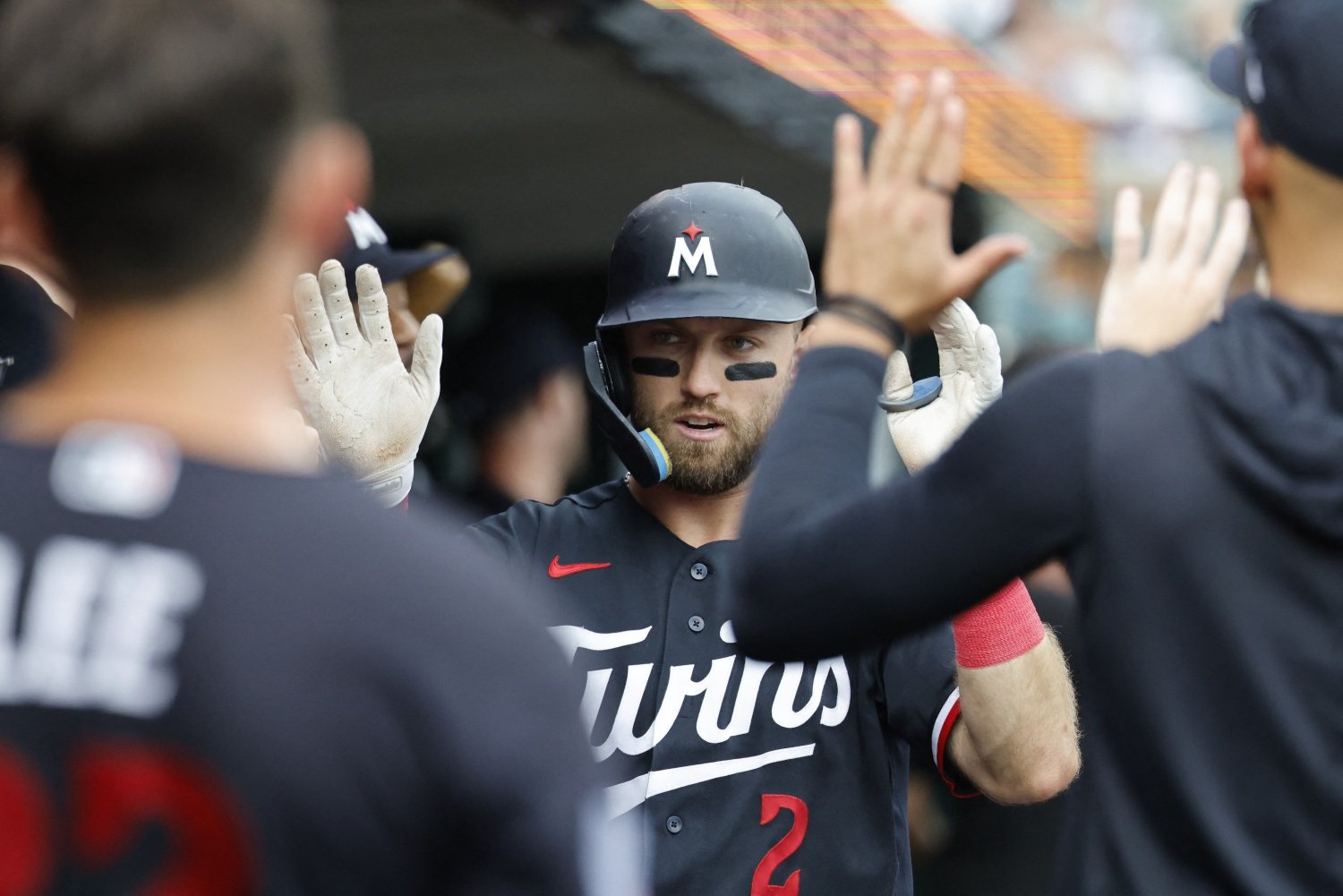
Much has been asked of Kody Clemens this season, and he's answered the call as well and as often as he could. When it became clear that the team would not trust Josh Bell or Victor Caratini with regular playing time at first base, Clemens played there for a while, even though it might be his worst defensive position. When injuries and poor performances piled up in the outfield, Clemens trotted out there, even covering center field for a short time—despite being 30 years old and lacking the raw athleticism that position demands in the modern game. He's faced more left-handed pitchers than he should, because the roster lacks good right-handed lefty-mashers. He's batted third more often than he should, because the roster has lacked offensive firepower whenever Byron Buxton and/or Ryan Jeffers were at less than their best.
Through it all, Clemens has had not only the best season of his career, but a downright good one—the kind of campaign that seemed like it would never come for the late-blooming son of an early-blooming Hall of Fame hurler. He's gone from forgettable utility man to valuable super-utility man, and while he was asked to be too many things to the 2026 Twins, he delivered more than could possibly have been expected. After homering in consecutive games upon his latest return to Detroit (his first pro organization), he has 26 of those on the season, and he leads the American League with six triples. The only way to be disappointed in his .241/.302/.475 batting line is to dwell way too much on the middle number.
On a properly outfitted contending team, Clemens would bat fifth or sixth on most days, and he would enjoy the platoon advantage at least 80% of the time. Twenty-five lefty batters with at least 300 plate appearances already this year have faced righty hurlers at least that often; over half of that group have had the platoon edge 85% of the time or more. Clemens hangs in better against left-handed pitchers than most lefty batters do, and his numbers wouldn't be massively inflated by seeing righties at a much higher rate, but he's only had the platoon advantage 73.6% of the time this year. He's also batted third a plurality of the time, and in over half the Twins' games this year (75), he's started in one of the top four spots in the batting order.
Let Clemens rack up 137 plate appearances against southpaws, and his numbers are going to look unsexy. Ask him to hit in one of the most important spots in the lineup, and he's going to feel underwhelming. The Twins have asked more of him than should be asked of this type of player. Next season, they need to have a more robust set of right-handed hitters, and they need a more stable, impressive top half of the batting order. None of that is Clemens's problem, though. He's performed magnificently—more than well enough to get this team to October, if the rest of the roster (or the front office responsible for building it) had done its job.
When Clemens succeeds, there seems to be a sense that disaster is right around the corner. When he fails, everyone seems to nod with self-satisfaction. He's been branded streaky; he's been branded lucky; and he's been branded as an undisciplined hitter. None of that is particularly accurate, though.
Here's a look at Clemens's rolling weighted on-base average (wOBA) in 100-plate appearance increments for the whole season.

I'm betting you expected more than one trough, where he was substantially worse than a league-average hitter. That's the narrative. The reality is that, despite that oddly lefty-heavy stretch of the schedule early and the cold start it begot him, Clemens has been steadily and solidly above-average, save for one prolonged slump. That slump could not have come at a worse time—it comprised almost the whole month of August. But it's just one letdown. To whatever extent Clemens must bear the blame for letting the team collapse during their nightmare month, he deserves at least that much credit for keeping them afloat in June and July. Lately, he's right back where he was for most of the season, and while you'd love to see a player go through a whole campaign without slumping, hardly anyone does so. Bell was just as bad for just as long early in the season. Buxton's production fell off a cliff after he began dealing with injuries in late June. Jeffers wasn't the same for the first month-plus after his return from the IL. You can look at players beyond the Twins, and the same story unfolds: slumps are inevitable. Good players survive them and produce well around them. That's what Clemens has done.
As for his approach, it's true that Clemens doesn't walk very often, and that's a bit unfortunate, because his batted-ball profile will never yield a very high batting average on balls in play. He's an extreme pull hitter, especially on the ground; that makes it easy to defend him by shading the infield to the right. He's a fairly extreme fly-ball hitter, and fly balls fall in for hits less often than grounders sneak through for them. Clemens's batted balls spray around the field somewhat like Max Kepler's did for years at Target Field; we know how that worked out for Kepler.
Therefore, it's essential that Clemens be ready to pounce, and to drive the first good pitch he gets in a count. He's done much better at that this year; it's his big step forward. He got beaten by four-seam fastballs consistently in 2025. Here's what his spray chart against them looked like:

If you're a true pull hitter, every fly ball to center and the opposite way is a small defeat. Pitchers were beating Clemens last season with the heater. He didn't whiff at a catastrophic rate against them; he just didn't get the barrel around and through them.
That's changed.

According to FanGraphs, Clemens has been 8.0 runs better at the plate this year than he was in 2025. According to Baseball Savant, he's been 20 runs better on four-seamers than he was last year. You do the math. Clemens has sold out for the heater a bit, because you can't get very far in the modern game without getting your barrel cleanly to the ball even when the pitcher comes at you with their best heater. It's cost him a bit in other places, but look at all the rewards he's reaped. He hit four homers against four-seamers last season, including one that snuck out to left-center. He's hit a whopping 13 dingers against such pitches in 2026, because he's sat on that pitch with greater conviction and gotten started early enough to do so.
That's what he did on the one homer in the bunch that went to left field, too—the one he hit Wednesday. He knew Keider Montero would throw him a first-pitch heater, and he rode it out, albeit not in the direction in which he usually does that kind of damage.
To do that, you have to have conviction based not only on the pitch type, but on the count. That's been key to Clemens's breakout, but it's also why his on-base percentage is never likely to be that high. He swung at fewer than 20% of the first pitches he saw during his stints in the big leagues in 2023 and 2024. That figure rose to almost 30% last year, but it's ticked up again in 2026. In particular, after being more patient early, he's gotten particularly assertive—though he's moderated that slightly of late. Here are his month-by-month first-pitch swing rates for this year.
- March/April: 24.4%
- May: 38.6%
- June: 32.4%
- July: 37.4%
- August: 33.3%
- September: 28.9%
Clemens does have a decent feel for the zone, but his swing is not especially adaptable. He has good hand-eye coordination, but not the freakish, bendable violence of movement that allows hitters to hammer pitches even when they're fooled isn't there. Swinging early in counts is the cure for that. Pitchers tend to be more predictable in those early counts, and Clemens can swing without worrying as much about a whiff. That produces more squared-up balls and fewer mishits. It just denies him the chance to get ahead in counts often and work walks.
At home at second base, Clemens has a clear defensive fit for next season. He's also proved he can hit in the big leagues—not hit enough to stay in the bigs, but really hit in the bigs, in a way that moves a team forward toward a playoff berth. He needs a bit more rest and protection from bad matchups, and he needs better teammates. There's a ceiling here; Clemens will never be an All-Star. This season has been a monumental success for him, though, and the Twins should enter the offseason with as much conviction as Clemens now takes to the batter's box: to get him further down the lineup, but not to push him out of it.







Recommended Comments
Create an account or sign in to comment
You need to be a member in order to leave a comment
Create an account
Sign up for a new account in our community. It's easy!
Register a new accountSign in
Already have an account? Sign in here.
Sign In Now