


Twins Video
The 2026 MLB Draft is quickly approaching, and the Minnesota Twins find themselves in unfamiliar territory. After securing the third overall selection, Minnesota holds its highest draft pick since taking Royce Lewis with the first overall pick in 2017. With the draft board beginning to take shape, much of the industry expects shortstops Grady Emerson and Roch Cholowsky to come off the board with the first two selections, though there remains debate about which player will ultimately go first overall. That uncertainty could leave the Twins with a fascinating decision at No. 3.
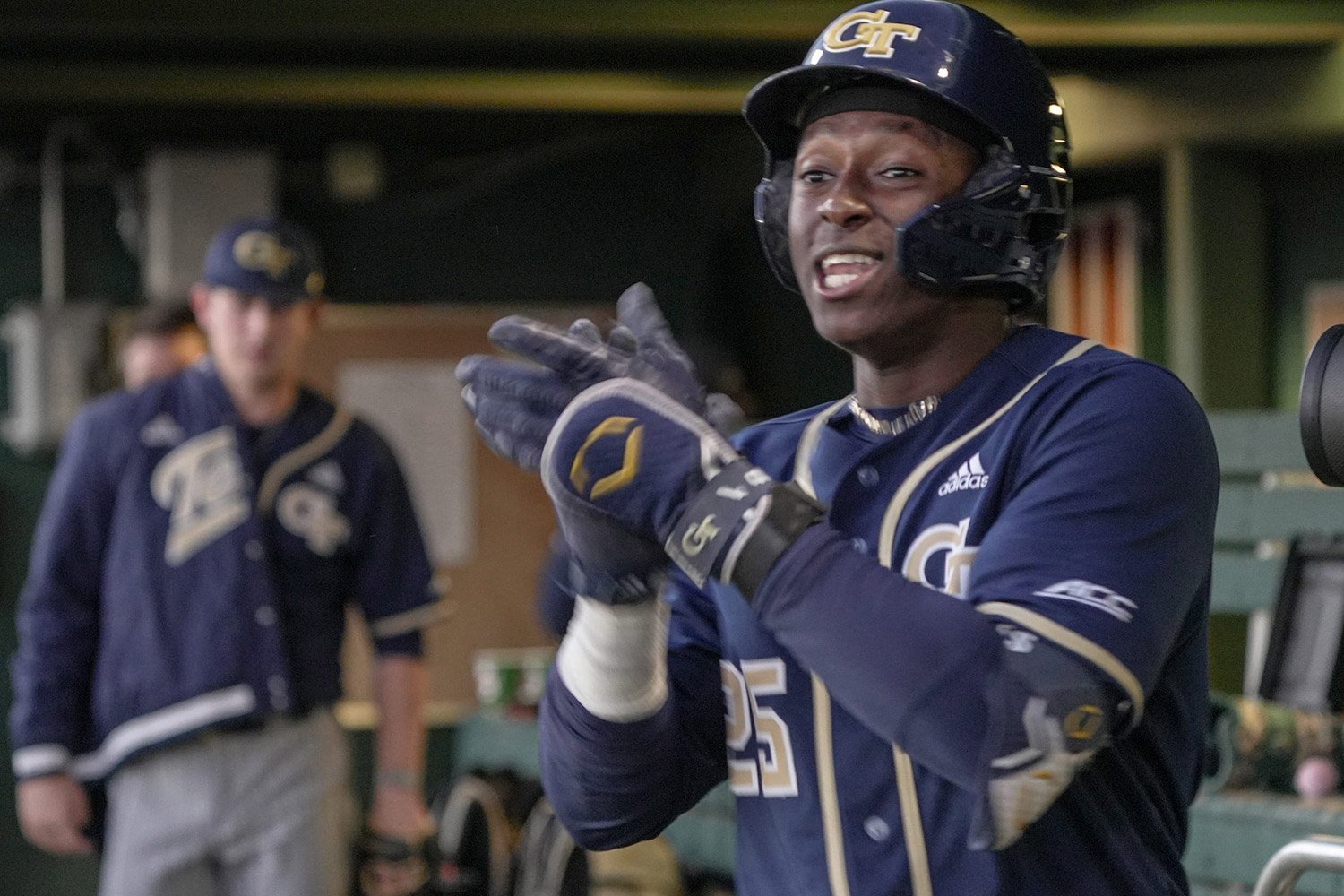
According to the Pioneer Press, Charley Walters wrote that “there is little doubt” the Twins are set on selecting Georgia Tech catcher Vahn Lackey. Some evaluators believe Lackey is not only the top catcher in the class, but the best college player available. If the Twins are indeed zeroing in on the Yellow Jacket’s star, the decision would represent both a tremendous opportunity and a calculated gamble.
The Case for Drafting Lackey
Few players in this draft can match Lackey's combination of production, athleticism, and developmental trajectory. The Georgia Tech junior has dominated college baseball this season, hitting .412 with 20 home runs, 78 RBIs, and an OPS north of 1.300 while leading the Yellow Jackets to one of the best records in the country. His offensive profile checks nearly every box teams look for in a premium position player.
Lackey controls the strike zone exceptionally well and consistently puts the ball in play. He has cleaned up a swing that was considered somewhat busy, and he rarely gets beaten by velocity while using the entire field effectively. Scouts believe there is enough raw power in his bat to support annual 20-plus home run production at the professional level, and his increasing ability to elevate the baseball has unlocked another level of offensive impact this season.
What makes his profile especially intriguing is that he remains relatively new to his current level of physical development. Lackey was a classic late bloomer in high school. He received little recruiting attention until his senior season and was largely overlooked by scouts because he rarely attended showcase events.
As a freshman, Lackey struggled against ACC competition and posted a .174 batting average in conference play. Yet, Georgia Tech remained committed to his long-term development. That patience has paid off in a major way. Each season has brought significant improvement, culminating in one of the most impressive campaigns in college baseball this spring.
For organizations that prioritize player development and growth potential, Lackey's story is particularly appealing. He has already shown an ability to identify weaknesses, make adjustments, and maximize his natural tools.
The Defensive Value
The offensive production alone would make Lackey a top draft prospect, but his defense behind the plate elevates his overall profile. Lackey was named ACC Defensive Player of the Year and has developed into one of the nation's premier defensive catchers. His athleticism stands out immediately. At 6-foot-2 and 215 pounds, he moves exceptionally well for a catcher and displays the agility needed to handle the position at a high level.
His arm strength is another significant weapon. Last season, he threw out 14 of 29 attempted base stealers, a remarkable success rate that showcases both arm strength and accuracy. This season, he has thrown out 7 of 31 runners. He also posted a .985 fielding percentage while continuing to refine his receiving skills.
Perhaps most importantly, his athleticism provides a potential fallback option if catching ever becomes too demanding. He played 13 errorless games at third base in 2025, giving teams confidence that his bat could remain valuable elsewhere on the diamond if necessary. For a Twins organization that values versatility and defensive flexibility, that added layer of security could be attractive.
The Concerns About Taking a Catcher Third Overall
As impressive as Lackey's resume may be, there are legitimate reasons for caution. The first concern is positional risk. Catchers carry some of the highest attrition rates in professional baseball. The physical demands of the position often slow offensive development, and even elite amateur catchers can struggle to handle the workload required at the major-league level.
Recent draft history provides examples of highly regarded catching prospects who required significant developmental time before reaching their ceilings. Pittsburgh took Henry Davis with the first overall pick in 2021, and he’s accumulated -1.7 rWAR. Adley Rutschman looked like a slam-dunk pick at number one for the Orioles in 2019, but injuries derailed his rapid ascent toward superstardom. Though it looks like he'll stop the trend this year, he's posted fewer wins above replacement (WAR) in each of his big-league seasons than in the one before it.
There are also some questions about Lackey's offensive profile. While his power is undeniable, scouts have noted that his swing can produce too many ground balls. Although he has made meaningful improvements in that area this season, professional pitchers may challenge him differently than collegiate competition.
Defensively, while his tools are excellent, evaluators still point to occasional lapses in focus and consistency. Those issues are common among young catchers, but they will require continued development.
Another factor is organizational fit. The Twins have invested heavily in catching talent in recent years. While drafting for need is rarely advisable at the top of the draft, Minnesota must determine whether Lackey's upside clearly exceeds that of other available options, particularly if a premium shortstop or another impact position player remains on the board.
Why the Twins Might Ultimately Be Sold
The strongest argument in favor of Lackey may be that his best baseball could still be ahead of him. Most top-three picks arrive with years of national attention and showcase experience. Lackey's path has been different. He entered college as an under-the-radar recruit and has improved dramatically every season since arriving at Georgia Tech.
That developmental curve suggests there may still be additional upside. Organizations are constantly searching for players who have not yet reached their ceiling. Lackey's combination of athleticism, intelligence, work ethic, and year-over-year growth makes him one of the more compelling bets in the class.
His profile also aligns with traits the Twins have traditionally valued. Minnesota has often targeted players with strong baseball instincts, defensive versatility, and a demonstrated ability to improve. Lackey checks all of those boxes.
For the Twins, the decision may come down to a simple question: Do they believe Lackey's future is still ascending? If the answer is yes, Minnesota could be looking at a franchise cornerstone capable of impacting the game on both sides of the ball for years to come. If his development continues on its current trajectory, the Twins may not simply be drafting the best catcher in the class. They may be drafting one of the best players in baseball's next generation. Of course, it could also be a decision that's made for them, if the Chicago White Sox or Tampa Bay Rays take Lackey first. A month and a half out from the draft, it's just beginning to be time to assess choices like this one, as the options come slowly into focus.
Will Lackey be Minnesota’s selection at number three? Leave a comment and start the discussion.
Do you approve of the job the Twins front office is doing?

Check out our 2026 MLB Draft tracker, with scouting reports, player information, total pool allotments, and much more!
View The 2026 Draft Tracker






Recommended Comments
Create an account or sign in to comment
You need to be a member in order to leave a comment
Create an account
Sign up for a new account in our community. It's easy!
Register a new accountSign in
Already have an account? Sign in here.
Sign In Now