


Twins Video
Derek Falvey and Thad Levine have focused on certain player types with their first-round picks, as the Twins have remained relevant in the AL Central. Strong organizations need to hit on their first-round picks and turn them into regulars at the big-league level. Let’s look back at the last decade to see how the team’s first-round picks have fared in their professional careers.
2023: Walker Jenkins (5th overall)
The Twins benefited greatly by receiving a top-five pick in the inaugural MLB Draft Lottery. Last season’s draft had five tremendous players, and Minnesota was lucky to have Walker Jenkins still on the board with their pick. After signing, Jenkins split time between the FCL Twins and Fort Myers, hitting .362/.417/.571 with 12 extra-base hits in 26 games. He is widely considered the Twins’ top-ranked prospect, and there is a chance for him to be ranked as baseball’s number-one prospect at this time next year.
2022: Brooks Lee (8th overall)
Minnesota’s 2021 season was disappointing, but a poor season meant the team received a high pick. Lee was considered one of the top collegiate bats in his draft class, and the Twins have seen those skills during the early stages of his professional career. Lee finished last season in St. Paul and hit .275/.347/.461, with 39 doubles, three triples, and 16 home runs in 125 games. He continues to see time at shortstop, but his long-term home might be at another infield position. He is considered one of baseball’s top 50 prospects and is expected to debut in 2024.
2021: Chase Petty (26th overall)
The Twins traded Petty to the Reds for Sonny Gray leading into the 2022 season. It turned out to be an intelligent move by Minnesota’s front office, because they got two All-Star-caliber seasons from Gray and a draft pick at the end of the first round, after he declined the team’s qualifying offer. Petty pitched at High A and Double A last season in the Reds organization. In 18 games (68 innings), he posted a 1.72 ERA, with a 1.15 WHIP and a 66-to-15 strikeout-to-walk ratio. At the beginning of 2023, he missed time with an elbow injury that wasn’t considered serious. Petty was a high price to pay, but high-school pitchers have a challenging road to the big leagues.
2020: Aaron Sabato (27th overall)
The 2020 MLB Draft will be remembered for many different reasons, since the pandemic limited the team’s ability to scout players. Minnesota took Sabato after he posted a 1.158 OPS in 83 collegiate games. Some evaluators questioned the pick, because Sabato was considered a first baseman or designated hitter, meaning he would need to hit at a very high level to make a real impact in the big leagues. In 2023, he played 77 games at Double A and posted a .759 OPS, with 32 extra-base hits and 103 strikeouts. Following the season, Minnesota sent him to the Arizona Fall League, where he hit seven homers and three doubles in 18 games. Sabato doesn’t seem to fit into the team’s long-term plans at this point, but he has the potential to surprise in 2024.
2019: Keoni Cavaco (13th overall)
Cavaco gained a lot of steam in the weeks leading into the draft, so Minnesota selected him with the 13th pick in hopes that he could develop into a five-tool talent. His professional career has been a disappointment to this point, with a .610 OPS across four seasons. Last year, he dealt with some injuries and was limited to 63 games. At High A (59 games), he hit .193/.266/.287, with four doubles, five home runs, and an 88-to-18 strikeout-to-walk ratio. Originally drafted as a shortstop, he has continued to move down the defensive spectrum, sliding to third base before playing last season at first base.
2018: Trevor Larnach (20th overall)
Twins fans have seen a lot of Larnach over the last three seasons, but it’s unclear what his long-term role with the big-league club can be. Since his rookie season, his OPS has risen by over 50 points, but his 98 OPS+ last season was still below league average. At Triple A, Larnach fared much better, hitting .271/.384/.504 with 30 extra-base hits in 72 games. However, his biggest flaw is hitting breaking pitches, and the level of competition is easier at Triple A. The 2024 season will be the make-or-break moment for Larnach to establish himself at the big-league level.
2017: Royce Lewis (1st overall)
Minnesota’s first draft under Falvey and Levine came with high expectations and the first overall pick. There were multiple options for the top spot, but the Twins decided on Lewis, and he immediately became one of baseball’s top prospects. Torn ACLs in back-to-back seasons slowed down his progress, but he was a spark plug for the 2023 Twins, on the way to a division title. In 58 games, he posted a 150 OPS+, with seven doubles and 15 home runs. His home run heroics carried over into the postseason, where he helped Minnesota win its first playoff series in two decades. Lewis is on track to be the face of the franchise for the next decade.
2016: Alex Kirilloff (15th overall)
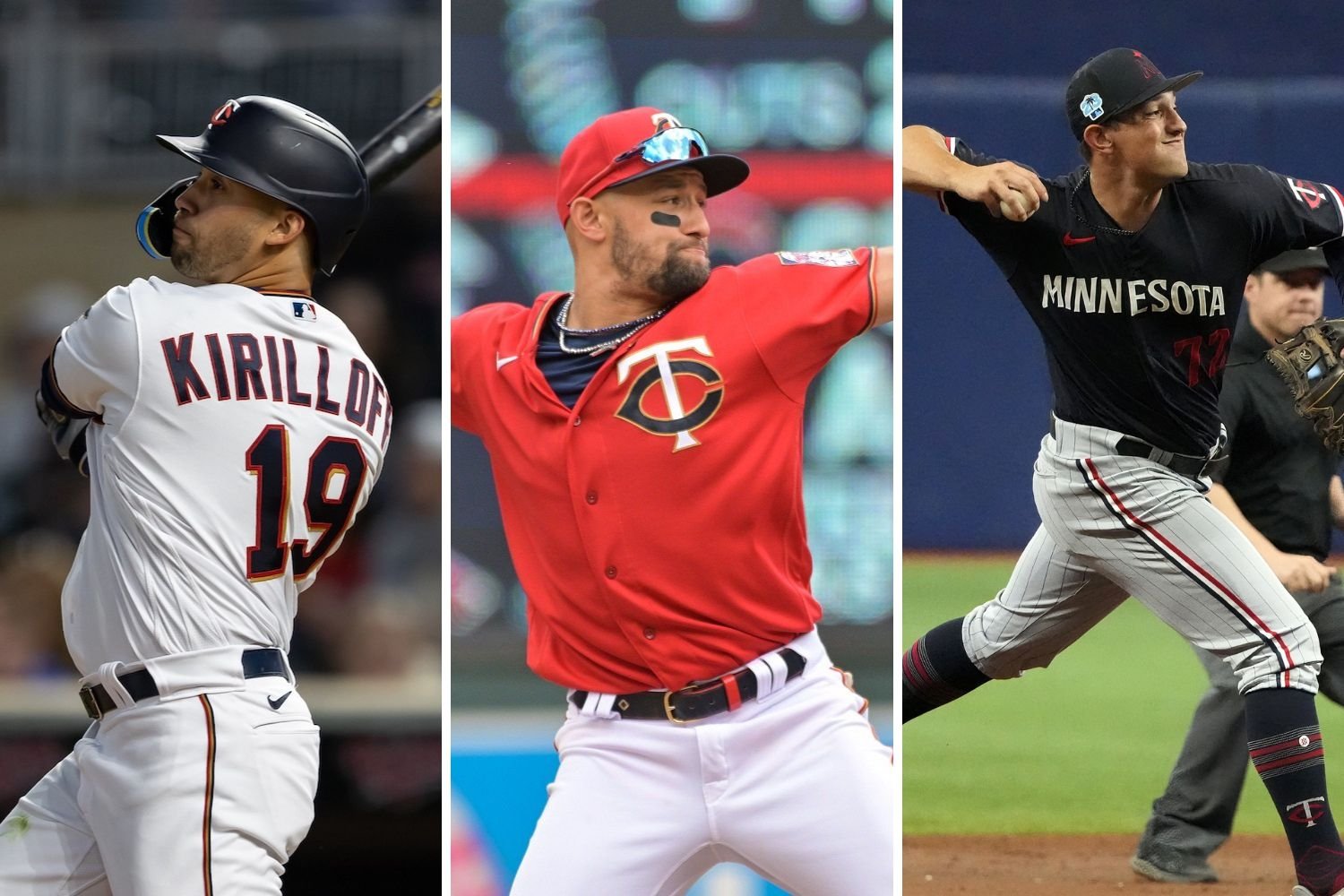
Kirilloff was among the best high-school hitting prospects in his draft class, and he quickly moved into national top-100 lists. Baseball America and MLB.com ranked him in their top 15 prospects leading into the 2019 campaign. Injuries have slowed down his professional career, including Tommy John surgery, multiple wrist surgeries, and a shoulder procedure. He has flashed brief signs of being the hitter he was in the minors (including a 117 OPS+ last season), but he has yet to play more than 88 games in one big-league season. Minnesota hopes Kirilloff can begin to meet his expectations with a healthy season next year.
2015: Tyler Jay (6th overall)
Jay was used as a relief pitcher in college, but the Twins felt like he had the tools to transition to a starting pitching role. He pitched five seasons in the Twins organization and topped out at Double A. Since leaving the Twins, he has pitched for two other organizations (Reds and Mets) and in the independent leagues. Last season, he started the year pitching for Joliet in the Frontier League and posted a 4.26 ERA (with a 1.18 WHIP) in 57 innings. The Mets organization added him at the end of August, and he made six relief appearances (6 IP) while allowing four earned runs. His time in the Twins organization had some good moments, but it was a failed experiment.
2014: Nick Gordon (5th overall)
Gordon comes from a family of baseball players, and the Twins felt confident in taking him with a top-five pick back in 2014. He worked his way slowly through the farm system, before bursting onto the scene in 2022 with a 111 OPS+ in 136 games. Twins fans expected big things from him last season, but he struggled out of the gate (35 OPS+) before fracturing his right shin when he fouled a pitch off his leg. Minnesota offered him arbitration, and he will be in the outfield mix for 2024.
Which players will have the most significant impact on the 2024 roster? Which player was the biggest disappointment? Leave a COMMENT and start the discussion.
Which team do you dislike the most in the AL Central?
Follow Twins Daily For Minnesota Twins News & Analysis



- Fatbat, tarheeltwinsfan, Dman and 8 others
-
 11
11


Recommended Comments
Create an account or sign in to comment
You need to be a member in order to leave a comment
Create an account
Sign up for a new account in our community. It's easy!
Register a new accountSign in
Already have an account? Sign in here.
Sign In Now