


Twins Video
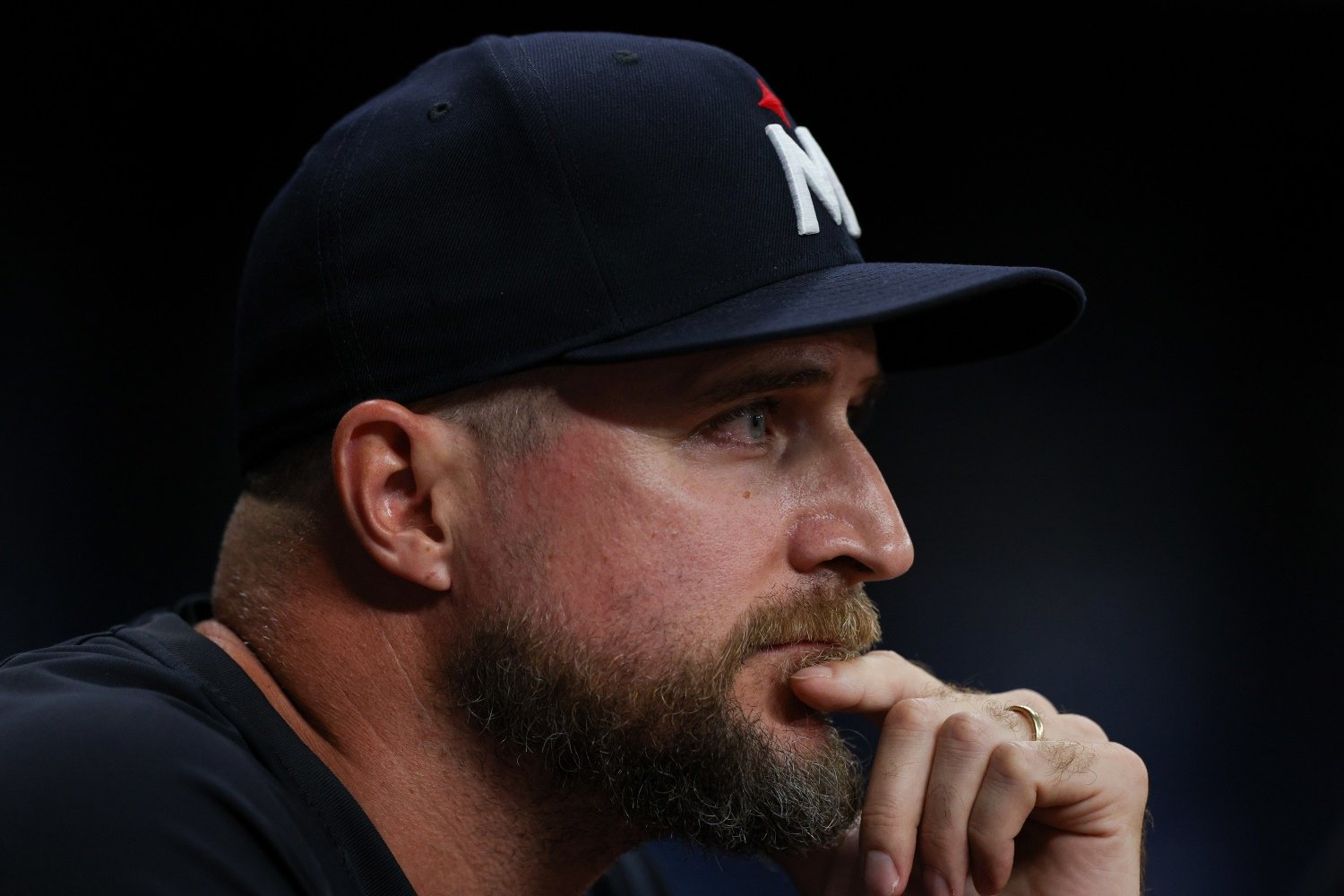
By no means did Rocco Baldelli do anything wrong when he excoriated his struggling club after a weekend sweep in Kansas City. In fact, he timed his philippic perfectly. You don't want that negative energy in your home clubhouse. You don't even want your team stewing in it for the remainder of a series. You do it at the end of a road trip, to make sure everyone understands that what just happened isn't acceptable, but also that it's over. You give them every chance to come to the park the next day and get things right.
Good managers don't push that big red button until they're left with no real choice, though. It's not about being performative or saying anything one doesn't mean; it's about managing carefully how much you let yourself emote, and how outwardly, and then choosing only the moment when urgency and a dwindling set of alternatives make it appropriate to release more of that withheld emotion.
Thus, when Baldelli elected to cut loose on his team Sunday afternoon, he was sending a message: I'm running out of ways to convey the seriousness of this to you. I know you're tired. I know this is hard. You have to do better, anyway. You're not meeting the standard.
That's not an unfair set of things to say, even to a team fighting its annual injury apocalypse right now. It's the kind of sharp-edged, dangerous thing that ought to ensure maximal concentration, maximal effort, and maximal preparation from everyone involved the rest of the way. It was a reasonable time to take those relatively drastic measures. Here's the problem: that doesn't guarantee that it will work.
In fact, in the first game of the Twins' should-be get-right series at home against the Angels Monday night, they looked as bad as ever--as flat, as tired, as weak. That's not an indictment of Baldelli; you don't evaluate a managerial tirade on its instantaneous aftereffects, any more than you evaluate a rookie based on their debut. However, it was a stern reminder that the team has shown a bit of habitual give-up this year, not necessarily from a lack of character or toughness or culture or even talent, but perhaps as an unfortunate characteristic.
The Angels jumped out to a 4-0 lead Monday night. The Twins have only come back from four runs down twice all season, and not since June. They're a strong offense, but they don't seem to have it in them to rush back when they fall behind early. Baldelli's outburst was meant to give them the kind of fearless fire required for that kind of fight, but they still didn't show it Monday night.
When a skipper does demand more of a team this way, everything comes under a microscope. Again, unless you accidentally hired some old-fashioned hothead loser, this is a move reserved for moments of great need. When it happens, the manager is acknowledging that they're in a corner. If the team doesn't respond, the implication is serious: the boss has lost the ability to direct and motivate his people adequately.
Right now, the Twins are only three games up on the Red Sox, Tigers, and Mariners. When your three-game lead is over three different teams, it's not really a three-game lead. One of those teams getting hot would be enough to cause the Twins a lot of trouble, unless they can pull out of this tailspin in short order. If they blow the lead and miss the playoffs, Baldelli has put himself in position to be fired. As far as we know, he's under contract only through next season, and when a skipper is a year from free agency, teams usually move either to extend them or to dismiss them. Baldelli and the team might have worked out an extension already; we wouldn't know. But he went forward with this gambit knowing the perception if it failed would be that he is incapable of drawing more out of his team down the stretch.
For some, this fade--a second one in three years, whether it ends as badly as 2022 did or not--is confirmation that Baldelli is not a good manager. I disagree, vehemently. However, this tendency to struggle late in seasons--to go along with the grind and let it wear them to a nub, which we saw even to some extent in 2019 and 2020--does seem to be a pattern for his teams. That might be because, given the shape of the team they're trying to build, the organization has chosen the wrong model for the manager role.
Baldelli is not hands-off; no MLB manager is. He is, however, very much a middle manager, delegating to coaches with whom he vests most positional specialist powers and implementing front-office plans based on his own conversations with Derek Falvey and Thad Levine. Though a former player, he's more like an executive than an instructor. He might not be as well-suited to the task of keeping together a young team with a lot of players still in need of pointers, still looking for experience and advice about handling the big leagues, as managers who take a more detail-oriented approach to the job.
Right now, the main problem for the Twins is the players. They're exhausted, and the best of them are missing from the lineup altogether. Baldelli did a crucial part of his job, by both sending them a wakeup call and putting himself in the harsh spotlight instead of them. In the version of his job the team has carved out for him, though, he can't do much more to push his team across the finish line, and if they don't get there, this could be the final season in the Twin Cities for one or more key member of Twins leadership.









Recommended Comments
Create an account or sign in to comment
You need to be a member in order to leave a comment
Create an account
Sign up for a new account in our community. It's easy!
Register a new accountSign in
Already have an account? Sign in here.
Sign In Now