


Twins Video
No team wins every trade. Deadline buys are especially complicated, because a team almost always knowingly trades away valuable long-term pieces for short-term rewards. The urgency of an opportunity and the paucity of sellers usually makes the market tough on teams who want to get better down the stretch in a pennant race.
Deadline trades are hot on Twins fans’ minds this month, as the team sits in line for a Wild Card spot and continues to chase the red-hot Guardians. I, your humble narrator, have combed through every deadline trade that the Twins have made since October 2016 (when Falvey and Levine were brought on).
You, my only friends, can make your own judgments. Below, I’ve listed every trade that could be considered a buy near the deadline. These trades occurred in 2017, 2019, and 2022, as the team was in contention in each of those three years. Interestingly, the Twins did not make any deadline buy additions in 2023 despite being in first place (we’re not including the Jorge López-Dylan Floro swap).
The analysis below includes stats and context. If they were again traded or signed elsewhere as free agents after the trade, their subsequent performances aren't considered here. This information was gathered as a snapshot on Jun. 29, 2024, and obviously doesn't contain future performance. Those with an * indicate that the player is still in the organization they were traded to, so the complete picture isn’t available.
I will also be providing some context for each trade. Comparing statistics does not necessarily indicate which team won the trade (and sometimes there are no winners, despite the statistics; see the Sam Dyson trade), so I have done my best to explain why the trade occurred and other relevant circumstances.
Without further ado, here’s my order, from best to worst, based on a subjective mix of process and results.
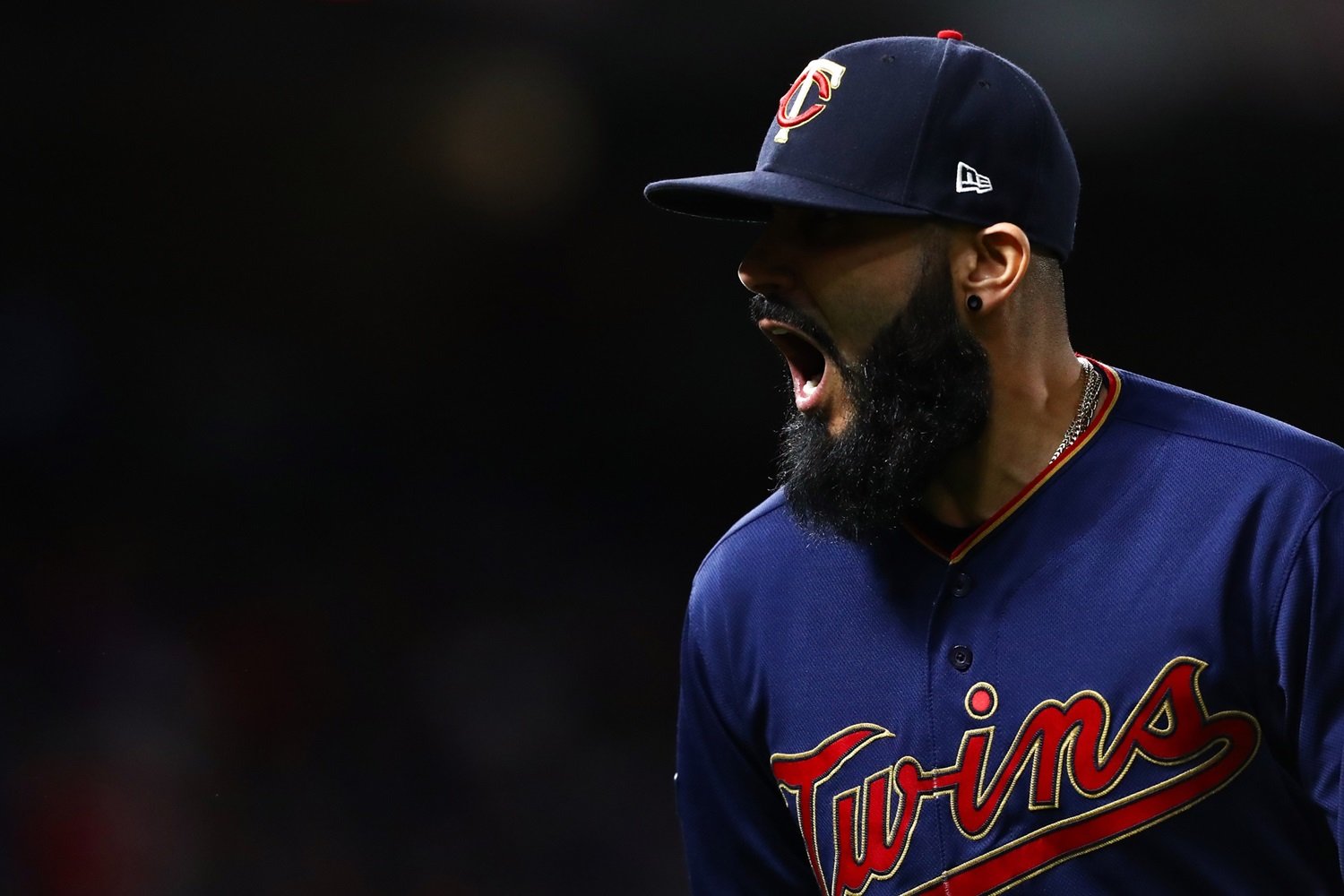
1. Jul. 27, 2019: Minnesota acquires Sergio Romo (42.2 IP, 125 ERA+, 0.4 bWAR), Chris Vallimont (did not reach Minnesota) from Miami for Lewin Díaz (343 PA, 55 OPS+, 0.1 bWAR), +0.3 bWAR for Minnesota.
Romo was one of two relievers acquired at the 2019 deadline, and he would be a mainstay in the back of the Twins bullpen for two years, as he was brought back for 2020 before having his option declined. Vallimont was waived in 2022 and is currently in the Dodgers system. Díaz had some promise but failed to hit enough as a first baseman to stick in Miami.
2. Aug. 2, 2022: Minnesota acquires Michael Fulmer (24.1 IP, 107 ERA+, 0.5 bWAR) from Detroit for Sawyer Gipson-Long* (20 IP, 166 ERA+, 0.4 bWAR), +0.1 bWAR for Minnesota.
Fulmer was a quality setup man down the stretch in 2022, though the Twins did not re-sign him in the offseason. He had high highs and low lows for the 2023 Cubs, and was forced to undergo Tommy John surgery for a second time at the end of the campaign. Gipson-Long debuted in 2023 with four solid starts for the Tigers, but is on the injured list following his own Tommy John surgery.
3. Jul. 27, 2017: Minnesota acquires Gabriel Moya (42.2 IP, 94 ERA+, 0.2 bWAR) from Arizona for John Ryan Murphy (299 PA, 62 OPS+, -0.2 bWAR), +0.4 bWAR for Minnesota
Murphy was most infamous in Minnesota for being the return in the trade that sent Aaron Hicks to New York. Moya was a decent reliever for a couple of years, but was designated for assignment in 2019.
4. Aug. 2, 2022: Minnesota acquires Sandy León (65 PA, 46 OPS+, -0.4 bWAR) from Cleveland for Ian Hamilton (did not reach Cleveland), -0.4 bWAR for Minnesota.
A simple veteran-for-veteran swap sent journeyman catcher León to Minnesota as catcher depth and Hamilton to Cleveland as reliever depth. León didn’t hit a lick, but the pitching staff appreciated him, and Hamilton never got called up prior to his release in 2022, though he is a fixture in the current Yankees bullpen.
5. Jul. 24, 2017: Minnesota acquires Jaime Garcia (6.2 IP, 115 ERA+, 0.1 bWAR), Anthony Recker (did not reach Minnesota) from Atlanta for Huascar Ynoa* (122.1 IP, 85 ERA+, 1.1 bWAR), -1.0 bWAR for Minnesota
In an effort to “go for it,” the Twins acquired the aging starter to fortify the rotation, sending over the 19-year-old prospect. Garcia made one start. Ynoa had a solid 17-start stretch for Atlanta in 2021, but has not had a significant effect otherwise and is currently dealing with elbow issues. It’s hard to separate this trade from the one that sent Garcia away a week later, but the first trade wasn’t bad in itself.
6. Aug. 2, 2022: Minnesota acquires Jorge López (58.0 IP, 86 ERA+, -0.2 bWAR) from Baltimore for Juan Rojas* (has not reached Baltimore), Cade Povich* (21.1 IP, 91 ERA+, 0.2 bWAR), Juan Nuñez* (has not reached Baltimore), Yennier Cano* (110.2 IP, 128 ERA+, 2.2 bWAR), -2.6 bWAR for Minnesota.
The Twins swung a deal for what was arguably the best reliever traded at the 2022 deadline in López, along with his 2.5 years of team control. However, he disappointed in 2022 and 2023 and was swapped to the Marlins for fellow struggling reliever Dylan Floro. Rojas and Nuñez are still in the minors, but Cano emerged as arguably the best reliever in baseball in 2023 for the Orioles. He has cooled off in 2024, but is still a major part of the bullpen, and Povich has started four games for Baltimore.
7. Jul. 31, 2019: Minnesota acquires Sam Dyson (11.1 IP, 65 ERA+, -0.3 bWAR) from San Francisco for Prelander Berroa (did not reach San Francisco), Jaylin Davis (68 PA, 31 OPS+, -0.7 bWAR), Kai-Wei Teng* (11.0 IP, 40 ERA+, -0.3 bWAR), +0.7 bWAR for Minnesota.
This trade was a mess for all involved, as Dyson pitched a poor 11 innings, had a season-ending injury, and was exposed as a domestic abuser shortly thereafter. Berroa, who debuted in 2023, was traded to Seattle in 2022. Teng has struggled in his first year as a reliever for the Giants in 2024. Davis played poorly in limited action over three years, and has bounced around since the trade.
8. Aug. 2, 2022: Minnesota acquires Tyler Mahle (42 IP, 116 ERA+, 0.5 bWAR) from Cincinnati for Spencer Steer* (1,106 PA, 112 OPS+, 4.2 bWAR), Christian Encarnacion-Strand* (364 PA, 90 OPS+, -0.2 bWAR), Steven Hajjar (did not reach Cincinnati), -3.5 bWAR for Minnesota.
Mahle was one of the top available starting pitchers and was brought in to bring stability to a rotation, though his preexisting injuries in 2022 and eventual Tommy John (not necessarily related to his 2022 injuries) limited him to 42 moderately effective innings as a Twin. Steer was blocked from reaching MLB at the time, and has become a mainstay in Cincinnati’s lineup. Encarnacion-Strand has been up and down since his debut in 2023, and Hajjar was traded as player to be named later in a trade for Will Benson.
Total bWAR change through deadline buys: -5.9. (Disclaimer: It's easier to gain WAR over multiple years in sells than buys, given how much longer the prospects are in the organization).
In review, the two top trades were for solid right-handed relievers. There were three trades in the middle that were effectively nothingburgers. The other three were failures, due to a mix of health, underperformance, and significant character issues. There is some reason to be nervous about losing on these deadline buys, but that's also part of the risk when a team trades future pieces for present talent. One big hit at the deadline could even be enough to even out these missteps, given that there are only three true flops.
Do you agree with this order? How do you feel about the team’s performance buying at the deadline? Do you hope that the team buys again this year?
Do you approve of Twins ownership?

Follow Twins Daily For Minnesota Twins News & Analysis



- Karbo, Patzky, Doctor Gast and 5 others
-
 8
8


Recommended Comments
Create an account or sign in to comment
You need to be a member in order to leave a comment
Create an account
Sign up for a new account in our community. It's easy!
Register a new accountSign in
Already have an account? Sign in here.
Sign In Now