


Twins Video
I watched a majority of Saturday's game against the Guardians from one of my favorite vantage points at Target Field, standing at the rail behind the lower-bowl home plate sections. Provided you don't mind being on your feet, it's one of the best views you can get in the park without paying for expensive seats.
What's especially nice about watching from here is that you can keep an eye on the TVs mounted beneath the overhang for fans in the back rows and on the concourse – great for catching a quick zoomed-in replay of what you just witnessed live. This was helpful, for instance, when I was trying to parse out exactly what happened on this wild play at second base. This kind of stuff is what makes watching and dissecting baseball great.
Unfortunately, Saturday's game also provided a glaring glimpse of something that is increasingly hampering the quality of the baseball-viewing experience: a persistent, precision-based strike zone display in broadcasts, paired with home plate umpires who are too often far from precise in their calls.
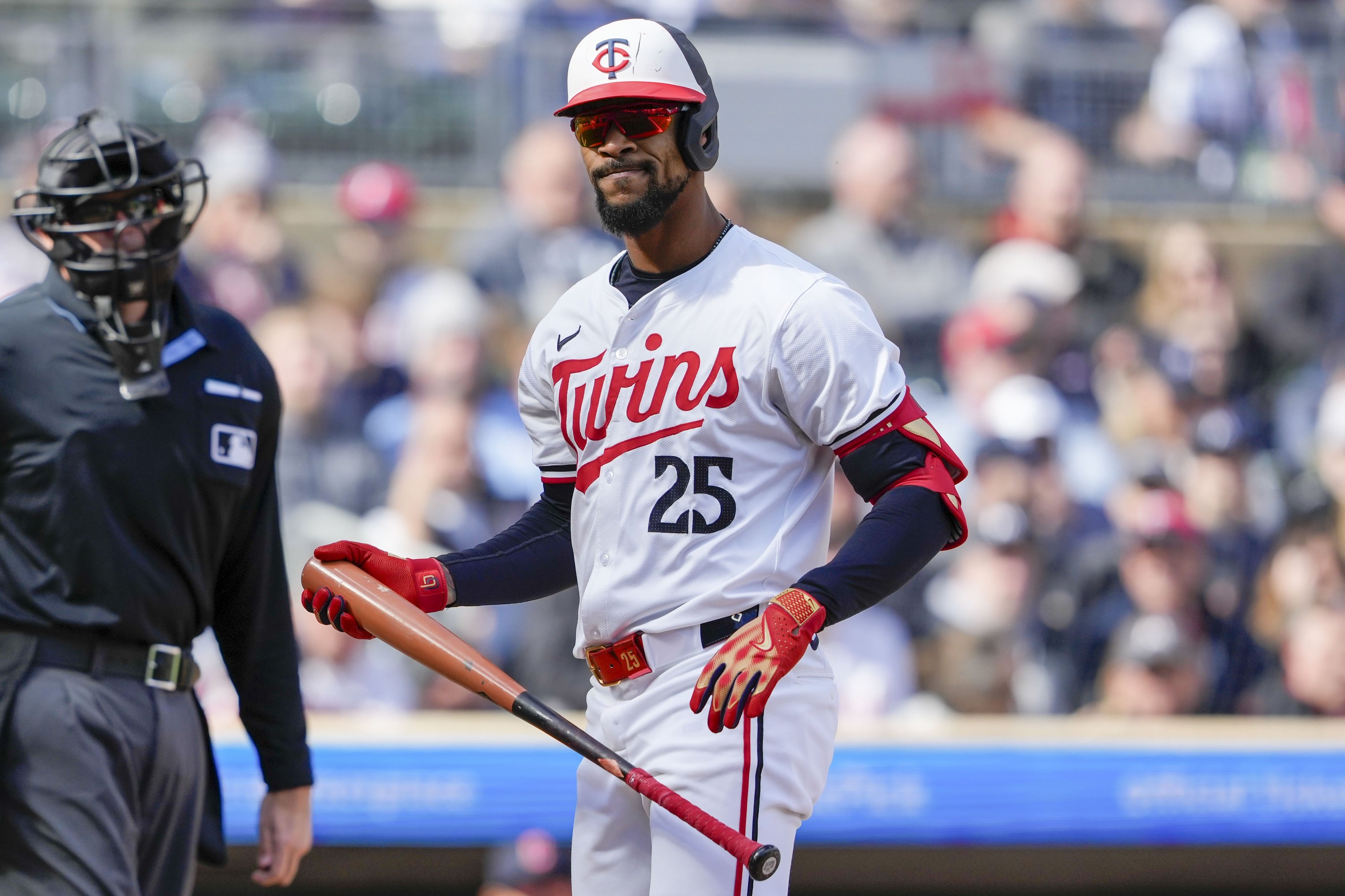
As Brennan Miller bumbled his way through this game, repeatedly botching calls that overwhelmingly went against the Twins, all fans in my vicinity would glance to the screen, only to have these misses confirmed over and over again. For Major League Baseball, it's just a really odd way to present your product, placing shortcomings of officials and their pivotal impact front-and-center for viewers, to the point where it sort of overrides the rest of the action.
When it comes to the topic of electronic strike zones, I personally tend to lean a little more traditional. I actually don't mind the idea of a somewhat subjective (yet consistent) strike zone, and I enjoy the human element playing a role in guiding the game. I'm cool with rewarding pitchers for executing really well, or catchers for framing the ball, and with these skills bending the margins of the zone to some extent.
The thing is, there is no real subjectivity allowed for when you've got the strike zone overlay on the screen depicting balls and strikes as a matter of fact. When the circle is outside the box, it's clearly going to be perceived as a ball, and a missed call if the ump says otherwise. It's black and white.
What's worse: the strike zones superimposed on broadcasts are not always even accurate, and can actually undermine the umpires when they are NOT getting it wrong. I'm not one to defend Angel Hernandez (perhaps the single greatest walking argument for robot umps), but he was getting roasted by people on Sunday for calling a strike against Giancarlo Stanton that was ... definitely a strike? Ah, but it did not land within the static strike zone overlay that barely reaches the bottom of his belt.
Maybe I'm overly sensitive to this, because I watch a team that takes pitches and strikes out so very often, and seems to get bitten by these borderline calls with extreme frequency. For me, the annoying experience of watching Saturday's game and brooding over nonstop missed calls has come to feel somewhat routine. But at a broader level, I've long been bothered by this disconnect in the way MLB presents its product, at a time when the league is trying hard to win new fans. It's getting to be a little much to take.
If Major League Baseball wants to position the strike zone as this absolute and enforceable thing, then why not just implement the automated balls and strikes (ABS) system and do away with the disjointed viewing experience. If, conversely, the league wants us to believe the strike zone is dynamic, fluid and subjective – thus validating the ongoing existence of human umpires – then broadcasts should stop giving the opposite impression. At the very least, the superimposed zone could better reflect the way umps are actually taught to call balls and strikes (or the way the Hawk-Eye tracking system measures them), as opposed to the uniform rectangle shape we mostly get now.
One thing that seems uncontroversial: If we're gonna keep presenting the strike zone so prominently, it's past time to give managers the ability to challenge ball/strike calls in some capacity. Making the players, coaches and all the fans feel powerless while watching a disastrously butchered umpiring job like we saw from Miller on Saturday completely alter the course of the game is not good for anyone. It's certainly not the kind of thing that's going to attract more viewers to MLB.
What's your feeling on the way Major League Baseball is handling and presenting the strike zone? Do the disjointed optics of these broadcasts bother you as much as me? I'd love to hear your thoughts in the comments.









Recommended Comments
Create an account or sign in to comment
You need to be a member in order to leave a comment
Create an account
Sign up for a new account in our community. It's easy!
Register a new accountSign in
Already have an account? Sign in here.
Sign In Now