Al from SoDak
-
Posts
274 -
Joined
-
Last visited
1 Follower
Recent Profile Visitors
13,989 profile views


.thumb.png.131fdf97b843dfc7f73f4f987002a0f8.png)
Al from SoDak's Achievements






-
 Fatbat reacted to a post in a topic:
Should the Twins Bring Back Josh Bell for 2027?
Fatbat reacted to a post in a topic:
Should the Twins Bring Back Josh Bell for 2027?
-
 Al from SoDak reacted to a post in a topic:
Should the Twins Bring Back Josh Bell for 2027?
Al from SoDak reacted to a post in a topic:
Should the Twins Bring Back Josh Bell for 2027?
-
 I think guys like Bell frequently sign with teams like the Twins hoping to prove they are still viable MLB players and that they hope to get traded to a contender. I don't think he cared where he played.
 -
Al from SoDak reacted to a post in a topic:
There’s a Real Path for Vahn Lackey to Reach the Twins Next Season
-
Al from SoDak reacted to a post in a topic:
There’s a Real Path for Vahn Lackey to Reach the Twins Next Season
-
Al from SoDak reacted to a post in a topic:
Ranking the Top-10 Twins Prospects Since 2010
-
Al from SoDak reacted to a post in a topic:
Help Us Build The Next Twins Daily - Let Us Know Your Thoughts
-
Al from SoDak reacted to a post in a topic:
Revisiting the Cy Young Vote That May Have Cost Johan Santana a Spot in Cooperstown
-
Al from SoDak reacted to a post in a topic:
Revisiting the Cy Young Vote That May Have Cost Johan Santana a Spot in Cooperstown
-
Al from SoDak reacted to a post in a topic:
Twins 6, Red Sox 5: Three-Phase Clutchness Gives Twins First Sweep at Fenway Since 1994
-
Al from SoDak reacted to a blog entry:
2026 Road Trip
-
Craig Arko reacted to a post in a topic:
Jim Kaat: A Hall of Fame Pitcher Who Spent 60+ Years In Baseball
-
USAFChief reacted to a post in a topic:
Jim Kaat: A Hall of Fame Pitcher Who Spent 60+ Years In Baseball
-
Al from SoDak reacted to a post in a topic:
Knuckleballer Joe Niekro’s Long Career Had a Short, Memorable Stop in Minnesota
-
nclahammer reacted to an article:
Knuckleballer Joe Niekro’s Long Career Had a Short, Memorable Stop in Minnesota
-
USAFChief reacted to a post in a topic:
Knuckleballer Joe Niekro’s Long Career Had a Short, Memorable Stop in Minnesota
-
Clare reacted to an article:
Knuckleballer Joe Niekro’s Long Career Had a Short, Memorable Stop in Minnesota
-
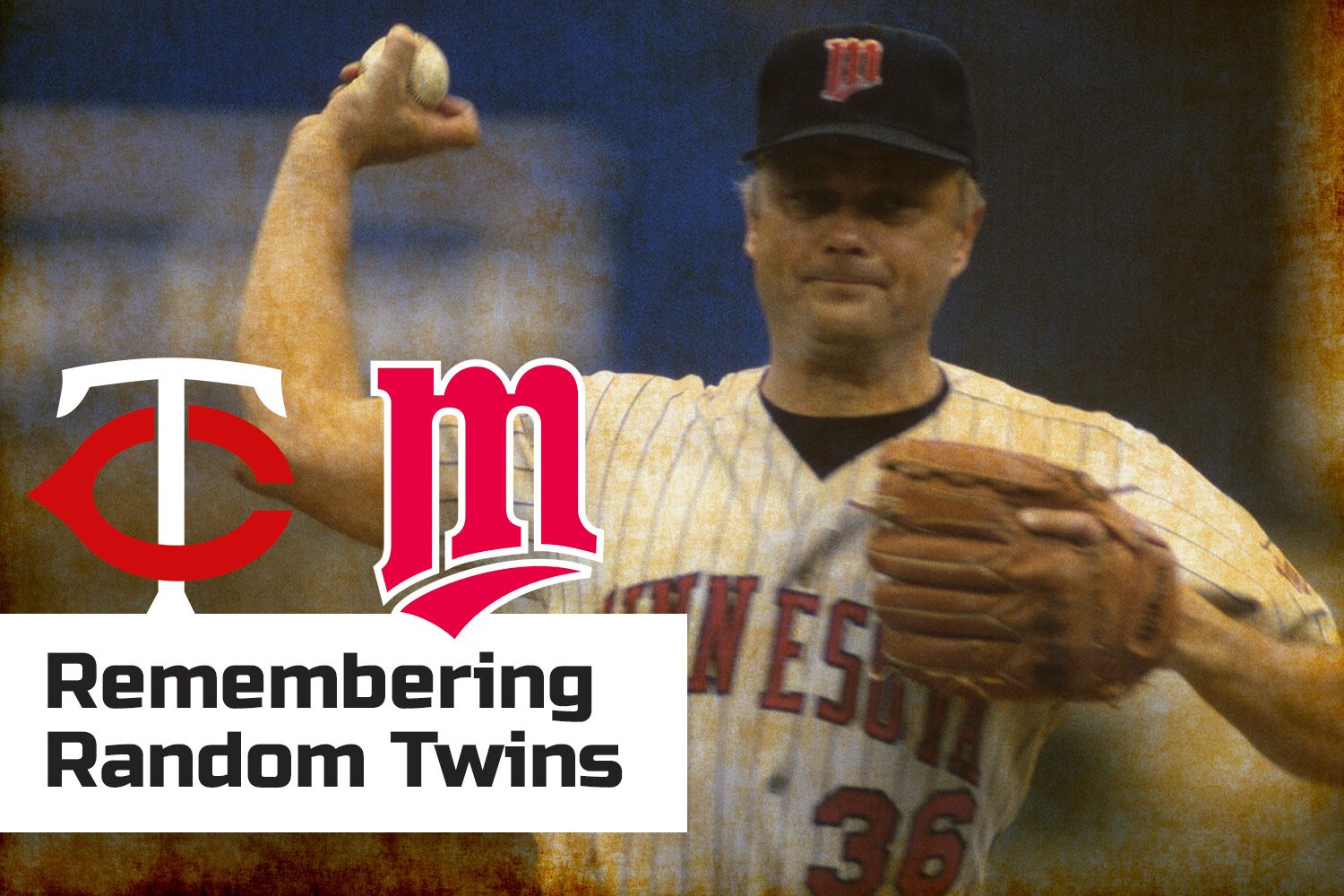
Everybody loves a knuckleball, right? The slow, floating pitch is unpredictable, erratic, and just plain different. It’s a challenge to hit and even a challenge to catch. There have been very few knuckleball pitchers (estimates say around 70) of the more than 11,000 pitchers in Major League Baseball. That’s less than 1 in 1,000. When I think “knuckleball pitcher and the Minnesota Twins,” the first person who comes to my mind is Joe Niekro in 1987 and 1988. Let’s take a closer look at Joe’s extensive career, which finished with parts of two seasons in Minnesota. Joseph Franklin Niekro was born November 7, 1944, in Martins Ferry, Ohio, a small town on the opposite side of the Ohio River from Wheeling, West Virginia. He was the younger brother of Baseball Hall of Famer and fellow knuckleballer Phil by five years. The Niekros came from a baseball family, and it was their father who first taught them to throw the knuckleball. Joe graduated from high school in nearby Bridgeport, Ohio, in 1962. From there, he attended West Liberty University in West Virginia. Joe Niekro would grow to 6'1" and 185 pounds. The right-handed pitcher was first selected in the seventh round of the January phase of the 1966 draft by Cleveland but did not sign. He was selected again in the June phase of the 1966 draft by the Cubs in the third round. This time, he signed and began his professional career. At this point, Joe was primarily a “regular” pitcher and was not a knuckleball pitcher. Joe Niekro won ten games in his first MLB season of 1967. But for the most part, he was inconsistent and bounced through four organizations in his first eight MLB seasons, struggling to find a home and consistent success. But that fourth organization was the Atlanta Braves, where his older brother was excelling. The older brother won 33 games in those two seasons (1973 and 1974). Perhaps because of watching his brother Phil’s success, Joe, who had gotten away from the knuckleball, reacquainted himself with the pitch at that time. This change ultimately propelled the younger Niekro to greater MLB success, but it wouldn’t be with his brother. Just before the 1975 season, the Houston Astros purchased Joe's contract from the Braves for $35,000. Joe would make the most of that fresh start. In Houston, Joe found a home for the next 11 seasons. He played for the Astros from 1975 to 1985. More than half of his career innings and wins came with the Astros. He was the first Astro to win 20 games in consecutive seasons (1979 and 1980). His career peaked in 1979 when he made his lone All-Star appearance and was The Sporting News National League Pitcher of the Year. He led the league with 21 wins, including five shutouts. That season, he pitched to a 3.00 ERA across 263 2/3 innings. Brother Phil also won 21 games, so they shared the league lead for wins, the only time brothers accomplished this feat. In 1980, the Astros and Niekro had another fine season. Joe again won 20 games, and the Astros and Dodgers tied for the NL West Division title, each with a record of 92-70. On October 6, a one-game tiebreaker would be held to determine the division winner. Joe was given the starting pitching assignment for Game 163 and responded with a complete game, allowing six hits and one run. The Astros won the game 7-1 and won the division title. In Game 3 of the 1980 National League Championship Series, he started and pitched 10 innings of shutout baseball before the Astros finally beat the Phillies in 11 innings. However, the Astros ultimately lost the NLCS three games to two, ending their season against the eventual World Series Champion Phillies. 1981 was a strike year, which resulted in a split season. The division winners from the first half of the season would play a short series against the division winners from the second half to determine who would advance to the League Champion Series. Houston won the NL West division in the second half and faced the Dodgers. Joe had a 9-9 record in the shortened season but carried a 2.82 ERA into the playoffs. In 1980, he had a similar outstanding performance in an 11-inning playoff win again. Niekro went eight scoreless innings before the Astros won again, this time over the Dodgers. However, Niekro’s performance, again, did not enable the Astros to win the series; the Dodgers prevailed three games to two. Joe Niekro would pitch three and a half more seasons in Houston, but the team would not return to the playoffs in his remaining time there. Niekro’s statistics stayed strong. He had double-digit wins each season (also double-digit losses) and was highly durable, throwing the less taxing knuckleball. He started at least 35 games from 1982 to 1985, including 38 starts in both 1983 and 1984, which led the NL both years. In 1985, he became the all-time winningest pitcher in Astros history and still holds that distinction today (one win more than Roy Oswalt). In September of 1985, Joe was traded to the New York Yankees (which very briefly reunited him with brother Phil). He pitched parts of three mediocre seasons (for Niekro and New York) before being traded to the Twins on June 7, 1987, for Mark Salas. The Twins' record at the time of the trade was 28-26. They had a strong offense but were having trouble finding consistent and reliable pitching. The Twins had Frank Viola and Hall of Famer Bert Blyleven, of course, but filling out the rest of the rotation was a constant battle. This is where Joe Niekro fits. The 42-year-old Niekro started 18 games for the Twins during the remainder of the 1987 regular season. He earned the win in his first two starts, but from that point on, he generally performed poorly. His record was 4-9 with a 6.26 ERA. But, hey, he filled a rotation spot. One of the funniest episodes in Twins history occurred on August 3, 1987, thanks to Mr. Niekro. The Twins were in a 2-2 battle with the California Angels. While pitching in the bottom of the fourth inning, Niekro was caught on the pitching mound with an emery board in his back pocket and was immediately ejected from the game. He would be suspended for 10 games for cheating – scuffing the baseball. On August 15, while serving the suspension, Niekro accepted an invitation to appear on Late Night with David Letterman, mocking the entire incident. He showed up with a belt sander, nail file, and Vaseline and made fun of the whole situation. I encourage everyone to take a break from this article, go to YouTube, and find those two videos for a good laugh. This ball-scuffing incident is the most memorable thing about Niekro’s Twins career. Oh, and by the way, the Twins won the game in California, 11-3. The Twins ended up winning the AL West division, but Niekro was dropped from the starting rotation for the playoffs. Manager Tom Kelly decided to go with a three-man starting pitcher rotation, which would allow Viola to pitch Games 1, 4, and 7. Blyleven was slated for Games 2 and 5. The last spot went to rookie Les Straker. Niekro’s 18 starts were fifth on the team in 1987, while veteran Mike Smithson had started 20. However, Straker had started 26 and was viewed as a better option. Straker’s ERA, ERA+, and WHIP were all better than the veterans. Joe Niekro did not pitch in the ALCS against Detroit but made a World Series appearance with two innings of scoreless relief against the St. Louis Cardinals during the Game Four “Tom Lawless game.” That brought Niekro’s career postseason record to 20 innings pitched without allowing a single earned run. As we all know, the Twins won that World Series, and everyone lived happily ever after. Niekro was a free agent and re-signed to return to Minnesota for the 1988 season. He was signed to be a swingman, able to start and relieve. During the sixth game of the season, Joe came in to pitch the seventh and eighth innings against Cleveland with the Twins down, 6-3. The Twins scored four runs late, and Joe got the win, which would be the last win of his career. Niekro got two more relief appearances and did fine. He also received two more starts, which were not fine – he gave up 7 and 5 runs, respectively. After that second start on April 29, 1988, the Twins decided they had seen enough and released Joe Niekro, thus ending his 22-year career at the age of 43. In his 22-season-long career, Niekro amassed 221 wins. His brother Phil won 318. The Niekros’ total of 539 wins remains the most combined wins by brothers in MLB history. Joe’s 221 wins are the third most of any knuckleballer, behind two Hall of Famers, his brother Phil (318) and Ted Lyons (260). In addition to the 221 wins, Joe had 204 losses and 16 saves. He struck out 1,747 batters in 3,584 1/3 innings. His WHIP was 1.319. His walk rate was 3.2 per 9 innings, which seems pretty darn good for a knuckleball pitcher. His career ERA was 3.59, and his ERA+ was 98. As a pitcher in the National League for many years, Joe occasionally got to step up to the plate. A right-handed batter, Niekro was not particularly good with the bat (.156/.188/.188). However, he did have one single home run in 1,165 plate appearances, and it came against…his brother, Phil Niekro. Joe’s sons also excelled in baseball. His first son, Lance, played parts of four seasons in the show for the Giants. He was a first baseman. Joe’s other son, JJ, has been a pitcher in the Braves system for the last five seasons. In 2006, Joe died of a brain aneurysm just short of his 62nd birthday. Have there been other knuckleballers in Twins History? I can think of R.A. Dickey and current Triple-A prospect Cory Lewis. Are there others? Please add any other names in the comments below. If you like looking back at the Twins' past, check out my previous articles at Twins Daily History. Sources include Baseball Reference and Wikipedia. View full article
-
 Everybody loves a knuckleball, right? The slow, floating pitch is unpredictable, erratic, and just plain different. It’s a challenge to hit and even a challenge to catch. There have been very few knuckleball pitchers (estimates say around 70) of the more than 11,000 pitchers in Major League Baseball. That’s less than 1 in 1,000. When I think “knuckleball pitcher and the Minnesota Twins,” the first person who comes to my mind is Joe Niekro in 1987 and 1988. Let’s take a closer look at Joe’s extensive career, which finished with parts of two seasons in Minnesota. Joseph Franklin Niekro was born November 7, 1944, in Martins Ferry, Ohio, a small town on the opposite side of the Ohio River from Wheeling, West Virginia. He was the younger brother of Baseball Hall of Famer and fellow knuckleballer Phil by five years. The Niekros came from a baseball family, and it was their father who first taught them to throw the knuckleball. Joe graduated from high school in nearby Bridgeport, Ohio, in 1962. From there, he attended West Liberty University in West Virginia. Joe Niekro would grow to 6'1" and 185 pounds. The right-handed pitcher was first selected in the seventh round of the January phase of the 1966 draft by Cleveland but did not sign. He was selected again in the June phase of the 1966 draft by the Cubs in the third round. This time, he signed and began his professional career. At this point, Joe was primarily a “regular” pitcher and was not a knuckleball pitcher. Joe Niekro won ten games in his first MLB season of 1967. But for the most part, he was inconsistent and bounced through four organizations in his first eight MLB seasons, struggling to find a home and consistent success. But that fourth organization was the Atlanta Braves, where his older brother was excelling. The older brother won 33 games in those two seasons (1973 and 1974). Perhaps because of watching his brother Phil’s success, Joe, who had gotten away from the knuckleball, reacquainted himself with the pitch at that time. This change ultimately propelled the younger Niekro to greater MLB success, but it wouldn’t be with his brother. Just before the 1975 season, the Houston Astros purchased Joe's contract from the Braves for $35,000. Joe would make the most of that fresh start. In Houston, Joe found a home for the next 11 seasons. He played for the Astros from 1975 to 1985. More than half of his career innings and wins came with the Astros. He was the first Astro to win 20 games in consecutive seasons (1979 and 1980). His career peaked in 1979 when he made his lone All-Star appearance and was The Sporting News National League Pitcher of the Year. He led the league with 21 wins, including five shutouts. That season, he pitched to a 3.00 ERA across 263 2/3 innings. Brother Phil also won 21 games, so they shared the league lead for wins, the only time brothers accomplished this feat. In 1980, the Astros and Niekro had another fine season. Joe again won 20 games, and the Astros and Dodgers tied for the NL West Division title, each with a record of 92-70. On October 6, a one-game tiebreaker would be held to determine the division winner. Joe was given the starting pitching assignment for Game 163 and responded with a complete game, allowing six hits and one run. The Astros won the game 7-1 and won the division title. In Game 3 of the 1980 National League Championship Series, he started and pitched 10 innings of shutout baseball before the Astros finally beat the Phillies in 11 innings. However, the Astros ultimately lost the NLCS three games to two, ending their season against the eventual World Series Champion Phillies. 1981 was a strike year, which resulted in a split season. The division winners from the first half of the season would play a short series against the division winners from the second half to determine who would advance to the League Champion Series. Houston won the NL West division in the second half and faced the Dodgers. Joe had a 9-9 record in the shortened season but carried a 2.82 ERA into the playoffs. In 1980, he had a similar outstanding performance in an 11-inning playoff win again. Niekro went eight scoreless innings before the Astros won again, this time over the Dodgers. However, Niekro’s performance, again, did not enable the Astros to win the series; the Dodgers prevailed three games to two. Joe Niekro would pitch three and a half more seasons in Houston, but the team would not return to the playoffs in his remaining time there. Niekro’s statistics stayed strong. He had double-digit wins each season (also double-digit losses) and was highly durable, throwing the less taxing knuckleball. He started at least 35 games from 1982 to 1985, including 38 starts in both 1983 and 1984, which led the NL both years. In 1985, he became the all-time winningest pitcher in Astros history and still holds that distinction today (one win more than Roy Oswalt). In September of 1985, Joe was traded to the New York Yankees (which very briefly reunited him with brother Phil). He pitched parts of three mediocre seasons (for Niekro and New York) before being traded to the Twins on June 7, 1987, for Mark Salas. The Twins' record at the time of the trade was 28-26. They had a strong offense but were having trouble finding consistent and reliable pitching. The Twins had Frank Viola and Hall of Famer Bert Blyleven, of course, but filling out the rest of the rotation was a constant battle. This is where Joe Niekro fits. The 42-year-old Niekro started 18 games for the Twins during the remainder of the 1987 regular season. He earned the win in his first two starts, but from that point on, he generally performed poorly. His record was 4-9 with a 6.26 ERA. But, hey, he filled a rotation spot. One of the funniest episodes in Twins history occurred on August 3, 1987, thanks to Mr. Niekro. The Twins were in a 2-2 battle with the California Angels. While pitching in the bottom of the fourth inning, Niekro was caught on the pitching mound with an emery board in his back pocket and was immediately ejected from the game. He would be suspended for 10 games for cheating – scuffing the baseball. On August 15, while serving the suspension, Niekro accepted an invitation to appear on Late Night with David Letterman, mocking the entire incident. He showed up with a belt sander, nail file, and Vaseline and made fun of the whole situation. I encourage everyone to take a break from this article, go to YouTube, and find those two videos for a good laugh. This ball-scuffing incident is the most memorable thing about Niekro’s Twins career. Oh, and by the way, the Twins won the game in California, 11-3. The Twins ended up winning the AL West division, but Niekro was dropped from the starting rotation for the playoffs. Manager Tom Kelly decided to go with a three-man starting pitcher rotation, which would allow Viola to pitch Games 1, 4, and 7. Blyleven was slated for Games 2 and 5. The last spot went to rookie Les Straker. Niekro’s 18 starts were fifth on the team in 1987, while veteran Mike Smithson had started 20. However, Straker had started 26 and was viewed as a better option. Straker’s ERA, ERA+, and WHIP were all better than the veterans. Joe Niekro did not pitch in the ALCS against Detroit but made a World Series appearance with two innings of scoreless relief against the St. Louis Cardinals during the Game Four “Tom Lawless game.” That brought Niekro’s career postseason record to 20 innings pitched without allowing a single earned run. As we all know, the Twins won that World Series, and everyone lived happily ever after. Niekro was a free agent and re-signed to return to Minnesota for the 1988 season. He was signed to be a swingman, able to start and relieve. During the sixth game of the season, Joe came in to pitch the seventh and eighth innings against Cleveland with the Twins down, 6-3. The Twins scored four runs late, and Joe got the win, which would be the last win of his career. Niekro got two more relief appearances and did fine. He also received two more starts, which were not fine – he gave up 7 and 5 runs, respectively. After that second start on April 29, 1988, the Twins decided they had seen enough and released Joe Niekro, thus ending his 22-year career at the age of 43. In his 22-season-long career, Niekro amassed 221 wins. His brother Phil won 318. The Niekros’ total of 539 wins remains the most combined wins by brothers in MLB history. Joe’s 221 wins are the third most of any knuckleballer, behind two Hall of Famers, his brother Phil (318) and Ted Lyons (260). In addition to the 221 wins, Joe had 204 losses and 16 saves. He struck out 1,747 batters in 3,584 1/3 innings. His WHIP was 1.319. His walk rate was 3.2 per 9 innings, which seems pretty darn good for a knuckleball pitcher. His career ERA was 3.59, and his ERA+ was 98. As a pitcher in the National League for many years, Joe occasionally got to step up to the plate. A right-handed batter, Niekro was not particularly good with the bat (.156/.188/.188). However, he did have one single home run in 1,165 plate appearances, and it came against…his brother, Phil Niekro. Joe’s sons also excelled in baseball. His first son, Lance, played parts of four seasons in the show for the Giants. He was a first baseman. Joe’s other son, JJ, has been a pitcher in the Braves system for the last five seasons. In 2006, Joe died of a brain aneurysm just short of his 62nd birthday. Have there been other knuckleballers in Twins History? I can think of R.A. Dickey and current Triple-A prospect Cory Lewis. Are there others? Please add any other names in the comments below. If you like looking back at the Twins' past, check out my previous articles at Twins Daily History. Sources include Baseball Reference and Wikipedia.
 -
nclahammer reacted to an article:
Willie Mays’s Number 24 Was Once Given To This Ex-Twin
-
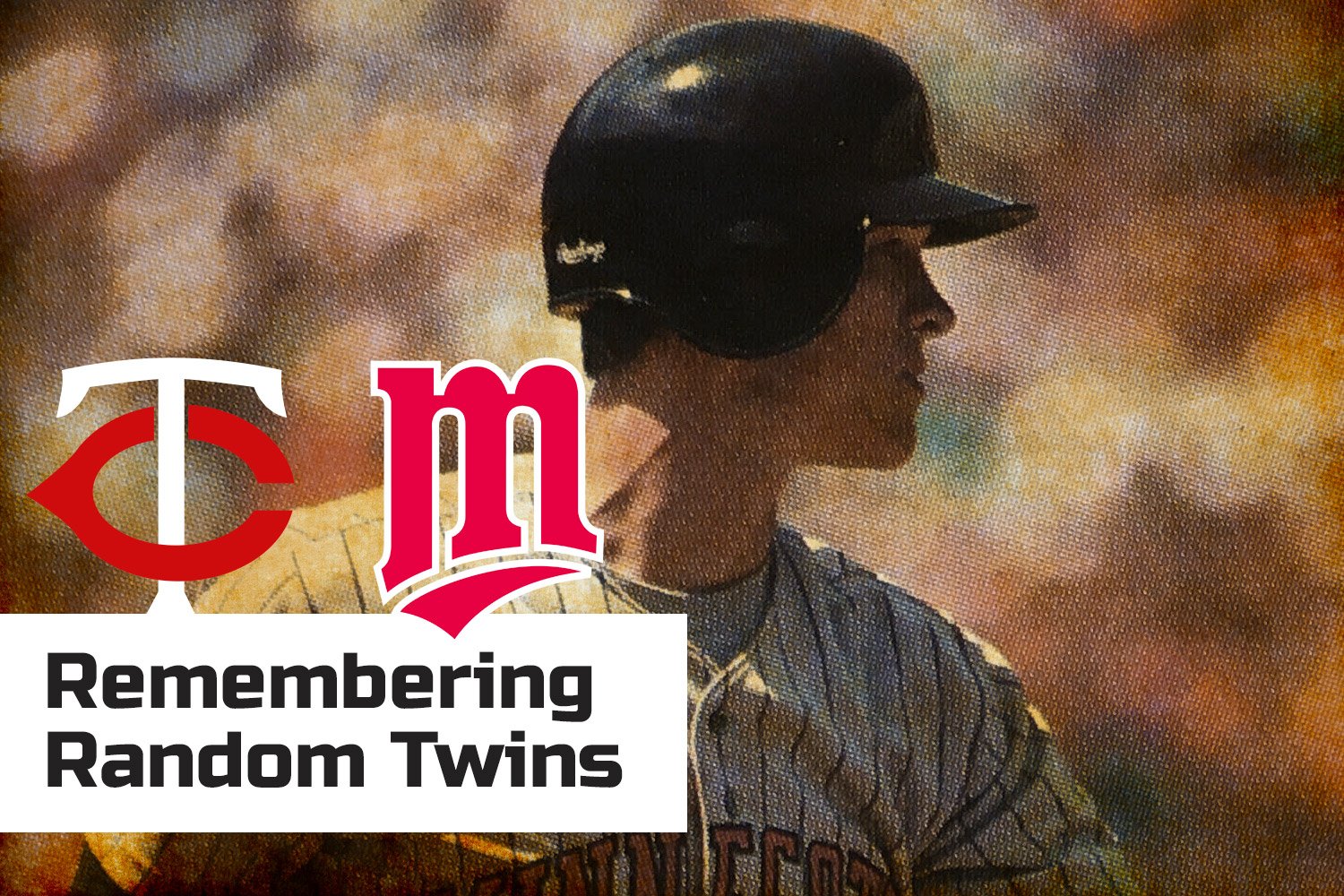 Kelvin Curtis Torve was born January 10, 1960, in our neighboring state to the west, South Dakota, specifically Rapid City. The Rapid City area has a long and storied tradition with American Legion Baseball. Kelvin Torve served as a bat boy for the local collegiate summer league and American Legion teams; he points to this time as when and where he was infected with the love of baseball. After considering playing at the University of North Carolina, then Wichita State, Torve ultimately decided to play collegiately at Oral Roberts University in Tulsa, Oklahoma. He arrived at Oral Roberts one year after their 1978 College World Series appearance. After a successful collegiate career with the Golden Eagles, the left-handed hitting, right-handed throwing first baseman was drafted by the San Francisco Giants in the second round of the 1981 Major League Baseball Amateur Draft. Torve played four seasons in the Giants' minor league system. The six-foot-three, 205-pound Torve batted between .260 and .305 with limited power, not your prototypical first baseman. In early April 1985, he was traded to Baltimore for a minor league pitcher. He played three seasons in the Orioles' minor league system with comparable results. Following the 1987 season, Torve signed as a minor league free agent with the World Champion Minnesota Twins as Triple-A depth, as they had Kent Hrbek at first base. He played in Triple-A Portland and minded his own business, but in June of 1988, Twins fan favorite Tommy Herr went on the disabled list, and Torve received his initial call to the big leagues to serve as a left-handed bat off the bench. Torve had an eventful month in MLB. In only 17 plate appearances, he had a home run against the Angels in June, then a run batted in against Hall of Fame closer Lee Smith to help the Twins overcome a 3-2 deficit to win a game against the Red Sox, 6-4. But after limited action in only 12 games, his Twins career was over. After one more season for Portland in 1989, he signed as a minor league free agent with the New York Mets prior to the 1990 season. It was with the New York Mets that the controversy noted in my headline ensued. Once again, Torve started the season at Triple A. In August, he was recalled to the big leagues. For reasons unexplained, the Mets' equipment manager assigned Torve uniform number 24 to wear. This, despite the original Mets owner saying after the 1973 season that nobody would ever again wear 24 in honor of Willie Mays, who had played for the ball club in 1972 and 1973. Once the error was discovered (or more accurately, the fans complained loudly enough), the Mets reassigned uniform number 39 to Torve. Mays, obviously one of the greatest players of all time, was deserving of an honor. But if you, as the team owner, thought so, why not retire just the number? Anyway, Torve was assigned 24, and fans voiced their opinion. In my opinion, the Mets should have retired the number after 1973 if their intent was that no other player should wear 24. Isn’t that the definition of why a team would retire a number – so that no other player would wear it? Not only did Torve wear the number for the Mets, but Rickey Henderson also wore it in 1999 and 2000, as well as Robinson Canó from 2019 to 2022. The Mets released Canó on May 8, 2022. The Mets finally corrected their oversight and retired number 24 in honor of Willie Mays on August 27, 2022. With the number fiasco behind him, Torve stayed with the big club most of August, batting .289 with four doubles. He stayed in the Mets organization in 1991, playing most of the season at Triple A, but also received a brief call-up for about a month in June and July. This time, he had only eight plate appearances and did not reach base. At this point, Torve was 31 years old, and his career appeared to be winding down. Torve could see the writing on the wall and chose to play in Japan in 1992 and 1993. Torve said it was an opportunity to make near-major-league money after having made little as a US minor leaguer. He and his wife viewed Japan as an adventure. Torve adapted and played well in Japan. In two seasons, he played 192 games and batted .271/.332/.411 with 20 home runs and 93 runs batted in. Torve also had the opportunity to play with an up-and-coming Hall of Famer – an 18-year-old Ichiro Suzuki, who Torve could see was something special. Despite success in Japan, Torve retired from playing baseball after the 1993 season. His final MLB statistics, spanning 69 plate appearances, 42 games, and three seasons, were .226/.304/.339. He had a single home run and four runs batted in. He was the definition of triple-A depth. Following his playing career, Torve reported that he didn’t want to immediately become a coach. He had played in the minor leagues for 11 seasons, and the thought of immediately returning to that grind of buses and travel did not appeal to him. So, he got a job outside of baseball in the packaging industry and worked there for 17 years in North Carolina, followed by three years as an administrator at a Christian school, where he also coached his kids and really enjoyed it. At that time, Rapid City Post 22 American Legion was seeking a new coach. They contacted Torve and offered him the job. Kelvin and his wife decided to return to South Dakota, and he became the new head coach for the American Legion team where he had played while in high school. Torve still has the job today and reports, “I have loved every minute of it.” [I would encourage anyone wanting to know more about Kelvin Torve’s American Legion coaching to read the transcript of an interview he did with South Dakota Public Broadcasting.] Kelvin Torve has had a life in baseball, and it has come full circle where he now serves as a coach and mentor to teenagers in his hometown. He may not have achieved the highest of highs in MLB, but he got a taste. Now he is helping a new era of kids to hopefully one day achieve their dreams. I remember Kelvin Torve, but barely. Does anybody else? Please share your memories and thoughts below. If you like looking back at the Twins' past, check out my previous articles at Twins Daily History. Sources include Baseball Reference, South Dakota Public Broadcast Radio, and Wikipedia.
- 1 comment
-
- 1
-
-
- kelvin torve
- remembering random twins
- (and 2 more)
-
Kelvin Curtis Torve was born January 10, 1960, in our neighboring state to the west, South Dakota, specifically Rapid City. The Rapid City area has a long and storied tradition with American Legion Baseball. Kelvin Torve served as a bat boy for the local collegiate summer league and American Legion teams; he points to this time as when and where he was infected with the love of baseball. After considering playing at the University of North Carolina, then Wichita State, Torve ultimately decided to play collegiately at Oral Roberts University in Tulsa, Oklahoma. He arrived at Oral Roberts one year after their 1978 College World Series appearance. After a successful collegiate career with the Golden Eagles, the left-handed hitting, right-handed throwing first baseman was drafted by the San Francisco Giants in the second round of the 1981 Major League Baseball Amateur Draft. Torve played four seasons in the Giants' minor league system. The six-foot-three, 205-pound Torve batted between .260 and .305 with limited power, not your prototypical first baseman. In early April 1985, he was traded to Baltimore for a minor league pitcher. He played three seasons in the Orioles' minor league system with comparable results. Following the 1987 season, Torve signed as a minor league free agent with the World Champion Minnesota Twins as Triple-A depth, as they had Kent Hrbek at first base. He played in Triple-A Portland and minded his own business, but in June of 1988, Twins fan favorite Tommy Herr went on the disabled list, and Torve received his initial call to the big leagues to serve as a left-handed bat off the bench. Torve had an eventful month in MLB. In only 17 plate appearances, he had a home run against the Angels in June, then a run batted in against Hall of Fame closer Lee Smith to help the Twins overcome a 3-2 deficit to win a game against the Red Sox, 6-4. But after limited action in only 12 games, his Twins career was over. After one more season for Portland in 1989, he signed as a minor league free agent with the New York Mets prior to the 1990 season. It was with the New York Mets that the controversy noted in my headline ensued. Once again, Torve started the season at Triple A. In August, he was recalled to the big leagues. For reasons unexplained, the Mets' equipment manager assigned Torve uniform number 24 to wear. This, despite the original Mets owner saying after the 1973 season that nobody would ever again wear 24 in honor of Willie Mays, who had played for the ball club in 1972 and 1973. Once the error was discovered (or more accurately, the fans complained loudly enough), the Mets reassigned uniform number 39 to Torve. Mays, obviously one of the greatest players of all time, was deserving of an honor. But if you, as the team owner, thought so, why not retire just the number? Anyway, Torve was assigned 24, and fans voiced their opinion. In my opinion, the Mets should have retired the number after 1973 if their intent was that no other player should wear 24. Isn’t that the definition of why a team would retire a number – so that no other player would wear it? Not only did Torve wear the number for the Mets, but Rickey Henderson also wore it in 1999 and 2000, as well as Robinson Canó from 2019 to 2022. The Mets released Canó on May 8, 2022. The Mets finally corrected their oversight and retired number 24 in honor of Willie Mays on August 27, 2022. With the number fiasco behind him, Torve stayed with the big club most of August, batting .289 with four doubles. He stayed in the Mets organization in 1991, playing most of the season at Triple A, but also received a brief call-up for about a month in June and July. This time, he had only eight plate appearances and did not reach base. At this point, Torve was 31 years old, and his career appeared to be winding down. Torve could see the writing on the wall and chose to play in Japan in 1992 and 1993. Torve said it was an opportunity to make near-major-league money after having made little as a US minor leaguer. He and his wife viewed Japan as an adventure. Torve adapted and played well in Japan. In two seasons, he played 192 games and batted .271/.332/.411 with 20 home runs and 93 runs batted in. Torve also had the opportunity to play with an up-and-coming Hall of Famer – an 18-year-old Ichiro Suzuki, who Torve could see was something special. Despite success in Japan, Torve retired from playing baseball after the 1993 season. His final MLB statistics, spanning 69 plate appearances, 42 games, and three seasons, were .226/.304/.339. He had a single home run and four runs batted in. He was the definition of triple-A depth. Following his playing career, Torve reported that he didn’t want to immediately become a coach. He had played in the minor leagues for 11 seasons, and the thought of immediately returning to that grind of buses and travel did not appeal to him. So, he got a job outside of baseball in the packaging industry and worked there for 17 years in North Carolina, followed by three years as an administrator at a Christian school, where he also coached his kids and really enjoyed it. At that time, Rapid City Post 22 American Legion was seeking a new coach. They contacted Torve and offered him the job. Kelvin and his wife decided to return to South Dakota, and he became the new head coach for the American Legion team where he had played while in high school. Torve still has the job today and reports, “I have loved every minute of it.” [I would encourage anyone wanting to know more about Kelvin Torve’s American Legion coaching to read the transcript of an interview he did with South Dakota Public Broadcasting.] Kelvin Torve has had a life in baseball, and it has come full circle where he now serves as a coach and mentor to teenagers in his hometown. He may not have achieved the highest of highs in MLB, but he got a taste. Now he is helping a new era of kids to hopefully one day achieve their dreams. I remember Kelvin Torve, but barely. Does anybody else? Please share your memories and thoughts below. If you like looking back at the Twins' past, check out my previous articles at Twins Daily History. Sources include Baseball Reference, South Dakota Public Broadcast Radio, and Wikipedia. View full article
-
USAFChief reacted to a post in a topic:
Butch Wynegar Had An Incredible Two-Year Start To A 13 Year Career
-
nclahammer reacted to an article:
Butch Wynegar Had An Incredible Two-Year Start To A 13 Year Career
-
Doctor Gast reacted to an article:
Butch Wynegar Had An Incredible Two-Year Start To A 13 Year Career
-
Butch Wynegar Had An Incredible Two-Year Start To A 13 Year Career
Al from SoDak posted an article in History
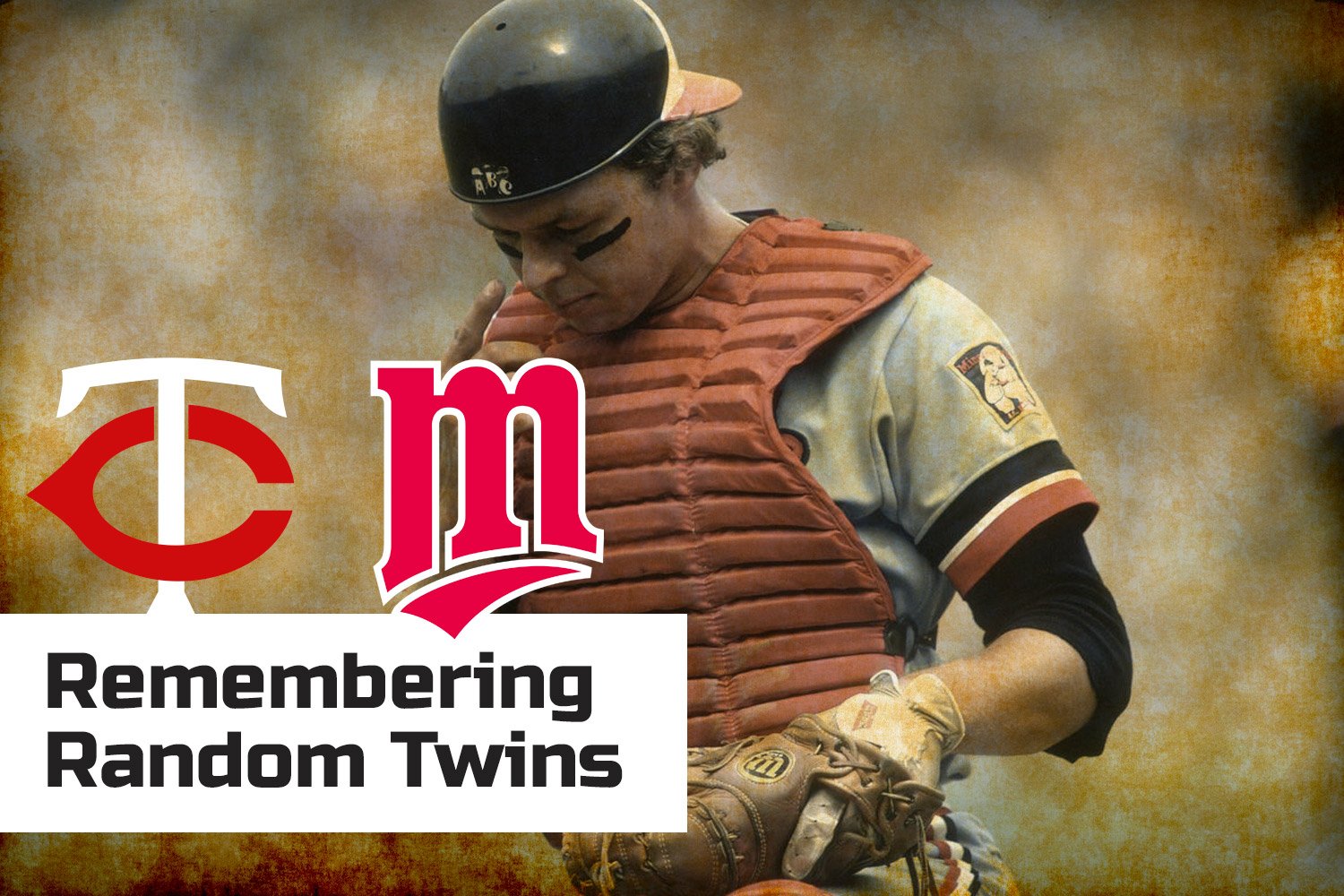 Butch Wynegar was a bright spot on some middling Twins teams in the late 1970s. He remained in Minnesota as one of the team’s more recognizable players when other successful players such as Rod Carew, Larry Hisle, and Lyman Bostock moved on to greener pastures. Once his success turned into a higher salary, he too moved on in a trade to the New York Yankees. Harold Delano “Butch” Wynegar was born on March 14, 1956, in York, Pennsylvania, a city of approximately 50,000 people located in the south-central part of the state. He grew up and attended high school in the nearby town of Red Lion. Wynegar played catcher in high school, attracting the attention of local baseball scouts. He was always a switch-hitter, imitating his idol, Mickey Mantle. The Minnesota Twins decided to select the promising six-foot-one, 190-pound Wynegar in the second round of the 1974 June Amateur Draft. Shortly after the draft, Wynegar signed and went to Elizabethton for rookie league ball. He immediately fared well, hitting .346/.464/.524 with eight home runs and 51 runs batted in. His .346 batting average led the Appalachian League, and he was named to the All-Star team. An impressive debut. He followed that with an equally remarkable .314/.473/.500 for Class-A Reno in 1975. He led the California League with 142 walks and 112 runs batted in. He was certainly showing he had an innate hitting ability. By 1976, he had caught the attention of the Twins' front office and manager Gene Mauch, as catching was an area where the team sought improvement. Wynegar was invited to spring training, where he impressed enough to make the Opening Day roster as the starting catcher. Wikipedia reports Wynegar is the only catcher to have jumped directly from Class A to MLB. Wynegar made an immediate impact, starting 18 of the first 20 games of the season. His first career home run was a game winner against future Hall of Famer Catfish Hunter in Wynegar’s eighth career game. Starting on May 8 of that season, Butch had multiple hits in eight of his next nine games, quickly increasing his batting average from .190 to .315. The 20-year-old rookie was showing he belonged. He continued to hit throughout the season’s first half and was selected for the All-Star Game. Wynegar entered the midsummer classic in the 7th inning when he walked in his lone plate appearance. Unfortunately for Wynegar and the American League, they were beaten soundly by the senior circuit, 7-1. Wynegar cooled in the second half of his rookie season but still hit .260/.356/.363 for the complete season. While he was the fourth youngest player in the American League, he proved he was not overwhelmed, exhibited a discerning eye at the plate (79 walks versus 63 strikeouts), showed a little pop in the bat with ten home runs amongst 33 extra base hits, and started a whopping 145 games as a 20-year-old catcher. He finished second in Rookie of the Year voting behind the flamboyant Mark “the Bird” Fidrych, who had a historic 19-win, 9.6 WAR season, and practically became a cultural icon. Wynegar’s second season, 1977, was statistically remarkably similar to his first. Good hitting, a little power, a ridiculous amount of starts behind the plate, and a second All-Star selection. Once again, the National League scored seven runs and won the game, this time 7-5. Wynegar’s involvement started in the 7th inning with a leadoff single off Tom Seaver. He would score four batters later on a single by Willie Randolph. He would get another at-bat in the 8th inning, but grounded into a double play. For the next four seasons, Wynegar continued to shoulder the defensive load, playing at least 135 games per season (excluding the 1981 strike-shortened season). However, his batting numbers were slipping ever so slightly each season. He was by no means a bad-hitting catcher, but he wasn’t playing at an All-Star level anymore. His fielding abilities remained solid. His caught stealing percentage in 1979 (52.9%) was the best in the AL, and his Total Zone Runs Above Average was the best in the league in both 1979 and 1980. He was an asset on both sides of the plate. In 1981, Butch Wynegar and the Minnesota Twins agreed on a five-year, $2 million contract. While I’m sure he was initially ecstatic, that probably put a target on his back, indicating to the owner that the player should be traded. In the early 1980s, most Twins players of any ability, i.e., those with a salary, were traded. Not long thereafter, in early 1982, Wynegar was shipped to the Yankees with Roger Erickson for Pete Filson, Larry Milbourne, and John Pacella. Filson provided 3.5 WAR in five seasons with the team. Milbourne and Pacella each played for the Twins for less than one full season. Each registered a negative WAR in their time with the club—an underwhelming return to say the least. Wynegar spent five seasons in New York. He put up similar numbers and value as he did for the Twins. His offense was better compared to his Twins seasons, but there were no more All-Star games. His defensive fielding abilities seemed adequate, but he was no longer leading the league with any of his defensive numbers. He seemed to be a perfectly capable starting major league catcher. However, the stress of playing in New York took a toll on Wynegar. In 1986, he asked for time off to cope with depression. His request was granted – for one day. Eventually, the stress and unhappiness became too much, and he walked away from the Yankees and $1.4 million in salary. After the season, he requested a trade. In December of 1986, the Yankees dealt Wynegar to the Angels for Ron Romanick and Alan Mills. The trade proved to be uneventful as Wynegar, now in his early 30s and battling an arthritic big toe, was winding down. He played only 31 games in 1987 and 27 in 1988. Romanick never played for the Yankees, and Mills offered only 0.1 WAR in two seasons in the Bronx. Wynegar’s 13-year career was over after 1988. He finished with those two All-Star appearances in those first two glorious seasons. His final batting line was .255/.348/.347. His OPS+ was 93. He had 65 home runs and 506 runs batted in. He struck out only 428 times in 5,067 plate appearances while drawing 626 walks. He was behind the plate for the Yankees in 1983 when Dave Righetti pitched a no-hitter, and in 1985, for two Phil Niekro milestones: his 300th win and 3,000th strikeout. Butch’s 1,247 games caught are 66th most in MLB history – higher than I would have expected for a guy whose career was over by the age of 32. Starting in 1991, Wynegar served as a coach or manager all over baseball from the college level to the big leagues. He served as the hitting coach of the Milwaukee Brewers from 2003 to 2006. The last coaching assignment I uncovered was in minor league baseball during the 2018 season. While he had a nice, long 13-year career, Wynegar seems like a bit of a flash in the pan to me, or maybe a what-if? He started so young and with such immediate success, it seems his career could have or should have led to something more. What do you remember of Butch Wynegar? Please share your thoughts below. If you like looking back at the Twins' past, check out my previous articles at Twins Daily History. Sources include Baseball Reference and Wikipedia.
 -
Butch Wynegar was a bright spot on some middling Twins teams in the late 1970s. He remained in Minnesota as one of the team’s more recognizable players when other successful players such as Rod Carew, Larry Hisle, and Lyman Bostock moved on to greener pastures. Once his success turned into a higher salary, he too moved on in a trade to the New York Yankees. Harold Delano “Butch” Wynegar was born on March 14, 1956, in York, Pennsylvania, a city of approximately 50,000 people located in the south-central part of the state. He grew up and attended high school in the nearby town of Red Lion. Wynegar played catcher in high school, attracting the attention of local baseball scouts. He was always a switch-hitter, imitating his idol, Mickey Mantle. The Minnesota Twins decided to select the promising six-foot-one, 190-pound Wynegar in the second round of the 1974 June Amateur Draft. Shortly after the draft, Wynegar signed and went to Elizabethton for rookie league ball. He immediately fared well, hitting .346/.464/.524 with eight home runs and 51 runs batted in. His .346 batting average led the Appalachian League, and he was named to the All-Star team. An impressive debut. He followed that with an equally remarkable .314/.473/.500 for Class-A Reno in 1975. He led the California League with 142 walks and 112 runs batted in. He was certainly showing he had an innate hitting ability. By 1976, he had caught the attention of the Twins' front office and manager Gene Mauch, as catching was an area where the team sought improvement. Wynegar was invited to spring training, where he impressed enough to make the Opening Day roster as the starting catcher. Wikipedia reports Wynegar is the only catcher to have jumped directly from Class A to MLB. Wynegar made an immediate impact, starting 18 of the first 20 games of the season. His first career home run was a game winner against future Hall of Famer Catfish Hunter in Wynegar’s eighth career game. Starting on May 8 of that season, Butch had multiple hits in eight of his next nine games, quickly increasing his batting average from .190 to .315. The 20-year-old rookie was showing he belonged. He continued to hit throughout the season’s first half and was selected for the All-Star Game. Wynegar entered the midsummer classic in the 7th inning when he walked in his lone plate appearance. Unfortunately for Wynegar and the American League, they were beaten soundly by the senior circuit, 7-1. Wynegar cooled in the second half of his rookie season but still hit .260/.356/.363 for the complete season. While he was the fourth youngest player in the American League, he proved he was not overwhelmed, exhibited a discerning eye at the plate (79 walks versus 63 strikeouts), showed a little pop in the bat with ten home runs amongst 33 extra base hits, and started a whopping 145 games as a 20-year-old catcher. He finished second in Rookie of the Year voting behind the flamboyant Mark “the Bird” Fidrych, who had a historic 19-win, 9.6 WAR season, and practically became a cultural icon. Wynegar’s second season, 1977, was statistically remarkably similar to his first. Good hitting, a little power, a ridiculous amount of starts behind the plate, and a second All-Star selection. Once again, the National League scored seven runs and won the game, this time 7-5. Wynegar’s involvement started in the 7th inning with a leadoff single off Tom Seaver. He would score four batters later on a single by Willie Randolph. He would get another at-bat in the 8th inning, but grounded into a double play. For the next four seasons, Wynegar continued to shoulder the defensive load, playing at least 135 games per season (excluding the 1981 strike-shortened season). However, his batting numbers were slipping ever so slightly each season. He was by no means a bad-hitting catcher, but he wasn’t playing at an All-Star level anymore. His fielding abilities remained solid. His caught stealing percentage in 1979 (52.9%) was the best in the AL, and his Total Zone Runs Above Average was the best in the league in both 1979 and 1980. He was an asset on both sides of the plate. In 1981, Butch Wynegar and the Minnesota Twins agreed on a five-year, $2 million contract. While I’m sure he was initially ecstatic, that probably put a target on his back, indicating to the owner that the player should be traded. In the early 1980s, most Twins players of any ability, i.e., those with a salary, were traded. Not long thereafter, in early 1982, Wynegar was shipped to the Yankees with Roger Erickson for Pete Filson, Larry Milbourne, and John Pacella. Filson provided 3.5 WAR in five seasons with the team. Milbourne and Pacella each played for the Twins for less than one full season. Each registered a negative WAR in their time with the club—an underwhelming return to say the least. Wynegar spent five seasons in New York. He put up similar numbers and value as he did for the Twins. His offense was better compared to his Twins seasons, but there were no more All-Star games. His defensive fielding abilities seemed adequate, but he was no longer leading the league with any of his defensive numbers. He seemed to be a perfectly capable starting major league catcher. However, the stress of playing in New York took a toll on Wynegar. In 1986, he asked for time off to cope with depression. His request was granted – for one day. Eventually, the stress and unhappiness became too much, and he walked away from the Yankees and $1.4 million in salary. After the season, he requested a trade. In December of 1986, the Yankees dealt Wynegar to the Angels for Ron Romanick and Alan Mills. The trade proved to be uneventful as Wynegar, now in his early 30s and battling an arthritic big toe, was winding down. He played only 31 games in 1987 and 27 in 1988. Romanick never played for the Yankees, and Mills offered only 0.1 WAR in two seasons in the Bronx. Wynegar’s 13-year career was over after 1988. He finished with those two All-Star appearances in those first two glorious seasons. His final batting line was .255/.348/.347. His OPS+ was 93. He had 65 home runs and 506 runs batted in. He struck out only 428 times in 5,067 plate appearances while drawing 626 walks. He was behind the plate for the Yankees in 1983 when Dave Righetti pitched a no-hitter, and in 1985, for two Phil Niekro milestones: his 300th win and 3,000th strikeout. Butch’s 1,247 games caught are 66th most in MLB history – higher than I would have expected for a guy whose career was over by the age of 32. Starting in 1991, Wynegar served as a coach or manager all over baseball from the college level to the big leagues. He served as the hitting coach of the Milwaukee Brewers from 2003 to 2006. The last coaching assignment I uncovered was in minor league baseball during the 2018 season. While he had a nice, long 13-year career, Wynegar seems like a bit of a flash in the pan to me, or maybe a what-if? He started so young and with such immediate success, it seems his career could have or should have led to something more. What do you remember of Butch Wynegar? Please share your thoughts below. If you like looking back at the Twins' past, check out my previous articles at Twins Daily History. Sources include Baseball Reference and Wikipedia. View full article
-
In a bizarre and unfortunate event, Terry Bulling was accidentally shot by a teammate while in the Twins' minor league organization. Surprisingly, that is not the only unique and noteworthy incident for this one-time Twin. Terry Charles “Bud” Bulling was born December 15, 1952, in Lynwood, California. He grew up in that neighborhood and attended Lynwood High School. After high school, he attended Golden West College in Huntington Beach, where he played baseball, before transferring to California State University, Los Angeles. The Minnesota Twins selected the six-foot-one, 200-pound catcher in the 14th round of the 1974 amateur draft. From there, it soon got a little weird. Two weeks after reporting to Wisconsin Rapids for his first professional season in 1974, he and some teammates were hanging out at an apartment. One of the players was showing off his gun, which he thought had the safety on. It was not. One of the players accidentally fired the gun, and the bullet hit Bulling. You hear of things like this, but nobody thinks it will happen to them or anybody they know. The bullet hit Bulling’s stomach, intestines, and colon before lodging in his pelvic bone. He was immediately rushed to a hospital where he was patched up, but spent three days in intensive care. Bulling used the rest of the 1974 season to recuperate from the gunshot wound. Bulling returned to Class-A Wisconsin Rapids the next two seasons, posting good to great offensive numbers. The right-handed hitter had a .764 OPS in 1975, which increased to .889 in 1976. In 1977, he earned a promotion to Double-A Orlando, where he played well, batting .285/.364/.411 through 67 games. Then fate called. Through a bizarre series of events – a torn knee ligament to the Twins backup catcher Glen Borgmann and a broken finger for the Triple-A catcher – Bulling got the call to the major leagues to help the Twins. Like many Minnesota Twins teams, this 1977 team could hit and score runs, but was thin on pitching. They led the American League in runs scored that season while Bulling played only 15 games and received 39 plate appearances. I wish I could say the fairy tale continued and Bulling, the gunshot victim, contributed greatly to the team’s impressive offense, but that was not the case. He had only five hits in 32 at-bats with a single extra-base hit (a double) during his time. That was the end of Bulling’s Twins tenure. In 1978, the Twins' catchers were healthy. They only needed Butch Wynegar and Glenn Borgmann. Bulling could see the lack of opportunity within the Twins organization, so before the 1979 season, he signed with the Seattle Mariners. With his new organization in 1981, Bulling had the opportunity to return to the big leagues. He played 62 games with the Mariners and posted respectable batting numbers, at least for a backup catcher – .247/.341/.305. He performed well enough to stay on the Mariners roster all season as the primary backup catcher and returned in 1982 in that same capacity. In 1982, Bulling’s appearances were limited. He appeared in only eight games in April and no games the first five days of May. He was a backup catcher whose playing time was irregular. But on May 6, he was inserted into the starting lineup. The timing was fortuitous as it allowed Bulling to become a footnote in baseball history. Bulling would be the man behind the plate for a future Hall of Famer, Gaylord Perry, who was about to do something special. The long-time Giant, who also pitched for eight other teams, was winding down a Hall of Fame career. That day, with journeyman Terry “Bud” Bulling behind the plate, Gaylord Perry went out and beat the Yankees 7-3 to become the 15th member of the 300-win club. Perry had a complete game, allowing three runs on nine hits and one walk. Notwithstanding Perry’s historic accomplishment, what an opportunity for a backup catcher to get to catch a game like that! And to top off Bulling’s memorable day, he contributed offensively. Bulling had two hits in three at-bats. He had two runs scored and an RBI. Besides Perry, Bulling might have been the player of the game with that performance. Well, despite his playing in Perry’s fantastic achievement, Bulling did not stick in the Majors long. Bulling was just not good enough to have a lengthy career. He would continue to play in 1982, appearing in five games in 1983, but then his Major League career was abruptly over. Bulling finished his MLB career with a batting line of .223/.315/.281 in 138 games and 397 plate appearances. He hit three home runs and had 28 runs batted in. He never played on a noteworthy team. The high-scoring 1977 Twins team finished fourth, and his Mariners teams were simply not as good. Terry “Bud” Bulling passed away on March 8, 2014, in Salem, Oregon. He was 61 years old. Unfortunately, I was unable to find much information on Bulling’s life after Major League Baseball. What a weird combination of noteworthy events for such a part-time ball player, huh? Does anybody recall him playing with the Twins? If so, leave a comment below. If you like looking back at the Twins' past, check out my previous articles at Twins Daily History. Sources include Baseball Reference and the Daily Pilot. View full article
-
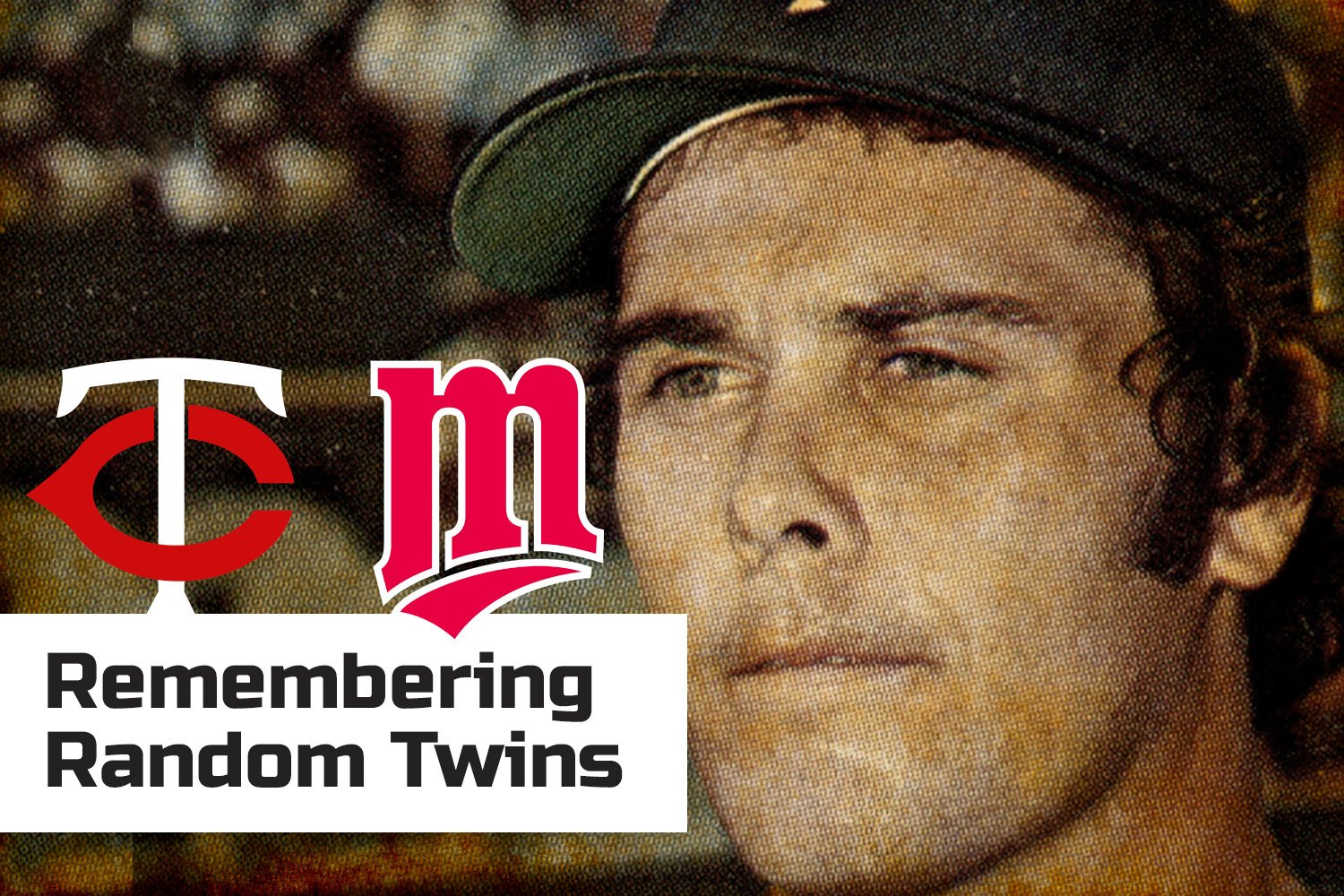 In a bizarre and unfortunate event, Terry Bulling was accidentally shot by a teammate while in the Twins' minor league organization. Surprisingly, that is not the only unique and noteworthy incident for this one-time Twin. Terry Charles “Bud” Bulling was born December 15, 1952, in Lynwood, California. He grew up in that neighborhood and attended Lynwood High School. After high school, he attended Golden West College in Huntington Beach, where he played baseball, before transferring to California State University, Los Angeles. The Minnesota Twins selected the six-foot-one, 200-pound catcher in the 14th round of the 1974 amateur draft. From there, it soon got a little weird. Two weeks after reporting to Wisconsin Rapids for his first professional season in 1974, he and some teammates were hanging out at an apartment. One of the players was showing off his gun, which he thought had the safety on. It was not. One of the players accidentally fired the gun, and the bullet hit Bulling. You hear of things like this, but nobody thinks it will happen to them or anybody they know. The bullet hit Bulling’s stomach, intestines, and colon before lodging in his pelvic bone. He was immediately rushed to a hospital where he was patched up, but spent three days in intensive care. Bulling used the rest of the 1974 season to recuperate from the gunshot wound. Bulling returned to Class-A Wisconsin Rapids the next two seasons, posting good to great offensive numbers. The right-handed hitter had a .764 OPS in 1975, which increased to .889 in 1976. In 1977, he earned a promotion to Double-A Orlando, where he played well, batting .285/.364/.411 through 67 games. Then fate called. Through a bizarre series of events – a torn knee ligament to the Twins backup catcher Glen Borgmann and a broken finger for the Triple-A catcher – Bulling got the call to the major leagues to help the Twins. Like many Minnesota Twins teams, this 1977 team could hit and score runs, but was thin on pitching. They led the American League in runs scored that season while Bulling played only 15 games and received 39 plate appearances. I wish I could say the fairy tale continued and Bulling, the gunshot victim, contributed greatly to the team’s impressive offense, but that was not the case. He had only five hits in 32 at-bats with a single extra-base hit (a double) during his time. That was the end of Bulling’s Twins tenure. In 1978, the Twins' catchers were healthy. They only needed Butch Wynegar and Glenn Borgmann. Bulling could see the lack of opportunity within the Twins organization, so before the 1979 season, he signed with the Seattle Mariners. With his new organization in 1981, Bulling had the opportunity to return to the big leagues. He played 62 games with the Mariners and posted respectable batting numbers, at least for a backup catcher – .247/.341/.305. He performed well enough to stay on the Mariners roster all season as the primary backup catcher and returned in 1982 in that same capacity. In 1982, Bulling’s appearances were limited. He appeared in only eight games in April and no games the first five days of May. He was a backup catcher whose playing time was irregular. But on May 6, he was inserted into the starting lineup. The timing was fortuitous as it allowed Bulling to become a footnote in baseball history. Bulling would be the man behind the plate for a future Hall of Famer, Gaylord Perry, who was about to do something special. The long-time Giant, who also pitched for eight other teams, was winding down a Hall of Fame career. That day, with journeyman Terry “Bud” Bulling behind the plate, Gaylord Perry went out and beat the Yankees 7-3 to become the 15th member of the 300-win club. Perry had a complete game, allowing three runs on nine hits and one walk. Notwithstanding Perry’s historic accomplishment, what an opportunity for a backup catcher to get to catch a game like that! And to top off Bulling’s memorable day, he contributed offensively. Bulling had two hits in three at-bats. He had two runs scored and an RBI. Besides Perry, Bulling might have been the player of the game with that performance. Well, despite his playing in Perry’s fantastic achievement, Bulling did not stick in the Majors long. Bulling was just not good enough to have a lengthy career. He would continue to play in 1982, appearing in five games in 1983, but then his Major League career was abruptly over. Bulling finished his MLB career with a batting line of .223/.315/.281 in 138 games and 397 plate appearances. He hit three home runs and had 28 runs batted in. He never played on a noteworthy team. The high-scoring 1977 Twins team finished fourth, and his Mariners teams were simply not as good. Terry “Bud” Bulling passed away on March 8, 2014, in Salem, Oregon. He was 61 years old. Unfortunately, I was unable to find much information on Bulling’s life after Major League Baseball. What a weird combination of noteworthy events for such a part-time ball player, huh? Does anybody recall him playing with the Twins? If so, leave a comment below. If you like looking back at the Twins' past, check out my previous articles at Twins Daily History. Sources include Baseball Reference and the Daily Pilot.
 -
Thanks for checking it out!
-
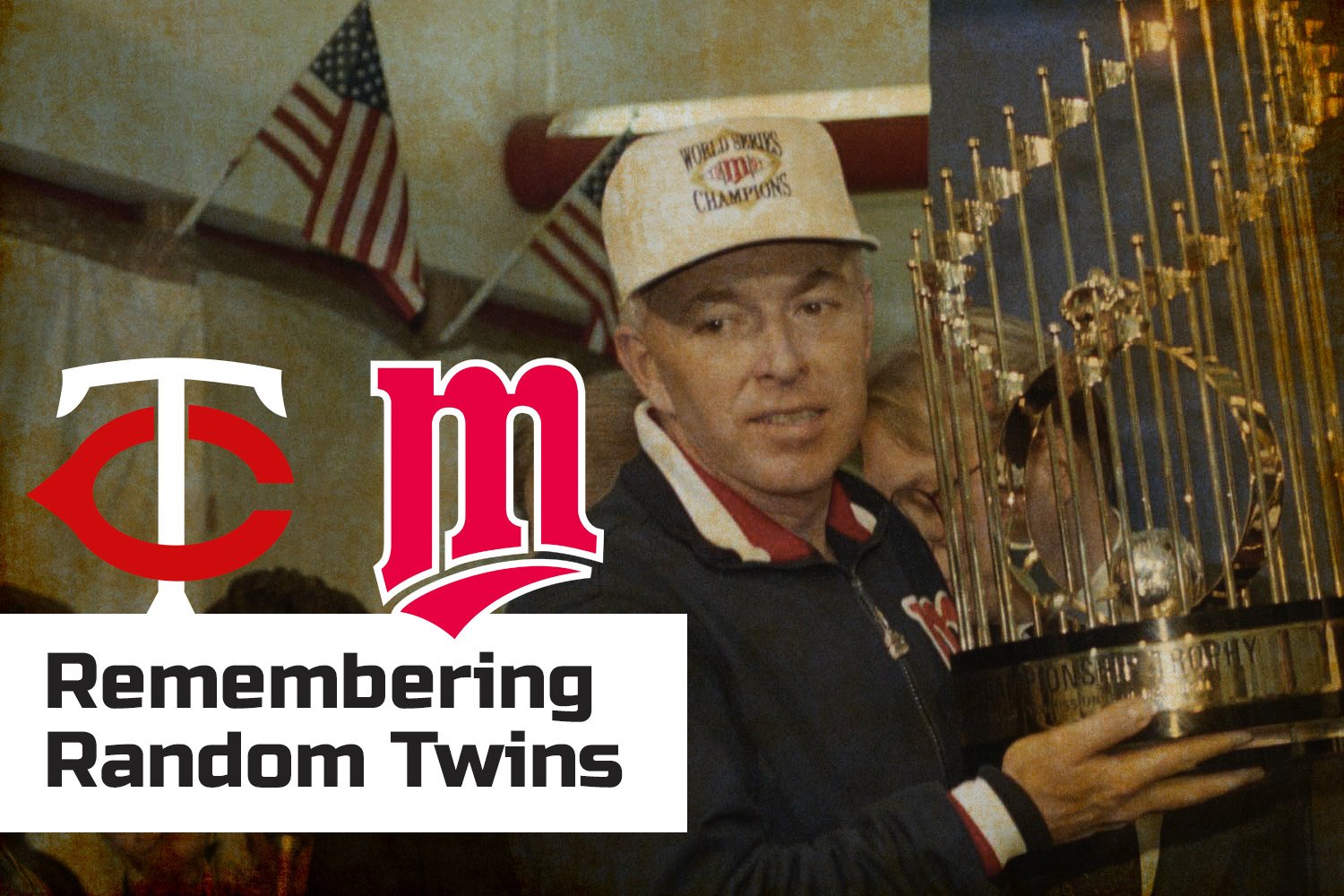 We all know Tom Kelly as the manager who led the Twins to their only two World Series titles won since the franchise moved to Minnesota from Washington. “TK” won 1,140 games during his tenure, second most in franchise history and the most since Bucky Harris completed his Hall of Fame Managerial career with Washington in 1954. Kelly’s number 10 was retired by the Twins in 2012, and he has a statue outside Target Field. But what about his playing career? Let’s learn more about Tom Kelly, the player. Jay Thomas Kelly was born August 15, 1950, right here in Minnesota. Yes, he was born in the tiny town of Graceville in Big Stone County, Minnesota, believe it or not. However, he moved to the East Coast at an early age. He grew up in Sayreville, New Jersey, and graduated from St. Mary’s High School in nearby South Amboy. Perhaps that is where he gets the sometimes gruff and curmudgeonly façade that rears its head from time to time. Kelly, a lefthanded thrower and batter, was selected in the eighth round of the 1968 MLB June Amateur Draft by the expansion Seattle Pilots (who played a single season in Seattle before moving to Milwaukee and becoming the Brewers). After three somewhat lackluster seasons in the minor leagues, the Brewers released the outfielder/first baseman in April of 1971. The Minnesota Twins signed the five-foot-eleven, 188-pound Kelly almost immediately after his release and assigned him to Class-AA, where he found success. He was a first baseman by trade but also played a little outfield. In 1972, he spent the first of four seasons at Triple-A Tacoma. He hit .278/.411/.858 during those four years. He had a little power, averaging 13 doubles and 14 home runs while averaging 405 plate appearances. He had a good eye, walking more than he struck out (284 to 236). He appeared to be a good Triple-A hitter, but perhaps just organizational depth, as he remained at that level for four years. Was he ever going to make the major leagues? In 1972, Harmon Killebrew started 128 games at first base but was used little at the position from 1973 to 1975. During those three seasons, a real cast of characters (Rich Reese, Joe Lis, Jim Holt, Craig Kusick, Pat Bourque, John Briggs, Jerry Terrell) was manning first base for the Twins. There didn’t seem to be a true everyday first baseman, but that didn’t make it easier for Kelly to get a chance. But finally, in May of 1975, he was summoned to the major league club. Kelly’s first plate appearance came on May 11 against Hall of Fame pitcher Jim Palmer of the Baltimore Orioles. Kelly was used as a pinch hitter in the seventh inning of a game in which the Twins trailed 6-3. Kelly grounded out to second base with two runners on base to end the inning. His first hit would have to wait until his fifth game and ninth plate appearance. In the fifth inning of a game against Detroit on May 19, he had a single to centerfield, which drove in Tony Oliva. He was used regularly from May 11 to July 11, starting 37 games at first base and appearing in 12 other games as a pinch hitter or defensive replacement. At that point, Kelly was batting .181/.262/.244. He had one home run (off Vern Ruhle of the Tigers) and 11 runs batted in. It was not enough to hold a major league job. He was sent down to Class-AAA, where he completed the season. He would never again play Major League Baseball. In early 1976, the Baltimore Orioles purchased Kelly from the Twins. He played the 1976 season with the Orioles’ Triple-A affiliate and had arguably his best minor league season (.289/.413/.484). However, that success was not enough for the Baltimore organization to keep him. In 1977, he was back with the Twins organization and in Tacoma, Washington, the Triple-A affiliate. But this time, he was not only playing in Tacoma, but managing had also been added to his job duties. He finished the season with a record of 68-75 as a portent of things to come. The Twins' Triple-A affiliation moved to Toledo, Ohio, of the International League in 1978, and so did Kelly. It was his last season as a full-time baseball player. Tom Kelly’s career minor league statistics finished at .271/.405/.421 with 116 home runs and 515 RBI in 13 seasons. He had 934 hits in 3,452 at-bats. He walked (764 times) more than he struck out (580), contributing to that lofty .405 on-base percentage. After his playing career ended, his minor league managing continued. By 1983, he was with the major league Minnesota Twins as third base coach. He was promoted to interim manager in 1986. We know how that managing career turned out. After retiring as manager, Kelly continued in the Twins organization as a Special Assistant to the General Manager and as a special instructor in spring training. He also filled in on the Twins' television broadcasts at least a few times over the years. I highly enjoyed his insights and comments, which were on another level from the insights offered by the usual broadcasters. I learned things from Kelly that other broadcasters never touched on. It was an extremely limited and infrequent role, and I would have welcomed more of Kelly’s analysis. Kelly suffered a mild stroke late in 2014 and has since reduced his work significantly. I saw him at Twinfest 2025 mucking it up with fellow managers Ron Gardenhire, Paul Molitor, and Rocco Baldelli and two of his former players, Tim Laudner and Scott Leius. He seemed to be having a wonderful time joking and reminiscing, which was great to see. Tom Kelly had a short, forgettable baseball playing career, but hey, he made it. He got that cup of coffee. It’s more than most can say. He’s one of 23,400 and counting in history to achieve it. But it was after that playing career that he really made his mark, managing those two World Series Champions oh so long ago. Does anybody remember the player, Tom Kelly? If so, please share your memories below. If you like looking back at the Twins' past, check out my previous articles at Twins Daily History. Sources include Baseball Reference and Wikipedia.
 -
We all know Tom Kelly as the manager who led the Twins to their only two World Series titles won since the franchise moved to Minnesota from Washington. “TK” won 1,140 games during his tenure, second most in franchise history and the most since Bucky Harris completed his Hall of Fame Managerial career with Washington in 1954. Kelly’s number 10 was retired by the Twins in 2012, and he has a statue outside Target Field. But what about his playing career? Let’s learn more about Tom Kelly, the player. Jay Thomas Kelly was born August 15, 1950, right here in Minnesota. Yes, he was born in the tiny town of Graceville in Big Stone County, Minnesota, believe it or not. However, he moved to the East Coast at an early age. He grew up in Sayreville, New Jersey, and graduated from St. Mary’s High School in nearby South Amboy. Perhaps that is where he gets the sometimes gruff and curmudgeonly façade that rears its head from time to time. Kelly, a lefthanded thrower and batter, was selected in the eighth round of the 1968 MLB June Amateur Draft by the expansion Seattle Pilots (who played a single season in Seattle before moving to Milwaukee and becoming the Brewers). After three somewhat lackluster seasons in the minor leagues, the Brewers released the outfielder/first baseman in April of 1971. The Minnesota Twins signed the five-foot-eleven, 188-pound Kelly almost immediately after his release and assigned him to Class-AA, where he found success. He was a first baseman by trade but also played a little outfield. In 1972, he spent the first of four seasons at Triple-A Tacoma. He hit .278/.411/.858 during those four years. He had a little power, averaging 13 doubles and 14 home runs while averaging 405 plate appearances. He had a good eye, walking more than he struck out (284 to 236). He appeared to be a good Triple-A hitter, but perhaps just organizational depth, as he remained at that level for four years. Was he ever going to make the major leagues? In 1972, Harmon Killebrew started 128 games at first base but was used little at the position from 1973 to 1975. During those three seasons, a real cast of characters (Rich Reese, Joe Lis, Jim Holt, Craig Kusick, Pat Bourque, John Briggs, Jerry Terrell) was manning first base for the Twins. There didn’t seem to be a true everyday first baseman, but that didn’t make it easier for Kelly to get a chance. But finally, in May of 1975, he was summoned to the major league club. Kelly’s first plate appearance came on May 11 against Hall of Fame pitcher Jim Palmer of the Baltimore Orioles. Kelly was used as a pinch hitter in the seventh inning of a game in which the Twins trailed 6-3. Kelly grounded out to second base with two runners on base to end the inning. His first hit would have to wait until his fifth game and ninth plate appearance. In the fifth inning of a game against Detroit on May 19, he had a single to centerfield, which drove in Tony Oliva. He was used regularly from May 11 to July 11, starting 37 games at first base and appearing in 12 other games as a pinch hitter or defensive replacement. At that point, Kelly was batting .181/.262/.244. He had one home run (off Vern Ruhle of the Tigers) and 11 runs batted in. It was not enough to hold a major league job. He was sent down to Class-AAA, where he completed the season. He would never again play Major League Baseball. In early 1976, the Baltimore Orioles purchased Kelly from the Twins. He played the 1976 season with the Orioles’ Triple-A affiliate and had arguably his best minor league season (.289/.413/.484). However, that success was not enough for the Baltimore organization to keep him. In 1977, he was back with the Twins organization and in Tacoma, Washington, the Triple-A affiliate. But this time, he was not only playing in Tacoma, but managing had also been added to his job duties. He finished the season with a record of 68-75 as a portent of things to come. The Twins' Triple-A affiliation moved to Toledo, Ohio, of the International League in 1978, and so did Kelly. It was his last season as a full-time baseball player. Tom Kelly’s career minor league statistics finished at .271/.405/.421 with 116 home runs and 515 RBI in 13 seasons. He had 934 hits in 3,452 at-bats. He walked (764 times) more than he struck out (580), contributing to that lofty .405 on-base percentage. After his playing career ended, his minor league managing continued. By 1983, he was with the major league Minnesota Twins as third base coach. He was promoted to interim manager in 1986. We know how that managing career turned out. After retiring as manager, Kelly continued in the Twins organization as a Special Assistant to the General Manager and as a special instructor in spring training. He also filled in on the Twins' television broadcasts at least a few times over the years. I highly enjoyed his insights and comments, which were on another level from the insights offered by the usual broadcasters. I learned things from Kelly that other broadcasters never touched on. It was an extremely limited and infrequent role, and I would have welcomed more of Kelly’s analysis. Kelly suffered a mild stroke late in 2014 and has since reduced his work significantly. I saw him at Twinfest 2025 mucking it up with fellow managers Ron Gardenhire, Paul Molitor, and Rocco Baldelli and two of his former players, Tim Laudner and Scott Leius. He seemed to be having a wonderful time joking and reminiscing, which was great to see. Tom Kelly had a short, forgettable baseball playing career, but hey, he made it. He got that cup of coffee. It’s more than most can say. He’s one of 23,400 and counting in history to achieve it. But it was after that playing career that he really made his mark, managing those two World Series Champions oh so long ago. Does anybody remember the player, Tom Kelly? If so, please share your memories below. If you like looking back at the Twins' past, check out my previous articles at Twins Daily History. Sources include Baseball Reference and Wikipedia. View full article
-
The 1990s were a dark time for Twins fans. Thanks to players like Eric Milton, the fate of the franchise flipped the script with the new century. The Minnesota Twins were terrible from 1994 to 2001. There’s no other way to say it. It was one of their worst stretch of seasons since moving to Minnesota from Washington. In a 1998 trade recently covered by William Malone here on Twins Daily, the Twins dealt Chuck Knoblauch to the Yankees for four prospects. Malone reviewed Cristian Guzmán in detail. I want to look at Eric Milton, who contributed to the Twins' improvement from cellar dwellers to a division-winning playoff team. Milton’s contribution even went beyond his time with the team. Eric Robert Milton was born August 4, 1975, in State College, Pennsylvania. He graduated from high school in Bellefonte, Pennsylvania, and then attended the University of Maryland, where he played on the baseball team. The result of his strong collegiate career was being selected in the first round of the 1996 Major League Baseball June Amateur Draft by the New York Yankees. The six-foot-three, 200-pound lefthander pitched at two minor league levels in 1997. He threw 93 1/3 innings at Class-A Tampa and 77 2/3 innings at Double-A. He had a highly successful year, going a combined 14-6 with a 3.11 ERA. This success made him attractive to the Twins when they decided to move All-Star second baseman Chuck Knoblauch. Knoblauch had become frustrated with the Twins' losing ways of the mid-90s and wanted out. On February 6, 1998, General Manager Terry Ryan traded Knoblauch to the Yankees for Milton, Cristian Guzmán, Brian Buchanan, and Danny Mota. The Twins were desperate for quality starting pitchers. Despite Milton having pitched only that one single season of minor league ball, he made the Twins' 1998 opening day roster as the fifth starter. His first start was a 10-1 mashing of the Kansas City Royals. Milton went six innings, allowing six hits (all singles) and two walks. He struck out only one batter but gave up zero runs. It was a fantastic initial appearance. Throughout the remainder of the 1998 season, he proved extremely dependable and durable, starting 32 games in his rookie season. It looked like Milton was a solid building block for the rebuilding Twins. 1999 and 2000 were similar for Milton and the Twins. He pitched a lot, starting 34 and 33 games. He did not win a lot of games, but neither did the Twins. But there was hope. The team and Milton appeared to be gathering experience, and at least there appeared to be some hope for the franchise's future. The Twins and Milton were excellent to start 2001. At the All-Star Break, the team’s record was 55-32, and they led the American League Central Division by five games. Milton was 8-3 and had an ERA of 3.73 at the break, good enough to be selected to the All-Star Game along with Cristian Guzmán and Joe Mays. 2001 was the first time the Twins had multiple All-Star Game representatives since 1994, when Kirby Puckett and Knoblauch were selected. The American League won a low-scoring 4-1 affair. Mays pitched a scoreless fifth inning. Guzmán stuck out in his lone plate appearance. Our subject, Milton, did not get into the game. Unfortunately, the Twins faded in the second half of 2001. They finished in second place, six games behind the perennially strong Cleveland Indians, who won the division for the sixth time in seven years. Despite the finish, things were looking up in Twins Territory. Milton and other young potential stars had started changing the franchise's outlook and expectations. In 2002, the Twins were good all season long. They alternated between first and second place throughout April and May. By May 26, they were back in first place, a position they would not relinquish for the remainder of the season. They won their division for the first time since 1991 and by an impressive 13.5 games. Milton was 13-9 in 29 starts and 171 innings. The Twins faced the powerful A’s in the American League Division Series. Oakland was a big favorite in the series after having won 103 games that season. Milton started Game Four with the Twins down two games to one. He allowed a two-run home run for Miguel Tejada in the top of the third inning, but the Twins batters immediately tied things up in the bottom of the inning before exploding for seven runs in the fourth inning. From there, the game was never in doubt. The Twins won 11-2. Milton pitched seven innings, allowing six hits and just those two runs. The Twins won the series the next day and faced the Angels in the American League Championship Series. It seemed the Angels were just the better team in that series. The Twins won the first game, but the Angels swept the next four and advanced to the World Series. Milton started game three. He pitched well, allowing only one run in five innings before turning it over to the bullpen. The game was tied until the eighth inning when Troy Glaus hit a home run off J.C. Romero. The Twins lost the game 2-1. Despite losing the series, the charismatic young Twins reenergized the fan base with scrap, talent, and quality baseball. It looked like good things were on the horizon. Little did we know, we had seen nearly the last of Eric Milton in a Twins uniform. Milton had injured his left knee in August of 2002. He missed a handful of starts after a quick surgery to address the problem. The injury lingered throughout the winter, and he had a second, more invasive surgery in March of 2003. This time, he was sidelined for the majority of the season. He had only three starts in September, but he pitched well in those starts. The Twins won their division again and were going to the playoffs again, where they would face the team that drafted Milton, the New York Yankees. As we all know, the Twins never beat the Yankees. The first three games were all low-scoring affairs. The Twins won game one before the Yankees won the next two. Milton had not yet pitched as the Twins went with a three-man playoff rotation of Johan Santana, Brad Radke, and Kyle Lohse. The Bronx Bombers bombed Santana for six runs in the fourth inning of game four. Milton pitched 3 1/3 innings of scoreless relief, but the damage was done. The Yankees won the game 8-1 and the series 3-1. To this point, Eric Milton had been an effective starting pitcher for the Twins, especially compared to what they had employed on the pitching mound during the late 1990s. In six seasons, he had a 57-51 record. Other than that last season, he had been remarkably durable, starting 29 or more games each season and throwing 171 or more innings in those seasons. His ERA in the heart of the steroid ERA was a respectable 4.76 (101 ERA+). However, as he gained experience and service time, he became more expensive, and we know the Twins were nearly allergic to paying exorbitant salaries. So, the Twins did with Milton what they did with Knoblauch six seasons prior: they traded an aging, expensive asset for several younger, cheaper assets. And this is what I find interesting about Eric Milton and his time with the Twins. As I said above, he helped them improve from the despair of the late 1990s, even getting to the playoffs a couple of times. Eric Milton pitched well while in Minnesota and helped the franchise further on the way out by being the centerpiece in another astute Terry Ryan trade, just as he had been six years earlier. It had come full circle. Milton was traded to the Philadelphia Phillies for Nick Punto, Carlos Silva, and Bobby Korecky. Punto and Silva had many good seasons for the Twins. Silva essentially replaced Milton in the 2004 pitching rotation. The trade helped the Twins continue their winning ways throughout the 2000s, winning four more division titles through 2010. For his career, Eric Milton was a strong, dependable starter for most of his 11 seasons. He threw a total of 1,582 1/3 innings. His career ERA was 4.99 (94 ERA+). Again, remember the high-scoring nature of his time in MLB. He struck out 6.5 batters per nine innings. His career WHIP was 1.339. He achieved a WAR of 16.5. He had one All-Star appearance in 2001. After the trade, he had one good season in Philadelphia and became a free agent. He signed a three-year, $25.5 million contract with the Cincinnati Reds. He finished his career with a partial season with the Los Angeles Dodgers in 2011. His seasons with the Twins were the best of his career. Since he retired from MLB, Milton has coached college and high school baseball. One of the players he coached in high school is Jackson Merrill, a young star centerfielder with the San Diego Padres, named to the All-Star Game and second in Rookie of the Year voting in 2024. What are your memories of Eric Milton and this era of Twins Baseball? If you like looking back at the Twins' past, check out my previous articles at Twins Daily History. Sources include Baseball Reference and Wikipedia. View full article
-
 The Minnesota Twins were terrible from 1994 to 2001. There’s no other way to say it. It was one of their worst stretch of seasons since moving to Minnesota from Washington. In a 1998 trade recently covered by William Malone here on Twins Daily, the Twins dealt Chuck Knoblauch to the Yankees for four prospects. Malone reviewed Cristian Guzmán in detail. I want to look at Eric Milton, who contributed to the Twins' improvement from cellar dwellers to a division-winning playoff team. Milton’s contribution even went beyond his time with the team. Eric Robert Milton was born August 4, 1975, in State College, Pennsylvania. He graduated from high school in Bellefonte, Pennsylvania, and then attended the University of Maryland, where he played on the baseball team. The result of his strong collegiate career was being selected in the first round of the 1996 Major League Baseball June Amateur Draft by the New York Yankees. The six-foot-three, 200-pound lefthander pitched at two minor league levels in 1997. He threw 93 1/3 innings at Class-A Tampa and 77 2/3 innings at Double-A. He had a highly successful year, going a combined 14-6 with a 3.11 ERA. This success made him attractive to the Twins when they decided to move All-Star second baseman Chuck Knoblauch. Knoblauch had become frustrated with the Twins' losing ways of the mid-90s and wanted out. On February 6, 1998, General Manager Terry Ryan traded Knoblauch to the Yankees for Milton, Cristian Guzmán, Brian Buchanan, and Danny Mota. The Twins were desperate for quality starting pitchers. Despite Milton having pitched only that one single season of minor league ball, he made the Twins' 1998 opening day roster as the fifth starter. His first start was a 10-1 mashing of the Kansas City Royals. Milton went six innings, allowing six hits (all singles) and two walks. He struck out only one batter but gave up zero runs. It was a fantastic initial appearance. Throughout the remainder of the 1998 season, he proved extremely dependable and durable, starting 32 games in his rookie season. It looked like Milton was a solid building block for the rebuilding Twins. 1999 and 2000 were similar for Milton and the Twins. He pitched a lot, starting 34 and 33 games. He did not win a lot of games, but neither did the Twins. But there was hope. The team and Milton appeared to be gathering experience, and at least there appeared to be some hope for the franchise's future. The Twins and Milton were excellent to start 2001. At the All-Star Break, the team’s record was 55-32, and they led the American League Central Division by five games. Milton was 8-3 and had an ERA of 3.73 at the break, good enough to be selected to the All-Star Game along with Cristian Guzmán and Joe Mays. 2001 was the first time the Twins had multiple All-Star Game representatives since 1994, when Kirby Puckett and Knoblauch were selected. The American League won a low-scoring 4-1 affair. Mays pitched a scoreless fifth inning. Guzmán stuck out in his lone plate appearance. Our subject, Milton, did not get into the game. Unfortunately, the Twins faded in the second half of 2001. They finished in second place, six games behind the perennially strong Cleveland Indians, who won the division for the sixth time in seven years. Despite the finish, things were looking up in Twins Territory. Milton and other young potential stars had started changing the franchise's outlook and expectations. In 2002, the Twins were good all season long. They alternated between first and second place throughout April and May. By May 26, they were back in first place, a position they would not relinquish for the remainder of the season. They won their division for the first time since 1991 and by an impressive 13.5 games. Milton was 13-9 in 29 starts and 171 innings. The Twins faced the powerful A’s in the American League Division Series. Oakland was a big favorite in the series after having won 103 games that season. Milton started Game Four with the Twins down two games to one. He allowed a two-run home run for Miguel Tejada in the top of the third inning, but the Twins batters immediately tied things up in the bottom of the inning before exploding for seven runs in the fourth inning. From there, the game was never in doubt. The Twins won 11-2. Milton pitched seven innings, allowing six hits and just those two runs. The Twins won the series the next day and faced the Angels in the American League Championship Series. It seemed the Angels were just the better team in that series. The Twins won the first game, but the Angels swept the next four and advanced to the World Series. Milton started game three. He pitched well, allowing only one run in five innings before turning it over to the bullpen. The game was tied until the eighth inning when Troy Glaus hit a home run off J.C. Romero. The Twins lost the game 2-1. Despite losing the series, the charismatic young Twins reenergized the fan base with scrap, talent, and quality baseball. It looked like good things were on the horizon. Little did we know, we had seen nearly the last of Eric Milton in a Twins uniform. Milton had injured his left knee in August of 2002. He missed a handful of starts after a quick surgery to address the problem. The injury lingered throughout the winter, and he had a second, more invasive surgery in March of 2003. This time, he was sidelined for the majority of the season. He had only three starts in September, but he pitched well in those starts. The Twins won their division again and were going to the playoffs again, where they would face the team that drafted Milton, the New York Yankees. As we all know, the Twins never beat the Yankees. The first three games were all low-scoring affairs. The Twins won game one before the Yankees won the next two. Milton had not yet pitched as the Twins went with a three-man playoff rotation of Johan Santana, Brad Radke, and Kyle Lohse. The Bronx Bombers bombed Santana for six runs in the fourth inning of game four. Milton pitched 3 1/3 innings of scoreless relief, but the damage was done. The Yankees won the game 8-1 and the series 3-1. To this point, Eric Milton had been an effective starting pitcher for the Twins, especially compared to what they had employed on the pitching mound during the late 1990s. In six seasons, he had a 57-51 record. Other than that last season, he had been remarkably durable, starting 29 or more games each season and throwing 171 or more innings in those seasons. His ERA in the heart of the steroid ERA was a respectable 4.76 (101 ERA+). However, as he gained experience and service time, he became more expensive, and we know the Twins were nearly allergic to paying exorbitant salaries. So, the Twins did with Milton what they did with Knoblauch six seasons prior: they traded an aging, expensive asset for several younger, cheaper assets. And this is what I find interesting about Eric Milton and his time with the Twins. As I said above, he helped them improve from the despair of the late 1990s, even getting to the playoffs a couple of times. Eric Milton pitched well while in Minnesota and helped the franchise further on the way out by being the centerpiece in another astute Terry Ryan trade, just as he had been six years earlier. It had come full circle. Milton was traded to the Philadelphia Phillies for Nick Punto, Carlos Silva, and Bobby Korecky. Punto and Silva had many good seasons for the Twins. Silva essentially replaced Milton in the 2004 pitching rotation. The trade helped the Twins continue their winning ways throughout the 2000s, winning four more division titles through 2010. For his career, Eric Milton was a strong, dependable starter for most of his 11 seasons. He threw a total of 1,582 1/3 innings. His career ERA was 4.99 (94 ERA+). Again, remember the high-scoring nature of his time in MLB. He struck out 6.5 batters per nine innings. His career WHIP was 1.339. He achieved a WAR of 16.5. He had one All-Star appearance in 2001. After the trade, he had one good season in Philadelphia and became a free agent. He signed a three-year, $25.5 million contract with the Cincinnati Reds. He finished his career with a partial season with the Los Angeles Dodgers in 2011. His seasons with the Twins were the best of his career. Since he retired from MLB, Milton has coached college and high school baseball. One of the players he coached in high school is Jackson Merrill, a young star centerfielder with the San Diego Padres, named to the All-Star Game and second in Rookie of the Year voting in 2024. What are your memories of Eric Milton and this era of Twins Baseball? If you like looking back at the Twins' past, check out my previous articles at Twins Daily History. Sources include Baseball Reference and Wikipedia.
- 3 comments
-
- 2
-
-
- remembering random twins
- eric milton
- (and 4 more)
-
 José Martinez de Valdivielso Lopez was born May 22, 1934, in Matanzas, Cuba. He came from an affluent Cuban family. His father played football at Boston University and returned to Cuba to teach physical education. He also started a family, which included our subject, José. The younger Valdivielso loved baseball and hoped to play professionally one day. The Griffith family purchased the Washington Senators in 1919 and, from the start, were often known as penny pinchers when it came to talent acquisition. Original owner Clark Griffith passed the frugality (and ownership) onto his nephew Calvin, who ran the team during the 1950s. The franchise had discovered a talent stream in players from Cuba who often signed for less than their American counterparts. The franchise had scout Joe Cambria, who specialized in discovering and signing Cuban talent. It is estimated that the franchise signed 400 or more Cubans over the years. Before the 1954 season, Cambria found and signed the six-foot-one, 175-pound Valdivielso to play in the West Texas-New Mexico League. José started as a 19-year-old shortstop in Class-C Lubbock but showed enough ability to move up the minor league system steadily and incrementally. By 1955, the slick right-handed infielder was already making his major league debut for the woeful Washington Senators. José Valdivielso’s 1955 season started slowly with no hits in his first three games, but he soon warmed up a little. He connected for two hits in his fourth game. By his tenth game, he had four multi-hit games. His batting average peaked at .316 in his 12th game but would drop slowly all season. His final batting line for 1955 was .221/.277/.316 for an OPS+ of 63. He had two home runs and 28 RBI. Despite his apparent slick fielding capabilities, he produced a negative WAR of -0.5. For all of this, one MVP voter decided that was enough to justify an MVP vote to José, who finished 24th for the award. José was known as a slick and steady fielder, but those statistics do not seem worthy of an MVP, regardless of how good the defense was. When you factor in that Washington lost 101 games in 1955, that vote seems even more questionable. José, a light-hitting infielder with a good glove, was one of many Cubans to play in the Minnesota Twins' inaugural season of 1961. Along with him were Julio Becquer, Bert Cueto, Camilo Pascual, and Pedro Ramos. Cuban super-scout Joe Cambria was responsible for signing many of these Cubans. Interestingly, Valdivielso was part of the only all-Cuban triple play in MLB history – a liner to Pascual on the mound who threw to Becquer first, then to shortstop José at second. Mr. Valdivielso hit .195/.234/.248 in his lone season with the Twins. His OPS was .482, and his OPS+ was a paltry 27, which is not just good enough to continue in MLB. I found Valdivielso interesting in that he received that one weird MVP vote. I would venture that Valdivielso is unknown in Minnesota except to the most dedicated of baseball fans. His career WAR was worse than that of David McCarty, who was cited on Twins Daily as the Twin with the worst WAR ever for the team. I’m taking liberties mixing apples and oranges, comparing Valdivielso’s career WAR (with Washington and Minnesota) to McCarty’s Twins-only WAR, but you get the idea. Valdivielso played four of his five big league seasons before the franchise moved to Minnesota, so his -3.3 WAR does not qualify him to have the lowest of the Twins era. After baseball, José had many jobs. He was a youth recreation director plus did morning sports reports on a Newark radio station. He even called New York Yankees games on Spanish-language radio stations. Newsweek reported, “Valdivielso joined the MLB Players Alumni Association's Board of Directors in 1999 and served on the Board for decades. He was granted the lifetime title of MLBPAA Board Member Emeritus status in January 2020.” José Valdivielso died March 4, 2025, at the age of 90. José was one of the last living original Twins. So, there you go. This installment of Remembering Random Twins was of a truly random Twin. José made the major leagues, played five seasons, and continued in the game for many seasons as a broadcaster and in other capacities. Despite his short career, he positively impacted the sport following his playing career. Does anybody out there remember José Valdivielso’s single season in Minnesota? If so, please share your memories and recollections in the comments below. If you like looking back at the Twins' past, check out my previous articles at Twins Daily History. Sources include Baseball Reference, Baseball in Minnesota, Newsweek, and https://www.espn.com/page2/wash/s/2002/0311/1349361.html.