


Twins Video
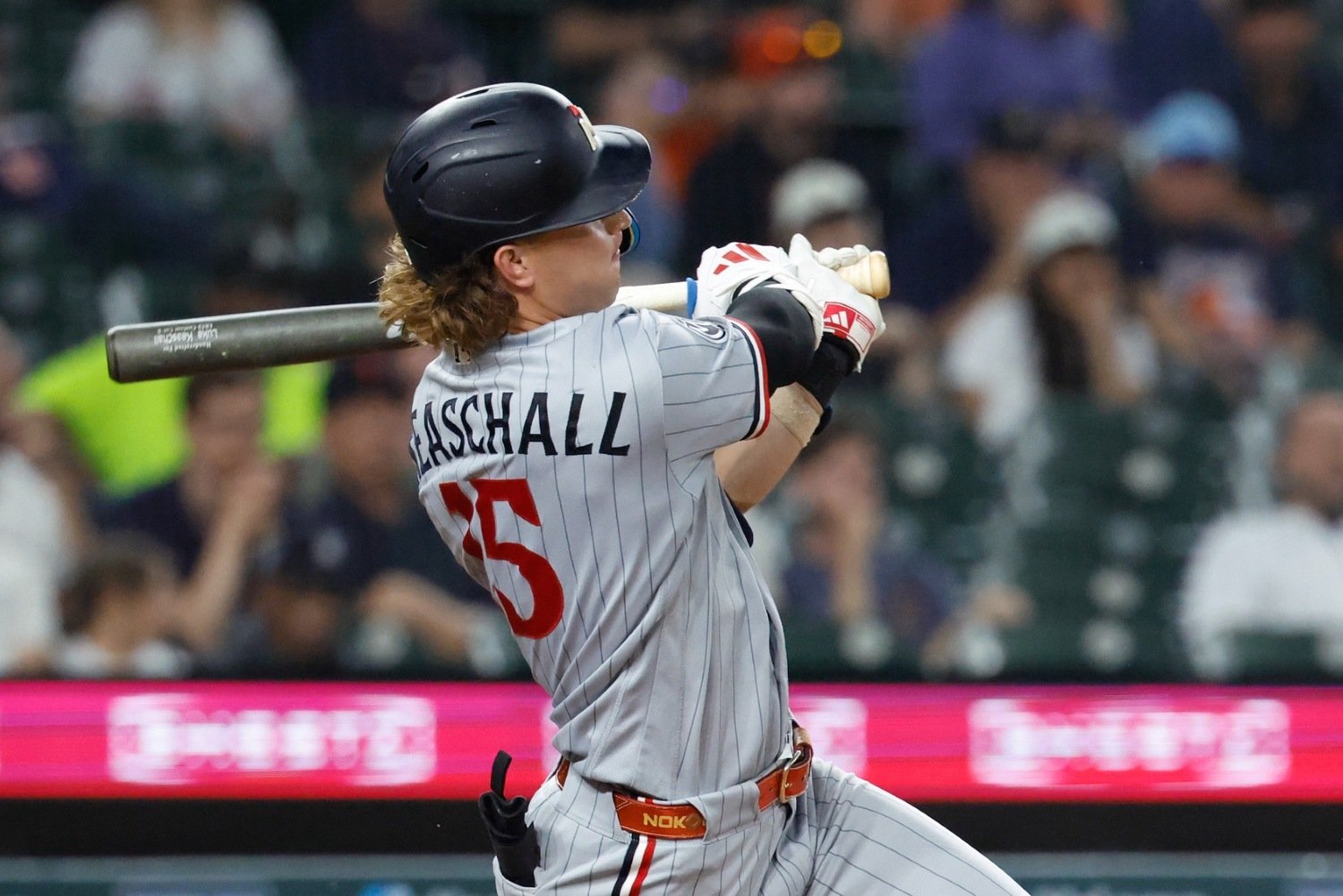
Luke Keaschall was one of the Twins' most exciting players entering the 2026 season. After a mini-breakout during his rookie campaign a year ago, it looked like Minnesota had found its long-term answer at second base. Keaschall hit .302 with an .827 OPS last year, showed elite bat-to-ball skills, and looked capable of becoming a fixture near the top of the lineup for years to come.
While he certainly still could be, that success has not carried over into this season. Entering Wednesday night's game, Keaschall is hitting just .247 with a .638 OPS. That's a significant drop-off from what he did a year ago, and it's becoming increasingly difficult to chalk it up to nothing more than a slow start.
What's especially disappointing is that it looked like he was beginning to turn the corner in May. After struggling through the early portion of the season, Keaschall hit .291 during the month, with seven extra-base hits and three stolen bases. The quality of his at-bats appeared to improve, the results were finally starting to follow, and it seemed like his rough April was simply a temporary bump in the road. Instead, June has brought him right back to where he started. So far this month, Keaschall is hitting just .250 with a .595 OPS. The underlying data doesn’t offer any reassurance, either.
His expected batting average sits at just .228, which is notably lower than his already uninspiring .247 mark. Often, struggling hitters can point to bad luck as a reason for optimism. That's not the case here.
Additionally, his quality of contact has been absolutely abysmal. His SLGCON, or slugging percentage on contact, sits at just .372. Not only is that comfortably the lowest mark among Twins hitters with at least 100 plate appearances, but it's roughly 180 points below league average. When Keaschall makes contact, there just isn't much damage being done. The rest of the batted-ball profile tells a similar story.
His average exit velocity, his barrel and hard-hit rates all sit near the bottom of the league. That's not the profile of someone who is getting unlucky; that's the profile of someone who is consistently getting outmatched.
Even the area of his game that has traditionally been his biggest strength has taken a step backward. Keaschall's bat-to-ball data remains solid overall, but it isn't as strong as it was during his rookie season. He's making less quality contact while chasing and striking out more. That's a difficult combination to overcome.
All of it has contributed to him finding himself near the bottom of the Twins' lineup more frequently in recent weeks. Could this simply be a sophomore slump? Sure, young players struggle all the time. The league adjusts. Pitchers find weaknesses, and development isn't always a straight line. But we're also more than two-and-a-half months into the season at this point. This is no longer a small sample size, and right now, Keaschall is not helping the Twins at the plate.
As someone who was extremely optimistic about Keaschall entering the season, I take no pleasure in saying this, but it's time for the Twins to option him to Triple-A. If he were providing strong defense at second base, perhaps the offensive struggles would be easier to stomach. But that hasn't been the case. Keaschall has been a negative on both sides of the ball, which makes it increasingly difficult to justify keeping him in the lineup every day while the team tries to keep itself afloat in the playoff picture.
It's not as if the Twins have shown any hesitation when it comes to optioning players; they've already done it this season with Royce Lewis and Matt Wallner. If the organization believes a player will benefit from a reset, they have shown a willingness to make that move regardless of the player's pedigree.
Additionally, I don't think it's a coincidence that the Twins have been giving Lewis opportunities at second base. Part of that undoubtedly relates to Brooks Lee's transition to third base (Lewis’s primary position) and the organization's desire to create defensive flexibility. But if Keaschall were truly succeeding, he wouldn't be losing starts to a hitter carrying a .162 batting average. That tells you something.
So who would take Keaschall’s spot if the Twins decide to send him down? Well, there may be an intriguing replacement already waiting. This would be a great opportunity to see where Kaelen Culpepper is at. Promoting Culpepper would require a 40-man roster move, so it wouldn't be a completely simple decision. Somebody would need to come off the roster. Still, there are plenty of reasons why the move makes sense.
Culpepper can play second base, shortstop, and third base. He would immediately give Derek Shelton additional flexibility throughout the infield, and defensively, he's been better than Keaschall this season.
More importantly, it would allow the Twins to accomplish two goals at the same time. Culpepper would get a chance to experience major-league pitching and begin his transition to the next level. Meanwhile, Keaschall could head to Triple-A, take a step back, work through his struggles in a lower-pressure environment, and rebuild some confidence. That sounds like a win-win scenario.
Would optioning Keaschall be popular among fans? Probably not. Nobody likes seeing a young player with this much talent get sent down. But these situations happen all the time. Development is very rarely linear, and sometimes the best thing for a player's long-term future is a temporary step backward. Right now, there isn't a strong argument for keeping Keaschall in the majors when he's struggling offensively, struggling defensively, and still has minor-league options available.
Let him get a reset, let him rebuild his confidence, and then let him come back a better player.







Recommended Comments
Create an account or sign in to comment
You need to be a member in order to leave a comment
Create an account
Sign up for a new account in our community. It's easy!
Register a new accountSign in
Already have an account? Sign in here.
Sign In Now