


Twins Video
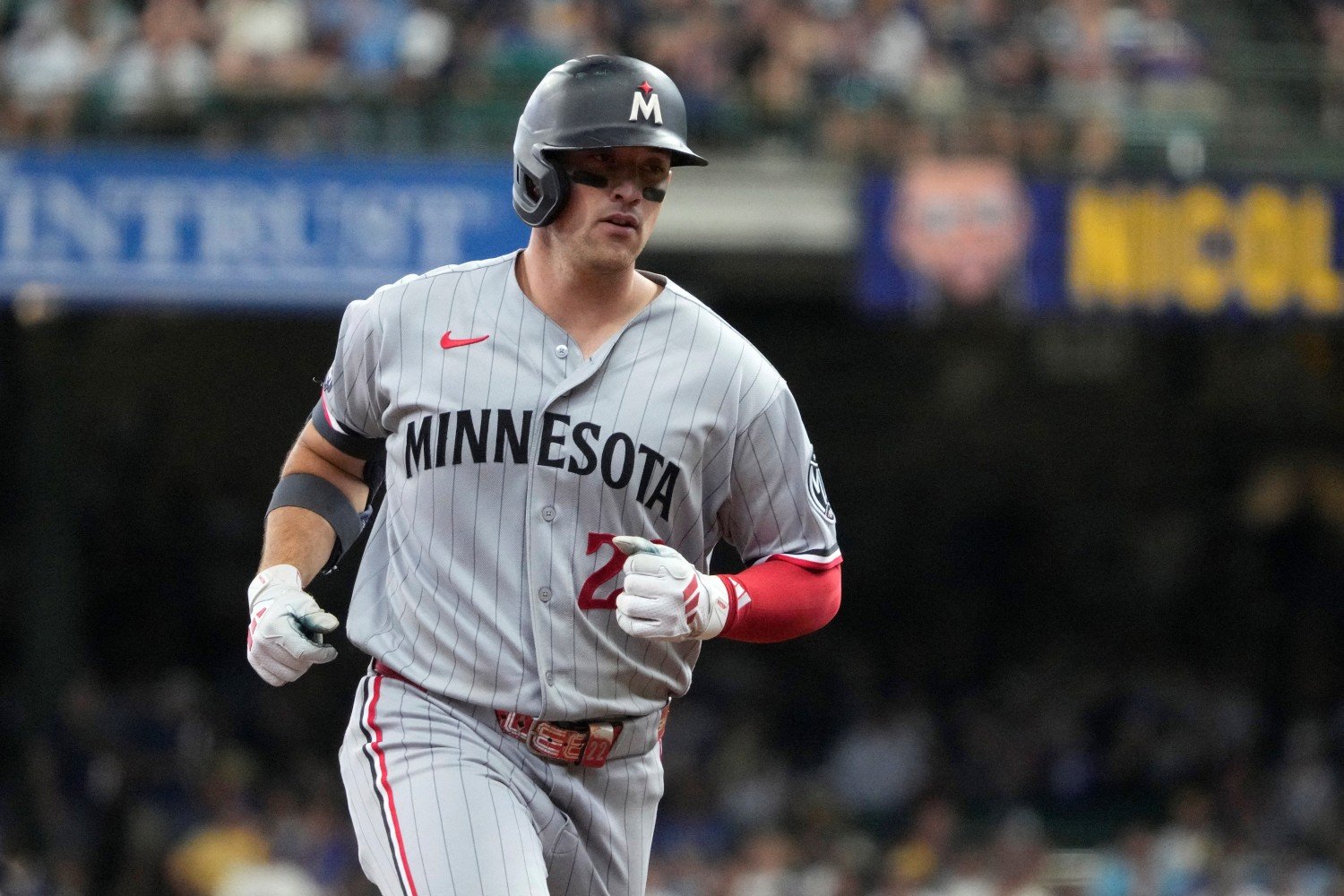
Brooks Lee’s first few seasons in the major leagues haven’t exactly been what we all hoped for. Across his first 305 big-league games, Lee slashed just .238/.289/.383. For a player whose bat was supposed to be his calling card coming out of the draft, that isn’t the kind of production the Twins were looking for—and he's already slid to third base, where his glove looks good but not great.
There have been flashes, but nothing consistent enough to suggest that Lee was becoming the hitter Minnesota had hoped for. However, something does appear to be changing in 2026. Through 466 plate appearances, Lee is hitting .247 with a .303 on-base percentage. Those numbers certainly aren’t eye-popping, but they represent a noticeable step forward from what we’ve seen during his first two seasons. The biggest area of growth has been his power production. Lee’s slugging percentage is .054 higher than it was a year ago, and he has already established new career highs in doubles, triples and home runs. Pair that with the highest walk rate of his career, and on the surface, it looks like Lee might finally be breaking out. But is he actually doing so?
While Lee’s surface-level numbers are comfortably the best of his young career, the underlying data suggest that the improvement hasn’t necessarily come from him making better contact. In fact, compared to 2025, his quality of contact has regressed. Lee’s average exit velocity has dipped from 88.6 mph to 87.7 mph, while his hard-hit rate has fallen considerably, from 38.5% to 31.7%. His barrel rate (as a share of his batted balls) has also dropped by more than two percentage points. That’s not exactly what you want to see from a hitter whose offensive production is supposedly taking a step forward.
His expected batting average sits at just .224, while his expected slugging percentage is a whopping .095 lower than his actual mark. While Lee’s production on the surface has been as good as ever, he's making less impressive contact. The obvious question, then, is which indicator we should trust. Is Lee breaking out, or just shuffling sideways?
I’m going to say the surface-level numbers carry more weight, for now. Maybe that’s just me trying to be optimistic about a former top prospect who hasn’t quite lived up to expectations yet, but there are legitimate reasons to believe Lee’s improvement is more than just a statistical mirage. For starters, his calling card has always been his hit tool, and that part of his game has taken a step forward this season. Lee’s whiff rate and strikeout rate are both lower than they were a year ago. He’s putting the ball in play more often, and naturally, good things tend to happen when a hitter consistently gives himself a chance to produce.
No, he isn’t hitting the ball quite as hard as he was a year ago. Yes, his hard-hit and barrel rates have gone backward. But if he’s putting the ball in play more frequently and giving himself more opportunities to find gaps, reach base and take advantage of defensive mistakes, hitting it hard becomes less vital.
There’s also been a pretty clear change in Lee’s overall approach at the plate. He’s pulling the ball more often this season, while also hitting the ball in the air at a higher rate. Those two changes tend to go hand in hand with increased extra-base production, even when the hitter isn’t consistently producing barrels. Lee has been more aggressive on pitches in the strike zone, too. That would suggest his improvement isn’t simply coming from getting lucky on balls in play. There’s intention behind some of the changes he has made at the plate. Even if the resulting contact isn’t always particularly loud, that approach gives him a better chance to turn his natural bat-to-ball ability into actual offensive production.
None of this means Lee is suddenly going to become a superstar. He probably isn’t going to be the type of hitter who puts up 30 home runs in a season. He’s probably never going to rank among the hardest hitters in baseball, either. But that’s alright. He doesn’t need to become that player to have a successful major-league career. He just needs to become the player the Twins thought they were drafting: a smart, fundamentally sound hitter who consistently puts the ball in play and can do enough damage to make pitchers pay.
At 25 years old, there should still be plenty of room for that player to emerge. The numbers underneath Lee’s 2026 breakout are certainly worth monitoring, and if the quality of his contact doesn’t eventually catch up, there’s reason to believe his current production could regress. But for the first time in his young career, there are also signs that Lee is figuring out how to make his skill set work at the major-league level.








Recommended Comments
Create an account or sign in to comment
You need to be a member in order to leave a comment
Create an account
Sign up for a new account in our community. It's easy!
Register a new accountSign in
Already have an account? Sign in here.
Sign In Now