Jump to content
Twins Daily
  • Create Account

Recommended Posts

Posted

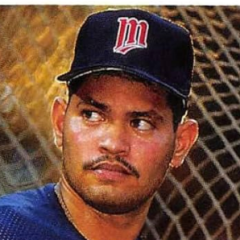
The greatest catcher in Twins history--and one of the best of the 21st century--is right on the doorstep of the Hall of Fame. He got there because he played the most important defensive position (other than pitcher) in baseball, and he played that position because he wanted to.

Image courtesy of © Jesse Johnson-USA TODAY Sports

I think people forget that Carlos Delgado came up through the minor leagues as a catcher. They forget that Joey Votto signed as a catcher, and they even forget that Bryce Harper was a catcher in high school, as well as at the junior college where he played before being drafted first overall in 2010. It's easy to forget those things, because none of those guys were really catchers. Harper (and agent Scott Boras) got that right away. When Harper signed with the Nationals almost 15 years ago, he did it as an outfielder. He converted before even trying on a professional set of catcher's gear, because when you can hit like that, you don't hold yourself back by squatting nonstop and taking foul balls and surviving (this used to be a thing, kids, we swear) collisions at the plate.

Votto, Delgado, and Harper are just three of several examples of players who moved out from behind the plate pretty early in their professional careers. Plenty of others made the same move, and while some of those were because the player in question lacked the mental or physical chops to play that difficult position, it was more often for a simpler reason: they wanted to be big-leaguers. In fact, they wanted to be stars. There's nothing wrong with that, and there's everything right about their decisions. If you want to be the best big-league hitter you can be--the most explosive, the most successful, the most famous, the richest, or just the longest-lasting--you don't play catcher. To play catcher, in addition to being smart and charismatic and having a strong arm, you have to want to catch. You have to want that worse than stardom. You have to want it worse than the Hall of Fame.

Because of that, there aren't enough catchers in the Hall. Sometimes, a couple of the ones who are in there get ridiculed, because the Veterans Committee went through a phase during which they let in some of the wrong people, choosing them for reasons of favoritism rather than on merit, but there are too few catchers in the Hall, not too many. Great players who choose to stay at catcher accept some risk that they won't reach the Hall, or (since few players actively think about the Hall of Fame during the phase of their career during which they make these choices) that they just won't become All-Stars or sluggers. Catching is, itself, a sacrifice. That's one reason why most catchers aren't guys with Delgado's or Votto's or Harper's talent, but those without speed, or without bat speed, or without some other ingredient of stardom. It's a position played by many guys who don't have a choice, because they couldn't make it as shortstops or center fielders, or even first basemen or right fielders.

Joe Mauer had a choice. He was built like Votto, Delgado, and Harper, with their huge frame and their surprising blend of fluidity and strength. He could have moved out from behind the plate the moment he signed with the Twins. He didn't want to. Catching would eventually be taken away from him, but only by force--by medical coercion. 

It's not just that guys built like Mauer usually don't choose to catch. They're also badly made for it. Because of his height, Mauer was at a massive disadvantage as a pitch framer. In fact, he might not have been given much of a chance to catch, had he come along a decade later. The low pitch is hard to catch and hard to keep in the zone for a guy who stands 6-foot-4. That's one reason why so few catchers have ever been that tall.

We can't quantify Mauer's pitch framing for the first few years of his MLB career. PITCHf/x didn't become ubiquitous until 2008, so we can't pinpoint Mauer's strengths and weaknesses as a framer (except by sharing our memories) before that time. Here's where he was in 2008, though.

export (53).png
This chart shows Strikes Looking Above Average (SLAA) by pitch location. The picture tells the story better than I can. He was great at shaping the top of the zone, but lousy along the bottom edge of it. Here's his 2009 chart.

export (54).png
He still wasn't able to expand the zone at its bottom, but Mauer got better at shaping the zone at all four corners, including widening it slightly. In one year, he went from 3.1 runs worse than average as a framer to 5.7 runs better than average. Armed with technology (even if no one around him in the Twins front office understood how to make use of the data they had), Mauer improved significantly almost overnight. Here he is in 2010.

export (55).png
That blue band is getting a little thinner, and Mauer started really widening the plate on the third-base edge, where he could use his body to literally frame things for the umpire. For the final three seasons of his catching career, he did all that better and better.

export (56).png
The strike zone started drifting downward around this time, league-wide, which was a detriment to Mauer. Yet, he was able to move with it, even though the injuries were really piling up by thiat point. He never stopped working to improve behind the plate. He wanted every inch for his pitchers, and he learned how to do that as well and as fast as he could, despite his size and the way it made him seem miscast in that role.

Mauer wasn't a great hitter for a catcher. He was simply a great hitter, and a catcher. If he'd only done the first his whole career, as so many other players who looked and swung like him did, we'd have an easier time understanding what an extraordinary hitter he was. If he'd done that, he'd have had more than one season with the kind of power output we saw in 2009. If he'd done that, his career hit total might have been closer to 3,000 than to 2,000.

Personally, I notice the absence of those things on his record, but I don't miss or regret them. I'm grateful to Mauer for choosing to catch. He wanted every bit of baseball he could get his arms around; that meant putting himself in the heart of the thing. He chose baseball over football, but he also chose catching over some portion of baseball. Tuesday evening, he's going to reap the reward for that. It'll be well-earned.

Research assistance provided by TruMedia.


View full article

Posted

Obviously his big frame was one of the reasons he did not get the low strike but also technique-wise, he wasn’t taught was is being used now — going from underneath the pitch to bring it to the middle.

Here’s an example:


His glove comes down to the pitch and then back up. 

Some umpires are better than others at calling a zone but a catcher’s movements win/lose strikes at the edges.  

Posted

Catching has to be the most physically demanding position in baseball. Just squatting down the way they do and the wear it puts on their legs. Not to mention the foul tips and occasional smack from a big backswing. Joe was thought of a lot higher nationally then locally. I really don't know why.

Posted
47 minutes ago, Karbo said:

Catching has to be the most physically demanding position in baseball. Just squatting down the way they do and the wear it puts on their legs. Not to mention the foul tips and occasional smack from a big backswing. Joe was thought of a lot higher nationally then locally. I really don't know why.

I'm continually amazed at how little knowledge many folks have about the rigors of catching. As a left-handed pitcher i had a ton of very poor catchers and a few great ones but i respected their position. Then one day when i was near 40 (men's league0 our catchers were missing (injured or could not make it) and I suited up. I wound up catching over a 100 games and gained a mild test of the stress of the position. I think I lost a handful of toenails and the knees took a beating too. Ten years of catching is easily twenty years at any other position. 

Posted

Soft hands, rocket arm and extremely athletic behind the plate. I don’t care about some nebulous thing like framing. Kind of an odd thing to write about given the occasion. 

Posted

Great point Matthew. Mauer's heart was in catching. He was catcher that was great at hitting. That's the position he loved & where he felt he could best help the club. Hitting came easy for him, catching came harder although he had the soft hands & rocket arm that are required for being a catcher yet he worked hard at it & took pride in it,

Posted

I remember Tom Kelly saying during Joe's first spring training that if he was not playing catcher he would be a major league guy already.  He said he most likely could have hit at MLB level right out of high school, but he was not ready to catch at MLB level yet.  I think players and teams choose to take guys off of catcher for two reasons, one if they are a top offensive guy they want to make sure their bat is in lineup each day, and do not want to be worn down from catching.  Two, they cannot defend it at a good enough level.  

One main reason catchers are not common in hall is they generally do not put up the offense required, and unlike CF or SS, their defense is not on major display with flashy plays.  A good defensive catcher generally is not talked about a ton, because teams hardly try to steal on them, and they do not give up passed balls.  Where guys like Ozzie Smith, who were terrible offensive guy, but was one of, if not, the best defensive SS of all time and would make you go wow with many of his plays. If you could not see his amazing plays, and he was sitting behind the plate being top defensive catcher of all time, he may not make HOF. 

Good for Joe, he deserved to be in HOF, and I was worried he was not going to get in, at least not right away, because he got moved off catcher and his overall counting numbers did not warrant HOF if not by a catcher.  The fact in his prime at catcher he was one top hitting catchers ever is what got him in.  It is possible if he did not play catcher but a different position he could have put up even better numbers over his career. It is possible he could still be playing even. 

Create an account or sign in to comment

You need to be a member in order to leave a comment

Create an account

Sign up for a new account in our community. It's easy!

Register a new account

Sign in

Already have an account? Sign in here.

Sign In Now
The Twins Daily Caretaker Fund

You all care about this site. The next step is caring for it. We’re asking you to caretake this site so it can remain the premier Twins community on the internet.

×
×
  • Create New...