



Cody Christie
-
Posts
7,820 -
Joined
-
Last visited
-
Days Won
5
Content Type
Profiles
News
Minnesota Twins Videos
2026 Minnesota Twins Top Prospects Ranking
2022 Minnesota Twins Draft Picks
Minnesota Twins Free Agent & Trade Rumors, Notes, & Tidbits
Guides & Resources
2023 Minnesota Twins Draft Picks
The Minnesota Twins Players Project
2024 Minnesota Twins Draft Picks
2025 Minnesota Twins Draft Pick Tracker
2026 Minnesota Twins Draft Tracker: Picks & Bonuses
Forums
Blogs
Events
Store
Downloads
Gallery
Everything posted by Cody Christie
-

Twins Short-Season Minor League Hitter of the Year– 2024
Cody Christie posted an article in Minor Leagues
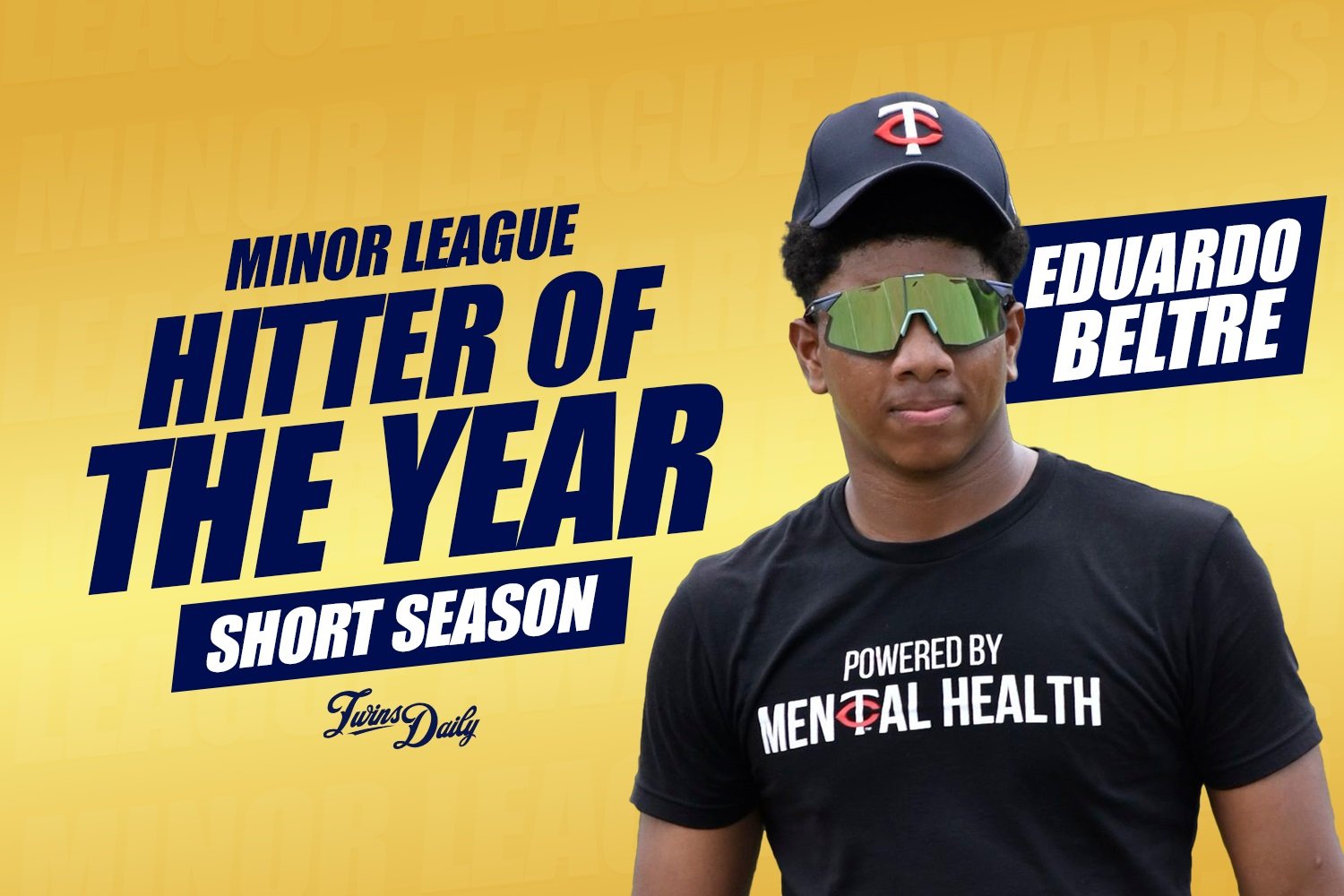 Not every prospect can find success in a short-season league. By their nature, short-season leagues are limited in what players can showcase because of the sample sizes involved in a limited number of games and at-bats. Sometimes, top prospects thrive in this environment, while others might start the year slow and not have time for their numbers to improve. Overall, some players clearly thrive against the level of competition in the low minors, and that can help raise their overall prospect stock. Before we get into the hitters that impressed this season, here are the previous winners of this award: 2016: Lewin Diaz 2017: Akil Baddoo 2018: Chris Williams 2019: Matt Wallner 2021: Kala'i Rosario 2022: Jose Rodriguez 2023: Dameury Pena Before getting into this year’s top hitters, here are some of the other hitters who received votes from the Twins Daily minor league writers. Honorable Mentions C Ricardo Pena, FCL Twins, 33 G, .361/.481/.488 (.970), 8 2B, 1 HR, 12 RBI, 18 BB, 21 K. OF Merphy Hernandez, DSL Twins, 48 G, .276/.390/.417 (.806), 4 2B, 6 3B, 2 HR, 30 RBI, 28 BB, 30 K, 36 SB. C/1B Irvin Nunez, DSL Twins, 27 G, .299/.454/.508 (.961), 6 2B, 1 3B, 2 HR, 18 RBI, 15 BB, 10 K. 2B Dameury Pena, FCL Twins, 36 G, .282/.386/.410 (.796), 4 2B, 1 3B, 3 HR, 18 RBI, 19 BB, 9 K. Short-Season Hitter of the Year Here are the top three players for the Twins Daily Hitter of the Year, including a nearly unanimous choice for the Short-Season Minor League Hitter of the Year. 3. SS Daiber De Los Santos, DSL Twins 40 G, 53-176, .301/.384/.460 (.844), 11 2B, 1 3B, 5 HR, 38 RBI, 18 BB, 63 K, 17-for-24 SB. The Twins signed De Los Santos when the 2024 international signing period opened in January. MLB Pipeline ranked him as the number eight international prospect, and said he “might have the overall best raw tools in the class.” De Los Santos was able to showcase his tools during his professional debut in the Dominican Summer League. In June, he went 13-for-57 (.228 BA) in 17 games with two doubles and four home runs, the most homers he hit in any month. His OPS dipped by 104 points in July but he continued to get on base 35% of the time. He drew double-digit walks, which helped him to score 13 runs in the month. De Los Santos put an exclamation mark on his season during August. In 12 games, he hit .431/.482/.588 (1.070) with six doubles and one triple. His high OBP also let him be a menace on the bases. He went 8-for-10 in stolen base attempts to raise his season total to 16 steals. A significant amount of his damage came against left-handed pitchers, as his OPS versus lefties (1.193) was nearly 450 points higher than versus righties. All but 25 of his plate appearances came against older pitchers. He also showed the ability to come up big with two outs and runners in scoring position by posting a .934 OPS. He’s a long way from Target Field, but he is a teenage player to get excited about in the coming years. 2. CF Yasser Mercedes, FCL Twins/Fort Myers 51 G, 56-169, .331/.421/.568 (.989), 18 2B, 2 3B, 6 HR, 24 RBI, 24 BB, 39 K, 18-for-23 SB. The Twins signed Mercedes for $1.7 million during the 2022 international signing period, where he was considered one of the top available players. Last season, he dealt with a nagging shoulder injury, impacting his overall numbers in his first stateside season. He quickly put those injury concerns behind him in 2024 with a breakout performance in the FCL. In May, he hit .344/.432/.547 (.979) with seven extra-base hits and 12 stolen bases in 18 games. It was a solid start to his season that showcased his five-tool talent. In June (18 G), he continued to hit well by going 18-for-56 (.321 BA) with six doubles and two home runs. He punctuated his season in July with a 1.043 OPS in his final 15 games in the FCL. Even more impressive, he had nearly as many walks (7 BB) as strikeouts (9 K). The Twins promoted him to Fort Myers for his final ten games, where he went 5-for-40. As a right-handed hitter, his splits were nearly identical versus righties (.886 OPS) and lefties (.828 OPS). He also did similarly well against younger and older pitchers, with his OPS only being separated by less than 50 points. He was named a Florida Complex League All-Star in September. Mercedes should spend all of 2025 at a full-season affiliate for the first time in his career. 1. OF Eduardo Beltre, DSL Twins 43 G, 47-144, .326/.453/.618 (1.071), 9 2B, 11 HR, 36 RBI, 28 BB, 43 K, 10-for-14 SB. Like De Los Santos, Beltre was considered one of the top international prospects in the 2024 signing class. MLB Pipeline ranked him as the 39th overall prospect and said he is “a powerful athlete with an aggressive approach at the plate and could one day sport plus tools across the board.” His aggressive approach helped him to combine for 20 extra-base hits in 43 games, but it came at the cost of a 23.8 K%. Beltre’s bat started hot and didn’t cool off throughout the season. In June, he started the season by going 10-for-27 with three extra-base hits and a 1.182 OPS in ten games. His on-base numbers were helped by coaxing ten walks in 38 plate appearances. During July, Beltre hit .277/.422/.508 (.929) with three doubles and four home runs. His high on-base percentage allowed him to impact the game on the bases by going 4-for-5 in stolen base attempts. He destroyed the ball in the season’s final month. In 14 games, he hit five doubles and five home runs for a .691 SLG, his highest total in any month. It was an exclamation point on a tremendous 2024 campaign. He had 25 plate appearances versus younger pitchers this season and posted a 1.405 OPS. As a right-handed hitter, his splits versus lefties and righties were separated by 110 points, but both were over 1.000 OPS. Beltre finished tied for second in the DSL in home runs, and his OPS ranked third among qualified hitters. He was named a Dominican Summer League All-Star after the season. It was an exciting professional debut, and the Twins hope Beltre can continue to showcase his talent as he climbs the organizational ladder. Congratulations to this year’s winners. How would you rank these players on your ballot? Should a different player have made the top 3? Leave a COMMENT and start the discussion.
- 8 comments
-
- 4
-

-
- yasser mercedes
- daiber de los santos
- (and 5 more)
-
Short-season leagues allow players to get their first taste of life as a professional baseball player. Here are the hitters in the Twins organization that had the strongest seasons for their short-season affiliates. Short-season leagues allow players to get their first taste of life as a professional baseball player. Here are the hitters in the Twins organization that had the strongest seasons for their short-season affiliates. Not every prospect can find success in a short-season league. By their nature, short-season leagues are limited in what players can showcase because of the sample sizes involved in a limited number of games and at-bats. Sometimes, top prospects thrive in this environment, while others might start the year slow and not have time for their numbers to improve. Overall, some players clearly thrive against the level of competition in the low minors, and that can help raise their overall prospect stock. Before we get into the hitters that impressed this season, here are the previous winners of this award: 2016: Lewin Diaz 2017: Akil Baddoo 2018: Chris Williams 2019: Matt Wallner 2021: Kala'i Rosario 2022: Jose Rodriguez 2023: Dameury Pena Before getting into this year’s top hitters, here are some of the other hitters who received votes from the Twins Daily minor league writers. Honorable Mentions C Ricardo Pena, FCL Twins, 33 G, .361/.481/.488 (.970), 8 2B, 1 HR, 12 RBI, 18 BB, 21 K. OF Merphy Hernandez, DSL Twins, 48 G, .276/.390/.417 (.806), 4 2B, 6 3B, 2 HR, 30 RBI, 28 BB, 30 K, 36 SB. C/1B Irvin Nunez, DSL Twins, 27 G, .299/.454/.508 (.961), 6 2B, 1 3B, 2 HR, 18 RBI, 15 BB, 10 K. 2B Dameury Pena, FCL Twins, 36 G, .282/.386/.410 (.796), 4 2B, 1 3B, 3 HR, 18 RBI, 19 BB, 9 K. Short-Season Hitter of the Year Here are the top three players for the Twins Daily Hitter of the Year, including a nearly unanimous choice for the Short-Season Minor League Hitter of the Year. 3. SS Daiber De Los Santos, DSL Twins 40 G, 53-176, .301/.384/.460 (.844), 11 2B, 1 3B, 5 HR, 38 RBI, 18 BB, 63 K, 17-for-24 SB. The Twins signed De Los Santos when the 2024 international signing period opened in January. MLB Pipeline ranked him as the number eight international prospect, and said he “might have the overall best raw tools in the class.” De Los Santos was able to showcase his tools during his professional debut in the Dominican Summer League. In June, he went 13-for-57 (.228 BA) in 17 games with two doubles and four home runs, the most homers he hit in any month. His OPS dipped by 104 points in July but he continued to get on base 35% of the time. He drew double-digit walks, which helped him to score 13 runs in the month. De Los Santos put an exclamation mark on his season during August. In 12 games, he hit .431/.482/.588 (1.070) with six doubles and one triple. His high OBP also let him be a menace on the bases. He went 8-for-10 in stolen base attempts to raise his season total to 16 steals. A significant amount of his damage came against left-handed pitchers, as his OPS versus lefties (1.193) was nearly 450 points higher than versus righties. All but 25 of his plate appearances came against older pitchers. He also showed the ability to come up big with two outs and runners in scoring position by posting a .934 OPS. He’s a long way from Target Field, but he is a teenage player to get excited about in the coming years. 2. CF Yasser Mercedes, FCL Twins/Fort Myers 51 G, 56-169, .331/.421/.568 (.989), 18 2B, 2 3B, 6 HR, 24 RBI, 24 BB, 39 K, 18-for-23 SB. The Twins signed Mercedes for $1.7 million during the 2022 international signing period, where he was considered one of the top available players. Last season, he dealt with a nagging shoulder injury, impacting his overall numbers in his first stateside season. He quickly put those injury concerns behind him in 2024 with a breakout performance in the FCL. In May, he hit .344/.432/.547 (.979) with seven extra-base hits and 12 stolen bases in 18 games. It was a solid start to his season that showcased his five-tool talent. In June (18 G), he continued to hit well by going 18-for-56 (.321 BA) with six doubles and two home runs. He punctuated his season in July with a 1.043 OPS in his final 15 games in the FCL. Even more impressive, he had nearly as many walks (7 BB) as strikeouts (9 K). The Twins promoted him to Fort Myers for his final ten games, where he went 5-for-40. As a right-handed hitter, his splits were nearly identical versus righties (.886 OPS) and lefties (.828 OPS). He also did similarly well against younger and older pitchers, with his OPS only being separated by less than 50 points. He was named a Florida Complex League All-Star in September. Mercedes should spend all of 2025 at a full-season affiliate for the first time in his career. 1. OF Eduardo Beltre, DSL Twins 43 G, 47-144, .326/.453/.618 (1.071), 9 2B, 11 HR, 36 RBI, 28 BB, 43 K, 10-for-14 SB. Like De Los Santos, Beltre was considered one of the top international prospects in the 2024 signing class. MLB Pipeline ranked him as the 39th overall prospect and said he is “a powerful athlete with an aggressive approach at the plate and could one day sport plus tools across the board.” His aggressive approach helped him to combine for 20 extra-base hits in 43 games, but it came at the cost of a 23.8 K%. Beltre’s bat started hot and didn’t cool off throughout the season. In June, he started the season by going 10-for-27 with three extra-base hits and a 1.182 OPS in ten games. His on-base numbers were helped by coaxing ten walks in 38 plate appearances. During July, Beltre hit .277/.422/.508 (.929) with three doubles and four home runs. His high on-base percentage allowed him to impact the game on the bases by going 4-for-5 in stolen base attempts. He destroyed the ball in the season’s final month. In 14 games, he hit five doubles and five home runs for a .691 SLG, his highest total in any month. It was an exclamation point on a tremendous 2024 campaign. He had 25 plate appearances versus younger pitchers this season and posted a 1.405 OPS. As a right-handed hitter, his splits versus lefties and righties were separated by 110 points, but both were over 1.000 OPS. Beltre finished tied for second in the DSL in home runs, and his OPS ranked third among qualified hitters. He was named a Dominican Summer League All-Star after the season. It was an exciting professional debut, and the Twins hope Beltre can continue to showcase his talent as he climbs the organizational ladder. Congratulations to this year’s winners. How would you rank these players on your ballot? Should a different player have made the top 3? Leave a COMMENT and start the discussion. View full article
-
As MLB Touts Attendance Surge, Twins Are Left Out of the Fun
Cody Christie posted an article in Twins
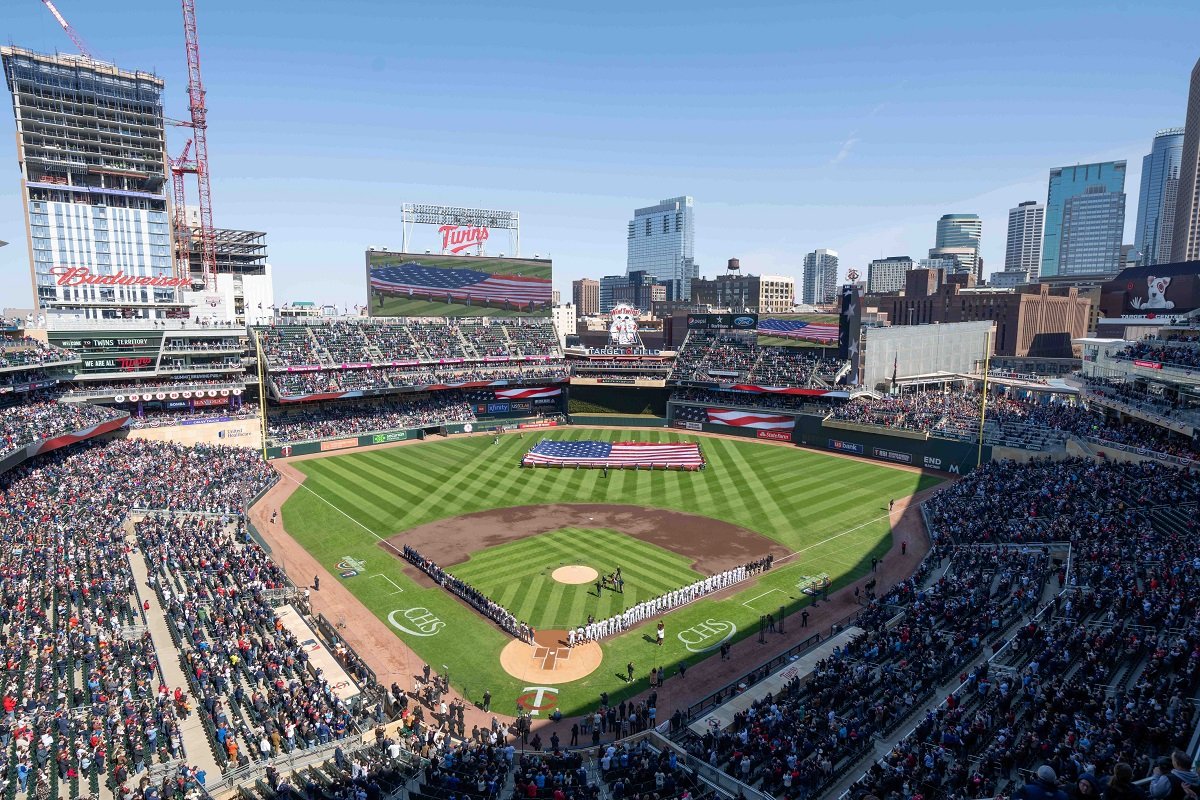 Earlier this week, MLB.com wrote about the league's rising attendance this season, including reaching a new milestone. It will be the second consecutive year that attendance has risen, and MLB believes those increases are tied to the rule changes instituted leading into the 2023 campaign. According to the report, it will be the first time baseball has had consecutive years of attendance gains since the 2011-12 seasons. MLB also notes that attendance is up 10% compared to 2022 and will be the highest-attended season since 2017. Last winter, the Twins wanted to build off MLB's momentum and set a goal of surpassing the 2 million fan mark for the first time since before the pandemic. Minnesota will fall short of that goal, though. They're the boat the rising tide can't lift. So, why did this happen, and what are the long-term ramifications for the organization? At the onset of the offseason, it made sense for the Twins’ brass to expect a rise in attendance. Vibes around the team were positive, after the club won its first playoff series in over two decades. On-field success usually translates to more interest in the club and higher season ticket sales. It didn't materialize in this case, though, and it's not hard to see why. On-field success usually also translates to more investment in the club and higher expectations entering the following season. Those things didn't materialize last offseason, either. In February, Twins executive chair Joe Pohlad announced that they needed to “right-size” the business, resulting in a payroll cut of over $30 million, which had become evident over a maddeningly inactive winter. This cut meant the Twins front office had little to spend, and had to trade Jorge Polanco to free up payroll space. Minnesota was in the middle of a winning window, and the ownership’s senseless penny-pinching disheartened fans. The team’s complex television situation is another factor in this year’s attendance drop. Last winter, the Twins were television free agents who could have gone in a new direction to maximize their accessibility. Instead, the club re-signed with Diamond Sports Group, a company dealing with bankruptcy issues over the last two seasons and mired in disputes with the major carriers through whom fans watched. Minnesota received an estimated $35-45 million in their new deal, but that influx didn’t result in any additional offseason moves. After the season began, the contract between Bally Spots North and Comcast expired without an agreement on a renewal, which kept the Twins off of many television screens in the Upper Midwest for multiple months. Fewer eyes on games is going to mean less interest in the current team, and thus lower attendance. Minnesota has had three seasons where more than 3 million fans attended games, including 1988, 2010, and 2011. All of those seasons have reasons why fan interest was high. In 1988, the club was coming off the team’s first World Series championship. In 2010 and 2011, Target Field was brand new, and fans wanted to experience outdoor baseball for the first time in decades. The Twins’ last season with more than 2 million fans was the 2019 campaign, when the Bomba Squad set the all-time home run record. The Twins are averaging just over 24,000 fans per game during the 2024 season. That ranks 23rd across MLB, with only five AL teams behind them in the rankings. The Twins would need to average over 27,000 fans per game in their final homestand to surpass last year’s 1,974,124 attendance total. That seems unlikely, with the team’s recent play and three games during that stretch against the unbeloved Marlins. Some fans will point to the team’s shortcomings this season and suggest the ownership group will see the error of their ways and invest in the 2025 roster. Unfortunately, the Pohlads have operated the Twins like a business throughout their tenure, and that isn’t going to change next season. Lower-than-expected attendance and a chance the team misses the playoffs are scary propositions for next season’s expected payroll. Leadership myopic enough to slash payroll after such a potentially galvanizing season is likely to follow the same pattern in the face of a frustrating one that saw revenue sag. Thanks to their huge volume of games, MLB is the most attended sports league in the world. However, the Twins need to make some fundamental changes if they want to increase their attendance in the coming years. It sure looks like they'll make merely cosmetic changes, and probably not even ones that take them in the right direction. Is the team’s attendance drop surprising? How will attendance impact next season’s payroll? Leave a comment and start the discussion.
 -
MLB is touting rising attendance across the league. However, things haven’t gone as planned for the Twins. What does that mean moving forward? Image courtesy of Matt Blewett-USA TODAY Sports MLB is touting rising attendance across the league. However, things haven’t gone as planned for the Twins. What does that mean moving forward? Earlier this week, MLB.com wrote about the league's rising attendance this season, including reaching a new milestone. It will be the second consecutive year that attendance has risen, and MLB believes those increases are tied to the rule changes instituted leading into the 2023 campaign. According to the report, it will be the first time baseball has had consecutive years of attendance gains since the 2011-12 seasons. MLB also notes that attendance is up 10% compared to 2022 and will be the highest-attended season since 2017. Last winter, the Twins wanted to build off MLB's momentum and set a goal of surpassing the 2 million fan mark for the first time since before the pandemic. Minnesota will fall short of that goal, though. They're the boat the rising tide can't lift. So, why did this happen, and what are the long-term ramifications for the organization? At the onset of the offseason, it made sense for the Twins’ brass to expect a rise in attendance. Vibes around the team were positive, after the club won its first playoff series in over two decades. On-field success usually translates to more interest in the club and higher season ticket sales. It didn't materialize in this case, though, and it's not hard to see why. On-field success usually also translates to more investment in the club and higher expectations entering the following season. Those things didn't materialize last offseason, either. In February, Twins executive chair Joe Pohlad announced that they needed to “right-size” the business, resulting in a payroll cut of over $30 million, which had become evident over a maddeningly inactive winter. This cut meant the Twins front office had little to spend, and had to trade Jorge Polanco to free up payroll space. Minnesota was in the middle of a winning window, and the ownership’s senseless penny-pinching disheartened fans. The team’s complex television situation is another factor in this year’s attendance drop. Last winter, the Twins were television free agents who could have gone in a new direction to maximize their accessibility. Instead, the club re-signed with Diamond Sports Group, a company dealing with bankruptcy issues over the last two seasons and mired in disputes with the major carriers through whom fans watched. Minnesota received an estimated $35-45 million in their new deal, but that influx didn’t result in any additional offseason moves. After the season began, the contract between Bally Spots North and Comcast expired without an agreement on a renewal, which kept the Twins off of many television screens in the Upper Midwest for multiple months. Fewer eyes on games is going to mean less interest in the current team, and thus lower attendance. Minnesota has had three seasons where more than 3 million fans attended games, including 1988, 2010, and 2011. All of those seasons have reasons why fan interest was high. In 1988, the club was coming off the team’s first World Series championship. In 2010 and 2011, Target Field was brand new, and fans wanted to experience outdoor baseball for the first time in decades. The Twins’ last season with more than 2 million fans was the 2019 campaign, when the Bomba Squad set the all-time home run record. The Twins are averaging just over 24,000 fans per game during the 2024 season. That ranks 23rd across MLB, with only five AL teams behind them in the rankings. The Twins would need to average over 27,000 fans per game in their final homestand to surpass last year’s 1,974,124 attendance total. That seems unlikely, with the team’s recent play and three games during that stretch against the unbeloved Marlins. Some fans will point to the team’s shortcomings this season and suggest the ownership group will see the error of their ways and invest in the 2025 roster. Unfortunately, the Pohlads have operated the Twins like a business throughout their tenure, and that isn’t going to change next season. Lower-than-expected attendance and a chance the team misses the playoffs are scary propositions for next season’s expected payroll. Leadership myopic enough to slash payroll after such a potentially galvanizing season is likely to follow the same pattern in the face of a frustrating one that saw revenue sag. Thanks to their huge volume of games, MLB is the most attended sports league in the world. However, the Twins need to make some fundamental changes if they want to increase their attendance in the coming years. It sure looks like they'll make merely cosmetic changes, and probably not even ones that take them in the right direction. Is the team’s attendance drop surprising? How will attendance impact next season’s payroll? Leave a comment and start the discussion. View full article
-
If the Twins Get In, Can They Find the Right October Recipe?
Cody Christie posted an article in Twins
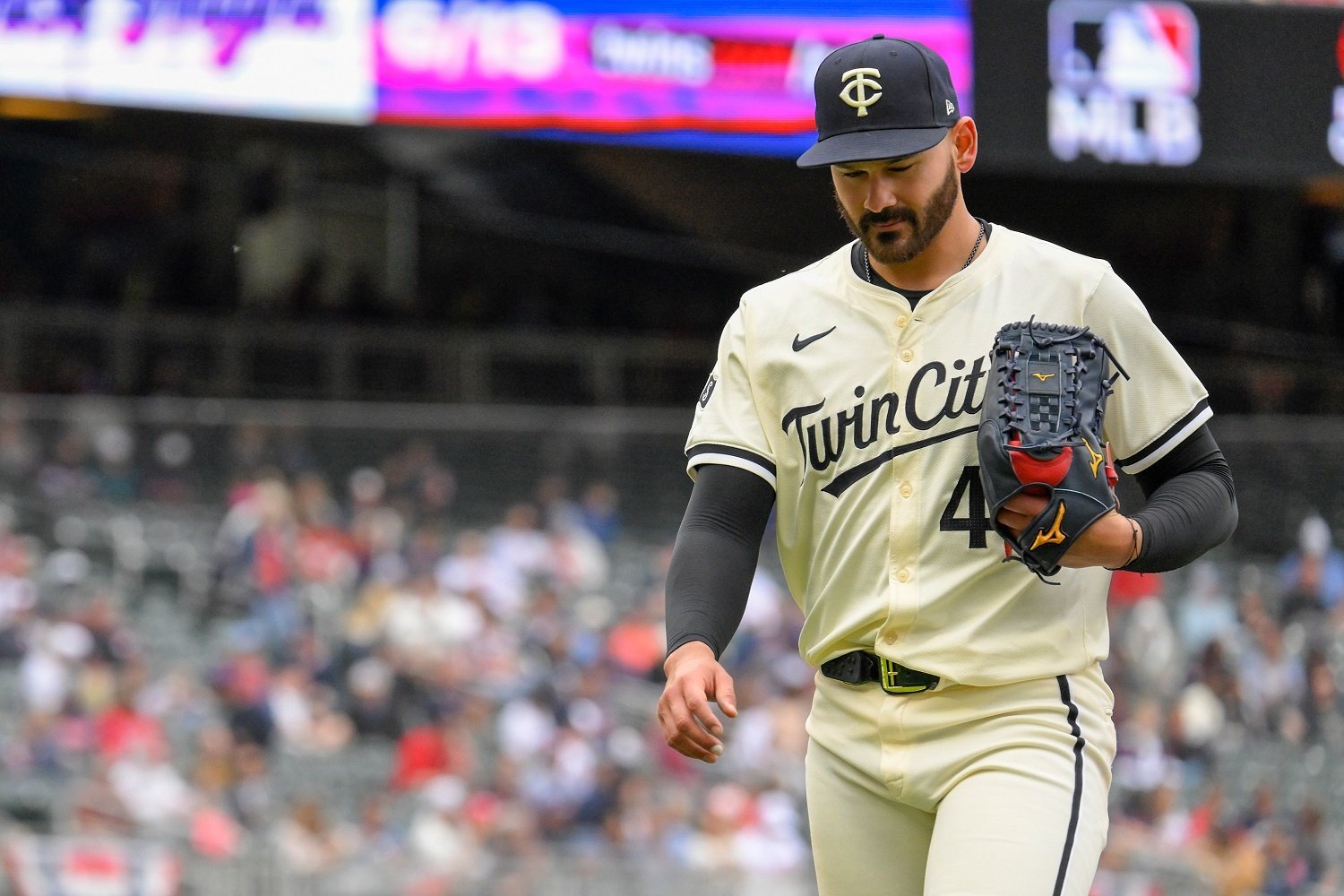 There are no dominant teams in baseball. This will be the first season since 2014 where no club will finish with 100 wins. The last season without a 100-win team saw the Giants and Royals face off in the World Series, and both teams failed to win 90 games in the regular season. Only six 100-win teams have won the World Series since 1995. Last season, the Rangers scuffled their way into the playoffs but found a way to get hot at the right time. Baseball is different in October, and some teams built for regular-season success don’t have the recipe to win when the postseason begins--not that there is a recipe, per se, at least as far as anyone has been able to determine. MLB’s playoff format lends itself to parity, especially with more Wild Card spots. Baseball is a game of individual matchups in the context of a team sport. In other major sports, one superstar player can carry a team to postseason success. By and large, baseball doesn’t fit that mold, although it becomes a bit more plausible in a tournament setting. The Twins need to find a way to qualify for October, and then they need to ensure their recipe for success can be optimized. Starting Pitching Recipe Minnesota’s top two starting pitchers, Pablo López and Bailey Ober, match up well against any opponent's top rotation options. Things get murky thereafter, though, especially with Joe Ryan out of the picture. Simeon Woods Richardson and David Festa would be the team’s other starting options, and both have produced inconsistent performances in the season’s final month. It’s also important to note that the Twins' freefall in recent weeks puts them at a disadvantage. Some teams will be able to line up their best pitchers for a potential Wild Card Series, but the Twins might need to use their top arms to qualify for the postseason over the final weekend. Ober is scheduled to start on Tuesday against Miami, which lines him up to pitch the season’s final game on Sunday versus Baltimore. The Twins might need to win that finale to reach the playoffs. López, meanwhile, started on Sunday, making him available again for Friday’s game. In a scenario in which the team only clinches with a season-ending win, López and Ober would be unavailable for Game 1 of the Wild Card Series. López could start Game 2 on regular rest, but Ober would be on short rest for Game 3. It's more likely that Woods Richardson would pitch Game 1, López would take Game 2, and Festa and Zebby Matthews would be asked to piggyback their way to the sixth inning of a potential Game 3. Offensive Recipe Minnesota’s offense has scuffled in recent weeks, to the point where they rank among the league’s worst-hitting groups. Since Aug. 1, the Twins have the AL’s third-lowest wRC+ (78), with only the White Sox and Royals ranking lower. They've scored three runs or fewer in 10 of the 21 games played this month. It has been painful to watch, especially on nights when the pitching staff has held the opposition to three runs or fewer (eight times). Playoff baseball is a different animal, compared to what batters see in the regular season. Home runs become critical, as teams rely on their top starting pitchers and relievers. There are rarely innings where a team can string three or four hits to score a run. Instead, clubs must get a bloop and a blast to push across multiple runs. Despite some September struggles, the Twins offense is hitting the ball hard 37% of the time, ranking 17th in MLB. Minnesota also continues to pull the ball at a 43.0% rate, the fourth-highest total in the AL during September. The team's ability to hit the ball hard to the pull side might result in more luck in October, but to tap into it, they have to elevate more of those pulled balls. Bullpen Recipe Twins manager Rocco Baldelli has gotten plenty of criticism for his bullpen usage in the season’s second half. However, he has few levers to pull in an untrustworthy group. Fans witnessed the bullpen cough up multiple leads in Cleveland before using nine pitchers for a 12-inning marathon win in Boston. Griffin Jax has been the team’s best reliever, but even he has shown some vulnerabilities in the second half. Jhoan Durán and Cole Sands have also played important roles, but a playoff team needs more than three relief options. Minnesota has relied on Jax for most of the season, and he might be showing signs of depleting down the stretch. His -0.28 WPA is the third-lowest total this month, with only Ronny Henriquez and Cole Irvin ranking lower. Some of that negative WPA results from the Twins forcing him into challenging situations in recent weeks. Durán (0.57 WPA) and Sands (0.31 WPA) are joined by Scott Blewett (0.34 WPA) as the trio of relievers with a positive WPA this month. Relievers work in small sample sizes, so reading too much into the bullpen’s September struggles is tough. There is some hope that Chris Paddack and Justin Topa will rejoin the team this week, but the team is running out of games for those upgrades to make an impact. The Twins have a tall order to fill this week, with the attainment of a playoff spot out of their own control. Thankfully, there are some positive signs among the team’s core group, even as the losses have piled up. Minnesota’s recipe might not be fully functional in the regular season, but the playoffs offer a chance for a fresh start. If the Twins get in, can they find the right recipe to win in October? Does it help that there are no dominant teams in 2024? Leave a comment and start the discussion.
- 20 comments
-
- 1
-
-
- pablo lopez
- bailey ober
- (and 3 more)
-
Baseball’s grueling 162-game schedule culminates in a sprint to the finish line during the postseason. If the Twins get in, do they have the right form to make a run in October? Image courtesy of © Nick Wosika-USA TODAY Sports Baseball’s grueling 162-game schedule culminates in a sprint to the finish line during the postseason. If the Twins get in, do they have the right form to make a run in October? There are no dominant teams in baseball. This will be the first season since 2014 where no club will finish with 100 wins. The last season without a 100-win team saw the Giants and Royals face off in the World Series, and both teams failed to win 90 games in the regular season. Only six 100-win teams have won the World Series since 1995. Last season, the Rangers scuffled their way into the playoffs but found a way to get hot at the right time. Baseball is different in October, and some teams built for regular-season success don’t have the recipe to win when the postseason begins--not that there is a recipe, per se, at least as far as anyone has been able to determine. MLB’s playoff format lends itself to parity, especially with more Wild Card spots. Baseball is a game of individual matchups in the context of a team sport. In other major sports, one superstar player can carry a team to postseason success. By and large, baseball doesn’t fit that mold, although it becomes a bit more plausible in a tournament setting. The Twins need to find a way to qualify for October, and then they need to ensure their recipe for success can be optimized. Starting Pitching Recipe Minnesota’s top two starting pitchers, Pablo López and Bailey Ober, match up well against any opponent's top rotation options. Things get murky thereafter, though, especially with Joe Ryan out of the picture. Simeon Woods Richardson and David Festa would be the team’s other starting options, and both have produced inconsistent performances in the season’s final month. It’s also important to note that the Twins' freefall in recent weeks puts them at a disadvantage. Some teams will be able to line up their best pitchers for a potential Wild Card Series, but the Twins might need to use their top arms to qualify for the postseason over the final weekend. Ober is scheduled to start on Tuesday against Miami, which lines him up to pitch the season’s final game on Sunday versus Baltimore. The Twins might need to win that finale to reach the playoffs. López, meanwhile, started on Sunday, making him available again for Friday’s game. In a scenario in which the team only clinches with a season-ending win, López and Ober would be unavailable for Game 1 of the Wild Card Series. López could start Game 2 on regular rest, but Ober would be on short rest for Game 3. It's more likely that Woods Richardson would pitch Game 1, López would take Game 2, and Festa and Zebby Matthews would be asked to piggyback their way to the sixth inning of a potential Game 3. Offensive Recipe Minnesota’s offense has scuffled in recent weeks, to the point where they rank among the league’s worst-hitting groups. Since Aug. 1, the Twins have the AL’s third-lowest wRC+ (78), with only the White Sox and Royals ranking lower. They've scored three runs or fewer in 10 of the 21 games played this month. It has been painful to watch, especially on nights when the pitching staff has held the opposition to three runs or fewer (eight times). Playoff baseball is a different animal, compared to what batters see in the regular season. Home runs become critical, as teams rely on their top starting pitchers and relievers. There are rarely innings where a team can string three or four hits to score a run. Instead, clubs must get a bloop and a blast to push across multiple runs. Despite some September struggles, the Twins offense is hitting the ball hard 37% of the time, ranking 17th in MLB. Minnesota also continues to pull the ball at a 43.0% rate, the fourth-highest total in the AL during September. The team's ability to hit the ball hard to the pull side might result in more luck in October, but to tap into it, they have to elevate more of those pulled balls. Bullpen Recipe Twins manager Rocco Baldelli has gotten plenty of criticism for his bullpen usage in the season’s second half. However, he has few levers to pull in an untrustworthy group. Fans witnessed the bullpen cough up multiple leads in Cleveland before using nine pitchers for a 12-inning marathon win in Boston. Griffin Jax has been the team’s best reliever, but even he has shown some vulnerabilities in the second half. Jhoan Durán and Cole Sands have also played important roles, but a playoff team needs more than three relief options. Minnesota has relied on Jax for most of the season, and he might be showing signs of depleting down the stretch. His -0.28 WPA is the third-lowest total this month, with only Ronny Henriquez and Cole Irvin ranking lower. Some of that negative WPA results from the Twins forcing him into challenging situations in recent weeks. Durán (0.57 WPA) and Sands (0.31 WPA) are joined by Scott Blewett (0.34 WPA) as the trio of relievers with a positive WPA this month. Relievers work in small sample sizes, so reading too much into the bullpen’s September struggles is tough. There is some hope that Chris Paddack and Justin Topa will rejoin the team this week, but the team is running out of games for those upgrades to make an impact. The Twins have a tall order to fill this week, with the attainment of a playoff spot out of their own control. Thankfully, there are some positive signs among the team’s core group, even as the losses have piled up. Minnesota’s recipe might not be fully functional in the regular season, but the playoffs offer a chance for a fresh start. If the Twins get in, can they find the right recipe to win in October? Does it help that there are no dominant teams in 2024? Leave a comment and start the discussion. View full article
-
Baseball’s final week of the season can produce drama. Four AL teams, including three Central foes, are vying for two Wild Card spots. So, how do the teams stack up, and what are the spiraling Twins' chances? Image courtesy of Matt Blewett, Jay Biggerstaff, Brad Rempel, Nathan Ray Seebeck-USA TODAY Sports Baseball’s final week of the season can produce drama. Four AL teams, including three Central foes, are vying for two Wild Card spots. So, how do the teams stack up, and what are the spiraling Twins' chances? As the final week of the 2024 season unfolds, the American League Wild Card race is heating up, and it’s a battle few saw coming. The Minnesota Twins, Detroit Tigers, Kansas City Royals, and Seattle Mariners are locked in a fierce four-team food fight for the final two Wild Card spots. With October looming, every game and every pitch could swing the momentum, and the drama is just beginning. Kansas City Royals (Current Record: 82-74) FanGraphs Playoff Odds: 69.6% Remaining Schedule: 3 Games @ Washington, 3 Games @ Atlanta The Royals have been freefalling in recent weeks, with a 7-11 record in September. Entering play on Sept. 1, FanGraphs had them at a 79.5% chance to make the playoffs, which has only dropped slightly despite their poor play; they can thank the Twins for that. Their final week schedule is tough, because they have to go on the road for six games, and they have a 37-38 record away from Kauffman Stadium. Few thought Kansas City would be in this position in 2024, and they have been one of baseball’s best stories throughout the season. In a weird schedule quirk, the Royals finish the season with three straight series against NL opponents, including two road series to end the year in Washington and Atlanta. The Nationals have the third-worst record in the NL and have been outscored by 100 runs. They've been playing solely for pride for multiple weeks, and they clearly don't have much of that; they just had to demote starting shortstop C.J. Abrams to the minor leagues after he stayed out until morning at a Chicago casino. This opponent might come precisely at the time when Kansas City desperately needs to get back on track. Atlanta is a much different story, as they need to track down the Mets or Diamondbacks over the final week to earn a playoff spot. That series figures to be a brawl, and makes the Royals' path to the postseason fairly perilous. They have ace lefty Cole Ragans pitching Tuesday night in Washington, and therefore, they'll have the option to use him again Sunday if a berth is on the line. Detroit Tigers (Current Record: 82-74) FanGraphs Playoff Odds: 69.2% Remaining Schedule: 3 vs. Tampa, 3 vs. Chicago (AL) The Tigers have moved from an afterthought in the AL to a serious contender, due to a hot stretch since the trade deadline. As a reminder, the Tigers were active sellers at the deadline, dealing away Jack Flaherty, Mark Canha, Andrew Chafin, and Carson Kelly. Detroit responded with a 17-11 record (.607 W-L%) in August and have played at an even hotter pace in September, with a 12-6 record (.667 W-L%). On Aug. 1, FanGraphs pegged the Tigers as having a 0.5% chance of making the playoffs. It’s been an unbelievable run, no matter what happens this week. Detroit starts the final week by facing Tampa at home. The Rays have hovered around the .500 mark in a tough AL East with two strong teams at the top. Tampa is pesky even when they struggle and are 11-10 this month, so they should provide a competitive series, despite not being in the playoff race. The schedule makers inadvertently gave the Tigers a massive gift on the season’s final weekend--one that might help them secure a playoff berth. Three games against the Chicago White Sox, the worst baseball team in history, should allow Detroit to end the year on a high note. Chicago has five wins in September, more than they accumulated in July or August. Minnesota fans have to hope the White Sox can steal one game in the series. Likely AL Cy Young winner Tarik Skubal pitches Tuesday, just like Ragans, and can pitch twice this week if the team needs him Sunday. Minnesota Twins (Current Record: 81-75) FanGraphs Playoff Odds: 54.7% Remaining Schedule 3 vs. Miami, 3 vs. Baltimore The Twins have posted a .500 record or above in every month of the season, except for September. On Sept. 1, FanGraphs projected the Twins’ playoff odds at 91.7%, with a 20% chance to still win the AL Central. Cleveland clinched the division over the weekend, and Minnesota has seen their playoff chances shrink significantly. After a frustrating series in Boston, the Twins find themselves on the outside looking in for the final spot. Minnesota also has arguably the toughest remaining strength of schedule between these four teams. A three-game series against Miami allows the Twins to put themselves back into the playoff picture. The Marlins are the NL’s worst team this season, and they have been outscored by over 220 runs. Minnesota is projected to start Bailey Ober, Simeon Woods Richardson, and David Festa in the three-game set that may very well decide their playoff fate. In the year's final series, the Twins will face the Orioles, who will likely have little to play for in the three-game set. Baltimore is all but locked into the top Wild Card spot, and will have an opportunity to line up their playoff rotation and rest some of their regular players. The Twins must take advantage of a lesser version of the Orioles. Ober could pitch Sunday, as well as Tuesday, and Pablo López will pitch Friday or Saturday, assuming the weekend games still matter. Seattle Mariners (Current Record: 80-76) FanGraphs Playoff Odds: 6.1% Remaining Schedule: 3 @ Houston, 3 vs. Oakland Poor play by the Twins and Royals has thrust the Mariners back into the playoff picture. Seattle played sub-.500 ball in July and August, before a modest September surge that might save their playoff hopes. When the month started, Seattle had a 7.3% chance of making the playoffs, and they're more or less in the same spot now. After a heartbreaking loss on Sunday, the Mariners will need help from the AL Central contenders while facing two division foes who know them well. The Mariners have done surprisingly well against the Astros this season, with a 6-4 record heading into their final three-game set. However, they haven’t faced each other since mid-July, and Houston has played significantly better in the second half of the season. It will be a tough series, especially for a team 10 games below .500 on the road. Seattle ends the year at home, with a three-game series against an Oakland team that has gone 3-7 in its last 10 contests. These two teams know each other well, with the Mariners holding a 6-4 advantage so far in 2024. The Twins find themselves in an interesting situation, with three teams standing between them and a playoff spot. Sunday's doubleheader double whammy also means the Twins don't control their own fate. Based on their head-to-head matchups this season, the Twins hold the tiebreaker against all three teams, which might turn out to be the difference between making or missing the playoffs, but they have to play well over their final two series to make those tiebreakers matter. How will the final week play out for the AL Wild Card contenders? Add your record and playoff predictions in the comments, below. View full article
-
Four-Team Photo Finish Will Test Twins' Mettle and Fans' Faith
Cody Christie posted an article in Twins
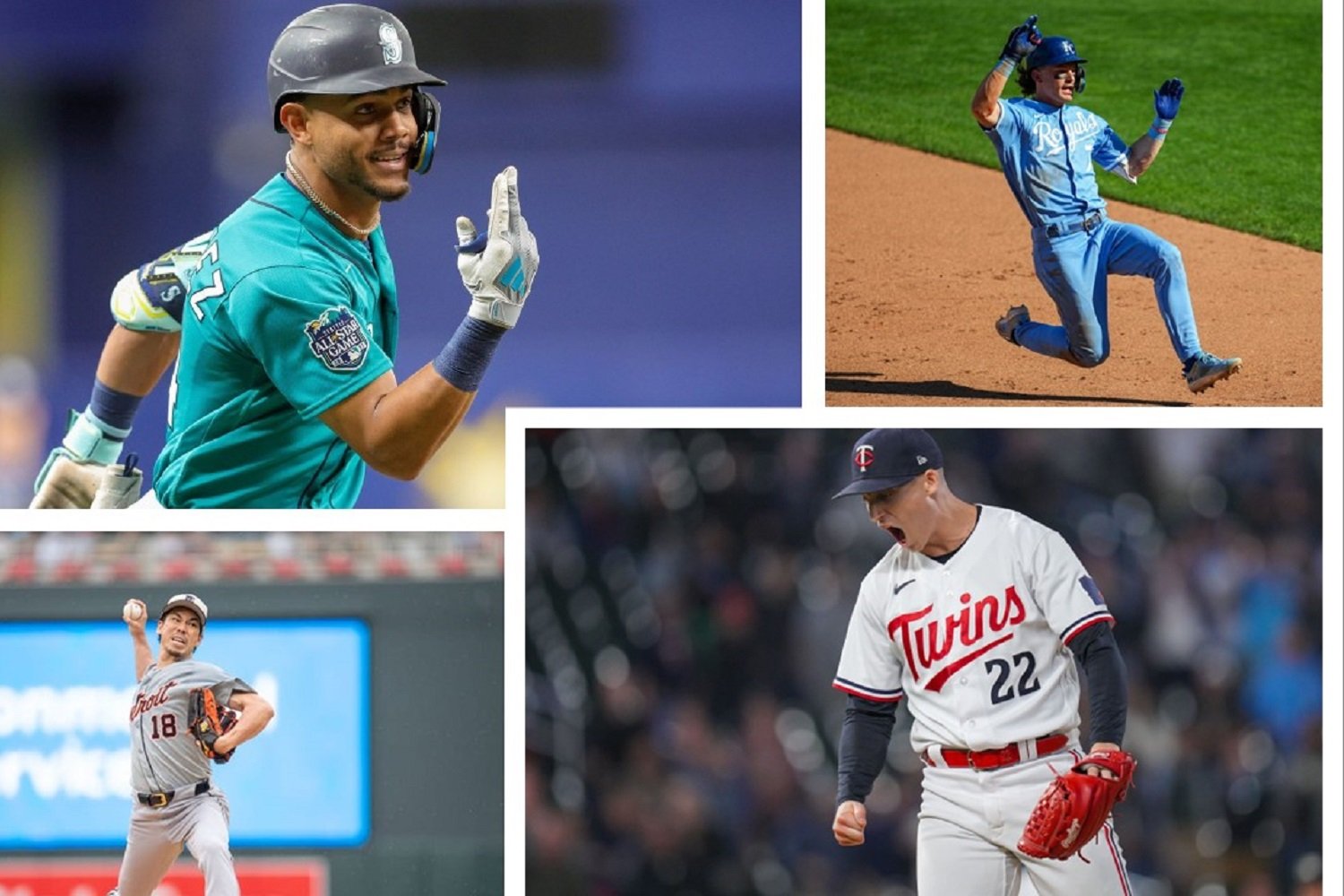 As the final week of the 2024 season unfolds, the American League Wild Card race is heating up, and it’s a battle few saw coming. The Minnesota Twins, Detroit Tigers, Kansas City Royals, and Seattle Mariners are locked in a fierce four-team food fight for the final two Wild Card spots. With October looming, every game and every pitch could swing the momentum, and the drama is just beginning. Kansas City Royals (Current Record: 82-74) FanGraphs Playoff Odds: 69.6% Remaining Schedule: 3 Games @ Washington, 3 Games @ Atlanta The Royals have been freefalling in recent weeks, with a 7-11 record in September. Entering play on Sept. 1, FanGraphs had them at a 79.5% chance to make the playoffs, which has only dropped slightly despite their poor play; they can thank the Twins for that. Their final week schedule is tough, because they have to go on the road for six games, and they have a 37-38 record away from Kauffman Stadium. Few thought Kansas City would be in this position in 2024, and they have been one of baseball’s best stories throughout the season. In a weird schedule quirk, the Royals finish the season with three straight series against NL opponents, including two road series to end the year in Washington and Atlanta. The Nationals have the third-worst record in the NL and have been outscored by 100 runs. They've been playing solely for pride for multiple weeks, and they clearly don't have much of that; they just had to demote starting shortstop C.J. Abrams to the minor leagues after he stayed out until morning at a Chicago casino. This opponent might come precisely at the time when Kansas City desperately needs to get back on track. Atlanta is a much different story, as they need to track down the Mets or Diamondbacks over the final week to earn a playoff spot. That series figures to be a brawl, and makes the Royals' path to the postseason fairly perilous. They have ace lefty Cole Ragans pitching Tuesday night in Washington, and therefore, they'll have the option to use him again Sunday if a berth is on the line. Detroit Tigers (Current Record: 82-74) FanGraphs Playoff Odds: 69.2% Remaining Schedule: 3 vs. Tampa, 3 vs. Chicago (AL) The Tigers have moved from an afterthought in the AL to a serious contender, due to a hot stretch since the trade deadline. As a reminder, the Tigers were active sellers at the deadline, dealing away Jack Flaherty, Mark Canha, Andrew Chafin, and Carson Kelly. Detroit responded with a 17-11 record (.607 W-L%) in August and have played at an even hotter pace in September, with a 12-6 record (.667 W-L%). On Aug. 1, FanGraphs pegged the Tigers as having a 0.5% chance of making the playoffs. It’s been an unbelievable run, no matter what happens this week. Detroit starts the final week by facing Tampa at home. The Rays have hovered around the .500 mark in a tough AL East with two strong teams at the top. Tampa is pesky even when they struggle and are 11-10 this month, so they should provide a competitive series, despite not being in the playoff race. The schedule makers inadvertently gave the Tigers a massive gift on the season’s final weekend--one that might help them secure a playoff berth. Three games against the Chicago White Sox, the worst baseball team in history, should allow Detroit to end the year on a high note. Chicago has five wins in September, more than they accumulated in July or August. Minnesota fans have to hope the White Sox can steal one game in the series. Likely AL Cy Young winner Tarik Skubal pitches Tuesday, just like Ragans, and can pitch twice this week if the team needs him Sunday. Minnesota Twins (Current Record: 81-75) FanGraphs Playoff Odds: 54.7% Remaining Schedule 3 vs. Miami, 3 vs. Baltimore The Twins have posted a .500 record or above in every month of the season, except for September. On Sept. 1, FanGraphs projected the Twins’ playoff odds at 91.7%, with a 20% chance to still win the AL Central. Cleveland clinched the division over the weekend, and Minnesota has seen their playoff chances shrink significantly. After a frustrating series in Boston, the Twins find themselves on the outside looking in for the final spot. Minnesota also has arguably the toughest remaining strength of schedule between these four teams. A three-game series against Miami allows the Twins to put themselves back into the playoff picture. The Marlins are the NL’s worst team this season, and they have been outscored by over 220 runs. Minnesota is projected to start Bailey Ober, Simeon Woods Richardson, and David Festa in the three-game set that may very well decide their playoff fate. In the year's final series, the Twins will face the Orioles, who will likely have little to play for in the three-game set. Baltimore is all but locked into the top Wild Card spot, and will have an opportunity to line up their playoff rotation and rest some of their regular players. The Twins must take advantage of a lesser version of the Orioles. Ober could pitch Sunday, as well as Tuesday, and Pablo López will pitch Friday or Saturday, assuming the weekend games still matter. Seattle Mariners (Current Record: 80-76) FanGraphs Playoff Odds: 6.1% Remaining Schedule: 3 @ Houston, 3 vs. Oakland Poor play by the Twins and Royals has thrust the Mariners back into the playoff picture. Seattle played sub-.500 ball in July and August, before a modest September surge that might save their playoff hopes. When the month started, Seattle had a 7.3% chance of making the playoffs, and they're more or less in the same spot now. After a heartbreaking loss on Sunday, the Mariners will need help from the AL Central contenders while facing two division foes who know them well. The Mariners have done surprisingly well against the Astros this season, with a 6-4 record heading into their final three-game set. However, they haven’t faced each other since mid-July, and Houston has played significantly better in the second half of the season. It will be a tough series, especially for a team 10 games below .500 on the road. Seattle ends the year at home, with a three-game series against an Oakland team that has gone 3-7 in its last 10 contests. These two teams know each other well, with the Mariners holding a 6-4 advantage so far in 2024. The Twins find themselves in an interesting situation, with three teams standing between them and a playoff spot. Sunday's doubleheader double whammy also means the Twins don't control their own fate. Based on their head-to-head matchups this season, the Twins hold the tiebreaker against all three teams, which might turn out to be the difference between making or missing the playoffs, but they have to play well over their final two series to make those tiebreakers matter. How will the final week play out for the AL Wild Card contenders? Add your record and playoff predictions in the comments, below.
 -
Over the last two seasons, Bailey Ober has established himself as one of the American League’s best starting pitchers. The Twins have seen few pitchers of Ober’s caliber come through the system over the last two decades. Image courtesy of Matt Krohn-USA TODAY Sports Over the last two seasons, Bailey Ober has established himself as one of the American League’s best starting pitchers. The Twins have seen few pitchers of Ober’s caliber come through the system over the last two decades. It can be challenging for fans of any organization to look on the bright side when a team is In the middle of a frustrating stretch of games. Fingers get pointed at the players, the manager, and the ownership group for various reasons. However, one thing has become abundantly clear in the season’s second half– Bailey Ober is one of the American League’s best starting pitchers. The Twins drafted Ober in the 12th round of the 2017 MLB Draft from the College of Charleston. He fits a specific type of pitcher this front office has targeted in drafting and developing. He’s a tall, right-handed pitcher from a lesser-known college who can add velocity and improve his pitch mix. During the 2020 season, Ober worked on his strength, conditioning, and pitching mechanics to increase his velocity and put himself on the prospect map. Ober made his big-league debut during the 2021 season with mixed results. In 92 1/3 innings, he posted a 4.19 ERA with a 1.20 WHIP and 9.4 K/9. He improved during the 2022 season, with his ERA (3.21) and WHIP (1.05) dropping. However, he was limited to less than 60 innings as he bounced up and down from Triple-A. Ober has established himself at the big-league level over the last two seasons. Since 2023, he ranks 10th among AL starting pitchers in fWAR. His BB/9, K/9, BABIP, and LOB% rank in the top five among AL starters, and his WPA is ahead of pitchers like Pablo López, Luis Castillo, and Kevin Gausman. He’s in an elite company and seems to be finding another level in 2024. So, what does it mean to be homegrown? Many fans will argue over what it truly means to be homegrown. In recent years, the Twins have added Joe Ryan, who had yet to make his big-league debut but had been drafted and developed in the Rays system. He’s continued to develop as a pitcher since joining the organization, but Minnesota didn’t draft him. For this article, the pitchers below were drafted and developed in the Twins organization. Here are some of the other homegrown options for the Twins over the last two decades. Homegrown Option 1: José Berríos The Twins drafted Berríos with the 32nd overall pick in the 2012 MLB Draft out of high school in Puerto Rico. He quickly became a top-100 prospect and peaked as a consensus top-30 prospect entering the 2016 season. Berríos spent parts of six seasons in a Twins uniform and was selected to two All-Star teams. In over 780 innings, he posted a 4.08 ERA with a 1.23 WHIP while accumulating 10.0 WAR with two seasons of 3.5 WAR or higher. During his Twins tenure, he was considered among the AL’s best-starting pitchers, so he’s the most recent homegrown pitcher at a similar level to Ober. Homegrown Option 2: Kyle Gibson Gibson was selected by the Twins with the 22nd pick in the 2009 MLB Draft from the University of Missouri. (Pay no attention to the future Hall of Fame outfielder taken shortly after him). Gibson was never an All-Star with the Twins, but he compiled solid numbers over seven seasons. He posted a 4.52 ERA with a 1.41 WHIP in over 1000 innings. That doesn’t tell the whole story of his Twins tenure. He led the team in rWAR during the 2015 season and finished second during the 2018 season behind Eddie Rosario. Gibson likely ranks behind Berríos in the homegrown rankings, but he’s managed to pitch 12 seasons and make an All-Star team. Homegrown Option 3: Scott Baker The Twins took Baker with their second-round pick in 2003 from Oklahoma State University. He pitched 958 innings across seven seasons with the Twins and posted a 4.15 ERA with a 1.26 WHIP. His best season was in 2008 when he posted a 3.45 ERA in 172 1/3 innings and finished second on the team in rWAR behind Joe Mauer. Baker fits the mold of the previous front office regime with a low strikeout rate and the ability to pound the zone with strikes. He outperformed expectations but ranks behind Gibson and Berríos. Other pitchers are potentially on their way to joining the names listed above. David Festa and Zebby Matthews have shot up prospect rankings based on their 2024 performance. Minnesota has other pitchers in the farm system who are expected to impact the big-league roster in the coming years, including Marco Raya, Andrew Morris, and Charlee Soto. There are no guarantees that any of these arms will be as good as Ober, so it’s time for fans to appreciate how good he has been for the Twins. Is Ober the best homegrown pitcher in recent memory? Should any other pitchers be in the conversation? Leave a COMMENT and start the discussion. View full article
-
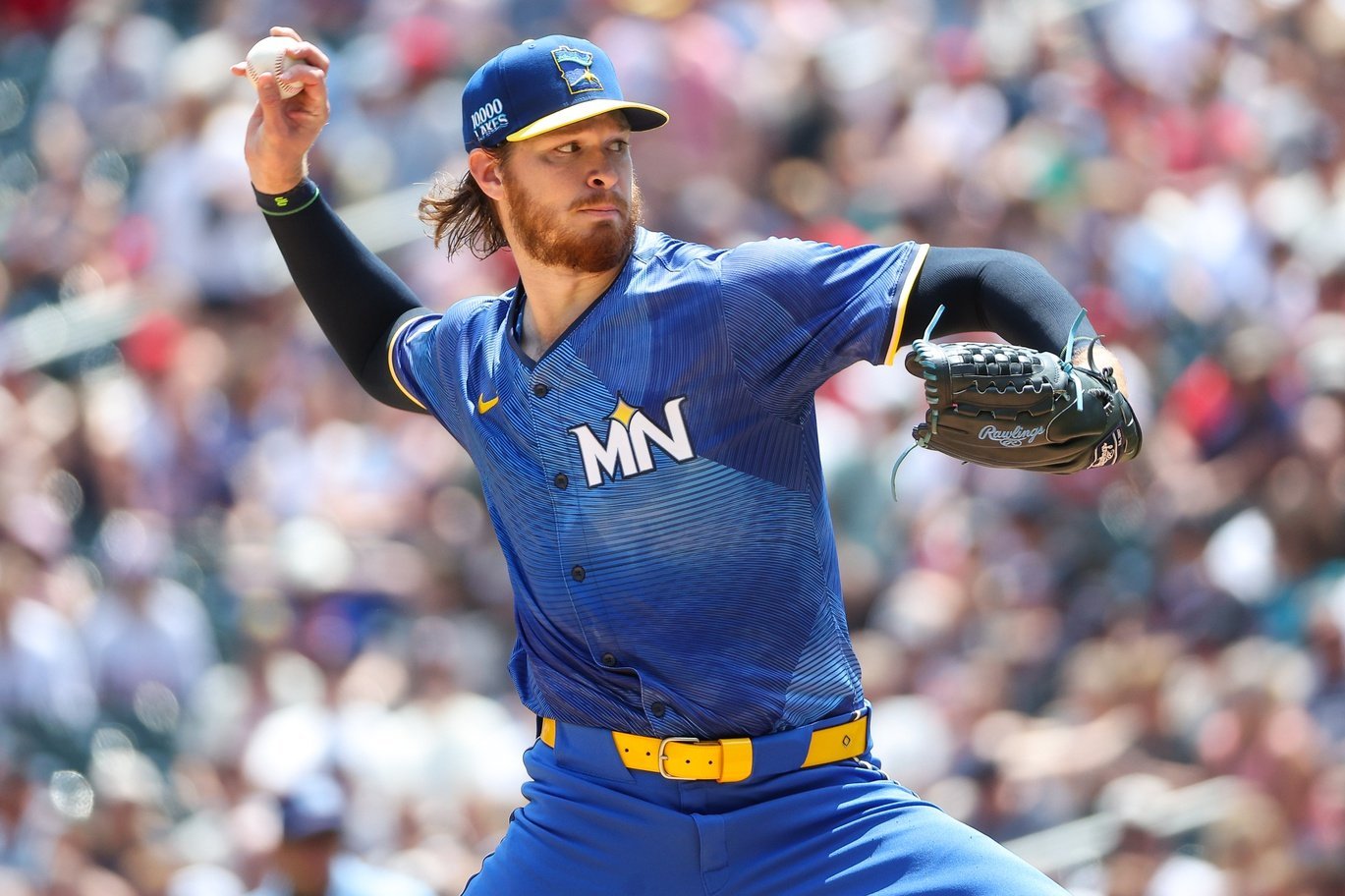 It can be challenging for fans of any organization to look on the bright side when a team is In the middle of a frustrating stretch of games. Fingers get pointed at the players, the manager, and the ownership group for various reasons. However, one thing has become abundantly clear in the season’s second half– Bailey Ober is one of the American League’s best starting pitchers. The Twins drafted Ober in the 12th round of the 2017 MLB Draft from the College of Charleston. He fits a specific type of pitcher this front office has targeted in drafting and developing. He’s a tall, right-handed pitcher from a lesser-known college who can add velocity and improve his pitch mix. During the 2020 season, Ober worked on his strength, conditioning, and pitching mechanics to increase his velocity and put himself on the prospect map. Ober made his big-league debut during the 2021 season with mixed results. In 92 1/3 innings, he posted a 4.19 ERA with a 1.20 WHIP and 9.4 K/9. He improved during the 2022 season, with his ERA (3.21) and WHIP (1.05) dropping. However, he was limited to less than 60 innings as he bounced up and down from Triple-A. Ober has established himself at the big-league level over the last two seasons. Since 2023, he ranks 10th among AL starting pitchers in fWAR. His BB/9, K/9, BABIP, and LOB% rank in the top five among AL starters, and his WPA is ahead of pitchers like Pablo López, Luis Castillo, and Kevin Gausman. He’s in an elite company and seems to be finding another level in 2024. So, what does it mean to be homegrown? Many fans will argue over what it truly means to be homegrown. In recent years, the Twins have added Joe Ryan, who had yet to make his big-league debut but had been drafted and developed in the Rays system. He’s continued to develop as a pitcher since joining the organization, but Minnesota didn’t draft him. For this article, the pitchers below were drafted and developed in the Twins organization. Here are some of the other homegrown options for the Twins over the last two decades. Homegrown Option 1: José Berríos The Twins drafted Berríos with the 32nd overall pick in the 2012 MLB Draft out of high school in Puerto Rico. He quickly became a top-100 prospect and peaked as a consensus top-30 prospect entering the 2016 season. Berríos spent parts of six seasons in a Twins uniform and was selected to two All-Star teams. In over 780 innings, he posted a 4.08 ERA with a 1.23 WHIP while accumulating 10.0 WAR with two seasons of 3.5 WAR or higher. During his Twins tenure, he was considered among the AL’s best-starting pitchers, so he’s the most recent homegrown pitcher at a similar level to Ober. Homegrown Option 2: Kyle Gibson Gibson was selected by the Twins with the 22nd pick in the 2009 MLB Draft from the University of Missouri. (Pay no attention to the future Hall of Fame outfielder taken shortly after him). Gibson was never an All-Star with the Twins, but he compiled solid numbers over seven seasons. He posted a 4.52 ERA with a 1.41 WHIP in over 1000 innings. That doesn’t tell the whole story of his Twins tenure. He led the team in rWAR during the 2015 season and finished second during the 2018 season behind Eddie Rosario. Gibson likely ranks behind Berríos in the homegrown rankings, but he’s managed to pitch 12 seasons and make an All-Star team. Homegrown Option 3: Scott Baker The Twins took Baker with their second-round pick in 2003 from Oklahoma State University. He pitched 958 innings across seven seasons with the Twins and posted a 4.15 ERA with a 1.26 WHIP. His best season was in 2008 when he posted a 3.45 ERA in 172 1/3 innings and finished second on the team in rWAR behind Joe Mauer. Baker fits the mold of the previous front office regime with a low strikeout rate and the ability to pound the zone with strikes. He outperformed expectations but ranks behind Gibson and Berríos. Other pitchers are potentially on their way to joining the names listed above. David Festa and Zebby Matthews have shot up prospect rankings based on their 2024 performance. Minnesota has other pitchers in the farm system who are expected to impact the big-league roster in the coming years, including Marco Raya, Andrew Morris, and Charlee Soto. There are no guarantees that any of these arms will be as good as Ober, so it’s time for fans to appreciate how good he has been for the Twins. Is Ober the best homegrown pitcher in recent memory? Should any other pitchers be in the conversation? Leave a COMMENT and start the discussion.
- 20 comments
-
- 3
-
-
- bailey ober
- jose berrios
- (and 2 more)
-
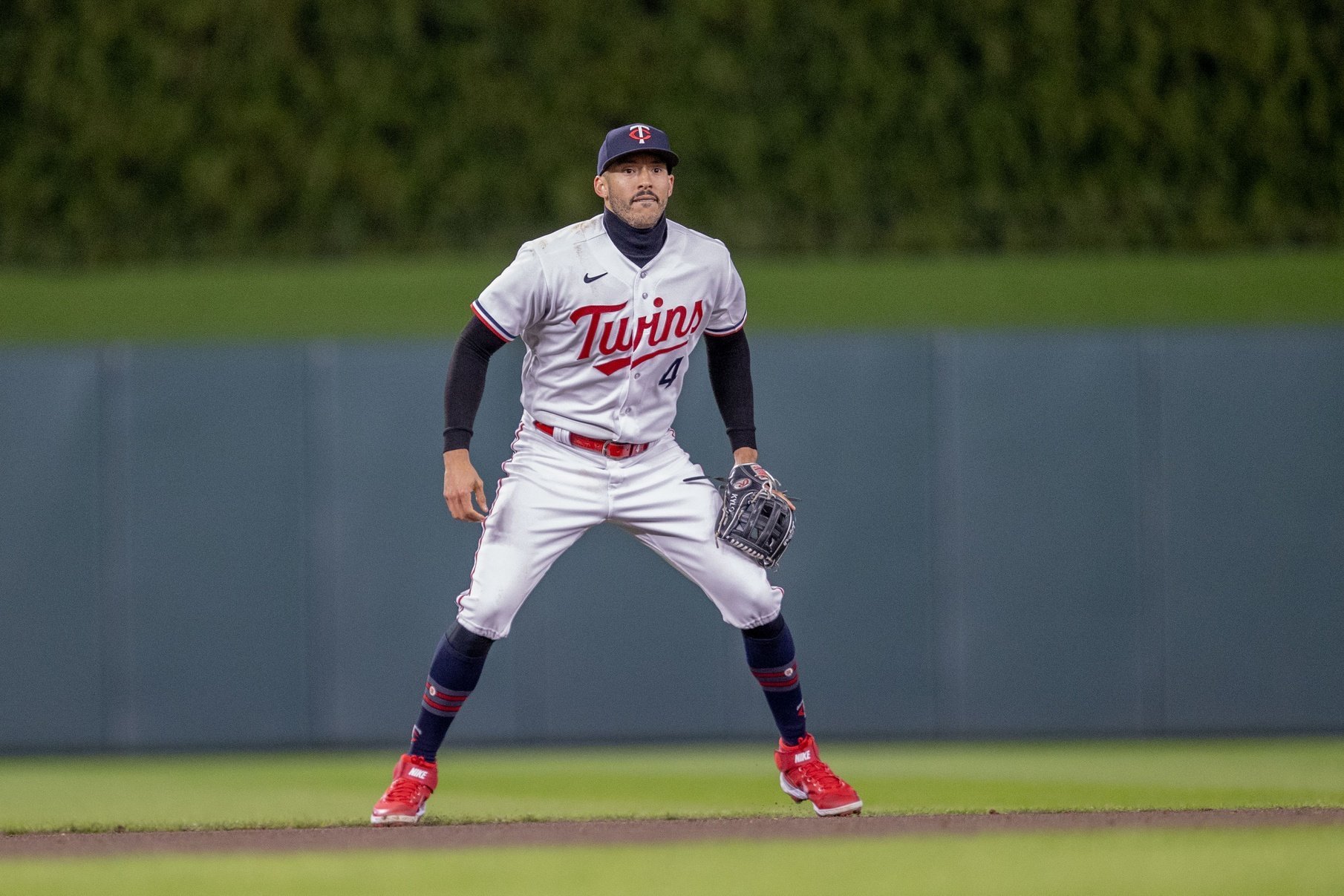 Everything was going great for Carlos Correa during the first half of the 2024 season. He had recovered from the plantar fasciitis that plagued him during the previous year, and hit .308/.377/.520 with 16 doubles and 13 home runs. Correa was named to the AL All-Star team for the first time in a Twins uniform, and he'd helped the Twins fight back from a disastrous start to the season to put the team into playoff contention. It might have been the high point of his Twins' tenure--and then, that blasted foot thing happened again. The Twins placed Correa on the injured list coming out of the All-Star break for treatment of plantar fasciitis in his right foot, the opposite of the one that flared up in 2023. At the time, it was seen as precautionary rest--the kind he didn’t get last season. The Twins and Correa spoke optimistically about him returning quickly to help the team in the second half. Unfortunately, the injury took longer than expected, including a new treatment that Correa called “painful to the point it would bring tears to my eyes.” After a two-month stint on the IL, he returned to the Twins, but he's clearly playing at something less than 100% health. Over the last two seasons, age and his growing injury history have changed Correa’s long-term defensive outlook. He continues to provide value at shortstop, with an overall Outs Above Average rating and Arm Strength that each rank in the 80th percentile or higher. One of the reasons the Twins were willing to sign Correa to a lucrative long-term deal was because of the value he provides on both sides of the ball. Few guys can play one of baseball’s most demanding positions throughout their careers. It might be time for the Twins to start considering whether a position switch is in the best long-term interest of Correa and his health. One of the most common positional switches for shortstops is to move to third base. Correa was willing to move to third base with the Mets, before New York backed out of their deal due to concerns over his injury-repaired ankle. The Twins could consider moving Correa to third, but that position might inflict of the same wear and tear, because of how baseball teams now position third basemen and what they ask of those players in terms of range. His plantar fasciitis may continue to flare up at the hot corner, and the club might need to consider other options. Another potential option is to move Correa to first base, a position with demonstrably lighter defensive responsibilities. Minnesota has seen firsthand how valuable first base defense can be this year, with Carlos Santana expected to win the AL Gold Glove. An argument can be made that the Twins should bring back Santana next season, because of what he has provided to the club. However, the Twins have shown a propensity to add veteran position players for one year and let them walk for the following season (e.g., Michael A. Taylor, Donovan Solano, and Gio Urshela). Given that the team also faces severe financial constraints this winter, first figures to be open. It seems unlikely Correa would want to move to first base, but it might be in the best long-term interest of his health. Hall of Fame shortstop Ernie Banks extended his career and ensured his own longevity with a mid-career move to first base. Correa, a student of the game well aware of the unforgiving aging curve of the modern game, might find that example instructive. So, who would be the replacement for Correa at shortstop? Brooks Lee is the natural choice, since he has primarily played shortstop throughout his collegiate and professional career. His defense at shortstop is worse than Correa's, but he is younger and has a high baseball IQ. Fielding Run Value and Outs Above Average currently peg him as roughly average there, but the sample is tiny. He has shown some flaws at the position, and his defensive shortcomings might be more evident over a 162-game season. On the other hand, he's looked great going to his right, and made some impressive plays. The Twins have Correa under team control for at least four more seasons, and a defensive switch has to be on the table at some point. If his feet keep bothering him, Correa must be open to moving to a less demanding defensive position. The Twins have a viable alternative to him, si next spring could be the right time for that shift. Do the Twins need to consider a switch with Correa for next season? Leave a comment and start the discussion.
- 61 comments
-
- 7
-

-
-

-
- carlos correa
- brooks lee
- (and 1 more)
-
Minnesota's superstar shortstop has missed time in each of the last two seasons due to plantar fasciitis. Does his recurring injury point to the Twins needing to make a long-term defensive switch? Image courtesy of Jesse Johnson-USA TODAY Sports Minnesota's superstar shortstop has missed time in each of the last two seasons due to plantar fasciitis. Does his recurring injury point to the Twins needing to make a long-term defensive switch? Everything was going great for Carlos Correa during the first half of the 2024 season. He had recovered from the plantar fasciitis that plagued him during the previous year, and hit .308/.377/.520 with 16 doubles and 13 home runs. Correa was named to the AL All-Star team for the first time in a Twins uniform, and he'd helped the Twins fight back from a disastrous start to the season to put the team into playoff contention. It might have been the high point of his Twins' tenure--and then, that blasted foot thing happened again. The Twins placed Correa on the injured list coming out of the All-Star break for treatment of plantar fasciitis in his right foot, the opposite of the one that flared up in 2023. At the time, it was seen as precautionary rest--the kind he didn’t get last season. The Twins and Correa spoke optimistically about him returning quickly to help the team in the second half. Unfortunately, the injury took longer than expected, including a new treatment that Correa called “painful to the point it would bring tears to my eyes.” After a two-month stint on the IL, he returned to the Twins, but he's clearly playing at something less than 100% health. Over the last two seasons, age and his growing injury history have changed Correa’s long-term defensive outlook. He continues to provide value at shortstop, with an overall Outs Above Average rating and Arm Strength that each rank in the 80th percentile or higher. One of the reasons the Twins were willing to sign Correa to a lucrative long-term deal was because of the value he provides on both sides of the ball. Few guys can play one of baseball’s most demanding positions throughout their careers. It might be time for the Twins to start considering whether a position switch is in the best long-term interest of Correa and his health. One of the most common positional switches for shortstops is to move to third base. Correa was willing to move to third base with the Mets, before New York backed out of their deal due to concerns over his injury-repaired ankle. The Twins could consider moving Correa to third, but that position might inflict of the same wear and tear, because of how baseball teams now position third basemen and what they ask of those players in terms of range. His plantar fasciitis may continue to flare up at the hot corner, and the club might need to consider other options. Another potential option is to move Correa to first base, a position with demonstrably lighter defensive responsibilities. Minnesota has seen firsthand how valuable first base defense can be this year, with Carlos Santana expected to win the AL Gold Glove. An argument can be made that the Twins should bring back Santana next season, because of what he has provided to the club. However, the Twins have shown a propensity to add veteran position players for one year and let them walk for the following season (e.g., Michael A. Taylor, Donovan Solano, and Gio Urshela). Given that the team also faces severe financial constraints this winter, first figures to be open. It seems unlikely Correa would want to move to first base, but it might be in the best long-term interest of his health. Hall of Fame shortstop Ernie Banks extended his career and ensured his own longevity with a mid-career move to first base. Correa, a student of the game well aware of the unforgiving aging curve of the modern game, might find that example instructive. So, who would be the replacement for Correa at shortstop? Brooks Lee is the natural choice, since he has primarily played shortstop throughout his collegiate and professional career. His defense at shortstop is worse than Correa's, but he is younger and has a high baseball IQ. Fielding Run Value and Outs Above Average currently peg him as roughly average there, but the sample is tiny. He has shown some flaws at the position, and his defensive shortcomings might be more evident over a 162-game season. On the other hand, he's looked great going to his right, and made some impressive plays. The Twins have Correa under team control for at least four more seasons, and a defensive switch has to be on the table at some point. If his feet keep bothering him, Correa must be open to moving to a less demanding defensive position. The Twins have a viable alternative to him, si next spring could be the right time for that shift. Do the Twins need to consider a switch with Correa for next season? Leave a comment and start the discussion. View full article
-
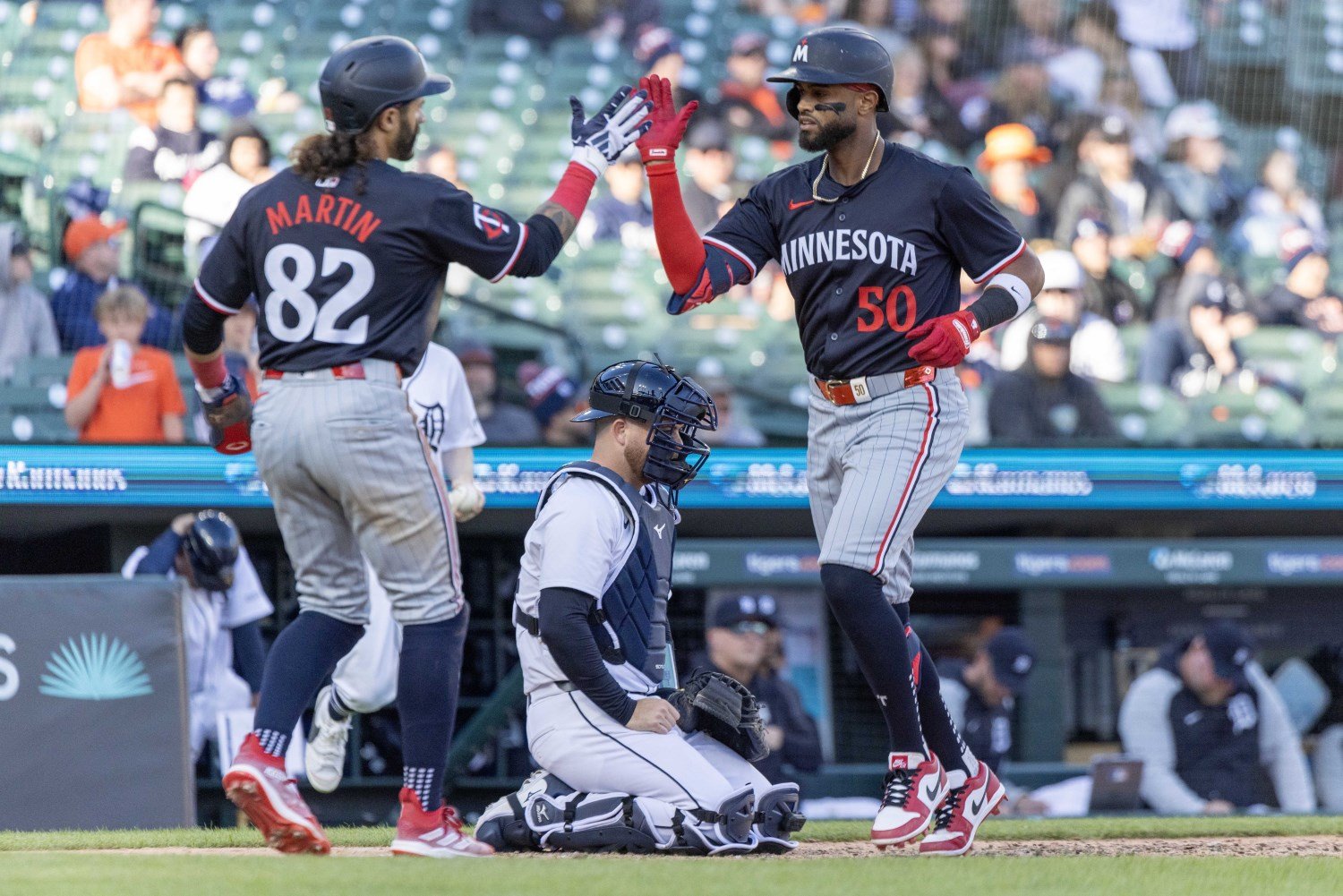 Baseball, with its 162-game marathon of a regular season, often tempts fans and players to believe that early-season games aren’t as critical as those down the stretch. After alta long grind, and a single game in April can feel like a blip in the grand scheme of things. By September, much of April is often forgotten. Yet, in the modern playoff structure, every game carries weight, and sometimes, even a seemingly unimportant April afternoon can hold immense consequences for the postseason race. For the Twins, MLB Network’s Jon Morosi identified one game in a doubleheader against the Detroit Tigers that could wind up saving their season. On that day, the Tigers entered the eighth inning holding a 3-2 lead, poised to hand the Twins a significant intradivisional loss. Detroit had an expected winning percentage of over 70% entering that frame. Carlos Santana and Kyle Farmer flied out to start the frame, raising the Tigers' expected winning percentage to 80% with only four outs remaining. It looked like it was going to be a heartbreaking loss for the Twins. Alex Kirilloff was due up for the Twins, and with a lefty on the mound (Tyler Holton), the Twins decided to bring in Ryan Jeffers as a pinch-hitter. Detroit countered and brought in a righty, Shelby Miller, to face Jeffers. In the at-bat, Jeffers got ahead in the count 2-0 before smashing a game-tying home run. From there, the game got even more interesting. The game went to extra innings, with neither team scoring in the 10th frame. Jeffers knocked in the go-ahead run with a single in the top of the 11th, but Detroit tied it in the bottom half of the inning. Byron Buxton started on second base for the top of the 12th, and Detroit walked Willi Castro on four pitches. Christian Vázquez attempted a sacrifice bunt, but the Tigers messed up the play and didn’t record an out. Austin Martin walked with the bases loaded to give the Twins a one-run lead. Farmer and Santana struck out looking for the first two outs of the innings, so Jeffers was up again in a prominent spot. He hit a ground ball down the third-base line, which Tigers third baseman Zach McKinstry flubbed. Three runs scored. Matt Wallner capped off the frame with a three-run bomb to put an exclamation point on the win. At the time, it felt like just another game between two AL Central rivals. But as the season unfolds and the playoff picture sharpens, that one victory looms large. Heading into that game, the Tigers were right in the mix for the division lead, and with the AL Central as tightly contested as ever, each head-to-head matchup carried extra significance. Had the Tigers hung on for the win, they would currently own the tiebreaker over the Twins—a crucial factor in a season where tiebreakers have replaced Game 163 as the deciding factor between playoff teams. Even more, the Tigers would currently be a game and a half ahead of Minnesota right now, instead of half a game behind. Instead, Minnesota emerged victorious, creating a buffer between themselves and Detroit that has endured for months. The two errors the Tigers committed in that game were a microcosm of how razor-thin the margins in baseball can be. What seemed like a typical game in April now looms as one of the most consequential days of the season for both clubs. Their ability to edge out Detroit in a key April contest for the Twins may ultimately prove the difference between a Wild Card spot and a missed opportunity. The Tigers’ missteps allowed Minnesota to seize a critical victory and the all-important tiebreaker in the season series. These small moments can ripple through the season and change its entire trajectory. Apr. 13 was not just another game, but a pivotal point for both teams. The AL Central race has been incredibly tight, with Minnesota and Detroit frequently battling for position in the standings. Every victory and loss is magnified, and as the season nears its conclusion, the small moments determine whether a team will be playing postseason baseball or watching from home. If the Twins do hold on to a playoff spot when the dust settles next weekend, they'll owe much to a long-ago win in a goofy game in Detroit. Has there been a more critical win for the Twins this season? Leave a comment and start the discussion.
- 2 comments
-
- 3
-
-
- ryan jeffers
- matt wallner
- (and 2 more)
-
Minnesota is in the middle of one of its most challenging weeks of the season. However, one win back in April might have saved its playoff hopes. Image courtesy of © David Reginek-Imagn Images Minnesota is in the middle of one of its most challenging weeks of the season. However, one win back in April might have saved its playoff hopes. Baseball, with its 162-game marathon of a regular season, often tempts fans and players to believe that early-season games aren’t as critical as those down the stretch. After alta long grind, and a single game in April can feel like a blip in the grand scheme of things. By September, much of April is often forgotten. Yet, in the modern playoff structure, every game carries weight, and sometimes, even a seemingly unimportant April afternoon can hold immense consequences for the postseason race. For the Twins, MLB Network’s Jon Morosi identified one game in a doubleheader against the Detroit Tigers that could wind up saving their season. On that day, the Tigers entered the eighth inning holding a 3-2 lead, poised to hand the Twins a significant intradivisional loss. Detroit had an expected winning percentage of over 70% entering that frame. Carlos Santana and Kyle Farmer flied out to start the frame, raising the Tigers' expected winning percentage to 80% with only four outs remaining. It looked like it was going to be a heartbreaking loss for the Twins. Alex Kirilloff was due up for the Twins, and with a lefty on the mound (Tyler Holton), the Twins decided to bring in Ryan Jeffers as a pinch-hitter. Detroit countered and brought in a righty, Shelby Miller, to face Jeffers. In the at-bat, Jeffers got ahead in the count 2-0 before smashing a game-tying home run. From there, the game got even more interesting. The game went to extra innings, with neither team scoring in the 10th frame. Jeffers knocked in the go-ahead run with a single in the top of the 11th, but Detroit tied it in the bottom half of the inning. Byron Buxton started on second base for the top of the 12th, and Detroit walked Willi Castro on four pitches. Christian Vázquez attempted a sacrifice bunt, but the Tigers messed up the play and didn’t record an out. Austin Martin walked with the bases loaded to give the Twins a one-run lead. Farmer and Santana struck out looking for the first two outs of the innings, so Jeffers was up again in a prominent spot. He hit a ground ball down the third-base line, which Tigers third baseman Zach McKinstry flubbed. Three runs scored. Matt Wallner capped off the frame with a three-run bomb to put an exclamation point on the win. At the time, it felt like just another game between two AL Central rivals. But as the season unfolds and the playoff picture sharpens, that one victory looms large. Heading into that game, the Tigers were right in the mix for the division lead, and with the AL Central as tightly contested as ever, each head-to-head matchup carried extra significance. Had the Tigers hung on for the win, they would currently own the tiebreaker over the Twins—a crucial factor in a season where tiebreakers have replaced Game 163 as the deciding factor between playoff teams. Even more, the Tigers would currently be a game and a half ahead of Minnesota right now, instead of half a game behind. Instead, Minnesota emerged victorious, creating a buffer between themselves and Detroit that has endured for months. The two errors the Tigers committed in that game were a microcosm of how razor-thin the margins in baseball can be. What seemed like a typical game in April now looms as one of the most consequential days of the season for both clubs. Their ability to edge out Detroit in a key April contest for the Twins may ultimately prove the difference between a Wild Card spot and a missed opportunity. The Tigers’ missteps allowed Minnesota to seize a critical victory and the all-important tiebreaker in the season series. These small moments can ripple through the season and change its entire trajectory. Apr. 13 was not just another game, but a pivotal point for both teams. The AL Central race has been incredibly tight, with Minnesota and Detroit frequently battling for position in the standings. Every victory and loss is magnified, and as the season nears its conclusion, the small moments determine whether a team will be playing postseason baseball or watching from home. If the Twins do hold on to a playoff spot when the dust settles next weekend, they'll owe much to a long-ago win in a goofy game in Detroit. Has there been a more critical win for the Twins this season? Leave a comment and start the discussion. View full article
-
Twins Hope a Returning Pitching Duo Serve as Bullpen Reinforcements
Cody Christie posted an article in Twins
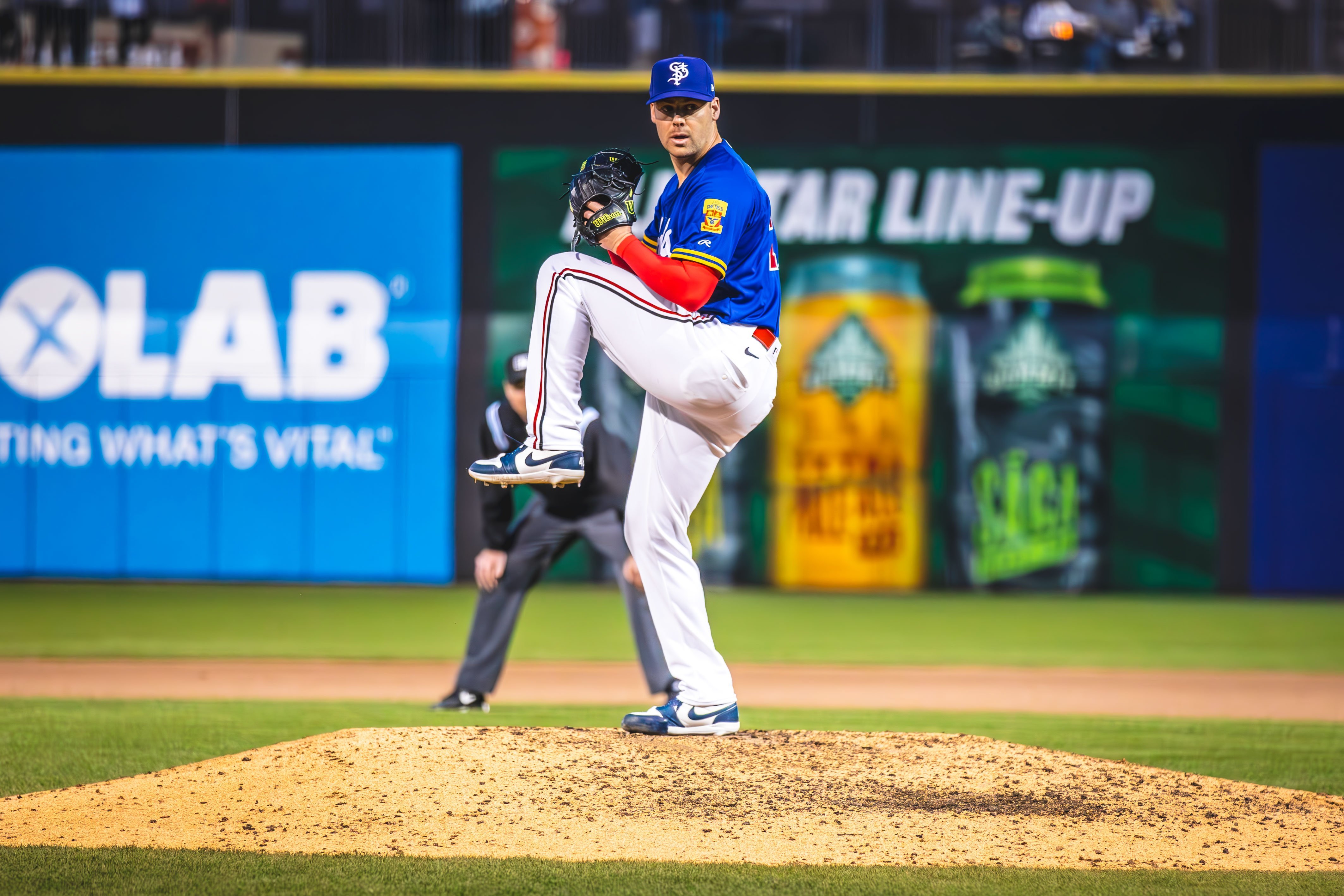 As the Twins push toward October, their bullpen has been a point of emphasis in solidifying their postseason roster. A critical component of their strategy could involve welcoming back two key arms: Chris Paddack and Justin Topa. Both hurlers are progressing in their rehab journeys, and the team is hopeful their returns will provide much-needed stability to a bullpen that has seen its share of ups and downs. Paddack, who has been recovering from a right forearm strain, took a significant step forward by throwing his first bullpen session on Friday. This step marked a pivotal moment in his comeback, as Paddack’s potential to offer high-velocity, late-inning relief could be a game-changer. Last season, the Twins used Paddack as a reliever in October, in his first action since returning from his second Tommy John surgery. He made two scoreless appearances, covering 3 2/3 innings with six strikeouts and no walks. “I can say, next homestand, ‘I want to push,’ and be ready to go for Baltimore or something like that, a little redemption from the beginning of the season,” Paddack said. “But if they want me ready for October, I'll nod my head and say, ‘All right, I'll be ready.’” Similarly, Topa, sidelined for months, threw a 30-pitch bullpen on Saturday. Topa joined the Twins this winter as part of the Jorge Polanco trade. Minnesota hoped he’d be a late-inning bullpen option for the entire season, but a knee injury in spring training has kept him sidelined for the entire year. If both pitchers continue to progress smoothly, they could be viable bullpen options come October. “Whatever it is, a handful of innings at the end of the year and then build that into a playoff push, see what happens -- I think for me, the silver lining is just to get back into games and finish the year healthy,” Topa said. “Have that platform to go into the offseason and get ready for next year.” The Twins have already shown a willingness to adjust their pitching staff, as seen with Louie Varland's transition from the starting rotation to the bullpen and the last-minute addition of southpaw swingman Cole Irvin. Varland's stuff has ticked up in short bursts, and his velocity and aggressiveness can play up in critical situations. Unfortunately, he allowed six earned runs in one inning on Saturday, which will hurt his overall numbers for the season. Moving him into relief duties indicates that the Twins are committed to maximizing their best arms down the stretch. However, the bullpen hasn’t been without struggles. Jorge Alcalá has battled inconsistency, and is now ticketed back to St. Paul. The usually dominant Jhoan Durán has faced uncharacteristic challenges. Durán, despite his electric stuff, has had issues in non-save situations, but there are still reasons to trust the team’s closer. The underbelly of the Twins’ bullpen includes pitchers like Scott Blewett, Ronny Henriquez, and Michael Tonkin. That trio of pitchers likely won’t be trusted with innings in the playoffs, so the team needs to find reliable arms to help it win critical games. If Paddack and Topa can return to form, their presence could allow Rocco Baldelli to mix and match more effectively in late innings, easing the pressure on Durán and others. With his starter experience, Paddack could be an ideal fit for multi-inning outings. At the same time, Topa’s arsenal makes him a candidate for high-leverage matchups against both righties and lefties. As the regular season's final weeks unfold, the Twins' ability to get these key arms back in action could be a determining factor in their postseason success. What should the Twins expect from Paddack and Topa? Can they be reliable bullpen assets? Leave a comment and start the discussion.
 -
Minnesota’s bullpen has been the center of attention amid the team’s recent struggles. The Twins hope a pitching duo returning from injury can provide a late-season boost. Image courtesy of Rob Thompson, St. Paul Saints Minnesota’s bullpen has been the center of attention amid the team’s recent struggles. The Twins hope a pitching duo returning from injury can provide a late-season boost. As the Twins push toward October, their bullpen has been a point of emphasis in solidifying their postseason roster. A critical component of their strategy could involve welcoming back two key arms: Chris Paddack and Justin Topa. Both hurlers are progressing in their rehab journeys, and the team is hopeful their returns will provide much-needed stability to a bullpen that has seen its share of ups and downs. Paddack, who has been recovering from a right forearm strain, took a significant step forward by throwing his first bullpen session on Friday. This step marked a pivotal moment in his comeback, as Paddack’s potential to offer high-velocity, late-inning relief could be a game-changer. Last season, the Twins used Paddack as a reliever in October, in his first action since returning from his second Tommy John surgery. He made two scoreless appearances, covering 3 2/3 innings with six strikeouts and no walks. “I can say, next homestand, ‘I want to push,’ and be ready to go for Baltimore or something like that, a little redemption from the beginning of the season,” Paddack said. “But if they want me ready for October, I'll nod my head and say, ‘All right, I'll be ready.’” Similarly, Topa, sidelined for months, threw a 30-pitch bullpen on Saturday. Topa joined the Twins this winter as part of the Jorge Polanco trade. Minnesota hoped he’d be a late-inning bullpen option for the entire season, but a knee injury in spring training has kept him sidelined for the entire year. If both pitchers continue to progress smoothly, they could be viable bullpen options come October. “Whatever it is, a handful of innings at the end of the year and then build that into a playoff push, see what happens -- I think for me, the silver lining is just to get back into games and finish the year healthy,” Topa said. “Have that platform to go into the offseason and get ready for next year.” The Twins have already shown a willingness to adjust their pitching staff, as seen with Louie Varland's transition from the starting rotation to the bullpen and the last-minute addition of southpaw swingman Cole Irvin. Varland's stuff has ticked up in short bursts, and his velocity and aggressiveness can play up in critical situations. Unfortunately, he allowed six earned runs in one inning on Saturday, which will hurt his overall numbers for the season. Moving him into relief duties indicates that the Twins are committed to maximizing their best arms down the stretch. However, the bullpen hasn’t been without struggles. Jorge Alcalá has battled inconsistency, and is now ticketed back to St. Paul. The usually dominant Jhoan Durán has faced uncharacteristic challenges. Durán, despite his electric stuff, has had issues in non-save situations, but there are still reasons to trust the team’s closer. The underbelly of the Twins’ bullpen includes pitchers like Scott Blewett, Ronny Henriquez, and Michael Tonkin. That trio of pitchers likely won’t be trusted with innings in the playoffs, so the team needs to find reliable arms to help it win critical games. If Paddack and Topa can return to form, their presence could allow Rocco Baldelli to mix and match more effectively in late innings, easing the pressure on Durán and others. With his starter experience, Paddack could be an ideal fit for multi-inning outings. At the same time, Topa’s arsenal makes him a candidate for high-leverage matchups against both righties and lefties. As the regular season's final weeks unfold, the Twins' ability to get these key arms back in action could be a determining factor in their postseason success. What should the Twins expect from Paddack and Topa? Can they be reliable bullpen assets? Leave a comment and start the discussion. View full article
-
Are the Twins Using Byron Buxton and Carlos Correa Optimally?
Cody Christie posted an article in Twins
 As the Twins enter the final stretch of their playoff push, they are navigating the return of two of their biggest stars, Byron Buxton and Carlos Correa. Both players, having dealt with lingering injuries throughout the season, have been strategically slotted into the lower part of the lineup, a move that may seem surprising given their status. However, a deeper look at the Twins' strategy reveals a cautious yet calculated approach to managing their health. Buxton and Correa, normally fixtures at the top of the Twins' lineup, have returned to more modest spots in the batting order upon returning from injury. On Saturday, the two stars were slotted into the fifth and sixth spots in the batting order. Buxton has battled a hip injury in recent weeks, while Correa is playing through a painful bout of plantar fasciitis. By placing these stars in lower slots, manager Rocco Baldelli is signaling a desire to ease them back into the grind of regular play without putting too much immediate pressure on them. One significant factor in this lineup adjustment could be to provide the Twins with flexibility. By batting Buxton and Correa lower, Baldelli can remove them from games earlier if the situation allows. For a team aiming for October success, preserving the health of their stars down the stretch is crucial. Buxton has historically struggled to stay on the field, and Correa's foot condition has been a day-to-day concern. Giving them fewer plate appearances could reduce the risk of aggravating their injuries while allowing other, healthier players to step up. While their presence on the field offers a clear advantage from a talent standpoint, the emotional boost that typically accompanies the return of cornerstone players has been more muted in this instance. In past years, Buxton's return from injury would inject a surge of energy into the clubhouse and fan base, often coinciding with solid performances. His home run on Friday night was a prime example of how he can step back into the lineup and provide an immediate boost. Both players have played at an All-Star level in 2024, but they've been limited to a combined 168 games. While their potential to contribute remains undeniable, the team is banking on other players to carry the lineup during the final weeks. On Saturday, both Buxton and Correa were removed from the team’s blowout loss, another sign that the Twins are treading carefully with their star duo. This conservative approach continued into Sunday, as neither player was in the lineup. While Buxton and Correa are back on the roster, their health is questionable enough that Baldelli will continue monitoring their playing time when necessary. The timing of this caution is crucial. The Twins currently sit in the final playoff spot, but they have little room for error when it comes to their postseason aspirations. Detroit, Seattle, and Boston are closing in, especially with Minnesota’s recent slump. By limiting Buxton’s and Correa’s exposure during September, the team is taking a long-term view, hoping to have both at least partially healthy for a potential playoff run. Obviously, health is key for any team heading into October. If Buxton and Correa can avoid setbacks, they’ll likely move back into more prominent spots in the lineup during the postseason. Baldelli and the Twins' front office know that a fully operational Buxton (who can deliver Gold Glove-level defense and power) alongside a healthier Correa would elevate their chances of success. In the meantime, expect the team to handle them with care, utilizing the lower spots in the lineup to control their exposure while keeping the Twins competitive. The balance between maximizing their impact and managing their health will be one of Baldelli’s trickiest challenges as the regular season winds down. The Twins are hoping that these small sacrifices now—like fewer at-bats and an occasional early exit—will pay dividends when the games mean even more come October. Are the Twins optimally handling their star players? Should Correa and Buxton be used more for the stretch run? Leave a comment and start the discussion.
 -
On Saturday, Byron Buxton and Carlos Correa were in the same lineup for the first time in the season’s second half. So, are the Twins optimizing their star players as they return from injury? Image courtesy of © Matt Blewett-USA TODAY Sports On Saturday, Byron Buxton and Carlos Correa were in the same lineup for the first time in the season’s second half. So, are the Twins optimizing their star players as they return from injury? As the Twins enter the final stretch of their playoff push, they are navigating the return of two of their biggest stars, Byron Buxton and Carlos Correa. Both players, having dealt with lingering injuries throughout the season, have been strategically slotted into the lower part of the lineup, a move that may seem surprising given their status. However, a deeper look at the Twins' strategy reveals a cautious yet calculated approach to managing their health. Buxton and Correa, normally fixtures at the top of the Twins' lineup, have returned to more modest spots in the batting order upon returning from injury. On Saturday, the two stars were slotted into the fifth and sixth spots in the batting order. Buxton has battled a hip injury in recent weeks, while Correa is playing through a painful bout of plantar fasciitis. By placing these stars in lower slots, manager Rocco Baldelli is signaling a desire to ease them back into the grind of regular play without putting too much immediate pressure on them. One significant factor in this lineup adjustment could be to provide the Twins with flexibility. By batting Buxton and Correa lower, Baldelli can remove them from games earlier if the situation allows. For a team aiming for October success, preserving the health of their stars down the stretch is crucial. Buxton has historically struggled to stay on the field, and Correa's foot condition has been a day-to-day concern. Giving them fewer plate appearances could reduce the risk of aggravating their injuries while allowing other, healthier players to step up. While their presence on the field offers a clear advantage from a talent standpoint, the emotional boost that typically accompanies the return of cornerstone players has been more muted in this instance. In past years, Buxton's return from injury would inject a surge of energy into the clubhouse and fan base, often coinciding with solid performances. His home run on Friday night was a prime example of how he can step back into the lineup and provide an immediate boost. Both players have played at an All-Star level in 2024, but they've been limited to a combined 168 games. While their potential to contribute remains undeniable, the team is banking on other players to carry the lineup during the final weeks. On Saturday, both Buxton and Correa were removed from the team’s blowout loss, another sign that the Twins are treading carefully with their star duo. This conservative approach continued into Sunday, as neither player was in the lineup. While Buxton and Correa are back on the roster, their health is questionable enough that Baldelli will continue monitoring their playing time when necessary. The timing of this caution is crucial. The Twins currently sit in the final playoff spot, but they have little room for error when it comes to their postseason aspirations. Detroit, Seattle, and Boston are closing in, especially with Minnesota’s recent slump. By limiting Buxton’s and Correa’s exposure during September, the team is taking a long-term view, hoping to have both at least partially healthy for a potential playoff run. Obviously, health is key for any team heading into October. If Buxton and Correa can avoid setbacks, they’ll likely move back into more prominent spots in the lineup during the postseason. Baldelli and the Twins' front office know that a fully operational Buxton (who can deliver Gold Glove-level defense and power) alongside a healthier Correa would elevate their chances of success. In the meantime, expect the team to handle them with care, utilizing the lower spots in the lineup to control their exposure while keeping the Twins competitive. The balance between maximizing their impact and managing their health will be one of Baldelli’s trickiest challenges as the regular season winds down. The Twins are hoping that these small sacrifices now—like fewer at-bats and an occasional early exit—will pay dividends when the games mean even more come October. Are the Twins optimally handling their star players? Should Correa and Buxton be used more for the stretch run? Leave a comment and start the discussion. View full article
-
One Twins minor leaguer was let go for his actions on the field earlier this week. So, who was the pitcher who took the brunt of the damage in the pitch-tipping scandal? Image courtesy of William Parmeter One Twins minor leaguer was let go for his actions on the field earlier this week. So, who was the pitcher who took the brunt of the damage in the pitch-tipping scandal? Earlier this week, ESPN reported that the Twins released 2024 sixth-round pick Derek Bender after a wild series of events. Bender, a catcher, was caught telling the opposition what pitch was coming during a game that had playoff implications for both teams. According to the reports, his reasoning behind tipping pitches was that he wanted the team’s season to be finished so he could go home. Fort Myers lost the game and was eliminated from playoff contention. The pitcher on the mound for this debacle was lefty Ross Dunn, who the Twins selected in the 10th round of the 2023 MLB Draft from Arizona State University. Dunn played his first two collegiate seasons at Florida State, where he pitched very well as a reliever (2.13 ERA, 10.7 K/9) in his freshman season before some struggles as a sophomore (4.88 ERA, 1.42 WHIP, 14.4 K/9). During his junior season, he made 15 starts (65 1/3 innings) while allowing 31 earned runs with an 84-to-44 strikeout-to-walk ratio. Minnesota’s scouts likely were drawn to his strong strikeout numbers (11.6 K/9) during his final college season. Dunn didn’t make his professional debut until this season, and all his appearances came at Low-A, where he was slightly older than the average age of the competition. He made 19 appearances (16 starts) with Fort Myers and posted a 6.46 ERA with a 1.60 WHIP and 8.8 K/9. Dunn surrendered more than one hit per inning, and batters combined for a .829 OPS against him. Most of that damage was from right-handed hitters (.881 OPS), as he held lefties to a .693 OPS in 79 plate appearances. Dunn’s performance in his final start, the pitch-tipping incident, was poor as he was charged with four earned runs on five hits in 1 2/3 innings. However, it wasn’t out of character for him to allow big innings in previous appearances. He had three appearances earlier in the year where he allowed six earned runs and three earned runs or more in nine of his 19 appearances. However, his numbers for the season would look different if the pitch-tipping incident were removed. He entered his final start of the season with a 6.03 ERA with opponents batting .264/.343/.452 (.795) against him in 18 appearances. Based on his final start, his ERA jumped nearly half a run, and his opponent’s OPS increased by over 30 points. Bender might have wanted his season to be done, but his actions impacted Dunn’s performance and his final numbers on the season. Dunn had shown some improvements in his recent starts leading into that game. In five games, he had held opponents to a .203/.286/.367 (.653). There are no guarantees that Dunn would have posted strong numbers in that start, but it should have been his performance to dictate. Dunn isn’t a top prospect in the Twins organization, so every appearance is essential for him to make an impression and show improvement. Minnesota’s player development department has also done a good job turning middle-to-late-round draft picks, like Dunn, into pitching prospects that can impact the farm system in recent years. Many players likely felt the same way as Bender, but they were still professionals and had to perform in the season’s final games. Overall, the Twins will likely take into account this incident when evaluating Dunn’s performance during the 2024 campaign. What can Dunn do next season to put himself on the prospect map? Leave a COMMENT and start the discussion. View full article
-
 Earlier this week, ESPN reported that the Twins released 2024 sixth-round pick Derek Bender after a wild series of events. Bender, a catcher, was caught telling the opposition what pitch was coming during a game that had playoff implications for both teams. According to the reports, his reasoning behind tipping pitches was that he wanted the team’s season to be finished so he could go home. Fort Myers lost the game and was eliminated from playoff contention. The pitcher on the mound for this debacle was lefty Ross Dunn, who the Twins selected in the 10th round of the 2023 MLB Draft from Arizona State University. Dunn played his first two collegiate seasons at Florida State, where he pitched very well as a reliever (2.13 ERA, 10.7 K/9) in his freshman season before some struggles as a sophomore (4.88 ERA, 1.42 WHIP, 14.4 K/9). During his junior season, he made 15 starts (65 1/3 innings) while allowing 31 earned runs with an 84-to-44 strikeout-to-walk ratio. Minnesota’s scouts likely were drawn to his strong strikeout numbers (11.6 K/9) during his final college season. Dunn didn’t make his professional debut until this season, and all his appearances came at Low-A, where he was slightly older than the average age of the competition. He made 19 appearances (16 starts) with Fort Myers and posted a 6.46 ERA with a 1.60 WHIP and 8.8 K/9. Dunn surrendered more than one hit per inning, and batters combined for a .829 OPS against him. Most of that damage was from right-handed hitters (.881 OPS), as he held lefties to a .693 OPS in 79 plate appearances. Dunn’s performance in his final start, the pitch-tipping incident, was poor as he was charged with four earned runs on five hits in 1 2/3 innings. However, it wasn’t out of character for him to allow big innings in previous appearances. He had three appearances earlier in the year where he allowed six earned runs and three earned runs or more in nine of his 19 appearances. However, his numbers for the season would look different if the pitch-tipping incident were removed. He entered his final start of the season with a 6.03 ERA with opponents batting .264/.343/.452 (.795) against him in 18 appearances. Based on his final start, his ERA jumped nearly half a run, and his opponent’s OPS increased by over 30 points. Bender might have wanted his season to be done, but his actions impacted Dunn’s performance and his final numbers on the season. Dunn had shown some improvements in his recent starts leading into that game. In five games, he had held opponents to a .203/.286/.367 (.653). There are no guarantees that Dunn would have posted strong numbers in that start, but it should have been his performance to dictate. Dunn isn’t a top prospect in the Twins organization, so every appearance is essential for him to make an impression and show improvement. Minnesota’s player development department has also done a good job turning middle-to-late-round draft picks, like Dunn, into pitching prospects that can impact the farm system in recent years. Many players likely felt the same way as Bender, but they were still professionals and had to perform in the season’s final games. Overall, the Twins will likely take into account this incident when evaluating Dunn’s performance during the 2024 campaign. What can Dunn do next season to put himself on the prospect map? Leave a COMMENT and start the discussion.
 -
Jhoan Durán has struggled through different parts of the 2024 season. Here are three reasons why the Twins should continue to trust their closer in the season’s most important games. Image courtesy of Brad Rempel-USA TODAY Sports Jhoan Durán has struggled through different parts of the 2024 season. Here are three reasons why the Twins should continue to trust their closer in the season’s most important games. When you think of the Twins' bullpen in 2024, it's impossible not to focus on Jhoan Durán. He’s been at the center of attention since spring training when his velocity was noticeably lower. An oblique injury meant he was left off the Opening Day roster. After returning from the IL, Durán’s velocity was still lower than in previous seasons, which resulted in a decline in his performance. Durán's recent struggles, particularly in non-save situations, have caused some fans to question his reliability. Despite this, there are plenty of reasons the Twins should remain confident in Durán as a critical figure for their late-inning relief heading into the 2024 postseason and beyond. Reason 1: FIP Pointing to Improvements One of the most telling stats to examine when evaluating a pitcher is their FIP (Fielding Independent Pitching). FIP focuses on what a pitcher can control—strikeouts, walks, hit batters, and home runs—removing the noise created by fielding and luck-based outcomes. Since the beginning of August (16 appearances), he has posted a 5.14 ERA, but a deeper look shows that his 0.68 FIP is significantly lower than his ERA. This suggests he’s been a victim of bad luck and should experience positive regression if he keeps his process intact. Durán’s FIP in recent weeks has hovered well below his ERA, indicating that his stuff hasn’t fallen off the cliff some might suspect. His strikeout rate remains strong, with 22 strikeouts in 14 innings. Also, he's keeping the walks in check better than many of his bullpen peers, with one free pass in his last 16 appearances. A higher ERA doesn’t mean Durán has suddenly lost his edge; it means the timing of bad breaks and hits falling in tough spots have inflated his runs allowed. Reason 2: Performance in Save Situations Durán’s struggles in non-save situations have been well-documented this season. He’s given up big hits and crooked numbers when the game isn’t on the line, but this doesn’t necessarily mean he’s lost his touch as a closer. Non-save situations can sometimes be deceptive. Pitchers can have different mindsets; sometimes, their approach changes depending on the game context. In Durán’s case, it’s likely not a sign of diminished skill but a byproduct of being less focused or feeling less adrenaline compared to tight, save-clinching spots. In non-save situations (19 1/3 innings), Durán has posted a 6.98 ERA with a 1.50 WHIP and 9.3 K/9. When given a save opportunity, he has combined for a 2.17 ERA with a 0.93 WHIP and 11.2 K/9. The Twins shouldn’t overlook his struggles in non-save spots but shouldn’t overreact. Late-inning, high-leverage outs in playoff settings are where Durán’s value shines, and that’s where the focus should lie. Reason 3: Other Underlying Metrics Despite his decline in velocity this season, other underlying metrics point to Durán being one of baseball’s best relievers. His .304 xSLG is higher than the previous two seasons, but he still ranks in the top 5% of MLB. Also, his xwOBA, xwOBACON, and xERA are all in baseball’s top 8% in 2024. His 2.83 xERA is nearly 130 points lower than his actual ERA. He’s also made significant improvements in how regularly batters are barreling up the ball against him. Last season, batters posted a 7.0 Barrel% and a 3.9 Barrel/PA, while this year, they have accumulated a 3.9 Barrel% and a 2.5 Barrel/PA. Durán’s season-long struggles, particularly in non-save situations, don’t take away from the fact that he’s still one of Minnesota’s best late-inning relievers. His FIP suggests that he’s due for a bounce-back, and his ability to thrive in high-leverage moments is precisely what the Twins need in October. While his ERA may have ticked up, it’s far from a reason to panic. The Twins should continue to trust Durán with the ball in crucial moments, knowing that his raw talent and track record of success outweigh the bumps in the road. Should the Twins still trust Durán? Leave a COMMENT and start the discussion. View full article
-
 When you think of the Twins' bullpen in 2024, it's impossible not to focus on Jhoan Durán. He’s been at the center of attention since spring training when his velocity was noticeably lower. An oblique injury meant he was left off the Opening Day roster. After returning from the IL, Durán’s velocity was still lower than in previous seasons, which resulted in a decline in his performance. Durán's recent struggles, particularly in non-save situations, have caused some fans to question his reliability. Despite this, there are plenty of reasons the Twins should remain confident in Durán as a critical figure for their late-inning relief heading into the 2024 postseason and beyond. Reason 1: FIP Pointing to Improvements One of the most telling stats to examine when evaluating a pitcher is their FIP (Fielding Independent Pitching). FIP focuses on what a pitcher can control—strikeouts, walks, hit batters, and home runs—removing the noise created by fielding and luck-based outcomes. Since the beginning of August (16 appearances), he has posted a 5.14 ERA, but a deeper look shows that his 0.68 FIP is significantly lower than his ERA. This suggests he’s been a victim of bad luck and should experience positive regression if he keeps his process intact. Durán’s FIP in recent weeks has hovered well below his ERA, indicating that his stuff hasn’t fallen off the cliff some might suspect. His strikeout rate remains strong, with 22 strikeouts in 14 innings. Also, he's keeping the walks in check better than many of his bullpen peers, with one free pass in his last 16 appearances. A higher ERA doesn’t mean Durán has suddenly lost his edge; it means the timing of bad breaks and hits falling in tough spots have inflated his runs allowed. Reason 2: Performance in Save Situations Durán’s struggles in non-save situations have been well-documented this season. He’s given up big hits and crooked numbers when the game isn’t on the line, but this doesn’t necessarily mean he’s lost his touch as a closer. Non-save situations can sometimes be deceptive. Pitchers can have different mindsets; sometimes, their approach changes depending on the game context. In Durán’s case, it’s likely not a sign of diminished skill but a byproduct of being less focused or feeling less adrenaline compared to tight, save-clinching spots. In non-save situations (19 1/3 innings), Durán has posted a 6.98 ERA with a 1.50 WHIP and 9.3 K/9. When given a save opportunity, he has combined for a 2.17 ERA with a 0.93 WHIP and 11.2 K/9. The Twins shouldn’t overlook his struggles in non-save spots but shouldn’t overreact. Late-inning, high-leverage outs in playoff settings are where Durán’s value shines, and that’s where the focus should lie. Reason 3: Other Underlying Metrics Despite his decline in velocity this season, other underlying metrics point to Durán being one of baseball’s best relievers. His .304 xSLG is higher than the previous two seasons, but he still ranks in the top 5% of MLB. Also, his xwOBA, xwOBACON, and xERA are all in baseball’s top 8% in 2024. His 2.83 xERA is nearly 130 points lower than his actual ERA. He’s also made significant improvements in how regularly batters are barreling up the ball against him. Last season, batters posted a 7.0 Barrel% and a 3.9 Barrel/PA, while this year, they have accumulated a 3.9 Barrel% and a 2.5 Barrel/PA. Durán’s season-long struggles, particularly in non-save situations, don’t take away from the fact that he’s still one of Minnesota’s best late-inning relievers. His FIP suggests that he’s due for a bounce-back, and his ability to thrive in high-leverage moments is precisely what the Twins need in October. While his ERA may have ticked up, it’s far from a reason to panic. The Twins should continue to trust Durán with the ball in crucial moments, knowing that his raw talent and track record of success outweigh the bumps in the road. Should the Twins still trust Durán? Leave a COMMENT and start the discussion.
 -
 The Twins and Reds have engaged in some notable trades in recent years, each shaping the future of their respective franchises. First, the Twins acquired Sonny Gray in exchange for prospect Chase Petty ahead of the 2022 season. The second major trade saw the Twins bring in Tyler Mahle and send Spencer Steer, Steve Hajjar, and Christian Encarnacion-Strand to Cincinnati at the 2022 trade deadline. Both deals were geared toward bolstering the Twins’ rotation, but each has had a different impact. The Sonny Gray-Chase Petty Swap In March 2022, the Twins made a decisive move to upgrade their pitching staff by trading for veteran right-hander Gray. Gray had built a strong track record, excelling as a starter for the Oakland Athletics and Cincinnati Reds, and his mix of competitiveness and pitchability made him a natural fit in Minnesota. In exchange, the Reds received Petty, a 2021 first-round pick known for his triple-digit fastball and high upside. Twins' Perspective: Gray provided the Twins with two All-Star-caliber seasons while pitching at the top of the team’s rotation. In his first season with the team, Gray posted a 3.08 ERA with a 1.13 WHIP over 119 2/3 innings, battling through minor injuries. His 2023 season saw him perform at an even higher level, emerging as one of the AL's top pitchers and being a central figure in Minnesota’s playoff push. In 184 innings, he posted a 2.79 ERA with a 1.15 WHIP while leading MLB in FIP (2.83) and HR/9 (0.4). Gray's ability to mix his repertoire and pitch deep into games made him invaluable, though his durability has always been a question. Following the season, the Twins made Gray a qualifying offer, which he rejected to become a free agent. He signed with the Cardinals, and Minnesota received the 33rd overall pick in the 2024 MLB Draft as compensation for his departure. The Twins used the pick to select shortstop Kyle DeBarge from the University of Louisiana-Lafayette. Minnesota’s front office paid a premium for Gray, but they got a draft pick similar to Petty's when Gray left. Reds' Perspective: Petty, the centerpiece of this deal for Cincinnati continues to develop in the Reds’ system, and he was recently promoted to Triple-A while only 21 years old. His velocity remains his most notable attribute, and his off-speed stuff has also seen improvement. In 127 innings, he posted a 4.39 ERA with a 123-to-56 strikeout-to-walk ratio. Petty projects as a potential frontline starter, but it will take more time before we see whether the trade works out in Cincinnati’s favor. The Reds bet on Petty’s raw talent, trading an established arm in Gray for a high-risk, high-reward prospect. The Tyler Mahle Deal The Twins made another splash at the 2022 trade deadline, acquiring Tyler Mahle from Cincinnati. The price for Mahle was steep, as Minnesota shipped Spencer Steer, Steve Hajjar, and Christian Encarnacion-Strand to the Reds in exchange for the righty. Mahle had a strong track record and was expected to solidify the Twins’ rotation. Twins' Perspective: The Mahle trade didn’t work out as the Twins had hoped. Though he showed flashes of his potential in his first handful of starts with the Twins, Mahle struggled with injuries, including a season-ending shoulder injury in 2023. He was limited to nine starts and 42 innings in Minnesota. Ultimately, his inability to stay healthy has made the trade a sore spot for Minnesota’s front office, and it could be deemed the worst trade in the Twin's history. Mahle left as a free agent last winter, and the Twins faced the reality of having dealt three valuable prospects for a pitcher who was never able to deliver consistently. The Twins made a bold move, betting on Mahle’s ability to be a difference-maker down the stretch in 2022 and beyond. Unfortunately, injuries derailed those plans, leaving the organization and fans wondering what could have been had Mahle stayed healthy. Reds' Perspective: For the Reds, this trade looks like a clear win. Spencer Steer quickly became a core player for Cincinnati, contributing both offensively and defensively with versatility around the infield. Over the last three seasons, he has combined for a 107 OPS+ and finished sixth in the 2023 NL Rookie of the Year voting. He's demonstrated an advanced approach at the plate and solid power. Christian Encarnacion-Strand, another critical piece of the deal, posted a 112 OPS+ in 63 games last season. However, he has been limited to a 40 OPS+ in 2024. He suffered a broken bone and ligament damage when he was hit by a pitch at the end of April, and he’s currently on the 60-day IL. His power potential is undeniable, and he figures to be a significant part of Cincinnati’s lineup if he stays healthy. The Reds traded Steve Hajjar to the Guardians organization, where he shifted to a bullpen role. The Twins-Reds trades have produced mixed results for Minnesota. The Gray for Petty swap might work out well for both teams. The Reds will ultimately come out ahead in the Mahle trade, especially with the emergence of Steer and Encarnacion-Strand. What stands out about these two trades? Leave a COMMENT and start the discussion.
- 17 comments
-
- 2
-
-
- sonny gray
- chase petty
- (and 4 more)
-
The Twins and Reds square off at Target Field this weekend, and the two front offices have become familiar with each other in recent seasons. So, how have two pivotal trades played out for both sides? Image courtesy of Jesse Johnson, Jeffrey Becker-USA TODAY Sports The Twins and Reds square off at Target Field this weekend, and the two front offices have become familiar with each other in recent seasons. So, how have two pivotal trades played out for both sides? The Twins and Reds have engaged in some notable trades in recent years, each shaping the future of their respective franchises. First, the Twins acquired Sonny Gray in exchange for prospect Chase Petty ahead of the 2022 season. The second major trade saw the Twins bring in Tyler Mahle and send Spencer Steer, Steve Hajjar, and Christian Encarnacion-Strand to Cincinnati at the 2022 trade deadline. Both deals were geared toward bolstering the Twins’ rotation, but each has had a different impact. The Sonny Gray-Chase Petty Swap In March 2022, the Twins made a decisive move to upgrade their pitching staff by trading for veteran right-hander Gray. Gray had built a strong track record, excelling as a starter for the Oakland Athletics and Cincinnati Reds, and his mix of competitiveness and pitchability made him a natural fit in Minnesota. In exchange, the Reds received Petty, a 2021 first-round pick known for his triple-digit fastball and high upside. Twins' Perspective: Gray provided the Twins with two All-Star-caliber seasons while pitching at the top of the team’s rotation. In his first season with the team, Gray posted a 3.08 ERA with a 1.13 WHIP over 119 2/3 innings, battling through minor injuries. His 2023 season saw him perform at an even higher level, emerging as one of the AL's top pitchers and being a central figure in Minnesota’s playoff push. In 184 innings, he posted a 2.79 ERA with a 1.15 WHIP while leading MLB in FIP (2.83) and HR/9 (0.4). Gray's ability to mix his repertoire and pitch deep into games made him invaluable, though his durability has always been a question. Following the season, the Twins made Gray a qualifying offer, which he rejected to become a free agent. He signed with the Cardinals, and Minnesota received the 33rd overall pick in the 2024 MLB Draft as compensation for his departure. The Twins used the pick to select shortstop Kyle DeBarge from the University of Louisiana-Lafayette. Minnesota’s front office paid a premium for Gray, but they got a draft pick similar to Petty's when Gray left. Reds' Perspective: Petty, the centerpiece of this deal for Cincinnati continues to develop in the Reds’ system, and he was recently promoted to Triple-A while only 21 years old. His velocity remains his most notable attribute, and his off-speed stuff has also seen improvement. In 127 innings, he posted a 4.39 ERA with a 123-to-56 strikeout-to-walk ratio. Petty projects as a potential frontline starter, but it will take more time before we see whether the trade works out in Cincinnati’s favor. The Reds bet on Petty’s raw talent, trading an established arm in Gray for a high-risk, high-reward prospect. The Tyler Mahle Deal The Twins made another splash at the 2022 trade deadline, acquiring Tyler Mahle from Cincinnati. The price for Mahle was steep, as Minnesota shipped Spencer Steer, Steve Hajjar, and Christian Encarnacion-Strand to the Reds in exchange for the righty. Mahle had a strong track record and was expected to solidify the Twins’ rotation. Twins' Perspective: The Mahle trade didn’t work out as the Twins had hoped. Though he showed flashes of his potential in his first handful of starts with the Twins, Mahle struggled with injuries, including a season-ending shoulder injury in 2023. He was limited to nine starts and 42 innings in Minnesota. Ultimately, his inability to stay healthy has made the trade a sore spot for Minnesota’s front office, and it could be deemed the worst trade in the Twin's history. Mahle left as a free agent last winter, and the Twins faced the reality of having dealt three valuable prospects for a pitcher who was never able to deliver consistently. The Twins made a bold move, betting on Mahle’s ability to be a difference-maker down the stretch in 2022 and beyond. Unfortunately, injuries derailed those plans, leaving the organization and fans wondering what could have been had Mahle stayed healthy. Reds' Perspective: For the Reds, this trade looks like a clear win. Spencer Steer quickly became a core player for Cincinnati, contributing both offensively and defensively with versatility around the infield. Over the last three seasons, he has combined for a 107 OPS+ and finished sixth in the 2023 NL Rookie of the Year voting. He's demonstrated an advanced approach at the plate and solid power. Christian Encarnacion-Strand, another critical piece of the deal, posted a 112 OPS+ in 63 games last season. However, he has been limited to a 40 OPS+ in 2024. He suffered a broken bone and ligament damage when he was hit by a pitch at the end of April, and he’s currently on the 60-day IL. His power potential is undeniable, and he figures to be a significant part of Cincinnati’s lineup if he stays healthy. The Reds traded Steve Hajjar to the Guardians organization, where he shifted to a bullpen role. The Twins-Reds trades have produced mixed results for Minnesota. The Gray for Petty swap might work out well for both teams. The Reds will ultimately come out ahead in the Mahle trade, especially with the emergence of Steer and Encarnacion-Strand. What stands out about these two trades? Leave a COMMENT and start the discussion. View full article
-
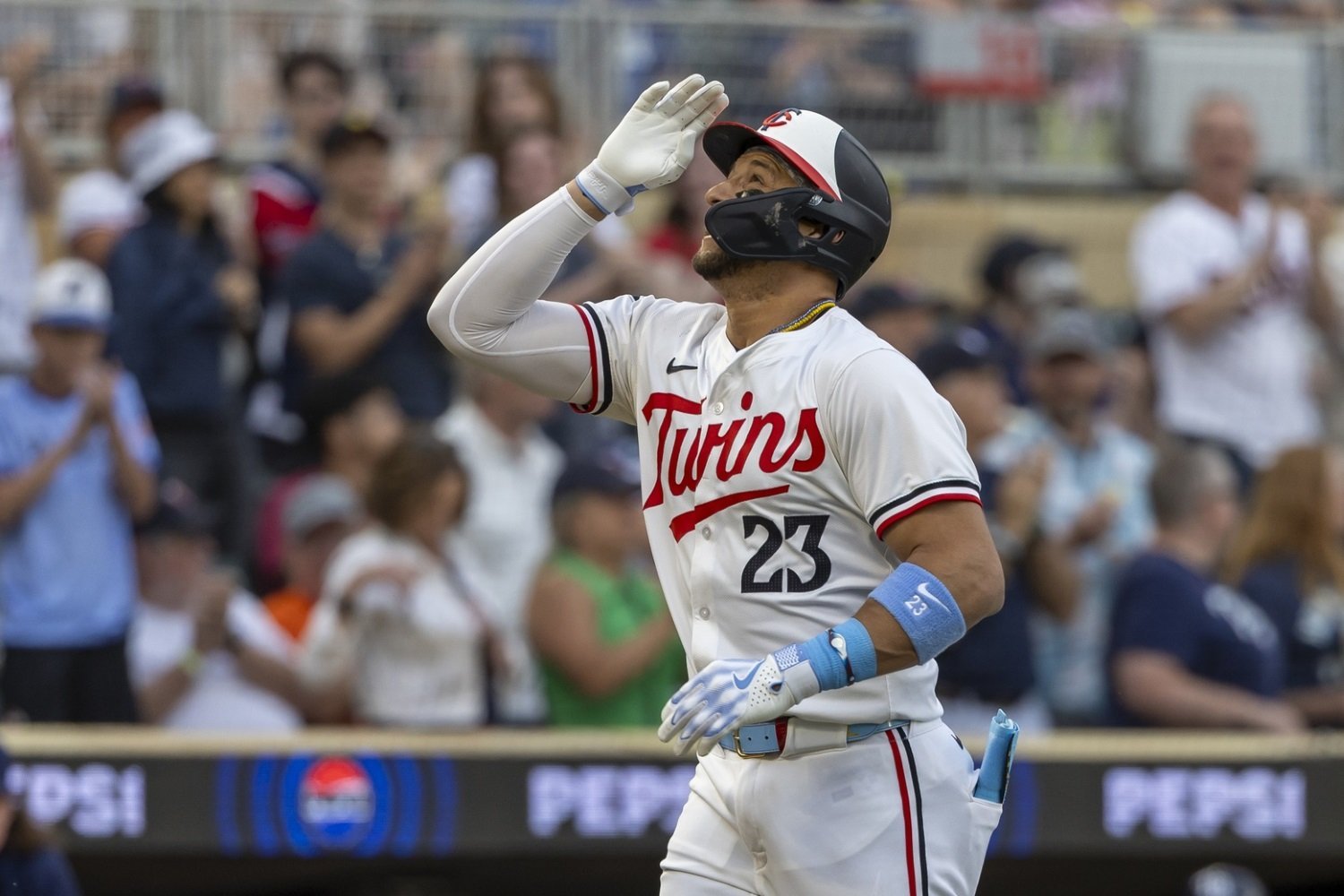 Earlier this week, MLB.com had their beat writers identify one player on each team with something to prove down the stretch. That phrasing can be left open to interpretation, and teams are at very different points regarding their chances of making or missing the playoffs. Some teams are trying to get their superstar back on the field for the stretch run, while non-contending teams might be looking for a young player to step up into a more important role. Minnesota’s ability to win games will be critical down the stretch, so there is more than one player with something to prove. In the MLB.com article, Do-Hyoung Park identified Carlos Correa as the Twins player with the most to prove for the stretch run. Correa is a natural choice, after being an All-Star in the first half and the team’s highest-paid player. He has been sidelined since the break with plantar fasciitis, the same injury that cost him that plagued him last season. Correa has proven his playoff value to the Twins and Astros throughout his big-league career, so the Twins need a productive version of Correa on the field in October. Besides Correa, what other players have something to prove before the season ends? Byron Buxton, CF Something to Prove: Can he get healthy before October? Like Correa, Buxton has been sidelined for a chunk of the second half with an injury issue. He started a rehab assignment at Triple-A (including getting tossed from a game) before his hip started to bother him again, but finally, Friday night, he'll return. Buxton is having a resurgent season on both sides of the ball with a career-high 138 OPS+ while providing Gold Glove caliber defense. He has a chance to play over 100 games for only the second time in his career. Injuries have been part of Buxton's story throughout his career, and he’s shown the ability to quickly return to form when rejoining the lineup. The Twins need Buxton to be an offensive weapon for a team that has struggled to score runs with two of its best hitters on the injured list. That means not just playing, but showing that he's capable of producing despite any lingering discomfort. Royce Lewis, 3B/2B Something to Prove: Can he carry the offense while learning a new position? A lot has been made of Lewis and his defensive switch to second base. Lewis was vocal about the transition because he doesn’t want to cost the Twins an important game because of bad defense at a position where he is unfamiliar with all the nuances. From the Twins' perspective, they need Lewis to have more defensive flexibility so he isn’t limited to third base and designated hitter. At the plate, Lewis has slowly been working his way out of the biggest slump of his career, posting a .572 OPS since Aug. 11. With injury questions surrounding other key bats, the Twins need Lewis to carry the offense to the playoffs while learning a new defensive position on the fly. Simeon Woods Richardson, SP Something to Prove: Can he be the team’s third starter in the playoffs? Woods Richardson has been a savior to a Twins starting rotation that has seen injuries to Joe Ryan, Anthony DeSclafani, and Chris Paddack. In the season’s first half, he posted a 3.51 ERA and a 1.15 WHIP, with a 71-to-24 strikeout-to-walk ratio in 82 innings. He’s regressed in the second half, with a 4.89 ERA and a 1.35 WHIP in 38 2/3 innings. Pablo López and Bailey Ober are clearly the team’s top two starters for the playoffs, leaving the team needing one more starter for the Wild Card round. Has Woods Richardson done enough that the team feels confident giving him the start? Or will the club go with someone like David Festa, who has pitched better in the second half? Which Twins players have the most to prove in the season’s final month? Leave a comment and start the discussion.
- 17 comments
-
- 5
-
-
- carlos correa
- byron buxton
- (and 2 more)

