



Cody Christie
-
Posts
7,813 -
Joined
-
Last visited
-
Days Won
5
Content Type
Profiles
News
Minnesota Twins Videos
2026 Minnesota Twins Top Prospects Ranking
2022 Minnesota Twins Draft Picks
Minnesota Twins Free Agent & Trade Rumors, Notes, & Tidbits
Guides & Resources
2023 Minnesota Twins Draft Picks
The Minnesota Twins Players Project
2024 Minnesota Twins Draft Picks
2025 Minnesota Twins Draft Pick Tracker
2026 Minnesota Twins Draft Tracker: Picks & Bonuses
Forums
Blogs
Events
Store
Downloads
Gallery
Everything posted by Cody Christie
-

Playing Through Injury Was Only Hurting Both Max Kepler and the Twins
Cody Christie posted an article in Twins
 As the 2024 season winds down, Max Kepler's performance on the field was becoming a growing concern for the Twins--and for Kepler himself, as he looks toward free agency after this season. During the season’s opening series, Kepler hit a foul ball off his knee and he’s had a loose body (in essence, a bone chip) floating in the joint since that point. Kepler's decision to continue playing through the pain long ago passed the point of doing more harm than good—not just to the Twins' playoff hopes, but to his own market value. Knee injuries are notoriously tricky for any athlete, but it's a critical blow for a player like Kepler, who relies on his athleticism and defensive range. The compromised knee has undoubtedly affected his mobility and overall performance. Despite the lingering injury, Kepler and the Twins chose to keep him on the field, until Thursday. As his struggles deepened in all three phases, though, the team realized a move was needed. One of the most noticeable aspects of Kepler's game this season has been his decreased walk rate. Known earlier in his career for his ability to work counts and draw walks, Kepler's plate discipline has taken a hit. From 2018-2022, Kepler posted a BB% of 10.1% or higher. Last season, he saw a slight dip to 9.2 BB%. In 2024, his walk rate has dropped to a career-low (5.5 BB%), indicating his approach at the plate might be compromised. Whether this is due to the knee injury affecting his lower half and, consequently, his swing mechanics or simply a mental lapse, the result is the same: fewer free passes and more outs. It sounds silly to link the two, but feeling uncertain about one's ability to make certain habitual movements in the box can compromise a hitter's plate discipline. Kepler is hardly the first such case, if indeed that's a contributing factor. Kepler's power numbers have also seen a significant decline. He ended the 2023 season on a high note, with a .926 OPS in the second half while arguably being the Twins’ top hitter. Kepler's power has all but disappeared in recent months. His 90 OPS+ is the lowest mark of his career, and his .128 ISO is the second-lowest. This trend is alarming for a corner outfielder with a history of showing power potential, especially in a contract year. The knee injury could be playing a role here, as well. Generating power at the plate requires a stable base and the ability to drive through the ball. A torrent of energy has to flow through the swing, and the blocking effect of the front leg is crucial in facilitating that. If Kepler's knee prevents him from getting full extension, it's no surprise that the power numbers are down. Defensively, Kepler has long been praised for his strong arm and range in the outfield. However, the knee injury has clearly affected his defensive capabilities, too. Once one of baseball’s top defensive right fielders, Kepler's sprint speed has dipped from the 51st percentile last season to the 36th percentile in 2024. He has a negative DRS for the first time in his career. As Kepler approaches free agency, these struggles could significantly impact his market value. Teams looking for a corner outfielder with power and solid defense might hesitate to invest in a player with declining metrics and an unresolved knee injury. Even if Kepler opts for offseason surgery to address the knee issue, questions about his durability and ability to return to form will linger. Kepler's willingness to play through pain is commendable, but the decision may ultimately cost him. In an offseason where every little detail matters, Kepler's recent performance might lead to a colder market than anticipated. For the Twins, the situation is bittersweet. Kepler's contributions over the years have been significant, but his recent struggles and looming free agency make it difficult to envision him as part of the team's long-term plans. As the offseason approaches, both Kepler and the Twins will have to make tough decisions about what comes next. If there's any chance of a reunion between these two parties for next year, it will come because the opportunities now carved out for Michael Helman, DaShawn Keirsey, Austin Martin and others yield nothing encouraging. Obviously, Twins fans should be rooting for one or more of that group to seize their moment, so it's reached the stage where it's not clear whether Kepler will play again in a Twins uniform--or whether he should. Can a few weeks' rest restore Kepler's health well enough to make him a useful player come October? Should the Twins have shelved him earlier? Join the conversation with a comment below.
 -
Max Kepler has been playing hurt, and his performance was hurting himself and the Twins. How did the team get to this point with its longest-tenured player? Image courtesy of © Kareem Elgazzar/The Enquirer / USA TODAY NETWORK Max Kepler has been playing hurt, and his performance was hurting himself and the Twins. How did the team get to this point with its longest-tenured player? As the 2024 season winds down, Max Kepler's performance on the field was becoming a growing concern for the Twins--and for Kepler himself, as he looks toward free agency after this season. During the season’s opening series, Kepler hit a foul ball off his knee and he’s had a loose body (in essence, a bone chip) floating in the joint since that point. Kepler's decision to continue playing through the pain long ago passed the point of doing more harm than good—not just to the Twins' playoff hopes, but to his own market value. Knee injuries are notoriously tricky for any athlete, but it's a critical blow for a player like Kepler, who relies on his athleticism and defensive range. The compromised knee has undoubtedly affected his mobility and overall performance. Despite the lingering injury, Kepler and the Twins chose to keep him on the field, until Thursday. As his struggles deepened in all three phases, though, the team realized a move was needed. One of the most noticeable aspects of Kepler's game this season has been his decreased walk rate. Known earlier in his career for his ability to work counts and draw walks, Kepler's plate discipline has taken a hit. From 2018-2022, Kepler posted a BB% of 10.1% or higher. Last season, he saw a slight dip to 9.2 BB%. In 2024, his walk rate has dropped to a career-low (5.5 BB%), indicating his approach at the plate might be compromised. Whether this is due to the knee injury affecting his lower half and, consequently, his swing mechanics or simply a mental lapse, the result is the same: fewer free passes and more outs. It sounds silly to link the two, but feeling uncertain about one's ability to make certain habitual movements in the box can compromise a hitter's plate discipline. Kepler is hardly the first such case, if indeed that's a contributing factor. Kepler's power numbers have also seen a significant decline. He ended the 2023 season on a high note, with a .926 OPS in the second half while arguably being the Twins’ top hitter. Kepler's power has all but disappeared in recent months. His 90 OPS+ is the lowest mark of his career, and his .128 ISO is the second-lowest. This trend is alarming for a corner outfielder with a history of showing power potential, especially in a contract year. The knee injury could be playing a role here, as well. Generating power at the plate requires a stable base and the ability to drive through the ball. A torrent of energy has to flow through the swing, and the blocking effect of the front leg is crucial in facilitating that. If Kepler's knee prevents him from getting full extension, it's no surprise that the power numbers are down. Defensively, Kepler has long been praised for his strong arm and range in the outfield. However, the knee injury has clearly affected his defensive capabilities, too. Once one of baseball’s top defensive right fielders, Kepler's sprint speed has dipped from the 51st percentile last season to the 36th percentile in 2024. He has a negative DRS for the first time in his career. As Kepler approaches free agency, these struggles could significantly impact his market value. Teams looking for a corner outfielder with power and solid defense might hesitate to invest in a player with declining metrics and an unresolved knee injury. Even if Kepler opts for offseason surgery to address the knee issue, questions about his durability and ability to return to form will linger. Kepler's willingness to play through pain is commendable, but the decision may ultimately cost him. In an offseason where every little detail matters, Kepler's recent performance might lead to a colder market than anticipated. For the Twins, the situation is bittersweet. Kepler's contributions over the years have been significant, but his recent struggles and looming free agency make it difficult to envision him as part of the team's long-term plans. As the offseason approaches, both Kepler and the Twins will have to make tough decisions about what comes next. If there's any chance of a reunion between these two parties for next year, it will come because the opportunities now carved out for Michael Helman, DaShawn Keirsey, Austin Martin and others yield nothing encouraging. Obviously, Twins fans should be rooting for one or more of that group to seize their moment, so it's reached the stage where it's not clear whether Kepler will play again in a Twins uniform--or whether he should. Can a few weeks' rest restore Kepler's health well enough to make him a useful player come October? Should the Twins have shelved him earlier? Join the conversation with a comment below. View full article
-
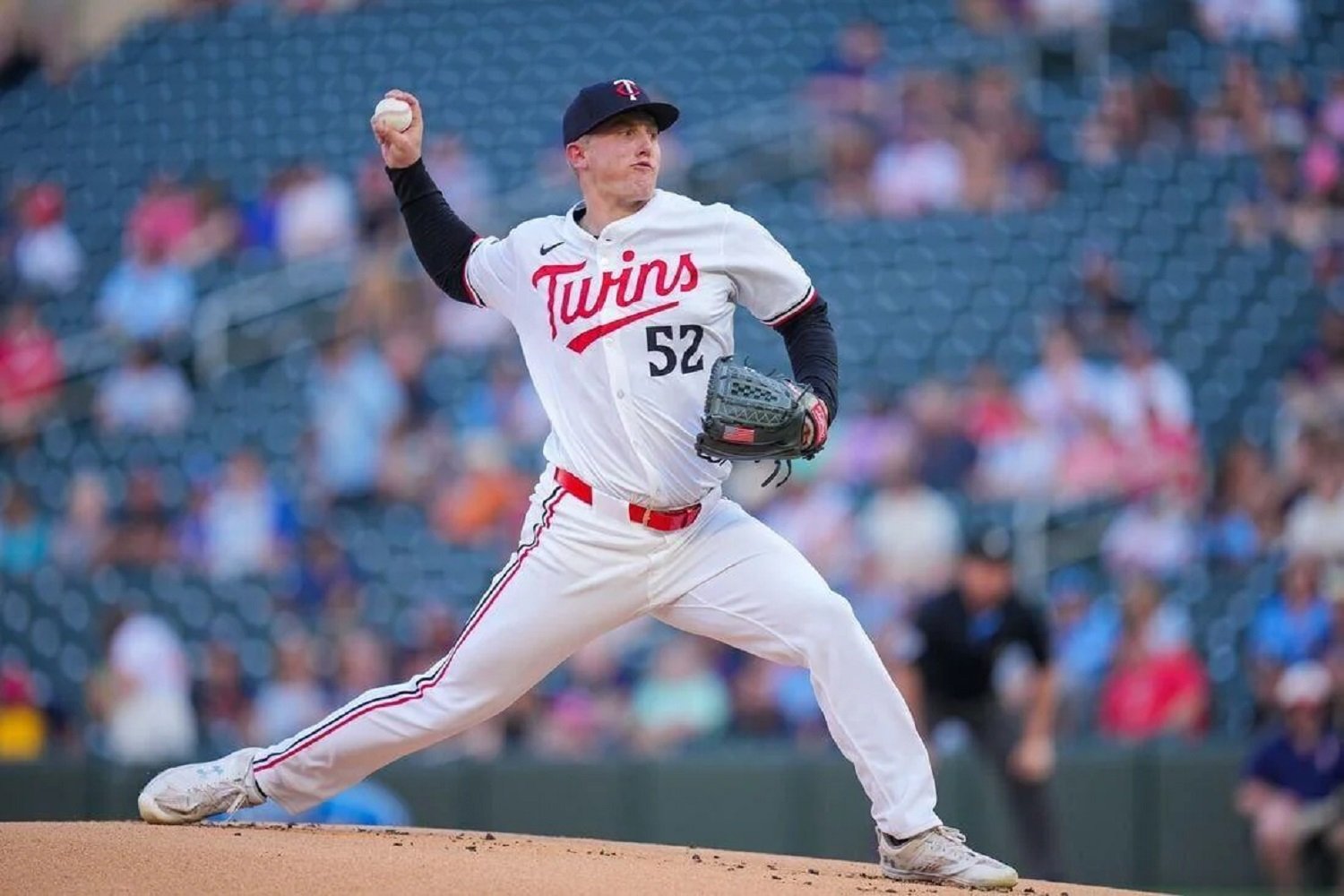 The Twins have seen plenty of pitchers raise their prospect stock this season, but the name that's turned the most heads is Zebby Matthews. As fans and analysts look toward the future, it's hard not to draw parallels between Matthews and some of the premier young pitchers in the majors today. One such comparison that stands out is with George Kirby of the Seattle Mariners, a young ace who's quickly built a reputation for his exceptional command of the strike zone. How does Matthews stack up against Kirby, particularly in the areas of command and control? Let’s dive in. The Seattle Mariners selected Kirby with the 20th overall pick in the 2019 MLB Draft. He has established himself as one of the best young pitchers in baseball, thanks mainly to his impeccable control. Known for pounding the strike zone, Kirby made waves in 2023 by leading baseball with a 0.9 BB/9 and a 9.1 strikeout-to-walk ratio. His ability to command all his pitches, particularly a fastball that sits comfortably in the mid-90s, has helped him become one of baseball's best young starters. Kirby’s approach is straightforward, yet effective: challenge hitters in the zone and trust his stuff to generate weak contact. This aggressive mentality is backed by his stellar mechanics, allowing him to repeat his delivery consistently and avoid free passes. His walk rate has increased to 1.2 BB/9 in 2024, but he’s also seen his strikeout rate increase from 8.1 K/9 to 8.6 K/9. His Whiff% has increased on his four-seamer, slider, and knuckle curve. He’s using his fastball nearly 6% less often than last season, which is likely one of the reasons for his slight uptick in walks. Matthews skyrocketed through the Twins organization this season. Drafted in the 8th round of the 2022 MLB Draft, Matthews might not have the same draft pedigree as Kirby, but he has quickly demonstrated an advanced feel for pitching. In 2023, Matthews posted a 1.3 BB/9 at Low- and High-A, showing that, like Kirby, he understands the value of putting the ball in the strike zone. In 2024, Matthews posted unheard-of walk totals on the way to making his big-league debut. Across three levels, he walked just seven batters in 97 minor-league innings. He did this while also increasing his strikeout rate from 9.6 K/9 in 2023 to 10.6 K/9 in 2024. Matthews and Kirby are also similar in the variety of their pitch mix. Kirby has utilized five pitches regularly this season, and Matthews has relied on a similar number of pitches in his repertoire. They both have a fastball in the mid-90s and use a slider regularly as a secondary pitch. Both have shown the ability to throw strikes consistently, an attribute that bodes well for their longevity and success at the highest level. Matthews obviously has a long way to go before he will be mentioned in the same conversations as Kirby. While Kirby is already a mainstay in Seattle’s rotation, Matthews is still at the beginning of his big-league career. However, the similarities in their command profiles suggest Matthews has the potential to carve out a successful career by attacking the zone and limiting free passes. Matthews is off to an encouraging start for the Twins, and the organization can hope that he can reach a similar ceiling to Kirby. Ultimately, both Kirby and Matthews showcase the importance of command and control in modern pitching. As the Twins look at their future rotation, keeping an eye on Matthews's development--and comparing it to the success Kirby has found--could provide a blueprint for harnessing command-oriented pitching talent. If Matthews can continue to refine his command and maintain his low walk rates, the Twins may have a future big-league standout. Can Matthews follow a development path similar to Kirby's? How does Matthews need to improve over the next year? Leave a comment and start the discussion.
 -
For the fastest-rising pitching prospect in baseball this year, the early big-league returns have been mixed--but not discouraging. One more famous starter from an AL rival might be the perfect comp for what the Twins still hope their young hurler will become. Image courtesy of Brad Rempel-USA TODAY Sports For the fastest-rising pitching prospect in baseball this year, the early big-league returns have been mixed--but not discouraging. One more famous starter from an AL rival might be the perfect comp for what the Twins still hope their young hurler will become. The Twins have seen plenty of pitchers raise their prospect stock this season, but the name that's turned the most heads is Zebby Matthews. As fans and analysts look toward the future, it's hard not to draw parallels between Matthews and some of the premier young pitchers in the majors today. One such comparison that stands out is with George Kirby of the Seattle Mariners, a young ace who's quickly built a reputation for his exceptional command of the strike zone. How does Matthews stack up against Kirby, particularly in the areas of command and control? Let’s dive in. The Seattle Mariners selected Kirby with the 20th overall pick in the 2019 MLB Draft. He has established himself as one of the best young pitchers in baseball, thanks mainly to his impeccable control. Known for pounding the strike zone, Kirby made waves in 2023 by leading baseball with a 0.9 BB/9 and a 9.1 strikeout-to-walk ratio. His ability to command all his pitches, particularly a fastball that sits comfortably in the mid-90s, has helped him become one of baseball's best young starters. Kirby’s approach is straightforward, yet effective: challenge hitters in the zone and trust his stuff to generate weak contact. This aggressive mentality is backed by his stellar mechanics, allowing him to repeat his delivery consistently and avoid free passes. His walk rate has increased to 1.2 BB/9 in 2024, but he’s also seen his strikeout rate increase from 8.1 K/9 to 8.6 K/9. His Whiff% has increased on his four-seamer, slider, and knuckle curve. He’s using his fastball nearly 6% less often than last season, which is likely one of the reasons for his slight uptick in walks. Matthews skyrocketed through the Twins organization this season. Drafted in the 8th round of the 2022 MLB Draft, Matthews might not have the same draft pedigree as Kirby, but he has quickly demonstrated an advanced feel for pitching. In 2023, Matthews posted a 1.3 BB/9 at Low- and High-A, showing that, like Kirby, he understands the value of putting the ball in the strike zone. In 2024, Matthews posted unheard-of walk totals on the way to making his big-league debut. Across three levels, he walked just seven batters in 97 minor-league innings. He did this while also increasing his strikeout rate from 9.6 K/9 in 2023 to 10.6 K/9 in 2024. Matthews and Kirby are also similar in the variety of their pitch mix. Kirby has utilized five pitches regularly this season, and Matthews has relied on a similar number of pitches in his repertoire. They both have a fastball in the mid-90s and use a slider regularly as a secondary pitch. Both have shown the ability to throw strikes consistently, an attribute that bodes well for their longevity and success at the highest level. Matthews obviously has a long way to go before he will be mentioned in the same conversations as Kirby. While Kirby is already a mainstay in Seattle’s rotation, Matthews is still at the beginning of his big-league career. However, the similarities in their command profiles suggest Matthews has the potential to carve out a successful career by attacking the zone and limiting free passes. Matthews is off to an encouraging start for the Twins, and the organization can hope that he can reach a similar ceiling to Kirby. Ultimately, both Kirby and Matthews showcase the importance of command and control in modern pitching. As the Twins look at their future rotation, keeping an eye on Matthews's development--and comparing it to the success Kirby has found--could provide a blueprint for harnessing command-oriented pitching talent. If Matthews can continue to refine his command and maintain his low walk rates, the Twins may have a future big-league standout. Can Matthews follow a development path similar to Kirby's? How does Matthews need to improve over the next year? Leave a comment and start the discussion. View full article
-
Minor league players are hoping for one more promotion before the season ends, and these hitters certainly caught the organization’s attention over the last month. So, who will be named the Twins’ top-hitting prospect for August? Image courtesy of Ed Bailey Minor league players are hoping for one more promotion before the season ends, and these hitters certainly caught the organization’s attention over the last month. So, who will be named the Twins’ top-hitting prospect for August? The Minnesota Twins organization has long been known for its ability to develop homegrown talent, and this year's crop of minor-league hitters is no exception. With a farm system brimming with promising young bats, the future looks bright. From power-hitting corner infielders to fleet-footed outfielders, the Twins have a diverse array of talent that could soon make an impact at the major league level. Let’s dive into the top hitters in the Twins' minor league system from August. Honorable Mention OF Eduardo Beltre– DSL Twins– 14 G, 18-for-55, .327/.387/.691 (1.078) with five doubles, five home runs, 16 RBI, six steals, five BB, 16 K. OF Jeferson Morales – Wichita Wind Surge/St. Paul Saints– 23 G, 22-for-76, .290/.372/.474 (.846) with five doubles, three home runs, seven RBI, nine BB, 11 K. OF Jaime Ferrer– Fort Myers Mighty Mussels– 19 G, 18-for-64, .281/.397/.406 (.804) with eight doubles, seven RBI, five steals, six BB, nine K. IF Diego Castillo– St. Paul Saints– 21 G, 22-for-81, .272/.355/.432 (.787) with seven doubles, two home runs, 13 RBI, 10 BB, 12 K. IF Rubel Cespedes– Cedar Rapids Kernels– 26 G, 28-for-98, .286/.333/.388 (.721) with seven doubles, one home run, 14 RBI, 5 BB, 21 K. OF Caden Kendle– Fort Myers Might Mussels– 16 G, 26-for-54, .296/.387/.407 (.795) with six doubles, eight RBI, two steals, seven BB, five K. IF/OF Daiber De Los Santos– DSL Twins– 12 G, 22-for-51, .431/.482/.588 (1.070) with six doubles, one triple, eight RBI, eight steals, three BB, 15 K. THE TOP FIVE HITTERS Number 5– Fort Myers Mighty Mussels– IF/OF Brandon Winokur– 24 G, 26-for-94, .277/.327/.543 (.869), five doubles, one triple, six home runs, 15 RBI, nine steals, 7 BB, 26 K. Winokur was limited to 14 games or less in June and July, so seeing him put together a healthy month in Fort Myers was nice. The 19-year-old outfielder is over two years younger than the average age of the competition in the Florida State League. He’s only had 12 at-bats all season versus younger pitchers. He had nine multi-hit games during August, including a masterful performance on August 16th, going 3-for-5 with three home runs and four RBI. Later in the month, he hit a walk-off homer for Fort Myers on August 27th. He’s a player that will continue to rise on Twins prospect lists this winter. Number 4– St. Paul Saints– IF Payton Eeles, 26 G, 28-for-84, .333/.412/.512 (.924), six doubles, three triples, one home run, 12 RBI, six steals, 9 BB, 10 K. Eeles began the year with independent Southern Maryland. After six games, the Twins signed him and he went to play in Fort Myers before moving to Cedar Rapids in June and skipping Double-A when the Saints needed infield depth in early July. He hit well in the low minors to begin the season, but it took some time for his bat to adjust to Triple-A. August was the month where he put it all together for the Saints. He had seven multi-hit games during the month and was among the team leaders in batting average, OBP, and SLG. The Twins are comfortable using him at multiple infield positions, and he’s started to see limited action in the corner outfield spots, too. He’s putting himself in contention for a utility spot on the Twins bench next season. Number 3– Cedar Rapids Kernels– OF Walker Jenkins, 25 G, 31-for-100, .310/.369/.540 (.909), 10 doubles, two triples, three home runs, 14 RBI, four steals, 9 BB, 15 K. Jenkins is the biggest name in the Twins organization, and he was promoted to High-A shortly before the calendar flipped to August. He showed no signs of struggling with the transition to a new level. Jenkins ended the month on a 10-game hitting streak and had seven straight games with an extra-base hit. He’s over three years younger than the average age of the competition in the Midwest League, and he’s only faced younger pitchers in eight at-bats this season. If he ends the season on a high note, Jenkins will be in the conversation as baseball’s top prospect entering next season. Number 2– St. Paul Saints– OF DaShawn Keirsey Jr., 24 G, 32-for-92, .348/.410/.554 (.964), four doubles, three triples, three home runs, 15 RBI, 11 steals, 9 BB, 22 K. Keirsey was arguably the Saints' best hitter for August. He combines power and speed while playing at multiple outfield positions. With Byron Buxton injured, why the Twins weren’t giving him a chance in center field was perplexing. He had nine multi-hit games during the month, and on August 22nd, he went 4-for-4 with a home run, a triple, and three runs scored. Minnesota left him unprotected from the Rule 5 Draft last winter, and no teams picked him. They are going to have to add him to the 40-man roster this year because he has been one of Triple-A’s best hitters in recent weeks. And the Twins Minor League Hitter of the Month is: Wichita Wind Surge/St. Paul Saints– OF Carson McCusker, 25 G, 29-for-95, .305/.353/.653 (1.006), seven doubles, one triple, eight home runs, 21 RBI, 7 BB, 28 K. McCusker began the month at Double-A and hit .311/.346/.662 (1.008) with 13 extra-base hits in 19 games. The Twins promoted him to Triple-A on August 24th, and he continued his hot-hitting ways. He went 6-for-21 (.286 BA) in six games with two home runs and a double. He leads the Twins organization in XBH, TB, OPS, SLG, and HR. The Twins signed McCusker from the independent Frontier League last year after he posted a 1.307 OPS in 37 games. After signing, he split last season between Low-A and High-A, where he posted a .867 OPS in 46 games, but he was old for both levels. The 26-year-old has played both corner outfield spots this season, with some additional time at DH. Minnesota has depth in the corner outfield at the big-league level, but it will be interesting to see if McCusker gets an opportunity with his strong offensive skills. We want to congratulate St. Paul Saints’ Carson McCusker, Twins Daily’s choice for Minor League Hitter of the Month for August 2024. Feel free to share your thoughts and ask questions. View full article
- 8 replies
-
- 1
-

-
- carson mccusker
- walker jenkins
- (and 5 more)
-
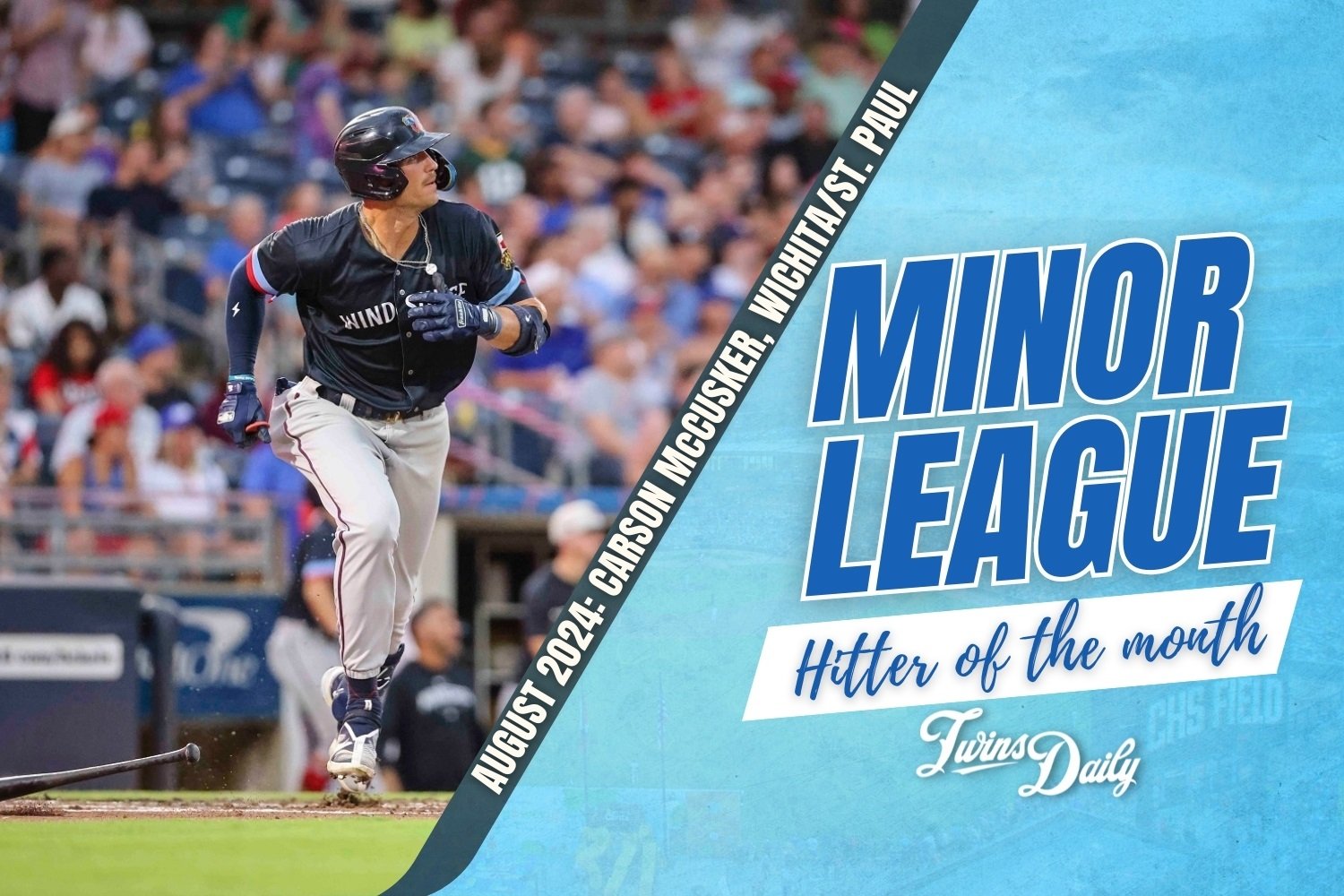 The Minnesota Twins organization has long been known for its ability to develop homegrown talent, and this year's crop of minor-league hitters is no exception. With a farm system brimming with promising young bats, the future looks bright. From power-hitting corner infielders to fleet-footed outfielders, the Twins have a diverse array of talent that could soon make an impact at the major league level. Let’s dive into the top hitters in the Twins' minor league system from August. Honorable Mention OF Eduardo Beltre– DSL Twins– 14 G, 18-for-55, .327/.387/.691 (1.078) with five doubles, five home runs, 16 RBI, six steals, five BB, 16 K. OF Jeferson Morales – Wichita Wind Surge/St. Paul Saints– 23 G, 22-for-76, .290/.372/.474 (.846) with five doubles, three home runs, seven RBI, nine BB, 11 K. OF Jaime Ferrer– Fort Myers Mighty Mussels– 19 G, 18-for-64, .281/.397/.406 (.804) with eight doubles, seven RBI, five steals, six BB, nine K. IF Diego Castillo– St. Paul Saints– 21 G, 22-for-81, .272/.355/.432 (.787) with seven doubles, two home runs, 13 RBI, 10 BB, 12 K. IF Rubel Cespedes– Cedar Rapids Kernels– 26 G, 28-for-98, .286/.333/.388 (.721) with seven doubles, one home run, 14 RBI, 5 BB, 21 K. OF Caden Kendle– Fort Myers Might Mussels– 16 G, 26-for-54, .296/.387/.407 (.795) with six doubles, eight RBI, two steals, seven BB, five K. IF/OF Daiber De Los Santos– DSL Twins– 12 G, 22-for-51, .431/.482/.588 (1.070) with six doubles, one triple, eight RBI, eight steals, three BB, 15 K. THE TOP FIVE HITTERS Number 5– Fort Myers Mighty Mussels– IF/OF Brandon Winokur– 24 G, 26-for-94, .277/.327/.543 (.869), five doubles, one triple, six home runs, 15 RBI, nine steals, 7 BB, 26 K. Winokur was limited to 14 games or less in June and July, so seeing him put together a healthy month in Fort Myers was nice. The 19-year-old outfielder is over two years younger than the average age of the competition in the Florida State League. He’s only had 12 at-bats all season versus younger pitchers. He had nine multi-hit games during August, including a masterful performance on August 16th, going 3-for-5 with three home runs and four RBI. Later in the month, he hit a walk-off homer for Fort Myers on August 27th. He’s a player that will continue to rise on Twins prospect lists this winter. Number 4– St. Paul Saints– IF Payton Eeles, 26 G, 28-for-84, .333/.412/.512 (.924), six doubles, three triples, one home run, 12 RBI, six steals, 9 BB, 10 K. Eeles began the year with independent Southern Maryland. After six games, the Twins signed him and he went to play in Fort Myers before moving to Cedar Rapids in June and skipping Double-A when the Saints needed infield depth in early July. He hit well in the low minors to begin the season, but it took some time for his bat to adjust to Triple-A. August was the month where he put it all together for the Saints. He had seven multi-hit games during the month and was among the team leaders in batting average, OBP, and SLG. The Twins are comfortable using him at multiple infield positions, and he’s started to see limited action in the corner outfield spots, too. He’s putting himself in contention for a utility spot on the Twins bench next season. Number 3– Cedar Rapids Kernels– OF Walker Jenkins, 25 G, 31-for-100, .310/.369/.540 (.909), 10 doubles, two triples, three home runs, 14 RBI, four steals, 9 BB, 15 K. Jenkins is the biggest name in the Twins organization, and he was promoted to High-A shortly before the calendar flipped to August. He showed no signs of struggling with the transition to a new level. Jenkins ended the month on a 10-game hitting streak and had seven straight games with an extra-base hit. He’s over three years younger than the average age of the competition in the Midwest League, and he’s only faced younger pitchers in eight at-bats this season. If he ends the season on a high note, Jenkins will be in the conversation as baseball’s top prospect entering next season. Number 2– St. Paul Saints– OF DaShawn Keirsey Jr., 24 G, 32-for-92, .348/.410/.554 (.964), four doubles, three triples, three home runs, 15 RBI, 11 steals, 9 BB, 22 K. Keirsey was arguably the Saints' best hitter for August. He combines power and speed while playing at multiple outfield positions. With Byron Buxton injured, why the Twins weren’t giving him a chance in center field was perplexing. He had nine multi-hit games during the month, and on August 22nd, he went 4-for-4 with a home run, a triple, and three runs scored. Minnesota left him unprotected from the Rule 5 Draft last winter, and no teams picked him. They are going to have to add him to the 40-man roster this year because he has been one of Triple-A’s best hitters in recent weeks. And the Twins Minor League Hitter of the Month is: Wichita Wind Surge/St. Paul Saints– OF Carson McCusker, 25 G, 29-for-95, .305/.353/.653 (1.006), seven doubles, one triple, eight home runs, 21 RBI, 7 BB, 28 K. McCusker began the month at Double-A and hit .311/.346/.662 (1.008) with 13 extra-base hits in 19 games. The Twins promoted him to Triple-A on August 24th, and he continued his hot-hitting ways. He went 6-for-21 (.286 BA) in six games with two home runs and a double. He leads the Twins organization in XBH, TB, OPS, SLG, and HR. The Twins signed McCusker from the independent Frontier League last year after he posted a 1.307 OPS in 37 games. After signing, he split last season between Low-A and High-A, where he posted a .867 OPS in 46 games, but he was old for both levels. The 26-year-old has played both corner outfield spots this season, with some additional time at DH. Minnesota has depth in the corner outfield at the big-league level, but it will be interesting to see if McCusker gets an opportunity with his strong offensive skills. We want to congratulate St. Paul Saints’ Carson McCusker, Twins Daily’s choice for Minor League Hitter of the Month for August 2024. Feel free to share your thoughts and ask questions.
- 8 comments
-
- 8
-

-
-
- carson mccusker
- walker jenkins
- (and 5 more)
-
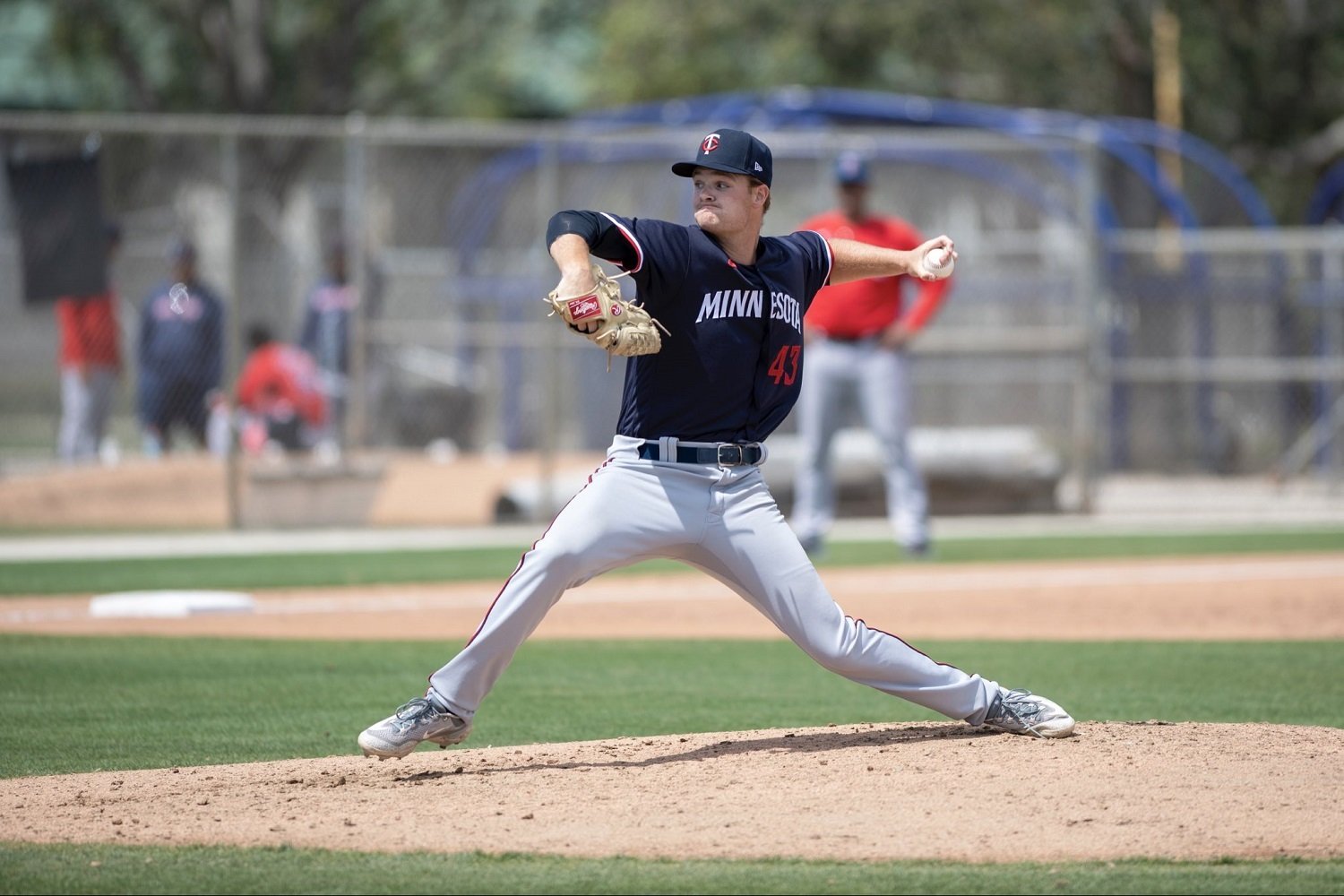 Connor Prielipp, a promising left-handed pitcher within the Minnesota Twins organization, has become a name to watch for his talent on the mound and his resilience in the face of adversity. Drafted in the second round of the 2022 MLB Draft out of the University of Alabama, Prielipp was a highly touted prospect with an arsenal of pitches that left scouts and analysts buzzing. However, his journey to professional baseball has been anything but smooth, marked by significant injuries that threatened to derail his career before it even began. Injury Struggles and Recovery Prielipp's first significant hurdle came in college, where he showcased his talent but was limited due to an elbow injury. The injury ultimately led to Tommy John surgery in 2021, a procedure that is now common among pitchers but still carries significant risk and a long road to recovery. Despite the setback, the Twins saw potential in Prielipp, recognizing his advanced pitching skills and mental toughness. His recovery from Tommy John surgery has been closely monitored, with the Twins taking a cautious approach to ensure he returns to full strength. Last season, Prielipp suffered another injury setback as he required surgery last July to address a torn UCL in his left elbow. His injury limited him to 6 2/3 innings during his first professional action. He opened the 2024 campaign on the IL with the Cedar Rapids Kernels. He made his first appearances in the Florida Complex League and the Florida State League shortly before the All-Star break. It was a small but meaningful milestone for a player who has been limited since signing with the Twins. Return to the Field: A New Beginning at High-A Cedar Rapids After a long and arduous rehabilitation process, Prielipp made his season debut with the Cedar Rapids Kernels, the Twins' High-A affiliate, in the 2024 season. His return to the mound has been a testament to his determination and hard work. Prielipp's performance at Cedar Rapids has shown flashes of his pre-injury form, with a fastball that touches the mid-90s, a sharp slider, and a developing changeup. His command and ability to mix pitches have made him effective against High-A hitters, and his presence on the field is a welcome sight for the Twins organization. Timeline to the Big Leagues The path to the major leagues is rarely straightforward, especially for a pitcher coming off a significant injury. However, Prielipp's talent and work ethic could accelerate his journey. If he continues to progress without any setbacks, a promotion to Double-A Wichita could be on the horizon by the end of the 2024 season. From there, his performance and health will dictate the timeline, but a potential debut in the majors could be realistic by late 2025 or early 2026. Starter or Reliever: The Big Question One of the biggest questions surrounding Prielipp's future is whether he will remain a starter or transition to the bullpen. His injury history naturally raises concerns about his durability in a starting role. Starting pitchers have to endure a heavier workload, which could put more strain on Prielipp's elbow. However, his three-pitch mix and ability to navigate lineups multiple times are traits that the Twins would love to harness in a starting role. Conversely, the bullpen could offer a less demanding workload, allowing Prielipp to maximize his fastball-slider combination in shorter outings. This role could help preserve his arm and extend his career, making him a valuable late-inning reliever. The Twins will likely assess his progress and physical condition over the next year to determine the best course of action. Prielipp's journey to the big leagues is a story of resilience, hope, and potential. While injuries have tested his resolve, his return to the field and performance at Cedar Rapids demonstrate his commitment to overcoming adversity. Whether he becomes a mainstay in the Twins' rotation or a valuable bullpen arm, Prielipp's future in baseball is bright. The Twins and their fans will watch closely as he continues to work his way up the minor league ladder, hoping his perseverance will lead to success at the highest level. Will Prielipp be a starter or a reliever by the time he reaches Target Field? What’s a realistic timeline for him to make his debut? Leave a COMMENT and start the discussion.
 -
Minnesota Twins Prospect Retrospective: Michael Helman
Cody Christie posted an article in Minor Leagues
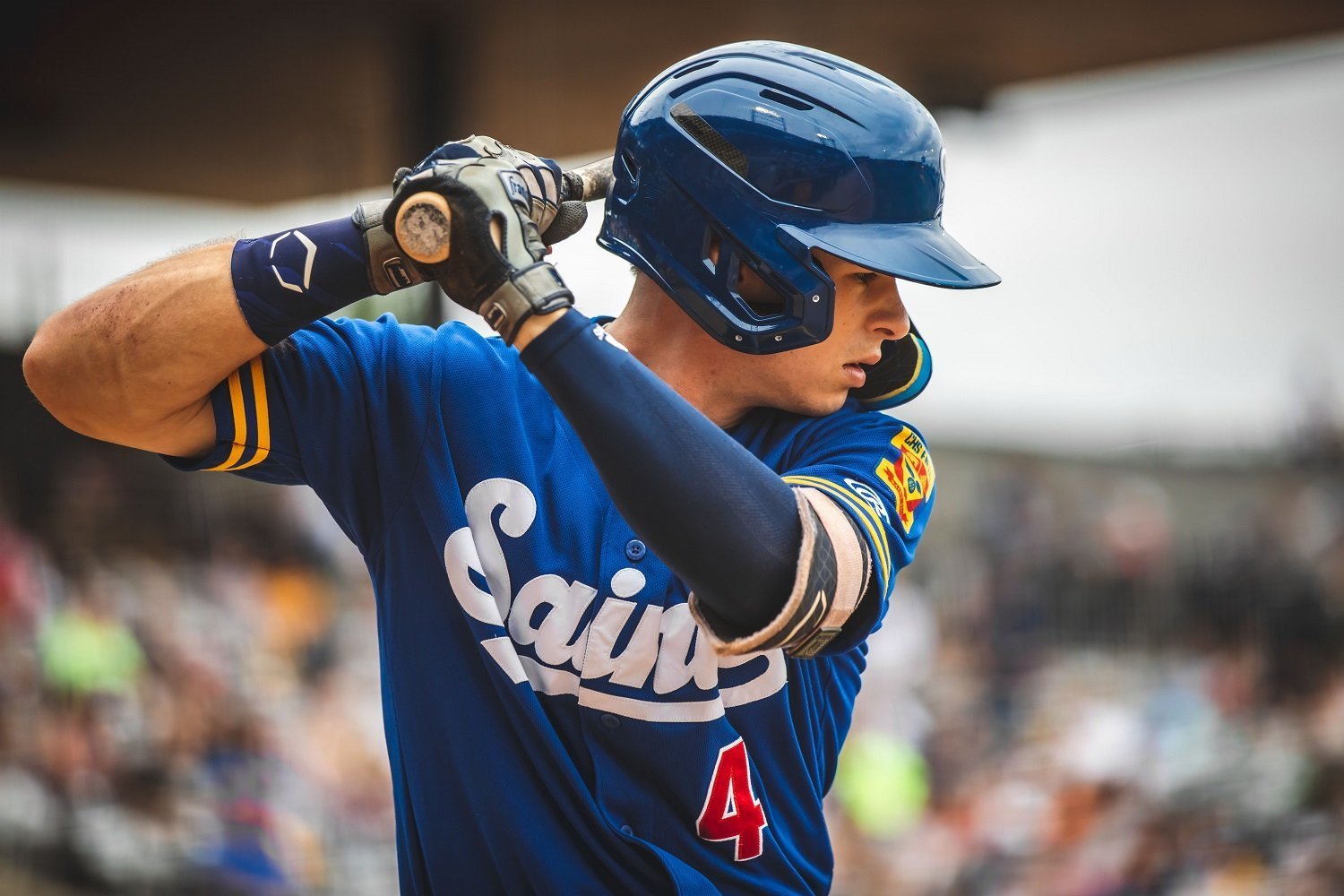 As the Twins have focused on building a competitive roster, some under-the-radar prospects have begun to shine. One of those prospects is Michael Helman, a versatile infielder, and outfielder who has made a name for himself through steady progression and adaptability. Let’s look back at Helman’s journey, from college standout to legitimate major-league option. The Twins selected Helman in the 11th round of the 2018 MLB Draft from Texas A&M, where he had put together an impressive junior season. In 2018, Helman batted .370/.451/.546, with 25 extra-base hits, solidifying himself as one of the top players in the SEC. His performance drew the attention of Twins scouts, and he signed for a modest but noteworthy $220,000. Helman began his professional career on a high note, hitting .361/.409/.510 in 39 games with the Elizabethton Twins and the Cedar Rapids Kernels in 2018. However, the transition to full-season ball in 2019 presented challenges. With the Fort Myers Miracle, Helman’s average dipped to .197, and he struggled to find consistency at the plate. This early adversity tested his resilience, but Helman’s work ethic and defensive versatility kept him in the organization’s plans. The cancellation of the 2020 minor league season due to the COVID-19 pandemic meant an extended layoff for many players, including Helman. This lost year was a setback, but it also gave Helman time to refine his approach and return stronger. Returning in 2021, Helman played the entire season at High-A, where he was 2.5 years older than the average age of the competition. He hit .246/.336/.462, with 19 home runs, 21 doubles, and 21 stolen bases, showing improved power and speed. His ability to play multiple positions—second base, third base, and all three outfield spots—made him a valuable asset in the Twins’ system. Following the season, the Twins sent him to the Arizona Fall League, where he went 11-for-51 (.216 BA) with a pair of doubles. The 2022 season was a turning point in Helman’s career. Playing for Double- and Triple-A, Helman batted .258/.337/.432, with 20 home runs, 23 doubles, and 40 stolen bases. His walk rate improved, demonstrating better plate discipline, and his power spiked as he matured both physically and in terms of approach. Helman’s speed on the bases and his defensive versatility made him a valuable player, and his breakout performance earned him attention from the big-league club. Helman has been limited over the last two seasons because of hamstring issues and a dislocated shoulder. He hit .302/.368/.544, with 20 extra-base hits and eight steals across 166 plate appearances in 2023. During the 2024 campaign, he's hit .283/.367/.508, with 15 doubles, 13 home runs, and 10 steals. His call-up has been a long time coming, and he is a good fit for the current Twins roster. He is a right-handed bat who can play both infield and outfield, or he can be a base-stealing threat as a pinch-runner. Helman may not have the pedigree of a top prospect, but his role in the majors is becoming more apparent. With his combination of speed, power, and defensive versatility, he has the tools to carve out a role in the majors, whether as a utility man or a more regular contributor. His journey from an 11th-round pick to a legitimate major-league option is a testament to his hard work and determination. Congratulations to Helman and his family. What stands out about his professional career? What are your expectations for Helman? Leave a comment and start the discussion.
 -
MLB rosters expanded over the weekend, and the Twins added a player who may be unfamiliar to the casual fan. Here’s a look at Michael Helman and how he got to the cusp of making his big-league debut. Image courtesy of Rob Thompson, St. Paul Saints (photo of Michael Helman) MLB rosters expanded over the weekend, and the Twins added a player who may be unfamiliar to the casual fan. Here’s a look at Michael Helman and how he got to the cusp of making his big-league debut. As the Twins have focused on building a competitive roster, some under-the-radar prospects have begun to shine. One of those prospects is Michael Helman, a versatile infielder, and outfielder who has made a name for himself through steady progression and adaptability. Let’s look back at Helman’s journey, from college standout to legitimate major-league option. The Twins selected Helman in the 11th round of the 2018 MLB Draft from Texas A&M, where he had put together an impressive junior season. In 2018, Helman batted .370/.451/.546, with 25 extra-base hits, solidifying himself as one of the top players in the SEC. His performance drew the attention of Twins scouts, and he signed for a modest but noteworthy $220,000. Helman began his professional career on a high note, hitting .361/.409/.510 in 39 games with the Elizabethton Twins and the Cedar Rapids Kernels in 2018. However, the transition to full-season ball in 2019 presented challenges. With the Fort Myers Miracle, Helman’s average dipped to .197, and he struggled to find consistency at the plate. This early adversity tested his resilience, but Helman’s work ethic and defensive versatility kept him in the organization’s plans. The cancellation of the 2020 minor league season due to the COVID-19 pandemic meant an extended layoff for many players, including Helman. This lost year was a setback, but it also gave Helman time to refine his approach and return stronger. Returning in 2021, Helman played the entire season at High-A, where he was 2.5 years older than the average age of the competition. He hit .246/.336/.462, with 19 home runs, 21 doubles, and 21 stolen bases, showing improved power and speed. His ability to play multiple positions—second base, third base, and all three outfield spots—made him a valuable asset in the Twins’ system. Following the season, the Twins sent him to the Arizona Fall League, where he went 11-for-51 (.216 BA) with a pair of doubles. The 2022 season was a turning point in Helman’s career. Playing for Double- and Triple-A, Helman batted .258/.337/.432, with 20 home runs, 23 doubles, and 40 stolen bases. His walk rate improved, demonstrating better plate discipline, and his power spiked as he matured both physically and in terms of approach. Helman’s speed on the bases and his defensive versatility made him a valuable player, and his breakout performance earned him attention from the big-league club. Helman has been limited over the last two seasons because of hamstring issues and a dislocated shoulder. He hit .302/.368/.544, with 20 extra-base hits and eight steals across 166 plate appearances in 2023. During the 2024 campaign, he's hit .283/.367/.508, with 15 doubles, 13 home runs, and 10 steals. His call-up has been a long time coming, and he is a good fit for the current Twins roster. He is a right-handed bat who can play both infield and outfield, or he can be a base-stealing threat as a pinch-runner. Helman may not have the pedigree of a top prospect, but his role in the majors is becoming more apparent. With his combination of speed, power, and defensive versatility, he has the tools to carve out a role in the majors, whether as a utility man or a more regular contributor. His journey from an 11th-round pick to a legitimate major-league option is a testament to his hard work and determination. Congratulations to Helman and his family. What stands out about his professional career? What are your expectations for Helman? Leave a comment and start the discussion. View full article
-
The Twins’ top three position player prospects have all dealt with injuries during the 2024 campaign, potentially impacting their path to the big leagues. So, what are realistic timelines for these three promising bats? Image courtesy of Ed Bailey (Wichita Wind Surge), William Parmeter The Twins’ top three position player prospects have all dealt with injuries during the 2024 campaign, potentially impacting their path to the big leagues. So, what are realistic timelines for these three promising bats? The Minnesota Twins have an exciting group of position player prospects in their farm system, and three names stand out: Walker Jenkins, Emmanuel Rodriguez, and Luke Keaschall. Ranked #3, #21, and #65 respectively by MLB Pipeline, Each of these players has shown promise, and their development will be crucial for the Twins' future success. This article will examine these prospects, evaluate their strengths, and project realistic timelines for their MLB debuts based on their performance and development in 2024. 1. Walker Jenkins, OF Current TD Prospect Rank: 1 Background: The Twins selected Jenkins with the 5th overall pick in the 2023 MLB Draft. Jenkins, a high school standout from North Carolina, is known for his combination of power and all-around hitting ability. Standing at 6'3" and weighing 215 pounds, Jenkins has the physical profile of a future middle-of-the-order bat. Performance and Development: Jenkins has quickly made an impression in the Twins' minor league system. In his first taste of professional baseball, Jenkins showcased his power potential and ability to hit for average. His bat speed and strength make him a legitimate power threat, while his disciplined approach at the plate suggests he could develop into a well-rounded hitter with a high on-base percentage. Defensively, Jenkins has the arm strength to handle right field, but he could also be an option in left field as he progresses. Timeline for MLB Debut: Given Jenkins' age and development path, a realistic timeline for his MLB debut would be late 2025 or early 2026. The Twins will likely allow him to develop at a comfortable pace, focusing on refining his approach and improving his defense. After a delayed start to the season due to a hamstring injury, Jenkins is thriving with the High-A Cedar Rapids Kernels, hitting .291/.363/.500 (.863) in 124 plate appearances. If Jenkins continues to perform well and conquer each level, he could potentially make it up by midway through next season. 2. Emmanuel Rodriguez, OF Current TD Prospect Rank: 3 Background: Rodriguez is a highly regarded outfield prospect who signed with the Twins as an international free agent out of the Dominican Republic in 2019. Rodriguez has emerged as one of the top prospects in the Twins' system due to his impressive tools and performance in the minors. Performance and Development: Rodriguez is known for his excellent plate discipline, power potential, and speed. Despite being just 21 years old, he has shown a mature approach at the plate, drawing walks at an absurd rate including a 25.1 BB% at Double-A prior to his recent Triple-A promotion. Defensively, Rodriguez can play all three outfield positions, with center field being his most natural fit at this point due to his speed and instincts. Timeline for MLB Debut: Rodriguez should be expected to make his MLB debut in 2025, although there is some small chance he could be promoted before the end of this season. He started 2024 in Double-A, posting an 1.100 OPS, but was shut down in July due to a right thumb strain. This injury, plus a following aggravation, cost Rodriguez much of his season but hasn't slowed down his progress much. Already on the 40-man roster, he's on the verge of arriving. 3. Luke Keaschall, UTL Current TD Prospect Rank: 4 Background: The Twins selected Keaschall, an infielder, as a second-rounder in the 2023 MLB Draft. Keaschall, a standout at Arizona State University, has impressed with his ability to play multiple infield positions and produce exceptionally with the bat. Performance and Development: Keaschall is a versatile infielder who can play second, third, and shortstop, though he probably won't profile at the latter in MLB. He has a solid approach at the plate, with a knack for making contact and getting on base. Keaschall's power numbers exploded this season with a .903 OPS between High- and Double-A. His defensive versatility and baseball IQ make him an asset in the field, and he could become a valuable player at the Major League level because of his defensive flexibility. Timeline for MLB Debut: The Twins knew Keaschall would need Tommy John surgery at some point this year, so he underwent the procedure in mid-August. The team hopes he can be a full participant in spring training next year and ready for the 2025 regular season. It seems likely for him to begin next season at Double-A, while the weather is colder in St. Paul. Then he can move up to Triple-A after getting his feet under him again. A realistic timeline for his MLB debut could be late 2025, potentially earlier if he performs well. Jenkins, Rodriguez, and Keaschall represent a bright future for the Twins. Each player brings a unique skill set that could impact the Major League roster in the coming years. Based on their current development and performance in 2024, Jenkins could debut by 2026, Rodriguez as early as 2025, and Keaschall by 2025. The Twins' ability to develop and integrate these prospects into the Major League team will be crucial to their long-term success and competitiveness. Who will make the earliest debut? What are your expectations for this trio? Leave a COMMENT and start the discussion. View full article
-
The 2024 Twins' team would be in real trouble without these three players blowing away preseason expectations. Image courtesy of © Ed Szczepanski-USA TODAY Sports The 2024 Twins' team would be in real trouble without these three players blowing away preseason expectations. Earlier this week, MLB.com’s Shanthi Sepe-Chepuru ran through nine players exceeding expectations during the 2024 campaign. The list includes some All-Stars, some role players, and even one former Twin (Brent Rooker). Every team has players who have exceeded, met, or fallen short of their preseason expectations. Let’s look at the three names who have provided surprise performances for Minnesota. Simeon Woods Richardson , RHP Preseason ZIPs Projection: 4.67 ERA, 112 IP, 90 K, 1.0 WAR 2024 Season: 3.85 ERA, 117 IP, 102 K, 1.7 WAR Woods Richardson has outperformed his preseason projections, emerging as a critical contributor to the pitching staff. He was projected as a back-end starter or middle-relief option due to his youth and relatively limited big-league experience. Last season, his velocity was topping out in the low-90s at Triple-A, so the Twins worked with "SWR" to make mechanical adjustments. With the changes, his fastball velocity has increased from 90.5 mph in 2023 to 93.2 this season. With the velocity increase, his Whiff% on his four-seamer has increased from 13.6% to 21.3%. His increased velocity and improved mechanics have also assisted his secondary pitches, allowing for an uptick in his slider usage. He used the pitch only 14.4% of the time last season, and this season, he's relied on the pitch over 30% of the time. Batters have been limited to an 84.4 exit velocity versus his slider, including a .299 SLG, the lowest mark versus any of his pitches. Entering the season, it was easy to question what Woods Richardson would bring to the Twins in 2024, but he has saved the starting rotation. Willi Castro , UTL Pre-Season ZIPs Projection: .691 OPS, 93 OPS+, 0.7 WAR 2024 Season: .744 OPS, 108 OPS+, 3.3 WAR Despite his solid 2023 season, Castro’s preseason projections were below average. He's outplayed those projections while earning his first All-Star selection. In the first half, he hit .266/.352/.422 (.774) with 25 extra-base hits in 67 games. Castro ranks third on the team, according to fWAR, behind Carlos Correa and Byron Buxton. He has fought through some back soreness in the second half but has been able to fill in for the injured Correa at shortstop. The Twins will likely need Castro at important up-the-middle positions, with Correa's return not being imminent. In addition to his offensive breakout, Castro's defensive versatility has been invaluable to the Twins. He has seamlessly rotated between infield and outfield positions, providing solid defense wherever needed. He is the first player in MLB history to appear in at least 20 games at second base, third base, shortstop, center field, and leftfield, all in the same season. His ability to play multiple positions at a high level has allowed the Twins to navigate injuries and rest regular starters without a drop-off in performance. Castro is in the conversation as the team's MVP this season because of what he has been able to offer on both sides of the ball. Griffin Jax , RHP Preseason ZIPs Projection: 4.21 ERA, 77 IP, 79 K 0.7 WAR 2024 Season: 1.70 ERA, 58 IP, 76 K, 2.1 WAR Jax has significantly outperformed his preseason projections, establishing himself as one of baseball's top relief pitchers. Initially expected to serve as a reliable set-up man, Jax has transformed into a dominant late-inning force. Jax leads Twins relievers in fWAR and sits in fourth place overall behind the team's top three starters (Joe Ryan, Pablo Lopez, and Bailey Ober). Recently, Nick Nelson argued that Jax is in the conversation as the Twins' MVP this season. His sweeper, in particular, has become a devastating weapon against both right-handed and left-handed hitters. He worked at Driveline last winter to improve his mechanics, and the results are evident. His sweeper velocity has increased by over two miles per hour, helping him to improve from a 28.6 Whiff% in 2023 to a 42.7 Whiff% this season. His changeup has also produced a Whiff% over 48% with a 31.6 Put-Away%. Much like Woods Richardson has saved the rotation, Jax has helped to solidify the bullpen. Which performance is most surprising? Leave a COMMENT and start the discussion. View full article
-
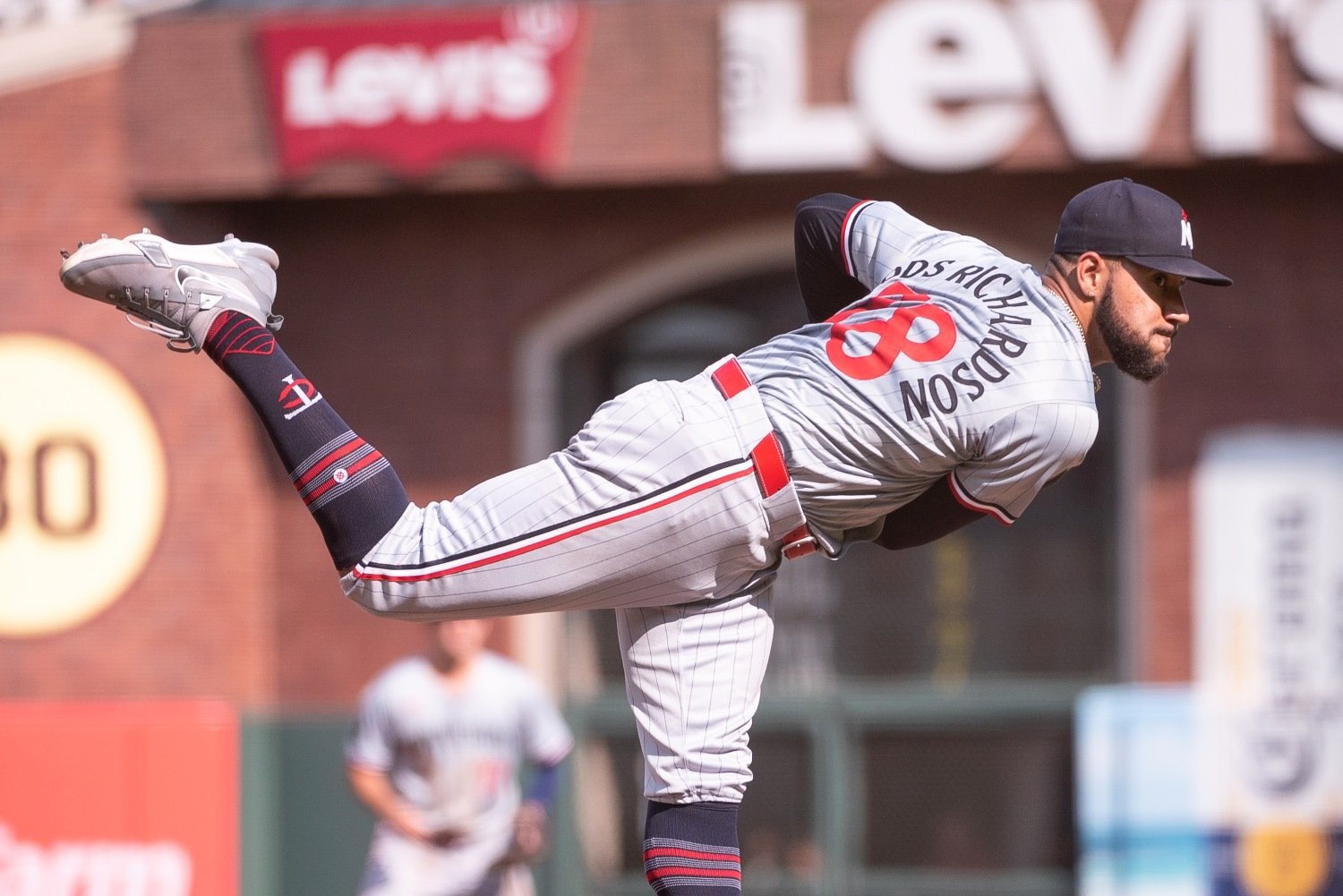 Earlier this week, MLB.com’s Shanthi Sepe-Chepuru ran through nine players exceeding expectations during the 2024 campaign. The list includes some All-Stars, some role players, and even one former Twin (Brent Rooker). Every team has players who have exceeded, met, or fallen short of their preseason expectations. Let’s look at the three names who have provided surprise performances for Minnesota. Simeon Woods Richardson , RHP Preseason ZIPs Projection: 4.67 ERA, 112 IP, 90 K, 1.0 WAR 2024 Season: 3.85 ERA, 117 IP, 102 K, 1.7 WAR Woods Richardson has outperformed his preseason projections, emerging as a critical contributor to the pitching staff. He was projected as a back-end starter or middle-relief option due to his youth and relatively limited big-league experience. Last season, his velocity was topping out in the low-90s at Triple-A, so the Twins worked with "SWR" to make mechanical adjustments. With the changes, his fastball velocity has increased from 90.5 mph in 2023 to 93.2 this season. With the velocity increase, his Whiff% on his four-seamer has increased from 13.6% to 21.3%. His increased velocity and improved mechanics have also assisted his secondary pitches, allowing for an uptick in his slider usage. He used the pitch only 14.4% of the time last season, and this season, he's relied on the pitch over 30% of the time. Batters have been limited to an 84.4 exit velocity versus his slider, including a .299 SLG, the lowest mark versus any of his pitches. Entering the season, it was easy to question what Woods Richardson would bring to the Twins in 2024, but he has saved the starting rotation. Willi Castro , UTL Pre-Season ZIPs Projection: .691 OPS, 93 OPS+, 0.7 WAR 2024 Season: .744 OPS, 108 OPS+, 3.3 WAR Despite his solid 2023 season, Castro’s preseason projections were below average. He's outplayed those projections while earning his first All-Star selection. In the first half, he hit .266/.352/.422 (.774) with 25 extra-base hits in 67 games. Castro ranks third on the team, according to fWAR, behind Carlos Correa and Byron Buxton. He has fought through some back soreness in the second half but has been able to fill in for the injured Correa at shortstop. The Twins will likely need Castro at important up-the-middle positions, with Correa's return not being imminent. In addition to his offensive breakout, Castro's defensive versatility has been invaluable to the Twins. He has seamlessly rotated between infield and outfield positions, providing solid defense wherever needed. He is the first player in MLB history to appear in at least 20 games at second base, third base, shortstop, center field, and leftfield, all in the same season. His ability to play multiple positions at a high level has allowed the Twins to navigate injuries and rest regular starters without a drop-off in performance. Castro is in the conversation as the team's MVP this season because of what he has been able to offer on both sides of the ball. Griffin Jax , RHP Preseason ZIPs Projection: 4.21 ERA, 77 IP, 79 K 0.7 WAR 2024 Season: 1.70 ERA, 58 IP, 76 K, 2.1 WAR Jax has significantly outperformed his preseason projections, establishing himself as one of baseball's top relief pitchers. Initially expected to serve as a reliable set-up man, Jax has transformed into a dominant late-inning force. Jax leads Twins relievers in fWAR and sits in fourth place overall behind the team's top three starters (Joe Ryan, Pablo Lopez, and Bailey Ober). Recently, Nick Nelson argued that Jax is in the conversation as the Twins' MVP this season. His sweeper, in particular, has become a devastating weapon against both right-handed and left-handed hitters. He worked at Driveline last winter to improve his mechanics, and the results are evident. His sweeper velocity has increased by over two miles per hour, helping him to improve from a 28.6 Whiff% in 2023 to a 42.7 Whiff% this season. His changeup has also produced a Whiff% over 48% with a 31.6 Put-Away%. Much like Woods Richardson has saved the rotation, Jax has helped to solidify the bullpen. Which performance is most surprising? Leave a COMMENT and start the discussion.
- 16 comments
-
- 8
-
-
- griffin jax
- willi castro
- (and 1 more)
-
Three contenders have emerged for the 2024 AL Central crown. Here’s a look at the teams' remaining strength of schedule with the most critical series left on the calendar. Image courtesy of Matt Marton, David Richard-USA TODAY Sports Three contenders have emerged for the 2024 AL Central crown. Here’s a look at the teams' remaining strength of schedule with the most critical series left on the calendar. As the MLB regular season approaches its final month, the race for the AL Central title is heating up. Three teams are vying for the crown: the Minnesota Twins, Cleveland Guardians, and Kansas City Royals. Each team's remaining schedule will play a crucial role in determining who comes out on top. Let’s break down the remaining strength of schedule for these contenders and analyze how their paths might affect their chances of clinching the division. Minnesota Twins Current Record: 73-62 Remaining Games: 27 The Twins are currently in third place in the AL Central standings but have their sights set on winning the division for the second consecutive season. Here’s what their remaining schedule looks like: Divisional Matchups: The Twins have a significant number of games left within the division, including series against both the Guardians (four games) and Royals (three games). These head-to-head matchups will be pivotal, as they can either solidify their lead or give other teams a chance to catch up. Opponents' Winning Percentage: The Twins face opponents with a combined winning percentage of around .495, baseball’s 15th-ranked strength of schedule. However, they still have series against solid teams like the Baltimore Orioles and Boston Red Sox, which could pose challenges. Home vs. Away Games: The Twins will play a majority of their remaining games at home, where they have been stronger this season. Their performance at Target Field will be vital in catching the teams ahead of them in the standings. Key Series to Watch: A late-season series against the Guardians or Royals could decide the AL Central race. Outside those series, the Twins must capitalize on their home-field advantage in other critical matchups. Cleveland Guardians Current Record: 77-59 Remaining Games: 26 The Guardians have been in the mix all season, thanks to their solid pitching and timely hitting. Here's how their schedule shapes up: Divisional Matchups: Like the Twins, the Guardians have several games remaining against AL Central rivals, including head-to-head matchups with Minnesota (four games) and Kansas City (three games). Winning these games is essential for them to hold their lead. Opponents' Winning Percentage: The Guardians’ remaining schedule features teams with a combined winning percentage of around .490, baseball’s 21st-ranked strength of schedule. A three-game series against the lowly White Sox is why Cleveland has the easiest remaining schedule among this group. Home vs. Away Games: The Guardians more home games than away games remaining on their schedule. However, they have struggled on the road this season, which could pose a challenge as they play important series away from Progressive Field. Key Series to Watch: The Guardians play the Dodgers and the Astros in the season's final month, two other teams vying for division titles. Cleveland also needs to hold serve against other AL Central foes to win the division. Kansas City Royals Current Record: 75-62 Remaining Games: 25 The Royals have fought back in the race to make a real playoff push for the first time since 2015. Here’s what to know about their schedule: Divisional Matchups: The Royals host both the Twins and Guardians in the season’s final month. If KC wants a shot at the division, it will be critical to protect their home field. Opponents' Winning Percentage: The Royals face a challenging slate of games with opponents' winning percentages hovering above .519. This includes series against contenders like the Houston Astros, New York Yankees, and Atlanta Braves. Only five teams have a harder remaining strength of schedule. Home vs. Away Games: Kansas City plays a significant number of its remaining games on the road, with a record of around .500. They must continue to perform well in home games to win the division. Key Series to Watch: The Royals' series against the Twins and Guardians will be telling; defeating their division rivals can put them in place for a division crown. However, other challenging series against contending teams will prove if KC is a contender or pretender. The AL Central title race is far from decided. Divisional matchups and series against other playoff hopefuls will be decisive. For the Twins, maintaining their lead through home dominance and navigating tough matchups will be critical. The Guardians will need to perform well on the road and capitalize on their slightly easier schedule to stay at the top. At the same time, Kansas City must continue to prove their doubters wrong. As the regular season's final month unfolds, every game will matter in what promises to be an exciting race for the AL Central crown. Who ends up winning the division? Will the other contenders earn a Wild Card spot? Leave a COMMENT and start the discussion. View full article
-
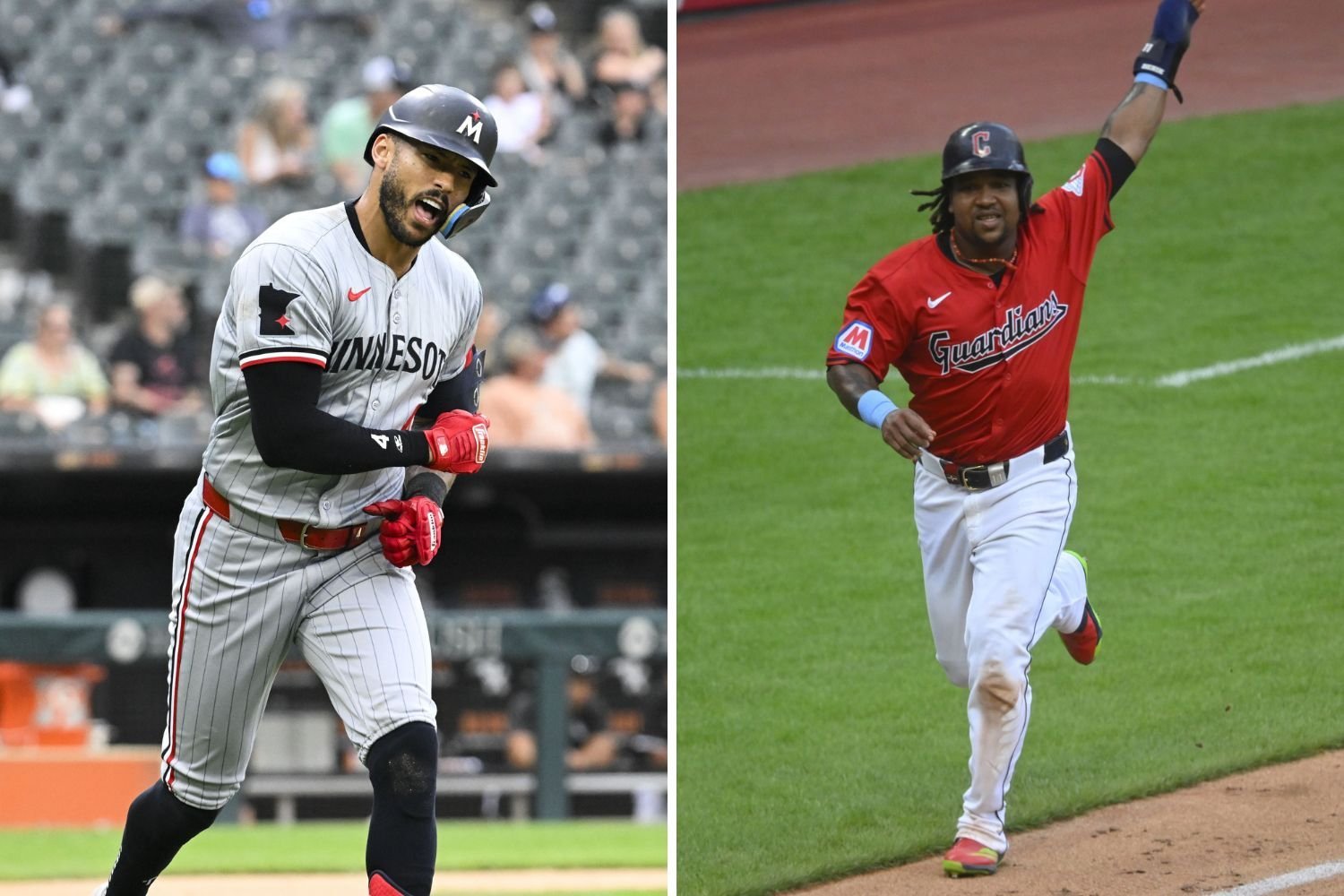 As the MLB regular season approaches its final month, the race for the AL Central title is heating up. Three teams are vying for the crown: the Minnesota Twins, Cleveland Guardians, and Kansas City Royals. Each team's remaining schedule will play a crucial role in determining who comes out on top. Let’s break down the remaining strength of schedule for these contenders and analyze how their paths might affect their chances of clinching the division. Minnesota Twins Current Record: 73-62 Remaining Games: 27 The Twins are currently in third place in the AL Central standings but have their sights set on winning the division for the second consecutive season. Here’s what their remaining schedule looks like: Divisional Matchups: The Twins have a significant number of games left within the division, including series against both the Guardians (four games) and Royals (three games). These head-to-head matchups will be pivotal, as they can either solidify their lead or give other teams a chance to catch up. Opponents' Winning Percentage: The Twins face opponents with a combined winning percentage of around .495, baseball’s 15th-ranked strength of schedule. However, they still have series against solid teams like the Baltimore Orioles and Boston Red Sox, which could pose challenges. Home vs. Away Games: The Twins will play a majority of their remaining games at home, where they have been stronger this season. Their performance at Target Field will be vital in catching the teams ahead of them in the standings. Key Series to Watch: A late-season series against the Guardians or Royals could decide the AL Central race. Outside those series, the Twins must capitalize on their home-field advantage in other critical matchups. Cleveland Guardians Current Record: 77-59 Remaining Games: 26 The Guardians have been in the mix all season, thanks to their solid pitching and timely hitting. Here's how their schedule shapes up: Divisional Matchups: Like the Twins, the Guardians have several games remaining against AL Central rivals, including head-to-head matchups with Minnesota (four games) and Kansas City (three games). Winning these games is essential for them to hold their lead. Opponents' Winning Percentage: The Guardians’ remaining schedule features teams with a combined winning percentage of around .490, baseball’s 21st-ranked strength of schedule. A three-game series against the lowly White Sox is why Cleveland has the easiest remaining schedule among this group. Home vs. Away Games: The Guardians more home games than away games remaining on their schedule. However, they have struggled on the road this season, which could pose a challenge as they play important series away from Progressive Field. Key Series to Watch: The Guardians play the Dodgers and the Astros in the season's final month, two other teams vying for division titles. Cleveland also needs to hold serve against other AL Central foes to win the division. Kansas City Royals Current Record: 75-62 Remaining Games: 25 The Royals have fought back in the race to make a real playoff push for the first time since 2015. Here’s what to know about their schedule: Divisional Matchups: The Royals host both the Twins and Guardians in the season’s final month. If KC wants a shot at the division, it will be critical to protect their home field. Opponents' Winning Percentage: The Royals face a challenging slate of games with opponents' winning percentages hovering above .519. This includes series against contenders like the Houston Astros, New York Yankees, and Atlanta Braves. Only five teams have a harder remaining strength of schedule. Home vs. Away Games: Kansas City plays a significant number of its remaining games on the road, with a record of around .500. They must continue to perform well in home games to win the division. Key Series to Watch: The Royals' series against the Twins and Guardians will be telling; defeating their division rivals can put them in place for a division crown. However, other challenging series against contending teams will prove if KC is a contender or pretender. The AL Central title race is far from decided. Divisional matchups and series against other playoff hopefuls will be decisive. For the Twins, maintaining their lead through home dominance and navigating tough matchups will be critical. The Guardians will need to perform well on the road and capitalize on their slightly easier schedule to stay at the top. At the same time, Kansas City must continue to prove their doubters wrong. As the regular season's final month unfolds, every game will matter in what promises to be an exciting race for the AL Central crown. Who ends up winning the division? Will the other contenders earn a Wild Card spot? Leave a COMMENT and start the discussion.
 -
As the calendar turns to September, the Twins are running out of games to catch the team’s atop the AL Central. Here are three ways Minnesota can get their best roster on the field for the season’s final month. Image courtesy of © Brad Rempel-USA TODAY Sports As the calendar turns to September, the Twins are running out of games to catch the team’s atop the AL Central. Here are three ways Minnesota can get their best roster on the field for the season’s final month. As the Minnesota Twins approach the final stretch of the 2024 regular season, their playoff hopes hang in the balance. To solidify their chances and ensure a strong showing in September, the Twins must make strategic decisions that put their best roster on the field. Here are three key areas where the Twins can optimize their lineup and rotation for the critical month ahead. 1. Improved Health from Star Players A significant part of the Twins' success hinges on the health of their star players, Byron Buxton and Carlos Correa. Both players have dealt with injuries this season that have kept them off the field or limited their effectiveness. Buxton was a borderline All-Star in the first half with a .829 OPS, while returning to center field and playing Gold Glove caliber defense. His outfield defense has ranked in the 80th percentile or higher in OAA and Fielding Run Value. Minnesota's other center field options are a downgrade compared to what Buxton can bring on both sides of the ball. Correa was an All-Star in the first half with an .896 OPS, but he has yet to appear in the second half after suffering from plantar fasciitis for the second consecutive season. At the time of the injury, Correa was optimistic about a quick return to the field. Unfortunately, he suffered a set-back during his ramp up and the Twins had to slow down his rehab plan. If Correa returns this season, he will likely be playing at less than 100% and fans saw how this injury impacted him during the 2023 campaign. For the Twins to have their best roster on the field, they need Buxton and Correa healthy and performing their peak or as close as possible to that level. The team's medical staff will play a crucial role in managing their workloads and ensuring they are fit to contribute at a high level throughout September. 2. Bullpen Upgrades The Twins' bullpen has been a point of concern this season, with inconsistency and injuries plaguing the relief corps. To strengthen the bullpen and add depth, the Twins can look to utilize starters like Louie Varland and Chris Paddack in relief roles. Minnesota has kept Varland in a starting role because of the team's need for depth. Paddack has been on the IL since the end of July with a right forearm strain and there likely isn't enough time for him to ramp up to serve as a starter. Varland has shown promise as a starter but could thrive in a bullpen role, where his fastball-slider combination can play up with increased velocity in one-inning appearances. Across 12 innings last September, Varland pitched to a 1.50 ERA before he recorded two scoreless outings in the American League Wild Card Series. He saw his K/9 jump from 8.7 as a starter to 12.8 as a reliever while holding opponents to a .471 OPS. Transitioning him to the bullpen also allows the Twins to manage his innings, keeping him fresh and effective down the stretch. Paddack is eyeing an October return and could also be a valuable asset in relief. He had an MRI last week and was cleared to begin throwing from 60 feet. The Twins and Paddack must be cautious with his usage since he is in his first full season back from his second Tommy John surgery. Last season, he returned in late September for some brief relief appearances before being electric in October. In two appearances, he impressed with 3 2/3 scoreless innings last postseason, with six strikeouts, just one hit and no walks. The middle innings have been tough for the Twins' relief core and Paddack can stabilize that group. 3. Breaking Players Out of Slumps The Twins have seen critical players like Royce Lewis and Max Kepler struggle with consistency at the plate this season. Lewis has dealt with multiple muscle injuries this season such as a right abductor strain and a quad injury. Kepler has a piece of bone floating in his knee that has been bothering him for most of the season. For Minnesota to field its best roster, it's essential that these players break out of their slumps and contribute offensively. Lewis has arguably been the team's best offensive player for stretches over the last two seasons. He returned from his quad injury on June 4th and posted a .984 OPS with nine home runs and five doubles in 23 games. Since returning from his groin injury, he has combined for a .720 OPS with 11 extra-base hits in 31 games. There are some things the Twins can do to help Lewis break out of his slump, but his bat is even more important if Buxton and Correa continue to miss time with injuries. Kepler finished last season with one of the best offensive stretches of his career including a .926 OPS in the second half. He has tried to fight through his knee issues this season and there has been inconsistent offensive performance. In May, he posted an .891 OPS with 11 doubles and three home runs. His power disappeared in June with his OPS dropping to .591, over 150 points lower than his career average. Kepler was a little luckier in July with a .320 BA (due to his .387 BABIP) but he was limited to four extra-base hits in 22 games. In August, he has a .351 SLG and 18 strikeouts in 21 games. His knee is impacting his on-field performance and the Twins must decide if an IL stint would help him for a potential playoff run. To be successful in the season's final month, Buxton and Correa need to find a way to contribute. The team will only go as far as its stars can take them in October. The bullpen has been flawed since prior to the trade deadline and the front office was only able to add Trevor Richards, who has already been designated for assignment. Varland and Paddack have a chance to upgrade the team's middle inning relief options. Lewis and Kepler have shown the ability to carry the offense in the past and the team needs them to bust their slumps in the coming weeks. Which item above is most important for the team’s September success? Leave a COMMENT and start the discussion. View full article
- 33 replies
-
- 1
-
-
- carlos correa
- byron buxton
- (and 4 more)
-
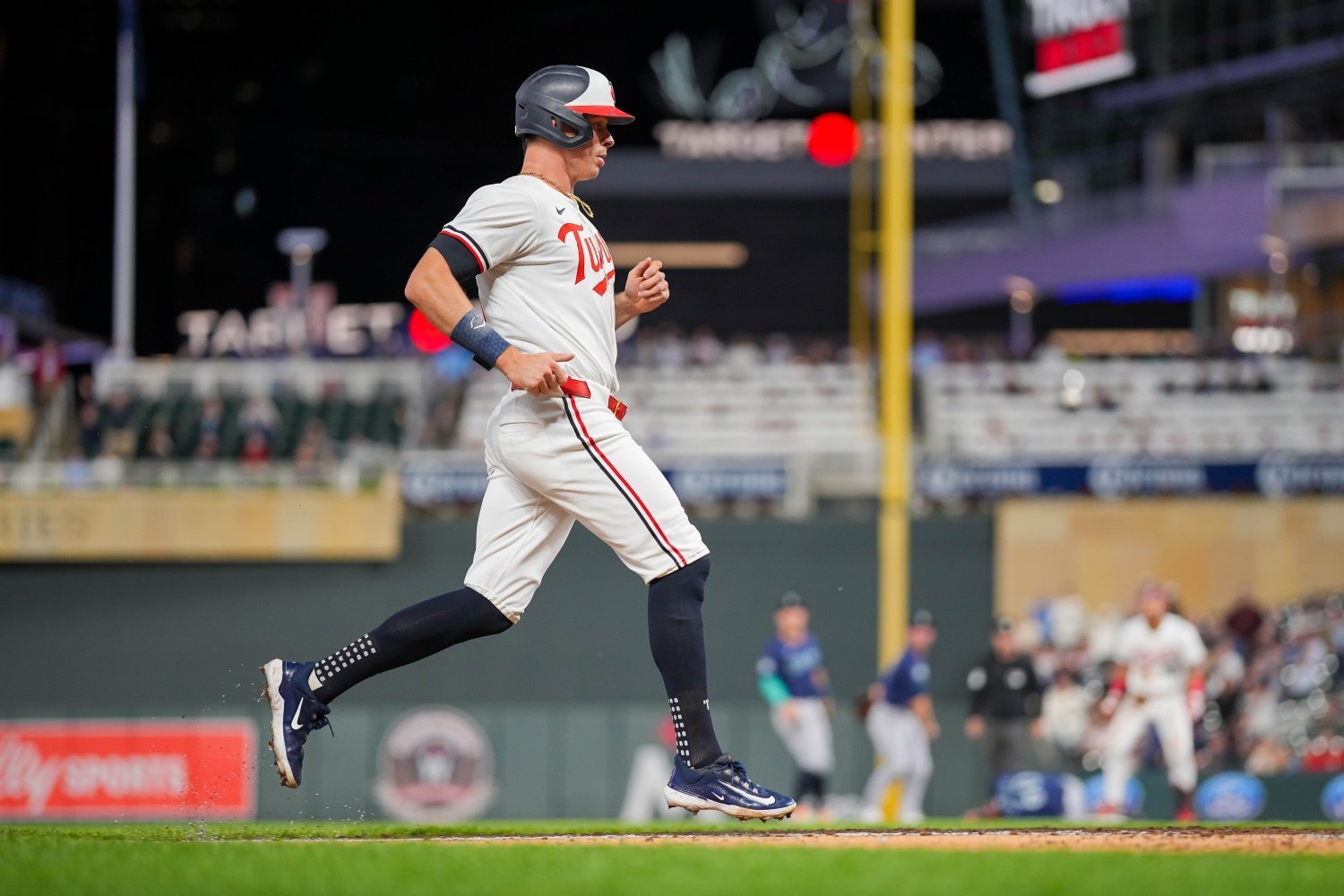 As the Minnesota Twins approach the final stretch of the 2024 regular season, their playoff hopes hang in the balance. To solidify their chances and ensure a strong showing in September, the Twins must make strategic decisions that put their best roster on the field. Here are three key areas where the Twins can optimize their lineup and rotation for the critical month ahead. 1. Improved Health from Star Players A significant part of the Twins' success hinges on the health of their star players, Byron Buxton and Carlos Correa. Both players have dealt with injuries this season that have kept them off the field or limited their effectiveness. Buxton was a borderline All-Star in the first half with a .829 OPS, while returning to center field and playing Gold Glove caliber defense. His outfield defense has ranked in the 80th percentile or higher in OAA and Fielding Run Value. Minnesota's other center field options are a downgrade compared to what Buxton can bring on both sides of the ball. Correa was an All-Star in the first half with an .896 OPS, but he has yet to appear in the second half after suffering from plantar fasciitis for the second consecutive season. At the time of the injury, Correa was optimistic about a quick return to the field. Unfortunately, he suffered a set-back during his ramp up and the Twins had to slow down his rehab plan. If Correa returns this season, he will likely be playing at less than 100% and fans saw how this injury impacted him during the 2023 campaign. For the Twins to have their best roster on the field, they need Buxton and Correa healthy and performing their peak or as close as possible to that level. The team's medical staff will play a crucial role in managing their workloads and ensuring they are fit to contribute at a high level throughout September. 2. Bullpen Upgrades The Twins' bullpen has been a point of concern this season, with inconsistency and injuries plaguing the relief corps. To strengthen the bullpen and add depth, the Twins can look to utilize starters like Louie Varland and Chris Paddack in relief roles. Minnesota has kept Varland in a starting role because of the team's need for depth. Paddack has been on the IL since the end of July with a right forearm strain and there likely isn't enough time for him to ramp up to serve as a starter. Varland has shown promise as a starter but could thrive in a bullpen role, where his fastball-slider combination can play up with increased velocity in one-inning appearances. Across 12 innings last September, Varland pitched to a 1.50 ERA before he recorded two scoreless outings in the American League Wild Card Series. He saw his K/9 jump from 8.7 as a starter to 12.8 as a reliever while holding opponents to a .471 OPS. Transitioning him to the bullpen also allows the Twins to manage his innings, keeping him fresh and effective down the stretch. Paddack is eyeing an October return and could also be a valuable asset in relief. He had an MRI last week and was cleared to begin throwing from 60 feet. The Twins and Paddack must be cautious with his usage since he is in his first full season back from his second Tommy John surgery. Last season, he returned in late September for some brief relief appearances before being electric in October. In two appearances, he impressed with 3 2/3 scoreless innings last postseason, with six strikeouts, just one hit and no walks. The middle innings have been tough for the Twins' relief core and Paddack can stabilize that group. 3. Breaking Players Out of Slumps The Twins have seen critical players like Royce Lewis and Max Kepler struggle with consistency at the plate this season. Lewis has dealt with multiple muscle injuries this season such as a right abductor strain and a quad injury. Kepler has a piece of bone floating in his knee that has been bothering him for most of the season. For Minnesota to field its best roster, it's essential that these players break out of their slumps and contribute offensively. Lewis has arguably been the team's best offensive player for stretches over the last two seasons. He returned from his quad injury on June 4th and posted a .984 OPS with nine home runs and five doubles in 23 games. Since returning from his groin injury, he has combined for a .720 OPS with 11 extra-base hits in 31 games. There are some things the Twins can do to help Lewis break out of his slump, but his bat is even more important if Buxton and Correa continue to miss time with injuries. Kepler finished last season with one of the best offensive stretches of his career including a .926 OPS in the second half. He has tried to fight through his knee issues this season and there has been inconsistent offensive performance. In May, he posted an .891 OPS with 11 doubles and three home runs. His power disappeared in June with his OPS dropping to .591, over 150 points lower than his career average. Kepler was a little luckier in July with a .320 BA (due to his .387 BABIP) but he was limited to four extra-base hits in 22 games. In August, he has a .351 SLG and 18 strikeouts in 21 games. His knee is impacting his on-field performance and the Twins must decide if an IL stint would help him for a potential playoff run. To be successful in the season's final month, Buxton and Correa need to find a way to contribute. The team will only go as far as its stars can take them in October. The bullpen has been flawed since prior to the trade deadline and the front office was only able to add Trevor Richards, who has already been designated for assignment. Varland and Paddack have a chance to upgrade the team's middle inning relief options. Lewis and Kepler have shown the ability to carry the offense in the past and the team needs them to bust their slumps in the coming weeks. Which item above is most important for the team’s September success? Leave a COMMENT and start the discussion.
- 33 comments
-
- 4
-

-
-
- carlos correa
- byron buxton
- (and 4 more)
-
The Twins need to find value at the edges of the roster in the season’s most important games. Can Edouard Julien improve his performance enough to be a viable option in September? Image courtesy of © Nick Wosika-USA TODAY Sports The Twins need to find value at the edges of the roster in the season’s most important games. Can Edouard Julien improve his performance enough to be a viable option in September? Edouard Julien's arrival on the MLB stage was marked by an impressive rookie season in 2023, where he became a vital contributor to the Minnesota Twins lineup. Fast forward to 2024, and the young infielder seems to be struggling both offensively and defensively, leaving fans and analysts to wonder which version of Julien is the long-term player the Twins can rely on. To explore this, let's dive into his performances over these two seasons. 2023: A Promising Rookie Campaign Julien's rookie year in 2023 was a breakout season. He showcased a solid offensive game, combining plate discipline with power, a rarity for a rookie. In 109 games, he posted a 130 OPS+ while getting on base over 38% of the time. His Barrel %, Hard Hit %, and xwOBA ranked in the 70th percentile or higher, and his Chase % was in the 100th percentile. That offensive approach made him valuable for a Twins team needing production in the infield. These numbers illustrate Julien's ability to get on base and contribute runs. His approach at the plate was mature beyond his years, characterized by patience and the ability to draw walks. His .381 OBP was among the best for rookies, and his power numbers indicated a player with the potential to develop into a consistent middle-of-the-order threat. Defensively, Julien played primarily at second base and showed promise, although he had some growing pains common for young infielders. 2024: A Sophomore Slump In contrast, the 2024 season has been a challenge for Julien. His offensive production has taken a noticeable dip, and his defensive struggles have become more pronounced. His OPS+ has dropped by over 40 points, and pitchers have shown a propensity to attack him with strikes without fear of him making hard contact. The drop in his batting average and OBP is significant, indicating that Julien's ability to reach base has diminished. His power numbers have also declined, with fewer home runs and extra-base hits. The decrease in walk rate suggests that pitchers have adjusted to Julien's approach, and he has yet to find a consistent way to counter these adjustments. Defensively, Julien's issues have been more evident. His costly throwing miscue is at the top of everyone’s mind, but there are concerns about his long-term viability as an everyday second baseman. These defensive struggles have occasionally led to him being benched or used in a designated hitter role, limiting his impact on the field. Which Julien is the Long-Term Outcome? The question remains: Which version of Edouard Julien will the Twins see in the long term? The answer lies between the extremes of his rookie success and his sophomore struggles. 1. Adjustment Period: It is not uncommon for players to experience a sophomore slump. After a strong rookie year, opposing teams often adjust their strategies, exposing weaknesses to which the player must adapt. Julien's 2024 performance may be a part of this natural adjustment process. 2. Plate Discipline: One of Julien's strengths in 2023 was his eye for the strike zone, leading to a high walk rate. While this has decreased in 2024, his still maintaining a decent walk rate suggests that he retains some of that patience. Refining his approach and making adjustments could help Julien regain his offensive form. 3. Defensive Development: Defense is often a late-blooming skill for many players, especially those who focus primarily on their offensive game. Julien's defensive struggles may improve with experience, better positioning, and continued work with the Twins' coaching staff. 4. Mental and Physical Fatigue: It's also possible that mental and physical fatigue is affecting Julien's performance in 2024. The grind of a long MLB season can be harsh on young players, especially those still adjusting to the league's demands. Julien's 2023 season showed his potential as a critical piece in the Twins' future. His 2024 struggles are a reminder of the challenges young players face in establishing consistency at the major league level. While it is too early to make definitive conclusions about which version of Julien is the long-term solution, his talent and approach suggest he has the tools to overcome his current struggles. Patience from both Julien and the Twins organization, along with targeted adjustments, will be crucial in determining his long-term success. The Twins have a vested interest in Julien's development, and given his flashes of brilliance, he is likely to get every opportunity to prove that his rookie season was not a fluke. The long-term version of Edouard Julien is still taking shape, but if he can blend his rookie promise with lessons learned from his sophomore slump, he could become a mainstay in the Twins' lineup for years to come. Which version of Julien is his actual outcome? Can he find a way to provide value to the Twins this season? Leave a COMMENT and start the discussion. View full article
-
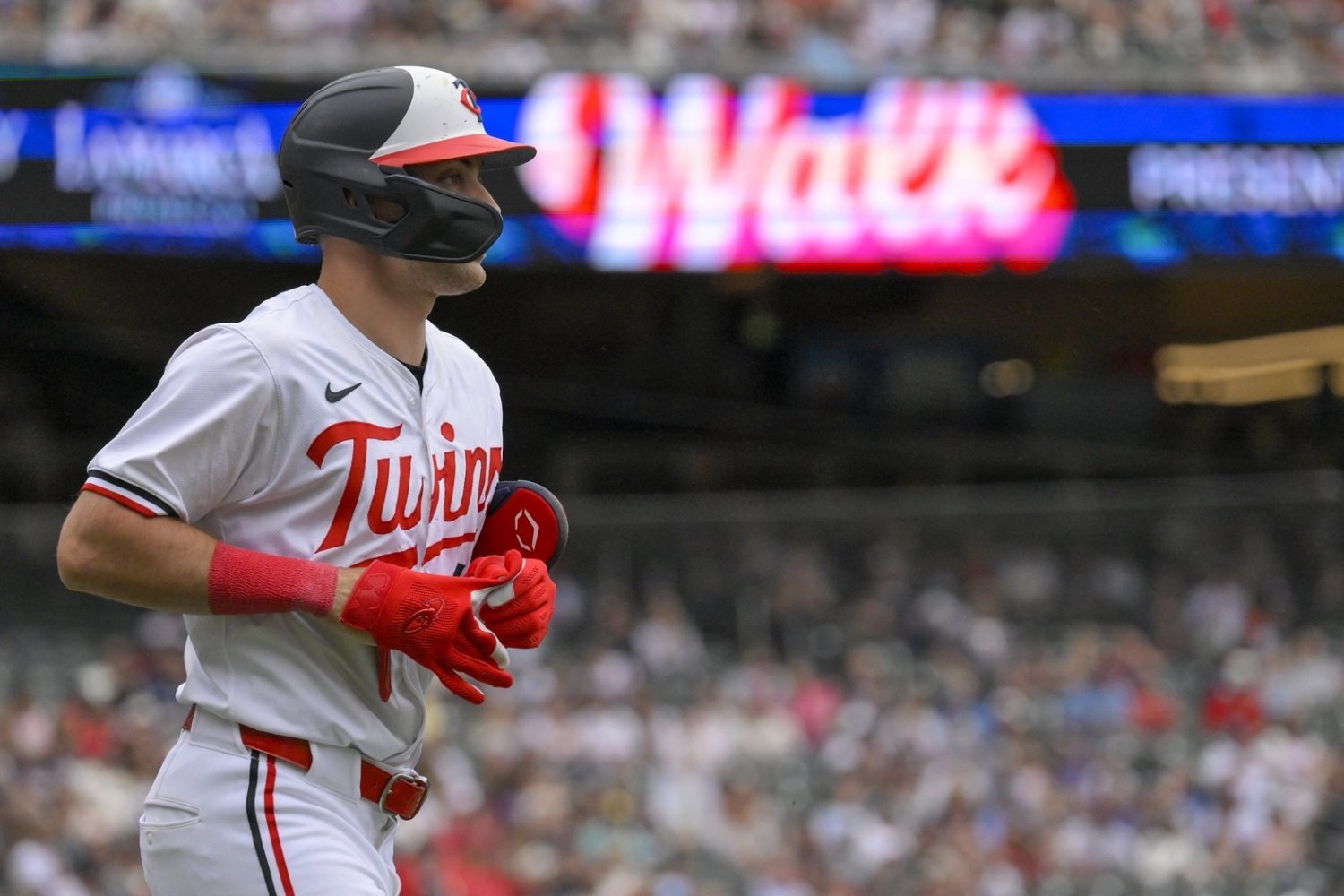 Edouard Julien's arrival on the MLB stage was marked by an impressive rookie season in 2023, where he became a vital contributor to the Minnesota Twins lineup. Fast forward to 2024, and the young infielder seems to be struggling both offensively and defensively, leaving fans and analysts to wonder which version of Julien is the long-term player the Twins can rely on. To explore this, let's dive into his performances over these two seasons. 2023: A Promising Rookie Campaign Julien's rookie year in 2023 was a breakout season. He showcased a solid offensive game, combining plate discipline with power, a rarity for a rookie. In 109 games, he posted a 130 OPS+ while getting on base over 38% of the time. His Barrel %, Hard Hit %, and xwOBA ranked in the 70th percentile or higher, and his Chase % was in the 100th percentile. That offensive approach made him valuable for a Twins team needing production in the infield. These numbers illustrate Julien's ability to get on base and contribute runs. His approach at the plate was mature beyond his years, characterized by patience and the ability to draw walks. His .381 OBP was among the best for rookies, and his power numbers indicated a player with the potential to develop into a consistent middle-of-the-order threat. Defensively, Julien played primarily at second base and showed promise, although he had some growing pains common for young infielders. 2024: A Sophomore Slump In contrast, the 2024 season has been a challenge for Julien. His offensive production has taken a noticeable dip, and his defensive struggles have become more pronounced. His OPS+ has dropped by over 40 points, and pitchers have shown a propensity to attack him with strikes without fear of him making hard contact. The drop in his batting average and OBP is significant, indicating that Julien's ability to reach base has diminished. His power numbers have also declined, with fewer home runs and extra-base hits. The decrease in walk rate suggests that pitchers have adjusted to Julien's approach, and he has yet to find a consistent way to counter these adjustments. Defensively, Julien's issues have been more evident. His costly throwing miscue is at the top of everyone’s mind, but there are concerns about his long-term viability as an everyday second baseman. These defensive struggles have occasionally led to him being benched or used in a designated hitter role, limiting his impact on the field. Which Julien is the Long-Term Outcome? The question remains: Which version of Edouard Julien will the Twins see in the long term? The answer lies between the extremes of his rookie success and his sophomore struggles. 1. Adjustment Period: It is not uncommon for players to experience a sophomore slump. After a strong rookie year, opposing teams often adjust their strategies, exposing weaknesses to which the player must adapt. Julien's 2024 performance may be a part of this natural adjustment process. 2. Plate Discipline: One of Julien's strengths in 2023 was his eye for the strike zone, leading to a high walk rate. While this has decreased in 2024, his still maintaining a decent walk rate suggests that he retains some of that patience. Refining his approach and making adjustments could help Julien regain his offensive form. 3. Defensive Development: Defense is often a late-blooming skill for many players, especially those who focus primarily on their offensive game. Julien's defensive struggles may improve with experience, better positioning, and continued work with the Twins' coaching staff. 4. Mental and Physical Fatigue: It's also possible that mental and physical fatigue is affecting Julien's performance in 2024. The grind of a long MLB season can be harsh on young players, especially those still adjusting to the league's demands. Julien's 2023 season showed his potential as a critical piece in the Twins' future. His 2024 struggles are a reminder of the challenges young players face in establishing consistency at the major league level. While it is too early to make definitive conclusions about which version of Julien is the long-term solution, his talent and approach suggest he has the tools to overcome his current struggles. Patience from both Julien and the Twins organization, along with targeted adjustments, will be crucial in determining his long-term success. The Twins have a vested interest in Julien's development, and given his flashes of brilliance, he is likely to get every opportunity to prove that his rookie season was not a fluke. The long-term version of Edouard Julien is still taking shape, but if he can blend his rookie promise with lessons learned from his sophomore slump, he could become a mainstay in the Twins' lineup for years to come. Which version of Julien is his actual outcome? Can he find a way to provide value to the Twins this season? Leave a COMMENT and start the discussion.
 -
Connor Prielipp was once considered among the Twins’ top pitching prospects. After an injury-plagued start to his professional career, how can he impact the organization in the future? Image courtesy of John Vittas- Fort Myers Mighty Mussels Connor Prielipp was once considered among the Twins’ top pitching prospects. After an injury-plagued start to his professional career, how can he impact the organization in the future? Connor Prielipp, a promising left-handed pitcher within the Minnesota Twins organization, has become a name to watch for his talent on the mound and his resilience in the face of adversity. Drafted in the second round of the 2022 MLB Draft out of the University of Alabama, Prielipp was a highly touted prospect with an arsenal of pitches that left scouts and analysts buzzing. However, his journey to professional baseball has been anything but smooth, marked by significant injuries that threatened to derail his career before it even began. Injury Struggles and Recovery Prielipp's first significant hurdle came in college, where he showcased his talent but was limited due to an elbow injury. The injury ultimately led to Tommy John surgery in 2021, a procedure that is now common among pitchers but still carries significant risk and a long road to recovery. Despite the setback, the Twins saw potential in Prielipp, recognizing his advanced pitching skills and mental toughness. His recovery from Tommy John surgery has been closely monitored, with the Twins taking a cautious approach to ensure he returns to full strength. Last season, Prielipp suffered another injury setback as he required surgery last July to address a torn UCL in his left elbow. His injury limited him to 6 2/3 innings during his first professional action. He opened the 2024 campaign on the IL with the Cedar Rapids Kernels. He made his first appearances in the Florida Complex League and the Florida State League shortly before the All-Star break. It was a small but meaningful milestone for a player who has been limited since signing with the Twins. Return to the Field: A New Beginning at High-A Cedar Rapids After a long and arduous rehabilitation process, Prielipp made his season debut with the Cedar Rapids Kernels, the Twins' High-A affiliate, in the 2024 season. His return to the mound has been a testament to his determination and hard work. Prielipp's performance at Cedar Rapids has shown flashes of his pre-injury form, with a fastball that touches the mid-90s, a sharp slider, and a developing changeup. His command and ability to mix pitches have made him effective against High-A hitters, and his presence on the field is a welcome sight for the Twins organization. Timeline to the Big Leagues The path to the major leagues is rarely straightforward, especially for a pitcher coming off a significant injury. However, Prielipp's talent and work ethic could accelerate his journey. If he continues to progress without any setbacks, a promotion to Double-A Wichita could be on the horizon by the end of the 2024 season. From there, his performance and health will dictate the timeline, but a potential debut in the majors could be realistic by late 2025 or early 2026. Starter or Reliever: The Big Question One of the biggest questions surrounding Prielipp's future is whether he will remain a starter or transition to the bullpen. His injury history naturally raises concerns about his durability in a starting role. Starting pitchers have to endure a heavier workload, which could put more strain on Prielipp's elbow. However, his three-pitch mix and ability to navigate lineups multiple times are traits that the Twins would love to harness in a starting role. Conversely, the bullpen could offer a less demanding workload, allowing Prielipp to maximize his fastball-slider combination in shorter outings. This role could help preserve his arm and extend his career, making him a valuable late-inning reliever. The Twins will likely assess his progress and physical condition over the next year to determine the best course of action. Prielipp's journey to the big leagues is a story of resilience, hope, and potential. While injuries have tested his resolve, his return to the field and performance at Cedar Rapids demonstrate his commitment to overcoming adversity. Whether he becomes a mainstay in the Twins' rotation or a valuable bullpen arm, Prielipp's future in baseball is bright. The Twins and their fans will watch closely as he continues to work his way up the minor league ladder, hoping his perseverance will lead to success at the highest level. Will Prielipp be a starter or a reliever by the time he reaches Target Field? What’s a realistic timeline for him to make his debut? Leave a COMMENT and start the discussion. View full article
-
Royce Lewis is in the most prolonged slump of his professional career. Can the Twins find a way to help him bust out? Image courtesy of © Jesse Johnson-USA TODAY Sports Royce Lewis is in the most prolonged slump of his professional career. Can the Twins find a way to help him bust out? Royce Lewis, the first overall pick in the 2017 MLB Draft, has shown glimpses of the talent that made him a top prospect in the Minnesota Twins organization. After overcoming multiple injuries early in his career, Lewis had a promising start in the big leagues, flashing his power and athleticism. However, like many young players, he has encountered a rough patch, experiencing a slump that has affected his performance at the plate. "I pride myself, I told (Twins hitting coach David Popkins), 'Hey, I don't do that slump thing,'" Lewis said on Jun. 19. "That's not a real thing for me. I understand that that's a thing, baseball, you're going to go into a slump or whatever, but for me, I don't have that mindset. It's a new day." In his 40 games since making that statement, Lewis has hit .214/.279/.429, with 16 extra-base hits and a 42-to-18 strikeout-to-walk ratio. For the Twins, who are vying for a postseason spot, helping Lewis rediscover his form is crucial. Here are some strategies the Twins can employ to help Royce Lewis break out of his slump. Focusing on Plate Discipline One of the common issues young hitters face is plate discipline, especially when they are struggling. In his early major-league appearances, Lewis showcased a good eye for the strike zone, leading to solid on-base numbers. However, as pitchers have adjusted, he may have become more prone to chasing pitches out of the zone. His Whiff% has jumped from 25.0 to 29.4 versus fastballs, and he’s seen a nearly 10% increase in his Whiff% when facing offspeed pitches. The Twins coaching staff can work with Lewis on recognizing pitches earlier, especially breaking balls and offspeed pitches that have been giving him trouble. Utilizing video analysis to review his at-bats and identifying patterns in his swing decisions can help Lewis make better ones. This approach should improve his on-base percentage and put him in a position to make solid contact, leveraging his power. Leveraging His Power Lewis has demonstrated impressive power potential in his limited time with the Twins. During his 2023 season, Lewis hit 15 home runs in just 239 plate appearances, showing he can change the game with one swing. However, his recent slump has seen a decline in his power numbers, suggesting he's struggling to get the barrel of the bat on the ball. To tap into his power potential, the Twins should encourage Lewis to focus on driving the ball to all fields. By not trying to pull every pitch and instead taking what the pitcher gives him, he can use his natural strength and quick bat speed to hit more line drives. Implementing drills that emphasize staying back on the ball and using the whole field can help Lewis rediscover his power stroke. Providing Consistent Playing Time Slumps can be mentally challenging for young players, leading to a loss of confidence. One way to combat this is by providing consistent playing time, allowing the player to work through his struggles. The Twins should commit to giving Lewis regular at-bats, either by continuing to start him or using him in critical situations off the bench. By keeping him in the lineup, the Twins signal their belief in his abilities, which can be a significant confidence booster. This approach also allows Lewis to make the necessary adjustments in real game situations, rather than trying to fix his issues solely in practice. Creating a Supportive Environment A supportive clubhouse environment can make a big difference for a player going through a tough stretch. Twins manager Rocco Baldelli and the coaching staff should continue to foster a positive atmosphere where players feel comfortable discussing their struggles and seeking help. Veteran players can also play a crucial role, offering encouragement and sharing their experiences on how they overcame similar slumps. Additionally, the Twins can utilize sports psychologists and mental skills coaches to help Lewis manage the mental aspect of the game. Techniques such as visualization, mindfulness, and breathing exercises can help reduce anxiety and improve focus at the plate. Using Advanced Analytics In today’s game, data-driven approaches are essential for player development. The Twins can leverage their analytics department to provide Lewis with detailed reports on his swing mechanics, pitch recognition, and opponent tendencies. By understanding how pitchers are attacking him, Lewis can better prepare for at-bats and make the necessary adjustments to counter their strategies. Lewis has the talent and potential to be a cornerstone player for the Twins. Despite his recent slump, his early career power numbers and flashes of confidence suggest he can be a significant contributor. By focusing on plate discipline, leveraging his power, providing consistent playing time, creating a supportive environment, and using advanced analytics, the Twins can help Lewis break out of his slump and reach his full potential. As the team pushes towards the postseason, a resurgent Lewis could be a game-changer for their success. Which solution will help Lewis break out of his slump? Leave a COMMENT and start the discussion. View full article
-
How the Minnesota Twins Can Help Royce Lewis Break Out of His Slump
Cody Christie posted an article in Twins
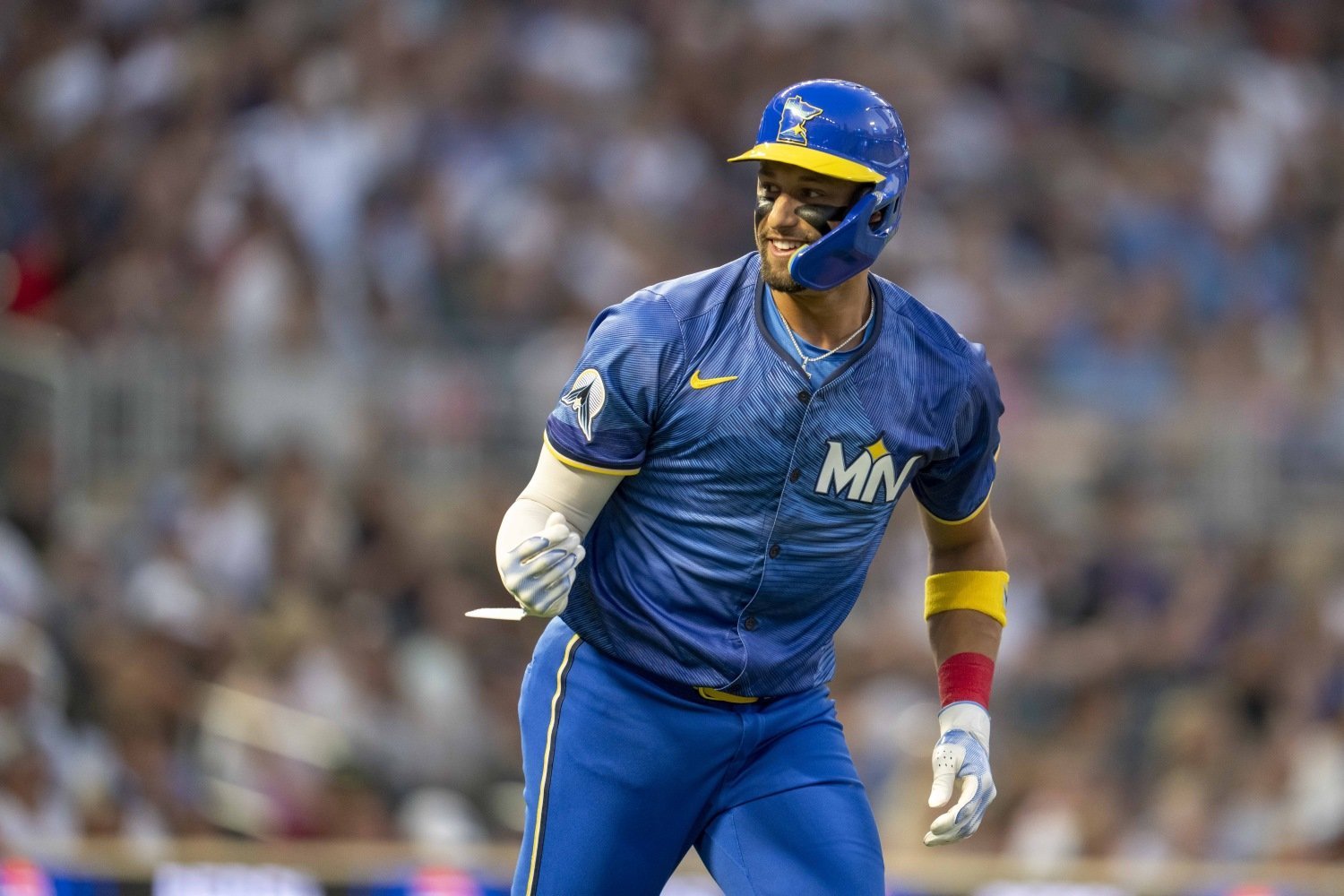 Royce Lewis, the first overall pick in the 2017 MLB Draft, has shown glimpses of the talent that made him a top prospect in the Minnesota Twins organization. After overcoming multiple injuries early in his career, Lewis had a promising start in the big leagues, flashing his power and athleticism. However, like many young players, he has encountered a rough patch, experiencing a slump that has affected his performance at the plate. "I pride myself, I told (Twins hitting coach David Popkins), 'Hey, I don't do that slump thing,'" Lewis said on Jun. 19. "That's not a real thing for me. I understand that that's a thing, baseball, you're going to go into a slump or whatever, but for me, I don't have that mindset. It's a new day." In his 40 games since making that statement, Lewis has hit .214/.279/.429, with 16 extra-base hits and a 42-to-18 strikeout-to-walk ratio. For the Twins, who are vying for a postseason spot, helping Lewis rediscover his form is crucial. Here are some strategies the Twins can employ to help Royce Lewis break out of his slump. Focusing on Plate Discipline One of the common issues young hitters face is plate discipline, especially when they are struggling. In his early major-league appearances, Lewis showcased a good eye for the strike zone, leading to solid on-base numbers. However, as pitchers have adjusted, he may have become more prone to chasing pitches out of the zone. His Whiff% has jumped from 25.0 to 29.4 versus fastballs, and he’s seen a nearly 10% increase in his Whiff% when facing offspeed pitches. The Twins coaching staff can work with Lewis on recognizing pitches earlier, especially breaking balls and offspeed pitches that have been giving him trouble. Utilizing video analysis to review his at-bats and identifying patterns in his swing decisions can help Lewis make better ones. This approach should improve his on-base percentage and put him in a position to make solid contact, leveraging his power. Leveraging His Power Lewis has demonstrated impressive power potential in his limited time with the Twins. During his 2023 season, Lewis hit 15 home runs in just 239 plate appearances, showing he can change the game with one swing. However, his recent slump has seen a decline in his power numbers, suggesting he's struggling to get the barrel of the bat on the ball. To tap into his power potential, the Twins should encourage Lewis to focus on driving the ball to all fields. By not trying to pull every pitch and instead taking what the pitcher gives him, he can use his natural strength and quick bat speed to hit more line drives. Implementing drills that emphasize staying back on the ball and using the whole field can help Lewis rediscover his power stroke. Providing Consistent Playing Time Slumps can be mentally challenging for young players, leading to a loss of confidence. One way to combat this is by providing consistent playing time, allowing the player to work through his struggles. The Twins should commit to giving Lewis regular at-bats, either by continuing to start him or using him in critical situations off the bench. By keeping him in the lineup, the Twins signal their belief in his abilities, which can be a significant confidence booster. This approach also allows Lewis to make the necessary adjustments in real game situations, rather than trying to fix his issues solely in practice. Creating a Supportive Environment A supportive clubhouse environment can make a big difference for a player going through a tough stretch. Twins manager Rocco Baldelli and the coaching staff should continue to foster a positive atmosphere where players feel comfortable discussing their struggles and seeking help. Veteran players can also play a crucial role, offering encouragement and sharing their experiences on how they overcame similar slumps. Additionally, the Twins can utilize sports psychologists and mental skills coaches to help Lewis manage the mental aspect of the game. Techniques such as visualization, mindfulness, and breathing exercises can help reduce anxiety and improve focus at the plate. Using Advanced Analytics In today’s game, data-driven approaches are essential for player development. The Twins can leverage their analytics department to provide Lewis with detailed reports on his swing mechanics, pitch recognition, and opponent tendencies. By understanding how pitchers are attacking him, Lewis can better prepare for at-bats and make the necessary adjustments to counter their strategies. Lewis has the talent and potential to be a cornerstone player for the Twins. Despite his recent slump, his early career power numbers and flashes of confidence suggest he can be a significant contributor. By focusing on plate discipline, leveraging his power, providing consistent playing time, creating a supportive environment, and using advanced analytics, the Twins can help Lewis break out of his slump and reach his full potential. As the team pushes towards the postseason, a resurgent Lewis could be a game-changer for their success. Which solution will help Lewis break out of his slump? Leave a COMMENT and start the discussion.
 -
5 Reasons Why the Twins’ Front Office Avoids Spending on Relief Pitchers
Cody Christie posted an article in Twins
 In the realm of baseball strategy, allocating resources—particularly financial ones—often defines a team’s approach to building a competitive roster. For the Minnesota Twins, led by front-office executives Derek Falvey and Thad Levine, there has been a noticeable pattern: a reluctance to invest heavily in bullpen arms. This strategy has sparked debate among fans and analysts alike, but it is grounded in sound reasoning and an understanding of the nature of relief pitching. 1. The Volatility of Relievers Relief pitchers are arguably the most unpredictable position group in baseball. A reliever who was dominant one season can become ineffective the next, due to factors such as injury, mechanical issues, or a drop in velocity. This volatility is well-documented across MLB, where the performance of relief pitchers often fluctuates dramatically year over year. Falvey and Levine seem to recognize that paying top dollar for a bullpen arm does not guarantee a reliable return on investment. In contrast to starting pitchers, who typically have more stable performance metrics over more extended periods, relievers’ small sample sizes can lead to misleading statistics. A few bad outings can severely impact a reliever’s overall numbers, making assessing their actual talent level challenging. 2. The High-Risk Nature of Long-Term Contracts Committing large sums of money to relievers also poses significant financial risks. Long-term contracts for relievers often end up as sunk costs if the player underperforms or gets injured. For example, injuries or a decline in performance can hinder a team's financial flexibility, making it difficult to address other needs. The Twins’ front office appears to favor flexibility and adaptability, preferring to avoid these potential financial albatrosses. 3. Development and Bargain Hunting Instead of pursuing expensive free agents, Falvey and Levine have focused on developing their bullpen talent in-house and finding value in under-the-radar acquisitions or minor-league signings. This approach allows the Twins to maintain a steady flow of capable relievers without the high costs associated with marquee bullpen signings. The Twins' front office has demonstrated a keen eye for identifying undervalued arms—players who may have struggled elsewhere or were overlooked due to poor surface-level statistics. By leveraging advanced analytics, the Twins have found pitchers with hidden potential, whether through minor-league signings, waiver claims, or low-cost trades. These pitchers often have a specific skill set, such as high strikeout rates or inducing ground balls, which the Twins can optimize for success. 4. Leveraging Depth and Versatility Another benefit of avoiding significant investments in relievers is the ability to build depth and versatility within the bullpen. A roster filled with multiple reliable options rather than one or two highly paid stars allows for more strategic maneuvering. The Twins can mix and match based on matchups, ride the hot hand, and manage workloads to keep arms fresh throughout the season. This depth-based approach has shown to be effective in maintaining bullpen performance over the grueling 162-game season. 5. The Evolution of Bullpen Strategy Baseball strategy is evolving, and the traditional closer role is becoming less defined. Modern teams, including the Twins, increasingly rely on bullpen flexibility, where any reliever could be called upon in high-leverage situations, regardless of inning. This approach places less emphasis on having a singular, dominant arm and more on having a group of capable arms that can handle critical situations. While some fans may wish to see the Twins make a splash in the bullpen market, Falvey and Levine’s approach reflects a deep understanding of the inherent volatility and financial risks associated with relievers. By focusing on development, scouting, and analytics, they have crafted a bullpen strategy that emphasizes flexibility, depth, and cost-effectiveness. In a league where overpaying for relievers can hamstring a team’s finances and hinder long-term success, the Twins’ cautious approach may be a wise blueprint for sustained competitiveness. Do the Twins need to spend more on the bullpen? Can their bullpen strategy continue to work? Leave a COMMENT and start the discussion.
 -
There is a piece of bone floating around in his knee. He's been playing with it all season. https://www.mlb.com/news/max-kepler-hits-game-winning-rbi-single
-
Here's some of the video with an explanation
-
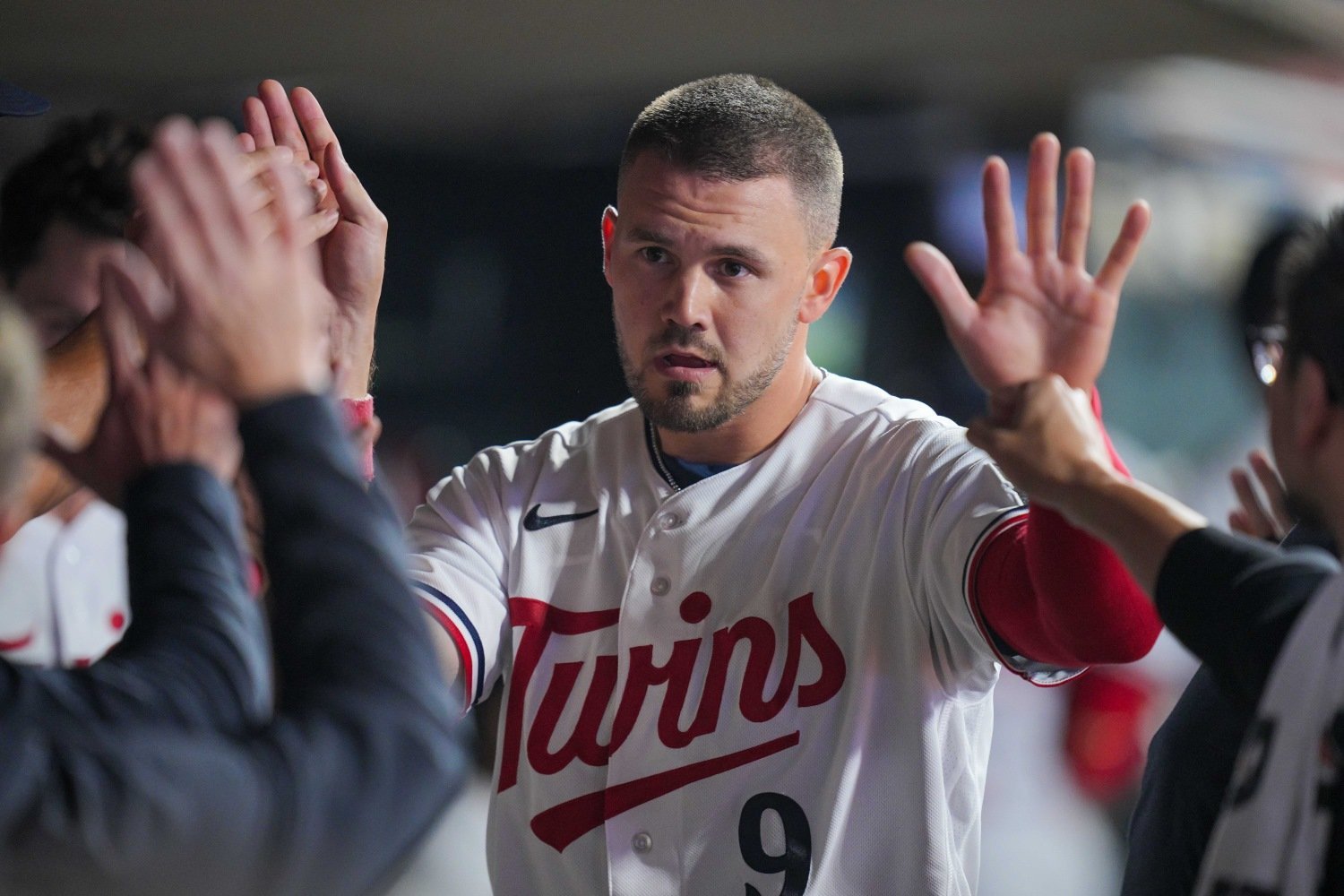 Amid the Minnesota Twins' 2024 season, Trevor Larnach has emerged as a vital piece of their offensive puzzle. That was on display again Tuesday night, as Larnach collected three hits and three RBIs, driving the Twins' valiant attempts to come back and win against their Georgian invaders. Once considered a prospect with potential, Larnach has taken significant steps forward this year, particularly in his ability to handle specific pitches and improve his plate discipline. These developments have made him not just a reliable presence in the lineup, but also a vital part of the Twins' long-term plans. Mastering the Cutter One of the most notable improvements in Larnach's game has been his ability to crush cutters. Pitchers have increasingly relied on cutters to disrupt hitters' timing, and Larnach has made them pay. His approach against cutters has been aggressive yet disciplined, showcasing his ability to recognize and attack these pitches early in the count. In 2022, Larnach posted a .250 BA, .333 SLG, and -2 Run Value when facing cutters. Over the last two seasons, he has improved significantly in his ability to recognize cutters, to the point where he has a .879 SLG, 60% Hard Hit %, and a +7 Run Value versus that pitch in 2024. This newfound skill has added another dimension to Larnach’s offensive game. In previous seasons, he struggled against pitches that bore in on his hands, often resulting in weak contact or strikeouts. However, this season has seen a marked change. Larnach's stance adjustment and refined swing path have allowed him to get his hands inside the ball, driving cutters into gaps or over the fence with regularity. This adjustment has increased his power numbers and made him a more consistent hitter, providing the Twins with much-needed pop from the left side of the plate. Former teammate Sonny Gray learned how much Larnach has grown the very, very hard way last weekend. Both of the homers Larnach hit against him came on cutters. Improved Plate Discipline Beyond his prowess against cutters, Larnach's improved plate discipline has been another critical factor in his breakout. In past seasons, he chased off-speed pitches out of the zone, particularly breaking balls down and away. This led to a high strikeout rate and limited his ability to get on base. However, in 2024, Larnach has made significant strides in laying off these pitches, resulting in a more balanced and patient approach. His strikeout rate has dropped from 34.0% in 2023 to 21.9% this season. The data backs up his improvement: his chase rate on off-speed pitches has dropped significantly. Last season, he posted a Whiff% above 47.1% against breaking and offspeed pitches. In 2024, he has improved significantly against breaking pitches with a 14.3% drop in his Whiff% (35.7%). Larnach's ability to differentiate between pitches he can drive and those he should let go has not only improved his on-base percentage, but also forced pitchers to approach him more carefully. His disciplined eye has put him in more favorable counts, allowing him to capitalize on mistakes and maintain a consistent level of production. A Cornerstone for the Future Larnach's development has been a welcome sight for the Twins, who have been seeking to solidify their outfield for the long term. With his ability to play both corner outfield spots and his burgeoning offensive profile, Larnach is positioning himself as an above-average regular for the Twins. His left-handed power complements a lineup that features a mix of veteran hitters and young talent, making him a versatile and valuable asset. Moreover, these improvements align with the Twins' organizational philosophy of patience at the plate and power-hitting. His ability to hit for both average and power, combined with his defensive capabilities, makes him a well-rounded player who can contribute in multiple facets of the game. Larnach’s growth provides a blueprint for developing the Twins' young talent. Larnach's breakout season has been a revelation for the Twins. His dominance against cutters and improved discipline against off-speed pitches have transformed him into a formidable hitter and a vital part of the Twins' offense. As he continues to grow and adapt, Larnach is poised to be a central figure in the Twins' lineup for years to come, embodying the team's commitment to developing homegrown talent and building a competitive future. Are Larnach’s improvements sustainable? Can he continue to make adjustments at the big-league level? Leave a COMMENT and start the discussion.


