



Cody Christie
-
Posts
7,820 -
Joined
-
Last visited
-
Days Won
5
Content Type
Profiles
News
Minnesota Twins Videos
2026 Minnesota Twins Top Prospects Ranking
2022 Minnesota Twins Draft Picks
Minnesota Twins Free Agent & Trade Rumors, Notes, & Tidbits
Guides & Resources
2023 Minnesota Twins Draft Picks
The Minnesota Twins Players Project
2024 Minnesota Twins Draft Picks
2025 Minnesota Twins Draft Pick Tracker
2026 Minnesota Twins Draft Tracker: Picks & Bonuses
Forums
Blogs
Events
Store
Downloads
Gallery
Everything posted by Cody Christie
-
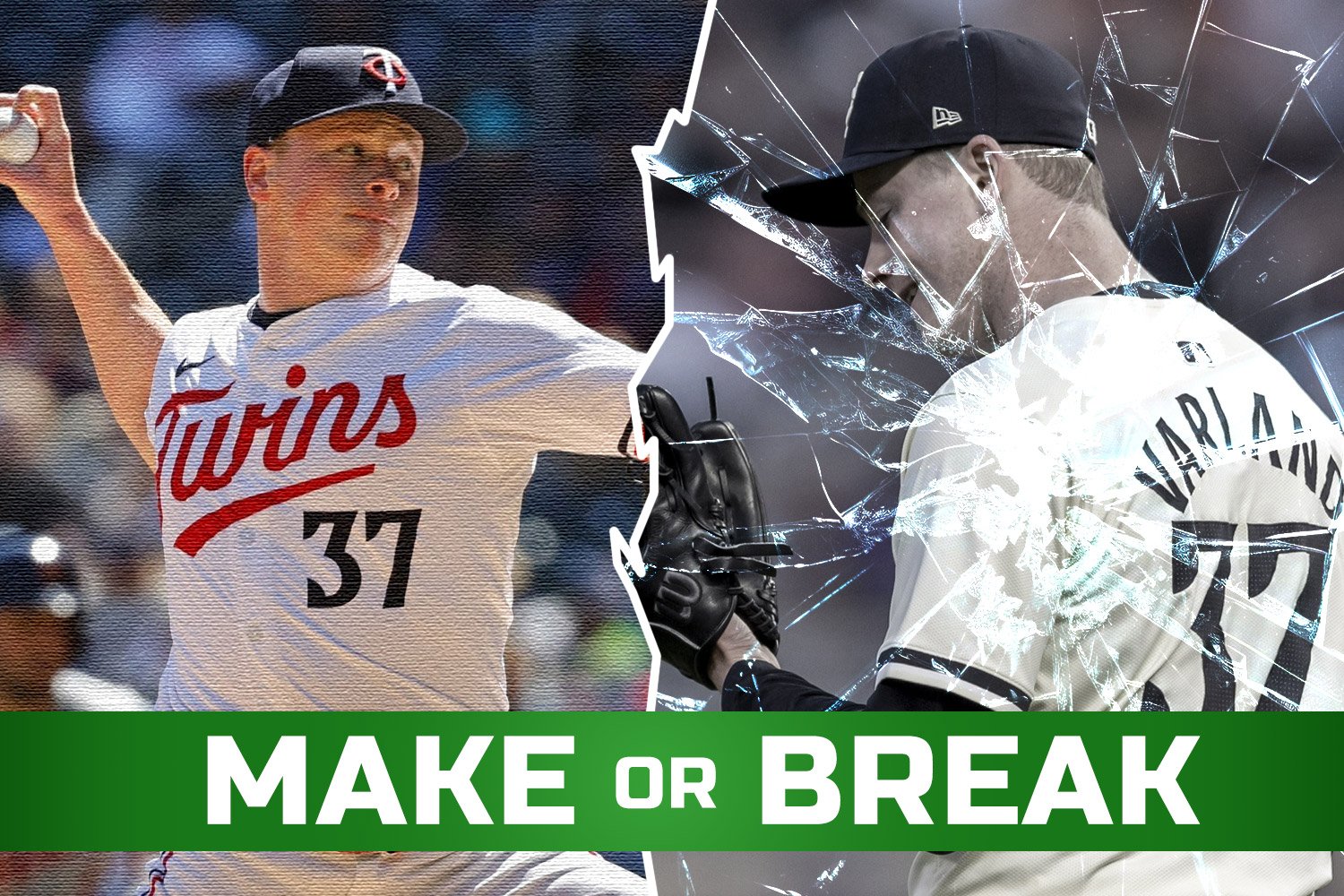 The Minnesota Twins head into 2025 with high expectations, but the stakes are even higher for the artist formerly known as Louie Varland. After a turbulent 2024 campaign, the Minnesota native finds himself at a career crossroads. With a crowded rotation, an increasingly competitive bullpen, and younger arms surpassing him on the depth chart, Varland must prove he belongs. If he can’t, his long-term role with the Twins could be in jeopardy. What Went Wrong in 2024? Heading into the 2024 season, the Twins viewed Varland as a valuable depth starter who could step into the rotation when needed. Unfortunately, his performance didn’t match expectations. After starting the year in Triple A, Varland struggled when called upon in the majors. In 16 appearances (49 2/3 innings), he posted a 7.61 ERA with a 1.69 WHIP. His strikeout rate plunged from 25.1% in 2023 to 20.6%. His command wavered, leading to an increased walk rate (6.7 BB%), and his once-effective cutter went from a weapon to a pitch pummeled for a .603 SLG. Varland saw opponents' hard-hit rate increase, as he had extended at-bats and struggled to put hitters away. As a result, the Twins shifted him to the bullpen late in the season, hoping his stuff would play up in shorter stints. While he has shown flashes of dominance in relief, inconsistency continued to be an issue. Entering 2025, Varland finds himself pushed further down the depth chart by the emergence of other arms, like Simeon Woods Richardson, Zebby Matthews, and David Festa. What Can Go Right in 2025? If Varland wants to solidify his place in the Twins’ plans, he needs a strong showing in 2025. The best path forward may be a full-time move to the bullpen. His fastball could regain its life in shorter outings, and his secondary pitches might play up with a more simplified approach. The Twins have seen success with similar transitions, and Varland has the raw stuff to thrive as a high-leverage reliever. He provided the Twins with -1.4 WAR last season, so reprising last year's attempt to salvage his starting career seems unlikely. However, the challenge remains: there isn’t a clear opening in the bullpen to start the season. The Twins project to have baseball’s best bullpen, meaning Varland will need to force their hand with a dominant spring training or early-season performance in Triple A. There is also a chance that injuries will impact the projected bullpen group, which could give Varland an opportunity. Twins manager Rocco Baldelli has been impressed with Varland’s previous relief appearances. He could become an impact arm by midseason, if he can sharpen his command and regain the velocity that he's previously shown in the bullpen. “[Varland] is just preparing for the season. He's not preparing for one role in particular. He's a guy that can adapt very quickly if we needed him to,” Baldelli told Twins Daily’s John Bonnes in Fort Myers. “I think it's very possible that we see a good amount of him out of the bullpen this year. We've seen the way he looks when he pitches out of the bullpen, but I'm not ready to say 100 percent locked in that Louie will pitch there.” How Will This Impact the Twins? The Twins’ pitching staff is in a strong position heading into 2025, but injuries and underperformance are inevitable over a 162-game season. If Varland can rediscover his form, he will give the club valuable depth in the bullpen. Conversely, if his struggles continue, the Twins may be forced to make a tough decision regarding his future as other pitchers pass him on the team’s depth chart. With younger pitchers like Woods Richardson, Matthews, and Festa climbing the ranks, the Twins may not have the patience to wait for Varland to figure things out. The Twins must give him a season to adjust to being a full-time reliever without jerking him back and forth from Triple-A to the big leagues. He took value away from the Twins in 2024, but now he can seize a new role and thrive. For Varland, 2025 is about finding sustained success at the big-league level, albeit in a different role than the one he might have hoped to fill. The Twins have options, and he is no longer a guaranteed part of their long-term plans. It’s now or never for the Minnesota native, as he either finds a way to contribute or risks being left behind. What value can Varland provide to the Twins? Is he best suited as a starter or reliever? Leave a comment and start the discussion.
 -
 As the Twins gather in Florida to gear up for the 2025 season, a handful of players face a make-or-break campaign. Here’s why their hard-throwing local product is one of the most critical pieces for the pitching staff. Image courtesy of © Bruce Kluckhohn-USA TODAY Sports / © Jesse Johnson-Imagn Images As the Twins gather in Florida to gear up for the 2025 season, a handful of players face a make-or-break campaign. Here’s why their hard-throwing local product is one of the most critical pieces for the pitching staff. The Minnesota Twins head into 2025 with high expectations, but the stakes are even higher for the artist formerly known as Louie Varland. After a turbulent 2024 campaign, the Minnesota native finds himself at a career crossroads. With a crowded rotation, an increasingly competitive bullpen, and younger arms surpassing him on the depth chart, Varland must prove he belongs. If he can’t, his long-term role with the Twins could be in jeopardy. What Went Wrong in 2024? Heading into the 2024 season, the Twins viewed Varland as a valuable depth starter who could step into the rotation when needed. Unfortunately, his performance didn’t match expectations. After starting the year in Triple A, Varland struggled when called upon in the majors. In 16 appearances (49 2/3 innings), he posted a 7.61 ERA with a 1.69 WHIP. His strikeout rate plunged from 25.1% in 2023 to 20.6%. His command wavered, leading to an increased walk rate (6.7 BB%), and his once-effective cutter went from a weapon to a pitch pummeled for a .603 SLG. Varland saw opponents' hard-hit rate increase, as he had extended at-bats and struggled to put hitters away. As a result, the Twins shifted him to the bullpen late in the season, hoping his stuff would play up in shorter stints. While he has shown flashes of dominance in relief, inconsistency continued to be an issue. Entering 2025, Varland finds himself pushed further down the depth chart by the emergence of other arms, like Simeon Woods Richardson, Zebby Matthews, and David Festa. What Can Go Right in 2025? If Varland wants to solidify his place in the Twins’ plans, he needs a strong showing in 2025. The best path forward may be a full-time move to the bullpen. His fastball could regain its life in shorter outings, and his secondary pitches might play up with a more simplified approach. The Twins have seen success with similar transitions, and Varland has the raw stuff to thrive as a high-leverage reliever. He provided the Twins with -1.4 WAR last season, so reprising last year's attempt to salvage his starting career seems unlikely. However, the challenge remains: there isn’t a clear opening in the bullpen to start the season. The Twins project to have baseball’s best bullpen, meaning Varland will need to force their hand with a dominant spring training or early-season performance in Triple A. There is also a chance that injuries will impact the projected bullpen group, which could give Varland an opportunity. Twins manager Rocco Baldelli has been impressed with Varland’s previous relief appearances. He could become an impact arm by midseason, if he can sharpen his command and regain the velocity that he's previously shown in the bullpen. “[Varland] is just preparing for the season. He's not preparing for one role in particular. He's a guy that can adapt very quickly if we needed him to,” Baldelli told Twins Daily’s John Bonnes in Fort Myers. “I think it's very possible that we see a good amount of him out of the bullpen this year. We've seen the way he looks when he pitches out of the bullpen, but I'm not ready to say 100 percent locked in that Louie will pitch there.” How Will This Impact the Twins? The Twins’ pitching staff is in a strong position heading into 2025, but injuries and underperformance are inevitable over a 162-game season. If Varland can rediscover his form, he will give the club valuable depth in the bullpen. Conversely, if his struggles continue, the Twins may be forced to make a tough decision regarding his future as other pitchers pass him on the team’s depth chart. With younger pitchers like Woods Richardson, Matthews, and Festa climbing the ranks, the Twins may not have the patience to wait for Varland to figure things out. The Twins must give him a season to adjust to being a full-time reliever without jerking him back and forth from Triple-A to the big leagues. He took value away from the Twins in 2024, but now he can seize a new role and thrive. For Varland, 2025 is about finding sustained success at the big-league level, albeit in a different role than the one he might have hoped to fill. The Twins have options, and he is no longer a guaranteed part of their long-term plans. It’s now or never for the Minnesota native, as he either finds a way to contribute or risks being left behind. What value can Varland provide to the Twins? Is he best suited as a starter or reliever? Leave a comment and start the discussion. View full article
 -
Record Number of Twins Players Arrive in Best Shape of Their Lives
Cody Christie posted an article in Just For Fun
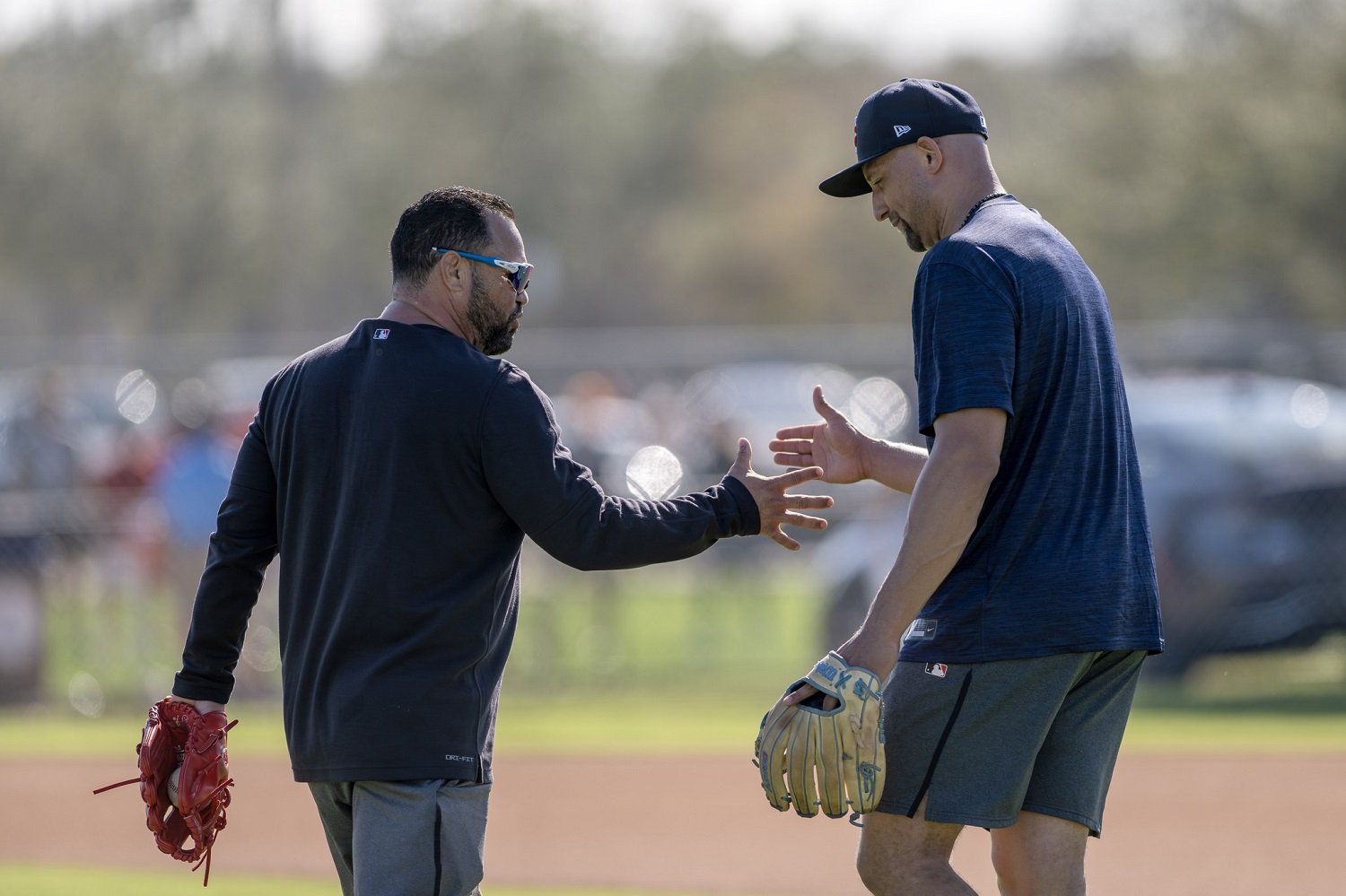 A shocking development has surfaced as the Minnesota Twins report to Fort Myers for spring training. Every single player has arrived in the best shape of their lives. That’s right, folks. The Twins are in such pristine condition that local Florida gyms have reported an unprecedented shortage of free weights, and protein shake supply chains are struggling to keep up. Royce Lewis, now allegedly boasting an 8% body fat percentage and an entirely new set of abs, was the first to comment on his own new physique. “I just really committed this offseason,” Lewis said while effortlessly flipping a tractor tire across the outfield. “Some guys do yoga, some do pilates. I personally just ran up and down Mount Everest every morning. It really unlocked something in me. I don't do slumps, but I do slopes, brother.” Carlos Correa, whose plantar fasciitis was a major talking point last season, dismissed any concerns with a bold declaration. “My foot? It’s stronger than ever,” Correa said, balancing on one foot atop a Bosu ball while juggling kettlebells. “I trained exclusively on a surface of uneven rocks to make sure it’s indestructible. Also, I might have developed the ability to levitate. We’re still testing that.” Meanwhile, Byron Buxton, who entered the offseason healthy for the first time in over half a decade, revealed his new approach. “I decided to just rebuild my entire body from scratch,” Buxton said. “[Surgery] is a tough habit to kick. Had some experimental procedures done. Some people have called it ‘extreme’ or ‘potentially illegal.’ But, let’s just say if I collide with an outfield wall this year, the wall is what’s going to break.” Perhaps the most shocking transformation came from flamethrowing closer Jhoan Durán, who insists his offseason gains have translated directly into his pitching. “My fastball now sits at 112 mph,” Durán said nonchalantly. “It's sitting there now, but I'm touching higher. Hopefully, by the time the weather warms up, I'll be closer to 117, 118." Manager Rocco Baldelli was left speechless, with every player reporting in peak condition. “I—I don’t even know what to say,” Baldelli muttered while gazing at his roster of apparent superhumans. “It’s either a dream come true or a science experiment gone too far. Our chances in 2025? Let’s just say the league might need to implement a mercy rule.” Trainer Nick Paparesta, the mastermind behind these transformations, shared his secret. “It’s really just a mix of science, grit, and a few experimental techniques that are still pending FDA approval,” Paparesta admitted. “We focused on biomechanics, cutting-edge recovery methods, and a whole lot of protein. Also, there may have been some cryogenic freezing involved. But hey, results speak for themselves—and I think the FDA's enforcement officers all got laid off anyway.” With Opening Day still weeks away, one thing is clear: the Minnesota Twins are bigger, faster, stronger, and possibly defying modern sports science. If this trend continues, opponents may soon request hazard pay before taking the field.
 -
The term “best shape of his life" gets thrown around extensively as teams report to spring training. For the Twins, it might be a record-setting year. Image courtesy of William Parmeter The term “best shape of his life" gets thrown around extensively as teams report to spring training. For the Twins, it might be a record-setting year. A shocking development has surfaced as the Minnesota Twins report to Fort Myers for spring training. Every single player has arrived in the best shape of their lives. That’s right, folks. The Twins are in such pristine condition that local Florida gyms have reported an unprecedented shortage of free weights, and protein shake supply chains are struggling to keep up. Royce Lewis, now allegedly boasting an 8% body fat percentage and an entirely new set of abs, was the first to comment on his own new physique. “I just really committed this offseason,” Lewis said while effortlessly flipping a tractor tire across the outfield. “Some guys do yoga, some do pilates. I personally just ran up and down Mount Everest every morning. It really unlocked something in me. I don't do slumps, but I do slopes, brother.” Carlos Correa, whose plantar fasciitis was a major talking point last season, dismissed any concerns with a bold declaration. “My foot? It’s stronger than ever,” Correa said, balancing on one foot atop a Bosu ball while juggling kettlebells. “I trained exclusively on a surface of uneven rocks to make sure it’s indestructible. Also, I might have developed the ability to levitate. We’re still testing that.” Meanwhile, Byron Buxton, who entered the offseason healthy for the first time in over half a decade, revealed his new approach. “I decided to just rebuild my entire body from scratch,” Buxton said. “[Surgery] is a tough habit to kick. Had some experimental procedures done. Some people have called it ‘extreme’ or ‘potentially illegal.’ But, let’s just say if I collide with an outfield wall this year, the wall is what’s going to break.” Perhaps the most shocking transformation came from flamethrowing closer Jhoan Durán, who insists his offseason gains have translated directly into his pitching. “My fastball now sits at 112 mph,” Durán said nonchalantly. “It's sitting there now, but I'm touching higher. Hopefully, by the time the weather warms up, I'll be closer to 117, 118." Manager Rocco Baldelli was left speechless, with every player reporting in peak condition. “I—I don’t even know what to say,” Baldelli muttered while gazing at his roster of apparent superhumans. “It’s either a dream come true or a science experiment gone too far. Our chances in 2025? Let’s just say the league might need to implement a mercy rule.” Trainer Nick Paparesta, the mastermind behind these transformations, shared his secret. “It’s really just a mix of science, grit, and a few experimental techniques that are still pending FDA approval,” Paparesta admitted. “We focused on biomechanics, cutting-edge recovery methods, and a whole lot of protein. Also, there may have been some cryogenic freezing involved. But hey, results speak for themselves—and I think the FDA's enforcement officers all got laid off anyway.” With Opening Day still weeks away, one thing is clear: the Minnesota Twins are bigger, faster, stronger, and possibly defying modern sports science. If this trend continues, opponents may soon request hazard pay before taking the field. View full article
-
The trade that sent Mitch Garver to the Texas Rangers had ripple effects on the Twins organization for years to come. All three players involved in the trade have ended up in new organizations, so did the Twins win this trade? Image courtesy of © Andrew Dieb-USA TODAY Sports The trade that sent Mitch Garver to the Texas Rangers had ripple effects on the Twins organization for years to come. All three players involved in the trade have ended up in new organizations, so did the Twins win this trade? The Minnesota Twins made a flurry of moves before the 2022 season, and one of the most intriguing was sending Mitch Garver to the Texas Rangers in exchange for pitcher Ronny Henriquez and infielder Isiah Kiner-Falefa. The deal was part of a more extensive roster reshaping, as the Twins quickly flipped Kiner-Falefa to the Yankees in a move that offloaded Josh Donaldson’s contract. Three years later, with Henriquez departing via waivers and Garver having completed his tenure in Texas, it’s time to assess how this trade played out. The Rangers’ Return: Mitch Garver’s Impact in Texas For Texas, Garver provided solid offensive production despite health concerns limiting his time behind the plate. Over two seasons, he accumulated 2.5 WAR while slashing .246/.342/.463 (.805). His best stretch came in 2023 when he hit 19 home runs and posted a .500 SLG while helping Texas win the World Series. However, lingering injury issues meant he appeared in just 157 games combined over those two years. Garver played a significant role in Texas' championship-winning 2023 season, stepping up as a key designated hitter down the stretch. In the ALDS, he went 4-for-10 with a home run, a double, and seven RBI in the team’s three-game sweep over Baltimore. The ALCS against Houston went seven games, and Garver posted a .357 OBP while driving in four runs and scoring four. He may not have been a full-time catcher, but his offensive upside was a valuable addition to the Rangers’ lineup, especially when healthy. Ultimately, Texas got two years of inconsistent production before Garver left in free agency following the 2023 campaign. The Twins’ Return: Henriquez’s Limited Role and the Donaldson Dump For the Twins, the key piece in the trade ended up being Kiner-Falefa, but only for a matter of hours. Before he could suit up in a Twins uniform, he was packaged with Donaldson and Ben Rortvedt in a deal with the Yankees that brought back Gary Sánchez and Gio Urshela. That trade allowed the Twins to clear Donaldson’s $51.5 million commitment, giving them payroll flexibility to eventually sign Carlos Correa. That left Henriquez as the only long-term piece from the original trade. The young right-hander showed promise in the minors but struggled to carve out a consistent role at the big-league level. Across three seasons, he bounced between Triple-A and the majors, logging just 31 big-league innings with a 2.90 ERA. This week, the Twins placed him on waivers, and he was claimed by the Miami Marlins, officially ending his time in Minnesota. Final Verdict: Did Anyone Win the Trade? Looking back, the Rangers undoubtedly got more direct value from the trade. Garver wasn’t an everyday catcher, but he provided a potent bat, helped them win a World Series, and ultimately outperformed what the Twins got in return. From Minnesota’s perspective, the trade can’t be evaluated in isolation. The Kiner-Falefa flip allowed the Twins to shed Donaldson’s contract, indirectly contributing to later moves, such as the team signing Correa in two consecutive winters and inking Pablo López to an extension. However, regarding on-field returns, Henriquez’s limited impact makes it difficult to argue that the Twins won this deal. If the goal was pure production, Texas got the better end. If the goal was financial flexibility, Minnesota accomplished what it set out to do. Neither team received extensive value from the trade, but the Rangers have a World Series title thanks to Garver’s contributions. There was a lot of value in the Twins getting rid of Donaldson, which likely extended the team’s current winning window. Did the Twins indirectly win the Garver trade? Leave a comment and start the discussion. View full article
-
Ranking the Top 5 Twins Prospects in Big-League Camp
Cody Christie posted an article in Minor Leagues
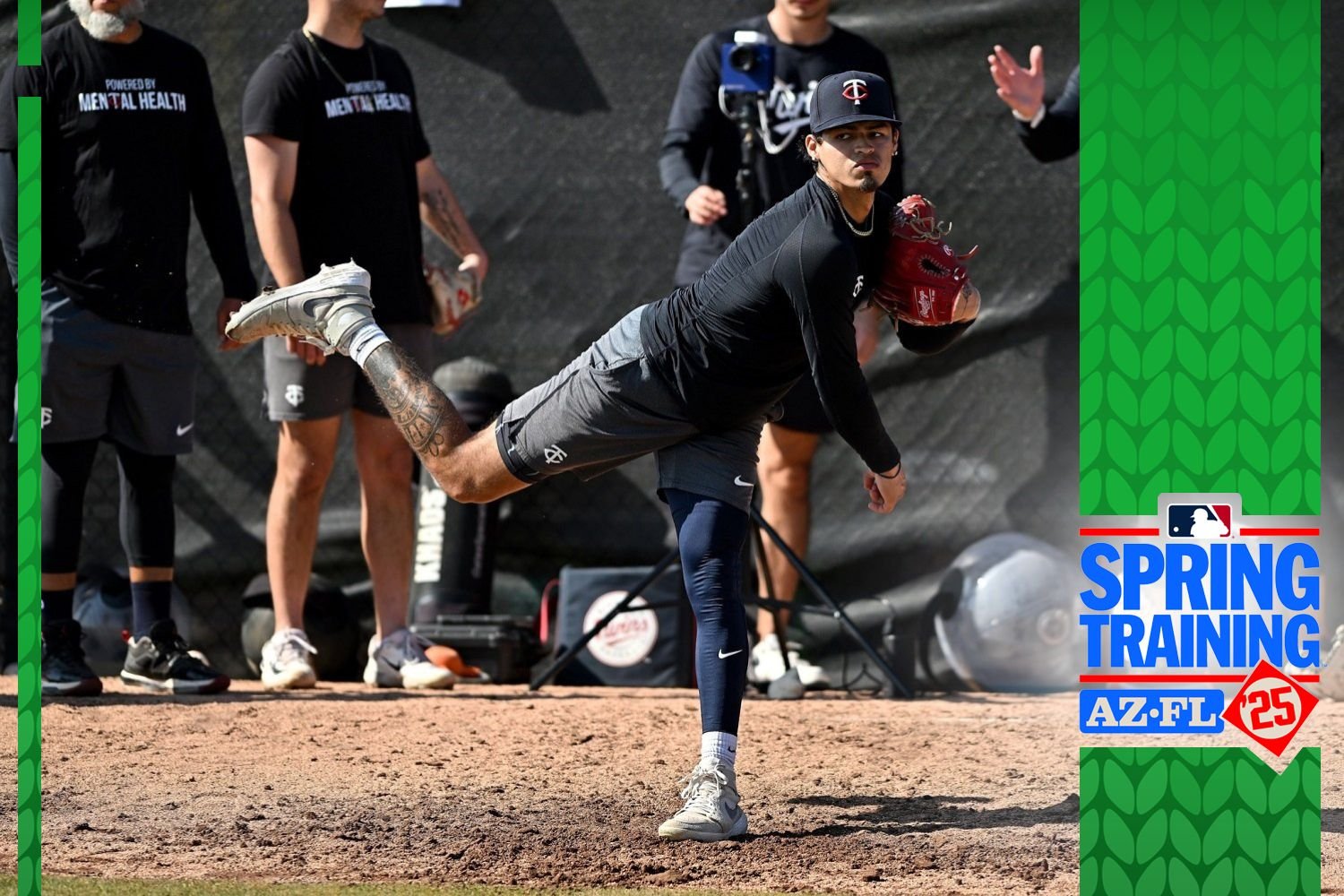 Not every top prospect in an organization gets an invite to big-league camp. Some players are far enough away from the big leagues that it doesn’t make sense to rush them. Others have yet to be added to the 40-man roster so they can stay in minor league camp and focus on preparing with the players who are more likely to be their teammates. For the Twins, some of the organization's top prospects will be in big-league camp, with some getting their first opportunity for the big-league coaching staff to get a long look at potential future stars. Here are the top five Twins prospects who will have a big-league locker as the team reports to Fort Myers. 5. Cory Lewis, SP TD Top Prospect Rank: 9 Lewis was the organization’s 2023 minor league pitcher of the year, so hopes were high for him entering last season. Unfortunately, he suffered a shoulder injury in spring training last year and missed the season’s first three months. In 19 starts, he posted a 2.51 ERA with a 1.32 WHIP and a 27.9 K%. Most of his starts last season were at Double-A, but he finished the year with one start in St. Paul, where he allowed two earned runs in five innings. Lewis should start the year at Triple-A with the chance for a call-up by the middle of the season. 2025 Prediction: Lewis makes his debut ahead of other pitchers on this list. 4. Marco Raya, SP TD Top Prospect Rank: 5 The Twins have taken a unique approach with Raya by aggressively pushing him up the organizational ladder while also limiting his innings. In his first 55 career appearances, there was only one time where he threw more than 75 pitches. In his age-21 season, he finished the year at Triple-A and posted a 4.05 ERA with a 1.36 WHIP and a 24.6 K%. He has a five-pitch mix, including a mid-90s fastball that he uses up in the zone with high spin rates. His slider is a devastating outpitch with an elite spin rate. His slower curveball and changeup also change the eye level of batters. He must prove he can handle a starter’s workload in 2025. 2025 Prediction: The Twins will unleash Raya this year by allowing him to pitch a career-high innings while pitching further into games. 3. Andrew Morris, SP TD Top Prospect Rank: 6 Morris has used his college experience at Texas Tech to quickly move through the Twins system. Last season, he nearly followed Zebby Matthews from High-A to the MLB level in one season. Morris topped out at Triple-A, but his overall numbers were impressive. In 133 innings, he posted a 2.37 ERA with a 1.08 WHIP and a 24.5 K. His over-the-top delivery helps him to hide the ball, making it more difficult for batters to track his five-pitch mix. He follows a recent trend with Twins draftees as the club takes college arms in the mid-to-late rounds and quickly finds a way to add velocity. In 2024, he averaged 94 mph and showed an ability to amp it up to the high 90s. Morris pounds the strike zone with solid pitch offerings, which is a recipe for success at the big-league level. 2025 Prediction: Morris will establish himself as a mid-rotation starter in what is becoming a fruitful Twins pitching pipeline. 2. Luke Keaschall, UTL TD Top Prospect Rank: 3 Keaschall is returning from Tommy John surgery, but the Twins expect him to be ready for the season’s start. Last year, he was the organization’s breakout hitter, batting .303/.420/.483 (.903) with 21 doubles and 15 home runs in 102 games. Keaschall enters this season as a consensus top-100 prospect, with Baseball America and Baseball Prospectus ranking him in their top 45 players. He finished last season at Double-A so the Twins could send him back to Wichita to get his feet under him before a promotion to St. Paul. He seems like the kind of player Twins manager Rocco Baldelli will gravitate towards. Look for the manager to sing Keaschall’s praises this spring. 2025 Prediction: Keaschall will debut in the first half and provide enough value that it will be tough for him to be sent back down. 1. Emmanuel Rodriguez, OF TD Top Prospect Rank: 2 In many other organizations, Rodriguez would be the top-ranked prospect. His approach is unique, with some of the best plate discipline of any Twins prospect in recent memory and showcasing elite power potential. His professional career has been hampered by injury, but he's shown tremendous ability when healthy. Last season, he hit .280/.459/.567 (1.026) with 14 doubles and nine home runs in 209 plate appearances. His 29.7 K% is high, but he pairs it with a 24.4 BB%. The Twins think highly of Rodriguez and pushed him to Triple-A last season despite missing time due to multiple injuries. He’s one of baseball’s best prospects and will impact the Twins lineup sooner rather than later. 2025 Prediction: Rodriguez will provide a second-half spark to the Twins lineup that propels the team to the postseason. Rodriguez and Keaschall will get a lot of attention, but the trio of top pitching prospects also brings excitement to big-league camp. None of the players seem destined to make the Opening Day roster, but they should all play regularly in St. Paul at some point in 2025. The Saints will have an exciting roster, and these five players will be only one step away from making their MLB debuts. Which prospect are you most excited to see during spring training? Leave a comment and start the discussion.
- 17 comments
-
- 6
-

-

-
- marco raya
- luke keaschall
- (and 3 more)
-
Some of the team’s top prospects will get a chance to work with the big-league coaches and players for the first time this spring. So, who are the top prospects that fans can watch during spring training? Image courtesy of William Parmeter (Photo of Marco Raya) Some of the team’s top prospects will get a chance to work with the big-league coaches and players for the first time this spring. So, who are the top prospects that fans can watch during spring training? Not every top prospect in an organization gets an invite to big-league camp. Some players are far enough away from the big leagues that it doesn’t make sense to rush them. Others have yet to be added to the 40-man roster so they can stay in minor league camp and focus on preparing with the players who are more likely to be their teammates. For the Twins, some of the organization's top prospects will be in big-league camp, with some getting their first opportunity for the big-league coaching staff to get a long look at potential future stars. Here are the top five Twins prospects who will have a big-league locker as the team reports to Fort Myers. 5. Cory Lewis, SP TD Top Prospect Rank: 9 Lewis was the organization’s 2023 minor league pitcher of the year, so hopes were high for him entering last season. Unfortunately, he suffered a shoulder injury in spring training last year and missed the season’s first three months. In 19 starts, he posted a 2.51 ERA with a 1.32 WHIP and a 27.9 K%. Most of his starts last season were at Double-A, but he finished the year with one start in St. Paul, where he allowed two earned runs in five innings. Lewis should start the year at Triple-A with the chance for a call-up by the middle of the season. 2025 Prediction: Lewis makes his debut ahead of other pitchers on this list. 4. Marco Raya, SP TD Top Prospect Rank: 5 The Twins have taken a unique approach with Raya by aggressively pushing him up the organizational ladder while also limiting his innings. In his first 55 career appearances, there was only one time where he threw more than 75 pitches. In his age-21 season, he finished the year at Triple-A and posted a 4.05 ERA with a 1.36 WHIP and a 24.6 K%. He has a five-pitch mix, including a mid-90s fastball that he uses up in the zone with high spin rates. His slider is a devastating outpitch with an elite spin rate. His slower curveball and changeup also change the eye level of batters. He must prove he can handle a starter’s workload in 2025. 2025 Prediction: The Twins will unleash Raya this year by allowing him to pitch a career-high innings while pitching further into games. 3. Andrew Morris, SP TD Top Prospect Rank: 6 Morris has used his college experience at Texas Tech to quickly move through the Twins system. Last season, he nearly followed Zebby Matthews from High-A to the MLB level in one season. Morris topped out at Triple-A, but his overall numbers were impressive. In 133 innings, he posted a 2.37 ERA with a 1.08 WHIP and a 24.5 K. His over-the-top delivery helps him to hide the ball, making it more difficult for batters to track his five-pitch mix. He follows a recent trend with Twins draftees as the club takes college arms in the mid-to-late rounds and quickly finds a way to add velocity. In 2024, he averaged 94 mph and showed an ability to amp it up to the high 90s. Morris pounds the strike zone with solid pitch offerings, which is a recipe for success at the big-league level. 2025 Prediction: Morris will establish himself as a mid-rotation starter in what is becoming a fruitful Twins pitching pipeline. 2. Luke Keaschall, UTL TD Top Prospect Rank: 3 Keaschall is returning from Tommy John surgery, but the Twins expect him to be ready for the season’s start. Last year, he was the organization’s breakout hitter, batting .303/.420/.483 (.903) with 21 doubles and 15 home runs in 102 games. Keaschall enters this season as a consensus top-100 prospect, with Baseball America and Baseball Prospectus ranking him in their top 45 players. He finished last season at Double-A so the Twins could send him back to Wichita to get his feet under him before a promotion to St. Paul. He seems like the kind of player Twins manager Rocco Baldelli will gravitate towards. Look for the manager to sing Keaschall’s praises this spring. 2025 Prediction: Keaschall will debut in the first half and provide enough value that it will be tough for him to be sent back down. 1. Emmanuel Rodriguez, OF TD Top Prospect Rank: 2 In many other organizations, Rodriguez would be the top-ranked prospect. His approach is unique, with some of the best plate discipline of any Twins prospect in recent memory and showcasing elite power potential. His professional career has been hampered by injury, but he's shown tremendous ability when healthy. Last season, he hit .280/.459/.567 (1.026) with 14 doubles and nine home runs in 209 plate appearances. His 29.7 K% is high, but he pairs it with a 24.4 BB%. The Twins think highly of Rodriguez and pushed him to Triple-A last season despite missing time due to multiple injuries. He’s one of baseball’s best prospects and will impact the Twins lineup sooner rather than later. 2025 Prediction: Rodriguez will provide a second-half spark to the Twins lineup that propels the team to the postseason. Rodriguez and Keaschall will get a lot of attention, but the trio of top pitching prospects also brings excitement to big-league camp. None of the players seem destined to make the Opening Day roster, but they should all play regularly in St. Paul at some point in 2025. The Saints will have an exciting roster, and these five players will be only one step away from making their MLB debuts. Which prospect are you most excited to see during spring training? Leave a comment and start the discussion. View full article
-
It wasn’t meant to sound ominous. For the players that have reported, there was nothing new to report. There will likely be some minor injuries that pop up early in camp but they are starting in a good place at the moment <knock on wood>.
- 33 replies
-
- 1
-
-
- byron buxton
- carlos correa
- (and 5 more)
-
The fields at the Twins' spring training complex in Florida are beginning to fill with players. Here are four hot topics to follow as the team reports to Fort Myers. Image courtesy of William Parmeter The fields at the Twins' spring training complex in Florida are beginning to fill with players. Here are four hot topics to follow as the team reports to Fort Myers. Reporting to spring training is a time when most fan bases can have hope for the upcoming season. This year, it’s an opportunity for Twins fans to get the bad taste out of their mouth after one of the worst collapses in team history. The AL Central projects to be a tight race, with multiple teams in contention for the top spot. Minnesota might have the best projected roster, but a lot can happen throughout 162 games. Here are four hot topics to consider as the team reports to Fort Myers. Topic 1: Can the Twins stay healthy? Byron Buxton, Carlos Correa, and Brock Stewart missed significant time in the second half, while the rest of the roster imploded down the stretch. There were positive reports from TwinsFest around Buxton and Correa’s health, but there are no guarantees with their lengthy injury histories. Stewart is a little behind entering camp, so the Twins will ensure he is fully healthy. He could be a candidate to begin the year on the IL. There will likely be other injuries that pop up as the team ramps up for the regular season, and the Twins have depth at multiple positions to provide a cushion. Buxton and Correa are the key to the offense producing at a high level so that all eyes will be on the team’s two superstars. There were no new updates by manager Rocco Baldelli on new injuries of note or concern as of yesterday. That's a great first step in the right direction. Topic 2: Who’s on first? The Twins lost Carlos Santana to free agency this winter, and it seemed like the front office might be satisfied with handing the reins to José Miranda or Edouard Julien. However, the Twins signed Ty France to a non-guaranteed one-year deal this week to add depth to the position. He was an All-Star as recently as 2022, but his offensive numbers have dipped over the last two seasons (97 OPS+, 0.1 WAR). Perhaps France’s addition is a way to push Miranda and Julien this spring, because it seems in the team’s best interest for that duo to be the regulars at first in 2025. There have also been discussions about Willi Castro playing some time at first base. France is an interesting bounce-back candidate in his own right. Topic 3: Who gets the final bench spot? There are clear options for the team’s bench, with Christian Vázquez and Harrison Bader locked into spots. Brooks Lee and Julien aren’t guaranteed roster spots, after poor offensive performance in the second half. FanGraphs currently projects the team’s bench to include Vázquez, Bader, France, and Julien. Mickey Gasper is another potential bench option, with a modicum of positional flexibility. Jair Camargo and Diego Cartaya are also options in a third catcher role. It seems likely that injuries will arise during spring training, and that’s when the team’s depth will be tested. Topic 4: Will any non-roster invitees make the Opening Day roster? Earlier this week, the Twins announced their non-roster invites, and there are some exciting names on the list, including multiple top prospects. Top pitching prospects Andrew Morris and Cory Lewis will likely make their debuts during the 2025 season, but neither is expected to be on the Opening Day roster. Luke Keaschall is returning from Tommy John surgery and should be a big-league option in the season’s second half. Usually, though, it's the veteran NRIs who make the biggest pushes for Opening Day jobs. Castro was an NRI in 2023. Armando Alvarez and Mike Ford have played at the big-league level with other organizations, and that could give them an inside track for a bench role if injuries impact the projected roster. Scott Blewett, Randy Dobnak, and Ryan Jensen pitched at Triple-A last season and have an outside chance at impacting the bullpen in 2025. Minnesota enters spring with a positive outlook, but there will be questions for the front office to answer. Are Buxton and Correa prepared for a healthy 2025? Who takes over as the team's regular first baseman? What other players could be surprise additions to the Opening Day roster? Spring training is here; it's time to get excited about 2025. How would you answer these questions? What other topics will you be following during spring training? Leave a comment and start the discussion. View full article
-
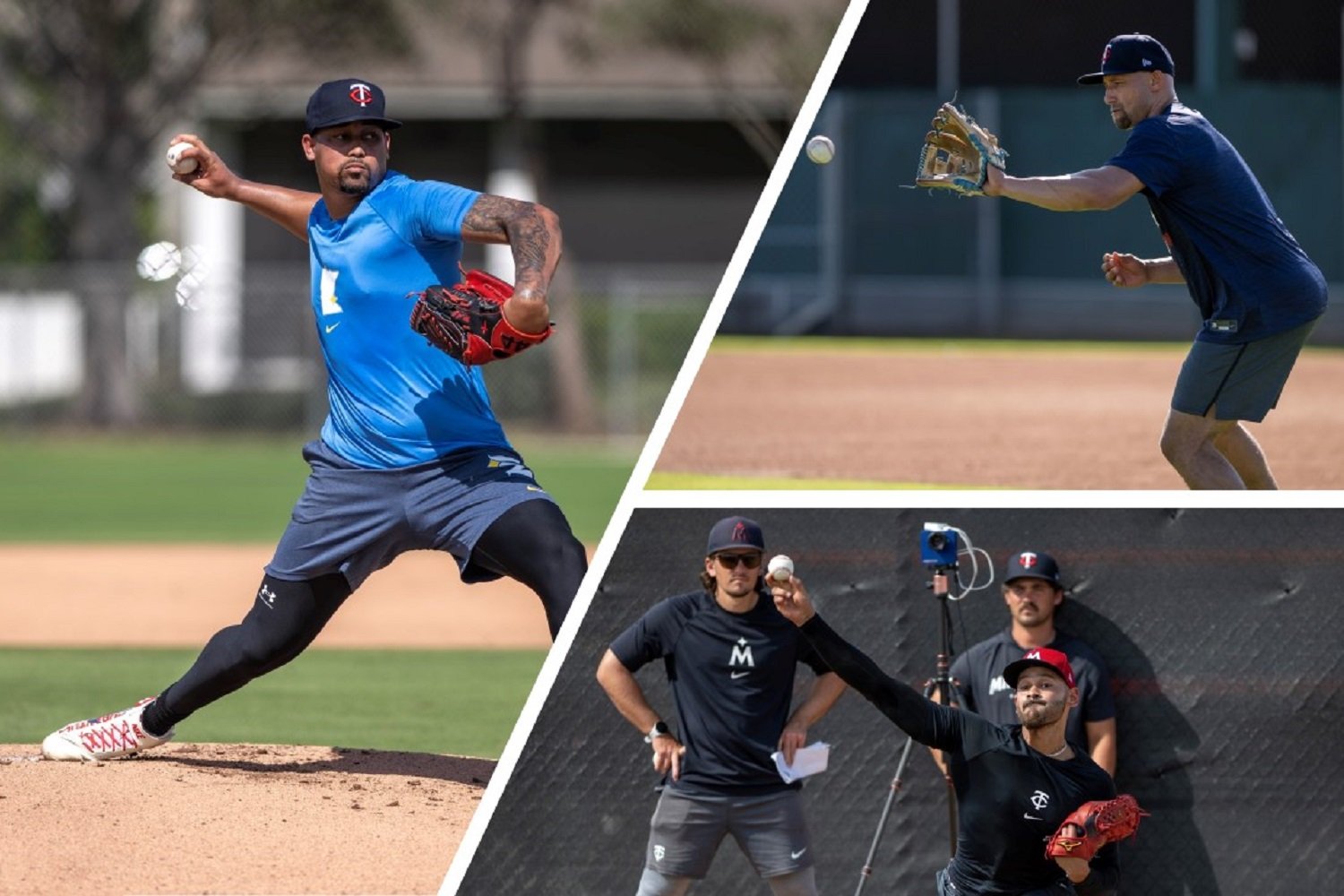 Reporting to spring training is a time when most fan bases can have hope for the upcoming season. This year, it’s an opportunity for Twins fans to get the bad taste out of their mouth after one of the worst collapses in team history. The AL Central projects to be a tight race, with multiple teams in contention for the top spot. Minnesota might have the best projected roster, but a lot can happen throughout 162 games. Here are four hot topics to consider as the team reports to Fort Myers. Topic 1: Can the Twins stay healthy? Byron Buxton, Carlos Correa, and Brock Stewart missed significant time in the second half, while the rest of the roster imploded down the stretch. There were positive reports from TwinsFest around Buxton and Correa’s health, but there are no guarantees with their lengthy injury histories. Stewart is a little behind entering camp, so the Twins will ensure he is fully healthy. He could be a candidate to begin the year on the IL. There will likely be other injuries that pop up as the team ramps up for the regular season, and the Twins have depth at multiple positions to provide a cushion. Buxton and Correa are the key to the offense producing at a high level so that all eyes will be on the team’s two superstars. There were no new updates by manager Rocco Baldelli on new injuries of note or concern as of yesterday. That's a great first step in the right direction. Topic 2: Who’s on first? The Twins lost Carlos Santana to free agency this winter, and it seemed like the front office might be satisfied with handing the reins to José Miranda or Edouard Julien. However, the Twins signed Ty France to a non-guaranteed one-year deal this week to add depth to the position. He was an All-Star as recently as 2022, but his offensive numbers have dipped over the last two seasons (97 OPS+, 0.1 WAR). Perhaps France’s addition is a way to push Miranda and Julien this spring, because it seems in the team’s best interest for that duo to be the regulars at first in 2025. There have also been discussions about Willi Castro playing some time at first base. France is an interesting bounce-back candidate in his own right. Topic 3: Who gets the final bench spot? There are clear options for the team’s bench, with Christian Vázquez and Harrison Bader locked into spots. Brooks Lee and Julien aren’t guaranteed roster spots, after poor offensive performance in the second half. FanGraphs currently projects the team’s bench to include Vázquez, Bader, France, and Julien. Mickey Gasper is another potential bench option, with a modicum of positional flexibility. Jair Camargo and Diego Cartaya are also options in a third catcher role. It seems likely that injuries will arise during spring training, and that’s when the team’s depth will be tested. Topic 4: Will any non-roster invitees make the Opening Day roster? Earlier this week, the Twins announced their non-roster invites, and there are some exciting names on the list, including multiple top prospects. Top pitching prospects Andrew Morris and Cory Lewis will likely make their debuts during the 2025 season, but neither is expected to be on the Opening Day roster. Luke Keaschall is returning from Tommy John surgery and should be a big-league option in the season’s second half. Usually, though, it's the veteran NRIs who make the biggest pushes for Opening Day jobs. Castro was an NRI in 2023. Armando Alvarez and Mike Ford have played at the big-league level with other organizations, and that could give them an inside track for a bench role if injuries impact the projected roster. Scott Blewett, Randy Dobnak, and Ryan Jensen pitched at Triple-A last season and have an outside chance at impacting the bullpen in 2025. Minnesota enters spring with a positive outlook, but there will be questions for the front office to answer. Are Buxton and Correa prepared for a healthy 2025? Who takes over as the team's regular first baseman? What other players could be surprise additions to the Opening Day roster? Spring training is here; it's time to get excited about 2025. How would you answer these questions? What other topics will you be following during spring training? Leave a comment and start the discussion.
- 33 comments
-
- 2
-
-
- byron buxton
- carlos correa
- (and 5 more)
-
Drafting Teams from the 2025 Minnesota Twins Top Prospect Lists
Cody Christie posted an article in Minor Leagues
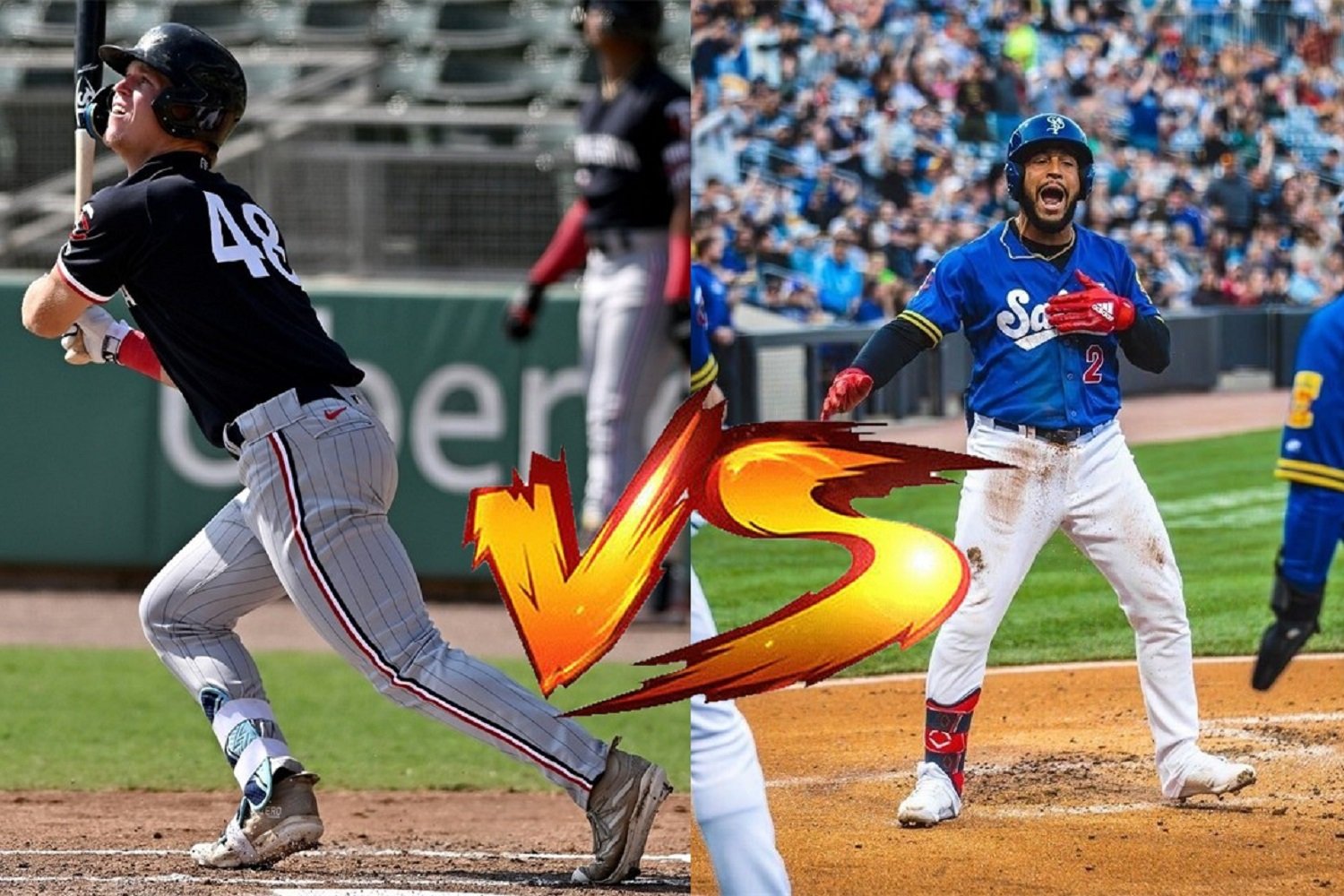 Most national outlets have released their top prospect lists in recent weeks, making for some fun discussions about where prospects land on the rankings. Jamie Cameron and Cody Christie were inspired by MLB Pipeline’s Jim Callis and Jonathan Mayo, who recently mock-drafted a 10-player team of prospects based on the top 10 players at each position. For this draft, Jamie and Cody used a similar 10-player team format, but focused on prospect-eligible players throughout the Twins system. Each team could only have one player per position, except for the outfield, where there were three roster positions. For pitching, each team selected one right-handed and one left-handed pitcher. It was a snake-style draft, which made for some fun strategy and surprising picks. So, who ended up with the best team? Let’s find out. NOTE: For the purposes of this draft, we considered Zebby Matthews ineligible after making his MLB debut in 2024. We kept these picks strictly to prospects who haven’t seen MLB action yet. Round 1 Christie (1st Overall): Emmanuel Rodriguez, OF Walker Jenkins is the consensus top prospect in the Twins organization, but I went for Rodriguez with the first pick because I believe he can stick in center field. Obviously, he needs to stay healthy after being limited to 47 games last season. However, his upside is through the roof, and the Twins have aggressively promoted him through the system. Rodriguez is going to be the cornerstone of my team at an up-the-middle position. Cameron (2nd Overall): Walker Jenkins, OF Wow, can’t say I saw a top-five global prospect being available with the second pick, but I gratefully accept. Jenkins displayed an elite hit tool in 2024, reaching Double A as a 19-year-old, despite missing 60 games through injury in a season he called ‘disappointing’. I think the power is coming for Jenkins. He has a chance to be the best prospect in baseball this time next year, and could even be knocking on the door of the majors by the end of this season. Round 2 Cameron (3rd Overall): Luke Keaschall, 2B I’m focused on acquiring as much high-end talent as possible, and Keaschall is clearly the third-best prospect in the system. Planned Tommy John surgery cut his season short in August, but he thrived through two levels, managing a .416 wOBA and 158 wRC+ in 102 games with 15 bombs. Getting Jenkins and Keaschall despite picking second feels like a win. Now things will get really interesting. Christie (4th Overall): Kaelen Culpepper, SS As with Rodriguez, I’m picking Culpepper to solidify the up-the-middle positions on my roster. During his professional debut (112 PA), he posted an impressive 110 wRC+ with a 13.4 K%. Many outlets believe he can stick at shortstop, and his arm is good enough to stay on the left side of the infield if the Twins need to move him to third. The 2025 season is going to be big for Culpepper, as he has a chance to move quickly into the system’s upper levels. Round 3 Christie (5th Overall): Charlee Soto, RHP This was my toughest pick so far, as I was wavering between selecting another position player or taking the pitcher I view as the system’s best. I decided on Soto because I believe he has the highest ceiling and the best chance to be a front-line starter. His fastball sits in the upper 90s, his changeup gets a lot of swings and misses, and his slider continues to improve. He has future ace written all over him, and I’m excited that he’s anchoring my staff. Cameron (6th Overall): Connor Prielipp, LHP That’s two great picks from Cody. Soto has already made a top-100 list and Culpepper made Baseball America's 100-200 list. Left-handed pitching is in short supply in the Twins system, so I’m taking Connor Prielipp here. While the injury history and lack of track record is a concern, it’s a tantalizing arsenal, with a wipeout slider and a changeup that has come on by leaps and bounds. Prielipp struck out over 40% of hitters after making his comeback last season. Round 4 Cameron (7th Overall): Kyle DeBarge, SS I had a few interesting options here, but I’m going to keep stacking exceptional hit tools. DeBarge took off in his junior year at University of Louisiana-Lafayette, with a 21-home run season. He has a good approach at the plate and great bat-to-ball skills. He’ll handle shortstop just fine. The only question mark in his short debut was getting more consistent loft in his batted-ball events. I’m counting on DeBarge to make short work of the low minors in 2025. Christie (8th Overall): Brandon Winokur, OF Last season, the Twins used Winokur at three different defensive positions, including shortstop, third base, and center field. I’m selecting him to slot him into a corner outfield spot, because he’s 6-foot-6 and will continue to fill out as he enters his 20s. Last season at Low A, his OPS was over 100 points higher than the league average and added a 116 wRC+. He strikes out a lot (28.0 K%), but he’s going to have the power to make him an offensive threat. Round 5 Christie (9th Overall): Billy Amick, 3B Some strategy is starting to come into the draft as we reach the halfway point. We know the needs of the other team, and that makes it easier to plan future picks. Amick’s professional debut showcased some positive signs for a player projected to be a slugger. He limited whiffs (19.5 K%) and controlled the strike zone (15.6 BB%). He hits the ball with authority, and that’s what I want from the hot corner. Cameron (10th Overall): Rayne Doncon, 3B I have a value I like here with Doncon. Not a heralded prospect, but he was quietly productive in 2024. Across Low- and High A, he put up a .773 OPS, good for a 121 wRC+. The trade acquisition whacked 38 extra-base hits, walked 11% of the time and struck out at a 22% clip. That’s a really solid platform. Doncon has already entered some Twins top 10 lists. He’s passed the tests presented to him so far. He’ll face a tough one with a jump to Double A at some point in 2025. Round 6 Cameron (11th Overall): Yasser Mercedes, OF This was a tough pick, as I had a few candidates in mind. Aside from some injury challenges in 2023, Mercedes has shown a bunch of above-average tools. He has an .860 OPS with 56 extra-base hits and 57 steals in 127 career games, all before turning 20 years old. Add solid strike zone control (12.3 BB% and 25 K%) to above-average defense in center field, and there’s an exciting prospect who showed folks why he secured a $1.7-million bonus in the international market. I thought about Beltre here, but I’m going with the track record in the US. Christie (12th Overall): Ricardo Olivar, C I left Mercedes on the board in the fifth round because I thought he’d make it to me with the 12th pick. Jamie had other plans and sniped him. Instead, I’m going to draft for need and take a catcher in Olivar, even though I don’t fully trust his defensive chops. Over the last three seasons, his 143 wRC+ ranks second in the Twins system behind Rodriguez (my first overall pick). He gets on base and has enough pop to provide a ton of offensive value for a backstop. Round 7 Christie (13th Overall): Eduardo Beltre, OF This was my most challenging pick so far, as I wavered between the high ceiling of Beltre or the sturdier floor with a player like Kala’i Rosario. Beltre signed for $1.5 million as part of last year’s international class and quickly made a name for himself in the Dominican Summer League. In 181 PA, he posted a 177 wRC+ while ranking in the league’s top three for home runs, slugging percentage, and OPS. He’s a long way from Target Field, but has the potential to be a dynamic player. Cameron (14th Overall): Payton Eeles, OF I thought about going Keirsey Jr here, but that felt a little safe (and he’s 27). Instead, I’m going with Payton Eeles (who might be an infield option for Cody), mostly to recognize the incredible 2024 ride he had as an undrafted free agent (he logged time at CF and RF for the Saints). Eeles played 111 games across 3 MiLB levels in 2024, finishing the season at Triple A. He hit .306 (.932 OPS) with 14% BB%, 14% K%, a 155 wRC+, and 39 extra-base hits. The next 50 games or so will tell us if Eeles has a shot at major-league playing time. Round 8 Cameron (15th Overall): Carson McCusker, 1B I’m going back-to-back undrafted free agents, taking McCusker as my big dude who dings dongs and can stand at first base. At 6-foot-8 and 250 pounds, McCusker is another unheralded prospect, but he managed a 132 wRC+ across 122 games in the minors' two highest levels in 2024 (.841 OPS). It’s a lot of strikeouts (close to 30%), but he also hit 19 home runs. The power is real, and if the timing is right, he might just get a shot with the big-league club in 2025. Christie (16th Overall): Dasan Hill, LHP The Twins took Hill in the fourth round of last summer’s draft out of Grapevine High School in Texas. Some viewed him as a potential first-round pick and Minnesota had to go overslot to sign him. He is a monster on the mound at 6-foot-5 with room to add some weight to his frame (165 pounds). His fastball is currently in the low- to mid-90s and he pairs it with a pair of breakers and a changeup that lags behind the rest of the arsenal. The slider is the real deal. I’m not super excited about both pitchers on my roster being high school picks, but their upside is undeniable. Round 9 Christie (17th Overall): Dameury Pena, 2B There are some clear comps between Pena and former Twin Luis Arráez. After signing in 2023, he posted a .382 BA during his pro debut in the Dominican Summer League. Last season, Pena came Stateside and posted a .282 BA while his wRC+ dropped from 156 to 120. He’s going to need to find a way to keep hitting for a high average for the Arráez comps to continue. Cameron (18th Overall): Andrew Morris, RHP Andrew Morris has a good chance to remain a starter and will make his major-league debut in 2025. Like Zebby Matthews, his stuff has continued to tick up since turning pro to add to a close-to-elite strike-throwing profile. It’s a five-pitch mix for Morris, with a plus fastball and slider and average cutter, curveball, and changeup. He posted a 2.36 FIP in 133 innings in 2024 (striking out 25% of hitters and walking just 5.9% while reaching Triple A). Don’t be surprised if Morris has a tweaked arsenal when he reports for spring training. It’s likely a back-end profile, but he could end up a strong number three if he continues to miss bats at a solid clip. Round 10 Cameron (19th Overall): Khadim Diaw, C The Twins draft board held up better than expected for hitters in 2024 and they took Diaw in the third round, 96th overall. He’ll be 21 for almost all of the 2025 season, and there’s plenty to like in the profile. In his first 100 plate appearances at Single A, he hit .271/.374/.341, walking 11.1% of the time and striking out just 14%. His wRC+ of 114 is a solid start to his pro career, particularly for a catcher. Age and positional scarcity are on his side. He might progress a little slower than some of his collegiate hitting counterparts from the 2024 class, but he’s worth keeping an eye on in 2025. Christie (20th Overall): Yunior Severino, 1B It seems fitting for Severino to be the Mr. Irrelevant in our mock draft. In 2023, he led all the minor leagues in home runs with 35 between Double- and Triple A. Following the season, the Twins added him to the 40-man roster to protect him from the Rule 5 Draft. The 2024 campaign was a disappointment, as his wRC+ dropped to 101, but he cut back on strikeouts (27.3 K%) and drew more walks (11.9 BB%). The Twins believed enough in him to re-sign him, and he gets another shot to prove 2023 wasn’t a fluke. Pos. Team Christie Team Cameron C Ricardo Olivar Khadim Diaw 1B Yunior Severino Carson McCusker 2B Dameury Pena Luke Keaschall 3B Billy Amick Rayne Doncon SS Kaelen Culpepper Kyle DeBarge OF Emmanuel Rodriguez Walker Jenkins OF Brandon Winokur Yasser Mercedes OF Eduardo Beltre Payton Eeles LHP Dasan Hill Connor Prielipp RHP Charlee Soto Andrew Morris Team Christie Draft Recap: I probably overthought the first pick and should have gone with the best available player. However, I had a specific strategy in mind, and I’m happy with how the up-the-middle players shaped up early in the draft. My outfield has a lot of power potential and my pitchers might be the organization’s highest-upside arms. On defense, my outfielders have all played center field and I think the double-play duo can be strong. The Twins continue to do a strong job of drafting, signing, and developing players and this draft showcases some of those strengths. Team Cameron Draft Recap: I’m happy with how my team turned out. I landed who I see as the Twins' best and third-best prospects, and have a ton of great hit tools in this lineup. I’d add that I feel good about my team’s defense in general, although I definitely came up short in the power category. I like the balance of having a high-floor righty to go with a high-ceiling lefty as my pitching group. This was a fun exercise and highlights some of the depth of the Twins' system beyond the top 3-6 prospects, who are discussed the most. Who has the best team? Who was picked too low? Too high? Leave a comment and start the discussion.
- 8 comments
-
- 3
-
-
- walker jenkins
- emmanuel rodriguez
- (and 5 more)
-
What’s the Twins' Payroll Situation, and Do the Pohlads Care?
Cody Christie posted an article in Twins
 The Minnesota Twins have had an interesting offseason, announcing the team's impending sale, but there were relatively few roster changes until last week. The front office agreed to deals with Danny Coulombe and Harrison Bader for a combined $9.25 million. While these moves improve the team’s bullpen and outfield depth, they also raise questions about the organization’s payroll strategy. The Pohlads, long known for their measured spending habits, slashed payroll from $158 million in 2023 to $130 million last season. Early indications were that the 2025 payroll would remain around that mark, yet the Twins currently sit at an estimated $147 million. So, what changed? One possibility is that ownership has decided to loosen the purse strings slightly, in an effort to keep the roster competitive. After all, the team was left reeling at the end of 2025 after one of the worst collapses in team history. However, there have also been rumors that the Twins are shopping veterans like Willi Castro, Christian Vázquez, and Chris Paddack. Each of these players fills a critical role, whether as a versatile utility option (Castro), an experienced catcher (Vázquez), or a back-end starter (Paddack). Trading any of them would take away from the team’s depth, so why explore those moves if payroll isn’t a significant issue? Another potential explanation is that the Pohlads are expecting to sell the team in full before some of these bills come due. Reports indicate that new ownership could be in place by midseason, meaning the current regime may not be overly concerned with keeping payroll at a strict level. By June, another owner might be writing the payroll checks. President of Baseball Operations Derek Falvey recently spoke on the subject, acknowledging that the team had been granted additional financial flexibility. The spending space came about after Twins chairman Joe Pohlad “greenlighted… the ability to add a little bit here to this team. I think that’s a credit to them and certainly a tick up for us that allows us to add a little bit more to this roster that we feel already had a good base, but now we’ve clicked off some of those needs." Falvey also mentioned that the trade market has cooled in recent weeks, as teams prepare to head to spring training. This could mean the Twins' trio of expiring contracts might stay with the club. However, this front office has made trades late in previous offseasons, so never say never. “I think teams are a little more focused internally now, as they’re ready to ship off to Arizona and Florida and try to get things squared away [for spring training],” Falvey said. “Some of those last remaining free agents, I think that’s been the vast majority of the noise.” Yes, the Pohlads were willing to stretch the budget beyond initial projections, but it remains unclear just how far they are willing to go. Some reports have the Twins interested in adding a backup shortstop, which would likely put the team’s payroll closer to $150 million. Will they really continue to make additions, or will they look to trim payroll before Opening Day? If the team does end up moving one or more veterans, it could signal that ownership is still mindful of finances, even as they prepare for a sale. For now, ownership has pushed the payroll. The additional spending has allowed them to solidify their roster, but the looming uncertainty surrounding ownership makes future moves challenging to predict. It seems a foregone conclusion that the Pohlads are on their way out the door, and they may be willing to let payroll rise as a final gesture of goodwill to the fans (or a cheap sop to a frustrated baseball operations department). Either way, Twins Territory will watch closely to see how the situation unfolds. Do the Twins have any more wiggle room in the payroll for 2025? What’s the team’s most significant need at this point? Leave a comment and start the discussion.
- 16 comments
-
- 7
-
-
- willi castro
- christian vazquez
- (and 1 more)
-
Five Potential First-Time All-Stars for the 2025 Minnesota Twins
Cody Christie posted an article in Twins
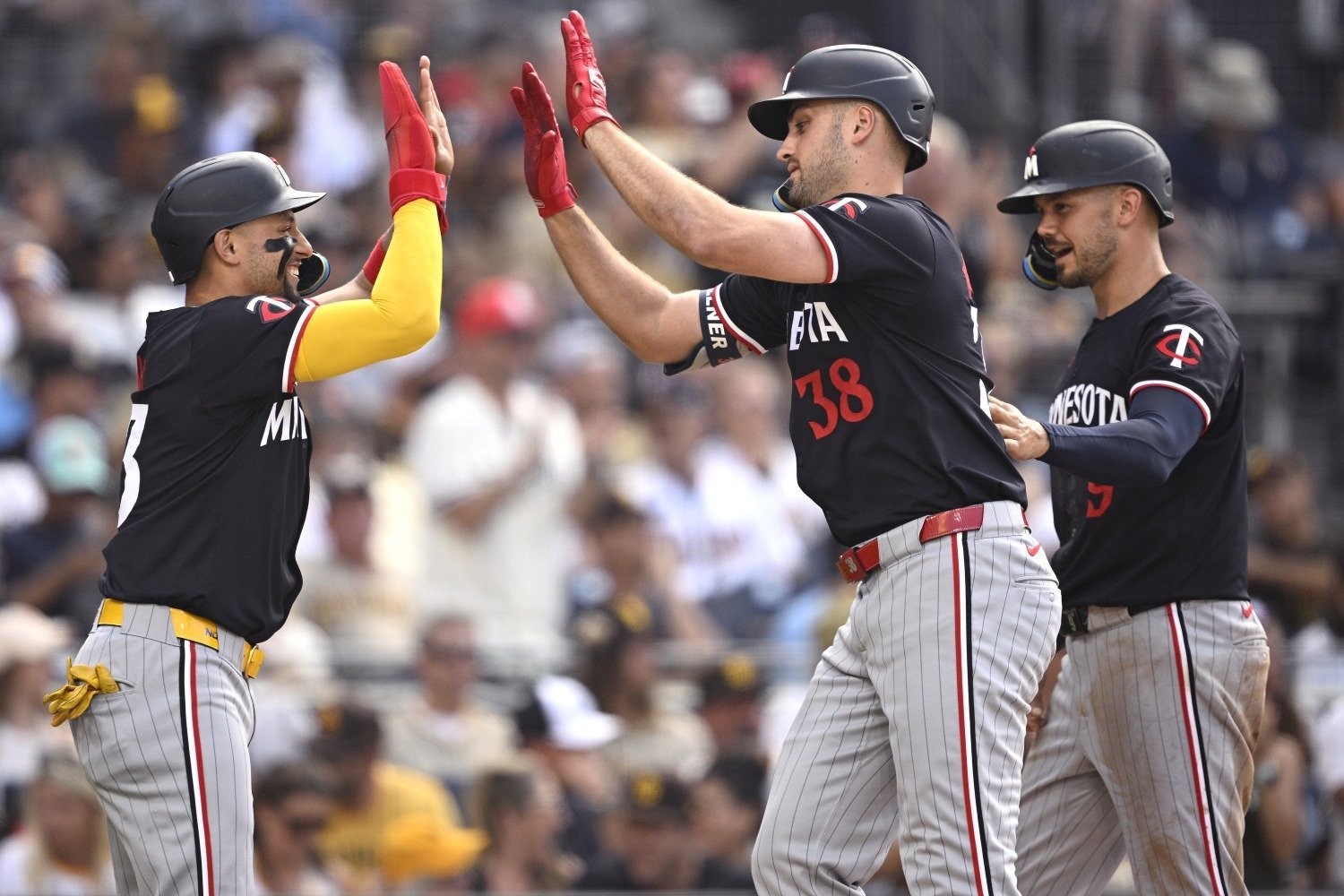 The Minnesota Twins boast a roster with multiple established stars, but a new wave of talent is primed to take center stage. Five Twins have the potential to earn their first career All-Star nods this season. Each player has flashed that kind of ability, and with continued growth, they could find themselves representing Minnesota in July. Let’s dive into why each of these five Twins could take that next step toward All-Star status in 2025. Griffin Jax Closest All-Star Season: 2024 Relievers usually need to be the team’s closer to make the All-Star Game, but Jax could be the exception to the rule. He had a 2.03 ERA, a 0.87 WHIP, and 95 strikeouts in 71 innings pitched in 2024. Jax finished with 10 saves and allowed just four home runs all year. He was worth 2.8 WAR, tied for seventh-most among all MLB relief pitchers. MLB Network left him off their list of the top 10 relievers entering the 2025 season, pointing to him being undervalued in national discussions. An argument could be made that he was the Twins' MVP last season, though, and he deserves more attention in 2025. Matt Wallner Closest All-Star Season: N/A Last season, Wallner looked lost at the plate in the season’s first month, hitting .080/.273/.240 with a strikeout rate over 50%. Minnesota sent him back to Triple-A St. Paul to rediscover his swing. He came back with a vengeance in the middle of the season. In 75 games, he hit .259/.372/.523 with 13 home runs and 17 doubles. Max Kepler left in free agency, giving Wallner the inside track to be the team’s everyday right fielder. Strikeouts will always be part of the cost of Wallner’s powerful swing, but avoiding some swing and miss could put him on pace to be one of the league’s best right fielders. Royce Lewis Closest All-Star Season: N/A Lewis’s best season came in 2023, when he hit .309/.372/.548 with a 149 OPS+ and accumulated 2.4 rWAR. Like Wallner, his value accrued in the season’s second half, so he didn’t have an opportunity to make the All-Star team. Last season, he hit a home run on Opening Day and got injured later in the game. There is some discussion about what defensive position Lewis will play regularly this season, which could impact how he does in the voting process. A hot start to 2025 could put him on pace to represent the team in the Midsummer Classic. Joe Ryan Closest All-Star Season: 2024 A strong argument could be made that Ryan deserved to be an All-Star for his first-half performance last season. In 19 starts, he posted a 3.53 ERA with a 1.00 WHIP, while holding opponents to a .668 OPS. According to FanGraphs, he had the seventh-highest WAR among AL pitchers in the first half. Ryan’s season ended on the mound in Chicago last year with a shoulder injury, but the Twins expect him to be fully ready for spring training. He’s among the league’s best pitchers, and some minor improvements can make him an All-Star in the 2025 season. Ryan Jeffers Closest All-Star Season: 2023 Jeffers was one of the AL’s best hitters through the end of May last season. He was hitting so well that the Twins regularly used him as the team’s DH on the days on which he wasn’t catching. In his first 51 games, he hit .256/.345/.547, with 12 home runs and 14 doubles. His performance nosedived from there, though, as he posted a .587 OPS for the final 24 games of the first half. Catcher is one of the easier positions at which to make the Midsummer Classic, since there is a need for up to three backstops on the roster. A more consistent first-half performance can put Jeffers on the path to being an All-Star. The Twins have a talented core, and 2025 could be the year several of their rising stars break through onto the national stage. Whether it’s Jax dominating out of the bullpen, Wallner showcasing his power, Lewis continuing his ascent as a franchise cornerstone, Ryan solidifying himself as an ace, or Jeffers emerging as one of the league’s top catchers, each player has a legitimate path to their first All-Star selection. If they deliver on their potential, the Twins could be well-represented when the game’s best gather for the Midsummer Classic. Which player has the best chance to be a first-time All-Star? Should someone else make the list? Leave a comment and start the discussion.
- 18 comments
-
- 4
-
-
- royce lewis
- matt wallner
- (and 3 more)
-
Last season, Willi Castro became a first-time All-Star for the Twins after a tremendous first half. Which players have the potential to follow in his footsteps in 2025? Image courtesy of © Orlando Ramirez- Imagn Images Last season, Willi Castro became a first-time All-Star for the Twins after a tremendous first half. Which players have the potential to follow in his footsteps in 2025? The Minnesota Twins boast a roster with multiple established stars, but a new wave of talent is primed to take center stage. Five Twins have the potential to earn their first career All-Star nods this season. Each player has flashed that kind of ability, and with continued growth, they could find themselves representing Minnesota in July. Let’s dive into why each of these five Twins could take that next step toward All-Star status in 2025. Griffin Jax Closest All-Star Season: 2024 Relievers usually need to be the team’s closer to make the All-Star Game, but Jax could be the exception to the rule. He had a 2.03 ERA, a 0.87 WHIP, and 95 strikeouts in 71 innings pitched in 2024. Jax finished with 10 saves and allowed just four home runs all year. He was worth 2.8 WAR, tied for seventh-most among all MLB relief pitchers. MLB Network left him off their list of the top 10 relievers entering the 2025 season, pointing to him being undervalued in national discussions. An argument could be made that he was the Twins' MVP last season, though, and he deserves more attention in 2025. Matt Wallner Closest All-Star Season: N/A Last season, Wallner looked lost at the plate in the season’s first month, hitting .080/.273/.240 with a strikeout rate over 50%. Minnesota sent him back to Triple-A St. Paul to rediscover his swing. He came back with a vengeance in the middle of the season. In 75 games, he hit .259/.372/.523 with 13 home runs and 17 doubles. Max Kepler left in free agency, giving Wallner the inside track to be the team’s everyday right fielder. Strikeouts will always be part of the cost of Wallner’s powerful swing, but avoiding some swing and miss could put him on pace to be one of the league’s best right fielders. Royce Lewis Closest All-Star Season: N/A Lewis’s best season came in 2023, when he hit .309/.372/.548 with a 149 OPS+ and accumulated 2.4 rWAR. Like Wallner, his value accrued in the season’s second half, so he didn’t have an opportunity to make the All-Star team. Last season, he hit a home run on Opening Day and got injured later in the game. There is some discussion about what defensive position Lewis will play regularly this season, which could impact how he does in the voting process. A hot start to 2025 could put him on pace to represent the team in the Midsummer Classic. Joe Ryan Closest All-Star Season: 2024 A strong argument could be made that Ryan deserved to be an All-Star for his first-half performance last season. In 19 starts, he posted a 3.53 ERA with a 1.00 WHIP, while holding opponents to a .668 OPS. According to FanGraphs, he had the seventh-highest WAR among AL pitchers in the first half. Ryan’s season ended on the mound in Chicago last year with a shoulder injury, but the Twins expect him to be fully ready for spring training. He’s among the league’s best pitchers, and some minor improvements can make him an All-Star in the 2025 season. Ryan Jeffers Closest All-Star Season: 2023 Jeffers was one of the AL’s best hitters through the end of May last season. He was hitting so well that the Twins regularly used him as the team’s DH on the days on which he wasn’t catching. In his first 51 games, he hit .256/.345/.547, with 12 home runs and 14 doubles. His performance nosedived from there, though, as he posted a .587 OPS for the final 24 games of the first half. Catcher is one of the easier positions at which to make the Midsummer Classic, since there is a need for up to three backstops on the roster. A more consistent first-half performance can put Jeffers on the path to being an All-Star. The Twins have a talented core, and 2025 could be the year several of their rising stars break through onto the national stage. Whether it’s Jax dominating out of the bullpen, Wallner showcasing his power, Lewis continuing his ascent as a franchise cornerstone, Ryan solidifying himself as an ace, or Jeffers emerging as one of the league’s top catchers, each player has a legitimate path to their first All-Star selection. If they deliver on their potential, the Twins could be well-represented when the game’s best gather for the Midsummer Classic. Which player has the best chance to be a first-time All-Star? Should someone else make the list? Leave a comment and start the discussion. View full article
-
Thanks. I updated the story. That would be fun if he could get that many triples.
-
New Twins Ownership Could Make a Splash by Locking Up Core Talent
Cody Christie posted an article in Twins
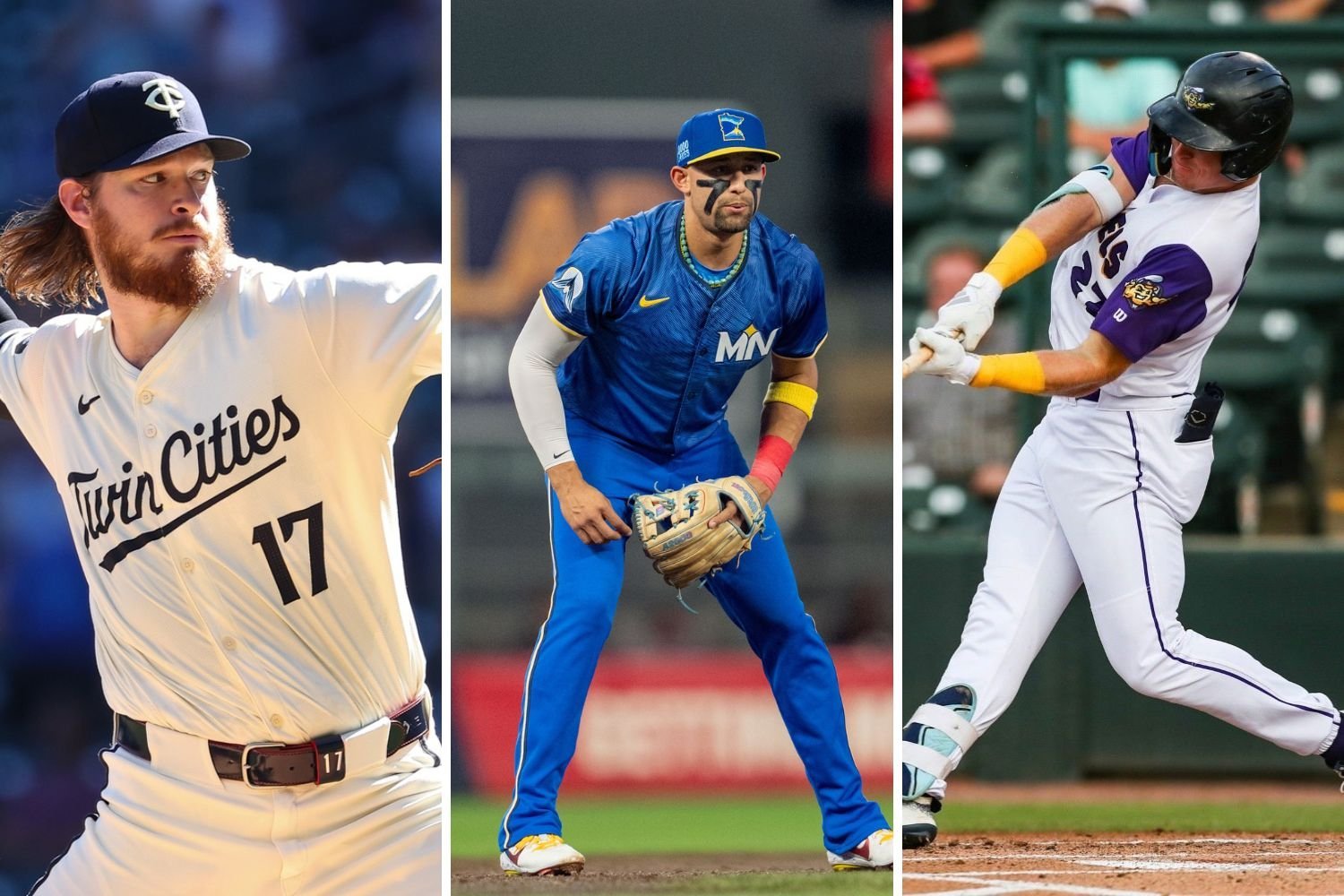 A new era is coming for the Minnesota Twins. Sometime in the first half of 2025, the franchise is expected to change hands, and while the new ownership group’s vision remains unknown, one thing seems inevitable: they’ll want to make an immediate impact. One way to do that? Locking in the team’s core talent for years to come. Extensions have long been a strategy for medium- and small-market teams to maintain competitiveness. By buying out arbitration years and securing players through their early free-agent seasons, the Twins can provide stability for the roster and the payroll. Minnesota saw the long-term benefits of this with Max Kepler and Jorge Polanco, who signed team-friendly deals early in their careers. Here’s a look at the top extension candidates, as a new ownership group is on the horizon. 1. Joe Ryan - A Clear Priority When the Twins acquired Ryan in the Nelson Cruz trade, few expected him to develop into one of the team’s top starters. However, since arriving in Minnesota, Ryan has established himself as a frontline pitcher while taking steps to improve his overall numbers. Last season, Ryan posted a 3.60 ERA (115 ERA+) with a 0.96 WHIP and a 27.3% strikeout rate. It was arguably his best season at the big-league level, thanks primarily to his emerging ability to fill up the strike zone; he walked a career-low 4.3% of opposing batters. The 28-year-old is arbitration-eligible for the first time in 2025 (making $3 million) and won’t hit free agency until after the 2027 season. Locking him up now would provide cost certainty for a potential ace, a move the Twins failed to make with past arms like José Berríos. A five- or six-year deal could secure Ryan’s best years (especially for a player who was older when he debuted) while ensuring the rotation has a dependable anchor. 2. Bailey Ober - A Reliable Rotation Piece Ober might not be as flashy as Ryan, but his importance to the Twins’ rotation can’t be overlooked. The 6-foot-9 right-hander has shown elite command, making him a stabilizing force for a team that has long battled pitching inconsistency. Over 178 2/3 innings last year, he posted a 3.98 ERA, 1.00 WHIP, and a career-high 191 strikeouts. His increased reliance on a devastating changeup and deceptive fastball has helped him keep hitters off-balance, leading to one of the lowest hard-hit rates among American League starters (83rd percentile). Like Ryan, Ober was eligible for arbitration for the first time ($3.55 million), and a new deal could provide value for both sides. There have been some comparable extensions in recent seasons, including the five-year, $77-million deal Mitch Keller signed with the Pirates and the five-year, $64-million deal Cristian Javier signed with the Astros. Given his profile, a deal between those two price points might be a sweet spot. 3. Royce Lewis - The Superstar Bet If the Twins want to bet big on the future face of the franchise, Lewis is that guy. He’s shown MVP-level potential when healthy, delivering clutch moments and elite offensive production in limited action. In 2023, he posted a .921 OPS with 15 home runs and seven doubles in 58 games. However, injuries have clouded his long-term outlook and hurt his performance; he had a merely solid 107 OPS+ last season. Lewis reached arbitration this year and is set to make $1.625 million, but the Twins could try to lock him in early in his career. If the new ownership group believes in his durability, a long-term deal (perhaps in the seven- or eight-year range) could be their signature move. 4. Ryan Jeffers - Locking Down the Catching Position The Twins don’t have a clear-cut catcher in the pipeline, and the catching market is always volatile. These two factors might open a new ownership group to an extension with Ryan Jeffers. His offensive breakout in 2023 and steady defensive work have positioned him as a legitimate everyday catcher. Jeffers took strides backward offensively and defensively last season, but the Twins might believe in his long-term value and potential performance. He played in a career-high 122 games and had a .791 OPS in the first half. Minnesota has used a two-catcher rotation for years, so Jeffers would need another catching partner. He is in his second arbitration year ($4.55 million), meaning his price tag is only going up. Catchers with offensive upside don’t come cheap, so a deal in the three- or four-year range could provide security at a key position while keeping payroll flexibility intact. A new ownership group means a fresh approach to roster building. If they want to make an immediate splash, prioritizing contract extensions for core players is a smart way to do it. Investing in homegrown talent has been a winning formula for many successful franchises, and perhaps the Twins’ next era will follow suit. How should the Twins prioritize these extensions? Are there any the team should avoid? Leave a comment and start the discussion.
- 31 comments
-
- 4
-
-
- joe ryan
- bailey ober
- (and 3 more)
-
A new ownership group could mean franchise-altering decisions during the 2025 season. Whoever the new owners are, their first priority should be locking up key roster pieces. Image courtesy of Matt Krohn and Matt Blewett–Imagn Images; Jonah Hinebaugh–USA TODAY NETWORK A new ownership group could mean franchise-altering decisions during the 2025 season. Whoever the new owners are, their first priority should be locking up key roster pieces. A new era is coming for the Minnesota Twins. Sometime in the first half of 2025, the franchise is expected to change hands, and while the new ownership group’s vision remains unknown, one thing seems inevitable: they’ll want to make an immediate impact. One way to do that? Locking in the team’s core talent for years to come. Extensions have long been a strategy for medium- and small-market teams to maintain competitiveness. By buying out arbitration years and securing players through their early free-agent seasons, the Twins can provide stability for the roster and the payroll. Minnesota saw the long-term benefits of this with Max Kepler and Jorge Polanco, who signed team-friendly deals early in their careers. Here’s a look at the top extension candidates, as a new ownership group is on the horizon. 1. Joe Ryan - A Clear Priority When the Twins acquired Ryan in the Nelson Cruz trade, few expected him to develop into one of the team’s top starters. However, since arriving in Minnesota, Ryan has established himself as a frontline pitcher while taking steps to improve his overall numbers. Last season, Ryan posted a 3.60 ERA (115 ERA+) with a 0.96 WHIP and a 27.3% strikeout rate. It was arguably his best season at the big-league level, thanks primarily to his emerging ability to fill up the strike zone; he walked a career-low 4.3% of opposing batters. The 28-year-old is arbitration-eligible for the first time in 2025 (making $3 million) and won’t hit free agency until after the 2027 season. Locking him up now would provide cost certainty for a potential ace, a move the Twins failed to make with past arms like José Berríos. A five- or six-year deal could secure Ryan’s best years (especially for a player who was older when he debuted) while ensuring the rotation has a dependable anchor. 2. Bailey Ober - A Reliable Rotation Piece Ober might not be as flashy as Ryan, but his importance to the Twins’ rotation can’t be overlooked. The 6-foot-9 right-hander has shown elite command, making him a stabilizing force for a team that has long battled pitching inconsistency. Over 178 2/3 innings last year, he posted a 3.98 ERA, 1.00 WHIP, and a career-high 191 strikeouts. His increased reliance on a devastating changeup and deceptive fastball has helped him keep hitters off-balance, leading to one of the lowest hard-hit rates among American League starters (83rd percentile). Like Ryan, Ober was eligible for arbitration for the first time ($3.55 million), and a new deal could provide value for both sides. There have been some comparable extensions in recent seasons, including the five-year, $77-million deal Mitch Keller signed with the Pirates and the five-year, $64-million deal Cristian Javier signed with the Astros. Given his profile, a deal between those two price points might be a sweet spot. 3. Royce Lewis - The Superstar Bet If the Twins want to bet big on the future face of the franchise, Lewis is that guy. He’s shown MVP-level potential when healthy, delivering clutch moments and elite offensive production in limited action. In 2023, he posted a .921 OPS with 15 home runs and seven doubles in 58 games. However, injuries have clouded his long-term outlook and hurt his performance; he had a merely solid 107 OPS+ last season. Lewis reached arbitration this year and is set to make $1.625 million, but the Twins could try to lock him in early in his career. If the new ownership group believes in his durability, a long-term deal (perhaps in the seven- or eight-year range) could be their signature move. 4. Ryan Jeffers - Locking Down the Catching Position The Twins don’t have a clear-cut catcher in the pipeline, and the catching market is always volatile. These two factors might open a new ownership group to an extension with Ryan Jeffers. His offensive breakout in 2023 and steady defensive work have positioned him as a legitimate everyday catcher. Jeffers took strides backward offensively and defensively last season, but the Twins might believe in his long-term value and potential performance. He played in a career-high 122 games and had a .791 OPS in the first half. Minnesota has used a two-catcher rotation for years, so Jeffers would need another catching partner. He is in his second arbitration year ($4.55 million), meaning his price tag is only going up. Catchers with offensive upside don’t come cheap, so a deal in the three- or four-year range could provide security at a key position while keeping payroll flexibility intact. A new ownership group means a fresh approach to roster building. If they want to make an immediate splash, prioritizing contract extensions for core players is a smart way to do it. Investing in homegrown talent has been a winning formula for many successful franchises, and perhaps the Twins’ next era will follow suit. How should the Twins prioritize these extensions? Are there any the team should avoid? Leave a comment and start the discussion. View full article
- 31 replies
-
- 1
-

-
- joe ryan
- bailey ober
- (and 3 more)
-
Top prospect lists only tell part of the story when it comes to organizational depth. So, let’s have some fun and draft two teams that only contain top Twins prospects. Then, you decide on the best squad. Image courtesy of Photos: William Parmeter (Jenkins), Rob Thompson (Rodriguez) Top prospect lists only tell part of the story when it comes to organizational depth. So, let’s have some fun and draft two teams that only contain top Twins prospects. Then, you decide on the best squad. Most national outlets have released their top prospect lists in recent weeks, making for some fun discussions about where prospects land on the rankings. Jamie Cameron and Cody Christie were inspired by MLB Pipeline’s Jim Callis and Jonathan Mayo, who recently mock-drafted a 10-player team of prospects based on the top 10 players at each position. For this draft, Jamie and Cody used a similar 10-player team format, but focused on prospect-eligible players throughout the Twins system. Each team could only have one player per position, except for the outfield, where there were three roster positions. For pitching, each team selected one right-handed and one left-handed pitcher. It was a snake-style draft, which made for some fun strategy and surprising picks. So, who ended up with the best team? Let’s find out. NOTE: For the purposes of this draft, we considered Zebby Matthews ineligible after making his MLB debut in 2024. We kept these picks strictly to prospects who haven’t seen MLB action yet. Round 1 Christie (1st Overall): Emmanuel Rodriguez, OF Walker Jenkins is the consensus top prospect in the Twins organization, but I went for Rodriguez with the first pick because I believe he can stick in center field. Obviously, he needs to stay healthy after being limited to 47 games last season. However, his upside is through the roof, and the Twins have aggressively promoted him through the system. Rodriguez is going to be the cornerstone of my team at an up-the-middle position. Cameron (2nd Overall): Walker Jenkins, OF Wow, can’t say I saw a top-five global prospect being available with the second pick, but I gratefully accept. Jenkins displayed an elite hit tool in 2024, reaching Double A as a 19-year-old, despite missing 60 games through injury in a season he called ‘disappointing’. I think the power is coming for Jenkins. He has a chance to be the best prospect in baseball this time next year, and could even be knocking on the door of the majors by the end of this season. Round 2 Cameron (3rd Overall): Luke Keaschall, 2B I’m focused on acquiring as much high-end talent as possible, and Keaschall is clearly the third-best prospect in the system. Planned Tommy John surgery cut his season short in August, but he thrived through two levels, managing a .416 wOBA and 158 wRC+ in 102 games with 15 bombs. Getting Jenkins and Keaschall despite picking second feels like a win. Now things will get really interesting. Christie (4th Overall): Kaelen Culpepper, SS As with Rodriguez, I’m picking Culpepper to solidify the up-the-middle positions on my roster. During his professional debut (112 PA), he posted an impressive 110 wRC+ with a 13.4 K%. Many outlets believe he can stick at shortstop, and his arm is good enough to stay on the left side of the infield if the Twins need to move him to third. The 2025 season is going to be big for Culpepper, as he has a chance to move quickly into the system’s upper levels. Round 3 Christie (5th Overall): Charlee Soto, RHP This was my toughest pick so far, as I was wavering between selecting another position player or taking the pitcher I view as the system’s best. I decided on Soto because I believe he has the highest ceiling and the best chance to be a front-line starter. His fastball sits in the upper 90s, his changeup gets a lot of swings and misses, and his slider continues to improve. He has future ace written all over him, and I’m excited that he’s anchoring my staff. Cameron (6th Overall): Connor Prielipp, LHP That’s two great picks from Cody. Soto has already made a top-100 list and Culpepper made Baseball America's 100-200 list. Left-handed pitching is in short supply in the Twins system, so I’m taking Connor Prielipp here. While the injury history and lack of track record is a concern, it’s a tantalizing arsenal, with a wipeout slider and a changeup that has come on by leaps and bounds. Prielipp struck out over 40% of hitters after making his comeback last season. Round 4 Cameron (7th Overall): Kyle DeBarge, SS I had a few interesting options here, but I’m going to keep stacking exceptional hit tools. DeBarge took off in his junior year at University of Louisiana-Lafayette, with a 21-home run season. He has a good approach at the plate and great bat-to-ball skills. He’ll handle shortstop just fine. The only question mark in his short debut was getting more consistent loft in his batted-ball events. I’m counting on DeBarge to make short work of the low minors in 2025. Christie (8th Overall): Brandon Winokur, OF Last season, the Twins used Winokur at three different defensive positions, including shortstop, third base, and center field. I’m selecting him to slot him into a corner outfield spot, because he’s 6-foot-6 and will continue to fill out as he enters his 20s. Last season at Low A, his OPS was over 100 points higher than the league average and added a 116 wRC+. He strikes out a lot (28.0 K%), but he’s going to have the power to make him an offensive threat. Round 5 Christie (9th Overall): Billy Amick, 3B Some strategy is starting to come into the draft as we reach the halfway point. We know the needs of the other team, and that makes it easier to plan future picks. Amick’s professional debut showcased some positive signs for a player projected to be a slugger. He limited whiffs (19.5 K%) and controlled the strike zone (15.6 BB%). He hits the ball with authority, and that’s what I want from the hot corner. Cameron (10th Overall): Rayne Doncon, 3B I have a value I like here with Doncon. Not a heralded prospect, but he was quietly productive in 2024. Across Low- and High A, he put up a .773 OPS, good for a 121 wRC+. The trade acquisition whacked 38 extra-base hits, walked 11% of the time and struck out at a 22% clip. That’s a really solid platform. Doncon has already entered some Twins top 10 lists. He’s passed the tests presented to him so far. He’ll face a tough one with a jump to Double A at some point in 2025. Round 6 Cameron (11th Overall): Yasser Mercedes, OF This was a tough pick, as I had a few candidates in mind. Aside from some injury challenges in 2023, Mercedes has shown a bunch of above-average tools. He has an .860 OPS with 56 extra-base hits and 57 steals in 127 career games, all before turning 20 years old. Add solid strike zone control (12.3 BB% and 25 K%) to above-average defense in center field, and there’s an exciting prospect who showed folks why he secured a $1.7-million bonus in the international market. I thought about Beltre here, but I’m going with the track record in the US. Christie (12th Overall): Ricardo Olivar, C I left Mercedes on the board in the fifth round because I thought he’d make it to me with the 12th pick. Jamie had other plans and sniped him. Instead, I’m going to draft for need and take a catcher in Olivar, even though I don’t fully trust his defensive chops. Over the last three seasons, his 143 wRC+ ranks second in the Twins system behind Rodriguez (my first overall pick). He gets on base and has enough pop to provide a ton of offensive value for a backstop. Round 7 Christie (13th Overall): Eduardo Beltre, OF This was my most challenging pick so far, as I wavered between the high ceiling of Beltre or the sturdier floor with a player like Kala’i Rosario. Beltre signed for $1.5 million as part of last year’s international class and quickly made a name for himself in the Dominican Summer League. In 181 PA, he posted a 177 wRC+ while ranking in the league’s top three for home runs, slugging percentage, and OPS. He’s a long way from Target Field, but has the potential to be a dynamic player. Cameron (14th Overall): Payton Eeles, OF I thought about going Keirsey Jr here, but that felt a little safe (and he’s 27). Instead, I’m going with Payton Eeles (who might be an infield option for Cody), mostly to recognize the incredible 2024 ride he had as an undrafted free agent (he logged time at CF and RF for the Saints). Eeles played 111 games across 3 MiLB levels in 2024, finishing the season at Triple A. He hit .306 (.932 OPS) with 14% BB%, 14% K%, a 155 wRC+, and 39 extra-base hits. The next 50 games or so will tell us if Eeles has a shot at major-league playing time. Round 8 Cameron (15th Overall): Carson McCusker, 1B I’m going back-to-back undrafted free agents, taking McCusker as my big dude who dings dongs and can stand at first base. At 6-foot-8 and 250 pounds, McCusker is another unheralded prospect, but he managed a 132 wRC+ across 122 games in the minors' two highest levels in 2024 (.841 OPS). It’s a lot of strikeouts (close to 30%), but he also hit 19 home runs. The power is real, and if the timing is right, he might just get a shot with the big-league club in 2025. Christie (16th Overall): Dasan Hill, LHP The Twins took Hill in the fourth round of last summer’s draft out of Grapevine High School in Texas. Some viewed him as a potential first-round pick and Minnesota had to go overslot to sign him. He is a monster on the mound at 6-foot-5 with room to add some weight to his frame (165 pounds). His fastball is currently in the low- to mid-90s and he pairs it with a pair of breakers and a changeup that lags behind the rest of the arsenal. The slider is the real deal. I’m not super excited about both pitchers on my roster being high school picks, but their upside is undeniable. Round 9 Christie (17th Overall): Dameury Pena, 2B There are some clear comps between Pena and former Twin Luis Arráez. After signing in 2023, he posted a .382 BA during his pro debut in the Dominican Summer League. Last season, Pena came Stateside and posted a .282 BA while his wRC+ dropped from 156 to 120. He’s going to need to find a way to keep hitting for a high average for the Arráez comps to continue. Cameron (18th Overall): Andrew Morris, RHP Andrew Morris has a good chance to remain a starter and will make his major-league debut in 2025. Like Zebby Matthews, his stuff has continued to tick up since turning pro to add to a close-to-elite strike-throwing profile. It’s a five-pitch mix for Morris, with a plus fastball and slider and average cutter, curveball, and changeup. He posted a 2.36 FIP in 133 innings in 2024 (striking out 25% of hitters and walking just 5.9% while reaching Triple A). Don’t be surprised if Morris has a tweaked arsenal when he reports for spring training. It’s likely a back-end profile, but he could end up a strong number three if he continues to miss bats at a solid clip. Round 10 Cameron (19th Overall): Khadim Diaw, C The Twins draft board held up better than expected for hitters in 2024 and they took Diaw in the third round, 96th overall. He’ll be 21 for almost all of the 2025 season, and there’s plenty to like in the profile. In his first 100 plate appearances at Single A, he hit .271/.374/.341, walking 11.1% of the time and striking out just 14%. His wRC+ of 114 is a solid start to his pro career, particularly for a catcher. Age and positional scarcity are on his side. He might progress a little slower than some of his collegiate hitting counterparts from the 2024 class, but he’s worth keeping an eye on in 2025. Christie (20th Overall): Yunior Severino, 1B It seems fitting for Severino to be the Mr. Irrelevant in our mock draft. In 2023, he led all the minor leagues in home runs with 35 between Double- and Triple A. Following the season, the Twins added him to the 40-man roster to protect him from the Rule 5 Draft. The 2024 campaign was a disappointment, as his wRC+ dropped to 101, but he cut back on strikeouts (27.3 K%) and drew more walks (11.9 BB%). The Twins believed enough in him to re-sign him, and he gets another shot to prove 2023 wasn’t a fluke. Pos. Team Christie Team Cameron C Ricardo Olivar Khadim Diaw 1B Yunior Severino Carson McCusker 2B Dameury Pena Luke Keaschall 3B Billy Amick Rayne Doncon SS Kaelen Culpepper Kyle DeBarge OF Emmanuel Rodriguez Walker Jenkins OF Brandon Winokur Yasser Mercedes OF Eduardo Beltre Payton Eeles LHP Dasan Hill Connor Prielipp RHP Charlee Soto Andrew Morris Team Christie Draft Recap: I probably overthought the first pick and should have gone with the best available player. However, I had a specific strategy in mind, and I’m happy with how the up-the-middle players shaped up early in the draft. My outfield has a lot of power potential and my pitchers might be the organization’s highest-upside arms. On defense, my outfielders have all played center field and I think the double-play duo can be strong. The Twins continue to do a strong job of drafting, signing, and developing players and this draft showcases some of those strengths. Team Cameron Draft Recap: I’m happy with how my team turned out. I landed who I see as the Twins' best and third-best prospects, and have a ton of great hit tools in this lineup. I’d add that I feel good about my team’s defense in general, although I definitely came up short in the power category. I like the balance of having a high-floor righty to go with a high-ceiling lefty as my pitching group. This was a fun exercise and highlights some of the depth of the Twins' system beyond the top 3-6 prospects, who are discussed the most. Who has the best team? Who was picked too low? Too high? Leave a comment and start the discussion. View full article
- 8 replies
-
- 1
-
-
- walker jenkins
- emmanuel rodriguez
- (and 5 more)
-
Kala’i Rosario has consistently moved up the Twins system since being drafted in 2020. Now in the upper minors, the 2025 campaign is shaping up to be a make-or-break year for the slugging outfielder. Image courtesy of Ed Bailey, Wichita Wind Surge (photo of Kala'i Rosario) Kala’i Rosario has consistently moved up the Twins system since being drafted in 2020. Now in the upper minors, the 2025 campaign is shaping up to be a make-or-break year for the slugging outfielder. The Minnesota Twins took a calculated risk this offseason when they left outfielder Kala’i Rosario unprotected in the Rule 5 Draft—no teams bit, leaving Rosario to continue his development within the organization. As he enters the 2025 season, the former Midwest League MVP (2023) faces a pivotal campaign that could determine his future with the franchise. Rosario’s journey has been one of steady progression, but it has also included challenges that have tested his ability to adapt. The 2020 fifth-round pick out of high school in Hawaii has climbed the organizational ladder step by step. His 2023 campaign was his most productive to date, earning him league MVP honors at High-A Cedar Rapids. In 118 games, he hit .252/.364/.467 (.832) with 21 home runs and 27 doubles. He led the league in home runs and RBI while finishing in the top 10 in SLG, OPS, hits, doubles, and walks. It was an impressive campaign for a team that won the league championship. Rosario looked to build off that campaign, but an elbow injury sidelined him for a significant portion of 2024 at Double-A Wichita. The results were mixed when he was on the field as he hit .235/.321/.405 (.726) with 19 doubles and eight home runs in 67 games. His walk rate dipped from 14.2% in 2023 to 11.4% last season. Unfortunately, his strikeout rate continues to hover around 30%, which is something to watch as he gets more playing time in the upper minors. For Rosario, the 2025 season is about proving he belongs at the highest levels of the minor leagues and, ultimately, earning a shot at Target Field. A return to Double-A to start the year seems likely, given his limited time there in 2024, but a strong showing could quickly push him to Triple-A St. Paul. The Twins will watch closely to see if he can make the necessary adjustments against upper-level pitching. One of Rosario’s biggest strengths is his ability to drive the ball with authority. His raw power is legitimate, and if he can tap into it consistently, he could become a 20-25 home run threat in the big leagues. He made a significant mechanical adjustment at the end of 2022, widening his base to quiet his lower half, which allowed him to generate power more efficiently. That change paid dividends in 2023, as he not only hit for power but also improved his plate discipline, cutting down on his chase rate and increasing his walks. His sample size was small in 2024, so it’s hard to decipher if he would have been able to build off those changes. However, questions remain about his ability to handle more advanced pitching. While he feasts on fastballs, he still struggles with quality-breaking balls. His front hip tends to pull early, making him susceptible to pitches on the outer half. Continuing to refine his approach and improving his ability to adjust mid-swing will be crucial as he faces better arms in 2025. Defensively, Rosario is limited to a corner outfield spot, but he has a plus arm that has proven to be a weapon. He racked up 14 assists in 2023, demonstrating the ability to cut down runners with strong, accurate throws. His range is fringe-average, but if his bat plays up, he could carve out a role as a power-hitting right fielder at the major league level. With the Twins boasting a solid group of young outfielders ahead of him, Rosario’s margin for error is shrinking. If he can build on previous success and put together a strong 2025 season, he could position himself for a late-season call-up or, at the very least, a 40-man roster spot heading into 2026. If he struggles, however, he could fall behind in the pecking order, and he might need to hope for an opportunity with another organization. This year is all about proving he belongs. The power is there, the patience is improving, and the tools are enticing. Now, it’s time for Rosario to show the Twins that he’s more than just a prospect and that he can be a future big leaguer. What are your impressions of Rosario? Can he be a contributor at the big-league level? Leave a comment and start the discussion. View full article
-
2025 is a Make-or-Break Year for Twins Prospect Kala’i Rosario
Cody Christie posted an article in Minor Leagues
 The Minnesota Twins took a calculated risk this offseason when they left outfielder Kala’i Rosario unprotected in the Rule 5 Draft—no teams bit, leaving Rosario to continue his development within the organization. As he enters the 2025 season, the former Midwest League MVP (2023) faces a pivotal campaign that could determine his future with the franchise. Rosario’s journey has been one of steady progression, but it has also included challenges that have tested his ability to adapt. The 2020 fifth-round pick out of high school in Hawaii has climbed the organizational ladder step by step. His 2023 campaign was his most productive to date, earning him league MVP honors at High-A Cedar Rapids. In 118 games, he hit .252/.364/.467 (.832) with 21 home runs and 27 doubles. He led the league in home runs and RBI while finishing in the top 10 in SLG, OPS, hits, doubles, and walks. It was an impressive campaign for a team that won the league championship. Rosario looked to build off that campaign, but an elbow injury sidelined him for a significant portion of 2024 at Double-A Wichita. The results were mixed when he was on the field as he hit .235/.321/.405 (.726) with 19 doubles and eight home runs in 67 games. His walk rate dipped from 14.2% in 2023 to 11.4% last season. Unfortunately, his strikeout rate continues to hover around 30%, which is something to watch as he gets more playing time in the upper minors. For Rosario, the 2025 season is about proving he belongs at the highest levels of the minor leagues and, ultimately, earning a shot at Target Field. A return to Double-A to start the year seems likely, given his limited time there in 2024, but a strong showing could quickly push him to Triple-A St. Paul. The Twins will watch closely to see if he can make the necessary adjustments against upper-level pitching. One of Rosario’s biggest strengths is his ability to drive the ball with authority. His raw power is legitimate, and if he can tap into it consistently, he could become a 20-25 home run threat in the big leagues. He made a significant mechanical adjustment at the end of 2022, widening his base to quiet his lower half, which allowed him to generate power more efficiently. That change paid dividends in 2023, as he not only hit for power but also improved his plate discipline, cutting down on his chase rate and increasing his walks. His sample size was small in 2024, so it’s hard to decipher if he would have been able to build off those changes. However, questions remain about his ability to handle more advanced pitching. While he feasts on fastballs, he still struggles with quality-breaking balls. His front hip tends to pull early, making him susceptible to pitches on the outer half. Continuing to refine his approach and improving his ability to adjust mid-swing will be crucial as he faces better arms in 2025. Defensively, Rosario is limited to a corner outfield spot, but he has a plus arm that has proven to be a weapon. He racked up 14 assists in 2023, demonstrating the ability to cut down runners with strong, accurate throws. His range is fringe-average, but if his bat plays up, he could carve out a role as a power-hitting right fielder at the major league level. With the Twins boasting a solid group of young outfielders ahead of him, Rosario’s margin for error is shrinking. If he can build on previous success and put together a strong 2025 season, he could position himself for a late-season call-up or, at the very least, a 40-man roster spot heading into 2026. If he struggles, however, he could fall behind in the pecking order, and he might need to hope for an opportunity with another organization. This year is all about proving he belongs. The power is there, the patience is improving, and the tools are enticing. Now, it’s time for Rosario to show the Twins that he’s more than just a prospect and that he can be a future big leaguer. What are your impressions of Rosario? Can he be a contributor at the big-league level? Leave a comment and start the discussion.
 -
The Twins' offseason has been relatively quiet, but they've made a trio of additions in the last two weeks. So, where does the Twins’ current payroll sit, and do the Pohlads care how high it goes? Image courtesy of © David Berding-Imagn Images The Twins' offseason has been relatively quiet, but they've made a trio of additions in the last two weeks. So, where does the Twins’ current payroll sit, and do the Pohlads care how high it goes? The Minnesota Twins have had an interesting offseason, announcing the team's impending sale, but there were relatively few roster changes until last week. The front office agreed to deals with Danny Coulombe and Harrison Bader for a combined $9.25 million. While these moves improve the team’s bullpen and outfield depth, they also raise questions about the organization’s payroll strategy. The Pohlads, long known for their measured spending habits, slashed payroll from $158 million in 2023 to $130 million last season. Early indications were that the 2025 payroll would remain around that mark, yet the Twins currently sit at an estimated $147 million. So, what changed? One possibility is that ownership has decided to loosen the purse strings slightly, in an effort to keep the roster competitive. After all, the team was left reeling at the end of 2025 after one of the worst collapses in team history. However, there have also been rumors that the Twins are shopping veterans like Willi Castro, Christian Vázquez, and Chris Paddack. Each of these players fills a critical role, whether as a versatile utility option (Castro), an experienced catcher (Vázquez), or a back-end starter (Paddack). Trading any of them would take away from the team’s depth, so why explore those moves if payroll isn’t a significant issue? Another potential explanation is that the Pohlads are expecting to sell the team in full before some of these bills come due. Reports indicate that new ownership could be in place by midseason, meaning the current regime may not be overly concerned with keeping payroll at a strict level. By June, another owner might be writing the payroll checks. President of Baseball Operations Derek Falvey recently spoke on the subject, acknowledging that the team had been granted additional financial flexibility. The spending space came about after Twins chairman Joe Pohlad “greenlighted… the ability to add a little bit here to this team. I think that’s a credit to them and certainly a tick up for us that allows us to add a little bit more to this roster that we feel already had a good base, but now we’ve clicked off some of those needs." Falvey also mentioned that the trade market has cooled in recent weeks, as teams prepare to head to spring training. This could mean the Twins' trio of expiring contracts might stay with the club. However, this front office has made trades late in previous offseasons, so never say never. “I think teams are a little more focused internally now, as they’re ready to ship off to Arizona and Florida and try to get things squared away [for spring training],” Falvey said. “Some of those last remaining free agents, I think that’s been the vast majority of the noise.” Yes, the Pohlads were willing to stretch the budget beyond initial projections, but it remains unclear just how far they are willing to go. Some reports have the Twins interested in adding a backup shortstop, which would likely put the team’s payroll closer to $150 million. Will they really continue to make additions, or will they look to trim payroll before Opening Day? If the team does end up moving one or more veterans, it could signal that ownership is still mindful of finances, even as they prepare for a sale. For now, ownership has pushed the payroll. The additional spending has allowed them to solidify their roster, but the looming uncertainty surrounding ownership makes future moves challenging to predict. It seems a foregone conclusion that the Pohlads are on their way out the door, and they may be willing to let payroll rise as a final gesture of goodwill to the fans (or a cheap sop to a frustrated baseball operations department). Either way, Twins Territory will watch closely to see how the situation unfolds. Do the Twins have any more wiggle room in the payroll for 2025? What’s the team’s most significant need at this point? Leave a comment and start the discussion. View full article
-
Hall of Fame Hope? How the 2025 Inductions Impact Three Former Twins
Cody Christie posted an article in Twins
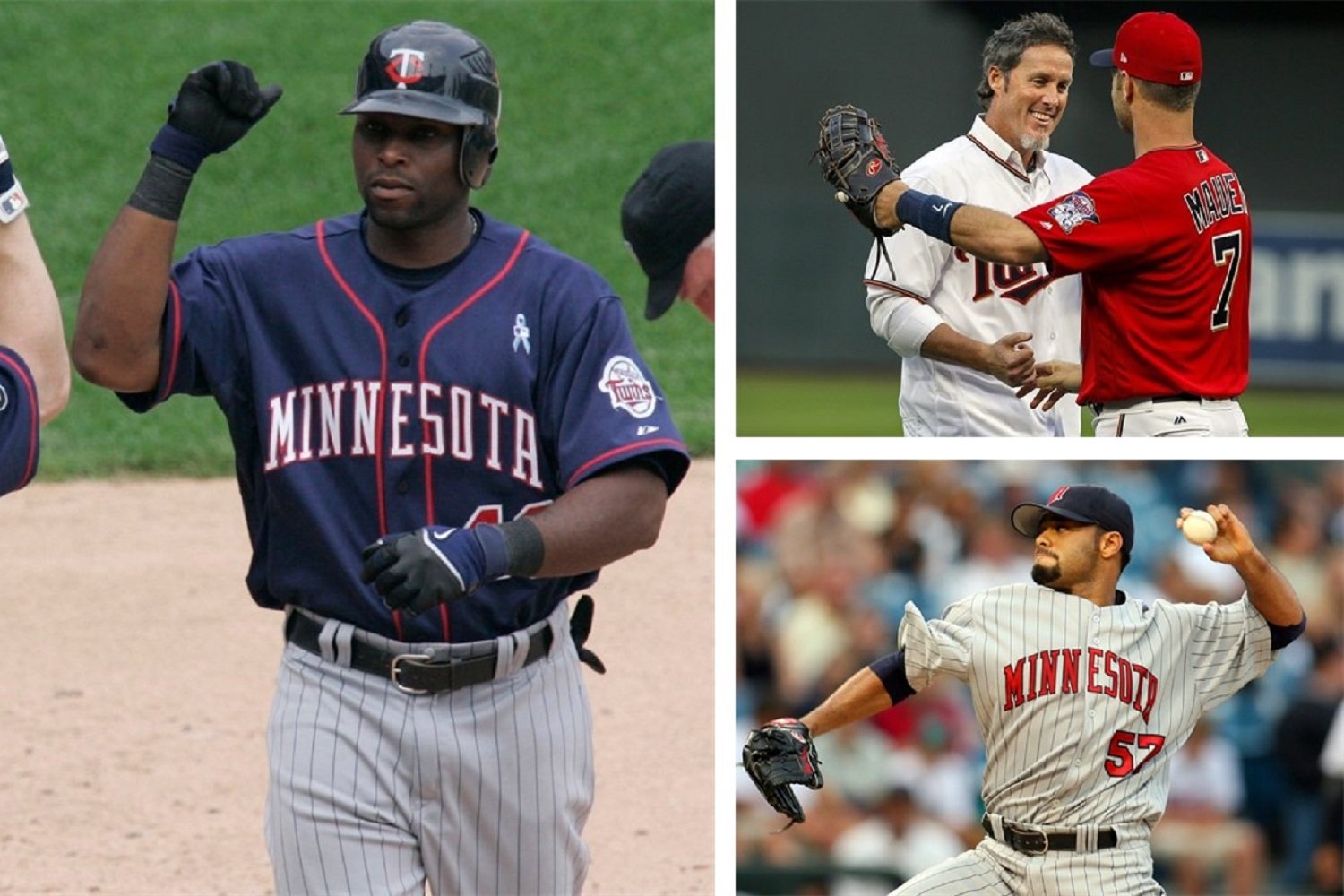 The 2025 Hall of Fame voting cycle brought long-awaited triumph for some and lingering uncertainty for others. Three former Twins players were impacted in multiple ways, from Billy Wagner’s dramatic election to Torii Hunter’s narrow survival on the ballot. Meanwhile, the precedent set by CC Sabathia’s induction could open doors for starters, including Johan Santana, whose case remains unresolved. Here’s a closer look at how this year’s results shape some notable former Twins' Hall of Fame futures. Wagner’s Induction Raises Questions for Joe Nathan After a decade of climbing the ballot, Billy Wagner finally secured his place in Cooperstown in his 10th and final year of eligibility. His election validates the impact of dominant relievers in modern baseball. Still, it also brings renewed scrutiny to one of the best closers of his generation who has yet to receive his due: Joe Nathan. Nathan’s career numbers put him in elite company. He was a six-time All-Star and the anchor of the Twins’ bullpen during their 2000s run of AL Central dominance. His résumé that holds up well compared to Wagner’s. His 2.87 career ERA is just a tick higher than Wagner’s 2.31, and his 377 career saves rank ahead of Hall of Famers like Rollie Fingers and Bruce Sutter. Among pitchers with at least 900 innings pitched, only Wagner and Nolan Ryan have a lower Hits per Nine Innings ratio. He topped the 30-save mark in nine seasons, including accumulating 40 or more saves in four seasons. Even as a reliever, he had multiple top-five finishes in the AL Cy Young Award Voting. Also, Nathan ranks in the top-7 all-time relief pitchers using a hybrid average of WAR, WPA, and situational or context-neutral wins (WPA/LI). Even with these accolades, Nathan’s Hall of Fame candidacy was barely a consideration for the Hall of Fame electorate. Nathan compares well to Wagner in multiple ways, but his Hall of Fame candidacy was short-lived. In 2022, he first appeared on the ballot and received 17 of 394 votes (4.3%). He fell three votes shy of staying on the ballot and received the most votes of any player who fell off the ballot that voting cycle. It was a crowded year to be on the ballot because Barry Bonds, Roger Clemens, and Curt Schilling were in their final year of eligibility. Some tough choices needed to be made, with writers being limited to 10 votes per ballot. With Wagner’s induction, Nathan’s case for Cooperstown gains new relevance, but his path is now solely in the hands of the Eras Committee. His dominance during his peak, particularly in Minnesota, should put him on their radar, but relievers have historically faced an uphill battle. Torii Hunter Stays Alive, And Gains Hope from Andruw Jones Torii Hunter entered this election cycle teetering on the edge of ballot elimination, needing 5% of the vote to remain in consideration. He finished just one vote above that threshold in a tight race, keeping his candidacy alive for at least another year. Hunter’s case for the Hall has always been a difficult one. He was never the game’s best hitter, but his blend of power (353 home runs) and defense (nine Gold Gloves) made him one of the most well-rounded outfielders of his era. His 50.2 career WAR (per Baseball Reference) puts him in a gray area, better than some Hall of Famers but behind clear-cut inductees. His defensive impact in center field helped define his era, a rare achievement in a sport increasingly driven by offense. He is one of seven players in MLB history with 350+ home runs and 9+ Gold Gloves. One factor working in Hunter’s favor is the recent momentum for Jones, another elite defensive outfielder from the same era. Jones saw his vote total rise from near-elimination (7.3% in 2018) to over 66% in 2025, putting him within striking distance of Cooperstown. If Jones can break through in the coming years, it could bolster the argument for other elite defenders, including Hunter. Next year’s ballot also presents a window of opportunity. With no surefire first-ballot inductees debuting in 2026, Hunter has a chance to make meaningful progress. He could eventually position himself for serious consideration if he can begin a steady climb like Jones. CC Sabathia’s Election Could Help Starters Like Johan Santana One of the biggest stories of the 2025 election was Sabathia’s first ballot induction. As a true workhorse in an era where complete games became rare, Sabathia’s election signals that voters are willing to recognize starting pitchers. This group has been underrepresented in recent years. That could be good news for another former Twins ace, Johan Santana. Santana, a two-time Cy Young winner and arguably the best pitcher in baseball from 2004-2008, fell off the ballot in his first year of eligibility, receiving only 2.4% of the vote in 2018. His relatively short career (12 seasons) hurt his case, but his peak was as dominant as any pitcher of his time. His 2006 season, in which he won the AL Triple Crown for pitchers, remains one of the greatest performances in modern history. With Sabathia’s induction, voters may reconsider how they evaluate starting pitchers. If peak dominance starts carrying more weight than longevity, Santana should receive renewed attention through the Eras Committee. Other pitchers with short but elite peaks, such as Sandy Koufax, have made it to Cooperstown, and Santana’s case deserves similar consideration. The 2025 Hall of Fame class brought celebration for some and frustration for others. Wagner’s election shines a spotlight on overlooked relievers like Nathan. Hunter narrowly survived elimination and has a path forward, especially if Jones reaches Cooperstown. Meanwhile, Sabathia’s induction could change how voters evaluate pitchers, which may eventually benefit Santana. For Twins fans, these results highlight the challenges and opportunities facing former franchise greats. The road to Cooperstown is rarely straightforward, but the conversation isn't over for Nathan, Hunter, and Santana. Who out of this trio should make the Hall of Fame? Leave a comment and start this discussion.
- 20 comments
-
- 4
-
-
-
- joe nathan
- torii hunter
- (and 4 more)
-
Could Willi Castro Realistically Be the Twins’ First Baseman in 2025?
Cody Christie posted an article in Twins
 Versatility has been Willi Castro’s calling card since arriving in Minnesota, and now the Twins might be asking him to add yet another position to his defensive résumé. At last month’s Diamond Awards, manager Rocco Baldelli floated the idea of Castro seeing time at first base in 2025, which is a position he has never played professionally. With Carlos Santana’s departure, the Twins have a glaring hole at first base, and Castro’s adaptability could make him an intriguing option. The Versatility Record-Setter Last season, Castro made history by becoming the first player in MLB history to appear in at least 20 games at five different positions in a single season. His ability to play nearly everywhere on the diamond was invaluable for the Twins, mainly when injuries tested the team’s depth. He played every infield position except first base, and now the Twins might be looking to complete the set. While his defensive versatility is an asset, first base presents a unique challenge. The Twins have put some unconventional options at first base in recent years, including Luis Arráez. Like the outfield and middle infield, first base requires strong footwork and quick instincts, but it also demands a specialized ability to pick throws out of the dirt. Sometimes, it takes multiple years for a player to acclimate to first, and those skills that Castro has yet to showcase professionally. Who Else Is in the Mix? With Santana gone, the current first base depth chart is murky. José Miranda has the most experience at first base, but his defense remains a question mark. Last season, Miranda had a .888 OPS in the first half and a .543 OPS in the second half. First basemen must produce offensively, and he struggled down the stretch. Edouard Julien has struggled defensively at second base and doesn’t project as an ideal first baseman either. He also struggled last season to the point where the team sent him to Triple-A. Neither Miranda nor Julien brings the defensive stability that Santana provided, which is why the Twins might be exploring creative solutions like Castro. It’s clear that Castro brings athleticism to the table, and if he can develop the necessary skills, he could become an intriguing stopgap option. However, he is a free agent at the end of the season, so it would indeed be a one-year fix for the Twins. Minnesota has leaned on Castro to fill defensive holes before, and he’s handled those challenges well. However, first base requires specific skills that take time to develop, and there’s no guarantee Castro can make the transition seamlessly. Playing Castro at first also takes him away from other, more valuable defensive positions. A Realistic Plan or Just an Idea? Baldelli’s comments during Twins Fest weekend suggest that the Twins are at least considering Castro at first base, but that doesn’t necessarily mean it will happen. The team could look externally for another option, whether through free agency or a trade, before Opening Day. It’s also possible that Castro’s ability to play all over the field remains too valuable for the Twins to lock him into a single position. If Castro does get reps at first base, it will likely be a work in progress during spring training. The Twins’ coaching staff would need to work with him extensively to develop his footwork and scooping ability. He has the athleticism to make it work, but playing first base at a Gold Glove-caliber level, like Santana, is a tall order. The Twins will get less defensive value at first base in 2025, which might be a tough pill to swallow for a young pitching staff where every out is critical. Castro’s versatility has been a game-changer for the Twins, and adding first base to his toolset could further increase his value. However, jumping to an entirely new position at the major league level is no small task. It seems most likely that the Twins would use a combination of Miranda, Julien, and Castro at first base. If the Twins don’t add a proven first baseman before Opening Day, Castro could get a shot, but whether he sticks there long-term remains to be seen. Would you like to see Castro get a look at first base, or should the Twins seek outside help? Leave a comment and start the discussion.
- 55 comments
-
- 3
-

-
-
-
- willi castro
- jose miranda
- (and 2 more)
-
After recent signings, the Twins' most significant roster need is at first base. Can the club’s do-it-all utility man add first base to his defensive repertoire? Image courtesy of © Matt Blewett-Imagn Images After recent signings, the Twins' most significant roster need is at first base. Can the club’s do-it-all utility man add first base to his defensive repertoire? Versatility has been Willi Castro’s calling card since arriving in Minnesota, and now the Twins might be asking him to add yet another position to his defensive résumé. At last month’s Diamond Awards, manager Rocco Baldelli floated the idea of Castro seeing time at first base in 2025, which is a position he has never played professionally. With Carlos Santana’s departure, the Twins have a glaring hole at first base, and Castro’s adaptability could make him an intriguing option. The Versatility Record-Setter Last season, Castro made history by becoming the first player in MLB history to appear in at least 20 games at five different positions in a single season. His ability to play nearly everywhere on the diamond was invaluable for the Twins, mainly when injuries tested the team’s depth. He played every infield position except first base, and now the Twins might be looking to complete the set. While his defensive versatility is an asset, first base presents a unique challenge. The Twins have put some unconventional options at first base in recent years, including Luis Arráez. Like the outfield and middle infield, first base requires strong footwork and quick instincts, but it also demands a specialized ability to pick throws out of the dirt. Sometimes, it takes multiple years for a player to acclimate to first, and those skills that Castro has yet to showcase professionally. Who Else Is in the Mix? With Santana gone, the current first base depth chart is murky. José Miranda has the most experience at first base, but his defense remains a question mark. Last season, Miranda had a .888 OPS in the first half and a .543 OPS in the second half. First basemen must produce offensively, and he struggled down the stretch. Edouard Julien has struggled defensively at second base and doesn’t project as an ideal first baseman either. He also struggled last season to the point where the team sent him to Triple-A. Neither Miranda nor Julien brings the defensive stability that Santana provided, which is why the Twins might be exploring creative solutions like Castro. It’s clear that Castro brings athleticism to the table, and if he can develop the necessary skills, he could become an intriguing stopgap option. However, he is a free agent at the end of the season, so it would indeed be a one-year fix for the Twins. Minnesota has leaned on Castro to fill defensive holes before, and he’s handled those challenges well. However, first base requires specific skills that take time to develop, and there’s no guarantee Castro can make the transition seamlessly. Playing Castro at first also takes him away from other, more valuable defensive positions. A Realistic Plan or Just an Idea? Baldelli’s comments during Twins Fest weekend suggest that the Twins are at least considering Castro at first base, but that doesn’t necessarily mean it will happen. The team could look externally for another option, whether through free agency or a trade, before Opening Day. It’s also possible that Castro’s ability to play all over the field remains too valuable for the Twins to lock him into a single position. If Castro does get reps at first base, it will likely be a work in progress during spring training. The Twins’ coaching staff would need to work with him extensively to develop his footwork and scooping ability. He has the athleticism to make it work, but playing first base at a Gold Glove-caliber level, like Santana, is a tall order. The Twins will get less defensive value at first base in 2025, which might be a tough pill to swallow for a young pitching staff where every out is critical. Castro’s versatility has been a game-changer for the Twins, and adding first base to his toolset could further increase his value. However, jumping to an entirely new position at the major league level is no small task. It seems most likely that the Twins would use a combination of Miranda, Julien, and Castro at first base. If the Twins don’t add a proven first baseman before Opening Day, Castro could get a shot, but whether he sticks there long-term remains to be seen. Would you like to see Castro get a look at first base, or should the Twins seek outside help? Leave a comment and start the discussion. View full article
-
The article you linked above was based on national outlets putting out grades for the offseason. When I wrote that article, most of the discussion around the Twins was that they would need to trade away a player before they had any payroll space to add anything. I can only write based on the available information and reports at that time had the team with little or no money to spend. I don't think many people saw the Twins spending nearly $10 million in free agency. Thankfully, that has not come to fruition and they have been able to make two small additions. According to WAR projections, neither player moved the needle a lot for the team's overall WAR. However, it has added depth which will help when injuries arise.


