



Cody Christie
-
Posts
7,817 -
Joined
-
Last visited
-
Days Won
5
Content Type
Profiles
News
Minnesota Twins Videos
2026 Minnesota Twins Top Prospects Ranking
2022 Minnesota Twins Draft Picks
Minnesota Twins Free Agent & Trade Rumors, Notes, & Tidbits
Guides & Resources
2023 Minnesota Twins Draft Picks
The Minnesota Twins Players Project
2024 Minnesota Twins Draft Picks
2025 Minnesota Twins Draft Pick Tracker
2026 Minnesota Twins Draft Tracker: Picks & Bonuses
Forums
Blogs
Events
Store
Downloads
Gallery
Everything posted by Cody Christie
-
 The Twins have been quiet this offseason, with minimal moves made around the margins and a couple late signings. With spring training on the horizon, who is projected to make the team’s Opening Day roster? Image courtesy of © Gary A. Vasquez-USA TODAY Sports The Twins have been quiet this offseason, with minimal moves made around the margins and a couple late signings. With spring training on the horizon, who is projected to make the team’s Opening Day roster? Despite the lack of splashy additions, the team is positioned to enter the 2025 season with a strong core of returning players. Last month, Seth Stohs looked at the team’s projected roster, but there have been some changes since that point. Let’s take a look at the projected Opening Day roster and how the lineup might shake out based on matchups. Starting Rotation (5): RHP Pablo López, RHP Bailey Ober, RHP Joe Ryan, RHP Simeon Woods Richardson, RHP Chris Paddack Minnesota’s rotation remains largely intact from last season, with López set to lead the staff. Ober and Ryan provide stability, while Woods Richardson is expected to take on a larger role. Paddack, now further removed from Tommy John surgery, will look to regain his pre-injury form. David Festa and Zebby Matthews could push for spots if injuries arise, while Brent Headrick offers a left-handed alternative. There is no such thing as too much pitching depth, but the Twins are in a good spot at the start of spring training. However, the club has been rumored to be interested in adding another frontline starting pitcher like San Diego’s Dylan Cease. More depth can help the club through the rigors of a 162-game season. Others on the 40-man roster: RHP David Festa, RHP Zebby Matthews, RHP Travis Adams, LHP Brent Headrick, RHP Marco Raya Bullpen (8): RHP Jhoan Durán, RHP Griffin Jax, RHP Cole Sands, LHP Danny Coulombe, RHP Jorge Alcalá, RHP Justin Topa, RHP Michael Tonkin, RHP Eiberson Castellano (Rule 5), RHP Brock Stewart (IL) Durán remains one of the most electric closers in baseball, while Jax continues to be a high-leverage weapon. Sands and Coulombe provide middle-relief depth and (especially in Sands's case) some serious upside, with Alcalá looking to build off a strong 2024. Tonkin and Topa bring experience, while Castellano will need to stay on the roster as a Rule 5 pick. Louie Varland, Kody Funderburk, and Matt Canterino provide intriguing depth options. Brock Stewart is a little behind heading into spring training, which might put him on the IL to begin the year. However, limiting Stewart’s innings in the season’s early months might help him to be more available in the season’s second half. Others on the 40-man roster: RHP Louie Varland, LHP Kody Funderburk, RHP Matt Canterino, RHP Ronny Henriquez (Out of Options) Catchers (2): Ryan Jeffers, Christian Vázquez Jeffers and Vázquez are expected to split the bulk of the playing time, as the duo has done over the last two seasons. It will be interesting to see if the Twins give Jeffers a higher percentage of the work since Vázquez is in the final year of his deal—assuming, of course, that Vázquez is still around come Opening Day. Jair Camargo got his feet wet at the big-league level last season, but the Twins seemed hesitant to use him behind the plate. The Twins have also added multiple catching options to the 40-man roster this winter including former top prospect Diego Cartaya and utility man Mickey Gasper. Minnesota could start using a three-man catching rotation if any of the other catchers start to produce at Triple-A. Others on 40-man roster: Jair Camargo, Diego Cartaya Infielders (6): Jose Miranda, Brooks Lee, Royce Lewis, Carlos Correa, Edouard Julien, Willi Castro Lewis and Correa form one of the league’s most dynamic left sides of the infield, assuming they stay healthy. Julien provides a potent left-handed bat at second, while Lee could push for more playing time as he develops. There is also a chance the Twins have Lee start the season at Triple-A, so he can play regularly enough. Miranda’s bat gives him a role at first or DH, with Castro providing valuable utility depth. Mickey Gasper and Michael Helman are on standby in Triple-A. Others on 40-man roster: Mickey Gasper, Michael Helman Outfielders (5): Trevor Larnach, Byron Buxton, Matt Wallner, Harrison Bader, Austin Martin The outfield mix hinges on Buxton’s availability. If he’s healthy, he remains the team’s center fielder and offensive catalyst. Minnesota added Bader as an insurance option behind Buxton Wednesday, and he continues to be one of baseball's best outfield defenders (10 OAA, 95th percentile). DaShawn Keirsey is a strong backup option in center, but his flaws will come to the forefront if he is forced into an everyday role. Larnach and Wallner bring power from the corners, while Martin offers versatility and speed. Emmanuel Rodriguez is a high-upside prospect to watch later in the season. Others on 40-man roster: Emmanuel Rodriguez, Michael Helman, DaShawn Keirsey While this roster seems likely to break camp with the team, there are still questions to answer in spring training. Will Castellano stick as a Rule 5 pick? Will Festa push Paddack (if he's around) for a rotation spot? Will any non-roster invitees force their way onto the team? With plenty of competition and depth waiting in the wings, the Twins will have decisions to make before Opening Day. Are these the 26 players who will come north with the Twins? What would your ideal lineup look like? Leave a comment and join the discussion. View full article
 -
Adding Harrison Bader also helps the team's value in center field. Especially on the defensive side.
- 6 replies
-
- 1
-

-
- byron buxton
- pablo lopez
- (and 5 more)
-
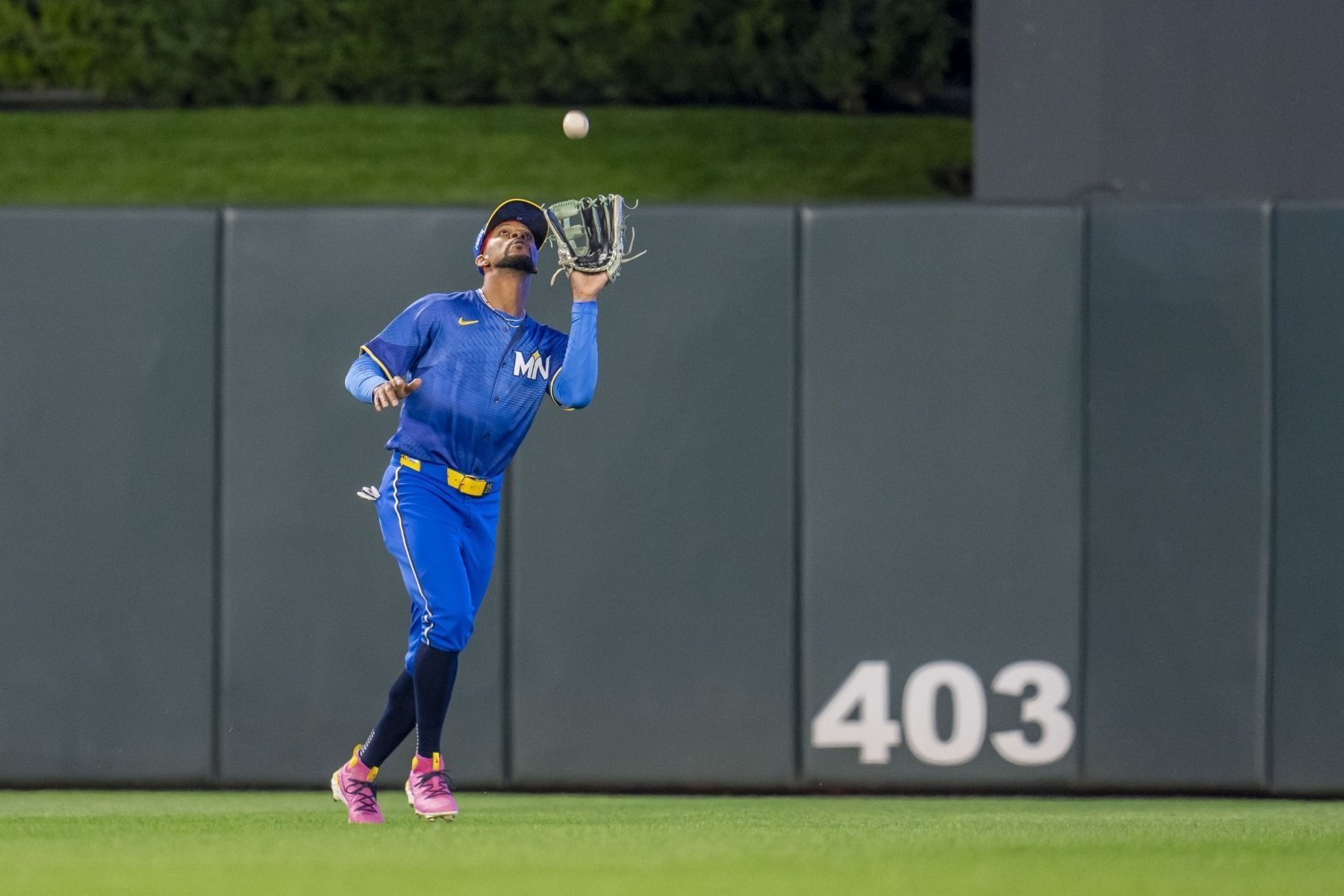 MLB Network recently finished counting down the top 10 players at every position at the onset of the 2025 campaign. There are always flaws with this type of voting, but the Twins did well at some positions, while other players were undervalued. MLB Network released their overall rankings of the positions to cap off their rankings. The top three ranked positions were shortstop, relief pitcher, and right fielder, where the Twins project to do well. Carlos Correa can play at an MVP level (if his feet cooperate); Matt Wallner may be poised for a breakout season; and the Twins project to have baseball’s best bullpen. There are multiple positions at the bottom of the rankings where the Twins can pick up significant value, compared to other teams in the AL Central. If the Twins expect to contend, these three positions might be the most important on the roster. Position: Center Field MLB Position Rank: 11/11 Minnesota’s Projected Starter: Byron Buxton Some of baseball’s best players in center field from 2024 are expected to see more time in corner spots this season, including Aaron Judge, Mike Trout, and Jarren Duran. Julio Rodríguez, Jackson Merrill, and Michael Harris II are some of the top players in the position, along with Buxton. In 2024, Buxton put himself back on the map by playing in over 100 games for only the second time in his career. His offensive totals were also among his career-best. His 138 OPS+ was the second-highest career mark, with only his 2021 season ranking higher. His xSLG, wOBA, and xwOBACON ranked in the top 7% among MLB hitters. He also dropped his strikeout rate from 31.4% in 2023 to 26.0%. Among AL center fielders, only Judge ranked higher than Buxton in wRC+, SLG, and xwOBA. He was a borderline All-Star and provided the Twins with more value than the team likely expected entering the season. This offseason has been the first time in over half a decade that he has been healthy, and that could help him claim the title of baseball’s best center fielder. Position: Starting Pitcher MLB Position Rank: 9/11 Minnesota’s Projected Starters: Pablo López, Bailey Ober, Joe Ryan, Simeon Woods Richardson, Chris Paddack Starting pitching has evolved in recent years, so teams must build organizational depth at one of baseball’s most critical positions. Gone are the days when individual pitchers regularly threw 200+ innings with a sub-3.00 ERA. However, the Twins' top three starters are projected to be among the best in the American League, with some rankings having them as the lone AL squad with three pitchers ranked in baseball’s top 50. Injuries are always a question mark with starting pitching, so it will be critical for the Twins to have depth. That’s also one of the reasons the Twins have been tied to trade rumors for another front-line starting pitcher (like San Diego’s Dylan Cease), because there is no such thing as too much starting pitching. The Twins also have depth behind the projected five-man rotation listed above. David Festa and Zebby Matthews were two of the team’s top pitching prospects last season, and they are still among the organization’s best players who are 25 or younger. Other top pitching prospects, such as Marco Raya, Matt Canterino, Brent Headrick, and Travis Adams, are scheduled to join this duo in St. Paul. Last season, the Twins had 10 different pitchers make a start at the big-league level, so it takes far more than a five-man rotation to make it through 162 games. Other teams don’t have depth like Minnesota's, and that could play to the Twins’ advantage. Dark Horse Position: Second Base MLB Position Rank: 8/11 Minnesota’s Projected Starters: Brooks Lee, Edouard Julien The Twins have a clear advantage in center field and starting pitching, but second base might be a dark horse position for the team to gain value. Lee and Julien are scheduled to see the bulk of the playing time, but they each have much to prove after disappointing 2024 seasons. Julien was looking to build off a rookie campaign in which he posted a 130 OPS+, but he scuffled to a 74 OPS+ in 2024. Lee was one of baseball’s best prospects entering last season, with his bat-to-ball skills being touted in the minors. He combined for a 64 OPS+ in the majors, instead, while battling multiple injuries. The Twins still believe in the long-term value of both players, so the 2025 campaign will be critical for their development. There is also a discussion of Royce Lewis starting to see some time at second base. Minnesota seems committed to him as the team’s third baseman, but the team prioritizes players with defensive flexibility. Lewis, like Lee and Julien, struggled in the season’s second half, with his OPS dropping by .400 compared to the first half. Second base might become a question of which bats are hitting the best at a given portion of the season. Still, the trio of second-base options has the potential for high offensive output if they return to the expectations each had entering last season. Can the Twins be successful by gaining value at positions where other teams struggle? Leave a comment and start the discussion.
 -
The Twins might have a secret strategy for winning in 2025. They may be successful at gaining value in positions where other teams struggle. What are those positions? I’m glad you asked. Image courtesy of © Jesse Johnson-Imagn Images The Twins might have a secret strategy for winning in 2025. They may be successful at gaining value in positions where other teams struggle. What are those positions? I’m glad you asked. MLB Network recently finished counting down the top 10 players at every position at the onset of the 2025 campaign. There are always flaws with this type of voting, but the Twins did well at some positions, while other players were undervalued. MLB Network released their overall rankings of the positions to cap off their rankings. The top three ranked positions were shortstop, relief pitcher, and right fielder, where the Twins project to do well. Carlos Correa can play at an MVP level (if his feet cooperate); Matt Wallner may be poised for a breakout season; and the Twins project to have baseball’s best bullpen. There are multiple positions at the bottom of the rankings where the Twins can pick up significant value, compared to other teams in the AL Central. If the Twins expect to contend, these three positions might be the most important on the roster. Position: Center Field MLB Position Rank: 11/11 Minnesota’s Projected Starter: Byron Buxton Some of baseball’s best players in center field from 2024 are expected to see more time in corner spots this season, including Aaron Judge, Mike Trout, and Jarren Duran. Julio Rodríguez, Jackson Merrill, and Michael Harris II are some of the top players in the position, along with Buxton. In 2024, Buxton put himself back on the map by playing in over 100 games for only the second time in his career. His offensive totals were also among his career-best. His 138 OPS+ was the second-highest career mark, with only his 2021 season ranking higher. His xSLG, wOBA, and xwOBACON ranked in the top 7% among MLB hitters. He also dropped his strikeout rate from 31.4% in 2023 to 26.0%. Among AL center fielders, only Judge ranked higher than Buxton in wRC+, SLG, and xwOBA. He was a borderline All-Star and provided the Twins with more value than the team likely expected entering the season. This offseason has been the first time in over half a decade that he has been healthy, and that could help him claim the title of baseball’s best center fielder. Position: Starting Pitcher MLB Position Rank: 9/11 Minnesota’s Projected Starters: Pablo López, Bailey Ober, Joe Ryan, Simeon Woods Richardson, Chris Paddack Starting pitching has evolved in recent years, so teams must build organizational depth at one of baseball’s most critical positions. Gone are the days when individual pitchers regularly threw 200+ innings with a sub-3.00 ERA. However, the Twins' top three starters are projected to be among the best in the American League, with some rankings having them as the lone AL squad with three pitchers ranked in baseball’s top 50. Injuries are always a question mark with starting pitching, so it will be critical for the Twins to have depth. That’s also one of the reasons the Twins have been tied to trade rumors for another front-line starting pitcher (like San Diego’s Dylan Cease), because there is no such thing as too much starting pitching. The Twins also have depth behind the projected five-man rotation listed above. David Festa and Zebby Matthews were two of the team’s top pitching prospects last season, and they are still among the organization’s best players who are 25 or younger. Other top pitching prospects, such as Marco Raya, Matt Canterino, Brent Headrick, and Travis Adams, are scheduled to join this duo in St. Paul. Last season, the Twins had 10 different pitchers make a start at the big-league level, so it takes far more than a five-man rotation to make it through 162 games. Other teams don’t have depth like Minnesota's, and that could play to the Twins’ advantage. Dark Horse Position: Second Base MLB Position Rank: 8/11 Minnesota’s Projected Starters: Brooks Lee, Edouard Julien The Twins have a clear advantage in center field and starting pitching, but second base might be a dark horse position for the team to gain value. Lee and Julien are scheduled to see the bulk of the playing time, but they each have much to prove after disappointing 2024 seasons. Julien was looking to build off a rookie campaign in which he posted a 130 OPS+, but he scuffled to a 74 OPS+ in 2024. Lee was one of baseball’s best prospects entering last season, with his bat-to-ball skills being touted in the minors. He combined for a 64 OPS+ in the majors, instead, while battling multiple injuries. The Twins still believe in the long-term value of both players, so the 2025 campaign will be critical for their development. There is also a discussion of Royce Lewis starting to see some time at second base. Minnesota seems committed to him as the team’s third baseman, but the team prioritizes players with defensive flexibility. Lewis, like Lee and Julien, struggled in the season’s second half, with his OPS dropping by .400 compared to the first half. Second base might become a question of which bats are hitting the best at a given portion of the season. Still, the trio of second-base options has the potential for high offensive output if they return to the expectations each had entering last season. Can the Twins be successful by gaining value at positions where other teams struggle? Leave a comment and start the discussion. View full article
-
Every MLB franchise looks for the next "Moneyball" strategy. The Twins might have just discovered a new advantage, in a market that has never been more inefficient. Image courtesy of Zachary BonDurant, USA Today Every MLB franchise looks for the next "Moneyball" strategy. The Twins might have just discovered a new advantage, in a market that has never been more inefficient. In a move that has left economists scratching their heads and baseball executives chuckling into their Tim Hortons coffee, the Minnesota Twins moved to head off possible U.S.-Canada trade tariffs in the most Minnesotan way possible: by hoarding Canadian baseball players, like a survivalist prepping for the next polar vortex. Faced with the harsh reality of increased costs on all goods crossing the northern border, the Twins’ front office made an aggressive pivot in their roster strategy, signing as many Canadians as possible before customs agents start taxing maple syrup, Justin Bieber memorabilia, and guys who catch lazy Larry Walker comps. “We crunched the numbers, and it turns out acquiring Canadian baseball players in bulk is actually cheaper than importing bats and gloves from Toronto,” said a source inside the organization, who may or may not have been dressed like a moose. Meet the New Canucks on the Block To reinforce their newfound commitment to our neighbors up north, the Twins have inked three under-the-radar Canadian free agents to minor-league deals: Gordie McPuckerson, LHP – A former curling champion turned flame-throwing reliever, McPuckerson was discovered throwing frozen lacrosse balls at a moose in the backwoods of Saskatchewan. Scouts were impressed by his ability to paint the corners while fending off an angry grizzly. Doug “Two-Toke” Reynolds, OF – A speedster from British Columbia, Reynolds reportedly uses an “herbal” approach to relax at the plate. When asked about his base-stealing skills, he simply nodded slowly and said, “Yeah, man.” Jean-Pierre Gauthier, SS – Known for his slick glove and ability to apologize after every diving stop, Gauthier is expected to provide elite clubhouse chemistry, if only because he constantly reminds teammates to “keep it light, eh?” Twins Canadian Connections Weigh-In While most MLB teams are focused on things like winning and advanced analytics, the Twins have long been pioneers in uniquely Canadian baseball strategies. Most notably, they've assiduously maintained a historical pipeline of “guys who could be playing hockey instead.” Former Twins slugger and Canadian baseball royalty Justin Morneau was asked for his thoughts on the sudden influx of fellow countrymen to the organization: "This is a proud day for Canadian baseball," Morneau said, wiping away a single patriotic tear as his children waved Canadian flags in the background. "For too long, we’ve had to watch our best players get taxed at the border. The fact that the Twins are stockpiling Canadians like a Costco-sized bag of ketchup chips is a game-changer.” Current Twins infielder and Québécois Edouard Julien is fully on board with the move, albeit with one minor complaint. "I love the idea of having more Canadians in the clubhouse," Julien said. "But could we maybe get some better coffee in the break room? I can’t keep drinking this ‘Folgers’ stuff. It’s messing with my OPS.” Former Twins third baseman and recent Twins Hall of Fame inductee Corey Koskie believes this could usher in a golden age for baseball in Minnesota. "It’s about time a team embraced the power of Canadian grit," Koskie declared. "Americans talk about playing through pain, but try taking a fastball to the chest in -40°F weather while wearing nothing but a LaBatt hoodie. That’s real toughness.” So, What’s Next? With Canada’s top talent flocking to the Land of 10,000 Lakes, the Twins’ next logical step is clear: petitioning MLB to play all home games in a snow-covered Target Field, thereby forcing opponents to endure full Canadian winter conditions. Rumors also persist that the front office is considering coaxing Joey Votto out of retirement to fill the team’s void at first base. In the meantime, Minnesota fans should prepare for an increasingly bilingual team, more apologies on close plays, and a sudden surge in post-game interviews ending with, "Yeah, good game, bud." If this plan works, the next wave of international tariffs might force the Twins to explore a similar strategy with other foreign-born players. Stay tuned. View full article
-
Minnesota Twins Hoarding Canadian Players to Beat New Tariffs
Cody Christie posted an article in Just For Fun
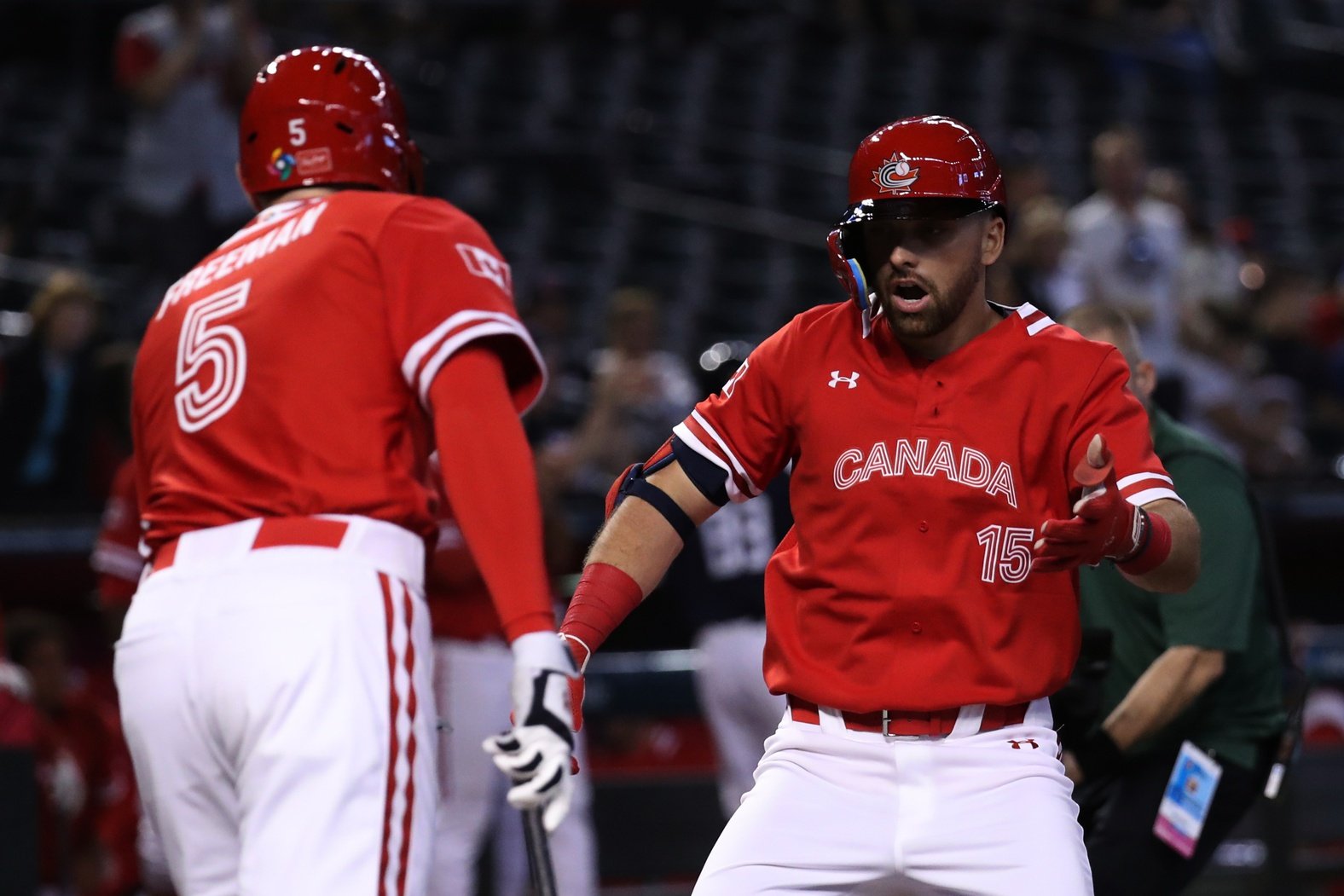 In a move that has left economists scratching their heads and baseball executives chuckling into their Tim Hortons coffee, the Minnesota Twins moved to head off possible U.S.-Canada trade tariffs in the most Minnesotan way possible: by hoarding Canadian baseball players, like a survivalist prepping for the next polar vortex. Faced with the harsh reality of increased costs on all goods crossing the northern border, the Twins’ front office made an aggressive pivot in their roster strategy, signing as many Canadians as possible before customs agents start taxing maple syrup, Justin Bieber memorabilia, and guys who catch lazy Larry Walker comps. “We crunched the numbers, and it turns out acquiring Canadian baseball players in bulk is actually cheaper than importing bats and gloves from Toronto,” said a source inside the organization, who may or may not have been dressed like a moose. Meet the New Canucks on the Block To reinforce their newfound commitment to our neighbors up north, the Twins have inked three under-the-radar Canadian free agents to minor-league deals: Gordie McPuckerson, LHP – A former curling champion turned flame-throwing reliever, McPuckerson was discovered throwing frozen lacrosse balls at a moose in the backwoods of Saskatchewan. Scouts were impressed by his ability to paint the corners while fending off an angry grizzly. Doug “Two-Toke” Reynolds, OF – A speedster from British Columbia, Reynolds reportedly uses an “herbal” approach to relax at the plate. When asked about his base-stealing skills, he simply nodded slowly and said, “Yeah, man.” Jean-Pierre Gauthier, SS – Known for his slick glove and ability to apologize after every diving stop, Gauthier is expected to provide elite clubhouse chemistry, if only because he constantly reminds teammates to “keep it light, eh?” Twins Canadian Connections Weigh-In While most MLB teams are focused on things like winning and advanced analytics, the Twins have long been pioneers in uniquely Canadian baseball strategies. Most notably, they've assiduously maintained a historical pipeline of “guys who could be playing hockey instead.” Former Twins slugger and Canadian baseball royalty Justin Morneau was asked for his thoughts on the sudden influx of fellow countrymen to the organization: "This is a proud day for Canadian baseball," Morneau said, wiping away a single patriotic tear as his children waved Canadian flags in the background. "For too long, we’ve had to watch our best players get taxed at the border. The fact that the Twins are stockpiling Canadians like a Costco-sized bag of ketchup chips is a game-changer.” Current Twins infielder and Québécois Edouard Julien is fully on board with the move, albeit with one minor complaint. "I love the idea of having more Canadians in the clubhouse," Julien said. "But could we maybe get some better coffee in the break room? I can’t keep drinking this ‘Folgers’ stuff. It’s messing with my OPS.” Former Twins third baseman and recent Twins Hall of Fame inductee Corey Koskie believes this could usher in a golden age for baseball in Minnesota. "It’s about time a team embraced the power of Canadian grit," Koskie declared. "Americans talk about playing through pain, but try taking a fastball to the chest in -40°F weather while wearing nothing but a LaBatt hoodie. That’s real toughness.” So, What’s Next? With Canada’s top talent flocking to the Land of 10,000 Lakes, the Twins’ next logical step is clear: petitioning MLB to play all home games in a snow-covered Target Field, thereby forcing opponents to endure full Canadian winter conditions. Rumors also persist that the front office is considering coaxing Joey Votto out of retirement to fill the team’s void at first base. In the meantime, Minnesota fans should prepare for an increasingly bilingual team, more apologies on close plays, and a sudden surge in post-game interviews ending with, "Yeah, good game, bud." If this plan works, the next wave of international tariffs might force the Twins to explore a similar strategy with other foreign-born players. Stay tuned.
- 3 comments
-
- 9
-
-

-

-
- justin morneau
- corey koskie
- (and 1 more)
-
The Twins have three consensus top-100 prospects who finished at Double A or higher last season. Here’s how that trio of potential stars can earn the team an extra draft pick over the next few seasons. Image courtesy of Ed Bailey (Wichita Wind Surge), William Parmeter The Twins have three consensus top-100 prospects who finished at Double A or higher last season. Here’s how that trio of potential stars can earn the team an extra draft pick over the next few seasons. Major-league teams have manipulated service time to maintain control over their top prospects for years, often delaying their debuts to gain an extra year before free agency. However, the latest collective bargaining agreement (CBA) introduced the Prospect Promotion Incentive (PPI) to encourage teams to promote their best young talent on Opening Day. With multiple top prospects nearing the majors, the Minnesota Twins are positioned to take advantage of this new system—if things break a certain way during spring training. According to MLB.com, “An MLB club can earn a Draft pick after the first round if a PPI-eligible player accrues one year of service as a rookie and then factors into a major award. That means he either has to win his league’s Rookie of the Year award or place in the top three in MVP or Cy Young voting, prior to qualifying for arbitration.” So, what teams have benefited from this change? Since its inception, the PPI has seen multiple teams gain an extra draft pick and the bonus pool allotments associated therewith. The Mariners, Orioles, Diamondbacks, and Royals have all benefited from this system. Julio Rodríguez, Gunnar Henderson, Corbin Carroll, and Bobby Witt Jr. all turned strong seasons into extra picks for their respective teams. It will be interesting to see if those teams can use their PPI picks and turn them into top prospects in future years. For the 2025 season, MLB Pipeline, Baseball America, and ESPN have identified three Twins prospects as PPI-eligible: outfielder Walker Jenkins, outfielder Emmanuel Rodriguez, and infielder Luke Keaschall. The Twins have other prospects on these top 100 lists, but a player must appear in two of the three major rankings. Each of the abovementioned trio finished 2024 at Double-A or higher, meaning they could soon be in line for their major-league debuts. Rodriguez is the closest to the big leagues in the group. He finished last season at Triple-A St. Paul and is on the verge of forcing his way onto the Opening Day roster. Last season, he hit .280/.459/.567, with 25 extra-base hits in 47 games. If injuries or an impressive spring create an opportunity, Rodriguez could provide an immediate impact at the MLB level. His power, plate discipline, and strong defensive skills in center field make him a compelling candidate to break camp with the Twins. Jenkins, one of the top prospects in baseball, might offer the Twins the best long-term opportunity for a PPI draft pick. While he is still developing in the minors, a strong 2025 campaign at Double-A and Triple-A could put him in a position to make the Opening Day roster in 2026. In 2024, he hit .282/.394/.439, with more walks (56) than strikeouts (47). His elite offensive profile, advanced approach, and defensive versatility make him a potential franchise cornerstone. He’s already considered one of baseball’s best prospects but still has room to improve in 2025. Keaschall is a bit of a wild card, after being the organization’s breakout prospect last season before undergoing Tommy John surgery in August. The team expects him to be ready for spring training, but he won’t be on the Opening Day roster. In 102 games last season, he hit .303/.420/.483, with 21 doubles and 15 home runs. His bat-to-ball skills and defensive flexibility could make him valuable in future seasons. While he is one of the team’s top prospects, he seems unlikely to be in the AL Rookie of the Year or MVP race in the coming years. Ultimately, the Twins will prioritize their prospects’ development and the team’s needs over draft incentives. However, the PPI gives them another reason to consider promoting their young stars sooner, rather than later. If Rodriguez or Jenkins makes an immediate impact, the Twins could find themselves with an extra draft pick and more spending power in that market, valuable assets in building sustained success. Should Rodriguez break camp with the Twins in 2025? Will Jenkins be a PPI candidate in 2026? Share your thoughts in the comments and join the discussion. View full article
-
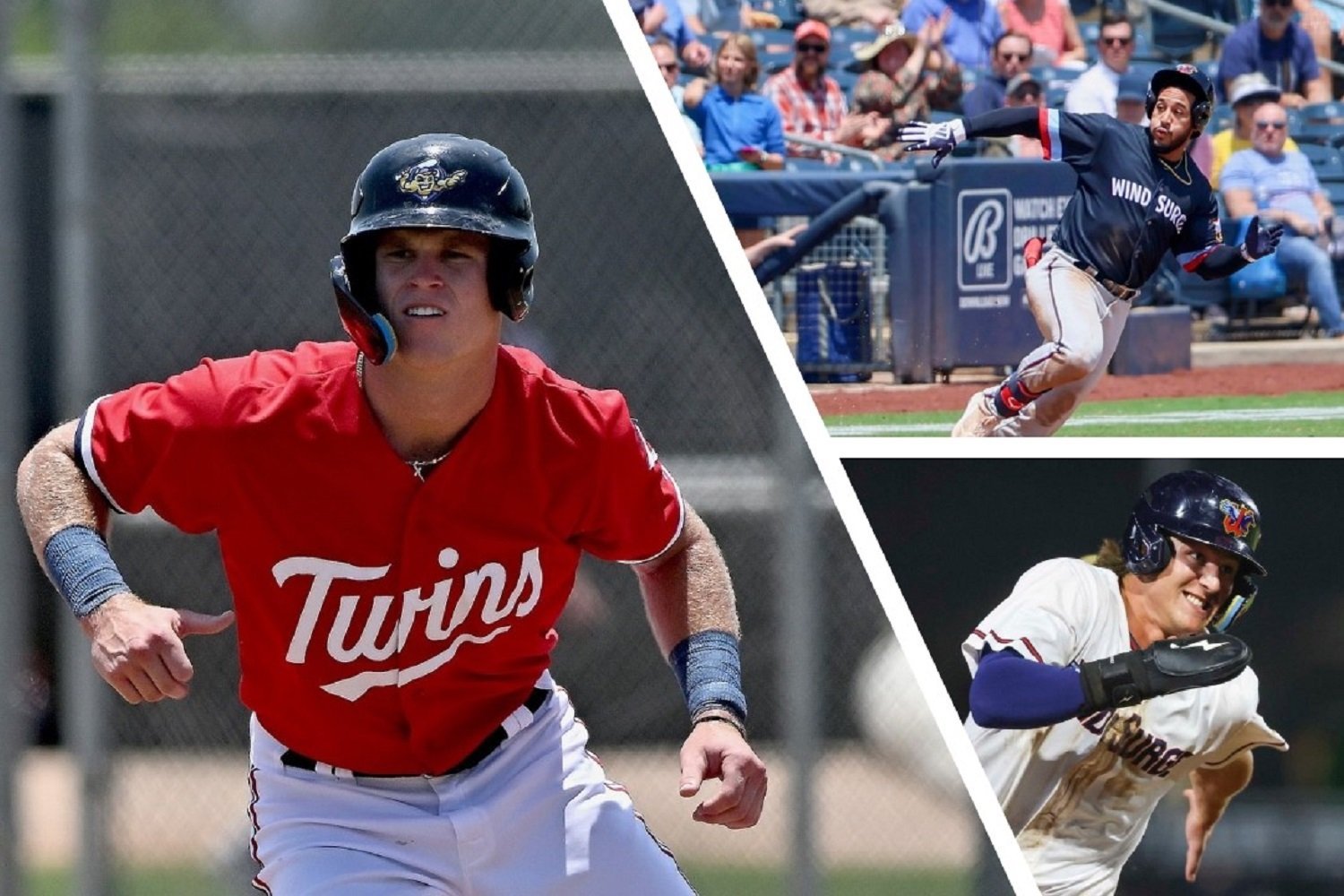 Major-league teams have manipulated service time to maintain control over their top prospects for years, often delaying their debuts to gain an extra year before free agency. However, the latest collective bargaining agreement (CBA) introduced the Prospect Promotion Incentive (PPI) to encourage teams to promote their best young talent on Opening Day. With multiple top prospects nearing the majors, the Minnesota Twins are positioned to take advantage of this new system—if things break a certain way during spring training. According to MLB.com, “An MLB club can earn a Draft pick after the first round if a PPI-eligible player accrues one year of service as a rookie and then factors into a major award. That means he either has to win his league’s Rookie of the Year award or place in the top three in MVP or Cy Young voting, prior to qualifying for arbitration.” So, what teams have benefited from this change? Since its inception, the PPI has seen multiple teams gain an extra draft pick and the bonus pool allotments associated therewith. The Mariners, Orioles, Diamondbacks, and Royals have all benefited from this system. Julio Rodríguez, Gunnar Henderson, Corbin Carroll, and Bobby Witt Jr. all turned strong seasons into extra picks for their respective teams. It will be interesting to see if those teams can use their PPI picks and turn them into top prospects in future years. For the 2025 season, MLB Pipeline, Baseball America, and ESPN have identified three Twins prospects as PPI-eligible: outfielder Walker Jenkins, outfielder Emmanuel Rodriguez, and infielder Luke Keaschall. The Twins have other prospects on these top 100 lists, but a player must appear in two of the three major rankings. Each of the abovementioned trio finished 2024 at Double-A or higher, meaning they could soon be in line for their major-league debuts. Rodriguez is the closest to the big leagues in the group. He finished last season at Triple-A St. Paul and is on the verge of forcing his way onto the Opening Day roster. Last season, he hit .280/.459/.567, with 25 extra-base hits in 47 games. If injuries or an impressive spring create an opportunity, Rodriguez could provide an immediate impact at the MLB level. His power, plate discipline, and strong defensive skills in center field make him a compelling candidate to break camp with the Twins. Jenkins, one of the top prospects in baseball, might offer the Twins the best long-term opportunity for a PPI draft pick. While he is still developing in the minors, a strong 2025 campaign at Double-A and Triple-A could put him in a position to make the Opening Day roster in 2026. In 2024, he hit .282/.394/.439, with more walks (56) than strikeouts (47). His elite offensive profile, advanced approach, and defensive versatility make him a potential franchise cornerstone. He’s already considered one of baseball’s best prospects but still has room to improve in 2025. Keaschall is a bit of a wild card, after being the organization’s breakout prospect last season before undergoing Tommy John surgery in August. The team expects him to be ready for spring training, but he won’t be on the Opening Day roster. In 102 games last season, he hit .303/.420/.483, with 21 doubles and 15 home runs. His bat-to-ball skills and defensive flexibility could make him valuable in future seasons. While he is one of the team’s top prospects, he seems unlikely to be in the AL Rookie of the Year or MVP race in the coming years. Ultimately, the Twins will prioritize their prospects’ development and the team’s needs over draft incentives. However, the PPI gives them another reason to consider promoting their young stars sooner, rather than later. If Rodriguez or Jenkins makes an immediate impact, the Twins could find themselves with an extra draft pick and more spending power in that market, valuable assets in building sustained success. Should Rodriguez break camp with the Twins in 2025? Will Jenkins be a PPI candidate in 2026? Share your thoughts in the comments and join the discussion.
- 8 comments
-
- 3
-
-
- emmanuel rodriguez
- walker jenkins
- (and 1 more)
-
Risk and Reward: Twins Seeing Positive Returns on High School Arms
Cody Christie posted an article in Minor Leagues
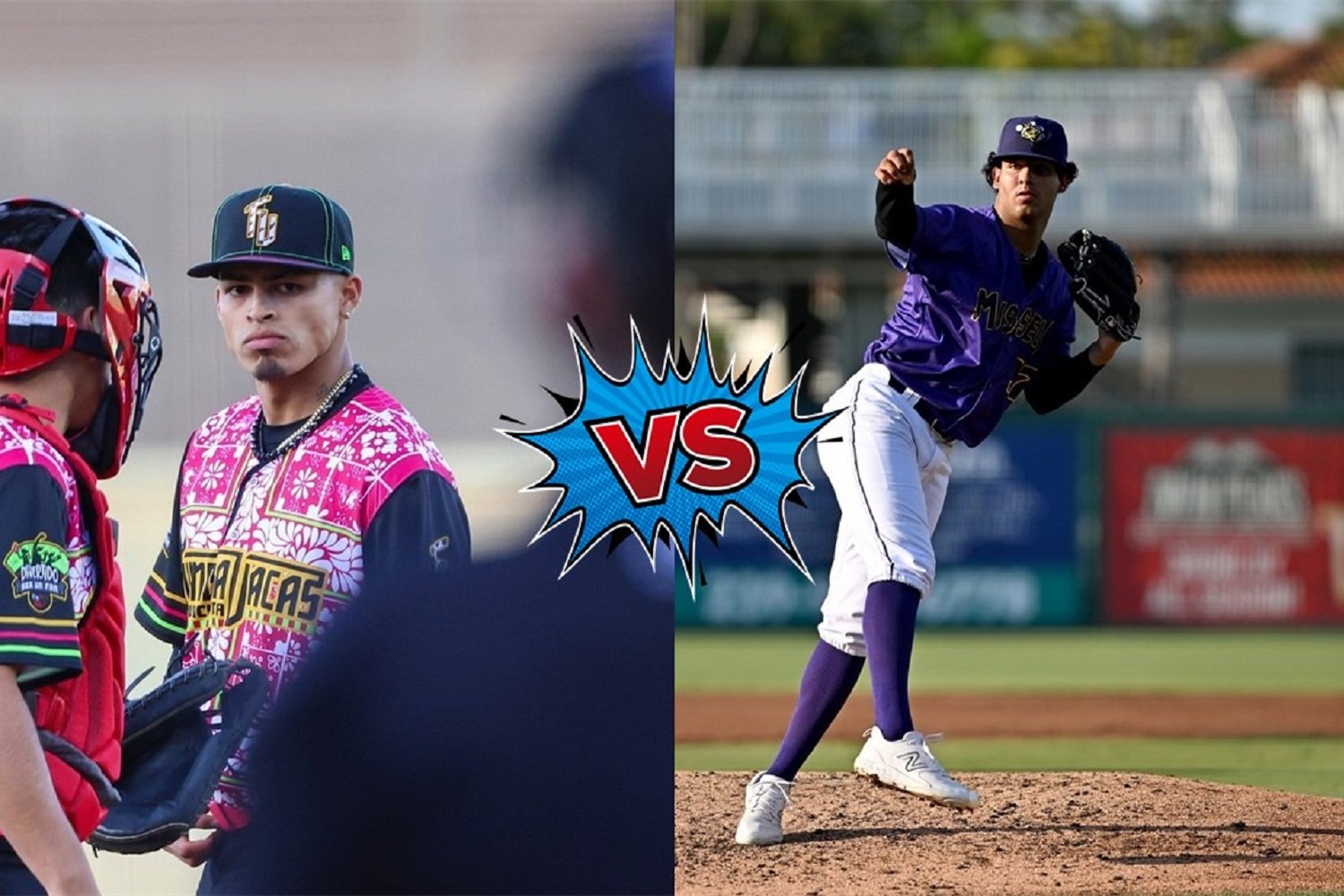 The Minnesota Twins' current front office has favored college arms in the draft, but two notable exceptions stand out: Marco Raya and Charlee Soto. Both high school right-handers were drafted under the current regime, and their upside gives the organization two intriguing long-term options for the rotation. As the 2025 season approaches, it’s worth examining what these two talented arms bring to the table, their ceilings, and their potential pitfalls. Marco Raya: Command and Stuff with a Developing Workload When the Twins selected Raya in the fourth round of the pandemic-shortened 2020 Draft, they knew they were investing in a long-term development project. Injuries delayed his professional debut with a shoulder strain that wiped out his entire 2021 season. Since then, the organization has been deliberate with his innings, closely monitoring his workload while still allowing him to progress aggressively through the system. He pitched fewer than 130 innings from 2022 to 2023. Despite these limitations, Raya reached Triple-A St. Paul during his age-21 season by showing flashes of a high-upside starter. Raya’s fastball sits around 96 mph with elite spin, and he commands it well up in the zone. His slider, which lives in the mid-80s, generates swings and misses and might be his best pitch. He also has a slower curveball to change hitters’ eye levels and an improving changeup that flashes plus. The latest addition to his arsenal is a cutter, which the Twins hope will continue his development as a complete starter. Last season, he posted a 4.05 ERA with a 1.36 WHIP and a 24.6 K%. The most significant question mark for Raya remains durability. The stuff plays, and his ability to throw strikes has improved, but can he handle a full starter’s workload? If the Twins loosen the restrictions in 2025 and he holds up physically, he could be on a fast track to the big leagues. Ceiling: Middle-to-top-of-the-rotation starter, potentially a No. 2 with improved durability. Charlee Soto: Raw Power and High Upside The Twins selected Soto 34th overall in the 2023 Draft, betting on his raw power and projection. Soto is an intimidating figure on the mound at 6-foot-3 and already boasts a fastball that reaches the upper-90s with life. He has introduced a mid-90s sinker, further diversifying his fastball profile. His slider, which has cutter-like action, is another weapon in his arsenal, while his changeup shows good fade and could become a legitimate third plus-pitch. Last season, he posted a 5.23 ERA with a 1.50 WHIP and a 26.4 K%. However, his numbers improved significantly in the second part of the year. From June 15 through September 4, he posted a 3.94 ERA while holding opponents to .292 SLG. Over his last 45 2/3 innings, he only allowed one home run and only faced younger batters in ten plate appearances. His changeup generated a 44.2 Whiff% and his four-seamer had a 33.5 Whiff%. Soto’s mechanics are relatively clean for someone his age, thanks partly to his athleticism as a former infielder. That athleticism should help him develop consistency in his delivery and, ultimately, his ability to throw strikes. However, he is still raw, and the Twins will be patient with his development, allowing him to refine his command and secondary pitches before accelerating his timeline. Ceiling: Power No. 2 starter with a frontline arm if command and secondary pitches develop. While both pitchers have high upside, they come with different risks. Raya is closer to the majors but must prove he can handle a full workload. Soto is further away but has some of the most electric raw stuff in the Twins’ system. If both reach their ceilings, they could anchor Minnesota’s rotation in the coming years, giving the team two high-upside arms in a system often reliant on polished college arms. The 2025 season will be pivotal in seeing how each pitcher progresses on their path to the big leagues. Which pitcher has the higher ceiling? Who has the lower floor? Leave a comment and start the discussion.
 -
Drafting high school pitchers comes with risk and reward. However, two of the Twins' top pitching prospects were drafted as high schoolers. How do these two young arms compare to each other? Image courtesy of Ed Bailey, Wichita Wind Surge (Raya) and William Parmeter (Soto) Drafting high school pitchers comes with risk and reward. However, two of the Twins' top pitching prospects were drafted as high schoolers. How do these two young arms compare to each other? The Minnesota Twins' current front office has favored college arms in the draft, but two notable exceptions stand out: Marco Raya and Charlee Soto. Both high school right-handers were drafted under the current regime, and their upside gives the organization two intriguing long-term options for the rotation. As the 2025 season approaches, it’s worth examining what these two talented arms bring to the table, their ceilings, and their potential pitfalls. Marco Raya: Command and Stuff with a Developing Workload When the Twins selected Raya in the fourth round of the pandemic-shortened 2020 Draft, they knew they were investing in a long-term development project. Injuries delayed his professional debut with a shoulder strain that wiped out his entire 2021 season. Since then, the organization has been deliberate with his innings, closely monitoring his workload while still allowing him to progress aggressively through the system. He pitched fewer than 130 innings from 2022 to 2023. Despite these limitations, Raya reached Triple-A St. Paul during his age-21 season by showing flashes of a high-upside starter. Raya’s fastball sits around 96 mph with elite spin, and he commands it well up in the zone. His slider, which lives in the mid-80s, generates swings and misses and might be his best pitch. He also has a slower curveball to change hitters’ eye levels and an improving changeup that flashes plus. The latest addition to his arsenal is a cutter, which the Twins hope will continue his development as a complete starter. Last season, he posted a 4.05 ERA with a 1.36 WHIP and a 24.6 K%. The most significant question mark for Raya remains durability. The stuff plays, and his ability to throw strikes has improved, but can he handle a full starter’s workload? If the Twins loosen the restrictions in 2025 and he holds up physically, he could be on a fast track to the big leagues. Ceiling: Middle-to-top-of-the-rotation starter, potentially a No. 2 with improved durability. Charlee Soto: Raw Power and High Upside The Twins selected Soto 34th overall in the 2023 Draft, betting on his raw power and projection. Soto is an intimidating figure on the mound at 6-foot-3 and already boasts a fastball that reaches the upper-90s with life. He has introduced a mid-90s sinker, further diversifying his fastball profile. His slider, which has cutter-like action, is another weapon in his arsenal, while his changeup shows good fade and could become a legitimate third plus-pitch. Last season, he posted a 5.23 ERA with a 1.50 WHIP and a 26.4 K%. However, his numbers improved significantly in the second part of the year. From June 15 through September 4, he posted a 3.94 ERA while holding opponents to .292 SLG. Over his last 45 2/3 innings, he only allowed one home run and only faced younger batters in ten plate appearances. His changeup generated a 44.2 Whiff% and his four-seamer had a 33.5 Whiff%. Soto’s mechanics are relatively clean for someone his age, thanks partly to his athleticism as a former infielder. That athleticism should help him develop consistency in his delivery and, ultimately, his ability to throw strikes. However, he is still raw, and the Twins will be patient with his development, allowing him to refine his command and secondary pitches before accelerating his timeline. Ceiling: Power No. 2 starter with a frontline arm if command and secondary pitches develop. While both pitchers have high upside, they come with different risks. Raya is closer to the majors but must prove he can handle a full workload. Soto is further away but has some of the most electric raw stuff in the Twins’ system. If both reach their ceilings, they could anchor Minnesota’s rotation in the coming years, giving the team two high-upside arms in a system often reliant on polished college arms. The 2025 season will be pivotal in seeing how each pitcher progresses on their path to the big leagues. Which pitcher has the higher ceiling? Who has the lower floor? Leave a comment and start the discussion. View full article
-
The Twins value defensive flexibility, and that philosophy is expected to continue in 2025. At TwinsFest, the front office provided insight into potential positional changes that could impact the upcoming season. Image courtesy of © Jerome Miron-Imagn Images The Twins value defensive flexibility, and that philosophy is expected to continue in 2025. At TwinsFest, the front office provided insight into potential positional changes that could impact the upcoming season. During last season’s second-half struggles, the Twins were forced to experiment with defensive alignments in an effort to keep their best bats in the lineup. Royce Lewis became the center of some of those discussions, as he was reluctant to move to second base in the middle of a playoff chase. While his quotes may have been overanalyzed at the time, he now has an entire offseason to prepare for increased versatility. Lewis is just one of several players who may see shifts in their defensive responsibilities in 2025. Let’s examine some of the key positional changes. Royce Lewis 2024 Primary Position: Third base There was some expectation that Lewis would start seeing more time at second base in 2025 after the team discussed moving him last season. Brooks Lee’s presence is the most significant question mark in that discussion. However, there is no guarantee that Lee will crack the Opening Day roster after he struggled during his rookie season. Lewis wants to stay at third base, and multiple quotes from TwinsFest weekend point to him sticking at the hot corner to start the year. He had some throwing issues at third last season (11 errors; 10 throwing), so that will be something to monitor in spring training and early-season games. Expected 2025 Position: Third base with some time at second base José Miranda 2024 Primary Position: Third base Prior to Lewis moving to third, Miranda looked to be the team’s third baseman of the future. After a challenging 2023 season, Miranda rebounded in 2024 with a 112 OPS+. With better defensive options at third base, Miranda’s best chance at everyday at-bats may come at first base. There was some expectation that the front office might add a corner bat similar to what the team did with Carlos Santana last season. However, the owner-imposed payroll limitations have limited the team’s ability to add impact bats. Miranda’s bat profiles well at the position, and a move across the diamond could take some pressure off his throwing arm. Expected 2025 Position: First base with some time at third base Matt Wallner 2024 Primary Position: Corner outfield Max Kepler has moved on to Philadelphia, leaving a giant defensive hole to fill in the right field. During his Twins tenure, Kepler has been among the league’s best right field defenders. Wallner was one of the team’s best hitters in the second half (.934 OPS with 18 extra-base hits), and MLB Network already named him as one of the top-10 right fielders for 2025. He has demonstrated power potential and an improving defensive skill set with one of the best-throwing arms in the game. While he has played both left and right field, the Twins appear poised to keep him primarily in right field, where his strong arm can be a weapon in the running game. Expected 2025 Position: Right field Louie Varland 2024 Primary Position: Starting pitcher Varland saw time as a starter and reliever over the last two seasons, but his high-velocity arsenal may be better suited for a bullpen role. The Twins have been coy with where Varland will be used to start the season. Minnesota’s bullpen seems full of current options ahead of Varland, so the team might want him to start the year as a starter. However, injuries will likely arise during spring training. With the Twins’ starting rotation appearing relatively deep, he could transition into a late-inning relief option, potentially giving the team another power arm in high-leverage situations. Expected 2025 Position: Relief pitcher Griffin Jax 2024 Primary Position: Relief pitcher Jax was one of the AL’s best relievers last season, but other teams have moved solid relievers back to a starter role in recent years. There are some risks in moving a late-inning reliever to a starting role. Jax and the Twins discussed transitioning back to starting, and Jax drove those conversations. At TwinsFest, he said, “I found myself always gravitating back towards the bullpen.” He is now firmly entrenched in the late-inning mix, and the Twins will likely keep him in a setup role with the potential to get more closing opportunities if the situation arises in 2025. Expected 2025 Position: Relief pitcher The Twins' emphasis on defensive flexibility allows them to maximize their roster depth and keep the best hitters in the lineup. Some players, like Lewis and Miranda, may see more movement across the diamond, while others, like Wallner and Jax, appear more locked into specific roles. As spring training unfolds, these potential changes will come into focus, helping shape the team’s approach to the 2025 season. Are there other players who should switch positions in 2025? Do you agree with where the Twins plan to play the abovementioned players? Leave a comment and start the discussion. View full article
-
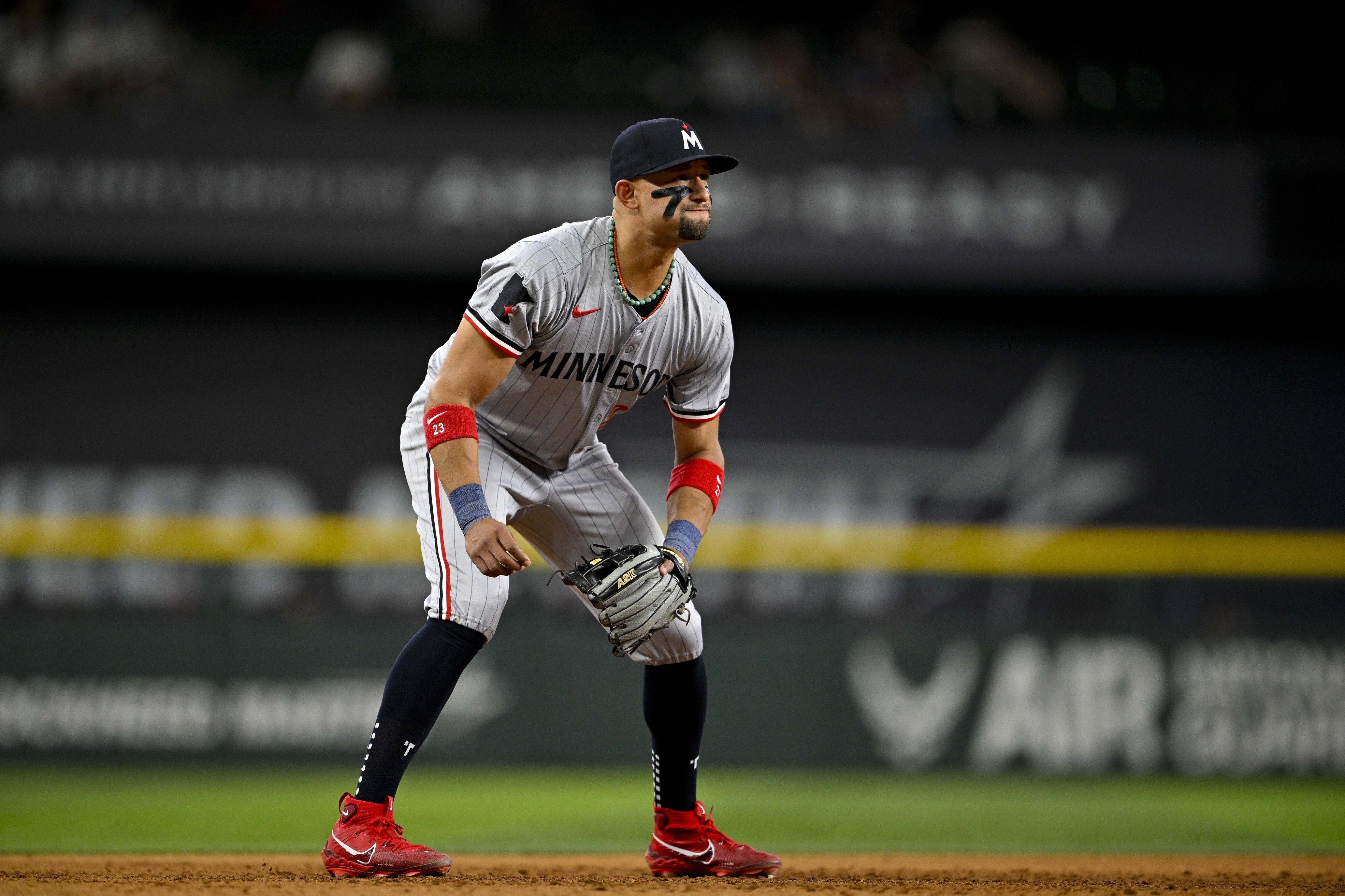 During last season’s second-half struggles, the Twins were forced to experiment with defensive alignments in an effort to keep their best bats in the lineup. Royce Lewis became the center of some of those discussions, as he was reluctant to move to second base in the middle of a playoff chase. While his quotes may have been overanalyzed at the time, he now has an entire offseason to prepare for increased versatility. Lewis is just one of several players who may see shifts in their defensive responsibilities in 2025. Let’s examine some of the key positional changes. Royce Lewis 2024 Primary Position: Third base There was some expectation that Lewis would start seeing more time at second base in 2025 after the team discussed moving him last season. Brooks Lee’s presence is the most significant question mark in that discussion. However, there is no guarantee that Lee will crack the Opening Day roster after he struggled during his rookie season. Lewis wants to stay at third base, and multiple quotes from TwinsFest weekend point to him sticking at the hot corner to start the year. He had some throwing issues at third last season (11 errors; 10 throwing), so that will be something to monitor in spring training and early-season games. Expected 2025 Position: Third base with some time at second base José Miranda 2024 Primary Position: Third base Prior to Lewis moving to third, Miranda looked to be the team’s third baseman of the future. After a challenging 2023 season, Miranda rebounded in 2024 with a 112 OPS+. With better defensive options at third base, Miranda’s best chance at everyday at-bats may come at first base. There was some expectation that the front office might add a corner bat similar to what the team did with Carlos Santana last season. However, the owner-imposed payroll limitations have limited the team’s ability to add impact bats. Miranda’s bat profiles well at the position, and a move across the diamond could take some pressure off his throwing arm. Expected 2025 Position: First base with some time at third base Matt Wallner 2024 Primary Position: Corner outfield Max Kepler has moved on to Philadelphia, leaving a giant defensive hole to fill in the right field. During his Twins tenure, Kepler has been among the league’s best right field defenders. Wallner was one of the team’s best hitters in the second half (.934 OPS with 18 extra-base hits), and MLB Network already named him as one of the top-10 right fielders for 2025. He has demonstrated power potential and an improving defensive skill set with one of the best-throwing arms in the game. While he has played both left and right field, the Twins appear poised to keep him primarily in right field, where his strong arm can be a weapon in the running game. Expected 2025 Position: Right field Louie Varland 2024 Primary Position: Starting pitcher Varland saw time as a starter and reliever over the last two seasons, but his high-velocity arsenal may be better suited for a bullpen role. The Twins have been coy with where Varland will be used to start the season. Minnesota’s bullpen seems full of current options ahead of Varland, so the team might want him to start the year as a starter. However, injuries will likely arise during spring training. With the Twins’ starting rotation appearing relatively deep, he could transition into a late-inning relief option, potentially giving the team another power arm in high-leverage situations. Expected 2025 Position: Relief pitcher Griffin Jax 2024 Primary Position: Relief pitcher Jax was one of the AL’s best relievers last season, but other teams have moved solid relievers back to a starter role in recent years. There are some risks in moving a late-inning reliever to a starting role. Jax and the Twins discussed transitioning back to starting, and Jax drove those conversations. At TwinsFest, he said, “I found myself always gravitating back towards the bullpen.” He is now firmly entrenched in the late-inning mix, and the Twins will likely keep him in a setup role with the potential to get more closing opportunities if the situation arises in 2025. Expected 2025 Position: Relief pitcher The Twins' emphasis on defensive flexibility allows them to maximize their roster depth and keep the best hitters in the lineup. Some players, like Lewis and Miranda, may see more movement across the diamond, while others, like Wallner and Jax, appear more locked into specific roles. As spring training unfolds, these potential changes will come into focus, helping shape the team’s approach to the 2025 season. Are there other players who should switch positions in 2025? Do you agree with where the Twins plan to play the abovementioned players? Leave a comment and start the discussion.
- 37 comments
-
- 8
-
-
- royce lewis
- matt wallner
- (and 3 more)
-
In 2024, the Twins had a rookie trio in the starting rotation, and new position players joined the lineup. While they may have lost prospect eligibility, the team’s young core is one of baseball’s best. Image courtesy of Ed Bailey, Wichita Wind Surge In 2024, the Twins had a rookie trio in the starting rotation, and new position players joined the lineup. While they may have lost prospect eligibility, the team’s young core is one of baseball’s best. Organizational prospect lists can be flawed, because young players graduate to the big leagues and are no longer considered prospects. In the first part of this series, two pitchers significantly impacted the big-league roster last season but are no longer eligible for prospect lists. Minnesota’s organizational depth is strong, and multiple names on this list are expected to debut in 2025. Here is a look at the top players in the Twins organization who have yet to reach their age-25 season. 5. Luke Keaschall, IF 2025 Season Age: 22 The Twins selected Luke Keaschall in the second round of the 2023 MLB Draft, and he used the 2024 season as his personal launch party. Known for his high-energy play and versatile defensive abilities, Keaschall offers a unique blend of tools that could make him a future fan favorite. Keaschall’s ability to play multiple positions (including second base, third base, and center field) only adds to his value. At the plate, he brings a mature approach, excellent bat speed, and the potential to grow into surprising power. In 102 games, he hit .303/.420/.483, with 21 doubles and 15 home runs. Many national outlets have included him in their top-100 prospect lists this winter after his breakout season. 4. David Festa, SP 2025 Season Age: 25 Pitching depth has long been a focus for the Twins, and Festa has emerged as one of the most exciting arms in the system. Festa, a 13th-round pick in 2021, has exceeded expectations at every level on his way to being the team’s top pitching prospect. His fastball consistently sits in the mid-to-upper 90s, complemented by a devastating slider and an improving changeup. In 2024, his slider had a 29.1 Whiff% and his changeup was over 10 points higher. After making significant strides in his command and secondary pitches during the 2024 season, Festa showcased his ability to miss bats with a Chase% and K% in the 82nd percentile. He profiles as a potential top-of-the-rotation starter, as he follows in the footsteps of Joe Ryan and Bailey Ober. 3. Brooks Lee, IF 2025 Season Age: 24 Since being drafted eighth overall in 2022, Lee has lived up to his billing in the minors as one of the most polished prospects. A switch-hitting infielder, Lee is the type of hitter who could anchor the middle of the Twins' lineup for years to come. His rookie season had more downs than ups (64 OPS+) as he fought through multiple injuries. However, his advanced bat-to-ball skills, gap power, and ability to draw walks make him a well-rounded offensive threat as he gains more experience. Defensively, Lee has the instincts and arm strength to stick at shortstop, though Carlos Correa’s presence means he will see time at second and third base. Regardless of his defensive home, Lee’s combination of offensive production and leadership qualities make him one of the team’s top young players. 2. Emmanuel Rodriguez, OF 2025 Season Age: 22 Rodríguez has quickly risen through the prospect rankings, thanks to his elite power potential and a keen eye at the plate. Signed out of the Dominican Republic in 2019, Rodríguez has demonstrated an advanced approach for his age, consistently posting high walk rates (24.4% in 2024) and on-base percentages (.459). Defensively, Rodríguez’s speed and strong arm make him an asset in center field, though he could also excel in a corner spot if necessary. Despite missing time last season, the Twins continued to be aggressive with him and pushed him to Triple-A in his age-21 campaign. The key for Rodríguez moving forward will be refining his approach against more advanced pitching, but his ceiling is as high as anyone’s in the system. He’s a consensus top-100 prospect entering 2025 and should debut by mid-season. 1. Walker Jenkins, OF 2025 Season Age: 20 When the Twins selected Jenkins with the fifth overall pick in the 2023 MLB Draft, they landed one of the most highly-touted high-school bats in recent years. The North Carolina native has a sweet left-handed swing that has drawn comparisons to former MVPs like Joe Mauer (Twins connection) and Josh Hamilton (North Carolina connection). His physicality and bat speed allow him to drive the ball with authority to all fields, and he’s shown an advanced feel for hitting for someone his age. Last season, all but 11 of his plate appearances were against older pitchers. He reached Double-A as a 19-year-old and finished last season hitting .282/.394/.439 with 32 extra-base hits in 82 games. Beyond his offensive potential, Jenkins is a solid defender, with a strong arm and athleticism that could allow him to start his big-league career in center field. At 20 years old, he represents the epitome of a high-upside prospect and could be a franchise-altering player if everything clicks. The Twins’ collection of under-25 talent paints an optimistic picture of the organization’s future. Each player mentioned above brings unique skills and qualities that could play a pivotal role in the team’s success for years to come. While development is rarely linear, the potential of this group gives Minnesota a firm foundation upon which to build. These young stars could soon make their mark on Target Field and beyond with the right mix of patience and opportunity. Do you agree with the names on the list? Which players should be ranked higher or lower? Leave a comment and start the discussion. View full article
-
Ranking the 2025 Minnesota Twins' Top Players Under 25: 1-5
Cody Christie posted an article in Twins
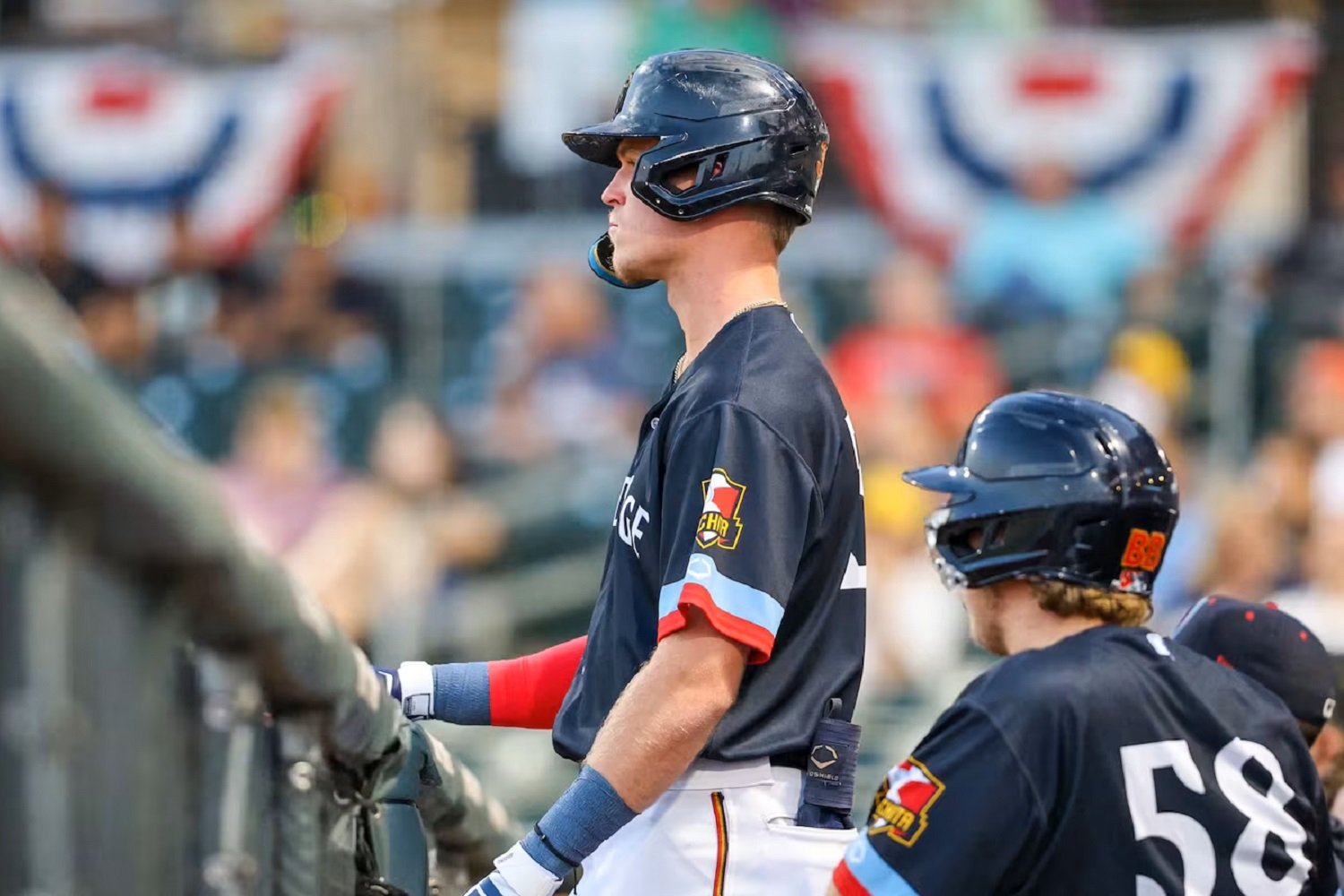 Organizational prospect lists can be flawed, because young players graduate to the big leagues and are no longer considered prospects. In the first part of this series, two pitchers significantly impacted the big-league roster last season but are no longer eligible for prospect lists. Minnesota’s organizational depth is strong, and multiple names on this list are expected to debut in 2025. Here is a look at the top players in the Twins organization who have yet to reach their age-25 season. 5. Luke Keaschall, IF 2025 Season Age: 22 The Twins selected Luke Keaschall in the second round of the 2023 MLB Draft, and he used the 2024 season as his personal launch party. Known for his high-energy play and versatile defensive abilities, Keaschall offers a unique blend of tools that could make him a future fan favorite. Keaschall’s ability to play multiple positions (including second base, third base, and center field) only adds to his value. At the plate, he brings a mature approach, excellent bat speed, and the potential to grow into surprising power. In 102 games, he hit .303/.420/.483, with 21 doubles and 15 home runs. Many national outlets have included him in their top-100 prospect lists this winter after his breakout season. 4. David Festa, SP 2025 Season Age: 25 Pitching depth has long been a focus for the Twins, and Festa has emerged as one of the most exciting arms in the system. Festa, a 13th-round pick in 2021, has exceeded expectations at every level on his way to being the team’s top pitching prospect. His fastball consistently sits in the mid-to-upper 90s, complemented by a devastating slider and an improving changeup. In 2024, his slider had a 29.1 Whiff% and his changeup was over 10 points higher. After making significant strides in his command and secondary pitches during the 2024 season, Festa showcased his ability to miss bats with a Chase% and K% in the 82nd percentile. He profiles as a potential top-of-the-rotation starter, as he follows in the footsteps of Joe Ryan and Bailey Ober. 3. Brooks Lee, IF 2025 Season Age: 24 Since being drafted eighth overall in 2022, Lee has lived up to his billing in the minors as one of the most polished prospects. A switch-hitting infielder, Lee is the type of hitter who could anchor the middle of the Twins' lineup for years to come. His rookie season had more downs than ups (64 OPS+) as he fought through multiple injuries. However, his advanced bat-to-ball skills, gap power, and ability to draw walks make him a well-rounded offensive threat as he gains more experience. Defensively, Lee has the instincts and arm strength to stick at shortstop, though Carlos Correa’s presence means he will see time at second and third base. Regardless of his defensive home, Lee’s combination of offensive production and leadership qualities make him one of the team’s top young players. 2. Emmanuel Rodriguez, OF 2025 Season Age: 22 Rodríguez has quickly risen through the prospect rankings, thanks to his elite power potential and a keen eye at the plate. Signed out of the Dominican Republic in 2019, Rodríguez has demonstrated an advanced approach for his age, consistently posting high walk rates (24.4% in 2024) and on-base percentages (.459). Defensively, Rodríguez’s speed and strong arm make him an asset in center field, though he could also excel in a corner spot if necessary. Despite missing time last season, the Twins continued to be aggressive with him and pushed him to Triple-A in his age-21 campaign. The key for Rodríguez moving forward will be refining his approach against more advanced pitching, but his ceiling is as high as anyone’s in the system. He’s a consensus top-100 prospect entering 2025 and should debut by mid-season. 1. Walker Jenkins, OF 2025 Season Age: 20 When the Twins selected Jenkins with the fifth overall pick in the 2023 MLB Draft, they landed one of the most highly-touted high-school bats in recent years. The North Carolina native has a sweet left-handed swing that has drawn comparisons to former MVPs like Joe Mauer (Twins connection) and Josh Hamilton (North Carolina connection). His physicality and bat speed allow him to drive the ball with authority to all fields, and he’s shown an advanced feel for hitting for someone his age. Last season, all but 11 of his plate appearances were against older pitchers. He reached Double-A as a 19-year-old and finished last season hitting .282/.394/.439 with 32 extra-base hits in 82 games. Beyond his offensive potential, Jenkins is a solid defender, with a strong arm and athleticism that could allow him to start his big-league career in center field. At 20 years old, he represents the epitome of a high-upside prospect and could be a franchise-altering player if everything clicks. The Twins’ collection of under-25 talent paints an optimistic picture of the organization’s future. Each player mentioned above brings unique skills and qualities that could play a pivotal role in the team’s success for years to come. While development is rarely linear, the potential of this group gives Minnesota a firm foundation upon which to build. These young stars could soon make their mark on Target Field and beyond with the right mix of patience and opportunity. Do you agree with the names on the list? Which players should be ranked higher or lower? Leave a comment and start the discussion.
- 27 comments
-
- 9
-
-
- walker jenkins
- luke keaschall
- (and 3 more)
-
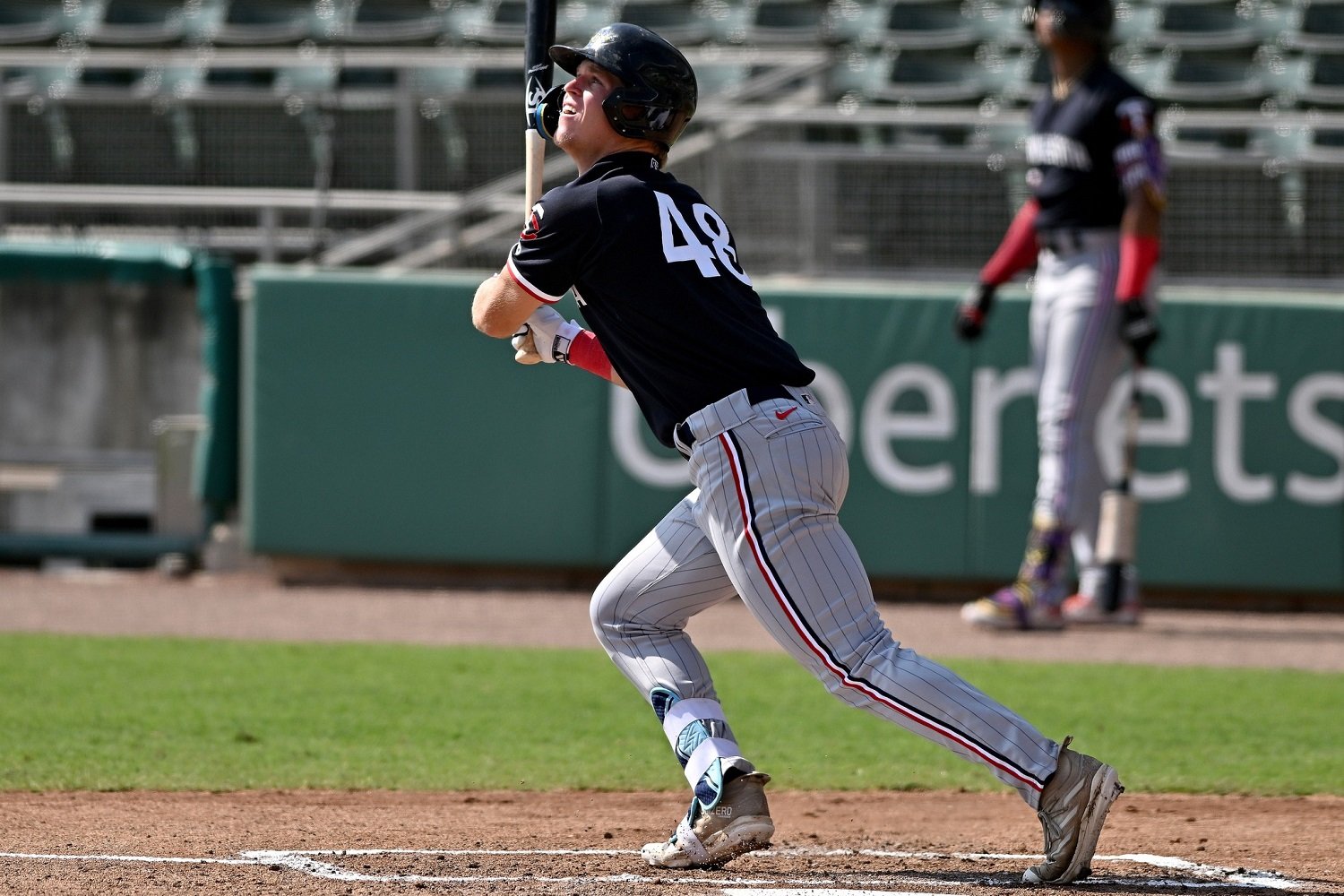 Walker Jenkins is one of the most hyped prospects in Minnesota Twins history, with many believing he has the tools to become a cornerstone piece of the franchise. However, the journey from first-round draft pick to the game’s best prospect is fraught with challenges. For Jenkins, it will take focused development in three key areas to maximize his immense potential: developing usable power, proving he can stick in center field, and (perhaps most importantly) staying healthy. Develop More Usable Power Jenkins entered professional baseball with a sweet left-handed swing and the promise of offensive impact. Still, questions remain about how much of his raw power will translate to game situations. Some comparisons exist between Jenkins’s swing and that of Joe Mauer, a name that resonates deeply with Twins fans. While Mauer’s swing was built for elite contact and gap power, his one notable limitation was a lack of consistent home run production. Could Jenkins bump his head on a similar ceiling? Jenkins has a slightly smaller frame than Mauer, but there is room for him to continue to add strength. His bat speed and leverage suggest significant power potential. However, tapping into that potential at the highest levels requires more than just physicality. Jenkins must refine his approach at the plate, particularly in generating backspin and attacking pitches in the heart of the zone. Last season, his Barrel%, 90th% EV, and Hard Hit% were each in the 61st percentile or lower, during his time at Low-A Fort Myers. There is room for those numbers to improve significantly, given that he's thus far run a low pull percentage (21st percentile) and an even lower percentage of pulled fastballs (17.3%, 13th percentile). He might unlock more extra-base hit potential if he can pull the ball with authority. A key focus for Jenkins will be adjusting to advanced pitching, especially as he faces better velocity. While his early professional track record showed a hitter capable of making loud contact, his development in the minors will determine whether his raw power can evolve into the type of game-changing tool that sets him apart. Prove He Can Stick in Center Field There’s no denying that Jenkins’s bat will shape his future value, but his ability to handle the rigors of center field is a close second. Jenkins has all the tools to stick at the position, with above-average speed, plus instincts and a strong arm. Last season, Jenkins played 35 games in center field and 45 at DH. Some of those lineup decisions were based on him returning from an early season injury. However, questions linger about whether his physical profile will ultimately lead him to a corner outfield spot. Center field is demanding, and Jenkins must prove he can cover ground effectively as he continues to grow into his frame. He’s already seen time in the corners, where his plus arm and offensive profile are natural fits. The Twins should resist the temptation to permanently move him off center field unless absolutely necessary. Minnesota has moved some top prospects from shortstop to utility roles in recent years, which might be a flaw in their development process. Keeping him in center, even as a part-time option, significantly enhances his long-term value and gives Minnesota flexibility with their roster construction. The Twins have had success grooming athletic center fielders, with a lineage stretching from Byron Buxton to Denard Span and Torii Hunter. Jenkins must consistently show he can handle the position’s physical and mental demands. If he can do that while continuing to refine his offensive game, he’ll cement himself as a rare five-tool talent. Stay Healthy For all the promise Jenkins brings, staying on the field might be his biggest hurdle. Early in his professional career, injuries have already been a concern. A quad strain slowed him down and caused him to miss six weeks at the start of the 2024 season. Twins fans are all too familiar with how injuries have derailed top prospects, as players like Byron Buxton, Miguel Sanó, and Royce Lewis have all faced significant setbacks. “Being injured somewhat hindered the way I like to play,” Jenkins said at TwinsFest. “I had to be able to manage my body, and I wasn't able to go what I felt like was full throttle all the time.” For Jenkins, durability will be paramount if he hopes to reach his potential. Part of this will involve building strength and flexibility to minimize soft-tissue injuries. He's incorporated swimming into his offseason routine. It will also mean learning to manage his workload, especially as the grind of professional baseball intensifies. Jenkins’s combination of size and athleticism puts him at risk for wear-and-tear injuries, so proactive measures (including conditioning and recovery protocols) will be critical. If Jenkins can stay healthy, he’ll have the opportunity to log the at-bats and repetitions he needs to refine his skills. Availability is a skill in its own right, and for a player with his tools, simply staying on the field could be the difference between being an excellent prospect and becoming baseball’s best. Jenkins has the potential to be a generational talent, but becoming the best prospect in baseball is anything but guaranteed. By focusing on developing more usable power, proving his ability to stick in center field, and maintaining his health, Jenkins can position himself as one of the brightest young stars in the game. If he can rise to the challenge in these areas, Twins fans may soon have another homegrown superstar to cheer for at Target Field. Will Jenkins be ranked as baseball’s best prospect at this point next season? Where does he need to improve the most? Leave a comment and start the discussion.
 -
Walker Jenkins is already considered one of baseball’s top prospects. Here’s what he must do in 2025 to separate himself from his peers and claim the mantle as the game's premier future star. Image courtesy of William Parmeter (Photo of Walker Jenkins) Walker Jenkins is already considered one of baseball’s top prospects. Here’s what he must do in 2025 to separate himself from his peers and claim the mantle as the game's premier future star. Walker Jenkins is one of the most hyped prospects in Minnesota Twins history, with many believing he has the tools to become a cornerstone piece of the franchise. However, the journey from first-round draft pick to the game’s best prospect is fraught with challenges. For Jenkins, it will take focused development in three key areas to maximize his immense potential: developing usable power, proving he can stick in center field, and (perhaps most importantly) staying healthy. Develop More Usable Power Jenkins entered professional baseball with a sweet left-handed swing and the promise of offensive impact. Still, questions remain about how much of his raw power will translate to game situations. Some comparisons exist between Jenkins’s swing and that of Joe Mauer, a name that resonates deeply with Twins fans. While Mauer’s swing was built for elite contact and gap power, his one notable limitation was a lack of consistent home run production. Could Jenkins bump his head on a similar ceiling? Jenkins has a slightly smaller frame than Mauer, but there is room for him to continue to add strength. His bat speed and leverage suggest significant power potential. However, tapping into that potential at the highest levels requires more than just physicality. Jenkins must refine his approach at the plate, particularly in generating backspin and attacking pitches in the heart of the zone. Last season, his Barrel%, 90th% EV, and Hard Hit% were each in the 61st percentile or lower, during his time at Low-A Fort Myers. There is room for those numbers to improve significantly, given that he's thus far run a low pull percentage (21st percentile) and an even lower percentage of pulled fastballs (17.3%, 13th percentile). He might unlock more extra-base hit potential if he can pull the ball with authority. A key focus for Jenkins will be adjusting to advanced pitching, especially as he faces better velocity. While his early professional track record showed a hitter capable of making loud contact, his development in the minors will determine whether his raw power can evolve into the type of game-changing tool that sets him apart. Prove He Can Stick in Center Field There’s no denying that Jenkins’s bat will shape his future value, but his ability to handle the rigors of center field is a close second. Jenkins has all the tools to stick at the position, with above-average speed, plus instincts and a strong arm. Last season, Jenkins played 35 games in center field and 45 at DH. Some of those lineup decisions were based on him returning from an early season injury. However, questions linger about whether his physical profile will ultimately lead him to a corner outfield spot. Center field is demanding, and Jenkins must prove he can cover ground effectively as he continues to grow into his frame. He’s already seen time in the corners, where his plus arm and offensive profile are natural fits. The Twins should resist the temptation to permanently move him off center field unless absolutely necessary. Minnesota has moved some top prospects from shortstop to utility roles in recent years, which might be a flaw in their development process. Keeping him in center, even as a part-time option, significantly enhances his long-term value and gives Minnesota flexibility with their roster construction. The Twins have had success grooming athletic center fielders, with a lineage stretching from Byron Buxton to Denard Span and Torii Hunter. Jenkins must consistently show he can handle the position’s physical and mental demands. If he can do that while continuing to refine his offensive game, he’ll cement himself as a rare five-tool talent. Stay Healthy For all the promise Jenkins brings, staying on the field might be his biggest hurdle. Early in his professional career, injuries have already been a concern. A quad strain slowed him down and caused him to miss six weeks at the start of the 2024 season. Twins fans are all too familiar with how injuries have derailed top prospects, as players like Byron Buxton, Miguel Sanó, and Royce Lewis have all faced significant setbacks. “Being injured somewhat hindered the way I like to play,” Jenkins said at TwinsFest. “I had to be able to manage my body, and I wasn't able to go what I felt like was full throttle all the time.” For Jenkins, durability will be paramount if he hopes to reach his potential. Part of this will involve building strength and flexibility to minimize soft-tissue injuries. He's incorporated swimming into his offseason routine. It will also mean learning to manage his workload, especially as the grind of professional baseball intensifies. Jenkins’s combination of size and athleticism puts him at risk for wear-and-tear injuries, so proactive measures (including conditioning and recovery protocols) will be critical. If Jenkins can stay healthy, he’ll have the opportunity to log the at-bats and repetitions he needs to refine his skills. Availability is a skill in its own right, and for a player with his tools, simply staying on the field could be the difference between being an excellent prospect and becoming baseball’s best. Jenkins has the potential to be a generational talent, but becoming the best prospect in baseball is anything but guaranteed. By focusing on developing more usable power, proving his ability to stick in center field, and maintaining his health, Jenkins can position himself as one of the brightest young stars in the game. If he can rise to the challenge in these areas, Twins fans may soon have another homegrown superstar to cheer for at Target Field. Will Jenkins be ranked as baseball’s best prospect at this point next season? Where does he need to improve the most? Leave a comment and start the discussion. View full article
-
Ranking the 2025 Minnesota Twins' Top Players Under 25: Nos. 6-10
Cody Christie posted an article in Twins
 Last season, the Twins had a significant group of rookies impact the roster. Many of these players have lost prospect eligibility because of the time spent on the big-league roster. However, players who are 25 or younger are still not yet at the prime of their careers and can give a larger picture of a team’s developmental system. Here is a look at the sixth- through 10th-best players ages 25 or younger in the Twins organization. 10. Charlee Soto, SP 2025 Season Age: 19 Soto’s selection in the 2023 MLB Draft went against the front office’s broader strategy of targeting college pitchers. Soto boasts a fastball that can already touch the upper 90s, paired with a devastating slider and a developing changeup that scouts believe could become a plus pitch. Last season, he posted a 5.23 ERA with a 1.50 WHIP and a 26.4 K%. He faced older batters in all but 10 of his plate appearances, and there were signs of improvement as he settled into Low-A competitive context for the second half. The Twins have prioritized developing his command, and early returns have been encouraging. With proper development, Soto has the potential to anchor a future rotation in Minnesota, making him one of the most exciting young arms in the system. 9. Kaelen Culpepper, SS 2025 Season Age: 22 Culpepper may not have been the most talked-about draft pick in 2023, but he has quickly made a name for himself with his advanced defensive skills and surprising offensive upside. A product of Kansas State, Culpepper’s defense has already been touted in the minors, with elite range and a strong, accurate arm. His ability to play multiple infield positions makes him even more valuable in today’s game. Offensively, Culpepper has shown a knack for making consistent contact, with flashes of developing power. Last season, he posted a .724 OPS with a 9.8 BB% and a 13.4 K%. If his bat continues to progress, he could blossom into one of the most well-rounded players in the system. 8. Andrew Morris, SP 2025 Season Age: 23 Drafted in the fourth round of the 2022 MLB Draft out of Texas Tech, Morris has steadily climbed the ranks within the Twins organization and finished last season at Triple-A. He has impressed with his ability to attack hitters and pound the strike zone. In 26 appearances (133 IP), he posted a 2.37 ERA with a 1.08 WHIP and a 24.5 K%. Morris's four-pitch mix makes him intriguing, including a sharp slider and an above-average changeup that keeps hitters off-balance. While his ceiling may not be as high as other pitchers on this list, Morris has a high floor and could slot into a big-league rotation as a reliable mid-rotation starter. The Twins value pitchers who can provide consistency, and Morris fits that mold perfectly. 7. Simeon Woods Richardson, SP 2025 Season Age: 24 Woods Richardson is already a familiar name to Twins fans, as he pitched over 130 innings in the majors during the 2024 season. Acquired in the trade that sent José Berríos to Toronto, he made significant strides last season after altering his arm angle. His fastball-changeup combination is lethal, and he pairs it with a curveball and slider that add depth to his repertoire. He used his slider more regularly in 2024, producing a 23.9 Whiff% and a .313 opponent slugging average. His increase in velocity last season has helped his ability to mix pitches, induce weak contact, and avoid walks, making him a valuable asset. As he continues to refine his craft, Woods Richardson projects as a mid-rotation starter in a competitive Twins rotation. 6. Zebby Matthews, SP 2025 Season Age: 25 Matthews burst onto the scene last season, moving from High-A to the big leagues. Minnesota drafted him in the eighth round in 2022 out of Western Carolina. Matthews’s fastball sits in the mid-90s and generates plenty of swings and misses, thanks to his ability to locate it with precision. His secondary pitches, particularly his slider, have grown significantly since entering pro ball. Last season, his slider had a 37.6 Whiff% at the big-league level, and many will point to his 1.9 BB% in the minors. While Matthews doesn’t have the ceiling of Soto, his advanced approach gives him a legitimate path to a big-league role right away in 2025. The depth of talent under the age of 25 within the Twins’ organization speaks volumes about their commitment to building a sustainable contender. Players like Soto and Woods Richardson represent the rotation's future, while Culpepper’s defensive skills and versatility provide value across the diamond. Meanwhile, prospects like Morris and Matthews highlight the organization’s knack for developing overlooked arms into potential contributors. Twins fans have every reason to be optimistic about the franchise’s future as these young players progress. Do you agree with the names on the list so far? Should a player be ranked higher? Leave a comment and start the discussion.
- 28 comments
-
- 4
-
-
- charlee soto
- simeon woods richardson
- (and 3 more)
-
Organizational prospect lists can be flawed, in that there are players who have lost prospect eligibility but are still young. Let's explore the Twins' top players in their age-25 season or younger. Image courtesy of © Brad Rempel-Imagn Images Organizational prospect lists can be flawed, in that there are players who have lost prospect eligibility but are still young. Let's explore the Twins' top players in their age-25 season or younger. Last season, the Twins had a significant group of rookies impact the roster. Many of these players have lost prospect eligibility because of the time spent on the big-league roster. However, players who are 25 or younger are still not yet at the prime of their careers and can give a larger picture of a team’s developmental system. Here is a look at the sixth- through 10th-best players ages 25 or younger in the Twins organization. 10. Charlee Soto, SP 2025 Season Age: 19 Soto’s selection in the 2023 MLB Draft went against the front office’s broader strategy of targeting college pitchers. Soto boasts a fastball that can already touch the upper 90s, paired with a devastating slider and a developing changeup that scouts believe could become a plus pitch. Last season, he posted a 5.23 ERA with a 1.50 WHIP and a 26.4 K%. He faced older batters in all but 10 of his plate appearances, and there were signs of improvement as he settled into Low-A competitive context for the second half. The Twins have prioritized developing his command, and early returns have been encouraging. With proper development, Soto has the potential to anchor a future rotation in Minnesota, making him one of the most exciting young arms in the system. 9. Kaelen Culpepper, SS 2025 Season Age: 22 Culpepper may not have been the most talked-about draft pick in 2023, but he has quickly made a name for himself with his advanced defensive skills and surprising offensive upside. A product of Kansas State, Culpepper’s defense has already been touted in the minors, with elite range and a strong, accurate arm. His ability to play multiple infield positions makes him even more valuable in today’s game. Offensively, Culpepper has shown a knack for making consistent contact, with flashes of developing power. Last season, he posted a .724 OPS with a 9.8 BB% and a 13.4 K%. If his bat continues to progress, he could blossom into one of the most well-rounded players in the system. 8. Andrew Morris, SP 2025 Season Age: 23 Drafted in the fourth round of the 2022 MLB Draft out of Texas Tech, Morris has steadily climbed the ranks within the Twins organization and finished last season at Triple-A. He has impressed with his ability to attack hitters and pound the strike zone. In 26 appearances (133 IP), he posted a 2.37 ERA with a 1.08 WHIP and a 24.5 K%. Morris's four-pitch mix makes him intriguing, including a sharp slider and an above-average changeup that keeps hitters off-balance. While his ceiling may not be as high as other pitchers on this list, Morris has a high floor and could slot into a big-league rotation as a reliable mid-rotation starter. The Twins value pitchers who can provide consistency, and Morris fits that mold perfectly. 7. Simeon Woods Richardson, SP 2025 Season Age: 24 Woods Richardson is already a familiar name to Twins fans, as he pitched over 130 innings in the majors during the 2024 season. Acquired in the trade that sent José Berríos to Toronto, he made significant strides last season after altering his arm angle. His fastball-changeup combination is lethal, and he pairs it with a curveball and slider that add depth to his repertoire. He used his slider more regularly in 2024, producing a 23.9 Whiff% and a .313 opponent slugging average. His increase in velocity last season has helped his ability to mix pitches, induce weak contact, and avoid walks, making him a valuable asset. As he continues to refine his craft, Woods Richardson projects as a mid-rotation starter in a competitive Twins rotation. 6. Zebby Matthews, SP 2025 Season Age: 25 Matthews burst onto the scene last season, moving from High-A to the big leagues. Minnesota drafted him in the eighth round in 2022 out of Western Carolina. Matthews’s fastball sits in the mid-90s and generates plenty of swings and misses, thanks to his ability to locate it with precision. His secondary pitches, particularly his slider, have grown significantly since entering pro ball. Last season, his slider had a 37.6 Whiff% at the big-league level, and many will point to his 1.9 BB% in the minors. While Matthews doesn’t have the ceiling of Soto, his advanced approach gives him a legitimate path to a big-league role right away in 2025. The depth of talent under the age of 25 within the Twins’ organization speaks volumes about their commitment to building a sustainable contender. Players like Soto and Woods Richardson represent the rotation's future, while Culpepper’s defensive skills and versatility provide value across the diamond. Meanwhile, prospects like Morris and Matthews highlight the organization’s knack for developing overlooked arms into potential contributors. Twins fans have every reason to be optimistic about the franchise’s future as these young players progress. Do you agree with the names on the list so far? Should a player be ranked higher? Leave a comment and start the discussion. View full article
-
The Twins had a solid group of rookies impact the team last season. Which second-year players project to have the best season? Image courtesy of Jesse Johnson - USA TODAY Sports The Twins had a solid group of rookies impact the team last season. Which second-year players project to have the best season? The Minnesota Twins benefited from an exciting influx of rookie talent last season, with a mix of hitters and pitchers making meaningful contributions. As the team looks ahead to 2025, these second-year players face a critical career juncture with an opportunity to build on their early success and avoid the dreaded sophomore slump. Here’s a look at how these rookies project to perform in 2025, based on their ZiPS projections, and what Twins fans can expect as they mature into more prominent roles. 1. Brooks Lee, IF 2025 ZiPS: .245/.297/.377 (.674), 88 OPS+, 1.1 WAR, 428 PA The Twins’ top prospect entering last season, Lee showed flashes of his potential as a rookie. He doesn’t have the highest projected WAR among last year’s rookies, but he has the easiest path to a full-time role. While his offensive projection for 2025 doesn’t leap off the page, his defensive versatility and solid approach at the plate give him room to grow. Last season’s performance did not indicate his long-term value, as he fought through two injuries during the season. Lee’s bat-to-ball skills and ability to adjust to big-league pitching will be critical as he looks to solidify his place in the Twins’ infield rotation. 2. David Festa, SP 2025 ZiPS: 4.08 ERA, 95 ERA+, 1.4 WAR, 108 IP Festa’s rookie season showcased his tantalizing upside, particularly his high-velocity fastball and swing-and-miss stuff. However, his ZiPS projection for 2025 highlights some areas for growth, particularly with consistency and command. He has the most significant upside of any of last year’s rookie pitchers, and that’s why he’s ranked highly on this list. There is a good chance he outperforms his ERA+, IP, and WAR totals listed above. If he can harness his raw tools, Festa could emerge as a key piece in the rotation behind Minnesota’s veteran trio at the top. 3. Simeon Woods Richardson, SP 2025 ZiPS: 4.36 ERA, 95 ERA+, 1.4 WAR, 128 IP Woods Richardson showed promise in his rookie campaign, and his 2025 projection suggests he might face some regression. While his ERA and ERA+ are slightly below league average, his ability to eat innings and limit damage should keep him in the rotation. He is currently higher on the team’s depth chart, so he will be given more opportunities from the start of the season. If he can increase his strikeout rate and limit walks, Woods Richardson has the potential to outperform these projections. 4. DaShawn Keirsey Jr., OF 2025 ZiPS: .251/.309/.379 (.688), 93 OPS+, 2.0 WAR, 495 PA Keirsey projects to take a significant step forward in 2025 by providing most of his value in the outfield. His combination of athleticism and defensive ability gives him a high floor. While his bat doesn’t project to carry the lineup, his steady production should make him a key contributor. Keirsey’s speed and range in the outfield will be critical as the Twins look to solidify their defense. He likely won’t get a full-time role until a starter ends up on the IL, but that tends to happen especially with the Twins. With the highest WAR projection among last year’s rookies, Keirsey is primed to be a breakout player in his second season. 5. Zebby Matthews, SP 2025 ZiPS: 4.05 ERA, 103 ERA+, 1.8 WAR, 122 IP Matthews stands out among the rookie pitchers with his strong projection, highlighted by his above-average ERA+ and solid innings total. The Twins will likely rely on him to stabilize the back end of their rotation, but he sits behind multiple players on the depth chart. ZiPS loves his command and ability to induce weak contact, which sets him apart from his peers. If he can continue to refine his secondary pitches, Matthews could emerge as a dependable mid-rotation starter. 6. Austin Martin, UTL 2025 ZiPS: .240/.343/.329 (.672), 91 OPS+, 0.7 WAR, 395 PA Martin’s plate discipline remains his calling card, as evidenced by his strong OBP projection. However, his limited power output caps his overall offensive upside. As a utility player, Martin’s versatility will be an asset, allowing him to fill multiple positions, but he provided little defensive value last year. Martin could significantly raise his ceiling if he can tap into more extra-base power. 7. Jair Camargo, C 2025 ZiPS: .227/.282/.385 (.667), 86 OPS+, 1.2 WAR, 358 PA Camargo’s ranking would move up if the Twins traded one of their starting catchers. For now, the Twins don’t have a regular role for him, and the team was hesitant to use him behind the plate when he was on the roster last year. His bat remains a work in progress, but any offensive production will be a bonus given the demands of the catching position. Camargo must improve his ability to handle a pitching staff and control the running game to make him part of the Twins’ plans. 8. Michael Helman, UTL 2025 ZiPS: .228/.292/.374 (.666), 86 OPS+, 0.8 WAR, 391 PA Helman’s versatility allows him to carve out a role, but his bat remains a question mark. His defensive flexibility gives him a shot at contributing to the roster, but he’ll need to improve his offensive consistency to secure regular playing time. Helman’s ability to contribute as a baserunner and defender will be key to his value in 2025. The Twins’ rookies from last season bring a mix of promise and uncertainty into 2025. Players like Lee and Festa project to make the most significant impact, while others like Matthews and Keirsey have the potential to exceed expectations if they can take the next step in their development. With a solid foundation of young talent, the Twins are well-positioned to remain competitive as these players continue to grow. How would you rank last year’s rookies? Who is too high or too low on the list? Leave a comment and start the discussion. View full article
-
Ranking Last Year’s Twins Rookies on Projected 2025 Performance
Cody Christie posted an article in Twins
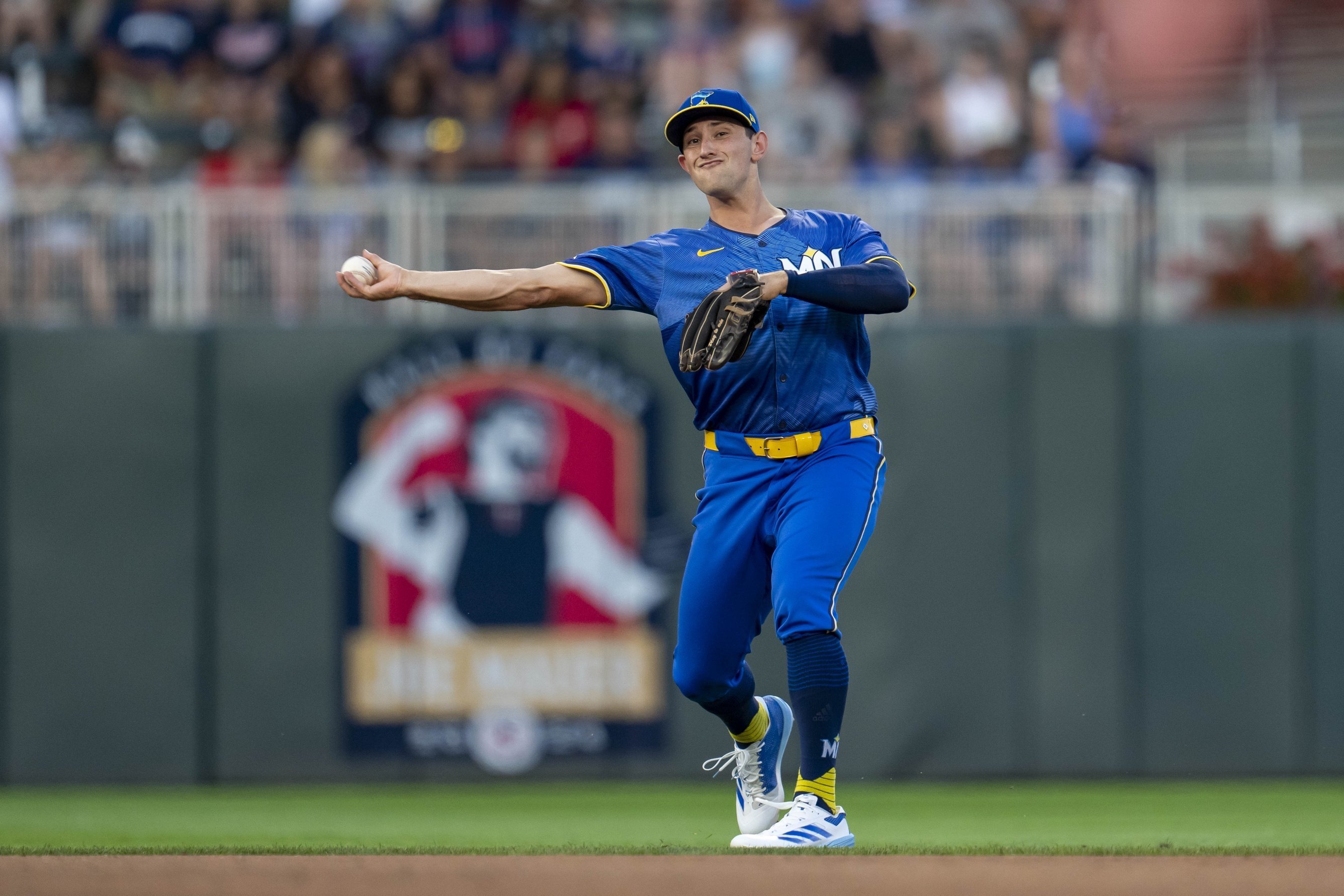 The Minnesota Twins benefited from an exciting influx of rookie talent last season, with a mix of hitters and pitchers making meaningful contributions. As the team looks ahead to 2025, these second-year players face a critical career juncture with an opportunity to build on their early success and avoid the dreaded sophomore slump. Here’s a look at how these rookies project to perform in 2025, based on their ZiPS projections, and what Twins fans can expect as they mature into more prominent roles. 1. Brooks Lee, IF 2025 ZiPS: .245/.297/.377 (.674), 88 OPS+, 1.1 WAR, 428 PA The Twins’ top prospect entering last season, Lee showed flashes of his potential as a rookie. He doesn’t have the highest projected WAR among last year’s rookies, but he has the easiest path to a full-time role. While his offensive projection for 2025 doesn’t leap off the page, his defensive versatility and solid approach at the plate give him room to grow. Last season’s performance did not indicate his long-term value, as he fought through two injuries during the season. Lee’s bat-to-ball skills and ability to adjust to big-league pitching will be critical as he looks to solidify his place in the Twins’ infield rotation. 2. David Festa, SP 2025 ZiPS: 4.08 ERA, 95 ERA+, 1.4 WAR, 108 IP Festa’s rookie season showcased his tantalizing upside, particularly his high-velocity fastball and swing-and-miss stuff. However, his ZiPS projection for 2025 highlights some areas for growth, particularly with consistency and command. He has the most significant upside of any of last year’s rookie pitchers, and that’s why he’s ranked highly on this list. There is a good chance he outperforms his ERA+, IP, and WAR totals listed above. If he can harness his raw tools, Festa could emerge as a key piece in the rotation behind Minnesota’s veteran trio at the top. 3. Simeon Woods Richardson, SP 2025 ZiPS: 4.36 ERA, 95 ERA+, 1.4 WAR, 128 IP Woods Richardson showed promise in his rookie campaign, and his 2025 projection suggests he might face some regression. While his ERA and ERA+ are slightly below league average, his ability to eat innings and limit damage should keep him in the rotation. He is currently higher on the team’s depth chart, so he will be given more opportunities from the start of the season. If he can increase his strikeout rate and limit walks, Woods Richardson has the potential to outperform these projections. 4. DaShawn Keirsey Jr., OF 2025 ZiPS: .251/.309/.379 (.688), 93 OPS+, 2.0 WAR, 495 PA Keirsey projects to take a significant step forward in 2025 by providing most of his value in the outfield. His combination of athleticism and defensive ability gives him a high floor. While his bat doesn’t project to carry the lineup, his steady production should make him a key contributor. Keirsey’s speed and range in the outfield will be critical as the Twins look to solidify their defense. He likely won’t get a full-time role until a starter ends up on the IL, but that tends to happen especially with the Twins. With the highest WAR projection among last year’s rookies, Keirsey is primed to be a breakout player in his second season. 5. Zebby Matthews, SP 2025 ZiPS: 4.05 ERA, 103 ERA+, 1.8 WAR, 122 IP Matthews stands out among the rookie pitchers with his strong projection, highlighted by his above-average ERA+ and solid innings total. The Twins will likely rely on him to stabilize the back end of their rotation, but he sits behind multiple players on the depth chart. ZiPS loves his command and ability to induce weak contact, which sets him apart from his peers. If he can continue to refine his secondary pitches, Matthews could emerge as a dependable mid-rotation starter. 6. Austin Martin, UTL 2025 ZiPS: .240/.343/.329 (.672), 91 OPS+, 0.7 WAR, 395 PA Martin’s plate discipline remains his calling card, as evidenced by his strong OBP projection. However, his limited power output caps his overall offensive upside. As a utility player, Martin’s versatility will be an asset, allowing him to fill multiple positions, but he provided little defensive value last year. Martin could significantly raise his ceiling if he can tap into more extra-base power. 7. Jair Camargo, C 2025 ZiPS: .227/.282/.385 (.667), 86 OPS+, 1.2 WAR, 358 PA Camargo’s ranking would move up if the Twins traded one of their starting catchers. For now, the Twins don’t have a regular role for him, and the team was hesitant to use him behind the plate when he was on the roster last year. His bat remains a work in progress, but any offensive production will be a bonus given the demands of the catching position. Camargo must improve his ability to handle a pitching staff and control the running game to make him part of the Twins’ plans. 8. Michael Helman, UTL 2025 ZiPS: .228/.292/.374 (.666), 86 OPS+, 0.8 WAR, 391 PA Helman’s versatility allows him to carve out a role, but his bat remains a question mark. His defensive flexibility gives him a shot at contributing to the roster, but he’ll need to improve his offensive consistency to secure regular playing time. Helman’s ability to contribute as a baserunner and defender will be key to his value in 2025. The Twins’ rookies from last season bring a mix of promise and uncertainty into 2025. Players like Lee and Festa project to make the most significant impact, while others like Matthews and Keirsey have the potential to exceed expectations if they can take the next step in their development. With a solid foundation of young talent, the Twins are well-positioned to remain competitive as these players continue to grow. How would you rank last year’s rookies? Who is too high or too low on the list? Leave a comment and start the discussion.
- 43 comments
-
- 3
-
-
- brooks lee
- david festa
- (and 5 more)
-
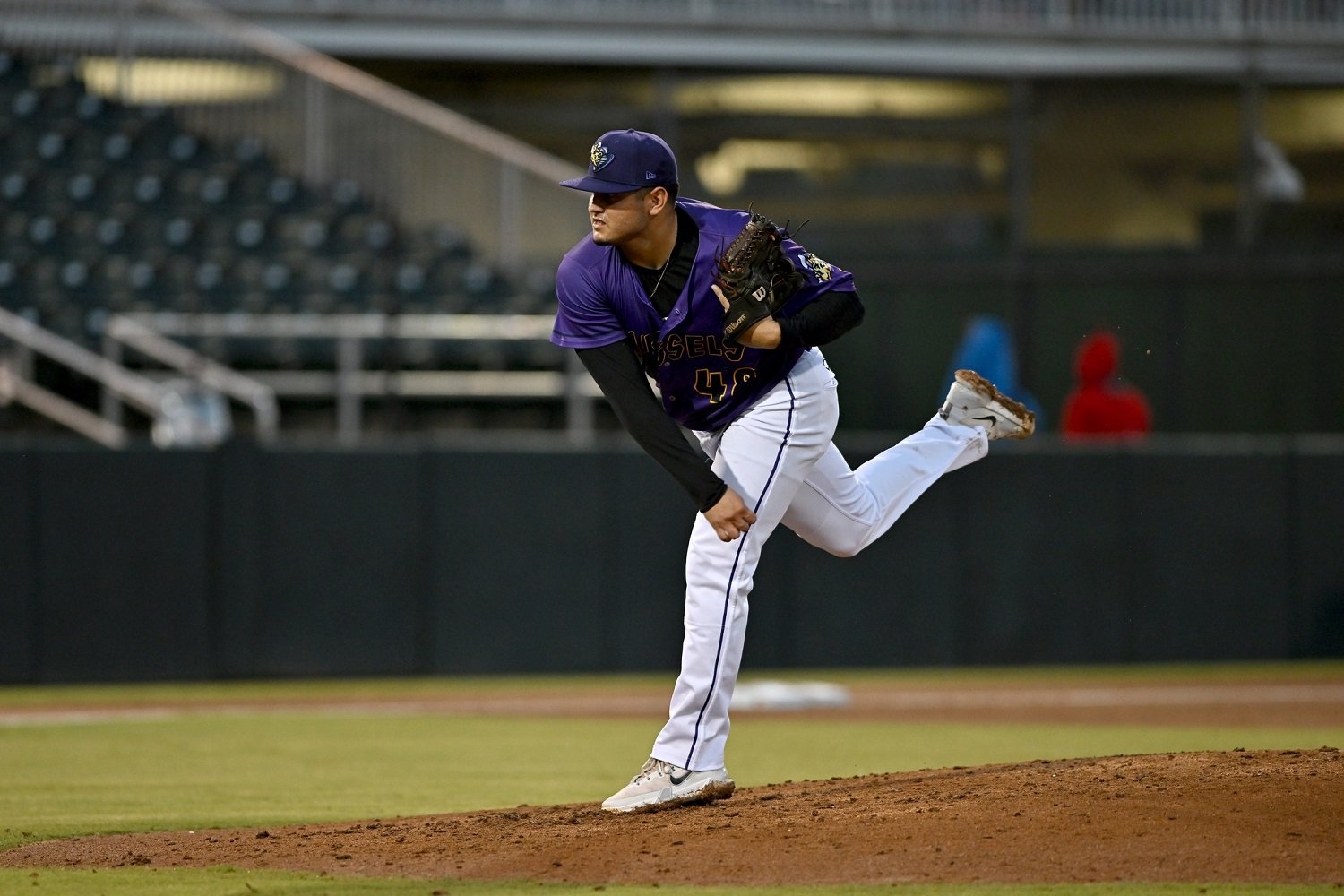 The Minnesota Twins' farm system has been a steady source of intriguing talent in recent years, boasting a mix of polished prospects and high-upside projects. Among the latter group is 19-year-old Adrian Bohorquez, a right-handed pitcher with the potential to vault up the organization’s prospect rankings in 2025. Bohorquez’s tantalizing pitch mix and raw ability position him as a candidate for a breakout campaign. A Limited Track Record, But Big Upside Bohorquez’s professional résumé is brief but compelling. Over two pro seasons, he’s logged just 77 innings, with only 16 1/3 of those coming outside of rookie-level competition. In those limited frames, Bohorquez flashed promise and inconsistency, striking out hitters at over a 27% clip at three levels and issuing 10 walks in that small Low-A sample size. For now, question marks abound, but the consensus is clear: Bohorquez possesses an undeniably live arm and all the tools necessary to establish himself as a legitimate starting prospect. He’s just a long way from Target Field. The Twins have found some hidden gems in the international market, and Bohorquez is looking to join that group. He signed out of Venezuela for just $10,000 during the 2023 international signing period. Bohorquez was an older signee at 18 years old, when many other players sign at 16 and agree to deals even younger than that. While he didn’t make waves immediately, he made significant strides in 2024. Coming Stateside, he pitched his way from the Florida Complex League to full-season Fort Myers, putting himself on the radar as a high-upside arm. The 6-foot-1 right-hander typically throws his four-seam fastball at 94 mph, but he has touched 98 mph, which indicates that more consistent velocity may emerge as he gains experience. MLB Pipeline and FanGraphs give his fastball a 55 grade, with the potential to be a 60-grade pitch as he improves. His slider, thrown at 87-88 mph, is his best secondary pitch, showing late bite and effectiveness against both right- and left-handed hitters. Currently, MLB Pipeline gives this pitch a 50. Complementing this is a mid-70s curveball with depth and spin rates exceeding 2,800 rpm. While his changeup currently lags behind as a below-average pitch, it has shown flashes of depth and fade when thrown at around 90 mph. Developing this pitch will be key to his ability to handle left-handed hitters and stick as a starter. The Road Ahead If 2025 goes as planned, Bohorquez could end the season as one of the top 20 prospects in the Twins’ system. He enters the year as arguably one of the best pitchers in the low minors, a distinction that reflects both his talent and his advanced approach on the mound. With his current repertoire, Bohorquez is poised to dominate hitters in Low A, and may only face meaningful challenges once he reaches High-A or Double-A competition. Still, there are hurdles for the young pitcher to overcome. Without a reliable weapon to neutralize left-handed hitters, Bohorquez’s path to becoming a complete starter could hit roadblocks. Last season, he allowed lefties to reach base nearly 32% of the time. Additionally, his command remains a work in progress. After showing improved control in the Florida Complex League, he struggled to find the zone consistently at Fort Myers in Florida State League action. He posted a 12.3 BB% with a 16.0 K-BB% last season. The Twins will continue working with him to refine his mechanics and strike-throwing ability, which will be crucial for his long-term success. Projection and Potential Physically mature and boasting a starter’s build, Bohorquez has the tools to project as a solid No. 4 starter for a contending team, but his upside is even higher. His three-pitch mix is enough to carve up lower-level hitters, but his ultimate ceiling will depend on his ability to refine his command and add depth to his repertoire. If he succeeds in those areas, Bohorquez could quickly become one of the most exciting arms in the Twins’ system. For now, Bohorquez remains a name for Twins fans to monitor closely. He’s not yet a household name, but that could change by this time next year. With a live arm, a dynamic arsenal, and plenty of room to grow, Bohorquez is poised to take a significant step forward in 2025. What should the team expect from Bohorquez this season? What changes does he need to make in 2025? What’s his ultimate ceiling? Leave a comment and start the discussion.
 -
The Twins have plenty of pitching prospects to get excited about in the upper minors, but one low minors pitcher might have one of the highest ceilings in the system. Get to know more about him. Image courtesy of William Parmeter (Photo of Adrian Bohorquez) The Twins have plenty of pitching prospects to get excited about in the upper minors, but one low minors pitcher might have one of the highest ceilings in the system. Get to know more about him. The Minnesota Twins' farm system has been a steady source of intriguing talent in recent years, boasting a mix of polished prospects and high-upside projects. Among the latter group is 19-year-old Adrian Bohorquez, a right-handed pitcher with the potential to vault up the organization’s prospect rankings in 2025. Bohorquez’s tantalizing pitch mix and raw ability position him as a candidate for a breakout campaign. A Limited Track Record, But Big Upside Bohorquez’s professional résumé is brief but compelling. Over two pro seasons, he’s logged just 77 innings, with only 16 1/3 of those coming outside of rookie-level competition. In those limited frames, Bohorquez flashed promise and inconsistency, striking out hitters at over a 27% clip at three levels and issuing 10 walks in that small Low-A sample size. For now, question marks abound, but the consensus is clear: Bohorquez possesses an undeniably live arm and all the tools necessary to establish himself as a legitimate starting prospect. He’s just a long way from Target Field. The Twins have found some hidden gems in the international market, and Bohorquez is looking to join that group. He signed out of Venezuela for just $10,000 during the 2023 international signing period. Bohorquez was an older signee at 18 years old, when many other players sign at 16 and agree to deals even younger than that. While he didn’t make waves immediately, he made significant strides in 2024. Coming Stateside, he pitched his way from the Florida Complex League to full-season Fort Myers, putting himself on the radar as a high-upside arm. The 6-foot-1 right-hander typically throws his four-seam fastball at 94 mph, but he has touched 98 mph, which indicates that more consistent velocity may emerge as he gains experience. MLB Pipeline and FanGraphs give his fastball a 55 grade, with the potential to be a 60-grade pitch as he improves. His slider, thrown at 87-88 mph, is his best secondary pitch, showing late bite and effectiveness against both right- and left-handed hitters. Currently, MLB Pipeline gives this pitch a 50. Complementing this is a mid-70s curveball with depth and spin rates exceeding 2,800 rpm. While his changeup currently lags behind as a below-average pitch, it has shown flashes of depth and fade when thrown at around 90 mph. Developing this pitch will be key to his ability to handle left-handed hitters and stick as a starter. The Road Ahead If 2025 goes as planned, Bohorquez could end the season as one of the top 20 prospects in the Twins’ system. He enters the year as arguably one of the best pitchers in the low minors, a distinction that reflects both his talent and his advanced approach on the mound. With his current repertoire, Bohorquez is poised to dominate hitters in Low A, and may only face meaningful challenges once he reaches High-A or Double-A competition. Still, there are hurdles for the young pitcher to overcome. Without a reliable weapon to neutralize left-handed hitters, Bohorquez’s path to becoming a complete starter could hit roadblocks. Last season, he allowed lefties to reach base nearly 32% of the time. Additionally, his command remains a work in progress. After showing improved control in the Florida Complex League, he struggled to find the zone consistently at Fort Myers in Florida State League action. He posted a 12.3 BB% with a 16.0 K-BB% last season. The Twins will continue working with him to refine his mechanics and strike-throwing ability, which will be crucial for his long-term success. Projection and Potential Physically mature and boasting a starter’s build, Bohorquez has the tools to project as a solid No. 4 starter for a contending team, but his upside is even higher. His three-pitch mix is enough to carve up lower-level hitters, but his ultimate ceiling will depend on his ability to refine his command and add depth to his repertoire. If he succeeds in those areas, Bohorquez could quickly become one of the most exciting arms in the Twins’ system. For now, Bohorquez remains a name for Twins fans to monitor closely. He’s not yet a household name, but that could change by this time next year. With a live arm, a dynamic arsenal, and plenty of room to grow, Bohorquez is poised to take a significant step forward in 2025. What should the team expect from Bohorquez this season? What changes does he need to make in 2025? What’s his ultimate ceiling? Leave a comment and start the discussion. View full article
-
There was a lot of self-reflection by members of the Minnesota Twins following the team’s collapse. Here’s how Rocco Baldelli plans to avoid a repeat collapse in 2025. Image courtesy of © Charles LeClaire-Imagn Images There was a lot of self-reflection by members of the Minnesota Twins following the team’s collapse. Here’s how Rocco Baldelli plans to avoid a repeat collapse in 2025. The Minnesota Twins head into the 2025 season with a renewed focus and a clear mission: preventing another late-season collapse. Manager Rocco Baldelli, who has spent the offseason reflecting on improving his team’s performance in critical moments, believes the solution lies in a refined offensive approach. In a recent interview on the Chad Hartman Show, Baldelli shared his vision for the upcoming season, emphasizing the importance of better at-bats and a departure from an all-or-nothing offensive strategy. "We were winning games by, truly, whacking the ball all around the park," Baldelli admitted. "We weren't doing it with tons of speed and athleticism and stealing bases, we were doing it by hitting the ball hard. We had big, strong guys up and down the lineup, and we were hitting homers and doubles. We were slugging our way to success. That can be effective, but I think we need to have more clubs in our bag." While the Twins’ power-hitting prowess led to plenty of regular-season success, their reliance exclusively on extra-base hits revealed cracks during the most critical stretches of the season. Opposing teams adjusted, and when the long ball wasn’t flying, the Twins often found themselves struggling to manufacture runs. From August 1st to the end of the season, only eight big-league teams hit fewer home runs, and six teams had a lower SLG than the Twins. Unlike Minnesota, the majority of those clubs were not in postseason contention. Baldelli’s offseason introspection has led to a philosophy shift, prioritizing versatility and situational hitting. "We did make some staff changes. We have a new hitting department that we're going to unleash with our players in spring training," Baldelli revealed. "The goals heading into spring training for our team are to talk about approach and to talk about how to win games when you don't hit two home runs." This recalibration in approach represents a significant shift for a team that built its offensive identity on raw power since the 2019 season when the team set the MLB home run record. Bryon Buxton, Carlos Correa, Royce Lewis, and Matt Wallner are among the core offensive pieces built on powerful swings that come with home runs and strikeouts. All four players are projected to be part of the Twins’ regular lineup, but it seems unlikely they will be asked to sacrifice power for average or getting on base. It might not be in the team’s best interest to mess with the approach of their hardest-hitting players because they can impact a game with one swing of the bat. Some Twins players may be better suited for this approach. Brooks Lee and Edouard Julien have both been known for their keen eye on the plate, which can help them get into favorable hitter counts. Julien has been criticized for being too patient and watching third strikes, which can frustrate fans. Lee emerged as the Twins’ best prospect because of his hit tool, but his OBP in the big leagues was nearly 100 points lower than his time in the minors. Both players could be good fits for this adjusted approach for the Twins offense. Baldelli’s comments suggest that the team’s new hitting staff will focus on refining plate discipline, improving situational awareness, and fostering a mindset that values quality at-bats over sheer power output. The idea of adding “more clubs in our bag” speaks to the Twins’ desire to diversify their offensive toolkit. This could mean focusing on hitting behind runners, working deep counts, and capitalizing on opportunities to score without relying on extra-base hits. However, that approach doesn't always work in the high-pressure environments of postseason baseball because home runs usually reign supreme in October, especially against the league’s best starting pitchers. Of course, implementing these changes will take time, and the results won’t be immediate. The Twins will need buy-in from their players, many of whom have thrived under the power-hitting mantra. Veterans and young hitters alike will be tasked with adopting a more nuanced approach at the plate, which could involve sacrifices in individual statistics for the greater good of the team. Spring training will be a critical proving ground for this new philosophy. Baldelli and his revamped hitting staff will have the opportunity to instill these principles in a controlled environment, laying the foundation for a more balanced offensive attack. The ultimate goal is not to abandon power entirely but to complement it with a more adaptable and resilient approach. If the Twins can successfully integrate this philosophy, they’ll enter the 2025 season not only as a team with formidable power but also as one capable of grinding out wins in various ways. And adaptability might be the key to sustained success when the team slumps. Will this new approach help the Twins? Leave a comment and start the discussion. View full article
-
Anti-Bomba Squad: Rocco Baldelli’s Blueprint to Avoid a Collapse in 2025
Cody Christie posted an article in Twins
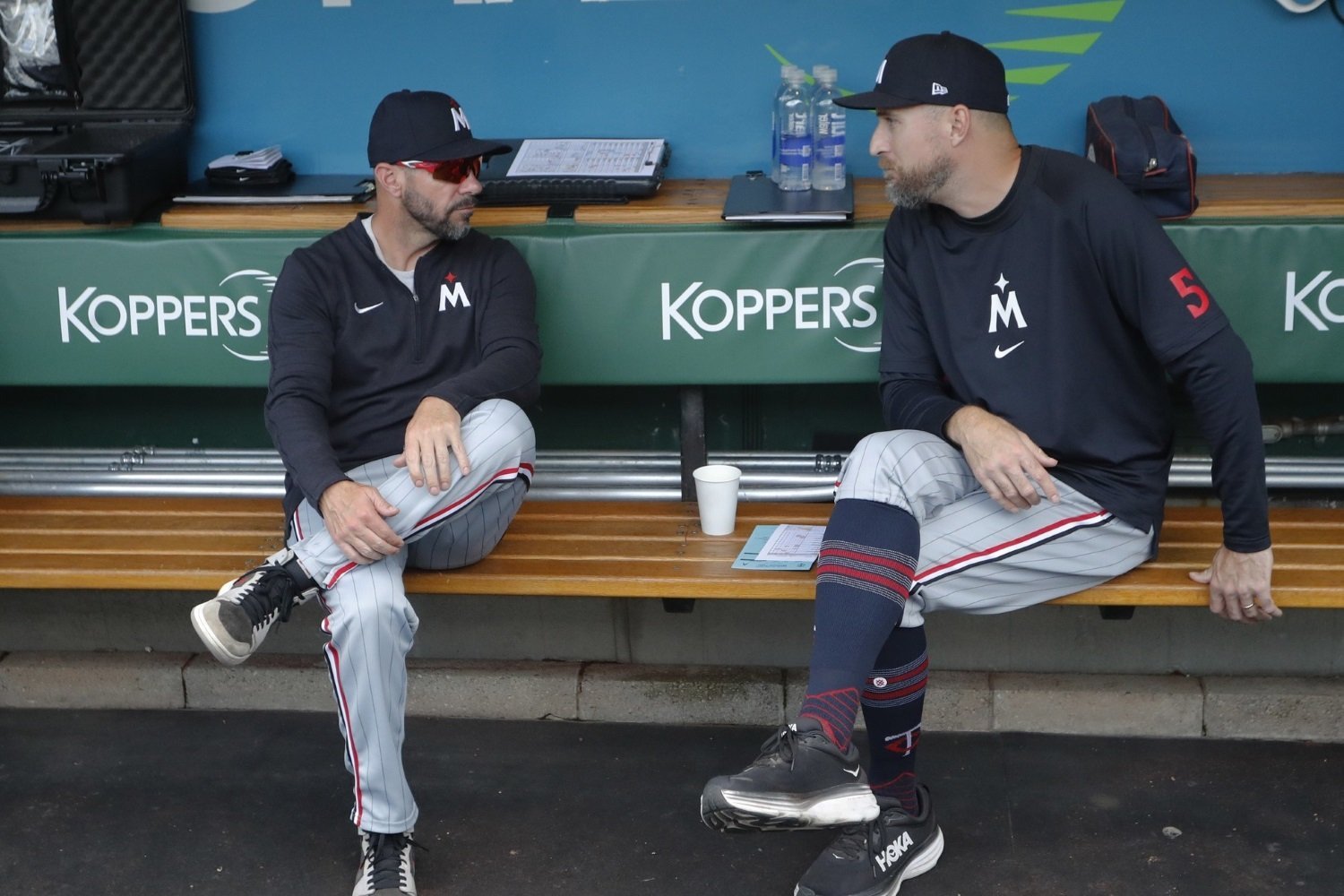 The Minnesota Twins head into the 2025 season with a renewed focus and a clear mission: preventing another late-season collapse. Manager Rocco Baldelli, who has spent the offseason reflecting on improving his team’s performance in critical moments, believes the solution lies in a refined offensive approach. In a recent interview on the Chad Hartman Show, Baldelli shared his vision for the upcoming season, emphasizing the importance of better at-bats and a departure from an all-or-nothing offensive strategy. "We were winning games by, truly, whacking the ball all around the park," Baldelli admitted. "We weren't doing it with tons of speed and athleticism and stealing bases, we were doing it by hitting the ball hard. We had big, strong guys up and down the lineup, and we were hitting homers and doubles. We were slugging our way to success. That can be effective, but I think we need to have more clubs in our bag." While the Twins’ power-hitting prowess led to plenty of regular-season success, their reliance exclusively on extra-base hits revealed cracks during the most critical stretches of the season. Opposing teams adjusted, and when the long ball wasn’t flying, the Twins often found themselves struggling to manufacture runs. From August 1st to the end of the season, only eight big-league teams hit fewer home runs, and six teams had a lower SLG than the Twins. Unlike Minnesota, the majority of those clubs were not in postseason contention. Baldelli’s offseason introspection has led to a philosophy shift, prioritizing versatility and situational hitting. "We did make some staff changes. We have a new hitting department that we're going to unleash with our players in spring training," Baldelli revealed. "The goals heading into spring training for our team are to talk about approach and to talk about how to win games when you don't hit two home runs." This recalibration in approach represents a significant shift for a team that built its offensive identity on raw power since the 2019 season when the team set the MLB home run record. Bryon Buxton, Carlos Correa, Royce Lewis, and Matt Wallner are among the core offensive pieces built on powerful swings that come with home runs and strikeouts. All four players are projected to be part of the Twins’ regular lineup, but it seems unlikely they will be asked to sacrifice power for average or getting on base. It might not be in the team’s best interest to mess with the approach of their hardest-hitting players because they can impact a game with one swing of the bat. Some Twins players may be better suited for this approach. Brooks Lee and Edouard Julien have both been known for their keen eye on the plate, which can help them get into favorable hitter counts. Julien has been criticized for being too patient and watching third strikes, which can frustrate fans. Lee emerged as the Twins’ best prospect because of his hit tool, but his OBP in the big leagues was nearly 100 points lower than his time in the minors. Both players could be good fits for this adjusted approach for the Twins offense. Baldelli’s comments suggest that the team’s new hitting staff will focus on refining plate discipline, improving situational awareness, and fostering a mindset that values quality at-bats over sheer power output. The idea of adding “more clubs in our bag” speaks to the Twins’ desire to diversify their offensive toolkit. This could mean focusing on hitting behind runners, working deep counts, and capitalizing on opportunities to score without relying on extra-base hits. However, that approach doesn't always work in the high-pressure environments of postseason baseball because home runs usually reign supreme in October, especially against the league’s best starting pitchers. Of course, implementing these changes will take time, and the results won’t be immediate. The Twins will need buy-in from their players, many of whom have thrived under the power-hitting mantra. Veterans and young hitters alike will be tasked with adopting a more nuanced approach at the plate, which could involve sacrifices in individual statistics for the greater good of the team. Spring training will be a critical proving ground for this new philosophy. Baldelli and his revamped hitting staff will have the opportunity to instill these principles in a controlled environment, laying the foundation for a more balanced offensive attack. The ultimate goal is not to abandon power entirely but to complement it with a more adaptable and resilient approach. If the Twins can successfully integrate this philosophy, they’ll enter the 2025 season not only as a team with formidable power but also as one capable of grinding out wins in various ways. And adaptability might be the key to sustained success when the team slumps. Will this new approach help the Twins? Leave a comment and start the discussion.
- 58 comments
-
- 9
-
-
- rocco baldelli
- matt wallner
- (and 5 more)
-
Injuries are a never-ending theme for the Twins. Over the weekend, the team provided key updates on a trio of core pieces returning from injury. Image courtesy of © Bruce Kluckhohn-Imagn Images Injuries are a never-ending theme for the Twins. Over the weekend, the team provided key updates on a trio of core pieces returning from injury. As Twins fans gathered at TwinsFest this weekend, the team’s leadership provided much-anticipated updates on the health of key players heading into the 2025 season. Manager Rocco Baldelli and president of baseball operations Derek Falvey addressed the media, offering a mix of optimism and reassurance about the roster’s health. Here’s a breakdown of the key injury updates that were shared. Carlos Correa: “I’m ready to go.” Correa’s health has been a hot topic since plantar fasciitis limited the All-Star shortstop to 86 games in 2024. Despite missing significant time, Correa turned in MVP-caliber numbers on a per-game basis, slashing .310/.388/.517 with 36 extra-base hits in 86 games. The good news? Correa appears to be fully recovered. Falvey was the first to confirm the positive outlook, stating that Correa has experienced “no issues” with his foot this offseason. Correa himself expressed confidence in his readiness for spring training: “I’m ready to go, full go for spring training,” Correa said. “I’ve been sprinting. I’ve been running around. I’ve been doing about everything. I’ve been focused on not only just treatment, but also strengthening. A lot of walking barefoot around the house. All that’s helping work on my toes and all that, so I’m in a really good spot.” Correa has already resumed hitting, fielding ground balls, and running at full speed, placing him well ahead of where he was entering last offseason. A healthy Correa anchoring the infield and batting order will be a massive boost for a Twins team looking to put their 2024 late-season collapse behind them. Joe Ryan: Back on Track The Twins’ pitching staff was dealt a significant blow last August when Ryan suffered a Grade 2 teres major strain. The injury sidelined the 28-year-old starter for the remainder of the season, but Ryan has fully recovered and is back to his normal offseason routine. According to Falvey, Ryan’s throwing program is progressing as planned, with no setbacks. “He’s right where he would be during any other offseason,” Falvey said. That’s fantastic news for the Twins, as Ryan was their most reliable starter in 2024, posting a 3.60 ERA (115 ERA+), 3.44 FIP, and an impressive 27.3% strikeout rate across 23 starts. A fully healthy Ryan will be a critical piece of the rotation as the Twins aim to contend in the AL Central. Brock Stewart: Optimism for 2025 Stewart’s 2024 season ended abruptly after he underwent arthroscopic shoulder surgery in August. The reliever, who emerged as a key bullpen piece starting in 2023 but has only intermittently been available, is working his way back and progressing well in his rehab. Jeremy Zoll, the Twins’ newly minted general manager, sounded optimistic about Stewart’s recovery when talking to KSTP’s Darren Wolfson: “He’s been throwing off a mound and working his way through," Zoll said. "He’s been mixing in some of his off-speed pitches, and he’ll be continuing that build-up and rehab process in the spring. But we expect to see him in game action in Spring Training and we’ll keep going from there.” While the team is understandably cautious, Stewart has cleared every hurdle in his rehab so far. Zoll emphasized the importance of a step-by-step approach but noted that the Twins are optimistic he’ll be ready for a full spring training. If Stewart returns to form, his versatility and effectiveness could significantly boost the bullpen. The Twins' pen already projects to be baseball's best, but that's at least somewhat dependent upon Stewart, who is projected for 58 innings and a 3.25 ERA by FanGraphs. “We want to take it one step at a time, for sure,” Zoll said about Stewart. “But we feel like he’s going to have a full Spring Training and just need to see how he continues to respond as he keeps getting ramped up. But every test that he’s had to pass so far as he’s moved from catch play to long toss to bullpens and so on has all been positive, and we want to be as responsible as possible in getting him through that process.” As the Twins gear up for 2025, the updates on Correa, Ryan, and Stewart are welcome news for fans. A healthy roster, bolstered by these key contributors, gives Minnesota a strong foundation to compete for the AL Central title and beyond. Stay tuned for more updates as Spring Training approaches. What stands out most about these injury updates? Which player will impact the Twins the most in 2025? Leave a comment and start the discussion. View full article
