



Cody Christie
-
Posts
7,820 -
Joined
-
Last visited
-
Days Won
5
Content Type
Profiles
News
Minnesota Twins Videos
2026 Minnesota Twins Top Prospects Ranking
2022 Minnesota Twins Draft Picks
Minnesota Twins Free Agent & Trade Rumors, Notes, & Tidbits
Guides & Resources
2023 Minnesota Twins Draft Picks
The Minnesota Twins Players Project
2024 Minnesota Twins Draft Picks
2025 Minnesota Twins Draft Pick Tracker
2026 Minnesota Twins Draft Tracker: Picks & Bonuses
Forums
Blogs
Events
Store
Downloads
Gallery
Everything posted by Cody Christie
-
 That would be a great long-term comp. Hopefully, Amick continues to develop. I don't think he has the skill set to hit for as high of an average as Molitor.
 -
I think the Twins feel like Lee will be the team's current third base plan. I also think there might be a time in the coming years where Correa needs to move off of shortstop and third base is a logical next step. Amick will likely get opportunities at multiple positions as he climbs the organizational ladder.
-
Lots of shuffling happens on baseball’s top prospect lists in the cold winter months. Does one recent Twins draft pick already rank among baseball’s best third-base prospects? Image courtesy of Fort Myers Mighty Mussels (Photo of Billy Amick) Lots of shuffling happens on baseball’s top prospect lists in the cold winter months. Does one recent Twins draft pick already rank among baseball’s best third-base prospects? Minnesota’s current front office regime has focused on certain player types in the MLB Draft. These picks have included using mid-round picks on right-handed college pitchers and focusing on college bats with higher floors. Billy Amick fits this mold. The Twins took him with their second-round pick in 2024 from the University of Tennessee, and he made a strong impression during his professional debut. Amick put himself on the draft board map during his junior season, as he had a power explosion. In 65 games, he hit .306/.387/.639, with 14 doubles and 26 home runs. He had 53 strikeouts in 255 at-bats, but drew 29 walks—10 more than in any other college season. He played the majority of his defensive innings at third base, but he’s also seen time at first base and second base. Plenty of strong signs pointed to teams being interested in him as an early-round draft pick. Potential Hidden Upside Amick’s professional career began in the Florida State League. Over 18 games with Fort Myers, the 21-year-old slashed .222/.351/.413, with three doubles and three home runs. He showcased a well-rounded offensive profile, including nearly as many walks (12) as strikeouts. Even as a right-handed batter, he performed better against righties with a .853 OPS, nearly 350 points higher than against lefties. His sample size was small against southpaws (19 PA), so there is room for him to improve in 2025. Some of those numbers might be underwhelming, but they matter only insofar as they prove his skill set as a general concept. What truly stood out during his debut was his hard-hit rate. According to Statcast data, Amick’s 104 MPH exit velocity ranked in the 90th percentile, a remarkable feat for a player fresh out of college. He also posted a 70.1 Contact%, 18.0 In Zone Whiff%, 25.0 Chase%, and 55.0 Ground%. His bat-to-ball skills will be something to monitor next season, but there is room for optimism. Around 43% of Amick’s batted balls have been hit 95 mph or harder, close to 10% above average for A-ball. Scouts rave about his compact swing, which generates both line-drive power and the potential for 20-plus home runs annually. College Experience: A Fast-Track Asset Amick’s three years of collegiate experience positioned him to become a fast-moving prospect in the Twins' system. Unlike many younger draftees who require extended time in the minors to adjust to professional pitching, Amick has already demonstrated he can handle advanced competition. His maturity at the plate, combined with an excellent defensive foundation, makes it plausible for him to start next season at High-A, despite only 63 at-bats as a professional. Once Amick opens the season with the High-A Cedar Rapids Kernels, there is the potential for a midseason promotion to Double-A Wichita if he continues to hit as expected. While there’s no need to rush his development, the Twins might see Amick as a legitimate option to debut in the majors by early 2026. His college experience makes him a low-risk, high-reward prospect, capable of contributing sooner rather than later. The Road to Third Base Stardom Third base has been a revolving door for the Twins in recent years, with players like José Miranda and Royce Lewis providing mixed results. With no clear long-term solution at the hot corner, Amick has a real opportunity to solidify himself as the future of the position. His strong arm, soft hands, and solid lateral quickness make him a dependable defender, while his offensive tools point to an above-average regular. Amick’s rise mirrors those of other polished college hitters who have ascended prospect rankings in recent years. MLB Pipeline currently lists him outside baseball’s top-100 prospects but listed him as the 10th-best third base prospect near the season’s end. A strong 2025 campaign could move him up that list, with a chance to be a borderline top-100 prospect. Amick is the kind of player every organization covets, one with both a high floor and an enticing ceiling. With a blend of power, plate discipline, and defensive acumen, he has all the tools to be an impact player at the major-league level. Keep an eye on Amick as he progresses through the Twins' system. What are your initial impressions of Amick? Is he one of baseball’s top third-base prospects? Leave a comment and start the discussion. View full article
-
Why Billy Amick is One of Baseball's Best Third Base Prospects
Cody Christie posted an article in Minor Leagues
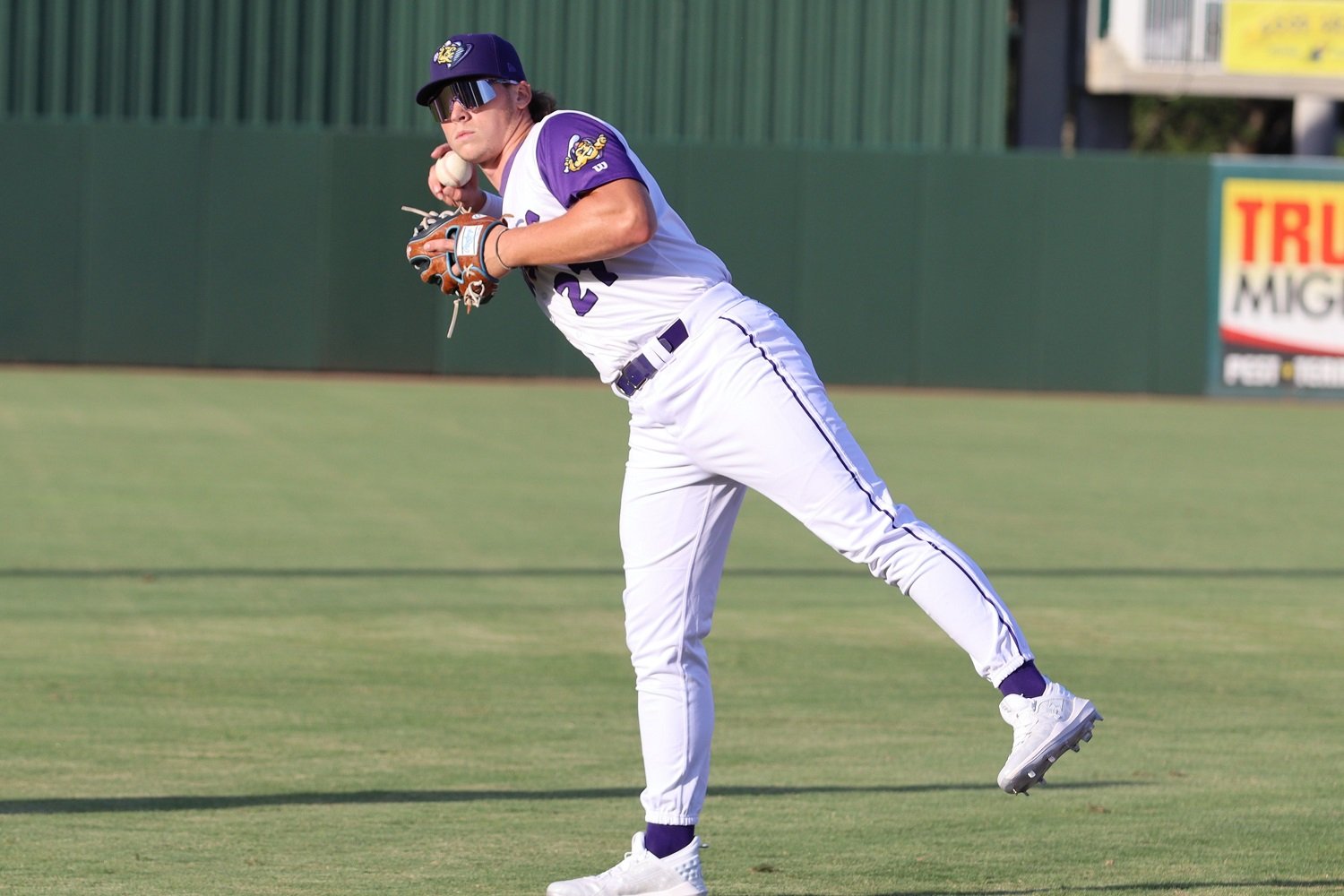 Minnesota’s current front office regime has focused on certain player types in the MLB Draft. These picks have included using mid-round picks on right-handed college pitchers and focusing on college bats with higher floors. Billy Amick fits this mold. The Twins took him with their second-round pick in 2024 from the University of Tennessee, and he made a strong impression during his professional debut. Amick put himself on the draft board map during his junior season, as he had a power explosion. In 65 games, he hit .306/.387/.639, with 14 doubles and 26 home runs. He had 53 strikeouts in 255 at-bats, but drew 29 walks—10 more than in any other college season. He played the majority of his defensive innings at third base, but he’s also seen time at first base and second base. Plenty of strong signs pointed to teams being interested in him as an early-round draft pick. Potential Hidden Upside Amick’s professional career began in the Florida State League. Over 18 games with Fort Myers, the 21-year-old slashed .222/.351/.413, with three doubles and three home runs. He showcased a well-rounded offensive profile, including nearly as many walks (12) as strikeouts. Even as a right-handed batter, he performed better against righties with a .853 OPS, nearly 350 points higher than against lefties. His sample size was small against southpaws (19 PA), so there is room for him to improve in 2025. Some of those numbers might be underwhelming, but they matter only insofar as they prove his skill set as a general concept. What truly stood out during his debut was his hard-hit rate. According to Statcast data, Amick’s 104 MPH exit velocity ranked in the 90th percentile, a remarkable feat for a player fresh out of college. He also posted a 70.1 Contact%, 18.0 In Zone Whiff%, 25.0 Chase%, and 55.0 Ground%. His bat-to-ball skills will be something to monitor next season, but there is room for optimism. Around 43% of Amick’s batted balls have been hit 95 mph or harder, close to 10% above average for A-ball. Scouts rave about his compact swing, which generates both line-drive power and the potential for 20-plus home runs annually. College Experience: A Fast-Track Asset Amick’s three years of collegiate experience positioned him to become a fast-moving prospect in the Twins' system. Unlike many younger draftees who require extended time in the minors to adjust to professional pitching, Amick has already demonstrated he can handle advanced competition. His maturity at the plate, combined with an excellent defensive foundation, makes it plausible for him to start next season at High-A, despite only 63 at-bats as a professional. Once Amick opens the season with the High-A Cedar Rapids Kernels, there is the potential for a midseason promotion to Double-A Wichita if he continues to hit as expected. While there’s no need to rush his development, the Twins might see Amick as a legitimate option to debut in the majors by early 2026. His college experience makes him a low-risk, high-reward prospect, capable of contributing sooner rather than later. The Road to Third Base Stardom Third base has been a revolving door for the Twins in recent years, with players like José Miranda and Royce Lewis providing mixed results. With no clear long-term solution at the hot corner, Amick has a real opportunity to solidify himself as the future of the position. His strong arm, soft hands, and solid lateral quickness make him a dependable defender, while his offensive tools point to an above-average regular. Amick’s rise mirrors those of other polished college hitters who have ascended prospect rankings in recent years. MLB Pipeline currently lists him outside baseball’s top-100 prospects but listed him as the 10th-best third base prospect near the season’s end. A strong 2025 campaign could move him up that list, with a chance to be a borderline top-100 prospect. Amick is the kind of player every organization covets, one with both a high floor and an enticing ceiling. With a blend of power, plate discipline, and defensive acumen, he has all the tools to be an impact player at the major-league level. Keep an eye on Amick as he progresses through the Twins' system. What are your initial impressions of Amick? Is he one of baseball’s top third-base prospects? Leave a comment and start the discussion.
 -
The Twins Are Left With 3 Questions to Answer as Winter Meetings End
Cody Christie posted an article in Twins
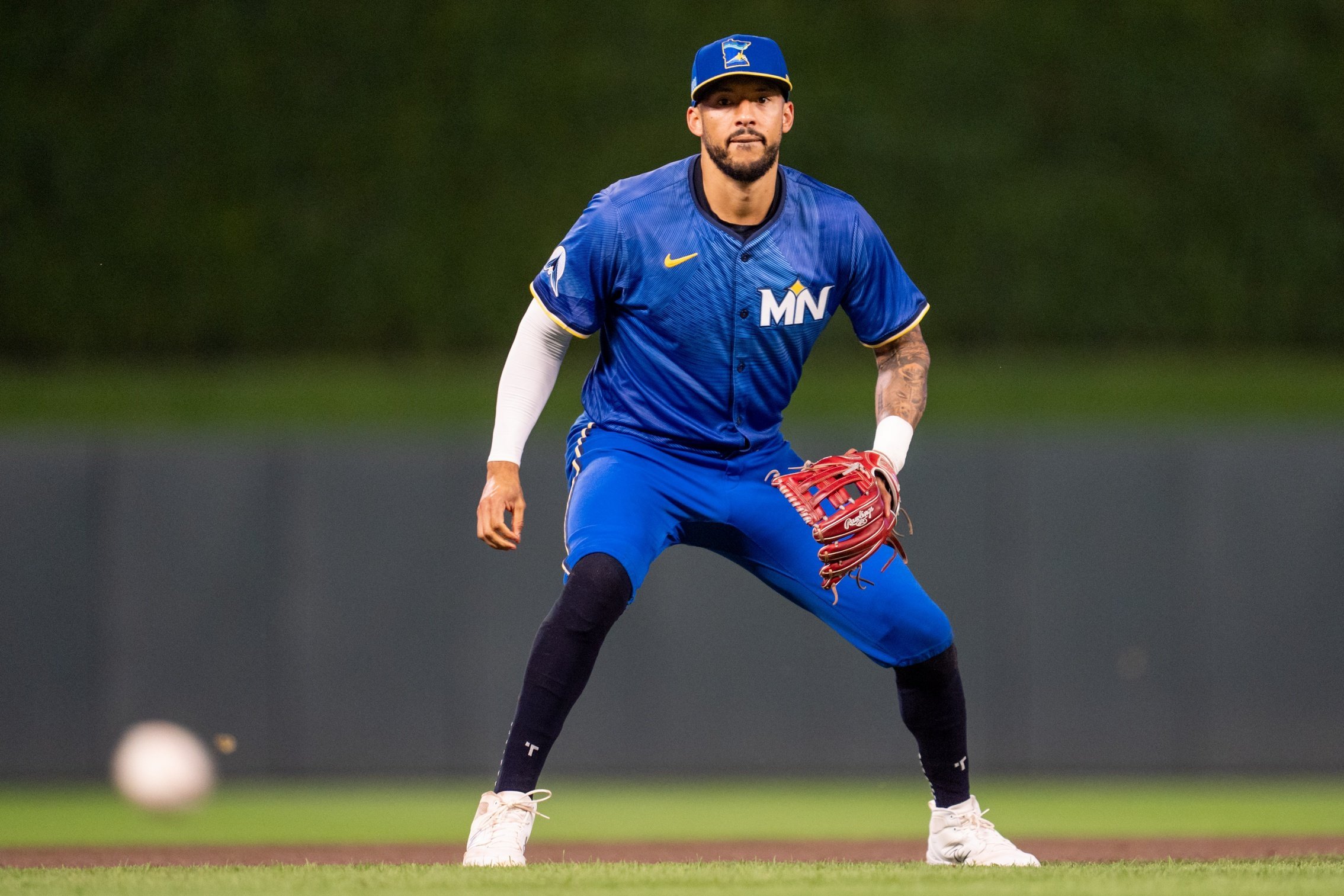 For multiple reasons, the Twins weren’t expected to be active during MLB’s Winter Meetings. The team is in a tight financial situation, so there is little room to add players in free agency. Also, the front office has tended to use a patient approach to trading and signing players, which has pros and cons. Minnesota has one of the highest floors among AL teams entering the offseason, with their roster projected as the league’s fourth-best. However, many fans are clamoring for change after the team’s disastrous collapse to finish the 2024 campaign. With that as a backdrop, here are three questions that the front office will need to answer in the coming months. Each answer will have long-term ramifications. 1. Will the Team Trade Carlos Correa? Rumors around the Twins taking calls on Correa were the most significant news out of the meetings. Correa has proven himself to be one of the team’s most valuable players when he has been healthy, but plantar fasciitis has limited him over the last two seasons. His $30+ million per-season salary is an albatross for an ownership group that dropped payroll last season and is expected to stay around $130 million for the whole roster next year. When the Twins signed Correa, the team’s payroll was rising every season, to the point where it should have been between $165 million and $180 million entering next year. There was room in that expected payroll for Correa, but that might not be the case anymore. Correa has a full no-trade clause, but the Twins might be able to convince him that the team is entering a soft rebuild, and a trade will put him in a better position to win now. It seems likely that the Twins would need to be overwhelmed by a return for Correa to make a deal come to fruition, though. 2. How Can the Front Office Cut Payroll? FanGraphs currently projects the Twins to have a payroll of around $142 million, with arbitration estimates added to the team’s guaranteed contracts. Reports this winter have the Twins' ownership group pushing for the payroll to be closer to $130 million. The most straightforward moves for the Twins are to trade Chris Paddack, Christian Vázquez, and Willi Castro. Those three players could save the Twins around $18 million, but the Twins would likely need to pay part of Vázquez’s salary based on what free-agent catchers have been getting this winter. The Twins can also make a more significant move to free up payroll space. Correa’s contract is the biggest on the team, and his trade situation is mentioned above. Another option is trading Pablo López because he doesn’t have a no-trade clause and is set to make over $21 million next season. The free-agent pitching market has been higher than expected this winter, which might force contending teams to get creative. López would have been a free agent this winter if the Twins hadn’t extended him, and he’d likely get a deal for seven or eight years and over $150 million. Instead, he is due only $21.75 million per season for the next three years. He will have excess value on the trade market, which the front office must consider. 3. How Can the Front Office Improve the Team Despite Payroll Limitations? Derek Falvey made it clear that there are a few ways the team can make improvements, even with the ownership’s payroll limitations. Health has been a significant focus for the Twins in recent years, and that continues to be the crucial question with the team’s three biggest hitters (Correa, Bryon Buxton, and Royce Lewis). Minnesota has also found ways to improve the team’s depth in recent years, so if there are injuries, capable players are on the roster to fill the void. Losing veteran players like Carlos Santana, Max Kepler, and Kyle Farmer are holes that must be filled this winter. The Twins have one of baseball’s strongest farm systems, so they may be able to fill these holes with internal options. Among Twins Daily’s top-20 prospects, 10 players finished at Double or Triple A last season. Many of these players have an opportunity to impact the big-league roster next season. Minnesota also has other young players who played last season, such as Brooks Lee, David Festa, Zebby Matthews, and Austin Martin. This group of players offers another layer of depth, even with questions about their performance from last year. Minnesota's front office is in a challenging spot. Do they trade their superstar player? Can they find wiggle room in the payroll? Is there enough internal depth to be competitive? The answers aren't straightforward, and it's shaping up to be a complex winter for the Twins. How will the Twins’ front office answer these questions? Leave a comment and start the discussion.
- 110 comments
-
- 2
-

-

-
- carlos correa
- pablo lopez
- (and 4 more)
-
MLB’s Winter Meetings came to a close Wednesday, and the Twins created more questions than answers during their time in Dallas. Here are three questions that remain as the next phase of the offseason begins. Image courtesy of Matt Blewett-Imagn Images MLB’s Winter Meetings came to a close Wednesday, and the Twins created more questions than answers during their time in Dallas. Here are three questions that remain as the next phase of the offseason begins. For multiple reasons, the Twins weren’t expected to be active during MLB’s Winter Meetings. The team is in a tight financial situation, so there is little room to add players in free agency. Also, the front office has tended to use a patient approach to trading and signing players, which has pros and cons. Minnesota has one of the highest floors among AL teams entering the offseason, with their roster projected as the league’s fourth-best. However, many fans are clamoring for change after the team’s disastrous collapse to finish the 2024 campaign. With that as a backdrop, here are three questions that the front office will need to answer in the coming months. Each answer will have long-term ramifications. 1. Will the Team Trade Carlos Correa? Rumors around the Twins taking calls on Correa were the most significant news out of the meetings. Correa has proven himself to be one of the team’s most valuable players when he has been healthy, but plantar fasciitis has limited him over the last two seasons. His $30+ million per-season salary is an albatross for an ownership group that dropped payroll last season and is expected to stay around $130 million for the whole roster next year. When the Twins signed Correa, the team’s payroll was rising every season, to the point where it should have been between $165 million and $180 million entering next year. There was room in that expected payroll for Correa, but that might not be the case anymore. Correa has a full no-trade clause, but the Twins might be able to convince him that the team is entering a soft rebuild, and a trade will put him in a better position to win now. It seems likely that the Twins would need to be overwhelmed by a return for Correa to make a deal come to fruition, though. 2. How Can the Front Office Cut Payroll? FanGraphs currently projects the Twins to have a payroll of around $142 million, with arbitration estimates added to the team’s guaranteed contracts. Reports this winter have the Twins' ownership group pushing for the payroll to be closer to $130 million. The most straightforward moves for the Twins are to trade Chris Paddack, Christian Vázquez, and Willi Castro. Those three players could save the Twins around $18 million, but the Twins would likely need to pay part of Vázquez’s salary based on what free-agent catchers have been getting this winter. The Twins can also make a more significant move to free up payroll space. Correa’s contract is the biggest on the team, and his trade situation is mentioned above. Another option is trading Pablo López because he doesn’t have a no-trade clause and is set to make over $21 million next season. The free-agent pitching market has been higher than expected this winter, which might force contending teams to get creative. López would have been a free agent this winter if the Twins hadn’t extended him, and he’d likely get a deal for seven or eight years and over $150 million. Instead, he is due only $21.75 million per season for the next three years. He will have excess value on the trade market, which the front office must consider. 3. How Can the Front Office Improve the Team Despite Payroll Limitations? Derek Falvey made it clear that there are a few ways the team can make improvements, even with the ownership’s payroll limitations. Health has been a significant focus for the Twins in recent years, and that continues to be the crucial question with the team’s three biggest hitters (Correa, Bryon Buxton, and Royce Lewis). Minnesota has also found ways to improve the team’s depth in recent years, so if there are injuries, capable players are on the roster to fill the void. Losing veteran players like Carlos Santana, Max Kepler, and Kyle Farmer are holes that must be filled this winter. The Twins have one of baseball’s strongest farm systems, so they may be able to fill these holes with internal options. Among Twins Daily’s top-20 prospects, 10 players finished at Double or Triple A last season. Many of these players have an opportunity to impact the big-league roster next season. Minnesota also has other young players who played last season, such as Brooks Lee, David Festa, Zebby Matthews, and Austin Martin. This group of players offers another layer of depth, even with questions about their performance from last year. Minnesota's front office is in a challenging spot. Do they trade their superstar player? Can they find wiggle room in the payroll? Is there enough internal depth to be competitive? The answers aren't straightforward, and it's shaping up to be a complex winter for the Twins. How will the Twins’ front office answer these questions? Leave a comment and start the discussion. View full article
-
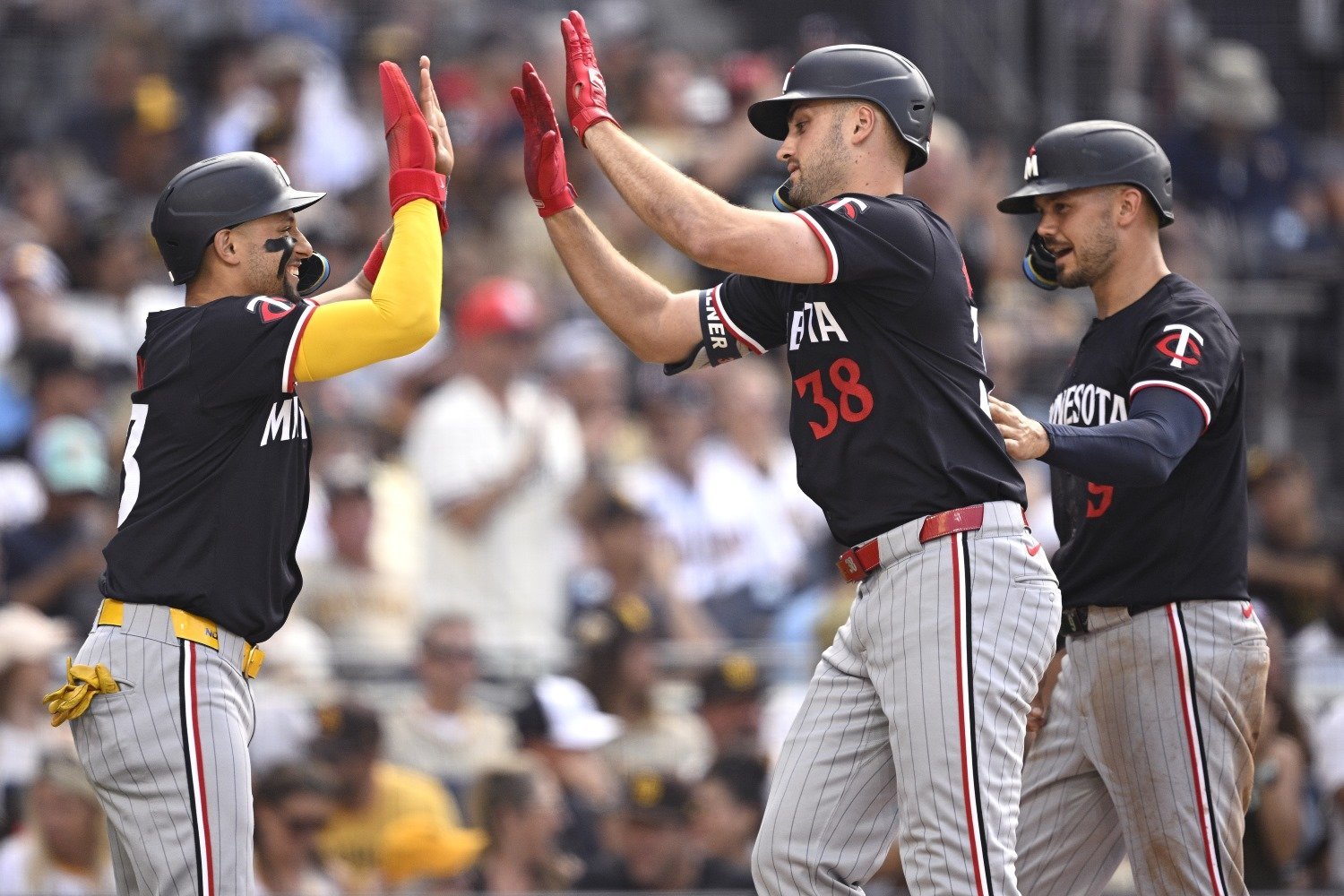 The Twins roster disappointed in 2024, but gave opportunities for young players to get their feet wet at the big-league level. Many of the team’s top-ranked prospects played in the high minors last season, so there’s a chance for even more young talent to impact the team next year. The future is full of promise, but there is still development that must happen from key players. Below, you will see Minnesota’s projected lineup and each player’s age during the 2028 campaign. Catcher: Ryan Jeffers (31) Jeffers is coming off a season wherein he played a career-high 122 games, while hitting .226/.300/.432 with a 103 OPS+. Fans know his totals don’t tell the story of his full season. He destroyed the ball in the season’s first two months with a .892 OPS and 26 extra-base hits in his first 51 games. His OPS dipped to .687 in June and July, however, before he reemerged with a .926 OPS in August. Then he ended the year with his worst month (.463 OPS). Jeffers needs to find more consistency at the plate so the team can invest in him long-term. He is only under team control for the next two seasons, so the Twins must extend him before 2028. Other catching options in the organization include Jair Camargo, Ricardo Olivar, and others in the lower minors. First Base: Luke Keaschall (25) Keaschall emerged as one of the organization’s top prospects in 2024, despite playing through an elbow injury that led to Tommy John surgery. In 102 games, he hit .303/.420/.483, with 21 doubles and 15 home runs. Defensively, the Twins had to manage where he played on the field because of his elbow issues. This injury might have been a blessing in disguise, as he was exposed to some positions he hadn’t played regularly, including first base. The Twins value defensive flexibility, so Keaschall won’t be locked into one position. However, first base could be his long-term spot with the players in the team’s long-term plans. The Twins expect Keaschall to be ready for spring training, and he should debut at some point in 2025. Second Base: Royce Lewis (29) The Twins started to get Lewis some reps at second base last season and he is expected to get more time at the position in the coming years. Lewis started the year with a bang with a home run on Opening Day, but he left that game in the third inning with a right quad injury. When he returned, he struggled for the first time in his career, including a .620 OPS in the second half. Minnesota still believes in Lewis as part of the team’s long-term core, but injuries have clearly impeded his development at the big-league level. Lewis will be in his final year of team control in 2028, so it will be interesting to see how he continues to develop and how much he will earn through arbitration. Third Base: Brooks Lee (27) Lee was ranked as one of the team’s top prospects before making his big-league debut last season. He dealt with multiple injuries, including shoulder soreness that led to an IL stint in August due to bicep tendonitis. He was known for his strong offensive approach in the minors, including an .841 OPS in nearly 200 games. Those offensive numbers didn’t follow him to the big-league level, though, as he hit .221/.265/.320 with 10 extra-base hits in 50 games. Some of his struggles could have been tied to his injury issues, but his track record in the minors points to him being an above-average hitter at the big-league level. Lee seems like a prime candidate for the team’s long-term solution at third base, with solid instincts, good hands, and a strong arm. Shortstop: Carlos Correa (33) The 2028 season will be Correa’s final guaranteed year on his contract, with the 2029-32 seasons being team options. Correa’s ongoing issues with plantar fasciitis could make it tough to stick at shortstop when he is 33 years old. Minnesota could switch Correa to third base and Lee to shortstop by 2028 if Correa has lost a step. In 2024, Correa showed he could continue to handle shortstop while providing tremendous offensive value. He hit .308/.377/.520, with 31 extra-base hits in 75 games, and he was selected to his first All-Star Game with the Twins. A full season of Correa playing at that level would put him in the AL MVP conversation. This winter, there has been some conversation about the Twins listening to trade offers for Correa, but the Twins value what he brings to the team, and he has a full no-trade clause, making it likely that he will be around in 2028. Left Field: Emmanuel Rodriguez (25) Rodriguez finished the 2024 season at Triple A, despite being limited to 37 games at Double A because of a thumb injury that led to offseason surgery. He continues to be electric when he is on the field, with an extremely patient approach at the plate and strong defensive ability at multiple outfield positions. In 47 games, he hit .280/.459/.567 with 25 extra-base hits and a 62-to-51 strikeout-to-walk ratio. Rodriguez has played a lot of center field during his professional career, so there is a chance that he will stick at that position over some of the organization’s other options. He will begin the 2025 season at Triple A, and there is a strong chance the Twins will need him early in the season. Center Field: Walker Jenkins (23) Jenkins is one of the top prospects in Twins history, which puts him in the same territory as Joe Mauer and Byron Buxton. Scouts rave about his advanced hit tool, left-handed power, and all-around athleticism. In 2024, he hit .282/.394/.439, with 32 extra-base hits in 82 games while making it from Low A to Double A. The only thing to slow him down during the 2024 campaign was a leg injury suffered on defense in his first game of the season. He and Rodriguez both have a chance to stick in center field, but Jenkins is younger, so he might have a slight advantage in 2028. Realistically, the Twins will be satisfied with whatever position he is playing, but his career should start in center. There is a chance he debuts during the 2025 campaign, while only being 20 years old. Right Field: Matt Wallner (30) Wallner’s 2024 season started disastrously, as he went 2-for-25 with 17 strikeouts in his first 33 plate appearances. The Twins sent him to Triple A to reset his swing, and he returned to the big leagues with renewed energy. After doing so, he hit .282/.386/.559 with 16 doubles and 12 home runs in 62 games. Max Kepler’s departure in right field gives Wallner a defensive home where his elite throwing arm can be a weapon. There will be some streakiness with a power hitter like Wallner, but he has shown the ability to refine his swing. Wallner will go through tough stretches, but his elite power-hitting ability can make him a strong complementary player for the team over the next half-decade. Designated Hitter: Byron Buxton (34) Like Correa, Buxton will enter the 2028 season as the last with guaranteed money on his extension. He is coming off a season in which he played over 100 games for only the second time in his big-league career. He also returned to center field for 94 games, after not playing an inning in the outfield in 2023. Offensively, he hit .279/.335/.524 with a 137 OPS+ that ranked among the league’s best center fielders. Buxton proved some of his doubters wrong last season by providing the Twins with excess value, even with some time missed due to injury. As Buxton starts to lose a step, Minnesota will have young options to fill the outfield. He could split time in a corner outfield spot. He’s also entering an offseason healthy for the first time in six years, which can help his performance next season. A lot can happen between now and 2028, but the Twins have the right combination of star players, complimentary veterans, and emerging prospects. Who do you think fits into the team’s 2028 lineup? Leave a comment and start the discussion. PREVIOUS YEARS' PREDICTIONS — 2025 Lineup — 2026 Lineup — 2027 Lineup
- 14 comments
-
- 3
-
-
- royce lewis
- walker jenkins
- (and 5 more)
-
The Twins are in an intriguing opportunity space this offseason, with a veteran core and young talent emerging in the high minors. What could the team’s lineup look like in 2028? Image courtesy of © Orlando Ramirez-USA Today Sports The Twins are in an intriguing opportunity space this offseason, with a veteran core and young talent emerging in the high minors. What could the team’s lineup look like in 2028? The Twins roster disappointed in 2024, but gave opportunities for young players to get their feet wet at the big-league level. Many of the team’s top-ranked prospects played in the high minors last season, so there’s a chance for even more young talent to impact the team next year. The future is full of promise, but there is still development that must happen from key players. Below, you will see Minnesota’s projected lineup and each player’s age during the 2028 campaign. Catcher: Ryan Jeffers (31) Jeffers is coming off a season wherein he played a career-high 122 games, while hitting .226/.300/.432 with a 103 OPS+. Fans know his totals don’t tell the story of his full season. He destroyed the ball in the season’s first two months with a .892 OPS and 26 extra-base hits in his first 51 games. His OPS dipped to .687 in June and July, however, before he reemerged with a .926 OPS in August. Then he ended the year with his worst month (.463 OPS). Jeffers needs to find more consistency at the plate so the team can invest in him long-term. He is only under team control for the next two seasons, so the Twins must extend him before 2028. Other catching options in the organization include Jair Camargo, Ricardo Olivar, and others in the lower minors. First Base: Luke Keaschall (25) Keaschall emerged as one of the organization’s top prospects in 2024, despite playing through an elbow injury that led to Tommy John surgery. In 102 games, he hit .303/.420/.483, with 21 doubles and 15 home runs. Defensively, the Twins had to manage where he played on the field because of his elbow issues. This injury might have been a blessing in disguise, as he was exposed to some positions he hadn’t played regularly, including first base. The Twins value defensive flexibility, so Keaschall won’t be locked into one position. However, first base could be his long-term spot with the players in the team’s long-term plans. The Twins expect Keaschall to be ready for spring training, and he should debut at some point in 2025. Second Base: Royce Lewis (29) The Twins started to get Lewis some reps at second base last season and he is expected to get more time at the position in the coming years. Lewis started the year with a bang with a home run on Opening Day, but he left that game in the third inning with a right quad injury. When he returned, he struggled for the first time in his career, including a .620 OPS in the second half. Minnesota still believes in Lewis as part of the team’s long-term core, but injuries have clearly impeded his development at the big-league level. Lewis will be in his final year of team control in 2028, so it will be interesting to see how he continues to develop and how much he will earn through arbitration. Third Base: Brooks Lee (27) Lee was ranked as one of the team’s top prospects before making his big-league debut last season. He dealt with multiple injuries, including shoulder soreness that led to an IL stint in August due to bicep tendonitis. He was known for his strong offensive approach in the minors, including an .841 OPS in nearly 200 games. Those offensive numbers didn’t follow him to the big-league level, though, as he hit .221/.265/.320 with 10 extra-base hits in 50 games. Some of his struggles could have been tied to his injury issues, but his track record in the minors points to him being an above-average hitter at the big-league level. Lee seems like a prime candidate for the team’s long-term solution at third base, with solid instincts, good hands, and a strong arm. Shortstop: Carlos Correa (33) The 2028 season will be Correa’s final guaranteed year on his contract, with the 2029-32 seasons being team options. Correa’s ongoing issues with plantar fasciitis could make it tough to stick at shortstop when he is 33 years old. Minnesota could switch Correa to third base and Lee to shortstop by 2028 if Correa has lost a step. In 2024, Correa showed he could continue to handle shortstop while providing tremendous offensive value. He hit .308/.377/.520, with 31 extra-base hits in 75 games, and he was selected to his first All-Star Game with the Twins. A full season of Correa playing at that level would put him in the AL MVP conversation. This winter, there has been some conversation about the Twins listening to trade offers for Correa, but the Twins value what he brings to the team, and he has a full no-trade clause, making it likely that he will be around in 2028. Left Field: Emmanuel Rodriguez (25) Rodriguez finished the 2024 season at Triple A, despite being limited to 37 games at Double A because of a thumb injury that led to offseason surgery. He continues to be electric when he is on the field, with an extremely patient approach at the plate and strong defensive ability at multiple outfield positions. In 47 games, he hit .280/.459/.567 with 25 extra-base hits and a 62-to-51 strikeout-to-walk ratio. Rodriguez has played a lot of center field during his professional career, so there is a chance that he will stick at that position over some of the organization’s other options. He will begin the 2025 season at Triple A, and there is a strong chance the Twins will need him early in the season. Center Field: Walker Jenkins (23) Jenkins is one of the top prospects in Twins history, which puts him in the same territory as Joe Mauer and Byron Buxton. Scouts rave about his advanced hit tool, left-handed power, and all-around athleticism. In 2024, he hit .282/.394/.439, with 32 extra-base hits in 82 games while making it from Low A to Double A. The only thing to slow him down during the 2024 campaign was a leg injury suffered on defense in his first game of the season. He and Rodriguez both have a chance to stick in center field, but Jenkins is younger, so he might have a slight advantage in 2028. Realistically, the Twins will be satisfied with whatever position he is playing, but his career should start in center. There is a chance he debuts during the 2025 campaign, while only being 20 years old. Right Field: Matt Wallner (30) Wallner’s 2024 season started disastrously, as he went 2-for-25 with 17 strikeouts in his first 33 plate appearances. The Twins sent him to Triple A to reset his swing, and he returned to the big leagues with renewed energy. After doing so, he hit .282/.386/.559 with 16 doubles and 12 home runs in 62 games. Max Kepler’s departure in right field gives Wallner a defensive home where his elite throwing arm can be a weapon. There will be some streakiness with a power hitter like Wallner, but he has shown the ability to refine his swing. Wallner will go through tough stretches, but his elite power-hitting ability can make him a strong complementary player for the team over the next half-decade. Designated Hitter: Byron Buxton (34) Like Correa, Buxton will enter the 2028 season as the last with guaranteed money on his extension. He is coming off a season in which he played over 100 games for only the second time in his big-league career. He also returned to center field for 94 games, after not playing an inning in the outfield in 2023. Offensively, he hit .279/.335/.524 with a 137 OPS+ that ranked among the league’s best center fielders. Buxton proved some of his doubters wrong last season by providing the Twins with excess value, even with some time missed due to injury. As Buxton starts to lose a step, Minnesota will have young options to fill the outfield. He could split time in a corner outfield spot. He’s also entering an offseason healthy for the first time in six years, which can help his performance next season. A lot can happen between now and 2028, but the Twins have the right combination of star players, complimentary veterans, and emerging prospects. Who do you think fits into the team’s 2028 lineup? Leave a comment and start the discussion. PREVIOUS YEARS' PREDICTIONS — 2025 Lineup — 2026 Lineup — 2027 Lineup View full article
-
Since his debut, Bailey Ober has emerged as a starting rotation mainstay for the Twins. He’s starting to get more expensive in the arbitration process. Is now the time to lock him up for the long term? Image courtesy of David Richard-USA TODAY Sports Since his debut, Bailey Ober has emerged as a starting rotation mainstay for the Twins. He’s starting to get more expensive in the arbitration process. Is now the time to lock him up for the long term? The Minnesota Twins face a crucial offseason, filled with decisions about shaping the future of their rotation. Bailey Ober is one name that stands out as a long-term investment candidate. With three years of team control remaining, now is the perfect time for the Twins to lock up Ober to a contract extension, ensuring stability in their starting rotation for years to come. Here’s why extending Ober makes sense from both the team’s perspective and the player's. Ober’s Track Record of Success Ober has quietly developed into one of the most dependable arms in the Twins’ rotation. Since his MLB debut in 2021, Ober has consistently demonstrated a rare combination of control and efficiency. Across 88 big-league starts, he has posted a 3.76 ERA (112 ERA+) with a 1.07 WHIP and 25.6% strikeout rate. In 2024, Ober took a significant leap forward, proving he’s more than just a mid-rotation starter. Over 178 2/3 innings, he posted a 3.98 ERA, 1.00 WHIP, and career-high 191 strikeouts. His increased reliance on a devastating changeup paired with his deceptive fastball has helped him keep hitters off-balance, leading to one of the lowest hard-hit rates among American League starters (83rd percentile). His xSLG on the changeup dropped from .346 in 2023 to .263 last season. It was a huge step forward for Ober’s development. The Case for an Extension With three years of arbitration eligibility remaining, the Twins can capitalize on Ober’s current team control to craft a team-friendly deal. Extending Ober not only buys out his arbitration years, but potentially secures his services into his early free-agent seasons. For context, look at comparable pitchers who signed extensions with similar service time. Logan Webb (San Francisco Giants): Entering 2023, Webb agreed to a five-year, $90-million extension with the Giants. This deal covers his remaining arbitration years and extends into his free-agent eligibility, ensuring his presence in the Giants' rotation through at least the 2028 season. Cristian Javier (Houston Astros): On Feb. 10, 2023, the Astros signed Javier to a five-year, $64-million extension. This contract encompasses his arbitration years and includes additional seasons, reflecting the team's commitment to him as a key rotation member. Unfortunately, he underwent Tommy John surgery last season. Mitch Keller (Pittsburgh Pirates): Keller and the Pirates agreed to a five-year, $77-million extension on Feb. 22, 2024. He was coming off an All-Star season, but was two years younger than Ober at the time of the deal. This extension covers his arbitration period and secures his role with the team into his early free-agent years. For Ober, a deal in the range of five years and $65-$85 million, with a possible team option for a sixth year, could provide security for both sides. He will likely earn more than $4 million this season and $18-21 million over the two thereafter. On the high end, he will already earn $25 million in arbitration. From the team’s perspective, it’s a gamble worth taking. Pitchers are inherently risky investments, but Ober’s increased workload and performance last season might make him worth the risk. The Long-Term Rotation Outlook Extending Ober also aligns with the Twins' long-term rotation strategy. The team has promising young arms like Simeon Woods Richardson, David Festa, and Zebby Matthews on the horizon, but prospects come with uncertainty. Ober provides a proven presence in the rotation, complementing Pablo López and Joe Ryan to form a reliable trio. By securing Ober now, the Twins would avoid the potential escalation of arbitration costs and the risk of losing him to free agency at a time when reliable starters are fetching exorbitant prices. Additionally, locking up Ober allows the front office to focus on other areas of need, knowing that a key piece of the rotation is already in place. A Win-Win Scenario For Ober, the security of a long-term deal offers peace of mind. As a late bloomer who didn’t receive a substantial signing bonus when drafted in the 12th round, a guaranteed multi-million-dollar contract provides life-changing financial stability. For the Twins, it’s a move that reflects foresight and commitment to maintaining a competitive window. In an era where pitching is the backbone of any postseason contender, extending Ober is a step toward ensuring the Twins keep their winning window open as long as possible. Ober has proven he belongs in the Twins' future plans. With his unique skill set, consistent production, and the ability to provide innings at a high level, the time is right to reward him with a contract extension. Doing so would send a clear message: the Minnesota Twins are serious about building a sustainable winner. Should the Twins attempt to extend Ober? How much would the team offer? Leave a COMMENT and start the discussion. View full article
-
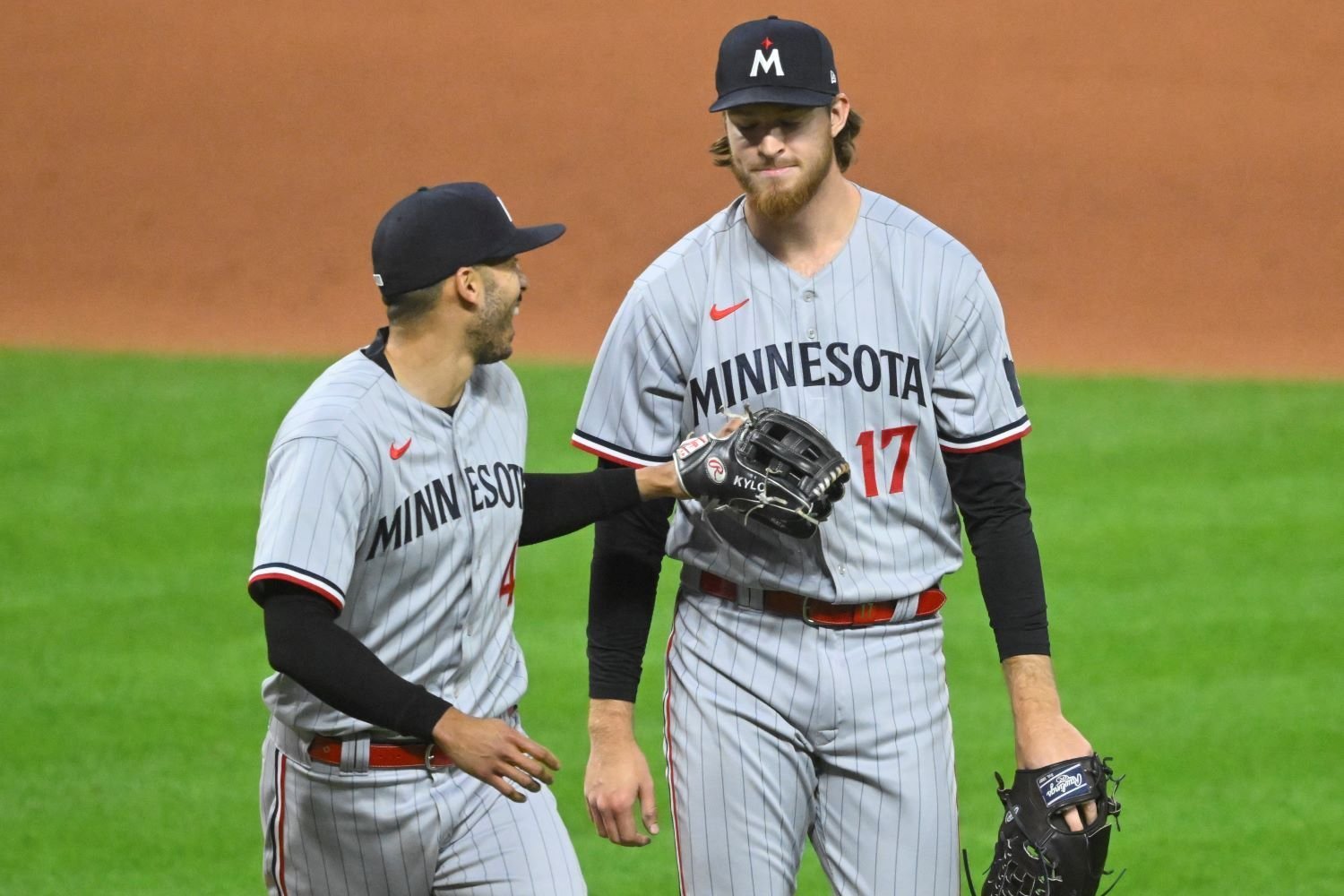 The Minnesota Twins face a crucial offseason, filled with decisions about shaping the future of their rotation. Bailey Ober is one name that stands out as a long-term investment candidate. With three years of team control remaining, now is the perfect time for the Twins to lock up Ober to a contract extension, ensuring stability in their starting rotation for years to come. Here’s why extending Ober makes sense from both the team’s perspective and the player's. Ober’s Track Record of Success Ober has quietly developed into one of the most dependable arms in the Twins’ rotation. Since his MLB debut in 2021, Ober has consistently demonstrated a rare combination of control and efficiency. Across 88 big-league starts, he has posted a 3.76 ERA (112 ERA+) with a 1.07 WHIP and 25.6% strikeout rate. In 2024, Ober took a significant leap forward, proving he’s more than just a mid-rotation starter. Over 178 2/3 innings, he posted a 3.98 ERA, 1.00 WHIP, and career-high 191 strikeouts. His increased reliance on a devastating changeup paired with his deceptive fastball has helped him keep hitters off-balance, leading to one of the lowest hard-hit rates among American League starters (83rd percentile). His xSLG on the changeup dropped from .346 in 2023 to .263 last season. It was a huge step forward for Ober’s development. The Case for an Extension With three years of arbitration eligibility remaining, the Twins can capitalize on Ober’s current team control to craft a team-friendly deal. Extending Ober not only buys out his arbitration years, but potentially secures his services into his early free-agent seasons. For context, look at comparable pitchers who signed extensions with similar service time. Logan Webb (San Francisco Giants): Entering 2023, Webb agreed to a five-year, $90-million extension with the Giants. This deal covers his remaining arbitration years and extends into his free-agent eligibility, ensuring his presence in the Giants' rotation through at least the 2028 season. Cristian Javier (Houston Astros): On Feb. 10, 2023, the Astros signed Javier to a five-year, $64-million extension. This contract encompasses his arbitration years and includes additional seasons, reflecting the team's commitment to him as a key rotation member. Unfortunately, he underwent Tommy John surgery last season. Mitch Keller (Pittsburgh Pirates): Keller and the Pirates agreed to a five-year, $77-million extension on Feb. 22, 2024. He was coming off an All-Star season, but was two years younger than Ober at the time of the deal. This extension covers his arbitration period and secures his role with the team into his early free-agent years. For Ober, a deal in the range of five years and $65-$85 million, with a possible team option for a sixth year, could provide security for both sides. He will likely earn more than $4 million this season and $18-21 million over the two thereafter. On the high end, he will already earn $25 million in arbitration. From the team’s perspective, it’s a gamble worth taking. Pitchers are inherently risky investments, but Ober’s increased workload and performance last season might make him worth the risk. The Long-Term Rotation Outlook Extending Ober also aligns with the Twins' long-term rotation strategy. The team has promising young arms like Simeon Woods Richardson, David Festa, and Zebby Matthews on the horizon, but prospects come with uncertainty. Ober provides a proven presence in the rotation, complementing Pablo López and Joe Ryan to form a reliable trio. By securing Ober now, the Twins would avoid the potential escalation of arbitration costs and the risk of losing him to free agency at a time when reliable starters are fetching exorbitant prices. Additionally, locking up Ober allows the front office to focus on other areas of need, knowing that a key piece of the rotation is already in place. A Win-Win Scenario For Ober, the security of a long-term deal offers peace of mind. As a late bloomer who didn’t receive a substantial signing bonus when drafted in the 12th round, a guaranteed multi-million-dollar contract provides life-changing financial stability. For the Twins, it’s a move that reflects foresight and commitment to maintaining a competitive window. In an era where pitching is the backbone of any postseason contender, extending Ober is a step toward ensuring the Twins keep their winning window open as long as possible. Ober has proven he belongs in the Twins' future plans. With his unique skill set, consistent production, and the ability to provide innings at a high level, the time is right to reward him with a contract extension. Doing so would send a clear message: the Minnesota Twins are serious about building a sustainable winner. Should the Twins attempt to extend Ober? How much would the team offer? Leave a COMMENT and start the discussion.
 -
One Free Agent Outfielder Might Be the Perfect Fit for the Twins Roster
Cody Christie posted an article in Twins
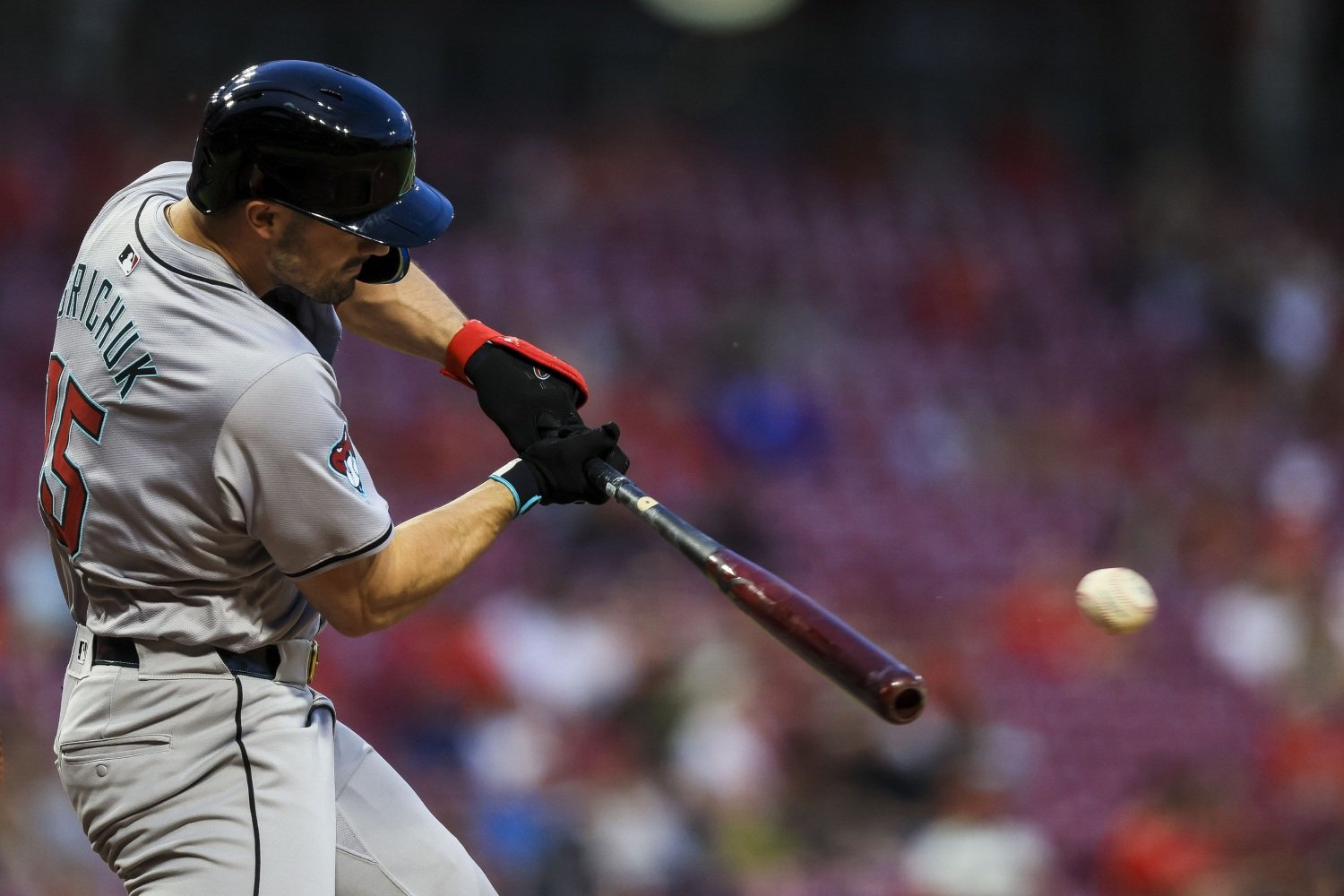 As the Minnesota Twins retool for the 2025 season, adding a player like Randal Grichuk could be a savvy move to balance their lineup. The Twins’ corner outfield situation features two promising left-handed hitters, Trevor Larnach and Matt Wallner. While both have shown flashes of their potential, the team lacks a reliable right-handed complement, especially after Kyle Farmer and Carlos Santana departed via free agency. Grichuk, with his proven ability to mash left-handed pitching, could fill that void perfectly. Grichuk’s Success Against Southpaws In 2024, Grichuk was one of the league’s most effective hitters against left-handed pitching. Spending the year with the Arizona Diamondbacks, he posted a robust .914 OPS in 184 plate appearances versus southpaws. In 163 at-bats, he hit 21 extra-base hits and posted a 28-to-16 strikeout-to-walk ratio. His OPS versus righties was still over .800, but Arizona limited him to fewer than 100 such plate appearances. His addition could be a game-changer for a Twins team that often struggled against left-handers last season. Minnesota posted a 107 wRC+ against lefties, which ranked 11th in MLB. However, healthier seasons from Carlos Correa and Royce Lewis could have helped that number improve. Grichuk’s power to all fields would make him an ideal fit in the middle of the Twins’ lineup against lefty starters. Roster Fit with Larnach and Wallner Larnach and Wallner are expected to handle most of the corner outfield duties in 2025, but their splits suggest the need for a complementary bat. Larnach, while showing improved plate discipline, still struggles against lefties, managing just a .579 OPS against them in 2024. That’s a drop of over 200 points compared to his OPS versus righties. Similarly, Wallner provided inconsistent results against left-handed pitching. He had a .953 OPS against righties and a .611 OPS versus lefties. Adding Grichuk would allow manager Rocco Baldelli to consistently seize a platoon advantage, creating a well-rounded outfield unit. Filling a Right-Handed Power Void The losses of Farmer and Santana further depleted the Twins’ already-thin group of right-handed hitters. Farmer had a .751 OPS versus lefties, while Santana destroyed southpaws with a .934 OPS. With Correa and Lewis coming off seasons impacted by injury, the Twins can’t afford to rely solely on them to anchor the lineup from the right side. Byron Buxton played in over 100 games for only the second time in his career. However, there are questions about whether or not he can continue that trend moving forward. Grichuk’s ability to provide consistent power makes him an appealing option. Defensive Flexibility Grichuk’s defensive versatility is another plus. Though primarily a corner outfielder, he’s previously played center field, offering a backup option at all three outfield spots. Last season, he played nearly 300 innings in right field and another 90 innings in left field. His last action in center field came with the Rockies and Angels in 2023. Even if Grichuk doesn’t see time in center, his bat is more than enough to carry his offensive profile when giving Larnach or Wallner a day off. Grichuk’s profile suggests he won’t require a long-term commitment or a high salary, making him an attractive option for a team facing payroll constraints. He turned down a $2 million mutual option at the offseason’s start. A short-term deal would allow the Twins to maintain flexibility while addressing a pressing need. There has been talk of the Twins adding a right-handed bench bat for multiple seasons, but nothing has ever come to fruition—nothing, at least, as robust as Grichuk would be. Adding Grichuk could be one of the offseason’s most underrated moves for the Twins. His ability to crush left-handed pitching, complement Larnach and Wallner, and provide veteran depth makes him a near-perfect fit for Minnesota’s 2025 roster. With the AL Central up for grabs, acquiring a proven hitter like Grichuk might be the boost the Twins need to return to playoff contention. Should the Twins target Grichuk? What other right-handed hitters would be good fits for the roster? Leave a COMMENT and start the discussion.
- 25 comments
-
- 4
-
-
- randal grichuk
- trevor larnach
- (and 1 more)
-
The Minnesota Twins' bench is light on right-handed hitters for the 2025 season. Can one platoon outfielder fill the void left by departing free agents? Image courtesy of © Katie Stratman-Imagn Images The Minnesota Twins' bench is light on right-handed hitters for the 2025 season. Can one platoon outfielder fill the void left by departing free agents? As the Minnesota Twins retool for the 2025 season, adding a player like Randal Grichuk could be a savvy move to balance their lineup. The Twins’ corner outfield situation features two promising left-handed hitters, Trevor Larnach and Matt Wallner. While both have shown flashes of their potential, the team lacks a reliable right-handed complement, especially after Kyle Farmer and Carlos Santana departed via free agency. Grichuk, with his proven ability to mash left-handed pitching, could fill that void perfectly. Grichuk’s Success Against Southpaws In 2024, Grichuk was one of the league’s most effective hitters against left-handed pitching. Spending the year with the Arizona Diamondbacks, he posted a robust .914 OPS in 184 plate appearances versus southpaws. In 163 at-bats, he hit 21 extra-base hits and posted a 28-to-16 strikeout-to-walk ratio. His OPS versus righties was still over .800, but Arizona limited him to fewer than 100 such plate appearances. His addition could be a game-changer for a Twins team that often struggled against left-handers last season. Minnesota posted a 107 wRC+ against lefties, which ranked 11th in MLB. However, healthier seasons from Carlos Correa and Royce Lewis could have helped that number improve. Grichuk’s power to all fields would make him an ideal fit in the middle of the Twins’ lineup against lefty starters. Roster Fit with Larnach and Wallner Larnach and Wallner are expected to handle most of the corner outfield duties in 2025, but their splits suggest the need for a complementary bat. Larnach, while showing improved plate discipline, still struggles against lefties, managing just a .579 OPS against them in 2024. That’s a drop of over 200 points compared to his OPS versus righties. Similarly, Wallner provided inconsistent results against left-handed pitching. He had a .953 OPS against righties and a .611 OPS versus lefties. Adding Grichuk would allow manager Rocco Baldelli to consistently seize a platoon advantage, creating a well-rounded outfield unit. Filling a Right-Handed Power Void The losses of Farmer and Santana further depleted the Twins’ already-thin group of right-handed hitters. Farmer had a .751 OPS versus lefties, while Santana destroyed southpaws with a .934 OPS. With Correa and Lewis coming off seasons impacted by injury, the Twins can’t afford to rely solely on them to anchor the lineup from the right side. Byron Buxton played in over 100 games for only the second time in his career. However, there are questions about whether or not he can continue that trend moving forward. Grichuk’s ability to provide consistent power makes him an appealing option. Defensive Flexibility Grichuk’s defensive versatility is another plus. Though primarily a corner outfielder, he’s previously played center field, offering a backup option at all three outfield spots. Last season, he played nearly 300 innings in right field and another 90 innings in left field. His last action in center field came with the Rockies and Angels in 2023. Even if Grichuk doesn’t see time in center, his bat is more than enough to carry his offensive profile when giving Larnach or Wallner a day off. Grichuk’s profile suggests he won’t require a long-term commitment or a high salary, making him an attractive option for a team facing payroll constraints. He turned down a $2 million mutual option at the offseason’s start. A short-term deal would allow the Twins to maintain flexibility while addressing a pressing need. There has been talk of the Twins adding a right-handed bench bat for multiple seasons, but nothing has ever come to fruition—nothing, at least, as robust as Grichuk would be. Adding Grichuk could be one of the offseason’s most underrated moves for the Twins. His ability to crush left-handed pitching, complement Larnach and Wallner, and provide veteran depth makes him a near-perfect fit for Minnesota’s 2025 roster. With the AL Central up for grabs, acquiring a proven hitter like Grichuk might be the boost the Twins need to return to playoff contention. Should the Twins target Grichuk? What other right-handed hitters would be good fits for the roster? Leave a COMMENT and start the discussion. View full article
-
MLB’s Winter Meetings start this week, and the Twins have multiple questions to approach the crackling hot stove. The biggest question might be whether the front office trusts the talent it has already assembled. Image courtesy of Kim Klement Neitzel-Imagn Images MLB’s Winter Meetings start this week, and the Twins have multiple questions to approach the crackling hot stove. The biggest question might be whether the front office trusts the talent it has already assembled. MLB’s Winter Meetings can signal a kickoff to the offseason, with all 30 front offices gathering in the same location to have face-to-face conversations. The Twins have been quiet at recent Winter Meetings, and many expect the same this season. There is little room in the team’s payroll to add via free agency, but the team can start having conversations about trading players. Minnesota enters the offseason with one of the AL’s best-projected rosters, but there are a lot of boxes to check before Opening Day. The Twins' most critical question might not be whom they acquire but how much they trust the talent already on the roster. After a 2024 campaign that ended with a disappointing collapse, the organization must decide whether to double down on its current core or explore bold changes to reshape the team. There’s a plausible version of this offseason where the Twins assess their roster, find ample reason to "run it back," and aim to prove that this talented group can achieve more. The foundation is there: - A Strong Rotation Core: Pablo López, Joe Ryan, and Bailey Ober provide a reliable trio atop the rotation. López continues to anchor the staff; Ryan has improved his secondary pitches while dialing back his reliance on the fastball; and Ober offers consistency as a playoff-caliber starter. The Twins also have plenty of depth in the rotation beyond the big three, which is invaluable. - Star Power in the Lineup: Carlos Correa, Byron Buxton, and Royce Lewis represent a trio capable of elite production. Correa rebounded in 2024 with an All-Star first half, before injury struck. Buxton played over 100 games for only the second time in his career. Lewis has shown flashes of the brilliant talent that made him one of baseball’s top prospects, but he needs to find more offensive consistency. - Complementary Talent: Players like Trevor Larnach, Matt Wallner, José Miranda, and Edouard Julien can be strong complementary pieces. Griffin Jax and Jhoan Durán are among the AL’s best relievers, and the Twins have the potential to move Cole Sands and Louie Varland into key late-inning relief roles. There's a case for maintaining continuity with solid pieces in place and young talent waiting in the wings. However, this decision isn’t without risk. When the Whole is Less Than the Sum of Its Parts For all this group's theoretical upside, the 2024 season was a disappointment. Injuries, underperformance, and untimely struggles combined to derail a promising campaign. The Twins had over a 90% chance of making the playoffs in the second half before a collapse saw the Tigers run past them for the AL’s final Wild Card spot. Trusting the same players to take a step forward without significant changes could be overly optimistic. While the Twins likely have little room to maneuver in free agency due to payroll constraints, real change would require trades involving significant pieces. Chris Paddack and Christian Vázquez are obvious trade candidates, but is that enough to truly shake up the roster? Trading from the core is an option. Would the Twins consider dealing a young starter like Ryan, Ober, or Simeon Woods Richardson to address a glaring need? Could Lewis net a premium player to bolster the lineup? These are high-stakes decisions, especially when young talent is under team control for years to come. The Case for and Against Standing Pat If the Twins trust their talent, running it back is a bet on better health, further development, and improved results. A fully healthy Correa, Buxton, and Lewis anchoring the lineup could elevate the offense. López, Ryan, and Ober have proven capable in the rotation, while younger pitchers like David Festa and Zebby Matthews could add depth. However, there’s a real risk that this core group might be inherently flawed. The 2024 collapse suggests deeper issues that continuity alone may not solve. Banking on complementary hitters like Larnach, Wallner, Miranda, and Julien to step up without a contingency plan could expose the team if they fall short again. How Bold Will the Twins Be? The Twins' front office faces a tricky balancing act: How do you address shortcomings while avoiding unnecessary upheaval? If the organization believes its roster is championship-caliber, sticking with its core is the logical move. If not, this winter could be one of difficult but necessary decisions. Fans will hope the front office has learned from recent missteps. Whether they run it back or shake it up, the Twins must ensure that the 2025 roster avoids the pitfalls that plagued the team in 2024. After all, trust in talent can only take a team so far. Execution and a little luck win games in October. What do you think? Should the Twins stick with their current roster, or is it time for bold changes? Leave a comment and start the discussion. View full article
-
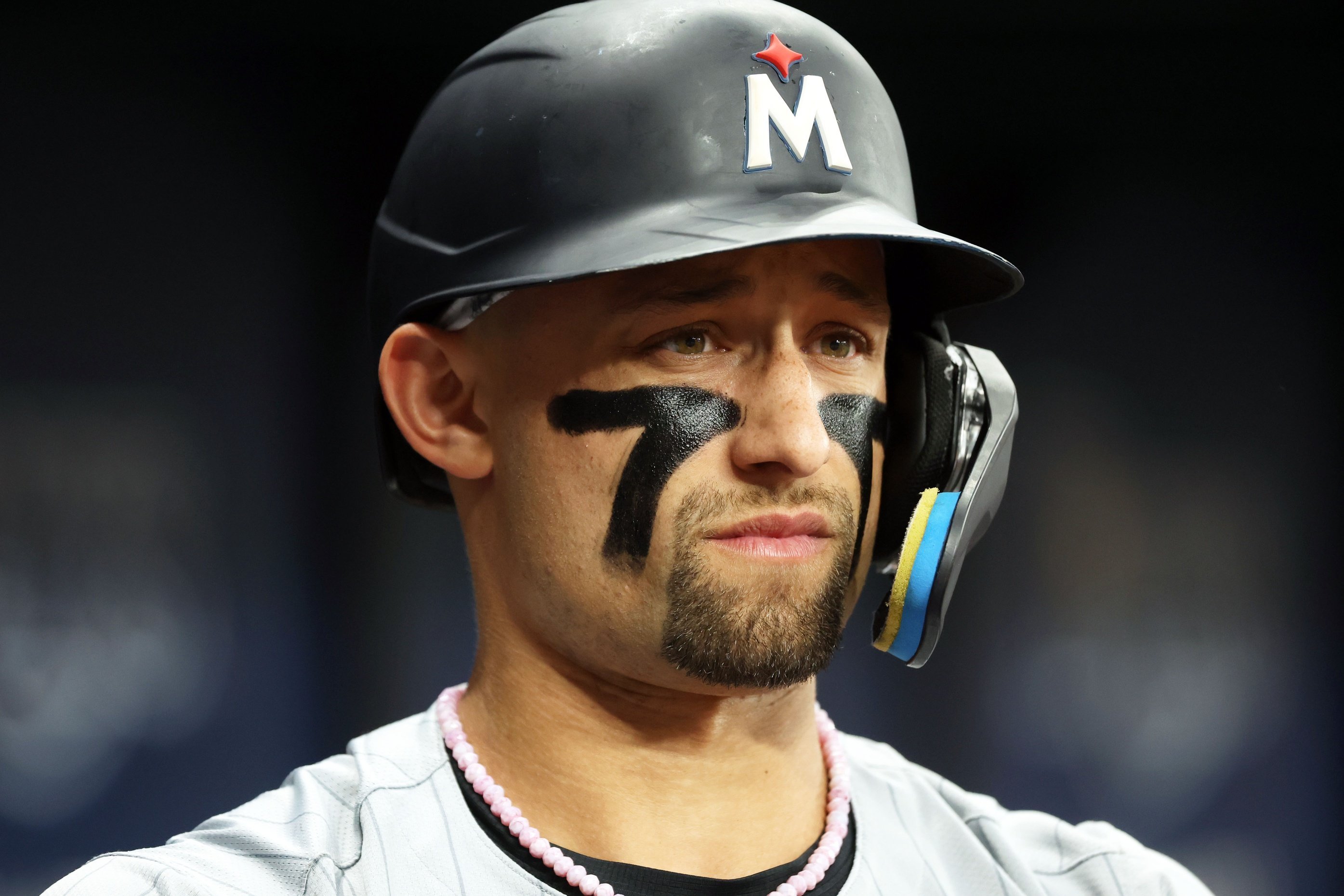 MLB’s Winter Meetings can signal a kickoff to the offseason, with all 30 front offices gathering in the same location to have face-to-face conversations. The Twins have been quiet at recent Winter Meetings, and many expect the same this season. There is little room in the team’s payroll to add via free agency, but the team can start having conversations about trading players. Minnesota enters the offseason with one of the AL’s best-projected rosters, but there are a lot of boxes to check before Opening Day. The Twins' most critical question might not be whom they acquire but how much they trust the talent already on the roster. After a 2024 campaign that ended with a disappointing collapse, the organization must decide whether to double down on its current core or explore bold changes to reshape the team. There’s a plausible version of this offseason where the Twins assess their roster, find ample reason to "run it back," and aim to prove that this talented group can achieve more. The foundation is there: - A Strong Rotation Core: Pablo López, Joe Ryan, and Bailey Ober provide a reliable trio atop the rotation. López continues to anchor the staff; Ryan has improved his secondary pitches while dialing back his reliance on the fastball; and Ober offers consistency as a playoff-caliber starter. The Twins also have plenty of depth in the rotation beyond the big three, which is invaluable. - Star Power in the Lineup: Carlos Correa, Byron Buxton, and Royce Lewis represent a trio capable of elite production. Correa rebounded in 2024 with an All-Star first half, before injury struck. Buxton played over 100 games for only the second time in his career. Lewis has shown flashes of the brilliant talent that made him one of baseball’s top prospects, but he needs to find more offensive consistency. - Complementary Talent: Players like Trevor Larnach, Matt Wallner, José Miranda, and Edouard Julien can be strong complementary pieces. Griffin Jax and Jhoan Durán are among the AL’s best relievers, and the Twins have the potential to move Cole Sands and Louie Varland into key late-inning relief roles. There's a case for maintaining continuity with solid pieces in place and young talent waiting in the wings. However, this decision isn’t without risk. When the Whole is Less Than the Sum of Its Parts For all this group's theoretical upside, the 2024 season was a disappointment. Injuries, underperformance, and untimely struggles combined to derail a promising campaign. The Twins had over a 90% chance of making the playoffs in the second half before a collapse saw the Tigers run past them for the AL’s final Wild Card spot. Trusting the same players to take a step forward without significant changes could be overly optimistic. While the Twins likely have little room to maneuver in free agency due to payroll constraints, real change would require trades involving significant pieces. Chris Paddack and Christian Vázquez are obvious trade candidates, but is that enough to truly shake up the roster? Trading from the core is an option. Would the Twins consider dealing a young starter like Ryan, Ober, or Simeon Woods Richardson to address a glaring need? Could Lewis net a premium player to bolster the lineup? These are high-stakes decisions, especially when young talent is under team control for years to come. The Case for and Against Standing Pat If the Twins trust their talent, running it back is a bet on better health, further development, and improved results. A fully healthy Correa, Buxton, and Lewis anchoring the lineup could elevate the offense. López, Ryan, and Ober have proven capable in the rotation, while younger pitchers like David Festa and Zebby Matthews could add depth. However, there’s a real risk that this core group might be inherently flawed. The 2024 collapse suggests deeper issues that continuity alone may not solve. Banking on complementary hitters like Larnach, Wallner, Miranda, and Julien to step up without a contingency plan could expose the team if they fall short again. How Bold Will the Twins Be? The Twins' front office faces a tricky balancing act: How do you address shortcomings while avoiding unnecessary upheaval? If the organization believes its roster is championship-caliber, sticking with its core is the logical move. If not, this winter could be one of difficult but necessary decisions. Fans will hope the front office has learned from recent missteps. Whether they run it back or shake it up, the Twins must ensure that the 2025 roster avoids the pitfalls that plagued the team in 2024. After all, trust in talent can only take a team so far. Execution and a little luck win games in October. What do you think? Should the Twins stick with their current roster, or is it time for bold changes? Leave a comment and start the discussion.
- 30 comments
-
- 2
-
-
- chris paddack
- christian vazquez
- (and 3 more)
-
Three Potential Moves for the Twins to Lower Payroll to $130 Million
Cody Christie posted an article in Twins
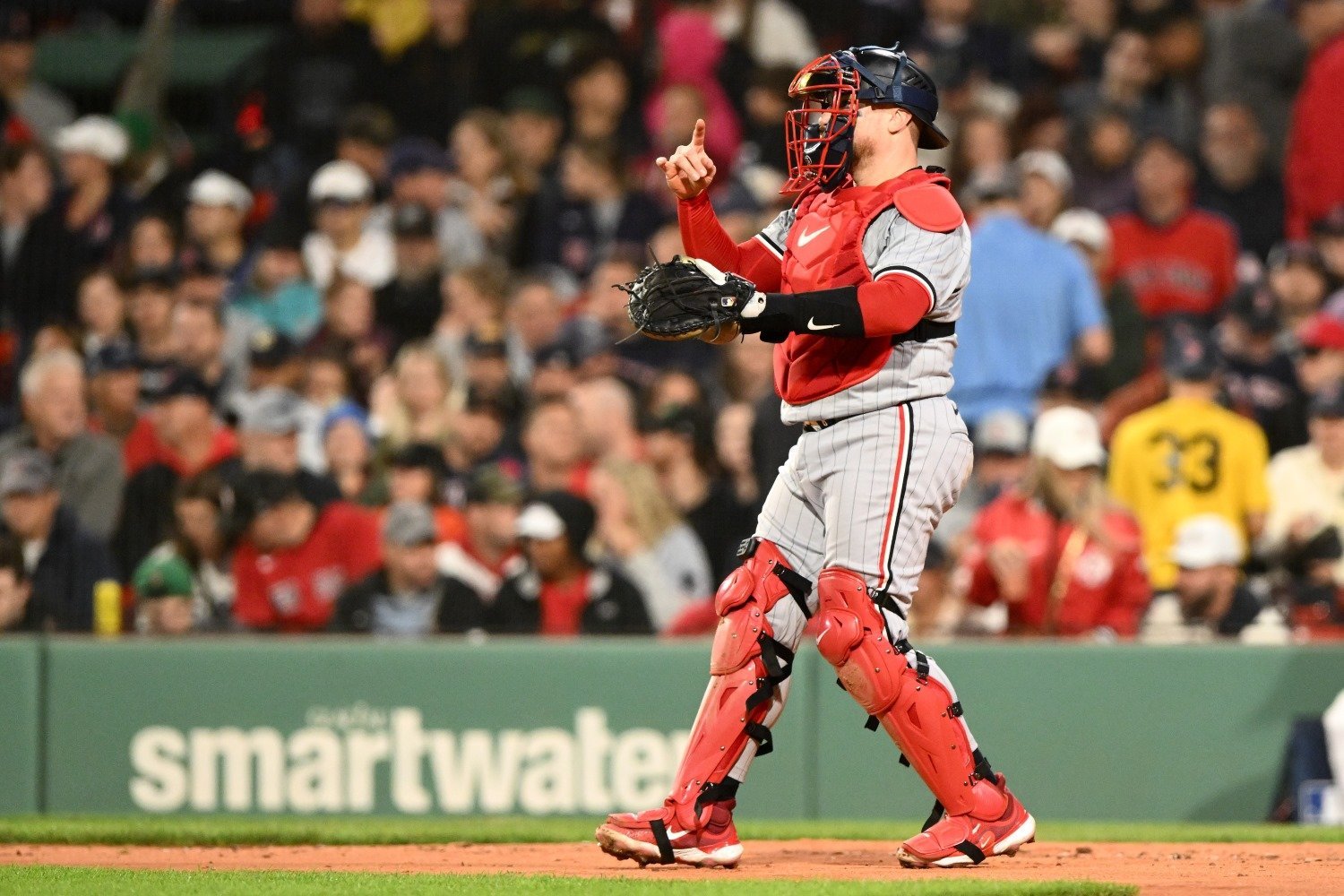 The Minnesota Twins face a financial conundrum heading into the 2025 season. FanGraphs projects the team's payroll at $142 million, but internal reports suggest the front office needs to bring that figure closer to $130 million. Finding $12 million in savings won’t be easy, especially with fans expecting the team to remain competitive. However, three potential moves could help the Twins hit their target while maintaining roster flexibility. 1. Trade Christian Vázquez Savings: $5 million Vázquez remains a solid veteran presence and the pitching staff has raved about his work behind the plate. Minnesota must trust that Ryan Jeffers and Jaír Camargo are ready to step into more prominent roles. However, having this duo share catching duties would be a defensive downgrade that the Twins might not be able to afford. The front office is likely weighing the pros and cons of shaking up their catching corps. Based on what free-agent catchers are getting this winter, the Twins could trade him while agreeing to pay half his $10 million salary. The free-agent catching market is always thin, and some names have already been signed this winter. Vázquez’s defensive reputation and experience would appeal to teams looking for a dependable backstop. Saving $5 million would give the Twins some breathing room in their payroll while handing more playing time to Jeffers and younger options. Key Considerations: - Losing Vázquez would shift more responsibility to Jeffers, who has been solid but has flaws. - Camargo could join the catching rotation, but the team may need another veteran catcher as insurance. 2. Trade Chris Paddack Savings: $7.5 million Paddack’s return from Tommy John surgery in 2024 saw an inconsistent performance. In 17 starts, he posted a 4.99 ERA with a 1.39 WHIP and 8.0 K/9. On paper, the Twins have a surplus of starting pitchers and could use their depth to shed his $7.5 million salary. Young arms like David Festa and Zebby Matthews are projected to start the year in the minors, but they could provide affordable alternatives for the big-league roster. Paddack’s one-year deal makes him an attractive trade target for teams needing starting pitching. So far this winter, the pitching market has been “through the roof,” and this will force contending teams to get creative for veteran arms. His salary might be the most significant piece the team can move this winter, so trading Paddack should be a top priority. Key Considerations: - Trading Paddack could backfire if injuries hit the rotation. - Festa and Matthews will need to prove they’re ready for consistent big-league innings. 3. Trade Willi Castro Savings: $6 million Castro was a revelation for the Twins in 2024, offering record-breaking versatility and earning his first All-Star selection. However, his projected $6.2 million arbitration figure might be a luxury the team can’t afford. The Twins have internal options like Austin Martin and Edouard Julien , both of whom had disappointing 2024 seasons but possess the talent to rebound. Castro’s ability to play nearly every position makes him a valuable trade chip, especially for teams looking to add utility players. Last season, he hit .266/.352/.422 (.774) with 34 extra-base hits in 96 first-half games. His OPS dropped by nearly 150 points in the second half, which might scare off some potential buyers. Trading him would clear significant payroll space while allowing Martin and Julien the opportunity to reclaim their promise. Key Considerations: - Castro’s departure would put pressure on Martin and Julien to step up. - The Twins would need to address potential depth concerns if injuries arise. These moves would save $18.7 million, allowing the Twins to drop well below the $130 million threshold with room to make more minor additions or absorb unexpected costs. Trading Vázquez, Paddack, and Castro comes with risks, but the Twins' organizational depth makes these decisions feasible. Hitting a lower payroll target while remaining competitive is a delicate balancing act, but smart, forward-looking moves like these can keep the team in contention without compromising its financial health. What do you think? Are these moves worth the potential savings, or should the Twins explore other options? Leave a COMMENT and start the discussion.
- 34 comments
-
- 1
-
-
- christian vazquez
- chris paddack
- (and 1 more)
-
Current projections have the Twins sitting over $140 million in payroll for the 2025 season. How can the team cut enough off the edges to get closer to ownership’s reported payroll limit? Image courtesy of © Brian Fluharty-Imagn Images Current projections have the Twins sitting over $140 million in payroll for the 2025 season. How can the team cut enough off the edges to get closer to ownership’s reported payroll limit? The Minnesota Twins face a financial conundrum heading into the 2025 season. FanGraphs projects the team's payroll at $142 million, but internal reports suggest the front office needs to bring that figure closer to $130 million. Finding $12 million in savings won’t be easy, especially with fans expecting the team to remain competitive. However, three potential moves could help the Twins hit their target while maintaining roster flexibility. 1. Trade Christian Vázquez Savings: $5 million Vázquez remains a solid veteran presence and the pitching staff has raved about his work behind the plate. Minnesota must trust that Ryan Jeffers and Jaír Camargo are ready to step into more prominent roles. However, having this duo share catching duties would be a defensive downgrade that the Twins might not be able to afford. The front office is likely weighing the pros and cons of shaking up their catching corps. Based on what free-agent catchers are getting this winter, the Twins could trade him while agreeing to pay half his $10 million salary. The free-agent catching market is always thin, and some names have already been signed this winter. Vázquez’s defensive reputation and experience would appeal to teams looking for a dependable backstop. Saving $5 million would give the Twins some breathing room in their payroll while handing more playing time to Jeffers and younger options. Key Considerations: - Losing Vázquez would shift more responsibility to Jeffers, who has been solid but has flaws. - Camargo could join the catching rotation, but the team may need another veteran catcher as insurance. 2. Trade Chris Paddack Savings: $7.5 million Paddack’s return from Tommy John surgery in 2024 saw an inconsistent performance. In 17 starts, he posted a 4.99 ERA with a 1.39 WHIP and 8.0 K/9. On paper, the Twins have a surplus of starting pitchers and could use their depth to shed his $7.5 million salary. Young arms like David Festa and Zebby Matthews are projected to start the year in the minors, but they could provide affordable alternatives for the big-league roster. Paddack’s one-year deal makes him an attractive trade target for teams needing starting pitching. So far this winter, the pitching market has been “through the roof,” and this will force contending teams to get creative for veteran arms. His salary might be the most significant piece the team can move this winter, so trading Paddack should be a top priority. Key Considerations: - Trading Paddack could backfire if injuries hit the rotation. - Festa and Matthews will need to prove they’re ready for consistent big-league innings. 3. Trade Willi Castro Savings: $6 million Castro was a revelation for the Twins in 2024, offering record-breaking versatility and earning his first All-Star selection. However, his projected $6.2 million arbitration figure might be a luxury the team can’t afford. The Twins have internal options like Austin Martin and Edouard Julien , both of whom had disappointing 2024 seasons but possess the talent to rebound. Castro’s ability to play nearly every position makes him a valuable trade chip, especially for teams looking to add utility players. Last season, he hit .266/.352/.422 (.774) with 34 extra-base hits in 96 first-half games. His OPS dropped by nearly 150 points in the second half, which might scare off some potential buyers. Trading him would clear significant payroll space while allowing Martin and Julien the opportunity to reclaim their promise. Key Considerations: - Castro’s departure would put pressure on Martin and Julien to step up. - The Twins would need to address potential depth concerns if injuries arise. These moves would save $18.7 million, allowing the Twins to drop well below the $130 million threshold with room to make more minor additions or absorb unexpected costs. Trading Vázquez, Paddack, and Castro comes with risks, but the Twins' organizational depth makes these decisions feasible. Hitting a lower payroll target while remaining competitive is a delicate balancing act, but smart, forward-looking moves like these can keep the team in contention without compromising its financial health. What do you think? Are these moves worth the potential savings, or should the Twins explore other options? Leave a COMMENT and start the discussion. View full article
-
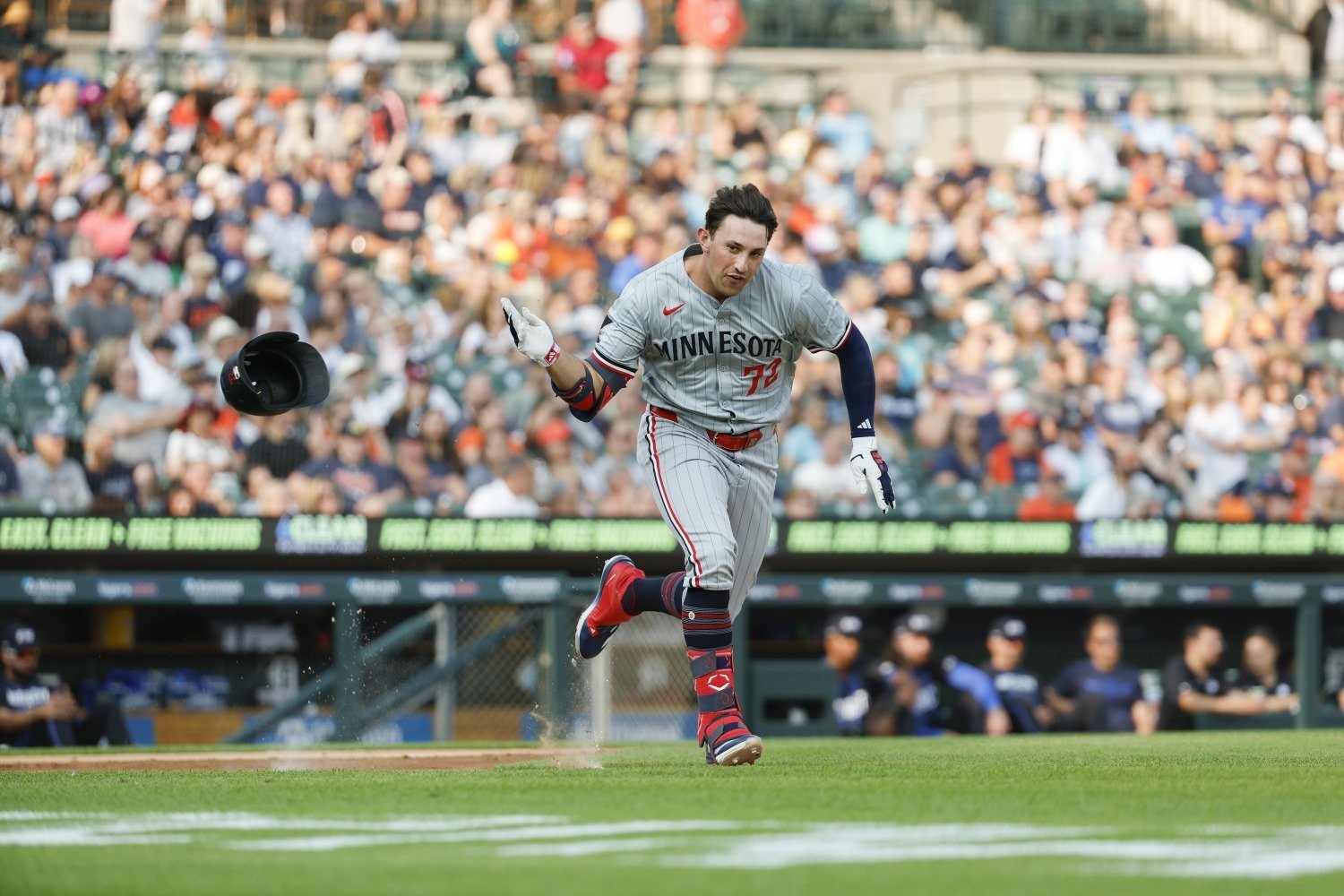 Despite the team’s collapse, the Twins had offensive performances that stood out. Some of these performances might be tied to the overachieving hitters. On the other hand, some hitters may have suffered underperformance based on bad luck. Below you will see data from Baseball Savant that compares players' slugging percentage with their expected slugging percentage. According to their website, “Expected Outcome stats help to remove defense and ballpark from the equation to express the skill shown at the moment of batted ball contact. By looking at the exit velocity and launch angle of each batted ball, a Hit Probability is assigned based on the outcomes of comparable historic balls in play. By accumulating the expected outcomes of each batted ball with actual strikeouts, walks and hit-bypitches, Expected Batting Average (xBA), Expected Slugging (xSLG), and (most importantly) Expected Weighted On-Base Average (xwOBA) tell the story of a player's season based on quality of and amount of contact, not outcomes.” Let’s dive into the leaderboard to see which hitters overachieved or underachieved. Overachieving Minnesota Twins Hitters Leaderboard (SLG-xSLG) Carlos Correa: +.062 Matt Wallner: +.055 Ryan Jeffers: +.046 José Miranda: +.042 Carlos Correa and Matt Wallner were two of the most critical hitters for the Twins lineup last season. Correa slashed an impressive .308/.377/.520 (.897) with 16 doubles, three triples, and 13 home runs through the first 75 games of the season. He had some lucky hits, including this chopper and a variety of infield hits like this one. Teams shift on Wallner because of his power potential from the left side, which can lead to hits like this, or defenders can get a bad break on the ball. The Twins hope both players can build off their offensive performances last season, but luck might have helped their overall performance. Ryan Jeffers and Jose Miranda were two of the team’s streakiest hitters in 2024 and some of that streakiness might point to why they are overachieving. Jeffers posted a .791 OPS in the season’s first half before struggling with a .630 OPS after the All-Star break. He had three months with an OPS of .830 or higher and two months with an OPS of .470 or lower. Like Jeffers, Miranda struggled in the season’s second half, dropping his OPS from .888 to .543. His first half included a record-tying 12 consecutive at-bats with a hit, but he dealt with a back injury at the end of the year. Underachieving Minnesota Twins Hitters Leaderboard (SLG-xSLG) Manuel Margot: -.042 Edouard Julien: -.028 Trevor Larnach: -.024 Christian Vázquez: -.024 Brooks Lee: -.020 Manuel Margot , a right-handed hitter, did most of his damage against lefties with an OPS that was 173 points higher. He broke the MLB record for futility as a pinch hitter, going 0-for-30 in 35 plate appearances. For the Twins, there was hope that Margot could fill the role occupied by Michael A. Taylor the previous season. However, he quickly proved that he wasn’t able to handle center field, and his offensive numbers tanked. He won’t be back with the Twins. Edouard Julien and Trevor Larnach are two interesting names to consider on this leaderboard because of how their seasons played out differently. Julien was expected to take the next step and build off a tremendous rookie season where he posted a 130 OPS+. Instead, he struggled mightily (74 OPS+) and spent part of the season at Triple-A. During his big-league time, there were some plays where defenders recorded outs despite hard-hit contact or just missed the ball. Larnach was one of the team’s best offensive players, finishing with a 116 OPS+ despite a leg injury limiting him to DH duties. He had hard contact that was somewhat unlucky, and there are also areas in Target Field’s power alleys where it is tough for balls to find the grass. Both players can point to their expected totals and hope for better luck next year. Christian Vázquez played well in July and August with a .844 OPS, but his offense was significantly below average in the season’s other months. He might have been slightly unlucky, but his offensive performance has significantly declined over the last two seasons (62 OPS+). Brooks Lee debuted with high expectations as one of the team’s best prospects. He struggled during his rookie campaign by hitting .221/.265/.320 (.585) with ten extra-base hits in 50 games. The difference in his SLG and xSLG points to a potential offensive improvement next season. Every year, there will be hitters who are lucky or unlucky when putting the ball in play. Correa and Wallner were some of the team’s most overachieving hitters, while players like Julien, Larnach, and Vázquez might see a bump in their offensive numbers with better luck in 2025. What stands out about the leaderboards listed above? Which player is most surprising? Leave a COMMENT and start the discussion.
- 11 comments
-
- 4
-
-
- carlos correa
- matt wallner
- (and 5 more)
-
After the Twins' second-half collapse, many fans might believe that the entire hitting core underachieved in the second half. Here’s a look at the hitters who most overachieved and underachieved. Image courtesy of © Brian Bradshaw Sevald-USA TODAY Sports After the Twins' second-half collapse, many fans might believe that the entire hitting core underachieved in the second half. Here’s a look at the hitters who most overachieved and underachieved. Despite the team’s collapse, the Twins had offensive performances that stood out. Some of these performances might be tied to the overachieving hitters. On the other hand, some hitters may have suffered underperformance based on bad luck. Below you will see data from Baseball Savant that compares players' slugging percentage with their expected slugging percentage. According to their website, “Expected Outcome stats help to remove defense and ballpark from the equation to express the skill shown at the moment of batted ball contact. By looking at the exit velocity and launch angle of each batted ball, a Hit Probability is assigned based on the outcomes of comparable historic balls in play. By accumulating the expected outcomes of each batted ball with actual strikeouts, walks and hit-bypitches, Expected Batting Average (xBA), Expected Slugging (xSLG), and (most importantly) Expected Weighted On-Base Average (xwOBA) tell the story of a player's season based on quality of and amount of contact, not outcomes.” Let’s dive into the leaderboard to see which hitters overachieved or underachieved. Overachieving Minnesota Twins Hitters Leaderboard (SLG-xSLG) Carlos Correa: +.062 Matt Wallner: +.055 Ryan Jeffers: +.046 José Miranda: +.042 Carlos Correa and Matt Wallner were two of the most critical hitters for the Twins lineup last season. Correa slashed an impressive .308/.377/.520 (.897) with 16 doubles, three triples, and 13 home runs through the first 75 games of the season. He had some lucky hits, including this chopper and a variety of infield hits like this one. Teams shift on Wallner because of his power potential from the left side, which can lead to hits like this, or defenders can get a bad break on the ball. The Twins hope both players can build off their offensive performances last season, but luck might have helped their overall performance. Ryan Jeffers and Jose Miranda were two of the team’s streakiest hitters in 2024 and some of that streakiness might point to why they are overachieving. Jeffers posted a .791 OPS in the season’s first half before struggling with a .630 OPS after the All-Star break. He had three months with an OPS of .830 or higher and two months with an OPS of .470 or lower. Like Jeffers, Miranda struggled in the season’s second half, dropping his OPS from .888 to .543. His first half included a record-tying 12 consecutive at-bats with a hit, but he dealt with a back injury at the end of the year. Underachieving Minnesota Twins Hitters Leaderboard (SLG-xSLG) Manuel Margot: -.042 Edouard Julien: -.028 Trevor Larnach: -.024 Christian Vázquez: -.024 Brooks Lee: -.020 Manuel Margot , a right-handed hitter, did most of his damage against lefties with an OPS that was 173 points higher. He broke the MLB record for futility as a pinch hitter, going 0-for-30 in 35 plate appearances. For the Twins, there was hope that Margot could fill the role occupied by Michael A. Taylor the previous season. However, he quickly proved that he wasn’t able to handle center field, and his offensive numbers tanked. He won’t be back with the Twins. Edouard Julien and Trevor Larnach are two interesting names to consider on this leaderboard because of how their seasons played out differently. Julien was expected to take the next step and build off a tremendous rookie season where he posted a 130 OPS+. Instead, he struggled mightily (74 OPS+) and spent part of the season at Triple-A. During his big-league time, there were some plays where defenders recorded outs despite hard-hit contact or just missed the ball. Larnach was one of the team’s best offensive players, finishing with a 116 OPS+ despite a leg injury limiting him to DH duties. He had hard contact that was somewhat unlucky, and there are also areas in Target Field’s power alleys where it is tough for balls to find the grass. Both players can point to their expected totals and hope for better luck next year. Christian Vázquez played well in July and August with a .844 OPS, but his offense was significantly below average in the season’s other months. He might have been slightly unlucky, but his offensive performance has significantly declined over the last two seasons (62 OPS+). Brooks Lee debuted with high expectations as one of the team’s best prospects. He struggled during his rookie campaign by hitting .221/.265/.320 (.585) with ten extra-base hits in 50 games. The difference in his SLG and xSLG points to a potential offensive improvement next season. Every year, there will be hitters who are lucky or unlucky when putting the ball in play. Correa and Wallner were some of the team’s most overachieving hitters, while players like Julien, Larnach, and Vázquez might see a bump in their offensive numbers with better luck in 2025. What stands out about the leaderboards listed above? Which player is most surprising? Leave a COMMENT and start the discussion. View full article
-
Johan Santana’s 2004 Dominance: Was He Robbed of the AL MVP?
Cody Christie posted an article in History
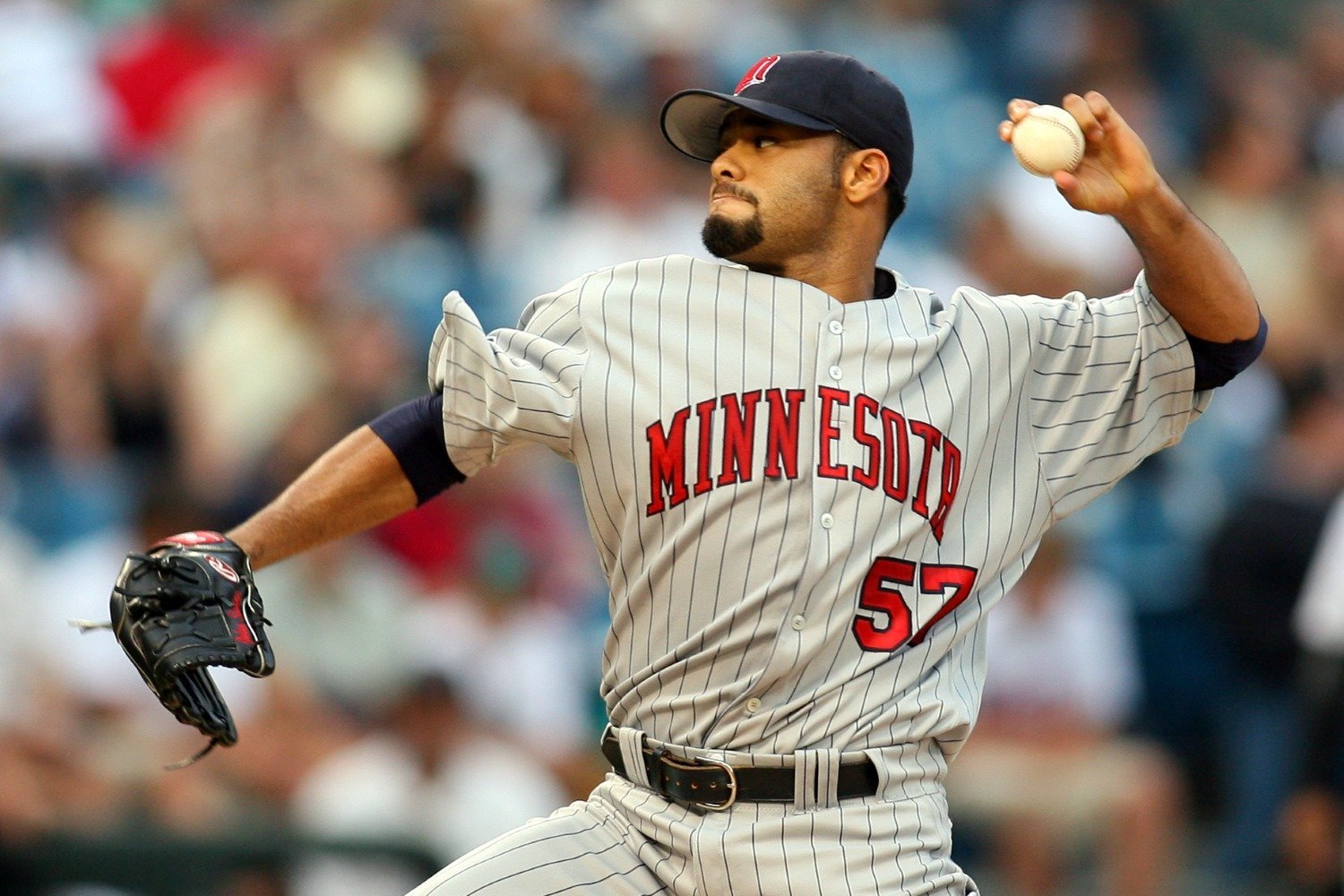 Johan Santana's 2004 campaign was the best season of his career and one of the most dominant performances by a pitcher in modern MLB history. The Minnesota Twins’ lefty dazzled with a combination of pinpoint control and a devastating changeup, earning his first Cy Young Award in a landslide. However, when the MVP voting results were announced, Santana finished sixth despite being statistically superior to many position players who placed ahead of him. Let’s revisit that season and the MVP debate that still lingers. Santana’s Case for AL MVP Santana’s numbers in 2004 jump off the page. Over 34 starts, he posted a 20-6 record with an AL-best 2.61 ERA and 0.92 WHIP. He struck out 265 batters in 228 innings, leading the league in strikeouts and K/9 (10.5). His second-half performance was nothing short of legendary as he went 13-0 with a 1.21 ERA in 15 starts, holding opponents to a .155 batting average. There is no question that Santana put the Twins on his back to carry them to the playoffs. The advanced metrics underscore Santana’s dominance. His 8.8 WAR was the highest among AL pitchers and topped all but one position player in the league. He led the league in ERA+, FIP, WHIP, H/9, and ERA. Despite this, Santana’s sixth-place MVP finish highlighted how voters often overlook pitchers for the award. The 2004 AL MVP Race Vladimir Guerrero won the AL MVP, putting together a tremendous season for the Anaheim Angels. Guerrero slashed .337/.391/.598 (.989) with 39 home runs and 126 RBIs. He was the spark plug for a playoff-bound team, leading the league in runs scored (124). However, Guerrero’s WAR (5.6) was far lower than Santana’s, suggesting his overall value didn’t match the same level of excellence. Manny Ramirez, who finished third, led the AL in OPS (1.009) and home runs (43), cementing his place as one of baseball’s most feared hitters. Gary Sheffield (2nd), David Ortiz (4th), and also received more votes than Santana, despite none surpassing 4.3 WAR. Ichiro Suzuki, who led the league in WAR (9.2), had one of the greatest single-season offensive performances ever, breaking George Sisler’s hits record with 262. Yet, he finished behind Santana in MVP voting, a reflection of the voters’ biases toward sluggers and team success. Why Santana Deserved More Pitchers winning MVP is an uphill battle. Historically, only the most transcendent pitching performances, such as Bob Gibson in 1968, Roger Clemens in 1986, or Justin Verlander in 2011, have convinced voters that a hurler was the league’s most valuable player. Santana’s 2004 season deserved to be in that conversation. Unlike everyday players, pitchers only influence a fraction of their team’s games. But Santana’s influence transcended his starts. His consistency at the top of the rotation set the tone for a Twins team that won the AL Central with a 92-70 record. His dominance in September, when the Twins secured the division, was invaluable. For all his offensive prowess, Guerrero didn’t single-handedly carry the Angels as Santana did the Twins. WAR provides a compelling argument, as Santana outpaced every MVP contender except Ichiro. His second-half performance, where he essentially made opposing hitters irrelevant, was unmatched in its impact on team success. Santana’s 2004 season earned him his first Cy Young Award and cemented his place among the game’s elite. Still, his sixth-place MVP finish remains a reminder of how difficult it is for pitchers to gain proper recognition in MVP voting. In hindsight, Santana’s brilliance was the definition of value, and his season stands as one of the best arguments for why pitchers should be included in MVP discussions. Looking back, Santana’s name deserved to be mentioned alongside Guerrero’s, Ramirez’s, and Ichiro’s in the MVP debate. While he didn’t take home the hardware, Santana’s 2004 will forever remain a season for the ages and one that Twins fans will cherish as one of the most dominant pitching performances ever seen. What do you think? Did Johan Santana deserve the 2004 MVP? Leave a COMMENT and start the discussion.
- 10 comments
-
- 1
-
-
- johan santana
- vladimir guerrero
- (and 3 more)
-
Johan Santana dominated during the 2004 season on the way to his first Cy Young. Here’s why he should have been in the AL MVP discussion. Image courtesy of Jerry Lai-USA TODAY Sports Johan Santana dominated during the 2004 season on the way to his first Cy Young. Here’s why he should have been in the AL MVP discussion. Johan Santana's 2004 campaign was the best season of his career and one of the most dominant performances by a pitcher in modern MLB history. The Minnesota Twins’ lefty dazzled with a combination of pinpoint control and a devastating changeup, earning his first Cy Young Award in a landslide. However, when the MVP voting results were announced, Santana finished sixth despite being statistically superior to many position players who placed ahead of him. Let’s revisit that season and the MVP debate that still lingers. Santana’s Case for AL MVP Santana’s numbers in 2004 jump off the page. Over 34 starts, he posted a 20-6 record with an AL-best 2.61 ERA and 0.92 WHIP. He struck out 265 batters in 228 innings, leading the league in strikeouts and K/9 (10.5). His second-half performance was nothing short of legendary as he went 13-0 with a 1.21 ERA in 15 starts, holding opponents to a .155 batting average. There is no question that Santana put the Twins on his back to carry them to the playoffs. The advanced metrics underscore Santana’s dominance. His 8.8 WAR was the highest among AL pitchers and topped all but one position player in the league. He led the league in ERA+, FIP, WHIP, H/9, and ERA. Despite this, Santana’s sixth-place MVP finish highlighted how voters often overlook pitchers for the award. The 2004 AL MVP Race Vladimir Guerrero won the AL MVP, putting together a tremendous season for the Anaheim Angels. Guerrero slashed .337/.391/.598 (.989) with 39 home runs and 126 RBIs. He was the spark plug for a playoff-bound team, leading the league in runs scored (124). However, Guerrero’s WAR (5.6) was far lower than Santana’s, suggesting his overall value didn’t match the same level of excellence. Manny Ramirez, who finished third, led the AL in OPS (1.009) and home runs (43), cementing his place as one of baseball’s most feared hitters. Gary Sheffield (2nd), David Ortiz (4th), and also received more votes than Santana, despite none surpassing 4.3 WAR. Ichiro Suzuki, who led the league in WAR (9.2), had one of the greatest single-season offensive performances ever, breaking George Sisler’s hits record with 262. Yet, he finished behind Santana in MVP voting, a reflection of the voters’ biases toward sluggers and team success. Why Santana Deserved More Pitchers winning MVP is an uphill battle. Historically, only the most transcendent pitching performances, such as Bob Gibson in 1968, Roger Clemens in 1986, or Justin Verlander in 2011, have convinced voters that a hurler was the league’s most valuable player. Santana’s 2004 season deserved to be in that conversation. Unlike everyday players, pitchers only influence a fraction of their team’s games. But Santana’s influence transcended his starts. His consistency at the top of the rotation set the tone for a Twins team that won the AL Central with a 92-70 record. His dominance in September, when the Twins secured the division, was invaluable. For all his offensive prowess, Guerrero didn’t single-handedly carry the Angels as Santana did the Twins. WAR provides a compelling argument, as Santana outpaced every MVP contender except Ichiro. His second-half performance, where he essentially made opposing hitters irrelevant, was unmatched in its impact on team success. Santana’s 2004 season earned him his first Cy Young Award and cemented his place among the game’s elite. Still, his sixth-place MVP finish remains a reminder of how difficult it is for pitchers to gain proper recognition in MVP voting. In hindsight, Santana’s brilliance was the definition of value, and his season stands as one of the best arguments for why pitchers should be included in MVP discussions. Looking back, Santana’s name deserved to be mentioned alongside Guerrero’s, Ramirez’s, and Ichiro’s in the MVP debate. While he didn’t take home the hardware, Santana’s 2004 will forever remain a season for the ages and one that Twins fans will cherish as one of the most dominant pitching performances ever seen. What do you think? Did Johan Santana deserve the 2004 MVP? Leave a COMMENT and start the discussion. View full article
-
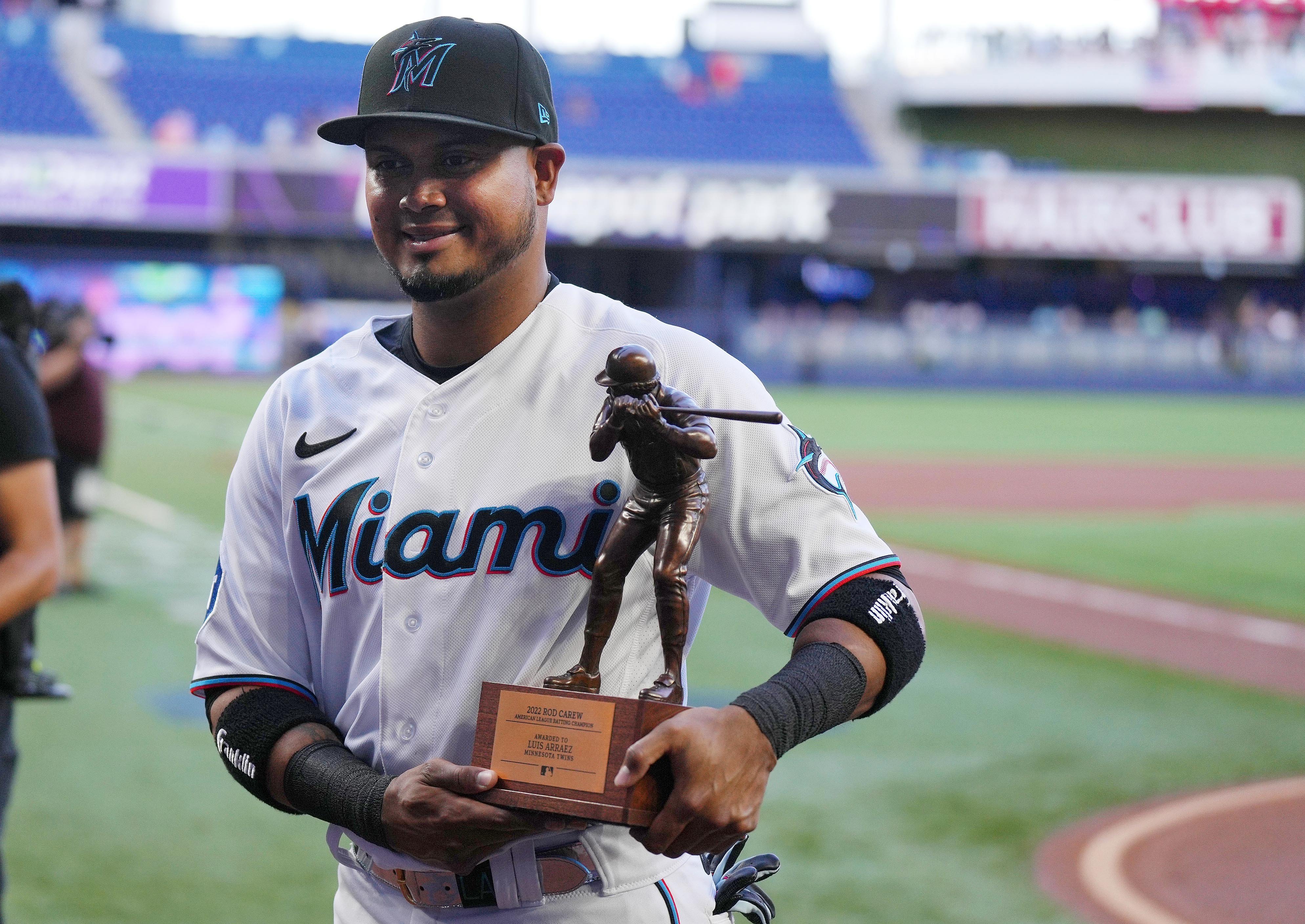 Twins fans fell in love with Luis Arráez from the moment he stepped on the field. His offensive approach was reminiscent of Twins Hall of Famer Rod Carew, and his on-field energy was infectious. After all, how many players can boast three consecutive batting titles by age 27? Yet, as Arráez prepares for what might be his fourth uniform in as many seasons, his story is one of a changing baseball landscape and shifting organizational priorities. Arráez’s baseball journey has taken him from being a fan favorite in Minnesota to the Miami Marlins to his current stint with the San Diego Padres. It also reveals why his skill set, while impressive, is not enough to make teams commit long-term. The Twins: Pitching Over Contact Arráez became a fan favorite in Minnesota thanks to his exceptional bat-to-ball skills, winning his first batting title in 2022. In 144 games, he hit .316/.375/.420, with a 128 OPS+ and 4.2 rWAR. Yet, that same offseason, the Twins made the decision to trade him to the Miami Marlins for Pablo López. For Minnesota, the origin of the trade was simple: they needed starting pitching, and López fit the bill. While Arráez provided elite contact hitting, his lack of power, speed, and defensive versatility limited his overall impact. He had moved down the defensive spectrum to the point where the Twins viewed him as a first baseman or designated hitter. The Twins’ front office recognized that the value of a high-average singles hitter was declining in an era driven by slugging percentages and defensive flexibility. In hindsight, the Twins’ move might have been ahead of its time. The Marlins: A Front-Office Rebuild Arráez’s lone full season in Miami was nothing short of spectacular. He captured his second batting title, becoming the first Marlin to achieve the feat. In 147 games, he posted a career-high 4.9 WAR while hitting .354/.393/.469 with a 128 OPS+ identical to the one he posted for the Twins the prior season. He finished eighth in the NL MVP voting, was an All-Star, and won a Silver Slugger Award. However, Miami’s front office underwent significant changes last offseason, with general manager Kim Ng departing and the team pivoting toward a rebuild. In this new direction, Arráez became a luxury rather than a necessity. His arbitration-fixed salary of over $10 million was steep for a team looking to shed payroll and accumulate younger, controllable assets. Miami decided to move on, flipping Arráez to the San Diego Padres last season as part of a cost-cutting effort. Miami acquired four prospects for Arráez: Dillon Head, Woo-Suk Go, Jakob Marsee, and Nathan Martorella. It showed how much his value had dropped in one season. The Padres: Cost-Cutting Constraints San Diego’s acquisition of Arráez initially seemed like a natural fit. His contact-oriented approach complemented a star-studded but strikeout-prone lineup. In 150 games, he hit .314/.346/.392 while leading the NL with 200 hits. That bakes in a tough start with Miami, too; he was better after being dealt in early May. However, his overall value dropped significantly, with a 106 OPS+ and a 1.1 WAR. Arráez won his third consecutive batting title, but his value has come into question as the Padres face mounting financial pressures. For the second straight offseason, San Diego is facing a payroll crunch, and Arráez’s escalating arbitration figure (over $14 million) makes him a prime trade candidate. According to FanGraphs, his on-field 2024 production value ($8.8 million) is significantly lower than his salary, particularly after thumb surgery this October introduced uncertainty about his future production. The Decline of the Singles Hitter Arráez’s situation highlights a broader trend in baseball, with the devaluation of singles hitters. The modern game prizes power, speed, and defensive versatility, and players like Arráez who excel in one narrow facet of the game are becoming harder to build around. Arráez’s elite contact skills have undeniable value, but don’t outweigh his defensive limitations or lack of power. His Hard Hit%, Barrel%, and BB% rank in the third percentile or lower among MLB hitters. Also, advanced metrics like Wins Above Replacement (WAR) reflect how his bat alone can’t carry his profile, especially with his defensive limitations (-13 OAA in 2024). Did the Twins See the Future? In retrospect, the Twins may have been proactive in trading Arráez when they did. While López blossomed into an ace, Arráez’s limitations are becoming more apparent. He was an MVP candidate during his peak, but the gap between his arbitration cost and actual on-field value is widening, in the wrong direction. Arráez remains a unique talent in today’s game, and fans love his ability to do what few others can—hit for average at an elite level. But his career path underscores how baseball has evolved, and how even batting champions must adjust to the sport’s shifting priorities. For teams like the Padres, Marlins, and Twins, the question remains: Is Arráez worth the price? So far, the answer seems to be no. Will Arráez be traded again this winter? Do teams value elite contact hitters with little power? Leave a comment and start the discussion.
 -
Rumors are swirling that Luis Arráez may be on the trading block again. He’s won three straight batting titles, but for three different teams. Why doesn’t anyone want Arráez? Image courtesy of Jim Rassol-USA TODAY Sports Rumors are swirling that Luis Arráez may be on the trading block again. He’s won three straight batting titles, but for three different teams. Why doesn’t anyone want Arráez? Twins fans fell in love with Luis Arráez from the moment he stepped on the field. His offensive approach was reminiscent of Twins Hall of Famer Rod Carew, and his on-field energy was infectious. After all, how many players can boast three consecutive batting titles by age 27? Yet, as Arráez prepares for what might be his fourth uniform in as many seasons, his story is one of a changing baseball landscape and shifting organizational priorities. Arráez’s baseball journey has taken him from being a fan favorite in Minnesota to the Miami Marlins to his current stint with the San Diego Padres. It also reveals why his skill set, while impressive, is not enough to make teams commit long-term. The Twins: Pitching Over Contact Arráez became a fan favorite in Minnesota thanks to his exceptional bat-to-ball skills, winning his first batting title in 2022. In 144 games, he hit .316/.375/.420, with a 128 OPS+ and 4.2 rWAR. Yet, that same offseason, the Twins made the decision to trade him to the Miami Marlins for Pablo López. For Minnesota, the origin of the trade was simple: they needed starting pitching, and López fit the bill. While Arráez provided elite contact hitting, his lack of power, speed, and defensive versatility limited his overall impact. He had moved down the defensive spectrum to the point where the Twins viewed him as a first baseman or designated hitter. The Twins’ front office recognized that the value of a high-average singles hitter was declining in an era driven by slugging percentages and defensive flexibility. In hindsight, the Twins’ move might have been ahead of its time. The Marlins: A Front-Office Rebuild Arráez’s lone full season in Miami was nothing short of spectacular. He captured his second batting title, becoming the first Marlin to achieve the feat. In 147 games, he posted a career-high 4.9 WAR while hitting .354/.393/.469 with a 128 OPS+ identical to the one he posted for the Twins the prior season. He finished eighth in the NL MVP voting, was an All-Star, and won a Silver Slugger Award. However, Miami’s front office underwent significant changes last offseason, with general manager Kim Ng departing and the team pivoting toward a rebuild. In this new direction, Arráez became a luxury rather than a necessity. His arbitration-fixed salary of over $10 million was steep for a team looking to shed payroll and accumulate younger, controllable assets. Miami decided to move on, flipping Arráez to the San Diego Padres last season as part of a cost-cutting effort. Miami acquired four prospects for Arráez: Dillon Head, Woo-Suk Go, Jakob Marsee, and Nathan Martorella. It showed how much his value had dropped in one season. The Padres: Cost-Cutting Constraints San Diego’s acquisition of Arráez initially seemed like a natural fit. His contact-oriented approach complemented a star-studded but strikeout-prone lineup. In 150 games, he hit .314/.346/.392 while leading the NL with 200 hits. That bakes in a tough start with Miami, too; he was better after being dealt in early May. However, his overall value dropped significantly, with a 106 OPS+ and a 1.1 WAR. Arráez won his third consecutive batting title, but his value has come into question as the Padres face mounting financial pressures. For the second straight offseason, San Diego is facing a payroll crunch, and Arráez’s escalating arbitration figure (over $14 million) makes him a prime trade candidate. According to FanGraphs, his on-field 2024 production value ($8.8 million) is significantly lower than his salary, particularly after thumb surgery this October introduced uncertainty about his future production. The Decline of the Singles Hitter Arráez’s situation highlights a broader trend in baseball, with the devaluation of singles hitters. The modern game prizes power, speed, and defensive versatility, and players like Arráez who excel in one narrow facet of the game are becoming harder to build around. Arráez’s elite contact skills have undeniable value, but don’t outweigh his defensive limitations or lack of power. His Hard Hit%, Barrel%, and BB% rank in the third percentile or lower among MLB hitters. Also, advanced metrics like Wins Above Replacement (WAR) reflect how his bat alone can’t carry his profile, especially with his defensive limitations (-13 OAA in 2024). Did the Twins See the Future? In retrospect, the Twins may have been proactive in trading Arráez when they did. While López blossomed into an ace, Arráez’s limitations are becoming more apparent. He was an MVP candidate during his peak, but the gap between his arbitration cost and actual on-field value is widening, in the wrong direction. Arráez remains a unique talent in today’s game, and fans love his ability to do what few others can—hit for average at an elite level. But his career path underscores how baseball has evolved, and how even batting champions must adjust to the sport’s shifting priorities. For teams like the Padres, Marlins, and Twins, the question remains: Is Arráez worth the price? So far, the answer seems to be no. Will Arráez be traded again this winter? Do teams value elite contact hitters with little power? Leave a comment and start the discussion. View full article
-
Christian Vázquez and Ryan Jeffers have provided stability behind the plate for the Twins over the last two seasons. With the front office looking to shake up the roster, though, is trading a catcher one way to balance the books? Image courtesy of © Brad Rempel and Jordan Johnson-USA TODAY Sports Christian Vázquez and Ryan Jeffers have provided stability behind the plate for the Twins over the last two seasons. With the front office looking to shake up the roster, though, is trading a catcher one way to balance the books? For the past two seasons, the Minnesota Twins have utilized a rotational approach at catcher, splitting time between Christian Vázquez and Ryan Jeffers. This tandem has benefited the team, keeping both players fresh over the grind of a 162-game season. However, the offensive inconsistencies of both players and the team’s payroll limitations have led to growing rumors that the Twins might part ways with one of their catchers. Could this be the offseason where Minnesota reshapes its catching situation? The Value of the Rotation In 2023 and 2024, the timeshare between Vázquez and Jeffers worked as intended. Vázquez’s veteran presence helped stabilize the pitching staff, while Jeffers showed flashes of his offensive upside, highlighted by a 133 OPS+ in 2023. Their regular availability allowed the team to focus on other areas of the roster and not worry about who was behind the plate on any given day. This approach also allowed both catchers to stay healthy, a key factor considering the physical toll catching takes. Jeffers has had his share of injury concerns in the past, but splitting time allowed him to avoid the injured list for two straight seasons. Vázquez, meanwhile, brought stability to the role, though his offensive contributions have continued to decline; he's posted a 62 OPS+ in his two years with the Twins. He has never been considered a strong offensive player, but this is a nearly 20-point drop compared to his OPS+ for his career. Payroll Crunch and Trade Rumors While the system has worked defensively, the financial side complicates the picture. Vázquez is set to earn $10 million in 2025, the final year of his contract. For a team already facing payroll constraints, that’s a hefty price for a catcher whose offensive production has dipped. Jeffers is projected to earn $4.7 million in arbitration. He offers a cheaper alternative, but has yet to prove he can handle the full workload of an everyday starter. The Twins are reportedly exploring trade opportunities, and Vázquez’s salary makes him the likelier candidate to be dealt. However, Jeffers has more trade value because he has multiple years of team control, comes at a cheaper cost, and has more offensive upside. But trading either catcher would leave Minnesota with a significant question: Who steps in to fill the void? Is Jaír Camargo Ready? Jaír Camargo is the only other catcher currently on the Twins’ 40-man roster, but the team showed minimal trust in him during his brief stints in the majors last season. Despite having multiple stints at the big-league level, Camargo never started a game behind the plate, logging just seven plate appearances across five games. He went 0-for-6 with one walk and three strikeouts in a minimal sample. The organization’s hesitation to use him as a catcher speaks volumes. Camargo has a reputation for having a strong arm and plus raw power at the plate, but concerns about his receiving and game-calling abilities likely explain his limited usage. With the Saints, he has worked with many of the organization’s top prospects, like David Festa and Zebby Matthews, so that might help him gain traction at the big-league level. He hit .212/.290/.403 with 16 doubles and 12 home runs in 75 games for Triple-A St. Paul in 2024. Whether the Twins believe those skills will translate to baseball’s highest level is unclear. What's the Catching Plan? If the Twins trade Vázquez, they must trust Camargo to step into a rotational role or acquire another catcher. Internal candidates like Ricardo Olivar or Noah Cardenas could eventually enter the conversation, but neither is likely ready for a significant role in 2025. The free-agent catching market is thin, and any trade involving Vázquez would likely need to include a veteran replacement. Alternatively, the Twins could lean more heavily on Jeffers as the primary catcher while using Camargo sparingly. This strategy would shift Jeffers into a role he has never held at the big-league level. Would the Twins risk such a move in a season where their margin for error feels razor-thin? Trading Vázquez could provide the Twins with financial flexibility to address other roster needs, but it comes with significant risks. Camargo’s readiness is a major question mark, and the Twins can’t afford a step back defensively at catcher. While Jeffers’s emergence as a potential everyday player is intriguing, it’s fair to wonder whether Minnesota’s catching tandem is worth breaking up. The team’s decision this offseason will send a clear message about its priorities heading into 2025. Do the Twins value continuity and defensive stability, or are they willing to gamble on a cheaper option? Will either catcher be traded? Leave a COMMENT and start the discussion. View full article
- 53 replies
-
- 1
-
-
- ryan jeffers
- christian vazquez
- (and 1 more)
-
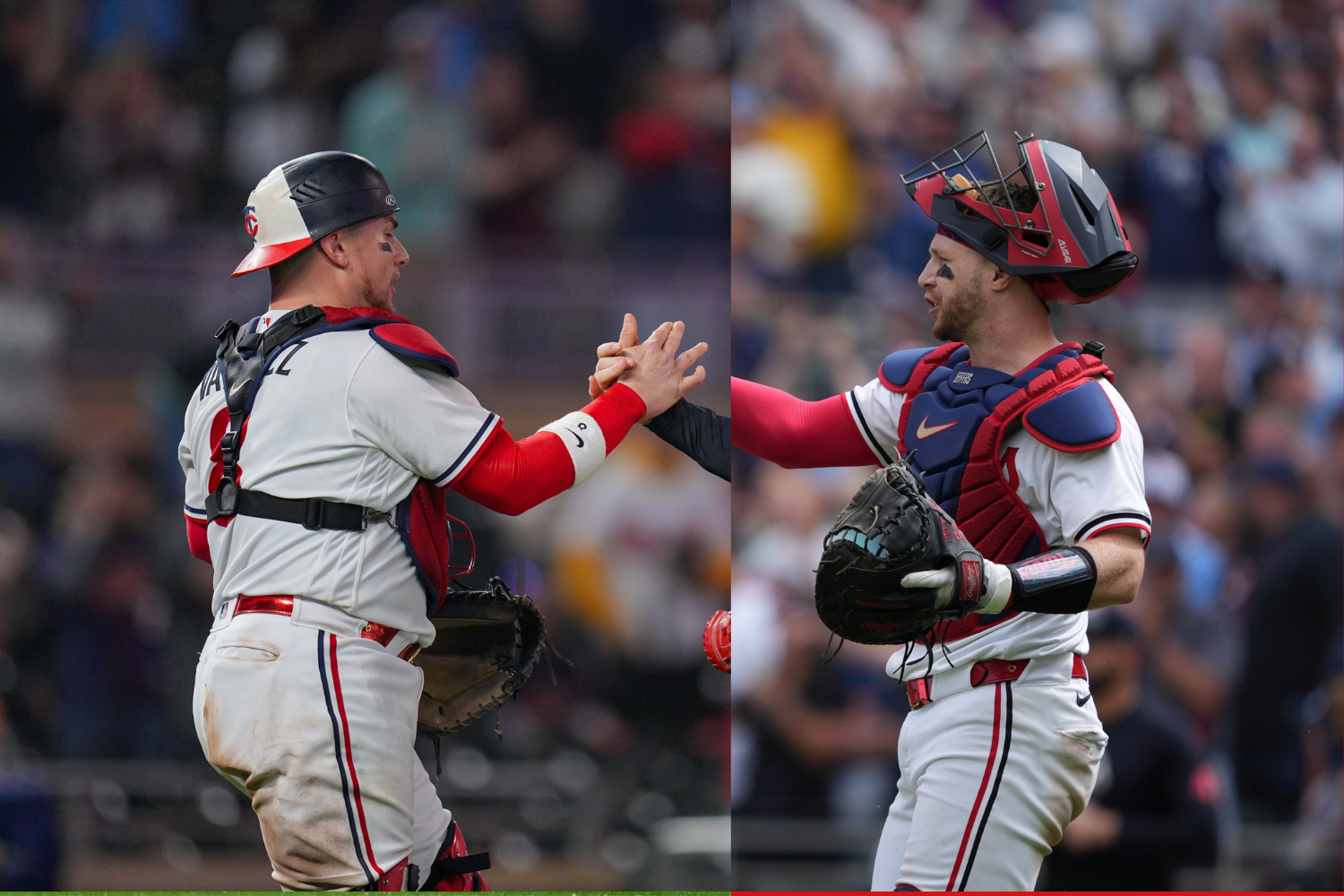 For the past two seasons, the Minnesota Twins have utilized a rotational approach at catcher, splitting time between Christian Vázquez and Ryan Jeffers. This tandem has benefited the team, keeping both players fresh over the grind of a 162-game season. However, the offensive inconsistencies of both players and the team’s payroll limitations have led to growing rumors that the Twins might part ways with one of their catchers. Could this be the offseason where Minnesota reshapes its catching situation? The Value of the Rotation In 2023 and 2024, the timeshare between Vázquez and Jeffers worked as intended. Vázquez’s veteran presence helped stabilize the pitching staff, while Jeffers showed flashes of his offensive upside, highlighted by a 133 OPS+ in 2023. Their regular availability allowed the team to focus on other areas of the roster and not worry about who was behind the plate on any given day. This approach also allowed both catchers to stay healthy, a key factor considering the physical toll catching takes. Jeffers has had his share of injury concerns in the past, but splitting time allowed him to avoid the injured list for two straight seasons. Vázquez, meanwhile, brought stability to the role, though his offensive contributions have continued to decline; he's posted a 62 OPS+ in his two years with the Twins. He has never been considered a strong offensive player, but this is a nearly 20-point drop compared to his OPS+ for his career. Payroll Crunch and Trade Rumors While the system has worked defensively, the financial side complicates the picture. Vázquez is set to earn $10 million in 2025, the final year of his contract. For a team already facing payroll constraints, that’s a hefty price for a catcher whose offensive production has dipped. Jeffers is projected to earn $4.7 million in arbitration. He offers a cheaper alternative, but has yet to prove he can handle the full workload of an everyday starter. The Twins are reportedly exploring trade opportunities, and Vázquez’s salary makes him the likelier candidate to be dealt. However, Jeffers has more trade value because he has multiple years of team control, comes at a cheaper cost, and has more offensive upside. But trading either catcher would leave Minnesota with a significant question: Who steps in to fill the void? Is Jaír Camargo Ready? Jaír Camargo is the only other catcher currently on the Twins’ 40-man roster, but the team showed minimal trust in him during his brief stints in the majors last season. Despite having multiple stints at the big-league level, Camargo never started a game behind the plate, logging just seven plate appearances across five games. He went 0-for-6 with one walk and three strikeouts in a minimal sample. The organization’s hesitation to use him as a catcher speaks volumes. Camargo has a reputation for having a strong arm and plus raw power at the plate, but concerns about his receiving and game-calling abilities likely explain his limited usage. With the Saints, he has worked with many of the organization’s top prospects, like David Festa and Zebby Matthews, so that might help him gain traction at the big-league level. He hit .212/.290/.403 with 16 doubles and 12 home runs in 75 games for Triple-A St. Paul in 2024. Whether the Twins believe those skills will translate to baseball’s highest level is unclear. What's the Catching Plan? If the Twins trade Vázquez, they must trust Camargo to step into a rotational role or acquire another catcher. Internal candidates like Ricardo Olivar or Noah Cardenas could eventually enter the conversation, but neither is likely ready for a significant role in 2025. The free-agent catching market is thin, and any trade involving Vázquez would likely need to include a veteran replacement. Alternatively, the Twins could lean more heavily on Jeffers as the primary catcher while using Camargo sparingly. This strategy would shift Jeffers into a role he has never held at the big-league level. Would the Twins risk such a move in a season where their margin for error feels razor-thin? Trading Vázquez could provide the Twins with financial flexibility to address other roster needs, but it comes with significant risks. Camargo’s readiness is a major question mark, and the Twins can’t afford a step back defensively at catcher. While Jeffers’s emergence as a potential everyday player is intriguing, it’s fair to wonder whether Minnesota’s catching tandem is worth breaking up. The team’s decision this offseason will send a clear message about its priorities heading into 2025. Do the Twins value continuity and defensive stability, or are they willing to gamble on a cheaper option? Will either catcher be traded? Leave a COMMENT and start the discussion.
- 53 comments
-
- 3
-
-
- ryan jeffers
- christian vazquez
- (and 1 more)
-
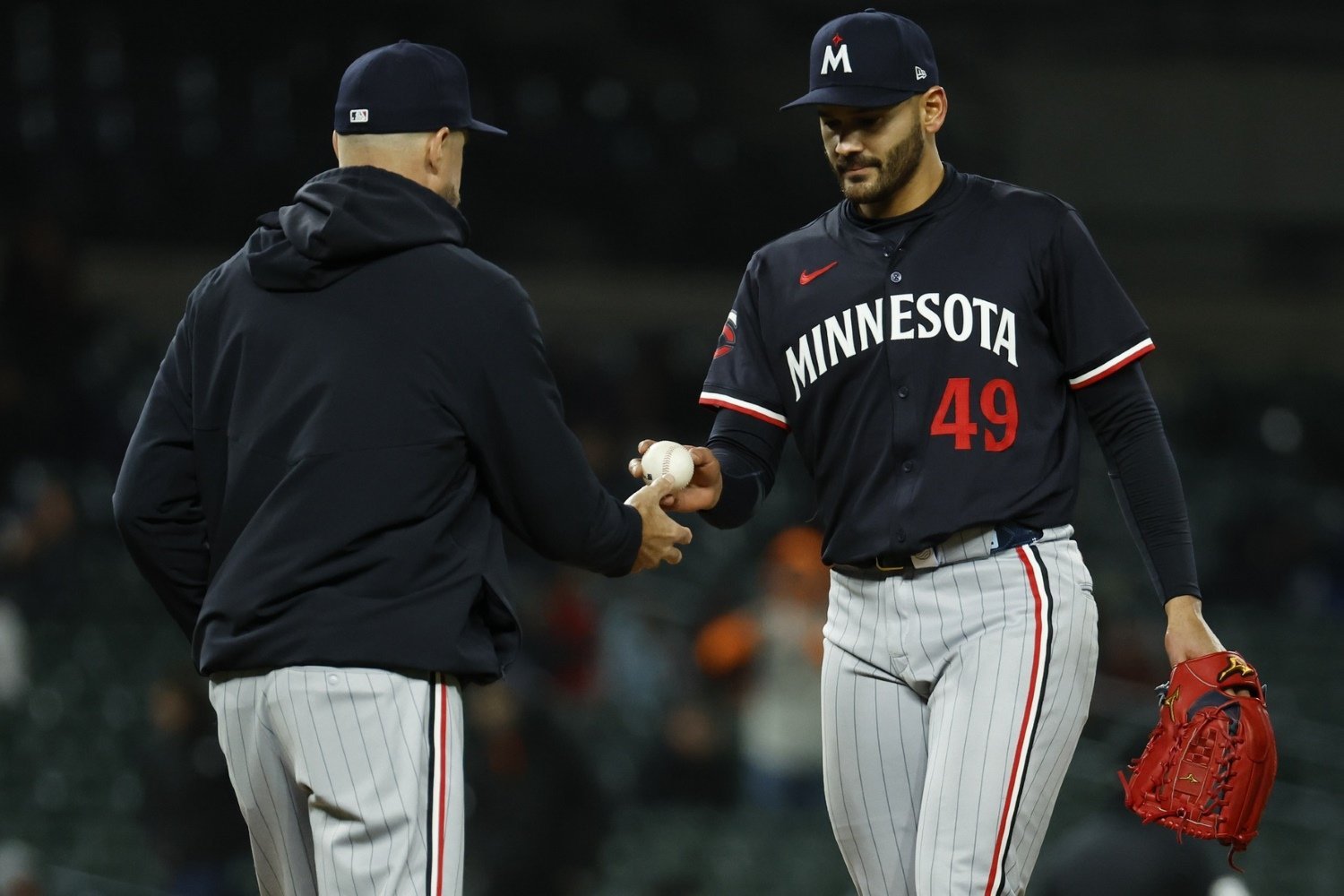 Pablo López has shown two very different sides over the past two seasons. During the first half, he’s struggled to find his rhythm, with inconsistencies impacting the Twins’ early record. But by the second half, it’s as if a switch flips, and he becomes one of the team’s most reliable arms, often showcasing ace-level performance. To maximize his impact across the entire season, here are some ways López might avoid the spring slumps that have defined his time in Minnesota so far. 1. Sweeping Struggles Under the Rug López’s sweeper has the potential to be one of his most dangerous pitches, but batters teed off on that pitch in 2024, with a slugging percentage over .500 in the first two months. One key to his success in the second half has been his ability to hit his spots with his secondary pitches. If López can start the season with that level of control, it will prevent him from getting into deep counts and forcing him to rely too much on his other pitches before settling into the game. Preseason bullpen work could be his best opportunity to refine his control. Working on using both edges of the plate more aggressively in spring training games and getting into a rhythm with his catching duo should set him up to control counts earlier and avoid those “giveaway” at-bats that seemed to haunt him in April. 2. Embracing Offseason Routine Adjustments Each offseason, pitchers work through a series of programs to build up strength and endurance, but some adjustments to his routine may give López an edge. Last winter, he went to Driveline Baseball shortly after the season ended to be assessed coming off a strong season. Emphasizing shorter, higher-intensity throwing sessions instead of simply focusing on endurance could help him avoid that feeling of “playing catch-up” in early April. A more intense approach to offseason training, with more precise workload management, could keep him from slipping into early season inconsistencies. In particular, López could lean into strategies that mimic game situations, whether simulating counts, pitch types, or specific in-game adjustments. By replicating high-leverage situations in his training regimen, he could build up confidence and muscle memory, making his second-half form the starting point for 2025. 3. Prioritizing the Changeup Early López’s changeup has been his calling card, especially as the season progresses. As the second half of both seasons has shown, his changeup becomes even more deceptive when he’s in peak form. Last season, batters posted a .281 batting average versus his changeup, the highest total of his career. Still, that pitch had a lower exit velocity, producing a slugging percentage over 50 points lower than in 2023. Implementing it more deliberately from the start could give him a stable foundation to rely on while he builds up his fastball confidence and other breaking pitches. His ability to generate soft contact and prevent hard-hit balls by leaning on the changeup early could prevent hitters from sitting on his fastball, which may keep him in better counts. Last season, he held batters to a .540 OPS when he was ahead in the count. If he deploys this weapon strategically in the early months, it could make his entire pitch mix more effective 4. Incorporating In-Game Adjustments Sooner López has struggled early in games, especially in the first inning. Last season, batters hit .244/.282/.480 against him in the first frame, including eight home runs, the most he allowed in any inning. From the 2nd through the 3rd inning, he allowed a slugging percentage of .397 or lower. There must be something too predictable about his pitch mix in the first inning that makes it easier for opponents to focus on one pitch or area of the zone and make hard contact. One of López’s biggest strengths is his adaptability, especially in the latter part of the season, where he’s shown he can pivot mid-game or mid-season. Learning to embrace those adjustments sooner might allow him to avoid prolonged slumps altogether. For example, López has often tinkered with his pitch sequencing as the season wears on; if he can fast-track this process, it may allow him to keep hitters off-balance earlier in the year. If López can hit the ground running and avoid those typical slow starts, he could elevate the Twins’ rotation to a new level. Avoiding the early-season slump will require physical and mental adjustments, but López has already proven he’s more than capable. The key for him may lie in getting out of his own way and letting his second-half ace mentality shine from the start. What’s the most significant issue keeping López from performing well in the season’s early months? Leave a COMMENT and start the discussion.

