Cody Christie
-
Posts
7,820 -
Joined
-
Last visited
-
Days Won
5
Content Type
Profiles
News
Minnesota Twins Videos
2026 Minnesota Twins Top Prospects Ranking
2022 Minnesota Twins Draft Picks
Minnesota Twins Free Agent & Trade Rumors, Notes, & Tidbits
Guides & Resources
2023 Minnesota Twins Draft Picks
The Minnesota Twins Players Project
2024 Minnesota Twins Draft Picks
2025 Minnesota Twins Draft Pick Tracker
2026 Minnesota Twins Draft Tracker: Picks & Bonuses
Forums
Blogs
Events
Store
Downloads
Gallery
Everything posted by Cody Christie
-
 The Twins just posted this video with some background on Walker Jenkins
- 19 replies
-
- 1
-

-
- walker jenkins
- connor prielipp
- (and 5 more)
-
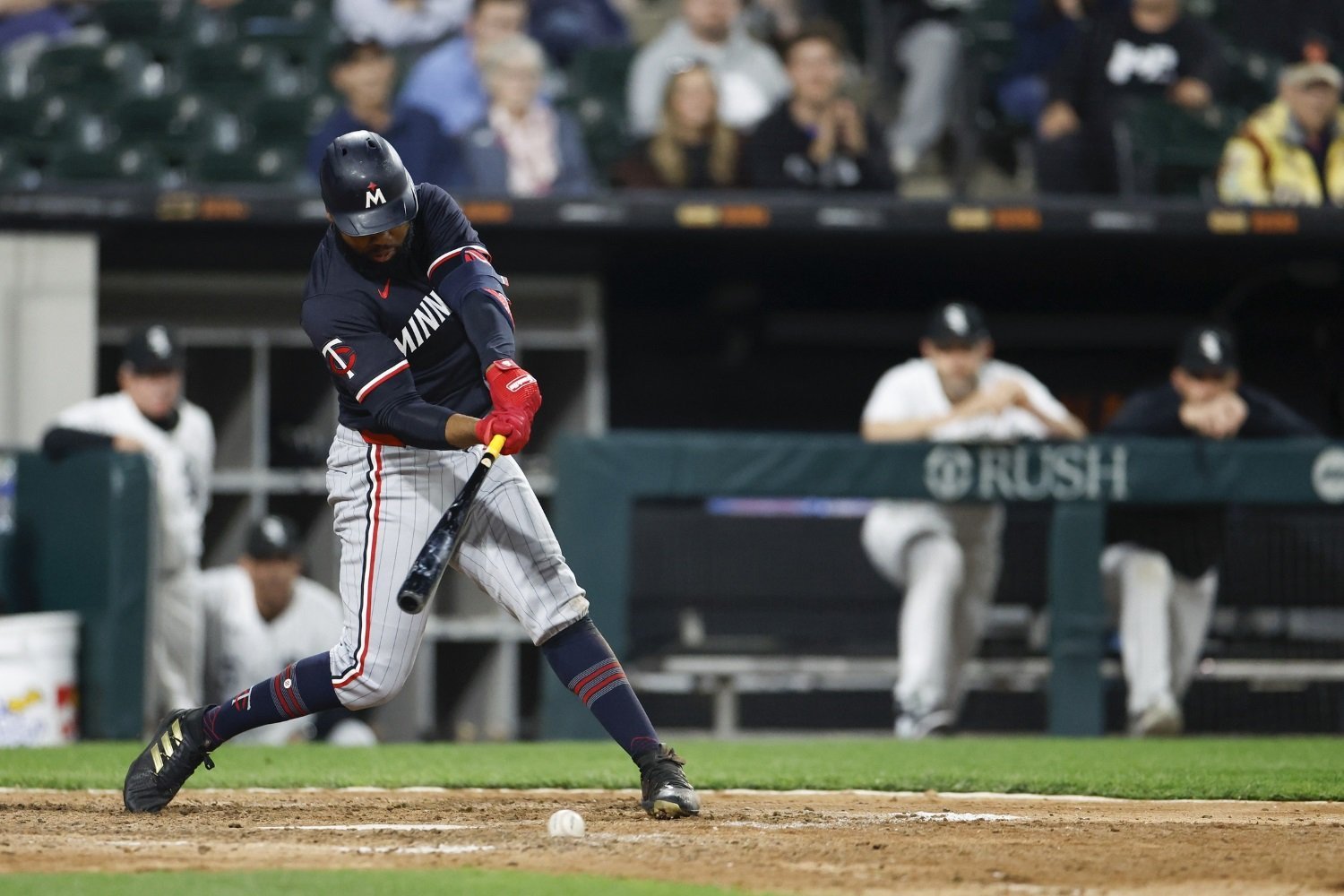 The Twins' trade for Manuel Margot was supposed to be a timely upgrade for the center-field picture. It was an insurance policy, in case Byron Buxton was injured, much like Michael A. Taylor had been in 2023. In hindsight, though, the deal was a classic case of “all that glitters isn’t gold” for Minnesota. The hope was that Margot, a player with potential in the eyes of the front office, would step in and provide coverage for the outfield, in terms of both offensive matchup play and defensive competence. Instead, it quickly became apparent that Margot was not the viable option that the team had envisioned. In 2023, Taylor surprised many with his performance, as he popped 21 home runs and provided excellent defense in center. Entering 2024, the Twins front office attempted to find a similar player. Unfortunately, Margot’s performance was nowhere near that level of help. He managed a dismal -0.9 WAR and posted an OPS+ of just 76, both of which were career lows. Perhaps most damning of all was his performance as a pinch-hitter, as he set an MLB record by going 0-for-30 in those appearances. It was clear to Twins brass that Margot wasn’t the player they had hoped he’d be. Thankfully for Minnesota, Buxton defied the odds by playing over 100 games for only the second time in his big-league career. Buxton’s durability meant that the insurance policy on center field, which many had counted on Margot to provide, ultimately became less critical. The Twins were spared the headache of scrambling for a replacement, as Buxton proved that he could be relied on to lead the charge in the outfield for (at least) one more season. But the trade wasn’t all bad news for Minnesota. In the grand chess match of player acquisitions and prospect swaps, the deal for Margot was just a swap of low-minors infield prospects: Noah Miller for Rayne Doncon. And while Margot’s struggles are now etched in Twins lore, the performances of these two prospects have offered at least a glimmer of hope for the future. Doncon has emerged as a promising prospect. Last season, before turning 21, Doncon showcased a level of maturity and production. Over 94 games at both Class A levels, he posted a respectable slash line of .254/.342/.431, while facing older pitchers in over 90% of his plate appearances. His ability was further highlighted by his 38 extra-base hits, a sign that he could provide real power potential as he continues to develop. Currently, Doncon slots in as the 16th-best prospect in the Twins organization on Twins Daily’s updated top-20 list. His performance justified the Twins’ decision to take a chance on him, and hinted that the trade might eventually yield dividends for Minnesota in the long run. Miller’s journey, while not as immediately eye-catching as Doncon’s, still warrants cautious optimism. The Twins selected him with the 36th overall pick in the 2021 MLB Draft. He’s been known for his strong defense at shortstop, but his offense has taken longer to develop. Last season, he played at High A and Double A, hitting .244/.318/.315 with 19 doubles and six homers. While his 2024 season might not have matched Doncon’s, his strong defense might be enough to make him a backup infielder at the big-league level. What’s interesting about this trade is how it embodies the unpredictable nature of prospect acquisitions in today’s MLB. In many ways, the deal was a package that looked like it was designed to fill an immediate need that (thanks to Buxton’s availability) ultimately didn’t materialize. Yet, there's a silver lining to all the criticism tied to Margot's historically bad performance. Doncon has provided the kind of upside that helps add talent to a Twins system attempting to keep the franchise's winning window open. Bigger-market teams can pay free agents to supplement the big-league roster, but that isn’t a luxury available to the Twins. Even when a deal doesn’t pan out as expected, there’s always the potential that the underlying assets will eventually pay dividends. The contrasting outcomes of Margot’s underwhelming stint and the promising signs from Doncon underscore the fine line that teams walk when trading for immediate help while also trying to invest in long-term talent. In the end, while Margot’s tenure with the Twins will likely be remembered as one of the more regrettable moves in recent memory, the prospect involved in the deal might be the saving grace that tips the scales in favor of Minnesota. Did the Twins win the Margot trade? Leave a comment and start the discussion.
- 22 comments
-
- 1
-

-
- manuel margot
- noah miller
- (and 1 more)
-
Some trades are more significant than others, but small trades around the roster's margins can make a significant difference for teams like the Twins. Here’s a look back at last spring’s trade to bolster the club's outfield depth, and how the prospects involved fit into each team’s long-term plans. Image courtesy of © Kamil Krzaczynski-USA TODAY Sports Some trades are more significant than others, but small trades around the roster's margins can make a significant difference for teams like the Twins. Here’s a look back at last spring’s trade to bolster the club's outfield depth, and how the prospects involved fit into each team’s long-term plans. The Twins' trade for Manuel Margot was supposed to be a timely upgrade for the center-field picture. It was an insurance policy, in case Byron Buxton was injured, much like Michael A. Taylor had been in 2023. In hindsight, though, the deal was a classic case of “all that glitters isn’t gold” for Minnesota. The hope was that Margot, a player with potential in the eyes of the front office, would step in and provide coverage for the outfield, in terms of both offensive matchup play and defensive competence. Instead, it quickly became apparent that Margot was not the viable option that the team had envisioned. In 2023, Taylor surprised many with his performance, as he popped 21 home runs and provided excellent defense in center. Entering 2024, the Twins front office attempted to find a similar player. Unfortunately, Margot’s performance was nowhere near that level of help. He managed a dismal -0.9 WAR and posted an OPS+ of just 76, both of which were career lows. Perhaps most damning of all was his performance as a pinch-hitter, as he set an MLB record by going 0-for-30 in those appearances. It was clear to Twins brass that Margot wasn’t the player they had hoped he’d be. Thankfully for Minnesota, Buxton defied the odds by playing over 100 games for only the second time in his big-league career. Buxton’s durability meant that the insurance policy on center field, which many had counted on Margot to provide, ultimately became less critical. The Twins were spared the headache of scrambling for a replacement, as Buxton proved that he could be relied on to lead the charge in the outfield for (at least) one more season. But the trade wasn’t all bad news for Minnesota. In the grand chess match of player acquisitions and prospect swaps, the deal for Margot was just a swap of low-minors infield prospects: Noah Miller for Rayne Doncon. And while Margot’s struggles are now etched in Twins lore, the performances of these two prospects have offered at least a glimmer of hope for the future. Doncon has emerged as a promising prospect. Last season, before turning 21, Doncon showcased a level of maturity and production. Over 94 games at both Class A levels, he posted a respectable slash line of .254/.342/.431, while facing older pitchers in over 90% of his plate appearances. His ability was further highlighted by his 38 extra-base hits, a sign that he could provide real power potential as he continues to develop. Currently, Doncon slots in as the 16th-best prospect in the Twins organization on Twins Daily’s updated top-20 list. His performance justified the Twins’ decision to take a chance on him, and hinted that the trade might eventually yield dividends for Minnesota in the long run. Miller’s journey, while not as immediately eye-catching as Doncon’s, still warrants cautious optimism. The Twins selected him with the 36th overall pick in the 2021 MLB Draft. He’s been known for his strong defense at shortstop, but his offense has taken longer to develop. Last season, he played at High A and Double A, hitting .244/.318/.315 with 19 doubles and six homers. While his 2024 season might not have matched Doncon’s, his strong defense might be enough to make him a backup infielder at the big-league level. What’s interesting about this trade is how it embodies the unpredictable nature of prospect acquisitions in today’s MLB. In many ways, the deal was a package that looked like it was designed to fill an immediate need that (thanks to Buxton’s availability) ultimately didn’t materialize. Yet, there's a silver lining to all the criticism tied to Margot's historically bad performance. Doncon has provided the kind of upside that helps add talent to a Twins system attempting to keep the franchise's winning window open. Bigger-market teams can pay free agents to supplement the big-league roster, but that isn’t a luxury available to the Twins. Even when a deal doesn’t pan out as expected, there’s always the potential that the underlying assets will eventually pay dividends. The contrasting outcomes of Margot’s underwhelming stint and the promising signs from Doncon underscore the fine line that teams walk when trading for immediate help while also trying to invest in long-term talent. In the end, while Margot’s tenure with the Twins will likely be remembered as one of the more regrettable moves in recent memory, the prospect involved in the deal might be the saving grace that tips the scales in favor of Minnesota. Did the Twins win the Margot trade? Leave a comment and start the discussion. View full article
-
How a New Take on an Old Pitch May Save Randy Dobnak’s Career
Cody Christie posted an article in Twins
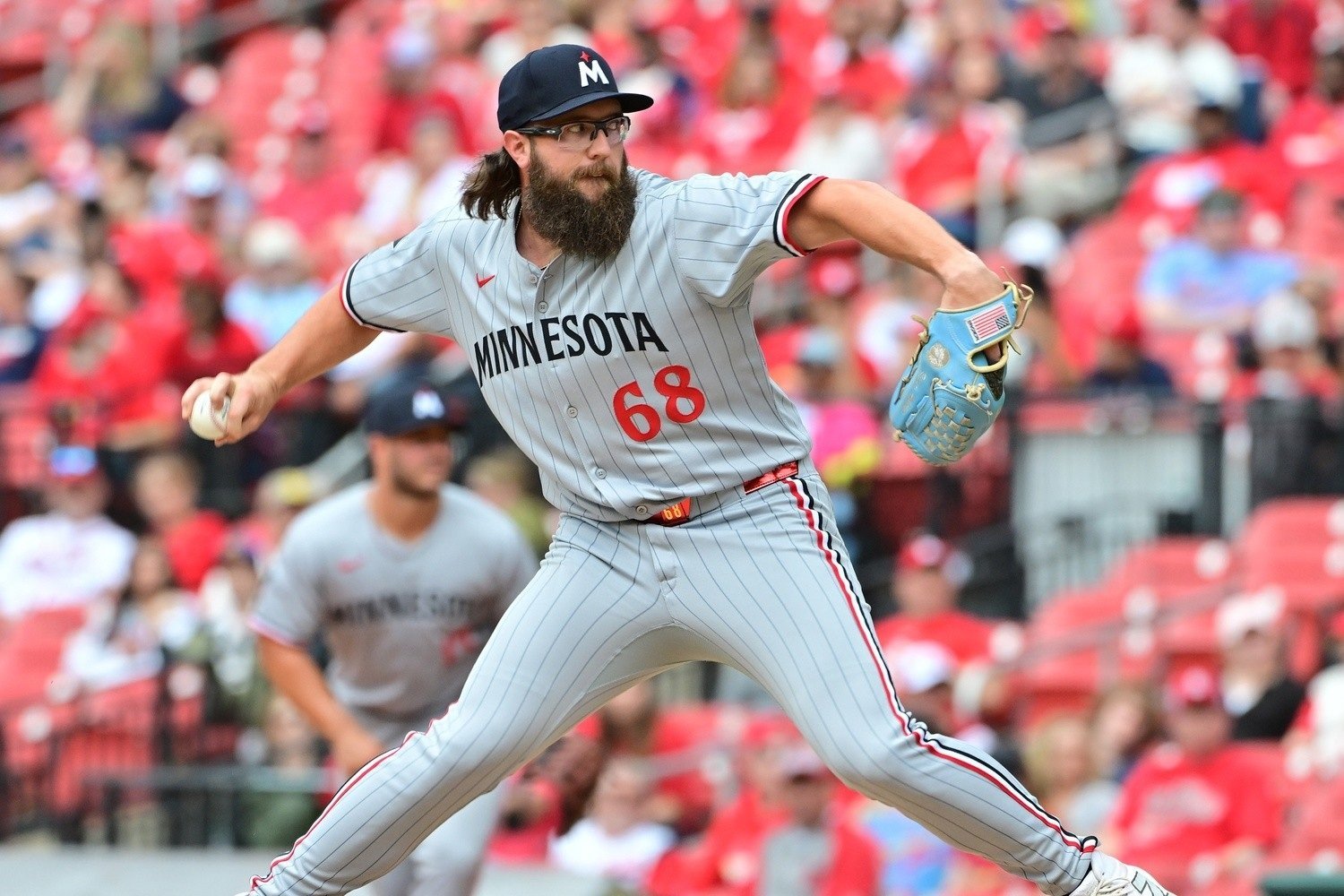 In a game where every pitch counts, Randy Dobnak could be on the cusp of reinventing his career with one new weapon in his arsenal, a pitch called the kick-change. Baseball, as we know it, is in a constant state of evolution. Batters are pushing the envelope by seeking innovative techniques to harness their power, as evidenced by the recent frenzy surrounding the "torpedo" bat during the Yankees’ home run rampage last weekend. Meanwhile, pitchers like Dobnak are under immense pressure to adapt and maintain their own competitive edge. Dobnak’s story this season has been heartwarming. As a surprise addition to the Opening Day roster, he was thrust into an unexpected role when Bailey Ober’s shaky start left the bullpen in dire straits. With nearly 80 pitches thrown in relief during the team’s opening series, Dobnak’s workload skyrocketed, highlighting the crucial need for reliability in relief arms. Despite being designated for assignment (a move that, under current rules, won’t cut him loose due to the unique contract), Dobnak’s future hangs in the balance. Now, all eyes are on his latest experiment: the kick-change. The kick-change is a fresh approach that’s been making the rounds across the baseball community this year. Developed by Shaun Anderson, this pitch rethinks the conventional changeup. “Instead of keeping my middle finger on top and spiking it, I turn it over to the side and I almost spike the right side of the seam,” Anderson explained in an interview with The Sporting Tribune. “It’s just really about kicking the axis upside down, rather than getting really on top of it. So, just being able to kick it with your middle finger is really the purpose of the kick-change.” In essence, the kick-change flips the script on the typical delivery, focusing on an innovative “kicking” motion with the middle finger to disrupt the batter’s timing. This new angle means that pitchers can introduce unexpected movement by altering the ball’s axis mid-flight (as it will seem to the batter, at least), rather than relying solely on velocity differences. What we’re beginning to see, even in small samples, is that the kick-change is not only about deception but also about precision. In his recent outing, Dobnak experimented with this new twist on his repertoire by throwing 19 changeups, each exhibiting subtle yet meaningful differences. His average velocity dropped from 85.8 mph in 2024 to 84.9 mph this season. It’s a slight reduction that could prove lethal, when combined with the additional vertical drop. The vertical drop on the pitch increased from 43.3 inches to 44.0 inches, an adjustment that may sound minor on paper but could change how the ball behaves as it approaches the hitter. Additionally, the spin on the ball decreased from 1457 rpm to 1157 rpm, suggesting that Dobnak is intentionally dialing down the rotation to emphasize the pitch’s “kick” effect. To help aid his kick-change, Dobnak has made a few other alterations to his delivery to help separate his breaking pitches from his fastball. His sinker movement changed this year, so the altered changeup (which moves similarly to last year) now has more separation from the fastballs than it did before. His arm slot is also slightly higher this year (+3 degrees), so the batter’s perspective of the pitch will be different even with a similar movement profile. The implications for Dobnak are significant. In today’s game, where every edge is scrutinized and the competition is fierce, a pitch like the kick-change could be the key to salvaging his career and giving him a big-league role beyond 2025. His performance with Triple-A St. Paul will undoubtedly serve as the litmus test for whether this approach can be successfully translated to the major leagues. For a pitcher who has already been under the microscope because of his unique contract, this new pitch might be the catalyst that revitalizes his role in the organization. Critics and fans alike will be watching closely, as the evolution of the kick-change could signal broader shifts in pitching strategies across baseball. Pitchers are in a constant arms race with batters. As hitters adopt new tools, pitchers are compelled to innovate to level the playing field. The kick-change represents one such innovation, a pitch that challenges traditional mechanics and offers a fresh approach to outsmarting batters who are ever-vigilant for any sign of predictability. For Dobnak, embracing the kick-change is a calculated risk. His recent appearance, marked by subtle adjustments in velocity, drop, and spin, hints at a commitment to mastering this new tool. Although the sample is small, the early data is promising enough to warrant attention. Dobnak’s experiment with the kick-change is emblematic of that ever-present struggle to remain relevant in a sport that continuously reinvents itself. For a pitcher fighting to secure his future, a well-executed kick-change could be the turning point that saves his career. Will the kick-change help Dobnak to extend his career? Leave a comment and start the discussion.
 -
Pitching and hitting are continuously evolving. For Randy Dobnak, any big-league future might be tied to the continued development of one new, trendy offering. Image courtesy of © Tim Vizer-Imagn Images Pitching and hitting are continuously evolving. For Randy Dobnak, any big-league future might be tied to the continued development of one new, trendy offering. In a game where every pitch counts, Randy Dobnak could be on the cusp of reinventing his career with one new weapon in his arsenal, a pitch called the kick-change. Baseball, as we know it, is in a constant state of evolution. Batters are pushing the envelope by seeking innovative techniques to harness their power, as evidenced by the recent frenzy surrounding the "torpedo" bat during the Yankees’ home run rampage last weekend. Meanwhile, pitchers like Dobnak are under immense pressure to adapt and maintain their own competitive edge. Dobnak’s story this season has been heartwarming. As a surprise addition to the Opening Day roster, he was thrust into an unexpected role when Bailey Ober’s shaky start left the bullpen in dire straits. With nearly 80 pitches thrown in relief during the team’s opening series, Dobnak’s workload skyrocketed, highlighting the crucial need for reliability in relief arms. Despite being designated for assignment (a move that, under current rules, won’t cut him loose due to the unique contract), Dobnak’s future hangs in the balance. Now, all eyes are on his latest experiment: the kick-change. The kick-change is a fresh approach that’s been making the rounds across the baseball community this year. Developed by Shaun Anderson, this pitch rethinks the conventional changeup. “Instead of keeping my middle finger on top and spiking it, I turn it over to the side and I almost spike the right side of the seam,” Anderson explained in an interview with The Sporting Tribune. “It’s just really about kicking the axis upside down, rather than getting really on top of it. So, just being able to kick it with your middle finger is really the purpose of the kick-change.” In essence, the kick-change flips the script on the typical delivery, focusing on an innovative “kicking” motion with the middle finger to disrupt the batter’s timing. This new angle means that pitchers can introduce unexpected movement by altering the ball’s axis mid-flight (as it will seem to the batter, at least), rather than relying solely on velocity differences. What we’re beginning to see, even in small samples, is that the kick-change is not only about deception but also about precision. In his recent outing, Dobnak experimented with this new twist on his repertoire by throwing 19 changeups, each exhibiting subtle yet meaningful differences. His average velocity dropped from 85.8 mph in 2024 to 84.9 mph this season. It’s a slight reduction that could prove lethal, when combined with the additional vertical drop. The vertical drop on the pitch increased from 43.3 inches to 44.0 inches, an adjustment that may sound minor on paper but could change how the ball behaves as it approaches the hitter. Additionally, the spin on the ball decreased from 1457 rpm to 1157 rpm, suggesting that Dobnak is intentionally dialing down the rotation to emphasize the pitch’s “kick” effect. To help aid his kick-change, Dobnak has made a few other alterations to his delivery to help separate his breaking pitches from his fastball. His sinker movement changed this year, so the altered changeup (which moves similarly to last year) now has more separation from the fastballs than it did before. His arm slot is also slightly higher this year (+3 degrees), so the batter’s perspective of the pitch will be different even with a similar movement profile. The implications for Dobnak are significant. In today’s game, where every edge is scrutinized and the competition is fierce, a pitch like the kick-change could be the key to salvaging his career and giving him a big-league role beyond 2025. His performance with Triple-A St. Paul will undoubtedly serve as the litmus test for whether this approach can be successfully translated to the major leagues. For a pitcher who has already been under the microscope because of his unique contract, this new pitch might be the catalyst that revitalizes his role in the organization. Critics and fans alike will be watching closely, as the evolution of the kick-change could signal broader shifts in pitching strategies across baseball. Pitchers are in a constant arms race with batters. As hitters adopt new tools, pitchers are compelled to innovate to level the playing field. The kick-change represents one such innovation, a pitch that challenges traditional mechanics and offers a fresh approach to outsmarting batters who are ever-vigilant for any sign of predictability. For Dobnak, embracing the kick-change is a calculated risk. His recent appearance, marked by subtle adjustments in velocity, drop, and spin, hints at a commitment to mastering this new tool. Although the sample is small, the early data is promising enough to warrant attention. Dobnak’s experiment with the kick-change is emblematic of that ever-present struggle to remain relevant in a sport that continuously reinvents itself. For a pitcher fighting to secure his future, a well-executed kick-change could be the turning point that saves his career. Will the kick-change help Dobnak to extend his career? Leave a comment and start the discussion. View full article
-
The Twins will leave no stone unturned in their search for a replacement for the Rally Sausage. Now, the team’s core players have started to identify their own lucky charms for 2025. Image courtesy of © Geoff Burke-USA TODAY Sports The Twins will leave no stone unturned in their search for a replacement for the Rally Sausage. Now, the team’s core players have started to identify their own lucky charms for 2025. Last season, the Minnesota Twins relied on the power of the now-infamous Rally Sausage, an unassuming summer sausage that somehow became the team’s lucky charm. It started as a joke in the clubhouse, then found its way into the dugout, and by season’s end, it had morphed into something resembling a crime against gastronomy. Eventually, it achieved an almost mythical status while some players swore it whispered to them, and others claimed it had developed its own aura. But with a new season comes new superstitions, and players are now on a quest to find their own individual good-luck charms. Twins manager Rocco Baldelli recently requested that each player find their own personal “rally sausage” for the 2025 campaign. After all, you can only ride one piece of meat so far before the USDA gets involved. Here’s what some of the Twins' stars have chosen to fill the void left by their beloved (and questionably safe-to-consume) sausage. Carlos Correa: The "Rally Rolex" Carlos Correa, always one for style, has chosen a different kind of rally charm with his sparkling new "Rally Rolex." The Twins' shortstop has decided that his custom, diamond-encrusted timepiece (which may or may not be worth more than Target Field itself) will serve as his personal talisman. "Every time I check the time, I remind myself that it's winning time," Correa explained. "Also, the weight of it on my wrist keeps my swing level, so it’s really a win-win." Of course, some skeptics have questioned whether wearing a luxury watch during games is practical, but Correa insists it’s part of his routine. Plus, he’s confident that if the Twins ever need a new team plane, he can pawn it. Byron Buxton: The "Rally Bubble Wrap" After years of battling injuries, Byron Buxton is taking no chances with his good luck charm by selecting an entire roll of bubble wrap that he keeps within reach at all times. "Look, if the Rally Sausage could bring us good fortune, why not a protective layer of air pockets?" Buxton said while carefully wrapping his knees before batting practice. The coaching staff has expressed concern about him attempting to steal bases while encased in a full-body bubble suit, but Buxton remains optimistic. "If it helps me stay on the field for 162 games, I don’t care if I look like a human-sized packing peanut," he said. Pablo López: The "Rally Peccary Teeth" Pablo López has decided to embrace an ancient tradition with his personal good luck charm, "Rally Peccary Teeth." These teeth, taken from a pig-like mammal native to South America, have long been used in indigenous cultures for protection, good luck in hunting, and even initiation rites. López carries a small pouch of them in his locker and insists they hold mystical powers. "Baseball is a battle, just like hunting," López explained. "If peccary teeth can bring success to warriors and hunters, why not to a starting pitcher? I keep them close before every start and trust in their energy to help me carve through lineups." Teammates have been fascinated and slightly unsettled by López’s new superstition, but nobody is asking too many questions as long as he keeps racking up strikeouts. Jhoan Durán: The "Rally Flamethrower" Jhoan Durán, known for his triple-digit fastball, has chosen an appropriately aggressive good luck charm: a literal flamethrower. “The Rally Sausage was fine, but it didn’t throw 104 mph,” Durán said while adjusting his heat-resistant goggles. Before each game, he ceremonially ignites a pile of opposing team memorabilia, ensuring his arm is properly "heated up" before taking the mound. Twins officials have assured the media that Durán will not be allowed to use his flamethrower in the bullpen, but fans remain skeptical after reports surfaced that he is close to signing a sponsorship deal with Menards. He’d like to remind fans that you can score an 11% rebate on everything including flamethrowers. While the Rally Sausage will forever have a place in Twins lore (and possibly in a biohazard facility somewhere), the team is ready to embrace new superstitions for the 2025 season. Whether it’s luxury watches, protective packaging, sacred beverages, or controlled pyrotechnics, one thing is clear—this team will stop at nothing to find an edge. And who knows? Maybe by October, we’ll all be talking about the power of the Rally Bubble Wrap. One thing's for sure: whatever charms they choose, they’ll smell a lot better than last year’s sausage. Can you help other members of the Twins roster select their personal good luck charms for 2025? Leave a comment and start the discussion. View full article
-
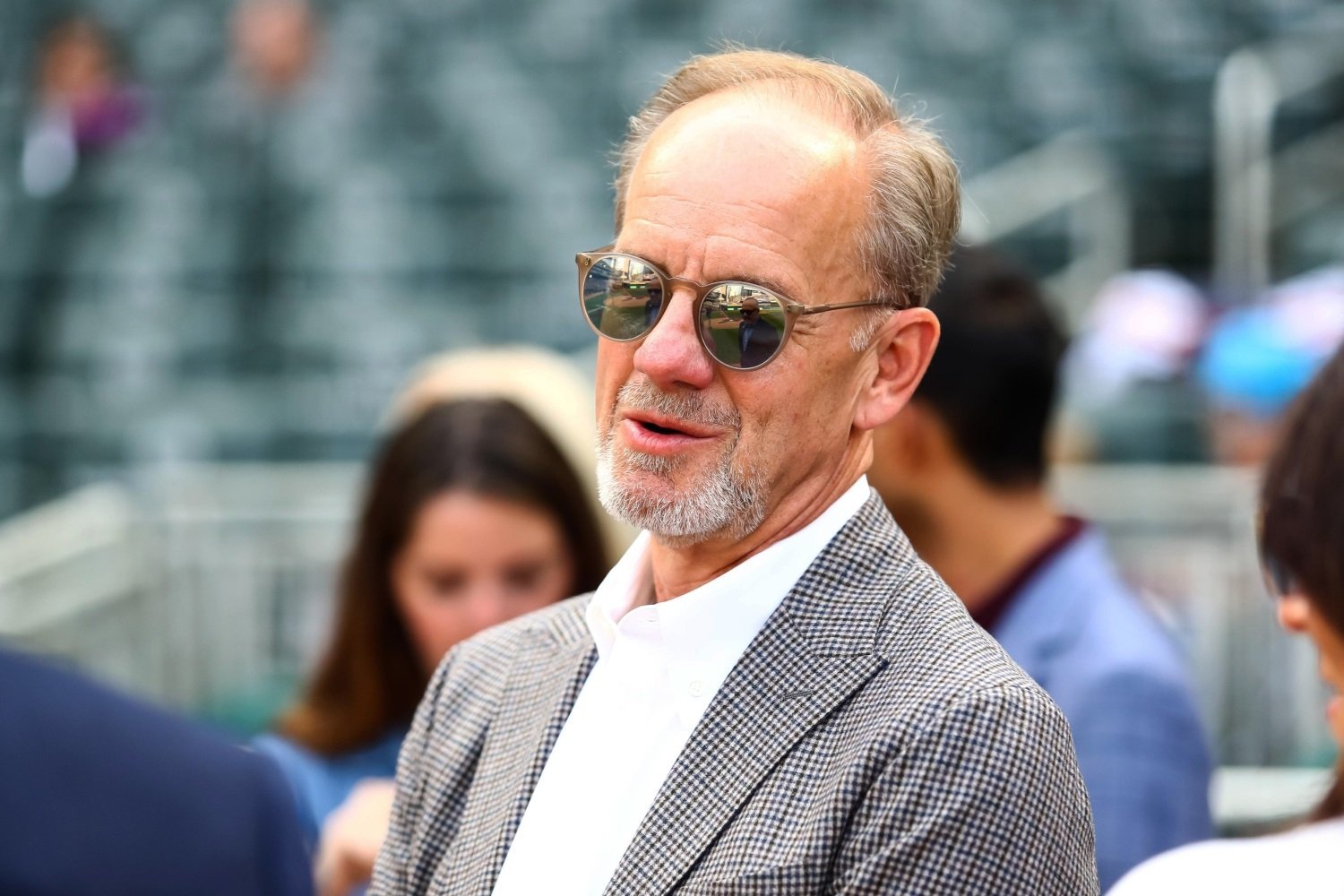 Change is (hopefully) coming for the Minnesota Twins, and fans seem more than ready. The chatter around the current ownership’s potential move to sell the team has been as heated as a nail-biter at Target Field. As the debate continues, let’s break down the three potential outcomes for the Pohlad family and rank them from best to worst for the hometown nine. 1. The Pohlads Fully Sell the Team This is the option that has fans buzzing with excitement—or did, back when it seemed more likely and imminent. There were good times in the relationship, but it's clearly not working out. It’s not you, it’s me. For many, the idea of the Pohlad family completely stepping aside is like turning the page on a painful chapter. After decades at the helm, the signs point to a clear need for new energy and fresh perspectives. Last season was riddled with frustration over payroll cuts and a TV deal that left a bad taste in the mouths of the fanbase. A complete sale means that a new ownership group could come in and invest not only financially, but also emotionally. Change at the top can bring a renewed focus on building a competitive, fan-first organization. With the Twins currently in a promising winning window, a change in leadership could be the catalyst that keeps the team in contention, especially in a wide-open American League. No longer burdened by the weight of family disputes or outdated business models, a new owner could refocus resources on creating a more vibrant game-day experience and address long-standing grievances from fans who have felt sidelined by decisions made far from the ballpark. The potential for a complete sale is bolstered by the fact that the Twins’ current valuation is estimated at around $1.5 billion, a seemingly bridge-able but clear step shy of the $1.7 billion price tag the Pohlad family aims for. As a reminder, the family purchased the team for $44 million in 1984. This disparity has long been a sore point for fans, who see the team’s legacy as more than just a line item on a balance sheet. Ultimately, a complete sale could be the best way to preserve the team’s rich history while ushering in an era of accountability and growth. New owners with fresh pockets (and perhaps a more modern vision) are more likely to listen to the fans, a responsiveness which has been sorely lacking in recent years. 2. The Pohlads Sell A Portion of the Team While this option isn’t as appealing as a full sale, it still represents a middle ground that could appease both sides, although only marginally. Recent reports at The Athletic said that current Twins chairman Joe Pohlad has expressed a desire to remain involved, which makes a complete hand-off less likely. Instead, fans might see a situation where certain family members buy out others, or bring in new minority owners to infuse fresh capital and ideas into the organization. There have been discussions with potential new partners who have already shown interest, including some from Minnesota. The downside here is the uneasy sense of incomplete separation. Fans have been vocal about their dissatisfaction with the Pohlads of late, and a partial sale would do little to quench that desire for change. It’s like having a band breakup where the lead singer stays on for the next album. The core spirit of what made the group special might still be missing. While some might argue that Joe Pohlad’s continued involvement could provide a bridge between the old guard and new ownership, it also risks perpetuating the same issues that led to the current state of discontent. A partial sale might feel like a missed opportunity for those who cherish the team’s history but yearn for a decisive new direction. It’s a compromise that doesn’t fully commit to change, leaving many old problems simmering beneath the surface. Yet, if done right, this outcome could at least introduce some of the necessary financial backing and operational restructuring that has been lacking. It’s a “better-than-nothing” scenario offering incremental improvements, rather than the sweeping changes fans are clamoring for. 3. The Pohlads Keep the Team In this worst-case scenario, the Pohlad family holds onto the team despite the growing chorus of dissent from the fanbase. It's akin to staying in the bad relationship and hoping the spark comes back; it feels like a bad idea all around. The Pohlad family reportedly aims for $1.7 billion for the team, even though Forbes recently valued the club at $1.5 billion. Meanwhile, the team is saddled with approximately $425 million in debt. The Pohlads are, in effect, allowing their own debts to drag down the value without being willing to lower their demands. When the very people who built and sustained the team for decades end up clashing with the fans, it creates a toxic atmosphere that’s hard to ignore. Fans have long felt that the decisions made by the Pohlad family have left the team underachieving despite being in the midst of a competitive window on the field. Keeping the team under the same ownership might mean a continuation of the status quo, a situation many believe is no longer tenable. The financial metrics don’t add up, and the angst among the fanbase is palpable. Just as the Washington Nationals and Los Angeles Angels have toyed with selling their franchises only to retract the offer, holding onto the Twins could become a similar cautionary tale. It would be a business decision that ultimately alienates those who form the lifeblood of the business. In the grand scheme, a full sale of the Twins is the most promising outcome for fans eager for a fresh start. It offers the best chance for revitalizing the franchise with new ideas and investments, and serves as a symbolic end to an era marked by financial missteps and strained relationships. While slightly more palatable, a partial sale risks leaving lingering issues unresolved. If the Pohlad family decides to cling on, it could begin a prolonged period of fan frustration and operational challenges. The next few months will be critical, as the team’s future hangs in the balance. For the fans, this isn’t just about dollars and cents. It's about preserving a legacy and reigniting the passion that makes baseball in Minnesota special. With so much at stake, inaction feels indefensible—but it also feels a bit more likely than it did just a month or two ago.
 -
Prospects beginning the year at Double-A have a strong chance to impact the big-league roster over the next two seasons. Many eyes will be on Walker Jenkins’ continued development, but other future big-league players will also be on the roster. Image courtesy of Ed Bailey, Wichita Wind Surge Prospects beginning the year at Double-A have a strong chance to impact the big-league roster over the next two seasons. Many eyes will be on Walker Jenkins’ continued development, but other future big-league players will also be on the roster. Many prospects can succeed in the minors’ lower levels, but Double-A becomes a proving ground for players who aspire to make a big-league impact. The Wind Surge roster includes four of Twins Daily’s top-20 prospects, including Walker Jenkins, Connor Prielipp, Ricardo Olivar, and Kala’i Rosario. Jenkins will get much of the attention in Wichita from Twins fans and the national media. However, the continued development of other top prospects is what separates organizations. Prielipp is one of the system’s most exciting arms and has a chance to prove he can stick as a starting pitcher this season. Olivar is a bat-first catcher who has an opportunity to refine his defensive skills in the upper minors. The Twins don’t have a long-term answer at catcher, which opens the door for prospects like Olivar. Rosario has gotten a lot of attention with his power production in the AFL over the last two seasons. Now, he must stay healthy and translate that power to the regular season. Coaching and development throughout the system are critical, and the Wind Surge will have a mostly new coaching staff for the 2025 campaign. Brian Dinkelman is entering his first season managing at the Double-A level. Dinkelman spent the previous five seasons as the manager of the Twins' High-A affiliate Cedar Rapids Kernels. He posted a winning record each season, propelling the Kernels to four consecutive postseason berths, including a Midwest League Championship in 2023. Dinkelman will be joined on the coaching staff by hitting coaches Andrew Cresci and Yeison Perez, with Perez being the lone returning coach from the 2024 Wind Surge. Ryan Ricci and Jesus Sanchez are the pitching coaches and will be in their first years coaching at Double-A. So, who will these coaches be working with to start the year? Pitchers: RHP Darren Bowen, RHP Trent Baker, RHP Ricky Castro, RHP Joel Cesar, RHP Chase Chaney, RHP John Klein, RHP Cody Laweryson, RHP Angel Macuare, RHP Michael Martinez, LHP Jaylen Nowlin, RHP Mike Paredes, LHP Connor Prielipp, LHP Aaron Rozek, RHP John Stankiewicz, RHP Jarret Whorff Prielipp is the highest-ranked pitching prospect on the Wind Surge roster as he currently sits 10th on the Twins Daily top-20 prospect list. The Twins selected Prielipp in the second round of the 2022 MLB Draft, but he has been limited to 30 professional innings due to multiple injuries. Last season, he made seven starts (19 1/3 innings) at High-A and posted a 3.26 ERA with a 0.98 WHIP and a 41.6 K%. Minnesota will continue to allow him to start. Still, it will be interesting to see if he gets relief opportunities as a lefty that could impact the big-league roster in the season’s second half. Some other names might be familiar to Twins fans. Bowen was part of the Jorge Polanco trade and made 18 appearances at High-A last year with a 6.07 ERA. Laweryson is entering his seventh season in the Twins organization. Last season was his first as a full-time reliever and he struck out 21.7% of batters. Nowlin made 15 starts for Wichita last season and posted a 4.67 ERA with a 22.9 K%. Rozek saw time with the Twins this spring and has pitched parts of the last three seasons at Double-A. Catchers: C Noah Cardenas, C Andrew Cossetti, C/OF Ricardo Olivar Olivar currently ranks as Twins Daily’s 20th-best prospect, so it was interesting that the Twins left him unprotected in the Rule 5 Draft. Even with some defensive flexibility, Olivar’s offensive profile is what carries his potential as a prospect. Last season, he played 81 games at High-A and posted a .867 OPS with 31 extra-base hits. He struggled in the transition to Double-A (19 games), but he was over two years younger than the average age of the competition. Cossetti spent all of 2024 in Wichita and collected 29 extra-base hits in 87 games. Cardenas also returns to Double-A after struggling with a .587 OPS last season. Infielders: INF Rubel Cespedes, INF/OF Jorel Ortega, INF/OF Ben Ross, INF Jake Rucker, INF Tanner Schobel, INF/OF Dalton Shuffield Cespedes will be getting his first taste of Double-A. Last season, he got on base over 34% of the time while playing three infield positions. Ortega combined for 26 extra-base hits in 122 Double-A games in 2024. Ross is coming off an Arizona Fall League appearance where he posted a .817 OPS in 100 PA. Rucker is entering his third season in Wichita, averaging nine home runs and 22 doubles per season at Double-A. Schobel posted a .639 OPS with the Wind Surge last season but faced older pitchers in over 83% of his at-bats. Shuffield has played at three different levels in every professional season, so he will move around again in 2025. Outfielders: OF Allan Cerda, OF Tyler Dearden, OF Kyler Fedko, OF Walker Jenkins, OF Kala’i Rosario Jenkins is the biggest name on the position player side, as Baseball America, MLB.com, and Baseball Prospectus each have him ranked among baseball’s top prospects. Last season, he missed time with a leg injury and still made it to Double-A in September. In 82 games, he hit .282/.394/.439 (.833) with 32 extra-base hits. Some national outlets believe Jenkins needs to show more in-game power before he can be considered among baseball’s top prospects. His power will be a focus for him in his first full season in Wichita. Rosario is also among Twins Daily’s top-20 prospects, entering the season ranked 18th. In 2024, he was limited to 70 games but posted a .757 OPS with 30 extra-base hits. Minnesota sent him to the AFL for the second straight season, and he’s averaged an OPS above .800. Cerda spent last season at Double-A in the Reds and Giants organization but was limited to 33 games. Dearden was signed out of the independent leagues where he played for Lew Ford-managed Long Island Ducks. He played 36 games after signing and posted a .659 OPS. Fedko returns to Wichita where he played 77 games last season and got on base 32.7% of the time. Wichita begins on the road against the Springfield Cardinals on Friday, April 4 at 6:35 PM CST. The Wind Surge home opener at the newly-renamed Equity Bank Park follows against the Midland Rockhounds on Tuesday, April 8 at 6:35 PM. What questions do you have about the roster? What prospects have the best chance to move to Triple-A this year? Leave a comment and start the discussion. View full article
-
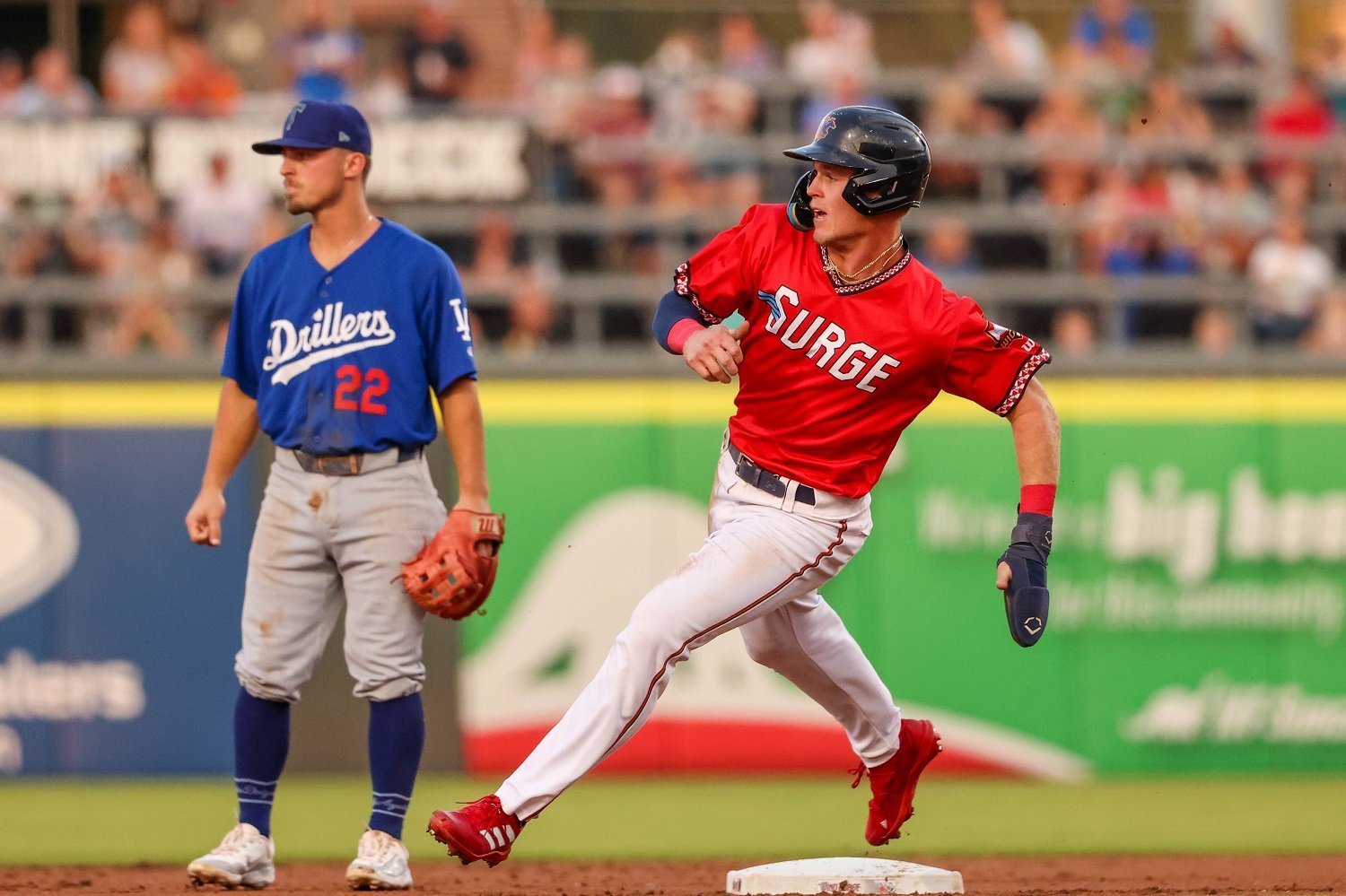 Many prospects can succeed in the minors’ lower levels, but Double-A becomes a proving ground for players who aspire to make a big-league impact. The Wind Surge roster includes four of Twins Daily’s top-20 prospects, including Walker Jenkins, Connor Prielipp, Ricardo Olivar, and Kala’i Rosario. Jenkins will get much of the attention in Wichita from Twins fans and the national media. However, the continued development of other top prospects is what separates organizations. Prielipp is one of the system’s most exciting arms and has a chance to prove he can stick as a starting pitcher this season. Olivar is a bat-first catcher who has an opportunity to refine his defensive skills in the upper minors. The Twins don’t have a long-term answer at catcher, which opens the door for prospects like Olivar. Rosario has gotten a lot of attention with his power production in the AFL over the last two seasons. Now, he must stay healthy and translate that power to the regular season. Coaching and development throughout the system are critical, and the Wind Surge will have a mostly new coaching staff for the 2025 campaign. Brian Dinkelman is entering his first season managing at the Double-A level. Dinkelman spent the previous five seasons as the manager of the Twins' High-A affiliate Cedar Rapids Kernels. He posted a winning record each season, propelling the Kernels to four consecutive postseason berths, including a Midwest League Championship in 2023. Dinkelman will be joined on the coaching staff by hitting coaches Andrew Cresci and Yeison Perez, with Perez being the lone returning coach from the 2024 Wind Surge. Ryan Ricci and Jesus Sanchez are the pitching coaches and will be in their first years coaching at Double-A. So, who will these coaches be working with to start the year? Pitchers: RHP Darren Bowen, RHP Trent Baker, RHP Ricky Castro, RHP Joel Cesar, RHP Chase Chaney, RHP John Klein, RHP Cody Laweryson, RHP Angel Macuare, RHP Michael Martinez, LHP Jaylen Nowlin, RHP Mike Paredes, LHP Connor Prielipp, LHP Aaron Rozek, RHP John Stankiewicz, RHP Jarret Whorff Prielipp is the highest-ranked pitching prospect on the Wind Surge roster as he currently sits 10th on the Twins Daily top-20 prospect list. The Twins selected Prielipp in the second round of the 2022 MLB Draft, but he has been limited to 30 professional innings due to multiple injuries. Last season, he made seven starts (19 1/3 innings) at High-A and posted a 3.26 ERA with a 0.98 WHIP and a 41.6 K%. Minnesota will continue to allow him to start. Still, it will be interesting to see if he gets relief opportunities as a lefty that could impact the big-league roster in the season’s second half. Some other names might be familiar to Twins fans. Bowen was part of the Jorge Polanco trade and made 18 appearances at High-A last year with a 6.07 ERA. Laweryson is entering his seventh season in the Twins organization. Last season was his first as a full-time reliever and he struck out 21.7% of batters. Nowlin made 15 starts for Wichita last season and posted a 4.67 ERA with a 22.9 K%. Rozek saw time with the Twins this spring and has pitched parts of the last three seasons at Double-A. Catchers: C Noah Cardenas, C Andrew Cossetti, C/OF Ricardo Olivar Olivar currently ranks as Twins Daily’s 20th-best prospect, so it was interesting that the Twins left him unprotected in the Rule 5 Draft. Even with some defensive flexibility, Olivar’s offensive profile is what carries his potential as a prospect. Last season, he played 81 games at High-A and posted a .867 OPS with 31 extra-base hits. He struggled in the transition to Double-A (19 games), but he was over two years younger than the average age of the competition. Cossetti spent all of 2024 in Wichita and collected 29 extra-base hits in 87 games. Cardenas also returns to Double-A after struggling with a .587 OPS last season. Infielders: INF Rubel Cespedes, INF/OF Jorel Ortega, INF/OF Ben Ross, INF Jake Rucker, INF Tanner Schobel, INF/OF Dalton Shuffield Cespedes will be getting his first taste of Double-A. Last season, he got on base over 34% of the time while playing three infield positions. Ortega combined for 26 extra-base hits in 122 Double-A games in 2024. Ross is coming off an Arizona Fall League appearance where he posted a .817 OPS in 100 PA. Rucker is entering his third season in Wichita, averaging nine home runs and 22 doubles per season at Double-A. Schobel posted a .639 OPS with the Wind Surge last season but faced older pitchers in over 83% of his at-bats. Shuffield has played at three different levels in every professional season, so he will move around again in 2025. Outfielders: OF Allan Cerda, OF Tyler Dearden, OF Kyler Fedko, OF Walker Jenkins, OF Kala’i Rosario Jenkins is the biggest name on the position player side, as Baseball America, MLB.com, and Baseball Prospectus each have him ranked among baseball’s top prospects. Last season, he missed time with a leg injury and still made it to Double-A in September. In 82 games, he hit .282/.394/.439 (.833) with 32 extra-base hits. Some national outlets believe Jenkins needs to show more in-game power before he can be considered among baseball’s top prospects. His power will be a focus for him in his first full season in Wichita. Rosario is also among Twins Daily’s top-20 prospects, entering the season ranked 18th. In 2024, he was limited to 70 games but posted a .757 OPS with 30 extra-base hits. Minnesota sent him to the AFL for the second straight season, and he’s averaged an OPS above .800. Cerda spent last season at Double-A in the Reds and Giants organization but was limited to 33 games. Dearden was signed out of the independent leagues where he played for Lew Ford-managed Long Island Ducks. He played 36 games after signing and posted a .659 OPS. Fedko returns to Wichita where he played 77 games last season and got on base 32.7% of the time. Wichita begins on the road against the Springfield Cardinals on Friday, April 4 at 6:35 PM CST. The Wind Surge home opener at the newly-renamed Equity Bank Park follows against the Midland Rockhounds on Tuesday, April 8 at 6:35 PM. What questions do you have about the roster? What prospects have the best chance to move to Triple-A this year? Leave a comment and start the discussion.
- 19 comments
-
- 5
-
-
- walker jenkins
- connor prielipp
- (and 5 more)
-
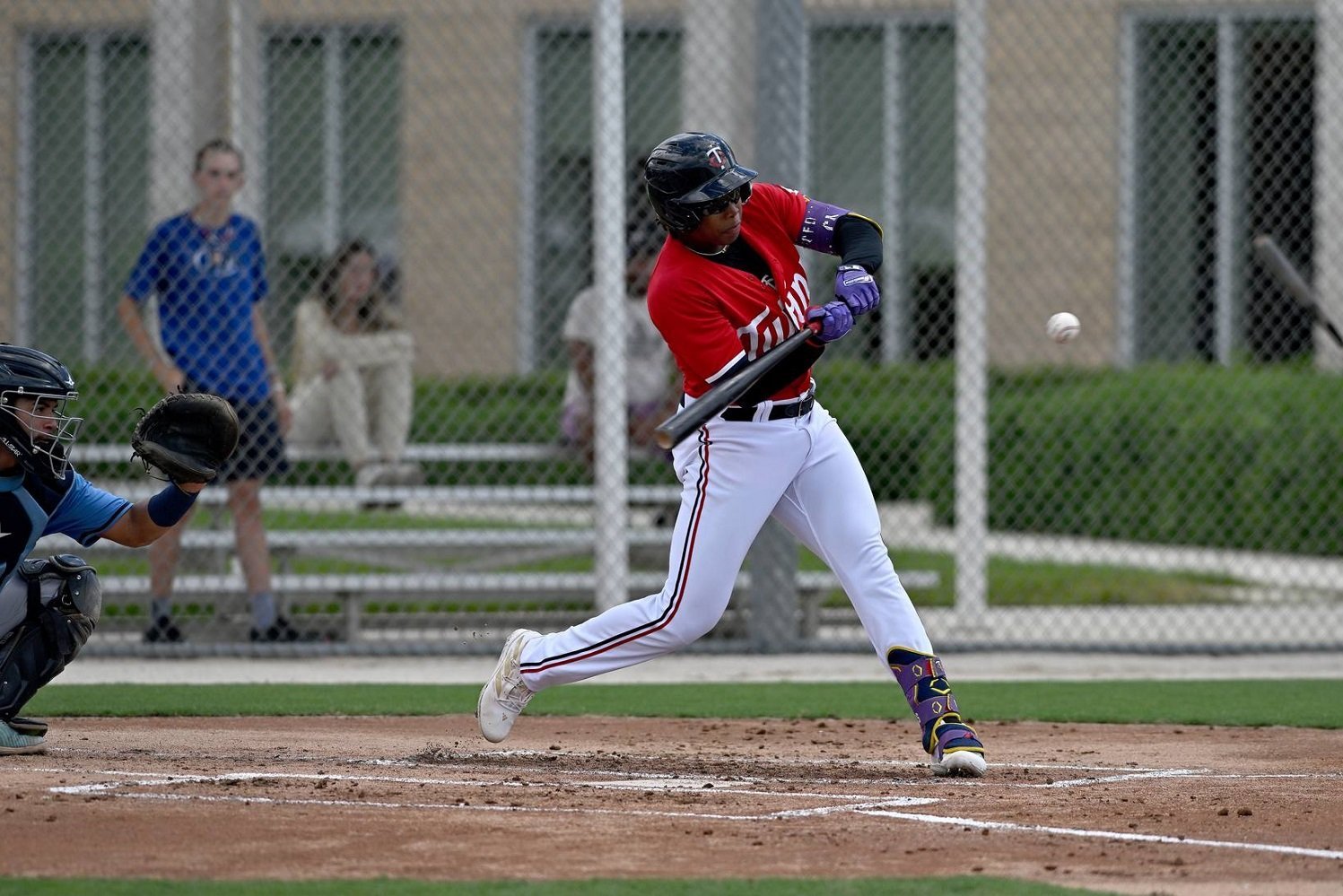
The Fort Myers Mighty Mussels begin their season on Friday. How does this year's roster shape up, and which top prospects are on the team? Image courtesy of William Parmeter (Photo of Yasser Mercedes) The Fort Myers Mighty Mussels begin their season on Friday. How does this year's roster shape up, and which top prospects are on the team? The Fort Myers Mighty Mussels should be an exciting team in 2025 with some of the team's top ranked prospects at multiple positions. Dasan Hill is the top ranked prospect that will be in Fort Myers to start the year. He currently sits as the 11th ranked prospect according to Twins Daily's updated top-20 list. He was the team's second round pick in 2024, so he will be making his pro debut when he steps on the mound for Fort Myers. On the hitter side, many eyes will turn to Yasser Mercedes, the Twins' top international prospect from the 2022 signing period. He's shown flashes of his talent during his professional career, but has yet to put together a consistent full season. The Twins are sending him back to Low-A where the 20-year-old played in 10 games after a dominant season in the FCL. Dameury Pena was part of Minnesota's 2023 international class and is already considered among the organization's top prospects. Fort Myers will be his first taste of a full-season league, and he won't turn 20 until September. Seth Feldman will be taking over the managerial role in Fort Myers. He will be only the second manager in the Mussels’ era after Brian Meyer was promoted to Cedar Rapids for the 2025 campaign. Feldman has managed multiple players on the roster over the last five seasons while serving as DSL Twins manager for two seasons and the past three seasons as the manager of the FSL Twins. “It’s an exciting opportunity,” Feldman said. “At the end of the day, it’s all about taking care of the players and making sure we do everything we can to help them and push them forward in their careers. We’re ready to get to work.” Joining Feldman’s staff will be three returning coaches from last season including hitting coach Luis Reyes, pitching coach Richard Salazar, and strength and conditioning coach Matt Anti. Other coaches on the staff are hitting coach Andrew Parks, pitching coach Anders Dzurak, lead athletic trainer Charysse Berkowski, athletic trainer Thaddeus Hayes and coordinator, baseball technology Jeremy Miranda. “This is a group that has worked hard getting after it during spring training these last few months,” Feldman added. “As a staff we are excited to work with this group and are ready to get the season rolling.” So, who are the players joining the coaching staff? Overall, the roster features 15 pitchers and 14 position players. Thirteen of the 29 players suited up for the Mussels in 2024. Pitchers: LHP Kade Bragg, LHP Michael Carpenter, RHP Jason Doktorczyk, RHP Jakob Hall, LHP Dasan Hill, RHP Hunter Hoopes, RHP Eli Jones, RHP Devin Kirby-Williams, RHP Jacob Kisting, RHP Dylan Questad, RHP Liam Rocha, RHP Ivran Romero, RHP Michael Ross, LHP Zander Sechrist, RHP Tyler Stasiowski Hill is the highest ranked pitcher among this group as he currently sits 11th on Twins Daily’s top-20 prospects. He was taken by the Twins with the 69th overall pick in the 2024 Draft out of high school in Texas. The Twins have focused on college pitching in recent drafts but have found success with high school pitchers like Charlee Soto and Marco Raya. Hill has yet to make his professional debut after signing last summer. He stands at 6-foot-5 and has a four-pitch mix highlighted by a mid-90's fastball and low 80’s sweeper. The Twins will closely monitor his workload in his first professional season, but he should follow a similar plan to Soto with Fort Myers last season. Minnesota’s front office has focused on college arms in the middle and late rounds with some positive results. Many of the other pitchers on the roster were selected in last June’s draft including Eli Jones (7th round), Jakob Hall (8th round), Jason Doktorczyk (9th round), Michael Carpenter (11th round), Jacob Kisting (14th round), and Michael Ross (18th round). A lot of development can happen in a player’s first full professional season and the Twins hope these arms can follow in the footsteps of other recent draftees like David Festa and Zebby Matthews. Catchers: Poncho Ruiz, Daniel Pena, Jefferson Valladares Ruiz split time between Low- and High-A last season and hit .248/.350/.361 (.711) with 24 doubles and four homers. He spent the offseason in the Mexican Pacific Winter League where he posted a .785 OPS in 43 games. Pena played 36 games for Fort Myers last season as a 19-year old. He posted a .593 OPS in 36 games but faced older batters in all but 18 plate appearances. Valladares was selected from the Los Angeles Dodgers in the Triple-A phase of the Rule 5 Draft. He was limited to 22 games last season but posted a .728 OPS. Infielders: 3B/1B Kevin Maitan, 1B/3B Peyton Carr, UTL Angel Del Rosario, 2B/3B Dameury Pena, 2B/3B/SS Isaac Pena, UTL Jay Thomason Dameury Pena is the highest ranked prospect among the infield group. He will be making his debut in a full-season league after playing 39 games for the FCL Twins in 2024. In 140 PA, he hit .282/.386/.410 (.796) with eight extra-base hits. He makes a lot of contact as he struck out in just 6.5% of his plate appearances over two years split between the Dominican Summer League and the FCL. Maitan is a former top-100 prospect with the Angels organization (2017-18) who the Twins signed from an independent league last year and sent to Cedar Rapids. Carr was a 10th round pick in 2024 and has yet to debut. Del Rosario can play multiple positions and had a .650 OPS in 56 games at High-A in 2024. Isaac Pena played 64 games with Fort Myers last season with a .574 OPS. Thomason was drafted from Air Force last season and got 85 PA (.626 OPS) with the Mighty Mussels after signing. Outfielders: Miguel Briceno, Byron Chourio, Maddux Houghton, Yasser Mercedes, Jose Rodriguez Mercedes is the highest ranked position player on the Opening Day roster, currently sitting at 15th on the Twins Daily top-20. He destroyed the FCL last year by slashing .331/.421/.568 (.989) with 26 extra-base hits and 18 steals in 51 games. When that season ended, the Twins promoted him to Fort Myers. As a right-handed hitter, his splits were nearly identical versus righties (.886 OPS) and lefties (.828 OPS). He was named a Florida Complex League All-Star in September and was runner-up for the Twins Daily Short Season Hitter of the Year. Briceno joins the Twins from the Brewers organization. He was a minor-league Rule 5 pick. Last season, he played 94 games at Low-A and posted a .685 OPS. Chourio played all last season (84 games) with Fort Myers while being a teenager. He struggled to make consistent contact (.549 OPS) but went 23-for-28 on steal attempts. Houghton is 26-years old and has spent the last two seasons at High-A. The Twins rewarded him last season with five games at Triple-A. Rodriguez fought through injuries last season that limited him to a .554 OPS. The Mighty Mussels open their season this Friday, April 4, on the road against the Palm Beach Cardinals at 5:30 p.m. CST/ The team heads home to Hammond Stadium for their home opener on Tuesday, April 8 at 6:05 p.m CST. What questions do you have about the roster? Can any of last year’s draft picks make an early impact this season? Leave a comment and start the discussion. View full article
-
 The Fort Myers Mighty Mussels should be an exciting team in 2025 with some of the team's top ranked prospects at multiple positions. Dasan Hill is the top ranked prospect that will be in Fort Myers to start the year. He currently sits as the 11th ranked prospect according to Twins Daily's updated top-20 list. He was the team's second round pick in 2024, so he will be making his pro debut when he steps on the mound for Fort Myers. On the hitter side, many eyes will turn to Yasser Mercedes, the Twins' top international prospect from the 2022 signing period. He's shown flashes of his talent during his professional career, but has yet to put together a consistent full season. The Twins are sending him back to Low-A where the 20-year-old played in 10 games after a dominant season in the FCL. Dameury Pena was part of Minnesota's 2023 international class and is already considered among the organization's top prospects. Fort Myers will be his first taste of a full-season league, and he won't turn 20 until September. Seth Feldman will be taking over the managerial role in Fort Myers. He will be only the second manager in the Mussels’ era after Brian Meyer was promoted to Cedar Rapids for the 2025 campaign. Feldman has managed multiple players on the roster over the last five seasons while serving as DSL Twins manager for two seasons and the past three seasons as the manager of the FSL Twins. “It’s an exciting opportunity,” Feldman said. “At the end of the day, it’s all about taking care of the players and making sure we do everything we can to help them and push them forward in their careers. We’re ready to get to work.” Joining Feldman’s staff will be three returning coaches from last season including hitting coach Luis Reyes, pitching coach Richard Salazar, and strength and conditioning coach Matt Anti. Other coaches on the staff are hitting coach Andrew Parks, pitching coach Anders Dzurak, lead athletic trainer Charysse Berkowski, athletic trainer Thaddeus Hayes and coordinator, baseball technology Jeremy Miranda. “This is a group that has worked hard getting after it during spring training these last few months,” Feldman added. “As a staff we are excited to work with this group and are ready to get the season rolling.” So, who are the players joining the coaching staff? Overall, the roster features 15 pitchers and 14 position players. Thirteen of the 29 players suited up for the Mussels in 2024. Pitchers: LHP Kade Bragg, LHP Michael Carpenter, RHP Jason Doktorczyk, RHP Jakob Hall, LHP Dasan Hill, RHP Hunter Hoopes, RHP Eli Jones, RHP Devin Kirby-Williams, RHP Jacob Kisting, RHP Dylan Questad, RHP Liam Rocha, RHP Ivran Romero, RHP Michael Ross, LHP Zander Sechrist, RHP Tyler Stasiowski Hill is the highest ranked pitcher among this group as he currently sits 11th on Twins Daily’s top-20 prospects. He was taken by the Twins with the 69th overall pick in the 2024 Draft out of high school in Texas. The Twins have focused on college pitching in recent drafts but have found success with high school pitchers like Charlee Soto and Marco Raya. Hill has yet to make his professional debut after signing last summer. He stands at 6-foot-5 and has a four-pitch mix highlighted by a mid-90's fastball and low 80’s sweeper. The Twins will closely monitor his workload in his first professional season, but he should follow a similar plan to Soto with Fort Myers last season. Minnesota’s front office has focused on college arms in the middle and late rounds with some positive results. Many of the other pitchers on the roster were selected in last June’s draft including Eli Jones (7th round), Jakob Hall (8th round), Jason Doktorczyk (9th round), Michael Carpenter (11th round), Jacob Kisting (14th round), and Michael Ross (18th round). A lot of development can happen in a player’s first full professional season and the Twins hope these arms can follow in the footsteps of other recent draftees like David Festa and Zebby Matthews. Catchers: Poncho Ruiz, Daniel Pena, Jefferson Valladares Ruiz split time between Low- and High-A last season and hit .248/.350/.361 (.711) with 24 doubles and four homers. He spent the offseason in the Mexican Pacific Winter League where he posted a .785 OPS in 43 games. Pena played 36 games for Fort Myers last season as a 19-year old. He posted a .593 OPS in 36 games but faced older batters in all but 18 plate appearances. Valladares was selected from the Los Angeles Dodgers in the Triple-A phase of the Rule 5 Draft. He was limited to 22 games last season but posted a .728 OPS. Infielders: 3B/1B Kevin Maitan, 1B/3B Peyton Carr, UTL Angel Del Rosario, 2B/3B Dameury Pena, 2B/3B/SS Isaac Pena, UTL Jay Thomason Dameury Pena is the highest ranked prospect among the infield group. He will be making his debut in a full-season league after playing 39 games for the FCL Twins in 2024. In 140 PA, he hit .282/.386/.410 (.796) with eight extra-base hits. He makes a lot of contact as he struck out in just 6.5% of his plate appearances over two years split between the Dominican Summer League and the FCL. Maitan is a former top-100 prospect with the Angels organization (2017-18) who the Twins signed from an independent league last year and sent to Cedar Rapids. Carr was a 10th round pick in 2024 and has yet to debut. Del Rosario can play multiple positions and had a .650 OPS in 56 games at High-A in 2024. Isaac Pena played 64 games with Fort Myers last season with a .574 OPS. Thomason was drafted from Air Force last season and got 85 PA (.626 OPS) with the Mighty Mussels after signing. Outfielders: Miguel Briceno, Byron Chourio, Maddux Houghton, Yasser Mercedes, Jose Rodriguez Mercedes is the highest ranked position player on the Opening Day roster, currently sitting at 15th on the Twins Daily top-20. He destroyed the FCL last year by slashing .331/.421/.568 (.989) with 26 extra-base hits and 18 steals in 51 games. When that season ended, the Twins promoted him to Fort Myers. As a right-handed hitter, his splits were nearly identical versus righties (.886 OPS) and lefties (.828 OPS). He was named a Florida Complex League All-Star in September and was runner-up for the Twins Daily Short Season Hitter of the Year. Briceno joins the Twins from the Brewers organization. He was a minor-league Rule 5 pick. Last season, he played 94 games at Low-A and posted a .685 OPS. Chourio played all last season (84 games) with Fort Myers while being a teenager. He struggled to make consistent contact (.549 OPS) but went 23-for-28 on steal attempts. Houghton is 26-years old and has spent the last two seasons at High-A. The Twins rewarded him last season with five games at Triple-A. Rodriguez fought through injuries last season that limited him to a .554 OPS. The Mighty Mussels open their season this Friday, April 4, on the road against the Palm Beach Cardinals at 5:30 p.m. CST/ The team heads home to Hammond Stadium for their home opener on Tuesday, April 8 at 6:05 p.m CST. What questions do you have about the roster? Can any of last year’s draft picks make an early impact this season? Leave a comment and start the discussion.
- 8 comments
-
- 3
-
-
- yasser mercedes
- dasan hill
- (and 5 more)
-
Secret Files Reveal Joe Mauer’s Plan to Make Twins More Minnesotan
Cody Christie posted an article in Just For Fun
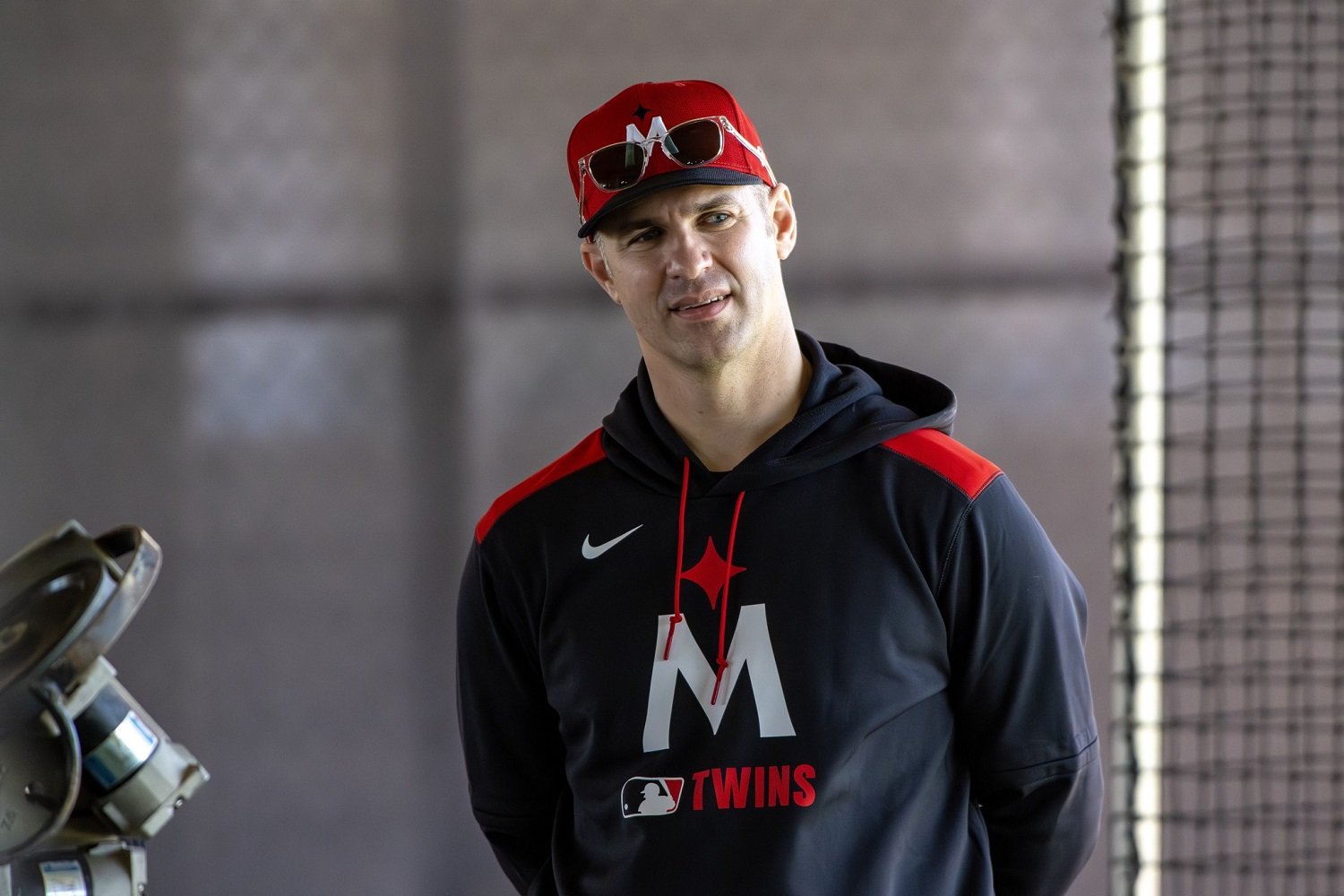 FORT MYERS, FL – In a shocking discovery that has the Minnesota baseball world buzzing, secret files detailing Joe Mauer’s covert efforts to instill peak Minnesotan behavior in the Twins clubhouse have been uncovered at the team’s spring training facility. The documents, rolled up and stashed inside a Caribou Coffee travel mug tucked beneath a stack of flannel shirts, outline a clandestine training program aimed at helping Twins players “channel their inner Joe Mauer.” According to anonymous sources within the organization, the files contain a meticulous curriculum designed to infuse the Twins’ roster with Mauer’s signature blend of politeness, restraint, and unwavering Midwest charm. One document, labeled Operation Uff Da, includes drills such as “The Passive-Aggressive Patience Test” (standing in line for hotdish without sighing) and “The Nonchalant Homer” (practicing a home-run trot that screams demurely observes, ‘Aw shucks, that just kinda happened’). “We found a binder labeled ‘Mauer’s Minnesota Method’ behind the Gatorade coolers,” said one team official who wished to remain anonymous for fear of reprisal from Mauer’s army of polite yet determined supporters. “It was filled with game strategies like ‘Always Take the First Pitch’ and ‘Only Express Disappointment with a Quick Shrug.’ I mean, it’s genius, really.” The files also reference a newly instituted “Minnesota Nice” conditioning program, which allegedly includes a daily regimen of holding doors open for teammates, avoiding direct eye contact while offering helpful fielding advice, and, most crucially, perfecting the ability to say “Oh, for sure” with just the right amount of nasal inflection. One current player, speaking on the condition of anonymity, expressed both admiration and mild confusion over the program. “We’re used to, like, swing analytics and spin rates, but now we’re watching old videos of Joe saying ‘Well, ya know, just tryin’ to help the team.’ I think they want us to be more… modest? One of the rookies tried to do a bat flip in BP, and they made him write ‘Ope, sorry’ 100 times on a Dairy Queen napkin.” The influence of Mauer’s secret teachings seems to be working, as another player noted that the clubhouse atmosphere has taken a noticeable turn. “Nobody complains. Ever. The air conditioning broke in the weight room, and all anyone said was, ‘Could be worse, least it’s not January.’” Even Twins management has been caught up in the Mauerization of the roster. “Look, the guy’s a Hall of Famer,” said one front office executive. “If he says that learning to politely wave at a passing pontoon is the key to a deep playoff run, we’re gonna try it.” Reached for comment, Mauer’s mother, Teresa, seemed unsurprised by the reports. “Well, that’s just how we raised him,” she said. “Always be humble, never finish the last bite of tater tot hotdish without asking, and above all else, never make a big fuss. That’s the Minnesota way.” As for Mauer himself, he remains tight-lipped on the matter. When confronted about the files, he simply smiled, gave a slow nod, and said, “Well, ya know… just happy to be here.” It remains to be seen if these unconventional training methods will translate into on-field success. Twins Daily will continue to track this story in the season's early months.
 -
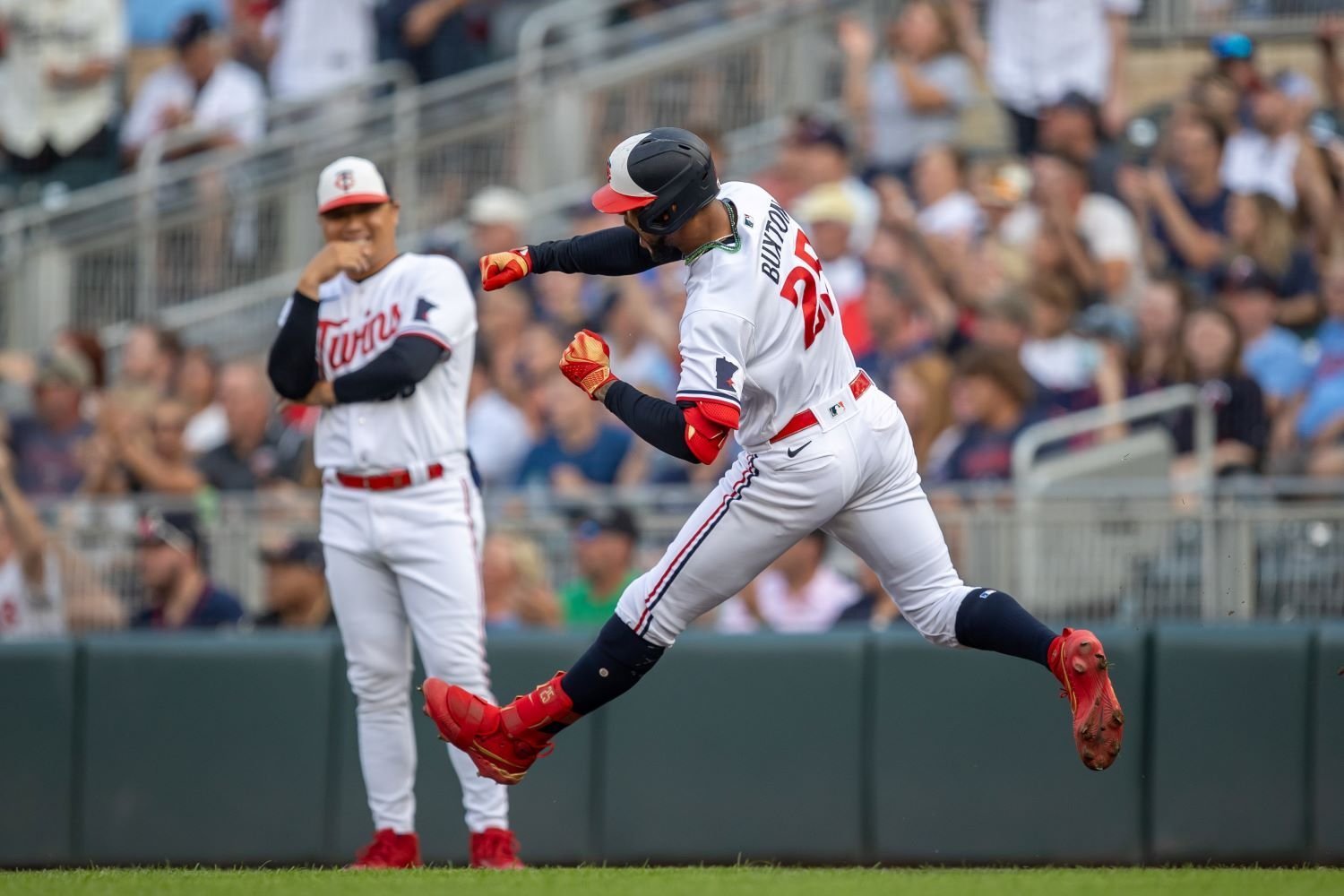 When it comes to clutch production, numbers can tell part of the story. Let’s examine how Twins hitters fared in high-pressure moments last season and what that might mean for the team’s plans in 2025. Before we break down the rankings, let’s take a quick look at the key FanGraphs metrics that form the basis of these evaluations. Understanding the Numbers Clutch: This stat measures a player’s performance in high-leverage situations, relative to their typical performance. A positive number indicates that the player “comes through” when the pressure’s on, while a negative value suggests they might choke when the stakes are high. However, remember that clutch numbers fluctuate wildly from season to season, so one year of over- or under-performance isn’t necessarily predictive of future results. Win Probability Added (WPA): WPA quantifies how much a player’s actions contribute to shifting their team’s chances of winning. Every play is evaluated by how much it increases (or, in some cases, decreases) the likelihood of a win. It’s a broad measure of overall impact, but multiple critical moments can impact the game’s final result. WPA Divided by Leverage Index (WPA/LI): By dividing WPA by the Leverage Index (a factor that gauges the pressure of the situation), this metric offers insight into how effective a player is specifically in high-leverage moments. It’s a refined look at performance under pressure—though, as with all clutch statistics, it should be viewed with caution as an isolated predictor. In short, while these numbers give us a snapshot of who might be the “clutch” performer, they’re just one part of a larger picture. Baseball’s inherent variability means that being clutch one season rarely guarantees the same results year after year. Below is a breakdown of the top five Twins hitters by clutchness, and how each fits into the 2025 blueprint. 5. Trevor Larnach, OF 2024 Clutch Stats: 0.19 Clutch, 0.50 WPA, 0.32 WPA/LI Larnach’s numbers suggest he’s contributed decently in pressure situations, although not dramatically. His slightly positive Clutch figure and modest WPA and WPA/LI values indicate that while he’s a useful bat in the lineup, he hasn’t yet become the team’s go-to guy in crunch time. For 2025, expect Larnach to continue growing into his full-time role, especially as the strong side of the platoon. 4. Matt Wallner, OF 2024 Clutch Stats: -1.39 Clutch, 0.50 WPA, 1.95 WPA/LI Wallner’s numbers present an interesting case. His negative Clutch stat might worry some, suggesting he has trouble equaling his normal production in high-pressure situations. However, his WPA/LI of 1.95 tells a different story. He can deliver a significant impact when he finds himself in crucial moments. As the Twins shape their plans for 2025, Wallner is expected to be one of the team’s top offensive performers, and they hope his high-leverage production will improve with more regular big-league playing time. 3. Willi Castro, UTL 2024 Clutch Stats: 0.10 Clutch, 0.78 WPA, 0.68 WPA/LI Castro’s numbers reflect a relatively balanced performance under pressure. His Clutch metric is nearly neutral, but his WPA figures indicate he’s been effective overall, especially in those critical moments where the win is on the line. For 2025, his versatility as a utility player means he can be plugged into various roles, giving the manager flexibility and a steady option when the game hangs in the balance. His most significant value in clutch situations might be his ability to play so many defensive positions, because that means other bench bats can be added to the lineup for the late innings. 2. Carlos Correa, SS 2024 Clutch Stats: -0.72 Clutch, 2.16 WPA, 2.74 WPA/LI Correa has been known as a clutch player dating back to his playoff runs with the Astros. While Correa’s Clutch metric is in the red, his overall WPA and WPA/LI are off the charts compared to his peers. This suggests that his overall contributions have been crucial to the team's success, even if he’s had an off night or two in high-pressure moments. In 2025, Correa’s role will be delivering consistent production that elevates the team’s chances. If fans were polled, Correa would be the likely pick as the team’s top clutch hitter. 1. Byron Buxton, OF 2024 Clutch Stats: 0.70 Clutch, 1.76 WPA, 1.09 WPA/LI Buxton might be a surprise pick for the top of the list, but he led Twins hitters in Clutch last season. Alongside robust WPA and WPA/LI figures, Buxton is a player who contributes in spurts and consistently delivers in key moments. Last season, he accumulated the totals above because he played in over 100 games for only the second time in his career. There’s no question that his performance is tied to the team’s overall outcome in 2025. His blend of speed, defense, and timely hitting makes him indispensable, especially when the game’s outcome hangs on a single play. There's another metrics-driven approach, offered by Baseball Savant. The site offers Run Value leaderboards that break down each hitter's contributions based on the location of pitches they see, and there's a further option to compare that production in a context-neutral environment to the values actually produced based on the situations in which those hitters came to bat. It's a way of folding situational plate discipline into the question of how hitters perform under pressure. Castro, Buxton and (yes) Manuel Margot do well by this reckoning. It’s crucial to take these numbers with a grain of salt. Clutch performance in one season is notoriously volatile, and many factors, from lineup context to random chance, can sway these metrics. Yet, they provide an engaging way to look at how the team's players perform under pressure. In 2025, the Twins will lean on this mix of youthful energy and seasoned veterans, with each player carving out their role, whether lighting it up in crunch time or grinding out the wins. For now, Twins fans can hope for plenty of clutch moments that only the best teams can produce. Do you agree with the clutch rankings from last season? Should another hitter make the list? Leave a comment and start the discussion.
- 9 comments
-
- 2
-
-
- byron buxton
- carlos correa
- (and 3 more)
-
For generations, fans have debated which players are the most clutch on their favorite team. Here are the Twins’ top five players based on clutchness, and what that means for the 2025 campaign. Image courtesy of Jesse Johnson-USA TODAY Sports For generations, fans have debated which players are the most clutch on their favorite team. Here are the Twins’ top five players based on clutchness, and what that means for the 2025 campaign. When it comes to clutch production, numbers can tell part of the story. Let’s examine how Twins hitters fared in high-pressure moments last season and what that might mean for the team’s plans in 2025. Before we break down the rankings, let’s take a quick look at the key FanGraphs metrics that form the basis of these evaluations. Understanding the Numbers Clutch: This stat measures a player’s performance in high-leverage situations, relative to their typical performance. A positive number indicates that the player “comes through” when the pressure’s on, while a negative value suggests they might choke when the stakes are high. However, remember that clutch numbers fluctuate wildly from season to season, so one year of over- or under-performance isn’t necessarily predictive of future results. Win Probability Added (WPA): WPA quantifies how much a player’s actions contribute to shifting their team’s chances of winning. Every play is evaluated by how much it increases (or, in some cases, decreases) the likelihood of a win. It’s a broad measure of overall impact, but multiple critical moments can impact the game’s final result. WPA Divided by Leverage Index (WPA/LI): By dividing WPA by the Leverage Index (a factor that gauges the pressure of the situation), this metric offers insight into how effective a player is specifically in high-leverage moments. It’s a refined look at performance under pressure—though, as with all clutch statistics, it should be viewed with caution as an isolated predictor. In short, while these numbers give us a snapshot of who might be the “clutch” performer, they’re just one part of a larger picture. Baseball’s inherent variability means that being clutch one season rarely guarantees the same results year after year. Below is a breakdown of the top five Twins hitters by clutchness, and how each fits into the 2025 blueprint. 5. Trevor Larnach, OF 2024 Clutch Stats: 0.19 Clutch, 0.50 WPA, 0.32 WPA/LI Larnach’s numbers suggest he’s contributed decently in pressure situations, although not dramatically. His slightly positive Clutch figure and modest WPA and WPA/LI values indicate that while he’s a useful bat in the lineup, he hasn’t yet become the team’s go-to guy in crunch time. For 2025, expect Larnach to continue growing into his full-time role, especially as the strong side of the platoon. 4. Matt Wallner, OF 2024 Clutch Stats: -1.39 Clutch, 0.50 WPA, 1.95 WPA/LI Wallner’s numbers present an interesting case. His negative Clutch stat might worry some, suggesting he has trouble equaling his normal production in high-pressure situations. However, his WPA/LI of 1.95 tells a different story. He can deliver a significant impact when he finds himself in crucial moments. As the Twins shape their plans for 2025, Wallner is expected to be one of the team’s top offensive performers, and they hope his high-leverage production will improve with more regular big-league playing time. 3. Willi Castro, UTL 2024 Clutch Stats: 0.10 Clutch, 0.78 WPA, 0.68 WPA/LI Castro’s numbers reflect a relatively balanced performance under pressure. His Clutch metric is nearly neutral, but his WPA figures indicate he’s been effective overall, especially in those critical moments where the win is on the line. For 2025, his versatility as a utility player means he can be plugged into various roles, giving the manager flexibility and a steady option when the game hangs in the balance. His most significant value in clutch situations might be his ability to play so many defensive positions, because that means other bench bats can be added to the lineup for the late innings. 2. Carlos Correa, SS 2024 Clutch Stats: -0.72 Clutch, 2.16 WPA, 2.74 WPA/LI Correa has been known as a clutch player dating back to his playoff runs with the Astros. While Correa’s Clutch metric is in the red, his overall WPA and WPA/LI are off the charts compared to his peers. This suggests that his overall contributions have been crucial to the team's success, even if he’s had an off night or two in high-pressure moments. In 2025, Correa’s role will be delivering consistent production that elevates the team’s chances. If fans were polled, Correa would be the likely pick as the team’s top clutch hitter. 1. Byron Buxton, OF 2024 Clutch Stats: 0.70 Clutch, 1.76 WPA, 1.09 WPA/LI Buxton might be a surprise pick for the top of the list, but he led Twins hitters in Clutch last season. Alongside robust WPA and WPA/LI figures, Buxton is a player who contributes in spurts and consistently delivers in key moments. Last season, he accumulated the totals above because he played in over 100 games for only the second time in his career. There’s no question that his performance is tied to the team’s overall outcome in 2025. His blend of speed, defense, and timely hitting makes him indispensable, especially when the game’s outcome hangs on a single play. There's another metrics-driven approach, offered by Baseball Savant. The site offers Run Value leaderboards that break down each hitter's contributions based on the location of pitches they see, and there's a further option to compare that production in a context-neutral environment to the values actually produced based on the situations in which those hitters came to bat. It's a way of folding situational plate discipline into the question of how hitters perform under pressure. Castro, Buxton and (yes) Manuel Margot do well by this reckoning. It’s crucial to take these numbers with a grain of salt. Clutch performance in one season is notoriously volatile, and many factors, from lineup context to random chance, can sway these metrics. Yet, they provide an engaging way to look at how the team's players perform under pressure. In 2025, the Twins will lean on this mix of youthful energy and seasoned veterans, with each player carving out their role, whether lighting it up in crunch time or grinding out the wins. For now, Twins fans can hope for plenty of clutch moments that only the best teams can produce. Do you agree with the clutch rankings from last season? Should another hitter make the list? Leave a comment and start the discussion. View full article
-
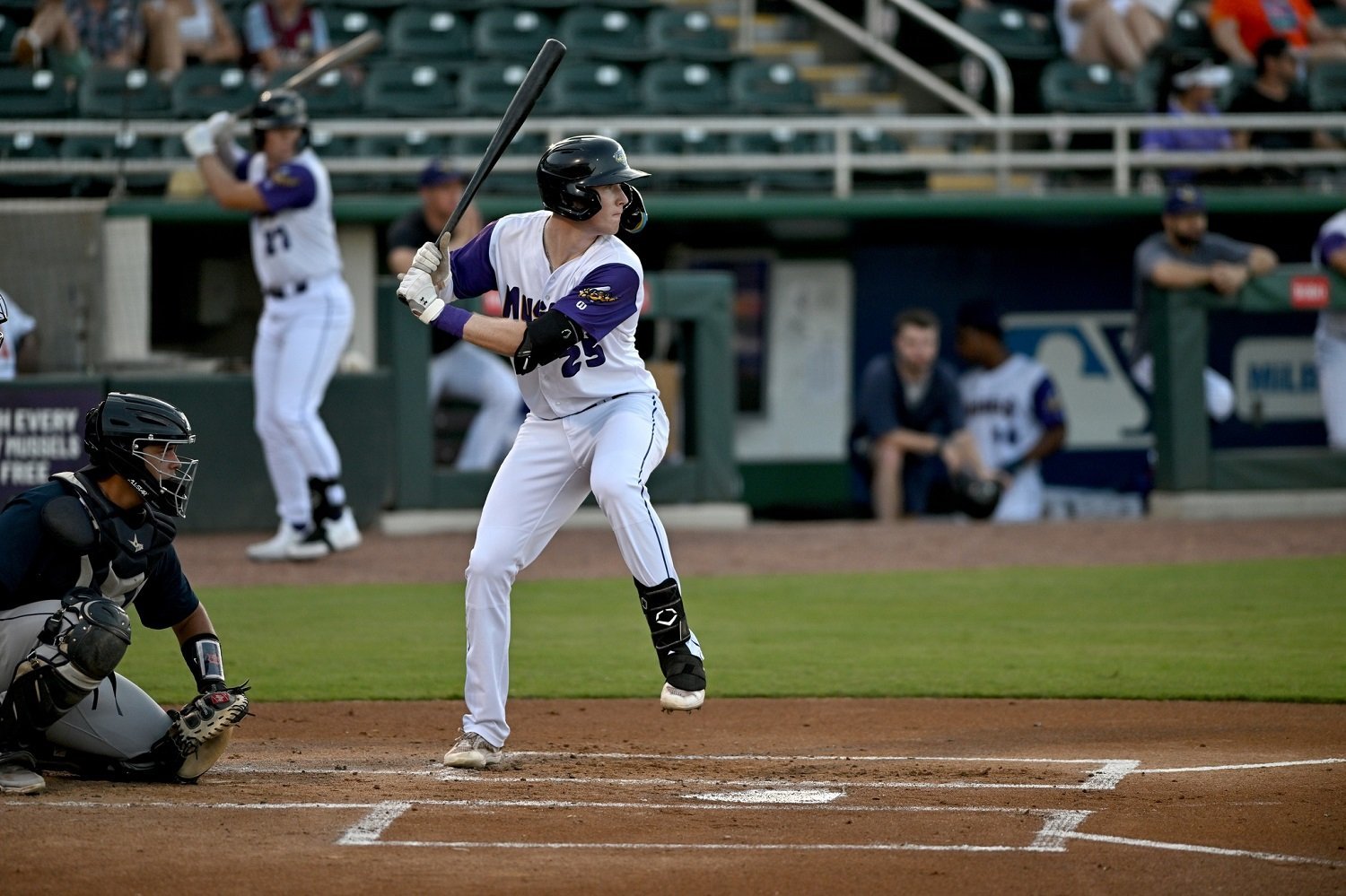 Brandon Winokur ’s talent is undeniable, and the 2025 season is shaping up to be one where he can showcase his five-tool talent. The third-round pick in 2023 received an over-slot bonus ($1.5 million) to keep him from his college commitment and has quickly become one of the organization’s most intriguing prospects. With his massive 6-foot-6 frame and a skill set that spans all five tools, Winokur has the potential to be a cornerstone for the Twins’ future. Flashes of his five-tool talent have marked Winokur’s early professional career. Drafted as a shortstop, he has spent his time playing shortstop, third base, and center field in the minors. Given his size and athletic profile, many scouts believe that a transition to center field could be on the horizon. His arm and speed make him viable at multiple positions. The Twins will keep him at shortstop as long as possible, but his unique physical tools make him a viable candidate for a move to center. The Offensive Arsenal: Swing, Miss, and Everything In Between Offensively, Winokur has the tools to be a potential All-Star, but he needs to improve on some parts of his game as he climbs the organizational ladder. His first full season in the largely pitching-friendly Florida State League was a telling display of his raw potential. Finishing third in OPS, and ranking in the top ten in both home runs (14) and wRC+ (116), he provided a glimpse of what could be an electrifying bat for the Twins. One area of improvement that has been repeatedly highlighted is his ability to pick up breaking pitches. Although he has improved his strikeout rate compared to his pro debut (-4.4 K%), his 115 to 34 K/BB ratio in 2024 indicates that there’s still a tendency to chase pitches outside the zone. This isn’t entirely surprising given his power tool because swinging for the fences sometimes leads to chasing pitches. The Twins know that Winokur could significantly boost his offensive consistency with more refined plate discipline. What truly stands out about Winokur is his rare combination of skills. MLB Pipeline has touted him as potentially the “best overall athlete” in the Twins’ system. That’s high praise in an organization that includes two of baseball’s top overall prospects, Walker Jenkins and Emmanuel Rodriguez . His power is one of the best in the organization, but it’s not just about the long ball. Winokur is a bona fide five-tool talent. He can hit for power and average, run the bases aggressively, field at a high level, and throw with a rocket arm. This blend of skills makes him not only exciting to watch but also a versatile asset who can be molded into a player that fits a variety of roles in a major league lineup. The Road Ahead in 2025 Looking ahead to the 2025 season, many fans will focus on players in the upper levels of the minors because the Twins have big names that are close to debuting. However, Winokur has the chance for a special season where he can take significant steps toward becoming a top-100 prospect. He should spend the majority of the season at High-A with the potential to move to Double-A in the season’s second half. He turned 20 in December, which could put him on a path to debut as early as 2026, with 2027 being a safer bet. His offensive profile should only improve as he continues to refine his approach at the plate, particularly in recognizing and handling breaking balls. For those who have seen him in action, it’s clear that his natural power is something to behold, and the occasional swing and miss is a small price to pay for what could be an elite bat in the future. His ability to drive the ball with authority will be crucial to his game as he matures. Defensively, deciding whether to keep him at shortstop or transition him to center field could be one of the more interesting storylines of the upcoming season. Each option presents its own set of challenges and rewards. Staying at shortstop might allow him to continue building on his current experience, but his size and speed could be a huge asset in center. He will likely get time at both positions, and some of his playing time will depend on what other players are on the Cedar Rapids roster to start the season. Ultimately, Winokur embodies the prospect type that brings energy and excitement to an organization. With a blend of raw talent, physical prowess, and an already impressive set of tools, he’s a player who could make a significant impact if given the right opportunities. The 2025 season is an opportunity for him to establish himself as one of the game’s best prospects. His five-tool talent is something for fans to be excited about, and the 2025 season might be his time to shine. How do you view Winokur entering the 2025 season? Leave a comment and start the discussion.
 -
Every organization attempts to find the next prospect that can be a five-tool talent. The Twins might have one prospect who is set to show off his tools in 2025. Image courtesy of William Parmeter (photo of Brandon Winokur) Every organization attempts to find the next prospect that can be a five-tool talent. The Twins might have one prospect who is set to show off his tools in 2025. Brandon Winokur ’s talent is undeniable, and the 2025 season is shaping up to be one where he can showcase his five-tool talent. The third-round pick in 2023 received an over-slot bonus ($1.5 million) to keep him from his college commitment and has quickly become one of the organization’s most intriguing prospects. With his massive 6-foot-6 frame and a skill set that spans all five tools, Winokur has the potential to be a cornerstone for the Twins’ future. Flashes of his five-tool talent have marked Winokur’s early professional career. Drafted as a shortstop, he has spent his time playing shortstop, third base, and center field in the minors. Given his size and athletic profile, many scouts believe that a transition to center field could be on the horizon. His arm and speed make him viable at multiple positions. The Twins will keep him at shortstop as long as possible, but his unique physical tools make him a viable candidate for a move to center. The Offensive Arsenal: Swing, Miss, and Everything In Between Offensively, Winokur has the tools to be a potential All-Star, but he needs to improve on some parts of his game as he climbs the organizational ladder. His first full season in the largely pitching-friendly Florida State League was a telling display of his raw potential. Finishing third in OPS, and ranking in the top ten in both home runs (14) and wRC+ (116), he provided a glimpse of what could be an electrifying bat for the Twins. One area of improvement that has been repeatedly highlighted is his ability to pick up breaking pitches. Although he has improved his strikeout rate compared to his pro debut (-4.4 K%), his 115 to 34 K/BB ratio in 2024 indicates that there’s still a tendency to chase pitches outside the zone. This isn’t entirely surprising given his power tool because swinging for the fences sometimes leads to chasing pitches. The Twins know that Winokur could significantly boost his offensive consistency with more refined plate discipline. What truly stands out about Winokur is his rare combination of skills. MLB Pipeline has touted him as potentially the “best overall athlete” in the Twins’ system. That’s high praise in an organization that includes two of baseball’s top overall prospects, Walker Jenkins and Emmanuel Rodriguez . His power is one of the best in the organization, but it’s not just about the long ball. Winokur is a bona fide five-tool talent. He can hit for power and average, run the bases aggressively, field at a high level, and throw with a rocket arm. This blend of skills makes him not only exciting to watch but also a versatile asset who can be molded into a player that fits a variety of roles in a major league lineup. The Road Ahead in 2025 Looking ahead to the 2025 season, many fans will focus on players in the upper levels of the minors because the Twins have big names that are close to debuting. However, Winokur has the chance for a special season where he can take significant steps toward becoming a top-100 prospect. He should spend the majority of the season at High-A with the potential to move to Double-A in the season’s second half. He turned 20 in December, which could put him on a path to debut as early as 2026, with 2027 being a safer bet. His offensive profile should only improve as he continues to refine his approach at the plate, particularly in recognizing and handling breaking balls. For those who have seen him in action, it’s clear that his natural power is something to behold, and the occasional swing and miss is a small price to pay for what could be an elite bat in the future. His ability to drive the ball with authority will be crucial to his game as he matures. Defensively, deciding whether to keep him at shortstop or transition him to center field could be one of the more interesting storylines of the upcoming season. Each option presents its own set of challenges and rewards. Staying at shortstop might allow him to continue building on his current experience, but his size and speed could be a huge asset in center. He will likely get time at both positions, and some of his playing time will depend on what other players are on the Cedar Rapids roster to start the season. Ultimately, Winokur embodies the prospect type that brings energy and excitement to an organization. With a blend of raw talent, physical prowess, and an already impressive set of tools, he’s a player who could make a significant impact if given the right opportunities. The 2025 season is an opportunity for him to establish himself as one of the game’s best prospects. His five-tool talent is something for fans to be excited about, and the 2025 season might be his time to shine. How do you view Winokur entering the 2025 season? Leave a comment and start the discussion. View full article
-
Battle of the Arms: Has Zebby Matthews Overtaken David Festa?
Cody Christie posted an article in Twins
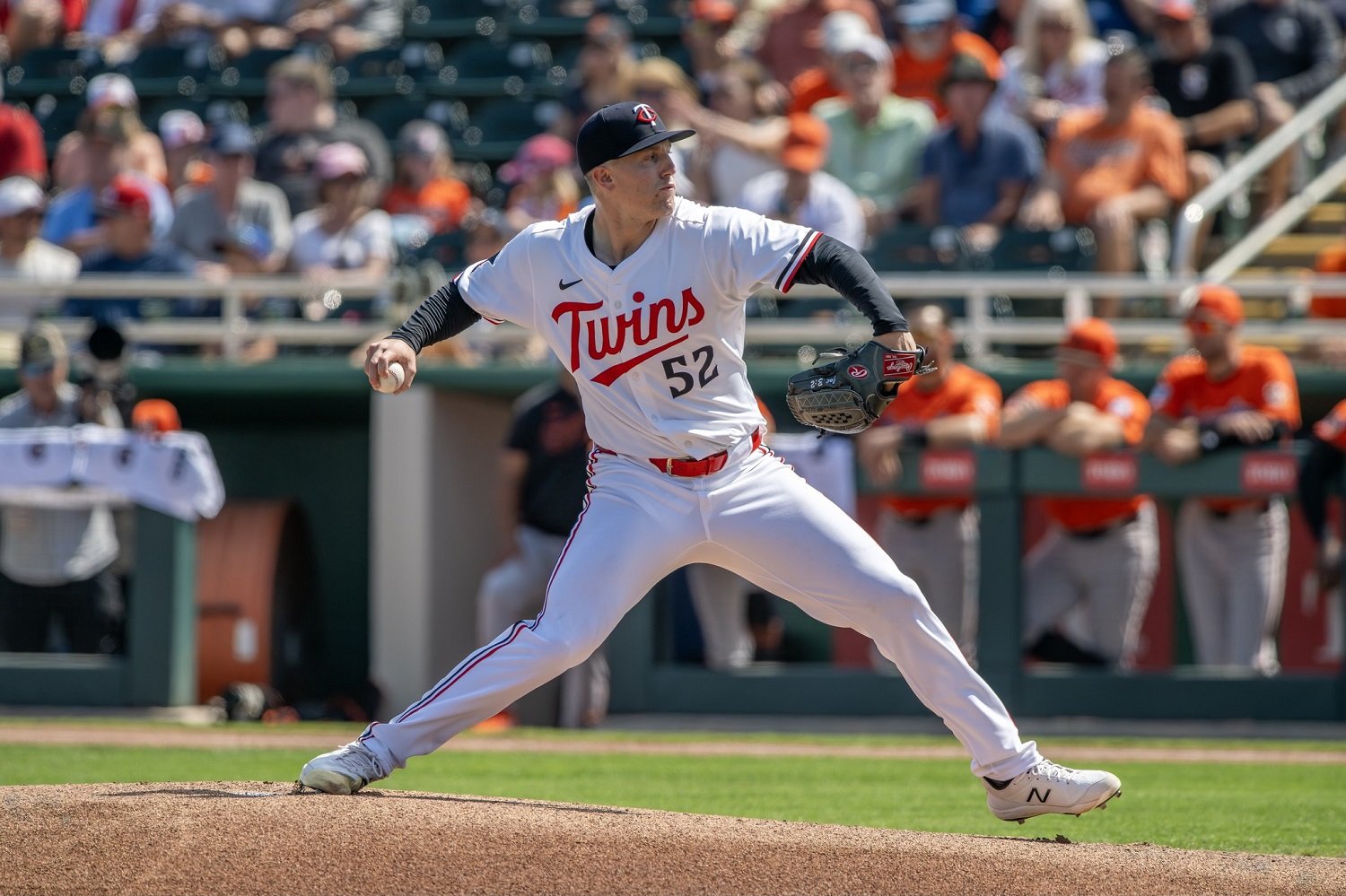 The Twins’ pitching arms are once again under the microscope, and many eyes have been on Zebby Matthews and David Festa this spring. With Matthews lighting it up in spring training and showing an uptick in velocity that’s catching many by surprise, the narrative is shifting. But does his breakout performance mean he has now surpassed Festa in the eyes of the organization? A Spark of Change: Matthews’ Breakout Matthews was the talk of spring training for the Twins. After starting last season at High-A, his progression was meteoric. His offseason work has paid dividends, with increased velocity and impressive numbers. Across 9 1/3 innings, he allowed zero runs on four hits with a 12-to-1 strikeout-to-walk ratio. There’s a buzz that he could dominate early in the season if his current form translates to the Triple-A level. This projected performance is the culmination of steady development that is a testament to the Twins’ pitching and development pipeline. “Everybody is talented in the big leagues,” Matthews told reporters this spring. “You have to live with the mistakes once you get up there and still be able to carry the confidence -- trusting your stuff. All those players I grew up watching at a young age. Just trust in your abilities, knowing you belong in the same field as them.” The upswing in Matthews’ performance isn’t only about raw power. His command and composure on the mound have caught the attention of the Twins’ coaches. Last season, Matthews averaged 94.9 mph with his four-seamer, and that number has been closer to 97 mph this spring. Adding this extra velocity will make his entire pitch mix play up, especially for a player known for pinpoint control. The excitement surrounding Matthews is palpable, and rightly so. A Rocky Spring: Festa’s Struggles On the flip side, Festa enters this season with a cloud over his head. Last season, Festa entered the year as arguably the highest-ranked prospect in the Twins system. At Double- and Triple-A, he posted a 4.19 ERA with a 1.39 WHIP and a 30.1 K%. However, this spring has been a testing period for him. In a bid to reinvent his approach and get even better against right-handed hitters, Festa tinkered with his mechanics, adopting a new arm slot and introducing a sinker into his repertoire. The on-field results have been disastrous, as he has allowed 15 earned runs on 19 hits in 11 1/3 innings. The idea behind these adjustments was sound, including diversifying his pitch arsenal and refining his delivery, but the results haven’t come as swiftly or convincingly as hoped. St. Paul is also a hitter-friendly park, which could impact his early season numbers as he tries to establish himself at Triple-A. With the new changes still in their infancy, Festa’s performance has been inconsistent, and there’s concern that these adjustments may temporarily hamper the consistency he had established in previous seasons. The Pros and Cons: A Closer Look Entering last season, Twins Daily had Festa ranked as the team’s number-five prospect, while Matthews barely cracked the top 20. A lot has changed over the last calendar year. Matthews has all the flash: increased velocity, improved mechanics, and the kind of spring training numbers that hint at him building off his breakout 2024 season. There’s a genuine belief that he’s now ready to take on Triple-A challenges and perhaps even more. “Zebby is a good-looking young horse of a man,” said Twins manager Rocco Baldelli. “He has the body and the good repeatable delivery. He is a very good strike-thrower with good stuff. Now he has some Major League time and experience to fall back on and think about as he moves forward.” However, it’s not all roses for Matthews, with one concern being an increased workload. With a pitcher making a big leap, there’s always the risk that the player might not be quite ready for the increased workload of higher-level competition. In the 2024 season, he pitched 134 2/3 innings, an increase from the 105 1/3 innings he tossed in 2023. Additionally, while his velocity is a huge asset, it remains to be seen whether he can maintain that speed and control over the long haul. A breakout in spring is exciting, but baseball is a long season, and consistency is the name of the game. Meanwhile, Festa still has the pedigree of being one of the team's top prospects. He had more success than Matthews at the big-league level last season, and he clearly has a willingness to innovate by adjusting his arm slot and adding a sinker. Yet, the transition period has exposed some vulnerabilities. His control has suffered at times, and right-handed batters, particularly, are capitalizing on his adjustments this spring. The reality for the Twins is that both pitchers have unique strengths that could be critical throughout the season. In today’s game, a one-dimensional pitching staff is a luxury no team can afford. Matthews’ explosive stuff and the potential to command a high velocity make him a dynamic piece of the puzzle. His development is a bright spot, suggesting that the Twins successfully cultivate raw talent into a big-league starter. Conversely, Festa’s experience and strategic adjustments might not have paid off immediately, but they indicate a willingness to evolve. In a long season where every arm is valuable, Festa could rebound as his new mechanics settle in. His ability to generate ground balls with his sinker (once fully refined) could be an invaluable asset, particularly against right-handed hitters who posted a .769 OPS against him in the minors last season. Ultimately, the Twins are not in a position to choose between the two because they need both pitchers in 2025. The contrast between Matthews’ meteoric rise and Festa’s transitional period illustrates players' different paths to reach their potential. Both will have critical roles, and as the season unfolds, it will be fascinating to see how their respective journeys contribute to the Twins’ success. Has Matthews surpassed Festa in the eyes of the Twins? Which player has the higher ceiling? Leave a comment and start the discussion.
 -
Zebby Matthews and David Festa are both critical to the Minnesota Twins’ long-term success. However, Matthews seems to be on an upward trajectory this spring. Is it enough to surpass Festa? Image courtesy of William Parmeter Zebby Matthews and David Festa are both critical to the Minnesota Twins’ long-term success. However, Matthews seems to be on an upward trajectory this spring. Is it enough to surpass Festa? The Twins’ pitching arms are once again under the microscope, and many eyes have been on Zebby Matthews and David Festa this spring. With Matthews lighting it up in spring training and showing an uptick in velocity that’s catching many by surprise, the narrative is shifting. But does his breakout performance mean he has now surpassed Festa in the eyes of the organization? A Spark of Change: Matthews’ Breakout Matthews was the talk of spring training for the Twins. After starting last season at High-A, his progression was meteoric. His offseason work has paid dividends, with increased velocity and impressive numbers. Across 9 1/3 innings, he allowed zero runs on four hits with a 12-to-1 strikeout-to-walk ratio. There’s a buzz that he could dominate early in the season if his current form translates to the Triple-A level. This projected performance is the culmination of steady development that is a testament to the Twins’ pitching and development pipeline. “Everybody is talented in the big leagues,” Matthews told reporters this spring. “You have to live with the mistakes once you get up there and still be able to carry the confidence -- trusting your stuff. All those players I grew up watching at a young age. Just trust in your abilities, knowing you belong in the same field as them.” The upswing in Matthews’ performance isn’t only about raw power. His command and composure on the mound have caught the attention of the Twins’ coaches. Last season, Matthews averaged 94.9 mph with his four-seamer, and that number has been closer to 97 mph this spring. Adding this extra velocity will make his entire pitch mix play up, especially for a player known for pinpoint control. The excitement surrounding Matthews is palpable, and rightly so. A Rocky Spring: Festa’s Struggles On the flip side, Festa enters this season with a cloud over his head. Last season, Festa entered the year as arguably the highest-ranked prospect in the Twins system. At Double- and Triple-A, he posted a 4.19 ERA with a 1.39 WHIP and a 30.1 K%. However, this spring has been a testing period for him. In a bid to reinvent his approach and get even better against right-handed hitters, Festa tinkered with his mechanics, adopting a new arm slot and introducing a sinker into his repertoire. The on-field results have been disastrous, as he has allowed 15 earned runs on 19 hits in 11 1/3 innings. The idea behind these adjustments was sound, including diversifying his pitch arsenal and refining his delivery, but the results haven’t come as swiftly or convincingly as hoped. St. Paul is also a hitter-friendly park, which could impact his early season numbers as he tries to establish himself at Triple-A. With the new changes still in their infancy, Festa’s performance has been inconsistent, and there’s concern that these adjustments may temporarily hamper the consistency he had established in previous seasons. The Pros and Cons: A Closer Look Entering last season, Twins Daily had Festa ranked as the team’s number-five prospect, while Matthews barely cracked the top 20. A lot has changed over the last calendar year. Matthews has all the flash: increased velocity, improved mechanics, and the kind of spring training numbers that hint at him building off his breakout 2024 season. There’s a genuine belief that he’s now ready to take on Triple-A challenges and perhaps even more. “Zebby is a good-looking young horse of a man,” said Twins manager Rocco Baldelli. “He has the body and the good repeatable delivery. He is a very good strike-thrower with good stuff. Now he has some Major League time and experience to fall back on and think about as he moves forward.” However, it’s not all roses for Matthews, with one concern being an increased workload. With a pitcher making a big leap, there’s always the risk that the player might not be quite ready for the increased workload of higher-level competition. In the 2024 season, he pitched 134 2/3 innings, an increase from the 105 1/3 innings he tossed in 2023. Additionally, while his velocity is a huge asset, it remains to be seen whether he can maintain that speed and control over the long haul. A breakout in spring is exciting, but baseball is a long season, and consistency is the name of the game. Meanwhile, Festa still has the pedigree of being one of the team's top prospects. He had more success than Matthews at the big-league level last season, and he clearly has a willingness to innovate by adjusting his arm slot and adding a sinker. Yet, the transition period has exposed some vulnerabilities. His control has suffered at times, and right-handed batters, particularly, are capitalizing on his adjustments this spring. The reality for the Twins is that both pitchers have unique strengths that could be critical throughout the season. In today’s game, a one-dimensional pitching staff is a luxury no team can afford. Matthews’ explosive stuff and the potential to command a high velocity make him a dynamic piece of the puzzle. His development is a bright spot, suggesting that the Twins successfully cultivate raw talent into a big-league starter. Conversely, Festa’s experience and strategic adjustments might not have paid off immediately, but they indicate a willingness to evolve. In a long season where every arm is valuable, Festa could rebound as his new mechanics settle in. His ability to generate ground balls with his sinker (once fully refined) could be an invaluable asset, particularly against right-handed hitters who posted a .769 OPS against him in the minors last season. Ultimately, the Twins are not in a position to choose between the two because they need both pitchers in 2025. The contrast between Matthews’ meteoric rise and Festa’s transitional period illustrates players' different paths to reach their potential. Both will have critical roles, and as the season unfolds, it will be fascinating to see how their respective journeys contribute to the Twins’ success. Has Matthews surpassed Festa in the eyes of the Twins? Which player has the higher ceiling? Leave a comment and start the discussion. View full article
-
Breaking up can be hard to do. Twins fans are ready to move on to a new ownership group, but can the Pohlads say goodbye? Image courtesy of © David Berding-Imagn Images Breaking up can be hard to do. Twins fans are ready to move on to a new ownership group, but can the Pohlads say goodbye? Change is (hopefully) coming for the Minnesota Twins, and fans seem more than ready. The chatter around the current ownership’s potential move to sell the team has been as heated as a nail-biter at Target Field. As the debate continues, let’s break down the three potential outcomes for the Pohlad family and rank them from best to worst for the hometown nine. 1. The Pohlads Fully Sell the Team This is the option that has fans buzzing with excitement—or did, back when it seemed more likely and imminent. There were good times in the relationship, but it's clearly not working out. It’s not you, it’s me. For many, the idea of the Pohlad family completely stepping aside is like turning the page on a painful chapter. After decades at the helm, the signs point to a clear need for new energy and fresh perspectives. Last season was riddled with frustration over payroll cuts and a TV deal that left a bad taste in the mouths of the fanbase. A complete sale means that a new ownership group could come in and invest not only financially, but also emotionally. Change at the top can bring a renewed focus on building a competitive, fan-first organization. With the Twins currently in a promising winning window, a change in leadership could be the catalyst that keeps the team in contention, especially in a wide-open American League. No longer burdened by the weight of family disputes or outdated business models, a new owner could refocus resources on creating a more vibrant game-day experience and address long-standing grievances from fans who have felt sidelined by decisions made far from the ballpark. The potential for a complete sale is bolstered by the fact that the Twins’ current valuation is estimated at around $1.5 billion, a seemingly bridge-able but clear step shy of the $1.7 billion price tag the Pohlad family aims for. As a reminder, the family purchased the team for $44 million in 1984. This disparity has long been a sore point for fans, who see the team’s legacy as more than just a line item on a balance sheet. Ultimately, a complete sale could be the best way to preserve the team’s rich history while ushering in an era of accountability and growth. New owners with fresh pockets (and perhaps a more modern vision) are more likely to listen to the fans, a responsiveness which has been sorely lacking in recent years. 2. The Pohlads Sell A Portion of the Team While this option isn’t as appealing as a full sale, it still represents a middle ground that could appease both sides, although only marginally. Recent reports at The Athletic said that current Twins chairman Joe Pohlad has expressed a desire to remain involved, which makes a complete hand-off less likely. Instead, fans might see a situation where certain family members buy out others, or bring in new minority owners to infuse fresh capital and ideas into the organization. There have been discussions with potential new partners who have already shown interest, including some from Minnesota. The downside here is the uneasy sense of incomplete separation. Fans have been vocal about their dissatisfaction with the Pohlads of late, and a partial sale would do little to quench that desire for change. It’s like having a band breakup where the lead singer stays on for the next album. The core spirit of what made the group special might still be missing. While some might argue that Joe Pohlad’s continued involvement could provide a bridge between the old guard and new ownership, it also risks perpetuating the same issues that led to the current state of discontent. A partial sale might feel like a missed opportunity for those who cherish the team’s history but yearn for a decisive new direction. It’s a compromise that doesn’t fully commit to change, leaving many old problems simmering beneath the surface. Yet, if done right, this outcome could at least introduce some of the necessary financial backing and operational restructuring that has been lacking. It’s a “better-than-nothing” scenario offering incremental improvements, rather than the sweeping changes fans are clamoring for. 3. The Pohlads Keep the Team In this worst-case scenario, the Pohlad family holds onto the team despite the growing chorus of dissent from the fanbase. It's akin to staying in the bad relationship and hoping the spark comes back; it feels like a bad idea all around. The Pohlad family reportedly aims for $1.7 billion for the team, even though Forbes recently valued the club at $1.5 billion. Meanwhile, the team is saddled with approximately $425 million in debt. The Pohlads are, in effect, allowing their own debts to drag down the value without being willing to lower their demands. When the very people who built and sustained the team for decades end up clashing with the fans, it creates a toxic atmosphere that’s hard to ignore. Fans have long felt that the decisions made by the Pohlad family have left the team underachieving despite being in the midst of a competitive window on the field. Keeping the team under the same ownership might mean a continuation of the status quo, a situation many believe is no longer tenable. The financial metrics don’t add up, and the angst among the fanbase is palpable. Just as the Washington Nationals and Los Angeles Angels have toyed with selling their franchises only to retract the offer, holding onto the Twins could become a similar cautionary tale. It would be a business decision that ultimately alienates those who form the lifeblood of the business. In the grand scheme, a full sale of the Twins is the most promising outcome for fans eager for a fresh start. It offers the best chance for revitalizing the franchise with new ideas and investments, and serves as a symbolic end to an era marked by financial missteps and strained relationships. While slightly more palatable, a partial sale risks leaving lingering issues unresolved. If the Pohlad family decides to cling on, it could begin a prolonged period of fan frustration and operational challenges. The next few months will be critical, as the team’s future hangs in the balance. For the fans, this isn’t just about dollars and cents. It's about preserving a legacy and reigniting the passion that makes baseball in Minnesota special. With so much at stake, inaction feels indefensible—but it also feels a bit more likely than it did just a month or two ago. View full article
-
Opening Day offers the hope of a new season and an opportunity for fans to put last year’s Twins collapse in the rearview mirror. So, how are Twins Daily users feeling about five key questions at the dawn of a new baseball year? Image courtesy of Matt Blewett-Imagn Images Opening Day offers the hope of a new season and an opportunity for fans to put last year’s Twins collapse in the rearview mirror. So, how are Twins Daily users feeling about five key questions at the dawn of a new baseball year? Recently, Twins Daily unveiled a new polling feature that allows fans the opportunity to have their voice heard. It's a customizable tool we'll use to monitor the pulse of Twins Territory. There will be some permanent questions, like, “Is Rocco Baldelli doing a good job?” Twins Daily writers can review the data any time to see if it’s trending up, down, or neutral. From the reader's perspective, a user can vote once a day, because your opinion on the topic might change from one game to the next. Some of these polls will be embedded into articles, so you can read about a topic and then cast a vote. It’s a fun, interactive way for the writers and users to gather data and have meaningful conversations throughout the season. So, let’s dive into some of the first questions on the site to see how fans feel about the team. Will Byron Buxton play 100 games or more? Yes: 92 votes (54.1%) No: 78 votes (45.9%) Fans are optimistic that Buxton will play at least 100 games for the second consecutive season, a feat he has yet to accomplish in his big-league career. There are reasons to be optimistic, since Buxton was able to have a relatively healthy winter (without any surgeries or rehab from in-season injuries) for the first time in years. Minnesota brought in Harrison Bader as Buxton insurance in center field, and the team will continue to find ways to get him consistent rest. He’s shown the ability to be a game-changing player, so the Twins need him on the field and producing in the season’s most important games. Will Carlos Correa play 130 games or more? Yes: 57 (34.5%) No: 108 (65.5%) For Correa, 130 games is a high bar to clear, especially with the plantar fasciitis issues that have plagued him the last two seasons. That being said, From 2021-23, Correa averaged 140 games played per season. Last season was his first full season without reaching the 130-game plateau since 2021. Twins fans will remember Correa’s poor performance in 2023, when he posted a 94 OPS+, but he managed to play 135 games despite his injury clearly impacting his performance. The 130-game total might be challenging for him to reach if the Twins want to keep him fresh for the whole season, especially as he enters his 30s. Will Royce Lewis play 90 games or more? Yes: 183 (28.4%) No: 485 (72.6%) Lewis’s recent injury shows how the Twins Daily polling feature can be used in real time. During the first two days of the poll, 32 users cast a vote. However, 375 users voted on the topic over the next two days. The Twins have not given a timetable on the hamstring injury he suffered during spring training. He has yet to begin baseball activities as the club waits for the swelling to go down in his left leg. Last season, Lewis played a career-high 82 games but missed time with multiple injuries. At this point, 90 games might be a long shot in 2025. How Many Wins Will the 2025 Twins Have? Less than 70: 6 (2.3%) 71-75: 15 (5.8%) 76-80: 43 (16.7%) 81-85: 66 (25.7%) 86-90: 89 (34.6%) 91-95: 27 (10.5%) 96+: 11 (4.3%) Last season, the Twins finished with an 82-80 record that matched their Pythagorean expectation. Many projection systems have the Twins predicted to finish near the top of the AL Central. However, the division is also predicted to be a close race, with multiple teams in the 80-win range. Minnesota made minimal moves this winter due to owner-imposed payroll limitations. On paper, the Twins are about as good as last year, which makes them a contending team in the AL Central. Will the Twins Make the Postseason? Yes: 93 (61.2%) No: 59 (38.8%) Twins Daily users believe the team will win between 81-90 games, which should be enough to push the team into the playoffs. Many projection systems don’t view a dominant team in the American League, making it even more critical to qualify for the postseason. The league’s playoff format allows a team to catch fire and win the pennant. Minnesota has a strong pitching group, depth in the minors, and a hunger to forget last season’s collapse. Let’s hope there will be more October baseball at Target Field. What questions do you want to see in the next Twins Daily poll? How do you feel about these five poll questions? Leave a comment and start the discussion. View full article
-
Gimme Five: How Are Twins Daily Users Feeling About the Team?
Cody Christie posted an article in Twins
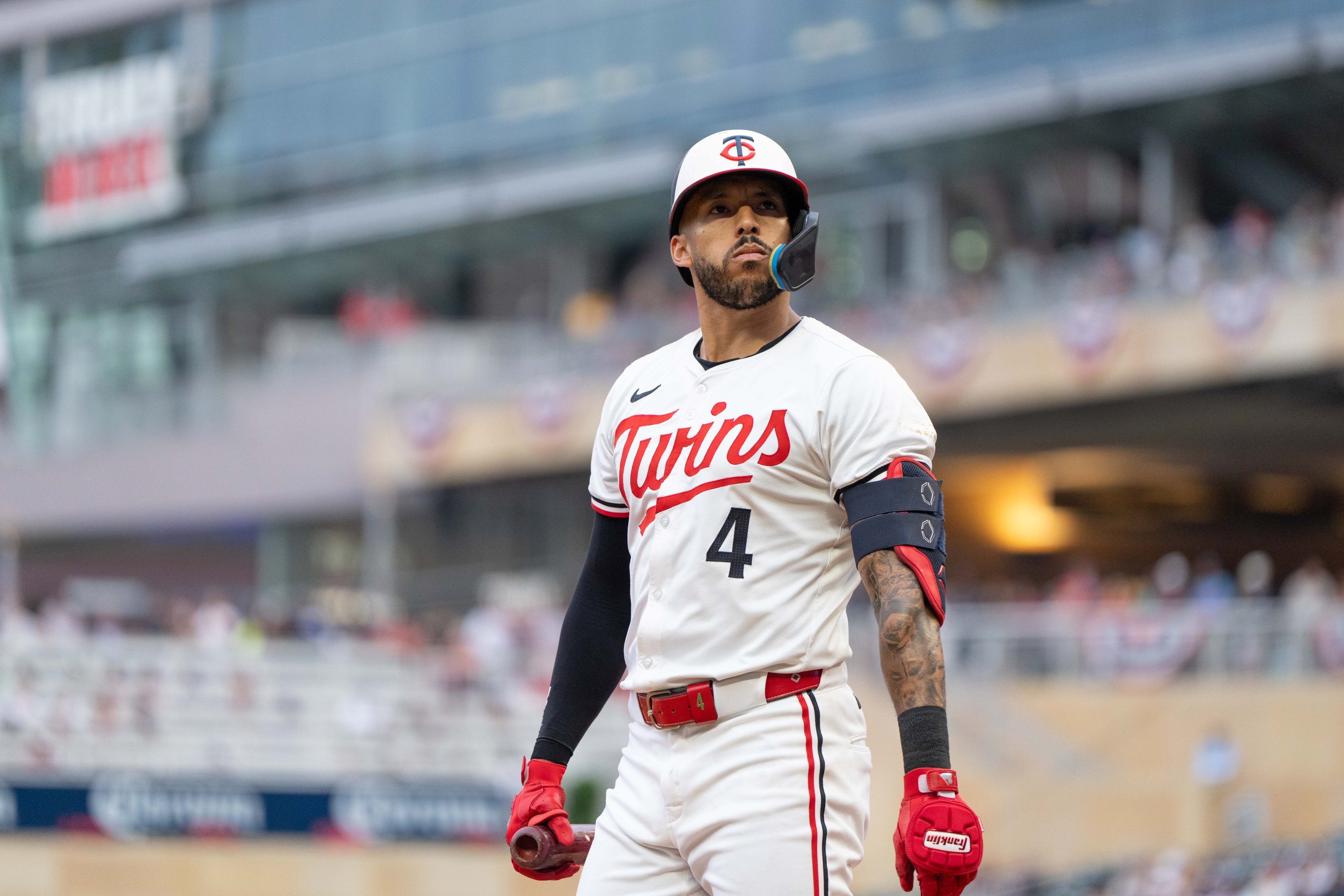 Recently, Twins Daily unveiled a new polling feature that allows fans the opportunity to have their voice heard. It's a customizable tool we'll use to monitor the pulse of Twins Territory. There will be some permanent questions, like, “Is Rocco Baldelli doing a good job?” Twins Daily writers can review the data any time to see if it’s trending up, down, or neutral. From the reader's perspective, a user can vote once a day, because your opinion on the topic might change from one game to the next. Some of these polls will be embedded into articles, so you can read about a topic and then cast a vote. It’s a fun, interactive way for the writers and users to gather data and have meaningful conversations throughout the season. So, let’s dive into some of the first questions on the site to see how fans feel about the team. Will Byron Buxton play 100 games or more? Yes: 92 votes (54.1%) No: 78 votes (45.9%) Fans are optimistic that Buxton will play at least 100 games for the second consecutive season, a feat he has yet to accomplish in his big-league career. There are reasons to be optimistic, since Buxton was able to have a relatively healthy winter (without any surgeries or rehab from in-season injuries) for the first time in years. Minnesota brought in Harrison Bader as Buxton insurance in center field, and the team will continue to find ways to get him consistent rest. He’s shown the ability to be a game-changing player, so the Twins need him on the field and producing in the season’s most important games. Will Carlos Correa play 130 games or more? Yes: 57 (34.5%) No: 108 (65.5%) For Correa, 130 games is a high bar to clear, especially with the plantar fasciitis issues that have plagued him the last two seasons. That being said, From 2021-23, Correa averaged 140 games played per season. Last season was his first full season without reaching the 130-game plateau since 2021. Twins fans will remember Correa’s poor performance in 2023, when he posted a 94 OPS+, but he managed to play 135 games despite his injury clearly impacting his performance. The 130-game total might be challenging for him to reach if the Twins want to keep him fresh for the whole season, especially as he enters his 30s. Will Royce Lewis play 90 games or more? Yes: 183 (28.4%) No: 485 (72.6%) Lewis’s recent injury shows how the Twins Daily polling feature can be used in real time. During the first two days of the poll, 32 users cast a vote. However, 375 users voted on the topic over the next two days. The Twins have not given a timetable on the hamstring injury he suffered during spring training. He has yet to begin baseball activities as the club waits for the swelling to go down in his left leg. Last season, Lewis played a career-high 82 games but missed time with multiple injuries. At this point, 90 games might be a long shot in 2025. How Many Wins Will the 2025 Twins Have? Less than 70: 6 (2.3%) 71-75: 15 (5.8%) 76-80: 43 (16.7%) 81-85: 66 (25.7%) 86-90: 89 (34.6%) 91-95: 27 (10.5%) 96+: 11 (4.3%) Last season, the Twins finished with an 82-80 record that matched their Pythagorean expectation. Many projection systems have the Twins predicted to finish near the top of the AL Central. However, the division is also predicted to be a close race, with multiple teams in the 80-win range. Minnesota made minimal moves this winter due to owner-imposed payroll limitations. On paper, the Twins are about as good as last year, which makes them a contending team in the AL Central. Will the Twins Make the Postseason? Yes: 93 (61.2%) No: 59 (38.8%) Twins Daily users believe the team will win between 81-90 games, which should be enough to push the team into the playoffs. Many projection systems don’t view a dominant team in the American League, making it even more critical to qualify for the postseason. The league’s playoff format allows a team to catch fire and win the pennant. Minnesota has a strong pitching group, depth in the minors, and a hunger to forget last season’s collapse. Let’s hope there will be more October baseball at Target Field. What questions do you want to see in the next Twins Daily poll? How do you feel about these five poll questions? Leave a comment and start the discussion.
- 21 comments
-
- 4
-
-
-
- carlos correa
- byron buxton
- (and 1 more)
-
26 Questions Facing the 26 Minnesota Twins on the 2025 Opening Day Roster
Cody Christie posted an article in Twins
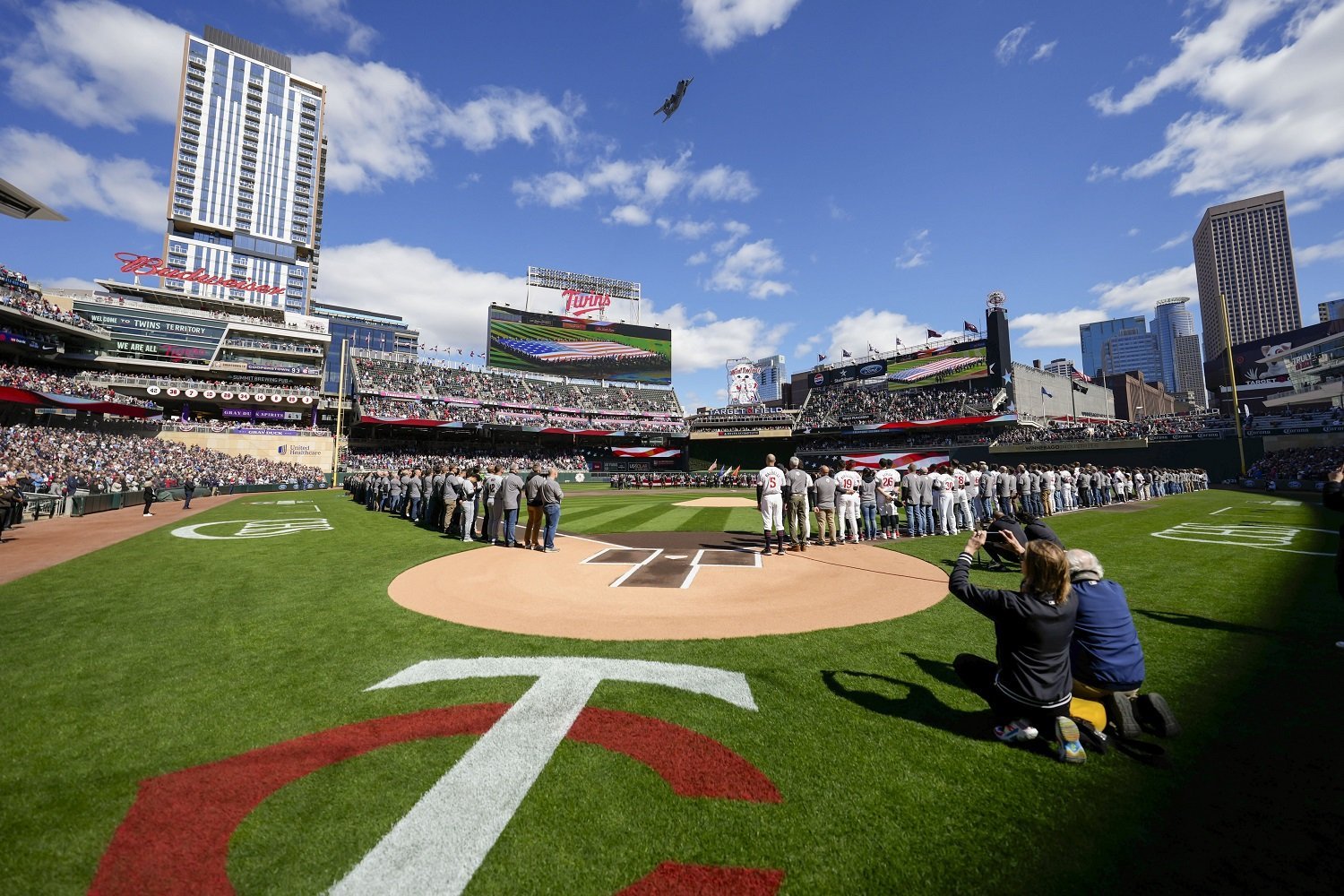 As the Minnesota Twins prepare for the 2025 season, each player on the projected 26-man Opening Day roster faces pivotal questions. Let's delve into these pressing inquiries: Catchers: Ryan Jeffers: Can Jeffers seize the starting catcher role and provide consistent offensive production throughout the season? The homegrown backstop is only under team control for two more seasons. He’s shown flashes of being one of the league’s best offensive catchers, but he needs to show more consistency at the plate in 2025. Christian Vázquez: Will his defensive reputation make up for his offensive flaws? Vázquez is in the final year of his 3-year, $30-million deal. Twins pitchers have praised his game-calling throughout his tenure, and that's arguably the lone reason Minnesota didn’t trade him away this winter. Infielders: Carlos Correa: Can he finally put his plantar fasciitis issues behind him? Plantar fasciitis has severely hampered Correa over the last two seasons, compromising his effectiveness in 2023 and his availability in 2024. A healthy and productive Correa can be the difference in the Twins making or missing the playoffs. Ty France: How will his transition to the Twins impact his offensive output? France is filling some big shoes at first base after the departure of Carlos Santana. He’s been one of the team’s best hitters this spring, and the Twins hope that production continues throughout the regular season. José Miranda: Is he poised to build upon his previous successes and emerge as a key offensive contributor this season? Injuries to Brooks Lee and Royce Lewis will allow Miranda to prove himself in the team’s infield to start the year. Minnesota needs him to live up to the offensive upside he’s previously shown. Edouard Julien: Can he secure a regular spot in the lineup? Julien was a question mark to make the roster for most of the spring. Injuries to a handful of players have him on the team. Now, he must make the most of the opportunity. Willi Castro: Can he recover from his poor performance in the second half of 2024? Castro’s OPS dropped from .774 in the first half to .627 after the break. Many Twins struggled down the stretch, but Castro will be even more critical with the team’s infield injuries to start the year. Mickey Gasper: Can his Triple-A success translate to the big-league level? Gasper led Triple-A hitters in OPS (1.164) from June through August 2024, with a .396 average and a .509 OBP. He's shown the Twins his ability to spray the ball all over the field this spring. He's an interesting bench option for a team that needed more consistent contact in the second half of 2024. Outfielders: Byron Buxton: Can he play over 100 games for the second consecutive season? Buxton was relatively healthy this winter, for the first time in over half a decade. He will never be an iron man, but the Twins can hope he matches his 2024 numbers. Matt Wallner: Can he be successful as an unconventional leadoff hitter? The Twins are set to give Wallner regular at-bats in the leadoff spot, which matches what some other teams have done in recent years. Wallner’s player type can be streaky, though, so it will be interesting to see how long the Twins stick with him at the top. Trevor Larnach: Is he ready to take the next step in his development and become a consistent offensive threat? Larnach was one of the Twins’ most consistent hitters in the second half of 2024, with an .811 OPS in 52 games. He will be 28 years old for the entire 2025 campaign, and it’s now or never for him to establish himself as a middle-of-the-order bat. Harrison Bader: How will his excellent outfield defense influence the Twins' overall outfield dynamics? Buxton’s health will significantly impact Bader’s usage this season. Buxton in center and Bader in a corner spot could make for one of the league’s best defensive outfield alignments, which will be especially important if the Twins turn to some younger pitchers and allow more balls in play this year than in 2024. DaShawn Keirsey Jr.: How much playing time will he get this season? Keirsey beat out Austin Martin for the team's final bench spot. He's third on the depth chart in center field behind Buxton and Bader. His playing time will be sparse for now, but he’s an intriguing defensive replacement. Starting Pitchers: Pablo López: Can he avoid the first-half struggles from the last two seasons? López has had tough first halves during his first two seasons in a Twins uniform, and this year, his spring training numbers were rough. There are a few areas for him to focus on, including rediscovering his sweeper and prioritizing his changeup. Joe Ryan: Can he continue his upward trajectory and solidify his position as one of the league’s best starters? Before a shoulder injury shut him down for the year, Ryan was arguably the Twins' best starting pitcher last season. Injuries have impacted him in the last two seasons, so it would be nice for him to get a full season under his belt in 2025. Bailey Ober: Is he a dark horse for the AL Cy Young? Ober and Ryan can both fit into this category, which is why the Twins have one of the top starting pitching trios in the AL. Ober has been prone to blowups, so calming things just a bit on those tough days could put him in the Cy Young conversation. Chris Paddack: How will he look in his second year removed from a second Tommy John surgery? The Twins could have traded Paddack this winter, but the front office wouldn’t give him away in a salary dump. Instead, Minnesota is betting on a more consistent performance from “The Sheriff” as he puts his second Tommy John surgery further in the rearview mirror. Simeon Woods Richardson: Can he avoid the dreaded sophomore slump? Woods Richardson saved the Twins' starting rotation last year but ran out of gas in the second half. Plenty of other young pitchers at Triple A will be knocking down the door to the big leagues. To keep his job, Woods Richardson must hold his own and build off his rookie campaign. Relief Pitchers: Jhoan Durán: Can he adjust more successfully in his second season with diminished velocity? Durán’s drop in velocity has been a talking point since last spring. However, there are multiple reasons to trust the team’s closer entering the 2025 season. Griffin Jax: Will he get more opportunities to close? If Durán does struggle, Jax will be the one to take over the closer role. He’s coming off a season wherein he was one of the AL’s top relievers. Now, it’s time for the encore. Cole Sands: Can Sands be counted on as one of the team’s high-leverage arms? At this point last season, Sands was an afterthought in the Twins' bullpen picture. He developed into one of the team’s most reliable bullpen options, but with relievers who lack elite stuff or long track records, there is always the worry of regression. Danny Coulombe: How will Coulombe be strategically used as the team’s top lefty? Caleb Thielbar signed elsewhere in free agency, leaving the club searching for a reliable left-handed reliever. Over the last two seasons, Coulombe has posted a 2.56 ERA (156 ERA+) with a 0.95 WHIP and a 28.4% strikeout rate. The Twins are hoping for similar production. Jorge Alcalá: Is he ready to harness his potential and deliver consistent relief performances? Alcalá has a chance to be a breakout player for the Twins. The team’s usage of him last season was confusing at times, but there is a chance he is being trusted in some critical late-inning spots before the season ends. Justin Topa: What version of Topa will the Twins get in 2025? Minnesota hoped Topa would be a critical bullpen arm last season after acquiring him as part of the Jorge Polanco trade. The Twins still have a chance to gain some value from the deal, if Topa can return to the form he showed in 2023 (152 ERA+, 21.9 K%). Louis Varland: Will Varland's transition to a relief role mirror the team’s past successes? Nearly every great reliever in Twins history began their bullpen transition after failing as a starter (e.g., Griffin Jax, Taylor Rogers, Glen Perkins, etc.). Minnesota has high hopes for Varland as a reliever, and now they can set him loose on the AL Central. Randy Dobnak: How long can he stick at the big-league level? Dobnak made his triumphant return to the Twins last season after spending multiple seasons dealing with a finger issue. Last season, he limited batters to a .395 SLG and a .739 OPS, 24 points lower than the league average in a hitter-friendly league. He can provide length in the season's early weeks, but when the team's injured relievers get healthy, will Dobnak be the first casualty? Even if (or when) he's moved off the active roster, can he stick on the 40-man roster this time? These questions highlight the critical factors that could influence the Twins' success in the upcoming season. Fans and analysts alike will keenly observe how these narratives unfold in the season's early months. Which question is most critical to the team's success this season? Leave a comment and start the discussion.
- 19 comments
-
- 7
-
-
- carlos correa
- byron buxton
- (and 5 more)
-
Opening Day is practically here, and the Twins are heading to St. Louis with a roster that can win the AL Central. What questions remain about each player on the team’s Opening Day roster? Image courtesy of Jordan Johnson-USA TODAY Sports Opening Day is practically here, and the Twins are heading to St. Louis with a roster that can win the AL Central. What questions remain about each player on the team’s Opening Day roster? As the Minnesota Twins prepare for the 2025 season, each player on the projected 26-man Opening Day roster faces pivotal questions. Let's delve into these pressing inquiries: Catchers: Ryan Jeffers: Can Jeffers seize the starting catcher role and provide consistent offensive production throughout the season? The homegrown backstop is only under team control for two more seasons. He’s shown flashes of being one of the league’s best offensive catchers, but he needs to show more consistency at the plate in 2025. Christian Vázquez: Will his defensive reputation make up for his offensive flaws? Vázquez is in the final year of his 3-year, $30-million deal. Twins pitchers have praised his game-calling throughout his tenure, and that's arguably the lone reason Minnesota didn’t trade him away this winter. Infielders: Carlos Correa: Can he finally put his plantar fasciitis issues behind him? Plantar fasciitis has severely hampered Correa over the last two seasons, compromising his effectiveness in 2023 and his availability in 2024. A healthy and productive Correa can be the difference in the Twins making or missing the playoffs. Ty France: How will his transition to the Twins impact his offensive output? France is filling some big shoes at first base after the departure of Carlos Santana. He’s been one of the team’s best hitters this spring, and the Twins hope that production continues throughout the regular season. José Miranda: Is he poised to build upon his previous successes and emerge as a key offensive contributor this season? Injuries to Brooks Lee and Royce Lewis will allow Miranda to prove himself in the team’s infield to start the year. Minnesota needs him to live up to the offensive upside he’s previously shown. Edouard Julien: Can he secure a regular spot in the lineup? Julien was a question mark to make the roster for most of the spring. Injuries to a handful of players have him on the team. Now, he must make the most of the opportunity. Willi Castro: Can he recover from his poor performance in the second half of 2024? Castro’s OPS dropped from .774 in the first half to .627 after the break. Many Twins struggled down the stretch, but Castro will be even more critical with the team’s infield injuries to start the year. Mickey Gasper: Can his Triple-A success translate to the big-league level? Gasper led Triple-A hitters in OPS (1.164) from June through August 2024, with a .396 average and a .509 OBP. He's shown the Twins his ability to spray the ball all over the field this spring. He's an interesting bench option for a team that needed more consistent contact in the second half of 2024. Outfielders: Byron Buxton: Can he play over 100 games for the second consecutive season? Buxton was relatively healthy this winter, for the first time in over half a decade. He will never be an iron man, but the Twins can hope he matches his 2024 numbers. Matt Wallner: Can he be successful as an unconventional leadoff hitter? The Twins are set to give Wallner regular at-bats in the leadoff spot, which matches what some other teams have done in recent years. Wallner’s player type can be streaky, though, so it will be interesting to see how long the Twins stick with him at the top. Trevor Larnach: Is he ready to take the next step in his development and become a consistent offensive threat? Larnach was one of the Twins’ most consistent hitters in the second half of 2024, with an .811 OPS in 52 games. He will be 28 years old for the entire 2025 campaign, and it’s now or never for him to establish himself as a middle-of-the-order bat. Harrison Bader: How will his excellent outfield defense influence the Twins' overall outfield dynamics? Buxton’s health will significantly impact Bader’s usage this season. Buxton in center and Bader in a corner spot could make for one of the league’s best defensive outfield alignments, which will be especially important if the Twins turn to some younger pitchers and allow more balls in play this year than in 2024. DaShawn Keirsey Jr.: How much playing time will he get this season? Keirsey beat out Austin Martin for the team's final bench spot. He's third on the depth chart in center field behind Buxton and Bader. His playing time will be sparse for now, but he’s an intriguing defensive replacement. Starting Pitchers: Pablo López: Can he avoid the first-half struggles from the last two seasons? López has had tough first halves during his first two seasons in a Twins uniform, and this year, his spring training numbers were rough. There are a few areas for him to focus on, including rediscovering his sweeper and prioritizing his changeup. Joe Ryan: Can he continue his upward trajectory and solidify his position as one of the league’s best starters? Before a shoulder injury shut him down for the year, Ryan was arguably the Twins' best starting pitcher last season. Injuries have impacted him in the last two seasons, so it would be nice for him to get a full season under his belt in 2025. Bailey Ober: Is he a dark horse for the AL Cy Young? Ober and Ryan can both fit into this category, which is why the Twins have one of the top starting pitching trios in the AL. Ober has been prone to blowups, so calming things just a bit on those tough days could put him in the Cy Young conversation. Chris Paddack: How will he look in his second year removed from a second Tommy John surgery? The Twins could have traded Paddack this winter, but the front office wouldn’t give him away in a salary dump. Instead, Minnesota is betting on a more consistent performance from “The Sheriff” as he puts his second Tommy John surgery further in the rearview mirror. Simeon Woods Richardson: Can he avoid the dreaded sophomore slump? Woods Richardson saved the Twins' starting rotation last year but ran out of gas in the second half. Plenty of other young pitchers at Triple A will be knocking down the door to the big leagues. To keep his job, Woods Richardson must hold his own and build off his rookie campaign. Relief Pitchers: Jhoan Durán: Can he adjust more successfully in his second season with diminished velocity? Durán’s drop in velocity has been a talking point since last spring. However, there are multiple reasons to trust the team’s closer entering the 2025 season. Griffin Jax: Will he get more opportunities to close? If Durán does struggle, Jax will be the one to take over the closer role. He’s coming off a season wherein he was one of the AL’s top relievers. Now, it’s time for the encore. Cole Sands: Can Sands be counted on as one of the team’s high-leverage arms? At this point last season, Sands was an afterthought in the Twins' bullpen picture. He developed into one of the team’s most reliable bullpen options, but with relievers who lack elite stuff or long track records, there is always the worry of regression. Danny Coulombe: How will Coulombe be strategically used as the team’s top lefty? Caleb Thielbar signed elsewhere in free agency, leaving the club searching for a reliable left-handed reliever. Over the last two seasons, Coulombe has posted a 2.56 ERA (156 ERA+) with a 0.95 WHIP and a 28.4% strikeout rate. The Twins are hoping for similar production. Jorge Alcalá: Is he ready to harness his potential and deliver consistent relief performances? Alcalá has a chance to be a breakout player for the Twins. The team’s usage of him last season was confusing at times, but there is a chance he is being trusted in some critical late-inning spots before the season ends. Justin Topa: What version of Topa will the Twins get in 2025? Minnesota hoped Topa would be a critical bullpen arm last season after acquiring him as part of the Jorge Polanco trade. The Twins still have a chance to gain some value from the deal, if Topa can return to the form he showed in 2023 (152 ERA+, 21.9 K%). Louis Varland: Will Varland's transition to a relief role mirror the team’s past successes? Nearly every great reliever in Twins history began their bullpen transition after failing as a starter (e.g., Griffin Jax, Taylor Rogers, Glen Perkins, etc.). Minnesota has high hopes for Varland as a reliever, and now they can set him loose on the AL Central. Randy Dobnak: How long can he stick at the big-league level? Dobnak made his triumphant return to the Twins last season after spending multiple seasons dealing with a finger issue. Last season, he limited batters to a .395 SLG and a .739 OPS, 24 points lower than the league average in a hitter-friendly league. He can provide length in the season's early weeks, but when the team's injured relievers get healthy, will Dobnak be the first casualty? Even if (or when) he's moved off the active roster, can he stick on the 40-man roster this time? These questions highlight the critical factors that could influence the Twins' success in the upcoming season. Fans and analysts alike will keenly observe how these narratives unfold in the season's early months. Which question is most critical to the team's success this season? Leave a comment and start the discussion. View full article
-
Anonymous sources have confirmed an underground training program in Fort Myers. Joe Mauer, the team’s Midwest resident expert, is helping present and future Twins prepare in an unconventional way. Image courtesy of William Parmeter Anonymous sources have confirmed an underground training program in Fort Myers. Joe Mauer, the team’s Midwest resident expert, is helping present and future Twins prepare in an unconventional way. FORT MYERS, FL – In a shocking discovery that has the Minnesota baseball world buzzing, secret files detailing Joe Mauer’s covert efforts to instill peak Minnesotan behavior in the Twins clubhouse have been uncovered at the team’s spring training facility. The documents, rolled up and stashed inside a Caribou Coffee travel mug tucked beneath a stack of flannel shirts, outline a clandestine training program aimed at helping Twins players “channel their inner Joe Mauer.” According to anonymous sources within the organization, the files contain a meticulous curriculum designed to infuse the Twins’ roster with Mauer’s signature blend of politeness, restraint, and unwavering Midwest charm. One document, labeled Operation Uff Da, includes drills such as “The Passive-Aggressive Patience Test” (standing in line for hotdish without sighing) and “The Nonchalant Homer” (practicing a home-run trot that screams demurely observes, ‘Aw shucks, that just kinda happened’). “We found a binder labeled ‘Mauer’s Minnesota Method’ behind the Gatorade coolers,” said one team official who wished to remain anonymous for fear of reprisal from Mauer’s army of polite yet determined supporters. “It was filled with game strategies like ‘Always Take the First Pitch’ and ‘Only Express Disappointment with a Quick Shrug.’ I mean, it’s genius, really.” The files also reference a newly instituted “Minnesota Nice” conditioning program, which allegedly includes a daily regimen of holding doors open for teammates, avoiding direct eye contact while offering helpful fielding advice, and, most crucially, perfecting the ability to say “Oh, for sure” with just the right amount of nasal inflection. One current player, speaking on the condition of anonymity, expressed both admiration and mild confusion over the program. “We’re used to, like, swing analytics and spin rates, but now we’re watching old videos of Joe saying ‘Well, ya know, just tryin’ to help the team.’ I think they want us to be more… modest? One of the rookies tried to do a bat flip in BP, and they made him write ‘Ope, sorry’ 100 times on a Dairy Queen napkin.” The influence of Mauer’s secret teachings seems to be working, as another player noted that the clubhouse atmosphere has taken a noticeable turn. “Nobody complains. Ever. The air conditioning broke in the weight room, and all anyone said was, ‘Could be worse, least it’s not January.’” Even Twins management has been caught up in the Mauerization of the roster. “Look, the guy’s a Hall of Famer,” said one front office executive. “If he says that learning to politely wave at a passing pontoon is the key to a deep playoff run, we’re gonna try it.” Reached for comment, Mauer’s mother, Teresa, seemed unsurprised by the reports. “Well, that’s just how we raised him,” she said. “Always be humble, never finish the last bite of tater tot hotdish without asking, and above all else, never make a big fuss. That’s the Minnesota way.” As for Mauer himself, he remains tight-lipped on the matter. When confronted about the files, he simply smiled, gave a slow nod, and said, “Well, ya know… just happy to be here.” It remains to be seen if these unconventional training methods will translate into on-field success. Twins Daily will continue to track this story in the season's early months. View full article
-
Harrison Bader is the Right-Handed Version of Max Kepler—And That's Ok
Cody Christie posted an article in Twins
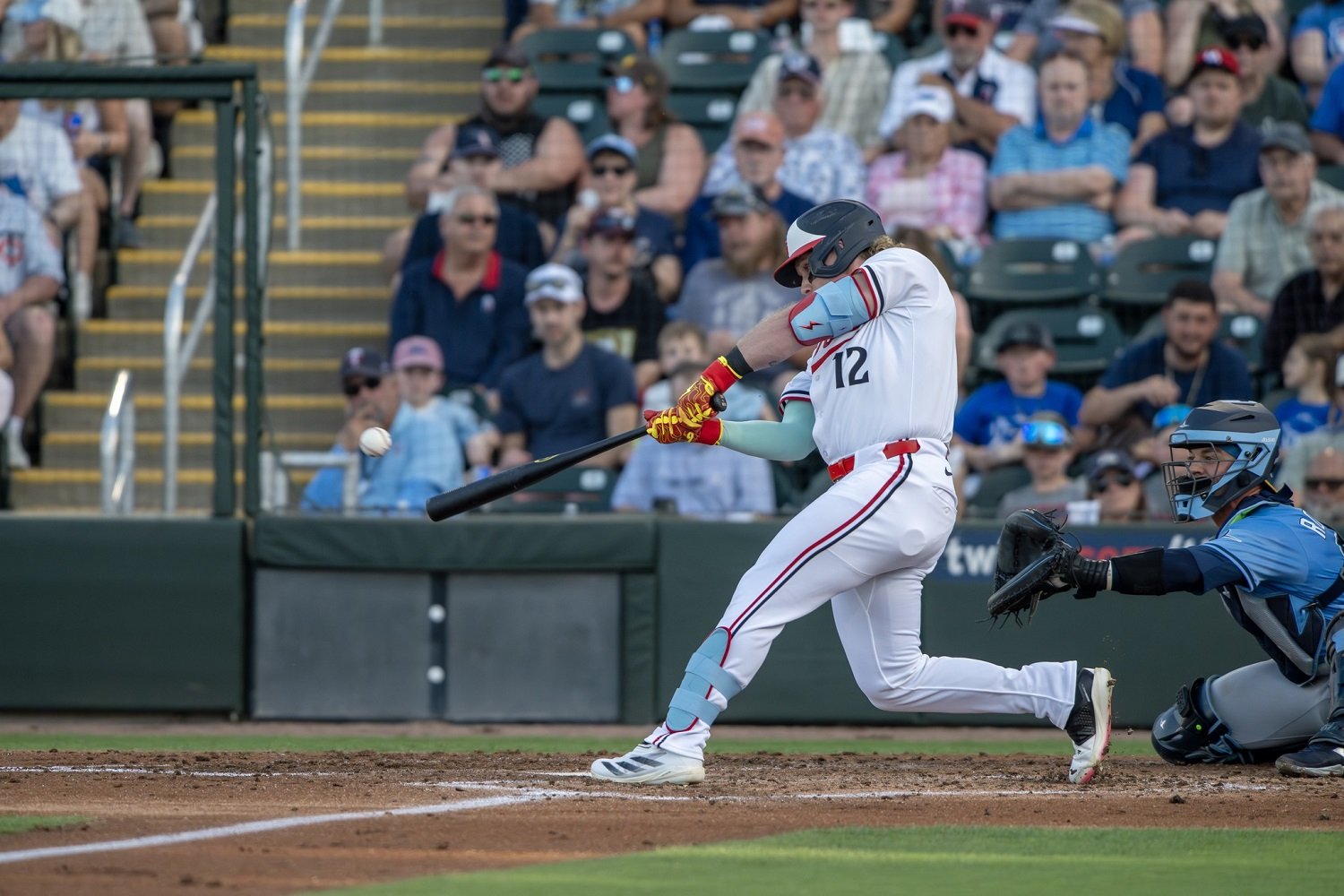 The Twins clearly needed a right-handed outfield bat this winter, and Harrison Bader filled that hole. He was added to the roster to fill the vacancy left by Max Kepler, who signed with the Philadelphia Phillies earlier in the offseason. In an organization that has long valued strong defensive outfield play, acquiring Bader adds depth to the bench and signals a strategic shift to bolster the team’s defensive framework. Minnesota entered the offseason with left-handed hitters Matt Wallner and Trevor Larnach already in the mix as regular starters, so it made sense to let Kepler walk in free agency. The absence of a dependable right-handed option had become more pronounced. By bringing in Bader, the Twins not only gained a player who can contribute in a similar mold to Kepler, but also secured someone who can offer a different dynamic in the outfield. Defensive Prowess Defensively, both Bader and Kepler have earned reputations as standout players in the outfield, albeit at different positions. Kepler was known for his work in right field, where he consistently demonstrated above-average defensive skills, including being a Gold Glove finalist. Even while playing through injuries last season, Kepler posted an Outs Above Average total that ranked in the 85th percentile. Bader, on the other hand, has been a force in center field. In the 2024 season, Bader’s defensive metrics highlighted his ability to cover ground effectively, including a 95th percentile OAA. While Bader’s defensive play has been widely praised, his role extends beyond mere fielding. He continues to be an elite center-field defender, with Statcast ranking his arm value in the 70th percentile and his arm strength in the 86th percentile. In many ways, his presence mirrors that of Kepler, whose reliability in right field provided defensive stability. The Twins hope Byron Buxton is healthy enough to play 100 games or more in 2025, which could mean that Bader will play in a corner spot more regularly. Shared Offensive Challenges Their defensive strengths have assured them of ample playing time, but neither Bader nor Kepler have been prolific at the plate. During the 2024 season, both players faced challenges on offense that reinforced a preexisting narrative—one maintaining that their value is primarily derived from their glove work, rather than their bats. Kepler finished the season with a .682 OPS, while Bader put up an even uglier .657 mark. They also tallied similar strikeout rates, exit velocities and extra-base totals. Both hitters belong near the bottom of the lineup, unless they are riding an offensive hot streak. The Twins, in particular, are betting on the possibility that Bader’s offensive struggles might be addressed with additional adjustments and coaching. His Baseball Savant page has more blue than a Smurf family reunion. For now, his defensive impact remains the calling card. The organization seems comfortable with this tradeoff, especially given the increasing emphasis on analytics that favors defensive metrics and versatility. Navigating Injury Concerns Injuries have been a recurring theme in the careers of both outfielders. Kepler has struggled with consistent availability, having not played more than 130 games since 2019 and appearing in only 105 games in 2024. Bader, too, has faced his share of health issues, including groin, hamstring, and oblique strains, as well as plantar fasciitis. However, it’s worth noting that Bader managed to play an entire season in 2024, suggesting that he might be on a more stable footing in the future. (Yes, that's a plantar fasciitis joke.) The decision to sign Bader is a calculated move that fits neatly into the Twins’ broader strategy. Buxton’s injury history is a persistent concern, so having a dependable defensive replacement is essential. Bader's role isn’t merely as a stopgap, because his presence allows the team to experiment with platoon combinations and optimize the lineup based on matchups. Combined with the speed he brings to the bases, his right-handed bat offers a blend of attributes that complement the existing roster. Bader and Kepler have strong threads of baseball DNA connecting them. However, Bader was a better fit for the Twins roster because of his right-handed bat and ability to play in center. As the season unfolds, all eyes will be on Bader, to see if he can fulfill the high expectations set by his predecessor and help the Twins improve both on the field and in their overall strategic execution. Can Bader outperform his projections? Leave a comment and start the discussion.