



Cody Christie
-
Posts
7,810 -
Joined
-
Last visited
-
Days Won
5
Content Type
Profiles
News
Minnesota Twins Videos
2026 Minnesota Twins Top Prospects Ranking
2022 Minnesota Twins Draft Picks
Minnesota Twins Free Agent & Trade Rumors, Notes, & Tidbits
Guides & Resources
2023 Minnesota Twins Draft Picks
The Minnesota Twins Players Project
2024 Minnesota Twins Draft Picks
2025 Minnesota Twins Draft Pick Tracker
2026 Minnesota Twins Draft Tracker: Picks & Bonuses
Forums
Blogs
Events
Store
Downloads
Gallery
Everything posted by Cody Christie
-

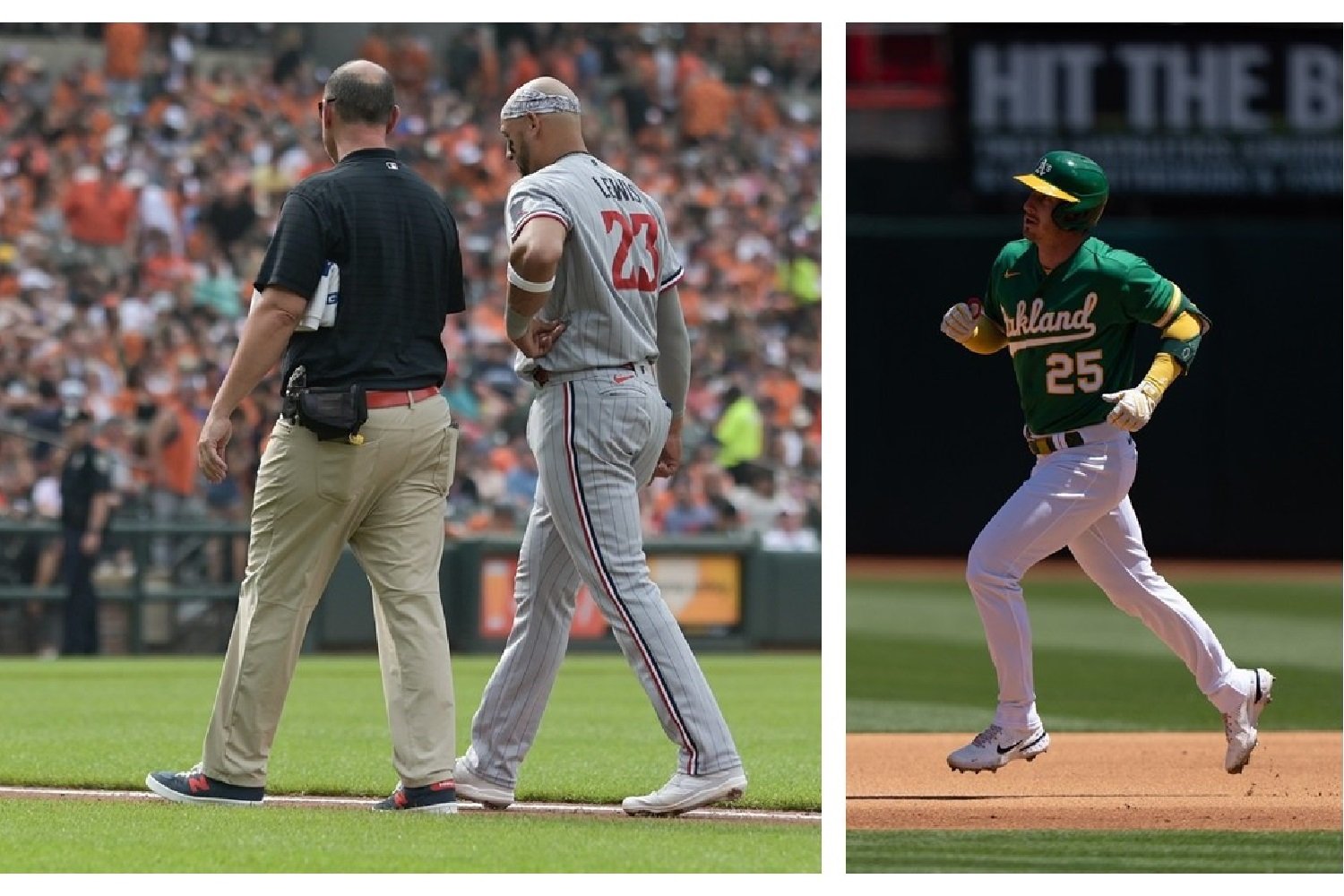 Major League Baseball’s amateur draft is unlike those of the other major American men's pro sports leagues. Organizations must draft the right players, and it takes multiple years of development before players can have a major-league impact. Still, certain drafts serve as inflection points for an entire organization. Derek Falvey took over the Twins front office leading into the 2017 season and knew that the organization had to make the right choice with the draft’s number one pick. From there, Minnesota has made other mistakes. Decision at the Top: Royce Lewis vs. Hunter Greene The team's decisions that year begin with their choice of Royce Lewis over Hunter Greene at the very top. While Lewis has flashed tantalizing power, his career has been marred by injuries and limited to just 152 games, raising doubts about his ability to become a long‑term cornerstone. In contrast, Greene has blossomed into an ace, earning an All‑Star nod in 2024 and leading baseball in WHIP (0.78) early in 2025. Selecting Lewis was a sensible move, banking on his athleticism and projectability. It was (at least in part) a bet on the position player to stay healthier than the pitcher, and when Greene underwent Tommy John surgery in April 2019, that seemed to have paid off. Since 2021, though, Lewis has undergone two ACL repairs, missed time with hamstring, quadricep and oblique strains, and played barely the equivalent of a full season in the majors. There are long‑term questions about his durability and defensive positioning. Despite moments like hitting four career grand slams in a burst within his first 60 career games, he's been unable to anchor the Twins lineup. Greene, meanwhile is up to roughly two and a half years' worth of big-league starts. He struck out 30-plus batters with fewer than five walks and no more than three earned runs over his first four 2025 starts, a feat only five starters had previously achieved since 1901. He's already eclipsed 500 career punchouts, and this year is trending toward being his best yet. Minnesota has built up its own pitching pipeline, but Greene would look great at the top of the team’s rotation. The Brent Rooker Trade Another misstep saw the Twins trade Brent Rooker (whom they took in the sandwich round that year, but who got only seven big‑league games in Minnesota) as a throw-in for Chris Paddack and Emilio Pagán. The Twins had a logjam in the outfield, and Rooker was the odd man out. Since that time, he has morphed into a premier slugger in Oakland, averaging over 34 home runs per season with OPS+ marks of 126 and 164 in 2023 and 2024. After bouncing from San Diego to Kansas City, Rooker landed in Oakland and seized his chance. The Twins have struggled to develop bats, and Rooker would be a welcome addition to the 2025 lineup. Unfulfilled Early‑Round Hopes Landon Leach: Selected 37th overall in Round 2, right‑hander Landon Leach showed early promise in the GCL during his first two professional seasons. Injuries significantly impacted his career, however, and he never made it past Fort Myers. He pitched one season in the Braves organization before calling it a career at age 22. Blayne Enlow: Taken 76th overall in Round 3, Blayne Enlow once flashed first‑round upside out of Louisiana. He was considered one of the organization’s top pitching prospects for multiple seasons. However, he elected free agency following the 2023 season after Tommy John surgery and inconsistent minor‑league results. He never appeared in the big leagues and topped out at Triple-A. Charlie Barnes: Fourth‑round pick Charlie Barnes briefly reached the majors in 2021, with a 5.92 ERA in nine games before shifting to the Korean Baseball Organization. One Silver Lining: Bailey Ober The most surprising success from that draft came in Round 12, when the Twins selected Bailey Ober. He has become a dependable starter, compiling 8.0 career WAR with a 3.85 ERA and 501 strikeouts over 490.1 innings. Ober’s ascent from late-rounder to rotation fixture offers a rare highlight amid a draft class otherwise defined by missed opportunities. Seven years on, the 2017 Twins draft looms as a point of frustration and leakage—from the unlucky roll of the dice on Lewis over Greene to the lack of value gleaned from Rooker and setbacks with early picks like Leach, Enlow, and Barnes. While Ober stands out as a gem, Minnesota’s inability to nurture and deploy its high‑end talent underscores the stakes of player development and roster management. As the organization reflects on these lessons, the hope is that future drafts will yield not just potential, but consistent, long‑term contributors. What was the Twins’ most significant mistake in the 2017 MLB Draft? Leave a comment and start the discussion.
- 26 comments
-
- 2
-

-
- hunter greene
- royce lewis
- (and 5 more)
-
The 2017 MLB Draft had a chance to be a franchise-altering moment for the Twins. Instead, it is shaping up to be one misstep after another. Image courtesy of Tommy Gilligan (Lewis), Stan Szeto (Rooker)-Imagn Images The 2017 MLB Draft had a chance to be a franchise-altering moment for the Twins. Instead, it is shaping up to be one misstep after another. Major League Baseball’s amateur draft is unlike those of the other major American men's pro sports leagues. Organizations must draft the right players, and it takes multiple years of development before players can have a major-league impact. Still, certain drafts serve as inflection points for an entire organization. Derek Falvey took over the Twins front office leading into the 2017 season and knew that the organization had to make the right choice with the draft’s number one pick. From there, Minnesota has made other mistakes. Decision at the Top: Royce Lewis vs. Hunter Greene The team's decisions that year begin with their choice of Royce Lewis over Hunter Greene at the very top. While Lewis has flashed tantalizing power, his career has been marred by injuries and limited to just 152 games, raising doubts about his ability to become a long‑term cornerstone. In contrast, Greene has blossomed into an ace, earning an All‑Star nod in 2024 and leading baseball in WHIP (0.78) early in 2025. Selecting Lewis was a sensible move, banking on his athleticism and projectability. It was (at least in part) a bet on the position player to stay healthier than the pitcher, and when Greene underwent Tommy John surgery in April 2019, that seemed to have paid off. Since 2021, though, Lewis has undergone two ACL repairs, missed time with hamstring, quadricep and oblique strains, and played barely the equivalent of a full season in the majors. There are long‑term questions about his durability and defensive positioning. Despite moments like hitting four career grand slams in a burst within his first 60 career games, he's been unable to anchor the Twins lineup. Greene, meanwhile is up to roughly two and a half years' worth of big-league starts. He struck out 30-plus batters with fewer than five walks and no more than three earned runs over his first four 2025 starts, a feat only five starters had previously achieved since 1901. He's already eclipsed 500 career punchouts, and this year is trending toward being his best yet. Minnesota has built up its own pitching pipeline, but Greene would look great at the top of the team’s rotation. The Brent Rooker Trade Another misstep saw the Twins trade Brent Rooker (whom they took in the sandwich round that year, but who got only seven big‑league games in Minnesota) as a throw-in for Chris Paddack and Emilio Pagán. The Twins had a logjam in the outfield, and Rooker was the odd man out. Since that time, he has morphed into a premier slugger in Oakland, averaging over 34 home runs per season with OPS+ marks of 126 and 164 in 2023 and 2024. After bouncing from San Diego to Kansas City, Rooker landed in Oakland and seized his chance. The Twins have struggled to develop bats, and Rooker would be a welcome addition to the 2025 lineup. Unfulfilled Early‑Round Hopes Landon Leach: Selected 37th overall in Round 2, right‑hander Landon Leach showed early promise in the GCL during his first two professional seasons. Injuries significantly impacted his career, however, and he never made it past Fort Myers. He pitched one season in the Braves organization before calling it a career at age 22. Blayne Enlow: Taken 76th overall in Round 3, Blayne Enlow once flashed first‑round upside out of Louisiana. He was considered one of the organization’s top pitching prospects for multiple seasons. However, he elected free agency following the 2023 season after Tommy John surgery and inconsistent minor‑league results. He never appeared in the big leagues and topped out at Triple-A. Charlie Barnes: Fourth‑round pick Charlie Barnes briefly reached the majors in 2021, with a 5.92 ERA in nine games before shifting to the Korean Baseball Organization. One Silver Lining: Bailey Ober The most surprising success from that draft came in Round 12, when the Twins selected Bailey Ober. He has become a dependable starter, compiling 8.0 career WAR with a 3.85 ERA and 501 strikeouts over 490.1 innings. Ober’s ascent from late-rounder to rotation fixture offers a rare highlight amid a draft class otherwise defined by missed opportunities. Seven years on, the 2017 Twins draft looms as a point of frustration and leakage—from the unlucky roll of the dice on Lewis over Greene to the lack of value gleaned from Rooker and setbacks with early picks like Leach, Enlow, and Barnes. While Ober stands out as a gem, Minnesota’s inability to nurture and deploy its high‑end talent underscores the stakes of player development and roster management. As the organization reflects on these lessons, the hope is that future drafts will yield not just potential, but consistent, long‑term contributors. What was the Twins’ most significant mistake in the 2017 MLB Draft? Leave a comment and start the discussion. View full article
-
Luke Keaschall impressed during his big-league debut, but how did he establish himself as one of the game’s top prospects? Let’s take a look back at his professional career. Image courtesy of William Parmeter Luke Keaschall impressed during his big-league debut, but how did he establish himself as one of the game’s top prospects? Let’s take a look back at his professional career. Luke Keaschall’s journey from a polished collegiate hitter to a top prospect exemplifies both rapid progression and the patience required after a significant injury. Drafted in the second round out of Arizona State University, he immediately showcased his advanced hit tool and plate discipline as he navigated three levels of Twins’ minor‐league ball in 2023. In 2024, Keaschall built on that foundation with a breakout season split between High‑A Cedar Rapids and Double‑A Wichita while slashing .303/.420/.483 (.903) before a torn UCL led to Tommy John surgery in August. The Twins have since carefully managed his defensive workload, limiting him to sporadic second‑base appearances and planning gradual outfield reps to rebuild arm strength. Yet a rash of injuries opened a path to Minnesota’s roster, culminating in an April 18 call‑up and a memorable two‑hit debut. 2023: Professional Debut Across Three Levels Shortly after signing for $1.5 million, Keaschall embarked on his pro career with the FCL Twins, earning rapid promotions to Single‑A Fort Myers and High‑A Cedar Rapids. Across those 31 games, he posted a .288/.414/.478 (.892) slash line with three home runs, 10 doubles, and 11 stolen bases. He quietly underlined the hit‑first profile that made him a coveted draft choice. His advanced strike‑zone awareness was shown with a 13.5 percent walk rate versus a sub‑18 percent strikeout rate. It was a brief debut, but he was starting to get wider attention. 2024: Breakout and Setback The 2024 season marked his first full campaign, and Keaschall split time between Cedar Rapids and Double‑A Wichita. In 103 games, he compiled a .303/.420/.483 line with 15 home runs, 21 doubles, and 23 steals. In July, he represented the Twins at the MLB Futures Game after Brooks Lee was called up. In the second half, the Twins knew his elbow would require surgery, so it was a balancing act of getting him as many plate appearances as possible while ensuring he could be ready for the start of the 2025 season. In August, his season ended as he had Tommy John surgery, a procedure more common among pitchers but increasingly seen in position players with high‑stress throwing requirements. Everything went well during his rehab and he was able to return this spring for his first big-league camp. Despite his shortened season, Twins Daily still name Keaschall the organization's Minor League Hitter of the Year. 2025: Cautious Return and Major‑League Call Entering the season, Keaschall was a top-65 prospect on the three major top-100 lists. Minnesota assigned him to Triple‑A St. Paul to begin the year, and he entered with clear limitations on his arm. The Twins managed his innings at second base while deferring outfield work until his elbow further strengthened. Manager Rocco Baldelli emphasized that Keaschall’s “arm strength is coming along. He's getting a bunch of reps at second base, but hasn't really started in the outfield at this point. ... We're going to get him a lot of work early in the day every day, which should get him ready as soon as possible.” He has yet to appear in back‑to‑back games at second base, a testament to the club’s deliberate approach. Yet a rash of injuries to Royce Lewis (knee), Matt Wallner (shoulder), Carlos Correa (wrist), and Willi Castro (oblique) forced Minnesota’s hand. With position‑player depth stretched thin, the Twins summoned their No. 3 prospect to the majors on Friday. “We are super high on Luke,” said Twins general manager Jeremy Zoll. “Love the person, the player. He had a great spring, so all those things are really encouraging.” At 22, Keaschall’s combination of plate discipline, speed, and versatility continues to make him one of the Twins’ most intriguing building blocks. The club will continue his phased defensive plan, anticipating more outfield work as he gets further removed from the surgery. As Minnesota navigates temporary roster gaps, Keaschall’s journey from the FCL to MLB illuminates the delicate balance between cautious development and seizing big‑league opportunities. Looking ahead, sustained health and incremental defensive reps will determine whether he can parlay this eagerly anticipated debut into a permanent major‑league role. What stands out about Keaschall’s time in the minors? Leave a comment and start the discussion. View full article
-
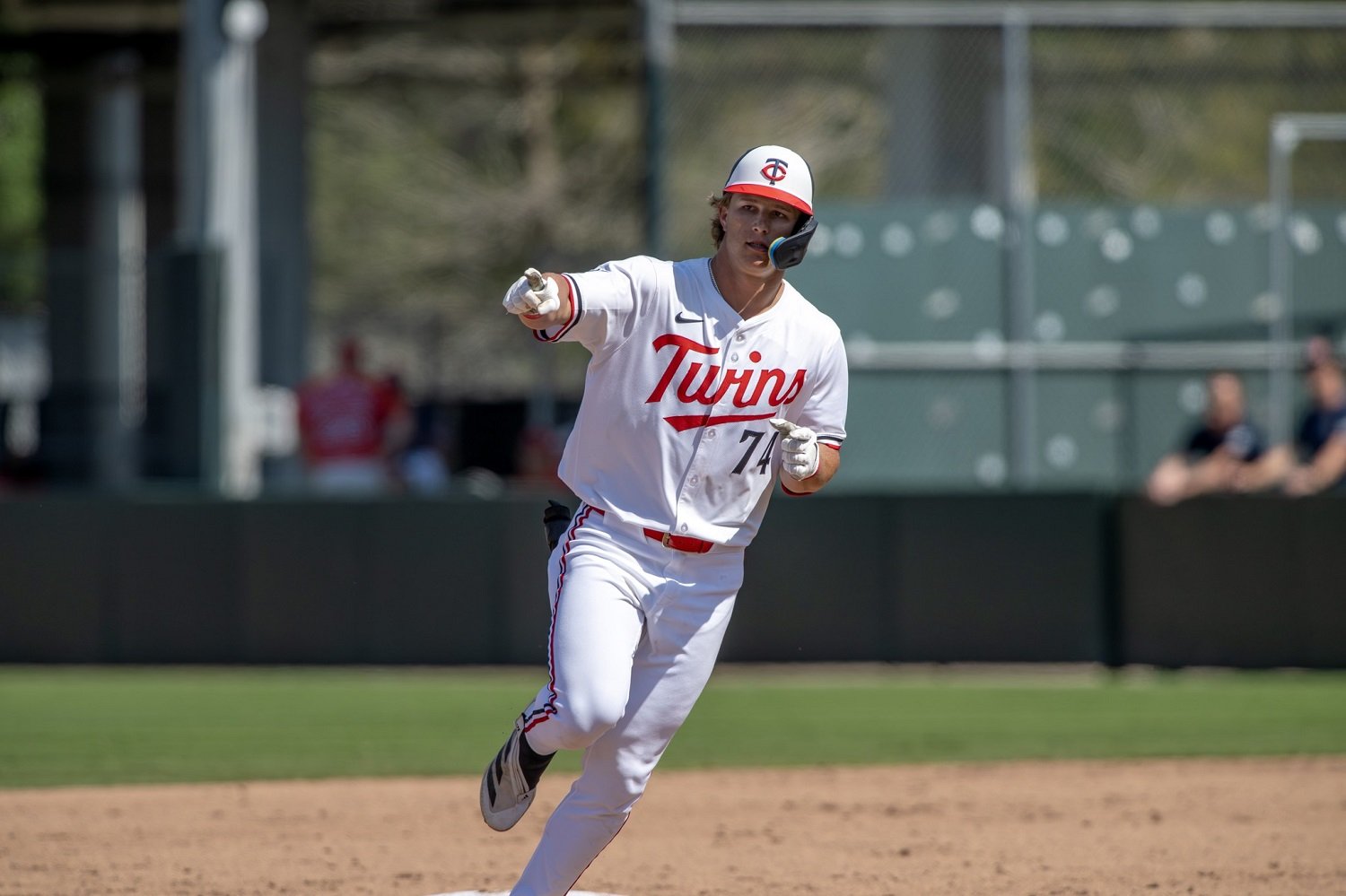 Luke Keaschall’s journey from a polished collegiate hitter to a top prospect exemplifies both rapid progression and the patience required after a significant injury. Drafted in the second round out of Arizona State University, he immediately showcased his advanced hit tool and plate discipline as he navigated three levels of Twins’ minor‐league ball in 2023. In 2024, Keaschall built on that foundation with a breakout season split between High‑A Cedar Rapids and Double‑A Wichita while slashing .303/.420/.483 (.903) before a torn UCL led to Tommy John surgery in August. The Twins have since carefully managed his defensive workload, limiting him to sporadic second‑base appearances and planning gradual outfield reps to rebuild arm strength. Yet a rash of injuries opened a path to Minnesota’s roster, culminating in an April 18 call‑up and a memorable two‑hit debut. 2023: Professional Debut Across Three Levels Shortly after signing for $1.5 million, Keaschall embarked on his pro career with the FCL Twins, earning rapid promotions to Single‑A Fort Myers and High‑A Cedar Rapids. Across those 31 games, he posted a .288/.414/.478 (.892) slash line with three home runs, 10 doubles, and 11 stolen bases. He quietly underlined the hit‑first profile that made him a coveted draft choice. His advanced strike‑zone awareness was shown with a 13.5 percent walk rate versus a sub‑18 percent strikeout rate. It was a brief debut, but he was starting to get wider attention. 2024: Breakout and Setback The 2024 season marked his first full campaign, and Keaschall split time between Cedar Rapids and Double‑A Wichita. In 103 games, he compiled a .303/.420/.483 line with 15 home runs, 21 doubles, and 23 steals. In July, he represented the Twins at the MLB Futures Game after Brooks Lee was called up. In the second half, the Twins knew his elbow would require surgery, so it was a balancing act of getting him as many plate appearances as possible while ensuring he could be ready for the start of the 2025 season. In August, his season ended as he had Tommy John surgery, a procedure more common among pitchers but increasingly seen in position players with high‑stress throwing requirements. Everything went well during his rehab and he was able to return this spring for his first big-league camp. Despite his shortened season, Twins Daily still name Keaschall the organization's Minor League Hitter of the Year. 2025: Cautious Return and Major‑League Call Entering the season, Keaschall was a top-65 prospect on the three major top-100 lists. Minnesota assigned him to Triple‑A St. Paul to begin the year, and he entered with clear limitations on his arm. The Twins managed his innings at second base while deferring outfield work until his elbow further strengthened. Manager Rocco Baldelli emphasized that Keaschall’s “arm strength is coming along. He's getting a bunch of reps at second base, but hasn't really started in the outfield at this point. ... We're going to get him a lot of work early in the day every day, which should get him ready as soon as possible.” He has yet to appear in back‑to‑back games at second base, a testament to the club’s deliberate approach. Yet a rash of injuries to Royce Lewis (knee), Matt Wallner (shoulder), Carlos Correa (wrist), and Willi Castro (oblique) forced Minnesota’s hand. With position‑player depth stretched thin, the Twins summoned their No. 3 prospect to the majors on Friday. “We are super high on Luke,” said Twins general manager Jeremy Zoll. “Love the person, the player. He had a great spring, so all those things are really encouraging.” At 22, Keaschall’s combination of plate discipline, speed, and versatility continues to make him one of the Twins’ most intriguing building blocks. The club will continue his phased defensive plan, anticipating more outfield work as he gets further removed from the surgery. As Minnesota navigates temporary roster gaps, Keaschall’s journey from the FCL to MLB illuminates the delicate balance between cautious development and seizing big‑league opportunities. Looking ahead, sustained health and incremental defensive reps will determine whether he can parlay this eagerly anticipated debut into a permanent major‑league role. What stands out about Keaschall’s time in the minors? Leave a comment and start the discussion.
 -
Pablo López looked sharp in his rehab start with the Saints while two other affiliates completed double headers. Let’s find out which prospects stood out in Saturday’s action. Image courtesy of William Parmeter (Photo of Yasser Mercedes) Pablo López looked sharp in his rehab start with the Saints while two other affiliates completed double headers. Let’s find out which prospects stood out in Saturday’s action. Like the Twins, many of the organization’s affiliates are attempting to climb their way back to the .500 mark. It’s a long season and the team’s have to get into the season’s groove to start stacking wins. Before we get into tonight’s action, let’s check out how the team’s current records and what transactions took place leading into Saturday’s games. CURRENT W-L Records Minnesota Twins: 7-14 St. Paul Saints: 7-10 Wichita Wind Surge: 8-7 Cedar Rapids Kernels: 9-5 Fort Myers Mighty Mussels: 7-7 TRANSACTIONS -RHP Pablo López assigned to the Saints on Major League rehab. -LHP Kody Funderburk optioned from Minnesota to St. Paul. -RHP Huascar Ynoa released by the Minnesota Twins organization. SAINTS SENTINEL St. Paul 0, Iowa 1 Box Score Pablo López took the mound in a rehab start for the Saints and did everything he needed to do to prove he’s ready to rejoin the Twins. In 4 2/3 innings, he allowed one earned run on a solo home run where he left a fastball near the top of the zone. He threw 63 pitches, 43 for strikes and got eight swings and misses. His 18 fastballs averaged 94.5 miles per hour and he topped out at 96 mph. He threw 16 of 22 sweepers for a strike, his highest usage pitch. The Saints offense was relatively quiet until the ninth inning. Mickey Gasper smacked a two-out double into the gap to finish the night 2-for-4. Daulton Shuffield replaced Gasper at second to have a little more speed on the bases. Emmanuel Rodriguez stepped in and singled on the first pitch. On the play, Shuffield tried to score but was thrown out at the plate to end the game. It was the 10th 1-0 game in Saints franchise history and they have gone 3-7. Luckily, the Saints will have Daniel Zebulon Matthews on the mound for Sunday’s series finale. WIND SURGE WISDOM Wichita 3, Tulsa 1 (Game 1- 7 Innings) Box Score Wichita rode a three-run inning to scrape out a close ball game. Ricardo Olivar started the frame with a solo home run, his first long-ball of the season. With two outs in the frame, Tanner Schobel was hit by a pitch to load the bases. Rubel Cespedes singled on a 2-1 pitch to drive in a pair of runs and push the lead to 3-0. Connor Prielipp and Darren Bowen combined to hold the Tulsa lineup at bay. Prielipp pitched three innings and allowed one run (a solo home run) on two hits. He struck out five batters and 33 of his 48 pitches were for strikes (68.75%). Bowen tossed four scoreless frames while allowing two hits with three walks and four strikeouts. Offensively, Cespedes reached base four times going 2-for-2 with a pair of walks. Kyler Fedko was the only other batter to reach base multiple times. He went 1-for-2 with a double and a walk. Wichita 7, Tulsa 0 (Game 2- 6 Innings) Box Score Both teams struggled to score for the first three innings. In the fourth, Tanner Schobel singled to lead off the inning. He moved to third on a ground out and a balk. Ben Ross singled in the game’s first run. The fifth inning opened with three straight walks before the game’s biggest hit. Allan Cerda connected for a grand slam, his first home run of the year. One inning later, Kyle Fedko added to his hot start to the season with a two-run homer. His OPS is nearly 1.300 for the year as he has gotten on base over 50% of the time. He is tied for the Texas League lead in home runs. John Kelin was very efficient in four shutout innings. He limited Tulsa to one hit while striking out four and lowering his season ERA to 2.19. The game entered a rain delay with the Wind Surge batting in the sixth inning and was called after a 30+ minute delay. Today’s doubleheader also was the first that Wichita has swept since the Wind Surge did so on June 6, 2024. KERNELS NUGGETS Cedar Rapids 13, Peoria 6 (Game 1- 9 Innings) Box Score Game one of the team’s double-header was the completion of a game from April 18th that was suspended due to rain in the fourth inning. Cedar Rapids was already leading 8-3. In the originally scheduled game, Misael Urbina had smacked a three-run home run in the second inning. In the third inning, Kevin Maitan doubled to push the lead to 6-3. Things got a little crazy when the rain started falling in the fourth. Billy Amick singled, Gabriel Gonzalez was hit by a pitch, and Khadim Diaw singled to load the bases. Nate Baez drove in two runs with a double but Diaw was thrown out at home on the play. Then the umps stopped the game. When the game resumed, the Kernels added some insurance in the seventh inning. Kyle DeBarge connected for his first home run of the season, a two-run shot. Brandon Winokur and Billy Amick earned back-to-back walks before Gonzalez cracked a bases clearing double. Alejandro Hidalgo had started the game on Friday. He pitched three innings and was charged with three earned runs on three hits. He struck out four and walked one. Logan Whitaker picked up his first professional win. In two innings, he allowed one run on one hit. Juan Mendez and Samuel Perez pitched shutout innings to end the game. Cedar Rapids 4, Peoria 1 (Game 2- 7 Innings) Box Score Cedar Rapids completed the double-header sweep with an efficient 4-1 victory. Danny De Andrade doubled in the second inning after a pair of walks. Kevin Maitan reached on a fielder’s choice that stretched the lead to 2-0. In the sixth inning, Maitan smacked a ground-rule double to add an insurance run. Later in the frame, Kyle DeBarge capped the team’s scoring with a sacrifice fly. Cedar Rapids was limited to three hits and went 2-for-9 with runners in scoring position. Tanner Hall was credited with his first victory after allowing one run on two hits over five innings. He walked four and struck out three. Gabriel Yanez pitched a perfect sixth inning for his first hold of the year. Jacob Wosinski gave up a single in the final inning but struck out the last batter on three pitches to end the game. MUSSEL MATTERS Fort Myers 8, Bradenton 6 Box Score Fort Myers burst out of the gate with a five run first inning and never looked back. Yasser Mercedes doubled to start the game and came around on a Daniel Pena double two batters later. Miguel Briceno kept the double party happening to plate the third run of the inning. Angel Del Rosario and Yohander Martinez both had RBI singles to cap the five run frame. The Mighty Mussels were quiet until the sixth inning. Martinez and Mercedes drew walks to put ducks on the pond. Jay Thomason cracked a two-out homer to push the score to 8-0. It was his third 111 mph exit velocity home run of the series. Three Fort Myers pitchers combined for the shutout. It was their second shutout in the series. Cole Peschl collected his first professional win after tossing five shutout frames. He scattered two hits while striking out six and only walking one. Ivran Romero pitched a perfect sixth frame with two swinging strikeouts. Zander Sechrist picked up a three inning save as he limited Bradenton to two hits and struck out three. Mighty Mussels pitchers combined to strikeout 11 Marauder batters, extending their Florida State League-leading total to 173 on the season. The Mussels team ERA now sits at a league leading 2.89, nearly a full run better than the next closest team at 3.68. PLAYERS OF THE DAY Hitter of the Day Nate Baez (Cedar Rapids): 3-for-7, 2B, 3 RBI, 3 R, 2 BB Pitcher of the Day Cole Peschl (Fort Myers): 5 IP, 2 H, 0 R, 1 BB, 6 K, 65 pitches, 47 strikes (72.3%) PROSPECT SUMMARY Check out the Prospect Tracker for much more on our recently-updated Twins Top 20 prospects after seeing how they did on Saturday. #1– Walker Jenkins (Wichita) - Injured List (ankle) #2 - Emmanuel Rodriguez (St. Paul) - 1-for-3, 1 BB, 2 K #3 - Luke Keaschall (Minnesota) - Called Up to the Big Leagues. #4 - Charlee Soto (Cedar Rapids) - Did Not Pitch #5 - Andrew Morris (St. Paul) - Did Not Pitch #6 - Marco Raya (St. Paul) - Did Not Pitch #7 - Kaelen Culpepper (Cedar Rapids) - Injured List (wrist) #8 - Brandon Winokur (Cedar Rapids) - 1-for-8, 1 R, 2 BB, 1 K #9 - Cory Lewis (St. Paul) - Did Not Pitch #10 - Connor Prielipp (Wichita) - 3 IP, 1 ER, 2 H, 5 K, 0 BB #11 - Dasan Hill (Fort Myers) - Did Not Pitch. #12 - C.J. Culpepper (Wichita) - Injured List #13 - Kyle DeBarge (Cedar Rapids) - 1-for-7, 1 R, 3 RBI, 2 BB, 2 K #14 - Eduardo Beltre (FCL Twins) - No games yet. #15 - Yasser Mercedes (Fort Myers) - 1-for-4, 2B, 2 R, 1 BB, 3 K #16 - Rayne Doncon (Cedar Rapids) - Injured List (oblique) #17 - Billy Amick (Cedar Rapids) - 2-for-7, 3 R, 1 RBI, 1 BB 3 K #18 - Kala’i Rosario (Wichita) - 0-for-7, 5 K #19 - Gabriel Gonzalez (Cedar Rapids) - 3-for-8, 2 2B, 2 R, 2 RBI, 1 BB, 1 K #20 - Ricardo Olivar (Wichita) - 1-for-3, HR, RBI, R, K SUNDAY’S PROBABLE STARTERS Minnesota @ Atlanta (12:35 PM CST) - RHP Joe Ryan (1-1, 2.45 ERA) St. Paul @ Iowa (1:08 PM CST) - RHP Zebby Matthews (2-1, 1.80 ERA) Wichita - Scheduled Off Day Cedar Rapids @ Peoria (2:05 PM CST) - RHP Jose Olivares (0-0, 0.00 ERA) Bradenton @ Fort Myers (11:05 AM CST) - RHP Jakob Hall (0-0, 12.27 ERA) Please feel free to ask questions about the teams, the roster, and discuss Saturday’s games, or anything else Twins minor-league related! View full article
-
Twins Minor League Report (4/19): López Sharp in Rehab Start
Cody Christie posted an article in Minor Leagues
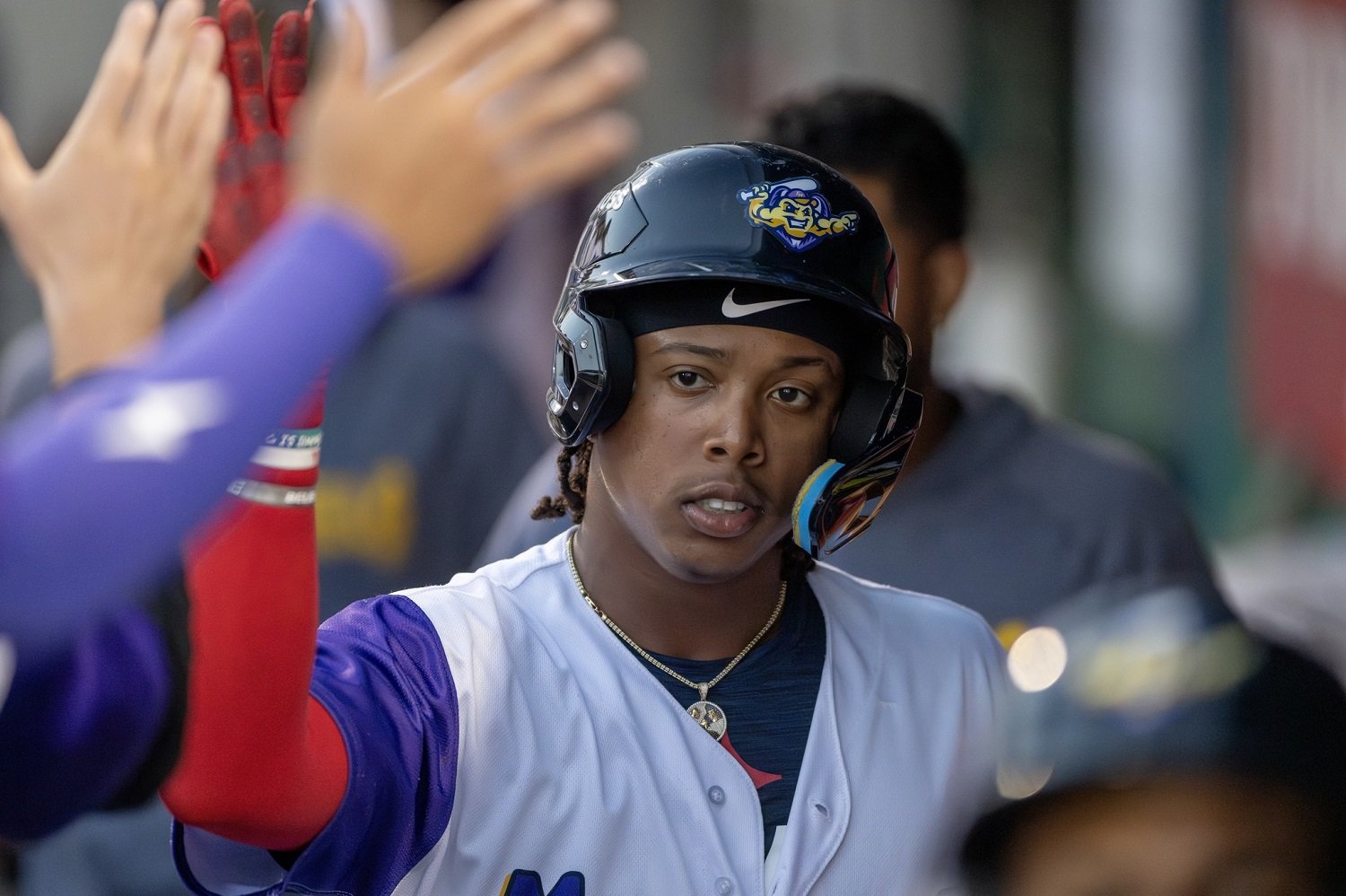 Like the Twins, many of the organization’s affiliates are attempting to climb their way back to the .500 mark. It’s a long season and the team’s have to get into the season’s groove to start stacking wins. Before we get into tonight’s action, let’s check out how the team’s current records and what transactions took place leading into Saturday’s games. CURRENT W-L Records Minnesota Twins: 7-14 St. Paul Saints: 7-10 Wichita Wind Surge: 8-7 Cedar Rapids Kernels: 9-5 Fort Myers Mighty Mussels: 7-7 TRANSACTIONS -RHP Pablo López assigned to the Saints on Major League rehab. -LHP Kody Funderburk optioned from Minnesota to St. Paul. -RHP Huascar Ynoa released by the Minnesota Twins organization. SAINTS SENTINEL St. Paul 0, Iowa 1 Box Score Pablo López took the mound in a rehab start for the Saints and did everything he needed to do to prove he’s ready to rejoin the Twins. In 4 2/3 innings, he allowed one earned run on a solo home run where he left a fastball near the top of the zone. He threw 63 pitches, 43 for strikes and got eight swings and misses. His 18 fastballs averaged 94.5 miles per hour and he topped out at 96 mph. He threw 16 of 22 sweepers for a strike, his highest usage pitch. The Saints offense was relatively quiet until the ninth inning. Mickey Gasper smacked a two-out double into the gap to finish the night 2-for-4. Daulton Shuffield replaced Gasper at second to have a little more speed on the bases. Emmanuel Rodriguez stepped in and singled on the first pitch. On the play, Shuffield tried to score but was thrown out at the plate to end the game. It was the 10th 1-0 game in Saints franchise history and they have gone 3-7. Luckily, the Saints will have Daniel Zebulon Matthews on the mound for Sunday’s series finale. WIND SURGE WISDOM Wichita 3, Tulsa 1 (Game 1- 7 Innings) Box Score Wichita rode a three-run inning to scrape out a close ball game. Ricardo Olivar started the frame with a solo home run, his first long-ball of the season. With two outs in the frame, Tanner Schobel was hit by a pitch to load the bases. Rubel Cespedes singled on a 2-1 pitch to drive in a pair of runs and push the lead to 3-0. Connor Prielipp and Darren Bowen combined to hold the Tulsa lineup at bay. Prielipp pitched three innings and allowed one run (a solo home run) on two hits. He struck out five batters and 33 of his 48 pitches were for strikes (68.75%). Bowen tossed four scoreless frames while allowing two hits with three walks and four strikeouts. Offensively, Cespedes reached base four times going 2-for-2 with a pair of walks. Kyler Fedko was the only other batter to reach base multiple times. He went 1-for-2 with a double and a walk. Wichita 7, Tulsa 0 (Game 2- 6 Innings) Box Score Both teams struggled to score for the first three innings. In the fourth, Tanner Schobel singled to lead off the inning. He moved to third on a ground out and a balk. Ben Ross singled in the game’s first run. The fifth inning opened with three straight walks before the game’s biggest hit. Allan Cerda connected for a grand slam, his first home run of the year. One inning later, Kyle Fedko added to his hot start to the season with a two-run homer. His OPS is nearly 1.300 for the year as he has gotten on base over 50% of the time. He is tied for the Texas League lead in home runs. John Kelin was very efficient in four shutout innings. He limited Tulsa to one hit while striking out four and lowering his season ERA to 2.19. The game entered a rain delay with the Wind Surge batting in the sixth inning and was called after a 30+ minute delay. Today’s doubleheader also was the first that Wichita has swept since the Wind Surge did so on June 6, 2024. KERNELS NUGGETS Cedar Rapids 13, Peoria 6 (Game 1- 9 Innings) Box Score Game one of the team’s double-header was the completion of a game from April 18th that was suspended due to rain in the fourth inning. Cedar Rapids was already leading 8-3. In the originally scheduled game, Misael Urbina had smacked a three-run home run in the second inning. In the third inning, Kevin Maitan doubled to push the lead to 6-3. Things got a little crazy when the rain started falling in the fourth. Billy Amick singled, Gabriel Gonzalez was hit by a pitch, and Khadim Diaw singled to load the bases. Nate Baez drove in two runs with a double but Diaw was thrown out at home on the play. Then the umps stopped the game. When the game resumed, the Kernels added some insurance in the seventh inning. Kyle DeBarge connected for his first home run of the season, a two-run shot. Brandon Winokur and Billy Amick earned back-to-back walks before Gonzalez cracked a bases clearing double. Alejandro Hidalgo had started the game on Friday. He pitched three innings and was charged with three earned runs on three hits. He struck out four and walked one. Logan Whitaker picked up his first professional win. In two innings, he allowed one run on one hit. Juan Mendez and Samuel Perez pitched shutout innings to end the game. Cedar Rapids 4, Peoria 1 (Game 2- 7 Innings) Box Score Cedar Rapids completed the double-header sweep with an efficient 4-1 victory. Danny De Andrade doubled in the second inning after a pair of walks. Kevin Maitan reached on a fielder’s choice that stretched the lead to 2-0. In the sixth inning, Maitan smacked a ground-rule double to add an insurance run. Later in the frame, Kyle DeBarge capped the team’s scoring with a sacrifice fly. Cedar Rapids was limited to three hits and went 2-for-9 with runners in scoring position. Tanner Hall was credited with his first victory after allowing one run on two hits over five innings. He walked four and struck out three. Gabriel Yanez pitched a perfect sixth inning for his first hold of the year. Jacob Wosinski gave up a single in the final inning but struck out the last batter on three pitches to end the game. MUSSEL MATTERS Fort Myers 8, Bradenton 6 Box Score Fort Myers burst out of the gate with a five run first inning and never looked back. Yasser Mercedes doubled to start the game and came around on a Daniel Pena double two batters later. Miguel Briceno kept the double party happening to plate the third run of the inning. Angel Del Rosario and Yohander Martinez both had RBI singles to cap the five run frame. The Mighty Mussels were quiet until the sixth inning. Martinez and Mercedes drew walks to put ducks on the pond. Jay Thomason cracked a two-out homer to push the score to 8-0. It was his third 111 mph exit velocity home run of the series. Three Fort Myers pitchers combined for the shutout. It was their second shutout in the series. Cole Peschl collected his first professional win after tossing five shutout frames. He scattered two hits while striking out six and only walking one. Ivran Romero pitched a perfect sixth frame with two swinging strikeouts. Zander Sechrist picked up a three inning save as he limited Bradenton to two hits and struck out three. Mighty Mussels pitchers combined to strikeout 11 Marauder batters, extending their Florida State League-leading total to 173 on the season. The Mussels team ERA now sits at a league leading 2.89, nearly a full run better than the next closest team at 3.68. PLAYERS OF THE DAY Hitter of the Day Nate Baez (Cedar Rapids): 3-for-7, 2B, 3 RBI, 3 R, 2 BB Pitcher of the Day Cole Peschl (Fort Myers): 5 IP, 2 H, 0 R, 1 BB, 6 K, 65 pitches, 47 strikes (72.3%) PROSPECT SUMMARY Check out the Prospect Tracker for much more on our recently-updated Twins Top 20 prospects after seeing how they did on Saturday. #1– Walker Jenkins (Wichita) - Injured List (ankle) #2 - Emmanuel Rodriguez (St. Paul) - 1-for-3, 1 BB, 2 K #3 - Luke Keaschall (Minnesota) - Called Up to the Big Leagues. #4 - Charlee Soto (Cedar Rapids) - Did Not Pitch #5 - Andrew Morris (St. Paul) - Did Not Pitch #6 - Marco Raya (St. Paul) - Did Not Pitch #7 - Kaelen Culpepper (Cedar Rapids) - Injured List (wrist) #8 - Brandon Winokur (Cedar Rapids) - 1-for-8, 1 R, 2 BB, 1 K #9 - Cory Lewis (St. Paul) - Did Not Pitch #10 - Connor Prielipp (Wichita) - 3 IP, 1 ER, 2 H, 5 K, 0 BB #11 - Dasan Hill (Fort Myers) - Did Not Pitch. #12 - C.J. Culpepper (Wichita) - Injured List #13 - Kyle DeBarge (Cedar Rapids) - 1-for-7, 1 R, 3 RBI, 2 BB, 2 K #14 - Eduardo Beltre (FCL Twins) - No games yet. #15 - Yasser Mercedes (Fort Myers) - 1-for-4, 2B, 2 R, 1 BB, 3 K #16 - Rayne Doncon (Cedar Rapids) - Injured List (oblique) #17 - Billy Amick (Cedar Rapids) - 2-for-7, 3 R, 1 RBI, 1 BB 3 K #18 - Kala’i Rosario (Wichita) - 0-for-7, 5 K #19 - Gabriel Gonzalez (Cedar Rapids) - 3-for-8, 2 2B, 2 R, 2 RBI, 1 BB, 1 K #20 - Ricardo Olivar (Wichita) - 1-for-3, HR, RBI, R, K SUNDAY’S PROBABLE STARTERS Minnesota @ Atlanta (12:35 PM CST) - RHP Joe Ryan (1-1, 2.45 ERA) St. Paul @ Iowa (1:08 PM CST) - RHP Zebby Matthews (2-1, 1.80 ERA) Wichita - Scheduled Off Day Cedar Rapids @ Peoria (2:05 PM CST) - RHP Jose Olivares (0-0, 0.00 ERA) Bradenton @ Fort Myers (11:05 AM CST) - RHP Jakob Hall (0-0, 12.27 ERA) Please feel free to ask questions about the teams, the roster, and discuss Saturday’s games, or anything else Twins minor-league related!
- 6 comments
-
- 1
-

-
- pablo lopez
- connor prielipp
- (and 3 more)
-
No Velo, No Problem: Jhoan Durán’s Early Season Pitch-Mix Changes
Cody Christie posted an article in Twins
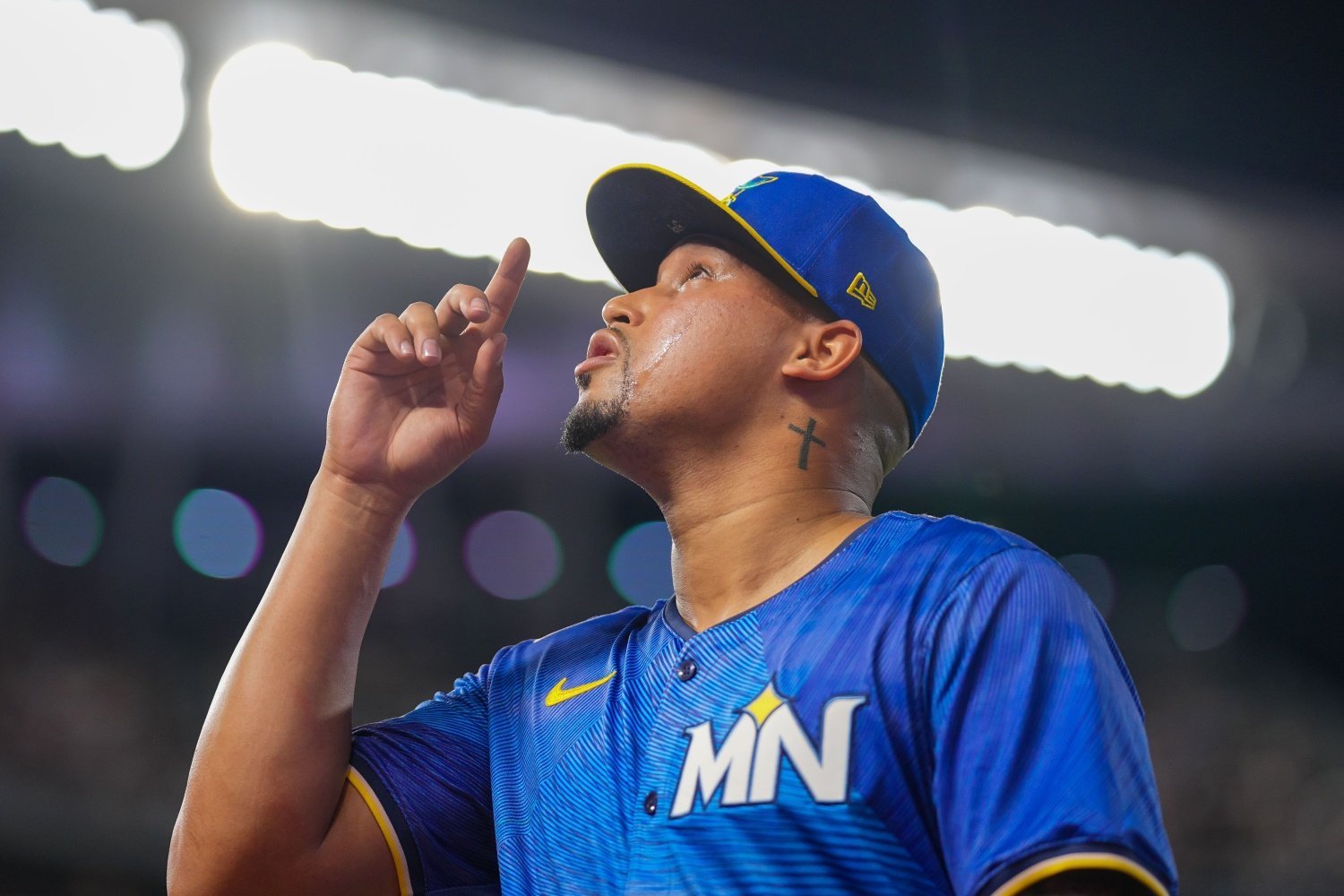 Jhoan Durán’s fastball has been his calling card throughout his professional career. His triple-digit heater lit up scoreboards when he was a minor-league starter, and that only increased after moving to the big-league bullpen. Casual fans love fastballs, and Durán was doing things that had never been done before by a Twins hurler. However, his performance has forced him to make pitch-mix changes. His early 2025 metrics suggest a deliberate evolution. Durán's four-seam fastball has dipped both in usage and velocity In response, he leaned heavily into his splitter, a pitch that has surged by nearly five percentage points and now challenges hitters with its late, tumbling action. Underlying these shifts is a subtle mechanical tweak: a drop in arm slot of roughly five degrees over the past two seasons. This tweak may explain both the change in the plane on his fastball and the slight tick off his radar gun. While no reliever can sustain 103–104 mph heat indefinitely, Durán’s adjustments are evidence of embracing a sustainable, multi‑pitch approach. The Fastball’s Waning Spotlight Durán’s four-seam fastball averaged an eye‑popping 101.8 mph in 2023, a number that vaulted him into elite company. However, Statcast data shows that the figure dropped to 100.5 mph in 2024, a career‑low, before settling around 100.1 mph through mid‑April of 2025. This isn’t an alarm bell so much as the natural arc of power arms. Few pitchers (outside Aroldis Chapman) sustain triple‑digit averages without occasional regression. Concurrently, Durán’s reliance on the four-seamer has receded. He threw his heater on 40.7% of his pitches in 2024, a career‑low that reflected both health caution and strategic balance. He’s now deploying it in roughly the mid‑30s percent range early this season. Against modern MLB lineups hungry for velocity, the relative decrease underscores his willingness to diversify. Some lineups hunt for fastballs, but even his high velocity isn’t enough to blow away the league’s best bats. The Splinker’s Moment Durán’s split-finger/sinker hybrid (splinker) has blossomed into his primary put-away pitch, climbing nearly five percentage points from last season’s usage rate. Opponents must now respect late life as much as raw heat. It was the first “off-speed” pitch in MLB history to be clocked at over 100 mph, and he averaged 97.6 mph with his splinker in 2025. As a strikeout weapon, his splinker has made vast improvements this season. He has posted a 36.0 Whiff% and a 30.0 Put Away%, respectively, whereas last season, both totals were in the low 20s. Batters have been held to a .091 BA and a .091 SLG when facing his best pitch, as he has only allowed one hit with it in 13 plate appearances. Its sinking action has created a ground‑ball complement (-25 launch angle) to his vertical power pitches. This duality makes Durán a more complete reliever. The Mechanics: Arm Slot Adjustment Statcast’s arm angle data reveals Durán has lowered his arm slot from the upper 30s (2023 season) toward the mid‑30s over the past two seasons. Where he once operated around a 39° release, he’s now closer to 33°, a subtle shift that alters both spin orientation and perceived plane. A slightly flatter arm slot reduces vertical ride on his four‑seam fastball in favor of more lateral run, contributing to the sense of “cut” on what remains a high‑velocity pitch. Conversely, the splitter benefits from the change, as the grip and release angle further accentuate its downward break, enhancing its effectiveness even as its velocity holds in the high 90s. A Sustainable Blueprint Baseball’s aging curves show that most pitchers peak in fastball velocity in their early 20s, then decline by roughly 1 mph by age 26 and beyond. Some legendary flamethrowers that once regularly touched 100 mph have seen the mid‑90s become the norm later in their careers. Durán’s current marks are not a deficiency but a recalibration. Durán’s 2025 season will be defined by a pitcher adapting in real-time to the realities of arm health, aging curves, and hitter evolution. By leaning into his splinker and refining his arm slot, Durán is following a tried‑and‑true path: when heat is harder to sustain, complementary weapons and refined mechanics become the keys to longevity. If the mantra is "No Velo, No Problem," then Durán’s early returns suggest his new toolkit will keep him humming through the summer and into October. Can Durán be successful with his new pitch mix? Leave a comment and start the discussion.
 -
A lot has been made about Jhoan Durán’s velocity drop over the last two seasons. His early season performance points to him making strategic pitch-mix changes to counter his aging fastball. Image courtesy of © Brad Rempel-Imagn Images A lot has been made about Jhoan Durán’s velocity drop over the last two seasons. His early season performance points to him making strategic pitch-mix changes to counter his aging fastball. Jhoan Durán’s fastball has been his calling card throughout his professional career. His triple-digit heater lit up scoreboards when he was a minor-league starter, and that only increased after moving to the big-league bullpen. Casual fans love fastballs, and Durán was doing things that had never been done before by a Twins hurler. However, his performance has forced him to make pitch-mix changes. His early 2025 metrics suggest a deliberate evolution. Durán's four-seam fastball has dipped both in usage and velocity In response, he leaned heavily into his splitter, a pitch that has surged by nearly five percentage points and now challenges hitters with its late, tumbling action. Underlying these shifts is a subtle mechanical tweak: a drop in arm slot of roughly five degrees over the past two seasons. This tweak may explain both the change in the plane on his fastball and the slight tick off his radar gun. While no reliever can sustain 103–104 mph heat indefinitely, Durán’s adjustments are evidence of embracing a sustainable, multi‑pitch approach. The Fastball’s Waning Spotlight Durán’s four-seam fastball averaged an eye‑popping 101.8 mph in 2023, a number that vaulted him into elite company. However, Statcast data shows that the figure dropped to 100.5 mph in 2024, a career‑low, before settling around 100.1 mph through mid‑April of 2025. This isn’t an alarm bell so much as the natural arc of power arms. Few pitchers (outside Aroldis Chapman) sustain triple‑digit averages without occasional regression. Concurrently, Durán’s reliance on the four-seamer has receded. He threw his heater on 40.7% of his pitches in 2024, a career‑low that reflected both health caution and strategic balance. He’s now deploying it in roughly the mid‑30s percent range early this season. Against modern MLB lineups hungry for velocity, the relative decrease underscores his willingness to diversify. Some lineups hunt for fastballs, but even his high velocity isn’t enough to blow away the league’s best bats. The Splinker’s Moment Durán’s split-finger/sinker hybrid (splinker) has blossomed into his primary put-away pitch, climbing nearly five percentage points from last season’s usage rate. Opponents must now respect late life as much as raw heat. It was the first “off-speed” pitch in MLB history to be clocked at over 100 mph, and he averaged 97.6 mph with his splinker in 2025. As a strikeout weapon, his splinker has made vast improvements this season. He has posted a 36.0 Whiff% and a 30.0 Put Away%, respectively, whereas last season, both totals were in the low 20s. Batters have been held to a .091 BA and a .091 SLG when facing his best pitch, as he has only allowed one hit with it in 13 plate appearances. Its sinking action has created a ground‑ball complement (-25 launch angle) to his vertical power pitches. This duality makes Durán a more complete reliever. The Mechanics: Arm Slot Adjustment Statcast’s arm angle data reveals Durán has lowered his arm slot from the upper 30s (2023 season) toward the mid‑30s over the past two seasons. Where he once operated around a 39° release, he’s now closer to 33°, a subtle shift that alters both spin orientation and perceived plane. A slightly flatter arm slot reduces vertical ride on his four‑seam fastball in favor of more lateral run, contributing to the sense of “cut” on what remains a high‑velocity pitch. Conversely, the splitter benefits from the change, as the grip and release angle further accentuate its downward break, enhancing its effectiveness even as its velocity holds in the high 90s. A Sustainable Blueprint Baseball’s aging curves show that most pitchers peak in fastball velocity in their early 20s, then decline by roughly 1 mph by age 26 and beyond. Some legendary flamethrowers that once regularly touched 100 mph have seen the mid‑90s become the norm later in their careers. Durán’s current marks are not a deficiency but a recalibration. Durán’s 2025 season will be defined by a pitcher adapting in real-time to the realities of arm health, aging curves, and hitter evolution. By leaning into his splinker and refining his arm slot, Durán is following a tried‑and‑true path: when heat is harder to sustain, complementary weapons and refined mechanics become the keys to longevity. If the mantra is "No Velo, No Problem," then Durán’s early returns suggest his new toolkit will keep him humming through the summer and into October. Can Durán be successful with his new pitch mix? Leave a comment and start the discussion. View full article
-
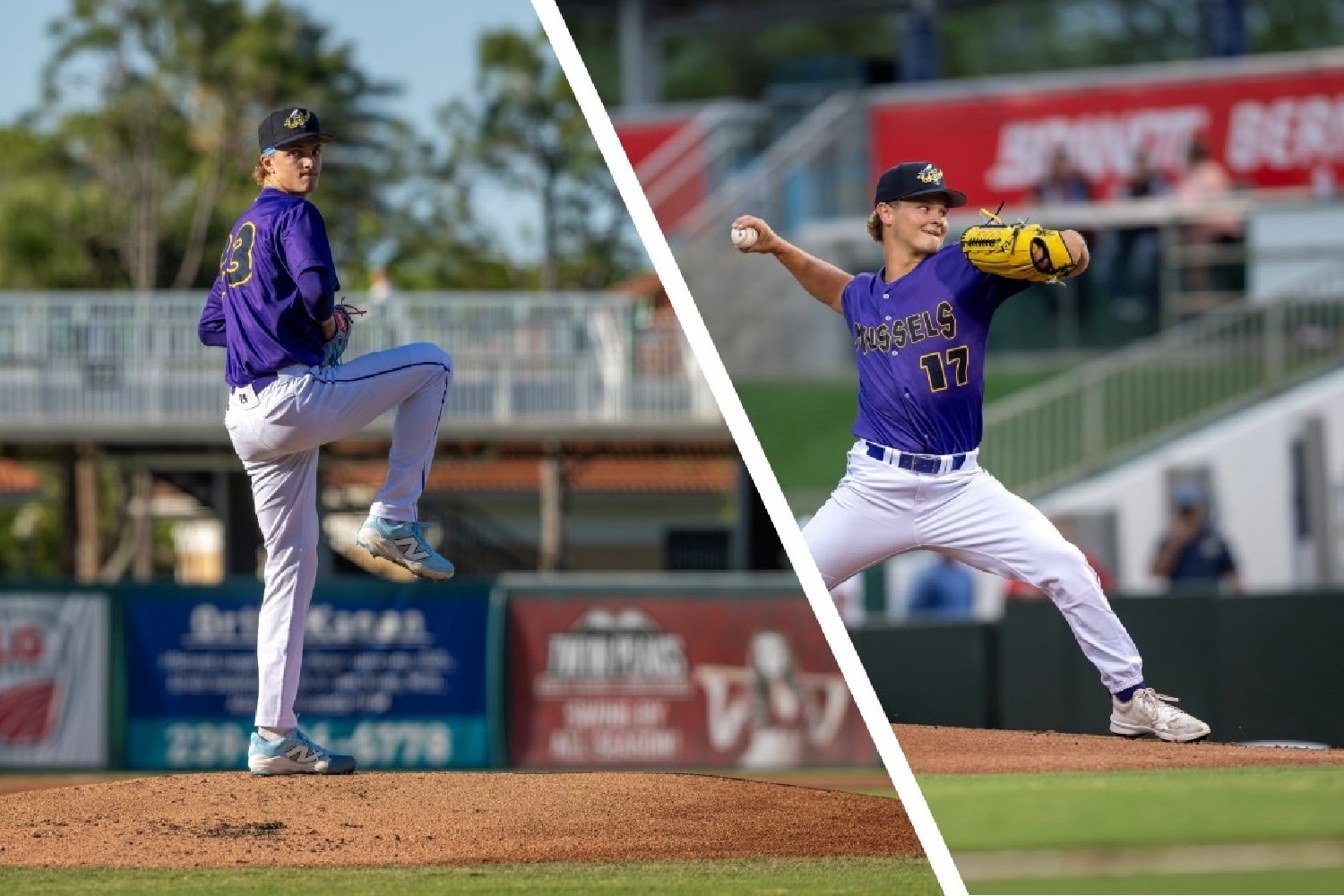 For the better part of the last decade, the Minnesota Twins have carved out a distinct path in the amateur draft: find underrated right-handed college pitchers, bring them into the organization’s pitching lab, and turn up the velocity dial. It’s a strategy that’s produced impressive results (ask Bailey Ober, David Festa, or Zebby Matthews). These names weren’t exactly top-of-the-draft darlings, but they’ve steadily climbed the ladder thanks to tweaks made under the Twins’ watchful eye. But over the last few drafts, there’s been a noticeable shift. While the Twins haven’t abandoned their trusty template, they’ve also begun dipping their toes into a historically riskier pool: high-school pitchers. Early in the 2025 season, the Fort Myers Mighty Mussels are reaping the benefits of that calculated gamble. Two names leading the way are 2024 second-rounder Dasan Hill and 2023 draftee Dylan Questad. Though both are young pitchers for the Florida State League, they’ve already begun to show why the Twins were willing to invest early-round capital and developmental resources into them. Target Field is still a long way off when it comes to pitching development and climbing the organizational ladder, but they're starting that climb in good shape. Hill, a left-handed pitcher selected out of a Texas high school last July, came into pro ball with a live arm and a projectable six-foot-five frame. In his first few outings with Fort Myers this spring, he’s turned heads with 7 1/3 innings, two earned runs, 13 strikeouts, and only two walks. Sure, it’s a small sample, but it’s the kind of line that shows promise in all the right places. He misses bats, limits free passes, and competes in the zone. Questad, a right-hander taken in the fifth round in 2023, has looked every bit as sharp, after spending most of 2024 refining his mechanics (with some speed bumps) in the FCL. In 12 appearances (28 1/3 innings), he allowed 33 earned runs on 35 hits with a 19.2 BB%. In 2025, he opened the season with five scoreless innings, racking up eight strikeouts without issuing a single walk. On Wednesday, he collected a three-inning save to close out a 1-0 Fort Myers victory. His three strikeouts capped a 19-strikeout night for the team, tying a franchise record. The command has been crisp; the stuff is playing up; and, like Hill, he looks like someone with the potential to develop into something much more. What’s especially encouraging is how these young arms fit into the broader organizational context. As previously mentioned, Minnesota's front office has long preferred the safety and projectability of college pitchers. It’s a system that’s helped develop a reliable stable of arms, with Ober and Festa in regular rotation spots in the big leagues. Zebby Matthews and Andrew Morris aren’t far behind, continuing to impress in the upper minors. But high-school pitchers? They’re a different beast entirely. Historically, they carry more risk, with less physical maturity, fewer innings, injury risks, and often a longer road to the majors. The Twins knew this when they took Charlee Soto in 2023, and Marco Raya a few years earlier. Both came with electric stuff and significant upside. Both have been fixtures on the Twins’ top prospect lists. And now, with Hill and Questad showing early flashes of dominance in Fort Myers, the Twins may be starting to build a pipeline of high-upside prep arms who could supplement the "pitching factory" guys down the line. That blend of approaches (college arms with polish and efficiency, high-school arms with ceiling and projection) is starting to give Minnesota a more balanced and dynamic pitching development strategy. They’re not putting all their eggs in one basket. Instead, they’re diversifying the portfolio, and if the early results from Hill and Questad are any indication, that diversification could pay serious dividends. Of course, we’re still in the bottom of the first inning when it comes to these guys' professional careers. Fort Myers in April is far from Minneapolis and a big-league debut. But that’s the nature of player development. It’s about planting seeds now, hoping that something special blooms in the seasons ahead. The Twins have built a strong foundation by finding value in unexpected places. Now, they’re betting on the upside, and in Fort Myers, that bet is already starting to look like a good one. What stands out about these two young arms? Are the Twins finding the right balance of high-school and college pitchers in the draft? Leave a comment and start the discussion.
 -
Image courtesy of © Brad Rempel-Imagn Images MINNEAPOLIS—In a development that can only be described as vintage Twins, sources within the coaching staff admitted Wednesday that an “unfortunate oversight” led to the complete omission of pitcher’s fielding practice (PFP) during spring training. The reason? A printing error. Yes, you read that correctly. Apparently, a kink at Kinko's derailed months of player development. The mishap came to light after yet another baffling defensive play by a Twins pitcher—this time, a harmless comebacker that somehow resulted in a run scored, a balk, and two fielders being charged with errors while not even touching the ball. It was then that bullpen coach Colby Suggs, while reviewing spring training notebooks, noticed a curious absence. “I kept flipping the pages, and I was like, ‘Wait… where’s the PFP section?’” Suggs recounted. “Turns out, the original practice schedule had it, but the final printed version cut off everything after ‘Pop-ups and Pickoffs: A Modern Philosophical Debate.’ So yeah, PFP got yeeted into the Gulf of Mexico—or America, whatever we call it these days.” Manager Rocco Baldelli addressed the issue candidly before Wednesday’s game, stepping into the media room with what could only be described as the “I left the oven on in Minneapolis” look. “I take full responsibility for this,” Baldelli said. “When we talk about preparation, we always emphasize holistic development—mental skills, breathing exercises, swing planes, beard maintenance. But somehow, we missed the part where pitchers learn how to field baseballs. Honestly, that’s on me.” Pitching coach Pete Maki admitted that, in hindsight, perhaps the balance between data and doing had gotten skewed. “I was deep into refining our pitch tunneling models and optimizing spin mirroring ratios,” said Maki, while holding a clipboard with enough graphs to launch a SpaceX rocket. “So when someone asked if we’d covered PFPs, I assumed they meant 'Pitch Framing Projections.' By the time I realized they meant 'fielding,' I was already waist-deep in release point variance charts. My bad.” Sources confirm the PFP omission may explain a rash of early-season defensive calamities involving Twins pitchers, including: A pickoff throw from Pablo López that sailed into the hot dog stand and somehow injured a fan who had already left the stadium. Louie Varland running directly past a bunt, apparently assuming someone else would materialize to handle it. Jhoan Duran doing a full wind-up before underhanding a ball to first and still throwing it into right field. “It’s like we took Gold Glove-caliber athletes and handed them hot potatoes,” said Josh Kalk, the team’s Vice President, Baseball Operations Strategy & Innovation. “Although according to our models, statistically speaking, hot potatoes might’ve produced better outcomes.” Front office head Derek Falvey also weighed in, defending the team's usual attention to detail. “This is not indicative of our overall process,” said Falvey. “We pride ourselves on thoroughness. This was a rare, print-related glitch. We’ve already taken steps to ensure future practice plans are printed using the entire ream of paper.” The pitchers themselves responded with a mix of confusion and mild relief. “I was wondering why we never did PFP,” said López. “But then I figured, maybe we’re just evolving past the whole ‘fielding’ thing. Like a shift in baseball’s collective consciousness.” Said Chris Paddack, “Look, I can throw a 95 mph fastball on the black. But ask me to throw underhand to first? That’s a bridge too far, man.” As for Joe Ryan, he offered the most pragmatic take: “I just assumed it was a Scandinavian baseball tradition—no fielding, just vibes.” Moving forward, Baldelli promised that PFPs will be “front and center” in all future practice schedules, including an emergency in-season minicamp cleverly titled "Fielding: It’s Kinda Important." Meanwhile, a new sign has been posted above the entrance to the Twins’ clubhouse: “PFP: If You Can’t Field, You Can’t Win. Unless the Other Team Also Forgot PFP.” Spring training, folks. It's where the fundamentals are learned—unless they’re not printed. View full article
- 5 replies
-
- 1
-

-
- jhoan duran
- joe ryan
- (and 4 more)
-
Baseball’s front offices follow a copycat format, with teams trying to steal ideas (and personnel) from other organizations. Minnesota has clearly tried to emulate top organizations in recent years, with mixed results. Image courtesy of © Jesse Johnson-Imagn Images Baseball’s front offices follow a copycat format, with teams trying to steal ideas (and personnel) from other organizations. Minnesota has clearly tried to emulate top organizations in recent years, with mixed results. The Twins front office has always been a puzzle wrapped in a mystery, and the latest rankings from The Athletic only serve to underscore that point. In a trend that might surprise some (but not die-hard Twins fans), the organization slipped from a tie for 8th in last year’s assessment to a humbling 15th overall in 2025. There are a few reasons for the recent drop that are clear to Twins fans. While the team’s regular-season record has been adequate, the lack of postseason punch over the last decade is an increasingly glaring inefficiency. Off-field factors also lead to uncertainties, including the Pohlads’ attempts to sell the club and Derek Falvey stepping into his expansive role as president of baseball operations and business. The picture begins to blur into one that raises more questions than it answers. It’s no secret that the Twins have long eyed the blueprints of front-office success from the Cleveland Guardians, Tampa Bay Rays, and Milwaukee Brewers. These clubs have delivered consistent regular-season excellence and carved out niches through innovative strategies and smart personnel decisions. According to the article, “All but two ballots included some combination of the Rays, Guardians and Brewers, the industry’s low-payroll darlings. Cleveland and Milwaukee have reached the postseason in six of the last 10 years, and Tampa Bay five times.” When you look at the current state of Minnesota’s front office, you have to wonder: What went wrong? The answer isn’t simple, but it seems to boil down to a mix of unmet postseason expectations and the growing complexity of running a modern big-league franchise. The signing of Falvey was initially seen as a signal that the Twins were serious about replicating the success he had while working in Cleveland. Under his watch, Minnesota has strived to develop a pitching pipeline reminiscent of Cleveland’s long-standing model, a strategy that has helped them remain in contention despite payroll limitations. The Twins have started to see the benefits of Falvey’s restructuring of the team’s pitching development system. Homegrown arms like Bailey Ober, David Festa, and Zebby Matthews have already begun impacting the big-league roster, and there are other pitchers on the way. However, there is a slight disconnect between the Twins’ regular-season performance and the lack of consistent performance in October. It’s a narrative where good ideas and investments need to translate into that extra gear in the high-pressure postseason environment. The trio of “darling” teams mentioned above have played October baseball more consistently than the Twins, and have done so with lower payrolls. None of those three has had much more success than Minnesota once the playoffs come around, but since they've made it that far more consistently, they rightfully get more credit. Adding to the mix is the ongoing drama off the field. With the Pohlads working to sell the club, the Twins are navigating the competitive landscape on the field and the intricate world of ownership and management transitions. This scenario introduces a layer of uncertainty into the organization’s long-term planning. While many owners and executives have weathered such storms before, the Twins’ current situation demands a careful balancing act between stabilizing the present and planning for the future. Interestingly enough, the organizational identity that Minnesota has been trying to cultivate is also tied to the man at the helm. Take Twins manager Rocco Baldelli, for instance. With prior experience in the Tampa Bay Rays front office, Baldelli brings a perspective that leverages both analytical acumen and a pragmatic understanding of game-day strategy. One of his most notable contributions has been the shift in managerial tactics that echo his Rays days. Baldelli’s approach is a blend of traditional baseball instincts with a heavy dose of modern analytics. In Tampa Bay, he observed how the Rays’ front office wasn’t afraid to embrace data-driven decisions, a mindset that has influenced his managerial choices here in Minnesota. For example, he has shown a tendency to mix up the batting order situationally and used a unique bullpen approach. He favors a more flexible use of bench players, capitalizing on platoon splits. All of these elements have become hallmarks of his Rays-influenced approach, aimed at squeezing out every bit of value from players on both sides of the ball. Yet while Baldelli’s methods have had mixed on-field results, they also underscore a broader philosophical debate at the Twins’ core. Success in the regular season is as much a numbers game as it is about enduring the long grind. October is a whole different beast. Therefore, the Twins’ recent ranking decline isn’t simply a critique of one individual’s ideas. It reflects systemic challenges that span scouting, development, game management, and the overall cadence of the front office’s decision-making—plus, some luck. If the team were to get to the postseason with their best players healthy, some year, it could change everything. In many respects, the current state of affairs is emblematic of a team in transition. It is a classic “between-eras” moment where fresh ideas collide with the weight of established expectations. The climb back up the rankings will likely necessitate innovative tactics on the field and a more cohesive front-office strategy that can integrate short-term adjustments with long-term vision. The Twins remain a captivating study in modern baseball management. Their recent ranking drop is a reminder that in today’s game, excellence must be measured in multiple facets. As the organization grapples with both on-field strategies and off-field ownership changes, one thing is clear: the journey toward sustained postseason success is far from over. Every decision, from pitching pipelines to managerial quirks, now carries even more significance, as the team tries to compete with baseball’s other top front offices. Do you agree with the updated front office rankings? What can the Twins do to improve their ranking? Leave a comment and start the discussion. View full article
-
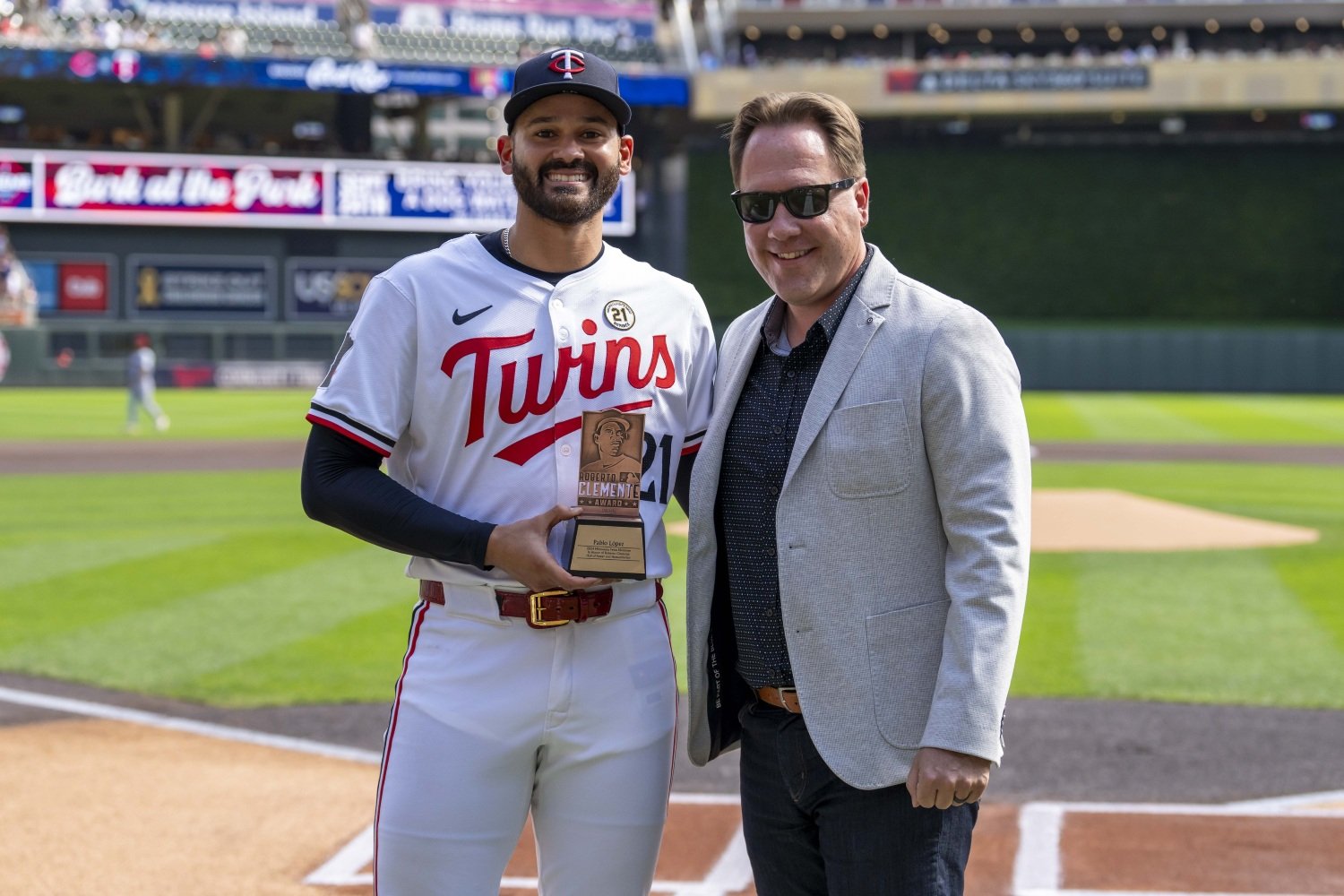 The Twins front office has always been a puzzle wrapped in a mystery, and the latest rankings from The Athletic only serve to underscore that point. In a trend that might surprise some (but not die-hard Twins fans), the organization slipped from a tie for 8th in last year’s assessment to a humbling 15th overall in 2025. There are a few reasons for the recent drop that are clear to Twins fans. While the team’s regular-season record has been adequate, the lack of postseason punch over the last decade is an increasingly glaring inefficiency. Off-field factors also lead to uncertainties, including the Pohlads’ attempts to sell the club and Derek Falvey stepping into his expansive role as president of baseball operations and business. The picture begins to blur into one that raises more questions than it answers. It’s no secret that the Twins have long eyed the blueprints of front-office success from the Cleveland Guardians, Tampa Bay Rays, and Milwaukee Brewers. These clubs have delivered consistent regular-season excellence and carved out niches through innovative strategies and smart personnel decisions. According to the article, “All but two ballots included some combination of the Rays, Guardians and Brewers, the industry’s low-payroll darlings. Cleveland and Milwaukee have reached the postseason in six of the last 10 years, and Tampa Bay five times.” When you look at the current state of Minnesota’s front office, you have to wonder: What went wrong? The answer isn’t simple, but it seems to boil down to a mix of unmet postseason expectations and the growing complexity of running a modern big-league franchise. The signing of Falvey was initially seen as a signal that the Twins were serious about replicating the success he had while working in Cleveland. Under his watch, Minnesota has strived to develop a pitching pipeline reminiscent of Cleveland’s long-standing model, a strategy that has helped them remain in contention despite payroll limitations. The Twins have started to see the benefits of Falvey’s restructuring of the team’s pitching development system. Homegrown arms like Bailey Ober, David Festa, and Zebby Matthews have already begun impacting the big-league roster, and there are other pitchers on the way. However, there is a slight disconnect between the Twins’ regular-season performance and the lack of consistent performance in October. It’s a narrative where good ideas and investments need to translate into that extra gear in the high-pressure postseason environment. The trio of “darling” teams mentioned above have played October baseball more consistently than the Twins, and have done so with lower payrolls. None of those three has had much more success than Minnesota once the playoffs come around, but since they've made it that far more consistently, they rightfully get more credit. Adding to the mix is the ongoing drama off the field. With the Pohlads working to sell the club, the Twins are navigating the competitive landscape on the field and the intricate world of ownership and management transitions. This scenario introduces a layer of uncertainty into the organization’s long-term planning. While many owners and executives have weathered such storms before, the Twins’ current situation demands a careful balancing act between stabilizing the present and planning for the future. Interestingly enough, the organizational identity that Minnesota has been trying to cultivate is also tied to the man at the helm. Take Twins manager Rocco Baldelli, for instance. With prior experience in the Tampa Bay Rays front office, Baldelli brings a perspective that leverages both analytical acumen and a pragmatic understanding of game-day strategy. One of his most notable contributions has been the shift in managerial tactics that echo his Rays days. Baldelli’s approach is a blend of traditional baseball instincts with a heavy dose of modern analytics. In Tampa Bay, he observed how the Rays’ front office wasn’t afraid to embrace data-driven decisions, a mindset that has influenced his managerial choices here in Minnesota. For example, he has shown a tendency to mix up the batting order situationally and used a unique bullpen approach. He favors a more flexible use of bench players, capitalizing on platoon splits. All of these elements have become hallmarks of his Rays-influenced approach, aimed at squeezing out every bit of value from players on both sides of the ball. Yet while Baldelli’s methods have had mixed on-field results, they also underscore a broader philosophical debate at the Twins’ core. Success in the regular season is as much a numbers game as it is about enduring the long grind. October is a whole different beast. Therefore, the Twins’ recent ranking decline isn’t simply a critique of one individual’s ideas. It reflects systemic challenges that span scouting, development, game management, and the overall cadence of the front office’s decision-making—plus, some luck. If the team were to get to the postseason with their best players healthy, some year, it could change everything. In many respects, the current state of affairs is emblematic of a team in transition. It is a classic “between-eras” moment where fresh ideas collide with the weight of established expectations. The climb back up the rankings will likely necessitate innovative tactics on the field and a more cohesive front-office strategy that can integrate short-term adjustments with long-term vision. The Twins remain a captivating study in modern baseball management. Their recent ranking drop is a reminder that in today’s game, excellence must be measured in multiple facets. As the organization grapples with both on-field strategies and off-field ownership changes, one thing is clear: the journey toward sustained postseason success is far from over. Every decision, from pitching pipelines to managerial quirks, now carries even more significance, as the team tries to compete with baseball’s other top front offices. Do you agree with the updated front office rankings? What can the Twins do to improve their ranking? Leave a comment and start the discussion.
 -
When it comes to the MLB Draft, high-school arms come with significant risk. The Twins are seeing positive early returns from two recent draft picks as they begin their professional careers. Image courtesy of William Parmeter (Left: Dasan Hill, Right: Dylan Questad) When it comes to the MLB Draft, high-school arms come with significant risk. The Twins are seeing positive early returns from two recent draft picks as they begin their professional careers. For the better part of the last decade, the Minnesota Twins have carved out a distinct path in the amateur draft: find underrated right-handed college pitchers, bring them into the organization’s pitching lab, and turn up the velocity dial. It’s a strategy that’s produced impressive results (ask Bailey Ober, David Festa, or Zebby Matthews). These names weren’t exactly top-of-the-draft darlings, but they’ve steadily climbed the ladder thanks to tweaks made under the Twins’ watchful eye. But over the last few drafts, there’s been a noticeable shift. While the Twins haven’t abandoned their trusty template, they’ve also begun dipping their toes into a historically riskier pool: high-school pitchers. Early in the 2025 season, the Fort Myers Mighty Mussels are reaping the benefits of that calculated gamble. Two names leading the way are 2024 second-rounder Dasan Hill and 2023 draftee Dylan Questad. Though both are young pitchers for the Florida State League, they’ve already begun to show why the Twins were willing to invest early-round capital and developmental resources into them. Target Field is still a long way off when it comes to pitching development and climbing the organizational ladder, but they're starting that climb in good shape. Hill, a left-handed pitcher selected out of a Texas high school last July, came into pro ball with a live arm and a projectable six-foot-five frame. In his first few outings with Fort Myers this spring, he’s turned heads with 7 1/3 innings, two earned runs, 13 strikeouts, and only two walks. Sure, it’s a small sample, but it’s the kind of line that shows promise in all the right places. He misses bats, limits free passes, and competes in the zone. Questad, a right-hander taken in the fifth round in 2023, has looked every bit as sharp, after spending most of 2024 refining his mechanics (with some speed bumps) in the FCL. In 12 appearances (28 1/3 innings), he allowed 33 earned runs on 35 hits with a 19.2 BB%. In 2025, he opened the season with five scoreless innings, racking up eight strikeouts without issuing a single walk. On Wednesday, he collected a three-inning save to close out a 1-0 Fort Myers victory. His three strikeouts capped a 19-strikeout night for the team, tying a franchise record. The command has been crisp; the stuff is playing up; and, like Hill, he looks like someone with the potential to develop into something much more. What’s especially encouraging is how these young arms fit into the broader organizational context. As previously mentioned, Minnesota's front office has long preferred the safety and projectability of college pitchers. It’s a system that’s helped develop a reliable stable of arms, with Ober and Festa in regular rotation spots in the big leagues. Zebby Matthews and Andrew Morris aren’t far behind, continuing to impress in the upper minors. But high-school pitchers? They’re a different beast entirely. Historically, they carry more risk, with less physical maturity, fewer innings, injury risks, and often a longer road to the majors. The Twins knew this when they took Charlee Soto in 2023, and Marco Raya a few years earlier. Both came with electric stuff and significant upside. Both have been fixtures on the Twins’ top prospect lists. And now, with Hill and Questad showing early flashes of dominance in Fort Myers, the Twins may be starting to build a pipeline of high-upside prep arms who could supplement the "pitching factory" guys down the line. That blend of approaches (college arms with polish and efficiency, high-school arms with ceiling and projection) is starting to give Minnesota a more balanced and dynamic pitching development strategy. They’re not putting all their eggs in one basket. Instead, they’re diversifying the portfolio, and if the early results from Hill and Questad are any indication, that diversification could pay serious dividends. Of course, we’re still in the bottom of the first inning when it comes to these guys' professional careers. Fort Myers in April is far from Minneapolis and a big-league debut. But that’s the nature of player development. It’s about planting seeds now, hoping that something special blooms in the seasons ahead. The Twins have built a strong foundation by finding value in unexpected places. Now, they’re betting on the upside, and in Fort Myers, that bet is already starting to look like a good one. What stands out about these two young arms? Are the Twins finding the right balance of high-school and college pitchers in the draft? Leave a comment and start the discussion. View full article
-
The Twins have been a train wreck to start the season. Are they the kind you even rubberneck at, or something so generically tragic that you can't not look away? Image courtesy of © Nick Wosika-Imagn Images The Twins have been a train wreck to start the season. Are they the kind you even rubberneck at, or something so generically tragic that you can't not look away? Earlier this week, ESPN's David Schoenfield released his annual rankings of MLB teams according to their watchability. For the rankings, he considered five categories (worth 10 points each), including star power, young talent, baserunning, defense, minutiae, and a bonus section. Minutiae includes items like ballpark, uniforms, mascots, broadcasters, colorful characters, etc. Bonuses were up to Schoenfield and tied to fun traits he wanted to reward. The Twins finished 27th on his list with 14 points, putting them ahead of only the White Sox, Rockies, and Marlins. After a rough start to the season, many Minnesota fans likely view the team as unwatchable. From a national perspective, there is even less reason to watch the Twins. Let’s explore each of the categories to see how he ranked the Twins. Star Power (3 Points) Three points seems like a generous score for the Twins’ star power. Carlos Correa and Byron Buxton are the team’s two biggest stars, but both have struggled out of the gate. Correa played at an All-Star level in 2024 before plantar fasciitis sidelined him for nearly the entire second half. Buxton was on a trajectory to be one of baseball’s biggest stars, but injuries have hampered his entire career. Other players, including Pablo López and Royce Lewis, are also in the conversation for helping the team’s star power. López has played at an All-Star level during parts of his Twins tenure. However, there have been inconsistencies in his performance that have prevented him from solidifying himself as the team’s ace. Lewis has shown the ability to carry the team’s lineup, but he’s missed more time than Buxton in recent years. He has the chance to be the team’s biggest star, but he needs to be on the field to do so. Bizarrely, the team's stars draw your attention mostly for the feeling that they should be more star-like than they really are. Young Talent (2 points) Two is a fair score for where the Twins sit with young talent, though they seem to have lots of upside from there. Brooks Lee is the only former top prospect under 25 on the roster right now. He missed the start of the season with back problems, an issue he will need to monitor throughout his career. There is a chance for other top prospects to impact the roster later this season, including Emmanuel Rodriguez and Luke Keaschall. Walker Jenkins could significantly increase this score for the Twins, but he’s on the injured list and seems unlikely to debut in 2025. On the mound, the Twins have two starters in their age-25 season or younger. Simeon Woods Richardson and David Festa are former top-100 prospects, but they aren't exciting enough players to get non-Twins fans to tune into games. Zebby Matthews is also waiting in the wings at Triple-A St. Paul, and his improvements have been exciting for fans to follow. His fastball has increased into the high 90s, and he’s been nearly unhittable this spring. Twins fans are excited about the team’s future, but that excitement won’t translate to the national level unless and until someone like Matthews or Festa starts racking up strikeouts and scoreless innings in the majors. Baserunning (1 Point) In recent years, the Twins have been one of baseball’s worst baserunning teams. Last season, they tied for 25th with -8 Baserunning Runs. Only three teams ranked lower than Minnesota in Baserunning Holds (-20 runs), and their -14 runs in Thrown Outs were the worst in the league. They managed to make unnecessary outs, in other words, even without being aggressive. In 2025, Buxton has saved the Twins on the bases, as he has been worth 1 Baserunning Run by himself. Minnesota is tied for third in MLB with 2 Baserunning Runs. Only the Mets and the Cubs rank higher than the Twins. Even with Buxton’s elite running ability, though, the rest of the Twins are slow, bringing down the team’s overall baserunning score. If we could promise Schoenfield that Buxton would stay healthy and keep stealing bags, maybe the rating would be better, but no one is in position to do that. Defense (2 Points) Minnesota lost their best defender in 2024 when Carlos Santana left for free agency—and perhaps the fact that their best defender played first base is telling, in itself. The Twins targeted Harrison Bader in free agency because of his strong defensive reputation. He’s lived up to that billing, with his 2 OAA leading the team’s outfield group. Buxton also continues to be a strong defender in center field, and Bader provides insurance if Buxton is forced to miss significant time. In the infield, Correa leads the team with 2 OAA, a strong start for a player known for strong defense. Ty France is stepping into Santana’s big defensive shoes and has provided 1 OAA at first base. Willi Castro (-4 OAA) and Jose Miranda (-2 OAA) have been the team’s most significant defensive liabilities in 2025. Minnesota’s outfield defense has a chance to be very exciting, and should boost the team’s watchability, but Schoenfield is right to remain skeptical based on what the club has shown so far. Minutiae (3 Points) For minutiae, the Twins have some strong positives, with one of baseball’s best ballparks and a strong television broadcast crew. Target Field has seen low attendance to start the year, which makes even watching on TV a bit less thrilling, but the ballpark continues to hold up with the organization making improvements. Cory Provus and Justin Morneau are a potent one-two punch on the television side, and the other color commentators add other layers to the broadcast. Minnesota recently updated its uniforms, with mixed reviews. Many fans enjoy the cream-colored Twins Cities ensemble. The club’s City Connect jerseys have added ties to the state’s Land of 10,000 Lakes moniker. This season, the team listened to fans and updated their City Connect uniforms by switching to white pants instead of blue. Last season, the team’s Rally Sausage added another level of fun, but there aren’t many colorful characters on the roster this season. Bonus (3 Points) Schoenfield gave the Twins bonus points for Prince Day, Joe Ryan’s four-seamer, and for having players with the first names Harrison, Bailey, and Griffin. Some of the bonus areas he missed are Jhoan Duran’s splinker, Matt Wallner’s tape-measure home run potential, and Woods Richardson’s long name on the back of his jersey. Overall, the Twins' ranking feels fair. They have been unwatchable, even for the team's fans. However, some areas on the club could fare better later this season, including the team’s young talent, baserunning, and defense. What traits make the Twins watchable this season? Do you agree with the point totals above? Leave a comment and start the discussion. View full article
-
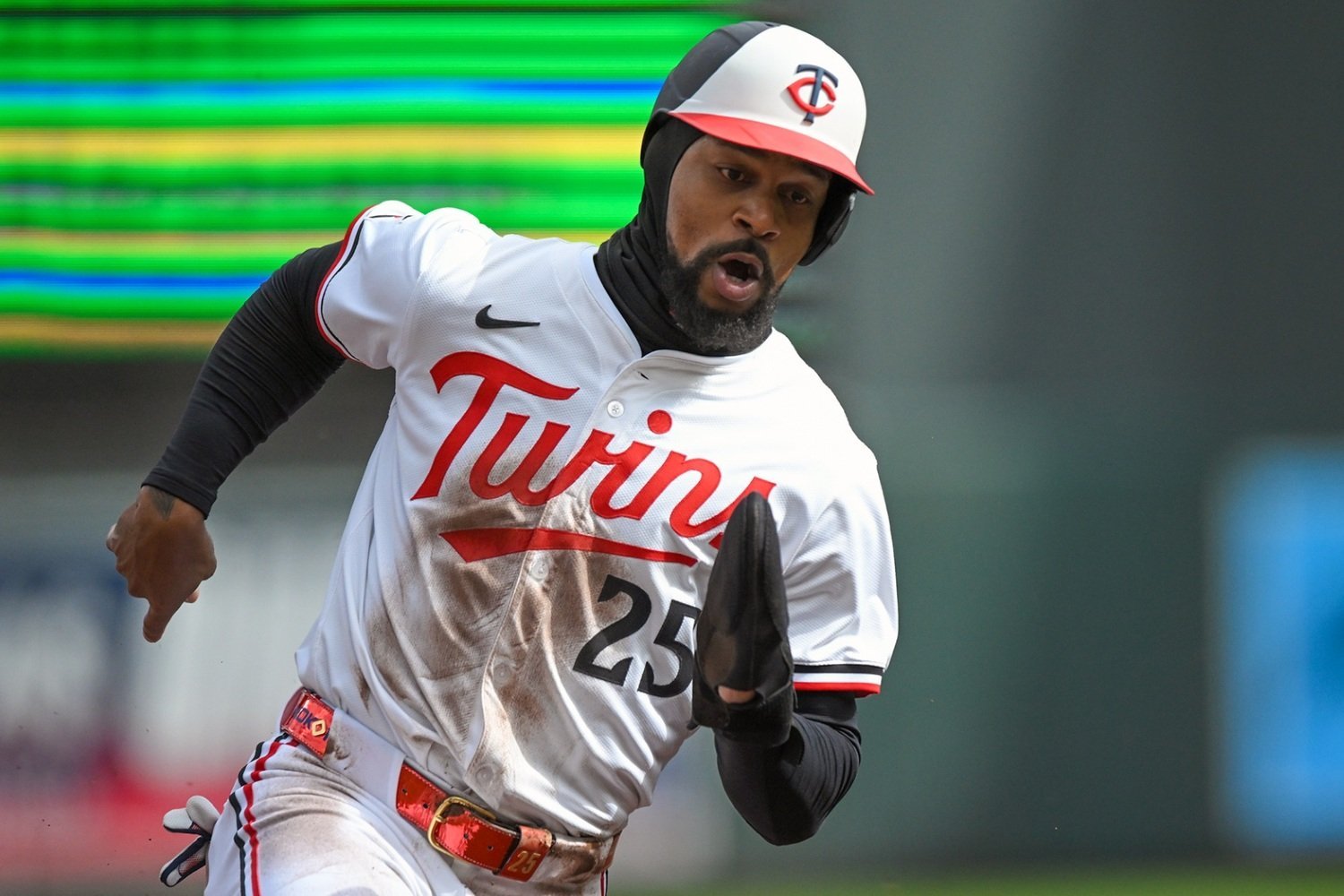 Earlier this week, ESPN's David Schoenfield released his annual rankings of MLB teams according to their watchability. For the rankings, he considered five categories (worth 10 points each), including star power, young talent, baserunning, defense, minutiae, and a bonus section. Minutiae includes items like ballpark, uniforms, mascots, broadcasters, colorful characters, etc. Bonuses were up to Schoenfield and tied to fun traits he wanted to reward. The Twins finished 27th on his list with 14 points, putting them ahead of only the White Sox, Rockies, and Marlins. After a rough start to the season, many Minnesota fans likely view the team as unwatchable. From a national perspective, there is even less reason to watch the Twins. Let’s explore each of the categories to see how he ranked the Twins. Star Power (3 Points) Three points seems like a generous score for the Twins’ star power. Carlos Correa and Byron Buxton are the team’s two biggest stars, but both have struggled out of the gate. Correa played at an All-Star level in 2024 before plantar fasciitis sidelined him for nearly the entire second half. Buxton was on a trajectory to be one of baseball’s biggest stars, but injuries have hampered his entire career. Other players, including Pablo López and Royce Lewis, are also in the conversation for helping the team’s star power. López has played at an All-Star level during parts of his Twins tenure. However, there have been inconsistencies in his performance that have prevented him from solidifying himself as the team’s ace. Lewis has shown the ability to carry the team’s lineup, but he’s missed more time than Buxton in recent years. He has the chance to be the team’s biggest star, but he needs to be on the field to do so. Bizarrely, the team's stars draw your attention mostly for the feeling that they should be more star-like than they really are. Young Talent (2 points) Two is a fair score for where the Twins sit with young talent, though they seem to have lots of upside from there. Brooks Lee is the only former top prospect under 25 on the roster right now. He missed the start of the season with back problems, an issue he will need to monitor throughout his career. There is a chance for other top prospects to impact the roster later this season, including Emmanuel Rodriguez and Luke Keaschall. Walker Jenkins could significantly increase this score for the Twins, but he’s on the injured list and seems unlikely to debut in 2025. On the mound, the Twins have two starters in their age-25 season or younger. Simeon Woods Richardson and David Festa are former top-100 prospects, but they aren't exciting enough players to get non-Twins fans to tune into games. Zebby Matthews is also waiting in the wings at Triple-A St. Paul, and his improvements have been exciting for fans to follow. His fastball has increased into the high 90s, and he’s been nearly unhittable this spring. Twins fans are excited about the team’s future, but that excitement won’t translate to the national level unless and until someone like Matthews or Festa starts racking up strikeouts and scoreless innings in the majors. Baserunning (1 Point) In recent years, the Twins have been one of baseball’s worst baserunning teams. Last season, they tied for 25th with -8 Baserunning Runs. Only three teams ranked lower than Minnesota in Baserunning Holds (-20 runs), and their -14 runs in Thrown Outs were the worst in the league. They managed to make unnecessary outs, in other words, even without being aggressive. In 2025, Buxton has saved the Twins on the bases, as he has been worth 1 Baserunning Run by himself. Minnesota is tied for third in MLB with 2 Baserunning Runs. Only the Mets and the Cubs rank higher than the Twins. Even with Buxton’s elite running ability, though, the rest of the Twins are slow, bringing down the team’s overall baserunning score. If we could promise Schoenfield that Buxton would stay healthy and keep stealing bags, maybe the rating would be better, but no one is in position to do that. Defense (2 Points) Minnesota lost their best defender in 2024 when Carlos Santana left for free agency—and perhaps the fact that their best defender played first base is telling, in itself. The Twins targeted Harrison Bader in free agency because of his strong defensive reputation. He’s lived up to that billing, with his 2 OAA leading the team’s outfield group. Buxton also continues to be a strong defender in center field, and Bader provides insurance if Buxton is forced to miss significant time. In the infield, Correa leads the team with 2 OAA, a strong start for a player known for strong defense. Ty France is stepping into Santana’s big defensive shoes and has provided 1 OAA at first base. Willi Castro (-4 OAA) and Jose Miranda (-2 OAA) have been the team’s most significant defensive liabilities in 2025. Minnesota’s outfield defense has a chance to be very exciting, and should boost the team’s watchability, but Schoenfield is right to remain skeptical based on what the club has shown so far. Minutiae (3 Points) For minutiae, the Twins have some strong positives, with one of baseball’s best ballparks and a strong television broadcast crew. Target Field has seen low attendance to start the year, which makes even watching on TV a bit less thrilling, but the ballpark continues to hold up with the organization making improvements. Cory Provus and Justin Morneau are a potent one-two punch on the television side, and the other color commentators add other layers to the broadcast. Minnesota recently updated its uniforms, with mixed reviews. Many fans enjoy the cream-colored Twins Cities ensemble. The club’s City Connect jerseys have added ties to the state’s Land of 10,000 Lakes moniker. This season, the team listened to fans and updated their City Connect uniforms by switching to white pants instead of blue. Last season, the team’s Rally Sausage added another level of fun, but there aren’t many colorful characters on the roster this season. Bonus (3 Points) Schoenfield gave the Twins bonus points for Prince Day, Joe Ryan’s four-seamer, and for having players with the first names Harrison, Bailey, and Griffin. Some of the bonus areas he missed are Jhoan Duran’s splinker, Matt Wallner’s tape-measure home run potential, and Woods Richardson’s long name on the back of his jersey. Overall, the Twins' ranking feels fair. They have been unwatchable, even for the team's fans. However, some areas on the club could fare better later this season, including the team’s young talent, baserunning, and defense. What traits make the Twins watchable this season? Do you agree with the point totals above? Leave a comment and start the discussion.
- 21 comments
-
- 3
-
-
- bryon buxton
- carlos correa
- (and 5 more)
-
Carlos Correa has worked for two seasons to put his plantar fasciitis issues behind him. Now, he has entered the year in relatively good health, but something is wrong with his swing. Image courtesy of © Jesse Johnson-Imagn Images Carlos Correa has worked for two seasons to put his plantar fasciitis issues behind him. Now, he has entered the year in relatively good health, but something is wrong with his swing. Carlos Correa is a tinkerer. He's sustained a focus on improving his swing throughout his career. As players age, their style at the plate can change, with decreases in bat speed and strength. Father Time is undefeated when it comes to aging baseball stars. However, some positives come from aging, with players tending to have a more selective eye at the plate. If a batter is dedicated, smart and talented enough, better pitch recognition and more consistent contact can emerge later in a career. Last season, Correa’s swing might have been at an all-time best. During the first half, he hit .308/.377/.520, with 31 extra-base hits in 75 games. For some perspective, Correa is a career .273 hitter, and he’s only had one season (2017) where he finished with a batting average over .300. On June 12th, Correa had his first five-hit game and credited some of his success to conversations he had with former Twins infielder Luis Arraez. Arraez had a clear message for Correa at that time. “I just said, ‘Hey, you just need to hit the ball to the middle, right field. That’s it,’” Arraez said. “Hit it to the middle, bro. Don’t try to think too much.” That simple philosophy has evaded Correa during the 2025 season. Entering play Tuesday, he was hitting .153/.219/.237, with five extra-base hits and a 7.8 BB% against a 15.6 K%. When he does hit the ball, it’s weak contact, with a 34.7 Hard Hit%. That would mean less frequent contact than he's posted since 2018. Correa’s .210 wOBA is in the bottom 10% among big-league batters, and his average exit velocity is under 88 mph for the first time in his career. What’s even more disturbing is that pitchers are starting to take note of Correa’s struggles. He has seen fastballs more regularly this season (over 60% of the time) than in any previous year of his career. Against fastballs, he is hitting .122 with a .195 SLG. Last season, he posted a .313 BA against fastballs and a .479 SLG. Pitchers don't need to rely on their secondary pitches versus Correa, because he isn’t doing damage against heaters. So, what has changed with Correa’s swing this season? The underlying numbers point to him being on top of the ball, which doesn’t allow him to drive it. His 42.9 Topped% this year is nearly 10% higher than his career mark and over 5% higher than 2024. Because of this, his highest-value contact rates are significantly reduced. His Solid% dropped from a career 6.8% to 2.0% and his Barrel% has decreased from 9.2% to 6.1%. Bat tracking data shows that Correa’s swing might not be completely broken. His average bat speed over the last two seasons has been around 74.5 mph. This season, he is at 74.0, with the MLB average being 71.5 mph. His batting stance data is also nearly identical to last season. His depth in the box and distance off the plate are within tenths of an inch compared to last season. He is intercepting the baseball further in front of the plate by nearly an inch (2.1” last season, compared to 3.0” this year). This slight change could mean he is not letting the ball get far enough into the zone to make more powerful contact, catching the ball on the end of the bat, but it's probably not a telling figure. Correa has been a slow starter throughout his career, and perhaps the 2025 season is part of a career trend. Historically, April has been Correa’s lowest-OPS month, with more strikeouts in the season’s first month than any other. Correa hits the fewest home runs, has his second-lowest slugging percentage (just ahead of August), and grounds into the most double plays to start the year. Hopefully, he's just shaking off the rust and finding his timing, as seems to be his wont. Perhaps Correa may need to get on the phone again with Arraez and ask for some tips from the three-time batting champion. Correa’s swing has some positive signs, with his expected numbers pointing to him as unlucky. His K% and Whiff% rank in the 80th percentile or higher, so he is not swinging and missing as much as in previous years. However, he seems to be on top of the ball and meeting the ball a little too early in front of the plate. Some minor adjustments now could help him get back to the All-Star form he showcased in 2024. Will Correa round into form? What stands out about his swing so far this season? Leave a comment and start the discussion. View full article
-
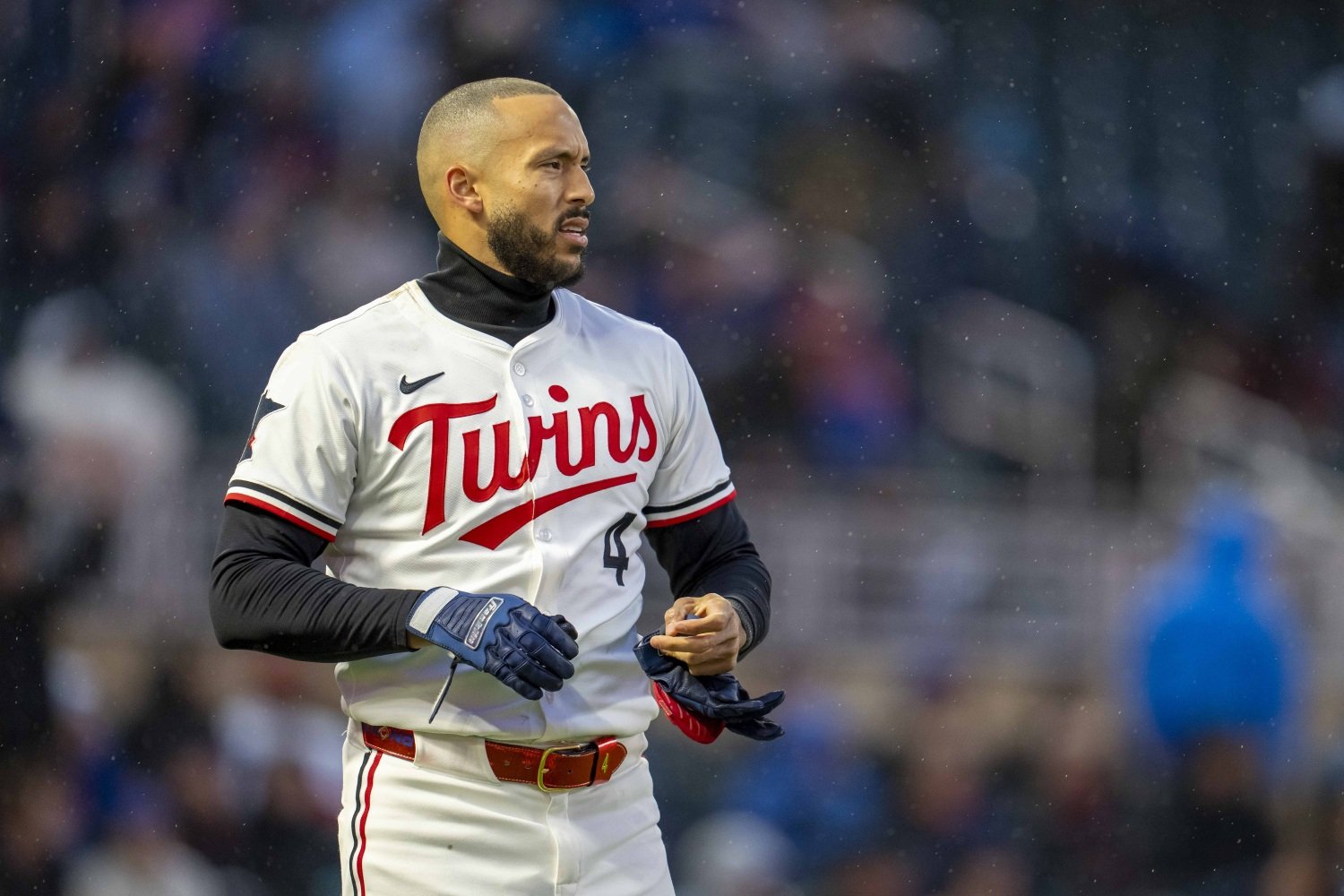 Carlos Correa is a tinkerer. He's sustained a focus on improving his swing throughout his career. As players age, their style at the plate can change, with decreases in bat speed and strength. Father Time is undefeated when it comes to aging baseball stars. However, some positives come from aging, with players tending to have a more selective eye at the plate. If a batter is dedicated, smart and talented enough, better pitch recognition and more consistent contact can emerge later in a career. Last season, Correa’s swing might have been at an all-time best. During the first half, he hit .308/.377/.520, with 31 extra-base hits in 75 games. For some perspective, Correa is a career .273 hitter, and he’s only had one season (2017) where he finished with a batting average over .300. On June 12th, Correa had his first five-hit game and credited some of his success to conversations he had with former Twins infielder Luis Arraez. Arraez had a clear message for Correa at that time. “I just said, ‘Hey, you just need to hit the ball to the middle, right field. That’s it,’” Arraez said. “Hit it to the middle, bro. Don’t try to think too much.” That simple philosophy has evaded Correa during the 2025 season. Entering play Tuesday, he was hitting .153/.219/.237, with five extra-base hits and a 7.8 BB% against a 15.6 K%. When he does hit the ball, it’s weak contact, with a 34.7 Hard Hit%. That would mean less frequent contact than he's posted since 2018. Correa’s .210 wOBA is in the bottom 10% among big-league batters, and his average exit velocity is under 88 mph for the first time in his career. What’s even more disturbing is that pitchers are starting to take note of Correa’s struggles. He has seen fastballs more regularly this season (over 60% of the time) than in any previous year of his career. Against fastballs, he is hitting .122 with a .195 SLG. Last season, he posted a .313 BA against fastballs and a .479 SLG. Pitchers don't need to rely on their secondary pitches versus Correa, because he isn’t doing damage against heaters. So, what has changed with Correa’s swing this season? The underlying numbers point to him being on top of the ball, which doesn’t allow him to drive it. His 42.9 Topped% this year is nearly 10% higher than his career mark and over 5% higher than 2024. Because of this, his highest-value contact rates are significantly reduced. His Solid% dropped from a career 6.8% to 2.0% and his Barrel% has decreased from 9.2% to 6.1%. Bat tracking data shows that Correa’s swing might not be completely broken. His average bat speed over the last two seasons has been around 74.5 mph. This season, he is at 74.0, with the MLB average being 71.5 mph. His batting stance data is also nearly identical to last season. His depth in the box and distance off the plate are within tenths of an inch compared to last season. He is intercepting the baseball further in front of the plate by nearly an inch (2.1” last season, compared to 3.0” this year). This slight change could mean he is not letting the ball get far enough into the zone to make more powerful contact, catching the ball on the end of the bat, but it's probably not a telling figure. Correa has been a slow starter throughout his career, and perhaps the 2025 season is part of a career trend. Historically, April has been Correa’s lowest-OPS month, with more strikeouts in the season’s first month than any other. Correa hits the fewest home runs, has his second-lowest slugging percentage (just ahead of August), and grounds into the most double plays to start the year. Hopefully, he's just shaking off the rust and finding his timing, as seems to be his wont. Perhaps Correa may need to get on the phone again with Arraez and ask for some tips from the three-time batting champion. Correa’s swing has some positive signs, with his expected numbers pointing to him as unlucky. His K% and Whiff% rank in the 80th percentile or higher, so he is not swinging and missing as much as in previous years. However, he seems to be on top of the ball and meeting the ball a little too early in front of the plate. Some minor adjustments now could help him get back to the All-Star form he showcased in 2024. Will Correa round into form? What stands out about his swing so far this season? Leave a comment and start the discussion.
 -
The Twins minor-league affiliates are off and running with some strong performance’s up and down the system. Let’s see how the last week played out down on the farm. Image courtesy of Left: Rob Thompson (photo of Zebby Matthews), Top-Right: David Malamut (photo of Charlee Soto), William Parmeter (photo of Connor Prielipp) The Twins minor-league affiliates are off and running with some strong performance’s up and down the system. Let’s see how the last week played out down on the farm. MONDAY TRANSACTIONS RHP Xavier Kolhosser transferred to FCL Twins (Fort Myers) INF Isaac Pena transferred to FCL Twins (Fort Myers) RH RP Scott Blewett claimed by the Baltimore Orioles. NOTABLE TRANSACTIONS THIS WEEK OF Walker Jenkins placed on 7-day IL with ankle injury (Wichita) INF Kaelen Culpepper placed on 7-day IL with right wrist sprain (Cedar Rapids) INF Rayne Doncon placed on 7-day IL with right oblique strain (Cedar Rapids) LHP Ross Dunn placed on 7-day IL with left forearm strain (Cedar Rapids) RHP Jack Noble placed on 7-day IL with right bicep strain (Cedar Rapids) RHP Michael Ross placed on 7-day IL with neck strain (Fort Myers) 1B Aaron Sabato on rehab assignment in Fort Myers (Wichita) LHP Richard Lovelady signed and assigned to St. Paul INF Jose Miranda optioned to St. Paul LHP Kody Funderburk recalled by the Twins RHP David Festa recalled by Minnesota Twins TWINS DAILY MINOR LEAGUE CONTENT Do the Twins Have Offensive Upgrades in the Minors? Has Luke Keaschall Surpassed Emmanuel Rodriguez as Minnesota Twins' Second-Best Prospect? Twins Minor League Report (4/13): The Mussels Flex Their New Starter and the Kernels Hang Ten...on Beloit Twins Minor League Report (4/12): Dasan Hill, Connor Prielipp Make Second Starts, but Aaron Rozek is Top Lefty on This Day Twins Minor League Report (4/11): Charlee Soto and the Chalk-Up-A-Lotta-Dubs Factory Twins Minor League Report (4/10): Kyler Fedko, John Klein Lead Wichita to Comeback Win, Saints Offensive Juggernaut Returns Minor League Report (4/9): Will Anyone Score on Andrew Morris? Twins Minor League Report (4/8): Good Night for The DBo Show, Strong Starts from Zebby Matthews and Dylan Questad Squandered WEEK IN REVIEW Triple-A: St. Paul Saints Overall: 5-7 (5.5 games out of first) Last Week: 3-3 vs Omaha Zebby Matthews tied a career-high with nine strikeouts. He struck out at least one batter in each inning. He gave up just one hit through the first four innings and retired 12 of the 14 batters he faced. The only runs charged to him were on a misplayed ball by Yunior Severino. Andrew Morris tossed five shutout innings including retiring eight of the final nine men he faced. He allowed four hits and walked two while striking out three. He has yet to allow a run in 10.0 innings to start the year. Jair Camargo hit a two-run homer on Wednesday, his 34th home run in a Saints uniform. He is tied for fourth all-time in franchise history. Carson McCusker hit his first home run of the year on Wednesday, and it turned out to be the difference in a one-run game. On Friday, he hit another homer, a two-run shot, that was the difference in that game. On Thursday, the Saints exploded for 13 runs. Eight different Saints collected a hit, 10 different players scored a run, and seven guys knocked in a run as the Saints pounded out 16 hits, six of them doubles one shy of tying the franchise record. Luke Keaschall hit his first Triple-A home run on Friday. He finished the game 2-for-2 with a home run, two RBI, and two runs scored. In a bullpen game, Alex Speas was dominant. Outside of the single in the fourth, he retired six batters in a row, five on strikeouts, tying a career-high. He went 2 1/3 shutout innings allowing one hit and striking out five. In the same game, Kyle Bischoff went two hitless, scoreless innings while walking two and striking out five. He threw a career-high 43 pitches. Diego Cartaya ended an 0-for-13 slump to start the year with a solo home run on Saturday. What’s Next: The Saints head on the road for a six-game series against the Iowa Cubs in Des Moines. The following week, they have eight home games in six days to make up for postponed games from earlier in the season. Double-A: Wichita Wind Surge Overall: 6-3 (1.0 game out of first) Last Week: 5-1 vs Midland This series marked the first time Wichita had won five games in a series since August 22-28, 2023. Walker Jenkins experienced “renewed stiffness” in his left ankle, according to Twins general manager Jeremy Zoll. It’s the same ankle that Jenkins sprained early in spring training, causing him to miss much of camp. Tanner Schobel had a six-game hitting streak snapped on Sunday. During that stretch, he had two multi-hit games. He’s only been held hitless in two games so far this season. Kyler Fedko had a three-hit game on Thursday and hit his first home run of the season on Friday. John Klein picked up his first win of the season. He pitched three hitless relief innings while striking out five. Trent Baker allowed one run on four hits with three strikeouts and two walks. He pitched four innings and lowered his season ERA to 1.29. Mike Paredes has yet to allow a run this season in relief. On Wednesday, he pitched 3 1/3 shutout innings with one hit, one walk, and three strikeouts. Darren Bowen was dominant in his Double-A debut. In five innings, he allowed one run on three hits with five strikeouts and no walks. On Sunday, he returned and allowed one earned run on four hits in four innings. Aaron Rozek tossed 5 1/3 innings by allowing one earned run on four hits with five strikeouts. Rubel Cespedes had one game with two-hits including a home run, a double, and three RBI. Earlier in the week, he had six total bases with a home run, a double, and four RBI. He has a 1.137 OPS in 24 AB. What’s Next: The Wind Surge face the Tulsa Drillers in a six-game road series that begins on Tuesday. High-A: Cedar Rapids Kernels Overall: 6-3 (Tied for 1st in the Midwest League West) Last Week: 4-2 vs Beloit Jose Olivares, in his Cedar Rapids debut, did not give up a run in 4 2/3 innings of work, allowing just one hit while posting six strikeouts. Wilker Reyes pitched 2 2/3 scoreless innings on Wednesday. He allowed one hit with one walk and four strikeouts. Billy Amick and Gabriel Gonzalez each had three hit games in Thursday night’s loss. Charlee Soto allowed just one hit across five scoreless innings with six strikeouts and no walks. He retired 15 of the 16 batters he faced in his home debut. On Monday, Soto was named the Midwest League's Pitcher of the Week. Caden Kendle hit his first professional home run, a solo shot in Friday’s game. Later in that game, he doubled and came around to score the go-ahead run. Spencer Bengard allowed just one run across four innings of relief on Saturday. He struck out five. Kyle DeBarge had a three-hit game on Saturday including a triple, three runs scored, and two stolen bases. He followed it up with another multi-hit effort on Sunday. He’s hitting over .350 for the season. What’s Next: Cedar Rapids heads on the road for a six-game series against the Peoria Chiefs. Low-A: Fort Myers Mighty Mussels Overall: 4-5 (2.0 games out of first) Last Week: 3-3 Dylan Questad dazzled in his Florida State League debut, spinning five scoreless innings, allowing just two base runners on one hit and one walk with eight strikeouts. Dameury Pena drove in three runs with a sacrifice fly and a single on Wednesday. Jacob Kisting struck out six batters in a row in relief to help Fort Myers escape a tough spot. On a rehab assignment from Double-A, Christian MacLeod made a start on Thursday and finished with four strikeouts across two scoreless frames. Pierson Ohl, also rehabbing from Wichita, followed MacLeod. He picked up a pair of strikeouts, scattering one hit across two shutout innings. Byron Chourio has been a threat at the top of the lineup with five leadoff walks and two steals. Yasser Mercedes drove in a pair of runs as part of a multi-hit effort on Friday. Cole Peschl made his Florida State League debut and earned a four-inning save. He struck out four and only saw an unearned run score against him. Dasan Hill made his home debut and allowed one run on three hits with six strikeouts in 3 1/3 innings. Jason Doktorczyk went 3 2/3 scoreless innings, allowing two hits and striking out four in relief of Hill. On Sunday, Devin Kirby, Zander Sechrist and Hunter Hoopes combined for six scoreless innings out of the bullpen, allowing just five hits while striking out eight. The Mussels’ bullpen did not allow a run for the second consecutive game. What’s Next: The Mighty Mussels continue their home schedule with a six-game series against the Bradenton Marauders. PROSPECT SUMMARY Check out the Prospect Tracker for much more on our Twins Top 20 prospects. And, be sure to note the new, updated Top 20 rankings. Roster assignments below are subject to change as some players have yet to be assigned or are in Extended Spring Training. Walker Jenkins (Wichita): On injured list Emmanuel Rodriguez (St. Paul): 5-21, 2 2B, 3 RBI, 3 R, 2 BB, 8 K Luke Keaschall (St. Paul): 3-17, 1 HR, 3 RBI, 4 R, 6 BB, 6 K Charlee Soto (Cedar Rapids): 5 IP, 0 ER, 0 BB, 6 K Andrew Morris (St. Paul): 5 IP, 4 H, 0 ER, 2 BB, 3 K Marco Raya (St. Paul): 2 IP, 3 H, 1 ER, 2 BB, 4 K Kaelen Culpepper (Cedar Rapids): 3-9, 2 2B, 0 BB, 1 K (placed on IL) Brandon Winokur (Cedar Rapids): 5-24, 1 2B, 4 RBI, 5 BB, 6 K, 2 SB Cory Lewis (St. Paul): 3 IP, 2 H, 2 ER, 1 BB, 3 K Connor Prielipp (Wichita): 2.2 IP, 5 H, 2 ER, 0 BB, 5 K Dasan Hill (Fort Myers): 3.1 IP, 1 ER, 3 H, 2 BB, 6 K C.J. Culpepper (Wichita): On IL Kyle DeBarge (Cedar Rapids): 8-23, 1 2B, 1 3B, 2 RBI, 7 R, 7 BB, 4 K, 5 SB Eduardo Beltre (DSL Twins): In Extended Spring Training Yasser Mercedes (Fort Myers): 5-19, 2 2B, 2 RBI, 2 BB, 5 K, 3 SB Rayne Doncon (Cedar Rapids): 0-9, 0 BB, 6 K (placed on IL) Billy Amick (Cedar Rapids): 8-19, 2 2B, 6 RBI, 2 R, 7 BB, 5 K Kala’i Rosario (Wichita): 2-19, 1 RBI, 12 K, 0 BB, 1 SB Gabriel Gonzalez (Cedar Rapids): 6-22, 2 2B, 4 RBI, 3 R, 3 BB, 2 K Ricardo Olivar (Wichita): 4-20, 2 R, 1 BB, 3 K PLAYERS OF THE WEEK Hitter of the Week: Kyle DeBarge, Cedar Rapids 8-23 (.348), 1 2B, 1 3B, 2 RBI, 7 R, 7 BB, 4 K, 5 SB Pitcher of the Week: Dylan Questad, Fort Myers 5.0 IP, 0 ER, 1 H, 1 BB, 8 K View full article
-
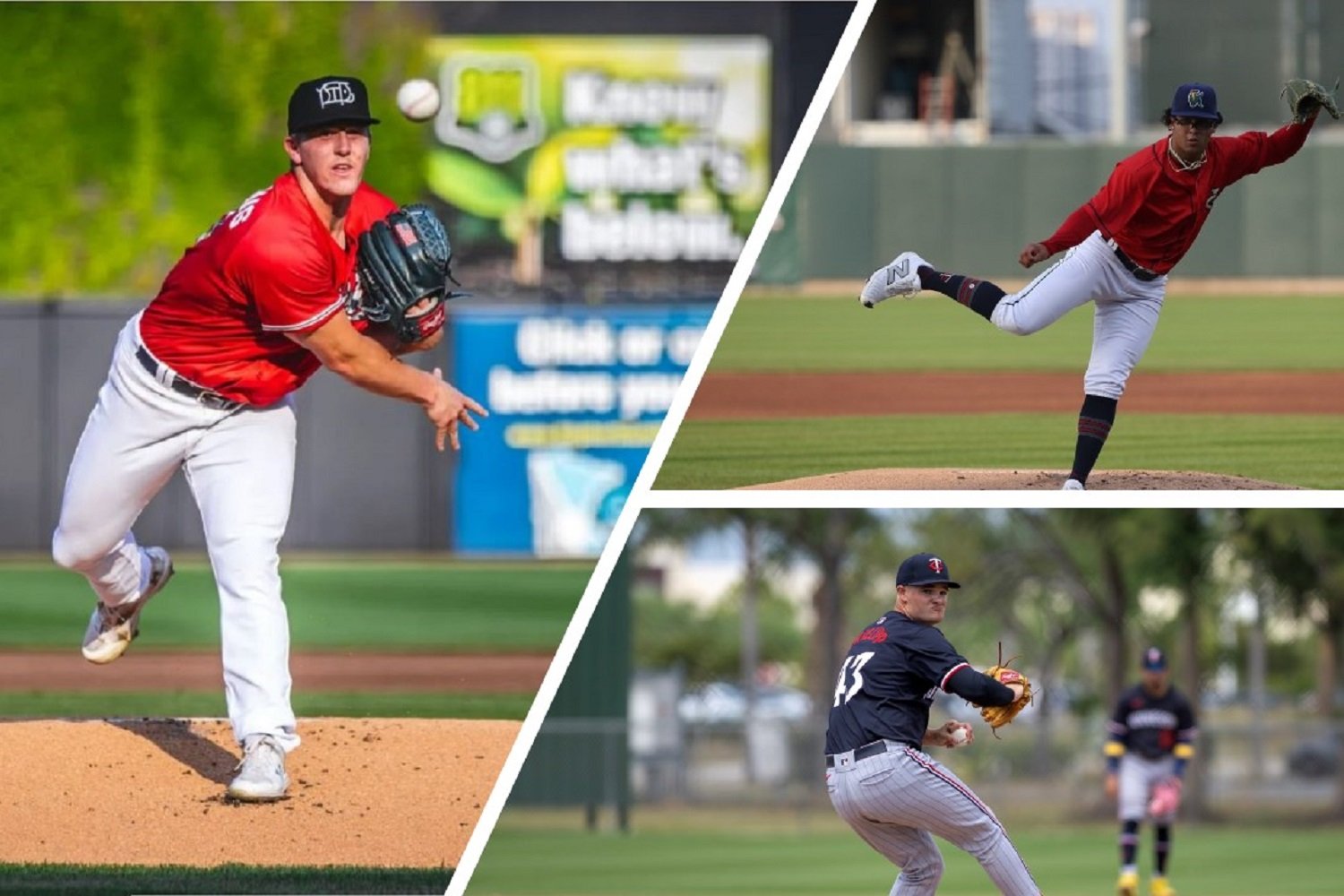 MONDAY TRANSACTIONS RHP Xavier Kolhosser transferred to FCL Twins (Fort Myers) INF Isaac Pena transferred to FCL Twins (Fort Myers) RH RP Scott Blewett claimed by the Baltimore Orioles. NOTABLE TRANSACTIONS THIS WEEK OF Walker Jenkins placed on 7-day IL with ankle injury (Wichita) INF Kaelen Culpepper placed on 7-day IL with right wrist sprain (Cedar Rapids) INF Rayne Doncon placed on 7-day IL with right oblique strain (Cedar Rapids) LHP Ross Dunn placed on 7-day IL with left forearm strain (Cedar Rapids) RHP Jack Noble placed on 7-day IL with right bicep strain (Cedar Rapids) RHP Michael Ross placed on 7-day IL with neck strain (Fort Myers) 1B Aaron Sabato on rehab assignment in Fort Myers (Wichita) LHP Richard Lovelady signed and assigned to St. Paul INF Jose Miranda optioned to St. Paul LHP Kody Funderburk recalled by the Twins RHP David Festa recalled by Minnesota Twins TWINS DAILY MINOR LEAGUE CONTENT Do the Twins Have Offensive Upgrades in the Minors? Has Luke Keaschall Surpassed Emmanuel Rodriguez as Minnesota Twins' Second-Best Prospect? Twins Minor League Report (4/13): The Mussels Flex Their New Starter and the Kernels Hang Ten...on Beloit Twins Minor League Report (4/12): Dasan Hill, Connor Prielipp Make Second Starts, but Aaron Rozek is Top Lefty on This Day Twins Minor League Report (4/11): Charlee Soto and the Chalk-Up-A-Lotta-Dubs Factory Twins Minor League Report (4/10): Kyler Fedko, John Klein Lead Wichita to Comeback Win, Saints Offensive Juggernaut Returns Minor League Report (4/9): Will Anyone Score on Andrew Morris? Twins Minor League Report (4/8): Good Night for The DBo Show, Strong Starts from Zebby Matthews and Dylan Questad Squandered WEEK IN REVIEW Triple-A: St. Paul Saints Overall: 5-7 (5.5 games out of first) Last Week: 3-3 vs Omaha Zebby Matthews tied a career-high with nine strikeouts. He struck out at least one batter in each inning. He gave up just one hit through the first four innings and retired 12 of the 14 batters he faced. The only runs charged to him were on a misplayed ball by Yunior Severino. Andrew Morris tossed five shutout innings including retiring eight of the final nine men he faced. He allowed four hits and walked two while striking out three. He has yet to allow a run in 10.0 innings to start the year. Jair Camargo hit a two-run homer on Wednesday, his 34th home run in a Saints uniform. He is tied for fourth all-time in franchise history. Carson McCusker hit his first home run of the year on Wednesday, and it turned out to be the difference in a one-run game. On Friday, he hit another homer, a two-run shot, that was the difference in that game. On Thursday, the Saints exploded for 13 runs. Eight different Saints collected a hit, 10 different players scored a run, and seven guys knocked in a run as the Saints pounded out 16 hits, six of them doubles one shy of tying the franchise record. Luke Keaschall hit his first Triple-A home run on Friday. He finished the game 2-for-2 with a home run, two RBI, and two runs scored. In a bullpen game, Alex Speas was dominant. Outside of the single in the fourth, he retired six batters in a row, five on strikeouts, tying a career-high. He went 2 1/3 shutout innings allowing one hit and striking out five. In the same game, Kyle Bischoff went two hitless, scoreless innings while walking two and striking out five. He threw a career-high 43 pitches. Diego Cartaya ended an 0-for-13 slump to start the year with a solo home run on Saturday. What’s Next: The Saints head on the road for a six-game series against the Iowa Cubs in Des Moines. The following week, they have eight home games in six days to make up for postponed games from earlier in the season. Double-A: Wichita Wind Surge Overall: 6-3 (1.0 game out of first) Last Week: 5-1 vs Midland This series marked the first time Wichita had won five games in a series since August 22-28, 2023. Walker Jenkins experienced “renewed stiffness” in his left ankle, according to Twins general manager Jeremy Zoll. It’s the same ankle that Jenkins sprained early in spring training, causing him to miss much of camp. Tanner Schobel had a six-game hitting streak snapped on Sunday. During that stretch, he had two multi-hit games. He’s only been held hitless in two games so far this season. Kyler Fedko had a three-hit game on Thursday and hit his first home run of the season on Friday. John Klein picked up his first win of the season. He pitched three hitless relief innings while striking out five. Trent Baker allowed one run on four hits with three strikeouts and two walks. He pitched four innings and lowered his season ERA to 1.29. Mike Paredes has yet to allow a run this season in relief. On Wednesday, he pitched 3 1/3 shutout innings with one hit, one walk, and three strikeouts. Darren Bowen was dominant in his Double-A debut. In five innings, he allowed one run on three hits with five strikeouts and no walks. On Sunday, he returned and allowed one earned run on four hits in four innings. Aaron Rozek tossed 5 1/3 innings by allowing one earned run on four hits with five strikeouts. Rubel Cespedes had one game with two-hits including a home run, a double, and three RBI. Earlier in the week, he had six total bases with a home run, a double, and four RBI. He has a 1.137 OPS in 24 AB. What’s Next: The Wind Surge face the Tulsa Drillers in a six-game road series that begins on Tuesday. High-A: Cedar Rapids Kernels Overall: 6-3 (Tied for 1st in the Midwest League West) Last Week: 4-2 vs Beloit Jose Olivares, in his Cedar Rapids debut, did not give up a run in 4 2/3 innings of work, allowing just one hit while posting six strikeouts. Wilker Reyes pitched 2 2/3 scoreless innings on Wednesday. He allowed one hit with one walk and four strikeouts. Billy Amick and Gabriel Gonzalez each had three hit games in Thursday night’s loss. Charlee Soto allowed just one hit across five scoreless innings with six strikeouts and no walks. He retired 15 of the 16 batters he faced in his home debut. On Monday, Soto was named the Midwest League's Pitcher of the Week. Caden Kendle hit his first professional home run, a solo shot in Friday’s game. Later in that game, he doubled and came around to score the go-ahead run. Spencer Bengard allowed just one run across four innings of relief on Saturday. He struck out five. Kyle DeBarge had a three-hit game on Saturday including a triple, three runs scored, and two stolen bases. He followed it up with another multi-hit effort on Sunday. He’s hitting over .350 for the season. What’s Next: Cedar Rapids heads on the road for a six-game series against the Peoria Chiefs. Low-A: Fort Myers Mighty Mussels Overall: 4-5 (2.0 games out of first) Last Week: 3-3 Dylan Questad dazzled in his Florida State League debut, spinning five scoreless innings, allowing just two base runners on one hit and one walk with eight strikeouts. Dameury Pena drove in three runs with a sacrifice fly and a single on Wednesday. Jacob Kisting struck out six batters in a row in relief to help Fort Myers escape a tough spot. On a rehab assignment from Double-A, Christian MacLeod made a start on Thursday and finished with four strikeouts across two scoreless frames. Pierson Ohl, also rehabbing from Wichita, followed MacLeod. He picked up a pair of strikeouts, scattering one hit across two shutout innings. Byron Chourio has been a threat at the top of the lineup with five leadoff walks and two steals. Yasser Mercedes drove in a pair of runs as part of a multi-hit effort on Friday. Cole Peschl made his Florida State League debut and earned a four-inning save. He struck out four and only saw an unearned run score against him. Dasan Hill made his home debut and allowed one run on three hits with six strikeouts in 3 1/3 innings. Jason Doktorczyk went 3 2/3 scoreless innings, allowing two hits and striking out four in relief of Hill. On Sunday, Devin Kirby, Zander Sechrist and Hunter Hoopes combined for six scoreless innings out of the bullpen, allowing just five hits while striking out eight. The Mussels’ bullpen did not allow a run for the second consecutive game. What’s Next: The Mighty Mussels continue their home schedule with a six-game series against the Bradenton Marauders. PROSPECT SUMMARY Check out the Prospect Tracker for much more on our Twins Top 20 prospects. And, be sure to note the new, updated Top 20 rankings. Roster assignments below are subject to change as some players have yet to be assigned or are in Extended Spring Training. Walker Jenkins (Wichita): On injured list Emmanuel Rodriguez (St. Paul): 5-21, 2 2B, 3 RBI, 3 R, 2 BB, 8 K Luke Keaschall (St. Paul): 3-17, 1 HR, 3 RBI, 4 R, 6 BB, 6 K Charlee Soto (Cedar Rapids): 5 IP, 0 ER, 0 BB, 6 K Andrew Morris (St. Paul): 5 IP, 4 H, 0 ER, 2 BB, 3 K Marco Raya (St. Paul): 2 IP, 3 H, 1 ER, 2 BB, 4 K Kaelen Culpepper (Cedar Rapids): 3-9, 2 2B, 0 BB, 1 K (placed on IL) Brandon Winokur (Cedar Rapids): 5-24, 1 2B, 4 RBI, 5 BB, 6 K, 2 SB Cory Lewis (St. Paul): 3 IP, 2 H, 2 ER, 1 BB, 3 K Connor Prielipp (Wichita): 2.2 IP, 5 H, 2 ER, 0 BB, 5 K Dasan Hill (Fort Myers): 3.1 IP, 1 ER, 3 H, 2 BB, 6 K C.J. Culpepper (Wichita): On IL Kyle DeBarge (Cedar Rapids): 8-23, 1 2B, 1 3B, 2 RBI, 7 R, 7 BB, 4 K, 5 SB Eduardo Beltre (DSL Twins): In Extended Spring Training Yasser Mercedes (Fort Myers): 5-19, 2 2B, 2 RBI, 2 BB, 5 K, 3 SB Rayne Doncon (Cedar Rapids): 0-9, 0 BB, 6 K (placed on IL) Billy Amick (Cedar Rapids): 8-19, 2 2B, 6 RBI, 2 R, 7 BB, 5 K Kala’i Rosario (Wichita): 2-19, 1 RBI, 12 K, 0 BB, 1 SB Gabriel Gonzalez (Cedar Rapids): 6-22, 2 2B, 4 RBI, 3 R, 3 BB, 2 K Ricardo Olivar (Wichita): 4-20, 2 R, 1 BB, 3 K PLAYERS OF THE WEEK Hitter of the Week: Kyle DeBarge, Cedar Rapids 8-23 (.348), 1 2B, 1 3B, 2 RBI, 7 R, 7 BB, 4 K, 5 SB Pitcher of the Week: Dylan Questad, Fort Myers 5.0 IP, 0 ER, 1 H, 1 BB, 8 K
- 10 comments
-
- 2
-
-
- kyle debarge
- charlee soto
- (and 5 more)
-
Do the Twins Have Offensive Upgrades in the Minors?
Cody Christie posted an article in Minor Leagues
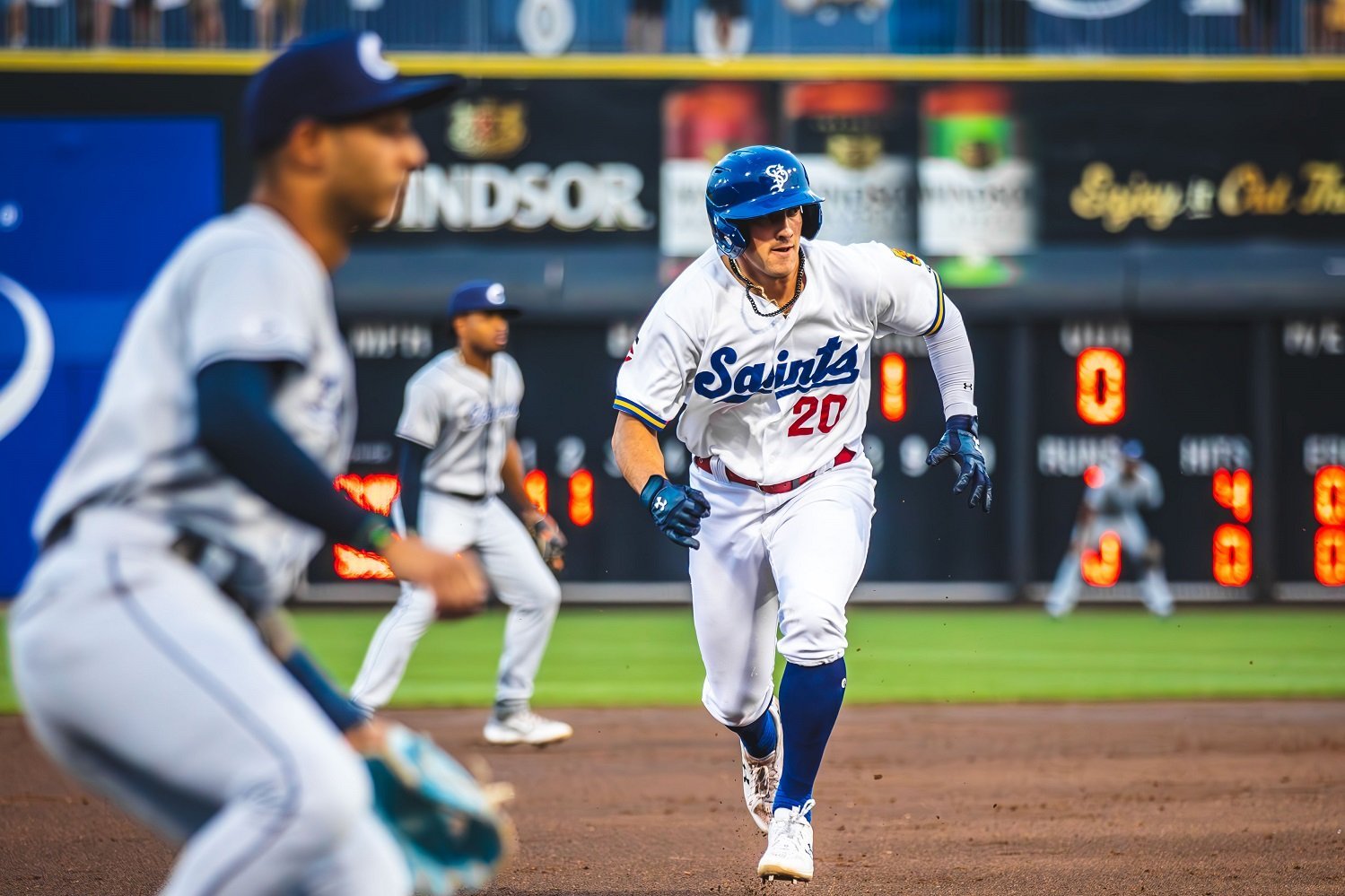 The Twins have seen inconsistent performance from the lineup this season, which can be expected from many clubs trying to find their regular-season rhythm. Last weekend, I reviewed the trend of Minnesota starting slowly over the last three seasons, with plenty of culprits to blame—including cold weather, key injuries, and players being thrust into unfamiliar roles. Thankfully, the team’s offense has shown signs of life in recent games, but they are far from out of the woods. Down on the farm, multiple bats are expected to join the roster in the weeks ahead, but fitting them into the lineup might pose a challenge. Brooks Lee, INF Lee was borderline to make the team’s Opening Day roster before a back injury sidelined him to start the year. Over the last week, he began a rehab assignment with the Saints with the plan for the team to reevaluate his progress at the week’s end. On Sunday, the team officially activated him, and inserted him into the starting lineup, optioning Jose Miranda to the minors in the process. Lee is no guarantee to be an offensive upgrade, as he struggled during his rookie season with a 64 OPS+ while battling through multiple injuries. His hit tool was touted throughout his amateur career, though, so many expect his bat to come around at the big-league level. It seems likely that the Twins will take things slow with his return to the field, but their dire state has already pressed him into duty. He did come up with a big hit in his first at-bat of the season en route to Sunday's win. "Just be myself," Lee said before that season debut, when asked how he would avoid putting too much pressure on himself to act as a savior. "I’m the best when I’m just myself. I play good baseball. Play like a college player; that’s my brand. I think the game should come to me—not force it. I had a lot of success last year, early on, [but] I think I forced it, and it kind of caught up to me." Lee is far from the only player whom the team might turn to, however, and they'll all need ways to avoid that pitfall of trying to do too much. Emmanuel Rodriguez, OF Many Twins fans are eagerly anticipating Rodriguez’s debut. He is a consensus top-40 prospect, with Baseball America and Baseball Prospectus ranking him in their top 20 heading into the season. He had three hits in the team’s first game, including a double, but suffered a thumb injury that has slowed him down. He went 1-for-17 in his next 22 trips to the plate, with five walks and eight strikeouts. Rodriguez has rediscovered his stroke over the last two games, going 4-for-8 with a double and two walks. The Twins will turn to Rodriguez at some point this season, but he will need to find more consistency at Triple-A before he gets the call. Luke Keaschall, INF Outside of Rodriguez, Keaschall is the highest-ranking prospect at Triple-A St. Paul. He's returning from Tommy John surgery that he had last August. In the team’s first nine games, he has gone 7-for-29 (.241 BA) with a double, six walks, and a steal. The Saints have limited him to second base duties to start the year as he works to ensure his surgically repaired elbow is ready for more rigorous defensive positions, but that's also the position where he's most likely to help the team, anyway. Even with his strong offensive profile, the club seems more likely to keep him in the minors until he has more defensive flexibility. The Twins currently have other options at second base and DH, and the club would only want to call him up if he had a path to regular playing time. He seems likely to be a call-up candidate in the second half, especially since he isn’t on the 40-man roster yet. Austin Martin, UTIL Martin was one of the surprise names left off the Opening Day roster. The 26-year-old is a former top prospect who played 93 games for the Twins last season, with an 89 OPS+. He’s showcased some contact skills in the minors this season, with 13 hits in his first 31 at-bats, but he’s been limited to one extra-base hit. On the plus side, he has collected seven walks, meaning he's getting on base over 50% of the time. Defensively, he has played in center and left field, along with second base. However, he's not a short-term option, after he hit the Triple-A injured list with a hamstring strain this weekend. Jair Camargo, C Camargo has been an intriguing prospect in recent seasons, because of his strong bat and experience as a catcher. Last season, he got a cup of coffee at the big-league level, but the Twins seemed hesitant to use him as a backstop. He’s been an offensive force for St. Paul, starting the year with a team-leading three doubles and seven RBIs. The Saints have used him as a catcher in five of his first six games, so there is hope he will continue improving. He seems unlikely to get called up unless one of the regular catchers is shelved with an injury. The Twins need an offensive spark, and Lee's contact skills might help the team to get back on track. Rodriguez and Keaschall are exciting players, but they probably won’t be called upon until closer to the middle of the season. Martin and Camargo can add major-league depth, but aren’t considered offensive upgrades at this point. Miranda's campaign to get back to Minneapolis can start right away, but he'll have to prove he's made the adjustments the team has asked of him before he can provide reinforcement. Which player will be the next called up? Who can help the offense the most? Leave a comment and start the discussion.
- 23 comments
-
- 4
-
-
- brooks lee
- emmanuel rodriguez
- (and 3 more)
-
Each manager utilizes their bullpen in specific patterns, with some being more successful than others. The Twins use a fairly unique approach tied to the team’s two dominant (or not so dominant) late-inning arms. Image courtesy of David Richard and Jerome Miron-Imagn Images Each manager utilizes their bullpen in specific patterns, with some being more successful than others. The Twins use a fairly unique approach tied to the team’s two dominant (or not so dominant) late-inning arms. Bullpen strategy and usage can be the difference between a team being competitive and one falling short of postseason expectations. While most teams are content with the traditional closer role locked up for one reliever, the Twins have embraced an approach known in certain circles as Primary Save Share (PSS). According to The Athletic, the concept behind PSS is straightforward: “The team prefers one reliever as the primary option for saves. However, the player may also be used in match-up-based situations, whether dictated by batter-handedness or batting order pockets in the late innings. This provides multiple relievers with save chances each series or week throughout the season.” Only three American League teams (Red Sox, Royals, and, of course, the Twins) along with a pair of NL teams, the Reds and Rockies, have subscribed to this modern twist. That puts Minnesota in rare company and adds a fresh dynamic to a bullpen that needs every edge it can get. At first glance, PSS might appear tailor-made for a staff already stacked with high-caliber arms like Jhoan Duran and Griffin Jax, both of whom entered the season with the lofty expectations of being among the league’s best. Yet, their early season results have been subpar. Jax ranks in the fifth percentile or lower in Barrel%, Hard-Hit%, GB%, and xERA. Simply put, Jax has been far from elite, but relievers work in small sample sizes when it takes time to recover from a couple of bad outings. Duran’s start this season has also been underwhelming. While he’s managed to avoid the catastrophic contact levels seen by Jax, his struggles aren’t easily dismissed. His strikeout percentage has taken a hit, and his expected slugging (xSLG) numbers suggest he’s not maintaining the kind of dominance he’s shown in the past. Perhaps most concerning is his BB%, up from a respectable 6.6% last season to an alarming 13.3% this year. Duran's recent numbers could spell trouble in a bullpen that relies on high-leverage arms. When you consider the broader picture, it’s clear that the Twins’ PSS strategy is both a blessing and a curse. On the one hand, it allows the team to allocate save opportunities in a way that adapts to opponents’ lineups. This flexibility means that even if one arm falters, another might pick up the slack within the same series. On the other hand, this diffusion of responsibility places immense pressure on the staff’s top performers to deliver every single time they step on the mound. The downfall of stars like Jax and Duran early in the season has forced the coaching staff and front office to reassess the rotation of responsibilities. The pressure is only amplified given Minnesota’s ongoing offensive struggles. Yet, there is hope on the horizon. Brock Stewart is slated to return from injury and could represent a much-needed upgrade to the back end of the bullpen. Stewart has been electric during his Twins tenure, but his availability has been severely limited. He recently threw a bullpen session, and the team estimates he will return in May. His return will not only boost the bullpen’s overall depth but also potentially stabilize a role that, until now, has been marred by inconsistency. For Minnesota, this could be a huge bonus with the struggles of the other high-leverage arms. The modern bullpen is a complex puzzle, and the Twins’ version is a case study of innovation meeting necessity. With specialized roles evolving and traditional save roles being reinterpreted, few teams manage to stay afloat when their best relievers underperform in the spotlight. Meanwhile, other bullpen arms like Cole Sands, Jorge Alcala, Danny Coulombe, and Louis Varland find themselves in a precarious position. For these arms, the possibility of regular closing opportunities seems more theoretical than practical, as the leadership roles are increasingly consolidated into the hands of those expected to be versatile enough to handle both traditional save situations and match-up-specific scenarios. As the Twins work to stay relevant in the AL Central this season, every bullpen blowup has implications. The PSS system hinges on the ability of its chosen messengers to rise to the occasion when the game hangs in the balance. The pressure is immense for a franchise struggling to put runs on the board consistently. Each reliever must shut down an opponent and adapt in real-time to a shifting landscape of matchups, hitters, and in-game dynamics. The formula is deceptively simple, yet its execution (especially in the high-stakes innings) has not worked in 2025. In essence, the Twins’ bullpen is emblematic of modern baseball's broader challenges. Strategic innovation like the Primary Save Share system represents an effort to distill every drop of potential from a roster. However, with performance gaps in key roles and offensive support lacking, Minnesota’s roadmap to success is anything but straightforward. The Twins bullpen was expected to be among the league’s best and their strategic use of late inning arms won’t matter if their pitchers continue to struggle. Are the Twins using the wrong bullpen strategy? Leave a comment and start the discussion. View full article
-
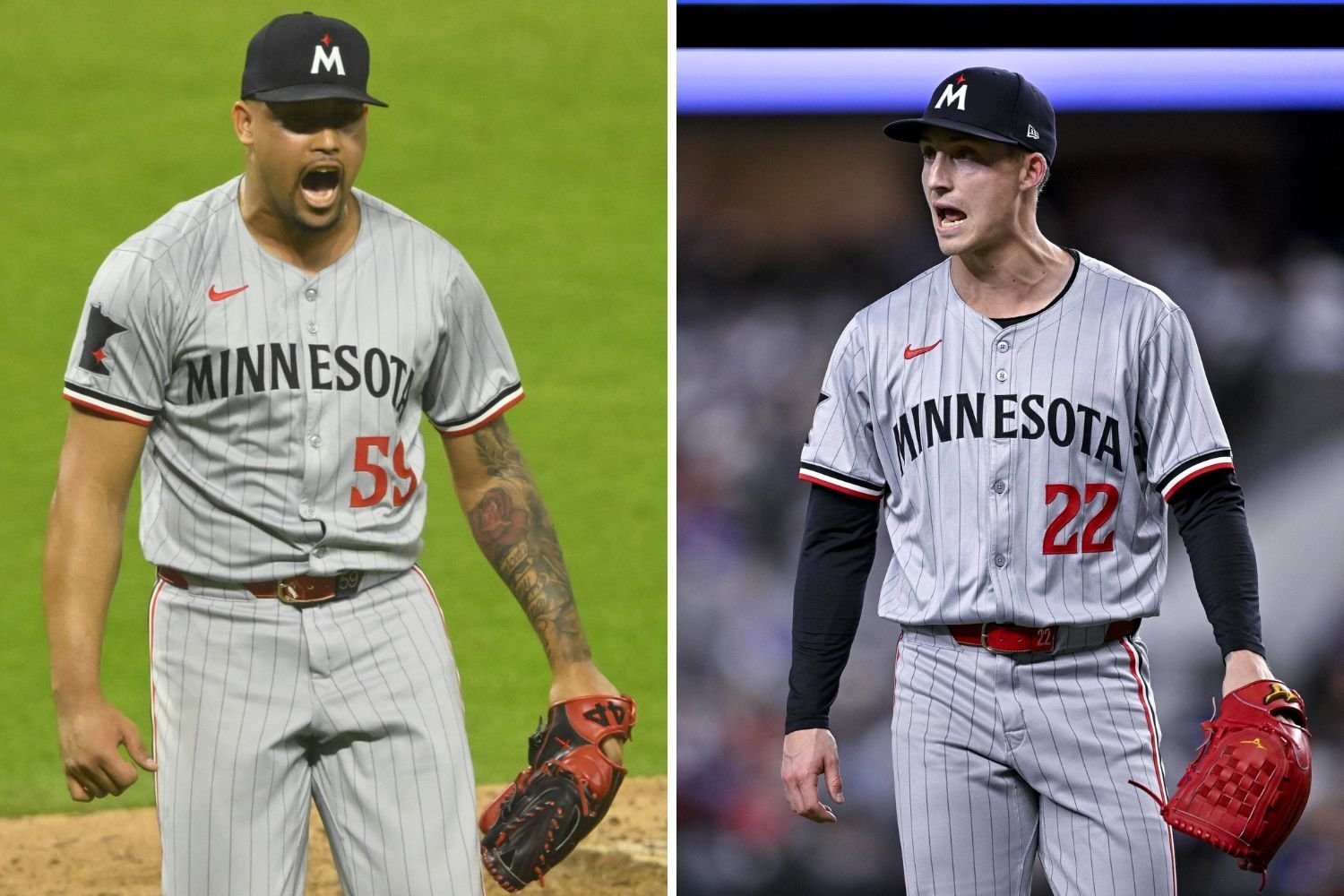 Bullpen strategy and usage can be the difference between a team being competitive and one falling short of postseason expectations. While most teams are content with the traditional closer role locked up for one reliever, the Twins have embraced an approach known in certain circles as Primary Save Share (PSS). According to The Athletic, the concept behind PSS is straightforward: “The team prefers one reliever as the primary option for saves. However, the player may also be used in match-up-based situations, whether dictated by batter-handedness or batting order pockets in the late innings. This provides multiple relievers with save chances each series or week throughout the season.” Only three American League teams (Red Sox, Royals, and, of course, the Twins) along with a pair of NL teams, the Reds and Rockies, have subscribed to this modern twist. That puts Minnesota in rare company and adds a fresh dynamic to a bullpen that needs every edge it can get. At first glance, PSS might appear tailor-made for a staff already stacked with high-caliber arms like Jhoan Duran and Griffin Jax, both of whom entered the season with the lofty expectations of being among the league’s best. Yet, their early season results have been subpar. Jax ranks in the fifth percentile or lower in Barrel%, Hard-Hit%, GB%, and xERA. Simply put, Jax has been far from elite, but relievers work in small sample sizes when it takes time to recover from a couple of bad outings. Duran’s start this season has also been underwhelming. While he’s managed to avoid the catastrophic contact levels seen by Jax, his struggles aren’t easily dismissed. His strikeout percentage has taken a hit, and his expected slugging (xSLG) numbers suggest he’s not maintaining the kind of dominance he’s shown in the past. Perhaps most concerning is his BB%, up from a respectable 6.6% last season to an alarming 13.3% this year. Duran's recent numbers could spell trouble in a bullpen that relies on high-leverage arms. When you consider the broader picture, it’s clear that the Twins’ PSS strategy is both a blessing and a curse. On the one hand, it allows the team to allocate save opportunities in a way that adapts to opponents’ lineups. This flexibility means that even if one arm falters, another might pick up the slack within the same series. On the other hand, this diffusion of responsibility places immense pressure on the staff’s top performers to deliver every single time they step on the mound. The downfall of stars like Jax and Duran early in the season has forced the coaching staff and front office to reassess the rotation of responsibilities. The pressure is only amplified given Minnesota’s ongoing offensive struggles. Yet, there is hope on the horizon. Brock Stewart is slated to return from injury and could represent a much-needed upgrade to the back end of the bullpen. Stewart has been electric during his Twins tenure, but his availability has been severely limited. He recently threw a bullpen session, and the team estimates he will return in May. His return will not only boost the bullpen’s overall depth but also potentially stabilize a role that, until now, has been marred by inconsistency. For Minnesota, this could be a huge bonus with the struggles of the other high-leverage arms. The modern bullpen is a complex puzzle, and the Twins’ version is a case study of innovation meeting necessity. With specialized roles evolving and traditional save roles being reinterpreted, few teams manage to stay afloat when their best relievers underperform in the spotlight. Meanwhile, other bullpen arms like Cole Sands, Jorge Alcala, Danny Coulombe, and Louis Varland find themselves in a precarious position. For these arms, the possibility of regular closing opportunities seems more theoretical than practical, as the leadership roles are increasingly consolidated into the hands of those expected to be versatile enough to handle both traditional save situations and match-up-specific scenarios. As the Twins work to stay relevant in the AL Central this season, every bullpen blowup has implications. The PSS system hinges on the ability of its chosen messengers to rise to the occasion when the game hangs in the balance. The pressure is immense for a franchise struggling to put runs on the board consistently. Each reliever must shut down an opponent and adapt in real-time to a shifting landscape of matchups, hitters, and in-game dynamics. The formula is deceptively simple, yet its execution (especially in the high-stakes innings) has not worked in 2025. In essence, the Twins’ bullpen is emblematic of modern baseball's broader challenges. Strategic innovation like the Primary Save Share system represents an effort to distill every drop of potential from a roster. However, with performance gaps in key roles and offensive support lacking, Minnesota’s roadmap to success is anything but straightforward. The Twins bullpen was expected to be among the league’s best and their strategic use of late inning arms won’t matter if their pitchers continue to struggle. Are the Twins using the wrong bullpen strategy? Leave a comment and start the discussion.
 -
Minnesota’s offense has struggled during the season’s early games. Let’s look into the minors, to see if there are any offensive upgrades and explore how they could get onto the roster. Image courtesy of Rob Thompson, St. Paul Saints Minnesota’s offense has struggled during the season’s early games. Let’s look into the minors, to see if there are any offensive upgrades and explore how they could get onto the roster. The Twins have seen inconsistent performance from the lineup this season, which can be expected from many clubs trying to find their regular-season rhythm. Last weekend, I reviewed the trend of Minnesota starting slowly over the last three seasons, with plenty of culprits to blame—including cold weather, key injuries, and players being thrust into unfamiliar roles. Thankfully, the team’s offense has shown signs of life in recent games, but they are far from out of the woods. Down on the farm, multiple bats are expected to join the roster in the weeks ahead, but fitting them into the lineup might pose a challenge. Brooks Lee, INF Lee was borderline to make the team’s Opening Day roster before a back injury sidelined him to start the year. Over the last week, he began a rehab assignment with the Saints with the plan for the team to reevaluate his progress at the week’s end. On Sunday, the team officially activated him, and inserted him into the starting lineup, optioning Jose Miranda to the minors in the process. Lee is no guarantee to be an offensive upgrade, as he struggled during his rookie season with a 64 OPS+ while battling through multiple injuries. His hit tool was touted throughout his amateur career, though, so many expect his bat to come around at the big-league level. It seems likely that the Twins will take things slow with his return to the field, but their dire state has already pressed him into duty. He did come up with a big hit in his first at-bat of the season en route to Sunday's win. "Just be myself," Lee said before that season debut, when asked how he would avoid putting too much pressure on himself to act as a savior. "I’m the best when I’m just myself. I play good baseball. Play like a college player; that’s my brand. I think the game should come to me—not force it. I had a lot of success last year, early on, [but] I think I forced it, and it kind of caught up to me." Lee is far from the only player whom the team might turn to, however, and they'll all need ways to avoid that pitfall of trying to do too much. Emmanuel Rodriguez, OF Many Twins fans are eagerly anticipating Rodriguez’s debut. He is a consensus top-40 prospect, with Baseball America and Baseball Prospectus ranking him in their top 20 heading into the season. He had three hits in the team’s first game, including a double, but suffered a thumb injury that has slowed him down. He went 1-for-17 in his next 22 trips to the plate, with five walks and eight strikeouts. Rodriguez has rediscovered his stroke over the last two games, going 4-for-8 with a double and two walks. The Twins will turn to Rodriguez at some point this season, but he will need to find more consistency at Triple-A before he gets the call. Luke Keaschall, INF Outside of Rodriguez, Keaschall is the highest-ranking prospect at Triple-A St. Paul. He's returning from Tommy John surgery that he had last August. In the team’s first nine games, he has gone 7-for-29 (.241 BA) with a double, six walks, and a steal. The Saints have limited him to second base duties to start the year as he works to ensure his surgically repaired elbow is ready for more rigorous defensive positions, but that's also the position where he's most likely to help the team, anyway. Even with his strong offensive profile, the club seems more likely to keep him in the minors until he has more defensive flexibility. The Twins currently have other options at second base and DH, and the club would only want to call him up if he had a path to regular playing time. He seems likely to be a call-up candidate in the second half, especially since he isn’t on the 40-man roster yet. Austin Martin, UTIL Martin was one of the surprise names left off the Opening Day roster. The 26-year-old is a former top prospect who played 93 games for the Twins last season, with an 89 OPS+. He’s showcased some contact skills in the minors this season, with 13 hits in his first 31 at-bats, but he’s been limited to one extra-base hit. On the plus side, he has collected seven walks, meaning he's getting on base over 50% of the time. Defensively, he has played in center and left field, along with second base. However, he's not a short-term option, after he hit the Triple-A injured list with a hamstring strain this weekend. Jair Camargo, C Camargo has been an intriguing prospect in recent seasons, because of his strong bat and experience as a catcher. Last season, he got a cup of coffee at the big-league level, but the Twins seemed hesitant to use him as a backstop. He’s been an offensive force for St. Paul, starting the year with a team-leading three doubles and seven RBIs. The Saints have used him as a catcher in five of his first six games, so there is hope he will continue improving. He seems unlikely to get called up unless one of the regular catchers is shelved with an injury. The Twins need an offensive spark, and Lee's contact skills might help the team to get back on track. Rodriguez and Keaschall are exciting players, but they probably won’t be called upon until closer to the middle of the season. Martin and Camargo can add major-league depth, but aren’t considered offensive upgrades at this point. Miranda's campaign to get back to Minneapolis can start right away, but he'll have to prove he's made the adjustments the team has asked of him before he can provide reinforcement. Which player will be the next called up? Who can help the offense the most? Leave a comment and start the discussion. View full article
-
 Major League Baseball announced today that the AL Central will undergo an emergency expansion, in a stunning move designed to shake up baseball’s competitive landscape (or at least, the portion of it that includes the Minnesota Twins). The decision comes after the Twins’ rough start to the season, as the league scrambles to ensure Minnesota continues to stay relevant in the division. The realignment effort, dubbed the "Competitive Balance Through Strategic Opponents Initiative" (or CBTSOI, because baseball loves a good acronym), will add several struggling teams to the division. Among those in consideration are the Colorado Rockies, Pittsburgh Pirates (but only after Paul Skenes is safely traded), and Miami Marlins. “We took a long, hard look at the state of the AL Central and realized that we could make it even more Twins-friendly,” said an anonymous league executive. “Historically, this division has been a safe haven for teams looking to be slightly above .500 and still host a playoff series. We felt we could reinforce that by bringing in some like-minded clubs.” One Twins front office member was quick to express enthusiasm for the move. “Listen, I won’t pretend that we weren’t worried. Cleveland looked kinda competent for a second there, and the Tigers have, like, three decent pitchers," said the official. "That’s not the AL Central we know and love. Adding the Rockies to the mix? Now that’s more like it.” Twins players have also welcomed the news. One player, who wished to remain anonymous but was later spotted rewatching highlights of Joe Ryan striking out the Royals on repeat, voiced relief. “Look, I love the challenge of the game, but I’d also love to see more 7-1 wins in early September. Imagine closing the season with six straight games against the ugly stepchildren the league adopted in 1993. That’s what baseball should be about.” Not everyone is thrilled with the realignment. One Rockies executive, who seemed unaware his team was even under consideration, was confused by the decision. “Wait, we’re moving divisions? Huh. I mean, sure, I guess. Will it change anything? We still have to play baseball, right?” A Marlins player, speaking under condition of anonymity, voiced frustration with the move. “So let me get this straight: We went from having to deal with the Braves and Phillies to suddenly facing the Twins and Royals? I mean, it sounds easier, but knowing our luck, this probably just means Minnesota is about to turn into the Yankees of the Midwest. Fantastic.” While the move is not yet finalized, insiders believe it’s only a matter of time before Rob Manfred rubber-stamps the new alignment. “We’re always looking for ways to keep the sport fresh,” said a source inside MLB. “And what’s fresher than guaranteeing the AL Central winner gets an inflated regular season record and an early postseason exit?” For now, Twins fans can sit back, relax, and enjoy the league’s continued commitment to ensuring the road to October is as smooth as possible. And if this move doesn’t quite do the trick, rumors persist that MLB is considering automatic postseason berths for any team that finishes the year with a positive run differential against the White Sox.
 -
The Twins have seen some ups and downs to start the year. Perhaps a new MLB initiative can turn the tide in their favor. Image courtesy of © Brad Penner-Imagn Images The Twins have seen some ups and downs to start the year. Perhaps a new MLB initiative can turn the tide in their favor. Major League Baseball announced today that the AL Central will undergo an emergency expansion, in a stunning move designed to shake up baseball’s competitive landscape (or at least, the portion of it that includes the Minnesota Twins). The decision comes after the Twins’ rough start to the season, as the league scrambles to ensure Minnesota continues to stay relevant in the division. The realignment effort, dubbed the "Competitive Balance Through Strategic Opponents Initiative" (or CBTSOI, because baseball loves a good acronym), will add several struggling teams to the division. Among those in consideration are the Colorado Rockies, Pittsburgh Pirates (but only after Paul Skenes is safely traded), and Miami Marlins. “We took a long, hard look at the state of the AL Central and realized that we could make it even more Twins-friendly,” said an anonymous league executive. “Historically, this division has been a safe haven for teams looking to be slightly above .500 and still host a playoff series. We felt we could reinforce that by bringing in some like-minded clubs.” One Twins front office member was quick to express enthusiasm for the move. “Listen, I won’t pretend that we weren’t worried. Cleveland looked kinda competent for a second there, and the Tigers have, like, three decent pitchers," said the official. "That’s not the AL Central we know and love. Adding the Rockies to the mix? Now that’s more like it.” Twins players have also welcomed the news. One player, who wished to remain anonymous but was later spotted rewatching highlights of Joe Ryan striking out the Royals on repeat, voiced relief. “Look, I love the challenge of the game, but I’d also love to see more 7-1 wins in early September. Imagine closing the season with six straight games against the ugly stepchildren the league adopted in 1993. That’s what baseball should be about.” Not everyone is thrilled with the realignment. One Rockies executive, who seemed unaware his team was even under consideration, was confused by the decision. “Wait, we’re moving divisions? Huh. I mean, sure, I guess. Will it change anything? We still have to play baseball, right?” A Marlins player, speaking under condition of anonymity, voiced frustration with the move. “So let me get this straight: We went from having to deal with the Braves and Phillies to suddenly facing the Twins and Royals? I mean, it sounds easier, but knowing our luck, this probably just means Minnesota is about to turn into the Yankees of the Midwest. Fantastic.” While the move is not yet finalized, insiders believe it’s only a matter of time before Rob Manfred rubber-stamps the new alignment. “We’re always looking for ways to keep the sport fresh,” said a source inside MLB. “And what’s fresher than guaranteeing the AL Central winner gets an inflated regular season record and an early postseason exit?” For now, Twins fans can sit back, relax, and enjoy the league’s continued commitment to ensuring the road to October is as smooth as possible. And if this move doesn’t quite do the trick, rumors persist that MLB is considering automatic postseason berths for any team that finishes the year with a positive run differential against the White Sox. View full article
