Cody Christie
-
Posts
7,820 -
Joined
-
Last visited
-
Days Won
5
Content Type
Profiles
News
Minnesota Twins Videos
2026 Minnesota Twins Top Prospects Ranking
2022 Minnesota Twins Draft Picks
Minnesota Twins Free Agent & Trade Rumors, Notes, & Tidbits
Guides & Resources
2023 Minnesota Twins Draft Picks
The Minnesota Twins Players Project
2024 Minnesota Twins Draft Picks
2025 Minnesota Twins Draft Pick Tracker
2026 Minnesota Twins Draft Tracker: Picks & Bonuses
Forums
Blogs
Events
Store
Downloads
Gallery
Everything posted by Cody Christie
-
 Image courtesy of Wichita Wind Surge Developing relief pitching in an organization can be a challenging endeavor. For various reasons, some players are shifted to a bullpen role early in their professional careers. Other players are used in a multi-inning piggyback relief role to help other starters manage their workload. One of the biggest challenges for relievers is the small sample size associated with their performance. One bad outing can haunt a player’s numbers for the entire season. Here are the top four relievers from the season’s first month. Twins March/April Minor League Reliever of the Month #4 - Paulshawn Pasqualotto (Cedar Rapids) - 7 G, 0.00 ERA, 0.83 WHIP, 12 IP, 7 H, 3 BB, 9 K The Twins selected Pasqualotto in the 12th round of the 2023 MLB Draft from the University of California, Berkeley. Last season, he split time between starter and reliever with mixed results, including a 6.66 ERA and a 1.65 WHIP. The Twins moved him to a full-time bullpen role for 2025, and the results have improved significantly. Cedar Rapids has used him for two innings or more in four of his seven appearances. All his appearances have come in the eighth inning or later. On April 16, he pitched the final three innings of a Kernels’ extra-inning win while limiting batters to two hits and striking out four. He’s improved his K% by 1.4% and reduced his BB% by 0.6%. To be a viable long-term reliever, he must continue to see an increase in his strikeout totals. #3 - Jarret Whorff (Wichita/St. Paul) - 7 G, 1.98 ERA, 0.81 WHIP, 13 2/3 IP, 7 H, 4 BB, 18 K Whorff went undrafted in the 2022 MLB Draft, but the Twins signed him to a minor league deal early in the 2023 season. He’s made some spot starts during his professional career, and the Twins haven’t been afraid to move him up and down minor league levels on a needs basis. He began the 2025 campaign at Double-A, allowing one earned run on five hits in 10 2/3 innings. Minnesota promoted him briefly to St. Paul for one appearance in the middle of the month, where he allowed two earned runs in three frames with five strikeouts. He’s held batters to a .149/.216/.319 (.535) slash line with three extra-base hits. His K% jumped from 24.5% last season to 35.3% so far in 2025 while also lowering his BB% by 1.3%. Whorff is performing well in the upper minors and could be a relief option for the Twins in the coming years. #2 - Kody Funderburk (St. Paul) - 8 G, 0.00 ERA, 0.56 WHIP, 10 2/3 IP, 4 H, 2 BB, 12 K Twins fans are familiar with Funderburk since the southpaw has made 40 appearances with the big-league club over the last three seasons. Minnesota took him in the 15th round of the 2018 MLB Draft, and he moved quickly through the organization in a left-handed relief role. Now, in his age-28 season, he’s in a group of relievers who will move up and down between Triple-A and the big leagues. With St. Paul, he’s posted strong numbers in what many considered a hitter-friendly league. Funderburk has a 32.4 K% and a 5.4 BB% while being especially dominant against lefties by holding them to a .592 OPS in 27 PA. The Twins will need Funderburk again at some point this season, so it’s critical for him to perform well at Triple-A. Twins Minor League Reliever of the Month - Mike Paredes (Wichita) - 7 G, 0.00 ERA, 0.77 WHIP, 20 2/3 IP, 10 H, 6 BB, 15 K The Twins selected Paredes in the 18th round of the 2021 MLB Draft from San Diego State University. He split time as a starter and reliever early in his pro career before shifting to a full-time reliever role in 2023. In his relief appearances last season, he posted a 3.11 ERA with a 1.13 WHIP and a 23.2 K% while the Twins were comfortable moving him back and forth across three different levels. Paredes’ usage has been unique this season, as he has significantly more innings pitched than the other names on this list. He’s one of just two qualified minor league pitchers who have yet to allow an earned run in 2025. He has pitched three innings or more in six of his seven appearances, and he’s limited damage by stranding runners( 94.1 LOB%). Batters have been unable to make solid contact against him with a .143/.221/.143 (.364) slash line. Paredes has also done a tremendous job at limiting home runs, with no home runs allowed this season and single-digit homers allowed over the last two years (2.6 HR/FB%). He won’t have a zero ERA for the whole season, but he’s provided significant value out of the Wind Surge bullpen. Flaws will be exposed with any reliever throughout the season as sample sizes start to grow. Paredes, Funderburk, and Pasqualotto will allow runs sometime in the coming weeks. However, their strong starts have helped put their team in the first-half playoff hunt. For relievers, it's about limiting damage and keeping your team positioned to win. All four of these arms have lived up to that expectation in April. How would your ballot look for the month? Should any other relievers make the list? Leave a comment and start the discussion. View full article
 -
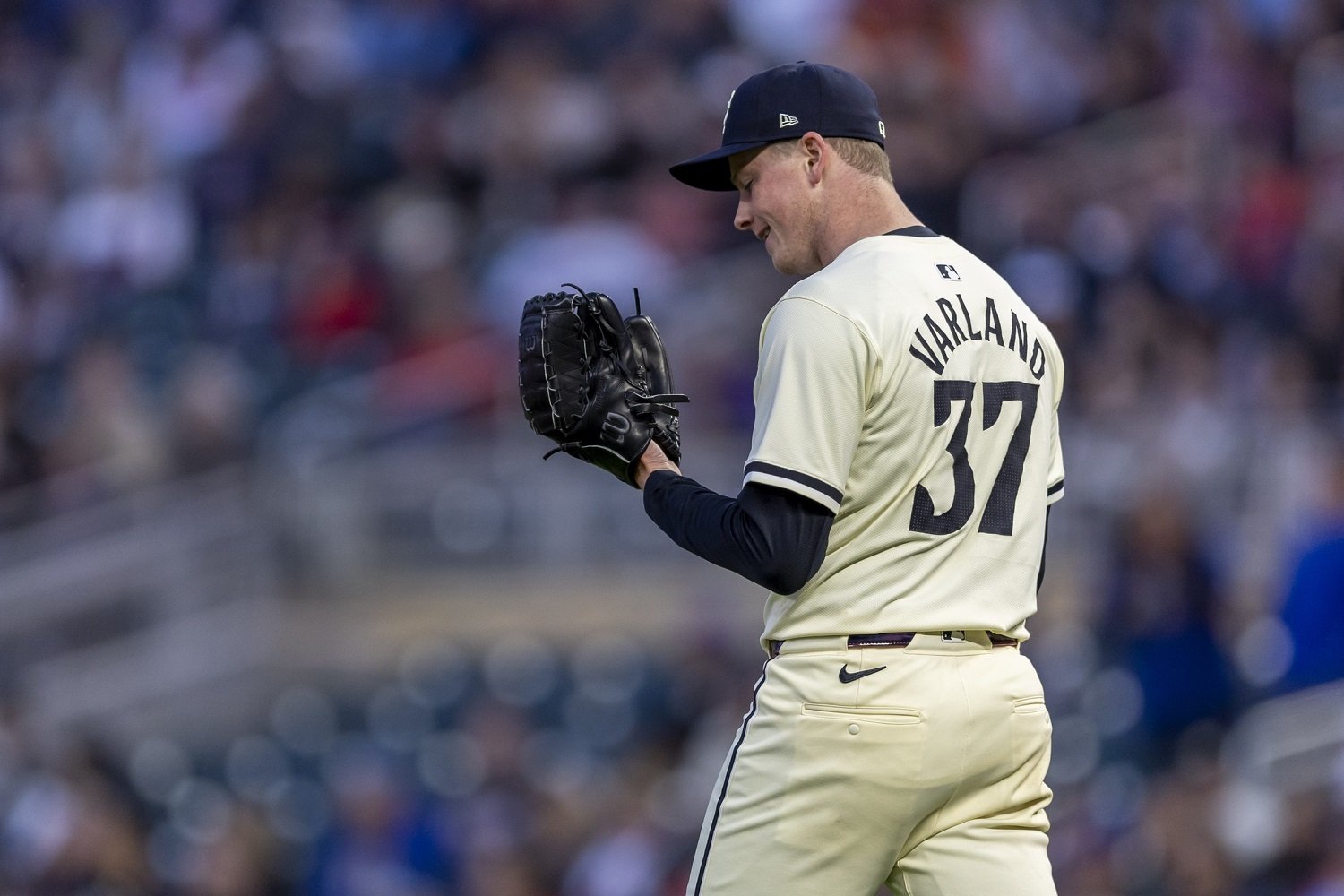 In his first season as a full-time reliever, Louis Varland has flashed good swing-and-miss stuff. It's convinced Rocco Baldelli to deploy him more often out of the bullpen than any other Twin this year. But even as his strikeout rate soars, an old weakness has carried over from his days as a starter. Varland is leaving too many pitches in the middle of the plate, and opponents aren’t missing their invitations to tee off. From Starter to High-Leverage Reliever After splitting time between the rotation and bullpen the last two seasons, Varland has settled into a true reliever’s role in 2025. Through 15 appearances, Baldelli has leaned on him in more games than any other pitcher on the staff, using Varland in a variety of situations. The move makes sense: Varland’s four-seamer is up near 98 mph on short stints, and his secondary pitches play with added life when he doesn’t have to pace himself over multiple innings. Perhaps the most encouraging sign has been his strikeout rate. Varland is punching out 32.8 percent of batters faced, ranking in the top 8 percent of the league's hurlers. That surge in whiffs has come largely on the changeup and knuckle-curve, both of which gain intensity when thrown in shorter bursts. The Meatball Problem All of that swing-and-miss prowess can go for naught, though, when Varland loses the edges of the zone. Baseball Savant classifies pitches down the heart of the plate as “meatballs,” and for his career, Varland has served up 9.8% of his offerings right over the middle. That total is significantly above the MLB average of roughly 7.3%. Those mistakes have been punished: meatballs are prime targets for high-exit velocity contact and home runs. So, how has Varland been impacted by meatballs this season? Hard Contact Metrics Pull AIR % (Pulled Airborne Batted Balls): Hitters are pulling the ball in the air 25.7 percent of the time against Varland, up from roughly 18 percent in his starter years. Average Exit Velocity: His opponents’ average exit velocity is 93.1 mph, well above the league average, and in the worst 2 percent of pitchers. Hard Hit %: A whopping 62.9 percent of balls in play against him qualify as “hard-hit” (95 mph+), placing him in the bottom 1 percent of MLB arms. These figures underline the danger of meatballs: when he leaves a pitch waist-high, hitters punish it. Spotlight on the Changeup Varland’s changeup has been especially problematic. In 21 pitches thrown this season, he’s yielded a 1.667 slugging percentage, including two home runs and a double. He is only throwing this pitch against left-handed batters, and it comes with the caveat of being a small sample size. However, a changeup hung over the heart of the plate plays like a batting practice fastball, and opposing hitters have taken full advantage. A glance at his Statcast zone map shows a cluster of mislocated changeups right down the middle. Path Forward: Execution at the Edges If Varland is to take the next step as a late-inning weapon, his command must improve. Specifically: Fastball Location: While his heater can touch 100 mph, too many end up middle-middle. Working more around the edges and elevating more within the zone will keep hitters honest and reduce the risk of giving up power. Changeup Refinement: Better tunneling and late fade on the changeup could turn meatballs into chase-inducing off-speed pitches. Emphasizing release consistency and disguising arm speed will be key. So, too, though, will be generating more depth on the offering than he's managed so far in 2025. In this image, the red line connects the movement coordinates for his 2025 fastball and changeup, while the blue one connects his 2024 offerings. This year, the changeup has more run, but less depth, leading to more pitches left up. Even with the meatball issue, Varland’s 3.21 ERA and 19 strikeouts in 14 innings suggest that the raw stuff is plus-plus. His two seasons of relief work have shown he can handle high-leverage innings, and the strikeout upside is tantalizing. If Twins pitching coaches can help him tighten up the zone and avoid center-cut mistakes, Varland could become one of the most valuable relief options in the back end of the bullpen. Will Varland be able to solve his meatball problem? Leave a comment and start the discussion.
 -
Image courtesy of © Jesse Johnson-Imagn Images In his first season as a full-time reliever, Louis Varland has flashed good swing-and-miss stuff. It's convinced Rocco Baldelli to deploy him more often out of the bullpen than any other Twin this year. But even as his strikeout rate soars, an old weakness has carried over from his days as a starter. Varland is leaving too many pitches in the middle of the plate, and opponents aren’t missing their invitations to tee off. From Starter to High-Leverage Reliever After splitting time between the rotation and bullpen the last two seasons, Varland has settled into a true reliever’s role in 2025. Through 15 appearances, Baldelli has leaned on him in more games than any other pitcher on the staff, using Varland in a variety of situations. The move makes sense: Varland’s four-seamer is up near 98 mph on short stints, and his secondary pitches play with added life when he doesn’t have to pace himself over multiple innings. Perhaps the most encouraging sign has been his strikeout rate. Varland is punching out 32.8 percent of batters faced, ranking in the top 8 percent of the league's hurlers. That surge in whiffs has come largely on the changeup and knuckle-curve, both of which gain intensity when thrown in shorter bursts. The Meatball Problem All of that swing-and-miss prowess can go for naught, though, when Varland loses the edges of the zone. Baseball Savant classifies pitches down the heart of the plate as “meatballs,” and for his career, Varland has served up 9.8% of his offerings right over the middle. That total is significantly above the MLB average of roughly 7.3%. Those mistakes have been punished: meatballs are prime targets for high-exit velocity contact and home runs. So, how has Varland been impacted by meatballs this season? Hard Contact Metrics Pull AIR % (Pulled Airborne Batted Balls): Hitters are pulling the ball in the air 25.7 percent of the time against Varland, up from roughly 18 percent in his starter years. Average Exit Velocity: His opponents’ average exit velocity is 93.1 mph, well above the league average, and in the worst 2 percent of pitchers. Hard Hit %: A whopping 62.9 percent of balls in play against him qualify as “hard-hit” (95 mph+), placing him in the bottom 1 percent of MLB arms. These figures underline the danger of meatballs: when he leaves a pitch waist-high, hitters punish it. Spotlight on the Changeup Varland’s changeup has been especially problematic. In 21 pitches thrown this season, he’s yielded a 1.667 slugging percentage, including two home runs and a double. He is only throwing this pitch against left-handed batters, and it comes with the caveat of being a small sample size. However, a changeup hung over the heart of the plate plays like a batting practice fastball, and opposing hitters have taken full advantage. A glance at his Statcast zone map shows a cluster of mislocated changeups right down the middle. Path Forward: Execution at the Edges If Varland is to take the next step as a late-inning weapon, his command must improve. Specifically: Fastball Location: While his heater can touch 100 mph, too many end up middle-middle. Working more around the edges and elevating more within the zone will keep hitters honest and reduce the risk of giving up power. Changeup Refinement: Better tunneling and late fade on the changeup could turn meatballs into chase-inducing off-speed pitches. Emphasizing release consistency and disguising arm speed will be key. So, too, though, will be generating more depth on the offering than he's managed so far in 2025. In this image, the red line connects the movement coordinates for his 2025 fastball and changeup, while the blue one connects his 2024 offerings. This year, the changeup has more run, but less depth, leading to more pitches left up. Even with the meatball issue, Varland’s 3.21 ERA and 19 strikeouts in 14 innings suggest that the raw stuff is plus-plus. His two seasons of relief work have shown he can handle high-leverage innings, and the strikeout upside is tantalizing. If Twins pitching coaches can help him tighten up the zone and avoid center-cut mistakes, Varland could become one of the most valuable relief options in the back end of the bullpen. Will Varland be able to solve his meatball problem? Leave a comment and start the discussion. View full article
-
The first month of the baseball season can often be a time when pitcher performance is slightly ahead of hitters'. That was certainly true for the Twins. Minnesota’s pitching staff ended the month ranked in baseball’s top 10 for fWAR, FIP, and ERA. They were the best group in baseball at limiting walks. The four pitchers below were critical to the team’s start to the season, and many have overcome early-season hiccups. (Stats below include the team's games that were played at the end of March.) April Pitchers of the Month #4 - Danny Coulombe - 12 G, 0.00 ERA, 0.47 WHIP, 10 2/3 IP, 4 H, 1 BB, 7 K This season, Coulombe has followed a simple recipe: don’t let anyone get on base. The Twins brought in the lefty to fill the role vacated by Caleb Thielbar’s exit. He’s been nearly perfect during the season’s first month. His velocity has dipped slightly, but he’s adjusted his pitch mix to continue to be effective. His opponents' average exit velocity dropped from over 90.3 mph last season to 86 mph in 2025; guys just aren't hitting it hard against him. He’s not going to have a 0.00 ERA for the entire season, but he’s been one of the biggest bright spots in a bullpen that needed a standout performance. #3 - Bailey Ober - 6 G, 4.13 ERA, 1.35 WHIP, 32 2/3 IP, 37 H, 7 BB, 25 K For the second consecutive season, Ober got walloped in his first start of the season before settling in and being one of the team’s best pitchers. In the team’s third game, Ober allowed eight earned runs on eight hits and failed to make it out of the second inning. Since then, though, he has posted a 2.10 ERA, while holding batters to a .649 OPS. Also, he’s pitched six innings or more in four straight appearances. His best performance came Monday against Cleveland, where he went 7 2/3 innings while holding the Guardians to one run on eight hits. He’s back to being Bailey Ober, which means he's one of the AL’s most consistent starters. #2 - Pablo López - 5 G, 2.25 ERA, 1.00 WHIP, 28 IP, 24 H, 4 BB, 26 K López likely would have walked away with this honor if he hadn’t missed 15 days on the injured list in the middle of the month. He allowed two earned runs or fewer in every appearance and struck out six batters in each of his final three starts in the month. Last season, López struggled out of the gate with an ERA north of 4.80 in April and May. He seems to be in a better place to start 2025. He’s the staff's ace, and the Twins need him to continue pitching that way to get back into the AL Central race. Twins Pitcher of the Month - Joe Ryan - 6 G, 3.18 ERA, 0.91 WHIP, 34 IP, 27 H, 4 BB, 39 K The Joe Ryan Experience has been in full effect during the season’s first month. He leads the team’s starters in many pitching categories including innings, strikeout rate, and WAR. He's using his fastball more often, and it's been as good as ever. Batters have seen a 45-point drop in slugging percentage when facing his four-seamer. With his fastball improvements, his sweeper has developed into a dominant weapon with a 43.6% whiff rate. Ryan had two starts during the month wherein he pitched seven shutout innings. The first came on April 9 in Kansas City, when he limited the Royals to two hits and struck out five. Ryan’s best start of the month came over the weekend against the Angels. He sliced up the lineup with 11 strikeouts. He pitched five innings or more in every start and never allowed more than two walks. Ryan has a chance for a special season—if he can remain healthy, something he hasn't done in either of the last two years. Minnesota’s top three starters being on the ballot should be a good sign for the club, but the offense hasn’t been consistent enough to put the team in position to win. Other pitchers (like David Festa and Jhoan Duran) provided solid value for the club during the season’s opening month, but failed to crack the top four. It’s early, but the team’s pitching has been a bright spot to this point <knock on wood>. How would your ballot look? Leave a comment and start the discussion. View full article
-
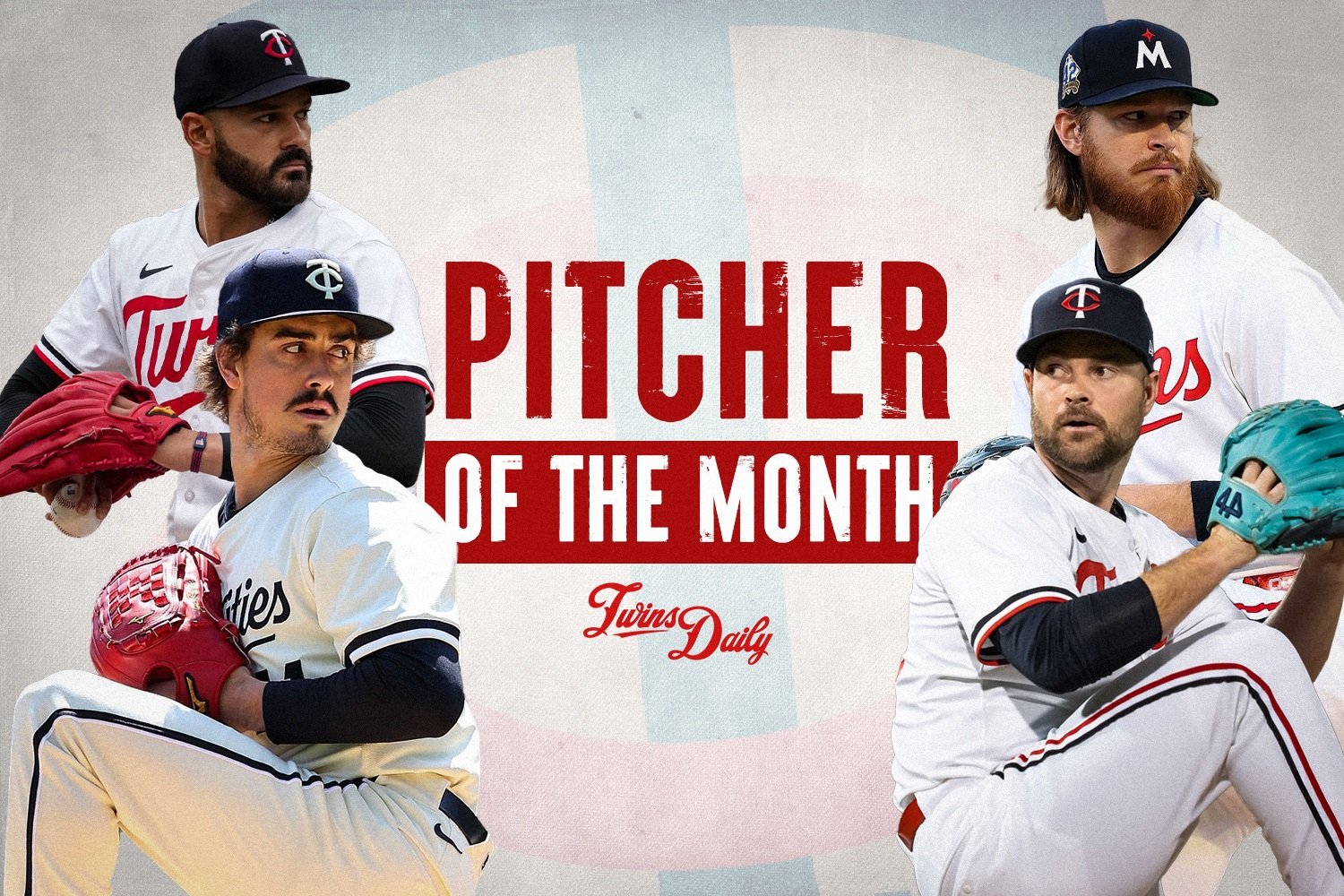 The first month of the baseball season can often be a time when pitcher performance is slightly ahead of hitters'. That was certainly true for the Twins. Minnesota’s pitching staff ended the month ranked in baseball’s top 10 for fWAR, FIP, and ERA. They were the best group in baseball at limiting walks. The four pitchers below were critical to the team’s start to the season, and many have overcome early-season hiccups. (Stats below include the team's games that were played at the end of March.) April Pitchers of the Month #4 - Danny Coulombe - 12 G, 0.00 ERA, 0.47 WHIP, 10 2/3 IP, 4 H, 1 BB, 7 K This season, Coulombe has followed a simple recipe: don’t let anyone get on base. The Twins brought in the lefty to fill the role vacated by Caleb Thielbar’s exit. He’s been nearly perfect during the season’s first month. His velocity has dipped slightly, but he’s adjusted his pitch mix to continue to be effective. His opponents' average exit velocity dropped from over 90.3 mph last season to 86 mph in 2025; guys just aren't hitting it hard against him. He’s not going to have a 0.00 ERA for the entire season, but he’s been one of the biggest bright spots in a bullpen that needed a standout performance. #3 - Bailey Ober - 6 G, 4.13 ERA, 1.35 WHIP, 32 2/3 IP, 37 H, 7 BB, 25 K For the second consecutive season, Ober got walloped in his first start of the season before settling in and being one of the team’s best pitchers. In the team’s third game, Ober allowed eight earned runs on eight hits and failed to make it out of the second inning. Since then, though, he has posted a 2.10 ERA, while holding batters to a .649 OPS. Also, he’s pitched six innings or more in four straight appearances. His best performance came Monday against Cleveland, where he went 7 2/3 innings while holding the Guardians to one run on eight hits. He’s back to being Bailey Ober, which means he's one of the AL’s most consistent starters. #2 - Pablo López - 5 G, 2.25 ERA, 1.00 WHIP, 28 IP, 24 H, 4 BB, 26 K López likely would have walked away with this honor if he hadn’t missed 15 days on the injured list in the middle of the month. He allowed two earned runs or fewer in every appearance and struck out six batters in each of his final three starts in the month. Last season, López struggled out of the gate with an ERA north of 4.80 in April and May. He seems to be in a better place to start 2025. He’s the staff's ace, and the Twins need him to continue pitching that way to get back into the AL Central race. Twins Pitcher of the Month - Joe Ryan - 6 G, 3.18 ERA, 0.91 WHIP, 34 IP, 27 H, 4 BB, 39 K The Joe Ryan Experience has been in full effect during the season’s first month. He leads the team’s starters in many pitching categories including innings, strikeout rate, and WAR. He's using his fastball more often, and it's been as good as ever. Batters have seen a 45-point drop in slugging percentage when facing his four-seamer. With his fastball improvements, his sweeper has developed into a dominant weapon with a 43.6% whiff rate. Ryan had two starts during the month wherein he pitched seven shutout innings. The first came on April 9 in Kansas City, when he limited the Royals to two hits and struck out five. Ryan’s best start of the month came over the weekend against the Angels. He sliced up the lineup with 11 strikeouts. He pitched five innings or more in every start and never allowed more than two walks. Ryan has a chance for a special season—if he can remain healthy, something he hasn't done in either of the last two years. Minnesota’s top three starters being on the ballot should be a good sign for the club, but the offense hasn’t been consistent enough to put the team in position to win. Other pitchers (like David Festa and Jhoan Duran) provided solid value for the club during the season’s opening month, but failed to crack the top four. It’s early, but the team’s pitching has been a bright spot to this point <knock on wood>. How would your ballot look? Leave a comment and start the discussion.
- 4 comments
-
- 5
-

-
- pablo lopez
- joe ryan
- (and 2 more)
-
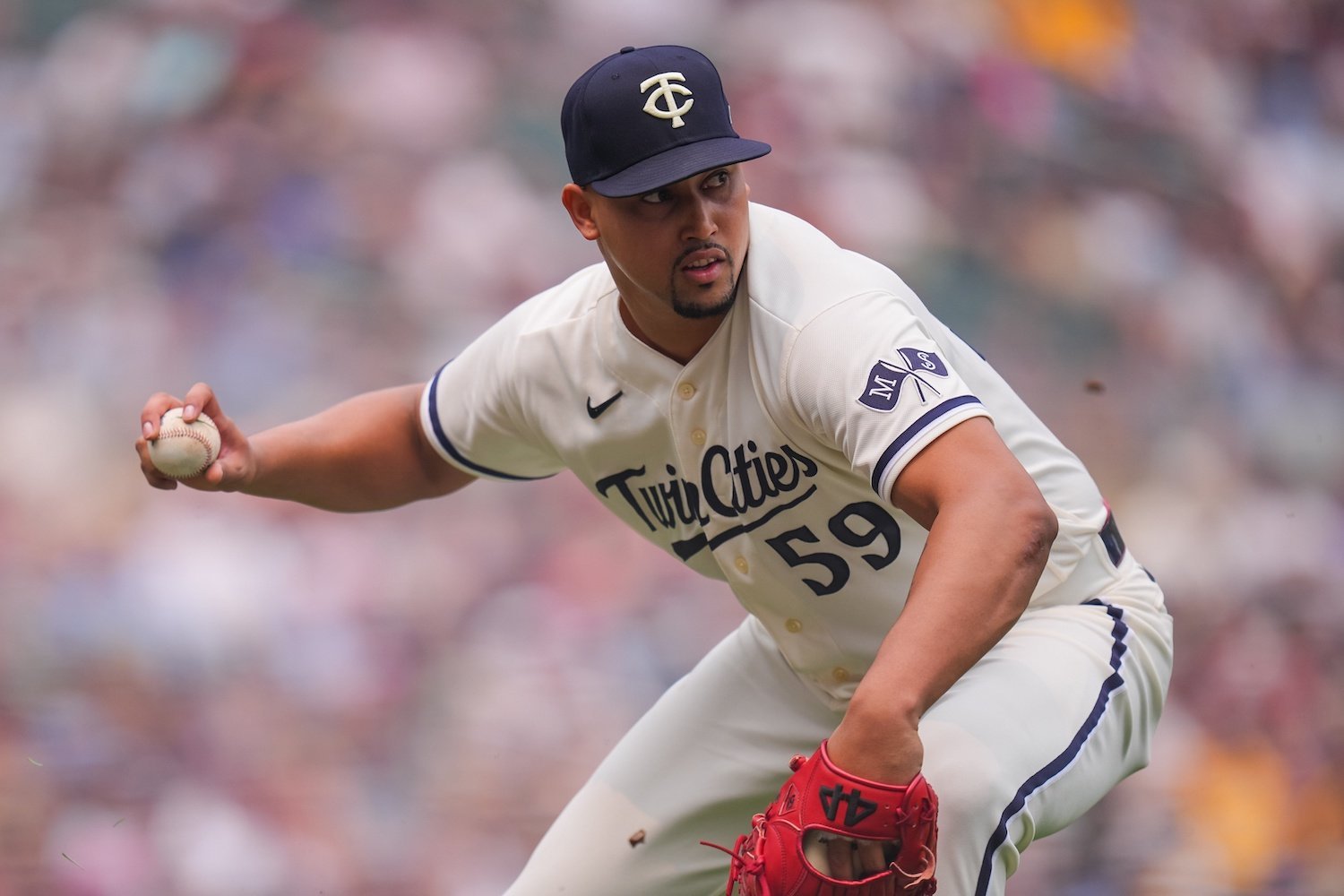 MINNEAPOLIS—In a development that can only be described as vintage Twins, sources within the coaching staff admitted Wednesday that an “unfortunate oversight” led to the complete omission of pitcher’s fielding practice (PFP) during spring training. The reason? A printing error. Yes, you read that correctly. Apparently, a kink at Kinko's derailed months of player development. The mishap came to light after yet another baffling defensive play by a Twins pitcher—this time, a harmless comebacker that somehow resulted in a run scored, a balk, and two fielders being charged with errors while not even touching the ball. It was then that bullpen coach Colby Suggs, while reviewing spring training notebooks, noticed a curious absence. “I kept flipping the pages, and I was like, ‘Wait… where’s the PFP section?’” Suggs recounted. “Turns out, the original practice schedule had it, but the final printed version cut off everything after ‘Pop-ups and Pickoffs: A Modern Philosophical Debate.’ So yeah, PFP got yeeted into the Gulf of Mexico—or America, whatever we call it these days.” Manager Rocco Baldelli addressed the issue candidly before Wednesday’s game, stepping into the media room with what could only be described as the “I left the oven on in Minneapolis” look. “I take full responsibility for this,” Baldelli said. “When we talk about preparation, we always emphasize holistic development—mental skills, breathing exercises, swing planes, beard maintenance. But somehow, we missed the part where pitchers learn how to field baseballs. Honestly, that’s on me.” Pitching coach Pete Maki admitted that, in hindsight, perhaps the balance between data and doing had gotten skewed. “I was deep into refining our pitch tunneling models and optimizing spin mirroring ratios,” said Maki, while holding a clipboard with enough graphs to launch a SpaceX rocket. “So when someone asked if we’d covered PFPs, I assumed they meant 'Pitch Framing Projections.' By the time I realized they meant 'fielding,' I was already waist-deep in release point variance charts. My bad.” Sources confirm the PFP omission may explain a rash of early-season defensive calamities involving Twins pitchers, including: A pickoff throw from Pablo López that sailed into the hot dog stand and somehow injured a fan who had already left the stadium. Louie Varland running directly past a bunt, apparently assuming someone else would materialize to handle it. Jhoan Duran doing a full wind-up before underhanding a ball to first and still throwing it into right field. “It’s like we took Gold Glove-caliber athletes and handed them hot potatoes,” said Josh Kalk, the team’s Vice President, Baseball Operations Strategy & Innovation. “Although according to our models, statistically speaking, hot potatoes might’ve produced better outcomes.” Front office head Derek Falvey also weighed in, defending the team's usual attention to detail. “This is not indicative of our overall process,” said Falvey. “We pride ourselves on thoroughness. This was a rare, print-related glitch. We’ve already taken steps to ensure future practice plans are printed using the entire ream of paper.” The pitchers themselves responded with a mix of confusion and mild relief. “I was wondering why we never did PFP,” said López. “But then I figured, maybe we’re just evolving past the whole ‘fielding’ thing. Like a shift in baseball’s collective consciousness.” Said Chris Paddack, “Look, I can throw a 95 mph fastball on the black. But ask me to throw underhand to first? That’s a bridge too far, man.” As for Joe Ryan, he offered the most pragmatic take: “I just assumed it was a Scandinavian baseball tradition—no fielding, just vibes.” Moving forward, Baldelli promised that PFPs will be “front and center” in all future practice schedules, including an emergency in-season minicamp cleverly titled "Fielding: It’s Kinda Important." Meanwhile, a new sign has been posted above the entrance to the Twins’ clubhouse: “PFP: If You Can’t Field, You Can’t Win. Unless the Other Team Also Forgot PFP.” Spring training, folks. It's where the fundamentals are learned—unless they’re not printed.
- 5 comments
-
- 3
-
-
- jhoan duran
- joe ryan
- (and 4 more)
-
One Twins Prospect May Be Following in Luke Keaschall’s Footsteps
Cody Christie posted an article in Minor Leagues
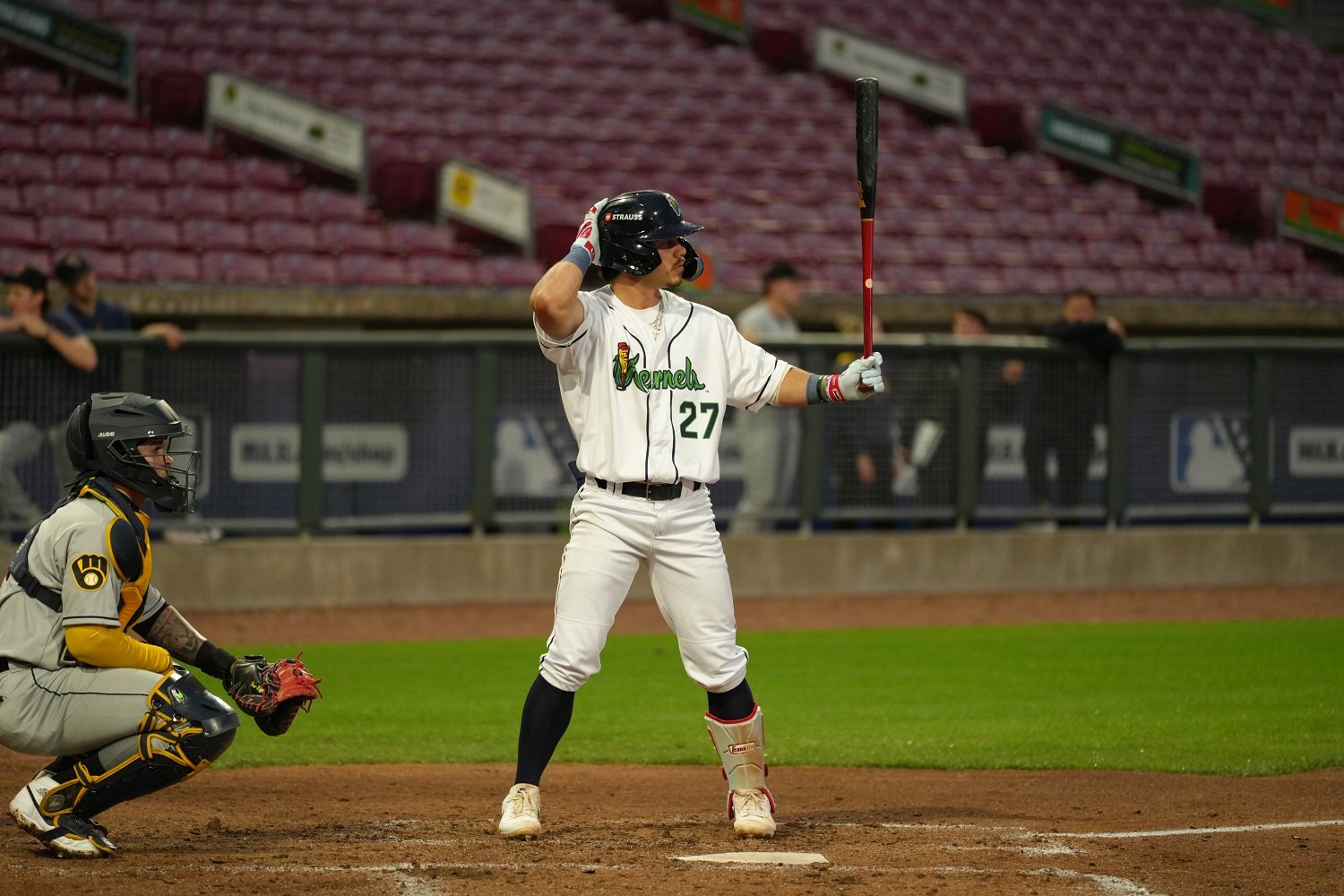 Kyle DeBarge has quietly emerged as one of the Minnesota Twins’ most intriguing young bats, following a familiar developmental path walked most recently by breakout infielder Luke Keaschall. The Twins selected DeBarge out of Louisiana-Lafayette in the supplemental first round (33rd overall) of the 2024 MLB Draft. He signed for just under $2.4 million and was immediately tested in Low‑A Fort Myers, where he showed flashes of the same contact prowess and speed that defined his collegiate career. In 26 games with the Mighty Mussels, he posted a .235/.322/.343 slash line with six extra‑base hits, and swiped 15 bases. Rewarded with a promotion to High‑A Cedar Rapids to begin 2025, he's taken to Iowa like a fish to water. He's batting .273/.367/.455, with eight extra‑base hits, 10 stolen bases, and a solid walk‑to‑strikeout ratio (12 walks vs. 15 punchouts) in 18 games. This performance is even more impressive, given that 80% of his plate appearances have come against pitchers older than him. The Twins selected DeBarge, in large part, based on his advanced feel for the strike zone and ability to make consistent contact against more polished competition. He's translated those skills to the professional ranks nicely. Like Keaschall, DeBarge’s defensive flexibility (capable of playing both infield and outfield spots) and strong baserunning add layers to his profile, making him a candidate to be Minnesota’s next breakout bat. Tools and Approach Changes DeBarge’s offensive profile centers on an advanced, contact-oriented approach. He rarely chases pitches out of the zone. He also maintains one of the lowest swing‑and‑miss rates among his prospect peers. Last season, he had a 24.1% strikeout rate in his professional debut, but he's dropped that to 16.7% in 2025. He’s done this while also increasing his walk rate by more than three percentage points. His twitchy hands and flat swing generate gap power, and there have been signs of a makeover in his mechanics. DeBarge is pulling the ball significantly more this season, with a 13.4 Pull% increase compared to last year. He’s also hitting the ball more regularly in the air, with his fly-ball rate increasing from 24.6% to 39.3%. This has helped him post a .386 wOBA and a 131 wRC+ to start the year. It’s been a small sample, but these are positive signs of his long-term prospect development. “I feel like I’m making adjustments at the plate and some stuff has definitely helped,” DeBarge said. “Tightening up my approach, just swinging at the pitches I can hit. Defensively, just been working hard on that, too. Clean up the kind of like dumb errors, make the plays that you really should make all the time. It’s just making sure I’m making those. I feel really good right now." What sets him apart is a blend of plus speed and defensive adaptability. He’s capable of manning both middle‑infield and outfield spots, allowing the Twins to maximize his skill set the same way they did with Keaschall. This versatility, combined with his threat on the bases, creates a balanced contributor who can use his college experience to move up the organizational ladder. Following in Keaschall’s Footsteps Keaschall’s meteoric rise provides a clear blueprint for DeBarge. He had a swift ascent through the Twins’ system and a willingness to embrace multiple positions. Keaschall’s blend of on‑base savvy, athleticism, and defensive flexibility allowed him to carve out a role in Minnesota’s lineup sooner than most. DeBarge mirrors that trajectory, showcasing an elite hit tool in college (1.112 OPS in 2024) and already passing key developmental milestones in his first full professional season. If his early promise in Cedar Rapids holds and he continues to perform well against older competition, the Twins may soon have a young, high‑floor contributor in the mold of their other breakout bats. Outlook and Next Steps With his ceiling initially defined by hit‑for‑average potential and plus speed, DeBarge’s focus moving forward will be on generating consistent extra‑base power and honing the mechanics needed to drive the ball in the air more frequently. Minnesota’s development staff has encouraged him to maintain his strike‑zone discipline while adding loft to his swing, a refinement that could transform gap doubles into occasional home runs. Defensively, continued reps across multiple spots will both raise his floor and accelerate his timeline. He has seen less time at shortstop this season, but continues to play second base and outfield. Should he maintain his current trajectory, DeBarge could find himself at Double A in the season’s second half, which could put him on a path to debut in 2026. “He’s a gritty, gritty baseball player,” said Kernels Manager Brian Meyer. “Just all-around talented: defense, hitting, can run the bases really well. He’s a gamer, an absolute gamer. One of those kids who you are glad he’s on your team. If he was on the other team, he’s just a pain in the butt to deal with." What stands out about DeBarge so far this season? Can he continue to follow in Keaschall’s footsteps? Leave a comment and start the discussion.
 -
Royce Lewis is batting second for the Saints tonight and playing DH.
-
Never mind. Soto is injured. The Kernels announced: RHP Charlee Soto has been placed on the 7-day IL with a right triceps strain.
- 17 replies
-
- 1
-
-
- ryan fitzgerald
- cole peschl
- (and 5 more)
-
The Twins have been very quiet on this. Not sure what is happening.
-
I think they like McCusker getting regular at-bats in the minors. I think they are fine with Keirsey getting sporadic playing time with the Twins. The late inning outfield with Buxton, Bader, and Keirsey is fun to watch.
- 17 replies
-
- 2
-
-
- ryan fitzgerald
- cole peschl
- (and 5 more)
-
He is in Fort Myers ramping up for an eventual rehab assignment. I don't have a specific timeline as to when that might happen.
-
Earlier today, I wrote about some of the expected timelines for those players returning from injury.
-
Multiple injuries have thinned out the Twins roster in recent weeks. Thankfully, some help may be on the horizon. When could Royce Lewis and others rejoin the parent club? Image courtesy of William Parmeter Multiple injuries have thinned out the Twins roster in recent weeks. Thankfully, some help may be on the horizon. When could Royce Lewis and others rejoin the parent club? The Twins are back out on the road, after winning five of six games on their recent homestand. The next portion of the schedule is significantly tougher with series against the Guardians, Red Sox, Orioles, and Giants. The Twins will need all hands on deck to make it through this gauntlet. Unfortunately, not all of the team’s key players will be able to return over the next two weeks. Twins president Derek Falvey was on Inside Twins on Sunday, and was asked about some key injured players and when they are expected to return. Let’s examine each player's injury and what a reasonable timeline would be for their return to the roster. Royce Lewis, 3B Injury: Moderate left hamstring strain IL date: March 27 (10-day IL, retroactive to March 24) Lewis injured his hamstring while running to first base during a spring training game, so he has yet to play in a game for the Twins this season. This level of strain is expected to cost a player 6-8 weeks, and he’s on pace to return during that window (even though the Twins never supplied that return estimate). On Friday, he played in his first rehab game and went 1-for-3 with a double while playing six innings at third base. After the game, Lewis told reporters he “felt really good”, even after some tough defensive plays. He went 2-for-3 on Sunday with two runs. “The part with a player like Royce is he got hurt in spring training, so he didn’t even have his full complement of spring training games and the build-up through,” said Falvey. “He’s back into the progression of building into games, and you just don’t want to rush that.” “You want to make sure that when he is back at the big-league level, you know he can go every night when he needs to,” he continued. “We will see him play throughout the course of this week, certainly. Once we get to the weekend, we make decisions as to what the next step is.” Expected Return: Lewis will likely play multiple games with the Saints throughout the week, with the potential to join the Twins for some part of this weekend’s Boston series. Willi Castro, UTIL Injury: Right oblique strain IL date: April 24 (10-day IL, retroactive to April 21) Castro is doing everything except swinging all-out from the left side. When he was placed on the IL, the Twins limited his baseball activities for a few days before he started ramping up again. Minnesota’s handling of Castro’s injury was strange because he sat on the active roster for more days than was necessary. Still, the Twins didn’t necessarily have anyone to help the roster in the minors. Minnesota has recently added multiple infield options, including Kody Clemens and Jonah Bride. “Even when he was active, he was a day-to-day guy on the roster even dealing with this because he could hit right-handed,” said Falvey. “It was a little harder for him to hit left-handed. He could go play defense if we needed him to. We hope this is really close to a minimum time frame.” Notably, though, Castro told reporters the plan was to shut him down from all activities for about a week once he went on the shelf, to let the injury calm down. In the wake of that, we might expect it to be another week or two before he's ready to handle the big leagues again. Expected Return: Castro will be eligible to return when the Twins return to Target Field for the Orioles series and should be back on the roster shortly thereafter. Matt Wallner, OF Injury: Moderate left hamstring strain IL date: April 17 (10-day IL, retroactive to April 16) Like Lewis, the Twins have intentionally been vague with Wallner’s return timeline. However, the similarities between the injuries likely place his return timeline at the 6-8 week window. He has begun playing catch but has yet to begin other baseball activities. He must ramp up those activities, begin running the bases, and go on a rehab assignment. “You need to make sure it heals in full. Because it’s moderate, we are looking more at that longer range timeline [6 weeks]. He’s on track, but we need to make sure he continues to heal before he starts moving into the progression of running.” Expected Return: The end of May is likely the earliest he will go on a rehab assignment, pushing his return to the Twins in early June. Both Lewis and Castro could be back with the Twins by Tuesday of next week. Wallner will likely be on a rehab assignment near the end of next month, and return to Minnesota in early June. Minnesota’s offense showed some life over the last week, but getting key players back can always boost the lineup—especially when another injury is just one pitch away. What player can most help the Twins? Leave a comment and start the discussion. View full article
-
Derek Falvey Provides Injury Updates on 3 Key Minnesota Twins
Cody Christie posted an article in Twins
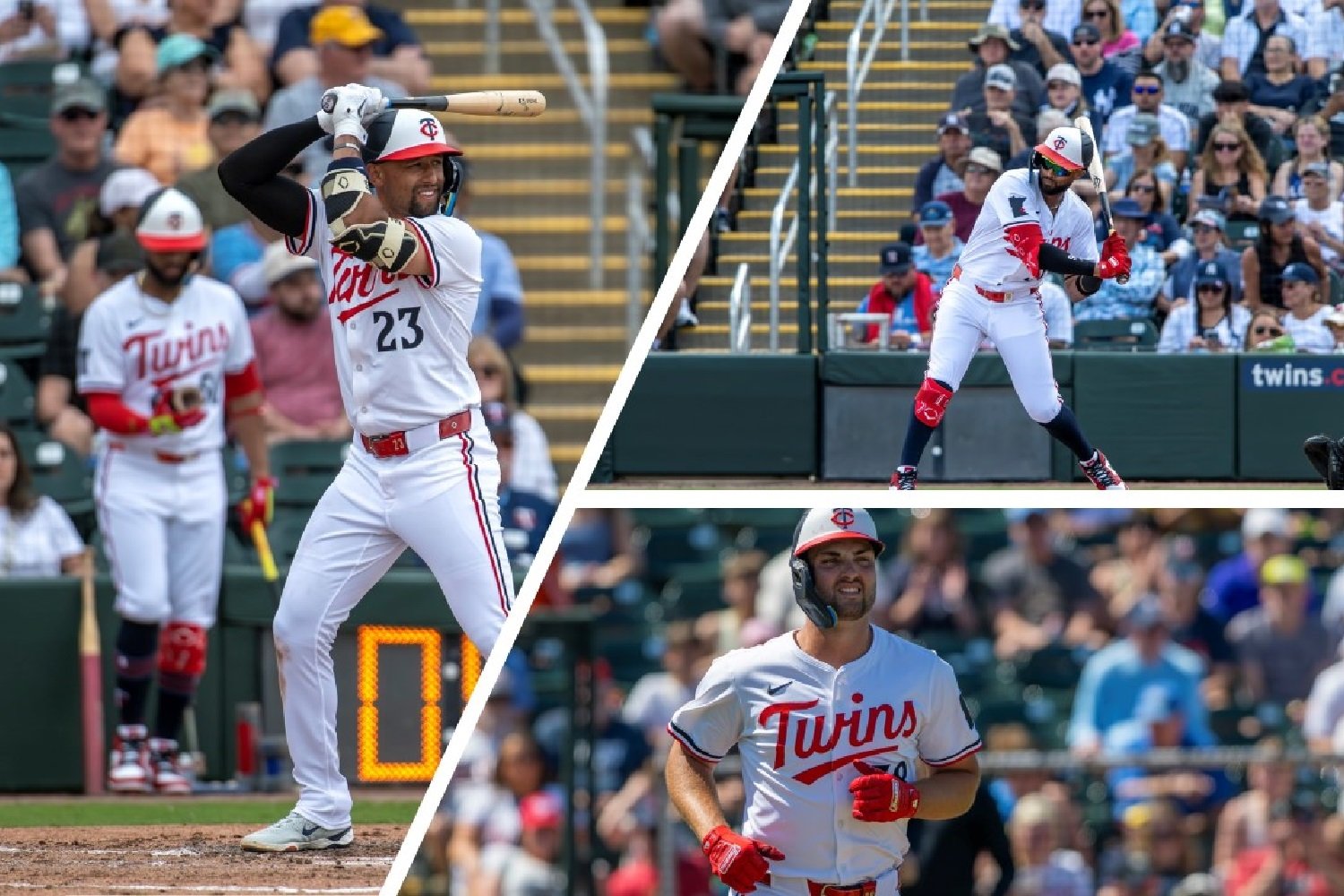 The Twins are back out on the road, after winning five of six games on their recent homestand. The next portion of the schedule is significantly tougher with series against the Guardians, Red Sox, Orioles, and Giants. The Twins will need all hands on deck to make it through this gauntlet. Unfortunately, not all of the team’s key players will be able to return over the next two weeks. Twins president Derek Falvey was on Inside Twins on Sunday, and was asked about some key injured players and when they are expected to return. Let’s examine each player's injury and what a reasonable timeline would be for their return to the roster. Royce Lewis, 3B Injury: Moderate left hamstring strain IL date: March 27 (10-day IL, retroactive to March 24) Lewis injured his hamstring while running to first base during a spring training game, so he has yet to play in a game for the Twins this season. This level of strain is expected to cost a player 6-8 weeks, and he’s on pace to return during that window (even though the Twins never supplied that return estimate). On Friday, he played in his first rehab game and went 1-for-3 with a double while playing six innings at third base. After the game, Lewis told reporters he “felt really good”, even after some tough defensive plays. He went 2-for-3 on Sunday with two runs. “The part with a player like Royce is he got hurt in spring training, so he didn’t even have his full complement of spring training games and the build-up through,” said Falvey. “He’s back into the progression of building into games, and you just don’t want to rush that.” “You want to make sure that when he is back at the big-league level, you know he can go every night when he needs to,” he continued. “We will see him play throughout the course of this week, certainly. Once we get to the weekend, we make decisions as to what the next step is.” Expected Return: Lewis will likely play multiple games with the Saints throughout the week, with the potential to join the Twins for some part of this weekend’s Boston series. Willi Castro, UTIL Injury: Right oblique strain IL date: April 24 (10-day IL, retroactive to April 21) Castro is doing everything except swinging all-out from the left side. When he was placed on the IL, the Twins limited his baseball activities for a few days before he started ramping up again. Minnesota’s handling of Castro’s injury was strange because he sat on the active roster for more days than was necessary. Still, the Twins didn’t necessarily have anyone to help the roster in the minors. Minnesota has recently added multiple infield options, including Kody Clemens and Jonah Bride. “Even when he was active, he was a day-to-day guy on the roster even dealing with this because he could hit right-handed,” said Falvey. “It was a little harder for him to hit left-handed. He could go play defense if we needed him to. We hope this is really close to a minimum time frame.” Notably, though, Castro told reporters the plan was to shut him down from all activities for about a week once he went on the shelf, to let the injury calm down. In the wake of that, we might expect it to be another week or two before he's ready to handle the big leagues again. Expected Return: Castro will be eligible to return when the Twins return to Target Field for the Orioles series and should be back on the roster shortly thereafter. Matt Wallner, OF Injury: Moderate left hamstring strain IL date: April 17 (10-day IL, retroactive to April 16) Like Lewis, the Twins have intentionally been vague with Wallner’s return timeline. However, the similarities between the injuries likely place his return timeline at the 6-8 week window. He has begun playing catch but has yet to begin other baseball activities. He must ramp up those activities, begin running the bases, and go on a rehab assignment. “You need to make sure it heals in full. Because it’s moderate, we are looking more at that longer range timeline [6 weeks]. He’s on track, but we need to make sure he continues to heal before he starts moving into the progression of running.” Expected Return: The end of May is likely the earliest he will go on a rehab assignment, pushing his return to the Twins in early June. Both Lewis and Castro could be back with the Twins by Tuesday of next week. Wallner will likely be on a rehab assignment near the end of next month, and return to Minnesota in early June. Minnesota’s offense showed some life over the last week, but getting key players back can always boost the lineup—especially when another injury is just one pitch away. What player can most help the Twins? Leave a comment and start the discussion.
- 13 comments
-
- 7
-
-
- royce lewis
- matt wallner
- (and 2 more)
-
I thought the same but I think it is part of managing his innings. Last week, Dasan Hill didn’t make an appearance. Perhaps they are on similar pitching plans.
- 17 replies
-
- 3
-
-
- ryan fitzgerald
- cole peschl
- (and 5 more)
-
I think he could crack into the Twins Daily top 20 later this year. He’s a very unconventional prospect because he is older than most.
- 17 replies
-
- 3
-
-
- ryan fitzgerald
- cole peschl
- (and 5 more)
-
Nearly every affiliate had a winning week in the organization. Strong pitching and even better hitting highlighted the week that was in the Twins farm system. Let’s dive in. Image courtesy of Rob Thompson, St. Paul Saints (McCusker), David Malamut (Culpepper), William Parmeter (Chourio) Nearly every affiliate had a winning week in the organization. Strong pitching and even better hitting highlighted the week that was in the Twins farm system. Let’s dive in. TRANSACTIONS 1B Yunior Severino placed on the 7-day injured list. Strained right hamstring. 3B Royce Lewis sent on a rehab assignment to St. Paul. C Diego Cartaya sent outright to St. Paul. Wichita activated RHP Pierson Ohl from the 7-day injured list. Cedar Rapids activated SS Kaelen Culpepper from the 7-day injured list. RHP Michael Tonkin sent on a rehab assignment to St. Paul. RHP Matt Canterino released by the Twins. TWINS DAILY MINOR LEAGUE CONTENT Twins Release Matt Canterino. What’s Next for the Once-Promising Prospect? Twins Minor League Report (4/27): Jose Salas, Kaelen Culpepper Drive Mussels, Kernels to Wins Twins Minor League Report (4/26): Close Losses in the Afternoon, High-Ceiling Lefties Dominate the Night Games Twins Minor League Report (4/25): Royce Lewis Rehabs; Cole Peschl Demands Attention Twins Minor League Report (4/24): Jay Thomason, Maddux Houghton Muscle Fort Myers to Extra-Inning Win Twins Minor League Report (4/23): Ricardo Olivar Can't be Contained Scouting the Saints: Zebby Matthews, Carson McCusker, Emmanuel Rodriguez Show Their Stuff Catcher Diego Cartaya Isn't Long for Minnesota Twins' 40-Man Roster Twins Minor League Report (4/22): Grand Slams, A Walk-Off, and a Gong Show Twins Minor League Week in Review (4/15-4/21): Mighty Mussels Shutout Parade WEEK IN REVIEW Triple A: St. Paul Saints Overall: 11-13 (8.5 Games Out of First) Last Week: 4-3 Toby Gardenhire earned his 300th win as manager of the Saints. The only manager with more victories in the entire history of the franchise is George Tsamis, who won 954 games from 2003-20. Zebby Matthews failed to make it through the fifth inning for the second consecutive start. In 4 2/3 innings, he allowed two runs on two hits and five strikeouts. He issued a career-high four walks. Patrick Winkel and Anthony Prato hit back-to-back homers in Saturday’s game. For Winkel, it was his second of the season, and second in as many games. For Prato, it was his first of the year. On Friday night, Royce Lewis made his first rehab game appearance for the Saints. He went 1-for-3 with a double. On Sunday, he went 2-for-3 with an RBI and two runs. Darren McCaughan pitched 5 shutout innings and Anthony Misiewicz tossed the final 2 innings as the Saints pitched a 3-0 shutout to split a doubleheader on Friday night. McCaughan allowed just one hit in his appearance, while walking two and striking out seven—four of them looking. Misiewicz allowed one hit and struck out two. Patrick Winkel hit his first home run of the season, a solo shot, as part of the team’s Friday night victory. St. Paul split a doubleheader on Wednesday. In Game 1, Mickey Gasper cracked his second home run in as many games to put the Saints up 2-1. Later that inning, Carson McCusker continued his hot start to the year with an RBI double. He is second in Triple A in average exit velocity. Mike Ford capped the team’s scoring in the third. Emmanuel Rodriguez walked to start the frame, before Ford delivered a two-run blast, his third longball of the season. Andrew Morris started Game 1 of the doubleheader and went 4-plus innings, allowing one unearned run on five hits while walking three and striking out two. Tuesday started the week with a bang—or several of them. They mashed four home runs (two grand slams) and racked up 16 runs scored. Eight of nine Saints collected a hit, with five having multi-hit days. Eight of nine scored a run, and seven of nine knocked home a run as the Saints pounded out 16 hits. McCusker and Ryan Fitzgerald hit the grand slams. Fitzgerald went 3-5 with a career high-tying five RBIs and three runs scored. Reliever Travis Adams pitched the final 4 innings; did not allow a run on three hits, while striking out four; and picked up his second four-inning save in as many appearances. What’s Next: The Saints head to Omaha to face the Storm Chasers for the start of a six-game set on Tuesday. These two teams split a six-game series earlier in the month. Double A: Wichita Wind Surge Overall: 12-9 (2.0 Games Out of First) Last Week: 4-2 Congratulations to Wind Surge broadcaster Tim Grubbs, who broadcast his 4,000th Minor League Baseball game this week. Connor Prielipp, Mike Paredes, Michael Martinez, and Angel Macuare combined for a shutout on three hits on Saturday night. The Wind Surge infield also turned three double plays, two of them being inning-enders. Paredes has thrown 17 2/3 innings without an earned run this season, and leads the team in wins (3). Darren Bowen retired 13 of the first 14 batters he faced in his fourth start of the season. He finished with one earned run allowed on four hits, with three strikeouts and no walks. Pierson Ohl returned from the injured list and picked up his first victory. He relieved Bowen and pitched three shutout innings with four strikeouts and only one hit allowed. Jarret Whorff has yet to surrender an earned run in Wichita this season, over 7 2/3 innings pitched. Tanner Schobel reached base in 17 consecutive games before his streak ended on Friday. On Sunday, he recorded his second three-hit performance of the season. He has a team-leading seven multi-hit games. On Wednesday, Wichita trailed 6-2 heading into the bottom of the eighth inning, before rattling off five unanswered runs to win their fourth straight game. Kyler Fedko drove in the winning run with a single in the 10th inning. John Stankiewicz earned the victory, his first decision of the season, after throwing a scoreless 10th inning with a strikeout. Wichita produced their highest winning margin of the season on Tuesday, winning 12-1. Kala’i Rosario started the scoring with a solo home run, and Aaron Sabato hit a go-ahead double later that inning. In the eighth, the Wind Surge sent 12 men to the plate and scored nine runs. Jorel Ortega connected for a pinch-hit grand slam, the first in franchise history. Mike Paredes earned the win to improve to 2-0 on the season after three innings of one-hit baseball with a walk and a strikeout out of the bullpen. What’s Next: Wichita will open a six-game road series against the Frisco RoughRiders on Tuesday at 12:05 PM CST. High A: Cedar Rapids Kernels Overall: 12-8 (2.0 Game Out of First) Last Week: 3-3 Kaelen Culpepper drove in five runs on two hits and a three-run homer on Sunday. He finished the week hitting .353/.450/.529 after coming off the IL. Tanner Hall pitched five strong innings, allowing one unearned run on five hits with two walks and three strikeouts. Cedar Rapids got caught in a pitchers’ duel on Friday night. Alejandro Hidalgo got the start and posted his best outing of the season. He pitched five shutout innings, allowing just one hit while striking out seven. In his third start of the season, Ty Langenberg posted his best outing of the campaign. He did not allow a run across four innings of work with three strikeouts and no walks, facing just 12 batters to record 12 outs. Logan Whitaker took over for Langenberg and did not allow a run in two innings of relief, retiring the side in order in both frames while notching three strikeouts. Kyle DeBarge got the week started with a bang for Cedar Rapids. Trailing by a run with two outs in the bottom of the ninth inning, he crushed a walk-off three-run home run. Earlier in the game, he had connected for a triple. Jose Olivares did not allow a run across three innings of work with five strikeouts while issuing just one walk and one hit. Danny De Andrade slashed .333/.474/.733, with three doubles, one home run, and three steals. What’s Next: Cedar Rapids continues the second half of their 12-game homestand on Tuesday night with the first of six games against South Bend at 6:35 PM CST. Low A: Fort Myers Mighty Mussels Overall: 12-9 (Tied for First) Last Week: 4-2 Jose Salas drove in six runs on Sunday, the most in a game for a Mussels hitter this season. Dasan Hill tossed 3 1/3 scoreless innings and struck out a season-high eight batters, which included a stretch of five consecutive strikeouts. The only hit he allowed was an infield single. Hill touched 98 MPH on the radar gun for the first time this season. Byron Chourio has been masterful at the top of the Fort Myers lineup. On Sunday, he reached base three times to extend his on-base streak to 18 games. It was also the 12th time he reached base safely to start the game. Cole Peschl dominated in his third appearance of the season. He struck out a season-high nine batters while throwing five scoreless innings for the second outing in a row. His 80 pitches matched the most by a Mussel pitcher this season. Peschl has now thrown 14 innings without allowing an earned run to start his career. Yasser Mercedes stole four bases in one game, the most by a Mussel this season. Maddux Houghton came off the bench on Thursday to deliver the game-winning hit, a three-run home run in extra innings. He added an incredible catch in the bottom half of the inning to rob an extra-base hit. Earlier in that game, Jay Thomason launched a moonshot home run (421 feet). He homered again on Sunday, a three-run shot. He leads the team in home runs this season. Jason Doktorczyk pitched four solid innings, as he allowed one unearned run on a wild pitch. He limited batters to two hits with two strikeouts and a walk. His season ERA dropped to 1.15. Ivran Romero continued his scoreless streak to start the season. On Wednesday, he pitched two scoreless innings with only one hit allowed. He has seven shutout innings for the year. Fort Myers got their week started with a solid performance on both sides of the ball. Yasser Mercedes and Jose Rodriguez both hit two-run homers in the same inning with triple-digit exit velocities. For Mercedes, it was his first of the year. Rodriguez hit his homer at 113 mph. Dylan Questad allowed a two-run homer and then settled in. He retired the next six men he faced. The homer was the lone hit Questad would yield in his five innings of work. The bullpen of Hunter Hoopes, Liam Rocha, and Tyler Stasiowski combined to allow one run on four hits while striking out seven batters across four innings. Fort Myers pitching totalled 13 strikeouts to three walks on the night. What’s Next: Fort Myers heads home for a quick three-game series against Jupiter before finishing the week with a three-game set at Tampa. PROSPECT SUMMARY Check out the Prospect Tracker for much more on our Twins Top 20 prospects. And, be sure to note the new, updated Top 20 rankings. Roster assignments below are subject to change as some players have yet to be assigned or are in Extended Spring Training. Walker Jenkins (Wichita): On injured list Emmanuel Rodriguez (St. Paul): 2-8,1 R, 1 BB, 3 K, 2 SB Luke Keaschall (Minnesota): 7-19, 3 2B, 2 RBI, 4 R, 5 BB, 2 K, 5 SB Charlee Soto (Cedar Rapids): Did not pitch Andrew Morris (St. Paul): 4 IP, 5 H, 0 ER, 3 BB, 2 K Marco Raya (St. Paul): 1.2 IP, 6 H, 7 ER, 3 BB, 1 K Kaelen Culpepper (Cedar Rapids): 6-17, 1 HR, 7 RBI, 2 R, 3 BB, 1 K Brandon Winokur (Cedar Rapids): 4-20, 2 2B, 1 BB, 6 K, 1 SB Cory Lewis (St. Paul): 3.2 IP, 5 H, 3 ER, 1 BB, 4 K Connor Prielipp (Wichita): 3 IP, 0 H, 0 ER, 1 BB, 4 K Dasan Hill (Fort Myers): 3.1 IP, 1 H, 0 ER, 2 BB, 8 K C.J. Culpepper (Wichita): On injured list Kyle DeBarge (Cedar Rapids): 5-22, 1 2B, 1 3B, 1 HR, 5 RBI, 3 R, 2 BB, 5 K, 3 SB Eduardo Beltre (DSL Twins): In Extended Spring Training Yasser Mercedes (Fort Myers): 4-19, 1 2B, 1 HR, 3 RBI, 2 R, 3 BB, 7 K, 5 SB Rayne Doncon (Cedar Rapids): On injured list Billy Amick (Cedar Rapids): 4-18, 2 RBI, 2 R, 2 BB, 6 K Kala’i Rosario (Wichita): 8-24, 2 2B, 1 HR, 4 RBI, 5 R, 3 BB, 6 K Gabriel Gonzalez (Cedar Rapids): 4-20, 2 R, 1 BB, 2 K Ricardo Olivar (Wichita): 9-23, 2 2B, 1 HR, 4 RBI, 5 R, 2 BB, 6 K PLAYERS OF THE WEEK Hitter of the Week: Ryan Fitzgerald (St. Paul) 9-for-21, .429/.520/.667 (1.187), 2 2B, 1 HR, 14 TB, 6 RBI, 6 R, 4 BB, 3 K Pitcher of the Week: Cole Peschl (Fort Myers) 5 IP, 3 H, 0 ER, 2 BB, 9 K, 80 pitches (51 strikes), 63.8 strike% View full article
- 17 replies
-
- 1
-
-
- ryan fitzgerald
- cole peschl
- (and 5 more)
-
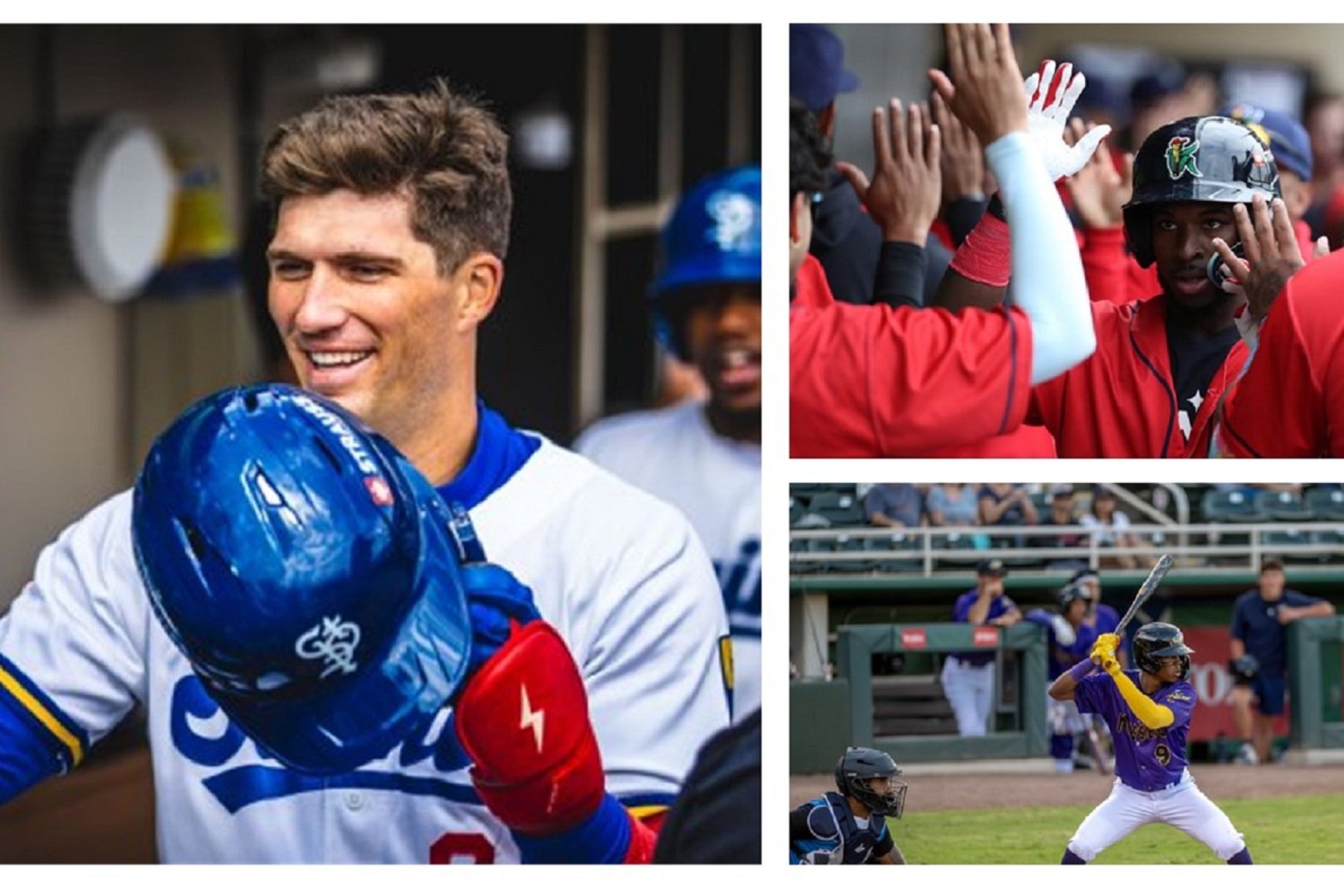 TRANSACTIONS 1B Yunior Severino placed on the 7-day injured list. Strained right hamstring. 3B Royce Lewis sent on a rehab assignment to St. Paul. C Diego Cartaya sent outright to St. Paul. Wichita activated RHP Pierson Ohl from the 7-day injured list. Cedar Rapids activated SS Kaelen Culpepper from the 7-day injured list. RHP Michael Tonkin sent on a rehab assignment to St. Paul. RHP Matt Canterino released by the Twins. TWINS DAILY MINOR LEAGUE CONTENT Twins Release Matt Canterino. What’s Next for the Once-Promising Prospect? Twins Minor League Report (4/27): Jose Salas, Kaelen Culpepper Drive Mussels, Kernels to Wins Twins Minor League Report (4/26): Close Losses in the Afternoon, High-Ceiling Lefties Dominate the Night Games Twins Minor League Report (4/25): Royce Lewis Rehabs; Cole Peschl Demands Attention Twins Minor League Report (4/24): Jay Thomason, Maddux Houghton Muscle Fort Myers to Extra-Inning Win Twins Minor League Report (4/23): Ricardo Olivar Can't be Contained Scouting the Saints: Zebby Matthews, Carson McCusker, Emmanuel Rodriguez Show Their Stuff Catcher Diego Cartaya Isn't Long for Minnesota Twins' 40-Man Roster Twins Minor League Report (4/22): Grand Slams, A Walk-Off, and a Gong Show Twins Minor League Week in Review (4/15-4/21): Mighty Mussels Shutout Parade WEEK IN REVIEW Triple A: St. Paul Saints Overall: 11-13 (8.5 Games Out of First) Last Week: 4-3 Toby Gardenhire earned his 300th win as manager of the Saints. The only manager with more victories in the entire history of the franchise is George Tsamis, who won 954 games from 2003-20. Zebby Matthews failed to make it through the fifth inning for the second consecutive start. In 4 2/3 innings, he allowed two runs on two hits and five strikeouts. He issued a career-high four walks. Patrick Winkel and Anthony Prato hit back-to-back homers in Saturday’s game. For Winkel, it was his second of the season, and second in as many games. For Prato, it was his first of the year. On Friday night, Royce Lewis made his first rehab game appearance for the Saints. He went 1-for-3 with a double. On Sunday, he went 2-for-3 with an RBI and two runs. Darren McCaughan pitched 5 shutout innings and Anthony Misiewicz tossed the final 2 innings as the Saints pitched a 3-0 shutout to split a doubleheader on Friday night. McCaughan allowed just one hit in his appearance, while walking two and striking out seven—four of them looking. Misiewicz allowed one hit and struck out two. Patrick Winkel hit his first home run of the season, a solo shot, as part of the team’s Friday night victory. St. Paul split a doubleheader on Wednesday. In Game 1, Mickey Gasper cracked his second home run in as many games to put the Saints up 2-1. Later that inning, Carson McCusker continued his hot start to the year with an RBI double. He is second in Triple A in average exit velocity. Mike Ford capped the team’s scoring in the third. Emmanuel Rodriguez walked to start the frame, before Ford delivered a two-run blast, his third longball of the season. Andrew Morris started Game 1 of the doubleheader and went 4-plus innings, allowing one unearned run on five hits while walking three and striking out two. Tuesday started the week with a bang—or several of them. They mashed four home runs (two grand slams) and racked up 16 runs scored. Eight of nine Saints collected a hit, with five having multi-hit days. Eight of nine scored a run, and seven of nine knocked home a run as the Saints pounded out 16 hits. McCusker and Ryan Fitzgerald hit the grand slams. Fitzgerald went 3-5 with a career high-tying five RBIs and three runs scored. Reliever Travis Adams pitched the final 4 innings; did not allow a run on three hits, while striking out four; and picked up his second four-inning save in as many appearances. What’s Next: The Saints head to Omaha to face the Storm Chasers for the start of a six-game set on Tuesday. These two teams split a six-game series earlier in the month. Double A: Wichita Wind Surge Overall: 12-9 (2.0 Games Out of First) Last Week: 4-2 Congratulations to Wind Surge broadcaster Tim Grubbs, who broadcast his 4,000th Minor League Baseball game this week. Connor Prielipp, Mike Paredes, Michael Martinez, and Angel Macuare combined for a shutout on three hits on Saturday night. The Wind Surge infield also turned three double plays, two of them being inning-enders. Paredes has thrown 17 2/3 innings without an earned run this season, and leads the team in wins (3). Darren Bowen retired 13 of the first 14 batters he faced in his fourth start of the season. He finished with one earned run allowed on four hits, with three strikeouts and no walks. Pierson Ohl returned from the injured list and picked up his first victory. He relieved Bowen and pitched three shutout innings with four strikeouts and only one hit allowed. Jarret Whorff has yet to surrender an earned run in Wichita this season, over 7 2/3 innings pitched. Tanner Schobel reached base in 17 consecutive games before his streak ended on Friday. On Sunday, he recorded his second three-hit performance of the season. He has a team-leading seven multi-hit games. On Wednesday, Wichita trailed 6-2 heading into the bottom of the eighth inning, before rattling off five unanswered runs to win their fourth straight game. Kyler Fedko drove in the winning run with a single in the 10th inning. John Stankiewicz earned the victory, his first decision of the season, after throwing a scoreless 10th inning with a strikeout. Wichita produced their highest winning margin of the season on Tuesday, winning 12-1. Kala’i Rosario started the scoring with a solo home run, and Aaron Sabato hit a go-ahead double later that inning. In the eighth, the Wind Surge sent 12 men to the plate and scored nine runs. Jorel Ortega connected for a pinch-hit grand slam, the first in franchise history. Mike Paredes earned the win to improve to 2-0 on the season after three innings of one-hit baseball with a walk and a strikeout out of the bullpen. What’s Next: Wichita will open a six-game road series against the Frisco RoughRiders on Tuesday at 12:05 PM CST. High A: Cedar Rapids Kernels Overall: 12-8 (2.0 Game Out of First) Last Week: 3-3 Kaelen Culpepper drove in five runs on two hits and a three-run homer on Sunday. He finished the week hitting .353/.450/.529 after coming off the IL. Tanner Hall pitched five strong innings, allowing one unearned run on five hits with two walks and three strikeouts. Cedar Rapids got caught in a pitchers’ duel on Friday night. Alejandro Hidalgo got the start and posted his best outing of the season. He pitched five shutout innings, allowing just one hit while striking out seven. In his third start of the season, Ty Langenberg posted his best outing of the campaign. He did not allow a run across four innings of work with three strikeouts and no walks, facing just 12 batters to record 12 outs. Logan Whitaker took over for Langenberg and did not allow a run in two innings of relief, retiring the side in order in both frames while notching three strikeouts. Kyle DeBarge got the week started with a bang for Cedar Rapids. Trailing by a run with two outs in the bottom of the ninth inning, he crushed a walk-off three-run home run. Earlier in the game, he had connected for a triple. Jose Olivares did not allow a run across three innings of work with five strikeouts while issuing just one walk and one hit. Danny De Andrade slashed .333/.474/.733, with three doubles, one home run, and three steals. What’s Next: Cedar Rapids continues the second half of their 12-game homestand on Tuesday night with the first of six games against South Bend at 6:35 PM CST. Low A: Fort Myers Mighty Mussels Overall: 12-9 (Tied for First) Last Week: 4-2 Jose Salas drove in six runs on Sunday, the most in a game for a Mussels hitter this season. Dasan Hill tossed 3 1/3 scoreless innings and struck out a season-high eight batters, which included a stretch of five consecutive strikeouts. The only hit he allowed was an infield single. Hill touched 98 MPH on the radar gun for the first time this season. Byron Chourio has been masterful at the top of the Fort Myers lineup. On Sunday, he reached base three times to extend his on-base streak to 18 games. It was also the 12th time he reached base safely to start the game. Cole Peschl dominated in his third appearance of the season. He struck out a season-high nine batters while throwing five scoreless innings for the second outing in a row. His 80 pitches matched the most by a Mussel pitcher this season. Peschl has now thrown 14 innings without allowing an earned run to start his career. Yasser Mercedes stole four bases in one game, the most by a Mussel this season. Maddux Houghton came off the bench on Thursday to deliver the game-winning hit, a three-run home run in extra innings. He added an incredible catch in the bottom half of the inning to rob an extra-base hit. Earlier in that game, Jay Thomason launched a moonshot home run (421 feet). He homered again on Sunday, a three-run shot. He leads the team in home runs this season. Jason Doktorczyk pitched four solid innings, as he allowed one unearned run on a wild pitch. He limited batters to two hits with two strikeouts and a walk. His season ERA dropped to 1.15. Ivran Romero continued his scoreless streak to start the season. On Wednesday, he pitched two scoreless innings with only one hit allowed. He has seven shutout innings for the year. Fort Myers got their week started with a solid performance on both sides of the ball. Yasser Mercedes and Jose Rodriguez both hit two-run homers in the same inning with triple-digit exit velocities. For Mercedes, it was his first of the year. Rodriguez hit his homer at 113 mph. Dylan Questad allowed a two-run homer and then settled in. He retired the next six men he faced. The homer was the lone hit Questad would yield in his five innings of work. The bullpen of Hunter Hoopes, Liam Rocha, and Tyler Stasiowski combined to allow one run on four hits while striking out seven batters across four innings. Fort Myers pitching totalled 13 strikeouts to three walks on the night. What’s Next: Fort Myers heads home for a quick three-game series against Jupiter before finishing the week with a three-game set at Tampa. PROSPECT SUMMARY Check out the Prospect Tracker for much more on our Twins Top 20 prospects. And, be sure to note the new, updated Top 20 rankings. Roster assignments below are subject to change as some players have yet to be assigned or are in Extended Spring Training. Walker Jenkins (Wichita): On injured list Emmanuel Rodriguez (St. Paul): 2-8,1 R, 1 BB, 3 K, 2 SB Luke Keaschall (Minnesota): 7-19, 3 2B, 2 RBI, 4 R, 5 BB, 2 K, 5 SB Charlee Soto (Cedar Rapids): Did not pitch Andrew Morris (St. Paul): 4 IP, 5 H, 0 ER, 3 BB, 2 K Marco Raya (St. Paul): 1.2 IP, 6 H, 7 ER, 3 BB, 1 K Kaelen Culpepper (Cedar Rapids): 6-17, 1 HR, 7 RBI, 2 R, 3 BB, 1 K Brandon Winokur (Cedar Rapids): 4-20, 2 2B, 1 BB, 6 K, 1 SB Cory Lewis (St. Paul): 3.2 IP, 5 H, 3 ER, 1 BB, 4 K Connor Prielipp (Wichita): 3 IP, 0 H, 0 ER, 1 BB, 4 K Dasan Hill (Fort Myers): 3.1 IP, 1 H, 0 ER, 2 BB, 8 K C.J. Culpepper (Wichita): On injured list Kyle DeBarge (Cedar Rapids): 5-22, 1 2B, 1 3B, 1 HR, 5 RBI, 3 R, 2 BB, 5 K, 3 SB Eduardo Beltre (DSL Twins): In Extended Spring Training Yasser Mercedes (Fort Myers): 4-19, 1 2B, 1 HR, 3 RBI, 2 R, 3 BB, 7 K, 5 SB Rayne Doncon (Cedar Rapids): On injured list Billy Amick (Cedar Rapids): 4-18, 2 RBI, 2 R, 2 BB, 6 K Kala’i Rosario (Wichita): 8-24, 2 2B, 1 HR, 4 RBI, 5 R, 3 BB, 6 K Gabriel Gonzalez (Cedar Rapids): 4-20, 2 R, 1 BB, 2 K Ricardo Olivar (Wichita): 9-23, 2 2B, 1 HR, 4 RBI, 5 R, 2 BB, 6 K PLAYERS OF THE WEEK Hitter of the Week: Ryan Fitzgerald (St. Paul) 9-for-21, .429/.520/.667 (1.187), 2 2B, 1 HR, 14 TB, 6 RBI, 6 R, 4 BB, 3 K Pitcher of the Week: Cole Peschl (Fort Myers) 5 IP, 3 H, 0 ER, 2 BB, 9 K, 80 pitches (51 strikes), 63.8 strike%
- 17 comments
-
- 1
-

-
- ryan fitzgerald
- cole peschl
- (and 5 more)
-
I feel like the lady in the photo is really trying to get the room excited about the MLB Draft.
-
Baseball can be a cruel game. Matt Canterino’s recent release marks the end of one chapter and the beginning of another. Image courtesy of Nathan Ray Seebeck-Imagn Images Baseball can be a cruel game. Matt Canterino’s recent release marks the end of one chapter and the beginning of another. The Minnesota Twins officially released right-handed pitcher Matt Canterino on Apr. 22, 2025, following his designation for assignment after undergoing season-ending shoulder surgery in mid-March of Spring Training. Because injured players cannot be placed on outright waivers, Minnesota had to either trade or release Canterino after the DFA. The Twins opted to cut him loose, with a trade deemed unlikely based on the uncertainty of Canterino's prognosis. Canterino will become a free agent, with the right to sign anywhere. However, if both sides are amenable, Minnesota could circle back with a two-year minor-league offer. He was out of minor-league options, and injuries caused him to fall out of the team’s long-term plans. Once one of the organization’s most highly regarded arms, the Rice University product once had a mid-90s fastball and a plus slider, but a litany of injuries has cost him nearly every season of his pro career. Now, at age 27 (turning 28) this December, he embarks on free agency, looking to reestablish his health and promise. Midway through spring training, Canterino underwent surgery to “tighten” ligaments in his right throwing shoulder, effectively ending his 2025 campaign before it began. The Twins announced the procedure on March 16th, revealing that the rotator cuff strain from camp required a formal surgical repair. This was following earlier Tommy John surgery, which sidelined him for all of 2023. A Once-Promising Arm A second-round pick (54th overall) by Minnesota in the 2019 MLB Draft, Canterino was lauded for his power arsenal and pitchability. He dazzled in college, with a fastball that sat in the mid-90s and a tight, wipeout slider. Scouts projected this arsenal would allow him to become a mid-rotation starter or high-leverage bullpen arm at the major-league level. Between 2020 and 2024, Canterino consistently appeared in the top half of Baseball America’s Twins top-30 prospect rankings, peeking inside the top 15 midseason list before being shelved by injuries. Even after going unranked in the 2024 midseason update due to inactivity, evaluators still recognized his upside, lamenting that he’d only thrown 85 (dominant) innings since being drafted. There Is No Such Thing As a Pitching Prospect (TINSTAAPP) Right elbow inflammation derailed Canterino’s professional path early in 2021, culminating in Tommy John surgery in August 2022, after a dominant Double-A stint. He missed the remainder of 2022 and all of 2023 recuperating from the procedure. In 2024, just as hopes rose for his return, Canterino suffered a right rotator cuff strain during spring training, prompting another IL stay that kept him out for the entire season. Despite the interruptions, Canterino’s flashes were remarkable. Across 85 career minor-league innings, he posted a sparkling 1.48 ERA with a 39.1% strikeout rate, illustrating his ability to miss bats and generate weak contact when healthy. He pitched exclusively as a starter early on, then began to be evaluated as a potential bullpen weapon. His repertoire lends itself to shorter bursts of high-impact potential. Now, the Twins are left wondering what could have been. What’s Next: Free Agency and Options When Canterino clears waivers, he immediately becomes a free agent, free to field offers from any organization. For the Twins, there’s precedent for bringing back released pitchers on minor-league deals, and they could offer a two-year contract designed to let him fully rehab under club supervision. Health remains the paramount question. If he recovers well from this latest setback, there might be time for one more team to take a shot at him and bet on his raw stuff. Come the 2026 season, a healthy, effective Canterino could be a difference-maker for a big-league staff looking for affordable, controllable pitching. Canterino’s release marks the end of one chapter, where unrelenting injuries hampered a storied prospect career. However, one ending is another beginning in which he controls his path. It's possible he'll elect to move on to the next chapter, beyond his playing career, but should he attempt yet another comeback, the task is straightforward: stay healthy, showcase that high-leverage arsenal, and reignite the potential that once made him one of Minnesota’s brightest pitching prospects. Should the Twins try to re-sign Canterino to a two-year minor league deal? Will he make it to the big leagues with another organization? Leave a comment and start the discussion. View full article